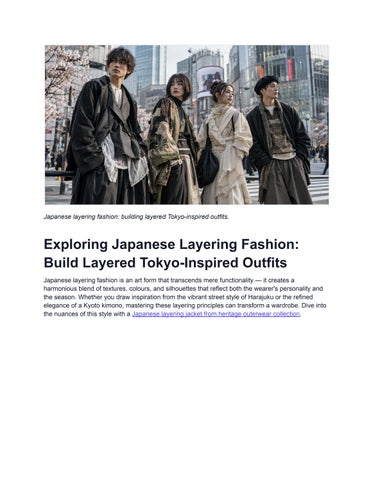
Japanese layering fashion: building layered Tokyo-inspired outfits.
Exploring Japanese Layering Fashion: Build Layered Tokyo-Inspired Outfits Japanese layering fashion is an art form that transcends mere functionality — it creates a harmonious blend of textures, colours, and silhouettes that reflect both the wearer's personality and the season. Whether you draw inspiration from the vibrant street style of Harajuku or the refined elegance of a Kyoto kimono, mastering these layering principles can transform a wardrobe. Dive into the nuances of this style with a Japanese layering jacket from heritage outerwear collection.
Tokyo street style layering: the foundation of japanese layering fashion.
Understanding Japanese Layering Fashion Japanese layering fashion is deeply rooted in the country's rich textile history and modern urban aesthetics. Unlike Western layering, which often prioritises insulation, Japanese layering emphasises visual balance and texture. This approach is especially visible in the layered outfits of Tokyo's fashion-forward youth, who seamlessly blend traditional and contemporary elements. Harmony and contrast: Japanese layering often juxtaposes textures and patterns — a silk haori worn over a denim jacket, for instance. The contrast creates a visually engaging look without sacrificing ease of movement. Seasonal adaptability: Traditional Japanese clothing was designed to adapt to changing temperatures. A lightweight kimono can be layered beneath a thicker haori for cooler weather, echoing centuries of practical design. Cultural depth: Many Japanese garments carry historical significance. The Kyoto Costume Institute archives document centuries of Japanese textile evolution — understanding that heritage adds meaning to every layer you build.
Techniques for Layering Japanese Fashion Mastering japanese layering techniques involves an eye for detail and a willingness to experiment. The following principles are a reliable starting point for building a cohesive layered look.
Start with a base layer: A well-fitted t-shirt or lightweight blouse forms the foundation. Opt for neutral tones to maximise versatility when you add layers on top. Add a mid layer: This might be a cardigan, an open-front shirt, or a traditional haori. The mid layer bridges the base and the outer piece, so colour and texture should complement rather than compete. Top with a statement outer: A bold outer garment — such as an embroidered sukajan jacket — elevates the entire outfit. Our traditional Japanese outerwear guide explores the heritage behind each garment and how to choose the right piece.
Japanese outerwear layering techniques: texture, silhouette, and cultural detail.
Garments for Japanese Layering Japanese streetwear enthusiasts draw on a wide wardrobe of pieces when constructing layered outfits. These are the staples most commonly seen on Yokosuka back-streets and Shibuya crossings alike. Sukajan jackets: Originally worn by US servicemen stationed in post-war Yokosuka, sukajan jackets were quickly adopted and reimagined by Japanese artisans. Their vivid embroidery — dragons, koi, tigers — makes them ideal statement outer layers. Haori jackets: Lightweight and versatile, the haori is a hip-length garment worn open at the front. It can be thrown over a modern outfit to instantly add a traditional Japanese dimension. Denim jackets: A classic denim jacket sits neatly at the mid-layer position. Pair it with a silk blouse beneath and a souvenir jacket on top for a three-layer Tokyo-inspired look.
Differences Between Japanese and Western Layering Both traditions produce practical, stylish results, but the underlying logic differs in important ways. Aesthetic focus: Japanese layering prioritises visual harmony and texture over insulation. Western layering tends to lean toward practicality — warmth, weather resistance, and structured fit. Cultural elements: Japanese layering frequently incorporates traditional garments and heritage motifs, giving each outfit a cultural dimension. Western layering is largely contemporary and culturally neutral. Silhouette and fit: Japanese layering favours a relaxed, flowing silhouette — especially in outer garments like the haori. Western layering often favours a more tailored, structured look.
Sukajan and haori pairing — the outer garments at the heart of Japanese layering style.
Frequently Asked Questions What is Japanese layering fashion? Japanese layering fashion is a style approach that combines multiple garments — a fitted base, a mid layer, and a statement outer — to create visually balanced, texturally rich outfits. It draws on both traditional Japanese garment-over-garment conventions and contemporary Tokyo street style, blending cultural heritage with modern creativity.
How do you layer outfits in the Japanese style?
Start with a neutral base layer, add a mid layer in a complementary texture (such as a fine-knit cardigan or open haori), and finish with a bold outer piece like a sukajan jacket. Prioritise visual flow between layers — contrast in texture is welcome, but clashing patterns should be deliberate and considered.
What garments do Japanese streetwear enthusiasts layer? Core layering pieces include sukajan souvenir jackets, haori coats, denim jackets, silk or cotton blouses, oversized hoodies, and traditional kimono-inspired wraps. These are combined with modern staples — plain tees, slim trousers, or wide-leg cargos — to balance the heritage elements with a contemporary silhouette.
How is Japanese layering different from Western layering? Japanese layering prioritises aesthetic harmony and cultural storytelling, often incorporating garments with embroidered motifs or traditional silhouettes. Western layering is more function-led — focused on warmth, weather-proofing, and a structured fit. The Japanese approach treats each layer as a visible design element, even when indoors.
What fabrics are best for Japanese layering? Silk, lightweight cotton, and fine wool are ideal for base and mid layers — breathable, drapeable, and easy to combine without bulk. For outer garments, satin-backed polyester (the traditional sukajan shell), brushed wool, or raw denim provide the visual weight and texture contrast that makes a layered look read as intentional.
Can you layer sukajan jackets? Absolutely. Sukajan jackets work well as a final statement layer over a simple t-shirt and slim trousers, or even over a lightweight haori for a bold two-outer look. For more ideas on pairing Japanese outerwear pieces together, our complete haori jacket guide covers how to combine traditional and contemporary garments in a single look.
Final Thought Japanese layering fashion offers something rare: a dressing philosophy that is simultaneously practical, visually compelling, and culturally resonant. Whether you start with a single haori over a plain tee or build a full three-layer Tokyo-inspired outfit, the same principle applies — each piece should be chosen with intent, and every layer should earn its place.
About the Author Sarah Tanaka is a fashion journalist with a decade of focus on traditional and contemporary Japanese styles. She has contributed to menswear and womenswear editorials covering Tokyo street style, Japanese textile heritage, and the global rise of sukajan and haori outerwear.