Explanation Of Why Conscious Sedation Available Is Important
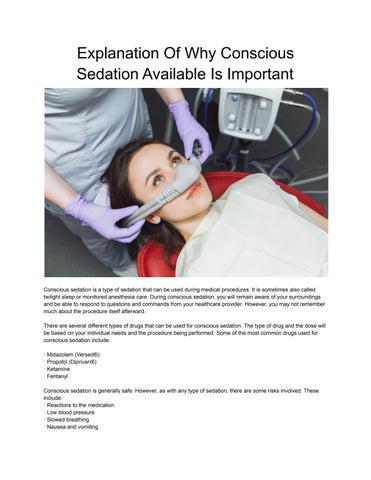
Conscious sedation is a type of sedation that can be used during medical procedures. It is sometimes also called twilight sleep or monitored anesthesia care. During conscious sedation, you will remain aware of your surroundings and be able to respond to questions and commands from your healthcare provider. However, you may not remember much about the procedure itself afterward. There are several different types of drugs that can be used for conscious sedation. The type of drug and the dose will be based on your individual needs and the procedure being performed. Some of the most common drugs used for conscious sedation include: · Midazolam (Versed®) · Propofol (Diprivan®) · Ketamine · Fentanyl Conscious sedation is generally safe. However, as with any type of sedation, there are some risks involved. These include: · Reactions to the medication · Low blood pressure · Slowed breathing · Nausea and vomiting
Before you undergo conscious sedation, your healthcare provider will likely: · Perform a physical exam · Ask about your medical history · Take a blood sample You should also plan to have someone else drive you home after the procedure, as it can take some time for the effects of the medication to wear off.
Reasons why Conscious Sedation Is Important There are a few different reasons why conscious sedation may be recommended or chosen over general anesthesia. The following are some of the most common reasons: · It allows you to remain aware and be able to respond to questions or commands during the procedure. When you are under general anesthesia, you will be completely asleep and unable to respond to anything. This can be worrisome for some people, especially if there are complications during the surgery. · It generally has fewer side effects than general anesthesia. Side effects from conscious sedation are usually mild and go away quickly. They may include things like drowsiness, confusion, and nausea. These are typically much less severe than the side effects that can occur with general anesthesia, which can include things like vomiting, dizziness, and headache. · It is often used for shorter procedures. Conscious sedation is usually not recommended for procedures that are longer than two hours. This is because the effects of the medication can start to wear off after that amount of time. · It is often used for people who are anxious about procedures. If you are anxious or nervous about a procedure, conscious sedation can help you relax and feel more comfortable. It can also be used for people who have a fear of needles or of being put to sleep. It is often used for people who have a sensitive gag reflex. If you have a sensitive gag reflex, conscious sedation can help to prevent you from gagging during the procedure.
Conclusion In conclusion, conscious sedation is a type of sedation that can be used during medical procedures. It has several benefits over general anesthesia, including the fact that you will remain aware and be able to respond to questions or commands during the procedure. So at your dental visit, look for conscious sedation available. It also generally has fewer side effects than general anesthesia.