BIPV Panel, Building Integrated Photovoltaics: Innovations
andApplications in SustainableArchitecture
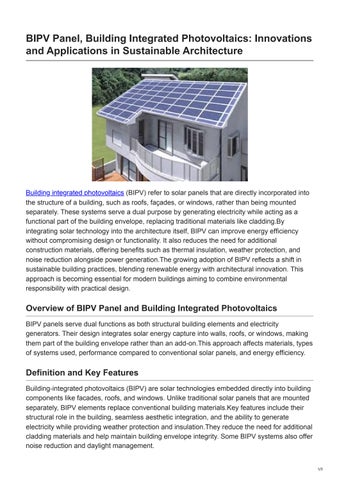
Building integrated photovoltaics (BIPV) refer to solar panels that are directly incorporated into the structure of a building, such as roofs, façades, or windows, rather than being mounted separately These systems serve a dual purpose by generating electricity while acting as a functional part of the building envelope, replacing traditional materials like cladding.By integrating solar technology into the architecture itself, BIPV can improve energy efficiency without compromising design or functionality. It also reduces the need for additional construction materials, offering benefits such as thermal insulation, weather protection, and noise reduction alongside power generation.The growing adoption of BIPV reflects a shift in sustainable building practices, blending renewable energy with architectural innovation. This approach is becoming essential for modern buildings aiming to combine environmental responsibility with practical design.
Overview of BIPV Panel and Building Integrated Photovoltaics
BIPV panels serve dual functions as both structural building elements and electricity generators.Their design integrates solar energy capture into walls, roofs, or windows, making them part of the building envelope rather than an add-on.This approach affects materials, types of systems used, performance compared to conventional solar panels, and energy efficiency.
Definition and Key Features
Building-integrated photovoltaics (BIPV) are solar technologies embedded directly into building components like facades, roofs, and windows. Unlike traditional solar panels that are mounted separately, BIPV elements replace conventional building materials.Key features include their structural role in the building, seamless aesthetic integration, and the ability to generate electricity while providing weather protection and insulation.They reduce the need for additional cladding materials and help maintain building envelope integrity. Some BIPV systems also offer noise reduction and daylight management.
Types of BIPV Systems
BIPV systems vary by application and technology. Common types include:
Facade-integrated panels: Incorporated into exterior walls or curtain walls.
Roof-integrated panels: Replacing tiles or shingles.
Window-integrated systems: Using semi-transparent photovoltaic glass.
Semi-transparent and bifacial cells:Allow light through or capture sunlight from both sides.
These systems differ in materials such as crystalline silicon, thin-film, or emerging technologies like perovskites. Each type balances energy generation, transparency, and structural compatibility.
Comparison with Conventional Solar Panels
Conventional solar panels are typically mounted onto existing building surfaces and serve only as energy generators.They require additional frames and support systems.BIPV panels replace standard building materials, reducing material costs and saving space. They contribute to architectural design with minimal visual disruption.However, conventional panels may offer slightly higher efficiency due to optimized orientation and cooling. BIPV collects solar energy while also providing insulation and protection.Installation complexity and upfront cost tend to be higher for BIPV because of integration requirements. Maintenance can be more challenging due to their structural role.
Energy Production and Efficiency
BIPV systems generate renewable electricity by converting sunlight, similar to traditional solar panels. Energy output depends on orientation, shading, and technology.Efficiency varies with cell type: monocrystalline silicon tends to be more efficient, while thin-film options offer architectural flexibility but lower output.Some BIPV designs use bifacial cells to capture reflected light, increasing energy yield. Semi-transparent modules balance daylight entry and power generation.While slightly less efficient per unit area than conventional panels in some cases, BIPV panels offset energy use by replacing other building materials and reducing heating or cooling demand.
Applications and Benefits of BIPV Panel in Modern Architecture
BIPV panels serve both as functional building components and renewable energy generators. Their integration into various architectural elements enhances energy efficiency, aesthetic appeal, and environmental performance while influencing the overall cost dynamics and investment returns.