Matt Media (USA) LLC. 1713 E. Morgan Court Gilbert, Arizona 85295
Middle East Offices
Matt Media LLC. Sharjah Media City United Arab Emirates
Al Saad Adv. & Publishing LLC P O Box 25694, Sharjah United Arab Emirates
info@gulfagriculture.com www.gulfagriculture.com
Gulf Agriculture is a publication from Matt Media Intl. Ltd. (UK) and is read by agri professionals, farm managers & owners, landscape consultants, contractors, agri-equipment suppliers, horticultural engineers, greenhouse managers, agronomists, veterinary surgeons, ministries, poultry & dairy breeders, importers, distributors, manufacturers and wholesalers of food and agri inputs.
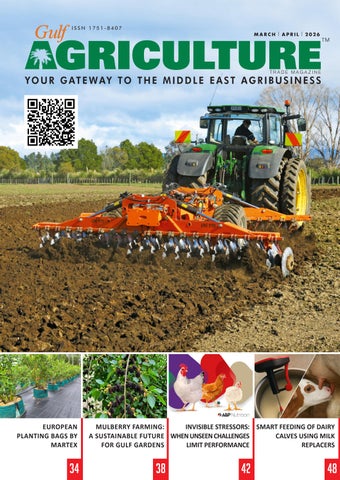
Cover Photo Courtesy: Ma/ag
#1 choice for quality, eco-friendly grow bags in the industry!
Growinnovate designs, manufactures, and distributes our market leading GrowinBag™. Discover the innovative design that enhance plant health from the roots up, with a durable, environmentally friendly solution to boost the efficiency of your plant stock—no matter what climate or region you grow in.
Made of Quality, Sustainable Materials
Our GrowinBags are made from top quality prime virgin materials and have been tested in the harshest climates, from the sub-zero temperatures of the North American winter to the extreme heat of the South West desert region.
All components, including sewing thread, are UV stabilized for strength and durability and all grow bags are subject to strict quality controls.
Round Bottom Design
Our GrowinBags have a round bottom design which makes for easy filling and stability.
Superior Drainage and Light Pruning Fabric
Our GrowinBags are manufactured with additional side drainage holes which assist in air root pruning, promoting superior plant growth, and our light penetrating fabric prevents root circling within the grow bag.
Free from Contaminants
Substrates in our GrowinBags can be controlled and kept free from ground contaminants.
Save Water
Planting in our GrowinBags will save water and can be used with drip systems, overheads, and hydroponic flood trays.
Heavy Duty Bag & Handles
Our GrowinBags are heavy duty with extra strength handles for easy handling and transport, reducing the risk of a back injury.
Customize your size and branding
Our GrowinBags can be customized and made to any size or shape. Plus, you can also add your company brandmark or logo.
*Note: Minimum order quantities required.
DE HEUS
De Heus Animal Nutrition is pleased to announce the successful completion of the acquisition of CJ Feed & Care from CJ Cheil Jedang.
This strategic step marks a significant milestone in De Heus’ long-term growth strategy and underscores the company’s ongoing commitment to supporting farmers across Asia. The acquisition strengthens
De Heus’ presence in Vietnam, Indonesia, and Cambodia, key markets within its existing portfolio, while also providing entry into two new strategically important markets: Korea and the Philippines. In total, the transaction comprises 17 feed mills and numerous livestock operations across the region.
Real progress starts where it matters most: on the farm. By
combining De Heus and CJ Feed & Care’s deep local expertise, our teams are better equipped than ever to help local farmers professionalize their operations, improve performance, and increase profitability. We strongly value our longstanding relationships with every farmer, distributor, and investment partner, and are fully committed to share our best products, services, knowledge, and practices with them. Moreover, we are particularly grateful for the ongoing support of the national governments of our host countries in our efforts to grow and develop the animal husbandry sector in these markets.
DIRECT DRIVEN BOX FAN
AAAID AND AZIMUT GROUP TO COLLABORATE ON FOOD SECURITY INDEX AND POTENTIAL ETF
The Arab Authority for Agricultural Investment and Development (AAAID) has announced a collaboration with Azimut Group, an independent and global group specializing in asset management with USD 166 billion in total assets, to develop during Q2 2026 a food security-focused equity index, with a view to potentially launching an exchange-traded fund (ETF) tracking the index later this year, subject to regulatory approvals and prevailing market conditions.
The collaboration will focus on the creation of a transparent, rules-based index designed to reflect listed companies across Arab countries that are active in agriculture, food security and related value-chain industries. These include agricultural production, food processing, supplychain infrastructure and supporting services, providing structured exposure to a strategically important and growing sector across the
Innovative equipment born from our long experience in the preparation of soils, both for minimum tillage and deep work. Suitable for low Hp tractors without losing the main focus of our machines: elevated productivity connected to costs reduction and lower impact to environment.
26011 Casalbuttano (Cremona) - ITALIA
Via Giovanni Paolo II, 12
Tel. +39 0374 362680 Fax +39 0374 362280
info@ma-ag.com
www.ma-ag.com maagmacchineagricole
The combination of different tools permits to prepare the soil in one passage, both on minimum (15 cm working depth) to deeper tillage (up to 45 cm) according to the farmer’s needs.
FEATURE
Front Straight Anchors Open the soil by working from 15 to 45 cm
Double Star Rollers Break the clods and residues
Rear Cage Rollers Levelling for a perfect soil
FERTIGLOBE,
COVESTRO, AND TA’ZIZ SIGN MEMORANDUM OF UNDERSTANDING TO EXPLORE STRATEGIC AMMONIA COLLABORATION
On the occasion of the visit of German Chancellor Friedrich Merz to the United Arab Emirates, Covestro, one of the world’s leading manufacturers of
high-quality polymer materials, Fertiglobe, the world’s largest seaborne exporter of urea and ammonia and TA’ZIZ, a worldscale chemicals ecosystem being developed in Abu Dhabi, have signed a Memorandum of Understanding (MoU) to explore collaboration across the ammonia and nitric acid value chains. The MoU reflects the parties’ shared interest in assessing both near-term supply solutions and longer-term opportunities supporting the transition toward lower-carbon production pathways. This collaboration follows the closing of XRG’s acquisition of Covestro in December 2025 and reflects the additional opportunities enabled by Covestro and Fertiglobe operating within XRG’s
Global Chemicals platform, with expanded international reach.
Under the MoU, Covestro and Fertiglobe intend to explore short-term ammonia supply opportunities from Fertiglobe’s facilities to Covestro’s sites in China and the United States. In parallel, they will assess longerterm supply options to sites in Europe, China and the United States, based on low-carbon ammonia produced using carbon capture technologies, as well as green ammonia from renewable sources, including projects developed by Fertiglobe. Ammonia is a key raw material for Covestro’s production of MDI (diphenylmethane diisocyanate) and TDI (toluene diisocyanate), essential components for polyurethane hard and soft foams.
AKORN TECHNOLOGY READIES FOR EXPANSION IN AFRICA AND SOUTH ASIA FOLLOWING UAE FOODTECH CHALLENGE WIN
Akorn Technology, the innovator in all-natural coatings and postharvest treatments for fresh fruits and vegetables, is expanding across the Global South with the launch of a new venture in the UAE, following the company’s recent win of the UAE FoodTech Challenge.
Chosen from an initial 1,215 submissions from some 113 countries, Akorn was able to demonstrate that its 100% natural post-harvest treatments dramatically reduce supply chain losses across a broad range of fruits and vegetables, creating economic value throughout the supply chain while sustaining Akorn’s own profitable growth.
Significantly, the win is accompanied by substantial financial and technological support to develop and scale solutions through the UAE’s world-class
innovation ecosystem. Akorn’s new venture in the Emirates will be focused on turning locallygenerated agricultural and other food waste streams into value, and bringing advanced allnatural post-harvest solutions to the Global South – reducing losses, extending freshness, and strengthening food security.
Anthony Zografos, Ph.D, Akorn’s Founder and CEO, said: “What sets Akorn apart is simple: we're not another synthetic coating or chemical fungicide. Our solutions are made from 100% natural, foodgrade materials — many sourced from upcycled agricultural byproducts — yet they deliver broad, multifunctional protection across the entire post-harvest chain, as well as superior results compared to existing options."
Small drone, big impact.
CF INDUSTRIES, POET, AND MAJOR AGRICULTURE CO-OPERATIVES
LAUNCH LOW-CARBON FERTILIZER PILOT TO CUT ETHANOL PRODUCTION CARBON INTENSITY
CF Industries Holdings, Inc. (NYSE: CF), a leading global manufacturer of hydrogen and nitrogen products, and POET, the world’s largest producer of biofuels, have launched a pilot project with major agriculture co-operatives to jointly develop a low-carbon fertilizers supply chain. The goal of the pilot is to demonstrate how the use of low carbon nitrogen fertilizer can substantially reduce the carbon intensity of corn and enable the production of low carbon ethanol for use in motor fuel and export.
The pilot includes WinField United – the crop inputs and insights business of Land O’Lakes, Inc., one of America’s leading agribusiness and
food companies – along with agricultural cooperatives NuWay-K&H, New Cooperative, and Farmer’s Cooperative.
Participants will track the carbon intensity certification of the lowcarbon fertilizer produced by CF Industries and sold from its distribution network through retail distribution channels and finally to corn growers across Iowa, Minnesota, Missouri, and Nebraska. POET’s facilities will then utilize the corn produced using lower carbon intensity fertilizer in Minnesota, Iowa, and Nebraska for ethanol production. The consortium successfully completed the first distribution and applications of low-carbon ammonia fertilizer in the fall of 2025.
RAIN BIRD AND CENTAUR ASIA PACIFIC EXPAND GOLF IRRIGATION PARTNERSHIP INTO MALAYSIA & BRUNEI
Rain Bird and Centaur Asia Pacific (CAP) announce the expansion of their golf irrigation partnership from Singapore into Malaysia and Brunei, extending a proven manufacturer–distributor model focused on performance, service depth, and long-term asset value for golf facilities.
Since 2022, Rain Bird and Centaur Asia Pacific have worked in close partnership
in Singapore to deliver advanced irrigation systems, commissioning, and superintendent enablement. A recent example is Sembawang Country Club, where the joint CAP–Rain Bird team supported system optimization and field execution—demonstrating the impact of pairing Rain Bird’s technology leadership with CAP’s on-the-ground service and technical delivery.
JORDAN LAUNCHES SDG FUNDED PROGRAMME TO TRANSFORM AGRI FOOD SYSTEMS
Under the patronage of H.E. Saeb Khreisat, Minister of Agriculture, the Government of Jordan and the United Nations launched the “Local financing solutions to support Jordan’s agri food system transformation” joint project during a virtual inception workshop. The event brought together national institutions, municipalities, producer organizations, and UN agencies, including UN Resident Coordinator Sheri Ritsema Anderson, FAO Representative Nabil Assaf, and UNIDO Country Representative Sulafa Madanat.
On behalf of the Minister of Agriculture, the Secretary General stated, “This initiative
is a major step toward strengthening Jordan’s agricultural resilience. By investing in climate smart practices and modern post harvest systems, we are ensuring that farmers— especially smallholders—have the tools and support they need to increase productivity, reduce losses, and access better markets.”
Funded by the UN Joint SDG Fund, the programme aims to transform Jordan’s fruits and vegetables sector into an inclusive, climate resilient, and market driven system. It will support more than 1,500 smallholders and MSMEs in Deir Alla through climate smart agriculture investments,
business planning, governance strengthening, and market integration. It also includes the establishment of two modern post harvest centers, designed to reduce losses by 30–40% and expand access to higher value domestic and export markets.
The UN Resident Coordinator said,” Strengthening local food systems is about more than agricultural productivity — it is about building economic, environmental, and social resilience. And it is about ensuring that everyone benefits, including women, youth, persons with disabilities, and vulnerable groups. This UN Joint Programme responds directly to that need."
AGRAME BECOMES GROWTECH. MIDDLE EAST, UNITING REGIONAL LEGACY WITH GLOBAL AGRI-TECH POWER
After establishing itself as the GCC's most trusted agricultural trade platform for the past 17 years, AgraME (Agra Middle East), the Middle East's longest-running agriculture, animal and aquaculture farming exhibition, announces its rebranding as GROWTECH. MIDDLE EAST. This strategic integration of its service into one unified platform alongside GROWTECH. ANTALYA and
GROWTECH. JAKARTA elevates the event's mission to connect agricultural innovators across continents.
Commenting on the strategic vision behind the rebrand, Ahmed Khalil, Portfolio Director, said: "The evolution to GROWTECH. MIDDLE EAST represents the natural next step in our journey to serve the agricultural community. We're not changing who we are, we're amplifying our impact by connecting our region's producers with the best innovations from around the world.
Our 17-year legacy of trust and results remains the foundation, but now we're building something even more powerful: a truly global platform for agricultural advancement that
serves the unique needs of the Middle East while opening doors to international markets and partnerships.
This growth is fully aligned with our One Informa commitment: one unified vision, one global standard, and one integrated ecosystem that strengthens every event across our portfolio.
With GROWTECH. MIDDLE EAST, we’re scaling not just agriculture, but all three core pillars of the food production ecosystem: Agriculture, Animal Health, and Aquaculture, ensuring each sector gains the visibility, expertise, and global collaboration it deserves."
The formal partnership was celebrated through a Memorandum of Understanding (MoU) signing ceremony at the GROWTECH. ANTALYA 2025, that took place on 19 November 2025 at the ANFAŞ Expo Center in Türkiye.
AGRITECHNICA ASIA 2026 INTRODUCES INTERNATIONAL STARTUP INITIATIVE WITH NEW STARTUP DAY
From 20 to 22 May 2026, AGRITECHNICA ASIA, co-located with HortEx, Asia’s leading trade fair for horticultural and floricultural production and processing technology, will once again bring together agricultural mechanization and horticulture under one roof and thus provide a focused platform for solutions that reflect the region’s most urgent production challenges. Exhibitors, including a range of startups, will present technologies ranging from automated harvesting and protected cropping systems to precision irrigation and energy efficient greenhouse solutions.
The trade fair, which expects
some 18,000 professional visitors, is backed by strong institutional partners.
AGRITECHNICA ASIA trade fair is organized by the German Agricultural Society (DLG) in cooperation with the Ministry of Agriculture and Cooperatives of Thailand (MOAC). Germany joins as official partner country, represented by the Federal Ministry of Agriculture, Food, and Regional Identity (BMLEH).
International participation is highlighted by more than 350 exhibitors from across the world, including eight country pavilions and a technical program featuring around 100 international speakers on sustainable crop production,
AL DAHRA EXPANDS INTO TANZANIA WITH MOU
The Tanzania Investment and Special Economic Zones Authority (TISEZA) and Al Dahra Group, headquartered in Abu Dhabi, United Arab Emirates, and a global leader in sustainable agribusiness, essential food commodities and feed production, signed a landmark Memorandum of Understanding (MoU) to explore and advance agricultural investment opportunities in the United Republic of Tanzania. The collaboration will focus on unlocking Tanzania’s agricultural potential through large scale, modern, and sustainable farming operations.
Under the agreement, Al Dahra and TISEZA will work together to identify and assess agricultural land suitable for irrigation based, commercial scale farming projects aimed at strengthening the agricultural capabilities of Tanzania, driving economic growth in both countries and supporting the national food security of Tanzania.
Al Dahra will leverage its global expertise in high yield, sustainable crop cultivation, while TISEZA will facilitate land identification, regulatory support, and investment incentives and coordination.
This partnership supports Al Dahra’s 2030 Vision, which prioritises expanding large scale irrigated farming operations and accelerating sustainable crop innovation across its global portfolio.
With an estimated investment of up to USD 100 million, this strategic alliance highlights the shared commitment of Al Dahra and TISEZA to drive transformative growth within Tanzania’s agricultural sector. The partnership will initially focus on operating at least 10,000 hectares of farmland, with the potential to expand operations to an additional 10,000 hectares.
Gilead Teri, Director General of the Tanzania Investment and Special Economic Zones Authority, stated: “This MoU underscores Tanzania’s
horticulture, climate resilient systems, digitalization, mechanization, and regional market insights.
For the first time, AGRITECHNICA ASIA will host a full-day format exclusively dedicated to startups, investors, corporations, research institutions, and policymakers. The initiative is designed as a platform to foster innovation that not only showcases technological breakthroughs, but also addresses the structural and regional challenges and opportunities that startups encounter, from access to capital and regulatory barriers to scaling strategies, digital transformation, and climate resilience in agriculture.
commitment to welcoming investment and providing the necessary enablers for foreign direct investments. This collaboration aligns with Tanzania’s agricultural transformation under the leadership of H.E. Dr Samia Suluhu Hassan, President of the United Republic of Tanzania, which aims to achieve a 10% GDP growth rate in the crop subsector by 2030. This kind of investment creates assured market for millions of smallholder farmers in Tanzania and the region.”
Connect with the global horticulture community
All in just three days!
RAI AMSTERDAM 9 - 11 JUNE 2026
GreenTech shines a spotlight on the early stages of the horticulturesupply chain and the current challenges growers face.
WHY VISIT GREENTECH AMSTERDAM 2026?
↗ More than 12,100 horticulture professionals and 560 exhibitors from all over the world.
↗ Experience horticulture solutions, find the latest innovations and get inspired.
↗ 80+ knowledge sessions.
↗ Spotlight on AI/robotics, sustainability and Biobased
120+ Nationalities
560 Global exhibitors
12,100+ Horticulture professionals
Valley® Irrigation the global leader in advancing agricultural productivity through precision irrigation technologies, announced the launch of the Valley Small Field Center Pivot, a purpose-built irrigation system designed for smaller and irregularly shaped fields. This addition reinforces Valley’s commitment to delivering highperformance irrigation solutions for every grower, regardless of field size or shape.
The Valley Small Field Center Pivot is engineered with the same durability, reliability, and smart technology as Valley’s full suite of irrigation systems, providing growers with premium irrigation performance tailored to the unique challenges of small or irregular-shaped fields.
“The Valley Small Field
FIELD CENTER PIVOT
Center Pivot delivers productivity and technology specifically for smaller and irregular fields,” said Andrew Carritt, Vice President, Product & Technology – Global Agriculture, Valley Irrigation.
“Its compact pivot point, smart technology integration, and Valley’s industry leading durability and service provides growers with the same highperformance capabilities found in all of our systems, ensuring every field benefits from advanced irrigation.”
“Growers across North America are managing fields of all sizes and shapes, and they need solutions that provide consistent results and water efficiency,” said Kenneth Bracht, President, North America Agriculture, Valley Irrigation.
“The Valley Small Field Center
Pivot meets that need, reinforcing Valley’s leadership in delivering precision irrigation solutions for every grower and every field, as well as providing labor savings compared to traditional irrigation in small tracts.”
Key Benefits of the Valley Small Field Center Pivot
• Optimized for small and irregular fields – designed to maximize coverage and performance in fields up to 60 acres where traditional Valley pivots may not be ideal.
• Premium water efficiency –precision application via market-leading sprinklers optimizes water use and productivity.
• High durability –engineered to Valley standards for long-term reliability.
BIOCHEM LAUNCHES RUMIPRO® ADAPT: A MULTIDIMENSIONAL SOLUTION FOR STRESS MANAGEMENT IN DAIRY CATTLE
Biochem announced the launch of RumiPro® Adapt, a highperformance dietary feed supplement specifically developed to support dairy cows during periods of increased physiological and environmental stress, including the transition period and episodes of heat stress. By addressing the underlying metabolic challenges
caused by internal and external stressors, the formulation ensures animal well-being and maintains productivity under adverse conditions.
In modern production, cumulative stressor burdens (environmental, nutritional, and metabolic) often exceed a cow's natural adaptive capacity. This is particularly critical during the transition period or times of heat stress, where reduced dry matter intake, combined with high metabolic activity, triggers immune activation, oxidative stress, and leaky gut syndrome, leading to significant drops in fertility, health, and milk performance.
RumiPro® Adapt
offers a targeted nutritional strategy through a synergistic fivecomponent formulation:
• Long-lasting rumen buffer: Provides efficient, long-acting support to optimize pH and reduce the risk of acidosis.
• Betaine: Acts as a powerful osmolyte to stabilize cell membranes and promotes the synthesis of heat shock proteins to protect against thermal damage.
• Plant Extracts (Grape & Chili): Deliver potent antioxidant protection against cellular damage and exert anti-inflammatory effects, while having an additional effect on heat dissipation by stimulating peripheral blood circulation.
• BetaTrace Zinc: Supports intestinal barrier integrity (tight junctions) to help prevent and counteract leaky gut syndrome.
Science Meets Biostimulants
GIVE ROOTS THE POWER TO GO DEEPER. MICROSENSE ® ROOT blends microbes, amino acids, and humic substances to accelerate germination, maximize nutrient uptake, and restore soil vitality. The result: stronger roots, healthier crops, and higher yields.
ENERGY FOR LASTING PERFORMANCE. HUMICRAFT® fuels plants with humic acids, seaweed extract, and amino acids to boost growth, resilience, and stress tolerance. Versatile, powerful, and natural—your crops thrive under every condition.
BOOST YOUR CROPS FROM THE GROUND UP. BIOHEALTH ® WSG combines humic acids, seaweed extract, and powerful microbes to ignite germination, build vigorous roots, and enrich soil. Stronger plants, resilient harvests, and sustainable growth—naturally.
DUPONT EXPANDS DAIRY REVERSE OSMOSIS PORTFOLIO WITH MESH WRAPPED FILMTEC™ MXP RO-8038-FF ELEMENT
DuPont (NYSE: DD) announced the launch of the FilmTec™ MXP RO-8038-FF element—an advanced mesh wrapped reverse osmosis solution engineered for dairy processors who rely on mesh wrapped systems and now seek greater active area and higher productivity.
As dairy producers seek to maximize throughput while maintaining trusted operational practices, FilmTec™ MXP RO-8038-FF element offers a drop-in solution that can deliver approximately 5 percent higher active membrane area and up to 50 percent greater productivity compared to conventional mesh wrapped elements. The technology enables dairy processors to achieve
higher yields and improved efficiencies without changing their established operations.
“The FilmTec™ MXP RO 8038 FF element is our answer to our customers who prefer mesh wrapped technology for dairy production—familiar handling with the meaningful productivity gains FilmTec™ Hypershell™ XP elements have become known for,” said Noel Carr, Global Dairy Market Leader for DuPont Water Solutions. “With this new element, dairy processors can achieve higher throughput and more consistent operational performance, all while maintaining the mesh wrapped configuration they trust to produce high quality dairy products.”
BUILDING ON A DECADE OF RESEARCH, NOVUS WELCOMES JULIEN KANAREK TO GUIDE ENZYME GROWTH
Julien Kanarek joined NOVUS in January as the company’s feed enzymes global lead. He brings nearly 20 years of experience in animal nutrition, biotechnologies, and feed additive market strategizing to the leader in intelligent nutrition.
Kanarek joins the company during a time of growth and innovation for its enzymes portfolio. Recently, NOVUS purchased BioResource International, Inc. (BRI), to gain full control of its CIBENZA ® Enzyme Feed Additive product line and began a development partnership with Ginkgo Bioworks. Teams also hosted educational workshops for customers on the hidden risk in soybean meal (an antinutritional factor known as trypsin inhibitor).
BUSHEL PLUS X9 SPLIT FRAME MAD CONCAVES™ WINS NEW TECHNOLOGY INNOVATION AWARD AT CANADA’S FARM SHOW
Bushel Plus Ltd., a global leader in harvest optimization solutions, has been named the recipient of the New Technology Innovation Award at Canada’s Farm Show, one of the country’s premier agricultural events, held March 17-19, 2026, in Regina, Saskatchewan.
The award is presented by the show’s Innovator Recognition Program, highlighting technologies that advance agriculture by improving efficiency, productivity, and sustainability while delivering measurable value to farmers.
Bushel Plus earned the award for its newly released X9 Split Frame
MAD Concaves™, a state-of-the-art modular concave system for John Deere X9 Series Combines that reduces concave changeover time while improving grain quality and overall combine performance.
“Winning this award underscores the value of listening to farmers and turning real-world challenges into practical solutions,” says Marcel Kringe, Founder and CEO. “Working closely with our customers enables us to develop products that perform at the highest level, helping them capture more bushels and boost profitability.”
For farmers running multiple crops
through the same machine, switching between wheat, barley, corn, or soybeans has traditionally required hours of downtime, physical strain, and the risk of re-leveling errors.
Robust on every level
motion plastics® for vertical farming
€1,065 from
Portals & drive technology
... dust and dirt resistant
... lubrication-free
... maintenance-free
... automation starting from €1,065
Energy chains & cables
... long running
... UV-resistant
... with a 4-year guarantee*
Rollers, ball bearings & gears
... corrosion-free
... lubrication-free
... PTFE-free and PFAS-tested
igus® motion plastics® are innovative components for motion that require no lubrication or maintenance. They include solutions such as ball bearings, energy chains, and gantry systems. In vertical farming applications – for instance, in roller tables or automated rack handling – they offer reliable performance thanks to their high resistance to dust and dirt, excellent corrosion protection, and exceptional durability.
*www.igus.eu/guarantee
… and everything starts to blossom!
Peat Moss and Peat Substrates for the professional horticulture
For more than 100 years the Floragard VertriebsGmbH in Oldenburg has successfully been developing, producing and distributing products for the professional horticulture. Since then we let this knowledge flow into our hobby potting soils. Because of that we nowadays refer to innovative premium recipes with a high standard from which the trade and hobby gardeners benefit equally. Regardless of whether indoors or outdoors, in a bed, on the balcony, in
the greenhouse or in a winter garden, whether magnificent blossoms or delicious harvest of vegetables and herbs – when using Floragard you will always find the ideal base for you project.
Floragard employees are horticultural professionals and put all their knowledge at the service of their clients. Our know-how is fully at the service of your growth company thanks to the Premium substrates from Floragard.
Our professional customers demand high-quality service and reliable product quality at the highest level. Among others, the consistent high quality is monitored by the Gütegemeinschaft Substrate für Pflanzen e. V. (Quality Assurance Association Growing Media for Plant Cultivation). The umbrella organisation is the RAL Deutsche Institut für Gütesicherung und Kennzeichnung (German Institute for Quality Assurance and Certification e. V.). Here the institute intensively investigates substrates for plants and continually studies the substrates’ chemical, physical and biological properties. A company is only awarded the RAL seal of approval subsequent to the successfully concluded approval procedure, and following this, it is constantly monitored.
In this regard, the quality assurance does not only include the quality control of the finished substrates, but also continually inspects the basic materials and additives received. The consistent high quality provides a foundation for crop safety and the commercial success of your company – secured by Floragard and the Gütegemeinschaft Substrate für Pflanzen e. V. (Quality Assurance Association Growing Media for Plant Cultivation) under the umbrella of the RAL.
Our high-grade range of substrates satisfies virtually every customer’s needs. In the meantime, however, the requirements and technical circumstances of numerous crops are frequently just as special and unique as the great variety found in the horticultural industry. For this reason, Floragard offers mutual cooperation with our substrate field experts and the Technical Department of Horticulture. The purpose is to work on crops, growing methods, technical equipment and climatic conditions of the horticultural business and to develop individually tailored special substrates. To determine the optimal recipe for your substrates with regard to the composition, structure, fertilization and pH-value, there are numerous possibilities.
Our products
Peat mixture for propagation:
Of German origin:
• Floradur® Seed S: with good water retention capacity, it is a special blend of white and black peat with a superfine structure for vegetable seedling trays.
• Floradur® B Cutting: special mixture of white, black peat and perlite with a superfine structure for universal sticking, with high aeration capacity; also for sowing.
• Floradur® A Block: special mixture of black and white peat with a fine structure for pressed vegetable clods
Of Baltic origin:
• Florabalt® Seed 2: special mixture of white and black peat with a fine structure and water retention capacity; ideal for summer cuttings.
• Florabalt® Seed SB: special mixture of white and black peat with a superfine struc-
ture for vegetable seedling trays with a high-water retention capacity
• Florabalt® B Cutting: special mixture of white, black and perlite peat with a superfine structure for universal transplanting with a high air retention capacity, also suitable for sowing
• Florabalt® A Block: a special mixture of black and white peat with a fine structure for pressed vegetable clods
Note: we have more than 4,000 compositions in our database, which illustrate the long experience of Floragard experts and the need to offer customers the most suitable solution for their particular case. Our goal is to develop a perfect product adapted to the particular requirements of our customer.
Peat moss potting substrate for horticultural production
Of German origin
• Floradur® B Pot Medium: Germain potting substrate for small pots starting at from 7 to 9 cm; for bedding and balcony plants
• Floradur® B Pot Medium Coarse: Germain potting substrate for medium-size pots of approx. 8 - 11 cm; for bedding and balcony plants
• Floradur® B Pot Coarse: Germain potting substrate for large pots starting at approx. 12 cm; for bedding and balcony plants, for plants sensitive to salinity. Of Baltic origin
• Florabalt® B Pot Medium Coarse: Baltic potting substrate for medium-sized pots of approx. 8 - 11 cm
• Florabalt® B Pot Coarse: Baltic potting substrate for large pots starting at approx. 12 cm; for bedding and balcony plants, for plants sensitive to salinity
Note: it is possible to add to these products perlite, clay or other preferred minerals. There are also mixes available for potting specific crops.
Potting mixtures for perennials and plants in nursery containers.
Of German origin
• Floradur® Pot Container: special mixture for cover plants, shrubs and conifers: pots > 3 L
• Floradur® Pot Perennial: special mixture for perennial plants in pot; for spring and summer repotting (Pots > 12 cm).
Of Baltic origin:
• Florabalt® Pot Container: Special mix for container based on Baltic blonde peat for nurseries.
• Florabalt® Pot Anthurium: special mixture for Anthurium repotting
• Florabalt® Pot Bromeliad: special mixture for Bromeliads repotting
Note: it is possible to add to these products perlite, clay or other preferred minerals. They are also available mixtures for potting specific crops.
Our goal is to develop a perfect product adapted to the particular requirements of our customer.
Mixtures suitable for organic farming of German origin:
Seedling / transplanting
• Floradur® Block Bio: special mixture for pressed clods and for growing seedlings
• Floradur® Pot Herbs Bio: special mixture for growing aromatic potted plants, tomatoes, cucumbers, peppers and other potted vegetables (7-13 cm buckets).
Potting / Container
• Floradur® Pot Bio: special mixture for horticultural plants and perennials in pots; for repotting in pots or buckets of 7-13 cm.
• Floradur® pot Container Bio: special mixture for horticultural plants for repotting in 12-14 cm pots. (Pots > 14 cm)
Peat mixture for the cultivation of small fruits:
Strawberries and raspberries
• Floradur® B Cutting: special mixture of white, black peat and perlite, with a superfine structure for universal transplanting with a high air retention capacity, also suitable for sowing
• Floradur® Pot Medium-Coarse Berries: special mixture of white, black peat and
perlite for medium coarse potting, pots 8-13 cm
• Floradur® Pot Coarse Berries: Potting peat substrate for containers, boxes and ridge planting.
• Floradur® Pot Container Berries: extra coarse-fibrous peat substrates for containers, boxes and ridge planting
Blueberries
• Floradur® Pot Blueberries: Potting peat moss substrate for containers > 1L
• Floradur® Pot Container Blueberries: Extra coarse-fibrous peat moss substrate for large containers > 3L
Peat specialities
• Hansatorf® 0-40 mm: Baltic Blond Peat for soil improvement and growing on teens.
• Florabalt® 0-5 mm: finely sieved blonde peat of Baltic origin for the manufacture of fine growing substrate and pot
• Florabalt® 0-7 mm: finely sieved blonde peat of Baltic origin for the manufacture of fine growing substrate and pot
• Florabalt® 7-20 mm: medium-sieved Baltic blond peat for medium-sized and pot substrate
• Florabalt® 10-20 mm: medium-sieved Baltic blond peat for medium-sized and pot substrate
• Florabalt® 10-30 mm: coarsely sifted blond peat of Baltic origin for the manufacture of coarse structure growing substrate and pot
• Florabalt® 20-40 mm: coarsely sifted blond peat of Baltic origin for the manufacture of coarse structure growing substrate and pot
Stimera™, the crop science company formerly known as BioAge, announced the appointment of Lon E. Kreger as Chief Executive Officer. The leadership transition marks an important step in the company’s evolution as it moves from product validation and early market traction toward broader commercial scale.
Stimera is developing patentpending molecular foliar fertilizers designed to make nutrients behave like biostimulants. Its flagship product, Nitro-Gro, is engineered to alter the molecular structure of nutrient inputs, allowing them to enter leaves rapidly, activate electrochemical nutrient transport, and accelerate plant metabolism. In current company materials, Stimera positions the platform around independently validated, customer-proven results, targeting
FPS FOOD PROCESS
roughly 30% higher yield, crop cycles shortened by up to two weeks, and up to 5x same-season ROI.
“At Stimera, we are focused on delivering products that drive measurable results,” says Kreger. “Growers need solutions that are effective, reliable, and economically sound. By helping growers maximize yield and efficiency, we strengthen the entire supply chain and support the production of high-quality food.”
Kreger's appointment comes as Stimera expands from regional product development to global commercialization. Designed to serve the grower, the company’s multi-channel strategy leverages trusted agricultural retailers, distributors, and manufacturing partners to bring its solutions directly to market.
“Stimera technology was built
to solve real problems - helping growers achieve more predictable yields, better crop timing, and stronger returns from their fertility spend,” says Kreger. “Stimera has the kind of foundation that investors and commercial partners look for in a differentiated product with superior, earlyseason performance, and a model that can scale through established channels.”
Stimera’s technology was developed by Reuben R. Rampersad, Founder and President, who holds a Ph.D. in plant physiology from the University of KwaZulu-Natal. Rampersad brings deep expertise in formulation science and agricultural strategy, focusing on solutions that accelerate growth, improve nutrient efficiency, and unlock commercial-scale farming across international markets.
SOLUTIONS AND OPTICEPT TECHNOLOGIES
SECURE COMMERCIAL ORDER FOR SP7 PEF SYSTEM WITH LEADING SAUDI POTATO PRODUCER
FPS Food Process Solutions (“FPS”), a global leader in turn key food processing technologies, has secured a commercial order for the FPS OptiCept S Series (SP7) system as part of a major End to End potato
project with the RASMCO Group in Saudi Arabia.
Secured in late 2025, this order marks a significant milestone for FPS. The modular SP7 system will deliver advanced Pulsed Electric
Field (PEF) treatment for potatoes—a major step toward introducing FPS’s next generation technology to the Saudi market. Install for mid-2026 is already underway.
“We are encouraged by the strong response to our PEF technology within Saudi Arabia’s potato processing sector,” says Mourade el Hassouni, General Manager, Middle East & Africa, FPS Food Process Solutions. “This order reflects our commitment to delivering the highest levels of efficiency and quality to major customers in the region.”
This latest project adds to the growing adoption of FPS PEF installations in North America and Asia, for French fry and potato chip production.
ROSS 308 DELIVERS
• More Carcass Meat Yield
• Best Return on Your Investment
• Best Carcass Conformation and Meat Quality in the Industry Visit www.aviagen.com/Ross to learn how Ross® 308 will deliver for you.
SELECTA ONE AND KF BIOPLANTS REDEFINE SUSTAINABLE HORTICULTURE WITH THE IMPLEMENTATION OF REVOLUTIONARY RCS 2.0 IN INDIA
Selecta one, the renowned breeding and young plant company based in Stuttgart, and KF Bioplants, one of India’s largest plant biotechnology companies, are proud to announce a strategic collaboration to implement the RCS 2.0 system in India. This partnership marks a significant shared commitment in sustainable plant propagation, offering a "win-win" solution that combines sustainability and efficiency adding value across the entire production chain.
For operations at the scale of KF Bioplants, which produces more than 100 million plants annually, the impact is significant, the
benefits are transformative in addition to rooting performance; the system reduces waste, optimizes transport efficiency, and lowers space requirements throughout the process. This integrated solution enables faster handling, reduces labor requirements, and delivers improved and consistent quality.
"As leaders in the Indian biotech sector, our goal is to bring the most efficient and sustainable technologies to our growers, since it’s in the DNA of KF Bioplants. The RCS 2.0 system is a perfect fit, for KF Bioplants, for many species, especially for the overseas market.", says Kishore Rajhans, Director of KF Bioplants.
HUBBARD EFFICIENCY PLUS OFFICIALLY LAUNCHED IN PAKISTAN
Recently, Noor Poultry and Hubbard held seminars in Karachi, Islamabad and Lahore to introduce the Hubbard Efficiency Plus in Pakistan. These successful seminars were well attended by members of the broiler industry, including parent stock and broiler farmers, dealers, leading businessmen and executives, all showing strong interest and active participation.
Since the late 1970s, Hubbard has played a significant role in Pakistan’s broiler industry, consistently supporting its growth through both challenging and successful periods. In October 2025, Hubbard appointed Noor Poultry Pvt. Ltd. as the official distributor of the Hubbard Efficiency Plus in Pakistan. This collaboration aims to strengthen the Pakistani broiler sector by supplying highquality, high-performing breeding stock with good welfare and feed efficiency.
RESPONDING TO MARKET DEMAND, INDONESIA’S FIRST COMMERCIAL-SCALE CAGE-FREE LAYER FARMING GUIDE PUBLISHED
In recent years, global trends have shown increasing attention to animal welfare and food safety, particularly in layer farming systems. More than 2,300 food companies have committed to sourcing 100% cage-free eggs, including SuperIndo, SwissBelhotel, and Ismaya Group. Responding to this strong market demand and growing consumer awareness of food safety, the book “Commercial-Scale Cage-Free Layer Farming in Indonesia” was published on Tuesday, December 1, 2025.
Authored by Sandi Dwiyanto and Mutzu Huang of Lever Foundation, the book aims to provide efficient production methods and economic
analysis to support volume-driven cagefree egg production. Its development involved a wide range of stakeholders, including the Ministry of Agriculture, academics, associations, integrated poultry companies, and farmers.
Sandi Dwiyanto noted that demand for food products that are more ethical, safe, and sustainable has continued to grow in recent years. In line with this trend, both global and domestic food companies have begun transitioning their egg supply chains to 100% cage-free. At the same time,
the Ministry of Agriculture issued Regulation No. 32/2025 on Animal Welfare, the first of its kind in Indonesia at the end of 2025 to strengthen the competitiveness of the national food sector.
MYPLANT & GARDEN 2026, A RECORD-BREAKING EDITION
The tenth edition of Myplant recorded new milestones, with significant growth both in terms of attendance and exhibition offering.
Beyond the numbers, the intense vitality of the event and its strong drawing power testified to, reaffirmed and strengthened the absolute centrality of the exhibition in the Italian and international horticultural and trade fair landscape.
Regarded as not only unmissable but essential for the sector, the 2026 edition clearly portrayed the economic, industrial and cultural weight of horticulture and its supply chains, gathered at the fair across 9 macro exhibition sectors, from seed to research, from design to care and maintenance of plants, flowers and soil with highly innovative products, equipment, machinery and solutions.
A vibrant exhibition comparison emerged among the finest plants and most sought-after botanical varieties, the most scenic flowers, the smartest engines, the most innovative landscape projects, the most sustainable solutions, leading players in the green transition, the potential of the best floral design, and the most advanced and effective techniques for the care and management of private, public, sports and hospitality greenery.
In this context, the extensive conference program that characterized the tenth edition of Myplant outlined the profile of a solid and structured supply chain, fully aware of the environmental, urban and social challenges underway and, at the same time, strongly oriented toward innovation and future development.
An integrated system of relationships, skills and visions
emerged, capable of fuelling the evolution of the horticultural industry, from gardening to urban regeneration, from sports fields and facilities to new floral trends and the offering of increasingly sustainable products.
The 2026 edition recorded 800 brands exhibiting across 60,000 sqm (+5,000 sqm), and nearly 28,000 entries (almost 27,000 in 2025).
The largest number of exhibitors came from Lombardy (IT), Veneto (IT), Tuscany (IT) and the Netherlands, well distributed across the 9 macro exhibition sectors (pots, nurseries, technology, services, machinery, flowers, decoration, landscape architecture, garden furniture) throughout the four exhibition halls, also including the crowded outdoor areas reserved for workshops and practical demonstrations for tree climbers and lumberjacks.
INTRA HYDROPURE: APPROVED FOR THE ENTIRE WATER SYSTEM
Intra Hydropure from Intrahorti is applied via the water system for powerful cleaning and disinfection of water distribution systems in
greenhouses. This includes water pipes, drip systems, and tanks or silos that are a direct part of the water distribution infrastructure.
In consultation with the CTGB (Board for the Authorisation of Plant Protection Products and Biocides), it was recently clarified that the authorized product Intra Hydropure—based on hydrogen peroxide—may be used in all components that form an integral
part of the water system, including silos and tanks.
By treating the system, biofilm is effectively tackled, and the microbiological water quality is improved. After disinfecting and cleaning tanks and silos, and following a thorough rinse in accordance with the instructions for use, the treated water can be used to fill the irrigation system for a clean and reliable water supply in the greenhouse.
Intra Hydropure meets the latest European requirements regarding safety, efficacy, and environmental impact. This provides growers with a reliable and legally supported solution for managing biofilm within their water infrastructure.
SYNGENTA BUILDS WORLD-LEADING RESEARCH CENTER FOR AGRICULTURAL BIOSCIENCE
Syngenta, a global leader in agricultural innovation, announced it is building a new USD 130 million (GBP 100 million) worldleading research center for agricultural bioscience at its existing R&D hub in Jealott’s Hill, UK. The Biological Sciences Technology and Research center (BioSTaR) will deliver the latest advances in biological sciences, molecular and analytical research and digital innovation to shape the future of sustainable agriculture.
Significant investment in cutting-edge AI capabilities will accelerate Syngenta’s ability to design and deliver the next generation of differentiated agricultural solutions to farmers.
AGRITX ANNOUNCES GROWTH STRATEGY FOLLOWING A SEED FUNDING ROUND TO SCALE AVIAN NUTRITIONAL SOLUTIONS
Once complete, the BioSTaR facility will bring together approximately 300 scientists who already work at Jealott’s Hill, uniting their expertise in a purposebuilt environment designed to accelerate discovery and product development. It is expected to be fully operational in 2028, further strengthening the UK’s role as a global center for agricultural innovation and ensuring scientists have the advanced infrastructure needed to push the boundaries of bioscience, digital research and AI-driven innovation.
AGRITX, a pioneer in livestock wellness and sustainability, announced plans to accelerate the production, distribution, and marketing of its flagship product, AGRITX F-65, throughout 2026. Following a year of significant operational milestones—including the treatment of over 50 million eggs—the company is transitioning from research and development to large-scale commercial distribution.
AGRITX F-65 is a proprietary formula of prebiotics, probiotics, vitamins, minerals, and amino acids. Unlike traditional supplements, it is applied to the exterior of eggshells to influence broiler chickens’ gut health at the embryonic stage, providing a head start on immunity and development before they even hatch.
SIGMA BEGINS RICE CULTIVATION IN THE AIZU REGION
Sigma Corporation is pleased to announce that it will establish Sigma Aizu Farm Corporation and begin agricultural initiatives centered on rice cultivation in the Aizu region. As a company that has been long supported by the nature
and people of Aizu, Sigma aims to further clarify its commitment to regional contribution and to a manufacturing philosophy that coexists in harmony with the natural environment.
Sigma's Aizu factory has served for many years as the company's sole production site, supported by local communities and Aizu's rich natural surroundings. The skills and spirit cultivated here have shaped Sigma's quality and remain the driving force behind delivering "Made in Aizu, Japan" products to customers worldwide. At the same time, Aizu like many regions across
Japan faces growing challenges, including a shortage of agricultural successors and an increase in abandoned farmland. As a result, satoyama landscapes, ecosystems, and local cultural heritage are gradually being lost, beginning with rice paddies that have long retained abundant water and supported the region's natural cycles. In response to these changes, Sigma believes that protecting the natural environment and supporting local livelihoods is an important responsibility for a company that continues to manufacture in this region. Starting rice cultivation through Sigma Aizu Farm is a concrete initiative aimed at sustaining Aizu's culture, landscapes, and ways of life for the future by maintaining and cultivating rice paddies and farmland.
What’s Nourishing Your Business?
Unlock Profit Potential with U.S. Soy. Superior Quality. Incomparable Consistency. Verified Sustainability.
GROW BAGS VS. FABRIC POTS IN COMMERCIAL NURSERIES
In commercial nursery production, container selection plays a critical role in plant health, sanitation, labor efficiency, and long-term operating costs. While grow bags and fabric or felt pots are often grouped together, their performance in professional nursery environments differs significantly — particularly in regions exposed to high temperatures, intense sunlight, and frequent irrigation. This article examines the key differences between fabric pots and professional grow bags, and why many commercial nurseries are
transitioning to GrowinBag™ for improved root performance, cleaner production environments, and long-term durability.
Material Matters
Fabric and felt pots are typically manufactured from absorbent materials. While these containers allow some degree of airflow, their construction can present challenges in commercial settings, including:
• Moisture retention within the fabric
• Increased risk of mold and algae growth
• Material degradation under prolonged UV exposure
• Loss of structural integrity after one or two growing seasons
GrowinBag™ grow bags are manufactured from UV-stabilized HDPE, a nonabsorbent material engineered for long-term outdoor use. This construction allows the bag to maintain its shape, strength, and performance even under high heat, direct sunlight, and intensive irrigation schedules common in commercial nurseries.
Mold Control and Sanitation
Mold and microbial buildup remain persistent challenges in nursery production, particularly in humid climates or operations with heavy irrigation.
Because felt pots absorb and retain moisture, they can:
• Remain wet for extended periods
• Create microenvironments conducive to bacterial and
The result is more predictable plant performance at every stage of production. Nurseries using GrowinBag™ consistently report improved root structure, better establishment after transplanting, and more uniform growth across crops.
Durability and Long-Term Cost Efficiency
Fabric pots may appear economical at first, but frequent replacement increases labor demands, material costs, and handling time.
HDPE grow bags are designed to:
• Withstand prolonged UV exposure
• Remain functional across multiple growing cycles
• Reduce replacement frequency
• Lower long-term handling and material costs
fungal growth
• Compromise root-zone sanitation
GrowinBag™’s nonabsorbent HDPE construction prevents moisture retention within the container walls. By eliminating the conditions that promote microbial growth, GrowinBag™ supports cleaner growing areas and healthier root environments — a key advantage for nurseries focused on plant quality and sanitation standards.
Root Performance and Plant Quality
While fabric pots promote airflow, retained moisture within the material can lead to inconsistent air-pruning and uneven root development. Professional grow bags provide:
• Uniform airflow across all container surfaces
• Consistent air-pruning
• Dense, fibrous root systems
• Reduced transplant shock
For commercial nurseries, container durability directly impacts profitability. GrowinBag™’s long service life makes it a cost-effective solution for large-scale operations seeking consistency and efficiency.
A Proven Choice for Commercial Nurseries
For nurseries focused on root quality, sanitation, and long-term operational efficiency — especially in demanding climates — GrowinBag™ consistently outperforms fabric pots across every critical performance category. By combining durable materials, mold-free performance, and reliable root development, GrowinBag™ has become a trusted container solution for professional growers worldwide.
Fabric pots remain wet and promote mold growth, while GrowinBag™ HDPE grow bags, supporting cleaner production environments and healthier root systems.
TERMOTECNICA PERICOLI EXPANDS ITS CLIMATE CONTROL OFFERING WITH THE INTEGRATION OF AGRICONTROL
Termotecnica Pericoli announces the integration of Agricontrol Srl, an Italian company with 45 years of experience in the development of greenhouse climate control systems.
The integration of Agricontrol makes it possible to enhance a well-established technical heritage and position it within an industrial structure with international presence, production capacity, and a global organization.
"The brand will progressively enter the identity framework of Termotecnica
Pericoli as a dedicated line for climate control systems, preserving operational continuity and its long-standing relationship with the market."
The operation represents a strategic step in the growth path of both companies and reinforces the Group’s commitment to expanding its offering in the field of integrated climate management.
A structural expansion of the offering
With this integration, Termotecnica Pericoli extends its scope beyond ventilation, heating, and evaporative cooling, incorporating advanced expertise in automation, sensor technology, and intelligent management of environmental parameters.
The objective is to strengthen the company’s ability to serve customers with increasingly complete and integrated solutions, capable of meeting the needs of the greenhouse and livestock sectors through a systemic and performance-oriented approach.
Continuity and enhancement of know-how
Agricontrol will continue to operate while maintaining its technical autonomy and application specialization.
The brand will progressively enter the identity framework of Termotecnica Pericoli as a dedicated line for climate control systems, preserving operational continuity and its long-standing relationship with the market.
For Agricontrol customers, the integration represents a strengthening: the technical expertise developed over more than four decades will now be supported by a solid industrial structure and an international network.
For Termotecnica Pericoli customers, the operation expands the range of available solutions, enabling an even
more effective integration of ventilation, cooling, and climate control within a single design vision.
A shared industrial vision
The integration is based on a shared vision: to develop advanced technological solutions for climate management in highly complex production environments, with particular attention to energy efficiency, operational reliability, and sustainability.
In the coming months, a gradual harmonization of visual identity and communication is planned, in line with the corporate integration process that will culminate in the formal unifi cation of the two companies.
With this operation, Termotecnica Pericoli strengthens its positioning as a key industrial partner for integrated climate control management, while enhancing the experience and specialization that have characterized Agricontrol’s history.
For more information, visit www.pericoli.com
SYENSQO LAUNCHES GEROPON® D2566, THE NEXT-GENERATION
DISPERSANT
FOR COMPLEX SUSPENSION CONCENTRATE FORMULATIONS
Syensqo announces the launch of Geropon® D2566, a next-generation dispersant designed for suspension concentrate (SC) crop protection formulations. Geropon® D2566 tackles key challenges in crop protection by delivering outstanding crystal growth inhibition, stability, versatility, and costefficiency, even in the most demanding formulations. By eliminating the need for co-dispersants, Geropon® D2566 streamlines formulation development and reduces the number of required additives.
Crystal growth and instability are persistent challenges in crop protection formulations, which can lead to product recalls, reduced shelf life, and increased manufacturing costs.
With Geropon® D2566, Syensqo addresses these issues, helping formulators achieve more reliable results and enabling manufacturers to benefit from more consistent product quality.
The advanced design of Geropon® D2566 enables formulators to work with a wide range of active ingredients, including low-melting or partially water-soluble compounds, and complex formulations such as high-load and multi-active formulations.
“As crop protection formulations become more complex, formulators need solutions that deliver both performance and simplicity,” said Amanda Montiel, Global Marketing Director for Syensqo’s Agricultural
Specialties business.
“Geropon® D2566 reflects our commitment to helping customers navigate these challenges with innovative dispersant technology that supports formulation robustness, operational efficiency, and long-term product reliability.”
With this launch, Syensqo reaffirms its commitment to investing in advanced solutions that help the agricultural industry achieve its goals through innovation. Geropon® D2566 is available globally, supported by expert technical assistance and regionalized supply to ensure customer success.
For more information, visit www.syensqo.com
SAVE ENERGY IN GREENHOUSES WITHOUT AFFECTING PLANT ACTIVITY
Growers need to reduce their total energy inputs to keep their cultivation costs under control. They will therefore have to revise their temperature, lighting, screening and irrigation strategies to keep their crops active and healthy to produce commercial yields. Many growers will be reducing 24-hour temperatures, which will mean longer fruit development times and may produce a higher than anticipated fruit load prior to the first harvests. Planting time and density strategies (for tomatoes) may also require adjustment. If not, there’s a greater risk of diseases and poor fruit quality as a result of weakened plants. Reducing the energy input to manage production costs also requires changes to the irrigation strategy. The focus lies on preserving sufficient plant activity and monitoring the root zone conditions, especially during winter and early spring. The greenhouse climate needs to stimulate plant activity. That means attending to all three areas of crop management: the climate immediately around the plant, the plant itself, and the root zone. Growers must work on these three focus areas together to create optimum growing conditions for the plant. Keeping plants healthy depends on a complex balance of conditions, particularly on the
interaction between:
• light and temperature
• humidity, ventilation and transpiration
• irrigation and nutrient uptake.
Take care when reducing (growing) light and radiant heat
Growers are understandably replacing HID lights with more energy efficient LED lights. However, HID lights also produce a lot of radiant heat and just replacing them with LEDs can actually reduce plant activity. In these circumstances growers will have to increase the pipe temperature to compensate for the lower heat output from the lamps. Increased use of thermal (energy) screens like Ridder’s Res-10-FR will help save energy by ‘insulating’ the greenhouse. They can also protect plant temperature, particularly the plant’s ‘head’ temperature, by reducing long-wave (IR) heat emission to maintain plant activity, especially during the night. Pyrgeometers to measure IR radiation allow growers to see what is happening and will give a better understanding of screen control. Growers may also use lower outside light intensity thresholds for turning off growing lights, but this will require adjustment to the 24-hour temperature. It makes sense to spend time discussing
all this with colleagues and advisors to gain new insights.
Humidity, ventilation and transpiration
Greenhouse humidity is just as important as temperature, and deserves equal attention.
Sufficient humidity is needed to keep the stomata open for transpiration so that it occurs during the day and at night. However, limited air movement or too low an air exchange can lead to growth issues. When it’s cold outside, a lot of humidity will be removed by condensation on the glass. The rate at which air is exchanged from the greenhouse will depend on the absolute humidity (AH) below and above the screen, and from there to the outside air.
Growers should pay more attention to steering based on AH to save energy, and so optimize their heating, venting and screening (humidity control) strategies. Growers should maintain their focus on creating air movement for plant activity (air movement stimulates transpiration). There are, for example, many new developments in fan technology, which offer more efficient ways of creating air movement rather than using the pipe heating.
Greenhouse Technology
Water flow and nutrient uptake reflect plant activity
Water and fertilizer uptake will naturally react to changes in the greenhouse climate. Meaning that the irrigation strategy must also be adjusted to the new situation. Water and nutrient flow through the plant are key parameters for showing plant activity. These flows are driven by transpiration.
Growers will need to measure as close as possible to the plant to gain the necessary insights. The most direct way is to attach sensors to the plant stems themselves so they can measure water flow, however our understanding of what to do with this information is still limited. These new sensors can therefore be best used with systems like GroSens (Grodan) or ProDrain (Ridder) to obtain more insight into how the plant is taking up water and fertilizer.
Key substrate parameters to follow in the irrigation strategy are the Water Content (WC), Electrical Conductivity (EC) and pH (see Figure). The pH will indicate trends in vegetative (higher pH) or generative (lower pH) growth. Regularly monitoring these parameters can help tell you when and where to adapt climate set
Water content (WC) and electrical conductivity (EC) are essential measurements for healthy plants and fruits. Shown here: the GroSens measuring system from Grodan.
Greenhouse Technology
points to improve plant activity. Weekly sampling of substrate and drain nutrient levels is important, especially two weeks before and after the first harvest.
Focus on maintaining the correct potassium levels in the substrate (e.g. for tomatoes it is 6-8 mMol/l). Samples should come back from the laboratory within days because nutrient levels can quickly become unbalanced. When using bore hole (well) water for irrigation, elements such as sulphates and sodium can quickly increase over time when the irrigation water is recycled. That can also impact the availability of essential elements, especially if irrigation EC is (structurally) too low and combined with limited irrigation volumes per day.
Variations in daily irrigation
The irrigation volume should be compared to the volume of drain water received. This will indicate the uptake from the plant, which is a value that can be visualized on the climate computer. Daytime irrigation levels are critical. Growers should look carefully at the volume of drain they need per 24 hours for leveling differences in the percentage of WC or the EC in the substrate across the greenhouse. In winter, if there is too little water uptake during the day, the substrate EC values can decrease because the plant will be taking up all the fertilizer. If the irrigation EC is also reduced this will further reduce nutrient availability for the plant (the exact opposite as in summer!). In winter, if the EC values decrease over two or three days growers should look critically to their climate
Systems like ProDrain from Ridder interpret information from plant sensors to give insights into aspects such as transpiration.
strategy and adjust this to stimulate ‘uptake’ before adapting their irrigation strategy. However, if as a grower you observe substrate EC moving closer to the irrigation EC your first response should be to increase the irrigation EC and/or at the same time stimulate plant activity, which will also lead to a higher irrigation demand.
The daily irrigation strategy should reflect growth and plant performance. Stimulate root growth in the morning by optimizing the irrigation start time. Focus on increasing fertilizer uptake in the middle of the day to supply the building blocks (fertilizer) for plant growth and development. And focus on water uptake (root pressure) at the end of the day to increase fruit size by making the root temperature higher than the air temperature and, if required, adding an extra irrigation in the early evening. The decrease in the percentage of WC overnight (from last irrigation day 1 to first irrigation day 2) provides growers with valuable information on plant activity.
The rate of decrease in WC from the last irrigation to sunset, and from sunrise to first irrigation are the most important parameters to monitor because they indicate how active the plants are at key moments in the day. Stopping irrigation earlier or starting later – or even better adjusting the greenhouse climate settings (lighting, heating, air flow, humidity) will lead to a better crop performance if the rate of WC (%) decrease is too low.
In December, the follow-up project for Koppert Cress was successfully commissioned. The greenhouse is now fully operational, with the final finetuning currently underway. The result is a future-ready and intelligently integrated concept in which energy innovations, automation and climate control come together seamlessly.
Project manager Kay de Bakker looks back with pride: “The best moment? That’s when you switch on all the systems and see everything fall perfectly into place. One push of a button, and the entire greenhouse does exactly what it was designed to do.”
Smart design with maximum integration
In this project, Certhon combined several technical and structural innovations. The greenhouse includes:
• an advanced ErfGoed floor,
• optimal insulation,
• a heat infrastructure designed for low-grade energy (geothermal-ready),
• a completely renewed automation environment,
• and the integration of all installations into one unified system.
INNOVATIVE GREENHOUSE FOR KOPPERT CRESS READY FOR THE FUTURE
In addition, Certhon renewed the entire Priva environment for all Koppert Cress locations and the team delivered the complete electrical installations for this greenhouse.
De Bakker explains: “We didn’t just build, we connected. That’s what makes this greenhouse so powerful.”
Collaboration as the driving force
The project was the result of close collaboration with Koppert Cress, Division Q and several suppliers and technical partners. Certhon acted as the system integrator, bringing together all disciplines into a reliable, energy-efficient and future-oriented greenhouse design.
“You can feel that everyone shares the same ambition:
taking steps towards fossil-free cultivation. That shared drive is reflected in the final result,” says Kay.
Ready for fossil-free cultivation
The greenhouse has been designed for geothermal energy, prepared for future CO2 capture and equipped with integrated solar panels in the greenhouse roof. This concept perfectly aligns with Koppert Cress’ sustainability ambitions while leaving room for further innovation.
“We have created a solid foundation,” says De Bakker. “This greenhouse forms the basis for the next steps towards fossil-free cultivation. And that is something I’m personally very proud of.”
Seeking Distributors
Across the Middle East Region
EUROPEAN PLANTING BAGS BY MARTEX: DURABLE, HIGHPERFORMANCE SOLUTIONS FOR MODERN NURSERIES
Since 1994, Martex has been leading innovation in the nursery sector with its ARBO planting bags—an advanced product line developed using patented technology to support the evolving needs of horticulture and agriculture. As a family-owned Polish company committed to quality and customer satisfaction, Martex has perfected ARBO bags through a precisely engineered blend of polypropylene, polyethylene, and PLA. This proprietary combination ensures superior durability, climate adaptability, and consistent performance across a wide range of nursery applications.
Commitment to Quality, Performance, and Sustainability
Martex’s dedication to quality begins with its sourcing: all ARBO bag components are produced within Europe, ensuring reliability, durability, and adherence to stringent manufacturing standards. Today, the company supplies ARBO bags to more than 32 countries—including South Africa, Kazakhstan, the UAE, and New Zealand—reflecting its strong global reputation and trusted partnerships.
Designed for long-term use, ARBO bags offer exceptional UV resistance (500–750 kLy), providing a lifespan of up to seven years, even in demanding outdoor environments.
Lightweight yet extremely robust, the bags come in a range of colors and feature practical
elements such as ergonomic handles and zippered hoods that help reduce weed intrusion. Their elastic structure and variety of shapes promote optimal root development—giving them a clear advantage over traditional plastic containers.
Versatile, Convenient, and Built for Real-World Conditions
ARBO planting bags are engineered for flexibility, suitable for both above-ground and below-ground applications. Their lightweight design makes transport easy—whether by hand
Jerzy Marek Strenkowski,
Founder
or with machinery—without causing damage to vehicles or equipment. Each ARBO model is carefully designed to meet specific nursery requirements, from fruit tree cultivation and palm species to forestry seedlings and orchard operations.
The bags are also well-suited for landscaping and land restoration projects, helping contain soil, roots, and plant waste to maintain tidy, efficient work environments. Available in a wide range of sizes with round or square bases, ARBO bags can be customized to meet unique client specifications.
ARBO Planting Bag Range: Engineered for Every Nursery
• STRONG – High-density construction for heavy-duty, demanding applications.
• STANDARD – The original ARBO model, widely recognized for reliability and longevity.
• BLUEBERRY – Designed specifically for berry and fruit plantations with superior drainage capability.
• BIO – A biodegradable, compostable option delivering sustainability with dependable ARBO durability.
• BIO-STRONG – A
Janusz Strenkowski, Chairman
reinforced compostable model created for intensive, longterm use.
• HEDGE – Features stiffened sidewalls ideal for vegetables, fruit crops, and hedge cultivation.
• FOREST – Tailored for the transport and cultivation of forestry tree seedlings.
A Trusted Global Partner for Professional Nurseries
The ARBO range supports nurseries cultivating palm trees, fruit trees, forest species, alley trees, ornamental shrubs, and more. All Martex products undergo rigorous testing and certification through leading European agricultural institutes, with full documentation available upon request.
For nursery professionals seeking durable, adaptable, and sustainable planting solutions, Martex’s ARBO planting bags offer exceptional value—built on more than 30 years of innovation, expertise, and commitment to the horticultural industry.
For more information, visit www.martexbags.com Mob. +48 570700951 Whatsapp +48 530811922 januszstrenkowski@gmail.com nowydwor@arbo.pl
" The bags are also well-suited for landscaping and land restoration projects, helping contain soil, roots, and plant waste to maintain tidy, efficient work environments. Available in a wide range of sizes with round or square bases, ARBO bags can be customized to meet unique client specifications."
Delivers Agricultural Yield Enhancements of 25-35%, Reduces Water Consumption by up to 40%, and Chemical Free Crop Protection via Land Regeneration and Sand Stabilization in Extreme Desert Conditions.
Tierris, a pioneering agricultural technology company, launched by New Enterprise East Innovations, just announced its comprehensive portfolio of nano-biotechnology soil solutions designed to address a myriad of critical challenges from land degradation that improve food security through sustainable agriculture. Tierris's proprietary platform demonstrated that barren desert land can be converted into productive agricultural soil within 90 days.
Tierris' technology consists of four distinct solutions built on the same platform: (1) Genesis™ for dead/degraded land regeneration, (2) Thrive™ for yield enhancement, (3) Anchor™
AGRICULTURAL ECOSYSTEMS
for sand stabilization and (4) Guardian™ for biological pest control. These solutions, by employing advanced biological nano-encapsulation technology, demonstrated that long-lasting results can be achieved from a single application.
“Tierris technology represents a paradigm shift in how to approach land rehabilitation for improved agricultural productivity in water-scarce environments. Tierris doesn't just treat symptoms -- it fundamentally transforms soil biology, chemistry and physics to create sustainable, productive ecosystems.”- Dr. Manu Behzadi, Tierris's Chief Technology Officer.
I. Field-Proven Results Under Extreme Conditions
A. Soil Transformation:
Tierris Genesis™, in a single application pilot project conducted in Al Madam, Sharjah, demonstrated the successful transformation of
abandoned un-cultivatable soil, enabling the productive cultivation of barley, millet, oats and panicum in less than 90 days. Tierris Genesis™ delivered:
• Fertile soil ready for sowing within 24-hours of treatment
• Measurable soil structure improvement < 45-days
• Up to 40% reduction in irrigation requirements
• > 12-month durability soil transformation from a single application
• Exponential improvement in native bacterial count from 400,000 to 10 billion CFU/g to improve plant mineral digestibility
B. Yield Enhancement:
Tierris Thrive™ in a parallel shade house pilot during the same period at the Madam pilot improved crop yields by 25-35% using:
• Up to 40% less water
• 30-45% less fertilization (through soil bacterial count
driven improved digestion of nutrients)
• Existing drip, hydroponic, and fertigation irrigation systems
II. Mitigation of Regional and Global Challenges
These Tierris solutions were specifically formulated for harsh arid climates with sandy and calcareous soils in waterscarce locations. Tierris expands the cultivatable land available for crop production alongside a 25-35% yield improvement over baseline historical results, to support even the most ambitious government food security initiative for sustainable farming, desert reclamation, and improved environmental impact via the repurposing of waste. In so doing, Tierris enables other initiatives, creating of a profitable circular economy around agroforestry.
III. Tierris and Strategic Partnerships
Tierris collaborates with scientists globally from leading universities, leveraging the latest research
developments in partnership with governments and academic institutions, to deliver the most advanced results possible today.
“We're not just selling products -- we're delivering a complete, environmentally sound, ecosystem transformation, supported through rigorous, methodical, scientific validation. Our technology and associated solution is constantly improving through the adoption of findings from ongoing research. Our strategic partnerships framework brings together government policy support, private sector industry expertise, and the latest technology available from academic institutions and enterprises, supported with third party independent validation. The efficacy of Tierris will significantly impact farming and agroforestry initiatives and industry, at scale, across the region.”Harvey Klyce, Tierris CMO and SVP of Business Development.
New Enterprise East Innovations, through Tierris,
“Tierris technology represents a paradigm shift in how to approach land rehabilitation for improved agricultural productivity in water-scarce environments. Tierris doesn't just treat symptoms -- it fundamentally transforms soil biology, chemistry and physics to create sustainable, productive ecosystems.”- Dr. Manu Behzadi, Tierris's Chief Technology Officer.
develops nano-biotechnology soil transformation solutions that enhance agricultural sector viability and profitability. Our solutions re-uses sludge, wastewater, manure, and other bi-products as food stock within our process, re-directing it from landfills and open waters (as discharge). This reduces environmental pollution, sequesters CO2, improves water tables, and creates a circular economy with industrial-scale agroforestrybased enterprises producing: Biofuels (including sustainable aircraft fuel or SAF) Cappers produced from Capparis spinosa bushes Damascus rose essence Monetized CO2 credits Our mission is to "Awaken the Earth's Hidden Potential" with revolutionary and proprietary technologies for Soil Transformation, Yield Enhancement, Sand Stabilization and Crop Protection. We transform degraded landscapes, enhance agricultural productivity and offer superior sustainable alternatives to conventional soil treatments. Tierris solutions are field-validated, under extreme climate conditions, designed for optimal performance at scale.
For more information, visit www.tierris.com
Desert Farming
By: Mathews Mathew, Editor
Mulberry cultivation is steadily emerging as a smart and sustainable option for home gardeners and community farming initiatives across the Gulf region. Known for their resilience, mulberry trees— particularly Morus alba—adapt well to high temperatures and thrive in sandy, well-drained soils typical of the UAE. Once established, they require relatively low water input compared to many other fruit crops, making them especially suitable for waterscarce environments.
Across the UAE, mulberry trees are increasingly found in private gardens and small farms. Their fast growth and early fruiting—often
MULBERRY FARMING: A SUSTAINABLE FUTURE FOR GULF GARDENS
within one to two years—make them an attractive choice for beginners and small-scale growers. With minimal maintenance needs, they fit seamlessly into both home gardening and community-led agricultural projects.
A practical example is Dani, a Sharjah-based villa owner and architect originally from Kerala, India. A UAE resident for over two decades, Dani maintains a thriving home garden with a mix of vegetables, mango trees, and mulberry. “I come from a farming background in Kerala, surrounded by coconut trees, paddy fields, and vegetable gardens,” he explains. “That early experience stayed with me. Even when we lived in apartments, we grew plants in small spaces. Choosing a villa with a garden allowed us to reconnect with that lifestyle.” His family actively participates in maintaining the garden, turning it into a shared activity. On his choice of mulberry, Dani adds, “It is easy to grow, needs less water, and the fruits are healthy—perfect for our weather.”
Nutritionally, mulberries are rich in antioxidants, iron, and vitamin C, yet
remain underrepresented in regional markets. This gap presents a valuable opportunity for growers to position mulberry as a premium, healthfocused product.
Beyond yield, mulberry trees contribute to sustainable agriculture. Their dense canopy offers shade, reduces soil moisture loss, and supports improved microclimates. They integrate well into organic systems, permaculture designs, and eco-friendly landscaping.
Importantly, mulberry farming aligns strongly with community gardening models. Shared resources, collective effort, and knowledge exchange can reduce costs and improve productivity. In addition, value-added activities such as local farm sales, weekend markets, and “pick-your-own” experiences can create supplementary income while strengthening community engagement.
In a region seeking practical, lowwater agricultural solutions, mulberry stands out as a simple yet impactful crop—supporting both sustainability and community-driven growth.
"Importantly, mulberry farming aligns strongly with community gardening models. Shared resources, collective effort, and knowledge exchange can reduce costs and improve productivity."
Dani and his wife Julie enjoying a serene moment in their lush home garden.
SOURCE ADVANCES HARVEST FORECASTING FOR TOMATOES WITH NEXT GENERATION AI MODEL
Source.ag, the data and AI platform for professional greenhouse horticulture, announced a significant breakthrough to its AI-powered Harvest Forecast model for tomatoes. The next-generation model introduces fundamental changes to how it is trained, updated, and improved, leveraging state-of-the-art AI to continuously advance accuracy through realworld cultivation data. The result is a model that handles climate variability that no individual grower could encounter alone. The newest generation model has been available to a small group of growers for field testing, with a full rollout imminent.
The results are remarkable. At the three-week forecast horizon, mean
forecast accuracy has increased by 33% compared with the previousgeneration model. The share of cultivations with forecasts more than 20% off target has declined by 25%. And severe outliers, cultivations where the forecast had big misses, have been reduced by 50%.
Behind these results is a fundamental change to how the model learns and develops. This nextgeneration model now combines the state-of-the-art from horticulture science with an AI model that learns from the setup and challenges that are unique to every greenhouse, accounting for all the ecological and logistical complexities that influence the daily harvest.
Apart from increased accuracy, the most significant practical change for
growers is a substantial reduction in manual input. Several data processes that previously required regular manual registrations have been automated, removing a recurring operational burden while improving forecast accuracy. Growers get more reliable numbers, with less work to produce them.
Rollout is phased, with an initial group of greenhouses already live and a broader expansion planned in the coming weeks. Full deployment to all tomato customers is expected in the coming months. This advance in AI-powered forecasting reflects the direction Source is taking the platform as a whole and marks the beginning of a much broader AI transformation that Source is driving for growers and sales teams.
JOHN DEERE ANNOUNCES MODEL YEAR 2027
COMBINE AND FRONT-END
EQUIPMENT UPDATES
John Deere announced a wide range of updates and enhancements to its model year 2027 X9 and S7 combines and front-end equipment. Utilizing the latest in predictive and automated technologies, these new features promise to help customers harvest under more diverse and dynamic crop conditions, utilize the automation across more crop types, and minimize the level of intervention required by the operator.
"These updates will enable our customers to achieve three critical goals: getting their crops out during tight harvest windows; helping less experienced operators perform better in the field; and achieving an efficient, highquality harvest," said Nathan Kramer, John Deere harvesting marketing manager.
The new model year 2027 combine features include:
Harvest Settings
Automation updates
Harvest Settings Automation
helps operators get into the field faster by automatically setting concave clearance, fan speed, rotor speed, sieve clearance and chaffer clearance, all based on the combine model, crop type and geolocation. After the operator inputs limits for grain loss, foreign material and broken grain, the system automatically adjusts the five combine settings to stay within the selected limits.
Harvest Settings
Automation is currently available for corn, soybeans, wheat, barley, canola and rice. For model year 2027, Harvest Settings Automation will add lentils, peas, rye, triticale, oats and sunflowers to the list of crops from which producers can choose.
"Expanding Harvest Settings Automation to six additional crop types highlights John Deere's commitment to turning customer feedback into realworld improvements," Kramer said. "That collaboration helps ensure
our technology delivers consistent performance across a wide range of operations."
Predictive Ground Speed Automation updates
First offered for model year 2025, Predictive Ground Speed Automation controls the combine's ground speed based on crop height and biomass measurements taken pre-harvest from satellite scans and from on-the-go measurements made by cabmounted cameras. Predictive Ground Speed Automation uses terrain maps to automatically adjust combine speed for sensitive areas like waterways, ditches, and terraces. Cab-mounted cameras add real-time detection of conditions such as down crops or dense weed patches, allowing precise ground speed regulation through these areas for optimal performance.
For more information, visit www.deere.com
"First offered for model year 2025, Predictive Ground Speed Automation controls the combine's ground speed based on crop height and biomass measurements taken pre-harvest from satellite scans and from on-the-go measurements made by cabmounted cameras."
INVISIBLE STRESSORS: WHEN UNSEEN CHALLENGES LIMIT PERFORMANCE
Modern poultry production demands more than meeting nutritional requirements, it requires managing the unseen. Birds are bred for exceptional efficiency, rapid growth, low FCRs and uniform performance. Yet, even under optimal conditions, birds face a variety of invisible stressors that quietly erode this potential. These include not only heat or crowding, but also low-grade inflammation, dietary toxins or subtle microbial imbalances.
These invisible stressors share one common pathway: the gut microbiome. As a metabolic
and immunological “control center”, it influences how well birds can cope with challenges. A stable, diverse microbiome helps maintain intestinal barrier integrity, modulate immune responses and optimize digestion. When this equilibrium is disturbed e.g. by poor fiber quality, feed contaminants or inflammation, the consequences are reduced resilience, inefficient metabolism and ultimately performance loss. Managing these hidden influences requires an integrated nutritional strategy that stabilizes the microbiome, protects the intestinal tissue and mitigates systemic stress.
Feeding the microbiome: structure meets function
The microbiota can be influenced through a wide range of dietary factors, yet the dietary fiber profile is one of the fundamental levers. Beyond its structural role, the right fiber provides fermentable substrate that drives the microbiota towards a beneficial composition that produces short-chain fatty acids (SCFAs), the essential energy source for the epithelium. However, not all fiber types act the same. Conventional lignocellulose supports gizzard function and litter quality but has limited influence on the microbiome and hindgut fermentation. In contrast, eubiotic lignocellulose, combining structural fiber from stem wood with fermentable fractions from bark, goes further. It promotes hindgut fermentation, producing measurable shifts in the microbial community and increased SCFA production.
When toxins disrupt microbial communities
Mycotoxins are another invisible but severe threat to poultry gut health. Even at low concentrations, toxins like AFB1, OTA or T-2 disturb the microbial balance and compromise epithelial integrity, allowing opportunistic pathogens to proliferate. The resulting dysbiosis reduces nutrient digestibility and triggers secondary inflammation, further weakening the metabolism. Effective mycotoxin control therefore requires more than binding capacity alone. A multi-component approach combining adsorption, biological component that perform biotransformation, as well as
ingredients that provide liver and immune system support has proven effective in minimizing the mycotoxin risk.
Inflammation as the silent thief Chronic, low-grade inflammation does not appear overnight. It develops gradually through repeated immune activation, often secondary to mycotoxins, dietary imbalances or microbial shifts, among others. Quietly, inflammatory processes consume precious energy that is diverted away from performance. Addressing inflammation as its source is key to long-term stability.
Respiratory stress, the oftenforgotten performance factor
Invisible stressors are not limited to the gut. While the gut is central to health management, the respiratory tract is one of the largest surfaces in direct contact with the environment and therefore a major interface of stress. High dust load, ammonia or temperature fluctuations can trigger oxidative stress and inflammatory responses that indirectly affect digestion and feed efficiency.
One system, multiple entry points
Despite their different origins, these invisible stressors are interconnected. Mycotoxins compromise the gut lining, the inflammatory status and the dietary fiber profile shape the microbiota and respiratory stress feeds systemic oxidative load. The result is a feedback loop which drains the available energy for meat and egg production. Breaking this loop demands comprehensive support.
A&P Nutrition, the newly unified brand born from the strategic alliance of PATENT CO. and agromed under the RWA (Raiffeisen Ware Austria) umbrella, is redefining the future of animal nutrition. With decades of expertise
Poultry Nutrition & Gut Health
now consolidated into a single, robust portfolio. At the heart of this transformation lies a clear mission: Improving animal performance. This is more than a slogan—it’s a customer-centric promise backed by innovation, transparency, and a deep understanding of species-specific needs.
Through the targeted solutions of A&P Nutrition - eubiotic lignocellulose (OPTICELL), multilayered mycotoxin control (MYCORAID), wood lignans as gut performance tool (AGROMED ROI) and respiratory support (LIQUIHYPE)we offer an integrated approach to conquer unseen performance barriers. By focusing on the microbiome as the central link between nutrition, metabolism and resilience, poultry producers can turn invisible stress into visible, sustainable results.
For more information, visit https://apnutrition.com
Microbial composition the caeca of broilers (Zeitz et al., 2018)
HOW LOW-DOSE FEED TECHNOLOGIES ENHANCE COMPLEX DIETS FOR HIGHER EFFICIENCY AND RETURN ON INVESTMENT
THE EVOLUTION OF NATURAL FEED ADDITIVES IN MODERN POULTRY NUTRITION
The global poultry industry has undergone a profound transformation in recent decades, driven by regulatory changes, shifting consumer preferences, and scientific advancements. The ban on antibiotic growth promoters (AGPs) in many regions forced nutritionists to seek alternative solutions to maintain animal performance, health, and profitability. This shift accelerated the development and adoption of phytogenic feed additives— natural, plant-derived compounds known for their antimicrobial, digestive, and immune-modulating properties.
Initially, phytogenics were valued primarily for their ability to replace AGPs by suppressing harmful bacteria in the gut.
However, as research deepened, their broader benefits became evident: they modulate gut microbiota, enhance nutrient absorption, strengthen gut integrity, and support immune
function. Despite these advantages, early phytogenic products faced challenges, including inconsistent efficacy, poor stability during feed processing, and variable palatability. Many firstgeneration additives were volatile, dusty, or irritating, limiting their practical application in commercial farming.
Today, the industry stands at the threshold of a new era. Advanced technologies, such as micro-encapsulation, have addressed these limitations, enabling the development of highly concentrated, stable, and targeted-release feed additives. These innovations not only improve animal performance but also align with the growing demand for sustainable, natural, and economically viable solutions in poultry production.
While phytogenics have dominated the market for decades now, a new frontier is
emerging: phycogenics, or algae-derived feed additives. Unlike traditional plant-based solutions, phycogenics leverage the unique bioactive compounds found in marine algae, such as seaweeds. These compounds offer distinct advantages, including novel antimicrobial properties, enhanced gut health modulation, and improved
nutrient utilization.
Research into phycogenics is still in its early stages, but preliminary findings are promising. Rather than treating algae as a simple nutrient source, scientists are now focusing on identifying and isolating specific metabolites that can optimize animal physiology. For example, certain seaweed extracts have been shown to:
• Stimulate beneficial gut bacteria while inhibiting pathogens.
• Enhance mucus production and epithelial cell growth, strengthening gut integrity.
• Modulate immune responses, reducing inflammation and improving disease resistance.
The potential of phycogenics is further amplified when combined with advanced processing techniques, such as micro-encapsulation. This synergy allows for the creation of highly stable, low-dose additives that deliver consistent results even in complex diets containing enzymes, emulsifiers, and probiotics.
Setting a New Standard: Phytogenics, phycogenics, and Micro-Encapsulation
• Highly concentrated, allowing for lower inclusion rates without sacrificing efficacy.
• Stable under harsh processing conditions, such as extrusion and pelletization.
• Dust-free and non-irritating, ensuring safety and ease of handling.
• Designed for targeted release, delivering active compounds precisely where they are needed in the digestive tract.
However, the term "encapsulated" has become widely used—and sometimes overused—in marketing. It is essential for producers to verify suppliers' claims and ensure that products are backed by rigorous
Dr Stephanie Ladirat R&D Director, NUQO
scientific validation rather than mere promotional language. True innovation lies in additives that combine proven stability, transparent formulations, and demonstrated efficacy in realworld farming conditions. The future of feed additives lies in the integration of phytogenic and phycogenic compounds with advanced delivery systems. Recent breakthroughs have led to the development of nextgeneration products that outperform traditional solutions in several key areas:
1. Precision Release: Microencapsulation ensures that active ingredients are released at the optimal site in the gut, maximizing their impact on digestion, nutrient absorption, and immune function.
2. Enhanced Stability: These additives remain effective throughout feed processing and storage, even under challenging conditions.
3. Low-Dose Efficacy: High concentrations of active compounds allow for lower inclusion rates, reducing costs while maintaining performance benefits.
4. Sustainability: By improving feed efficiency and reducing the need for synthetic additives, these technologies support environmentally responsible farming practices.
Poultry Feed Additives
Extensive research has demonstrated that these advanced feed additives optimize animal performance by:
• 870 day-old Cobb 430 Y chicks were divided into two groups:
• Control Group: Standard diet with emulsifiers (500g/ton) and probiotics (50g/ton).
• Test Group: Same diet plus 75g/ton of the advanced additive.
• Both groups received a corn- and soybean-based diet enriched with phytase, NSP enzymes, toxin binders, and a coccidiostat.
• Performance metrics, including body weight, feed intake, feed efficiency, and slaughter traits, were recorded at 21 days and slaughter.
Key Results:
• Superior feed efficiency (P < 0.05) in the test group at both 21 days and slaughter, indicating better nutrient utilization.
• 2% higher body weight at slaughter, demonstrating enhanced growth performance.
• Remarkable ROI of 7:1, based on current feed prices in India.
• Lower liver weight in the test group, suggesting improved liver metabolism and reduced fat accumulation, while remaining within healthy ranges.
This trial underscores the added value of low-dose feed technologies in complex diets. By integrating seamlessly with existing additives—such as enzymes, emulsifiers, and probiotics—these innovations enhance overall performance without disrupting dietary balance. The result is a win-win for producers: improved animal health, higher efficiency, and greater profitability.
Conclusion: The Future of Feed Additives in Poultry Nutrition
The transition from firstgeneration phytogenics to advanced phytogenicphycogenic encapsulated technologies represents a paradigm shift in animal nutrition. By combining plant and algae-derived metabolites with cutting-edge encapsulation, these innovations address the
limitations of earlier products while delivering unmatched efficacy, stability, and economic value.
As the poultry industry continues to evolve, the demand for natural, sustainable, and highperformance feed solutions will only grow. Low-dose feed technologies are poised to play a central role in meeting these demands, offering producers a way to:
• Enhance animal performance through improved digestion, gut health, and immune function.
• Reduce costs by maximizing feed efficiency and minimizing waste.
• Support sustainability by decreasing reliance on synthetic additives and promoting responsible farming practices. Ultimately, the integration of phytogenics, phycogenics, and advanced delivery systems sets a new standard for feed additives - one that prioritizes science, transparency, and realworld results. For producers seeking to optimize their operations, these technologies represent not just an alternative to traditional solutions, but a pathway to the future of poultry nutrition.
THE SECRET BEHIND AEROBIC COMPOSTING
Nature shows us the value of patience. Just like a seed needs time to grow into a tree, manure needs the right process to become fertilizer. Step by step, manure changes into something valuable, with bacteria doing their work to unlock nutrients.
Aerobic composting is the key to this transformation. This method fosters aerobic bacteria—nature’s silent workers—to thrive and work efficiently. In the first stage, mesophilic microorganisms break down easily degradable compounds, producing heat as they work. This initial activity sets the foundation for the next phase, where the magic intensifies.
The thermophilic phase, marked by increased temperatures reaching up to 70-80°C, ensures thorough sanitization. At this stage, harmful pathogens and weed seeds are destroyed, creating a safer, healthier final product. Following this, the cooling and curing phases stabilize the compost, enriching its structure, improving nutrient availability, and ensuring maturity.
Unlike anaerobic processes, which are often followed by unpleasant rotten odors, aerobic composting ensures a neutral and natural smell. And unlike drying methods, which may not neutralize pathogens,
composting guarantees a final product that is both safe and ready to nurture soil.
As a Japanese company, we care deeply about the environment. Composting is not just about processing manure—it’s about creating something useful and sustainable.
From the very beginning, it is crucial to set the right conditions. This is where monitoring becomes essential. With advanced solutions like the Soilath System, you can observe the dynamic shifts in your composting pile. This technology offers real-time monitoring, allowing users to identify and address issues early as well as save time and effort.
The journey of manure to compost is guided by science and care. Our composters ensure materials are consistently aerated and stirred, maintaining optimal conditions for bacteria to thrive. Step by step, the transformation happens, leaving behind a product rich in nutrients and free of harmful elements.
Composting isn’t just a method—it’s a way to care for the planet. By choosing composting, we create healthier soil, cleaner environments, and a better future for all.
For more information, visit www.kohshin-s.jp
SMART FEEDING OF DAIRY CALVES USING MILK REPLACERS: A PRACTICAL OVERVIEW
Article By: Dr. Surej Joseph Bunglavan & Dr. Megha A.P
CVAS Mannuthy, Kerala Veterinary and Animal Sciences University, Kerala, India
The success of a dairy farm largely depends on how well calves are managed during their early life. Every productive dairy animal begins as a calf, and proper care during the first few months has a lasting impact on growth, health, and future milk yield. Adequate nutrition at this stage ensures strong immunity, proper development, and better lifetime performance.
Traditionally, calves are fed whole milk from their mother or the farm supply. Although effective, this practice can reduce farm income, as milk is a valuable market product. To overcome this, many farmers are now using calf milk
replacers as a practical and economical alternative. Milk replacers are scientifically formulated powdered feeds that, when mixed with warm water, serve as a substitute for whole milk. They provide essential nutrients required for growth while allowing farmers to sell more milk.
Importance of Early Nutrition
The first few weeks of life are critical, as the calf’s digestive and immune systems are still developing. Proper feeding during this stage helps achieve:
• Faster growth and improved weight gain
skim milk powder are commonly used, along with some plant protein sources.
Energy Sources:
Lactose is the primary carbohydrate, supplying energy for maintenance and growth.
Fats sources :
Fats offer concentrated energy and essential fatty acids. Vegetable oils such as coconut, palm, and soybean oil are commonly included.
Vitamins and Minerals:
• Strong bone and muscle development
• Better disease resistance
• Healthy digestive system development
• Earlier maturity
Poor nutrition during this period can lead to stunted growth and increased susceptibility to diseases, ultimately affecting future productivity.
Ingredient composition of milk replacers
A good milk replacer contains balanced nutrients essential for calf growth: Protein sources:
Provide building blocks for body tissues. Highly digestible milk proteins like whey and
Milk replacers are fortified with vitamins (A, D, E, B-complex) and minerals like calcium, phosphorus, zinc, and selenium to support immunity and bone development.
Functional Additives:
Additives like probiotics, prebiotics, enzymes, and emulsifiers improve digestion, nutrient absorption, and gut health.
Advantages of Milk Replacers
Milk replacers provide several benefits:
• Higher profitability: More milk available for sale
• Reduced disease risk: Lower chance of infection from contaminated milk
• Easy storage and
handling: Long shelf life in powdered form
• Better feeding control: Accurate measurement and feeding
Feeding Management Practices
Colostrum Feeding:
Colostrum is essential immediately after birth, as it provides antibodies for disease protection. It should be given within a few hours and continued for the first 2–3 days.
Introduction of Milk
Replacer:
Milk replacer feeding can begin around one week of age. It should be mixed with warm water (40–45°C) at a ratio of 1 part powder to 7 parts water.
Feeding Schedule:
• Weeks 1–2: 2–3 litres/day
• Weeks 3–4: 3–4 litres/day
• Weeks 5–6: 4–5 litres/day
• Weeks 7–8: Gradual reduction
• Weeks 9–10: Weaning
Introduction of starter feed:
Calf starter should be introduced from about two weeks of age to promote rumen development. Clean water and small amounts of forage should also be provided.
Weaning:
Weaning is usually done between 8–10 weeks once the calf consumes enough starter feed. Gradual reduction of milk replacer ensures a smooth transition.
Practical Tips for Farmers
• Use clean water for mixing
• Follow correct mixing proportions
• Feed at body temperature
• Maintain hygiene of feeding equipment
• Prepare fresh feed each time
• Monitor calf health regularly
Conclusion
Healthy calves form the basis of a productive dairy herd. Milk replacers offer a cost-effective and efficient alternative to whole milk feeding. By ensuring balanced nutrition, reducing disease risks, and improving feeding management, they help farmers raise strong and productive animals. With proper use and good management practices, milk replacers can significantly enhance both calf health and profitability of dairy farmers ensuring sustainable development goals of the nation.
MAKING ENERGY WORK WHERE IT COUNTS –FOR PERFORMANCE AND RESILIENCE
Modern livestock production places growing demands on animals. High performance often comes with increased metabolic pressure, environmental stress and immune challenges. Yet losses in output are not always caused by disease. More often, they result from invisible stressors such as oxidative stress and low-grade inflammation at the cellular level. This is where Anta®Sync comes in.
Anta®Sync is a phytogenic feed additive developed to help animals cope with stress more efficiently. Its purpose is to support energy balance and
metabolic efficiency – so more energy is available for growth, reproduction or milk production, even under challenging conditions.
Smart formulation, better results: bioavailability built in The formulation of Anta®Sync combines a particularly high content of secondary plant compounds – primarily polyphenols – with dual solubility. This allows for effective absorption in both lipophilic and hydrophilic environments, from feed to the digestive tract. The result: improved bioavailability,
consistent effect, and reliable support under practical farm conditions.
“Improving profitability and resource efficiency means addressing hidden energy losses,” says Dr Viktor Eckel, Managing Director Product and Innovation at Dr. Eckel Animal Nutrition. “Oxidative stress and inflammation drain energy and destabilise production systems. Anta®Sync helps reduce these burdens and supports more resilient animals – a key driver for sustainable, efficient farming.”
Uncover hidden losses, unlock potential Practical experience confirms the concept: on a dairy farm in northern Germany affected by a bluetongue outbreak, Anta®Sync was added to the feeding strategy after a significant drop in milk yield and quality. The herd recovered noticeably – with stabilised cell counts and milk output, even during a later period of heat stress.
Smart Livestock Farming
EUROFINS AND TRINAMIX EXPAND MOBILE FORAGE ANALYSIS OFFERING TO SUPPORT DAIRY AND CATTLE FARMERS
Eurofins Agro and trinamiX GmbH announce a significant expansion of their joint mobile forage analysis solution, delivering broader geographic availability and enhanced analytical capabilities designed to support dairy and cattle farmers in optimizing feed efficiency, animal health, and farm profitability.
The Eurofins mobile forage analysis applications running on trinamiX PAL Two spectrometer are now available in four additional major farming regions: France, Italy, Portugal, and Spain. The solution is already licensed in countries such as Austria, Belgium, Denmark, Finland, Germany, Great Britain, Luxembourg, Ireland, the Netherlands, Norway, Poland, Sweden, and Switzerland.
This expansion brings state of the art mobile feed evaluation to a rapidly growing market of dairy and beef producers, enabling them to make faster, data driven decisions directly on the farm.
Starting March 2026, energy values will be consistently available across all Eurofins forage applications running on trinamiX PAL Two. This enhancement tackles a central element of livestock nutrition: for dairy farmers, balanced energy intake is closely linked to milk yield, milk quality, fertility and overall herd health; for cattle producers, energy content drives growth rates, feed efficiency, carcass quality and production costs. With standardized energy data, farmers can directly compare
feedstuffs by energy per kilogram, optimise ration balancing to avoid over or under feeding, and improve cost efficiency — all while promoting animal welfare and more sustainable use of resources.
New forage type added: Alfalfa/Lucerne silage
The forage portfolio has been further expanded with the addition of alfalfa/lucerne silage, a key feed component for high performance dairy herds. Alfalfa is valued for its high protein content, energy levels and digestible fibres. It reduces the need for synthetic fertilizers and supports soil regeneration. With this addition, the full set of available forage applications now includes fresh maize, maize silage, corn cob mix (CCM), haylage, grass & clover silage, fresh grass & clover, hay and alfalfa/lucerne silage.
Empowering farmers with on site precision
Using trinamiX’s mobile near infrared (NIR) spectroscopy technology combined with Eurofins’ industry leading calibration expertise, farmers gain lab grade insights directly in the field, at the silage clamp, or in the feed alley. This accelerates decision making and allows on site adjustments to feed rations and harvesting strategies.
JR PREECE INC – PREMIUM FORAGE, TRUSTED WORLDWIDE
Forage crops are the foundation of global dairy and livestock nutrition. As demand for consistent, high-quality feed grows across the Middle East and beyond, JR PREECE INC stands at the forefront, producing and exporting premium forage that supports animal health, dairy productivity, and food security.
Our Farm & Legacy
Based in California’s Imperial Valley—one of the most productive forage regions in the world—JR PREECE INC cultivates more than 10,000 acres of farmland. We specialize in Alfalfa Hay, Bermuda Grass, Oat hay, Sudan Grass, and Klein grass, produced through a blend of tradition, experience, and modern agronomy. Careful water management, soil health programs, NIR & WET Lab Testing and precise harvesting ensure every bale meets the
nutritional standards required by leading dairies worldwide.
Commitment to Quality
• Nutritional Value: High protein, digestibility, and optimal RFV for top herd performance.
• Sustainability: Efficient irrigation and conservation practices that protect soil and water resources.
• Compliance: Adherence to global export and phytosanitary standards for smooth delivery.
Supporting the Dairy Industry
Quality forage is more than feed—it is the foundation of milk production. By delivering consistent supply year-round, JR PREECE INC helps dairies balance rations, improve efficiency, and secure longterm stability in an increasingly competitive market.
Global Reach
With integrated logistics
through our affiliated export and transportation companies, we manage the full supply chain—from field to port. Each year, we export tens of thousands of metric tons of forage to customers across the Middle East and Asia, including Oman, the UAE, Saudi Arabia, Qatar, Kuwait, Jordan, Vietnam, Japan, Korea and Taiwan.
Looking Ahead
Our mission is clear: to advance forage production for the next generation. By combining agronomic expertise, sustainable practices, and global partnerships, JR PREECE INC remains committed to delivering premium forages supporting livestock producers and strengthening food security worldwide.
For more information, contact Website: www.jrpreece.com