Enhancing Clinical Efficiency with Smart Optical Equipment
Enhancing Clinical Efficiency with Smart Optical Equipment
Introduction: The Demand for Speed and Precision in Eye Care
In the modern healthcare ecosystem, eye clinics face an increasing demand for faster, more precise, and data-driven diagnostic services. Patients expect minimal waiting times, accurate prescriptions, and advanced care in every visit Meeting these expectations requires more than skilled practitioners — it demands efficient technology integration.
Automation and smart optical instruments have emerged as key drivers in achieving clinical efficiency. By reducing manual intervention and standardizing diagnostic accuracy, these tools transform routine eye check-ups into streamlined, high-performance workflows.
Evolving Role of Technology in Eye Diagnostics
Ophthalmology has always been a technology-intensive field. Over the past decade, optical devices have evolved from analog setups to intelligent, digital systems capable of capturing and processing massive data in seconds.
Today’s diagnostic tools incorporate advanced optics, imaging sensors, and microprocessors to deliver highly accurate visual assessments The integration of digital controls, touchscreen interfaces, and network connectivity ensures a consistent user experience and real-time data sharing
This evolution allows eye care professionals to focus more on patient analysis rather than equipment handling a shift that dramatically enhances both productivity and patient satisfaction
Defining Clinical Efficiency in Modern Eye Care
Clinical efficiency is not just about speed; it’s about maximizing output without compromising precision or patient comfort In an eye clinic, this includes:
● Reduced Testing Time: Faster instrument calibration and automated measurements.
● Data Integration: Seamless synchronization across diagnostic devices and EMR systems.
● Improved Accuracy: Standardized optical measurements with minimal human error.
● Higher Throughput: The ability to examine more patients per day
Each of these aspects directly contributes to improved patient care, better time management, and operational excellence.
Automation: The Backbone of Efficiency
Automation is at the core of every high-performance eye care setup Automated instruments simplify procedures such as refraction, keratometry, intraocular pressure testing, and retinal imaging
For instance, auto-refractors can calculate refractive errors in seconds, while digital keratometers instantly measure corneal curvature By automating data capture and analysis, these devices reduce manual workload and ensure consistency across every test
Automation also extends to patient management systems enabling automatic data entry, report generation, and digital record storage These capabilities reduce administrative overhead, prevent duplication, and save valuable consultation time.
The Shift Toward Intelligent Optical Instruments
Today’s smart diagnostic devices go beyond automation; they incorporate intelligent algorithms that learn from past measurements. Through built-in analytics, they identify anomalies, compare results, and offer recommendations for further examination
Artificial Intelligence (AI) is gradually becoming a part of modern ophthalmic practice, assisting doctors in detecting early signs of diseases like glaucoma, diabetic retinopathy, and macular degeneration
By combining AI with smart optics, eye clinics can achieve higher diagnostic confidence while minimizing human dependency These advancements are particularly valuable for large-scale screening programs and tele-ophthalmology setups.
Optimizing Workflow Through Connectivity
Connectivity is another pillar of clinical efficiency Integrated diagnostic systems allow multiple instruments to share patient data instantly through a central database.
When a patient undergoes several tests, results from each device whether an auto-refractor, slit lamp, or tonometer are automatically compiled into a single digital report. This eliminates manual data entry, reduces paperwork, and ensures quick access for review or second opinions
Network-enabled systems also facilitate remote diagnostics, allowing specialists to interpret results from different locations an important factor in expanding access to quality eye care.
Enhancing Patient Experience
Efficiency is not limited to the technical side of operations; it also transforms patient experience. Shorter wait times, quick diagnostics, and digital reports make the process smooth and convenient
Patients appreciate when they can receive comprehensive results during the same visit Moreover, visual explanations and on-screen imaging help them better understand their eye health. This transparent approach builds trust and encourages follow-up visits, strengthening long-term patient relationships
The use of ergonomically designed equipment and automated positioning further enhances comfort during diagnostic procedures an often-overlooked aspect of patient satisfaction
Introducing Smart Vision Testing Solutions
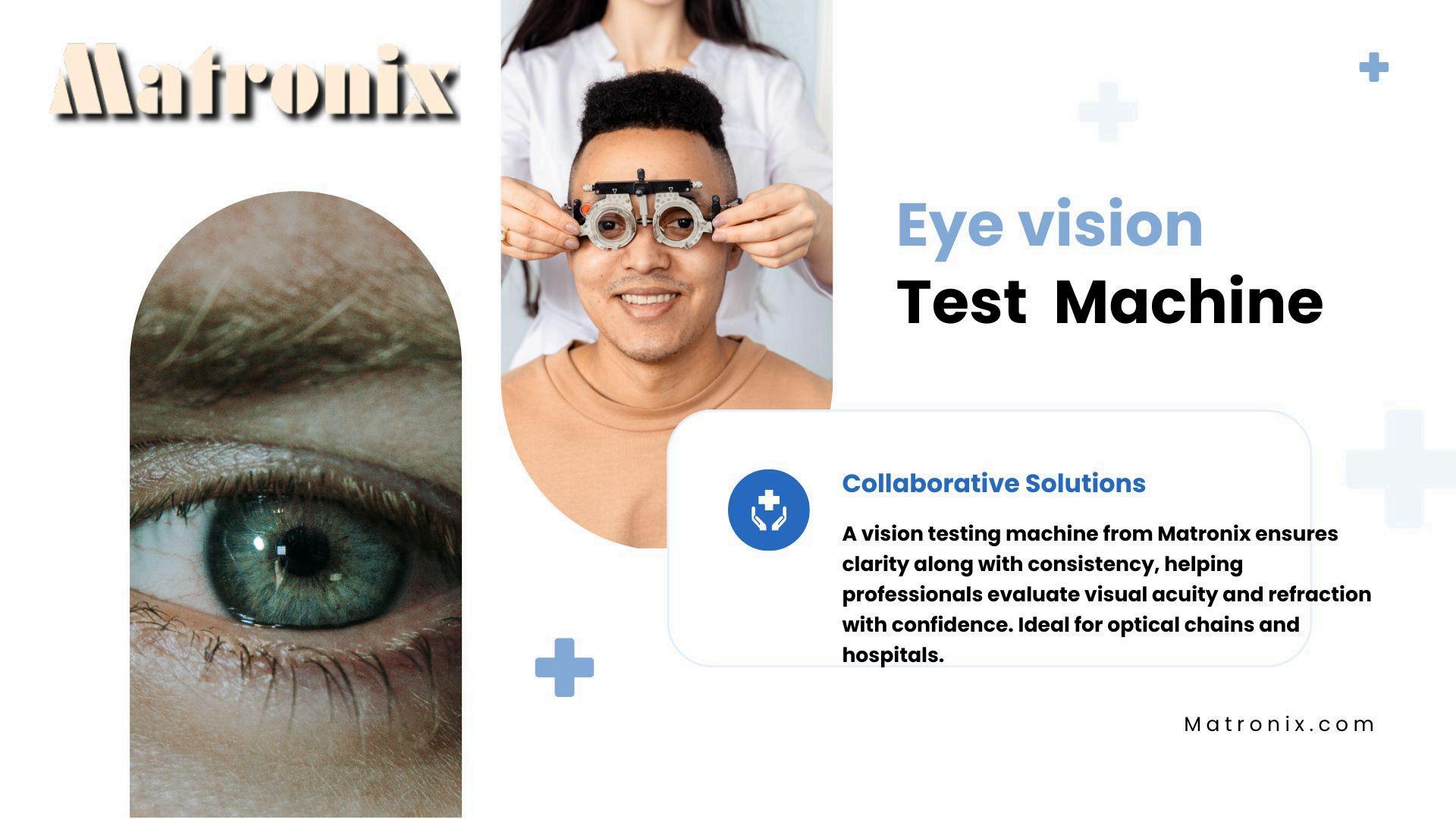
Among the latest innovations in optical diagnostics, the eye check up machine stands out as a key enabler of efficiency. These systems combine multiple testing modules into one compact unit, allowing practitioners to perform vision assessment, refraction, and ocular surface analysis within minutes
Modern versions are equipped with digital interfaces, auto-alignment features, and EMR connectivity. They deliver high precision, minimize manual calibration, and improve data reliability essential qualities for any clinic striving for operational excellence
By integrating these smart diagnostic units into their setup, eye care professionals can dramatically reduce turnaround time while maintaining uncompromised diagnostic quality
Future of Efficiency in Eye Diagnostics
As technology continues to advance, the future of clinical efficiency lies in intelligent integration and predictive analysis Upcoming optical devices will likely feature self-calibrating optics, cloud-based data analysis, and AI-driven predictive maintenance.
These innovations will allow clinics to identify device performance issues before they impact workflow, ensuring uninterrupted operation. Moreover, real-time analytics will help practitioners anticipate patient needs and personalize care accordingly
Conclusion
Efficiency in eye care is achieved through a perfect blend of automation, smart diagnostics, and digital connectivity Modern clinics that adopt advanced optical systems can deliver faster, more accurate, and patient-friendly services setting new benchmarks in visual healthcare.
With intelligent instruments and data integration shaping the future of diagnostics, every eye care facility can transform into a high-performance, precision-driven environment. Investing in the right technology today ensures sustainable success and superior patient outcomes tomorrow