MasterFormat:
03 01 00
03 63 00
SEPTIEMBRE 2024 (Reemplaza a diciembre 2023)
MasterFormat:
03 01 00
03 63 00
SEPTIEMBRE 2024 (Reemplaza a diciembre 2023)
Adhesivo epóxico para construcción
REZI-WELD GEL PASTE STATE es un adhesivo de fijación/unión y un gel de inyección química, de base epóxica, estructural, tixotrópico, de fraguado rápido y de alta viscosidad, alto módulo. REZI-WELD GEL PASTE STATE proporciona altas propiedades mecánicas y resistencia de unión para el concreto y otros sustratos. REZI-WELD GEL PASTE STATE es una pasta epóxica de construcción insensible a la humedad, de dos componentes, que puede allanarse, cepillarse, inyectarse o bombearse.
REZI-WELD GEL PASTE STATE es una pasta fácil de aplicar y fácil de mezclar que es ideal para rellenar grietas, fijaciones, clavijas, hacer parches pequeños y reparaciones generales en superficies de concreto horizontales, verticales y superiores. También es adecuada para sellar superficies, antes de la inyección a presión. Cuando se usa como adhesivo, REZI-WELD GEL PASTE STATE rellena todos los espacios entre las superficies a unir.
Unidades de 10 gal (37.85 L)
Cartuchos universales de 8.6 oz (254 mL), 12/caja
Cartuchos unificados de 21.2 oz (627 mL), 12/caja
COBERTURA
El cartucho de 21.2 fl. oz. (627 mL) rinde 38.25 pulg.3 (626 cm3)
El cartucho de 8.6 fl. oz. (254 mL) rinde 15.52 pulg.3 (254 cm3)
La unidad de 10 gal (37.85 L) rinde 2,310 pulg.3 (0.037 m3)
DURACIÓN EN ALMACENAMIENTO
Dos años desde la fecha de fabricación cuando se guarda en interiores sobre paletas en un área fresca y seca. No se debe guardar el producto afuera.
ESPECIFICACIONES/ESTÁNDARES
• ASTM C881-20 Tipo I, II, IV y V, Grado 3, Clases A, B y C
• AASHTO M 235, Tipo I, II, IV y V, Grado 3, Clases A, B y C
DATOS TÉCNICOS [Pruebas realizadas a 75°F (23.9 °C)]
Las siguientes propiedades físicas se determinaron a una relación de mezcla de 1:1 de A:B por volumen, curado a 75 °F (24 °C) y 50 % de humedad relativa MÉTODO DE PRUEBA RESULTADOS
Consistencia (Según ASTM C 881) No se hunde
Proporción para mezclar 1:1 por volumen
Tiempo de gel (Tiempo en el recipiente/Tiempo trabajando) según ASTM C 881 (60 gms) 14 - 20 minutos
Tiempo de curado (Tiempo de curado completo mínimo) 24 horas a 75 °F (23.9 °C)
Resistencia de unión de corte sesgado
(Según ASTM C882) a 2 días a 14 días
Absorción (Según ASTM-D-570) 0.20 %
MPa)
Temperatura de deflexión térmica (Según ASTM D648)
Coeficiente lineal de encogimiento (Según ASTM D2566) 0.0001 Resistencia a la tensión (Según ASTM D638 a 7 días) 3,080 psi (26.2 MPa)
Elongación de tensión
(Según ASTM D638) 0.9 %
Resistencia de compresión (Según ASTM D695) a 7 días 11,708 psi (80.7 MPa) Módulo de compresión (Según ASTM D 695) a 7 días 244,000 psi (1682.7 MPa)
Contenido de VOC 7 g/L
Todos los datos técnicos son información típica, pero pueden variar debido a los métodos de prueba, condiciones, procedimientos y variables de la materia prima.
Color: Parte A… Blanco
Parte B… Gris
Mezclado… Gris
Preparación de la superficie… Deje áspero mecánicamente o trate con chorro abrasivo el sustrato de concreto. Elimine todo concreto en mal estado y deje una superficie perfilada. El sustrato debe tener una estructura en buen estado y estar libre de polvo, grasa, aceite, suciedad, compuestos de curado, agentes de liberación o cualquier otro tipo de contaminantes superficiales o penetrantes, revestimientos, selladores o similares que puedan perjudicar la unión. No está aprobado usar lijado, grabado al ácido, pulido ni abrasión de alambre como métodos de preparación de la superficie. Aspire o sople el polvo con aire comprimido sin aceites.
Las superficies lisas, como la madera, requieren lijado u otra abrasión mecánica. Las superficies expuestas de acero deben limpiarse con chorro de arena y aspiradora. . . Si no es posible desgrase la superficie y use papel de lija o un cepillo de alambre para revelar el metal continuo y brillante.
CONTINÚA AL REVERSO...
HAMPSHIRE, IL / CARTERSVILLE, GA / YORK, PA FORT WORTH, TX / BENICIA, CA / POMONA, CA
GOODYEAR, AZ / MILTON, ON / SHERWOOD PARK, AB copy the source
Mezclado (Unidades a granel) Acondicione todos los componentes a temperatura sobre 65 °F (18.3 °C) durante 24 horas antes de su uso. Use el método de hervidor doble o almacene el material en una sala tibia por 24 horas, antes de su aplicación. Premezcle cada componente. Mezcle mecánicamente a baja velocidad (600 a 900 rpm) usando un taladro y una paleta Jiffy® o un mezclador de tambor por tres minutos o hasta que esté completamente mezclado mientras raspa los lados para asegurar la mezcla completa de los componentes. El producto mezclado debe tener un color gris uniforme y no debe mostrar franjas. Evite las burbujas de aire. Mezcle solamente cantidades muy pequeñas manualmente por un mínimo de tres minutos o hasta que esté suficientemente mezclado usando la vara para revolver suministrada. Raspe los lados del recipiente para asegurar la mezcla completa de los componentes. Mezcle solamente la cantidad de epóxico que se puede aplicar dentro de la duración en recipiente del producto. La duración en recipiente disminuirá a medida que aumente la temperatura o la cantidad.
Fijaciones de metal en concreto Los agujeros preformados deben ser de aproximadamente 1/8” (3.175 mm) más grandes de diámetro que el diámetro del perno de fijación. La profundidad del agujero debe ser de 10 a 15 veces el diámetro del perno. Llene el agujero desde el fondo hacia arriba, hasta la mitad del agujero, con epóxico mezclado y coloque el perno, clavija o pasador. Complete con más epóxico y proceda con el acabado. Toda configuración de fijaciones o clavijas debe aprobarla o diseñarla un ingeniero. No se recomienda REZI-WELD GEL PASTE STATE para aplicaciones en altura para fijaciones que soporten carga. W. R. MEADOWS recomienda considerar el uso de fijaciones metal para las fijaciones en altura de soporte de carga.
Grietas en estructuras verticales o en altura… Para las grietas y uniones sin movimiento, use una llana para aplicar la pasta en toda la profundidad y deje al ras en la superficie con una sola pasada. Para las reparaciones de inyección en grietas estructurales, use una bomba de gel de doble componente.
Parches en estructuras de concreto REZI-WELD GEL PASTE STATE es un material de alta resistencia para parchado, rellenado, enmasillado y reparación de resquebrajamientos y otros defectos en el concreto. El grosor promedio del parche o relleno no debe ser mayor que ¼” a ½” (6.35 a 12.7 mm) por pasada, sin sobrepasar una profundidad total de 1 ½” (38 mm).
Sellado de superficie… Aplique epóxico mezclado sobre el largo completo de la grieta a inyectar a presión. Asegure la cobertura completa para evitar filtraciones. Las superficies de concreto adyacentes deben lijarse mecánicamente para asegurar una unión apropiada. Permita un tiempo de curado adecuado antes de inyectar.

Unir concreto fresco con concreto endurecido o concreto endurecido con concreto endurecido Use un cepillo de mampostería rígido para aplicar una capa del epóxico mezclado a las superficies de concreto. El promedio de aplicación debe ser de 85 a 100 pies2/gal (7.89 a 9.29 m2). Ponga concreto fresco o endurecido en REZI-WELD GEL PASTE STATE mezclado antes de que el adhesivo epóxico ya no esté pegajoso. Si al REZI-WELD GEL PASTE STATE se le pasa lo pegajoso antes de la aplicación de concreto fresco o endurecido, consulte con un representante de W. R. MEADOWS.
Otras uniones Para unir metal a concreto, aplique una capa del adhesivo [de 85 a 100 pies2/gal (7.89 a 9.29 m2) (20 milésimas de pulgada)] a las superficies preparadas y una inmediatamente. No es necesario comprimir más allá de lo que mantenga las piezas en su lugar.
Limpieza… Limpie las herramientas y equipos con un solvente suave a base de cítricos. El producto curado se puede quitar mecánicamente.
Si no se siguen todas las prácticas estándar de la industria, tales como las del American Concrete Institute (ACI), comprometerá el rendimiento de REZIWELD GEL PASTE STATE. No está hecho para trabajar en condiciones sumergidas o saturadas. Las altas temperaturas ambientales (aire), del producto, y del sustrato disminuirán el tiempo para trabajar. Las aplicaciones en altura deben estar aprobadas o diseñadas por un ingeniero profesional para asegurar la durabilidad y la adhesión/anclaje a largo plazo. Se deben considerar en las aplicaciones estructurales la temperatura de escurrimiento y de servicio. Las temperaturas frías ambientales (aire), del producto, o del sustrato aumentarán el tiempo para trabajar, curado y Bolt-up. Esta hoja de datos no reemplaza las recomendaciones o dibujos de ingeniería o arquitectura. Un ingeniero profesional debe determinar la idoneidad de REZI-WELD GEL PASTE STATE para fijaciones, clavijas, o aplicaciones similares. Este no es un documento de ingeniería independiente. NO LO DILUYA. Mezcle solamente unidades completas. No se recomienda su uso cuando la temperatura del concreto ha estado por debajo de los 40 °F (4 °C) durante las últimas 24 horas o cuando la lluvia sea inminente. No selle grietas bajo presión hidrostática. No entibie el epóxico sobre calor directo.
SALUD Y SEGURIDAD
Evite respirar los vapores o permitir que el solvente con epóxico entre en contacto con la piel. Si este material entra en contacto con la piel, lave profusamente con jabón y agua, no con solvente. El epóxico no utilizado generará calor excesivo, especialmente en grandes cantidades. El epóxico no utilizado debe mezclarse con arena seca en el recipiente para ayudar a disminuir el calor. Consulte la Hoja de datos de seguridad para ver información completa sobre salud y seguridad.
Para ver la hoja de datos de seguridad más reciente, información de sostenibilidad y SDS más recientes, visite www.wrmeadows.com

Product:
Manufacturer: REZI-WELD™ GEL PASTE STATE
Component A
W. R. MEADOWS, INC.
Telephone: (847) 214-2100
Revision Date: 1/24/2023
Product Use: Two Component Epoxy
HMIS
|Health| |Flammability|
|Reactivity|
Page 1 of 3
Part Number: 3715910-A
Address:
300 Industrial Drive
Hampshire, Illinois 60140
In case of emergency, dial (800) 424-9300 (CHEMTREC)
SECTION 2: HAZARDS IDENTIFICATION/EXPOSURE LIMITS
HAZARD STATEMENTS
WARNING!
Causes mild skin irritation. (Category 3)
May cause an allergic skin reaction. (Category 1A)
Suspected of causing genetic defects. (Category 2)
May cause organ damage through
prolonged/repeated exposure. (Category 2)
PRECAUTIONARY STATEMENTS
Avoid direct contact. Avoid breathing mists/sprays.


Chemical Name:
1. Epoxy Resin
2. Ethanediol
3. 1,3-Propanediol, 2-ethyl-2-
(hydroxymethyl)-polymer with 2-(chloromethyl) oxirane
4. Titanium Dioxide
N/A
N/A: Not Applicable
This product contains silica sand. Silica sand contains crystalline silica as a naturally occuring component. Exposure to silica is not expected to occur as the product is supplied as a solution. If product is dried and abraded, appropriate protective measures should be taken to reduce/eliminate Silica exposures.
(SARA) and 40 CFR Part 372, chemicals listed on the 313 List (40 CFR Part 373.65) are identified under the heading "SARA 313."
EYE CONTACT: If irritation develops/persists, move victim from exposure source and into fresh air. Flush eyes with water for
SKIN CONTACT: Remove contaminated shoes/clothing. Cleanse affected areas thoroughly by washing with mild soap and water.
If irritation occurs/persists, seek medical attention. Do not reuse clothing unless thoroughly decontaminated.
INHALATION: If respiratory symptoms develop, move victim from exposure source and into fresh air. If symptoms persist, seek
Under the reporting requirements of Section 313 of Title III of the Superfund Amendments and Reauthorization Act of 1966 fifteen (15) minutes. If symptoms persist, seek medical attention. medical attention.
INGESTION: Do not induce vomiting. Vomiting will cause additional damage to the digestive tract. Wash mouth out with water and seek immediate medical attention. If vomiting spontaneously occurs, keep the head below the hips to prevent lung aspiration.
MOST IMPORTANT SYMPTOMS/EFFECTS, ACUTE AND CHRONIC: See Section Eleven for Symptoms/Effects.
Date of Preparation: 1/24/23
FLASHPOINT: > 300 °F
EXTINGUISHING MEDIA: Water fog, foam, dry chemical, or carbon dioxide.
CHEMICAL/COMBUSTION HAZARDS: Carbon monoxide, carbon dioxide, and incomplete combustion products.
PRECAUTIONS/PERSONAL PROTECTIVE EQUIPMENT: Clear area of unauthorized/unprotected personnel. Do not enter confined fire space without helmet, face shield, bunker coat, gloves, rubber boots, and a positive pressure NIOSH-approved self-contained breathing apparatus.
SPILL OR LEAK PROCEDURES: Evacuate hazard area of unprotected personnel. Dike/contain spilled material. Take up with an approriate absorbent and place in marked/sealed containers for proper disposal. Handle contaminated spill articles and rinsate
as above.
SAFE HANDLING PROCEDURES: Avoid direct contact. May cause skin sensitization.
SAFE STORAGE: Keep containers closed when not in use. Store in cool/dry location.
Chemical Name:
Ethanediol N/E
3. 1,3-Propanediol, 2-ethyl-(Hydroxymethyl)-polymer with 2-
2- (Chloromethyl) Oxirane
4. Titanium Dioxide* N/A
N/E
*: No exposure is anticipated as the product is a solution. N/A: Not Applicable N/E: Not Established
ENGINEERING CONTROLS: None normally required under normal use conditions.
PERSONAL PROTECTIVE EQUIPMENT: Safety glasses, chemical-resistant gloves.
BOILING POINT: N/E
EVAPORATION RATE: N/A
WEIGHT PER GALLON: 11.66
ODOR: Mild Organic
SECTION
VAPOR DENSITY: > 1 (air=1)
pH LEVEL: N/E
PRODUCT APPEARANCE: White Paste
ODOR THRESHOLD: N/D
FLASH POINT: See Section 5 FLAMMABILITY: N/D
VAPOR PRESSURE: N/D
PARTITION COEFFICENT: N/D
VISCOSITY: N/D
STABILITY: Stable.
RELATIVE DENSITY: N/D
AUTOIGNITION TEMPERATURE: N/D
% VOLATILE BY VOLUME: N/A
% VOLATILE BY WEIGHT: N/A
CONTENT: 7 g/L (when mixed)
MELTING/FREEZING POINT: N/D
UEL/LEL: N/D
SOLUBILITY: N/D
DECOMPOSITION TEMPERATURE: N/D
N/A: Not Applicable N/D: Not Determined N/E: Not Established
HAZARDOUS POLYMERIZATION: Will not occur. CONDITIONS AND MATERIALS TO AVOID: Oxidizing agents, strong acids, alkaline materials, amines, polyamines, and polyamides
under uncontrolled conditions.
HAZARDOUS DECOMPOSITION PRODUCTS: Carbon monoxide, carbon dioxide, and incomplete combustion products.
Date of Preparation: 1/24/23
3 of 3
EYE CONTACT: Direct contact may cause mild to moderate eye irritation.
SKIN CONTACT: Direct contact may result in mild to moderate irritation. May cause skin sensitization in susceptible individuals.
INHALATION: Not expected to be an exposure route under normal use conditions.
INGESTION: Not expected to be an exposure route.
SIGNS AND SYMPTOMS: Symptoms of eye irritation include pain, tearing, redness, and swelling. Symptoms of skin irritation include reddening, swelling, and rash. Skin sensitization reactions result in allergic dermatitis. Symptoms include rash, itching, hives, and swelling of extremities. These symptoms may be immediate or delayed up to several hours.
AGGRAVATED MEDICAL CONDITIONS: Pre-existing skin disorders may be aggravated by overexposure to this product.
OTHER HEALTH EFFECTS: None recognized.
ECOTOXICITY:
DEGRADABILITY: BIOACCUMULATIVE POTENTIAL: SOIL MOBILITY: OTHER ADVERSE EFFECTS: N/E: Not Established
WASTE DISPOSAL INFORMATION: Non-hazardous waste. Suitable for fuel blending/incineration.
SECTION
HAZARDOUS/NON-HAZARDOUS MATERIAL: Non-hazardous material.
UN NUMBER: None.
UN PROPER SHIPPING NAME: None.
ENVIRONMENTAL HAZARDS: Not determined.
HAZARD CLASS:
PACKING GROUP:
BULK TRANSPORTATION INFORMATION: Not applicable. Product not supplied in bulk form.
SPECIAL PRECAUTIONS: None.
OTHER REGULATORY CONSIDERATIONS: None.
PREPARATION DATE: 1/24/2023
PREPARED BY: Dave Carey from the use thereof. We assume no responsibility for injury from the use of this product described herein.
The information contained herein is based on the data available to us and is believed to be correct. However, we make no warranty, expressed or implied regarding the accuracy of this data or the results to be obtained

Product:
SECTION 1: PRODUCT AND COMPANY IDENTIFICATION
Component B
Manufacturer: REZI-WELD™ GEL PASTE STATE
Part Number: 3715910-B
300 Industrial Drive W. R. MEADOWS, INC.
Telephone: (847) 214-2100
Revision Date: 5/16/2024
Product Use: Two Component Epoxy
|Health| |Flammability| |Reactivity|
|Personal Protection|
Chemical Name:
1. Amine Blend*
2. Para-Nonyl Phenol
Address:
Hampshire, Illinois 60140
In case of emergency, dial (800) 424-9300 (CHEMTREC)
HAZARD STATEMENTS
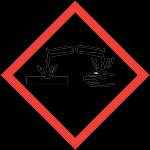
DANGER!
Causes severe skin burns and eye damage. (Category 1B) May cause organ damage through
prolonged/repeated exposure. (Category 2)
May cause an allergic skin reaction. (Category 1)
Harmful if inhaled. (Category 4)
Suspected of damaging fertility or unborn child. (Category 2)
PRECAUTIONARY STATEMENTS
Avoid direct contact.
Wear protective clothing.
Avoid inhalation of mists/vapors.
CAS % by SARA
313 (@25°C)
N/A: Mixture 15-40 No
84852-15-3 5-20 No
N/A
N/A
Phenol (CAS#90-72-2), Fatty Acids, Tall Oil, Reaction Products With Tetraethylenepentamine (CAS#68953-36-6), 3,6,9HMIS


N/A: Not Applicable
*Amine blend consists of the following materials: N-aminoethylpiperazine (CAS#140-31-8), 2,4,6-Tris (Dimethylaminomethyl)
Ethanol (CAS#111-41-1)
This product contains silica sand. Silica sand contains crystalline silica as a naturally-occuring component. Exposure to silica is not expected to occur as the product is supplied as a solution. If the product is dried/abraded, appropriate protective measures should Triazaundecamethylenediamine (CAS#112-57-2) Phenol, 2-Nonyl,-Branched (CAS#91672-41-2), 2-(2-Aminoethylamino)
be taken to prevent silica exposure.
Under the reporting requirements of Section 313 of Title III of the Superfund Amendments and Reauthorization Act of 1966 (SARA) and 40 CFR Part 372, chemicals listed on the 313 List (40 CFR Part 373.65) are identified under the heading "SARA 313."
SECTION 4: EMERGENCY AND FIRST AID
EYE CONTACT: Immediately flush eyes with water. Seek immediate medical attention.
SKIN CONTACT: Immediately remove contaminated clothing and wash affected areas with soap and water. If persistent
irritation occurs, seek medical attention.
INHALATION: Move victim from exposure source and into fresh air. If symptoms persist, seek medical attention.
INGESTION: Immediately seek medical attention. Do not induce vomiting and do not give anything by mouth.
MOST IMPORTANT SYMPTOMS/EFFECTS, ACUTE AND CHRONIC: See Section Eleven for Symptoms/Effects.
Date of Preparation: 5/16/24
FLASHPOINT: > 200 °F
SAFETY DATA SHEET
2 of 3
EXTINGUISHING MEDIA: Use water fog, foam, dry chemical, or carbon dioxide.
CHEMICAL/COMBUSTION HAZARDS: Nitrogen oxides, incomplete combustion products, carbon monoxide, and carbon dioxide.
PRECAUTIONS/PERSONAL PROTECTIVE EQUIPMENT: Do not enter confined fire space without helmet, face shield, bunker coat, gloves, rubber boots, and a positive pressure NIOSH-approved self-contained breathing apparatus.
SPILL OR LEAK PROCEDURES: Dike and contain. Take up with an absorbent material and place in sealed/marked containers for disposal. Handle spill clean-up materials and rinsate as contaminated materials. Avoid direct contact and utilize appropriate personal protective equipment.
SAFE HANDLING PROCEDURES: Avoid direct contact and inhalation of vapors/mists.
SAFE STORAGE: Keep containers closed when not in use. Store in cool, dry location.
OSHA
Chemical Name:
ACGIH
TLV/CEILING
1. Amine Blend N/E
2. Para-Nonyl Phenol
N/E: Not Established respiratory tract.
ENGINEERING CONTROLS: Use ventilation as required to control vapor concentrations. Vapors/mists may be irritating to the
PERSONAL PROTECTIVE EQUIPMENT: Safety glasses, chemical-resistant gloves.
VAPOR DENSITY: > 1 (air=1)
EVAPORATION RATE: < 1 (ether = 1) pH LEVEL: N/A
WEIGHT PER GALLON: 13.23
ODOR: Strong Amine
FLASH POINT: See Section 5
VAPOR PRESSURE: N/D
PARTITION COEFFICENT: N/D
PRODUCT APPEARANCE: Black Paste
ODOR THRESHOLD: N/D
FLAMMABILITY: N/D
RELATIVE DENSITY: N/D
AUTOIGNITION TEMPERATURE: N/D
% VOLATILE BY VOLUME: N/E
% VOLATILE BY WEIGHT: N/E
UEL/LEL: N/D
SOLUBILITY: N/D
N/D: Not Determined
STABILITY: Stable.
HAZARDOUS POLYMERIZATION: Will not occur.
VOC CONTENT: 7 g/L (when mixed) MELTING/FREEZING POINT: N/D
DECOMPOSITION TEMPERATURE: N/D
N/E: Not Established
HAZARDOUS DECOMPOSITION PRODUCTS: Nitrogen oxides, carbon monoxide, and incomplete combustion products.
INHALATION: Mists/vapors may be severely irritating to the respiratory tract. Corrosive effects are possible.
INGESTION: Not expected to be an exposure route. If ingested, this product will cause severe irritation of the digestive tract with
VISCOSITY: N/D corrosive effects.
CONDITIONS AND MATERIALS TO AVOID: Oxidizing agents, strong acids, and organic bases. Reacts with a considerable release of heat.
EYE CONTACT: Direct contact is severely irritating to the eyes, causing pain, redness, and swelling. Product is corrosive and may cause SKIN CONTACT: Direct contact is severely irritating to the skin and may cause chemical burns. May cause skin sensitization. May be
SIGNS AND SYMPTOMS: Symptoms of eye irritation include pain, tearing, blurred vision, burning, and redness. Symptoms of skin irritation
include redness, pain, and swelling. Skin sensitization results in allergic dermatitis that may include rash, itching, hives, and swelling of
BOILING POINT: N/E chemical burns. Product vapors may also be irritating. toxic/harmful if absorbed through the skin. of extremities. Symptoms of respiratory irritation include coughing, shortness of breath, chest discomfort, and reduced lung function.
AGGRAVATED MEDICAL CONDITIONS: Pre-existing skin, eye, and respiratory disorders may be aggravated by exposure to this product. N/E
OTHER HEALTH EFFECTS: Repeated exposures to high concentrations may cause injury to the liver, kidney, and respiratory system.
Date of Preparation: 5/16/24
ECOTOXICITY:
SOIL MOBILITY:
Page 3 of 3 3715910-B
DEGRADABILITY: BIOACCUMULATIVE POTENTIAL:
OTHER ADVERSE EFFECTS: N/E: Not Established
SECTION 13: WASTE DISPOSAL INFORMATION
WASTE DISPOSAL INFORMATION: Unused product is not classified as a hazardous waste. Dispose by incineration or fuel blending.
HAZARDOUS/NON-HAZARDOUS MATERIAL: Hazardous.
UN NUMBER: 2735
HAZARD CLASS:
PACKING GROUP:
UN PROPER SHIPPING NAME: Amines Liquid Corrosive, N.O.S. (aminopropyldiethanolamine)
ENVIRONMENTAL HAZARDS: None recognized.
BULK TRANSPORTATION INFORMATION: Not applicable; product not supplied in bulk.
SPECIAL PRECAUTIONS: Avoid direct contact.
OTHER REGULATORY CONSIDERATIONS: None recognized.
PREPARATION DATE: 5/16/2024
PREPARED BY: Dave Carey
The information contained herein is based on the data available to us and is believed to be correct. However, we make no warranty, expressed or implied, regarding the accuracy of this data or the results to be obtained
from the use thereof. We assume no responsibility for injury from the use of this product described herein.