
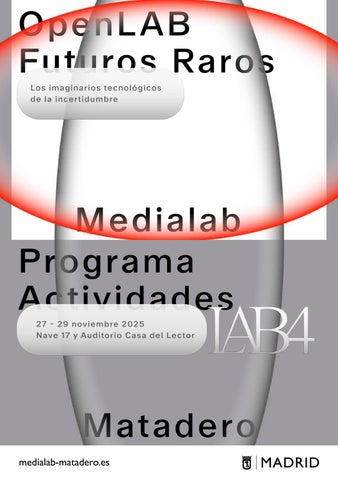
Los imaginarios tecnológicos de la incertidumbre


Los imaginarios tecnológicos de la incertidumbre
27 - 29 noviembre 2025

Nave 17 y Auditorio Casa del Lector





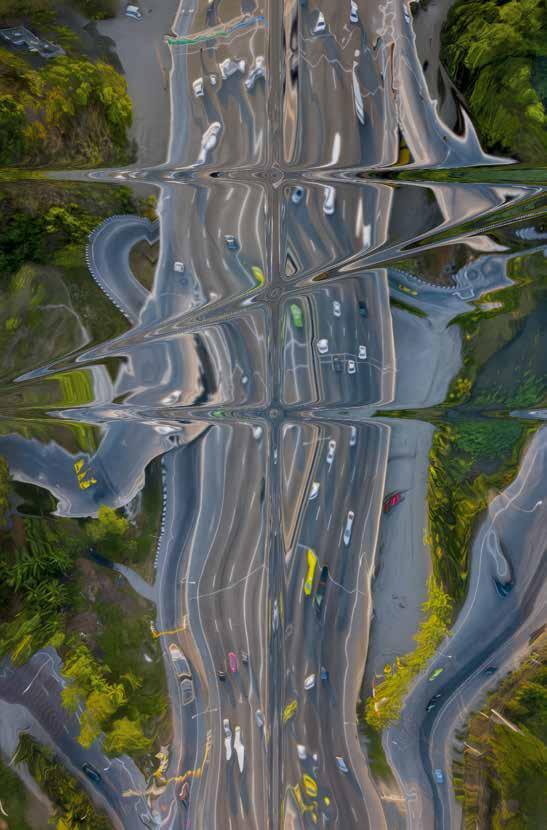
El programa temático anual de Medialab LAB 4 Futuros Raros se adentra en el imaginario tecnológico de la inestabilidad: su potencia, su instrumentalización y las posibles alternativas que se esconden en sus grietas y fallos. En su acto final Medialab convoca a artistas, tecnólogos, diseñadores, pensadores y ciudadanías inquietas a explorar los cruces entre la imaginación tecnológica y una sociedad que oscila entre el deseo de control y la extrema volatilidad del presente.
En un tiempo en que las narrativas de estabilidad, seguridad y progreso lineal se desvanecen, la volatilidad se vuelve amenaza y recurso. Las fantasías ciberpunk marcan agendas políticas. Las distopías se transforman en modelos de negocio. Lo que antes era ficción ahora dicta transformaciones materiales en infraestructuras, políticas y protocolos. OpenLAB Futuros Raros propone mirar de frente ese punto de fricción. Explorar los elementos materiales y simbólicos que están reescribiendo los fundamentos del mundo heredado del siglo XX.

A lo largo de tres días de presentaciones, conferencias y actuaciones, Medialab invita a pensar desde los extremos, seguir las conexiones ocultas y abrir espacio a alternativas radicales. En el fondo, se trata de observar cómo el poder tecnológico oscila entre el control y el caos, y preguntarnos qué parte de ese vértigo estamos dispuestos, o no, a habitar.
Para más información → medialab-matadero.es
Jueves 27 noviembre 2025, 19:00h
Nave Una
Presentación de prototipo colaborativo
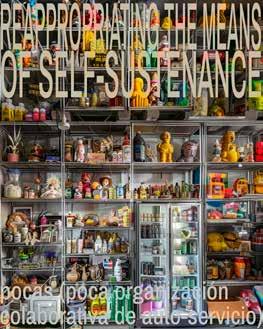
POCAS emplea la ciencia ficción económica para imaginar una red mutualista autónoma en una versión alternativa de la Ciudad de México contemporánea, en la que la computación distribuida compite con el capitalismo.
Es un proyecto de investigación que explora cómo la informática distribuida puede sustentar economías mutualistas y postcapitalistas. Inspirado en siglos de autogobierno y décadas de tecnologías peer-to-peer, mapea cómo las herramientas y prácticas existentes pueden permitir infraestructuras autónomas y colaborativas hoy en día.
https://pocas.store/
Este prototipo ha sido desarrollado de manera colaborativa a partir de una propuesta inicial de Pablo Somonte Ruano
https://pablo.sx/
Jueves 27 noviembre 2025, 19:15h
Nave 17
Presentación de proyecto

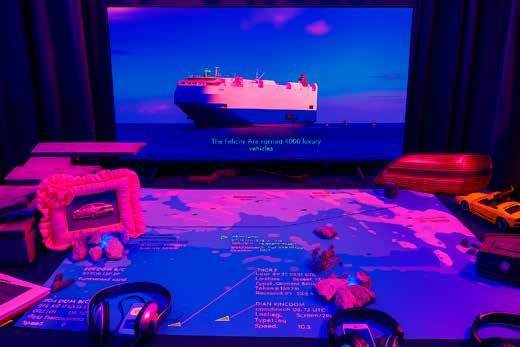
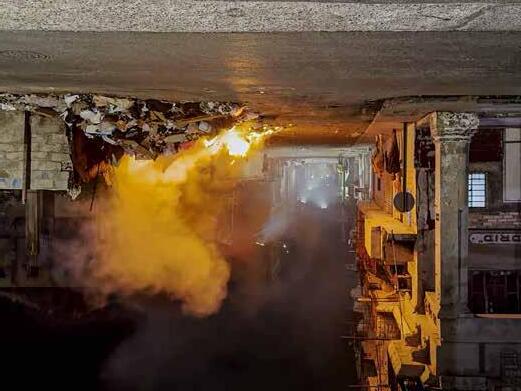
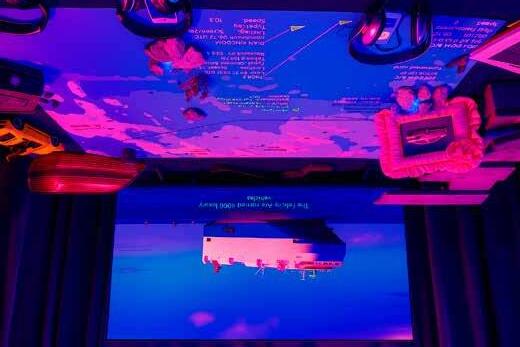
Costes hundidos: la saga del Felicity Ace toma como caso de estudio el hundimiento en 2022 del buque de carga Felicity Ace —que se hundió frente a las Azores con casi 4000 vehículos eléctricos de lujo a bordo— para analizar las contradicciones del capitalismo «verde», la logística y la responsabilidad ecológica.
El proyecto explora lo que sucede cuando las infraestructuras del progreso tecnológico literalmente prenden fuego, dejando al descubierto la volatilidad y la opacidad de unos sistemas diseñados para que parezcan perfectos. A medio camino entre relato especulativo y reconstrucción forense, la conferencia performativa entrelaza narraciones de archivo, lecturas de manifiestos, fragmentos sonoros y cartografías visuales. Desde diferentes espacios, Cuesta y Allen alternan
sus voces en un diálogo híbrido y performativo, pasando de lo factual a lo mítico, de la química de los incendios del litio al legado moral y material de los restos del naufragio. Basándose en la investigación forense medioambiental, la política marítima y la investigación artística, la obra sitúa los naufragios como restos forenses de las mitologías del capitalismo tardío. ¿Qué debe permanecer bajo el agua? ¿De qué naufragios seguimos dependiendo? ¿Qué hay, de hecho, ahí abajo?
BIOS
Elisa Cuesta es una artista y diseñadora industrial que investiga las relaciones entre sistemas ecológicos, infraestructuras técnicas y narrativas especulativas. Su práctica combina investigación artística, diseño y colaboración transdisciplinar para crear instalaciones, cartografías y artefactos híbridos. En 2024 fue comisionada para la Bienal del Clima (Avilés, 2026) y colabora con TBA21–Academy en proyectos sobre ecologías ampliadas. Ha mostrado su trabajo en la Science Gallery Dublin, LABoral, Nest (La Haya) y el Museo de Ciencia y Tecnología de Belgrado.
https://elisacuesta.com/
Jamie Allen es un artista e investigador que examina cómo las infraestructuras tecnológicas configuran las ecologías materiales, sociales y simbólicas. Formado en ingeniería, arte multimedia y diseño, su práctica combina crítica infraestructural, narrativa especulativa y colaboración a largo plazo. Es investigador sénior en el Critical Media Lab (Basilea), profesor visitante en la Universidad de Cambridge y cofundador de metaLAB (Europa), continent. y Sunk Costs. Ha expuesto en documenta14, HKW, Savvy Contemporary y Science Gallery Dublin.
https://jamieallen.com/

Presentación de proyectos
Jueves 27 noviembre 2025, 19:45h Nave 17
La Research Unit es una línea de trabajo experimental de Medialab Matadero que explora las señales débiles y los imaginarios emergentes de un mundo que está por llegar. Su misión es investigar o imaginar productos y servicios que conectan la especulación con la infraestructura, transformando escenarios futuros en herramientas para interpretar el presente.
En 2025 Medialab ha encargado la tarea de coordinar la Research Unit a Business Serio™, una agencia de pensamiento, creatividad y acción cultural con base en Madrid (https://serio. business/). Han recibido de Medialab Matadero una consigna: crear un comando creativo para detectar rastros de presentes tecnológicos raros y acelerarlos.
Viernes 28 noviembre 2025, 19:45h
Auditorio de la Casa del Lector
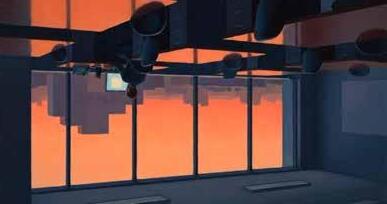
The Sunsetting Project crea tecnología de recuperación para organizaciones que avanzan más allá de la economía del agotamiento. Desarrollamos sistemas de descanso estructurado,
desaceleración corporativa y regeneración laboral a gran escala. La productividad tiene nueva arquitectura: pausa, retorno y resistencia.

Sábado 29 noviembre 2025, 16:00h
Nave 17 Terrario
Eurocore trata a Europa como un campo emergente de estéticas volátiles en las que la circulación y mutación constante de imaginarios codificados movilizan la incertidumbre y alientan fantasías autoritarias. Este micro proyecto experimental utiliza el mismo lenguaje de las redes para observar cómo se desplaza nuestra comprensión de la propaganda: de un modelo tradicional “de arriba abajo” hacia una persuasión ambiental y subliminal que no fluye como un mensaje, sino como una vibe.

Sábado 29 noviembre 2025, 17:00h Nave 17 Terrario

Warmony es una plataforma de defensa para la era post-letal. Sistemas autónomos que detectan, aíslan y neutralizan amenazas mvanteniéndolas a la vista del registro público. La guerra se convierte en diseño: medible, trazable y responsable. Bienvenidos a la nueva supervivencia: control, exposición y recuperación.
Sábado 29 noviembre 2025, 18:45h
Auditorio de la Casa del Lector
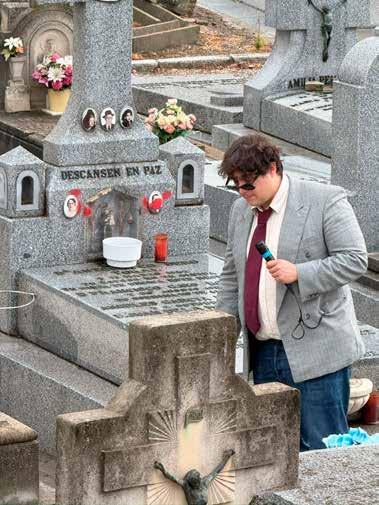
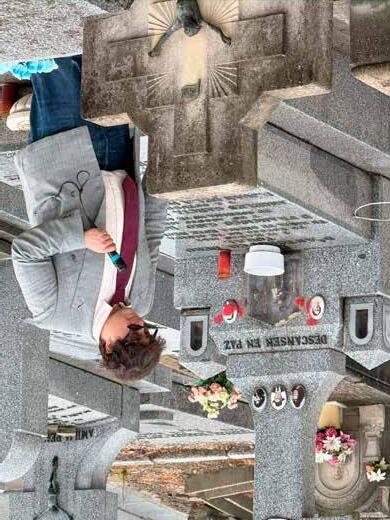
The End of Death (El fin de la muerte) es un archivo público que documenta cómo la muerte está siendo redefinida. Reunimos y difundimos registros audiovisuales de las nuevas prácticas en torno a la inmortalidad: desde la criónica, los legados en IA y los cementerios digitales hasta los memoriales posthumanos, las convenciones transhumanistas y las nuevas infraestructuras espirituales.
Jueves 27 noviembre 2025, 20:00h
Nave 17
Presentación de prototipo colaborativo
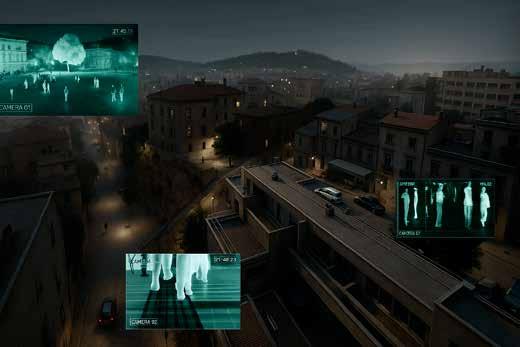
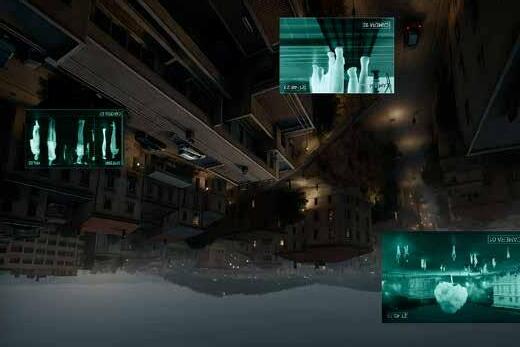
Navigating Militarized Urban Futures (Explorando futuros urbanos militarizados) es un proyecto de investigación especulativa que analiza cómo la arquitectura, la vigilancia y la tecnología se entrelazan en la producción de futuros urbanos militarizados.
A través de un enfoque interdisciplinar, el prototipo examina los mecanismos mediante los cuales la lógica bélica se infiltra en la planificación urbana, los dispositivos de seguridad y la gestión del espacio público, explorando posibles escenarios de resistencia y reapropiación.
Este prototipo ha sido desarrollado de manera colaborativa a partir de una propuesta inicial de Mark Cinkevich.
https://www.instagram.com/m_cinkevich/
Jueves 27 noviembre 2025, 20:15h Nave 17
Film - USA, 2020, 9’ (V.O.S.E.) una organización dedicada a las formas de vida que han sido alteradas de manera intencionada mediante la domesticación, la cría selectiva, el cultivo de tejidos o la ingeniería genética. Anteriormente fundó el grupo de arte e ingeniería The Institute for Applied Autonomy.
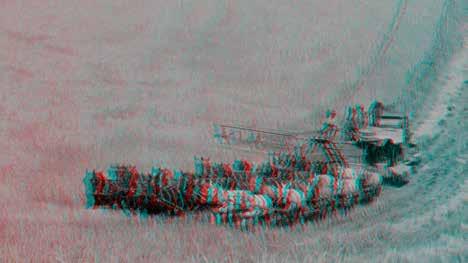
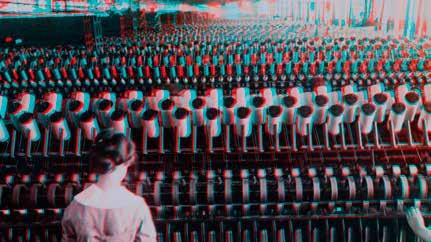
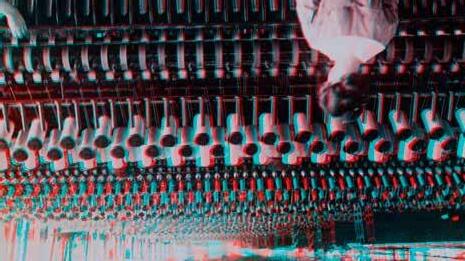
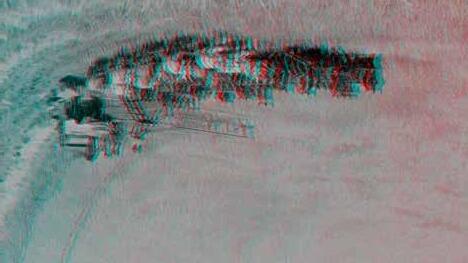
Codex Entropia narra una historia alternativa en la que una civilización antigua desarrolla complejas tecnologías informáticas animales y almacena información en paisajes.
La película, creada a partir de imágenes anaglifas encontradas en un sótano, es a la vez un relato épico y una fábula admonitoria que muestra los frágiles vínculos entre la naturaleza, los códigos y las creencias.
BIO
Richard Pell es fundador y director del Center for PostNatural History (Pittsburgh, EE. UU.),
https://www.postnatural.org/
Jueves 27 noviembre 2025, 20:30h
Nave 17
Conferencia performativa
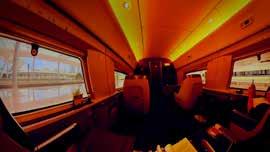
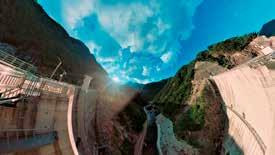
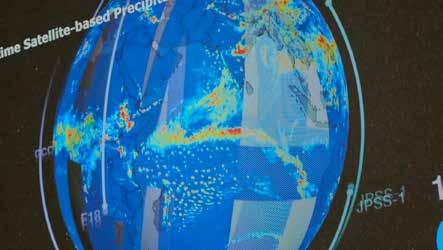
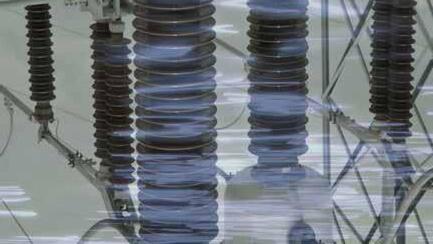
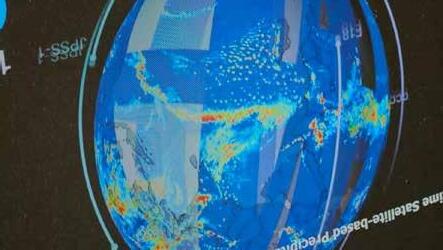
En un videoensayo en directo inédito, Solveig Qu Suess explora las infraestructuras de la visión y la percepción para pensar cómo la modernidad energética influye en nuestra forma de ver y relacionarnos.
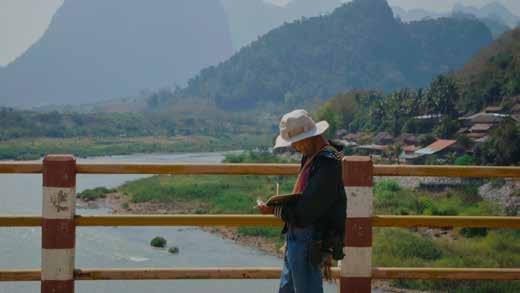
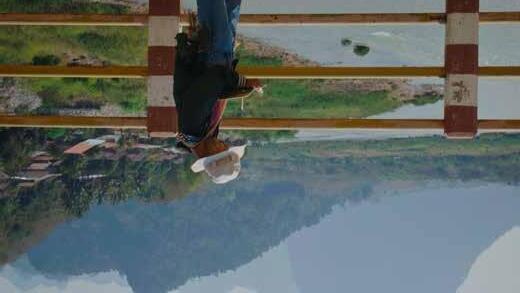
Parte de las transferencias ópticas de la era de las reformas en China, atraviesa las transiciones sostenibles del sudeste asiático a lo largo del río Mekong y se adentra en las entrañas de los sistemas de comunicación contemporáneos.
Su trabajo combina realización cinematográfica, archivo e investigación de campo para analizar cómo la imagen, el trabajo y el deseo configuran una estética y política de la interconexión.
Atenta a los ritmos y los intersticios, su práctica se enfoca en lo que queda sin registrar, sin mostrar o medio olvidado: los residuos que continúan vibrando bajo las estructuras tecnológicas. Examina las preguntas estéticas y perceptivas que emergen en sistemas en transformación y cómo los cambios de escala o territorio modifican lo que puede ser percibido, representado o sentido. Al rastrear estos desplazamientos, Suess sugiere cómo atravesar lo monstruoso, lo incierto y las temporalidades superpuestas de nuestro presente mediante nuevas estrategias culturales.
BIO
Solveig Qu Suess es una artista e investigadora que trabaja en el ámbito del cine documental, la instalación y la escritura. Su práctica se mueve en los espacios generados por cambios sistémicos, rastreando cómo el poder y la tecnología dan forma a las experiencias colectivas e íntimas del tiempo y el espacio. Moviéndose entre sistemas planetarios y archivos privados, su trabajo extrae las relaciones entre los paisajes infraestructurales y emocionales. Sus películas e instalaciones se han presentado internacionalmente en instituciones y festivales como el Festival Internacional de Cine de Róterdam (IFFR), Haus der Kulturen der Welt (Berlín), Onassis Stegi (Atenas), la Trienal de Arquitectura de Lisboa, Jameel Arts Centre (Dubái), ZKM (Karlsruhe), la Trienal de Imagen de Guangzhou, la Bienal de Gotemburgo y Kunsthall Trondheim, entre otros.
https://www.instagram.com/solveigsuess/
Viernes 28 noviembre 2025, 16:00h
Nave 17 Aulario
Presentación y sesión especulativa colectiva
Error 417 Expectation Failed Foundation y Medialab
Matadero presentan 5 Petaflops Against Empire es una serie de prototipos especulativos, micro-scripts e instrucciones/hacks que exploran cómo podemos recuperar el poder informático colectivo.
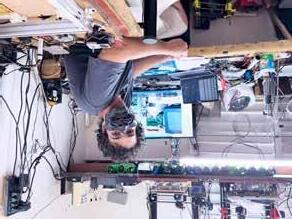
El proyecto surge de la imaginación de bloques de viviendas de hormigón en la ciudad natal de Martix, Wronki, Polonia, donde imagina a los residentes de los apartamentos post-PRL con sus muebles modulares construyendo micro servidores GPU. El proyecto se centra en recuperar el poder de microcomputación, entre otros métodos, de los rastreadores publicitarios que operan en todos los navegadores, pero también explora la conexión de ordenadores en redes y, en general, la búsqueda de poder computacional dondequiera que se esconda.
En esta sesión experimental, Navrot proporciona un marco ficticio/especulativo en el que todos los participantes interactuan con diferentes roles en un escenario futuro o potencial que se inspirará en la investigación de Navrot y en su propia experiencia arraigada en la realidad de Europa del Este.
BIOS
Martix Navrot es intérprete, poeta, artista visual, profesor universitario, tecnólogo creativo y programador de IA que trabaja en la intersección entre los videojuegos, el código abierto y el pensamiento blockchain. Su práctica artística y de investigación gira en torno al futurismo queer, la
imaginación radical y la crítica de la gran tecnología, el absurdo y el juego. Crea sistemas, juegos, LARP, aplicaciones, objetos reales y performances utilizando el código y la ficción especulativa como herramientas de resistencia contra las infraestructuras y convenciones dominantes, explorando la microestética de Internet y las prácticas digitales guerrilleras. Martix ha expuesto su trabajo y ha impartido talleres y conferencias en el MoMA de Varsovia, la Fundación de Arte Krupa de Breslavia, el Zamek Ujazdowski de Varsovia, la Morris Gallery de Londres y SODA Manchester, el Unsound Festival de Cracovia, entre otros.
https://martixnavrot.com/
Error 417 Expectation Failed es una fundación independiente que apoya prácticas artísticas relacionadas con culturas digitales y temáticas tecnopolíticas urgentes. En 2025, se ha centrado en proyectos que desafían los sistemas tecnocráticos mediante la desinformación, la exclusión voluntaria y la resistencia, oponiéndose de forma solidaria y creando espacios para prácticas tecnológicas que satisfagan las necesidades colectivas en lugar de explotarlas.
https://error417.expectation.fail/
Viernes 28 noviembre 2025, 17:00h
Nave 17 Aulario
Presentación performativa
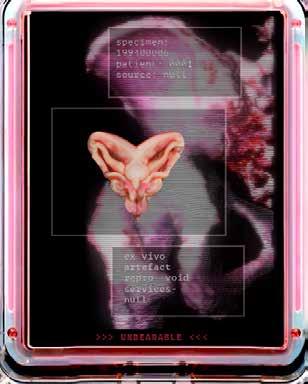
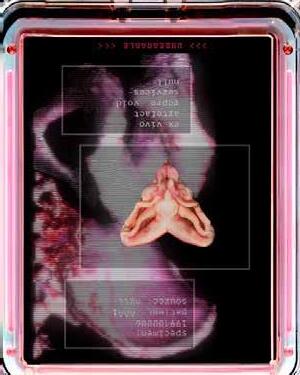
La artista Lyndsey Walsh ha generado Unbearable como una práctica friccional de resistencia frente al relato de la “reproducción” y sus múltiples mutaciones tecnocientíficas y digitales.
Esta práctica nace de la serie Unbearable: órganos generados desde una imaginación indisciplinada y mediada tecnológicamente que no puede sostener ningún potencial reproductivo y que, en su lugar, engendra nuevos modos posibles de existir biológica y biomaterialmente.
Para OpenLAB Futuros Raros, Lyndsey activa Unbearable en forma de presentación performativa para desplegar la historia del cuidado, las prácticas DIY, la tecnociencia y la violencia sistémica que rodea a los llamados órganos reproductivos y a los cuerpos que los portan. Lyndsey propone una especulación crítica en la que los futuros posibles cuestionan las mismas construcciones de los regímenes digitales autoritarios en su intento de apropiarse de los medios de reproducción.
En colaboración con Error 417 Expectation Failed Foundation.
https://error417.expectation.fail/
BIO
Lyndsey Walsh es artista, escritora e investigadora radicada en Berlín. Su trabajo cuestiona los binarismos culturales entre lo humano y lo no humano, lo enfermo y lo sano, lo vivo y lo maquínico, desde perspectivas Crip, queer e interseccionales. Ha sido artista residente en el Departamento de Biofísica Experimental de la Universidad Humboldt de Berlín y ha participado en eventos como Frieze Art Week New York, Berlin Biennale, Transmediale/CTM y la Ural Biennial.
https://lyndseywalsh.com/
Viernes 28 noviembre 2025, 18:45h
Auditorio Casa del Lector
Presentación de prototipo colaborativo
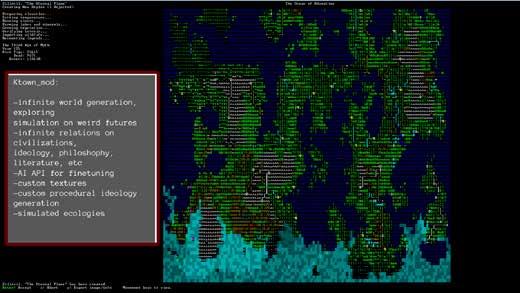
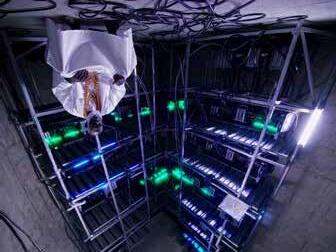
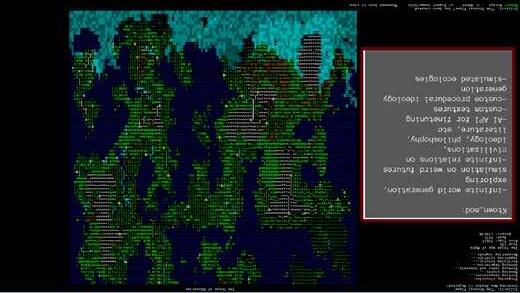
Ktown: Futuras epistemologías de la intelogenesis, es una propuesta de modificación de Dwarf Fortress, un simulador de mundos conocido por su complejidad y capacidad de dar lugar a narrativas emergentes.
Este proyecto experimental integra APIs de IA generativa de código abierto para enriquecer el juego con eventos dinámicos, diálogos satíricos y descripciones ambientales que responden a la simulación. Las narrativas resultantes son caóticas e impredecibles y evocan futuros raros y estéticas digitales fragmentadas.
Este prototipo ha sido desarrollado de manera colaborativa a partir de una propuesta inicial del colectivo Gaara (Ian Margo y Levi ‘Yitzhak’ Jiménez)
https://www.instagram.com/levi.yitzhak/ https://www.instagram.com/3_fieldware/
Viernes 28 noviembre 2025, 19:00h
Auditorio Casa del Lector
Presentación de proyecto
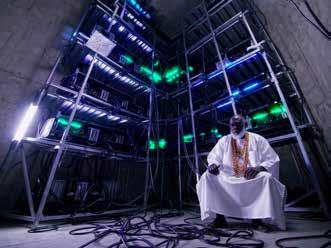
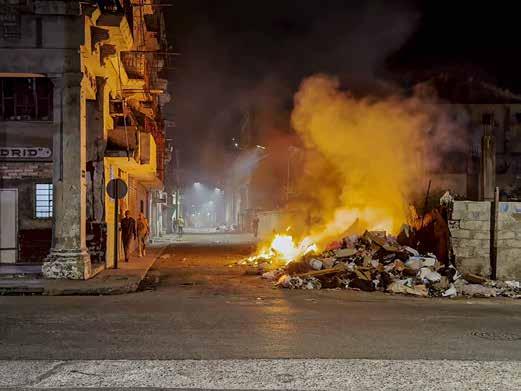
Ambientada en una La Habana especulativa y embebida de cultura cripto de la década de 2030, Oracle Index es un relato cinematográfico expandido en forma de etnografía imaginaria.
Proyecta una Cuba que, bajo una intensa presión geopolítica, adopta la “futarquía” - una forma de gobierno mediante mercados de predicción, surgido del mismo entorno transhumanista que también dio lugar a las criptomonedas— como base de su economía planificada en fase avanzada.
Mientras la ideología define los fines y los especuladores globales determinan los medios, los excluidos de las plataformas oficiales responden inventando culturas paralelas de apuestas: redirigen los flujos de datos estatales a La Bolita,
la histórica lotería clandestina de Cuba. Descodifican los resultados a través de La Charada y los oráculos de la santería. Y amplían estas tradiciones con herramientas digitales.
El relato se desarrolla a través de una serie caleidoscópica de fragmentos de archivo, seleccionados de la colección personal de un antropólogo anónimo. Comprende entrevistas, notas de campo íntimas, grabaciones de la televisión estatal cubana, extractos de redes sociales y diarios de sueños de jugadores clandestinos de La Bolita.
BIOS
Nestor Siré es un artista multimedia cubano afincado en La Habana y Ámsterdam cuyo trabajo investiga cómo las infraestructuras tecnológicas configuran y son configuradas por la vida cotidiana. Desde una perspectiva transdisciplinar que combina antropología, estudios de redes y teoría crítica de los medios, traduce circuitos informales y prácticas vernáculas del Sur Global en instalaciones y plataformas digitales. Ha expuesto en instituciones como el New Museum, The Photographers’ Gallery, MUAC y en bienales internacionales como Gwangju, Varsovia y La Habana.
https://nestorsire.com/
Steffen Köhn es cineasta, artista audiovisual y profesor asociado en la Universidad de Aarhus. Su trabajo cruza cine, arte y etnografía, explorando infraestructuras alternativas y estrategias de supervivencia en los paisajes sociotecnológicos actuales. Combina etnografía experimental, estudios de ciencia y tecnología y ficción, apropiándose de tecnologías emergentes y estéticas de redes DIY o videojuegos. Sus películas e instalaciones se han mostrado en la Berlinale, el Instituto Aksioma, Kunsthaus Graz y The Photographers’ Gallery de Londres.
https://steffenkoehn.com/
Viernes 28 noviembre 2025, 19:30h
Auditorio Casa del Lector
Presentación de prototipo colaborativo
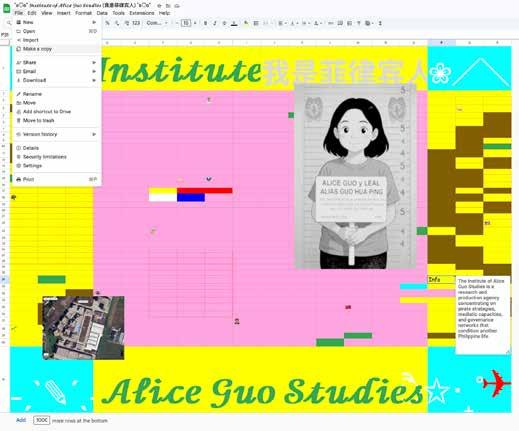
El Instituto de Estudios Alice Guo (copia) es una agencia de investigación y producción de contenidos centrada en las estrategias piratas, las capacidades mediáticas y las redes de gobernanza que condicionan «otra» vida filipina.
La alcaldesa fugitiva y estafadora Alice Guo es nuestra persona de interés: la utilizamos como medio para investigar nuestras realidades extremas. ¿Qué podemos aprender de las operaciones de estafa amorosa, las identidades ficticias y la seductora propaganda de TikTok para imaginar nuevos institutos capaces de afrontar nuestras condiciones actuales?
Este prototipo ha sido desarrollado de manera colaborativa a partir de una propuesta inicial de Mac Andre Arboleda
https://sickinternet.me/
Viernes 28 noviembre 2025, 20:00h
Auditorio Casa del Lector
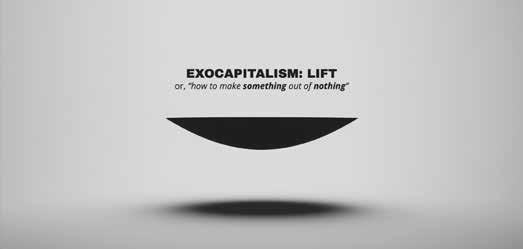
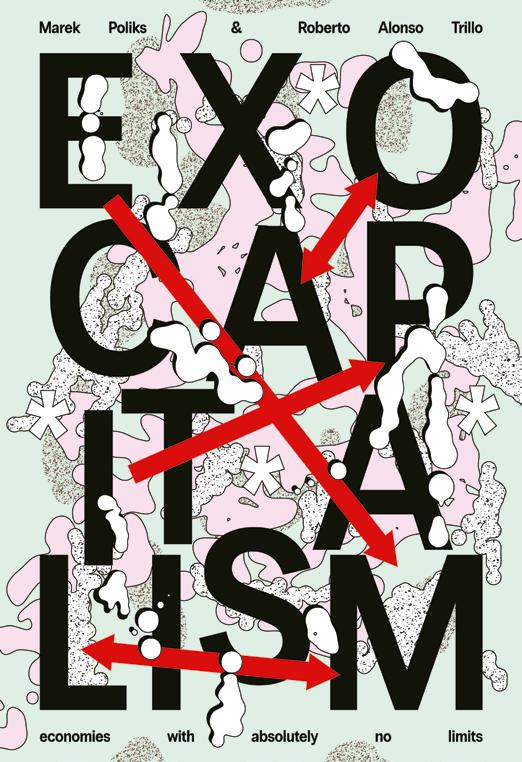
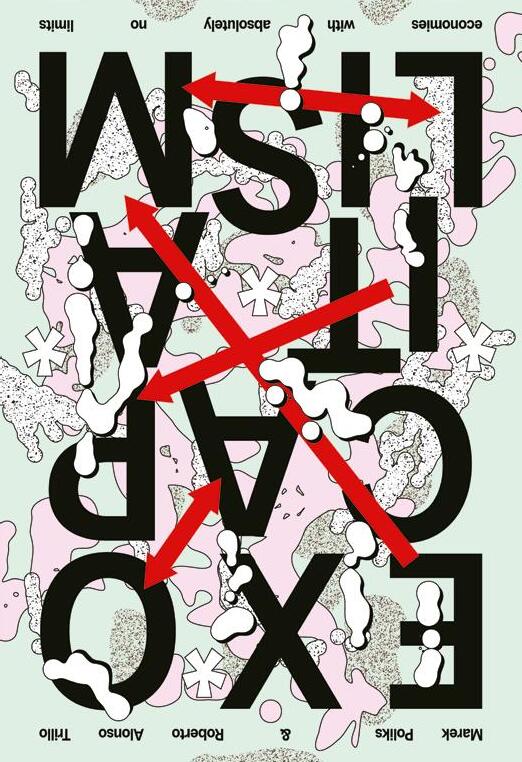
Exocapitalismo de Marek Poliks y Roberto Alonso Trillo ha sido aclamado como «una obra que define una época, un libro que transmite una idea con el potencial de resonancia de The Stack, de Benjamin Bratton, o Empire, de Hardt y Negri» (New Models).
Conferencia
El núcleo de su argumento es la idea de que el capitalismo no pertenece a los seres humanos, sino que pertenece a sí mismo y se gobierna a sí mismo.
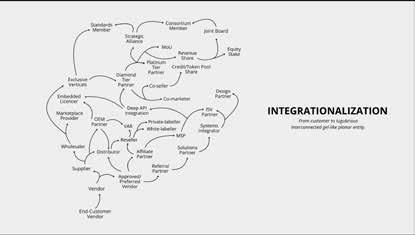
La teoría económica tradicional lucha por seguir el ritmo acelerado del capitalismo, y este libro aborda precisamente esta cuestión. En esta conferencia, Alonso Trillo y Poliks profundizan en uno de los pilares principales de este marco cosmofinanciero, la noción de «Lift» (Despegue): ¿qué ocurre cuando las abstracciones financieras alcanzan la velocidad de escape de las limitaciones terrestres? ¿Cuándo los mercados comienzan a orbitar más allá de la atracción gravitatoria de las economías humanas? ¿Qué ocurre cuando el capitalismo ya no nos necesita?
BIOS
Roberto Alonso Trillo es un teórico y artista cuyo trabajo abarca la teoría cultural, la filosofía de los medios de comunicación y el sonido experimental. Español afincado en Hong Kong, su investigación se centra en las dimensiones estéticas y políticas del aprendizaje automático, con especial atención a la crítica infraestructural y la performatividad. En colaboración continua
con Marek Poliks, investiga la teoría de la IA y el diseño especulativo como parte de una investigación más amplia sobre la automatización y la producción cultural. Su práctica interdisciplinaria se extiende al arte sonoro, la música postinstrumental y la pedagogía crítica. En 2024 Roberto y Marek han sido galardonados con el Google Art + Machine Intelligence Award. Es coautor con Marek Poliks del podcast Disintegrator.
https://robertoalonsotrillo.com/
Marek Poliks es investigador en filosofía de la tecnología, especialmente en lo que respecta al deep learning (aprendizaje profundo). Reside en Minneapolis, Minnesota. Marek y su principal socio de investigación, Roberto Alonso Trillo (HKBU), han estado trabajando para situar las herramientas de aprendizaje profundo como infraestructura reproductiva endosimbiótica (vehículos inorgánicos a través de los cuales se codifica, se somete a procesos contingentes y se transmite información biológica, epistemológica y social). Es coautor con Roberto del podcast Disintegrator.
https://www.marekpoliks.com/

Sábado 29 noviembre 2025, 16:30h
Nave 17 Aulario

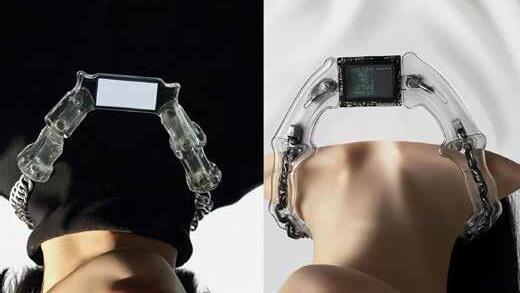
¿Y si la comunicación fuera de la red no fuera el último recurso, sino la primera opción? ¿Y si pudiera circular con la misma facilidad que cualquier accesorio cotidiano? 868labs invita a los participantes a un taller especulativo que reimagina la comunicación más allá de las infraestructuras centralizadas.
Presentación de proyecto
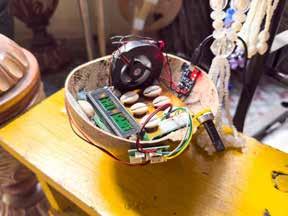
La sesión presenta una serie de dispositivos portátiles de código abierto basados en el protocolo LoRa, que permiten el envío de mensajes entre pares sin necesidad de Internet, tarjetas SIM ni ninguna red troncal externa.
Desarrollado en respuesta a la creciente censura, vigilancia y erosión de la autonomía digital, 868 Wearables funciona tanto como una herramienta de resistencia infraestructural como un artefacto especulativo que se pregunta cómo sería la comunicación si fuera local, incorporada y autosuficiente.
En esta sesión, los participantes desentrañarán los contextos políticos y técnicos de la dependencia de la red, experimentarán de forma práctica con dispositivos de comunicación en malla e imaginarán colectivamente nuevas formas corporales de conexión para las realidades actuales.
En colaboración con Error 417 Expectation Failed Foundation.
https://error417.expectation.fail/
BIO
868labs es un colectivo con sede en Berlín que desarrolla herramientas tácticas para la comunicación descentralizada y fuera de la red. Iniciado por las artistas de nuevos medios Helena Nikonole, Katerina Kataeva y colaboradores que permanecen en el anonimato, el primer prototipo del grupo, 868Wearables, es un dispositivo de comunicación peer-to-peer y de código abierto que permite el envío de mensajes cifrados de largo alcance a través de la banda de radio de 868 MHz. Diseñado para ser montado, adaptado y compartido, su trabajo desafía las infraestructuras comerciales e invita a los usuarios a construir sus propias alternativas resilientes.
https://www.868labs.net/ https://www.instagram.com/868.labs/
Sábado 29 noviembre 2025, 20:00h
Auditorio Casa del Lector
Presentación de prototipo colaborativo
Lanzado en 2017 como parte del plan de diversificación económica Vision 2030 de Arabia Saudí, NEOM se presenta como una ciudad futurista impulsada por energía renovable, inteligencia artificial e infraestructuras sin emisiones.
Este prototipo aborda NEOM no como un plan urbano tradicional, sino como un aparato visual: un conjunto de códigos que pre-actúan y proyectan cómo se profetiza, se vende y se impone el futuro. En este sentido, NEOM se convierte en un caso de estudio para examinar cómo la construcción contemporánea de nación se cruza con el futurismo institucional y la estetización de las políticas públicas. El futuro se imagina, se construye y se vuelve deseable.
Este prototipo ha sido desarrollado de manera colaborativa a partir de una propuesta inicial de Noura Tafeche.
https://nouratafeche.com/
Iblīs habita una Línea ha sido financiado por el Italian Council (Dirección General de Creatividad Contemporánea – MIC).
Sábado 29 noviembre 2025, 19:00h
Auditorio Casa del Lector
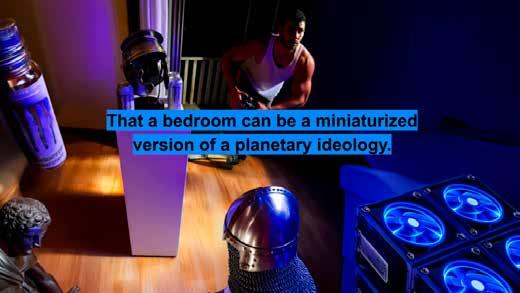
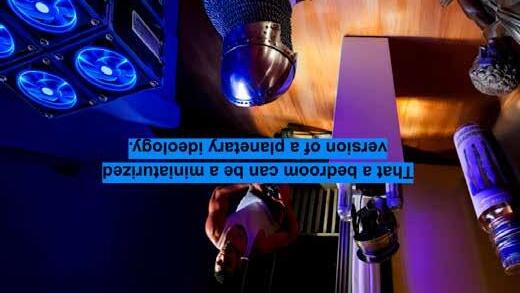
“La pantalla frente a vosotros despliega el Imperio: el feed. Emocionado te enseña el algoritmo que ladrillo a ladrillo ha ido construyendo. Shingeki no Kyojin, el fin del mundo, edits motivacionales con frases de Marco Aurelio, tutoriales para fortalecer la mandíbula y anuncios de Minoxidil en spray.”
MANDÍBULA explora las ficciones utópicas masculinas que emergen en la cultura digital contemporánea. Desde las corrientes esotéricas y los imaginarios de pureza espiritual del siglo XIX hasta su regreso en foros y plataformas como 4chan o TikTok, estas narrativas expresan deseos de pureza, poder y trascendencia frente a una posmodernidad vista como decadente. Las imágenes épicas, los cuerpos heroicos y los paisajes digitales evocan ruinas y castillos como tecnologías afectivas que canalizan la ansiedad del presente hacia el pasado. Estas utopías nostálgicas revelan una masculinidad que ya no busca dominar el mundo, sino recuperar la sensación de tener un lugar en él.
BIO
Joel Blanco es artista y diseñador. Se autodefine como un «miembro inactivo de la generación Pokémon y experto en comida basura». Su trabajo, profundamente influido por la cultura popular, se sitúa entre el arte visual, el diseño y la investigación. Es director curatorial de Mayrit, bienal de diseño y pensamiento crítico en Madrid. Reconocido por Forbes como uno de los 40 futuristas más influyentes de España (2022), ha sido artista residente en la Real Academia de España en Roma (2025).
https://www.joelblanco.com/
Viernes 28 noviembre 2025, 18:15h
Auditorio Casa del Lector
Film (Reino Unido, 2025, 29’ - V.O.S.E.)

Sábado 29 noviembre 2025, 19:30h
Auditorio Casa del Lector
Conferencia y presentación de proyecto
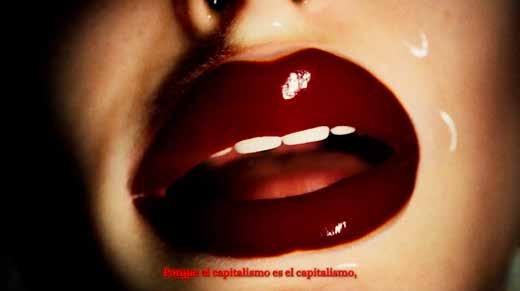
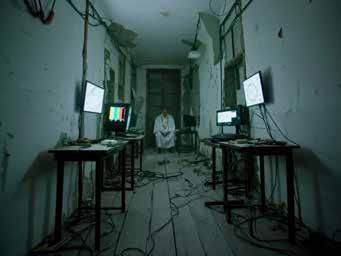
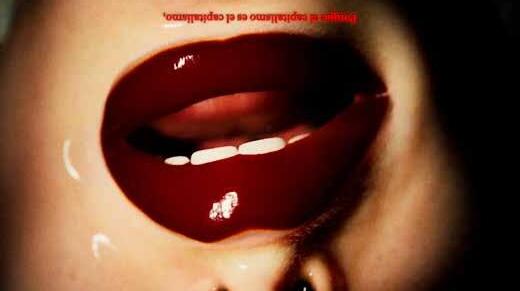
El “jankspace” es el espacio grotesco y vacío de las redes tecnocapitalistas, el residuo que se derrama de la megaestructura digital a medida que digiere el mundo material y lo transforma en un fango alucinógeno.
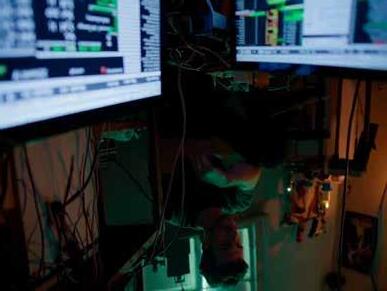
Es la caótica configuración multidispositivo del chofer de Uber, con cables enredados, pantallas parpadeantes y notificaciones pitando. Somos, literalmente, nosotros y nuestros cuerpos maravillosamente destrozados e incomputables, que sabemos que no están del todo bien programados y que ninguna optimización va a arreglar.
En la presentación del proyecto, Jenn Leung utiliza el concepto de “jankspace” para explorar algunos de los temas centrales de su práctica de investigadora tecnológica, creadora audiovisual y experta de escenarios emergentes: el delirio estético de la cultura popular digital contemporánea, nuestros cuerpos desquiciados y mediatizados, y las alucinaciones idiotas del transhumanismo.
BIOS
Jenn Leung es profesora, investigadora y desarrolladora de simulaciones que explora los cruces entre neurociencia, computación y medios en tiempo real. Investiga interfaces en Unreal Engine para organoides cerebrales y comportamiento
de agentes, con publicaciones en MIT Antikythera Journal y NeurIPS 2025. Es profesora en UAL, investigadora en Lifefabs Institute y en The Bartlett (UCL). Ha expuesto en Ars Electronica y Tai Kwun, y colabora con Daniel Felstead en cuatro cortometrajes para DIS.art.
https://jennleung.xyz/
Daniel Felstead es académico y productor de contenidos especializado en las intersecciones entre cuerpo, tecnología y cultura. Dirige el máster en Medios y Comunicación de Moda en el London College of Fashion (UAL) y ha impartido conferencias en instituciones como la Architectural Association, transmediale, el ICA o el Victoria & Albert Museum. Su investigación doctoral abordó la producción especulativa y los sistemas complejos en el arte participativo. Actualmente produce cortometrajes sobre mitologías del metaverso, la inteligencia artificial y la biotecnología.
https://www.instagram.com/felstead.daniel/
Sábado 29 noviembre 2025, 20:15h
Auditorio Casa del Lector
Conferencia performativa
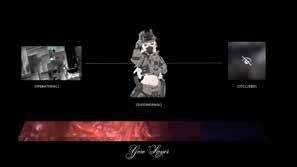
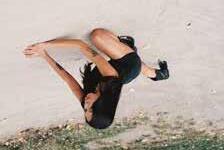
LOVESCAM es una performance en dos partes. La primera, BUTCHERING, se despliega en tiempo real a través de sus canales encriptados de Telegram. Les participantes entran, sin saberlo, en una operación de carnicería en la que sus deseos se vuelven materia prima para la extracción de valor.
Cada intercambio de mensajes activa anhelos aún no integrados que el “exocapital” rescata de los cuerpos entumecidos que quedan tras el lift o “despegue”. La estafa funciona a la vez como mímesis parasitaria y herramienta diagnóstica: revela cómo la soledad irradia desde los puntos terminales de la logística, cómo el erotismo persiste en la fricción entre el overworld y el underworld, cómo el animal humano continúa deseando incluso cuando es reducido a trabajo fragmentario. La performer encarna simultáneamente a la trabajadora forzada del complejo y al sujeto “en despegue”: envía mensajes seductores desde ambos lados del alambre de púas, engordando a sus víctimas con la misma adulación que alimenta al sistema.
La segunda parte, FOR LOVE, es una conferencia-performance que expone las vísceras donde carne y psique se tensan bajo el deseo algorítmico. La performance usa fragmentos de una película actualmente en desarrollo, IT GIRL, imágenes todavía en bruto que derivan hacia imágenes sintéticas, con la idea de exposición absoluta que colapsa en opacidad radical. Sigue el rastro de fenómenos que muestran cómo nos volvemos infinitamente atractives para sistemas extractivos mientras creemos ser intocables. La conferencia atraviesa un territorio imposible de narrar: sigue enlaces que conducen a otros enlaces, oscila entre la macroeconomía de los 17 mil millones de dólares anuales de las estafas
del amor online y la micro-erótica de un ping, los sobresaltos del corazón, el pinchazo de un PIN. Examina cómo el modelo de legibilidad seductora que Quicho llama “inteligencia girl” opera tanto en el aprendizaje humano como en el maquínico, generando bucles de atrapamiento mutuo que aún así no logran capturar los excesos del amor. La performance revela los lovescams (estafas eróticas) no como aberraciones, sino como la función pragmática de un sistema que convierte la criminalidad en norma: donde la seducción extrajudicial sostiene el giro del capital extractivo hacia la experiencia abstracta, triturando soledad y sangre en interfaces que se sienten ligeras como el contacto con la pantalla oleofóbica de tu smartphone.
BIO
Alex Quicho es una teórica e investigadora afincada en Londres. Colabora con instituciones culturales como Tate Britain, Somerset House Studios, Singapore Art Museum, Power Station of Art Shanghai, Julia Stoschek Collection, Nationalgalerie Berlin, Fondation Pernod-Ricard, y Rennie Museum. Es docente de Teoría de la Narración en el master Narrative Environments de Central Saint Martins. Estudió Critical Writing en el Royal College of Art. Alex nació en Manila, donde trabaja en el equipo directivo de SYM, un think-tank para desarrollar relato político en el Sureste asiático.
http://amfq.xyz/
Jueves 27 noviembre, 21:00 - 22:30
Nave 17
Sábado 29 noviembre 2025, 21:00 - 23:00h
Nave 17

DJ set y performance
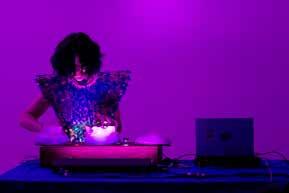
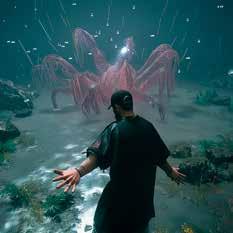
La programación en colaboración con L.E.V. (Laboratorio de Electrónica Visual) presenta dos noches dedicadas a la experimentación sonora y audiovisual.
El jueves, la sesión reúne a Nacho de la Vega, fundador de la plataforma L.E.V. junto a Shoeg, proyecto de Carlos Martorell. En su performance Phantom Touch, Martorell investiga las relaciones entre cuerpo, tecnología y sonido, prolongando una línea de trabajo que ha presentado en distintos festivales.
El sábado, Nacho de la Vega compartirá escenario con Merche Blasco, que presentará Fauna: una performance de improvisación en directo con instrumentos creados por ella misma. Estas criaturas sonoras cobran vida mediante el movimiento, el tacto y la luz, articulando una música electrónica encarnada y vibracional que enlaza a todos los cuerpos presentes.
Con más de dieciocho años de trayectoria, L.E.V. se consolida como una plataforma de creación, producción y experimentación en arte digital, sonido electrónico y audiovisual, impulsando la innovación y la exploración de nuevas narrativas tecnológicas a través de festivales y colaboraciones que expanden los límites de lo sensible.
BIO
Nacho de la Vega, activista cultural, artista multimedia y miembro fundador de la Plataforma L.E.V. Laboratorio Electrónico Visual.
https://levfestival.com/
Shoeg es el proyecto principal de Carlos Martorell, donde combina collage sonoro y exploración electrónica. Martorell es artista sonoro y visual, su trabajo explora la relación entre cuerpo, tecnología y sonido. Ha participado en festivales como Sónar+D, LEV o MUTEK.
https://www.carlosmartorell.net/shoeg
Merche Blasco es artista multimedia y compositora afincada entre Berlín y Barcelona. Crea ensamblajes tecnológicos imprecisos que posibilitan formas encarnadas y colaborativas de composición electrónica en directo. Sus performances, protagonizadas por instrumentos construidos por ella misma, exploran la escucha, la materialidad y la resonancia colectiva en espacios como Ars Electronica, La Biennale di Venezia y el Whitney Museum de Nueva York.
https://www.instagram.com/blasco.merche/
Viernes 28 noviembre 2025, 21:00 - 23:00h
Nave 17

DJ set y performance
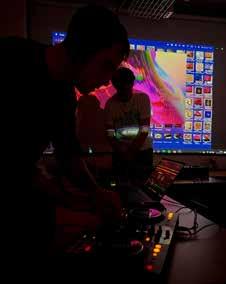
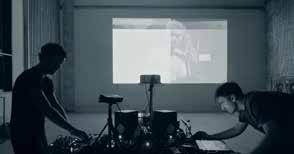
“No existe una única técnica, sino múltiples cosmotécnicas.” Inspirado en el pensamiento de Yuk Hui, Cosmotécnicas propone un encuentro de las múltiples existencias tecnológicas a través de la música, la performance y las artes visuales.
La propuesta de Volumen invita a SYSTEMA (dj set), Pipo del Hierro (Vj set) la performance TECHNOFACIAL (Nayarit Fuentes y Paula Mira) y el AV live set de Chryso (TSO + Okaro) buscando materializar esa multiplicidad mediante una constelación de prácticas que dialogan con la escena madrileña más experimental. Muchas humanidades diversificadas, fragmentarias y plurales confluyen aquí para desafiar el camino global impuesto por un tardocapitalismo al borde del colapso.
BIO
Volumen es un colectivo que genera una simbiosis entre artista y lugar, encarnando las tensiones y preguntas del arte contemporáneo más actual. Sus propuestas se despliegan como expe-
riencias inmersivas donde instalación, música, artes visuales y performance confluyen en un mismo gesto. Cada evento se concibe como una intervención colectiva del espacio: una irrupción sensorial que interpela la percepción, el cuerpo y lo común. Integrado por Adrián Canto, Adrián M. Abellán, Álvaro Jarabo, Curtiso, Jimena Vila, Nacho González, Nicolás Escalona, Nuria Ballester y Violeta Arana, el colectivo entiende el arte como una conversación abierta y expandida entre los agentes creativos de la sociedad. Su práctica apuesta por la colaboración y la creación de redes plurales, activadas a través de convocatorias públicas y procesos compartidos.
https://www.instagram.com/volumen____/


NAVE 17 18:3021:00 h
Bani Brusadin Introducción / Introduction



Pablo Somonte Ruano, Laura Budia Piña, Javier Arango Garfias, Lien Tran, Rok Kranjc Presentación de prototipo / Prototype presentation
Elisa Cuesta Fernández & Jamie Allen Conferencia performativa / Lecture-performance
Business Serio™ Presentación de proyecto / Project presentation Navigating Militarized Urban
Mark Cinkevich, Carey Yuping Chen, Freddie Sanders, Delfín van Peborgh, Saúl Zamorano
Presentación de prototipo / Prototype presentation
Un cortometraje de / A short film by Rich Pell (Center for PostNatural History)
Solveig Qu Suess Video ensayo en vivo / live video essay
21:00-22:30 h
DJ set + Performance
Martix Navrot Presentación y juego de especulación colectiva
Lyndsey Walsh Presentación de proyecto / Project


Un film de / A film by Daniel Felstead & Jenn Leung
Colectivo Gaara, Gadea Autric, David Tiemstra, Esben Holk, Valentina Giniger Presentación de prototipo / Prototype presentation
Nestor Siré & Steffen Köhn Presentación de proyecto / Project presentation Mac Andre Arboleda, Hsiang-Yun Huang, Sergio Pinilla Lopez, Anuphong Sup-adulchai, Ginevra Mazzoni
Presentación de prototipo / Prototype presentation Ana Petra Moriyón & Clara Escalera Presentación de proyecto / Project presentation
Roberto Alonso Trillo & Marek Poliks Conferencia / Lecture


Fermín Zabala & Elena Zaghis
Taller / Workshop
Traducción simultánea EN-ES Simultaneous interpretation ES-EN
Danya Orlovsky & Business Serio™ Presentación de proyecto y lluvia de ideas / Project presentation & brainstorming session 868 Labs Presentación de proyecto / Project presentation


17 Terrario 16:0018:00
NAVE 17 Aulario 16:3018:00 h
AUDITORIO CASA DEL LECTOR 18:3021:00 h
Fran Grima & Business Serio™ Presentación de proyecto / Project presentation
Noura Tafeche, Nadia Armstrong, Valentina Ruiz D’Eramo, Miguel Ruipérez de la Fuente, Angela Rodríguez Relaño
Presentación de prototipo / Prototype presentation
Joel Blanco Charla / Talk Jenn Leung Presentación de proyectos / Project presentation, Alex MF Quicho Conferencia performativa / Lecture-performance
17 21:0023:00 h

Nacho de la Vega + Merche Blasco
DJ set + Performance
https://www.instagram.com/volumen____/
Escalona, Nuria Ballester, and Violeta Arana, the collective understands art as an open and expanded conversation among the creative agents of society. Their practice advocates for collaboration and the creation of plural -net works activated through open calls and shared processes.
The Volumen collective generates a -symbio
BIO
Diverse, fragmentary and plural humanities -con verge here to challenge the global path imposed by a late capitalism on the verge of collapse.
Chryso (TSO + Okaro), seeking to materialize that multiplicity through a constellation of practices in dialogue with Madrid’s most experimental scene.
Fuentes and Paula Mira), and the AV live set by
SYSTEMA (DJ set), Pipo del Hierro (VJ set), the performance TECHNOFACIAL (by Nayarit
The proposal by Volumen brings together
sis between artist and place, embodying the tensions and questions of contemporary art today. Its projects unfold as immersive -experi ences where installation, music, visual arts, and performance converge in a single gesture. Each event is conceived as a collective intervention in space—a sensory eruption that engages -per ception, the body, and the commons. Formed by Adrián Canto, Adrián M. Abellán, Álvaro Jarabo, Curtiso, Jimena Vila, Nacho González, Nicolás
“There is no single technique, but multiple cosmotechniques.” Inspired by the thought of Yuk Hui, Cosmotécnicas proposes an encounter between the many technological existences that coexist through music, performance, and the visual arts.


DJ set & performance

Nave 17
Friday, November 29, 2025 - 21:00 - 23:00h
https://www.instagram.com/blasco.merche/
She creates deliberately imprecise -technolog ical assemblages that enable embodied and collaborative forms of live electronic -composi tion. Her performances—staged with self-built instruments—explore listening, materiality, and collective resonance, and have been presented at venues such as Ars Electronica, La Biennale di Venezia, and the Whitney Museum in New York.
Merche Blasco is a multimedia artist and -com poser based between Berlin and Barcelona.
https://www.carlosmartorell.net/shoeg
https://levfestival.com/ Shoeg is the main project of Carlos Martorell, combining sound collage and electronic -experi mentation. Martorell is a sound and visual artist whose work explores the relationship between body, technology, and sound. He has participated in festivals such as Sónar+D, L.E.V., and MUTEK.
Nacho de la Vega, cultural activist, multimedia artist, and founding member of the L.E.V. -(Labo ratorio de Electrónica Visual) platform.
brational form of electronic music that connects all bodies present. With more than eighteen years of -experi ence, L.E.V. stands as a platform for creation, production, and experimentation in digital art, electronic sound, and audiovisual practices, fostering innovation and the exploration of new technological narratives through festivals and collaborations that expand the boundaries of the perceptible.
On Saturday, Nacho de la Vega will share the stage with Merche Blasco, who will present :Fauna a live improvisation performance with instruments she has created herself. These sonic creatures come to life through movement, touch, and light, shaping an embodied and -vi
ing a line of work he has presented at various international festivals.
tom ,Touch Martorell explores the relationship between body, technology, and sound, -extend
Carlos Martorell. In his performance -Phan
,Shoeg the project of sound and visual artist
de la Vega, founder of the L.E.V. platform, and
On Thursday, the session brings together Nacho
Presented in collaboration with L.E.V. (Laboratorio de Electrónica Visual), the program features two nights devoted to sonic and audiovisual experimentation.


http://amfq.xyz/
Alex Quicho is a theorist and research director in London who collaborates with arts institutions including Tate Britain, Somerset House Studios, Singapore Art Museum, Power Station of Art Shanghai, Julia Stoschek Collection, -National galerie Berlin, Fondation Pernod-Ricard, and Rennie Museum. She teaches narrative theory for MA Narrative Environments at Central Saint Martins, and studied Critical Writing at the Royal College of Art. Alex is from Manila, where she is in leadership of SYM, a think-tank for political narrative in Southeast Asia.
between the macro-economics of $17 billion in
bleeding into synthetic imagery, total exposure collapsing into radical opacity—the performance tracks how we can become infinitely attractive to extraction while believing ourselves -untouch able. The lecture moves through the -unnarrat able: following links to links to links, scrambling
Part 2, FOR LOVE is a lecture-performance that exposes the gore layer where flesh and psyche strain under algorithmic desire. Using edits from the film in development IT GIRL—raw footage
Each message exchange pings -yet-unintegrat ed yearnings that exocapital salvages from the numbed-out bodies left after lift. The scam -oper ates as both parasitic mimicry and diagnostic tool: revealing how loneliness radiates from logistical endpoints, how eroticism persists in the churn -be tween overworld and underworld, how the human animal continues to yearn even when corralled into piecework existence. The performer embodies the compound’s forced laborer and the lifted subject simultaneously—sending sexy missives from both sides of the barbed wire, fattening marks with the same flattery that feeds the system.
annual lovescam revenue and the -micro-erot ics of a ping, a heartjump, the prick of a PIN. It examines how the “girl intelligence” model of seductive legibility operates across both human and machine learning, creating loops of mutual entrapment that still fail to capture the excesses of love. The performance reveals lovescams not as aberrations but as the pragmatic function of a system that makes criminality the norm—where extra-judicial seduction supports the spin of extractive capital into abstracted experience, crushing loneliness and blood into interfaces that feel light as an oleophobic touch.
ingly enter a pig-butchering operation where their desires become the raw material for value extraction.
formance that unfolds in real-time across Telegram’s encrypted channels. Participants unknow -
LOVESCAM is a performance in two parts. The first, ,BUTCHERING is a two-week Telegram Per -
Sábado 29 noviembre 2025, 20:15h
https://www.instagram.com/felstead.daniel/
Daniel Felstead is an academic and content producer whose work focuses on the -intersec tions of the body, technology, and culture. He is the Course Leader for the MA in Fashion Media and Communication at the London College of Fashion (UAL) and has lectured at institutions such as the Architectural Association, -transme diale, the ICA, and the Victoria & Albert Museum. His doctoral research examined speculative production and complex systems in participatory art. He currently produces short films on the -my thologies of the metaverse, artificial intelligence, and biotechnology.
https://jennleung.xyz/
Daniel Felstead on commissioned films for DIS.art.
Jenn Leung is a lecturer, researcher, and -simula tion developer investigating the intersections of neuroscience, computation, and real-time media. She develops Unreal Engine interfaces for brain organoids and agent behaviour simulation, with publications in MIT Antikythera Journal and -Neu
BIOS
and the idiotic hallucinations of transhumanism.
ular culture, our deranged and mediated bodies,
creator and expert in emergent scenarios: the aesthetic delirium of contemporary digital -pop
tice as a researcher in computation, audiovisual
In the talk that accompanies the screening, Jenn Leung will use the concept of “jankspace” to explore some of the central themes of her -prac
and that no optimization will ever fix.
erally, us — our beautifully broken, uncomputable bodies that we know aren’t properly programmed
ti-screen setup of tangled cables, flickering -dis plays, and incessant notifications. It is, quite -lit
It is the Uber driver’s chaotically wired, -mul
technocapitalist networks — the residue spilling out of the digital megastructure as it digests the material world and turns it into hallucinogenic sludge.
“Jankspace” is the grotesque and hollow realm of
subtitles) rIPS 2025. A Lecturer at the University of the Arts London, she also researches at Lifefabs Institute and The Bartlett (UCL). Her work has shown at Ars Electronica and Tai Kwun, and she collaborates with

Project presentation
Saturday, November 29, 2025 - 19:30h

Friday, November 29, 2025 - 18:15h
https://www.joelblanco.com/
Joel Blanco is an artist and designer. He -de scribes himself as an “inactive member of the Pokémon generation and junk food expert.” His work, deeply influenced by popular culture, lies between visual art, design, and research. He is the curatorial director of Mayrit, a biennial festival of design and critical thinking in Madrid. -Recog nized by Forbes as one of the 40 most influential futurists in Spain (2022), he has been an artist in residence at the Real Academia de España en Roma (2025).
heroic bodies and digital landscapes conjure up the idea of ruins and castles as emotional -tech nologies that direct the anxiety of the present towards the past. These nostalgic utopias reveal a masculinity that no longer seeks to dominate the world, but rather to find a sense of belonging within it.
MANDÍBULA explores the utopian masculine narratives that emerge in contemporary digital culture. These narratives express desires for purity, power, and transcendence in the face of a postmodernity seen as decadent, from the -es oteric currents and depictions of spiritual purity of the 19th century to their return in forums and platforms such as 4chan or TikTok. Epic imagery,
“The screen before you unfolds the Empire: the feed. Excitedly, the algorithm shows you the edifice it has built, brick by brick. Shingeki no Kyojin, the end of the world, motivational edits with quotes by Marcus Aurelius, jawline-strengthening tutorials, and spray-on Minoxidil ads.”

Saturday, November 29, 2025 - 19:00h
Iblīs Dwells a Line has been funded by the Italian Council (Directorate-General for Contemporary Creativity – MIC).
This prototype has been developed -collabo ratively based on an initial proposal by Noura Tafeche.
This prototype approaches NEOM not as a -tra ditional urban plan but as a visual —aapparatus system of codes that pre-enact and project how the future is prophesied, sold, and imposed. In this sense, NEOM becomes a case study for examining how contemporary nation-building intersects with institutional futurism and the aestheticisation of public policy. The future is imagined, constructed, and made desirable.
Launched in 2017 as part of Saudi Arabia’s Vision 2030 economic diversification plan, NEOM is presented as a futuristic city powered by renewable energy, artificial intelligence, and zero-emission infrastructures.
Collaborative prototype presentation

Casa del Lector Auditorium
Saturday, November 29, 2025 - 20:00h
https://www.868labs.net/ https://www.instagram.com/868.labs/
Designed to be assembled, adapted, and shared, their work challenges commercial -infrastruc tures and invites users to build their own resilient alternatives.
868labs is a Berlin-based collective developing tactical tools for decentralized, off-grid -commu nication. Initiated by new media artists Helena Nikonole, Katerina Kataeva, and collaborators -re maining anonymous, the group’s first prototype, 868Wearables, is a peer-to-peer, open-source communication device enabling encrypted, longrange messaging over the 868 MHz radio band.
artifact asking how communication might look if it were local, embodied, and self-sustaining. In this session participants will unpack the political and technical contexts of network dependency, experiment hands-on with mesh communication devices, and collectively imagine new, bodily forms of connection for the realities of today.
Developed in response to growing censorship, surveillance, and the erosion of digital -autono my, 868 Wearables functions both as a tool of infrastructural resistance and as a speculative
wearable devices built on the LoRa protocol, -en abling peer-to-peer messaging without the -glob al internet, SIM cards, or any external backbone.
The session introduces a series of open-source
868labs invites participants to a speculative workshop that reimagines communication beyond centralized infrastructures.
What if off-grid communication was not the last resort, but the first choice? What if it could circulate as effortlessly as any everyday accessory?
In collaboration with Error 417 Expectation Failed Foundation https://error417.expectation.fail/ Saturday, November 29, 2025 - 16:30h Nave 17 Aulario
Project presentation

https://www.marekpoliks.com/
tive infrastructures—inorganic vehicles through which biological, epistemological, and social information is encoded, subjected to contingent processes, and transmitted. He coauthors the Disintegrator podcast with Roberto.
Marek Poliks is a researcher in the philosophy of technology, with a focus on deep learning. He lives in Minneapolis, Minnesota. Together with his main research partner, Roberto Alonso Trillo (HKBU), Poliks has been working to position deep learning tools as endosymbiotic -reproduc
https://robertoalonsotrillo.com/
His interdisciplinary practice extends to sound art, post-instrumental music, and critical -peda gogy. Roberto and Marek won Google’s 2024 Art + Machine Intelligence award. He coauthors the Disintegrator podcast with Marek Poliks.
er inquiry into automation and cultural production.
theory and speculative design as part of a -broad
ist whose work spans cultural theory, media philosophy, and experimental sound. A Spanish researcher based in Hong Kong, his work focuses on the aesthetic and political dimensions of -ma chine learning, with particular attention to -infra structural critique and performativity. In ongoing collaboration with Marek Poliks, he explores AI
Roberto Alonso Trillo is a theorist and -art
BIOS
Alonso Trillo and Poliks delve into one of the main pillars of this cosmofinancial framework, the notion of “Lift”: what happens when financial -ab stractions achieve escape velocity from -terres trial constraints? What happens when capitalism doesn’t need us anymore?
Traditional economic theory struggles to keep up with capitalism’s rapid rate of acceleration, and this book steps in to address this. In this lecture
At the centre of their argument is the idea that capitalism does not belong to humans, it belongs to and is governed by itself.
talism has been praised as an “era-defining book, a book that carries an idea with the potential resonance of Bratton’s The Stack or Hardt & Negri’s Empire” (New Models).
Marek Poliks and Roberto Alonso Trillo’s -Exocapi

Friday, November 29, 2025 - 20:00h
tion of new institutes that could face our current conditions? This prototype has been developed -collabora tively based on an initial proposal by Mac Andre Arboleda https://sickinternet.me/
person of interest, using her as a medium to investigate our extreme realities. What do we take from love scam operations, fictive identities, and seductive Tiktok propaganda in the -forma
Fugitive mayor and fraudster Alice Guo is our
The Institute of Alice Guo Studies (copy) is a research and production agency concentrating on pirate strategies, mediatic capacities, and governance networks that condition “another” Philippine life.

Collaborative prototype presentation
Casa del Lector Auditorium
Friday, November 29, 2025 - 19:30h
https://nestorsire.com/
https://steffenkoehn.com/
Combining experimental ethnography, STS, and fiction, his works appropriate emerging -technol ogies and the aesthetics of DIY networks and video games. His films and installations have been shown at major venues including -Berlina le, Aksioma Institute, Kunsthaus Graz, and The Photographers’ Gallery London.
sociate professor at Aarhus University. Working across cinema, art, and ethnography, he explores alternative infrastructures and survival -strate gies in today’s uneven sociotechnical worlds.
Steffen Köhn is a filmmaker, video artist, and -as
in Havana and Amsterdam whose -transdisci plinary research explores how technological infrastructures shape everyday social life—and, in turn, how they are shaped by it. Drawing from anthropology, network studies, and critical media theory, he translates the informal circuits and vernacular hacks of the Global South into interactive installations, digital platforms, and site-specific interventions. His projects have been presented at institutions such as the New Museum, The Photographers’ Gallery, MUAC, and major international biennials.
Nestor Siré is a Cuban multimedia artist based
This narrative unfolds through a kaleidoscopic series of archival fragments drawn from the personal collection of an anonymous -anthropol ogist, comprising interviews, intimate field notes, recordings from Cuban state television, excerpts from social media, and dream diaries of -under ground La Bolita players.
traditions with digital tools.
lottery, decoding outcomes through La Charada and the oracles of Santería, and expanding these
Ideology defines the ends, global speculators determine the means, and those excluded from official platforms respond by inventing parallel betting cultures: rerouting state data streams into La Bolita, Cuba’s historic underground
litical pressure, adopts “futarchy” —a system of governance based on prediction markets, emerging from the same transhumanist milieu that gave rise to cryptocurrencies— as the -foun dation of its late-stage planned economy.
It envisions a Cuba that, under intense -geopo
Set in a speculative Havana infused with the crypto culture of the 2030s, Oracle Index is an expanded cinematic narrative in the form of an imaginary ethnography.
presentation
Project
Friday, November 29, 2025 - 19:00h
https://www.instagram.com/3_fieldware/
https://www.instagram.com/levi.yitzhak/
collective (Ian Margo y Levi ‘Yitzhak’ Jiménez)
source generative AI APIs to enrich the game with dynamic events, satirical dialogues, and -en vironmental descriptions responsive to the -simu lation. The resulting narratives are overwhelming, chaotic, and unpredictable, evoking weird futures through fragmented digital aesthetics. This prototype has been developed -collabo ratively based on an initial proposal by Gaara
This experimental project integrates open-
Ktown: Future Epistemologies in ,Intelogenesis is a mod for Dwarf Fortress, a world simulator known for its complexity and emergent narratives.
Collaborative prototype presentation
Friday, November 29, 2025 - 18:45h
https://lyndseywalsh.com/
Prize 2024 Honorary Mention.
Biennale, Athens Digital Arts Festival, and -Trans mediale/CTM and has received the S+T+ARTS
Their work has been featured in events and with institutions such as Frieze Art Week New York, the Humboldt Forum, the Ural Biennial, the Berlin
Queer, and intersectional feminist frameworks.
sets out to “undoom narrative” by questioning the cultural binaries of human-non-human, diseased-healthy, and life-machine using Crip,
Lyndsey Walsh is an artist, writer, and researcher based in Berlin, Germany. Lyndsey’s practice
https://error417.expectation.fail/
In collaboration with Error 417 Expectation Failed Foundation.
as a performance lecture to unfold the history of care, DIY practices, technoscience, and systemic violence surrounding so-called reproductive -or gans and the bodies that carry them. Lyndsey will critically speculate and imagine possible futures to call into question the very constructions of digital and authoritarian regimes attempting to seize the means of reproduction.
Weird Futures, Lyndsey will enact Unbearable
Unbearable, which are organs generated from an unruly technologically mediated imagination that cannot carry any reproductive potential and instead spawn new potential modes of -biolog ically and biomaterially being. For OpenLAB
Artist Lyndsey Walsh has generated and regenerated Unbearable as a frictional practice of resistance against the doomed narrative of “breeding” and its many technoscientific and digital mutations. This practice has grown from the artist’s series
project presentation
Performative
Nave 17 Aularioo
Friday, November 29, 2025 - 17:00h
https://error417.expectation.fail/
Error 417 Expectation Failed is an independent foundation supporting radically contemporary internet and net-based art practices. In 2025, it focuses on projects that challenge -tech-au thoritarian systems through misdirection, opting out, and pushing back, resisting in solidarity and creating spaces for technological practices that serve collective needs rather than exploit them.
BIOS
reality of Eastern Europe.
research and his own experience rooted in the
In this session Navrot will provide a fictional/ speculative framework in which all participants will interact with different roles in a future or -po tential scenario that will be inspired by Navrot’s
The project stems from Navrot’s imagination of concrete apartment blocks in his hometown of Wronki, Poland, where he envisioned a scenario in which the residents of post-PRL apartments run their own modular furniture building GPU micro servers. The project focuses on reclaiming microcomputing power, among other -meth ods, from advertising trackers that operate in all browsers, but also explores the connection of computers in networks and, in general, the search for computing power wherever it may be hidden.
Martix Navrot is a performer, poet, visual artist, university lecturer, creative technologist, and AI programmer working at the intersection of video games, open-source culture, and blockchain thinking. Their artistic and research practice revolves around queer futurism, radical -imagi nation, and the critique of Big Tech, absurdity, and play. They create systems, games, LARPs, apps, physical objects, and performances that use code and speculative fiction as tools of resistance against dominant infrastructures and conventions, exploring the microaesthetics of the internet and guerrilla digital practices. Martix has exhibited their work and led workshops and talks at the Museum of Modern Art in -War saw, the Krupa Art Foundation in Wrocław, the Ujazdowski Castle Centre for Contemporary Art in Warsaw, the Morris Gallery in London, SODA Manchester, and the Unsound Festival in Kraków, among others. https://martixnavrot.com/
,Empire a series of speculative prototypes, micro-scripts, and instructions/hacks that explore how we can reclaim collective computing power.
Medialab Matadero present 5 Petaflops Against
Error 417 Expectation Failed Foundation and
Project presentation & collective speculative game
Friday, November 29, 2025 - 16:00h Nave 17 Aulario
https://www.instagram.com/solveigsuess/
Lisbon Architecture Triennale, Jameel Arts Centre (Dubai), ZKM (Karlsruhe), the Guangzhou Image Triennial, the Göteborg Biennial, and Kunsthall Trondheim, among others.
working across documentary cinema, -installa tion, and writing. Her practice moves through the intervals of systemic change, tracing how power and technology shape collective and intimate experiences of time and space. Moving between planetary systems and private archives, her work draws out the relations between infrastructural and emotional landscapes. Her films and -instal lations have been presented internationally at -in stitutions and festivals including the International Film Festival Rotterdam (IFFR), Haus der Kulturen der Welt (Berlin), Onassis Stegi (Athens), the
Solveig Qu Suess is an artist and researcher
It considers the aesthetic and perceptual -ques tions that emerge within systems under -transi tion, asking how shifting geographies and scales transform what can be sensed, represented, and felt. In tracing these movements, it reflects on how we might navigate the monstrous, the -un certain, and the overlapping temporalities of our present through new cultural strategies.
continue to hum beneath technological systems.
Attuned to rhythms and intervals, the practice attends to what remains unrecorded, -non-dis closed, or half-remembered– the residues that
Moving from China’s reform-era optical transfers to Southeast Asia’s sustainable transitions along the Mekong River, and into the underbellies of contemporary communication systems, it draws on filmmaking, archival work, and field research to explore how image, labor, and desire form the politics of connection.
The live video essay moves through infrastructures of seeing and sensing to reflect on how energetic modernity shapes perception and relation.

November 27, 2025 - 20:30h
https://www.postnatural.org/
tication, selective breeding, tissue culture, or genetic engineering. He previously co-founded the art and engineering group The Institute for Applied Autonomy.
Richard Pell is the founder and director of the
BIO
fragile bonds between nature, code, and belief.
subtle and visionary epic tale that lingers on the
Composed from century-old anaglyph images discovered in a basement, the short film is a
Center for PostNatural History (Pittsburgh, USA), an organization dedicated to forms of life that have been intentionally altered through -domes
Codex Entropia imagines an ancient civilisation that develops delicate forms of animal computation, storing its knowledge within the contours of the land.
Nave 17
Thursday, November 27, 2025 - 20:15h
https://www.instagram.com/m_cinkevich/
ratively based on an initial proposal by Mark Cinkevich
This prototype has been developed -collabo
exploring possible scenarios of resistance and reappropriation.
devices, and the management of public space,
warlike logic infiltrates urban planning, security
prototype examines the mechanisms by which
Through an interdisciplinary approach, the
lative research project that analyzes how architecture, surveillance, and technology intertwine in the production of militarized urban futures.
Navigating Militarized Urban Futures is a specu -
Collaborative prototype presentation

Nave 17
Thursday, November 27, 2025 - 20:00h
We collect and share audiovisual records of emerging practices related to immortality, -in cluding cryonics, AI legacies, digital cemeteries, posthuman memorials, transhumanist -conven tions and new spiritual infrastructures.
The End of Death is a public archive that -docu ments the contemporary redefinition of death.
Casa del Lector Auditorium
Saturday, November 29, 2025 - 18:45h

the new survival: control, exposure and recovery.
surable, traceable and accountable. Welcome to
thal era. Autonomous systems detect, isolate and neutralize threats while keeping them visible to public record. Warfare becomes design: -mea
Warmony is a defense platform for the -post-le

Nave 17 Terrario
Saturday, November 29, 2025 - 17:00h

This micro-experimental project uses the very language of the networks to observe how our understanding of propaganda is shifting: from a traditional top-down model to an ambient, subliminal persuasion that doesn’t flow like a message, but like a vibe.
tion and mutation of coded imaginaries stoke uncertainty and fuel authoritarian fantasies.
volatile aesthetics, where the constant -circula
Eurocore treats Europe as an emerging field of
Nave 17 Terrario
Saturday, November 29, 2025 - 16:00h
The Sunsetting Project designs recovery -tech nology for organizations moving beyond burnout economies. They develop systems for structured rest, corporate deceleration and workforce
Friday, November 29, 2025 - 19:45h Casa del Lector Auditorium regeneration at scale. Productivity has a new -ar chitecture built on pause, return and endurance.
them one mission: build a creative commando unit capable of spotting traces of strange -tech nological presents, and accelerating them.
In 2025, Medialab tasked Business Serio™ —a Madrid-based agency for thought, creativity, and cultural action (https://serio.business/)— with coordinating the Research Unit. Medialab gave
work at Medialab Matadero that probes the weak signals and emerging imaginaries of a world that hasn’t arrived yet. Its mission is to investigate or envision products and services that link -specula tion with infrastructure, turning future scenarios into tools for making sense of the present.
The Research Unit is an experimental line of

Thursday, November 27, 2025 - 19:45h Nave 17
Presentación de proyectos
https://elisacuesta.com/
TBA21–Academy.
project Sunk Costs explores maritime losses and ecological afterlives, including the 2022 Felicity Ace shipwreck. https://jamieallen.com/
Jamie Allen is an artist and researcher exploring how infrastructures and technologies shape ecological, social, and symbolic life. With a background in engineering and media art, his work combines research, speculative storytelling, and infrastructural critique through installations and publications. He is Senior Researcher at HGK Basel, Visiting Fellow at Cambridge HPS, and member of metaLAB -(Harvard+Basel+Ber lin) and continent. The ongoing collaborative
er whose work examines the entanglements between ecological systems, infrastructures, and speculative storytelling. Combining artistic research and hybrid making, she creates -instal lations, cartographies, and artefacts that merge traditional and experimental techniques. Her practice, grounded in transdisciplinary -collab oration, spans institutional and independent contexts. Her work has been exhibited at Science Gallery Dublin, LABoral Gijón, Nest The Hague, or the Belgrade Museum of Science and -Technolo gy. In 2024 she was commissioned the -pre-bi ennial territorial analysis for the Climate Biennial (Avilés, 2026). She currently collaborates with
Elisa Cuesta is an artist and industrial -design
BIOS
Sunk Costs is a collaborative project steered by Jamie Allen, Matthew J. Lutz, Delfina Fantini van Ditmar, Chris Woebken, Louise Emily Carver and Elisa Cuesta
What is, in fact, down there?
What wreckage do we still rely on?
research, the piece situates shipwrecks as -foren sic remains of late capitalist mythologies. What should remain underwater?
vironmental forensics, marine policy, and artistic
material legacies of wreckage. Drawing from -en
Jamie alternate voices in a hybrid, performative dialogue—moving from the factual to the mythic, from the lithium fire’s chemistry to the moral and
exposing the volatility and opacity of systems designed to appear seamless. Part speculative storytelling, part forensic reconstruction, the performance interweaves archival narration, manifest readings, sound fragments, and visual cartographies. From different spaces, Elisa and
The project explores what happens when the infrastructures of progress literally catch fire,
Sunk Costs: The Saga of the Felicity Ace takes the 2022 sinking of the cargo ship Felicity Ace— which went down off the Azores carrying nearly 4,000 luxury electric vehicles—as a case study in the contradictions of “green” capitalism, logistics, and ecological accountability.


Nave 17
Thursday, November 27, 2025 - 19:15h
https://pablo.sx/
ratively based on an initial proposal by Pablo Somonte Ruano
https://pocas.store/ This prototype has been developed -collabo
tive infrastructures today.
tributed computing can sustain mutualist and post-capitalist economies. Inspired by centuries of self-governance and decades of peer-to-peer technologies, it maps how existing tools and practices can enable autonomous and -collabora
It is a research project that explores how -dis
POCAS uses economic science fiction to imagine an autonomous mutualist network in an alternative version of contemporary Mexico City, where distributed computing competes with capitalism.
prototype
Nave 17
Thursday, November 27, 2025 - 19:00h
For more information → medialab-matadero.es
Over three days of presentations, talks, and -perfor mances, Medialab opens space to think from the edges, trace hidden connections, and imagine radical alternatives. Ultimately, it is about observing how technological power oscillates between control and chaos — and asking which part of that vertigo we are willing, or unwilling, to inhabit.
Cyberpunk fantasies shape political agendas; dystopias turn into business models; what once belonged to fiction now drives material transformations in infrastructures, policies, and protocols. OpenLAB Weird Futures invites us to face that point of friction — to explore the material and symbolic forces that are rewriting the foundations of the twentieth-century world.
At a time when narratives of stability, security, and linear progress are fading, volatility becomes a resource.
Medialab brings together artists, technologists, designers, thinkers, and engaged publics to investigate the intersections between technological imagination and a society that oscillates between the desire for control and the extreme volatility of the present.
The year-long program LAB 4 Weird Futures explored the technological imagination of instability — its power, its instrumentalization, and the possible alternatives hidden within its cracks and failures. In this final act






November 27 - 29, 2025
The technological imaginaries of uncertainty