Tower 2025-2026
The Masters School - 49 Clinton Ave, Dobbs Ferry, N.Y. 10522
Akari Kawabata
Contributing
Writer
It’s hard to imagine the Masters School in 1995; halls swarmed with the teenagers of Gen X wearing top-half-up hairdos, plaid mini skirts and listening to Nirvana on portable walkmans.
But the biggest difference between 2026 Masters and 1995 Masters is the presence of male students within the walls of the school.
In 1994, a highly controversial decision by the Board of Trustees—and then head of school Pam Clarke—called for the admittance of boys beginning in the fall of 1996.
Upper School History Department
Head Matthew Ives, whose first year at Masters coincided with the first year of co-educational teaching, recalled the initial resistance and reasons for the change.
Ives said, “A lot of the students at the time didn’t like it. A lot of the alums didn’t like it… I thought in retrospect, it was necessary and it was good. The school was probably going to go out of business if we didn’t make that change.”
After the switch to a co-education setting, rules were put in place to ensure equal representation, including the requirement of a mix-sexed council for co-chairs and class presidents.
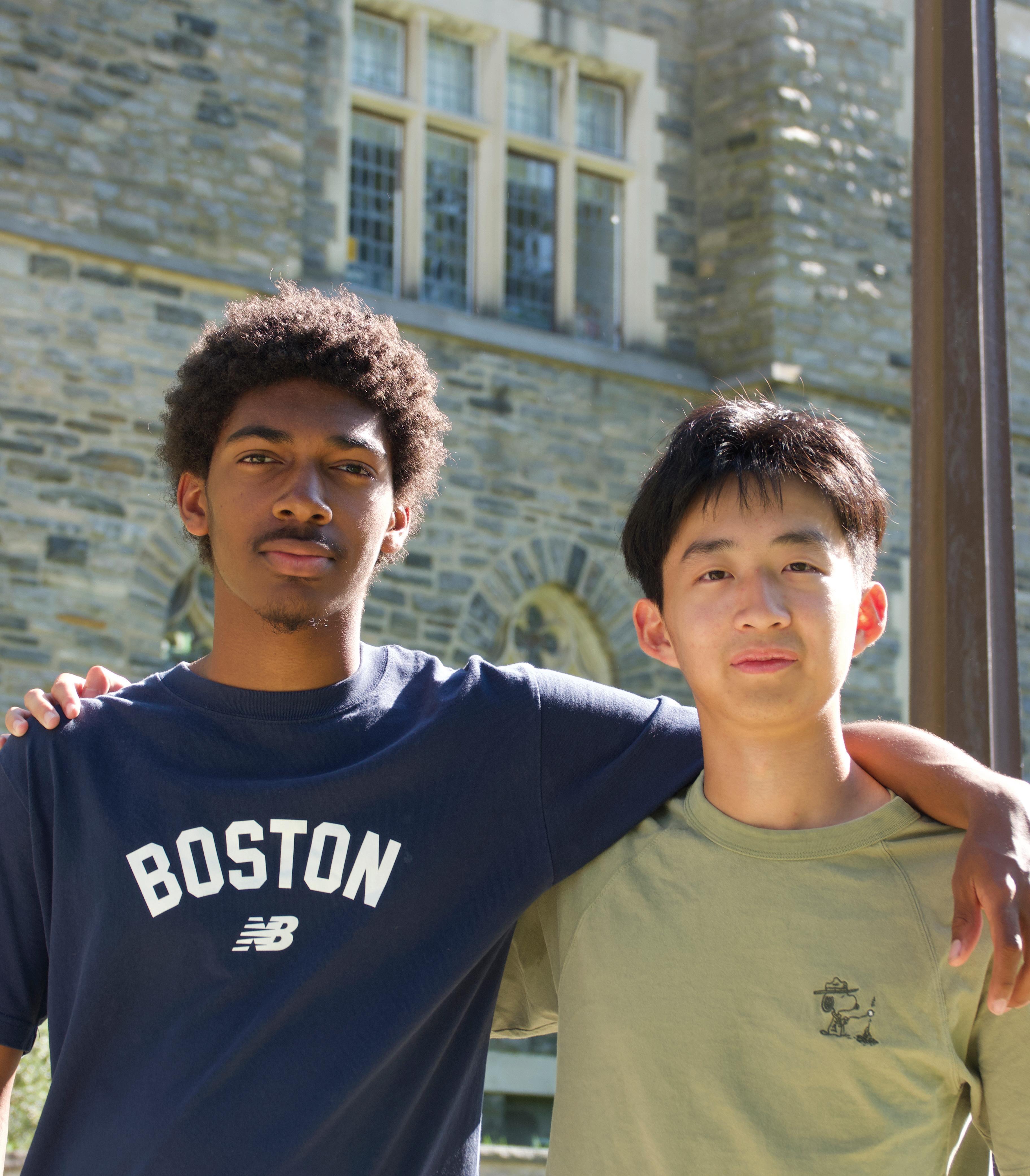
This rule was removed in the 20172018 school year, when then Executive Committee secretary Phoenix Jackson ‘18 and sophomores Sarah Faber and Michelle Wei proposed a bill for the removal of gender stipulations on the leadership positions.
Coincidentally enough, in 2019, Faber would be elected with Audrey Lockett ‘20 to make the first only-female co-chair since the bill’s passage.
Seven years later, the current 2026
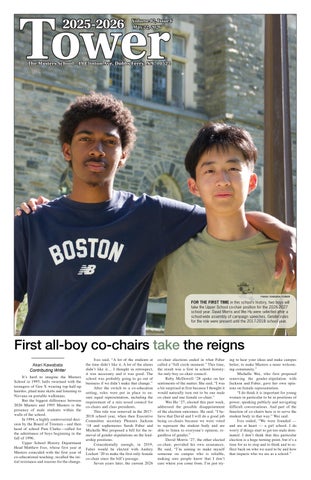
co-chair elections ended in what Faber called a “full circle moment.” This time, the result was a first in school history: An only-boy co-chair council.
Ruby McDowell ‘28 spoke on her sentiments of the matter. She said, “I was a bit surprised at first because I thought it would naturally turn out to be one male co-chair and one female co-chair.”
Wei Hu ‘27, elected this past week, addressed the possible disappointment of the election outcomes. He said, “I believe that David and I will do a good job being co-chairs because we were voted to represent the student body and are able to listen to everyone’s opinion, regardless of gender.”
David Morris ‘27, the other elected co-chair, provided his own assurances. He said, “I’m aiming to make myself someone on campus who is reliable, making sure people know that I don’t care where you come from. I’m just try -
ing to hear your ideas and make campus better, to make Masters a more welcoming community.”
Michelle Wei, who first proposed removing the gender-stipulation with Jackson and Faber, gave her own opinions on female representation.
“I do think it is important for young women in particular to be in positions of power, speaking publicly and navigating difficult conversations. And part of the function of co-chairs here is to serve the student body in that way.” Wei said.
Ives ended, “We were founded ––and are at heart –– a girl school. I do worry if things start to get too male dominated. I don’t think that this particular election is a huge turning point, but it’s a time for us to stop and to think and to reflect back on who we used to be and how that impacts who we are as a school.”

Editors-in-Chief
Elaina Barreto
Jack Bilman
Editors-in-Chief Emeriti
Neena Atkins
Allie Faber
Lead Opinion Editors
Allie Faber
Helen Gao
Lead Lifestyle Editor
Mila Benson
Lead Arts Editor
Ella Liu
Lead Sports Editor
Thomas McCallum
Lead News Editor
Ayanna Beckett
Lead Copy Editor/Accountability Manager
Siena Versaci
Lifestyle Editor
Jaden Laboriel
Arts Editor & Copy Editor
Brielle Broomes
Sports Editor
Loewy Nalle
News Editor/Illustration Editor
Olivia Shim
Newsletter Editor
Zadie Collins
Photo Editor
Jack Bilman
Social Media Manager
Alex Kagoshima
Marketing Director
Brooke Muntner
Web Editor/Technology Coordinator
William Grey Dickson
Faculty Advisors
Ellen Cowhey
Matt Ives
Columnists
Julia Panos, Gigi Wheeler, Jasmine Mao, Avery Gosnell, Annadele Dyott, Mason Dwek, Alex Kritzer and Alex Pinnock
Photographers & Illustrators
Annadele Dyott, Johnny Ye, Maria Viniegra, Siena Olay, Alexandria Abadir, Etienne Millet, Andrew Berman, Knox Gary, Sam Haas, Marissa Goldfarb, Mya Recinos, Niki Agrawal, Aviana Kinon, Rose Yuan, Clara Chu and Roni Barkan
@masterstower

@masterstower

@masterstower
tTOWER 2025-2026
Tower is hand-delivered on the day of publication to the Upper School. 650 copies are printed. A copy is sent to each of our advertisers. Tower is the winner of the Pacemaker Award for Overall Excellence, an award-winning member of the National Scholastic Press Association (NSPA), Columbia Scholastic Press Association (CSPA), Journalism Education Association (JEA) and Quill and Scroll. We encourage Letters to the Editor, which can be submitted to the following email address: TowerEditors@MastersNY.org. Published approximately six times a year, Tower is a public forum, with its Editorial Board making all decisions concerning content. Commentaries and opinion columns are the expressed opinion of the author and not of Tower and its Editorial Board or its advisers. Furthermore, the opinions conveyed are not those of The Masters School, faculty or staff. Unsigned editorials express views of the majority of the Editorial Board.
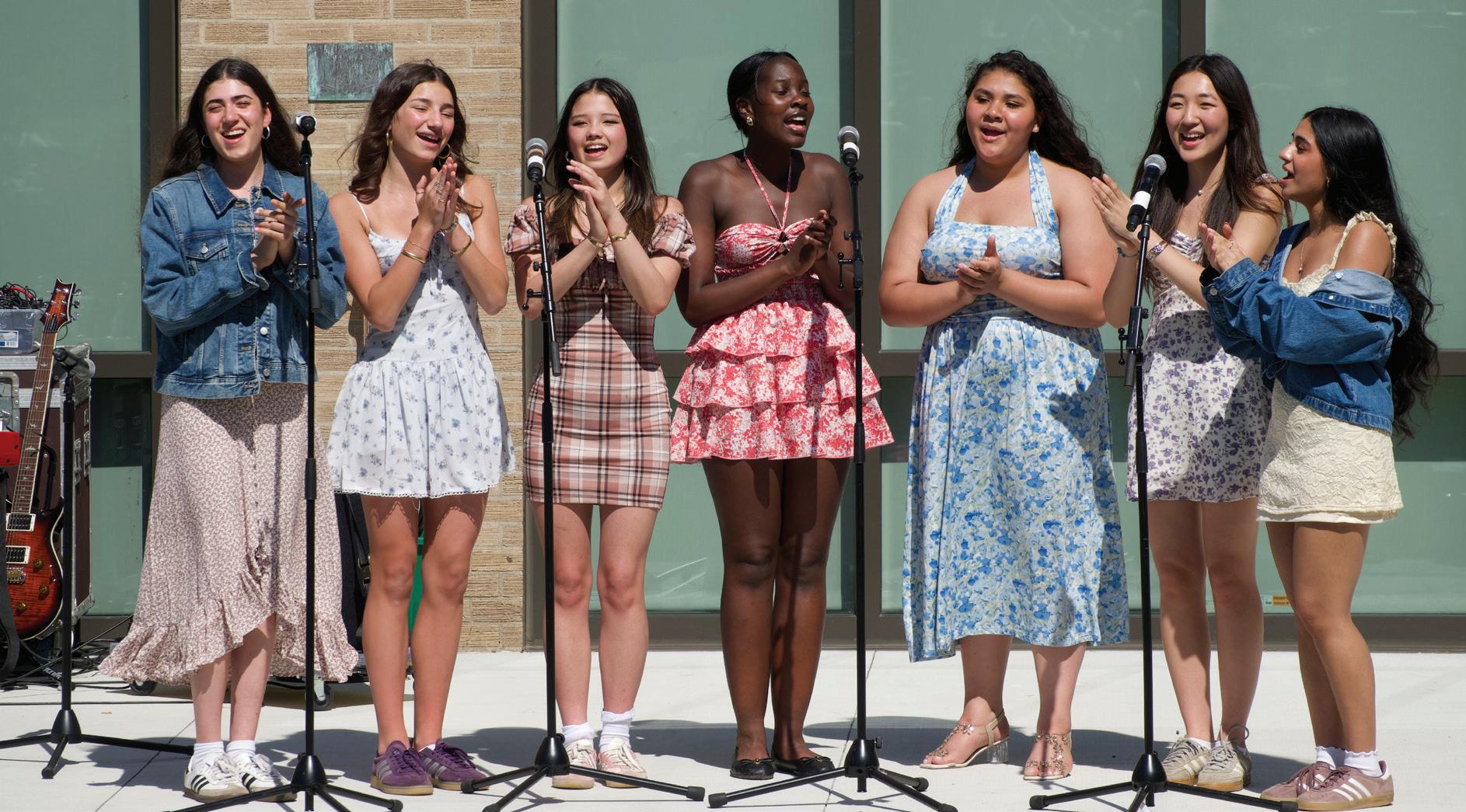
was one of the nine Student Performing Groups
that performed during
palooza on Saturday, May 16. The performance included various styles of performing arts such as 90s alternative, spoken word poetry and showtunes.
Five candidates are running in the Democratic Primary for the New York 17th district: lawyer-turned-television reporter Mike Sacks, Rockland County Legislator Beth Davidson, West Point graduate Cait Conley, Tarrytown Village Trustee Effie Phillips-Stanley and former Air Force Officer John Cappello.
Hacky sack, a game in which a group of people stand in a circle kicking around a small sack, has become popular on social media, leading students at Masters and in high schools throughout the country to pick up the game.
FIFA has shifted their pricing strategy to be based on demand, leading to an increase in ticket prices for the 2026 World Cup.
Varsity track Head Coach Ian Mook, who is leaving Masters at the end of the school year, has had a significant impact on the team, which he led to participate in multiple championships including New York State Association of Independent Schools (NYSAIS) games.
3
6
Elaina Barreto Editor-in-Chief
New York’s 17th District, a competitive “purple” district, is set to hold its Democratic primary on June 23 to determine who will face current Republican Representative Mike Lawler.
The candidates are lawyer-turned-television reporter Mike Sacks, Rockland County Legislator Beth Davidson, West Point graduate Cait Conley and Tarrytown Village Trustee Effie Phillips-Stanley. The 17th District consists of all of Rockland and Putnam counties, as well as part of Westchester and Dutchess County.
Sacks, an alumnus from Georgetown Law School, left law in 2011 to work for the Huffington Post. He became known as a journalist by camping out in front of the Supreme Court to be in line for major cases to write about in his blog “First One @ One First”.
As part of his campaign, Sacks strongly condemns Lawler’s leadership and policies.
“Everything we stand for is in stark opposition to Mike Lawler’s complicity with and enabling the Trump regime.” Sacks continued, “[Lawler is] slashing Medicaid and putting thousands of jobs at risk and making thousands of lives and livelihoods worse in this district while I’m running on not only restoring the funds that he slashed for Medicaid, but also moving forward towards Medicare for all so that no one in this district or this country has to choose between a heating bill and their health care.”
Davidson, a mother of two children and a two-time cancer survivor, has years of ex-
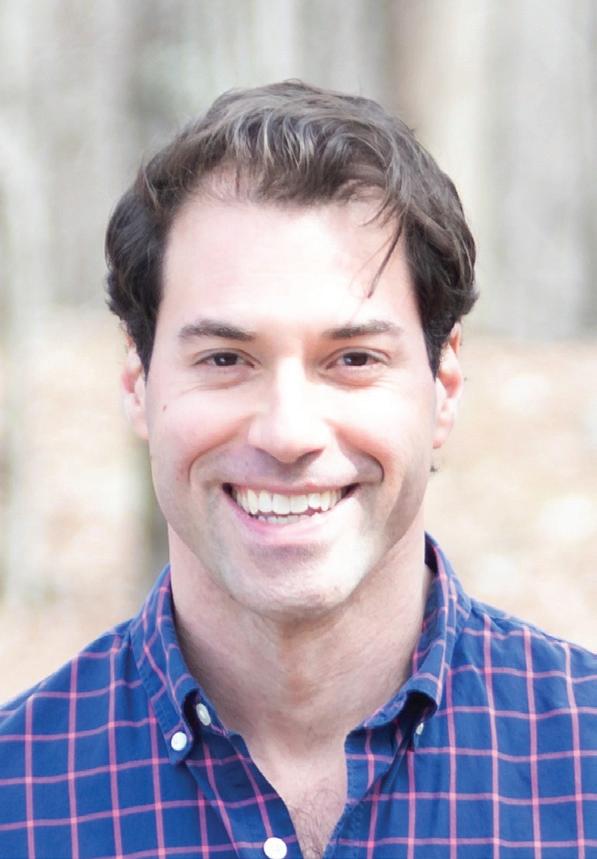
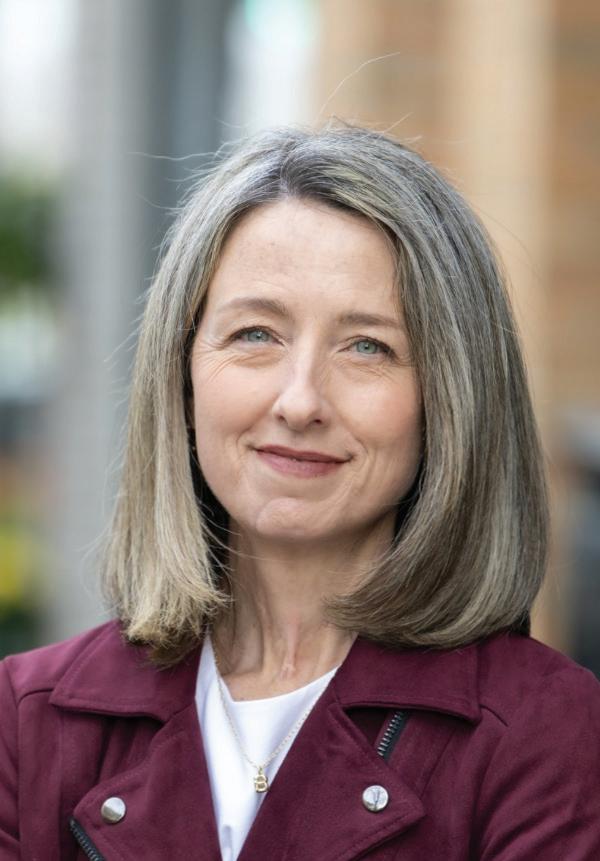
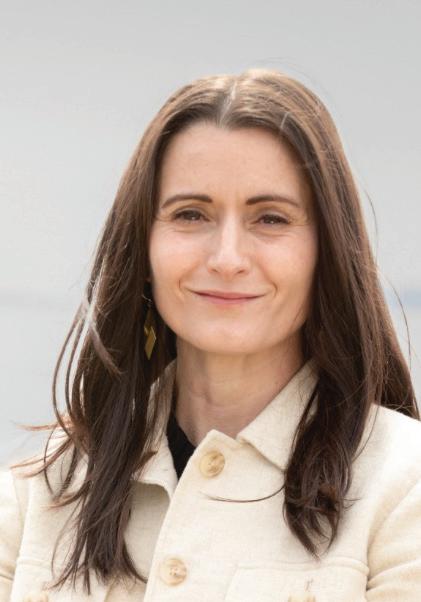
PICTURED FROM LEFT TO right, Democratic candidates Mike Sacks, Beth Davidson and Caitconley explain the main goals and concerns of their campaign for the New York’s 17th District’s Democratic primary. One of the five candidates will face the current Republican Representative Mike Lawler, who has served since 2023. The district contains parts of Westchester including parts of Sleepy Hollow and Tarrytown and all of Nyack in New York. The primary will take place on June 23.
perience serving her community. As Rockland County Legislator, she won her seat in a competitive district, with only 48% democratic registration.
Davidson’s campaign emphasizes multiple priorities, such as immigration reform, defending civil rights and fixing housing affordability. However, Davidson is also concerned with reproductive healthcare and abortion rights.
“As a two-time cancer survivor, I did have to fight with my insurance company, sometimes hours a day, and they left me on hold forever.” She continued, “And the emotional as well as financial strain that it takes
on families is excruciating, [which is] why I support a public option to add to the Affordable Care Act so that people who want Medicare-type coverage can buy into it, but those who need –– for whatever reason –– to hold on to their private insurance, can also do so.”
Conley, who graduated in the top 2% of her class at West Point and served for 16 years as an active-duty Army officer, is focused on protecting American democracy and solving economic issues.
Through traveling on her campaign, Conley said she has spoken with many families who are struggling with the cost of living. Conley said that when her parents were grow-
ing up, the age of the average homebuyer was 21; now it is 40 years old. One of her priorities is lowering the costs for Hudson Valley families.
Although Conley is running as a Democratic candidate, Conley said that if elected she will work to ensure she addresses the needs of both Republican and Democratic citizens.
She said, “When I went off to West Point and joined the army after 9/11, I wasn’t serving a person or a political party; I was serving my community, my country, my constitution. I believe that is what elected leaders should do.” She added, “You don’t represent one side of a political spectrum, you represent all people in your district, and I believe part of what has derailed America in general has been the hyper partisanship. We’ve watched as these partisan polarizing tactics have torn families apart, and that’s got to stop.” She continued, “Before we’re a Republican or Democrat, we’re a neighbor or a member of a community. We’re an American.”
William Grey Dickson Web Editor
After the Voting Rights Act was enacted in 1965, protecting against unconstitutional gerrymandering due to race, America’s political future seemed to be solidified in equality: outlawing discriminatory voting practices such as literacy tests and racially inequitable political practices. However, as of April 2026, America is facing much of the same issues it had regarding equal representation.
Directly, the Supreme Court has limited the powers of the Voting Rights Act through Louisiana v. Callais. The decision occurred from a 6-3 ruling, dictating that Louisiana’s 2024 congressional map including two predominately African American districts was unconstitutional.
While this decision was made only in April, many on the left fear that its potential to restrict representation of minority votes is already taking place. American politicians have responded to this supreme court decision on congressional redistricting by proposing new congressional maps, dividing African American majority districts.
Following this decision, some Americans on our campus voiced their concerns. For example, Noah Adler ‘27, leader of the Young Democrats club, said, “I think the Supreme Court decision has discouraged me. I think it is just an example of the ero-
sion of American democracy. I don’t think this is a left or right issue; I think this is an American issue.”
He continued, “[It] is prevalent in the fact that if we can’t have open and free and fair elections, [as] gerrymandering is not a free election when we are partisanly drawing our lines, …It’s not healthy for the country.”
For those who may not know, gerrymandering is the practice of dividing a ter ritory into electoral districts which allows one political party to grow in power.
Adler’s perspective on gerrymandering mirrors the common consensus on campus that, regardless of party lines, tampering with representation has the potential to harm democracy.
Jesse Ostrom ‘27, another student concerned about polarization, said, “I think what [the political system has] done is they’ve taken these trigger words such as fraud and they’re using them as excuses to really cut down on who can vote and where they can vote. The harder it is to vote, the less likely a person is to do it.”
This Supreme Court decision is a meaningful change against diversity in political participation according to the Masters’ Center for Inclusive
Associate Head of School for Inclusive Excellence Selas Douglas said, “Particularly for Black American communities in the South, this feels like a return to some of what we saw historically [in the Jim Crow era and in Reconstruction]. A lot of the efforts that are showing up really feel like they are removing a lot of the protections…that people fought for.”
While many Masters staff and stu
Alito, and those who agree with him, argue that vast social change throughout the country and particularly in the South has taken place and the institutions of discrimination which were curbed by this law, are long removed from America’s political system. These conflicting opinions of conservative officials and many Americans are emblematic of the increasing partisan di

WILLIAM DICKSON/TOWER
SUPREME COURT CASE LOUISIANA v. Callais has limited the protections against gerrymandering, which is the manipulation of district borders in order to give a political advantage for a party or group. In 2026, the case weakened previous protections mandated in the Voting Rights Act of 1965 intended to prevent gerrymandering that discriminated based on race. Without constitutional protection, state courts will now be a major decider for limits on gerrymandering.
Ella Liu Lead Arts Editor
Lawyer Cheryl Mills, who defended former President Bill Clinton during his impeachment trial, will give the commencement speech this year for the Class of 2026. Mills also served as a core advisor for former Secretary of State, First Lady and Presidential Candidate Hillary Clinton.
Beth Nolan, Chair of the Board of Trustees contacted Mills, her close friend to invite her to speak at Masters.
In previous years, seniors and their families were given the opportunity to suggest graduation speakers if they had a connection, but that process was changed due to the difficulty of confirming legitimate and possible suggestions.
Head of School Laura Danforth described the traits that are looked for in the search for a graduation speaker, which included finding someone who was aligned with the school values.
“You want someone who had their life journey aligned with our mission to be a power for good in the world,” Danforth said.
Mills attended the University of Virginia and Stanford Law School before be-

CHERYL MILLS SPEAKS DURING annual meeting of the Clinton Global Initiative (CGI). She will speak at the graduation ceremony this year, leaving the class of 2026 with
coming deputy White House counsel at just 33 years old. Known for her first significant public courtroom appearance while the United States Senate was convened as a court of impeachment to try the president, Mills was viewed favorably by media for her conduct on Clinton’s defense team.
When White House counsel, Charles F. C. Ruff, left his position, Mills was offered the role but turned it down.
Mills then worked for New York University starting in 2002. There, she served as Senior Vice President for Administration and Operations and General Counsel and helped to establish the NYU campus in Abu Dhabi. She then left to serve a legal counselor and Chief of Staff for Secretary of State Hillary Clinton from 2009 to 2013.
Later, Mills founded the BlackIvy Group and now serves as the Chief Executive Officer which works to create businesses in Sub-Saharan Africa.
Danforth said she hopes that Mills, like many previous commencement speakers, will help encourage and inspire the senior class in their journey beyond high school.
Danforth said, “She will be someone who says, ‘Don’t settle.’ Push through these barriers, jump over barriers to do the right thing. Ask what is your dream? And fight like hell to reach it.”
Brielle Broomes
Copy Editor and Arts Editor
From the Innovation Entrepreneurship Center (IEC) to Masters Hall, prospective families and tour groups are spilling into different buildings around campus, a testament to the recent surge of interest at Masters. This trend points to a potential influx of new classmates for the school years to come.
According to The New York Times, the period after the Covid-19 pandemic marked a decrease in overall enrollment for public schools in the United States. However, private schools experienced a modest increase in interest as well as enrollment. There is a possibility that Masters admissions fits in with this academic shift.
Jack Stevens, the senior associate director of boarding admissions, has been working at Masters for the past four years and is familiar with the typical flows of admissions cycles.
Stevens said, “I believe in my four years
that this is one of the higher application seasons that we’ve had. When it was Veterans Day in November, we had to add a full other afternoon tour ––a hundred plus people after doing one in the morning of a hundred plus people. We’ve added another spring tour this year just to make it three.”
Through the 2025-2026 school year, Masters has implemented more admissions events as well as a more personalized approach in highlighting different aspects of the school. Stevens said, “The admissions team’s goal is to make it feel less transactional and more personal.”
He continued, “We want students to feel comfortable with campus, of course, via tours, but also with people that are going to impact their day. If you’re really interested in soccer, you’re going to talk to the coaches. If you’re really interested in performing arts, you’re going to talk to [someone in] the Department of Performing Arts.”
Marissa Goldfarb, a junior and Gold Key ambassador, has led many tours since her freshman year. She said, “I’ve noticed that this
year there are a lot more people on tours that I lead and I’ve seen a lot of tours happening when I am not leading them. I think on the tours specifically, people seem to be really interested and definitely come with questions that they already know they want to ask, which shows their level of interest,” Goldfarb said.
Scott Graves P’29 and P’27 is a parent ambassador that helps guide many prospective families at Masters. Graves said, “I feel instinctually that the word is out about Masters. It’s a place that has a beacon glowing in it.”
He continued, “Families have told me that when they visit, whether they’re coming to a competitive sports team, for a science research challenge or if they’re walking through campus, they notice that people at Masters are genuinely happy, and it’s infectious.”
Masters has already taken the initiative to welcome prospective students and families for the 2027-2028 school year. As of midApril to early May, Masters has held three group tours to provide an overview of its programs at Masters.
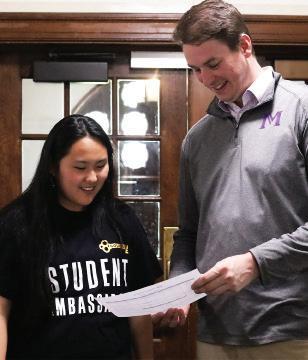
director of boarding admissions, speaks
Rio
a member of Gold
As Masters recieves more and more applications he continues to build relationships with prospectve families.
At the largest pre-college STEM competition in the world, ISEF (Regeneron International Science and Engineering Fair), senior Nico Khoury-Levy and junior Siena Versaci won second place in cellular and molecular biology and fourth place in behavioral and social sciences.
Khoury-Levy’s project tackles a paradox of T cells, a type of white blood cell, being dysfunctional in cancer but hyperactive in autoimmune diseases. He created a novel model where cancer tumors are placed into mice with autoimmune disease. His decisive results propel future studies that “uses autoimmune diseases to cure cancer and cancer to cure autoimmune diseases.”
To enhance the diagnosis of mental health disorder, Versaci’s project coded and trained an AI model with non-personally identifiable data in order to circumvent the legal issues of using patient data. After months of coding and training, her model achieved 60-80% accuracy.
Advancement into ISEF is an accomplishment in itself. Science research students across the world compete in qualifying regional science fairs, with an overall less than 1% chance to advance.
Kristina Gremski, the teacher for the Masters science research program said, “Westchester and the New York area are one of the most competitive, if not the most competitive areas for science fairs.”
For more information on the projects, visit tower.masters.org for an article on Masters Science Research’s ISEF experience.
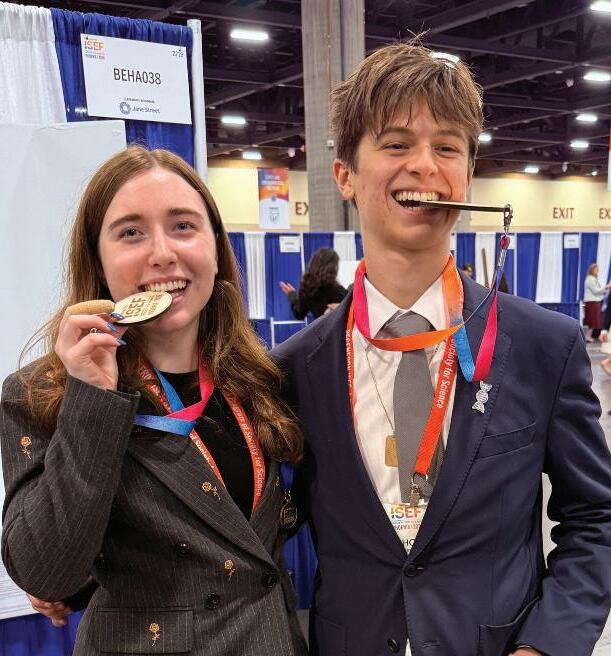
SIENA VERSACI ‘27 AND Nico Khoury-Levy ‘26 flash their medals at the International Science and Engineering Fair (ISEF). Khoury-Levy won second place in cellular and molecular biology. Versaci won fourth place in behavioral and social sciences. Winning these awards in the “olympics” of highschool science competitions show their talent and passion for STEM.
Brooke Muntner Marketing Director
At 7:30 a.m. on a school day, junior Maya Strietcher waited at the gas pump, watching her total exceed $60, before heading to school to complete her daily obligations.
Gas prices in New York have been increasing in recent weeks, rising over 25 cents in one week and 8 cents in only a few hours. The current statewide average is $4.46 per gallon, which is about 27 cents higher than on May 4, putting pressure on student drivers, commuting families, faculty and staff.
For many students, the rising cost of gas has begun to shape everyday decisions about where they go, how often they drive and the sacrifices they need to make when considering what they can afford.
Thomas Duke ‘27 said, “I try not to make a bunch of little trips. If I’m going somewhere or picking up my sisters, I do it all at once now. The fact that going to the gas station is a huge purchase is so frustrating.”
Duke said he makes sure that when
he is driving, he keeps his car in Eco mode, and from conversations with his family, he feels that they will eventually switch to an electric car.
Junior Ethan Smolkin just began driving this March, and although he doesn’t pay for his own gas, he has noticed the shift.
“It is just so surprising how much money it is for one tank of gas. I am fortunate that my parents pay for it, but there are kids who need to pay for their own gas.”
He continued, “If prices keep rising, people are going to have to be more careful about how much they drive. Even just going out to see someone might become something you think twice about.”
While some students live close enough to school that the impact is limited, others with longer commutes may face more severe challenges, especially if they don’t have access to alternative transportation.
“I think it’s important for people to understand that students are balancing school and work,” Smolkin said.
The Dean of Global Studies at Masters Pilar Méndez-Cruz, usually drives an estimated total of 30,000 miles per year;

GAS PRICES IN NEW York continue to increase each week. Rising tensions between the United States and Iran have disrupted oil shipments through the Strait of Hormuz, a major route for global oil transportation. Gas prices in New York have increased by around $1.68 per gallon from 2025 to 2026.
however, due to rising gas prices, she has needed to drive a lot less.
She said, “I’ve definitely needed to rethink long road trips, and I now drive out of my way to fill up on gas, and even further to get to the cheaper gas station. It is really frustrating.”
She continued, “I am very privileged that I live on campus and I am very close
to my family, so the biggest way it has affected me is my ability to travel over long distances. However, seeing those prices gives me so much anxiety for how that affects people who live paycheck to paycheck.”
Avery Gosnell Staff Writer
As of May 11, 2026, the average price per liter of gas in the United States is 1.270 USD ($4.81 per gallon).
In Thailand, the average price is 1.631 USD (about $6.17 per gallon).
Sue Leelasakuntham ‘27 has family in Thailand. While people in Southeast Asia have gas for cooking and planes, they no longer have easy access to fuel for their cars and motorcycles.
“They’ll have to wait in line until there is [a tank of] gas for them to take… [They’ll use that] just for a bit, and then they’ll burn out again and have to repeat the line,” Leelasakuntham said.
Schools in the region have gone online or begun relying on trains. Jobs and acquiring resources remains challenging.
The United States and Iran conflict began Feb. 28, when the United States attacked Iran. The Strait of Hormuz, which allows the passage of around 20% of the world’s oil and gas supply, quickly became a target point of the conflict.
The Council of Foreign Relations explained that on March 11, “[Iran] announced that any vessel belonging to the United States, Israel or their allies in the area were considered ‘legitimate targets.’”
This announcement was followed on March 12 by Iran’s supreme leader, Mojtaba Khamenei, saying the strait would continue to be blocked off.
Upper School history and economics teacher Skeff Young explained that with the

SOURCE: U.S. CENSUS 2021 BOUNDARIES, SUMMITPOST.ORG
GAS PRICES ACROSS THE United States are shown, ranging from $3.32 to $5.89. The current prices of gas in the U.S. are the highest they have ever been since July of 2022. The national average gas price has increased by 43.6% between May 12, 2025, and May 12, 2026.
Strait in risky condition, insurance companies raise their prices for insuring a tanker.
The companies owning the tankers eventually can no longer afford the insurance, resulting in “a bunch of oil tankers sitting inside the Strait… that can’t get out,” he explained.
Southeast Asia and the Oceania regions rely on the Strait of Hormuz specifically. While places like the United States and Europe have other sources of oil, places like Vietnam, Thailand and the Philippines de-
pend on the nearby Hormuz. Young lived in the Philippines for five years and still has connections there. For people in the Philippines, the economic crisis is not only making public transportation (which Filipinos often use instead of personal cars) more expensive, but also removing the ability for individuals to cook and prepare food items in order to make meals accessible.
“In the Philippines, the average person uses little natural gas containers, like you do
for your grill. That’s how they feed themselves… very quickly, the average person in the Philippines is going, ‘Where’s the natural gas, and how much is it gonna cost me to get it?’”
Australia, in the Oceania region, is another heavily affected country, relying similarly on exports and the Strait. Hunter Smith ‘29 has family in Australia.
“All of the farming culture is completly gone,” he said.
Outside of cities, farming is extremely common in Australia. The New York Times explains that Australian farms require tons of diesel gas-the national average cost of which rose about 50% in March.
Fertilizer also isn’t coming through the Strait, adding another layer of concern for farmers having to decide whether or not to invest in their crop this season.
Smith said he knows many Australian farmers who have been forced to call their crop and sell their farms, losing the primary job in a region with no universities and few other ways of life.
“I have friends who are like, ‘I don’t really know what to do now,’ because that’s pretty much all that they do,” Smith said.
Re-opening the Strait will be the first step to solving these issues, Young explained. After that, the process will begin by rebuilding trust for insurance companies in order to lower the price enough for ships to start paying and continuing their shipments.
“It’s not like the next day everything’s going back to normal,” Young said. He continued, “This is going to be a process, [but] it’s in the interest of everyone to get this settled.”
Thomas McCallum Lead Sports Editor
Anyone walking around the quad over the last month has undoubtedly seen groups of students standing in circles and kicking a small sack to each other. Hacky sack is the hottest trend in high schools across the country, and Masters is no exception.
John Thorn ‘26 said, “We have been seeing a ton of hacky sack on campus. It has really taken over, and everyone loves it.”
The game originated in 1972 in Oregon, and took college campuses by storm over the following decades. However, the game experienced a significant decline in the 21st century, and has been largely outside of the public conscience for the last 20 years.
Yet, in the last month, the game has experienced an explosive resurgence.
Zach Gotthelf ‘26 said, “Hacky sack is probably the fastest growing fad at our school right now. It became popular so quickly, and kind of out of nowhere.”
However, Gotthelf, who is the captain of the baseball team, has been playing the game longer than most. He said, “Hacky sack has been a thing in the baseball world for a while. If you go to a college baseball game, you will always see pitchers playing
hacky sacks in the bullpen. But it’s only become mainstream very recently.”
One of the main reasons the sport has blown up on such a large inter-school scale is because of social media. Students on campuses across the country are playing hacky sack and uploading videos on social
media.
With a quick search on Instagram, one can find a hacky sack account for almost every high school in New York. These accounts post short video clips of hacky sack gameplay, or Rally’s of the Day (ROTDs), some of which gain a lot of traction,
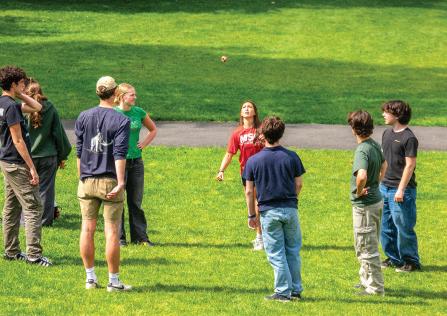

amassing thousands of likes.
In addition to school-specific accounts, larger accounts post rankings on a weekly basis, in which the school’s Instagram posts are ranked, either on a statewide level or based on existing athletic conferences. These posts gain even more traction than school-wide ones, with posts from Inside Sack Preps (ISPreps) gaining as many as one hundred thousand views.
Another reason why the trend has caught on is the inclusive experience hacky sack circles strive to cultivate, which helps players learn quickly and stick with the game.
Thorn, who started playing hacky sack just a few short weeks ago, said, “It’s pretty easy to get started, and then you can keep on getting better and better, because everyone is very supportive. A phrase that people say when someone messes up and says ‘sorry’ is ‘no sorry sacks’, which basically means that you shouldn’t say sorry, and always keep a positive vibe.”
Zadie Collins Newsletter Editor
Math teachers and coaches Neil Jaggernath and Ian Mook have been a valuable part of the Masters community. As they get ready to return to the Hackley school for the 2026-2027 school year, where they once attended high school together.
Hackley alumni Jaggernauth and Mook have known each other since they attended. However, Masters is what brought them closer together in recent years.
Jaggernauth shared that Mook’s mother helped him get a job at Hackley when he had just graduated college, and from then on he was close with the family, but didn’t know Mook super personally.
Jaggernauth said, “When I graduated
from Hackley, then graduated from college and came back to work at Hackley, I got to know his mom, who was the head of the Communications Department.” More personally, he began house-sitting for the Mook family to take care of their dog, Mackey, who he had become close with, while they were away in the summer.
Jaggernauth said that he not only had a work relationship with Mook’s mother, but he also worked with Mook’s older brother at the alumni office at Hackley.
“And I worked with Ian [Mook] because I would help out with the boys varsity soccer team. And so I coached him a little bit there.” He said, referring to when Mook was still in high school.
For the next leg of their journey, Mook and Jaggernauth are returning to Hackley together, a surprise neither of them expected.
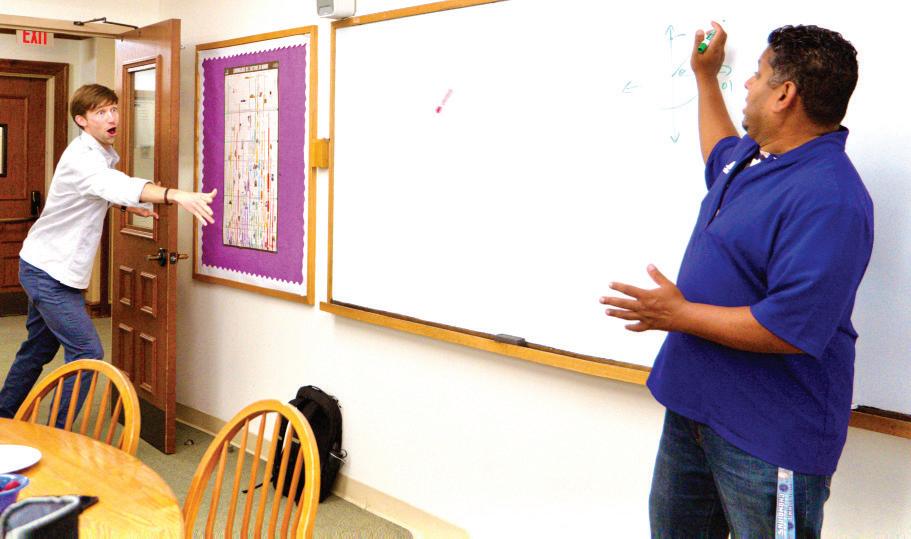
MOOK THROWS A MARKER to Jaggernauth during class. This moment reflects the playful dynamic of their friendship. As they prepare to leave Masters and return to Hackley, their alma mater, their friendship remains enlivening for the community.

Mook said, “There was really only one job posted and since we are friends, it was an important and healthy thing for us to talk openly about the prospect that we were both applying for the same job and only one of us was going to get it.,”
He continued, “It was a pretty wonderful surprise when we were both made offers and both given positions there.”
Jaggernauth agreed, saying, “We do so many things that are similar and
so having him as a level of support and his friendship has been super important.”
As they move on, Mook and Jaggernauth make note of the experiences Masters has brought them. Jaggernauth said that the decision to leave Masters was not an easy one, as he values the academic and athletic environment on campus, though returning to Hackley is exciting.
Mook said, “We both had great experiences there and it feels like a homecoming for me, and I know for [Jaggernauth] as well.”
Emily Mirkin ‘28 is a student in Mook’s honors algebra II and trigonometry class. Reflecting on how her class environment has been affected by Mook, she said, “He speaks with such enthusiasm, it’s hard not to be excited with him.” She continued on his friendship with Jaggernauth, saying, “They kinda act like kids our age sometimes when you see them together and I just think that’s really nice.”
Helen Gao Opinion Editor
When I first flipped through the 1,152page textbook required for the AP United States history class, I did not realize the jaw-dropping fact that each book uses roughly one-tenth of a tree’s worth of paper. However, in the rush of final weeks, these books, class notes and handouts are often discarded out of convenience. They pile up in lonely corners of the dorm’s common rooms, are left collecting dust in attics, or worse, are tossed directly into trash cans.
The amount of paper that becomes wasted is often underestimated. According to the Environmental Protection Agency, in 2018, paper and paperboard accounted for 23.1% of U.S. municipal solid waste, while 17.2 million tons of paper and paperboard were sent to landfills.
Landfills are the least efficient way to manage waste. They release methane, a greenhouse gas 80 times more potent than carbon dioxide in causing global warming. As rain and liquids filter through the waste, they produce leachate, a toxic liquid that contaminates surrounding water sources.
To keep paper out of landfills, juniors Emily Kasoff and Josh Malkin started an initiative this February to collect unwanted paper and send it through a proper recycling process.
“At the end of the year, we often have stacks of papers that just sit around or get thrown out,” Kasoff said. Kasoff and Malkin plan to set up large recycling bins outside the
library, in the Fonseca Center and throughout Masters Hall from May 25 to the end of the school year. These papers will be recycled through Masters’ existing recycling system.
“The school already has a partnership with a company that handles recycling,” Kasoff said.
In addition to students’ efforts, the Masters Parent Association has also organized the “Book Palooza,” a book swap program to reuse books across grade levels for the last three years. “Books are really expensive, and there tends to be a lot of waste,” Director of Parent Engagement Amie Servino said.
According to Servino, the initiative expanded last year with student volunteers promoting end-of-year donations. Parent volunteers later sorted the collected books by division and subject and distributed them during the opening days at a tent set up on campus to the entire upper school for free.
Some books that are not on the following year’s curriculum list, including novels, SAT and ACT prep books and AP review books, were also received. Most novels were donated to academic departments, while test-prep books were made available for students to take. Each year, the program collects roughly 15 to 20 boxes of books.
Still, “Book Palooza” operated under logistical challenges. “Our inventory is only as good as the donations we’ve received,” Servino said. The uneven supply of donated books means some materials circulated more easily than others. For example, expensive AP textbooks had high turnover, as they were frequently donated and quickly claimed. Under-
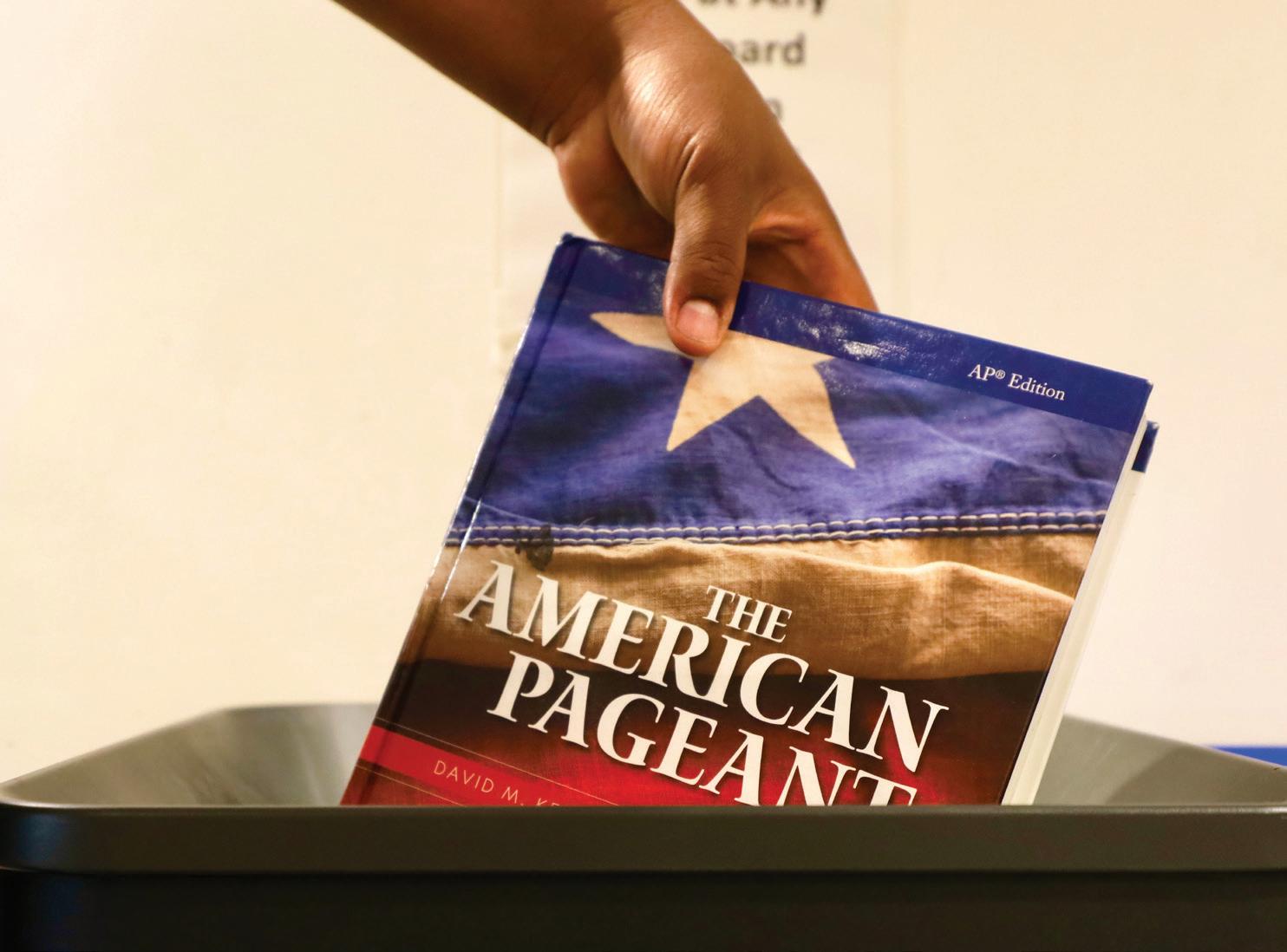
A STUDENT THROWS OUT used copy of a textbook used for the AP program history course. Instead of wasting usable textbooks, the Masters Parent Association organized a book swap program. In this article, Gao discusses the initiatives for the program to make textbooks more accessible and affordable.
class history books were harder to find because students kept them for multiple years. This program currently faces uncertainty as students need to buy fewer physical books themselves. The English department distributes books directly, and lower-level language classes have adopted digital books. With AP courses set to be phased out next year, demands for some of the most popular books may also decline.
Nevertheless, this program proves invaluable in mobilizing parents’ participation, embodying the Parent Association’s effort in being a “power for good.” Although financial aid can help cover textbook expenses for some students, Servino said the swap benefits families “right in the middle,” those who may not qualify for financial aid but still face hundreds of dollars in book costs due to skyrocketing text book prices.
Ayanna Beckett Lead News Editor
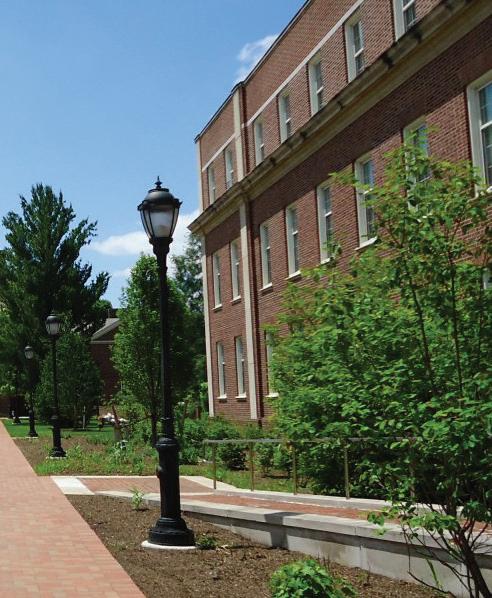
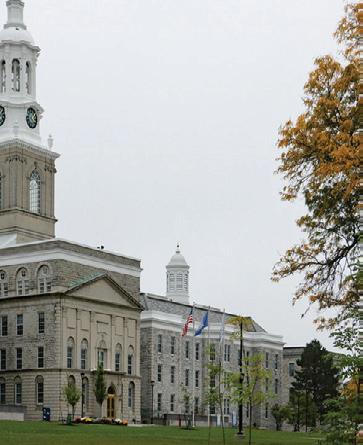
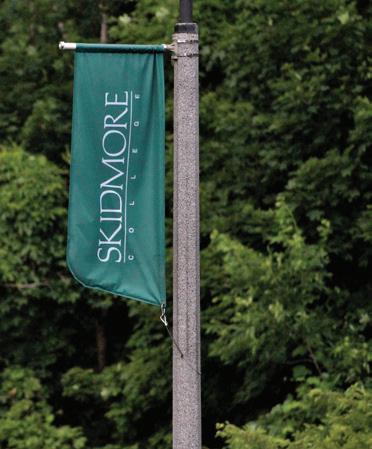
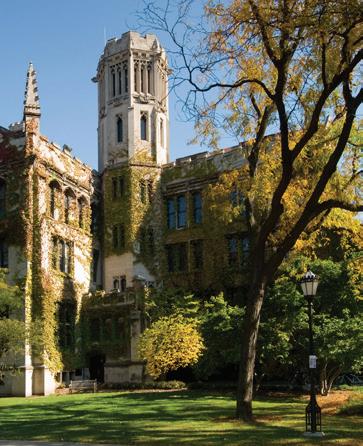
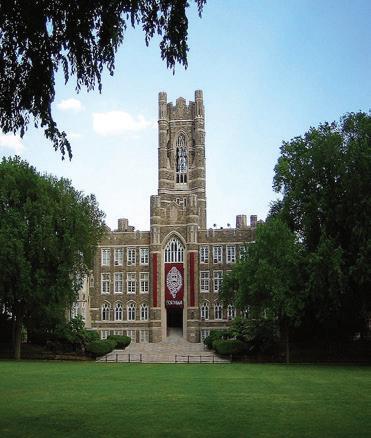
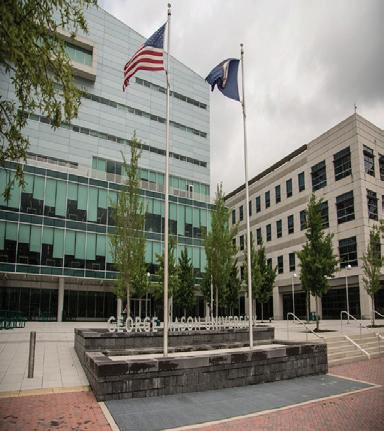
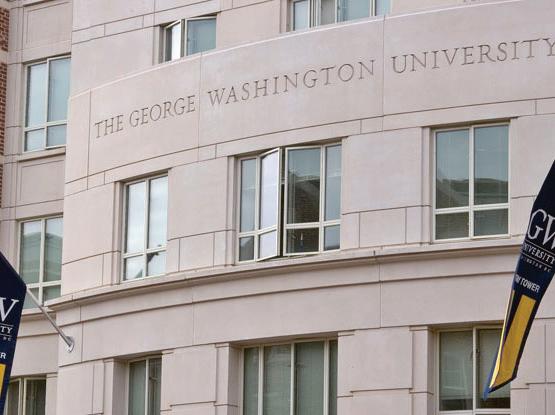
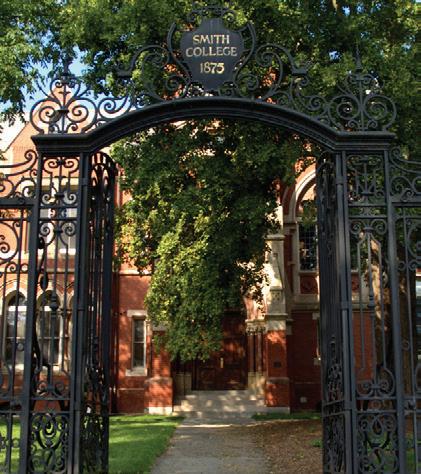
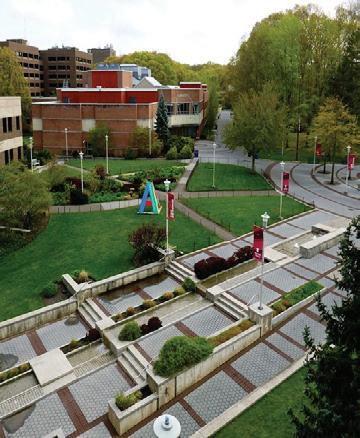
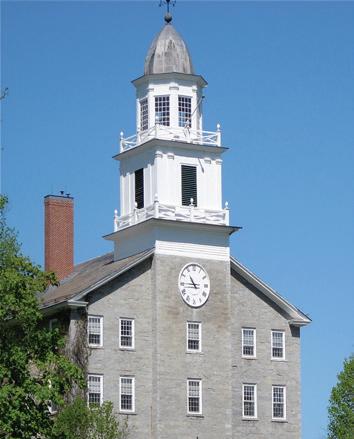
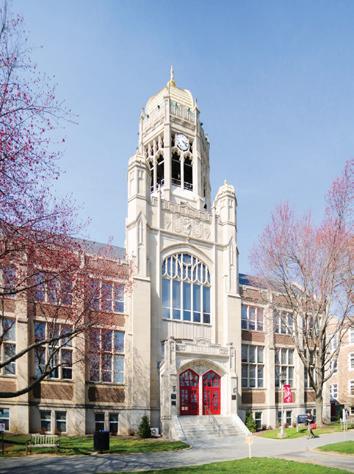
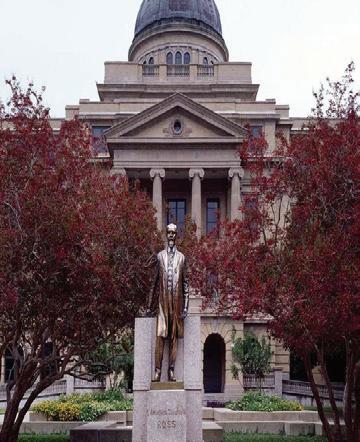
It is often said that the most stressful time in a high school student’s life is the college process. The grueling hours spent writing Common App supplements, the frantic emails sent to college counselors at all hours of the day and night, panicking about whether or not to use the word “good” or “great” in your personal statement.
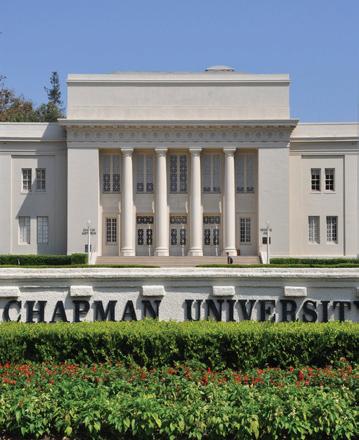
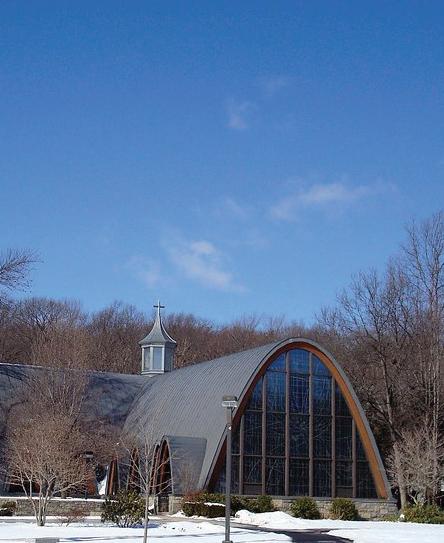
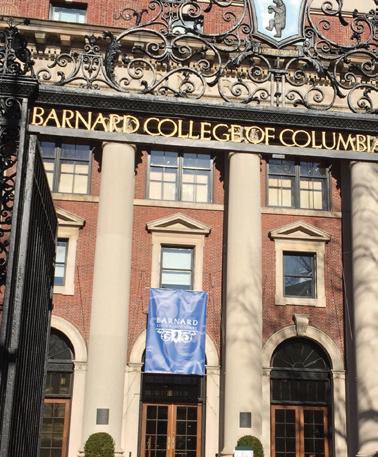
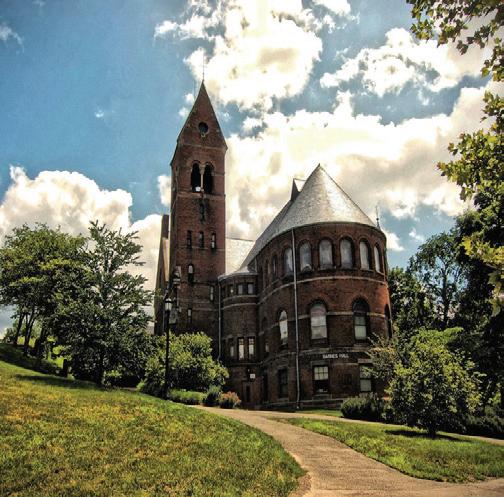
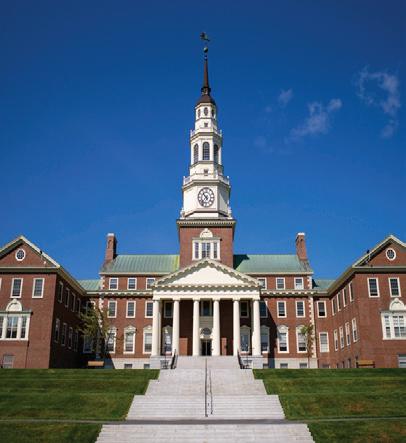
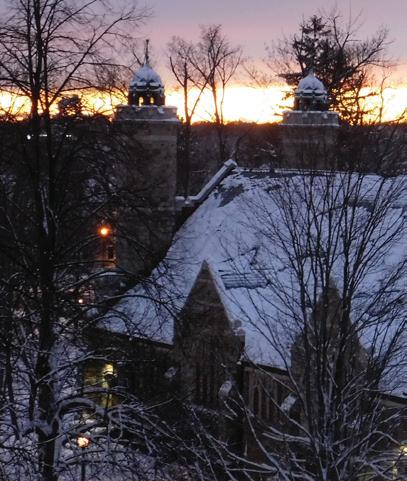
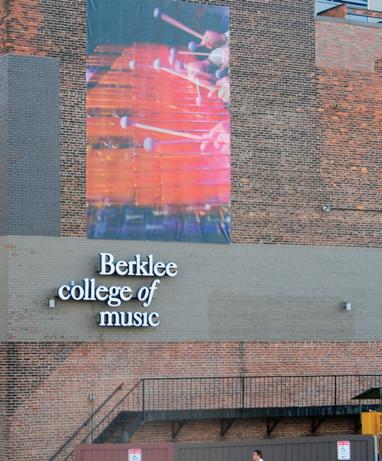
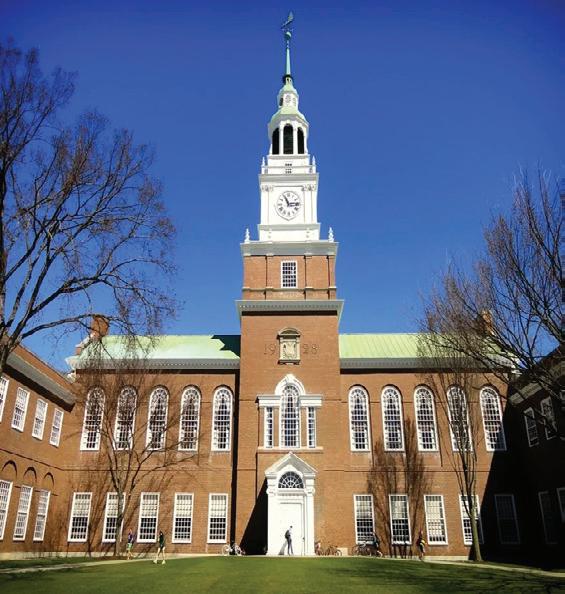
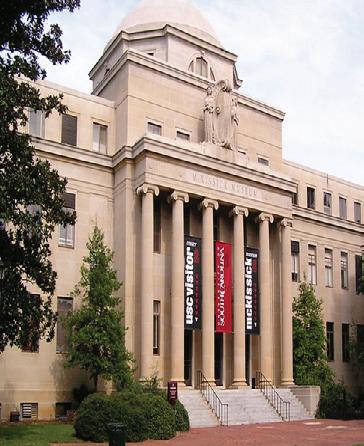
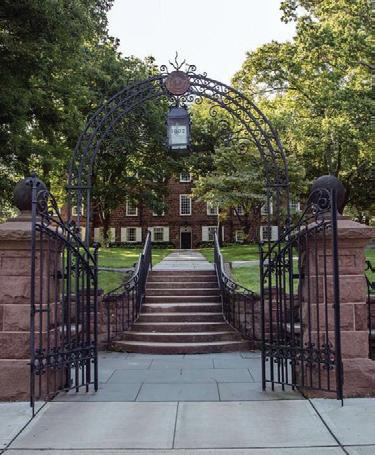
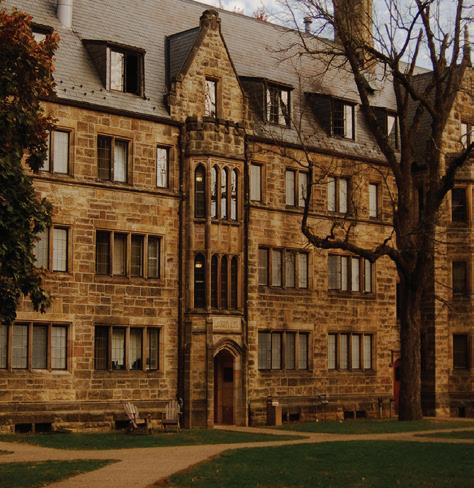
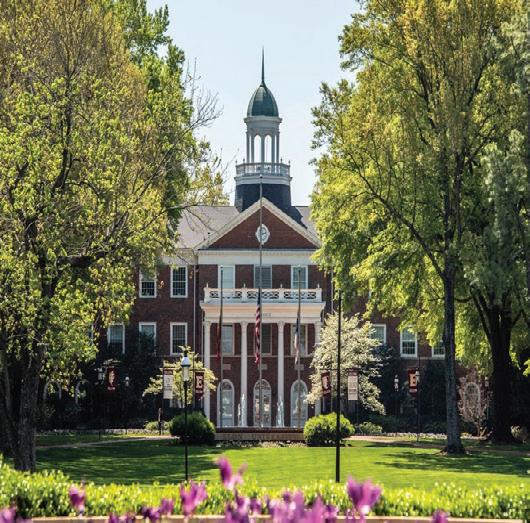
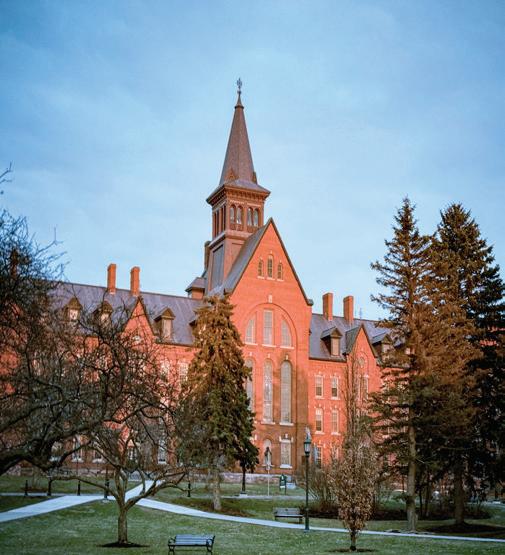
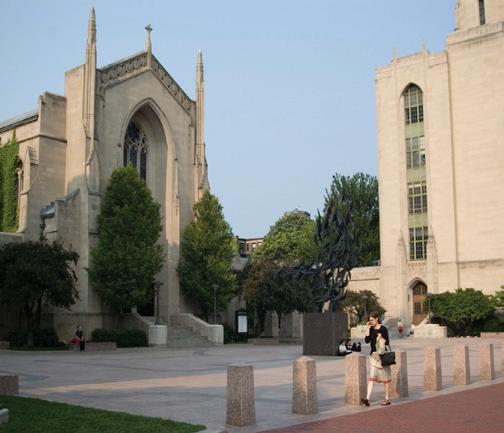
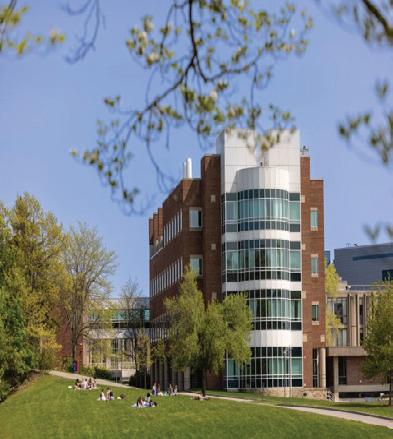
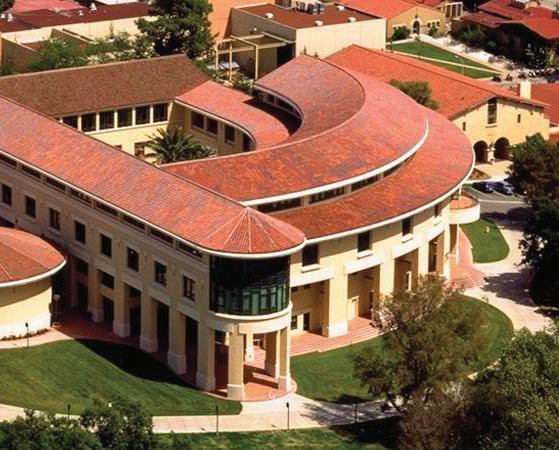
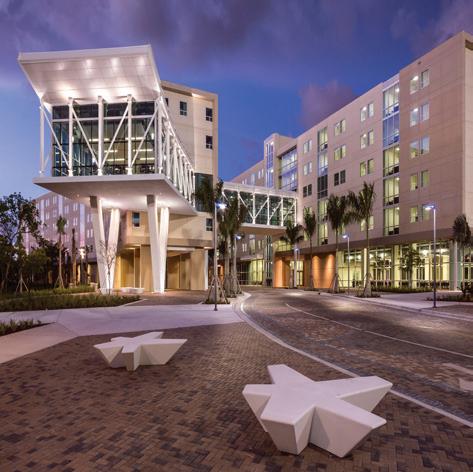
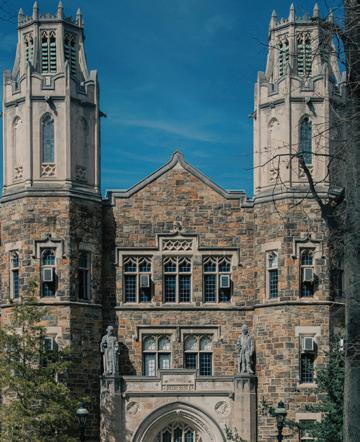
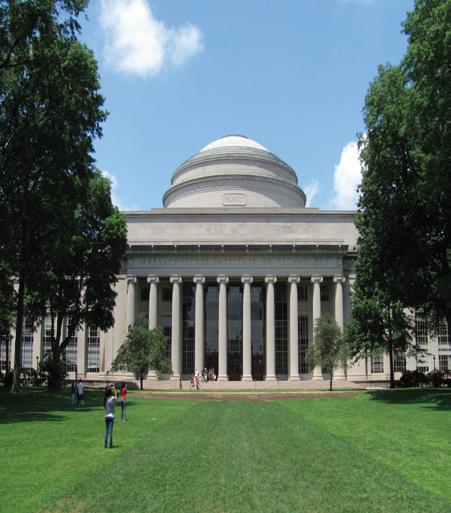
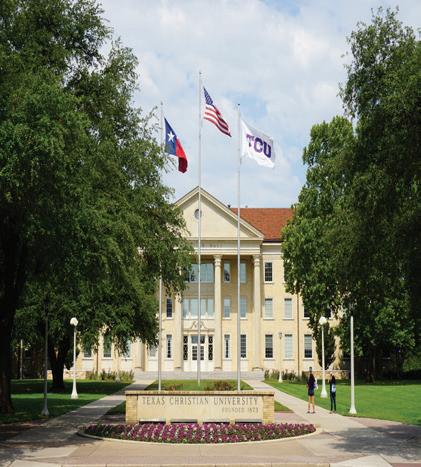
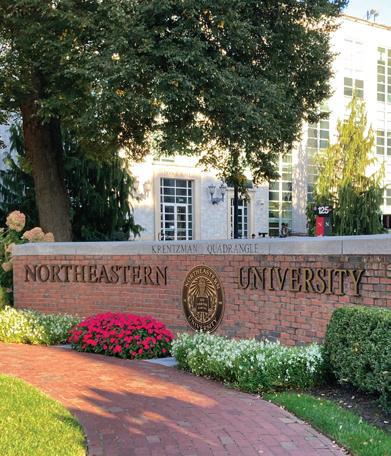
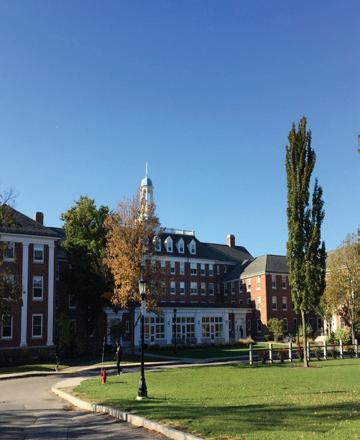
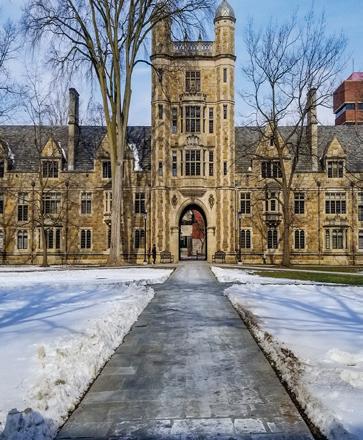
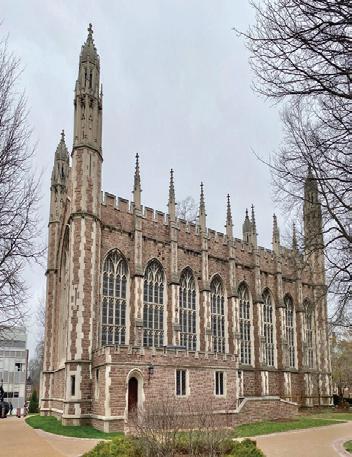
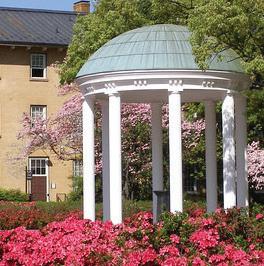
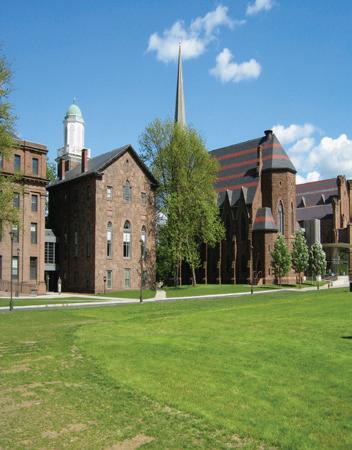
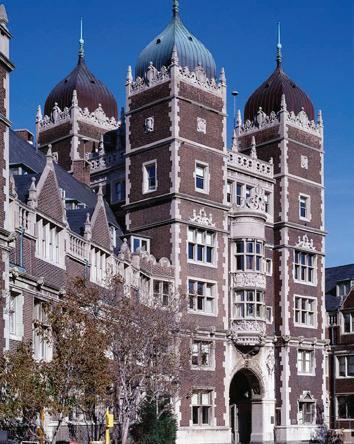
But then, when the gloomy clouds fade, seniors reach the “best time of our lives”: senior spring. However, these sunny days come with their own challenges. Once you have actually decided where you want to go to college, you have to figure out who you’re going to enter this new era of your life with, your freshman year roommate.
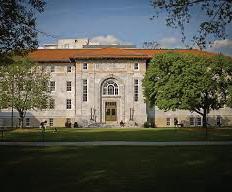
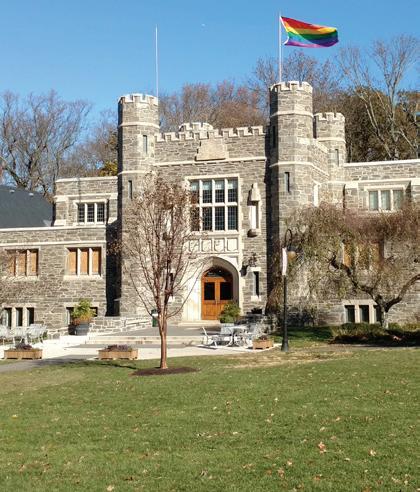
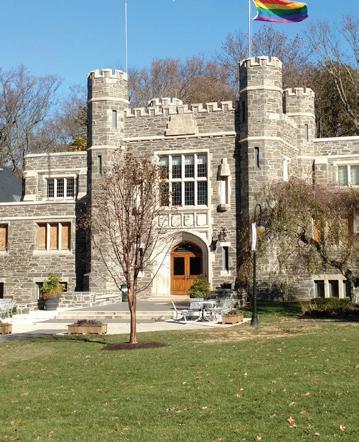
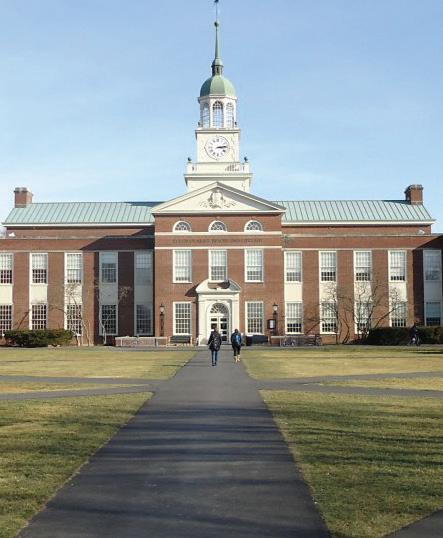
“I met my roommate on Instagram after seeing her on the Class of 2030 page, ” Azariah Charles ‘26 said. “I didn’t necessarily feel pressured to find one on Instagram, but I did prefer getting to know my roommate before deciding to room together. I’m really happy I did, because my roommate has a lot of similar interests to me, and she seems really cool.”
It was not always like this. Many in Generation X and the Millennial generation recall a time when roommates were always random.
For most of the 20th century, colleges used the randomized roommate model. However, with the rise of social media in the early 2000s, incoming college freshmen began to choose their own roommates before they even set
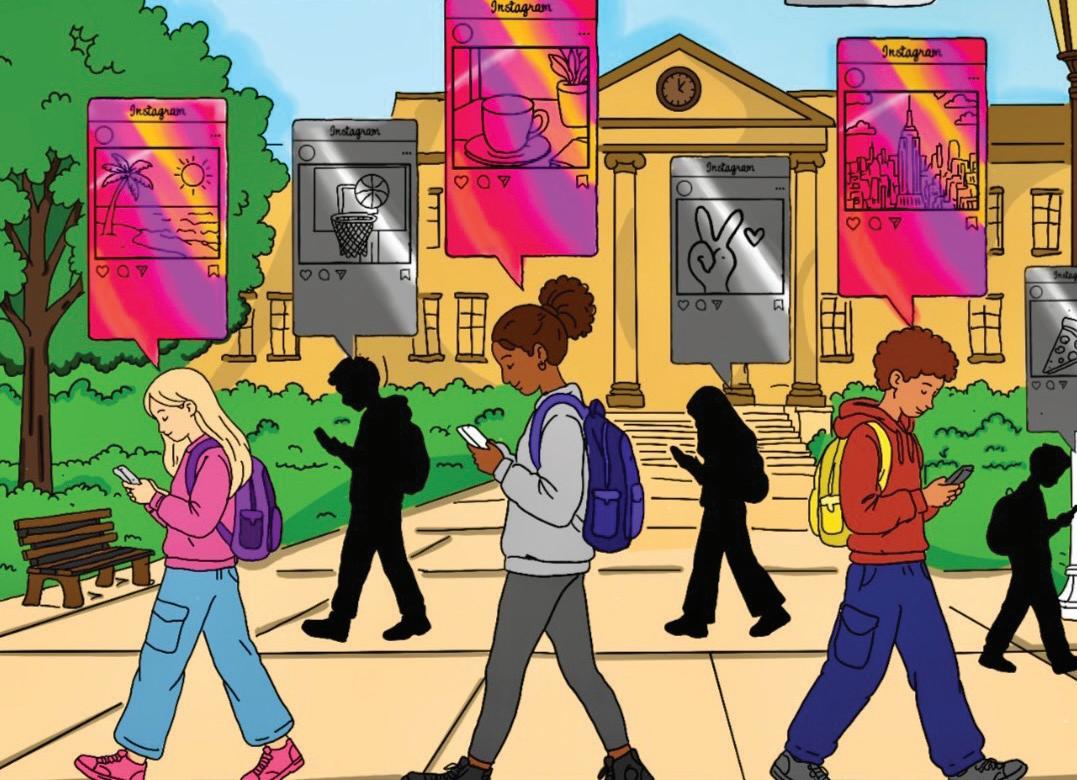
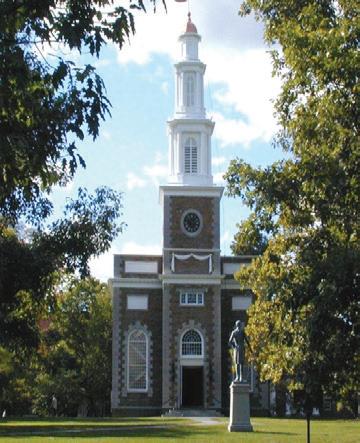
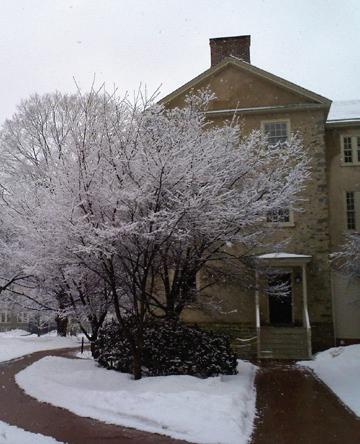
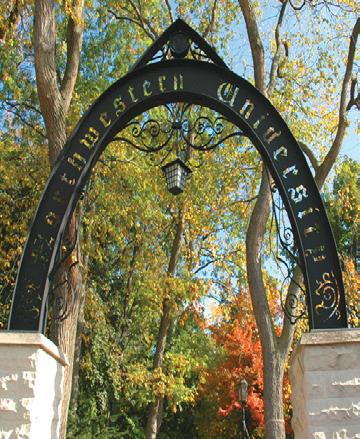
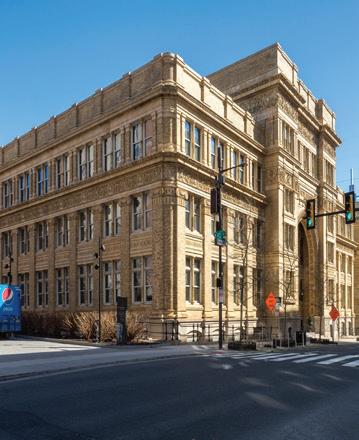
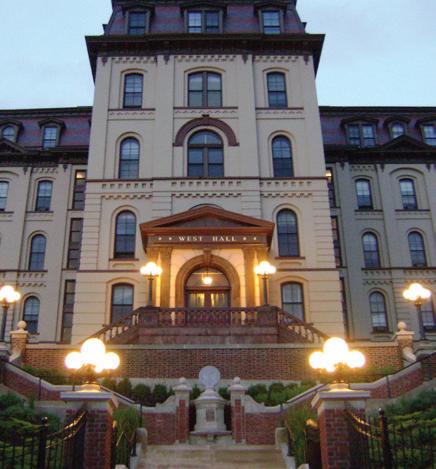
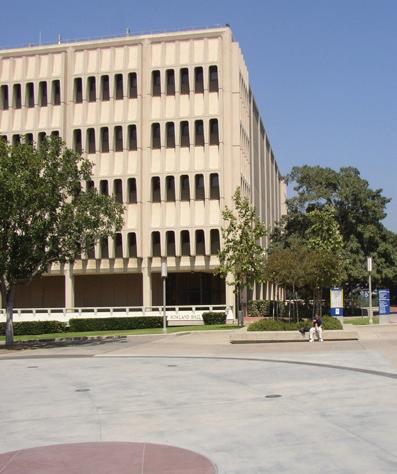
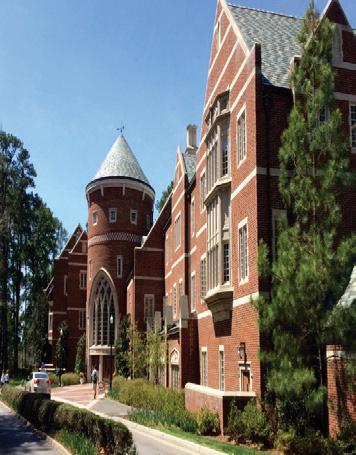
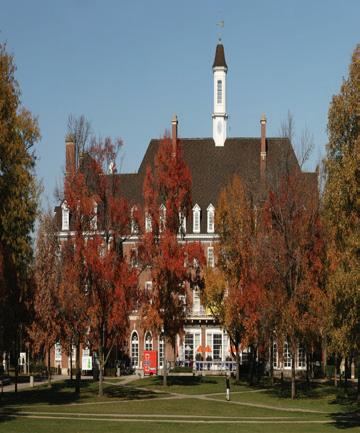
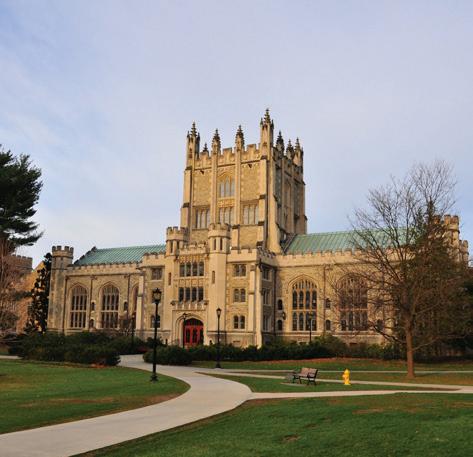
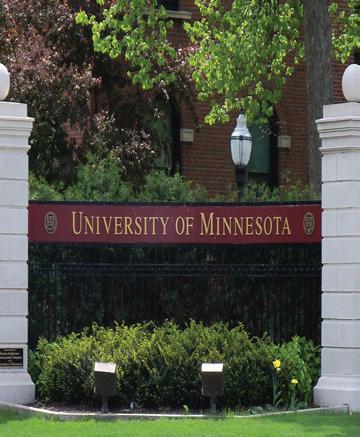
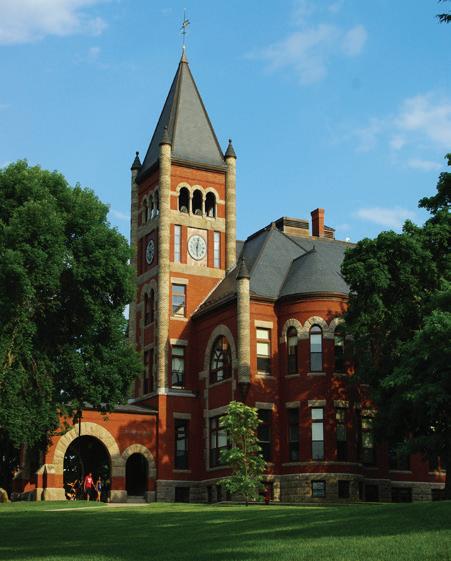
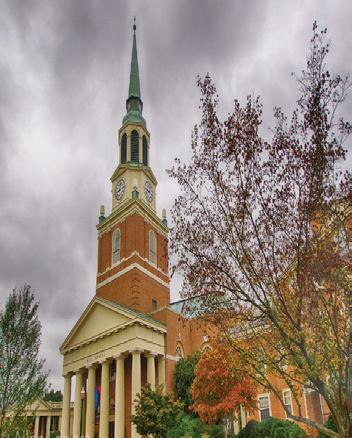
AS THE HISTORY OF college housing evolves, students increasingly steer away from randomized housing. They now use social media profiles to find their roommate before move-in day. Read more to find out how Masters seniors find their roommates.
foot on campus.
Now, the second a student is accepted into a college, before they even commit, many will go through the process of making a post to their class Instagram page. After making their post, students then have to surf through a wave of posts to find a roommate.
Senior M’kaela Riley spoke about her experience finding her roommate for college next year, “I first saw my roommate on the Meet Your Class page. Then I followed her on Instagram, and she told me that she had two roommates and they were looking for a fourth roommate for a quad. I got added to a group chat and now my roommates and I are getting even closer.”
She continued, speaking about the process of finding roommates, “Honestly, the whole process felt like a humiliation ritual. Right when I believed I was running out of time, I found my amazing roommates.”












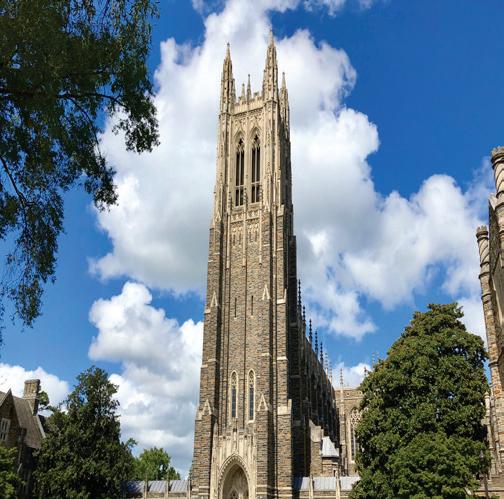
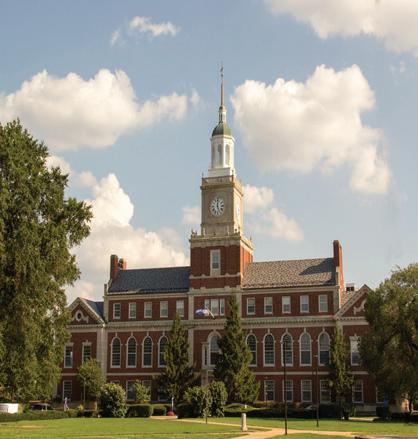

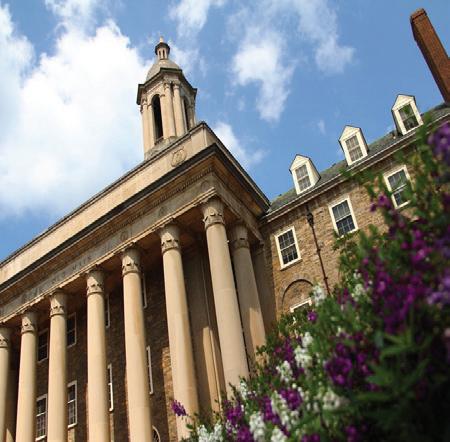

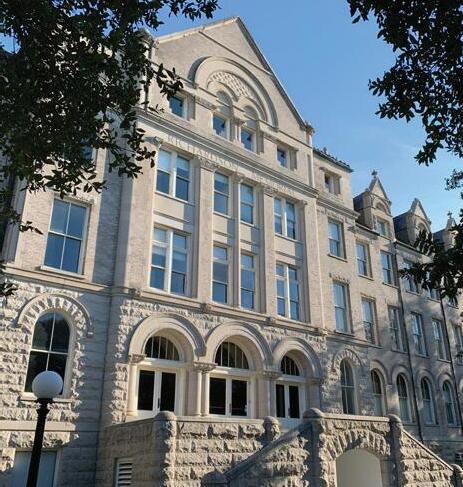
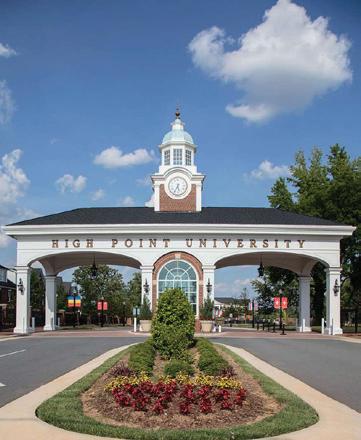

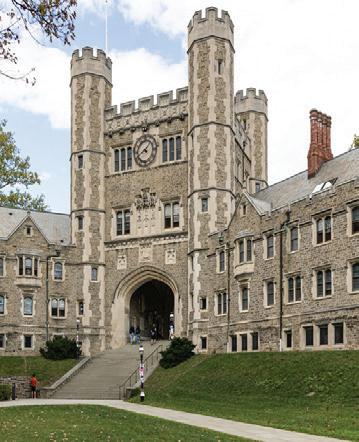
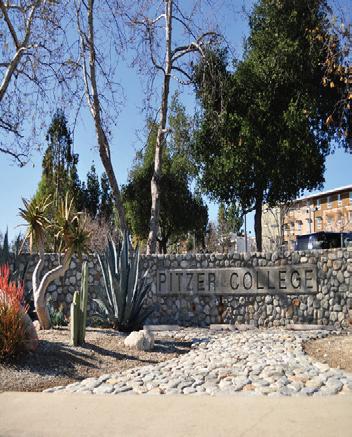
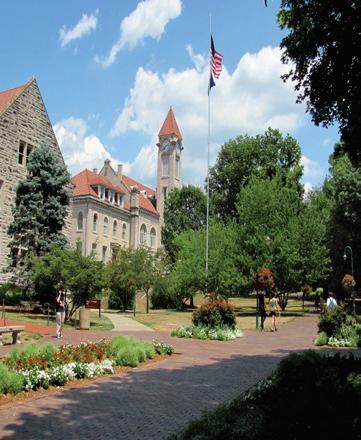



























Ayanna Beckett Lead News Editor
As the clock hits 3:45 on a Tuesday afternoon, M’kaela Riley ‘26 rushes into the dance studio for rehearsal. But she does not find an instructor, about to start practice. Instead, she takes her place at the front of the room to start her own rehearsal.
Each spring, the Masters Dance Company (MDC) spotlights student choreographers in the advanced dance classes. This year, Ari Melnick ‘26, Kate Anderson ‘27, Kaela Riley ‘26, Susie Brown ‘27, Marcella deSpirito ‘27, Maria Milkov ‘27 and Alyssa Kim ‘28 serve as the choreographers.
“I actually inherited that structure, that it was guest artist choreographers in the fall and then spring with student choreographers,” said Upper School Dance Teacher Melissa Edwards. “However, when I have started dance companies in other schools, I did that as well. It’s important that not only are students having to bring the vision of somebody else forward, but they should be able to start synthesizing their own thoughts on their artistic voice.”
She continued, “I think it’s really amazing to watch students create their own choreography and then teach it to the other students and lead those rehearsals.”
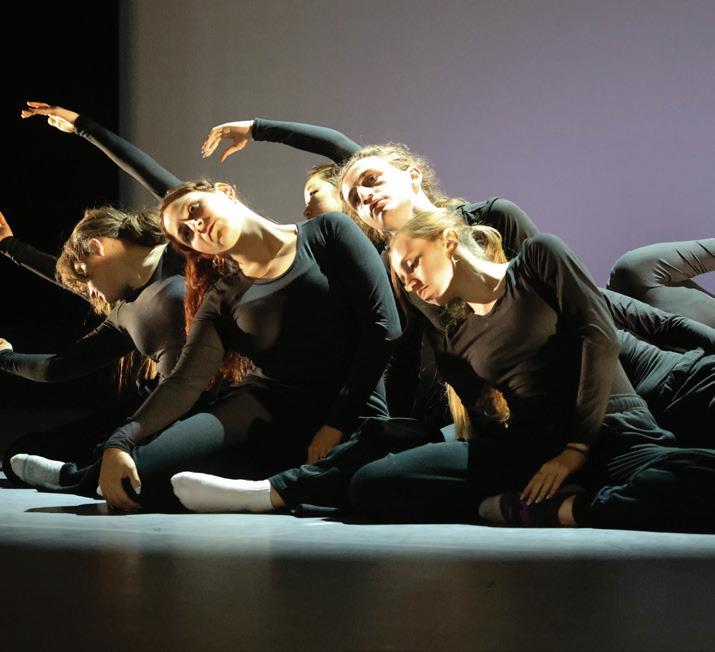
This spring, students spent the season working on their showcase “Mood


Point,” a collection of dances which featured a medley of emotions, ranging from nostalgia and melancholy to joy and stability. The showcase also included a variety of dance styles such as hiphop, contemporary, ballet and lyrical.
“My process starts mostly from the song. There’s some music where I hear it, and I just see movement or I see a spark of an idea,” said Kate Anderson ‘27, one of the student choreographers.
She continued, “I think the process [also] has a lot to do with the dancers, seeing somebody move to what you’re saying, and they move in a certain way that maybe you weren’t originally intending, but comes through in its own beautiful way. I think it’s really important to not just have a certain set movements that you’re giving these dancers,
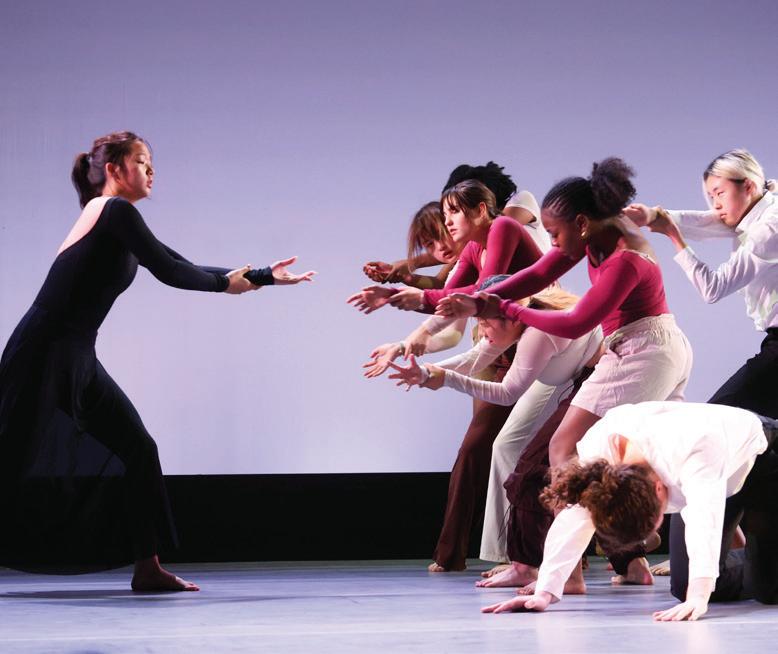
but also taking into account what it looks like on actual body.”
Susie Brown ‘27 also commented on how this process has shaped her artistic vision, she said, “I think there is often this pressure that I put on myself to make amazing work that will shock people and be new and be something different, and I think, especially when I compare my work this year to my work last year, I’ve actually made something more astounding by releasing the pressure of feeling like it has to be like that. And this year, by just allowing my art to unravel as it did, I was able to make something much more authentic to how I hope to create.”
A lot of the music I enjoy is from artists outside my lifetime, whether it is their entire career or their notable peak: Michael Jackson died just before I was born, The Beatles disbanded when my dad was one, Bruce Springsteen released his most celebrated album “Born in the U.S.A.” in 1984 and Amy Winehouse passed away when I was learning the ABCs.
While the live music experience aspect of enjoyment is out of reach for young generations unable to attend these shows, recent movies hitting theaters demonstrate a new way to develop the artist-fan connection.
The idea of “music biopics” has been around since the early 20th century with the release of “The Life of Beethoven” in 1927. The Oscars have recently nominated biopics from the years 2018 to 2025: the most recognizable being “Bohemian Rhapsody” (Queen), “Elvis” (Elvis Presley) and “A Complete Unknown” (Bob Dylan). The fresh release of “Michael” (Michael Jackson) is predicted to receive a nomination for the 2027 season. A Beatles biopic is in production.
A partial reason for this emergence is due to the pandemic era, where concert-going was not possible. During this absence of live music, masses of people resorted to social media in an effort to remember when the events would regularly take place. Whether reminiscing about the times where they could experience the electric concert-feeling, or by

THE RECENT BIOPIC “MICHAEL” about the life of Michael Jackson has 39% on rotten tomatoes. However, since its debut it has grossed $700 million worldwide, and is set to surpass the record for highest total gross of a music biopic, currently held by Bohemian Rhapsody. In 2018, when it released in theaters, Bohemian Rhapsody grossed $911 million dollars.
posting old videos, users communally shared their beloved artists with a global online audience. Movies were a logical next step.
Estela Ostrom, a junior and an aspiring film director, notes how much social media contributed to this rise in biopics.
“Music has always been such a widespread thing and there’s been so much community around it,” Ostrom said. “Especially because of the internet, there are these really strong communities that have popped up and we see how music is being shared more than ever before.”
Biopics are also becoming increasingly popular due to an aligned, guaran -
teed audience that the producers expect. When original films are put out into the world, the creators behind it have to bite their nails in hopes of laudation. However, biopics have a reliable audience with roots of nostalgia for musicians.
Jack Costo ‘27, a saxophone player, and in the student performing groups
Positive Rhythm and 49 Clinton, emphasizes the audience connection to biopics.
“It’s important to document any type of art, and a movie is a form of storytelling. The audience is expecting to watch the story of someone they love,” Costo said.
While biopics warm audiences’ nostalgic hearts, some skirt the controversies the featured artists have faced.
“Michael” failed to address the serious allegations against Michael Jackson for child sexual abuse. A movie with significant funding from Jackson’s estate, it was bound to only cover his success as the “King of Pop” and challenges against his abusive father during the “Jackson 5” era.
Of course they wouldn’t want to touch on the serious accusations, and people don’t really want to see such a famous and influential person in such a bad light,” Ostrom noted.
Costo identifies the nuances of directors’ creative liberty.
“If a director only captures the highlights, we’re not given the whole story,” he said.
When a young man, chased by a group of adults, ran onto the Masters campus, murmurs quickly spread through the halls. Some believed the boy was a fullgrown man, some claimed he had a gun and one class even suggested that there were Chick-fil-A employees chasing him down.
In reality, the young man who ran onto campus on May 11 was just 16 years old and came from Children’s Village, a neighboring organization that provides housing and education for children whose home life is not suitable for various reasons. The teenage boy rushed to the Follett Patio, pursued by a Children’s Village employee, who then tackled him to the ground.
The boy resisted, flailing his arms and screaming as more people rushed to help deal with the situation. Eventually, he was restrained at the wrists and escorted into an ambulance by Dobbs Ferry police officers, who arrived without sirens.
When the rumors about the event spread throughout the school, the whole story behind the situation was not yet clear. Head of School Laura Danforth, who was offcampus at the time of the
incident, released a brief email detailing the incident, but it did not clarify that the young man came from Children’s Village or mention the tackling that he faced from the Children’s Village employees, solely attributing the efforts to restrain him to the Dobbs Ferry Police Department.
The next morning, when Head of Upper School Peter Newcomb gave a speech at Morning Meeting, the school learned that the young man’s flight occurred after he learned bad news – that his visit to his parents from South America was postponed. Newcomb had also been at an offcampus meeting when the incident occurred.
The misinformation that spread quickly around the campus was a result of a lack of information. Since people did not understand what was happening, assumptions quickly precipitated. While many of the rumors were lighthearted in spirit, they also revealed how quickly inaccurate stories can spread.
People immediately jumped to conclusions about the situation, allowing their biases to alter their perspectives and how the story was shared. As journalists and as a wider community, it is important to pause when major events such as these occur and be thoughtful about how we react to and analyze the situation.
This event demonstrates the importance of knowing the whole story. Students needed to understand that the young man was a teenager in trouble, not a stereotype, not a threat.
Now that the student body knows more about the situation, we need to not only put the rumors to rest, but to take the misunderstanding as a call to get to know our neighbors–like Children’s Village–better.
Volunteer your time in the community service co-curricular after school, join Masters Invested in Serving Humanity, (also known as MISH) and lead a service project or simply contribute to donation bins.
There are also other ways to get involved with the local community beyond Children’s Village, such as supporting the Dobbs Ferry Food Bank, Grassroots Grocer, Feeding Westchester and Sharing Shelf. Or just say hello and get to know the various immigrants who run the businesses on Cedar Street. (See Jack Bilman’s story on page 14) When you open doors to new experiences, people and ideas, you’re better able to understand the full story.
Jaden Laboriel Lifestyle Editor
Last summer, President Donald Trump signed an executive order that took away close to 2 billion dollars in funding designed to fix America’s homelessness crisis from any state that does not take criminal action against the homeless. The Trump administration wants states to arrest and incarcerate the homeless. And that’s a terrible idea.
Homelessness is not a criminal problem - those who live their lives on the streets most often are suffering from untreated mental illness. And the U.S. has not traditionally done well at taking care of the mentally ill.
According to former clinical and counseling psychologist Dr. Edmund Gordon, “We, as a country, are better equipped to oppress and control the people who need the most help rather than to help.”
According to The Journal of the American Medical Association, out of the estimated 771,480 unhoused people living in the US, 67% are dealing with some form of mental illness. Many of these people lack access to resources or the help needed to improve their mental health. A lack of mental support leads to higher criminalization rates and more hospitalizations, both of which will be paid for with tax revenue.
Even if mental health aid is cut for some states, the lack of care towards the mentally ill homeless population will, in turn, force Americans to spend more on emergency healthcare and criminalization.
The Associate Dean of Meaningful Engagement, Marie-Louise Miller, weighed in with her concerns about the

an
homeless individuals in states that refuse to criminalize homelessness. Mentally ill homeless people will suffer from the lack of funding for medical services such as advanced life emergencies (ALS). Since mental illness can impact an individual’s ability to maintain a job, mentally ill homeless people rely on federal support.
long-term effects of drastic program cuts now. She said, “I am not a fan of the way things are rolling out at the federal level. I think they’re incredibly destructive, and I think rebuilding from this kind of internal destruction won’t take a year or two. It’ll take a long time.”
Homeless individuals experiencing mental health challenges often face barri-
ers to receiving emergency care, while the cost of treatment can be high.
An advanced life emergency, or ALS, is classified as a level of emergency medical care provided by EMTs or paramedics. Patients who are in need of this service require intensive medical attention, including mental health-related issues. The total starting cost for this service is $1,463.
Senior Logan Dundas has been serving as a licensed Emergency Medical Technician since August 2025. Even in his short tenure, Dundas has firsthand experience with mental health-related calls. He offered insight into the cost of an ambulance being dispatched to a mental health-related event. He said, “ [An ambulance] can cost hundreds of dollars, maybe thousands. Of course, there are hospital bills. And of course, there is kind of an inherent price to having emergency medical services dispatched.”
There are also broader economic effects. Mental illness can hinder a person’s ability to maintain steady employment, which in turn reduces income and increases reliance on government assistance programs. This results in lower tax contributions by those individuals and higher public spending, further increasing the financial impact on society.
Cutting mental health funding does not eliminate costs. It shifts them into more expensive areas, increasing the total burden on taxpayers. Investing in early and consistent mental health care is not only more effective for individuals but also more efficient for American society as a whole from an economic standpoint.
late on layout nights and kept the whole thing so much fun. All of the Tower seniors led by example, creating a collaborative, playful, high-energy and creative atmosphere.
Faculty Advisors
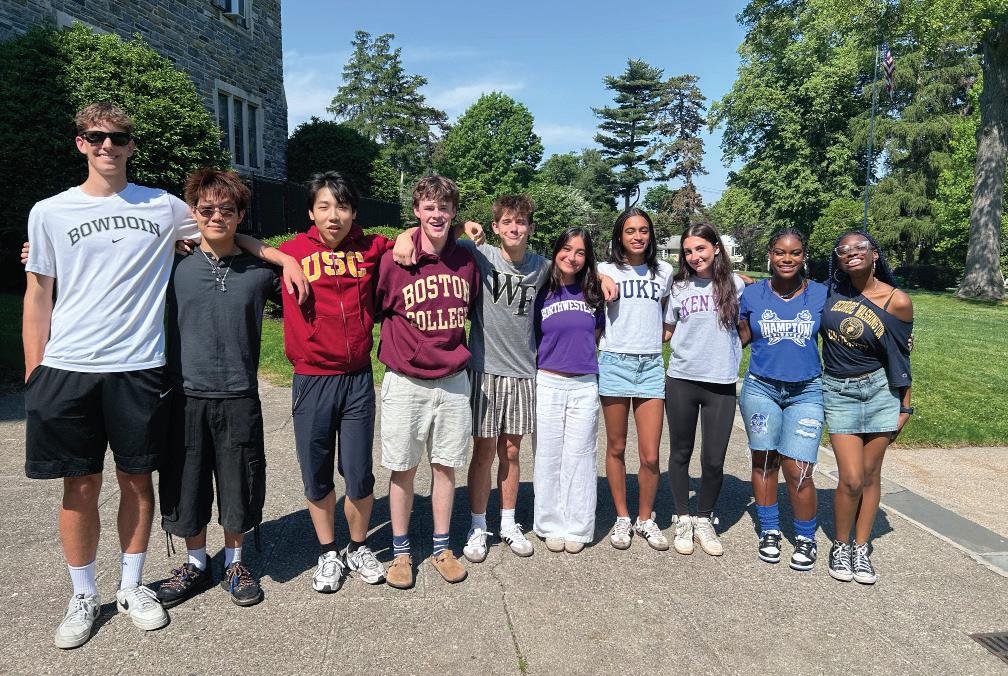
We say farewell to an amazing team of seniors, five of whom worked on print and five of whom worked on the broadcast side. They’ve travelled and learned together, won countless awards, oversaw a massive increase in our Instagram coverage, and built the program into a burgeoning media conglomerate.
Neena Atkins and Allie Faber served as editors-in-chief of Tower, overseeing a complete redesign of the paper and overseeing continued excellence in reporting and writing. They were amazingly creative –– and impressively organized -– and kept Tower Press moving forward like a well-oiled machine. They leave big (but fashionable) shoes to fill next year.
Thomas McCallum, Ayanna Beckett and Mila Benson were an important part of the leadership team, each serving as lead section editors. They produced amazing stories, designed beautiful pages, and, perhaps most importantly, they served as mentors to the younger reporters, always ready to read over a story and answer a question. They stayed
Gus Creech and Ryan Lim served as our executive producers of TBN this year, flanked by Associate Executive Producers William Sun and Ben Mason. William worked closely with his social media team to create engaging reels all year long, which helped mirror back to our community all the adventures our school is up to.
Ben served as our production manager, keeping the crew honest on deadlines and making sure we had time at Morning Meeting to share our news.
Gus and Ryan skillfully oversaw the largest production team Tower Broadcast News has had to date, with a total of 16 staff members by the second semester. Azariah Charles, our first four-year TBN staffer, who has previously served as an Executive Producer, served this year as our website liaison, in addition to producing segments of her own and even giving some sideline coaching to students new to on-camera studio work. Each of these five TBN seniors helped encourage and guide the younger staff members to be stronger broadcast journalists in their own way.
We’re so grateful for each and every one of these amazing Tower seniors. Do keep an eye on them as they forge their way out into the world. We hope they continue to strive to look for the deeper story, as they look to un-
cover the why behind the other elements of a story they may be exploring, and may they each aim to raise up the voices of those whose stories have not yet been told. We’ll really miss them.
Editors-in-Chief Emeriti
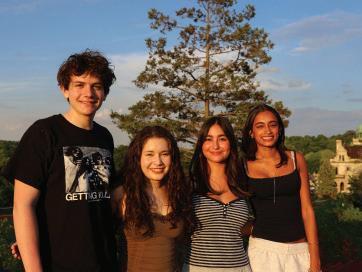
At some point around midnight in the Tower Lab, surrounded by countless InDesign files, Allie’s mom’s muffins, and the remains of far too many Uber Eats orders, we realized that to us, Tower had become much more than a newspaper.
Some of our best high school memories have happened in that room. The 2023-2024 three-day layouts where sophomore us got a glimpse into the chaotic lives of the seniors, and the ravaging of Los Ferchos tacos that broke the Tower budget of senior year. Blasting music as staff race to finish their pages before the lights shut off at 10 p.m. and get home at a reasonable time to complete their
APUSH reading. Moments when production completely derailed because somebody said something so absurd nobody could recover for ten minutes.
Alongside those core memories, Tower forged the friendships that characterized our past four years. Our newspaper sits at the intersection of a diverse group of people across grade levels, interests and skills, bringing together students who may otherwise never end up in the same room – much less spend years working into the night, side-by-side, under deadline. Through long nights and shared chaos, those people can become the ones who know everything about you. The people who sit with you through stress, celebrate your wins, edit your work at 2 a.m. and make an exhausting evening the highlight of your week.
And in between all of that, there was journalism.

One of the most meaningful parts of being on the paper was how much it deepened the way we experienced Masters.
Once you spend so long interviewing people and trying to understand a community well enough to write about it, you start to notice the little details you probably would have ignored before. You see how much work really goes into DoPA performances behind-the-scenes.
You document a coach’s unique pre-game ritual, and report on the monumental efforts of the grounds and maintenance staff.
You get to speak with members of administration, and better understand their “why” behind the decisions that shape student life.
For all of our reporters, this enrichment extends off campus. We cover the stories that sometimes fall through the
cracks in local news, trekking into downtown Dobbs Ferry to get to know vendors and experience town events. We sit in on town hall meetings, and build strong reporting relationships with local elected officials. We wrestle with the way national headlines affect our local communities, seeking the perspectives of many constituents whose voices are often left unheard. We aren’t saying that everyone needs to be a diehard member of the Journalism Collaborative (although they absolutely should!). Rather, some of the most formative and enriching parts of our high school experience came from being pushed outside of our comfort zone and experiencing new things. For the rest of your time at 49 Clinton, forge unexpected friendships, talk to everyone, go to the games, galleries and performances to support your peers. So, our advice? Experience Masters like a Tower reporter.
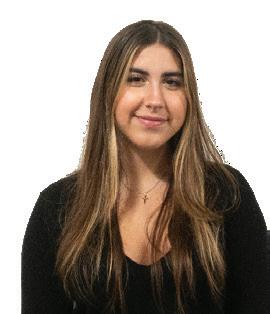
Westchester Politics
Julia Panos Columnist
As someone who has worked on several political campaigns, I feel a sense of obligation to emphasize just how formative an experience it can be to volunteer for a candidate. Whether it’s a candidate for town council, mayor of your city, governor of your state or even president of the nation, there is always room for volunteers from all aisles of life.
Each vote in the New York State Senate and the United States Senate alike, affects our lives directly. It is important that we as students understand the issues present in our local communities so that we can make informed decisions when it comes to voting and civic en-
gagement in the future. Campaign work gives students the opportunity to see firsthand how leaders in charge of our communities connect with voters and make policy decisions.
Beyond politics itself, campaign work teaches valuable skills in communication, organization, teamwork and public speaking. It also encourages young people to engage with their communities rather than remain disconnected from them.
But, don’t just take it from me. Several Masters students have worked on or are currently working on political campaigns, and can speak to how beneficial of an experience it has been for them to get involved.
Mason Dwek ‘26 has been an active volunteer on several political campaigns throughout his high school career. He described his experience working on these campaigns as “a way to really get involved in the community around you, and to really understand the issues that your community is dealing with.”
With the primaries coming up this June,
New York’s 17th Congressional District is appearing to be one of the most competitive primary races, as well as general election races, in the nation. There are currently five candidates in NY-17, each vying for the Democratic nomination to run against incumbent Republican Representative Mike Lawler in the midterms this November. Josh Malkin ‘27 is currently working for o ne of these candidates in the NY-17 race, Cait Conley. Malkin said, “I like working on campaigns, especially local ones, because it feels like the only way to make a difference, especially since I can’t vote.”
The work done by campaign interns can range from financial research, to petitioning for signatures to get on the ballot, to canvassing at public events and even social media marketing. Voting may be the most visible part of democracy, but it is far from the only one. Long before you can sign your name on a ballot, you can still help shape the future of your community by holding the pen.

Culture Shocks
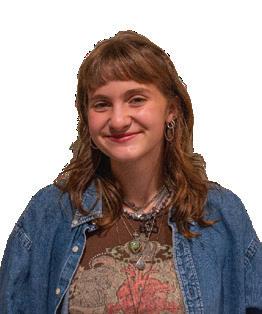
Jasmine Mao Columnist
As the end of the year approaches, goodbyes loom on the horizon. Several questions for the Class of 2026 and everyone leaving Masters are freshly on my mind: “Why are you so excited for graduation? Won’t you be sad of leaving the place you relied on for years? Won’t you be scared that you will never see some people again?”
For some international students, these are not only the last few days as a highschooler, but also the last few days living in the United States.
Senior Kseniia Lukianenko from Kyiv, Ukraine will be attending IE University in Madrid, Spain. Soon to be settling down across the Atlantic Ocean, she answered my
questions with grace.
Lukianenko said, “Even if I’m going to Europe, I am still going to keep in touch with people here. We’re still going to somehow meet, probably in another city. It’s just gonna be fine, you know? We’re gonna meet somehow. I believe in positivity.”
Обійми на прощання, which translates to “goodbye huge,” is a Ukrainian phrase that first comes to Lukianenko’s mind when the concept of goodbye is mentioned. Lukianenko’s friends and family in Ukraine woke up at 5 a.m. to give her a oбійми на прощання at the train station. It shows close connection, not just a quick hug of “bye bye”.
Lukianenko hopes to experience обійми на прощання in her last week at Masters. She said, “Keep the tradition of saying this sweet goodbye instead of crying over saying goodbye. Just hugging and cheering the mutual feelings. Like, ‘I’m happy that we’re moving on and I’m happy that you’re going on with your life.’”
The etymology of goodbye is “God be with ye (you)”, a warm blessing. However,
the English language lacks this emotional expression– one that is apparent in “auf wiedersehen,” a German term meaning “until seeing you again.”
Emilia Friebe ‘27 who is going back to Cologne, Germany, after spending a year at Masters said, “It’s a common goodbye in Germany, but here I feel like it’s actually going to apply in a way. I’m actually going to see you again, or I hope I do.”
Similarly in Chinese, the common goodbye is zai jian. The two Chinese characters literally mean “again” and “meet.”Everytime we part ways and turn to a different direction, we are promising, or at least hoping to see each other again.
As Lukianenko said, “I feel sad, but at the same time I feel like it’s going to be a new chapter for me.” Goodbye is not only a separation and departure, but also the grand closing for high school and an optimistic promise for the future.
Gigi Wheeler Columnist
These days, buying clothes has never been easier. Fashion trends have always been a part of society’s culture, but social media has made them increasingly more frequent and easier to be disposed of and replaced with another trend; these are referred to as “micro-trends.” Once the trend disappears from the “for-you” page, many of the clothes from the trend are disposed of, even if they were almost unworn.
British influencer Lottie Lashly records videos about fashion and clothes waste. Lashly highlights trends that have already been discarded in 2026, and presents the confounding data that shows the sheer volume of clothing that is bought for trends and disposed of soon after. For example, she
notes that as of April 24, the popularity of the Argyle pattern has decreased 90% since the beginning of the year. She discusses trends from recent years that currently occupy landfills, like corset tops and bucket hats.
In early May, she posted a video, rating current Spring 2026 micro-trends on the likelihood that they will end up in landfills; she rated ballet flats a 4/10 and long drop-waist skirts a 10/10 chance of being quickly discarded. Lashly brings to light the sad reality that although micro-trends may look cute, they cause significant clothes pollution.
How do you prevent further contributions towards the waste generated by micro-trends: Simply, buy less.
Consider if you were to buy clothes according to the trend, whether or not you would wear the clothing item after the trend has “died out.” This same logic can be applied to buying clothes in general. If your brand drops new releases of clothing, you do not need to always buy the new items, even if it’s your favorite brand.
There’s a difference between buying the clothes you see online because you became interested in them after being exposed
Avery Gosnell Columnist
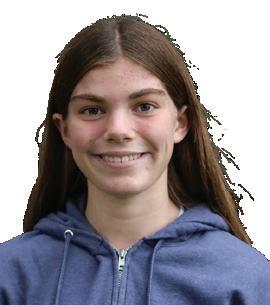
Over the summer, many Masters students find themselves relaxing besides the beach, interning at unique programs or spending time with friends. Freshman Stella Imamichi was performing as part of an ensemble in a full opera performance. Opera singing began in the early 17th century. It originated in Western Europe, where Italian and French royal palaces were particularly fond of the style. It was a way to bring together various art forms in one performance.
Today, around three centuries later, people still perform operas and learn the techniques, including Imamichi.
Imamichi began her training at the age of eleven, heavily inspired by her mother who had done opera in high school.
“My family, we like a lot of classical music. It was a good segway going into the opera, learning about opera… kind of looking up to it and thinking, ‘This is so cool’”, she said.
Now, Imamichi practices every week. Imamichi explained that much of the training focuses on supporting one’ssound and projecting one’s voice – a technique that originated from when microphones weren’t available. The training also requires adapting to songs in various European languages, like French, German and Italian.
Imamichi performs occasionally at recitals. Her voice has matured immensely, allowing her to see exciting growth.“What I’m most proud of is getting a more operatic quality to my voice,” she said.
While acknowledging she’s still young and hasn’t seriously considered it, Imamichi said she is open to the possibility of continuing to pursue the art form as a career.
“I really enjoy doing it, so [it is] definitely something that I’ll probably think about doing, but it’s a very hard world,” she admitted.
to them versus buying them because “it’s what everyone is wearing.” That mindset of trying to dress identical to the majority of people around you creates a wasteful mindset; once the majority of people around you begin to dress differently, you’ll have to buy new clothes to match.
I am not discouraging you from ever participating in a trend, but I suggest being mindful of every aspect that goes into participating in them. Often people will buy the item from wherever it can be shipped fastest to them, and the ethics of where they’re buying it from and the material of what they’re buying may not be considered.
A more resourceful way to avoid contributing to clothes is to shop secondhand. Walking into a consignment store or thrift shop with an idea in mind of what you’re looking for might provide guidance and prevent you from buying items you don’t actually want. When cleaning out your closet, donate your clothes to people who need them instead of throwing them away. There’s a straightforward choice between contributing to the clothes pollution crisis
Imamichi was homeschooled when she was younger, and came to Masters in seventh grade following her older sister.
“We were trying to find a school that had a good balance between arts and academics. I feel like Masters really had that.”
While she took a break from singing in school this year to focus on her adjustment to high school, Imamichi is playing the violin in string ensemble this year, and plans to join a choral group next year.
“ We were trying to find a school that had a good balance between arts and academics. I feel like Masters really had that.”
Stella Imamichi ‘29
In the meantime, she continues to practice operatic singing each week, perfecting the unique skill with the same passion as individuals like her three centuries ago.
Alex Kagoshima Social Media Manager
As excitement for the 2026 FIFA World Cup hosted throughout the United States, Canada and Mexico builds, so does the frustration of soccer fans coming from around the world to watch the event in-person. What should be an incredible sporting event available to everyone is starting to feel exclusive to those who can’t afford rising ticket prices and steep travel costs.
Although FIFA has promoted seemingly affordable tickets priced from $60 to $120 for earlier group stage matches, these tickets are scarce and increasingly difficult to obtain with resellers buying most of them. For most fans, the reality is that tickets range from hundreds of dollars for standard games to thousands for high-demand ones. According to CNN reporting, resale market prices have climbed over $10,000, with listings for the final reaching over a million dollars.
The recent surge in prices reflects a new strategy implemented by FIFA. They modeled their new pricing after concert venues, which often use dynamic pricing, meaning ticket costs change based on demand.
FIFA is prioritizing profit over accessibility, turning the game meant for everyone into a luxury.
The difference between this upcoming World Cup and the Qatar 2022 World Cup further emphasizes the shocking increase in ticket prices. In Qatar, prices for the final game ranged from $205 for the cheapest seats to $1,600 for the
most expensive seats. Now, fans looking to watch the final at the MetLife Stadium face prices over $10,000 for normal seats.
Transportation fares have also been a growing concern for fans. The New Jersey Transit announced that prices for tickets from New York Penn Station to the MetLife Stadium during the world cup will cost $98 compared to the usual $12.90 fare.
Tommy Protei ‘26, who will be supporting England this summer, shared his frustration about the pricing.
“If I was paying five grand for a ticket, I’d want the transport to be included.” Protei explained that many concerts held at MetLife included transport in the tickets, making the World Cup pricing feel even more unreasonable.
Protei also spoke about how the pricing could damage the social culture that surrounds soccer.
“[When ticket prices were reasonable] you’d go get a bite with friends before the game, and then all go to the stadium. But with these prices, you’ve already spent so much money that you’re less inclined to spend money on food.”
Esperanza Borrero the Dean for Inclusive Excellence spoke about how the resale market was impacting the accessibility of the World Cup.
“I saw tickets that were bought for $240, which could be considered seasonable, but now they’re going for $1,200.”
Borrero continued, “I think it makes it an obstacle for people who are just soccer fans and want to watch the game and don’t make millions of dollars.”
The World Cup is an event meant

PRICES SKYROCKET FOR THE average soccer fan, with the FIFA World Cup tickets in MetLife stadium reaching $10,000 for “normal” seats. Even train fare prices have gone up from $12.90 to $98 from Penn Station to MetLife. Kagoshima argues that FIFA should work to make the World Cup accessible to everyone.
to unite fans around the world; it’s the organizers responsibility to ensure fans can afford it. If no changes are made to resale regulations and transportation pricing, many passionate fans will miss out while only the very fortunate will be
able to enjoy the tournament in person. FIFA needs to take steps towards making the world cup accessible to the people that make the sport what it isthe fans.
Jack Bilman
Editor-in-Chief
During Donald Trump’s presidential campaign announcement in 2015, he launched a stereotypical attack against undocumented Mexican immigrants: “They're bringing drugs. They're bringing crime. They're rapists.” This type of political rhetoric has become standardized in the modern political ecosystem, presenting a threat to immigrants across the nation.
But this isn’t a far away issue. At Masters, immigrants impact all walks of life, contributing to the community by providing food to students, teaching, cleaning and bringing cultural perspectives to campus, by sending their children to our school.
Furthermore, while not technically immigrants, members of the Masters boarding community from other countries add to the campus culture in a similar way. For example, boarders participated in the International Dinner in May, sharing and learning about each other’s cultures through their home country’s cuisines.
Boarding student Alex Cho ‘27 said, “I think students from different countries bring their own culture with them to the school, and experiencing those cultures or sharing their cultures

DESPITE THE POLITICAL RHETORIC threatening immigrants in recent years, the Masters community has found that people from other countries add value to the classroom and beyond. Other communities, like Dobbs Ferry for example, also depends on immigrants for small businesses and keeping the economy afloat.
with me is always such a great experience.” Immigrants also bring value to the classroom, enriching the learning experience by adding their perspectives on the topics at hand.
Nyasha Chiundiza, Upper School history and religion teacher and a Zimbabwean immigrant, said, “One of the things I like about teaching here is that
a lot of the themes we're talking about in history or in religion are very close to the students because we have people from all over the world.”
The local Dobbs Ferry community also depends on immigrants. As a town mostly limited to small business ownership, a field dominated by immigrants, the local economy relies heavily on im -
migrant labor and entrepreneurship to keep restaurants, shops and other services running smoothly.
As students and residents of Dobbs Ferry make their way down Cedar and Main Street, they can see various immigrant owned businesses that provide value to the community.
Yuriy’s Barbershop, owned by an Uzbek immigrant, has been providing affordable haircuts for decades.
Golden Dragon, owned by a Hong Kongese immigrant, serves authentic Chinese food to customers. The newly
“I think students from different countries bring their own culture with them to school.”
- Alex Cho ‘27
opened Abbiocco Salumeria & Focacceria, owned by an Italian immigrant, brings traditional Italian cooking.
Together, immigrants and international community members help shape both Masters and Dobbs Ferry into more vibrant, culturally rich and interconnected communities. Supporting these immigrant-owned businesses and creating spaces for diverse perspectives to flourish are essential to fostering a community where people not only feel comfortable sharing their cultures, but
Olivia Shim Illustration Editor
Under the bright spring sun, goalie and captain Bea Hopper ‘27 stands planted in the crease, eyes locked on the field as the ball moved quickly down the turf.
Teammates call out defensive checks and sticks clash, a highlight of the intensity and teamwork that defined the strongest season in Masters varsity girls lacrosse history, ending with a 10-3 record. Anchoring the defense, Hopper recorded over 385 career saves. Frankie Navin ‘28, who has been on varsity since eighth grade has already achieved over 115 career goals. Through strong chemistry, disciplined defense and cohesive play across the field, the team quickly became one to watch on campus.
Despite being eliminated in the playoffs following a challenging loss to the Hackley School, players said overall focus remained on improvement, resilience and long-term goals rather than a perfect record.
“That game showed us we're not where we want to be yet,” Hopper Said. “We still have room to grow, and that is a really important lesson for us.”
Head Coach and Athletic Director Alexis Di Domenico said the 2026 season stood out as the strongest in her five years leading the program. She added that the team was “doing everything we asked them to do, and more.”
She continued by saying how the team’s drive and consistency were their greatest strength. “They really do play
with a never-give-up attitude” which she said had "propelled them this far.” While acknowledging the short length of the spring season, she emphasized the role of leadership in building cohesion, highlighting the captains Maya Yoon, Clio Foley and Hopper.
With a mix of returning players and new talent, the team worked hard to create a supportive environment where everyone contributes. Hopper emphasized that creating a healthy environment has been just as important as improving technical skills and game strategy.
“We’ve done a really good job of creating a mini community and really being one team instead of individuals," Hopper said.
Freshman Micaela Andrade said the team's success also had a visible impact across campus.
“I would describe the season so far as very impactful, especially with our record,” Andrade said. “When you go around the school, there are a lot of people, saying ‘Oh my gosh, you guys are doing great.’”
She mentioned the team's chemistry, developed from time spent together both on and off the field.
“Practices are definitely where we build the most
chemistry, but also breaks, brunches after practice and just hanging out outside of practices,” she said.
Andrade notes how that connection directly translates into successful performances during games. “If you don’t have chemistry, you don't have a team. It helped us work together and win,” she said. As the season concluded, Andrade said she hopes to carry the energy from this year into the future while continuing to strengthen the reputation of the Masters girls lacrosse program. She aims to “just enjoy every moment.”
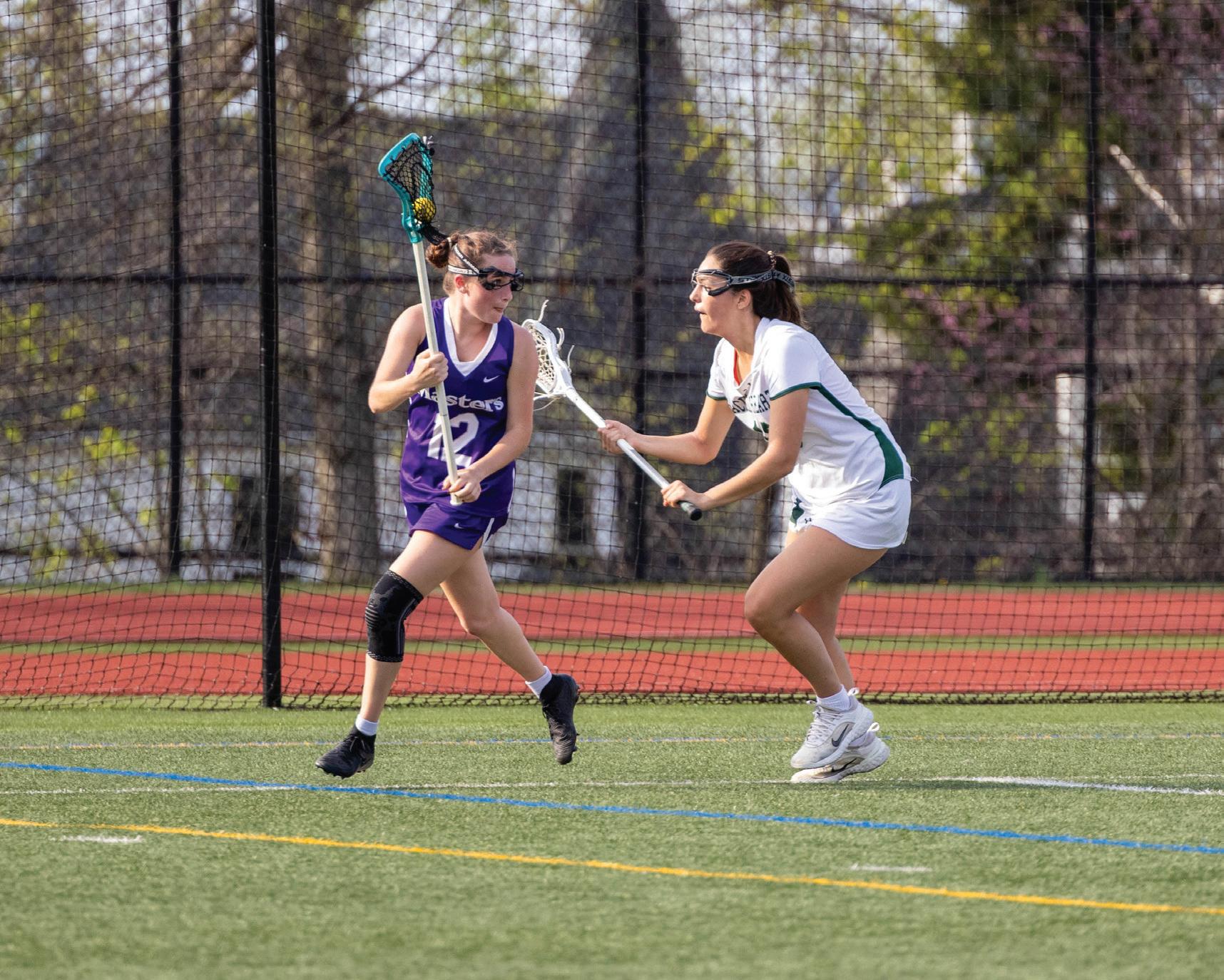
BELLA HENRIQUEZ ‘26 CRADLES the ball against Sacred Heart Greenwich on April 15. This was the fourth game of the season, with a lot of pressure placed on it because of Sacred Heart Greenwich’s reputation of lacrosse success. The team won in overtime, 11-10, contributing to the team’s end-of-season record of 10-3.
Mila Benson Lead Lifestyle Editor
At the sound of a pistol, runners bolt off to the 3,000 meter obstacle-ridden race known as “steeplechase.” In it, racers must dash through a specialized 400 meter track, featuring 28 fixed barriers and seven water jumps, totalling 35 obstacles in this high-level competition. This isn’t contained to the professional running world
exclusively. At Masters, we have an event of our own.
Three times per year, runners at Masters take part in a steeplechase event: two in April and the New York State Association of Independent Schools (NYSAIS) championship in May. Last year, athletes Jamie Milward ‘26 and Liam Chappelear ‘27 ran first and second place, a record-breaking win for the school.
Despite the wins, the steeplechase event isn’t easy. Runners must run five
laps around a 400 meter track with 36 inch hurdles (for men), known specifically as “barriers” in this event, spread across. Milward said, “With just running for a long time, your legs are tired and you get out of breath. But with the steeplechase, there's another dimension to that where you get so fatigued not just from the running, but also from the jumping. It's a different kind of exhaustion.”
As with any sport, there's also the risk of injury. Helen Gimbel ‘28 has been run-
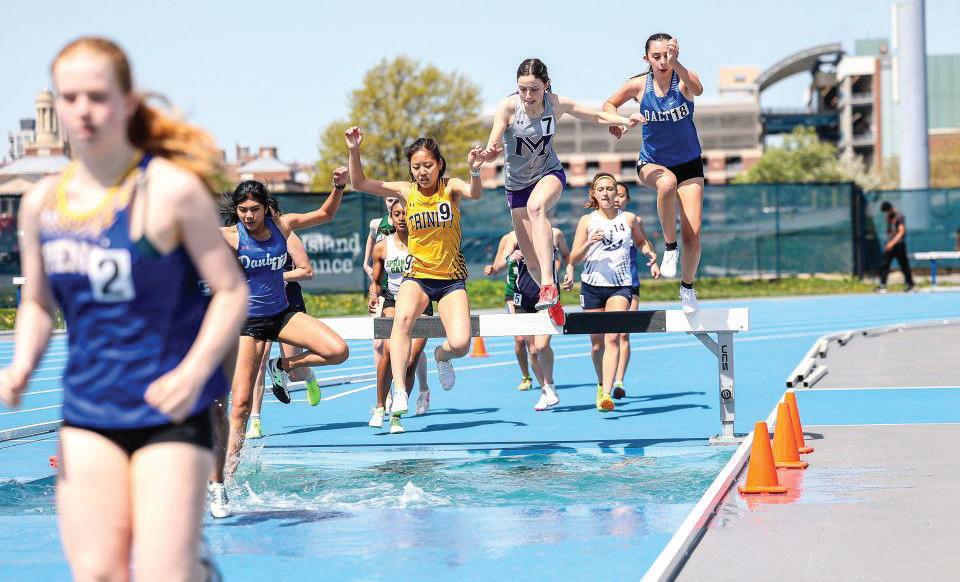
ning the steeplechase since she was 13, and has since developed a profound appreciation for it. But last year, when running at an event, Gimbel had someone else’s shoe spikes driven through her ankle.
“I kept running, even with a bleeding foot,” she said. Although it didn’t impact her ability to run the rest of the season, the injury showed Gimbel the steeplechase event in a new, hazardous light. The steeplechase track event wasn’t always for humans. It actually began in horse racing, where horses would navigate hurdles, fences and ditches in a long-distance competition to the finish. Only in the mid-19th century was steeplechase adapted to be run by humans at Oxford University. In 1920, it became an olympic sport. Today, while still more “underground” than the other track events, steeplechase is considered to be a growing, exciting and unpredictable event, especially at the collegiate and elite levels.
Even though it’s not the top event, there is a uniqueness to steeplechase that makes it especially enjoyable, according to Milward. “It's just kind of the perfect niche combination of distance and hurdling,” Milward said.
He continued, “If you run it in the middle of the summer it'll be a really hot day out, so a splash of cold water is nice to have."
The uniqueness of steeplechase is both a blessing and a curse for its runners. While it’s a highly rewarding and fun event, its lack of popularity and specialized track makes it difficult for runners to find the time to practice. “You have to find the time to practice the barriers, and you can't really, since we don't have a water pit at Masters,” Gimbel said.
Brielle Broomes Copy Editor & Arts Editor
After a long day at the whiteboard, math teacher Ian Mook trades the classroom for the track. As the head coach of both the varsity boys and girls track and field teams, his passion, energy and dedication have helped Masters athletes cultivate their skills and love for the sport.
Mook has been coaching at Masters since 2022, and through that time, he has constructed a program that not only focuses on athletic improvement, but also cultivates a culture.
Mook said, “I think that balance of individuality, collectivity, having a highly structured environment, and [someone being able] to find their place in it, is definitely a core value of mine that I’ve tried to instill in the program.”
Junior Malcolm Giles has not only been able to experience Mook’s mentorship through the perspective of an athlete but also as Mook’s advisee.
“Mr. Mook has taught me a lot of lessons about perseverance and going above and beyond,” Giles said.
He continued, “I remember when I was racing, and I was leading the race. And then I got passed by another runner behind me, and I felt completely defeated and exhausted. But then I heard Mr. Mook’s voice, and he said, ‘Don’t give up, Malcolm,’ and I ended up winning.”
Liam Chappelear ‘27 has been a member of the varsity track and field team since his freshman year. Chappelear said, “He really has been the glue for the team and really helped pull it all together. In these past couple years, we’ve seen a
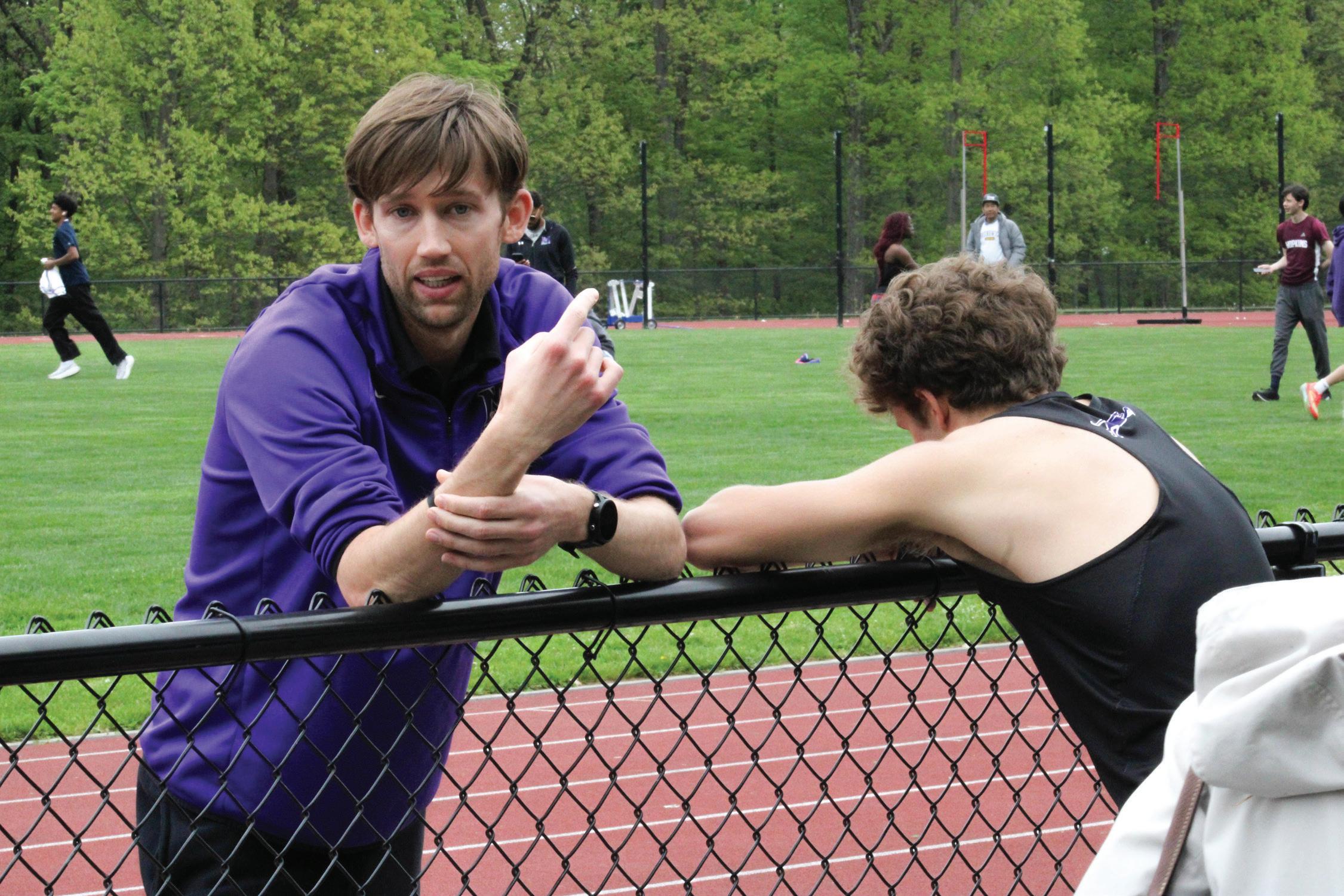
lot of improvement. I think that’s largely because of how much he cares and how much he’s pushed the team to strive forward. ”
Through Mook’s guidance the track team has been able to participate in the New York State Association of Independent Schools (NYSAIS) championships. This year, Masters track placed 41 out of
500 in boys 4x400-meter relay at Penn Relays. According to Mook, the team’s competitive standards have been elevated over the past few years.
“It used to be that a goal might be to run at Penn Relays, and now the goal is to win Penn Relays,” Mook said. “The goal used to be to qualify for the Nationals, but via the lowest tier and easiest to
qualify for the tier, which is kind of like the emerging elite division. Now the goal is to win nationals.”
Mook continued, “So I think we’ve been able to build a sense of what is possible and what we could achieve. And that’s so important in this sport because if you can’t dream of something happening, it won’t happen.”
recalled one of his coaching highlights this season. He said, “Watching all the boys commit to learning something they’re uncomfortable with.”
As he steps out of his vintage Honda hatchback from the 1980s wearing his purple jumpsuit, Warren Barest makes a statement when he arrives in the student parking lot to coach the boys varsity tennis team. Fellow coaches and athletes alike know exactly when he arrives to start his 3:45 p.m. practice. His striking appearance comes from the full-body tracksuits he wears to every practice. Barest, who just finished his first season coaching at The Masters School, said, “I’ve always loved the Adidas warm-up suits. When I was a kid in the 1980s, I just wanted to have one. And then when I became an adult, I said I was going to own one every day of the week in a different color.”
Beyond his fashion sense, Barest has been around the game of tennis for years. He said, “At Horace Greeley High School, I was all-state in tennis. I was No. 1 at Clark University in Worcester, Mass., and the tennis captain. I also was a tennis pro in the area for 15 years.”
His experience in the sport as a player has done more than strengthen his resume; it has given him the skills to guide the players of the future. Barest
This sentiment is reflected by the players Barest coaches.
Senior Will Teitelbaum has been playing tennis at The Masters School since his freshman year. He has experienced a range of coaches at Masters, but Teitelbaum said he recognized the importance of Barest’s coaching style. Teitelbaum said, “He’s definitely had a big impact during his first year. He’s done a lot more sprinting and fitness activities than past coaches.”
When asked about the specifics, Teitelbaum explained that at practice, they “run two or three suicides across the courts, making sure that the team is always on point.”
Sophomore Bobby Clement has played tennis since attending middle school at The Masters School. Clement noted that the team reached the goals they had set for themselves at the start of the spring season. He said, “Our main goal as a team was to try and win some games. Winning was the most important thing. He tries to spread his wisdom to us with this goal in mind.”
Whether through his colorful style or coaching philosophy, Coach Barest has made a lasting impression on the Masters tennis community.