Tower 2025-2026

Who gets to be an ‘American Girl’?
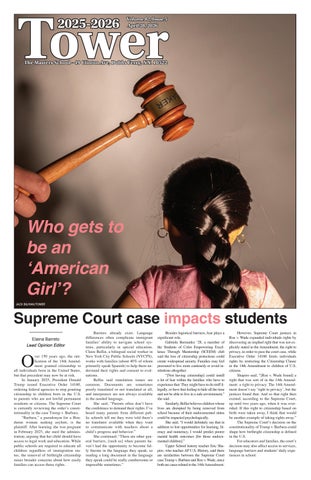
Who gets to be an ‘American Girl’?
Elaina Barreto Lead Opinion Editor
Over 150 years ago, the ratification of the 14th Amendment granted citizenship to all individuals born in the United States, but that precedent may now be at risk.
In January 2025, President Donald Trump issued Executive Order 14160, ordering federal agencies to stop granting citizenship to children born in the U.S. to parents who are not lawful permanent residents or citizens. The Supreme Court is currently reviewing the order’s constitutionality in the case Trump v. Barbara.
“Barbara,” a pseudonym for a Honduran woman seeking asylum, is the plaintiff. After learning she was pregnant in February 2025, she sued the administration, arguing that her child should have access to legal work and education. While public schools are required to educate all children regardless of immigration status, the removal of birthright citizenship raises broader concerns about how easily families can access those rights.
Barriers already exist. Language differences often complicate immigrant families’ ability to navigate school systems, particularly in special education. Claire Bellin, a bilingual social worker in New York City Public Schools (NYCPS), works with families (about 40% of whom primarily speak Spanish) to help them understand their rights and consent to evaluations.
Bellin said translation issues are common. Documents are sometimes poorly translated or not translated at all, and interpreters are not always available in the needed language.
She said, “Parents often don’t have the confidence to demand their rights. I’ve heard many parents from different public schools tell me they were told there’s no translator available when they want to communicate with teachers about a child’s progress and behavior.”
She continued, “There are other general barriers, [such as] when parents haven’t had the opportunity to become fully literate in the language they speak, so reading a long document in the language they speak could be really cumbersome or impossible sometimes.”
Besides logistical barriers, fear plays a significant role.
Gabriela Bermudez ‘28, a member of the Students of Color Empowering Excellence Through Mentorship (SCEEM) club said the loss of citizenship protections could create widespread anxiety. Families may feel pressured to live more cautiously or avoid institutions altogether.
“[Not having citizenship] could instill a lot of fear within the families who have to experience that. They might have to do stuff illegally, or have that feeling to hide all the time and not be able to live in a safe environment,” she said.
Similarly, Bellin believes children whose lives are disrupted by being removed from school because of their undocumented status could be impacted psychologically.
She said, “I would definitely say that in addition to lost opportunities for learning, literacy and numeracy, I would predict poorer mental health outcomes [for those undocumented children].”
Upper School history teacher Eric Shapiro, who teaches AP U.S. History, said there are similarities between the Supreme Court case Trump v. Barbara and Roe v. Wade, since both are cases related to the 14th Amendment.
However, Supreme Court justices in Roe v. Wade expanded individuals rights by discovering an implied right that was not explicitly stated in the Amendment, the right to privacy, in order to pass the court case, while Executive Order 14160 limits individuals rights by restricting the Citizenship Clause in the 14th Amendment to children of U.S. citizens.
Shapiro said, “[Roe v. Wade found] a right that was sort of in the 14th Amendment: a right to privacy. The 14th Amendment doesn’t say ‘right to privacy’, but the justices found that. And so that right then existed, according to the Supreme Court, up until two years ago, when it was overruled. If this right to citizenship based on birth were taken away, I think that would be another example of taking rights away.”
The Supreme Court’s decision on the constitutionality of Trump v. Barbara could shape how birthright citizenship is defined in the U.S.
For educators and families, the court’s decision may also affect access to services, language barriers and students’ daily experiences in school.
Editors-in-Chief
Neena Atkins
Allie Faber
Lead Opinion Editor
Elaina Barreto
Lead Lifestyle Editor
Mila Benson
Lead Arts Editor
Ella Liu
Lead Sports Editor
Thomas McCallum
Lead News Editor
Ayanna Beckett
Lead Copy Editor/Accountability Manager
Siena Versaci
Opinion Editor
Helen Gao
Lifestyle Editor
Jaden Laboriel
Arts Editor & Copy Editor
Brielle Broomes
Sports Editor
Loewy Nalle
News Editor/Illustration Editor
Olivia Shim
Photo Editor
Jack Bilman
Social Media Manager
Alex Kagoshima
Marketing Director
Brooke Muntner
Web Editor/Technology Coordinator
William Grey Dickson
Newsletter Editor
Zadie Collins
Faculty Advisors
Ellen Cowhey
Matt Ives
Columnists
Julia Panos
Gigi Wheeler
Jasmine Mao
Avery Gosnell
Annadele Dyott
Mason Dwek
Alex Kritzer
Alex Pinnock
Photographers & Illustrators
Annadele Dyott, Johnny Ye, Maria Viniegra, Siena Olay, Alexandria Abadir, Etienne Millet, Andrew Berman, Knox Gary, Sam Haas, Mya Recinos, Niki Agrawal, Aviana Kinon, Rose Yuan, Clara Chu and Roni Barkan


Tower is hand-delivered on the day of publication to the Upper School. 650 copies are printed. A copy is sent to each of our advertisers. Tower is the winner of the Pacemaker Award for Overall Excellence, an award-winning member of the National Scholastic Press Association (NSPA), Columbia Scholastic Press Association (CSPA), Journalism Education Association (JEA) and Quill and Scroll. We encourage Letters to the Editor, which can be submitted to the following email address: TowerEditors@MastersNY.org. Published approximately six times a year, Tower is a public forum, with its Editorial Board making all decisions concerning content. Commentaries and opinion columns are the expressed opinion of the author and not of Tower and its Editorial Board or its advisers. Furthermore, the opinions conveyed are not those of The Masters School, faculty or staff. Unsigned editorials express views of the majority of the Editorial Board.
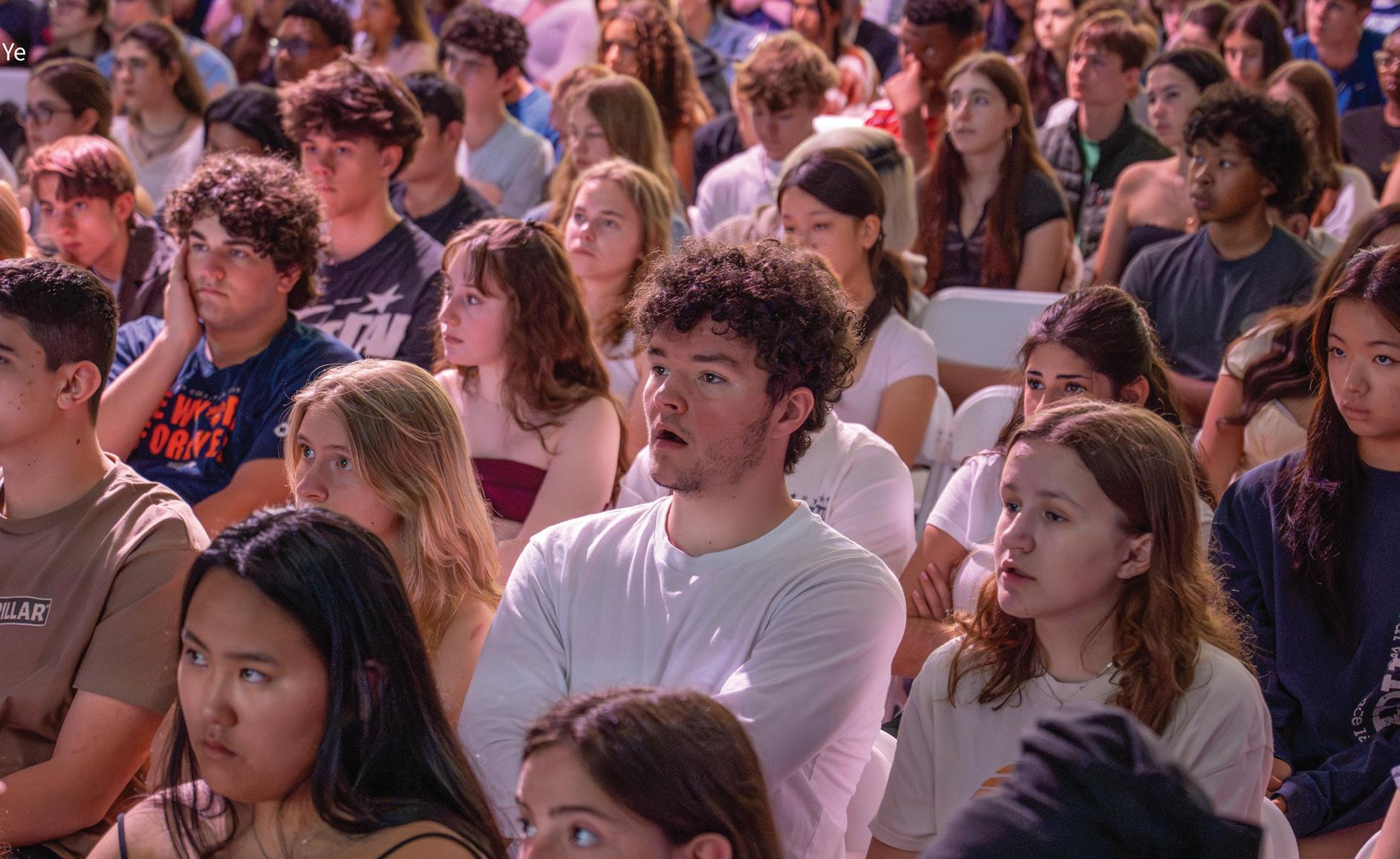
day on April 14 with a presentation by ConnectEd at Morning Meeting. Students and faculty learned about how the media portrayed the Holocaust and how media literacy remains important today. Additionally, Holocaust survivor Mireille Taub shared her experience and family story.
Dobbs Ferry plans major downtown upgrades, including parks, walkways, arts spaces and housing, funded by a state grant to boost tourism and community life despite temporary construction disruptions.
The “Authentic Selves” exhibit shares personal stories of transgender and nonbinary individuals to promote empathy and awareness within the school community.
Grey Dickson ’27 argues that despite negative stereotypes and hazing incidents, fraternities attract young men by offering friendship, support, personal growth and opportunities for community engagement.
3 6
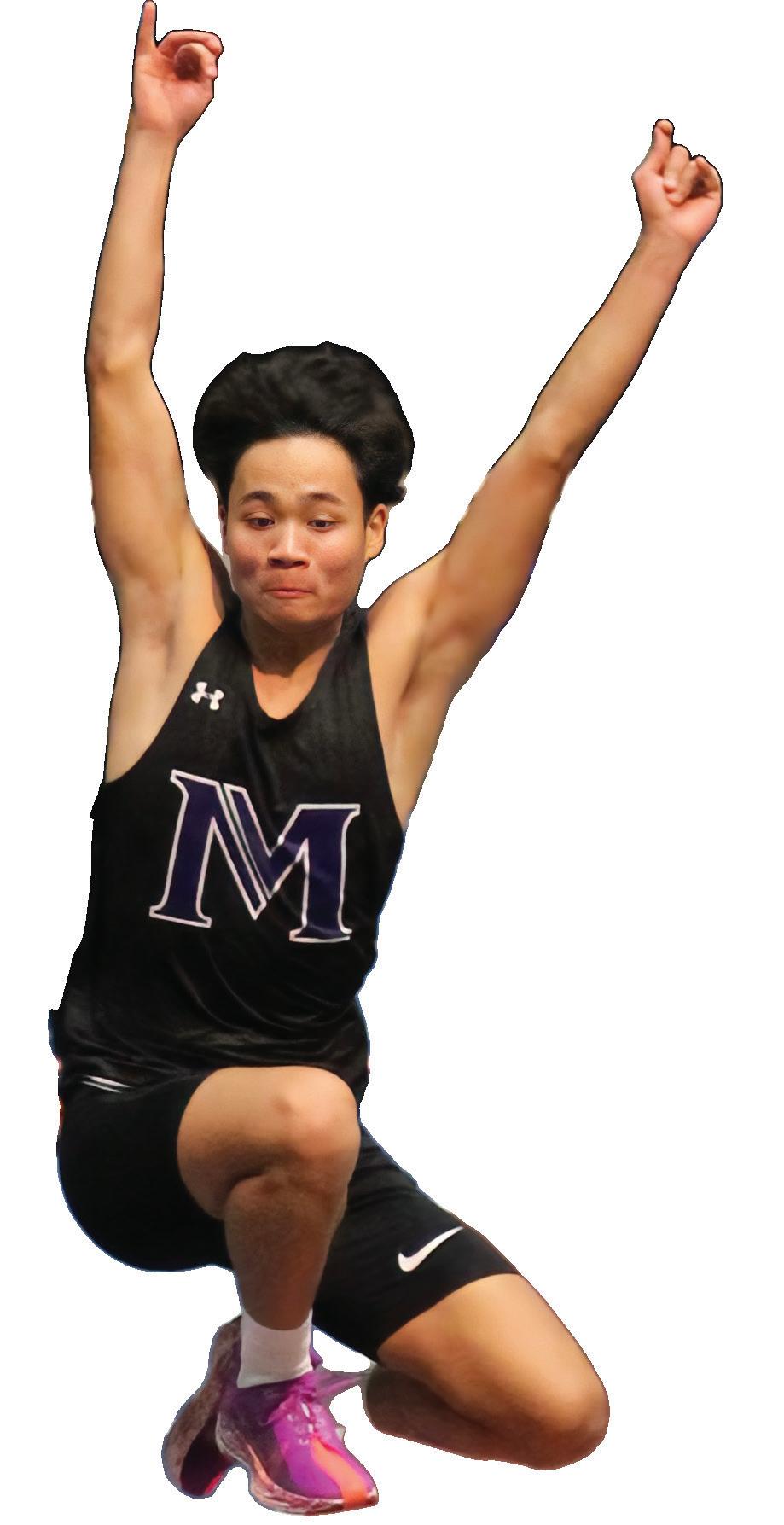
Kevin Walker, a former Division I lacrosse player, is the new Masters varsity boys lacrosse coach who brings experience and a focus on teamwork. passion and player development. 16
Jack Bilman Photography Editor
In the coming years, Dobbs Ferry will undergo a series of projects to improve and revitalize the downtown to increase tourism and create communal spaces.
These designs include nine proposed projects, decided upon by the Local Planning Committee and backed by the Village, to upgrade both public and private spaces. Notably, these renovations will include a revamp of Memorial Park, general improvements to pedestrian walkways, the expansion of the Pickwick Theater and the construction of a dance studio.
The Village is planning to transform a vacant space into a performing arts center at 145 Palisade St. to create a space for dance and community arts. Danforth added, “I think it can bring in a cultural aspect to Dobbs Ferry that we don’t have yet in terms of the arts and dance.”
“We really wanted Dobbs Ferry to be the Rivertowns destination – a place where people could come up from the city, take the train up with their kids and have a walk up and then around the town that’s more pedestrian friendly.”
-Laura Danforth
This will be partially funded by the $4.5 million grant from the New York Forward Program, an initiative to help fund plans in New York State that aim to enliven the downtown areas of New York’s smaller communities.
Laura Danforth, a member of the Local Planning Committee for allocation of NY Forward funds and head of school
said, “We really wanted Dobbs Ferry to be the Rivertowns destination – a place where people could come up from the city, take the train up with their kids and have a walk up and then around the town that’s more pedestrian friendly.”
Dr. Nitin Gupta, another member of the Local Planning Committee, Village trustee and school doctor, said, “You want something beautiful to look at. So, for us residents, going downtown is something we would like to enjoy. I don't necessarily always want to drive and leave Dobbs Ferry to go meet people. I want to be able to stay local and just say, ‘Hey, come to us.’”
However, these improvements can not come without immense construction and renovation. Danforth added, “There's gonna be a level of disruption until there's growth. I
don't think there's any way around that.”
With this construction, it is also evident that keeping village residents in the loop is a top priority. Deputy Mayor Jessica Galen added, “One of our challenges historically has been a lack of communication. We've not been super proficient in communicating, both in person with business owners and building owners, but also using social media and all the other tools that are available now to make sure that everyone understands what's going on, and more importantly, why it's going on."
The Pickwick Theater, formerly known as the Embassy Theater and located on Cedar Street, will be undergoing a series of renovations. The theater is privately owned by brothers Peter and Paul Scattaretico, who are also partially sponsoring the refurbishing. Ed Gormley, Upper School student activities and transportation coordinator and co-director of residential life, added, “I would definitely utilize it. It would give us another place for students to get off campus that’s easily accessible to walk to. The biggest problem with the trips is transportation, so if it’s walkable you wouldn't even need to chaperone it.”

The Village is planning on adding pedestrian improvements to Main and Cedar Street. This may include improved sidewalks and roads, added lampposts, street trees and benches. Gupta added, “These villages were always designed before the country started, to be walkable, and no matter how much we want to make the Rivertowns drivable, they’re walkable communities. If we continue to have sidewalks that are uneven and have overgrown bushes and things like that, that actually puts our pedestrians at risk.”
The Village is going to renovate Memorial Park, adding pickleball courts, bicycle parking, a bathroom space, park benches and tables, improved landscaping and pedestrian pathways. Gupta added, “Memorial Park is coming right off of our train station, and the first thing you see in that Memorial Park area is a vacant lot that has a concrete foundation. We don’t want visitors, or even our own residents, coming off that train station just looking at an empty lot, because first impressions make a difference.”
DOBBS FERRY MAP DETAILS the most transformative projects that will be going into effect in the near future. These projects are a part of a larger plan to create a more lively downtown landscape. Some of these other projects include public art, added library space for hosting events and several private projects to promote housing.
Even though they’re not identical, Executive Committee draws inspiration from congressional structure.
Any person can make a bill by contacting the co-chair/secretary with the bill. You must figure out all stakeholders during this meeting as well.
One-week period of meetings with all the people who are considered stakeholders begins.
If no progress is made, EC will void the bill.
If progress is made, you are required to come back to EC with a presentation laying-out the rational, main body and editorial research.
Voting is done with a simple majority + 1 member. voting Needs a Quorum ( minimum group needed to conduct business).
If the bill does not meet the majority, then it dies and can be re-submitted.
If the bill passes the majority vote, then it will passed along to academic council or Mr. Newcomb.
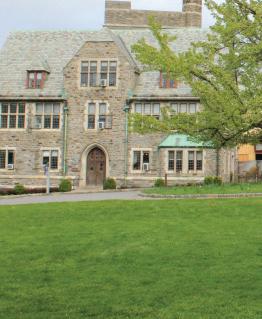
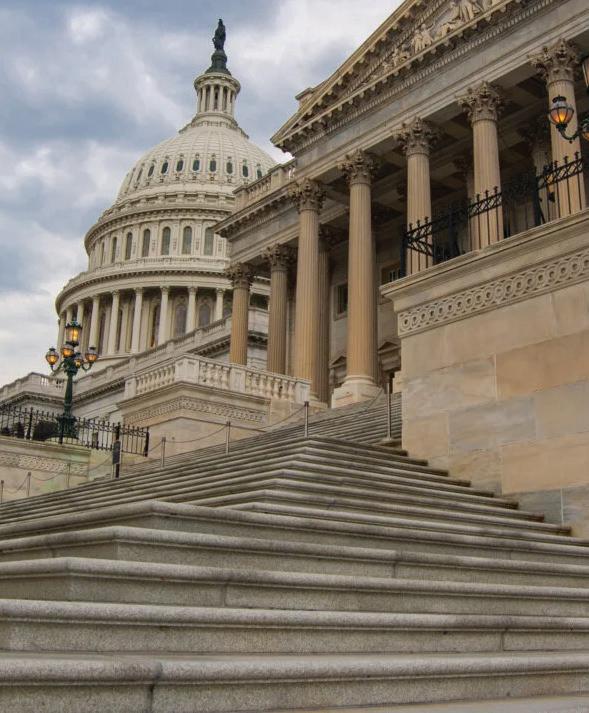
ABOVE, A SIDE-BY-SIDE COMPARISON of Masters Hall and the Capitol building. There are a number of similarities between how the federal legislative branch and Executive Committee at Masters function, despite the discrepancies in size and scale.
A representative or senator proposes a bill. (Tax bills must begin in the House)
The bill is studied, debated, and voted on in a relevent commitee. The committee votes: If approved, it moves forward.
The full chamber debates and votes. If passed, the bill goes to the other chamber.
Second chamber repeats the process: committee review and vote, then full chamber debate and vote.
Issues should be fixed and voting restarts.
If the bill concerns student life on campus, then the bill will be sent to Mr. Newcomb.
If the bill concernes academics, then the bill will be sent to the academic council.
Signs the bill into law.
Vetoes the bill and it goes back to congress. 2/3 vote in both houses overrides veto, making the bill a law. if the vote is not met, the bill dies.
NOTE: This is a oversimplifed
No changes needed.
Bill goes to the president.
Ifnoactionistakenwhile congress is in session, the bill becomes law.
If noactionistakenwhile congress is not in session, bill dies (Pocket Veto).
overview. The process of creating a bill for U.S. government is more detailed. Infographic by Jaden Laboriel
Neena Atkins Editor-in-Chief
I have a caffeine problem. So much so that I carry caffeine pouches in my bag just in case I can’t get a cup. I rely on the guarantee that no matter where I am, I’ll have the energy, no searing migraine and the feeling I’m so used to – and I’m not alone. Across Gen Z, that reliance is increasingly common, and increasingly “aesthetic.”
Carefully crafted lattes and “study with me” TikToks are turning caffeine into an identity. Influencers like Emma Chamberlain, founder of Chamberlain Coffee, helped popularize the idea of coffee as a personality trait. Chains like Blank Street Coffee push that further, because the drink functions as a sort of accessory to be photographed and documented online. Even fictional references, like the fast-talking coffee-fueled characters of Gilmore Girls, reinforce the idea that constant caffeine consumption is quirky and aspirational.
That image now resonates in arenas outside of coffee itself. Energy drinks and matcha have surged in popularity, especially over the past year. Companies like Starbucks are leaning into the trend, introducing high-caffeine Energy Refreshers on April 6 and iced energy drinks in 2024.
Clio Foley ‘26 remembers the first pull of coffee clearly. “I started drinking it when I was probably 14,” she said.
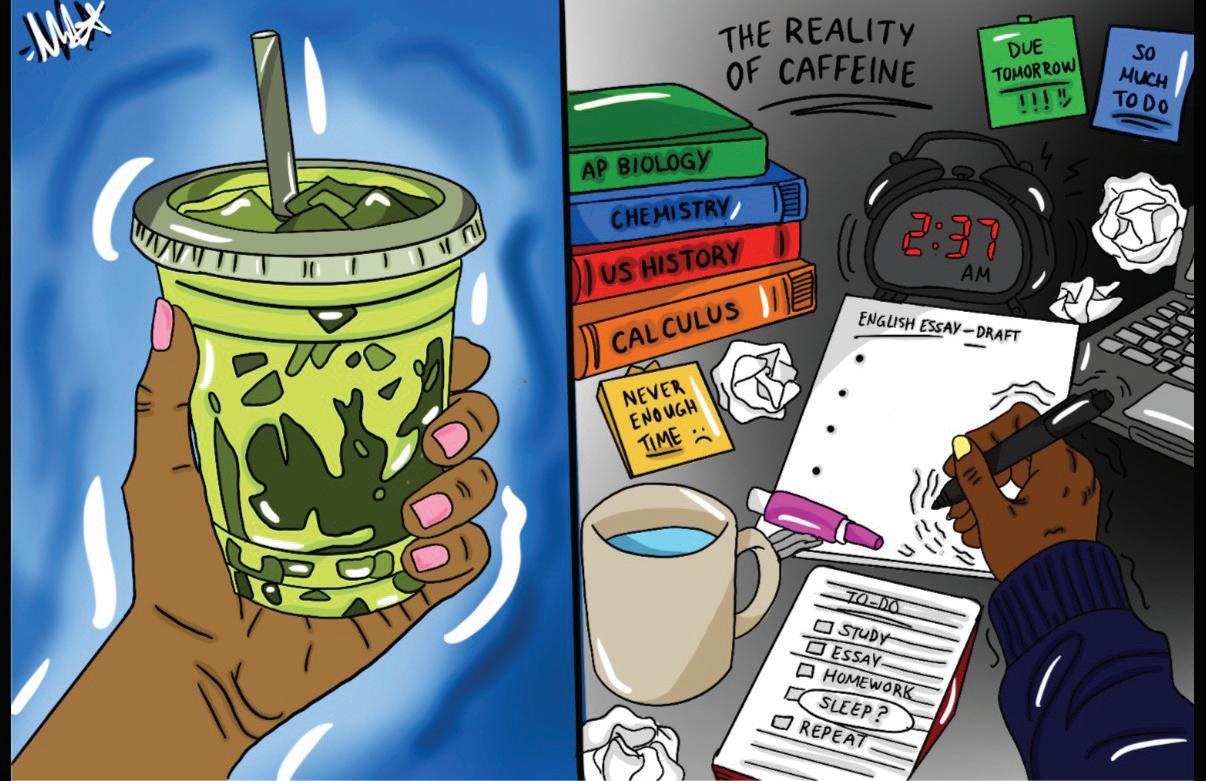
THE MEDIA INCREASINGLY HAS portrayed caffeine consumption as aesthetic, through television shows like Gilmore Girls in which the quirky main characters enjoy a cup of coffee every episode, or simply through the promotion of popular coffee designs and mixtures on social media.
“At first, it was because I thought it was aesthetic and cool. And then I just started drinking it every day, and eventually I wasn’t really able to stop.”
“I do think it says something about your personality based on the kind of coffee you order.” Foley points to the presentation as part of the appeal. “You like the coffee more if it’s in a cute cup,” she said.
On platforms like TikTok and Instagram, a centuries-long morning habit
is now a ritual worth documenting and spending large sums on.
However, behind the aesthetic lies a contradiction.
Gen Z is often described as the most mental health-aware generation, more open about anxiety, burnout and emotional well-being than those before it. Still, caffeine, a stimulant known to exacerbate those issues, is embedded in daily routines.
Caffeine is the most widely used psy-
choactive substance in the world, according to the Centre for Addiction and Mental Health. Its normalization makes it easy for consumption to slip into excess, particularly for teenagers. The American Academy of Pediatrics recommends that adolescents consume no more than 100 milligrams of caffeine per day, roughly one small cup of coffee. Many popular drinks like Celsius, which contains 200 mg of caffeine, far exceed that amount.
Even when the physical effects are subtle, the psychological dependence on caffeine can be harder to ignore. “If I skip it for a day, I just feel groggy and not as clear-headed,” Foley said.
Using caffeine also started early for Jack Sobolewski ‘27. “I regularly started drinking coffee when I was 12 in seventh grade because I was working professionally as a child actor, so I had really long days and had to get up early,” he said.
But social media does not affect his choices. “Social media doesn’t really influence what I get,” he said. He also draws a line at certain products. “I hate energy drinks. I will never drink an energy drink willingly.”
However, coffee is still routine. “I don’t remember the last day I didn’t have an iced coffee,” Sobolewski said.
Caffeine is a constant presence in the daily routines of many Gen Z students, appearing in the first hours of the day and continuing through them.
Allie Faber Editor-in-Chief
Senior David Wilson* bet $400 on this year’s Super Bowl LX.
“Bad Bunny opening song, Gatorade color, coin toss result…certain amount of touchdowns and certain amount of yards thrown by some player,” said Wilson in modern sports betting, all these scenarios are available to gamble on.
Crowded around the TV with guys downing wings and donning Patriots and Seahawks jerseys, Wilson and his friends fixed their eyes on the game, waiting to see whose bets from the evening would hit.
“I think because of the other social elements that were going on around me, I feel like, if I was on my own, there was no way that I’d justify spending that much money on betting,” he said.
Simultaneously, a friend’s bet paid off. “Mark Johnson* bet $20 on the [Super Bowl] coin flip. And when he got that right, the house lit up, and that energy was pretty sick,” senior Jason Smith* said.
But when it came to Wilson’s bets: “None of them hit,” Wilson said.
That night, Wilson lost big. But when he wins big, the feeling is overwhelming.
“Oh, f*ing amazing. F*ing great. It’s the reward system of your brain. Like, it’s your brain dopamine receptors just all being fired, like, ‘bang, bang, bang, bang,
“As soon as that pays out, on top of the fact that you’re rewarded for actually getting more money, you also get the satisfaction of saying, ‘I was right’” - David Wilson*
bang, bang bang.’”
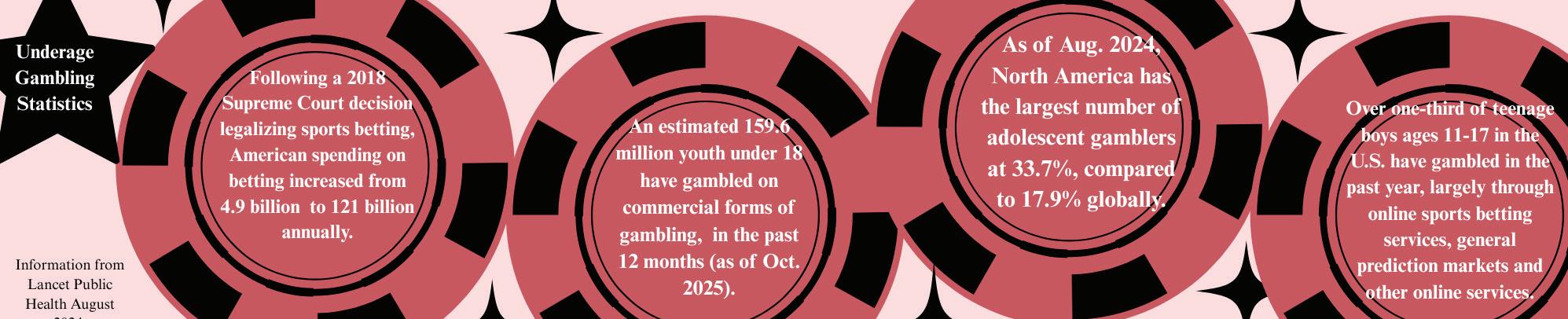
Wilson is just one case in a rapidly growing trend of online teenage gamblingespecially among males. According to a report done by Common Sense Media, over one-third of teenage boys ages 11-17 in the U.S. have gambled in the past year.
Wilson and several additional Masters seniors who spoke on the condition of anonymity estimated that about half of the boys in the Class of 2026 gamble. Underclassmen who are not yet 18 are also part of the online sports betting community, but at a slightly smaller percentage, according to anecdotal evidence.
In 2018, a Supreme Court ruling allowed states to legalize sports betting. At the time, only one state permitted it. Now, legal sports betting is available in 39 states, including New York.
It’s technically illegal for those under 18 to gamble in New York, but some teens use VPNs, the accounts of parents or older friends, or bet through offshore or international apps or websites, which have weaker restrictions.
While Smith said that he sticks to casual rounds of poker with friends rather than sports betting, he recognized the convenience that online gambling offers. “If I’m trying to go to Rhode Island [where you can legally gamble in a casino at 18 years of age]. That’s booking hotels, athree hour drive and convincing the parents, right? Or, I just open up my phone,” he said.
Gambling for Wilson and Smith is not only a personal pastime, but a social event shared amongst their friend groups.
“As soon as that pays out, on top of the fact that you’re rewarded for actually getting more money, you also get the satisfaction of saying, ‘I was right’,” Wilson said. “It’s definitely, like a numbers, showing off thing, but it’s also a case of just genuinely making more money.”
Many Masters students are in a position to fund their gambling through parent-issued allowances or other forms of income, and are generally not at risk of legitimate financial catastrophe. But gambling can too easily be a slippery slope of
money loss and desperate attempts at recuperation. This is especially true for teenagers, who are at heightened risk for addiction because their brains are still developing.
According to the Child Mind Institute, teens are also more likely to act on impulse, make attention-seeking and risky decisions and display overconfidence in placing bets.
“You put money on some random team, and then that kind of instills you with confidence of like, ‘Yeah, I can call everything, like, I’m really good.’ And then from there, it’s like, one bet after another,” Wilson said. “You go for these more and more outlandish bets that are just less likely of hitting because you’re like, ‘Oh, I got a feeling, I got a feeling.’”
This year, Governor Kathy Hochul is looking to curb underage gambling. The New York State Gambling Commission released draft regulations that include stricter identification verification requirements, such as biometric authentication for account creation and betting, enhanced geolocation tracking, and device registration controls.
Hochul said, “Mobile sports wagering is everywhere, enticing everyone — including our youth — to place bets without fully considering the consequences.”
*The names of these Masters students have been changed to protect their identities.
Ella Liu Lead Arts Editor
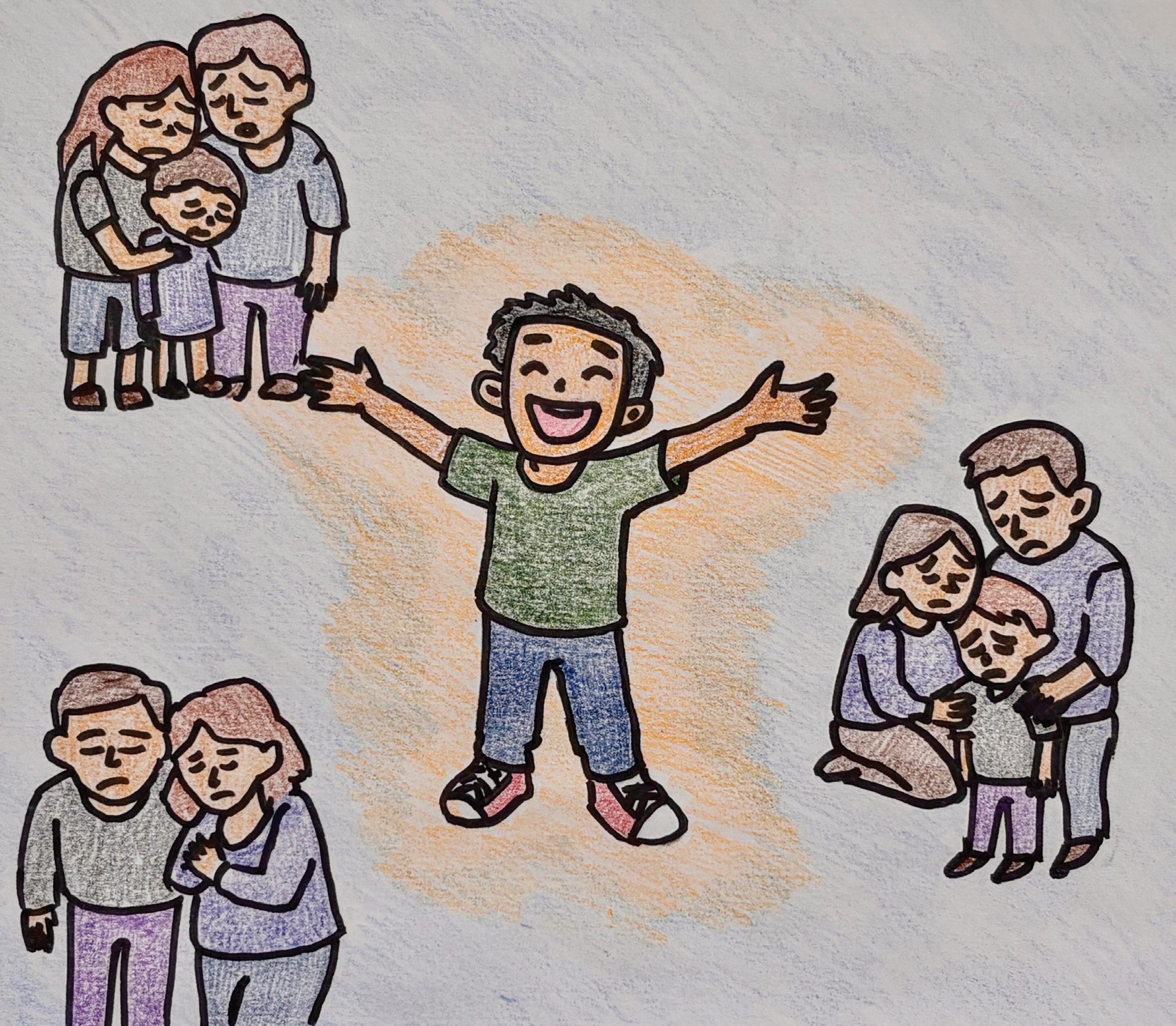
Abreadwinner husband, housewife and two kids sitting at the dinner table in a quaint suburban neighbourhood was the quintessential household image for many people in previous generations. However, the commonality of the nuclear family has decreased over the years, and no longer seems to be young adults’ ideal family structure.
Increasingly, marriage and children have become less appealing to the younger generation. Married couples made up 47% of households in 2025, a significant decrease from the 66% recorded fifty years ago, according to the United States Census Bureau. Additionally, only 37% of families were recorded to have children under 18 compared to 54% fifty years ago. Experts attribute this phenomenon to several causes.
In previous generations, the status quo was to be married, and those who were single, especially women, faced societal pressure to conform to this norm. However, recent changes in culture mean that young adults face less of this pressure, resulting in many couples staying unmarried despite sustaining long-term relationships and cohabiting.
Furthermore, many individuals cite unhappiness within the current dating culture. Diane Malkin, psychotherapist and psychoanalyst, explained that due to social media and dating apps, in-person organic meetings are not as common anymore.
“So many of my young adult patients are frustrated either by what seems like a revolving door of people who are constantly looking for something better, and it makes it harder for people to commit,” Malkin said.
For many, being married and having children simply just isn’t a goal in their lives. A poll from NBC news that asked adults of ages 18-29 to rank their definition of success showed that women ranked being married and having children tenth and 11th out of 13 options. Men ranked these seventh and eighth, while both genders had options about career or financial success in the top three.
Junior Mia Stein said, “I’m really not
even thinking of having kids at all for me. Like, that’s [at] the very, very end of whatever I want to do as [part of] my goals for the future.”
Political views also play a factor in relationships. The same poll showed that men and women who voted for Kamala Harris in the 2024 presidential election ranked having children and being married in the bottom five, whereas those who voted for Donald Trump ranked having children in the top six. Notably, men who vot-
ed for Trump ranked having children first and being married fourth, while women who voted for Trump ranked having children sixth and being married ninth.
This not only reflects the differences in political opinion, which have impacted dating since 60% of adults aged 18-29 stated that it was important to have the same political views in a relationship, but also a discrepancy between young men and women. These differences are potentially a reason why young adults feel that finding a
compatible partner has been difficult, due to differences in future priorities.
Another possible factor is that the financial demands of supporting a family have become more difficult to meet in recent years. According to the Economic Policy Institute, the median annual cost for fulltime care of an infant in the United States is $14,106. The federal government considers child care that costs less than 7% of a family’s income to be affordable, meaning on average a household would need to be making $201,514 or more annually in order to meet the requirement. This large rate has persuaded many couples and individuals to wait for financial stability before taking on the cost of having a kid.
Junior Emilia Teodorczuk, who wishes to foster children in the future, said that having the financial means before supporting children is necessary to her.
“I want to make sure that I have a stable career before I go into that… so that I can take on these kids, and I can give them a good home and treat them well and give them nice birthdays or holidays and all that stuff without worrying about the financial side,” Teodorczuk said.
Moreover, people have felt less motivated to have kids of their own after seeing news that makes them feel negative about the current state of the world.
Malkin said, “In my practice, [people] don’t want to have kids because they don’t want to bring a child into this uncertain world. They’re worried about the future, and that can be: financially, that the cost of having children seems really prohibitive, or just being uncertain about what the environment will be like— what’s going on politically in the country and in
Ella Liu & Brielle Broomes Lead Arts Editor & Copy Editor
The Center for Inclusive Excellence (CIE) debuted its new photography gallery “Authentic Selves” on April 6, which documents the stories of transgender and nonbinary individuals. The exhibit was created by the Family Diversity Project — a nonprofit organization dedicated to eliminating prejudice and discrimination by telling people’s stories through photography.
Located in the hallway leading up to the Student Life Office in Masters Hall, the exhibit features the portraits of trans and nonbinary individuals and their families, along with captions containing brief stories of their experiences. Students and faculty will be able to
“[The exhibit] offers another narrative that is more personal, and more about the people behind some of the stories that the legislation is against. And so I thought this would be a good time for people to look into and learn about trans and nonbinary lives.”
-Esperanza Borrero
continue viewing the photos until the end of April.
Dean for Inclusive Excellence Esperanza Borrero, explained that the goal of the project is to help foster empathy and inclusivity.
“We’ve seen over the last three years, from 20212022, almost 240 pieces of legislation against trans lives happening in the country. And now in 2026, there’s more than 750,” Borrero said. She highlighted the importance of humanizing people who are targeted by these legislations, something that is frequently overlooked in legal discourse.
Borrero said, “[the exhibit] offers another narrative that is more personal, and more about the people behind some of the stories that the legislation is against. And so I thought this would be a good time for people to look into and learn about trans and nonbinary lives.”
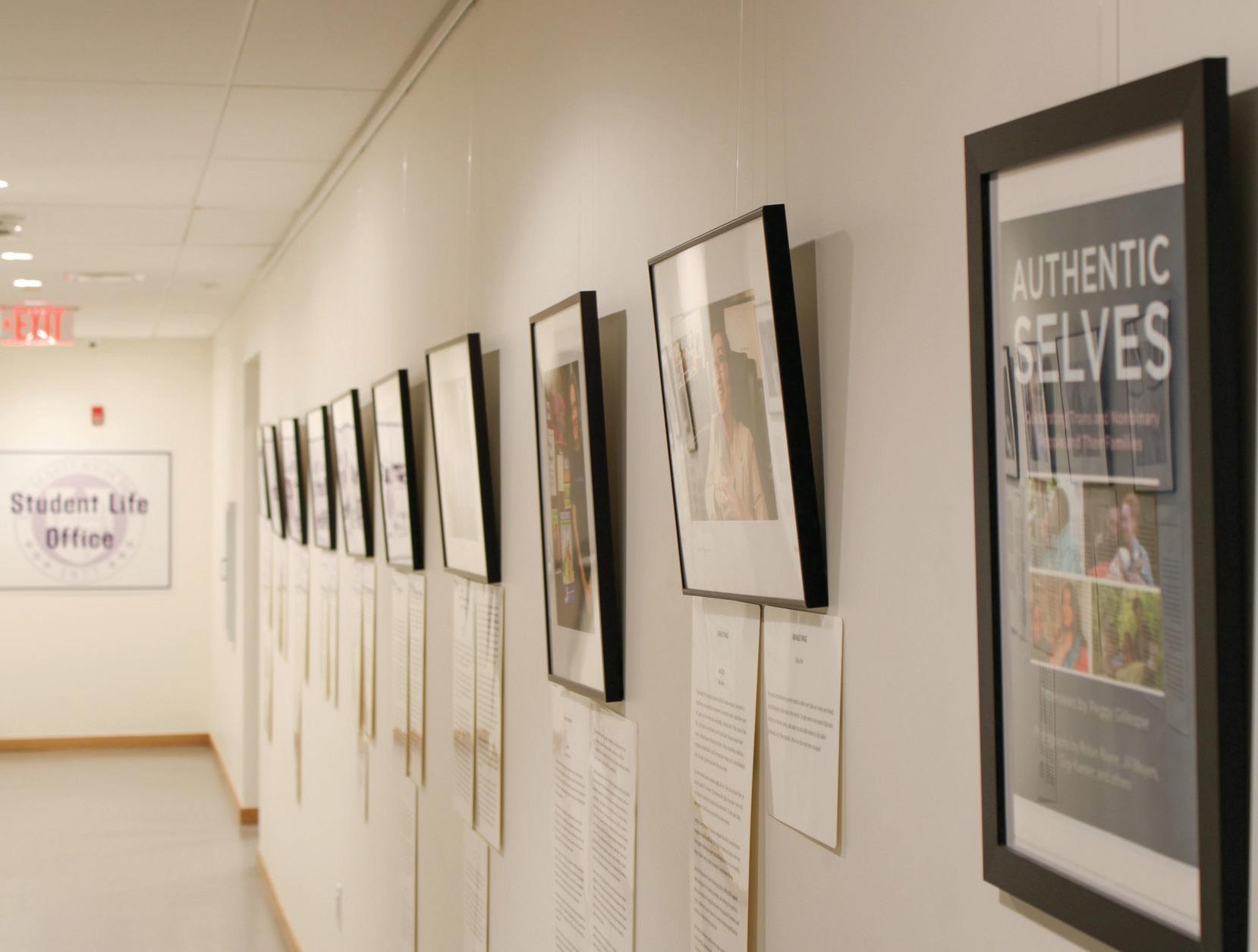
ulty or take some of the candy available in the office.
The location of the display means that it is frequently viewed, since the Student Life Office is often visited by students on their way to meet with fac -
Junior Emme Disick said, “I think it’s really nice that they’re sharing these people’s lives and showing their families, and I think it’s inspiring.”
Its accessibility means that students
encounter the stories of these individuals in person, making them hard to ignore.
“[“Authentic Selves”] is sharing the stories of people, and we need the perspectives of stories that we don’t normally see,” junior Sasha Williams said.
Jack Bilman Photography Editor
The Hudson River Museum, located just up the hill from the Glenwood train station in Yonkers, is a museum focused on housing American art and supporting community events. The museum opened its exhibit “Mod-
ern Women/Modern Vision” on Jan 30. featuring artwork on loan from the Bank of America Art in Our Communities Program.
The exhibit features influential photographic prints from women in photography across America’s history, organized into sections in chronological order, beginning with a striking black wall featuring work from the early 1900s. The remainder of the exhibit holds many iconic photographs, such as
Mother,” by Dorothea Lange, and selected works from “Changing New York,” by Berenice Abbott.
The Hudson River Museum, while not specifically curating the exhibit, did make a big contribution to how the visitors experiences the exhibit. Laura Vookles, chair of the curatorial department at Hudson River Museum, said, “We have an outside designer we work with and we talk to her about the show, the themes. We show her the art, we give her wordplay, what we think the exhibits going to mean to people, or what it means to us. And she comes up with some designs to show us. So this is our contribution, thinking, ‘what is it going to look like here?’”
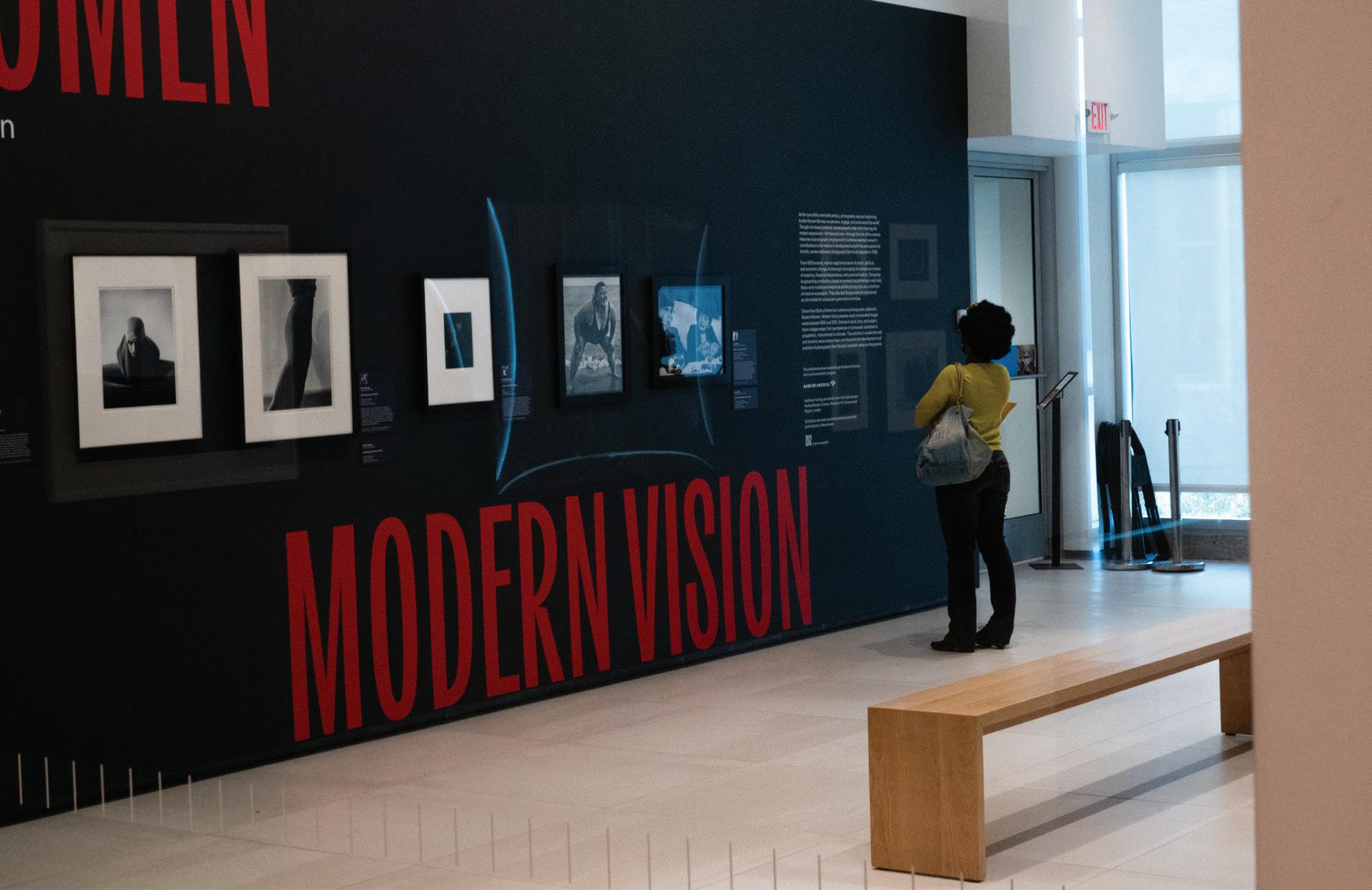
On April 28, the photography major and AP Art classes, will be traveling to see this exhibit.
This trip was organized by Luke Wilde, Upper School visual arts teacher. Wilde added, “I feel like The Hudson River Museum is an untapped resource that we have, and I want to build a connection with them because it’s so close. It’s one of the biggest museums in Westchester and has a lot of prominent artists.”
Interim Chair of the Visual Arts Department and photography teacher Rachel Langosch said, “Historically, there is a canon of old, white male pho-
tographers. And, while they did pave the road for later photographers, it’s important to see what other photographers have done outside of that group.”
The trip is also intended to be a formative experience for students preparing their longer and more thoughtful body of work projects.
“I feel like The Hudson River Museum is an untapped resource that we have, and I want to build a connection with them because it’s so close. It’s one of the biggest museums in Westchester and has a lot of prominent artists.”
-Luke Wilde
Wilde, who teaches the AP Art class, said, “I thought that this would be a good opportunity for them to be able to see that you can have multiple artists doing different things, but there can be this unifying thing you can create just by putting these works of art in proximity to one another, then you’re already creating conversation.”
Langosch, whose photography major class is currently in the process of creating their bodies of work, added, “I also think it’s important for the photography students to see the images printed up on the wall instead of on a screen. When you visit a museum and observe the images in person, there’s a quietness that you don’t get when looking at them on a computer screen.”
Mila Benson Lead Lifestyle Editor
Summer break – it’s often imagined as a three-month stretch of easy days, poolside grilling and sun-kissed beach afternoons. It’s a time when there’s nowhere to be and nothing to stress over. But for many high school students (and their parents), summer break is less about slowing down and more about stepping into employment. It’s a golden opportunity for new responsibilities, having a first taste of independence and getting experience to eventually go forth into the world, whether a paycheck comes with it or not.
Watch any 80s teen movie, and it’s likely that you’ll see the quintessential teen summer job – this is synonymous to the time, when in July of 1979 the teen summer employment rate was nearly 60%. Today, that number has waned to about 35%. Many cite the reason for this dramatic change to be rising academic stress in schools, along with the expectation that students do something “productive” over the summer, instead of working a minimum wage job.
Lucia Lamprecht ‘26 works at a sleepaway camp in Connecticut, somewhere she’s been going every summer since she was 5 years old. Now, she’s a general counselor who takes care of a cabin with eight
kids, along with running water sports like boating and jet skiing. She said, “The fun thing about working at a camp is that I get to meet people from everywhere, so I have a lot of friends who are from places like Australia and Ireland. I get to learn things about other parts of the world, which I think is awesome.”
Jobs can also teach teens life skills that they couldn’t learn without first hand experience. “One of the most important things that I learned from my job was food safety, which will really help if I ever want to do something similar in the future,” Asher Le Breton ‘26, who is a maintenance worker at a summer camp, said. Further, Lamprecht said, “My co-counselors and I had to learn how to work together to take care of our 8 kids in the cabin. Teamwork is a really important part of being a counselor, and a helpful skill to have in life.”
Finding a job, though, isn’t always easy for teens. They’re competing with more experienced, often college-age people or older for employment. “A lot of employers are mainly focused on college freshmen because they're more likely to return every year. Jobs just aren’t looking for high schoolers” Anastacia 'Ana' Alexander '26 said. She continued, “I went around to so many places handing them my resume in hopes that they would get back to me, but none of them did.”
An alternative to jobs that many teens get involved in over the summer is internships. While they’re not paid, they can offer pre-career experience and a
“good look” for colleges. In fact, Masters is offering an internship program this summer called Masters connects, where the school connects current students with alumni that can offer experiential learning. “Starting with an internship now would really get the ball rolling for a career some day, and it would make it a lot easier to transition into a research environment,” Alexander said. Through the Masters internship process, students work with the admissions office to perfect their resume based on whatever they’re interested in.
For example, since Alexander wants to go into pediatric emergency care, she will have a medicine-based resume.
Ayanna Beckett Lead News Editor
Each spring,
groups serenade and seniors ring the commitment bell on a quad full of students lounging in the sun. However, for some
students, springtime also comes with stuffy noses, clogged ears and watery eyes. The culprit? One would think it would be the variety of trees, flowers and grasses releasing pollen into the air. Masters is home to many varieties of trees, including Bradford pear, magnolia, oak, sorrel, dogwood, maple and weeping European Beech trees. Yet, out of those trees, only maple and oak trees are wind-pollinating trees, which are
ment daily life. sound phase part of action happening The restrictions and sets lowed seasonal ers, but those limits. According ing, gas-powered permitted during 1, 2026, erate…any lage of for repeat
more likely to cause seasonal allergies. Still, each year, more and more people seem to be affected by seasonal allergies. In 2021, 1 in 5 children (18.9%) in the United States reported suffering from seasonal allergies. However, in 2024, around 14 million, or 21 out of 100 children (21%), reported seasonal allergies.
Nitin Gupta, resident school doctor, proposed a theory for why the number of seasonal allergies has ally caused even, starting allergy winter the

Olivia Shim
Editor & News Editor
For years, the steady roar of gas-powered landscaping equiphad been a predictable soundtrack of life. Now, during much of the year, that is fading. Dobbs Ferry has moved to out gas-powered leaf blowers entirely, a growing wave of local environmental happening on the municipal level.
The town’s new law dramatically tightens restrictions on when the machines can be used, the stage for a full ban. Earlier rules alseasonal use of gas-powered leaf blownew legislation has gradually tightened limits.
According to the village’s local law filgas-powered leaf blowers were previously permitted only between Oct. 15 and Dec. 15 limited daytime hours. Beginning Jan. 2026, the law states that “no person shall operate…any gas-powered leaf blower in the VilDobbs Ferry,” with fines that increase repeat violations.
In March 2026, the Dobbs Ferry Board of Trustees adopted a resolution eliminating remaining exceptions and established a final date for the ban to go in place. The resolution sets May 15, 2026 as the date when gas-powered leaf blowers will be prohibited for routine use, leaving only narrow emergency expectations for utilities, municipal workers and emergency repairs. The law passed unanimously.
These laws help close a longstanding gap in environmental regulation by targeting small gas-powered engines that have historically faced fewer emission standards than cars. While automobiles have become significantly cleaner due to decades of emissions standards, catalytic converters and the rise of electric cars, many small gas engines – like those used in gas leaf blowers – still operate under fewer climate-conscious guidelines.
As a result, municipalities across the region are increasingly targeting landscaping equipment as a practical way to reduce local pollution. Dobbs Ferry is part of a growing trend in Westchester County and the Hudson Valley, where towns are experimenting with local environmental policies that can be implemented faster than state or federal legislation, and are also adopting seasonal bans or strict
limits on gas-powered leaf blowers.
On the Masters campus, Director of Operations Dan Pereira explained the transition to electric equipment. “It does increase the time that it takes to get a whole [campus] done,” he said. “We have to buy multiple battery packs just to get through a few hours of work.” Despite these challenges, Pereira said the maintenance team supports the transition. “They have a job to do, but they’re also very eco-friendly so we knew this was coming,” he said. "Everybody's in support of it—it's just about efficiency,”
He also added that the switch has clear health benefits for workers as gas-powered blowers don’t have good filters. “For my guys, I feel much better about having them use [electric equipment] because they don’t have to worry about that exhaust all the time.”
For many residents, the ban represents an environmental and quality of life improvement. Upper School mathematics teacher Stella Carey said she welcomed the decision. “I thought it
was a great idea for two reasons. One is the pollution from the gas, and the other is the noise,” She said. “The noise affects people more directly…especially when we were trying to do a lot of Zoom calls and you’d have all this noise outside.”
Carey noted that while pollution from small engines may be less visible day-to-day, its long-term impact matters. She also emphasized that the ban fits into the broader environments within the village. Dobbs Ferry’s active environmental committee promotes initiatives such as recycling, composting, walkability and community gardening. “This is a piece of that whole initiative,” Carey said.
increased. “So, the last couple of years, we really had very mild winters. And so that mild winter caused a lot of pollen blooms,” he said. “I think even, like, three years ago, we had pollen bloom starting in January. So, we wouldn’t have one true allergy season in those warmer winters. But this winter was very different.”
He continued, “So this year, [I’m] not seeing allergies as bad as last year’s, but we are going
to have a true allergy season. It’s going to hit the kids hard, but it’ll be kind of truncated, versus the years before, where it started in January, February, March and just went through the rest of the school year.”
These changes to the allergy season have continued to affect both students and faculty on the Masters campus each spring.
Senior M’kaela Riley believes her allergies
have become worse since coming to Masters in her freshman year. “I remember going to bed and my eye was itching, and when I woke up, my left eye was really swollen and red,” she recalled. “I went to the nurse, and I told her about it, and she gave me Claritin, and after that, it just slowly went down. But I never noticed that before I came to Masters.”
Zadie
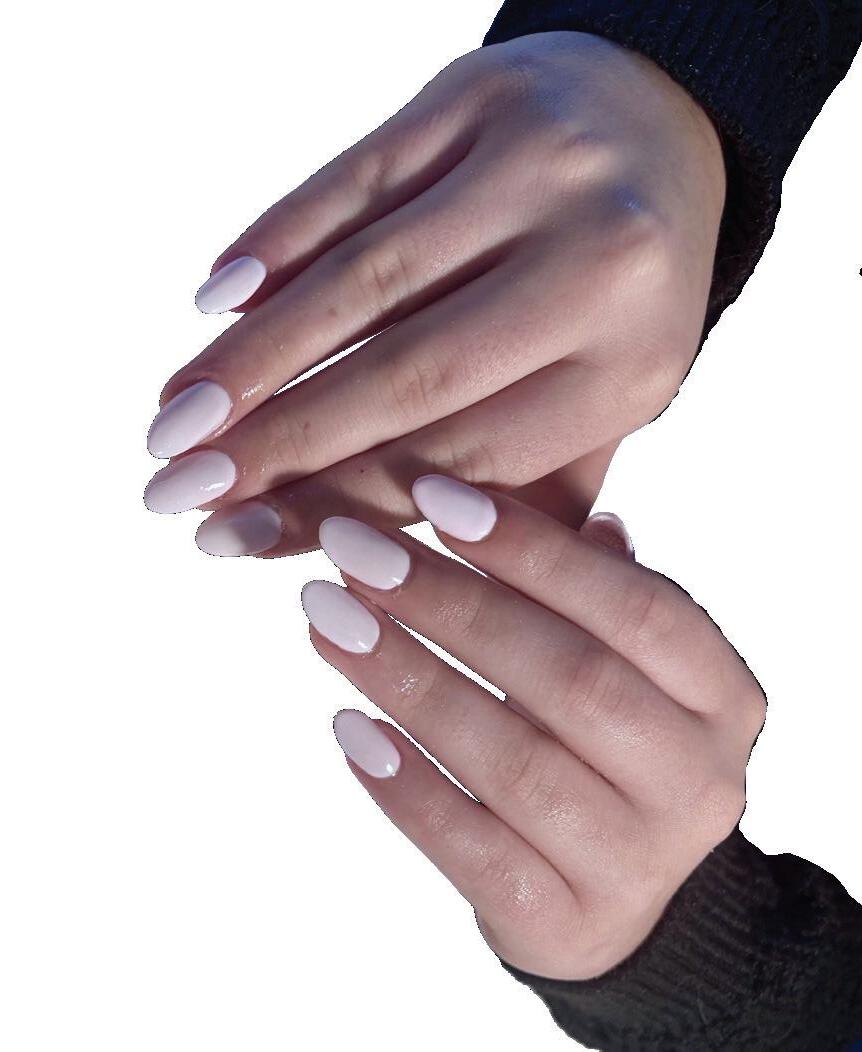
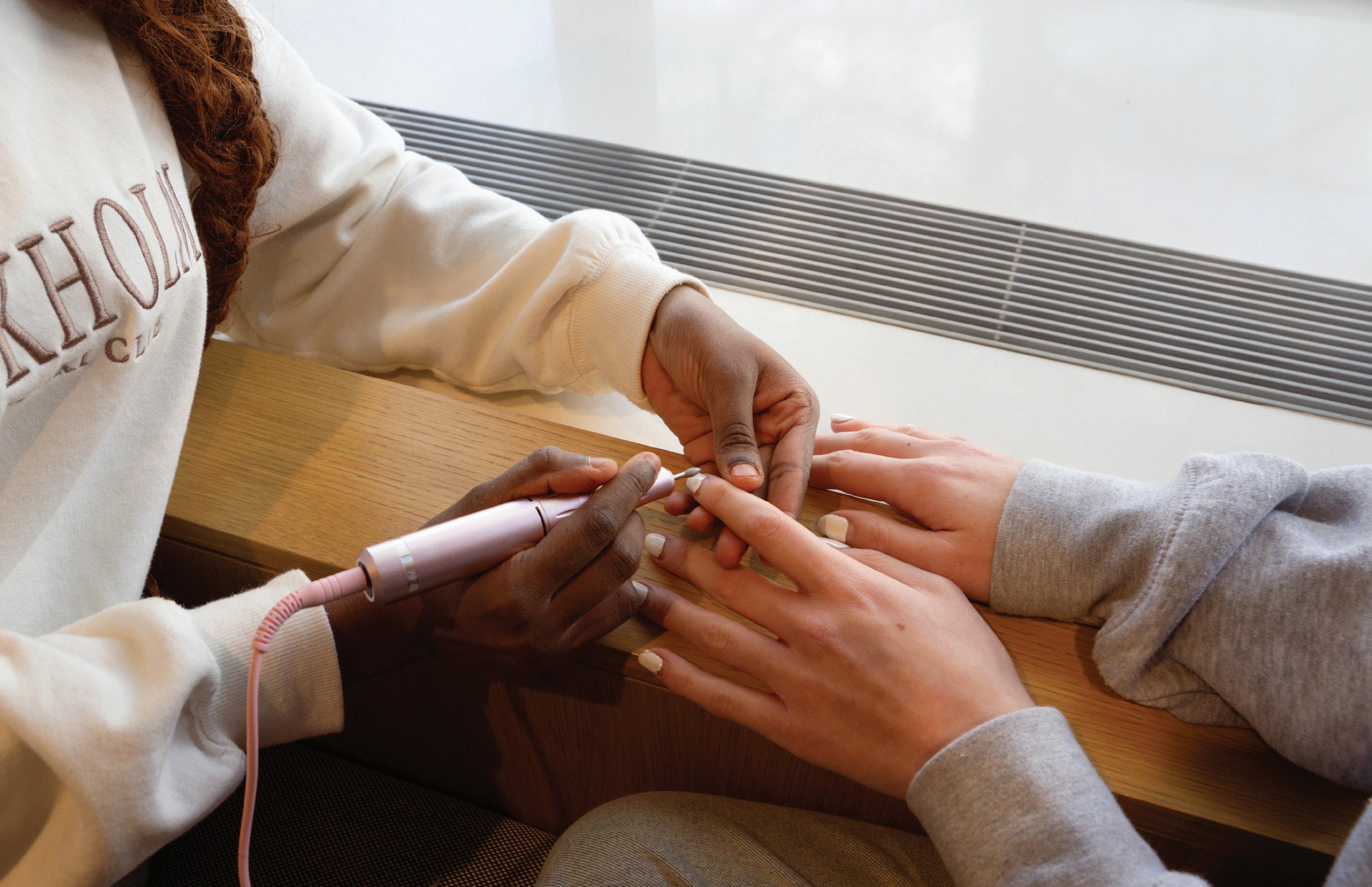
In recent years, acrylic nails and other nail design trends have skyrocketed in popularity, giving rise to an easier alternative than an expensive nail salon: learning to do it at home. Teenagers all over have begun to teach themselves how to do professional-looking nails in the comfort of their own homes.
M’Kaela Riley, ‘26, was interested in doing nails from a young age. She did her mother and grandmother’s nails, eventually taking a liking to it and figuring out that she could take it even further. She is now a reliable technician for both Masters boarders and day students.
In her junior year, Riley was torn between whether she should pursue braiding hair or doing nails. In regards to doing hair, she said, “That’s probably going to be way more expensive and way more time-consuming, and I was like, I think that nails are way more ef -
ficient.” With this realization, she began her nail journey, which she became most committed to in her senior year.
Her mother and brother agreed to invest an initial $50 into her business. She said, “I do charge for it only because if I just keep using all of my materials, I’m not making back any money to pay back my mom and my brother. But I do give a lot of discounts, and I don’t think I’ve gone over $25 or $30.”
Ariella Crane ‘28 also taught herself to do nails. She said, “I wanted to learn around December last year, because I was really tired of going to salons and paying so much.”
She shared that she has noticed an increase in the popularity of at-home nail trends in recent years. “On social media, a lot of young girls are starting to do it, and I think it’s becoming a big thing across the world and the internet,” she said.
Frankie Navin ‘28 is a consistent client of Crane’s. In regards to preferring getting her nails done by a friend, she said, “I find it to be a better expe -

rience because I’m more comfortable with her so I can tell her what I like.” She then said she finds the trend to be increasingly well-liked. “On social media I see a lot of people posting about how they buy their own kits and do it at home and they’ve started to do it for their friends and family too.”
Despite contacting four different licensed nail technicians, none were willing to go on record to speak with the reporter.
Senioritis is ubiquitous. In hallways it’s a passing comment, and between teachers and students, it’s a point of contention. But senioritis isn’t necessarily a mere lack of effort that could be solved with “trying” or “caring” more. It’s the struggle with a mental split that straddles two identities – the one that exists before seniors leave Masters, and the one that will exist once the Class of 2026 tosses their rose petals at graduation.
We are still here, entering the same classrooms and engaging in the same routines that have run our days for years. At the same time, we are already leaving. College is right around the corner, and it is no longer the abstract motivation for demanding extracurriculars and straight A’s anymore.
Now, college is manifesting tangibly. This month, seniors fill out planned absence forms to attend admitted students days, where we explore campuses across the country and envision the next four years. We join group chats, connect online with hundreds of future classmates and awkwardly suffer through small talk in our Instagram DMs in search of a roommate. Life at another school is taking shape while we are still
physically students at 49 Clinton. That tightrope walk – between our identity now, and what it will be soon – is what people flatten into “senioritis.”
There is a tendency to treat this stretch like a waiting room, as if the real version of our lives starts somewhere else. We’ve been trained to think this way. High school has always pointed forward, toward the next test, the next milestone. Now that the next step is finally clear, it becomes even harder to take the present seriously. Sitting still is harder when we know we are about to leave.
These days, it can feel like the whole world is in a liminal space – so many of us, waiting for the present to be over so that we can move on to something a little more sane. Articles in this issue take a hard look at changing identities. At an art exhibit about people transitioning from one gender to another. At families moving to America in search of a new identity. At efforts to keep Native American culture alive in the face of attempts to erase it.
Identities and transitions are challenging for everyone, at every juncture in life. It’s particularly difficult for our seniors, who are faced with wide open skies of freedom. For the first
time, we are starting to have real control over what comes next. And college is a specific kind of freedom. No one is structuring our identity in the same way. We choose where we spend our time, who we socialize with and what we commit to, all of which sounds simple until we realize how much of our high school identity has been prescribed for us.
In college, much of that structure falls away.
That is part of why this stretch feels so strange. We are still in a high school system that runs on obligation while already thinking about a life centered around choice.
But high school isn’t over yet for seniors. There are pranks to pull, proms to attend, days to skip and even a few tests to take and papers to put out. There is real meaning to be found in these last weeks, and the only way to reap the benefits is by staying present and continuing to work in the communities we exist in on and off campus.
Despite the temptation to mentally move into the next four years, it’s important to savor a sometimes painful, and confusing transformation from one state to another.
Annadele Dyott Online Columnist
Just this week, I have begun brainstorming for the hardest photography assignment I’ve ever received: a self-portrait. How could I express my entire being in a single piece of art? How am I perceived, and do I wish to challenge that or embrace it? When creating a work of art so vulnerable and personal, it is impossible not to think about its reception.
“What is this s***?” was the first line in a scathing Rolling Stone review of Bob Dylan’s 1970 album “Self-Portrait.” Critics and fans alike described it as “a mess” and “lazy.” The album interrupted Dylan’s momentum, brought about by his mid-sixties run of fantastic albums, including “Highway 61 Revisited” and “Blonde on Blonde.”
Fans disliked the tired covers and corresponding lack of new tracks, with two-thirds of the album being adaptations of existing songs. The album subverted the expectations of those who considered him to be the voice of the generation, the poet, the ‘prophet’ of the ‘Woodstock Nation.’ It was a complete disappointment.
But it was intentional. According to a 1984 interview, prior to releasing the album, Dylan felt suffocated by his heightened role in music. He couldn’t function as a normal individual and feared disappointing his audience, saying, “I wish these people would just forget about me.” The album wasn’t purposefully crafted to be “bad,” per se, but to intentionally remove the spotlight from him, allowing him to regroup.
“Self-Portrait” holds a special place in my heart as the first Bob Dylan album
I ever listened to in full, believe it or not. I was introduced to what I see as the album’s strongest track, Wigwam, from the Wes Anderson film The Royal Tenenbaums. It is warm, comforting, and has no meaning, its lyrics only made up of “la”, “da” and “dis.” The song is a piece of “campfire music” that reflects the low-stakes feel of the album as a whole, and it remains one of my favorite Dylan tracks even as I listen to more.
But the wider reaction to “Self-Portrait,” particularly at the time it was released, reflects the difficulties artists face when attempting to redefine themselves. Some artists build their careers around their eras or personas (think of Taylor Swift or Tyler, the Creator), but for those who only assume the identity that is assigned to them, it is much more difficult to break free.
“Self-Portrait” provides interesting insight into artist redefinition and individual identity generally. Even out of the public eye, many still choose to reinvent themselves and start anew. I have begun to appreciate the bravery to let go of expectations, even if doing so risks your work being labeled “the album that ruined rock and roll.”

THE ICONIC
categorized by just one genre and his defiance against the expectations of the music industry.
Loewy Nalle Sports Editor
Every August, thousands of freshmen co-eds flood their campuses in their highest heels, prettiest dresses and with their best foot forward to impress their future sisters during “rush week.” This sorority recruitment is often documented on social media – often accompanied by hate comments criticizing their excitement and decision to rush. These critics do make legitimate points, but they often overlook the positive aspects of being a part of a sorority.
Sororities have been philanthropic and focused on giving back to their local community since World War I, when most donated to the American Red Cross and funded equipment. These days, there is an entire day dedicated to the importance of philanthropy during the recruitment process.
Mary McKee Williams is a freshman at the University of Mississippi, a Southeastern Conference (SEC) school, where Greek life is a major part of the social scene on campus. Through the National Panhellenic Council, McKee’s sorority Chi Omega supports the Make-A-Wish foundation.
“Being involved in this has honestly made a huge impact on our local community because it brings people together for something bigger than ourselves,” McKee said. She continued, “A couple of weeks ago, we had a crawfish boil with the community to raise money.”
Some sororities also serve as affinity groups. These chapters, such as all-Black or all-Latina sororities, were created to provide support and sweet sisterhood among people of the same race or ethnicity.
The key purpose of sororities is to build long-lasting sisterhood without having to go through the draining year-long search to differentiate the acquaintance and the life-long

THE COLLEGE SELECTION PROCESS entails the preference for size, location and academics. The social scene, primarily sorority life, remains a key factor in the decision process. Some people completely oppose it, while others require it. The media often skews the perception of sororities through documentaries or hate comments. Nalle explores the positive aspects of sororities that the media forgets.
friend. The media depicts the sorority recruitment process as grueling and unfriendly, but it falters when capturing the value of sisterhood, post-rush.
“The media tends to overlook the genuine friendships and support systems that come with being in a sorority. From my experience, it’s a space where people really show up for each other,” McKee said.
Lila Silpe ‘26, is committed to Bucknell University, where almost half of the student population participates in Greek life. Bucknell is a smaller university with a different student culture than Ole Miss, but Silpe still had to decide whether to join a sorority.
“At the beginning of the college process
and throughout the middle of the college process, I was like ‘No.’ Eventually, my opinion on it [sorority involvement] shifted because I do really value friendships,” Silpe said.
She continued, “Talking to people on the college campus that I want to go to, that are involved in Greek life, helped me understand what it’s actually going to be like.”
Silpe also notes that sorority life is a personal choice – something that the media seems to forget.
“It’s a really personal thing because if you’re not the type of person that wants to be spending a lot of time with friends and people always doing something social, that might not be the thing for you.”
Grey Dickson Web Editor
When most people think of fraternities, they see young men drinking alcohol, occasional misogyny, and ruthless hazing toward pledges. In all fairness, it’s not very hard to see why. Hollywood has pigeonholed fraternities as dangerous and immoral since the late 70s.
Feature films like “Animal House” have created this narrative of Greek-life. Additionally, real-life events surrounding the practice of fraternities have reinforced this narrative, including a recent Iowa University hazing incident. Campus police officers were called to a frat house due to a fire alarm and were horrified by what they found: 56 pledges blindfolded in the basement, covered in ketchup and mustard.
Scenes like this have become a common part of the image of fraternities. But though hazing is a genuine issue, fraternities are much more than their worst abuses.
Fraternities survive and thrive today because young men want camaraderie, friendship and to become more civically engaged - all of which fraternities can provide.
Logan Dundas ‘26, a prospective fraternity member and future Dartmouth College student, said, “We’re all familiar with kind of negative stereotypes about fraternities, and certainly there is a lot of toxicity in certain fraternity circles.” But, Dundas said, “At some frat
scenes, you can find connection with other people, and that’s really what people come for in a lot of cases.”
He continued, “One thing I don’t think everyone realizes is that in some cases, the more prominent a Greek scene at a college, the more opportunity there is to get involved in a frat scene that is non-toxic and inclusive.”
Current fraternity members and Masters alumni also concur with this assessment. Matthias Jaylen ‘24, who attends American University said, “ Whenever I’m having a tough time, or I feel homesick, [I’m] able to rely on [my] brothers. When you just need somebody to talk to, somebody’s always there for you… but something I really appreciate is that our brothers make time for each other, especially in critical situations.
“The frat gives me an opportunity to disconnect and actually be a human that lives my life and doesn’t just work, go to class, do homework, sleep and repeat.”
Matt Sanzenbacher ‘25, now a student at Wake Forest University, likes the charitable aspect of frat life. “We do a lot of philanthropic work, so it feels really good to give back. When you’re in a group of such closely connected people, you get really good at organizing events, especially for charity, raising money, and doing fundraisers. And when you’re with a bunch of guys who are older than you and you’re close to them, you really get to experience different moments of growth and maturity.”

MYA RECINOS/TOWER
FRATERNITIES HAVE LONG HAD the stigma of always drinking alcohol, occasional misogyny, hazing and “dumb” personalities -- all portrayed in the media, whether in the news or in fictionalized movies. The headlines and the scenes seem to forget their camaraderie and efforts in engaging philanthropy.
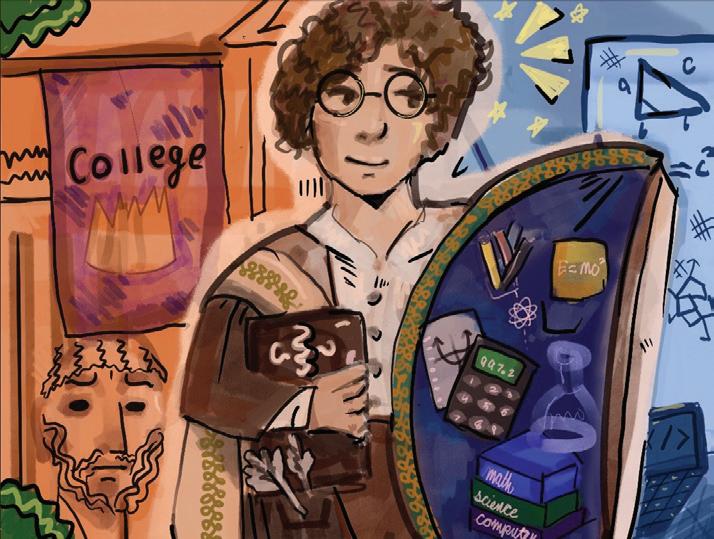
Over the past three years, Artificial Intelligence-related college majors have surged from 116 to 310. The United States Department of Education released $169 million to support AI teaching, viewing it as an indispensable skill. To boost engineering and computer science programs, Masters completed the Innovation and Entrepreneurship Center (IEC) in 2023. But as institutions expand AI investment, resources for the humanities have declined.
On April 3, Syracuse University halted 93 of the 460 academic programs, including classics, to make offerings more “practical” and “career-driven.” As technology industries flourish, STEM majors often lead to high-paying jobs, with engineering topping median salaries in the New York Fed’s 2024 report. Concerns over the utility of humanities majors deter many families.
However, this assumption is increasingly misleading. Bill Winter, former CEO of JPMorgan’s investment bank, said technical skills are easier to outsource and automate, while adaptable humanities’ “soft skills” are growing more valuable.
Courtney DeLong ‘17, a Masters alumna who studied Folklore & Mythology at Harvard University, sees this shift. “Many people my age were told that if you learned to code, you would always have a job, but now that is not really true,” she said.
Those skills prove essential in her career. “My major taught me how to communicate complex topics clearly, such as making complicated policies understandable to different audiences,” DeLong said. “It also taught me to think laterally and consider qualitative cultural impacts that may not appear in cost-benefit analysis.”
DeLong also pushed back on the stereotype that the humanities and STEM fields are inherently opposed. In fact, many studies are interdisciplinary. DeLong taught herself coding for her folklore project. “I ended up explaining the structure to my CS friends,” she said, “And they were all like, ‘Maybe the major was less silly than we thought.’”
The value of a humanities education extends beyond careers. It fosters independent thinking in an age where AI is often treated as an unquestioned authority. However, AIs are trained on existing writing, including that contain biases. This can be concerning as AI is often used in employment and policing. Therefore, AI should not be mistaken for a source of authority.
Of course, no one should dismiss the importance of STEM fields and research. These areas drove essential developments in our societies and will continue to do so. But as schools expand technical training, they should not treat the humanities as expendable. One can hardly become proficient in any profession without a solid grounding in critical thinking.
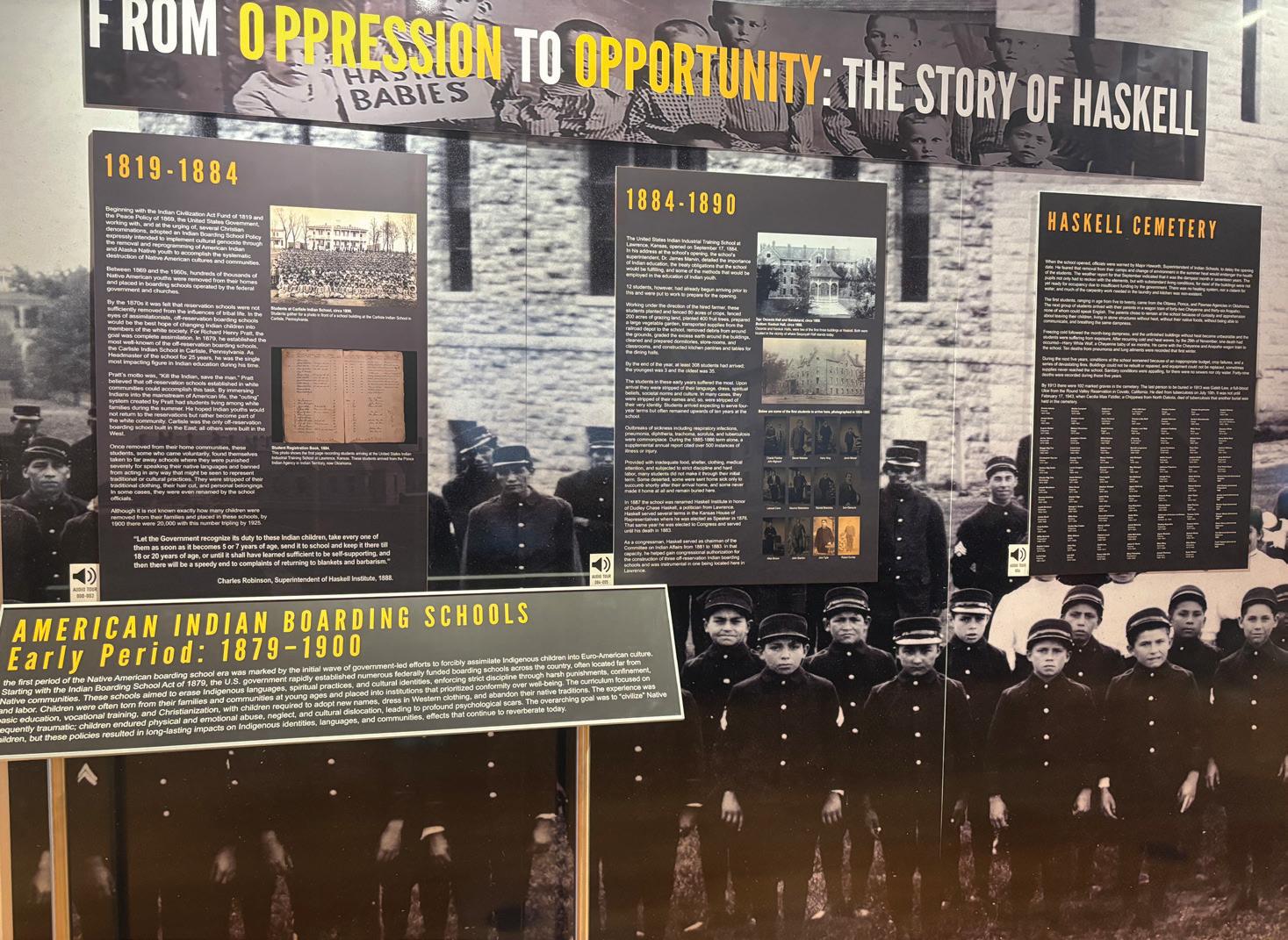
HASKELL CULTURAL CENTER AND Museum is on the campus of Haskell Indian Nations University, a college for Native Americans and a former boarding school, whose intent was to assimilate Native children to white society. Throughout the 1800s, the federal government and churches operated these boarding schools that removed children from their homes and took them to schools far away, where they were punished severely for speaking their native languages and banned from acting in any way that might be seen to represent traditional or cultural practices. By 1900, 20,000 children were removed from their families and put into these schools, and by 1925, this number tripled.
Brooke Muntner Marketing Director
People erased from the past are just as easily erased from the present. Enduring through cultural genocide, forced assimilation, mistreatment and relocation, Native Americans are still here today and thriving. Their history is America’s history, behind the whitewashed violence and stereotypical depictions our own country created.
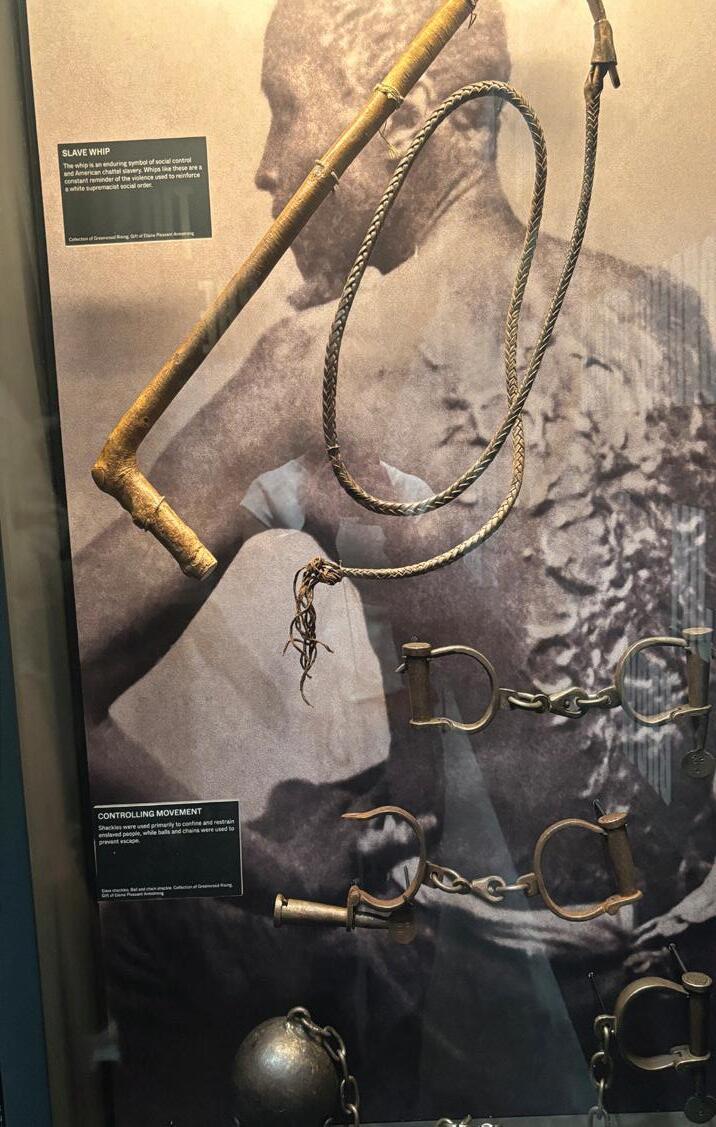
THE SLAVE WHIP IS a standing symbol of Native endurance, and a reminder of social control and violence used to physically and mentally engrave white supremacist beliefs. Restraining measures were taken to the extent of using shackles, weighted white balls, and chains to hold down one enslaved individual. Slavers marked their slaves, or “property” by forcing them to wear manilla tags to show worn receipts of sale, or to indicate their cost.
During Spring Break, I went on a school trip to Kansas and Oklahoma to more deeply understand Native American history, resilience and pride.
I connected closely with many tribal members to listen to their stories – stories that are continuously silenced.
During visits to Haskell, Kansas, and the Haskell Cultural Center and Museum, my peers and I were confronted with painful realities that are left out of our history textbooks.
This is nothing new to Native Americans, but a majority of people, including myself before this trip, have never heard of it. I find myself fortunate to have learned a portion of Indigenous history in the United States, but I needed to search for it because our own government has hidden the very people who founded this land.
“You’re
non-Native, but you dont know about any of this stuff
because you dont learn it in school. At this time in the world, we need our allies.”
-Lori Hasselman
Lori Hasselman is a citizen of the Shawnee Tribe, and the Delaware Tribe of Indians and an alumna of Haskell Indian Nations University. She serves as the Director of Sovereign Partnerships and Indigenous Initiatives at the University of Kansas, and met with us on our trip.
“You are non-Native, but you don’t know about any of this stuff because you don’t learn it in school. At this time in the world, we need our allies. We need people who can stand up and talk because they [the federal government] aren’t listening to us,” Hassleman said.
She continued, “They need someone to dance at their events. They need someone to say, ‘Here’s what our culture is’ because a large portion don’t have a good sense of what their culture is. We need people who can stand up and talk because they are not listening to us.”
Every time Indigenous peoples in the
United States advocate for more historically accurate tellings of history, they are usually met with people who say that Americans should have pride in the country’s history without needing to feel bad.
These types of responses display the lack of understanding of the role that Indigenous people have had in American history.
I argue that if people took a second to learn a little bit about Native Americans’ perspectives on history, it wouldn’t just combat the myths that have been built to reshape American history, but also shift the focus towards vibrant Native communities with admirable pride and resilience.
Maya Streicher, a junior at the Masters School, attended this trip to gain a first-hand account of Native Americans’ side of history and day-to-day life.
“We’re still here. We’re still fighting. Natives are everywhere, you just have to look for them.”
-Tara Roanhorse
“Something that was surprising to me is how much pride Native Americans have in their culture. I really liked how everyone we met was so proud to talk about what tribes they are from and their traditions,” Streicher said.
She continued, “When we went to the library at Haskell, the high school co-chair sang all of us a prayer in the library, and not a single person in the library turned their head. It’s so interesting to witness how happy and proud they are to be there. Expressing yourself is really part of your everyday life, and nobody bats an eye when you are being who you are.”
The Editor in Chief of Haskell University’s school newspaper, Tara Roanhorse said, “Whenever people think of Indigenous people, they think of old Western movies, or images of people with headdresses. But modern Indians are not like that. We’re still here. We’re still fighting. Natives are everywhere, you just have to look for them.”


MASTER’S STUDENTS ON THE Kansas and Oklahoma trip attended the First American Museum to learn about Native Americans’ history and the 39 tribal nations that occupy Oklahoma, not by choice, but from forced removal. and this was not by choice. Myths, specifically those referring to Indigenous people as sub-human, validated the removal of land, systemic genocide and basic human rights. Travis Campbell, director of the Haskell Cultural Center and Museum, said, “Most of us, all 576 tribes, have websites and museums. There are ways to reach out and learn, not just rely on what you’ve seen on television or the misinformation that is out there.”
“We are perfectly modern people. We have jobs and do the same things as everybody else.”
-Travis Campbell
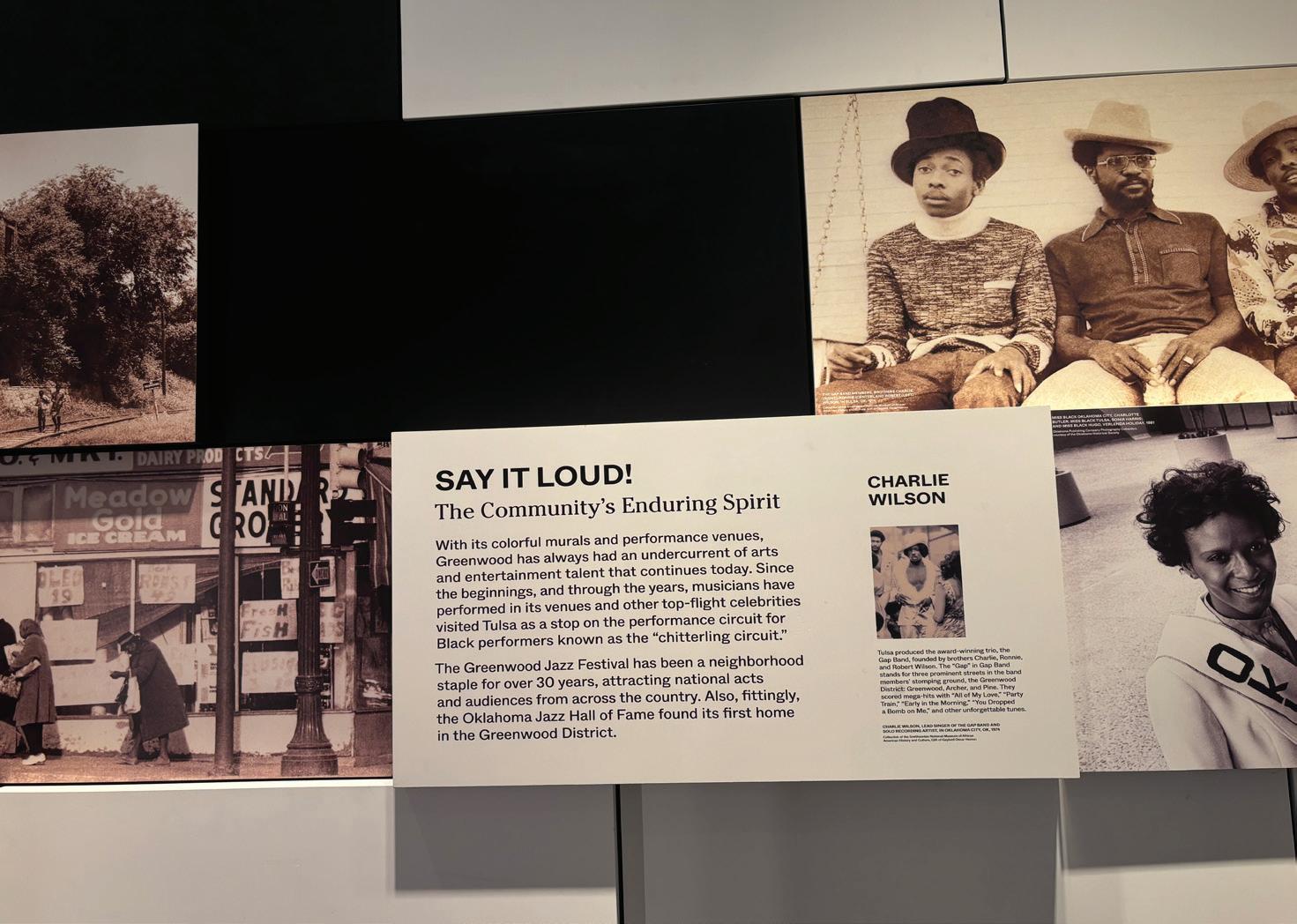
THE GREENWOOD DISTRICT IN Tulsa, Oklahoma, also referred to as “Black Wall Street,” represents the resilience, unity and rebuilding of a community that was burned to the ground in the 1921 Tulsa Race Massacre. Founded in 1906, Greenwood transformed into a thriving Native American community for businesses and families. Soon after, the Tulsa Race Massacre wiped out the entire community to the ground. Despite this destruction, Greenwood’s spirit, resilience and pride helped to rebuild Greenwood, and the persistence that continues today.
For millions of Americans, a simple act like registering to vote could soon become far more complicated. More than 140 million Americans do not have a passport, and tens of millions – especially married women whose legal names differ from their birth certificates – could face new barriers as the Safeguard America Voter Eligibility (SAVE) Act is considered in the Senate.
The Republican majority in Congress has prioritized the SAVE Act, proposed by
Rep. Chip Roy of Texas, which is now being considered in the Senate. While framed as an effort to prevent undocumented immigrants from voting, that justification is misleading: noncitizen voting in federal elections is already illegal and extremely rare, with existing systems in place to verify eligibility.
What the SAVE Act actually does is shift the burden of proof onto voters themselves. It would require Americans to present documents like a passport or birth certificate in person when registering to vote, effectively eliminating online, mail-in and many third-party registration methods.
The consequences would be significant for millions of Americans. Transgender Americans and Native voters, who already encounter obstacles due to documentation inconsistencies or geographic isolation, would be further marginalized.
Here in Westchester County, the impact would be immediate. Voter participa-
tion is high, but it depends on accessibility. Many residents – including students, first-time voters and busy families – rely on online or mail registration. Removing those options would make civic participation more time-consuming and, for some, practically inaccessible. In a community like Dobbs Ferry, where schools encourage civic engagement, this sends the wrong
“Supporters argue the bill strengthens election integrity. But when a problem is already illegal and statistically negligible, imposing sweeping new restrictions raises a different question: who is actually being protected – and at whose expense?”
message: that voting is not a right to be protected, but a hurdle to be cleared.
Supporters argue the bill strengthens election integrity. But when a problem is already illegal and statistically negligible, imposing sweeping new restrictions raises a different question: who is actually being protected – and at whose expense?
For students and young people, the stakes are real. Policies shaped by elected officials affect education, climate action and economic opportunity. Making it harder for new voters to register risks silencing the very voices that will live longest with those decisions.
If you care about this issue, don’t tune it out. Follow the bill’s progress in the Senate, contact your representatives and get involved in local voter registration efforts. Regardless of where you stand politically, access to voting shapes every other issue. Limiting that access does not strengthen democracy, it weakens it.
Fashion Over Time
there is no question of whether it’s warm enough to wear shorts.
myself included, are wishing that they had worn something lighter.
With the weather warming and the sun shining longer throughout the day, the ageold question regarding the season’s change is brought up again: How does one tackle the transition from pants to shorts, and when is the right time to make the change?
Soon, we will be in the midst of the hottest weeks in the school year, where
But currently, the difficulty lies in the period before we really hit spring. So far, the closest taste we’ve had to actual spring was the “faux-spring,” during the second week of April, where it really felt like the jacket-wearing and teeth-chattering days were behind us.
Teachers and students were doting on the nice weather, but by the next week, they were begrudgingly digging items out of their box of winter clothes to conquer the breeze.
The solution could be as simple as investing in a pair of zip-off pants where pants can seamlessly transform into shorts.
Although it may not be everyone’s cup of tea, fashion wise, it does conquer the shifting weather patterns throughout the day. It’s freezing in the morning, but by noon, many,
The key is to be flexible: Be okay with wearing shorts one day and having to bundle up the next day. Besides being flexible, dress in layers. Be prepared for the day to become much warmer or colder than expected. Some ways to handle it are if you’re wearing a tanktop, don’t risk sacrificing your arms to goosebumps, keep a long sleeve on hand, just in case. If you’re wearing a t-shirt, pair it with a button down that could easily be removed if the temperature rises.
Don’t hurry to switch out your jeans with your shorts, because these days you can never fully know if the next week will be as warm as the current one.
Lastly, there is no exact right time to make the switch. Some people might try to
“The key is to be flexible: Be okay with wearing shorts one day and having to bundle up the next day. Besides being flexible, dress in layers. Be prepared for the day to become much warmer or colder than expected.”
avoid wearing shorts for as long as possible, some might take it day by day and some might have decided from here on out, they’re going to tough it out. Life is too short to overthink your wardrobe choices: Do what feels right to you. Remember to be cognizant that there is more than one way to go about it.

Gigi Wheeler Columnist Culture Shocks
Jasmine Mao Columnist
Unlike the American students, Masters international students from France and Spain can state certainly that soccer is their biggest sport. The robust soccer culture explains why they have “superteams” in the upcoming FIFA (Fédération Internationale de Football Association) World Cup 2026—France national football team was officially crowned number one
and Spain followed closely.
Popularity and passion built up since their preschool days. Midfielder and striker of the Masters boys varsity soccer team Javier Conde ‘27 from Madrid, Spain said, “It all starts in school, when we’re 3 or 4 years old. Every single break we wait in class until the break starts so we can go play soccer.”
His teammate, striker Amadeo Barnatan ‘27, who is also from Madrid, said, “In Spain, it’s a tradition. Most kids play since they were young, and then as I grew up, playing in the club, I just fell in love with the sport. I love the game more and more every day.”
Ethan Meline ‘27 from Paris, France, who played as varsity winger and midfielder this year added, “Soccer in France is really innate to everyone. I think it really starts at school, in the courtyards, during breaks. When you’re a kid, you play with the softballs and you create your
own fields. Then there’s a competitive spirit to it. I think that is what makes you fall in love with the sport.”
Following the local city team also contributes to the soccer culture. For example, Parisian Meline supports the Paris Saint-Germain F.C. (PSG) while Conde and Barnatan support Real Madrid.
Meline said, “Whether or not you love soccer, you always support a team. Then the
“In Spain, it’s a tradition. Most kids play since they were young, and then as I grew up, playing in the club, I just fell in love with the sport.”
- Amadeo Barnatan
sports will always find you in a way, and you’ll end up playing whether you’re good or not. That’s what’s so good about it. Everyone plays whether they’re good or not.”
Nevertheless, local rivalries between city teams all diminish during the World Cup. Conde said, “That’s one of the most important things. There can be so many conflicts in the country. [But during the World Cup, whether it is] Spain or France, or whatever national team that plays, everybody is together. There’s no good or bad side. Everybody is together. It doesn’t matter who you are or how you think.”
The patriotism is evident after France won the 2018 World Cup, causing celebration and pride for the country. Meline said, “I think that summer really stayed in my memory and in the memory of a lot of French people. That togetherness is just so beautiful.”
Brielle Broomes Copy Editor
Kevin Walker cannot remember a time where he was not surrounded by lacrosse. From playing competitively in Maryland to coaching in England, he has spent his life navigating every dimension that the sport has to offer. Now, Walker is making his mark at Masters as the new head coach of varsity boys lacrosse.
“In Baltimore, you have a stick in your hand from the womb. My dad played, and I always idolized him and wanted to play as well,” Walker said.
As he developed a passion for lacrosse, he began to play competitively. Walker was recruited to play Division 1 lacrosse at the University of North Carolina at Chapel Hill (UNC) for the 2015-2019 seasons. Walker was a member of the team when UNC won the 2016 NCAA Lacrosse Championship.
After he graduated, he attended Durham University in the United Kingdom. This created the opportunity for Walker to discover his passion for coaching.
“England was the first time I did real coaching. There were a lot of kids who were picking up a lacrosse stick for the first time because the sport’s not very popular there. So that trained me for Masters, because there are a lot of
kids here that are picking up a stick for the first time as well.”
While coaching players in England was something new to Walker, he ex -
presses that he has found a unique spark in the players at Masters that he has not seen elsewhere. Walker said, “It’s actually really exciting at Masters to meet
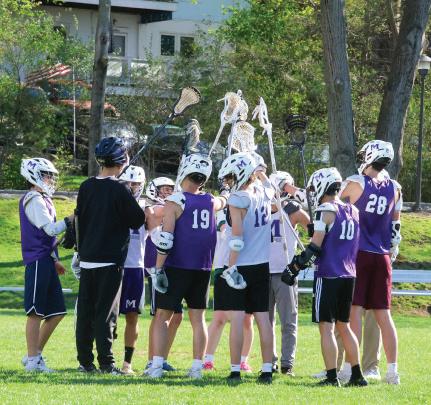
kids who are excited about lacrosse. They want to do sprints, and they want to practice on Saturdays.”
He continued, “They actually have a passion — a true passion that just stems from their own internal experience and isn’t placed on them by parents, or coaches or college recruiters; It’s a really pure passion that’s been so fun to work with.”
Etienne Millet ‘27, one of the team’s captains, has been playing since his freshman year. “I think [Walker] really emphasized trying to be a more cohesive team, working together with everyone, trying to build that team spirit outside of just the field. Because at the end of the day, that’s what’s going to motivate other people to do better,” Millet said.
This spring season marks Lorenzo Zapata’s first time on the team. Though he is new, he recognizes that Walker’s uplifting attitude inspires him to have a growth mindset on the field. “Coach Walker has taught me that if you’re in a game and you are discouraged, at least put your all into it.”
Zapata continued, “I think Coach Walker really supports the sense of community that we have here, which is one of our best qualities. And seeing my peers do great on the field motivates me to do great myself.”
Avery Gosnell Staff Writer
A study at the University of Minnesota Medical School found that ACL tears in athletes aged 6-18 have risen around 2.3% each year for the past 20 years, with a current estimate of 200,000 tears in the United States per year. The problem needs to be fixed, and there is a solution. So why aren’t athletes using it?
The anterior cruciate ligament (ACL) is a strong tissue that connects one’s thigh bone to the shin bone. It’s often torn during sudden movements, including stops and changes in direction, making it common in sports like soccer, basketball, football and skiing. Tears often require surgery, and can take as long as nine months to recover (or more for athletes returning to their sport).
It shouldn’t be a surprise that scientists and sports doctors have been searching for an answer to save millions of youth and professional athletes around the world. It may be a surprise that a prevention program has been created that, when tested on 61 different women’s college soccer teams, made the chance of tearing their ACL during the season go down by 72%.
And it should definitely be a surprise if your sports teams aren’t using it.
The PEP (Prevent injury and Enhance Performance) program was created by the Santa Monica Orthopedic and Sports Medicine Research Foundation. It’s been refined into a warmup and pre or post-training stretch (combined for a total of just 15-20 minutes) that can change everything for an athlete and their career.
The program can be done almost entirely independently, except for one partner exercise that can either be skipped or done with other tools if a partner isn’t possible. While cones can be helpful, no equipment or location is needed to perform any of the exercises.
Given the proven benefits and ease,
one may wonder why this program isn’t more widely used. The main reason is that many coaches feel set in their own warm-up method. They’ve created a set of exercises they’ve decided and “proven” works for their sessions.
While they may believe their warm-up protocol is successful, the PEP program has
been proven by experts in the fields. They have more knowledge, resources and time than almost any coach, and they’ve used that to structure a warmup that activates, strengthens, quickens then recovers muscles –– a combination built for freshness and strength going into a workout, as well as fewer ACL injuries.

If the exercises really are similar, why not use the tested one? If it saves just one athlete’s ACL and activates all athletes just as well, any coach should be happy.
The program is also only recommended to be done three times a week, while other lighter warmups can fill in remaining time. You can’t see the exact impacts of the program –– because it prevents any issues from arising in the first place. But you can see the proven benefits. The study by Dr. Bert Mandelbaum and his team found an 88% reduction in the first year, and a 74% reduction the second year.
“We want them to habituate their bodies to a whole different level of function, to relearn how to land, jump, decelerate in a more safe fashion,” he explained.
The program is being used by professional soccer players within the Fédération Internationale de Football Association (FIFA), and is being promoted to the NFL. While it started by focusing on female athletes (who are two to eight times more likely than males to tear their ACL) the program is now being used across genders and sports to tackle the injury.
Athletes and their health is often left in the hands of the coaches and managers of teams. It’s crucial that those figures step up for their athletes. Coaches need to print out and implement the program. There’s no excuse for any high school or sports team. The program and everything you need will be accessible. Athletes–– tell your teams, schools and clubs to stop avoiding change, and start protecting their athletes.
NOTE: Tower has not investigated the usage, or lack-thereof, of the PEP program at Masters. As such, this article is not intended to adress any issue in the school’s coaching or athletic training process and only serves to inform readers of the program and its possible benefits.
Siena Versaci Lead Copy Editor
The spring sports season is abuzz with purple jersey-wearing players, electric coaches and a peppy panther mascot raising the roof. Standing attentively on the sidelines of the gym, sitting around the track and cheering by the tennis courts, team managers stand unseen. Although relatively hidden, team managers are important members of every Masters athletics program.
Depending on the sport’s intensity and needs, team managers can play a large role at practices and during games. The co-sports manager for varsity girls
lacrosse, Willow Lovett ‘26 said, “Before every practice, I get the equipment out, get the music out and during practice, mainly assist the coach if they need a timer for some drills and you know, calling out like, ‘Oh, two minutes left,’ ‘30 seconds left,’ so everyone has a sense of timing.”
She explains that they put the equipment away at the end of practice. During games, they keep score in the score bug, collect ground balls and other technical tasks for the coaches.”
Sometimes members of a team that are off season will manage a team in order to maintain their skills.
John Petrie, the coach of the Masters tennis teams said, “The most im-
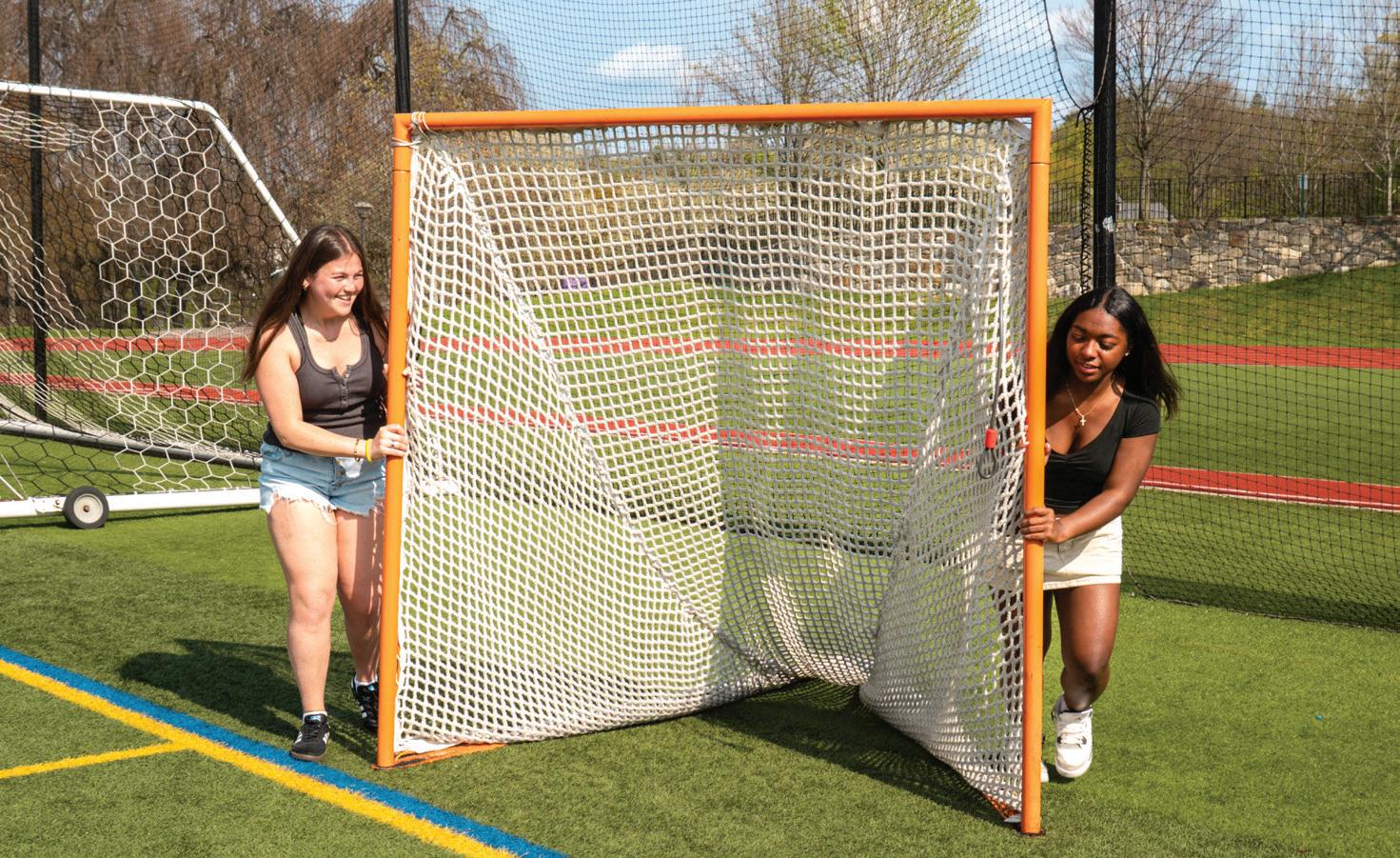
portant thing [managers] do is hit in with the other team to keep their skills intact. I tend to select players who I want to develop year round as year-round players. So it’s good for the teams, too.”
“If you’re non-athletic like me, it’s a good way to still feel that kind of team atmosphere, and you can make really great friends.”
-Sophie Ricks ‘27
Unfortunately, many students who are well-versed in athletics at Masters are still unaware of the opportunity to
become sports managers since the Google form to sign up for sports does not include manager as an option. Lovett did not want to play lacrosse in her sophomore year, but wanted to remain a part of the team. She did not know about the position until speaking to her coach.
She said, “The coach told me that it was an option to be a manager, and that I could either be a manager and still play, or just be a manager, and that’s how I found out about it.”
Beyond their work, managers are also valuable team members. A team manager for last season’s varsity girls volleyball team, Sophie Ricks ‘27, said, “If you’re non-athletic like me, it’s a good way to still feel that kind of team atmosphere, and you can make really great friends.”
Alex Kagoshima Social Media Manager
Taking a deep breath, senior AJ Nguyen begins his routine clap before sprinting to the take-off board and leaping into the sand pit. Time slows as he glides through the air, straining all his muscles forward, before crashing into the sand.
For most athletes, years of work are put into the sport they play in order to have record-breaking performances. For Nguyen, however, his track and field journey only began last spring with Nguyen simply joining the team to improve his speed for basketball. Now he is determined to make history this season.
Nguyen has gone on to become the school’s best long jumper and triple

jumper with a long jump of 19 feet 7 inches and a triple jump of 38 feet 7.5 inches, and aims to break school records (19 feet and 11 inches in long jump by Judah Francella in 2019 and 40 feet 3.5 inches in triple jump by Emmanuel Har ris in 2024) this spring season.
“Triple jump and long jump are my current goals that I want to break the school records in,” Nguyen said.
His introduction to triple and long jump came unexpectedly at last year’s Fairchester Athletic Association (FAA) Championships when coach Ian Mook decided to put Nguyen in these events for the team to earn extra points. “At the time, I performed well, so I decided to train over the summer with my coaches to try getting better,” Nguyen said.
Since then, Nguyen has worked hard to improve his technique. According to Mook, he is very close to his goal. “He’s exactly four inches away from breaking it in long jump, and in triple jump he is about a foot and a half away from breaking it,” Mook said. “I think he could break it any day. He’s got the ability, the consistency, the drive and the passion for the sport. I think he’ll get it sooner than later.”
Nguyen’s pre-jump routine is very im portant to him as he encourages the crowd to clap before he sprints down the runway.
“I feel like clapping makes me more