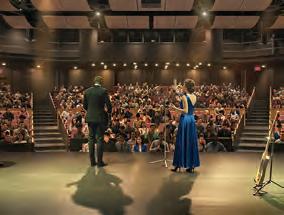
09 Building on a Scientific Curiosity That Began at Masters
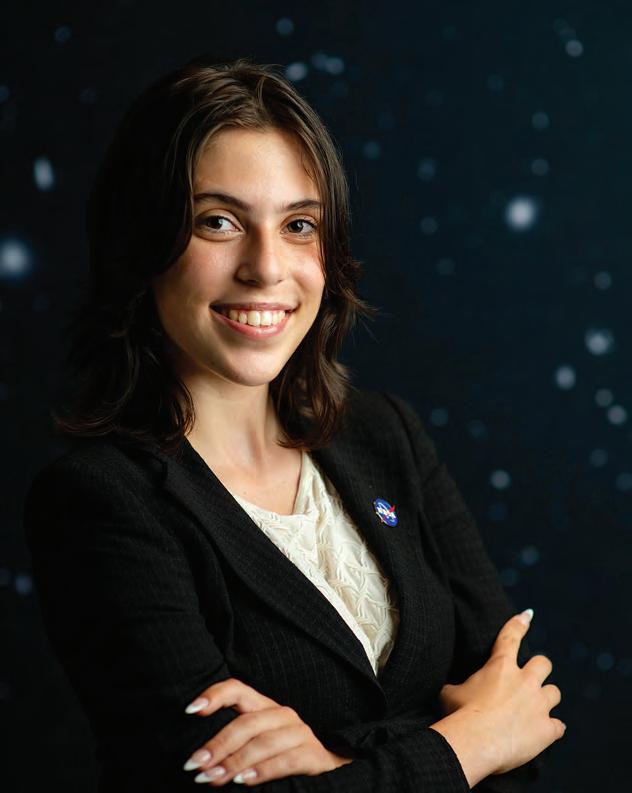
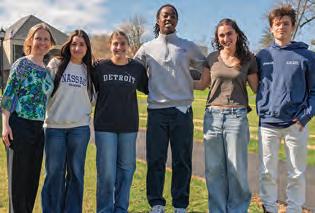
11 Sophia Tsoukalas '22
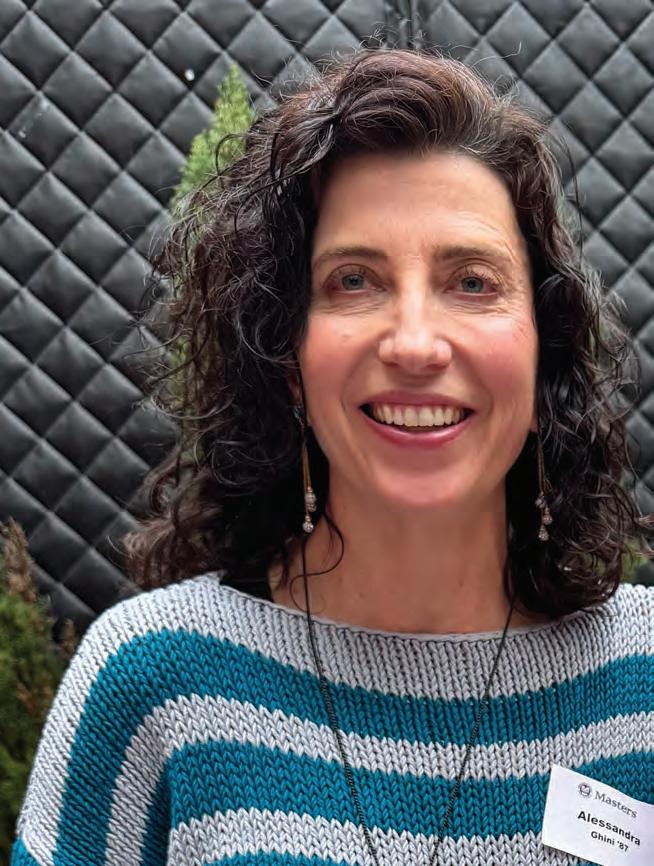
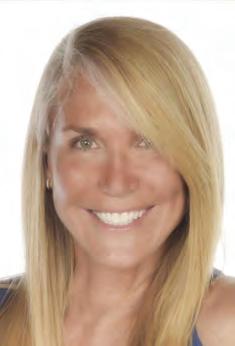
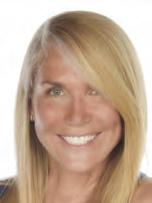
12 Alessandra Ghini '87
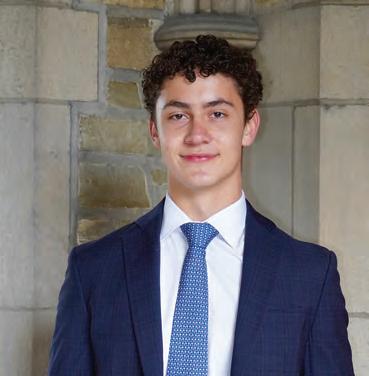
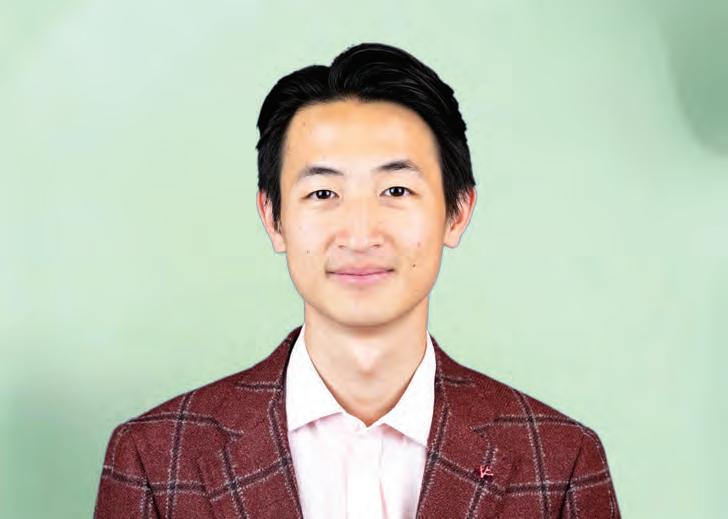
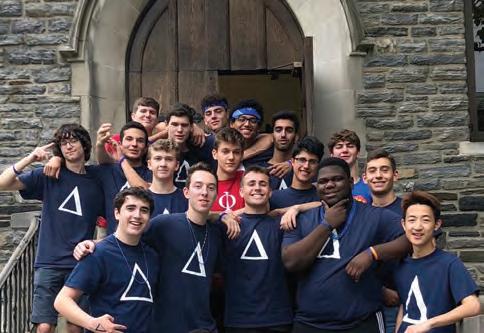
14 John Jiang '19
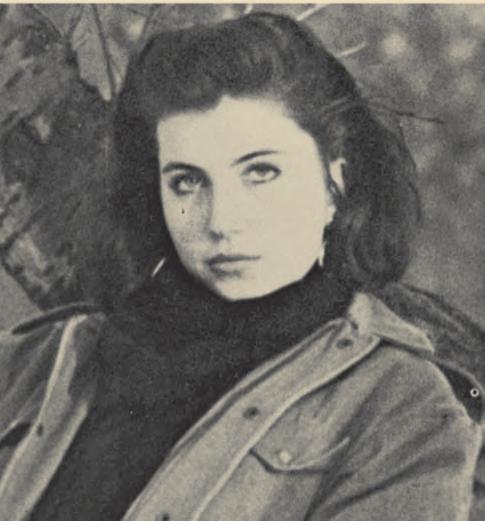
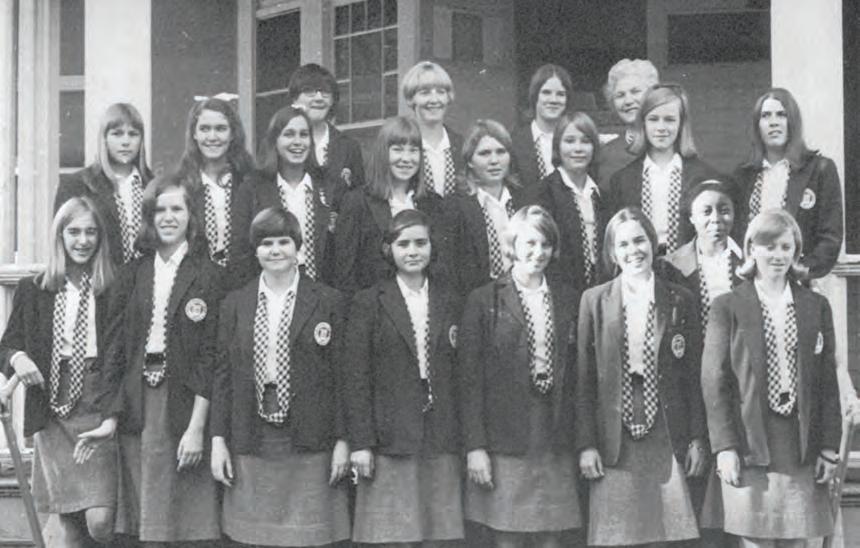
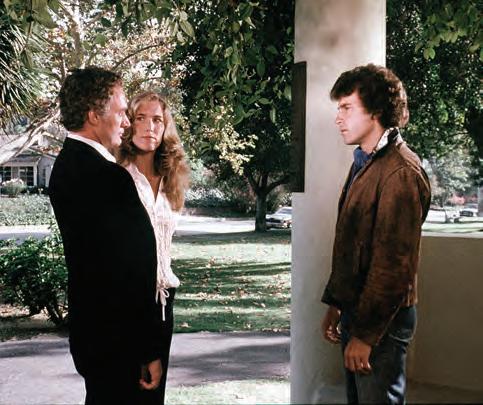
16 Tracy Swope Avildsen '70
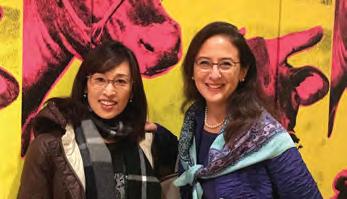
18 Yoshiko Kobata '85 and Anika Nakazawa DeLaney '85
momentum is possibility embodied
Heartfelt greetings from Dobbs Ferry,
How are you doing with the pace of these times?
I’m finding it kind of head-spinning!
Pace differs from “momentum,” and in this issue of The Bulletin, we focus on creating momentum that is within our control, rather than remaining at the mercy of the larger pace of the world around us.
Momentum is in our nature as living, growing human beings. “ ”
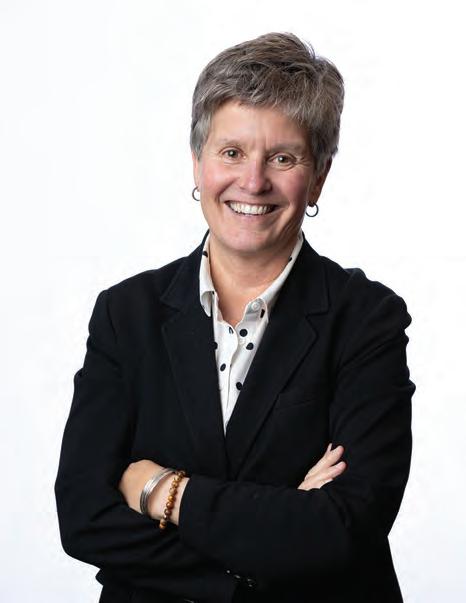
A Message from LAURA DANFORTH
Momentum is not the same as pace or speed — it’s not about how fast we move, how quickly we reach a specific goal. Often, it begins quietly, building in small, consistent choices: showing up, recalibrating, staying with something even when progress seems halted or uneven. Over time, our choices gather force, shaping not only what we accomplish but who we become.
At Masters, we see momentum building when students take what they have learned in the classroom and apply it in another class — or in rehearsal or in team practice, carrying lessons from one space into another. Momentum can be sparked by the generative energy of a conversation that continues long after the bell rings, the persistence to return to a problem not yet solved, the courage to step into something unfamiliar. It arises not from constant intensity, but sustained engagement, and is, in its truest sense, living “with thy might.”
Momentum is possibility embodied: Where we are now is not fixed. Through effort, curiosity and persistence we set off on astonishing journeys that are our own. In the stories that follow, we see how momentum has formed in the lives of several members of the Masters community.
We share these stories to remind us all that momentum is about becoming. Momentum is in our nature as living, growing human beings.
Warmly,
Laura Danforth Head of School
FINDING HIS STRIDE
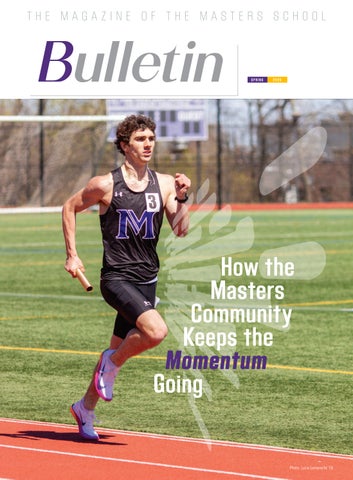
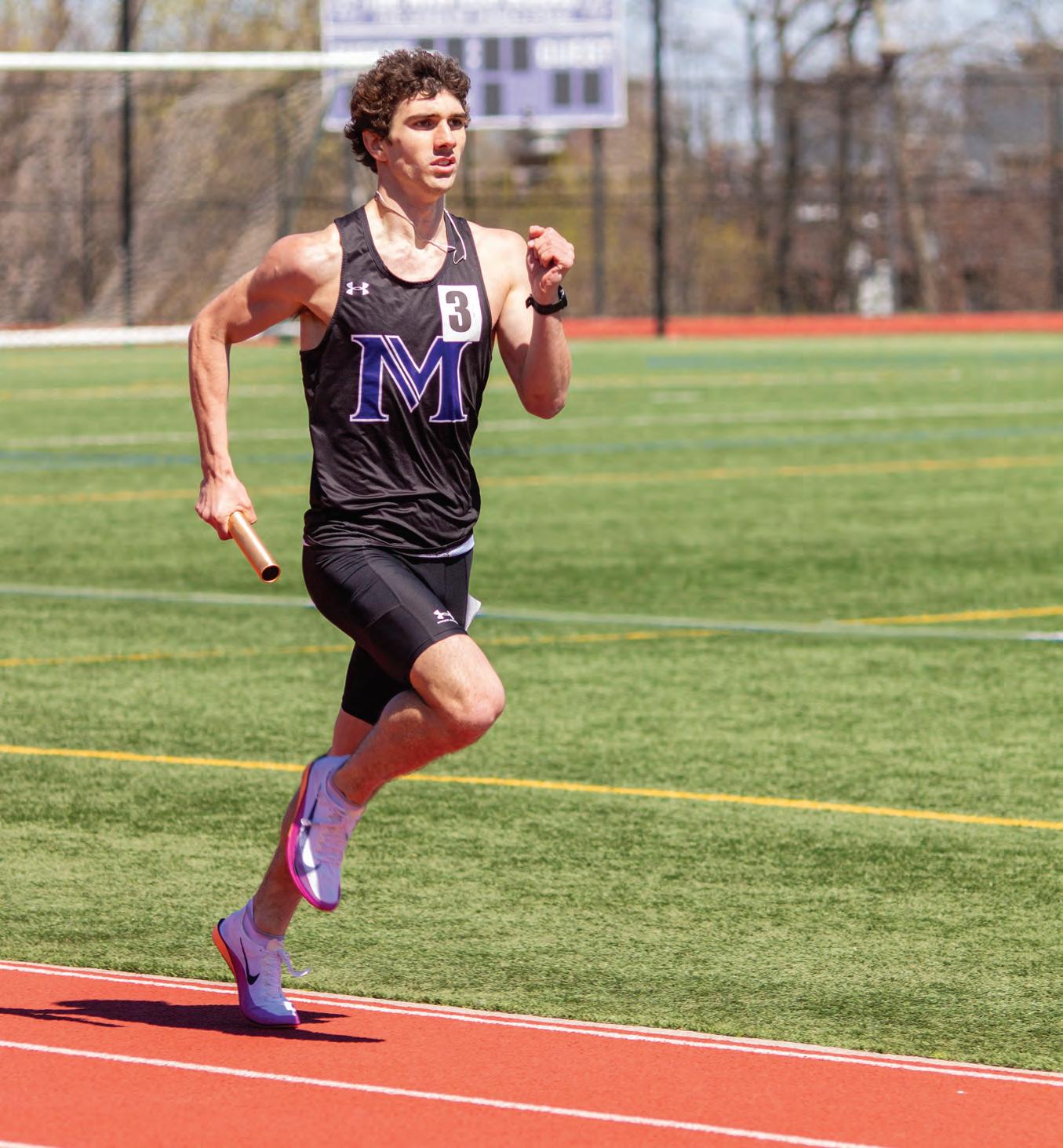
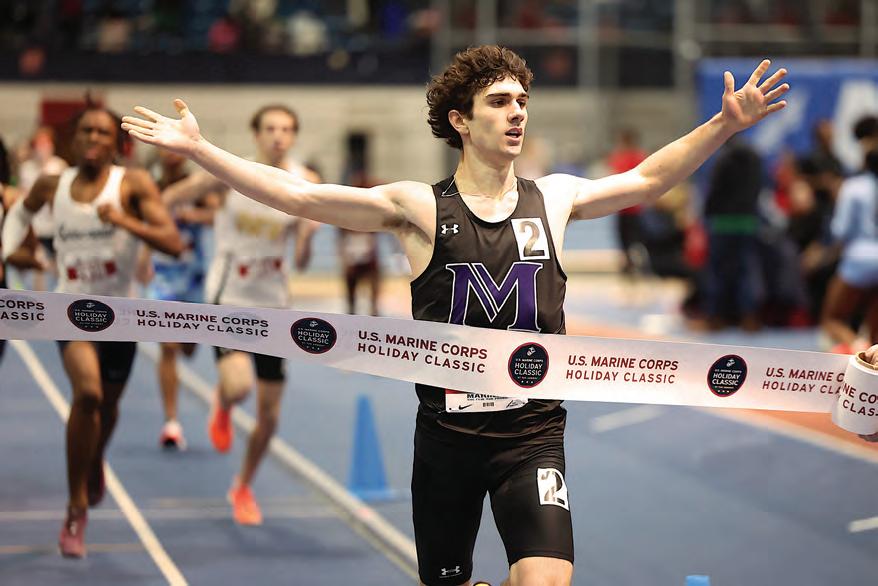
On the track, Henry Frasca’27 moves with remarkable speed and precision.
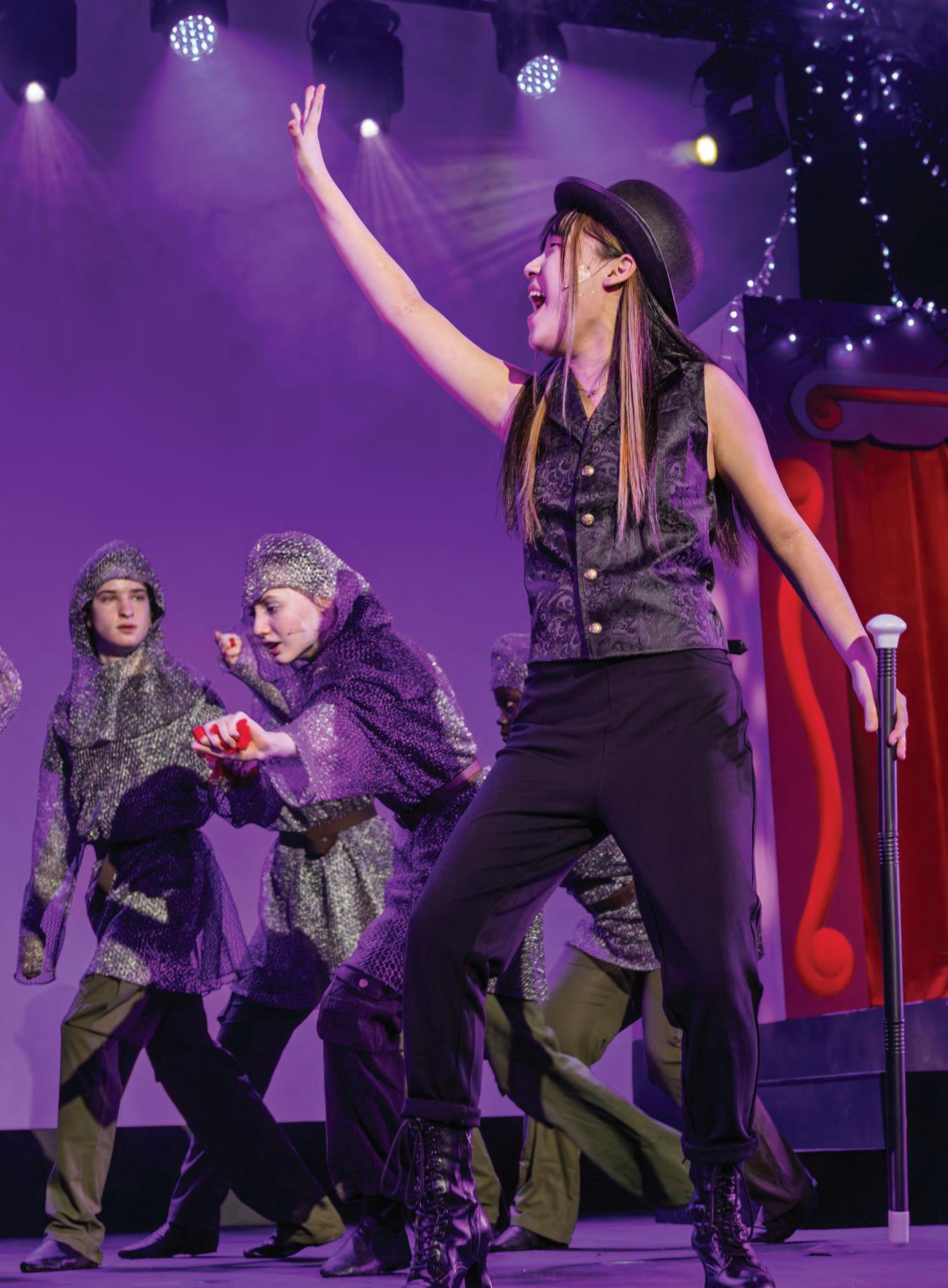
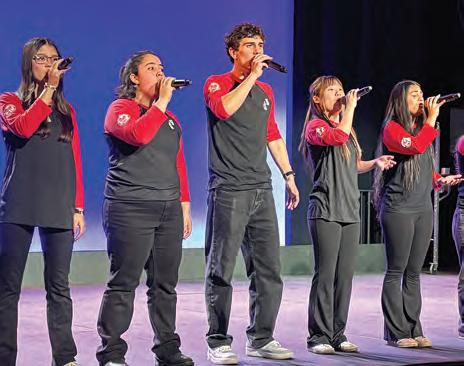
Off the track and on the stage, he slows down, blending his voice with his peers in Dobbs 16, the School’s a cappella group. The combination might seem unlikely, but for Frasca, the two pursuits are closely connected: both demand discipline, vulnerability and a willingness to push past discomfort.
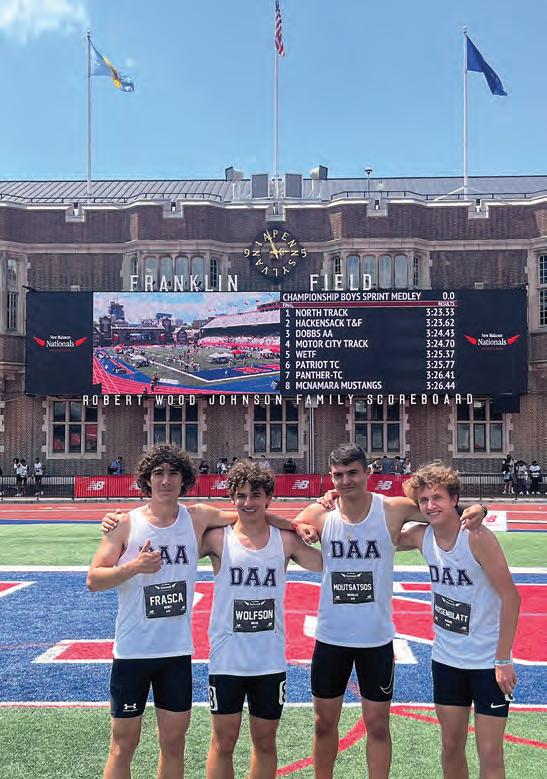
Frasca’s achievements on the track are remarkable. Last summer, he ran a personal best of 1:50.88 in the 800 meters, which ranked him the fourth-fastest rising junior in the country at the time. At The New Balance Nationals Outdoor Track & Field Championship in June 2025, his 1:51 anchor leg on the sprint medley relay helped secure a third-place finish and All-American honors for the team.
Track coach and upper school math teacher Ian Mook said Frasca’s mindset stands out as much as his times: “He is grateful to his teammates and coaches for helping him be his best, and he approaches each competition with joy and appreciation for the act of competition.”
At the New Balance Nationals in Philadelphia a year ago, Henry Frasca '27, Brian Wolfson '25, Nick Moutsatsos '25 and Mason Rosenblatt '27 (left to right) finished third in the country in the outdoor sprint medley.
Photo: John Nepolitan
Don't limit yourself to just one path. Find two things that contrast each other. ” “
This year, Frasca owns the fastest 600-meter time in New York State — 1:19.95, which ranks sixth nationally — and he holds school records in the 600, 800 and 1,000 meters, along with the 4x100 relay, 4x400 relay and sprint medley relay. He was one of just six athletes in the country selected to compete in the junior boys 600-meter race at the prestigious Millrose Games in February.
Frasca is modest about his accolades: “When I think of all the medals I’ve gotten, even the plastic ones (from middle school), there isn’t really one that shines brighter than the rest. At the end of the day, they’re all just medals.”
What matters most to him is the process and his dedication. “I don’t think I’m better than anyone else just because I can run around a circle faster than someone,” he said. “Honestly, it’s more about the fact that people can see that I can dedicate myself to something.”
Frasca admits his relationship with running is complicated. “Running is a love-hate,” he said. “It becomes an addicting routine. In a good way, you’re staying healthy and running every day. But in a bad way, every day I don’t run, I feel sick and slow.”
As a middle school student with asthma, he found that running wasn’t always easy. A turning point came unexpectedly in eighth grade, when an older student athlete stopped him after a race and suggested he join the track team.
“Even just that little push was enough,” Frasca recalled. “Sometimes you just need someone you don’t know to say, ‘Wow.’”
For Frasca, different parts of his life accelerate at different times. In winter, when the competitive season slows, academic momentum often builds instead. During track season, his energy shifts again.
That sense of rhythm extends beyond the track.
For the past eight years, Frasca has been singing in the car with his mother on the drive to school. Songs like “Viva La Vida” by Coldplay played so often, he joked that he could barely listen to them now.
But singing in the car is one thing. Performing is another. Joining Dobbs 16 pushed him into new territory.
“I think everyone should have in their life some form of art, whether it be singing, painting, dancing,” he said. “In art, everyone’s vulnerable. Your expression is different, and you have to be vulnerable to how people see you.”
Standing onstage and singing in front of an audience, he admitted, can be nerve-racking, but in a different way than running.
“In Dobbs 16, you’re blending together,” Frasca explained. “We’re supposed to become one big organism rather than each individual person.” Track, however, is intensely individual. “My heart beats the fastest before a race. You’re not looking at anyone. You’re chasing people down. But before I go onstage, I just look at my friends.”
That contrast is why he values doing both. His advice to younger students reflects that mindset: Don’t limit yourself to just one path. “Find two things that contrast each other,” he said. “For me, it’s sports and art.”
Being involved in academics, athletics and music isn’t always easy. “You don’t balance it,” he said. “They’re never at the same level of interest. When one is high, another is low.”
But that constant movement is part of what keeps him motivated. At Masters, he says, that environment is possible because students are encouraged to pursue their own paths while still learning together.
Frasca is now beginning to consider whether track could play a role in his future. “I have no clue what college is going to be like and how school and track are going to be together in college,” he said. “But I’m just crossing my fingers that I’m able to do what I'm doing here, but just do it more. I want to just keep doing what I love.”
Dobbs 16 Director Jen Carnevale said that along with the group’s vocal percussionist, “Henry’s bass line is the heartbeat of Dobbs 16. Unsurprisingly, his sense of timing and groove is embodied and steady. His attention to detail musically conveys a commitment to excellence that uses past experience to build on momentum and leap forward.”
The Next Chap ter of Science Resear ch
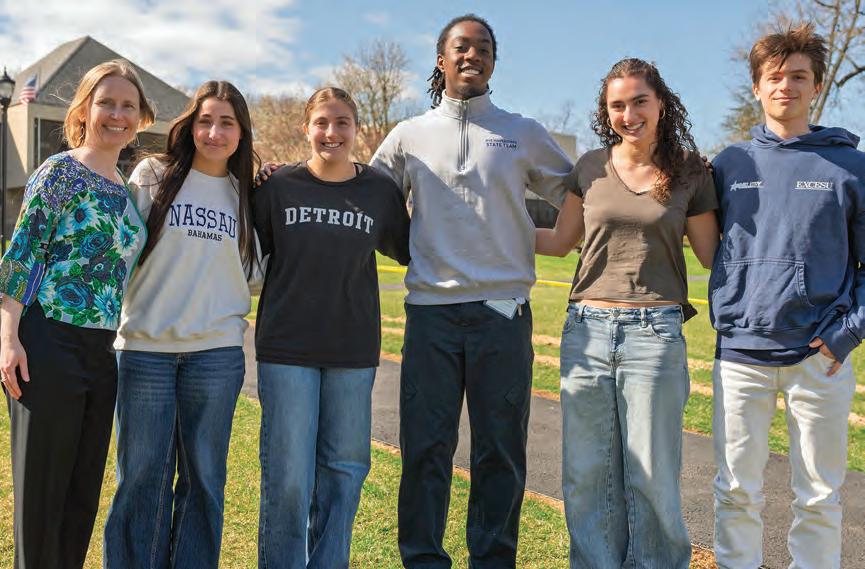
For five members of the Class of 2026, the path into science research began with a moment of curiosity and grew into a com mitment that has gained momentum beyond the classroom.
For Mia Steinwurtzel, it was the first time she held a human brain.
Nico Khoury-Levy
Alex Pinnock
Ella Shapiro
Mia Steinwurtzel
“Seeing it up close and realizing that this small organ once controlled someone’s thoughts, movement and identity was incredible,” she explained. “That moment in a pre-college neuroscience class at Columbia University made me curious about how the brain develops and what can affect it early in life. From then on, I knew I wanted to explore neuroscience and research questions about development and health.”
Viva Topper-Kroog
That curiosity has since evolved into focused scientific inquiry. Steinwurtzel is now studying early development through a mouse model. “Using a mouse model with reduced placental cholesterol, I analyzed metabolic data such as oxygen consumption, energy expenditure and food intake,” she said. “I found that lower placental cholesterol altered metabolism in a sex-specific way, with male mice showing reduced metabolism and higher body mass, while females showed signs of metabolic compensation.”
For Nico Khoury-Levy, the connection between curiosity and experimentation took place in a different setting. He recalled being in his grandmother’s kitchen in Zimbabwe, crushing Goldfish crackers into flour to bake a cake. “I’ve been cooking since I could walk,” Khoury-Levy said. “The kitchen was my first lab, and from there I took that passion for experimental work and for testing things out and tinkering, and I applied that to my work in the lab now, and that's what drove me to go into science.”
Viva Topper-Kroog and Nico Khoury-Levy
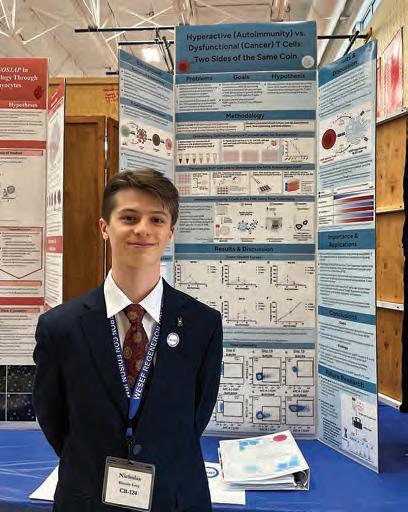
In March, Khoury-Levy was named a finalist in the prestigious International Science & Engineering Fair (ISEF) for his cellular and molecular biology project. Now working with mentors at Regeneron Pharmaceuticals, he is investigating what drives divergent T-cell fates. “T cells lose their ability to kill in cancer due to constant stimulation but become overactive in autoimmune diseases despite that same stimulation. My project investigates whether or not we can harness the drivers of either fate to reverse the other,” he explained.
Not every path into research begins with a single defining moment. “I think I’ve been doing science research for years, even before the actual class,” Alex Pinnock said.
An avid birder, Pinnock is now studying evolutionary patterns in birds with Dr. Michael Sorenson at Boston University. “My research project is about the relative evolutionary rate of a brood parasitic species of bird compared to its closest non-parasitic relatives,” Pinnock explained. “This is the second phase of a project that I started last year, where I
looked at mitochondrial genes, and this year I’m looking at nuclear genes.”
For Ella Shapiro, a turning point came when her research extended beyond the lab and into the broader scientific community. When she learned she would be listed as an author on a scientific publication, it reshaped her understanding of research. “That moment showed me the immense generosity and collaboration that exists within the scientific field,” she said. “This also helped me to recognize the true impact my work would have on scientific literature and further studies in the future.”
Shapiro’s research at the Ratan Lab at the Burke Neurological Institute investigates a potential new use for an existing FDAapproved drug to prevent ferroptosis, a form of cell death, after a hemorrhagic stroke. But just as important as the science has been the process. “I’ve learned that it is OK to make mistakes, and when mistakes do occur, move forward and learn from them,” she said.
A similar sense of growth through experience influenced Viva Topper-Kroog’s outlook. Last summer at Regeneron Pharmaceuticals, she conducted a four-hour experiment on her own. “It was the first time I felt like a real scientist,” she said. “It was incredibly rewarding to be trusted and complete the experiment independently. Even more exciting, the results turned out great. That experience showed me that even when experiments are long, tedious and nerve-racking, I am capable of doing them successfully.” Her current research focuses
on improving and optimizing CAR T-cell therapy, an alternative cancer treatment to the extremely invasive chemotherapy, so that tumor cells can be better tracked and killed.
But the defining moments in their research are not always the results — they’re often the stretches in between.
“It could feel like that momentum was slowing down,” Pinnock said. “But once I was able to step back and see what all the data meant and look deeply into all the different methods and figures I compiled, it started building again, faster and faster.”
Steinwurtzel experienced that same shift. “Seeing the results finally appear visually on the graph made the project feel real,” she said. “That experience made me excited to keep analyzing the data and pushing the project forward.”
Khoury-Levy observed that progress is something you build deliberately: “Action comes before motivation. You have to start doing the work, and then the momentum follows.”
That understanding is reinforced through the day-to-day realities of research. “Research rarely works perfectly the first time, so I learned how important it is to be patient, troubleshoot problems and keep asking questions,” Steinwurtzel said. “Coding, specifically, taught me to see challenges as part of progress, and it’s something I’ll bring with me into future labs and research experiences.”
Just as important is the role of mentorship and community in sustaining the work. Pinnock credits both the Science Research program, led by Dr. Kristina Gremski, and his AP Biology class with Elisabeth Merrill for deepening
CONTINUED >>>
Nico Khoury-Levy ’26 presents his research project at this year’s Regeneron Westchester Science and Engineering Fair.
PHOTO OPPOSITE PAGE: (l-r) Dr. Kristina Gremski, Ella Shapiro, Mia Steinwurtzel, Alex Pinnock,
The Next Chapter of Science Research
his interest in the subject. “This class elevated my interest in biology to a whole new level by introducing me to possibilities that I didn’t even realize were possible in the field of biology,” he reflected.
Shapiro echoed that sentiment: “Dr. Gremski has played a critical role in my journey. She consistently encouraged me to keep working hard and moving forward, even when there are setbacks. I had Mr. Young as my chemistry teacher for two years in a row. He taught me an immense amount of life skills and knowledge.”
Topper-Kroog agreed, sharing: “Being surrounded by people who are just as excited about science as I am makes the experience even more meaningful. Listening to other students present their work and seeing a project that someone has poured so much passion, effort, time and dedication into is incredibly motivating.”
Although these seniors are taking their high school science experiences to different college campuses, they remain united with a shared sense of purpose.
Khoury-Levy, who is headed to Cornell in the fall to study biomedical engineering, said, “I’m building my domain-specific knowledge and skill set so that whatever it is I do in the future with biomedical engineering and research, I’ll have technical expertise, and hopefully I’ll also be taking classes in banking and economics to round myself out as someone who can dive into the biotech or business side of things if I want to.”
Pinnock intends to major in biological engineering at Massachusetts Institute of Technology, where he wants “to do things that help bring new innovations in the field of biology and biological sciences in ways that help both the environment and ecology, and also humanity and society.”
After a gap year, Steinwurtzel plans to pursue neuroscience on a pre-med track at Washington University, with the goal of becoming a physician-researcher. “I’m especially interested in understanding how early development, including factors like gestational time and prenatal nutrition, influences brain development and long-term health,” she said.
Shapiro will also attend Washington University in St. Louis to study neuroscience on the pre-med track, with hopes of combining clinical practice and research in her future career. “Over the years, reading about the amazing work that is being done around the world inspired me. I was also moved by how little we know about our brains. I hope to play a role in these discoveries and help to transform how we understand the powerful abilities of our brains,” Shapiro said.
Topper-Kroog’s journey will continue at Wesleyan University, where she will study psychology and neuroscience. “Exploring both fields will allow me to better understand the connection between the brain and behavior while working toward a career focused on helping others.”
Listening to other students present their work and seeing a project that someone has poured so much passion, effort, time and dedication into is incredibly motivating. ” “
Viva Topper-Kroog ’26
Eleanor Dundas ’23
Eleanor Dundas'23
Michael Stoica'25
Aaron Weinberg'25
Building on a Scientific Curiosity That Began at Masters
As a fifth grader riding the school bus to Masters, Eleanor Dundas ’23 passed the time listening to Radiolab, the storytelling-driven science program on National Public Radio. She had no idea that her dad’s podcast suggestion would not only make the commute go faster, it would also ignite a curiosity that continues to shape her path as a biomedical engineering student at Johns Hopkins University.
“I would listen to these science stories and hear about the new, groundbreaking work that was happening across so many different scientific fields,” Dundas recalled. “Going into high school, I think it set me up well to have an understanding of a lot of different fields.”
Dundas credits Elisabeth Merrill, upper school science teacher, and Dr. Kristina Gremski, the Science Research program director at Masters, with providing her with the tools to pursue her passion.
“The program definitely taught me a lot of what to look for in scientific fields, especially learning how to read
scientific papers so early was very helpful when I came to college and doing research,” Dundas said. “That along with my first research experience in high school in the Ratan Lab (under former Masters board member Dr. Raj Ratan P’22, ’24, at Burke Neurological Institute) where I was doing cell research in neuroscience.”
Within the field of biomedical engineering, Dundas is focusing on medical devices, with a minor in robotics. “What I’m really interested in is how different machines
Building on a Scientific Curiosity That Began at Masters continued
can interact with the body — implantable devices, like a pacemaker, but I’m also very interested in surgical robotics,” she explained.
Dundas is part of a design team developing a device for early diagnosis of Parkinson’s disease by reading electrical signals in the brain. “I love working on health care solutions that I know will have a big impact on people's lives,” she said. She plans to work for a med tech company before graduate school.
That same real-world experience that Dundas got at Masters also shaped Aaron Weinberg ’25. Now studying biomedical engineering on the pre-med track at Cornell University, Weinberg combines his love of biology with engineering. “I was always very interested in biology, and that definitely stemmed from Dr. Gremski and science research and the work I did in different labs in high school,” he reflected. “I also liked engineering and problem solving, so the engineering courses and computer science curriculum definitely drove that. Dr. Boyer in AP Physics always challenged us with very hard problems — ones you maybe weren’t supposed to fully solve — but working toward them made me realize I wanted to pursue engineering.”
At Cornell, Weinberg has immersed himself in hands-on research. He recently joined the Jiang Lab focused on biomaterials and drug delivery systems, and developing innovative ways to make therapies and medical devices more compatible with the human body. He is also part of a project team developing a biosensor related to Parkinson’s treatment, which he will present at an international competition.
Although Weinberg is just finishing his first year of college, he is already looking ahead, considering an M.D., a Ph.D. or a combined program after graduation, with the longterm goal of working in biotechnology or pharmaceuticals to translate research into clinical applications.
For Weinberg, maintaining momentum isn’t just about individual drive, it’s about community. He remains connected to his former teachers at Masters and recently returned to campus to support current Science Research students, offering feedback on their practice presentations for the New York State Science and Engineering Fair, where he earned first-place honors in the biomedical and health sciences category in 2025.
“Lean on the teachers you have,” he advised current students. “And also your friends. Especially at a big school, your peers can be incredible resources — they can help you find opportunities, and even jobs.”
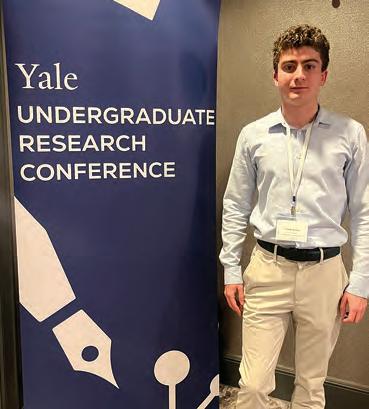
Michael Stoica ’25 also traces his momentum to Masters. When he arrived this fall at Yale University, he headed straight to the lab. “I got involved in research right off the bat,” he said, joining a plant biology lab studying the genetics behind citrus thorn development. He presented his findings at the Yale Undergraduate Research Conference, meeting students from around the world and earning recognition as one of the highest-scoring Yale presenters.
“When I started out this fall, I realized just how much my high school research gave me a step up in college,” Stoica said. “My previous exposure to various research techniques helped me understand the material on a deeper level than if I had been seeing it for the first time.”
Stoica is pursuing molecular biophysics and biochemistry in a combined B.S./M.S. program. “I find this niche field exciting because it’s the intersection of biology with mathematical and computational modeling, which I think will shape the future of biotech,” he said.
At the same time, he’s also completing a Spanish language certificate. “I’m looking to improve my Spanish fluency because I think science and language are interconnected,” he said. “The way we communicate ideas affects how our audiences understand them.”
Michael Stoica ’25
Stoica attributes his passion for deep understanding of natural things and his trajectory to his first Masters research project with Dr. Gremski — an ecological study of ash trees infestations. “What mattered was being attentive to the world around me, seeing a problem with my own eyes, and being guided through Dr. Gremski’s mentorship to tackle the problem,” Stoica said.
This summer, he will be branching into computational biology research at the Yale School of Medicine, studying wave patterns at the cellular membrane. He’s also working on a public health venture aimed at improving health care access for incarcerated populations, tutoring New Haven high school students and volunteering in hospice care. “I’m still exploring,” he said. “I’m moving in multiple directions within the biosciences and health fields. I don’t know exactly where it will lead yet, but I’m curious to see where I’ll end up.”
To current Masters students who are navigating their own research journeys, Stoica offers this advice: “Redefine what you think failure is. When you approach a project with the understanding that setbacks are an inevitable part of the research process, you become more resilient. And that’s what keeps you moving forward.”
Aaron Weinberg ’25
GAINING
Sophia Tsoukalas ’22 always enjoyed math and science, but when she arrived at Masters her junior year, she wasn’t planning to pursue studies in physics.
Then she ended up in AP Physics C.
“That class completely shifted my perspective,” Tsoukalas said. “It was the first time I felt intellectually challenged in a way that wasn’t about memorization, but about truly understanding how and why things work. That experience sparked the momentum that ultimately led me to pursue physics more seriously.”
Tsoukalas described her Masters education as “both challenging and formative. I was pushed academically in a way that helped me grow not just as a student, but as a thinker.”
She carried that momentum to UCLA, where she will graduate with a physics major and data science minor.
“At UCLA, I’ve had the opportunity to dive deeply into both experimental and
MOMENTUM:
How
Physics (and a Highline) Taught Sophia Tsoukalas ’22 to Trust the Process
computational physics,” she said. “UCLA has expanded my perspective on what it means to do science, exposing me to research, interdisciplinary collaboration and applications of physics beyond the classroom.”
What began as curiosity about forces and motion evolved into something broader — a way of seeing the world. “Studying physics has made me more aware of the underlying structure of everyday experiences,” Tsoukalas explained. “Physics has trained me to think in terms of systems: identifying what’s conserved, what’s changing, and how different pieces interact.”
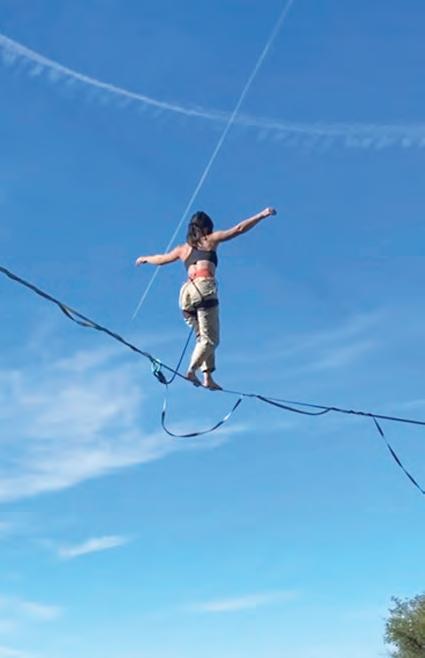
That mindset has taken Tsoukalas far beyond the classroom. She discovered highlining — walking a narrow webbing line suspended at extreme heights — and found in it an unexpected parallel of the scientific process.
“Both require you to break down something complex into manageable pieces and trust the process you've built,” she said. “In physics, you rely on the frameworks and assumptions
you’ve developed. In highlining, you trust your rigging, your technique and your ability to stay present.”
After graduating this spring, Tsoukalas will head to San Francisco to work in the tech industry on frontier machine learning problems, focusing on building systems that engage with complex data in meaningful ways. “I’m excited to apply the problemsolving mindset I developed through physics to real-world challenges,” she said.
The path from a Masters physics class to the tech world might seem like a leap, but Tsoukalas sees it as a natural continuation. “Choosing physics as a major was less of a decision and more of an acknowledgment that this was what I wanted to keep exploring,” she said.
For students still searching for their own spark, her advice is simple: “Lean into your curiosity. Momentum often comes from small steps taken consistently, not from having everything figured out at once.”
fast forward
Since graduating from Masters, Alessandra Ghini ’87 has been in constant motion.
As a marketer and strategist, Ghini generates buzz and elevates branding for some of the world’s leading companies — all while fueling the steady, upward trajectory of her career.
At Apple, Ghini was part of the team that introduced the iPod mini, a campaign that transformed a niche portable music player into a global cultural phenomenon and fueled the turnaround that returned Apple to a position of market leadership. For Starbucks’ 40th anniversary, Ghini spearheaded the repositioning of its brand identity, which included the debut of an updated logo. And decades after Jeff Spicoli skateboarded through “Fast Times at Ridgemont High” in his iconic checkerboard slip-on sneakers, Ghini propelled Vans to a record-breaking campaign for the brand’s 50th anniversary.
Ghini began her career working in marketing for various tech companies at a time when the internet was an emerging phenomenon.
“I’m not someone who says, ‘I’ll give it 10%, or I’ll dip my toe into it,’” Ghini said. “Coming up in the tech industry as a woman, if you didn’t give 120% as a baseline, you weren’t going to get anywhere. So, I’ve always done that — and I learned that at The Masters School.”
Coming up in the tech industry as a woman, if you didn't give 120% as a baseline, you weren't going to get anywhere. So, I've always done that — and I learned that at The Masters School.
As a boarding student on a full scholarship, Ghini established her signature pace early, approaching her time at Masters with a full-throttle energy that would be a through line of her professional career.
“Every year I had to apply to secure that scholarship,” Ghini said. “Trust me: I loved the place so much I didn’t want to lose it, so it meant a great deal to me to resecure it. I would have been crushed if I had lost it because I knew the School was opening up a world of wonders for me.”
To fully inhabit that world, Ghini dove into campus life headfirst: She served as co-editor of the yearbook, sang in the a cappella group Dobbs 16 and played on the lacrosse team. She also modeled for art classes, took on roles in school musicals, and enrolled in so many AP classes that she had enough credits to enter the University of California, Santa Barbara as a sophomore.
“What I truly loved about Masters was the freedom to explore every interest,” she said. “I could take all these AP classes, and I could also be in the musical, play sports, learn photography and work on the yearbook. I was — admittedly — overly active. I didn’t know it at the time, but looking back, I guess I wanted to be a Renaissance woman!”
That same intellectual vitality serves as the cornerstone of Ghini’s work today as a founding partner at GO Strategy. She advises companies, including Starbucks, Vans, Old Navy, Autodesk, FreshDirect and Burton, on their brand identity and strategy. Complementing this work, she serves as an executive coach, guiding individuals to unlock their full leadership potential.
“One of the reasons I moved into executive coaching was to give back, particularly to women,” she said. “My primary focus is supporting women and members of other underrepresented communities who have historically lacked an equal voice. That [commitment] was truly birthed during my years at The Masters School.”
Ghini also dedicates time to offering pro bono coaching to about five female college graduates each year who, like her, relied on scholarships and financial aid to navigate their education. “When I was getting out of college, my family didn’t have the connections to help me network,” she said. “So now I work with young women who don’t have family connections, and I try to be those connections for them.”
This commitment to paying it forward is rooted in Ghini’s time at Masters, where the student population fundamentally reshaped her understanding of what it means to be “diverse.”
“I learned that diversity isn't just about gender or race,” she said. “I felt ‘diverse’ simply because my financial background was so different from many of the other students.” Ghini noted that her class brought together students from a wide range of countries, which she described as “incredible; even though we were all the same gender, there was immense value [in the class makeup]. I loved hearing the different perspectives,” she said. “In her current work, she said, “I know those diverse viewpoints are crucial to brainstorming and idea generation — they always make the end product better.”
Throughout a career marked by tenacity and an unwavering commitment to excellence, Ghini attributes her ability to keep moving forward to one driving force: curiosity.
“I don’t believe that you can’t teach an old dog new tricks,” she said. “I believe if you don't learn new tricks, you become an old dog. Curiosity allows you to have an open mindset, it allows you to hear other perspectives, it keeps you learning, it keeps you unafraid of trying something and failing, or trying something and not liking it, or looking for something else. I have always had a huge appetite for learning and for curiosity, and Masters let that curiosity flourish with reckless abandon, much to my joy. And that is where momentum comes from.”
The Evolution of an Entrepreneur
For John Jiang ’19, the path to entrepreneurship began with a spark in a science class and gained momentum through a series of unexpected turns.
Jiang has innumerable fond memories from his time as a boarding student at Masters — spending snow days with friends and eating sushi in the dining hall after soccer practice are among his favorites.
But a class he took in his senior year had the most lasting impact: AP Biology with Elisabeth Merrill.
“I’ve always been pretty good with the sciences,” Jiang said. “AP Biology really expanded my interest in the life sciences and biology.”
The class set him on a clear course. He headed to Dickinson College to study neuroscience, assuming this would eventually lead to a white coat and a stethoscope.
“Neuroscience has that humanities and sociology aspect to it that I really enjoyed,” Jiang reflected. “I really thought I would be on the pre-med track and go to med school.”
Two seismic events changed everything.
The COVID-19 pandemic hit in early 2020, when Jiang was a freshman at Dickinson. He didn’t return to campus until his junior year, spending much of that time studying remotely; watching communications around public health regularly shift, sometimes in significant and contradictory ways; and following the increasing number of cases and fatalities on dashboards each day.
Jiang said, “That really put in perspective that there are so many other bigger issues in health care” that he felt he wouldn’t be able to address as a clinician.
The second turning point came in November 2022 with the launch of ChatGPT. Jiang was studying for the MCAT and was disheartened by how capable artificial intelligence was at processing information.
“Those events made me realize that I wanted to pivot but still do something health-related,” Jiang said. “I wasn’t really sure what that would look like, so that’s why I decided to go to Columbia to get my master’s in public health.
“I got to really experience so much more in the field of health care and public health in general, beyond just clinical care — everything from policy to business to social determinants of health to the nonprofit world.”
He joined the health care team of OCA Ventures, an earlystage venture capital firm, gaining experience in early stage investing and entrepreneurship. He also led due diligence for investment in Petal Surgical, a next-generation noninvasive surgical medical device company.
Then a federal policy gave him the inspiration he needed to start his own company. Congress passed the One Big Beautiful Bill Act (P.L.119-21), expanding the qualifications for Health Savings Accounts (HSAs) to an additional 10 million Americans.
“HSAs are basically a 401(k) for your health care,” Jiang said. “They’re even more powerful because of their triple tax advantage. And today, more than 60 million Americans have these accounts, but less than 9 percent of people are investing that money. People treat it like a checking account, when it could be something much more: a powerful tool to help them build a safety net and wealth for their future needs. An HSA is such an amazing account that's underutilized and kind of misunderstood as well.”
Recognizing the positive impact he could have, Jiang channeled his desire to make a difference into building something new: Saga Health, an AI-powered all-in-one HSA platform designed to help users invest funds, access services and track health receipts.
Jiang imagines a world where everyone has the financial means to take care of their own health care, free from the worry of insurance. “That would be a great future to live in,” he said.
Jiang (first row, right) enjoyed the social and academic aspects of his time at Masters.
Currently, Jiang and his partner at Saga Health are working on an MVP, a minimum viable product, which in this case would be a mobile app that users can download or companies can offer as part of their benefits plan. In parallel, they’re working to build a large group of individual users and smalland mid-size companies to test the product and serve as pilot partners when it launches.
The challenges in starting Saga Health have been myriad. First, Jiang said, was “figuring out what to do. I have the idea, but I don’t know the exact steps to get there. And then learning everything: registering a company, how to file taxes for it, and how to reach out to investors, reach out to partners, and determining which ones to prioritize. The list goes on.”
But he hasn’t been deterred.
The most rewarding moments that have kept Jiang motivated? “The most powerful thing is when people realize that what you’re building is something that also matters to them and can make an impact,” he said. “And then also just knowing that what you’re doing is something that is aligned with your values.”
Through it all, he has also found inspiration in five simple words: Do It With Thy Might.
“It’s trying to figure out and find ways that make the most impact,” he said. “It’s something I live by, because if you don’t give it your all, is it even worth it?”
The most powerful thing is when people realize that what you're building is something that also matters to them and can make an impact. “ ”
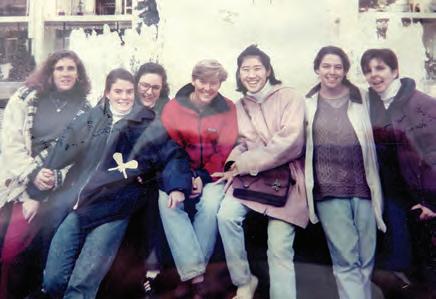
The Class of 1970: Tracy Swope Avildsen (second row, second from the left) stands next to Margaret “Nini” Swift Seaman (third from the left), who remains a close friend to this day.
UNSTOPPABLE
Tracy Swope makes a memorable appearance in the “I Love You, Rosey Malone” episode of Starsky & Hutch with actors John Ryan (left) and Paul Michael Glaser. Photo by ABC Photo Archives/Disney General Entertainment Content via Getty Images.
From summer stock to soap operas, sitcoms to the silver screen, Tracy Swope Avildsen ’70 has seamlessly changed lanes to maintain a remarkable momentum.
Throughout her five-decade-plus career, she’s been catching green lights and shows no signs of slowing down.
“I’ve always loved working,” Avildsen said from her home in California. “Every day is a new adventure, so my attitude is: Make the most of it and ‘Do it with thy might.’ And I got a lot of that from The Masters School.”
After Masters, Avildsen attended the High School of Performing Arts in New York City, where she continued proving her might. Immediately following graduation, she hit the road in a production of “Forty Carats,” the smash Broadway comedy that later became a feature film.
“I was going to go to Bennington when I got a ‘bus and truck’ for ‘Forty Carats,’” she said, referring to the show’s traveling production. The detour proved to be a high-speed success — her performance earned her the Straw Hat Award for Most Promising New Actress in the 1972 season. Promoted at the time as “the Oscars for the Summer Stock Circuit,” the ceremony was a splashy affair held at Tavern on the Green.
“I received my award from Cary Grant!” Avildsen said.
While this honor all but guaranteed Avildsen a successful stage career, she swerved into a new lane: daytime drama.
On the CBS soap opera “Where the Heart Is,” Avildsen played a villainous, scheming student — a far cry from her actual experience at Masters.
“[Some of] my best friends – Margaret ‘Nini’ Swift Seaman ’70, Debbie Brown Berger ’70, Holly Tooker ’70 – are still my best friends from school,” she said. “We had so many adventures, it was a wonderful time that helped me develop into who I am as a person.”
“ ”
Because of the School, I believe you do your best, or you don't do it at all. Don't just try to do it; do it.
After the show was canceled in 1973, the creators of a new daytime drama, “Ryan’s Hope,” wrote a part specifically for her. Instead of staying the course in New York, she took a hard left and headed west, where she hit another green light: a role on the PBS Hollywood Television Theatre production of “Me,” written and directed by Gardner McKay and featuring Oscar-nominated actress Geraldine Fitzgerald and a rising star named Richard Dreyfuss. Shortly thereafter, the Manhattan skyline began to recede in the rearview mirror.
“I had been back and forth from New York to Los Angeles,” she said. “[After ‘Me’], I moved to California and booked ‘The Partridge Family’” — the popular prime-time sitcom and pop culture sensation about a musical family starring teen idol David Cassidy. In the 1974 episode “Queen for a Minute,” Avildsen plays a smart, socially conscious, popular high school basketball player and best friend to Laurie Partridge (Susan Dey) — a role much closer to her experience at Masters.
“My memories of The Masters School are just wonderful; we had the best time,” she said. “The learning, the work and the sports programs — I loved it. Although I was kind of a klutz — once on the way to cheerleading practice, I tripped and sprained my ankle. So David Cassidy actually helped me with my jump shots [on set], and I did my own stunts!”
Throughout the ’70s, Avildsen maintained a steady speed, landing more roles on the small screen, including the title character in the highly rated “Starsky & Hutch” episode “I Love You, Rosey Malone,” and guest spots on network TV mainstays such as “Love, American Style,” “Charlie’s Angels” and “Hawaii Five-O.”
By the mid-’80s, Avildsen had crossed over into movies, appearing in at least a half a dozen feature films through the end of the decade. Her projects included the rock-and-roll love story “Hard to Hold” starring Rick Springfield and the film industry satire — and Christopher Guest’s directorial debut — “The Big Picture” with Martin Short and Kevin Bacon. Along this new, busy stretch, Avildsen kept her foot on the gas, fueled by a discipline instilled during her days at Masters.
“Because of the School, I believe you do your best, or you don’t do it at all,” she said. “Don’t just try to do it; do it. And that’s what I’ve always practiced.”
In 1987, her personal and professional lives merged when she married Oscar-winning director John G. Avildsen (“Rocky,” “The Karate Kid”). They had a daughter, Bridget Avildsen, who has since followed the family “green light” into her own acting career.
After logging so many miles as a performer, Avildsen hasn’t pulled over. These days, she navigates various film and TV roles while nurturing her lifelong love of animals.
“I was always an aspiring actor, and I also wanted to be a veterinarian,” she said. “I’m about to do a movie that was written by Brett Halsey — he’s 92 now — and he wrote such a sweet story. I also rescue a lot of dogs and work at Shelter Hope Pet Shop [a nonprofit, volunteerbased organization in Thousand Oaks, California, dedicated to rescuing and rehoming animals].
I just homed a horse, and I homed a chicken and two roosters.”
With a career spanning more than half a century, what is her secret to maintaining momentum?
“Just keep growing and learning and don’t ever give up,” she said. “Every experience you have just makes you a better person. So go grab it!” she said. “Life is short. I’m not. But life is!”
For Two Alumnae, Distance Has Been No Match for Their Lifelong Bond
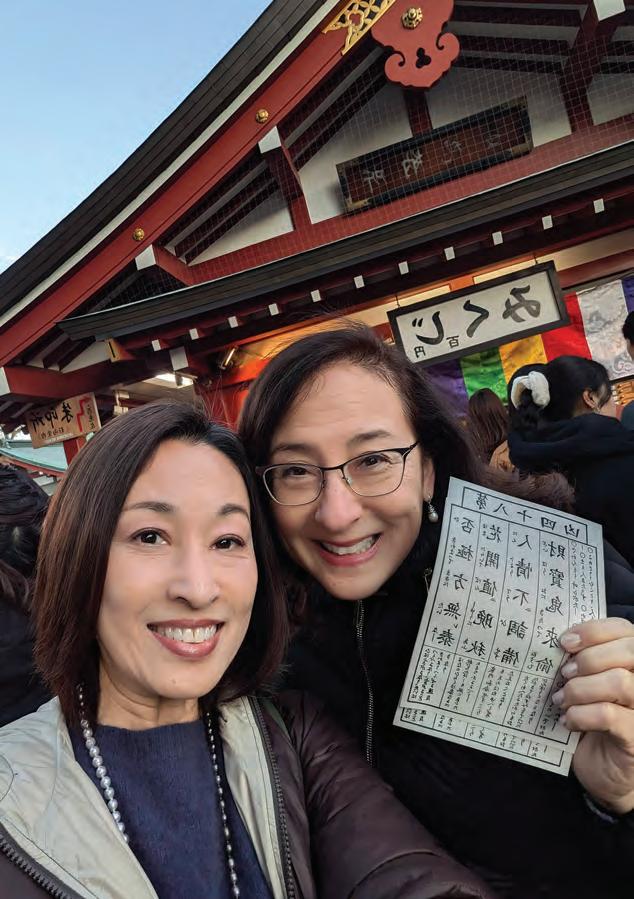
FAR RIGHT: During DeLaney’s most recent trip to Japan in 2025, the two friends had a wonderful time exploring Tokyo.
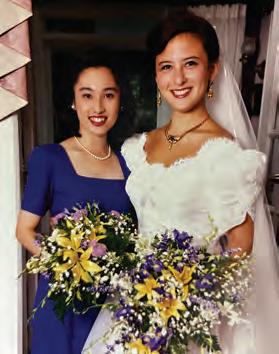
RIGHT: Kobata traveled to New York to be a bridesmaid in DeLaney’s wedding in 1992.
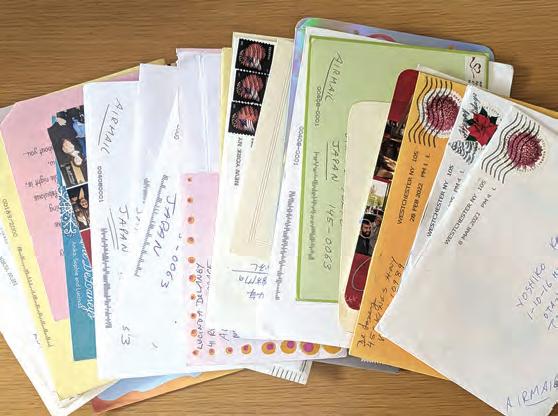
BELOW: After Kobata returned to Japan, she and DeLaney exchanged letters regularly.
Yoshiko Kobata ’85 and Aniko Nakazawa DeLaney ’85 formed a deep connection during the year and a half they shared as middle school students at Masters.
Nearly five decades later, their friendship is stronger than ever.
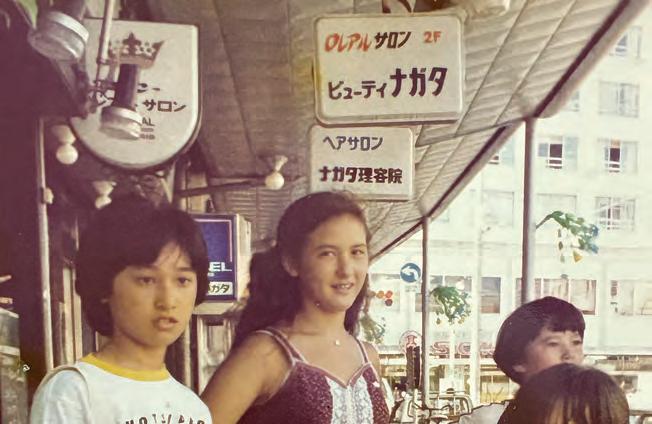
BELOW: Yoshiko and Aniko had their first reunion in Japan in 1983.
When Yoshiko Kobata ’85 joined The Masters School in seventh grade, she had lived in the United States for only one year. She spoke no English, having spent her childhood in Japan.
Then one day at Masters, she heard a name that sounded like home: Nakazawa.
A Japanese surname.
“I was hoping that she could speak Japanese, but she couldn’t,” Kobata said.
Aniko Nakazawa DeLaney ’85 grew up in Rockland County, New York, the daughter of Japanese and Hungarian immigrants. Although she didn’t speak the same language as Kobata, that didn’t stop the two from becoming fast friends in the year and a half they spent together in the Middle School.
Although they first met in class, Kobata and DeLaney grew close because their lockers in Masters Hall were near each other.
“I remember always going to my locker in the morning and getting organized,” DeLaney said. “We would plan to meet at the end of the day. It was really nice.”
DeLaney’s schedule didn’t always make it easy, though. Kobata recalled, “Aniko was always busy. She worked at the bookstore
and played viola. She didn’t even have time to have lunch, so I always went to the cafeteria and made a peanut butter and jelly sandwich and brought it to the bookstore for her.”
The two friends spent hours working together on homework in the library or on the phone at home. They supported each other, leaning in to their own abilities to help the other shine.
“I’m not very good at math,” DeLaney said, “So Yoshiko was always trying to help me with my math, which is not so English dependent.”
Kobata said, “My English was bad. I was having a hard time even doing homework. I needed someone to help me, and I chose Aniko.”
When Kobata moved back to Japan in March of eighth grade, their friendship transitioned from phone calls to airmail.
They started out as pen pals, writing to each other often (Kobata still has the letters and postcards). These days, they bridge the 6,700-mile distance between New York and Japan with FaceTime and Facebook Messenger.
As time passed, much about their lives changed. DeLaney pursued a career in marketing for financial institutions,
most recently as senior vice president of ultra-high-net-worth marketing at Bank of America; she now teaches marketing at Fordham University’s Gabelli School of Business. Kobata went into media: She currently manages corporate social responsibility at Fuji TV. Both married and raised children. One constant through the years was their friendship.
They’ve seen each other many times since Kobata returned to Japan. And when DeLaney got married in New York, Kobata was a bridesmaid. “That was really important to me,” ADeLaney shared. Kobata has kept the bridesmaid dress she wore.
They’ve met up in New York, Europe and Japan, where DeLaney’s extended family lives.
Her most recent trip to Japan, in January 2025, was the most memorable yet and further deepened their bond. Although DeLaney was there to visit family, she said, “I spent more time with Yoshiko. And I had such a wonderful time adventuring around Tokyo with such a great friend.” The two visited ancient temples, watched sumo wrestlers practice — something DeLaney had always wanted to experience — and shared traditional Japanese dishes such as yakitori and shabu-shabu.
“We did so many amazing things, we had so many adventures,” DeLaney said. “It was as if we didn’t have years without seeing each other.”
Reflecting on their lifelong friendship that has spanned decades and the globe, Kobata said, “It was very special to find each other. Aniko understands me.”
REFLECTIONS FROM A
power
for good
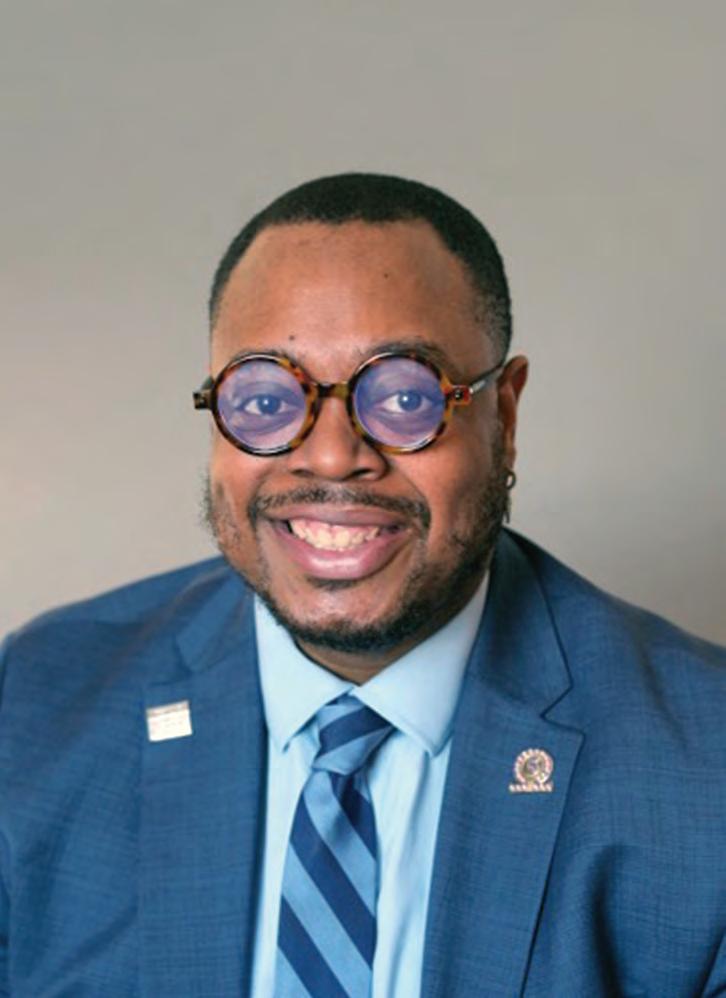
DARWIN C. BERNARDEZ ’07
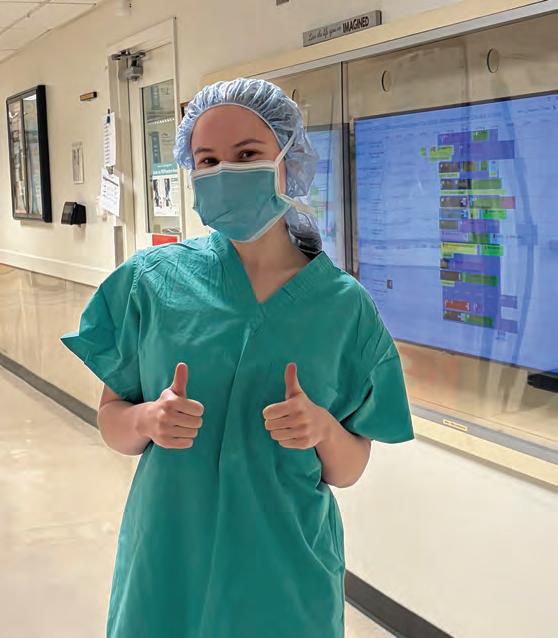
As a critical care nurse at Lincoln Hospital in the Bronx, Darwin C. Bernardez ’07 is living The Masters School’s mission: to be a power for good in the world. He is committed to improving the health of the Bronx community.
“In health care, being a power for good means advocating for patients, delivering high-quality care, and contributing to systems that improve outcomes for entire communities,” Bernardez said. “My career is dedicated to helping build a better future for the people of tomorrow, utilizing my medical knowledge.”
“ I work in a hospital that serves a low-income area in the Bronx, allowing me to impact the lives of those in need. ”
He earned a bachelor’s degree in public health from Syracuse University and a master’s in public health from Brooklyn College before changing his career path. Bernardez earned a second bachelor’s degree in nursing from Monroe University in the Bronx and became a registered nurse. He is pursuing a master’s in nursing science from Capella University.
Among his professional highlights, Bernardez has been a speaker at Vizient/AACN Nurse Residency Program Annual Conference, a Vizient Nurse Residency Program mentor, a participant in the Inaugural CUNY Nursing Educational Fellowship, and received a DAISY Award in 2023.
On the following page, he reflects on his journey from Masters to health care professional.
I went into public health and nursing because…
I grew up in East Harlem, where I witnessed firsthand how health disparities can profoundly impact lives. Those experiences became deeply personal when my grandmother passed away from complications of diabetes. That loss shaped my perspective and ultimately influenced my career path. I initially pursued public health to better understand health at a systems level — how social determinants, policy and community conditions shape outcomes. Over time, however, I realized I wanted to make a more direct impact on patient care. That realization led me to nursing. Today, my work allows me to bridge both worlds, applying a population health lens while delivering hands-on, individualized care at the bedside to the most critically ill patients.
A typical day in the ICU involves… continuous assessment, critical thinking and rapid decision-making. I manage patients with complex conditions, monitor vital parameters, titrate medications, collaborate with interdisciplinary teams and respond to emergencies. No two days are the same, and the environment requires constant vigilance and adaptability. Most importantly, I work in a hospital that serves a low-income area in the Bronx, allowing me to impact the lives of those in need.
My career has been guided by three principles… discipline, accountability and a commitment to lifelong learning. I also prioritize empathy, understanding that every patient and family is going through a significant moment in their lives. In these moments, I think of the faculty who nourished me during my transition to Masters and the culture of an independent school.
I shifted from public health to nursing because… I was driven by a desire for more direct patient interaction. While public health gave me a macro-level understanding, nursing allowed me to apply that knowledge at the bedside in real time. Overall, this shift expanded my ability to serve and directly impact the lives of those who often lack the resources.
One of the biggest challenges in my work is… managing high-acuity situations under pressure while maintaining composure and precision. Balancing professional responsibilities, continued education and fatherhood has also been demanding. I’ve handled these challenges by staying organized, seeking mentorship and maintaining a strong work ethic — all skills I developed as a teen at Masters, giving me the confidence I needed to succeed both academically and professionally.
The most rewarding moments have been… seeing critically ill patients recover and knowing I played a role in their care. Supporting families during difficult times and providing reassurance is equally meaningful. I value the opportunity to make a tangible impact on patients’ lives, the teamwork within the ICU, and the continuous learning that comes with managing complex cases.
Furthermore, it is incredibly rewarding to hear the pride in my son’s voice when he informs others that I am a critical care nurse. Thus far, I’ve had the pleasure of earning three degrees with one more pending, and each has been a milestone, given I come from a place where many aim to simply make it through the age of 21.
The best advice I’ve received is… to remain consistent and disciplined, even when progress feels slow, because small, daily improvements compound over time. That mindset was reinforced by my college counselor, Ms. Scott, who once told me, “As a minority, you will be asked to work harder to achieve your goals.” That message stayed with me. It shaped my work ethic and continues to drive me forward. I haven’t stopped working since, and I don’t plan to slow down anytime soon.
My time at Masters was… foundational in shaping both my academic discipline and character. What stands out most is the sense of community and the faculty’s genuine investment in each student’s success.
Dr. Dieck’s chemistry class remains especially impactful. She supported me through challenges as a teenager while instilling an academic drive that still guides me today.
Beyond the classroom, Masters felt like family. I remember Coach McDermott taking care of us as if we were her own, feeding us while we gathered to watch sports together. On the court with Coach Kammrath and on the baseball field with Coach Lason, where I had the honor of serving as captain of both varsity teams, I learned lessons in leadership, discipline and accountability that continue to shape me.
There were lighter moments, too — laughing through Mr. Rothenberg’s algebra lessons, starting the day with Mr. Frost at Morning Meetings, and building lifelong relationships in the dining hall. Lastly, there was nothing like living in Thompson Dorm!
My experience at Masters helped lay the foundation for my career by instilling discipline and a commitment to excellence. I continue to build on that foundation as I pursue an advanced nursing education and leadership opportunities.
I’m grateful to… the faculty members and classmates who directly impacted my experience at Masters. Thank you to my mother, siblings and Jason Butler.
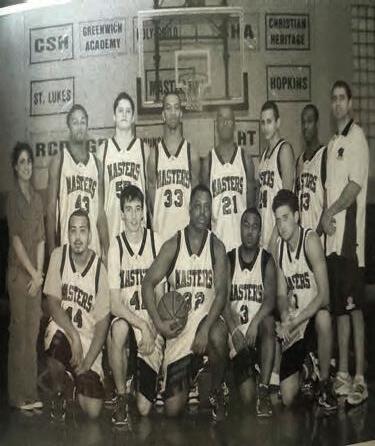
BELOW: Bernardez, front row center, was captain of the varsity boys basketball and baseball teams.
STUDENT ENTREPRENEURS PITCH BIG IDEAS AT THE DIAMOND CHALLENGE SEMIFINAL
The Masters School welcomed the next generation of innovators and entrepreneurs to campus in early March for the Diamond Challenge Pitch Round, a semifinal event of the global high school entrepreneurship competition.
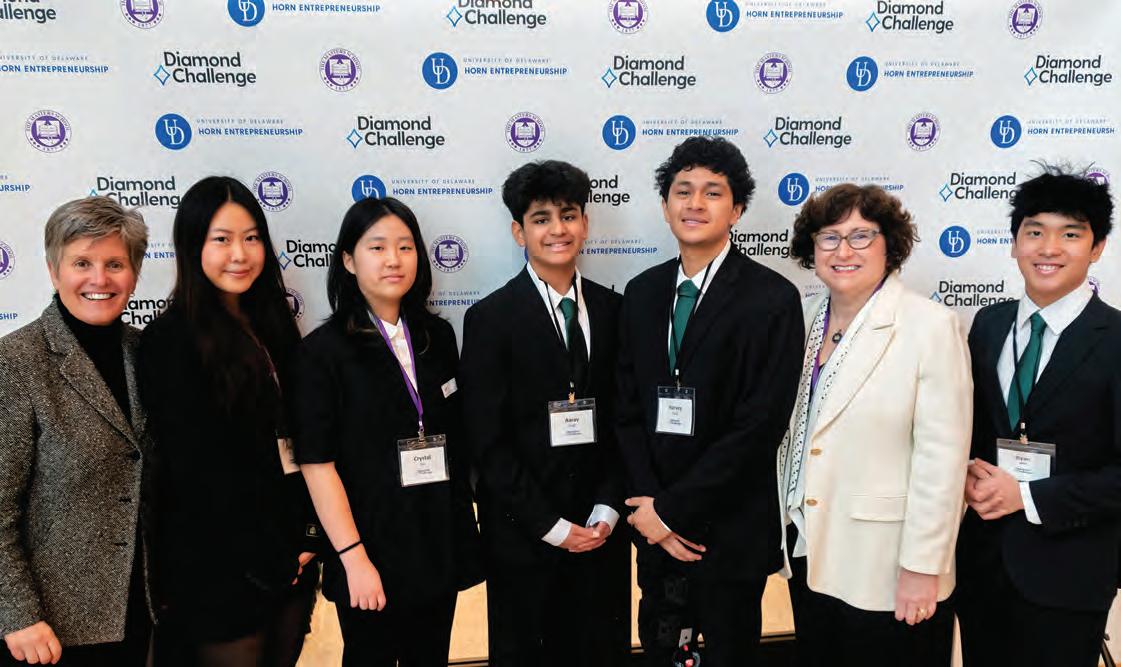
TOP: New York State Assemblymember MaryJane Shimsky joined Head of School Laura Danforth and Masters students
(left to right) Xinqi Clara Chu ’27, Yuwei Crystal Niu ’28, Aarav Singh ’27, Harvey Pena ’27 and Ryan Mah ’27 at this year’s Diamond Challenge competition.
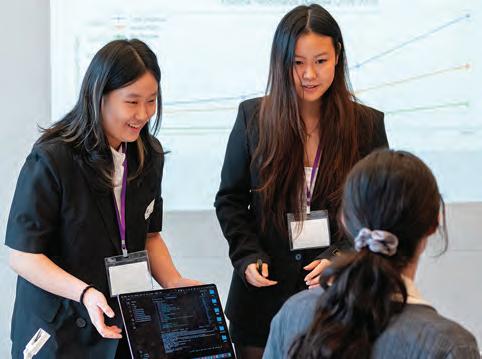
ABOVE: Teammates Yuwei Crystal Niu ’28 and Xinqi Clara Chu ’27 introduce their idea for Luminex, a device to track and improve sleep quality.
This year’s event was especially meaningful for Masters, which had two student teams among the 20 selected from around the country to compete.
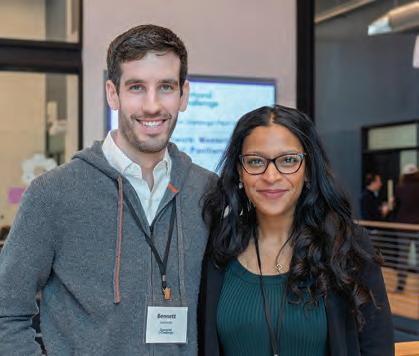
The teams gathered in the Innovation and Entrepreneurship Center to pitch and present their ideas to panels of judges (12 total) who are experts and leaders in business and technology. Among the judges were two Masters graduates — Bennett Saltzman ’14, co-founder and chief customer officer of Green Project, and Natasha Bansgopaul ’04, board member and co-founder and chief operating officer of VegaX Holdings.
Having this event at Masters for the third year running is both an acknowledgement and endorsement of the high quality of our entrepreneurship education program.
—
“ ”
To earn a place in the pitch round, teams advanced through a competitive submission round that required a one-minute video and a five-page concept outline.
“There are only 20 Diamond Challenge Pitch Partners in the world and only four in the United States,” said John Chiodo, director of innovation, engineering and computer science. “Having this event at Masters for the third year running is both an acknowledgement and endorsement of the high quality of our entrepreneurship education program.”
Juniors Ryan Mah, Harvey Pena and Aarav Singh were the team behind Grove, a private social media app designed to help people find community and purpose after retirement. Xinqi Clara Chu ’27 and Yuwei Crystal Niu ’28 pitched their idea for Luminex, a device created to track and improve sleep quality.
John Chiodo, director of innovation, engineering and computer science
Mah reflected on the significance of reaching the pitch round: “It marks a point where our vision is really coming to life. This is a huge step forward in our goal to prevent social isolation among retired adults, and we are incredibly excited for the opportunity to share our solution on a larger scale.”
Jonah Hardy, associate director of innovation, engineering and computer science, said he was "incredibly proud of our Diamond Challenge teams. Hundreds of teams applied to pitch at Masters, and only 25 advanced. Our students earned their spot through real grit and serious work. Watching them partner with universities, research institutes and mentors to turn big ideas into real ventures has been exciting, and I can’t wait to see what they do next.”
Although Grove and Luminex did not advance to the final round, Mah remains undeterred. He plans to continue building Grove by refining the minimum viable product, working with professional developers, running user trials, and expanding partnerships with local organizations in preparation for a full launch next year.
“Pitching taught us how important it is to explain both the problem and the impact of the solution in a simple, compelling way,” he said.
ABOVE: Bennett Saltzman ’14 and Natasha Bansgopaul ’04 were two of the 12 judges at the event.
A NEW STAGE
FOR THE MASTERS COMMUNITY
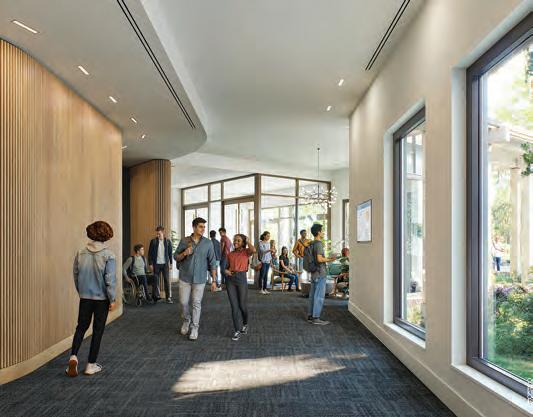
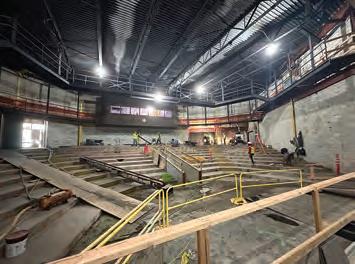
A major renovation of the theater is underway, reimagining the beloved space as a vibrant, accessible hub for the performing arts and for community life at The Masters School.
When it reopens in 2027, the state-of-the-art venue will be known as Theater ’68, made possible by the extraordinary generosity of Patricia Athey Brown ’68 and named in tribute to her classmates and the era that shaped them during a time of historic change.
For generations of Masters students, the theater has been a place where voices are shared and celebrated. From dramatic performances and musical concerts to Morning Meeting announcements and memorable senior speeches that mark the culmination of each student’s journey, the theater is the School’s most essential gathering space.
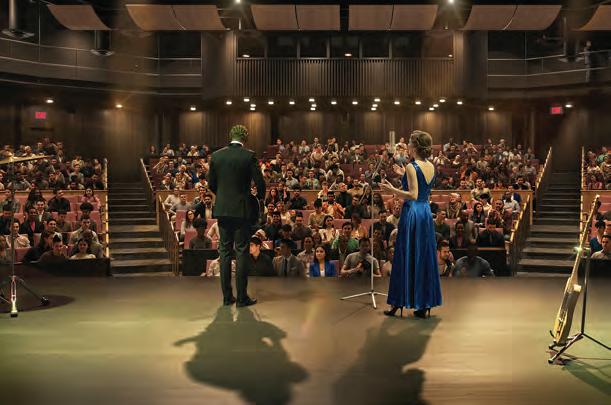
The renovation will expand what is possible in this space while preserving its role as a place where the community gathers to listen, reflect and celebrate together. Architectural plans reimagine the theater as both a performance venue and a welcoming campus destination. The rear wall of the auditorium will be extended to add seating, bringing total capacity to over 630, while the orchestra pit will be enlarged and redesigned with level entry for improved accessibility. A new entrance at Theater Court and a south courtyard vestibule will create a more welcoming arrival experience for audiences attending performances, assemblies and events.
TOP PHOTO: The redesigned theater will feature warm wood finishes, improved acoustics and expanded seating, creating an intimate yet dynamic venue for performances, senior speeches and school gatherings.
LEFT: A barrier-free and light-filled lobby will welcome students and visitors into the renovated theater, creating a comfortable gathering space before performances, assemblies and community events.
Construction began this winter, and photos from the site reveal the scale of the transformation now underway, including scaffolding rising inside the auditorium and newly opened interior spaces that will become entrances and gathering areas. Digital renderings offer a glimpse of what lies ahead: light-filled lobby spaces where students meet before performances and a beautifully crafted theater designed to showcase student voices and artistic expression.
Much work remains in the months ahead as the project moves through major construction and finishing phases. The Masters community looks forward to celebrating the opening of the newly renovated theater with a ribbon cutting on May 15, 2027, with the space ready for full use when students return in fall 2027.
LEFT: Construction in progress: With seating and stage elements removed, the theater’s underlying structure is visible as crews prepare the space for its full renovation.
PANTHERS MAKE HISTORY
WITH FIRST NEPSAC FINAL FOUR RUN
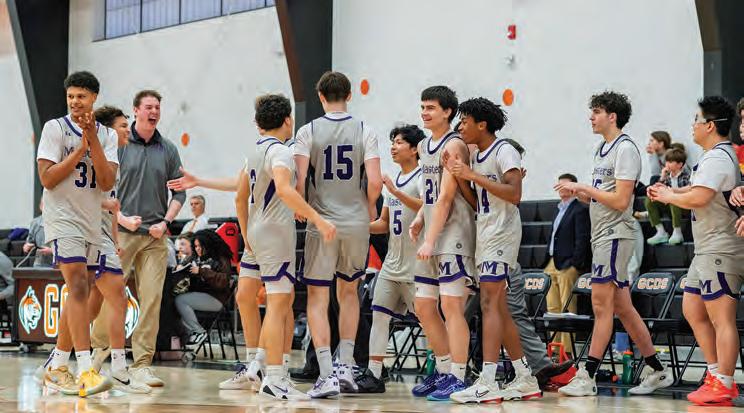
After a tough 69–68 loss at King School in the Fairchester Athletic Association semifinals on February 26, The Masters School's varsity boys basketball team emerged stronger and more determined to face its next challenge.
"We were certainly devastated by the end of the King game," head coach Joey Kuhl said. "Part of losing a one-point game is understanding that any of the errors made throughout the game (from coaches and players) could flip a result like that."
Rather than dwelling on the loss, the Panthers embraced the adversity and used it as fuel heading into the New England Preparatory School Athletic Council (NEPSAC) Class B Large playoffs.
"We took a day off and then had an intense practice that culminated in watching the film [of the King game] together," Kuhl said. "We faced adversity all season and had gone through it, not around it. It was important that we face it, but do so together with teammates to lean on in those tough moments. The captains did a great job refocusing the team and getting us excited to have a chance to keep playing."
The end result was historic. No. 5-seeded Masters upset No. 4-seeded Greenwich Country Day School (GCDS), 56-46, in its quarterfinal matchup, advancing to the NEPSAC final four for the first time in program history.
Although Masters fell, 65–47, to top-seeded and eventual champion St. Mark's in the NEPSAC
semifinals, the loss did little to diminish the team's landmark season.
"It was a tremendous honor and something the entire team felt pride in," Kuhl said. "They had worked extremely hard, so it was nice for them to feel like they had done something unprecedented at the school."
Against GCDS, Luc Brongniart ’26 scored a teamhigh 15 points. Hudson Rodriguez ‘26 (14 points), Damian Mojica ’28 (10 points, 10 rebounds) and Noah Ferguson ’28 (8 points, seven rebounds) rounded out the offensive production. Omari Levy ’26 anchored an airtight defensive effort, which saw the Panthers limit GCDS to a season-low 46 points.
Masters finished the season with a 19–6 record, setting a new standard for the program. "The program [the eight seniors] leave is completely unrecognizable to the one they entered," Kuhl said. "They put in hard work, sacrificed, and were vulnerable with one another to try to go do something that hadn’t been done. All year long, this team cared for one another at an extremely high level, and they were an absolute pleasure to coach. They will be missed next year."
Welcome New Trustee
Bernard E. YANCOVICH
Bernard E. Yancovich is a managing director of private equity at GCM Grosvenor, one of the world’s largest and most diversified independent alternative asset management firms. Bernard is a member of the Private Equity, Real Estate and Infrastructure Investment Committee and serves on the Global Investment Council and the ESG Committee. Prior to joining GCM Grosvenor, Bernard was an investment banking associate at Donaldson, Lufkin & Jenrette (acquired by Credit Suisse in 2000), where he worked on a variety of M&A advisory, equity and debt financing and restructuring assignments in industries such as media, telecom, technology, health care and industrials. Prior to joining Donaldson, Lufkin & Jenrette, he performed transaction advisory services for KPMG in France.
A graduate of McGill University, Bernard earned an M.B.A. from the University of Western Ontario’s Richard Ivey School of Business. He serves on the board of directors at Alliance for International Medical Action. He’s the parent of Theodore ’25, Ginger ’26 and Jeremiah ’33.
catching up with former faculty
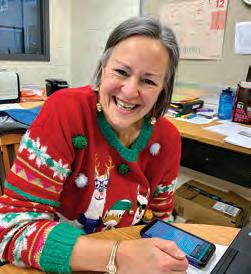
Eileen “Lee” Dieck
Science Department faculty, Class Dean, Ethical Leadership Director. Recipient of the Anna Howe Faculty Award (2017). 2004–2022
It’s hard to believe it’s been four years since I retired from Masters — time flies! Anyone who knows me will not be surprised to learn that I spent many of the months after my departure with my family, traveling with my husband of nearly 46 years, celebrating a wedding, spending time together on Long Beach Island, attending the ballet, and gratefully welcoming my first grandchild into the world. I now have five grandchildren ranging in age from 4 years to 1 month (!). I am loving watching them grow and also watching my children become parents.
Many of you know that I was engaged in nonprofit work during my time at Masters, and this has continued. I currently serve on the Governance Committee for Professional Children’s School and on the board of the Independent School Chairpersons Association, where I co-chair their program committee. In work more related to what I did at Masters, I am one of the education editors for the Center for Self-Determination Theory, providing educational materials and monthly seminars for educators and researchers across the globe, with the aim of helping educators incorporate support for autonomy, relatedness and competence in their work in schools. In the last year, I’ve worked with Girls Inc. on their Character Development Initiative, helping them identify effective methods to achieve their goals in this area and providing training on the implementation of these methods. All of this
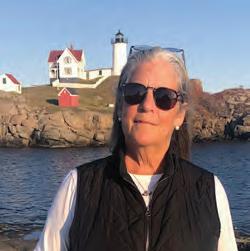
Suzanne Najman
Science Department faculty, Assistant Director of Strong Dorm. 1994–1997
When I left Masters in 1997, I returned to my alma mater, Wooster School, in Danbury, Connecticut. I stayed at Wooster teaching chemistry and physics for 20 years and also did a stint as registrar. It was great to be back at my alma mater, but there was always a part of me that missed the community you find at a boarding school. After two years out of schools, teaching drew me back.
Seven years ago, I landed at Trinity-Pawling, which was Masters’ “brother school” when I was teaching there.
I love living the boarding school life again. I am chair of the Science Department and teach chemistry and physics. I also coach soccer and tennis, and am known around campus as the teacher who has everything you could possibly
need during the school day in my desk. I miss the girls from Strong. I am happily living on campus again, though not in a dorm. I just can't stay up late like I used to!
I love to travel in the summer and, over the years, have visited other former faculty members and former students around the country and world. When I'm not traveling, I love working in my garden, trying to grow vegetables. I still get out on the tennis court whenever I can.
I continue to be thankful for the wisdom I gained in my four short years at Masters! I often hear myself telling new, young faculty members tidbits I was told all those years ago. I left just one year into Masters being co-ed, and I am so very glad to see that the School has grown and thrived!
The fact that all members of this “six-pack” (the students gave us that name — we were six new young faculty members) still have this picture somewhere in their homes or offices is a testament to the bonds formed at Masters!
work has enabled me to keep learning, doing and growing, for which I am grateful.
One of the greatest rewards of working with students over the years has been watching them grow and achieve in their chosen fields. While their occupations vary widely, so many are working to be “powers for good” in a challenging world. Their stories reinforce the important work of schools like Masters, a mission that I am deeply grateful to have experienced firsthand.
BELOW: (l-r) Sara Larson, Connie Douglas, Suzanne Najman, Jenny Carlson, Christina Kay Kyong, Lisa Waldstein and Priscilla Hindley ‘66
from the 150th Anniversary Co-Chairs
In 1877, Eliza Bailey Masters founded a school guided by a bold idea: that education should shape not only sharp minds, but purposeful lives.
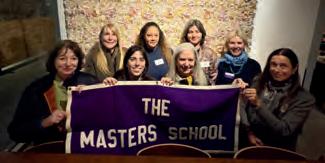
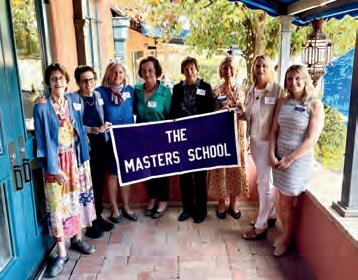
As we approach a significant milestone next year — The Masters School’s 150th anniversary — we invite you to join us in honoring that lasting legacy while looking ahead to a bright future.
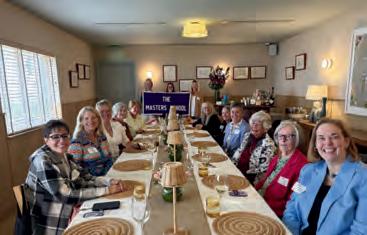
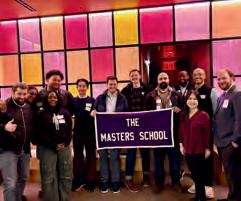
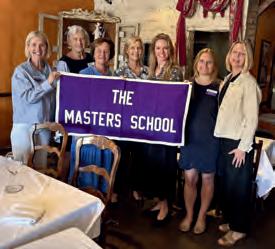
Through May 2027, we will come together to celebrate a century and a half of mission-driven learning and leadership at Masters. The next year will be filled with events and initiatives that engage our community near and far, spotlight alumnae/i voices, and illuminate the enduring Do It With Thy Might spirit that connects generations of students.
Highlights include:
Regional gatherings that will bring community members together in meaningful ways 150 Voices, a storytelling project that will amplify alumnae/i stories from across decades A documentary chronicling the School’s deep and vibrant history Celebration 150, a formal celebration on campus on Saturday, May 15, 2027
Our 150-year story belongs to you, and it needs your participation. Enclosed, you will find a preview of upcoming events for alumnae/i; a call for photographs and memorabilia that help tell the story of Masters across time; and the opportunity to share your favorite stories from your time at Masters and nominate friends and classmates to contribute their stories, too. These contributions will help ensure that our anniversary refle depth of the Masters experience. Make sure to bookmark online hub for all things related to the 150th anniversary.
Thank you for being an essential part of The Masters School’s look forward to celebrating this extraordinary moment in time w
150th Anniversary Co-Chair
Allison Montgomery Moore ’83, P’17, ’19, ’24
150th Anniversary Co-Chair
Stay up to date on 150th anniversary events and ways to get involved by visiting mastersny.org/masters-150
THE ROAD TO
PALM BEACH, FL
NEW YORK, NY
PHOENIX, AZ
TUCSON, AZ SAN FRANCISCO, CA SANTA MONICA, CA SEATTLE, WA
Planned Stops in 2026
Boston, Massachusetts | June
Cape Cod | July
Maine | August
Chicago, Illinois | September
Detroit, Michigan | September
New York, New York | November
Seoul, Korea | October
Tokyo, Japan | October
Charleston, South Carolina | November
Planned Stops in 2027
Florida | February
California | March
Arizona | March
CELEBRATION
Dobbs Ferry, New York | May 15
VOICES
To celebrate our 150th anniversary in 2027, we are gathering 150 stories from alumnae/i to showcase the lasting impact of a Masters education. These stories will be highlighted at Celebration 150 in May 2027 and may be shared on the School’s social media, in The Bulletin and on the website.
Your voice is an essential element of this commemorative collection.
Scan the QR code to submit your story.
If you would like to lend the School a cherished memento or photograph from your time as a student to accompany your story, please contact Director of Alumnae/i Engagement Brooke Nalle at brooke.nalle@mastersny.org or 914-479-6611.
Join us for Celebration 150, a birthday party to remember! We’ll toast to a century and a half of learning, leadership and lifelong connections and honor Head of School Laura Danforth for her 12 years of extraordinary leadership. All members of the Masters community are invited to this momentous occasion. Additional information and formal invitation to follow.
in memoriam
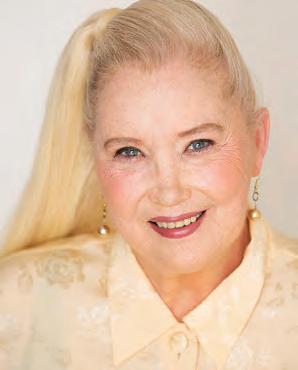
Sally Kirkland ’59
Sally was born on October 31, 1941, in New York City. After graduating from The Masters School, she trained at the American Academy of Dramatic Arts and studied method acting under Lee Strasberg and others.
Sally debuted in the New York avant-garde theater scene and briefly aligned with Andy Warhol’s artist studio, The Factory, in the ’60s. Her distinguished career spanned more than six decades and more than 250 screen appearances. Her breakout role was
died on November 11, 2025, at age 84.
the 1987 independent film "Anna," in which she starred as a former European film star remaking her life in the U.S. The role earned her a Golden Globe Award for Best Actress – Drama and a nomination for the Academy Award for Best Actress.
In her final years, Sally faced serious health challenges and was graciously supported by classmates from Masters and other friends. She remained in close contact with some of her classmates who took the time and care to keep her connected and engaged with her class.
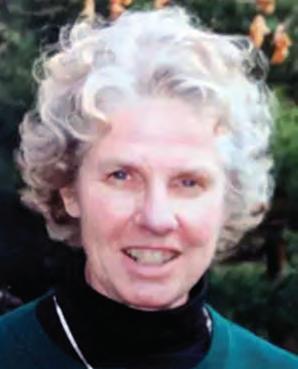
Hilary Holcomb Creighton ’51
Born in 1932 in Buffalo, New York, Hilary spent her early years in Beverly Farms, Massachusetts. She attended Shore Country Day School before enrolling at Masters, where she became an engaged and spirited member of the community. She participated in MISH and DAA, and her connection to the School endured long after graduation.
As an alumna, she remained closely involved with her class and served on the Class of 1951 Reunion Committee. She attended Smith College, later settling in Boston, where she worked at Shepley Bulfinch Richardson & Abbott Architects. In 1960, Hilary met Albert M. Creighton Jr.; they married the following year.
died on November 19, 2025, at age 93.
Hilary embodied the School’s Do It With Thy Might spirit in every aspect of her life. She devoted herself to her family, raising her sons, Mory and Peter, and lovingly serving as stepmother to Al’s three children. A deeply committed volunteer, she gave generously of her time and talents to numerous organizations, including the Museum of Fine Arts, Boston; the Peabody Essex Museum; and Carleton-Willard Village. She was also a prolific contributor to the Fragment Society, knitting countless baby sweaters and blankets for local charities.
An avid and accomplished gardener, Hilary took great pride in planning and tending her own remarkable garden. Her daffodils were a particular joy and regularly earned best-of-show honors.
She is survived by her sons, Albert (Mory) Morton Creighton and his wife, Sarah Hammond Creighton, Peter Holcomb Creighton and his wife, Catherine Finnigan Creighton; her stepchildren, Sarah Lispenard Creighton and William Powers Creighton; and seven grandchildren. She was predeceased by her husband, Albert M. Creighton Jr.
Photo: Brian To
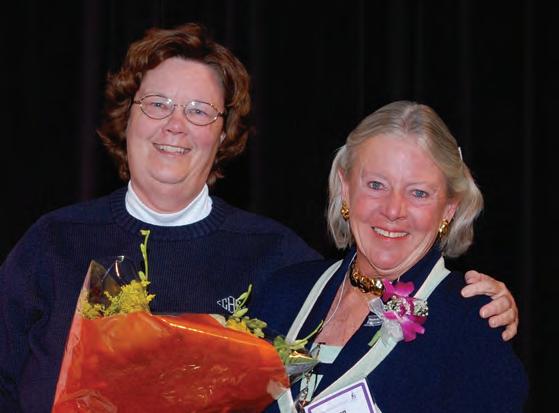
Ann Ebbert Sullivan ’58
died on February 7, 2026, at age 85.
Ann was born on February 3, 1941, in Pittsburgh, Pennsylvania, the daughter of Elizabeth Coolidge Ebbert ’34 and James Kay Ebbert. After attending the Ellis School, she continued her education at The Masters School, her mother’s alma mater, and Briarcliff College, where she studied cartography, and then earned her B.A. in political science at the University of Pittsburgh.
Ann took her Do It With Thy Might spirit everywhere she went. In 1972, she and her first husband, Charles Fagan III, and their three children moved to Brussels, Belgium, where her husband held a diplomatic posting. Ann thrived. She organized and hosted the highest-level diplomatic dinners and functions in their apartment. Upon moving back to her home base in Pittsburgh, Ann found many outlets for her interests: The Children's Institute of Pittsburgh, the Ligonier Valley Library, Fort Ligonier Association and The Westmoreland Museum of American Art. In 1992, Ann married Barry Sullivan, and together they enjoyed golf and extensive world travel in addition to their work with the Pittsburgh Public Theater and the Institute of World Politics Graduate School.
A lifetime supporter and champion of her alma mater, Ann served as a member of the Board of Trustees from 2001–2010. In celebration of her family’s legacy and DAA, Ann and her sister, Carol Ebbert Hackett ’65, named the Fonseca Center Training Room the Ebbert Training Room in 2015. Ann and Barry often hosted school administrators and alumnae/i at their home in Vero Beach, Florida.
Ann was cherished by her friends and family for her positive spirit. Ann’s roommate at Masters, Barbara Johnston Elliott ’58, recalled what a great friend and help Ann was to Barbara after she transferred to Masters her junior year.
Ann is survived by her husband, Barry; her sister, Carol Ebbert Hackett ’65; her three children, Lisa Fagan (Jim Wallace), Chas Fagan (Katie) and JK Fagan (Heidi); and her two stepchildren, Kate Scovil and Tim Sullivan (Wendy). Ann, "Gam re," will be affectionately remembered by all 16 of her grandchildren and her four great-grandchildren.
Ann Ebbert Sullivan (r) with her sister, Carol Ebbert Hackett ’65.
we remember
The Masters School notes with regret the passing of the following members of the extended school family.
ALUMNAE/I
1940 s
Patricia Headland Radway ’43
January 18, 2026
Elizabeth Marsh Carstensen ’44
December 9, 2025
Margaret Condon Elting ’45
May 20, 2025
Janet Ainsworth MacDonald ’47
April 28, 2025
Patricia Gillen Haglin ’48
March 15, 2026
Suzanne McWilliams Murray ’48
January 9, 2026
Robin Hyde Hatch ’49
January 16, 2026
Susan Sattley Higbie ’49
August 6, 2025
1950 s
Jill Hahn Russo ’50 September 15, 2023
Helen Marsh Tredwell ’50 August 10, 2025
Hilary Holcomb Creighton ’51 November 19, 2025
Anne Rehr Morton ’51 December 7, 2024
Marguerite Mann Reed ’51 January 4, 2026
Sandra Nash Baldonado ’52 March 10, 2023
Barbara Holland Stango ’52 2025
Martha Tinker Whitaker ’53 August 28, 2025
Elsie Prichard Carter ’55 December 10, 2025
Meredith Morris Newton ’55 October 31, 2025
Elizabeth Platt Block ’56 July 10, 2025
Sally Bondy Herndon ‘58 February 28, 2026
Ann Ebbert Sullivan ’58 February 7, 2026
Sally Kirkland ’59 November 11, 2025
1960 s
Laurie Platt Shnayerson ’60
February 20, 2026
Nancy Hamill Winter ’60 February 27, 2026
Carolyn E. Williams ’61
October 4, 2025
Mary E. Baker ’66
August 9, 2025
Renée Starring Janssen ’66
October 30, 2025
Susan Nickerson Palmarin ’67
March 2026
1970 s
Marian Ewing Smith ’70
January 15, 2026
Katherine Wilson ’71
January 19, 2023
2000 s
Nicholas F. Bergreen ’00 August 20, 2025
Bulletin
THE MAGAZINE OF THE MASTERS SCHOOL
Laura Danforth Head of School
COMMUNICATIONS
Meredith Halpern Associate Head of Strategic Communications
Isaac Cass
Digital Communications Manager
Christina Ha Communications Associate
Jen Schutten Associate Director of Communications
Design: KBWhite Communications LLC
ADVANCEMENT
Seth Marx Associate Head for Institutional Advancement
Judy Donald Advancement Associate Hilary Finkelstein Director of Annual Giving
Tanya Koshar ’04 Advancement and Engagement Coordinator
Carol Maxwell Sesquicentennial Engagement Manager
THE MASTERS SCHOOL LEADERSHIP 2025-2026
HEAD OF SCHOOL
Laura Danforth
BOARD OF TRUSTEES
Beth Nolan ’69 Chair
Allison Moore ’83, P’17, ’19, ’24
Vice Chair
William Roberts
Treasurer
Dana W. Oliver P’22, ’25
Secretary
Lauren Aguiar P’28
Parke Anderson P’24, ’27
Rajay Bagaria P’25, ’28
Natasha Bansgopaul ’04
Sara Barek P’27, ’29
Laura Danforth
Kara DioGuardi ’88, P’31
Michael Greene P’10, ’13
Jodi Innerfield ’05
Ronen Israel P’23, ’28
Christina Masters Jones
Philip Kassen
Susan Katzke P’24
Stacey Lacy ’93
Sydney Shafroth Macy ’70
Edgar M. Masters H’98, Life Trustee
Susan Follett Morris ’57, Life Trustee
Jonathan Resnick P’26
Lynn Pilzer Sobel ’71, P’99, ’05
Bernard Yancovich P’25, ’26, ’33
HONORARY TRUSTEES
Marin Alsop ’73
Cynthia Ferris Evans ’52, P’76, ’86
Jeannette Sanford Fowlkes ’58, P’87
Ruth Mitchell Freeman ’51
Nancy Maginnes Kissinger ’51
Tracy Tang ’80, P’18
DOBBS ALUMNAE/I ASSOCIATION BOARD
Jodi Innerfield ’05, President
Lucas Buyon ’11
Emily Daly ’06
Andy Finkelstein ’04
Kathryn Taylor Harvill ’95
Chloe Lazarus ’12
Karen (Junrong) Li ’20
Victoria Love ’88
Tiffany Tate-Salam ’00
PARENT ASSOCIATION EXECUTIVE COMMITTEE
Officers
Parke Anderson P’24, ’27 President
Jenny Liang Milward P’24, ’26, ’29
Vice President, Upper School
Scott Graves P’27, ’29, ’33
Vice President, Middle School
Committees and Chairs
Sara Barek P’27, ’29
Admission Support Chair
Andrew Barnes P’26, ’26
Masters Fund Parent Chair
Sharon Davenport P’27, ’27
Faculty Staff Appreciation Day
Co-Chair
Peter Lavery P’29
Faculty Staff Appreciation Day Co-Chair
Jordana Manzano P’23, ’26
PA Program Support Liaison
Brooke Nalle Pʼ24, ʼ27 Director of Alumnae/i Engagement
Maryann Perrotta Director of Advancement Services
Mary Ryan ’00 Associate Director of Institutional Advancement
Amie Servino ’95, P’26 Director of Parent Engagement
Maureen Steinhorn Senior Manager Annual Giving and Major Gifts
C lass Representatives
Sara Barek P’27, ’29
Rachel Combe P’24, ’26, ’30, ’32
Barbra Crane P’28
Sonal Gibson P’29, ’31
Scott Graves P’27, ’29, ’33
Lyn Jacobson P’28, ’28
Leslie Laboriel P’27
Justine Lackey P’30
Peter Lavery P’29
Julia Love P’30, ’32
Andrea Miller P’24, ’26, ’27
Jenny Liang Milward P’24, ’26, ’29
Jennifer Vargas P’26, ’31
Steven Yung P’23, ’30
Back Story
TO THE END OF YOUR BULLETIN JOURNEY OR PERHAPS IT’S JUST THE BEGINNING.
FOR THOSE STARTING AT THE BACK OF THE BOOK AND READING FORWARD, WE SEE YOU AND WANT TO MAKE SURE YOU CHECK OUT THESE HIGHLIGHTS – IN ADDITION TO THE WONDERFUL CLASS NOTES.
06 16
For five members of the Class of 2026, curiosity and inspiration from their science research mentor began a journey they will continue at college and beyond. 26
From summer stock to soaps, sitcoms to the silver screen, Tracy Swope Avildsen ’70 has spent 50-plus years captivating TV and movie theater audiences.
A friendship sparked in seventh grade is still going strong, decades later and continents apart.
When the curtain rises again, Theater ’68 will continue a long tradition at Masters — providing a stage for performances, speeches, announcements and the many moments when the community comes together.