LAWRENCE COUNTY SPOTLIGHT ON


FULL-SERVICE CIVIL ENGINEERING








rules are being written. Be in the room.
Commercial Real Estate shapes Western Pennsylvania. The NAIOP Pittsburgh PAC ensures developers have a seat at the table with the officials who set the rules.
2025 Wins:
Defeated mandatory inclusionary zoning in Pittsburgh. Turned a costly mandate into a voluntary program with flexibility. Advanced permitting reform at the city and state levels, backing Mayor O'Connor's Executive Order and pushing for NPDES reform at PA DEP. Opening doors to State and Local Leadership. Join


FIGHTS FIGHTS

PUBLISHER
Master Builders’ Association of Western PA www.mbawpa.org
MANAGING EDITOR
Ben Atwood 412-922-3912 ben@mbawpa.org
PRODUCTION
Carson Publishing, Inc.
Kevin J. Gordon kgordon@carsonpublishing.com
GRAPHIC DESIGN
Blink Advertising blinkadvertising.com
CONTRIBUTING PHOTOGRAPHY
Mark J Media Nala Marketing Master Builders’ Association of Western PA Colliers Forward Lawrence Next Level Photography Merus
CONTRIBUTING EDITOR
Jeff Burd 412-366-1857 jburd@talltimbergroup.com
ADVERTISING SALES
Master Builders’ Association of Western PA 412-922-3912 info@mbawpa.org
MORE INFORMATION:
DevelopingPittsburghTM is published by the Master Builders’ Association for NAIOP Pittsburgh 412-928-8303 www.naioppittsburgh.com
No part of this magazine may be reproduced without written permission by the Publisher. All rights reserved.
This information is carefully gathered and compiled in such a manner as to ensure maximum accuracy. We cannot, and do not, guarantee either the correctness of all information furnished nor the complete absence of errors and omissions. Hence, responsibility for same neither can be, nor is, assumed.
Keep up with regional construction and real estate events at: www.buildingpittsburgh.com
We must do it ourselves – I, for one, do not believe in the tooth fairy” (Richard P Simmons, from Pittsburgh Quarterly April 26, 2026, author Douglas Heuck)
I’m embarrassed to say that I didn’t know the legacy of Mr. Simmons but happened to find this gem-of-a quote from an article honoring his many contributions to Pittsburgh. R.P. Simmons was the long-time leader of Allegheny Ludlum/ATI, a distinguished metallurgical engineer, renowned philanthropist, and by many accounts, a massive fan of Pittsburgh and its potential. He died on April 23rd and I’d encourage anyone to read some of the many recently published remembrances of his life. The quote is apparently Mr. Simmons’ response to the question posed to local leaders at the time of how to turn Pittsburgh around. No marketing buzz words and no manufactured hype around “game changers” or other LinkedIn fodder. Just a direct call-to-action of Pittsburgh’s leaders.
That call-to-action is as relevant today as it was 30 years ago. In this edition of Developing Pittsburgh, we explore opportunities in Lawrence County for transformative growth in the face of historic challenges. As industrial land gets more expensive in Pittsburgh’s western markets, Lawrence County, with its strong labor force and bordered by interstates and crisscrossed by rivers and rail, may be a beneficiary. While there is no shortage of sites with environmental challenges, Opportunity Zones, site grants, and a (seemingly) motivated
DEP might be some of the tools by which a creative development team can get projects across the finish line. No doubt it will take some hard work too.
On the NAIOP front, no tooth fairies in sight advocating for pro-development policies. Locally, our collective hard work has given the CRE community a seat at the table, though depleted public treasuries mean less project funding opportunities. We are focusing on small but tangible (and sometimes boring) policy changes, and we need your voice to make meaningful impacts. In Harrisburg, DEP and Energy Policy remain at the forefront, and we continue to prove that Western PA issues are unique in the Commonwealth (it turns out our colleagues in Philadelphia have enough power for their projects). So, we shall do it ourselves, educating and promoting the issues that our members care about to our elected officials.
A massive “Thank You” to our NAIOP staff, member volunteers, and sponsors that are at the front of our advocacy efforts and to all our members for continuing to support our mission.
– Nate

Nate Phillips NAIOP Pittsburgh President
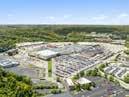
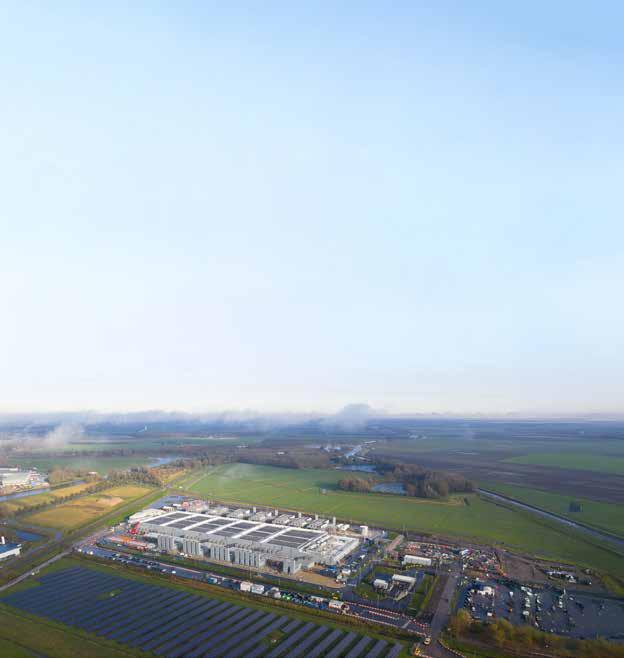
Steelite USA Distribution Center. Photo courtesy Merus.
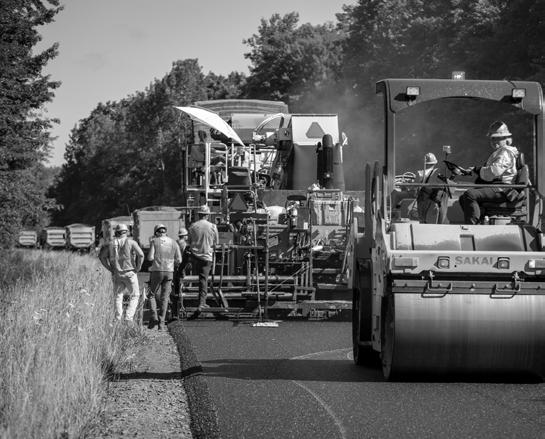
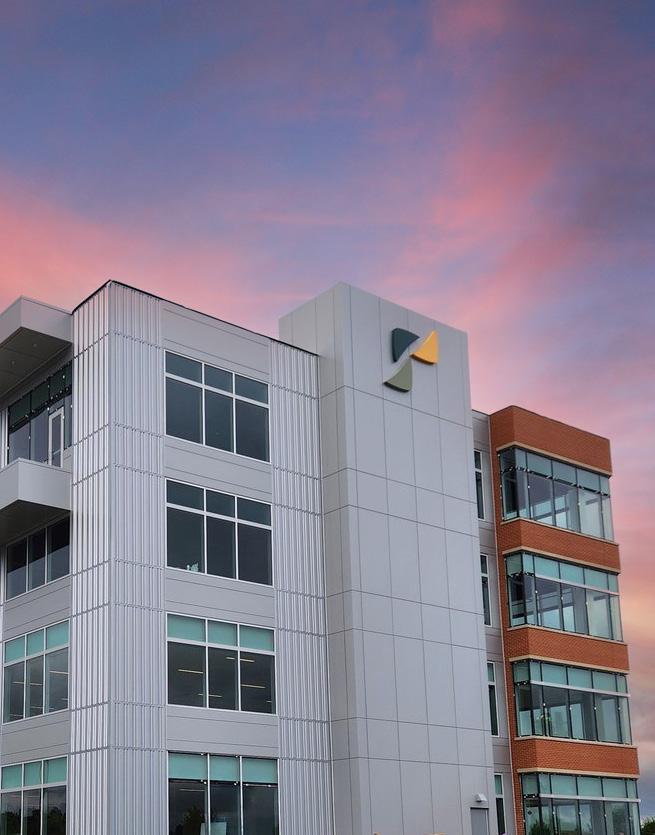
If you have been anywhere near Pittsburgh’s commercial real estate industry over the past year, you already know things have been moving fast in our region. At NAIOP Pittsburgh, we have been right in the thick of it, and honestly, it has been one of the most productive stretches I can remember.
EXECUTIVE DIRECTOR’S MESSAGE
Harrisburg in June where we will continue making the case for policies that support our industry statewide.
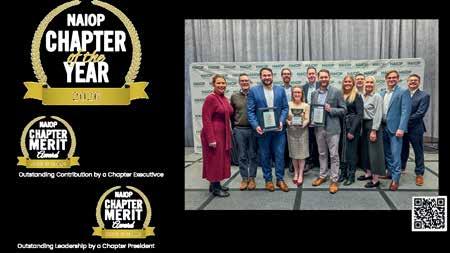
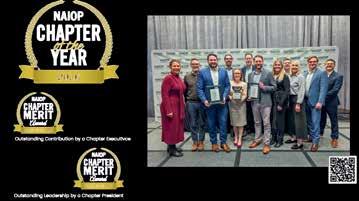
We were also recognized at the 2026 NAIOP Chapter Leadership and Legislative Retreat in Washington, D.C., and we did not leave empty-handed. Our chapter took home three awards: NAIOP Pittsburgh was named Chapter of the Year, our Chapter President Nate Phillips received the Outstanding Leadership by a Chapter President award, and I was honored with the Outstanding Leadership by a Chapter Executive award. That kind of recognition is a direct reflection of the entire membership, and we do not take it lightly.
Markets. Tune into our Chapter-Wide advocacy calls in Q2 & Q3 to learn, discuss, and steer our advocacy efforts. Finally, our sell-out Clay Shoot is slated for June 15th in partnership with CREW.
On the advocacy front, we have been busy. We worked alongside Mayor O’Connor’s administration on his permitting reform executive order, a real win for development timelines in this city. We secured a seat on the Steering Committee for Pittsburgh’s 2050 Comp Plan and have been actively engaged in shaping that vision, so it reflects the realities of development. We have engaged with the city’s Land Bank, participated in a Historic Review Committee meeting to represent developer interests, and joined the PA Chamber of Business and Industry, where we will be sitting on the Development and Real Estate Policy Council. And if you want to talk about the bigger stage, we have a chapter trip to
Now, looking ahead to the rest of 2026 after our Annual Awards Banquet, the calendar is packed. Our Annual Golf Outing is June 1st at FCGC and the DL Golf Outing on August 20st at Cranberry Highlands and those always deliver great golf and even better conversations. Chapter Meetings will cover changes to the IBC for building enclosures and Capital
None of this happens without the people behind it. A genuine thank you to our sponsors, whose support makes every event and initiative possible. Thank you to our volunteers and Board of Directors for your time, leadership, and commitment. Thank you to our chapter administrator, Erica Loftus, who keeps the engine running day in and day out. And thank you to our consultants, Bill Lucas and David Caliguiri, for their steady guidance. I cannot wait to celebrate at the banquet with you all!


Tom Frank
Director
NAIOP Pittsburgh is proud to share outstanding recognition from the 2026 NAIOP Chapter Leadership & Legislative Retreat in Washington, D.C.

Executive
NAIOP Pittsburgh
JOIN NAIOP:



NAIOP PITTSBURGH AWARDS
HALL OF FAME

Daniel Puntil, Colliers Mortgage
Dan Puntil began his commercial real estate career at Grubb & Ellis in 1986 in Pittsburgh then transferred to Washington, DC where he worked in both property management and brokerage. He returned to Pittsburgh in 2000, joining Grandbridge Real Estate Capital and transitioned his focus to debt and structured finance. He has since built a reputation as one of the region’s most trusted capital markets advisors. Over the course of his career at both Grandbridge and now Colliers Debt & Structured Finance, he has been responsible for arranging more than $2 billion in debt and equity placements for projects spanning industrial, office, retail, multifamily, and mixed-use developments. At Colliers, Dan plays a key role in the growth of the firm’s debt and equity platform in the Pittsburgh region. He helps clients navigate complex capital markets environments while structuring financing solutions for his customers.
Puntil has also been deeply involved in NAIOP for nearly three decades since originally joining the Maryland/Washington DC chapter in 1997. Upon his return to his hometown, he quickly got involved with NAIOP Pittsburgh and held various committee positions before serving on the chapter’s Board of Directors for 16 years. During his time on the Board, Puntil was involved with the successful completion of several of the chapter’s initiatives. While serving as chapter president in 2013 and 2014, he was instrumental in the creation of the award-winning DevelopingPittsburgh magazine. However, his proudest achievement during that time was the formation and implementation of the chapter’s Mentor Program which has had a significant impact on the development of the future leaders of our industry


# W e A r e V o l p a t t ustrial institutional

LIFETIME ACHIEVEMENT

Michael Morris, Sampson Morris Group
Michael Morris has spent more than three decades developing real estate projects that strengthen Pittsburgh neighborhoods and the region’s commercial base. While still in college, Mr. Morris began his career by buying, renovating, and leasing residential and commercial properties. In 1990, he was hired to lead a Pittsburgh nonprofit dedicated to acquiring, renovating, and selling distressed homes. Working directly with lenders, contractors, local officials, and neighborhood partners, he learned how thoughtful reinvestment can stabilize neighborhoods, protect property values, and rebuild community confidence. As CEO of Sampson Morris Group, Mr. Morris leads the growth and management of a multi-million square foot portfolio that includes industrial, flex, retail, and office properties, as well as residential apartments and manufactured housing communities. Across the company’s commercial and residential properties, teams focus on creating well managed, customer-focused environments where businesses can operate efficiently and communities benefit from renewed, productive spaces.
Over the years, the company’s development approach has often begun with functionally obsolete buildings in well-located infill sites. With a portfolio of multigenerational assets, properties are managed with the assumption of long-term ownership. Leases are structured using market driven pricing strategies, and all properties are maintained with an emphasis on increasing building value. Mr. Morris promotes discipline, responsibility, attention to detail, and service in his leadership. He oversees more than 80 employees across Sampson Morris Group and its subsidiaries. He is recognized for transparent, values-based leadership and for building long-term relationships with stakeholders. A longtime member of NAIOP Pittsburgh, Mr. Morris supports the chapter through sponsorship, event hosting, and active engagement. He also encourages his team’s participa-

PROFESSIONAL. SKILLED. COMMITTED. PROUD.

These are the hallmarks the region’s union construction trades and contractors bring to the jobsite everyday. Our professional tradespeople and contractors bring the dreams and visions of our fast-growing region to life with a dedication that only those who live here, work here, and raise their families here can commit to. It is, after all, our home, our legacy.
We are also committed to providing opportunity for all who share these values and want to pursue a lifelong, lucrative and satisfying career. For more information on building with our union trades and contractors, or to explore career opportunities, please visit www.buildersguild.org where you will find direct links to our Trade Unions, Joint Apprenticeship Training Centers and Contractor Associations.



BUILDING
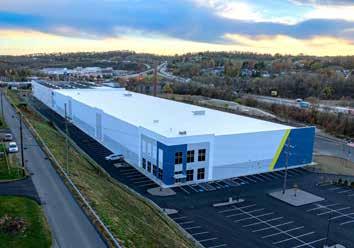
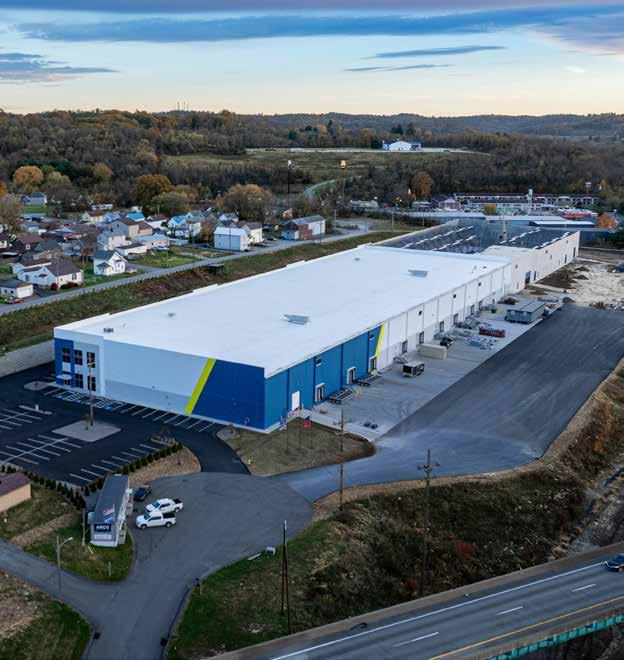
Brockway Commerce Center
Canton Township, Washington County, PA
Developers: Crossgates Management Inc. and The Elmhurst Group
Contractor: ARCO Pittsburgh
Civil Engineer: Gateway Engineers
Lender: ERECT Funds
Brockway Commerce Center is a new speculative 165,000 square foot industrial building, developed on a brownfield site along I-70 west of Washington, PA


TRUSTED EXPERTS SINCE 1956
Our history and expertise as commercial real estate investors allow us to understand and actively participate in all phases of the deal cycle as no other general contractor can. Our team efficiently manages all aspects of construction, ensuring quality workmanship, adherence to timelines, and cost-effectiveness for our clients’ development and construction projects.

General Contracting Design/Build Development
Owner’s Representation Move Management
INTERESTED IN SEEING MORE OF OUR PORTFOLIO?


TOASTIQUE Mt. Lebanon
NAIOP PITTSBURGH AWARDS
BEST ADAPTIVE REUSE PROJECT
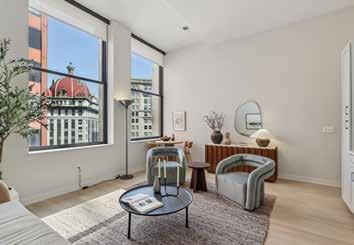
LiveWell Apartments
550 Wood St., Pittsburgh PA
Developer: Victrix LLC
Contractor: Dick Building Co.
Architect: Strada Architecture
Lender: Dollar Bank
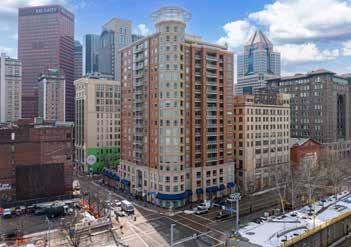
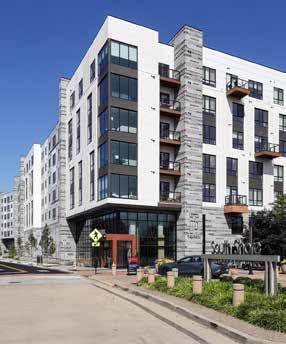
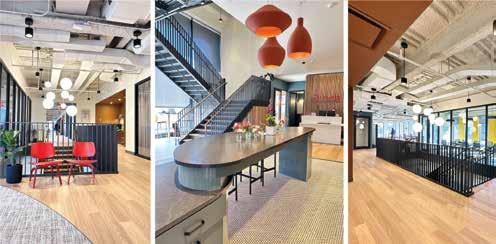
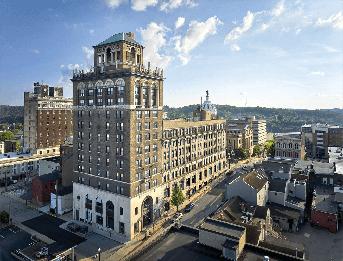
LiveWell is a conversion of the former 300 Sixth Avenue (also known as the corporate headquarters of GNC Corp.) from 14-story office building to 253 luxury apartments

Photo by Amy Pishke, Zillow Media Experts

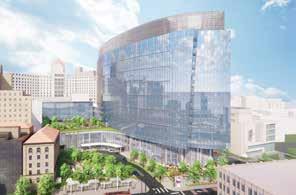


The Encore
100 7th Street, Pittsburgh PA
Developer: McCaffery Interests
Contractor (Units): Renu
Contractor (Common Areas): Rycon Construction
Architect: Desmone Architects
McCaffery Interests invested in a renovation of The Encore following its purchase of the apartment building in 2021. The building’s common areas and 143 of the 151 apartment units were upgraded.

At Desmone, we design buildings and spaces that allow people to thrive – physically, emotionally, and spiritually. Our unique service journey is rooted in effective delivery strategies and informed by principles of health and wellness. We believe that healthy spaces lead to healthy people, and healthy people lead to a healthy world.



Lead Inspire Engage Uplif

At CREW Pittsburgh, we do that ever yday with our extensive network of experienced women in all phases of commercial real estate: development , design, construction and management.
Join US at one of our Annual Events, Programs or Panel Discussions Annual Golf Outing...May 18...South Hills Countr y Club


LEGAL INFRASTRUCTURE
FOR EVERY DEAL
MBM Lawʼs Real Estate Team structures, negotiates, and closes complex transactions for owners, developers, and investors. From financing, joint ventures, and leasing, we help you get the deals done.
Award-winning team all recognized in Best Lawyers in America® 2024, 2025, and 2026 for Real Estate Law
Lawrence J. Maiello | John H. Prorok
Jennifer L. Cerce | Kathleen C. McConnell
Contact us to support your next acquisition, redevelopment, or repositioning. 412.242.4400 | mbm.law





BEST NEW MULTI-FAMILY BUILDING
Apex Newburry
South Fayette Township, PA
Developer: Alpha Residential
Contractor: RDC Design + Build / Sigma
Architect: ROCKiT Architects
Geotechnical Engineer: HillisCarnes Engineering Associates
Lenders: First National Bank, Wesbanco
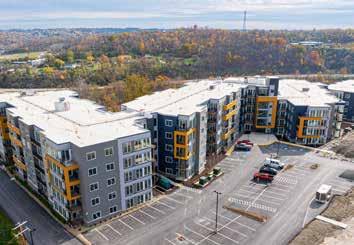
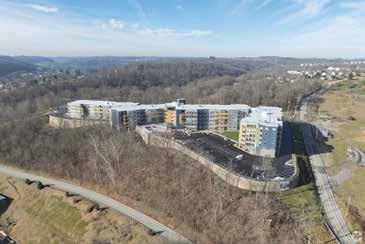
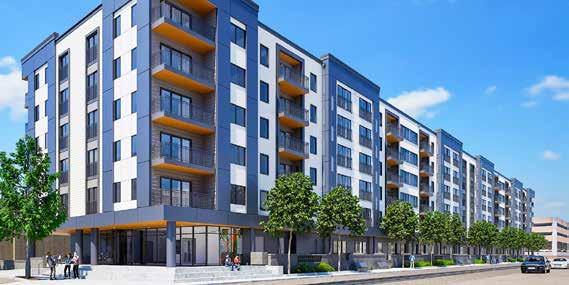
Apex Newbury is a multi-phase residential development at Newbury Market in South Fayette Township. The first phase involved a 277-unit new upscale apartment complex.
CONGRATULATIONS TO ALPHA RESIDENTIAL

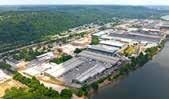
Four interstate highways surround New Castle, linking most sites in Lawrence County to limited access transportation in all four directions.
Source: Forward Lawrence.
SPOTLIGHT ON LAWRENCE COUNTY
“We're in a growth phase in Lawrence County.” That observation from Chip Abramovic, CEO of Forward Lawrence, captures the sentiment of most of the county and municipal leaders in the community of 85,000 people.
In 2023, the Office of Management and Budget added Lawrence County to the defined Pittsburgh Metropolitan Statistical Area (MSA). That designation was probably overdue, as Lawrence County has many of the same challenges and characteristics as the Pittsburgh MSA overall. Once a manufacturing hub located between Pittsburgh and Youngstown, Lawrence County faced the same industrial decline that challenged those cities 40 years ago, and has seen success come from economic diversification.
Lawrence County shares many of the same demographic characteristics as the other six counties surrounding Allegheny County. Its population is in a long, gradual decline as a result of little net migration into the county and more deaths than births each year. According to the Census Bureau’s 2024 American Community Survey, the median age of a Lawrence resident is four years older than the median Pennsylvanian and two years older than median age for the MSA. The number of residents over the age of 65 has grown 16 percent since the 2010 census was taken.
Even with these demographic challenges to growth, there has been more business expansion and attraction in Lawrence County in recent years. A more focused economic development effort seeks to build on the recent successes and Lawrence County’s location between four interstate highways. The vibe in Lawrence County is somewhat similar to that of Pittsburgh at the time of the “Imagine Pittsburgh” campaign during the great recession. After decades of less than full
cooperation between municipal, county, and economic development leaders, there is a sense of coordination that will lead to better results.
Lawrence County by the Numbers
Lawrence County is a largely rural county covering 357 square miles with New Castle as its county seat. The county has experienced sustained population decline over the past several decades, an aging population, income levels well below state and national averages, and more residents dying each year than are born. These trends paint a picture of a post-industrial community undergoing significant demographic contraction, while also reflecting high rates of homeownership and community stability among those who remain.
The most recent addition to the Pittsburgh MSA, Lawrence County shares many of the same demographic trends as its Southwestern PA neighbors. There are also similarities between the county seat, New Castle, and the City of Pittsburgh,
both of which have struggled with difficult fiscal conditions, including Act 47 conservatorship.
The population of Lawrence County has declined from 91,000 in 2010 to 85,000 in the most recent Census Bureau estimate in 2024. With migration as a slightly net negative, it is that difference between deaths and births, which has grown to more than 300 per year, that is driving population decline. The fertility rate for women aged 15 to 50 is higher than that of the rest of Pennsylvania – 5.4 percent to 4.8 percent – but the declining number of women in that demographic group in Lawrence County means that the birth rate is lower. This trend also accounts for the rising median age in Lawrence County, which was 45.2 years old in 2024. That is four and six years older than the median Pennsylvanian and U.S. citizen respectively.
Roughly 23 percent of the population in Lawrence County is over 65 years old. Of greater economic importance, the share of the population that is in the prime
INDUSTRIAL REAL ESTATE ADVISORS
Genfor Real Estate is a commercial real estate services firm serving owners and occupiers of industrial properties in Western Pennsylvania and the surrounding region. Whether you are an industrial business owner, investor, tenant, or developer, we are here to serve you and help you make informed and strategic real estate decisions.
working years – between the ages of 25 and 64 – is 48.6 percent. That is more than three percent lower than the U.S. rate. Drilling deeper into that cohort, the difference in share of population that is 25 to 44 years old widens, with Lawrence County at 21.9 percent and the U.S. at 26.8 percent.
The median income in Lawrence County, $62,000, is more in line with the outlying counties in the MSA – Armstrong and Fayette – than those that are adjacent to Allegheny County. As a counterbalance to that lower income, the cost-of-living index for Lawrence County is 82.5 (U.S. = 100), significantly lower than the other MSA counties, which vary between 97 and 91.
Another demographic characteristic that Lawrence County shares with the rest of the MSA is the dichotomy between the diaspora of its younger population and the inertia of the existing homeowners. The shortfall in people aged 25 to 44 is a result of a larger share of high school and college graduates leaving for economic opportunity elsewhere; yet those who stay are more entrenched than average.
Albert Burick, township manager at Shenango Township, is also a real estate agent. He notes that 75 percent or more of the homes sold in Lawrence County are to people who live outside Lawrence County. Moreover, he estimates that 65 percent of the homes owned in Lawrence County no longer have a mortgage.
These demographic trends are a result of a jarring loss of manufacturing companies during the 1980s and 1990s. Beginning with the loss of more than 500 jobs from closing of the Mesta Machine Company in 1982, a handful of plant closings resulted in more than 3,000 layoffs over the next decade. Universal Rundle shut down manufacturing in New Castle in 1984. U.S. Steel/National Tube shuttered the Ellwood City plant the following year. Shenango China, which opened in New Castle in 1901, ceased operations between 1991 and 1995. And, while Sharon Steel was located in facilities in Mercer County, it is estimated that a quarter of the 2,000 workers laid off lived in Lawrence County.
Aside from the long-term downstream damage to the local economy from the thousands of unemployed workers, the
loss of the businesses rippled through local government, cutting tax receipts dramatically. Municipalities and the county government felt the pressure of maintaining services and employment while revenues declined. The resources available for attracting new businesses and employment became more limited, even as the need increased. The scarcity of resources, in turn, created a disincentive for coordination between the various agencies that had responsibility for economic development.
Moving Lawrence Forward
That environment was the one in which Diane Richardson, assistant director of economic development for Forward Lawrence, started her career in economic development. Richardson joined the Lawrence County Economic Development Corporation (LCEDC) (which merged with the Lawrence County Regional Chamber of Commerce in 2018) in 1991, when the resources available were meager.
“It was me and Linda Nitch. We weren’t really on anybody’s radar. We started doing small business loans and as the PA Department of Community and Economic Development (DCED) grew, and programs got larger, we started doing larger projects,” Richardson recalls.
“There were local businesspeople who realized we could be doing so much more. We were involved in a few real estate projects that helped increase our funding. At the same time, we could see another very important component of economic development, the Chamber of Commerce, was losing funding and could no longer depend on the members
for adequate funding. A group of businesspeople forced us together to form what was called The Lawrence County Regional Chamber Foundation. Both groups were governed by a board of six businesspeople and there was a CEO for both.”
That CEO, Alex McCoy, led the new organization for only a few years before parting ways with the county’s leadership, but he made at least one lasting contribution.
“He wasn’t here very long but one of the things he did that I thought was brilliant was come up with Forward Lawrence concept. We’ve continued to use that brand effectively,” says Richardson.
Forward Lawrence is the more marketable moniker for the merged economic development agencies and a more inclusive reference to the more coordinated county-wide economic development effort. Ben Bush inherited that more coordinated approach when he joined Forward Lawrence as CEO in June 2023. He notes that he benefitted from having several municipalities that were also economic development oriented.
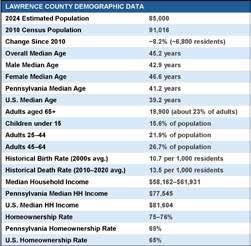
Sources: U.S. Census Bureau American Community Survey 2024 1-Year and 2023/2024 5-Year Estimates; Census Reporter; Data USA; World Population Review; Pennsylvania Dept. of Health County Health Profiles and Vital Statistics; City-Data.com; Data Commons (Google); Federal Reserve Bank of St. Louis. Data reflects available figures as of April 2026.
Bush, who left Forward Lawrence in October 2025 to become vice president of public policy at the Allegheny Conference on Community Development, says that the circumstances were ripe for new opportunities when he arrived in 2023. And he credits the successes that followed in the two years he served as CEO to having municipal partners like Shenango and Neshannock and supportive county commissioners.
“Economic development is a team sport. It’s about partnerships and getting everybody on the same page to follow one vision,” Bush says. “The things that helped were getting everybody around the table discussing the strategy and getting everybody on board to pull in the same direction. We were able to put the strategy in place. County Commissioner Dan Kennedy ran on economic development, and he was integral in pushing to get the strategy in place and everybody on board. Chip is set up to continue that.”
“Chip” is Albert Abramovic, the current CEO of Forward Lawrence. Abramovic was a county commissioner in Venango County for nine years prior to joining Forward Lawrence. His experience there
influences his approach to business development in Lawrence County.
“It seemed like every machine shop in Venango County was tied to Joy Mining. Through every up and down with Joy in the coal industry, those shops would go bankrupt or close. I learned during my time as commissioner that the ones that survived were the ones that diversified,” Abramovic explains. “Those that diversified did so with emerging technologies, doing their piece work and keeping it local. That opened my eyes to the emerging technologies coming out of Pittsburgh. This wasn’t software like in Silicon Valley. This is applied sciences and other technology where you’re making and doing things.”
Development Opportunities and Challenges
The more proactive and coordinated business attraction efforts were helpful in the recent economic development successes in Lawrence County, like Steelite’s new 325,000 square foot distribution center, Berner International’s expansion, Stonecrest Business Park, and ArchKey’s new facilities. Of course, there were other factors in those positive
developments. Chief among them is the perception of the productivity of the workforce in Lawrence County.
“One of the driving forces behind the decision to build here was the workforce in this area. There are a lot of hardworking blue-collar people in the county,” says Justin Bruce, vice president, strategic growth at ArchKey Bruce & Merrilees. “They have that family-first culture and the ability to work hard. They’re dedicated to their team and look out for one another. Those are all the qualities that we’re looking for in developing the culture we built. That fits hand and glove with the people of Lawrence County.”
“When it comes to advanced manufacturing, welding, machining, and other manufacturing labor, Lawrence County’s competitive advantage is that it’s what its economy was built on. There are generations of folks who have been trained in skilled trades,” says Bush.
“We saw a lot of similarities in that area to the Mon Valley, which is our home,” says John LaCarte, president at LaCarte Development, which is developing Stonecrest. “We saw the same potential workforce benefits located in
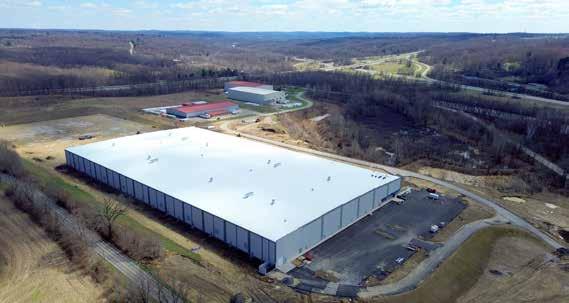
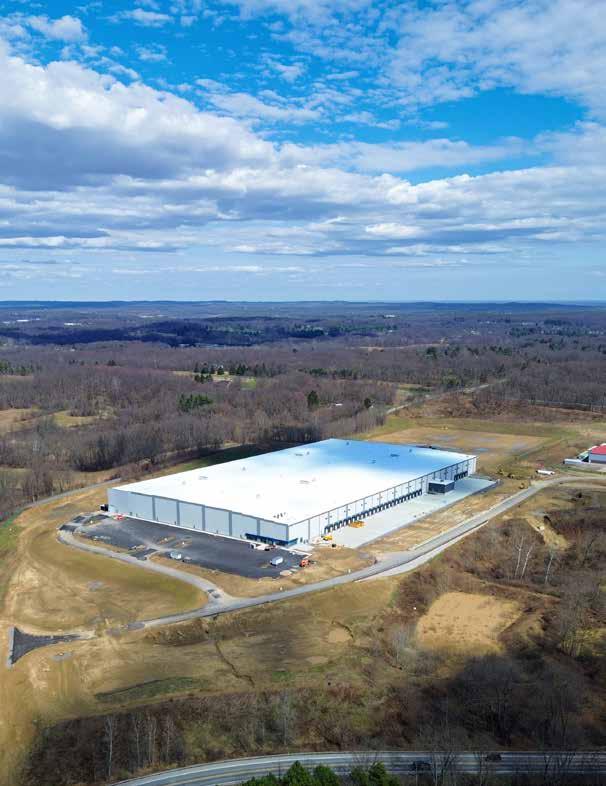
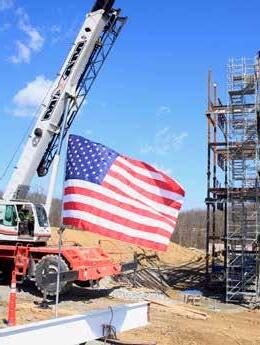
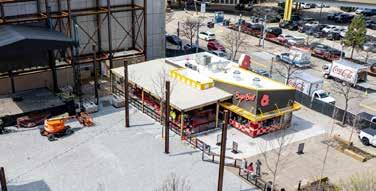
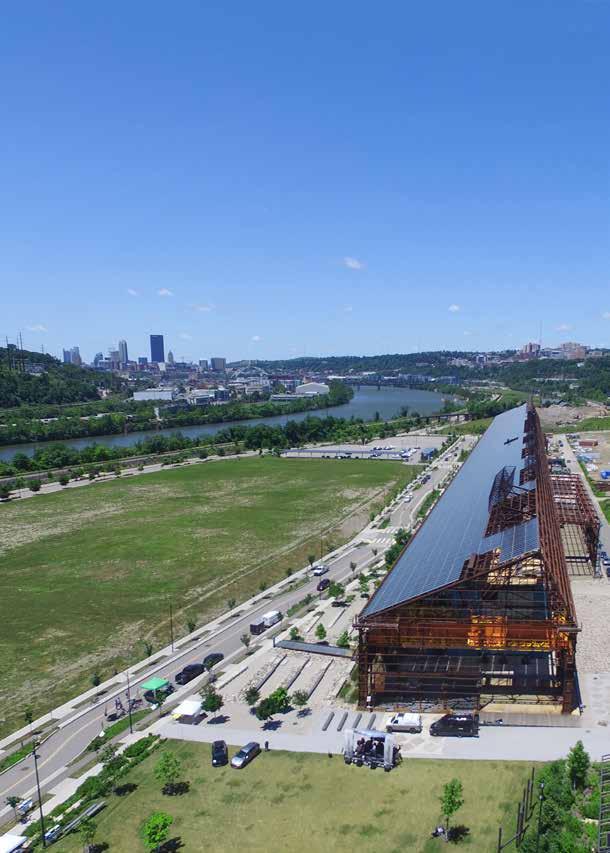
Steelite’s new distribution center (shown here under construction) will be operational by June 2026.
Photo by Merus.


close proximity. That’s a big driver for companies, being able to tap into a local workforce and we think that location allows for it.”
“As Lindy Paving has grown, it’s a Lawrence County-based workforce that is taking leadership roles,” says Ryan Harcar, president of the Lindy Group. “Our workers that are pulling the hardest are from Lawrence County, even if they’re leading divisions that are doing work in Pittsburgh or Erie or Ohio or Indiana.”
Harcar admits to a bias, as he is a New Castle native, and credits the workplace culture for some of the high productivity. Yet he points out that growing up in a bluecollar environment enhances that culture.
“When people who grew up in that culture go other places and hold the line on the expectations of that culture, we see gains. I can tell you that culture carried from Lawrence County has traveled very well,” Harcar says.
Steelite’s CEO, John Miles, listed the local workforce in Lawrence as one of two main factors that drove his decision to put a distribution center serving the Americas in Millennium Park off I-376.
Three other factors that are strengths of Lawrence County have not produced as many successes as might be expected, although local leaders expect that will change.
Lawrence County is the only county in Western PA that has four interstate highways that connect to major cities in all four directions. Including I-376, which primarily connects the prime business areas in Pittsburgh to the other interstate highways, I-79, I-80, and the PA Turnpike (I-76) run through Lawrence County.
For industrial development, including data centers, Lawrence County has abundant water, natural gas, fiber networks, and power generation.
The third factor expected to drive more opportunities is the addition of Lawrence County to the Pittsburgh MSA. Much like the designation of the former Route 60/ Parkway West corridor as an interstate highway, the inclusion of Lawrence County in the MSA should make the county more visible to site selectors and companies looking to expand. For example, a requirement from a manufacturer looking for access to major east-west interstate highways in one of the 30 largest MSAs would not have
included Lawrence County prior to 2023, even though the county may have met all the site selection criteria. It is unclear that the change has been impactful thus far.
“I think the visibility that comes from being part of the MSA exposes us to a lot more opportunities,” says Abramovic. “It helps make the point that Pittsburgh isn’t just the City of Pittsburgh.”
“I don’t know that I can point to any one project as a result of joining the MSA, but it certainly helps to be in the MSA. We feel included when site selectors are looking at numbers,” says Richardson. “I know we have the whole data center thing going on, but prior to that Lawrence County got overlooked for the big warehouse and distribution center projects because we weren’t in that MSA.”
Lawrence County is not immune to the data center wave that threatens to crash onto the shores of Western PA. County Commissioner Kennedy acknowledges that more than one developer or hyperscaler has contacted the county about sites, which he believes could lead to one or more data centers being built, assuming the townships permit the projects.
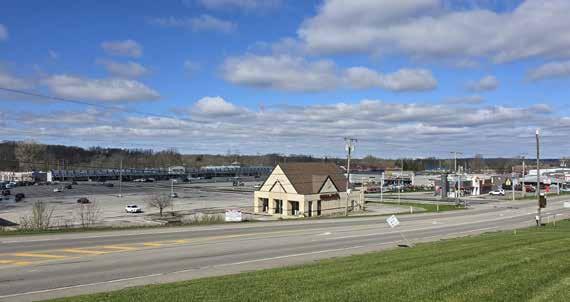
A public-private partnership of Wish Development and Shenango Township revitalized the Shenango Commons retail center, resulting in 145,000 square feet of absorption.
“The people we have been talking to have been here quite a bit looking at land and getting their ducks in a row. They’re making sure that we have electricity and water, everything they need to make a data center go,” Kennedy says. “With the data centers, one of the main attractions is the fiber optic lines that run right through the county, and we have some prime vacant land. We have a fairly new power plant at Hickory Run. I think that’s attracting the data centers.”
Although there have been no data centers announced, there are projects being developed. In addition to the Steelite expansion (which includes another 250,000-275,000 square foot building), Berner International is completing a 55,000 square foot addition to its manufacturing facilities in Shenango Township. Also in Shenango, Premier Development is developing a new headquarters and shop facilities for ArchKey Bruce & Merrilees, which should be between 120,000 and 150,000 square feet.
Where Lawrence County has lagged behind is in available sites for industrial development, although there should
be new inventory later this year. In New Beaver Borough, in southern Lawrence County, LaCarte Development is nearing completion of its preparation of the former Stonecrest Golf Course for a new life as Stonecrest Business Park.
“We are just finishing up the land development. We’re working on final road dedication to New Beaver Borough and getting the sewage lift station energized this month. We should be fully completed with land development by June 1,” John LaCarte reports. “We have three potential projects we are working on. Which of those executes an agreement will determine what we do next. Typically, a build-to-suit will drive a project if we have a tenant with a specific need. We’re working with a couple of those, but if they don’t materialize, we’ll move forward with our first speculative building.”
LaCarte expects to bring that first building, of 150,000 square feet, to the market while two other lots of 17.3 acres and 27.8 acres are pad-ready this summer.
RIDC has had several lots available in its Neshannock Business Park, but no activity since the IBEW Training Center was built in 2022.
“Demand has come and fits and spurts. There are a number of small manufacturers and users in the park. We have space for one 50,000 to 60,000 square foot building and perhaps another small building,” says Tim White, senior vice president of business development and strategy at RIDC. “We have been talking with a number of companies, but nothing has been signed. We’re working with Forward Lawrence to see how we could do additional site development or a spec building on the remaining land to have some product ready. There is a lot of land in Lawrence County but not a lot of sites.”
Indeed, there are a handful of sites that are being marketed for what could be large industrial or commercial development but are far from pad ready. Two former industrial sites, Shenango China in New Castle and Remacor Inc. in West Pittsburgh, are nearing completion of environmental remediation. Adjacent to the Hickory Run Power Plant, some 475 acres of the former Powder Mill Works are available. The Glen Road Industrial Park in Neshannock Township could accommodate 330,000 square feet of light manufacturing. A site on Old
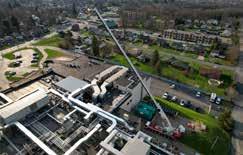
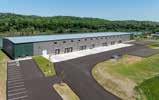
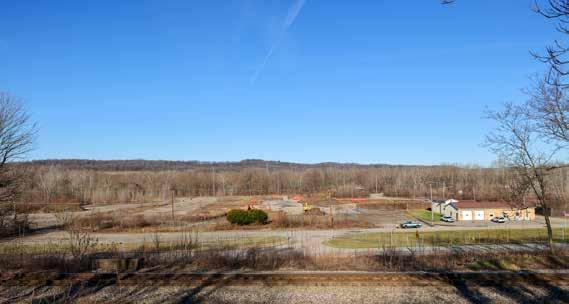
Environmental remediation is wrapping up on the 45-acre former Remacor plant site in West Pittsburgh, outside New Castle. Photo by Next Level Photography.
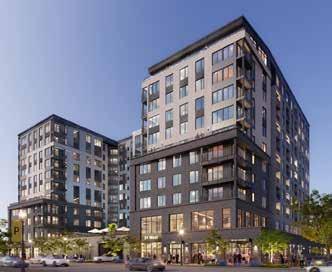
ELEVATED LIVING, WHERE PITTSBURGH PLAYS

RESORT LIFESTYLE
Sky Deck Pool · Rooftop Lounge Grilling Stations WELLNESS & WORK Elevated Unit Finishes · Fitness Club Co-Working Spaces SOCIAL SPACES Sports Bar · Game Room Marketplace Café

Butler Road in Shenango Township can accommodate nearly 175,000 square feet of manufacturing or warehouse use. And the McCracken Lane site in Union Township is available to develop 200,000 square feet of manufacturing or industrial use. None of these sites are in condition to meet the needs of a user with immediate requirements.
The lack of pad-ready sites is a recurring issue that comes up in conversations with industrial real estate brokers, who have few answers as to why there is not more industrial development in an area with ample available land and plentiful access to interstate highways and rail.
“The lack of population growth would be a

challenge for business location, but I also think Lawrence County would show up well on a labor study. Both those things can be true at the same time. There is not a lot of population, but if some company was looking for industrial labor Lawrence County would show well for a number of jobs,” says Rich Gasperini, principal at Genfor Real Estate. “What would be opportunistic for Lawrence County would be if there is an industrial park near I-79. That would be more attractive for a large user or a distribution site.”
“I can’t tell you how many times in my 30-plus-year career I decided to focus on Lawrence County because no one else was. The area seems like it has so much going for it, but after spending a little bit of time, I’d get no traction,” says John Bilyak, managing director/market leader for Colliers Pittsburgh. “I think it’s primarily because of concerns about workforce and amenities, housing and all the things associated with employees. I say that without a great deal of authority, but I’ve heard it enough times that it seems to be the perception, whether it’s reality or not.”
Civic leaders in Lawrence County have raised the need for new residential development as a high priority for growth, but the lower-than-average level of mobility and population growth makes it a challenging environment for residential development. There are roughly 10 percent more housing units in Lawrence County than the number of households (36,366). For residential developers and builders, the demographic data suggests that the absorption of new homes would be slow, which increases the risk of new development.
There are some residential projects that are going through entitlement that could offer opportunities to bring new residents to Lawrence County. The 200-lot Vineyard Way housing plan is proposed for property just northeast of the Neshannock High School, which Ryan Homes will be building. C. J. Betters is reported to have purchased parcels adjacent to that for further residential development. In Shenango Township, Niedlinger Enterprises from Carlisle is proposing a 200-unit, seven-story apartment targeted for 55-and-over residents. That is a development that offers a product unavailable heretofore










Steelite USA Distribution Center
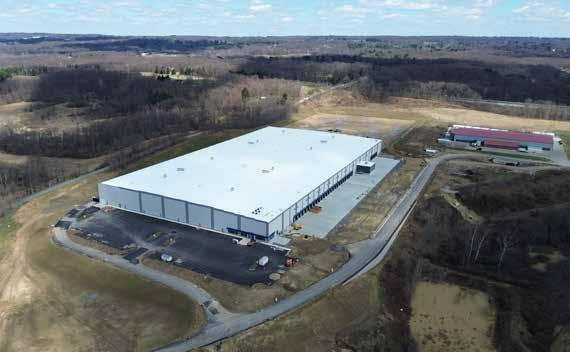
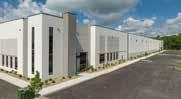
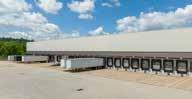
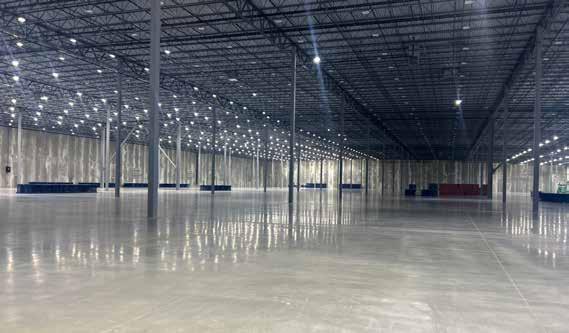
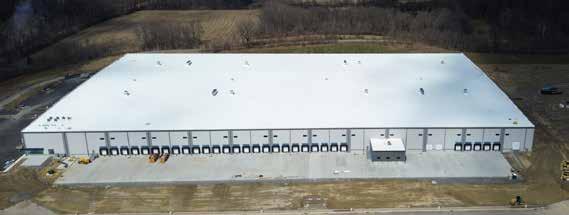
Tableware manufacturer Steelite USA has begun the months-long process of moving into its new 325,000 square foot distribution center for the Americas, which it will occupy in June 2026. The building, which Steelite is leasing from developer and builder Merus, is the largest new construction project in Lawrence County in more than 65 years.
The project is the culmination of more than a decade of effort to develop the 96-acre site that was owned by the Lawrence County Economic Development Corporation (LCEDC). Steelite had begun planning for the expansion in Millennium Park prior to the pandemic, successfully securing a $3.5 million Redevelopment Assistance
Capital Program (RACP) grant in October 2022; however, a number of unresolved issues slowed progress on the project. The arc of the project changed after the pandemic, when Lynn DeLorenzo, director of land advisory services at Fourth River Development, was engaged as a consultant by the LCEDC and Neshannock Township in 2022 while a principal at TARQUINCoRE.
“John Trant of Strategic Solutions was working with Neshannock Township. He called me and described the problem as a land problem,” DeLorenzo recalls. “I went up there in January 2022 and analyzed the situation. I thought there was a 50/50 chance that we could get the deal done, but it would take people working together
who had not before. There was about six months of resistance from some of the parties involved, but we got everybody to the table.”
The property in question lies in the Millennium Park, an industrial park in Neshannock Township that is off Pulaski Road at the intersection of Route 422 and I-376. The deal that DeLorenzo, Trant, and others were trying to bring to fruition involved the park’s main occupant, Steelite USA. Steelite established a warehouse campus in Millennium Park in 2008, constructing three buildings by the time the need for this distribution center arose.
John Miles, Steelite’s CEO, was set on building the expansion in Millennium Park
Photo by Merus
to capitalize on what he felt were the most important assets of the site.
“One of our great strengths, and we feel a strength of Lawrence County, is the quality of our employment base. Maintaining the great labor force we have in Lawrence County was a priority for us,” Miles says. “Our ability to acquire the land behind us and build on that site was highly advantageous. The existing site is great from a logistics standpoint, basically at the junction of I-79 and I-80. Those were the two main factors for us.”
“The site was important to John because he didn’t want to displace his workforce,” DeLorenzo says.
Miles is a product of that blue-collar environment. Two of his grandparents had worked at Shenango China in New Castle, where Miles’ father later was a supervisor. Miles worked in the tableware industry throughout his career, joining Steelite in 1996 as a sales manager. He moved up through the ranks of management over the next two decades and partnered
with PNC Riverarch Capital to purchase Steelite International in 2016.
When DeLorenzo took on the project there were a few issues, most notably the prohibitive cost of bringing natural gas to the building site, but mainly the delays were a matter of not getting a coordinated effort from the different levels of government to facilitate the project.
“The county development corporation and Neshannock Township did not have a close working relationship prior to that. LCEDC owned the property, but had no funding to do anything with it,” DeLorenzo says. “The records of the property – the site engineering, test borings, analysis of the topography, and such – were 10 or 15 years old.”
By 2022, Lawrence County’s economic development efforts had been unified as Forward Lawrence and were in a position to be more supportive, helping Steelite work with state and federal agencies needed for permitting and expansion of the foreign trade zone. David Caligiuri of
C & G Strategies was brought in to help gain the RACP support and remained on the project throughout. Neshannock Township, DeLorenzo recalls, was more than a cooperative partner.
“Neshannock Township agreed to be a partner and invest in the engineering and testing of the property and preparing the infrastructure. Without the township, the project would not have happened,” she says. “It became the public-private partnership that facilitated this massive deal. Absent that this wouldn’t have happened.”
“The biggest hurdle was getting gas and power to that site. Previous estimates for extending gas service to the site were as high as $12 million, which made the project unfeasible. By 2022, it was a different world for gas and power companies than 10 years earlier,” DeLorenzo continues. “The engineers and the government got together and worked tenaciously to get the utilities there for a fraction of that cost. Once we got over that hurdle and knew we had gas to the site, we knew the project was going forward.
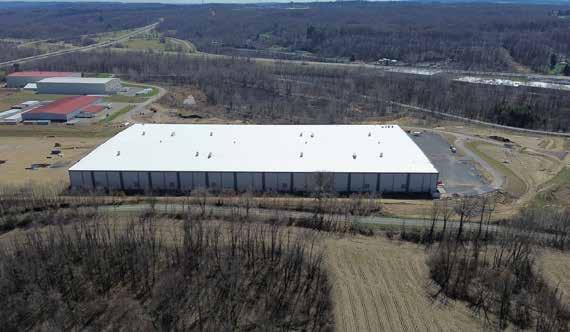
Photo by Merus
“Ben Bush came in about 18 months into the project, and he helped expedite things. There was a lot of debt on the property, and we had to deal with the CFA from the state. Ben was able to work with the state to get that clear.”
It was at this stage that developer/builder Merus became involved. Brandon Snyder, vice president and Pittsburgh market leader for Merus, explains that the initial interactions were as a third-party for construction services.
“We got involved earlier in the project in 2023 as a design builder. We tried to give them some guidance, and they liked the idea of design-build, even though they already had an architect on board,” Snyder says. “As the project continued, they determined strategically that it was in the best interest of their business to not own the building. At that point we became the developer. They were looking for someone who could turnkey the building. It was one of the cases where our vertically integrated model was an advantage.”
Miles credits Merus for having a solution to one of his bigger concerns.
“We were very concerned that we had as much local labor and business benefiting from the project as possible. Merus had a long list of local contractors that they had worked with on many projects,” Miles says. “Our desire was, obviously, to find a high-quality builder that could deliver the project, but we wanted to provide the local community with as much employment benefit from the project as possible. When people see a big building being built like this, it’s great for them to know their neighbors are working on that building.”
Asked about the project’s challenges, Snyder admits that most of the project’s hurdles had been overcome by the time Merus got involved. Snyder credited the work done by the professionals, owner’s representative R. L. Lee and project architect Michael Fagan from Olsavsky Jaminet Architects, for making the development and construction process go smoothly.
“It was an open book build-to-suit
much like you’d find in a competitive environment. They had experts on their side to verify that everything was market conforming,” Snyder says. “The project went smoothly because the client knew exactly what they wanted and hired the right people on their team. They assigned the right people in their organization to create the team and it made our jobs that much easier.”
Merus closed on the project at the end of 2024 and construction started in the spring of 2025. Steelite has begun moving storage and material handling systems and will take complete occupancy in June.
“This has been a great case study in building the right team before you hire a third-party builder or developer. It provides a certain level of comfort for the client,” Snyder concludes. “They knew how much space they needed. They had programmed everything. There were some minor details that we could share an opinion on, but Steelite’s upfront involvement made the project move more smoothly than usual.”
by Merus
Photo
by Merus
“This project was probably the best example of bipartisan support at the state, local, and federal level. Everyone across both sides of the aisle worked very hard together,” Miles adds. “We found the process to be highly efficient with very little complication. We had as good of an outcome there as I could have imagined.”
As part of the project, a pad was developed for second building of 275,000 square feet. Miles says that expansion is likely to be needed in the next few years.
“Obviously, we want to get the building that we’re finishing up and running, but the business continues to expand despite
the tariff environment and everything else that’s going on in the world,” Miles says. “We continue to see market share gain and that will drive the necessity for another building in the next few years. We would absolutely use the same team. We could not be happier.” DP


Photo
Data Center Development Support
Prepurchase Agreement Services
• Compliance & Liability Issues Assessment
• Purchase Price Allocation Support
Critical Issues Analysis
• Site Feasibility Analysis
• Zoning and Land Development Ordinance Reviews
• Geohazard Assessment
• Surface Water Analysis
• RTE Species Desktop Analysis
• Permitting Matrix Development
Field Investigation Services
• Geotechnical Investigations
• Cultural & Archaeological Resource Assessments
• Phase I/II Environmental Site Assessments
• Stream & Wetland Delineations
• Topographic & Boundary Surveys
• Traffic Impact Studies
Design & Permitting
• Stream & Wetland Impact Permitting and Mitigation
• Geotechnical Engineering Design
• Legacy Environmental Impact Remediation
• Civil & Transportation Engineering Design
• Air Quality Permitting & Dispersion Modeling
• Environmental Consulting & Permitting
• Water/Wastewater Management Planning & Design
Construction-Phase Services
• Management Support
• Inspection, Oversight & Monitoring


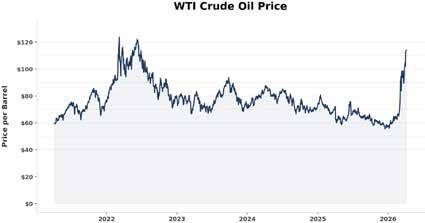
The U.S. economy entered the second quarter of 2026 in reasonably solid shape, but the outlook became far more uncertain after the outbreak of war with Iran sent oil prices sharply higher and raised new concerns about inflation, consumer spending, and business costs.
In early March, the Trump administration launched a series of attacks on that nation, destroying much of its defensive capabilities as well killing numerous members of its leadership class. Iran responded by shutting down the Strait of Hormuz, through which flows 20 percent of the world’s oil and natural gas, as well as launching missile strikes against refineries across the region.
At the time of this writing, a ceasefire deal had been reached, peace negotiations had begun, and oil prices were dropping again. But all of this can be fairly described as tenuous, and leaving plenty of uncertainty on the table.
The most immediate impact of this was an absolute surge in oil prices. Brent crude climbed from roughly $71 per barrel in late February to about $94 by early March, and by early April was trading at
$115 a barrel. In a recent BBC interview, Larry Fink, CEO of BlackRock, warned that oil prices near $150 per barrel could trigger a “stark and steep recession” if the conflict drags on. Higher energy prices would squeeze household budgets, reduce discretionary spending, and make it more difficult for businesses to protect their margins.
A March report from the Federal Reserve Bank of Dallas shared insights from over 100 oil and gas executives regarding rising oil price volatility driven by the conflict. Compared to the previous survey, executives now expect oil prices to recover partially by the end of 2026, though there’s a noted increase in uncertainty.
Near-term expectations are quite volatile, with forecasts ranging from $50 to $150 for six-month prices, indicating a higher financial risk premium. Five-year price expectations witnessed a slight increase from $75 to $79 per barrel, maintaining a relatively stable long-run outlook despite heightened near-term risks.
Additionally, the conflict is prompting new questions about the long-term durability of the petrodollar system that has tied Gulf economies to the United States for
decades. Since the 1970s, Gulf states have largely priced oil in dollars, held large dollar reserves, and recycled oil wealth back into U.S. bonds, equities, weapons purchases and other investments.
In return, the United States provided a regional security umbrella, but analysts have noted that the recent war could expose cracks in that arrangement. Gulf countries have absorbed missile and drone strikes despite their close ties to Washington, raising concerns about whether the U.S. security guarantee is as dependable as it once appeared.
China, Russia and Iran have already experimented with conducting energy trade outside the dollar, and some Gulf nations are increasing economic ties with Asia as oil demand shifts eastward. In a March article on the topic, Reuters cited former Goldman Sachs economist Jim O’Neill, who argued that the conflict could push Gulf states closer to China, India and other large Asian economies.
The latest domestic economic data is beginning to reflect this upheaval, particularly in inflation measurements. The latest federal Producer Price Index (PPI ) observation for March showed a 0.7 percent increase month over month and a 3.5 percent climb year over year. The Consumer Price Index also jumped, rising by 1.0 percent from February to March, and is up 3.5 percent on the year.
Consumer sentiment fell sharply in April as rising energy prices and concerns over the Iran conflict weighed on households. The University of Michigan’s consumer sentiment index dropped to 47.6, down 10.7
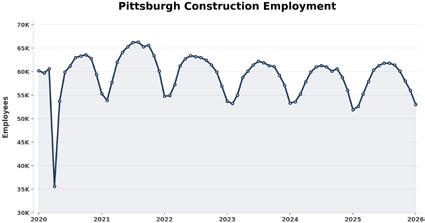
Construction employment dropped from December to January but remained 2.1 percent higher year-over-year.
Source: Bureau of Labor Statistics
percent from March and the lowest reading on record. At the same time, inflation expectations moved higher, with consumers expecting prices to rise 4.8 percent over the next year, driven largely by higher gasoline and energy costs.
The Federal Reserve left interest rates unchanged at 3.5 percent to 3.75 percent at its March 18 meeting, signaling that it is still not ready to begin cutting rates. The Fed voiced concerns about Iran but said the economy continues to grow at a solid
pace, unemployment remains relatively stable, and inflation is still somewhat elevated.
March’s Beige Book described a national economy that is still growing, but at a slower and more uneven pace than in previous reports. Seven of the twelve Fed districts reported slight to moderate growth, while more districts than before reported flat or declining conditions. Consumer spending also remained soft in many areas as households became more price sensitive and lower-income consumers pulled back on purchases.
Manufacturing activity improved in much of the country, helped by stronger
demand tied to data centers and energy infrastructure, while residential real estate remained sluggish because of affordability issues and low inventory. Employment was generally stable, wage growth continued at a modest pace, and businesses increasingly reported using AI and automation to improve productivity rather than replace workers.
Many businesses said they were paying more for insurance, utilities, energy, metals, and other raw materials, while tariffs were increasingly adding to costs. Some firms were able to pass those increases along to customers, but many said consumers were becoming more resistant to higher prices. Overall,
Construction employment dropped from December to January but remained 2.1 percent higher year-over-year.
businesses remained cautiously optimistic that growth would continue in the months ahead, though uncertainty remained elevated.
In the Cleveland district, which includes western Pennsylvania, business activity increased modestly and firms expected that growth to continue. Manufacturing and commercial construction contacts reported stronger demand, with several specifically pointing to data center

development as a major driver of activity. At the same time, companies continued to face strong nonlabor cost pressures, while selling prices kept rising at a moderate pace.
The U.S. Bureau of Labor Statistics (BLS) released their March Employment Situation report in early April, which showed the U.S. economy added 178,000 jobs while the unemployment rate remained unchanged at 4.3 percent. Overall, the labor market
remains stable, but growth is increasingly concentrated in a handful of sectors rather than broad-based across the economy. Health care was the strongest-performing sector, adding 76,000 jobs, helped in part by physicians returning from a strike. Transportation and warehousing added 21,000 jobs, largely driven by couriers and messengers, while social assistance added another 14,000 positions. At the same time, federal government employment continued to decline, falling by 18,000 jobs
Union Craftsmen


in March and down more than 355,000 jobs since late 2024. Financial activities also weakened, shedding 15,000 jobs.
For construction, the report was more encouraging. The industry added 26,000 jobs in March after showing little net movement over the prior year. That suggests contractors are still hiring despite elevated borrowing costs, persistent uncertainty around commercial real estate, and concerns about the longer-term outlook for federal infrastructure spending. Construction was one of the few major industries to post meaningful gains in March, reinforcing the idea that project pipelines remain active even as other areas of the economy soften. The report also suggested wage growth is continuing to cool. Average hourly earnings rose 0.2 percent in March and are up 3.5 percent over the past year, while the average workweek edged down slightly to 34.2 hours.
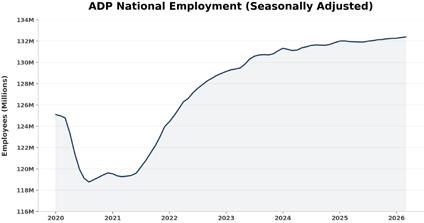
The April release of the ADP National Employment Report showed privatesector employers added 62,000 jobs in March, pointing to a labor market that is still expanding but at a relatively modest pace. Education and health services led hiring with 58,000 new jobs, while information added 16,000 positions and leisure and hospitality added 7,000. By contrast, trade, transportation and utilities shed 58,000 jobs, manufacturing lost 11,000, and hiring in the Northeast and Midwest was negative overall. Small businesses remained the main driver of growth, adding 85,000 jobs, while medium and large employers both reduced payrolls.
Construction also stood out as one of the stronger-performing sectors in the ADP report, adding 30,000 jobs in March. Alongside gains in mining and natural resources, goods-producing industries outperformed service sectors overall.
Construction workers who stayed with their employers also saw annual pay gains of 4.7 percent, slightly above the national average for job-stayers. That suggests demand for skilled labor remains relatively firm even as broader hiring slows in other parts of the economy.
Wage growth remained solid across the labor market. Pay for workers who stayed in their jobs increased 4.5 percent
year-over-year in March, while workers who changed jobs saw their pay jump 6.6 percent. That continuing premium for switching jobs suggests competition for talent remains elevated, particularly in industries where employers are still struggling to fill openings.
April’s Challenger job cuts report showed U.S. employers announced 60,620 layoffs in March, a 25 percent increase from February but still well below the elevated levels seen a year ago. For the first quarter, total job cuts reached 217,362, down significantly from both the prior quarter and the same period in 2025, suggesting that while layoffs are rising month-to-month, the broader trend remains more stable than last year’s disruption. Hiring plans rebounded sharply in March to 32,826, though year-to-date hiring still trails 2025 levels.
Layoffs continue to be concentrated in a handful of sectors. Technology leads all industries with more than 52,000 cuts so far in 2026, followed by transportation, where layoffs have surged more than 700 percent year-over-year amid rising costs and geopolitical pressures. Healthcare has also seen record first-quarter cuts, while education and financial services are experiencing
notable workforce reductions tied to both budget constraints and broader market uncertainty. Despite these cuts, the report suggests companies are not broadly retrenching, but rather reallocating resources within specific industries.
Contradicting the federal beige book, a defining theme in their report is the growing role of artificial intelligence in reshaping the labor market. AI was cited as the leading reason for job cuts in March, accounting for over 15,000 layoffs, or roughly 25 percent of the total. More broadly, companies are increasingly shifting budgets toward AI investment, often at the expense of existing roles, particularly in technology and back-office functions.
At the local level, Pittsburgh’s labor market still looked fairly solid even if payroll growth cooled and the data is dated. The latest Bureau of Labor statistics show the unemployment rate fell from 4.6 percent in August to 3.6 percent in both November and December, while the number of unemployed dropped from 57,100 in August to 44,600 by year-end.
(Pittsburgh Construction Employment)
Total nonfarm employment was up 0.3 percent year-over-year in January, and the strongest gains continue to come
from education and health services, which added jobs consistently throughout the second half of the year and entered 2026 up 1.8 percent from the prior year. Financial activities also showed modest improvement, while professional and business services remained mostly flat. Manufacturing, trade and transportation, information, and government all remained slightly negative on a year-over-year basis, reinforcing the broader theme that Pittsburgh is still growing, but doing so unevenly and at a fairly modest pace.
For the construction industry, the latest numbers suggest a market that remains active even if it is not booming. Construction employment moved from 61,800 jobs in August to 53,000 in January, although that seasonal decline is typical during the winter months. More importantly, the sector entered 2026 up 2.1 percent year-over-year, a notable improvement from the negative readings seen in late 2025. That suggests contractors are still finding work despite broader softness in some corners of the regional economy.
Another late 2025 insight comes from The Cleveland Fed’s latest Business Outlook and Trends Survey, fielded from December. It paints a picture of

“Inflation pressures remain a major concern. Many businesses said they were paying more for insurance, utilities, energy, metals, and other raw materials, while tariffs were increasingly adding to costs.”
a regional economy that remains fairly resilient despite lingering cost pressures. Businesses across the Fourth Federal Reserve District, which includes western Pennsylvania, generally reported stronger demand over the prior six months, and even more firms expect demand to grow moving forward. Nearly half of respondents said demand had increased recently, while a majority expect further gains over the next six months. Capital spending, however, remains cautious, with most businesses reporting little change in investment plans.
The labor market appears stable but not booming. Most firms said staffing
levels were unchanged over the prior six months, though more businesses expect to hire in the coming months than did previously. Wage growth also remains a major theme. Roughly half of respondents reported raising wages recently, while an even larger share expects wage increases ahead. That suggests employers are still facing pressure to attract and retain workers, even as the broader pace of hiring remains measured.
Inflation pressures continue to weigh on businesses throughout the region. More than seven in ten firms reported higher nonlabor input costs, and most expect those pressures to continue into 2026. About half
of firms also said they raised prices over the past six months, with slightly more expecting additional price increases ahead.
In other words, while business sentiment remains reasonably optimistic, many firms are still grappling with higher material costs, rising labor expenses, and the challenge of passing those increases on to customers. While conditions look solid enough, the latest data still does not reflect the sharp rise in oil prices, or the uncertainty surrounding another war. If that conflict settles quickly, then the economy could return to business as usual. The longer it lingers, the more chance for disruption. DP






by Adam Viccaro, SIOR Senior Vice President at CBRE
The Pittsburgh office market is entering a period of measured stabilization following several years of post-pandemic correction. Vacancy remains elevated relative to historical norms, but recent trends suggest that the market has likely bottomed and is beginning a slow recovery phase rather than continuing to deteriorate.
Several themes are shaping the market. Vacancy appears to be stabilizing in the roughly 17 to 18 percent range after multiple years of increases. At the same time, there is a clear flight-to-quality trend, with tenants continuing to favor newer Class A assets while older Class B and Class C inventory struggles to compete. This divide is especially visible Downtown, where older office buildings are facing some of the greatest challenges.
Limited new supply is also changing the conversation. With relatively little new office product entering the market, the focus is shifting away from new development and toward absorption, repositioning, and reuse of existing space. That has contributed to growing interest
in office-to-residential conversions, particularly for older properties that may no longer be competitive as traditional office space. The market also shows a split between suburban resilience and urban softness. Suburban submarkets have generally performed better, while downtown remains under greater pressure.
Overall, Pittsburgh reflects many of the same trends affecting cities across the country. However, the region benefits from relatively low costs, stable demand drivers such as healthcare, education, and technology, and limited new development, all of which provide a foundation for gradual recovery.
DEMAND
Vacancy remains the defining metric in the local office market and continues to represent its greatest challenge. While overall vacancy levels remain elevated, recent quarters suggest that the market has begun to stabilize after reaching historic highs.
Market vacancy stood at roughly 17.5 percent in the first quarter of 2026,
compared to approximately 17.2 percent in the fourth quarter of 2025. That is a notable improvement from 2024, when average vacancy across all office classes was closer to 21 percent. Although vacancy remains well above prepandemic norms, the data suggests that the steep upward climb has slowed and may be leveling off.
Downtown continues to face greater pressure than the broader market. Vacancy in the central business district generally ranges between 18 and 22 percent, reflecting the ongoing challenges facing older urban office buildings and weaker tenant demand in the core. At the same time, there is a growing divide between asset classes. Class A properties are performing materially better, with vacancy around 20 percent, while Class B buildings can reach vacancy levels as high as 34 percent.
That widening gap between newer and older inventory points to a structural change in tenant preferences rather than a temporary cyclical downturn. Tenants are increasingly concentrating in higherquality buildings, leaving a growing share of lower-tier office space struggling to attract or retain occupants.
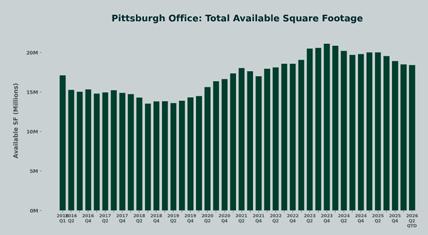
After several years of negative movement, parts of the Pittsburgh began to show signs of positive absorption in 2025. The gains remain modest, but they are meaningful in a market that has spent the past several years dealing with rising vacancy and shrinking tenant footprints. Yearto-date absorption totaled roughly
Total available square footage in Pittsburgh’s office market continues its two-year downward trajectory. Source: CoStar

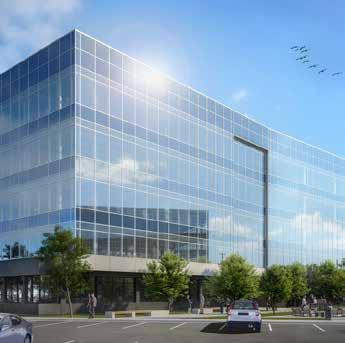
35,000 square feet, reflecting a small but positive shift. While that figure is not large enough to dramatically change overall vacancy levels, it does suggest that the market may be moving away from the steep losses seen earlier in the postpandemic cycle.
Leasing activity has also improved slightly, with more deals occurring in late 2025 than in 2024. Much of that activity has been concentrated in the highest-quality Class A buildings. Tenants continue gravitating toward highly amenitized properties that offer strong views, parking, modern systems, and an overall higher-quality work environment with ample amenities. That trend reinforces the broader flight-toquality dynamic shaping the market and suggests that any near-term recovery is likely to remain concentrated in the top tier of the office inventory.
Pittsburgh benefits from a diversified economic base that provides a relatively stable source of tenant demand. Major sectors supporting the market include healthcare, led by UPMC and Allegheny Health Network, education through institutions such as University of Pittsburgh and Carnegie Mellon University, as well as technology, robotics, artificial intelligence, pharmaceutical distribution & client management, and financial and professional services. Together, these industries provide a stable baseline for office demand even as the broader market adjusts to post-pandemic conditions.

Hybrid work remains the dominant workplace model, which has led many tenants to reduce their overall square footage while simultaneously upgrading the quality of the space they occupy. Amenities have become one of the most important decision-making factors, followed closely by parking, ESG-related building features, and flexible floor plans. These preferences continue to reinforce the broader flight-to-quality trend that has defined the market over the last several years. PNC Bank announced that they are a return to office 5 day per week beginning May 4th, 2026, and experts are expecting the other major occupiers to follow suit once they experience how well (or not) it will go for PNC Bank.
Nationally, office markets continue to face historically high vacancy rates and
a structural decline in demand driven by remote and hybrid work. Our area shares many of those same pressures, but it differs from some larger markets in a few important ways. Pittsburgh boasts lower occupancy costs, limited new supply, and stable institutional anchors such as healthcare systems, universities, and major professional employers. Those factors have helped the market remain relatively stable compared to some peer markets. At the same time, the region faces several disadvantages, including an older building stock, slower population growth, and elevated Downtown vacancy, particularly within the Class B and Class A-minus inventory.
RENTS
Despite elevated vacancy, Pittsburgh’s office rents have remained more resilient than many would have expected. Average asking rents were approximately $23.19 per square foot in the fourth quarter of 2025, with some datasets showing peaks closer to $26.71 per square foot during mid-2025.
The strongest pricing continues to be found in Class A properties. In many of the stronger submarkets, Class A rents are approximately $29 per square foot or higher. Within the Downtown trophy set, asking rents can exceed $36 per square foot. In the western suburban Class A market, including recently delivered new construction, rents generally range from roughly $28 per square foot plus electric to approximately $35 per square foot on a full-service basis.

These figures highlight the growing bifurcation within the office market. Premium assets have generally been able to maintain or even increase rents, while older buildings are facing greater pressure. Owners of lower-quality properties are increasingly relying on concessions, tenant improvement packages, and discounted effective rents to remain competitive.
This mirrors the broader national trend in which pricing power remains concentrated in the highest-quality buildings, while commodity office space faces mounting downward pressure. In many cases, the ability of an owner to hold rents is also closely tied to the debt position of the property, with more leveraged owners often under greater pressure to make concessions or reduce effective rents to maintain occupancy.
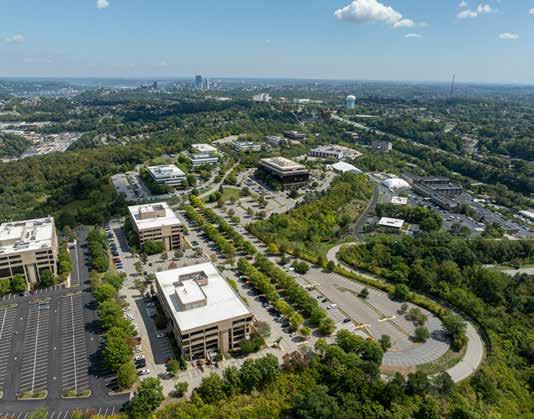
Suburban office submarkets have generally been more resilient than Downtown in the years following the pandemic. Areas such as Parkway West, Parkway North, Cranberry Township, and Southpointe have outperformed the broader market in both occupancy and leasing activity.
Vacancy rates in some suburban submarkets have remained in the roughly 13 to 17 percent range, materially lower than many Downtown buildings. Several suburban areas have also recorded positive absorption trends, suggesting that tenants continue to favor these locations even as the broader office market remains challenged.
A large part of that appeal comes down to practicality. Suburban office properties tend to offer easier parking, lowerdensity environments, and locations that are often closer to

where employees live. At the same time, many of the strongest suburban buildings still provide the amenities tenants are seeking, allowing companies to balance convenience with a high-quality work environment.
The strongest performance in the Pittsburgh office market continues to come from the top end of the Class A inventory, particularly the trophy set. These properties have been notably more resilient than the broader Class A-minus and Class B market, with stronger tenant demand and less available space. That imbalance between supply and demand has allowed many of these buildings to continue raising rents even as the broader market remains under pressure.
Owners of trophy properties have also continued to reinvest in common areas, amenity packages, fitness centers, conference space, and lobby improvements in an effort to remain competitive. As a result, asking rents
in the trophy set are generally north of $36 per square foot. Properties such as One Oxford Centre are already pushing approximately $38.50 per square foot, with expectations that continued upgrades could push rents to roughly $40 per square foot over time.
At the same time, office-to-residential conversions are creating an additional layer of demand by forcing some tenants back into the market to seek new space. Many of those tenants are encountering sticker shock as they confront current Downtown rental rates across nearly every asset class. Rising operating costs are adding to that pressure. Inflation, construction costs, and the high cost of maintaining urban office buildings are increasing expenses for landlords, shrinking capital stacks, and placing further upward pressure on rents.
Some of the strongest leasing momentum is occurring in Pittsburgh’s fringe office districts rather than in the traditional
Downtown core. The Strip District, particularly projects such as The Vision on Fifteenth, and the North Shore, led by NOVA Place, continue to attract tenants seeking amenity-rich, high-quality space with parking. Both ownership groups have shown an ability to make deals without being heavily constrained by lenders. On the South Shore, Station Square is also emerging as a significant office and retail destination as WSD Development begins its injection of capital and investment into the long-beleaguered site.
Rents in these fringe markets reflect their growing appeal. Asking rents at NOVA Place are generally north of $31 per square foot, while The Vision is achieving rates closer to $40 per square foot. Station Square is currently marketing preconstruction office space at roughly $36 per square foot, with expectations that rents could eventually reach $40 per square foot once planned retail improvements are completed.
Pittsburgh’s suburban office nodes are overperforming as the market continues its slow recovery from the pandemic (Source: CBRE)
Oakland and the institutional submarkets remain the strongest and most supplyconstrained office areas in the region. Demand is supported by major anchors such as University of Pittsburgh, Carnegie Mellon University, and UPMC, along with a concentration of technology, research, and healthcare tenants. As a result, these submarkets command some of the highest rents in the region, with properties such as Liberty East reaching roughly $46 per square foot in some cases.
OUTLOOK
Overall, Pittsburgh remains a relatively stable secondary market, but one without a clear catalyst for major growth acceleration in the near term.
The market also faces several risks moving forward. Hybrid work has permanently reduced overall office demand, leaving many tenants with smaller footprints than they maintained before the pandemic. That creates particular challenges for older buildings, many of which face high vacancy, significant capital expenditure needs, and the risk of becoming functionally obsolete if they cannot be modernized.
Downtown recovery remains especially uncertain. The performance of the central business district will depend heavily on the success of return-to-office efforts, public policy support, and the ability to convert older office buildings into other uses. Announcements such as PNC Financial Services requiring employees to return to the office five days per week beginning May 4 could help support Downtown demand, but it remains unclear whether similar policies will become widespread enough to materially change the market.
Over the next 12 to 24 months, the Pittsburgh office market is expected to remain relatively stable. Vacancy is likely to hold steady or decline slightly, while rents should continue to show modest growth in the Class A segment and softer performance in the Class B market. Leasing activity is also expected to improve gradually as tenants continue to make long-term space decisions and the market works through excess inventory.

BUILDING



©2025 ED MASSERY


Over the medium term, the market will likely continue to see a reduction in office inventory through conversions and adaptive reuse projects. The divide between stronger trophy and Class A properties and weaker Class B inventory is also expected to widen further. As obsolete buildings are removed from the office stock and stronger assets continue to capture the majority of tenant demand, vacancy levels should gradually normalize.
Long term, Pittsburgh’s office market is likely to become smaller but more efficient. Office-to-residential and hotel conversions should help reduce Downtown office inventory and move the central business district toward a more balanced mix of office, residential, and hospitality uses. Demand will continue to be anchored by healthcare, education, technology, and other institutional drivers, while tenants increasingly prioritize higher-quality, amenitized space.
Office demand no longer in freefall, but it has not fully recovered. Instead, it is in a transitional phase defined by stabilization, segmentation, and structural change. Elevated vacancy and Downtown weakness remain major issues, but limited new supply, stable economic drivers, and growing adaptive reuse activity all provide reasons for cautious optimism.
For investors, owners, and other stakeholders, success in this market will depend heavily on asset quality, capital structure, and the ability to reposition or adapt properties to changing tenant preferences. Pittsburgh is becoming a leaner and more quality-driven office market. Older assets will continue to struggle, and many Downtown buildings may ultimately transition to other uses, but well-positioned properties across a range of submarkets should continue to perform. DP
Adam Viccaro is a leader in commercial real estate who specializes in asset re-positioning and multiple high profile projects in Pittsburgh. Over the course of his career, Viccaro has completed over 450 real estate transactions totaling more than 4.5M SF of space and $652 million in value for his clients.
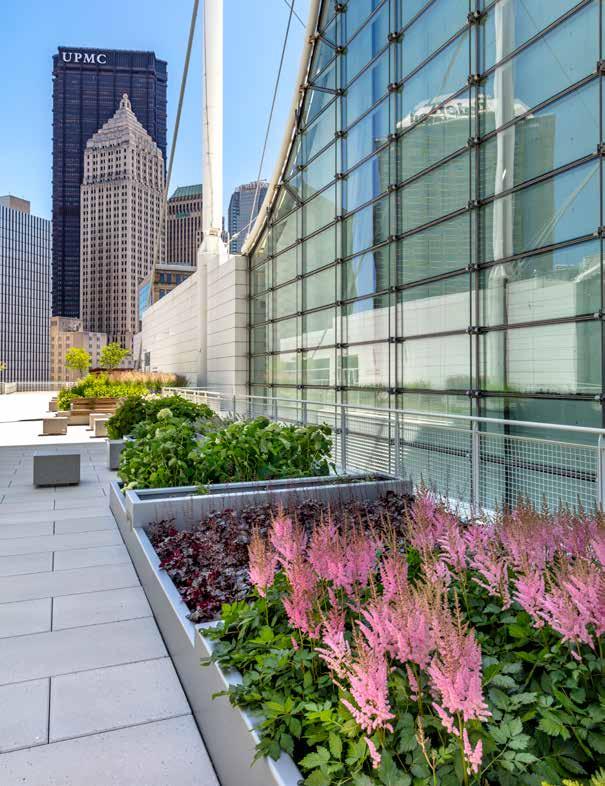

It has been a very interesting and active six months since the Fall Issue of Developing Pittsburgh published its Industrial Market Report. The Industrial Market slowed during the traditionally active spring and early summer of 2025 but roared back in Q3 and Q4 of 2025 and continued its strong pace during Q1 of 2026. Over the past six months, the market has provided some of the largest transactions in recent memory including leases, building sales and land sales that are indicative of a very healthy economy for light manufacturing based on demand for all products vertically integrated in the national data center construction and development boom underway in the United States.
MARKET FUNDAMENTALS
While the US National Vacancy rate increased to 7% by year end 2025, the Pittsburgh Industrial Market vacancy rate decreased to less than 6% with Class A vacancy decreasing to 5% indicating relative strength in the market by the end of Q1 2026. Overall asking rents for
Class A space has leveled off as some larger vacancies remain with smaller spaces continuing to see modest rent increases. Interest rates remained steady with the 10 Year Treasury in a trading range from 4.00-4.25% resulting in cap rate stabilization in the 6.50-6.75% range which led to an increase in capital market sales activity in Pittsburgh over prior years.
Rather than focus on market statistics which remain consistently stable and healthy, we will concentrate on the numerous significant transactions that closed in Q4 of 2025 and Q1 of 2026 that are indicators of the underlying strength of the Pittsburgh Industrial Market.
INDUSTRIAL LEASES
EOS Energy Enterprises leased 432,000 SF at 150 Thorn Hill Road in the Thorn Hill Industrial Park to accommodate the expansion of their battery manufacturing operations. This was the largest lease of 2025 and backfilled the former American Eagle Outfitters warehouse being vacated by Netflix and Veritiv.
The Allegheny County Airport Authority was able to secure Skyport from the Czech Republic to lease the speculative 88,000 SF facility known as Air Cargo #4. Skyport joins FedEx, UPS, and Amazon to increase our air freight capabilities.
As previously reported, Lighthouse Electric leased the 100,000 SF speculative warehouse known as the Brockway Commerce Center in Washington County and within a few months of completion decided to expand the building by an additional 65,000 SF which was completed in March 2026.
Lighthouse Electric also signed a lease for 200,000 SF at 112 Technology Dr in the RIDC Park West vacated by Atrium/Nestle in 2024. This transaction filled the largest vacancy in the Airport corridor.
In the Imperial Business Park, SL Silverman completed a 90,000 SF light industrial facility for Cumi America and renewed several tenants including Lowe’s for 100,000 SF and Maersk for 45,000 SF.
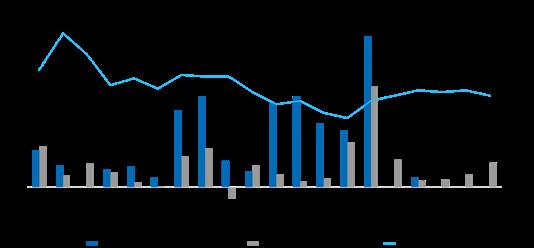
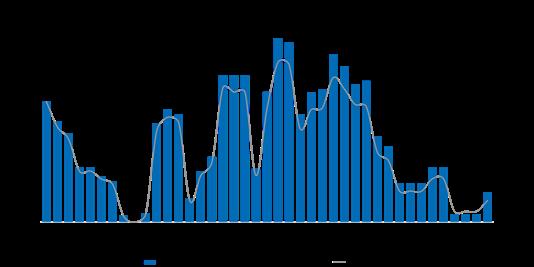
LaCarte Development executed a build-to-suit lease with Bakery Barn for an 85,000 SF warehouse in the Alta Vista Business Park in Washington County to help support their bakery operations located in Alta Vista. The target completion date is Q3 of 2026. The only remaining development site in Alta Vista is under agreement of sale to an owner occupier which will signal the completion of this very successful industrial park developed by the Mon Valley Alliance. Upon completion, Alta Vista Business Park will be home to 14 companies with over 1,000,000 SF developed.
INDUSTRIAL SALES
In Q1 of 2026, one of the largest industrial sales was completed by the sale of Amcell Center II to GE Vernova for $70,000,000. Amcell Center II is the former Wetterau/ Supervalu Distribution Center which became a two building, multi-tenant facility of 720,000 SF. The primary warehouse/office area is almost 600,000 SF and a separate building of 130,000 SF. It is expected that GE Vernova will phase into the building as leases expire to support its manufacturing operations in Speers and Findlay Township.
In Q4 of 2025, Judraks LLC acquired the former Contraves/L3 Harris facility at 615 Epsilon Dr for $7,300,000. This purchase allowed Judrak’s to relocate its existing tenant, Acutronic USA from a 50,000 SF facility on Washington’s Landing to 147,000 in the RIDC Industrial Park.
102 Technology Dr in the RIDC Park West was acquired for $6,100,000 by Terminalis Global Holdings who are expected to occupy the building. The 65,000 SF building is the former Keebler/Kellogg warehouse which had been occupied by Black & Veatch.
Call it “addition by subtraction” but the former 220,000 SF building at 200 Beta Drive in the RIDC Industrial Park occupied by Emerson Process Controls was acquired by Ohararesi LLC for $4,500,000 to be redeveloped into a multi-family residential project. This sale eliminates a large, functionally obsolete building that was negatively impacting occupancy statistics in the Northeast submarket which remains extremely tight and lacking available Class A space.
CAPITAL MARKETS
Despite the gap between the pricing expectations of Sellers still seeking 2022
pricing based on 3% Treasury Yields and Buyer’s expectations of pricing reflecting 10 Year Treasury yields averaging 4.15%, there were several noteworthy sales in the latter half of 2025 and early 2026.
Treetop Companies made two significant acquisitions in the Northeast Submarket with the purchase of 615 Alpha Drive and 460 Nixon Road. 615 Alpha Dr is known as the former Thrift Drug headquarters which was acquired and redeveloped by McKnight Development into a multitenant facility featuring Benshaw, LKQ and Tandem Foods totaling 326,000 SF. The price was in the range of $30,000,000 ($92/SF). 460 Nixon Road is known as the former Action Industries headquarters which was previously acquired by Maquire Hayden and converted into a multi-tenant warehouse featuring ABC Supply, Express Tire, Sampco and BFG Supply. The reported price was $33,000,000 ($62/SF).
In the Airport/West Submarket, Outrigger entered the Pittsburgh market through the acquisition of 1200 International Drive, a 100,000 SF speculative building in the North Fayette Industrial Park developed by Ashford Partners. The purchase price for the building was $12,500,000 ($125/
Construction activity stayed limited through most of 2025 before rising to 340,277 SF in the fourth quarter. Roughly half of all space under construction was build-to-suit warehouse and distribution product. (Source, Newmark)

Overall vacancy rose from 5.5% in late 2022 to a peak of 7.1% in early 2025 before easing to 6.8% by year-end. Class A vacancy followed a similar path but remained lower, improving to 4.9% by the end of 2025 as higher-quality space leased more quickly.(Source, Newmark)
SF) despite the building being 40% vacant although a tenant was secured for 20,000 SF bringing the occupancy to 80%.
A joint venture between the RIDC and the Urban Redevelopment Authority of Pittsburgh sold the Fairywood Industrial Park to Becknell for $25,750,000. The price is based on a 150,000 SF buildto-suit, long term lease to Ferguson Enterprises which sold for $25,750,000 ($158/SF) and $2,000,000 for the adjoining development pad site to accommodate an additional 150,000 SF building.
Industrial-Commercial Properties acquired the former Ibistek facility of 122,000 SF in the Victory Road Business Park in Saxonburg and will renovate the building on a speculative basis to secure potential light manufacturing/warehousedistribution users.
Also in Butler County, Ironhorn Enterprises from upstate NY acquired the former Ibistek campus in Middlesex Township for $4,400,000 ($33/SF). The five-building campus totaling 133,000 SF was 55% vacant at the time of sale and will be marketed for lease.
CONSTRUCTION/SPECULATIVE DEVELOPMENT
While construction activity in 2025 was well below the past several years, there are several new projects underway in 2026 that will provide additional Class A inventory to the Pittsburgh market.
In the Airport/West submarket, Ashford Partners started their second 100,000 SF speculative building in the North Fayette Industrial Park with shell completion scheduled for Q3 2026. Ashford secured a 20,000 SF tenant prior to breaking ground.
Merus signed a ground lease with the Allegheny County Airport Authority on the last remaining site at Northfield and started construction of a speculative 224,000 SF building with a target completion date of Q4/Q1 2027. This will be Merus’ third speculative building at Northfield joining Pepsi and Legrand.
Also, in the Airport/West submarket, the RIDC was named the master developer for the 195-acre Neighborhood 91 which is controlled by the Allegheny County Airport Authority. The master plan is to attract advanced manufacturing users to take advantage of the adjacency to the
Pittsburgh International Airport and the I-376/RT 576 infrastructure. Initial plans call for a speculative 100,000 SF building on the site.
DATA CENTERS
It would be professional negligence to ignore all the interest and speculation for data center development in the entire 10 county, Southwestern PA SMSA. There were two significant land sales with direct ties to data center development. The first was in Springdale with the sale of the former Cheswick Power Generation Station. The 47-acre brownfield site sold for $14,000,000 to Allegheny DC who is proposing a 565,000 SF data center and 200,000 SF utility support building.
On a much larger scale, the former PA Raceway test track situated on 380 acres in Beaver County sold for $50,000,000 to Wampum I LLC, a company linked to Provident Data Centers. No formal announcements have been made regarding the planned scope of the project.
In the past year, numerous sites have been referred to as potential large scale data center projects including the Homer



Avison Young creates real economic, social and environmental value as a global real estate advisor, powered by people. Our integrated talent realizes the full potential of real estate by using global intelligence platforms that provide clients with insights and advantage. Together, we can create healthy, productive workplaces for employees, cities that are centers for prosperity for their citizens, and built spaces and places that create a net benefit to the economy, the environment and the community.
City Energy Campus (3,200 acres); TEC Fusions (1,300 acres); Robena Mega Site in Greene County (1,400 acres) and Shippingport/Project Phoenix (594 acres) on the former Bruce Mansfield plant. While not a complete list of sites, it will be interesting to see how many projects announce legitimate hyperscale users and how many sites can deliver the onsite utility infrastructure to support the needs of the data center users.

Over the past six months, the market has provided some of the largest transactions in recent memory.
HEADWINDS
The Westport area of RT 576 has been negatively impacted by the lack of available electrical service capacity to meet the needs of both existing users and planned speculative projects on the limited remaining sites at the Findlay Industrial Park and Chapman Westport. The two industrial parks are home to over 4,200,000 SF of industrial occupiers and only eight sites remain to accommodate an additional 1,200,000 SF of development subject to Duquesne Light adding capacity to this location. Electrical infrastructure availability is the most significant issue impacting industrial development in Southwestern Pennsylvania!
We remain bullish that 2026 will be another solid year for the Pittsburgh Industrial Market.
Respectfully submitted by Louis V. Oliva, SIOR, Executive Managing Director of Newmark and Anthony Oliva, Director of Newmark. DP
When we last touched base in the fall, we suggested that capital markets might be stabilizing as buyers and sellers gradually bridged the pandemic created pricing gap. The hypothesis was simple: once markets began agreeing on what assets were actually worth in a higher-rate environment, investment would pick up steam.
In the two quarters since publication, that appears to be exactly what transpired. While there was not a flood of capital moving into commercial real estate, investment activity certainly picked up across the industry’s major sectors, and there is enough data to indicate that this trend will continue through 2026.
A major reason the buyer-seller standoff lasted so long was the broader interest-rate environment. Beginning in 2022, the Federal Reserve rapidly raised short-term rates in an effort to bring inflation under control after trillions of dollars were pumped into the economy through the pandemic.
As those hikes worked their way through the financial system, short-term borrowing costs rose above the 10-year Treasury yield. These two benchmarks
underpin commercial real estate loan pricing, and their inversion indicated high levels of uncertainty about the cost of money and rapidly cooled commercial real estate capital markets.
This situation persisted for nearly three years, but beginning in early 2025, the inverted curve began to fluctuate between positive and negative territory as markets adjusted to shifting expectations about inflation and the future path of monetary policy. By late 2025, the curve had largely normalized, and as of early March 2026, the 10-year Treasury yield was approximately 4.15 percent, compared with an effective federal funds rate of about 3.6 percent.
This return to normal kickstarted investment across the nation.
“2025 really was a rebound year,” said Nick Unkovic, a senior managing director at JLL Capital Markets.
“In terms of both transaction volume and just general interest from all kinds of parties. Last year was really the first year where we saw people adjusting to where rates were both short and long term.”
Unkovic says the adjustment to higher interest rates has now largely worked its way through the market, with buyers, sellers, lenders, and developers increasingly willing to move forward on refinancings, sales, and new development projects. He points out that activity has remained strong into 2026 across nearly every property type, including office, where distressed pricing is creating opportunities for new owners to recapitalize buildings, invest in improvements, and reposition assets.
Recent reporting from Trepp also suggests that commercial real estate capital markets are in the early stages of stabilization. Their data also indicates that capital is beginning to re-enter the market, but lenders and investors are doing so selectively while continuing to manage distress through loan restructurings rather than widespread liquidations.
One sign of improving market liquidity is the rebound in commercial real estate collateralized loan obligations (CRE CLOs). According to Trepp CRE Insight’s spring report on the subject, issuance reached roughly $11.2 billion by early March 2026, representing a 34 percent increase compared with the same point in 2025. If the current pace continues, total issuance could reach $30 billion to $40 billion for the year, approaching the approximately $45 billion peak recorded in 2021.
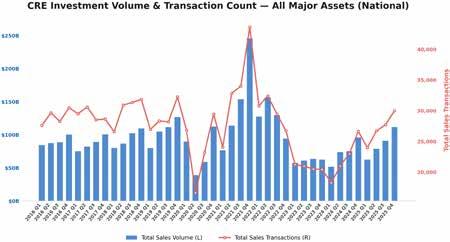
However, the composition of these loans reflects a more
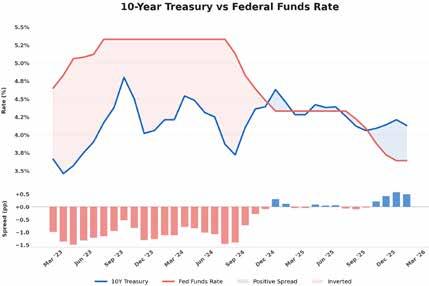
cautious lending environment than the low-interest-rate period that fueled earlier activity. Much of the new lending is concentrated in transitional or value-add projects, where borrowers aim to renovate properties, improve occupancy, and eventually refinance into longer-term debt. Multifamily properties account for roughly 70 percent of CRE CLO collateral, while office exposure has fallen sharply, highlighting lenders’ continued wariness toward that sector.
Property performance data tells a similarly nuanced story. Trepp’s analysis in Retail CMBS Delinquencies and Sales Report shows that retail delinquency rates have gradually improved since the peak of postpandemic stress, declining from about 7.1 percent in February 2022 to roughly 6.2 percent in February 2026 across approximately $109.5 billion in outstanding private-label CMBS retail exposure.
At the broader market level, Trepp’s February 2026 CMBS Delinquency Report indicates that credit conditions may be stabilizing modestly. The overall CMBS delinquency rate declined to 7.14 percent, falling 33 basis points from the prior month. The decline was largely
driven by loan modifications and maturity extensions involving several large office and retail properties, allowing borrowers additional time to stabilize operations or pursue refinancing strategies. Among property types, office delinquency declined to 11.20 percent after reaching a record high the previous month, while retail improved to 6.30 percent, its lowest reading since August 2024. Multifamily delinquency edged down slightly to 6.85 percent, while industrial remained the least distressed sector at just 0.67 percent.
New data from the Mortgage Bankers Association also suggests the commercial real estate market may be moving past the peak of the so-called “maturity wall,” though refinancing pressure remains substantial. According to that group’s 2025 Commercial Real Estate Survey of Loan Maturity Volumes, approximately $875 billion in commercial mortgages, roughly 17 percent of the $5.0 trillion outstanding CRE debt market, are scheduled to mature in 2026, down about 9 percent from the $957 billion that matured in 2025.
The decline indicates that 2025 potentially represented the peak year of the refinancing wave but notes the volume of loans coming
due remains historically elevated. MBA economists believe that this still-large pool of maturing debt should continue to drive refinancing and transaction activity across the sector as borrowers restructure capital stacks, recapitalize properties, or sell assets in order to refinance.
The distribution of maturities varies significantly across property types and lenders. Hotel loans face the most immediate refinancing pressure, with 30 percent of outstanding balances maturing in 2026, followed by industrial (23 percent) and office (17 percent) loans. Multifamily faces somewhat less near-term pressure, with 13 percent of loans scheduled to mature in 2026. The maturity burden also differs by capital source: 21 percent of bank-held CRE mortgages, 25 percent of CMBS loans, and 29 percent of loans held by credit companies and warehouse lenders will mature this year, while only 4 percent of agency-backed multifamily and healthcare loans will come due.
Overall, the MBA data suggests that while the refinancing wave is beginning to moderate after peaking in 2025, hundreds of billions of dollars in maturing loans will continue to shape capital markets behavior in the near term, pushing lenders and borrowers toward refinancings, restructurings, and property sales as the market adjusts to higher interest rates.
Their observations are backed by hard data. A national survey of CoStar sales comps shows that sales volume accelerated through the end of 2025 across every major property type (industrial, office, multifamily, retail). While transaction levels remain well below the peak years of 2021 and early 2022, a recent upward trajectory is clearly visible.
Source, The Federal Reserve Bank of St. Louis

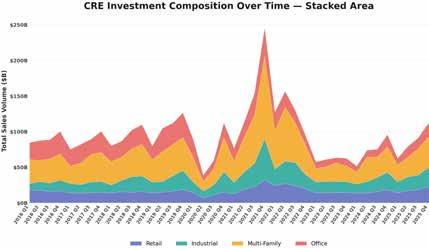
(image: CRE Investment Volume and Transaction Count)
Both investment levels and total transactions picked up every quarter of 2025, and transaction counts have now risen in seven of the past eight quarters. Close to 30,000 commercial real estate sales finalized in the fourth quarter of last year, with over 105,000 deals finalizing throughout the year. This represents a growth of 22 percent when compared to 2024 and was the highest levels since 2022.
Of the $344.6 billion spent on these asset classes in 2025, multifamily make up the lion’s share. Sales volume for this asset class was $130.8 billion. Investment volume nearly doubled over the course of the year, rising from $23.7 billion in the first quarter to $42.7 billion by the fourth. Transaction counts increased from 3,719 deals to 5,274, and average deal size reached $8.1 million by Q4, easily the largest of any major asset class. (IMAGE: CRE Investment Composition over time)
Industrial assets also saw a steady resurgence through the year. Quarterly volume climbed from $14.4 billion in the first quarter to $26.8 billion by the fourth quarter. Transaction counts followed the same trajectory, rising from 4,844 deals in Q1 to 6,429 in Q4. Average deal size also
increased, growing from $3.18 million to $4.17 million.
Retail, meanwhile, has emerged as the most stable segment of the market. Investment volume climbed steadily from $14.3 billion in Q1 to $23.0 billion in Q4. Transaction counts were the highest of any property type, reaching nearly 13,000 deals in the fourth quarter alone. That reflects the nature of the retail sector, where deal sizes tend to be smaller — typically averaging between $1.3 million and $1.8 million — compared to the larger institutional trades seen in multifamily.
Retail also posted positive year-overyear growth in all four quarters, with momentum accelerating through the year. The rolling annual average continued rising each quarter, moving from $15.7 billion to $18.4 billion. That steady progression is a healthy signal for the sector: the market is strengthening gradually rather than relying on one unusually large quarter to drive the numbers. By the end of 2025, retail investment activity had returned to roughly the levels seen in the late 2010s. Of the four major property types, retail appears the most “normalized,” having largely moved past the correction phase and settled back into pre-pandemic investment rhythms.
Office, the sector most closely watched for signs of distress, posted a surprisingly strong rebound in investment activity. Sales volume doubled over the course of the year, rising from $9.3 billion in Q1 to $19.2 billion by Q4. Perhaps more important, every quarter posted positive year-over-year growth — the first time that has occurred since 2021.
“The bad news is a lot of office buildings are being sold at a loss,” said Unkovic.
“But the good news is that means the new buyer coming in has a reset basis that allows them to invest in the property, execute new leases, put out TI, put CAPX into the properties, and really do what needs to be done to have a quality asset.”
Unkovic said that while office remains challenging, the market is finally moving after several years of lenders and owners extending troubled assets rather than forcing transactions. He said the reset in pricing is creating liquidity and attracting buyers willing to reinvest in properties. He also noted that lenders have become more open to financing stronger office assets again, particularly for well-located buildings with a credible plan for leasing and improvements.
Office transaction counts increased from 4,225 deals to 5,315, indicating that the recovery is being driven by broader participation rather than a handful of large institutional trades. Still, perspective is important. Even the relatively strong fourth quarter volume of $19.2 billion remains less than half of what the office sector was seeing in late 2021 or even pre-pandemic 2019. The sector is recovering, but it is doing so from a deeply depressed base.
This same dynamic appears to be taking shape locally. In Pittsburgh, commercial
Source, CoStar
real estate investment across the four major property types totaled roughly $1.62 billion in 2025, a notable increase from approximately $1.12 billion in 2024. (image: Pittsburgh CRE Investment By Property Type)
Retail led the way by a wide margin. Total retail investment reached roughly $674 million for the year, accounting for about 41 percent of all commercial real estate investment in the region. The sector also produced one of the most notable individual quarters in the dataset: the second quarter of 2025 recorded $236.7 million in sales volume, the strongest retail quarter in Pittsburgh going back to at least 2016. Transaction counts remained strong throughout the year, ranging between 159 and 215 deals per quarter. The result was the best retail investment year since 2022 and a sector that is currently carrying much of the region’s transaction activity.
Industrial investment remained relatively consistent in terms of deal flow. Transaction counts were remarkably stable, holding between 60 and 62 deals every quarter. Volume, however, was more uneven, reflecting the influence of a few larger transactions. The fourth quarter stood out in particular, with $141.9 million in industrial sales — the strongest quarter for the sector since late 2020. For the year, industrial investment totaled roughly $348 million, up from $258 million in 2024.
Office, while still facing structural challenges, showed real signs of renewed activity. The second quarter surpassed $100 million in sales volume, marking the strongest office quarter in Pittsburgh since Q2 2022. By the fourth quarter, transaction counts reached 90 deals — the highest level since late 2022. Total office investment for the year reached approximately $320 million, a substantial increase from $189 million in 2024 and far above the depressed
$131 million recorded in 2023. While the sector is far from fully recovered, the increase in transaction activity suggests that investors are once again willing to engage the market.
Multifamily investment told a different story. For most of the year, activity remained relatively subdued, with quarterly volume ranging between roughly $22 million and $45 million. Then the fourth quarter delivered a sudden spike: $194 million in sales across just 26 transactions. That equates to an average deal size of roughly $7.5 million, a clear sign of institutional capital entering the market. The surge pushed total multifamily investment to approximately $276 million for the year.
He cautioned that the recent rise in the 10-year Treasury tied to uncertainty in the Middle East could slow momentum if it continues, but absent a prolonged geopolitical shock, he believes the market remains in a much healthier and more active place than it was over the previous two years.
One reason for the flip-flop is (or perhaps, was) cooling inflation. After surging to multi-decade highs post-pandemic, inflation readings are inching closer to the Federal Reserve’s long-term target of two percent, reducing pressure on policymakers to continue raising rates.
The Consumer Price Index (CPI), one of the most widely cited measures of inflation, rose 2.4 percent year over year in January 2026, down from 3.0 percent in January 2025, and February’s numbers were roughly the same. The Fed’s preferred measure, the Personal Consumption Expenditures (PCE) price index, has been somewhat more uneven but remains well below the peak levels seen earlier in the cycle, coming in at 2.9 percent year over year in December 2025, compared with 2.6 percent in December 2024, and 2.8 percent year over year in January of 2026.
However, the conflict in Iran made waves in March’s numbers. The April release from the BLS showed that the CPI rose by 0.9 percent from February to March, and year over year growth is now over 3.3 percent. The producer price index also rose by 0.7 percent, its sharpest jump since 2025.
For financial markets, that moderation has been enough to reduce some of the urgency around additional rate hikes and has helped long-term rates settle into a more stable range. Further stabilization would be achieved by a settling of the overall economy, which has been jittery since the Trump administration’s implementation of sweeping tariffs last spring.
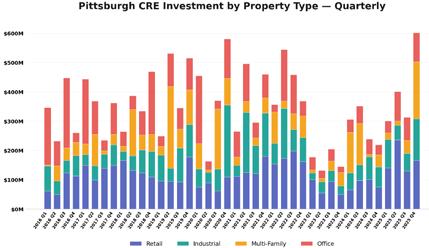
Source, CoStar
While these tariffs generated tremendous headlines and sparked dramatic initial movements in the stock market, the worst-case fears of many failed to come to fruition. A year out from their implantation and inflation remains only slightly higher than the Fed would like. The Producer Price Index, which measures inflation at the wholesale or producer level, climbed by 3.0 percent in 2025, compared to 3.5 percent in 2024.
That limited the number of rate cuts the board made last year, often to the President’s chagrin. When these cuts did occur, the reason cited was containing unemployment. The most recent data from the U.S. Bureau of Labor Statistics shows the unemployment rate at 4.1 percent in February 2026, up 0.2 percent year over year. In between those two points the rate moved within a narrow band, generally fluctuating between 3.8 and 4.1 percent throughout 2025, indicating that the labor market cooled somewhat but did not experience a sharp deterioration.
The Job Openings and Labor Turnover Survey (JOLTS), which tracks demand for
workers across the U.S. economy, also shows that the labor market has remained relatively steady over the past year. The most recent data indicates approximately 8.9 million job openings in January 2026, compared with about 8.1 million openings in January 2025. (IMAGE: Labor Market Job Openings Vs. Unemployment Rate)
All in all, the economy remains on solid footing but the (rather big) question is: will it stay that way? Here one can only shrug.
The Supreme Court ruled against the administration in a recent tariff case but also gave it an out to continue implementing them under a different legal path. This drama will likely once again makes its way through the judicial system over the next few quarters while the President himself remains a wildcard, certainly unafraid of making abrupt and bold policy changes.
Most of the latest data also predates the conflict in Iran. While at the time of this writing (early April) a ceasefire had been negotiated, the situation remains vulnerable to disruption. An early March report from Trepp describes how the
escalating tensions have led to rising oil prices, which could significantly impact commercial real estate markets by driving up construction and transportation expenses. Wells Fargo economists also weighed in, advising that their baseline forecast for oil is to settle at 30 percent higher than the end of 2025, with energy related shortages dragging global GDP down to 2.8 percent (from their earlier 3.0 percent forecast).
But the geopolitical landscape has been shifting for over a decade now, and there does not appear to be any end in sight. Forecasting that is a fool’s errand and barring catastrophe, there are several reasons to remain cautiously optimistic about the future of capital markets in the world of commercial real estate.
It’s shaping up to be a robust year for commercial real estate capital markets. The economy remains healthy, money is flowing back into the system, and deals are closing at increasing volume. If no black swans fly into the pond, 2026 could be another year of investment growth. DP
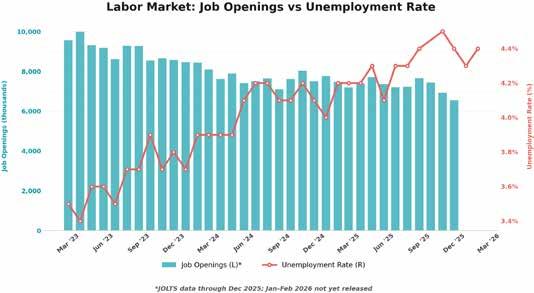


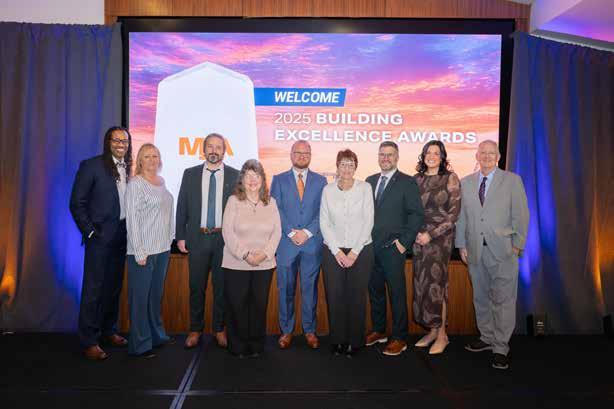
Become par t of the region’s largest commercial construction trade association, with more than 300 member companies.
Member Benefits
Advocacy
Best Construction Practices
Committee and Taskforces
Education and Training
Government Relations
Industry Relations
Industry Promotion
Labor Relations and Affiliation
WHAT WE DO
Networking Events
News and Information
Safety Awards
Safety Services
Workforce Development
The Master Builders’ Association of Western Pennsylvania (MBA) is a union trade association representing and suppor ting the commercial construction industry across the region. Guided by the core principles of skill, integrity, and responsibility, the we provide valuable member services, promotes best practices, advocate for the industry, and help grow a highly skilled workforce. Through the member benefits above, we bring together contractors, construction managers, suppliers, and industry par tners to strengthen the building community and suppor t long-term success.
Commercial real estate continues to face challenging market conditions in 2026. NAIOP Corporate is focused on three issues to improve conditions for the commercial real estate industry.
Adaptive Re-Use and Affordable Housing
Congress should pass legislation to incentivize the adaptive reuse of vacant and underutilized commercial buildings for residential purposes. Adaptive reuse property conversions can help increase the supply of affordable housing while helping to restore economic vitality to communities dealing with the impact of post-pandemic workplace changes. The Revitalizing Downtowns and Main Streets Act (H.R. 2410), introduced by Representatives Mike Carey (R-OH) and Jimmy Gomez (D-CA), would create a tax incentive to offset the costs of conversions and give local communities a needed tool to increase their supply of rental housing.
• Many local communities are struggling with a lack of affordable housing due to a severe shortage of rental housing supply. The current production of rental housing units is not expected to meet the projected demand over the next decade.
• At the same time, communities are still coping with the post-COVID-19 impact on their commercial real estate markets, resulting in historically high vacancy rates and underutilization of commercial structures. While Class A trophy buildings sustain – they have recovered market competitiveness – many Class B and C commercial structures will become stranded assets unless repurposed for economically viable uses.
• In many instances, vacant and underutilized commercial buildings are suitable for conversion to residential usage and could become a part of a comprehensive approach
NAIOP Corporate’s 2026 Legislative Agenda
to increasing housing supply, but the resulting conversion costs prevent adaptive reuse of these structures. The decline in property values of these structures also hurts localities that depend on property and sales taxes as sources of revenue.
• To help address these challenges, Congress should pass the Revitalizing Downtowns and Main Streets Act (H.R. 2410), introduced by Representatives Mike Carey (R-OH) and Jimmy Gomez (D-CA). The legislation would create a 20% tax credit for the eligible conversion costs of an adaptive reuse project, providing communities with a much-needed additional tool to increase rental housing supply and affordability, while repurposing commercial real assets in their localities to more productive use.
Electrification and Energy Policy
Congress needs to pursue comprehensive energy policies designed to meet electricity demand throughout the U.S. economy, including increased investment in electrical grid expansion and modernization, permitting reforms for energy generation and transmission projects, and increased coordination on major regional projects across multiple jurisdictions.
Many commercial real estate projects are being delayed for years, or are not being pursued at all, because utilities cannot guarantee they can meet electricity demand. Congress must act to ensure that the U.S. has sufficient electrical capacity for the critical real estate and industrial development needed to support continued robust economic growth. A comprehensive policy approach is needed in the following areas:
• Expansion and modernization of the electrical grid necessitate federal investment to enable power generators to connect new facilities more quickly to the grid. Electrical grid expansion should allow for an “all-of the above” energy policy, including for renewable energy sources such as wind and solar.
• The system of federal energy permitting must be reformed in order to facilitate grid expansion and increased production of electricity from all energy sources. Shortened federal permitting timelines with increased decision-making transparency, and reform of litigation procedures to eliminate unnecessary delays, are needed.
• Major regional transmission projects often involve utilities and government entities from multiple states and local jurisdictions and can take up to seven times longer to build than energy generation installations. Federal policies are needed to promote and incentivize regional coordination.
• The costs and benefits of the large energy infrastructure projects needed to meet the growing national demand are often not shared equally among the consumers of electricity. The ratepaying consumer in one state will oppose infrastructure investments paid through higher utility bills that provide energy to users in other states. Congress needs to develop policies that enable utilities to pursue major transmission projects of strategic importance.
Congress must ensure that federal energy policy is designed to meet the surging need for electricity. Without action, utility costs are sure to increase and become less affordable for consumers, fueling opposition to development of the manufacturing plants, warehouses, cold storage facilities and other commercial structures critical to the nation’s future economic growth and competitiveness.
Transportation and Infrastructure
Congress should pass a multiyear reauthorization of surface transportation
programs early in 2026, well before they expire later in the year, to give states and local governments the certainty they need to continue current infrastructure projects and plan future ones. Infrastructure policy should promote a streamlined, transparent regulatory environment that reduces costs and minimizes delays in project delivery. At a minimum, current funding levels should be maintained to ensure continued investment in critical transportation and infrastructure projects.
• The availability of modern and efficient transportation and infrastructure is a major factor in real estate development and investment decisions. Strategic, long-term investments in infrastructure systems foster increased opportunities for commercial real estate development, resulting in stronger job creation and economic growth for our communities.
• Congress should provide adequate support for highway programs, freight rail, ports and other infrastructure critical for logistics purposes and supply chain resilience to support the reshoring and onshoring of manufacturing in the U.S.

• Permitting and approval processes must be modernized and streamlined to improve project delivery times and reduce costs. Reasonable and specific timelines for completion of agency reviews are needed, and federal agencies should be provided with sufficient funding to ensure that they have the staff needed to conduct project reviews within expected timeframes.
• Reauthorization of federal surface transportation programs should provide direct federal investment and funding of multistate projects of national or regional importance. Priority should be given to major transportation and infrastructure projects that have economic impact beyond their regions and affect all or major portions of the country
• Congress needs to consider alternative, more stable and predictable funding sources for highway infrastructure. Current funding for the Highway Trust Fund is through the gas tax, which has not been adjusted for inflation. In addition, modern vehicles are more fuel-efficient, and electric vehicles are more numerous. As a result, the Highway Trust Fund will collect $44 billion in revenue in 2026, but will spend more than $61 billion, requiring transfers from general revenues. DP
For more information contact Aquiles Suarez, NAIOP Corporate senior vice president for government affairs at suarez@naiop.org (703-904-7100) or Eric Schmutz senior director of federal affairs at schmutz@naiop.org (703-674-1450).

Mayor O’Connor has already made permit reforms as part of his progrowth policy agenda. If you could suggest one other single policy change to promote growth in the City of Pittsburgh, what would that be?

Todd Reidbord President and Founding Partner Walnut Capital Management
“We are strong supporters of Mayor O’Connor and his vision for Pittsburgh. From our perspective as real estate developers, we believe that it is critical that our mayor proposes, and City Council approves changes to the current zoning code to simplify and streamline the development process. Going forward, now more than ever, speed to market is probably the most critical decision point for companies looking to expand in Pittsburgh. Having a zoning code that permits a wide variety of uses and sizes of buildings, as of right, can significantly reduce the development timeline. An important ‘downstream’ effect of zoning reform is the availability of more land for concentrated development. As Mayor O’Connor consistently emphasizes, we need more people to move to Pittsburgh. Having more housing options, close to where the jobs are, encourages people to choose to live in our great city neighborhoods. Zoning reform permitting more dense housing options is critical to our growth aspirations.”

David Heaton CEO The Buncher Company
““Extending the LERTA from 10 years to 20 years was a significant improvement. Aligning the taxing bodies (city, county, and school district) to
define standard project requirements to acquire the LERTA would be even better.
With a set of standard requirements, Developers could independently evaluate projects with assurance to determine if requirements can be met. If requirements are met, they could concurrently commence design and proceed through the LERTA process with confidence.
The reduced development period would expedite project delivery, and along with the financial assistance, cash flow would improve, risk would be reduced, and financial returns would improve. These benefits could serve as the catalyst needed to attract the required equity to facilitate conversion of vacant buildings in a struggling market. This would facilitate building conversions, bring more people into the city, and provide additional longterm revenue for the city.”

Brian Walker President NAI Burns Scalo Real Estate
“Beyond permit reform, the single most impactful policy change Pittsburgh could make is modernizing its zoning code to allow more projects to move forward by-right, especially near transit corridors and job centers. Reducing discretionary approvals and variance requirements would lower risk, shorten timelines, and attract more private capital, while still allowing the city to set clear, predictable standards that reflect its planning goals.”

Nate Phillips President Chapman Properties and NAIOP Pittsburgh
“The flight of young people from the city is a story that’s been told for decades.
Want to keep young professionals?
The public school system needs to be a resource that is celebrated for its academic prowess. Despite Pittsburgh’s reputation for affordability, when factoring in the cost of private school for two kids, most families arrive at the conclusion that spending a bit more on a (bigger) house in good school district (in the ‘burbs) is a sound choice. The city is certainly a stakeholder in the success of Pittsburgh Public Schools, and the current turmoil at PPS surrounding school consolidation is more evidence for those young families to consider. It’s a tall order, but there’s certainly no better way to ensure our city’s long-term success than a great education system for its citizens. Probably time to add “Learn” to the Live, Work, Play mantra we’re all familiar with.”

Bill Hunt President and CEO
The Elmhurst Group
“It is refreshing to have our new mayor prioritize growing our region. Pittsburgh can no longer ‘manage decline’, as that strategy never ends well. As part of any regional growth initiative, it’s important that the focus is not just with new or internally growing companies, but also with the recruitment
of additional working age residents. We can provide all the necessary economic incentives to companies, but if they’re not convinced that we have a sufficiently expanding workforce, they will remove our region from their target list.
So how do we promote Pittsburgh to prospective employees to locate here?
The mayor, county executive and all the economic development agencies must focus on a new branding positioning. Move on from ‘affordability,’ as that is rarely an initial impetus to relocate (although it provides a great ‘closer’ later). The brand is the value proposition of our key regional offerings, whether they are the number of cultural assets, our outdoor activities, and that our region punches far above its weight with the quality of its restaurant and bar scene. In addition, we have an amazing diversity of neighborhoods, and most importantly, a culture of friendliness that is taken for granted here but is rare these days elsewhere in this country.
We have both a young mayor and county executive. Let’s use those assets to promote the regional brand as an authentic ‘re’-up and coming community, where young employees can thrive while supporting the growing workforce that our corporate community requires.”

Donald F Smith, Jr. PhD President RIDC
“As the mayor has himself said, growth is an essential component of any positive future for the city. My idea is to announce a goal of building (and filling) 1 million square feet of new buildings and 1,500 new or renovated homes in the city in the next 4 years and to report on progress every month. This should include market rate housing, industrial/light assembly space, tech/R&D space, retail and office and entertainment space in addition to previously targeted
affordable housing. Accomplishing this would add to the tax rolls that have been shrinking, thus helping the city’s fiscal situation. New housing built for the young workers we need to recruit and retain to power our economy would also help address our population issue.
Perhaps equally important, it would provide a benchmark metric for every part of the city administration to measure their progress. Permitting, planning, zoning, public works, DOMI and Economic Development/URA can all measure their contribution to making that goal happen. Further, any programmatic or financial influx needed to make this happen can be quantified and targeted.”

Brandon Snyder Vice President, Pittsburgh Market Leader Merus
“I would suggest shifting the City of Pittsburgh’s zoning policy from a highly discretionary approval process to a more by-right system. Predictability is a critical driver of investment, particularly for multi-market developers who evaluate predevelopment timelines and budgets before committing capital. To grow, we need to be in a position to attract new investment and compete with like-kind cities who allow development to take place through a clear and concise process. When entitlement processes are unclear or prolonged, cities like Pittsburgh are often at a disadvantage compared to peer cities with more streamlined frameworks. A by-right system would reduce ambiguity, shorten timelines, and signal to the market that our city is business friendly and prepared for growth.
The impact of such a policy shift would extend beyond the development community. Pittsburgh faces a clear need for increased housing stock, yet much of its recent growth has been concentrated
in neighborhoods that are already supportive of development, reinforcing a broader perception of resistance elsewhere in the city. This perception can deter both investment and employer interest. Major companies evaluating relocation or expansion opportunities closely assess housing availability and development pipelines, as these directly affect workforce attraction and retention. By enabling more consistent and scalable development, zoning reform would help to position Pittsburgh to address its housing shortage, improve its competitive standing, and support longterm population growth.”
Allegheny County
Allegheny County Economic Development
Koppers Building
436 Seventh Avenue, Suite 500 Pittsburgh, PA 15219
412-350-1000 (T)
Lauren Connelly, Director www.alleghenycounty.us/econdev
Under the leadership of County Executive Sara Innamorato, Allegheny County is taking a deliberate approach to growth by pairing long-term planning with near-term action to create the conditions that retain and attract investment.
Housing is a key part of that strategy. Since 2024, more than $23 million has been committed to new housing development, including office-to-residential conversions in Downtown Pittsburgh and multifamily projects across the County. The 1st Home Allegheny program is expanding
access to homeownership, while the County’s first Housing Needs Assessment, expected in 2026, will guide future funding, identify gaps, and help remove barriers to development.
The County is also deploying capital into growth industries. More than $11 million has supported the expansion of companies such as Eos Energy Enterprises, Mainspring Energy, Welly Bottling, and others. These projects reinforce Allegheny County’s position in clean tech and advanced manufacturing while connecting residents to jobs through partnerships with the Community College of Allegheny County and other workforce providers.
Targeted site and infrastructure investments are helping unlock future development. The County continues to support expansion at Neighborhood 91 with RIDC while advancing a new flyover connection that will open up nearly 50 acres at Allegheny Shores for housing and mixed-use development. Additional investment across Mon Valley communities reflects a more focused, place-based approach to growth.
Quality of place remains central to competitiveness. Nearly $10 million has been committed to parks, trails, and recreation, alongside the opening of new civic assets like Arts Landing and the reopening of revitalized spaces such as Market Square and Point State Park. These investments support exciting events like this April’s NFL Draft but also enhance livability and create long-term value that will serve the region well into the future.
Through Main Streets Allegheny, the County is investing $4 million in commercial corridors to support small businesses, activate districts, and strengthen local economies. Recent efforts to streamline permitting for food-based businesses are also improving the environment for entrepreneurs and operators.
Looking ahead, Allegheny County is advancing Allegheny Forward, its comprehensive plan, alongside Mon
Valley Forward, a targeted strategy to coordinate investment and drive job growth in one of the region’s key corridors. Together, these efforts position the County to align public investment with private opportunity and sustain long-term economic growth.
We are inviting all residents, businesses, developers, and investors to engage in our planning work and to shape the future of Allegheny County by visiting
https://engagement.alleghenycounty. us/allegheny-forward or by reaching out to our team to discuss your ideas and projects today at acedplanning@ alleghenycounty.us.
Beaver County
Beaver County Corporation for Economic Development 1000 3rd Street Beaver, PA 15009
724-728-8610 (T) | 724-728-3666 (F) Lew Villotti, President lvillotti@beavercountyced.org www.beavercountyced.org
Beaver County continues to make strides in enhancing the overall quality of life and economic wellbeing of its community. The Beaver County Corporation for Economic Development is proud to represent the County and promote initiatives that support these efforts. As part of this, CED’s Business District Initiative min-grant program has now awarded a total of twenty-nine main street businesses $10,000 individual grants which are funded by the Appalachian Regional Commission’s Power Initiative. Therefore, about $290,000 has been disbursed to small businesses within Beaver County. The overall Business District Initiative, in which the grant is part of, is in partnership with Town Center Associates and continues to drive reduced vacancy rates within the nine designated business districts of Beaver County.
In the fall of 2025, United States Gypsum’s Aliquippa plant celebrated their 25th anniversary. The plant has now been manufacturing wallboard for a quarter century, and nearly a quarter of the employees have been there since the day the plant opened. McCarl’s Industrial and Mechanical Services purchased a new building in Aliquippa as part of their overall $13 million expansion efforts. The expansion is also set to create 150-300 new jobs. Furthermore, PGT trucking is also expanding into Aliquippa. They purchased a facility within the Aliquippa Industrial Park that will house a maintenance/training facility for the company. In addition, they are performing a company wide $400k logistics technology update.
Greenhouse Lab in Aliquippa continues to strengthen Beaver County’s entrepreneurial landscape through a quality over quantity approach that prioritizes deep, long term investment in the founders it serves. This spring, the Lab launched its newly redesigned website at the beginning of April, expanding access to its growing ecosystem of workshops, Bootcamps, expert led training, and community first entrepreneurship support. In 2026, the Greenhouse Lab is focused on helping entrepreneurs move from idea to action through practical training and a robust support system (think mentors, coaches, advisory boards etc.). With increasing demand for hands on learning and trusted support networks, the Greenhouse Lab is uniquely positioned to serve entrepreneurs who benefit most from focused, high touch support, with a commitment to put first the needs of the most vulnerable in our region, providing access to entrepreneurial resources to those affected by marginalization


Fayette County
Fayette County Economic Development
Fayette County Courthouse
61 East Main Street Uniontown, PA 15401
724-430-1200 x 1501 (T)
Mark E. Rafail, Economic Development Coordinator mrafail@fayettepa.org www.fayettecountypa.org
A County in Motion: How Fayette Is Advancing Growth and Opportunity
Fayette County continues to move forward with a clear focus on long-term growth, strategic investment, and building the kind of community where businesses can thrive and residents can succeed. Across multiple fronts, there is a shared commitment among public, private, and nonprofit partners to position the county for sustained economic vitality.
One of the most significant developments is the continued progress at Thompson’s Crossing Business Park. With over $10 million in recent Federal and State investments, this site is advancing toward becoming a fully prepared, development-ready location for business and residential attraction. Infrastructure planning and engineering are underway, with a focus on creating a site that meets the needs of modern employers. Thompson’s Crossing represents an important step in addressing a long-standing gap in Fayette County’s inventory of ready-to-build commercial and residential sites. As site development continues, it will strengthen the county’s ability to compete for new investment and job creation.
At the same time, Fayette County is engaged in a comprehensive visioning process designed to guide future growth. This effort brings together stakeholders from across sectors to identify priorities, align resources, and create a roadmap for investment. Key focus areas include housing, workforce development, infrastructure, business growth, and community revitalization. The goal is not only to define where Fayette County wants to go, but also to ensure that the
county is positioned to compete for state and federal funding that can help bring those priorities to life.
Housing continues to be one of the most pressing challenges facing the County. With strong workforce demand and limited available inventory, there is a clear need for additional housing at all levels, from workforce housing to market-rate development. Addressing this need is critical to supporting employers, attracting new residents, and ensuring that those who work in Fayette County have the opportunity to live here as well. Local leaders are actively exploring strategies to support housing development, including infrastructure investments that can help move sites from raw land to build-ready.
Workforce development remains a central priority, with strong collaboration between employers, educators, and community partners. Programs through the Fayette Business Education Partnership continue to connect students and job seekers with real-world career pathways, helping to build a pipeline of talent aligned with regional industry needs. Efforts are also underway to expand opportunities for short-term credentials and training programs that support both new entrants to the workforce and individuals seeking to advance their careers.
In parallel, work continues to reimagine the future of the former Penn State Fayette, The Eberly Campus. With the planned closure of the campus in 2027, local leaders have come together to pursue a new model focused on a multiinstitution education and workforce hub. This concept is centered on affordability, access, and alignment with in-demand careers, with shared services to reduce overhead and create a sustainable path forward. The effort reflects a proactive approach to ensuring that Fayette County continues to offer post-secondary education and workforce training opportunities for years to come.
Infrastructure investments also continue to play a critical role in the county’s growth strategy. Broadband expansion has improved access in many rural areas,
supporting businesses, remote work, and education. Transportation planning, including ongoing discussions around key corridors, is focused on improving safety, mobility, and connectivity across the region.
Tourism and quality of life remain important economic drivers as well. Fayette County’s outdoor recreation assets, historic sites, and vibrant communities continue to attract visitors and contribute to the local economy. The recent designation of Laurel Caverns as Pennsylvania’s 125th state park as well as Pennsylvania’s only underground park, further elevates the county’s profile as a destination, building on a strong foundation of natural and recreational assets. Efforts to enhance these amenities not only support tourism but also improve the overall livability of the county, making it a more attractive place to live and work.
Underlying all of these efforts is a commitment to collaboration. The progress being made in Fayette County is the result of strong partnerships between local government, economic development organizations, the business community, and nonprofit leaders. By working together and maintaining a focus on shared goals, the county is building momentum and creating new opportunities for growth.
As these initiatives continue to move forward, Fayette County is positioning itself not just for the challenges of today, but for long-term success. Through strategic investment, thoughtful planning, and a commitment to community, the county is laying the groundwork for a stronger, more resilient future.
Washington County
Washington County Chamber of Commerce
375 Southpointe Boulevard #240 Canonsburg, PA 15317
724-225-3010 (T) 724-228-7337 (F)
Jeff Kotula, President jeff@washcochamber.com www.washcochamber.com
Washington County continues to see economic development and commercial growth across sectors, through a continued focus on fostering a collaborative environment across the private and public sectors. Several notable new and ongoing project developments are underway in the first half of 2026.
The Washington Mall redevelopment project in South Strabane Township remains on track, with demolition nearly complete and infrastructure and site development underway. The elimination of this vacant, blighted property and the development of a modern, mixed-use retail center are welcomed improvements for this highly visible property at the nexus of Interstates 70 and 79. Public reports have announced plans for a new membership club, Campers Inn RV dealership, and service complex as anchor tenants. Along with the existing Home Depot and Harbor Freight stores and proposed new fastcasual dining options, this project is an exciting win for the county.
A few miles west on I-70, the former Crown Center Mall in North Franklin Township is also undergoing a transformation. Now known as Franklin Crossroads, the property is under new ownership by PREP Funds and Industrial Realty Group, a partnership investing more than $40 million in private capital to redevelop the former mall into a modern retail and light industrial business park. The interior of the former mall has been closed, and the space is being upgraded, with new retail space available on the eastern side of the property and
335,000 square feet of business/light industrial space to be developed on the western half of the site. Several anchor tenants will remain, including Crown Chrysler Jeep Dodge, Rural King, and Mac Bid, while newly developed retail and light industrial opportunities will open as the project is completed.
In the Mon Valley, Spaleck USA has occupied 18,000 square feet of industrial space developed by the Mon Valley Alliance in the Alta Vista Industrial Park, allowing Spaleck to combine its two U.S. locations into a single facility. Across the county, Imperial Land Corporation, developer of the Fort Cherry Development District (FCDD), has announced the purchase of a 55.9acre lot for the location of a new Old Dominion Freight Line logistics facility. Additional parcels remain available in the FCDD, with conversations ongoing about potential new projects.
Washington County continues to prioritize downtown and community redevelopment. Towns like Canonsburg, McDonald, Claysville, and Monongahela have seen local business and community leaders come together organically to encourage development and investment. Highlighting that collaboration is the opening of Midtown Market in downtown Canonsburg. This open-concept indoor marketplace is the culmination of the redevelopment of 20,000 square feet of the former McCrory’s Department Store. The first floor features several entertainment, food, and beverage options, including Major Mallard’s duckpin bowling lanes; Grandpa Joe’s Soda Pop Shop; 1802 Tavern (offering locally distilled spirits, beer, and wine); and the Coney Island Hot Dog Shop. It is a vibrant and entertaining destination for kids, young families, empty nesters, and everyone in between. Plans for the development of an upscale event venue are currently underway for the upper level of the building.
Washington County continues to see growth and success in industrial and commercial development, with industries such as manufacturing, energy, agriculture, and healthcare leading in
employment, investment, and overall development. However, we are equally proud of the progress being made in our historic downtown areas and the small businesses that make them unique. This live-work-play philosophy has made Washington County a regional leader and will continue to support the growth of vibrant and eclectic downtowns within walkable communities.
As Washington County continues to foster a welcoming atmosphere for new businesses to locate and our existing businesses to grow, the Washington County Chamber of Commerce invites both old friends and new to experience this transformation firsthand.
Westmoreland County
Westmoreland County Industrial Development Corporation
40 North Pennsylvania Avenue # 520 Greensburg, PA 15601
724-830-3061 (T) 724-830-3611 (F)
Jason W. Rigone, Executive Director wcidc@wpa.net www.westmorelandcountypa.gov
Westmoreland County closed out 2025 with significant momentum, marked by new investment, major redevelopment progress, and continued expansion across key industry sectors. Here’s a look at several key developments from the latter half of the year.
In December, construction began on PennSTART, the $30 million state-ofthe-art testing facility for autonomous and emerging transportation technologies located at RIDC Westmoreland Innovation Center in East Huntingdon. Developed through a partnership that includes Regional Industrial Development Corporation, Westmoreland County Industrial Development Corporation, PennDOT, Pennsylvania Turnpike Commission, and Carnegie Mellon University’s Safety21, the facility will also serve as Pennsylvania’s first statewide hub for traffic incident management training. The project — which is conveniently located near the New Stanton transportation hub — was expedited by the PA Permit Fast Track program. PennSTART will be developed in phases as private-sector partnerships play a key role in advancing additional track development and on-site capabilities.
PennSTART, which will feature a two-mile test track loop, is the latest operation to set up shop at the Westmoreland Technology Drive industrial complex. Formerly home to a large-scale Sony manufacturing operation, the area has been developed into an industrial hub that is home to RIDC Westmoreland, four WCIDC
industrial parks, and a rail-freight transload terminal.
Literally across the street from the PennSTART site, Hitachi Energy was adding a 29,225-square-foot expansion to its 138,000-square-foot facility in Westmoreland Distribution Park East. The additional space will enable the facility to expand its ability to produce the next generation of high-voltage equipment. The company was also in the process of establishing an R&D lab and customer experience center at Merus’s Hempfield Commerce Center in nearby Westmoreland Technology Park II. Hitachi Energy is in the midst of an $80 million investment to expand its operations in the county.
Meanwhile, in the county’s northern manufacturing hub, an RIDC-WCIDC partnership made noteworthy strides in the ongoing transformation of New Kensington Advanced Manufacturing Park. Work began on a $7 million project to upgrade 130,000 square feet of industrial space in Buildings 37 and 38 in the park. Supported by PA SITES funding, this modernization project will enable the park to attract tenants seeking modern industrial space. Given that the origins of this 70-acre industrial campus can be traced back to the 19th century founding of Alcoa’s precursor company, it’s no surprise that some of its buildings were no longer viable for reuse. In October, the Westmoreland County Redevelopment Authority and Land Bank completed its work to demolish six such buildings, clearing the way for modern construction that aligns with the RIDC-WCIDC partnership’s long-term vision of the park as a hub for advanced manufacturing.
That’s not the only project to upgrade industrial space. In August, the Appalachian Regional Commission announced a $750,000 grant to support a WCIDC modernization project that will renovate a 55,019-square-foot suite at Jeannette Industrial Park. A former glass-manufacturing complex, Jeannette Industrial Park is a 212,019-square-foot facility that the WCIDC redeveloped in the 1990s and
now supports nine companies with more than 130 employees. As this issue went to press, the bid process was coming to a close; the upgrades are expected to be completed by the end of 2026.
In the central part of the county, significant progress was made on the joint WCIDC-Hempfield Township project to reposition a 96-acre former state prison site along Route 119. In November, work crews concluded the demolition of the 350,000-square-foot SCI-Greensburg prison complex. As winter settled in, the focus shifted to crushing and removing the material.
Hempfield purchased the property in 2023; WCIDC is overseeing demolition and site preparation, as well as helping to market the property for further redevelopment. The partnership represents a strategic reinvestment in a high-visibility corridor between Greensburg and Youngwood. The project remains on schedule for restoration work in spring 2026 and completion by summer. Once finished, the property will be marketed for future development.
A little further south, a new logistics project was taking shape. In October, WCIDC sold 31.5 acres at I-70 Industrial Park in South Huntingdon Township to Dayton Freight, an Ohio-based, lessthan-truckload carrier. The company will build a shipping terminal in two phases. The first phase will develop a 49,800-square-foot facility that includes a terminal and warehouse, office space and a maintenance building and indoor fueling area. A proposed second phase would bring the facility’s total size to 83,500 square feet.
The facility is expected to create 50 jobs and expand the company’s service footprint in Western Pennsylvania and across the Midwest. Construction is expected to start in spring 2026, with a 14- to 15-month build schedule. Chase Construction out of Nashville has been tapped to build the facility.
Meanwhile, two private-sector projects at Commerce Crossing
at Westmoreland were nearing completion. As the year came to a close, ARCO Pittsburgh was finishing up the 228,000-square-foot manufacturing facility it was building for Chelsea Building Products, and Rutter’s was beginning to fit out its new 14,000-square-foot fueling station, convenience store and lounge.
Lastly, a coalition of stakeholders that includes Economic Growth Connection of Westmoreland, WCIDC, and Westmoreland Chamber of Commerce has begun efforts to identify the adaptive reuse and redevelopment of the Penn State New Kensington campus. One of seven campuses across the state that the Penn State Board of Trustees has targeted for closure, the 74-acre campus — which has nearly 162,000 square feet under roof — represents a significant redevelopment opportunity in the Alle-Kiski Valley. As
this effort progresses through 2026, the coalition — which is working in conjunction with Penn State — will engage with the community as well as development teams that present viable redevelopment concepts, positioning the site for transition following its closure after the Spring 2027 semester.
Together, these projects highlight a strong pipeline of investment that is delivering modern industrial space, supporting business growth, and creating new job opportunities across Westmoreland County
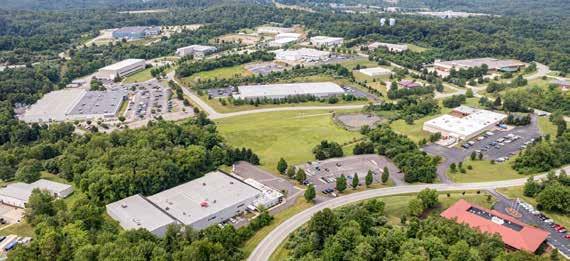












David Shrager, Pamela Austin and Scott DiGuglielmo of NAI Burns Scalo along with Rafael Munoz of BNY Wealth enjoying Night At The Fights.
The Colliers team takes a dip into the February waters at the Polar Plunge.
The Howard Hanna commercial team at the 25th Annual NAIOP Ski outing, pictured left to right Watts Coulter, Mike Connor, Juddson Powell , Sandy Cikovic.
The Colliers team in a much warmer environment with the money they raised
Cody Hunt of Collier’s and Anthony Olivia at Newmark at the April NAIOP Chapter meeting
Greg Hopkins of JLL at Night at the Fights. Casey Schlaegle of Schlaegle Design Build at the NAIOP Ski Outing.
People & Events





Sam Willis and Alison Arnone of Merus with Leigh Poulton of JLL at the NAIOP holiday party.
More fun on the NAIOP Ski Outing.
Jackie Bezeck of JLL, Connor Jangro of Genfor Real Estate, Caroline Muse of Lee and Associates enjoying Night at the Fights.
NAIOP President Tom Frank and Chip Desmone of Desmone Architects at the January Chapter Meeting.
Lance Harrell of the Master Builders’ Association at a workshop showing local students how the NFL Draft stage and set are built.
Andrew Millberg speaking at the April Chapter meeting, where the panel discussed the Oakland corridor.
Anthony and Cheri Bomar of Hardy World attending the March NAIOP Chapter Meeting.















JLL Pittsburgh Capital Markets would like to thank our clients for a record year in 2025