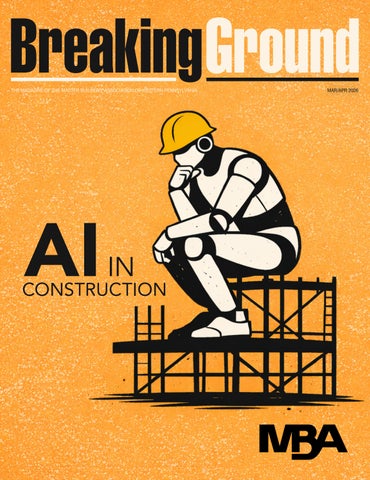

AI IN
CONSTRUCTION









PUBLISHER
Master Builders’ Association of Western PA www.mbawpa org
MANAGING EDITOR
Ben Atwood 412-922-3912 ben@mbawpa.com
PRODUCTION
Carson Publishing, Inc.
Kevin J. Gordon
ART DIRECTOR
Carson Publishing, Inc.
GRAPHIC DESIGN
Blink Advertising blinkadvertising.com
CONTRIBUTING PHOTOGRAPHY
Adam Warner, Draw Collective Cover Image Generated with ChatGPT
Massery Photography, Inc.
Brad Feinknopf Candidly Yours Photography WJE Photography E3 Aerial University of Pittsburgh Andrew Rugge
DIRECTOR
Mary Chuderewicz mbawpa org
MORE INFORMATION: is published by the Master Builders’ Association of Western Pennsylvania, 412-922-3912 or www.mbawpa.org
Archive copies of BreakingGroundTM can be viewed at www.mbawpa.org
No part of this magazine may be reproduced without written permission by the Publisher. All rights reserved.
This information is carefully gathered and compiled in such a manner as to ensure maximum accuracy. We cannot, and do not, guarantee either the correctness of all information furnished nor the complete absence of errors and omissions. Hence, responsibility for same neither can be, nor is, assumed.














EDITOR’S NOTE
It’s a challenge trying to write something meaningful about AI. The hype surrounding the subject has hit such a fever pitch that any contribution you attempt to pen just feels like the banging of another cymbal, not to mention the technology’s acceleration means anything published today will likely be embarrassingly dated within weeks.
But ignoring it would be derelict. I don’t want to add fuel to a raging fire but there is no sense in being coy: we are at the precipice of profound change. What this technology can already do is incredible. Where it will go in the next few years is mind-blowing.
Elon Musk has described AI as a Promethean force, comparing its long-term impact to humanity’s mastery of fire. Bill Gates envisions a world where teachers and doctors (and hundreds of other professions) are obsolete. Sam Altman states that sometime in the early 2030’s, it will revolutionize the social order.
These guys all have skin in the game, but their pronouncements still jar the senses. They also fly in the face of countless users’ actual experience with AI, which is mainly through an LLM like ChatGPT. Many quickly encounter capability limitations or bizarre hallucinations and assume there is little value to be extracted. Couple that with the sudden release of hundreds of AI products with ridiculous names like Strawberry or NanoBanana, each wrapped in viral marketing blitzes claiming they are the future, and who can blame a body for tuning out.
That’s a serious mistake. Right now, anyone of any technical capacity can collapse simple yet time-consuming laborintensive backend tasks into moments. And I mean anyone. You. Your admin assistant. Your grandma.
I know this because I do it regularly. Prior to AI, I had never written a line of software in my life. Within a year of focused engagement, I was producing multi-agentic applications to help me with day-to-day work. It is no exaggeration to say my productivity is equal to (at least) five of me from pre-AI days.
The impact LLM’s can have for any business is immediate, but another very real paradigm shift is approaching thanks to advancements in spatial AI. LLM’s do not have any understanding of space or geolocation. It’s why you can’t give ChatGPT blueprints and have it create accurate renderings or take a pic of a door and ask far away it is.
This capability required a new branch of AI training to make it spatially aware, meaning that it can understand distance and location in a spot at any given time. This technology is approaching its “ChatGPT” breakthrough moment as rapid advances in computer vision, generative design, and site level data capture make commercial application possible.
An informal survey of MBA members (as well as one done with AGC chapters across the country) led me to believe that the industry is slow to adapt AI in any meaningful way, and that a primer would be beneficial to many in Western Pennsylvania construction. This feature aims to demystify what artificial intelligence is by softening the noise surrounding it, providing the reader with a basic understanding of how LLM’s can make immediate impacts, and where spatial AI will go in the next few years.
Finally, the scope of this tech, its impact, and the infinite use cases make this subject impossible to cover in a single feature. So, beginning next edition, Breaking Ground will be adding a regular column to the magazine focusing on AI implementation, with use cases and best practices from myself, other experts, and MBA members. If you have any thoughts, suggestions, or ideas to explore…please reach out to me at ben@mbawpa.org.



REGIONAL MARKET UPDATE
The latest data from the U.S. Bureau of Labor Statistics (BLS) shows the Pittsburgh economy ended 2025 with modest growth overall, but mixed conditions across industries.
Unemployment remained unchanged at 3.6 percent but was down from 3.9 percent in September and 4.6 in August. Total nonfarm employment decreased from November to December but was up 1.1 percent from the end of 2024.
Construction employment declined the last month of the year and was 1.1 percent under December of 2024. Manufacturing employment remained relatively flat monthly and annually, rising by 0.2 percent over the course of last year. Education and health services employment climbed by nearly 3.5 percent through 2025, while professional and business services employment posted about 2.5 percent growth during that same time.
Data from Tall Timber Group’s research shows regional construction was significantly higher in 2025 than a year earlier for nonresidential/commercial projects and significantly lower in residential starts.
Nonresidential/commercial construction was buoyed by strong activity in owner-occupied commercial and non-profit buildings, manufacturing, and mega projects (which accounted for roughly $1 billion in 2025). The total contracting and starts (including construction put in place at the UPMC Heart and Transplant Hospital and the Airport Terminal Modernization Program) jumped nearly $800 million to $5.212 billion in the seven-county metro area. That was an increase of 19.9 percent over the 2024 total.
In the major property subcategories, construction fell by 448.1 percent in higher education, and by 35.8 percent in office despite increased leasing and tenant improvement activity, but rose by 48.3 percent in K-12, by 35.0 percent in industrial, and by 43.3 percent in healthcare because of the major projects underway.
The outlook for 2026 is for the prevailing trends to continue. Headwinds facing higher education, healthcare, and commercial real estate remain and will blunt the amount of new construction started this year. Conditions for industrial properties and office tenant improvements will create more demand for construction. Demand from non-profits, owneroccupied businesses, manufacturing, and energy-related businesses will be higher. Public construction should slow as legacy pandemic-era funding runs out; however, several large K-12 projects will get into the bidding process.
This year will mark the winding down of construction at the new airport and UPMC’s Heart and Transplant Hospital, with a total impact of less than $200 million put in place. Data centers replacing these mega projects are underway, although the projects located within the metropolitan area at Shippingport and Springdale will not be starting until at least the second half of 2026.
Pittsburgh’s new housing construction fell by 7.6 percent compared to 2024, primarily due to a 22.9 percent decline in multi-family starts. The slowdown in multi-family units continues to be the result of delays rather than project cancellations. More than 8,200 units remain in the entitlement pipeline, either as approved projects or in review. Higher construction and borrowing costs, more cautious investors, and regulatory burdens continue to slow the development process compared to the pre-pandemic market conditions. Construction of single-family homes rose by 7.7 percent, or 226 homes, compared to 2024. Builders pulled permits for 3,156 new homes in 2025, more than one-third of which were townhouses or other attached homes.
New home construction will be higher in 2026, as increased lot development activity in 2025 and slightly lower mortgage rates should create more opportunities for new single-family homes. The challenges facing apartment development are unlikely to recede in 2026, especially as the first of the units started in 2024 come on line; however, the pipeline suggests that starts should be somewhere in the 1,800-to2,000 unit range.

The biggest local construction news pertains to data centers. After roughly a year of speculation, due diligence, and scattered press releases surrounding a half dozen sites throughout Western PA, construction is imminent on three or four sites.
Site work is underway at the Homer City Redevelopment, a $15 billion data center development that is starting with the construction of a large power plant to serve the hyperscale users that will build or occupy the future data centers. Kiewitt, the engineeringprocurement-contracting (EPC) firm overseeing the project, has begun to award contracts for foundations and other early-stage scopes of work. Homer City Redevelopment expects to be producing power by the end of 2027 on the 3,200-acre site, ultimately delivering up to 4.4 gigawatts to power the fully-developed data center campus.
Jan,2024Feb,2024Mar,2024Apr,2024May,2024Jun,2024Jul,2024Aug,2024Sep,2024Oct,2024Nov,2024Dec,2024Jan,2025Feb,2025Mar,2025Apr,2025May,2025Jun,2025Jul,2025Aug,2025Sep,2025Oct,2025Nov,2025Dec,2025Jan,2026
Source: Western Pennsylvania Regional Data Center
In Greene County, a 910-megawatt data center development known as “Project Hummingbird” is well into the entitlement and due diligence phase. The project is proposed for 1,400 acres along the Monongahela River at the former Robena Coal Mine. International Electric Power (IEP) will supply the power for the project, which should cost $20 billion or more to complete. Dave Spigelmyer, IEP senior vice president, says the project is on pace to start moving earth in April or May. JLL is touting a second quarter 2028 delivery for the first data center facility. No EPC had been signed by the end of January.
Align and Frontier Group are moving along a similar timeline in Shippingport, where a redevelopment of the former coal-fired Bruce Mansfield Power Station is expected to provide 3.6 gigawatts of power to the co-located data center campus by late 2028 or early 2029. Work to construct a 900-megawatt gas-fired power plant is set to begin in 2026. Holder Construction, the EPC for the $10 billion Shippingport Industrial Park, has been getting preliminary pricing on trade packages, including for the first 300,000 square foot data center building. No hyperscale user has been identified as of February 1.
Perhaps the most publicized of the proposed data centers is TECFusion’s Keystone Connect, the planned redevelopment of the 1,395-acre former Arconic research and data center facilities in Upper Burrell Township, east of New Kensington. TECFusion announced its first lease for the development in mid-January to TensorWave, an AI neocloud platform for training and inference. The TensorWave lease is small, requiring 10 megawatts of power, which will allow it to operate out of Arconic’s former data center on the site. TECFusion proposes to scale the development to one gigawatt, using existing natural gas on site to generate electricity.
The Springdale development, proposed by Allegheny DC Property Company at the former Cheswick Power Plant site,
is relatively smaller. Reported by its owner’s representative Brian Regli, to max out at 180 megawatts, the development would be a $3 billion to $4 billion investment, depending on the cost of the 200,000 square foot cooling plant that will serve the data center.
While only the Homer City project has seen boots on the ground thus far, the recent progress at other sites suggests that more than one project will be drawing a substantial number of skilled construction workers before the year is out. The marketing materials for several of the developments talk of labor requirements that exceed that of Shell’s polymer plant in Monaca. Assuming that one or more of these data center and/or power plant projects begin in earnest in 2026, Pittsburgh’s construction workforce will see new billion-dollar opportunities just as the two most recent, the Airport Terminal Modernization Program and the UPMC Heart and Transplant Hospital, are wrapping up.
Data centers are headline story but there are doings worth sharing in the city proper. On his first full day in office, Pittsburgh Mayor Corey O’Connor signed an executive order launching a comprehensive review of the city’s permitting system, aiming to speed development and simplify approvals. The order directs multiple city departments, including City Planning, Permits, Licenses and Inspections (PLI), and Mobility and Infrastructure, to identify deficiencies and recommend reforms within 60 days. Currently, Pittsburgh has no standardized timeline for permit approvals, and inconsistent requirements and resubmissions often extend project timelines for developers, small business owners and homeowners alike.
The latest pull from Pittsburgh’s PLI open data source reveals a potential expediting of the process is underway. This dataset, which is filtered for commercial permits for new constriction, additions, alterations, and replacements with project values over $100,000 shows that January of 2026 saw 33 such projects approved, the highest figure in two months.
The mayor framed the overhaul as central to economic growth and competitiveness, noting that peer cities such as Cincinnati, Cleveland and Columbus have faster and more streamlined permitting systems. Business groups, including NAIOP Pittsburgh and the Allegheny Conference, welcomed the move, citing the financial risks associated with prolonged approval periods.
In February, the O’Connor administration launched a demolition initiative targeting 23 blighted properties across the Hilltop neighborhoods, including Knoxville, Beltzhoover, St. Clair and Arlington. Three of the identified structures have already been demolished, with 20 more scheduled to be taken down in the coming weeks. The demolitions are framed as an early step in the mayor’s broader commitment to address neighborhood blight, an issue that residents and city council members say generates persistent complaints and contributes to population loss.
A long-planned effort to remake Smithfield Street into a more pedestrian-oriented corridor is set to begin this summer, starting with $6.3 million in work between Forbes and Sixth avenues. The full project, estimated at up to $25 million, will unfold over three to five years and aims to widen sidewalks, add landscaping and public gardens, install curb bump-outs and reduce traffic to two lanes with limited parking. The street itself will be fully reconstructed, and pedestrian access to businesses will be maintained through temporary pathways and bridges during construction. Each block is expected to take roughly six months to complete. The project is structured in three phases stretching from Fort Pitt Boulevard to Liberty Avenue and is expected to enhance safety, support retail activity and create a more vibrant corridor in the Golden Triangle.
In mid-February, Pittsburgh’s Urban Redevelopment Authority board voted to move forward with the creation of a $50 million Golden Triangle Investment Fund aimed at supporting downtown revitalization. The fund would be financed through a Transit Revitalization Investment District (TRID), a transit-focused form of tax increment financing
that would capture 75% of future incremental real estate tax revenue within a designated district covering downtown, most of the Strip District and a significant portion of the North Shore. The remaining 25% of incremental revenue would continue flowing to the city, Allegheny County and Pittsburgh Public Schools. The goal is to have the fund established by the end of the year, with bond financing used to generate upfront capital.
The fund is intended to support major redevelopment projects, strengthen transit-oriented activity and finance public infrastructure needed to support regional economic and transit goals. In related actions, the URA agreed to hold the 200 Ross Street building off the market to allow PMC Property Group to evaluate a market-rate residential conversion and approved several additional housing and property transactions across the city.
In early February, O’Hara Township has enacted a new mixed-use zoning overlay designed to support the next phase of reinvestment at the RIDC O’Hara Industrial Park. The amendment allows for residential development and complementary commercial uses along defined sections of the park near Route 28, while maintaining the underlying Suburban Manufacturing zoning. Township officials and RIDC say the overlay responds to changing post-pandemic market conditions and evolving workforce preferences by enabling housing, small-scale retail, hospitality and mixed-use buildings alongside existing office and industrial operations. The goal is to modernize the park, reduce vacancy risk and strengthen the long-term tax base without displacing its core employment function.
In mid-February, S&T Bank announced a three-year initiative to refresh approximately 75 percent of its 74-branch network, beginning in 2026 with updates to 19 locations by the end of the year. The effort starts at the bank’s headquarters in Indiana, Pennsylvania, and is described as a significant multiyear investment, though no total budget was disclosed. S&T operates 36 branches in Southwestern Pennsylvania. BG



BUILDING COMMUNITY SINCE ’79

For over four decades, PJ Dick has delivered exceptional craftsmanship, driven by the legacy of our founder, Perry J. Dick, and the pride our teams take in every detail. From large-scale institutions to commercial and industrial landmarks, we build structures that stand the test of time and the weight of purpose.
NATIONAL MARKET UPDATE
THE BIG PICTURE
The Federal Reserve kicked off the year by declining to make any rate changes at their January board meeting, citing solid economic expansion and lingering inflation. The federal funds rate remains at 3.5 percent, with two dissenters arguing for deeper cuts. President Trump has been a constant critic of current Chair Jerome Powell’s reluctance to cut rates, and the Fed will have a new chair this May.
Some interesting notes from the Fed’s January Beige Book include an uptick of economic activity not seen for several months, a modest increase in consumer spending mostly driven by wealthier individuals, and a softening of the real estate market. Overall outlooks from each of the Fed districts were tepidly optimistic.
The book also notes that steady labor market conditions, with most districts reporting little change in hiring and firms primarily backfilling positions rather than expanding payrolls. Use of temporary workers increased in some areas as businesses sought flexibility amid uncertainty. Skilled labor shortages persisted in engineering, health care, and the trades, though job switching appears to have slowed.
Price pressures continued at a moderate rate across most districts, with tariffs cited as the main source. As pre-tariff inventories were depleted, more firms began passing higher input costs on to customers, though some sectors such as retail and restaurants hesitated due to consumer price sensitivity. Regionally, conditions varied: New York reported modest declines, while areas such as Cleveland (Pittsburgh’s home district) and San Francisco noted mild growth.
The ongoing tariffs remain a concern that won’t fade. As of
mid-January, the U.S. annual inflation rate was at 2.7 percent, unchanged from November of last year. Core inflation, which excludes food and energy, registered at 2.6 percent, the lowest level since early 2021.
Overall, the takeaway from the Beige Book is cautiously optimistic, but this is not reflected in consumer sentiment. According to the Conference Board’s latest release, the U.S. consumer confidence dropped 9.7 points to 84.5. That’s the lowest level in more than 11 years. The drop was attributed to rising concerns about the labor market and persistent high prices. It was broad-based across income levels and political affiliations, with the sharpest deterioration among older consumers and both lower and higher-income households. While the link between confidence and spending has been inconsistent in recent years, economists noted that weakening labor market perceptions and stagnating real incomes could signal more cautious consumer behavior ahead.
Affordability pressures remain central to consumer anxiety. Survey responses frequently referenced high prices for food, energy, and insurance, along with tariffs and broader economic uncertainty. Housing affordability continues to strain households, with home prices rising 0.6 percent in November and up 1.9 percent in 2025, while high material and borrowing costs constrain new construction.
Consumer spending stalled in December, putting a weak finish on the 2025 holiday shopping season. Retail sales were flat for the month after a solid 0.6 percent gain in November, missing expectations for a 0.4 percent increase. Sales excluding autos were also unchanged. On a year-over-year basis, retail sales rose 2.4 percent, down from November’s 3.3 percent pace and trailing December’s 2.7 percent inflation rate — meaning real spending likely declined. The closely watched “control group,” which feeds directly into GDP calculations, slipped 0.1 percent for the month, potentially tempering expectations for fourthquarter growth.
Spending patterns reflected a split consumer environment. Higher-income households continued to spend, but middle- and lower-income consumers pulled back, particularly on tariff-sensitive goods. Furniture, clothing, electronics, and miscellaneous retail categories all posted declines, while online sales barely rose.
1/1/20232/1/20233/1/20234/1/20235/1/20236/1/20237/1/20238/1/20239/1/202310/1/202311/1/202312/1/20231/1/20242/1/20243/1/20244/1/20245/1/20246/1/20247/1/20248/1/20249/1/202410/1/202411/1/202412/1/20241/1/20252/1/20253/1/20254/1/20255/1/20256/1/20257/1/20258/1/20259/1/202510/1/202511/1/202512/1/20251/1/2026
Source: ADP Employment Report
Consumers’ views of job availability also deteriorated significantly. The share who said jobs were “plentiful”
ADP Month Over Month Payroll Change

BID. BUILD. PROTECT.

From bid to final payment, MBM Law’s Construction team understands how projects are built and how to successfully resolve disputes. We provide practical, industry-focused counsel based on decades of experience. Lawrence J. Maiello, recognized in Best Lawyers in America® in Construction 2024, 2025 and 2026.


$2,500,000.00
$2,000,000.00
$1,500,000.00
$1,000,000.00
Source: St. Louis FRED
University of Michigan Consumer Sentiment Index
Source: University of Michigan
fell to 23.9 percent, the lowest since early 2021. Those saying jobs were “hard to get” rose to nearly 21 percent. The labor market differential, a gauge closely correlated with the unemployment rate, dropped to its lowest level in nearly five years.
But the Bureau of Labor Statistics reported that the unemployment rate held steady at 4.3 percent in January, with 7.4 million Americans classified as unemployed. While conditions were largely unchanged from December, the jobless rate remains higher than a year ago, when unemployment stood at 4.0 percent and 6.9 million people were unemployed. Labor force participation was 62.5 percent, and the employment-population ratio was 59.8 percent — both essentially flat, continuing a pattern of limited movement over the past year.
Long-term unemployment, defined as joblessness lasting 27 weeks or more, remained at 1.8 million people, accounting for 25 percent of all unemployed individuals. While stable over the month, that figure is up by 386,000 compared to a year earlier. The number of people working part time for economic reasons declined sharply by 453,000 to 4.9 million, though it remains higher than last year. Meanwhile, 5.8 million people outside the labor force reported that they currently want a job but were not counted as unemployed because they were not actively seeking work or were unavailable.
The BLS Employment Situation report for January showed total nonfarm payroll employment increased by 130,000 in January, while the unemployment rate held steady at 4.3 percent. The labor market continues to expand, but at a measured pace. Notably, payroll growth averaged just 15,000 per month in 2025 after annual benchmarking revisions, a significant slowdown from prior estimates.
Sector-by-sector, the gains were concentrated in a few industries. Health care led with 82,000 new jobs, followed by social assistance (+42,000).
For construction readers, the headline is that construction added 33,000 jobs, driven primarily by nonresidential specialty trade contractors (+25,000). That’s meaningful given that construction employment was essentially flat throughout 2025.
Losses were concentrated in federal government employment (-34,000), continuing a sharp pullback since its October 2024 peak, and in financial activities (-22,000), particularly insurance. Most other major industries—including manufacturing, retail, transportation, professional services, and leisure and hospitality—were effectively unchanged. Wage growth remains steady but not accelerating. Average hourly earnings rose 0.4 percent in January to $37.17, up 3.7 percent over the past year. The average workweek ticked up slightly to 34.3 hours.
Additionally, the annual benchmark revision significantly lowered previously reported 2025 job growth, cutting total




Contractors entered 2026 with noticeably less optimism than they had a year ago.
gains from plus 584,000 to plus 181,000. March 2025 payroll levels were revised downward by 898,000 jobs. That revision changes the tone of last year’s labor market narrative. Growth was present, but far more modest than initially reported.
The payroll processing firm ADP reported less optimistic numbers, with employers adding just 22,000 jobs. This was well below expectations and down from December’s revised 37,000 gain. Without a 74,000 surge in education and health services, overall hiring would have been negative. The data continues the pattern seen throughout 2025: a low-hire, low-fire labor market where employers remain cautious. ADP also revised prior figures lower, estimating that job growth last year was weaker than initially reported by roughly 18,000 jobs per month.
However, several sectors contracted, including professional and business services (-57,000), other services (-13,000), and manufacturing (-8,000). Mid-sized firms (50–499 employees) accounted for essentially all job growth, while large companies reduced payrolls. Wage growth held steady, with job stayers seeing pay increases of 4.5 percent.
Turning to construction, contractors entered 2026 with noticeably less optimism than they had a year ago, according to the 2026 AGC/Sage Construction Hiring and Business Outlook Survey. While expectations remain positive for 12 of 17 project categories, confidence has narrowed sharply outside of data centers and power projects. Data centers posted a net positive outlook of +57 (up 15 points from last year), and power projects came in at +34. Most other sectors saw declining sentiment, though hospitals (+20), other healthcare (+24), water and sewer (+16), manufacturing (+15), transportation (+11), and bridges/highways (+10) remained positive.
Multifamily barely held positive at +4, while K-12, higher education, lodging, private office, and retail slipped into negative readings — with office (-14) and retail (-18) the weakest. Additionally, one-third of firms reported being affected by immigration enforcement, either directly or through subcontractors.
Total construction spending reached a $2.18 trillion annual rate in October, up 0.5 percent from September but down 1.0 percent year-over-year. Private residential spending rose 1.3
percent for the month, largely driven by a 4.5 percent jump in home improvements, though single-family construction fell 1.3 percent and multifamily dipped 0.2 percent. Private nonresidential spending declined 0.2 percent for the month and 2.6 percent year-over-year, with manufacturing construction down for the ninth consecutive month (-9.7 percent year over year). Public construction edged up 0.1 percent for the month and 2.1 percent year-over-year, with modest gains in highways and education offset by slight declines in sewage and waste projects.
Construction starts data presents a more mixed and forwardlooking picture. ConstructConnect reported total starts up 3.1 percent year-over-year in December and 8.2 percent for the full year, led by strong gains in nonresidential building and civil work, including airports and power projects. However, residential starts slumped sharply year-over-year, particularly in multifamily. Dodge data showed monthly volatility: nonresidential starts fell in December, manufacturing pulled back sharply, but highways, bridges, hotels, and data centers posted gains. Meanwhile, housing starts declined 4.6 percent for the month, and the Architecture Billings Index remained below 50 for the 14th straight month, signaling continued softness ahead. A large majority of architecture firms reported delayed, stalled, or canceled projects, reinforcing the cautious outlook for nonresidential construction in the year ahead.
Meanwhile, signals for manufacturing construction are mixed. Some project trackers report that cancellations and downsizing are outpacing new investments in 2025, with billions in planned spending abandoned. At the same time, major corporations including semiconductor, automotive, and advanced manufacturing firms continue announcing large-scale U.S. expansions. BG


POWER ON POWER ON POWER ON
WHAT’S IT COST?
Last year’s federal government shutdown continues delaying pricing index updates. Most construction related figures are still from December, with a handful of new information from January of 2026.
The only meaningful measurement from January is the U.S. Consumer Price Index (CPI), which rose 0.2 percent on a seasonally adjusted basis from December to January, marking a 2.4 percent increase over the past twelve months. Core CPI (less food and energy) was 0.3 percent monthly and 2.9 percent annually.
Producer Price Index overall for December of 2025 was at 0.1 change month over month and rose three percent through the year.
Indexes in the asphalts sector declined sharply as a whole from November to December due to #2 Diesel Fuel, which fell 18.5 percent. That drop is far outside its typical 12-month average monthly change of about -0.1 percent. Compared with December of last year, #2 Diesel is down 8.2 percent. Asphalt (At Refinery) decreased 1.4 percent over the month, a steeper decline than its recent average pace. Other asphalt
products moved less than one percent and remained broadly in line with their recent trends.
Concrete indexes remained mostly unchanged month over month. Precast Concrete Products rose 0.7 percent from November to December, closely tracking its 12-month average monthly increase. Cement declined 0.2 percent, slightly below its longer-term trend but not a large deviation. No concrete category posted a significant one-month swing. On a year-over-year basis, Precast Concrete Products increased 7.5 percent, the strongest annual gain in the index cluster.
Inputs to Construction Industries, Energy dropped 10.4 percent between November and December, a decline well outside its typical monthly average of roughly -0.5 percent. That same energy category is down 6.8 percent compared with a year earlier. Other major construction input indexes shifted less than one percent over the month and remained near their recent averages.
Indexes measuring construction types also showed little change from November to December. The largest movement was Maintenance and Repair of Nonresidential Buildings (Partial), which increased 0.8 percent, modestly above its recent monthly average. Highways and Streets declined 0.5 percent, somewhat below its trend but not a major swing. No construction type posted a large month-tomonth change.
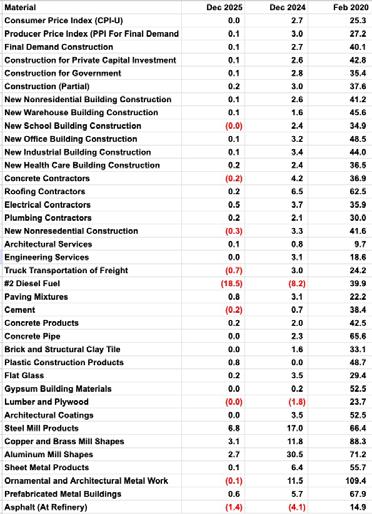
Contractors and services index measurements also experienced no significant monthly disruptions. Electrical Contractors rose 0.5 percent from November to December, slightly above its 12-month average pace. Concrete Contractors declined 0.2 percent, below its recent trend but not materially. Roofing Contractors posted the largest year-over-year increase in the group at 6.50 percent.
The general materials indexes recorded a few meaningful monthly increases. Construction, Mining and Forestry Machinery Rental and Leasing rose 1.2 percent from November to December, well above its recent average monthly movement. Insulation Materials increased one percent, also noticeably stronger than its 12-month average. Construction Machinery and Equipment rose 0.8 percent, moderately above trend. Other materials, including Lumber and Truck Transportation of Freight, showed limited month-to-month movement.
Metals showed the widest dispersion as a sector in December. Steel Mill Products increased 6.8 percent from November to December, substantially above its typical monthly average. Stainless and Alloy Steel Scrap fell 9.2 percent over the same period, a much steeper drop than its recent average decline. Iron and Steel Scrap rose 4.1 percent, well above trend. On a yearover-year basis, Aluminum Mill Shapes increased 30.5 percent and Steel Mill Products rose 17 percent, the largest annual gains within the cluster. BG
AI IN CONSTRUCTION
Unprecedented hype surrounds artificial intelligence. In the thousands of articles generated by AI’s recent advancements, it is simultaneously described as a productivity miracle and job destroyer, creative cultivator and aesthetic parasite, the savior of—and existential threat to—humanity.
It is, in fact, all of those things. But for many, the relentless noise has reduced AI into an irritating buzzword. Justifiably so. It’s easy to become cynical when doomsday prophecies fail to materialize, janky software updates are branded as revolutionary breakthroughs, and your toaster is boasting of its ‘AI-capabilities’.
This cacophony of nonsense has created a din of confusion around AI’s current utility. Even those casually acquainted with a Large Language Model (LLM) like ChatGPT are aware that
some kind of technological Rubicon has been crossed. Yet those same users, particularly early on, quickly encountered limitations and often mistook what AI couldn’t yet do as evidence that it could not do much at all.
But the systems behind LLM’s have been relentlessly improving for years and that same trajectory is now occurring in a separate domain of AI focused on spatial understanding. Refining computer vision so that software interprets what it sees through a camera lens in the same way you do with your eyes. Down that road awaits the real fun stuff. Robots. Androids. The Terminator.

Sincerest apologies, but this feature isn’t going there. Its aims are humbler: cut through bullspit marketing by clarifying for the non-technical reader how LLM’s work, their current practical applications, and how they will soon begin to interact with spatial AI-systems that allow software to understand the physical world.
First, a basic primer. All AI is built on neural networks. Think of them as computer programs designed to detect patterns by iterating through data and learning those patterns via trial and error. Say you want one to identify blueberries in images. You’d feed it millions of pics, each tagged “blueberry” or “not blueberry.”
The program converts each image into millions of numbers, creating a mathematical fingerprint. Then it makes a guess based on those numbers. Right or wrong, it then slightly adjusts the digital whorls that led to its response before moving onto the next pic. At first, it’s garbage but after millions of attempts, it becomes startlingly accurate. Don’t fret much over the how, what’s more important for our purposes are these takeaways.
One: this is the foundation of all AI applications today and why data centers are popping up everywhere. It takes an ocean of information to train these things. Two: at no point is the neural network aware that it is looking at blueberries, or what a blueberry even is. A caterpillar is more sentient. Three: the same network can be trained to identify many things at once. You could simultaneously train it on peaches, strawberries, raspberries, and plums. That’s how they scale in capability. Four: you are not limited to images. Neural networks can fingerprint dense operational data just as effectively. Schedules, costs, quantities,
spreadsheets, sensor readings, numbers, text and time logs are all fair game. That’s how they became commercially viable.
Tech advancements enabled this in the early 2010s, and neural networks soon became integral components of corporate infrastructure across big tech and finance. Fairly quickly, those involved in their development and implementation realized if you could train neural networks on almost anything, then pushing shoes on Facebook feeds was a parlor trick compared to where this could go.
If the internet reshaped society, artificial intelligence could remake it. But that required neural networks to grow beyond hawking dinnerware on Amazon and identifying blueberries in jpegs. They needed to interface with reality. To take input from the real world and output useful information for humans to use.
Research and development increasingly focused on two dominant paths: vision and language. The latter was easier. Words come pre-structured. Grammar, syntax, and repetition is baked into trillions of sentences providing a near infinite level of data to iterate through.
It took a little over a decade to achieve breakthrough success, which occurred in 2023, when OpenAI released ChatGPT. Within weeks, millions were treating it as an omnipotent digital sidekick, a chatbot whose communication abilities exceeded most humans and was trained on the near sum total of earthly knowledge.
This is when the bulls began spitting. Within months, Google, Facebook, Anthropic, Microsoft, and X released LLM’s of their own. Social media was flooded with jargon-soaked viral marketing blitzes designed to draw in users by arguing over which was better. A wave of “AI-powered” apps instantly followed, most little more than thin wrappers around an existing LLM, just repackaged and renamed.
It’s also when the fear began. A chorus of doomsday prophecies accompanied ChatGPT’s launch that has only grown louder. There is some truth in this. It’s crystal-clear AI unmoored a centuries old connection between expertise, salary, and employment. Some jobs suddenly seem superfluous. It will change how the world works.
But overcoming all this is actually quite simple. Ignore it. All of it. For the average
user, the LLM’s are all pretty much one and the same, and if you spend enough time using one, you’ll be able to spot the snake-oil apps from a mile away. Also, major tech advances have always been accompanied by Armageddon fears. Fretting over that is like worrying about a meteor strike. It could happen but what can you do.
Additionally, anxiety is dulled by regular use. LLM’s have concrete limitations that become apparent to anyone engaging with them. While initially passing as digital gods,

remember our caterpillar. Neural networks don’t actually know anything and that’s what LLM’s like ChatGPT are: statistical systems trained to predict the next word based on patterns.
This is why they hallucinate and struggle with logic issues a child can grasp, even though their predictions are usually so good that you cannot shake the feeling of hyper-intelligence. But that’s an illusion. A spell. And it’s broken when you ask one how many r’s are in blueberries or what type of snake you should buy your 13-month-old daughter.
None of that matters for individuals because they are fun to talk to and incredible skill enhancers. For businesses, however, it’s a real problem. LLM’s cannot reliably reason over complex, multistep systems. On their own they cannot be trusted with money and reputation on the line. So, how to incorporate them?
Well, these limitations largely apply to judgement, not execution. If told to do a specific narrowly defined task, LLM’s become incredible assistants. They can write a clean e-mail, accurately summarize long articles, rephrase technical language into plain English, generate outlines, talking points, or first drafts for projects that would otherwise start from a blank page.
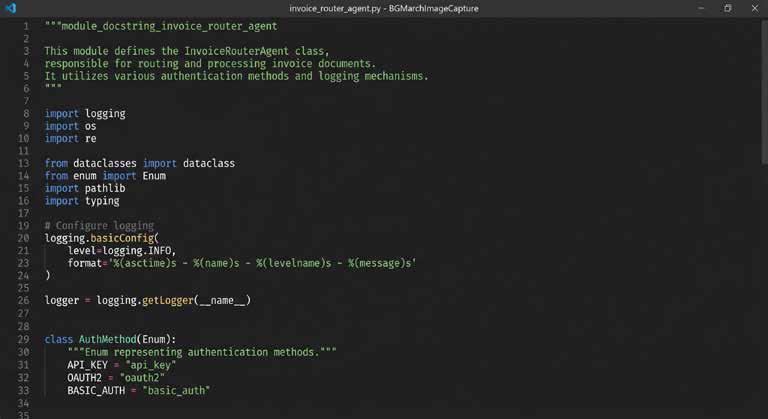
These alone carve off hours of weekly workload, but they are also the LLM’s most basic applications. Far more powerful (and underutilized) is the LLM’s ability to code and be trained. Trained AIs are called agents, which are simply an LLM like ChatGPT or Claude that has been piped into an application via an API and given the ability to act inside that application based on predefined instructions.
This sounds mundane, but it’s the key to unlocking the judgement gate. That’s because agents’ tasks can be stacked
for massive productivity gains. For instance, an agent can be programmed to examine incoming emails looking for invoices to save into the correct project folder. It has no ability to invent information or deviate from this task, which also includes an instruction to notify another agent when an invoice is received. That agent’s only job is to enter the invoice amount and due date into a payment list and then notify a third agent, whose sole purpose in life is to notify the project manager that a new invoice is ready.
Together, the three have completed a mundane task that takes up precious cognitive labor. Now pull the camera back: a business can deploy thousands of agents, each responsible for a single small task, quietly handling the tedious work that keeps every operation moving.
Agents can be implemented in a myriad of ways, the most straightforward is by utilizing a workforce automation platform like Zapier or Make.
“These platforms allow people who don’t know how to code to safely connect the tools and software apps they already have so they can complete step-by-step, fully automated workflows,” said Zach Giglio, CEO of GCM, an AI consulting firm.
Giglio notes that most businesses operate across multiple systems. Workforce automation platforms enable those systems to talk to one another, and their pre-built AI agents allow businesses to take that connectivity further.
“A general contractor might receive a request for a proposal through a dozen different channels. Something like Zapier can take those incoming requests and using AI agents,
The blueprints of an AI agent
automatically generate structured emails to subtractors with the relevant scope attached, clearly outlining what’s needed, what the deadline is, and what they’re being asked to bid on. At the same time, it can create calendar reminders for when bids are due and update internal tracking systems, so nothing slips through the cracks.”
Agents can also be piped into internal development environments or code repositories and write code. Scores of businesses have ideas for simple internal tools but translating them into working software solutions has historically been prohibitively expensive or time consuming.
That’s done. LLM’s were trained on every major programming language and have obliterated the barrier to entry for software creation. There is a learning curve to this method, but it isn’t too sharp. Once mastered, you can simply tell the AI what you want to build, and it will do it. A marketing intern can prototype a web scraper for leads. The admin assistant can build automated recurring financial reports. An editor of a construction trade magazine can deploy a complex CRM system for organizing sponsorships and billing cycles.
The kids call this vibe-coding. Thus far, it’s the most professionally transformative thing about LLM’s. But beware, there are deep pitfalls on this path and walking it blindly can end in disaster.
“The biggest risk is security,” says Colin Wiehagen, a managing consultant at 4C Technologies. This Pittsburgh based software developer builds systems for numerous businesses across the region, including in construction industry.
“You absolutely have to understand what secure practices are and how it aligns with your internal InfoSec policies. What kind of risks exist, not just from a coding standpoint but from a data standpoint. And if you don’t know what’s under the hood, you don’t know any of that.
If the cost of failure is low, life is good. If you’re experimenting with spreadsheets or internal tools and something breaks, you throw it away and move on with your day. Where it becomes a real problem is when people take that same mindset and apply it to systems that run operations, handle sensitive data, or impact customers directly.”
Legitimate security and implementation concerns are restraining this LLM driven back-office revolution, but the capability exists. And it will go further as neural networks become better trained to understand the physical world, converting the jobsite itself into data that the office can query, analyze, and act on.
This is a far more daunting task than learning language. Aspects of vision that humans take for granted, like depth, movement, and object permanence, are not and have never been labeled or broken down in images. Researchers had to manufacture then organize that data on a colossal scale, making neural network training significantly more costly and time consuming.
Consequentially, spatially aware AI lags behind LLM’s and has not yet had its ChatGPT breakthrough. But major venture capital firms are putting hundreds of millions into advancing this research for more practical use, including in construction. These models are beginning to act on the jobsite, with particular advancements in reality capture software.
ORGANIC
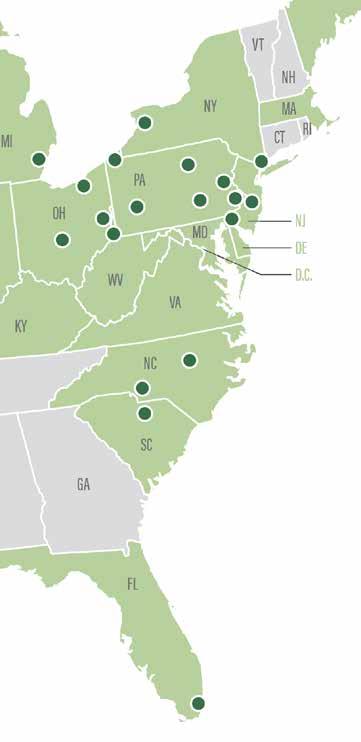
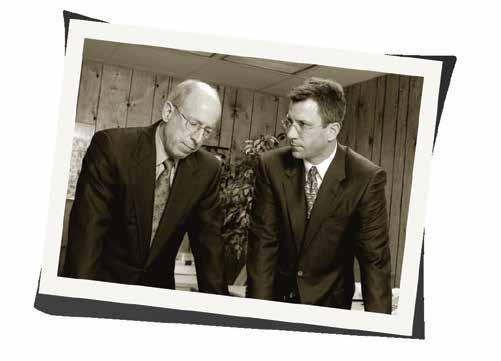
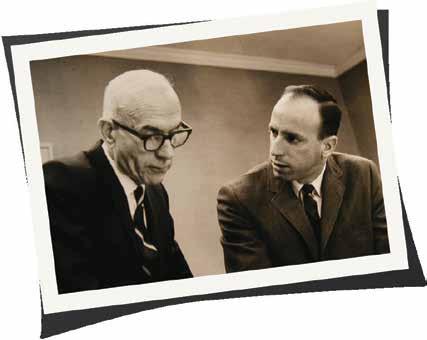
Rooted in Pittsburgh, our client demand expanded the firm’s reach to 19 offices in 10 states. Call us for construction and surety-related questions.

William D. Clifford & W. Alan Torrance, Jr.
Included in The Best Lawyers in America 2023 Commercial Litigation, Construction Law, and Litigation-Construction
412-281-7272

IN A WORLD WHERE RESILIENCY IS NEEDED MORE THAN EVER,
For decades, construction teams relied on photographs to document jobsite progress, creating useful visual records but only as isolated snapshots with no reliable way to anchor them digitally. Laser scanners and later photogrammetry introduced the ability to generate precise 3D models, but both required deliberate, manual capture, with crews returning to the same locations to recreate viewpoints over time. Even then, maintaining consistency was difficult and time-consuming, because accurately positioning images inside a building has always been the central challenge, and GPS does not function reliably indoors.
“There have been a ton of approaches to get indoor positioning,” says Michael Fleischman, CEO of OpenSpace. His company is breaking new ground in the field of spatial AI, teaching their neural network off digital imagery from 80,000 projects representing more than 50 billion square feet of spatial data.
“But most of those have high hardware requirements. GPS really struggles in doors. You put these Bluetooth beacons in various specific points on your jobsite and for construction, that can be really challenging. Walls go up, they come down, things get damaged. What AI enables is a hardware free solution. Now, all you do is walk the site with a hardhat mounted 360 camera.”
The breakthrough isn’t the camera. It’s the neural network. By training on this enormous corpus of spatial data, the system learns to recognize where it is inside a building and anchor each image accordingly—fingerprinting the jobsite itself.
It works like this: a construction super walks the site with that 360 mounted hardhat and the spatial AI system determines where each image was taken by comparing what the camera sees to the project’s floor plans and known geometry. Every image is anchored to a precise location and timestamp, turning thousands of disconnected photos into a structured visual map of the building as it actually exists.
This spatial grounding transforms jobsite imagery from passive documentation into an operational record. Instead of relying on memory, incomplete notes, or scattered phone photos, teams can see exactly what existed in any location at any moment in time. Project managers can verify whether work was completed before it was covered, resolve disputes over responsibility, track installation progress, and identify issues earlier. Jobsite photos taken on cell phones get autoplaced in the appropriate location, as do voice memos and field notes.
“You can kind of think of this as an early stage spatially aware AI agent,” says Fleischman.
“The construction industry benefits so much from what technology can bring to it in terms of efficiency improvements. And with the cost of constructing just continuing to rise over the last few decades, there’s a lot of potential to make an impact.”
Once spatial AI is no longer in its toddler era, reality capture will evolve into something else entirely, an operating system with a perfect and queryable record of every site’s progress that is connected to project management and enterprise resource planning systems. This means you will be able to ask things like “show me all the ductwork level three
near Grid D/E”, “confirm whether backing was installed on wall four before drywall went up”, “show me every room where insulation hasn’t been installed yet”, and get results with visuals.
Now for some speculative fun. Let’s connect the dots back to the frontend revolution. Imagine an LLM as the operating system for your business, trained on and able to act through everything that exists in your company’s data. All financial records, staffing information, blueprints, BIM’s, reality capture systems, contacts, contracts, enterprise platforms, et cetera.
It understands them more completely than any one person at the company could and can communicate with and act through all of them via an army of agents, each trained on completing single small tasks.
Once this happens, operations will streamline in ways difficult to conceive. For instance: your super walks a site with AI equipped glasses, whose builtin spatial capture agent flags a crack on wall four of the second floor and tags its exact location along with imagery. Then it passes this to a specification agent which cross references the wall and determines it is a structural shear, so it escalates the issue to a risk-classification agent, which identifies it as requiring engineer review, and hands it off to an enterprise agent, which assigns ownership to the contractor of record after generating a structured punch list prefilled with location, spec references, and support imagery. Then a coordinating agent takes over and notifies the project manager and superintendent, highlighting downstream impacts on inspects and follow-on trades before handing off to a verification agent which schedules a spatial re-scan to confirm resolution. All of this occurs before the site walk is concluded.
Artificial intelligence is neither apocalypse nor gimmick. Cut out the noise and confusion and LLM’s are infrastructure. Already, they are accelerating communication, collapsing the cost of software creation, and capable of deploying agents that handle cognitive labor once done by entire teams. As spatial AI reaches the jobsite, construction itself is becoming fully visible and queryable for the first time.
The implications of that are difficult to overstate. The noise surrounding AI isn’t
going away. If anything, it will get louder. New products. New promises. New fears. Some of it justified but much of it not. Beneath all of it though, something very real is taking shape. Neural networks are learning to read the world. The companies and workers who understand how to harness that won’t be replaced; they’ll build what comes next. BG

Your Right Size Law Firm

CPROJECT PROFILE
onstruction of the new IBEW Local 712 Union Hall didn’t begin with an empty site. It began in the middle of a functioning one.
For more than a century, the International Brotherhood of Electrical Workers Local 712 has trained and supplied skilled electricians to contractors throughout Beaver, Crawford, Lawrence, and Mercer counties. Founded in 1914, the union represents more than 450 members whose work spans residential, commercial, and industrial projects, supported by a five-year apprenticeship program that combines handson field experience with extensive classroom instruction in everything from electrical theory and safety practices to emerging technologies.
Its Union Hall and Training Center had been a cornerstone of the Beaver community for generations, standing among the modest homes and tree-lined streets of Sassafras Lane since the 1960’s. But the needs of a modern electrical workforce had outgrown the building’s capabilities and replacing it would require an unusual level of precision.
Following a master planning process in the late 2010s, Local 712 determined to first complete a new apprenticeship training center in New Castle, allowing attention to turn fully to Beaver.
There, the new Union Hall would be built on the same site as its predecessor, which had to remain operational while its successor rose beside it. Utilities had to stay live. Members continued passing through its doors. And the steady rhythm of life on Sassafras Lane was not to be disturbed. Yet crews still had to drill geothermal wells hundreds of feet into the earth, run new service lines, and construct a 20,000-square-foot facility that would ultimately take its place.
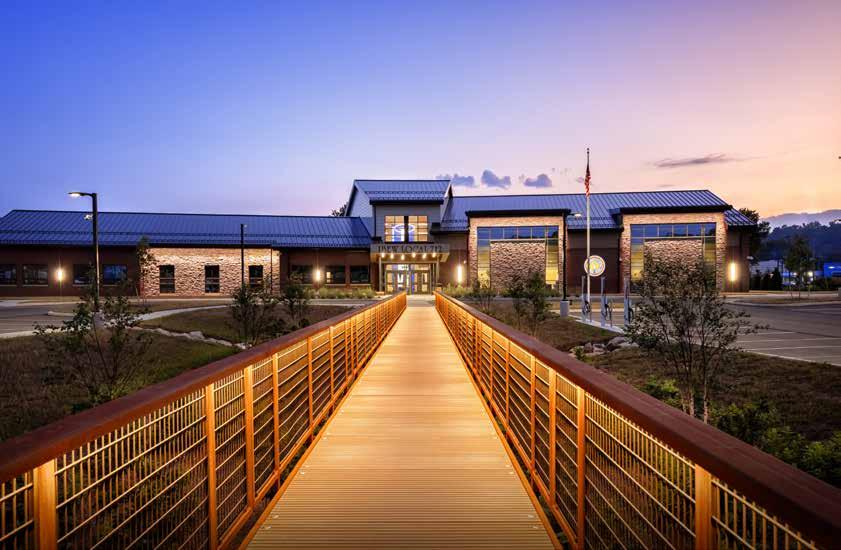
Completed in 2025, the two-story, 20,000 square-foot LEEDcertified facility fully supports the IBEW’s daily operations while showcasing the dedication to craft that forms the heart of the organization. Constructed entirely by local union labor using American-made materials, the new hall includes a 150-seat membership space, offices, conference rooms, and communityaccessible areas.
Priority one was fitting in.
“They didn’t want to see any mechanical units on the roof or have to service units on a roof. They wanted the building to fit in with the neighborhood,” said Tricia Monaco, an architect at DRAW Collective. Making that happen required careful coordination between Monaco and her partner, senior architectural designer Randy Riggins.
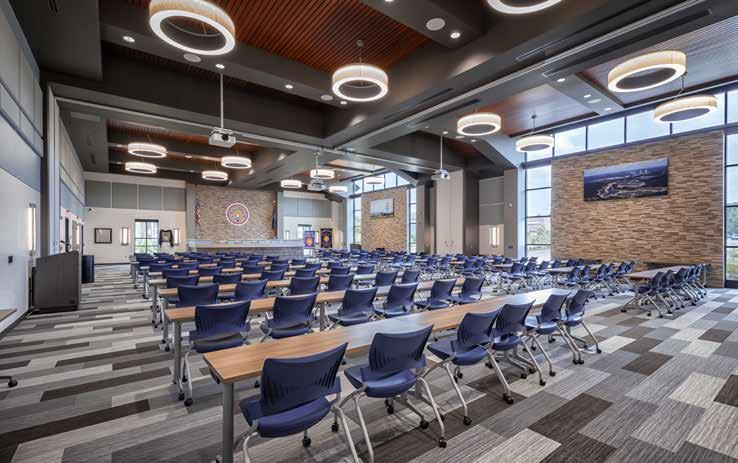
“That was a design challenge to get that to come together”, said Riggins.
“There was a lot of things mechanically that we had to work around to make the building look as elaborate, as aesthetically pleasing.”
Instead of presenting a single, uninterrupted façade capped by a flat commercial parapet, the building is composed as a series of distinct volumes, each defined by its own height and roofline. Sloped standing seam metal roofs with measured overhangs and varied elevations replace the typical flat edge, giving the structure a profile more commonly associated with residential architecture. Where equipment was unavoidable, such as limited chiller units, it was screened and integrated into the roof form so as not to be visible from the surrounding homes.
Priority two was minimizing the impact of construction and demolition on the nearby families.
“We kept the time frames tight as far as what the noise ordinances were and making sure that everyone was adhering to those,” said John Pappas, president at Eckles Construction Services, who served as the project’s construction manager.
“The contractors were all good at letting us know what they had coming up so that we kept people in the community informed on what was happening and what the next phase of things were going to be.”
The community certainly had enough on its mind at the time. This was a covid project, conceived pre-pandemic, disrupted by it, then built through it. The last thing the teams wanted to do was add stress to the neighborhood during an already chaotic time.
This care was reciprocated and appreciated by the residents.
“One of the guys next door would pretty much every day come and have coffee with the crews on site,” laughed Pappas. “He’d bring them over snacks and stuff like that throughout the day.”
Interestingly, all parties agreed that while the pandemic created headaches, the business of construction had already adapted to its peculiar constraints.
“There were definitely supply chain strains that were holding things, but I think as contractors, it was just another footnote to make the project challenging,” said Geoff Measel, project manager at E&G Development, who served as the build’s general contractor.
“The real strain was logistics and a tight space. It was a sequencing nightmare. I don’t say nightmare lightly—but it was one of the hardest parts of this job.
“We were maintaining utilities to the existing building while running all the new systems to the new building. And some of them were crossing over each other. You’re building a full brand-new building, drilling geothermal wells, tying in
site utilities while at the same time keeping the old building operational. We had to move them into the new building, tear the old one down, and then finish the site work. That coordination was extremely challenging.”
The complexity peaked underground. New utilities needed routing while existing lines stayed operational. Some systems crossed paths while others required temporary tie-ins before permanent ones could be established. And the chaos didn’t end when the new building was completed. Once occupants transitioned into the new hall, the old building needed demolishing, including a basement that left a gaping void in the center of future parking. Temporary parking had to be created and then final utilities tied in before grades could be reset. Only then was the project stiched back together as if it had always been a single cohesive plan.
Meanwhile, the building was designed from its inception to be carbon neutral and incorporated 20 geothermal wells as the backbone of its energy strategy. Each well extends roughly 400 to 500 feet below grade, grouped into circuits that connect back to a central manifold inside the building.
Designing and installing the geothermal field required careful coordination and engineering. Soil conditions were analyzed to determine heat transfer capacity, which informed both the depth and number of wells required. On the tight site, the well field had to be carefully shoehorned into the overall site plan and sequenced alongside the chaotic implementation of utilities, building construction, and eventual demolition of the existing structure.
Beyond geothermal, the building incorporates several additional strategies to reduce environmental impact and improve long-term performance. Energy-efficient glazing was used in curtain wall systems to minimize heat gain and loss, while all lighting throughout the building is LED-based to reduce electrical demand.
Site design also played a role in sustainability: stormwater is captured and managed through an integrated rainwater collection system that gathers runoff from the parking areas and directs it into a central feature element. Durable, low-maintenance materials such as terrazzo flooring were selected for longevity, reducing lifecycle replacement costs and waste.
The final challenge was making the building reflect the Union’s work in a visible and instructional way. That directive shifted the architectural approach from concealment to exposure, instead of hiding infrastructure, the building would display it.
“We had never designed a building where they really focused on all the mechanical,” said Monaco. “Everything was going to exposed, the bones of the building would be on display. So, this mechanical space was a showpiece.”
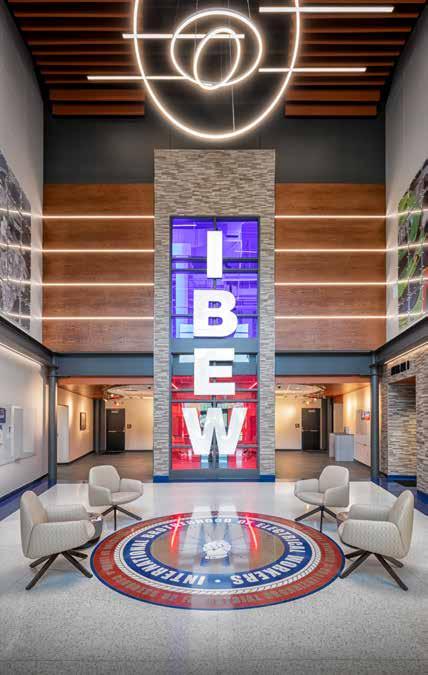
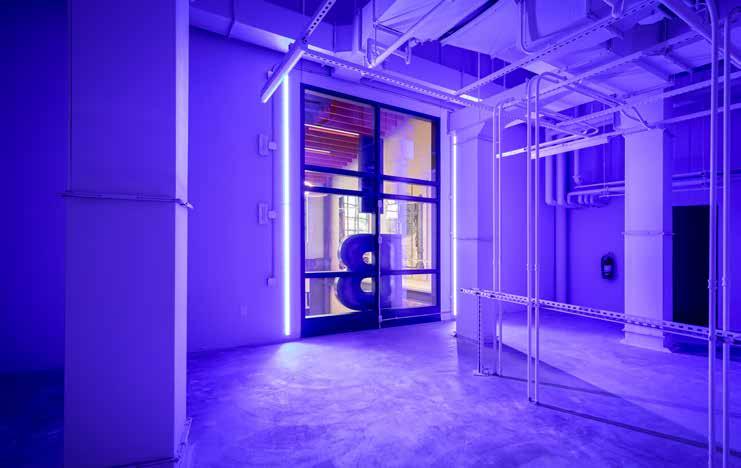
That showpiece is on the ground floor, centered beneath the towering IBEW lettering that anchors the lobby, within a glass-enclosed electrical room glowing from behind the stone-clad feature wall. Inside is the building’s main electrical equipment. Panels, conduit runs, and organized infrastructure all had to be aesthetically organized
Every conduit run had to be carefully routed, every tray aligned, every junction placed with intention. The team worked closely with the trades to choreograph what would be seen and what needed subtle concealment. A programmable LED lighting saturates the space in a deep red, washing evenly across the equipment and reflecting off the glass to create a uniform glow whose color can be changed for holidays and causes like Breast Cancer Awareness month.
Lighting is the core identity of the building’s owner and occupant. Tricia Monaco described it as central to the design process. Temperature, intensity, and placement all influence how a space feels, both inside and out.
“I personally feel that lighting really sells our spaces and our designs, and lighting is actually the most important part of our designs. We didn’t want you to really see the light, we wanted it to glow.”
Rather than flooding the site with tall, high-intensity poles, fixtures are spaced deliberately and kept at modest heights, providing clear visibility without casting excessive glare. Landscape elements reinforce this approach. Plantings, grade changes, and the recessed drainage corridor create natural buffers absorbing and softening light before it can travel outward.
In front of the building, an illuminated pedestrian bridge becomes the primary visual feature, but even here the light is contained within the railings and directed downward onto the walking surface, allowing it to guide movement safely without projecting brightness into the surrounding neighborhood.
On the building itself, illumination reveals form rather than overwhelm it. Light is concentrated at entry points, beneath overhangs, and within recessed façade elements, where it highlights material texture and depth while remaining shielded from direct view at a distance. Wall-mounted fixtures cast controlled vertical washes that stop at the surface instead of
spilling outward, and interior light is moderated by the depth of window openings and overhangs.
This attention to detail peaks in the lobby, where the lighting is layered like a composition. A circular ring overhead sets the tone. It’s scaled to the building’s height and reads as a band of energy racing around the ceiling. The wood panel’s horizontal reveals wash soft lighting across their surface creating rhythm and shadow. But the real kicker comes from the floor. The terrazzo doesn’t mirror; it diffuses. That ring becomes a softened halo. The red glow of the exposed electric room reflects warmly off the floor while the IBEW seal looks as if it’s rising from within the surface.
The building itself pulls off the same quiet trick. In the end, the IBEW Hall doesn’t resemble a commercial intrusion at all. It sits comfortably on its lot like a neighborhood church, glowing with the familiar aura of small-town life. Its broad roofline and measured height align with the horizon of nearby homes, keeping it in scale with brick houses, mature trees, and quiet residential streets.
Just blocks from Main Street, within sight of the Ohio River and the layered ridgelines beyond, the building feels rooted in Beaver’s landscape. Lawns, sidewalks, and calm residential blocks frame it on all sides, and the architecture responds with restraint. It belongs to the trades that built it and equally to the neighborhood that lives beside it.
The three teams all agreed that steady communication and collaboration helped bring the complex project past the finish line.
“The ownership group was very willing to come to meetings and talk about any issue,” said Riggins. Pappas agreed. “Everyone sat there with us working through issues and problems and just really helping to be an active partner in the process with our team, the architect’s team, and the contractors.”
“It really is great when you get jobs with the right teams,” said Measel. It’s almost a pleasure to go solve the problems together.” BG
PROJECT DETAILS
Project Size: 20,620 SF
Project Location: 217 Sassafras Lane, Beaver, PA 15009
Completion Date: May 2025
Owner: IBEW Local Union 712, Declan Pape, dpape@ibew712.org
PROJECT TEAM MEMBERS:
Architect: DRAW Collective - Mark Scheller, AIA, Tricia Monaco, NCIDQ, Randall Riggans
Contractor: G.E.M. Building Contractors and Developers Inc.Geoffrey E. Measel, NCARB
Construction Manager: Eckles Construction Services, Inc.- John Pappas, Stephen Esposito & Terri Hoover, Construction Manager
MEP Engineering: H.F. Lenz Company - Steven Gridley, PE
Structural Engineering: Barber & Hoffman - Jim Pospisil
Civil Engineering: Civil & Environmental Consultants, Inc.Anthony J-M. Simelis
Landscape Architecture: Pashek+MTR - Nancy Lonnett
International Brotherhood of Electrical Workers
L ocal Union No. 5 5 Hot Metal Street • Southside • Pittsburgh, PA

For more than 125 years , I.B.E.W. Local 5 has been lighting up Pittsburgh’s sports arenas, its hospitals and its skyscrapers.
Acrisure Stadium, PNC Park, Pittsburgh International Airport, PPG Place, UPMC Children’s Hospital of Pittsburgh and the new FNB Tower. Behind Pitts burgh’s major buildings is I.B.E.W. Local 5.


LEGAL PERSPECTIVE
ARTIFICIAL INTELLIGENCE IN CONSTRUCTION: OPPORTUNITY AND RISK
BY TIMOTHY BERKEBILE AND HARVEY AHN OF MCNEES WALLACE & NURICK
The advent of ChatGPT brought mainstream attention to technology that has been evolving quietly for decades. While artificial intelligence was already embedded in estimating platforms, logistics tools, and scheduling analytics across the construction sector, ChatGPT dramatically expanded access to artificial intelligence through its ease of use. For the first time, a novice user could generate genuinely useful content simply by entering a straightforward prompt.
Developed by OpenAI, ChatGPT is a conversational chatbot that generates responses in natural language. As professionals experimented with the tool, many discovered its value in handling routine, time-consuming tasks, such as drafting emails, summarizing lengthy documents, generating checklists, and organizing information. Competing tools
The rise of artificial intelligence in construction is redefining what’s considered competent and responsible practice.
quickly entered the market, and AI transformed from a specialized technical capability to a standard feature embedded in many business platforms.
The term “artificial intelligence” now encompasses a broad range of technologies. Machine learning systems analyze historical data to identify patterns and predict outcomes. Deep learning models interpret images, drawings, and sensor data. Generative AI tools create new content. Increasingly, integrated platforms combine multiple AI models to deliver coordinated functionality, and some systems can automate defined tasks with limited human intervention.
The potential benefits of AI in the construction sector are immense and exciting. Construction is a coordination business requiring constant communication, disciplined documentation, and complex decision-making across
layered project delivery systems. When deployed with a clear understanding of its capabilities and limitations, AI can expand access to information and allow firms to redirect resources toward higher-value activities such as strategic analysis, creative problem-solving, risk management, and client engagement.
At the same time, expanded capability brings expanded risk. The same ease of use and broad accessibility that accelerated AI’s adoption also increase the potential for misunderstanding and misuse. Successful implementation requires acknowledging several practical realities, such as:
• Every AI model has defined strengths and limitations, and not every tool is suited to every use case. Selecting the appropriate model for the task is essential. AI should not be deployed without clearly defined use cases and oversight protocols. Automating workflows without understanding underlying assumptions can create operational blind spots and unintended consequences.
• Outputs are only as reliable as the data on which they are based, making data quality and governance essential. Weak data controls can produce inaccurate outputs that drive flawed business decisions. In addition, uploading sensitive project information into unsecured or public-facing platforms may inadvertently compromise confidentiality protections, violate contractual obligations, or expose proprietary data.
• Effective use of AI requires meaningful training. Users must understand both the functionality and the boundaries of AI tools. Without a baseline understanding, employees may misuse systems, input inappropriate data, or misinterpret outputs. At the same time, failing to upskill staff may leave firms competitively disadvantaged as peers adopt AI more strategically.
• AI cannot replace professional judgment. While it can inform and enhance decision-making, the end user remains responsible for the accuracy and integrity of the final deliverable. Treating AI-generated analyses, summaries, or recommendations as authoritative without scrutiny and verification risks incorporating errors into bids, schedules, compliance documentation, and client communications. Overreliance may increase exposure to contractual claims, tort liability, professional liability, or reputational harm. Ultimately, the end user is responsible for actions taken in reliance upon AI output and cannot later point a finger of blame at an AI platform.
The risks associated with these realities can arise in unexpected ways across an organization. The following are a few practical and legal considerations relating to the use and adoption of AI tools.
Unsupervised adoption. Without approved tools or clear guidance, employees may turn to whatever is convenient, a phenomenon often called “shadow AI.” This can reduce organizational control over both the tool and the information entered into it. Many AI services reserve the right to use user input to improve their systems, including training AI models. Uploading drawings, pricing, contract language, or sensitive project discussions could inadvertently disclose confidential information, weaken trade secret protection, or violate contractual confidentiality obligations.
Intellectual property concerns. AI-generated works may not qualify for copyright protection, potentially limiting exclusivity even if the content is valuable. Terms of use may also restrict ownership, as a company may receive only a limited license to outputs, while vendors retain intellectual property or other rights. Certain contracts may shift risk to the customer, including indemnity provisions requiring the company to assume liability if disputes arise from AI-generated content.
Employment discrimination. Employment-related AI tools present additional considerations. Many recruiting platforms now use AI-driven scoring or ranking. Even if the company treats outputs as advisory, regulators may view them as part of the decision-making process. If the system contributes to discriminatory outcomes, liability may rest with the employer rather than the software vendor.
Note-taking applications. These tools can record, transcribe, and summarize conversations, raising potential privacy and consent issues. In jurisdictions that require participant consent, recording or transcription may violate wiretapping or privacy laws. Even where legal, companies must consider data storage, access, and whether sensitive discussions are retained in ways that increase security or litigation exposure. Data location and handling. Some AI tools process information on servers outside the United States. Specific projects, particularly government contracts, may impose restrictions on data handling. AI may also process personal information, employee data, or protected health information, triggering privacy and data-protection obligations even when used internally.
Disclosure of AI use. Companies may need to inform clients or other stakeholders if AI materially influences service delivery, professional judgment, security practices, or handling of client information. Contractual language addressing AI use is becoming more common, and public companies may have disclosure obligations related to AI adoption.
Legal liability. It is also important to remember that AI does not transfer responsibility. If a design error, cost miscalculation, or scheduling mistake stems from AI-generated output, the contractor or professional remains accountable. AI can support decision-making, but human review and verification

are essential before outputs are relied upon. Physical applications of AI, such as robotics, equipment monitoring, autonomous machinery, and safety-monitoring cameras, introduce additional considerations. Failures in these systems can create safety risks, and data collection (including worker location or biometric information) raises questions of consent and contractual risk allocation. Many construction contracts have yet to address responsibility for incidents arising from AI-enabled systems.
New emerging standards?
Acknowledging these risks does not justify disregarding AI altogether. The rise of artificial intelligence in construction is redefining what’s considered competent and responsible practice. AI tools, ranging from generative design and predictive safety analytics to automated quality inspections, are enabling faster, safer, and more efficient project delivery. As these technologies become mainstream, industry professionals may be expected to adopt them to meet evolving standards of care. In short, AI is not just a tool but is establishing a new set of expectations. Firms that integrate AI responsibly stand to reduce risk and improve outcomes, while those that ignore it may face heightened liability as the standard of care advances.
Conclusion
Companies adopting AI often emphasize governance to maximize benefits while managing risk. This can include defining use cases, reviewing vendor terms, training employees, setting data entry rules, and establishing internal review processes. While not yet strictly required, some organizations are creating oversight structures to ensure adoption does not outpace control.
AI is widely recognized as a disruptive and transformative technology due to its versatility and broad applicability. In construction, it offers significant potential benefits but also carries risk. Without preparation and responsible use, AI may introduce liability rather than efficiency. Firms can turn risk into opportunity by understanding AI’s capabilities and limitations, implementing appropriate controls, and ensuring its use strengthens project outcomes. BG
Tim Berkebile is a member of the Construction, Litigation, and Real Estate Groups at McNees Wallace & Nurick LLC. He can be reached at tberkebile@mcneeslaw.com.
Harvey Ahn is a member of the Intellectual Property and Patent Groups at McNees Wallace & Nurick LLC. He can be reached at yahn@mcneeslaw.com.

MICA members are interior contractors who share a common mission: to provide their customers with the highest quality craftsmanship. We partner with the union trades that supply the best trained, safest and most productive craftsmen in the industry.
Alliance Drywall Interiors, Inc.
Easley & Rivers, Inc.
Giffin Interior & Fixture, Inc.
JLJI Enterprises
J. J. Morris & Sons, Inc.
Ambridge High School
T. D. Patrinos Painting & Contracting Company
RAM Acoustical Corporation
Schlaegle Design Build Associates
TRE Construction
Wyatt Inc.
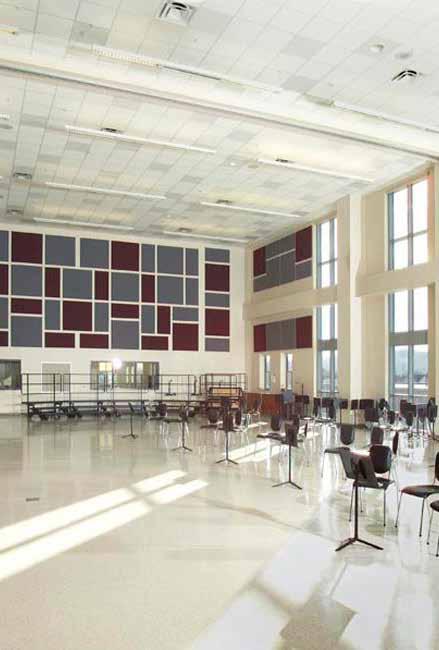
Interior contractor: J.J. Morris & Sons, Inc.
Another high quality MICA project
FINANCIAL PERSPECTIVE
SURETY MARKET UPDATE
BY JEFF BURD
Insurance is best when things are boring and predictable. Business, especially the construction industry, rarely is either of those. But, for most of the past decade or so, the contract surety business serving the construction industry has been mostly boring and predictable. Surety veterans expect that to be true for 2026.
“I haven’t seen any indication of a hard market. There are plenty of insurance companies out there,” says Steve Squelgia, vice president-bond manager for First National Insurance Agency.
“Overall, things are good. Most sureties see 2026 as an extension or repeat of 2025, possibly even better,” agrees Will Chapman, senior vice president of surety bonding at Seubert and Associates, a North Shore agency.
“We’re seeing plenty of capacity for the market overall. The reinsurers for the smaller sureties have seen losses over the past several years, but overall capacity continues to grow,” observes James Bly, managing director for Alliant Insurance Services, the largest insurance broker in the U.S.
That growth in capacity is the result of continued strong performance by the 10 largest insurance companies, which wrote more than 54 percent of the bonds or subcontractor default insurance (SDI) policies last year, and a construction industry that has not seen a significant decline in work since the pandemic. And, because of the post-pandemic problems of higher cost escalation and insufficient labor for construction, surety companies have been more cautious in underwriting surety programs than might have been the case in other soft markets for insurance.
The most recent survey of the top 100 surety providers reflects the benefits of underwriting caution. Only two of the ten largest surety providers saw loss ratios over 40 percent, which is typically the break-even point, with the highest ratio at 54.1 percent. Two of the top sureties maintained loss ratios of 6.1 percent or lower. The combined direct loss ratio of the ten largest surety companies was 20.1 percent, just slightly lower than the 20.7 percent loss rate of the top 100 companies. The two largest surety companies (as measured by direct premiums written) – Liberty Mutual Group and Travelers Bond – accounted for nearly 25 percent of the total market and had direct loss ratios of 12.2 and 12.8 percent respectively.
Premium growth for surety bonds was nearly seven percent in 2025, following double-digit growth in 2023 and 2024.
There was also some relief from catastrophic losses for the insurance industry overall.
Global insured losses topped $100 billion again in 2025, but were off roughly 25 percent from 2024, according to global
agencies Swiss Re and Munich Re. The relief came primarily from a hurricane season that was less destructive than in recent years.
As the calendar turned to 2026, construction companies were also mainly seeing good results. Higher construction costs and tight labor are still problems for contractors, but firms that lost money in 2025 were the exception. The outlook for 2026, both regionally and nationally, is not very different.
“Last year was a strong year for our clients in the construction industry. It was a continuation of from 2024, bleeding off that backlog,” says Ted Pettko, shareholder and leader of the Construction Industry Group at Schneider Downs and Company. “Coming into 2026, everyone is pretty optimistic, although the pipeline of work seems less certain. Of course, contractors never think their backlog is big enough.”
“I have not seen any major financial distress. Most of our construction clients are doing quite well,” agrees Michael Kapics, principal and national director and practice leader for construction at Hill Barth and King. “They all have pretty strong outlooks into 2026. They are upbeat and positive about the market. Backlogs are good. Not the best they’ve ever seen, but nothing they’re super worried about.”
Bly notes that below the top tier of surety providers, firms that saw higher losses recently are being more cautious about underwriting, looking for more information or reviewing performance more frequently. Squelgia says that contractors that experienced losses should expect more questions about why the losses occurred. He believes the uncertainty about the direction of the economy is dictating more caution. But the tighter scrutiny seems to be specific to specific negative business conditions, rather than a turn towards a hard market.
“We’re not seeing the sureties tightening conditions. There are outliers but we feel the underwriting will stay consistent. The surety industry remained profitable again in 2025 and we expect capacity to remain strong throughout 2026. We see no changes in underwriting standards,” says Chapman.
“I’m not hearing any noise about owners being asked to boost working capital or retained earnings,” says Pettko.
While the surety market is poised to have another solid year in 2026, there seems to be some sense that the party will not go on indefinitely. Some of the issues that have been headwinds for construction over the past few years have the potential to cause more problems during the next 12-to-18 months.
“We’re seeing strong demand in road work, water and wastewater, power generation, manufacturing, and data center construction. These large projects are going to continue to drive activity, but I think the big red flag for most of our clients is that those projects are soaking up
labor,” says Chapman. “Labor is always an issue, but now even more so. I think most of our clients see plenty of opportunity but are limited by the people they have available to perform the work.”
“Some of the concerns that I’ve seen and heard about are inflation, and tariffs are still a worry. The biggest thing I hear from contractors is that they get lots of applicants for jobs, but few are qualified. There’s still that gap in skilled labor,” reports Squelgia.
“I’ve been talking to clients about not trying to grow too quickly by moving into markets they do not normally work in. We saw this last year where contractors were jumping into more public work and dealing with the challenges that come with that,” says Kapics. “I also feel like the list of financial institutions that are supporting construction keeps dwindling as regional banks are getting gobbled up by big banks that don’t like construction. There are fewer options for contractors to obtain lines of credit.”
One change in that market in 2025 that would adversely affect contract surety is the return of major defaults. To some degree, major losses were probably inevitable given the sharp increase in mega projects in energy, infrastructure, healthcare, and data centers. Bly notes that there were a handful of such losses in 2025: a default on a renewable energy project in the Carolinas that might top $1 billion; several project losses over $100 million; and a $50 million default by a major electrical contractor.
“When you get multiple $50 to $100 million losses in a year that has an impact, particularly if the losses were handled by a smaller surety company,” Bly explains.
Opportunities for major losses (and major profits) could increase over the balance of the decade because of the explosive growth in data center construction to serve artificial intelligence research and implementation. Within a few years, this market niche has become a trillion-dollar sector of construction activity.
“Our brokerage revenue for the construction business, which includes 4,000 contractor clients, saw 20 percent year-overyear growth that was strictly from data centers. These are project-driven policies or SDI policies on data centers. We believe that it is filling a huge void in the market,” says Bly.
For the contractors serving the booming data center market, the projects represent great opportunities for large, profitable work. This is especially true for the specialty trade contractors, most of which are performing contracts that are two or three times that of the firm’s largest ever. Of course, those kinds of booming conditions have also led to greater risk of defaults in the past; however, Bly says there are significant differences in data center development that might insulate construction firms from overreaching.
“It all could blow up down the road but right now it’s working very well because the project owners are very well-heeled. They want the
facility open and are willing to pay what is necessary to do that,” he says. “We have been watching Meta build data centers since 2018 and have been prequalifying Meta’s subs for them for eight years. Meta indemnifies its general contractors for losses that occur from a subcontractor default on a data center. There have been zero on more than $70 billion in data centers since 2018.”
Data centers have only recently become an opportunity for surety, as the development model has expanded to include more than the hyperscale user like Meta, Amazon, Microsoft, and the like.
“Developers, like Related, Aligned, Advantage, and others came into the data center market, and their funding sources require contract security for performance. The risk for is on the specialty trades, so the SDI market has blown up. We’re doing policies where we’re enrolling $400-to-$600-million subcontractors, which was unheard of five years ago.”
While the data center market has heretofore developed outside Western PA, a handful of local specialty contractors – especially electrical contractors – have benefited from the boom Now, as construction is getting underway on data center/power plant projects in Homer City, Greene County, Shippingport, and Springdale, the Pittsburgh market will experience the impact of these multi-billion dollar projects for the next decade. There will be significant changes to the local market that will result from the spike in labor utilization and the shift in the supply chain needed to complete these mega projects; however, it appears that the contract surety market has realigned so that insurers can serve their clients without disruption.
“We can get things done for our clients. There is more capacity out there than is needed,” concludes Bly. “Especially the big sureties, if they have to stretch capacity to keep a client or get a big project, they are doing it.” BG
Jeff Burd is the owner of Tall Timber Group, he can be reached at JBurd@TallTimberGroup.com.
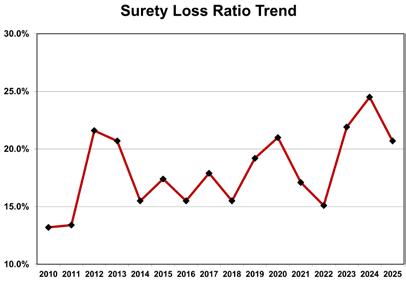








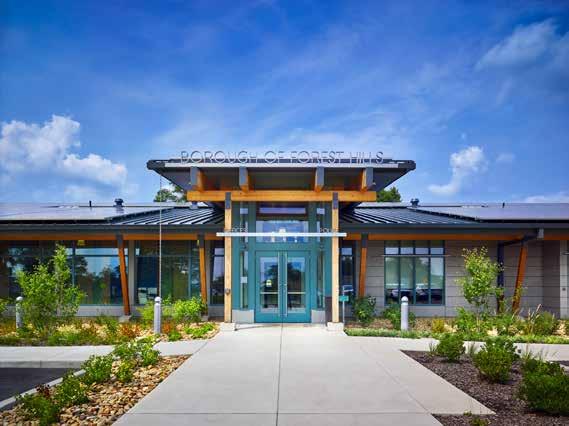

# W e A r e V o l p a t t ustrial institutional
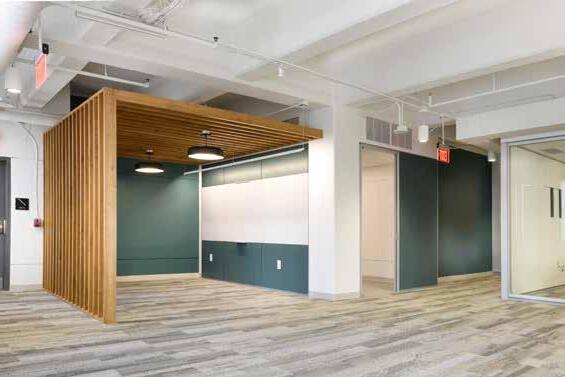
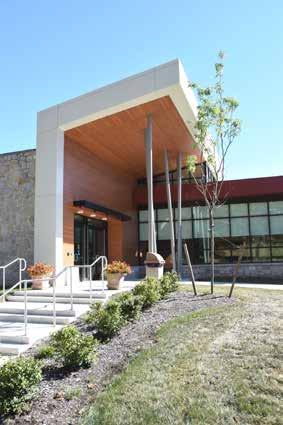



BEST PRACTICE
USING AI TO ELIMINATE A TEDIOUS TASK
BY MICHAEL VOLPATT, VOLPATT CONSTRUCTION
Construction is full of work that has nothing to do with building. The physical construction is the part everyone sees, but behind it is an endless stream of documentation, reporting, and administrative requirements that quietly consume hours. None of them are hard but they eat at your time, pulling you away from managing the job by forcing you into spreadsheets, forms, and manual data entry.
That’s where artificial intelligence started to make sense to me. Not as a novelty, but as a practical tool to eliminate the kind of repetitive work that adds no real value.
One of the biggest pain points was reporting for LEEDcertified projects. Every contractor working on a LEED project has to track waste diversion, low-emitting materials, and other environmental metrics. The waste diversion reporting was especially difficult. It meant collecting receipts from waste haulers and tracking exactly how much material was diverted, by type and by ton.
The problem is that those receipts come in every possible format. Some are printed cleanly, some are handwritten, some are smudged, and some are crumpled. Each one had to be read manually, and the numbers had to be entered into a standardized calculator. It is slow, frustrating work in an industry where we’re strapped for time and margin.
The process itself wasn’t complicated, but the volume and inconsistency made it exhausting. You might have dozens or hundreds of receipts, each with slightly different layouts. You had to interpret the information, confirm it was correct, and input it in the right place. It could take hours just to assemble the data for a single report. And because LEED certification requires accuracy, there’s no shortcut. You can’t approximate the numbers. Every ton has to be accounted for.
The solution came when we decided to build something ourselves. Working with a developer team, we designed a simple website where we could upload those receipts directly. The system uses artificial intelligence to read each document, extract the relevant data, and assemble it into the required reporting format automatically. It doesn’t matter if the receipt is typed or handwritten. The AI understands the context and pulls out the correct numbers.
The first time I tested it, I compared its results to a report I had already completed manually. The difference was less than one percentage point. That told me everything I needed to know. It was capturing the information accurately, and it was doing it in seconds instead of hours. What had once been one of the most time-consuming administrative tasks on the project became nearly instantaneous.
What impressed me just as much was how quickly the tool itself was created. Not long ago, building something like this would have required a team of developers and weeks of work. This was done in a matter of days. The speed and practicality of development made it clear that this wasn’t some distant future technology. It was something we could apply immediately to real problems in our business.
That’s where artificial intelligence started to make sense to me. Not as a novelty, but as a practical tool to eliminate the kind of repetitive work that adds no real value.
Today, we’re using the system across multiple projects, and the benefits are obvious. The time savings alone are significant. Instead of spending hours entering data, our team can focus on managing the job and solving real construction challenges. That efficiency translates directly into cost savings and better use of our resources.
Artificial Intelligence didn’t change how we build. What it changed was one of the more tedious reporting tasks. Instead of spending hours sorting through paperwork the information is assembled in minutes. It’s a simple improvement but gives our team back time to focus on the real job of building. BG
Michael Volpatt is the Vice President of Marketing and Innovation at Volpatt Construction and can be reached at michael@volpatt.com.
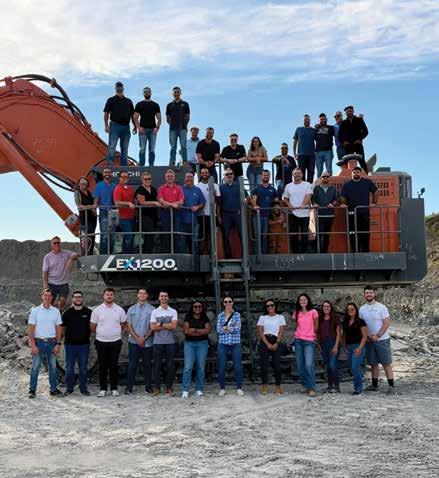



MANAGEMENT PERSPECTIVE
IMPLEMENTING AI AGENTS INTO YOUR BUSINESS
BY MATT JEFFERY
AI didn’t enter my business right away. It showed up earlier, before there was any formal use case, when I was just experimenting with it personally. This was shortly after ChatGPT came out. At that point, I wasn’t thinking about operations, productivity, or scale. I was simply curious. I spent time testing prompts, seeing what it could do, pushing and pulling at its limits to understand what kind of tool it actually was. It was interesting, but abstract. It felt more like something to explore than something to trust with real work or real decisions.
That changed about a year later, and it didn’t happen because of some sweeping strategic realization. It happened because I was bored, frustrated, and a little burned out. I was in the middle of rewriting standard operating procedures—again. Anyone who runs a business knows that SOPs are necessary, but they’re also tedious. You know they matter, but the work is repetitive and mentally draining, and it’s easy to put off or rush through. I was searching online for templates, just trying to find a clean format I could copy and adapt, when it finally clicked that AI was already doing exactly what I needed. Every time I asked it to structure something, it produced a clear, organized framework that mirrored what I was trying to build manually.
At first, the applications were simple and internal. Turning blocks of text into checklists. Breaking vague ideas into steps. Cleaning up documentation so it was usable by people other than me. Nothing flashy. But even at that stage, something stood out. The AI consistently caught phases I had overlooked. Our previous SOPs usually focused on how to prepare for a task and how to execute it, but they often missed the follow-up—what needed to be checked, monitored, or revisited after the fact. The AI filled in those gaps automatically, and it forced me to confront a broader issue: most of us solve problems through a single lens, our own. That’s not a character flaw; it’s just human nature.
solving. I started using AI alongside my team as a support tool, a way to help them explore ideas, reframe problems, and push past mental roadblocks without the pressure of feeling judged.
The next major shift came when I ran into the limits of what I was willing to put into an open system. Financial data, internal metrics, company numbers—those aren’t things you casually paste into a public AI interface. As a CEO, you already rely on multiple perspectives: CPAs, bookkeepers, controllers. Each brings value, but each also represents a fixed lens that can grow stale over time. I wanted a way to analyze data with fresh eyes without compromising confidentiality. That’s what pushed me toward closed-source agents.
Agents were confusing at first. I remember wondering why everyone was suddenly talking about them when I was already “talking to” AI. What made them different became clear once I started using them. Agents allowed me to apply consistent logic, rhythm, and structure to recurring problems. They could ingest information, organize it, and return insights in a way that matched how I think— data-driven, pattern-oriented, focused on incremental improvement over time. We now run a small number of agents across financials, bidding, sales, and early job-costing work. One of the most effective uses has been spec book analysis. You feed in a bid package, and the agent produces the information you actually need. You still verify the output, but checking its work is dramatically faster than starting from scratch.
I’m not scared of AI. But I am intimidated by it. That feels like a healthy response.
Implementation, however, is the part no one likes to talk about. Bringing AI into a business is double the work for a period of time. People still have to do their jobs the old way while also feeding the new system. That’s a hard sell. You’re asking for patience and trust in exchange for future efficiency. What changed things for us was proof. Once one department started seeing tangible gains, others followed. Momentum builds when people see that the workload doesn’t just shift—it eventually shrinks.
That realization shifted how I thought about AI. It wasn’t replacing my thinking, but it was acting like a second person in the room. A neutral perspective that didn’t get tired, defensive, or stuck in familiar patterns. As a leader, you’re supposed to guide people toward solutions rather than hand them answers. That’s easier said than done, especially with employees who are excellent at executing instructions but struggle to step into higher-level problem
I’ve tried building my own agents, and while it’s possible, the pace of change makes it difficult to justify unless it’s core to your business. You can spend months developing something only to see the same functionality rolled into a major platform shortly after. AI moves faster than most operators can, which is why we work with specialists who do this full time.



Avison Young creates real economic, social and environmental value as a global real estate advisor, powered by people. Our integrated talent realizes the full potential of real estate by using global intelligence platforms that provide clients with insights and advantage. Together, we can create healthy, productive workplaces for employees, cities that are centers for prosperity for their citizens, and built spaces and places that create a net benefit to the economy, the environment and the community.

I’m not scared of AI, but I am intimidated by it. That feels like a healthy response. Every transformative technology triggers concern, and some of those concerns are valid. At the same time, AI has freed up hours of my workday. Not to work more, but to think more. To analyze what we’re doing and plan what comes next.
For contractors who assume AI isn’t for their industry, I think the misunderstanding starts with how they approach it. They treat it like Google, ask one narrow question, and walk away disappointed. AI works best when you talk to it, give it context, and let it expand your thinking. After that, the best place to start is simple: identify the part of your job you hate the most. For me, it was delicate emails and SOP writing. Those tasks drained time and energy without creating leverage. AI removed that friction and allowed me to focus on leadership instead of repetition.
At the end of the day, AI doesn’t replace judgment or vision. But it does remove the barriers that often prevent leaders from exercising them well. BG
Matt Jeffery is the owner of Chattanooga Floor Care, in Chattanooga, Tennessee. He can be reached at mjeffery@chattfcs.com
MEMBER SPOTLIGHT
CALIBER CONTRACTING SERVICES
Kevin McNulty, President and owner of Caliber Contracting Services, grew up in Pittsburgh’s South Hills. Although no one in his immediate family was directly involved with construction, he was exposed to elements of the industry early on, helping his uncle maintain rental properties, learning woodworking from his grandfather, and working part-time as a maintenance assistant at his church during high school.
His first professional exposure to the industry came at age eleven, with a neighbor who was a union carpenter. He was hired to chisel mortar off more than 1,500 reclaimed bricks for a patio project and spent weeks after school on the job.
“I was making $4.25 an hour,” he laughed. “And I thought… this is great!”
The experience was formative: He found the work satisfying, took pride in the finished product, and valued earning his own money. It also kindled an entrepreneurial flame, and McNulty soon founded a small landscaping business, which gradually expanded into a full-fledged company he managed throughout high school and college.
“It was great practice for starting Caliber, involving many of the same steps. Forming a corporate entity, estimating, hiring and firing, insurance, subcontracting work, et cetera,” he said.
While at the University of Pittsburgh, McNulty double majored in Structural Engineering and Philosophy, which has also shaped his outlook on business and life. Especially influential for him were the practical applications of Stoicism in Marcus Aurelius’ book Meditations.
“The goal is to be happy, live well, and flourish as a person. I believe business leaders are in a unique position to facilitate this goal for others through the application of these

philosophic ideas. At Caliber, we are very intentional in trying to create a corporate culture that helps our employees flourish professionally and personally.”
After graduating, he worked at two local mid-sized general contracting firms, holding a variety of roles before becoming Director of Construction at Allegheny Health Network. During this time, he also earned his MBA from Carnegie Mellon University with concentrations in Entrepreneurship, Operations Management, and Organizational Behavior.
In 2014, McNulty left AHN and founded Caliber. Though he had long planned to start his own company the immediate catalyst was timing. He had just completed his MBA, had trusted colleagues ready to join him, and had accumulated experience across multiple roles. His goal was to improve upon best practices he had picked up at other firms, noting that the most challenging aspects of many projects occur before construction begins. When defining scope, setting budgets, navigating design decisions, permitting, and securing funding are handled well by an aligned team, then the construction phase itself can become the most straightforward part of the project.
“I have always found it exciting to create a new venture. It has unique challenges that test you and it is not for the faint of heart. However, it is extremely rewarding to create something that is meaningful for our team members and clients.”
In the early stages, Kevin handled everything from setting up banking, bonding, legal, accounting, hiring, and internal systems to simultaneously running day-to-day operations to generate revenue. On Caliber’s first projects he effectively served as the on-site superintendent while also managing executive responsibilities. A typical day could involve going from the supervising work at a jobsite to meetings with bankers or bonding agents, then back to the field, and later to the office to process payroll. The daily operations of a start-up company were intense and demanding, but Caliber was beginning to grow.

Within months, through a family connection, Caliber hired Michelle McHugh (now McNulty through marriage) as the first full-time office employee. Michelle had just completed her degree in Business Management from Point Park University. While she was new to the construction industry, she quickly embraced the opportunity to take on a variety of responsibilities and rolls in the company’s operations, including preconstruction, project administration and accounting. She estimates it took roughly five years to feel fully confident in her role, given the steep learning
Michelle McNulty was one of the firm’s first employees and now serves as Director of Operations.
Kevin McNulty is the President and Owner of Caliber Contracting Services, now
curve on the administrative side of construction. From prevailing wage documentation to grants and compliance requirements, each project presented new challenges. Now in a leadership role as Director of Operations, she views construction as an industry defined by constant change and ongoing learning, with no point at which the process truly stops.
Caliber is now entering its 12th year of business and is a finalist at the 2025 MBA Evening of Excellence Awards. Their focus is on maximizing overall client value rather than simply minimizing costs, and they view close collaboration between designers and contractors as essential to achieving this.
The firm maintains broad, well-rounded capabilities across a wide range of market sectors, including K–12 and higher education, commercial office, parks and recreation, cultural and religious facilities, healthcare, multifamily, retail, development, and light industrial. Rather than specializing in a single niche, they focus on versatility and adaptability across project types.
Caliber executes projects through multiple project delivery methods, including CM-at-Risk, design-build, multiple prime, and traditional single-prime general contracting. They also self-perform core trades such as concrete, rough and finish carpentry, drywall, and ceilings, which provides greater control over project execution and flexibility across delivery methods.
As a company, they emphasize being large enough to deliver meaningful impact while remaining small enough to stay client-focused, prioritizing attentive, value-driven project delivery on every job.
They view one of Western Pennsylvania’s key strengths as the positive, collaborative relationship between contractors and trade unions. In their experience, this dynamic is notably stronger in the Pittsburgh region than in many other markets, where relationships can be less cooperative. They believe organizations like the Master Builders’ Association play a significant role in fostering this collaboration, which contributes to smoother project execution and a healthier construction environment overall.
They identify the most significant regional challenge as the ongoing labor shortage in the building trades. A decade ago, firms could rapidly scale field crews for large projects by adding dozens of skilled workers; today, that labor pool no longer exists.
As the company has grown, the nature of leadership has continuously evolved. Kevin views this philosophically. “The growth of a business demands that you are comfortable with change,” he says. “It requires lifelong learning from both successes and failures. You have to relearn how to run the business at each stage of its growth and you never fully master it. But you continue to strive to do so with the understanding that this process never ends.” BG
WORKFORCE DEVELOPMENT
THE CYBERBUS
BY LANCE HARRELL
The Workforce On Wheels CyberBus is a mobile workforce resource that delivers computers, internet access, and employment support to communities with limited digital infrastructure. Its goal is removing a barrier that keeps many people from construction job opportunities: a lack of access to technology.
Contractors and unions across the region consistently report labor shortages; thousands of people are searching for stable, well-paying work that can change the trajectory of their lives. But many potential employees simply do not know what opportunities exist in the trades or what those careers offer long term.
That lack of awareness is fostered by a technology gap that prevents people from even discovering those options. Workforce development today is inseparable from technology. Job postings and applications are online. Test preparation and training materials sit behind a screen, along with benefits enrollment and credential tracking. Without reliable internet and a functional computer, people are effectively locked out of the modern labor market before the conversation even begins.
For many households, a smartphone is the only point of connection. Phones are powerful tools but not designed for navigating workforce systems. Resumes, documents, multistep applications, entrance-exam prep—all of it is harder
on a phone. The challenge goes deeper than access alone. Digital literacy is training in itself. Many people have never learned to type, manage files, or use standard professional software—skills that white-collar and digitally connected workers take for granted. In the trades, this gap shows up early. Many union trades require entrance exams, most of them mathbased, focused on algebra and geometry. Misconceptions about “not needing math” steer capable individuals away before they ever prepare. Without computers, online practice tools, or basic instruction, these barriers feel insurmountable.
By bringing laptops, internet access, printers, and on-site support into neighborhoods, the CyberBus clears several obstacles at once. Residents can sit down at a workstation to build a resume and apply for jobs, explore apprenticeship programs, enroll in GED or literacy courses, and print materials for future interviews.
When services show up inside a community, participation increases. People no longer have to overcome transportation hurdles, unfamiliar systems, or fragmented information. The bus becomes a single point of access where people get exposure, prepare, and follow through. The goal is not just employment but sustainable opportunity: careers with stability and benefits, and a chance to move up.
In the end, the CyberBus is about planting seeds. Some take root right away; others need time. Exposure at fourteen can turn into opportunity at sixteen, and into a career a few years later. When someone gets the tools they need, the impact extends beyond a single job. Within a few years, with enough seeds, you have a garden. BG
Lance Harrell is the Director Of Workforce Development and Community Engagement at The Master Builders Association, he can be reached at LHarrell@mbawpa.org.



INDUSTRY & COMMUNITY NEWS



The
was recognized at the Golden Trowel Awards, given by the Mason Contractors Association of Western Pennsylvania for excellence in masonry design, construction, and craftsmanship.
Ferry Electric Company celebrating the retirement of Stan Stavish, an electric foreman of nearly four decades.
The Mosites team enjoys a company skating event at Franciscan Square, at the Franciscan University of Steubenville.
Massaro held its Annual Curling Cup, pictured are this year’s champions Tara Ponitz, Christian Moreland, and Dylan Ilov.
Landau Building Company attending the opening of Allegheny Health Network’s newly renovated Inpatient Rehabilitation Center at AHN Allegheny Valley Hospital.
Mascaro team



On Monday, February 2nd, Jared Koski, Zach Kindt, and Dominic Williams (L to R) shared their experience in the steel industry at AIST Pittsburgh’s Young Professionals night at the Wyndham Grand Downtown Pittsburgh.


Patrice Thompson addressing the MBA Members at the annual meeting.
Mayor Corey O’Connor addresses the annual members meeting of the Master Builders Association.




Rich Yohe of Easley & Rivers, Eric Pascucci of PJ Dick, and Elliana Saylor of the Master Builders Association
Brandon McKee, Rycon Construction, Kristopher Brice, Rycon Construction, John Sabatos, Rycon Construction, Mike Penrod, Rycon Construction
Abby Krehl from Gilbane photobombing Dave Meuschke of Burchick Construction and Bill Waterkotte.
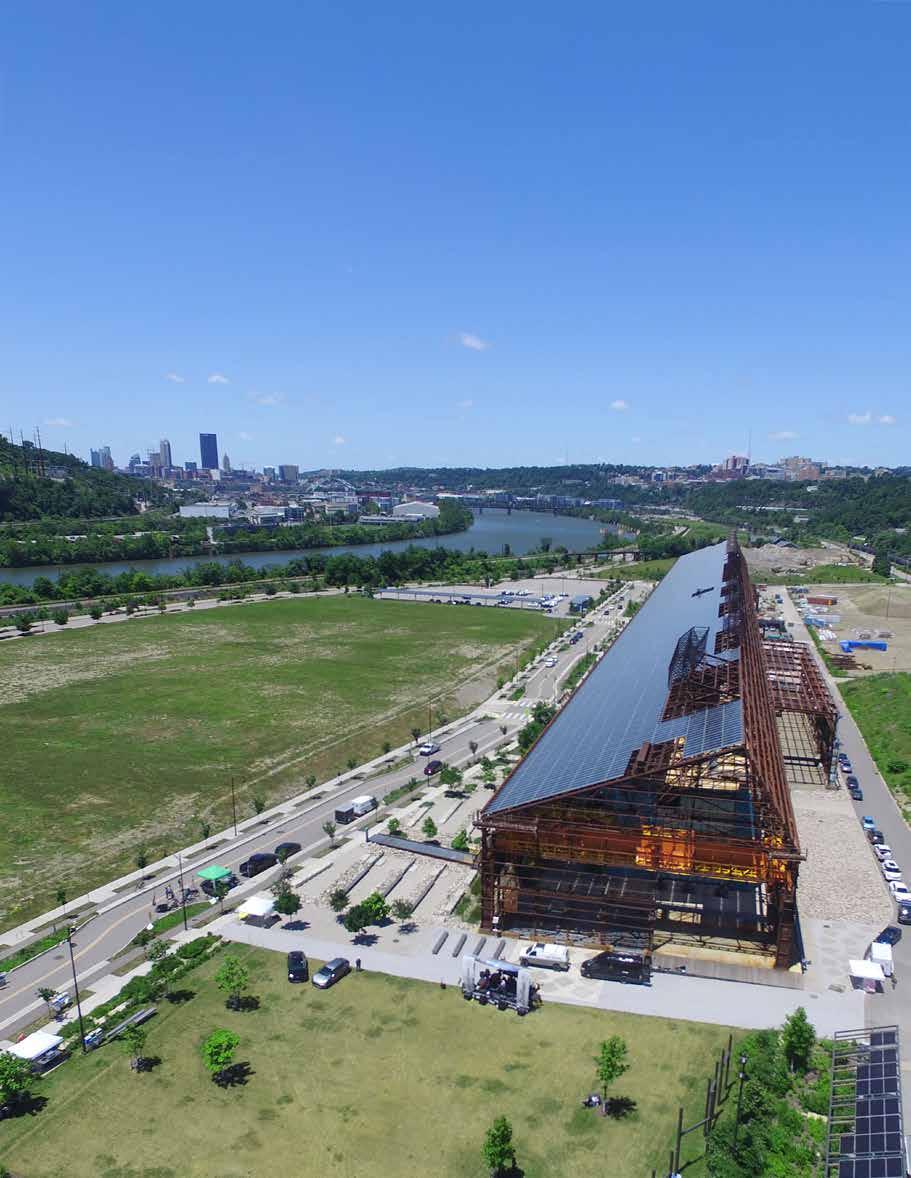





The PJ Dick team took home best renovation construction between $5-$20 million for their work on the University of Pittsburgh Heinz Chapel façade and spire repairs.
Jendoco Construction Corporation were the winners of the Best Renovation Construction under $5 million at the Evening of Excellence.
Caliber Contracting Services celebrating their win at the Evening of Excellence for Best New Construction Under $20 million on the City of Pittsburgh Medic Station Number Four.
Landau Building Group won the Best Renovation Construction Over $20 million for their work at the Grove City College Smith Hall of Science and Technology.
Mascaro Construction Company were the winners of Best New Construction over $50 million for their work on the Carnegie Mellon University’s Highmark Center for Health, Wellness and Athletics.




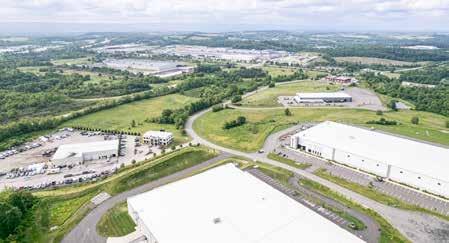
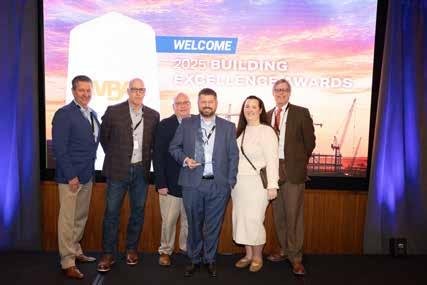
Rycon Construction celebrates winning Best New Construction between $20-$50 million for their work on the Franciscan University of Steubenville’s Christ the Teacher Academic Hall.





More than 1,300 guests gathered at this year’s event.






Brigid Smith and Amanda Mills working the Sargent Electric booth.
Members of the MBA Young Constructors Committee braved the cold for a polar plunge, raising more than $800 in support of Special Olympics (left to right: The Pirate Parrot, Naley McKamish, Kendall McLister, Ellianna Saylor, CJ Saylor).
The Rycon team celebrating their win at the networking event.
Ellianna Saylor of the MBA and Emily Merrick of COMMAND Center connecting at the Evening of Excellence mixer.
Mike Abriola and Chris DiLorenzo of Turner Construction Company join Abby Krehl and Jason Ohisson of Gilbane Building Company for a photo at the Evening of Excellence.
Kenton Porter, Paula Richards, and Evan Sargo of the Pennsylvania Builders Exchange at the Evening of Excellence.
Kristen Kaczmarek, Matt Price, and Joe Congie of Mohawk Construction & Supply Company at the Evening of Excellence.
Dave Daquelente of the MBA delivering a captivating speech.
Tim Mackin and Cole Williams of ECS Mid-Atlantic catching up at the Evening of Excellence.
Gabrielle Freeland of Saxton & Stump, a Platinum Sponsor, at the Evening of Excellence.
Jason Harris of Zurich Surety and Gary Meinen of Willis Towers Watson connect at the Evening of Excellence.



We




AWARDS & CONTRACTS
A. Martini & Co. is the general contractor for the renovations at Pietrogallo Gordon Alfano Bosick & Raspanti’s 42,000 square foot space at One Oxford Center, LGA Partners will serve as the architect.
Rycon was selected as the General Contractor for second floor renovations at the Libierty Commons for Dollar Bank, Strada Architecture will serve as the architect.
Mascaro’s Client Services Group was awarded the ALOCSAN 1827 Misc. HVAC Improvements project.
The miscellaneous metals and stairs package for the PSU Beaver Stadium Renovations was awarded to Mascaro’s Heavy/Industrial Group.
Mascaro Construction was selected to build a new 200-bed residence hall for Washington & Jefferson College.
At the University of Akron, Rycon will soon start renovation work and MEP upgrades across six existing student residence halls. The scope also includes construction of a common area connector between two of the buildings.
MBM Contracting is the CM for the $25 million AHN Forbes Hospital MRI Replacement and related renovations in Monroeville.
Mosites Construction was the low bidder on the $58 million Panhandle Bridge Construction.
WVUM selected Rycon Construction as the CM for its new $90 million Wheeling Cancer Center.
Rycon Construction was selected as the general contractor for two projects within Kamin Science Center, the new Science of Speed exhibit and classroom renovations.
Trumbull Corporation was the successful bidder on the $163.6 million next phase of the Mon Fayette Expressway, which will connect West Mifflin to Duquesne.
In Chippewa, PA, Rycon Construction is handling a 2,300 sq. ft. renovation of a Starbucks.
Dick Building Company in partnership with Turner Construction were awarded Carew Tower Apartment Conversion project in Cincinnati.
Dick Building Company was awarded the contract for building out a café within the Cathedral of Learning.
Caliber Construction Company was awarded a contract by the City of Pittsburgh to demolish then rebuild a salt storage facility.
Turner Construction has started construction on $30 million renovations to K&L Gates, Gensler is serving as the architect.
Independence Excavating was awarded the site utility and earthwork project for the Esplanade Project.
Massaro Construction was awarded the ED, CT, and MOB replacements at Grove City hospital, architect is CPL Architecture.
Massaro Construction was awarded the infrastructure upgrade at Mercy St. Joseph’s AHU Unit, architect is Prospectus Architecture, LLC.
FACES & NEW PLACES
Jake Carnovale joined PJ Dick as a project engineer. His experience includes interior renovation projects while working for Harvey Cleary in Washington DC. He graduated from Penn State University in 2023 with a degree in civil engineering.
Tyler Jenkins joins PJ Dick’s marketing department as a graphic designer. He is a 2025 graduate of Butler County Community College with an associate’s degree in graphic design.
Ryan Kilhoffer joined Mascaro Construction as an Estimator on January 12. Ryan earned a degree in Civil Engineering from The University of Akron.
On February 9, Griffin Graham joined Mascaro Construction as a Project Engineer. He graduated from the University of Pittsburgh in December with a degree in Civil Engineering.
Rycon gladly welcomes Amber Chambers as a Project Manager with over 10 years of experience.
Rycon is pleased to welcome Indiana University of Pennsylvania alumna, Alaina Duffy, as a Project Coordinator.
Rycon’s Corporate Information Technology Department is excited to welcome Kevin Vetterly as an IT Support Specialist with over 10 years of experience.
John Paul Anthony, a Franciscan University of Steubenville alumnus, joined Craftworks USA as an Assistant Project Manager.
Nichole Hogan joined Craftworks USA as a Drafter.
Burchick Construction announced that Ryan Otroba recently joined their team as a Project Manager. Ryan is a WVU civil engineer with 10 years of construction experience.
Michael Larson-Edwards returns to Massaro Corporation as Vice President of Business Development
Dylan Ilov has joined Massaro as a project engineer after interning for several years.
David Spadacene returns to Massaro Corporation as a Project Manager.
Independence Excavating is happy to welcome Tyler Foster to the estimating team.




















Pictured

FEBRUARY 26, 2026
Over $50 Million
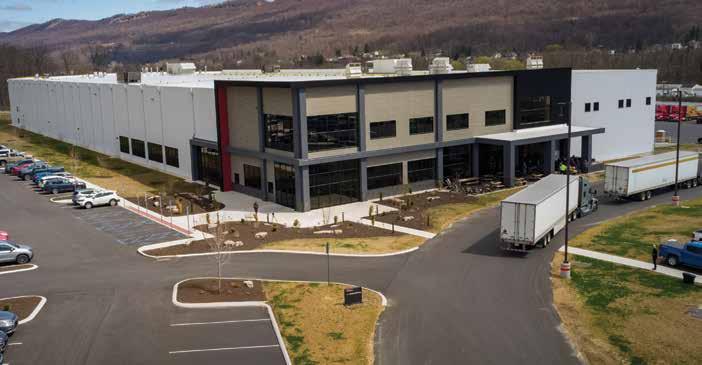
FINALIST
Sheetz — New Logistics Center and Distribution Center Expansion
SUBMITTED BY: PJ Dick Incorporated
OWNER: Sheetz
ARCHITECT: Dennis Group
MBA SPECIALTY CONTRACTORS:
Century Steel Erectors Co., LP
Clista Electric, Inc.
McKamish, Inc.
Specified Systems, Inc.
Swank Construction Company, LLC
T.D. Patrinos Painting & Contracting Company
Wyatt Incorporated
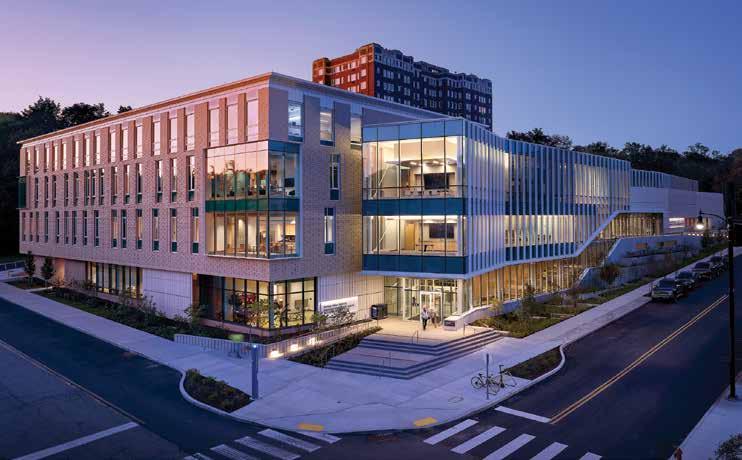
WINNER
Carnegie Mellon University — Highmark Center for Health, Wellness and Athletics
SUBMITTED BY: Mascaro Construction Company, LP
OWNER: Carnegie Mellon University
ARCHITECT: Bohlin Cywinski Jackson
MBA SPECIALTY CONTRACTORS:
ACE Lightning Protection, Inc.
Casework Installation Co.
Century Steel Erectors Co., LP
Clista Electric, Inc.
Franco Associates
G. Kidd Inc.
Giffin Interior & Fixture, Inc.
Matcon Diamond, Inc.
Mohawk Construction & Supply, Inc.
Noralco Corporation
Renick Brothers Construction Co.
Ruthrauff | Sauer, LLC
PJ Dick Incorporated
Tarax Service Systems
Blending historic preservation with modern innovation, the CMU Highmark Center now features 144,000 sq ft of athletic, wellness, and counseling facilities alongside a renovated 16,000 sq ft gymnasium. The team overcame complex challenges—active campus safety, utility relocation, water infiltration, and structural logistics—while maintaining collaboration and clear communication. Sustainable design and community enhancements, including 99 new trees and streetlights, complement innovative craftsmanship. The project delivers a high-quality, versatile facility that supports student health, athletics, wellness, and engagement while enriching the surrounding campus and neighborhood..
– John Sebastian
Massery Photography, Inc.
$20 – $50 Million

FINALIST
Bus Rapid Transit — Downtown Loop
SUBMITTED BY: Independence Excavating, Inc.
OWNER: Pittsburgh Regional Transit
ARCHITECT: AECOM
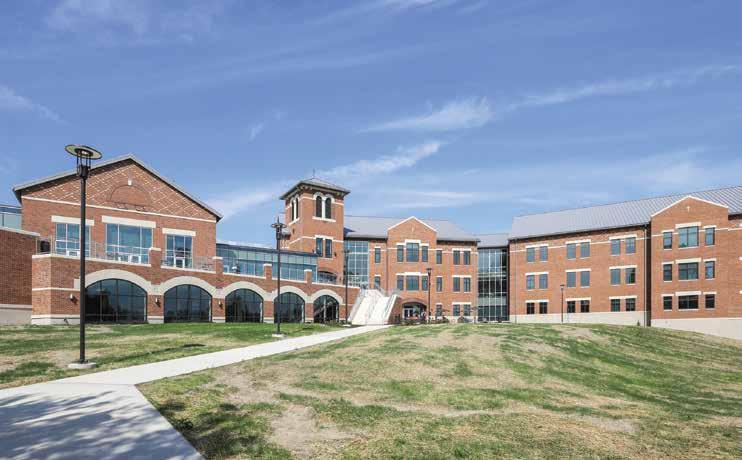
Franciscan University of Steubenville — Christ the Teacher Academic Hall
SUBMITTED BY: Rycon Construction, Inc.
OWNER: Franciscan University of Steubenville
ARCHITECT: MCF Architecture
MBA SPECIALTY CONTRACTORS:
Abate Irwin, Inc.
ACE Lightning Protection, Inc.
Amthor Steel, Inc.
Harris Masonry, Inc.
Howard Concrete Pumping, Inc.
Maxim Crane Works, LP
Specified Systems, Inc.
T.D. Patrinos Painting & Contracting Company
Christ the Teacher Academic Hall demanded precision from the start, with difficult soil conditions and a complex building layout shaping every stage of construction. The project features highly detailed masonry, including a multi-pattern modular face brick façade, massive brick arches, and architectural precast concrete. Interior work showcases technical craftsmanship through custom casework, oak handrails, built-in maple benches, laminate paneling, and recessed millwork throughout the chapel and adjoining spaces.
– Ray Vogel
WINNER
Under $20 Million
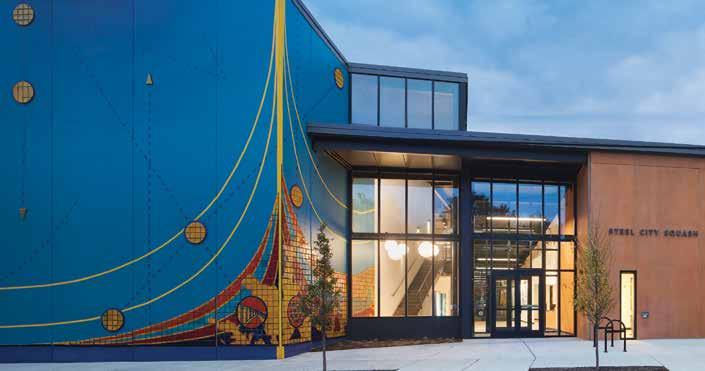
FINALIST
Steel City Squash
SUBMITTED BY: PJ Dick Incorporated
OWNER: Steel City Squash
ARCHITECT: GBBN Architects
MBA SPECIALTY CONTRACTORS:
A. Folino Construction, Inc.
Bryan Construction, Inc.
Casework Installation Co.
Costa Contracting, Inc.
G. Kidd, Inc.
Kalkreuth Roofing & Sheet Metal, Inc.
Matcon Diamond, Inc.
RAM Acoustical Corporation
Specified Systems, Inc.
T.D. Patrinos Painting & Contracting Company
Brad Feinknopf
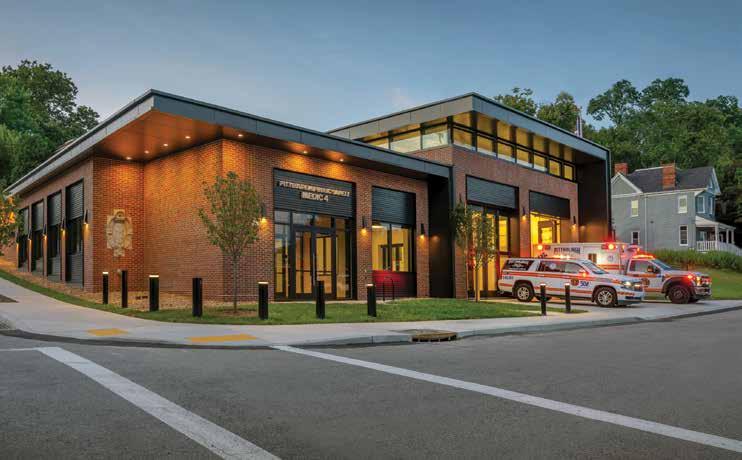
City of Pittsburgh — Medic Station #4
SUBMITTED BY: Caliber Contracting Services, Inc.
OWNER: City of Pittsburgh
ARCHITECT: AE7
MBA SPECIALTY CONTRACTORS:
Amelie Construction & Supply, LLC
Bristol Environmental, Inc.
Casework Installation Co.
CH&D Enterprises, Inc.
Dom DeMarco Construction, Inc.
Harris Masonry, Inc.
Mohawk Construction & Supply, Inc.
Paramount Flooring Associates, Inc.
RAM Acoustical Corporation
Sargent Electric Company
City of Pittsburgh Medic Station #4 represents the future of building construction as the City’s first Passive House facility. Built to exacting efficiency standards, the project features an R-70 building envelope, zero air penetration, and highly efficient electrical and mechanical systems, and was constructed to be netzero ready. This forward-looking facility showcases Pittsburgh’s commitment to innovation and sustainable building practices while providing a highperformance environment that supports EMS staff and advances environmental stewardship citywide.
– Emory Lukacs
2025 RENOVATION CONSTRUCTION Over $20 Million

FINALIST
University of Pittsburgh — Hillman Library Phase IV
SUBMITTED BY: Rycon Construction, Inc.
OWNER: University of Pittsburgh
ARCHITECT: GBBN Architects
MBA SPECIALTY CONTRACTORS:
Casework Installation Co.
Century Steel Erectors Co., LP
Franco Associates
Giffin Interior & Fixture, Inc.
Hatzel & Buehler, Inc.
Lighthouse Electric Company, Inc.
Mohawk Construction & Supply, Inc.
Noralco Corporation
Pennsylvania Roofing Systems, Inc.
RAM Acoustical Corporation
Schindler Elevator
Spectrum Environmental, Inc.
Swank Construction Company, LLC
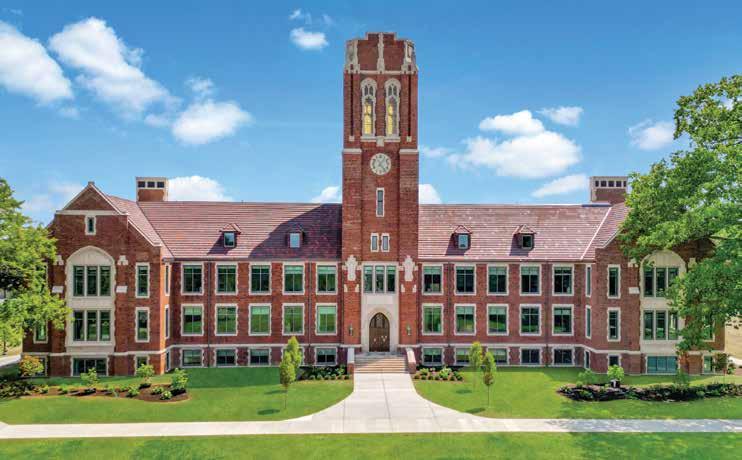
WINNER
Grove City College — Smith Hall of Science & Technology
SUBMITTED BY: Landau Building Company
OWNER: Grove City College
ARCHITECT: SmithGroup
MBA SPECIALTY CONTRACTORS:
Casework Installation Co.
Century Steel Erectors Co., LP
Giffin Interior & Fixture, Inc.
Harris Masonry, Inc.
McCrossin Foundations, LLC
Phoenix Roofing, Inc.
RAM Acoustical Corporation
Renick Brothers Construction Co.
Specified Systems, Inc.
Preserving and expanding a historic landmark at the center of an active campus required careful redesign of structural supports and shoring to protect the building’s integrity while keeping the project on schedule. The team navigated unforeseen challenges with creativity, collaboration, and solutionfocused precision. Showcasing innovative craftsmanship and sustainable design, the project reflects both the college’s values and the team’s high standards. Delivered on time and on budget, the revitalized Smith Hall honors its history while meeting the campus’s evolving needs.
– John Sebastian
Candidly Yours Photography
$5 – $20 Million

FINALIST
PNC — Wood Street Rehabilitation
SUBMITTED BY: Rycon Construction, Inc.
OWNER: PNC
ARCHITECT: AE7
MBA SPECIALTY CONTRACTORS:
Allegheny Construction Group, Inc.
Costa Contracting, Inc.
G. Kidd Inc.
Hatzel & Buehler, Inc.
Kalkreuth Roofing & Sheet Metal, Inc.
Marsa, Inc.
Matcon Diamond, Inc.
McKamish, Inc.
Noralco Corporation
Schindler Elevator
Specified Systems, Inc.
Spectrum Environmental, Inc.
Swank Construction Company, LLC
T.D. Patrinos Painting & Contracting Company
Tarax Services, Inc.
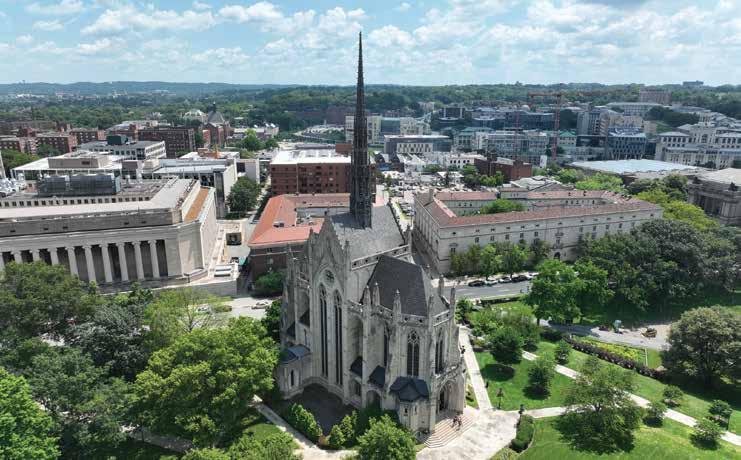
University of Pittsburgh — Heinz Chapel Facade and Spire
SUBMITTED BY: PJ Dick Incorporated
OWNER: University of Pittsburgh
ARCHITECT: Wiss, Janney, Elstner Associates, Inc.
MBA SPECIALTY CONTRACTORS:
ACE Lightning Protection, Inc.
BrandSafway Industries LLC
Ferry Electric Company
G. Kidd Inc.
Pennsylvania Roofing Systems, Inc.
Repairing the Heinz Chapel Facade and Spire was an extraordinarily complex and challenging project, performed 150–275 feet above ground on extensive scaffolding engineered for safety and access. Contractors navigated wind exposure, tight load distribution, and hazardous materials, including leadcoated copper cladding, while executing precise repairs. This project showcases what a skilled contractor can achieve—balancing safety, craftsmanship, collaboration, and client satisfaction under demanding conditions, demonstrating excellence in even the most difficult construction environments.
– Jack Ramage
WINNER WJE_Photography
2025 RENOVATION CONSTRUCTION Under $5 Million
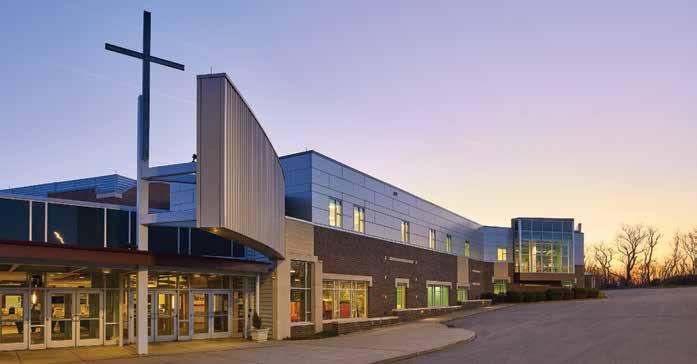
FINALIST
Orchard Hill Church — NextGen Wing 2nd Floor Addition
SUBMITTED BY: Burchick Construction Company, Inc.
OWNER: Orchard Hill Church
ARCHITECT: RSH Architects
MBA SPECIALTY CONTRACTORS:
Easley & Rivers, Inc.
Ferry Electric Company
Gunning, Inc.
Harris Masonry, Inc.
HOFF Enterprises, Inc.
T.D. Patrinos Painting & Contracting Company
Wright Commercial Floors
Massery Photography, Inc.
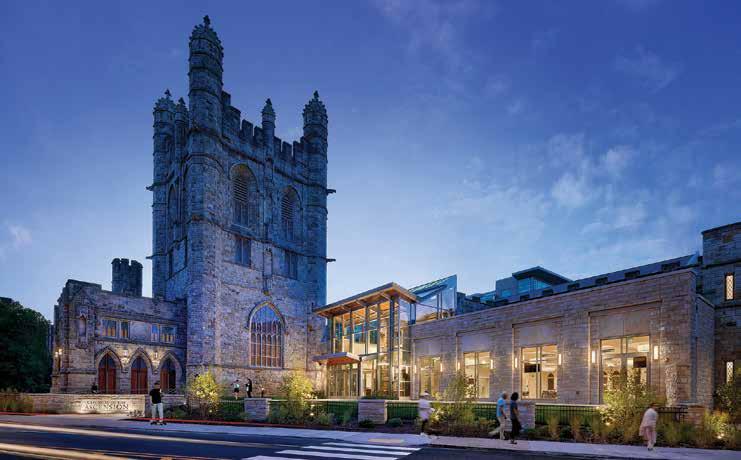
Church of the Ascension — Parish House
SUBMITTED BY: Jendoco Construction Corporation
OWNER: Church of the Ascension
ARCHITECT: Rothschild Doyno Collaborative
MBA SPECIALTY CONTRACTORS:
Bryan Construction, Inc.
Cost Company
Franco Associates
Redstone Flooring, LLC
Built in 1897, with a parish hall added in 1910, the Gothic Revival Church of the Ascension and its adjoining hall are designated historic landmarks by the Pittsburgh History and Landmarks Foundation. Jendoco has supported the campus through multiple phases, including a renovation of the parish hall and a new education building, a major masonry restoration, and the most recent project focused on accessibility and space. A new narthex and welcome area now connect the three buildings, improving circulation, expanding the parish hall, adding restrooms, and showcasing a high level of craftsmanship that makes the church a renewed beacon in the neighborhood.
– George Eheringer
WINNER
Massery Photography, Inc.
2025 EXCELLENCE IN CRAFTSMANSHIP Exterior
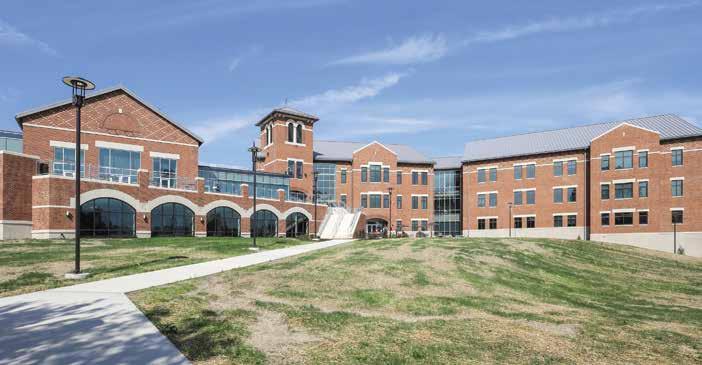
FINALIST
Franciscan University of Steubenville — Christ the Teacher Academic Hall
SUBMITTED BY: Harris Masonry, Inc.
OWNER: Franciscan University of Steubenville
ARCHITECT: MCF Architecture
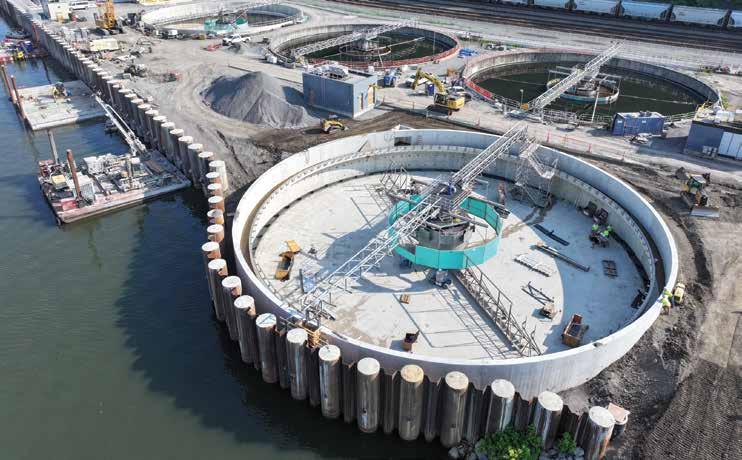
ALCOSAN — North End Plant Expansion
SUBMITTED BY: Mascaro Construction Company, LP
OWNER: Allegheny County Sanitary Authority
ARCHITECT: HDR, Inc. — Pittsburgh
ALCOSAN is a national leader in wastewater treatment, often hosting facility managers who come to learn from its operations. Its recent plant expansion shows why. The project faced rare challenges: a multi-track railroad on one side, the Ohio River on the other, and a single access route through the active plant. Mascaro’s craftsmanship and thorough pre-planning kept work moving safely. The expansion adds 45 million gallons of daily capacity, bringing the total to 295 MGD, and upgrades the discharge process for cleaner, more efficient water returning to the river.
– Emory
Lukacs
WINNER
E3 Aerial
2025 EXCELLENCE IN CRAFTSMANSHIP Interior
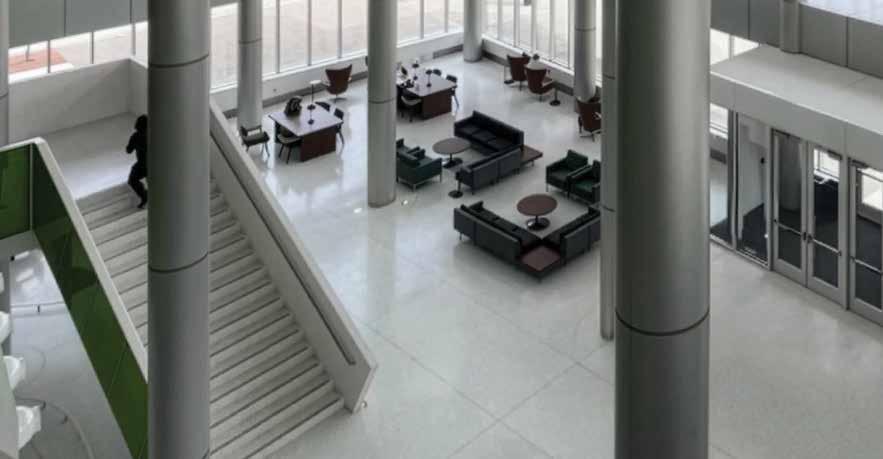
FINALIST
University of Pittsburgh — Hillman Library
SUBMITTED BY: Mohawk Construction & Supply Company, Inc.
OWNER: University of Pittsburgh
ARCHITECT: GBBN Architects
University of Pittsburgh

Dickie, McCamey & Chilcote P.C.
SUBMITTED BY: Giffin Interior & Fixture, Inc.
OWNER: Dickie, McCamey & Chilcote P.C.
ARCHITECT: Perkins Eastman
Translating intricate design into reality, the project highlights exceptional architectural woodwork, technical mastery, and innovative problemsolving. Working closely with A. Martini Co., the team executed the architect’s exacting veneer flitch specifications, achieving uncompromising quality. The project features metal portals, custom lounge bench seating, and a striking library table, demonstrating how careful craftsmanship and collaboration bring complex design intent to life, resulting in functional, visually stunning, and enduring interior spaces. – Ray Vogel.
WINNER
Andrew Rugge


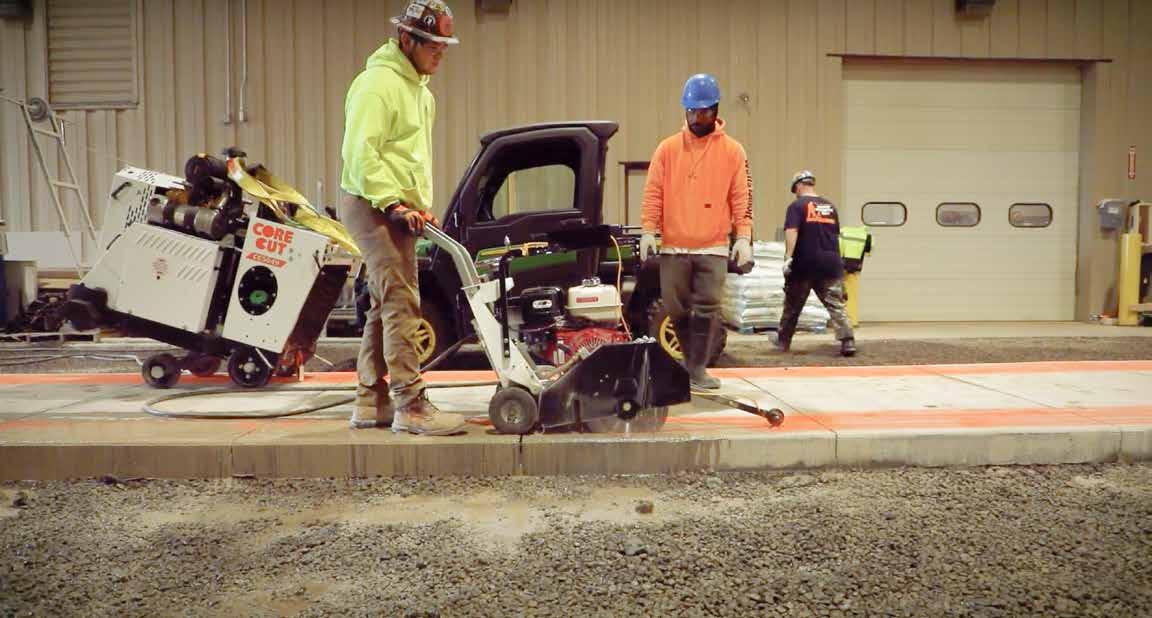




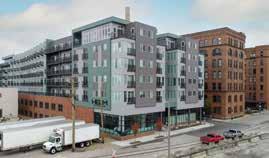
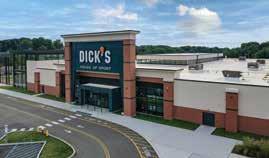


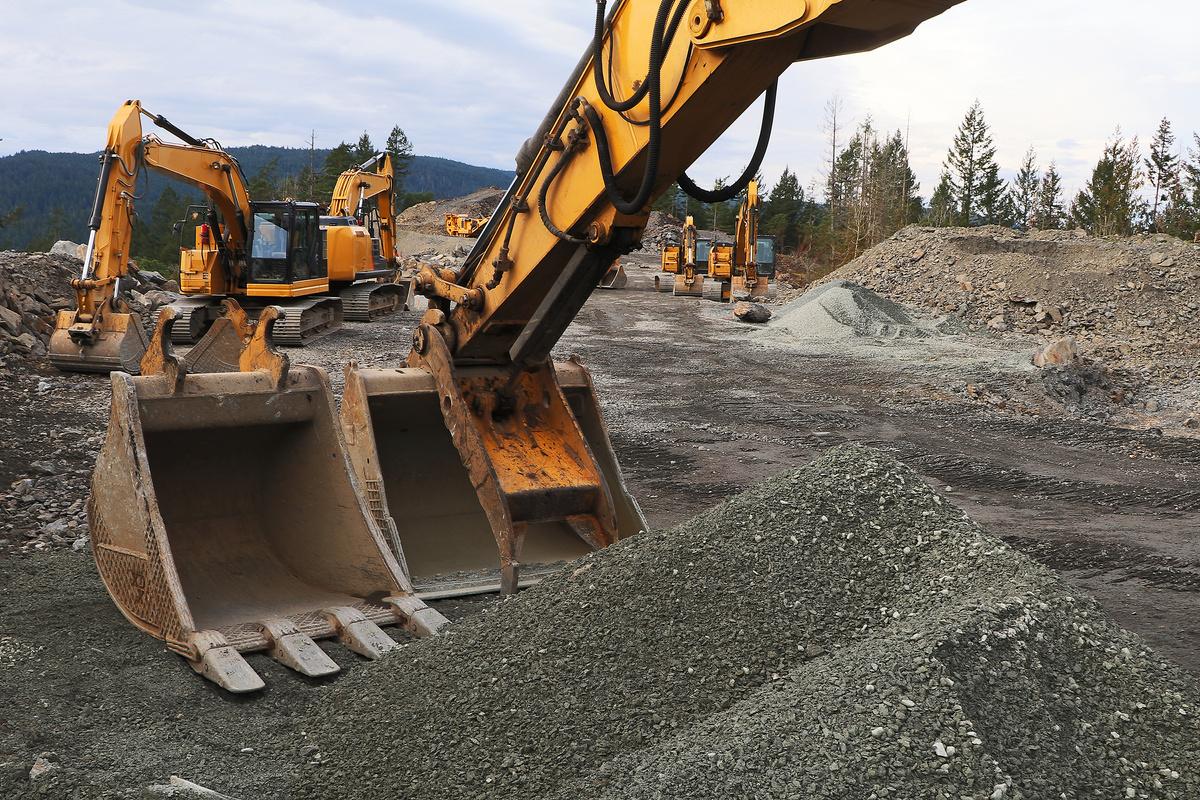



MBA MEMBERSHIP
2026 MBA OFFICERS
President
Michael R. Mascaro
Mascaro Construction Company, LP
Vice President and Treasurer
Alexander G. Dick
Dick Building Company
Secretary/Executive Director
David D. Daquelente
2026 MBA BOARD OF DIRECTORS
John P. Busse
F.J. Busse Company, Inc.
James T. Frantz
TEDCO Construction Corporation
Michael Kuhn
Jendoco Construction Corporation
Jennifer P. Landau
Landau Building Company
Anthony F. Martini
A. Martini & Co.
Steven M. Massaro
Massaro Corporation
David P. Meuschke, P.E.
Burchick Construction Company, Inc.
Jake Ploeger
PJ Dick Incorporated
Jodi L. Rennie
Turner Construction Company
John Sabatos
Rycon Construction, Inc.
Raymond A. Volpatt, Jr., P.E., Past President
Volpatt Construction Corporation
Neal Rivers (MICA President)
Easley & Rivers, Inc.
GENERAL CONTRACTORS
A. Martini & Co.
AIMS Construction
Allegheny Construction Group, Inc.
Burchick Construction Company, Inc.
Caliber Contracting Services, Inc.
Carl Walker Construction, Inc.
CH&D Enterprises, Inc.
CPS Construction Group, Inc.
Dick Building Company, LLC
DiMarco Construction Co., Inc.
E&G Development, Inc.
Elwood Construction Corporation
F.J. Busse Company, Inc.
Facility Support Services, LLC
FMS Construction Company
Fred L. Burns, Inc.
Gilbane Building Company
Higley Construction
Independence Excavating, Inc.
Jendoco Construction Corporation
Kokosing Industrial Incorporated
Landau Building Company
Mascaro Construction Company, LP
Massaro Corporation
McCrossin
Menard USA
Mosites Construction Company
Nicholson Construction Company
PJ Dick Incorporated
Poerio Incorporated
Rocky Bleier Construction Group
Rycon Construction, Inc.
Shannon Construction Company
Stevens Engineers & Constructors, Inc.
TEDCO Construction Corporation
Turner Construction Company
Uhl Construction Company, Inc.
Volpatt Construction Corporation
SPECIALTY CONTRACTORS
2bn contracting
A Crane Rental, LLC
A. Folino Construction, Inc.
A.J. Vater & Company, Inc.
Abate Irwin, Inc.
ABMECH Acquisitions, LLC
ACE Lightning Protection, Inc.
Advantage Steel & Construction, LLC
All Crane Rental of Pennsylvania, LLC
Alliance Drywall Interiors, Inc.
Amelie Construction & Supply, LLC
Amthor Steel, Inc.
Arsenal Scaffold of PA
BrandSafway Industries LLC
Brayman Construction Corporation
Bristol Environmental, Inc.
Bruce & Merrilees Electric Company
Bryan Construction, Inc.
Build with MD
Burke & Company, LLC dba S.P. McCarl & Company
Burnham Industrial Contractors, Inc.
Buzzelli Group LLC
Casework Installation Company, LLC
CaseWorks Inc.
Centerpoint Painting Systems
Century Steel Erectors Co., LP
Clista Electric, Inc.
Cost Company
Costa Contracting, Inc.
Cuddy Roofing Company, Inc.
Dagostino Electronic Services
D-M Products, Inc.
Dom DeMarco Construction, Inc.
Donley’s Concrete Group
Douglass Pile Company, Inc.
E2 Landscape & Construction
Easley & Rivers, Inc.
EMCOR Services Scalise Industries
Fay, S&B USA Construction
Ferry Electric Company
First American Industries, Inc.
Flooring Contractors of Pittsburgh
Franco Associates
G. Kidd Inc.
Gaven Industries, Inc.
Geo V Hamilton, Inc.
Giffin Interior & Fixture, Inc.
Gregori Construction Inc.
Gumpher, Inc.
Gunning, Inc.
Hanlon Electric Company
Harris Masonry, Inc.
Hatzel & Buehler, Inc.
HOFF Enterprises, Inc.
Howard Concrete Pumping, Inc.
Hunt Valley Environmental, LLC
J.J. Morris & Sons, Inc.
JLJI Enterprises, Inc.
K & I Sheet Metal, Inc.
Kalkreuth Roofing & Sheet Metal, Inc.
KELLER North America
Keystone Electrical Systems, Inc.
Kirby Electric, Inc.
Kusler Masonry, Inc.
L & E Concrete Pumping Inc.
Lanco Electric, Inc.
Lighthouse Electric Company, Inc.
Lisanti Painting Company
Manheim Dellovade LLC
Marsa, Inc.
Massaro Industries, Inc.
Master Woodcraft Corporation
Matcon Diamond, Inc.
Maxim Crane Works, LP
McCrossin Foundations, LLC
McKamish, Inc.
Mele & Mele & Sons, Inc.
Mohawk Construction & Supply Co., Inc
Next 150 Construction LLC
Noralco Corporation
O. Z. Enterprises, LLC
Paramount Flooring Associates, Inc.
Pennsylvania Roofing Systems, Inc.
Phoenix Roofing, Inc.
Pittsburgh Interior Systems, Inc.
Precision Environmental Company
Pullman SST
RAM Acoustical Corporation
Redstone Flooring, LLC
Renick Brothers Construction Co.
Richard Goettle, Inc.
Right Electric, Inc.
Ruthrauff | Sauer, LLC
Saint’s Painting Company, Inc.
Sargent Electric Company
Schindler Elevator
Schlaegle Design Build Associates, Inc.
Schnabel Foundation Company
Solid Platforms, Inc.
Specified Systems, Inc.
Spectrum Environmental, Inc.
SSM Industries, Inc.
Steel City Scaffolding of Pittsburgh, LLC
Swank Construction Company, LLC
T.D. Patrinos Painting & Contracting Company
Tarax Service Systems, Inc.
TRE Construction
Triple 3 Construction, LLC
Tri-State Flooring, Inc.
W.G. Tomko, Inc.
W.O. Grubb Steel Erection, Inc.
Wayne Crouse, Inc.
Wright Commercial Floors
Wyatt Incorporated
AFFILIATE MEMBERS
4CTechnologies
84 Lumber Company
A. L. Harding & Company
A.R. Chambers and Son, Inc.
ADMAR Construction Equipment and Supply
AEC Online Store
African American Chamber of Commerce of Western PA
Allegheny County Airport AuthorityPittsburgh International Airport
Alliant
American Contractors Insurance Group
American Global
American Producers Supply Company, Inc.
AmeriServ Wealth & Capital Management
Aon
Atlantic Engineering Services
Atlas Wholesale Co., Inc.
AUROS Group
Babst Calland
Baker Tilly Virchow Krause, LLP
BDO USA, P.A.
Beth-Hanover Supply Co., Inc.
Black Diamond Equipment Rental
Bowles Rice
Bronder & Company, P.C.
Building Envelope Consultants and Scientists, LLC
Building Point Ohio Valley
Burns & Scalo Real Estate Services, Inc.
Burns White, LLC
CAD Construct LLC
Cadnetics, Inc.
Case | Sabatini
Chartwell Investment Partners
Chubb Group of Insurance Companies
Civil & Environmental Consultants, Inc.
Clark Hill PLC
Cleveland Brothers Equipment Co., Inc.
CliftonLarsonAllen LLP
Cohen and Company
Cohen Seglias Pallas Greenhall & Furman PC
Computer Fellows Inc.
Cozen O’Connor
CTR Payroll & HR DesignGroup
Desmone Architects
Dickie, McCamey & Chilcote, P.C.
Dingess, Foster, Luciana, Davidson & Chleboski LLP
Dollar Bank
DRAW Collective Architecture
Eckert Seamans Cherin & Mellott
ECS Mid Atlantic, LLC
EPIC Insurance Brokers & Consultants
EquipmentShare
Fahringer, McCarty, Grey, Inc.
Falk-PLI Engineering and Surveying
FASTSIGNS of Pittsburgh
FDR Safety, LLC
FieldForce Equipment Sales & Rentals, LLC
First National Insurance Agency
Fisher Phillips
GM Equipment Corp.
Graystone Consulting Pittsburgh
H2R CPA
Henderson Brothers, Inc.
Henry Rossi & Co., LLP
HHSDR Architects/Engineers
Highstreet Insurance Partners
Hillis Carnes Engineering Associates, Inc.
HUB International
Huth Technologies LLC
IMA Corp
Interior Supply, Inc.
Intertek - PSI
J.S. Held
JLL
K&L Gates LLP
Karpinski Engineering
Kehm Oil Company
L & W Supply
LaFace & McGovern Associates, Inc.
Langan Engineering & Environmental Services
Liberty Insurance Agency
Liberty Mutual Surety
Lytle EAP Partners/Lytle Testing Services, Inc.
Maiello, Brungo & Maiello
MarinoWare
Marsh
Marthinsen & Salvitti Insurance Group
McKim & Creed, Inc.
McNees Wallace & Nurick LLC
Meyer, Unkovic & Scott LLP
Meyers Company
Michael Baker International
Michael Brothers Companies
Milwaukee Tool
Mobile Air, Inc.
Mobile Medical Corporation
Monster Smash, LLC
Morgan, Lewis & Bockius LLP
MSA Safety
MSW Supply
Multivista
NCI - Nursing Corps
Ohio Valley Drywall Supply
OnPoint Industrial Services
OVD Insurance
PenTrust Real Estate Advisory Services, Inc.
PGH Networks
Philadelphia Insurance Companies
Pietragallo Gordon Alfano Bosick & Raspanti, LLP
Pittsburgh Mobile Concrete, Inc.
ProShare Services LLC
R.J. Bridges Corporation
Reed Building Supply
Repco II
Republic Services, Inc.
RETTEW Associates
RJR Safety Inc.
Roofing & Exterior Products Services
Saxton & Stump
Schneider Downs & Company, Inc.
Scotti Law Group
Security 101 Pittsburgh
Seubert & Associates, Inc.
Sprague Energy
Stanley Black & Decker
Stephany Associates, Inc.
Steptoe & Johnson, PLLC
STI, Inc.
Suburban Propane
Sunbelt Rentals, Inc.
Susanin, Widman & Brennan, PC
The Gateway Engineers, Inc.
The Reschini Group / Evergreen Insurance
The Sherwin-Williams Co.
T-Mobile
Tom Brown, Inc.
Travelers Bond & Financial Products
Tri-State Reprographics/Signarama Pittsburgh
Triangle Fastener Corporation
Triumph Modular
Tucker Arensberg, P.C.
Unified Door & Hardware
United Rentals
UPMC Work Partners
USI Insurance Services
W. R. Meadows of Pennsylvania
White Cap
WNA Engineering, Inc.
WTW - Willis Towers Watson
Zurich NA Construction






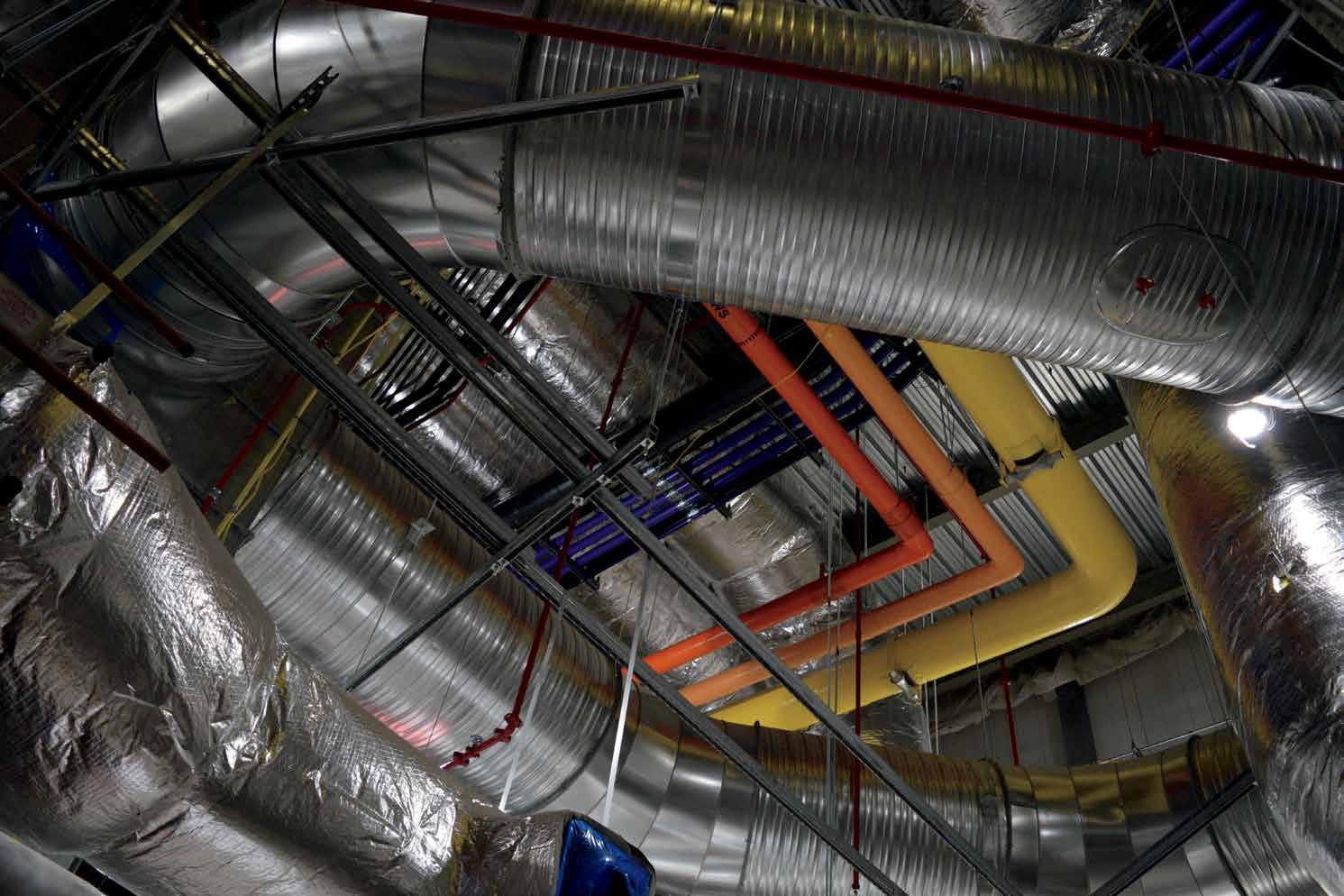






CLOSING OUT
BY BEN ATWOOD
One of the most fraught periods of time for any NFL franchise is when a hall of fame quarterback retires. The moment he bids a bittersweet farewell to the roaring home crowd marks the crossing of an invisible Rubicon for the team.
In their heart of hearts, every fan knows that what comes next is highly uncertain— and the odds aren’t great. A decade plus of playing deep into January could easily become years of October tears. True, a Montana is occasionally replaced by a Young, but more often than not there’s a Trubisky waiting in the wings.
Poor Mitch. Let’s briefly extend some grace here to the oft maligned Duck Hodges of the world. Imagine the weight that accompanies succeeding a legend. The immense pressure of meeting a standard that didn’t exist prior to them creating it, knowing that matching their achievements is the bare minimum metric of success, and that exceeding their lofty benchmarks is your only hope of true acceptance. How —precisely— does one then step under center while retaining the confidence that got them into the game in the first place.
Who knows. I’ve never played football, so I certainly don’t. Seems like most quarterbacks haven’t figured it out either. But I’d bet the ones that do have somehow come to peace with just trusting their instincts and vowing to give it their all. Then, succeed or fail, they’ll leave the field with honor.
This is what I’m betting on now that I find myself in Quincy Carter’s cleats. I’m skeptical western Pennsylvania construction has a Hall of Fame. It should, and if it ever gets one, Jeff Burd more than earned a bust. While construction’s Myron Cope has never built anything more complex than a toolshed, this dude spent over 40 years amassing a singular understanding of this industry and sharing it with a devotion to the craft of writing that would make Brady squirm.
Irreplaceable is how he is often described to me, frequently by people who just found out that I am his replacement. They might be surprised to learn that I agree. Jeff does too, for reasons that have little to do with ego.
Unlike Favre, Burd has been immensely considerate in training his successor. Over the past twelve months, I’ve received a crash course in both the publication and construction industries. His sage advice has enabled the MBA team to move the chains forward in the face of constant pressure from the realities of magazine production.
One piece of counsel in particular stood out: Don’t try to be me. Be you.
He’s right. I must ball in my own way. Jeff’s a newsman to the core. I’m a wannabe poet. Jeff works the crowd I try to avoid. He’s way taller and has a much deeper command of the industry. My tech skills are superior and I’m far more handsome.
Don’t worry, friends. You haven’t heard the last of Jeff. He’ll saddle up a few more times before riding off into the September sunset. But after a year of backup duties, I now find myself under center and ready to call some audibles.
This closing out is the first. Burd despises a writer breaking the fourth wall and injecting himself into the piece like this. I don’t care much for it either, but this transition represents one of the most significant junctures in franchise history and some cheap rapport building is required.
Because in the coming months, this magazine will change in ways that potentially startle longtime fans. This shift will be aesthetic in both appearance and tone. I simply don’t write like Jeff and I’m going to stop trying. Also, our look resembles the ‘76 Buccaneers. A cosmetic upgrade is needed.
There will also be a content shift. Beginning this issue, we introduce two reoccurring pieces. One will spotlight our beloved members. This is, frankly, a little overdue. The second is workforce development. Let’s start exchanging ideas on how to get more people in the field.
The third will appear in May and serve as a continuation of this edition’s feature on artificial intelligence. I am deeply interested in this topic and feel there is immense value that can be added by sharing best practices. Additionally, we will soon launch a digital platform that we hope makes quite a splash and enables more industry related content than is possible in a six-edition format.
Rest assured, the underlying playbook, providing the latest news in western Pennsylvania construction alongside impartial analysis, won’t change in the slightest. Neither will the effort. Construction is fascinating and writing about it is tremendous fun. I’m still surprised someone’s paying me to do this.
That enthusiasm is tempered by a humility borne from the knowledge that this spot must be continuously earned through sweat and an ongoing commitment to improvement. I’m striving to be Rodgers but aware that if things go awry, I could end up as Druckenmiller. Time will tell. But my hope is that sometime in 2050, my replacement will be penning a piece just like this one.