

If you ask anyone who graduated from my high school in 2022 about our Year Ten camp, you’d be met with snickers, giggles, and groans.
My school had been banned from camps after a previous year group got a little too loose with sneaking in drugs and alcohol. After five camp-less years, my year group was chosen as the guinea pigs for a three-day trip up the coast.
It was a mistake.
Some notable moments included:
• Someone dropping the camp master keys in the middle of a lake.
• One cabin brought an electric shaver and started giving people mullets.
• The same cabin tried (and failed) to give our deputy principal a mullet.
• Many people had sex, and one cabin group had an orgy in the camp bathrooms.
Needless to say, school camps were banned again.
The camp became sacred lore among my year group. It was the scandal that brought everyone together, and people were still talking about it at graduation.
But every high school seems to have its own version of this.
One Massive staff member told me about how her high school fell victim to “poo burritos”.
“People were shitting in the bathroom toilet sinks and wrapping it in tinfoil, so it was a poo burrito. It got to the point where we had to scan a QR code every time we went to the bathroom.”
Another staff member said cameras had to be installed inside her school bathrooms after students accidentally set the bathroom bins on fire while smoking cigarettes.
“All the parents had to sign a form to agree to the cameras,” she recalled.
One of my writers resentfully informed me that she attended Aotearoa’s infamous “furry school”.
“We had a furry who shit in the school sink,” she said. “She was in my year group and then it went viral.”
The Spinoff even wrote an article about the incident, although the principal denied that a furry ever defecated in a sink.
There’s something about shoving 2,000 hormonal teenagers into one place that creates the perfect conditions for drama to unfold.
I don’t know what they put in the air at high schools, but it nearly always becomes like a really juicy episode of a reality TV show.
Massive is largely funded by Te Tira Ahu Pae and the student services levy, however, remains editorially independent.
Disclaimer: The views presented within this publication do not necessarily represent the iews of the editor.



NZ Media Council: Those with a complaint towards the publication should first complain in writing to: editor@massivemagazine.org.nz
If unsatisfied with the response, complaints should be made to the NZ Media Council: info@mediacouncil.org.nz
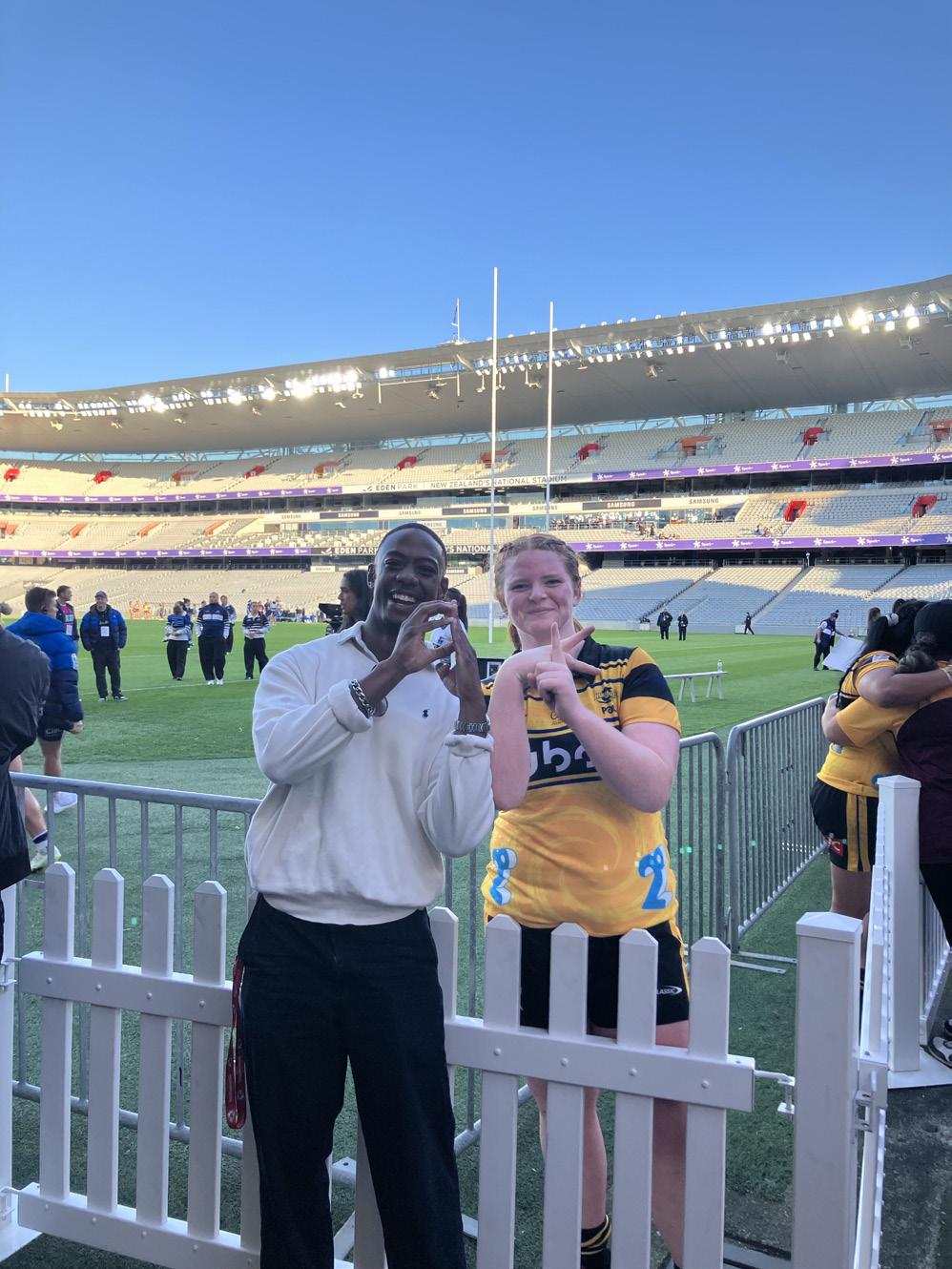
Kia ora Ete Whānau,
General President Takunda here.
Phew, what a first semester this has been. I can honestly say it’s pushed me to the brink, and I am sure I am not the only one who has felt it, but I’m glad to have survived and to come back to do it all again during this second semester.
If there’s one thing that this term of Presidency has taught me, is that it’s not just kissing babies and signing autographs… what a dream. It’s real impacts and the possibility of making a real change.
So this is what I am going to strive for in the second semester. I hear you, and I want to keep hearing from you. This is deeper than just events being put on. This is about actual change that we can bring to your experience in studying and beyond.
I have a lot of love for Massey and an even bigger love for people.
So let’s make this semester a good one and lead us into an amazing Summer.
From the one and only,
Takunda Michael Mabonga



MONDAY JULY 13TH MASSIVE
Ruby Barr • SHE/HER
Following poor communication around space changes, Animation and Game Development students feel left out of the Screen Arts department.
These Screen Arts majors have experienced several spatial, software, and technological changes within the past year.
Animation, Game, and VFX students were moved out of the current multi-disciplinary collaborative design studio in Block 10 at the start of the year.
They were moved out to make space for the Honours students from Textiles, Industrial, and Concept Design.
However, they claimed that this space was promised to them when they moved into the space in 2025.
Honours Animation student Mei Thompson said that having a space dedicated to third and fourth year students felt like they were finally getting recognised by the Screen Arts department.
However, one month after moving into the space, outside classes started being held in the space.
“Our animation lecturer had to fight for that space, and then halfway through the last semester they started having classes in it even though it was promised as a space for major projects.”
After classes slowly began to take over the space, Thompson knew the dedicated space would not last for long.
“We started to realise that this space was not going to belong to us in 2026.”
They said that changes to the allocation of spaces were not communicated before the first semester.
“No one mentioned it. We just showed up, and the space had changed.”
Thompson explained that the spaces available to Screen Arts students do not have enough equipment for all Animation students.
Animation students need Wacom display tablets to work on their projects. Thompson explained that due to the limited number of tablets, the workspaces available have become competitive.
“Even if they have got the tablet in them, they don’t have enough for every student.”
On top of this, Massey has removed Toon Boom, the industry standard software for Animation off all computers.
This meant Thompson’s cohort had to relearn a different animation software called Moho in their third year.

Thompson explained that only a small number of students could use Moho in unison.
“They only had 13 Moho licenses available, so you would have to shut the app completely when you aren’t using it. Otherwise, someone else can’t use it,” said Thompson
Honours Animation student Madi Jagger said the changes forced her to use her student loan on buying her own animation equipment.
“I spent $700 on a Wacom tablet so that I could work from home instead of fighting for space at uni,” she said.
Jagger shared Thompson’s frustration with the Moho.
She said that the software was riddled with technical difficulties and that the changes impacted her studies.
“It crashed seven times in five hours.”
“They just kept moving us around, and it was really disruptive for our work.”
She explained that Animation students have always felt underrepresented, but that their course coordinator has always tried to support them despite continuous disruptions.
Both Thompson and Jagger resorted to completing their studies from home.
A Massey University spokesperson said Massey understands that some students have concerns about facilities and equipment.
“I could’ve stayed in Wellington”
However, they said that the new “stateof-the-art” PC lab opened at the start of semester one “is timetabled so that more than 75 per cent of its time is dedicated to independent study and small group collaboration”.
This does not account for the removal of the industry-standard software from Massey’s computers or the limited number of Wacom display tablets.
The spokesperson said: “As Semester Two gets underway, we will endeavour to ensure there is broad awareness of this new facility as well as the other resources and creative technology infrastructure available to students.”
Milly Matthews •
SHE/HER
As Massey University cut courses and staff last year, students like James felt like they were left in the dark.
James, who wished to keep his surname anonymous, is a former student on the Manawatū campus. At the beginning of this year, he would have graduated with a Bachelor of Communication, but the course cuts changed this.
He moved from Wellington to Manawatū in 2023 for cost-of-living reasons to pursue his degree, majoring in Digital Marketing.
“I knew I was shooting myself in the foot a little moving to Palmy, but I had a good class, and only one online class in my first year, which is about what I expected,” he said.
However, in James’ second year, things began to “fall apart” as the course cuts began.
“I had my lecturers trying to explain to us what was happening, they didn’t know if they were going to have jobs in a few months, let alone what was happening to our degrees.
“It was really frustrating to be on the receiving end of that. But also for the lecturers, a lot of them were amazing and I wanted the best for them, so it really sucked to see them in that position of confusion.”
Soon, more of his papers began to move online, including ones James felt were “extremely frustrating” to be taught in an online setting.
“In my photography course they suggested we should do the photography on our phones, not understanding that I could not make anything good enough to pass on my shitty little iPhone.
“If you didn’t have a car you couldn’t pick up the school cameras, and even if you did they only had like, five cameras available.”
James said he wished he’d known sooner that courses would be cut or moved online.
“I could have stayed in Wellington or looked at a different degree,” he said.
When he was initially choosing a university, Massey’s diverse subjects, campuses and people stood out to him. But the cuts have changed that.
“I get they’re trying to streamline their schools, but in my mind the options were a part of what made Massey, Massey,” he said.
James didn’t see moving back to Wellington to finish his degree as an option.
“I had made friends in Palmerston North, and I was setting up roots here, I had moved in with my boyfriend, and it would have been sad to leave all that.”
After his second year, James made the decision to leave Massey permanently and has since transferred to the Design School in Palmerston North.
He felt that Massey “wasn’t doing anything” to keep him as a student and was “actively doing things that hurt my ability to stay at the school”.
James said his current school cared more about students and their experiences.
In a response to Massive, a Massey University spokesperson said the changes were part of a broader reorganisation of the Bachelor of Communication that aimed to strengthen the degree.
“While institutional changes such as this are never without challenges, our intention has always been to ensure students have access to high-quality learning opportunities and clear pathways for their studies,” they said.
Massey acknowledged that these changes can “create uncertainity for students” and that they “regret any difficulties experienced by students”.
They said there will be a refreshed Bachelor of Communication on the Wellington campus, with some majors being made available on the Manawatū campus.
“The new BC reflects contemporary developments in communication, media and digital industries and draws on Massey’s long-standing leadership and international reputation in this field.”
The current Bachelor of Communication is no longer offered on the Manawatu campus, and only two majors are available on the Auckland campus.
Currently, every major except for linguistics is available on the Wellington campus.



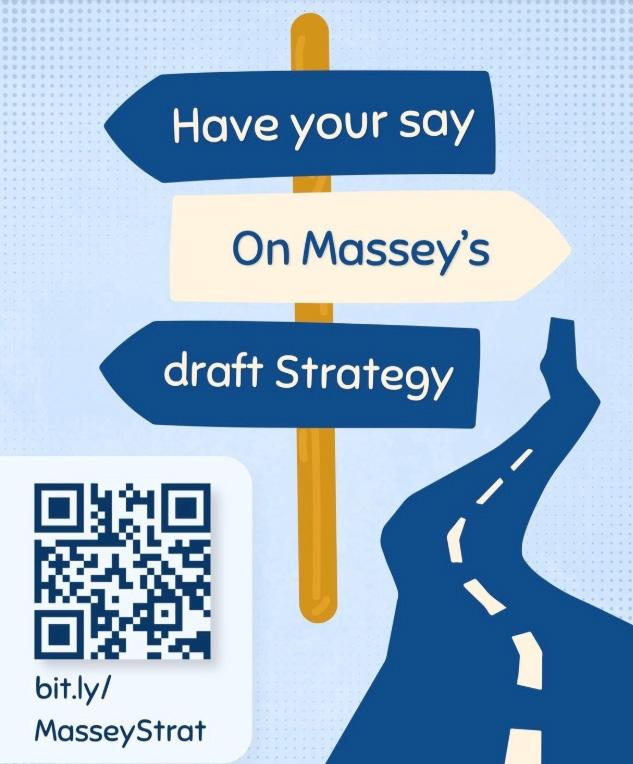
Massey University’s draft strategy is currently in development and will determine Massey’s direction for the next decade.
One of the enterprise enablers within the strategy is “Digital, AI and data-enabled delivery”, which a Massey spokesperson has said will follow the appropriate academic, ethical and governance frameworks.
The spokesperson said that due to AI’s integration into our current world it is important that graduates have an understanding of how to use this tool.
“AI is increasingly part of the environments our graduates will enter, and universities have a responsibility to help students understand how to use these tools ethically, critically and effectively,” they said.
“For Massey, AI is not about replacing learning or academic judgement – it is about enhancing the way we support teaching, learning, research and student success, while maintaining academic integrity and the development of core disciplinary knowledge and critical thinking skills.”
The draft strategy sets out Massey University’s purpose, vision and mission. It also provides detail on their strategic outcomes, strategic pillars, enterprise enablers, and values.
The strategic outcomes in the draft strategy focus on trusted and financially sustainable universities, access and employability for their students, national capability, and research and innovation with impact.
Due to the strategy still being in development full detail on the strategy cannot yet be provided.
A Massey University spokesperson said: “The Massey University Council is ultimately accountable for setting the strategic direction of the university, approving the strategy and overseeing its delivery.”
However, students, staff, and alumni are encouraged to provide feedback on the proposed direction by filling out a survey. The information from this survey is being provided to the council and will help to inform their decision.
The Vice Chancellor, professor Pierre Venter, is also meeting with student representatives from Te Tira Ahu Pae and Ngā Haumi ki te Āo to seek their input.
The draft strategy and opportunity to provide feedback can be found through the QR code below.
The strategy is set to be completed by the end of July and will be launched in August.
Highly distinguished Veterinary professor Emeritus Robert Jolly passed away on June 18th, leaving behind a remarkable legacy from his 30-year career at Massey University.
Originally from Hamilton, Jolly graduated from the University of Sydney in 1955 with a Bachelor of Veterinary Science. In 1965, he joined Massey University as a Senior Lecturer.
At the time, Veterinary Science was still being established in New Zealand. Jolly’s specialty was Veterinary Pathology and strongly focused on the fundamental mechanisms of disease.
Over three decades, he helped establish Massey as a research hub in Veterinary Pathology, and mentored generations of students and researchers.
Jolly was an internationally recognised veterinary pathologist. He investigated neurodegenerative diseases in sheep, dogs and other animals. His research demonstrated how animal models can help understand how equivalent diseases affect humans.
One of his most influential contributions was identifying how sheep are affected by a neurological condition that causes
progressive loss of vision, movement and cognitive function.
The sheep model Jolly discovered became vital for international research and enabled scientists to test new treatments. His work continues to contribute to gene therapy breakthroughs today, with techniques developed in sheep now used in human patients.
In a statement from Massey University, Massey’s head of Veterinary Science, Professor Jon Huxley, said Jolly left an enduring legacy at Massey and across the veterinary profession.
Bob was undoubtedly a legend, and someone who will be sorely missed. Our thoughts are with his family.”
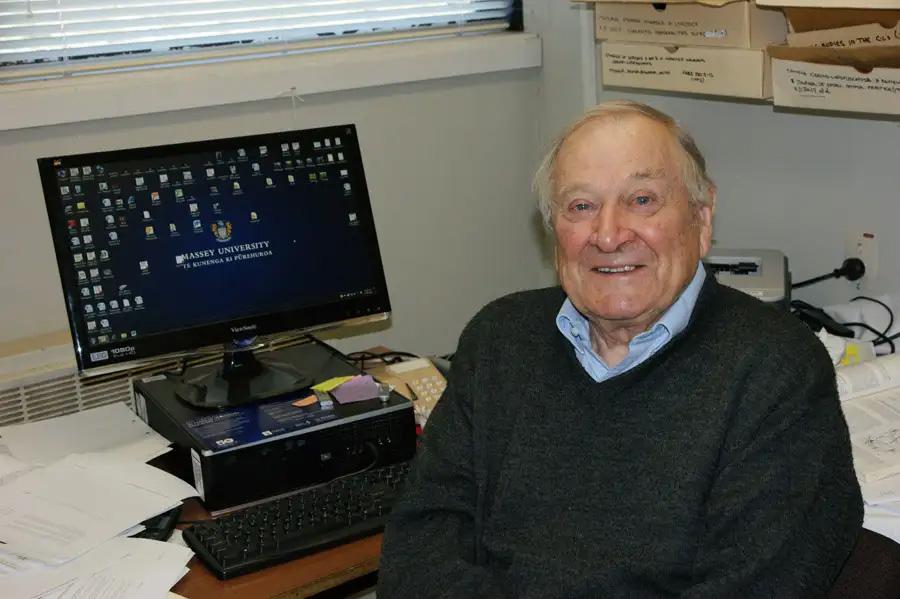
Massey University welcomes over 300 rainbow and takatāpui secondary school students to its Ōteha Auckland campus for Lil’ Gay Out 2026.
Students from over 20 Tāmaki Makaurau schools were brought together for a day of workshops, performances and discussions encouraging identity celebration amongst young people.
The event hosted guest speakers like Green Party co-leader Chlöe Swarbrick, alongside community leaders, artists, and advocates.
Massey University’s community outreach coordinator and event organizer Mark Kaneko said hosting Lil’ Gay Out reflects Massey’s commitment to inclusion, belonging and student wellbeing.
“We are committed to creating environments where every learner feels welcomed, valued and empowered to succeed. Hosting Lil’ Gay Out is an opportunity to demonstrate those values in action and support young people as they connect, learn and celebrate who they are.”
Aimed to foster community and explore future opportunities, students explore wellbeing, leadership, creativity, & connection.
Originally established by Hobsonville Point Secondary School, Lil’ Gay Out has grown into one of New Zealand’s most significant events for rainbow and takatāpui secondary school students.
Kaneko said the day highlights the power of partnership between schools, community organisations and tertiary education providers.
“This event demonstrates what can be achieved when communities come together to support young people. We are proud to welcome students to our campus and provideopportunities for them to connect with peers, role models and organisations that help create a sense of belonging.”
This year marks the first time the event has been hosted by a university.
Students explored community stalls, connected with support organisations and participated in interactive workshops.
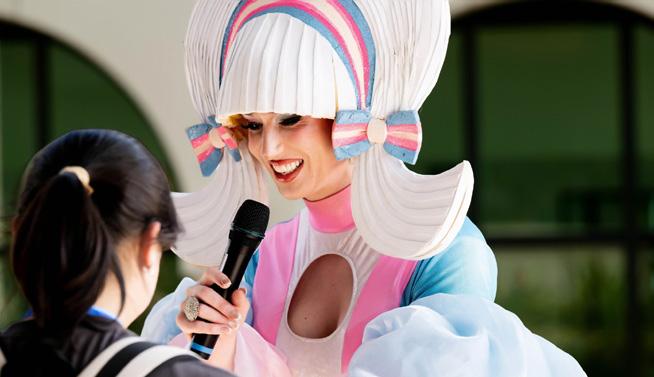
Kaneko said the enthusiasm and engagement of attendees highlights the importance of creating spaces where young people feel safe, supported and connected.
“Seeing so many students engaging confidently with one another, sharing experiences and building new connections is incredibly powerful. We are honoured to play a role in supporting that experience and look forward to continuing these important relationships with our local schools and communities.”
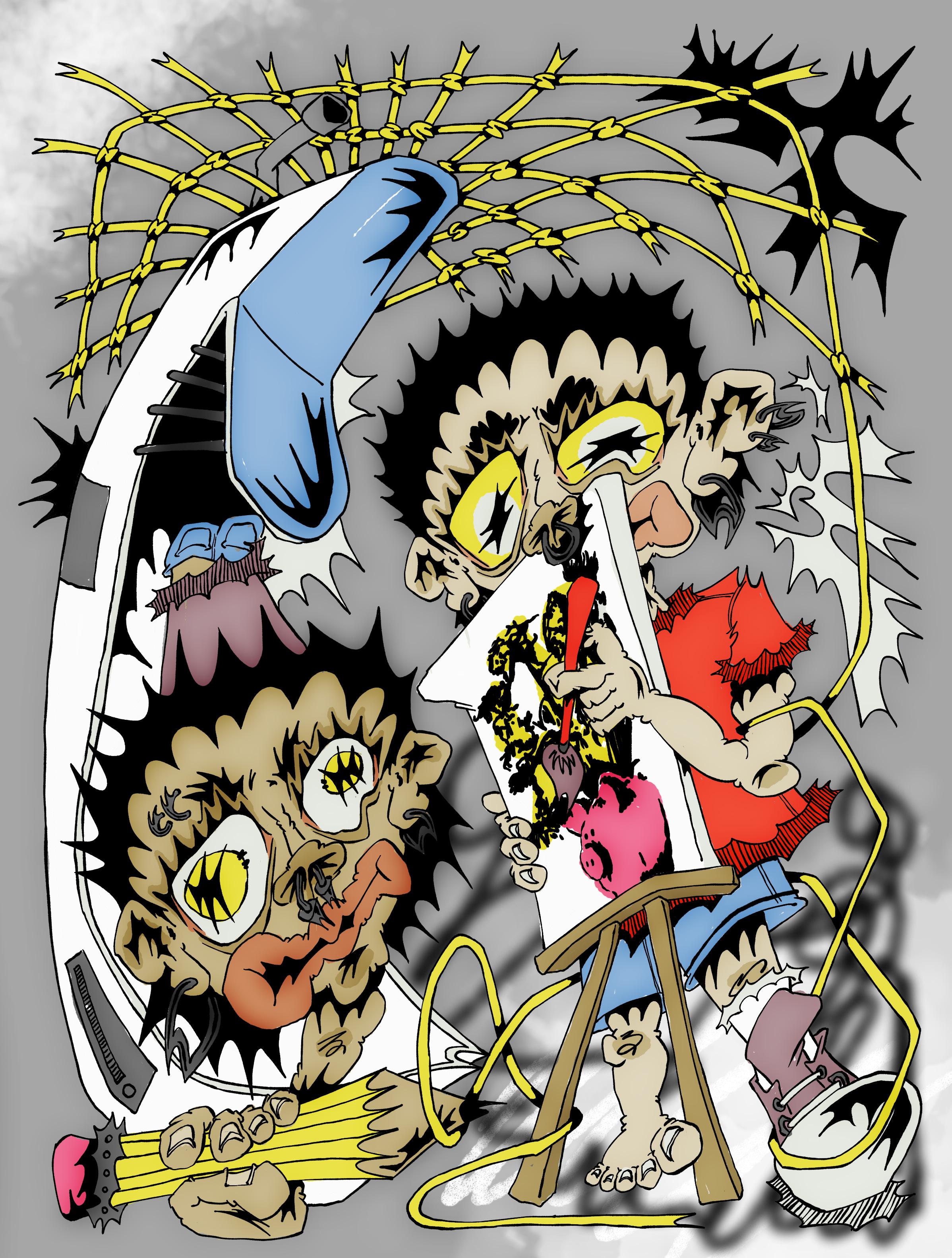
BY OLIVE BARTLETT • SHE/THEY
Why
does Massey University keep making changes
to “One of the best art and design schools in Australasia”?
From rumours of restructuring to the displacement of honours students across several disciplines, Massey University’s space revitalisation project is causing a ripple effect among its College of Creative Arts (CoCA) students. Left feeling confused, discouraged and resentful, students feel like Massey is making decisions which harms their education.
Massive has been reporting on the changes to Massey’s College of Creative Arts (CoCA) for the past year. From 25 proposed staff cuts in 2025 to drastically downsizing creative classrooms, students feel like an afterthought.
Following the end of 2025, Fine Arts students were told that their studio space would be moving. This came after Block Two’s—the Fine Arts block—lease was unrenewed on the Wellington campus.
This was when the impossible puzzle of student spaces began.
On the first day of semester this year, honours Design students came to campus abuzz. They were excited for the promise of dedicated workspaces where they would spend their honours year honing their craft. These spaces were personalised and permanent for the year, with each student having their own PC and desk.
Instead, they were greeted with a slide show showcasing a new space.
Except this was not the space they were promised.
Gone were dedicated workspaces, personalised desks, and permanent PCs. Now, 80 Design honours students across Industrial, Spatial and Concept majors have to share hot desks, two classrooms, and limited PCs on the bottom level of Block 10.
Scandal
Previously, Industrial Design students used the top floor of Block 11 in their honours year. With walls smashed down and the space opened up, the outcast Fine Arts students were relocated here. However, they are left with half of the amount of studio space they used to have.
Despite now working in smaller spaces with limited shared resources, these students are still paying the same amount of money as previous cohorts.
Third-year Fine Arts Student Sonny* feels the rebuild that mimics Block Two’s studio spaces were rushed. Because of the downsizing, her smaller studio space discourages her from studying on-site.
“They spent all that money fitting us in here with wonky walls and wonky floors,” she says
Sonny claims that “The only reason we’re here is that they decided not to lease out Block Two again”.
Greta Coberger-Pask says she spent the first semester of her honours year feeling overwhelmed with anger due to the lack of consideration Massey had for students. Coberger-Pask was one of two student reps for this year’s Honours Industrial class.
Following the rumoured changes last year, she claims that the 2025 class rep lodged a complaint asking for a clear outline of the 2026 honours student spaces.
However, Massey’s only communication made to students about the rumoured changes in 2025 was in was two emails with the subject line, “Clear-out of 11B”.
The first email, which has been shown to Massive, reads: “11B is undergoing some changes, so everything needs to be removed, including anything left in lockers or on shelves, as these will be relocated. You will need to do this before 11th November, anything left will be disposed of.”
“Where’s the transparency here?” asks Coberger-Pask.
Within the first week back, Coberger-Pask says several students in her cohort had sent emails to Massey staff outlining their frustration with the relocation to Block 10.
In her own email to staff, she says that she felt “genuinely disappointed by the space”.
Hoping that students would look past the shattering of their fourth-year dreams, Coberger-Pask describes being emotionally compensated with a bag of Raglan Roast coffee.
One bag between the between the whole cohort.
“We were all thinking, where do we go? Where’s our space now?”
Not only did the space lack the appropriate technology and software programs that are necessary for Industrial Design, but she says the hot-desk situation was ridiculous.
Students in the new space are expected to share desk spaces instead of claiming a single desk. But for honours-level students across all design disciplines, the idea of playing ‘musical desks’ with other students is impractical and disruptive to their workflow.
As Coberger-Pask outlined in her initial complaint, “A permanent workspace is essential to how we work, iterate, and produce at the Honours level.”
She says that her cohort has felt like the “guinea pigs” for each of Massey’s changes to CoCA. For Coberger-Pask, this was the last straw. After a semester of campaigning for better spaces, countless email chains, and repetitive meetings, Coberger-Pask left the honours program.
While she feels sad about leaving Massey, Coberger-Pask says that fighting for the bare necessities needed to complete her degree instead of actually studying wasn’t worth it.
Other students feel like this decision has removed the community aspect of Industrial Design. Block 11 has historically cultivated this tight-knit culture through the mixture of cohorts within the space.
Honours Industrial Design student, Olive Benecki, feels that the changes made have severely disrupted her final year at Massey. She explains that these changes have impacted the crucial community within Industrial design.
Benecki says, “I kind of accepted that we don’t really get taught much from them [lecturers], so 99% of the troubleshooting is between other students.”
She says that third-year students are saying that they can’t see themselves doing honours because that whole community aspect of Industrial Design is gone.
But why have such drastic changes been made without student input?


A Massey spokesperson attributes these changes to a revitalisation project that they claim ensures that students have access to the highest quality resources. A major part of this project is the introduction of multi-disciplinary collaborative design studios.
The spokesperson claims these changes are “reflecting how professional practices work, our refreshed approach to space facilitates and supports multi-disciplinary practice, creating spaces where students from different areas may work side-by-side or collaborate”.
However, many students feel the revitalisation hasn’t benefited them, with some saying that collaboration across disciplines is unnecessary and unhelpful.
They feel that what Massey has called the “multidisciplinary honours spaces” does not feel like an adaptation to “reflect professional environments across creative industries”.
The Massey spokesperson says: “The college’s priority is ensuring all students have access to appropriate teaching and learning resources, including specialised spaces, resources, and technologies.”
Design, Screen Arts, and Fine Arts students’ degrees have been affected while their questions remain unanswered. They believe these changes have been poorly communicated and disruptive without clear reasoning as to why these changes have been made.
Students want transparency on these changes that overlook the student voice and impact the way they are expected to study. But as one CoCA student put it: “Knowing that it’s too good to last is the Massey experience.”
Starting university is one of the most vulnerable times of your life. Often, it’s your first time away from the comforts of home, navigating a new environment and searching for a community to call your own.
Like any good marketer knows, vulnerable people are often the easiest to reach.
For decades, cults, religious groups and other organisations have targeted university students as potential recruits. Experiencing a new and often difficult chapter of life, students can be especially susceptible to promises of friendship, purpose and belonging.
I was one of them.
Earlier this year, I discovered the Bhakti Lounge: “Wellington’s alternative events space for yoga, music mantra meditation, inspire-me workshops, retreats and plant-based eats.”
Let me be clear: I am not suggesting that the Bhakti Lounge is a cult, or that everyone involved has bad intentions. But good intentions don’t make every recruitment method harmless, and some of the techniques I encountered closely resembled those experts associate with cult recruitment.
The Bhakti Lounge is run entirely by volunteers, many of whom follow Hare Krishna, a branch of Hinduism. While neither the Bhakti Lounge nor Hare Krishna is a cult, former members, sociologists and psychologists have argued online that some Hare Krishna communities have displayed cult-like behaviours.

As a poor student, the Bhakti Lounge caught my eye with the promise of $5 student meals with a yoga class.
Drooling at the thought of not having to cook, my flatmate and I wandered down Vivian Street for the 6pm class. Afterwards, we ate our weight in vegan food and were even sent home with enough leftovers to feed our flat of three for nearly a week.
I kept going once a week, seeing nothing wrong with it at first. I was getting exercise, eating cheaply and making new friends.
However, as I became more familiar with the regulars, I realised they were a little too familiar. After each yoga class, a handful of people would quietly slip out the back before returning wearing aprons. They weren’t just fellow yoga-goers, they were the volunteers serving me dinner week after week.
Then one day, one of the volunteers asked if I was free that weekend. Assuming she wanted to grab a drink, I happily said yes. Instead, I was invited to spend the weekend volunteering on their Ōtaki farm.
Suddenly, what had felt like genuine friendship began to feel like recruitment. I couldn’t shake the feeling that I’d been love bombed and, in a way, used.
As a young student eager for cheap meals and community, I realised I was exactly the sort of person these approaches were designed to attract.
It’s important to note that not all religious or spiritual groups are cults. However, some recruitment techniques used by these groups mimic the behaviours of cult recruitment.
It may begin with cheap meals, spiritual events or offers of support. One of the most common tactics is love bombing— overwhelming someone with attention, compliments and friendship to quickly build trust and emotional connection.
One meeting may seem harmless. But when a vulnerable and lonely student starts to feel a sense of community and belonging, they’re naturally inclined to keep coming back.
Over time, what starts as a weekly commitment can gradually become embedded in your everyday life. Some high-control groups don’t reveal the full extent of their beliefs or expectations until months later. By then, they may know personal details about your life, and you’ve likely formed strong emotional connections with the group.
Earlier this year, a warning was issued across the University of Canterbury campus about aggressive recruiters.
Students reported being followed to classes, repeatedly invited to events and pressured into exchanging phone numbers.
While no single culprit was held accountable, discussions largely surrounded Shincheonji.
Translating from Korean into ‘New Heaven and New Earth’, Shincheonji is a branch of Christianity that revolves heavily around the ‘promised pastor’. Followers believe its founder, Lee Man-hee, is the only person who can correctly interpret and receive God’s word.
In 2019, Wellington pastor Nick Field raised concerns after a rise in Shincheonji recruitment in Wellington. Stuff described the movement as teaching a distorted, apocalyptic interpretation of Christianity. The group has also faced criticism and allegations of brainwashing and breaking up families.
Recruitment often begins casually, with invitations for young church members to attend Bible study sessions that don’t initially disclose their connection to Shincheonji.
Several meetings were reportedly hosted at a home in Karori. When questioned, the homeowner denied knowing anything about Shincheonji. In 2022, recruiters linked to the group resurfaced in Auckland, attending numerous churches across the region.
Of course, not every religious organisation recruits this way.
Red Frogs, for example, is a Christian volunteer organisation that helps students transition into university life. While volunteers are open about their faith and enthusiastic about meeting students, their focus is on practical support rather than pressuring people to adopt religious beliefs.
Leanne Radovanovich, Massey University’s associate director of student wellbeing, encourages students to prioritise their personal comfort, safety, and autonomy.
“Organisations on our campuses should respect an individual’s boundaries and decisions, and not rely on pressure, fear, guilt or repeated persuasion to encourage participation.”
She says that it’s better to trust your instincts and back out of a conversation early than get pressured into potentiallysomething harmful.
“Massey University encourages students to engage critically and confidently, knowing that they have the right to make choices that align with their own values, beliefs, and sense of wellbeing.”
Trying new things is part of university life. But it’s worth staying informed, asking questions and talking to people you trust before committing to any organisation.
Looking back, I’m grateful for the cheap dinners, and I don’t believe the Bhakti Lounge had malicious intentions. But intent isn’t the only thing that matters. When organisations rely on tactics like love bombing, students should be encouraged to ask questions, set boundaries, and think critically about what they’re being invited into.
Generosity should never come with expectations.



WORDS BY LEE JUDI • THEY/THEM
WORDS BY LEE JUDI • THEY/THEM
ART BY OLIVE BARTLETT • SHE/THEY
ART BY OLIVE BARTLETT • SHE/THEY
Would you feel safer alone with David Seymour or a trans woman? Well, after asking 30 random kiwi women, they all said the same thing.
Hint—It wasn’t Seymour
On the 2nd of April, the Legislation (Definitions of Woman and Man)
Amendment Bill was introduced into Parliament by NZ First MP Jenny Macroft. Just a day short from being an April Fool’s joke, this bill seeks to legally define two biological sexes: Woman/Female and Man/Male.
Discourse of biological sex has been at the forefront of conservative culture wars since George Santos did drag. The right wing has cultivated many strategies to radicalize middle and working class centrists into transphobia.
After NZ First’s Jenny Macroft held the first reading of the bill on May 20th, it becomes very clear what strategy our Kiwiana fascists are cultivating.
She declared: “What it means to be a woman is under attack.”
Ladies, gays, and theys, TERFism has a new face, and I hate to say... it has a blonde side fringe.
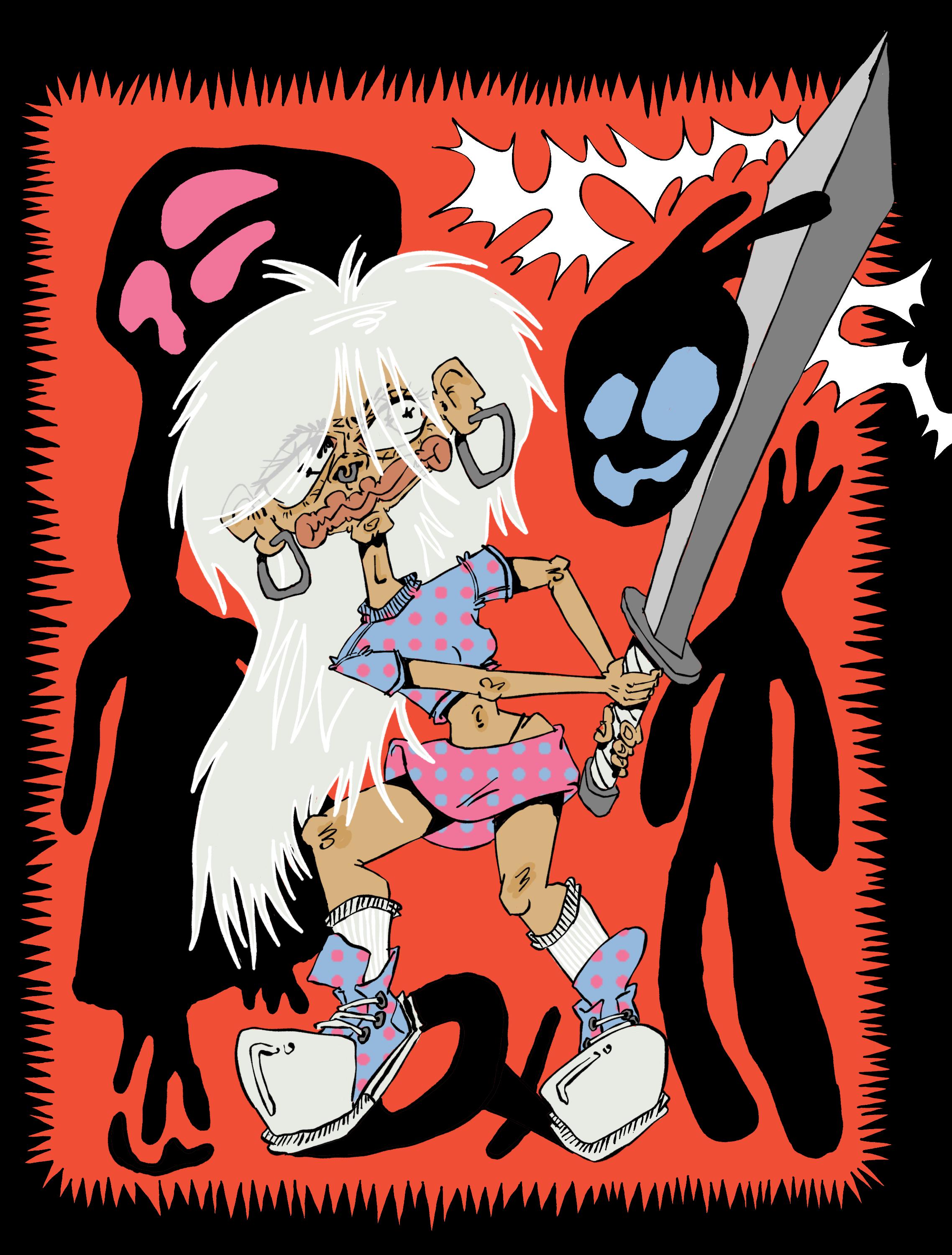

According to her, this bill’s core intention is to protect cis women and girls, declaring that trans gender identity “is misogyny in a modern form”.
By defining gender as ‘biological’, cases involving any gender-based factors such as passports, birth certificates, and medical histories, will be solely dictated by what you have in your pants.
I can’t help but wonder, why the fuck would cis women be afraid of the dolls?
Third-year Nursing student, Hannah, says she has always grown up in progressive schools where trans students were not only accepted but welcome.
“It was never a question of who used what bathroom. If you identified as a girl, why wouldn’t you pee with the other girls?”
She says there was never a single issue with the trans students using the ‘single sex’ spaces Marcroft is so determined to protect.
“Cis boys were the ones making the girls feel unsafe, not the trans girls.”
The Legislation (Definitions of Woman and Man) Amendment Bill means legal action could be taken against trans, gender nonconforming, and intersex people for using the bathroom.
This bill isn’t just transphobic and blatantly unnecessary, it also makes zero scientific sense. If gender is biologically male and female as Marcroft claims, which category would she like intersex people to fit themselves into?
The 2023 Census tells us that just over 15,000 New Zealand citizens are born intersex. Thousands of people were completely erased by Marcroft’s manifesto of malice.
Hana, an artist and activist who was born intersex, has struggled their entire life with the ramifications of the gender ideology this bill follows. Whether it be supplemented hormones, surgeries, or insecurities, Hana has always battled with the cis-heteronormative views ingrained into our medical system and culture.
They say, “If I was meant to be a cis woman, why the fuck were there expectations for me to fit some ‘image’ expected of me—that I couldn’t physically fit no matter how hard I tried—it altered my image of myself.”
What did it mean to be a woman? Why did I have to shave a beard? Why the fuck did I have ‘the wrong genitals’ only for them to be cut and surgically altered without any intersex awareness and education? Why was my testosterone so high—while my support network was so lacking?”
Hana says that Aotearoa is only just starting to accept and understand intersex people. This bill will heavily impact any steps we are starting to take forward.
“Because of all the ambiguity with how their describing legal ‘sex’, it ignores reproductive organs, hormones, and birth registration, it creates more uncertainty about how intersex people would be classified in law.”
So Marcroft, how does your ‘biological’ and ‘ scientific’ view of gender hold up when 0.4% of New Zealanders are left undefined by your bill?
Hana illustrates this hypocrisy in this bill’s ‘biology’ by talking about a funny remark their doctor made.
“As somebody who recognises themself as nonbinary, it was quite funny for my endocrinologist psychologist to point out to me that actually that’s kind of ‘cis’ for an intersex person.”
Both the cause and effect of the Legislation (Definitions of Woman and Man) Amendment Bill are futile and harmful. Cis women and girls need no protection from trans and gender non-conforming individuals and the effects this bill will have on the people that don’t fit in Marcroft’s box will be detrimental.
Cis-women and girl’s experiences of safety prove this bill unnecessary and the existence of people like Hana prove it to be scientifically baseless.
Protect your whānau. Protect your friends. Protect yourself.
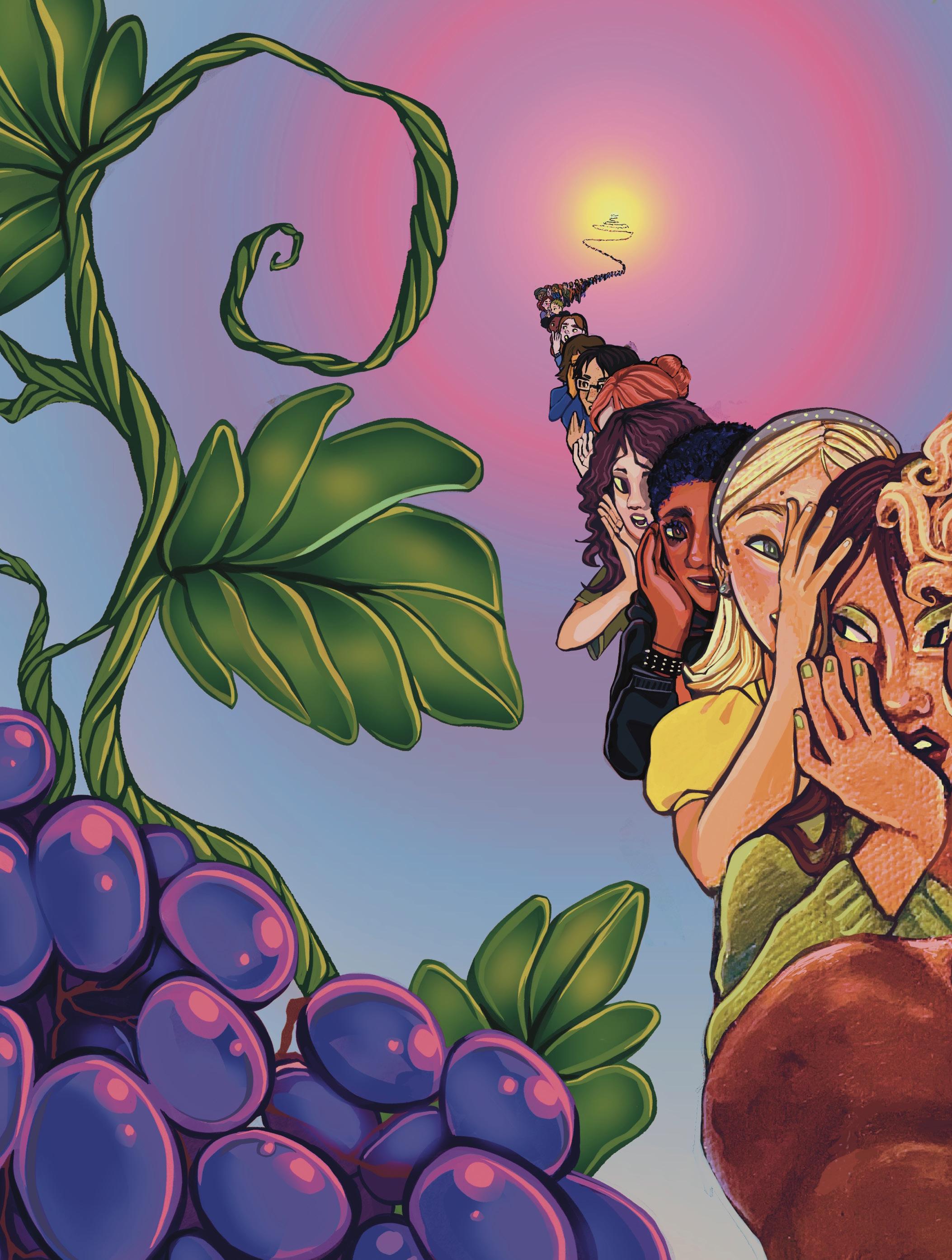
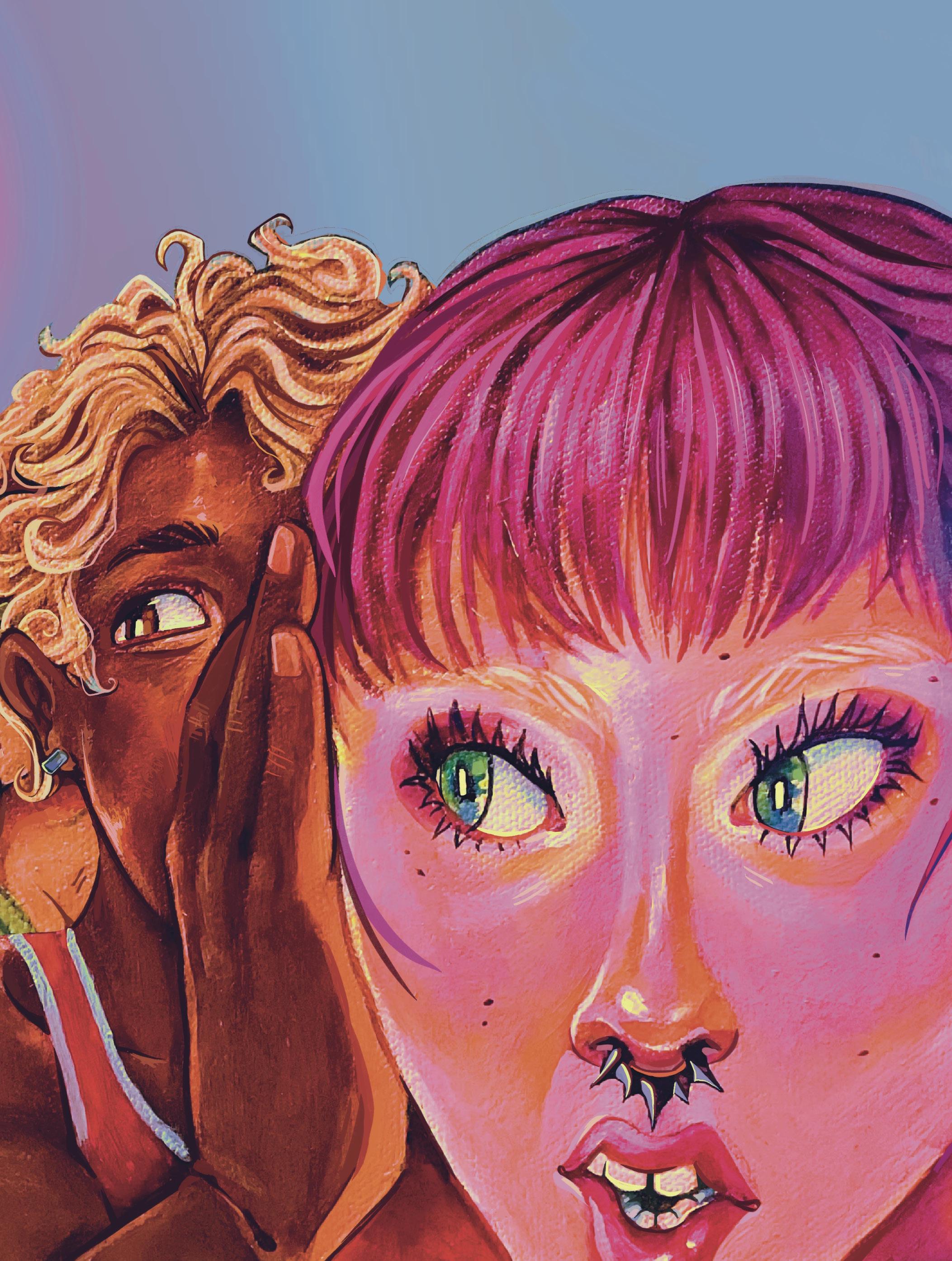
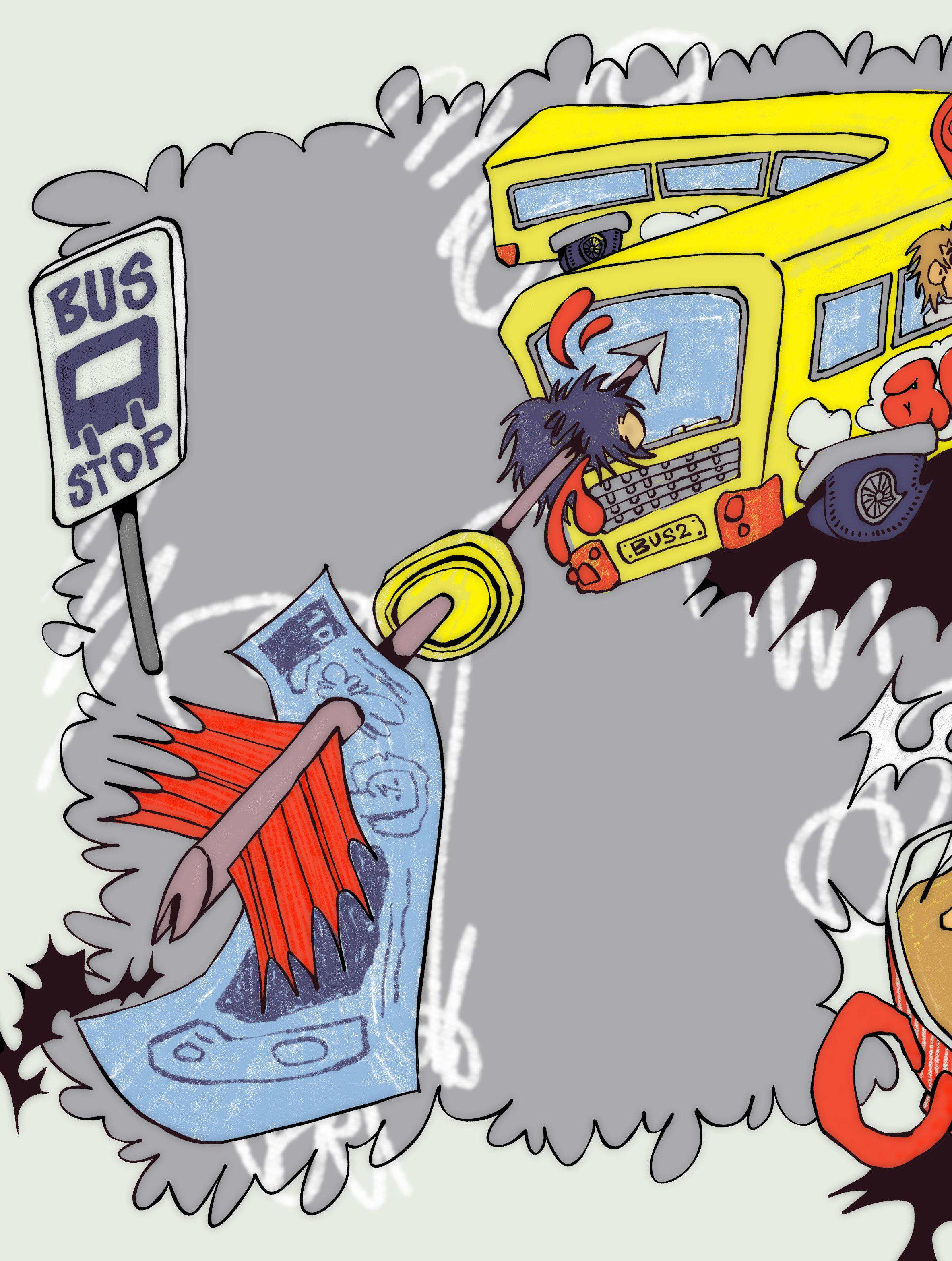
I cheated on a bus on the way to khandallah
I borrowed her phone, I had run out of data
She kissed me first, I felt like a dope head
Woe is me, who pulled up on the bus, driving her moped?
But my girlfriend of course! Wielding a crossbow
“I’m gonna stick ya! You and that bus hoe!”
I dodged the first arrow
Though the escape was quite narrow
It whizzed right past and through my new partners gages
It struck the poor driver who was counting his wages
He slumped on the gas from this medieval incision
And my girl and her scooter disappeared into rear vision
Needless to say this wagon was faster
And with no hands on the wheel, it was bound for disaster
Khandallah approached, sooner than expected
We crashed into Vinnies, which was righteously dissected
We landed in the discounted jumpers pile
She turned to me with an unaffected smile
She kissed me again and walked out the door
Which was more a big hole than it was before
I sat there a while and let my heart flutter
It’s a rare feeling when you melt like warm butter
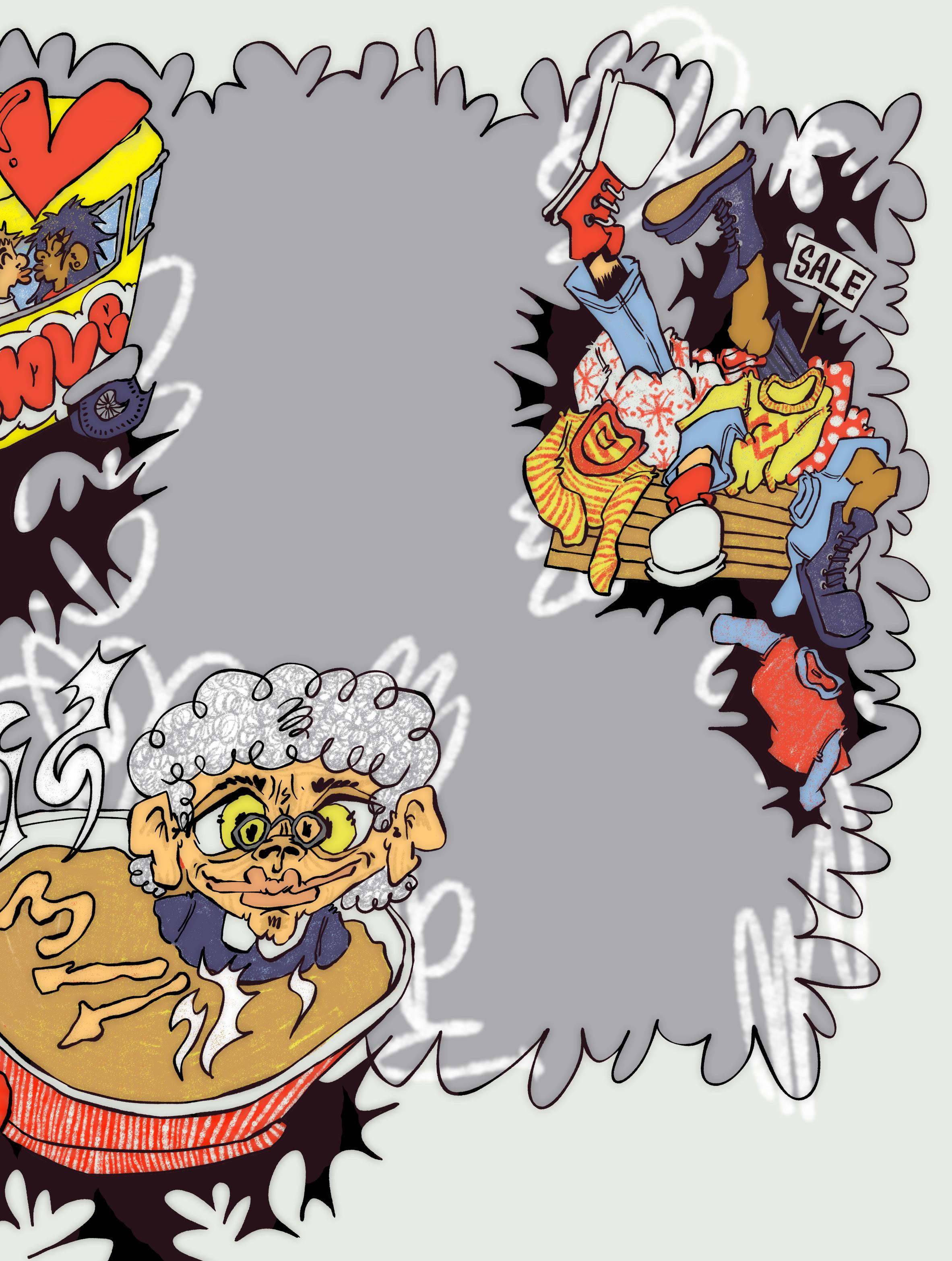
Suddenly I shot up
At the sight of a teacup
My poor poor granny!
She was waiting for me!
She lives not in khandallah
But in Kilbirnie!
So my angry girlfriend and her moped saved me
And I made it to Nans before a quarter to three.
WORDS BY SONNY FRIZZEL• HE/HIM
ART BY OLIVE BARTLETT • SHE/THEY
WORDS BY KAMAIA BAINBRIDGE FROST • SHE/HER NGĀ PUHI, WAIKATO TAINUI. FASITO’OUTA
Aotearoa’s already turbulant political scene was disrupted this year when Mariameno Kapa-Kingi introduced the Te Tai Tokerau party. The new party has the potential to influence government policies which directly impact students across the entire motu.
With the party in it’s early stages of development, and is yet to publish any policies for the 2026 election, many akonga Māori students are left wondering:
As students face rising costs, student debt, and the continuous marginalisation of Māori students in Aotearoa.
But with the party still in its infancy, many of those answers haven’t yet been provided.
Auckland University student Rauamoa Tuhoro, says her biggest concern is accessibility to education. She says that the financial burden of tertiary education disproportionately affects Akonga Māori.
“I want to see more of our brown people in uni,” says Tuhoro.
Tuhoro says that a solution to this would be to reinstate the fees-free scheme. She hopes this prioritisation could also take financial pressure off whānau that might otherwise be unable to fund tertiary education.
“Everyone deserves to get an education.”
Victoria University student Aisha Skinner says her biggest concerns are financial stability and student debt. Skinner studies education and expresses concern about the future of her livelihood due to the current priorities within the education system.
“I’m lucky to have a degree where I’m likely to have a job at the end of it. But I’m also going to have added financial struggles because of the way the government treats the education system.”
She says that the return of the fees-free scheme should be a priority for the Te Tai Tokerau party.
Skinner recognises the Te Tai Tokerau party’s commitment to local leadership and kaupapa Māori. However, she questions whether a regional party can effectively represent the diverse needs of Māori across Aotearoa.
“We have Te Pāti Māori, who already struggles to address the needs of all Māori. A region-based party like Te Tai Tokerau could be more exclusive, if not worse. If you’re catering to all Māori, then it’s no longer Te Tai Tokerau.”
These concerns mirror broader concerns of the party. While the party’s kaupapa is centered around mana mokopuna, students want to see how this will translate into policies.
Canterbury University student Brooke Wharehinga, echoes similar concerns. She is worried about economic inflation and what this means for prospective students.
“It’s unrealistic for a lot of whānau and rangatahi to attend university. Especially less privileged people, including a lot of Māori.”
Wharehinga recognises that for a lot of Māori whānau, having a child in university is a big achievement. She wants to see more emphasis on getting tauira Māori into tertiary education.
“We need to be supporting tauira Māori and making it easier for them to access education and mahi through either financial support, mental health support, etc.”
The Te Tai Tokerau party was not available for comment regarding their 2026 manifesto and education policies.
But the NZ Herald reported that Kapa-Kingi says politicians generally hold an obligation for the generations to come.
“This kaupapa is rooted in He Whakaputunga and Te Tiriti o Waitangi with a clear focus on healthy and happy lives for whānau now and for generations to come.”
As the 2026 election approaches, now is the time to familiarise yourself with each political party. Read their manifestos, question their choices, and educate yourself.
Kei a tātou te mana – Just our choice has mana.

In a world being completely reshaped by AI, creativity and art are not immune—even at Massey University.
everal College of Creative Arts (CoCA) students claim their tutors encourage them to use AI to generate ideas and concepts for their work. Many students also suspect AI is also generating the content they are learning.
Fashion student, Seth Peters, says he is disappointed with the course teaching he’s received so far in his degree.
“When you are paying someone to teach you, you ultimately expect them to be right. You expect them to trust the content they teach,” Peters says.
Peters describes the teaching as ‘distant’, as though the teaching isn’t coming from the tutors themselves but an external source.
“Teachers have the experience and the knowledge, I don’t know why they aren’t using it.”


“It’s creating bad artists, right? If you teach that way, you’re confused about the message. You can’t be teaching antiestablishment work by continuing to feed into the point you’re against.”
While most of us have all used AI at some point or another, we should have a choice in whether we engage with AI content. Most of us know that AI is bad for us. Countless studies have proven that using AI for unnecessary tasks dims the brain’s ability to process and recall information.
University is the opportunity to completely engage your brain in a concept you are excited by, and CoCA should be a space where this mindset thrives. By spending years learning and understanding content, doing the work and practicing your art, you graduate with informed judgement and strong, original beliefs about your work.
Art is about the reflection of a person’s inner thoughts and ideas, not just making a final product. Regardless of the medium (or degree), the creation of art should be about concepts you think, feel, and believe. You should be engaging and communicating with people from all paths.
Practicing organic thought and creativity is important, and refusing the use of AI only strengthens this skill.
Photography student, Violet Boniface, says that “teaching should come with personality” and should emphasise “the importance of human touch”.
“I feel like it’s important to talk about AI in terms of things like photography, because it’s really relevant.”
She believes that if universities sell creative education as learning from experienced artists and practitioners, tutors shouldn’t rely on generative AI to teach that creativity.
“So if a teacher was using AI, it just feels like a little bit of a slap in the face,” she says.
If students are investing so much time, morality, and care into their work, shouldn’t their teachers be as well?
Professors at universities are educated with years of experience, ideas, and stories to inspire future generations of creatives. If tutors have so much experience and knowledge, why are they using AI to inspire the teaching of their courses?
This is a skill learnt through practice, education, and patience—not ChatGPT.
If you are paying someone to teach you how to practice your art to the best of your abilities, you want them to know and believe in what they’re teaching –not what ChatGPT is teaching. You want to know that your time and money is important, and that your education matters too.
Experience never becomes useless. To learn and understand things authentically and in your own time serves you more than AI ever can, because skill is learnt from practice.
To learn or teach your practice through human connection and education based on research and experience is fantastic, and something to be valued by both students and teachers.
Learning, creating and teaching with your own two hands and brain betters both you and your art.
1
Uncle A) B) C) D) E) F) G) H) I) J) K) L) M) N) O) P) Q) R) S) T) U) V) W) X) Y) Z) Birth Month: Activity 2 JAN) FEB) MAR) APR) MAY) JUN) JUL) AUG) SEP) OCT NOV) DEC)
First Letter of your Name: Who the Rumour is About
Your Boss
Mum Dad
An Australian Pet
Best Friend Enemy
Campus crush
The person on your right
The person on your left
Girlfriend
Boyfriend
Situationship
Coworker
Sibling(s)
A Vic student
The last person you texted
Your doctor
Yourself
Your hairdresser
Your lecturer
A classmate
Grandma
Grandpa
Aunt
Kissed Stole from Ran over Farted on Flirted with Grinded on Punched Slept with Cussed out Wrote fanfiction about Cheated on Ghosted
don’t tel l a n s h h hh . . it’s a secret.
Date you were Born: Who the Rumour is About (Again)
Christopher Luxon
Trisha Paytas
The Briscoes
Lady
Tina from Turners
Guy Williams
Justin Bieber
All the Kardashians
3 Your Campus: Why did it Happen? WELLINGTON) PALMERSTON NORTH) AUCKLAND) DISTANCE)
Nicola Willis
David Attenborough
Taylor Swift
Rupaul
Addison Rae
Charlie XCX
David Seymour
Chris Hipkins
Richie McCaw
Lady Gaga
Stanley Tucci
Sabrina
Carpenter
Bad Bunny
Marcello
Hernández
Donald Trump
Lorde
The Flight of the Conchords
Peter Jackson
Taika Waititi
Edward Cullen 1) 2) 3) 4) 5) 6) 7) 8) 9) 10) 11) 12) 13) 14) 15) 16) 17) 18) 19) 20) 21) 22) 23) 24) 25) 26) 27) 28) 29) 30) 31)
Winston Peters
Sydney Sweeney
Zendaya
Spiderman
To go viral on TikTok.
To get back at their ex.
Because they were drunk. For the plot.
4
5 psst... did yo u hear about.
Your Year at University How did you spread the rumour? 1ST YEAR) 2ND YEAR) 3RD YEAR) 4TH YEAR) POSTGRAD)
You exposed it through 13 TikTok videos. You leaked it to Massive Magazine. You told your mum and she posted about it on Facebook You reported it to the police You hung posters about it on campus
Bunchy’s Big Score
Wanda’s Bicycle Tour
Fri, 17 July
Mt Eden Scout Hall

Feedback the Food Bank ‘26
Fri, 17 July
The Stomach

Menzies Album Release
w/ Felix Bird & Sig Wilder
Fri, 17 July
Meow

Dillon Jo - Good Person
beth torrance - Suzy May
Welcomer - Crescents
U-No Juno - Skyscrapers
Shark vs Lion - Buttons (Nutellamonk Remix)
Diesel Jenny - Longbow
Kokoa Nashi - Motherlode
Menzies - Crouching
G.L.N.C - Send In The Blades
Caru & Brandn Shiraz - Best Believe (feat. fadedpuppy)

- Loose Ends



Kia ora Mothuh! I love my bf to the moon and back, he’s one of my besties and I don’t want to break up with him, but I keep imagining myself sleeping with or falling in love with other people. Does this make me a bad person?
In the words of my very dear, very monogamous friend (can’t relate), “attraction never stops”. It doesn’t take a rocket scientist to figure out that hot people are hot people and sometimes your current boo just isn’t cutting the mustard.
Personally, I’ve been in three too many lavender relationships to know that describing a romantic partner as your “bestie” is cause for concern.
If you feel like these horn dog thoughts are uncontrollable, you might be holding back the demon inside that needs to be released. However, if you think you’ve found your mate for life, maybe it’s time to spice things up to keep the spark alive.
One of my long-term boyfriends—Daryl with the psoriasis—and I used to roleplay with colourful wigs in the bedroom.
Regardless, don’t beat yourself up over daydreams and the occasional wandering eye. Nobody is perfect, especially if your partner has an average-looking face and boyfriend dick.

So, my bestie and I had a massive fight last year and stopped talking for like four months. A truly hellish experience because no one knew my lore like her, and no one could gossip like her.
Thankfully, we made up, and the first night out together post-war, we’re getting ready together and out of nowhere, she goes, “Are you still seeing ol mate?”
Keep in mind, she HATES this man. Thinks he’s the human version of a flat tyre and avoids talking about him at all costs. Unfortunately for all of us, he has a dick attached to him that apparently casts spells because I simply cannot leave that situationship alone.
I figured she was trying to suck up to me, so I was like, “Yeah, I saw him last weekend.” And she went dead silent, we moved on. Fast forward a few hours,



For 20% off your next purchase, enter discount
we’re at the bar, tequila is flowing, she grabs my arm and goes: “I need to tell you something.”
Immediately, I’m convinced she’s spied her ex, so we sprint to the bathroom and lock ourselves in a cubicle. And as I’m literally peeing, she blurts out: “I slept with him.”
I’m thinking, him??? Who tf is him?? And then I clocked it. HIM. As in my situationship that she hates.
Before I could ask any questions, she added that she slept with him not once but twice, and because I’m a people pleaser, chronic conflict avoider, and honestly just sick of fighting with her, I froze, laughed it off
and made some joke about us being tunnel buddies before going straight to the bar to order another tequila shot.
Long story short, things ended with my situationship, and now he’s just content in our gossip cycle, especially the weird kink he had about not finishing during sex because he didn’t want to “give the girl too much satisfaction.”
Safe to say I backed the right horse.
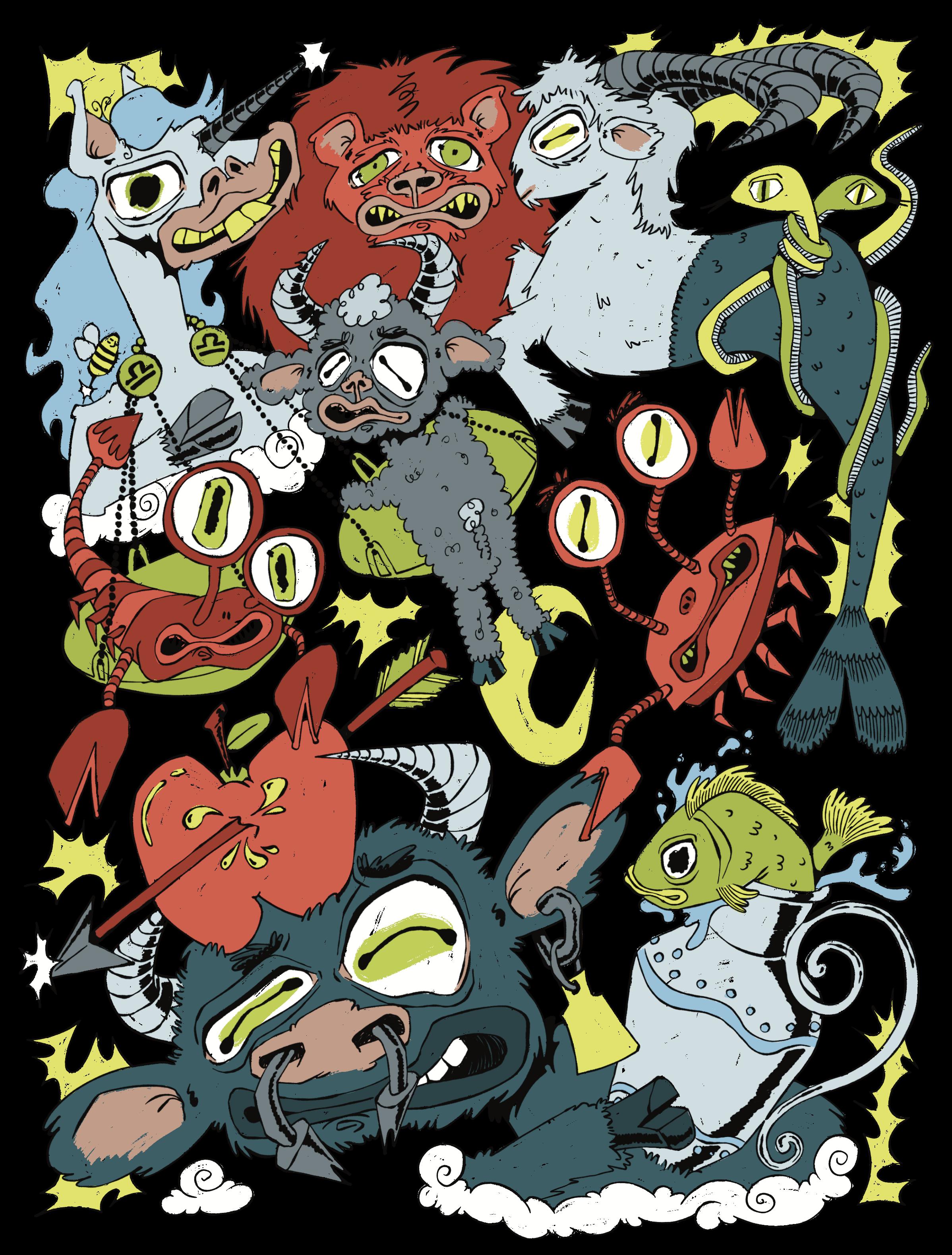


Your random acts of kindness will bring you good karma. The stars recognise your generosity and will reward you handsomely. Don’t take it for granted.
Stop ordering takeout with Afterpay. While supermarket trips can be a bore, a hot home-cooked meal won’t cost you $14.99 for the next four weeks.


A creative boost will wash over you this week. You will finally gain that momentum to complete one of your many unfinished projects.
The season of sincerity is here. Remind yourself that deep chats can happen without the influence of liquid courage. Don’t wait for the next party to have that festering DMC.
You and your exes’ lives are too entangled. It’s time to branch out and make some connections of your own before you both get hurt.
With Saturn in your seventh house this week, broccoli becomes your best friend! Eat your greens this week and avoid spending all your savings on sweet treats.
Time to update your vocabulary! Blow the dust off that thesaurus and stop using internet slang to fill up your sentences. Saying “chopped” makes you sound stupid.
With Neptune in retrograde, your grudge-holding tendencies will ease, bringing a new light to old situations. Reflect on recent conversations and take a new perspective.
The scarcity of your money will ease thanks to hard mahi. Congratulations! Maybe buy tickets to that show you’ve been talking about as a personal celebration.
This week brings heavy focus on rebuilding past relationships. Remember, it’s best to approach these situations with patience and an open mind to any outcome.
Prepare yourself for some heavy hitters this week. Put yourself first roll with the punches. The stars will align to give you the strength to push you through this week.
‘Play stupid games, win stupid prizes’ is your mantra this week as you move through the stages of a new situationship. It’s time to act definitively instead of dodging important questions.
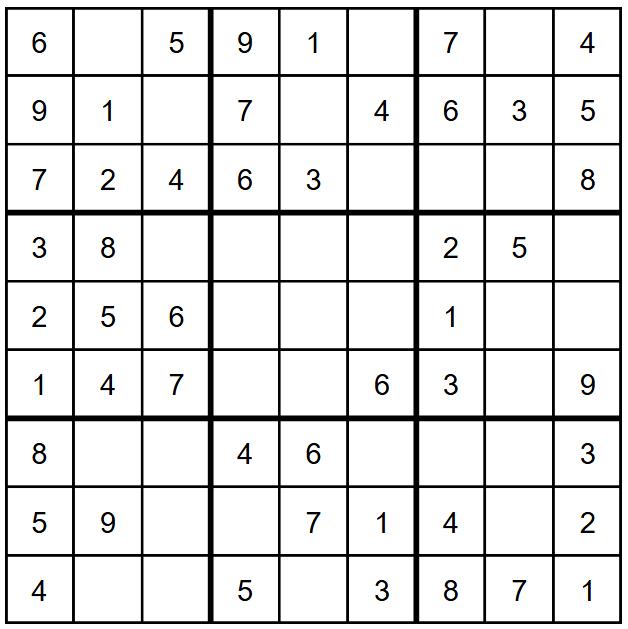
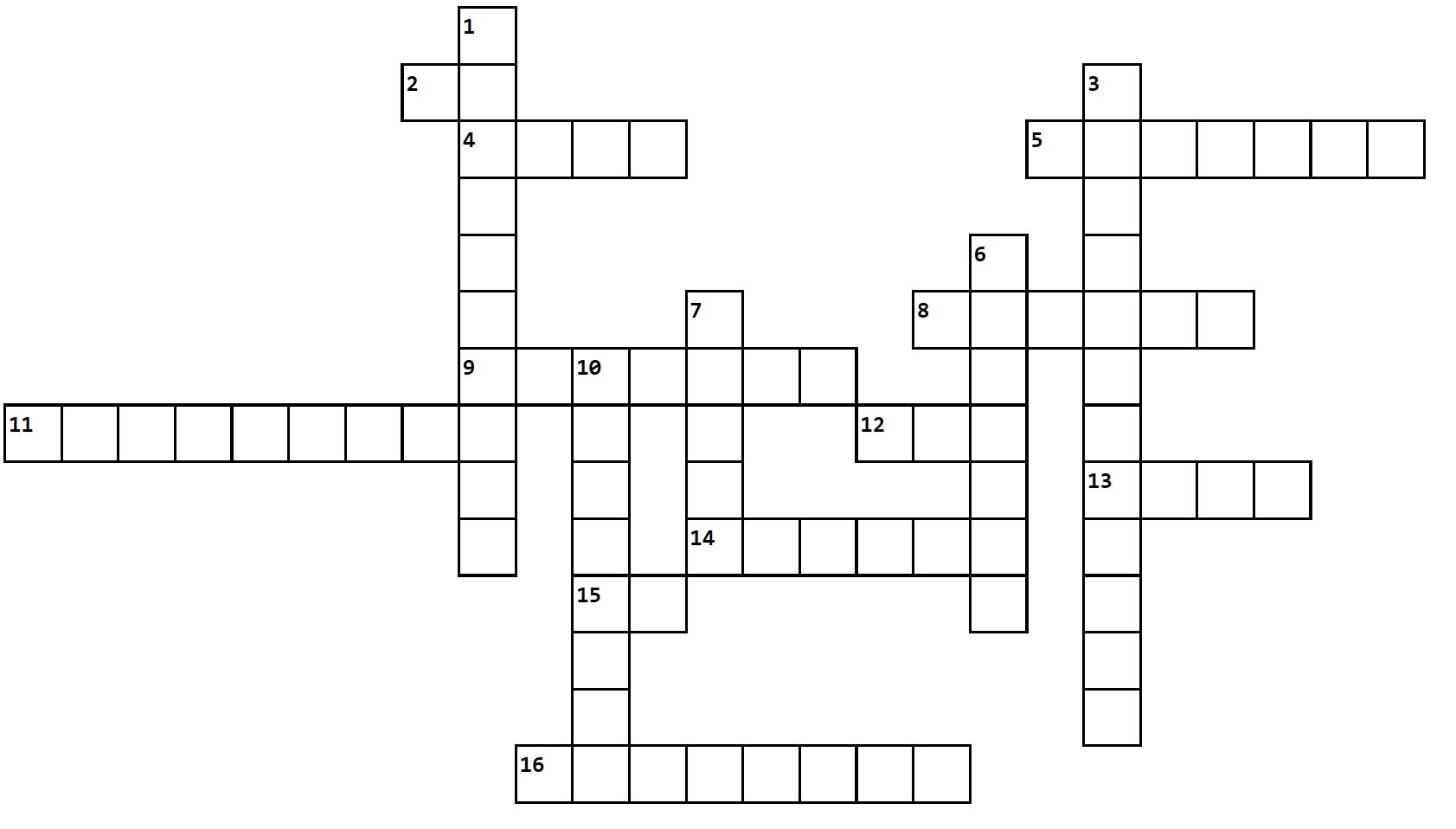
2. Controversial celebrity who posted a list of people who’ve betrayed him on X (2)
4. Surname of two controversial brothers who rose to fame through 2013 YouTube (4)
5. NZ kids show where Justin Beiber spilt L&P on himself in 2010 (4, 3)
8. “All aboard the toxic ______ train!” Ukelele song (6)
9. What did Justin Timberlake say his DUI would ruin? (3, 4)
11. Photographers who take candid pictures of celebrities (9)
12. Colour of most carpets at premieres or award shows (3)
13. Which famous Chris was Harry Styles accused of spitting on? (4)
14. Singer who sued the National Party for copyright in 2014 (6)
15. Who did Robert Kardashian defend in court in 1995? (2)
16. Type of publication that writes about celebrity gossip and scandals (8)
1. The Taylor Swift album which responded to her 2016 cancellation (10)
3. NZ politician who denied social media claims by his ex-wife (5, 7)
6. Winter Olympic athletes experienced a shortage of what this year? (7)
7. NZ singer who shushed her audience while she was singing (5)
10. Trisha Paytas had a famous cameo in this TV show as a podcast host (8)
Have a poem tucked away in your notebook?
A curious thought that won't leave you alone?
A fondness for the strange, the playful, or the delightfully unexpected?
For our upcoming 'Whimsy' issue, Massive is looking for poems that surprise, enchant, and linger for our 'Whimsical Words Poetry Competition'. The competition will be judged by Emily Broadmore, editor of Folly Journal.
To enter:
You can submit 1—3 original poems
Maximum 600 words per poem
Email your entries to editor@massivemagazine.org.nz
First Prize Unity Books prize pack and a $50 Prezzy Card
Second Prize
Massive Magazine hoodie and a Whittaker's chocolate block
Third Prize
Massive Magazine poster and a Whittaker's chocolate block