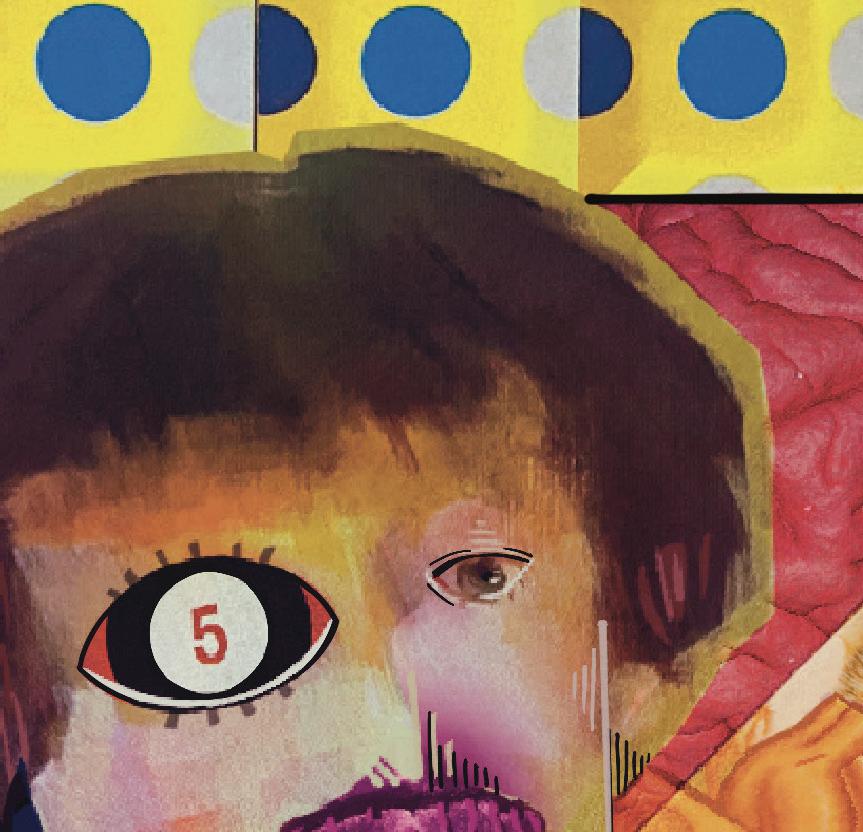
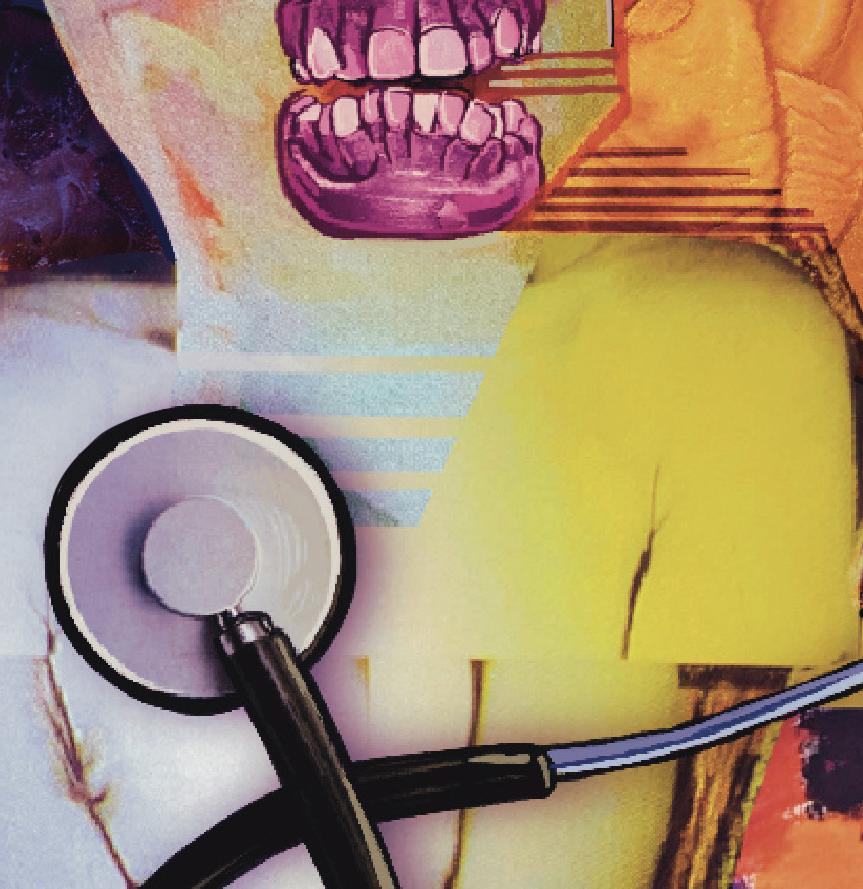
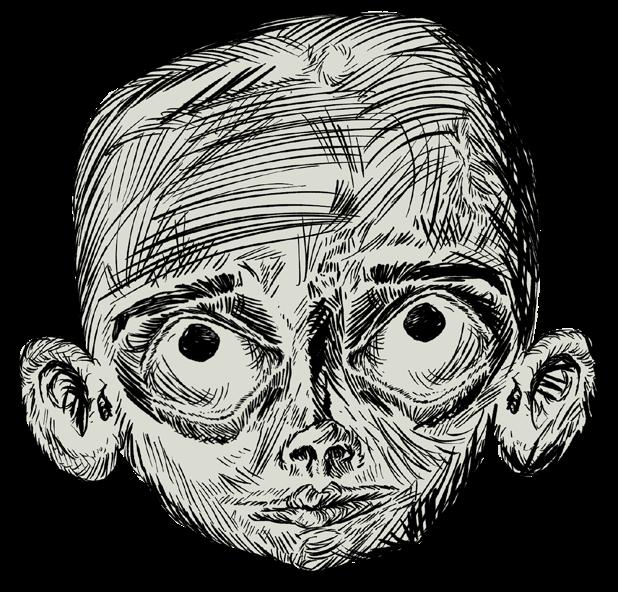
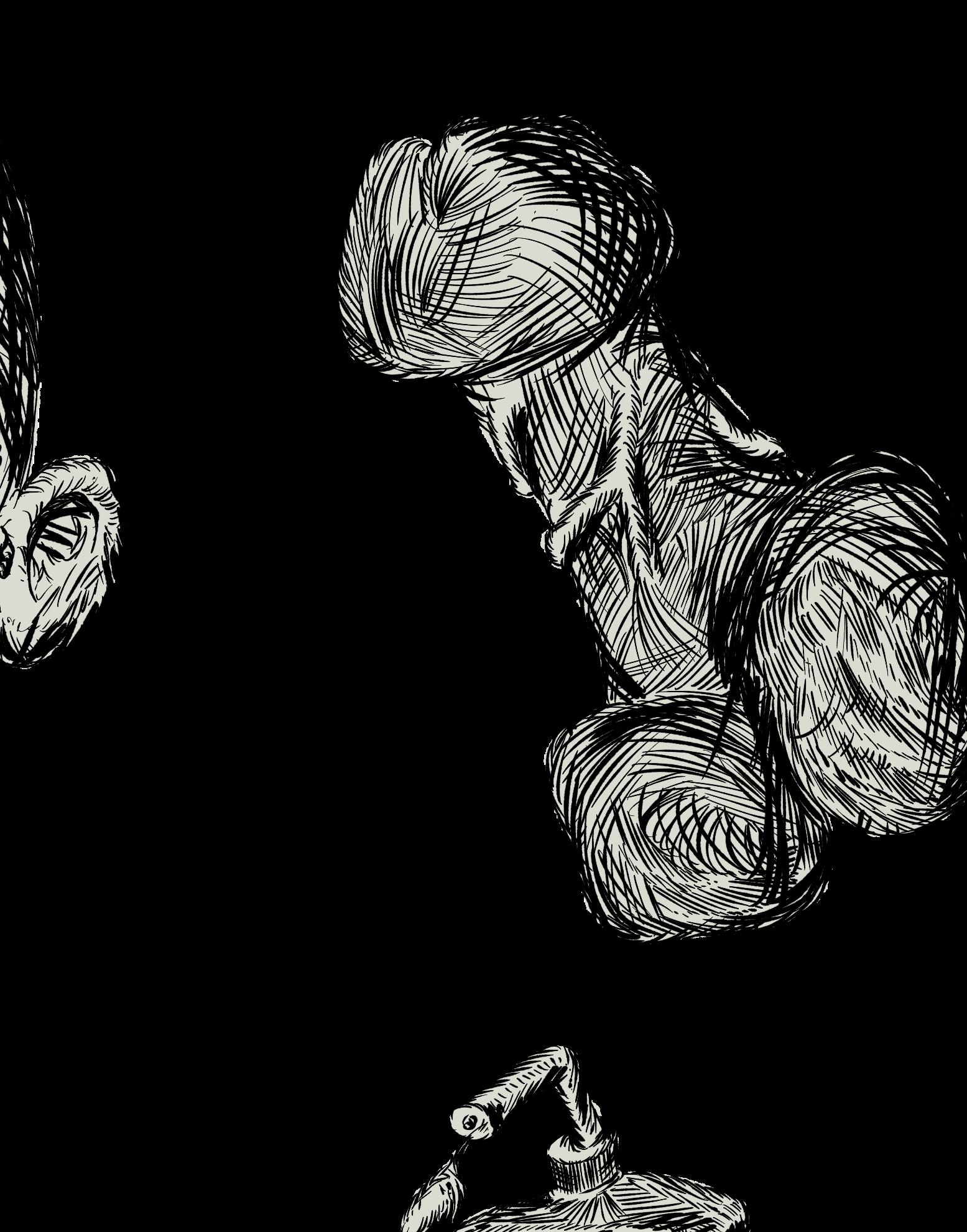
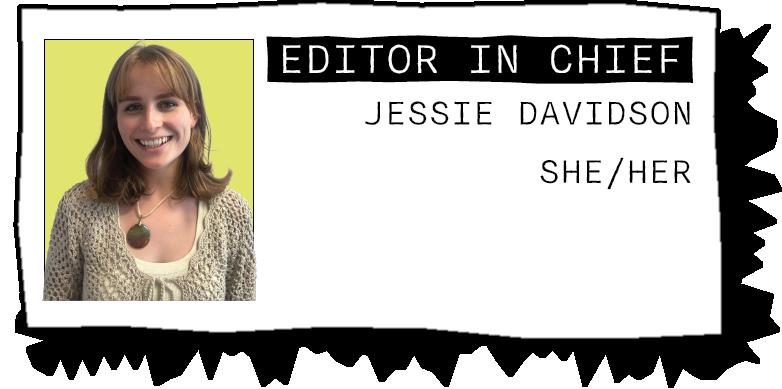
It might seem like I’m stating the obvious, but TikTok should not be your go-to source for health advice.
Ironically, I came down with a cold as we went to print for the ‘Health & Science’ issue. Desperate to revive my weak immune system, I fell headfirst into the traps of HealthTok, searching for cures for my snotty nose, blocked sinuses, and pounding headaches.
According to TikTok, the solution was simple: eat cloves of garlic, chew raw onion with honey, and chug three litres of water. AND BOOM! I’d apparently be cured within 24 hours.
Three days later, I’m still sick. The only things TikTok managed to give me were bad breath and an incessant need to pee.
But I guess that’s on me for believing an app best known for dance trends and OOTD videos could somehow cure the common cold.
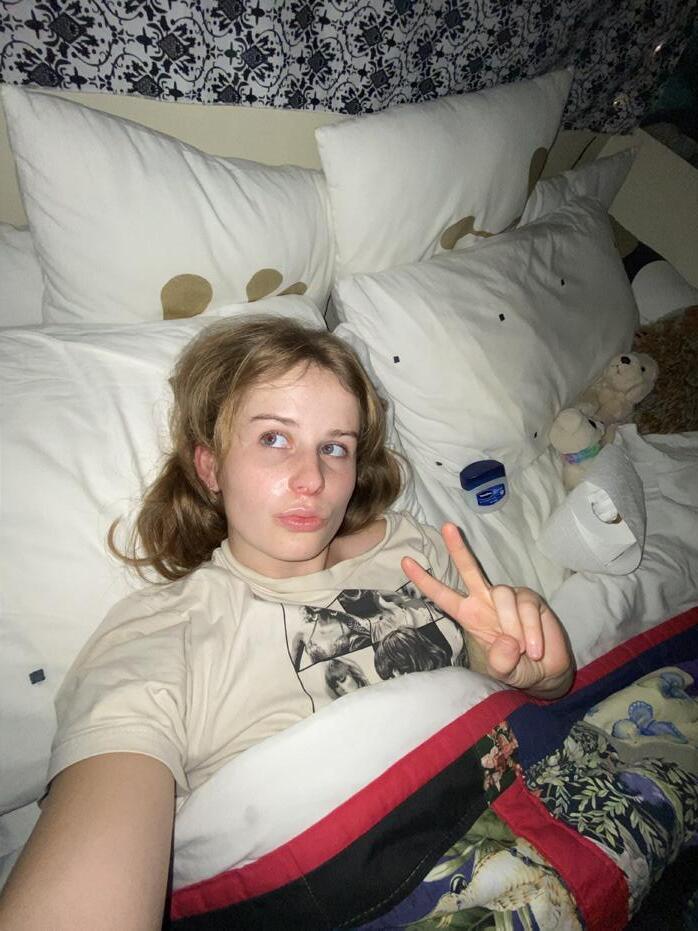
So instead of running to TikTok for your next bit of medical advice, here’s my completely unqualified guide to surviving a cold. Frankly, I trust these methods more than any influencer convincing me to munch on a clove of garlic.
Rewatch the entire Twilight saga curled up in two blankets. Robert Pattinson has stronger healing powers than most wellness influencers.
Call your mum and complain about being sick until she gives you sympathy. Sometimes, the best cure is attention.
Drink chicken noodle soup. Not because it’s scientifically proven to heal you, but because it tastes good? and makes you feel like a Victorian child being nursed back to health.
Put Vaseline on your nose when it gets sore and dry from blowing it every seven seconds. This is the closest thing to real medical advice in this editorial.
Rest. Your body is annoying like that. Sometimes it actually needs sleep, water, and time instead of a stranger on TikTok telling you to rub castor oil on your stomach. JUST KIDDING! There is no rest for the wicked! Be like me and get an entire magazine to print instead. The grind NEVER stops!
HealthTok loves to convince us there’s a miracle cure for everything. But sometimes a cold is just… a cold. No detox tea, onion concoction, or sea moss gummy is going to magically erase it overnight.
So please, for the sake of your breath, leave the raw garlic in the kitchen.
Massive is largely funded by Te Tira Ahu Pae and the student services levy, however, remains editorially independent.
Disclaimer: The views presented within this publication do not necessarily represent the views of the editor.
Subject: no transfems in queer massive?!?!
Message: where are the trans fems??????
Subject: Te Tira Ahu Pae own up level impossible
Message: Kinda cray that ttap didnt give a comment back on the rainbow rep article…… it’s probably not even that dramatic as it’s made out to be. But them not having a comment is wack man. Thought they restructured or some shi
Subject: LOVE MASSIVE
Message: Been luving massive this year ;P keep up the good work
NZ Media Council: Those with a complaint towards the publication should first complain in writing to the editor editor@massivemagazine.org.nz
If unsatisfied with the response, complaints should be made to the NZ Media Council info@mediacouncil.org.nz
Subject: does massey like fees free changes?
Message: yo did you notice that ttap didnt sign that open letter that vuwsa posted about fees free? kinda sus?
SUBMIT A LETTER
Hysteria Lives On
Insane in the Brain
Kia ora e te whānau! Ko MJ tōku ikoa, he/ him, and I’m one of your two Pāmamao/ Distance Representatives for Te Tira Ahu Pae in 2026. I’m based primarily in Ōtautahi, but also spend as much time in Wānaka as I can. If we ever share a class on Zoom, you’re almost guaranteed to meet one of my two dogs or three cats, because they love to insert themselves into every call.
I first studied with Massey to complete an undergrad certificate all the way back in 2016, and this time around I’m halfway through a Bachelor of Communication in Expressive Arts and Media Studies. Having come and gone a couple of times, I’ve navigated a whole bunch of challenges that study in general and distance study in particular can offer: everything from in-person exams being interrupted by earthquakes, to non-responsive lecturers, and all sorts of things in between. I also know how lonely it can sometimes feel studying by distance, especially when you’re nowhere near one of the campuses.
The current project I’m working on is building out the ‘Massey Distance Community 2026’ page on Stream. The goal is to provide Distance students with a central place to access information, support, and opportunities throughout your study journey so that it’s front and centre for you, and not buried under all the on-campus information. You can help shape the space by completing the feedback survey, which is open until the end of May and only takes a couple of minutes to complete.
If you have ideas you don’t want to share through the form, or if you have any questions for me as your Distance Rep or just want to have a chat, you can always flick me an email. (Don’t be too scared by the timestamp when I email you back… I’m a chronic night owl.)
Kia pai tē rā, MJ Brodie distancerep.1@tetiraahupae.ac.nz
GUEST ARTIST CALL OUT
ISSUE
15: ‘IMMIGRANT/REFUGEE’
Massive Magazine is Looking for Immigrant/Refugee Artists!
Massive Magazine is publishing our Immigrant/ Refugee issue in week three of semester two. This issue is created by Immigrant/Refugee students and spotlights Massey University’s Immigrant/Refugee
cohort. Students can create art about anything relating to their culture, experience and where they are from.
If you’re interested, please email editor@massivemagazine.org.nz by July 3rd.
SURVEY LINK
MONDAY MAY 25TH • 2026
Te Tira Ahu Pae Absent from Open Letter Opposing Fees Free Changes
Words by Maya Trotman • SHE/HER
After the Victoria University of Wellington Students’ Association (VUWSA) posted an open letter condemning the Fees Free changes, students quickly noticed that only two of the country’s eight student associations had not signed it—including Te Tira Ahu Pae (TTAP).
Two weeks ago, the Government announced that the Fees Free tertiary policy would end in December this year. First year Fees Free was introduced by the Labour government in 2017 as an incentive to increase university enrolments.
In 2024, our current government shifted it to the final year Fees Free starting in 2025. However, they recently announced the entire policy would be scrapped in the upcoming Budget.
In response, VUWSA posted an open letter on their Instagram condemning the change.
Five other student associations from Aotearoa universities signed the letter. The only two student associations that didn’t were University of Canterbury Students’ Association (UCSA) and Massey University’s Te Tira Ahu Pae.
In a response to Massive, a TTAP spokesperson said that no formal request was received by their general manager, Marlon Hepi, to sign the open letter. Instead, the request for support was shared through a Teams group connecting chairs and presidents across the universities.
“As decision of this nature would require consideration by the wider board, the timing ... did not allow enough opportunity for the board to properly review, discuss, and respond before the letter was finalised,” they said.
“Te Tira Ahu Pae was disappointed not to have been included more directly in the process.”
Based on the intent of the open letter, TTAP confirmed they would have signed the letter if they had more time to formally consider the request.
“Te Tira Ahu Pae believes accessible education is essential for ensuring all tauira have the opportunity to succeed.”
TTAP posted their own response to the Fees Free changes on Instagram last week. They offered their “unwavering support” to students navigating this issue.
“It is with profound disappointment that Te Tira Ahu Pae and Ngā Haumi Ki Te Ao issue this statement,” the post stated.
“The sudden decision to discontinue this vital scheme, executed without consultation, shows a blatant disregard for those affected and is deeply disheartening.”
A UCSA spokesperson confirmed to Massive that they were approached to sign the open letter. However, they decided to release their own statement that best reflected their own students’ concerns.
“UCSA is deeply disappointed by the decision to scrap Fees Free. We are concerned about the potential impacts this may have on the accessibility and affordability of tertiary education, particularly for students already facing financial pressures and rising living costs,”they said.
UCSA explained their focus is on directly questioning the Government and engaging with MPs regarding the impacts this change may have on students.
Students Concerned Over Quality of Distance Courses
Words by Josie Maddox • SHE/HER
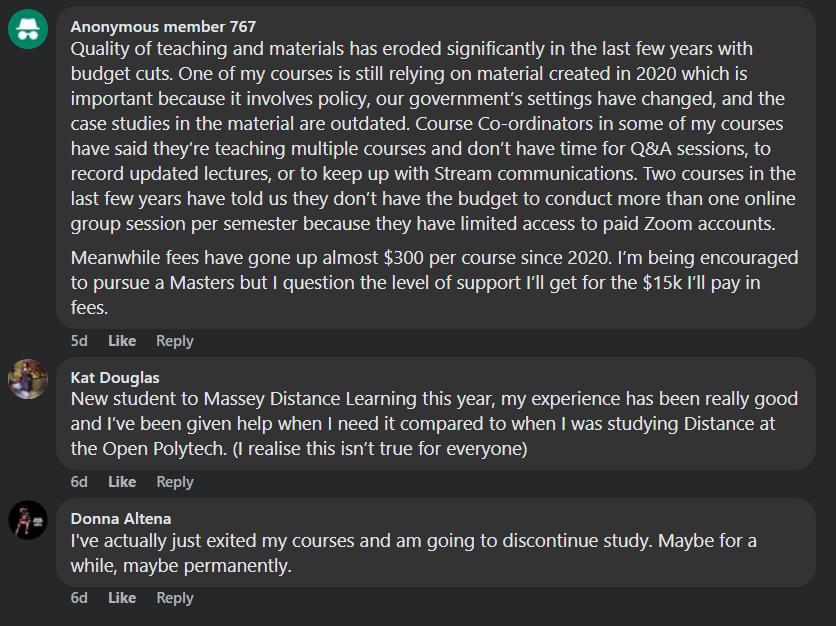
Students have raised concerns on the Massey@Distance Facebook page in recent weeks about the quality of their distance courses.
After a number of students posted about the quality of distance courses diminishing, Massive posted on the Massey@Distance page, asking members for their thoughts.
The post gathered over 25 comments which spoke about poor content resources, tutor feedback, fees and exams and claims that “the quality of content has reduced significantly”.
The content had left students disappointed with their studies. Some students claimed almost all the teaching was provided via YouTube videos and core readings, with minimal contact from lecturers and tutors.
Other students shared their displeasure with the marking schedules, feeling as though results are taking far too long to be returned.
Commenters reported feeling uninformed regarding the content of their assignments, resulting in chasing up tutors with questions.
Some suspected that budget cuts has resulted in poor quality distance courses.
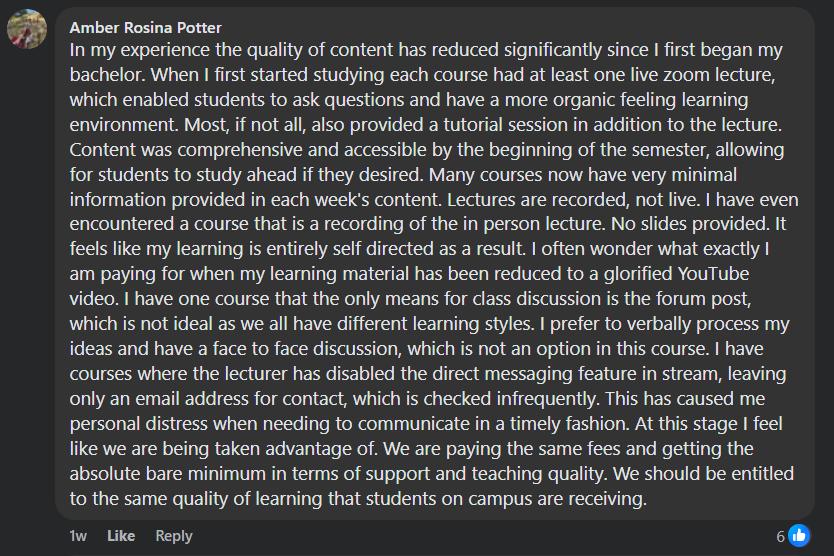
One student, Amber Rosina Potter, told Massive that they don’t feel like distance courses are worth the money anymore.
“At this stage I feel like we are being taken advantage of. We are paying the same fees and getting the absolute bare minimum in terms of support and teaching quality. We should be entitled to the same quality of learning that students on campus are receiving,” Potter said.
She continued, “I’ve had a few classes that lack decent discussion about assignments—often making us rely on the rubric posted on stream.”
Another student, Jan Davidson, commented that following the return of in-person exams this year, many students are concerned about their future at Massey.
“I am distance for a reason and don’t agree with the change or how it was handled—which was really poorly,” Davidson said.
However, a few commented that they haven’t noticed any quality decreases and have experienced successful communication with lecturers.
In a response to Massive, Massey Provost professor Giselle Byrnes, said that “just over 80% of our students rated their educational experience as good or very good in the 2025 Student Experience
Comments from Massey@Distance Facebook page
Massey encouraged students to raise concerns about their learning with their lecturers, and to complete the Course Evaluation Surveys. These will be available from 23 May to 28 June for full semester courses from semester one.
“Providing feedback (good and not so good) through these mechanisms ensures that it is seen and can be acted upon by the right people.”
The university denied suspected budget cuts and said, “there have been no changes made to the funding of distance offerings”.
Fine Arts Students Complain About Confusing Courses
Words by Ellice Lawrie • SHE/HER
Some Fine Arts students have been struggling to understand the layout of their courses, saying it’s affecting their ability to learn and complete work.
Second year Fine Arts student, Bee Putali, said the layout of the course hasn’t been been properly communicated with students. This has left students unorganised and confused.
“I do believe that the lecturers know what’s going on, and that they’re not confused [...] But they won’t really put the time in to lay it out in a way that’s understandable for us or think about the fact that we don’t know anything,” Putali said.
Putali has struggled with how the studio course is laid out because it is so different from all the other courses she has taken.
“We’re used to a system where it’s like this is gonna be ready for this or we’re gonna work on this now. There’s something that loosely gives you an outline of what you’re doing and where you’re going, and studio is just nothing.”
Because there are no clear deadlines, students don’t prioritise the course.
“I think that everyone’s putting this course on the back burner,” Putali said.
Putali said that this is not solely the lecture’s fault, as it is a very studentled course. However, she wished there had been better communication with the students, such as telling them from the beginning that it was a self-led course.
“The lecturers are very talented. We’re all so grateful for where we are and everything that we’re being given. It’s awesome, a great place, but it’s just that we’re confused.”
A fourth-year Fine Arts student, who wishes to remain anonymous, said there has been a lot of change to the course throughout the years which likely caused the confusion.
“It’s definitely undergone a few changes through the years ... I believe disorganisation comes with change and change is hard. But the best thing you can do in it is be the best that you can be within that change,” he said.
In the past, the confusion he experienced trying to understand course changes took precedent over his focus on art. He believed the best thing to do is to focus on his own work despite the course changes.
“I definitely was quite vocal about the changes but because I did that, I was so focused on that instead of the actual art.”
In a response to Massive, Toi Rauwhārangi’s associate dean of academic strategy, associate professor Bridget Johnson, said that the College of Creative Arts is open to feedback about their courses.
“Staff at the College of Creative Arts are constantly looking to ensure that courses are articulated as clearly as possible to suit our broad range of student needs.”
She recommended that struggling students should reach out to their rōpū lecturers and tutors “who are always happy to provide help, assistance, and support to students in their courses and programmes and should always be the first place students come to for help”.
Mariameno Kapa-Kingi Announces New Te Tai Tokerau Party
TAfter her suspension and expulsion from Te Pāti Māori was ruled as unlawful by the High Court earlier this year, Kapa-Kingi was reinstated into Te Pāti Māori in March. But two weeks ago, she announced her decision to part ways with Te Pāti Māori.
Kapa-Kingi spoke at a press conference and addressed her plans for the party, which will contest the 2026 election with kaupapa grounded in Māori principles.
“Te Tai Tokerau party has been established in response to a growing call for the political representation grounded in the realities and the needs and aspirations of communities across Aotearoa,” said Kapa-Kingi.
She said the party will challenge the “one size fits all” politics by building a movement shaped by whenua, whakapapa, and community realities.
“For too long our people have been asked to fit into systems that were not designed by us, for us, or with us in mind,” she said.
She said the Te Tai Tokerau party is about saying Māori communities have the wisdom, data, leadership, and strength to shape their own political futures.
e Tai Tokerau MP for Te Pāti Māori, Mariameno Kapa-Kingi, has announced the launch of a new political party, the Te Tai Tokerau Party.
Words by Kamaia Bainbridge-Frost • SHE/HER
“The kaupapa is rooted in He Whakaputanga and Te Tiriti o Waitangi with a clear focus on healthy and happy lives for whānau now and for generations to come”
Kapa-Kingi hoped that this decision will empower other rohe to establish their own political powerhouses. She hoped for collaboration with these rohe to protect the mana and identity of Māori across Aotearoa.
“Our obligations to the generations before us and the generations still to come.”
Concerns were raised around whether a new party may divide the Māori vote. This could give another party the opportunity to take Māori seats.
But Kapa-Kingi said Māori politics is “a dynamic space”.
“There’s not one way in which we do this stuff. I would say that unity doesn’t require conformity. Unity is not about sameness.”
She said this decision has been met with an overwhelmingly positive response.
“If you want to make enduring change, you have to think about the next three to the next thirty years.”
Dr Lara Greaves, associate professor in politics at Victoria University, told Massive that Kapa-Kingi’s move was inevitable.
“We’re all kind of wondering what was going to be the next logical step for Kapa-Kingi. We had that crunch point where something had to happen, and this is what ended up happening,” she says.
Greaves said there have previously been conversations surrounding the idea of having independent Māori MP’s or parties in the past. She said this has been in discussion since issues within Te Pāti Māori began last year.
“This decision was the next logical step,” said Greaves.
Anti COVID Vaccine Pamphlets Spotted Around Pukeahu Campus
Words by Jessie Davidson • SHE/HER
Pamphlets spreading misinformation about COVID-19 vaccines were spotted around Massey University’s Pukeahu campus last week.
The pamphlet was two double sided A4 pieces of paper stapled together, and included quotes from well-known figures in the anti-vax community.
On the front page was one of these figures, Peter McCullough, an American former cardiologist.
In 2025, McCullough’s board certifications in cardiovascular disease and internal medicine were revoked following his public statements and promotion of misinformation regarding COVID-19 vaccines
Some of these false claims included that people under 50 did not need the COVID vaccine, there is no evidence of asymptomatic spread of COVID, and that a huge number of fatalities were to do with the COVID-19 vaccines.
He also co-authored the 2023 review, A systematic review of autopsy findings in deaths after COVID-19 vaccination. This has since been retracted after the publisher found errors, misrepresentation, and lack of factual support for his conclusions.
The other two figures featured in the pamphlet were Geert Vanden Bossche and Denis Rancourt.
Bossche is a Belgian virologist who claimed the COVID-19 vaccines would doom humanity.
Many anti-vax groups have adopted Bossche’s views to provide a veneer of scientific legitimacy to their movements.
Rancourt is a former professor in Physics who shared misinformation with his 12 thousand followers on his Substack. The pamphlet shared one of his posts, named ‘Eight Pivotal Facts about Covid-period excess mortality’.
These eight facts included statements such as:
“The COVID-19 vaccine has harmed and killed many people.”
“The Covid-period excess mortality was not caused by a spreading respiratory pathogen.”
“Sharp peaks in excess mortality were temporarily associated with rapid vaccine and booster rollouts.”
The pamphlet also included links to Substacks, websites, videos, and blogs which all spread misinformation about COVID-19 and its vaccines.
A Massey University spokesperson encouraged students looking for information about vaccinations to contact their health provider or Massey’s student health centres.
“All Massey students are eligible to register with the Student Health Centres which provide a wide range of medical services from skilled doctors and nurses at our campuses in Palmerston North, Wellington and Auckland.”
DISCLAIMER: Massive Magazine does not condone the use of any nictotine products.
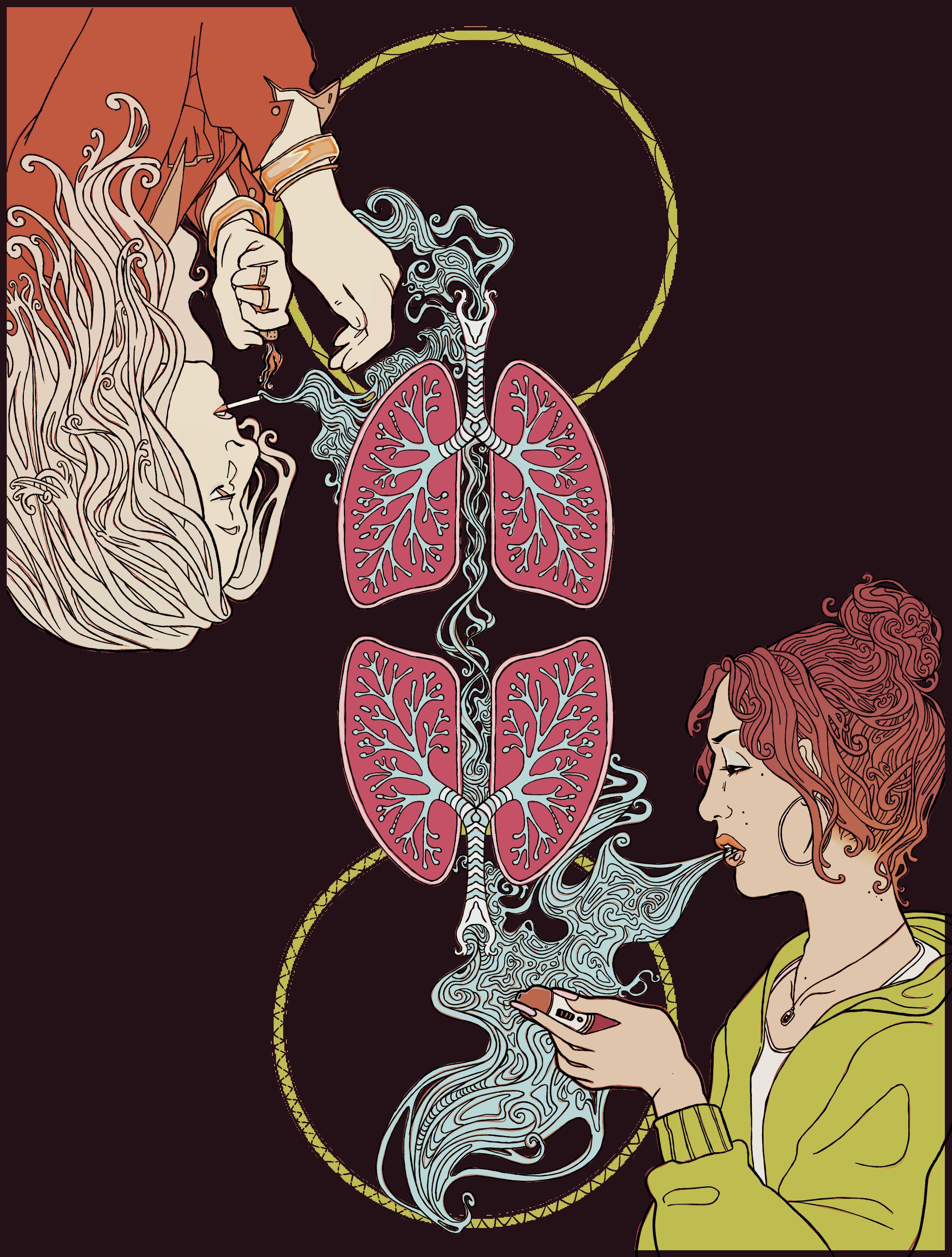
In an ironic turn of events, vapes seem to have become our generations gateway drug to cigarettes.
As more studies emerge about the long-term effects of vaping, there’s no doubt that vapes are bad for our health. However, evidence still shows that cigarettes are far worse. But looking around at parties and bars, there seem to be more darts than mint solos filling the room.
This begs the question: Why are so many students making the shift back to smoking?
Out of the 12 students Massive spoke to, only one student said that they vape because it’s cheaper than smoking. For the other students, their reasons for choosing cigarettes over vapes were due to aesthetics and the lack of research around vaping’s long-term effects.
One student says, “[At the] end of the day, how many times you vape a day? One, three, four, six billion? How many times you have a cigarette? Like three?”
Another says, “Smoking definitely. Tobacco been going for a long time we know everything about it. Vaping is fucking us up and we don’t even know what’s in it.”
“I know that [cigarettes] are really bad for you, but cigarettes are more French,” one student jokes.
There is no doubt that vapes are bad for our health, but evidence still points to the fact that cigarettes are worse. So why are so many people making the shift back to smoking? And why do they seem healthier to so many?
Words by Ellice Lawrie • SHE/HER
Art by Māta Geiringer • SHE/HER Ngāti Kahungunu ki Te Waiora
The aesthetic appeal of cigarettes are a big part of why people are making the switch.
Our juicy bars and mint solos feel reminiscent of high school bathrooms and begging your 18-year-old friends to go to the vape shop for you. Cigarettes, however, give off the image of a starving artist, free from the shackles of nagging teachers and parents.
But it’s more than just aesthetics. Public perception has increasingly shifted toward viewing vaping as equally—or even more—harmful than smoking. Honestly? This assumption isn’t entirely incorrect.
People who vape tend to vape far more often than smokers smoke cigarettes. Cigarettes may be worse for our health overall, but the frequency of vaping can intensify nicotine dependence.
Vapes are also far more accessible. You can’t sit in class with a cigarette up your sleeve or sneak a quick puff in the bathroom during a family lunch. But if your sleeves are long enough, you can vape almost anywhere.
The more you vape, the more addicted you become.
Vapes can also contain more nicotine than cigarettes. According to the Asthma + Respiratory Foundation NZ, a 50mg/ml vape can contain the same amount of nicotine as 25 to 50 cigarettes.
Beyond aesthetics and accessibility, the biggest factor driving people’s belief that vaping is worse for our health is the lack of research into its long-term effects. Our generation are the guinea pigs for what inhaling watermelon-flavoured chemicals might do to us 50 years down the line.
In
April this year, a study by the New Zealand Medical Journal published findings that found vaping does cause cancer. However, cigarettes are still worse.
“In our view, it is clear from this risk analysis that vaping presents an unquantifiable cancer risk, but that based on exposure to vape smoke aldehydes the risk is lower than for cigarette smoking,” the study states.
There are four main components in vape juice: propylene glycol, glycerine, nicotine, and flavourings.
When vapes are heated, the glycerine and propylene glycol undergo thermal degradation, forming toxic aldehydes. Of the four aldehydes identified in the study, three were classified as carcinogenic. One presented a cancer risk, two posed little to no risk, and the last was unmeasurable.
While the long-term effects of vaping are still unknown, current evidence suggests it has fewer negative health effects than smoking.
Vivienne Coppell, a GP at Newtown Union Health Service, said smoking is not better than vaping, but it does depend on circumstance.
She says, “This is in part to do with what is in the vape—if the vape is full of nicotine then you are probably getting more nicotine (as in addictive substance) in the vape, so that’s not great. But you don’t get the tar ecetera that is in the cigarettes.”
However, the slight benefits of vaping are not enough for Coppell to recommend people switch from cigarettes to vapes unless they are trying to quit smoking.
In her experience, she has found vaping can be worse for asthmatics than smoking and says the accessibility of vapes is a major issue.
“It is probably harder to quit the habit of vaping because it is so instant—you don’t need to get out the cigarette and light it. You just have a puff.”
For people wanting to quit nicotine, Coppell recommends that you make large parts of your life nicotine free. For example, not smoking or vaping within ten metres of your home.
She says that avoiding becoming a “social smoker” can stop you from associating nicotine with enjoyable experiences.
Finally, she challenges you to leave your vape or cigarettes behind when you leave the house. This means you’re less tempted to pull them out of your bag and start smoking without thinking about it.
At the end of the day, whatever we perceive to be the lesser of two evils, both vaping and smoking are still both evil. As Coppell says, it’s better to never start. Habits are easy to form and hard to break.
Words by Kamaia Bainbridge-Frost • SHE/HER • Ngā Puhi, Waikato Tainui, Fasito’outa
Margaret Niotakis was left alone to care for her partner last year after they were discharged from hospital. Home help services were expected to arrive at their home in rural Te Tai Tokerau, but they never did.
“They just never turned up,” she says.
But she’s not alone. The lack of healthcare practitioners in rural Aotearoa continues to disproportionately impact rural communities.
In 2023, the University of Otago (UO) found that people living in rural Aotearoa die at almost double the rate of those living in urban areas. For people under 30, this meant around 599 deaths for every 100,000 people in urban areas, compared with 1,085 deaths in rural areas.
While everyone living in rural communities have higher mortality rates, the consequences for Māori are far greater.
Māori make up about one-fourth to one-third of Aotearoa’s rural population, with roughly 25 to 30 percent of all Māori living in rural areas. This is compared to 16 to 20 percent of
Pākehā. To be even more specific, UO found that the mortality rate for rural Māori is 4,018 deaths per 100,000 people compared to 3,055 for rural non-Māori.
Many whānau are left with limited options for accessing basic healthcare. But for rural Māori, barriers also include financial, physical, social, and cultural barriers. As a result, healthcare necessities are becoming increasingly inaccessible.
For Niotakis, she says she felt isolated from any real medical support while caring for her partner. While hospital staff provided strong care initially, she says this disappeared when they returned home.
“[There was] awesome support from the hospital. But no support from the services and the district nurses or home help,” she says.
Faced with no support, she became solely responsible for caring for her partner at home. This included showering him and managing his medical needs.
She says, “They taught me how to do the infusion, so I just did it at home.”
While she understands that district nurses were severely understaffed, but the responsibility puts a lot of pressure on her as a caregiver.
“It left me tired.”
Clinical director of Aotea Health, Tania Kemp, says the issue of equity for Māori in rural healthcare has become central to her work.
“There’s a buzzword of equity for Māori in rural,” says Kemp. “My reason for working in health is very much now honed in that area of practice.”
Aotea Health is based on Great Barrier Island, and was founded in 1994 by three rural nurses. In 2023, Kemp took over the practice, bringing a Māori lens to it’s healthcare facilities.
With the shortage of healthcare workers in rural Aotearoa expected to worsen, Kemp says that Māori are experiencing the consequences of this issue at a much greater rate.
“Already there are barriers to Māori accessing healthcare. So you start with what affects everybody and then you really increase that because it is harder for Māori to access healthcare than Pākehā.”
Accessibility isn’t just physical, it’s also cultural. As Kemp explains, cultural accessibility is an important factor to determine whether Māori feel supported when seeking care.
“Physically [healthcare] could be accessible. However, how accessible is it culturally?” She asks.
“Are [the services] appropriate for Māori? Do they meet the needs of Māori?”
Instead of attempting to assimilate Māori into Pākehā systems, Kemp says the solution lies in centering Māori communities in healthcare approaches.
The current education systems often fail Māori students because they are designed around expectations or beliefs that don’t reflect the realities of Māori.
“With Māori, by Māori, for Māori,” she says.
Taking healthcare directly to Māori communities could solve the issue of inaccessibility. Since taking ownership of Aotea Health, Kemp has established a maraebased clinic. This created safe spaces for whānau to seek healthcare support.
“The first thing is taking the service to Māori into their space so that they feel seen and that makes it more accessible.”
“We can’t use a Pākehā lens around education,” says Kemp.
She believes that healthcare training and tertiary education need more wrap-around support systems for Māori students. Particularly for those moving from rural communities into urban institutions.
Kemp’s whakaaro echoes the lived experiences of many rural whānau who regularly navigate healthcare systems without sufficient support.
around stuff, that’s the only way we’re gonna do it,” she says.
As healthcare shortages continue to rise in rural Aotearoa, Māori communities once again remain the victims of a system that wasn’t designed for them. As rural healthcare services become less and less accessible, Māori once again carry the consequences of a failing system.
VICTORIAN ERA MEDICINE
The Home Hand-book of Domestic Hygiene and Rational Medicine by J. H. Kellogg has been handed down through my family since it was published in 1896. While most of its diagnoses have been debunked over the last 130 years, that doesn’t stop Dad from opening it up when a family member catches a cold. While its remedies might not actually cure us, they do usually lift our spirits.
It’s both hilarious and horrifying. Beyond the questionable medical advice, the book is packed with the sexism, sexual repression, and moral panic that shaped so much Victorian Era medicine. Women, young people, and anyone with a sex drive seem to be treated as medical emergencies. Here is some of the finest medical wisdom the Victorian Era had to offer...
BALDING
While modern science shows balding is caused by genetics, hormones, medical conditions or stress, Doctor Kellogg claimed that excessive brain labour and warm hats were the issue.
“Excessive brain labour, resulting in congestion of the head and too much heat in the scalp, may produce it. Men suffer more than women ... women do not so habitually overheat the head by the constant wearing of warm head coverings.”
With many cases of balding being incurable, Kellogg advised that prevention is the best remedy: “The scalp should never be overheated.”
He recommended avoiding harsh shampoos and “greasing the hair”.
“Soap should be rarely used, unless of the finest quality, but the head should be kept clean by frequent washing with warm water and shampooing with the white of egg, followed by thorough rinsing.”
Harsh shampoos irritating the scalp has some truth, but washing with egg whites isn’t a medically recognised treatment today.
Words by Jessie Davidson
Be careful ladies. If you laugh, have painful breasts or ovaries, read too many novels, flick the bean, or are little depressed—girl, you have hysteria.
Hysteria was debunked in the 1980s, with its entire diagnosis considered obsolete and deeply sexist. But Kellogg assured readers that Hysteria could also affect men.
HYSTERIA MASTURBATION
“Hysteria almost always occurs in women and most frequently between the ages of fifteen to twenty-five. In rare instances it affects men as well as women.”
Historically, it was used to brand women’s emotions, sexuality, anxiety, grief, anger or independence as a medical disorder.
Kellogg wrote, “The most common causes are sexual excesses, novel-reading, perverted habits of thought, and idleness.”
He said it occurred most frequently in young ladies “who have been reared on luxury” and “had every whim and fancy gratified until self-gratification has come to be their greatest aim in life”.
Treatment was essential, and included teaching the patient self control (cough, cough, obedience).
Victorian medicine widely claimed masturbation caused insanity, weakness, blindness, nervous disorders, infertility, and moral corruption. Kellogg nearly always referred to masturbation as “secret vice”.
He wrote, “This pernicious habit, which is so common that we need not describe it, we are loth to say, but must in deference to truth, is by no means confined to boys; girls also indulge in it.”
Kellogg told a story of one of his patients who had a son fall victim to “this awful vice”.
“The mother of a large family of sons and daughters, most of whom were remarkably bright and intelligent ... one had fallen a victim to this awful vice, and was then in an insane asylum, his
mind a hopeless wreck, in consequence.”
To avoid such sinful behaviour, parents were told that keeping their children away from bad influences was key.
“The influence of evil companionship is one of the most powerful agents for evil against which those who love purity and are seeking to elevate and benefit their fellow men.”
While modern medicine recognises masturbation as a normal human behaviour, Victorian anxieties about it are reflective of how medicine at the time was a form of moral policing.
Rest in peace Kellogg. You would have hated sex toys.
Art by Olive Bartlett
BRAIN GLITCHES EXPLAINED
Receiving a prophecy via dream, theuncanny feeling of reliving a moment, or realising that Curious George doesn’t have a tail. These experiences are pretty universal, but they still make you feel like you’ve received secret powers.
Unfortunately, these brain glitches aren’t a sign that you’re the next Harry Potter. Instead, they are a show of an effective and active brain and nervous system.
According to psychologist Kirsty Ross and psychology professor Stephen Hill, our minds constantly search for patterns to try to fill in the blanks and make sense of our world. Sometimes, our brains just get a little confused and glitch
DÉJÀ VU
Have you ever stopped mid-conversation because it suddenly feels like you already know how it’s going to end? Almost like you’re somehow in your own version of Groundhog Day?
Ross describes déjà vu as a “memory processing glitch” and occurs when the brain briefly misfires and connects a new experience with a feeling of familiarity.
Our brains are constantly processing huge amounts of information, and sometimes they slip up. Logically, it could appear that frequent déjà vu would be a sign of a bad memory, but Hill disagrees.
He says, “You could say that having more experiences of it is actually associated with having better memory.”
Déjà vu is more common among young people, who are best at remembering the specific details of memories or information. As you get older, details of when or where you learnt something can grow foggy. Because déjà vu is the accidental association of a new experience with an old one, this accurate differentiation of the two memories is considered impressive.
MANDELA EFFECT
You know how the Monopoly mascot wears a monocle? Well he actually doesn’t, nor has he ever worn one. But according to a 2022 YouGov study, 58% of people inaccurately recall him wearing a monocle.
This is called the Mandela effect—the phenomenon of a large group of people sharing a collective false memory.
Ross says that memory constructs and reconstructs. When we are remembering something, our brains rebuilds memories from fragments of information associated with it. However, we also take memory fragments from others too.
Social
media amplifies this phenomena, overloading us with millions of unique beliefs. It spoons feeds directional ways of thinking, leaving us having to actively seek alternative ways of thinking outside the status quo.
“I do think we are in an age where it’s quite easy to get into an echo chamber,” says Ross.
Words by Grace Byrne • Ngāti Porou • SHE/HER
PRECOGNITIVE
HDREAMS GUT FEELINGS
ave you ever dreamt about someone you haven’t seen for five years, forgotten about it, and then ran into them the next day? Makes you feel like you’ve inherited the powers of a prophet.
Hate to break it to you, but you haven’t.
Ross says, “What we don’t tend to remember are the hundreds of dreams we’ve had where there is nothing that happens later predicting anything.”
We typically have several dreams every night, some more vivid than others. The likelihood of dreaming of something and then it coincidentally occurring later is not that low. Since our brains can’t create new stimuli—like faces—our brains recycle old information from previous memories.
That nightmare you had about the guy who sits behind you on the bus? It might just be your brain’s way of processing their existence. That’s not to say that these experiences can’t be jarring and often feel like a warning of some kind.
Just remember to take them with a grain of salt.
Our brains don’t always make sense.
You know that little voice in your head that tells you you’re being cheated on? It’s usually not too hard to tell it to quiet down. But sometimes it might actually be onto something.
Gut feelings aren’t just meaningless reactions—our brains and our gut are connected. Often referred to as the ‘brain in the gut’, the enteric nervous system (ENS) is made up of more than 100 million nerve cells. The ENS communicates with the central nervous system, meaning conscious or unconscious thoughts can be felt physically in your gut.
Gut feelings aren’t always accurate, but Ross they’re often worth paying some attention to. Sometimes your body senses danger before your mind does—a survival instinct passed through centuries.
Our bodies are like smoke detectors, set off by the prospect of danger. Ross says that when acknowledging one’s gut feeling requires a “wise mind”. This means striking a careful balance between logic and emotion without letting one overrule the other.
So, if your gut tells you not to go to that sketchy party, it might be wise to listen. If it tells you to get back with your crusty ex, maybe don’t listen.
These strange sensations can feel highly significant. It’s human nature to want a supernatural narrative. As long as you hold both your head (logic) and your heart (emotions) gently, it’s okay to daydream that maybe you do have magic prophetic powers.
Before I understood medical misogyny, I learned what it felt like.
Sitting in doctors’ offices trying to explain symptoms I barely understood myself: chronic fatigue, fainting, memory loss, full body tremors, unexplained bruising. My hair fell out in clumps, and I slept through the days to wake up exhausted. I fainted at school
and forgot my words mid-sentence. I was thin and frail, giving up everything I loved because of my illness.
My life had become unrecognizable to me.
Over the following years, I argued with doctors and hematologists who blamed my symptoms on suspected eating disorders, stress, and anxiety. Any potential factors were pushed aside
with blame, courting my fifteen-year-old lifestyle and vegetarian childhood.
I was just a teenage girl overreacting to her own body.
After so many appointments, you stop asking whether something is wrong with your body and start asking whether the pain is somehow your fault.
Hysteria Lives On
Words by Josie Maddox • SHE/HER
Art by Brianna Grapes and Josie Maddox• SHE/HER
Medical misogyny means strategizing with your mum in the car before appointments.
It is arguing with a specialist who blames you for your own condition, therefore skeptical to do anything out of his way for you.
It is trying to pretend you aren’t greeted by the phlebotomist by your face in a room full of sixty-year-olds because you’re there three times a week.
It is starting to dream of being diagnosed with something, anything, just so you can understand what is happening inside of your own body.
It is trying to stay hopeful after another doctor refuses to look deeper into the pain consuming your body.
It is wondering if you might be dying but not being quite sure because no one will tell you why you feel the way you do.
It is the feeling of a diagnosis to a condition you didn’t know you were tested for, because you were not ‘old enough’ to make your own decisions.
It is strategizing with a female doctor because maybe she just might see you and approach your symptoms with curiosity, instead another treatment you tried many times before.
It is realizing that it doesn’t matter which doctor you go to, because none of them will ever really see you.
It is all of this, on repeat, for four years of your youth and the years
following until the foreseeable future.
This struggle is familiar to many women.
Medical misogyny is not a simple inconvenience but carries severe consequences for women who experience it. For some, those consequences can be fatal.
Born from the history of ‘hysteria’, medical misogyny continues to undermine women’s suffering. The concept is enforced young, teaching women to live in pain and not speak for their needs, regardless of the situation.
Though the topic is poorly researched, existing data proves that women tend to be in significantly more pain than men— all the time.
Conditions such as endometriosis, PCOS, adenomyosis, and severe menstrual bleeding are dismissed, leading to delays in diagnosis lasting years.
As young women begin to experience menstrual pain concerns, the first recommendation is birth control. The pill is often used as a band aid in women’s health, claiming to ‘fix it all’ from your skin, weight, pain, bleeding, and mental health.
For a doctor to go out of their way to find a solution for you outside of this is slim.
This solution however does not work for many, especially those experiencing extreme menstrual pain, or endometriosis symptoms. Many women don’t know their options, often because they aren’t informed by their own doctors.
I struggle to understand the concept that there are over 100 different ways a woman can reduce her wrinkles, but there appear to be no real solutions for women in pain. It seems like a woman’s body only matters when it is being looked at, not when something is happening inside of it.
Women are taught to monitor their appearance before they are taught to understand their pain. We are offered treatments to become prettier long before we are offered answers.
After years of dismissal, the damage extends beyond the body itself. You begin to distrust your own pain, your instincts, your ability to know when something is wrong. That may be the most dangerous part of it all—not only that women suffer, but that they are taught their suffering is ordinary.
Pain should not have to become unbearable before a woman is believed.
Ka Mua Ka Muri Live - Phoebe Rings, Mokomokai, Spell, Spdrtwnbby
Hey Mother Massive. I went on second date with this wonderful and beautiful woman, but there’s no crazy sparks, and she’s asked if I want to go on a third date. Should I go and continue testing the waters, or end it now?
I’m no stranger to trial and error in the relationship realm. I’ve had around twelve husbands and a countless number of flings on top of that in my time. But I learnt early on that if I’m not feeling it after the second date, then there’s no point going further. It’s going to hurt them more if you continue pretending that there is a mutual spark when you’re actually feeling flaccid.
My advice? End it now and stay on good terms. It’s never nice feeling like the bad guy, but if you’re upfront about how you feel early on, then you avoid leading anyone on.
Trust me, in my 20s I married my second husband Rick out of pity. I tried convincing myself that I would grow to love him, but it just didn’t happen.
We ended things two weeks into our marriage. He now lives in Taihape and is happily married with three kids and a dog. Every now and then, we get brunch. But it would have saved us a lot of money if I had just ended things after our second date.
Get out of there before you have to spend thousands on a divorce lawyer.
Hope that helps!
XOXO
Mother Massive
One of my fave things about men is the absolute panic that flashes across their face when you casually mention their G-spot is in their butt, and one of my other fave things is when they agree to let you show them.
I’m def not claiming to be some kind of anal expert or anything, but I am a curious girl and if I’m in bed with someone, I’m kind of in the mindset of let’s have fun, let’s see what we like.
So I’ve been hooking up with this guy, and after watching a few TikTok vids about how insane booty play supposedly feels for dudes, I asked this guy if he’d be into me exploring a little.
He’s bi, so I figured he’d probably be chill about it, and shockingly, for once, a man did not disappoint.
Sexcapade submissions provided by
For 20% off your next purchase, enter discount
After a hot make-out, I went down on him and gave him a blowie to help us both relax into the moment, and then I followed my curiosity. When I finally came face to face with the backdoor, I had a bit of a what-the-helly moment, but like I’m not one to back out of a good time, so I committed and oh my god. The sounds that came out of that man??? I have never heard anything like it. Fully feral. I was down there trying to stay focused, but I was so turned up by how turned on he was, and I was genuinely fighting the urge to satisfy my own horniness.
Also, PSA, it was completely fine. He was clean, there was no weird taste or anything, and when I paired it with a cheeky handy, it was game over for the boy.
Honestly, would recommend it to anyone who’s even a little bit curious. Girls, guys, whoever, add it to the menu and see what happens.
You’ll help a friend in crisis this week. Take the opportunity to reflect on your crisis management skills. People don’t respond to unsolicited advice, so try listening.
You’ve made great personal growth recently, and people recognise it. Your connections will grow stronger and go deeper than the surface level.
Stop posting things to your ex as a romantic gesture. They probably aren’t going to send anything back. It’s quickly getting embarrassing and desperate.
Your partner has been using your money to pay for their subscriptions. Doublecheck your recent transactions and consider changing all your passwords.
Your life is eating humble pie this week. You’ve been pissing people off recently, so be prepared to taste your own medicine. Trust me, it tastes sour.
A break is coming your way after a month of hardship. Push through this last week knowing that you’ll be on the couch watching TV in no time.
While your peers struggle, hand-in week will be a breeze for you. Your paintings will paint themselves while your essays will be written with ease.
With Saturn in the seventh house, your own self-consciousness could get in the way of your career. Stop doubting yourself before it gets in the way of your flow-state.
Your roommate has eyes on the person you like, and they’ve begun making moves while you’re not looking. But the real question is: Is your crush flirting back?
Mars has recently entered your fifth house of romance and self-expression. Singles may find themselves thrust towards personal growth, while couples get horny.
Your hard work has paid off. Be prepared for your bank account to feel replenished in the middle of the week. Share your good fortune with those around you.
The person you are interested in will make a grand gesture of love this week. Make sure you drop the nonchalant act before they think you’re uninterested.
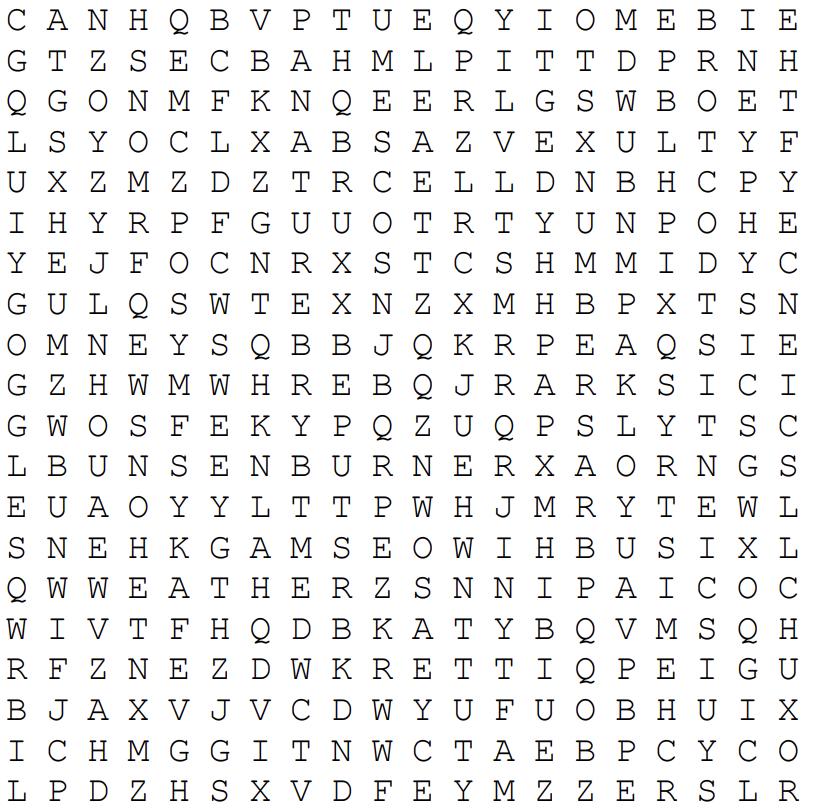
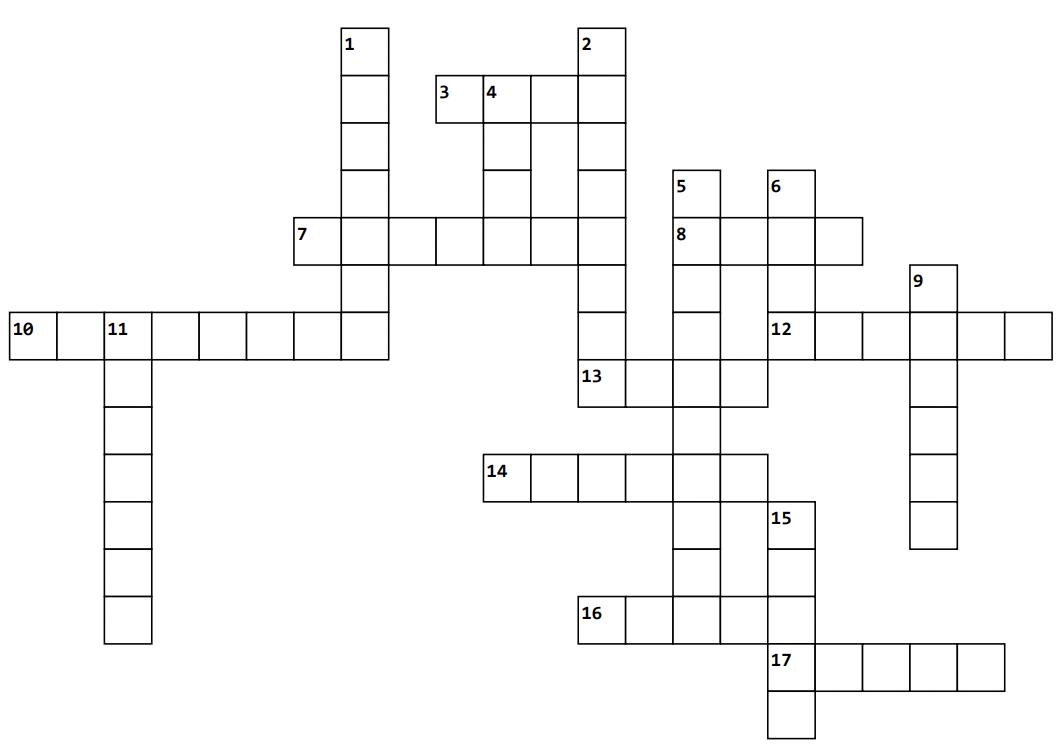
3. Mitochondria is the powerhouse of what? (4)
7. Type of science focusing on life and living organisms (7)
8. Kiwi scientist Ernest Rutherford was the first to split what? (4)
10. Addictive chemical in cigarettes and vapes (8)
12. The sensation that you have already experienced your current situation (4,2)
13. Women in ______ (4)
14. Planet that is an ice giant (6)
16. Last week’s Massive theme (5)
17. What fell on Isaac Newton’s head? (5)
1. A thing you can get to train your immune system to create antibodies (7)
2. Egg-laying mammal that glows under UV light (8)
4. Shortened name for endometriosis (4)
5. First women to win a Nobel Prize (5, 5)
6. The most common sickness (4)
9. Māori philosophy of health and well-being (6)
11. Kind of soup that you have when you’re sick (7)
15. Aotearoa has a ______ health crisis (5)
Are you healthy or living with a condition?
At Pacific Clinical Research Network (PCRN), we’re leading the way in advancing healthcare through clinical trials and YOU can be part of it!
Clinical trials aren’t just for the sick or unwell. Healthy volunteers play a vital role in research too
Whether it’s testing new vaccines, medicines, or treatments, your participation helps improve health outcomes for people worldwide
Why Volunteer?
�� Help discover breakthrough treatments
�� Gain insight into cutting-edge medical research
�� All studies offer compensation for your time & travel
�� Make a real impact on the future of healthcare
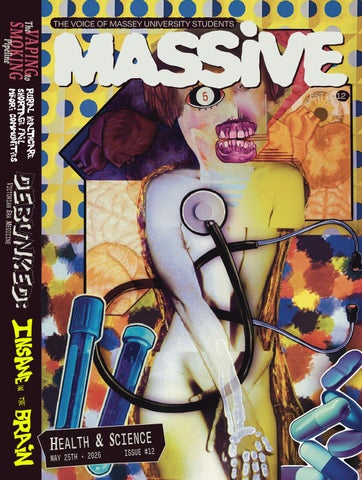
Cover by Māta Geiringer
Centrefold by Olive Bartlett
Lock-and-leave living in Albany
Explore our 1-3 bedroom unit homes in Ōkahukura Albany, just a short walk from Massey University.
Our single-level 1-3 bedroom unit homes offer a low maintenance lifestyle with 2 years of free body corp fees included for a limited time. Priced from $599k, and just a short walk away from Massey University offering the perfect lock-and-leave lifestyle.