Colloquia plantarum
Interviews with Plants
By Shannon Goheen
While I was enjoying the scent of a cluster of deep pink peonies in the morning quiet of a seaside garden, I looked beyond to see sporadic beach rose blooms. That’s Rosa rugosa, one of the most iconic plants of Cape Cod, Nantucket, Martha’s Vineyard, and throughout coastal New England. This is one plant that nearly everyone who has ever seen the beach in summer recognizes or has at least heard about. Beach rose, rugosas, seashore rose, salt-spray rose…it goes by various names but refers to the same plant, a tough-as-nails, thorny, gorgeous rose.
Let’s talk to one…
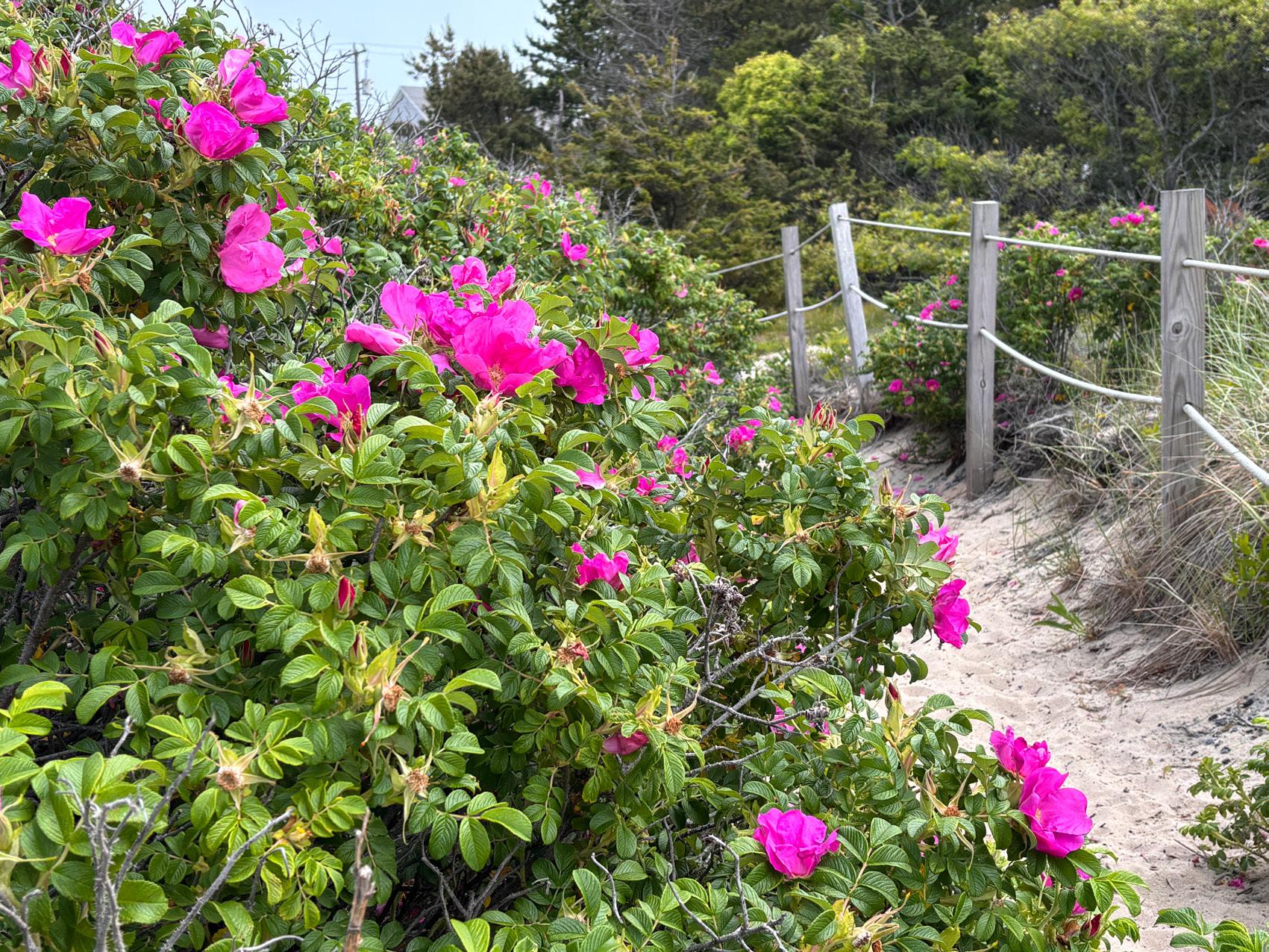
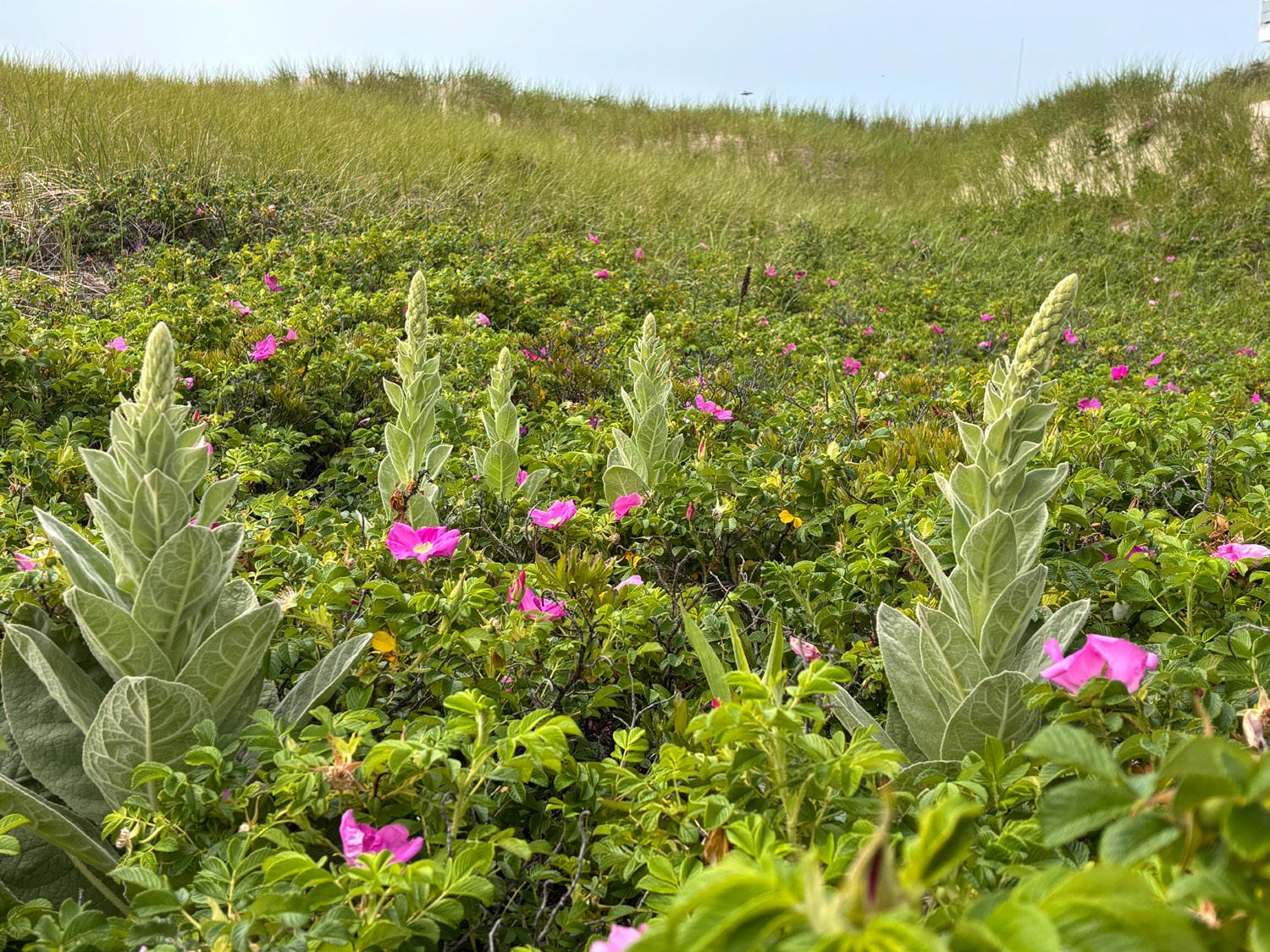
Photo: Path to the beach through the beach roses.
Me: Hello beautiful!
Rose: Are you speaking to me?
Me: Absolutely! I noticed you are blooming and I can’t wait to inhale the scent of one of your blossoms.
Rose: Ah, you are kind. Please partake.
Me: I can smell the unmistakable sweetness of your blooms from here. I’m going to take in the scent slowly, feel it, be surrounded by it. I’ll savor it before I allow myself to get closer. You know…anticipation!
Rose: The scent of my blooms is worth the wait, I daresay, though this is all I know. And my kind has known this for maybe 35 million years.
Me: That’s impressive! My kind has only been walking this earth for about three-hundred thousand years.
Rose: We had scent long before you arrived to smell it.
Me: Who did you develop your scent for?
Rose: Pollinators, of course. Beetles, flies, and bees, for instance.
Me: And now, us. We humans, that is. We can smell you before we come upon you, when the wind blows just right and there’s a little humidity in the air.
Rose: We seem less fragrant in the heat of the day so the best time for scent is morning, evening, and after a light rain. We especially enjoy the rain. We like to hold rain droplets in our leaves. They sparkle in the sunlight. Have you ever noticed?
Me: That’s a lovely image. I don’t think I have because I am not particularly interested in standing near the beach in the rain. But since you brought it up, your leaves are fascinating. I love the way they are so wrinkled and puckery.
Rose: And we certainly have a lot of them.
Me: You do! The botanical name by which we call you, Rosa rugosa, denotes a rose that is “wrinkled.” Your leaves, that is. Appropriate, don’t you think? The way you grow, so compact and with such thick, lush foliage is endlessly amazing. You grow in complete sand! How do you do that?
Rose: We are not growing in complete sand. It only appears that way.
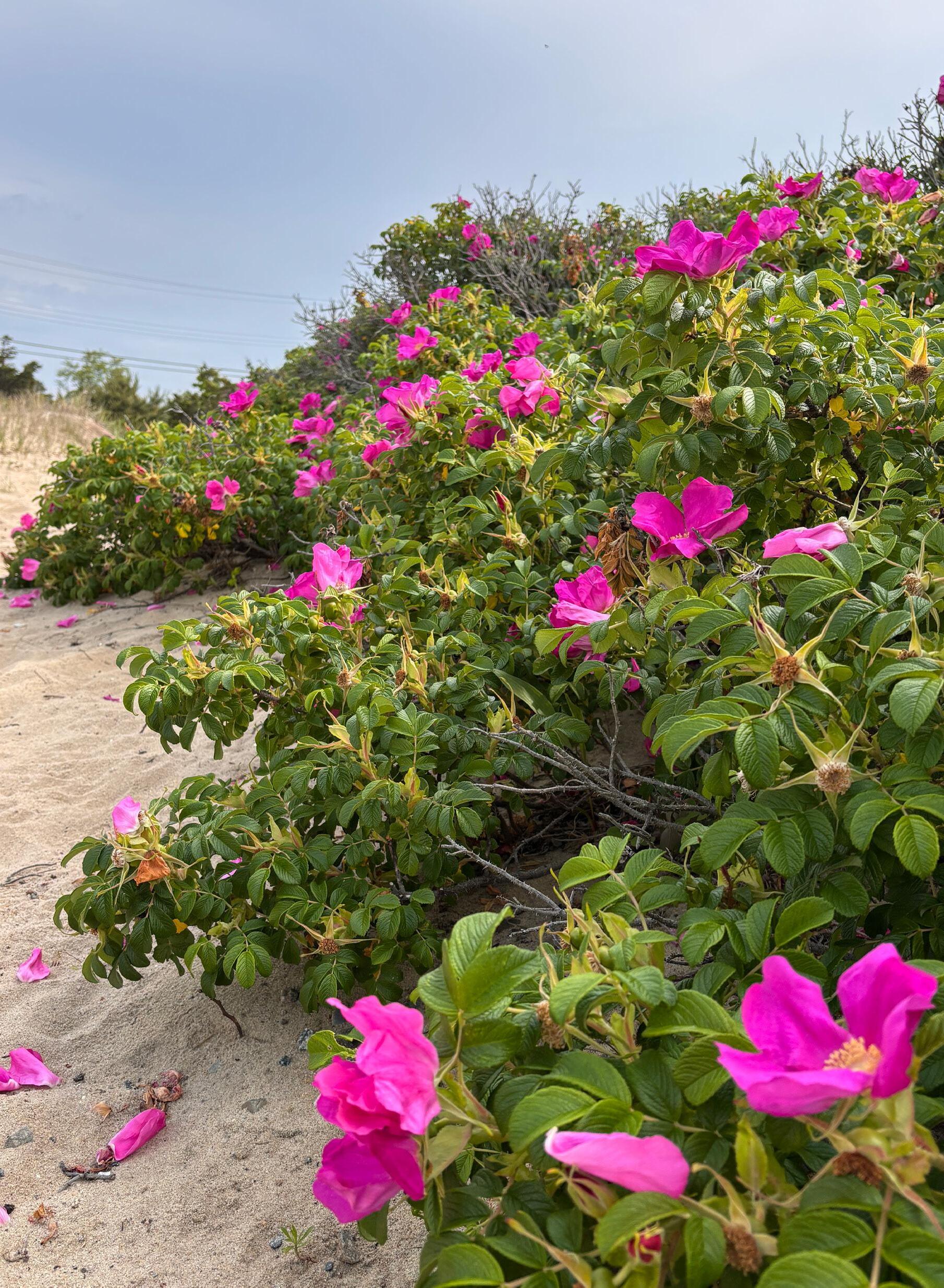
Rugosa rose flourishing on the leeward side of a sand dune.
Me: But this is a sand dune. And what’s more, this area takes a constant beating from the sun, the wind, salt water, drought…little else could grow here, except for a handful of our native plants that thrive in these harsh conditions.
Rose: And we are not native.
Me: I knew that, but I wasn’t going to come right out and say it, at least not this early in our conversation. Let’s talk about that in a moment. First, back to how you thrive in such a difficult environment…
Rose: We have clever and adaptive ways to manage in these conditions. First, a piece of us gets started in the sand and we send out roots going down, sideways and we even create underground stems that can send up new shoots.
Me: We call those “rhizomes.”
Rose: We don’t grow in sand alone because we make our own soil. Those wrinkled leaves that you admire trap blowing sand and matter that the wind blows to us, like seaweed, dirt, dead insects, and other organic material. Our own fallen leaves and avian excreta, for instance, accumulate around us too.
Me: Bird poop!
Rose: Yes. And as the matter builds up, the soil becomes more fertile. We grow, reproduce, and colonize.
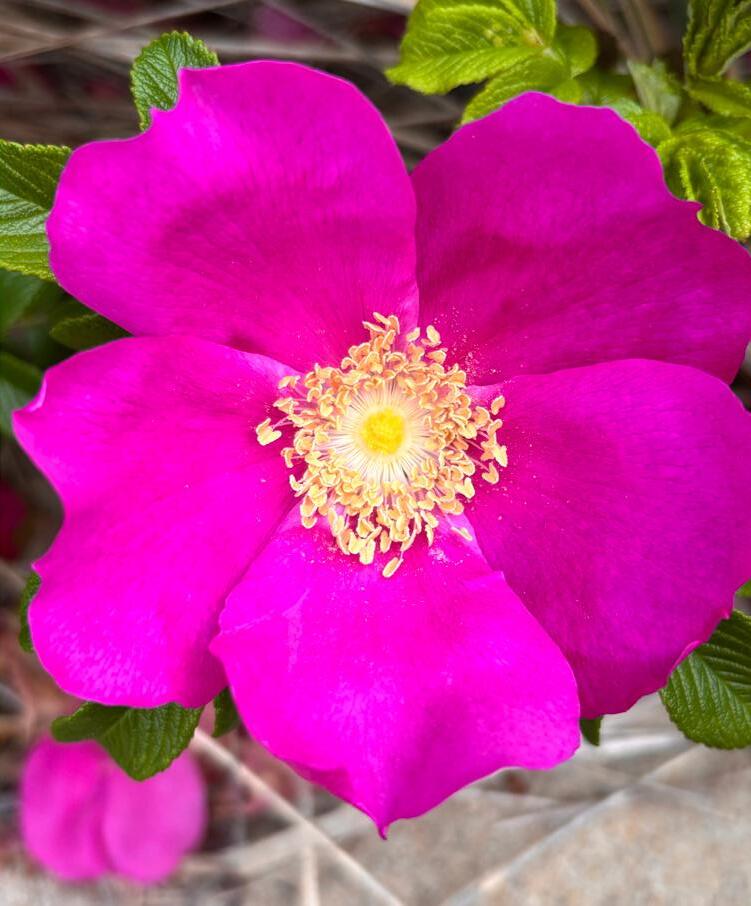
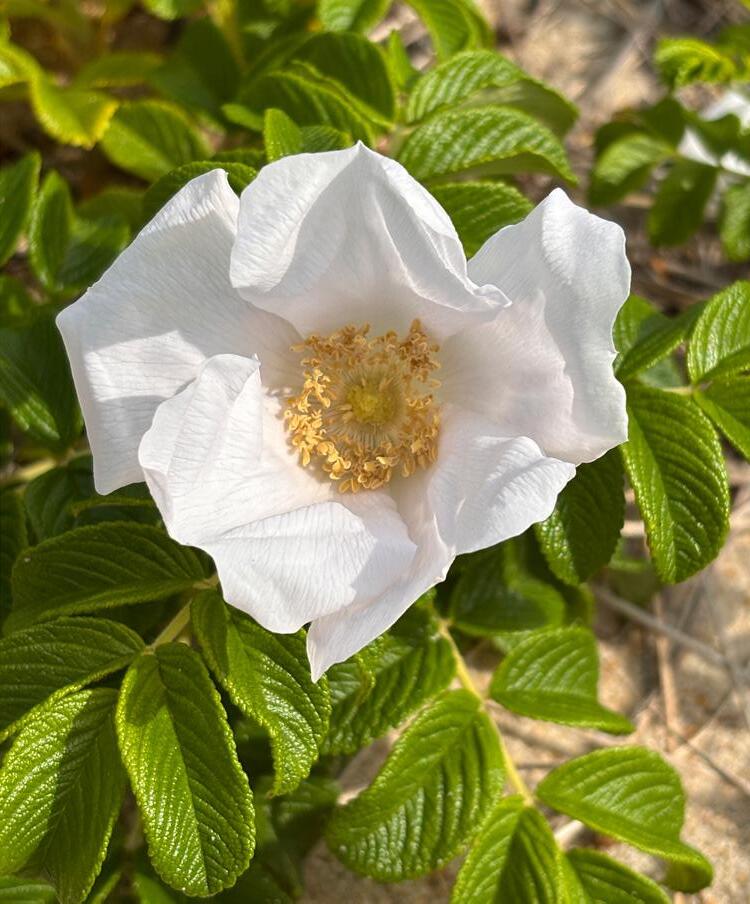
Traditional beach rose flower (top) and less common but just as beautiful white beach rose flower (bottom).
Me: You are ecosystem engineers. You actually modify the environment to benefit yourselves and others. That’s quite a feat! Back when you were brought here in the 1800’s from Asia, we were likely concerned about dune erosion. After all, we caused that problem ourselves by treating the fragile land irresponsibly through grazing, tree-harvesting and more. You must have looked pretty good to plant collectors who saw that you could survive in the harshest of conditions.
Rose: And endless new areas to spread looked good to us.
Me: We have determined that you are an invasive plant. Did you know that?
Rose: We are aware. And while that may be true, we provide a service for all of you who live near the coastline. Not to mention our value to pollinators and others who rely on our nectar, eat our rose hips, find shelter in our colonies, and your kind who use parts of us for your pleasures.
Me: Yes, like rose petal jam, potpourri, rose water, tea, endless artistic renderings of your blooming colonies, and those amazing rose hips, as big and orange as cherry tomatoes, that are full of vitamin C. Yes, we have benefitted from you. Touché! How about those thorns? Your thorns are like nothing else I’ve come across. They’re worse than blackberries. You can’t be touched with bare skin!
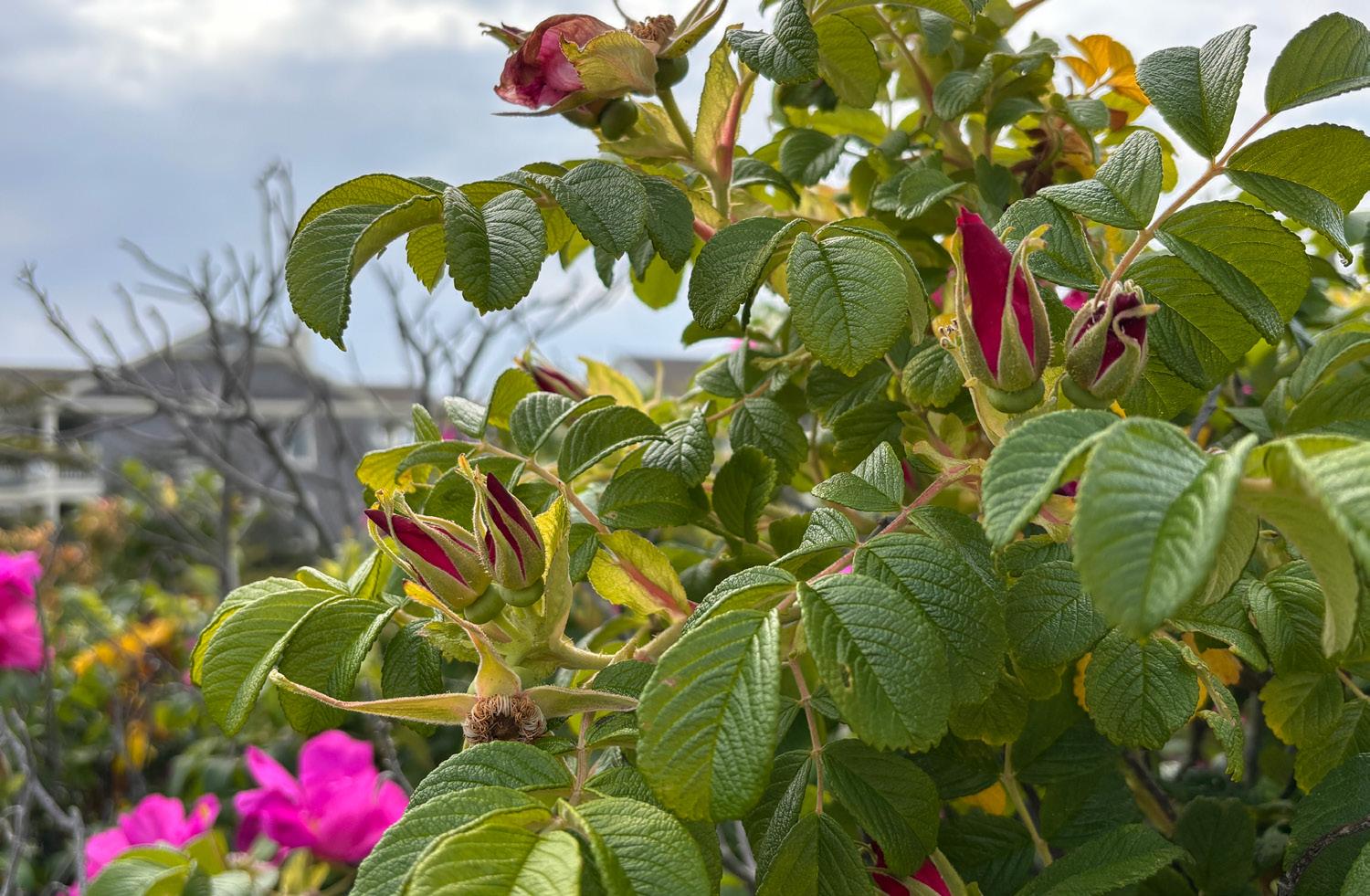
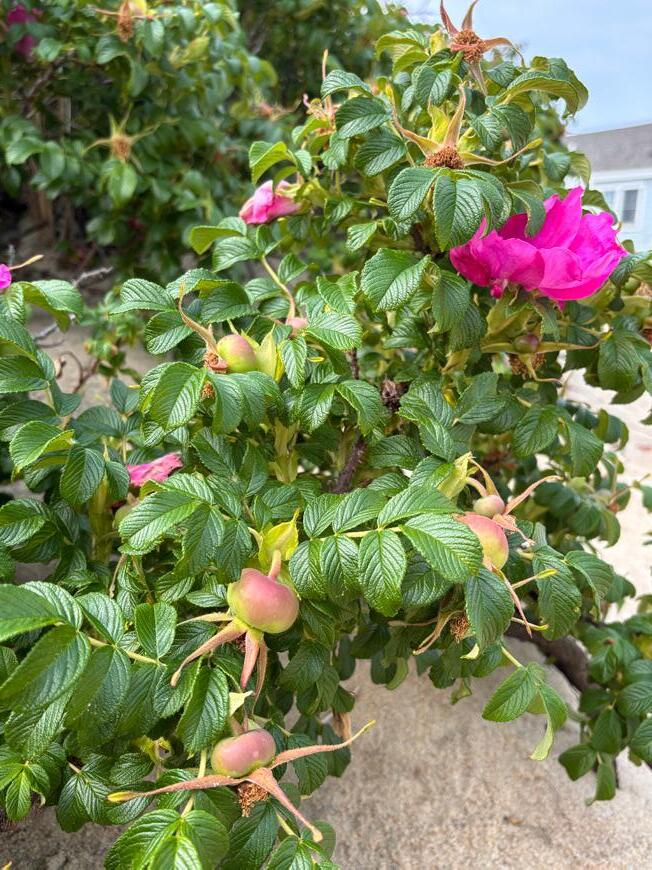
Rose buds, rose hips and blooms all happen concurrently on the same plant, adding dimension and interest to beach roses throughout the summer.
Rosehips in the making. As the summer progresses, they will turn bright orange.
Rose: We don’t have thorns.
Me: Come on! You’re covered in thorns!
Rose: We are covered in prickles.
Me: Prickles?
Rose: Sharp growths all along our stems from our outermost layer. You must not have needed to protect yourself from grazing creatures or you might have evolved to have prickles growing out of your skin, like us. Like our other Rosa cousins.
Me: Well, I just learned something new. Prickles, not thorns. Thorns are like modified stems, then. Prickles are more superficial.
Rose: That’s correct.
Me: And given that you mentioned your cousins, even though I assume you meant your fellow roses, I’d like to acknowledge your larger family, Rosaceae (roh-ZAY-see-ee), the Rose family.
Rose: Ah yes. My family. You know some of us?
Me: I know and appreciate many of you. In fact, many of us humans absolutely love members of the Rose family but don’t even know it. We’re talking apples, pears, cherries, plums, peaches, apricots, almonds, strawberries, blackberries, and raspberries, for starters. Less well-known members are hawthorns, serviceberries, chokeberries, mountain ashes, quinces and Spireas, to name a few. And the list goes on!
Rose: We are quite a family. Perhaps one of the most beloved on earth because we are a visual and edible delight.
Me: I think that’s accurate. Nearly everyone knows someone in your family. That’s more than a lot of us can claim! You know, I’m remembering how once, back in the early 1990’s, I planted a row of a hybrid beach
rose in an unirrigated area on either side of a business entrance along a busy road. I chose Rosa rugosa ‘Frau Dagmar Hastrup’ for its compact growth and repeat bloom. I watched that plant thrive for the next 2530 years with no care. Inevitably, someone pulled it out and replaced it with a string of shrubs that kept dying, eventually planting grass that also doesn’t thrive. Bad decision! I plan and plant for longevity.
Rose: We plan and succeed in longevity too.
Me: Being entirely truthful, I don’t ever plant Rosa rugosa and I advocate removal of it whenever possible. I know you are here to stay and the place where you look your best is beside the sea, so I don’t feel sorry about removing your kind anywhere else that I find it. Of course, removal isn’t easy! There’s always a piece left that pops up into a fullfledged rose. But that is one of your skills that’s hard to beat.
Rose: Yes. We aren’t going anywhere.
Me: I know. Even if we were to attempt to get back to a totally native plant population on our dunes, we’d tear them apart trying to get you out. And we still wouldn’t succeed.
Beach roses with Mullein (Verbascum).
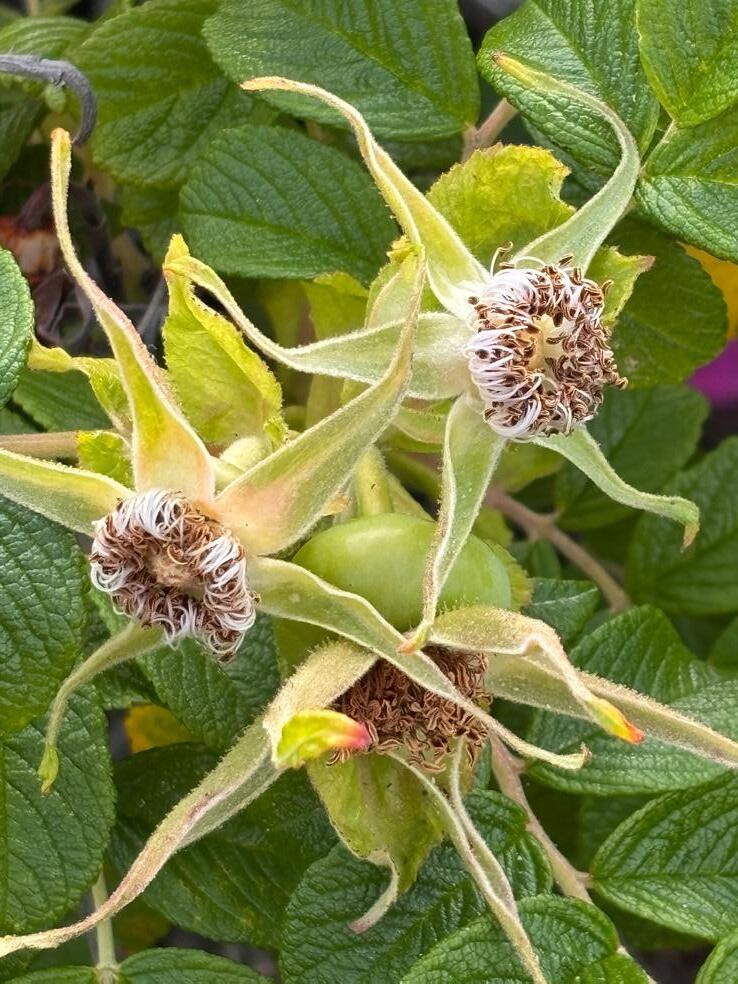
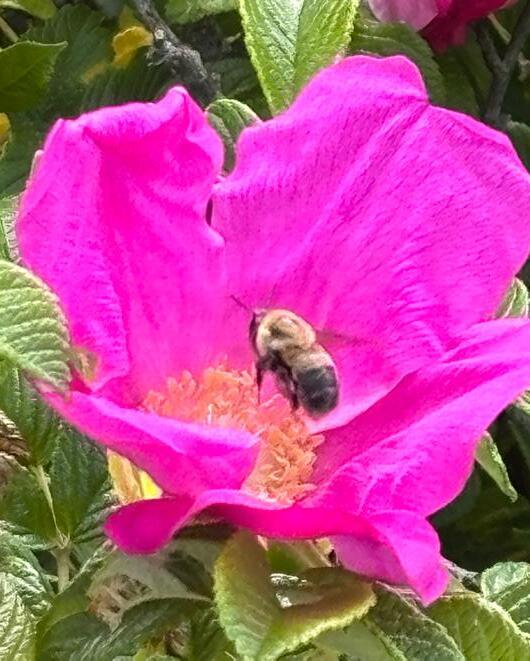
Young rose hips forming just after blooming. Below, a bee partakes of the rich pollen source in the many stamens.
Rose: Correct. You would be utterly defeated.
Me: So any attempt to send you packing is futile!
Rose: You are stuck with us.
Me: Then I’ll simply sit here and watch beach grass stems carve arcs in the sand from the salty wind while I sniff the air and take in the heady scent of your blooms. I’ll look for the less common white wrinkled rose petals even though I prefer the pink ones, and I’ll take great care to not touch you. Those prickles are something else!
Roses: We will open our faces to the sun, more and more, until there are millions of us, luxuriating in the hum of thousands of bees who come to pollinate us, and later, birds and various creatures who will eat our rose hips and disperse our seeds ever further.
Me: I’ve got to hand it to you, Rosa rugosa. You have it all figured out and year after year, come what may, you’ll keep going. Impressive!
Rose: See you again.
Once my nose and my eyes were satiated with the charms of Rosa rugosa, I trudged through the sand, up the dune path, carefully avoiding the rose prickles and poison ivy, and down again to the water’s edge as it rumbled with its ebb and flow, onto the shore and off again. The roses behind me smiled up at the sun, opening their buds, one after the other, to the new day.
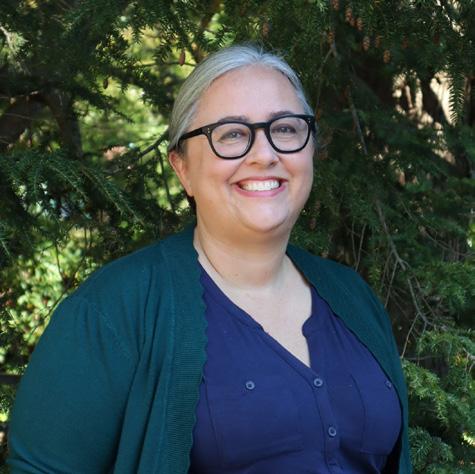
Shannon Goheen has been loving plants and designing landscapes, primarily on Cape Cod, for nearly 40 years as Second Nature Gardenworks. She talks about plants and landscape notes on Instagram as @theeveninggowngardener.
Craig Halvorson
Craig Halvorson has enjoyed a long and successful career as a Landscape Architect, including 30 years as Founder and President of The Halvorson Company, which eventually became Halvorson Design Partnership. His firm designed the park at Post Office Square in Boston, which opened in 1991 and in 2014 won the American Society of Landscape Architects (ASLA) Landmark Award, which “honors projects finished between 15 and 50 years ago that have kept their original design integrity and make a major contribution to the civic realm.” In 2004 Craig was elected as an ASLA Fellow in recognition of his outstanding contributions to the landscape architecture profession. Here's Criag's story in his own words:
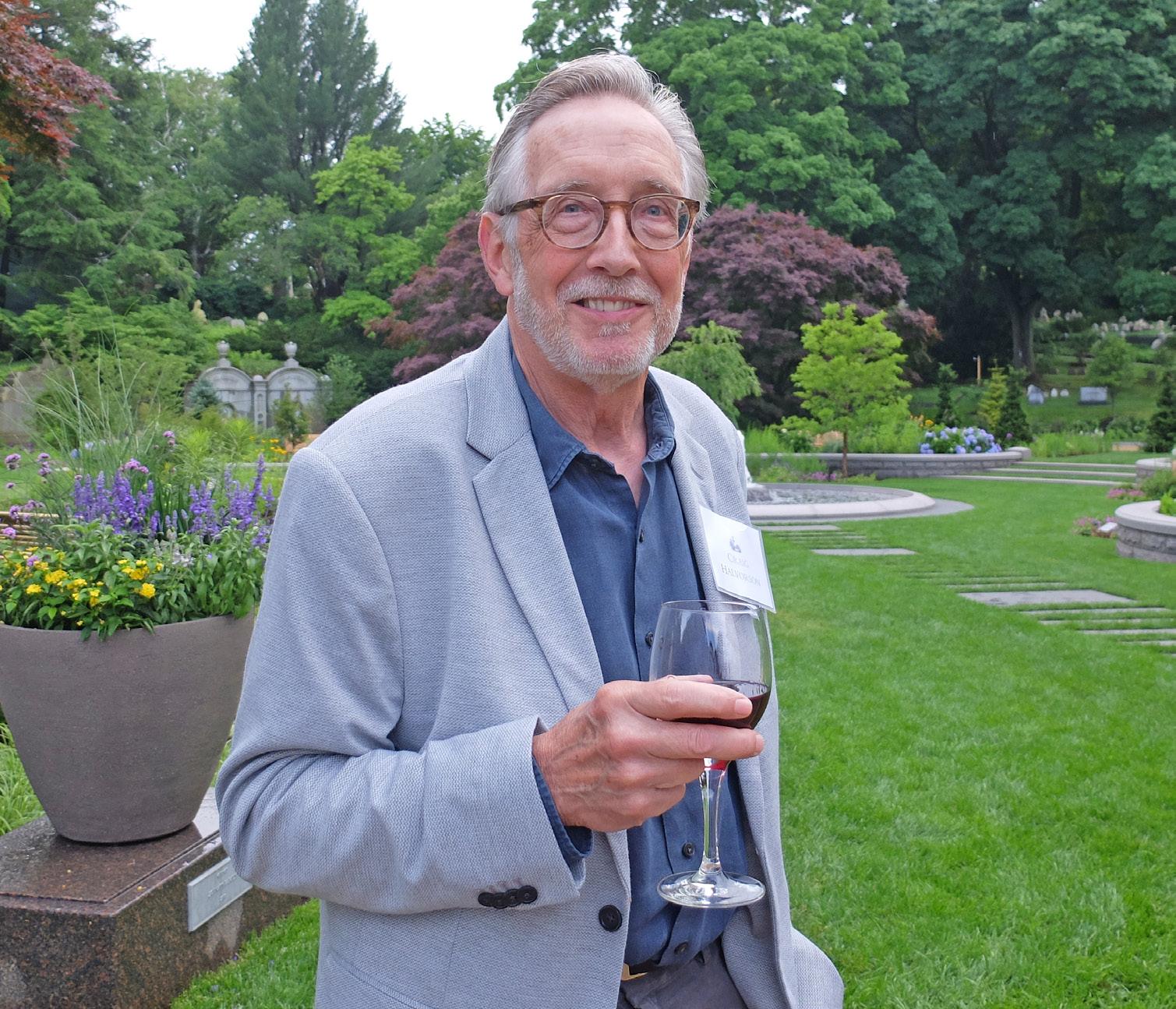
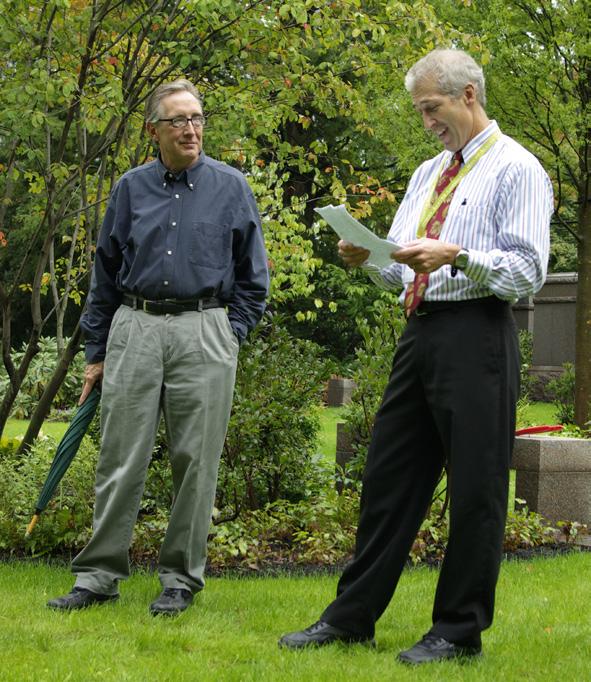
Craig at the Asa Gray Garden ribbon-cutting ceremony at Mount Auburn Cemetery in June 2018.
I grew up in the Berkshires in the small town of Dalton, surrounded by woodlands and nature. My dad was a certified arborist and founder/owner of Halvorson Tree Service, operating out of Pittsfield. In addition to doing tree work, he also grew a good selection of trees in his own nursery. Many of my earliest memories are of “working” in the nursery with my dad and also of traveling with him to places like Weston Nurseries to purchase trees. I started working at age 14 for my father, doing various landscape related tasks. Dad was active in both the regional and national arborist associations, and at one point he was President of the Massachusetts Arborists Association. Our annual family vacations were usually tied to the National Arborist’s Convention at various places around the country.
Despite all this exposure and experience, through my early high school years I did not consider arboriculture to be the direction I wanted to pursue as a career. I loved painting and actually had dreams of making it as a full-time artist. I have a distinct memory of a writing assignment about career goals during my sophomore year in high school. I wrote about becoming an engineer but my good friend wrote about becoming a landscape architect. At the time, I did not even know this was a profession, but it got me thinking, and by the time I was ready to go to college I had decided to go to UMass-Amherst in the landscape architecture program. It was the right decision for me!
After earning my Bachelor’s degree, I worked two years for the landscape design firm Mason & Frye in Boston, and then went back to UMass to earn my Master’s in Landscape Architecture (MLA) degree. After getting my MLA, I followed my wife Karen to Hartford, Connecticut where she had landed a good job as a visiting nurse. I found a job working for the L.A. firm Johnson & Dee. Then after one year, we moved back to Boston when Karen
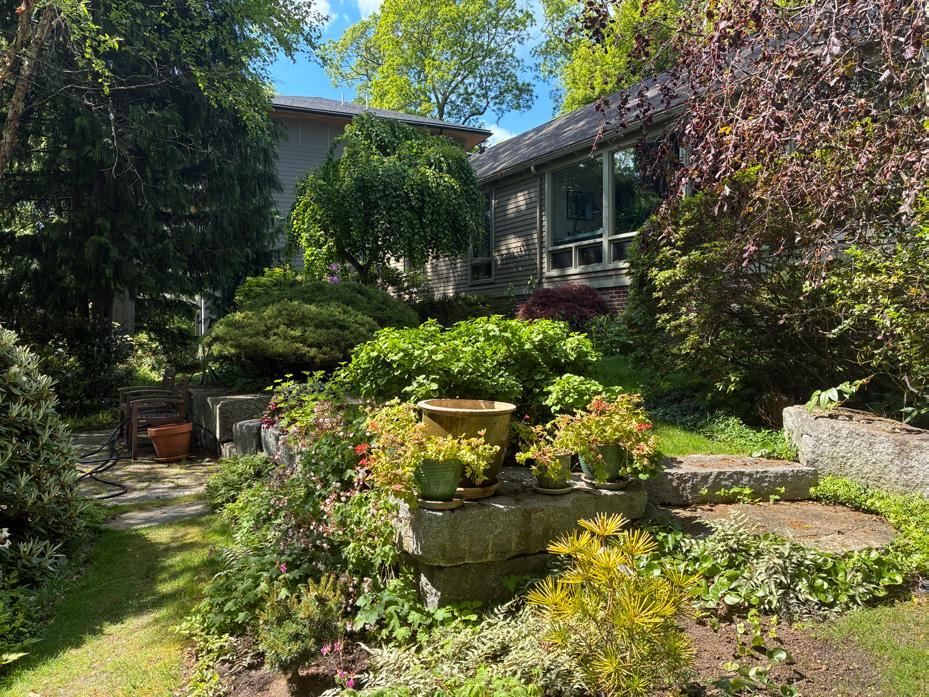
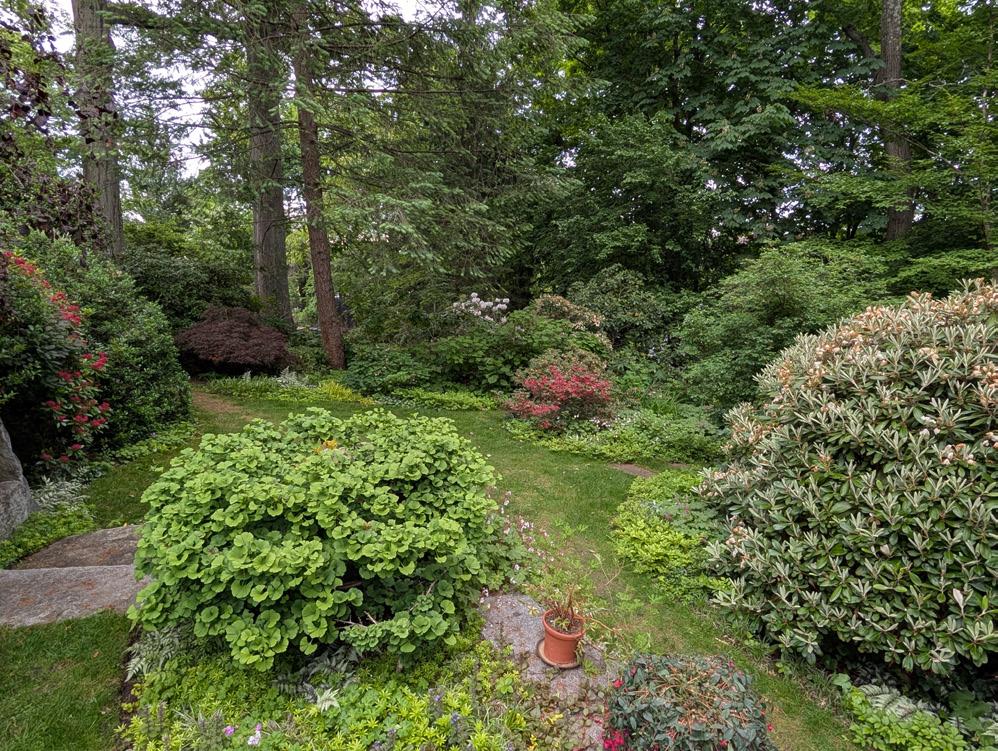
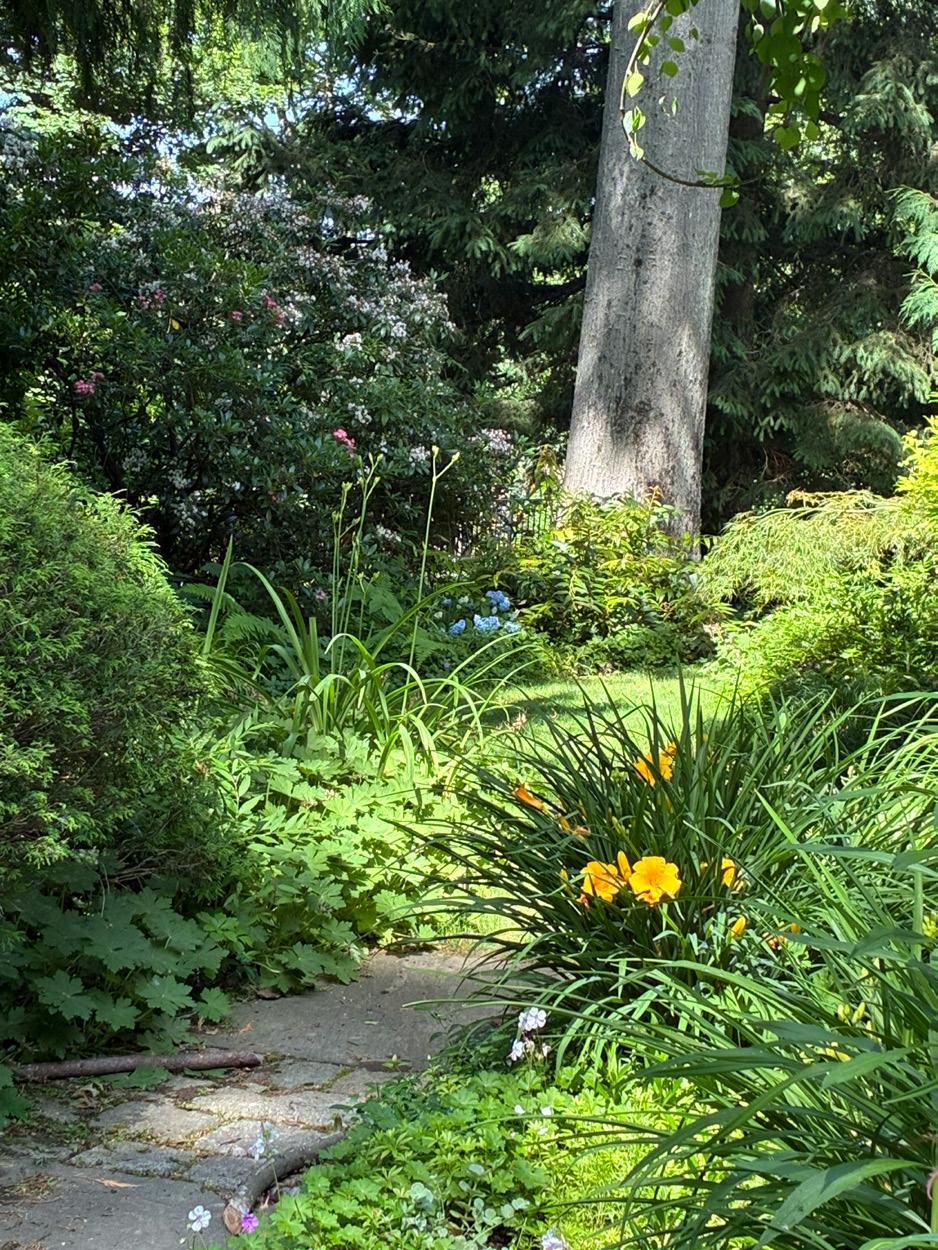
Craig's garden in Brookline, a woodland relief from the surrounding urban tensions.
started in the master’s nursing program at Boston University. I was fortunate to get hired by Carol R. Johnson Associates, where I spent the next 11 years gaining valuable experience working with Carol and her team on a wide variety of design projects.
In January of 1980 I left Carol Johnson Associates to start my own design firm in the South End of Boston. We started small but quickly began to grow and soon expanded to a staff of over 20. The firm incorporated in 1983 as The Halvorson Company, and in 1985 we moved to a new office in Boston. Our early projects included numerous parks and open spaces in the Boston area, including the park at Post Office Square, as well as several university and commercial/industrial projects.
In 1985 Karen and I bought a house in Brookline and moved there with our 4-year-old daughter Mary. The property had no plantings around the house when we moved in, so I had a clean slate to play with. I initially planted small specimens of trees and shrubs and perennials. Over the years I have continued to add trees, shrubs and herbaceous perennials every year. It has been a labor of love to continuously “edit” and experiment with new plants in the garden over the past 40 years.
Three photos of Craig's home and garden in Brookline, highlighting his impressive combination of artistic talents, horticultural skills and plant knowledge.
In the meantime, The Halvorson Company continued to grow in reputation. In 1990 we were selected by Mount Auburn Cemetery to complete a long-term Master Plan for this historically significant and beautiful landscape. I put together a team that included Liz Vizza as Project Manager and Paul Rogers as an independent horticultural consultant. It was an extremely rewarding project over the next three years, working with President Bill Clendaniel and others on the staff and Board of Trustees to chart the future of Mount Auburn as an arboretum, historic landscape and continuing cemetery, with an increased focus on educational efforts and visitor services.
The most rewarding thing about completing the Master Plan for Mount Auburn Cemetery was that I (and my team) remained actively involved with the Mount Auburn team over the next 30 years, as we were hired to design several garden/burial space projects as the concepts developed
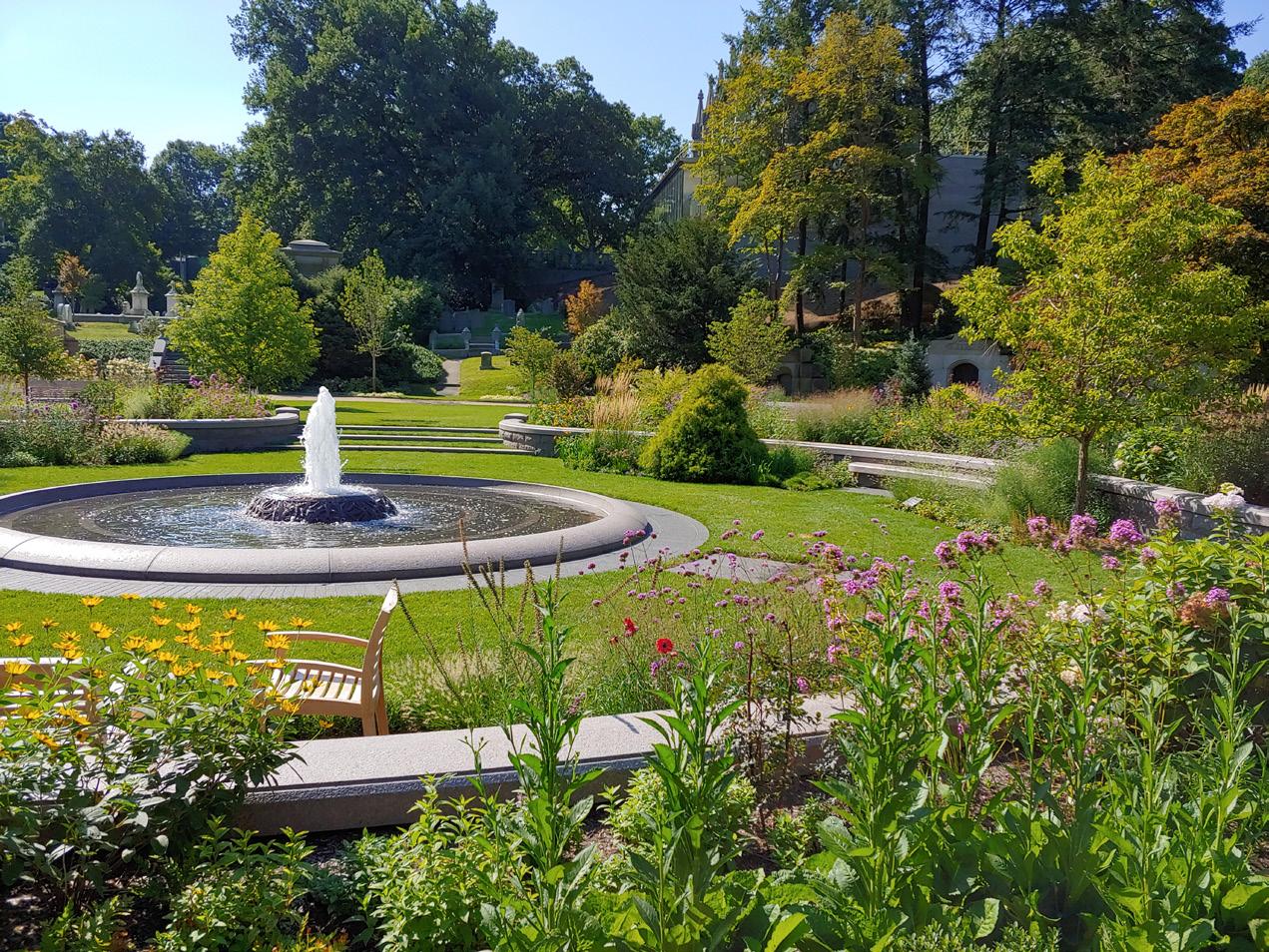
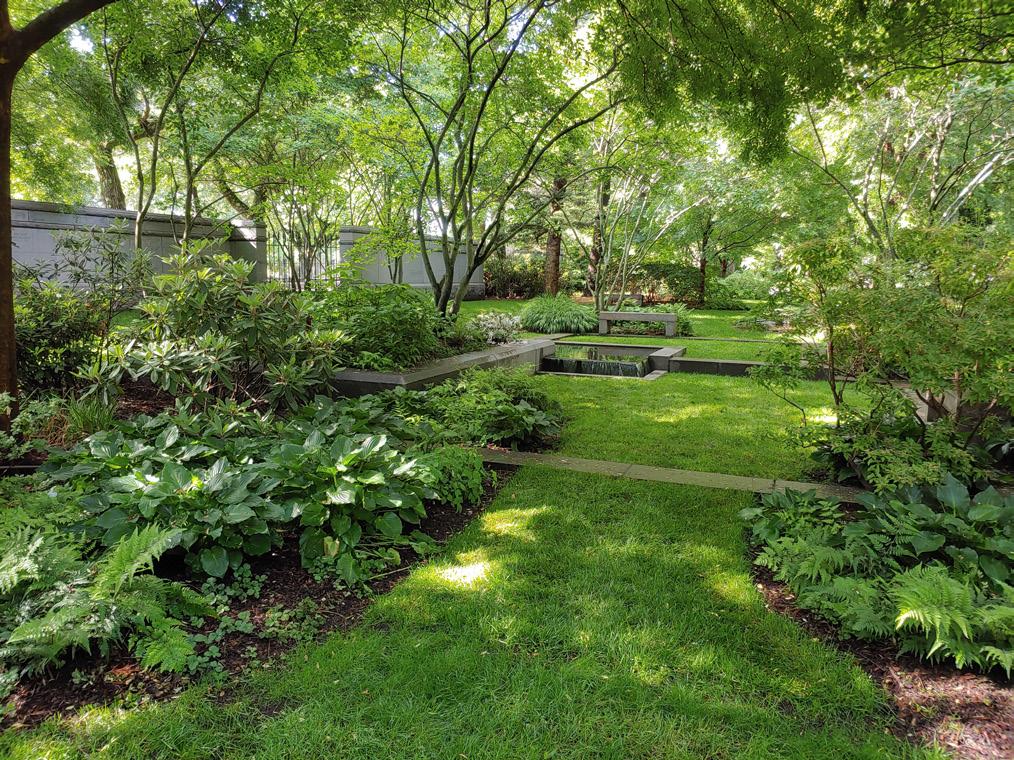
Two of the Mount Auburn Cemetery projects designed by Halvorson Design Partnership, clockwise from top left: Craig and Dave Barnett at Birch Gardens ribboncutting ceremony in 2008; Birch Gardens 12 years later in 2020; Asa Gray Garden in September 2018
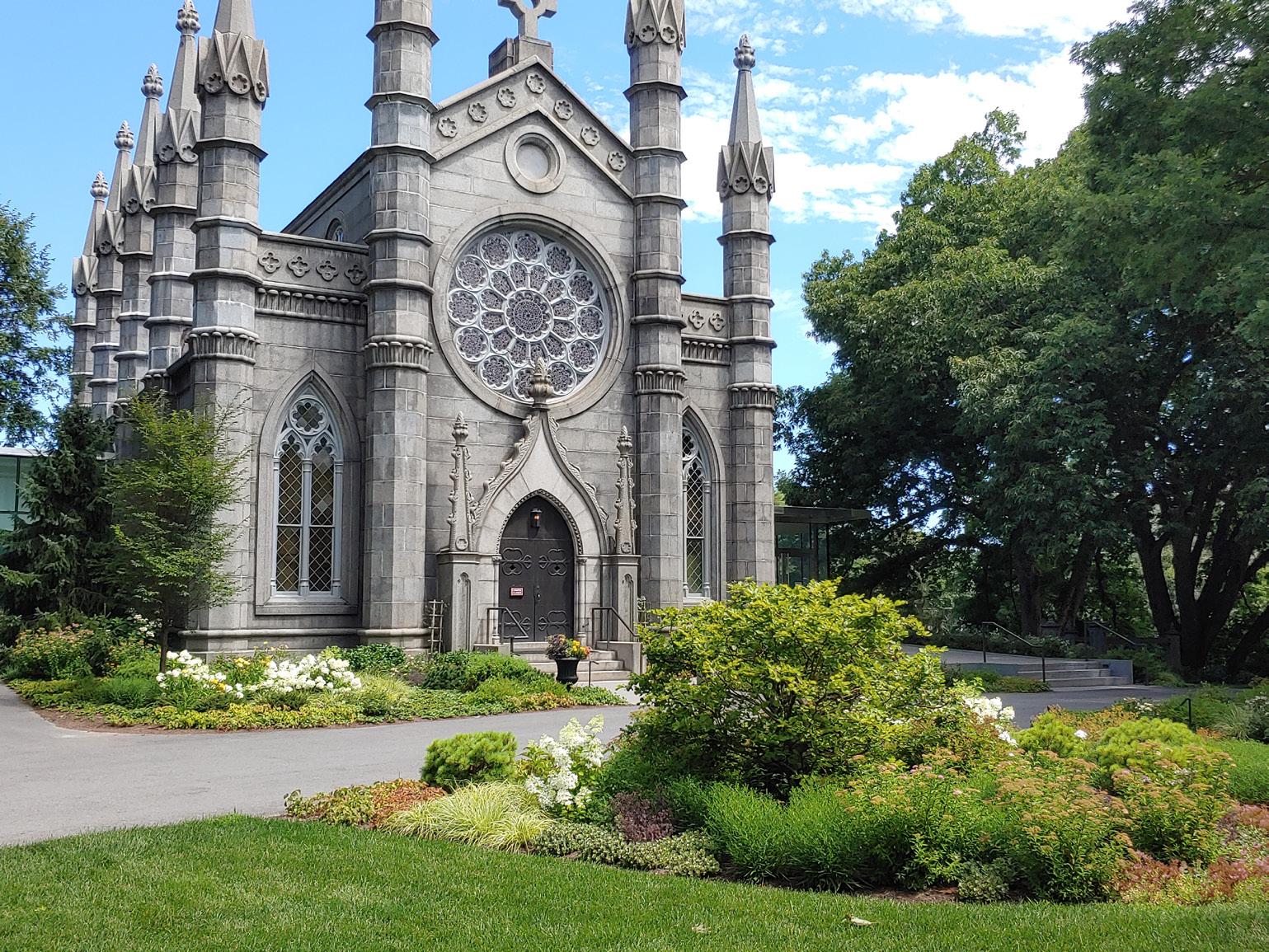
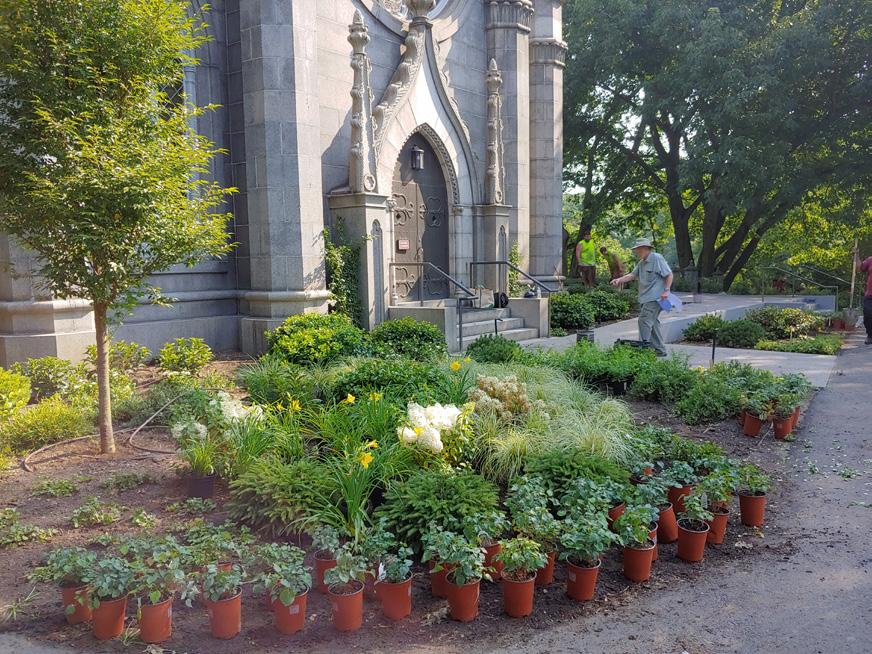
A third project at Mount Auburn Cemetery designed by Halvorson: Right: Craig spotting potted perennial plants and supervising the planting at Bigelow Chapel in 2019. Above: Bigelow Chapel landscape one year later in 2020.
during the master planning process were being implemented. It was indeed gratifying to hear one of the key recommendations we had made in the Master Plan being repeated over and over again by the Mount Auburn staff – “Preservation and enhancement of the landscape will come first in all future decisions regarding cemetery development.”
While it was a privilege to continue working with Mount Auburn, my team also continued to work on a wide variety of other projects, expanding to national and international work. In 2002 we changed our name from “The Halvorson Company” to “Halvorson Design Partnership” to reflect our team approach. In 2010 I sold the company to my employees, retiring as President but continuing to work on selected projects. After a time I officially retired from Halvorson Design Partnership. Since then I have occupied my time with landscape-inspired paintings, gardening and travel.
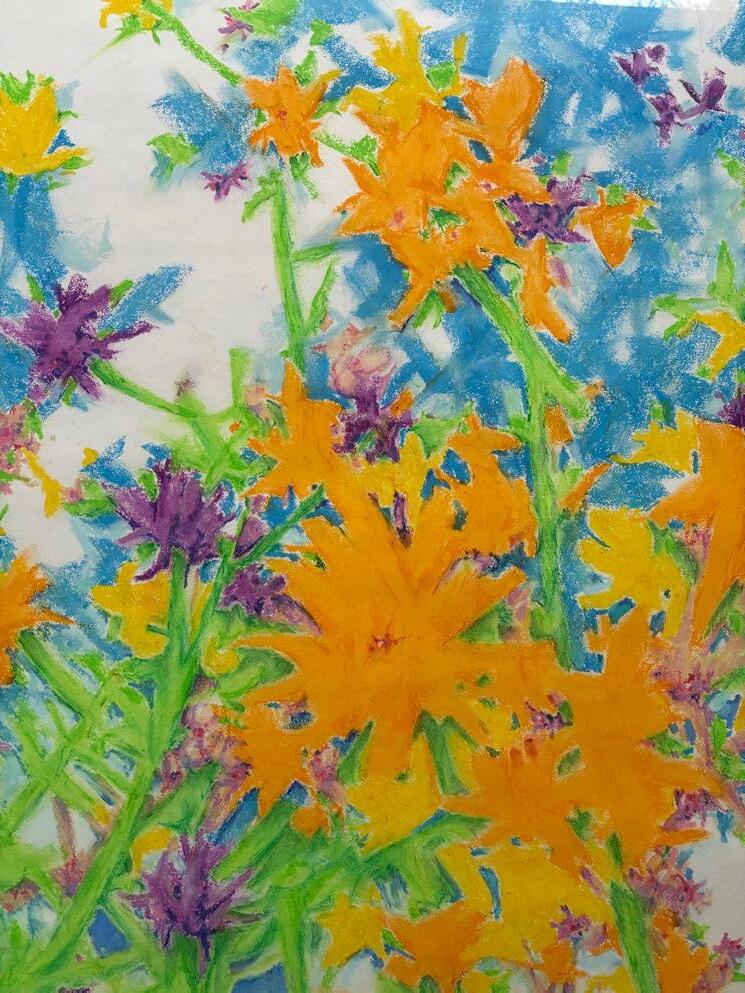
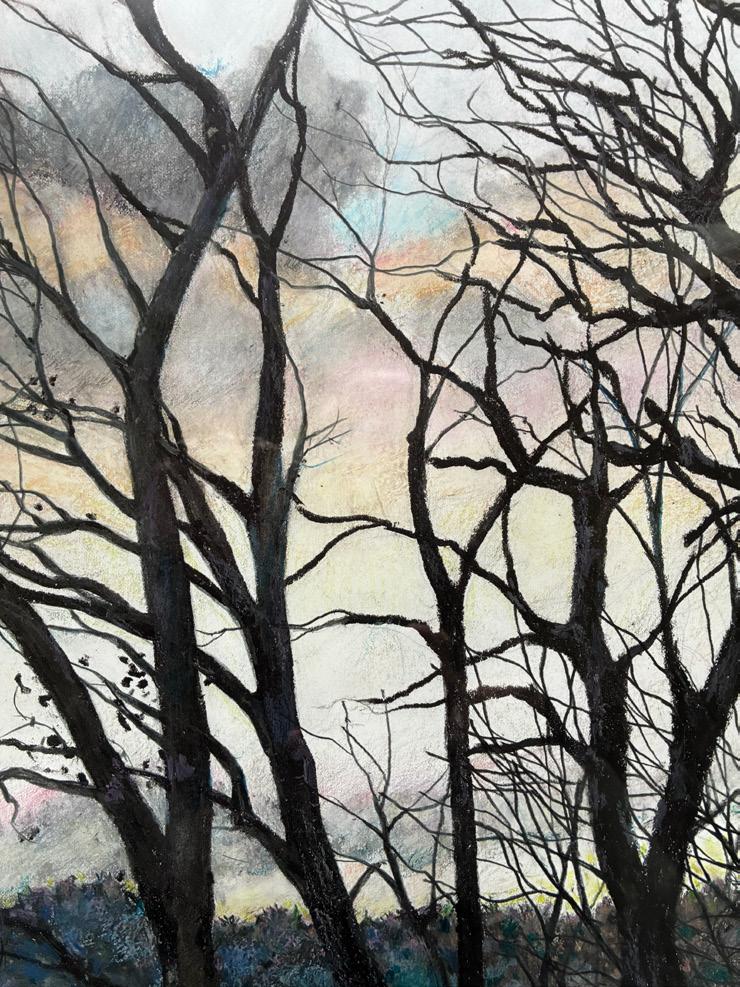
With plants and landscapes as his inspiration, Craig loves to paint, using both abstract and realistic techniques. Here are just three examples of his creative works of art.
But in 2020, missing landscape architecture design, I opened a sole proprietor landscape architectural design firm and have since continued to work on much smaller landscape design and garden projects. Today landscape and gardening has become almost a religion for me, more a way of life than a profession. I sometimes wonder if my blood is green rather than red.
For “In First Person,” Leaflet Editor-in-Chief Dave Barnett interviews people who have made their mark in horticulture and adjacent fields by asking a standard set of questions about their work and career, and then works collaboratively with them to write this column to share their passions and tell their story.
Five reasons why the Flower Show is more than a weekend in the Garden
By Meghan Connolly
Every year, as the New England Fall Flower Show comes together, I’m reminded that the magic of this event isn’t created by one person, one plant, or one perfect display. It’s created by hundreds of small contributions coming together: a seed planted months ago, a volunteer giving their time, an exhibitor carefully preparing a beloved plant, and a visitor stopping to admire a flower that catches their eye.
Having worked behind the scenes of the Flower Show for the last few years, I’ve seen firsthand what makes this event so special. It’s not just a celebration of flowers—it’s a celebration of the people who grow them, share them, learn from them, and appreciate them.
This year’s theme, Growing Together, captures exactly what happens when our community gathers at the Garden at Elm Bank. With three full days to explore, there’s even more to take in, learn, shop, taste, and experience.
1. You could win awards with plants you already have growing The Amateur and Junior Horticulture competitions are open to anyone interested in entering, as long as you aren’t a professional* (meaning you don’t grow or sell plants as the major part of your livelihood). The “competition” is a wonderful opportunity to connect with gardeners of every experience level, challenge yourself, and appreciate the process of growing.
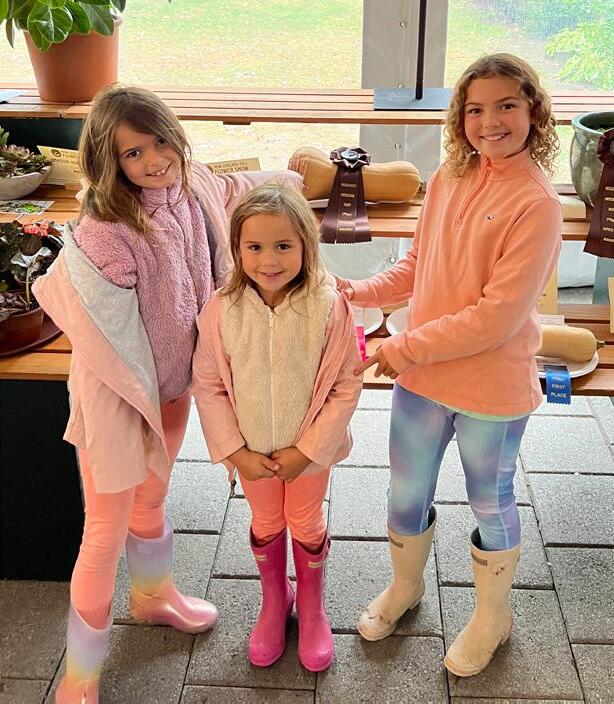
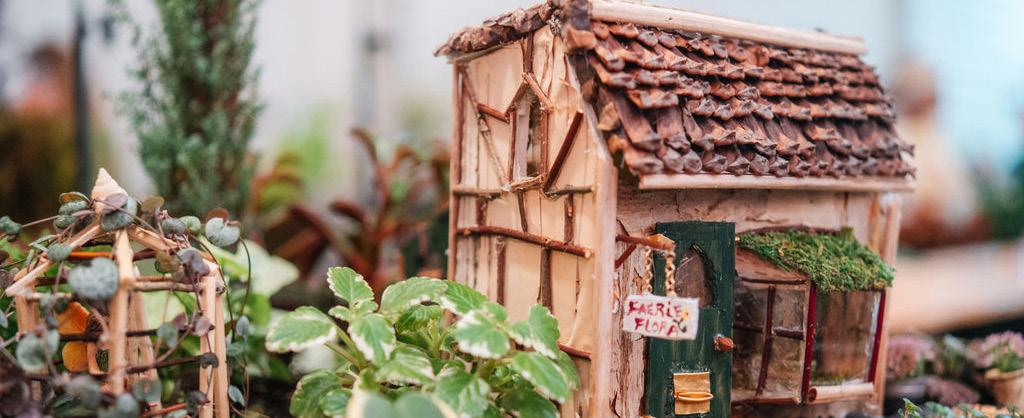
The Newell sisters with their award-winning butternut squash in 2024, who secured another round of awards in 2025 with their fairy gardens.
When dropping off your plants (Wednesday, September 16 from 4–7pm or Thursday, September 17 from 6–9am), you’ll meet lifelong Flower Show volunteers and firsttime exhibitors alike, all who embody the spirit of Growing Together. It’s the perfect opportunity to join a community that celebrates the beauty of what we grow when we grow together.
Your exhibits—whether houseplants, cut flowers like zinnias or cosmos, or vegetables like peppers, tomatoes, squash, or potatoes—can be awarded
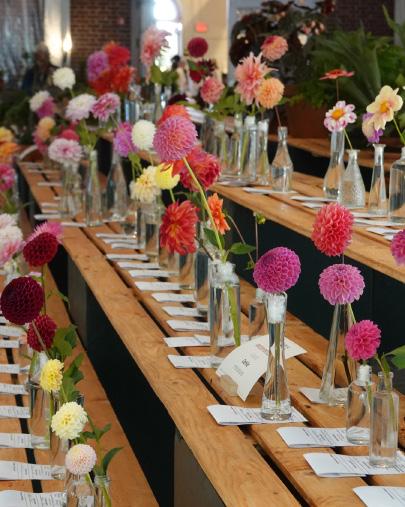
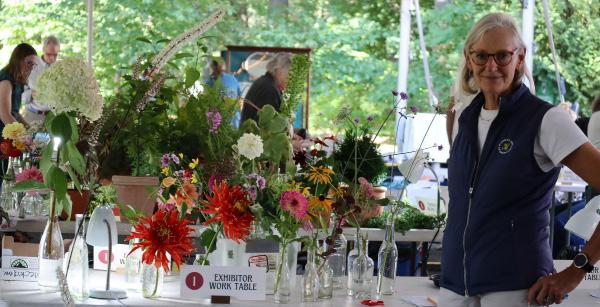
A longtime Flower Show exhibitor brings her cut stems including dahlias, rudbeckia, hydrangea and sedum from her garden.
first place, second place, third place, honorable mention, and special awards. Exhibiting gives you the chance to receive recognition and constructive advice from national Flower Show judges.
You’ll also receive a free ticket to visit the Flower Show from Friday, September 18–Sunday, September 20 to shop vendors, listen to demonstrations, and see the hundreds of plants and flowers that make up the New England Fall Flower Show.
For kids under 18, the Junior Horticulture competition is a perfect way to inspire a connection with plants and gardening. We have fun and creative Youth Exhibitor Workshops coming up that will leave kids fully prepared to enter the Flower Show. The first one is July 11, and you can check out the rest here.
*If you are a professional interested in participating, we have opportunities for displays and installations during the Show! Reach out to me at marketing@masshort.org to express interest.
2. Shop local vendors, learn from experts, and taste local food trucks
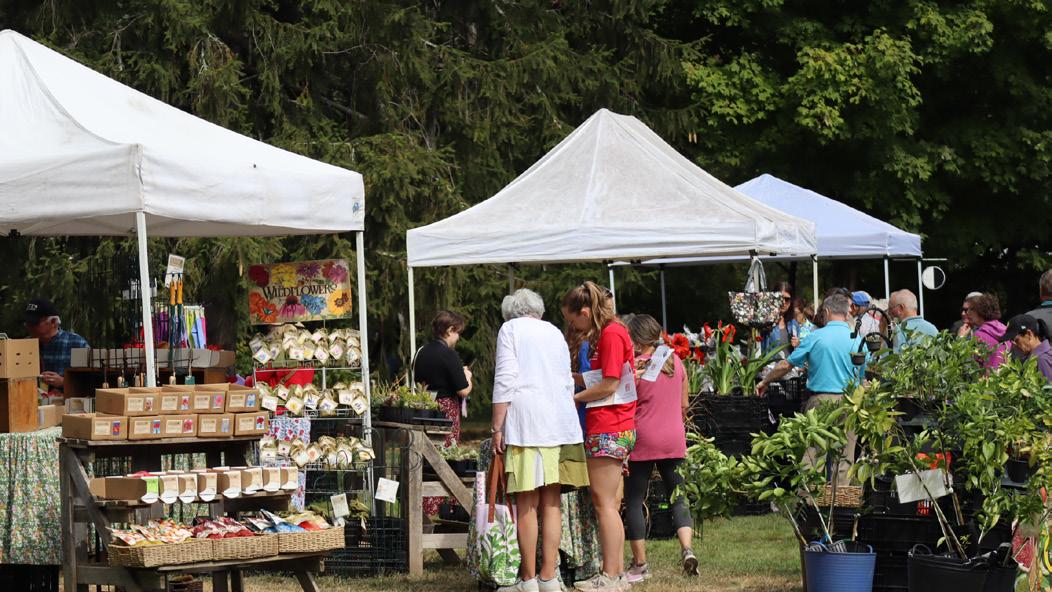
Over 50 vendors will fill the Garden with horticulture, gardening, home, and lifestyle products. Shop from returning favorites like Huson Valley Seed Co., Peony’s Envy, and Bottle Branch, alongside new plant, craft, and artisan vendors.
Our speaker stage—with a new location this year on the Maple Grove—will feature a lineup of local experts sharing lessons on floral design, vegetable gardening, and tree care.
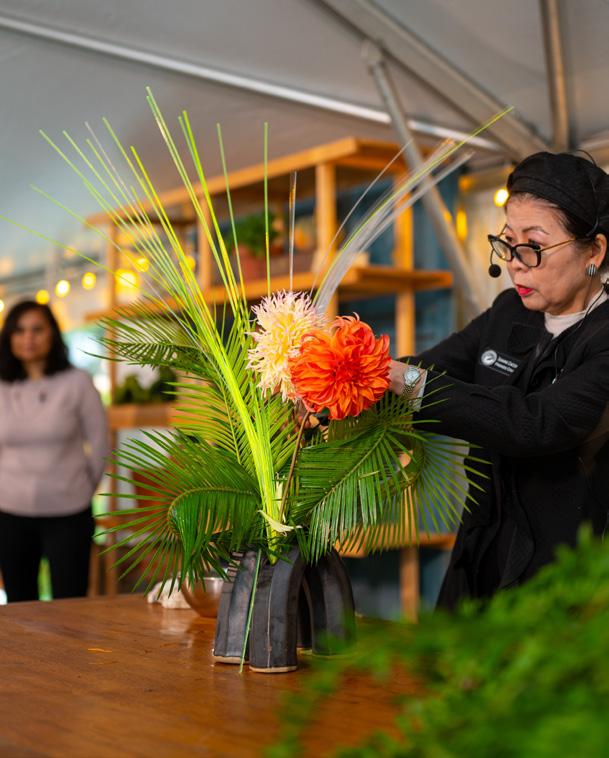
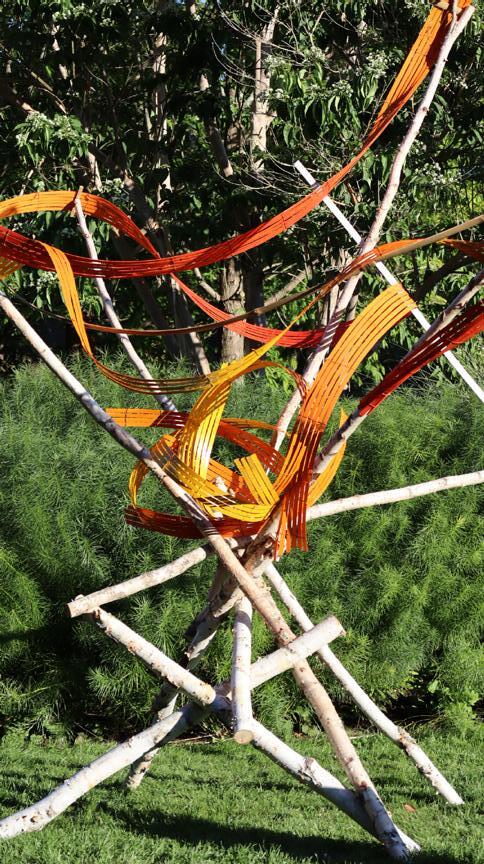
This year will also feature a special celebration of Sogetsu School of Ikebana’s 100th birthday. They will display 100 ikebana arrangements, host demonstrations throughout the weekend, and install large-scale displays throughout the Garden.
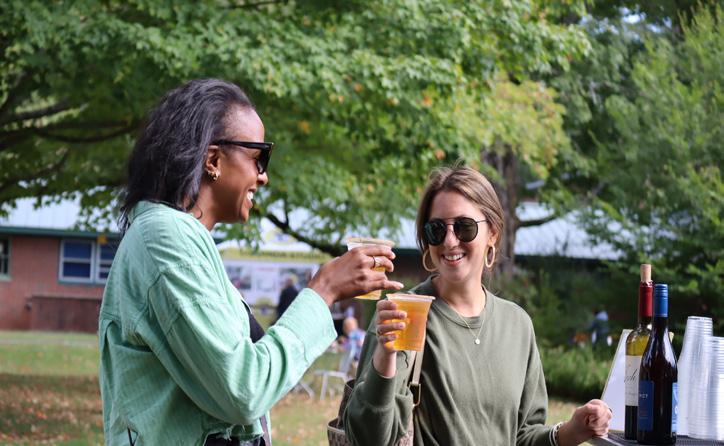
Enjoy pizza, coffee, seafood from local restaurants and shops, and don’t miss the Pour Em Up mobile bartending station to grab a brew or beverage while exploring demos and vendors.
3. A Flower Party after dark
There’s no better way to celebrate the Flower Show than with cocktails, hors d’oeuvres, dancing, and the Garden after dark. The Preview Party offers a first look at award-winning exhibits and a chance to connect, dine, and dance with fellow flower lovers.
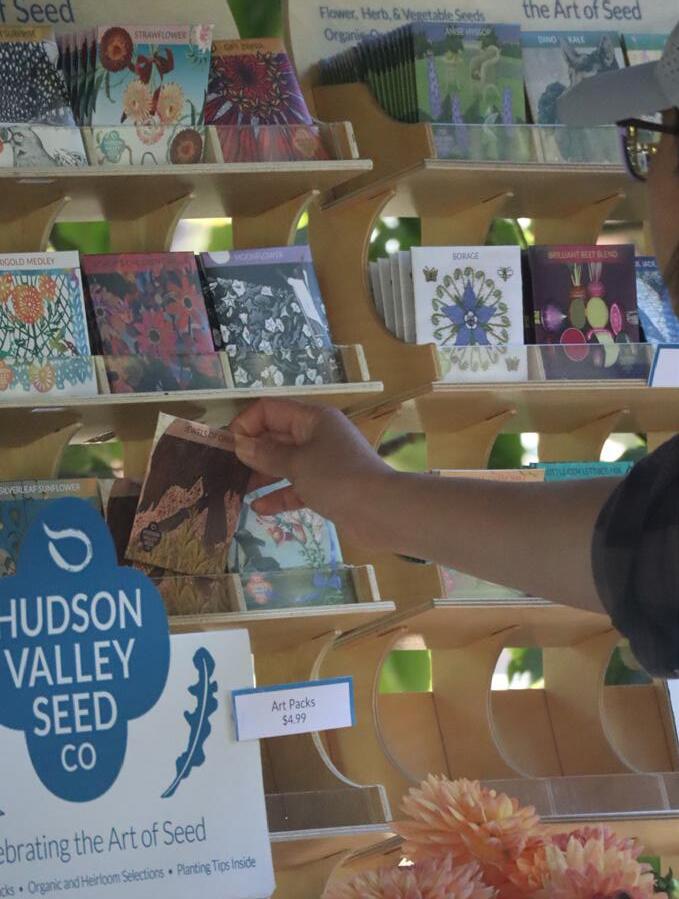
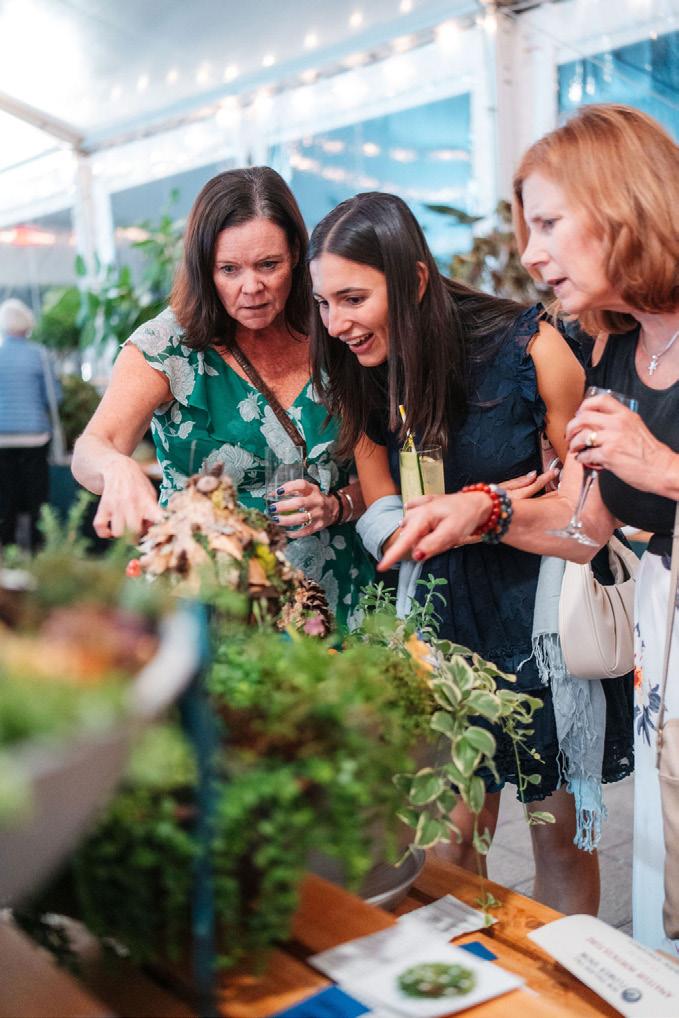
Above: Visitor peruses Hudson valley Seed Co. vendor booth. Below: Preview Party guests enjoy a firstlook at awarded exhibits
Start curating your Cocktail Garden Party outfit now: find the perfect mix of floral textures and patterns, create or source a floral headpiece, fascinator, or hat, or coordinate your look with friends or your date to embody the theme of Growing Together. Take a look at our Pinterest board for inspiration!
Tickets include food, beverages, curated swag, and a pass to the weekend show. We’ll have food and beverages by Peppers Artful Events, music all night from DJ Brian Lee with Elevated Pulse, and Art Experienced with Giovanna Chaisson, generously sponsored by Sweet Botanical Bakes.
4. Beat the crowds and get the member rate
We open the show an hour early each day (Friday, Saturday, and Sunday) exclusively for our members! It’s the perfect time to shop vendors with no lines, see the judged exhibits before the crowds arrive, and make your game plan for the day.
Plus, with your member discount, save more than 50% on adult tickets and kids get in free!
5. See the beauty of what can grow when we grow together
Like many of our members and visitors, I grew up going to the Flower Show in Boston. I never imagined that one day I’d be part of making the event happen. But after three years behind the scenes, I’ve realized I always was part of it, just like every person who has ever walked through the doors, entered a plant, volunteered, shopped a vendor, or stopped for a moment to admire something beautiful.
The Flower Show isn’t about creating something impressive just to earn a ribbon (although those ribbons are fun!). It’s about contributing a small piece that becomes part of something much bigger: a plant that has been nurtured through seasons; a floral design that reflects someone’s creativity; a photograph capturing a fleeting moment on a vacation; a visitor’s few seconds of wonder. Each one matters.
From my very first Flower Show in 2024, I was struck by the overwhelming sense of community. I watched a dedicated committee work for months behind the scenes, volunteers share their expertise, exhibitors bring years of knowledge and passion, and visitors show up (on a very rainy weekend) to be part of it.
I’ve met first-time gardeners excited to share their very first harvest. I’ve worked alongside experienced flower show participants who travel across the country to share their knowledge. I’ve seen my coworkers bring together hundreds of moving pieces to create an experience where everyone feels welcome.
And then, after months of preparation, the doors open, and all those individual efforts become one beautiful moment.
That is what the Flower Show represents: not perfection, but participation. Not one person’s creation, but a community’s.
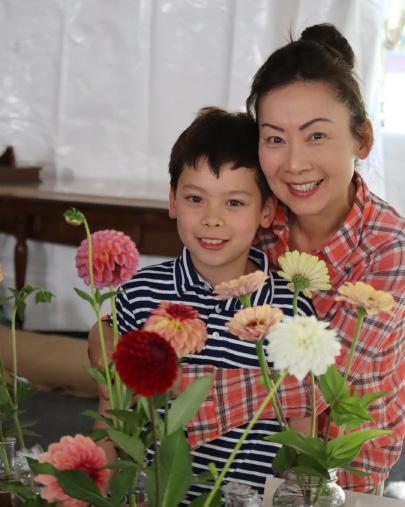
Whether you bring a plant to enter, join us for the Preview Party, shop with local vendors, listen to a speaker, or simply wander through the exhibits and take it all in, you are part of what makes this tradition continue to grow.
I hope you’ll join us September 18–20 for the New England Fall Flower Show and experience what can happen when we grow together.
get involved in growing together
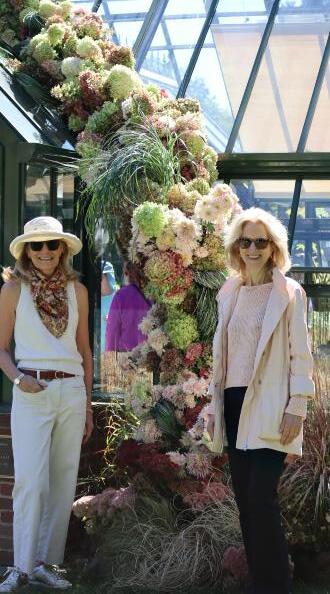
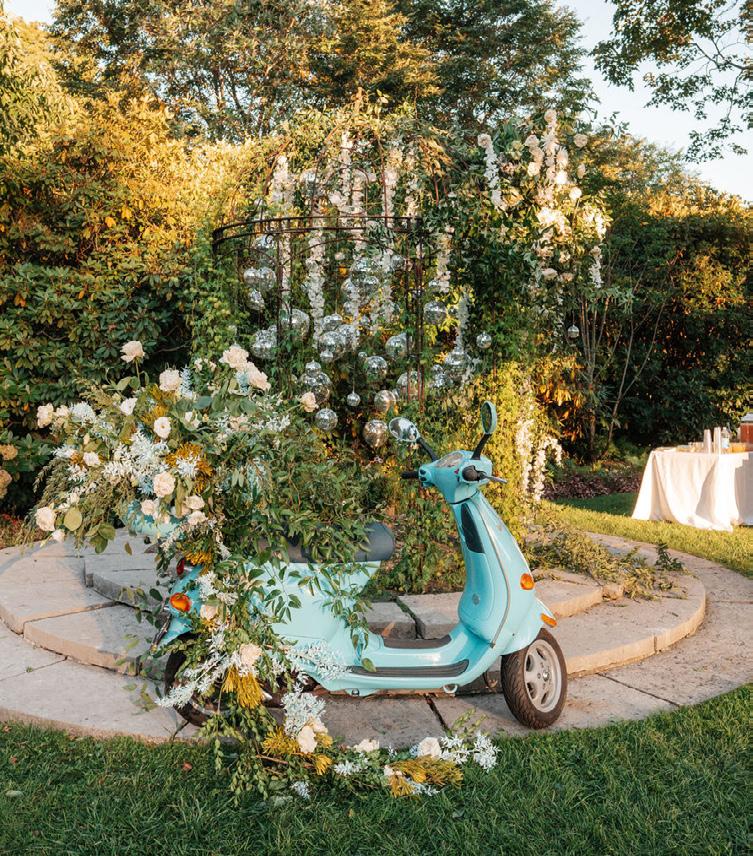
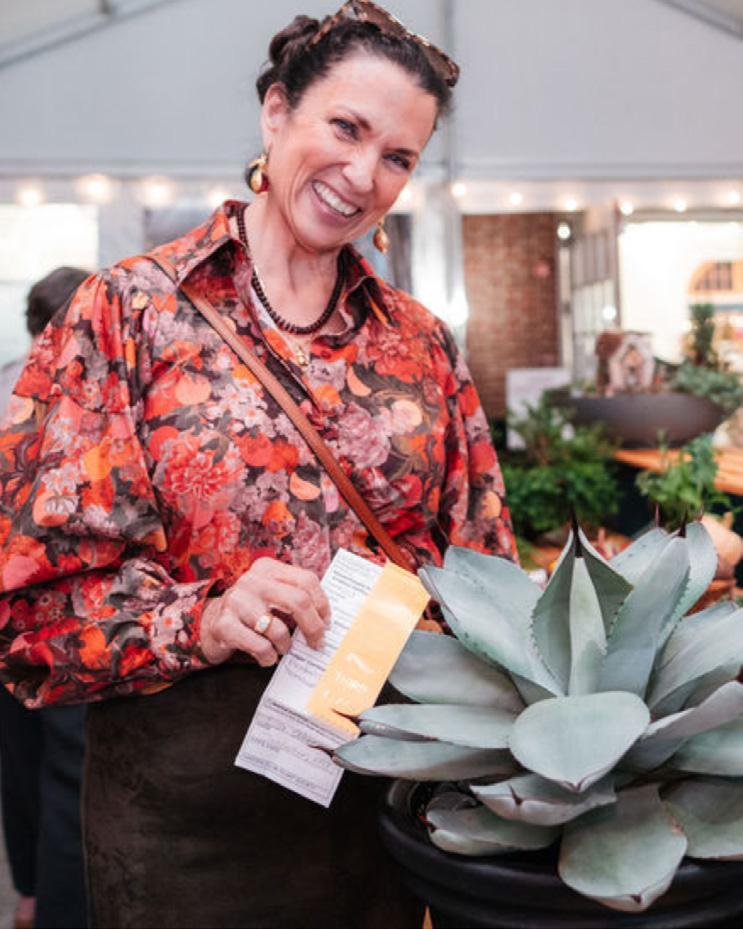
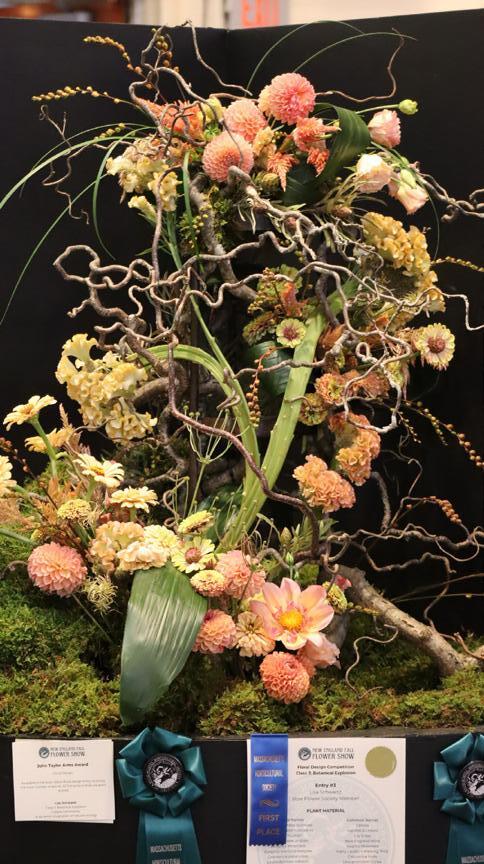
Previous page: Floral installation by New Leaf Flores in the Italianate Garden (top) and an exhibitor spots her ribbon at the Preview Party (bottom). This page: Exhibitor is awarded first place and special awards in Floral Design (left) and a Sogetsu ikebana installation in the Garden (right).
The Object and Distribution of Premiums Premiums or gratuities may be awarded to such persons as shall have essentially advanced the objects of the Society, or for exhibition to the Society of any fruits, vegetables or plants ….
Bylaws of Massachusetts Horticultural Society, Article V, 1829
Horticultural exhibitions and awards for entries were the lifeblood of Massachusetts Horticultural Society (MHS) since its inception. MHS, founded on March 17, 1829, began
[w]eekly horticultural exhibitions [that] were speedily instituted at the hall every Saturday, which were open to the public, and served to effectually advertise the Society, and to render it popular. The following September the first annual exhibition was held, —a great display, …
History of the Massachusetts Horticultural Society 1829-1878, 1880, p.67-68.
While a variety of exhibitions extended throughout the year, its foremost exhibition was held in the fall in conjunction with MHS’s annual meeting. The primary focus in the early years was on fruit and vegetable production. Soon however, ornamental horticulture and floral arrangements became increasingly popular. By the late 19th century, fruit and agriculture production became large scale and more commercial. As a result, the major show became the Spring Exhibition that emphasized ornamental horticulture and floriculture.
Fall exhibitions continued to be held until the 1980s. Beginning in 2024, MHS came full circle, establishing its major show as the New England Fall Flower Show. This year’s theme “Growing Together,” reflects MHS’ mission “to promote the art and science of horticulture, while staying true to its founding motto, ‘Commune Bonum,’ for the public good.”
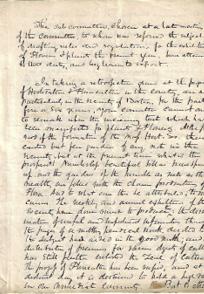
◁ Our Library volunteers were busy cataloging the historical documents of MHS, when they discovered this 16-page memorandum dated 1840 that illustrates how important and fervent the exhibitions were to the mission of MHS. The memo noted the increased zeal in the horticulture since MHS’ founding, spurred by MHS’s weekly and annual exhibitions, publications and premiums. Memorandum from the subcommittee on drafting rules and regulations for exhibitions of flowers & plants… , C. M. Hovey and David Haggerson, (1840). MHS Archives.
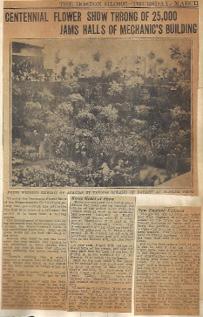
▷ March 1929 Boston Globe newspaper article reporting 40,000 people visited the Centennial Flower Show at Mechanics Hall in Boston on the first two days of the show. MHS Archives. First prize went to Mrs. Samuel Cabot of the Noannet Garden Club for her walled vegetable garden display that featured a wooden table with a hard loaf and bottle of wine!
Library Quarterly Exhibits
The Library’s Summer Exhibit will display historic flower show ephemera from our Archives during July through September, 2026.
The Fall Exhibit will be “Five Centuries of Herbals.” This exhibit will display a representative selection of original illustrations in herbals published in the 15th through the 19th centuries.
The Exhibitions are on view the entry hall of the Education Building when the Garden is open.
MHS Book Club
Book Club meetings take place on the third Tuesday of the month at 1:30 pm in the Crocket Garden. In Inclement weather, the meetings are held in the Dearborn Room in the Education Building. All are welcome to attend. Please note the Book Club will not meet during the month of July.
These are the books for the Club’s upcoming discussions:
August 18
Crossings by Ben Goldfarb
Come Visit!
September 15
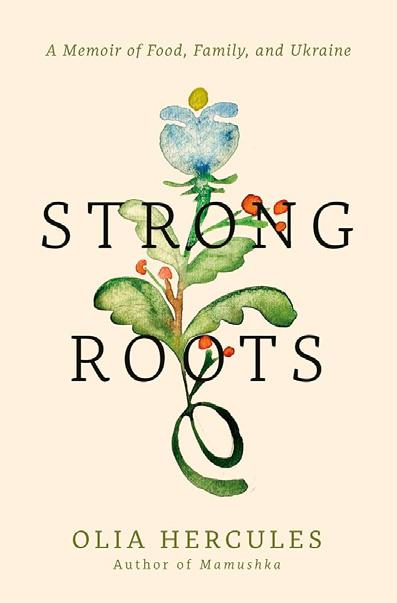
Strong Roots by Olia Hercules
The Library is open on Thursdays from 10 am to 1 pm and on Fridays from noon to 3 pm. The Library is also open by appointment. If you wish an appointment or want to access specific items, please email Library & Archives Manager Maureen O’Brien for an appointment or for other assistance.
Join us at these fun, creative, and informative workshops that will leave kids ready to enter into the Flower Show!
Junior Horticulture: Pot a container plant!
Saturday, July 11 at 10-11am
Participants will pot a plant that can be entered into Classes 85-88 of the 140th New England Flower Show. All materials are provided. Registration is encouraged but not required. Included with admission, due at the time of entry.
Junior Botanical Arts: Embellish a canvas!
Saturday, July 25 at 10-11am
This class is designed as a fun and welcoming way for young artists to explore the creativity of Botanical Arts while learning techniques used in flower shows and botanical design. All materials, except paint, will be provided. Pre-registration is required. Included with admission, due at the time of entry.
Junior Horticulture: Terrariums & Fairy Gardens!
Saturday, August 1 at 10-11am
Participants will create portable container gardens as terrariums or fairy gardens that can be entered into the Flower Show. A registration fee of $35 covers plants, container, soil, and instruction. Additional fairy garden accessories can be purchased separately at a garden center or craft store before or after the workshop. All core materials are provided. Pre-registration is required. $35 per child participant.
learn more & register