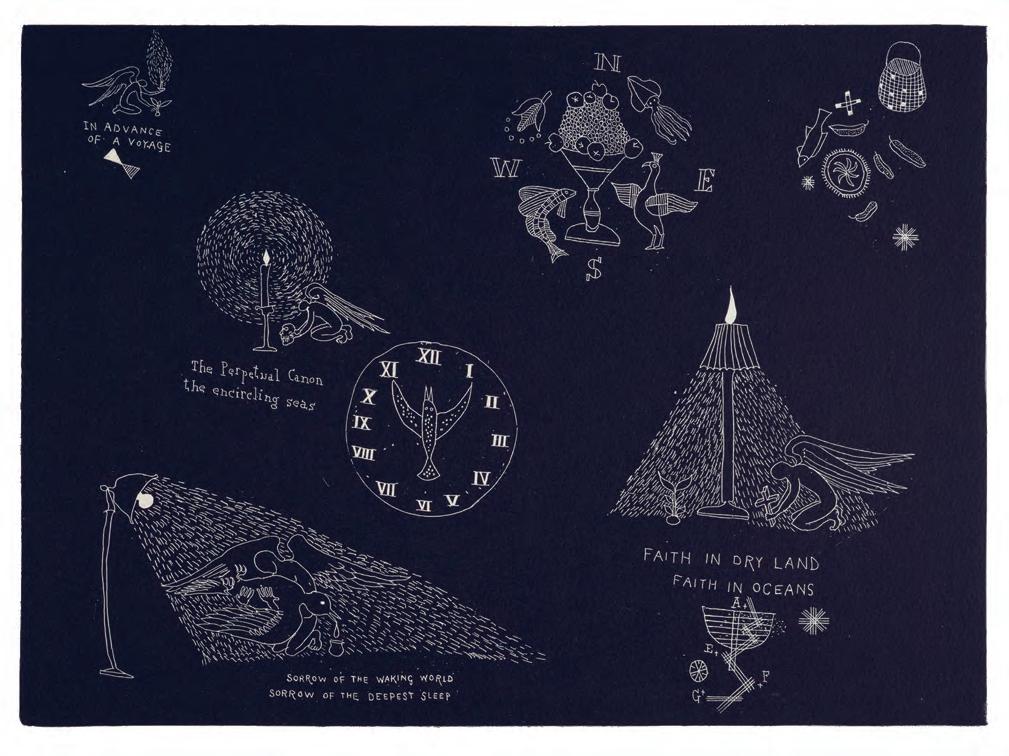
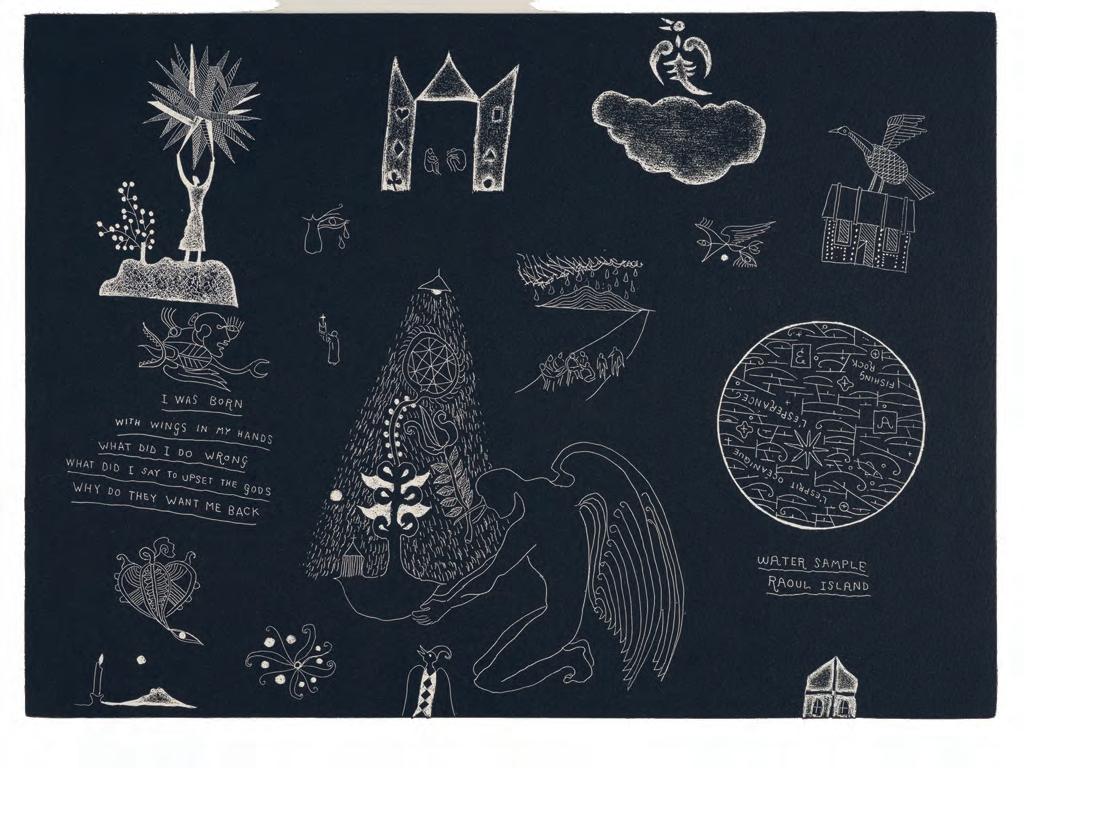
The only truth a wave knows is that it is going to break . . . The only truth we know is that we are a flood of magnificent life, the fruit of some frenzy of the earth.
[ J. M. Synge, Works, Vol III ]
Dwell a while, and pass on— be copious, temperate, chaste, magnetic
[ Walt Whitman, Leaves of Grass ]
. . . you came to resemble the voyage itself with its exclamations ‘Don’t lean out too far’ or ‘I think this must be the island’ . . .
[ Gregory O’Brien, ‘Luminosity’ ]
I kneel before the sea bow to drink nutrients at the first gulp instantly I knew my genealogy the sea is an enormous giant in my blood to stand in the sea long enough with stones as anchor the transfer of salt into my veins oxygen from the citrus trees that want to fuel my life
The sun opens the heart and the moon closes it
Polynesia is the great Vā
[ John Pule, ‘Great World’ ]
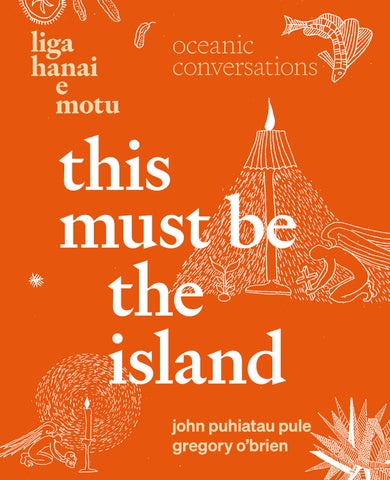
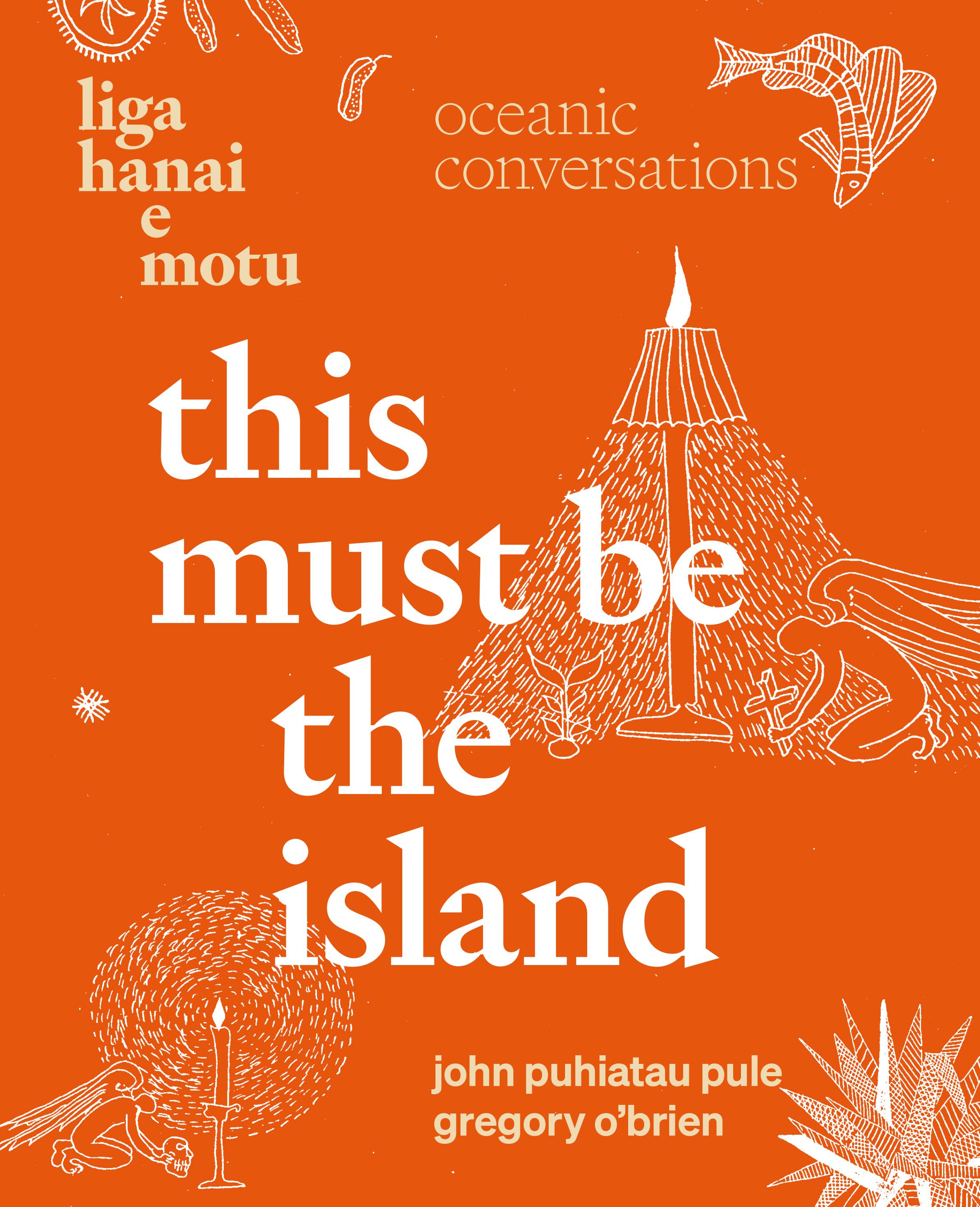
liga hanai e motu
oceanic conversations
this must be the island
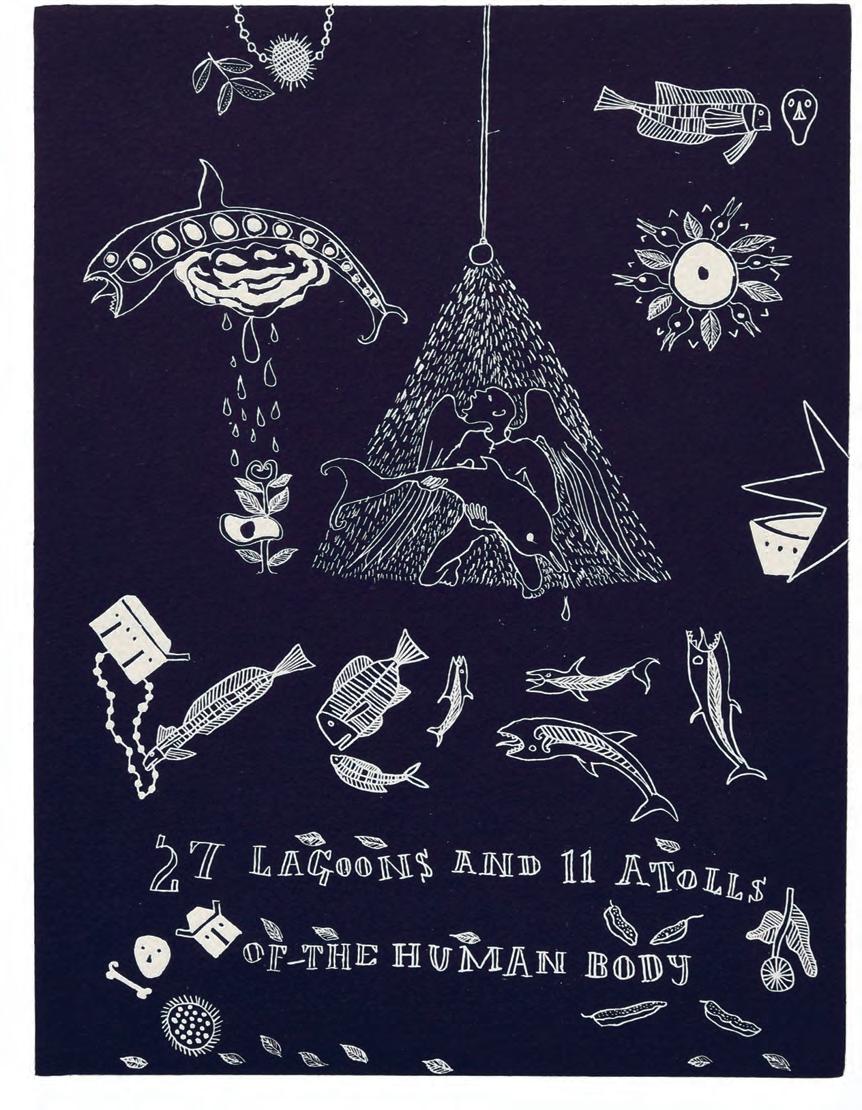
john puhiatau pule gregory o’brien
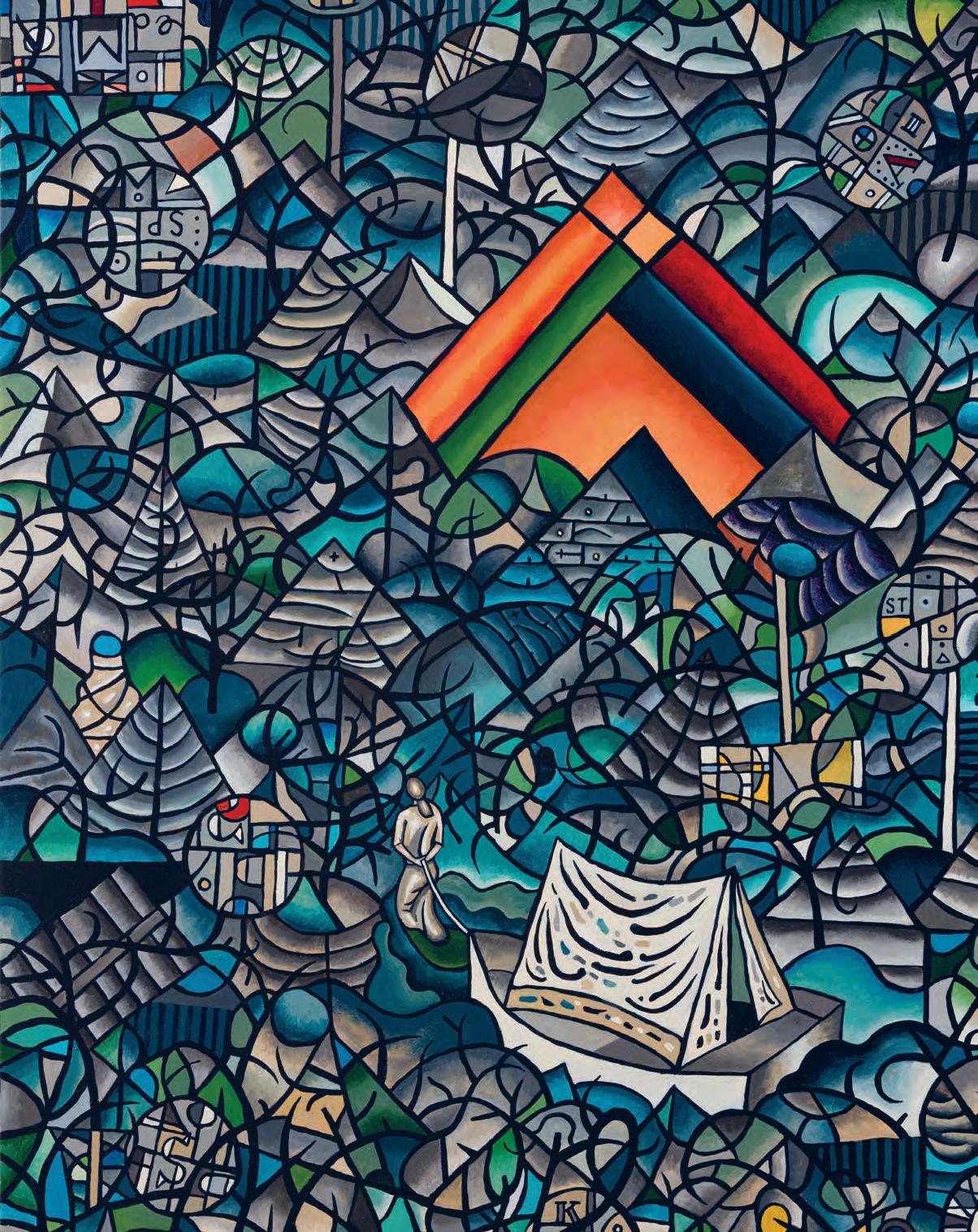
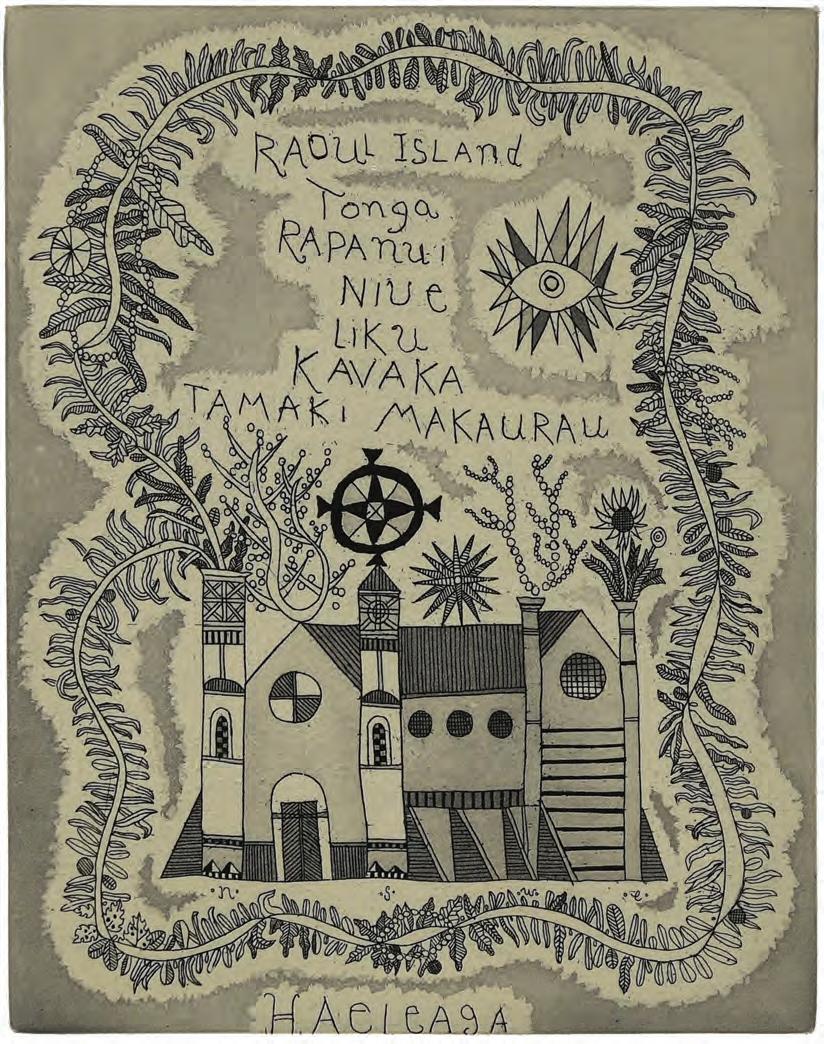
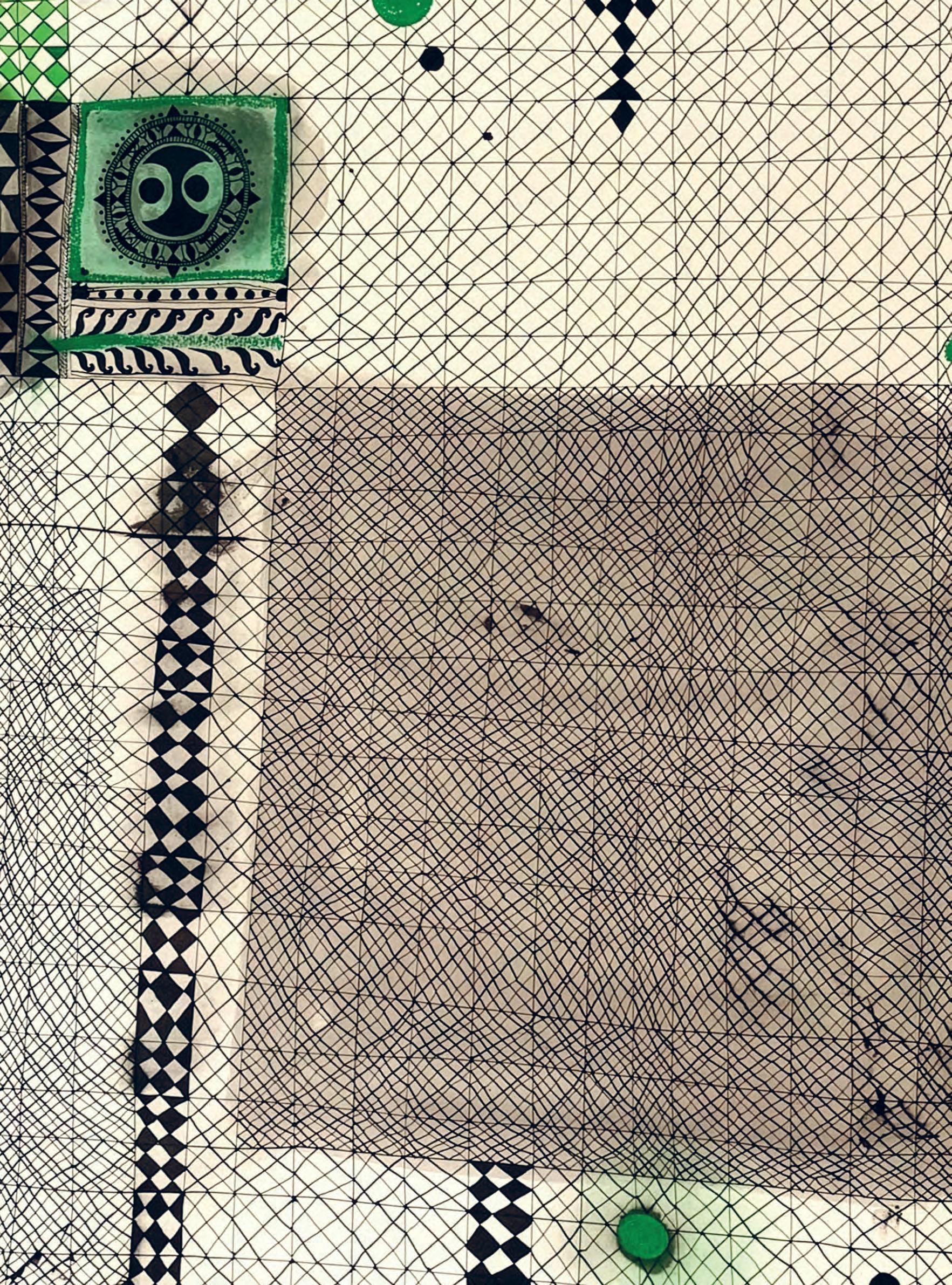
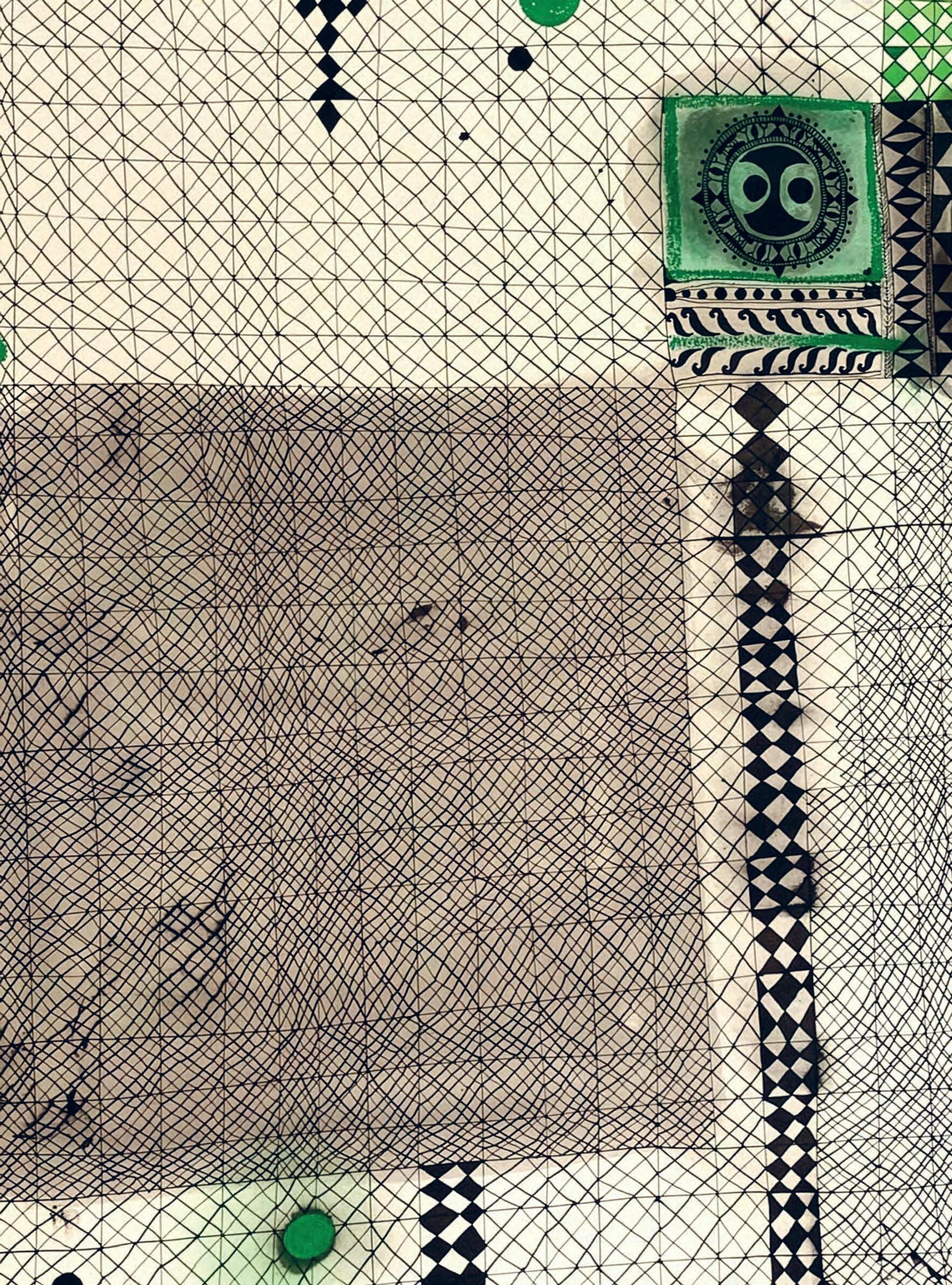
↑ Cathedral of oceanic memory, 2020
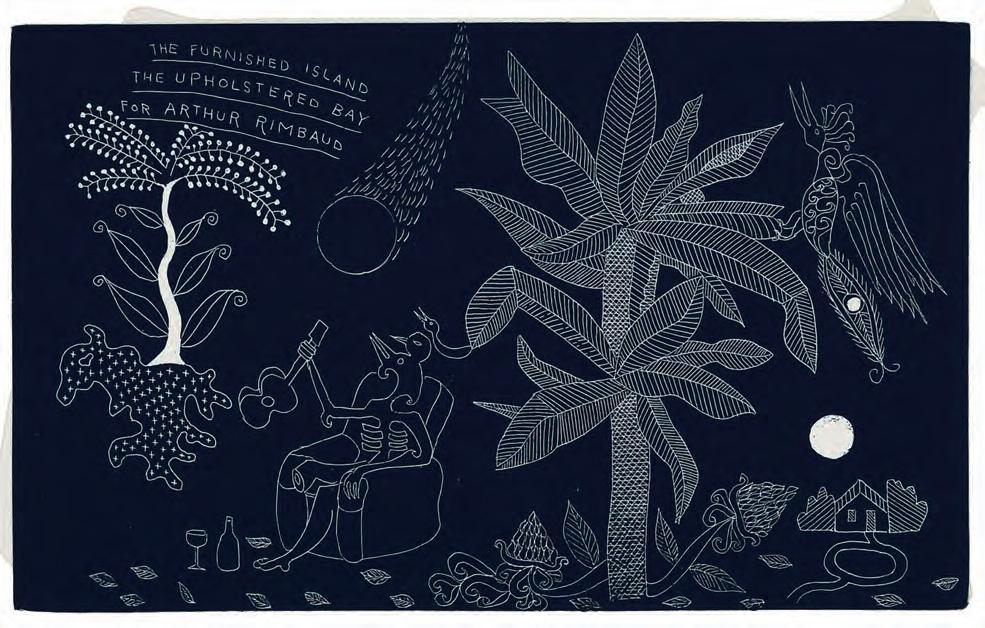
Early conversations and collaborations—reading Arthur Rimbaud and Walt Whitman in the South Seas—preparations for the Kermadec voyage (2011)
II M OTU—VOYAGES, ANCHORAGES, LANDINGS AND LANDFALLS 33
To the islands—reading Pablo Neruda and Derek Walcott under a mango tree— travels from Aotearoa to Raoul Island (2011)—Tonga (2011, 2012)—Rapa Nui (2012)—Santiago de Chile (2012)—Fiji—New Caledonia (2014, 2017)
III H AUAGA—ROOTS IN THE EARTH, LINES IN THE OCEAN 95
John builds a house in his ancestral village of Liku, Niue (2015)—a return to the tropics—hurricane houses, Sir Robert’s Wharf and cycles of arrival and departure—the ongoing traffic of zinc plates between Hataitai and Liku— the ring-road around the island—the rain in Niue—dreams, conversations, poems on the coral shelf
The ongoing inter-island industry—Kautahi Maukoloa—Coastal Trader, stanzas around an etching—the tale of the pandanus hat—the sinking of the Manawanui—Niuean Independence Day and associated regattas— remembered and future voyages
ARTISTS’ NOTE
All etchings reproduced in this book are collaborations by John Pule and Gregory O’Brien, except for a small number of solo works, which are captioned accordingly. Individual poems are followed by the author’s initials or, in the case of collaborations, by the initials of both.
Technical details and dimensions of the etchings, as well as translations of Niuean titles, are included in the listing at the back of the book.
The book mostly follows a chronological sequence, although some of the plates took years to bring to realisation or were based on experiences much earlier in the project. Accordingly, some recent emails and etchings occur earlier in the book.
Aotea Great Barrier Island, 2023.
Photo: Gregory O’Brien
TE WHANGANUI-A-TARA WELLINGTON, 2 FEBRUARY 2 0 26
Morena
John
Looking back over sixteen years of making etchings together, I see our images— some 80 of them—as a diary of various, shared voyages—to the Kermadec Islands, en route to Tonga in 2011, then subsequently to Rapa Nui Easter Island, via Santiago de Chile, then on to New Caledonia, Niue, not to mention other islands and places closer to home: Henderson, Grey Lynn and Waiheke Island, where we convened to work on this book project at St Dominic’s, a beach-house which, until recently, had been a coastal retreat for an order of nuns.
This Must Be the Island is an apt title. For a start, this book is the island—this is the place we have been wading, swimming, paddling and sailing towards all these years—from our separate islands of origin, from our distinct lives. The hardground covered zinc plates we have worked on are our shared space. The island, the marae, the village and the allotment . . .
Our etchings are our conversation. Sometimes we have worked on them in the same room or on opposite sides of Niue (you in Liku, me in Namukulu). Or else, most often in recent years, we were in different countries and the plates-in-progress, well-wrapped, travelled by post or suitcase to and from Aotearoa and Niue. And from there they were passed along to Michael Kempson, director of Cicada Press, which was located at the University of New South Wales, Sydney, until the printmaking facility was downgraded in 2022.
At that point, the Press was transplanted to Michael’s home in Hornsby Heights, surrounded by dense Australian bush, raucous bird life and giant lizards. In the midst of proceedings, one of these lizards—an alligator-sized goanna—came through the back door of Michael’s house one day and, trapped in his bathroom, did thousands of dollars worth of damage, demolishing all the fittings, and eventually had to be removed (and returned to a far reach of the adjacent bush) by the fire brigade. I mention that lizard because he or she is our kindred spirit!
I think of you, John, and me crashing joyfully around inside the house that is Printmaking, making of it what we will. Our motifs, myths, poems, memories and details from daily life, all of them cast, often with abandon, onto each hardgroundcovered rectangle. There was rarely any stated intention or preordained direction. We just started. And then continued.
↑
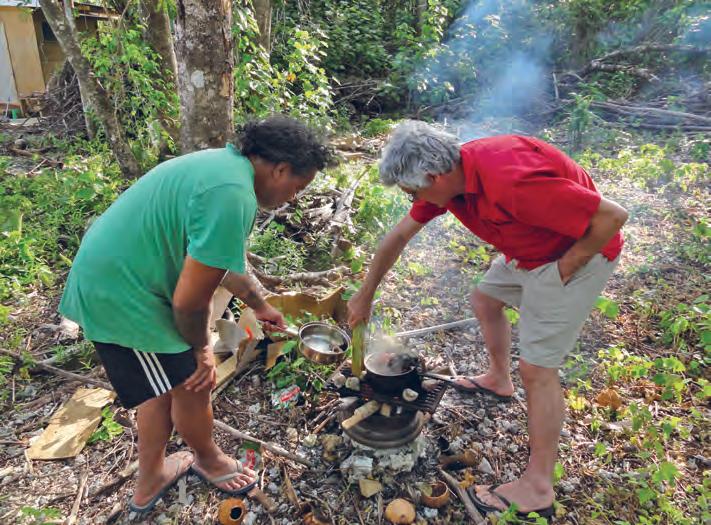
John Pule and Gregory O’Brien boiling up kai moana at Liku, Niue, in August 2015. Photo: Robin Kearns
I imagine Michael Kempson and his assistants working in his basement printery, while the rampaging lizards—you and I—crashed around ‘upstairs’, in our unfettered, imaginative space. Michael brought a refinement and order to the process, tidying up the plates and paying minute attention to their potential . . . He would always go beyond the scrawled diagrammatic printing instructions which I appended to the plates on the many occasions when I couldn’t be in Sydney to contribute to the final stages of pre-production. Layers of aquatint, the burnishing of plant-forms and islands, and various other effects were suggested and implemented by the maestro.
‘I think this must be the island.’ This book. But it is adrift in an ocean of broader creativities—our writing and painting and our lives. And the traditions that surround us and from which we never really emerge. The collaborative poems included here are another facet of our conversation. The emails yet another. And also the smouldering, percolating, fermenting pages of our journals which are part of the evolution of this exercise in shared thinking and feeling and going forward.
Arohanui
Greg
I fakatai the intertropical convergence zone
↑
John
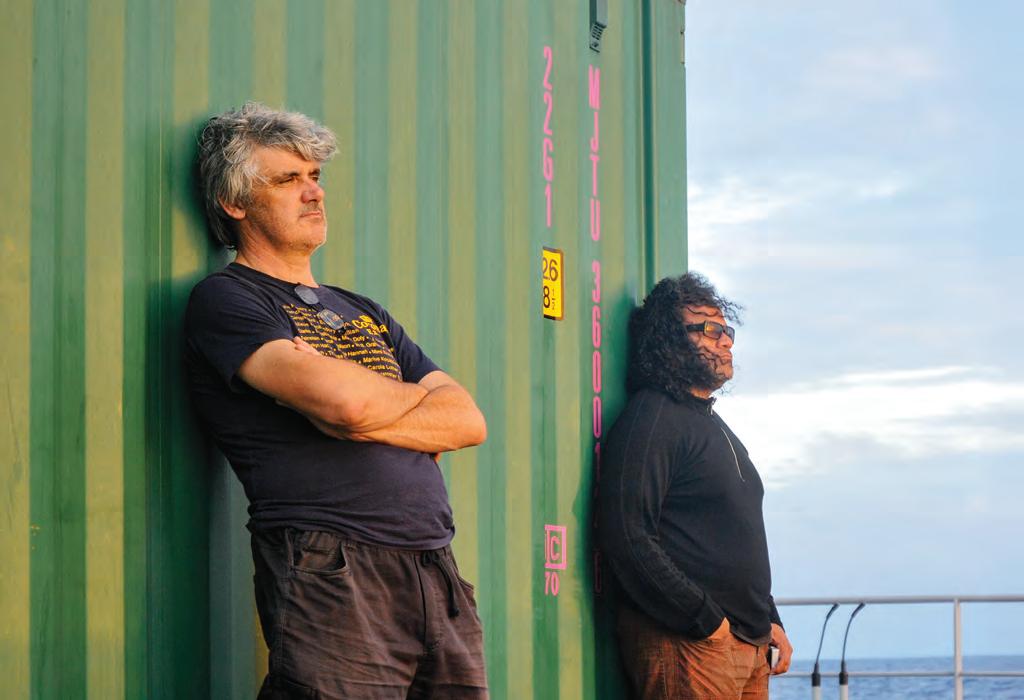
Gregory O’Brien and
Pule on HMNZS Otago, bound for Raoul Island, May 2011.
Photo: Jason O’Hara
TĀMAKI MAKAURAU AUCKLAND, 8 JUNE 2 011
(STARING AT THE SEA)
It was Epeli Hau’ofa who instilled this phenomena that the Ocean is in us. The ocean defines and shapes who we are, our cultures, how we see the world, how we relate to each other.
That Epeli also expanded on that ocean is our home rings more truth today than ever. The ocean belongs to all of us, not to one single country. Any threat to the ocean harms us all.
In the same way the sea governs the weather it also has some jurisdiction over our emotions. Epeli always emphasises the sea as something bigger than us and that its true power lies in connecting us all, connecting all the islands together, not as expounded by many people who view the sea as this thing that separates us . . .
We are all custodians of the sea.
So what do I see when I stare at the ocean. I look upon the sea with great love and admiration. I admire the beauty of the moon looking at the moon in the sea. The way clouds conjure up the day so the night can shower the sky with stars.
It tells me who I am. Where I come from.
It does not judge me, it does not know me.
But I know the sea with the greatest respect . . .
John
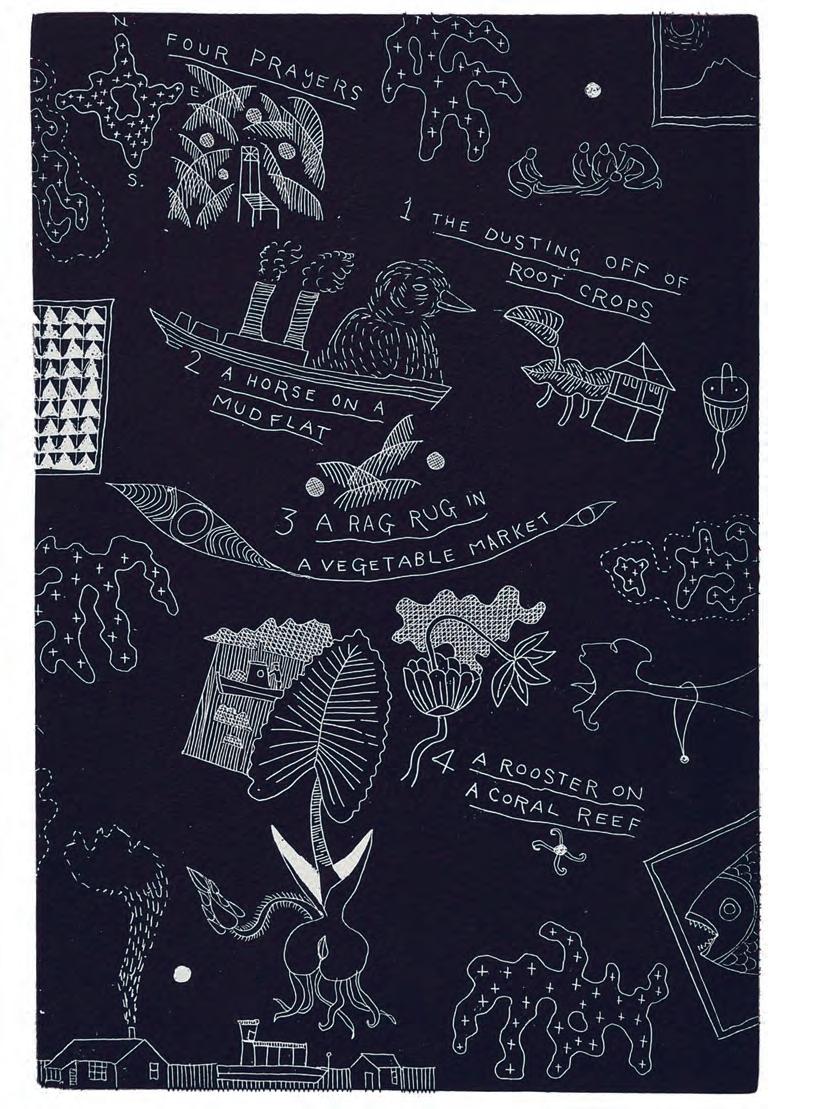
↑ Four Prayers, 2010
↑
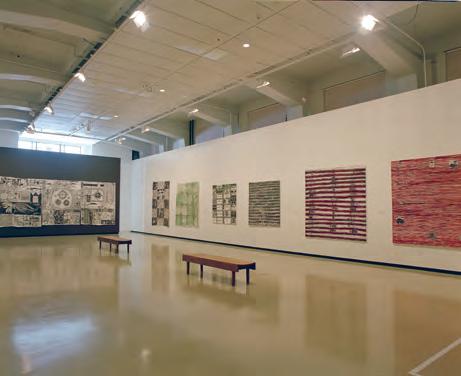
John Pule: Hauaga (Arrivals), City Gallery Wellington, May–September 2010. Photo: City Gallery Wellington
Chau Chak Wing Museum, Sydney: Gregory O’Brien interviewed by Bineeta Saha, after the institution acquired three collaborative etchings, 2021
In 2008, while working as a curator at City Gallery Wellington, I was asked to cocurate (with Aaron Lister) a major retrospective of John Pule’s art. I leapt at the opportunity to become reacquainted with John, whom I had met in the early 1980s but had only seen sporadically over the years since. In delight and amazement, I had watched his art burgeon and mature during the 1990s. What a thing to behold. Anyhow, it was John’s idea that we might collaborate on some art. He probably took one look at me and thought that, given my curatorial job at CGW, I was in danger of becoming too institutionalised. He still imagined us both as free, youthful spirits, reading poetry on Monday nights at the Globe . . . So, once we’d ticked the survey exhibition proposition, we sat under a tree on his back lawn in Henderson and talked about making some work together . . .
↑
Song of the Drunken Dry Land (for AR), 2010
TE WHANGANUI-A-TARA, 18 AUGUST 2 010
Hi John
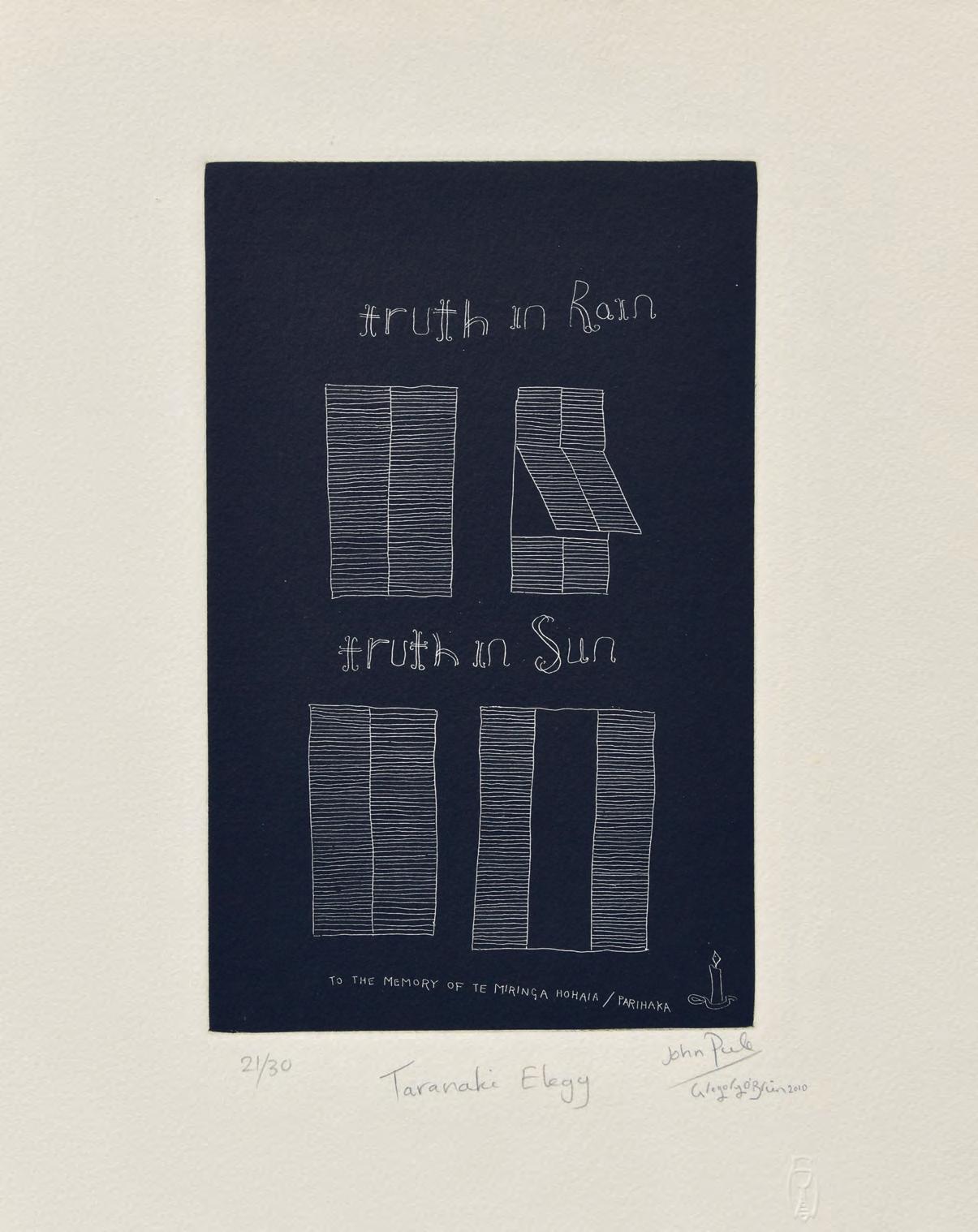
I guess you heard that Te Miringa Hohaia* died a couple of days back. It looks like I’ll head up to his tangi on Friday. Sad, and quite a shock . . .
I was working on this plate when the call came through that Te Miringa had died suddenly . . . I drew four shutters, one of which is open. I added a dedication to him at the bottom . . . What I think would work beautifully would be if you simply added one further motif/device to this plate. I can almost see it there already. A departing spirit . . . I like the idea that this one might remain simple. Your lettering is beautiful. Greg
[John subsequently added the candle in the lower right-hand corner.]
* Te Miringa Hohaia was a Parihaka leader and advocate for Māori land rights in Taranaki.
Taranaki Elegy, 2010
↑
The Guitar in the Studio, West Auckland, 2010
↑ Ocean Song to Myself, 2010
TE WHANGANUI-A-TARA, 3 DECEMBER 2 010
Hi John
A proposal. I’m doing some work for a philanthropic organisation in the US. They are wanting to put together a group of artists to go up to Raoul Island and the Kermadec region in the first week of April next year. They’ve asked me to sound out a few people who might be interested in this kind of project—an artistic response to the place . . . There would be an exhibition. The emphasis is very much on the ocean, the depths, the trench . . . rather than the islands as such, but obviously all these things inter-relate. We would travel on the frigate delivering DOC supplies to Raoul, have two days on that island, then carry on to Tonga, from where we would fly home. Firstly, is there a possibility you could come on this? Let me know . . . and I’ll let you know how the proposal develops. Keep this secret until all is confirmed . . . Greg
TE WHANGANUI-A-TARA, 2 JANUARY 2 0 11
To artists involved in the pending Kermadec project
Well, as you probably know already, we have the core group of artists lined up for the Kermadec expedition in April—three months from now. Many of you know each other: John Pule, Elizabeth Thomson, Fiona Hall (from Australia), John Reynolds, Robin White and Phil Dadson. Photographers Bruce Foster and Jason O’Hara and I have been working with the PEW organisation to finalise arrangements. We’ll be on the trip (creatively) as well. The possibility of bringing a few writers on board is presently being explored—a few bureaucratic hiccups . . . we’ll see how it pans out.
As mentioned earlier, the boat is set to sail on 9 April . . . and we’ll be at sea for six days or so from that date . . . The voyage will be an illuminating time. There will be scientists on board, as well as the DOC contingent. Plenty of room (and time at sea) for some good talk. And plenty of room to work, space and silence too. The idea is that an exhibition of work stemming from this project will be shown at the Tauranga Art Gallery (late November 2011) and will then tour nationally. I’ll don my curatorial hat to put that part of proceedings together. As many of you know, Tauranga is an apposite place to launch such an exhibition as it is part of the Kermadec ridge formation (the undersea ridge that stretches from there northwards towards Raoul Island . . . with White Island and Mayor Island just off to the sides . . . ) Greg
[To our disappointment, the idea of taking writers—including Lloyd Jones and Ian Wedde, both of whom were keen—had to be abandoned for logistical reasons: too many sea-riders on the naval vessel and too many civilians on the ‘closed’ island sanctuary of Raoul. Plans to add further artists to the list also had to be dropped. As it eventuated, the departure of the naval vessel was delayed by a month—until 9 May 2011—and the offshore patrol vessel HMNZS Otago was commissioned for the voyage.]
↑ Star Navigators (towards the Kermadecs), 2011
↑ This is the day, 2011
I was born with wings in my hands what did I do wrong what did I say to upset the gods why do they want me back