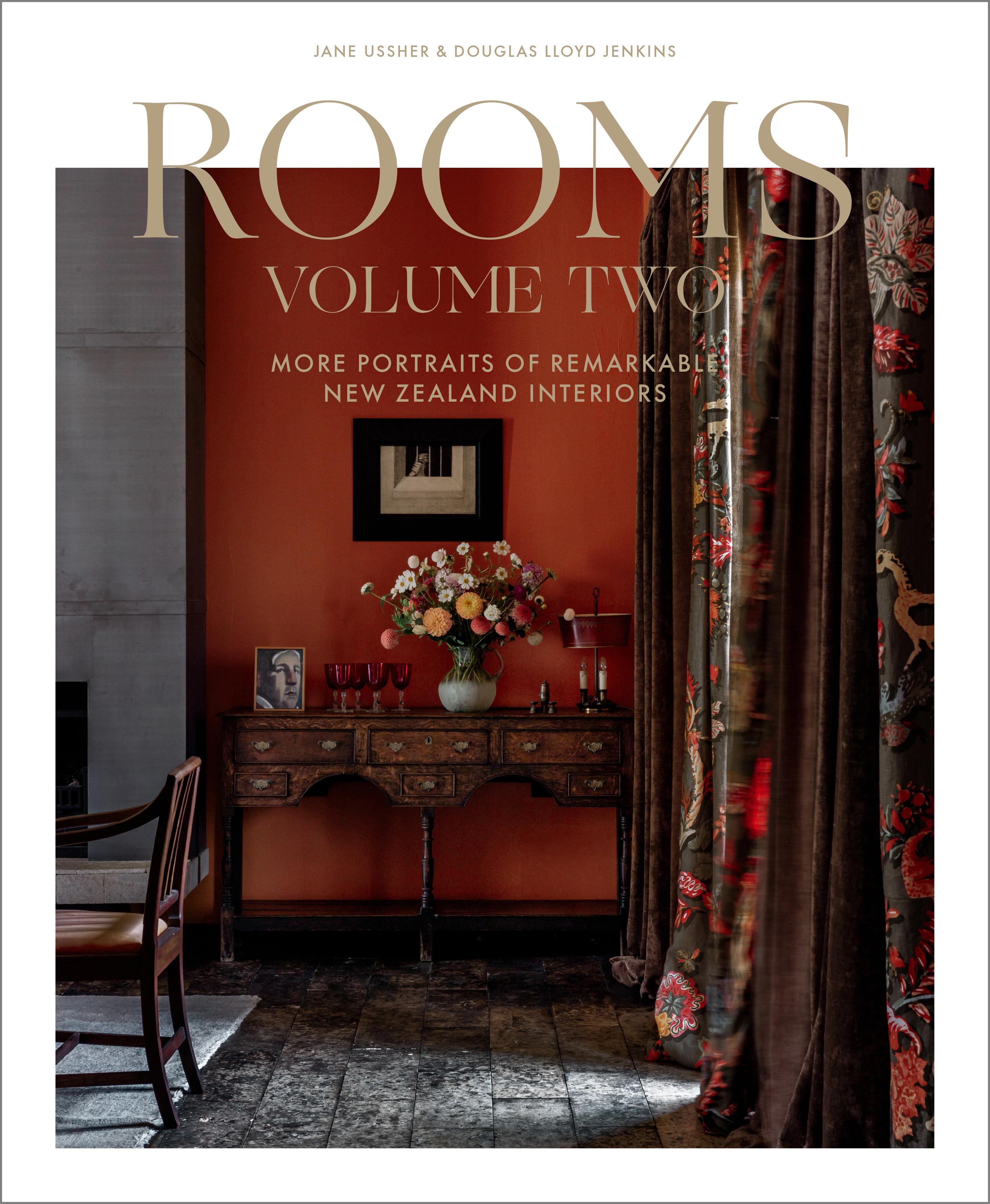
MORE PORTRAITS OF REMARKABLE
NEW ZEALAND INTERIORS
Nicola Legat
During 2021 and 2022 I had the very special pleasure of being Jane Ussher’s driver, camera-bag porter, furniture rearranger, dinner procurer and general factotum on shoots for the book Rooms: Portraits of Remarkable New Zealand Interiors. That book sold out in less than a year and has been lusted after by many ever since.
If people weren’t quite sure what a book of images of New Zealand rooms might contain back then, they certainly did once it was launched. A common comment was that it didn’t seem possible that so many of these interesting, distinctive rooms existed in Aotearoa. Well, they do. And with this new volume we have found even more of them.
Once again it’s been a privilege to be welcomed into private homes. Jane is a legend, but even so perhaps some owners were a little nervous on the day of the shoot. It is, after all, a big deal to let a stranger into your private spaces and to then share them with the rest of the world through a book.
At each visit Jane and I made together it was fascinating to witness her remarkable ability to walk into a house and know within minutes where she wants to set up her tripod and focus her Hasselblad, to see her hand on a homeowner’s arm as she helped them see what she was seeing and invited them to help her style their own objects to create a tableau, to watch her technical command of the camera and her use of very long exposure times to capture the available light in even the darkest rooms.
We are also grateful to another legend, Douglas Lloyd Jenkins, who has gifted the Rooms Volume Two project a superb opening essay. And to design leaders Arch, Jane and Jeremy MacDonnell of Inhouse, who are behind this book’s elegant design.
The creators of these rooms gave so much, delivering us an education in art, art history, ceramics, furniture, architecture and design. We are very grateful to them for all the information about their rooms that you’ll find in the back of the book, where, to co-opt the title of Douglas’s essay, you can learn how to read the rooms.
Douglas Lloyd Jenkins
High-impact interior design, passionately, masterfully and exquisitely executed, has historically stood as a symbol reflective of national wellbeing. It may not be often referenced as GDP, or be a contributing factor in surveys of business confidence (there is no interior decorating index to be reported on the business pages) but a confident society has always been inclined to decorate in an individualistic way that makes sense of culture, economy and place.
If we think of societies that have had moments of historical triumph, from Ancient Egypt and Rome, through Mughul India and Imperial Japan, to contemporary international hotspots such as tech-driven San Francisco or oil-rich Dubai, it’s the rooms those societies created that come most readily to mind. They act as a visual lens through which to understand what it was those societies prioritised. Interior decorating, often dismissed as unimportant, can reflect a society on the way up and at the same time can be an equally potent reflection of a society in economic and cultural free-fall. A well-considered room answers the question: What is it like to live here/there now? To answer it, all we need do is learn to read the room.
In the early 2020s, when Jane Ussher first turned her eye to recording the rooms that made up the book Rooms: Portraits of Remarkable New Zealand Interiors, the remarkability was sensed rather than articulated, but change was clearly afoot. Two separate notions were slowly being brought together — the collector and the decorator (alt. decollectors, collectorators), who increasingly offered alternative intellectual pathways to the dominant, highly theorised, purely architecture-led minimalist approach to creating domestic spaces. In this they offered up solutions to the many issues and inbuilt fears that contemporary New Zealand has trouble facing, including individuality, the expression of emotion, the embrace of colour, the recognition of individual taste, and the embrace of history.
To date, the discourse around the development of the New Zealand house has largely been driven by architects and academics, who have together claimed a right as the primary theoretical interpreters of built culture. As the twenty-first century has settled into place, it is generally agreed that what constitutes a New Zealand house, worthy of the title, would reflect a blend of international architectural theories and homegrown thinking. We write, read and talk and televise baches and woolsheds as the building blocks of our national style.
We flick through the pages of glossy architecture and design magazines in which beachside mansions are referred to as exemplars of casual family living. We applaud as impossibly boutique houses are handed awards — all the time knowing we will likely never live in ‘architecture’ and that these constructions do not represent us.
Around the millennium, a shift in architectural thinking began to occur as some local architects began to pursue ‘art projects’ over social change, thereby trading away cultural relevance. It became increasingly acceptable to celebrate the pursuit of architecture as a solely private art form (funded by patrons), rather than as a movement for social betterment. As it stands, we are captivated by a high-budget New Zealand architecture, undertaken by a small group of ‘celebrity’ practices producing a stylistic retread of modernism that has long removed itself from concern with our everyday cultural environment. Into the creative void left behind, the people in these two volumes of Rooms, and the homes they have created and have collected, find themselves unwittingly representing something close to a new vanguard — an unexpected laboratory of passionate innovators who, in defining themselves individually, help to suggest who we might become as a nation together. 02
Through the twentieth century, one way of thinking about interior architecture governed discussion. At its most reductive, that discussion was dominated by the German architect Mies van der Rohe and the Swiss/ French architect Charles-Édouard Jeanneret (known as Le Corbusier). Both men had a lot to say about how the world might be, or, more directly, how they wanted the world to be. Together, their thinking, highly articulate and quotable, came to dominate teaching, and therefore their influence was enormous. One doesn’t need to read far to understand that minimalism sat at the heart of this thinking. Mies van der Rohe (‘less is more’), often quoted, believed the more we leave out, the more profound and spiritual our environments become.
There were any number of theorists in architecture and other fields who supported the thrust of modern thinking and who saw collecting (and decorating) as intellectually problematic. In the case of architect Adolf Loos (‘ornament is crime’), decorating represented a passive criminality. In part, this thinking has roots in the idea that decorating and collecting were considered the purview of women and homosexuals. Men might collect, but in controlled, contained and academic ways — libraries, cabinets of curiosities and private museums — but what women (and homosexuals) might do — homemaking, decorating, arranging — was essentially irrational, unimportant and of no lasting value.
Architecture — monumental, important and public — was deemed a space for, and a concern of, men. Homes, domestic spaces — fleeting, inconsequential and private — were deemed the realm of women and the
effeminate. Through the influence of this thinking, an aversion to objects, referred to academically as reductivism, was built into the heart of the last one hundred and fifty years of architectural thinking.
Many mainstream architectural theories on decorating and collecting tend to lean into the idea that mental clarity and minimalism were and still are natural companions, together representing ‘a tidy mind’, and the only way forward in a sane and ordered society. Modernist reductivism offered up the promise of a human utopia. It assured an easily navigated path, if only we would comply and let go of things that no longer mattered: history, culture and human individuality. We would have to leave behind some things (objects, colours, patterns) of which architects/architecture did not collectively approve, but those things were deemed unimportant.
We live now with the natural (although perhaps not intentional) conclusion of this — in a world of commercially produced, architecturally-inspired, real-estate minimalism that represents not so much a philosophy as the profitable commodification of a broad failure to understand the importance of human imagination.
There is, however, another option, in which we get to keep the things we like but still have the support of some heavyweight thinkers. Most of the ideas that shape contemporary design thinking have origins in the midnineteenth century, and most start with the English philosopher and poet William Morris. His philosophy was expanded and disseminated in turn by contemporaries and later figures, who included Oscar Wilde, Edith Wharton, Syrie Maugham, Nancy Lancaster and David Hicks, to single out some personal favourites of mine rather than suggest a canon; this is, after all, about individualism rather than conformity.
None of these figures is as frequently quoted as van de Rohe or Le Corbusier. They are not as widely and exhaustively celebrated by publishers, museums and art galleries. They are certainly not taught as models in schools of architecture. Yet despite a seeming academic invisibility their impact lingers. Visitors flock to surviving examples of their work such as Morris’s Red House in Bexleyheath, outside London, or Wharton’s home The Mount in Lennox, Massachusetts, whenever they are open to the public, and take inspiration from their projects when developing environments of their own — even on the far side of the world.
William Morris encouraged us to ‘have nothing’ in our houses ‘which you do not know to be useful or believe to be beautiful’. He used ‘believe’ specifically because he expected you to have first arrived at a personal definition of beauty based on observation of items held in public art galleries and museums. Oscar Wilde, writing in The House Beautiful, advised us to avoid ‘depressing conventional décor’. Edith Wharton reminded us that ‘the natural position of a door is closed’ (a room is something to be revealed). Syrie Maugham gave us the first colour-drenched, All-White Room, and
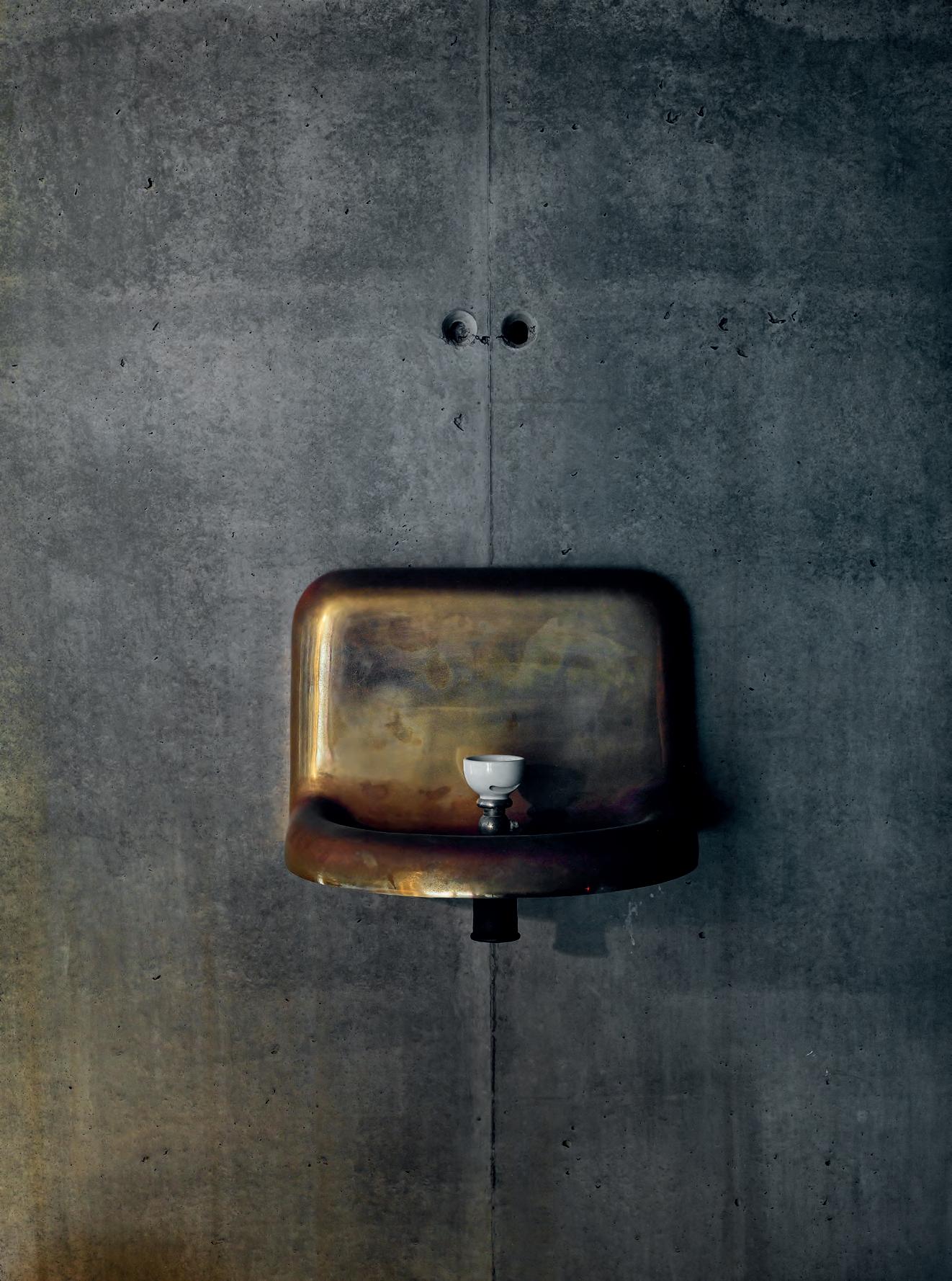
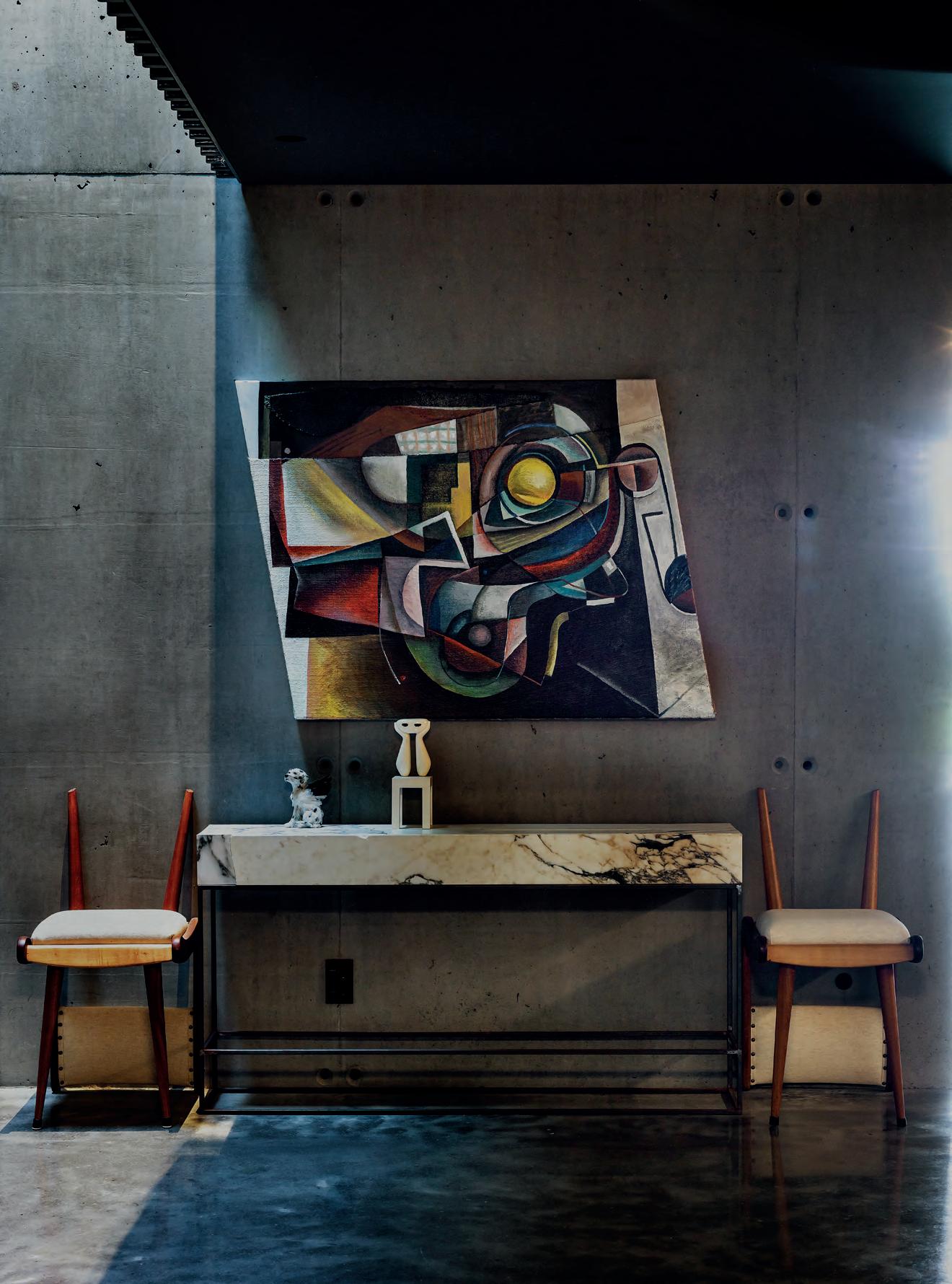
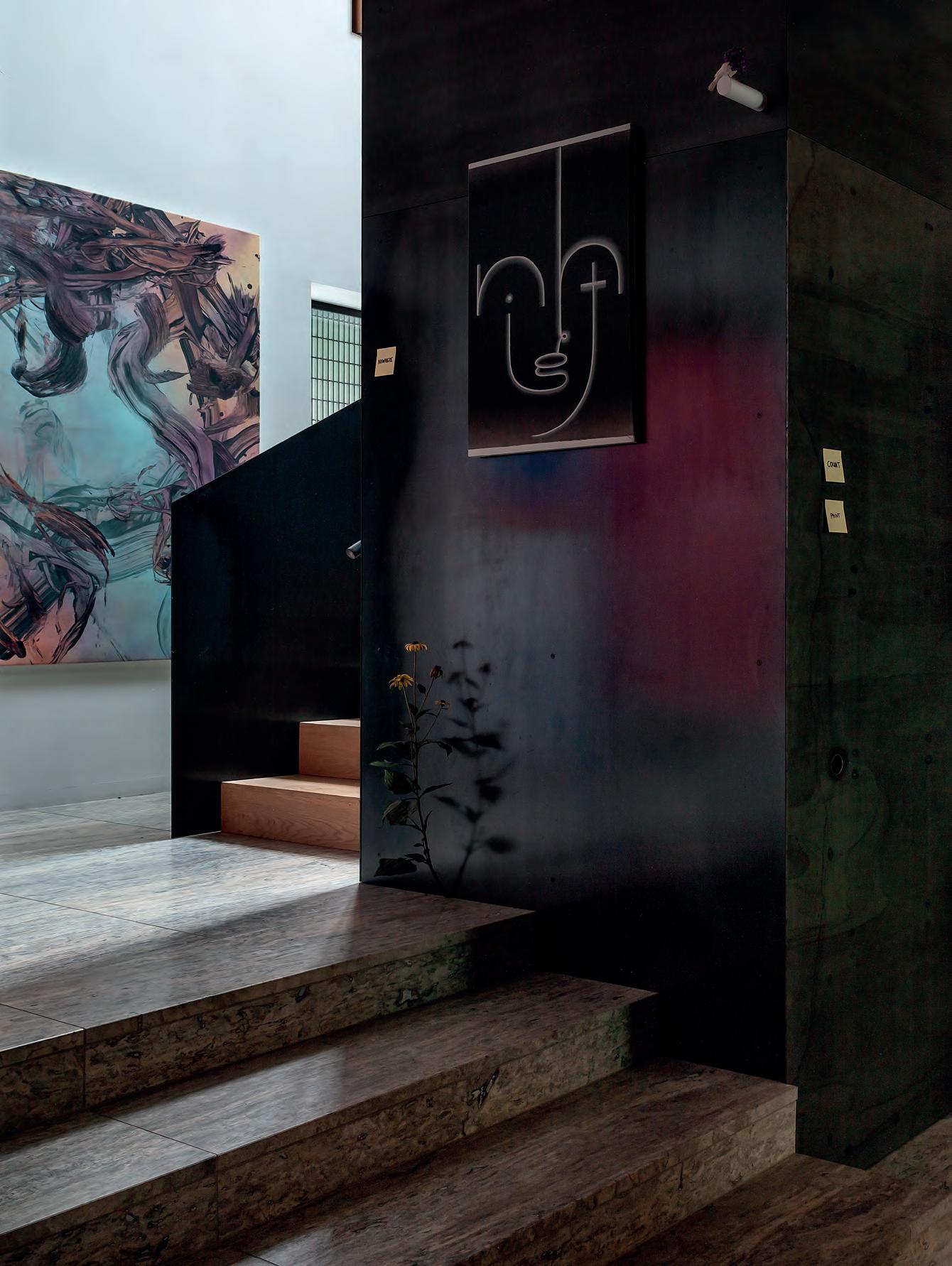
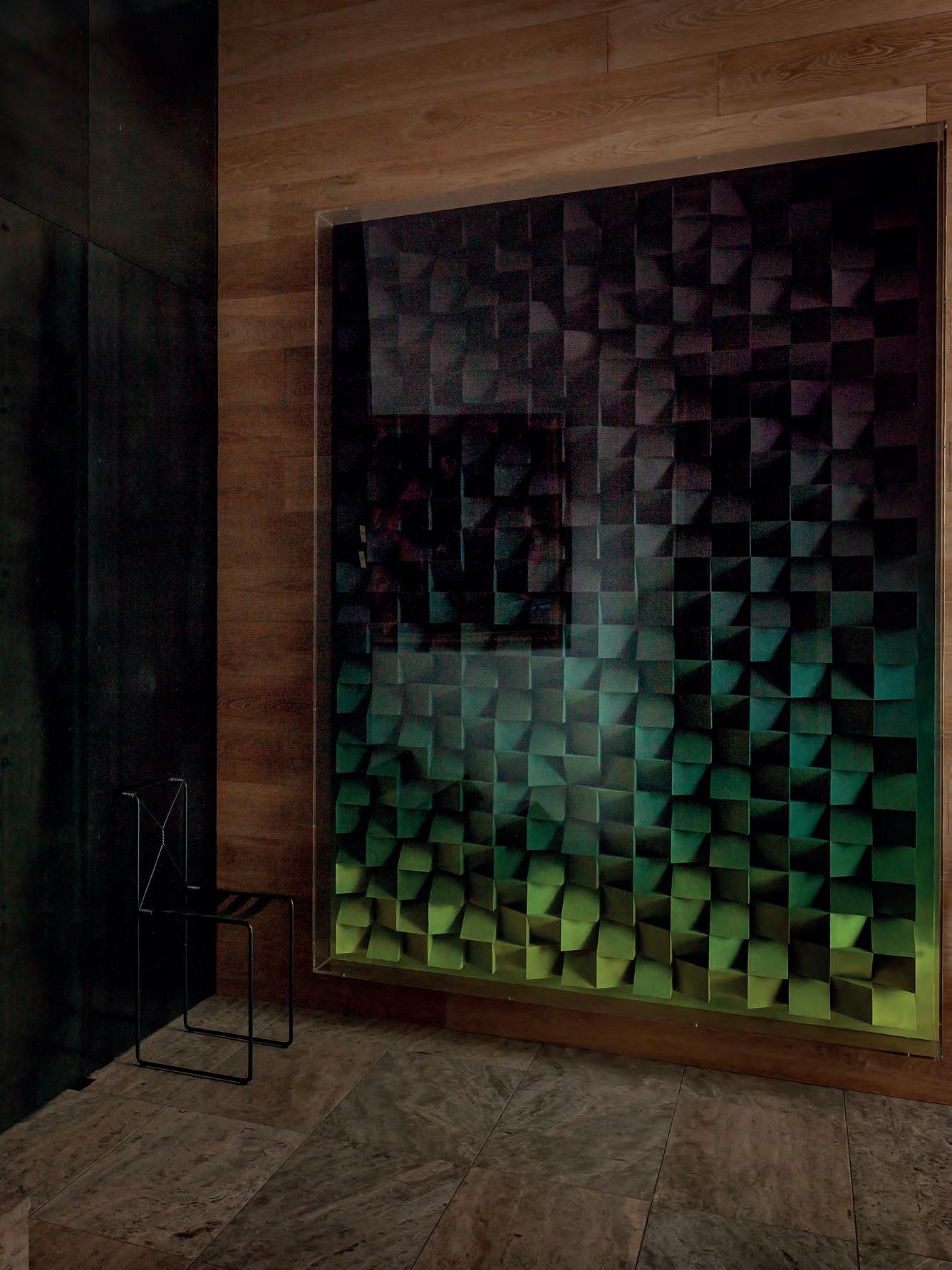
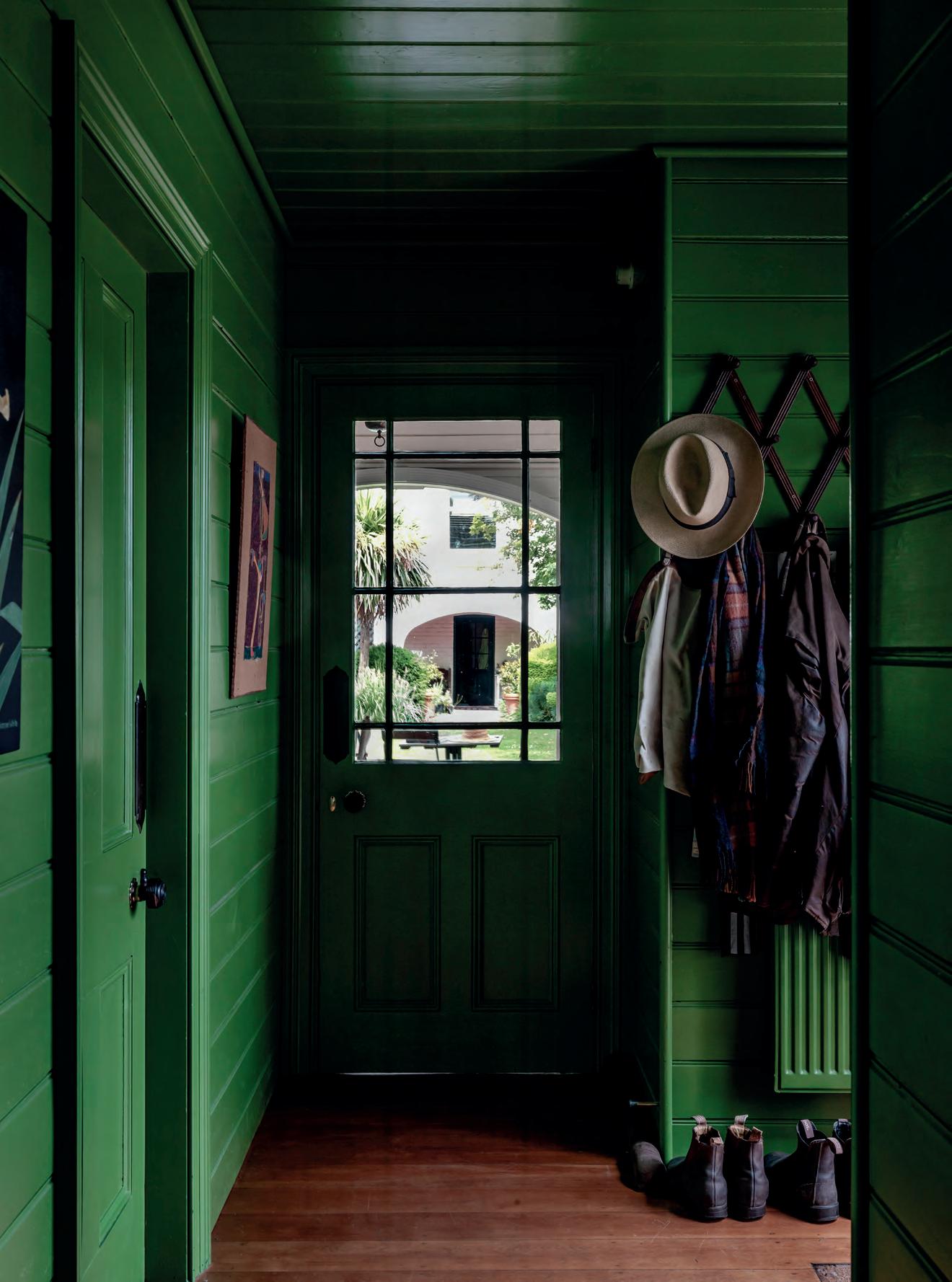
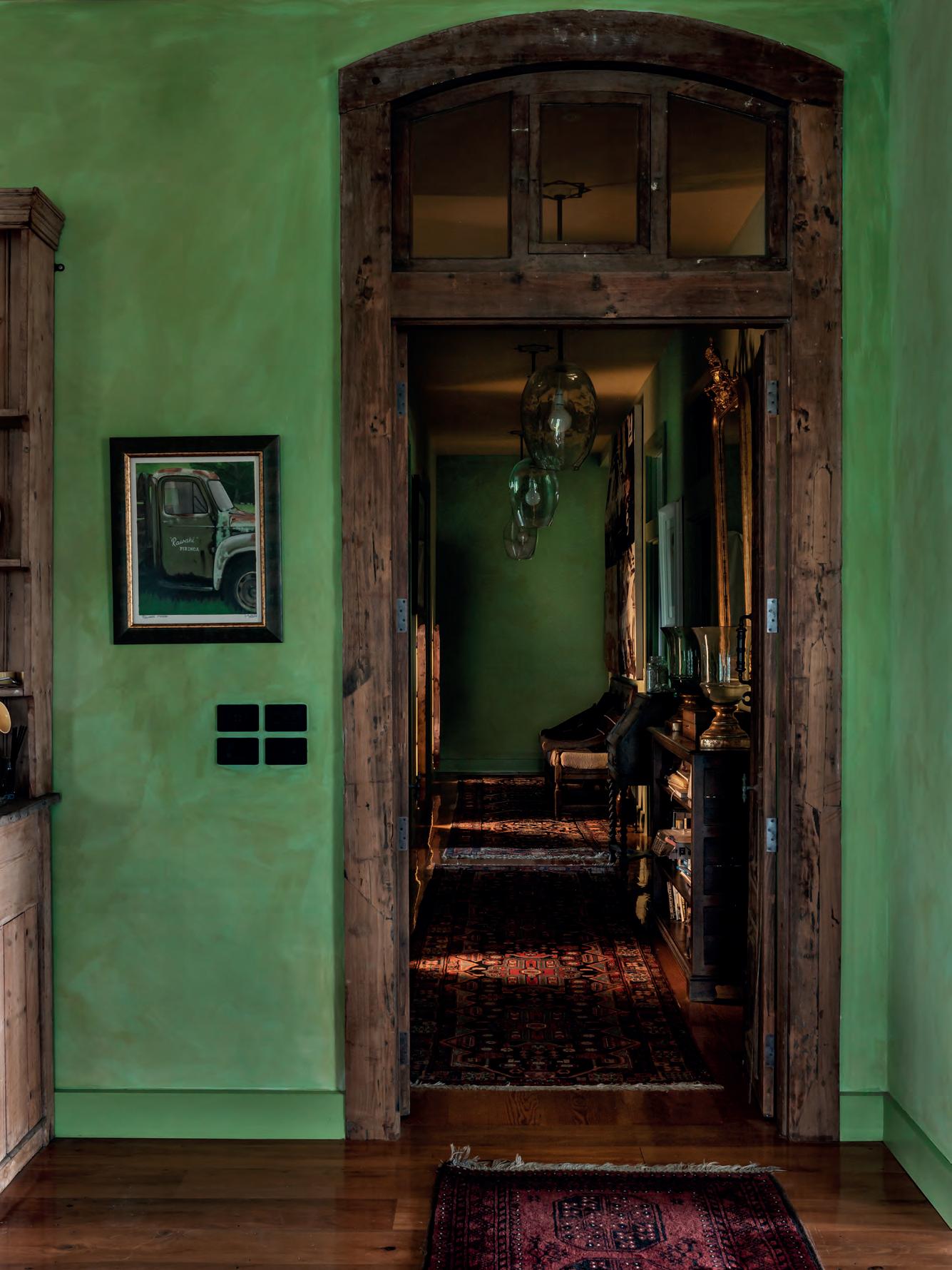
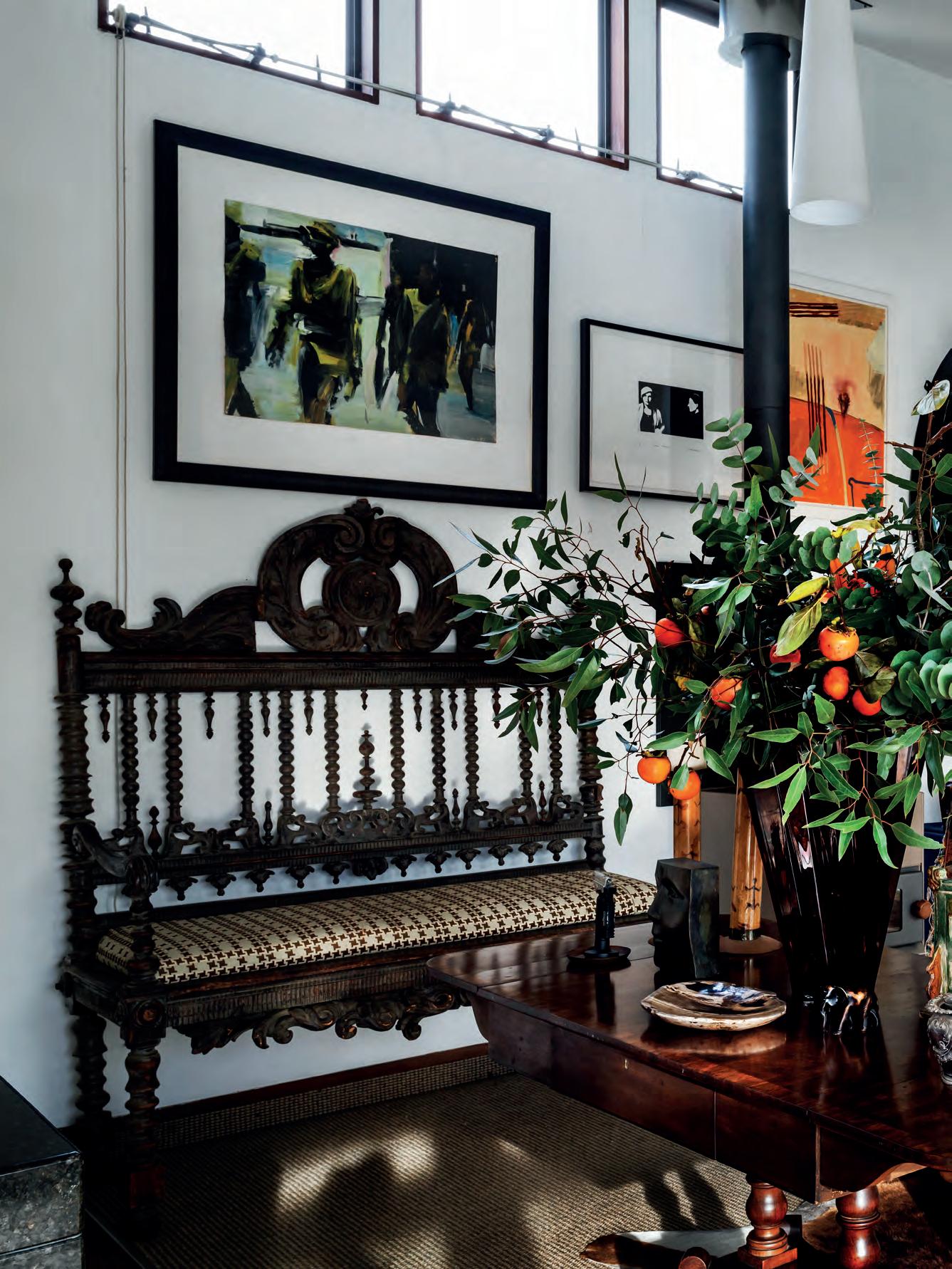
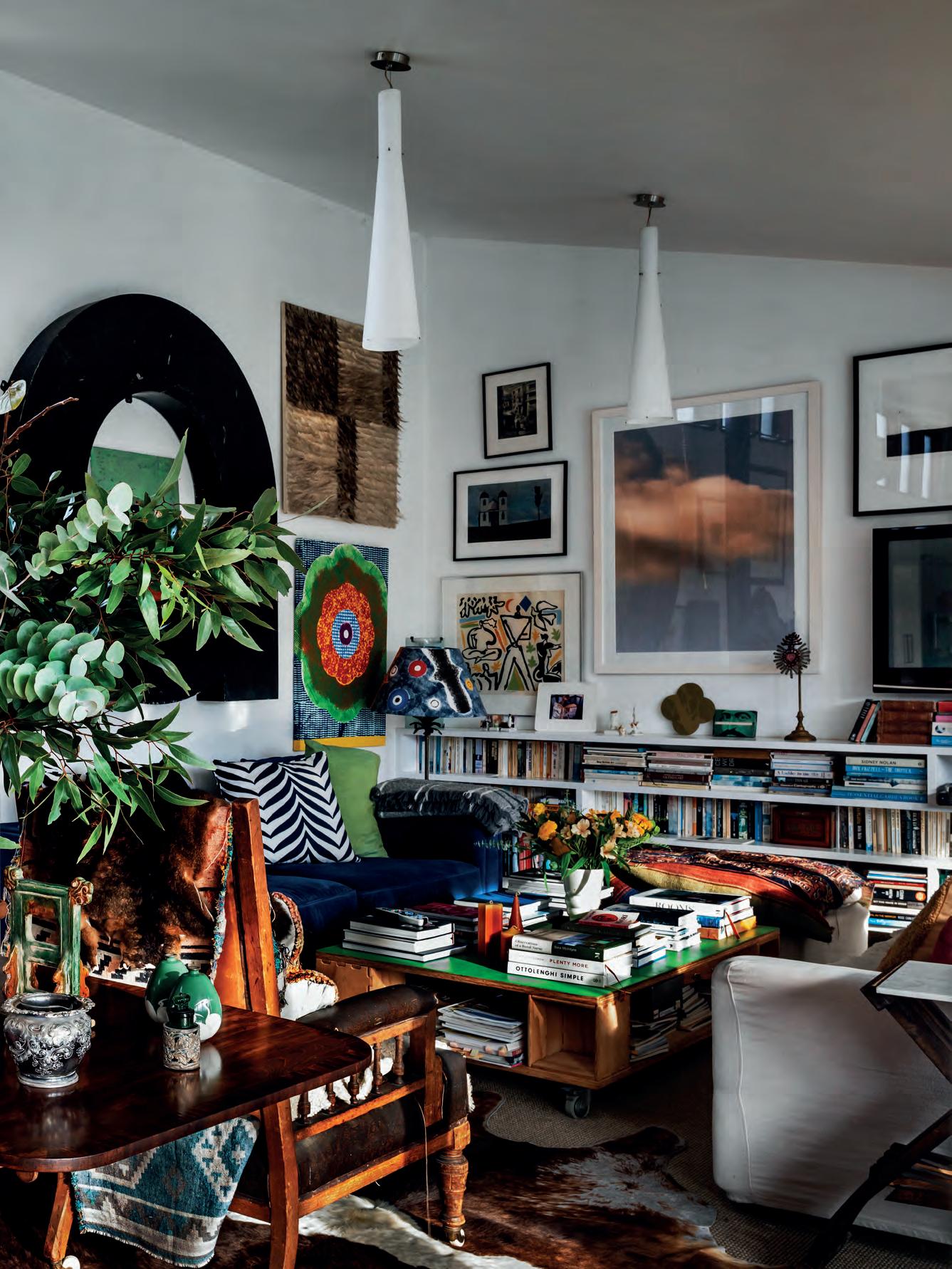
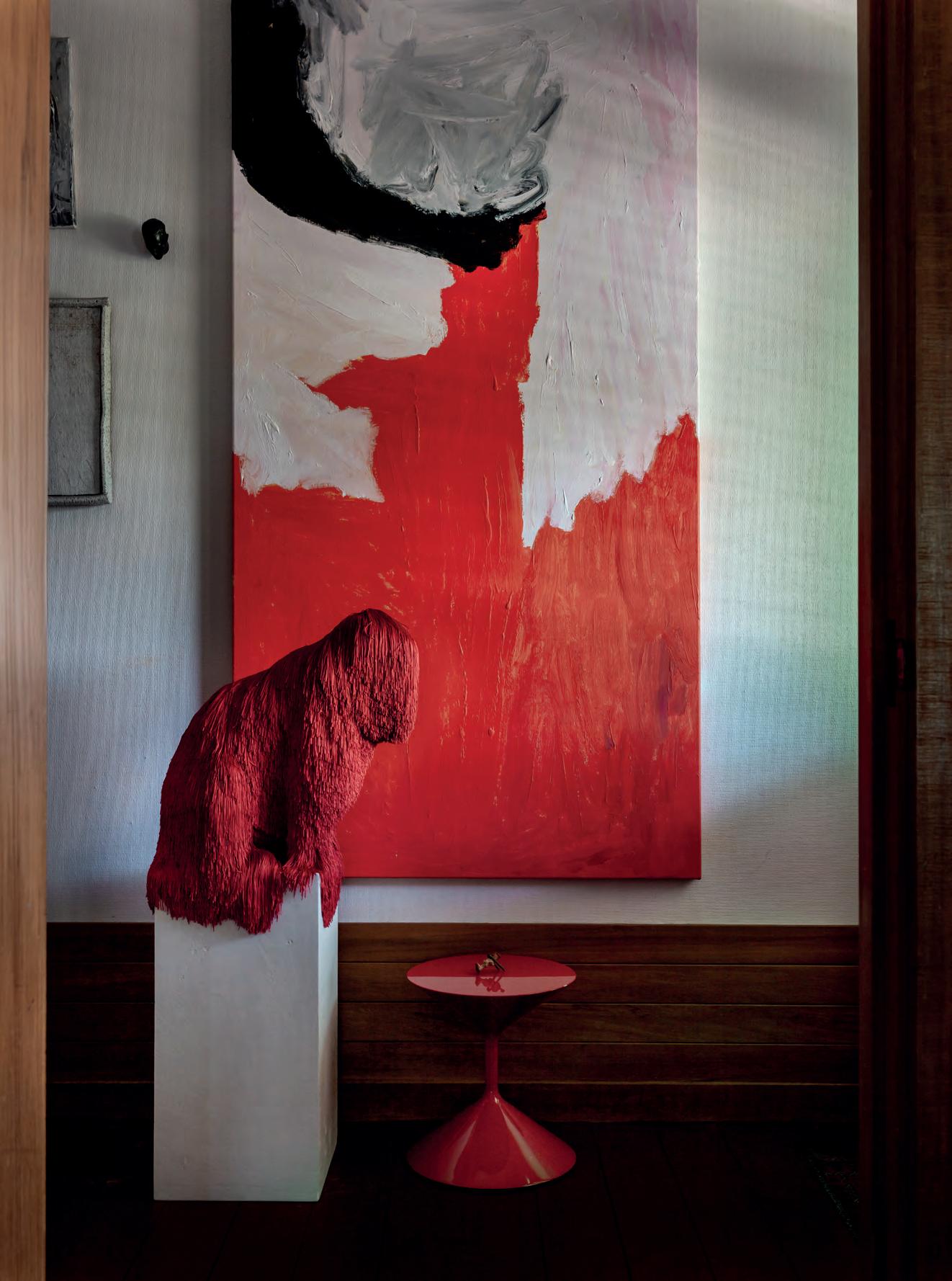
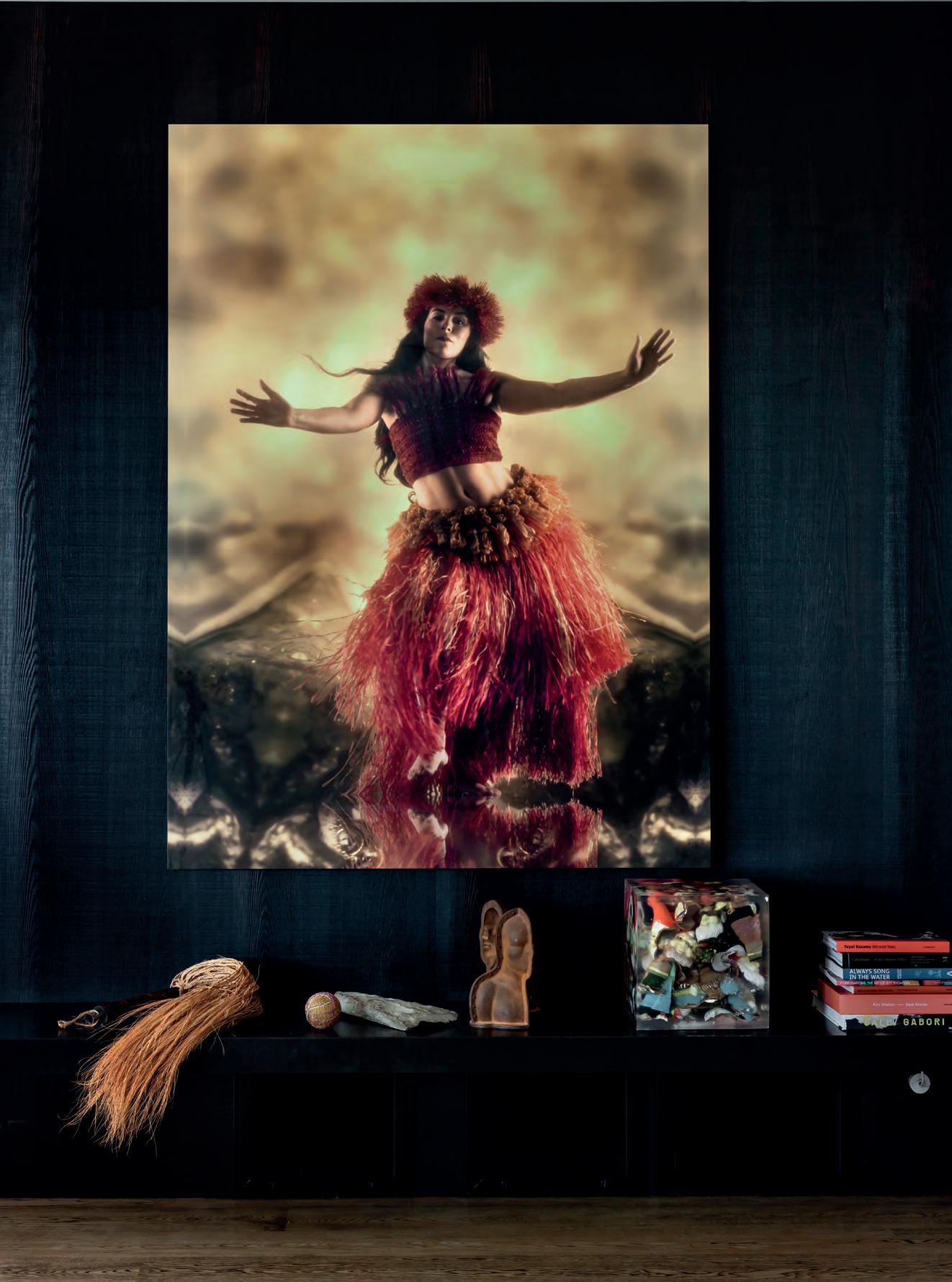
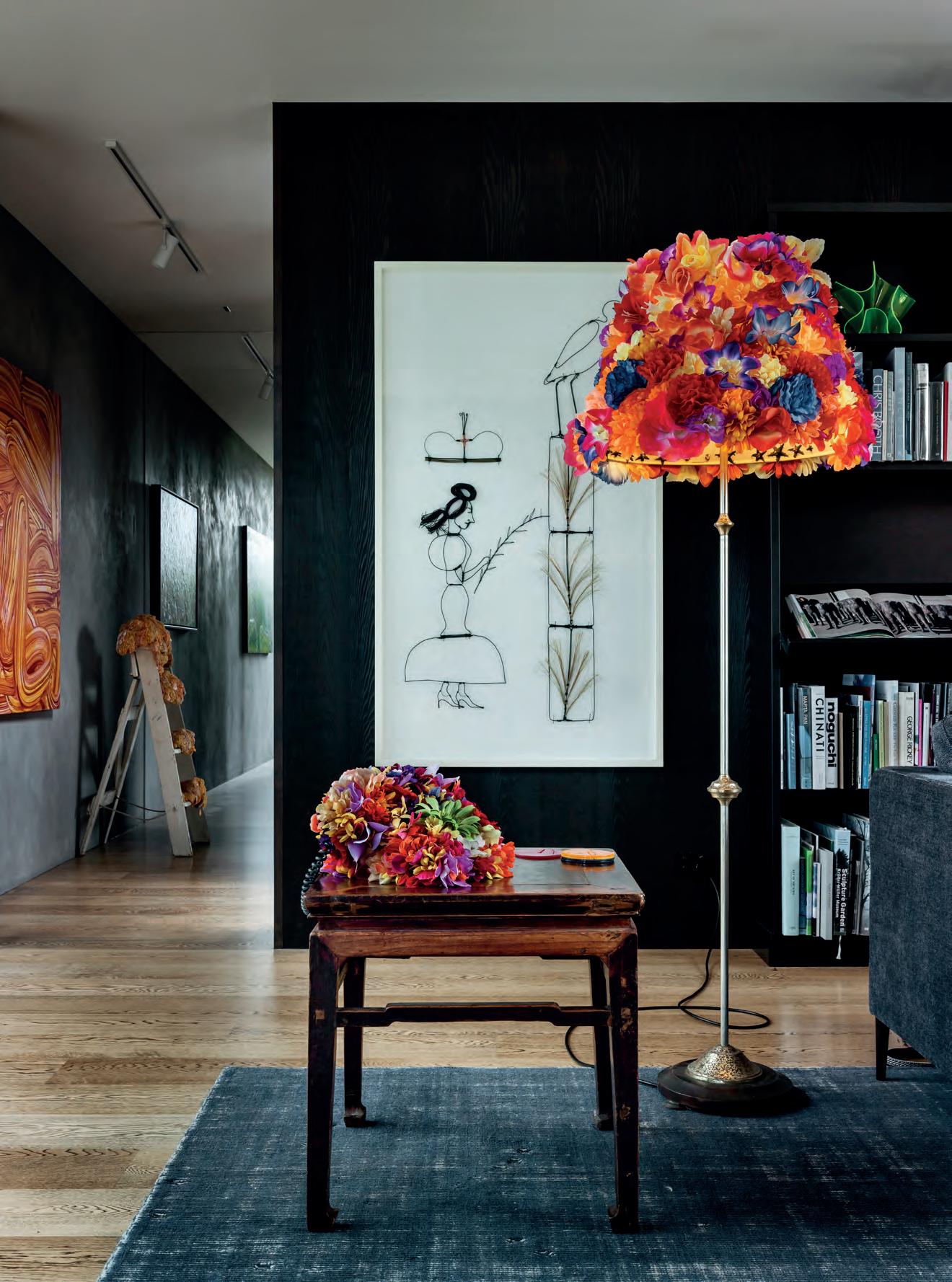
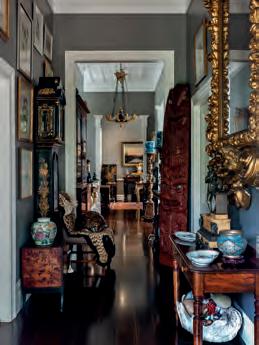
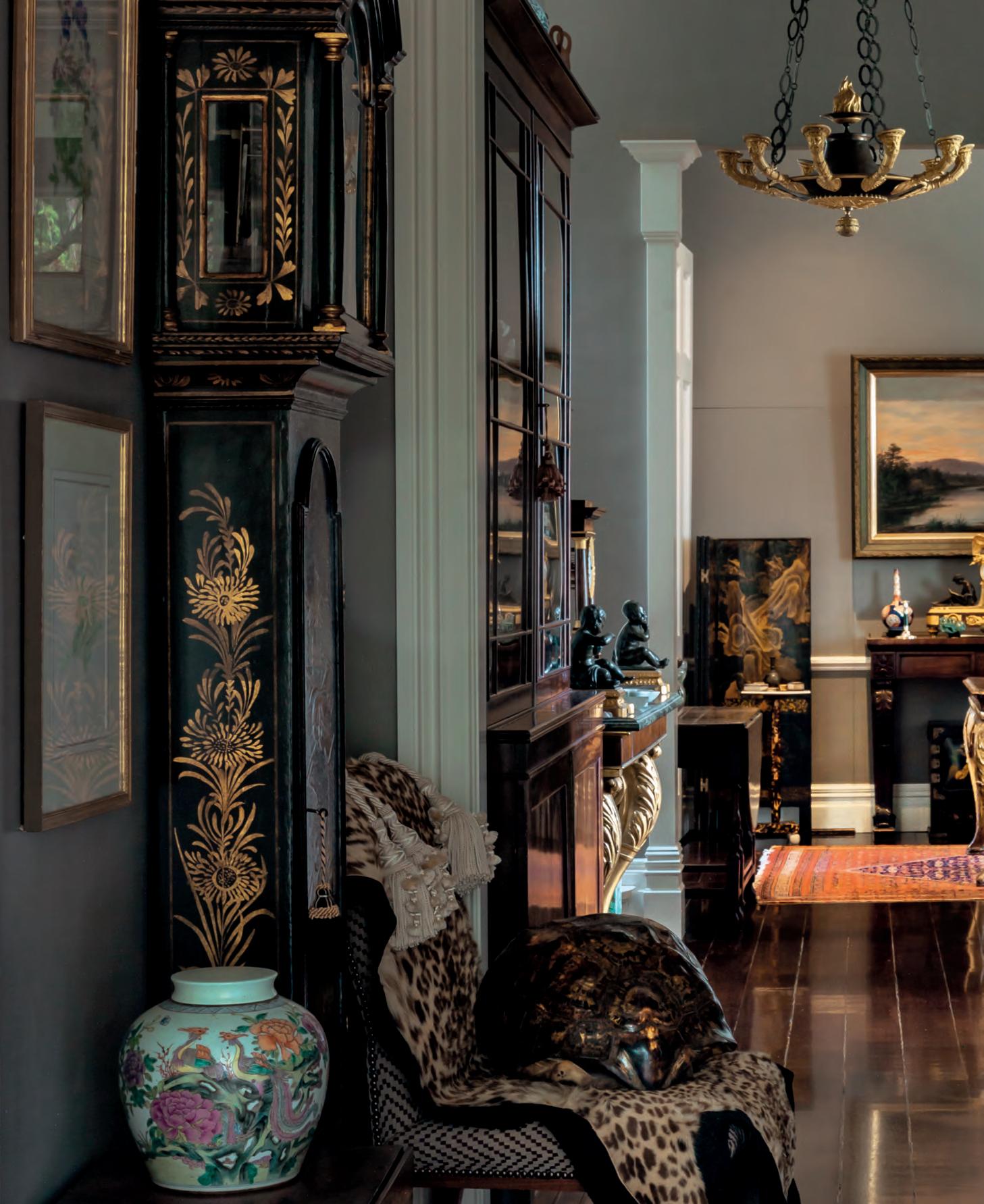
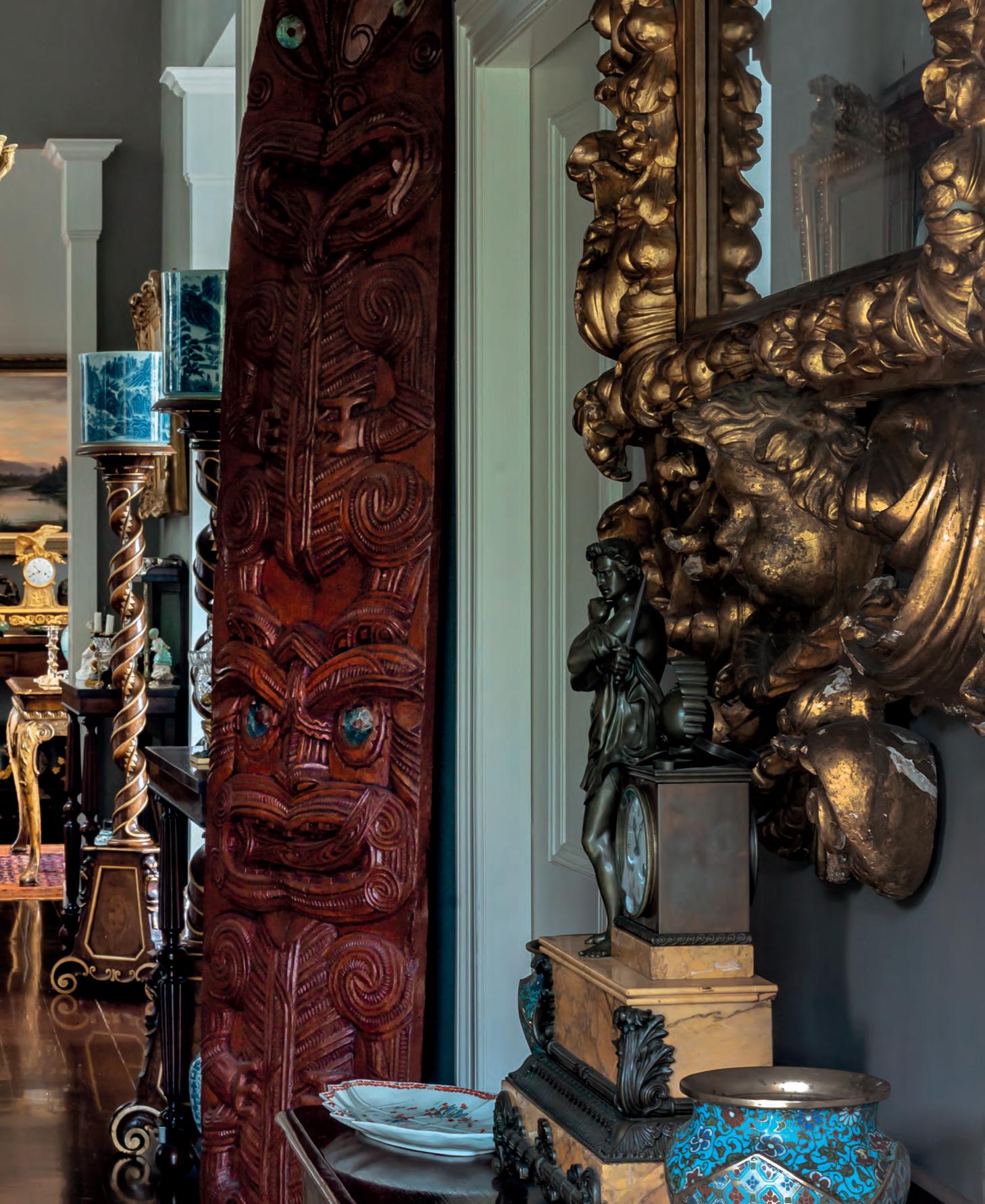
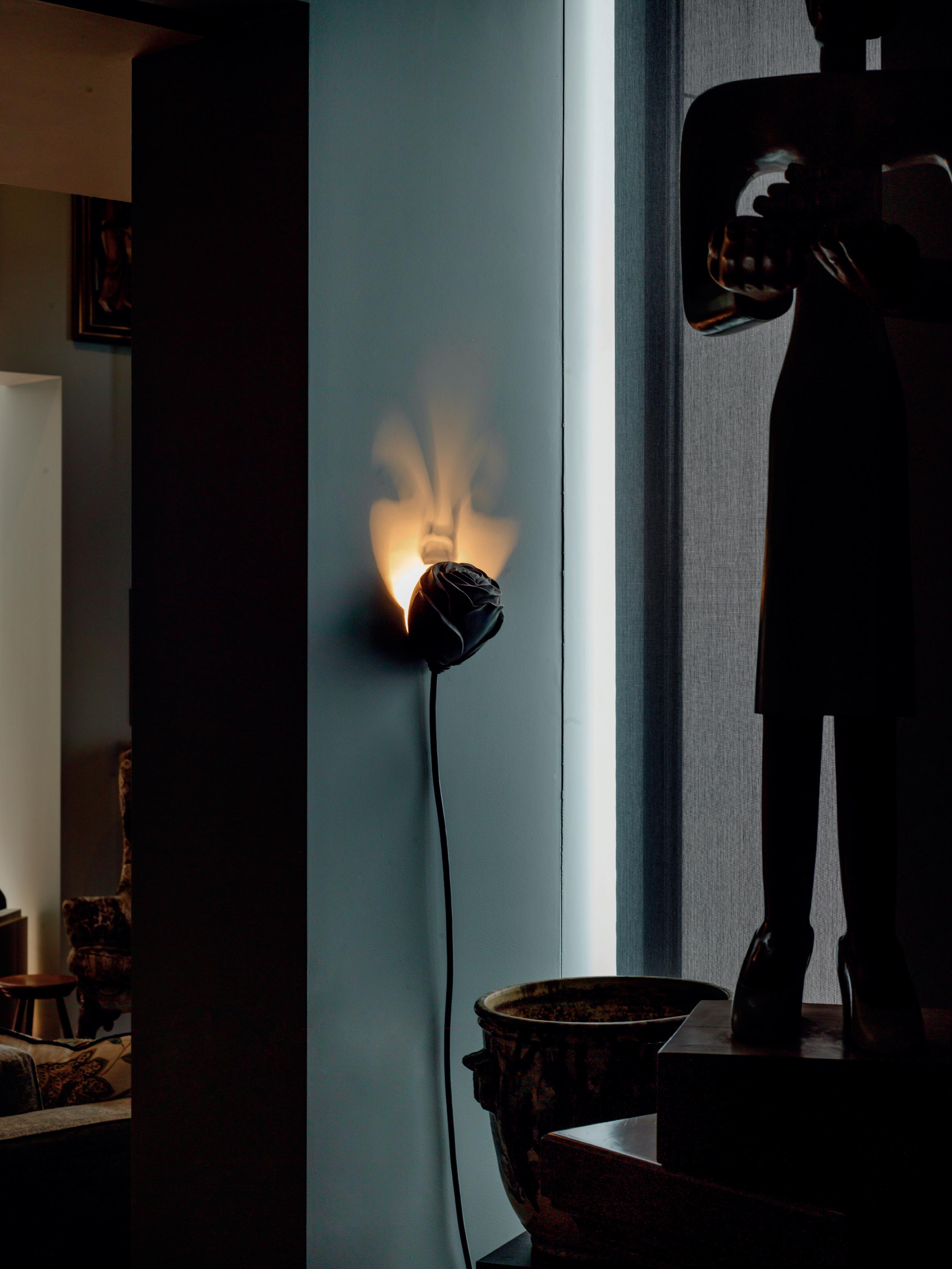
Mount Eden House, Auckland [pages 2–3, 96, 97, 110, 111, 112, 113]
It’s appropriate that the hallway of this turn-of-the-century villa is the first interior to appear in this book. Its knowledgeable owner, who has been collecting important furniture, silver, ceramics and other objects ever since he first drew a salary, would argue that in a house it is not the things that matter but rather the meaning of the things, the conversations they have with each other and the brilliance of their creators that counts. ‘The objects I collect require me to stop for a moment and celebrate the creativity of humankind — to admire the silversmiths, furniture-makers, handpainters, carvers, clock-mechanismmakers, engravers, enamellers who made them,’ he says. He would rather their creations were not fetishised and that there was instead a sense of a wunderkammer about the rooms in a house. In his view ‘a house becomes a home when it reflects the personality of its inhabitants. In other words, when something of the owner becomes manifest in the objects contained within its rooms.’ On pages 96 and 97 the mirror at right is mid-nineteenth-century Italian. The East Coast pou was a gift from an aunt. On the left are some of the many botanical prints in the house. Many came from the collection of New Zealand garden and floral designer Barry Ferguson, who had a successful career in New York. The lacquered clock is English, made in the eighteenth century and imagined as being in the Chinese style. The French ormulu chandelier is from the early nineteenth century. On page 98 the view is from the front door and down the hallway. On page 99 the Sienna marble and bronze clock, bought from Dick Oord of London Antiques, is second-quarter nineteenth-century French. On either side are a pair of Chinese cloisonné cache pots. The two porcelain dishes from the English Bow factory (active c. 1747–64 and closed in 1776) are imitations of Japanese Kakiemon wares in the two-quail pattern. On page 96 the painting of the Waiau
River above the late nineteenth-century console table is by George W. Baker. Its perspective gives a sense of depth to the room. Below it are a late eighteenthcentury clock by François Rémond, and a collection of pounamu that includes a remarkable lotus leaf bowl by Richard Anderson. The candlesticks were made by Dunedin jeweller Frank Hyams, who later had a shop in New Bond Street, London. The Imari bottle vases are from the Meiji period. The small table at left was made by Auckland artisan Nick John in the style of an eighteenth-century tea table. On page 110 a polychrome enamel Chinese porcelain punchbowl made for the English trade sits on a Queen Anne kneehole desk. Alongside is an eighteenth-century French fauteuil still with its original upholstery fabric. On the shelf at left is a tile made by John Papas. Behind it is a Chinese sang de boeuf glazed vase. On page 111 the lacquered chest is an early eighteenth-century piece made in England in the assumed Chinese manner. It was restored in Auckland by Nick John, who made the new base; silversmith John Money, who made the replacement brassware; and Rory McPherson, who restored the lacquer. The French ormulu cartel clock is second-quarter nineteenthcentury. The silver Monteith vessel is from the early twentieth-century. Above, two Chinese porcelain birds sit on nineteenth-century French brackets. On page 112 the sitting room is, for the house’s owner, a distillation of everything he feels about a life of collecting placed in association with ‘well-upholstered, comfortable chairs’. The painting above the mantelpiece is an Australian scene by New Zealander James Fraser Scott, an official Australian war artist in the First World War. He died in poverty the day before it was announced that he would be accepted into the Royal Academy. On either side is a pair of Hepplewhite mirrors, the one on the left still with its mercury plate. The table in the foreground, whose pietra dura top would have been a nineteenth-century Grand Tour souvenir, was the owner’s very first purchase. On page 113 the back of the mahogany Chippendale-style chair, gifted to the owner by well-known antique dealer John Mains, is notable for the reversed carving of its organic forms.
4]
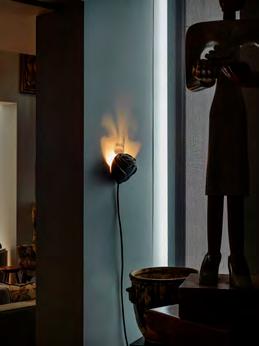
cast bronze rose lamp is by Terry Stringer, one of a limited edition made in 1998.
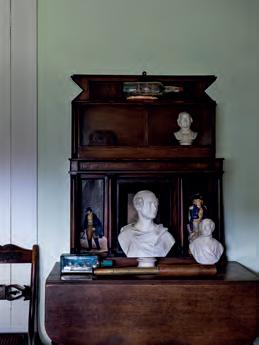
Arts and Crafts House, Franklin District [pages 6, 28, 29, 30, 31, 56, 57, 58–59, 122–23, 200–01, 204, 205]
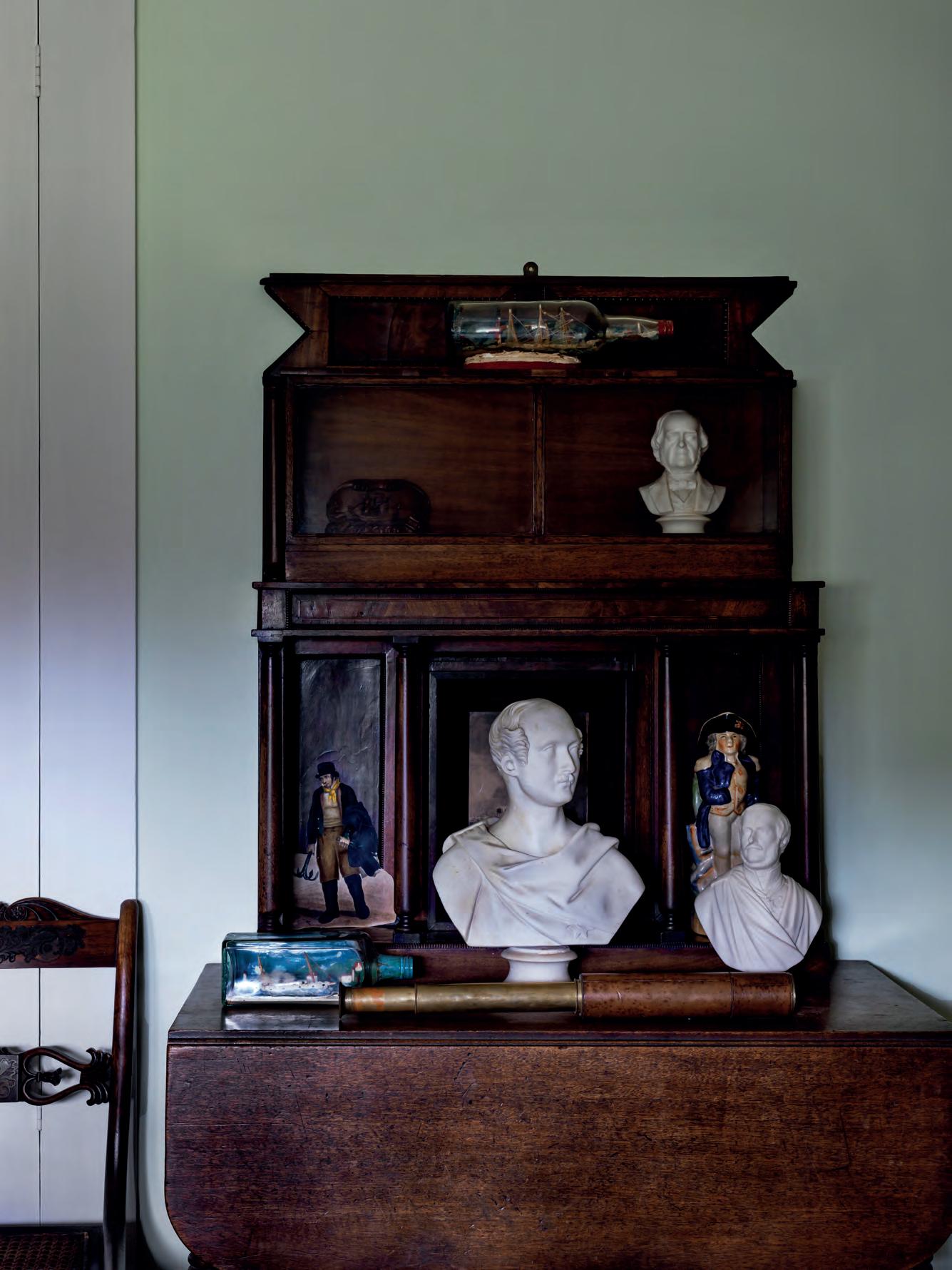
This house, designed in 1920 by George Selwyn Goldsboro (1870–1925), is full of objects collected over the last 20 years. On page 6 a small mahogany collector’s cabinet sits on top of a nineteenthcentury drop-leaf table. The busts are of Prince Albert and Sir Henry Havelock (with William Makepeace Thackeray above). On page 28 the bedside lamp on the nineteenth-century Anglo-Indian table is made from an old north-Indian bedpost. The bedhead on page 29 (and also on pages 58–59) is adapted from an antique Indian screen. On page 30 the maritime paintings are: (top) unknown; (middle) Robert Roe; and (below) Frank Holl, with a partial view of a Joseph Gaut. On page 31 the framed piece of French wallpaper, c. 1920s, is an op-shop find from 40 years ago. The artworks on page 56 are by Gavin Chillcott and the portrait of the springer spaniel on page 57 is by an unknown artist.
The armchairs in the sitting room on pages 122–23 are covered with old Ikat
cotton. The black Aesthetic movement sideboard is Irish. The paintings on the hallway stair on pages 200–01 were bought at auction houses over a long period. None is of a relative of the owners. The wrought-iron Arts and Crafts movement pendant light at top right is from Luxembourg. In the small sitting room on pages 204 and 205 the wallpaper above the picture rail is Acer by Zoffany. A collection of Kutani ware lines the rail shelf. On page 205 an Aesthetic movement cover panel disguises a three-section mirror that hangs above the fireplace. On the mantelpiece are, from left: a bronze of unknown origin, a French carriage clock, an Awaji vase on a stand, a netsuke of a man with a basket, a Meiji period bronze vase and a vase from the same period decorated with a bronze overlay.
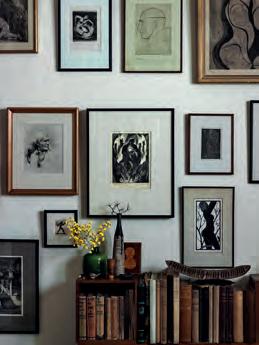
Grey Lynn Villa, Auckland [pages 8, 212, 213]
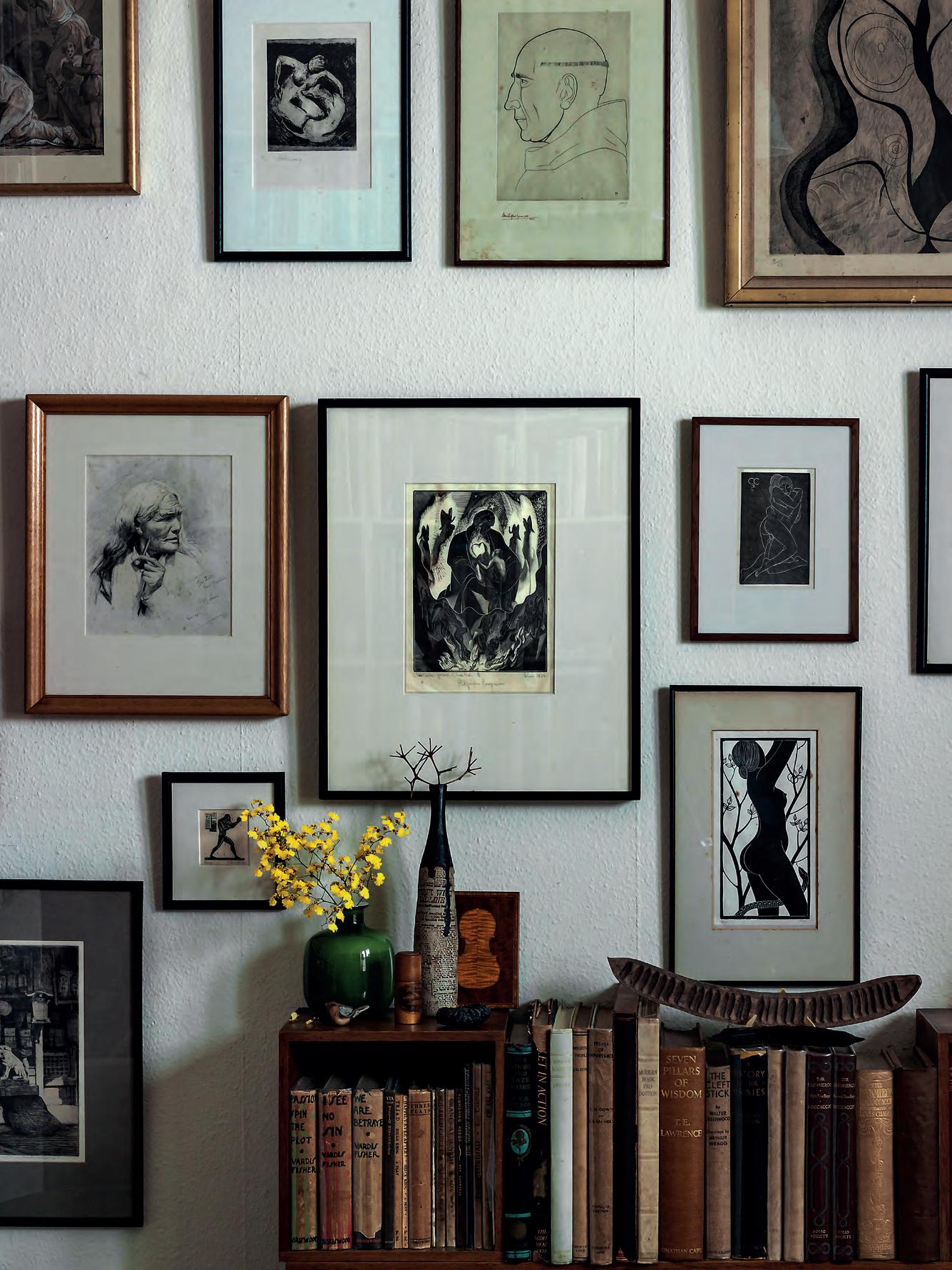
On page 8 some of the many black and white images that hang floor to ceiling in the book room of this villa include, at left, a Charles Goldie drawing of Guide Sophia. Below it is Pansy, a woodblock print by James Boswell. In the centre is a large wood engraving from Pilgrim’s Process by Blair Hughes-Stanton. Three Eric Gill prints hang nearby. The 1920s Heal’s of London modular weathered-oak bookcase, inherited from family, holds many first editions collected in London at that time. On the top shelf are a green Danish glass vase and a John Parker ceramic bottle. On page 212 Clematis, a prize-winning wooden panel painted by 15-year-old Charles Goldie, and Scottish artist Ian Hamilton Finlay’s Venus of the Hours hang above the deep shelves beside the fireplace. Below them are an Ida Percy bronze nude, a Goldie painting of Lake Pupuke, an onyx and malachite jug, a green Wedgwood majolica leaf dish and a porcupine quill box. On page 213 the view from the hallway towards the living room shows tribal masks from the Pacific and a rare artist’s proof lithograph by Bernd and Hilla Becher. To its left is
a glass work from Scottish artist Glen Onwin’s Saltmarsh series. A collection of white pieces by Wedgwood and Crown Lynn sits on the sideboard. Mission bells from New Mexico hang above the doorway, to the left of which, just visible, is an early lithograph by the British painter Jock McFadyen.
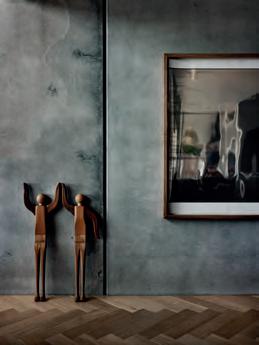
Tauranga House [pages 20, 286–87, 288, 289]
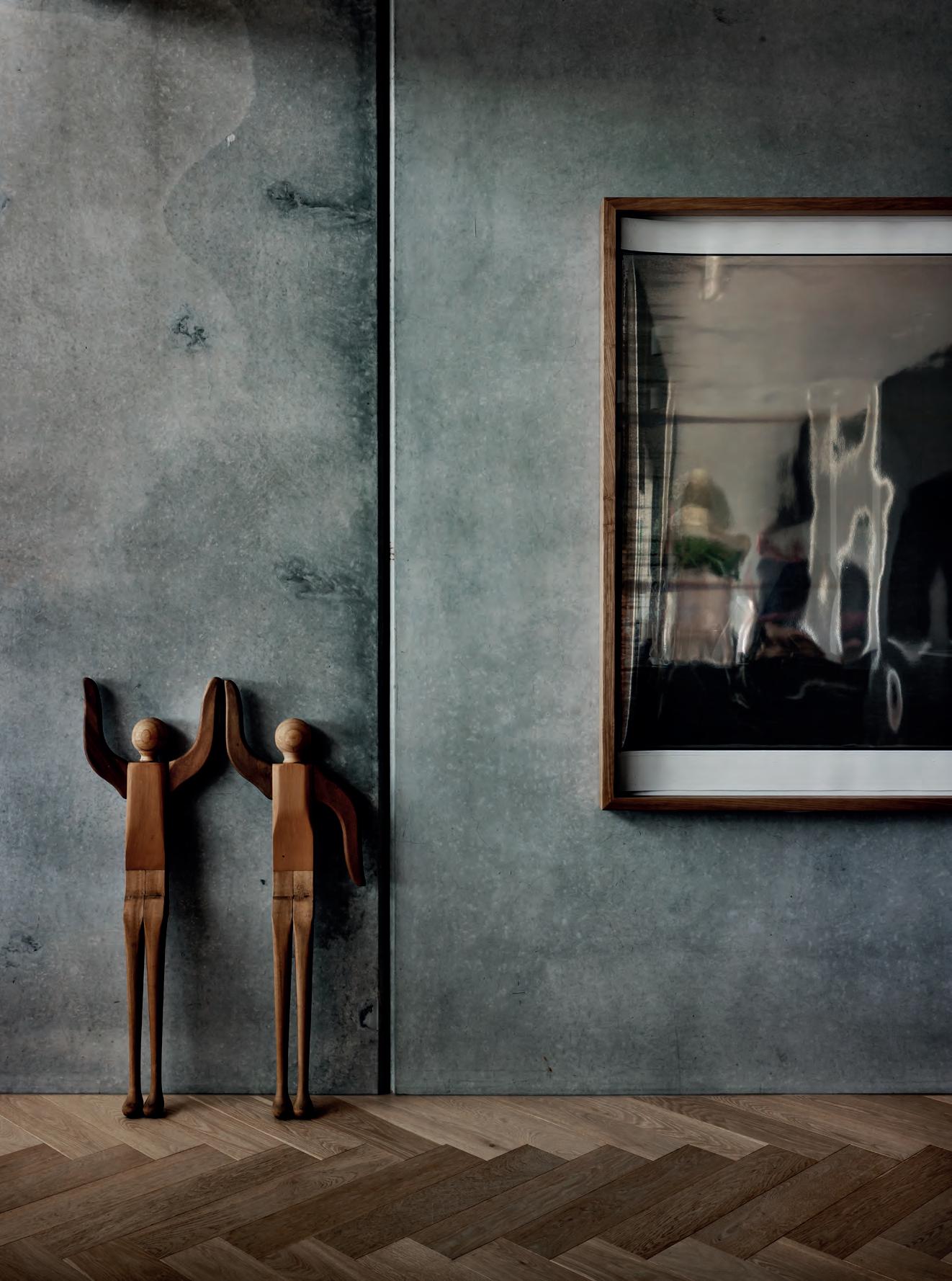
This house, whose interior is a collaboration between the owners Cindy and Richard Scott, interior stylist Sarah Lod and interior designer Scottie Batkin, is built of Litecrete, made using pumice aggregate. On page 20 the two wooden sculptures are made from repurposed furniture by Rupert Herring. The painting is by Australian artist Coen Young. On pages 286–87 the Cini Boeri Splits sofa and chair and the side table are from Studio Italia and the rug is from Tigmi in Byron Bay. The figure on the plinth at left is from Design 55. The cane chairs are from Mid Century Swag. The Prouvéstyle wall lamp is from Homage; the ‘Hinaki’ lampshade is by Finn Ferrier. The rug and the black side table are both from Simon James. The coffee table was bought at Webb’s. The small artwork is by Tia Ansell. On page 288, the brass rocking chair was bought at Webb’s. The table beside it is Oto by Simon James. The large painting hanging low and the small gold painting were the owner’s mother’s. The small painting to the right is a French scene and was bought from My Exhibition. The small gold egg is from Fourth Street. On page 289 the stacking tables are a family heirloom, the large sculpture on the table is by Chauncey Flay. The painting is by Matt Arbuckle. Hanging to its right, the tiny wooden apple cores are by Glen Hayward.
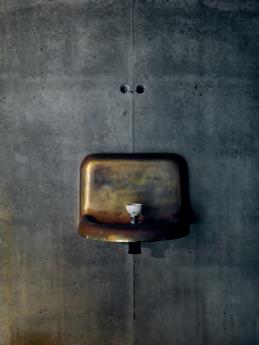
St Clair House, Dunedin [pages 22, 23, 32]
This impressive architect-designed house high above St Clair Beach is home to an adventurous art collector and has as its downstairs entrance a private art gallery. In this space, on page 23, the painting above the table is by Imogen Taylor. The chairs are by Martino Gamper. The artwork on page 22 is by Luke Willis Thompson. The pink chair on page 32 is Bohemian Chair by Moroso, sourced through Matisse, the artworks on the wall are by Peter Robinson and Sandrine Pelletier (the crocheted skeleton) and the chain curtain is by Ruth Buchanan. The light is a mid-century chandelier sourced from Les Trois Garçons in London. The carpet is by Nick Radford Rugs.
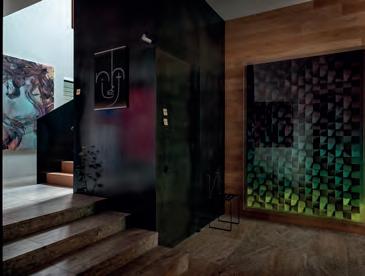
Country House in the City, Auckland [pages 24–25, 168, 169, 249, 284, 285]
On page 25 the large painting in this house by Patterson Associates with interior design by Sonja Hawkins is by the German artist Jan Albers. To its left the small metal chair is by Marilyn Sainty. The metal weed flower is by American artist Tony Matelli. Above it is Night by Julian Hooper. The yellow Post-it notes are by Daniel von Sturmer. Beyond, the painting is by Judy Millar. On page 168 the works on the table are Botanical by American-based Sourabh Gupta and Turkey by Berlin-based New Zealand artist Oscar Enberg. The Apples, by Steve Carr, hang from the ceiling.
The chair is the CH24 Wishbone chair by Hans Wegner. The artwork on page 169 is by Japanese artist Chiharu Shiota. On the sideboard on page 249 are a wooden bowl from Japan, and sculptural pieces by Anton Hart, Joe Sheehan and Sam Harrison. The Stephen Brookbanks oil bottle and light work on the wall above is by Bill Culbert and the painting is by Jude Rae. At the top of the stair on page 284 are, from left, Book in Thread by Chiharu Shiota, a work by Rohan Wealleans, Music Lover by Francis Upritchard and a charcoal drawing by Richard Lewer. The hanging mother-ofpearl and muka necklace on page 285 is by Rowan Panther.
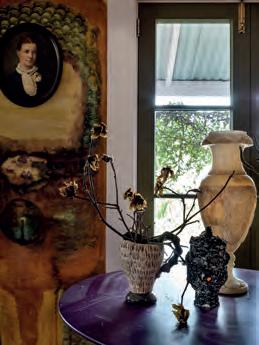
Lyttelton House [pages 26, 27, 54, 55]
This 1850s house, owned by artist Nichola Shanley and Timothy Schumacher, was built by a Canadian sea captain and has recently been refreshed in collaboration with Christchurch interior designer Jessica Close. Architect Peter Kent has worked on the restoration of the house over the last 25 years. Shanley’s wall painting on page 26 depicts the first arrival of humans into Lyttelton Harbour. On the table are a Bronwynne Cornish owl and a Shanley head. Shanley’s hand-painted fabric hangs in the frontdoor window on page 27. The bedroom on pages 54 and 55 features lamps made by Shanley, a small Henry Turner painting and a Commune quilt made in collaboration with Bekah Carran.
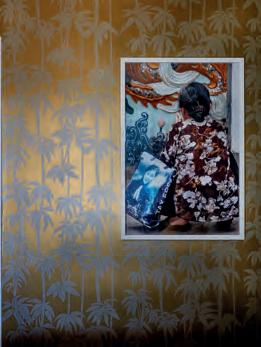
Mid-century House, Auckland [pages 33, 250, 251, 312, 313]
Elaine and Ross Millar’s 1961 house is something of an anomaly in Auckland’s Westmere, a neighbourhood with a bungalow heritage. On page 33 the photographic print hanging on a wall papered with Florence Broadhurst wallpaper is Ngaire Hart’s Woman at Buddhist Shrine, Hanoi. On page 250 the artwork is from Ann Shelton’s 2006 series of images of the Frederick B. Butler Collection at Te Puke Ariki in Ngāmotu New Plymouth. The small blue work to its right is by Susan Thomas. Murano sommerso glass pieces stand on a mahogany Otto Larsen sideboard. The large lamp was carved by Reverend Kake Heketoro Leonard (Ngāti Rangiwewehi), the first director of the Rotorua Māori Arts and Crafts Institute. A John Drawbridge mezzotint, Black Flight, hangs by the slatted screen. On page 251 two screenprints by Michael Smither hang against the original pine panelling. The velvet sofa is from Farmers. The Milo Baughman 951 flat-bar chrome-steel lounge chair has its original purple micro-suede upholstery. A William Yeoward crystal trailed vase sits on the coffee table. On page 312 the artworks above the midcentury Tasmanian blackwood armchair are a mixed-media work by Bridget Bidwill and photojournalist images of the 1951 waterfront strike. The vase on the sideboard is by Alessandro Mandruzzato. The ceramic work is by Len Castle. On page 313 the two silver gelatin photographs of Whakarewarewa are by Theo Schoon. To its right is Kristin Zambucka’s Māori Portrait with Moko. The two photographs are a portrait of Lord Bledisloe (GovernorGeneral of New Zealand, 1930–35) in full Freemasons kit and RAF 635 Pathfinder Squadron with a Lancaster Bomber at Downham Market, Norfolk. The owner’s father flew in that squadron in the Second World War.
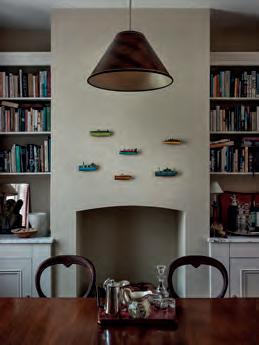
St Albans Cottage, Christchurch [pages 34, 35, 64, 65, 102]
This Georgian-style double-brick cottage, built in the 1880s, was badly damaged in the Christchurch earthquakes and then repaired. The little boats above the dining table on page 34 are by Barry Clarke. The painting on page 35 is by Alistair Nisbet-Smith. On page 65 the photograph above the kitchen table is by Bridgit Anderson. The view through the side porch entranceway is to the tower house at the end of the garden where the owner lived while the house was being repaired. The fold-down writing table in the guest bedroom on page 102 is from the original Warner’s Hotel in The Square. It is surrounded by various family heirlooms.
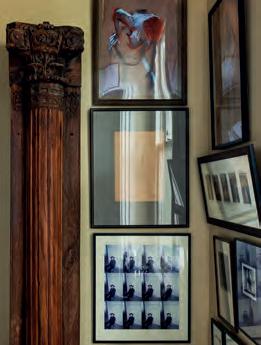
City Rise House, Dunedin [pages 36, 37]
The bathroom of this villa owned by well-known Dunedin arts patron Barbara Brinsley is home to a collection of nudes, including by her friend Ralph Hotere and her cousin Shona McFarlane. Alongside the wooden pillar found in a secondhand shop are a series of photographs of Quentin Crisp.
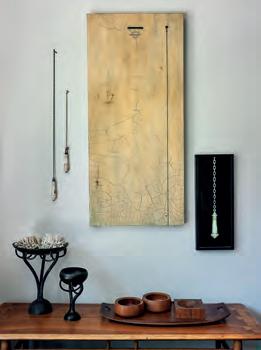
Merivale House, Christchurch [pages 38, 39, 270, 271]
This house is owned by dedicated collectors of mid-century furniture and ceramics and New Zealand art. The paintings on page 38 are both by Heather Straka. The bronzes are by Toby Twiss. The table is by Lane of Washington. The wooden tray and bowls are by Jens Quistgaard for Dansk. The shelves on page 39 house a large collection of ceramics by Ernest Shufflebotham and Mirek Smisek. The Danish mid-century table in front of it was bought at Mr Mod in Christchurch and holds pieces by Keith Murray. Above the sideboard on page 270 are works by, from left, Heather Straka, Séraphine Pick, Shane Cotton and Roger Mortimer. On the dresser are pieces of the owners’ large collection of glass, including Pertti Santalahti for Humppila Glass, Per Lütken for Holmegaard, Orrefors and Tapio Wirkkala. The wheeled vehicle and sheriff’s badge are by Wayne Youle. On page 271, the painting above the Danish leather sofa is by Mark Braunias.
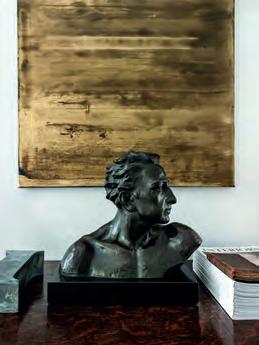
Inner-city Villa, Auckland [pages 40, 41, 292, 293, 328]
On page 40 the painting in the background is by Cruz Jimenez. The bronze bust was bought at Meredith Lee’s European Antiques. On page 41 the work behind the Georgian wingback
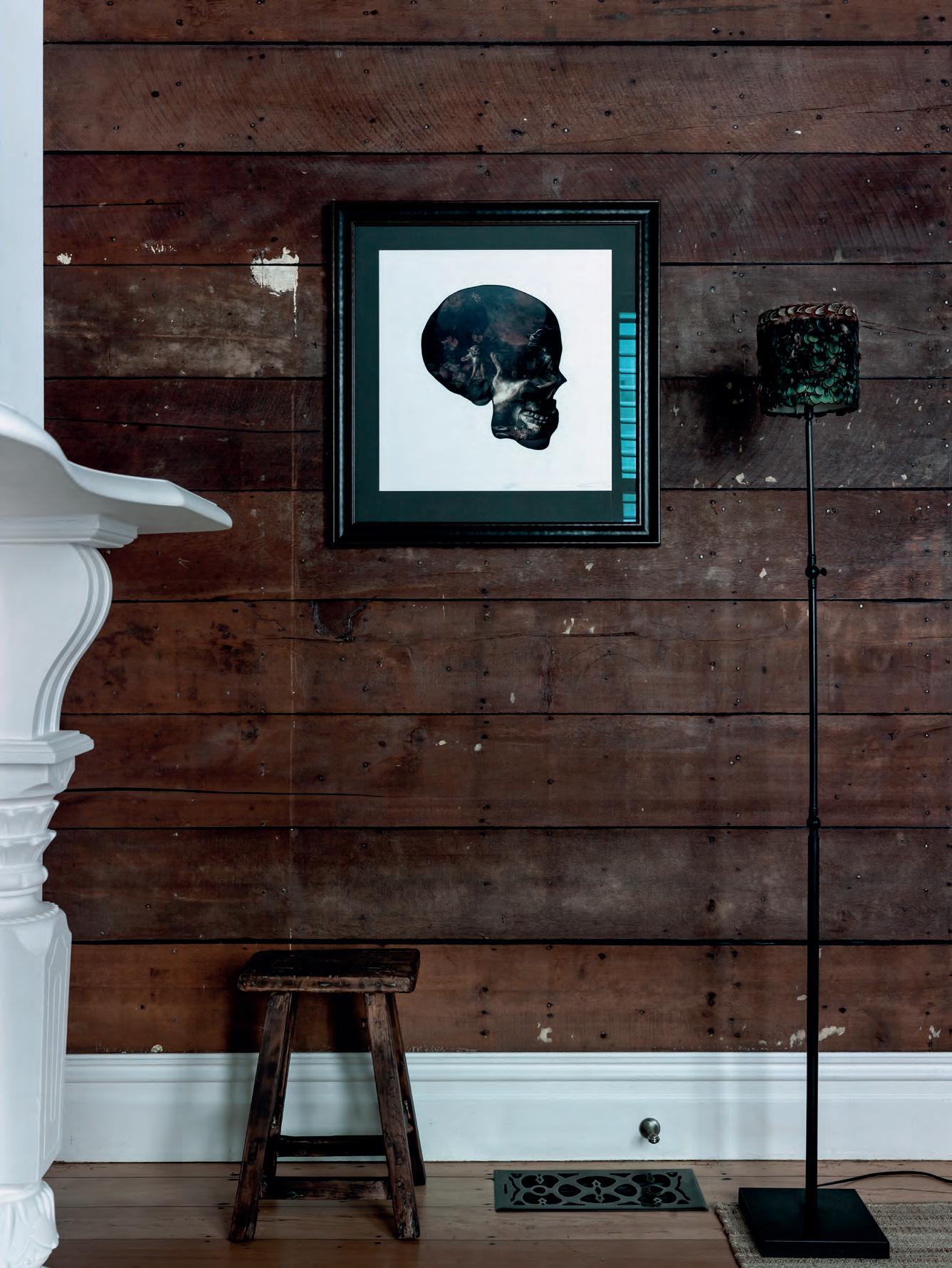
armchair, bought at Donald Melville Antiques, is by American artist Hunt Slonem. In the hallway beyond, the photograph to the left is of Kate Moss. On page 292 the painting is by an unknown artist. The vintage wooden dough bowl is from Corso Interiors. On page 293 the bust on the mantelpiece is from European Antiques. The painting at left is a copy of a self-portrait by John Singer Sargent. The paintings to its right are by artists unknown. The nineteenth-century French engraving was bought at Newton Andrews. In the TV room on page 328 the image on the walls, which have been stripped to their sarking, is by Magnus Gjoen. The lamp stand is from Ambience. Its vintage feather shade was repurposed from another old lamp. The wooden stool is from Corso Interiors.
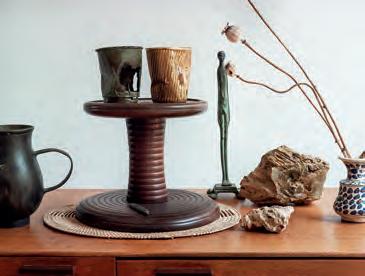
Northcote Point House, Auckland [pages 42–43, 116, 117, 176, 177, 178–79]
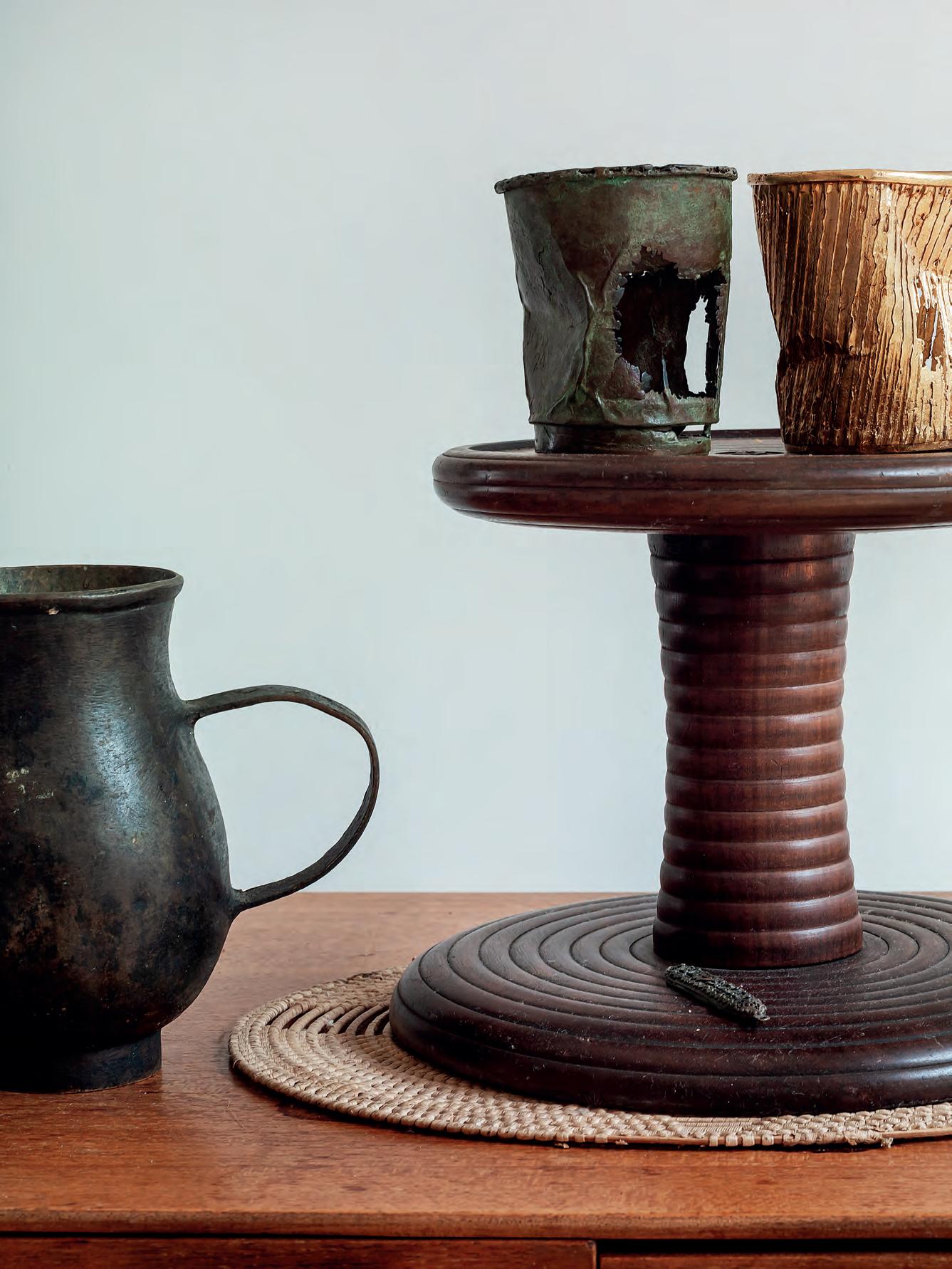
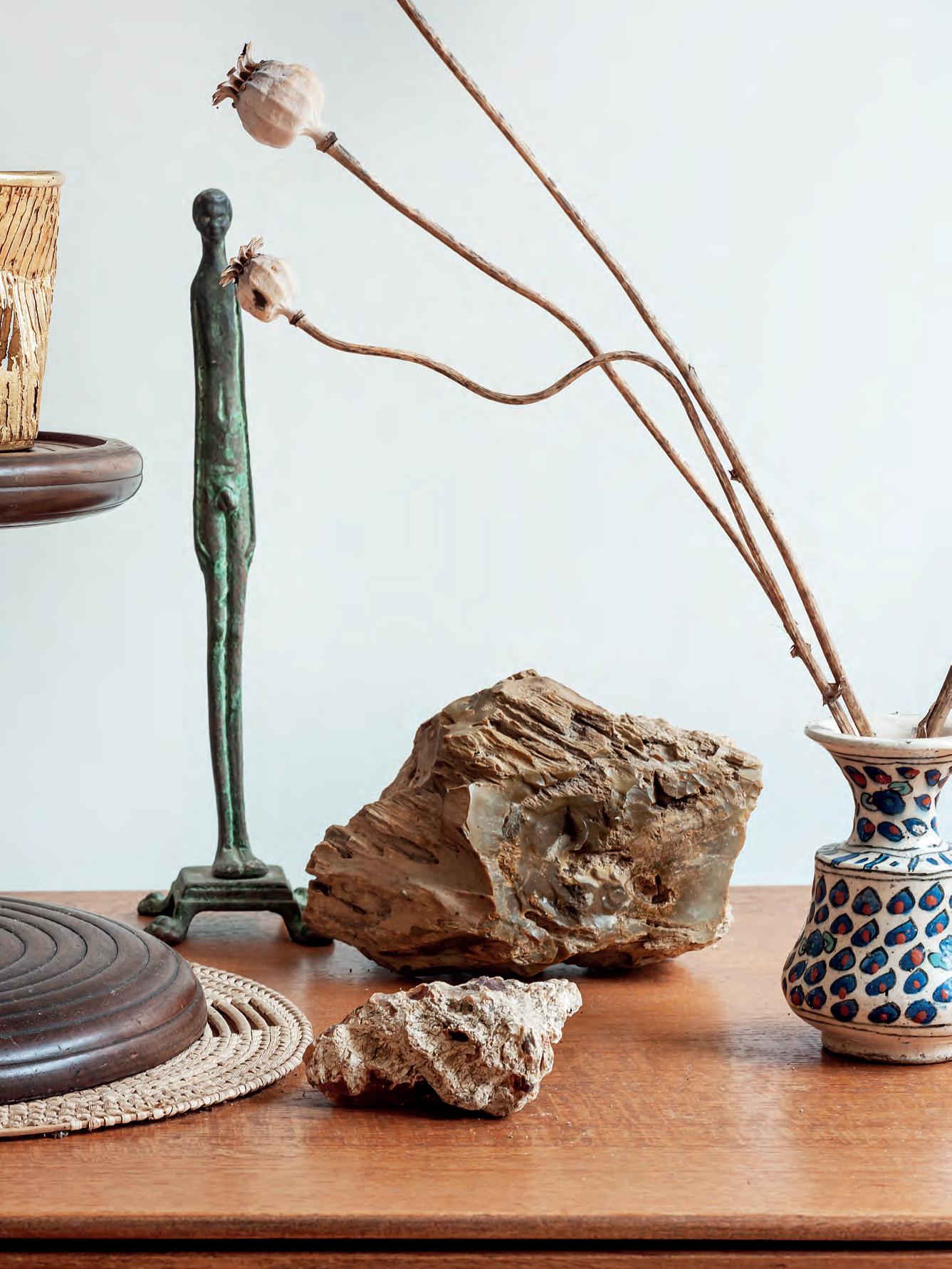
The mid-century sideboard in this c. 1904 villa features cast takeaway coffee cups by Paul Hartigan (Monsta and Miller’s Gold), a vase from Kapalıçarşı, the grand bazaar in Istanbul, and a lump of kauri dug up from the garden. The view on page 116 is from the music room, from which paper has been stripped from the sarking boards, into the sitting room, where a trefoil by Max Gimblett hangs above the fireplace. On page 117 a bronze beetle by Elizabeth Thomson crawls up the wall and a wooden dish from the Solomon Islands sits on an Indian trunk. The photograph of a Zeppelin was bought from Sheridan Keith’s Northcote Point shop Blikfang Art and Antiques. On page 176 the view towards the bedroom takes in a dried puffer fish, Tracey Moffat’s Up in the Sky, a bronze depicting Marianne Dennis — France’s national symbol of peace and democracy — bought from a flea market in Paris, and two figurines left by the previous owners. The model of a bar on page 177 was bought at a market in Chiang Mai, Thailand. An original light fixture hangs above the table in the dining/living room on pages 178–79. On the sideboard is a model of a Vauxhall Velox, the original family car, and on the opposite wall, obscured, is Fiona Pardington’s Heitiki
Carved by Maori (Prisoner) from Parihaka During Incarceration in Dunedin.
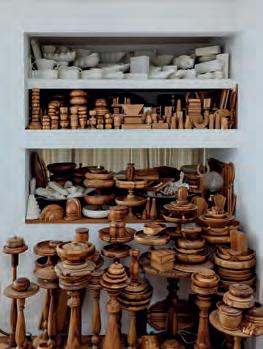
Western Springs Cottage, Auckland [pages 44, 45, 206, 207, 210, 211]
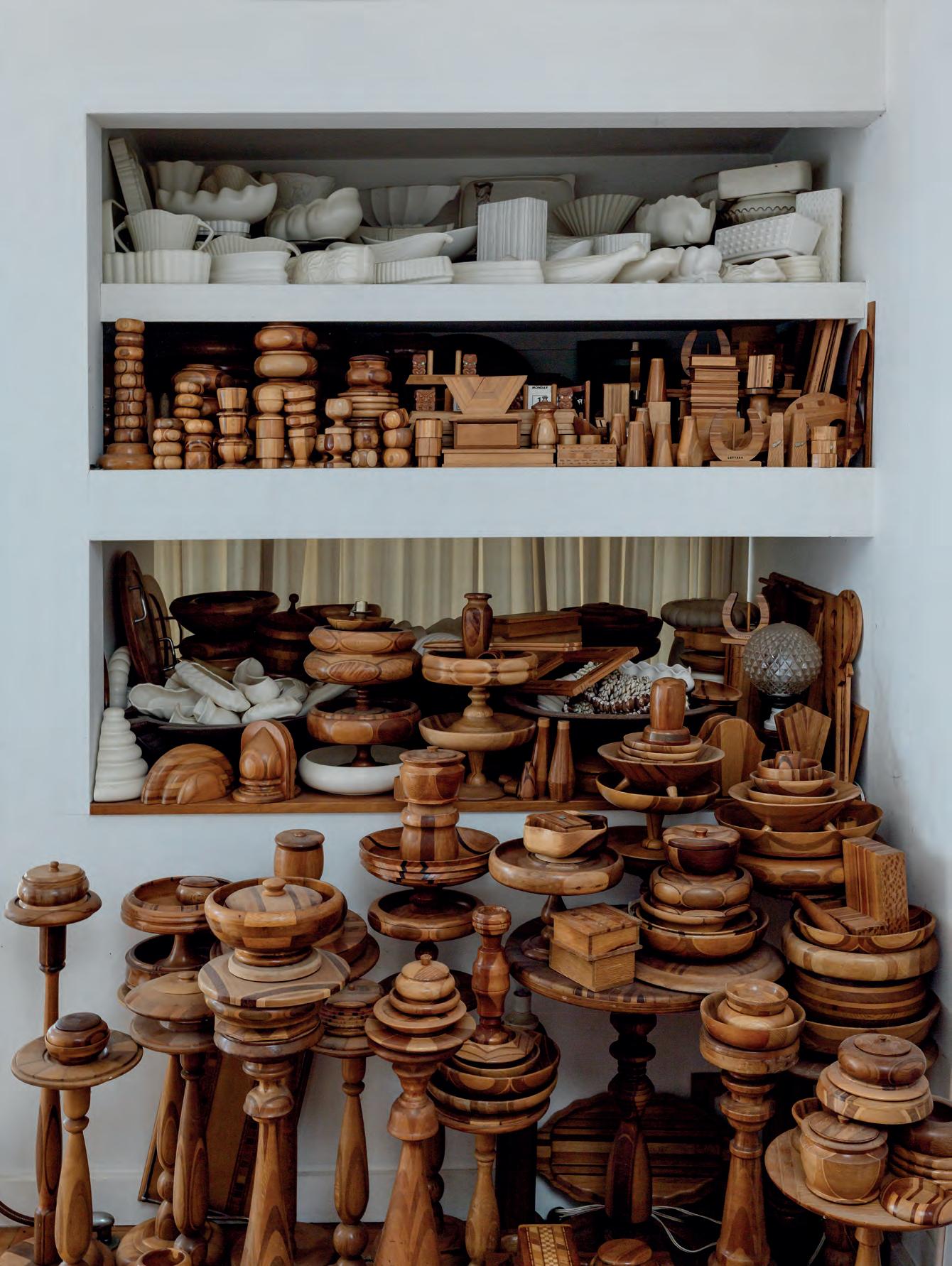
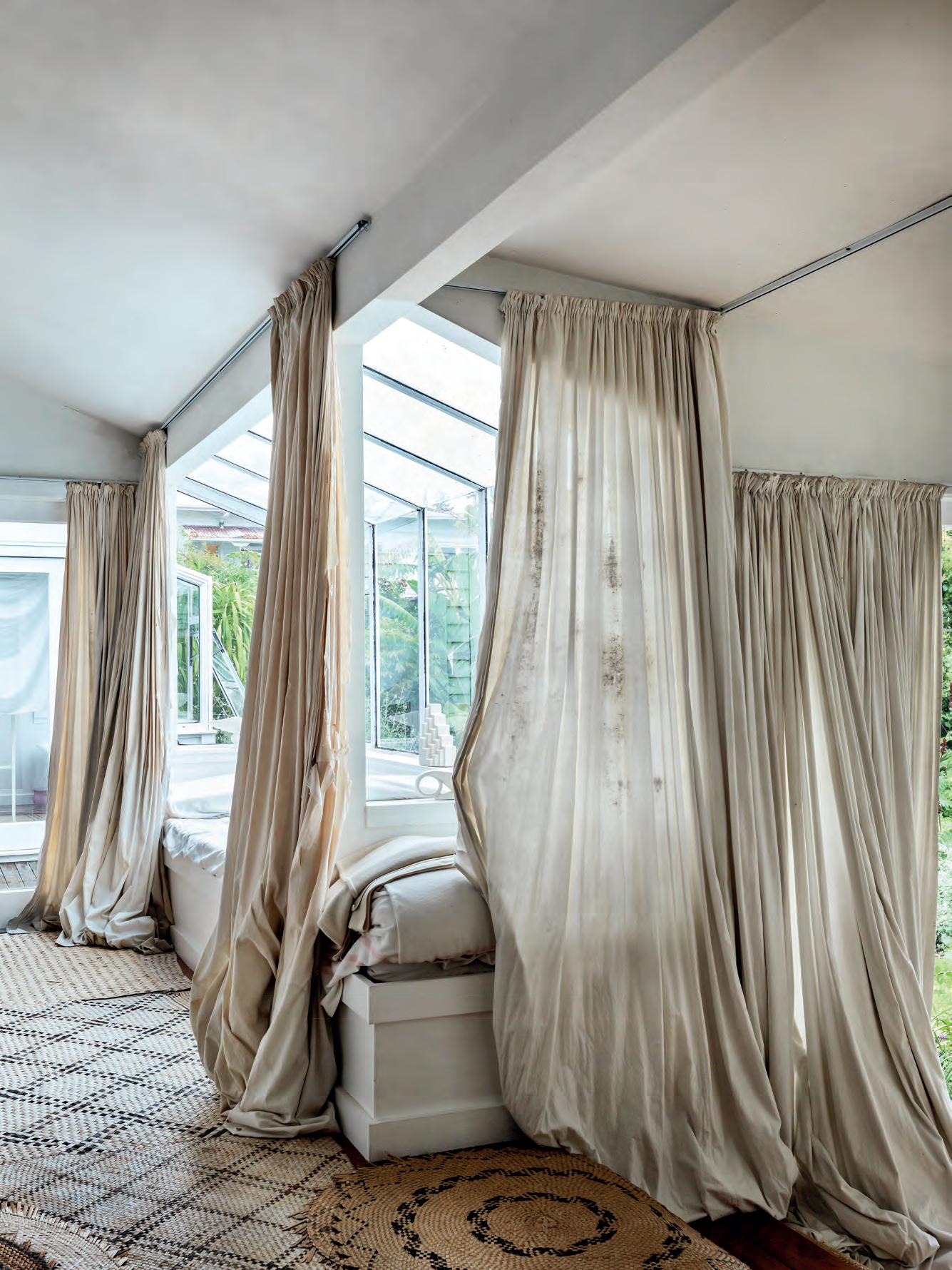
The large collection of turned wooden objects made of native timber in this artist’s home on page 44 were collected over many years at weekend markets. On the top shelf is part of a large collection of white ceramics. On page 45 the window seat is surrounded by cloth curtains. The woven mats on the floor are from Fiji. In winter they are put away and replaced with Persian and Oriental rugs. Next to the window, on the left, is a tabua, a polished sperm whale tooth. This important Fijian cultural item was gifted to the owner ceremonially in Fiji. The stained glass of the fanlight windows was designed by the owner and made by Mark Davidson. On page 207 the view is from out of the same room and across to the hallway. A Fijian masi or tapa cloth is on the wall. The cabinet above the door holds a collection of shells passed down from the owner’s family. In the further view of the owner’s turned wood collection on page 210 the lithograph on the floor is Rodney Fumpston’s Blue Garden. Above it is Crown Lynn Collection, also by Fumpston. Above the sofa on page 211 the larger of the three works is by Rodney Fumpston. The others are by Giovanni Battista Piranesi. The small rag rugs and the woven items on the wall are all from Fiji. The bronze figure at far left is by Terry Stringer.