I ITIATIO
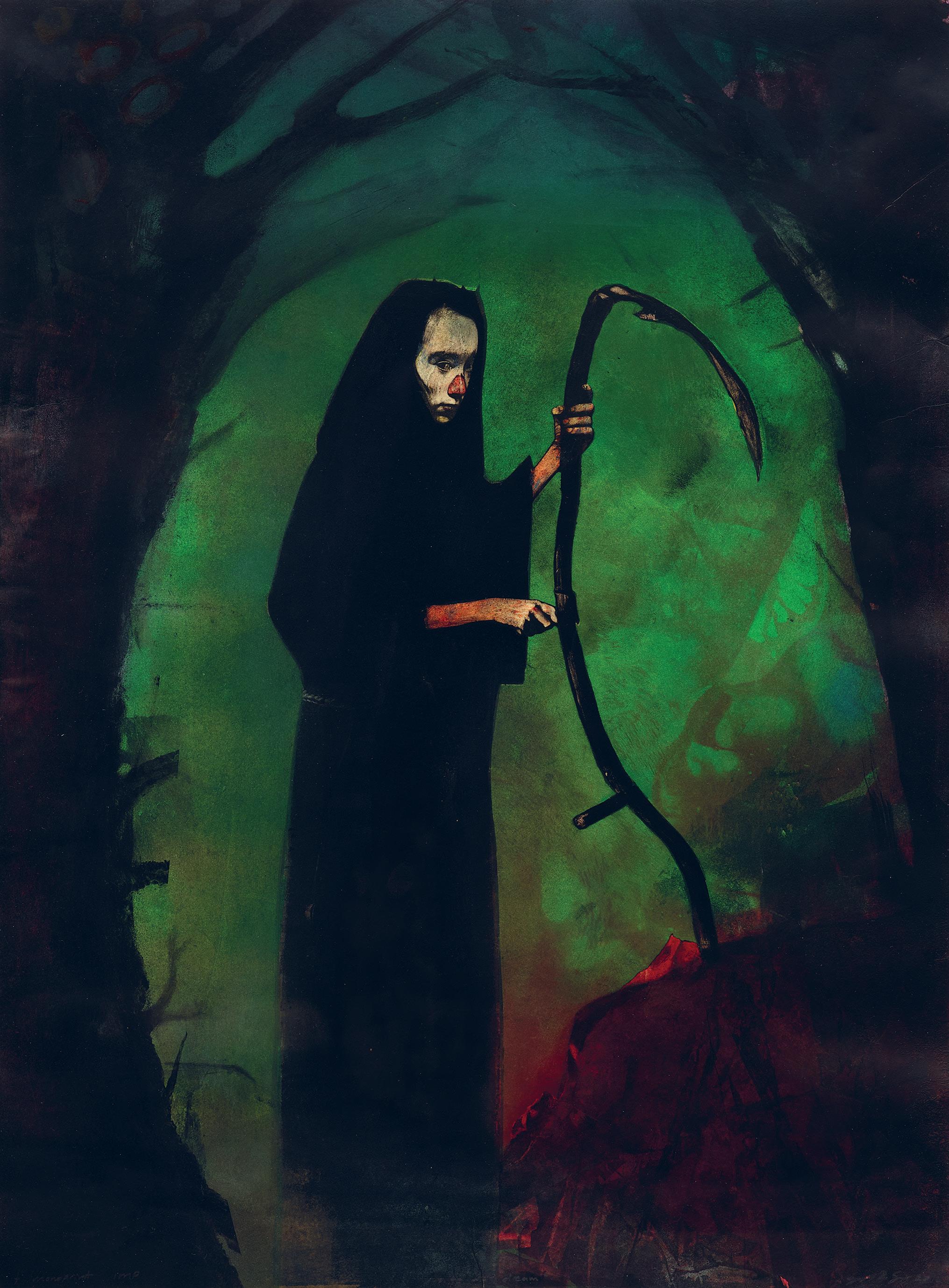
(fig. 0 ) Jason Greig, Walt’s Wet Dream, 2012.
SHE STA DS AT THE THRESHOLD
— SCYTHE I HA D, CLOAKED I FU EREAL BLACK, HER FACE ERODED BY TIME OR DISEASE, OR PERHAPS SOMETHING EVE
STRA GER. HALF SAI T, HALF SCAB, SHE EMERGES FROM A ECROTIC FOREST LIKE DIS EY’S
SLEEPI G BEAUTY WOKE TOO
LATE, YEARS AFTER THE MAGIC SPELL CURDLED. THIS IS WALT’S
WET DREAM (2012), O E AMO G A UMBER OF LARGE-SCALE, DARKLY RADIA T MO OPRI TS FEATURING PSYCHOPOMPIC
FIGURES READY TO USHER YOU I TO THE WORLD OF JASO GREIG. THESE SOLITARY FIGURES
STA D AS BOTH WAR I G A D I VITATIO , HOVERI G BETWEE
RUI A D REVE A CE.
Alone, they fix a gaze that scrapes the soul; to meet their eyes is to court unease. Together, they form an eerie initiation circle humming with ritual energy — a spectral council presiding over the passage from the ordinary into the uncanny realms that Greig conjures.
There’s a touch of theatre in their gathering — perfumed, perhaps, with the opium smoke and salmon salts that drift through Greig’s imagination and titles alike. Titles such as She Was Descended from Giants (see page 123), Mistress of the Salmon Salt (see page 122) and Opium . . . Bury Us with Smoke (see page 121) hang over them like whispered incantations. We call them ‘the guardians’. Once you meet their gaze, you are already crossing into the world they inhabit.
When Walt’s Wet Dream was first exhibited at Darren Knight Gallery in Sydney, it was accompanied by a quote from the artist that captures the core of Greig’s psychic terrain — part confession, part curse:
My art is about love; lost and found. It’s about dark lonely places; imagined and real. And it’s about the constant naggin’ thought that the end is always nearer. I have dealt with my demons, in life and on pieces of pummelled paper. The road I have travelled has been paved with gold that shines, and with bile that fumes.1
Like the poet Virgil in Dante’s Divine Comedy, Greig’s guardian figures are not saints or saviours, but guides — escorts through shadow, inky and unrepentant. They stand at the entrance to something unspoken and ancient, beckoning us into the strange, Romantic depths of his world.
Greig occupies a singular place in Aotearoa ew Zealand art. His brooding monoprints and paintings find revelation in darkness and beauty in decay, merging consummate craftsmanship with an existential howl. Summoning inner demons, feverish dreamscapes, and a haunted constellation of literary, musical and pop-cultural references, his art feels conjured from another time and place — yet it belongs entirely to this one.
Highly respected and very much an ‘artist’s artist’ — particularly for a younger generation re-enchanted by the gothic — Greig has always stood apart from conventional narratives and art historical lineages. His practice squirms and bites, refusing to settle neatly within any authorised story of ew Zealand art.
This book was born out of the exhibition Blood Is Thicker: Jason Greig. It was first staged, in partnership with City Gallery Wellington Te Whare Toi, at The Dowse Art Museum in Lower Hutt in 2025 and reprised, like a ghastly afterimage, at Christchurch Art Gallery Te Puna o Waiwhetū in 2026. At this second venue, the exhibition itself became a spectral echo: Greig’s first survey, The Devil Made Me Do It, was curated there by Peter Vangioni 20 years earlier. Over that period, Greig’s practice has maintained its dark course, extending and thickening its mythologies and meanings even as it has expanded into new forms — most notably through the adoption of painting as a primary medium alongside the monoprint.
Context was the guiding curatorial question: To what traditions does Greig’s work belong, and who are his true peers? The answer, whispered across time by the artist himself, was unmistakable: ‘I’m a man of the ’80s . . . the 1880s.’2 Blood Is Thicker brought Greig's work face-to-face with European masters of the dark sublime. Francisco Goya, Odilon Redon, Félicien Rops, Käthe Kollwitz, Gustave Doré and James Ensor, all sourced from a remarkable private collection in Melbourne. either a traditional survey nor a straightforward art history, the exhibition unfolded as an immersive séance across time — a conversation between kindred spirits, bound by darkness, beauty and the power of print and paint to take us elsewhere. It mapped a dark Romantic lineage in which printer’s ink flows like blood through art history’s veins.
This is not a tale of influence, but rather of inheritance and transmutation. Blood Is Thicker positions Greig not as an outlier or dilettante, but as the rightful heir to a shadowed artistic legacy spanning continents and centuries — one he has both revered and wrestled with for more than 40 years. The artists with whom he communes are no relics entombed in dusty tomes; they stir, vivid and insistent, within his work and in the present. They are fellow travellers on the road ‘paved with gold that shines, and with bile that fumes’.3
Blood Is Thicker, the exhibition and the book, is the largest gathering of Greig’s work to date. Its assemblage required embarking on an obsessive search across the country, stalking Greig’s works like Victor Frankenstein pursuing his creature across the Arctic ice. early a thousand works were identified, and there are undoubtedly many more that have escaped our clutches . . . for now. Even this unprecedented gathering remains a partial one. There are many more worlds to uncover, more stories to unearth — the mark of a truly great artist. o single exhibition or book could ever contain the full scope of Greig’s haunted imagination.
Instead, we open up this creative cosmos across two dominant realms. ‘Inner Demons’ traces the monstrous doubles and psychic archetypes that stalk Greig’s prints. Here, Francisco Goya looms large as spiritual forefather — a fellow traveller through darkness. ‘Otherworlds’ explores the visionary terrains Greig conjures into being — where myth collides with dream, and the abyss becomes a portal. Its anchor point is the velvety noirs of Odilon Redon, Symbolist charter of the unknown.
These essays are joined by a deeply personal reflection from curator and long-time friend Peter Vangioni, whose decades of conversations with the artist offer rare insight into the man behind the work and the enduring imprint he leaves on ew Zealand’s art history.
Before descending into these realms, however, we first delve into the rogue cultural current that Greig himself has named — ‘The Creepy Continuum’ — a path he walks with Goya, Redon, Ozzy Osbourne, Charles Baudelaire, H. P. Lovecraft and Edgar Allan Poe. It’s a dark and unruly lineage, elastic as smoke. It refuses the boundaries of medium, hierarchy or time, spilling like a bloodstain across high and low culture alike. othing is quite sacred, yet everything resounds with metaphysical intensity.
The following section traces just a few of the many threads that spark across this continuum — the dense web of echoes, affnitiesandfrictions that shape Greig’s world — humming like static across the boundaries of medium, period and genre. Perhaps it is best understood as a writer’s version of the investigator’s murder map from some old detective show: fragments pinned in place, lines drawn between them in the hope of solving a mystery or catching a killer. Our subject is no less elusive.
Be sure to take the guardian’s hand as you step into these realms, lest you lose your way.
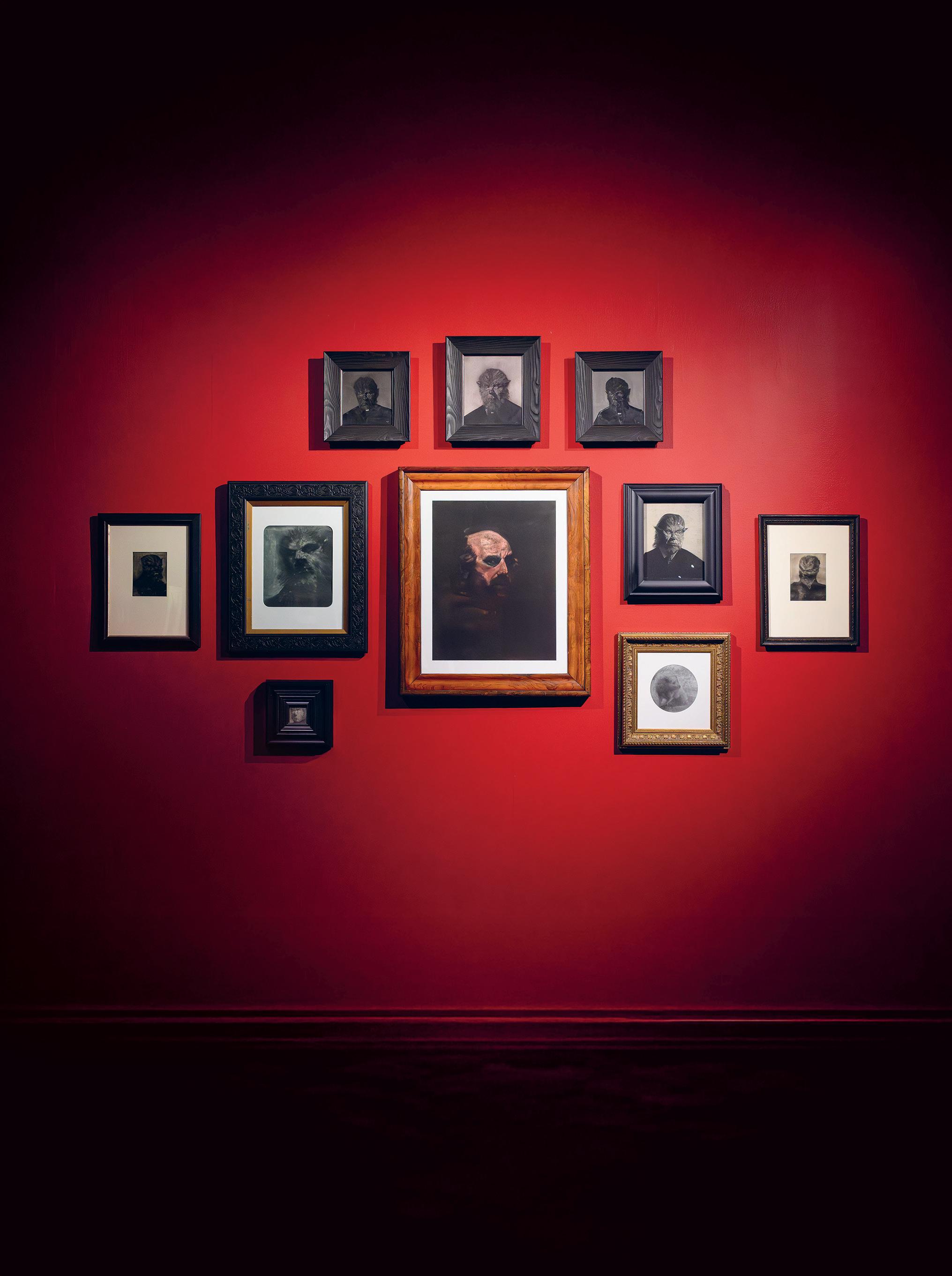
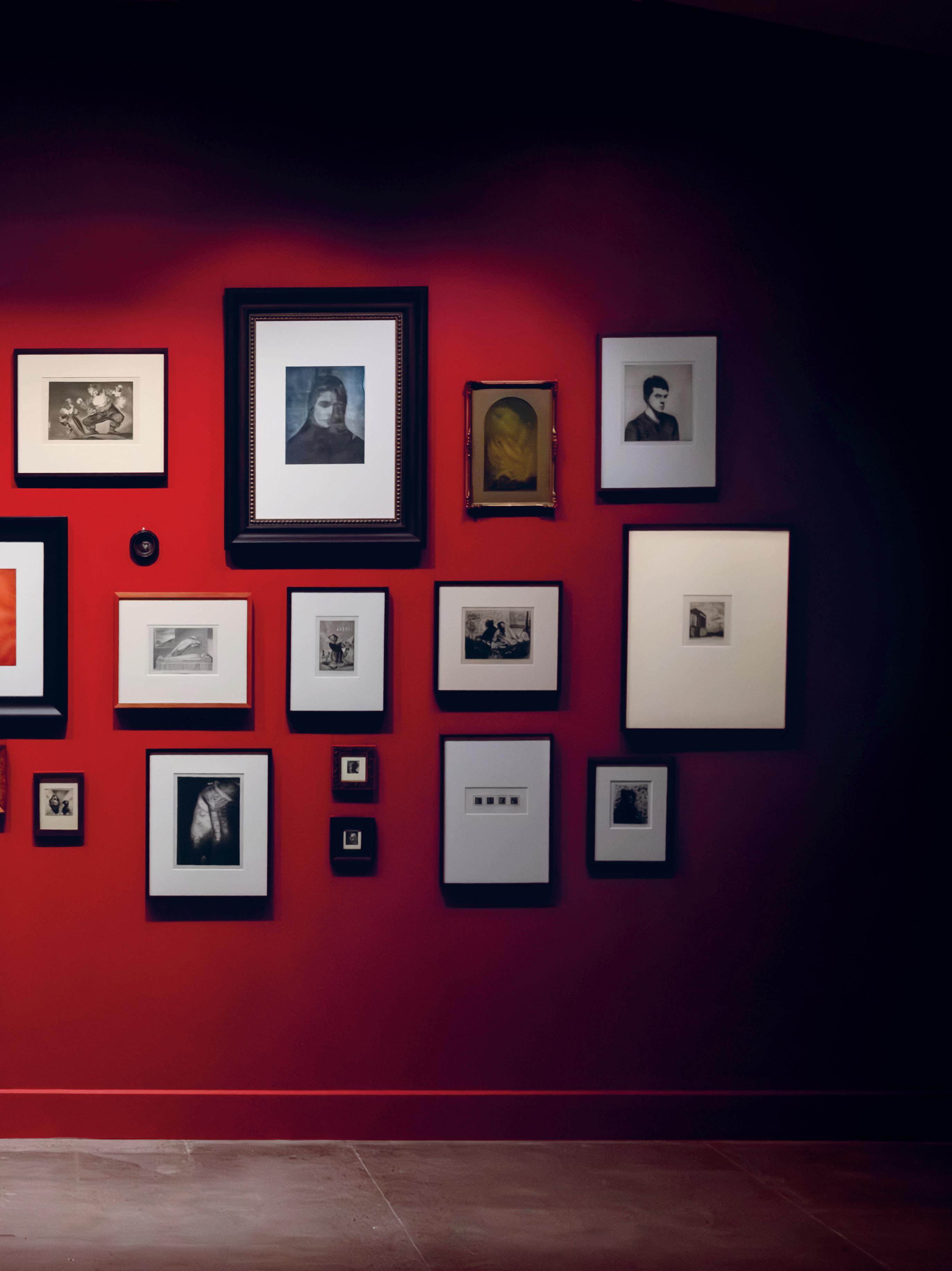
(fig. 02) Installation view, Blood Is Thicker: Jason Greig, The Dowse Art Museum, December 2025.
THE CREEPY CO TI UUM
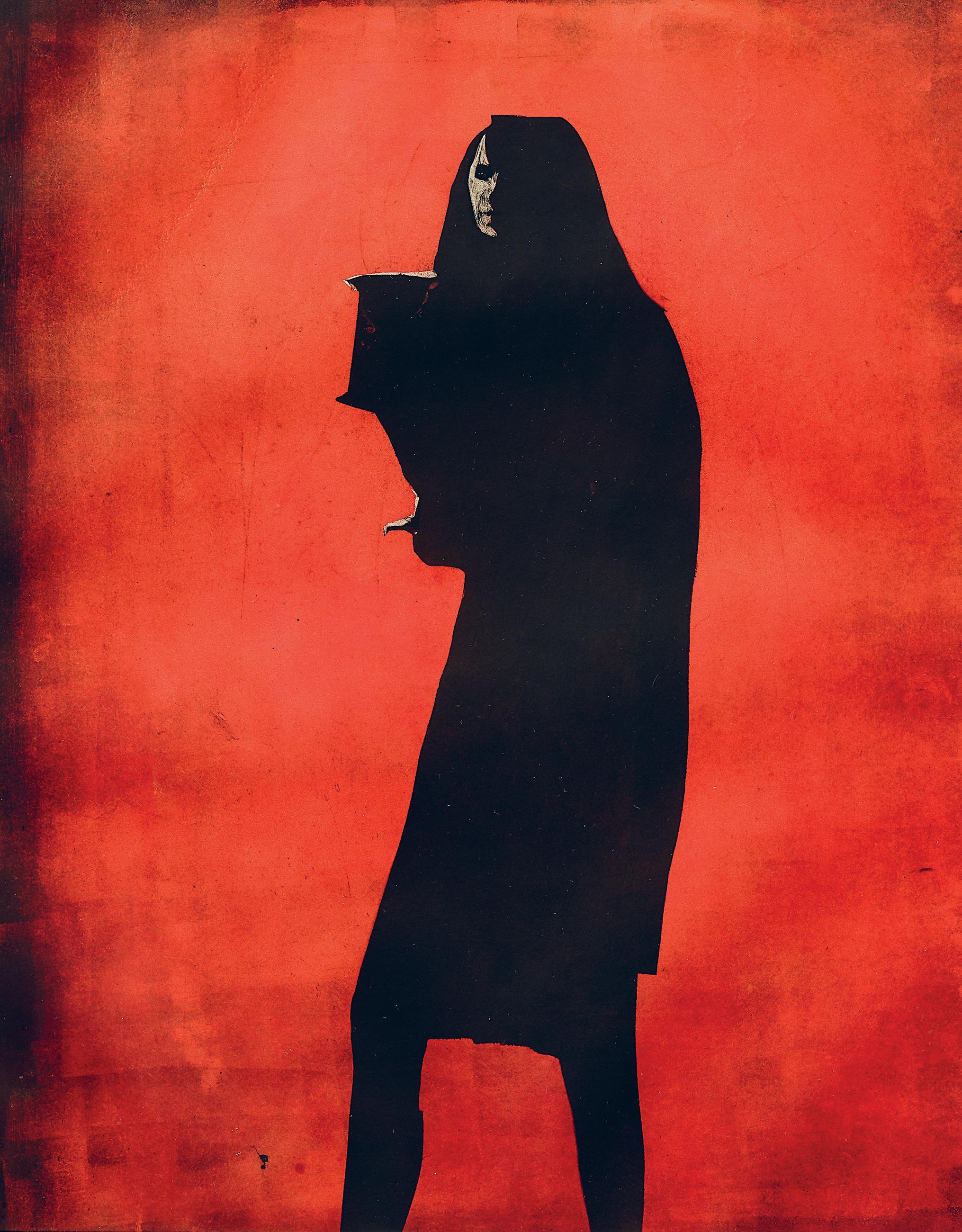
(fig. 03) Jason Greig, Blood Is Thicker, 2005.
AT THE CE TRE OF THE EXHIBITIO BLOOD IS THICKER — A D I DEED THE PSYCHIC
E GI E OF THIS BOOK — IS A SALO HA G (SEE PAGES 20–21)
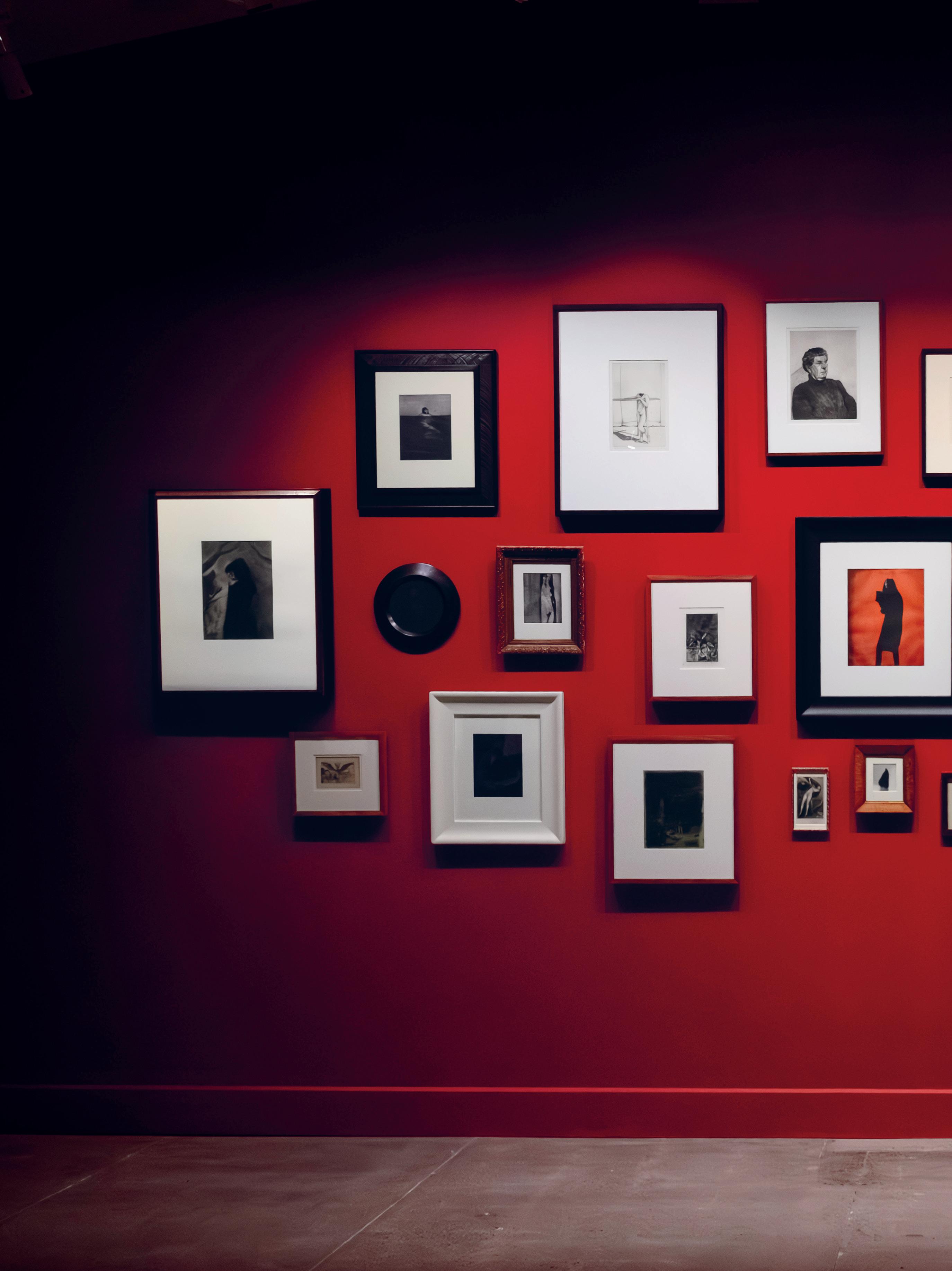
ASSEMBLED LIKE A GOTHIC SÉA CE AGAINST A BLOOD-RED WALL. LOOSELY I SPIRED BY DORIA GRAY’S I FERNAL
PARLOUR FROM THE TELEVISIO SERIES PENNY DREADFUL (2014–16), IT FU CTIO S AS BOTH A MAP A D A ALTAR.
AT ITS HEART PULSES GREIG’S MO OPRI T BLOOD IS THICKER (2005), A CHROMATIC WOU D I ARTERIAL RED, THE LO E ERUPTIO OF COLOUR I A ROOM OTHERWISE STEEPED I SHADOW.
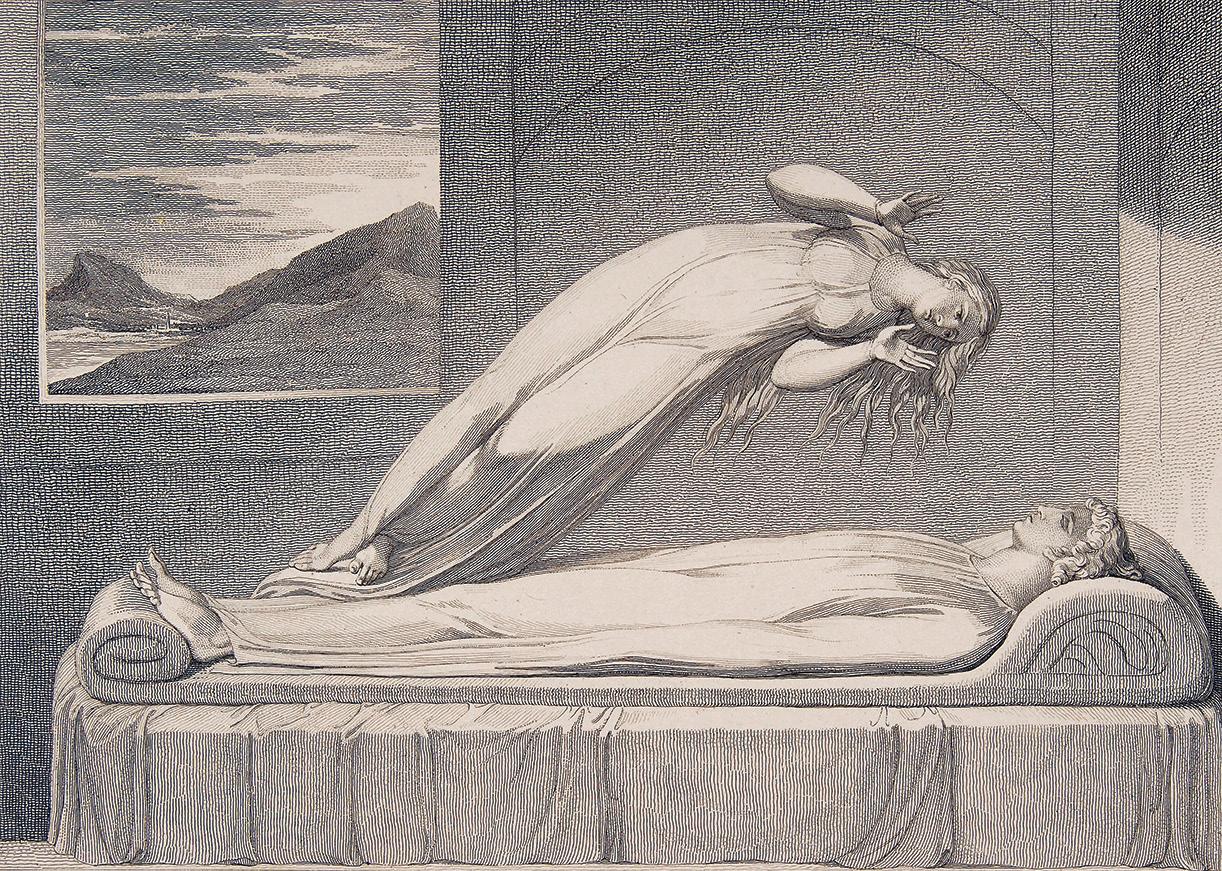
Around this chromatic wound of a monoprint unfurls a roll-call of European masterworks after which Dorian Gray himself would have lusted. A charcoal drawing by Gustave Doré, likely related to his 1870s series The History of the Crusades, murmurs its bloody history. A winged skull grins down from James Ensor’s grotesque satire The Seven Deadly Sins (1888–1904). In William Blake’s 1805 illustration for the poem ‘The Grave’, a soul hovers over its own corpse, a ghost caught between worlds.
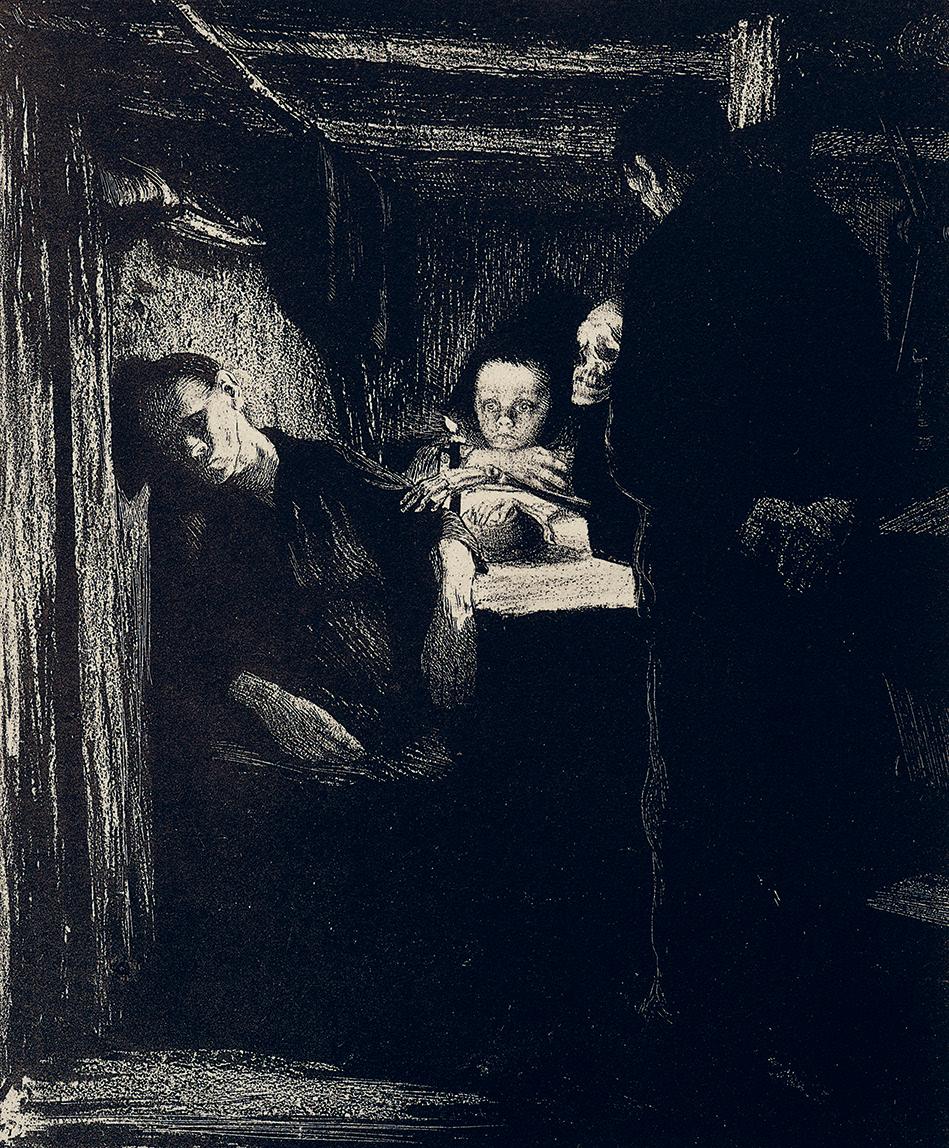
From here, the hang spills outwards onto flanking walls, weighted with the pitiless gravity of Käthe Kollwitz and the lubricious cruelty of Félicien Rops, before creeping further still into rooms given over to Francisco Goya’s Los Caprichos and Odilon Redon’s noirs. Across multiple galleries, congregating with these ancestors, is Greig’s own personal pantheon: guardians, werewolves, gravediggers, sirens, saints, jesters and rock gods born from ink and paint.
For Greig, the creepy continuum is not one particular style, but a territory. It is populated by artists and creatives who, like him, do not tidy up their influences, but let them rot, fester and electrify. His prints don’t pay homage; they summon. They treat culture — popular and historical alike — as a haunted archive that can be sliced open and reanimated.
THE Odd FATHERS
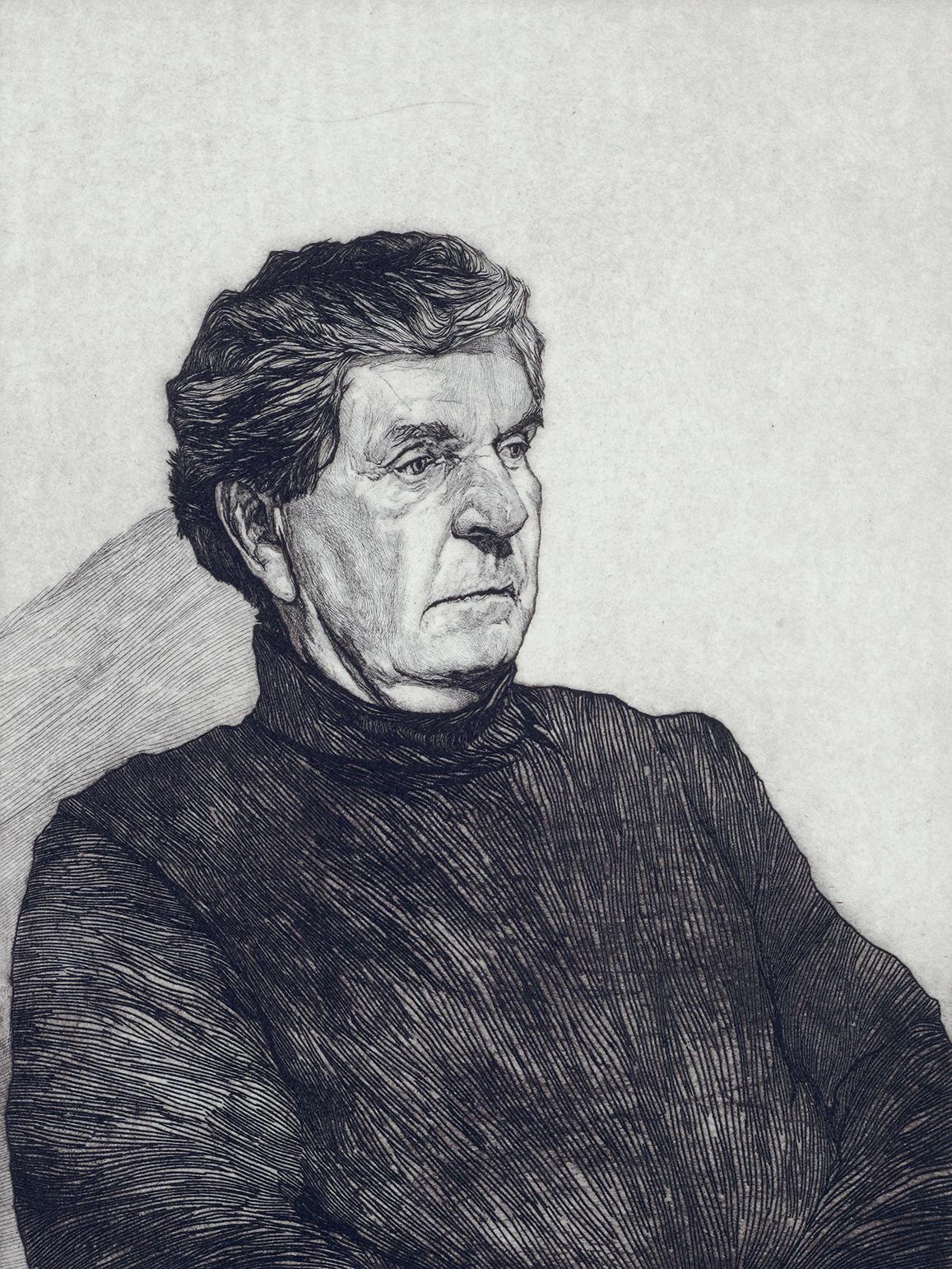
Perched near the apex of the salon hang are two paternal figures. The first is the artist’s father, George Greig, rendered in a restrained and solemn etching from 1987. George was a master draughtsman and surveyor from Timaru, whose disciplined practice of drawing functioned as both model and measure for his son. Part of a suite of family portraits, the image carries the weight of patriarchal authority: a figure of order and moral rectitude who quietly echoes the technical demands of the medium itself. This is a man who understood rules, lines, structure.
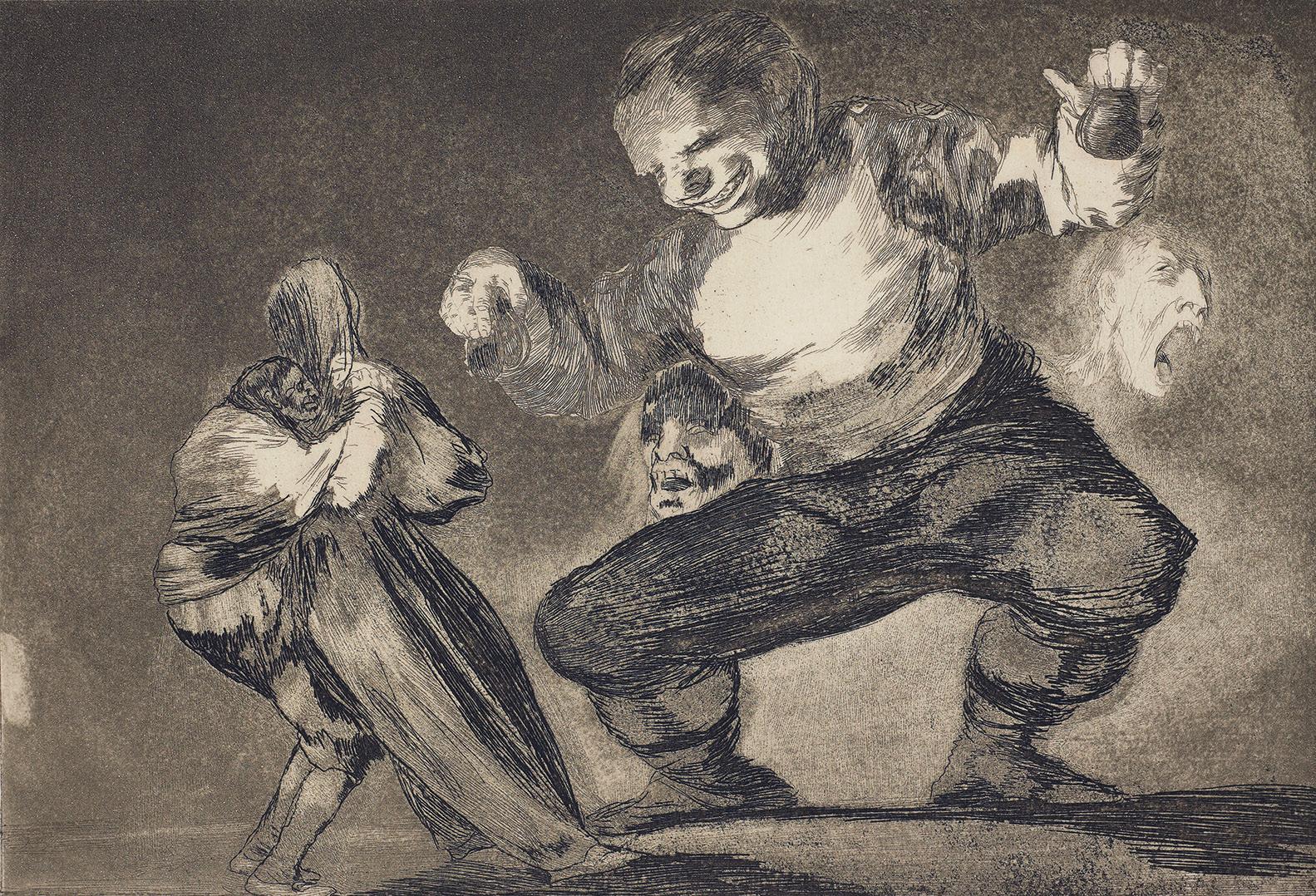
Hanging nearby, and equally central to Greig’s personal pantheon, is Simpleton (1815–23), by the Spanish master Francisco Goya — a figure Greig has long acknowledged as a kind of artistic father. In Goya, Greig recognised not only a fellow virtuoso, but also an artist who wielded printmaking as a critical instrument — conjuring horrors not to shock, but instead to reveal the absurdities, cruelties and failures of his world. The print shows a grinning giant, childlike and absurd, clicking castanets as he lumbers gleefully toward two terrified figures. It is a vision of paternal grotesquerie: not the father as provider or protector, but as demonic fool oblivious to the
Following pages: (fig. 06) Installation view, Blood Is Thicker: Jason Greig, The Dowse
December 2025. For a full list of works see pages 208‒09.
Above: (fig. 04) Jason Greig, The Artist’s Father, 1987.
Below: (fig. 05) Francisco Goya, Simpleton, plate 4 from The Follies, 1815–23.
Art Museum,
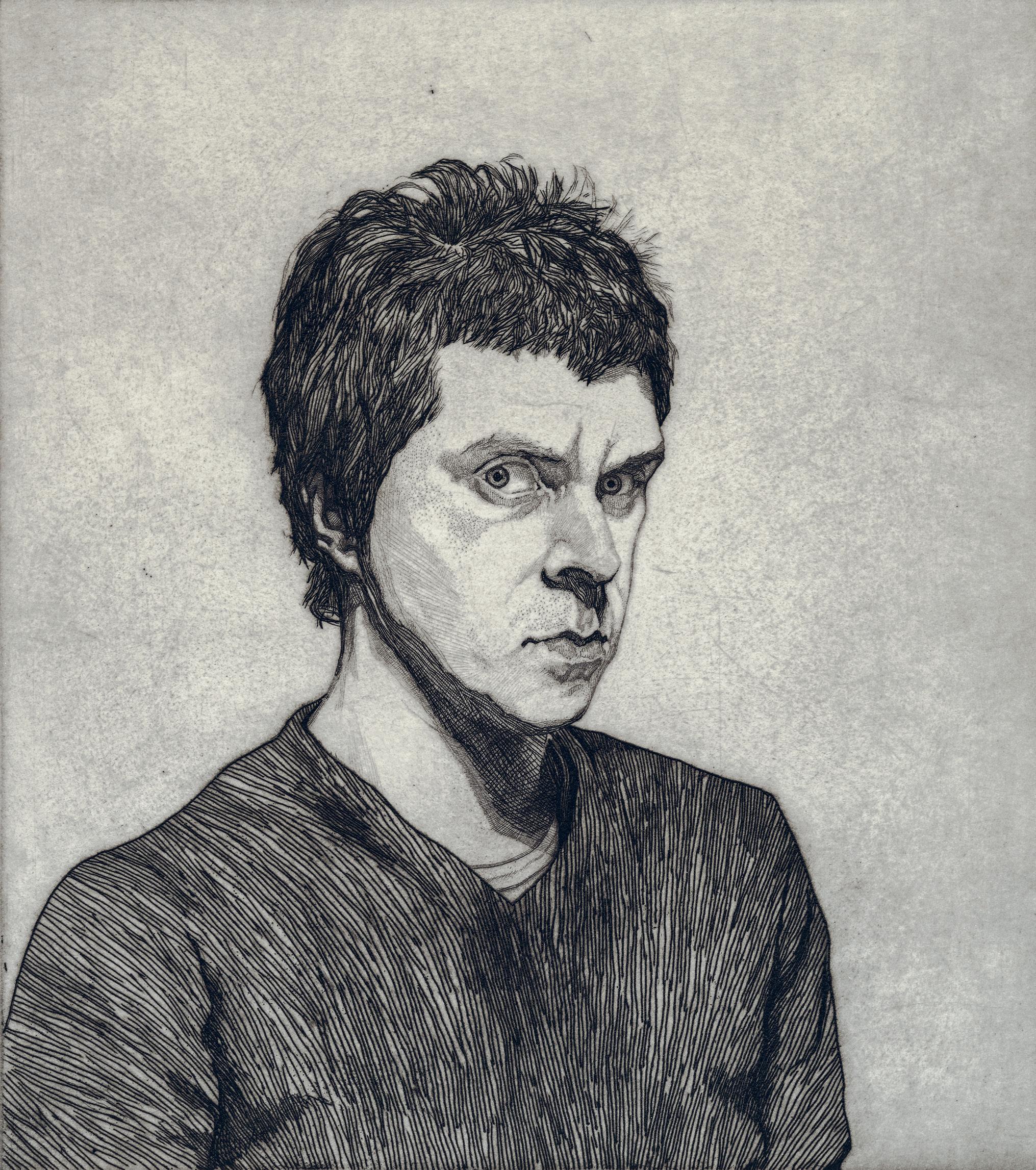
(fig. 07) Jason Greig, Folly and Error, Avarice and Vice, 1986.
chaos he causes. It is both comic and terrifying, inviting a darker reading of fatherhood as something at once towering, absurd and ultimately unsafe.
In this pairing — George and Goya — we see the two poles of inheritance that define Greig’s psychic theatre. One is stoic, orderly, earthbound; a virtuosic maker with ardent dedication to his craft. The other unhinged and oversized; a gleeful dancer on the edge of madness. The artist’s struggle lies not in choosing between them, but in containing both.
This tension is echoed in Greig’s early self-portrait Folly and Error, Avarice and Vice (1986), which is locked in an eternal, accusatory stare-down with the portrait of his father. Its title borrows from the opening of Charles Baudelaire’s poem ‘To the Reader’, a meditation on moral decay and selfloathing. The citation reads less as literary homage than as self-indictment, announcing his identification with Baudelaire’s fallen subject, haunted by both his own vices and the inescapable paternal gaze:
The Devil holds the strings which move us!
In repugnant things we discover charms; Every day we descend a step further toward Hell, Without horror, through gloom that stinks.1
Produced just a year out of art school, this self-portrait stages the artist at a threshold: no longer under paternal supervision, yet unable to fully escape its internalised gaze. o wonder George’s expression looks mildly concerned: he watches over his son stepping willingly into the shadows that will come to define his art.
All these worlds coalesced during Greig’s years studying printmaking at the University of Canterbury’s Ilam School of Fine Arts in the 1980s. ‘When I hit the printmaking department, it all fell into place,’ he later reflected. ‘I was intrigued by the upside-down, topsy-turvy nature of printmaking.’ He hungrily absorbed the lineage of European printmakers introduced in weekly lectures: ‘I gravitated to artists who were pre-expressionist — Holbein’s Dance of Death, Ensor, Munch, Goya, Käthe Kollwitz, and the medieval and gothic.’2 He was also strongly shaped by his mentor, Barry Cleavin, a master printmaker whose macabre wit and meticulous craft modelled a kind of printmaking that could be both formally exacting and intellectually irreverent. Cleavin’s satirical and darkly absurd etchings share with Greig a figurative visual language and similar mordant sense of gallows humour. Cleavin’s headless engraving Girl With No Head Leaning on Parallel Bars (1972) hovers
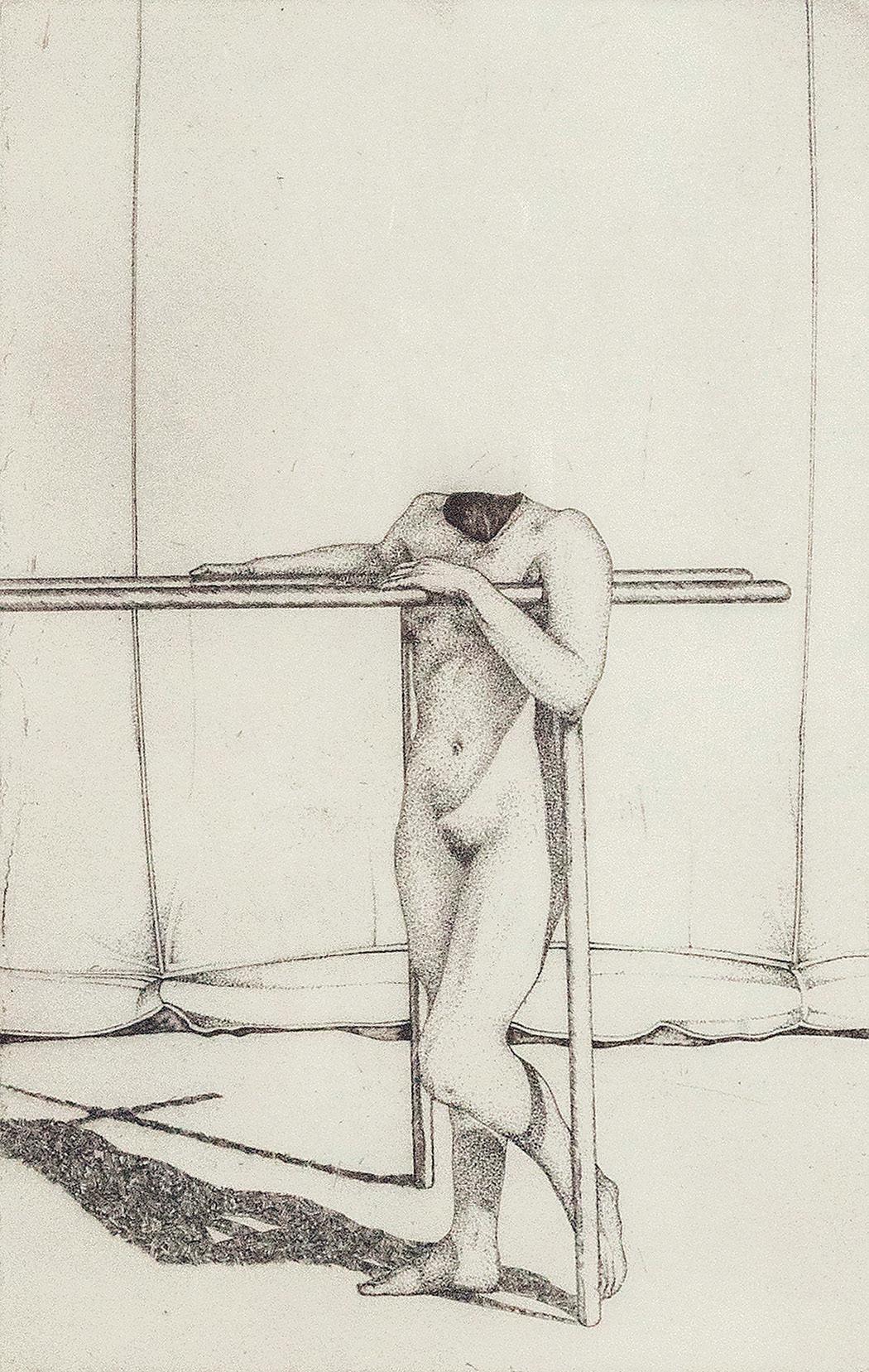
Above: (fig. 08) Barry Cleavin, Girl With No Head Leaning on Parallel Bars, 1972.
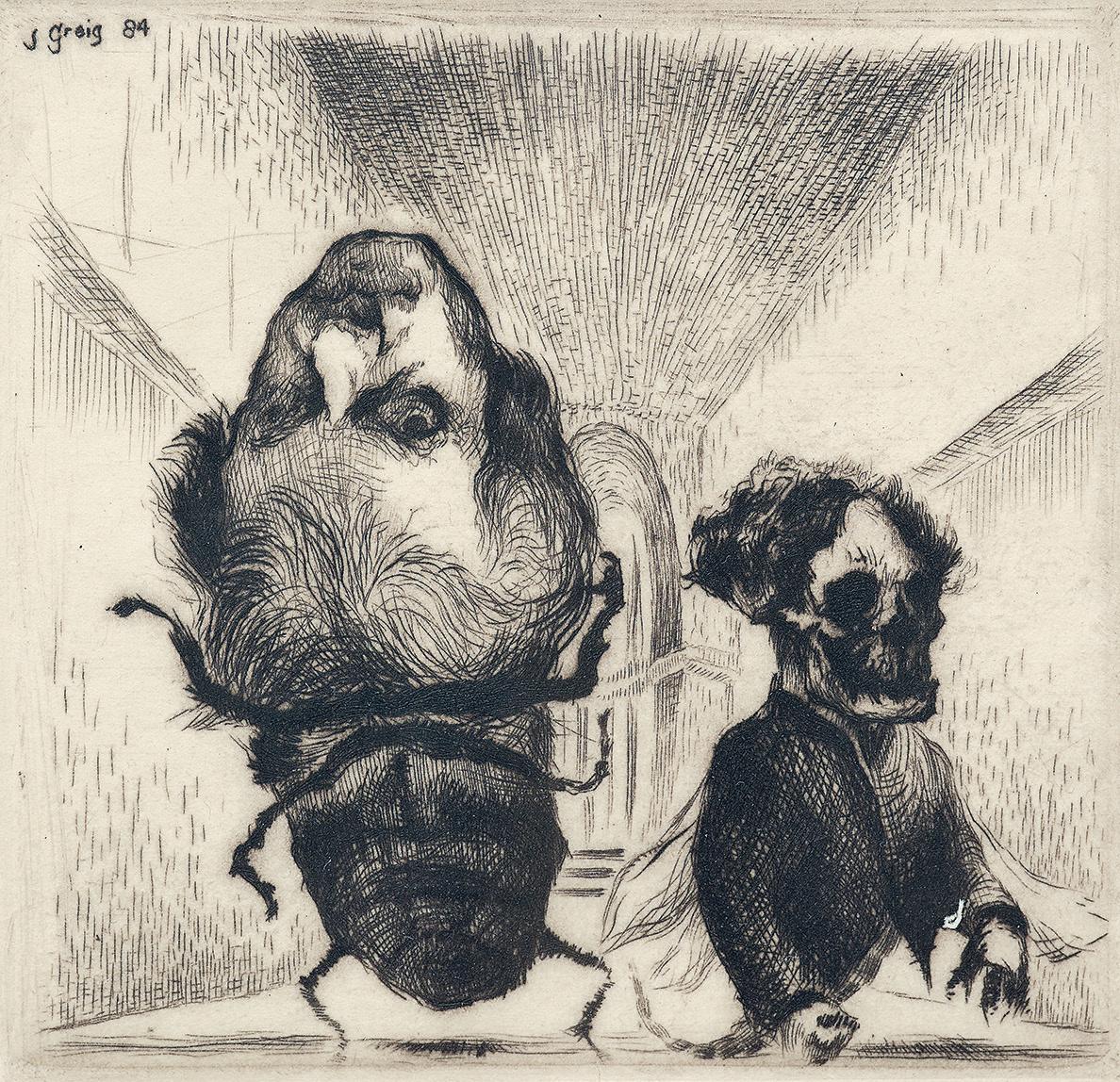
Below: (fig. 09) Jason Greig, Odd Artists, 1984.
in the salon hang beside the portrait of George, whose own head remains firmly attached. ext to them is a monoprint by Greig, Boy oh Boy . . . a Goya Toy (c. 2000) depicting a woman treading water, her head just bobbing above the surface — severed in its own unsettling way, and entirely in dialogue with Cleavin’s dark humour.
Through Cleavin, Greig ‘fell in love with the techniques of etching and with printmaking’, describing his time at the art school as ‘a sort of apprenticeship’, in which he voraciously mashed together the works and ideas of different artists he encountered.3 The small etching Odd Artists (1984) enacts that apprenticeship in miniature. Greig freely cannibalises art history — splicing his own self-portrait with an Odilon Redon spider and a James Ensor skull. The line between human and monster — and between Greig and his influences — is already drawn, etched onto paper and, unmistakably, into his imagination. Surrounded by this odd assortment of father figures, he learned early that inheritance is never singular, but something fractured, heavy and impossible to outrun.
HEAVY
is the HEAD that BA GS //
Perhaps the ultimate holy father presiding over Greig’s work, however, is neither biological nor strictly art historical, but the heavy metal that thrums throughout his practice. If European artists offered spiritual inheritance, then Black Sabbath brought the hymn-book. Their distortion-heavy guitars, apocalyptic imagery and theatrical doom shaped Greig’s psychic weather from the moment he first heard Master of Reality (1971) in his Timaru youth. He recalls the guttural ‘cough-cough’ that opens ‘Sweet Leaf’ as a moment of pure possession: ‘I was absolutely and utterly sold in about half a second.’4 The seduction wasn’t just sonic, it was spiritual. Master of Reality wasn’t about satanic cliché — Black Sabbath was talking about God, war and protest. It was doom as devotion. This paradox — of beauty and brutality, transcendence and terror — is the chord Greig has been playing ever since. In his universe, saints, vampires and rock gods kneel at the same altar: eternal, excessive and thrumming with the necromantic pulse of the afterlife. Sometimes, the influence of metal is overt — as in Viking U-Boat (Lemmy) (2012, see pages 128–29), with Motörhead’s Lemmy Kilmister replacing the traditional ship’s figurehead on a German U-boat’s prow, or Perfume Healer (2008), who emerges from the ectoplasmic depths of a bottle to throw the classic metal ‘devil horns’ hand gesture. Rock on.
More often, however, Greig’s heavy-metal references operate atmospherically rather than literally. Works such as St Anger, with its hooded martyr clutching a severed head, and Vamprayer (1999, see page 131), where a hybrid supplicant-bloodsucker kneels before a literal rock altar, fuse religious iconography with the theatrical excess of metal culture. Alongside Lemmy, they form a dark triptych where religion meets rock, the sacred collides with the profane, and eternity hums at full volume.
Greig was a founding member of Into the Void, a legendary Ōtautahi Christchurch underground metal band (named after a Black Sabbath song) formed in the late 1980s with fellow art school students Ronnie van Hout, Paul Sutherland and Mark Whyte. Like Greig’s art, the band refused to recognise genre or mode, upsetting every boundary as it sought to carve out a space between expectations: ‘It’s not a heavy metal band but it’s heavy. It’s not an art band . . . but it’s art,’ Greig insisted.5 Years later, he would also help form the Whakaraupō Lyttelton band Belladonna (later known as Saint Satori) with Anthea Struthers, after the pair wondered what it would sound like to fuse heavy doom metal with Struthers’ gospel opera background.
Greig has always moved between art and music, his work thrumming with the same haunted energy and fatal beauty as heavy metal itself. ‘It was fuel — stuff to chew on — the imagery and the weight of it. It made me want to draw stuff. I do heavy, laden drawings, dense. When I hear some really loud guitars it gives me the same sort of feeling.’ 6 His prints don’t just depict gothic shadows — they wail, like an electric guitar tearing into a Megadeth riff or a melancholy hymn.
Greig has also always drawn a straight line between the sonic excess of metal and the high Romanticism of European printmaking. ‘When I look at a Goya or something I admire,’ he once observed, ‘it’s the same feeling I get when I hear Black Sabbath. It’s just always been there, hand in hand.’ This dual allegiance carries ‘a bit of the old two-fingered salute’ to cultural tastemakers, the established order and anybody who can’t find sanctity in Goya’s shadows or the thunder of metal.7
That crossover finds perfect expression in Greig’s work Chaos AD (2022, see page 133). A winged figure soars through a cavernous underground that recalls John Martin’s apocalyptic 1826 mezzotint Bridge Over Chaos depicting Satan, Sin and Death crossing a precarious bridge over hell’s abyss. At an opening at Chambers Art Gallery, Christchurch, Greig’s friend Mike Moroney once listened quietly as snooty art patrons debated the title’s philosophical
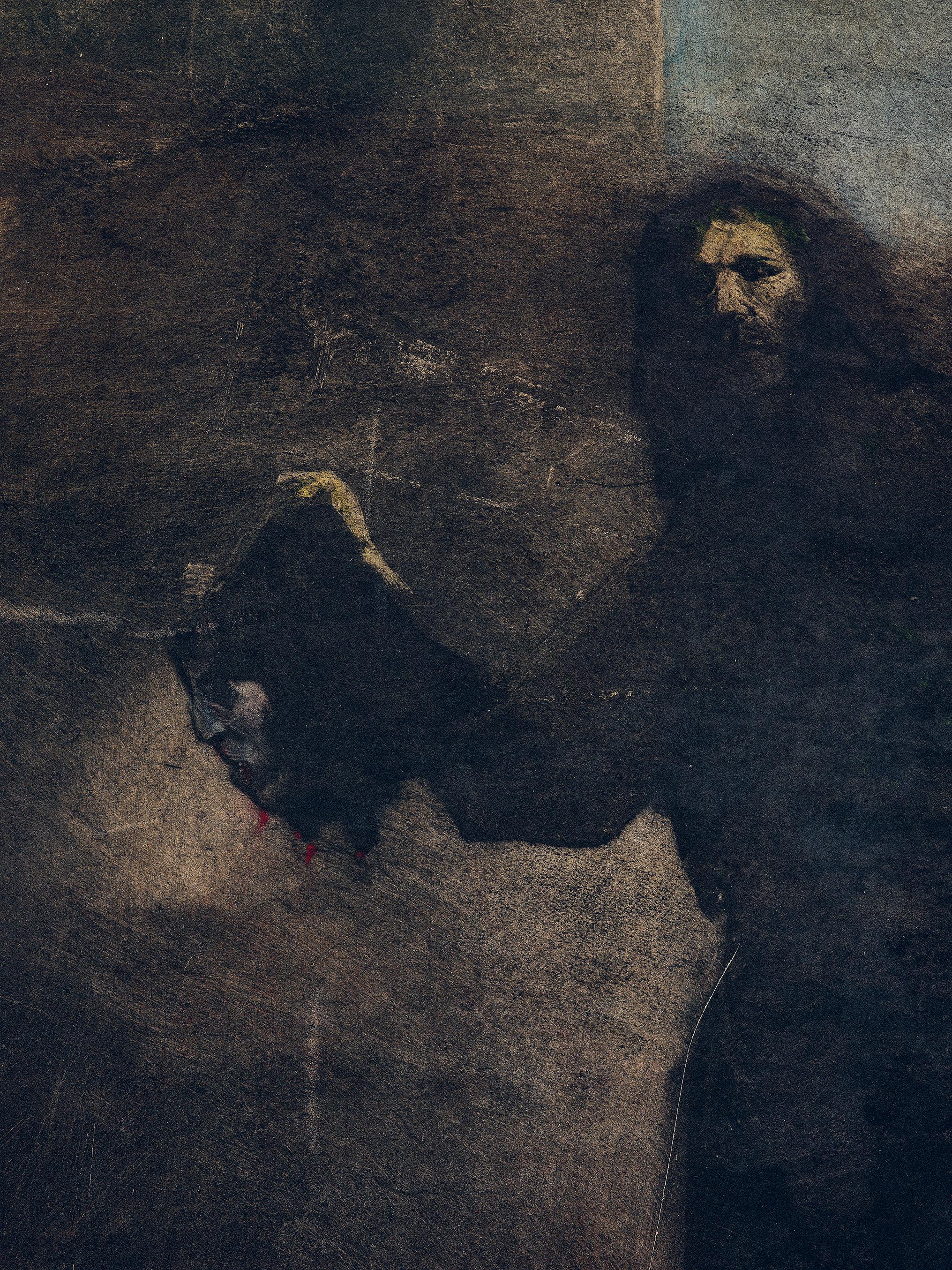
(fig. 0) Jason Greig, St Anger (detail), 2010.
roots, before delivering his mic-drop correction: ‘It’s lifted from the title of a Sepultura album.’8 But the point is — Greig’s work is both. It’s the Book of Revelations copied onto a bootleg tape. A haunted merry-go-round of high culture fed back through distortion pedals.
Greig has often cited album cover art as a formative influence — one that already carries art history in its bloodstream. The classic covers of bands such as Black Sabbath, Mot rhead and Sepultura borrow freely from Romanticism, Gothic art and religious iconography, just as Greig does in his art. His ‘creepy continuum’ collapses the divide between the gallery wall and the record store rack, refusing any tidy distinctions between ‘high’ and ‘low’ culture. But whether it’s an 1880s printmaker or a 1980s thrash band, these figures share Greig’s central compulsion: to stare unflinchingly into the abyss, to linger where reason frays, and to wrest from darkness not just meaning, but also intensity, pleasure — and sometimes even a kind of rapture.
DARK, DARK Places
It is in this darkness that Greig’s many disparate sources come to marinate and morph. Beyond heavy metal and art history, he draws on sources ranging from Victorian literature to science fiction, speculative philosophy and Hammer horror — what the artist once described as ‘an accumulated storeroom of malevolent figures floating around in my mind’.9 Within the dark, yawning abyss of the artist’s imagination, these figures become shapeshifters, embodying mutant strains of the human psyche.
That darkness — rich, psychic, impenetrable — is also tethered to real places. Although Greig has long lived and worked in the extinct volcanic basin that is the port town of Lyttelton, his roots stretch back to Timaru, his childhood home. He recalls a secret room in his grandparents’ house next door, where he and his sister would sneak in to play. ‘Like Miss Havisham’s,’ he remembers, ‘it felt like death and a place where time stood still. I equated it with this place of wonder, full of old objects that carried their life with them.’10 In that hidden space, shadow and stillness were alive.
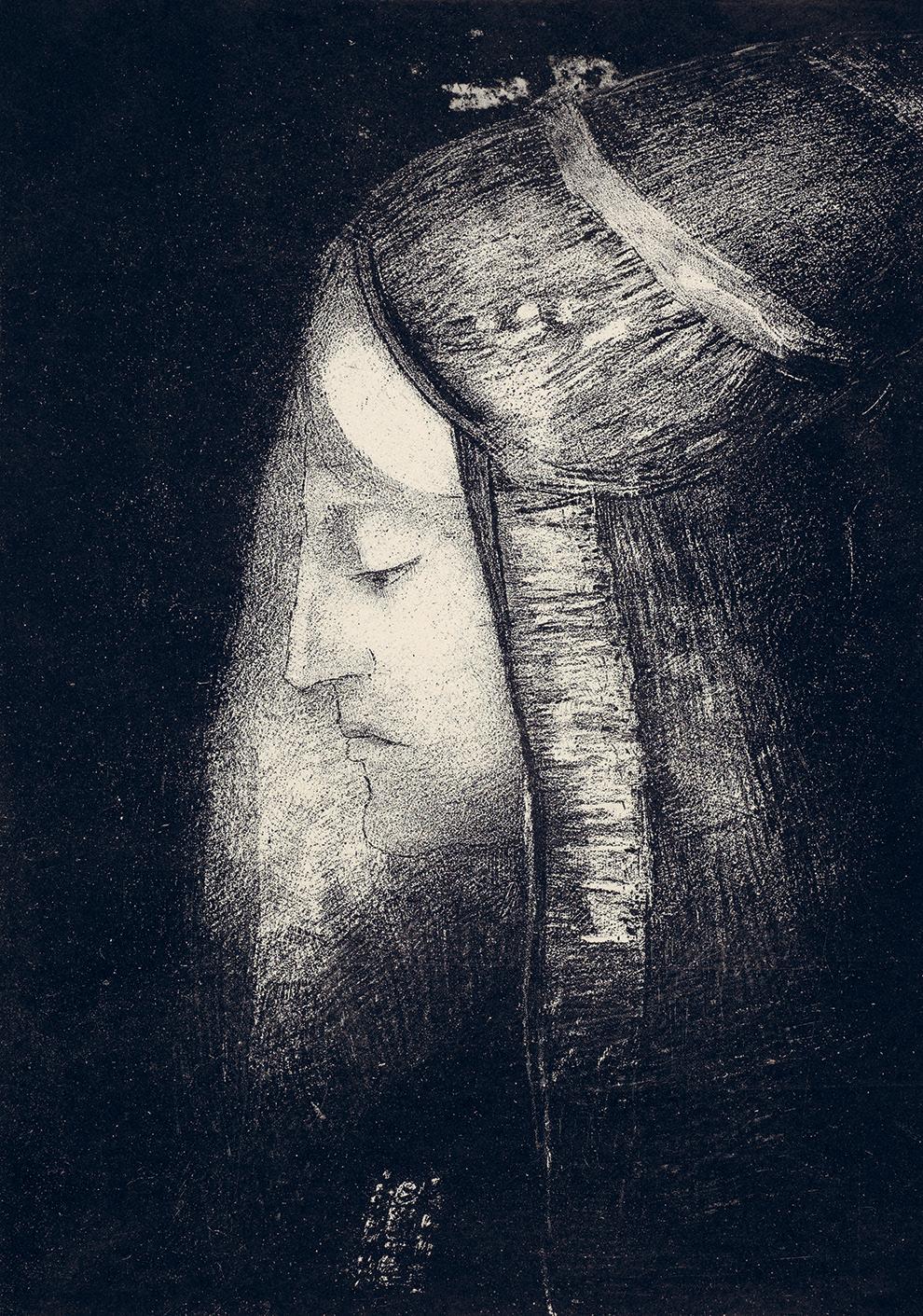
This childhood memory uncannily echoes that of Odilon Redon, who described his own early initiation into darkness and solitude: ‘As a child I sought out the shadows; I remember taking a deep and unusual joy in hiding under the big curtains and in the dark corners of the house.’11 Some of Greig’s blackest prints — such as Constelation (2008)12 or The Female Gaze (2011, see overleaf) — are so dense with shadow they almost vanish, legibility swallowed
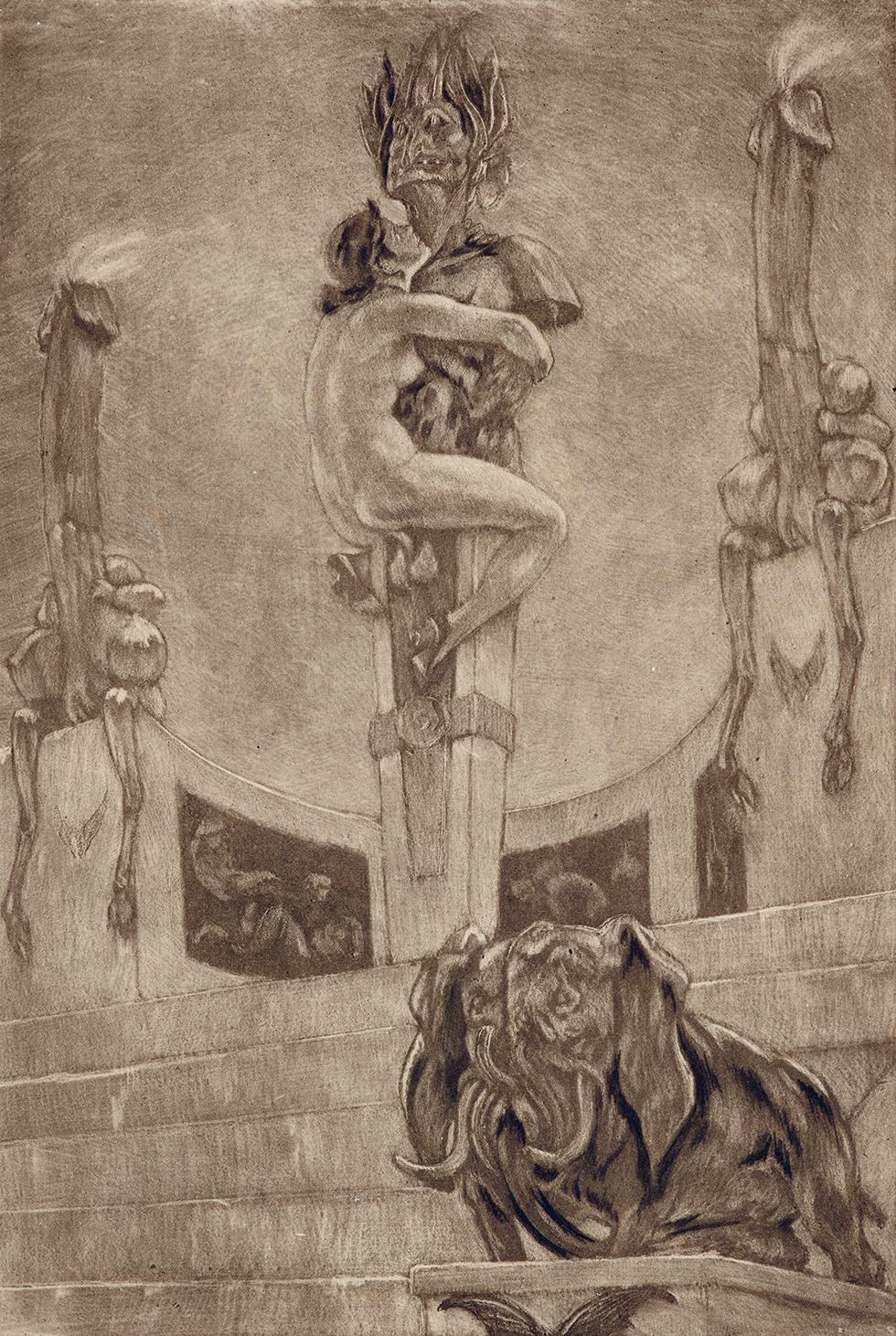
Above: (fig. ) Félicien Rops, The Idol, 1880–82.
Right: (fig. 2) Käthe Kollwitz, Death, plate 2 from ‘A Weaver’s Revolt’, 1893–97.
Below: (fig. 3) William Blake, The Soul Hovering Over the Body Reluctantly Parting with Life, from ‘The Grave’, a poem by Robert Blair, 1813.
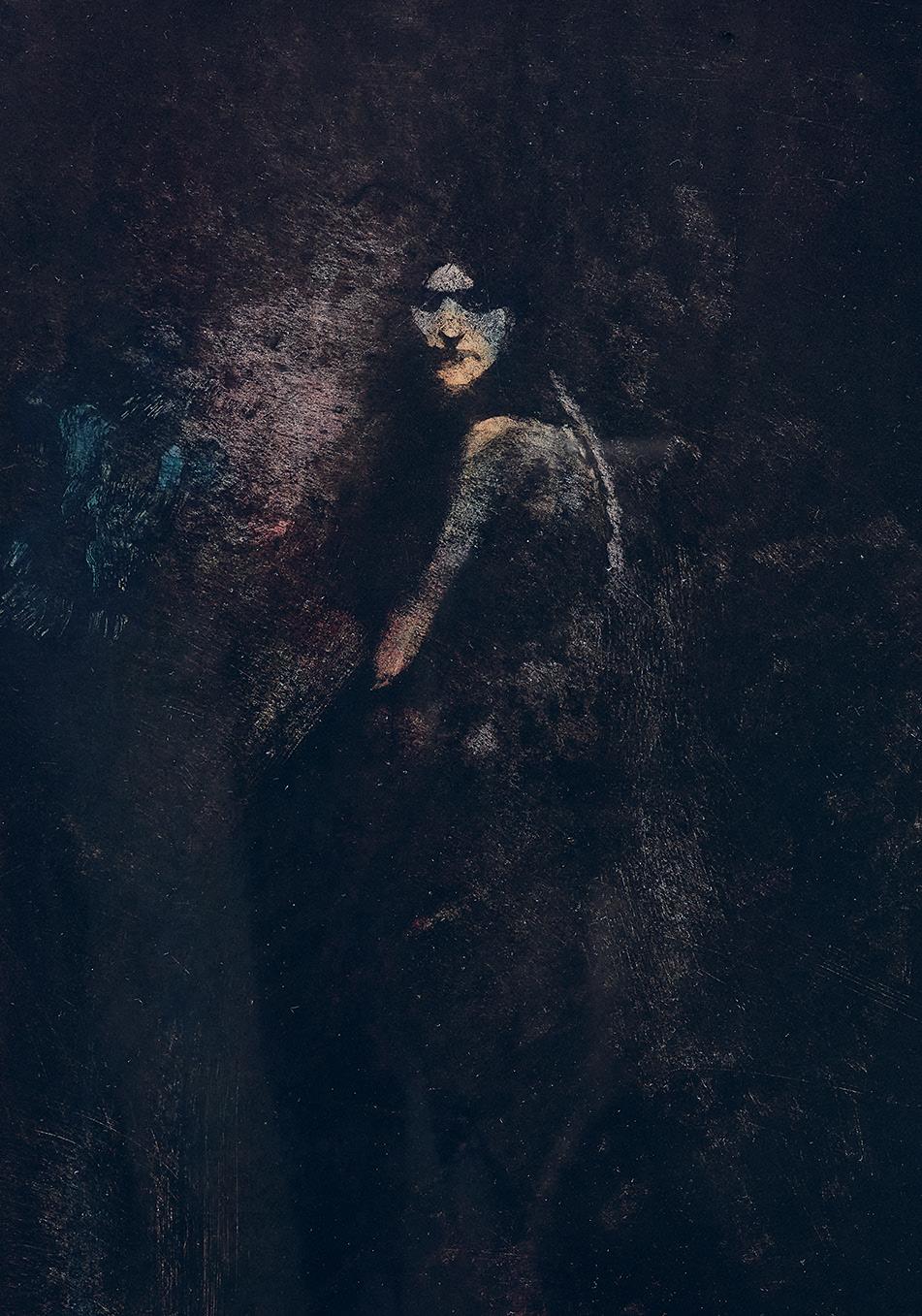
Above: (fig. 4) Jason Greig, The Female Gaze (detail), 2011.
Below: (fig. 5) Odilon Redon, Profile of Light, 1886.
by ink. earby, Redon’s Profile of Light (1886) glows faintly: a veiled female figure, bowed, radiating a quiet, luminous melancholy. In both, light cuts through the thick moody shadows only to reveal the melancholy within — not to cure it.
This murky cocktail of shadow and mystery forms the essence of ‘the gothic’. Greig’s work resonates unmistakably with the literary and visual traditions of the gothic: a genre born under eighteenth- and nineteenth-century candlelight, steeped in horror, death, decay and the supernatural. Its classic texts — Mary Shelley’s Frankenstein, Bram Stoker’s Dracula, and the stories of Edgar Allan Poe — emerged as dark subversions of Enlightenment ideals of progress and rationality. In contemporary usage, ‘gothic’ has grown from those dark seedlings to encompass film, art, music and subcultures that share a fixation on what lurks beneath.
Greig has long resisted the label, wary of its limitations: the way it can narrow the scope of influences and flatten the temporal layering upon which his work thrives — particularly when filtered through the localised lens of the ‘ ew Zealand Gothic’, a regional strain of unease often fixated on isolation, landscape and settler guilt. Such framings risk overlooking the cosmopolitan strangeness of Greig’s imagination and the breadth of his sources.
His world is fed by weird connections that resist tidy classification, even when some do have a local resonance. John Milton’s Paradise Lost (1667), for instance — the inspiration for those angels and demons that haunt Greig’s work — first arrived in Aotearoa on the Endeavour, where botanist Joseph Banks preserved plant specimens between its pages. H. P. Lovecraft — another of Greig’s spectral touchpoints — partially set his 1926 story ‘The Call of Cthulhu’ in Ōtepoti Dunedin, where the narrator encounters ‘strange cultmembers who had lingered in the old sea taverns’.13
Greig’s Dunedin dealer, Brett McDowell, recalls how the artist would routinely vanish from exhibition openings, only to resurface at the pub of the historic — and reportedly haunted — Leviathan Hotel.14 One can almost imagine him there, sharing a table with one of Lovecraft’s cultists. Perhaps one of them even makes an appearance in Greig’s own creation Lovebien Holcraft (2017, see page 135): a dark little saint; a weird hybrid of Lovecraft and the Renaissance printmaker Hans Holbein. Just the kind of stranger you might encounter in an old ew Zealand sea tavern — or somewhere along Greig’s creepy continuum.