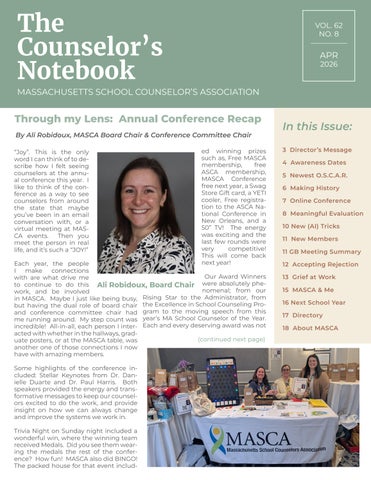
Through my Lens: Annual Conference Recap
By Ali Robidoux, MASCA Board Chair & Conference Committee Chair
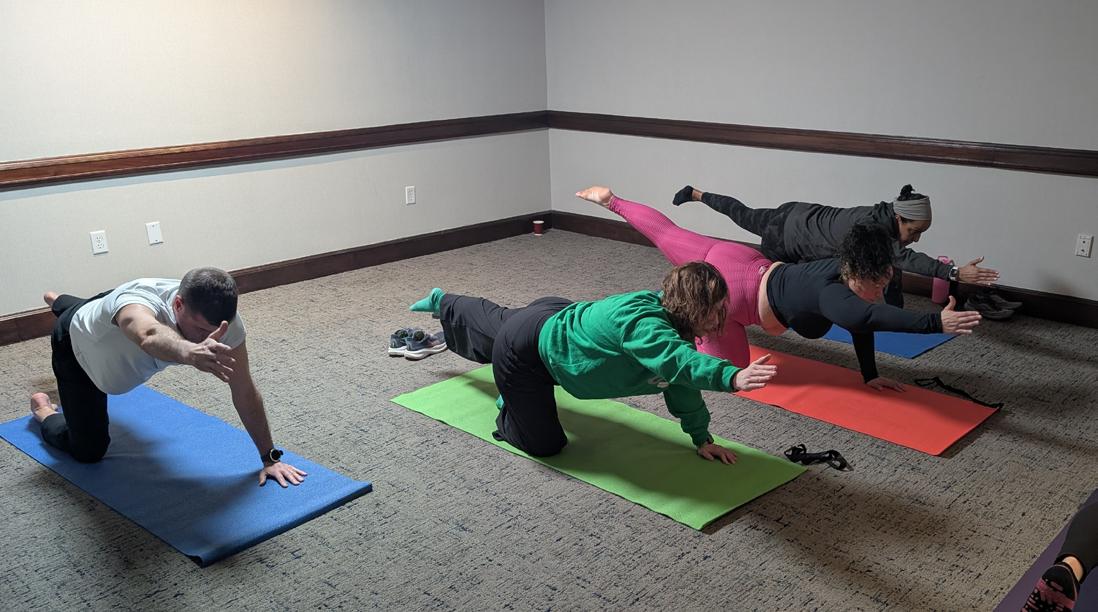
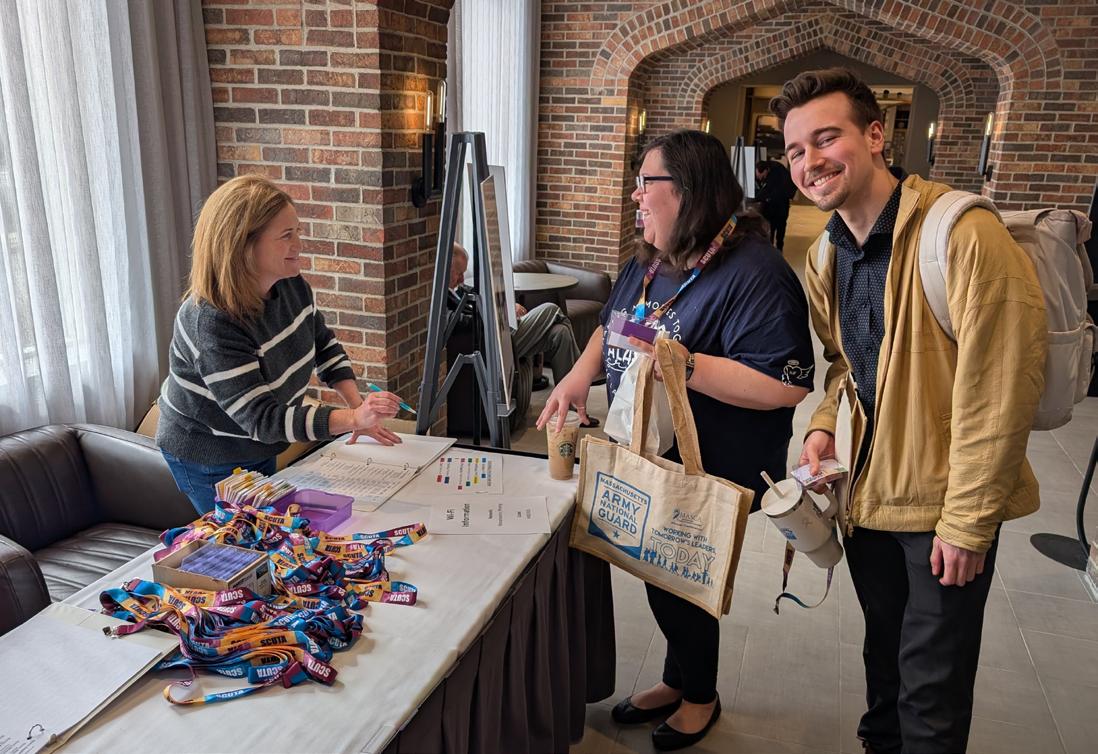
“Joy”. This is the only word I can think of to describe how I felt seeing counselors at the annual conference this year. I like to think of the conference as a way to see counselors from around the state that maybe you’ve been in an email conversation with, or a virtual meeting at MASCA events. Then you meet the person in real life, and it’s such a “JOY!”
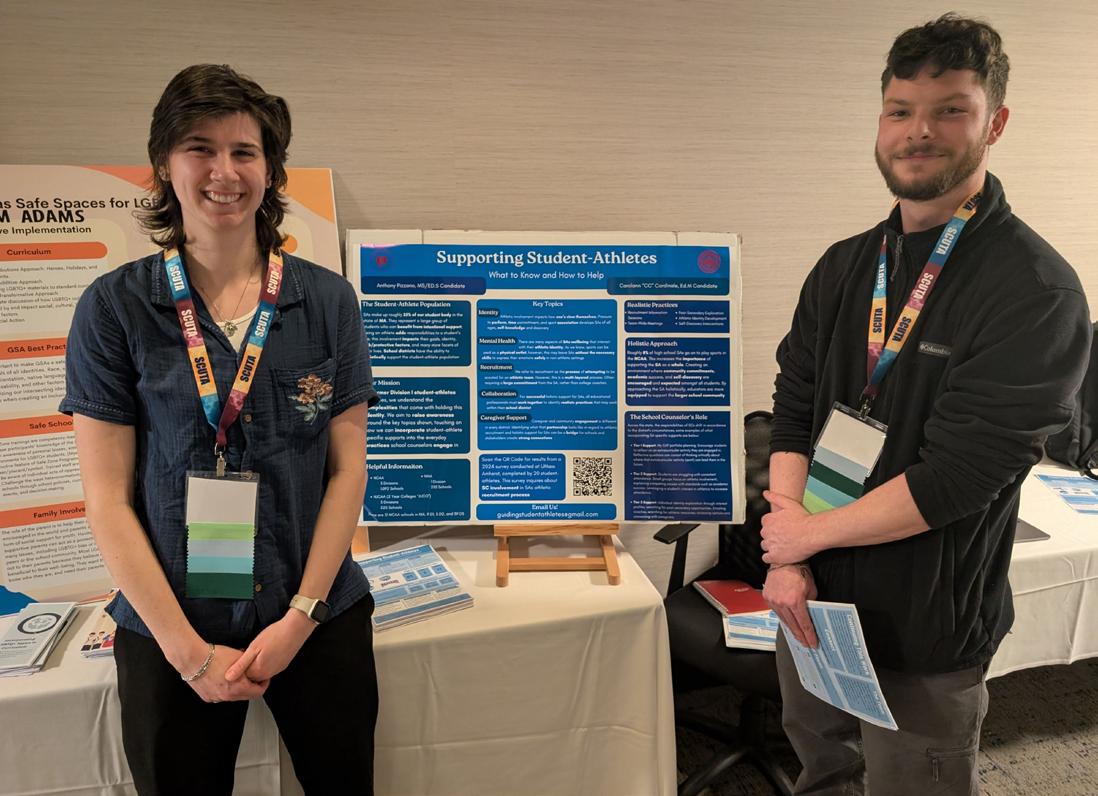
Each year, the people I make connections with are what drive me to continue to do this work, and be involved in MASCA. Maybe I just like being busy, but having the dual role of board chair and conference committee chair had me running around. My step count was incredible! All-in-all, each person I interacted with whether in the hallways, graduate posters, or at the MASCA table, was another one of those connections I now have with amazing members.
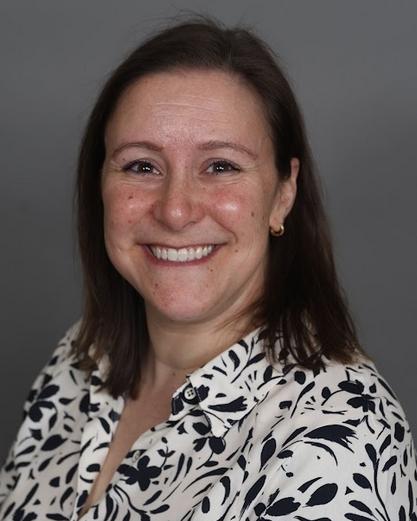
Ali Robidoux, Board Chair
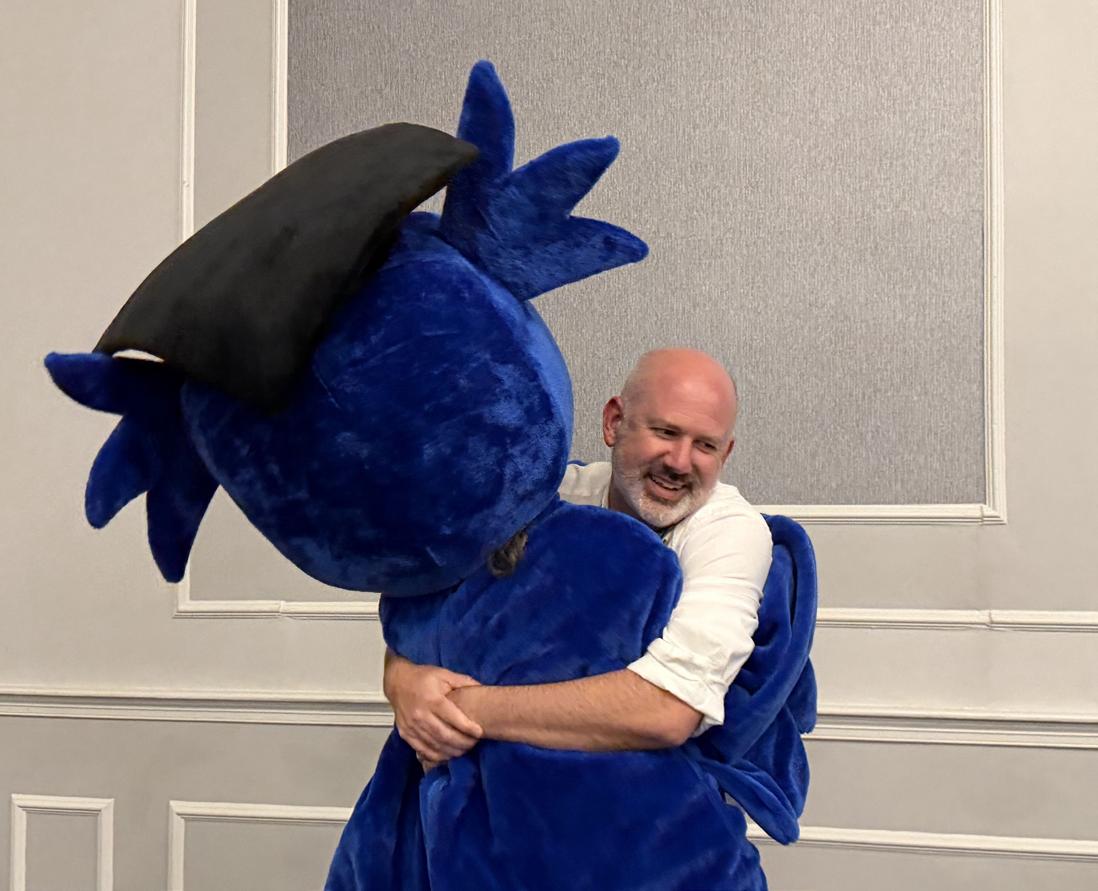
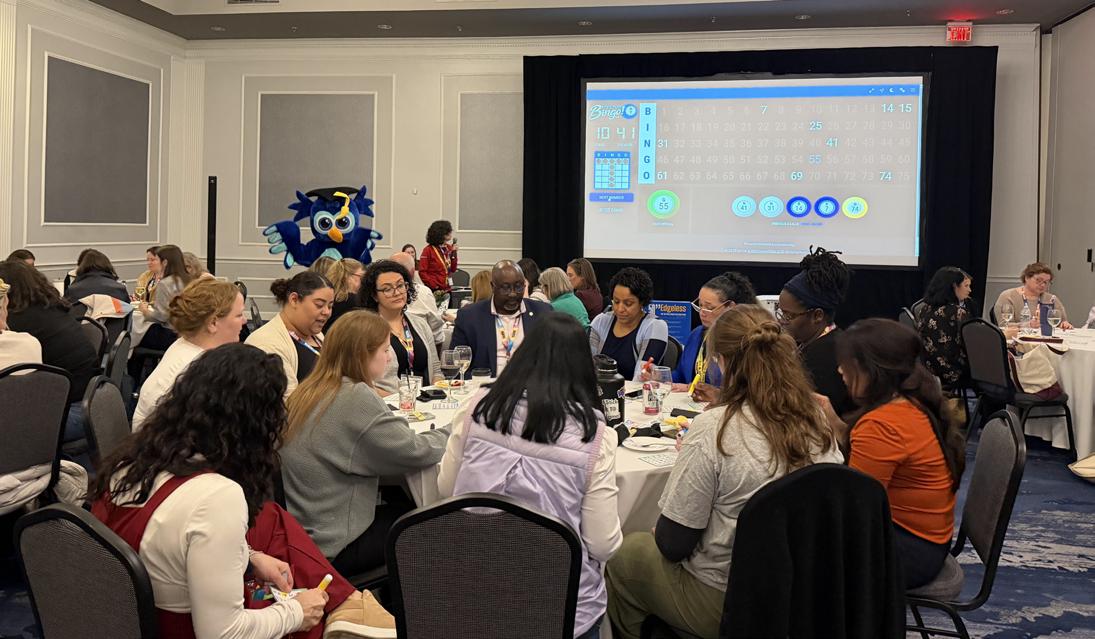
ed winning prizes such as, Free MASCA membership, free ASCA membership, MASCA Conference free next year, a Swag Store Gift card, a YETI cooler, Free registration to the ASCA National Conference in New Orleans, and a 50” TV! The energy was exciting and the last few rounds were very competitive! This will come back next year!
Our Award Winners were absolutely phenomenal; from our Rising Star to the Administrator, from the Excellence in School Counseling Program to the moving speech from this year’s MA School Counselor of the Year. Each and every deserving award was not
(continued next page)
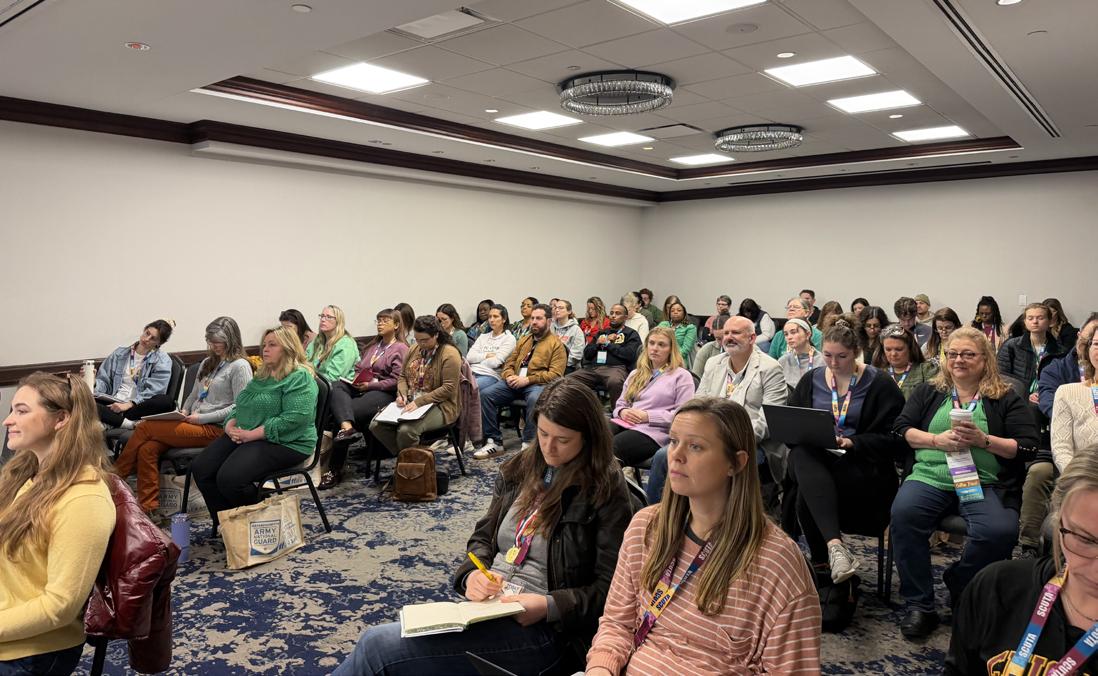
Some highlights of the conference included: Stellar Keynotes from Dr. Danielle Duarte and Dr. Paul Harris. Both speakers provided the energy and transformative messages to keep our counselors excited to do the work, and provide insight on how we can always change and improve the systems we work in.
Trivia Night on Sunday night included a wonderful win, where the winning team received Medals. Did you see them wearing the medals the rest of the conference? How fun! MASCA also did BINGO! The packed house for that event includ-
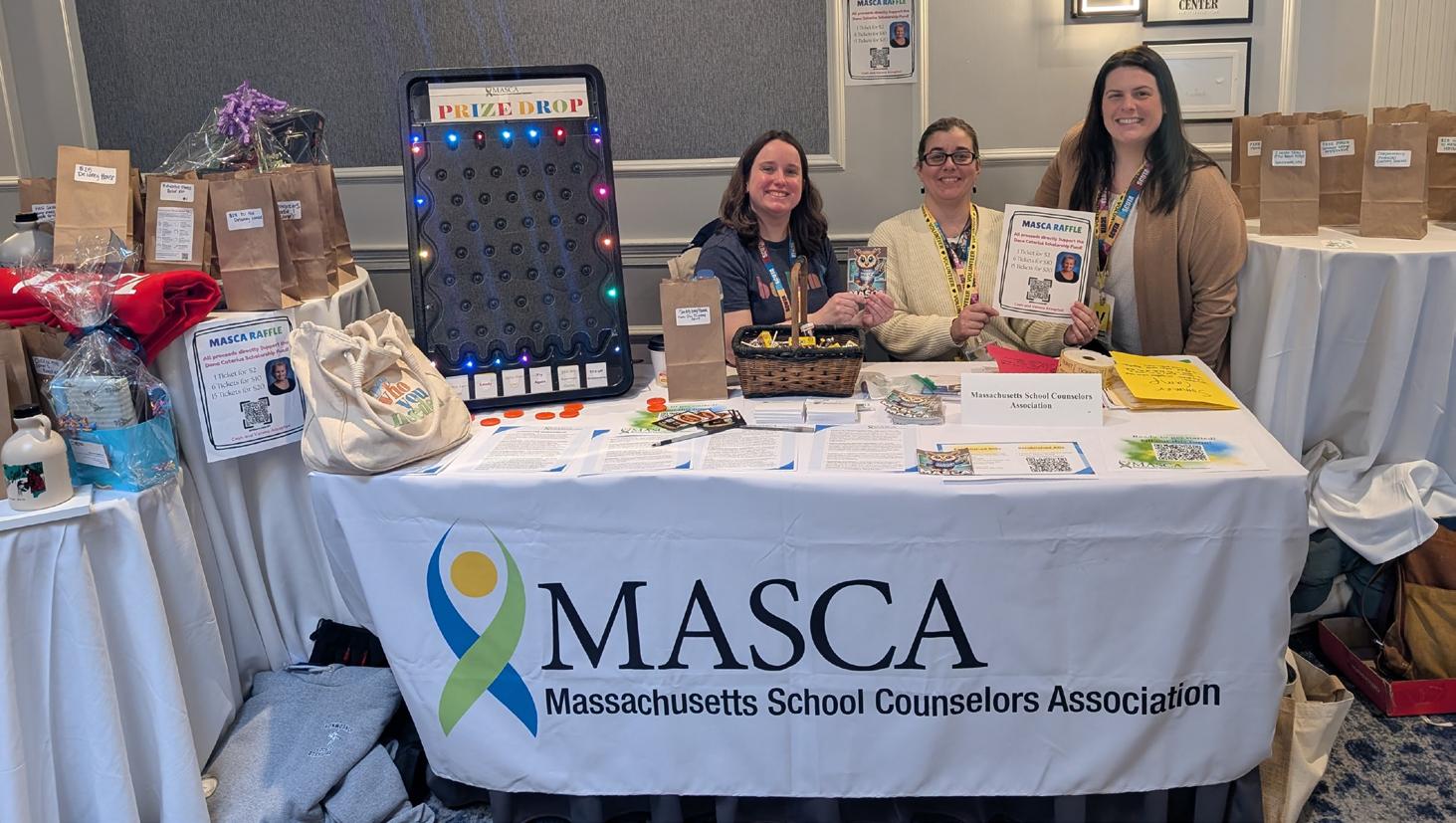
Annual Conference Recap
(continued from previous page)
only a force, but we had the pleasure of the MA DESE Commissioner of Education, Pedro Martinez, witnessing this greatness we have in Massachusetts. He made time in his busy schedule for us!
Breakout sessions were informative, and if you noticed in the app, we tried out the “Tracks” for specific areas, such as secondary, SAC, middle school, etc. The hope is to expand this next year. As I said last year, and I’ll say it again- our conference programming is only as good as our proposals. If you or someone you know has an idea, or would like to present at the conference, put in a proposal! You are all doing amazing things- why not share your knowledge? You’d be surprised how many of us can show what we know and increase our collaboration. Thank you for all that you do.
I could go on and on, but again, I could also just write, “Joy”. Thank you to all the wonder volunteers who, without them, would not make this work. Email me if you are interested in joining the conference committee next year- I am always looking for people to help make the conference run smoothly. alimrobidoux@ gmail.com

Director’s Message
Sunsetting MA Model
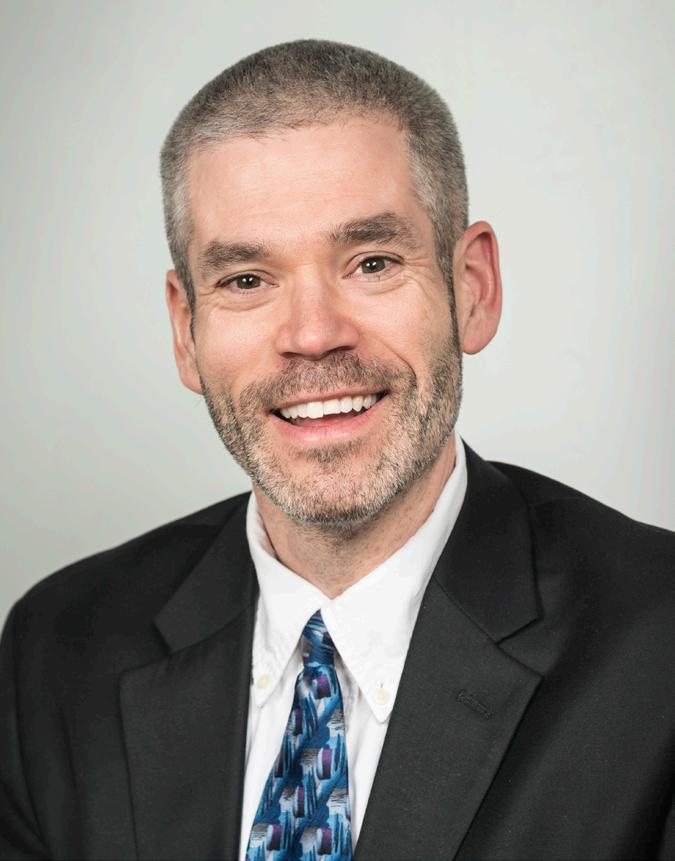
By Bob Bardwell, MASCA Executive Director
Bardwell
Thank you to the 528 folks who attended our annual Spring Conference in mid-March in Framingham. From our amazing keynotes and surprise guest speaker (DESE Commissioner Pedro Martinez) to the awesome breakouts and exhibitors and to the hugely successful Bingo event, it was a huge success. Now on to 2027! If you want to help plan aspects of next year’s conference, please reach out to Conference Chair Ali Robidoux. We have several new ideas that we want to consider but will need help implementing them.
I could go on and on about the conference but there is something else equally important that I want to share with you. At the Governing Board meeting held immediately at the end of the conference, the Board unanimously passed the following motion –“To sunset the MA Model, MARC and MARC Jr. and adopt the ASCA National Model.” This is quite historic as Massachusetts has had a model for comprehensive school counseling since 2006 and had a 3rd version since 2020.
Let me be clear, this decision was not made because the need for comprehensive school counseling has gone away. If anything, the need is greater now than ever before. Despite being endorsed and supported by the MA Department of Elementary and Secondary Education, the majority of administrators and school counselors never really fully embraced the concept of having a roadmap showing school counselors how their school counseling program should operate.
In my role as Executive Director, I am often in districts doing training based on the needs of the school/ district. Whenever we discuss improving student achievement and performance, it is through the lens of having a framework or model from which to base the activities and components of their program. I use the analogy of a teacher and the mandated curriculum frameworks that must be taught in each subject area. Whether we agree with that concept or not, MA DESE has provided a roadmap for all teachers to follow in hopes that kids from the Berkshires to the Cape will have access to the same curriculum and standards.
However, when it comes to school counseling there is no minimum standard, common expectations or measurable outcomes expected from us counselors. In the 1980s and 90s this was the norm, but in 2026 it no longer is acceptable. With the launch of the first edition of the ASCA National Model in 2003 and subsequent updates (the ASCA National Model is currently in the 5th edition) as well as the three versions of the MA Model, the expectations of school counselors have changed. We know how to do it better and our students and families with whom we work deserve no less. There can no longer be random acts of guidance.
Currently most school counseling graduate programs in Massachusetts teach either the ASCA and/ or MA Models, although there is no mandate from MA DESE to do this. One of the biggest challenges that recent graduates from these programs face is that what they are taught in graduate school is not often what is happening in the field. In my graduate classes where I teach about comprehensive school counseling, we actually do role plays about what it is like to be a new counselor in a school where there is no will or interest to adapt the new methods. I do this in an attempt to help the students navigate this often challenging juxtaposition – best practices taught to me in my preparation training vs. what is actually occurring on a daily basis.
So why, when it is more important than ever to have clear standards and expectations, would the Board vote to sunset the MA Model? Unfortunately, despite efforts by MA DESE and MASCA to make the model institutionalized throughout the Commonwealth, it never really took hold. If anything, in some schools and districts, there was often a revolt and intense pushback because counselors did not want to change or do things differently. And because it was not mandated, there were only pockets of implementation, at its best.
If anything, there was often confusion and frustration because there are two models. “Why are there two?” people would ask. The belief in 2006 was that by having a separate model specifically tied to Massachusetts, there would likely be more buy-in as there were components specifically tied to Massachusetts termi-
(continued next page)
Bob
Sunsetting MA Model
(continued from previous page)
nology and best practices, such as the MA Career Development Education Benchmarks. Unfortunately, those unique connections are either no longer in use or have been integrated into other documents. This means that these connections are no longer seen as a benefit to school counseling.
The Board also considered the amount of time and talent needed to update the MA Model 3.0, which would be necessary. Since the ASCA Model is already in its 5th edition, there would need to be extensive research and effort made to align the MA Model 4.0 with the ASCA 5th edition. The previous revisions to the MA Model took a great deal of human capital. Not that we wouldn’t take the time to make these necessary changes, but when paired with the other concern about confusion and lack of a tangible benefits, the Board decided to sunset rather than update.
Does this mean that MASCA no longer cares about comprehensive school counseling models? Absolutely not. At the December Board meeting, the Board voted to change the name of the MA Model Committee to the Massachusetts Comprehensive School Counseling Team. This was a nod to ensure that we not only want to continue to support schools and districts in their efforts to improve their programs, but also to reflect the shift to use language that is clearer and more current.
Under the direction of Cynthia Esielionis and Jodi Then, Co-chairs of the Comprehensive School Counseling Team, there is now a new focus and effort being made to create new and contemporary programs, opportunities and resources for our counselors, schools and districts. This rebranding will hopefully provide MASCA the opportunity to reconnect with counselors, schools and districts in an effort to help ensure that they are providing comprehensive school counseling programs to their students and families.
Please allow us some time to make changes to the MASCA website and in our messaging. As you can imagine this is a big change and we will need time to make the shift. We also do not want to just throw everything MA Model out the window as there are many great resources and tools that are still relevant and appropriate for school counseling in 2026.
If you have any questions or concerns about this change or if you may be interested in highlighting how your program demonstrates comprehensive school counseling, join this new focused implementation of comprehensive school counseling, please contact Cynthia, Jodi or myself. We look forward to hearing your thoughts and feedback and look forward to the next generation of comprehensive school counseling in Massachusetts.
AWARENESS DATES
Alcohol Awareness Month
Arab American Heritage Month
Autism Acceptance Month
Child Abuse Prevention Month
Community Service Month
Counseling Awareness Month
Deaf History Month
Month of the Military Child
National STD Awareness Month
National Youth Sports Safety Month
School Library Month
Sexual Assault Awareness and Prevention Month 2 International Children’s Book Day 2 World Autism Awareness Day 7 World Health Day 7 Sexual Assault Awareness Day of Action
National Alcohol Screening Day
National Youth HIV/AIDS Awareness Day
National Library Week
MASCA’s Newest O.S.C.A.R.
OSCARs present at the 2026 conference for the award presentation.
From left-to right:
Ron Miller
Jen McGuire
Ruth Carrigan
Jan Parsons
Donna Brown
Bob Bardwell
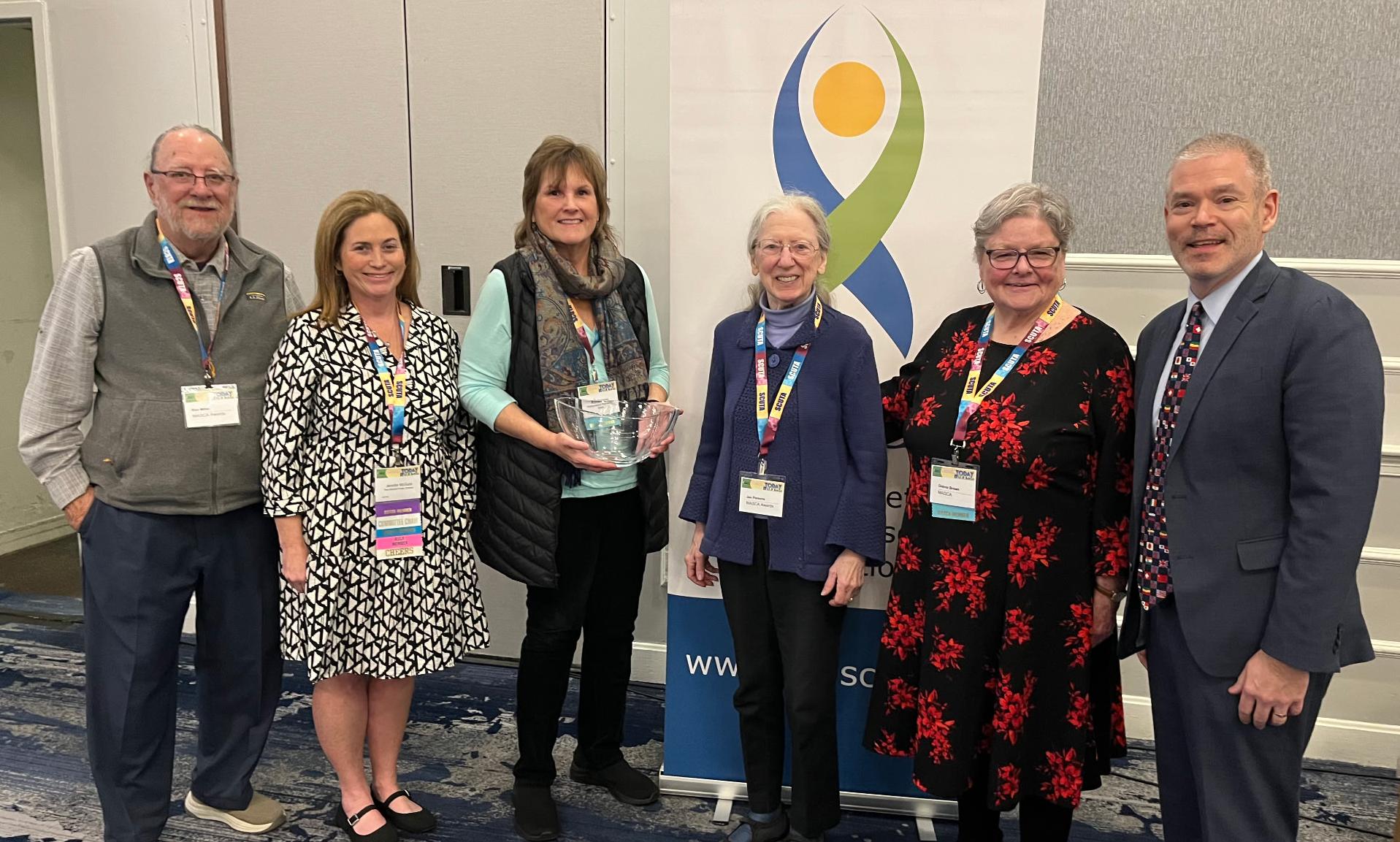
MASCA’s 19th O.S.C.A.R. recipient, Ruth Carrigan (third from left in photo), was awarded this honor at our annual conference on March 16.
The MASCA O.S.C.A.R.— which stands for Outstanding Service to School Counseling Award Recognition — was established by the Governing Board in 1986 as part of MASCA’s 25th anniversary celebration. The award was created to recognize Oscar Krichmar, who had been actively involved with MSCA from its earliest planning and organizational meetings in 1960–61 through the first twenty-five years of the association’s existence.
The O.S.C.A.R. is not an annual award. Rather, it is a lifetime professional achievement award. Being recognized as a MASCA O.S.C.A.R. recipient is the highest honor that can be bestowed upon a member of the school counseling profession in the Commonwealth of Massachusetts.
The purpose of the award is to honor school counselors who have dedicated a career of distinguished and exemplary service to MASCA and to the profession of school counseling in Massachusetts. It is presented when an individual clearly exemplifies the spirit of this award through their longstanding commitment, leadership, and service to MASCA.
To date, 18 individuals have been recognized with the O.S.C.A.R., representing decades of dedication and advocacy for MASCA and the school counseling profession. There are currently 11 living O.S.C.A.R. recipients, including Mary Westcott, Lillie Davis, Mary Chouinard, Helen O’Donnell, Donna Brown, Jan Tkaczyk, Ron Miller, Bob Bardwell, Jan Parsons, Joe Fitzgerald and Jen McGuire.
This year’s recipient has been a quiet but deeply impactful leader who has given back to MASCA and
to the school counseling profession throughout her long career—and even into her retirement.
Her service to MASCA leadership actually began during her time working in college admissions, before she moved to the “other side of the desk” and began a career in school counseling.
Among her many contributions to MASCA, she served in the three-year leadership cycle as President-Elect, President, and Past President from 2014 to 2017. She has also served as conference chair, professional development committee chair, and as a longtime leader of the South Shore Guidance Association.
Beyond these formal roles, she is widely known as someone who is always willing to step in, help, and volunteer whenever MASCA needed support. Leading the annual spring conference alone is a significant undertaking, yet she managed that responsibility while contributing in many other ways at the same time. Even when she was eligible to receive a stipend for her work as conference chair, she declined it. Her motivation was never recognition—it was simply a commitment to the profession.
In addition to her extensive service to MASCA, she is also an accomplished and respected school counselor. She worked at Silver Lake Regional High School and later served as the Director of School Counseling at Whitman-Hanson Regional High School. Throughout her career, she mentored numerous interns.
She retired from school counseling in 2024. In retirement, she is enjoying traveling with her husband and spending time with her family, including her three grandchildren.
Congratulations Ruth!
MASCA Makes History! Why You Should Join Us at This Year’s Boston Pride Parade
By Jessica Almeida, Tri-Leader of MASCA’s LGBTQ+ Affinity Group and School Counselor Shortage Committee Co-Chair
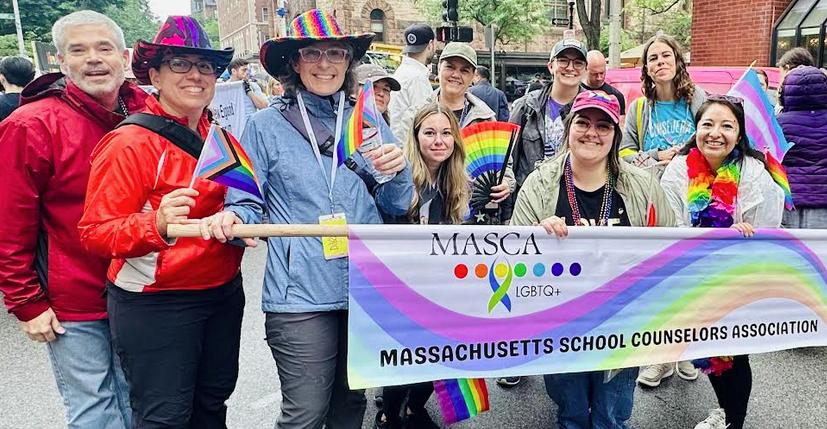
When I first joined MASCA’s LGBTQ+ Affinity Group three years ago, I was seeking a community. I wanted a safe and supportive place where I could connect with other LGBTQ+ school counselors across the state. I never imagined that I would later lead my fellow MASCA members down the streets of Boston. Alongside my fearless co-leaders, Mindy Cripps and Denise Evans, and with the help of MASCA executive director Bob Bardwell, MASCA marched in the Boston Pride Parade for the first time in 2025. What started as a simple idea blossomed into an unforgettable day of advocacy, connection, and celebration of LGBTQ+ people. Now, one year later, we are eager to share the joy of this day with you and implore you to join us at this year’s parade.
First time walking in the parade? Us, too!
I have attended every Boston Pride Parade since I first came out in 2015. At my first parade, I remember standing along the sidewalks of Boston Common in awe, my smile stretched from ear to ear, cheering on marchers that went on for miles and miles. I couldn’t believe so many people existed in this one space, all full of love and joy for people like me. ‘This will be me someday,” I thought - and one day, it was.
For many of our participants last year, it was their first time marching in the parade, too! “I had a range of emotions, because I was worried about the logistics of parking, gathering the group, and being in the rain,” Denise Evans shared. “Howev-
er, once our group was settled and the long awaited walking began, the joy and excitement came. I stopped caring about being chilly and wet and holding our banner correctly, and embraced the moment of being surrounded by people who support and love the LGBTQ+ community. It felt empowering to represent school counselors.” If you have never walked in the Boston Pride Parade before, or any parade for that matter, marching in the parade is not scary. The joy in the air is palpable. No marching experience is necessary!
Why should you join us this year?
After marching for the first time, we immediately knew we would be back for more this year. “You’re gonna laugh so hard your cheeks will hurt,” said Manuela Almeida, an ally (and my mom - that’s right, bring your family and friends, too!). “The crowds, the comradery…from beginning to end, I was overwhelmed with the number of people watching the parade and how much support and love they were showing school counselors and everybody.” If you are looking for a way to meet like-minded individuals, to remind yourself of why you do the work you do or to simply have a day full of fun, please join us.
What do I have to do to join this year’s parade?
To join us in this year’s parade, please fill out this interest form no later than May 29, 2026. As MASCA executive director Bob Bardwell said, “bring a friend, colleague or family member. There is strength in numbers and we want to send a message that MASCA is right there with other educational associations such as the MTA and BTU. The ask is so easy and the impact is so great…It will no doubt make you feel good and reinforce the work you do for your students, colleagues and families every day. Yes, this is one more thing and takes time away from other things and responsibilities, but you will leave the event on such a high note that it was all worthwhile.” We hope to see you this year!
MASCA would like to say thank you to everyone who joined us for the 2026 MASCA Conference, and we are so glad you were part of it!
If you attended, we hope you enjoyed the sessions and connections. And if you missed anything (or couldn’t join us), there’s still time to catch it.
You can still register for online access to the conference portal, which includes:
Pre-recorded breakout sessions
Recorded keynote/general sessions
Registration and sessions are available online through May 15, 2026!

Meaningful and Authentic Evaluation of the School Social Worker/Adjustment Counselor (SSW/SAC)
By Anne Thidemann French, Co-facilitator for SSW/SAC SIG and Retiree SIG
“This is the first time in my many years as a principal that I have been able to evaluate the SISP roles in a meaningful and authentic way.”
Since 2012, public school counselors and school social workers/adjustment counselors have been evaluated using a generalized SISP (Specialized Instructional Support Personnel) Rubric. During fall of 2024, MASCA was invited by DESE to participate in creating role-specific SISP Rubrics. I facilitated the working group for the SSW/SAC rubric and Bob Bardwell facilitated the working group for the School Counselors Rubric. Huge thanks are in order to the many MASCA members who volunteered their time to serve on these working groups. Anyone who is familiar with the SISP rubric can imagine the time and commitment required to fulfill this task. It is a 24 page document after all!
The Role-Specific Rubrics were drafted during the first half of 2025 and piloted this year among volunteer school districts. The rubrics will be instituted by districts beginning in fall 2026. At that time, districts must decide to adopt these rubrics or to provide alternative ones that fulfill all of the same legislated requirements.
Members of our working group had experienced the challenges and frustrations of being evaluated as well as evaluating others using the former, generalized SISP rubric. We strove to incorporate the most important and time-consuming responsibilities of the role and to have the rubric reflect the expert knowledge and skills required to fulfill those responsibilities.
Here is an overview of some key changes and additions to the rubric:
• Substitutes detailed language unique to the SSW/SAC role: Concretizes the broader language by describing what it looks like specifically in the role and using language aligned with national standards within the counseling and social work professions.
• Supplements additional elements to highlight the most common and time-consuming responsibilities: Some key responsibilities, for example “Crisis Intervention” and “Be-
havioral Health Modalities”, are not clearly apparent within the non-role-specific SISP.
• Adds guidance about the evaluation process including observation and evidence: Observation of practice that is protected by privacy laws and ethical standards that specifically pertain to the SSW/SAC presents challenges to both the evaluator and the evaluatee. Violations may not only hurt the student but may also lead to lawsuits and loss of professional licensure. Clear guidance as well as examples of helpful and appropriate evidence that do not violate law or ethical standards are included.
• Incorporates the most recent SMK’s- Incorporates all of the Subject Matter Knowledge standards that the preparation programs for a SSW/SAC license must address using the same or similar language.
• Adds additional terms to the Glossary Section: Behavioral Health; Multi-Tiered System of Support; Crisis Intervention in Behavioral Health; and Social Emotional Learning are included.
• Adds Resources for Ethical Guidelines and Legal Responsibilities: Cites national and state professional standards and law.
Initial feedback from Evaluators and SSW/SAC’s participating in the pilot has been encouraging and positive. The quote at the beginning of the article was voiced by an elementary school principal who finds the SSW/SAC as well as the other role-specific rubrics extremely helpful. As an evaluator who had never served in the SSW/SAC role, she reported that she was able to directly take language from the rubrics to better observe, review evidence, write reports, and guide meaningful conversation. She shared with me a sample of a written assessment of her SSW/SAC. It was a wonderful example of using very specific language that clearly demonstrated the clinical expertise of the SSW/SAC. Reports from SSW/SAC’s who are being evaluated with the draft rubric have been similarly promising. One wrote to me:
“It’s so nice to have a rubric that aligns with our work as SSW’s/SAC’s!!!!”
Meaningful and Authentic Evaluation
Excerpt from Rubric from the section Additional Guidance for the Evaluation of SSW/SAC
Observation for Evaluation: Direct observation of individual, group or family counseling or any other activity (i.e. review of counseling notes, consultation with other service providers) that are protected by privacy laws should solely be conducted by a clinician licensed by the appropriate board (i.e. LICSW, LMHC, SSW/SAC), with express permission of the student/guardian) and with careful consideration of the impact of an observer on the therapeutic relationship and process. Opportunities for direct observation that are not in conflict with privacy law include:
• Interview of SSW/SAC and review of case notes with redaction of identifying information, data report on counseling activities
• Participation at meetings such as MTSS, IEP/504, team, faculty, disciplinary, school emergency response, etc.
• Observation in public settings
Sample Excerpts from Newly Added Elements:
II-A-4. Effective Behavioral Health Modalities: Supports student growth and behavioral health by:
• Maintaining currency with and implementing evidence-based individual and group counseling strategies and programs with fidelity.
• Incorporating a trauma-responsive approach counseling, classroom work, family interactions, and teacher consultation.
• Developing, implementing and monitoring effective transition plans for students experiencing disruptions in school participation through personal crises, behavioral health hospitalizations, emergency foster care, etc.
• Delivering counseling services to students as identified with emotional or mental health concerns.
• A list of additional examples follows
II-A-5. Crisis Intervention: Supports students experiencing acute emotional distress by:
• Intervening with students experiencing personal crises using evidence-based assessment tools and therapeutic approaches (when available). Crises may include issues such as suicide risk, mental illness, child abuse, relationship violence, targeted violence/ harassment, bereavement, trauma, etc.
• Developing, implementing and monitoring effective student safety and crisis intervention plans.
• Periodically/routinely following up with students post-acute crisis and with collateral contacts and caregivers.
I’m Not Sure About Dogs, But you CAN Teach a School Counselor New Tricks!
By Karen McCrillis, MASCA Secondary SIG Leader & School Counselor, Gardner High School
Maybe it is because I have a big birthday coming up this year. Or maybe it is because I used to be one of the youngest employees at the school.
People used to come to me for tech advice. And then…things got busy. I became complacent in the knowledge that I had and went on with my career. 20+ years later, new young counselors and interns come into our school and make presentations prettier and track data quicker and more efficiently. I never wanted to be the kind of counselor who wasn’t current, so when an email from ASCA showed up in my email announcing the “AI in School Counseling” professional development, I knew I had to know more.
In the beginning of January, I took part in the ASCA@ HOME event and I was blown away! This professional development was made up of prerecorded videos by fellow counselors and counselor educators on many different top-
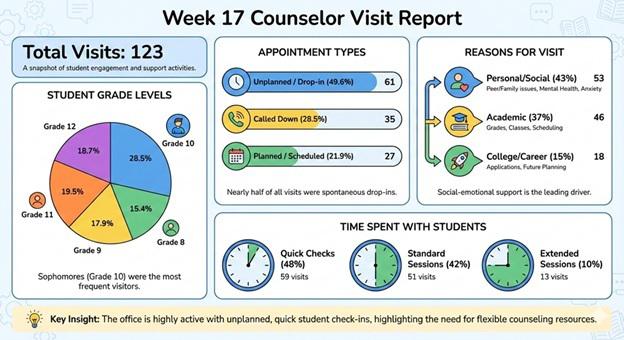
ics related to artificial intelligence in school counseling. Then, I decided to give it a try. I took one week’s worth of student visit data and created my very first infographic on NanoBanana! (See it below.)
I really did that! It took only a few minutes to enter the data and tweak the request before very clear and succinct charts appeared before my eyes. Without AI, it would have taken me quite a bit of time to compile the data and create the charts. Besides saving me a lot of time, the data was displayed in one infographic. If I had created it on my own, I would have had to put that information into several separate charts.
I also learned how to use AI responsibly. This is almost more important than all of the tips and tricks that I learned. Particularly, never put personally identifiable student or staff informa-
tion onto any AI Platform and make sure that you check your data/chart/infographic that you have created to make sure that it is all correct.
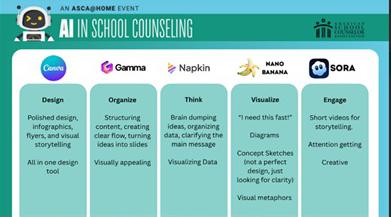
One of my favorite presenters was Hanna Mick. She is a school counselor at Indian Hills Elementary School in Topeka, Kansas. She is also a former ASCA SCOY finalist. Below I have included one of her slides that summarizes some of her favorite platforms with her permission. If you ever get the chance to see her present, make sure to take that opportunity.
I want to make sure that I am very clear: I am not an expert. My point of this article is not for people to reach out to me with questions because you will be disappointed. The purpose is to hopefully give a little push to someone who might be thinking about trying something new.
You can do it!
Executive Summary of Governing Board Meeting:
March 17, 2026
Submitted by Julia Cahill O’Shea, MASCA Governing Board Secretary
The MASCA Governing Board meeting, chaired by Ali Robidoux, focused heavily on the organization’s fiscal stability and long-term sustainability. Executive Director Bob Bardwell reported that while the transition to a full-time executive model has stabilized operations, several financial targets were missed this year, resulting in what will likely be budget deficit at the end of the fiscal year in June. To protect reserve savings, the Board is exploring significant cost-cutting measures. Bob Bardwell also offered to voluntarily reduce his hours or salary to help meet budget needs, highlighting the board’s commitment to avoiding “tapping into the bucket” of emergency funds.
In a landmark decision for the organization’s professional direction, the Board voted unanimously to sunset the Massachusetts Model and formally adopt the ASCA National Model. This shift was prompted by technical obsolescence—with 90% of the digital links in the current Massachusetts Model being defunct—and low member engagement. While the move aligns Massachusetts with standardized national frameworks, the Board emphasized a respectful transition. The work of the past twenty years will be archived on a new MASCA history timeline on the website, and specific local components like MARC and MARC Jr. will be reviewed for potential retention.
The meeting also addressed leadership transitions and organizational governance for the upcoming 2026-27 term. Cory McGann was elected as the new Board Chair, and Andrea Encarnacao Martin was elected Assistant Board Chair. Beyond personnel changes, the Board discussed
a potential shift in tax status from a 501(c)(6) trade association to a 501(c)(3) charitable organization to improve financial flexibility. To enhance transparency, the Executive Director will work with accountants to provide detailed QuickBooks breakdowns, and a dedicated meeting with Committee Chairs will be scheduled to scrutinize specific line-item expenditures.
Finally, the Board reviewed upcoming events and advocacy efforts. The Annual Conference will revert to a two-day format to accommodate school budget constraints,
with the next event tentatively slated for April 5–6, 2027. Looking toward the summer, the Leadership Development Institute (LDI) is scheduled for August 2–3, with a focus on low-cost activities like scavenger hunts to maintain engagement without high overhead. On the advocacy front, the Board was warned of a November ballot initiative to reduce state income tax to 4%, which members expressed concern could “cripple” state funding for essential school counseling resources.
New MASCA Members
Katharine Andres
Kailey Bay
Aru Berkimbay
Crystal Briggs
Maxfield Cook
Serena Dennis
Alison Di Tucci
Heather Dwyer
William Hays
Amanda Hernandez
Cherrelle Hyde
Kathleen Jasinski
Stella Li
Delaney Mick
Kelly Morin
Mackenzie Nee
Bridget ONeil
Stephanie Roncarati
Susan St. John Rogers
Peiran Wei
Lingyun Xu
Qingyue Zhang
Accepting Rejection: How to Navigate not Making the Cut in Interviews
By Rachel Flagg, Assumption University Grad Student & MASCA Graduate Student Liaison
Greetings fellow graduate students, and happy April! As someone with a spring birthday, I always look forward to this time of year and the changes it brings about as we finally leave the long, cold winter behind. Though as a graduate student quickly approaching the end of my program, springtime has taken on quite a different meaning this year. Springtime and the subsequent end of the school year brings about many questions about what my counseling career will look like this time next year, and the necessary steps it will take to get into the role I wish to fill.
I can not speak for all graduate students, but personally the most daunting element of entering the profession comes along with the process of navigating interviews and accepting the fact that not every interview will lead to a job offer. As hard as I try not to get too invested in each job posting and understand the fact that in many situations I may not be the best fit for the position, I can not help myself from feeling dejected when being rejected after all the hard work and dedication I put into each opportunity. If you can relate at all to this feeling of rejection sensitivity as a graduate student lacking experience in educational interviews, let’s explore our uncomfortable feelings together and navigate the process of accepting rejection.
Don’t take it to heart
If your graduate programs are anything like mine, they have made
frequent mention of the fact that our profession is lacking qualified candidates to fill open positions within the schools in our state. This level of future job security may have even been a deciding factor in your choice to pursue this career, but it also comes with an unexpected setback for those of us who are sensitive to rejection. If we approach job interviews with this outlook in mind, being passed over for a job opportunity can feel like being labeled as unqualified. If you’re prone to overthinking, the process may look something like ‘if the pool of candidates is limited and I can not make the cut, there must be something I really am not doing right’. As hard as it sounds on paper, it is really important to try your best not to take rejection to heart. Realistically, even if we are fully licensed and incredibly qualified to fill an open position, we are still new to this process and prone to making rookie mistakes that we may not even realize we are making. This is the reason why receiving feedback after every interview is vitally important, which brings me to my final point.
Consider it a learning experience!
Our graduate school experience being over most certainly does not mean that our entire learning journey has come to a close. We are still learning from every single experience we have
within the field, which especially applies to our first trials of interviewing for a job in our chosen role. One of the most helpful pieces of advice I have received from a current school counselor is to always, ALWAYS request feedback following a job interview, especially when their final decision was to hire another candidate. Often, the circumstances of being rejected for a position are completely out of your control, but on the chance that there is an element or two of constructive feedback that you can change or improve upon, take it! Embrace the fact that you are still learning and navigating how to interview for this role, and consider approaching those first few attempts at interviewing as information gathering sessions. If a position happens to come away from it, great, but if your expectations are realistic and it ends up being a rejection you are more prepared to reflect and improve as time goes on.
I hope this personal reflection and frame of reference has helped ease some of the worrying feelings fellow graduate students may have about the prospect of being rejected throughout the interview process. If there are specific questions or concerns you have about the interviewing process, consider joining the graduate student liaison’s upcoming interview workshop this month featuring panel discussions with school counselor hiring managers. Emails with event details will be forthcoming!
Grief at Work: Lessons from a School Counselor
By Sara Runkle, MASCA Emerging Leader and School Counselor, Kiley Prep Middle School
As school counselors, we spend our days helping students navigate grief, loss, and overwhelming life circumstances. We teach coping skills, emotional regulation, and the importance of balance. But knowing those strategies does not make us immune to grief ourselves.
Sometimes challenges arrive one at a time. Other times they arrive all at once. Add grief to the mix and everything changes. This past year, I found myself navigating both personal loss and the responsibilities of school counseling at the same time. This article is about how I survived this phase and what I learned along the way.
My story started with a year I was really excited about I began the year thrilled to start at a new school. I had just come off a summer rich with professional development, including MASCA’s School Counselor Summer Camp, which I highly recommend. I was proud to have been selected for Emerging Leaders and excited that my MASCA session proposal had been accepted. I was leaning in professionally and energized by my new role.
At home, life was already complicated. I am in the “sandwich” phase of life, actively parenting while also supporting aging parents. I felt like I was managing the juggling act fairly well until, because hard things rarely arrive at convenient times, another ball was tossed into the mix.
My dad’s terminal illness progressed. Suddenly it felt like I was at risk of dropping everything. I wanted to give my full energy to my new role and my professional commitments, but I was exhausted and preoccupied with anticipatory grief. Looking back, I am not sure the hardest part was my dad’s death, although that has been painful. The hardest part was the waiting. It was anticipating the grief, my own and my children’s, and the chaos I feared was inevitable.
I returned from winter break knowing my dad could die at any moment. During the day I tried to focus on work, but in the back of my mind I was waiting for the call. I had daily responsibilities and looming deadlines, including my MASCA presentation and this article. I told myself I should start working on them early while I still had time. But my brain could not focus on anything beyond the impending loss. It felt like I was barely keeping
my head above water. There was no quick fix. No mindfulness exercise was going to erase the pain that was coming. What made it heavier was knowing the hardest part was still ahead.
And yet, I made it through those first months after my dad died. It was not easy, but I learned a few things along the way. I accepted help. I prioritized my family without letting everything else collapse. I covered my professional responsibilities. I protected my energy enough to pause before responding, even when I felt stretched thin.
Many counselors experience seasons when everything seems to collide. Sometimes the grief is professional. A trusted colleague leaves or a role changes unexpectedly. Sometimes the grief is personal or family related. Sometimes it is all of those things at once. Regardless of the source, loss can be heavy and, at times, debilitating.
There is no simple prescription for grief. As counselors, we know the honest answer is often “it depends.” What follows are the shifts that helped me remain both a grieving human being and an effective school counselor during a very heavy time.
One reason I navigated this year as well as I did was because I had started building a foundation the year before. After a particularly difficult school year, I began therapy and started paying closer attention to my mental and physical health. I improved my sleep habits, strengthened my support network, started working out, and developed greater self-awareness. When my dad’s illness worsened, that foundation was already in place. It was an important reminder that building support systems must happen before a crisis arrives. When grief hits, and it eventually does for all of us, we rarely have the energy to start from scratch.
One of the most important shifts during this time was intentionally slowing down. My therapist often reminds me that grief is like a broken ankle. You cannot behave the same way you did before the injury. You have to slow down, modify tasks, and accept help. It was unrealistic to think I could operate at full capacity while carrying that kind of emotional weight. If I had tried to simply push through, I might have gotten more done temporarily, but I would not have been present for my family and I
(continued next page)
Grief at Work
(continued from previous page)
likely would have burned out or reacted instead of responding thoughtfully at work and at home.
Slowing down did not mean giving up. It meant adjusting my pace to match reality. Part of slowing down meant asking for and accepting support. I told my co–Emerging Leaders and my administrators that my dad was nearing the end of his life and explained that I was experiencing what I called “grief brain.” Having those conversations ahead of time meant I did not have to explain everything while in the middle of grief. People were kind, and having a plan eased my anxiety. I also accepted personal support. I said yes to additional therapy sessions, coffee with friends, and taking all of my bereavement days, even when I initially worried about inconveniencing others.
Progress over perfection became essential. Some work was not at the level I would normally produce. I simplified. I missed a meeting. I recorded my presentation video in one take, something I would normally redo several times.The world did not end. And yet it was good enough. Work continued to move forward and the responsibilities I held as a school counselor were still met.
When everything feels urgent, it is easy to become overwhelmed. Simplifying and prioritizing helped reduce the chaos. One helpful strategy was compartmentalizing. Before my dad died, I focused on getting through each workday and allowing myself to process emotions at home. After his death, I focused first on the Celebration of Life before turning my attention to my professional deadlines. This was not procrastination. The tasks still had clear timelines. I was pacing myself so I would not become overwhelmed and shut down. Instead of long to-do lists, I identified one or two priorities and scheduled manageable blocks of time to work on them. Sometimes I used a modified Pomodoro approach, alternating lighter activities with small steps toward more difficult tasks. Imperfect progress is still progress.
Another helpful reminder was something my therapist often says: emotions are indicators, not dictators. Grief, anxiety, and exhaustion were real and deserved space, but they did not always get to determine my actions. Sometimes the best approach was simply to take the next small step. This was also helpful in my ongoing work against perfectionism. I did not need to feel calm or completely
ready before taking action. Sometimes the action helped create the next feeling.
Finally, I focused on protecting what mattered most. Over the past year I had been working intentionally on my health, and when my dad became sicker I doubled down on those habits. Sleep is essential for me. Without it I become overwhelmed, irritable, and far less effective for both my family and my students.
Grief is exhausting. During the first week after my dad died my brain felt like mush. Sleep and movement were not luxuries. They were stabilizers. I adjusted my workouts to match my energy and focused on familiar activities that provided structure without heavy cognitive effort. Those habits helped me think clearly enough to pause and ask, “How do I want to show up in this moment?”
Prioritizing my wellbeing was not indulgent. It allowed me to remain steady and present as a school counselor during a time when my capacity was different.
Someone once advised me to try to “grieve well.” I am not sure there is a perfect way to do that, but I believe I am trying. My grief is only beginning, but I made it through the first phase by allowing myself to feel what needed to be felt while continuing to show up for my students and fulfill my professional responsibilities.
My work this year did not look exactly how I imagined it would. I moved more slowly. I simplified. I asked for help. And still, the work mattered. I showed up for students, stayed connected with families, and remained present in my school community. When I look back on this time, I know I said what needed to be said and showed up in the roles that matter most to me: wife, mother, daughter, and counselor.
The strategies we teach our students, planning, pacing, asking for help, and adjusting expectations, are not just for them. They are tools we can use when life and work collide.
Slow down. Simplify. Protect what matters. You can grieve well and still continue the work of school counseling.
Karlie Stockford
Graduate Student, Master’s in School Counseling
Bridgewater State University
Why do you work in the field of education? I began my career in healthcare, working as an EMT during the COVID-19 pandemic, then in a medical practice. I loved getting to know my patients, understanding their challenges, and helping them work toward better outcomes. But, I found it difficult to only have these brief interactions. I wanted a role where I could build ongoing relationships and support individuals as they grow. I particularly connected with my adolescent patients, which inspired me to pursue school counseling - a career where I can support students’ social-emotional and academic journey in a meaningful, long-term way.
What inspires you about being an educator? The opportunity to be a consistent and meaningful support for students of all backgrounds and to make the most of opportunities to support them. I am also inspired by the resilience and potential of young people. As they face increased choices and autonomy, I want to empower them to recognize their strengths, understand the options and resources available to them, and support them through challenges so they can thrive.
What career would you be doing if you were not an educator? I would be a baker. I love creating treats that bring joy to the people I care about. For me, baking is another way to connect with others, spread care, and make a positive impactjust in a different form.
What is your favorite tool to use in your work? Relationship-building. Whether it’s through one-on-one conversations, small group sessions, or collaborating with teachers and families, building trust allows me to understand students’ needs and support them effectively.
What words do you live by? “It takes strength to be gentle and kind.” - The Smiths. These song lyrics remind me that showing empathy, patience, and compassion requires courage and intentionality. In my work, these principles guide me as I build relationships, support growth and help others tofeel seen and valued.
Why is it important to you to be part of a school community? Shools are where students spend a significant portion of their
lives, and the relationships built there have lasting impact. I value the opportunity to collaborate with students, families, and colleagues to create a supportive, inclusive environment. Being embedded in the school community allows me to be accessible, respond to students’ needs in real time, and contribute to a culture that empowers young people academically, socially, and emotionally.
How would you describe your job to a 5 year old? I help kids at school feel safe, happy, and ready to learn. I talk with them when they have worries or need help solving problems, and I work with teachers and families to make sure everyone has what they need to do their best.
How do you decompress/eliminate stress or refuel for the next day? By reading and exercising. Reading allows me to escape to a different reality while learning lessons and recognizing new perspectives. Exercising helps me expend excess energy and feel more in tune with my body and mind.
What brings you joy? Simple, everyday moments - feeling the sun on my face, laughing with loved ones, reading a great book, driving with the windows down, or trying a new recipe.
When and why did you know you wanted to be an educator? I realized I wanted to be an educator while working as an EMT. I had an adolescent patient who was facing significant mental health challenges. During our hour-long drive together, we spent the entire time talking. Despite everything she was navigating, her resilience and eagerness to grow were inspiring. After dropping her off, I never saw this patient again. This experience made me want a role where I could build ongoing relationships, support young people through challenges, and celebrate their growth.


Share an example of something that you learned from one of your students. Making mistakes is okay. Openly owning my mistakes with students can model for them that it’s normal to mess up sometimes, and that the way we respond to our mistakes shapes the outcome. By demonstrating accountability and a growth mindset, students can feel more comfortable taking risks, learning from challenges, and approaching problems with confidence.
What is your favorite dessert? Gooey, undercooked brownies.
What is your guilty pleasure? Staying in bed all day and binge-watching reality TV shows. What superpower do you wish you had? The ability to teleport - so I’d never have to deal with traffic again.
What is your typical breakfast? Greek yogurt with granola and fruit.
What is one thing that you are really good at? Random trivia
What is your coffee order? A medium iced regular from Dunkin.
What could you talk about for 30 minutes with no notes? The importance of affirming and inclusive care for LGBTQIA+ individuals.
What is your favorite smell and why? Warm chocolate chip cookies. It reminds me of home.
Do you have any hidden talents? My memory - I’ve been told I have the memory of an elephant.
What TV show are you currently binge watching? Below Deck
What Does Next School Year Look Like?
By Anthony Simmons, MASCA Emerging Leader & School Counselor, Atlantis Charter School
As we all are looking ahead to the next school year it brings a mixture of uncertainty, anticipation, and determination. School Counselors in the field rarely stand still. Most days it’s like you are on rollerskates. As we reflect on what the coming year may hold, we recognize that it will likely involve both familiar challenges and new opportunities. While it is impossible to predict every outcome, know that maintaining strong relationships with students and enhancing professional growth will shape the direction of the year ahead. The MASCA Conference brings forth a great second wind to ride out the school year!
One of the most consistent elements in our work is building meaningful relationships with students. No matter what changes occur within school policies, roles or responsibilities within the school community the connection between School Counselors and students remains central. Next year, we hope to continue strengthening these relationships by creating an environment where students feel supported, respected, and motivated to learn. Establishing trust allows students to take academic risks, ask questions, and develop confidence in their abilities.
The uncertainty of a new school year often brings both challenges and opportunities. Each group of students arrives with unique needs, personalities, and experiences. Navigating these dynamic

environments requires us to be flexible, patient, and self-reflective. We are always experiencing moments where plans shift unexpectedly or when new strategies are needed to meet students where they are and fulfill their needs. Rather than viewing uncertainty as an obstacle, we hope to approach it as an opportunity to grow professionally and creatively.
Strength will also play an important role in the year ahead. Education demands us to be professionals carrying with resilience, particularly when balancing the academic, social, and emotional needs of students. There are times when the workload feels heavy or when outcomes are not immediately visible. However, maintaining a clear sense of purpose to help students grow, learn, and succeed provides the motivation to push forward. Strength, in this sense, is not just about endurance but also about remaining compassionate, reflective, and committed to improvement.
Another possibility on the horizon is the chance to move into a new role within the school community or another district. While nothing is ever certain, the idea of taking on new responsibilities in an unfamiliar environment brings both ex-
citement and doubt. Transitioning into a different position/role could provide opportunities to expand the impact, collaborate with colleagues in new ways, and contribute to the school’s broader capacities. Such a change would require careful thought about how to maintain the student-centered approach that defines our work. As well as finding reassurance in, that change is not always a bad thing!
If a new role does become part of the coming year, it would be important to approach the transition with humility and openness. Leadership and new responsibilities often involve learning from others, listening to different perspectives, and adapting to unfamiliar challenges. Even in a different position, the ultimate goal would remain the same, supporting students and fostering a positive learning environment.
Regardless of the specific path the year takes for any of us, reflection will remain an essential part of the process. Regularly considering what is working well and what could be improved helps ensure that both students and educators continue to grow. By remaining open to feedback, collaborating with colleagues, and maintaining a focus on student well-being, it becomes possible to navigate change with confidence. The next year will likely be defined by a balance between uncertainty and possibility. Together as School Counselors we are ready for it all. Once a School Counselor, always a School Counselor.
MASCA Governing Board and Staff Directory
GOVERNING BOARD
Chair: Ali Robidoux
School Adjustment Counselor
New Bedford Public Schools
Assistant Chair: Cory McGann
School Counseling Department
Head
Ashland High School
Board Members
Mindy Cripps
Director of School Counseling
Billerica High School
John Crocker
Director of School Mental Health & Behavioral Services
Methuen Public Schools
Jessica Descartes
School Counselor
Tech Boston Academy
Andrea Encarnacao
School Counselor
Boston Latin School
Cynthia Esielionis
School Counselor
Ayer Shirley Regional Middle School
Lori Ford
School Counselor
Edgartown School, Martha’s Vineyard
Amanda Ugrinow
School Counselor
Westborough High School COMMITTEES
Conference
Ali Robidoux
School Adjustment Counselor
New Bedford Public Schools
Ethics
Mindy Cripps
Guidance Director
Billerican High School
Fiscal Oversight
John Crocker
Director of School Mental Health & Behavioral Services
Methuen Public Schools
Government Relations & Advocacy
Juliette Coatsworth
School Counselor
Foxborough Regional Charter School
Fran Frederick
School Adjustment Counselor
Belchertown High School
Inclusion, Diversity, Equity & Access
Vacant
MA Model
Jodi Then
School Counselor
Snowden International School, Boston
Cynthia Esielionis
School Counselor
Ayer Shirley Regional Middle School
Member Services
Tama Lang
School Counselor
Litwin Elementary School, Chicopee
Nomination and Bylaws
Jessica Descartes
School Counselor
Tech Boston Academy
Professional Recognition
Dina Sibilia
School Counselor
West Springfield High School
Tama Lang
School Counselor
Litwin Elementary School, Chicopee
Publicity
Luz Mederos Dorleans
School Counselor
Boston Latin Academy
Chris Soverow
Retired School Counselor
Research and Evaluation
Tim Poynton
Professor
UMASS Boston
School Counselor Pipeline
Jessica Almeida
School Counselor
Quinn Middle School, Hudson
Jennifer McGuire
College & Career Information
Coordinator
New Bedford Public Schools
Strategic Planning
Kerry Bartlett
School Counselor
Hudson High School
Technology
Jennifer McGuire
College & Career Information
Coordinator
New Bedford Public Schools
APPOINTED POSITIONS
Executive Director & Member-
ship Coordinator
Bob Bardwell
Secretary
Julia Cahill-O’Shea
Counselors Notebook & Tech
Coordinator
Jean Atwater-Williams
Mentoring Coordinator
Maryanne Margiotta
Program Review Coordinator
Kari Denitzio
Diversity Fellows
Amanda Berg
ESP, Granby Elementary School
Roz Riggins-DesRuisseux
School Counselor
Snowden International School, Boston
Denise Evans
School Counselor
The Carroll School
JC Topete Martinez
School Counselor
Boston Latin School
PDP Coordinator
Ali Robidoux
School Adjustment Counselor
New Bedford Public Schools
LIAISONS
Affiliate Liaison
Christine Weissman
School Adjustment Counselor
Athol Community Elementary
School
Counselor
Educator Liaison
Megan Krell
Associate Professor
Fitchburg State University
DESE Liaison
Lisa Harney
MA Dept of Elementary & Secondary Education
Emerging Leader Liaisons
Cory McGann
School Counseling Department
Head
Ashland High School
Courtney Royal
School Counselor
Gloucester High School
Graduate Student Liaisons
Ryan Beck
Gradudate Student
UMASS Amherst
Rachel Flagg
Gradudate Student
Assumption University
Nicole Ward
Gradudate Student
Boston University
EMERGING LEADERS
Allison Brann
School Counselor
Athol-Royalston Community School
Charlsey Penney School Counselor
Challenge & Reach Academy, Worcester
Jen Pinhal
Early College School Counselor
New Bedford High School
Sara Runkle
School Counselor
Kiley Prep Middle School, Springfield
Emerging Leader
Anthony Simmons School Counselor
Atlantis Charter School
SPECIAL INTEREST GROUP (SIG) LEADERS
Career/Technical
Annie McCarthy
School Counselor
Franklin County Technical School
Maryrose O’Neil
School Counselor
Tantasqua Regional High School
Kaitlin Monahan
School Counselor
Greater Lowell Technical High School
Counseling Directors
Meg Clougherty
School Counseling Program
Director
Boston Latin School
Brynn Cooper
Director of Counseling
Weymouth High School
Elementary
Lori Ford
School Counselor
Martha’s Vineyard
Megan McShane
School Counselor
St Columbkille Partnership
School
Maura Ricardi
School Adjustment Counselor
East Street School, Ludlow
Multilingual Learners
Priscila Anderson
School Counselor
Woburn Memorial High School
Matt Baione
School Counselor
Revere High School
Olivia Hull
School Adjustment Counselor
Brookline High School
Middle Level
Dawn Martin
School Counselor
Qualters Middle School, Mansfield
Jackie Saunders
School Counselor
Gibbs School, Arlington Retirees
Helen O’Donnell
Retired School Counselor
Anne Thidemann French Retired School Adjustment Counselor
School Adjustment Counselors/
School Social Worker
Nychele Clark
School Adjustment Counselor
Gardner High School
Kate Niedel
Retired School Adjustment Counselor
Anne Thidemann French Retired School Adjustment Counselor
Secondary
Karen McCrillis
School Counselor
Gardner High School
Anthony Simmons
School Counselor
Atlantis Charter School, Fall River
Rachael Weinhold
School Counselor
Winchendon High School
Urban
Rani Gould
School Counselor
The Academy at Kiley Middle School
Chase Grogan
Student Development Counselor
Community Academy of Science and Health
Sara Runkle
School Counselor
Kiley Prep Middle School, Springfield
AFFINITY GROUP LEADERS Counselors of Color
Jessica Descartes
School Counselor
Tech Boston Academy
Andrea Encarnacao
School Counselor
Boston Latin School
Aaron Spencer
School Counselor
Nashoba Valley Technical High School
LGBTQ+
Jessica Almeida
School Counselor
Quinn Middle School, Hudson
Mindy Cripps
Director of School Counseling
Billerica High School
Denise Evans
School Counselor
The Carroll School
Mission Statement:
The mission of MASCA is to elevate and advance the school counseling profession in Massachusetts through leadership, collaboration, visibility, and professional development to optimize student success.
Vision Statement:
The vision of MASCA is to equip school counseling professionals with the knowledge and skills needed to implement a comprehensive school counseling program in their school community. Through an equitable lens, we advocate that all K-12 Massachusetts students have access to a school counselor and the opportunity to become their best selves in school, their personal lives, and their communities.
Core values:
Advocacy - Committing to center the school counseling profession by highlighting and advancing the core values of school counselors, both individually and as a profession.
Equity - Requiring inclusivity, diversity, and accessibility for all school counselors and the students and families they serve
Collaboration – Working together with all stakeholders allows school counselors to deliver the highest quality school counseling program for all students.
Excellence - Maintaining the highest level of professional standards and advancing the delivery of comprehensive school counseling programs (i.e.: MA Model) for all students.
Strategic Objectives:
Objective #1 - Advocacy - Position MASCA as a recognized, valuable, and respected voice at local, state, and regional levels by building the awareness of the importance and impact of the work and role of school counseling professionals.
Objective #2 - Equity - Position MASCA as a leading organization in dismantling racist, sexist, homophobic, gendered, ableist, ageist, religious intolerance and other oppressive policies and practices while emphasizing the need for diversity and inclusion in school counseling personnel and programming.
Objective #3 - Membership - Grow MASCA membership by retaining and engaging current members, and recruiting new members, with an on-going commitment to cultivate a more diverse membership.
Objective #4 – Professional Development - Create, provide and/or promote relevant, high-quality, accessible, and timely professional development to meet the needs of our members and support the implementation of comprehensive school counseling programs.
Objective #5 – School Counselor Pipeline - MASCA must address the increasing number of unfilled school counselor vacancies and reduction of candidates entering school counseling preparation programs.

Layout
Jean Atwater-Williams