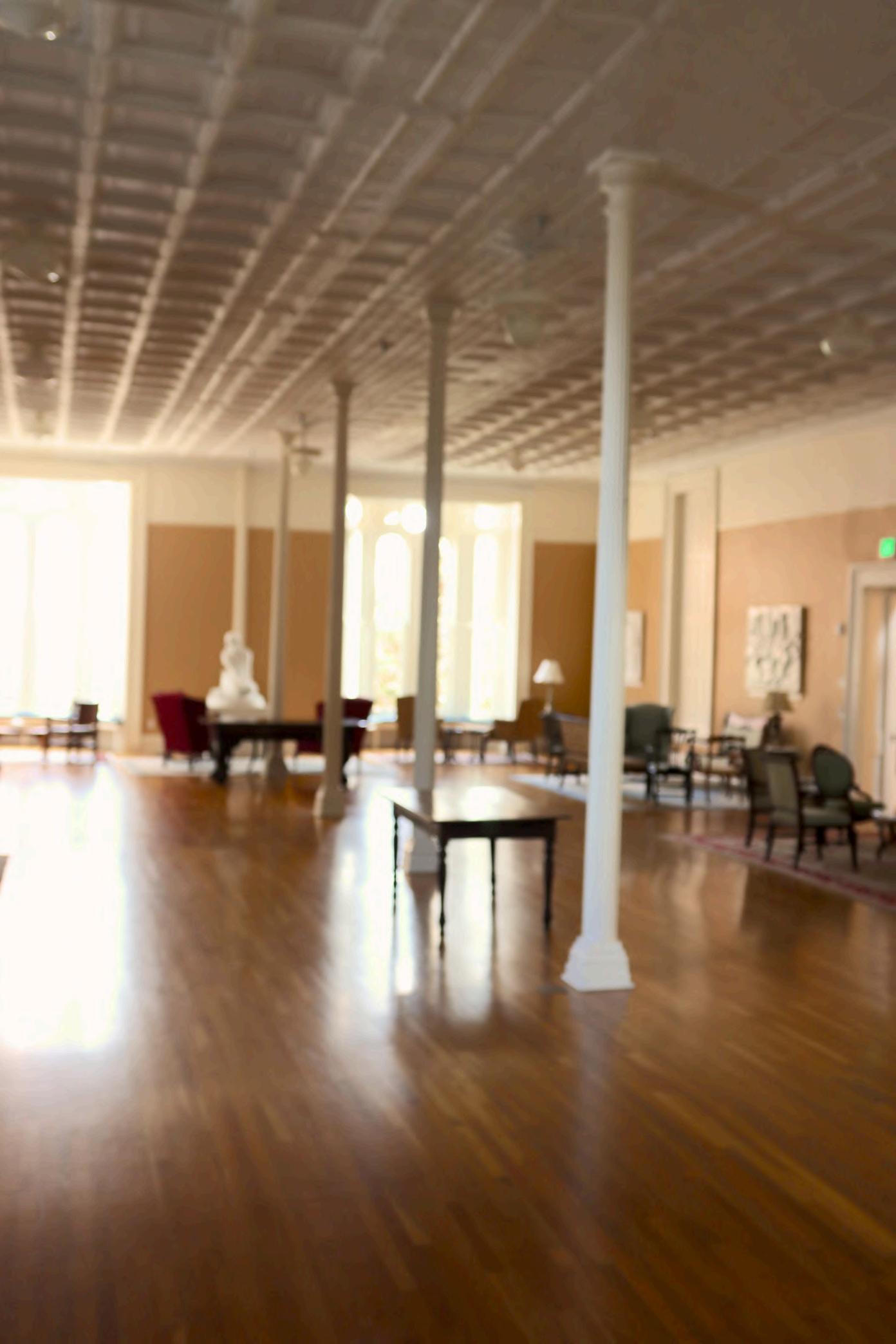
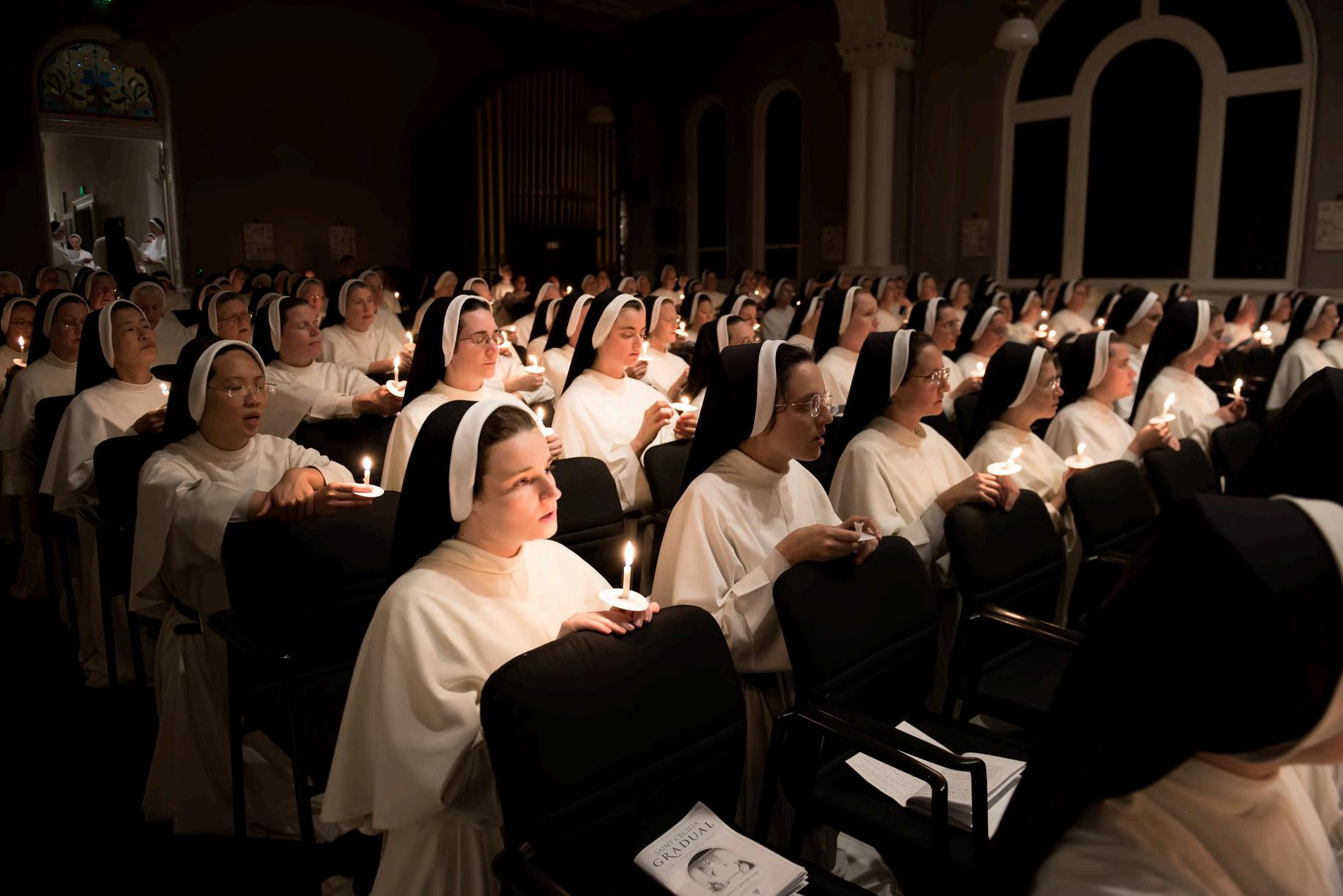
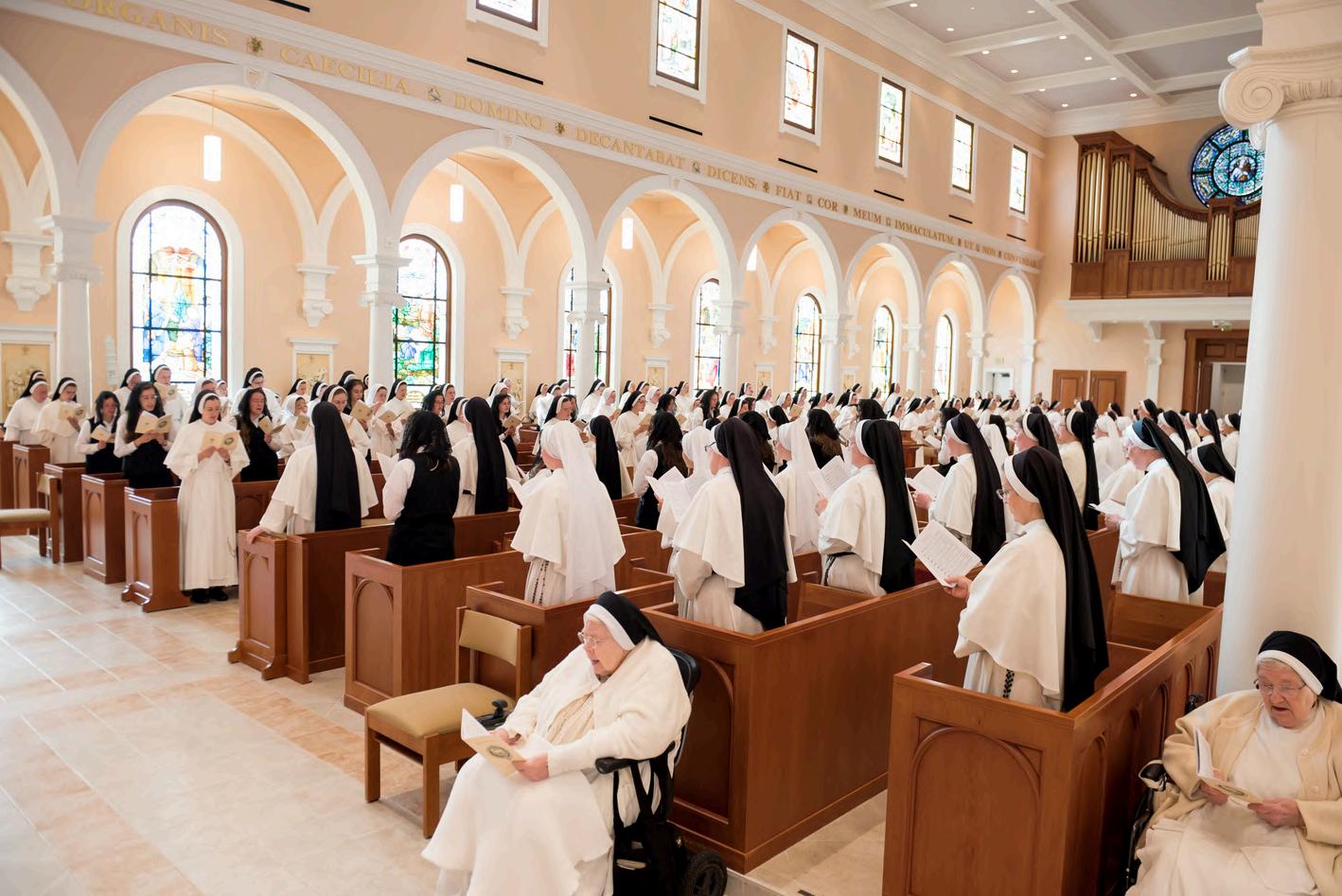
So much depends on what we are able to see. One summer I was asked to look after the large reception hall in our Motherhouse The “Recreation Hall” is part of the original 1862 building and since that time has been used as the main gathering space for the community and guests. After the large receptions following professions or jubilees, the space – especially the floor – needs quite a bit of attention.
After one such event I was on my hands and knees, finding and eradicating spot after spot. The more I looked, the more I found, as light from the windows, viewed from different angles, revealed stains that I had initially overlooked After some time, someone walking briskly through the hall, commented in mid-stride, “Sister, I think it’s clean!” It was a friendly comment and perhaps a compliment to my evident effort, but it simply elicited a shrug as I continued to work. Not two minutes later another person walked through. This person, however, paused, smiled, and shaking her head said, “Wow, you must see things that I do not!”
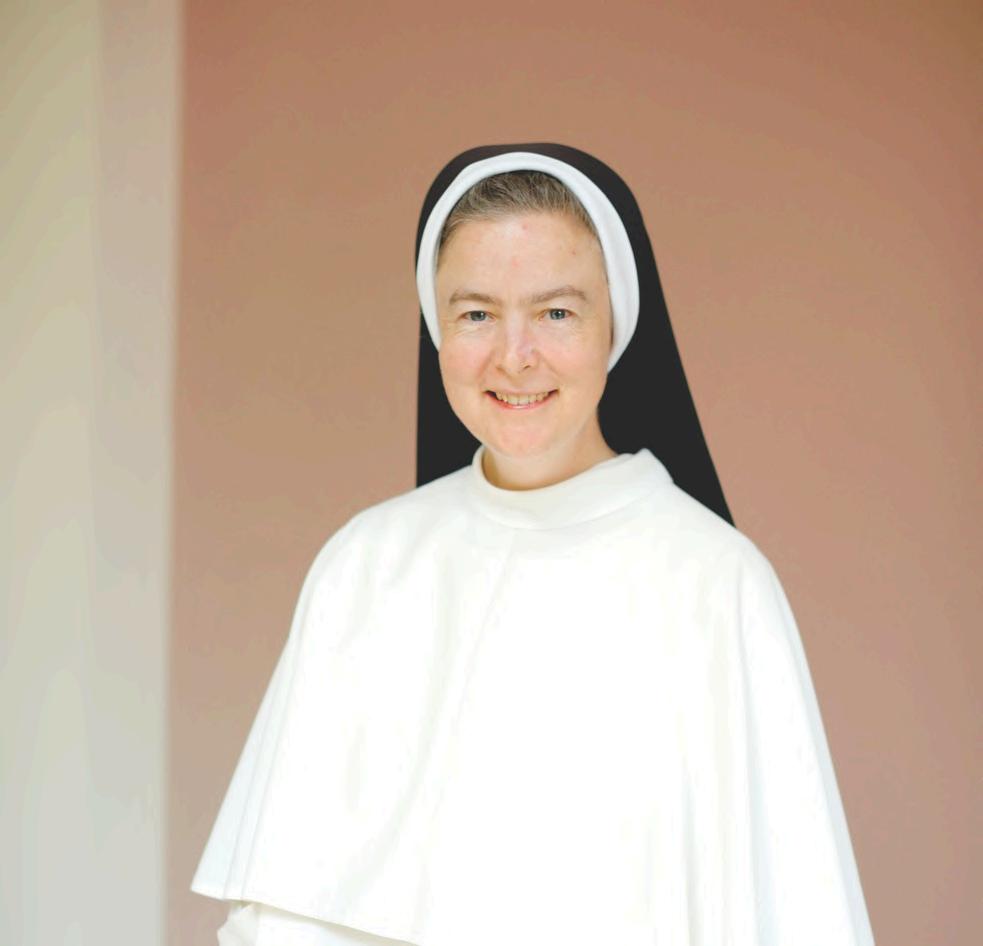
Sister Rose Miriam, O.P.
So much depends on what we are able to see, and the plain truth is that we are all blind in different ways. The humble disposition to consider the possibility that someone may see something that we do not, is extremely important. When St. Cecilia married her husband, Valerian, he was not a Christian. On their wedding night she explained the consequences of her total dedication to God, uncertain of what his response would be. Valerian was able to listen to Cecilia rather than simply insist on his understanding of life and their relationship. If not explicitly stated, his heart at least said, “You must see something that I do not.”
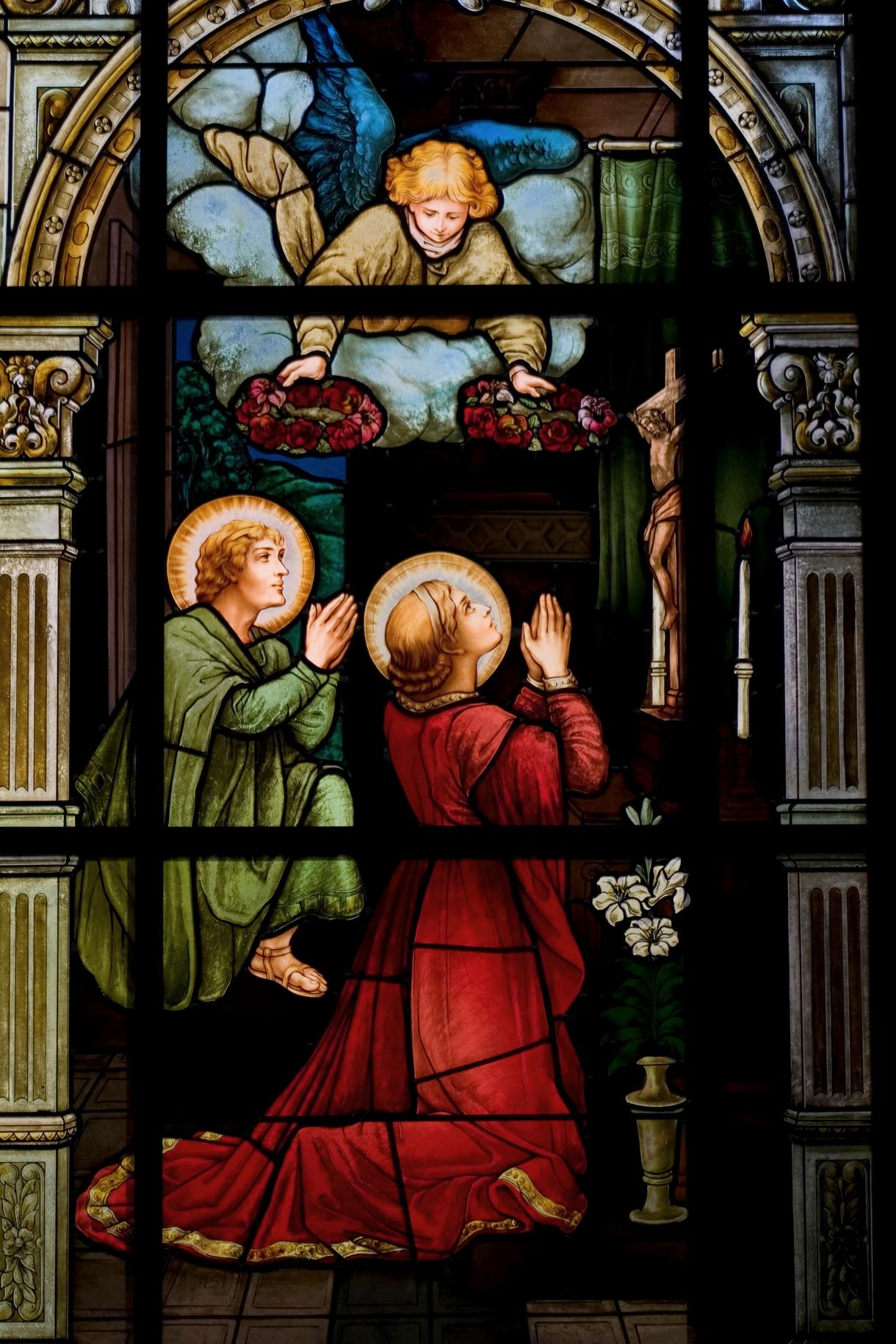
Cecilia’s beauty and grace, her intelligent and humble confidence, and above all, I imagine, her peace and joy convinced him that there was more at work here than met the eye. Following her instructions, he received baptism, and the fifth window in the Motherhouse chapel depicts Valerian and his new bride kneeling, rapt in joyful prayer as an angel offers the young couple crowns of roses and lilies. Valerian has just returned from his own baptism, and the sacrament of illumination has given him sight. Now viewing Cecilia and his own life in the light of faith, Valerian is also given sight of Cecilia’s angel. Hereafter he will join her in complete dedication to Christ and service to the poor.
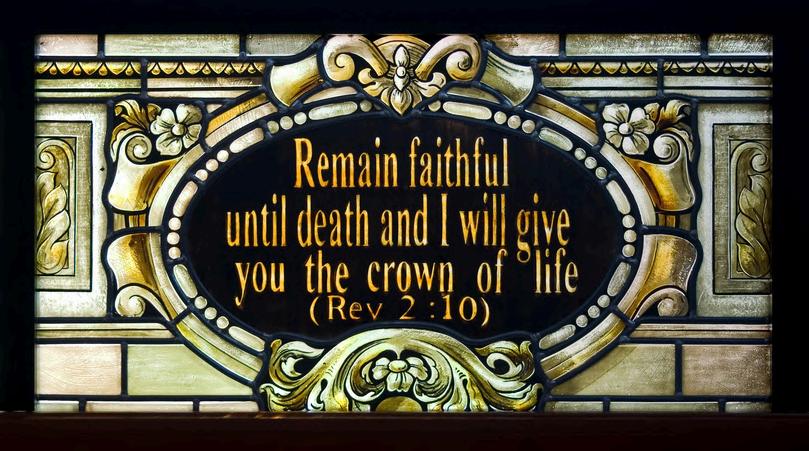
Our own fidelity depends in large part on our capacity to see the circumstances of our lives in the light of faith. The crown of lilies symbolizes purity, the red crown of roses, martyrdom. Cecilia and Valerian understood that both are gifts to be received, not as burdens imposed, for the strength to bear the cross flows from love, which is Christ’s gift to all who will receive Him. The love of Christ is unfailing, and His fidelity becomes our faithfulness. The joy of the martyrs, the joy of all those who have “remained faithful until death,” is surely the humble acknowledgement that “the Lord has done great things in me,” and then, in a gesture so wildly gratuitous as to astonish – the Lord goes further still and bestows the crown of life
How
can
I not
praise the Lord for His goodness to me? praisetheLord
Sister Elinor, O.P.
Saint ys He seek desires, both discovered in college, which led me to my vocation as a Dominican Sister of Saint Cecilia. One was the desire to live in community and pray the Divine Office, something I learned from the Benedictine monks at Saint Anselm College The other was the desire to seek the truth through study, which I learned from my philosophy professors In the Dominican Order, these two desires, the desire for monastic life and the desire to study, found a single object.
How could I have the courage, knowing my own weakness and sinfulness, to follow these desires, to enter religious life, the life of perfection? Yet how could I have done anything else? “When he opens, no one shall shut” (Is 22.22) and “in the desert I make a way, in the wasteland, rivers” (Is 43.19). After meeting the Dominican Sisters of Saint Cecilia, a vague possibility became a real choice, and I could only place myself in the Lord’s hands, leaving my studies unfinished, and begin the life of a Dominican.
I took this first step with fear and doubt, certainly, but with a deeper sense of trust in God, whose will I wanted to do And true to His promise, the Lord has provided the fruits of confidence, peace, and joy These fruits were especially evident as I prepared for
perpetual profession. On July 24th, 2010, in the presence of my religious sisters and my family and friends, I placed my hand on a copy of our Constitutions, with the Prioress General’s hand resting on mine, and made into her hands the vows of poverty, chastity, and obedience for all my life I then signed those vows on the altar, as if to seal them with the Blood of Christ, the One Sacrifice without which all sacrifices are in vain.
Saint Athanasius, fourth-century bishop and Father of the Church, wrote in an Easter letter:
If we follow Christ closely we shall be allowed, even on this earth, to stand as it were on the threshold of the heavenly Jerusalem, and enjoy the contemplation of that everlasting feast, like the blessed apostles, who in following the Savior as their leader, showed, and still show, the way to obtain the same gift from God. They said: See, we have left all things and followed you.
On that day of profession, I stood at the threshold of the heavenly Jerusalem and committed myself to remaining there until death. Yet in our apostolic way of life, we Dominicans seek not only to remain faithfully waiting at the threshold of heaven, in watching and prayer, but also to go into the world to invite others to the everlasting feast. How can this be? By worldly lights, it is impossible, but for those of us who have seen God’s power at work in our own lives and in the life of this Congregation, there is reason to hope
Book Recommendation
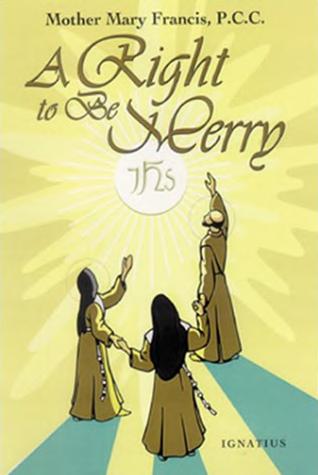
In her timeless work A Right to Be Merry, Mother Mary Francis unveils cloistered life in a Poor Clare convent in Roswell, New Mexico. While many may think the life of a cloistered nun to be dull and even unimportant, Mother Mary Francis challenges that stereotype and reveals the paradox of the nun ’ s calling and consecration; though her physical world is confined within the cloister walls, her heart is not Mother Mary Francis’ stories, wisdom, and wit make this work both inspiring and absolutely delightful, giving all a glimpse of the deep joy within the undivided heart of a consecrated religious.
by Sister Mary Madeline, O.P.
Some of the most vivid and theologically rich depictions of the Annunciation come to us from the brush of Blessed John of Fiesole, better known as Fra Angelico. This holy Dominican friar used bold color when painting for Churches altarpieces and public works. Much simpler visually, but not less theologically deep, are the frescoes of the monastic cells of what was once San Marco Priory The Priory was historically the residence of the friars of the Order of Preachers of which Brother John was a member. It is now a museum visited by the many art lovers who frequent Florence, Italy.
While San Marco houses some of the loveliest commissioned works of the holy artist, the real treasure of the Priory is found in the upstairs corridors of cells, the small rooms where the friars prayed, studied, and slept. The frescoes in the cells of the friars offered pictorial calls to enter the gospel scenes in prayer, to participate in the lived mysteries of grace Among these sacred frescoes is the Annunciation of Cell Three, a work whose utter lucidity and simplicity points to the radiant humility of both Mary and her hidden Son.
Saint Luke, whom tradition tells us was a painter himself, recounts the moment of Mary’s encounter with Gabriel, with simple profundity:
In the sixth month, the angel Gabriel was sent from God to a town of Galilee called Nazareth, to a virgin betrothed to a man named Joseph, of the house of David, and the virgin’s name was Mary. And coming to her, he said, “Hail, favored one! The Lord is with you.” But she was greatly troubled at what was said and pondered what sort of greeting this might be” (Luke 1:26-29).
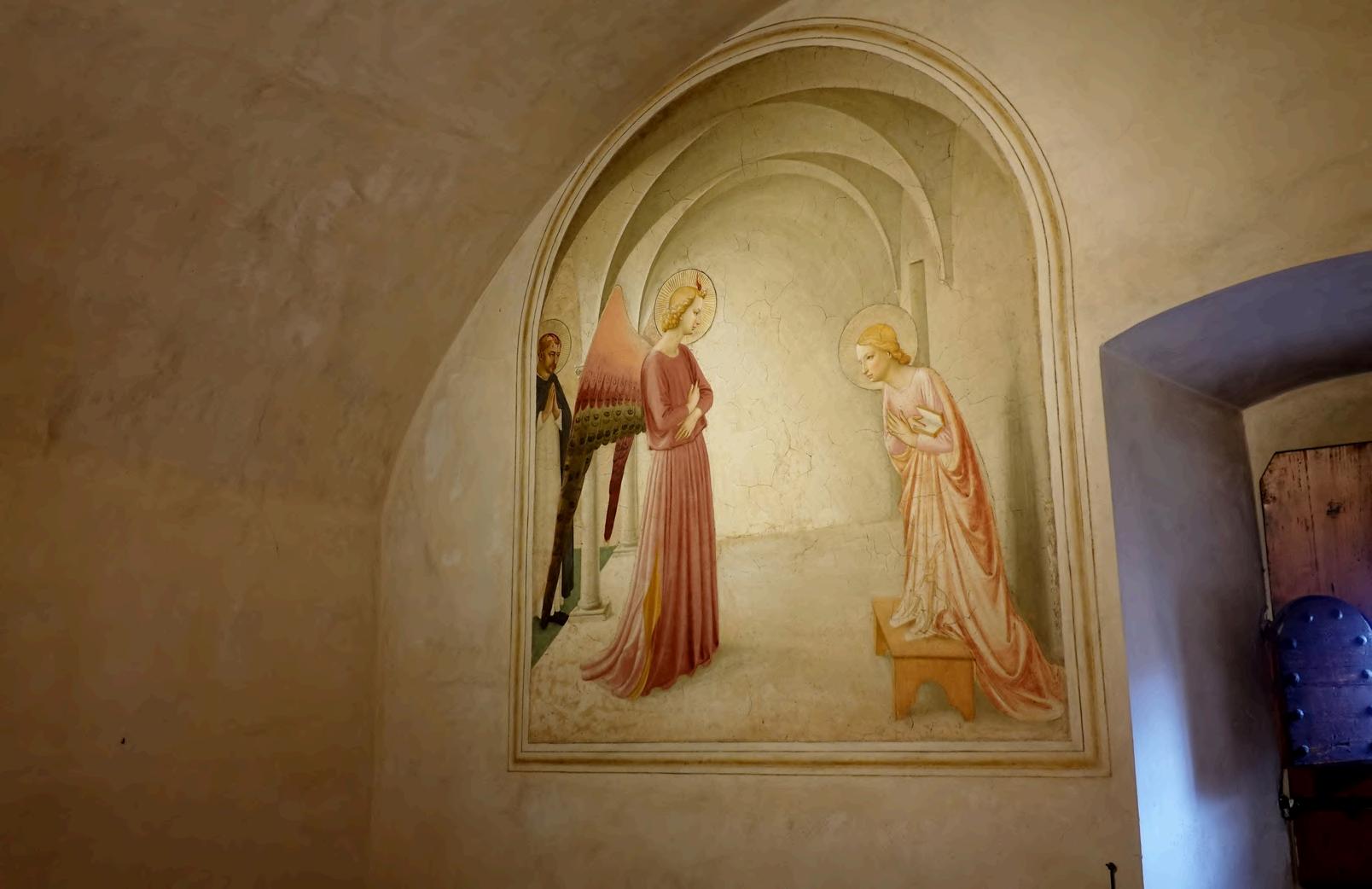
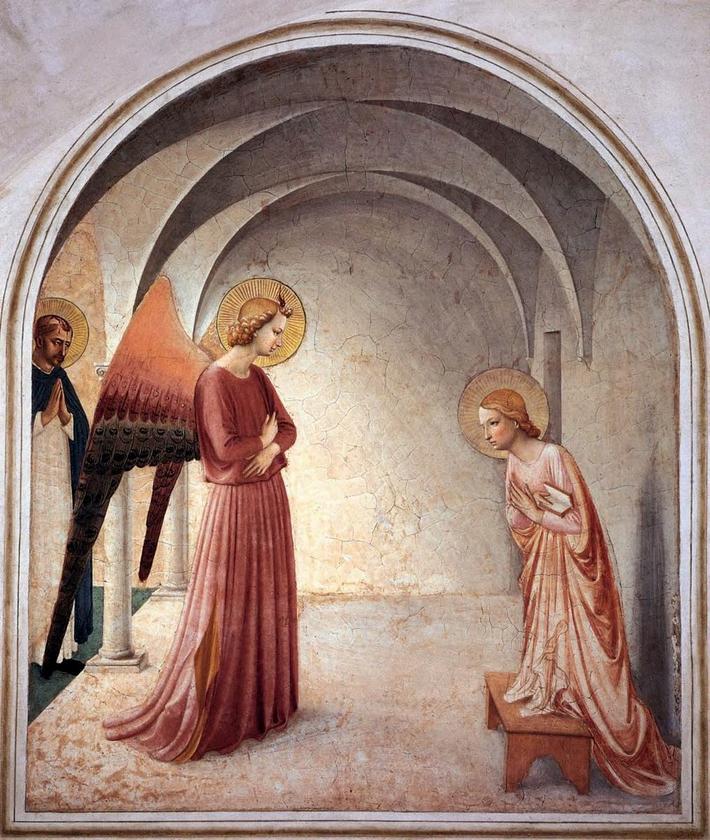
TheAnnunciation by Fra Angelico (c 1439)
In the Annunciation of Cell Three, Mary kneels on a small wooden kneeler with her hands crossed over her heart and her book for prayer in her hand. Her gown is pale, and her whole figure is nearly translucent. Unlike the enthroned Queen often depicted in sacred art, Our Lady here is shown as the humble handmaid of Nazareth, welcoming the Word in her prayer who will become flesh within her body. She is depicted here not so much in the moment of being troubled by the angel’s greeting, but rather in the tranquility of reflective pondering of the providential wisdom of God.
Saint Luke recounts the continuation of the dialogue upon which the salvation of the whole world depended:
Then the angel said to her, “Do not be afraid, Mary, for you have found favor with God. Behold, you will conceive in your womb and bear a son, and you shall name him Jesus He will be great and will be called Son of the Highest, and the Lord God will give him the throne of David his father, and he will rule over the house of Jacob forever, and of his kingdom there will be no end.” But Mary said to the angel, “How can this be, since I have no relations with a man?” And the angel said to her in reply, “The Holy Spirit will come upon you, and the power of the Highest will overshadow you. Therefore the child to be born will be called holy, the Son of God. And behold, Elizabeth, your relative, has also conceived a son in her old age, and this is the sixth month for her who was called barren; for nothing will be impossible for God” (Luke 1:30-37).
Fra Angelico’s Archangel Gabriel is, like Mary, understated for the bearer of a message whose reception will alter all of history Only the radiant halo and multicolored wings set off this messenger as a heavenly herald.
The fresco seems to depict precisely the moment between Mary’s response to the angel and his departure, the moment that the Word was made flesh. In the definitive moment for all of salvation history, “Mary said, ‘Behold, I am the handmaid of the Lord. May it be done to me according to your word.’ Then the angel departed from her” (Luke 1:38).
If one gazes at the original image in daylight, the focal point is neither Mary nor the angel, but rather the light in the space between them. In fact, Mary nearly blends with the light. The One who is Light from Light, true God from true God, becomes flesh, assuming our human nature to enable us to participate in the grace of divinity.
Perhaps the most surprising element of the scene is the figure of St. Peter of Verona, first martyr of the Dominican Order, peering in from the side of the arches This detail reveals Blessed Fra Angelico, the instructor of his brothers in prayer. Like the friars who once found prayerful inspiration in the silence of the monastic cell, we too are called to enter the scene, often within the arched loveliness of sacred spaces. With St. Peter, we are called to behold the virtues of Jesus and His Mother, the transfiguring radiance of the humility of our God with us and of the faith-filled surrender of Mary to divine Love Like St. Peter Martyr, we are called first to gaze upon and then to live the mystery. “Martyr” is from the Greek for witness. Those truths which we ponder are the basis for our witness, a witness even unto the laying down of our lives for the One who first gave His life for us.