Presented by Pam Hayden, Oswego Garden Club member, January 4, 2017, 75th Birthday Celebration.
This PowerPoint was developed to give a glimpse of the first 30 years of Oswego Garden Club. It focuses on some of the women who founded the Club. We will see some of the early activities and achievements of these women in the context of the history of Lake Oswego with regards to gardening, architecture and civic improvements.
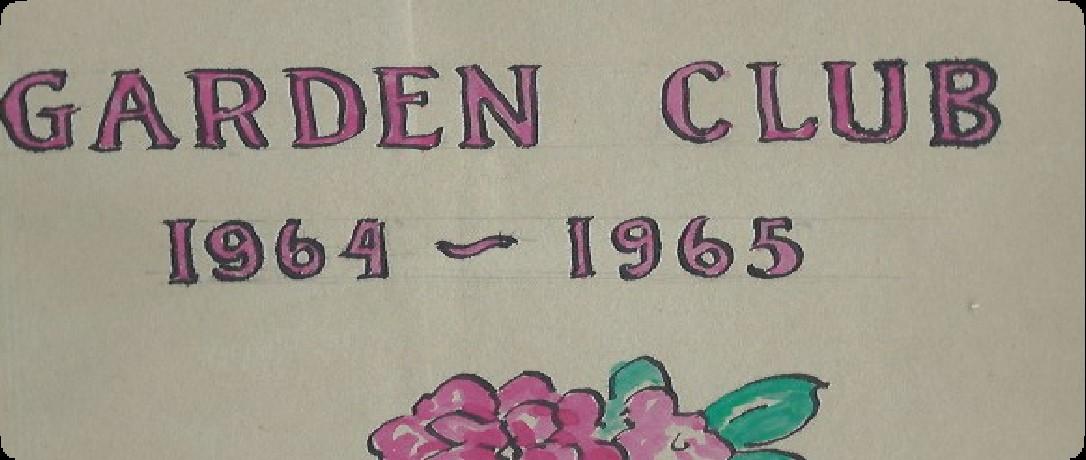
Research focused on the numerous Oswego Garden Club scrapbooks, now located at the Lake Oswego Library. The early scrap books from the first 30 years: the 1940s, 1950s and 60’s included meeting minutes, news clippings, photographs and club roasters, carefully and artistically pasted into their pages. Interestingly, the roaster format hasn’t really changed since the founding.
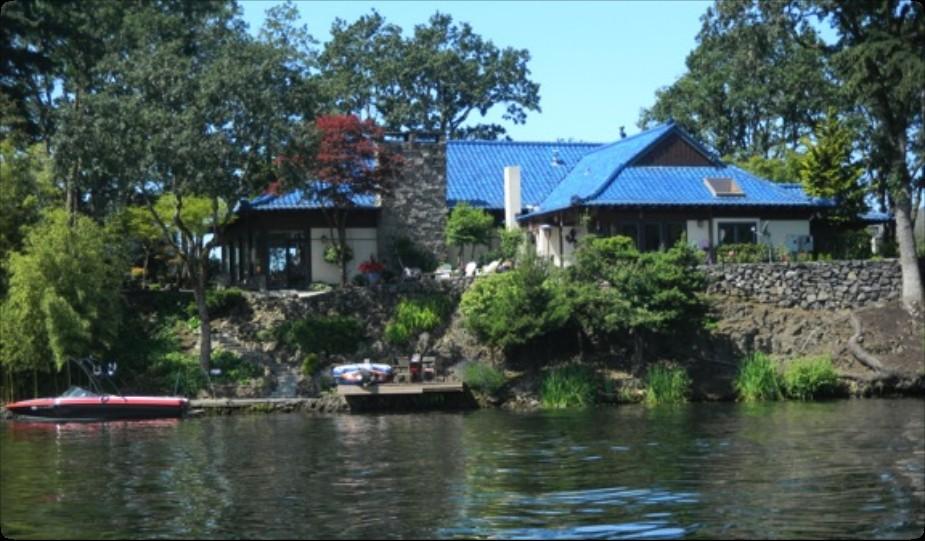
I am a Board member of the Lake Oswego Preservation Society and for the last five years have been a guide on the Classic Houses and History Boat Tour of Lake Oswego. I found it very interesting when reading through the scrapbooks that many of the names of early Garden Club members were associated with Historic Landmark homes on the Lake. Marylou Colver, president of the Preservation Society and historian Erin O’Rourke Meadows provided most of the research for the Boat Tour. I have incorporated some of this information into this slide show.
Obviously there are both modest and architecturally significant homes and gardens throughout the Lake Oswego and the Dunthorpe area associated with Garden Club members, too many to document here.
Briefly, I’ll set the stage for the Oswego Garden Club’s beginning. In the mid 1800s the Lake Oswego area was made up of scattered farm lands and the donation land claims of the early pioneers. The City was founded in 1847 and incorporated in 1910. By the 1920s and 1930s, Lake Oswego could be accessed by the Southern Pacific Red Electric Railroad. This allowed workers to live permanently in Lake Oswego and commute to Portland for work.
Oswego Lake Country Club and the Lake Oswego Hunt Club were founded in the 1920’s. Smaller summer cottages were giving way to more sophisticated residences.
By the 1930s and 1940s developers promoted Lake Oswego as a place to “live where you play”. New residents were encouraged to hire noted architects to design their homes. Today some of these homes still grace our city. Many were built by early Oswego Garden Club members.
OSWEGO GARDEN CLUB
75th Birthday Celebration January 2017
THROUGH THE YEARS…
Honoring Our Founding Members
OGC Founded 1941
“Early Blooming Days”
As told by Angie Trueblood in 1964:
“It all started because a group of women belonging to the PTA were successful in fund raising through Plant Sales and Flower Shows. One day in October of 1941
Elsie Eastman asked a few ladies to meet to discuss forming a garden club. We decided to call a meeting at the school house (now Lakewood Center) and invite anyone interested in learning about flowers and gardening to come and join us”
Elsie Eastman, founding member and first President of the Oswego Garden Club remarked: “We can’t have flower shows without lots of flowers.”
And so it began...
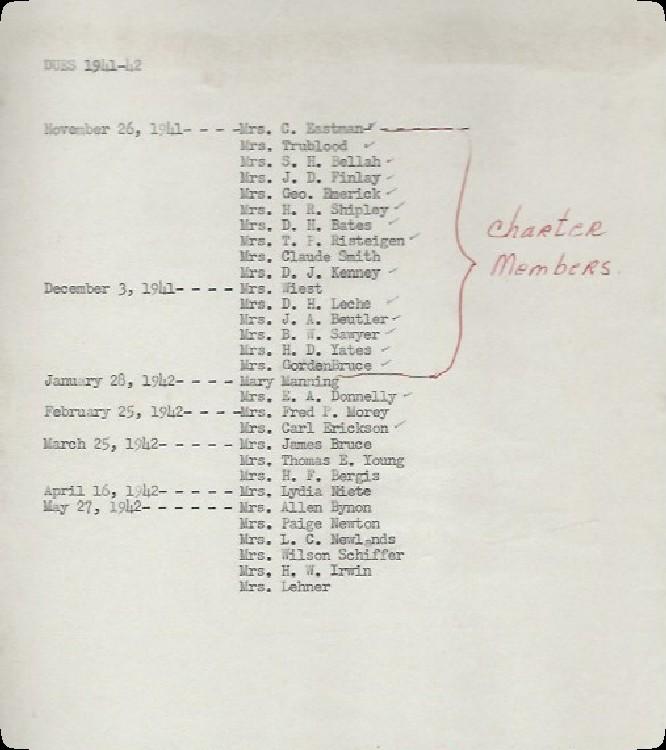
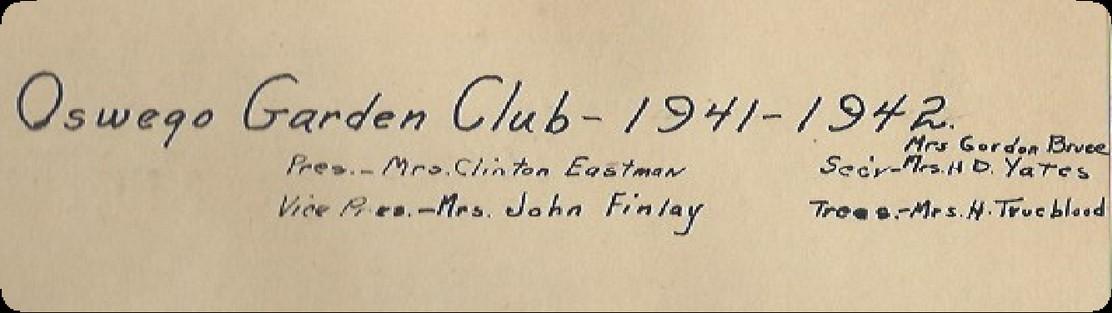
Charter Members 1941
President: Mrs. Clinton Eastman
Vice Pres.: Mrs. John D. Finlay
Secretaries: Mrs. H. D. Yates
Mrs. Gordon Bruce
Treasurer: Mrs. H.W. Trueblood
It wasn’t until the 1955-56 Roster that the member’s first names were listed (in parentheses) next to their husband’s names
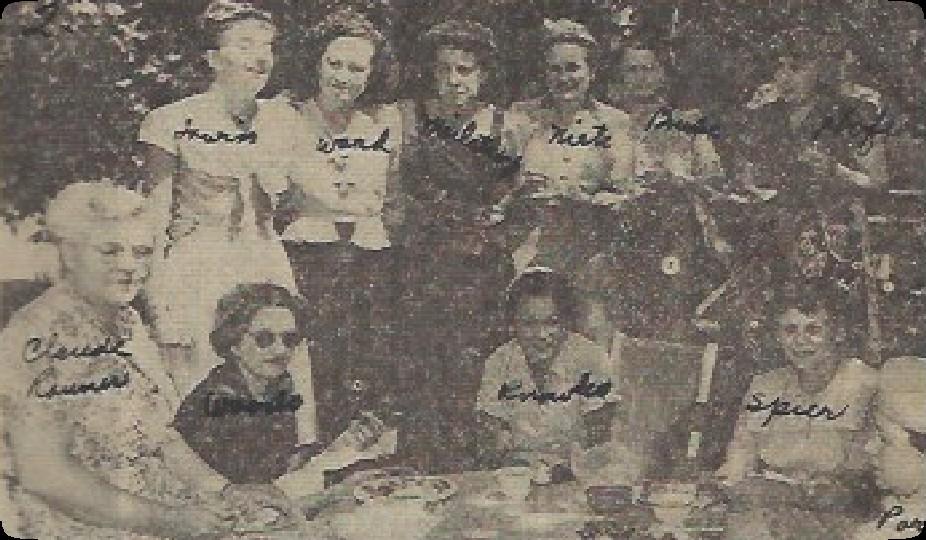
Oswego Garden Club 1941
Constitution and By-Laws
“The objects of this Club shall be to:
Aid and encourage the owners of small gardens to acquaint them with the best and latest methods of gardening
Bring to their attention new varieties of plants
Encourage the use of the proper botanical names of plants and flowers
Promote civic beauty and aid as far as possible in any program for the protection and appreciation of native flora.”
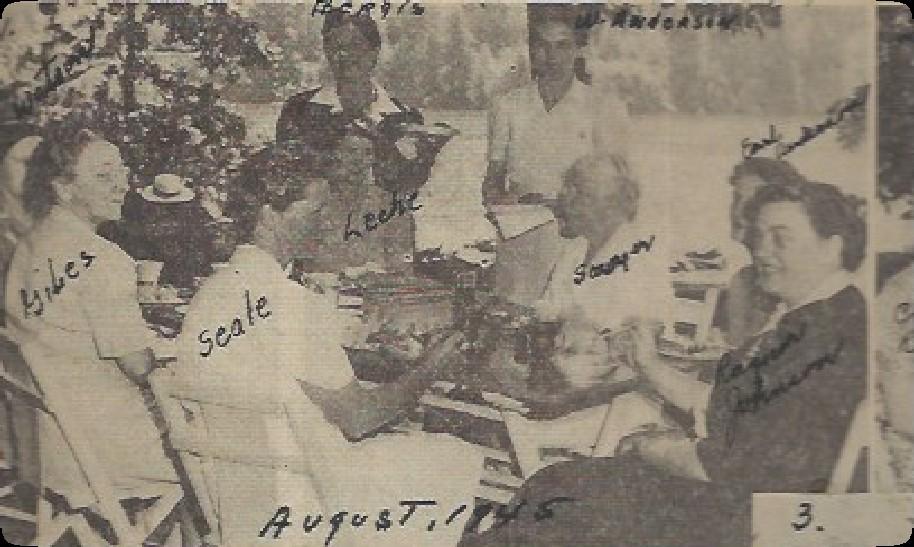
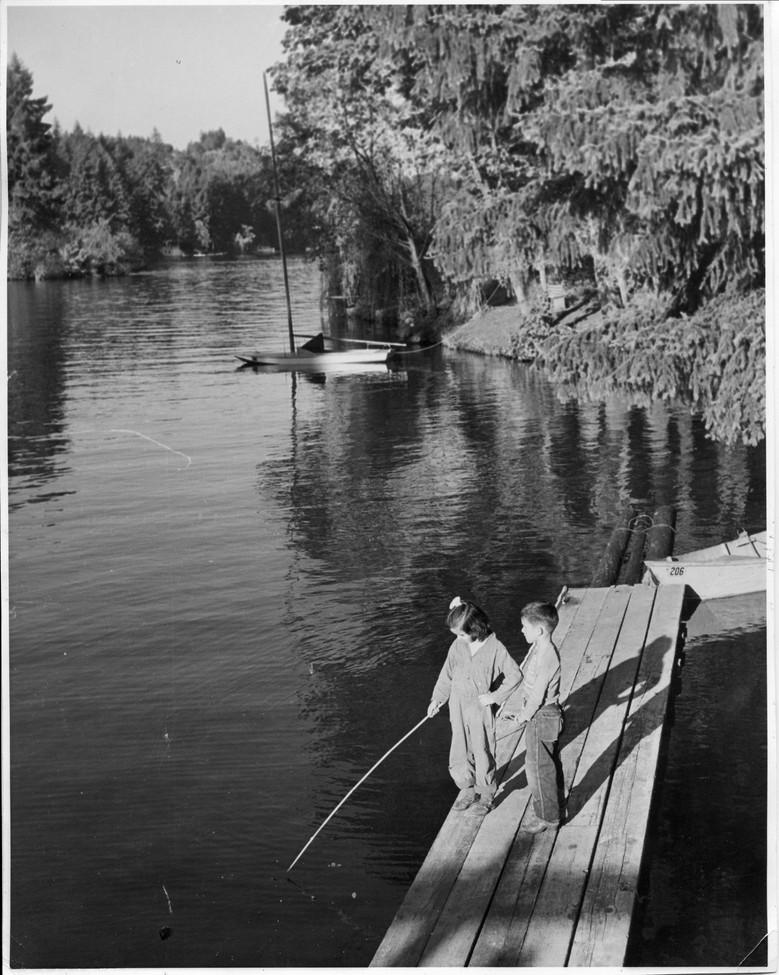
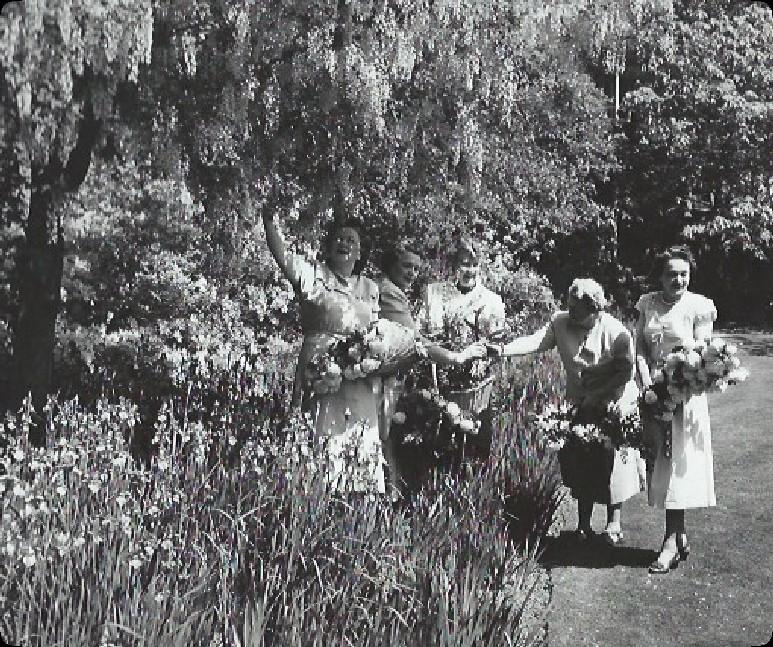
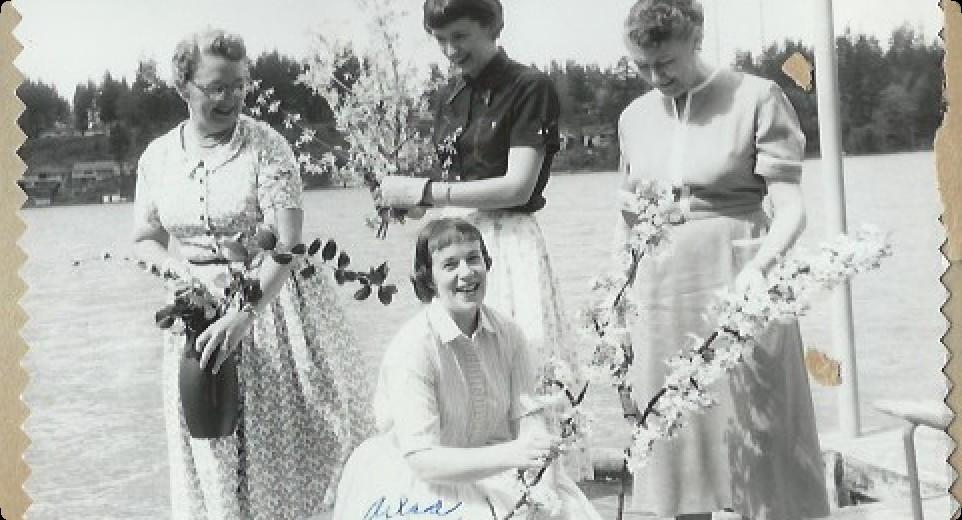
Garden Party photos on the Lake, August 1945
Oswego Garden Club’s Founding Year - 1941
Franklin D. Roosevelt was the President
U.S. officially entered World War II by declaring war on Japan following the attack on Pearl Harbor
Styrofoam and electric blankets were invented
Only 55% of the households had plumbing
Average cost:
Gallon of milk - 34 cents
House - $4,075
Gallon of gas – 12 cents
Loaf of bread – 5 cents
In 1940 the population of Lake Oswego was 1,726. Today it is nearly 40,000.
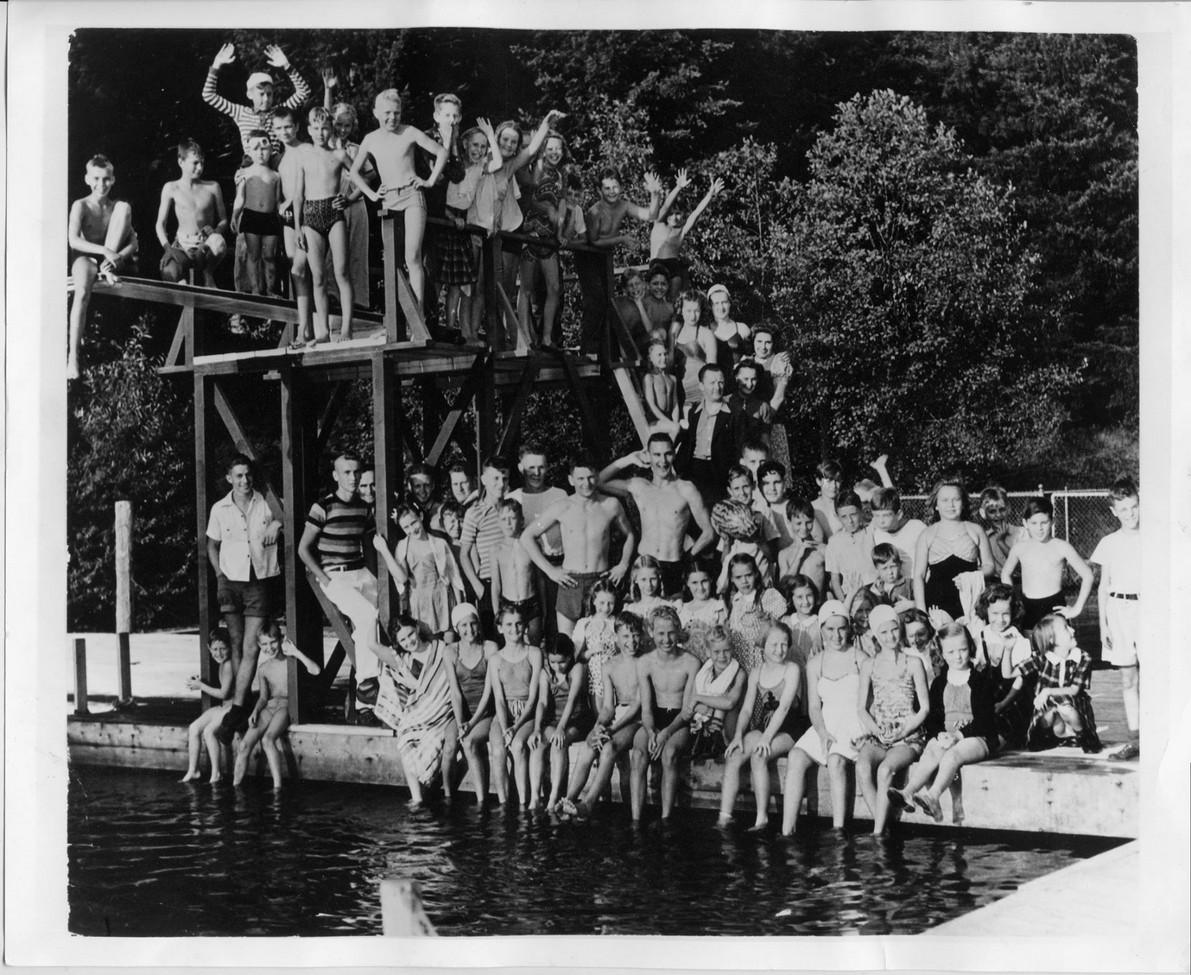
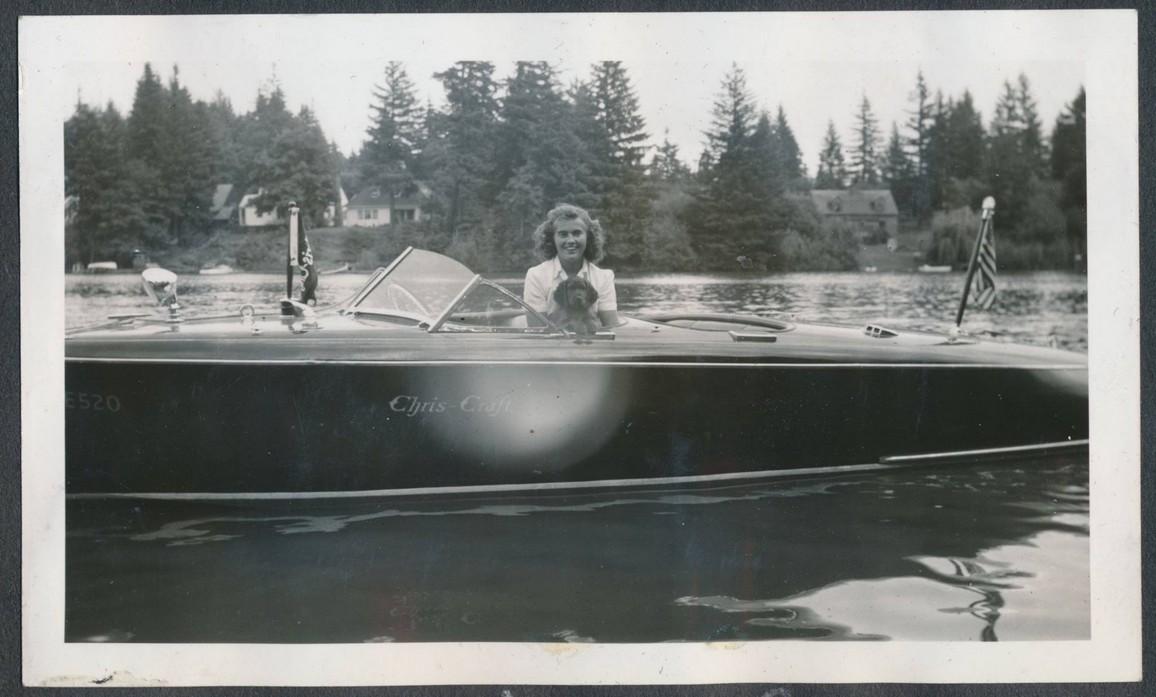
Summer of 1941 on Lake Oswego
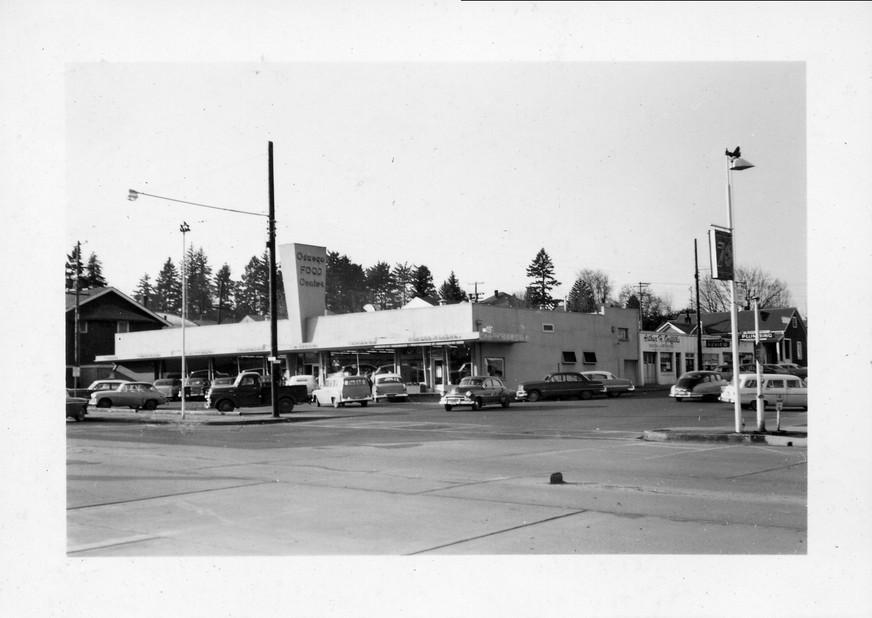
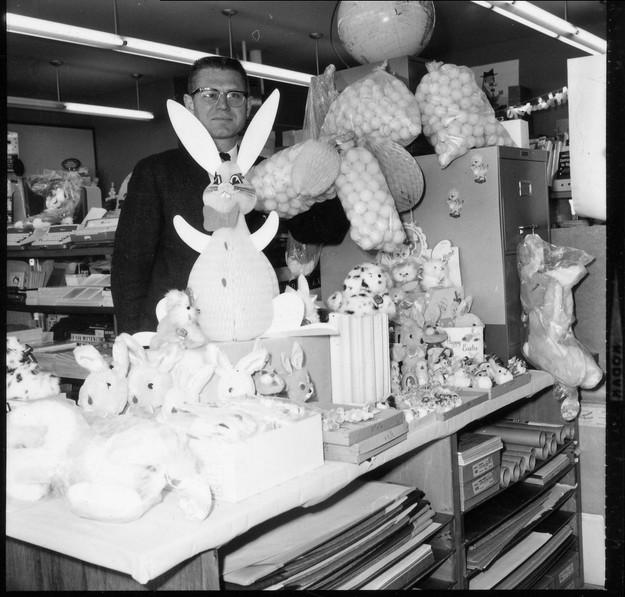
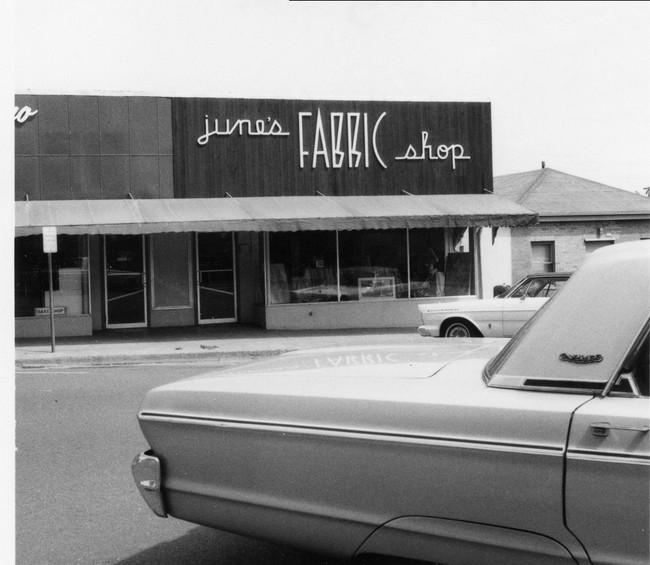
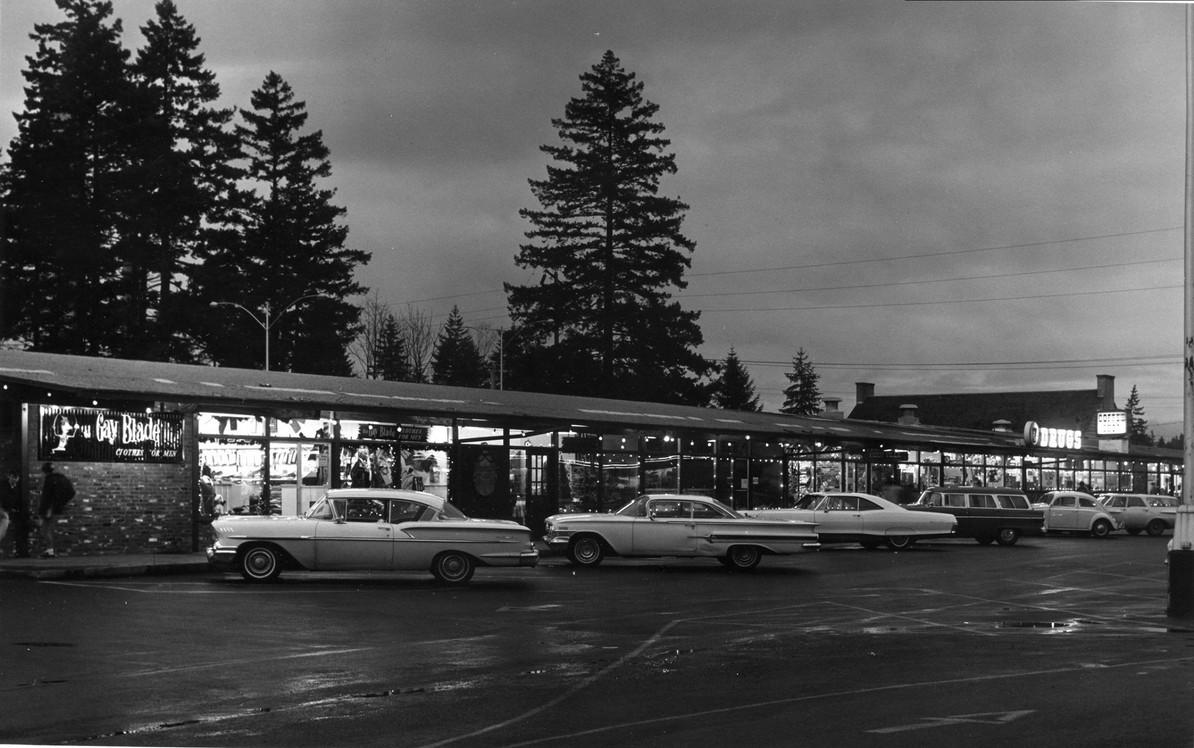
Images about Town 1940’s – 50’s
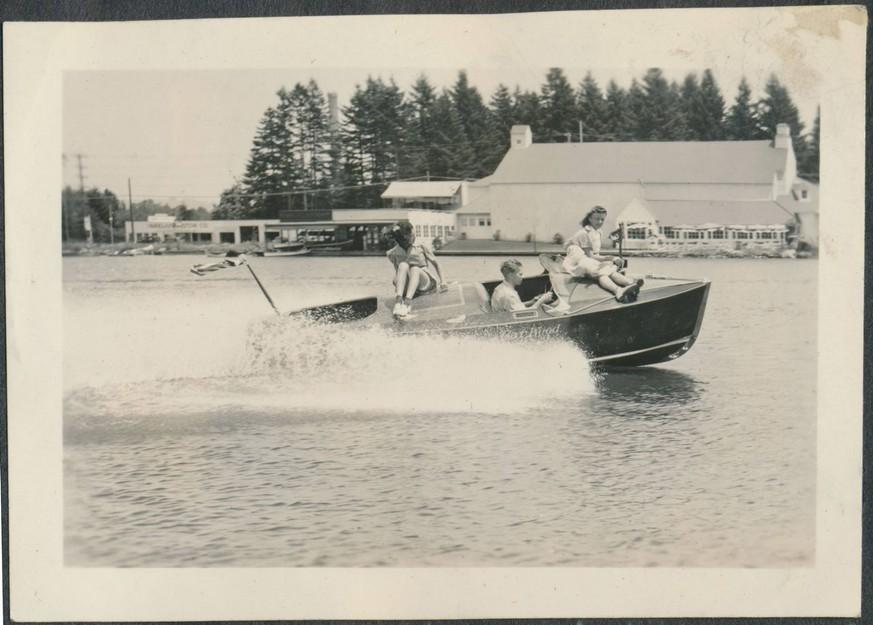
Hunt Club
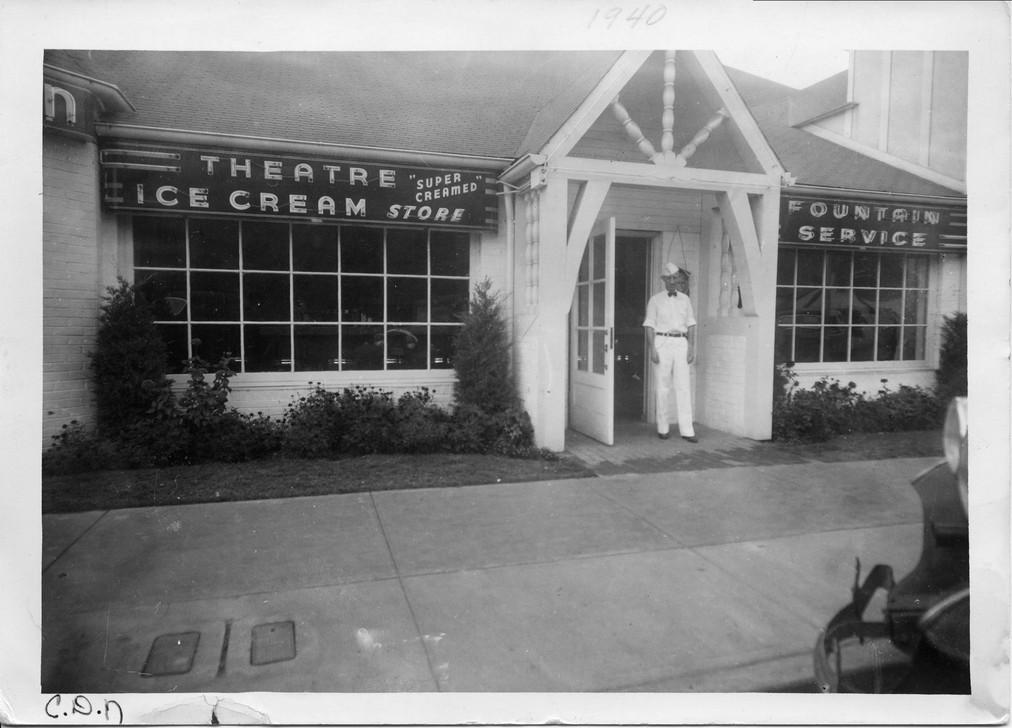
Ice Cream store next to Lake Theater
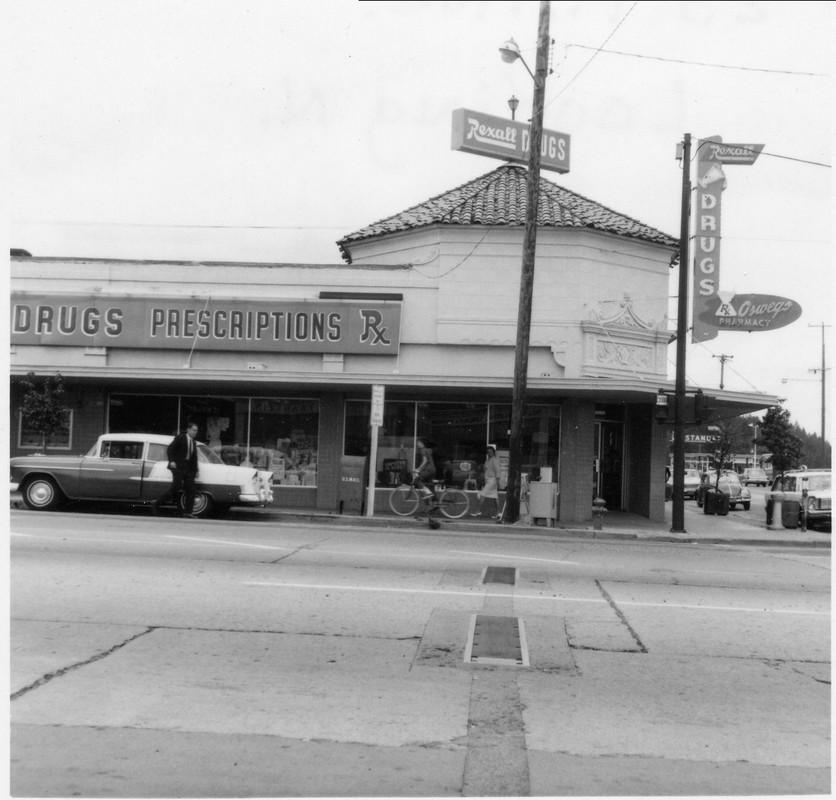
Rexall Drugs
The Gay Blade Men’s Shop
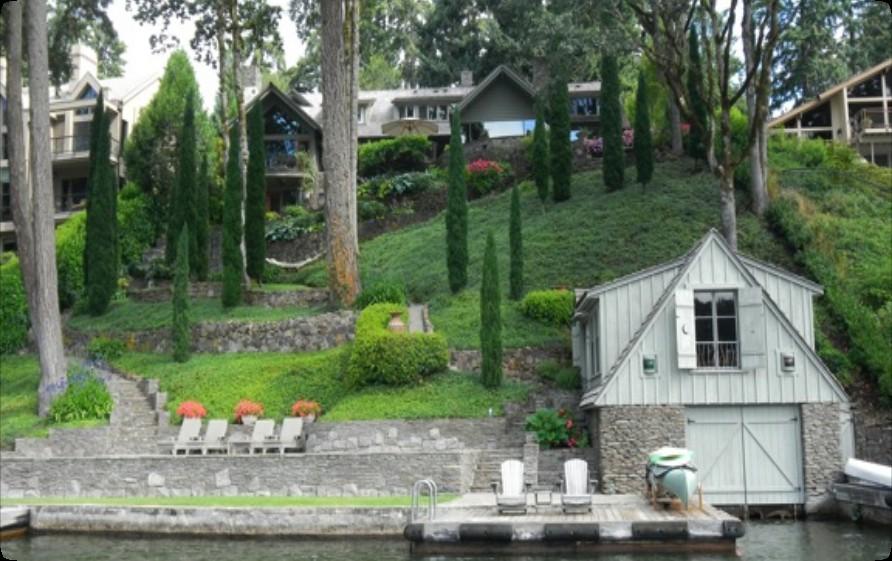
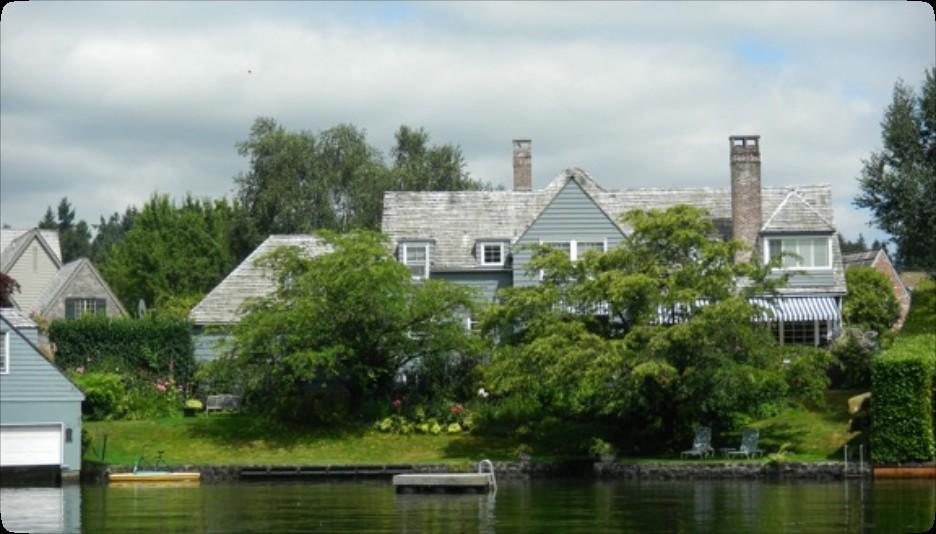
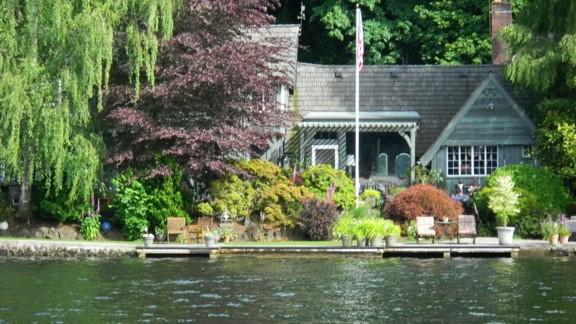
Many of Lake Oswego’s Historic Landmark homes were built or lived in by members of the Oswego Garden Club
Their homes, gardens and legacy remain with us today
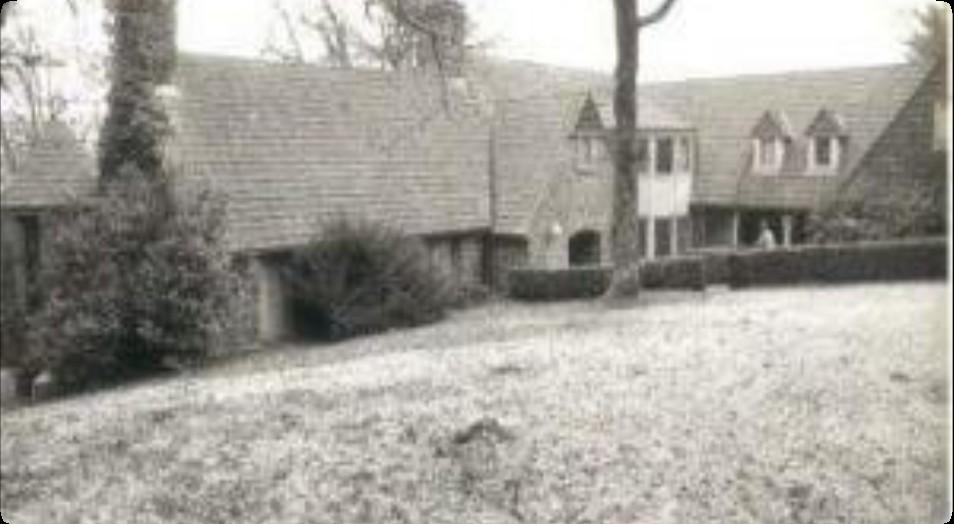
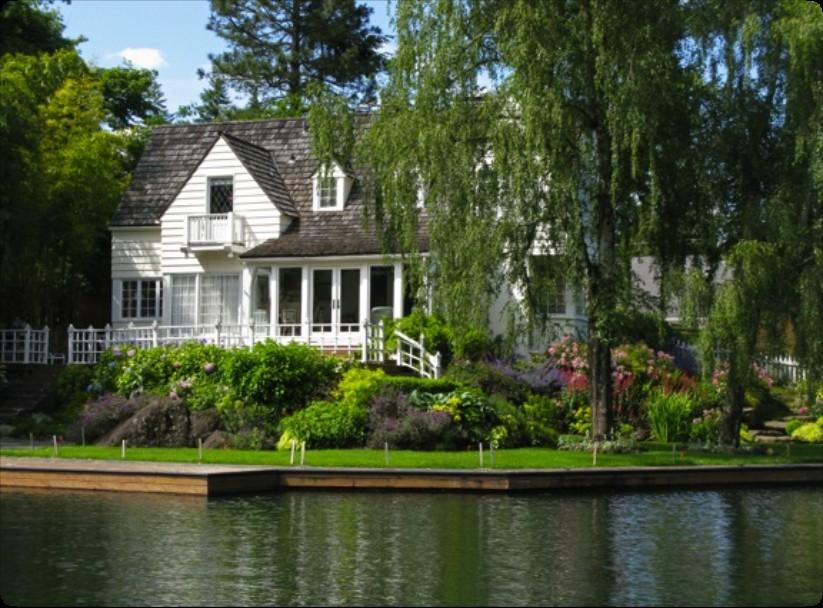
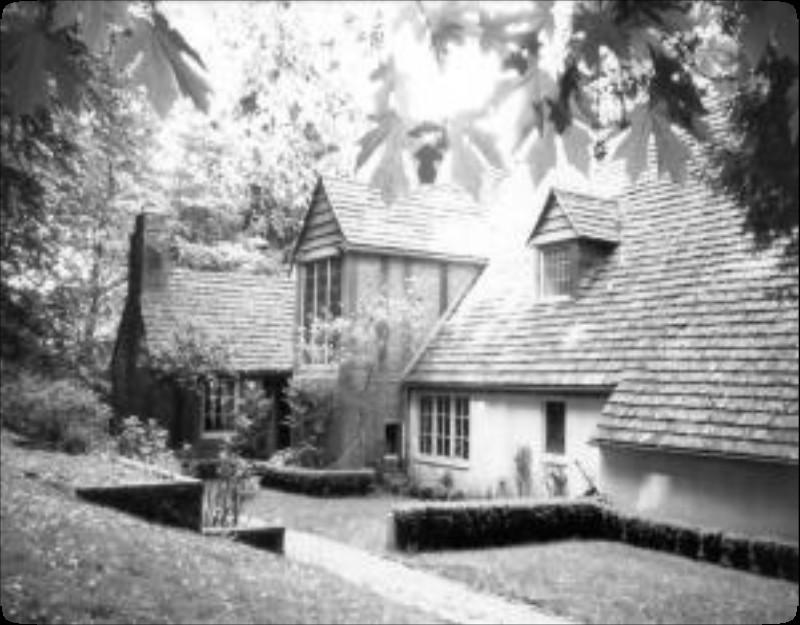
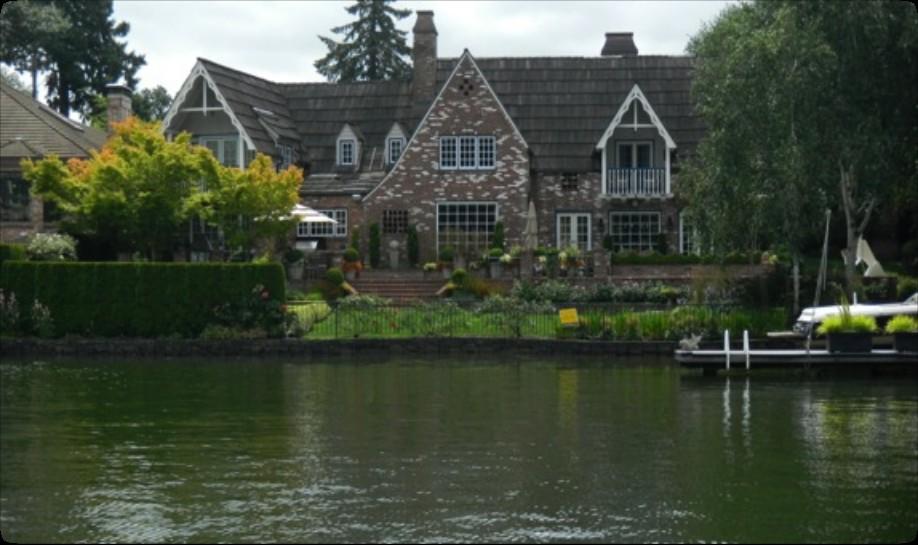
• Built for Eastman’s in 1933 on promontory overlooking Lake Oswego
• Architect was Richard Sundeleaf
• One of the finest examples of the English Cottage style in the city
• Clinton W. Eastman was an employee with Meier & Frank Company
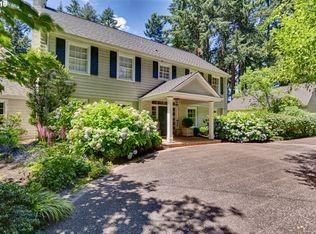
Don and Helen Bates House
Chandler Road
Helen Bates, Charter Member OGC 1941
Kelly (Mrs. Jim) Johnson OGC Member 1993
• The Bates built this Colonial Revival house in 1928
• Richard Sundeleaf was the architect
• The gardens were originally designed and planted by Helen Bates
• Some of the original plant materials still grace this showplace garden
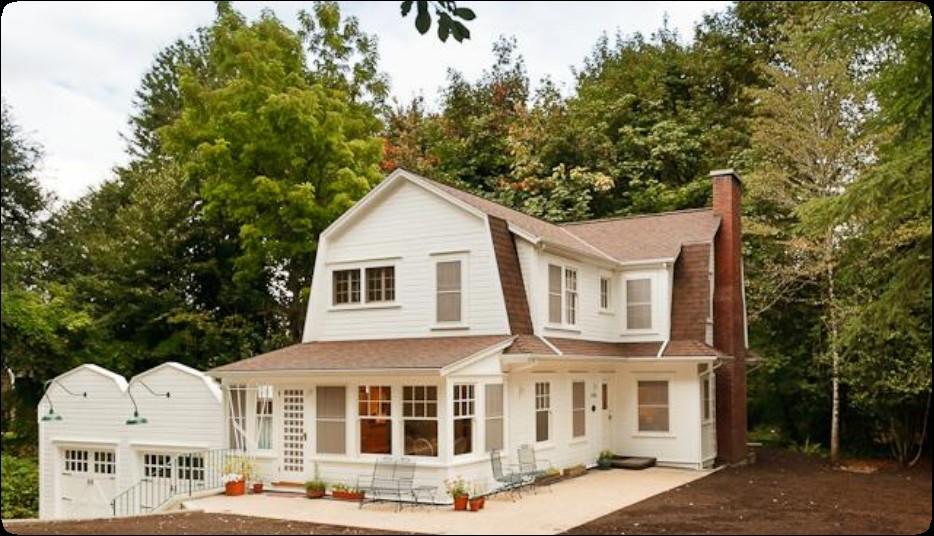
Harrison and Angie Trueblood House
1805 Glenmorrie Terrace, off SW Pacific Hwy
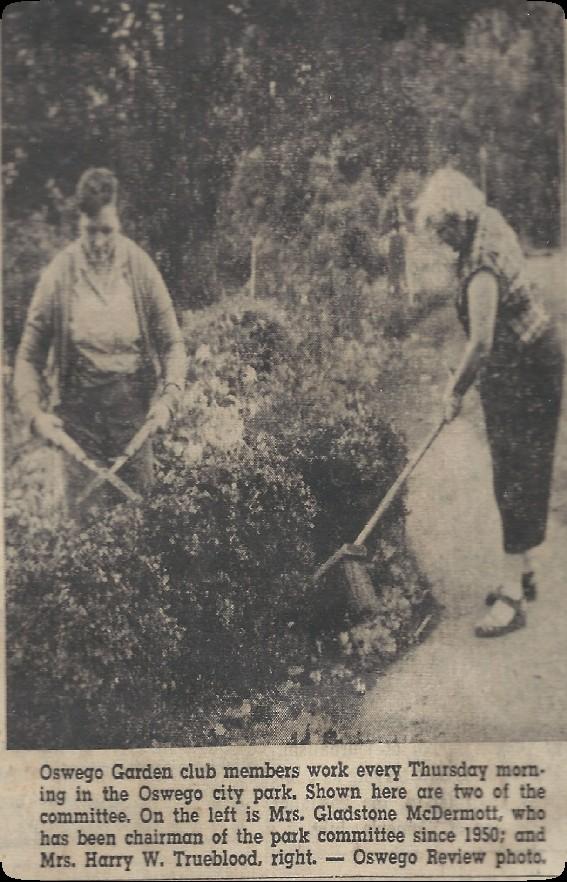
Angie Trueblood, Charter Member, President OGC 1947-1948, still on roaster in 1973
• Angie and Harrison built this Dutch Colonial style home in 1917
• City Historic Landmark
Angie on right was one of 4 co-chairs of the Oswego (Roger’s) Park Committee in 1956
The War Years (WW
II)
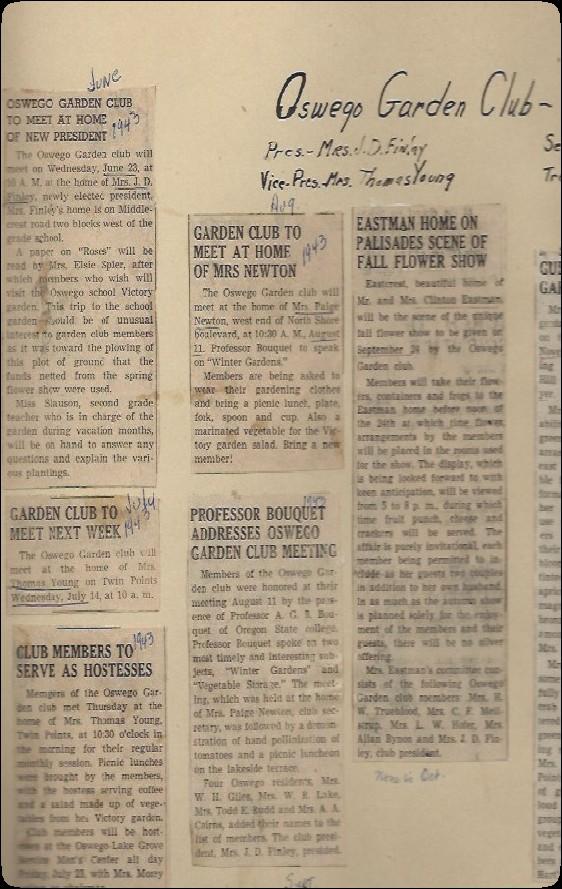
1943 Newspaper Clippings
1942 –
• Dues were paid to Keep Oregon Green and to the Rose Society
• Worked with the Red Cross Motor Corps and landscaped the Men’s Center - donated shrubs and left flowers whenever possible
• “A three foot decorated Christmas tree was sent to Barnes Hospital and we decorated the Cement Clubhouse for Service Men’s Christmas dinner “
1943
• Donated $20.00 for school yard Victory Gardens
• Treasurer reported $33.36 in the treasury
1944
• “Garden Clubs have a job to do after the war”. Members urged to try some horticultural experiments of their own, to strive for superior development to benefit gardeners of tomorrow
1945
• Reported that eight members with Victory Gardens canned 1,535 quarts of fruits and vegetables and froze 155 quarts.
1949
• Spent proceeds from annual Flower Shows for the next three years to be donated to the building fund for the patriotic veterans’ American Legion Memorial Community Hall
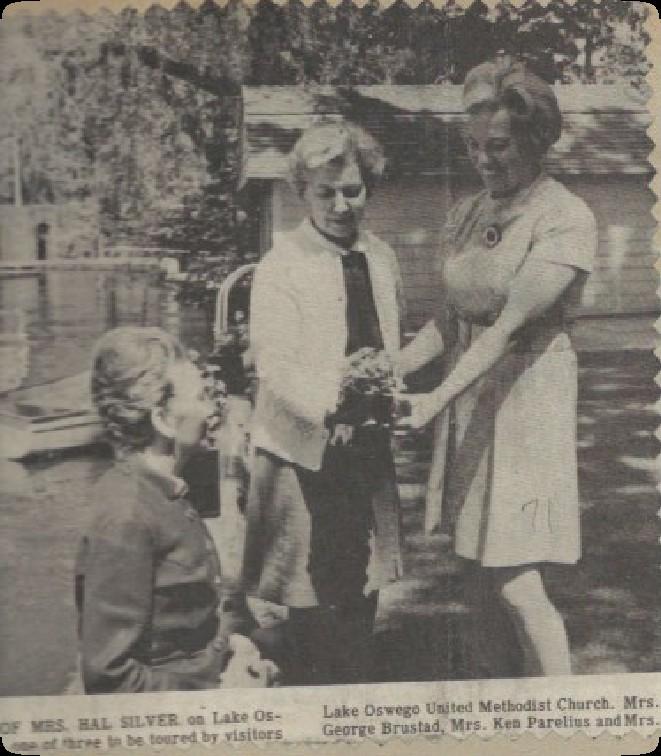
Kenneth and Veola Parelius House
768 North Shore Road
Veola Parelius, OGC Member 1942 President 1958-59, Flower Show Director May 13, 1958
• Built for the Parelius’ in 1939
• Richard Sundeleaf designed this arts and crafts style of home
• Ken operated Parelius Motors in Oswego
• Historic Landmark features a “new” period appropriate garden, using plants that were popular in 1939
Veola Parelius (center)
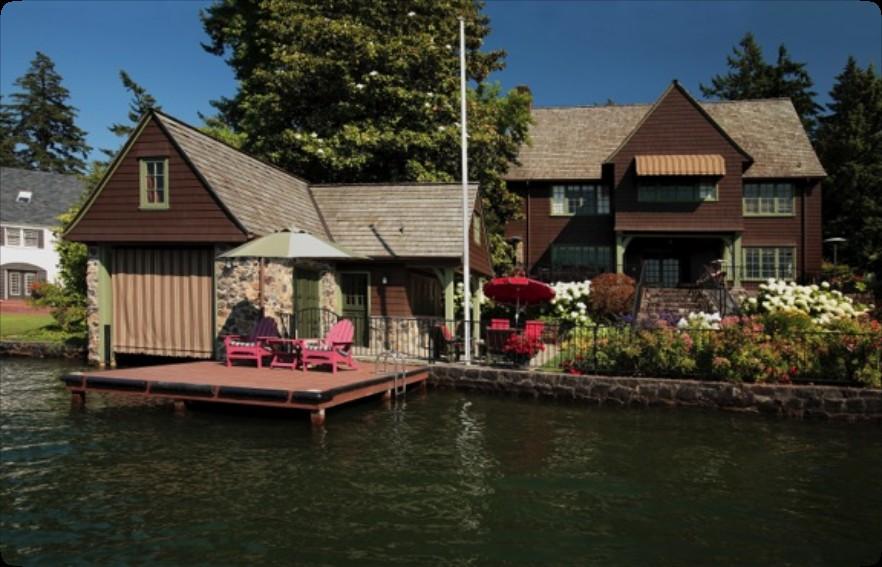
Paige and Kathleen Newton House
1770 North Shore Road
Kathleen Newton, OGC Member 1942
President 1946-47
Anne (Mrs. Mario) Bisio, OGC Member 1999
August 11, 1943 Minutes:
Before luncheon was served Prof. Bouquet, author of “Fall and early Winter Vegetables” met with members and guests and visited the vegetable garden at the Newton home where a demonstration was given of hand pollination of tomatoes.”
• Burt Smith designed and built this house for the Newton’s in 1941
• Featured in the Oregonian Homes and Gardens in 1947
Mary S. Young House, “Twin Points”
Mary S. Young, Oswego Garden Member 1942
President 1945-46
• Mary and Thomas Young purchased the 8 acre Twin Points in 1931
• Landscape architects Lord & Schryver helped Mary Young transform the grounds into a showpiece which was the site of many Oswego Garden Club events
• The original home built by the Young’s was designed by noted architect Van Evera Bailey. It was demolished for this home after the Young’s sold
Oswego Garden Club Flower Show
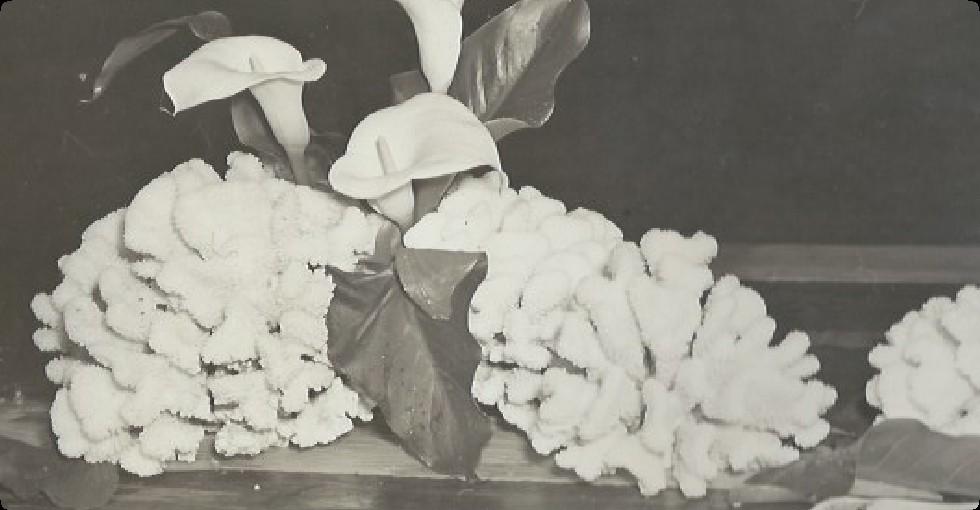
Shell (Coral) and Flower Arrangement by Mary Young
In 1945 Mary Young suggested that the Oswego Garden Club become involved in poison oak eradication in the community
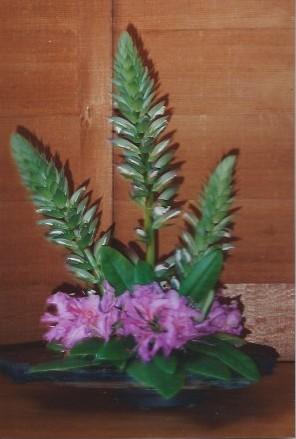
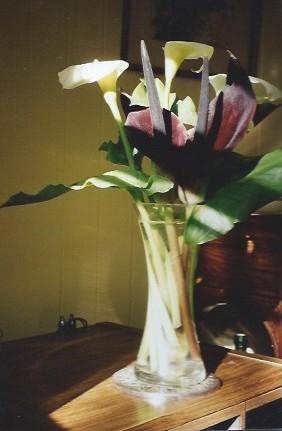
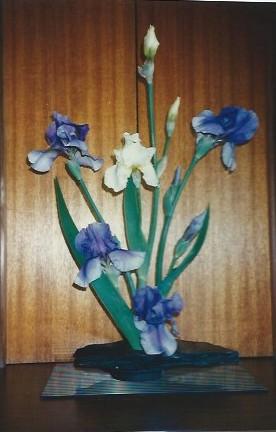
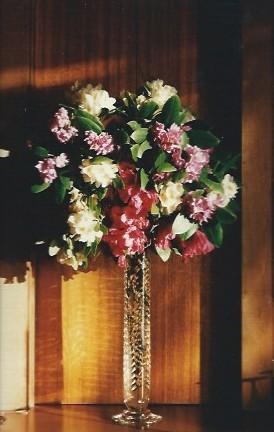
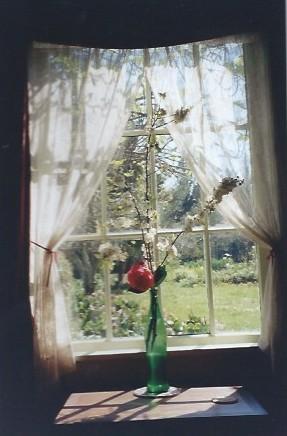
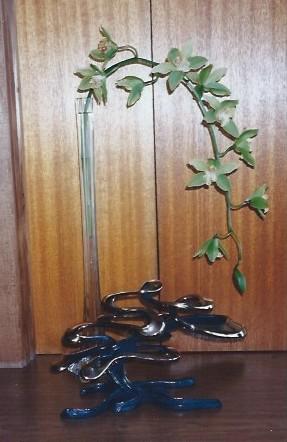
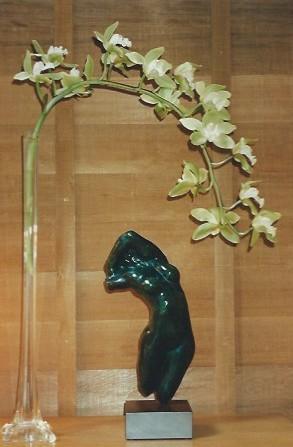
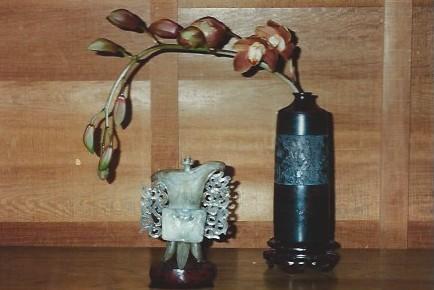
Flower Arrangements
Mary Young 1949 Flower Show
“Stroll narrow winding paths through a vast, wellestablished garden to the water’s edge…
Along the way, view plantings of rhododendrons, lavender, iris, scarlet trumpet vine and delicate Spring-flowering trees.”
Flower Arranging
Demonstration for Oswego Garden Club
September 10, 1945
Oswego News Article
Problem Vase Found Suitable for “Men Only”
“At the home of Mrs. Clinton Eastman, Palisades, Mrs. A Tucker, Portland demonstrated flower arrangements.
She lamented a problem she was having arranging flowers in the pale pink Lennox vase which featured a nude woman. Mrs. Tucker arranged small pink dahlias with yellow centers and to her amazement she liked the effect. However, she commented, it would only be suitable for a man’s den because a man wouldn’t look at the flowers anyway.”
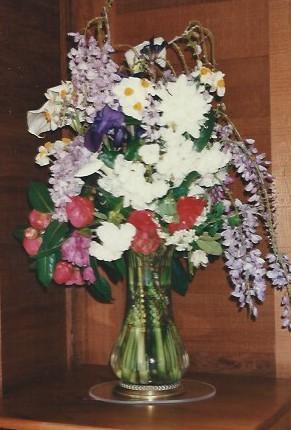
Flower Arrangements
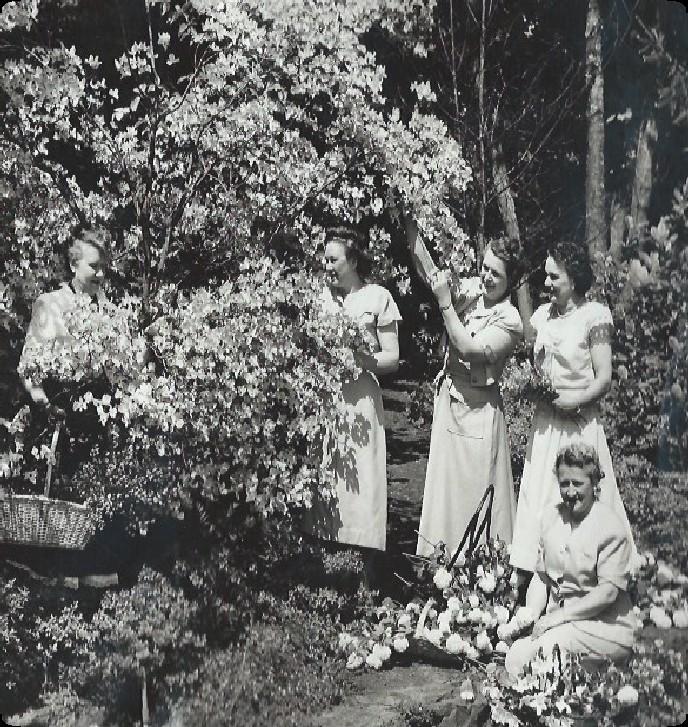
Plant Sales and Flower Shows Raised Funds for Worthy Causes
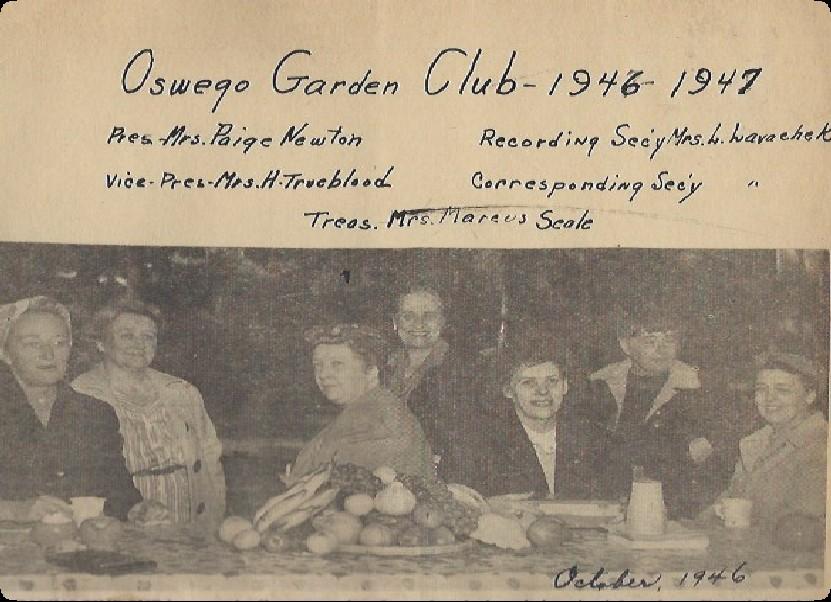
“TAKING TIME OUT for a cup of coffee are a number of woman who worked at the Oswego Garden Club plant sale held October 15 in the Fir Grove in Oswego.
Proceeds from 1946 spring flower show of the Oswego Garden Club were given to the Oswego school for the beautification of grounds.” Oswego News
Mr. and Mrs. Stanley Terry House
930 West Point Road
Gladys Terry, Oswego Garden Club Member (1963 -1964 Roster )
• Built in 1935 and later owned by Stanley and Gladys Terry.
• Historic Landmark home designed by architect Charles Temple Diamond
• Stan was a ‘colorful character’ in the history of Lake Oswego. He kept a flock of brightly painted sheep within the city limits (near carwash on Hwy 43 and Terwilliger Blvd).
Livestock were not allowed per city code, but Stan argued that because of their bright colors, they couldn’t possibly be sheep - - - therefore he was in compliance with city code.
Stan Terry story and other historic research credits to Marylou Colver, President Lake Oswego Preservation Society
Richard and Mildred Beatrice Sundeleaf House
16715 SW Phantom Bluff Court
Mildred Sundeleaf OGC member (1947-48 Roster)
Mary Glass OGC Member (2009 to present)
President 2015 – 2016
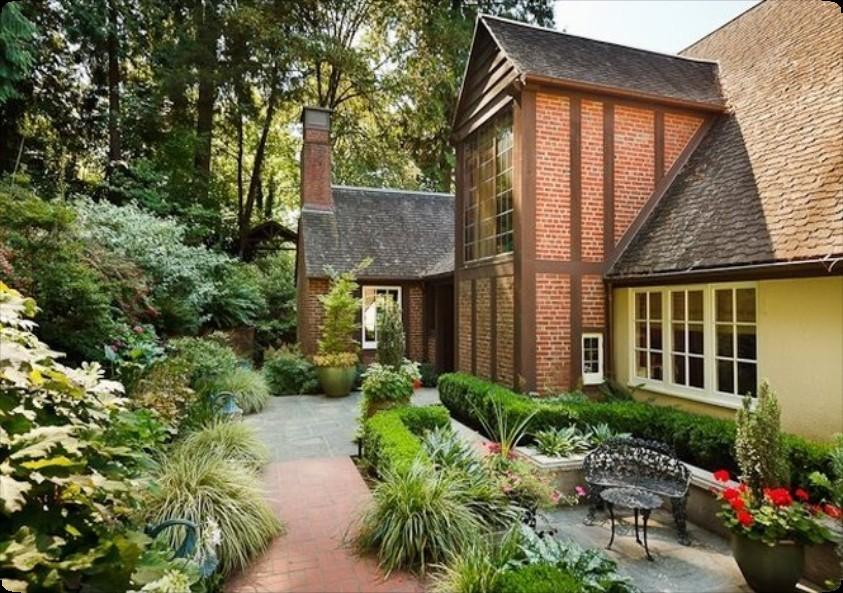
• Historic Landmark home designed by Richard Sundeleaf for he and his wife Mildred Beatrice, circa 1939
• The Tudor Revival style is reminiscent of a late-medieval English manor
• The gardens have been greatly enhanced over time, making this home a showpiece overlooking Lake Oswego and the site of the OGC’s 2015 Summer Party
Mulder-Lake House
316 North Point Road
Mrs. R.W. Lake, OGC Member (1947-48 Roster)
• Historic Landmark designed by architect Wade Hampton Pipes in 1927. The Lakes were the second owners
• Wade Pipes studied at the Central School of Arts and Crafts in London and adapted this English style to the northwest environment
• Pipes was a dashing figure who often sported a hat, tweed cape, and a cane. He was a man of conviction and integrity who “fired” clients rather than compromise his design
.
Laurence and Edna Hofer House
919 West Point Road
Mrs. L.W. Hofer , OGC Member (1947-48 Roster)
Peg Akerman, OGC Member (2001 – present)
President 2006-2007
• This Historic Landmark was built in 1929 in the Arts and Crafts style of architecture
• The home utilizes natural materials and fine craftsmanship and many OGC events have been hosted here
• The garden, inspired by English landscape design, is exquisite
Garden Club Women
Made Decorations At Annual Meeting, 1946
(Peg Ackerman’s house)
“Mrs. Larry F. Hofer won first prize. She chose the builtin bar in the pine paneled party room and filled the sink with cubes of red, green, blue and yellow ice. On top of the cubes was a flat milk white cake of ice with Merry Christmas frozen in red. Also frozen in the cake of ice was a clown snowman holding a red lighted candle.
Cocktail glasses had frosted red and green rims. A Christmas shrub with cones was laid on the hors d’oeurve tray. Red cherries on colored toothpicks were stuck into a pineapple; olives on colored tooth picks were stuck in an apple as were pearl onions.”
OGC Civic Project
Landscaping Roger’s Park 1940s and 50s
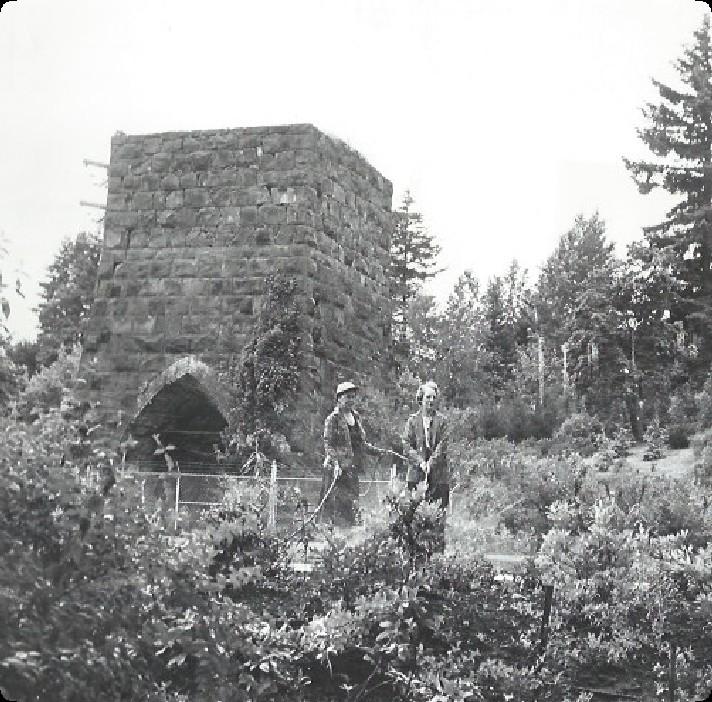
1945, 12 ½ acres surrounding the old chimney were purchased for $13,234 for a city Park by members of the Oswego school board and the Oswego City Fathers.
1949, the Kiwanis and Oswego Garden Club helped clean up the park, with 4 OGC members chairing the Park Committee and George Rogers represented the City.
Club members poured over seed catalogues, heckled dealers for wholesale prices, and got their members to work spading, weeding and planting donated materials including:
Red Roses
Tamarix Junipers
Red Barberry
Red and pink Peonies
Abelias
Cotton Easters, Japonicas
Camellias
French Lilacs
Mexican Orange
Daphnes
Andromedas
Oriental Poppies
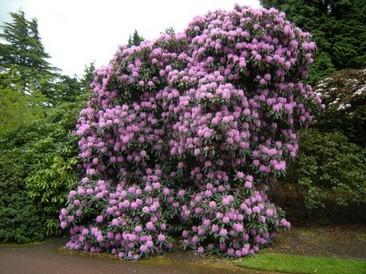
Rhododendrons
Pink Hydrangeas
Spireas
Siberian Iris
1954 Photo
Grape Hyacinths Mollis Azaleas
Oswego Garden Club
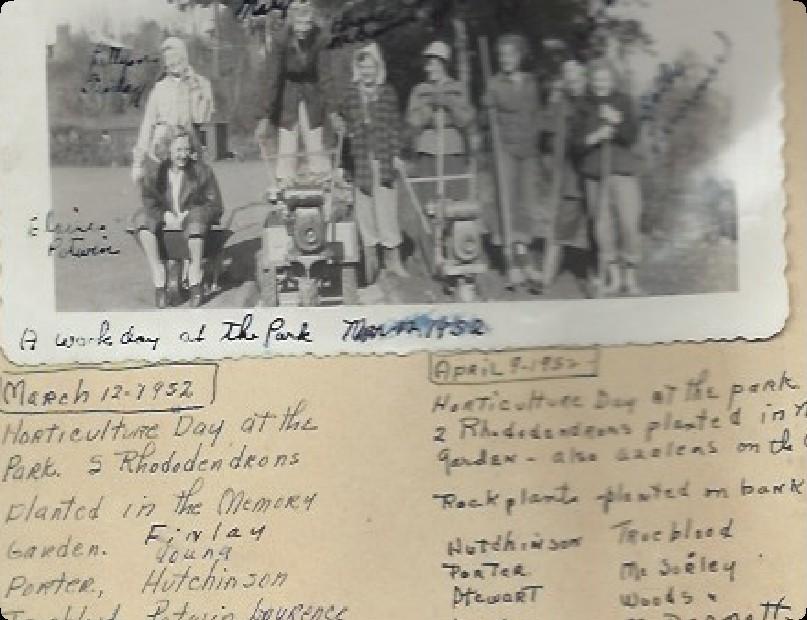
Horticulture Day at the (George Roger’s) Park, Spring 1952
• Total money spent by Club on the park: $176.48
• Total value of gifts and donations $2,134
• Total investment: $2200.48
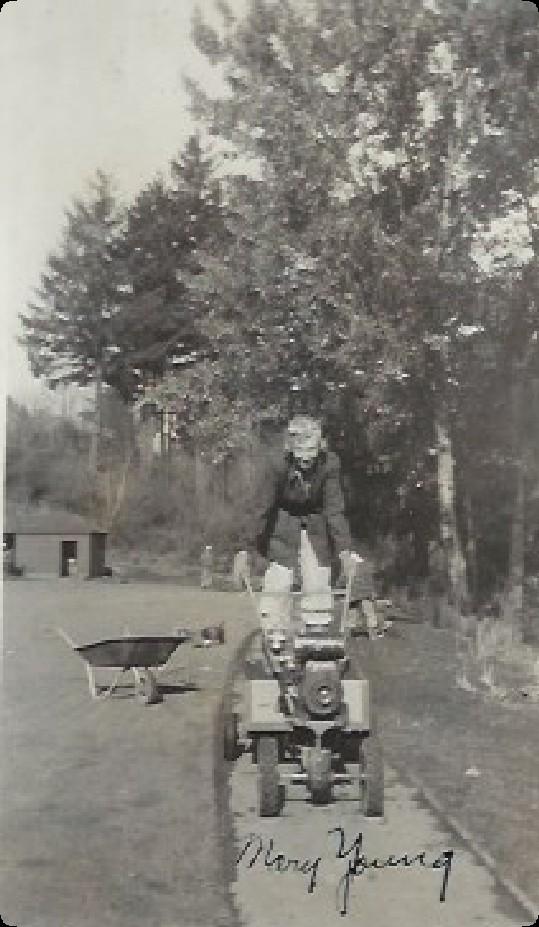
Mary S. Young
Oswego Garden Club
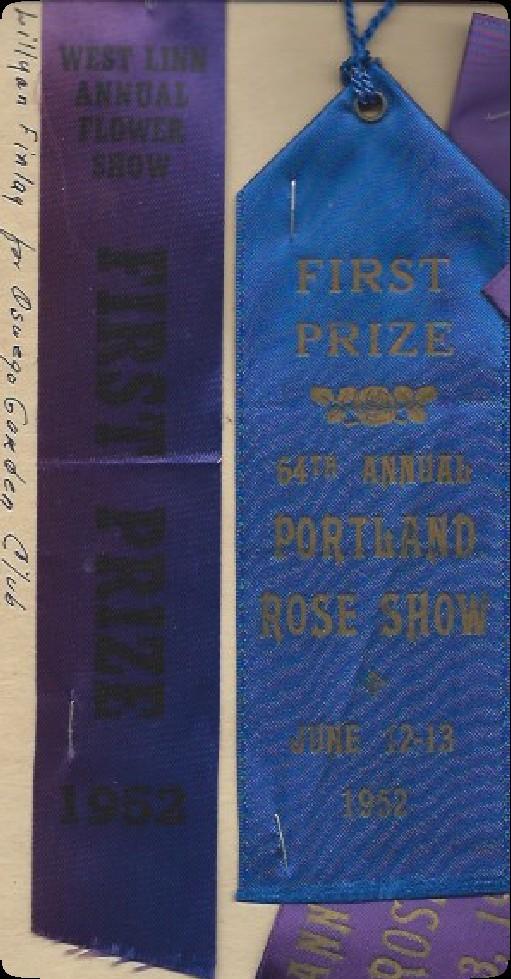
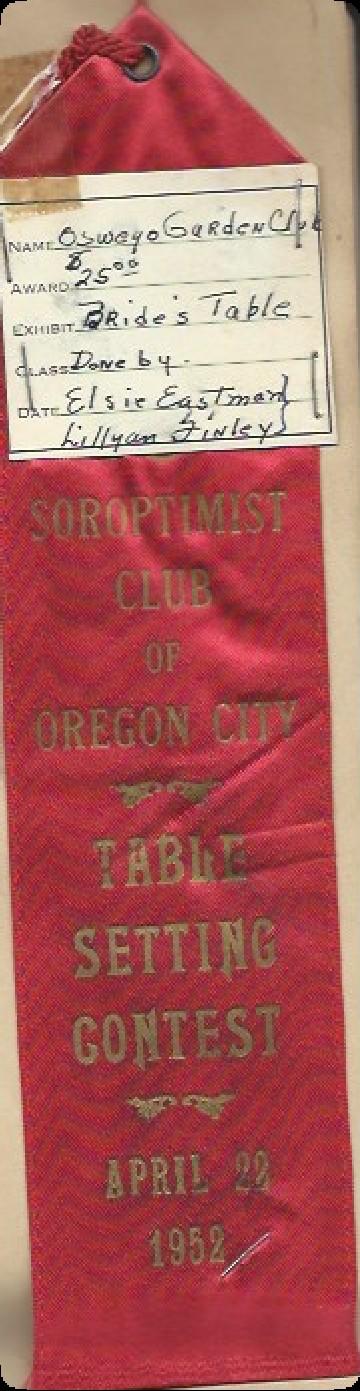
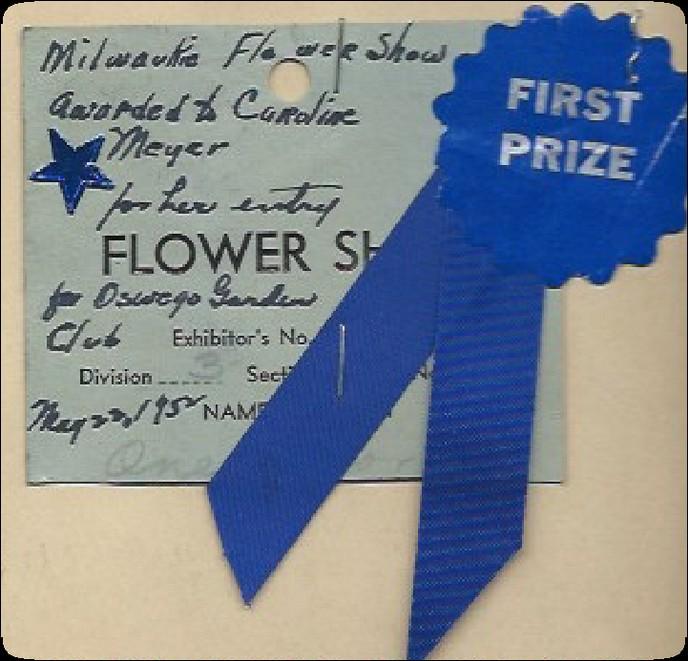
Ribbons and Prizes in Flower Shows in 1952
Lillyan Finlay - First Prize
Portland Rose Show and West
Linn Annual Flower Show
Caroline Meyer, Milwaukie Flower Show First Prize
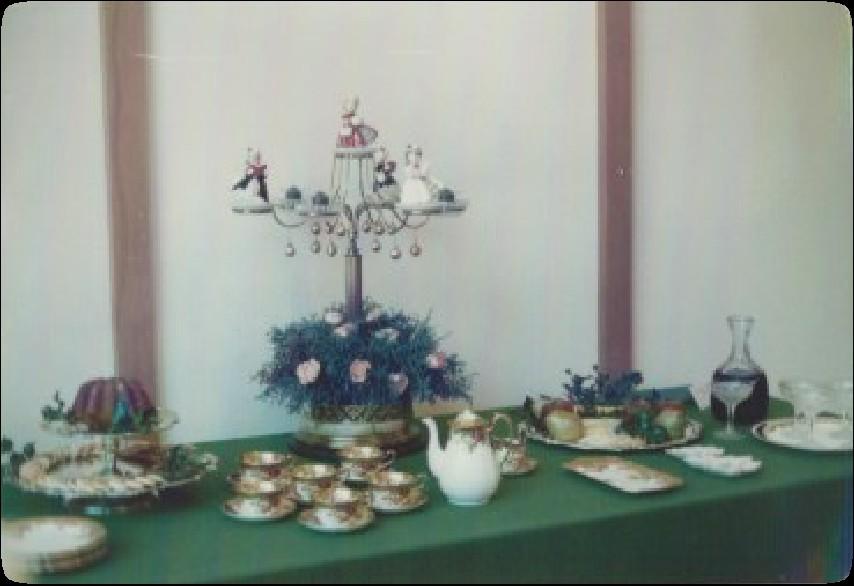
Elsie Eastman $25.00 prize for “Bride’s Table”
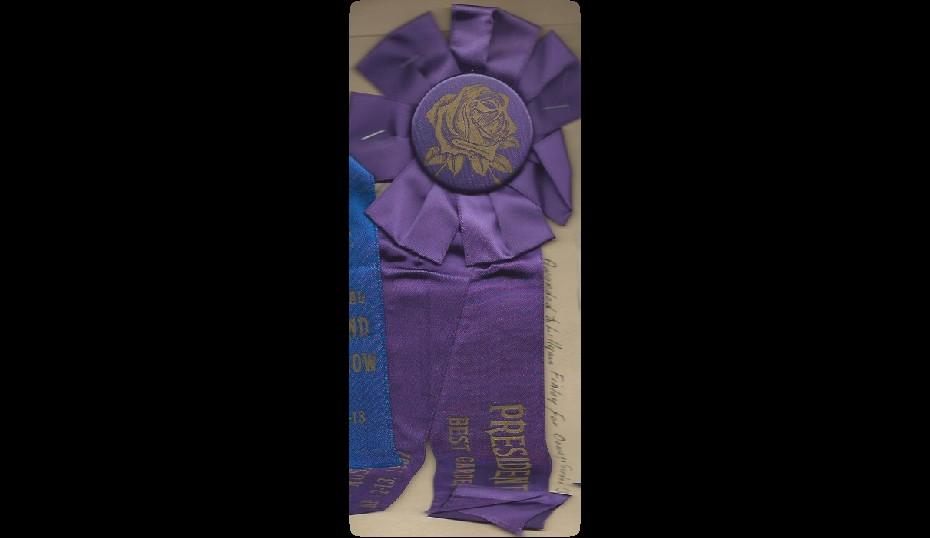
Lillyan Finlay, President “Best Garden Club Display”
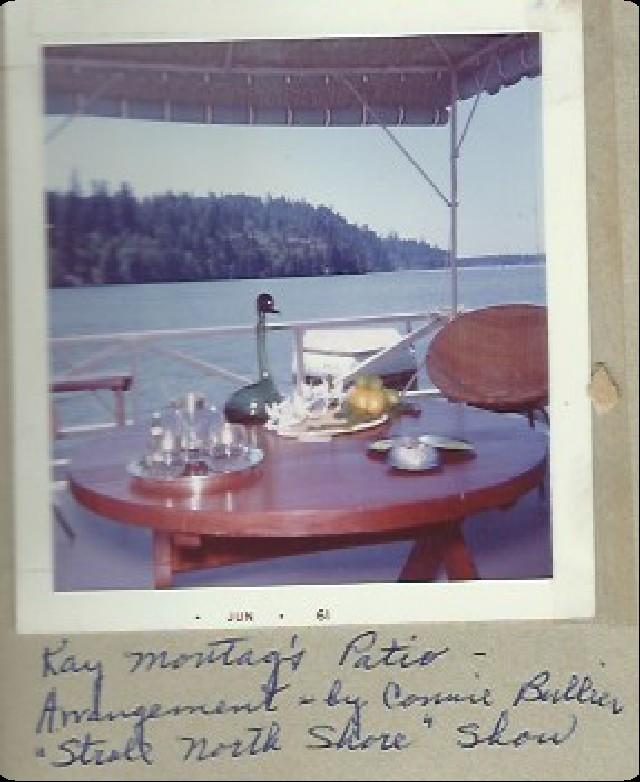
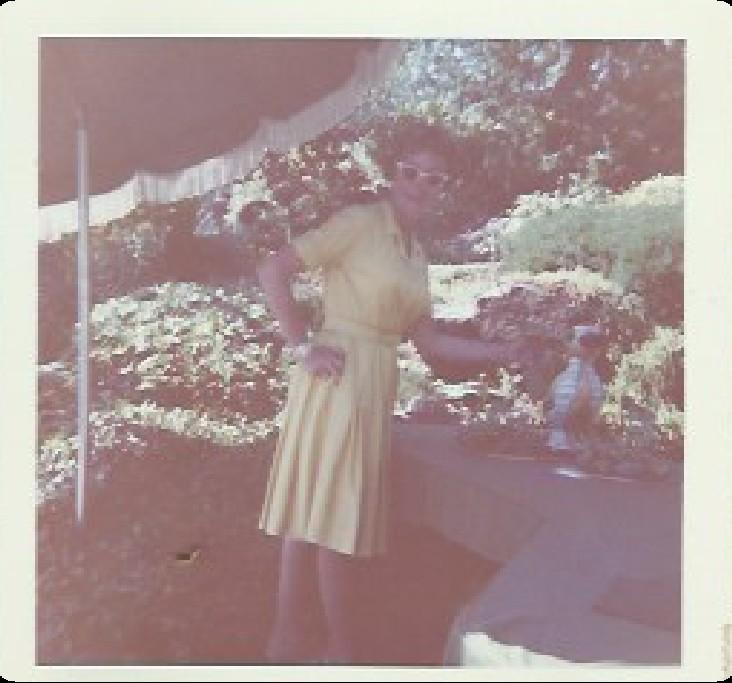
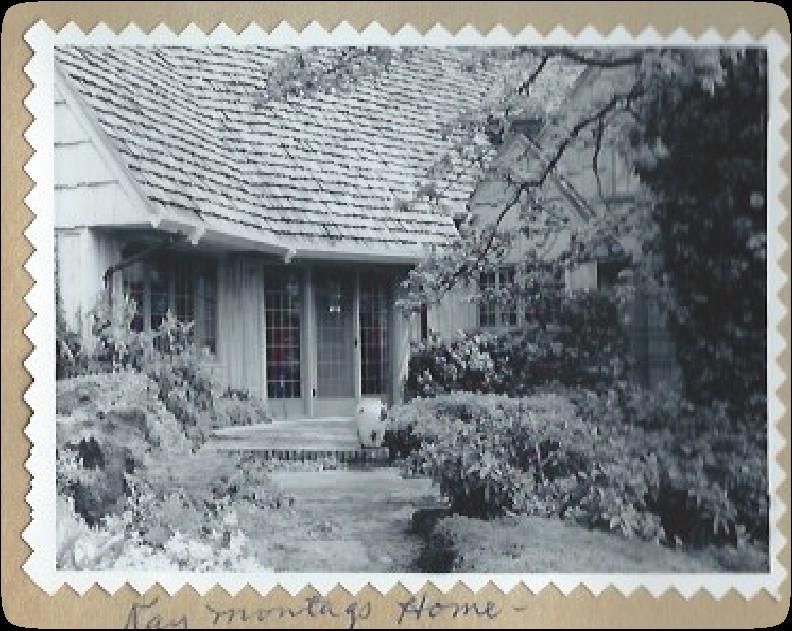
Kay Montag’s Home 1960s and 1970s
North Shore Road
• Historic Landmark built in 1931
• The Livingstone family named their home “Inverness” in honor of their Scottish heritage
• Site of many Oswego Garden Club events hosted by Kay Montag (Mrs. Henry Montag)
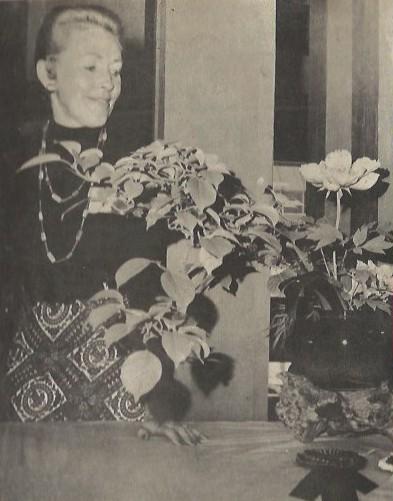
32nd annual Lake Oswego Garden Club Flower Show Winner of Sweepstakes Rosette, Kay Montag 1973
A WEATHERED BRANCH with blush pink peony blooms was one of four outstanding blue ribbon winning arrangements (Lake Oswego Review May 10, 1973)
Flower Arrangements
Dr. Christian and Dorthy Kisky House
16722 Greenbriar Road
Dorthy Kisky, OGC Member, (1947-48 Roster)
• Christian was a dentist and originally built this home as a fishing cabin in 1929
• It was enlarged in 1934 by the prominent architect Roscoe Hemenway
• Featured in 1955 on The Home Show, a TV program hosted by Arlene Francis and Hugh Downs
The Kisky Bathhouse was called the “pig house.”
Modeled after the 1932 Walt Disney cartoon The Three Little Pigs. When the Kisky's hosted a theme party, Walt himself provided a wolf and pig costumes for the occasion
Oswego Garden Club Members on Dorthy Kisky’s Dock
Angie Trueblood speaking 1964:
“And in the meantime… let’s speak modestly of a few of our accomplishments. We planted sweet gum trees on State Street in tubs, and pyramidal flowering cherries on A Avenue from State to 10th Avenue. We have recently replanted trees in the ground on State Street. At this time we thought the Terwilliger cut off entrance should be improved so the girls with the help of the city made a beauty spot of that.
Mrs. Young suggested we start a move to eradicate poison oak and we will now hear from our own Mrs. Poison Oak: Kathleen Newton.”