Our spring issue is full of hope and promise – as is fitting for this time of year! Each and every issue just leaves us more and more impressed with the professionals who form the backbone of our sector.
‘Professionals and Professionalism’. That is what we are all about. In this regard we are merely reflecting our readers.
It’s been that way since we began our journey. And we take a very broad view of professionalism.
Because professionalism is expressed in so many ways – right across the sector. We believe that it begins with training and education and that is why this topic forms such a vital part of our offering.
With this in mind we have a special focus in this issue on Atlantic Technological University (ATU). We find there is a lot going on at ATU in terms of new courses, new initiatives and new infrastructure.
We check in on courses at TU Dublin too – yet another iconic leader in construction education. We present here a three-page feature on a range of courses.
All our other areas of interest are covered too: There’s ‘Green Building’ with the Irish Green Building Council. There is also some ‘Tech Talk’, some project news, a look at ‘The Lie of The Land’, and sections like ‘Out & About'; where we profile some major recent events including the recent ATU Construction Management Conference.
We also have news items from the sector and wider economy – and of course we take a look at products and services that can really make a difference. That is as well as at our ‘Personal & Finance’ items – where stalwart contributors give us pause for thought and a healthy dose of inspiration too.
Talk to you soon, Martin & Dermot
‘PUTTING THE PROFESSIONAL CENTRE-STAGE'
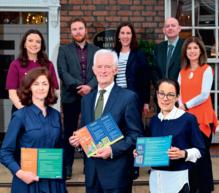
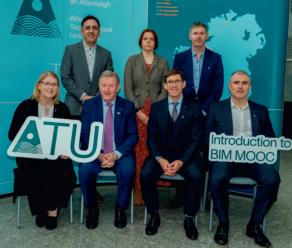
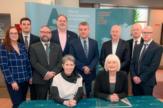
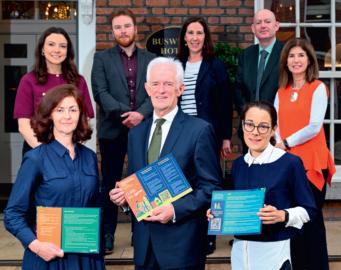
Launch of VVBA recommendations. (Back Row L-R): Shirley Coulter, CEO of SCSI; Nick Taaffe, Respond Housing Association; Alison Gilliland, European Climate Pact Ambassador; Tom Gilligan, Director of Services Mayo County Council; Kathryn Meghen, CEO RIAI (Front Row L-R) Fiona Craven, Dublin City Council; Philip Lee VVBA Chair; Marion Jammet, Director of Policy and Advocacy at Irish Green Building Council (IGBC).
‘WE TAKE A VERY BROAD VIEW OF
There really is a lot going on. P ublisher Patrick Aylward
* The articles herein represent a snapshot in time. Always check with those concerned for the latest.
Printed by WG Baird Ltd Antrim
5 NEWS
News from the sector and the wider economy, including Walls Construction, RIAI, ATU, CIF and more!
12 On The Record
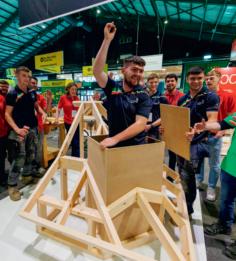
WorldSkills Ireland – celebrating seventy years of skills excellence!
14 The Lie of The Land
AIB Ireland Construction PMI® - ‘renewed rise in activity’, plus news from SCSI and more
19 ESB Networks
Electrical Hazard awareness and prevention
22 Spotlight on Dornan ‘Dornan are at the forefront of Europe’s data centre transformation’
24 Spotlight on Collen
‘Collen Construction – a decade of BIM, Digital Construction and Innovation’
27 Out & About
Including CIF International Women’s Day 2026 and the ATU Construction Management Conference
34 Personal & Finance
How resilient people live longer and happier lives
38 Training & careers
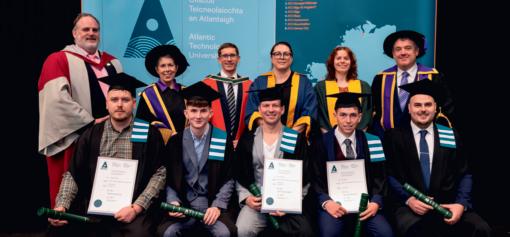
Including ‘paths to success at TU Dublin’. Also: First cohort of civil engineering apprentices graduates from ATU
44 Green Building
‘The housing crisis – there is a solution’
48 Tech Talk
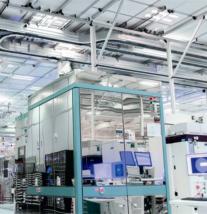
‘Ireland’s semiconductor industry and its role in global fab design and build’
49 Products & Services
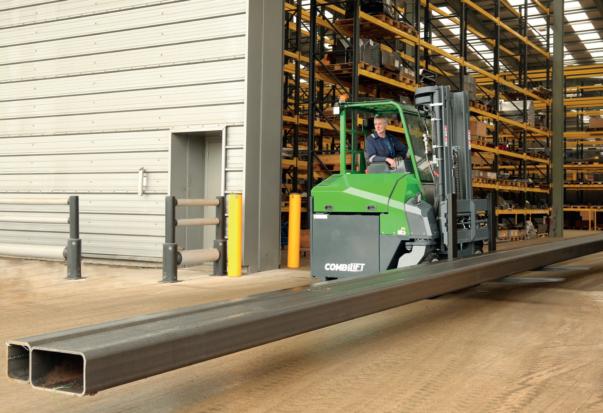
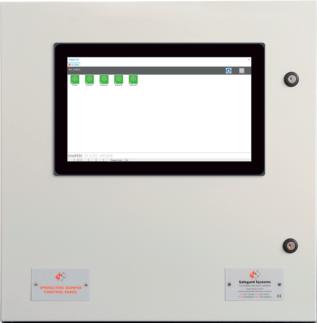
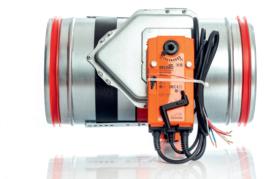
Marmox, Carhartt, Grant, safeguard Systems, Combilift…the list goes on!
56 The Final Say
As always, we’re rounding it all off on a positive note!
A game-changing addition to Ireland’s sporting infrastructure!
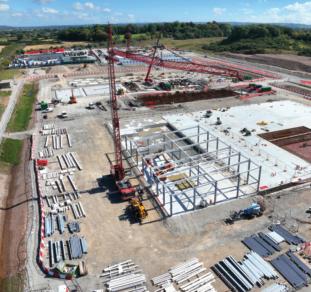
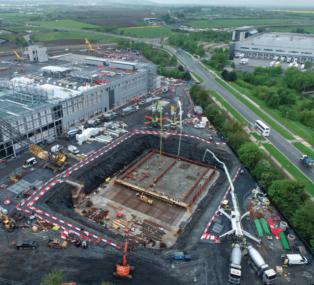
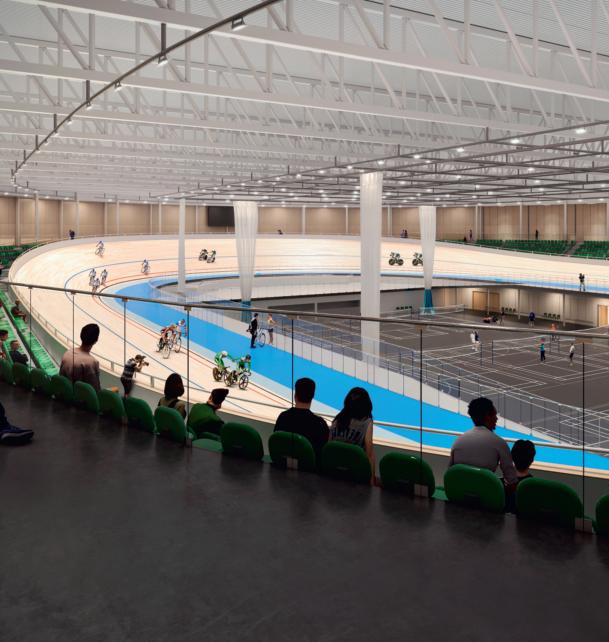
Walls Construction is honoured to have been appointed by Sport Ireland as the Design & Build Contractor for the construction of the National Velodrome and Badminton Centre (NVBC), an exciting new chapter in the story of Ireland’s sporting infrastructure.
Prestigious
Located on the Sport Ireland Campus in Blanchardstown, Dublin 15, works are expected to take approximately 22 months, so that this prestigious facility is scheduled to welcome its first users before the end of 2027.
‘Walls Construction’s sectoral experience includes major residential developments, data centres, food & beverage, education, pharmaceuticals and life sciences and industrial projects and this appointment, to deliver a landmark first-of-its-kind national sport and leisure venue, is a tremendous accolade as our business continues to grow and diversify,’ Construction Management Ireland is told.
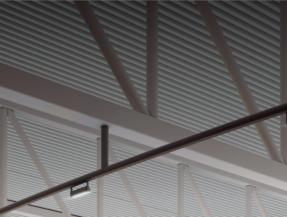
The National Velodrome and Badminton Centre will be strategically located adjacent to the National Indoor Arena, and its world-class facilities will feature a 250-metre indoor cycling track and 12 international-standard badminton courts positioned within the infield area, together with seating for up to 1,000 spectators.
The facility has been designed to
meet the needs of both athletes and spectators, flexibility in its use and future development.
All ages and abilities
Serving elite athletes and local communities alike, the NVBC will cater to people of all ages and abilities, from young children taking their first steps into sport, to elite cyclists and badminton players competing at worlds and Olympic level.
The centre will act as a national hub for training, competition and talent development, supporting participation at grassroots level while also strengthening Ireland’s highperformance pathways.
Once complete, the NVBC will offer Irish cyclists the opportunity to train and compete at home, significantly reducing the need to travel abroad to access top-tier indoor track facilities, while playing a vital role in growing participation, developing future talent and supporting high-performance programmes in badminton and cycling alike.
Exemplar
‘Partnering with leading experts, including our appointed Design & Build team; Scott Tallon Walker, DBFL, Hoare Lea and ORS, alongside our client’s exemplar teams, Faulkner Brown, Arup and OHAC, provides us with invaluable guidance and technical expertise.
‘The collaborative approach of these relationships will ensure the successful delivery of this highly specialised facility, enabling the achievement of outstanding outcomes.
‘We extend our sincere appreciation to Sport Ireland for placing their confidence in Walls Construction, and we look forward to delivering this landmark project in close collaboration with our partners:
Architect - Faulkner Brown (Exemplar); Scott Tallon Walker (D&B)
‘To discover more about our projects, follow us on LinkedIn or visit our website.’
www.walls.ie
Commencement of works on new STEM Building
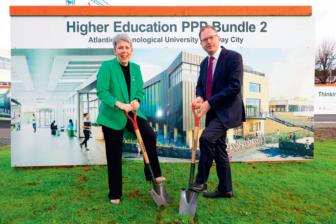
Minister for Further and Higher Education, Research, Innovation and Science, James Lawless TD, visited Atlantic Technological University’s Galway City campus to turn the sod and officially mark the commencement of construction on the new STEM (Science, Technology, Engineering and Mathematics) Building.
Comprise
The new building will comprise approximately 5,500 m² and will provide state-of-the-art teaching, learning, and laboratory spaces in STEM disciplines, predominantly serving Engineering, Science, and Computing.
Located on the east side of the campus facing Ballybane Road, this development will significantly enhance ATU’s capacity to deliver high-quality education and research in areas critical to Ireland’s future skills needs.
Speaking at the Galway City campus, Minister Lawless said:
‘Today marks a major milestone for ATU and for higher education in the West of Ireland.
Investment
‘The new STEM Building is more than bricks and mortar, it’s an investment in innovation, in talent, and in the future of our economy.
‘This facility will offer cutting-edge spaces for engineering, science, and computing, disciplines that are crucial to Ireland’s competitiveness and sustainability.
‘It reflects the Government’s commitment to supporting Technological Universities as engines of regional development and opportunity.
‘By expanding capacity and modernising infrastructure, we’re ensuring that students and staff have the resources they need to succeed, and that Galway continues to be a hub for knowledge, creativity, and enterprise.’
Dynamic
Dr Orla Flynn, President of ATU, said:
‘The new STEM Building will create a dynamic environment for teaching, learning, and research, designed to
Minister for Further and Higher Education, Research, Innovation and Science, James Lawless TD, and ATU President Dr Orla Flynn officially turn the sod to mark the commencement of construction on the new STEM Building at ATU’s Galway City campus.
foster collaboration and innovation.
‘It will enable us to meet growing demand in STEM disciplines and strengthen our engagement with industry partners, supporting skills development and economic growth across the region.’
Henry McGarvey, VP with responsibility for Campus Infrastructure & IT, added:
‘The commencement of construction on the STEM Building is a proud moment for our ATU community.
‘This facility will not only enhance the student experience but also position ATU as a leader in STEM
education and research.
‘It will provide modern, purposebuilt spaces that reflect the ambitions of our staff and students and the needs of the industries we serve. We are excited to see this project progress and to welcome future generations into a world-class learning environment.’
Recognises
This project is being delivered under Project Ireland 2040, which recognises that investment in education is central to achieving a strong, balanced economy.
Completion of the building is expected in Q3 2027.
Winner of the RIAI Silver Medal for Housing – A community-first approach to student housing
The Royal Institute of the Architects of Ireland (RIAI) has awarded the RIAI Silver Medal for Housing to an exemplary student housing project in Dublin, Highfield Park by DTA Architects.
Highest
The highest award for a housing project in Ireland, the medal was presented by Minister Dara Calleary TD and RIAI President Fionnuala May FRIAI at the RIAI and Department of Housing, Local Government and Heritage Joint Housing Conference in Sligo.
The Jury praised the urban quality of the project, its emphasis on placemaking and positive contribution to the overall neighbourhood, noting how the integrated public realm treatment and a series of landscaped open spaces foster a sense of community and shared experiences.
The Jury said: ‘The redevelopment of this valuable backland site presented with multiple challenges and constraints with varied boundary conditions, gradients and access requirements.
‘The current configuration is for
Highfield Park, Dublin, DTA Architects
This is a new student housing scheme in Dublin 7, providing 402 student bedrooms with 444 bed spaces arranged in 92 cluster apartments and studios across nine blocks on a 1.36-hectare brownfield site in a backland condition behind a modest frontage on North Circular Road.
The project also embodies the principles of sustainable/netzero design through a series of energy reduction measures, high performance fabric insulation, extensive thermal modelling analysis, air tightness and a natural ventilation strategy.
dedicated student accommodation; however, the strong urban design principles, variation in unit type, and generosity in the shared open spaces and private open spaces have delivered a strong sense of community, which could evolve to provide generalpurpose housing over the lifetime of the building.
‘This project is confident and mature – it feels like it has been there for a long time – and that the buildings are an inevitable extension of the University campus.
‘Maybe most importantly, it feels like a real place where real lives can coexist and flourish, demonstrating that outstanding design, with pragmatic details and budget, can add immense value to any context.’
Presenting
Presenting the medal, Dara Calleary TD, Minister for Social Protection and Minister for Rural and Community Development and the Gaeltacht, said: ‘Smart architecture strengthens communities by creating inclusive spaces that embrace our natural environment and serve our society.
‘By putting community at the heart of housing design we can ensure that new housing developments add longterm value to our neighbourhoods.
‘RIAI Silver Medal winners DTA architects show what can be achieved when community, nature and sustainable living are prioritised during the design process.’
Skilfully
RIAI President Fionnuala May added: ‘This redevelopment of a backland site into a student residence is an example of how architects can skilfully unlock such sites for housing, while responding to urban context and making a meaningful contribution to the wider neighbourhood.
‘Clever and practical decisions about how best to locate functions and amenities have enhanced the sense of place; study rooms enjoy long views over the city and mountains beyond, and centrally-placed communal dining spaces have access to mature gardens.
‘I congratulate DTA Architects on this inspiring housing project that will deliver long-term benefits for the community and the common good. It is a great example of a communityfirst approach.’
About the RIAI Silver Medal for Housing
The RIAI Silver Medal for Housing is the highest award for housing design given by the RIAI.
It is a biennial award made to encourage excellence of design in housing.
The medal is awarded to an architect or architectural practice for projects of significant merit completed within the specified two-year period.
It is awarded several years after completion so that the success of the building can be confirmed by the passage of time.
The award for Highfield Park by DTA Architects is for the period 2020-2021.
Highfield Park by DTA Architects.
Look back: ‘Emma is an excellent ambassador for women in the electrical industry’
In this special ‘look back’ piece we are looking back here firstly, on Emma McCann from County Laois who was named Electrical Apprentice of the Year late last year.
Emma is employed by Microsoft Ireland Operations Limited, Dublin.
Graduates
Atlantic Technological University (ATU) was celebrating the success of two of its apprentices who were named Apprentice of the Year in their respective categories at the National Apprentice of the Year Awards 2025, held at the Mansion House, Dublin. Out of more than 300 nominees nationwide and 12 category winners on the night, ATU apprentices Gavin Monaghan and Emma McCann stood out for their exceptional skills, dedication, and performance in their fields, we were informed Gavin Monaghan, a second-year apprentice on the BA (Hons) in
3D-printed
Insurance Practice (Life) programme at ATU's Sligo Campus, received the Insurance and Recruitment Apprentice of the Year award.
Congratulations
Congratulating the winners, Dr Marie Moran, Head of Department of Business at ATU, commented:
‘We are incredibly proud of Emma’s and Gavin’s achievements.
‘Their awards are a testament to their hard work and to the quality of apprenticeship provision available across ATU campuses.
Mark Grumley, Head of Department of Engineering Apprenticeship at ATU, praised Emma’s achievement:
Fantastic
‘Emma’s award is a fantastic recognition of her talent, drive and technical expertise.
‘Having completed her apprenticeship training at ATU’s
Minister Marian Harkin presents Emma McCann with an Apprentice of the Year 2025 Award in the Electrical Category. Killybegs Campus, she has shown outstanding commitment and enthusiasm for her trade.
‘Emma is an excellent ambassador for ATU and for women in the electrical industry, and we wish her continued success in her career with Microsoft.’
homes and biomedical breakthroughs: RISE@ATU showcases innovation for industry
ATU Researchers, students, and industry partners came together to showcase pioneering projects in 3D-printed construction, advanced manufacturing, and more besides. Pioneering research in sustainable 3D-printed concrete, advanced manufacturing, and health innovation took centre stage at The Model, Sligo during the ATU Partnerships for Innovation, Enterprise and Growth showcase hosted by RISE@ATU.
The event brought together researchers, students, and industry partners to highlight how Atlantic Technological University (ATU) is strengthening academic–industry collaboration to deliver solutions across a range of sectors.
Connects
‘We ran this event as part of Science Week, showcasing how RISE@ATU connects research with industry’, said Dr Ruth Quinn, organiser of event and Head of Department of Civil Engineering & Construction Studies.
‘Speakers highlighted projects at various stages, from 3D printing and motion capture to curing and diagnosing throat cancer, giving our
PhD students insight into realworld collaboration.’
Sustainable 3D-printed concrete for housing
One of the evening’s standout highlights explored how ATU researchers are building upon a world-first 3D-printed housing achievement in Dundalk, where three social housing units were completed in just 12 days using COBOD 3D construction printing technology.
ATU researcher Dr Ahmed Saeedi, enterprise collaborator Mark McGowan of Future Cast, and material supplier Roadstone are developing sustainable 3D-printing concrete to scale affordable, low-carbon housing across Ireland.
Their work showcases how the academic–industry collaboration model drives innovation:
‘Over the last four years, I’ve been part of the team at Dundalk and Bristol for tremor testing and have been heavily involved in all concrete material testing.
Valuable
‘Working with Dr Ahmed on aggregates and locally sourced concrete allows him to apply testing at an industry-ready scale and share valuable research insights with us firsthand,’ said Mark McGowan, Technical Expert at Future Cast.
The evening also featured the Quick-Fire Research Competition. RISE@ATU is co-funded by the Government of Ireland and the European Union through the ERDF Northern and Western Regional Programme 2021-2027.
From concept to guarantee: Bauder’s full-service flat roof solutions
From initial design through to installation and guarantee, Bauder delivers full-service project support and specialist flat roofing systems.
Bauder solutions are engineered for long-term durability, sustainability, and value.
Every project is unique, and with over four generations of experience, Bauder understands how to tailor systems to meet your specific needs.
Whole-project collaboration and support
Bauder is more than a manufacturer. Its strength lies in the expertise and commitment of its people who support your flat roof project from concept and design to system selection, installation, inspection, sign-off, guarantee, and beyond.
Clients benefit from a team that takes full ownership and consistently delivers exacting standards.
Dedicated technical management
Each project is assigned a Bauder technical manager as your single point of contact.
They work with you to develop a practical, cost-conscious solution aligned with your requirements.
Working closely with the technical department, they create and maintain a bespoke specification throughout the project lifecycle.
System selection based on project needs
Once your brief is understood, Bauder matches it to the most suitable waterproofing system from its comprehensive portfolio, including:
• Reinforced bitumen membranes
• Single ply systems
• Hot melt and cold-applied liquids
• Insulation options for warm or inverted roofs
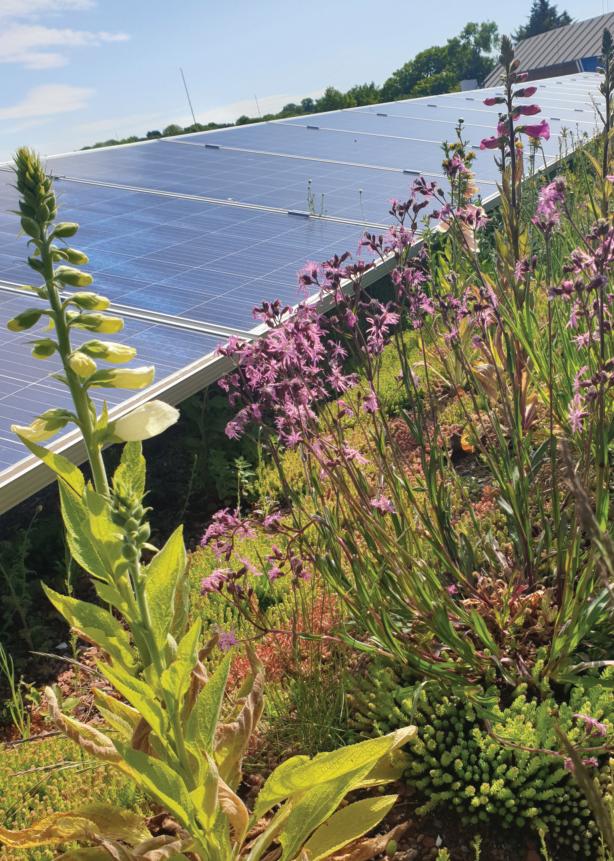
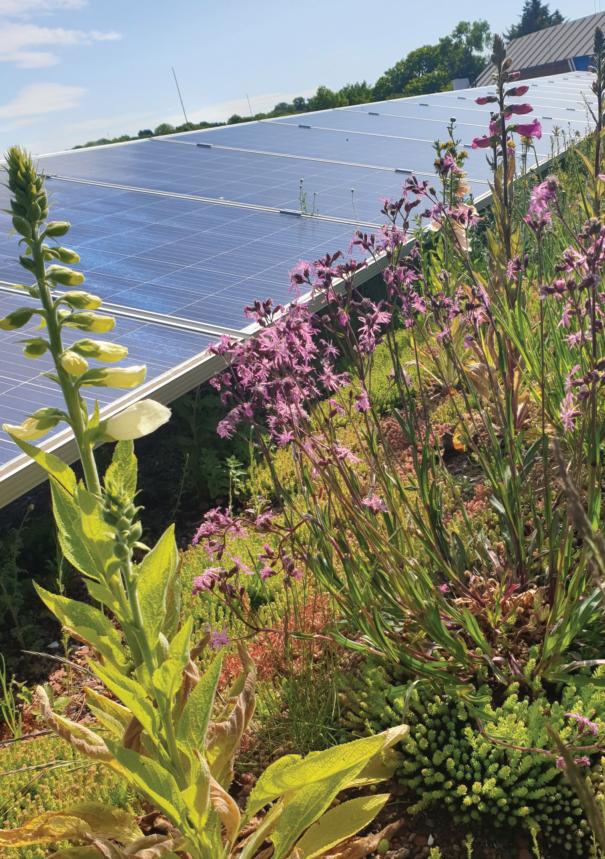
Bauder green roofs, blue roofs, and solar PV can be incorporated where required, supporting sustainability goals without bias to any one system.
Comprehensive specification and design services
Flat roofs may appear simple, but longterm performance relies on precise detailing.
Supporting the principal designer, Bauder’s technical team ensures compliance with Building Regulations and project-specific needs, including:
• Bauder system weight load calculations
• U-value and thermal bridging resolution
• Tapered insulation schemes
• Acoustic performance
• Condensation risk analysis
• Wind load design
• Drainage calculations
• H-max capacity for blue roofs and roof discharge report to attenuate a 1:100-year storm profile
Roof refurbishment and evaluation
Refurbishment projects often require detailed diagnostics.
Bauder assessments provide accurate insight into moisture presence and the condition of the roof.
• Core sample analysis: Reveals construction build-up and identifies saturated areas.
• Moisture mapping: Assesses the true condition of a roof and identifies areas (if any) where the insulation needs to be replaced.
Installation by approved contractors
To ensure a quality installation, systems are installed exclusively by Bauder’s approved network of contractors who are assessed for technical and operational competence.
• Certified installers: Each operative is individually certified and identifiable.
• Training and support: Bauder provides full training and ongoing support to maintain standards.
On-site monitoring and quality assurance
Bauder site technicians inspect works at key stages, providing clear reports that verify compliance with quality benchmarks.
Case study: Coláiste an Chláirín
Bauder service in action
Bauder’s single-point service ensured consistent coordination throughout this post-primary school project in Athenry, Co. Galway.
Acoustic, thermal, and fire safety priorities were met through Bauder’s Thermofol PVC system and BauderROCK flatboard insulation. Expert guidance and high-quality installation ensured the ambitious programme was delivered on time and to specification.
Tailored guarantees for complete confidence
Every Bauder roof is supported by a bespoke guarantee. By monitoring each stage from manufacture to installation, Bauder ensures your roof is built to perform – providing peace of mind that you may never need to use it.
Contact Bauder: Call +353 (0)42 9692 333 or visit www.bauder.ie/contact-us.
45-63 Lawrence Road, the SPRA 2025 Sustainability Award winner, was delivered through collaboration and technical expertise.
Combine
BauderSOLAR G LIGHT
Project: Noah’s Ark
Architect: Squire & Partners
Photo credit: Bridgman & Bridgman LLP
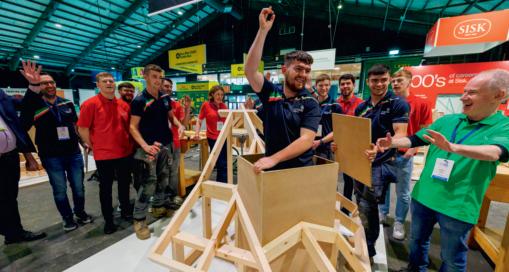
WorldSkills Ireland – celebrating 70 years of skills excellence
And preparing for Shanghai 2026!
Readers will know just how much we like to keep up with the world of skills and training. It follows therefore that we here are no strangers to the work of WorldSkills Ireland. As it happens, it’s rather an exciting time with quite a lot going on, as Ray English, Chair and Official Delegate WorldSkills Ireland, Board Member
WorldSkills International explained, when we sat down for a catch-up.
WorldSkills Ireland will this year mark a significant milestone in the development of skills and apprenticeships across the country –whilst setting its sights on continued successes and home and abroad
It is in short, a busy year.
‘This year we are celebrating the 70th anniversary of Ireland joining WorldSkills,’ explains Ray English, Chair and Official Delegate WorldSkills Ireland, Board Member WorldSkills International.
‘Meanwhile, there is our continued success in the WorldSkills Ireland National Skills Competition and the preparation for Ireland’s participation in the 48th WorldSkills Competition in Shanghai.’
Together, these initiatives highlight Ireland’s long-standing commitment to promoting vocational excellence, strengthening the skills pipeline, and showcasing Irish talent on the global stage.
Seventy years of Ireland in the WorldSkills movement
First off, what is the history of Ireland’s participation in the WorldSkills movement?
‘Ireland joined WorldSkills International in 1956 – as the ninth member in – through the now DFHERIS becoming one of the earliest members of the global organisation dedicated to promoting vocational education and training’, explains Ray.
‘Since then, Ireland has participated in every WorldSkills Competition, demonstrating a sustained commitment to developing worldclass technical and professional skills.’
It is some achievement and certainly one to be proud of. ON THE RECORD
Members
WorldSkills International, founded in 1950, now brings together nearly 90 member countries and regions to advance skills development and inspire young people to pursue careers in skilled trades, technology and services.
The organisation’s flagship event – often described as the ‘Olympics of Skills’ – provides an international platform where the best young professionals compete and exchange knowledge in dozens of disciplines.
For Ireland, this long-standing involvement has produced strong results, notes Ray.
‘Hundreds of Irish competitors have represented the country internationally and achieved 379 medals including 65 Gold,52 Silver, 78 Bronze medals and 184 Medals for Excellence across a wide range of sectors, from construction and manufacturing to hospitality and digital technologies.
‘The competition has played an important role in raising the profile of apprenticeships and technical education while strengthening collaboration between industry, education providers and government.’
The Department of Further and Higher Education, Research, Innovation and Science (DFHERIS) continues to support WorldSkills Ireland as part of its national strategy to promote skills development and address labour market needs.
WorldSkills Ireland National Skills Competition 2026
The WorldSkills Ireland National Skills Competition remains the cornerstone of Ireland’s skills development
Ray English
programme, just how significant an event is this?
‘Each year the competition brings together the country’s most talented apprentices and students to compete in a wide range of practical disciplines, testing their abilities against industry benchmarks,’ says Ray.
‘Recent competitions have seen more than 180 finalists compete across approximately 35 skills categories, spanning areas such as construction, manufacturing and engineering, ICT, hospitality, creative arts, logistics and automotive technology.’
‘The national finals serve several important functions:
• Showcasing career pathways: The event introduces thousands of second-level students to the opportunities available through apprenticeships and technical education.
• Recognising excellence: Winners are awarded the prestigious DFHERIS Medal for Excellence in their skill category.
• Selecting Team Ireland: top performing competitors may progress to represent Ireland at international WorldSkills competitions.
‘The event also highlights the growing collaboration between
Ray English in profile Ray English is a member of the WorldSkills Board. He was elected by the 91 member countries to the board following the Lyon competition at the General Assembly.
Ray, who became the first Irish representative for Strategic Development on the board has over 30 years of WorldSkills experience, which he brings to his role as a board member of strategic development.
He has been involved in WorldSkills activities nationally since 1991 and internationally since 2003.
Ray's Technical and Vocational Education and Training (TVET) career includes his current position as Head of Discipline for Apprenticeship at TU Dublin.
Ray's WorldSkills journey encompasses roles such as Official Delegate, Chief Expert, Expert, and Competitor, focusing on green and digital skills transition and he possesses extensive experience in policymaking and TVET leadership.
industry, further education providers, higher education institutions and training bodies.
‘Organisations across sectors contribute as sponsors, mentors, examiners and employers, ensuring that the competitions reflect real-world industry standards.
‘The 2025 event in the RDS Dublin
attracted 30,000 visitors, making it one of Ireland’s largest events dedicated to skills, careers and apprenticeship awareness.’
Team Ireland and the Road to WorldSkills Shanghai 2026
The next major milestone for Irish competitors will be the 48th WorldSkills Competition, scheduled to take place in Shanghai, China in 2026. How are we looking forward to that event?
‘The event will bring together the world’s best young professionals to compete across dozens of technical and vocational skill areas,’ Ray explains.
‘Competitors selected through the national competitions will form Team Ireland, representing the country in disciplines ranging from advanced manufacturing and construction to digital technologies, hospitality and services.
‘Participation at WorldSkills provides several benefits beyond the competition itself:
• International benchmarking of Irish skills
• Knowledge transfer between countries and industries
• Exposure to emerging technologies and industry practices
• Enhanced career prospects for competitors
‘Ireland’s recent performances demonstrate the strength of its training and apprenticeship systems,’ Ray adds.
‘At the WorldSkills Competition in Lyon in 2024, Irish competitors
achieved multiple Medallions for Excellence, reflecting the high standard of technical capability developed through the national skills ecosystem.
‘As preparations intensify for Shanghai 2026, competitors undergo extensive training supported by expert mentors, industry partners and education providers.
‘This collaborative approach ensures that Irish competitors are prepared to compete at the highest international level.’
Inspiring the next generation
‘The continuing success of WorldSkills Ireland reflects a broader national ambition: ensuring that young people recognise the value and opportunities within skills-based careers’, explains Ray English.
‘Through national competitions, international participation and strong industry partnerships, the programme plays a critical role in:
• promoting apprenticeships and technical education,
• addressing skills shortages in key sectors, and
• building a workforce capable of supporting Ireland’s future economic growth.
‘As Ireland celebrates 70 years in the WorldSkills community and prepares for Shanghai 2026, the focus remains on inspiring the next generation of skilled professionals and ensuring that the country continues to produce talent capable of competing – and succeeding – on the global stage.’
AIB Ireland Construction PMI®‘renewed rise in activity’
The AIB Ireland Construction PMI® data signalled a renewed rise in activity in the sector during February, ending a period of reduction stretching back to May last year.
Continued
The expansion in activity was recorded amid continued improvements in demand conditions. With workloads rising, firms took on extra staff and purchased additional inputs.
Meanwhile, input costs continued to increase sharply, albeit at a slightly softer pace than at the start of the year. The headline seasonally adjusted AIB Ireland Construction Total Activity Index moved back above the 50.0 nochange mark in February, posting 52.1 from 48.6 in January.
Sequence
The modest expansion in activity midway through the opening quarter of the year ended a nine-month sequence of contraction.
The rise in total construction activity reflected renewed expansions in work on both housing and commercial projects in February.
The sharper increase was for commercial, where activity grew solidly. The rise in housing activity was the first in ten months.
Meanwhile, civil engineering activity continued to fall, albeit to the least extent in the current ten-month sequence of decline.
Response
Anecdotal evidence from the survey indicated that the rise in construction activity was in response to improving demand conditions.
New orders increased for the third successive month in February, and at a marked pace that was the strongest since February 2022.
Higher new orders and the start of new projects encouraged constructors to expand their purchasing activity and workforce numbers in February.
Employment rose modestly, extending the current sequence of jobs growth to four months, with the latest increase the most marked since January 2025.
Strongest
The rise in input buying was the strongest in almost four years. Sub-
contractor usage was also up, the third month running in which this has been the case.
Meanwhile, their availability fell to the largest extent since May last year.
Construction firms continued to face sharply rising input costs, with panellists reporting higher metals prices in particular. The rate of inflation remained elevated despite easing slightly from that seen in January. Suppliers' delivery times continued to lengthen.
Comment
Commenting on the survey results, John Fahey, AIB Senior Economist, said: ‘The AIB Irish Construction PMI survey for February showed that the sector experienced an expansion in activity levels for the first time since April 2025.
retained its position as the weakest of the three sub-sectors, although the rate of contraction eased for the third consecutive month.
‘The headline index printed above the key breakeven level of 50, with a reading of a 52.1. This is consistent with a modest pace of growth last month and compares to 48.6 in January.
‘The sectoral breakdown indicates that growth was driven by two of the three sub-sectors. The best performing of the three was commercial activity.
‘It registered its first expansion in four months and at its highest level since the end of the first quarter of 2025.
Returned
‘Meanwhile, the residential sector returned to growth for the first time in ten months, albeit the pace of expansion was marginal.
‘Elsewhere, civil engineering
‘Some of the other key underlying details in the February survey provide further signs of encouragement for the construction sector.
‘The new orders index, which is viewed as a leading indicator, posted its third successive month of expansion, with the pace of increase at its fastest in four years.
Improving
‘Against the backdrop of expanding activity levels and an improving pipeline of projects, construction firms increased their staffing levels for the fourth month in-a-row.
‘Meanwhile, Irish construction firms continued to hold an optimistic view on the prospect of increasing activity levels over the coming 12 months, albeit the strength of sentiment in this regard did ease compared to January.’
Turnkey
A dedicated data centre delivery partner, headquartered in Dublin and delivering throughout Europe
Estate agents from the Society of Chartered Surveyors Ireland (SCSI) expect national property prices to increase by an average of 4% this year. This is down slightly on the 5% increase which SCSI agents forecast for the market last summer and the 6% forecast this time last year.
Annual Residential Market Monitor Review and Outlook 2026
Recently, the CSO reported that the annual rate of property price inflation is 6.6%.
The SCSI’s Annual Residential Review and Outlook report – now in its 43rd year – found that 84% of agents now believe current property prices are either ‘expensive’ or ‘very expensive’.
However, a similar number of the almost 200 agents who took part in the survey, believe prices are either rising and will level off soon or are at their highest level and should start to decline.
Fifty-eight per-cent of agents believe they are rising but will plateau soon, while an additional 23% believe prices have peaked – a total of 83%.
Continue
Key findings at a glance:
• Estate agents expect national property prices to increase by an average of 4% this year
• 7 out of 10 agents are reporting low levels of stock
• 83% believe prices are either rising and will level off soon or have already peaked
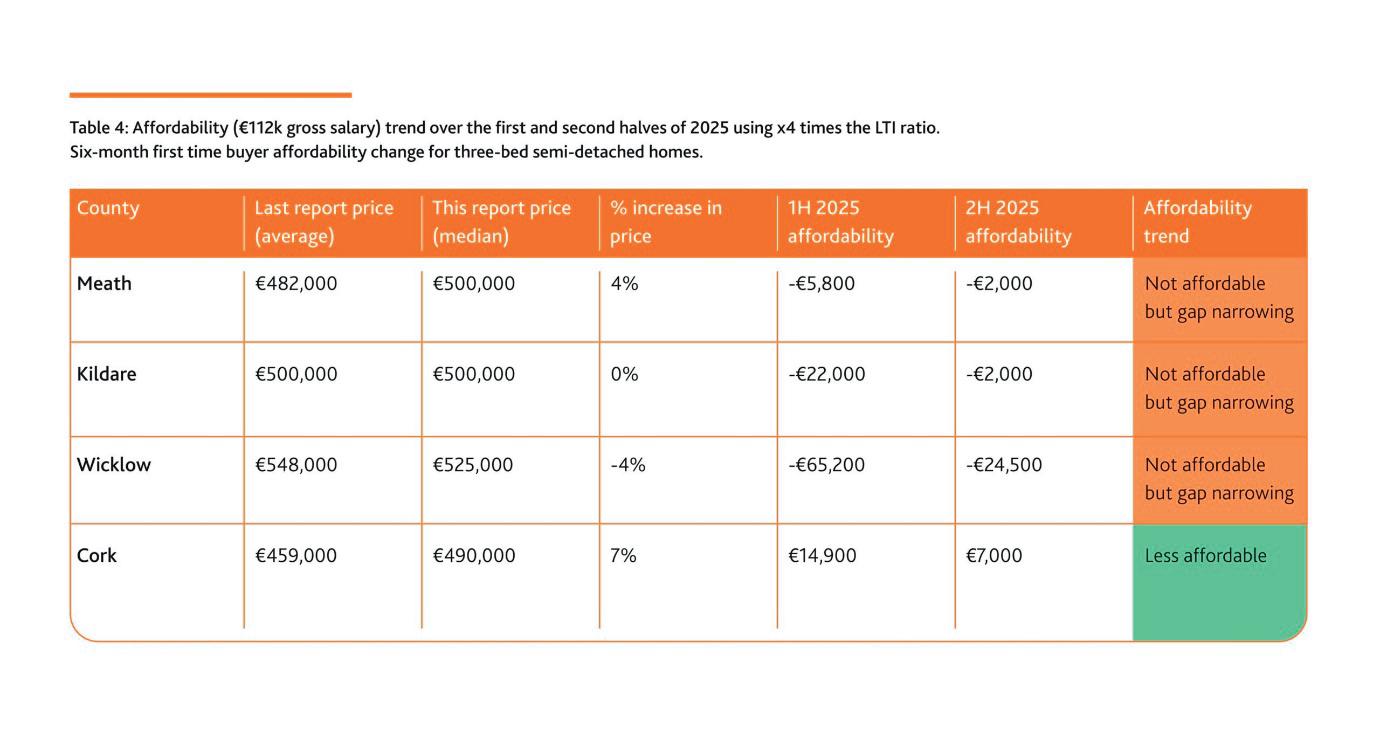
• In the report, the affordability analysis looks at a couple earning €112K and the challenges they face
• The scenarios show the couple could afford a 3-bed semi in Cork, while the affordability gap in Kildare and Meath is €2,000
• However, in Wicklow, they would face a shortfall of €24K
• In the rental sector, 86% of agents expect more landlords to leave the market due to the extension of Rent Pressure Zones nationwide. SCSI calling on the Government to pause new rental reforms
listed here are median purchase prices of 3 bed semi-detached homes based on new housing developments in the four counties analysed.
Gerard O’Toole, President of the SCSI said that while house prices look set to continue to rise, most agents expect the rate of increase to moderate.
‘Constrained supply is driving sustained house price growth and mounting affordability pressures for home buyers and renters,’ he said.
‘Those trends look set to continue through 2026 and beyond.
‘Seventy-two per-cent of agents reported low stock levels, and while this is down slightly on last year, the lack of supply is clearly one of the main factors influencing expectations around house price movements.
‘Indeed, when asked what they thought was the primary driver of price increases, almost six out of ten respondents (58%) said it was the level of homes being built.
Challenge
‘Clearly low levels of new housing stock continue to challenge efforts to meet both pent-up and ongoing accommodation demands.
‘In that context, the confirmation by the CSO recently that over 36,000 new homes were completed in 2025, an increase of over 20% on the 2024 figure, is positive news.
‘We believe the increase shows the effectiveness of Government measures to improve viability, such as Croí
TENDER PRICES REPORT
A new report by the Society of Chartered Surveyors Ireland (SCSI) shows that commercial construction costs are now rising at the lowest rate in five years.
Increased
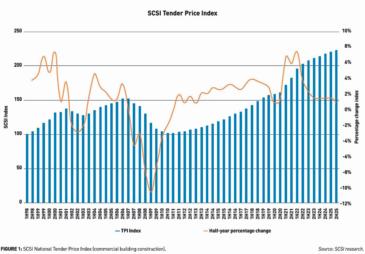
The latest Tender Price Index (TPI) published by the SCSI shows the rate of commercial construction inflation increased nationally by 1% in the second half of 2025, down from 1.5% in the first six months.
According to the SCSI’s Tender Price Index, (TPI) which is the only independent assessment of commercial construction tender prices in Ireland, the annual median rate of inflation for 2025 was 2.5% nationally, the lowest TPI increase recorded since 2020 when it was 2.2%.
The relative stability of the TPI index over the last three years is also reflected in modest variations across the regions over the last six months with the highest median rate of inflation of 1.8% recorded in Connacht / Ulster, in Munster the figure was 1.5% while in Leinster and Dublin tender prices were static, 0% inflation.
Connacht / Ulster also had the highest annual increase at 3.8%, with Munster on 3.5%, Dublin on 1% and Leinster (Excl. Dublin) on 0.5%.
As can be seen from the survey of tender price changes, regional variations can occur.
Combination
The SCSI says this can be for a combination of reasons, from differing activity levels to availability of resources and/or a time lag in other factors.
Research for the latest edition of this sentiment survey, which is based on responses from chartered quantity surveyors from all around
Cónaithe and the VAT reduction on the sale of new apartments.
‘We expect these and other measures such as Help to Buy, Shared Equity and Cost Rental to deliver a greater volume of apartment units this year and next.’
According to the report the other main factors, which agents believe are influencing price movements include: changes in the state of the economy
the country, working on commercial projects, was conducted in January 2026.
Vice President of the SCSI, Tomás Kelly said the ongoing price stability was positive for the construction sector.
‘The outlook of chartered quantity surveyors is that tender prices will continue on their current stable trajectory and that after a number of years of disruption caused by covid and the Ukraine war, the last three years has seen a stabilisation and a return to “business as usual”.
‘This presents opportunities for Government investment in a strong market and active labour force.
Uncertainty
‘Of course, geopolitical uncertainty has been highlighted as an area which needs to be monitored as it has the potential to cause a slowdown in foreign direct investment, especially from US investors.
‘Notwithstanding this, the outlook
(17%), the availability of schemes designed to support potential house purchasers (14%), changes made by banks, for example to interest rates and the availability of credit (6%) and changes in the levels of immigration and emigration (5%).
Affordability scenarios
With property prices nationally having
is positive for activity levels given the strong capital programme.
‘These figures illustrate the dramatic changes we have experienced with commercial construction inflation over the last four years.
‘In the first six months of 2022 inflation reached a record high of 7.5%, while the annual rate of inflation that year was 11.5%.
‘The respective figures now are 1% and 2.5%, which is most welcome.
Cycle
‘According to our survey, almost 6 out of 10 respondents believe that the current market is in mid-upswing or at peak in material prices, while 2 out of 10 believe the market is currently operating in an early downswing or at the bottom of the cycle.
‘Among surveyors 69% anticipate tender prices will increase for the first half of 2026, with 25% anticipating prices staying the same and 6% anticipating a decrease.’
increased by 172%* from their low point in early 2013, the SCSI included a range of scenarios for a couple earning a combined income of €112,000** and availing of the Help to Buy scheme towards their 10% deposit in its latest report.
The scenarios, demonstrate the affordability gap, if any, which exists between the total mortgage
Construction Tender Prices 1998 – 2025
LIE OF THE LAND
purchase limit available to a couple on average incomes looking to buy their first home and median new house purchase prices in four different locations.
The scenarios included new threebedroom semi-detached, threebedroom terraced and Two-bedroom terraced homes.
The analysis revealed that while all house types in some locations in Cork were affordable for this FTB couple, the three-bed semi-detached was unaffordable in the locations examined in Wicklow, Kildare and Meath.
Margin
While the margin of unaffordability was comparatively low for this house type in Meath and Kildare at €2,000, in Wicklow the figure was €24,000.
As well as Cork, the median value of the two-bed terraced and three-bed terraced houses were affordable in Kildare and Meath.
In Wicklow, the only house type the couple would be able to afford is the two-bed terrace, with a funding gap of
€2,000 for the three-bed terrace home priced at €500k.
While Dublin is not included in the scenarios, based on house prices in the capital, it’s clear they are not affordable based on the income thresholds within the study.
Scale
Gerard O’Toole, who is a Westportbased estate agent, says the scenarios show the scale of the challenge facing couples on good salaries, particularly those seeking to purchase 3-bedroom semidetached homes.
‘House prices are rising faster than household incomes and the widening gap between market prices and purchasing capacity is very much borne out in these affordability scenarios.
‘According to the CSO, the median age of home buyers in Ireland has risen from about 35 in 2010 to around 40 in 2024, reflecting a significant trend towards older first-time and overall purchasers.
‘This will have wider societal consequences including the fact that
couples are not starting families until much later.
Recent
‘Despite recent improvements, Government scheme ceilings for the First Home Scheme and Help to Buy, which cap eligibility at €500,000, while helpful for some first-time buyers, are still misaligned with market values in high-demand areas.
‘We would call on the Government to review those ceilings on a more regular basis to ensure their effectiveness.
‘Of course, while our couple will find it very challenging to purchase a suitable home, others on lower income will struggle to purchase a home in the private market and will hope to qualify for either social or affordable housing.
Ramping up
‘In the long term, the only way to moderate and gradually lower the affordability gap is by ramping up the supply of new homes while doing everything possible to drive down the delivery costs of new homes.’
Safe construction and the electricity network A safety message from ESB Networks
Electricity is essential to Ireland’s economy and everyday life. It is so integral to modern living that we often take it for granted.
Electricity is delivered across Ireland using both overhead wires and underground cables.
Powerful and versatile
It’s a powerful and versatile source of energy but can be dangerous unless we use safe systems and procedures.
Where safety procedures haven’t been followed, and where construction work has taken place too close to the electricity network, serious accidents have occurred.
Sadly, this has included fatalities.
Always stay safe
Claire Mulholland, Public Safety Manager at ESB Networks, is committed to reminding all construction workers to always stay safe and stay clear of all electricity wires and cables.
AVOIDANCE OF ELECTRICAL HAZARDS WHEN WORKING NEAR OVERHEAD ELECTRICITY WIRES
The instantaneous power of electricity is such that any accidental contact with live overhead wires, or coming too close to the
wires, will cause serious injury – and can even prove fatal.
The key to avoiding such accidents is to first take account of the safety implications of overhead wires and then plan to carry out work safely and without incident.
Working directly beneath or close to overhead electricity lines is extremely hazardous and requires that contractors put special controls in place to ensure they never unintentionally breach the Safe Exclusion Zone, this includes requesting ESB Networks to switch out the electricity lines for the duration of the work.
Code of Practice
For more information refer to the ESB Networks Code of Practice For Avoiding Danger from Overhead Electricity Lines.
AVOIDANCE OF ELECTRICAL HAZARDS WHEN WORKING NEAR UNDERGROUND ELECTRICITY CABLES
It is important to always take the essential safety precautions before carrying out digging work, as there often will be buried electricity cables close by.
It is never safe to disturb or handle electricity cables.
Before you start digging:
• Contact ESB Networks’ ‘Dial Before You Dig’ service and obtain the relevant, up-to-date cable maps: dig@ esb.ie or 1800 372 757
• Complete a Risk Assessment Method Statement (RAMS).
• Remember that service cables and public lighting cables may not be shown on the map. Always assume that there are more buried cables present than you have located.
• Look out for any indication of other services such as gas, water, etc.
• Ensure a Cable Avoidance Tool is used by a competent operator to locate all services.
• Mark the positions of the cables using waterproof crayon, chalk or paint and ensure it is visible to the machine operator.
IN THE EVENT OF EMERGENCY, CONTACT ESB NETWORKS IMMEDIATELY ON 1800 372 999.
Remember to always Stay Safe, Stay Clear of Electricity wires and cables.
ESB Networks, delivering the electricity network for everyone’s clean electric future.
‘A critical time for new homes market’
A Hooke & MacDonald Perspective
We are currently at a critical stage in the evolution of the new homes market in Ireland.
Demand is at an all-time high, particularly from first time buyers, resulting from bulging demographics and a thriving economy.
On the other hand, supply is increasing, but not at a pace that will match government targets or homebuyer needs.
The building industry is playing its part by acquiring multiple sites, seeking planning permissions in a difficult environment, producing superb quality well designed energy-efficient new homes developments and creating vibrant new communities throughout the country.
Hugely significant
The new entity tasked with driving a revolution in the provision of vital infrastructure is hugely significant and forms the basis for a very positive outlook for the new homes sector over the next four to five years.
One downside is the continuing lack of viability for apartment construction.
The Croí Cónaithe (Cities) Scheme is welcome and provides a boost for qualifying first time buyers and other owner occupiers.
However, other incentives are needed to bridge the viability gap for the apartment sector to thrive.
Encouraging
It is encouraging to see some signs of international capital re-examining the Living Sector as this is the key to increasing supply and moderating rents.
The Help to Buy Scheme, the First Home Scheme, the Affordable Purchase Scheme are providing invaluable support for aspiring home buyers.
Notable trends relating to home buyer considerations when deciding where to buy a new home include proximity to schools and childcare, parking space provision, affordability.
The reduction in hybrid working by banks and other organisations is putting an increased emphasis on public transport proximity and service.
and will continue is sales being achieved off plans before they are built, usually with the benefit of a show unit or a well-equipped marketing suite.
Technology is set to play an increasing part in the new homes market with AI and video enhancements, also Modern Method of Construction advancements.
All in all, an exciting time ahead for the market and for homebuyers.
WINNER
IRISH AGENCY OF THE YEAR 2022, 2023, 2025 & 2026
HOOKE & MACDONALD
Hooke & MacDonald won this prestigious award for 2026 and for 3 previous years in recognition of the achievements of the company’s New Homes, Development Land, Investment & Commercial Teams as well as the Property Management, Lettings and Marketing Teams.
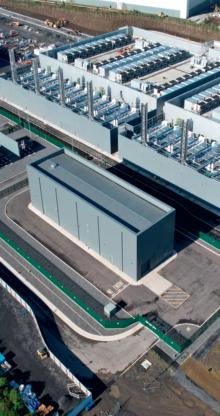
Dornan are at the forefront of Europe’s data centre transformation
Europe’s data centre sector continues to expand at remarkable speed, despite growing regulatory scrutiny and pressure on energy and land use. Reshaping
Hyperscale growth, AI driven workloads and ongoing cloud consolidation are reshaping the continent’s digital infrastructure needs.
For the Mechanical & Electrical (M&E) industry, this has created one of the most complex and opportunityrich environments.
Dornan group an M&E specialist headquartered in Cork, sits at the centre of this momentum.
With more than 14 years of experience delivering missioncritical infrastructure across Europe, the company has built a strong reputation for technical capability, disciplined execution and a workforce equipped for the stringent demands of hyperscale environments.
A changing market with intensifying demands
Europe’s data centre landscape is undergoing a structural shift.
Clients increasingly expect M&E partners who can deliver technically robust systems while integrating sustainability, power optimisation, modular construction and predictive maintenance technologies.
Delivery models are becoming more data driven, with engineering and construction now progressing in parallel to meet accelerated schedules.
A major evolution in Dornan’s strategy is its transition into a General Contractor (GC2) role.
As data centre projects grow in scale and complexity, technology clients seek partners capable of integrating M&E systems with civil, structural and architectural elements under unified leadership.
Dornan’s move into GC2 reflects this demand and reinforces its position as a trusted partner for next generation data centre delivery.
Engineering depth and digital integration
Dornan’s technical strength is built on its core Mechanical, Electrical and
Instrumentation capabilities, supported by extensive inhouse Engineering and BIM teams.
With over 200 engineers and 38 BIM specialists, the company offers design assist and design and build support, advanced MEP coordination, constructability assessment and full digital model integration.
To enhance certainty and repeatability, Dornan has also expanded its offsite modular fabrication programme.
DFMA facilities in Coventry (UK), Groningen (Netherlands) and Mons (Belgium) allow the company to engineer, assemble and quality control prefabricated modules prior to installation.
This approach strengthens programme reliability and aligns with the complexity of major European data centre builds.
Throughout Europe, Dornan’s delivery model is guided by its three core absolutes: Safety, Quality and Schedule.
These standards are embedded through consistent procedures, digital oversight tools and a robust engineering led culture.
And when these three absolutes are met, then adherence to budget is a certainty.
People as a strategic advantage
A critical factor in Dornan’s success is its investment in skilled labour and
integrated project teams.
With specialist M&E resources in short supply across Europe, the company’s ability to deploy experienced personnel across multiple countries is a key differentiator.
Structured training, knowledge sharing and internal development programmes help maintain consistent performance on complex, fast paced projects.
Continental expansion and strategic growth
As the European market accelerates into 2026, Dornan is scaling its operations to meet sustained hyperscale demand and support its shift toward full-service delivery.
With a 2025 turnover exceeding €1.2 billion, and data centres accounting for 75% of activity, the company has firmly positioned itself among Europe’s leading providers in the advanced technology and critical infrastructure space.
Dornan now operates in Ireland, the UK, the Netherlands, Sweden, Denmark, Belgium, Germany, Switzerland and, increasingly, Spain. Spain’s fast-growing digital infrastructure market offers access to a developing technical workforce and proximity to emerging data clusters.
More than 90% of Dornan’s revenue comes from repeat clients, many of whom request the company to replicate its performance in new regions.
DC Project Netherlands
SPOTLIGHT ON COLLEN
Collen Construction – A decade of BIM, digital construction, and innovation
For more than two centuries, Collen Construction has been one of Ireland’s most respected contractors, recognised for construction excellence and a commitment to client service.
This tradition of quality, combined with a willingness to adopt progressive methods, has shaped a decade of transformation in BIM, digital construction, and information driven delivery.
What began as early experimentation has grown into a structured, multinational digital ecosystem that now underpins how Collen delivers projects across Ireland and Europe.
Foundations
Collen’s formal digital journey began in 2015 with the appointment of a BIM specialist and the creation of a dedicated department.
Early work focused on reshaping tenders using Archicad and Navisworks, translating complex design intent into clear visual narratives and build strategies.
Linking models to MS Project enabled Collen’s first 4D animation, modest compared to current outputs, yet transformative for client understanding and planning.
Tools like 4Projects and Fieldview connected office and site through structured inspection and quality workflows.
More than forty digitally supported bids reflected increasing demand and readiness across the business.
In 2016, the UK Level 2 BIM
mandate prompted Collen to formalise procedures and templates.
Model based phasing at Kildare Village improved communication of work zones and logistics, while construction stage BIM was trialled on the Gateway project.
Early asset modelling and point cloud as built surveys demonstrated how digital verification could reduce ambiguity and accelerate decisions.
Another forty digitally enabled bids reinforced digital planning as the new standard.
Integration
By 2017, BIM had evolved further for Collen. On the Scots Church project, we delivered openBIM at scale, federating Revit, Archicad, Tekla, and other models through IFC so disciplines could work in native tools while maintaining integrated decision making.
Navisworks coordination identified clashes and constructability risks long before site works began.
Point cloud scanning was deployed during construction for the first time, enabling reality to model comparisons that informed corrective actions.
DUB09 marked a new level of digital maturity, with a mandated digital model handover that pushed Collen to address information structure, accuracy, and completeness beyond coordination needs alone.
In 2018, Collen introduced its first comprehensive BIM Execution Plans, clarifying responsibilities, protocols, and information drops.
Viewpoint became the project CDE, providing a controlled and auditable environment for drawings and models.
Major tenders for DAA Terminal 1 and 2 included detailed Employer’s Information Requirements, while GVX01 introduced BIMForum aligned LOD expectations. Collen responded by tightening modelling standards.
Scale
In 2019, internal coordination capacity increased with the addition of a BIM Coordinator, and T2 evolved into a fully collaborative BIM project on site.
The handover of DUB09 became Collen’s first complete BIM deliverable meeting client requirements.
Expansion into the Nordics followed, with a Sweden based BIM Coordinator appointed as GVX01 advanced. BIM 360 Docs and BIM 360 Glue supported cloud based model sharing, issue tracking, coordinated reviews, and transparent workflows.
GVX21 further reinforced client trust in Collen’s digital capability.
In 2020, Collen broadened its European reach with GVX02 in Sweden and FRA1B1 in Germany.
A structured laser scanning review process was formalised on GVX01, embedding ‘model versus reality’ checks into decision making. Projects with defined BIM outputs, including DAA T1, T2, GVX01, and GVX21, supported team growth to five and
facilitated the successful handover of the DUB10 model.
This year also saw the appointment of a full time VDC animator to enhance the quality and speed of visual communication for bids and stakeholder engagement.
Expansion
In 2021, Collen delivered its first LOD 500 model, GVX01 in Sweden, demonstrating capability in producing operations ready digital assets.
Digital activity expanded in Denmark (CPH07) and across Ireland (WUXI, DUB84, Sidings).
Internal processes were standardised to ensure rapid replication of best practice. Synchro4D enhanced time linked planning, and investment in a Leica RTC scanner allowed Collen to take greater ownership of capture workflows.
Routine point cloud verification became standard within DAA delivery, while Unreal Engine and Twinmotion elevated the realism of VDC animations.
The team grew to ten, reflecting expanding digital commitments.
In 2022, the department was formally renamed ‘Digital Construction’, recognising its broader, data centric role.
New analytics initiatives – including Power BI dashboards – turned model and process data into actionable insights.
A Regional Digital Construction Manager was appointed in the Nordics, supporting continued growth.
Wins such as GVX22 in Sweden and DUB94, DUB94HV, DUB62HV, and DUB104 in Ireland extended Collen’s structured information delivery portfolio.
A second scanner and adoption of the Trimble X7 accelerated capture to verification cycles.
The Grange Power Project – Collen’s first major power scheme in Ireland –provided a new environment to apply digital field management and model led workflows.
Assurance
As project scale and complexity increased, assurance became a primary focus. In 2023, Collen achieved ISO 19650 2 certification via NSAI, solidifying alignment with industry standard information management practices.
Engagement with client mandated CDEs such as Procore and Autodesk Construction Cloud broadened Collen’s digital platform expertise.
Projects like ARN61, ARN62, GVX03, and GVX23 strengthened coordination workflows across regions.
A Trimble X9 scanner increased capture capacity, and site first digital tools were trialled on Grange Power to accelerate issue resolution.
In 2024, Collen secured GVX04, GVX24, and GVX05, and renewed ISO 19650 2 certification. Nordic digital leadership expanded with two Digital Construction Managers, and operations extended into the UK through LON1X2.
Adoption of Oculo.ai and Evercam introduced consistent periodic site capture routines, improving remote visibility of progress and context.
Nordic digital resources strengthened again with the support of external consultants, reflecting both workload scale and client confidence.
Data
By 2025, focus shifted more decisively toward data automation and governance. Automated Power BI dashboards were delivered for BIM issues and submittal/RFI tracking, enabling real time coordination insights.
Automated parametric export from federated models strengthened information validation workflows.
The team grew with the addition of the Digital Construction Implementation Manager and the development of a structured graduate and placement pipeline.
By Year end, the Digital Construction Team comprised of a strong team of 25 + supporting all operations in Ireland, Uk and Sweden.
In 2026, Collen strengthened its analytical foundation with a Data Analyst and a Digital Construction Developer.
This investment reflects a belief that competitive advantage lies in rapidly transforming project data, models, scans, issues, submittals, into decisions that reduce risk, compress programmes, and improve quality.
The focus is now shifting beyond coordination and verification toward predictive insight and proactive control.
We will continue to innovate in digital construction by embedding advanced technologies and data-driven processes into the core of how we plan, deliver, and operate our projects. By building on proven digital foundations and actively piloting emerging tools, we aim to improve quality, safety, and efficiency while enabling more informed decision making across the project lifecycle. Our focus remains on practical, scalable innovation that supports our teams, strengthens collaboration, and delivers measurable value for our clients and the wider business.
SPOTLIGHT ON COLLEN
Mark McGreevy
Mark McGreevy (FRICS, FCICES, MIoD) is the Chief Executive Officer of Collen, one of Ireland’s longest established and largest Tier 1 construction and engineering groups, delivering major projects across Ireland and Europe.
David Barron
David Barron is our Group Technical Director and is responsible for the Technical Team within the business comprising of MEP, Digital Construction, Planning, Design & Innovation. He is a keen advocate of digital construction innovation, supporting the use of technology to improve efficiency, quality, and project delivery for our teams and clients.
Ray Coote
Ray leads our Digital Construction department within the Business. Ray has helped guide our teams from the beginning of our digital journey and is continuously advancing digital construction innovation and embedding data-driven and collaborative technologies.
CIF International Women’s Day 2026 brings industry leaders together to champion inclusion, innovation and opportunity
The CIF hosted its International Women’s Day 2026 event on 6 March, at Johnstown House Estate, Enfield, Co. Meath.
The day brought together over 650 attendees in person, with hundreds more joining via livestream, for a landmark gathering focused on leadership, inclusion and the future of Ireland’s construction sector.
Held under the theme ‘Give to Gain’, the sold out event highlighted how investing in people, diversity and collaboration strengthens organisations and the industry as a whole.
The programme featured keynote addresses, expert panels and graduate voices, reflecting CIF’s commitment to meaningful progress at every level of construction.
Key strategic themes
Opening the event, Stephen McCarthy, President of the CIF, emphasised that progress in gender balance and inclusion requires shared responsibility and leadership across the sector.
He noted that the expertise and ambition represented at the event demonstrate what is possible when opportunity, respect and investment in talent are prioritised.
The event also featured participation from Peter Burke TD, Minister for Enterprise, Tourism and Employment, who joined industry leaders for the morning programme, reflecting the importance of collaboration between government and the construction sector in supporting inclusive growth and workforce development.
A central feature of the day was a series of panel discussions addressing key strategic themes shaping the industry.
Panel 1: Digital Adoption & Innovation, moderated by Denise Tuffy, Director of Specialist Contracting at CIF, examined how digital leadership and innovation are transforming construction delivery, with contributions from senior leaders across industry and enterprise.
Panel 2: ESG – More Than Carbon
OUT & ABOUT
Inclusive, resilient and positioned to deliver International Women’s Day 2026 forms part of CIF’s wider commitment to advancing diversity, leadership development and opportunity across the construction industry, supporting a workforce that is inclusive, resilient and positioned to deliver for communities nationwide.
Management, moderated by PJ Ryan, Head of ESG at CIF, explored the broader environmental, social and governance responsibilities facing construction organisations, highlighting the need to embed sustainability and social value into core business strategy.
Panel 3: A Day in My Boots –Apprentice Graduate Panel, moderated by Sean Downey, Director of Safety, Education and Training at CIF. Graduate engineers, assistant site managers and early career professionals shared first hand experiences of entering and building careers in construction, offering inspiration to students and future entrants tuning in via livestream.
Panel 4: The Inclusion Exchange –Why Investing in Others Strengthens Us All, moderated by Laura O’Donovan, Head of Business Development at the Irish Centre for Diversity. The discussion focused on how inclusive leadership, equality and investment in people drive stronger organisations and more sustainable industry outcomes.
Reinforced Closing the event, Andrew Brownlee, Chief Executive Officer of the CIF, reinforced that inclusion is central to the industry’s ability to meet Ireland’s housing, infrastructure and climate challenges.
He highlighted the importance of diverse leadership, apprenticeships, digitalisation and partnerships in shaping a construction sector that reflects modern Ireland and is fit for the future.
Sponsors
Sincere thanks was given to the Diamond and Platinum Sponsors of International Women’s Day 2026, whose support was instrumental in delivering another sold out event.
‘Their continued commitment enables CIF to provide a platform that brings industry leaders, early career professionals and future talent together to share experiences, drive innovation and advance meaningful
progress on inclusion across the construction sector.
‘Their support reflects a shared belief that investing in people strengthens organisations and the industry as a whole.’
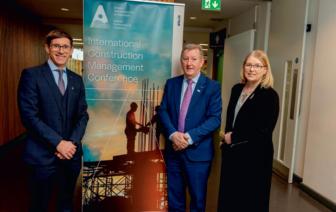
Atlantic Technological University (ATU) welcomed construction professionals, students and industry leaders to its Sligo campus on Thursday, 5 March 2026, for the 15th ATU Construction Management Conference, hosted by ATU’s School of the Built Environment.
Construction sector leaders gather in Sligo to discuss the future of industry
The event is the largest construction gathering in the West and North-West of Ireland.
More than 150 delegates attended the one-day conference, which brought together experts from across the construction sector to discuss key issues shaping the industry, including housing delivery, innovation, and skills development.
The event was attended by Seán Canney, Minister of State for International and Road Transport, Logistics, Rail and Ports, who joined delegates and speakers in highlighting the importance of collaboration between education and industry in addressing Ireland’s infrastructure and construction needs.
The conference provided an important forum for engagement between industry, academia and students, with presentations and discussions focused on current challenges, emerging technologies and opportunities within the sector.
Opportunities
The event also featured industry stands and networking opportunities, allowing organisations to connect directly with students.
Dr Trevor McSharry, Head of the School of the Built Environment at ATU, said:
‘The Construction Management Conference continues to be an important opportunity to bring industry and academia together to discuss the challenges and opportunities facing the sector.
‘Events like this help ensure our students graduate with the knowledge, skills and industry connections needed to contribute to Ireland’s construction and infrastructure ambitions.’
Patrick Sweeney, Business Development and Account Coordinator for the School of the Built
Dr Trevor McSharry, Head of the School of the Built Environment at ATU, Seán Canney, Minister of State for International and Road Transport, Logistics, Rail and Ports, and Professor Jacqueline McCormack, VP for EDI and Online & Flexible Learning at ATU.
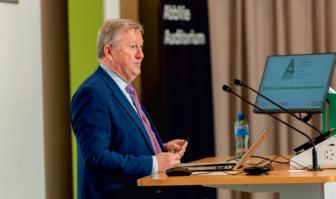
Seán Canney, Minister of State for International and Road Transport, Logistics, Rail and Ports, addressing delegates and sharing insights on opportunities within the construction sector.
OUT & ABOUT
Environment at ATU, said:
‘It was fantastic to see such strong engagement from across the construction sector, with professionals, students and researchers all contributing to the conversation.
‘The continued growth of the conference reflects the strength of the construction industry in the region and the value of collaboration between education and industry.’
Welcomed ATU also welcomed the continued support of conference sponsors, the Chartered Institute of Architectural Technologists (CIAT), the Chartered Institute of Building (CIOB), the Construction Industry Federation (CIF), and the Society of Chartered Surveyors Ireland (SCSI).
‘It was fantastic to see such strong engagement from across the construction sector.’
Patrick Sweeney, Business Development and Account Coordinator for the School of the Built Environment at ATU
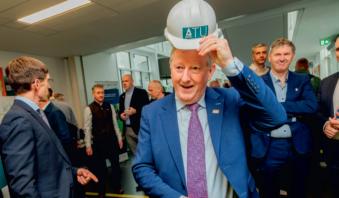
Seán Canney, Minister of State for International and Road Transport, Logistics, Rail and Ports, engaging with students and delegates at the 15th ATU Construction Management Conference.
THANK YOU for putting the Construction Professional centre stage!
Here at Construction Management Ireland we know we couldn’t do it without you - without our contributors, without our readers, without those who support us with advertising. We also know that sometimes these descriptions are not mutually exclusive – that our supporters can exist in one or more – or even in all three of these at the same time. How does this a ect our approach? Simple. We keep the professional and professionality centre stage. It’s our common ground. It’s what unites us.
At CMi we don’t go in for unnecessary jargon, we don’t like to over-use buzzwords and, as a rule we’re not ones for slogans. But we do like to say:
If it’s of interest to the Irish Construction Professional then it’s of interest to ‘Construction Management Ireland’.
A Leading Provider of Integrated Modular Solutions
At Jones Engineering Manufacturing Ltd., our mission is to drive the transformation of the construction industry through Modern Methods of Construction (MMC). Our purpose-built manufacturing facility established in 2019, is a 15,000m 2 production site with a multi-discipline specialist team bringing a change towards a more efficient process for our customers; allowing our Clients to maximise the potential of their project under one roof from Design through to Off-Site
Manufacture & Assembly. Our multidisciplinary team consistently deliver high-quality "Product Modules" for clients based on the simple ideal of "plug and play"; whereby they have taken a Client's basis of design to fully tested and commissioned CE/ UKCA Marked products ready for site infrastructure integration.
We serve sectors including Data Centres, Biotech, Life Sciences, Food & Beverage, Energy, and Infrastructure.
Methods of Construction (MMC)
Jo�es [,
PERSONAL & FINANCE
Jeff Haden speaks this time out, of resilience, and more besides! Possessing – or more important, finding – the ability to push through adversity and failure and stick to their long-term passions and goals is often what allows ‘ordinary’ people to accomplish extraordinary things, he writes.
Science says resilient people live longer (and happier) lives
Plus: two ways to be more resilient, starting today.
No plan is ever foolproof. No road is ever straight. Nothing worthwhile is ever easy.
Effectively
That’s why success requires the ability to deal effectively with roadblocks, setbacks, and failure.
That’s why Steve Jobs felt perseverance was a crucial component in entrepreneurial success.
According to Jobs:
I’m convinced that about half of what separates successful entrepreneurs from the non-successful ones is pure perseverance.
It is so hard. You pour so much of your life into this thing. There are such rough moments … that most people give up. I don’t blame them. It’s really tough.
Push through
Possessing – or more important, finding – the ability to push through adversity and failure and stick to their long-term passions and goals is often what allows ‘ordinary’ people to accomplish extraordinary things.
The person who wins is often the person who refuses to give up, especially on themselves.
And is also often the person who lives a longer, more meaningful life.
According to a study published in BMJ Mental Health, people with high levels of mental resilience (calmness, determination and perseverance, self-reliance, and the belief that some experiences have to be faced alone) reduced their risk of death from all causes by 53 percent.
As the researchers write: Various factors, including but not
limited to meaning in life, positive emotions, self-rated health and satisfaction with social support, have been identified as potential influences on psychological resilience.
Triggering these positive emotions may enhance the protective effects of psychological resilience and mitigate the negative impact of accumulated adversity on mental health in adults.
Granted, mental resilience may sound a little hard to define. Think of it like an underlying premise of Stoicism:
While you can’t control everything that happens to you, you can control how you respond.
In this case, ‘maintaining a positive self-perception of aging has a considerable effect on functional health, and optimism independently protects against all-cause mortality’.
That aligns nicely with a Proceedings of the National Academy of Sciences study that found people with ‘high optimism’ were almost twice as likely to live to be at least 85 years old, even after taking into account factors like health and socioeconomic status.
Tenuous
There is one catch, though. If you’re in poor health or have an unhealthy lifestyle, the link between mental resilience and longevity is more tenuous.
Ultimately, individual longevity comes down to a number of factors, chief among them diet, exercise, and sleep habits.
(To go a little deeper, check out a leading physician’s Rule of Six Plus Two.)
Makes sense. Mind over matter only goes so far. But it does make a difference. As the BMJ Mental Health researchers write:
This nationally representative study demonstrates an independent association between higher levels of psychological resilience and reduced all-cause mortality.
The findings underscore the potential effectiveness of interventions aimed at promoting psychological resilience in order to mitigate mortality risks.
Review
So how can you become more resilient? In a review of over 50 studies published in Clinical Psychology Review, researchers sought to understand the different ways people adjusted over time to traumatic events and major life stressors.
Here are the four:
• Resilience: maintaining healthy functioning despite a stressful event
• Recovery: experiencing initial distress, then recovering over time
• Chronic stress: experiencing, and continuing to experience, distress over time
• Delayed onset: experiencing distress at some point after a stressful event
• Resilience and recovery sound great. Chronic stress and delayed onset, less so, but here’s the thing:
• Delayed onset was relatively rare, only occurring 9 percent of the time.
• Chronic stress was also relatively rare, occurring in only 11 percent of cases.
• Recovery was somewhat more common, occurring in 21 percent of cases.
• Resilience? Despite a traumatic
event or stressor, 66 percent of the time people maintained healthy functioning.
Response
As Adam Grant says: ‘The most common response to adversity is not chronic stress. It’s resilience’.
Responding resiliently depends partly on how you frame a stressful event.
A study published in the Journal of Experimental Psychology found that when people viewed their stress response – their body’s natural response to stress, like increased heart and respiration rate – as helpful, their blood pressure didn’t rise.
They still felt stressed, but in a good way: They saw their stress response as their body’s way of rising to the challenge.
Reframe
Responding resiliently can also depend on how (and whether) you reframe a stressful event.
A study published in the Journal of Pain found that some people use what the researchers call adaptive coping strategies, seeing stress or trauma not as something happening to them, but as something they chose.
(Start a small business, and yes, you did choose to undergo a certain amount of pain.)
Others fall prey to maladaptive coping strategies, like feeling scared by physical or emotional discomfort, or seeing a certain level of stress as a clear signal to stop.
Consequences
And sometimes people do both, with disastrous consequences.
In the Journal of Pain study, a single occurrence of a maladaptive coping strategy tripled the chances a participant would quit.
(Anyone who’s one weak moment
triggered an avalanche of doubt and negativity can surely relate.)
Bottom line? Seeing stress or trauma as inevitable can help you stay the course. Reframing stress or trauma as something you chose can also help you stay the course.
Innate
Best of all, the way you perceive and respond to stress or trauma may feel innate, but it can also be learned.
The key is to take a mental step back so you can make your emotions work for you, not against you.
Framing stress as something you chose helps create a sense of agency and control.
So does reframing stress as a chance to work through a difficult problem, and learn and grow from the experience.
Science
Sound like hocus-pocus? Science says it’s not.
A study published in the Journal of Neuroscience found that your brain actually thrives when you need to – or more to the point, choose to – work hard to overcome a challenge.
And you’ll also be happier, in spite of stress or trauma.
A study published in the Journal of Personality and Social Psychology found that autonomy, defined as ‘the feeling that your life, its activities and habits, are self-chosen and selfendorsed’ is the biggest contributor to happiness.
As the researchers write:
Having a strong sense of controlling one’s life is a more dependable predictor of positive feelings of well-being than any of the objective conditions of life we have considered.
The next time you plan to do something difficult, take a moment to frame the situation.
Remember that it will be hard, that
it will be challenging, that you might fail … but that you chose to make the effort.
Step back
And the next time something happens that makes you feel anxious or stressed, take a step back and reframe the situation.
See stress as a signal you have the opportunity to rise to a challenge, to show what you’re really made of … and if nothing else, to learn something, especially about yourself, you otherwise might never have discovered.
Granted, you’ll never be able to totally control your emotions. But you can better control how you manage your emotions.
Which is all that really matters.
Help people
Instead of trying to develop a cuttingedge product, consider finding ways to help people be more mentally resilient.
Maybe you’ll find ways to help people use exercise – one study found that every minute of exercise can add five minutes to your life – as a tool to also increase mental resilience.
Maybe you’ll find ways to help people use cold plunges – which apparently provide a number of benefits, although research showing ice baths increase lifespan is scant – to improve how they respond to stress and adversity.
More likely, you’ll come up with another (better) idea.
Improve
And in the meantime, if you find ways to improve your own mental resilience and be more optimistic, science says you’re likely to live a longer, healthier, and happier life.
Can’t beat that.
This time out the CCPC writes on the topic of scams. Whether online or otherwise this is a topic that will be familiar to readers both in business and private life!
Scams – a constant threat
A scam is a dishonest scheme or plan designed to con you out of your money.
Scammers increasingly use technology to catch people off guard, attempting to access bank accounts, card details, PINs and other sensitive information.
Online scams are becoming increasingly sophisticated with technology like AI making it harder to spot what’s genuine and what’s not.
Fake online shops
Recently, there’s been an increase in the number of ads on social media posing as Irish shops selling online. The ads could appear as ‘sponsored’ posts on your social media feed, which means that they’ve been paid for. This can make the shop seem more genuine.
There are red flags to watch out for that could mean an ad you’re looking at is a scam:
• The ad is offering huge discounts (‘up to 80% off’)
• The name of the shop suggests it’s Irish owned and based, but you might not have heard of it before.
• The ad promotes a sad back story such as a family business closing down after many years.
• The ad promotes urgent action (‘sale ends today!’)
• The website/social media account was set up recently
• Reviews on the site are all five star
How to spot a scam shop
On social media. Never click on an ad on social media. If you’re unsure if an ad you spot on social media is legitimate, always check the business’s
profile to see if it looks like a wellestablished business.
The ‘About’ information on their profile should tell you when the page was set up and where it’s based.
Look to see how many followers the account has, and if other details are provided such as a website, phone number or address.
On a website. You might see that a website has a .ie address and assume that that means it was set up in Ireland, but that’s not always the case.
Registration of a .ie address normally requires proof of an Irish connection, but scammers can still spoof Irish identity or mislead consumers.
Under consumer law, a business operating in the EU must provide contact details, so check for a physical address, phone number and email.
You can check Google Maps to see if
the business is where it says it is.
Look up independent review sites to see what others are saying about the business such as Trustpilot.
Know your rights
When you buy online from companies based in the EU, you are protected by strong consumer protection laws.
These laws also apply to businesses that are based outside the EU if they’re actively advertising their products to EU consumers, but it can take longer and be more complicated to resolve issues.
‘If you think you have been scammed online, contact your bank or card issuer immediately as they may need to freeze your card or account.’
Advice from the CCPC
There are many ways scammers will target people but no matter how, remember the following golden rules: Stop. Do not give out your personal information or details if you’re unsure who you’re talking to.
Scammers will pretend to be from businesses or companies you know and trust.
Whenever you see a message calling for immediate action, that is your sign to pause.
Think. Ask yourself, could this contact be fake? Has your bank or energy provider contacted you like this before? If something sounds too good to be true it usually is.
Don’t click on online links or attachments, particularly if you don’t know the sender.
Trust your instinct – if you feel uneasy about something, check first.
Check. If you’ve received a verbal or written communication that you’re uneasy about, contact your bank or the organisation the person contacting you claims to be from.
Only use an official phone number or email address you trust and have verified independently.
For example, you can call your bank by using the number on the back of your bank card or on your bank statement and check directly with them.
Scam University
Last year, the CCPC launched Scam University – a free online course dedicated to the most current types of scams, helping consumers to stay safe and outsmart scam operators.
The course of short videos covers topics such as fake online shops, phishing, rental scams and more. Check it out at scamuniversity.ie
If you think you’ve been scammed
If you think you have been scammed online, contact your bank or card issuer immediately as they may need to freeze your card or account.
You may also be able to request a chargeback for the disputed transaction depending on how your bank’s chargeback scheme works.
A chargeback is when your card provider – usually your bank – agrees to reverse a disputed transaction.
Unlikely
However, if you paid by bank transfer or instant payment, you are unlikely to get your money back.
You should also contact your local Garda station to report the issue as they are responsible for pursuing scam operators.
Expansion of Electrical Craft Apprenticeship to ATU marks major boost for National Skills pipeline
Atlantic Technological University (ATU) has formally launched the expansion of the Electrical Craft Apprenticeship to its Mayo campus in Castlebar, a development that will see four additional training blocks delivered annually and capacity increased by 192 apprentices each year.
Initiative
The initiative represents a strengthening of Ireland’s national apprenticeship infrastructure at a time of sustained growth in demand for skilled electrical workers.
The expansion responds directly to rising apprentice registrations, as highlighted by SOLAS, and to employer demand across the construction and electrical sectors.
Electrical craft skills are central to the delivery of the National Development Plan, including housing targets, major infrastructure projects, climate action commitments and the national energy transition.
Welcomed Minister of State for Further and Higher Education, Research, Innovation and Science, Marian Harkin, welcomed the development,‘In 2023 significant funding of €17.04 million was approved by my Department for the Higher Education Apprenticeship Expansion Programme.
‘This funding included almost €8.2 million to ATU, which was disbursed in 2024, with €1.345 million allocated to the Castlebar Electrical Apprenticeship Expansion.
‘I want to thank ATU for your commitment and belief in the apprenticeship programme and for insuring we have this expansion in apprenticeship training.
‘Most importantly it reflects our shared commitment that every learner has the chance to build a rewarding career and that every community can benefit from the skills that those learners will accrue.’
Committed
ATU President Dr Orla Flynn said the University is committed to meeting national and regional skills needs:
‘The expansion of the Electrical Craft Apprenticeship to our Mayo campus is a significant step in strengthening regional access to high-quality apprenticeship education.
‘ATU is proud to play a leading role in expanding high-demand apprenticeships right across our region, ensuring that apprentices can progress through their training in a supportive learning environment.’
Strategic
Professor Graham Heaslip, Dean of the Faculty of Engineering and Computing at ATU, highlighted the strategic importance of the investment:
‘This additional capacity at our Mayo campus allows us to respond directly to growing learner and employer demand, while supporting national priorities in skills development, infrastructure delivery and climate action.
‘The recent establishment of a new School of Apprenticeships in ATU is further evidence of our strategic approach to this important activity, where we have also seen growth across our Letterkenny, Killybegs, Sligo, Connemara and Galway campuses.’
Strengthening
Head of campus at ATU Mayo, Dr Justin Kerr added, ‘With Ireland’s demand for electricians projected to grow in line with major infrastructure and climate commitments, the launch at ATU marks a significant step in strengthening the country’s future skills pipeline.
‘The initiative aligns with Government policy to place apprenticeships at the heart of Ireland’s education and training system, as outlined in the Action Plan for Apprenticeship.
‘It also reflects skills priorities identified by SOLAS and supports the workforce requirements of the National Development Plan.
Benefit
‘Employers across the region are expected to benefit from improved access to training places, while current and prospective apprentices will gain greater flexibility and reduced waiting times.
‘The Department of Further and Higher Education, Research, Innovation and Science described the expansion as a “practical and targeted response” to both immediate training pressures and long-term national workforce needs.’
Standing L-R: Kiera Keogh TD; Dr James Boyle, Head of the Department of Engineering Apprenticeships at ATU; Dr Justin Kerr, Head of campus, ATU Mayo; Professor Graham Heaslip, Dean of Faculty of Engineering and Computing, ATU; Dr Billy Bennet, Registrar and Chief Academic Officer, ATU; Tom Grady, Chief Executive of MSLETB; Henry McGarvey, VP with responsibility for Estates and Capital Planning, Information Technology, Health & Safety, Insurance and Corporate Procurement; Kevin Higgins, Buildings and Estates, ATU; David Lee Buildings and Estates Manager, ATU; Eoin Bradley, Head of Capital Development, ATU. Seated L-R: Dr Orla Flynn, President of ATU; Minister of State for Further and Higher Education, Research, Innovation and Science, Marian Harkin TD.
ATU Apprentice, Callum Loftus with ATU President, Dr Orla Flynn and Minister of State for Further and Higher Education, Research, Innovation and Science, Marian Harkin TD at the official launch of the expansion of the Electrical Craft Apprenticeship to its Mayo campus in Castlebar. Callum is completing his apprenticeship with Tim Kelly Group in Ballinrobe, Co Mayo.
First cohort of civil engineering apprentices graduates from ATU
Atlantic Technological University (ATU) celebrated a significant milestone with the graduation of the first cohort of Civil Engineering Apprentices, marking a new chapter in the development of Ireland’s next generation of engineering professionals.
Designed
A total of six apprentices completed the Higher Certificate in Civil Engineering by Apprenticeship, a programme designed to meet the growing demand for skilled engineers in the construction and infrastructure sectors across the region.
Four of these six are furthering their studies by progressing on to the Level 7 BEng in Civil Engineering by apprenticeship.
Launched in September 2022, the Civil Engineering Apprenticeship combines on-the-job training with academic study, allowing apprentices
to earn while they learn.
Projects
Throughout the programme, apprentices have been involved in a range of real-world engineering projects, from infrastructure design and surveying to sustainable construction and specialist supply, while gaining valuable experience with industry-leading employers.
Partner companies supporting the programme include Punch Consulting Engineers, Shay Murtagh Precast Ltd, Coolsivna Construction Ltd and TG Lenihan and Co., who work closely with ATU to ensure apprentices gain the practical skills and technical knowledge needed to thrive in the industry.
One of the graduates, Brian McNamara from Co Clare, shared how the apprenticeship transformed his career path: ‘The Civil Engineering Apprenticeship
TRAINING & CAREERS
has been a fantastic experience, and I’ve learned so much already, both technically and professionally.
‘The combination of work and study has given me real confidence in my career choice, and I would recommend it to anyone considering a similar path.’
Shared
Another Graduate, Vidmantas Kulevicius, originally from Lithuania also shared his experiences:
‘I moved to Ireland seven years ago at 23 and I have worked with Shay Murtagh since that time.
‘The programme is intense, but the practical knowledge gained is invaluable. Being part of a new initiative has been exciting, and I can see this apprenticeship growing in popularity in the near future.’
Achievement
Dr Trevor McSharry, Head of School of Building and Civil Engineering at ATU, reflected on the achievement, saying: ‘The success of this first graduating cohort reflects the strong partnership between ATU and the regional engineering sector.
‘The Civil Engineering Apprenticeship is already having a significant impact across Ireland, developing work-ready graduates who are helping to address skills shortages, support sustainable development, and strengthen local construction and infrastructure projects.’
L-R Back row: Prof Graham Heaslip, Dean Faculty of Engineering and Computing at ATU; Dr Orla Flynn, ATU President; Dr Trevor McSharry, Head of School of Building and Civil Engineering at ATU; Dr Emma Britton, Director of Civil Engineering Apprenticeship; Dr Ruth Quinn, Head of Department of Civil Engineering and Construction; Dr Billy Bennet, Registrar and Chief Academic Officer at ATU.
Front row graduates: Vidmantas Kulevicius; Brian McNamara; Arvydas Serapinas; Oisin Gilligan and Dale Fitzgerald. (One graduate unable to make it – Daniel Murphy)
L-R
Minister Lawless marks the commencement of works on the new Library, IT and Education Building at Atlantic Technological University’s (ATU) Letterkenny campus
Minister for Further and Higher Education, Research, Innovation and Science, James Lawless TD, turned the sod to mark the commencement of construction on the new Library, IT and Education Building at Atlantic Technological University’s (ATU) Letterkenny campus.
Delivery
The building involves the delivery of a new build of approximately 5,100m2 and it will consist of a library and various learning resource spaces, general and specialised teaching spaces, ICT laboratories, administration space and ancillary space.
In conjunction with decanted space elsewhere on campus, the new building will increase capacity of ATU at Letterkenny by circa 600 students.
Speaking from the Letterkenny ATU site, Minister Lawless said:
‘Today marks a major milestone in our commitment to strengthening Ireland’s higher education infrastructure.
‘The new Library, IT and Education Building at ATU’s Letterkenny campus is not just an investment in facilities, it is an investment in people, in opportunity, and in the future of the Northwest.
‘It reflects the Government’s belief in the transformative role of Technological Universities in driving regional development, supporting local talent, and powering economic growth.
Future-proof
‘With space for six hundred additional students, this building will help future-proof graduate career prospects and reinforce Ireland’s knowledge economy for years to come.
‘I have seen the impact of phase one of the PPP programme, world-class facilities that have elevated learning environments across the country. This project builds on that success, delivering modern, high-quality
Minister for Further and Higher Education, Research, Innovation and Science, James Lawless TD, with ATU President Dr Orla Flynn, turns the sod to mark the commencement of construction on the new Library, IT and Education Building at Atlantic Technological University’s (ATU) Letterkenny campus. The 5,100m² development will expand learning and teaching facilities and increase campus capacity by approximately 600 students.
infrastructure that will empower students and staff, and ensure ATU Letterkenny continues to thrive.’
Demonstrates
Dr Orla Flynn, President of ATU said: ‘This project demonstrates strong government commitment to enhancing educational opportunity and supporting regional growth across the Northwest.
‘The new Library, IT and Education Building will create a vibrant hub for teaching, learning, and research within a space designed to inspire creativity, collaboration, and innovation.
‘This facility will help us improve our engagement with students and staff,
while also deepening our connections with local industry and community partners.
‘The start of construction marks an important step in the continued development of our Letterkenny campus in Donegal as well as ATU’s commitment to the region with further developments taking place in other campuses.
Recognises
‘This project is being delivered under Project Ireland 2040 which recognises that investment in education is central to achieving a strong, future-proofed economy, balanced across the regions. This project is expected to reach completion in Q3 2027.’
TRAINING & CAREERS
This time out we have a range of courses from TU Dublin, a leader in construction education.
Paths to success at TU Dublin
TU415 - MSC IN APPLIED BUILDING INFORMATION MODELLING AND MANAGEMENT ( PART-TIME)
TU460- MSC IN APPLIED BUILDING INFORMATION MODELLING AND MANAGEMENT (FULL-TIME)
Programme overview
The MSc in applied Building Information Modelling and Management is a one-year full-time or two-year part-time Level 9 programme designed to upskill Built Environment and Engineering professionals in collaborative BIM practices across the full project lifecycle.
It provides flexible exit awards and develops advanced capability in digital construction, multidisciplinary coordination, federated model processes, and sustainable design workflows.
The programme emphasises project-based learning, critical thinking, and industry-aligned competencies, concluding with a capstone focused on innovation and applied BIM leadership.
Industry relevance
BIM adoption in Ireland is rapidly expanding, with public-sector requirements extending to all projects over €1 million by 2028.
National skills reports highlight shortages in BIM Managers and Coordinators, now listed on the Critical Skills Occupation List.
The programme directly addresses industry needs linked to digital transformation, improved productivity, lean processes, and modern methods of construction, preparing graduates to support compliant information management and sustainable digital delivery.
The programme is accredited by the Chartered Institute of Building (CIOB).
Career outcomes
Graduates progress into high-demand roles such as BIM Manager, BIM Coordinator/Technician, Digital Construction Specialist, and Information Manager.
Skills gained include model federation, clash detection, structured data workflows, energy modelling, automation, and integrated cost and scheduling analysis.
Growing global demand for digital and sustainable construction practices strengthens career pathways across architecture, engineering, and construction sectors.
TU Dublin strengths
TU Dublin is a national leader in Digital Construction, offering specialist staff, BIM and surveying laboratories, high-performance computing, and access to industry-standard platforms including Autodesk, Solibri, IES, MagiCad, Revizto, etc.
Delivery is supported through Brightspace, problem-based learning, and strong industry engagement,
ensuring research-informed and practice-relevant education.
TU209 - MSC IN GEOSPATIAL ENGINEERING AND DATA MANAGEMENT (FULL AND PARTTIME)
Programme overview
The MSc in Geospatial Engineering and Data Management is a flexible conversion programme delivered full-time over one year or part-time
TRAINING & CAREERS
over two years.
It supports graduates from Built Environment, Engineering, Geography, and Computing disciplines who wish to develop advanced geospatial expertise.
Year 1 introduces core surveying, spatial data handling, and geospatial principles, while Year 2 builds on these to explore big-data analytics, advanced data-management workflows, and applied geospatial techniques.
Learning is practice-driven and culminates in an industry-focused Capstone project.
Accredited by SCSI and CICES, the programme provides access to modern surveying instruments, specialist geospatial software, and spatial data laboratories, ensuring graduates develop robust analytical and technical capabilities.
Industry relevance
The geospatial sector plays a critical national role, supporting government systems and delivering economic, societal, and environmental value.
Geospatial engineering underpins surveying, mapping, geodesy, remote sensing, BIM, and GIS, enabling evidence-based decision-making across urban planning, environmental monitoring, agriculture, digital twins, telecommunications, and transport.
Career outcomes
Professionals skilled in measuring, analysing, managing, and visualising spatial data are in high demand.
Graduates progress into roles across urban planning, environmental analysis, built-environment data management, transport, agriculture, and telecommunications, where accurate geospatial insights are essential for effective decision-making.
TU Dublin strengths
TU Dublin provides recognised expertise in geospatial science, measurement technologies, and digital-construction research. Students benefit from strong industry engagement, modern surveying equipment, ArcGIS Pro access, and purpose-built spatial data labs.
TU268 - MSC IN GEOGRAPHIC INFORMATION SCIENCE (GIS) (FULL-TIME)
TU220 - MSC IN GEOGRAPHIC INFORMATION SCIENCE (GIS) PART-TIME)
Programme overview
The MSc in Geographic Information Science is a one-year full-time or two-year part-time conversion programme designed to develop advanced capability in GIS technologies, spatial data management, cartography, remote sensing, geospatial programming, and web-based mapping systems.
Aimed at graduates or practitioners seeking to strengthen geospatial expertise, the programme provides an intensive, interdisciplinary learning environment within TU Dublin’s Spatial Information Sciences group.
It builds strong foundations in spatial databases, geocomputation, and analytical workflows, aligning course content with current and emerging needs across the global geospatial industry.
Industry relevance
GIS is a critical tool across governance, commerce, environmental management, planning, and global decision-making.
The sector is experiencing rapid growth, increasing demand for professionals skilled in spatial analysis, modelling, geocomputation, and data-driven geospatial applications.
The programme directly addresses key workforce needs, such as database management, programming, and web GIS development — skills recognised as high priorities in Ireland and internationally.
Career outcomes
Graduates progress into roles including GIS Analyst, Spatial Data Scientist,
Geospatial Developer, Cartographer, Remote Sensing Specialist, Spatial Modelling Analyst, Environmental Consultant, Town Planner, and GIS Officer.
A strong grounding in programming, databases, remote sensing, and spatial analysis equips graduates for work in government agencies, planning bodies, environmental organisations, and global industries that rely on geospatial intelligence. Employment rates are high, with most securing roles before graduation.
TU Dublin strengths
TU Dublin provides long-established expertise in geospatial sciences, supported by strong industry links, small cohorts, research-active staff, and modern spatial laboratories.
The curriculum integrates advanced GIS technologies, applied project work, and interdisciplinary collaboration, ensuring academic rigour and direct industry relevance.
The BSc in Construction Site Management (TU030) is a three-year, part-time Level 7 programme delivered through blended learning.
Each academic year comprises 60 ECTS, including 40 ECTS of taught modules and 20 ECTS of structured Work-Based Learning (WBL).
It is designed for construction professionals seeking to develop
the practical and managerial competencies required to operate construction sites.
Key areas include planning, coordination, health and safety, communication, quality control, and contract administration.
The blended structure supports full-time workers, enabling them to apply learning directly to live project environments.
Industry relevance
Construction site management is vital for ensuring projects are delivered safely, efficiently, and to specification.
The programme aligns with industry needs by focusing on project planning, commercial awareness, time and quality management, stakeholder communication, and compliance with safety standards.
As Ireland’s construction sector continues to grow, skilled site managers capable of coordinating multidisciplinary teams and managing complex workflows remain in strong demand.
The inclusion of structured WBL strengthens industry-driven upskilling and supports employer needs.
Career outcomes
Graduates progress to roles such as Construction Site Manager, Assistant Site Manager, Project Supervisor (Construction Stage), Site Engineer (experience-dependent), Planner, or Contracts Coordinator.
Embedded work experience enhances practical capability and supports advancement across contracting firms, consultancies, subcontractors, and client
organisations.
Demand for competent site management professionals spans commercial, residential, industrial, and infrastructure sectors nationwide.
TU Dublin strengths
TU Dublin brings an extensive heritage in construction education, supported by strong industry partnerships and experienced academic staff.
The blended delivery model, combined with WBL, ensures students gain real-world insight while developing technical and managerial skills.
Facilities at the Bolton Street campus reinforce professional growth and industry-aligned learning.
The MSc in Construction Project Management (TU420) is a two-year, part-time Level 9 programme delivered in a blended online and on-campus format at Bolton Street.
Students complete 90 ECTS: 35 ECTS of taught modules in Year 1 and 30 taught ECTS plus a 25-ECTS capstone project in Year 2.
The programme develops advanced capability in planning, commercial management, time and quality control, contract administration, stakeholder communication, and safety management.
TRAINING & CAREERS
It aims to produce technically proficient, industry-ready graduates prepared to operate within an increasingly complex construction environment.
The programme is professionally accredited by the Society of Chartered Surveyors Ireland (SCSI)
Industry relevance
Construction project management requires integrated skills in budgeting, scheduling, risk, procurement, contract management, and quality assurance.
TU420 aligns these competencies with industry needs, preparing graduates to lead multidisciplinary teams throughout project delivery. Its SCSI accreditation and School-based APC guidance provide clear professional pathways, supporting learners seeking chartership
Career outcomes
Graduates are equipped for roles including Project Manager, Construction Manager, Contracts/ Commercial Manager, Project Controls Specialist, Scheduler, or Client-side PM.
The programme’s emphasis on leadership, risk management, research, financial control, and project planning enables learners to progress toward senior-level responsibility, supported by structured chartership pathways.
TU Dublin strengths
Delivered by the School of Surveying and Construction Innovation, TU420 benefits from TU Dublin’s strong construction education heritage, blended delivery suited to working professionals, and close engagement with industry and professional bodies.
Ursula von der Leyen, the President of the European Commission in her State of the Union address asserts that housing availability and affordability is Europe’s defining social and economic issue.
It is certainly Ireland’s defining social and economic issue.
We are a successful economy. €260billion in exports in 2025. Yet our housing crisis remains unresolved.
Solution
The construction industry can meet this challenge. There is a solution, but it requires the government to adopt policy changes and to be determined to deliver.
Housing demand requires 44,000 new homes per year. Completions will not meet this target for several years.
More importantly and frighteningly, these targets do not acknowledge the growing backlog of 250,000 units, impacting over 600,000 people.
These are people forced to live in cramped conditions or with parents. They must postpone major life decisions; some leave Ireland, and 17000 are homeless.
Balance
A recent Department of Finance’s report highlights that housing will not come into balance, (meaning supply addressing the backlog and meeting the annual demand) before 2040.
Concerningly, the Department of Finance acknowledged that the estimate was based on a low backlog figure.
The actual date is more likely 2045. This is unacceptable.
Deliver
What is missed in the current housing plan is that we can deliver homes in significant numbers where existing infrastructure already exists, namely in our towns and cities. This is also where the demand lies.
We can make major in-roads into the backlog over the next decade if, in addition to new builds, we drive adaptive reuse of existing vacant buildings. Unlike new builds these premises;
• are not dependent new infrastructure.
• can be brought back in a short space of time.
• will bring vibrancy and safety to towns and cities.
• reduce our carbon footprint
Reduces
Optimising building density in established areas also reduces longterm costs to the exchequer, while contributing to the development of high-quality neighbourhoods.
Towns and cities are where many want to live.
If we fail to bring vibrancy back, we leave a generation stranded without a home or handcuffed to a life of long commutes.
The European Affordable Housing Plan recommends that national authorities adopt policies that prioritise conversion over new construction in the bid to increase the affordable housing stock and contribute to community regeneration.
The EU Commission provides guidance and references numerous examples throughout Europe including an example from Springville in Cork where offices were successfully converted to social and affordable
housing at a substantially lower cost than would have been the case for a new build.
Highest
The latest Geo Directory vacancy rate shows we have the highest commercial vacancy rate since surveys began
The evidence is clear. We must embrace this opportunity.
There are in excess of 170,000 vacant buildings throughout the country and more than 100,000 under-used ‘above the shop’ spaces.
Whilst there are schemes in place to encourage the conversion of the ‘above the shop’ and vacant buildings, the schemes are insufficient.
Actions
The Vacant to Vibrant Building Alliance proposes 4 priority actions to accelerate adaptive reuse.
Implementing these actions will generate between €24 and €30 billion in the construction sector over the next decade.
Launch of VVBA recommendations. (Back Row L-R): Shirley Coulter, CEO of SCSI; Nick Taaffe, Respond Housing Association; Alison Gilliland, European Climate Pact Ambassador; Tom Gilligan, Director of Services Mayo County Council; Kathryn Meghen, CEO RIAI (Front Row L-R) Fiona Craven, Dublin City Council; Philip Lee VVBA Chair; Marion Jammet, Director of Policy and Advocacy at Irish Green Building Council (IGBC).
Shirley Coulter, CEO of SCSI and Alison Gilliland, European Climate Pact Ambassador, reading VVBA recommendations.
Priority actions
1. The first proposal is to fund the establishment of multi-disciplinary teams in the housing sections of local authorities, allowing them lead by example and support owners wishing to adapt properties.
With the right resources, projects can be bundled, supporting at scale the rejuvenation of towns and cities across the country.
This is consistent with EU Commission guidance on ‘one stop shop’ initiatives to assist renovation and adaptive reuse.
We have seen precisely this approach succeed in Limerick, Mayo and Waterford.
Limerick sought to reuse derelict and vacant properties using its CPO powers. In 2021, Limerick alone accounted for 80% of all local authority CPOs that year.
2 . Remove unhelpful restrictions which deny access to the ‘vacant homes’ grants to small businesses.
These properties are often owned by small companies, perhaps your local convenience shop or hairdresser.
While progress has been made to adjust the grant so that it is proportionate to the number of units being provided, this needs to be finetuned – it makes no sense that a building that can provide 5 residential units is capped at the same level as a building that can only provide one.
When we launched our proposals last year, we sought a feasibility grant for above the shop conversions. We recognise the €5k feasibility grant as a welcome start.
However, it should be adjusted upwards to acknowledge the lack of expertise of property owners to establish both
About the vacant to vibrant building alliance (VVBA)
VVBA is a cross-sectoral forum bringing together all key stakeholders to tackle vacancy, dereliction, and under-used buildings in Irish towns and cities. It is a collaboration of business, civic, and built environment leaders and experts set-up in 2024 to create evidence-based solutions that make renovating these units affordable, viable, and accessible, and in doing so, ensure the delivery of residential properties at speed and in the right locations
the financial costs, project scope, design options, risk, and funding sources.
3. This is vital. Incentivise building reuse by providing tax relief on the income owners will receive if the home is rented out or sold.
The EU Commission advises national authorities to expand financial incentives such as tax credits to overcome the initial cost barriers associated with conversion projects.
There is no lost income to the state. These buildings have lain vacant for decades. They will not be converted without more effective financial incentives.
We need homes today – not in ten years. We propose targeted tax relief based on the principle of use it or lose it.
In addition, this timebound approach will generate income for the state at the end of the tax-free period, while also generating a pension fund for the owners.
With one stroke we are solving numerous problems.
4. Finally, building and planning regulations must be reviewed to facilitate a greater use of these units.
Requirements on disability access and fire safety must be adapted in a proportionate, reasonable and practicable way.
Other EU Member States have pragmatically overcome similar hurdles. This again is specifically called for in EU Commission guidance.
Tackling these issues is a question of social justice. We have a moral duty to provide homes today and to reduce carbon emissions.
Our generation does not have the right to deprive the next generation of suitable housing and opportunities.
The capacity crisis in both water and electricity infrastructure means that housing targets won’t be met in the next ten years.
By scaling up the adaptive reuse of vacant and underused buildings for housing we can create a robust parallel housing delivery pillar that is more sustainable, more cost effective and speedier than a business-as-usual scenario.
Some progress has been made. Recent government decisions to continue, extend and increase the vacant property refurbishment grants help.
However, it is not enough. Adopting all four proposals is essential to unlock the enormous potential.
It remains the only hope for the hundreds of thousands of young people looking to make a proper life and family in Ireland.
Philip Lee Chair Vacant to Vibrant Building Alliance
Philip Lee
Easily handle the most extreme loads with Combilift!
Combilift, the material-handling specialist, offers safe and spacesaving solutions for handling the most extreme loads!
The Irish manufacturer has an extensive range of products, including multidirectional forklifts, straddle carriers, and mobile gantries, with load capacities ranging from 1 tonne to over 150 tonnes.
As a leader in innovative handling solutions, Combilift has exported over 90,000 machines to 85 countries. Their equipment is highly regarded for its robust design and long operational life, even in challenging applications and diverse weather conditions.
Handling oversized loads
Among Combilift’s heavy lifting equipment are the Combi-SC (Straddle Carrier) and the Combi-MG (Mobile Gantry), both capable of lifting and manoeuvring extremely large and awkward loads.
These machines are designed to tackle the challenges of lifting and moving heavy, oversized products within production facilities, warehouses, yards, or ports, particularly in industries such as concrete, steel, modular construction, and offshore wind, among others.
A significant advantage of the Combi-SC is its much lighter unladen weight compared to other pieces of heavy-duty handling equipment.
This enables operation on poor and semi-rough terrain, avoiding the need for costly investment in ground resurfacing or improvement.
Further benefits are low fuel consumption, 3-wheel manoeuvrability and excellent allround operator visibility for models fitted with a driver’s cab.
Significant Sustainability is a top priority for everyone.
A significant advantage of the SC
product range is its light footprint, making them extremely fuel-efficient. Additionally, their large punctureproof flotation tyres greatly reduce ground pressure, allowing them to operate on all floor conditions, including poor and semi-rough terrains.
This, in turn, eliminates the need for ground resurfacing.
The ability to optimise storage capacity and avoid costly ground resurfacing reduces both the physical and carbon footprint of a site while eliminating the need for unnecessary greenfield expansion, and its associated costs.
Multidirectional forklifts to handle long loads
The Combilift C-Series range of multidirectional forklifts has load capacities of up to 25 tonnes.
These forklifts are designed for safe, space-saving, and efficient handling of long and bulky products in confined
COMBILIFT
UNLOCK EVERY INCH OF
spaces.
Robust and built to last, the C-Series operates as ‘three forklifts in one’, replacing multiple types of trucks, which significantly reduces the fleet size required and eliminates time-consuming double handling, improving your workflow.
In line with the growing demand for electric-powered equipment, Combilift continues to expand its now extensive range of electric forklifts.
The multidirectional Combi-CB70E is the latest addition to the range. With a 7t lifting capacity, it is the most compact counterbalance forklift in the market of its capacity.
Visit Combilift.com to discover how to optimise your space and enhance the sustainability and safety of your material handling operations, regardless of the load size!
Ireland’s semiconductor industry and its role in global fab design and build
Semiconductors are the foundation of the modern digital economy, powering everything from smartphones and artificial intelligence to electric vehicles and advanced medical devices.
As global demand for chips continues to rise, countries around the world are seeking to strengthen their semiconductor ecosystems.
In this context, Ireland has emerged as one of Europe’s most dynamic and strategically important semiconductor hubs.
With a mature ecosystem spanning design, manufacturing, research and construction, Ireland offers significant value to the global semiconductor industry – particularly in the areas of fabrication facility (fab) design and build.
The strength of Ireland’s semiconductor sector will be highlighted at the Semiconductors Ireland 2026 conference, taking place on 26 May at the Johnstown Estate, where industry leaders will gather to recognise Ireland as a global leader in semiconductor manufacture, design and build.
A strong and expanding semiconductor ecosystem
Ireland’s semiconductor industry has developed steadily over several decades, supported by strong foreign direct investment, skilled talent and a collaborative research environment.
Today, the country hosts a large cluster of multinational companies, indigenous innovators and research institutions that collectively form one of Europe’s most comprehensive semiconductor ecosystems.
Ireland is home to more than 130 semiconductor-related companies employing around 20,000 people, with annual exports worth approximately €13.5 billion.
The sector has deep roots, with more than 50 years of development in semiconductor technology and manufacturing.
The industry spans the full value chain – from chip design and electronic design automation (EDA) to advanced manufacturing, packaging and research. Major global companies have established significant operations in Ireland.
Ireland also hosts three of the world’s leading electronic design automation
providers.
This combination of manufacturing, design capability and software expertise positions Ireland as a unique contributor to the global semiconductor industry.
Global investment and advanced manufacturing
One of the most visible indicators of Ireland’s importance in semiconductor manufacturing is the scale of international investment in the sector.
Over the past decade, multinational companies have committed billions of euros to expanding operations across the country.
Ireland hosts 15 of the world’s top 30 semiconductor companies, reinforcing its status as a global technology hub.
Ireland’s strength in Fab Design and Construction
While chip manufacturing often attracts the most attention, the design and construction of semiconductor fabrication facilities – known as fabs –is equally critical to the industry.
These facilities are among the most complex and technically demanding industrial buildings in the world, requiring specialised engineering, cleanroom environments, precision mechanical systems and advanced environmental controls.
Ireland has developed a strong reputation in this field.
The country’s engineering and construction sector has accumulated decades of experience delivering high-specification facilities for multinational technology companies. This expertise spans:
• Cleanroom design and validation
• Advanced process utilities and ultra-pure water systems
• High-precision mechanical and electrical infrastructure
• Modular and accelerated construction methods
• Environmental and sustainability engineering
As a result, Ireland is widely regarded as possessing one of the most advanced semiconductor construction and engineering capabilities in Europe.
The ability to design and build fabs quickly and efficiently is becoming increasingly important as global semiconductor demand accelerates.
Large fabs can cost tens of billions of euros and require thousands of engineers and specialists to construct. Ireland’s integrated ecosystem – combining engineering firms, construction specialists, equipment suppliers and experienced project managers – makes it an ideal location for such projects.
Research, innovation and talent
Ireland’s semiconductor success is also driven by strong research and innovation capabilities.
Universities and research centres across the country collaborate closely with industry partners to develop next-generation technologies.
A key institution in this ecosystem is the Tyndall National Institute, located in Cork. Tyndall is one of Europe’s leading semiconductor research centres and works closely with global organisations such as IMEC, CEA Leti, and Fraunhofer Society.
Visit: www.semicon.ie
PRODUCTS & SERVICES: CARHARTT
Spring comfort and style on siteCarhartt’s hoodie range
As coats start to feel like overkill, Carhartt’s hoodie range is a warm, hard-wearing alternative designed for those in-between conditions, giving tradespeople layers that work hard on site and stay comfortable once the day winds down.
For those who build up heat quickly, the Carhartt Force™ Logo Sweatshirt (107064) offers lightweight warmth with FastDry™ technology.
Regulate
This hoody is designed to wick sweat away from the body and dry quickly, helping regulate temperature during active work.
It comes in a relaxed fit for easy movement and layering with a bold chest logo for a clean, work-ready look. Available colours include asphalt, black, teal and cobblestone.
If you prefer the flexibility of a zip, the Marquette Full-Zip Sweatshirt (K122) has got you covered.
Made from a midweight cotton blend fleece, it’s warm without being heavy.
The loose fit allows for easy movement and two front handwarmer pockets keep hands warm and small essentials safe. It’s a straightforward layer that works equally well on site or off.
About Carhartt
Bolder
For a bolder look, the Marquette Shamrock Sweatshirt (107278) has a kangaroo pocket and Carhartt logo with shamrocks across the chest.
It comes in a loose fit and midweight feel so it’s well suited to spring days when a coat feels unnecessary but a standard sweatshirt isn’t quite enough.
For women in the trades, Carhartt’s Clarksburg Logo Sweatshirt (102791) is a heavier option that still works for layering.
Made from Clarksburg fleece and brushed on the inside for added softness, it is warm enough to rival a lightweight jacket.
Carhartt is a global premium workwear brand with a rich heritage of developing durable products for workers on and off the job.
Founded
Founded in 1889 in Detroit, Michigan, USA, for over 130 years, Carhartt has been known for its rugged construction, innovative designs, exceptional quality standards, sturdiness and comfort.
Carhartt workwear has become a legend among skilled craftsmen and artisans.
The Carhartt legacy brand was established in 1889 when Hamilton Carhartt & Company was founded by its namesake (known affectionately as ‘Ham’) and began producing overalls with two sewing machines and a half horsepower electric motor in a small Detroit loft.
Under the motto: ‘Honest value for an honest dollar’, the iconic Carhartt bib overall was created and rapidly evolved into the standard for quality workwear.
Standard Carhartt set a new standard of performance and
Zip-up
The Clarksburg Full-Zip Sweatshirt (102788) brings the same heavyweight fleece but in a zip-up style.
Offering the soft feel of a favourite hoodie with the warmth and toughness expected on site, it includes a kangaroo pocket for cold hands and relaxed sizing to allow layers underneath.
As the weather shifts and outerwear starts to feel excessive, hoodies and sweatshirts become a key part of the workwear line-up. Built to handle tough work while keeping weight and bulk down, Carhartt’s range offers tradespeople a reliable middle ground for spring.
continues to meet the evolving needs of hardworking people by weather-proofing its product line to provide the 24/7, year-round solutions they need in the rugged outdoors.
Carhartt is proud to help and protect hard working men and women in sectors such as construction, engineering, industry, transport and manufacturing, including farmers and outdoor enthusiasts.
Since 2000, the brand has been brought to workers in Europe from Carhartt EMEA (Europe, Middle East, and Africa) in Amsterdam. From there, the company distributes and manages all its business in more than 20 countries in Europe.
Worldwide, Carhartt employs more than 3,000 hardworking people.
Ranges
The Carhartt workwear ranges from tough and comfortable work trousers, rugged and durable work jackets as well as stain wicking and odour fighting work t-shirts and certified safety shoes and work boots.
NEXT GENERATION
- Designed for the Irish and UK Climate
- Innovative Technology
- Exceptional Performance
- Ultra-Low Noise Levels
- Outputs from 4kW – 16kW
Early-stage heating system design for performance
Delivering compliant, highperforming residential developments begins long before first fix at the concept and pre-construction stage.
For contractors and project managers, early-stage heating system design plays a critical role in protecting programme timelines and safeguarding project budgets.
When heating strategy is finalised too late in the process, it can lead to redesign, emitter resizing, and procurement delays.
By contrast, structured system design carried out early on provides clarity across project teams and supports smoother delivery on site.
Further strengthened Long established within Ireland’s home heating sector, Grant has further strengthened its support for main contractors, consultants and design teams by investing in advanced digital design software to enhance its free-ofcharge Heating Design & Specification Service for new-build homes and multi-unit residential developments.
The service has been widely used across the industry for many years, valued for its detailed heat loss calculations, technical accuracy, regulatory awareness and practical, time saving approach.
The introduction of the upgraded software builds on this foundation, by enabling faster turnaround times, improved consistency across large-scale projects and clearer documentation for contractor review.
Enhanced
Using the enhanced digital platform, Grant’s technical specialists carry out in-depth room-by-room heat-loss calculations, detailed emitter sizing and complete pipework circuit layouts.
Automated calculation workflows reduce design time while annotated schematics and clear layout drawings provide project teams with structured specifications that can be reviewed, costed and integrated early within procurement programmes.
For low-energy, NZEB and Passive House standard homes, the system introduces advanced hydronic optimisation features, including automatic pipe sizing with flowrate and pressure-drop calculations, alongside built-in system balancing. These capabilities support greater installation accuracy and reduce commissioning complexity.
Key part
Installer-ready outputs form a key part of the service, including schematic drawings, underfloor heating layouts, pipe circuits and material schedules.
Standardised documentation improves communication between consultants, subcontractors and site teams supporting accurate first-fix installation.
The enhanced service continues to support compliance requirements, including the production of S.R. 50/MCS compliant heat-loss documentation, assisting contractors in demonstrating alignment with relevant building regulations and NZEB performance requirements while minimising late-stage design revisions.
Central to many new-build specifications is the award-winning Grant Aerona R290 air-to-water heat pump. Achieves A+++ ErP ratings, with SCOPs up to 4.88.
Ensure
The Aerona R290 heat pump is capable of 75°C flow temperature, however correct system design will ensure that a lower more efficient flow
temperature is utilised.
With outputs ranging from 4kW–16kW, the Aerona R290 range offers flexibility across varied property sizes and types.
By combining enhanced digital design capability with structured technical support, Grant’s Heating Design & Specification Service helps to clarify strategy early on for project teams.
In supporting these teams, they can deliver compliant, efficient and futureready homes across Ireland.
To avail of Grant’s free Heating Design and Specification Service, send house plans to heatpump@grant.ie
More information
Visit www.grant.ie for more information on Grant’s range of innovative heating solutions. Follow Grant on Facebook @GrantIRL, Instagram @Grant_IRL and LinkedIn @GrantEngineeringULC. Subscribe to the Grant YouTube channel @ GrantEngineeringIE.
Think Heating. Think Grant.
Grant’s Heating Design & Specification Software.
PRODUCTS & SERVICES: SAFEGARD SYSTEMS
Leading the charge in fire safety innovation
Safegard Systems elevates fire and smoke control standards
In an era where fire safety standards are under intense scrutiny, Safegard Systems is redefining the approach to smoke and fire containment in buildings.
Respected
Operating out of Wicklow, Ireland, since 1994, Safegard Systems has carved out a respected niche in the HVAC industry, focusing on advanced smoke and fire damper control solutions tailored to complex ducted ventilation systems.
Today, the company is making headlines with its latest upgrade to the widely used V5 intelligent damper control system, a project undertaken in collaboration with consulting engineers, contractors, and as part of the Swegon Group.
This fifth-generation system delivers unparalleled flexibility, safety and cost-efficiency.
Attuned
Safegard Systems has always been attuned to the evolving needs of building owners, facilities managers and emergency services for precise, reliable and easy-tomaintain fire and smoke control systems.
The enhanced V5 system exemplifies this commitment by addressing critical shortcomings in fire alarm-controlled dampers, which often lack the strategic control needed in a real emergency.
While many basic systems default to shutting every damper in a building, the V5 empowers users with tailored control over individual dampers, allowing for fire compartmentalization, pressurization, and targeted smoke
extraction.
This precision provides clear escape routes and optimizes conditions for firefighting efforts.
Defining
A defining feature of the V5 system is its use of a solidstate embedded computer and two-core network cable, which not only increases reliability and ease of use but also minimizes wiring costs compared to traditional hard-wired systems.
Further setting it apart, the V5 integrates seamlessly with open protocol platforms, allowing it to link directly with Building Management Systems (BMS) via Modbus or BACnet.
This interoperability provides valuable lifecycle benefits, enabling smoother ongoing maintenance and simplified future upgrades as a building’s needs evolve.
The server architecture behind V5’s embedded panel computer, uninterruptible power supply (UPS) and pre-loaded software also reduces commissioning time and offers intuitive system diagnostics.
Enhanced
The enhanced control provided by the V5 system is accompanied by convenient features for regular testing and system health checks, which are essential for ongoing fire safety compliance.
Heat and smoke detectors can be integrated into the damper interface, enabling direct or remote damper control.
The system also allows automatic testing schedules and supports compliance with fire safety regulations.
As Joe Whyte, National Sales Manager at Safegard Systems, points out, the V5 solution embodies a sophisticated yet user-friendly approach that meets the growing demands in Ireland and beyond for advanced fire and smoke control.
Importance
Joe Whyte underscores the importance of balancing innovation with reliability in life safety systems:
‘It never makes sense to cut corners when it comes to fire safety,’ he stresses.
‘A purpose-designed system for life safety damper control provides peace of mind, and over the lifecycle of a building, it also delivers significant savings by reducing maintenance costs and improving system access.
’With the existing V5 system and our programme for continuous development, Safegard has set a new benchmark for fire safety in the HVAC industry, offering a robust, sophisticated, and cost-effective approach that aligns with modern building safety expectations'.
Leader
This latest innovation reaffirms Safegard Systems as a leader dedicated to securing the highest standards of fire protection and risk management.
Complete wetroom protection with Marmox
Waterproof floors, versatile basins, and practical storage for every wetroom
Creating a wetroom that stays dry, comfortable, and practical starts with the right base.
Marmox’s reworked Showerlay is designed to meet the demands of modern residential and commercial projects, delivering a fully waterproof floor with flexible drainage options and improved installation features.
Reworked from the surface down, the Showerlay includes a fleece that overhangs by 100mm, making tanking joints between floor and walls faster and more reliable.
Now trimable on all sides, each Showerlay can be cut by up to 100mm on site, allowing for easy adjustments to fit tight or unusual layouts.
Updated
The drain system has also been updated for convenience and style.
Drains now offer easy access for cleaning compared to older designs and are available in a wider variety of options, including point drains in the centre or offset positions and linear drains.
Both linear and point drains are now offered with coloured grates – black, white, copper, and gold – in addition to stainless steel, allowing designers to match the finish to the wetroom aesthetic.
The linear drain is also available in a tileable version, giving a seamless look when paired with floor tiles.
Improvements
Together, these improvements make Showerlays faster to install, simpler to finish, and more adaptable to both traditional and contemporary wetroom designs.
While the Showerlay forms the wetroom floor, Marmox Multiboards continue to provide a reliable waterproof and thermally insulated base for walls and floors.
Lightweight and easy to cut, Multiboards fit around plumbing, corners, or other wall features, making them ideal for renovations or new builds.
Their thermal properties help reduce condensation, maintain
warmth, and work seamlessly with underfloor heating to keep bathrooms comfortable and energy-efficient.
Complementing
Complementing both the Showerlay and Multiboards are Tileable Basins, designed for bespoke wetroom solutions.
Available in four versions – all sharing the same dimensions (770mm x 485mm x 100mm) and supplied with either a chrome or black bottle trap –they provide versatility in layout and design.
The Infinity version creates a seamless look with no visible drain, leaving just a thin line between tiles.
The Linear Drain version directs water to a discreet channel, while the Push Plug version functions like a traditional basin, allowing it to be filled with water.
The Flat version doubles as a shelf, either standalone, under another basin, or extending one of the other three, adding both practicality and style.
Possibilities
New Niche sizes further expand design possibilities, offering practical storage solutions that integrate neatly into wetroom walls.
They are available in 1200 x 400 x 150mm and 600 x 300 x 100mm, providing options for larger or smaller wall cavities and making it easy to create stylish shelving that complements the wetroom design. Together, the range of Showerlays, Multiboards, Tileable Basins, and Niche options provides a complete toolkit for creating wetrooms that are fully waterproof, easy to install, and visually clean.
Simple and reliable
Whether working on an ensuite, a luxury wetroom, or a full bathroom renovation, Marmox ensures installations are simple and reliable. From flexible drainage and trimable panels to thermally insulated walls, tileable basins, and now a choice of coloured grates, the latest range keeps wetrooms dry, comfortable, and built to last.
‘In
short, doing one positive thing inspires you to do other positive things’, writes Jeff Haden in this special feature to round things off on a positive note! Here, he turns his attention to the ‘spillover effect’
Expert opinion by Jeff Haden: Want to Effortlessly Build a number of new habits by changing only 1 thing? Science says use the ‘spillover effect’
Research shows making one positive change effortlessly leads to others
If I exercise this afternoon, I’ll eat healthier tonight.
If I plan to exercise tomorrow afternoon, I’ll eat healthier that morning.
Seem too simple a connection? Actually, no. Psychologists call it the ‘spillover effect’ – the way making one positive choice, no matter how small, will inspire you to make other positive choices.
Focusing on improving one thing, no matter how small, will naturally (in fact, almost effortlessly) lead to making improvements in other areas.
Leadership
Take leadership. A study found that when managers talked with new hires on their first day about their roles and responsibilities, new employees reached expected productivity levels a month faster than other employees. And the managers became better leaders, because doing one positive thing inspired the managers to do other positive things.
Health and fitness
The same is true for health and fitness, and not just for me.
A Medicine & Science in Sports & Exercise study found that while people who exercised for 12 weeks (long enough to make exercise a part of their lifestyle) still liked fatty or high-calorie foods as much, they no longer wanted to actually eat them as much.
According to the researchers: ‘Exercise improved food reward and eating behaviour traits linked to the susceptibility to over-consume.’
In my case, while I still love ice cream, my healthy eating Achilles heel, I don’t crave ice cream as much.
Study
And then there’s this. According to
a study published in International Journal of Environmental Research and Public Health:
Healthy weight control behaviour is a behaviour over which individuals are likely to perceive themselves as more competent and may lead them to increase the amount of leisure-time physical activity, generating more healthy behaviours and, thus, the spillover effect.
In short, doing one positive thing inspires you to do other positive things. That’s the spillover effect.
In reverse
Keep in mind the spillover effect also works in reverse, too. If you’re trying to lose weight and you blow your diet at lunch, it’s much harder to go to the gym that afternoon.
If you’re trying to be a better leader and you walk past a situation you should have stepped into, it’s much harder to sit down and battle your way through creating a sales forecast (especially if you dislike creating sales forecasts).
If I don’t work out this afternoon and don’t work out tomorrow either, my diet immediately suffers. (Sad, but true.)
Positive
habit
The reverse spillover effect is one reason why a new positive habit is really hard to create and really easy to break.
The key is to piggyback the first positive choice you make onto an existing habit. (James Clear calls it ‘habit stacking’.)
Add something small, something you want to start doing regularly, to your base habit.
If you always send thank-you notes to customers, piggyback a calendar reminder to check in a month or two later.
Piggyback
If you regularly hold a weekly staff meeting, piggyback praising at least one employee for something
unexpected. (Because no one ever gets enough praise, and no boss ever tries hard enough to spot their employees doing great things.)
All you have to do is think of something you already do and add something small you’ve wanted to do but haven’t.
Combine
That way you combine the power of the spillover effect with habit stacking. Work to cut fixed costs and improve your bottom line, and before you know it you’ve also streamlined operations and improved sales flow.
Work to become a better leader, and before you know it, you’ve also become a better partner and parent.
Train to run a 5K, and before you know it you’ve also improved your eating and sleeping habits.
Ripple
Focusing on one thing almost naturally creates a ripple effect of improvement.
Working to improve one thing, and sticking with it, naturally leads to improving other things, often without having to make a conscious decision. Or needing to find the willpower to keep going, since the spillover effect will do it for you.
The opinions expressed here by Inc. com columnists are their own, not those of Inc.com.
@Jeff_Haden
Irish owned and managed, Automatic are exclusively dedicated to the fire protection business. Our engineers and designers are recognised as experienced and respected individuals among their peers within the construction industry. As a Loss Prevention Certification Board (LPCB) Level 4 Certified contractor (highest accreditation level available), we are permitted to design, install, commission and self-certify all of our works on all categories of sprinkler systems, without third-party certification or supervision.