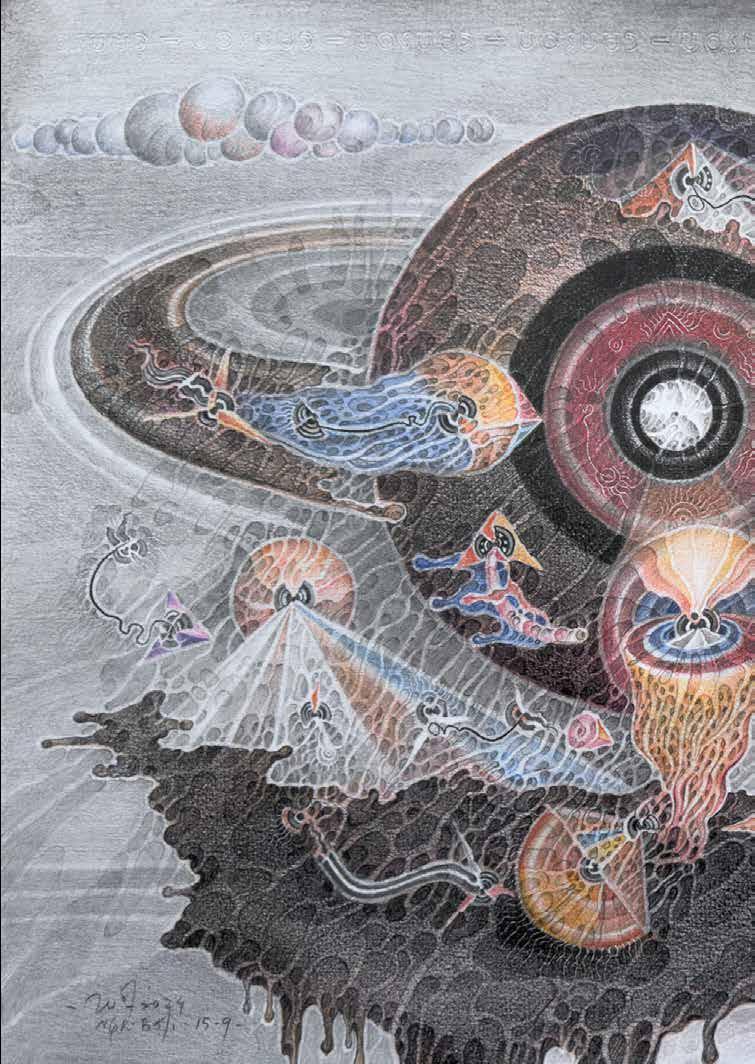
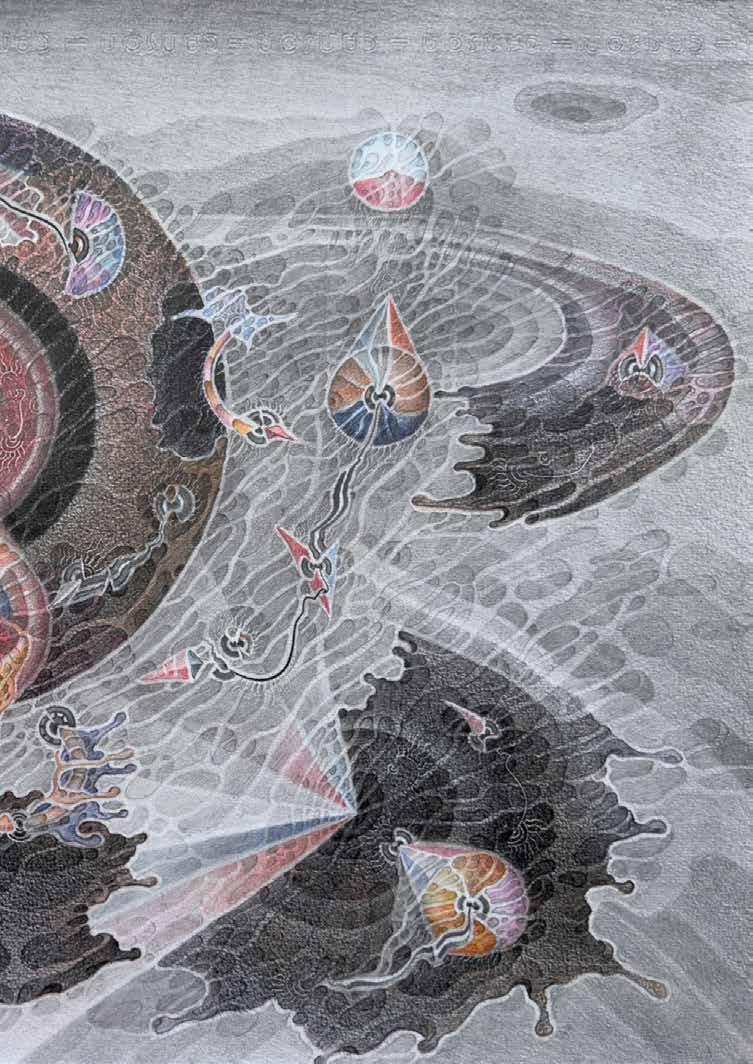
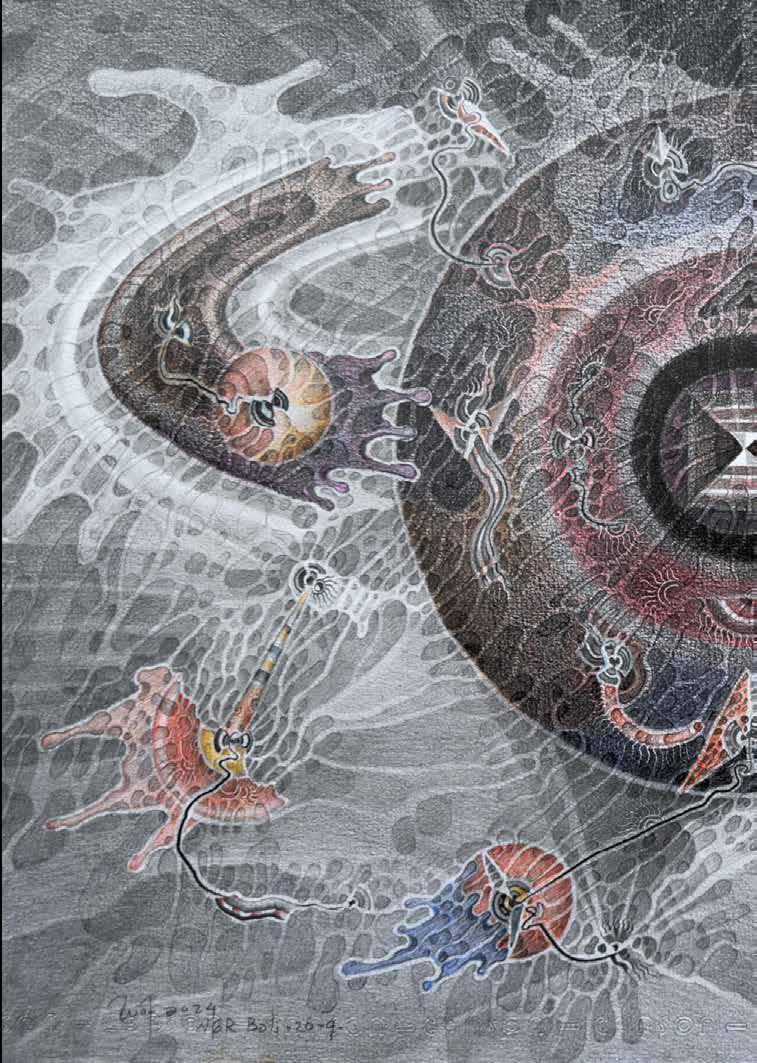
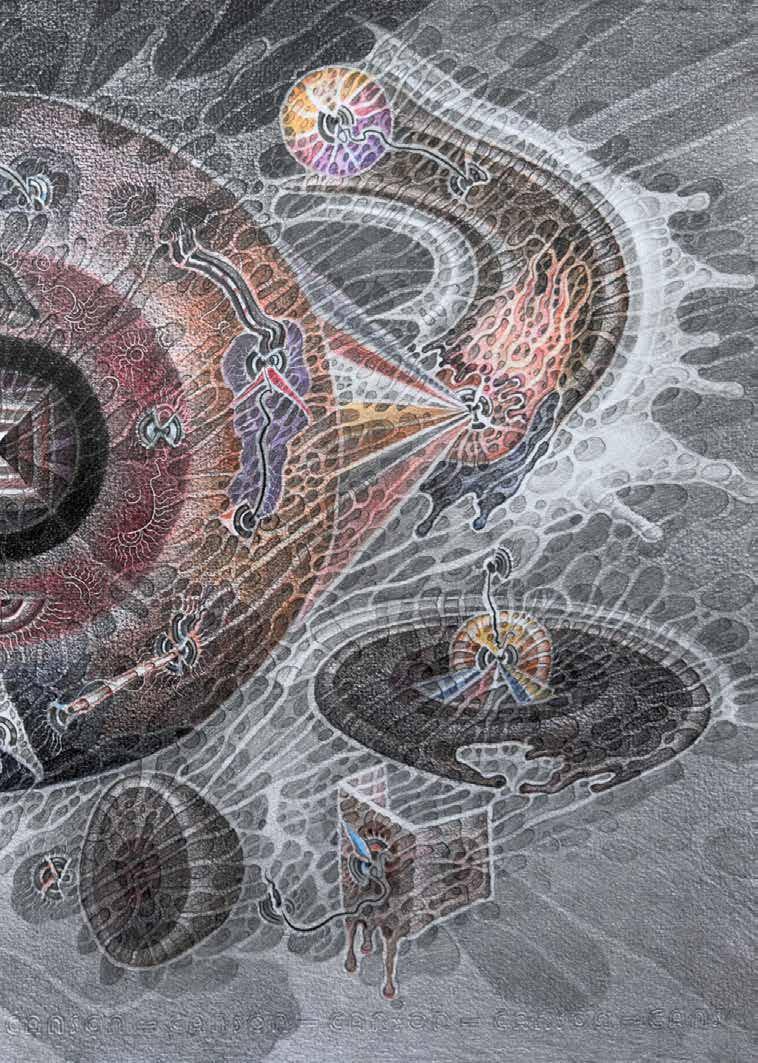
Welcome back to The Blue Lotus magazine. It’s a fresh new year (2026) full of excitement and wonder.
Another diverse issue awaits your joy and delectation, bringing arts from across Asia. In this issue specifically from Bali (Island of the Gods/Island of a Thousand Temples), in Indonesia.
Thank you, as always, for reading. and interacting
Submissions for this magazine of Modern and Contemporary Asian arts and cultures are encouraged to be sent to... thebluelotusmagazine@proton.me ...for consideration.
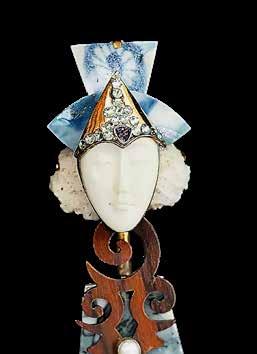
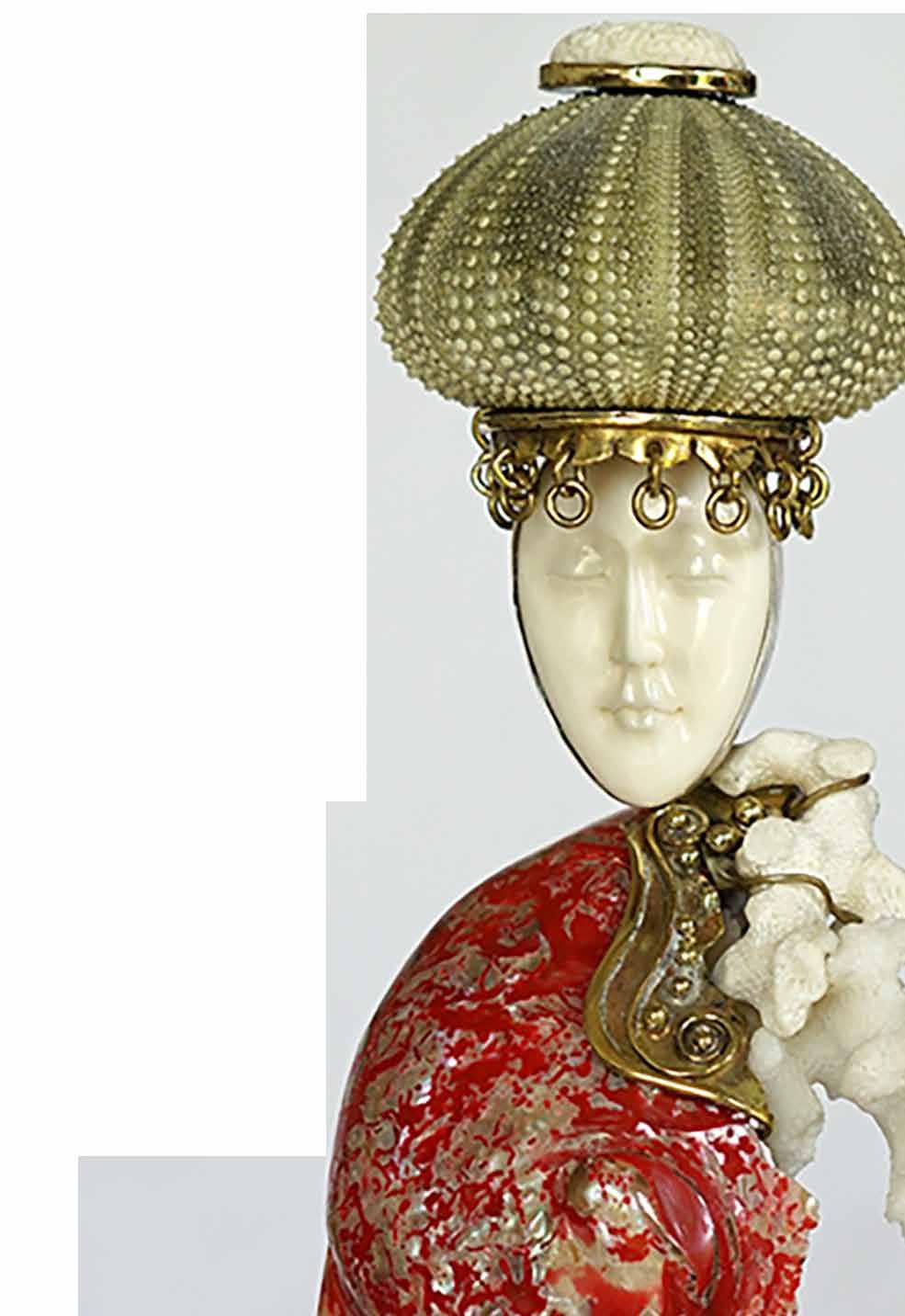
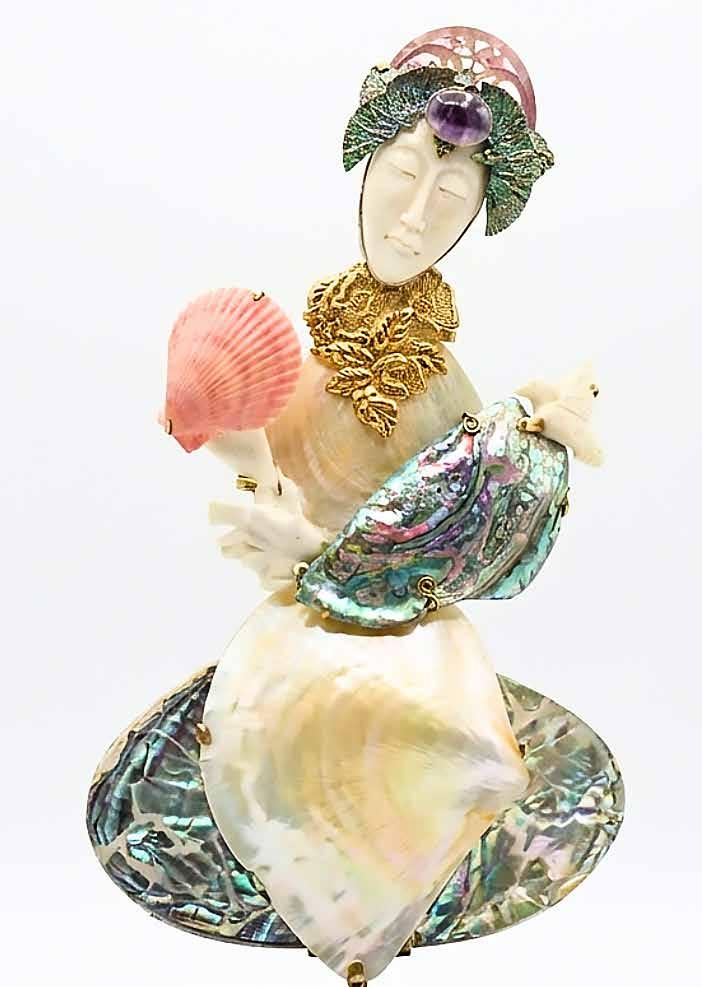
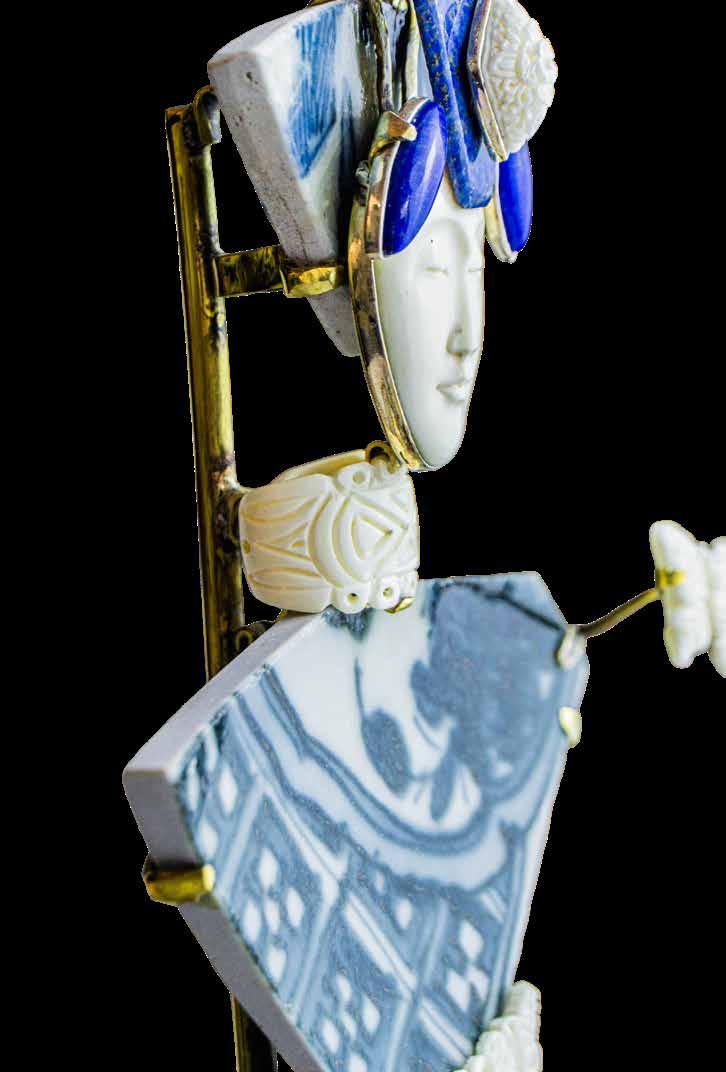
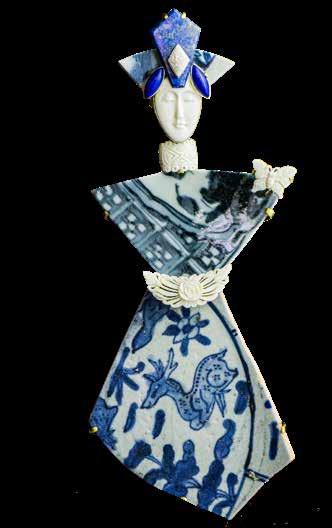
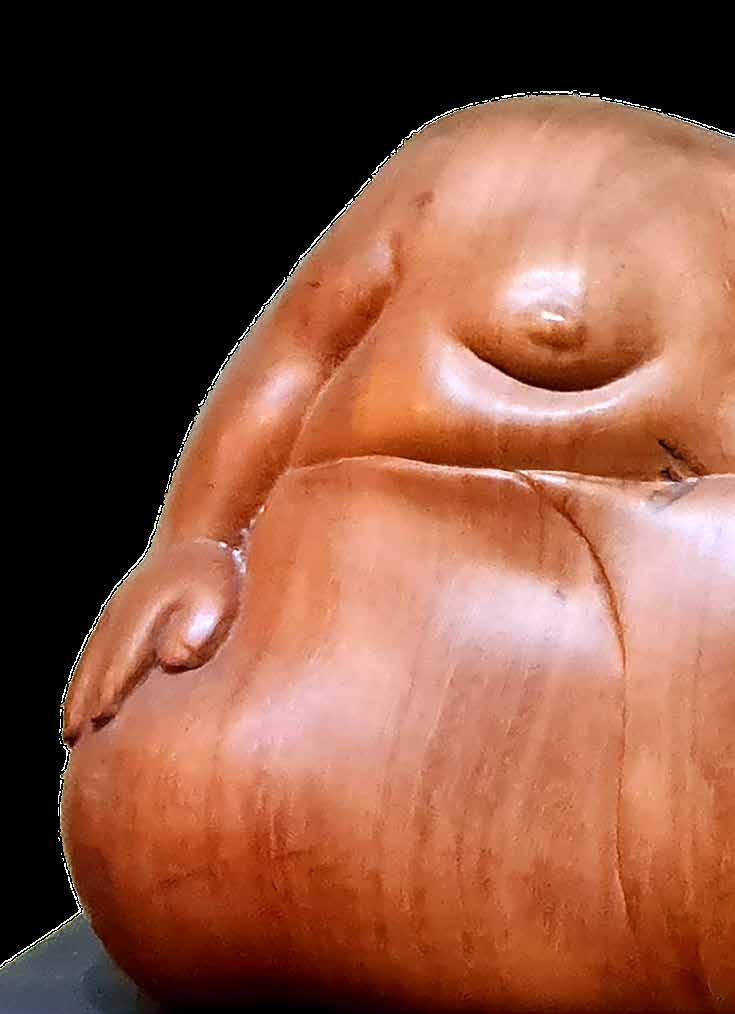
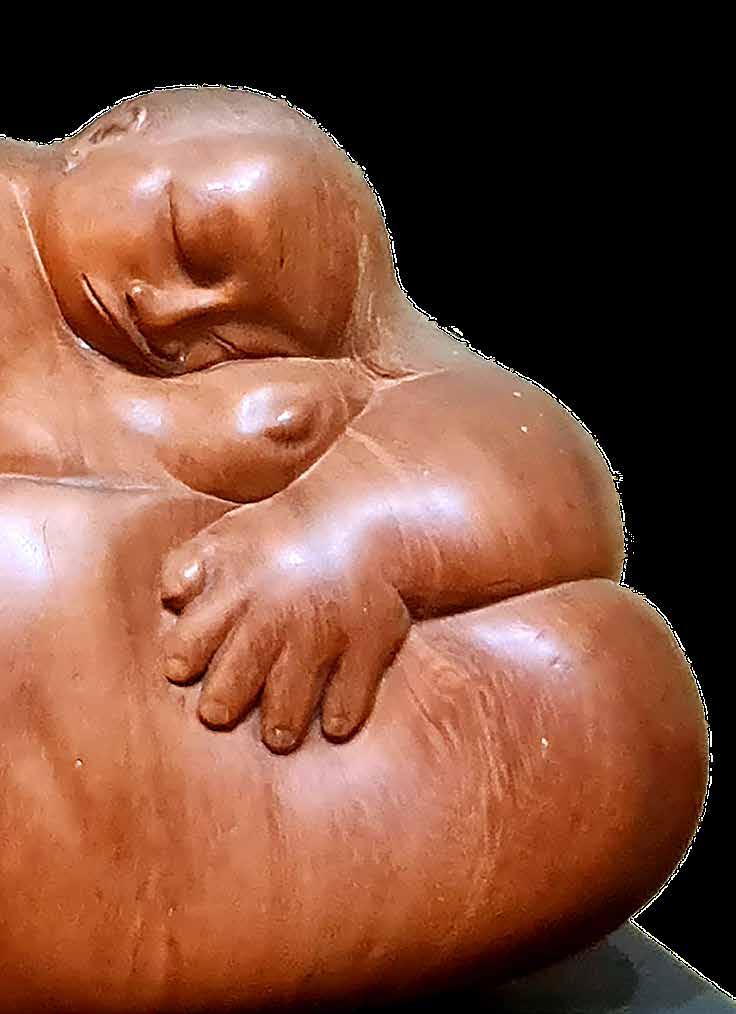
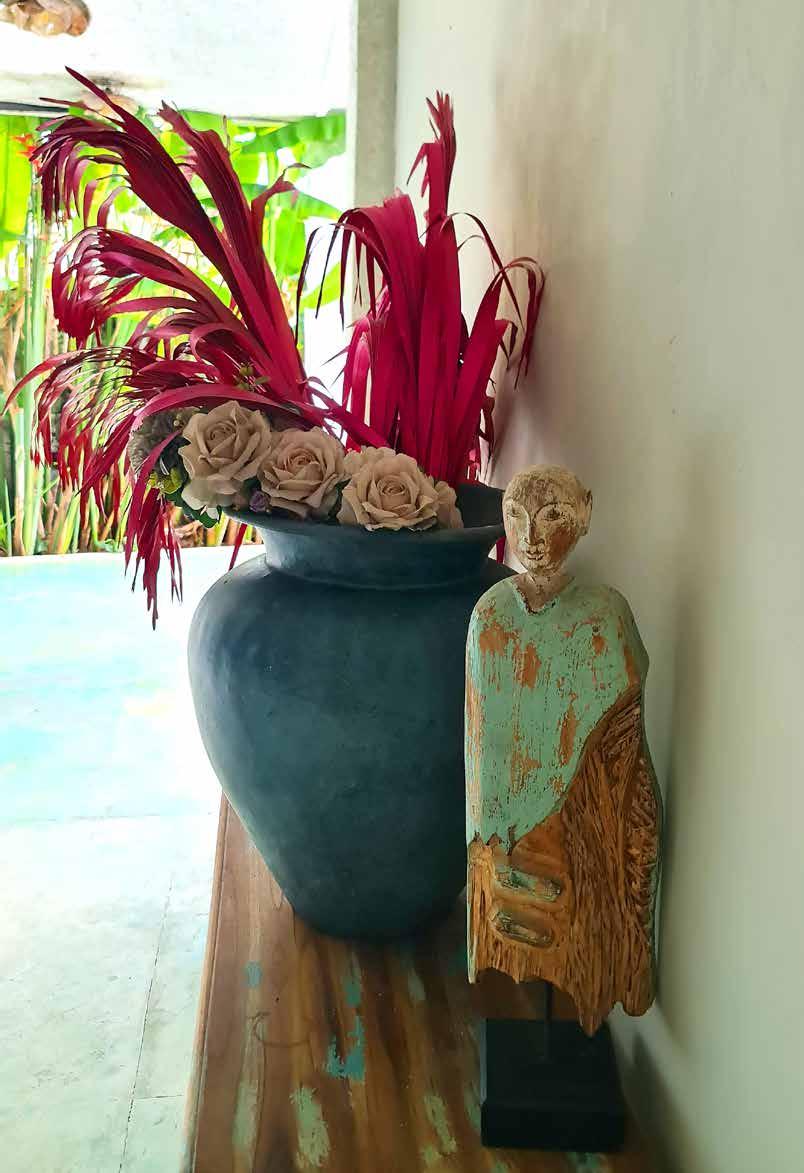
Daphne Zepos was born in Brittany, France. She has travelled, and lived, far and wide across the globe, specifically in countries such as Egypt, Greece, Spain, India, and Indonesia.
Since 2002, the artist has been living on the romantic Indonesian island of Bali. She had been an illustrator, and has made a career out of portrait painting, sculpture, and jewellery design.
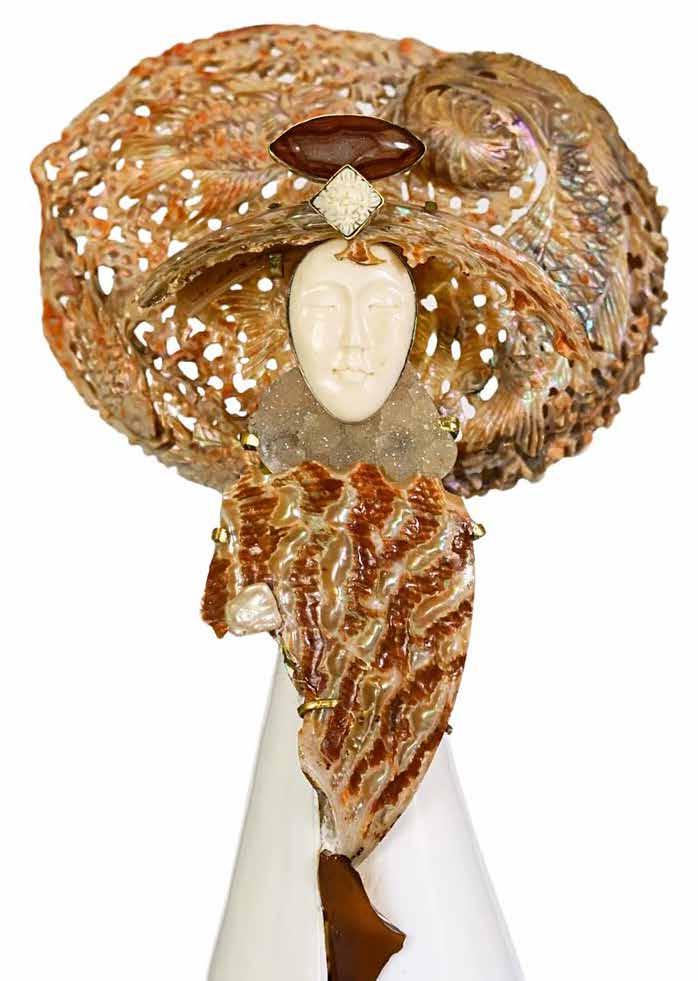
Her training in drawing, painting, and sculpture at the School of Fine Arts in Le Mans, France, has enabled Daphne to curate and create exquisite miniature statuettes and jewellery on the island of Bali.
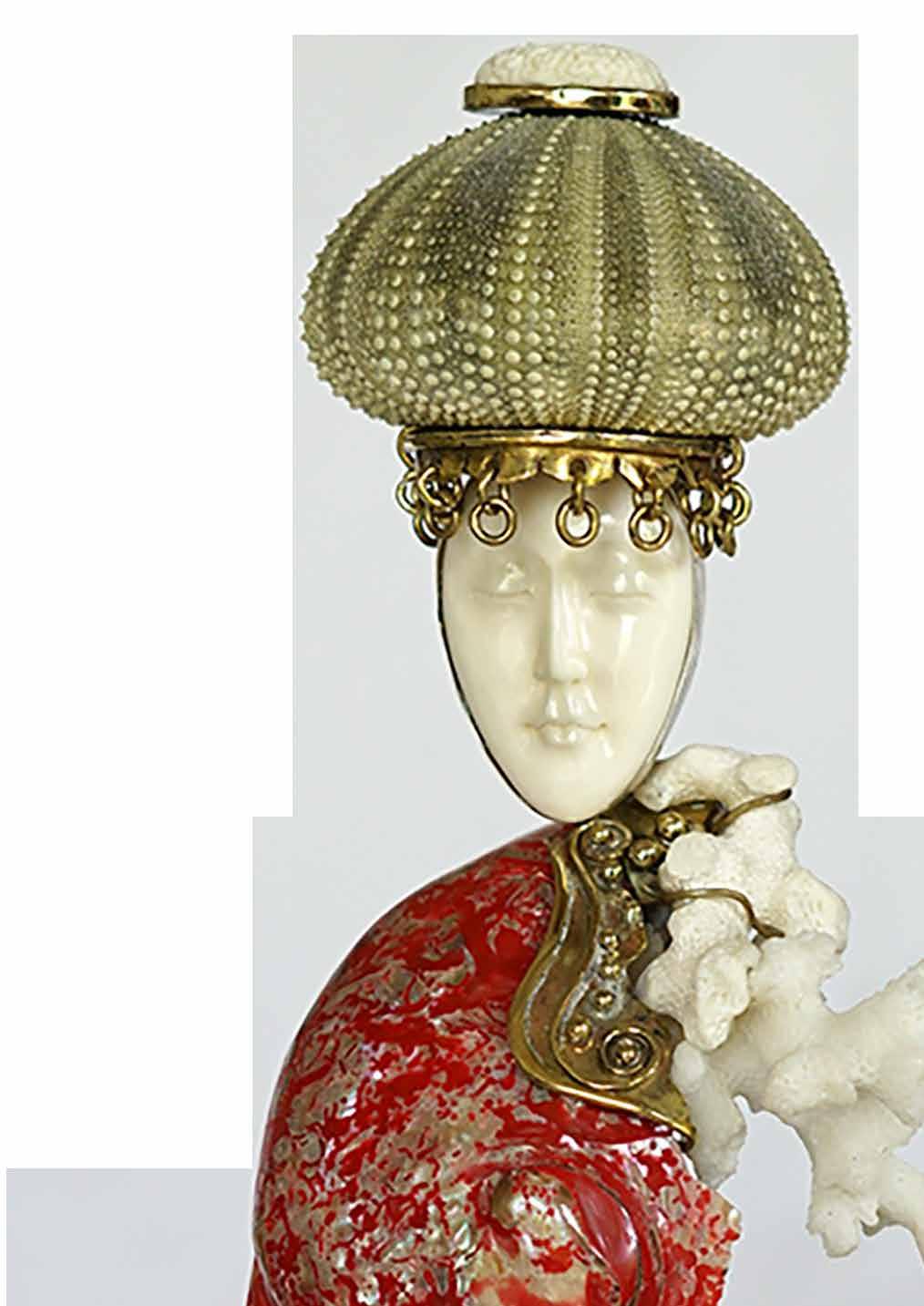
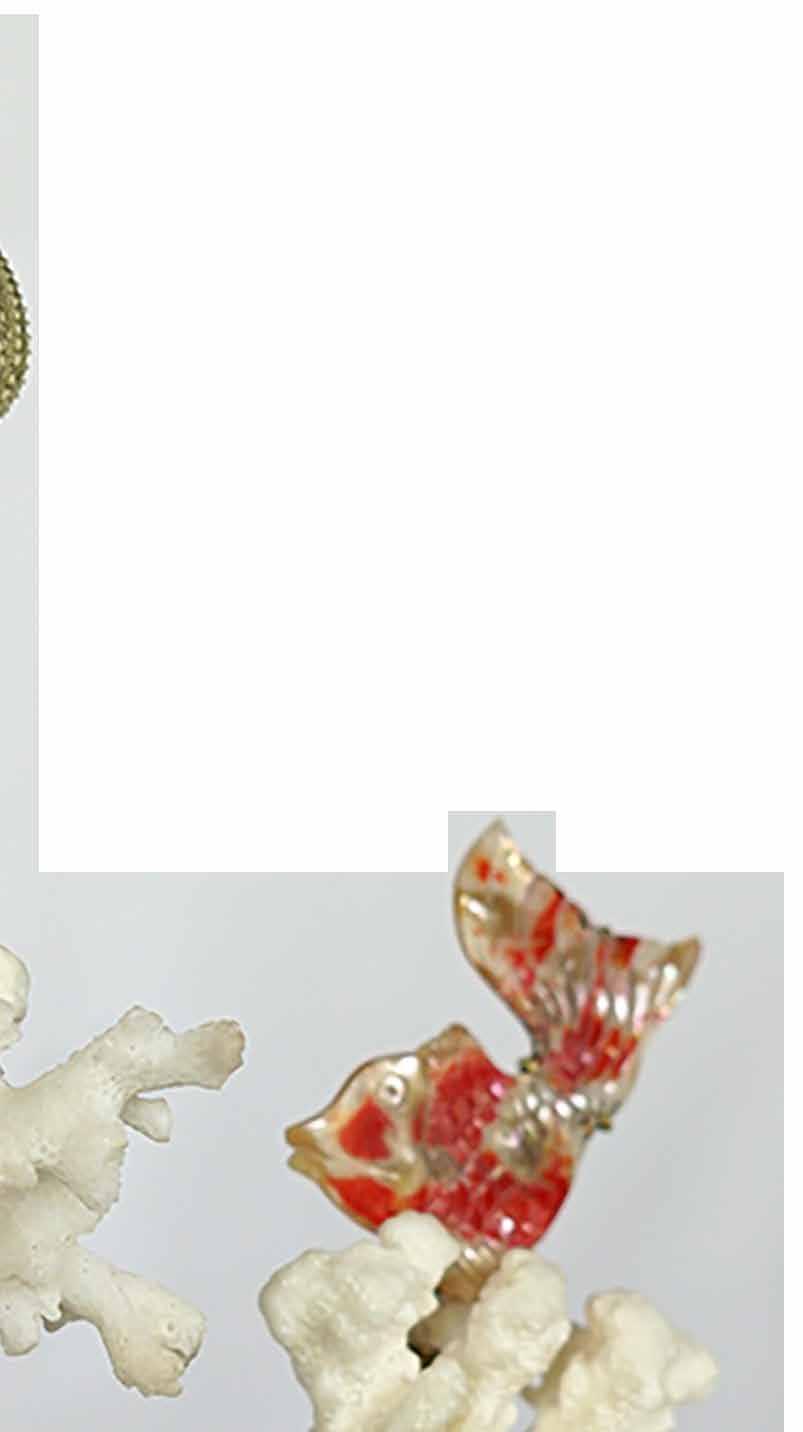
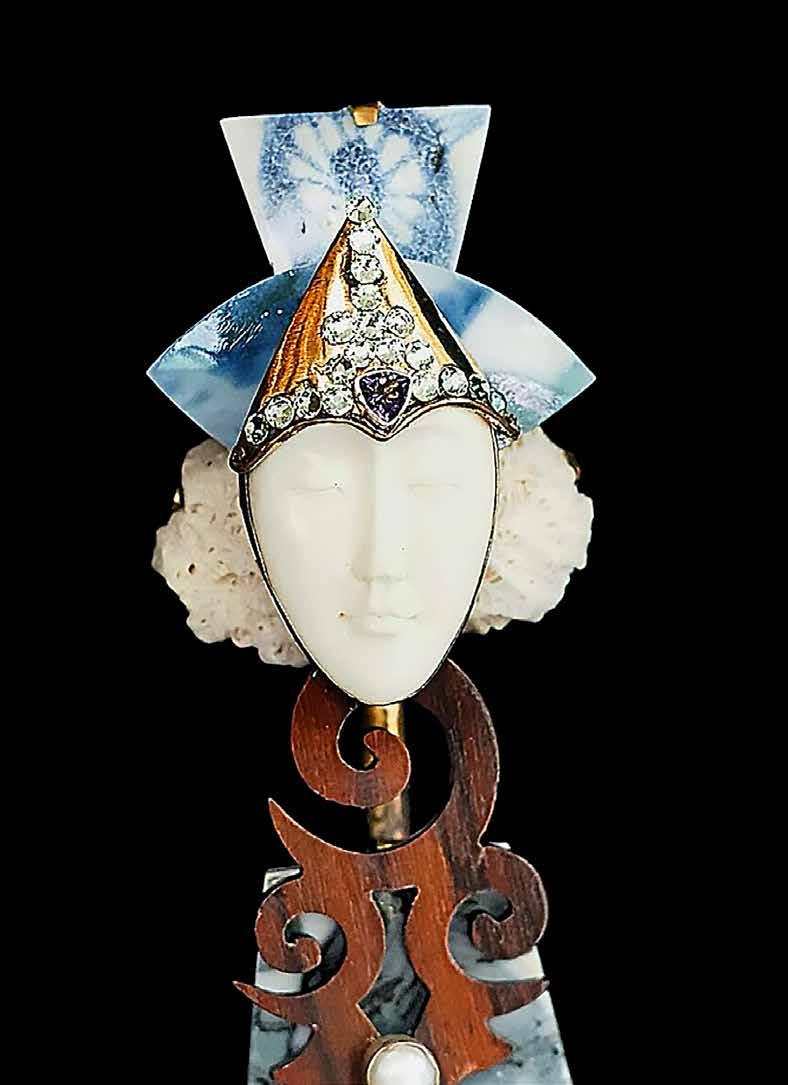
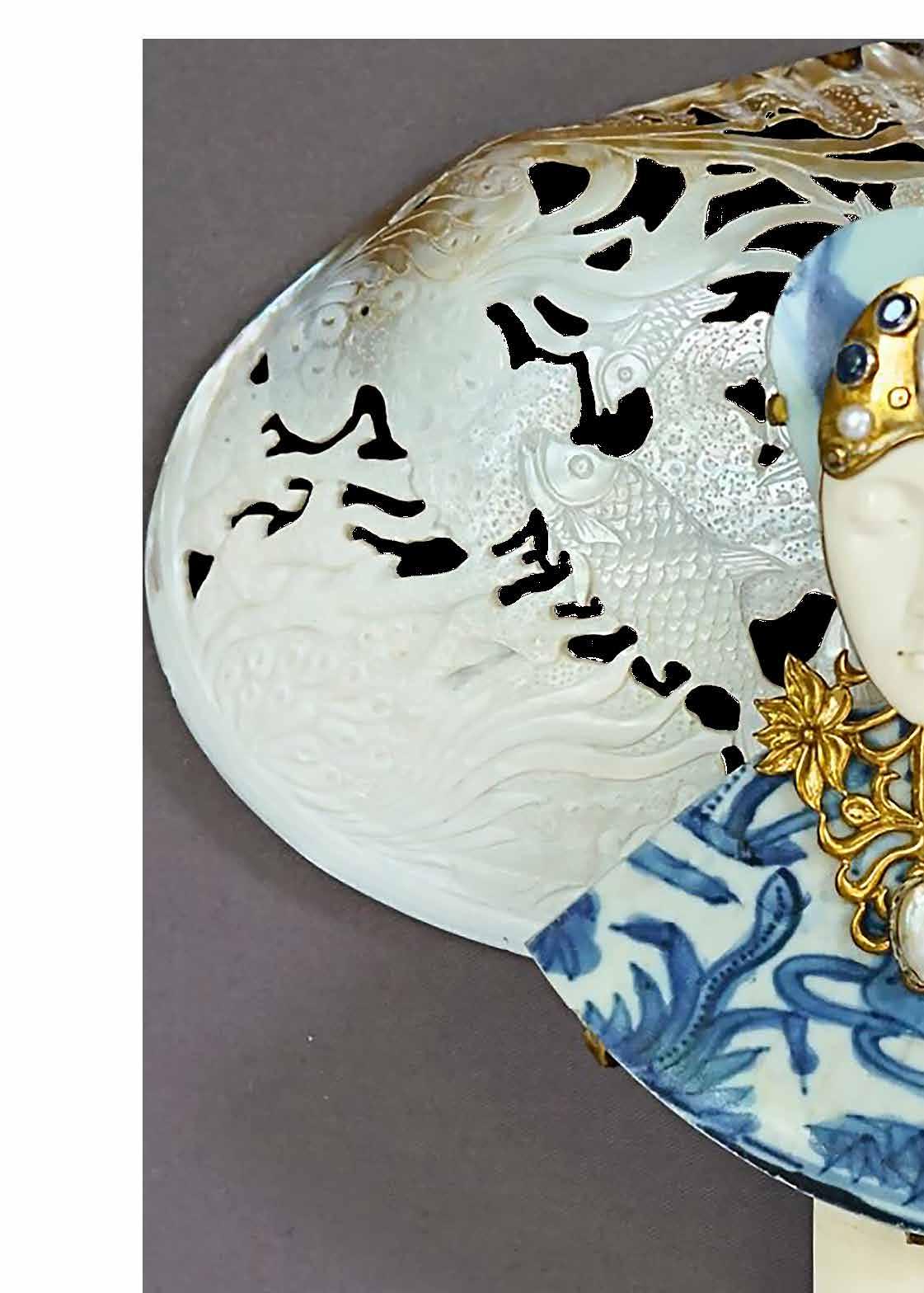
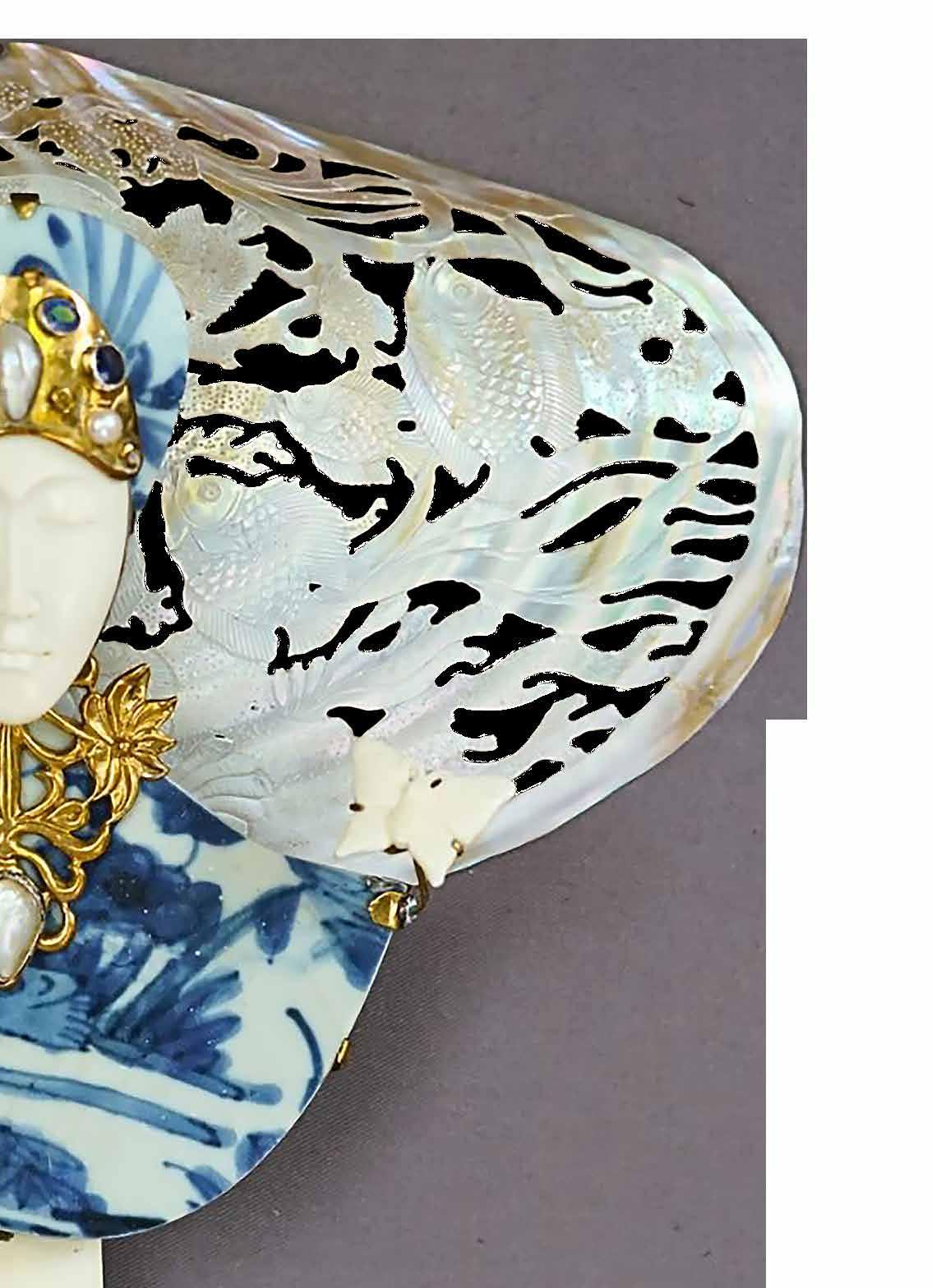
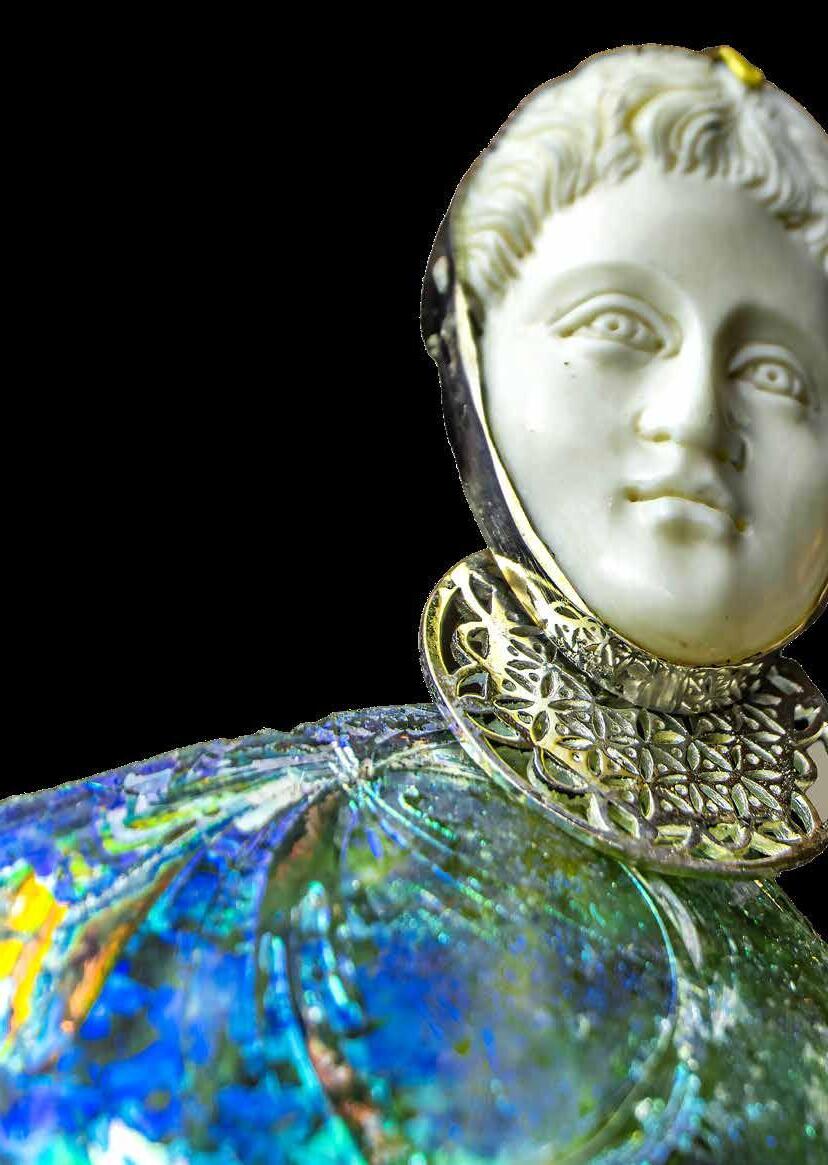
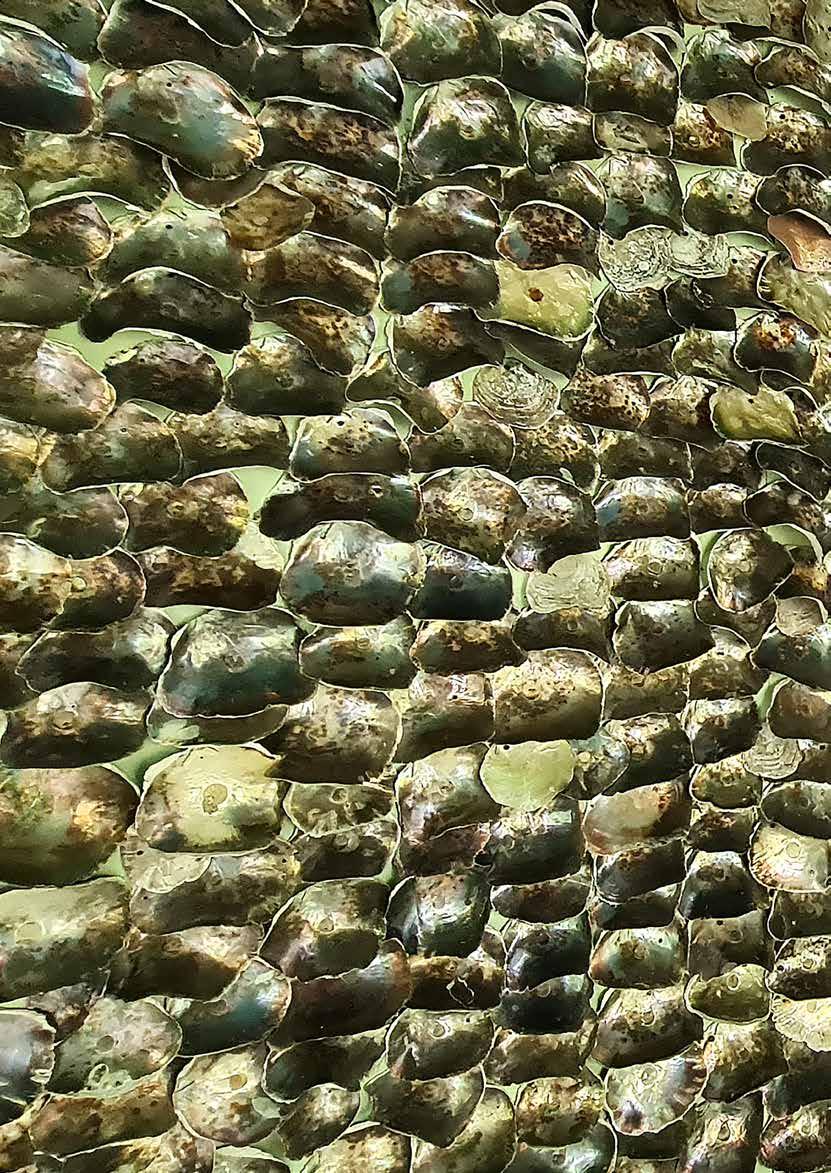
In the construction of her statuettes Daphne Zepos uses ‘found’ precious or semi-precious materials such as abalone shell, freshwater pearls, hand-carved buffalo bone, white and red coral, jade, jasper, semi-precious stones set in sterling silver and brass, antique ‘Roman’ glass, as well as items such as shards from Ming dynasty pottery, blue tanzanite and Swarovski crystals.
Within her sculpture miniatures Daphne incorporates hand-carved buffalo bone faces created to order by skilled Balinese creators, replete with semi-precious stones, to complete her objects d’art.
www.daphne-zepos.com
A Timid Manchu Maiden
Amphitrite goddess
“As a portrait painter (oil painting medium) I was commissionned to paint portraits on various continents and have been doing this work for the past 30 years. Therefore I am at ease with painting people from different ethnic groups.
Over the years, I have had the opportunity to paint private and official portraits of dignitaries, as well as family and children portraits.
My more recent activity is creating one of a kind ‘artwear’ jewellery pieces with semi precious and precious stones set either on sterling silver with 20 carats gold plating or on 20 carat pure gold .
I custom design on request.”
Daphne Zepos
A Butterfly
Bali
Bali
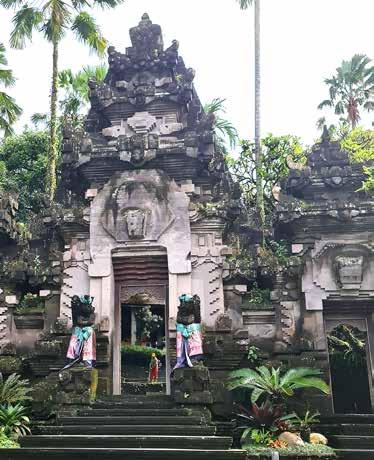
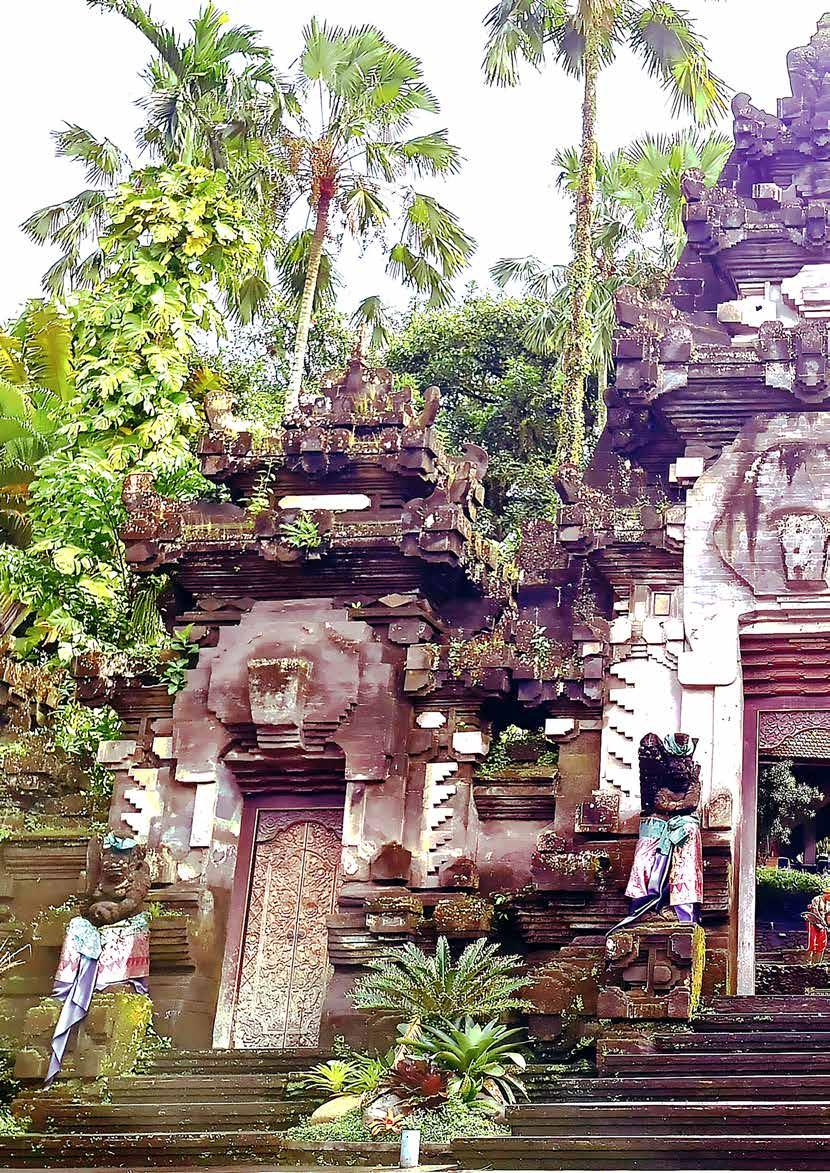
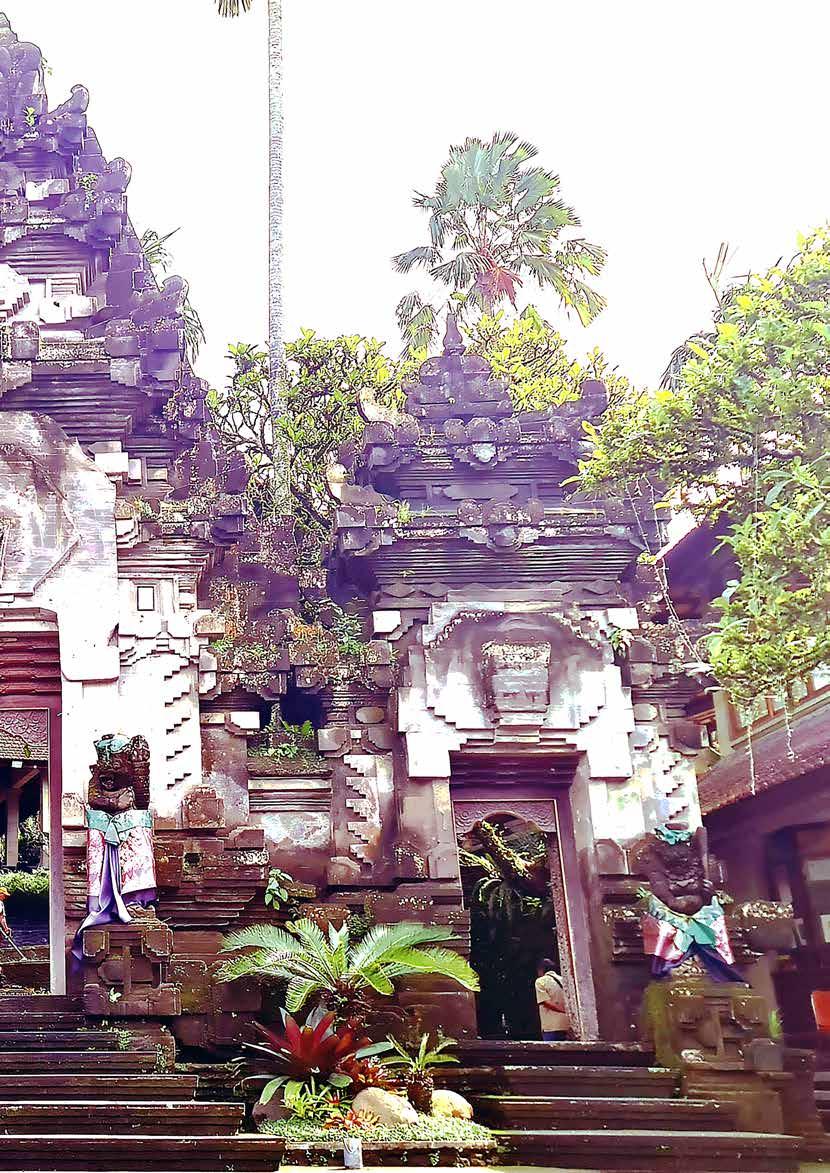
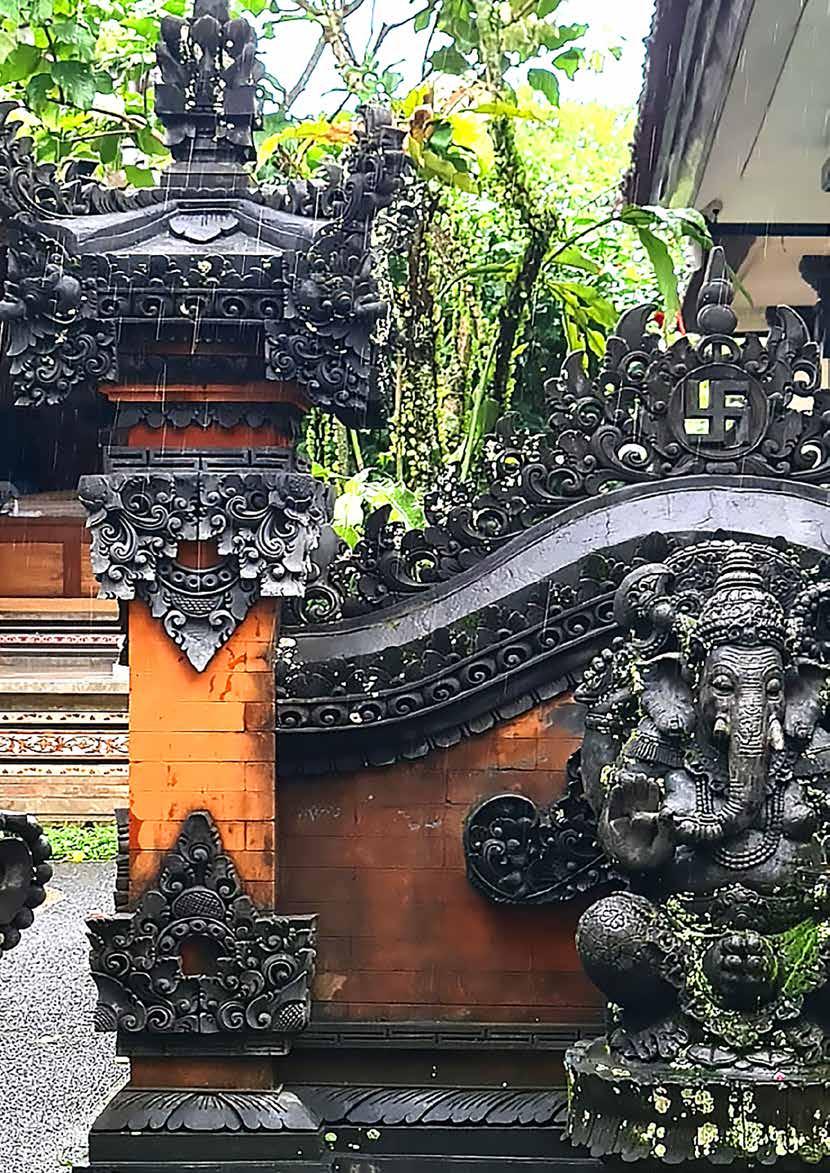
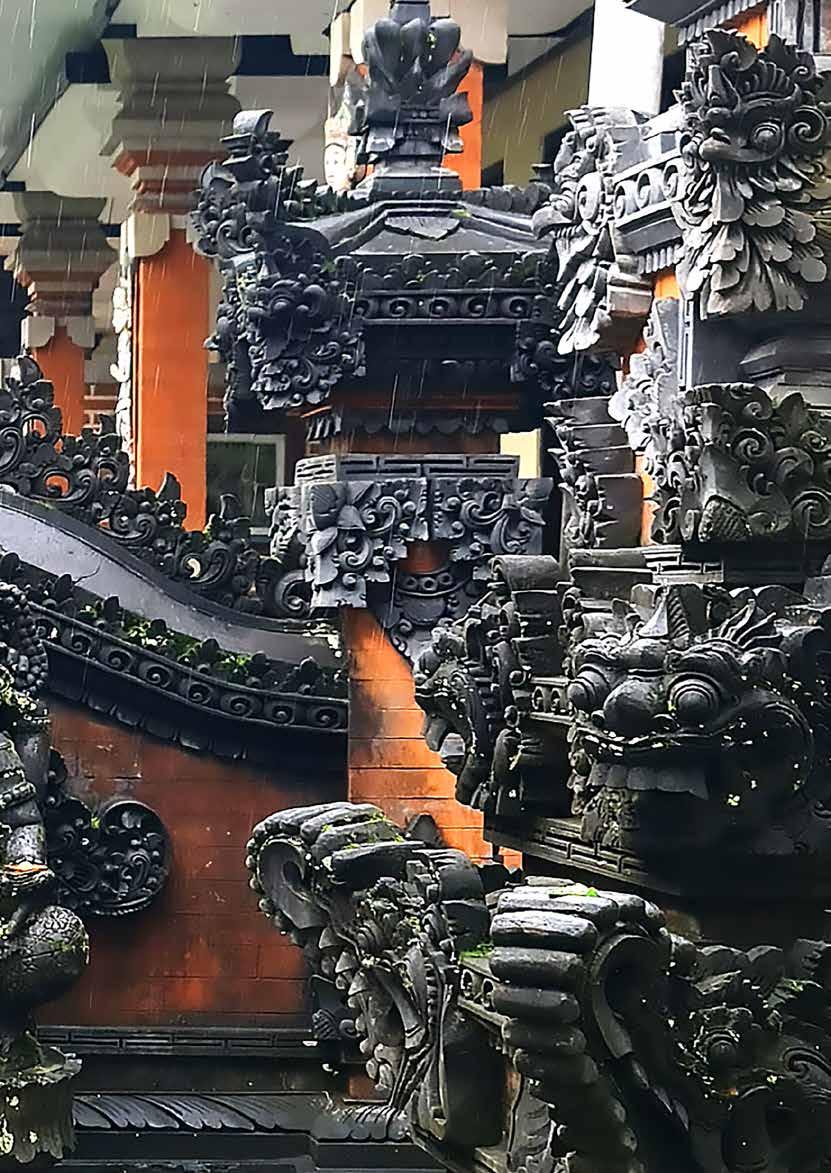
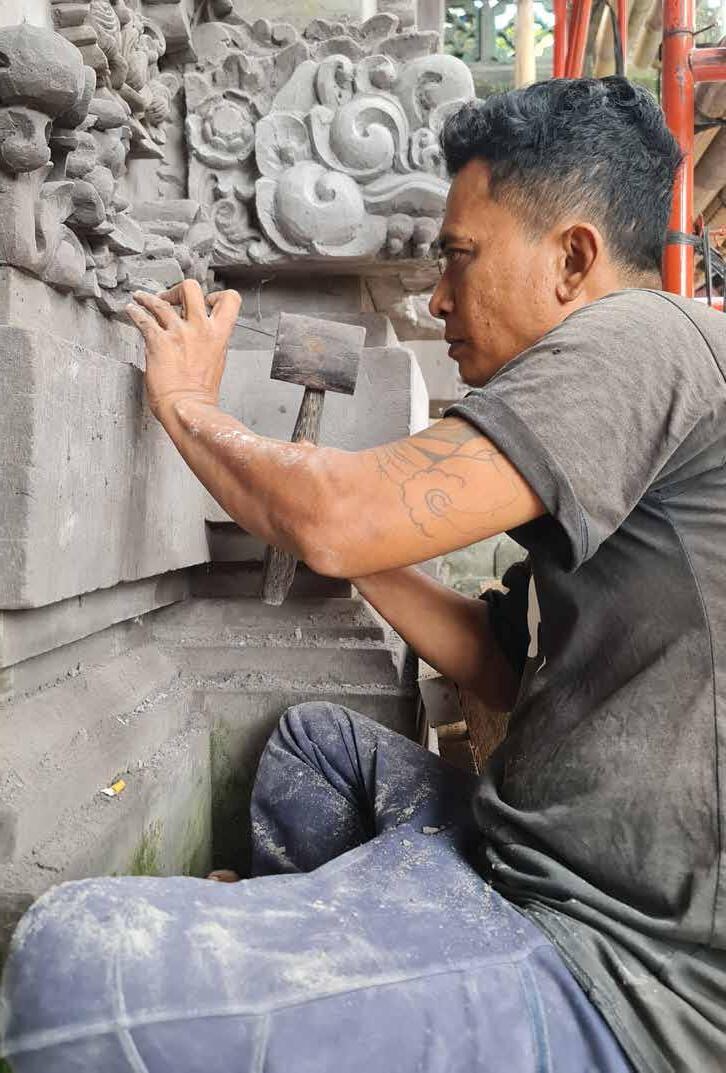
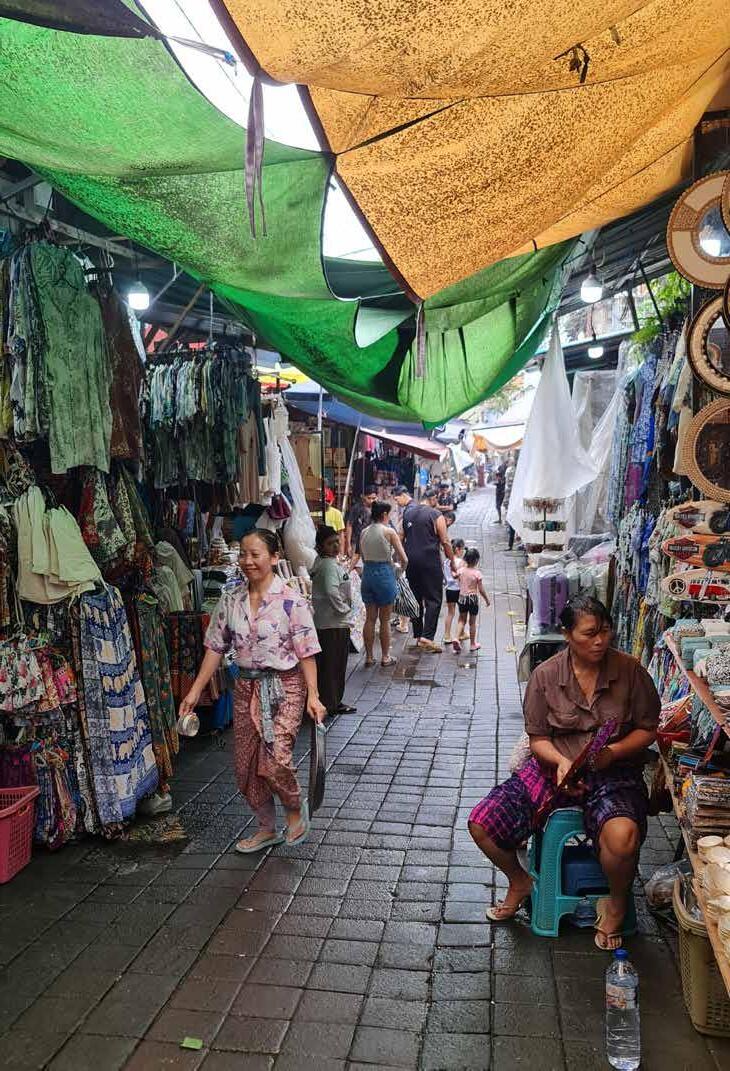
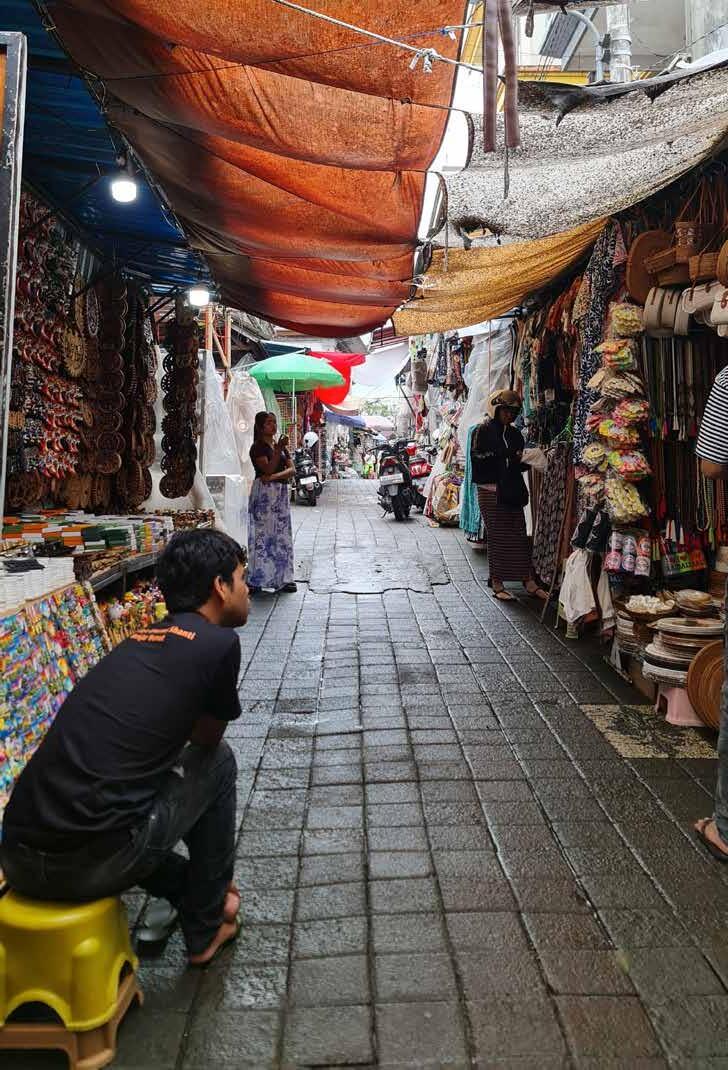
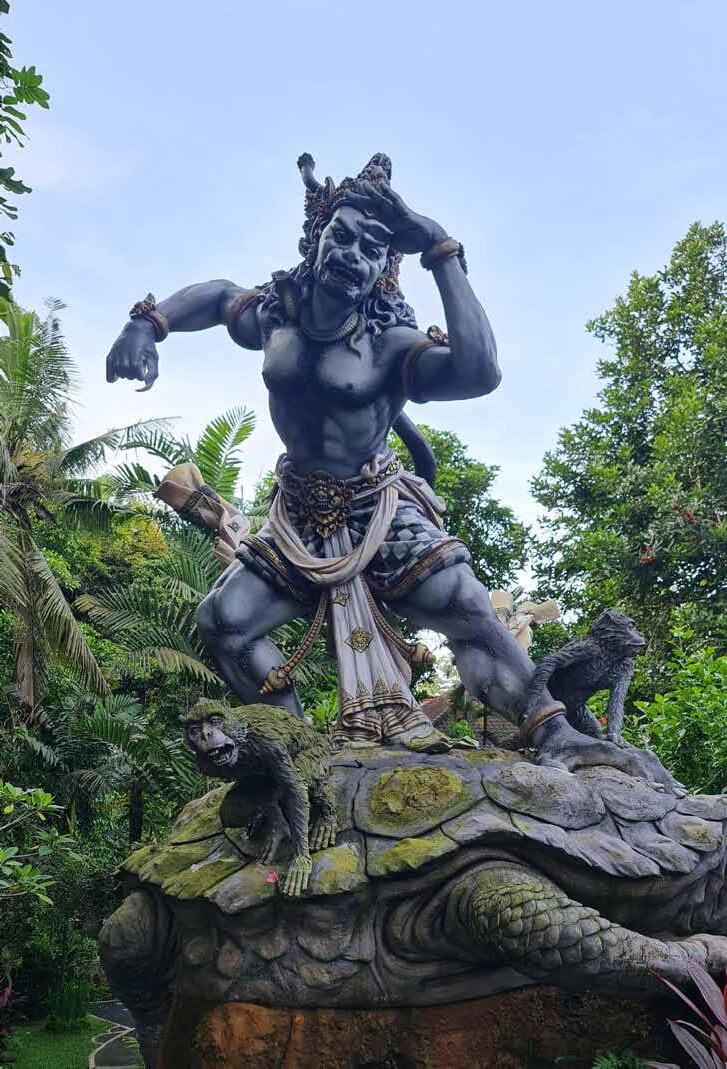
It is said that Ubud is the cultural and spiritual heart of Bali, Indonesia. It is celebrated for its verdant green rice padi, its arts and its culture.
Travelling has never been more easier difficult
I know, I know, I know. I’m a big, Western, white, male, and these things should be easy for me.
However, for this septuagenarian, his ageing fingers and dwindling eyesight, the insistent use of smart-phones and digital technology to do just about anything in this life, let alone make arrangements for a break away, has become not just forbiddingly expensive but, for me, an herculean task.
I’d had this vaguely exciting, nay romantic, notion of going to the Indonesian island of Bali, listening to gamelan music, seeing how the shadows fall at Pura Lempuyang Luhur temple and tasting authentic Balinese Warung food, on the event of my seventy-fifth birthday.
I’d been to Indonesia before (Yogyakarta and Jakarta, both located on the island of Java), but I’d never been to Bali, that is, despite works of art, black and white/sepia photographs, films, and copious books, etc., begging me to do so, I hadn’t.
Booking a suitable place (Dewangga, Ubud) to rest my ancient bones in Bali’s cultural capital of Ubud wasn’t difficult, nor was booking the necessary flights. In fact, I’d congratulated myself on just how well I’d coped with these tasks.
However, that wasn’t all…
Apart from hotel and flight bookings, I was required to get a rather expensive e-visa (IDR 1,024,000 or 45.02 Pounds sterling), to cut down on the time queuing on arrival, which I did, then use the ‘Indonesia Immigration One Platform Systeman’ for an ‘Arrival Card’, as well as purchasing one of them there new fangled eSIM cards (to use on the island and avoid the rush for a physical one) all these were digital and all done on my no-longer-new Samsung Galaxy with my podgy fingers - nearly at the cost of my sanity.
I was spring-boarding from Kuala Lumpur International Airport in Malaysia, and decided that I needed to take some cash with me to Bali. So, I stood in a Malaysian currency exchange queue, waiting to change
my Ringgit into Indonesian Rupiahs. I’d waited for 30 minutes, thinking to ‘back up’ my Visa card and digital ‘wallet’ - just in case.
And, maybe, it is cheap if you’re coming with Great British Pounds or United States Dollars stuffed into you calf-hide wallets; however, if you insist on having Malaysian Ringgit, Bali is not at all cheap - quite the reverse…
I'd ordered a Grab (Malaysian online taxi) for 8 am for the morning of my departure to Bali, and set my phone alarm for 7 am. My monkey mind woke me at 5 am and played all kinds of mini disaster scenarios until, at 6 am, Id given up all notions of further slumber and had an early breakfast instead.
And, because I'd done everything as planned, and on time, of course my flight had been delayed.
Creeping tiredness, coupled with brief moments of suppressed panic, had oscillated across my weary mind. I’d frequently checked the boarding gate, then saw if my e-visa for Indonesia had been granted. It hadn't, and time had been running out.
More anxiety. I’d tried to chill, remembering my Buddhist Society meditation training.
Breakfast at KLIA2 had been two soft-boiled eggs, toast with butter and kaya (coconut jam) and a gallon of kopi susu (local Malaysian coffee with condensed milk).
It had been time to pee.
The two and a half hours until the flight’s exit had seemed preposterously unending. I’d amused myself by flitting from one phone recharging socket to the next, trying to find one that would charge my draining phone. I’d ultimately failed, which had added to my weight of woes to ponder
Eventually, we’d all clambered aboard the AirAsia flight, with me sitting next to a young Indian couple (recently married in Gujarat and on their honeymoon). Having watched me eat what passed for the airline’s ‘Hyderabad Vegetable Curry’, that lovely couple had proffered their mum’s filled parathas (brought all the way from India). I’d politely declined because you never know, do you?
Bali’s I Gusti Ngurah Rai International Airport, also known as Denpasar International Airport, had cheerfully lived up to my fears, especially those regarding Visa On Arrival (VOA).
I hadn’t known (of course, I didn’t) that my purchased online Indonesian
eVisa had a one-week lapse before becoming active. I had been five days away from that, and only seven days total on Bali. Having pestered four different Immigration officers, I’d eventually had to buy another visa (a Visa On Arrival or VOA) if I wanted to continue my planned Bali break, which I did.
The ironically good news - it was Bali’s ‘Rainy Season’, and there had been fewer tourists. The things that I’d done to keep away from the cramming crowds had been rendered irrelevant, and overly costly (to wit e-visa and eSIM). Luckily I'd left my inner Victor Meldrew/Basil Fawlty at home and had been in a more sanguine mood.
Bali’s airport had a ‘Grab Lounge’ (some random chairs in a box-like room without parched throat facilities) where I’d wearily sat charging my phone and waiting for my saviour cab to arrive to whisk me away (one and a half hours) from Denpasar to Ubud, in the rain.
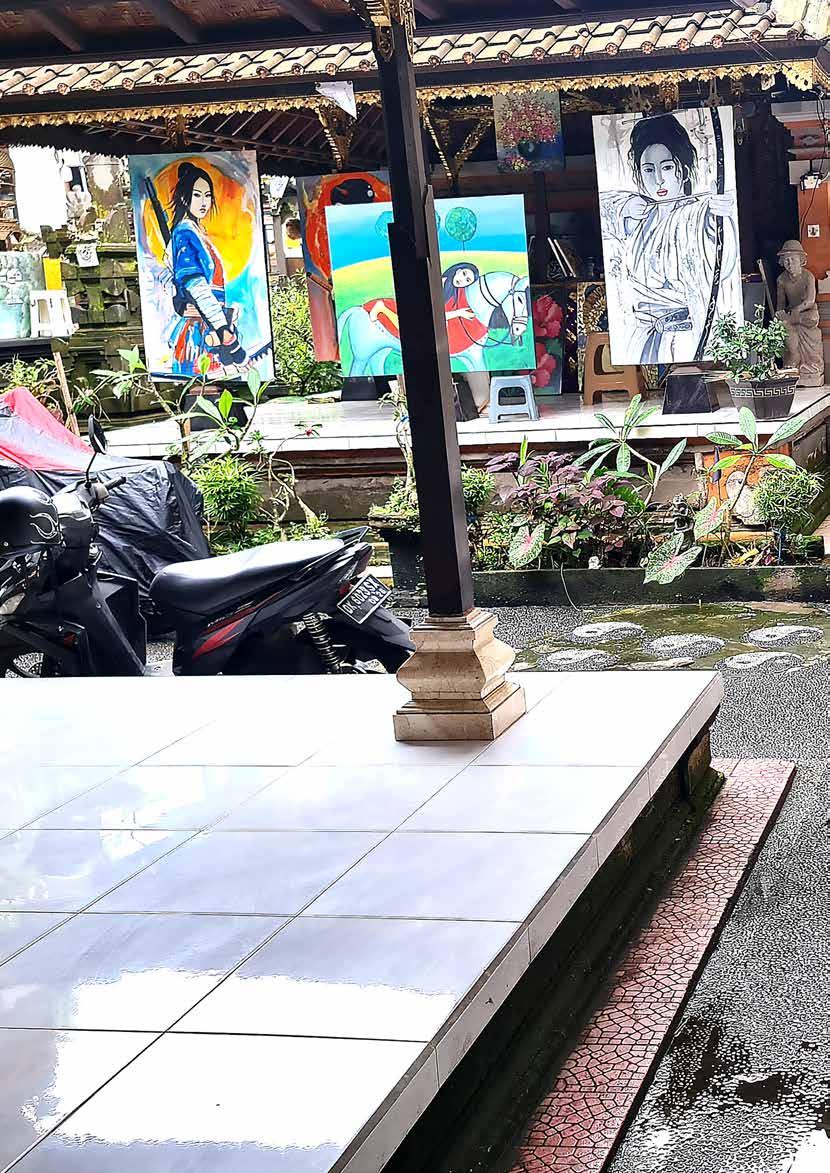
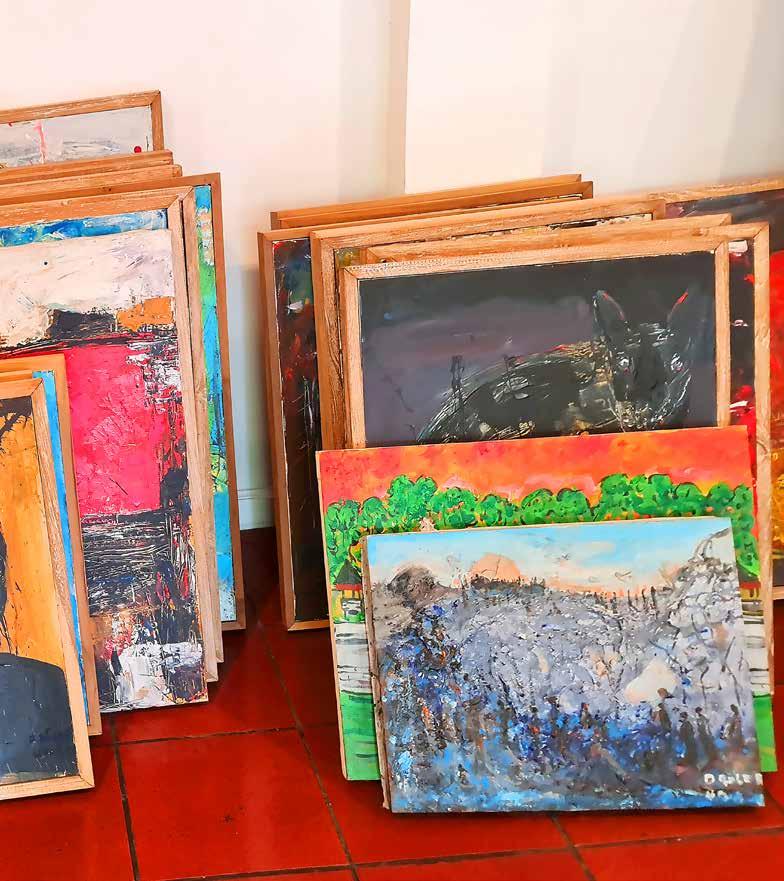
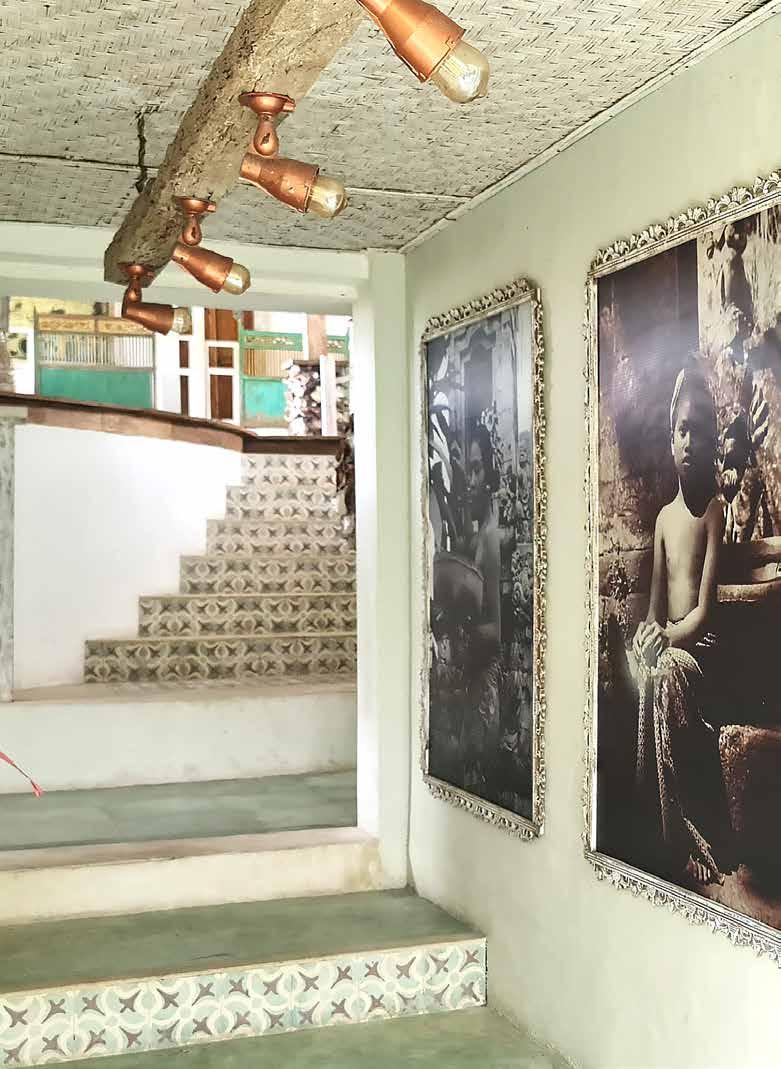
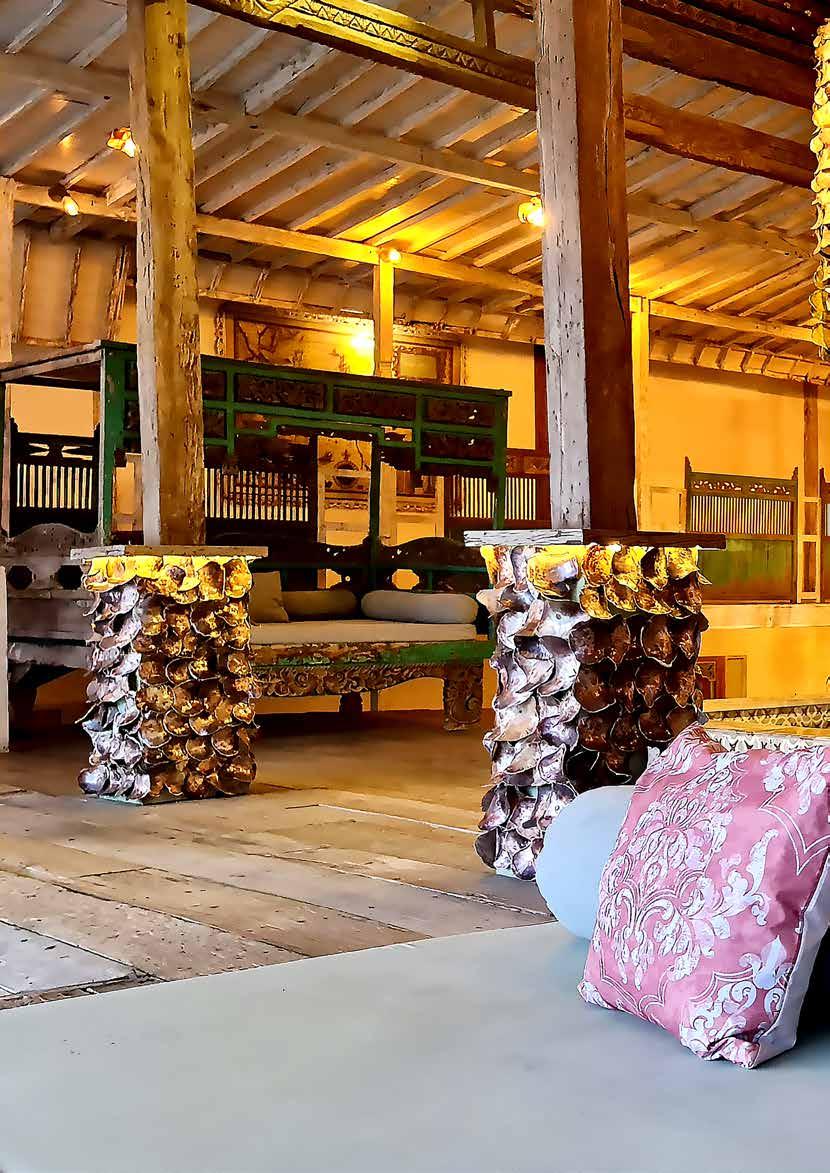
My patient and efficient Grab driver had been a young Indonesian lady called Kurnia, (from Yogyakarta, “near Borobudur”, she’d said). She’d proffered me a bottle of thirst-quenching water when it was time for her to break her ‘Iftar’ fast on our journey together to Dewangga Ubud (which I am informed is “a boutique retreat located in the heart of Ubud, Bali, offering a tranquil ‘oasis’ atmosphere despite its central location. It is characterised by traditional Balinese architecture, lush tropical gardens, and an on-site art gallery featuring works by the owner’s family”).
Dinner had been a tuna pizza and local (Bir Bintang + Radler lemon) beer, taken at ‘Mingle’ - a restaurant-come-bar literally around the corner (Jalan Dewi Sita) from Dewangga (in Ubud).
My birthday breakfast (yes, that day was my 75th birthday, and I’d become Roy Harper’s Old cricketer, crease or no crease) was a totally delicious ‘Hai Made eggs Benedict’ and what appeared to be a bucket of filter coffee, with a splash of ice cold fresh milk.
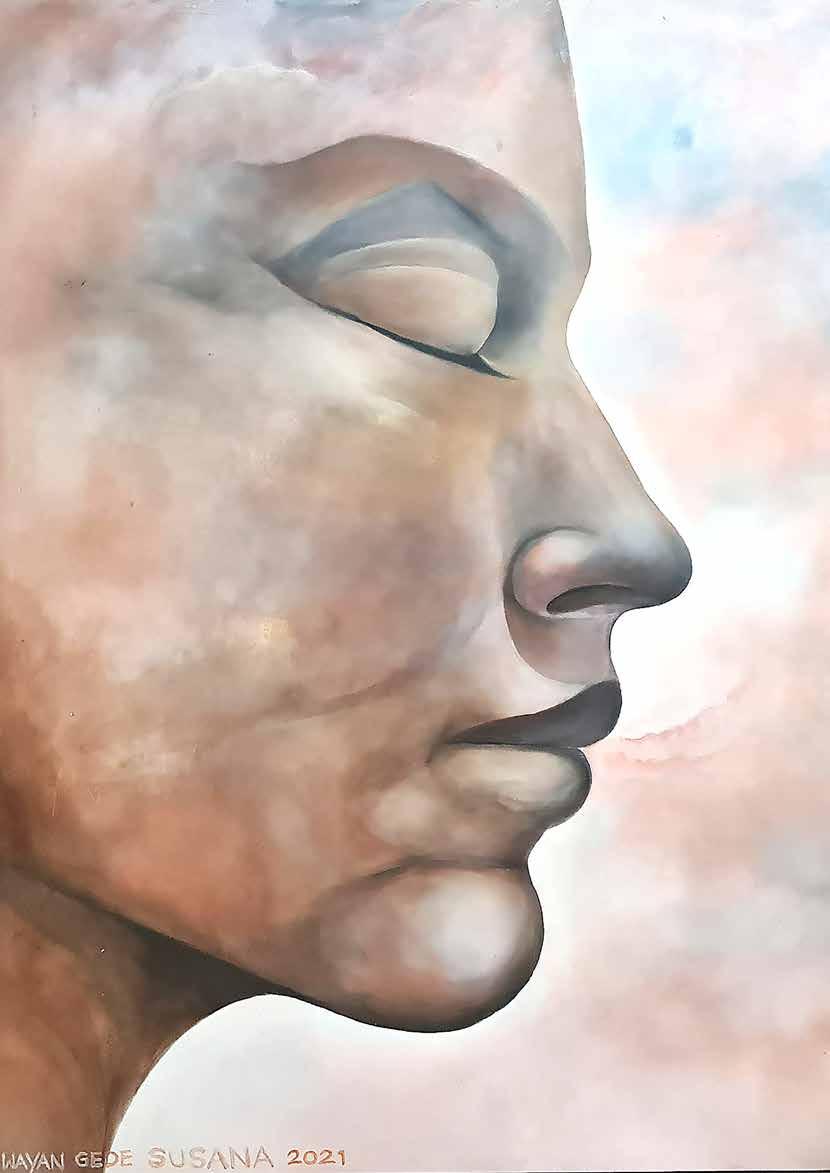
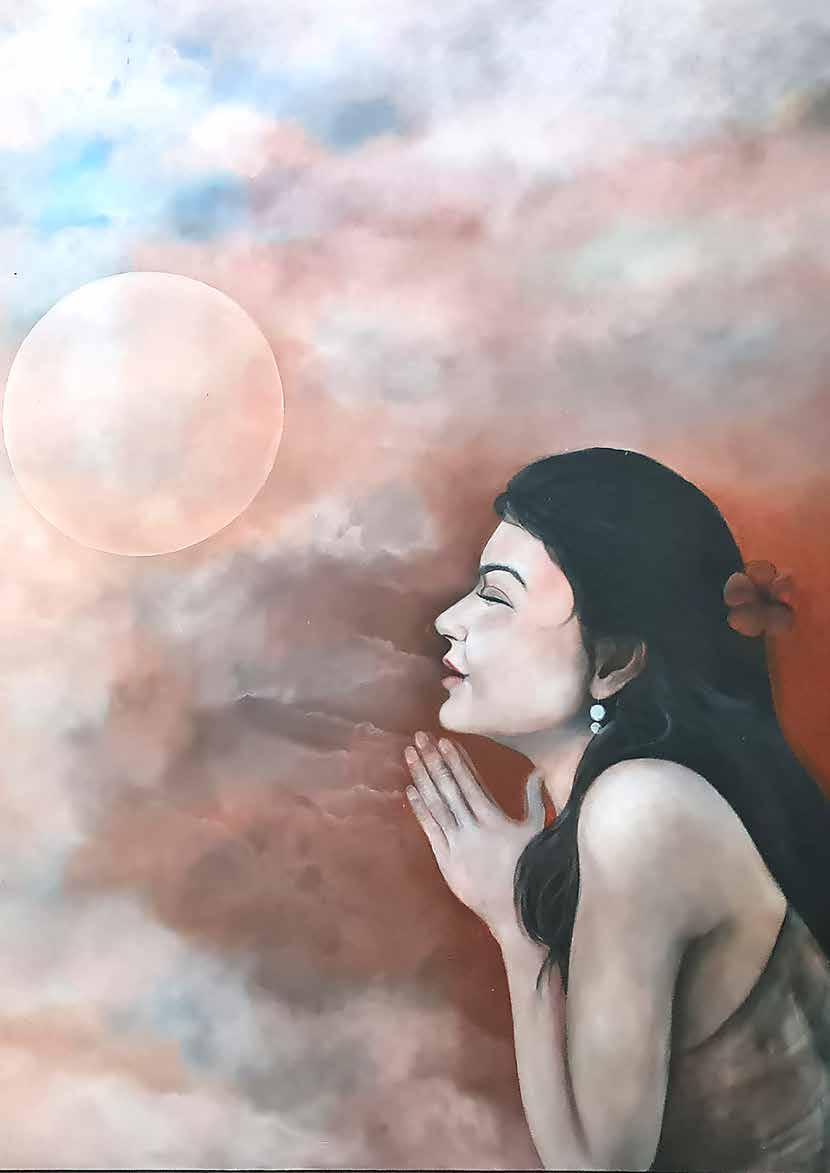
Later, I’d rode on the back of local artist Wayan Gede Susana’s motorcycle. It had been a decision not taken lightly - I’d not been on the back of a motorcycle since those days in Cambodia, visiting the homes of Khmer schoolchildren sponsored by the charity I was involved with.
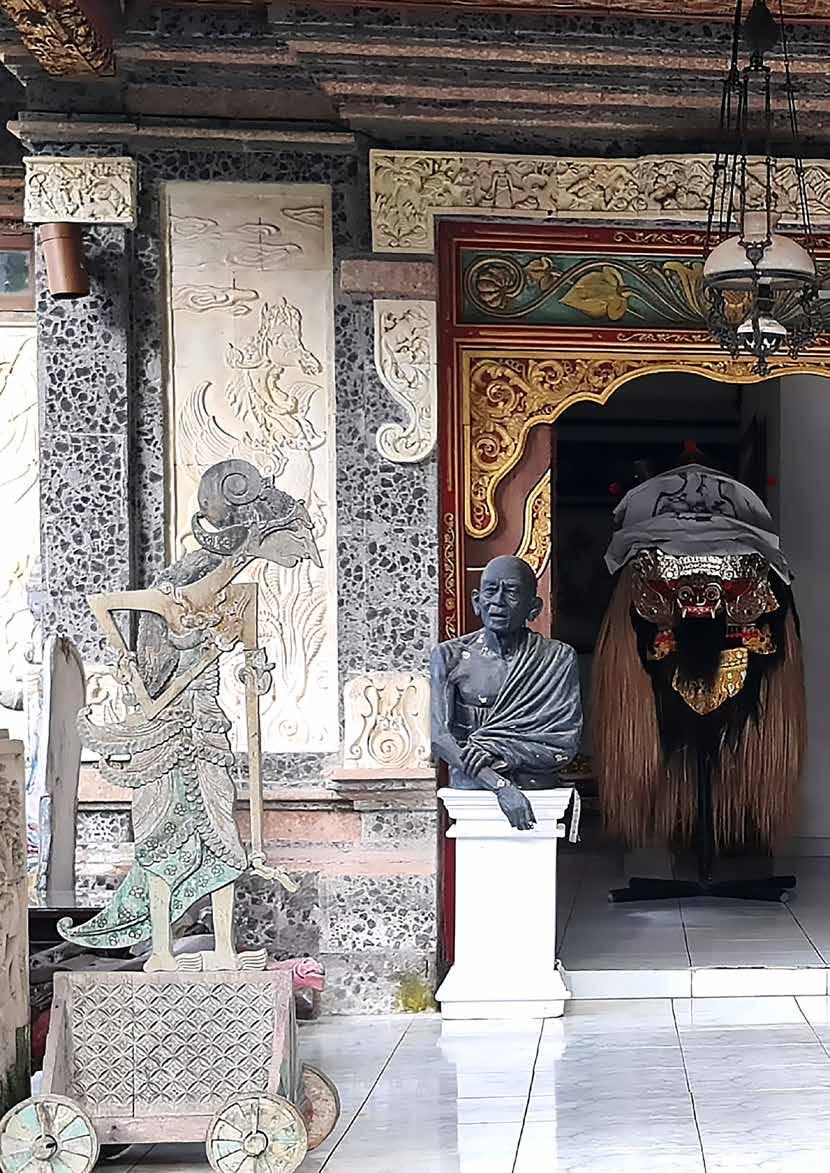
The artist showed me around the Museum ‘Puri Lukisan’ (Palace of Painting) in Ubud. Then rode me to his house and studio complex which shelters his copious semi and abstract works, at rest.
Lunch-less, about 12 noon I’d dismounted and sought sustenance at ‘Bunut’ (Balinese tree) Cafe. I’d supped coconut water (from a coconut), and ate Rica Rica (an aromatic, but not too spicy Sulawesi dish) and finished my lunch with apple pie with a ‘berries’ sauce.
I’d been resting after lunch, when suddenly, there had been an insistent knock, knock, knocking on my wee chalet door.
Two young staff had proffered me a large slice of chocolate cake, and started singing as I’d opened the door. They’d been there to wish me a ‘Happy Birthday’.
I’d been somewhat taken aback - that’s never happened to me before.
At 75, I was reminded of that philosophical debate about Eros and Agape. There was the sense that I should be re-reading Hess’s Steppenwolf vs Thomas Mann’s Death in Venice. Mann’s character Gustav von Aschenbach, death, physical desire vs obsession with beauty etc. and Hesse’s treatise on loneliness.
That night I couldn’t sleep.
That is to say I’d given up trying to sleep at around 2.30am. Instead I’d done some work on this magazine, taking the previous day’s photos from my phone into my thumb drive - to use on the laptop. No writing was involved, just designing.
My after-breakfast stroll had nearly turned into a swim, as Bali’s rainy season had caught up with me.
Luckily I’d thought to wear my cold weather raincoat with a hood but, nevertheless, I’d sweated and that coat became wetter inside than out.
Navigating broken pavements in rain, amidst heavy traffic melted away any remaining romanticism I may have had for this overtly touristic Balinese city where everything, including the food which offers vegetarian, gluten-free and nut-free menus is a sanitised version of some half remembered past.
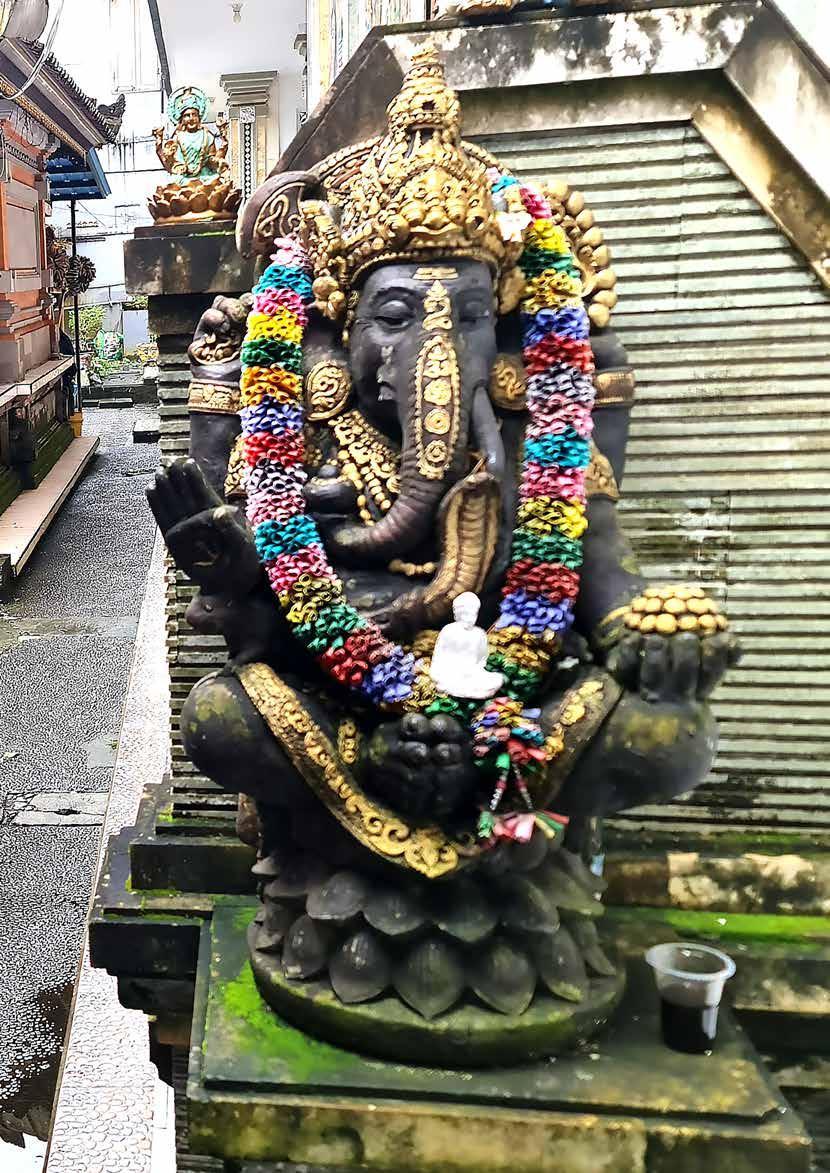
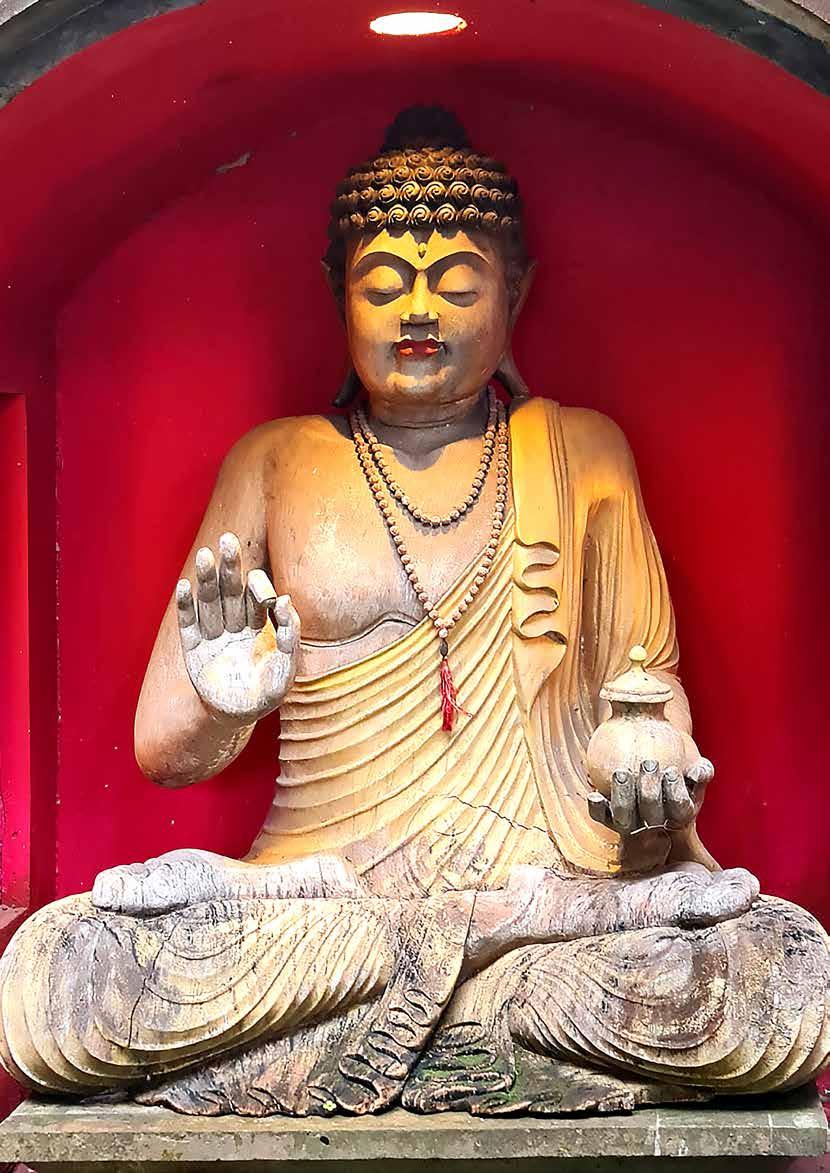
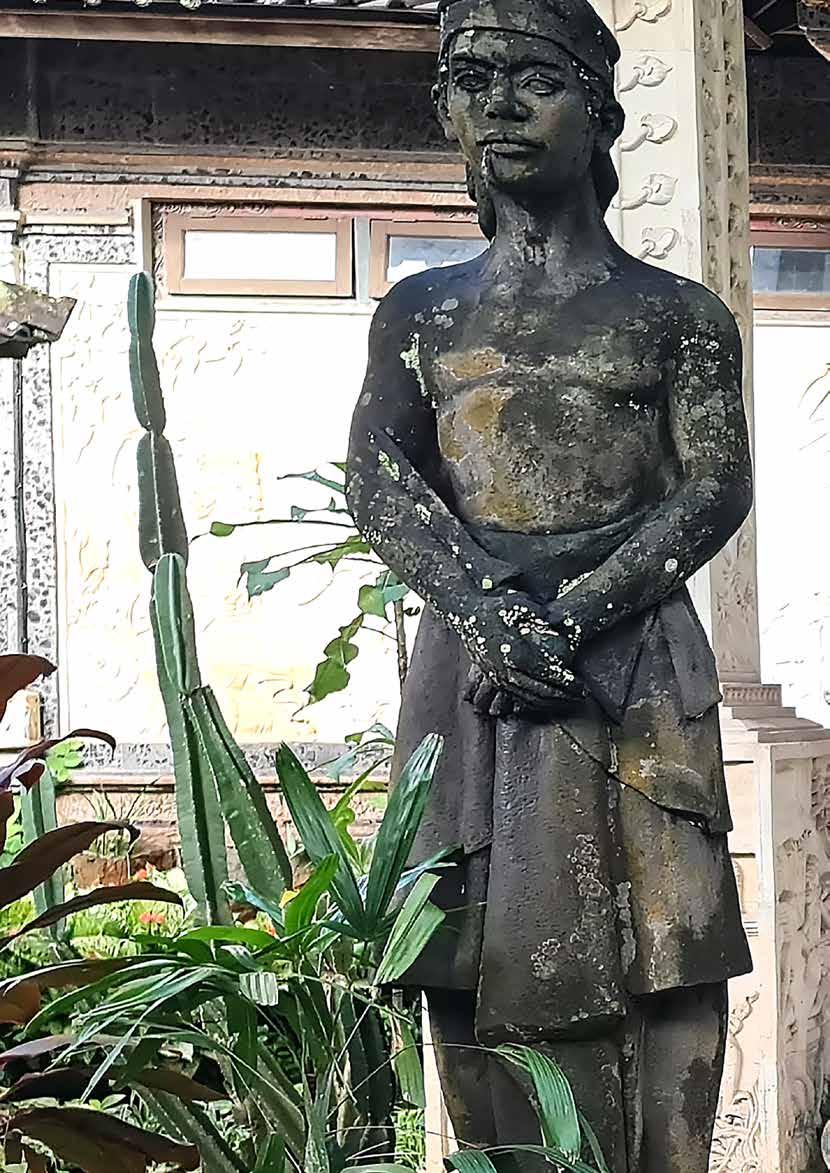
True, Ubud does retain some vestiges of a Hindu, and occasionally Buddhist, past but the statues are mostly newly carved, not ancient. The smiles are fleeting and the polite enquiries about your country of origin quickly turn to your tourist wants.
I can practically hear the Cambodian refrain of ‘tuk tuk, sir’. There was a lot of pandering to a western styled ‘Eat, Pray, Love’ (Elizabeth Gilbert) Karma Cola (Gita Mehta) styled pseudo-spiritual materialism here. And there was a very thin veneer of what had once been called ‘New Age’ pseudo-spirituality, with yoga classes, lit scented candles, and (my imagined) whiff of patchouli , gamelan music and drum circles - an echo of Siem Reap, if ever there was one, and its taking advantage of that city’s proximity to the ‘ancient’ city of Angkor and its Wats (in Cambodia). Ed
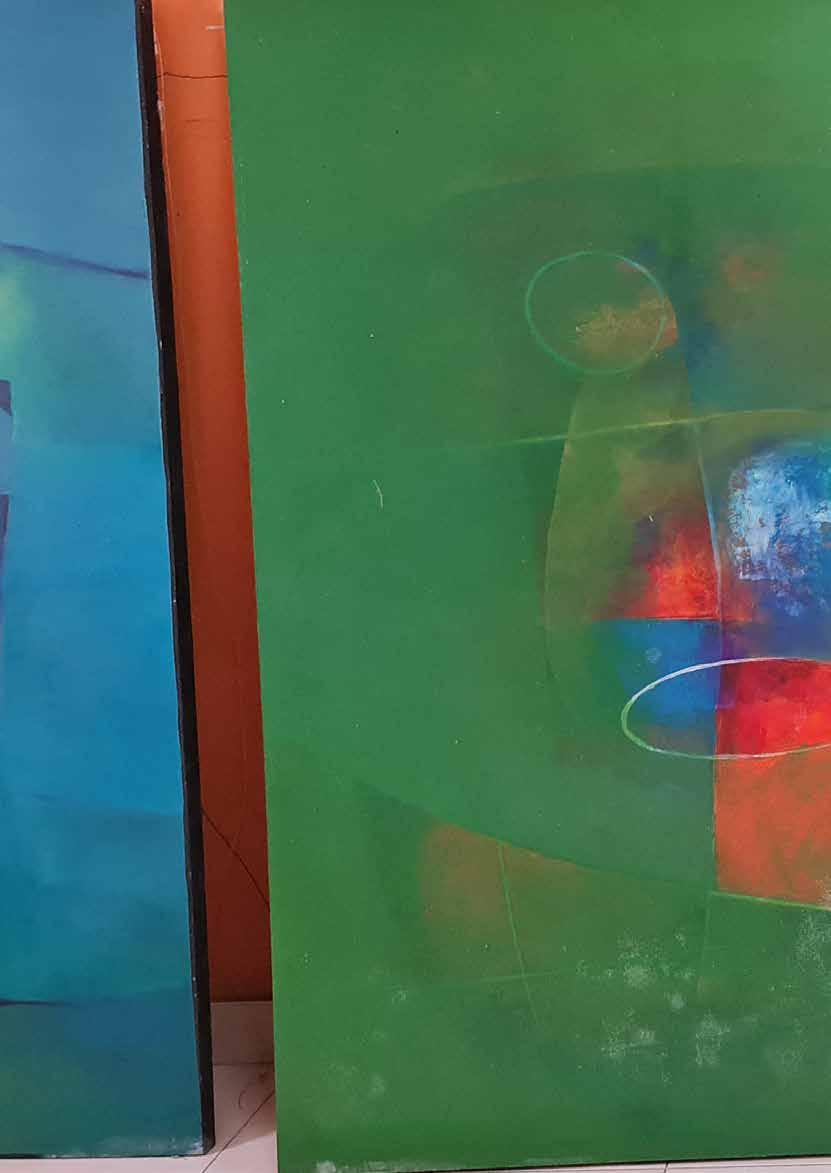
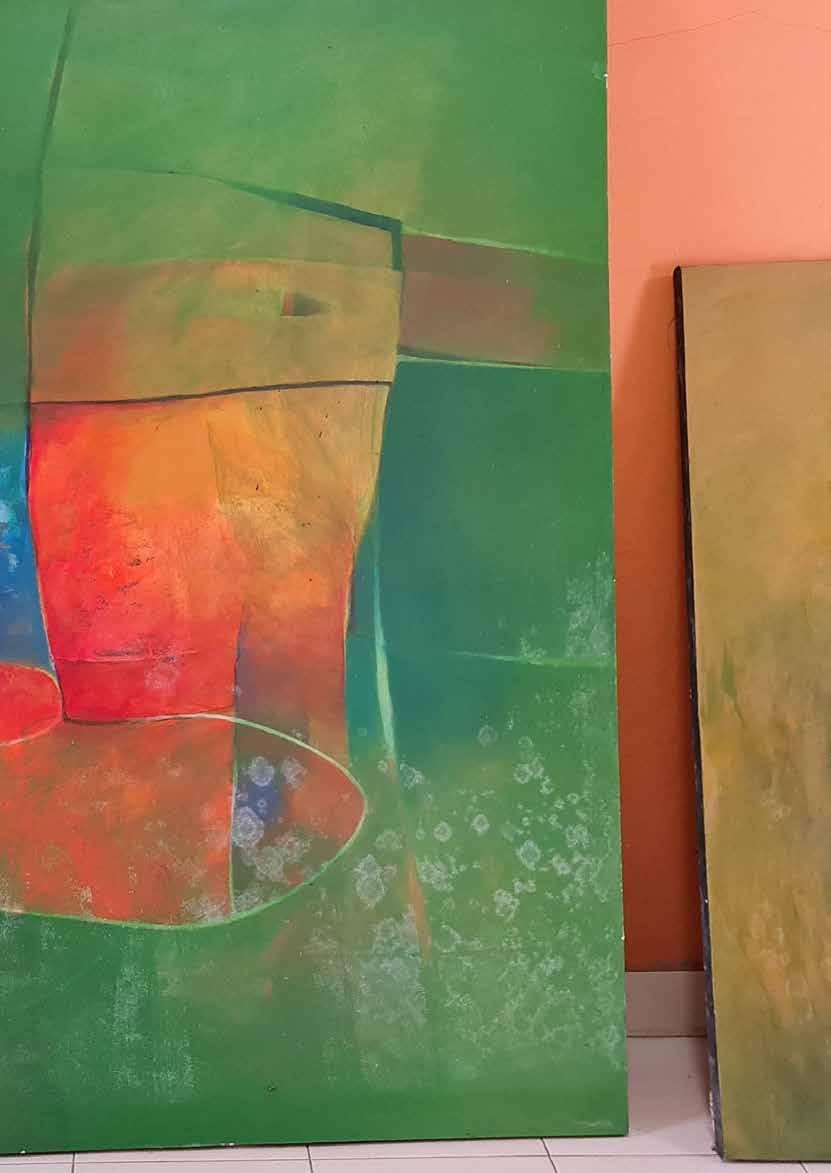
in the studio of Wayan
Gede Susana
in the studio of Wayan Gede Susana
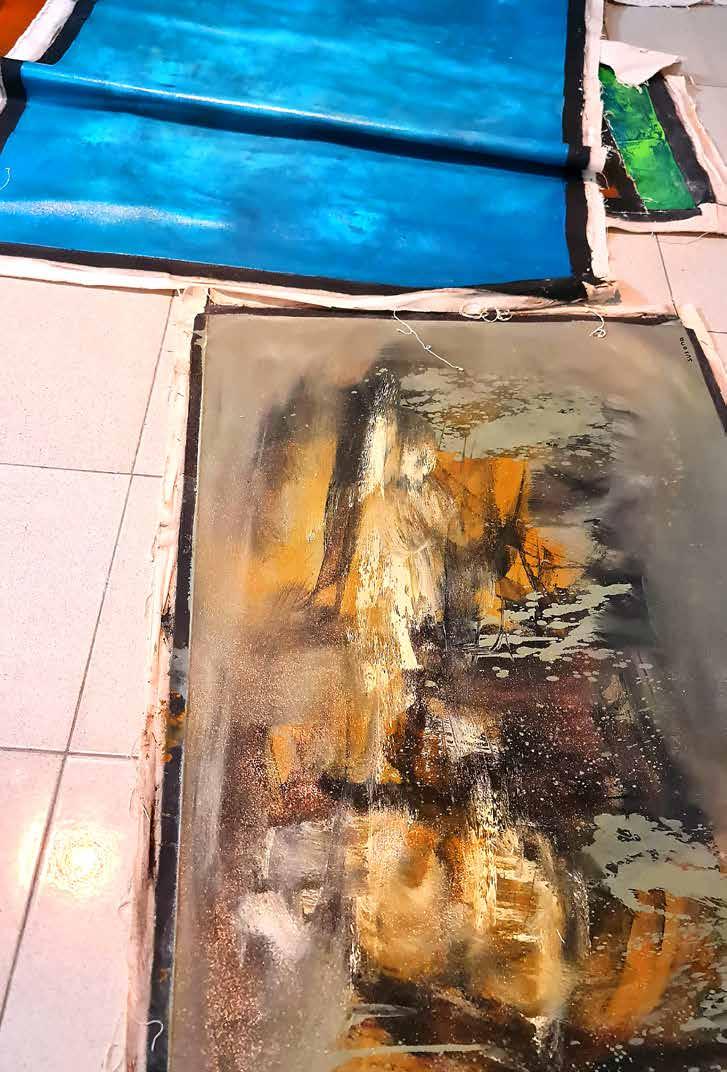
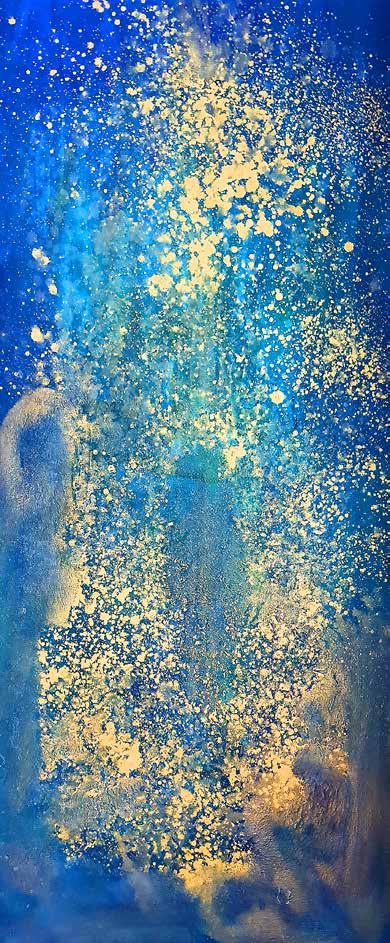
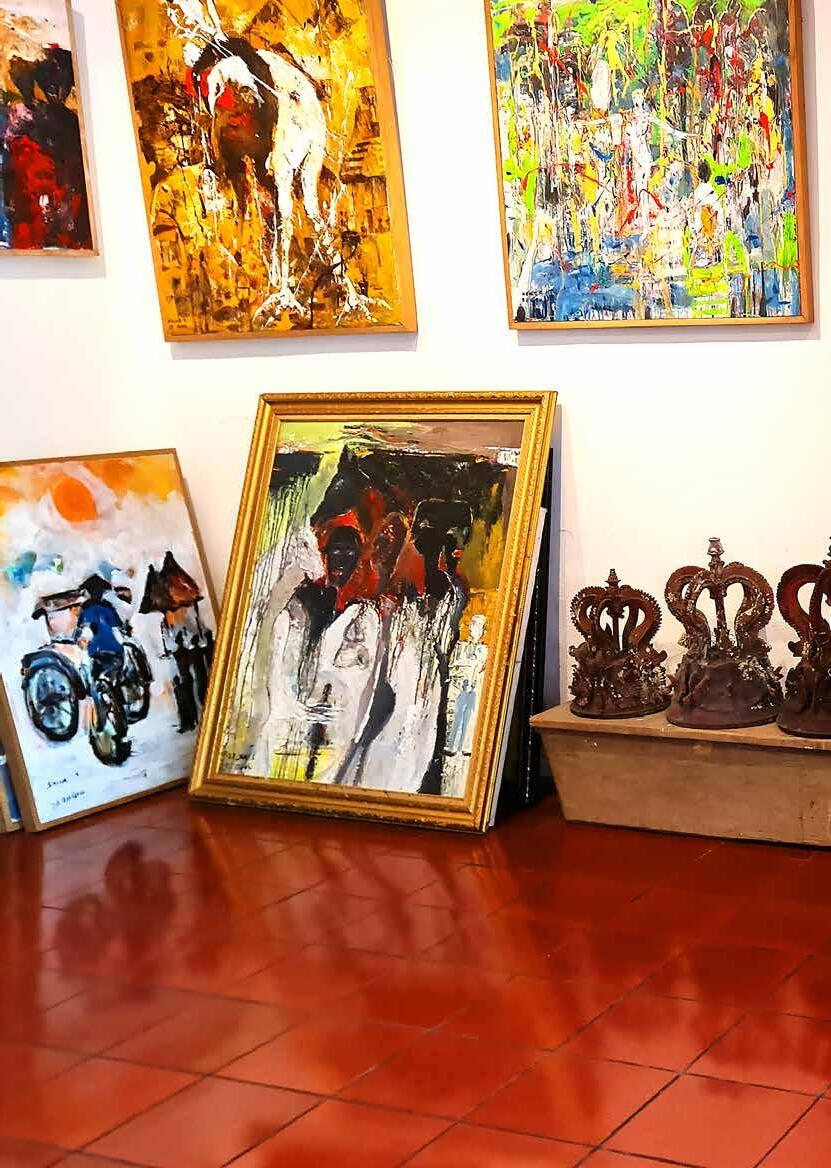
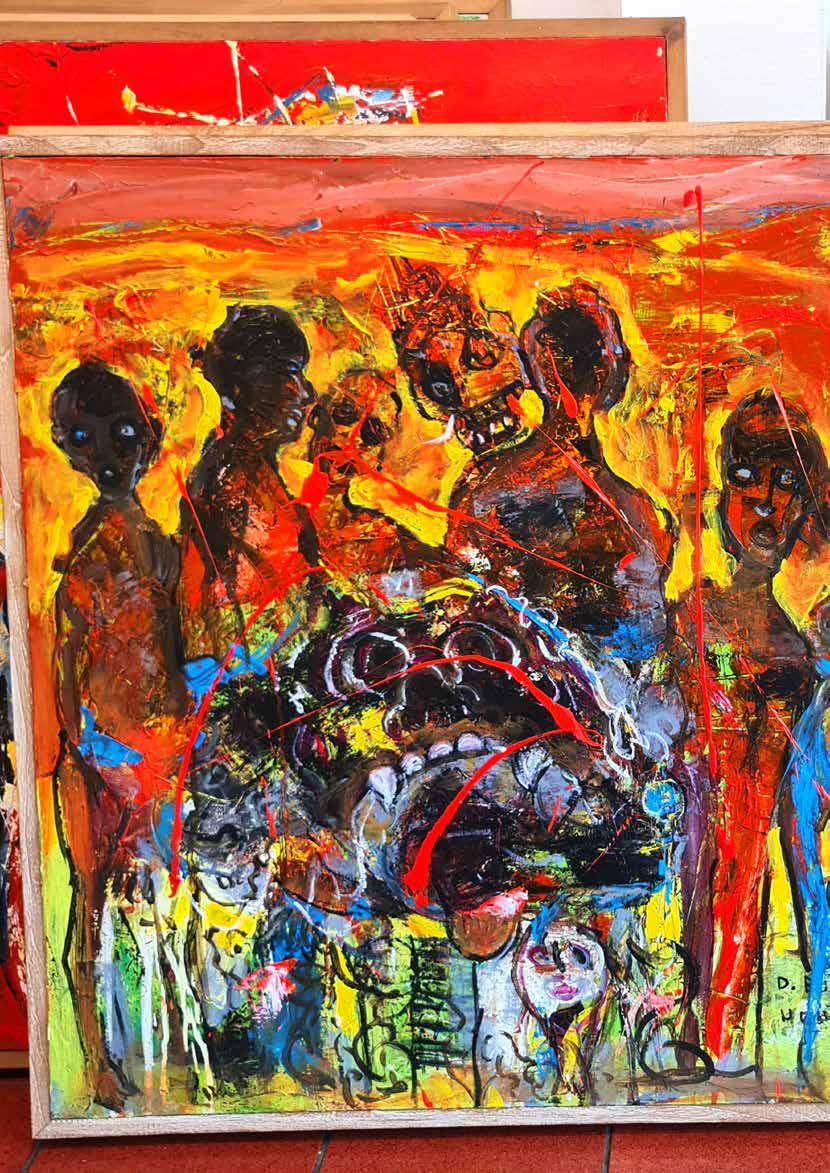
Wayan Gede Susana is a contemporary Ubud, Balinese abstract artist. He is known for his vibrant works blending spiritual themes with the natural beauty of Bali.
Born in Ubud, Bali, (1967) the artist is the latest in a long line of family painters. He has gained an international recognition for his technique of using deep, multi-layered acrylic and oil paints.
“I Wayan Gede Susana learned to paint when he was still a child. The village of Mas is known for its carvings, and learning of art is common for the young. At the age of 15, he discovered, and had an inclination towards, contemporary art. With the support from his parents and family, he turned his childhood hobby of drawing into painting and learning more about art. Upon graduating from high school, Susana channelled his talent and drive to develop his painting skills at home, and painted at every opportunity. He eventually studied Art in the Architecture Department at the Udayana University in Denpasar, Bali, where he deepened his knowledge and mastery in terms of colour, composition, texture and line.” (from Maya Gallery exhibition)
Wayan Gede Susana’s work occasionally features energetic hues of red, gold, and white and has been compared to the abstract expressions of Mark Rothko, though also noted for a distinct Balinese ambience. His work is deeply influenced by Bali, and reflects his journey of both artistic and spiritual peace.
He primarily works with acrylic on canvas and oil colours, often employing palette knife techniques too.
Gde Ardhana)
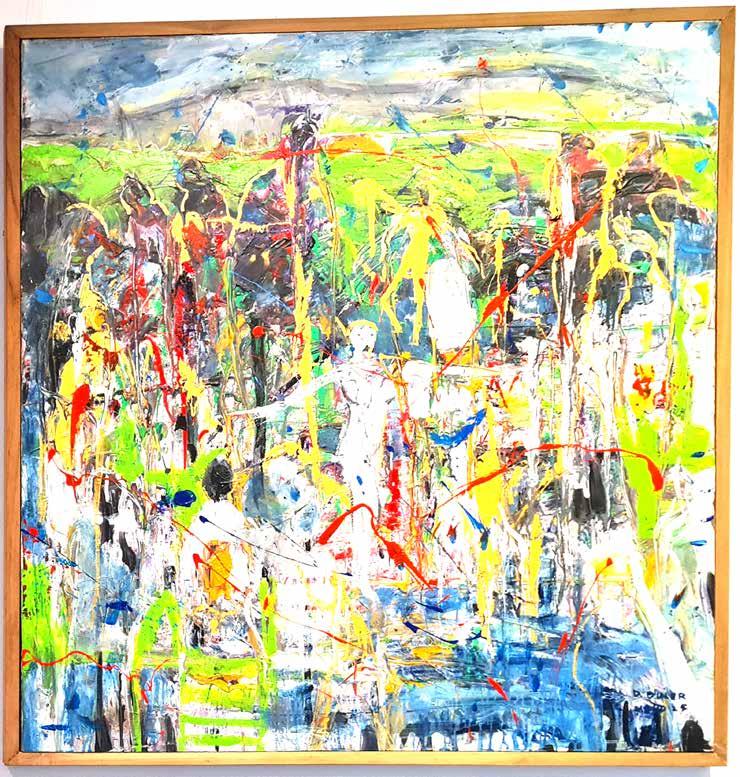
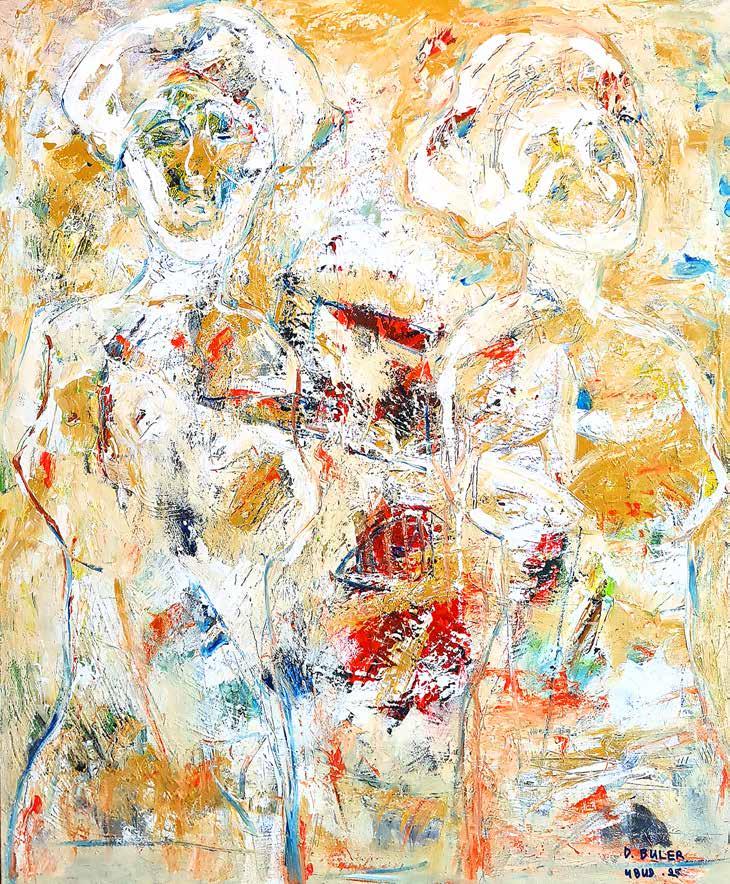
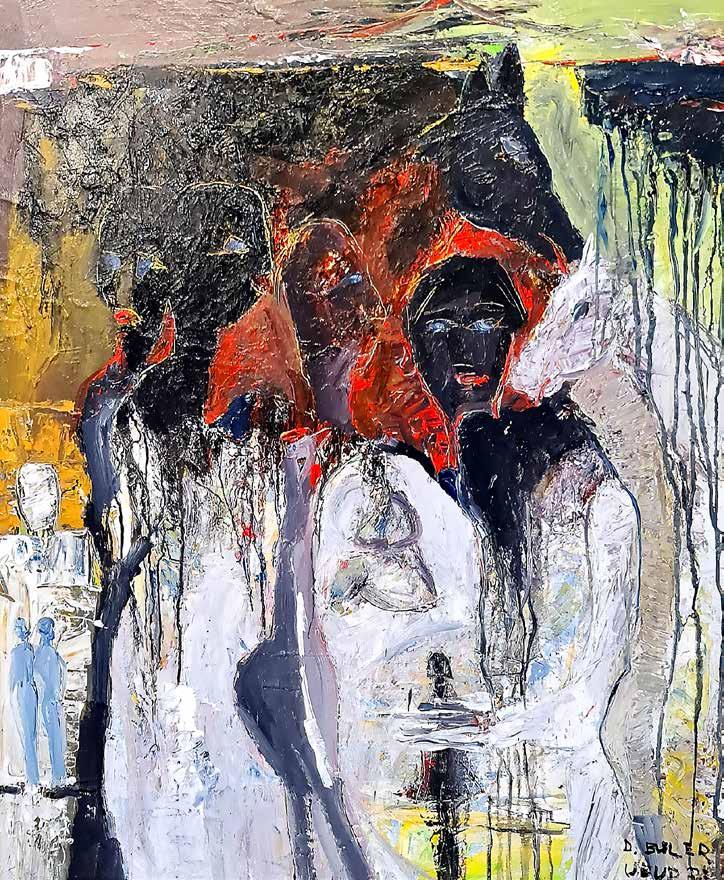
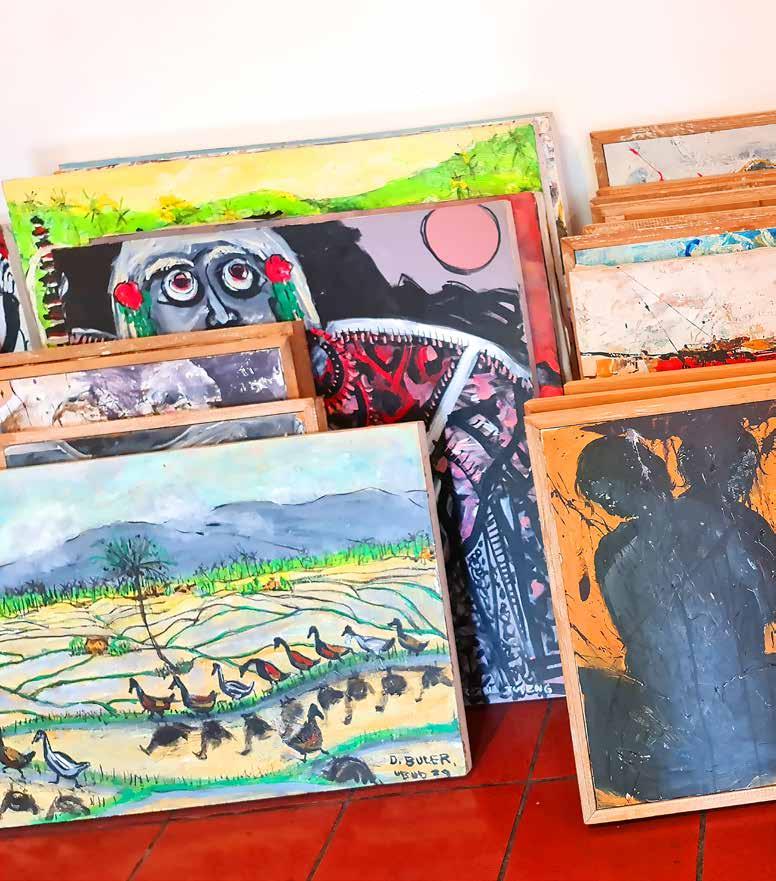
D’Buler (Dewa
Gde Ardhana)
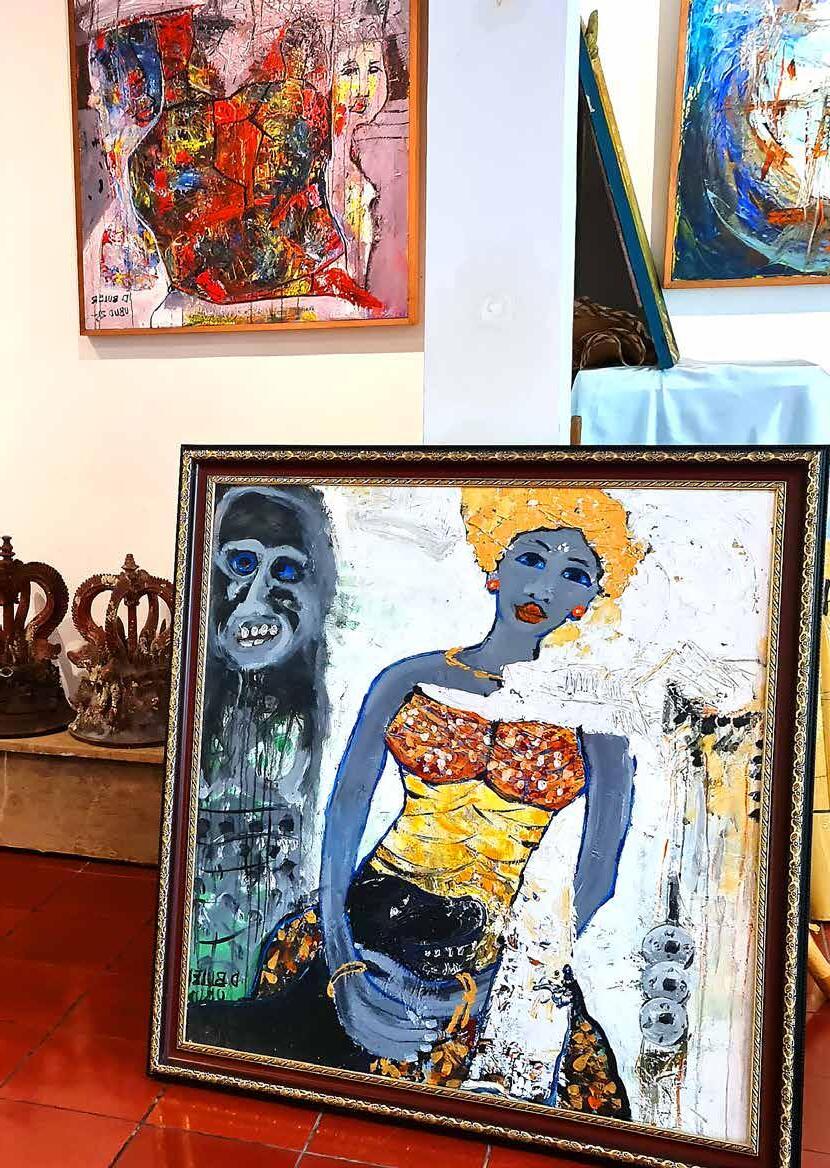
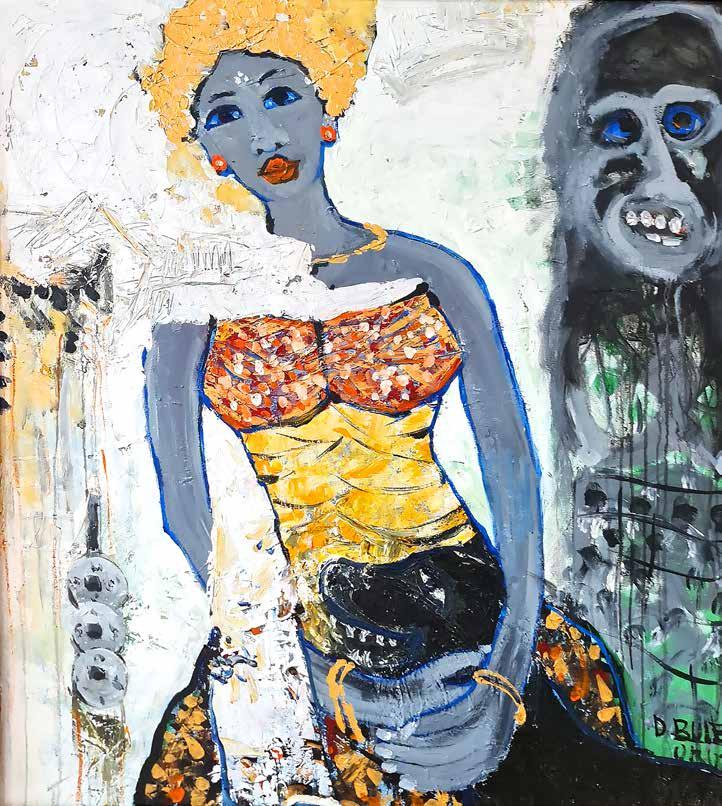
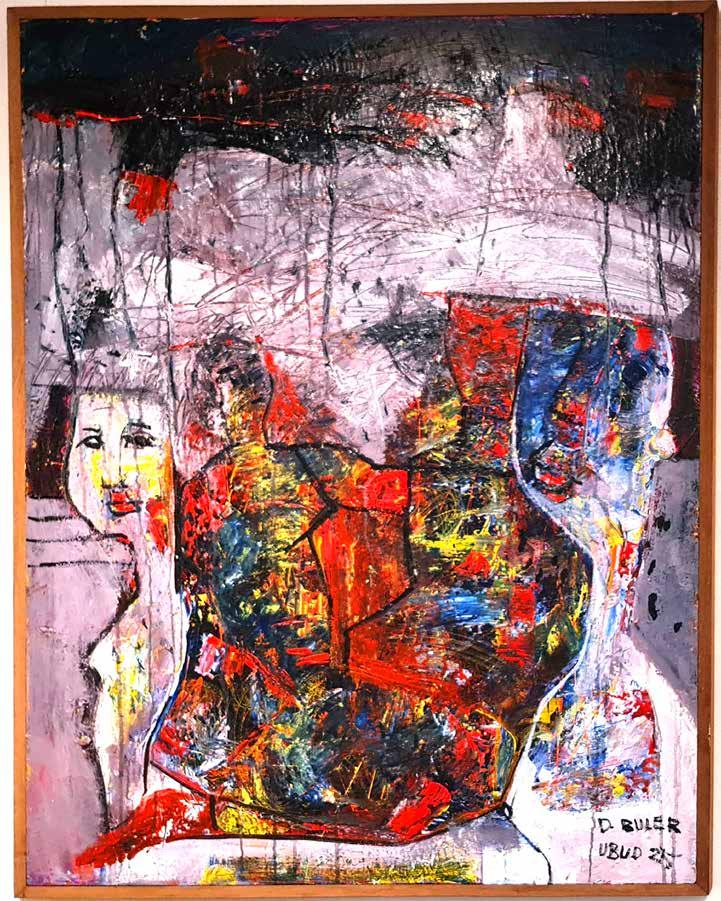
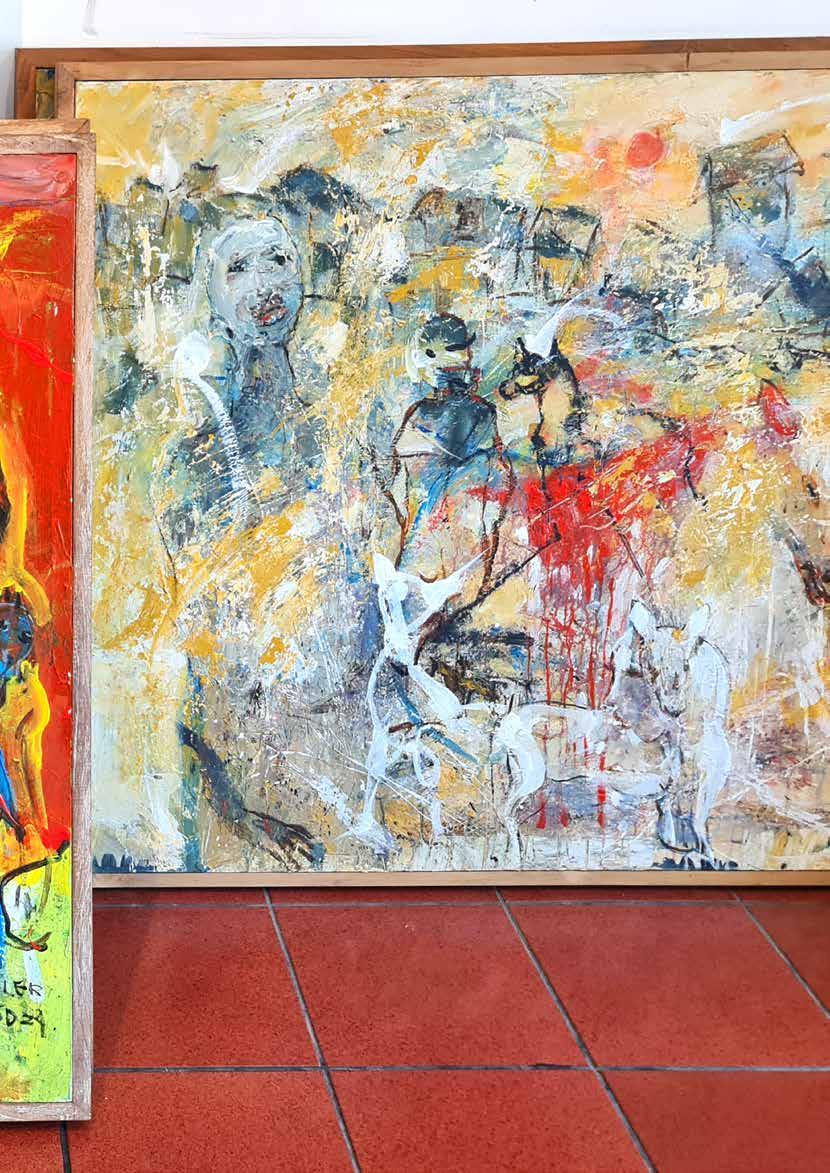
The late Gusti Nyoman Lempad and Dewa Kompiang Penangin were relatives. Dewa Gde Ardhana, was born in 1952, and is the grandson of Dewa Kompiang Penangin, and inherited most of his talent from his ancestors. Ardhana initially worked as local government officer, mainly tasked for agricultural water-irrigation designing.
He took early retirement in 2004 at the age of 52 years. Although hardly exposed to main stream media, he has built a close relationship and network with many local and global artists who spent their time in Ubud.
He could not deny having inherited talented blood from his grandfather and former ancestors. Today, Gde Ardhana paints stories of local life. He received the nick-name D’ Buler (or foreigner,) from his friends and has since used this as his painting signature.
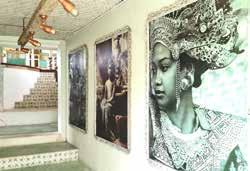
His son, Gde Putrawan, has built a small gallery within the family house complex, at Ibu Rai Galley (72nd Monkey Forest Street Ubud), and has displayed all his father's paintings. there. Ibu Rai Galley, is named for Putrawan’s beloved grandmother.
Ibu Rai Gallery
Monkey Forest Road, 72, PO Box 153 Ubud 80571 Bali What’s App +628123667293 or +628123988157
UBUD ARTS
UBUD ARTS
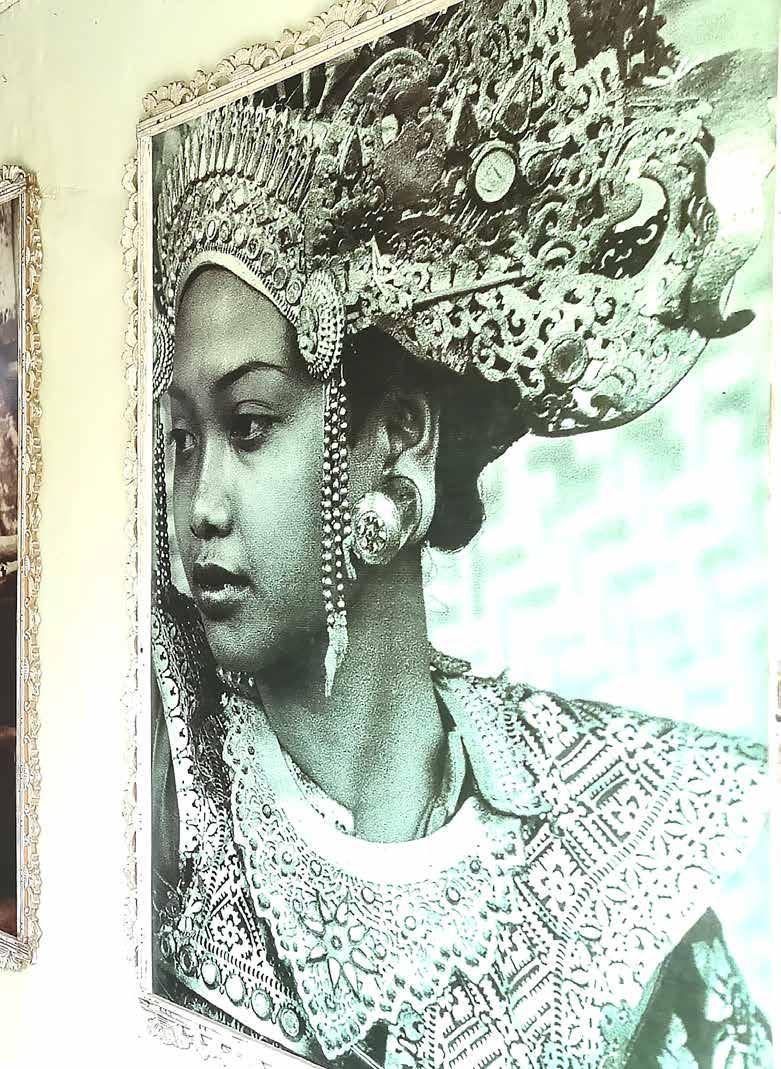
In 1937, Miguel Covarrubias had written in his book ‘Island of Bali’...
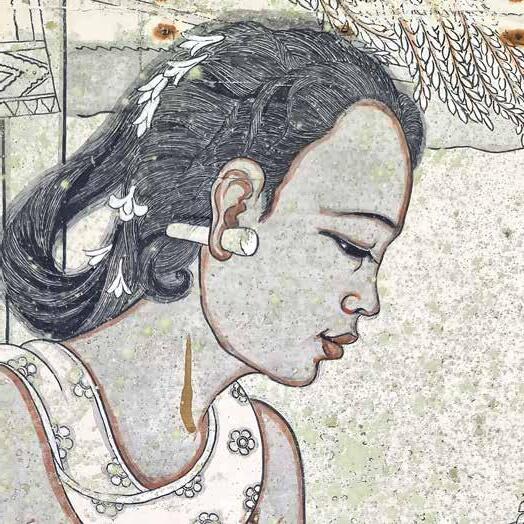
“The Balinese obtain their artistic standards of beauty from ancient Java, and for centuries there has been only one way to treat a beautiful face; which they have, curiously enough, come to identify with themselves. Once, discussing the facial characteristics of various races with the Regent of Karangasem, a man of high Balinese education, he asked me how I drew a Balinese.
He disagreed with my conception and proceeded to draw one himself, a face from the classic paintings and a type that could not be found on the whole island. Within these conventions, Balinese art is realistic without being photographic -that is without attempting to give the optical illusion of the real thing Thus there is no perspective and no modelling in painting, and sculpture is highly stylized. They admire technique and good craftsmanship above other points, and when I showed a Balinese friend a beautiful sculpture I had just acquired, he found fault with the minute parallel grooves that marked the strands of hair because in places they ran together.”
(Island of Bali, Miguel Covarrubias, 1937, P156)
An hour and a half’s journey from I Gusti Ngurah Rai International Airport, (aka Denpasar International Airport and Bali Airport), Ubud lays in the central highlands of Bali.
In the 1870s, the arts of Ubud, Bali, had been largely driven by traditional forms anchored within religious and royal patronage. These arts pre-dated the “modernist” movement began in the 1930s. Previously, paintings had revealed stories from Hindu-Javanese epicsthe Ramayana and Mahabharata, alongside in indigenous folklore like the Malat or Brayut stories. Those artists had used natural dyes (red from volcanic rocks, blue from indigo, black from
soot) on materials like bark paper (daluwang), cloth, or wood. In the late 19th-century era, artists like I Dewa Nyoman Mura (born 1877) and I Dewa Putu Kebes (born 1874), had been trained in classical traditions.
Wijnand Otto Jan (W.O.J.) Nieuwenkamp (1874–1950) was a Dutch artist, explorer, and ethnologist who is recognized as being one of the first European artists to visit and extensively document Bali (1904).
Nieuwenkamp had supported a German doctor and amateur photographer Gregor Krause. Together, they held the first exhibition of Balinese Art, in Amsterdam, in 1918. Krause’s subsequent 1920 book, ‘Bali 1912’, featured many of these photographs, and is widely accredited with inspiring many later artists to travel to the island.
During the 1930s, ‘Modern’ Balinese art in Ubud had actually began in North Bali in the 1870s with Van der Tuuk and W.O.J. Nieuwenkamp, who had contributed to the introduction of modern art to North Balinese artists. The interaction between the two men and the local artists gave birth to arts that are significantly different from traditional arts in Bali.
During the late 1920s and 30s, the Balinese royal family - brothers Tjokorda Gde Agung Sukawati and his brother Tjokorda Raka Sukawati, had invited Western artists Walter Spies (who moved permanently to Bali in 1927 after living in Java) and Rudolf Bonnet (who first arrived in Bali in 1929 after being inspired by the work of W.O.J. Nieuwenkamp). to foster a new artistic community.
In his lecture ‘A Very Peculiar Practice’ (SOAS, 2010), Mark Hobart mentions...
“Among the musicians, artists and playboys who visited or stayed, perhaps a special mention should go to the musician and artist, Walter Spies,who had close links to the German artistic movement in Hellerau. Spies settled in Bali and set about creating a school of Balinese painting and a style of imagining the island.
Not only were celebrities such as Charlie Chaplin ,Noel Coward, Woolworth Hutton offered Spies’s view of Bali, but so were scholars like Bateson and Mead. Most histories of the period represent Europeans as sowing creative seed into the fecund, but largely passive, native imagination. Balinese accounts, by contrast, dwell on how they realised that foreignersthe new rajas - wanted art. As they had no idea that what they did was called ‘art’, they went off to find a cultural broker, which ended with them enticing Spies to Bali. The 1920s and 30s became an extraordinary, effervescent period for the arts, with royal power sufficiently weakened as to enable ordinary Balinese to participate - sometimes unwittingly.”
Mark Hobart ‘A Very Peculiar Practice’ (SOAS, 2010),
Part of the excitement to the Dutch, who came from a waterlogged country, was that the Balinese had highly developed irrigation systems (which they mistook for drainage!).
The Dutch introduced Western techniques to local painters, encouraging a fusion of styles which championed the modern Balinese painting tradition and established The Pita Maha Foundation (formed in 1936) by Bali’s royal family, Spies, and Bonnet, and local artists like I Gusti Nyoman Lempad, who blended traditional Balinese styles with modern influences, establishing what has become know as an “Ubud Style” of painting.
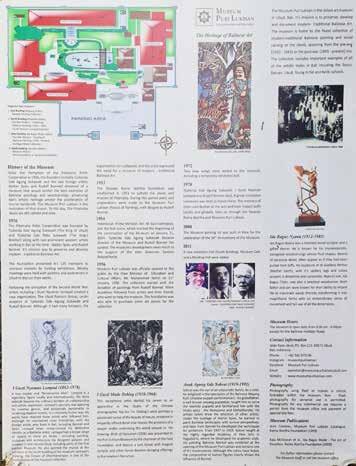
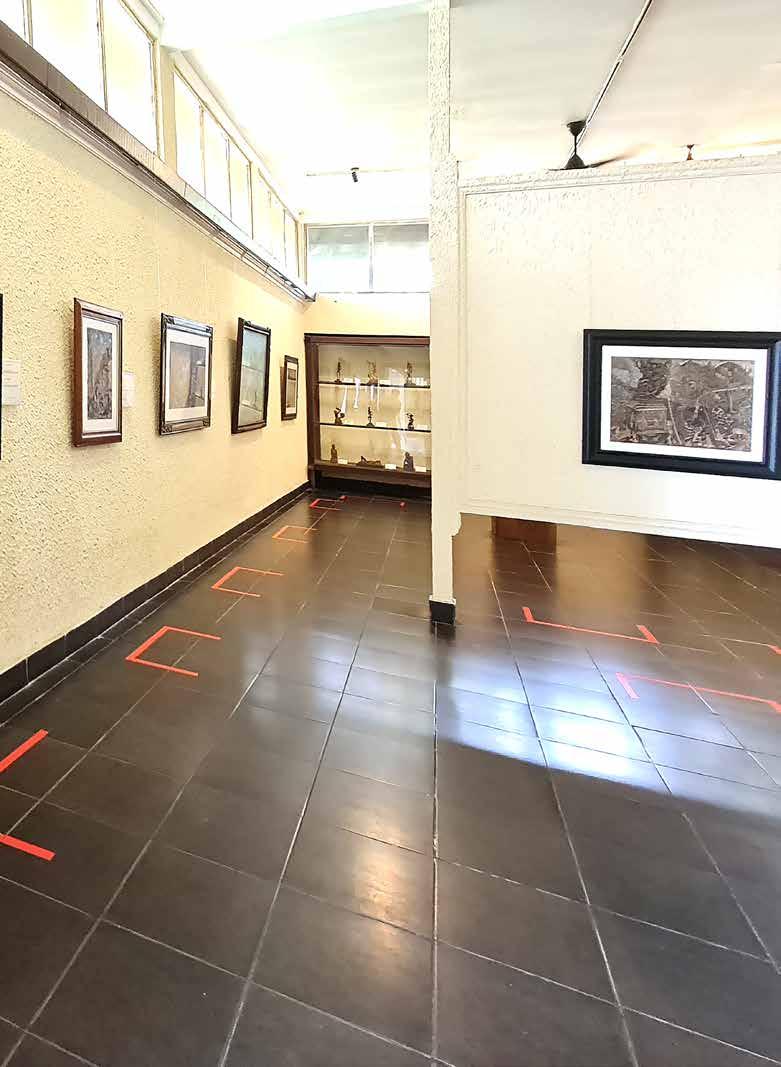
“The Museum Puri Lukisan is the oldest art museum in Ubud, Bali. It’s mission is to preserve, develop and document modern-traditional Balinese Art.
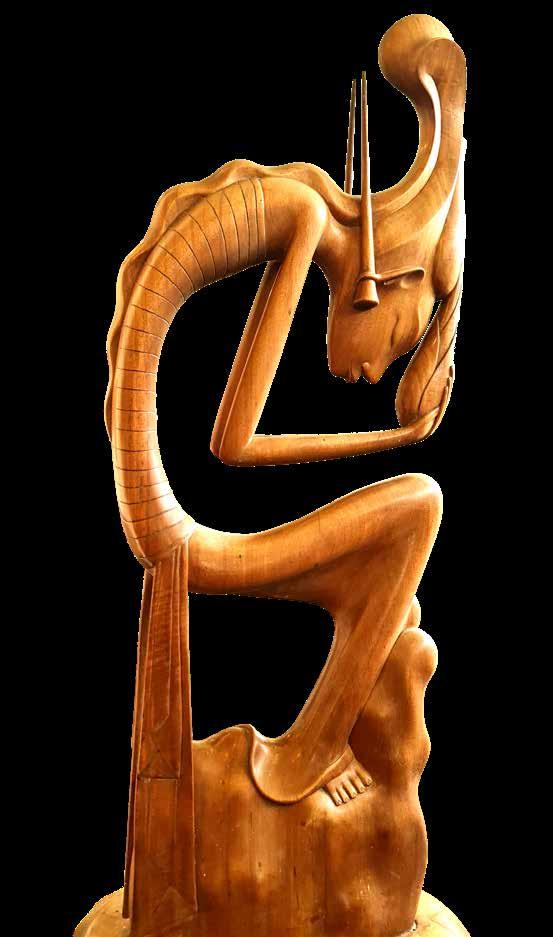
The museum is home to the finest collection of modern-traditional Balinese painting and wood carving on the island, spanning from the pre-war (1930 - 1945) to the post-war (1945 - present) era.
The collection includes important examples of all of the artistic styles in Bali including the Sanur, Batuan, Ubud, Young Artist and Keliki schools.
Since the formation of the Pitamaha Artist Cooperative in 1936, the founders (notably Tjokorda Gde Agung Sukawati, and the two foreign artists, Walter Spies and Rudolf Bonnet) dreamed of museum that would exhibit the best examples of Balinese paintings and woodcarvings, preserving Bali’s artistic heritage amidst the proliferation of tourist handicraft.
The Museum Puri Lukisan is the realisation of that dream. To this day, The Pitamaha ideals are still upheld and alive.”
(From the Heritage of Balinese art, Museum Puri Lukisan Yayasan Ratna Wartha, Ubud, Indonesia.)
Ed
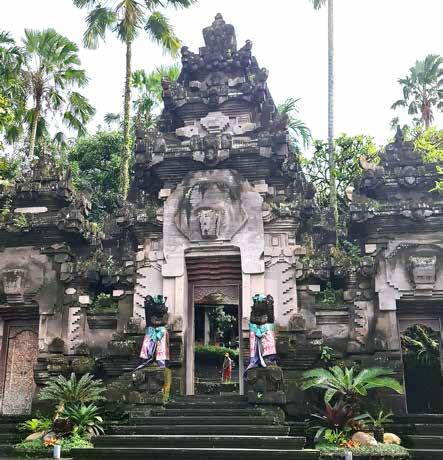
Puri Lukisan Yayasan Ratna Wartha, Ubud, Indonesia
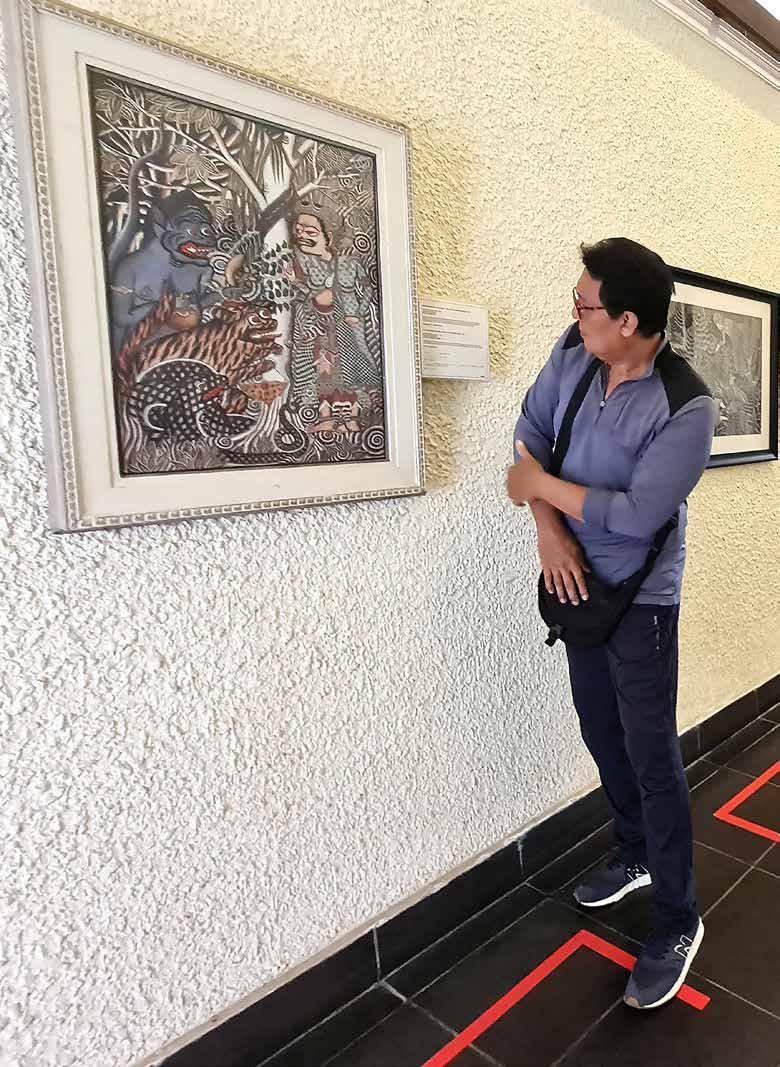
Wayan Gede Susana at Museum Puri Lukisan Yayasan Ratna Wartha, Ubud, Indonesia
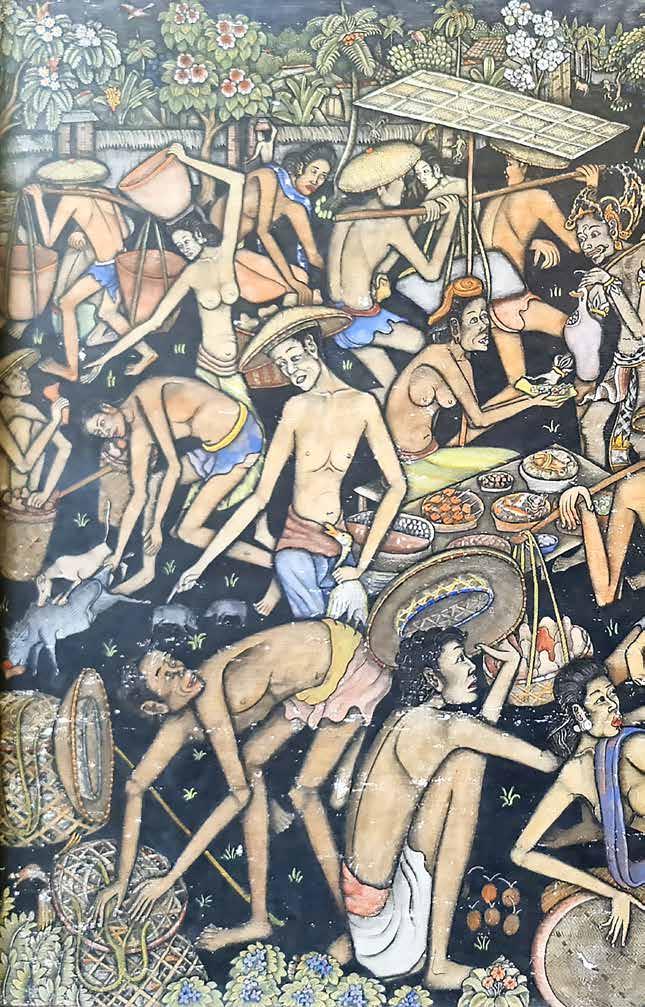
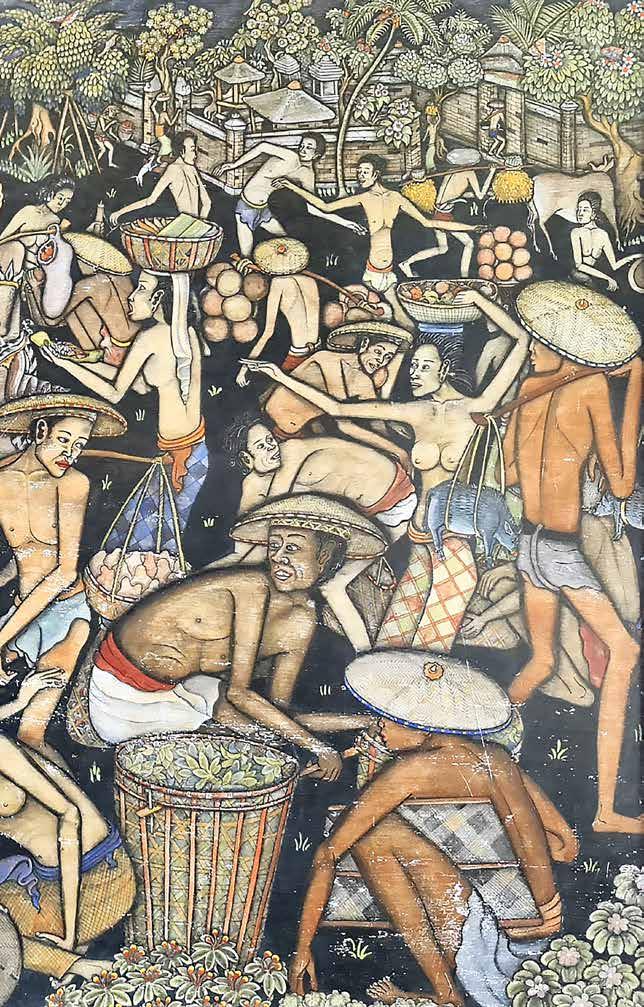
Bima at the market, I Wayan Reneh
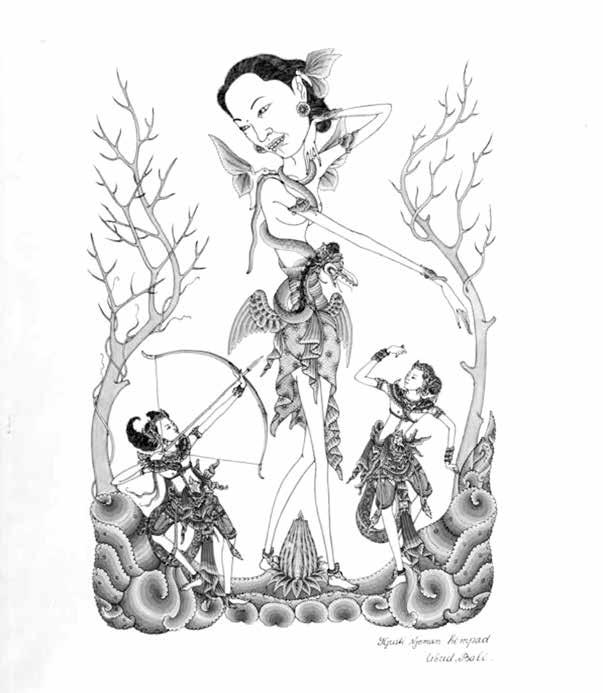
Dewi Sri by I ketut Djedeng
Part of the murals outside the ‘Pa;ace of Arts’, by I Gusti Nyoman Lempad
The Dream of Dharmawangsa 1957, I Gusti Nyoman Lempad
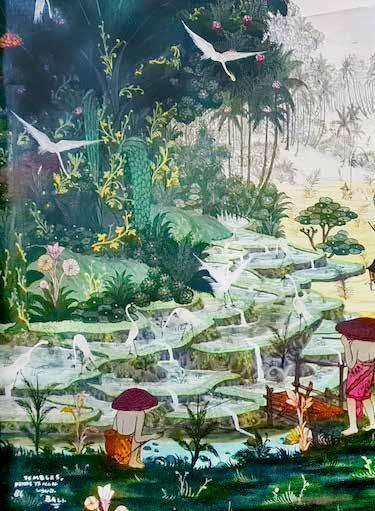
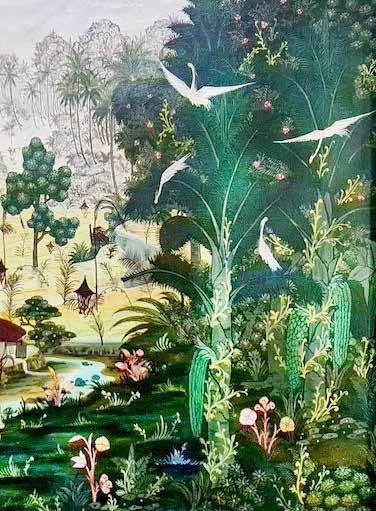
Bali forest, Tembles
Ida Bagus Njana (1912–1985) and his son Ida Bagus Tilem
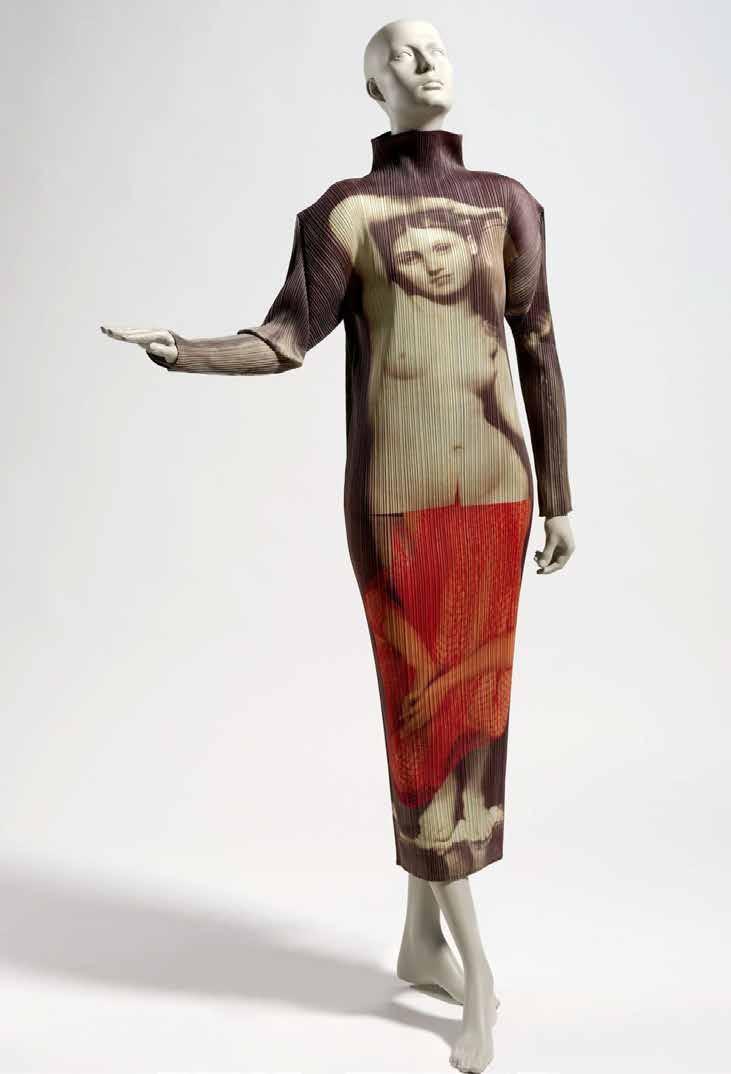
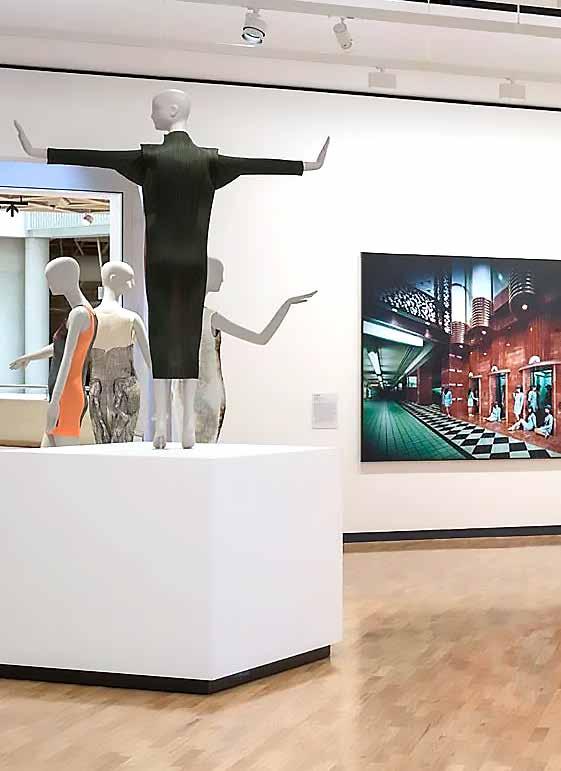
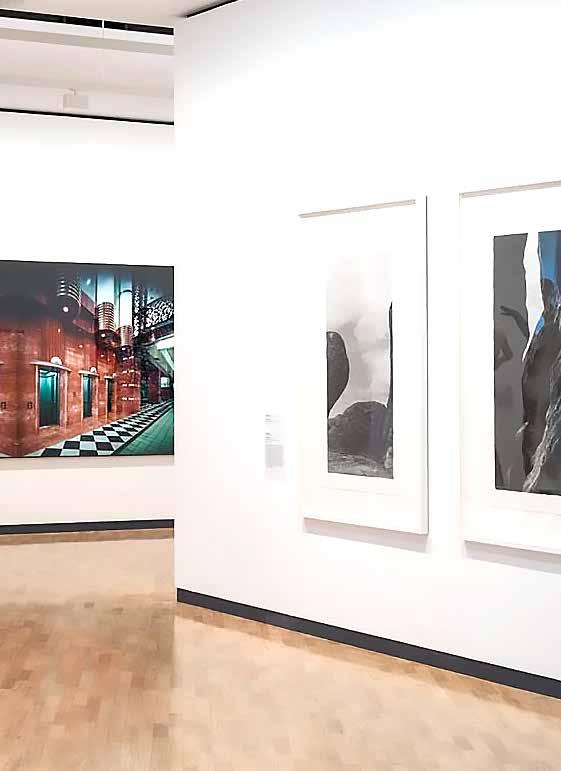
NEW ASIAN ART
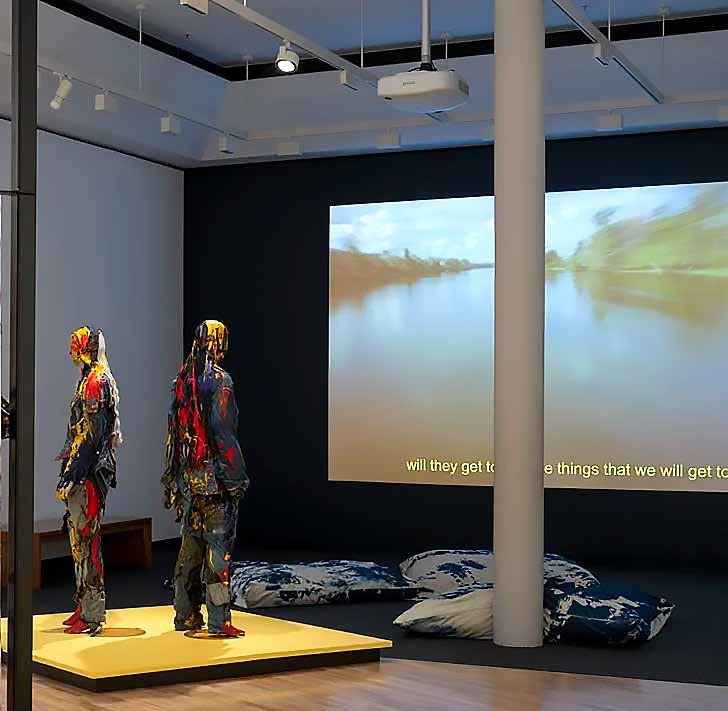
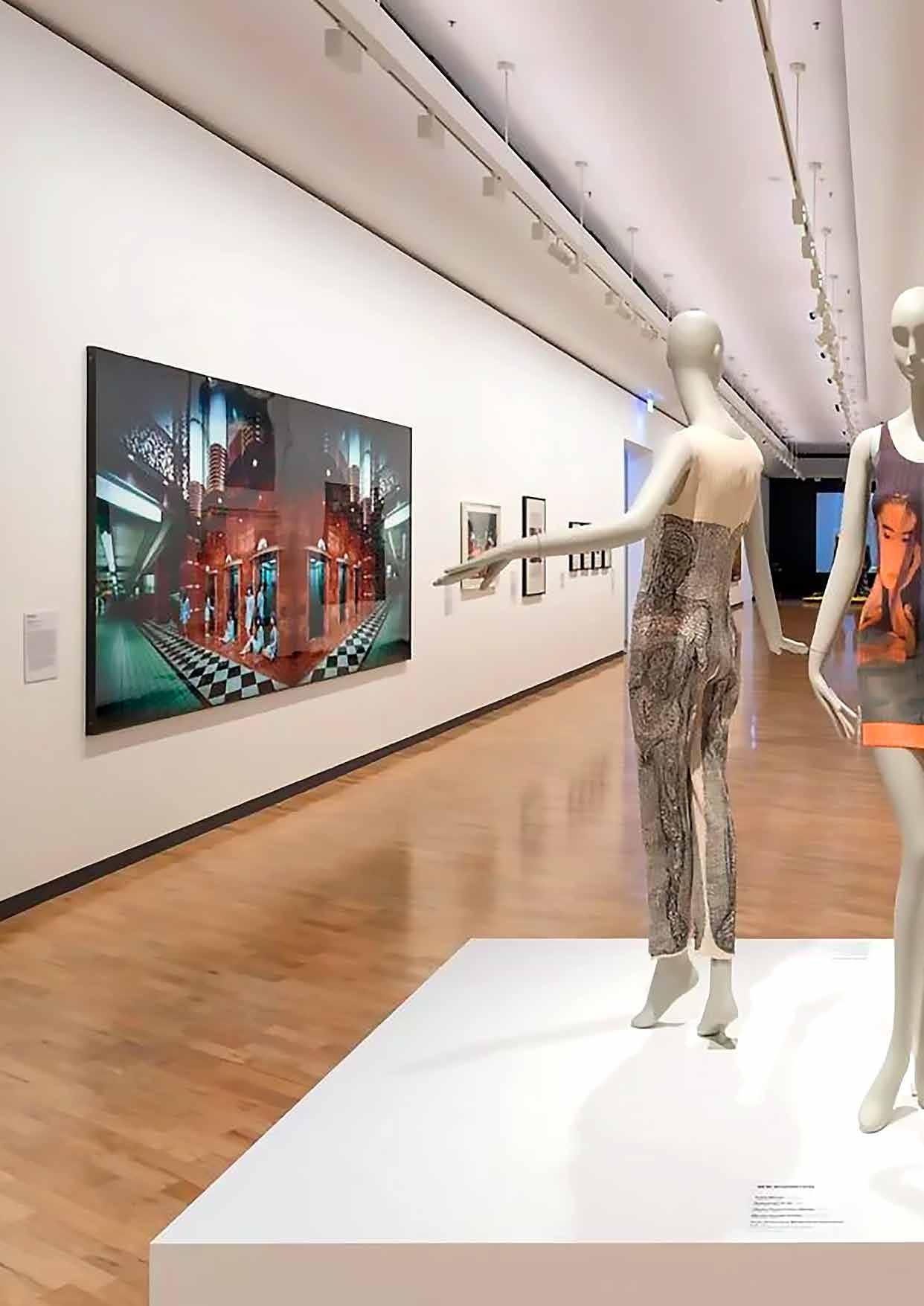
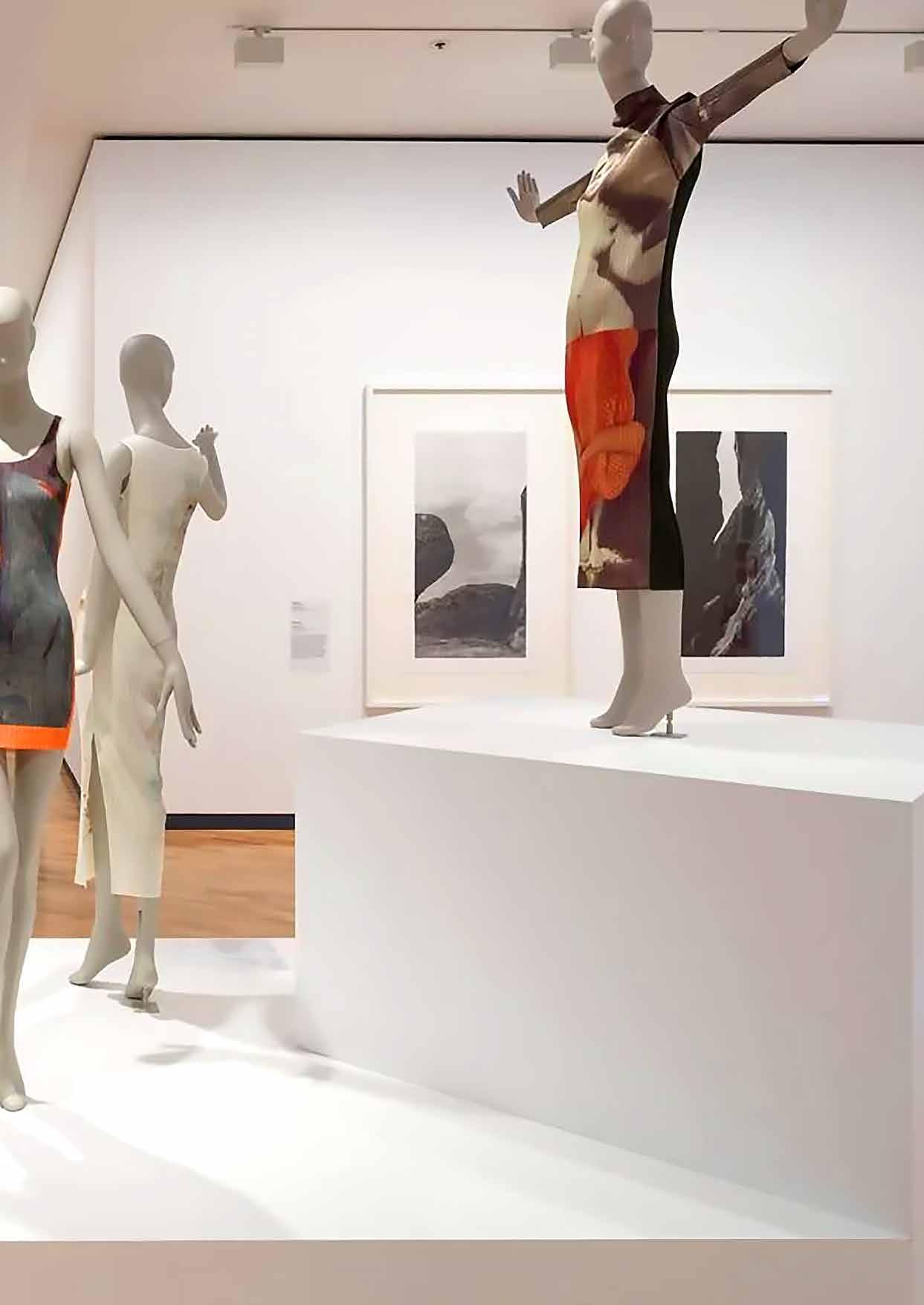
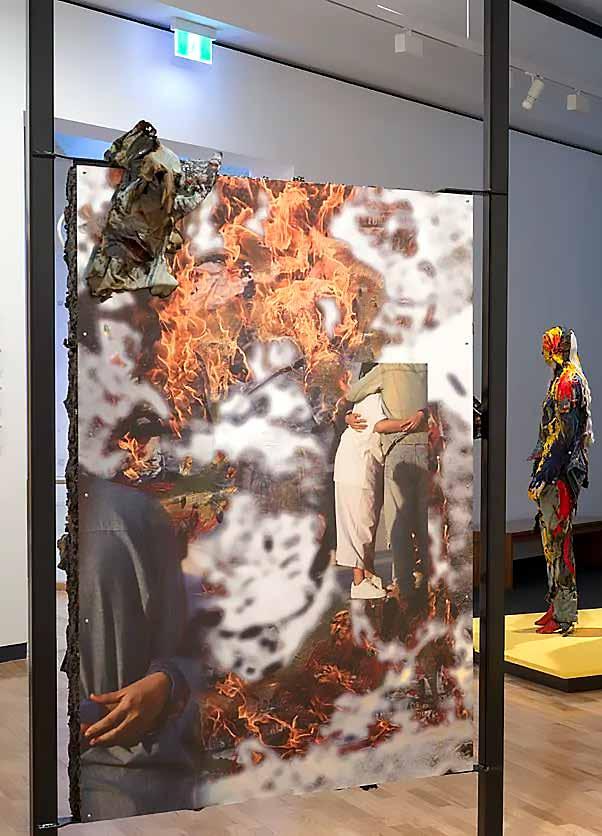
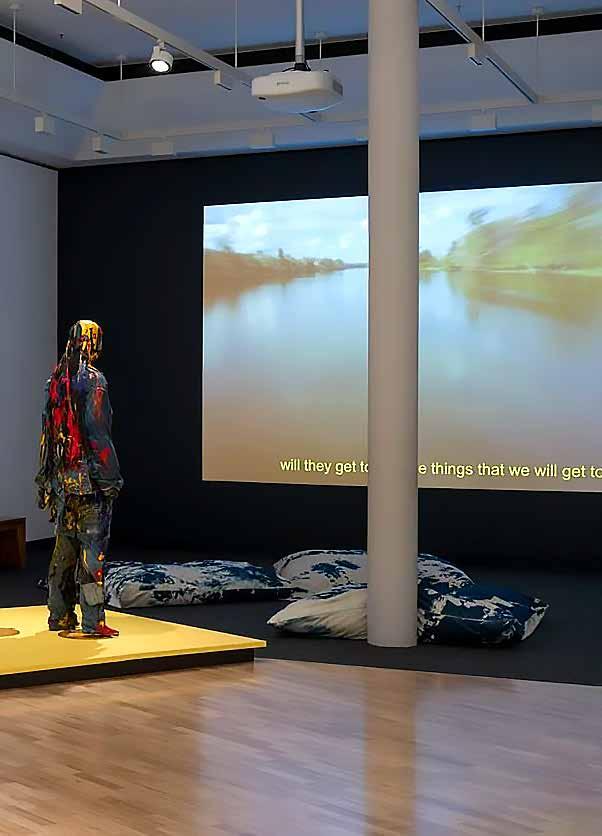
Installation view, New Asian Art, National Gallery of Australia, Kamberri/Canberra, 2025
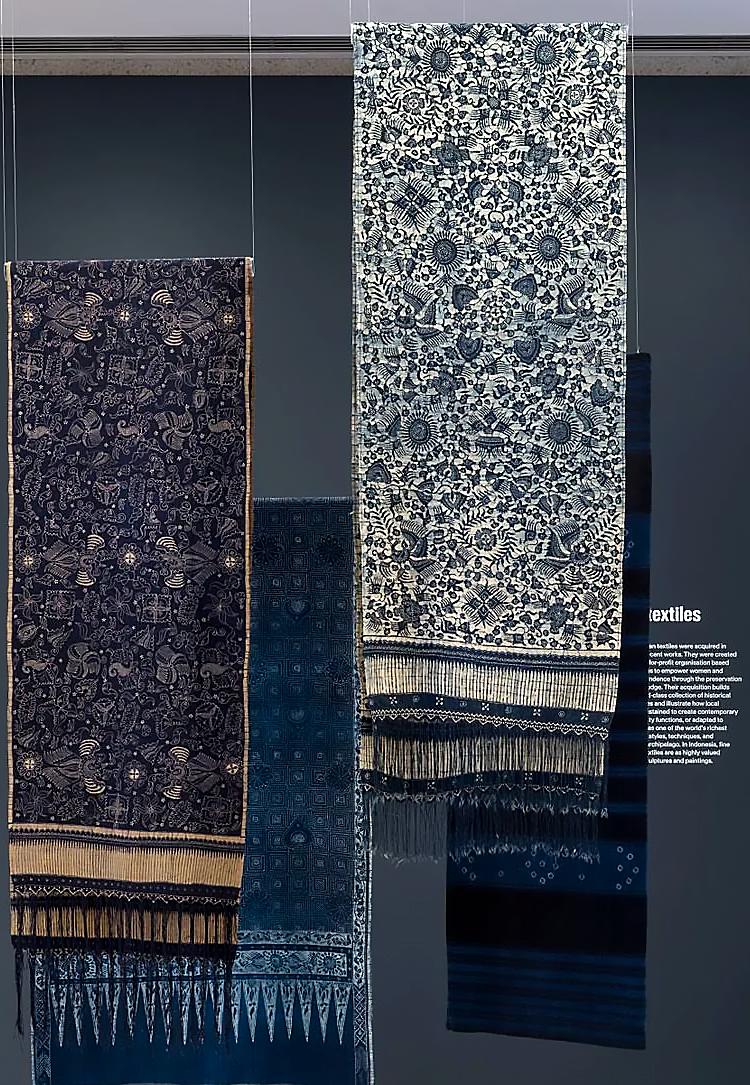
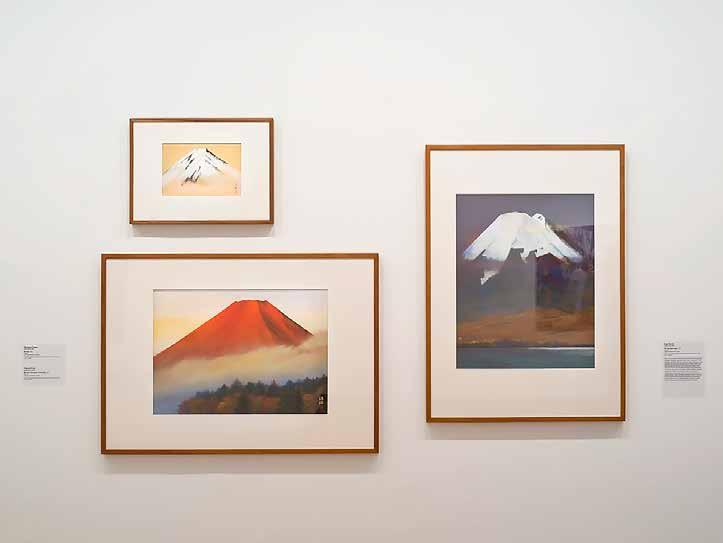
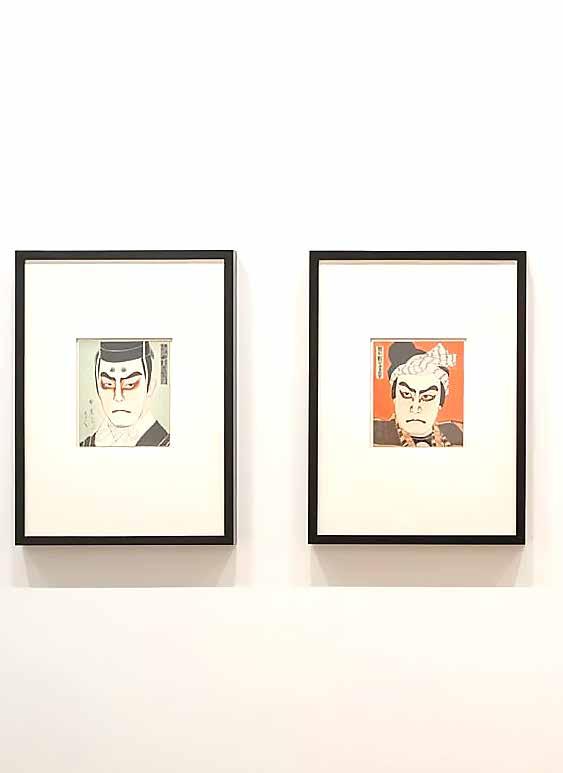
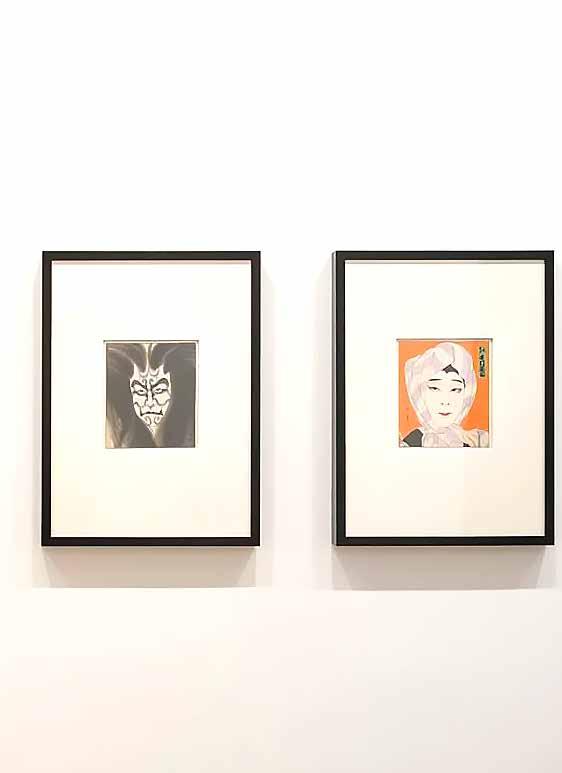
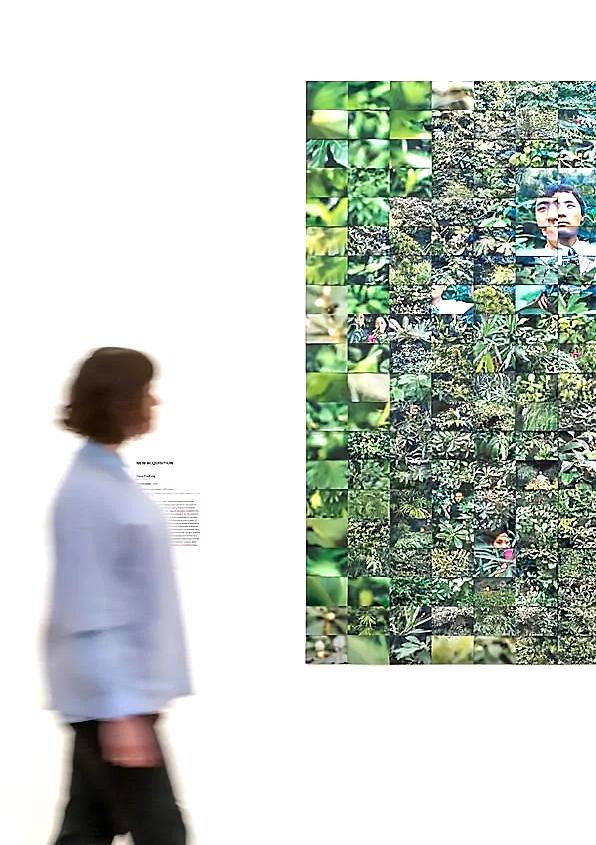
This exhibition highlights recent acquisitions by artists from across Asia and the Asian diaspora in a range of media including paintings, prints, textiles, video, photography and multidisciplinary installation. The display illustrates the diversity of artistic practice in the region through a range of works dating from c1920 to 2019.
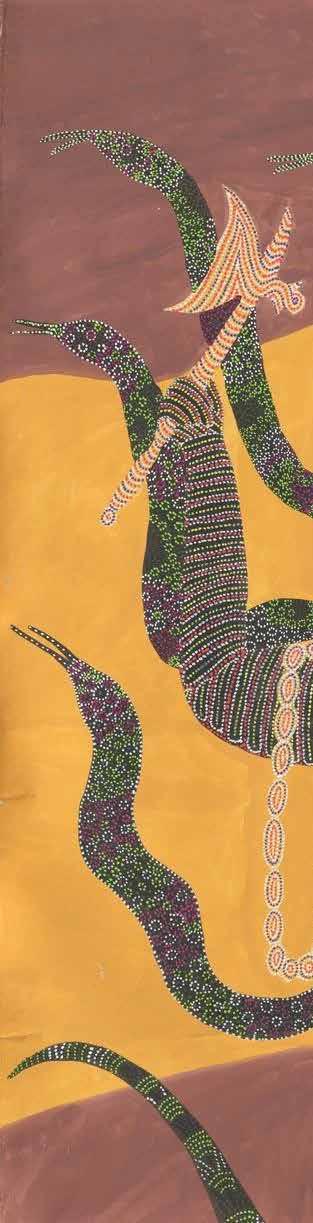
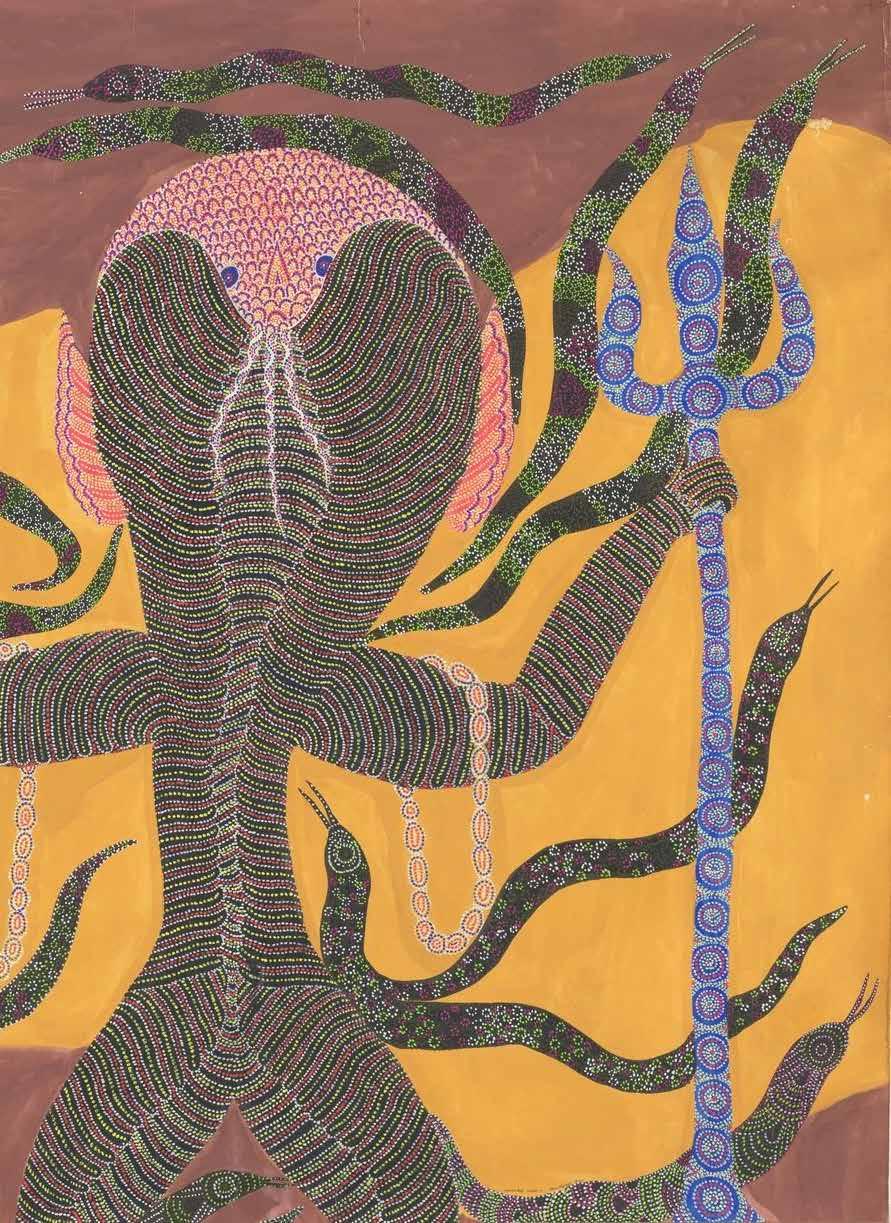
Featuring works by artists drawn from the national collection with a loan from a private collection, New Asian Art, highlights include Black Waves by teamLab, modern nihonga (Japanese paintings), contemporary photographs by Chinese, Japanese and Korean artists, and textiles from Indonesia.Artists include Korakrit Arunanondchai (Thailand); Song Dong, Hong Hao, Yang Fudong, Wang Qingsong (China); Issey Miyake (Japan) with Cai Guo-Qiang (China),Yasamasa Morimura and Nobuyoshi Araki (Japan) and Tim Hawkinson (USA); Jangarh Singh Shyam (India); Nikki S. Lee, Jungjin Lee (South Korea); teamLab, Miwa Yanagi,Tamako Kataoka, Shinmei Kato, Shiko (Japan); and Welmince Rede, Pacik, Kurampet, Warlik (Indonesia).
Installation view, New Asian Art, National Gallery of Australia, Kamberri/Canberra, 2025
Installation view, New Asian Art, National Gallery of Australia, Kamberri/Canberra, 2025, featuring: (left to right) Okumura Togyu, Mt Fuji, 1976, National Gallery of Australia, Kamberri/Canberra, gift from the International Culture Appreciation and Interchange Society ICAIS, Japan, Fukuoji Horin, Mt Fuji in the glory of morning, 1976, National Gallery of Australia, Kamberri/Canberra, gift from the International Culture Appreciation and Interchange Society ICAIS, Japan and Kato Toichi, Mt Fuji after snow, 1976, National Gallery of Australia, Kamberri/Canberra, gift from the International Culture Appreciation and Interchange Society ICAIS, Japan
Installation view, New Asian Art, National Gallery of Australia, Kamberri/Canberra, 2025
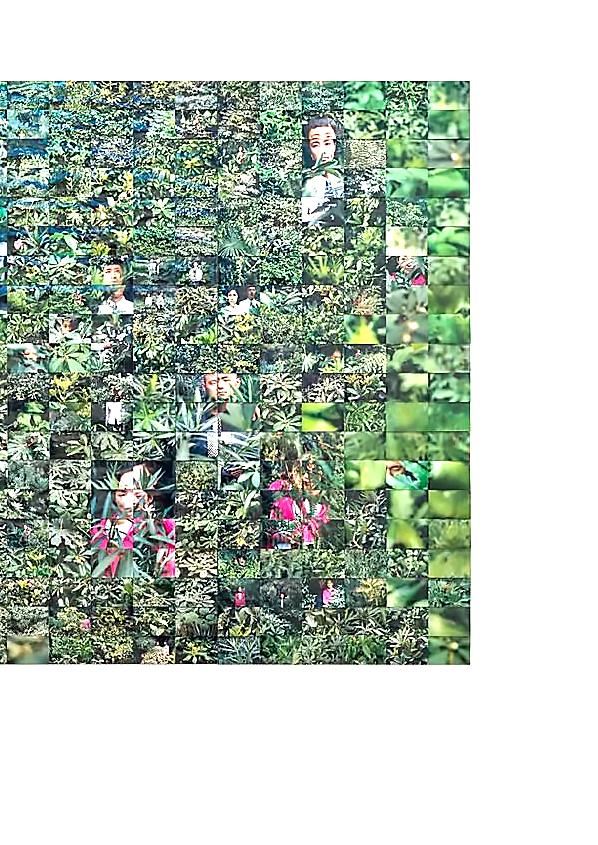
Installation view, New Asian Art, National Gallery of Australia, Kamberri/Canberra, 2025 featuring: Yang Fudong, Forest diary, 2000, National Gallery of Australia, Kamberri/Canberra, donated through the Australian Government’s Cultural Gifts Program by Dr Dick Quan
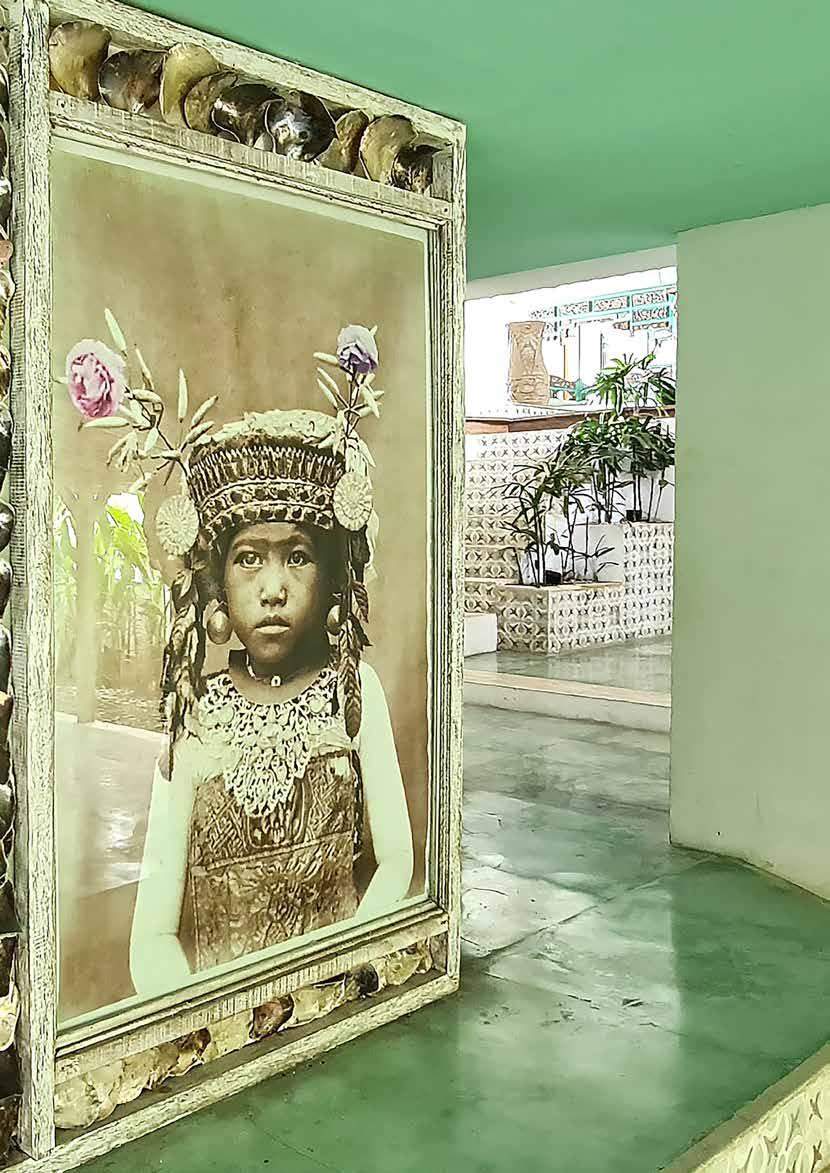
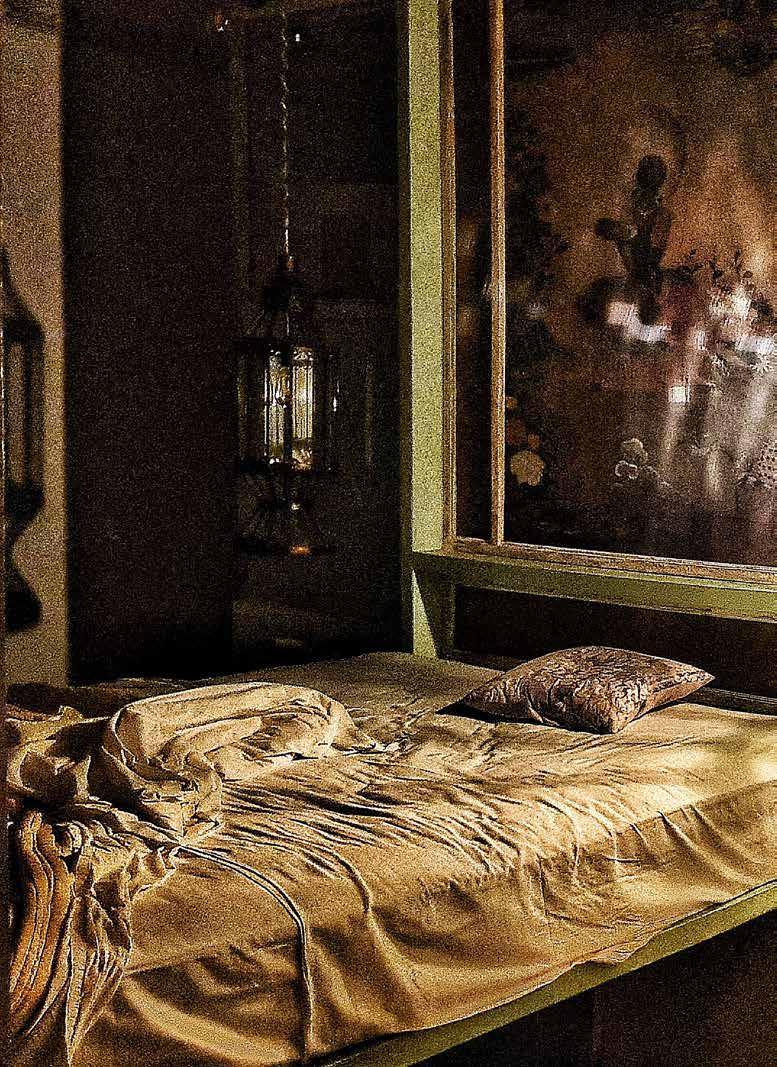
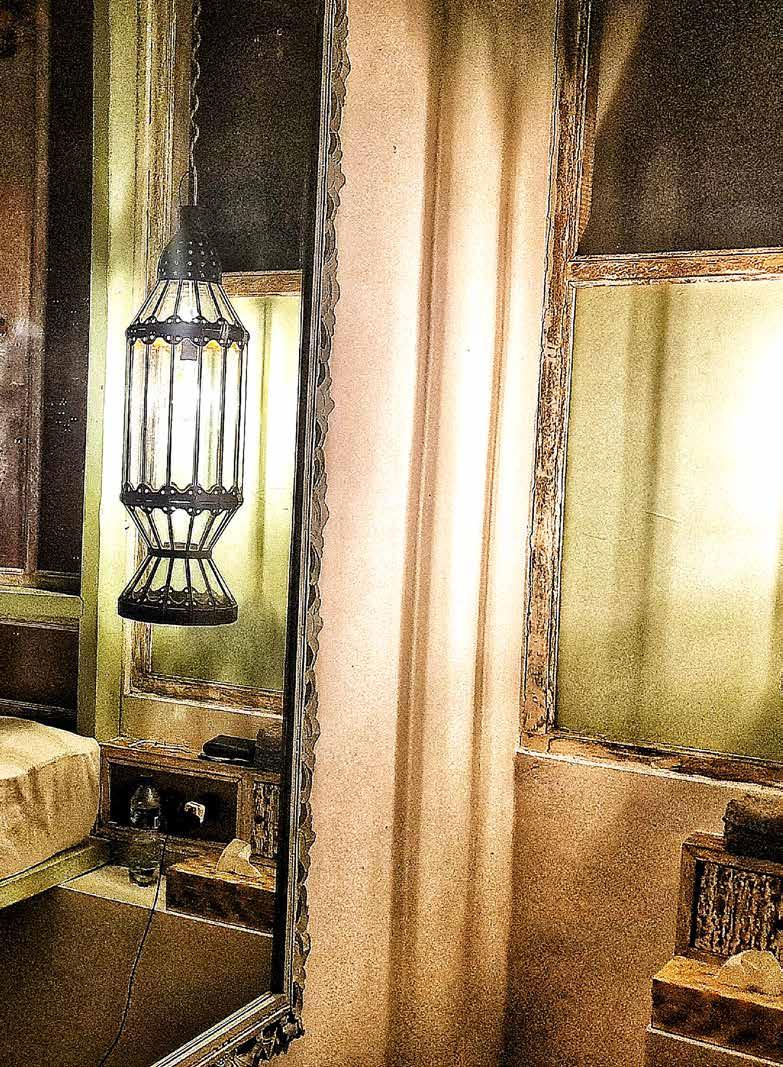
It seems that the Boho in Boho Canggu represents a bohemian or ‘Boho-chic’- a stylish, relaxed aesthetic blending natural materials (rattan, wood, linen) with tropical, island living, primarily found in villas, cafes, and boutiques across Canggu, Seminyak, and Uluwatu. Boho Canggu is prime example of that chic featuring warm, earthy, tones and airy, sensual designs that I’d not seen in Prague’s actual Bohemia.
It had been a good idea to cut across Bali from Ubud to Canggu (pronounced Changgu) in a ‘Grab’, as I was then able to witness much more countryside.
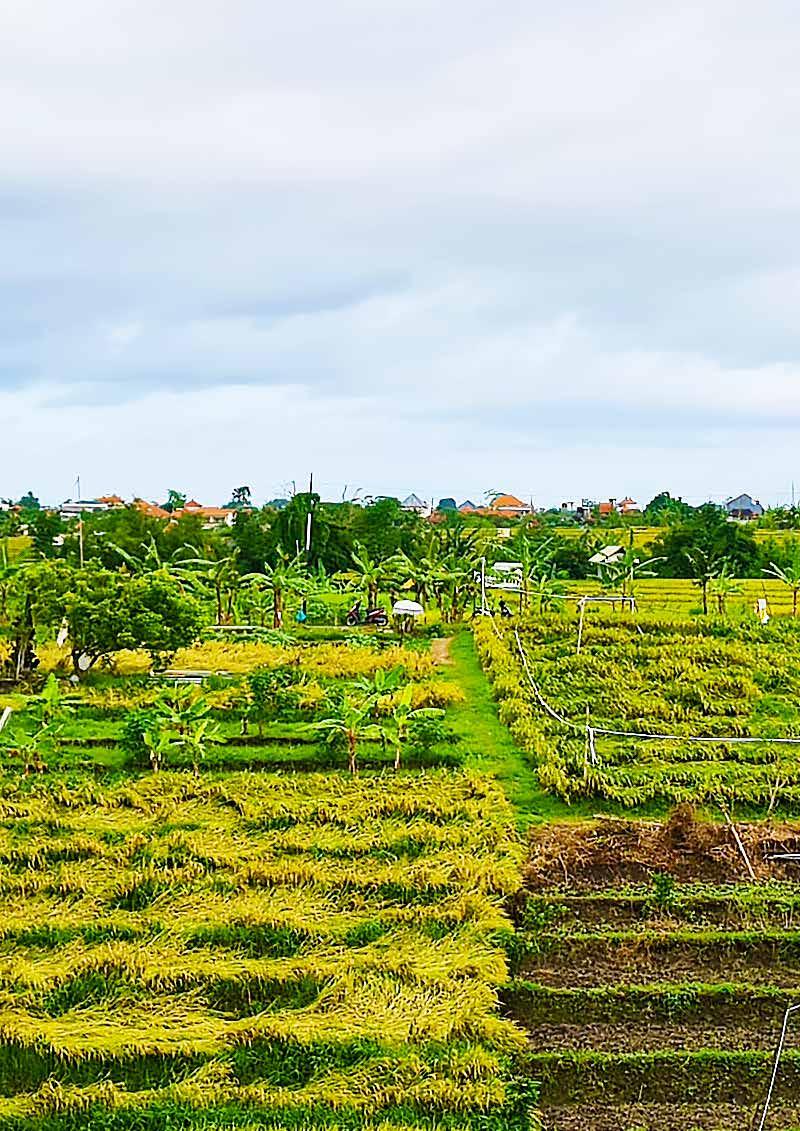
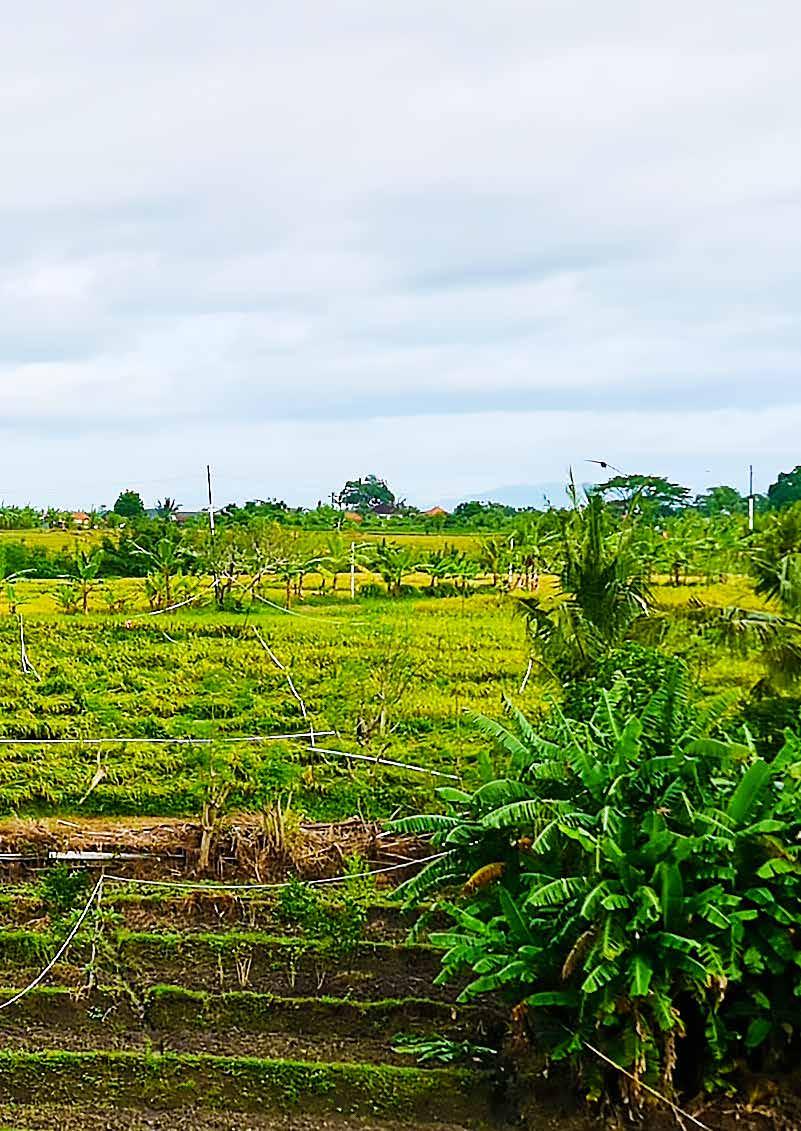
In reality, the island of Bali is not that dissimilar from the luscious Malaysian countryside. As it was the ‘rainy season’, the daily Bali rain had promoted yet more greenery. Verdant rice shoots had broken through their watery sustenance to imitate carpets of greenery as Kurnia (my taxi driver) and I’d passed.
Those three days at Boho Canggu, unfortunately, sped by.
I was fortunate that the hotel backed onto fields of rice (padi), as I’d caught meditative moments of serenity soothed by Canggu rain and shine, sunrises and sunsets while drinking camomile tea and feeling Bali breezes caress my Cambodian ‘Bambu’ shirt and my hirsute skin.
I’d had daily cups of Luwak Flat White Coffee at the nearby cafe called ‘Fine’ (by satu satu) and it was just that - fine. Sometimes I’d had breakfast, or lunch. Both were an adventure.
I never saw the beach but, instead, witnessed copious young nonislanders, tattooed, beach dressed, and young men sporting trendily designer beards, much unlike my antique version.
Once again I was reminded of Dirk Bogarde (in character as Gustav von Aschenbach) in his deckchair, watching, thinking, slipping away slowly. That could be me, slipping away, beset with memories and echoes of desire. Observed by nude gekkos.
However, I think that I’d rather watch the padi, bordered by banana culms, charmed by an egret’s flight, than the displays of young human flesh on display at ‘Fine’.
Boho Canggu was a peaceful haven.
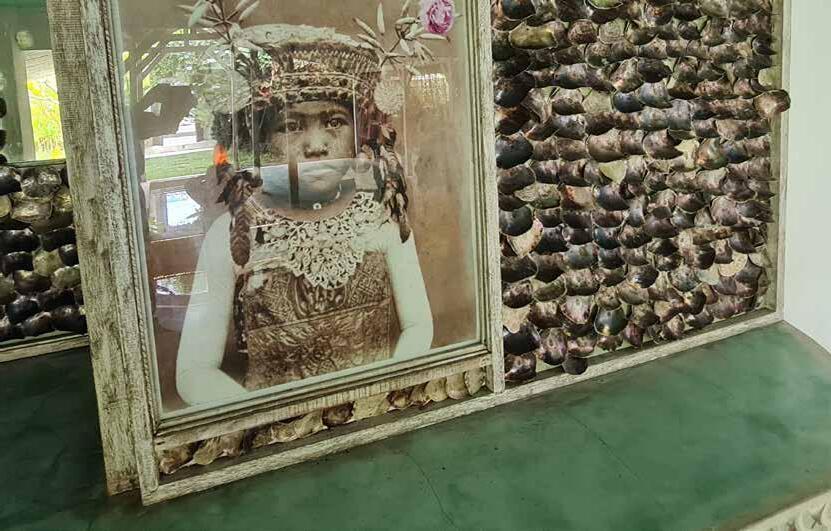
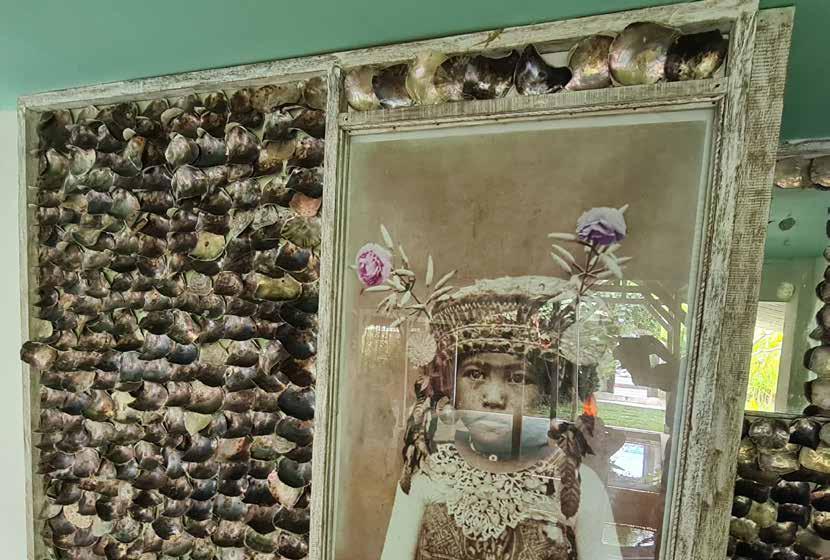
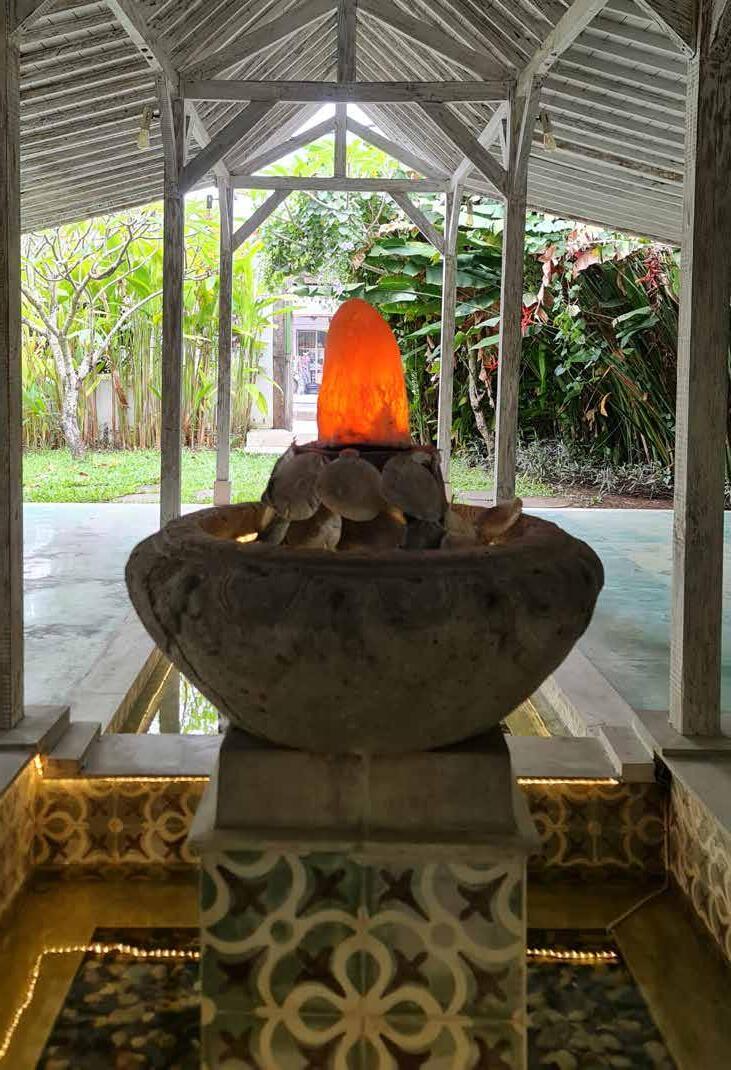
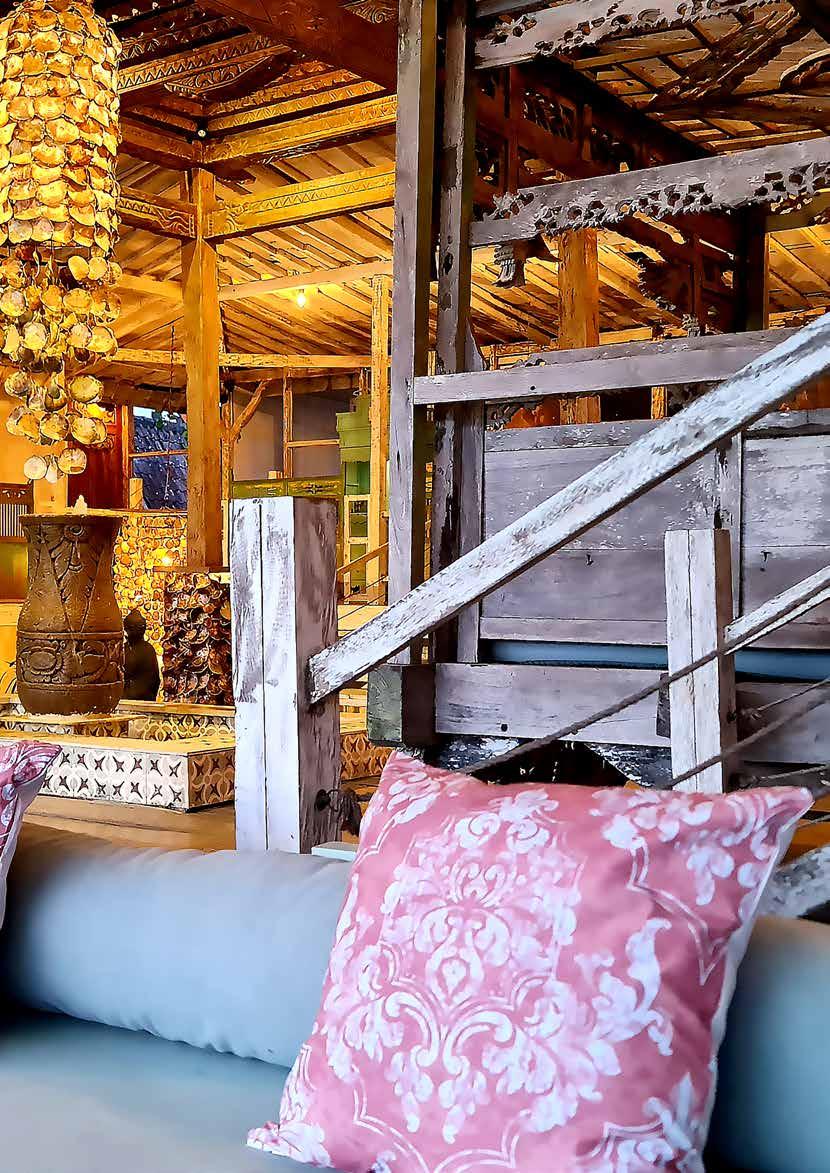
The ‘boutique’ hotel’s bleached wood look, marble tiles, Tibetan Thangka draped walls, vistas of rice paddy and antique statuary set the scene for rest, relaxation and spirituality without the need for burning incense, yoga classes, or meditation chanting.
The intermittent rain only enhanced feelings of sanctuary, of retreat and reflection. That environment and courteous attention had been all thanks to artist Daphne Zepos and her son Indraneel “Neel” Datta. Ed
Putu Wirantawan
Putu Wirantawan
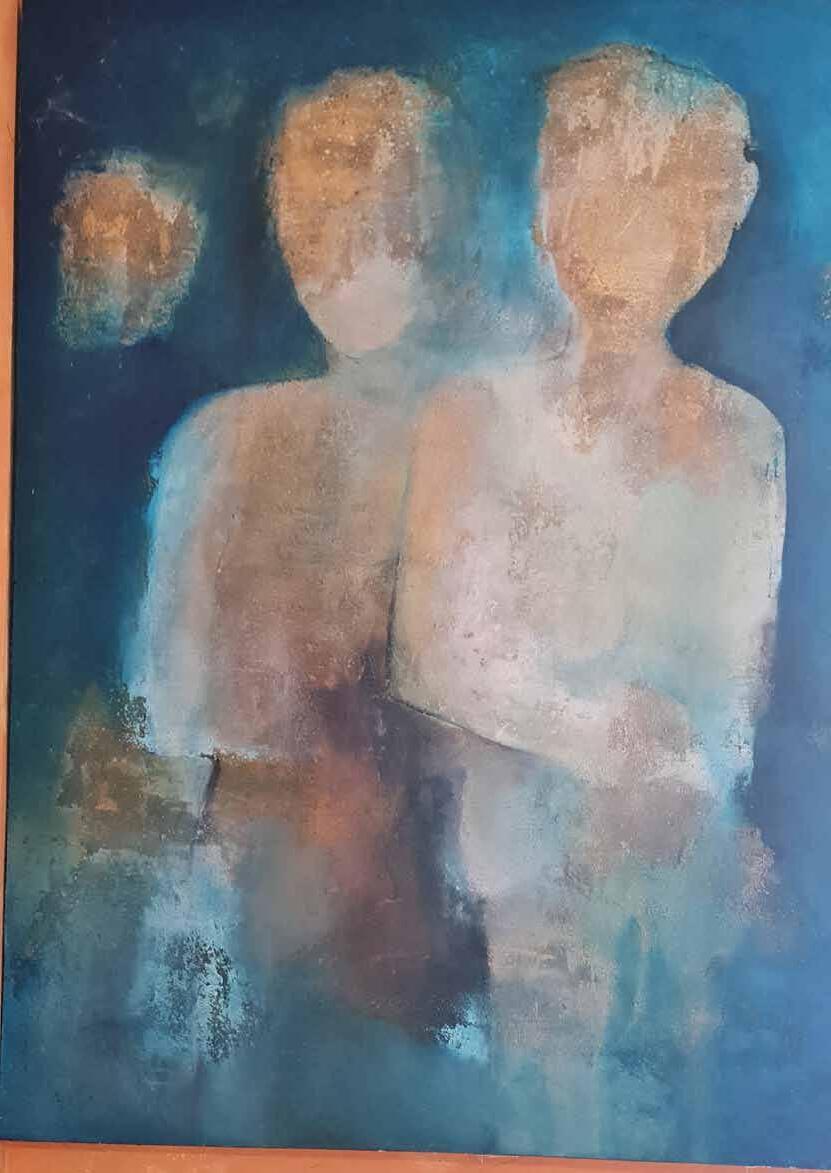
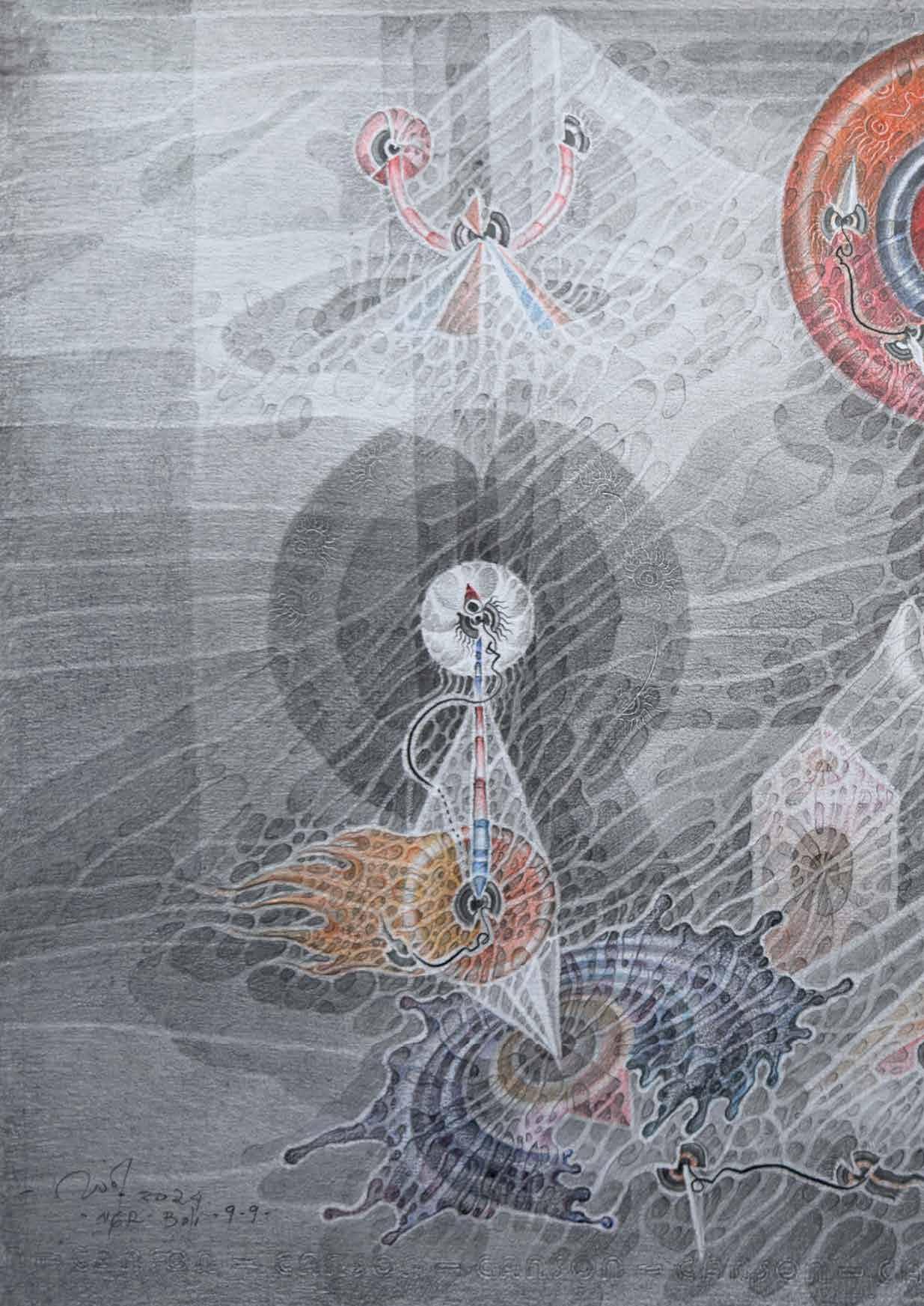
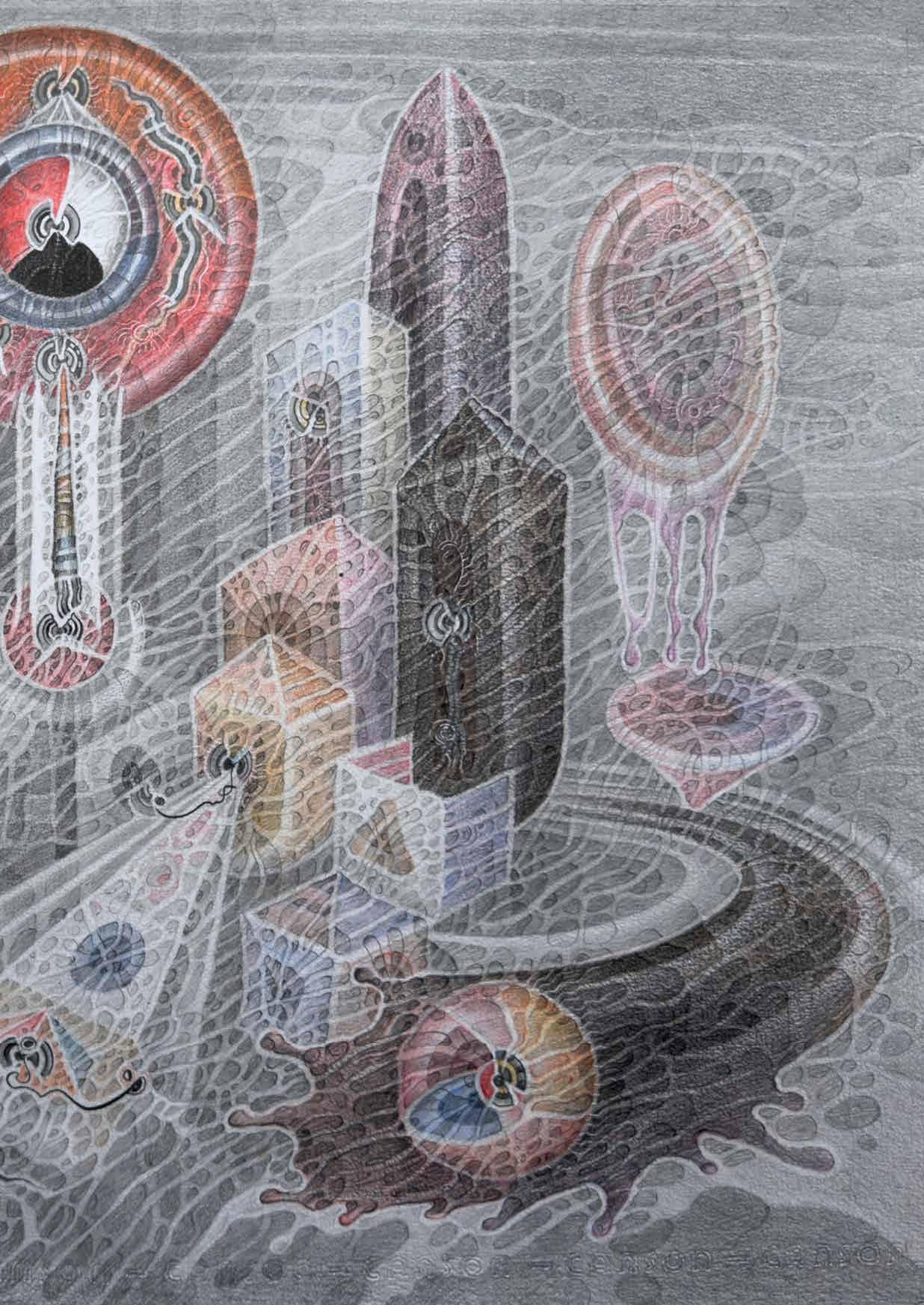
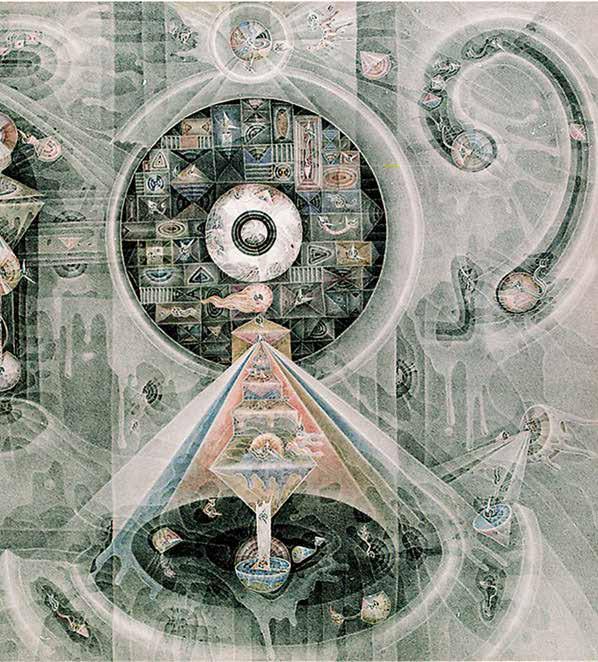
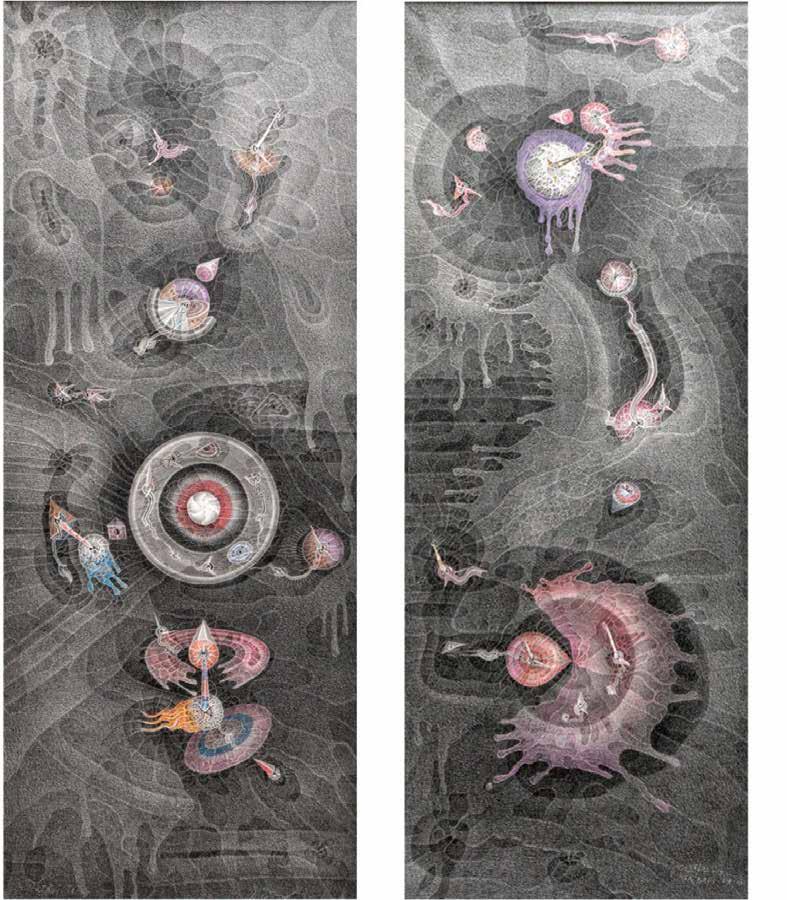
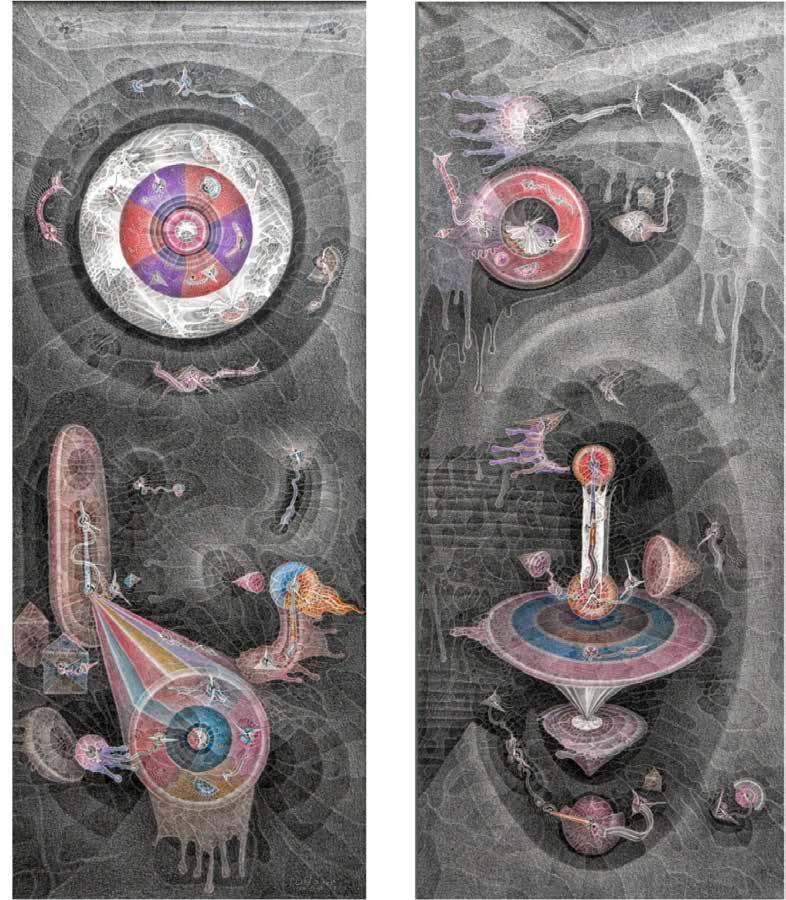
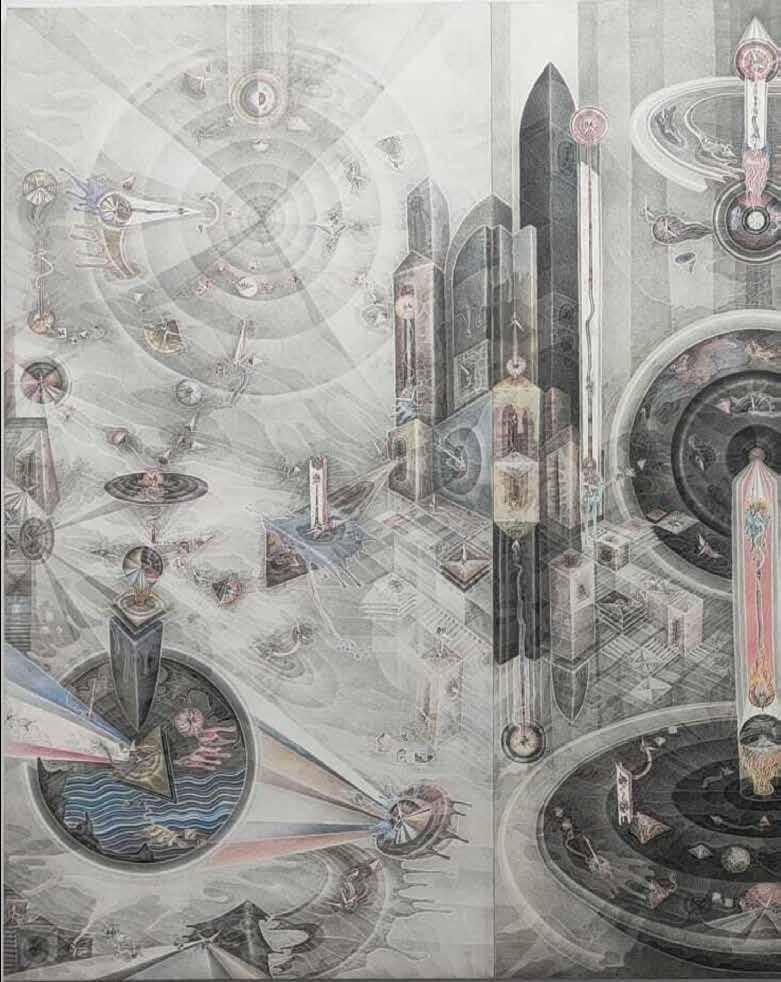
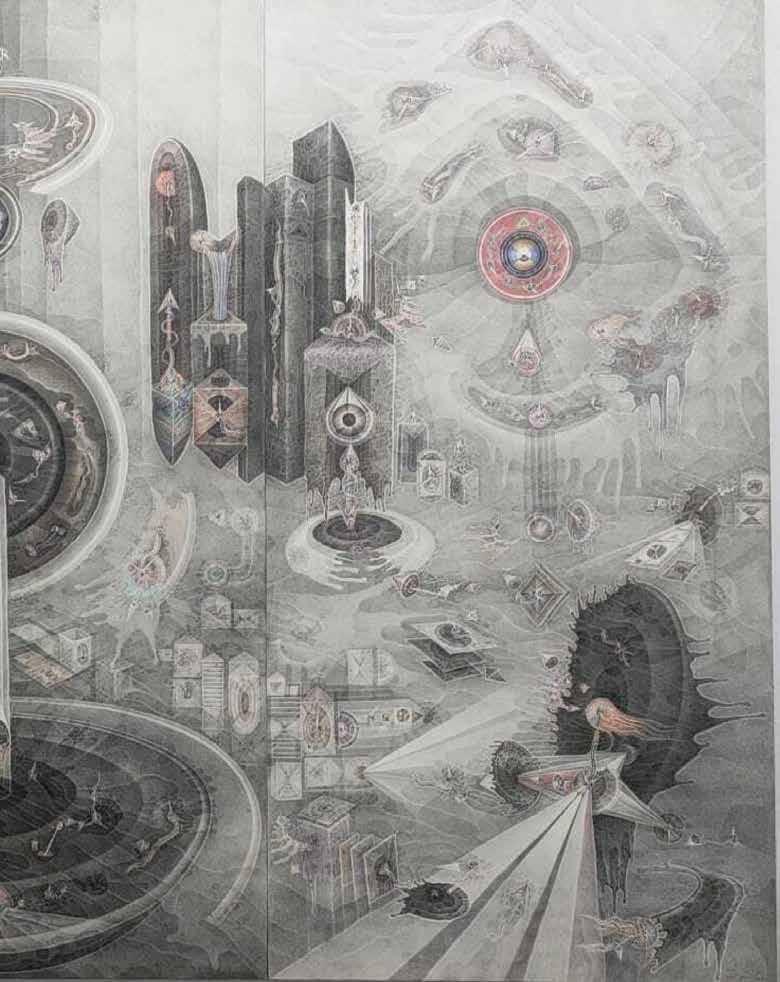
The Balinese artists Putu Wirantawan was born in in Jembrana, Bali, 1972.
He was trained in Fine Arts, and began a career in figurative painting, before dedicating his practice to surrealism and abstraction.
Wirantawan’s work has developed through sustained meditation and spiritual practice, which he considers central to his creative process.
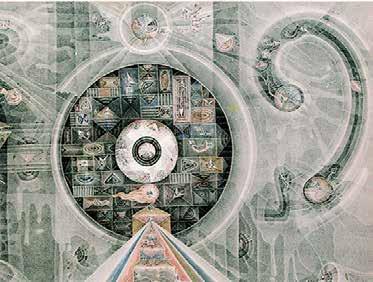
His compositions draw on principles of sacred geometry and the philosophical foundations of Balinese Hinduism, exploring the relationship between the macrocosm and the microcosm, as well as the interaction between conscious and subconscious states.
Working primarily with traditional mediums, Wirantawan is known for the extended time devoted to each work, with large multi-panel compositions requiring up to four years of execution. His works are held in museum collections including the National Taiwan Museum of Fine Arts, the Museum of World Cultures in Frankfurt, Silpakorn University Museum in Bangkok, and the ARMA Museum in Bali.
In December 2024, the artist held his first exhibition in Mexico City at MAIA Contemporary, marking a significant international presentation of his work.
Constellation of Soul Images
Mengalirkan Energi Kebebasan II,
The Wandering Soul
Menjaga Keseimbangan
Menjaga Keseimbangan
moist
A book in parts by Martin Bradley
moist
A book in parts by Martin Bradley
Land of the hornbill
The grey, Malaysian-made, Perodua Bezza SUV skips neatly between Selangor State’s raindrops. A sleepy Brian Holland is shot towards KLIA (Kuala Lumpur International Airport) 2. He’s hurrying to wait for his flight to the ‘Land of the Hornbill’ (aka Malaysia’s jungleblessed Sarawak).
Gibson, amateur gastronome, friend and Grab (taxi) driver, regales Brian with stories of Sarawak’s capital city Kuching, and the indigenous festival of Gawai. Then of the multitude of indigenous food found there. From Gibson, Brian is also learning the amount of different cakes one cafe has to offer (China House, 20-30) on the island of Penang, and of its succulent pork stews. Satiated by the mere thought of food, Brian closes his already drooping eyes for the remainder of the Grab journey, and arrives smoothly at his temporary destination.
After the stop-and-go of boarding passes, baggage and passport checks, Brian is allowed a brief respite in the American-owned franchise Coffee Bean & Tea Leaf cafe. He orders a Jalapeño bagel and cream cheese. Brian prefers the very slight kick of the green Jalapeño peppers and the crispness of the toasted bagel coupled with its internal softness of cream cheese and butter.
In Brick Lane (London’s East End), Brian also enjoys ‘Beigel Bake’ and its genuine Jewish Smoked Salmon & Cream Cheese Beigels but, in Malaysia, Coffee Bean & Tea Leaf substitutes to quell his yeasty bread roll yearning.
Only, when Brian’s bagel arrives, it’s plain.
The anticipated jalapeño slices have clearly been carefully picked off by some secretive pepper aficionado. Brian resolves not to let that spoil this break away, and endures the absence.
After a briefly delayed flight, said aircraft’s successful landing and a half-hour taxi trek into Sarawak’s capital of Kuching (cat in Malay - don’t ask), Brian Holland arrives at the Equatorial Hotel.
That three star hotel is replete with local artist’s paintings on the walls. His room faces, well, nothing, and is small. Brian brings this to the attention of the hotel receptionist, and his new room is opposite a small jungle, which he is sure watches back.
Brian thinks that he sees a monkey. However it might just be a combination of leaves though. Nevertheless, he lets his fantasy monkey exist (in the spirit of détente), and in his excitement of being a tad nearer to Bornean equatorial jungle than he was a few hours ago. Brian feels a distinct buzz of excitement within. “Jungle, at last, jungle, well almost, it’s a beginning though” he muses.
At Indah Cafe - a rustic eatery conveniently near to his hotel, and which conveniently doubles as a bookshop and small art gallery, Brian Holland’s delayed lunch is ‘Ubi Cauli Rice’ and ‘Nasi Lemak Ayam Masak Lemak Cili Api’. The restaurant is conveniently close, but sadly not so convenient as to have WiFi. Any thoughts that Brian may have had of lounging there and doing a little research, evaporates at that distinct lack.
After resting a little in his jungle-view room, Brian escapes and wanders the slightly cooler evening town. His wandering in the very scenic and photogenic China Town, has led him to an early dinner at the Lau Ya Keng Food court (on Carpenter Street)1, with its a ‘Wayang Stage’2 in the background. Brian orders stir-fried mixed 1AkaTemple Food Court, located next to the Deity of the North Temple - the ‘Teochew’ Hiang Thian Siang Ti temple.
2 For traditional Wayang Kulit (Malaysian shadow puppetry).
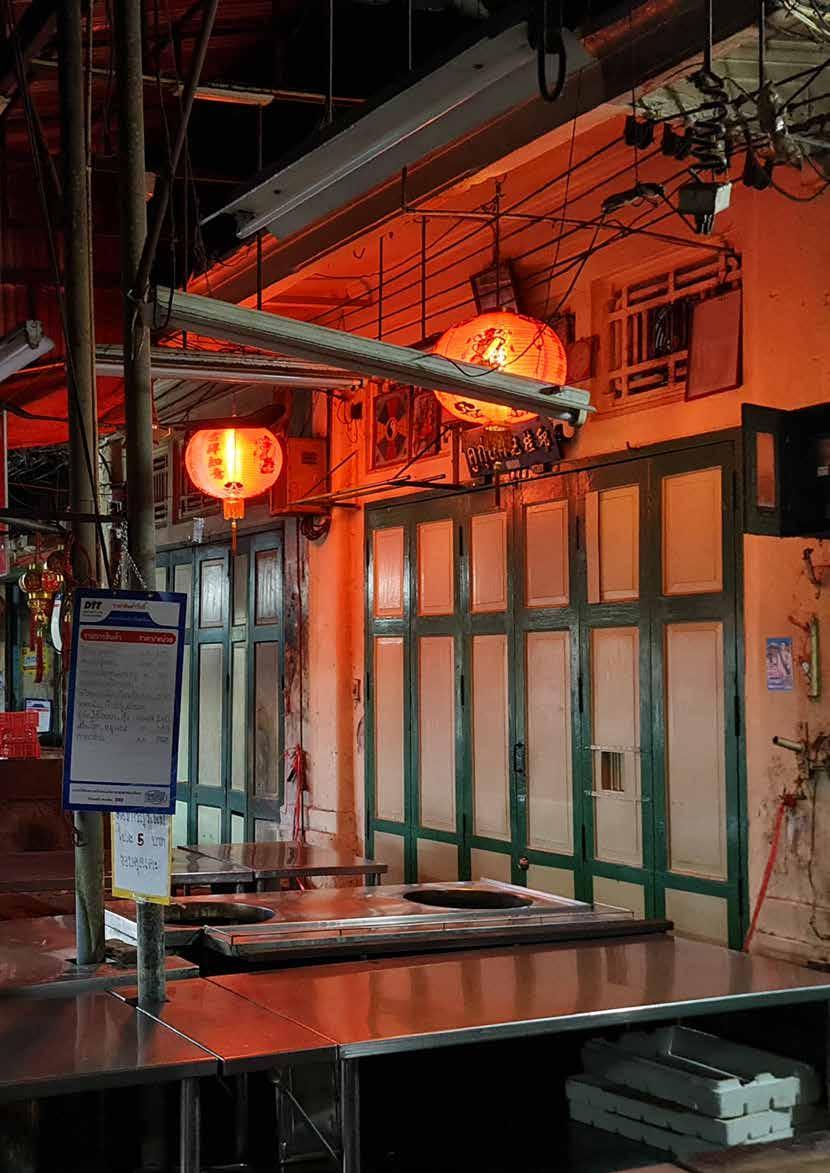
meats with yellow noodles, and a mug of Chinese chrysanthemum tea. These are delivered by an elderly Chinese gentleman, a little bent with age and wearing a simple singlet and loose fitting shorts. The uncomplicated eatery rests opposite the Teochew Hiang Thian Siang Ti Taoist (Daoist) Temple, which is all lit up with orange, not red, lanterns radiating in the fading daylight of Kuching’s Chinatown.
Kuching town, after dusk, is quiet.
It’s not quite what Brian was expecting at Gawai festival3 time. He’d been looking forward to street decorations, pizzazz and rural Sarawakian fuss. What he gets is a drizzle of rain which encourages him to order a Grab (taxi), and is transported back to his hotel. It’s early and he has an evening alone with his thoughts, the hotel provided Lipton tea and creamer, and the distraction of social media on his smart (ish) phone.
Tomorrow Brian has a ‘big trip’ to a Bidayuh longhouse4. It’s approximately 60km, and an hour and a half away, outside of Kuching city in the Padawan District of Sarawak. The longhouse is near to Malaysia’s border with Indonesia on the island of Borneo, and in a rainforest estimated to be 140 million years old.
In the bright, early, morning - daylight blasts into the hotel curtains one hour earlier in Sarawak (than Kuala Lumpur). Brian’s paid-for breakfast, which should be a buffet or a table d’hôte, devolves into toast, kaya (coconut jam) and butter as the only fare on offer. This seems to be the fault of complications with the morning chef who is more than an hour-and-a-half late for his shift. Outside the hotel, a constant drizzle of rain further dampens Brian’s expectant, and hungry, spirit.
Brian ‘WhatsApps’ a text to Danny, his potential tour guide.
“Hi Danny”
Brian hears a sound nearby, in the Reception area of the hotel.
A young Chinese-looking man, dressed for hiking in a dark blue long-sleeved shirt, long trousers with ample pockets, jungle trekking shoes and sporting a floppy Noslife hat, checks his phone.
Brian, on the other hand, is wearing his thin cotton Marks & Sparks blue shirt, thin black trousers and Laird of London black fedora. He walks over to the potential Danny.
“Danny?”
“Brian?” Replies Danny Chan.
It’s like the awkwardness of a first date.
Danny is before time at the hotel, and says so.
“I’d much rather be a few minutes early, than late” Danny explains.
Danny, being early, allows Brian to grab a quick couple of roti cannai at a nearby Mamak eatery before they launch into the green, green hills sheltering Sarawak’s indigenous peoples and their homes.
Through long and increasingly winding roads which obviously lead, eventually, to someone’s door, the persistent greenery has a distinct lulling effect on Brian’s consciousness. He sleeps through the twists and turns of quite majestic mountains, foothills and an increasing verdant jungle. Brian only awakens on Danny’s alert to the approaching destination.
“Sorry to disturb, but we’re practically there, at the longhouse. Tired?”
“Didn’t sleep too well last night.”
“Happens to me in unfamiliar places. Anyway, we’re here.” Says Danny as he stops the car in a small rustic car park at the edge of a forest.
3 Gawai Dayak is a major harvest festival for the Dayak people of Sarawak, Malaysia, officially celebrated on June 1st and 2nd, but festivities start on the evening of May 31st with rituals and feasting, often continuing for days or even the whole month, involving thanksgiving, traditional dances, music, and open houses for friends and family. Or so the internet informs.
4 It’s called Annah Rais, and is a Bidayuh (indigenous Land Dayak) longhouse settlement in the Padawan District of Sarawak, Malaysia, and is one of the oldest and best-preserved traditional longhouses in the Kuching region. It has a history of over 175 years.
Before setting out to Sarawak, Brian had read Alfred Russel Wallace’s book ‘The Malay Archipelago’ (Published 1869), as well as several biographies regarding Alfred Russel Wallace and was more than alarmed at that man’s casual slaughter of Sarawak’s ‘Old Man of the Forest’ (aka Orangutans) as related in ‘The Malay Archipelago’. For Brian, the book brought up the distance in time between Wallace in the 19th Century and himself existing in the 21st Century,
as well as a distance in practical ethics.
The Annah Rais Bidayuh Longhouse, booked long before Brian had heard of Wallace or his book, was true to its name. That is to say that it was long. Unlike Iban longhouses, which still exist further into the extensive jungle, the Bidayuh version appears to be more of a terraced house situation, with adjoining houses rather than one long house with multiple doors.
It’s quiet too, except for intermittent bird song. “Maybe that’s because of the Gawai Festival celebrations at the coming weekend” muses Brian.
The main celebrations are happening after Brian returns to Sarawak’s capital of Kuching, and re-visits some of his Bidayuh friends.
Danny leads Brian up what appears to be ageing, wooden, moss-graced steps and through the practically haunting bamboo walkways. At first Brian has difficulty walking on the rounded, dried concave bamboo culms. They feel hard against his street slip-ons. But he has no choice but to persevere.
In time, they pass numerous houses perhaps as many as eighty. Some are antique wooden constructs, but many are more modern concrete and/or brick built dwellings. Brian notices few people in evidence, but there are scores of cautious cats.
All Brian’s romantic, and evidently quite mistaken, imaginings of friendly indigenous individuals vying to shake his hand, are dismissed. It’s decidedly not any sort of Kipling’s ‘The Man Who Would Be King’ type greeting of long lost kin of the once royal Brooke family. Instead, the Longhouse ambience echoes the greying clouds gathering over the nearby tropical rainforest. There is not an iconic hornbill in sight either.
Karum and Louis are the indigenous (Bidayuh) owners of the ‘Karum Homestay’ (no.67, Annah Rais Bidayuh Longhouse). Karum greets Brian evincing unforced affability and a smile to melt even Brian’s hardened heart. Louis lingers a little in the background until he gets Brian’s measure.
The weight of Brian Holland’s journey dissipates. He takes a quick nap on the mattress provided on the floor of his small room. There are no frills, no air conditioning even. A standing fan moves warm air from one side of the room to another, reverses and moves it back.
At the room’s rear there is a wooden door. That mysterious door leads out to a balcony and an outdoor space which in turn looks out to the
dense greenery of the nearby jungle. There are vague glimpses of the tea-coloured Sememdang River between the trees. The green of the nearby foliage and the watery sounds wash away Brian’s slight irritation concerning the seemingly abandoned abode. He snoozes.
Karum has prepared a wonderful indigenous repast5 which Brian eagerly eats. Danny has offered a ‘Jungle Walk’, but Brian prefers to just amble around the Longhouse environs. So, instead, Danny leads him through the main bamboo passageway of the longhouse, down ageing wooden stairs, past penned Muscovy ducks, tiger-striped cats and strutting black and red cockerels, to a hexagonal wooden hut.
“Do remember that, historically, the tribes here were known as headhunters. This is the Bidayuh Baruk6. It has the real human skulls of the previous enemies of this community, hung in their headhunting days. It was a place for the warriors to gather and talk.” Danny explains.
In the dimmed, blackened, wooden hut Brian plainly sees the hexagonal wire mesh enclosure. It contains dark human skulls. In this longhouse environment, the poignancy of the dried heads seems more ‘authentic’ than images online and those in the Borneo Museum, if such a thing is possible.
Brian is completely unperturbed by the sight of the heads. His curiosity too is dialled down. Brian’s recent research has taken the surprise out of the situation. He is, however, hot and sweating into his hat, shirt and trousers. He’ll need to wash them when he gets back to the mainland. Night and dinner come. Karum has outdone
5 Lunch and dinner comprise of …
Pekasam - Fried Fermented fish with salt, palm sugar, toasted rice, and tamarind (asam gelugur)
Fried ikan bilis with tempoyak and chilli, - aka Sambal Tempoyak. Tempoyak is fermented durian, Ikan Bilis is small fish (Anchovy), dried.
Red Bario rice wrapped in itun sip leaf - locally farmed red rice, wrapped in a local leaf
Stir fried ginger chicken, - not strictly an indigenous dish but popular in Malaysia
Sweet and sour prawns, - the same holds for this dish.
Chicken pansuh, - is chicken and spices cooked in a bamboo tube, over an open fire.
Fresh coconut water, - literally the water inside a fresh coconut.
Deep fried cassava chips with garlic.
6 “Baruks are a manifestation of the traditional Bidayuh beliefs as there are rituals and ceremonies exclusively tied to baruks. During Gawai celebration, baruks are a venue for the traditional and religious ceremony [3]. One of the ceremonies celebrated is Gawai Muka, which is the returning of warriors with the enemy heads. The dried skulls with various omens had to undergo rituals to make them favourable to be installed in the baruks. The spirits of the old skulls are highly revered and respected among the traditional Bidayuhs that they dignified them in the highest regards.” From Atta Idrawani Zaini et al 2018 IOP Conf. Ser.: Earth Environ. Sci. 213 012043.
herself by presenting yet another amazing indigenous meal.
In the dewy, mist-laden, morning the brown river gurgles as freshly awakened exoticsounding birds sing to welcome Brian to the jungle. It’s all very Tarzan and Jane, but there’s no Jane and Brian is hardly Tarzan.
Breakfast is early, brief and Brian feels hurried. More guests are due to arrive before lunch. Brian is, once more, lulled into sleep on the return journey. Danny, bless him, wakes Brian as they approach 96 Street Noodle shop. He wants Brian to try the infamous ‘Fresh Fish Mee Hoon Soup’ - which, for Brian, is every bit as tasty as Danny has described in the car park before entering the establishment.
Back in Sarawak’s Kuching city once more, Brian roves around in and near the old Chinese quarter, which is rapidly becoming a favourite haunt of his. It’s the annual celebration time of Gawai and Brian is in search of eating places. Instead he comes face to face with large wall murals depicting life in Kuching. Google helps Brian discover that the imposing, colourful and educational wall paintings are by Leonard Siaw, and had been commissioned by the local town Mayor.
An A-frame blackboard on the pavement outside the JAK MA’AN restuarant, in Carpenter Street, catches Brian’s attention. It welcomes its visitors by proclaiming “Selamat hari Gawaioooohaaaa Udah mabuk, tinduk bedau mabuk, ngirup agi!!!”7. Brian just has to go in and eat ‘stir-fried minced cassava leaves’, ‘Chicken with tempoyak’, and ‘Stir fried Bamboo shoots’ - all are dishes from the Bidayuh indigenous cuisine. Karum (at the Annah Rais Bidayuh Longhouse) has whetted Brian’s appetite for ‘indigenous’ foods.
In the morning Brian walks around in the quiet tropical heat and, perhaps, a little bored wanders over the Darul Hana Bridge8 which spans the meandering Sarawak River and connects North to South Kuching. Not feeling very energetic, but hot and tired, Brian calls a small ferryboat over, to take him along the waterway to the opposite side of the river.
The walk over the bridge had been worth the experience, while the calmness of the, practically meditatively slow journey, by ferry boat, back to the other side of the river eases Brian’s mind. He can feel sunshine on his face, shaded
7 Have a good Gawai day - oooohaaaa Already drunk, I’m getting drunk, I’m sipping Agi!!!
8 ‘Home of Peace and Tranquility’ in Arabic.
slightly by his fedora, and hears nothing but the passage of the boat on the river, the sound of the paddle in the water, and faint distant bird calls. It’s all serene but, unfortunately, short lived as the boatman and Brian all too soon reach the opposite shore, and Brian alights wishing that he had taken a much, much longer ride to somewhere, anywhere.
While in Kuching, Brian just couldn’t wait to visit the Borneo Cultures Museum. Although he, initially, baulked at the entry price (RM50) he, nevertheless, is determined to visit. Luckily there are concessions (RM5 for older locals, and RM25 for older foreigners like Brian). While the first couple of floors are okay, but nothing too special, once Brian enters the third floor all that changes.
Mind blowing, exceptional, fantastic are all terms which seep into Brian’s appreciative consciousness. There is a full-sized replica of a Bidayuh Baruk with blackened human skulls similar to the one he’d seen at Annah Rais, but he realises that comparisons are pointless. Brian muses “to say that the museum is worth every penny’ is a gross understatement. Quite obviously it is a meal which needs several sittings, and can only be approached by one nibble at time. But even the merest nibble is more than worth it”.
Two weeks are not enough though.
The days of sampling (mostly) Dayak cuisine, in Kuching, the capital of Sarawak State, Malaysia, and situated on the third largest island in the world, is merely a taster. It is, quite literally, an insight into another world - one of South East Asian gastronomy through the palates of Borneo’s ethnic heritage, of which Karum, at Annah Rais, had seduced Brian with delicious substances such as ‘Tempoyak’ - a fermented durian (aka The King of Fruits), and the sharp but pleasant taste of ‘Tapai’ (fermented rice), also ‘Butod’ (Sago grubs usually found in Sago palm), which are entirely new to him. Each are different, exciting, in their own ways. Brian has set out to sample as much Sarawakian cuisine as he could, in the limited time available. As it turns out, Kuching is simply the best place to find a great number of restaurants and cafés serving reasonably authentic Dayak cuisine, both to curious newbies like Brian, and to the gastronomic cognoscenti.
Brian Holland samples a local cafe called ‘Pinggai’ with its enamelled serving plates used as wall decoration and ‘Bubus’ or bamboo
fishing traps used as lampshades. The ‘café’ is conveniently down Kuching’s Carpenter Street, and very close to the hotel where Brian is staying. That Dayak cafe is run by two Iban sisters. From the very first fork- full of these exciting new tastes, Brian is hooked9. Obviously, he wants more.
As it turns out, Kuching proffers a few places revealing ethnic Sarawakian cuisine. After an extensive Google search, another name comes forward. It’s that of the restaurant ‘Le Pau’. Over a couple of visits to that exquisite restaurant, Brian is delighted to taste their fare. Another is ‘The JollyPit Bar and Grill’ down Kuching’s Wayang Street, also conveniently close to Brian’s Hotel.
With a somewhat heavy heart, Brian, wishing that he could stay in Kuching forever, has to leave Sarawak, Borneo and re-join the Malaysian Peninsular.
9 He gorges on ‘Sambal Grilled Tiger Prawns’ - large barbecued prawns, fairly stuffed with the pungent and pleasantly spicy ‘Sambal Blachan’. That dish is at once tangy, sour and spicy. Brian is also pleasantly surprised by, the ‘Jellyfish Umai’. (In Sarawak, jellyfish is caught by local fishermen and used in cold starters/salads.)
I Gede Agus Mahardika
I Gede Agus Mahardika
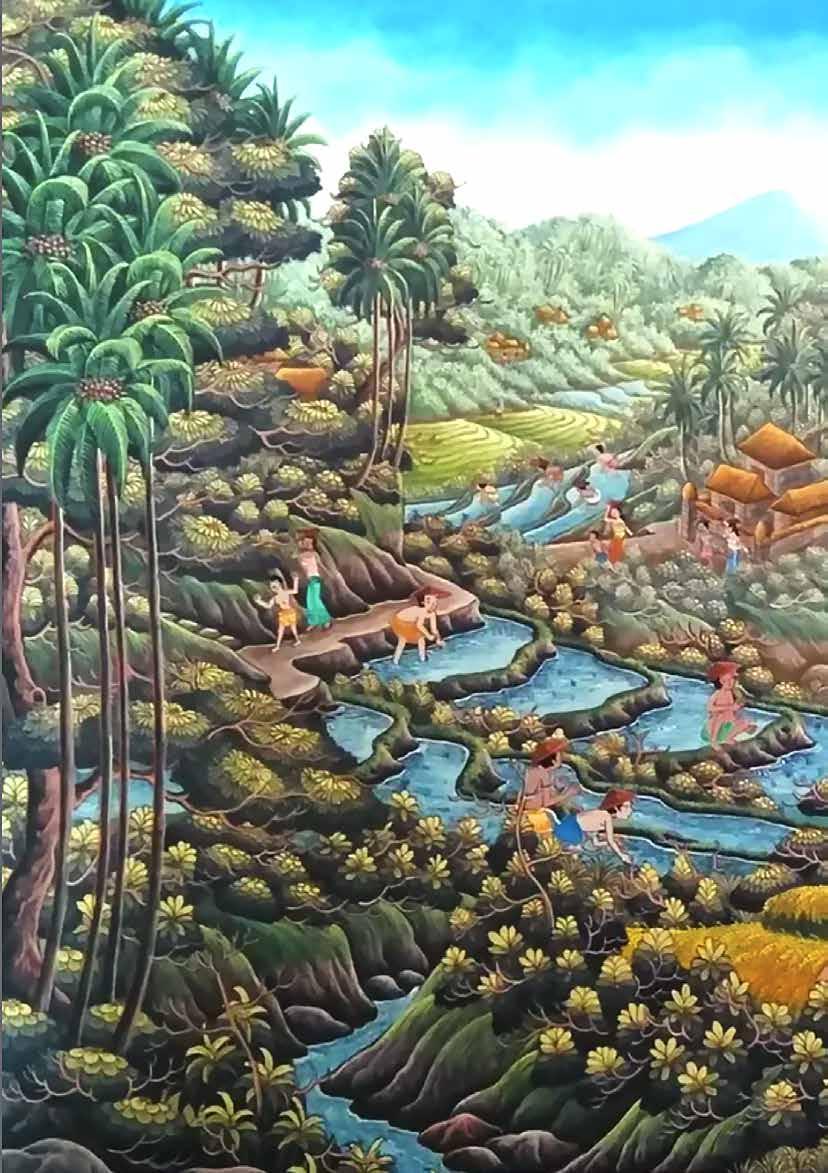
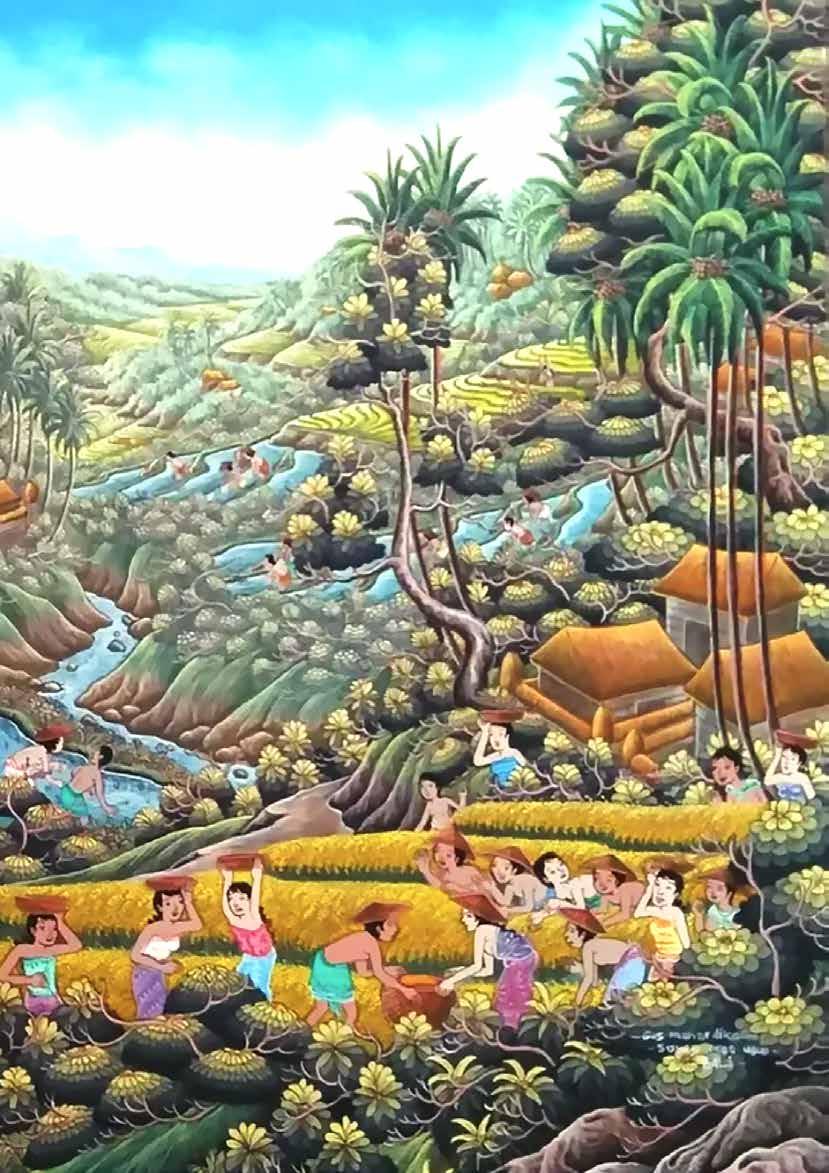
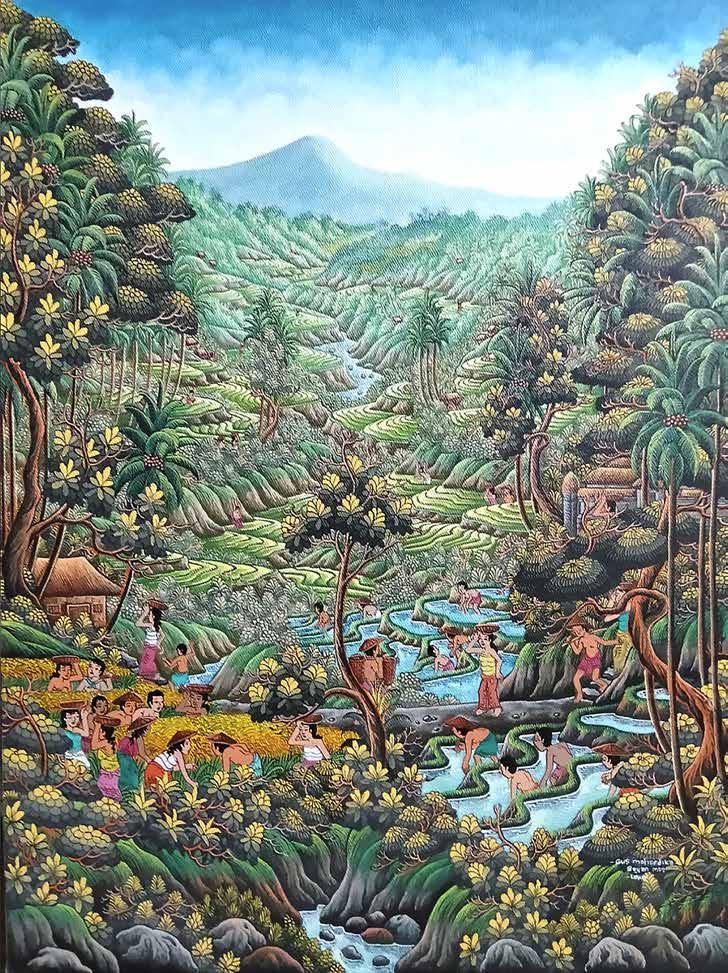
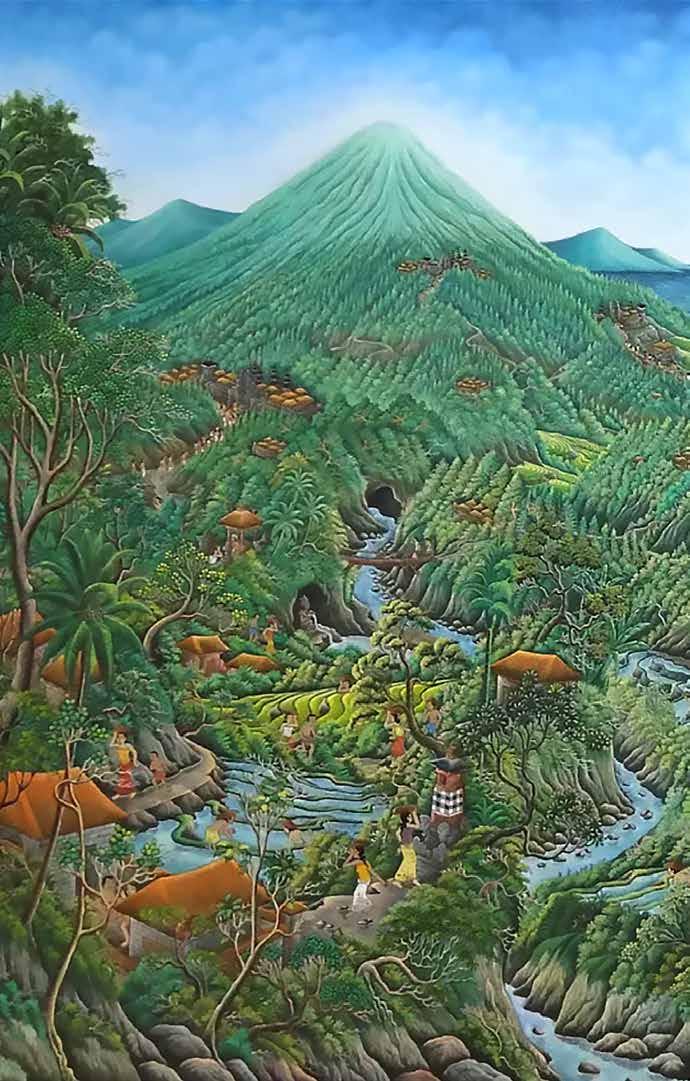
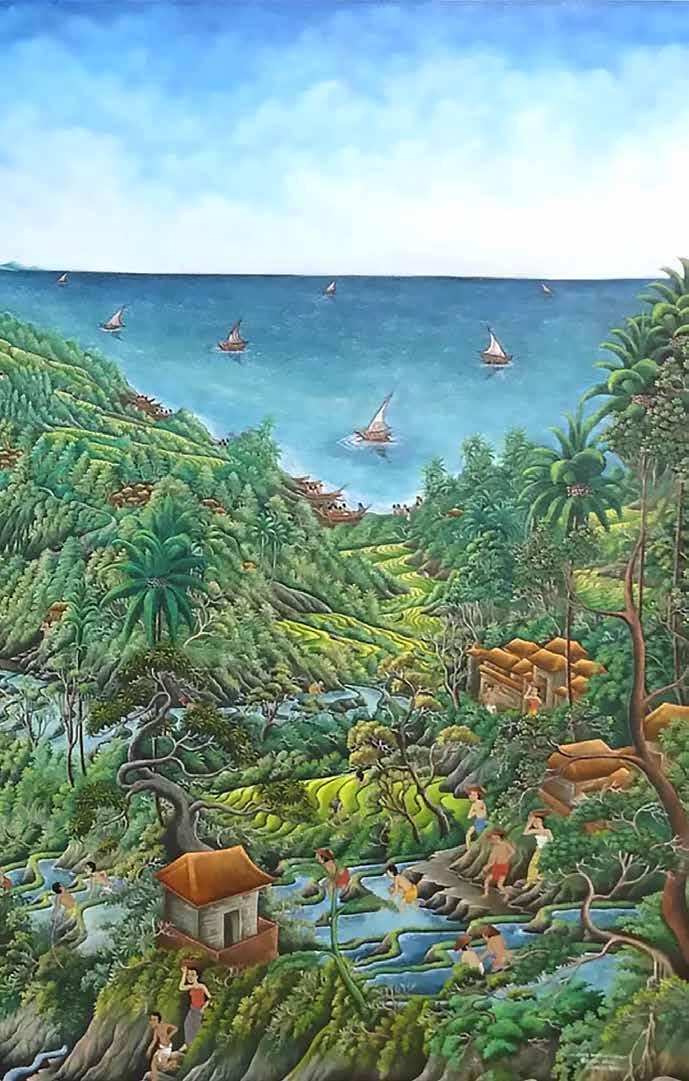
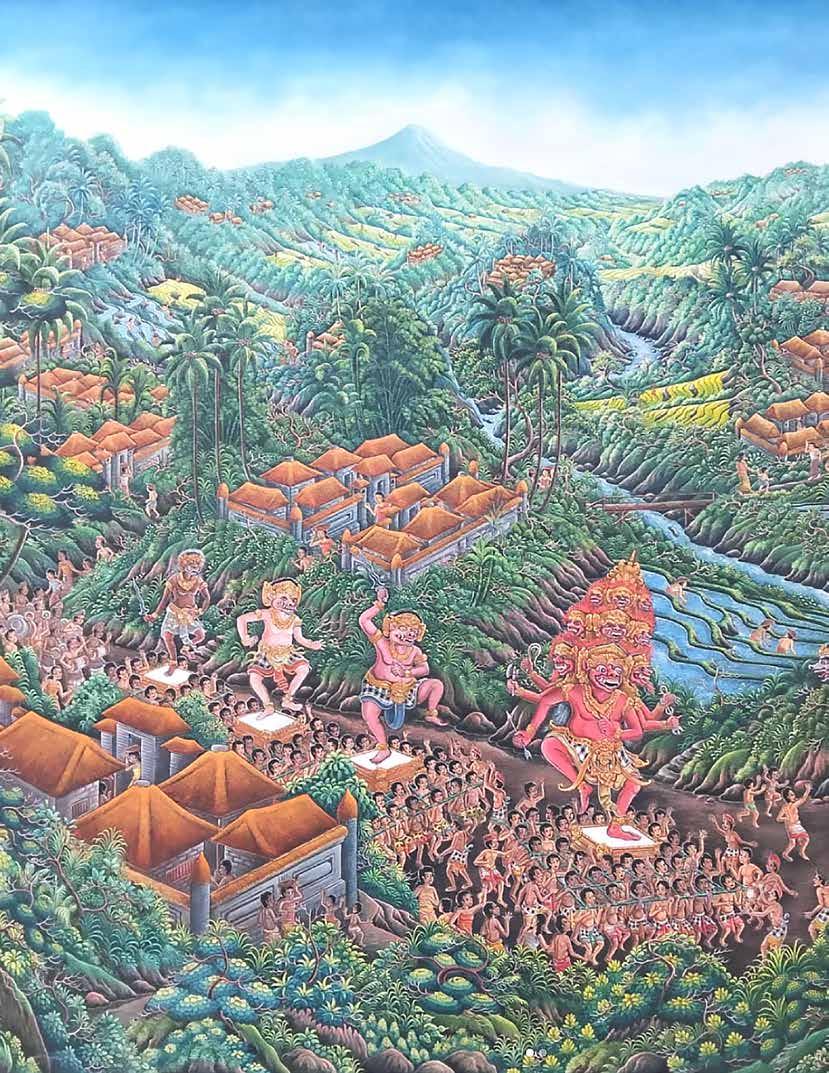
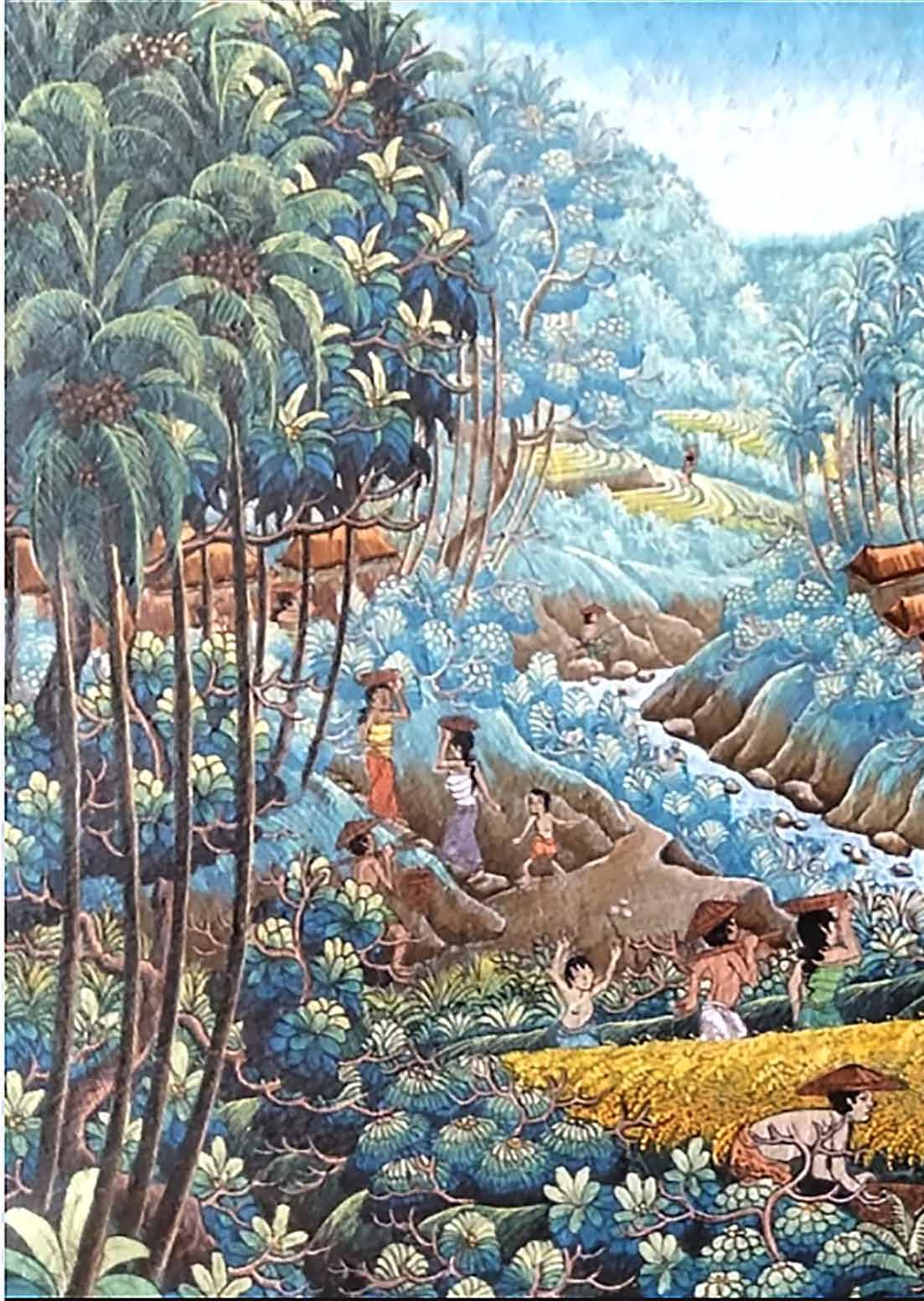
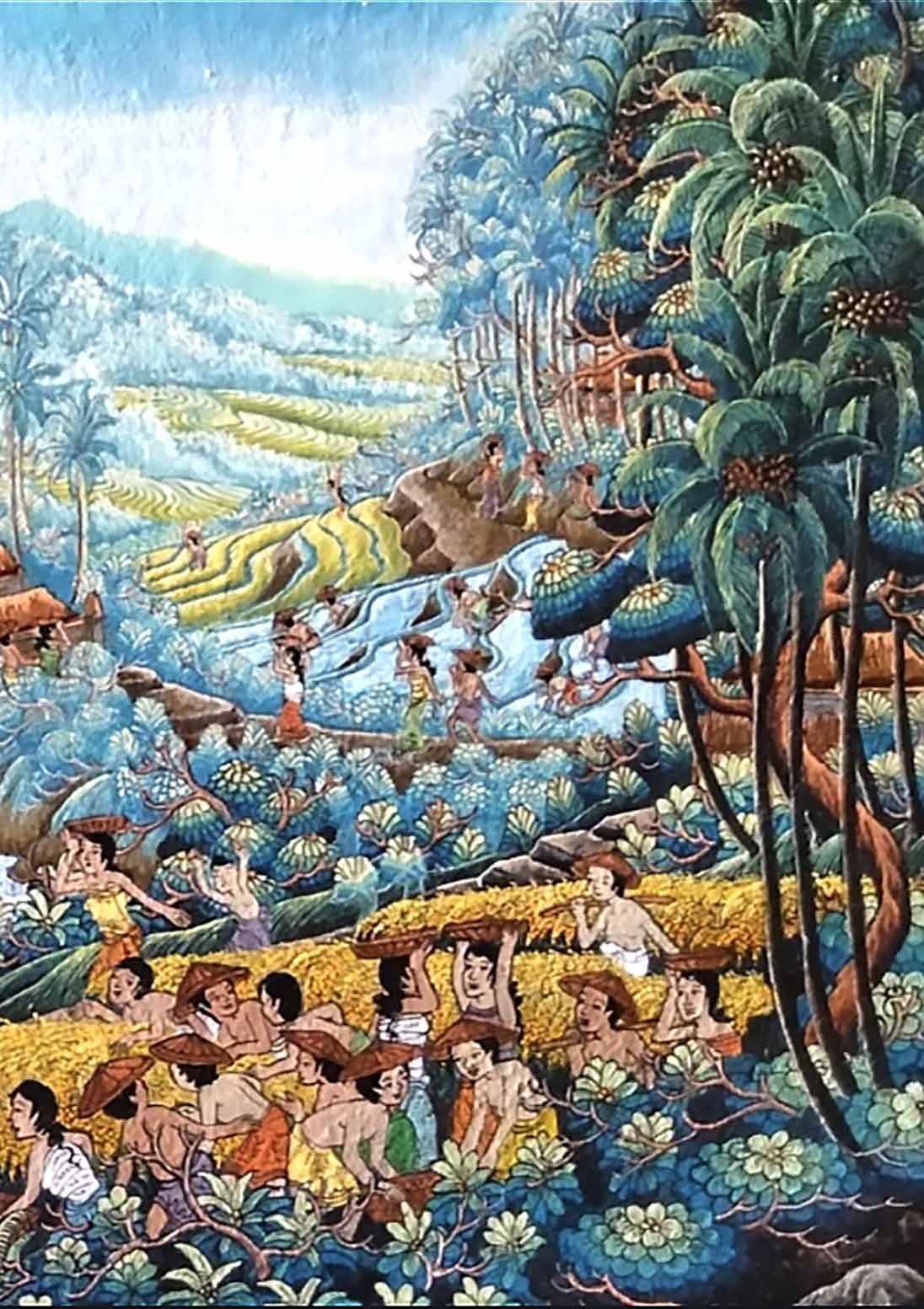
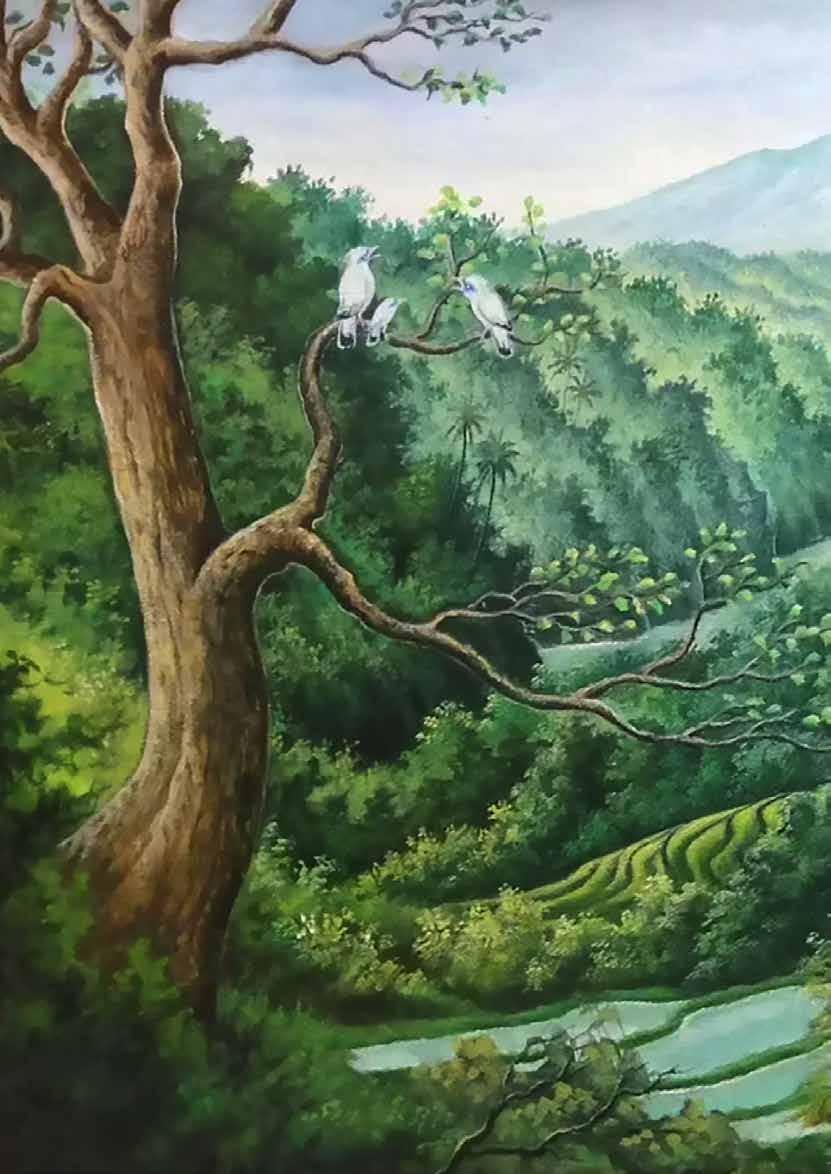
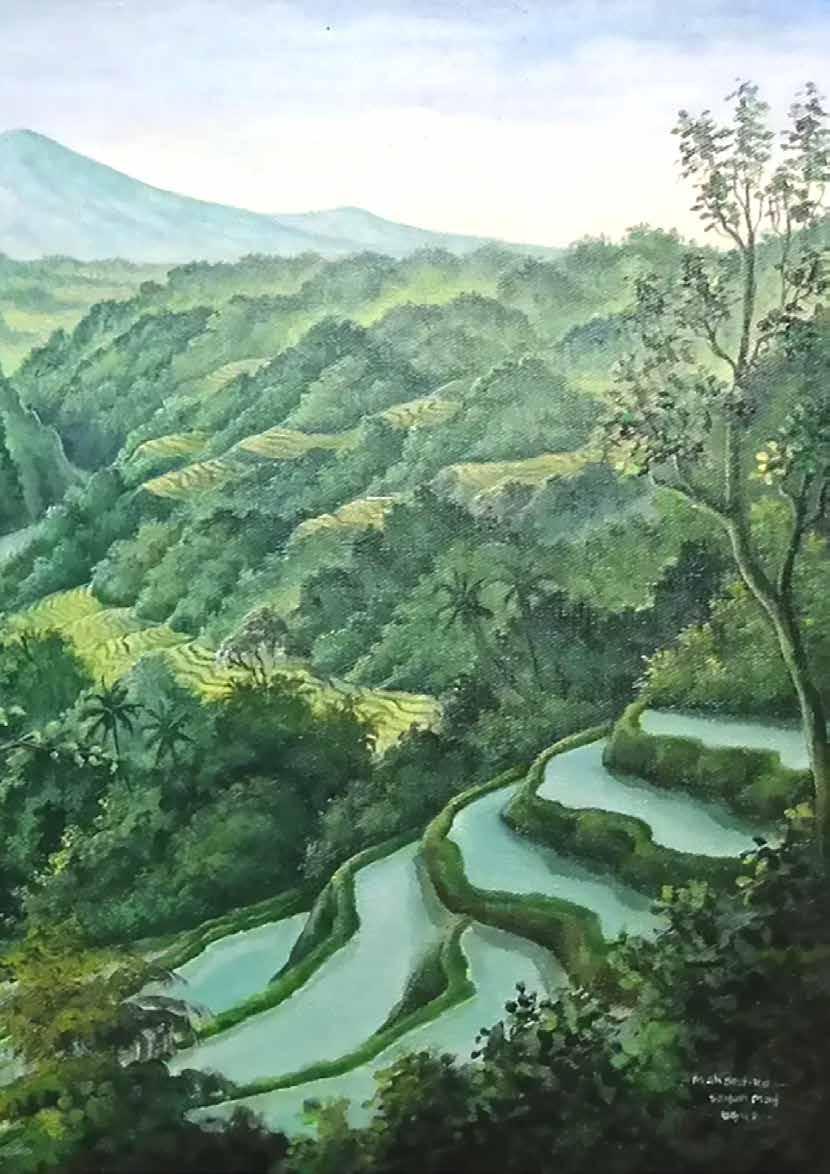
I Gede Agus Mahardika aka ‘Gus Mahardikaa’ is from Sayan Village in Bali, Indonesia. He was born in 1983 and gained a Bachelor of Arts degree from Institut Seni Indonesia (Indonesian Institute of the Arts), on Bali. He quickly took to the Balinese style of painting called ‘the Young Artist’ style.
In the 1960s, a Dutch-born Indonesian painter Arie Smit (1916–2016) became responsible. for a new Balinese style of art which has bright colours, spontaneous lines, and scenes of everyday Balinese life, often ‘naive’ and ‘expressionistic’.The Young Artist style is rooted in local tradition and culture, and also conjures the individual creativity of artists living in the context of the modernisation of Balinese art. Penestanan became a major creative hub, with its influence continuing through new generations of Balineses painters.
I Wayan Karja (in Lim Chong Keat and the Young Artists of Penestanan of Ubud, Bali, 2025) suggests that...
“A pivotal moment for the Young Artists occurred between 1969 and 1983 when Malaysian architect and art enthusiast Lim Chong Keat promoted them abroad.”
Early in life Gus began painting with watercolours, learning from his uncle. Gus met Pak Kaler’s younger brother, and Gus’s uncle’s house became a popular painting spot where they could practice. After High School, Gus studied at art college and was drawn to the Young Artist style. In 2020, Gus focused on the Young Artist style with Pak Kaler’s guidance. He became part of the Pelangi Art community, inspired by Bali and its daily life
A son of India rests in the soil of Malta
A son of India rests in the soil of Malta
Urfi Raza Zaidi
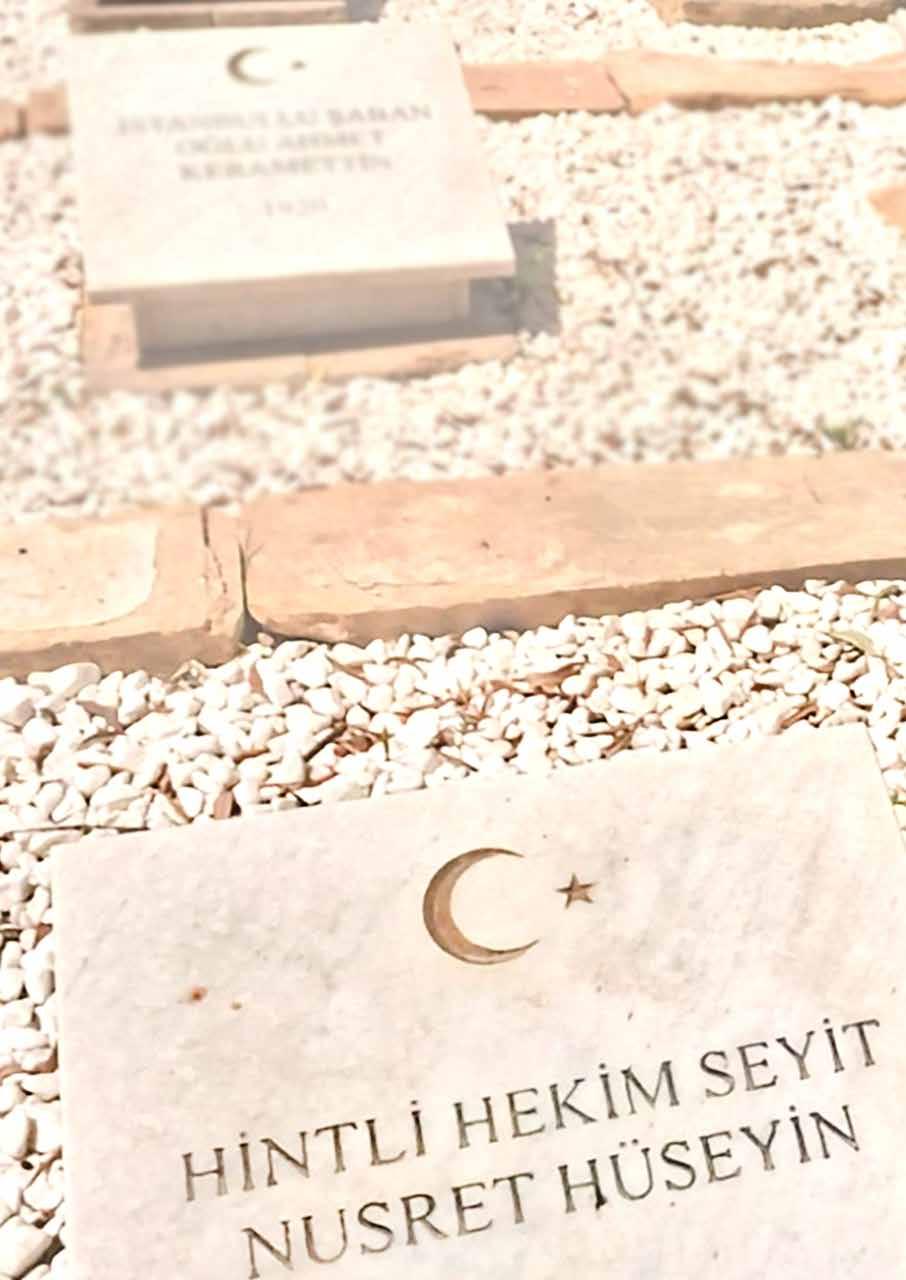
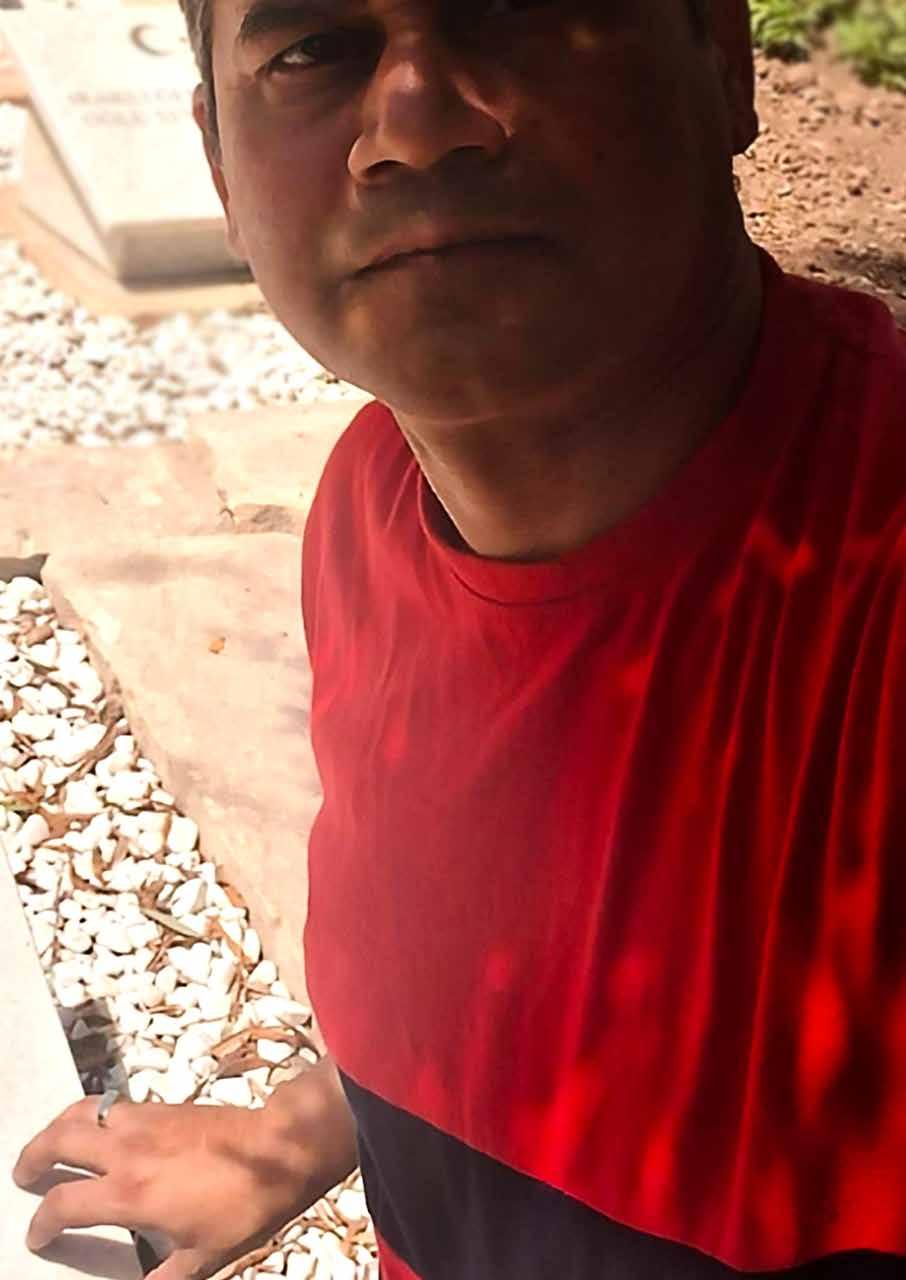
Hakim Syed Nusrat Hussain, a martyr of Malta, was an Indian freedom fighter who died while imprisoned in Malta during the struggle for India's independence against British rule. His grave is located in the Turkish Cemetery in Marsa, Malta.
Hakim Syed Nusrat Hussain hailed from the Sadat family of Koda, Jehanabad, Utter Pradesh, India. After studying in Kanpur, Delhi, and at Darul Uloom Deoband under Shaikhul Hind Maulana Mahmud Hasan Madani, he became dedicated to both Islamic preaching and serving the people as a hakeem ( doctor). During 1914, he performed Hajj and remained close to Shaikhul Hind until their arrest in 1917 from mecca.
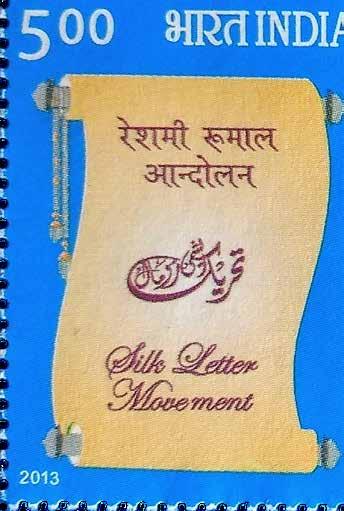
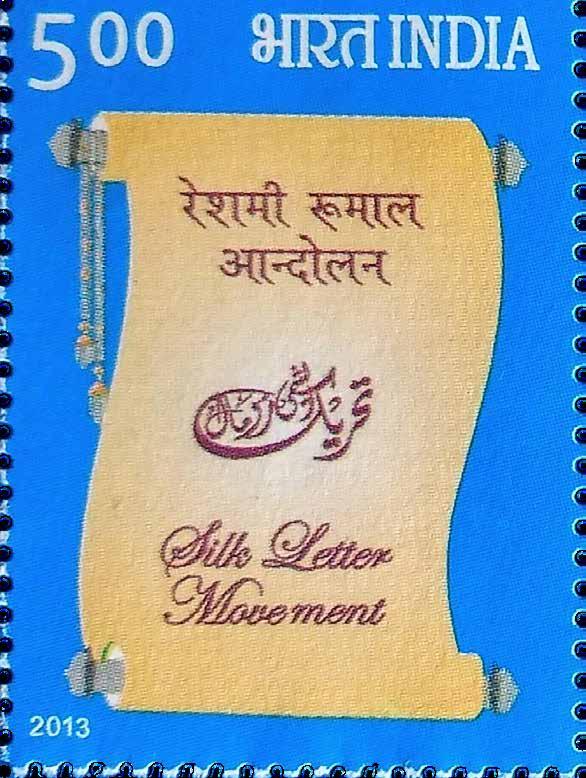
The Silk Letter Movement, initiated in 1907 under Maulana Mahmudul Hasan Deobandi and Ubaidullah Sindhi, aimed to overthrow British rule in India with support from the Turkish Caliphate, Afghan Emirate, and German Empire. Prominent leaders including Maulana Muhammad Hussain Madani, Maulana Barkatullah Bhopali, Maulana Muhammad Mian Mansoor Ansari, Raja Mahendra Pratap Singh, and Hakim Syed Nusrat Hussain were deeply involved in this movement.
When the Rowlatt Act, imposed by the British colonial government in India, faced widespread and intense opposition across the country. This opposition united various groups and leaders in protesting against the act, which was seen as a severe infringement on civil liberties. As a result, the entire Ulema community, along with
other segments of Indian society, came under heightened scrutiny and repression by the British authorities due to their resistance to the act and its oppressive measures. During 1916, British officials uncovered letters written on silk cloth by Maulana Ubaidullah Sindhi revealing plans for armed revolt with international allies during World War I. The Ulama, led by Maulana Mahmud Hasan, sought to mobilise support from tribal Afghanistan, Russia, Germany, Turkey, and other anti-British entities, alongside Indian groups like the Ghadar Party.
In 1917, during the Silk Letter Movement arrests in Mecca, Nusrat Hussain and others were detained by the British and sent to prison in Jeddah, Cairo, and finally Malta. A British intelligence officer offered to release him due to lack of evidence, but he declined unless his comrades were also freed.
Nusrat Hussain was imprisoned in Malta’s Verdala Fort, where he remained until his death on 11th May 1919, while the others were eventually released and returned to India, continuing their resistance efforts.His grave in Malta is cared for with respect by fellow prisoners and others, symbolising his sacrifice for India's freedom and his steadfast commitment to his principles even in captivity.
Hakim Syed Nusrat Hussain Shaheed was known for his devotion in prison, particularly in performing late night (Tahajjud) prayers, and is honoured as Shaheed-e-Malta (Martyr of Malta).
He is remembered as a heroic figure whose deep love for his country shaped both his life and his sacrifice.
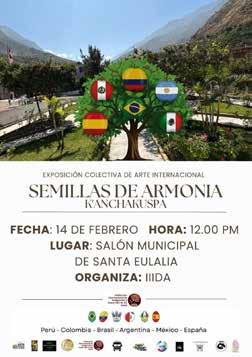
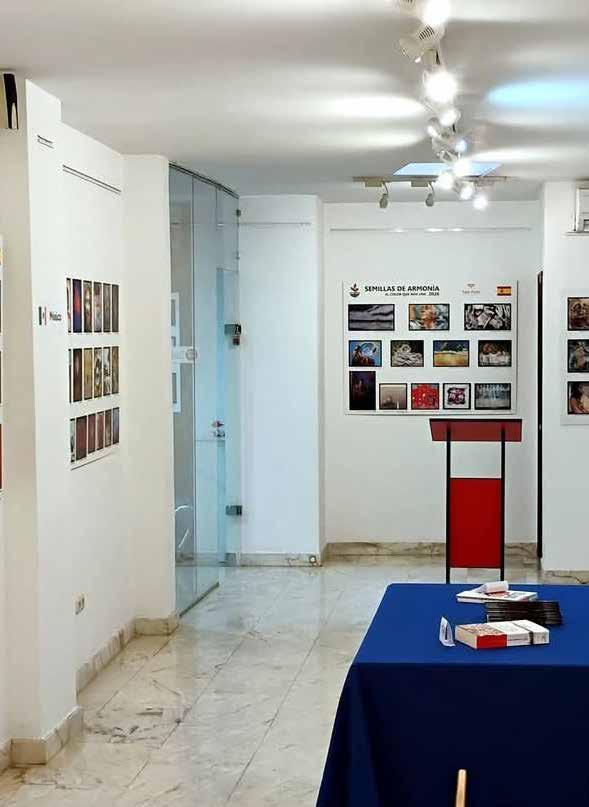
SEEDS OF HARMONY.
An Itinerant Art Exhibition Connection
HARMONY.
Exhibition for Peace and Cultural Connection
SEEDS OF HARMONY
An Itinerant Art Exhibition for Peace and Cultural Connection
Text: Pilar Viviente Photographs: MAES, Mexico, and Sala Aires Gallery, Spain.
“We build too many walls and not enough bridges” (Isaac Newton).
SYNOPSIS
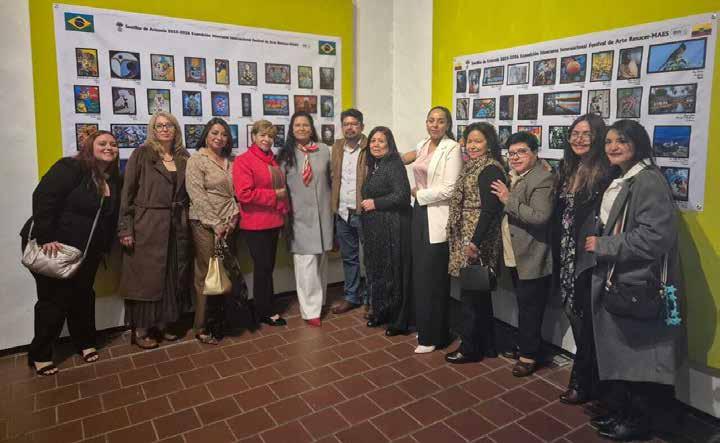
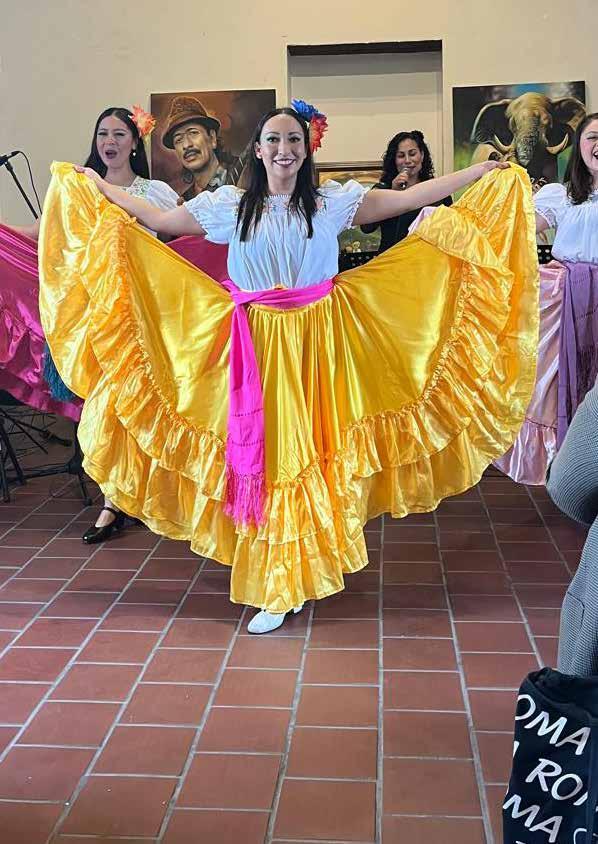
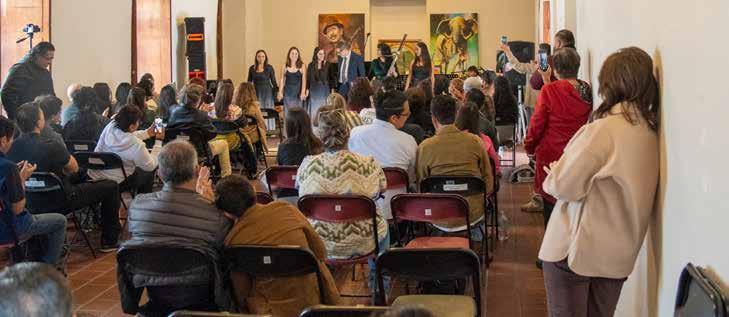
On January 17, 2026, the Museum of the Museo del Estado de Michoacán (State of Michoacán) hosted the opening of the international exhibition Seeds of Harmony 2025–2026: Rebirth Art Festival – MAES, an artistic and humanistic event featuring creators from Mexico, Spain, Colombia, Peru, Brazil, and Argentina.
The exhibition was organized by the Renacer Cultural Group and the Fundación Mujer, Arte con Esperanza (MAES) {Woman’s Foundation, Art with Hope), with support from sin Arte fronteras por la Paz (Art Without Borders for Peace), to promote art as a universal language of peace, harmony, and respect for cultural diversity.
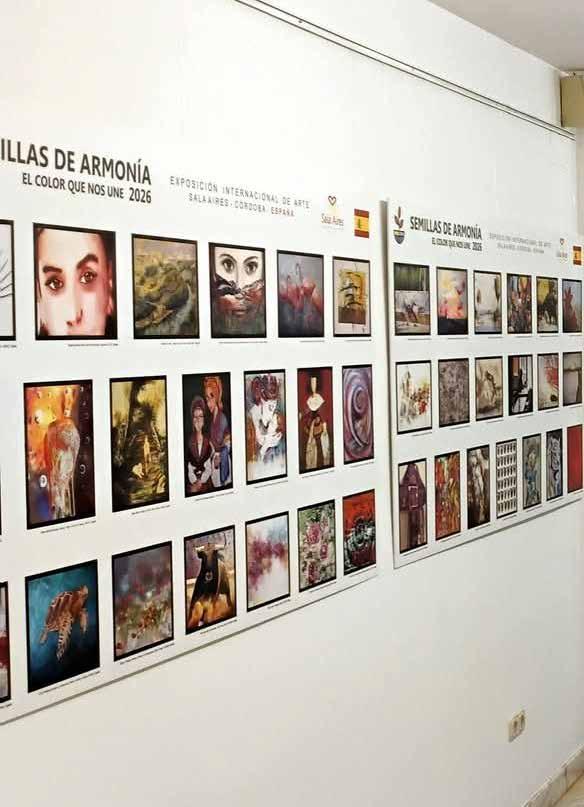
Adopting an innovative digital microformat developed during the pandemic, the show enabled around 300 works by 50 artists per country to be displayed, fostering sustainable and inclusive cultural exchange.
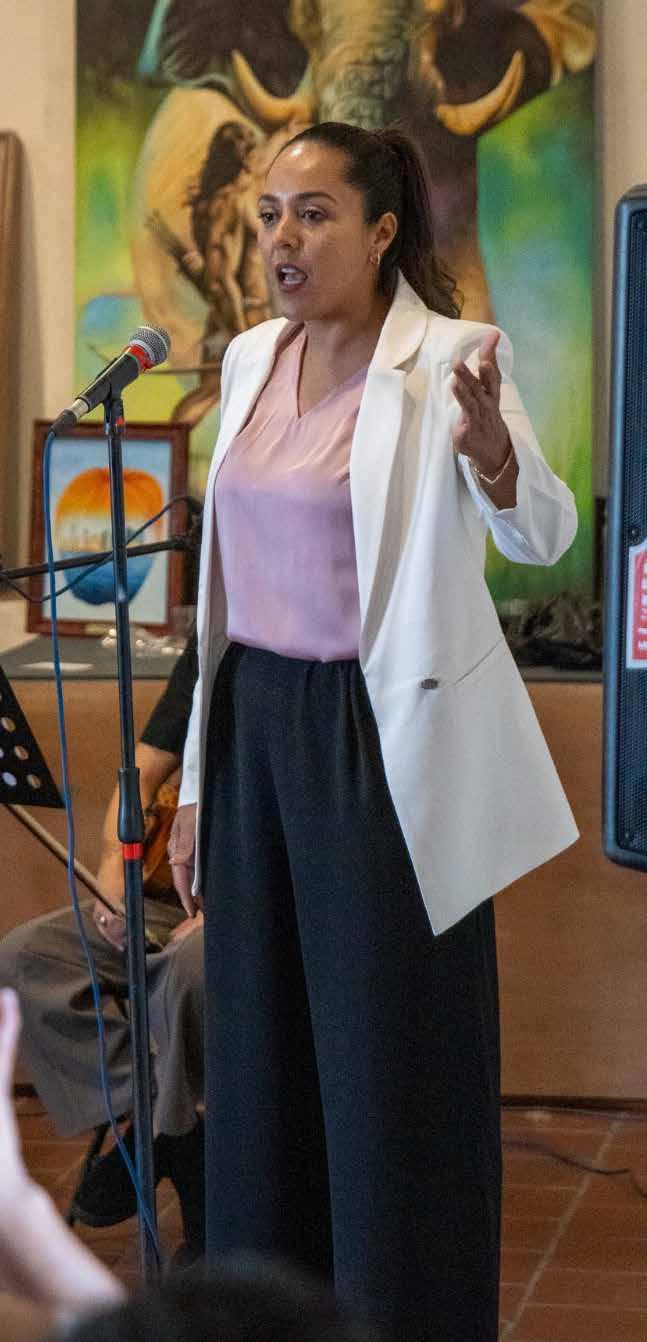
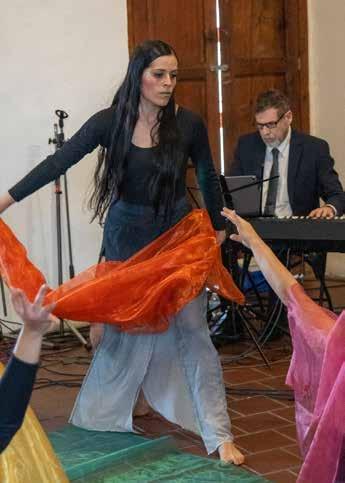
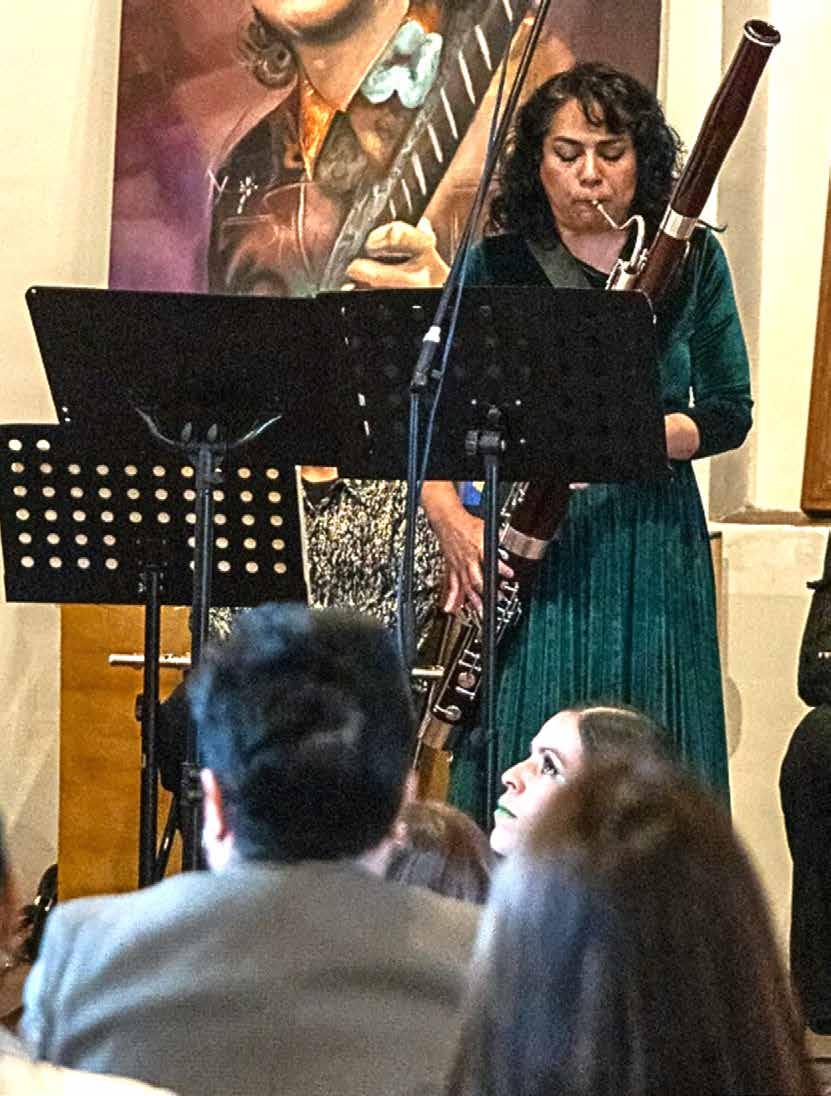
The opening ceremony featured a civic and artistic program—including tributes, poetry, dance, and music—and highlighted the world premiere of Flor Silvestre by composer Fred Adler, performed by the MAES Collective.
The event brought together cultural authorities, artists, and academics, recognizing participants for their contributions to intercultural dialogue and social transformation. With this festival, Michoacán established itself as an international hub for art with purpose, reaffirming the power of art to sow harmony and hope.
aesthetic sensibilities. More than an artistic exchange, it is conceived as a transnational experience of fraternity: a journey through shared creativity that celebrates beauty as a bridge and art as a space for human reconnection.
In the context of 2026—a year defined by political shifts, environmental crises, and social
transformations on a planetary scale—Seeds of Harmony emerges as a poetic and humanist response to fragmentation and division. The exhibition becomes a visual symphony of resilience and coexistence, inviting viewers to reconsider difference not as a boundary but as a fertile multiplicity. Each artwork acts as a seed germinating within the collective soil of sensitivity, projecting a shared horizon where art takes root as both the seed and the bloom of mutual understanding.
Born from Resilience
The origins of this artistic network trace back to a moment of global crisis. During the years of lockdown and isolation, the Colombian collective Arte sin fronteras por la Paz (Art Without Borders for Peace), led by César Augusto Rincón González, conceived an innovative format to allow art to circulate beyond physical barriers. This “digital microformat”—now the structural backbone of this exhibition—enables the artworks to travel as digital images and be locally reproduced in each participating country.
More than a logistical solution, this approach represents an ethical and ecological stance. By fostering cultural exchange with minimal environmental impact, Seeds of Harmony advocates for an accessible, democratic, and sustainable model of exhibition-making. It places technological creativity at the service of human connection rather than market dynamics, reclaiming art’s social and spiritual role in an increasingly virtual world.
Between Memory, Identity, and Utopia
The richness of this exhibition lies not only in the diversity of mediums—painting, photography, digital art, installation, poetry—but also in the symbolic plurality of the voices represented. The participating works explore collective memory, environmental awareness, identity, and spirituality, tracing parallel pathways between the local and the universal.
The title Seeds of Harmony encapsulates the poetic gesture at the heart of the project. The seed becomes a metaphor for potential, growth, and transformation—a promise of renewal and a reminder that harmony, like nature, must be cultivated. The exhibition unfolds as a symbolic garden that thrives through multiplicity, where difference itself becomes the condition for fertile coexistence. In this sense, Seeds of Harmony is both an exhibition and an ecosystem: a network of artistic energies seeking resilience and regeneration across continents.
Spain and the Ibero-American Weave
Spain’s participation, represented by the Sala Aires Gallery of Córdoba—run run by Daniel Arena Rodríguez, director of the Sala Aires, international art critic and exhibition manager, and Lucía Cabello Rodríguez, project manager of the Sala Aires—affirms the country’s ongoing commitment to building cultural bridges across the Ibero-American world. The inclusion of Spanish artists expands the dialogue beyond geography, enabling a two-way exchange in which the European gaze encounters Latin American sensibilities to compose a shared aesthetic vocabulary rooted in empathy and reciprocity.
The Spanish contribution brings historical resonance and contemporary awareness to the project, enriching it with layers of meaning that connect tradition and experimentation, memory and technology, individuality and community. Through this intercambio, art becomes a living field of communication—an act of listening made visible.
A Celebration of the Human Spirit
The exhibition officially opened on January 17, 2026, at the Museo del Estado de Michoacán (Michoacán State Museum) in Morelia, the capital of the state Michoacán in Mexico, with an event that included music, dance, and poetry, emphasizing art’s performative and communal dimensions. Through these forms, Seeds of
Harmony extended its curatorial premise beyond the gallery walls, transforming the opening into a sensorial and emotional ritual of encounter.
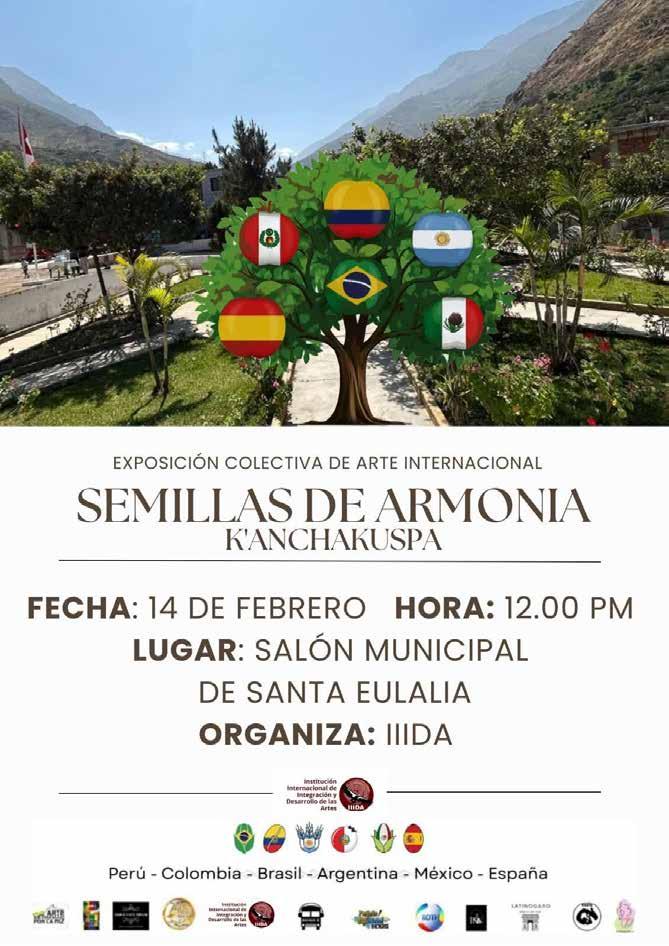
The exhibition in Mexico remained open to the public until February 6, 2026. Its international journey continues through the following venues:
• Mexico: Museo del Estado de Michoacán, Guillermo Prieto 176, corner with Santiago Tapia, Col. Morelia Centro, C.P. 58000, Morelia. The museum is part of the Michoacán State Ministry of Culture. Date: January 17, 2026 (January 17–February 6).
• Spain: Sala Aires Gallery, C. Arguiñán, 2, Centro, 14002 Córdoba. Date: January 23, 2026 (January 23–February 9).
• Peru: Santa Eulalia Municipal Hall, Municipality of Lima. Date: February 14, 2026.
• Argentina: Merlo House of Culture, Av. Calle Real 298, Merlo City, Buenos Aires Province. Date: March 14, 2026.
• Brazil: Memorial da América Latina, Av. Mário de Andrade, 664, Barra Funda, São Paulo – SP, 01156-001, São Paulo. Date: March 21, 2026.
communication often abstracts human presence, Seeds of Harmony offers a counterpoint
return to CHINATOWN
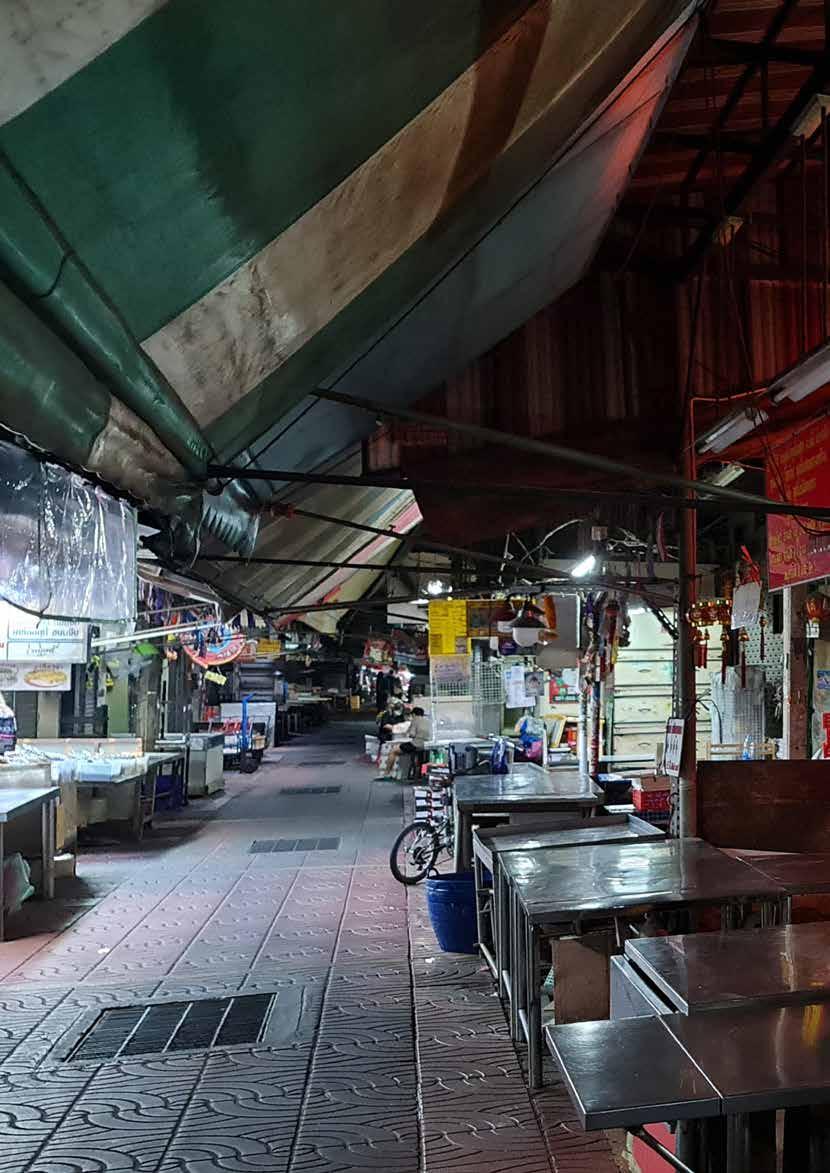
Bangkok, that capital, and that area of Chinatown, draws me.
It was with a great sense of deja vu that I’d proffered the obligatory digital PDF of my landing ‘card’ (Thailand Digital Arrival Card (TDAC) on my hand phone) to what looked like a twelve-year-old Immigration Officer. I’d, once more, handed over my passport and placed my fingers and thumbs on human-oil-smearedglass-panel and had my fingerprints recorded.
Next, fully chopped, I was out of no-man’s-land and into the Land of Smiles that was Thailand (so called in an official tourism slogan during the 1960s).
Sawasdee (hello in Thai).
With a smile on my face, I’d purchased a local (rather expensive) SIM card ((Subscriber Identity Module - 500 baht) and requested a ‘Grab’ (taxi) to transport me to my mini-studio with cooking facilities. Room 505 had been arranged through the Internet, and was to be my lair for a few days in Bangkok’s Chinatown.
I was back to the alleyways (Troks), the Wats
and the stupas of Bangkok. Back to the unique mixture of Thai and Chinese cultures which is the 200-year-old plus Chinatown (founded 1782).
Though a tad tired, I was also excited to go out and find dinner. Nearby my accommodation was a small restaurant (‘Ton Tub Rub’), claiming ‘authentic Thai food’. That’s where I’d espied one of my favourite dishes - Thai Tom Kha (a spicy chicken soup with coconut milk, infused with lemongrass, galangal and kaffir lime leaves). It was every bit as delicious as I remembered from Hat Yai. And, as it was not just Christmas time but also the Winter Solstice (Dongzhi Festival), I’d also indulged in Tang Yuan (汤圆 - glutinous rice balls with black sesame seeds buoyant in sweet ginger ‘tea’, which apparently symbolises reunion and good fortune in Chinese culture).
Pushing through evening crowds, ogling at racks of barbecued squid and vendors proffering churning motorised tumblers of hot coffee beans and seasonal chestnuts, the pre-Christmas evening was still warm, but cooler than the day’s overcast heat (31 degrees).
Night fell on my first day back in Thailand.
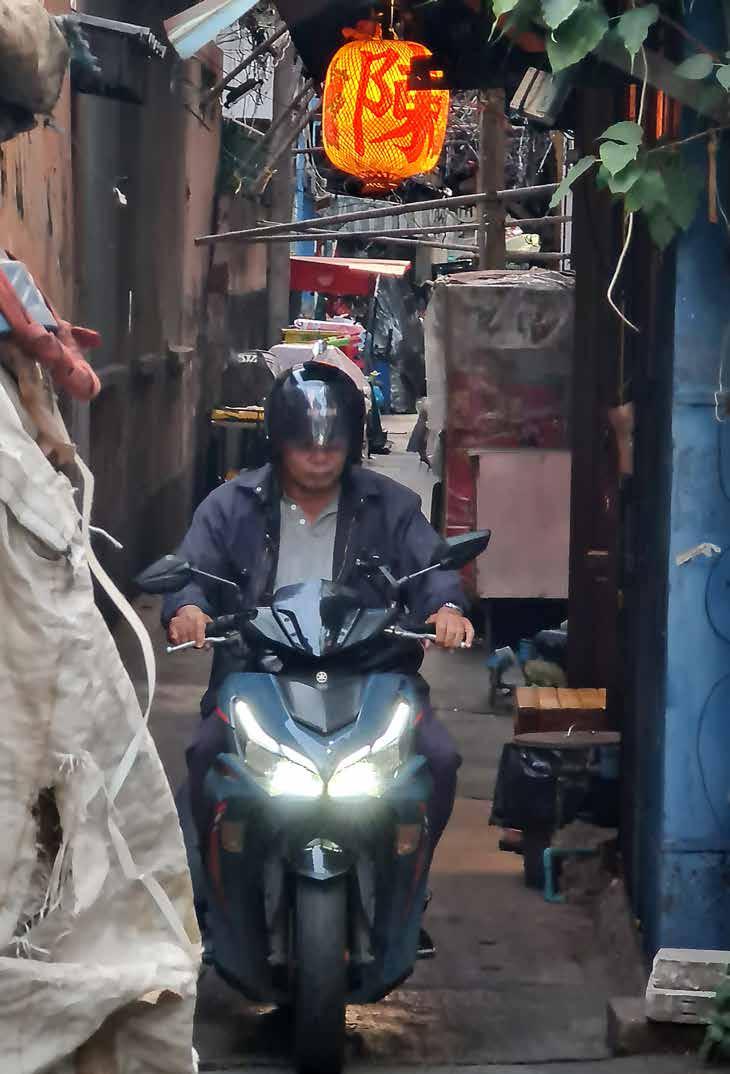
Bangkok ‘Trok’ (small alleyway)
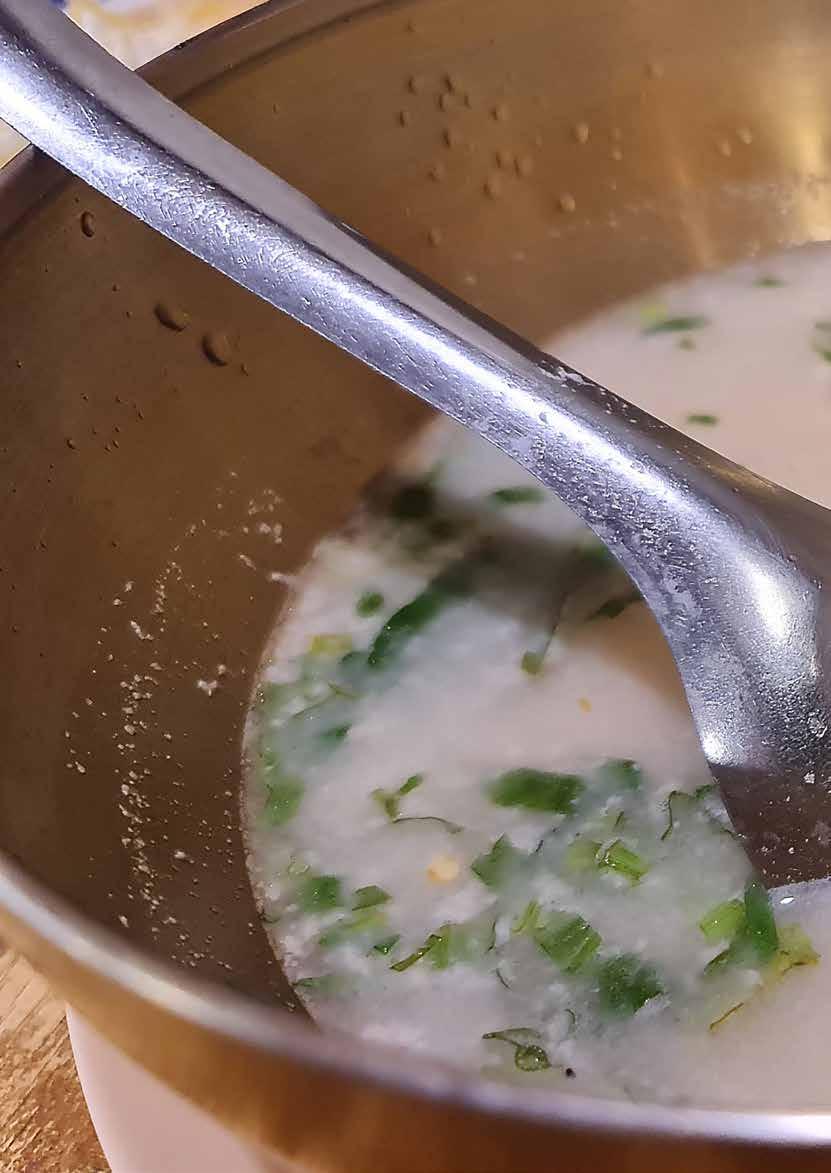
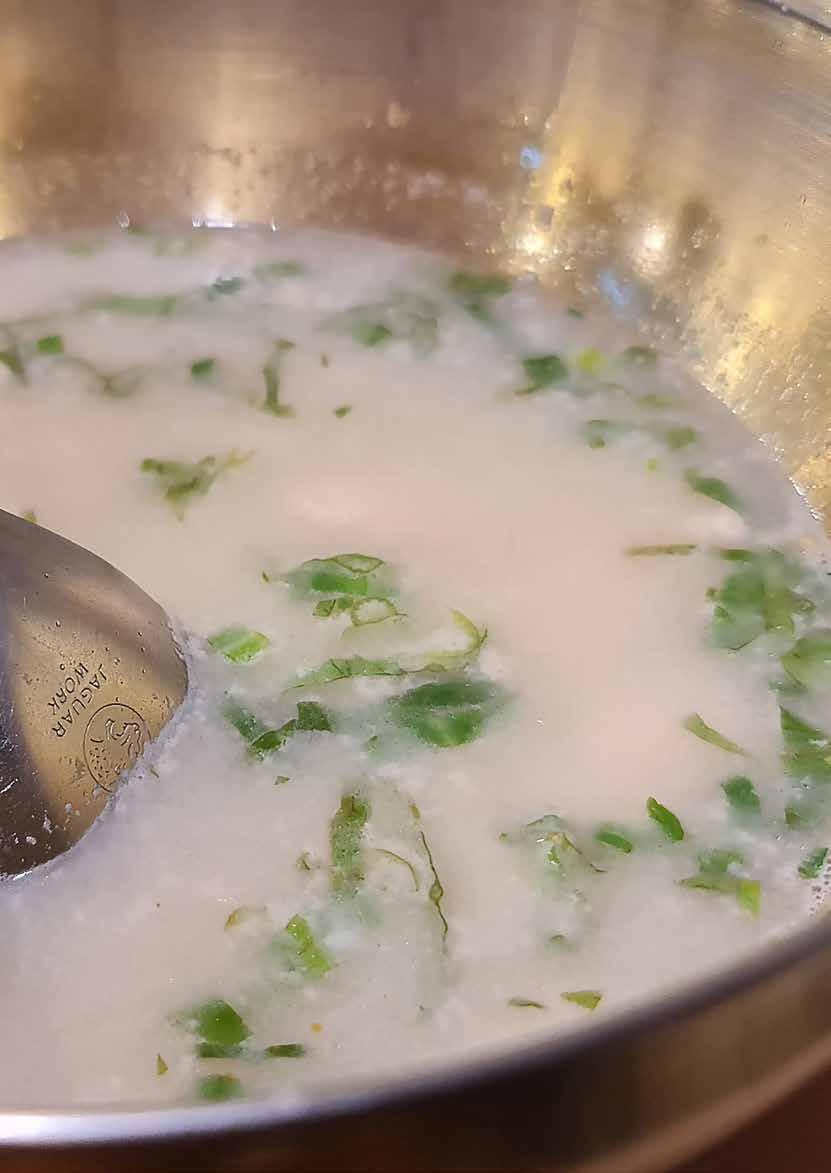
Thai Tom Kha (a spicy chicken soup with coconut milk, infused with lemongrass, galangal and kaffir lime leaves
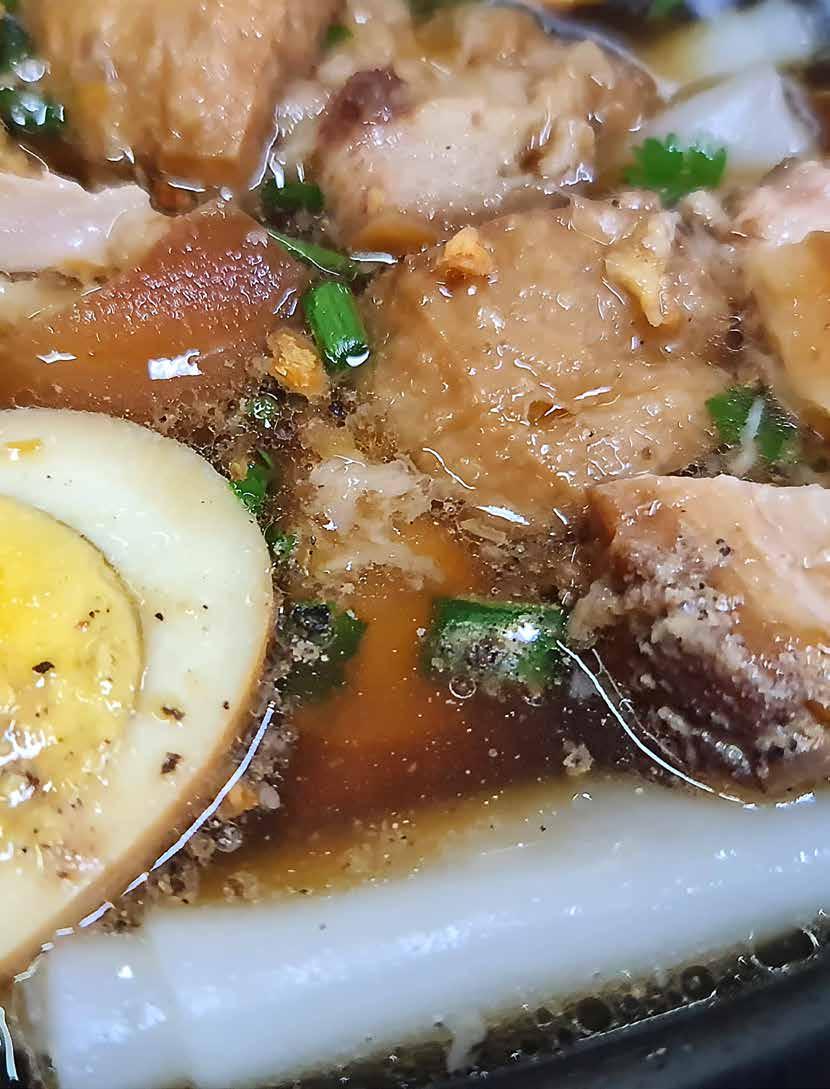
Soup contains a mixture of cooked pieces of pork, half a hard-boiled egg, rolled rice noodles (Guay Jab or Kuay Chap) in a flavoursome light soup
I’d had some sleep (though not a lot). I did some writing at about 4am, and slept again (that seems to be my nightly routine wherever I am). After awakening properly I’d showered and had a bowl of Thai soup for breakfast. That soup contained a mixture of cooked pieces of pork, half a hard-boiled egg, rolled rice noodles (Guay Jab or Kuay Chap) in a flavoursome light soup. This was had at a very small Thai food-court near to Wat Mangkon Kamalawat (Wat Leng Noei Yi). However, there was no tea or coffee to be had at the restaurant.
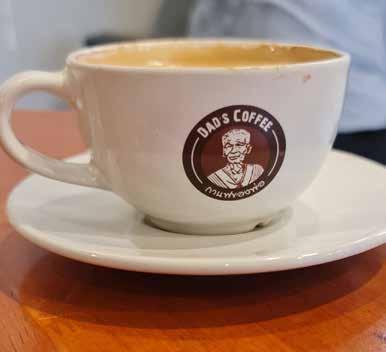
Coffee was along the road at ‘Dad's Coffee’. I don't know why, but I’d expected local Thai style coffee (called Kopi), i.e., ground Robusta coffee beans with the bitterness taken off with concentrated ‘creamer’ or condensed milk. It wasn’t. The coffee at ‘Dad’s Coffee’ more resembled a cappuccino or a flat white. Ho hum, ’Dad’ must have been Italian American then.
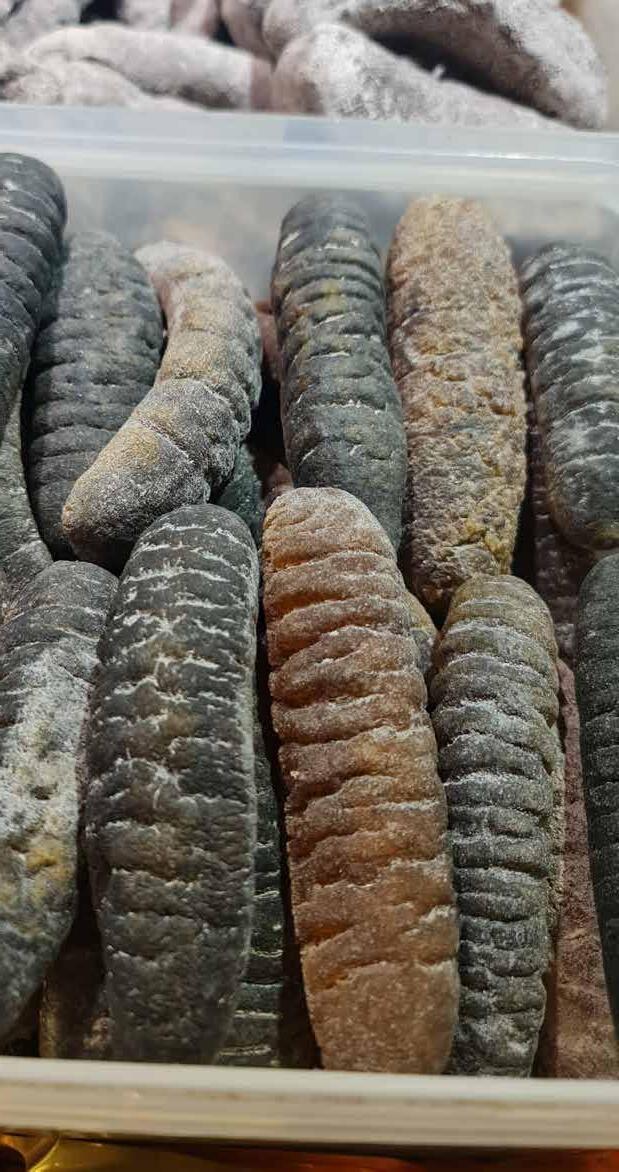
That day, I’d wandered Sampeng Market (Soi Wanit). It's Bangkok Chinatown's oldest wholesale market, established by Chinese immigrants, or so was informed. That bustling market had formerly been a notorious vice den"Sin Alley", which had purveyed opium, sex and gambling. It's now a very long and very narrow many segmented labyrinth. It’s crammed with walking or scooter-riding humanity buying, delivering and selling everything from dried sea-cucumbers to cloth intended for clothing. That prolonged narrow space of interconnected areas (filled with goods and food stalls) was simultaneously fascinating, very troublesome and exhausting.
Lunch, had been away from that series of alleyways, in Central wOrld (shopping plaza/ mall) because I’d needed the loo.
Obtaining a meal in the ‘mall’ food court involved placing any number of Thai Baht notes into a vending machine. It then spat out a receipt with the Baht amount printed and an ‘SQR (Quick Response) code’. I’d proffered the receipt at whichever food purveyor, and they
handed me my food and another a receipt which updated the original.
My lunch has been Bangkok's interpretation of Singapore's Hainanese Chicken Rice, only, not quite. That day’s version included a watery ‘Sambal Blachan’ (made with chillies and shrimp paste) as well as another, redder, chilli paste. That dish, however, had a distinct absence of pounded ginger, which I missed.
Curiouser and Curiouser.
Back at my ‘Deluxe Twin Room’ with cooking facilities, I’d rested.
After a much deserved rest, my dinner had been at Le Haha Lanzhou Noodles, along Yaowarat Road, Chinatown. That meal consisted of a ‘Chinese Burger’ (Rou Jia Mo 肉夹馍 - a fried “mo, 馍,” or mantou, 馒头, with chopped, fried beef and pickle), as well as an excellent ‘Pickle and beef noodle soup’ - 酸菜牛肉面. Both were delicious.
Le Haha Lanzhou Noodles was a small handpulled noodle (Lamian) shop, notable for its remarkable food as well as live noodle-making in its shop windows. Both the dinner items seemed authentically Chinese. That’s to say that I recognised the styles and tastes from my various trips to China.
Another (soft not hard) day’s night (which I’d slept through), brought a fresh Thai Chinatown morning.
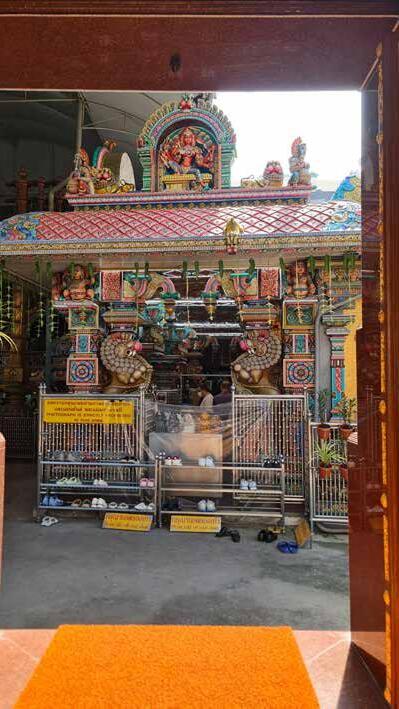
I grabbed a Grab to the Bangkok business area called Si lom. I was at the Sri Maha Mariamman Temple (Wat Khaek) - a South Indian (Tamil) style Hindu temple on Si Lom Road, Bangkok. That temple had been built (in 1879) by the Hindu immigrant Vaithi Padayatchi. It’ a small temple when compared to most of the Buddhist temples in the city, however, what the temple lacked in size it more than made up for in colour, vibrancy and, strangely enough, peace.
Dried Sea Cucumbers Pickles
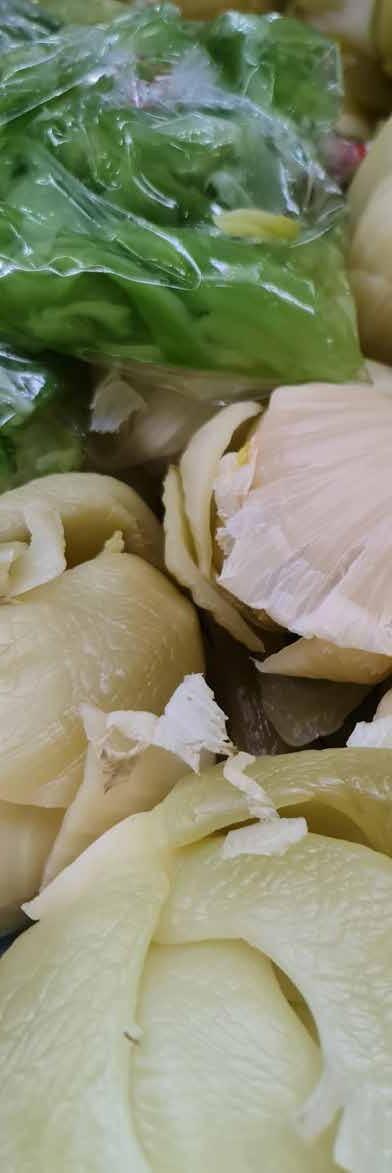
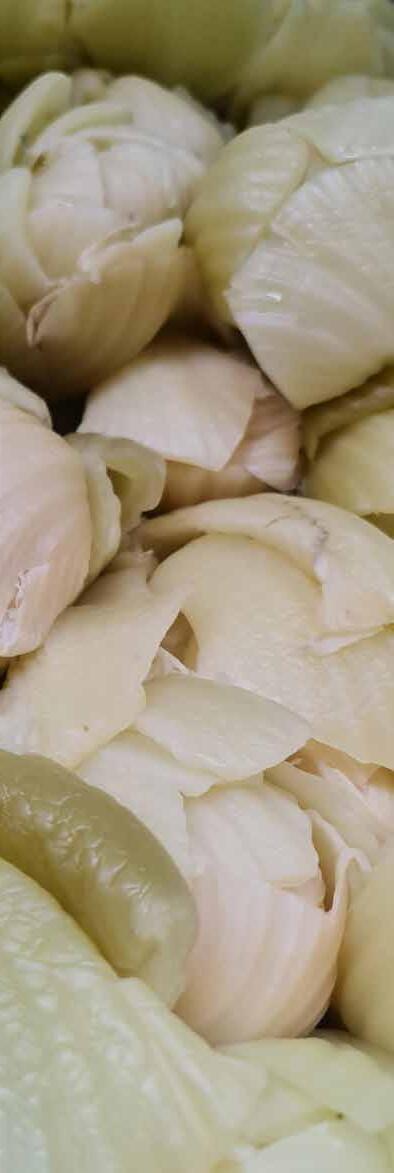
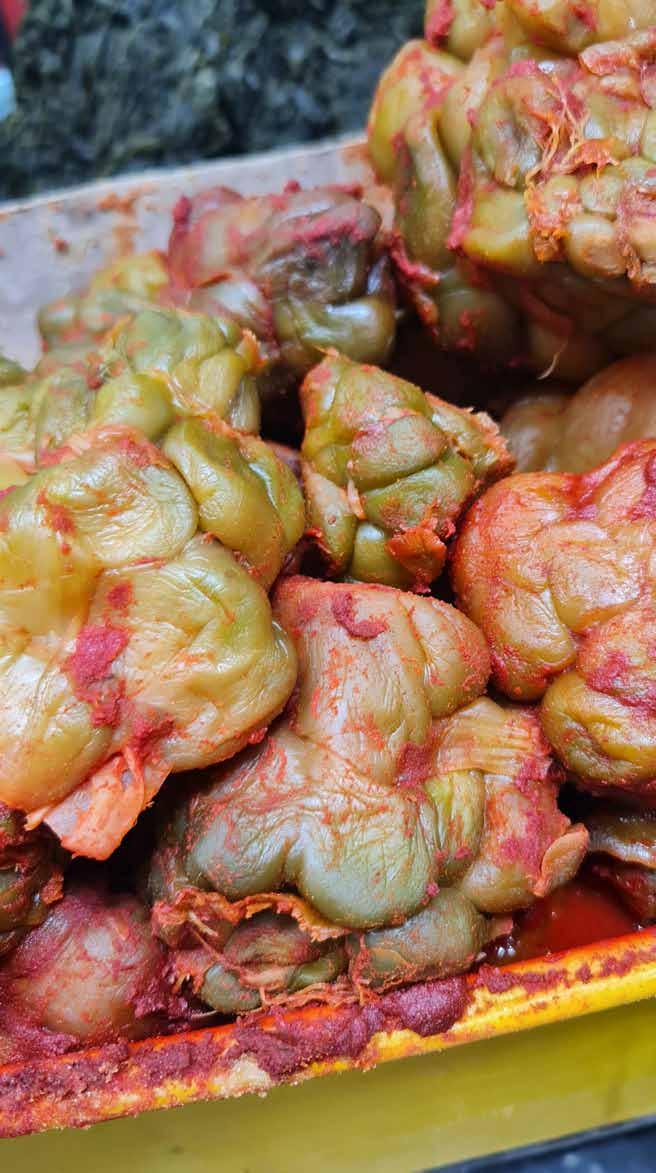
Pickles
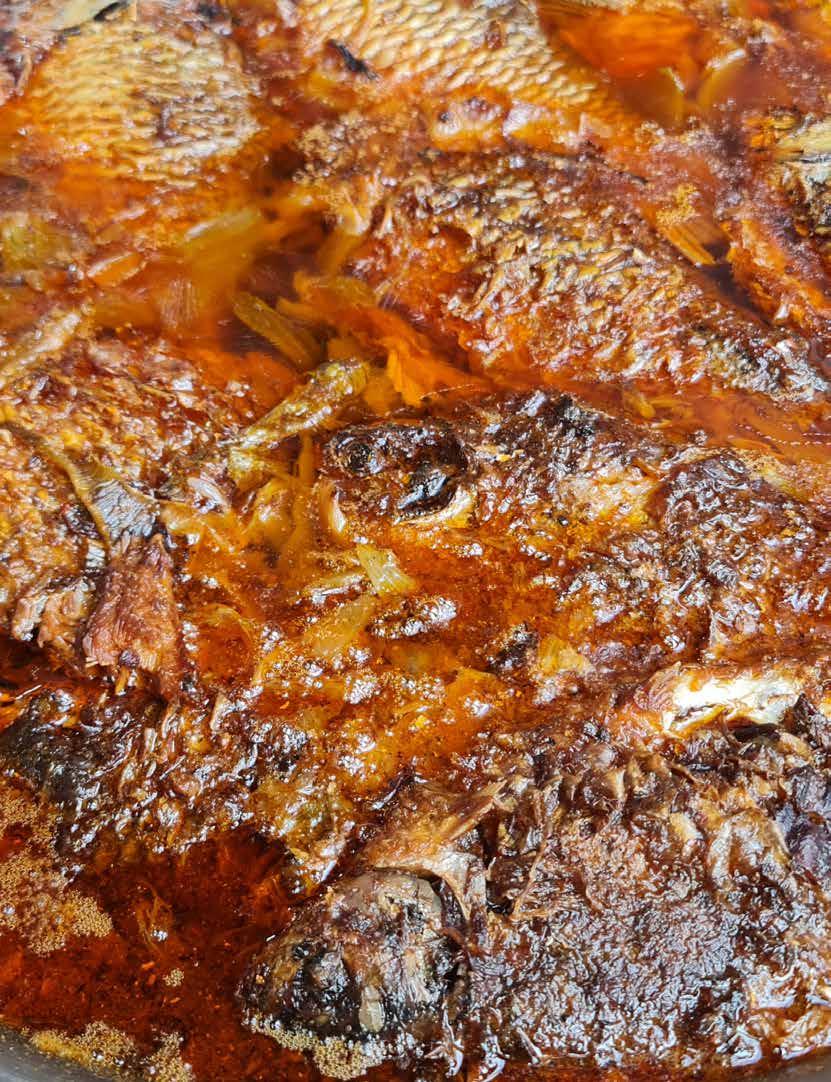
Thai fish dish on Trok market
The Sri Maha Mariamman Temple triggered a longing for Indian food.
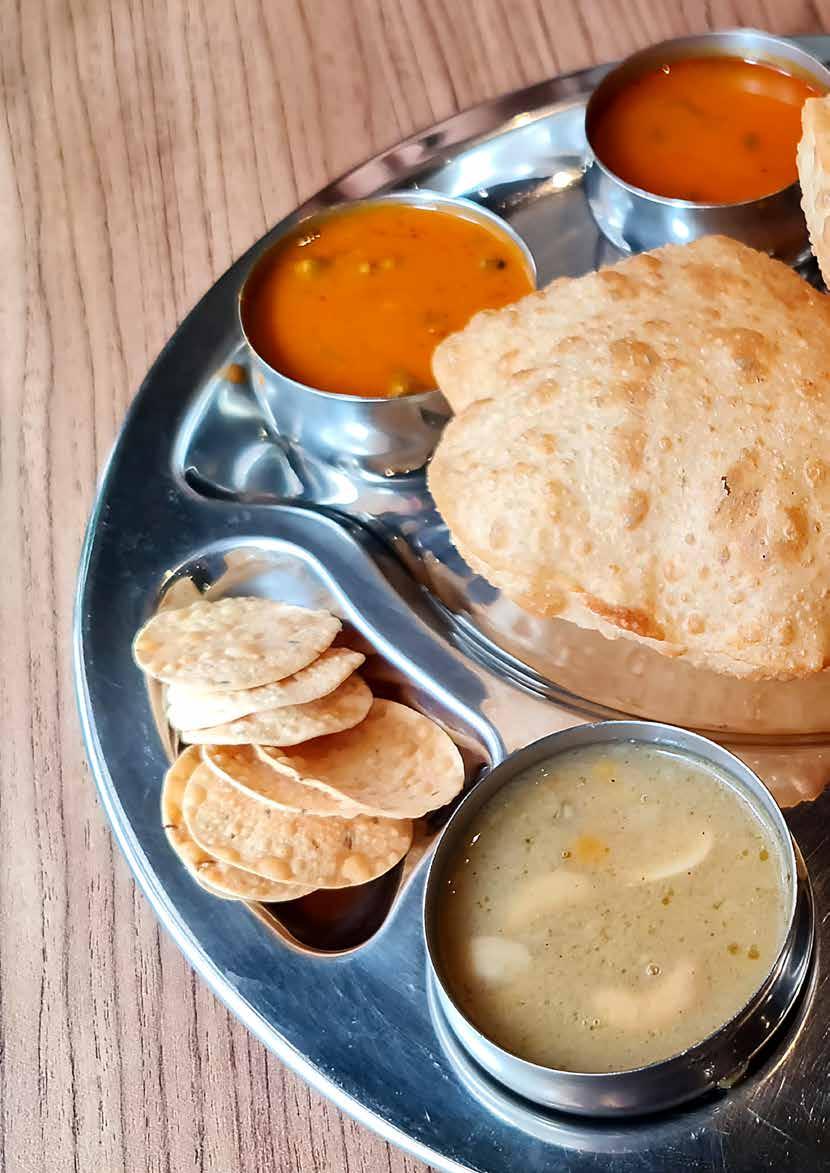
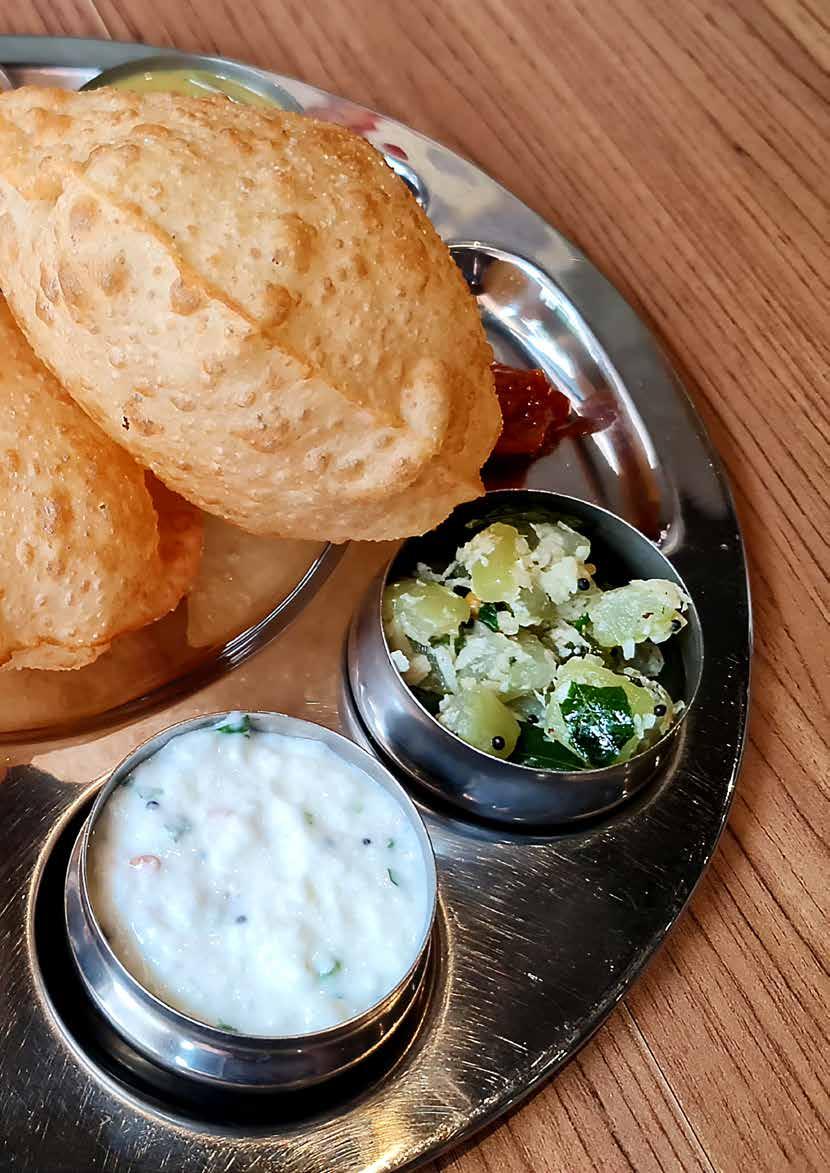
Lunch just had to be Indian. I found what I was craving at ‘MTR 1924’ (Mavalli Tiffin Rooms, a famous vegetarian restaurant chain founded in Bengaluru/Bangalore, India, 1924). That restaurant had been just down the road from the Sri Maha Mariamman temple. I thoroughly enjoyed the ‘Executive Lunch Tali’ of rice, sambar, rasam, palya (Vegetables), payasam (dessert), papad, pickle, and curd rice, as well as a ‘Masala Dosa’, accompanied by a sweet lassi. All that heartfelt temple meditation had made me so hungry.
On a previous visit to Thailand (Hat Yai), I’d bought a box of ‘Raming Oolong Chinese Tea’ bags (Cha Raming established in 1941). This trip to Chinatown I’d been hoping to buy more. Yes, there had been dried Oolong tea (from Doi Mae Salong in northern Thailand), but not ‘Raming’ tea bags. I bought two small bags of tea from a Chinese herbal emporium in Bangkok’s Chinatown.
Sri Maha Mariamman temple
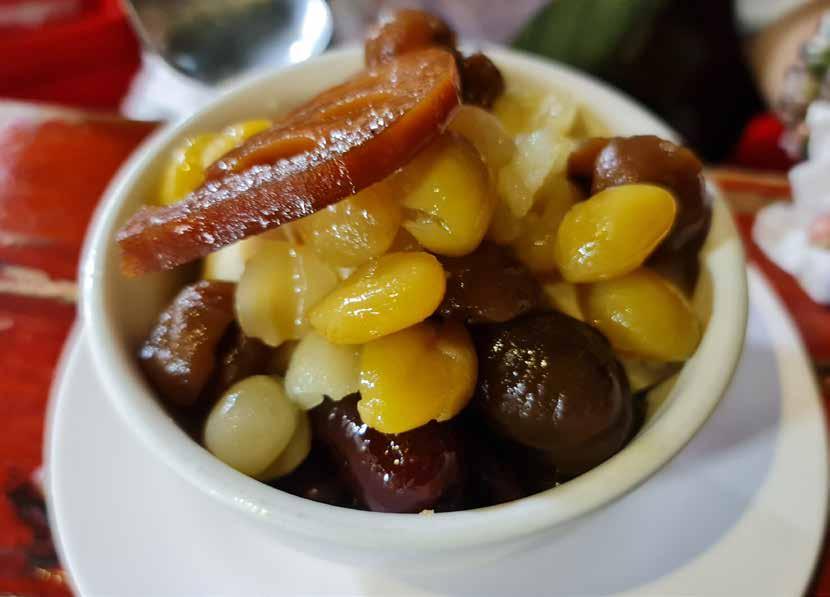
Bok kia" (mixed dessert)
Tali’ of rice, sambar, rasam, palya (Vegetables), payasam (dessert), papad, pickle, and curd rice
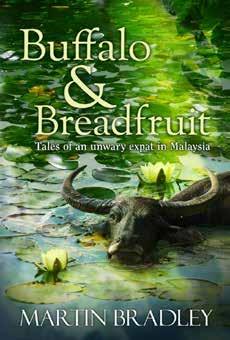
Martin Bradley is the author of a collection of poetryRemembering Whiteness and Other Poems (2012, Bougainvillea Press); a charity travelogue - A Story of Colours of Cambodia, which he also designed (2012, EverDay and Educare); a collection of his writings for various magazines called Buffalo and Breadfruit (2012, Monsoon Book)s; an art book for the Philippine artist Toro, called Uniquely Toro (2013), which he also designed, also has written a history of pharmacy for Malaysia, The Journey and Beyond (2014, Caring Pharmacy).
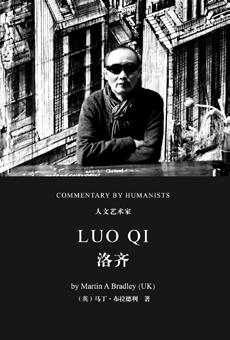
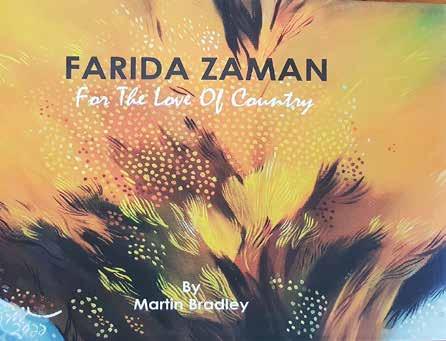
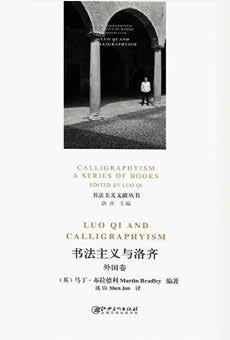
Martin has written two books about Modern Chinese Art with Chinese artist Luo Qi, Luo Qi and Calligraphyism and Commentary by Humanists Canada and China (2017 and 2022), and has had his book about Bangladesh artist Farida Zaman For the Love of Country published in Dhaka in December 2019.
Canada 2022
THE BLUE LOTUS
The Blue Lotus magazine has been published by Martin A Bradley (The
LOTUS BACK ISSUES
(The
Publishing), in Colchester, England, UK, since 2011