PERS PECT IV ES
SPRING 2026

SPRING 2026

On the homefront, spring has always carried a certain optimism: the sense that after a quieter season, momentum returns with fresh clarity. This edition of Perspectives arrives in that spirit: a look at new beginnings, evolving markets, and the opportunities that often emerge during moments of transition.
The opening months of 2026 have introduced a more measured real estate environment. Across many markets, inventory remains constrained while transaction volume has softened, as buyers and sellers alike navigate broader political and economic uncertainty.
Yet hesitation can create balance. After years defined by urgency and rapid appreciation, we are seeing the early signs of healthier price stabilization and a market that increasingly rewards patience, strategy, and discernment.
This season has brought joy in the form of a new four-legged addition, Willis, whose bright spirit has quickly become a beloved part of daily life.
We hope this issue offers insight, inspiration, and a sense of possibility for the season ahead. As always, thank you for your continued trust and confidence.
Best,
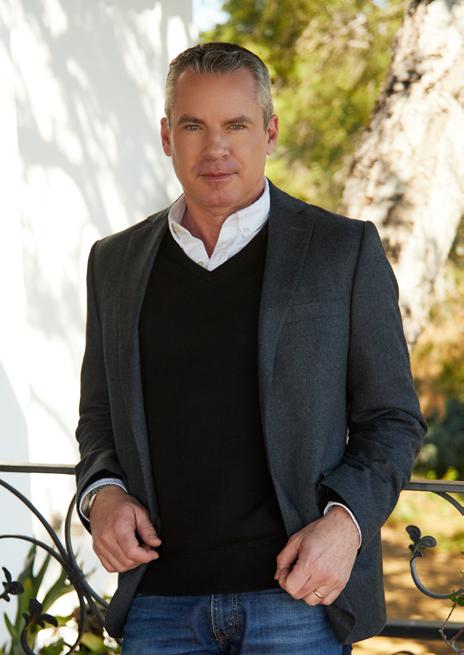
Greg Holcomb
Garden expert, Jessica Hayes, shares her practical principles for creating a garden that is beautiful, productive, and sustainable all season long.
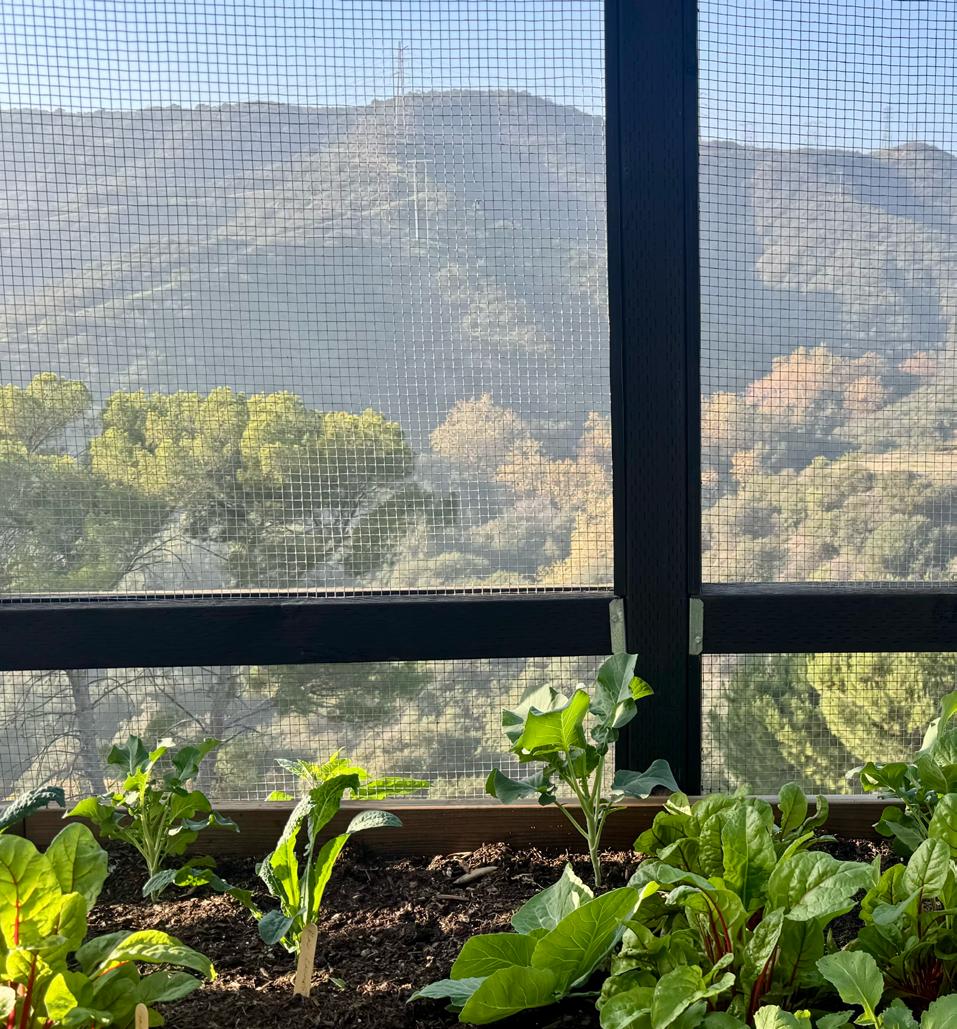

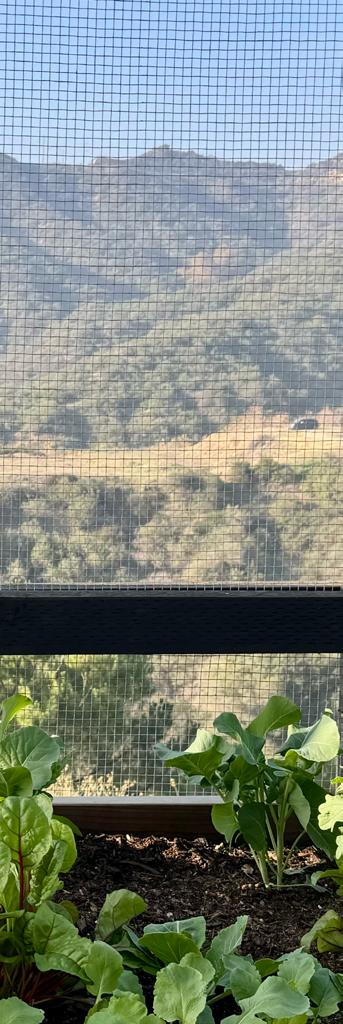
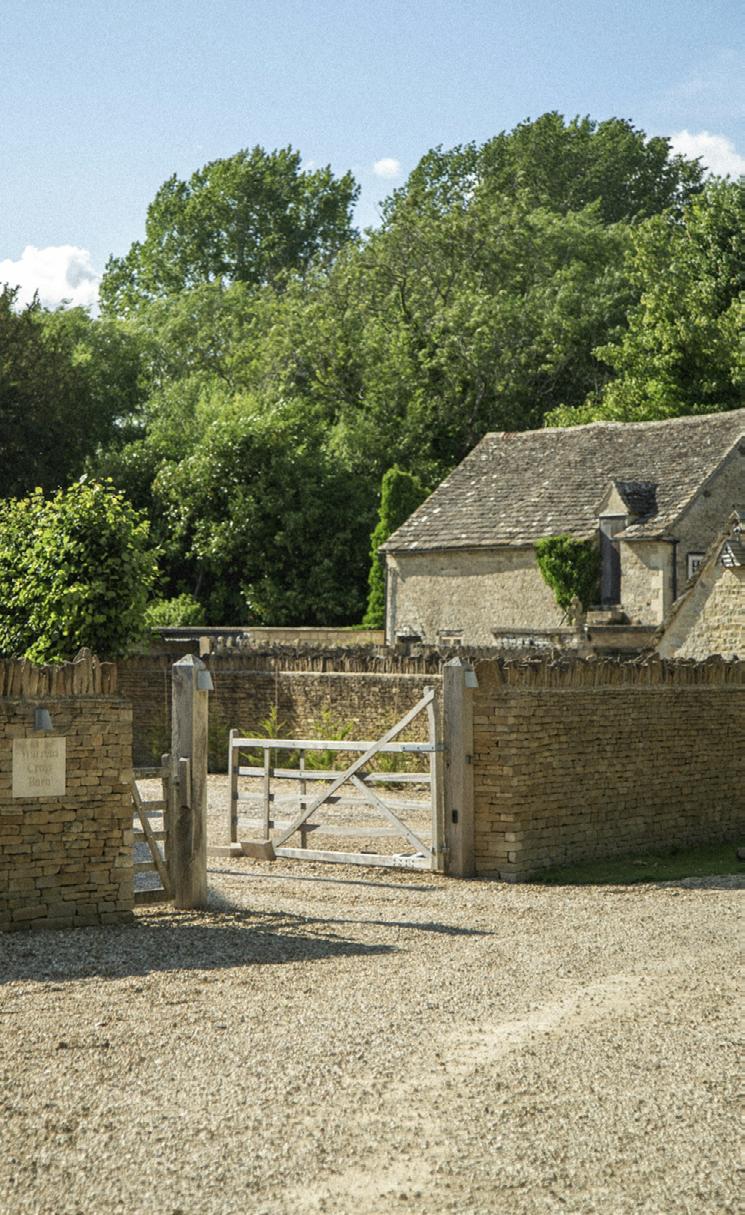
The two main things to consider are convenience and sun. It sounds obvious, but it’s worth noting that the closer you have your kitchen garden to your kitchen, the easier it is to maintain and enjoy it. Most fruiting vegetables need 6-8 hours of sun, so you’ll want to check your site for sun exposure. If you’re not sure what you’re working with, you can track it by observing. Go out to your potential site once an hour over the course of a day and note whether you have full sun, full shade, or partial shade.
Whether you’re growing in raised beds, pots, or in the ground, you’re not just growing plants -- you’re growing soil! There are a ton of specific recipes to choose from, but generally you can start with a blend of good quality topsoil, organic compost, and vermiculite or perlite (40/40/20). If you can get some worm castings, there’s a reason gardeners call it “black gold” -- it’s high in nutrients for your plants, introduces beneficial microbes, and improves soil structure.
Hand watering can be relaxing and meditative, and it’s a great way to keep an eye on things in the garden, but when life gets busy, things can get tricky with the watering. The simplest thing to do is get a timer and pressure regulator hooked up to the nearest hose bib and get a drip irrigation kit. Whatever system you choose, do set something up to make watering easier. Your plants will thank you!
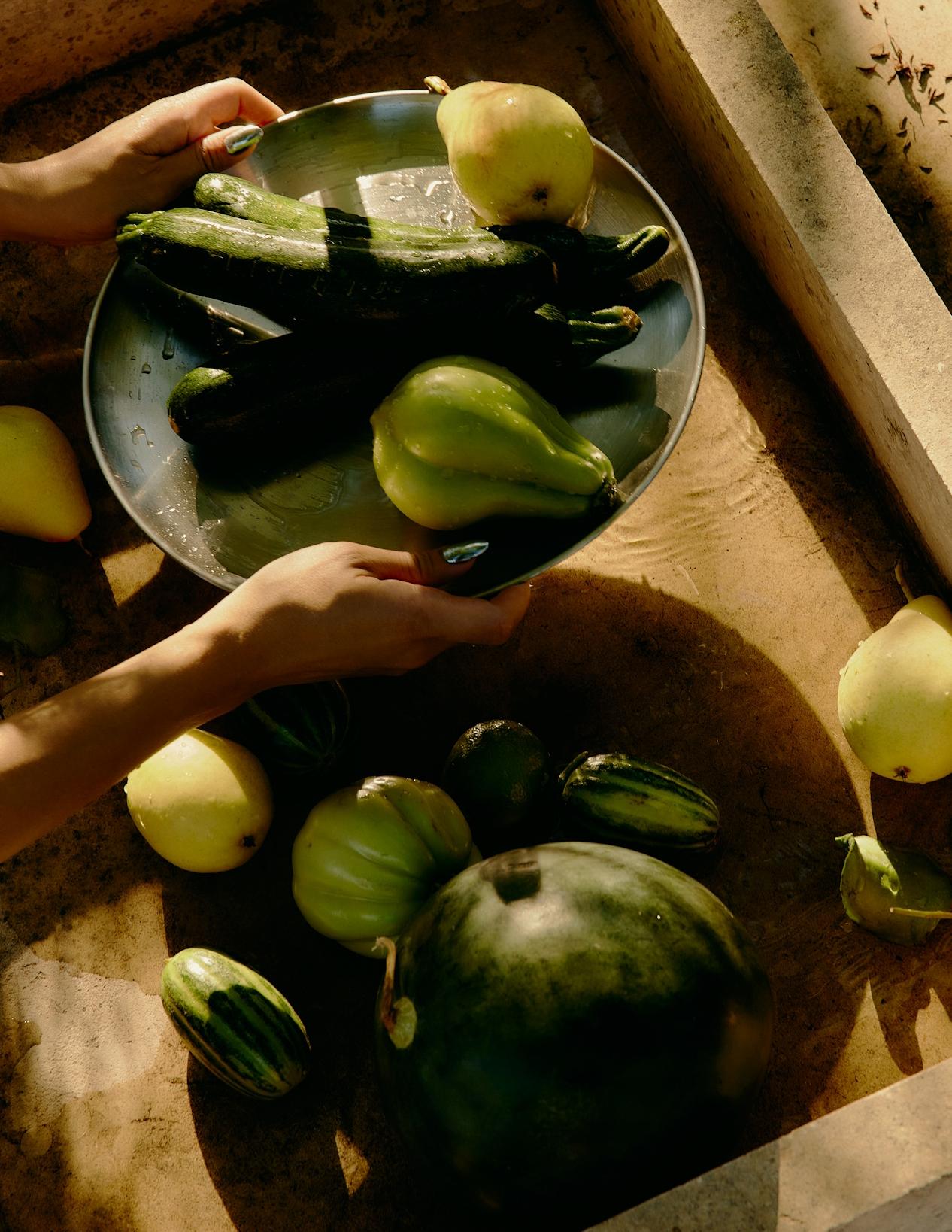
The lettuce carries a crispness and depth of flavor that simply doesn’t exist in the plasticwrapped versions found in stores.
GREG HOLCOMB
GARDEN NOTES
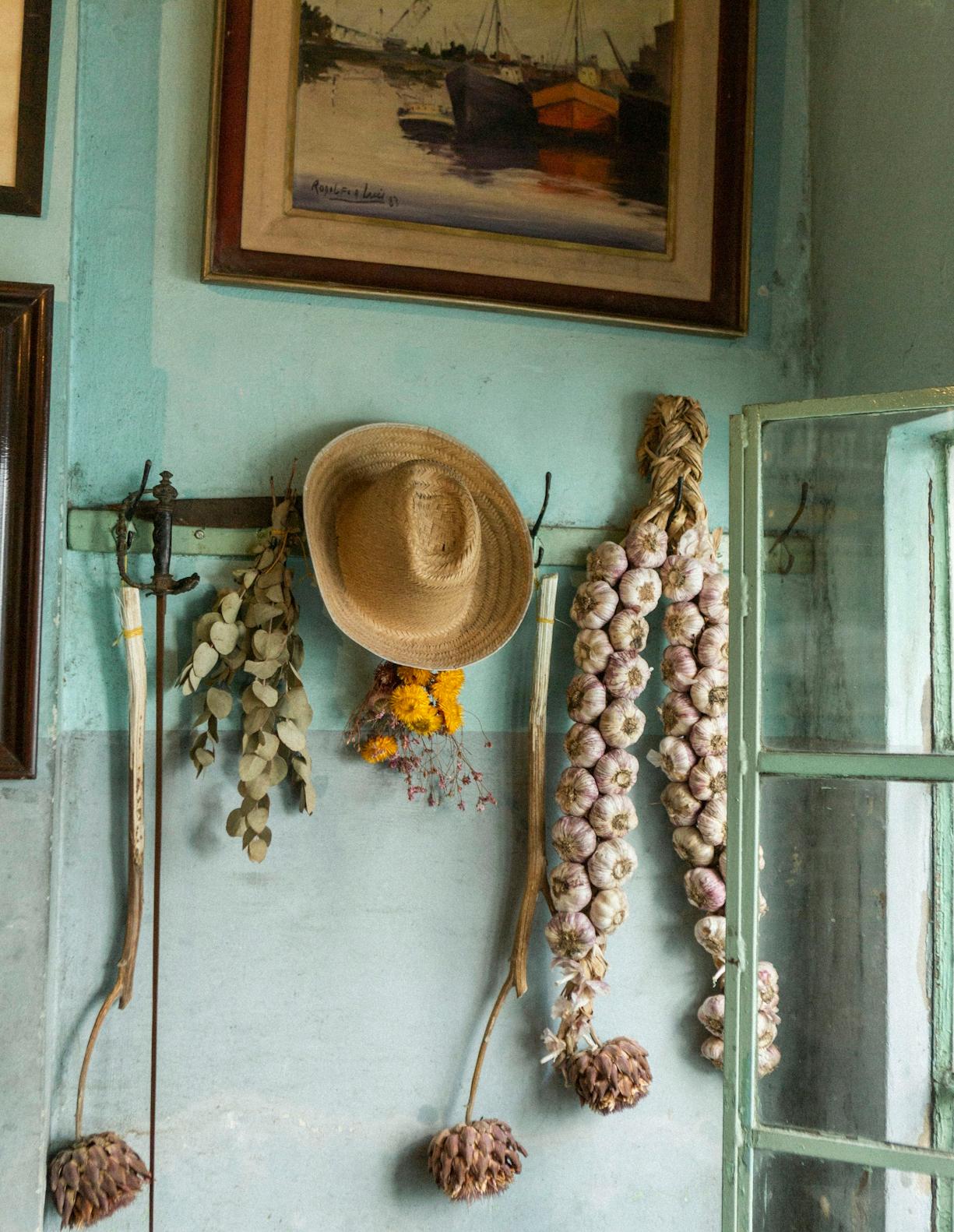
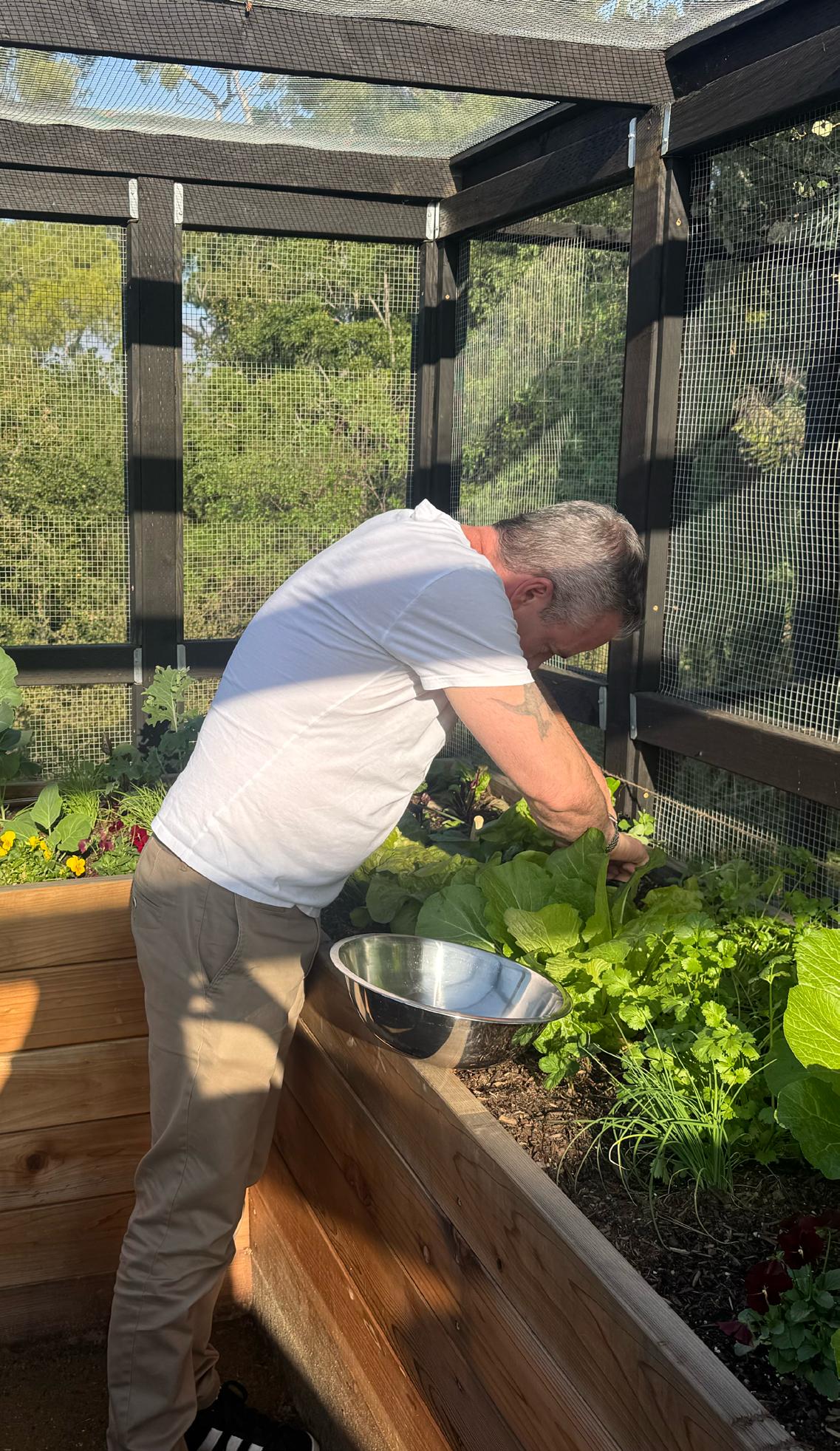
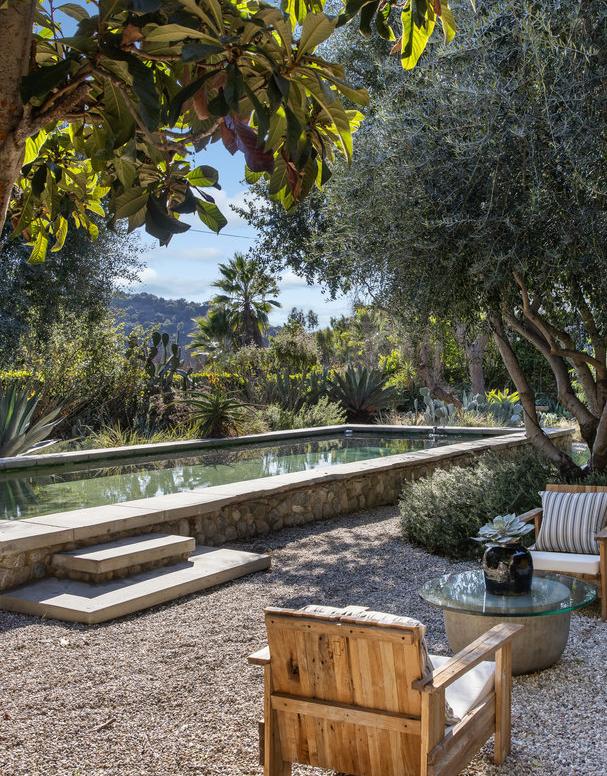
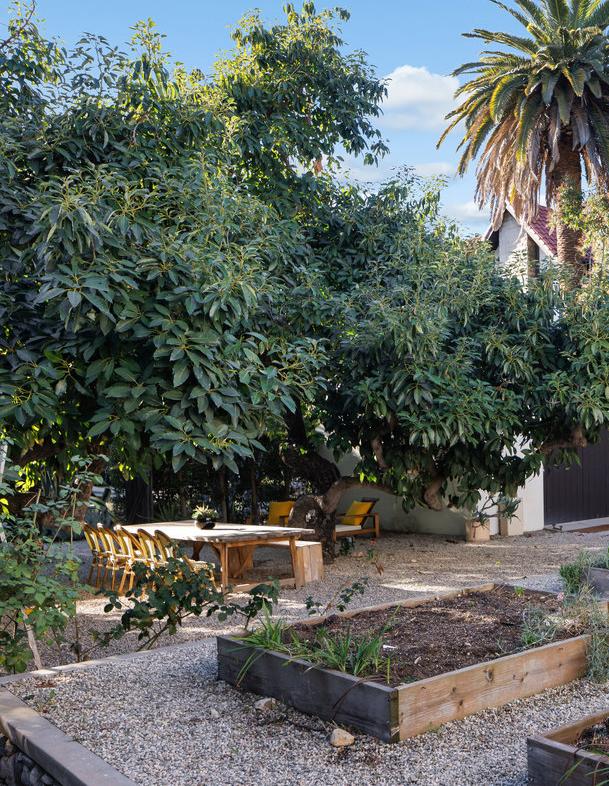
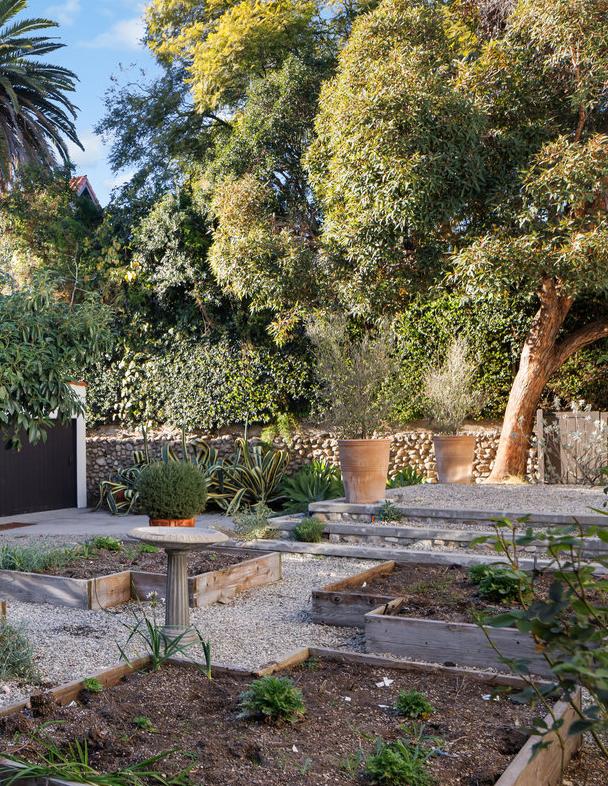
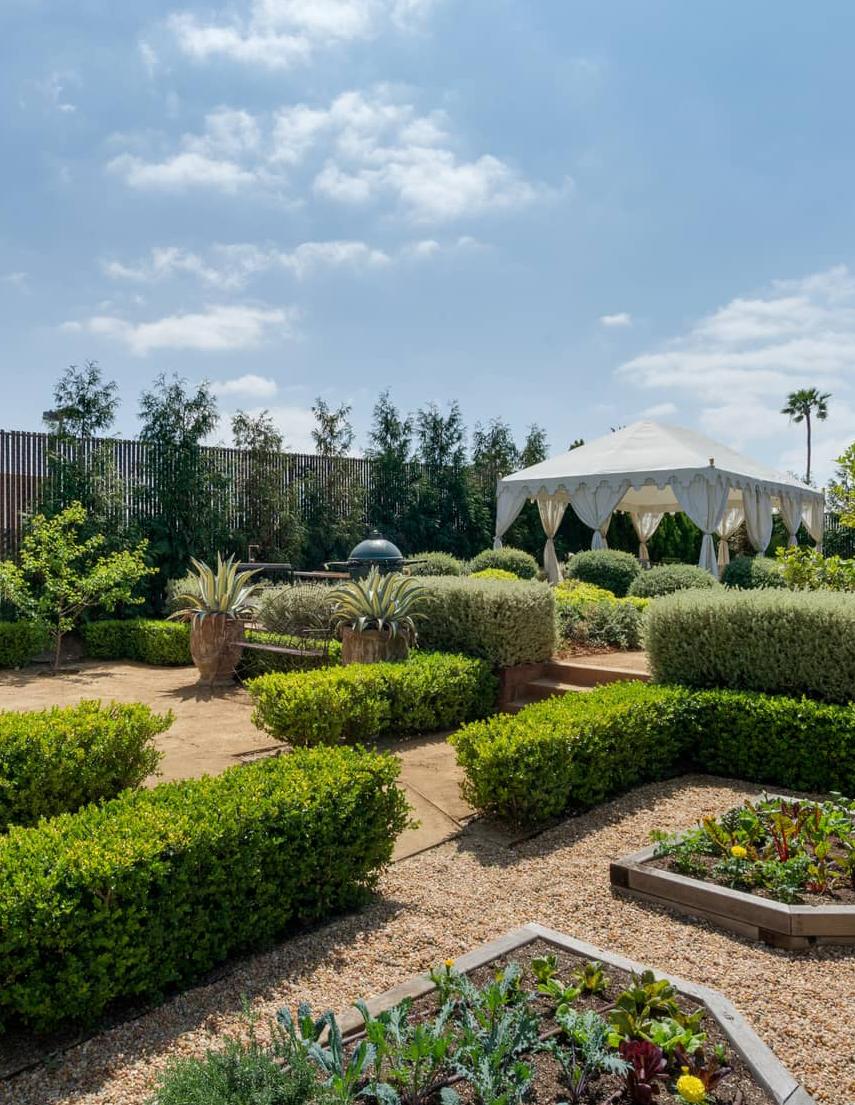
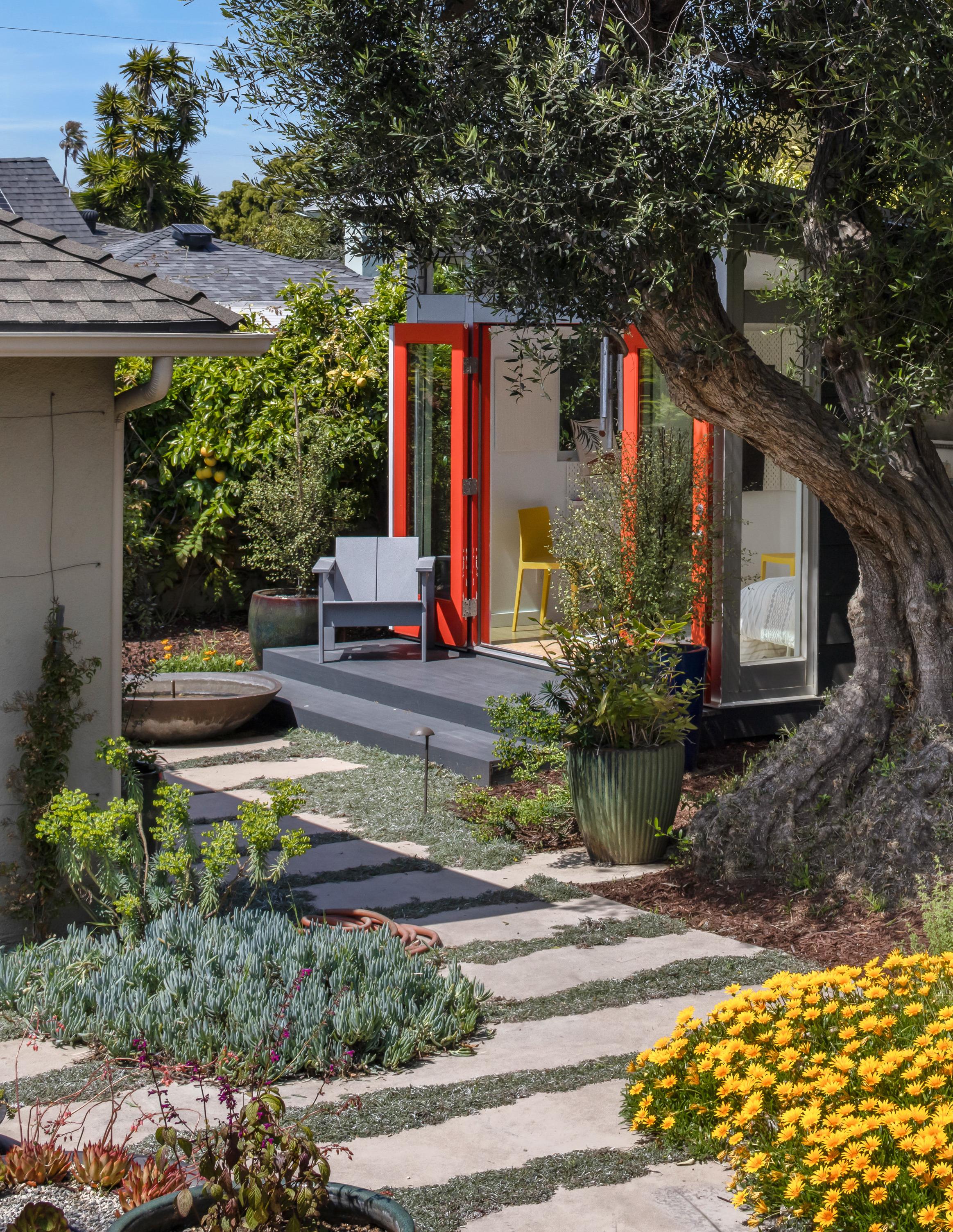
This spring, Todd and I found great satisfaction in creating a new raised-bed vegetable garden at home in Pasadena, an intimate and purposeful addition to the landscape. Filled with herbs, lettuces, and other seasonal favorites, the garden begins with a simple principle: grow what you truly love to gather and share. With guidance from Jessica Hayes, we’ve woven in flowers to invite pollinators and support a small but thriving ecosystem. As with any first season, the greatest reward has been the process itself, learning the rhythms of the space, observing what flourishes, and understanding how each season offers the chance to grow alongside it.
LOS ANGELES MACRO
EAST SIDE MICRO
WEST SIDE MICRO
SAN GABRIEL VALLEY MACRO
PASADENA
LA CANADA FLINTRIDGE
SAN MARINO
ALTADENA
SAN FERNANDO VALLEY MACRO
STUDIO CITY
SHERMAN OAKS
BURBANK
ENCINO
Renowned for its cultural diversity, iconic landmarks, and vibrant entertainment industry, Los Angeles encompasses a vast and varied landscape that includes sprawling urban centers, picturesque beaches, and rugged mountains. The city of Los Angeles serves as a global hub for entertainment, technology, and innovation. From the glamour of Hollywood to the laid-back vibes of beach communities like Santa Monica and Malibu, Los Angeles offers a rich tapestry of experiences, attractions, and opportunities for residents and visitors alike.
WEST SIDE MICRO AREAS PALISADES
BEVERLY HILLS HOLLYWOOD HIILS WEST
BEVERLY HILLS POST OFFICE
BEL
HILLS
EAST SIDE MICRO AREAS
HOLLYWOOD HILLS EAST

HOUSES SPENT A MEDIAN OF 62 DAYS ON MARKET FROM LIST TO CLOSE.
1371
1371 NEW PROPERTIES WERE BROUGHT TO MARKET IN QUARTER4.
44 62
HOUSES SPENT A MEDIAN OF 44 DAYS ON MARKET FROM LIST TO CLOSE.
616
616 NEW PROPERTIES WERE BROUGHT TO MARKET IN QUARTER 4.
TOTAL WEST SIDE LOS ANGELES SALES BY AREA
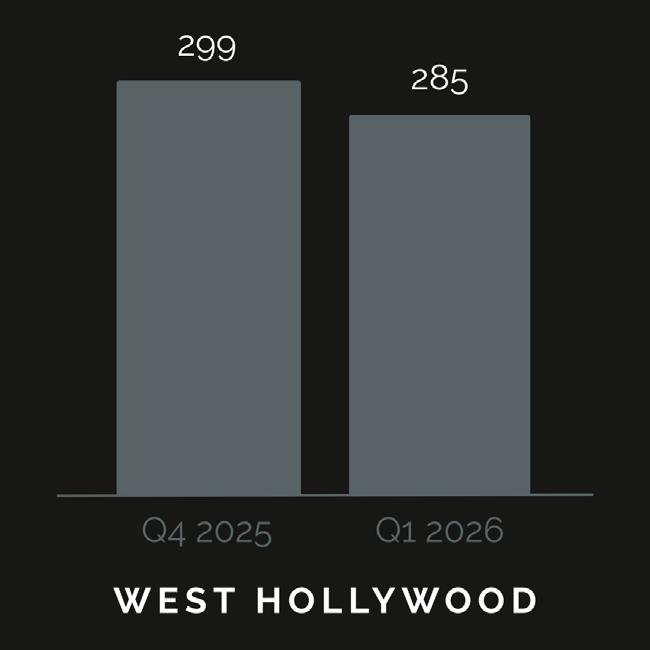
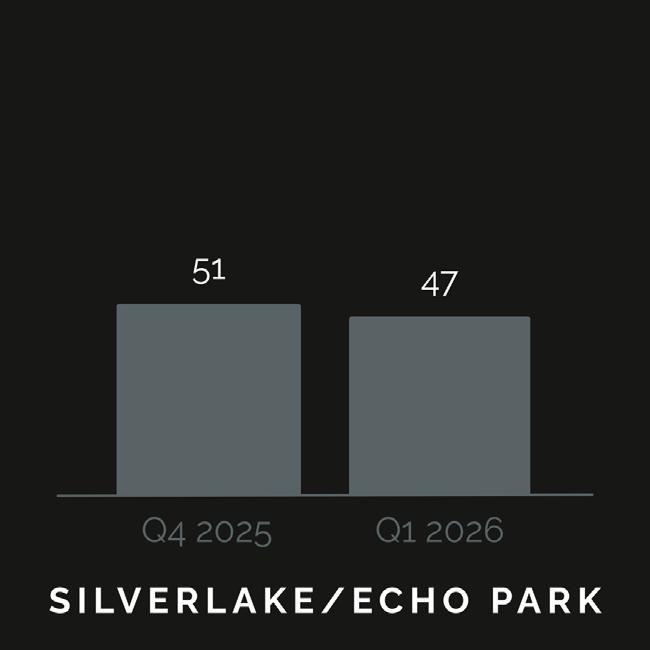
The data below illustrates nine micro markets surveyed in the Los Angeles area for Q1, the previous quarter, and the previous year.
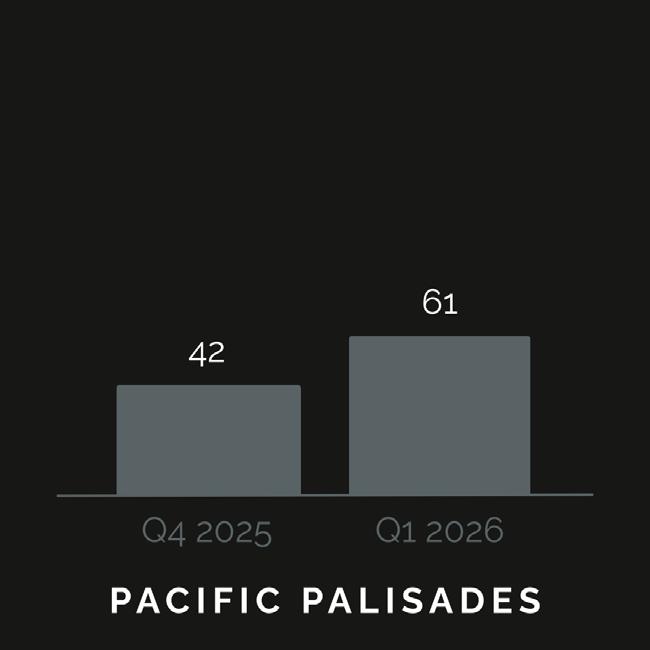
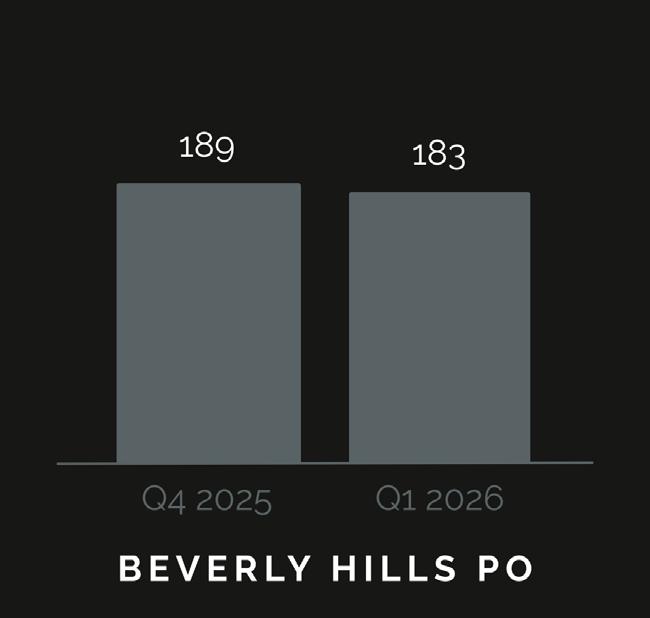
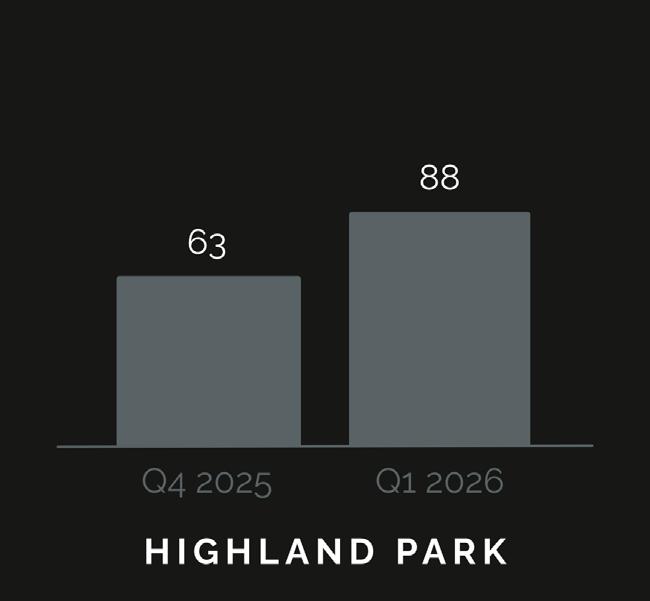
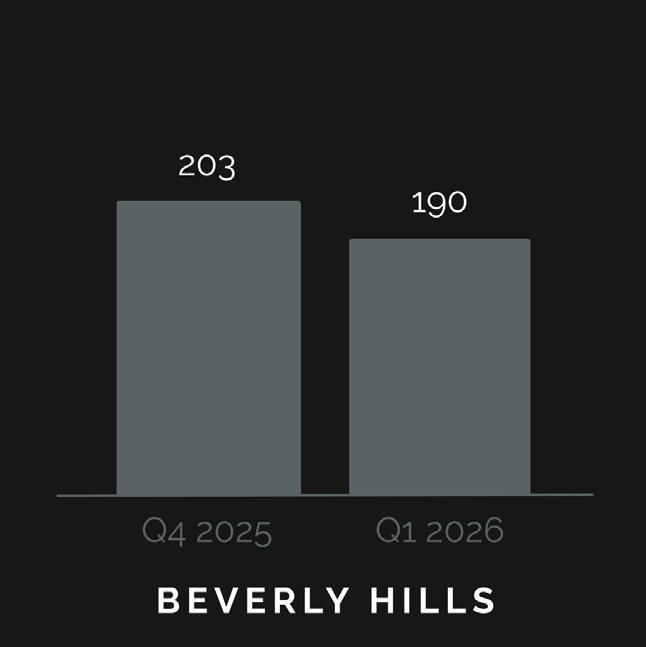
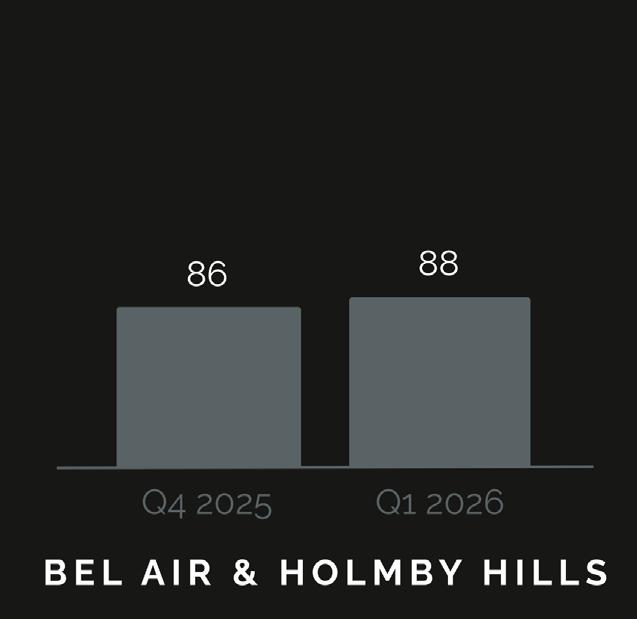
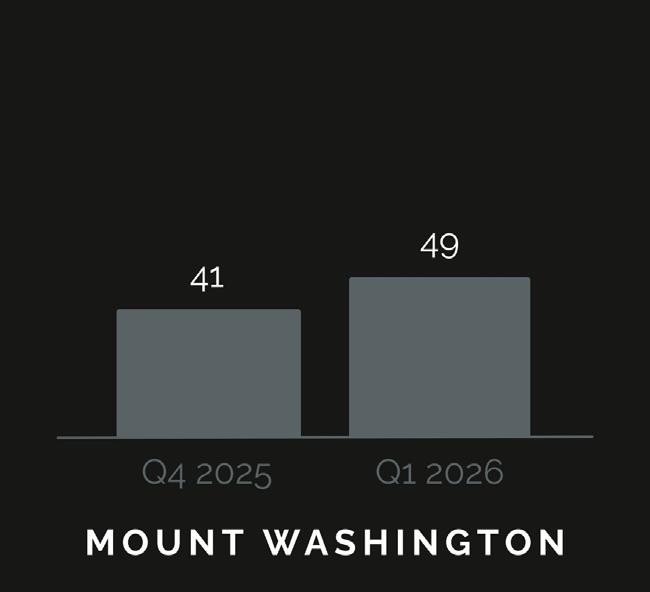
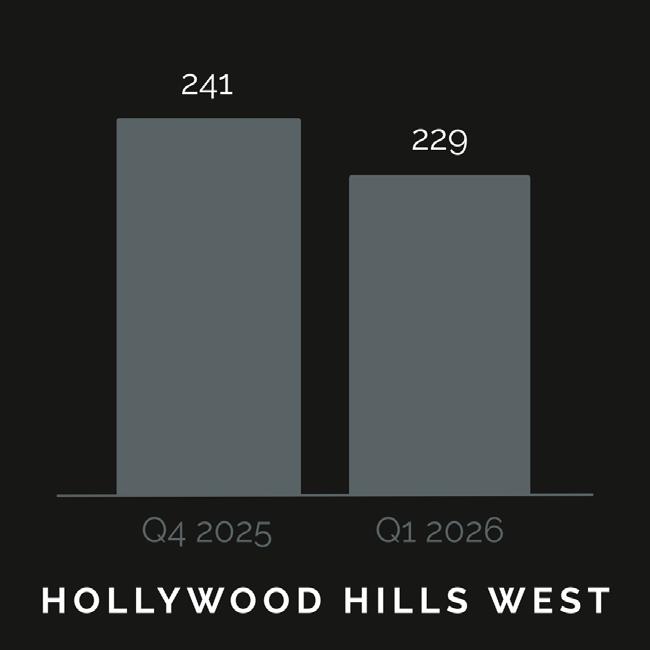
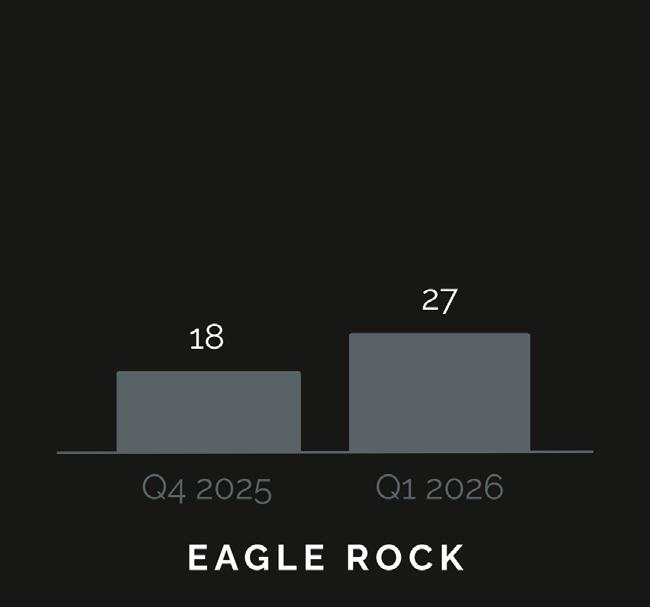
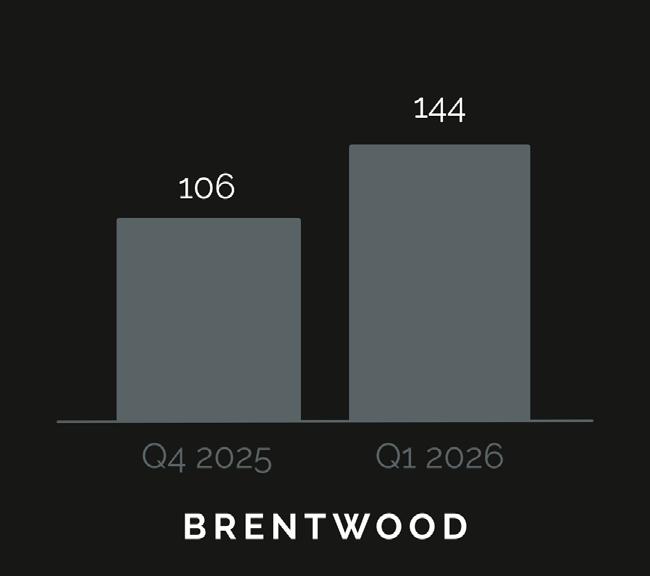
TOTAL TRANSACTIONS
Brentwood sales suggest buyers are rewarding established prestige enclaves, while much of the surrounding market remains in a holding pattern.
The data below illustrates nine micro markets surveyed in the Los Angeles area for Q1, the previous quarter, and the previous year.
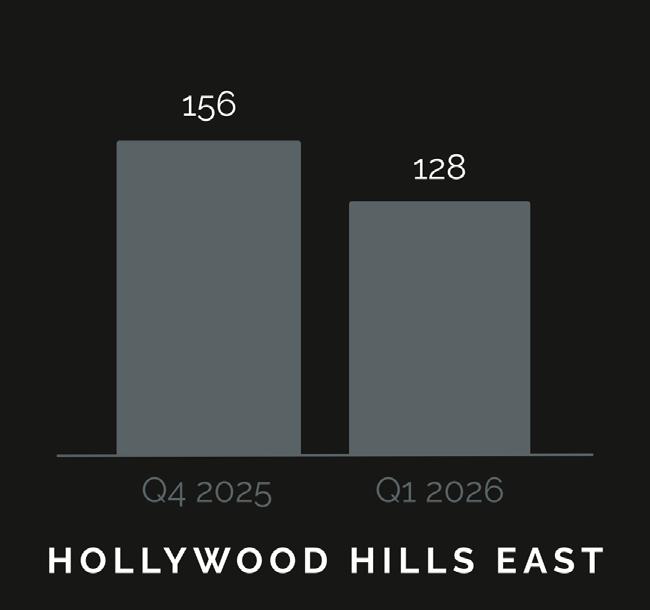
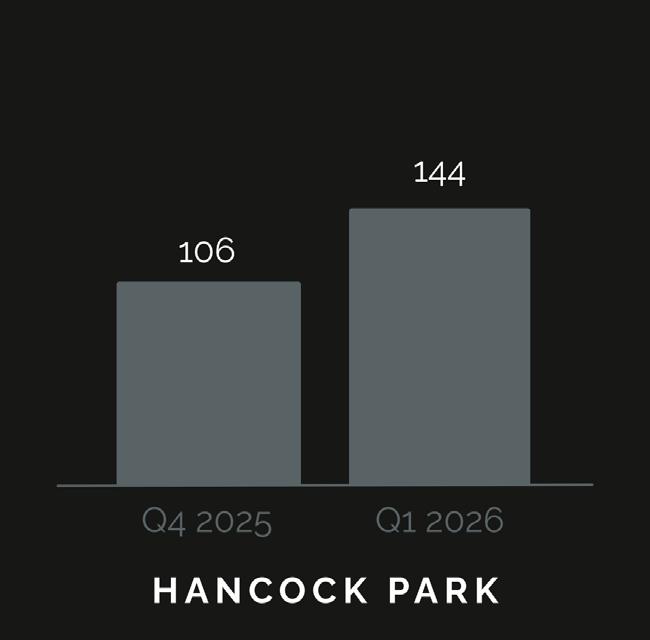
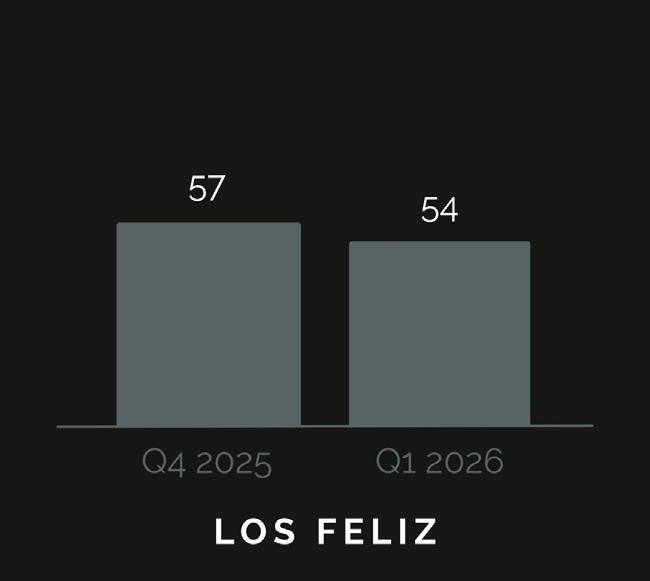
TOTAL TRANSACTIONS
The San Gabriel Valley, nestled in eastern Los Angeles County, offers a luxurious blend of cultural richness, scenic beauty, and economic prosperity. With upscale communities like Pasadena and San Marino, boasting stately mansions and sprawling estates, the valley provides breathtaking views of the San Gabriel mountain range. Additionally, the region’s thriving economy, anchored by prestigious academic institutions like Caltech, ensures a high standard of living and abundant amenities for residents.
HOUSES SPENT A MEDIAN OF 36 DAYS ON MARKET FROM LIST TO CLOSE.
772
772 NEW PROPERTIES WERE BROUGHT TO MARKET IN QUARTER 4.
4 3 .
THE MEDIAN PRICE OF HOMES IMPROVED BY 4.3% YEAR-0VER-YEAR.
The data below illustrates six micro markets surveyed in the San Gabriel Valley for Q1, the previous quarter, and the previous year.
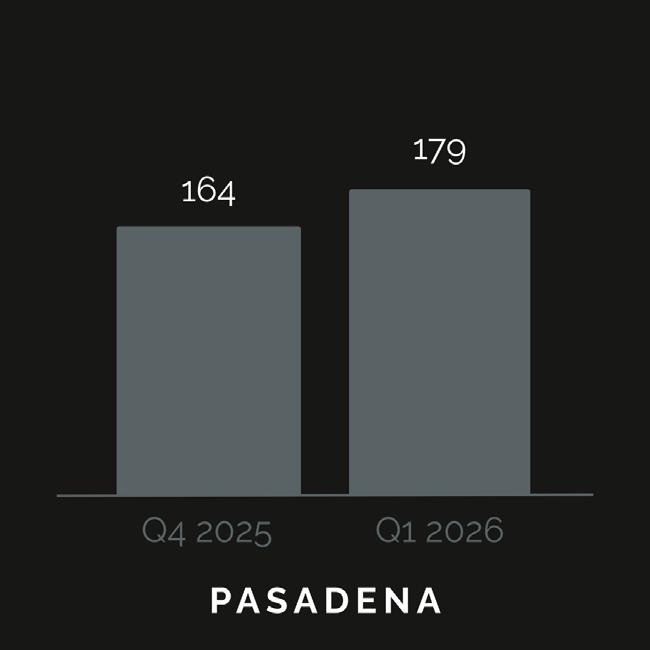
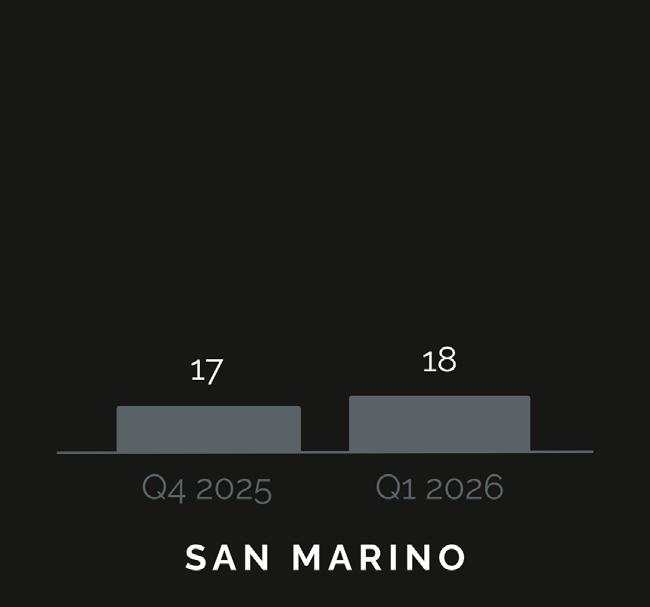
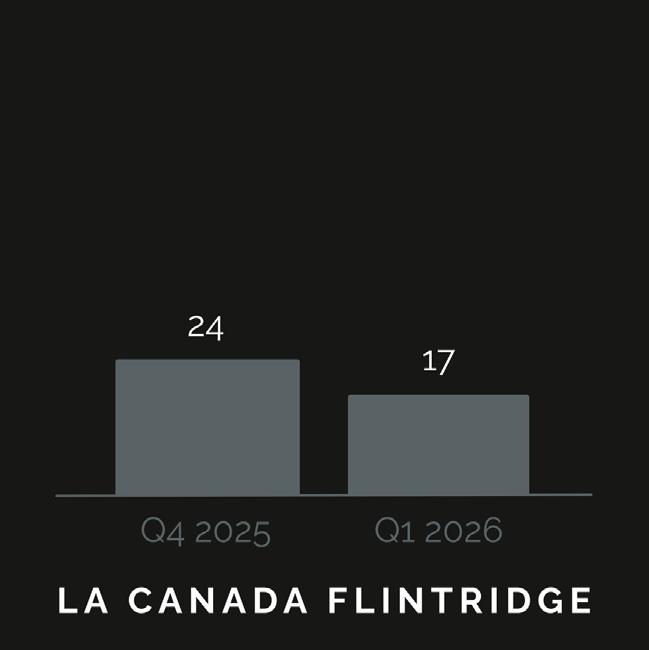
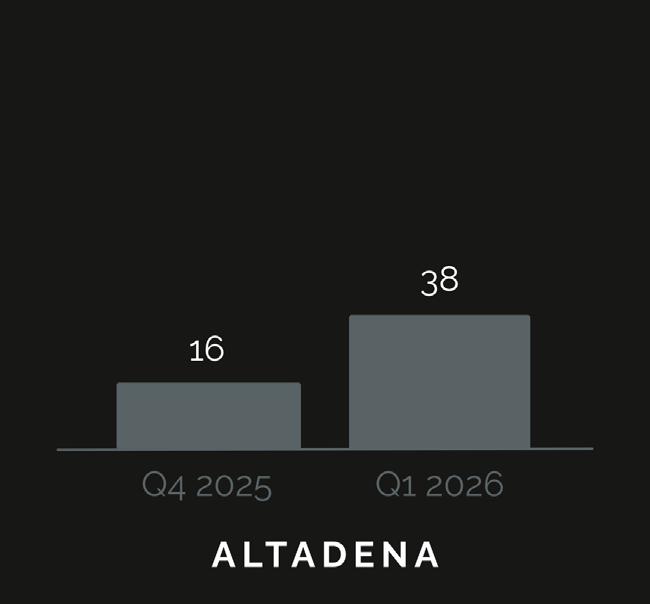
TOTAL TRANSACTIONS
Renowned for its upscale neighborhoods like Encino, Sherman Oaks, and Studio City, the San Fernando Valley offers an exclusive enclave of lavish estates, opulent mansions, and sprawling gated compounds. With panoramic views of the surrounding mountains and easy access to premier shopping, dining, and entertainment destinations, the valley epitomizes refined living. Boasting a diverse range of architectural styles, from sleek modern designs to elegant Mediterranean villas, luxury properties in the San Fernando Valley cater to the most
HOUSES SPENT A MEDIAN OF 40 DAYS ON MARKET FROM LIST TO CLOSE.
1081 NEW PROPERTIES WERE BROUGHT TO MARKET IN QUARTER 4.
THE MEDIAN PRICE OF HOMES IMPROVED BY 2.6% YEAR-OVER-YEAR.
The data below illustrates four micro markets surveyed in the San Fernando Valley for Q1, the previous quarter, and the previous year.
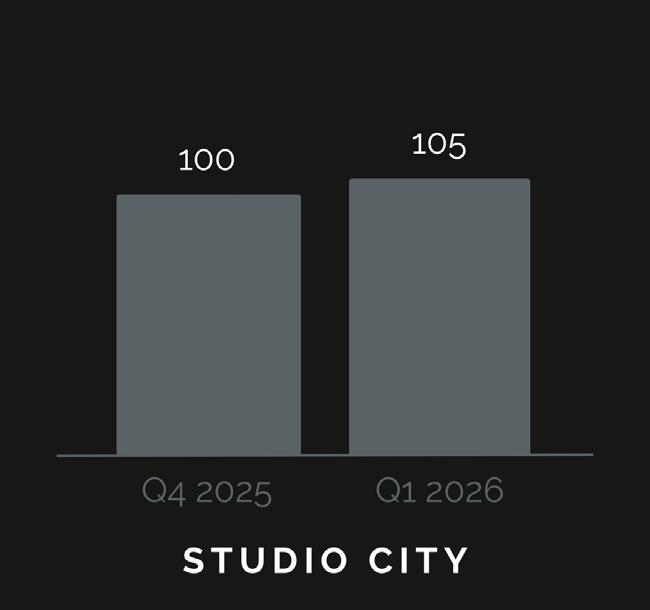
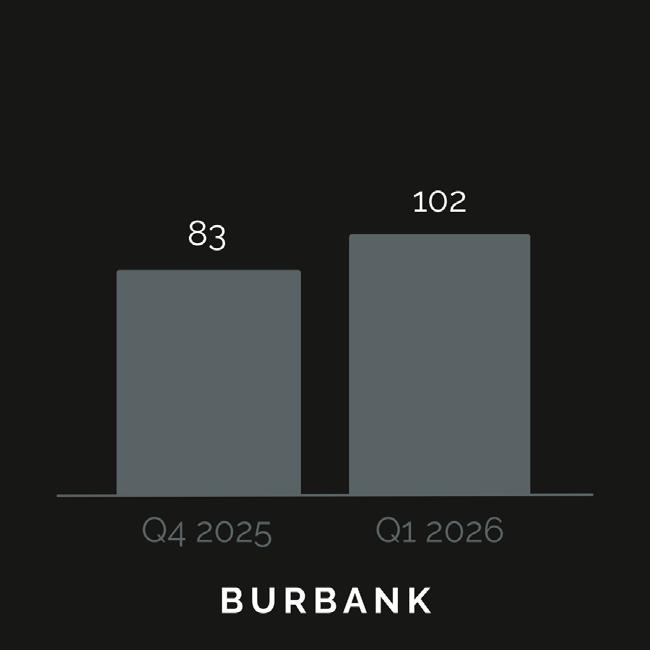
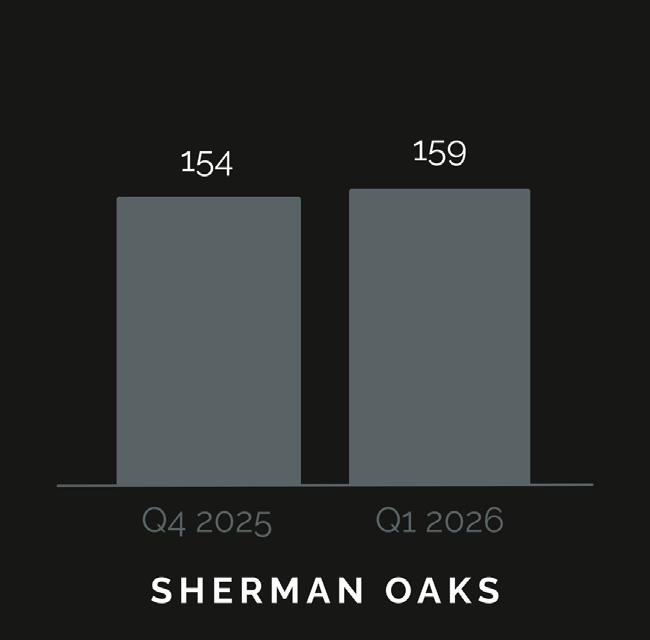
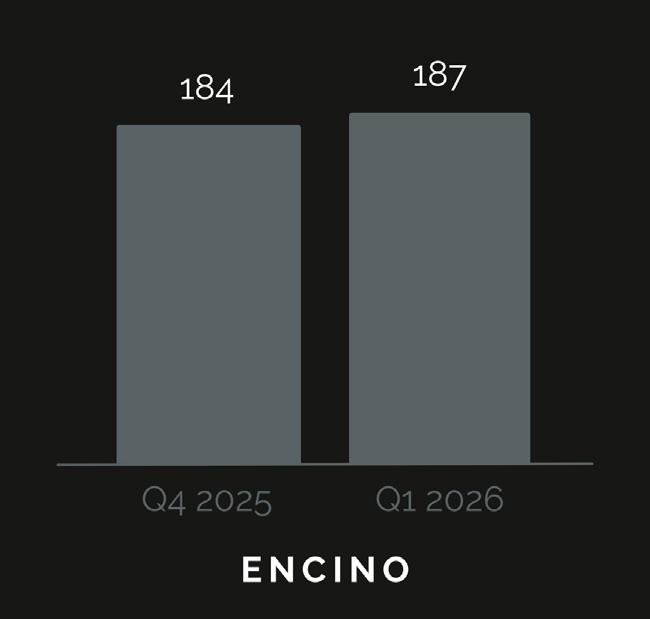
TOTAL TRANSACTIONS

National feelings of instability around the economy and political scape have many people feeling extremely cautious around buying or selling. But it’s not all bad news.

Across the United States, the luxury real estate market has entered a more cautious chapter. Geopolitical tension, rate volatility, and broader economic unease have amplified what was already a hesitant housing environment, leaving many affluent buyers and sellers content to wait rather than act. Even at the top end of the market—where cash buyers often soften the impact of mortgage rates—confidence remains the currency that matters most, and confidence has been in short supply this spring.
Yet periods of uncertainty rarely affect every segment equally. In luxury markets nationwide, momentum has tilted toward buyers for the first time in several years. Negotiating power has improved, inventory has become less scarce, and discretionary sellers are learning that aspirational pricing alone is no longer enough. Wealthy purchasers still move for lifestyle, tax strategy, and long-term positioning—but they are moving more selectively, with sharper expectations around value and quality.
Another pressure point sits in construction. Tariffs on key building materials have increased costs for new development and high-end renovations, slowing projects that once fed the appetite for turnkey luxury inventory. In markets where new product drives demand, that creates a paradox: softer transaction volume alongside continued scarcity of truly finished, move-in-ready homes.
Locally in Los Angeles, the picture is nuanced. Conditions are more favorable to buyers than they have been in recent years, but prime properties in irreplaceable locations—properly presented and intelligently priced—continue to attract competition. In other words, the market has cooled, but excellence still commands a premium.
Global luxury real estate in 2026 is best understood less as a single synchronized cycle and more as a series of highly localized capital markets responding to uneven global economic conditions. After the post-pandemic repricing and the aggressive interest rate tightening cycle that defined the early 2020s, the current environment is defined by stabilization rather than expansion, yet that stability is anything but uniform.
Monetary policy remains a key underlying force. Although inflation has eased across most developed economies, central banks in the U.S., U.K., and Europe are only gradually shifting toward easing. As a result, financing remains expensive relative to the past decade, limiting leverage-driven activity. In luxury segments, however, equity-rich buyers continue to anchor demand, making liquidity and capital preservation more important than borrowing conditions.
Performance across major cities remains highly differentiated. Miami and Dubai continue to outperform, driven by tax advantages, global wealth migration, and sustained international demand. New York remains structurally strong, with consistent demand for prime and trophy assets, while softer activity persists in mid-luxury segments. London has stabilized after currency-driven volatility, reasserting its role as a defensive global wealth center. Tokyo has emerged as a renewed allocation target, benefiting from macro stability and increased institutional and private capital interest in Asia’s mature markets.
Across global indices, most luxury markets are now recording low but positive annual growth, with select cities still experiencing flat pricing. The broader shift is toward normalization, where speculative demand has largely been replaced by long-term ownership strategies and end-user demand. This has resulted in a slower but more fundamentally stable market structure, increasingly defined by scarcity and quality.
At the ultra-prime level, transactions above $10 million remain resilient in 2026. While overall volume is measured, activity is concentrated in core gateway cities. Dubai and Miami lead in transactional velocity, while New York and London continue to dominate in legacy trophy assets and generational holdings. Branded residences, waterfront estates, and architecturally significant properties continue to command disproportionate demand.
Overall, the global luxury market in 2026 is not characterized by broad acceleration but by precision. Capital is highly selective, flowing toward markets and assets that offer tax efficiency, geopolitical stability, or enduring cultural value. Market health is therefore defined not by uniform appreciation, but by sustained strength at the very top of the pricing spectrum, even as broader activity remains subdued.
8.7% 58.5% 61.2% 4.7% 67.1%
Tokyo ’s new-build apartment market continues to strengthen, supported by constrained supply, persistently low interest rates, and sustained demand from Asia-Pacific capital flows.
Mumbai has seen a sharp uplift in pricing, driven by robust prime and super-prime demand, alongside record-breaking sales activity in new developments exceeding the US
Portugal ’s appeal, particularly in Quinta do Lago, has expanded meaningfully due to favorable tax and residency incentives, limited inventory, and improved direct air connectivity.
Wealth taxation reforms have been a persistent headwind for London ’s prime market since 2014, with recent adjustments to non-domiciled rules adding further pressure and contributing to more recent price softness.
Florida’s key luxury hubs have experienced some of the most pronounced pricing re-ratings over the past five years, with Miami emerging as the central driver.