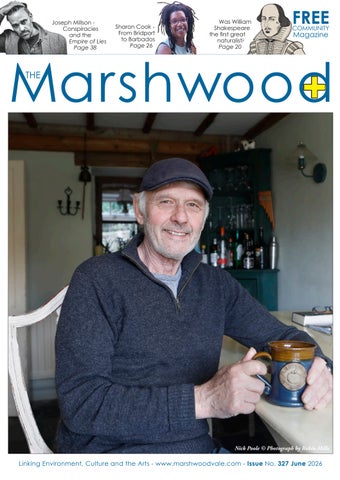
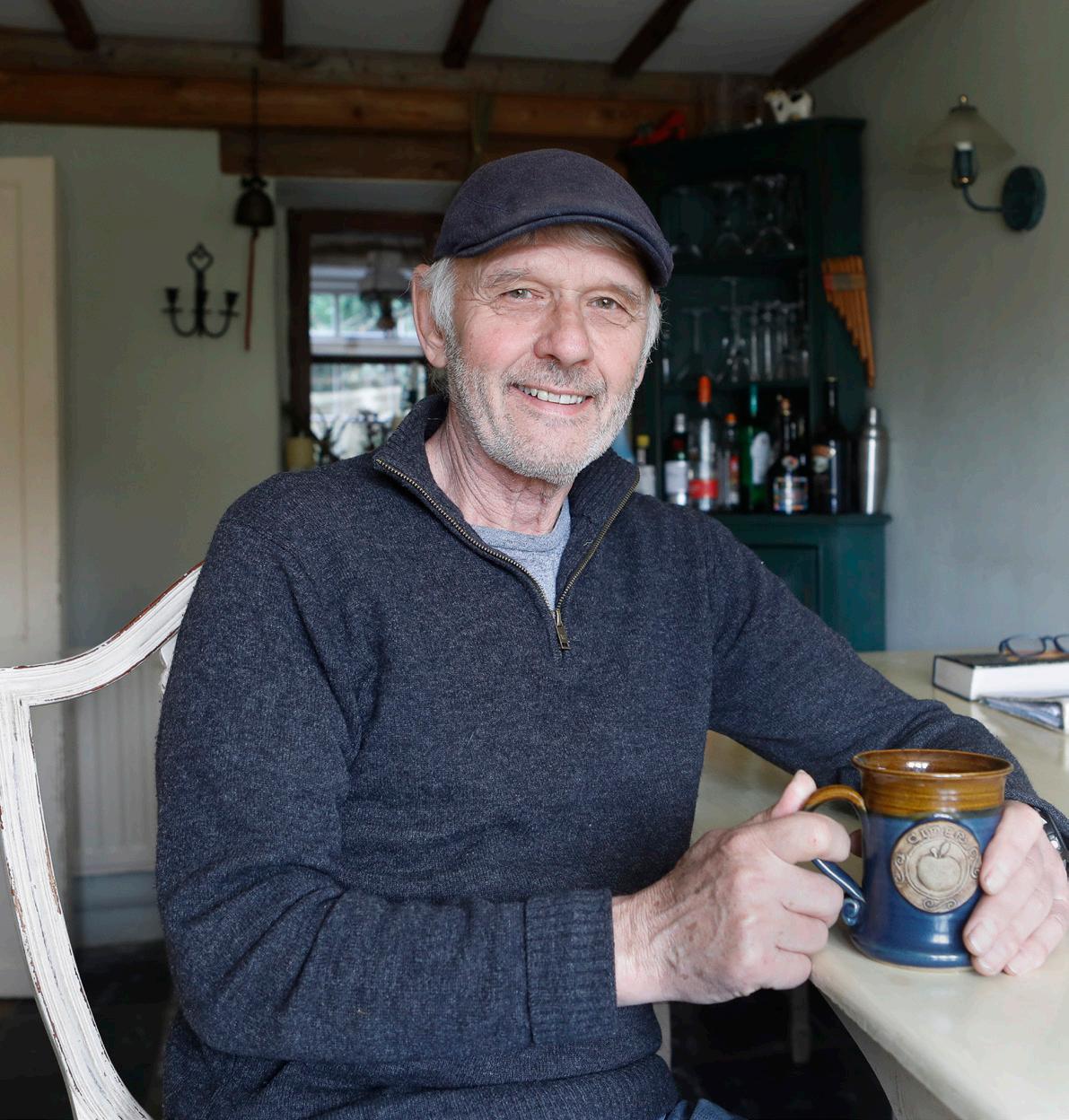
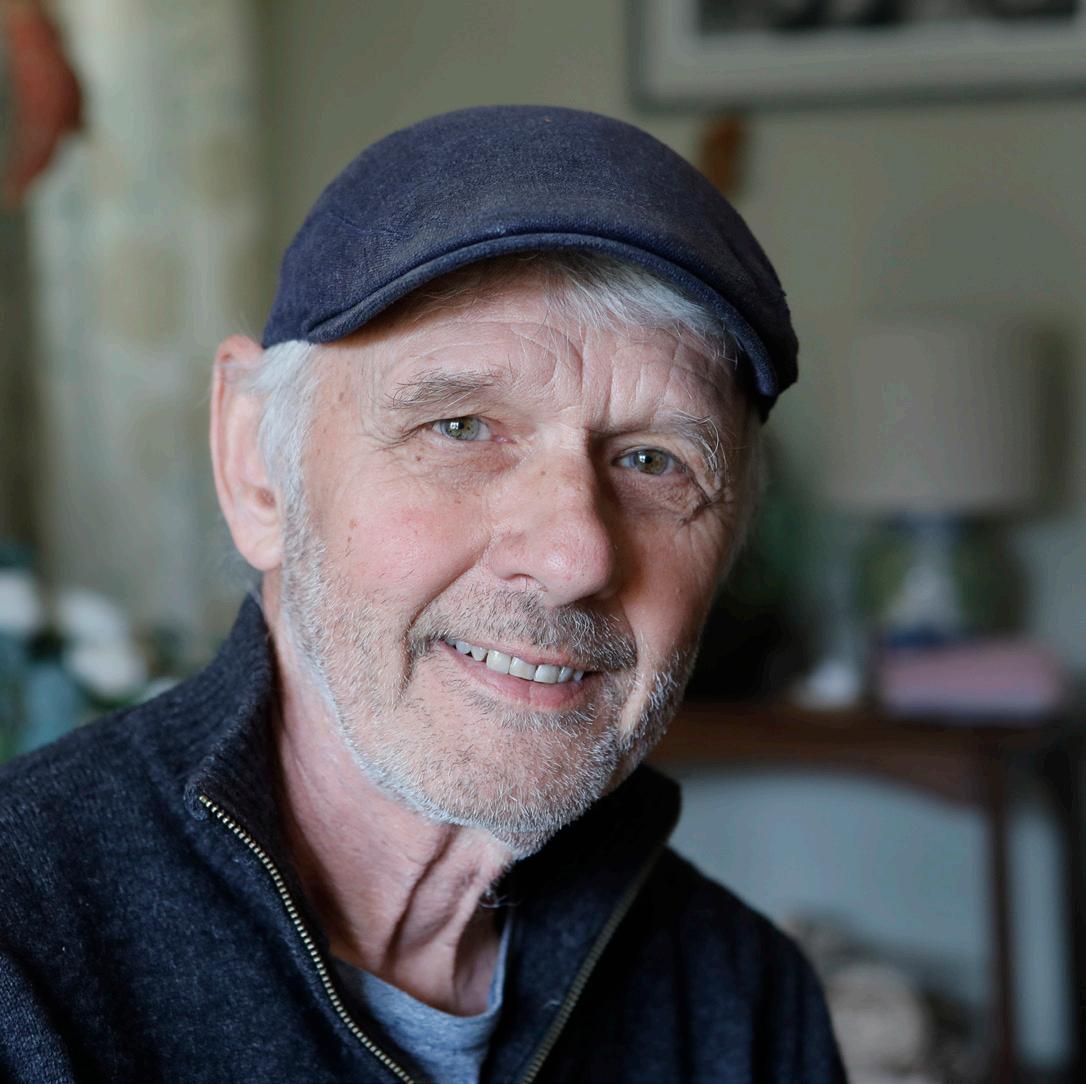
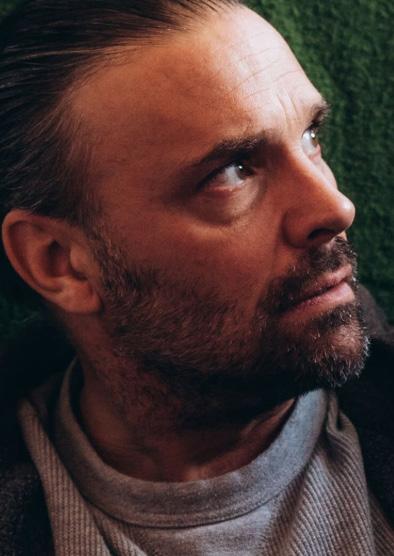
G’rowing up at Kings Farm on the side of Eggardon Hill in the late ‘50s I can remember us not having electric. Father had to prime all the Tilley lamps before going out milking in the winter, but when I was about four he bought a 4 KW generator to power the milking machine; if you boiled a kettle the lights would all dim.
The bad winter of ’63 pretty much wiped him out financially, which meant employing staff was out of the question, so us kids had to help more and more with the work of a herd of around 40 cows. My brother was keener than me on the farmwork. We had two deep litter houses, so he and I had to collect eggs every morning from the 1600-odd chickens, then help clean them, and at weekends there were always jobs to do around the farm. All that work meant little time for meeting friends, but at least growing up on a farm teaches you how to graft.
I was working at the Marquis of Lorne from the age of 13 whilst still at Colfox school. I had no idea of a plan for my life, but someone suggested catering, which I did enjoy, so after O levels I enrolled on a brilliant OND course at Weymouth College. I could get the train from Powerstock station to Maiden Newton, and then to Weymouth. I finished in ’75, which was when the railway line closed, but I had a motorbike by then.
I spent the next four years working in hotels in middle management. Part of the college catering course was classic French cuisine, and that skill has stayed with me for life. I still cook and still love it. But after about four years in the hotel trade, I decided it wasn’t the life for me, came home, and fairly quickly walked on to a building site in Bridport. I got a job as a labourer earning half as much again as I had been for a lot less hours. However, the skills I learned in hotel management, dealing with people and book-keeping, came in useful in later life when I set up my own building firm.
Around that time, I met Dawn, my wife. We spent the best part of a year travelling in France, then a back-packing tour of Asia, all quite an adventure in pre-internet days, using Lonely Planet guides and only finding places to stay on arrival. Back home, I had done a carpentry course and carried on with the building work. I had realised quite early on I’m a practical person. I like working with my hands and solving problems practically, and I would watch closely how skilled tradespeople worked; noting a bricklayer’s hand movements in loading the trowel with muck then placing it with precision where it’s needed, over time I learned the skills for myself, and I loved that process. However, I do have quite a low boredom threshold, so although I could do brick and block-laying, I enjoyed carpentry rather more. In the early 1980s there were TOPS schemes to help people retrain, and I did a 6-month carpentry and joinery course at Gloucester which enabled me to join the carpentry gang of the building firm I worked for.
Three years later I started on my own, as a jobbing carpenter. As the jobs got bigger I employed other tradespeople plus a lot of subcontractors. I particularly loved renovating some of the older properties round here, where you would discover their history in the process, sometimes finding items hidden away for centuries. And it’s a lovely thing to make an old property into a nice place to live, without losing its character, but we built many extensions and new houses as well.
In 2000 I took up cider making. We were renting some fields here in the village which included an orchard, and Dawn said we can’t just leave the apples on the ground because there were horses grazing. We were told they were cider apples but had no idea what variety. I took out books from the library on cider making, then got together with a few people in the village to form a cider club which is still going today. Cider making opened up a whole new world to me, and although I was still running the building firm, it was a fascinating universe of new and interesting things which completely absorbed me.
Although West Dorset has a long history of cider making, it never really got off the ground commercially like Somerset or Herefordshire. Dorset had 10,000 acres of cider apples in the 1790s orchard survey, about half that of Somerset, but sales were mostly over the farm gate. In 1886 the Truck Act stopped the payment in kind of cider in lieu of wages,
etc., before which almost every farm would have made cider. But by the end of the 19thC the quality of the product in the West Country had become very poor, which was why the government-funded Long Ashton research centre, also called The Cider Institute, was set up in 1905.
Over 20 years ago Liz Copas, a pomologist working at Long Ashton, and I set out to find and identify old cider apple trees locally. Initially we researched trees in old orchards and hedgerows to try and identify the varieties, make cider with them and, after tasting, decide which were worth propagating for new orchards. Some of the best historic orchards we researched were here in West Milton, where we found good quality varieties like Dabinetts, Chisel Jerseys, and Yarlington Mill. So, somebody in West Milton about 100 years previously must have been keen to produce higher quality cider. In 2012 Liz and I published our first booklet called the DATA Project , then followed it up in more detail in 2022 with a book, called The Lost Orchards
The success of a cider tasting we ran in our cider shed led me to run another event at the Powerstock Hut, which we put on as a food festival thinking that cider alone might not attract enough interest. The first night there was a lengthy queue, and they weren’t much interested in the food. Five years later, I was getting up to 30 cider makers from all over the country taking part in the Powerstock Cider Festival, mostly small-scale craft makers. It was popular because you could meet and talk to the producers while sampling the cider, but we ended up having to limit numbers because it began to get a bit out of hand. It also was just at the time, around 2005, when cider sales generally were beginning to take off. Along with the slow food movement, people were interested in local provenance and distinctiveness. In about 10 years we went from no cidermakers in Dorset to about 20, and the Festival won an Achievement Award at the Bath and West Show.
I had been making bottle-conditioned cider similar to the Normandy tradition, and in 2009 I won a competition in Normandy with my cidre bouché, which was a huge shock both to me and my French hosts. By then I had my own premises and was selling my cider part-time, but by 2014 I was getting a bit jaded with the building business, so I decided to retire from that and go full time into cider making. Dawn and I spent 10 years wholesaling and selling at shows, regularly producing about 25,000 litres. I planted my own orchard, but much of my apple supply came from Rupert Best at Melplash, a great enthusiast who ran 55 acres of cider apples started by his father in the 1920s.
In recent years we’ve scaled right back, but this year I’ve made 10 single varieties in small barrels, some of which will go into the Bath and West competition, the biggest in the country. In 2017 we won Supreme Champion with our cidre bouché, Lancombe Rising. Everything about cider making has been such an enjoyable process. ’
In a sweltering heatwave, it’s amazing to see how weeds do so well while grass withers. At the time of writing, with gardens begging for water and humans heading for the beach, it’s an interesting time for naturalists. Russell Jordan offers advice on lawns, ponds and emergency pea-sticks and Michael McCarthy has written an edited version of a recent talk he gave in Cerne Abbas. It is an engrossing investigation into Shakespeare’s knowledge of the natural world. Describing the bard as having ‘a profound sympathy for nature’, Michael points out that, in Shakespeare’s time, this was not quite in keeping with the biblical preaching of the time, “have dominion over the fish of the sea, and over the fowl of the air, and over every living thing that moveth upon the earth”. It makes for fascinating reading. Still with nature, Dr Paul Lashmar highlights the story of Sharon Cooke, a horticulturalist who spent lockdown in Bridport with her husband’s family. Sharon now runs Andromeda Garden in Barbados, where she carries on the work of Iris Bannochie, ‘the queen of Barbadian horticulture’. While visiting Andromeda and talking about his book, Drax of Drax Hall, Dr Lashmar heard from Sharon that when Iris Bannochie began work on the garden, ‘Barbados was simply a land exploited for sugar, and a country without a long history of garden creation.’ One of the events we highlight this month is Empire of Lies, a film showing at Bridport Arts Centre in June. Starring Joseph Millson and filmed by Bridport-based Elliott Millson, the film is a fascinating and engrossing exploration of conspiracy theories, paranoia, grief and psychosis. Whether you’ve ever known someone who fell off the side of the earth or have experience of the effects of anger, sorrow and unresolved trauma, Empire of Lies leaves much to ponder.
Fergus Byrne
in your Marshwood Vale Magazine
DONATIONS
If you missed our Crowdfunder and would still like to donate to support the Marshwood Vale Magazine, please send donations either by cheque to Marshwood Vale Limited (address below) or direct to Marshwood Vale Limited at Monzo Business Sort Code 04-00-06 - a/c number 65919314 - Ref: Donation
Contributors
EVENTS June
Tuesday, 2 June
A Bridport Railway walk , led by a museum guide, will explore what remains of the Bridport Branch Railway and station buildings, and participants will hear about their fascinating history. 11am starting from the Coop car park, Sea Road North, DT6 4RR. Tickets (£8) from the museum website include a single visit to the museum. Beaminster Museum: Fire Flood Frost explores how Beaminster and the surrounding villages have battled the elements over the centuries – from floods and violent storms to bitter freezes – along with the three great fires that devastated the town. The exhibition tells the story of how local people pulled together in times of crisis and learned lessons for the future. Visitors will also find exciting new Pre-history and Geology displays, along with eye-catching accompanying graphics. The Museum is open Tuesdays, Thursdays, Saturdays and Bank Holidays, 10.30am – 4.00pm, Sundays 2.00pm – 4.30pm. Admission is free, but donations are very welcome. Whitcombe Rd, Beaminster DT8 3NB. www.beaminstermuseum.co.uk.
Wednesday, 3 June
Film: Jo in the Water (12A) 77 mins + Q&A 7:30pm, Bridport Electric Palace, DT6 3NY. Tickets from £10 adv. To book electricpalace.org.uk.
Thursday, 4 June
Scottish Country Dancing St Michael’s Scottish Country Dancing Club, 7.30 – 9.30pm at the Davis Hall, Howell Hill, West Camel BA22 7QX. First two visits free, £2.00 per session, £1.50 for members. A warm welcome assured. No partner needed. Please bring a mug - tea, coffee, biscuits provided. See website www. stmichaelsscdclub.org or contact secretary Elspeth 07972125617 elspeth_a_wright@hotmail.com.
Film: Michael (12A) 125 mins, 2pm *SUBTITLED*, Bridport Electric Palace, DT6 3NY. Tickets from £8 adv. To book electricpalace.org.uk.
Friday, 5 June
I-Nichi supported by Cog5 Come and see two amazing bands at The Millhouse. 7 pm. The Millhouse, Rose Mills Industrial Estate, Ilminster, Somerset, TA19 9PS. 07980 946465 www.millhousearts.co.uk.
Justice on Trial: An Immersive Fundraising Experience Brings 1830s Courtroom Trials to Life. Shire Hall Museum, High West St Dorchester @7pm. Tickets £30, including a two-course Summer buffet. Step back into
the drama of the 1830s as two real courtroom trials are brought vividly to life. Each case — drawn from meticulous research by our history volunteers — reveals the stories of young defendants, the crimes they faced, and the stark realities of 19th-century justice. You won’t just watch—you’ll take part. Join the jury, weigh the evidence, and deliver your own verdict before the original outcomes are revealed. The first trial unfolds through a gripping scripted performance, while the second invites daring volunteers to step into the roles on the night, adding an element of surprise and excitement. Your ticket will include a delicious two-course summer buffet, expertly made by our cafe staff before immersing yourself in this lively and thought-provoking experience. A bar will also be open throughout the event, offering drinks available for purchase. Guests with dietary requirements are encouraged to contact the museum when booking. Tickets are available from the museum’s front desk or can be purchased online at: https://www.zeffy.com/en-GB/ ticketing/justice-on-trial. This will be an entertaining and unique evening of drama and dining, in which you are also contributing to the Museum’s mission of raising awareness of social justice.
Film: Michael (12A) 125 mins, 7:30pm, Bridport Electric Palace, DT6 3NY. Tickets from £9 adv. To book electricpalace.org.uk.
Saturday, 6 June
West Dorset Arthritis UK presents An Illustrated Talk by Dr Tim Connor, an Architectural History of Bridport at Loders Village Hall DT6 3SA. 6 pm. Wine & Canapes, Raffle, Tickets £20 from 01308 863690, cropayne@ icloud.com. /01308 420071.
Bridport & West Dorset Rambling Club 6.5 mile walk from Netherbury. For further information please ring 01308 898484 or 01308 863340. New members/visitors welcome.
Que Pasa? presents: ‘Antlers’, a journey in words and music - Tales & Trails from Portland to Peru, North Wales to Norway via the Arctic. Featuring poets Chris Fogg & Chris Waters, and jazz musician Rob Lockley. 7.30pm Netherhay Chapel, Drimpton DT8 3RH. tickets £12 (includes refreshments) To book: jennybeck1427@ gmail.com 07866493531.
Guided Woodland Walk Victor Crutchley, North Eggardon Farm, Dorset, DT6 3ST. Earnscombe Wood is a woodland with a plan, and this guided walk is your chance to see what productive timber management looks
like in practice. Planted in 1990 under the Woodland Grant Scheme with oak, beech and walnut, and extended in 2006 with sweet chestnut, the woodland has been carefully high pruned over the years to develop a promising timber crop. In 2025 oak bark was peeled on site and some timber has already been milled, with further work underway as the woodland continues to take shape. This is a working visit rather than a polished showcase, and all the better for it. You’ll see a real woodland in active management and gain an honest understanding of the decisions, timescales and techniques involved in growing quality timber. Collaborations in West Dorset: This event has been designed to complement two other Open Woods & Workshops events in West Dorset on the same day: a visit to John Makepeace Furniture in Beaminster and an event with the Architectural Association. Attend all three for a full day of inspiration and knowledge sharing. Please note that each event requires a separate booking. To book tickets visit: https://www.tickettailor.com/events/ woodlandheritagevictorcrutchley.
Open Day The Architectural Association , Hooke Park Hooke Park, Beaminster, Dorset, DT8 3PH. Hooke Park is unlike any other campus in the UK. As
the woodland home of the Architectural Association’s postgraduate Design and Make programme, it is a place where full-scale building experiments and hands-on architectural education happen in a living forest, and on 6 June you are invited to explore it. From 10:00am to 3:30pm you’ll have the chance to explore the campus buildings and woodland, learning about the Architectural Association’s history and the ongoing teaching and research that makes Hooke Park such a distinctive place. It is a rare opportunity to see architecture and timber thinking at the experimental edge, where students and tutors are genuinely pushing the boundaries of what building with wood can look like. Refreshments including cake and beverages will be on sale during the event. Collaborations in West Dorset: This event has been designed to complement two other Open Woods & Workshops events in West Dorset on the same day: the North Eggardon Farm Woodland Walk and a visit to John Makepeace Furniture in Beaminster. Attend all three for a full day of inspiration and knowledge sharing. Please note that each event requires a separate booking. For tickets visit: https://www.tickettailor.com/events/ woodlandheritagehookepark/2105660.
Scottish Dancing Party in Chardstock An evening of Scottish dancing at Chardstock Village Hall EX13 7BJ 7.30-10.30 pm. No partner required. Please bring your own mug and a plate of food to share. Tea and coffee provided. Cost £5.00. Contact David on 01460 65981 https://www.chardscottishcountrydance.co.uk.
Music: Cloudbusting - The Music of Kate Bush, 7:30pm, Bridport Electric Palace, DT6 3NY. Tickets from £29 To book electricpalace.org.uk.
The Friends of Weymouth Library (F.O.W.L.) talk will be at 10-30a.m. in the Library. Alan Jenkins, a retired Police Inspector, who worked in the force on the Prevent element of the Government Counter-Terrorism, will recount the threats presented to the UK, and also a case where he personally dealt with extreme terrorists. Everyone welcome to come. Entrance fee will be £3 (no advance booking needed). Enquiries at 01305 832613.
Sunday, 7 June
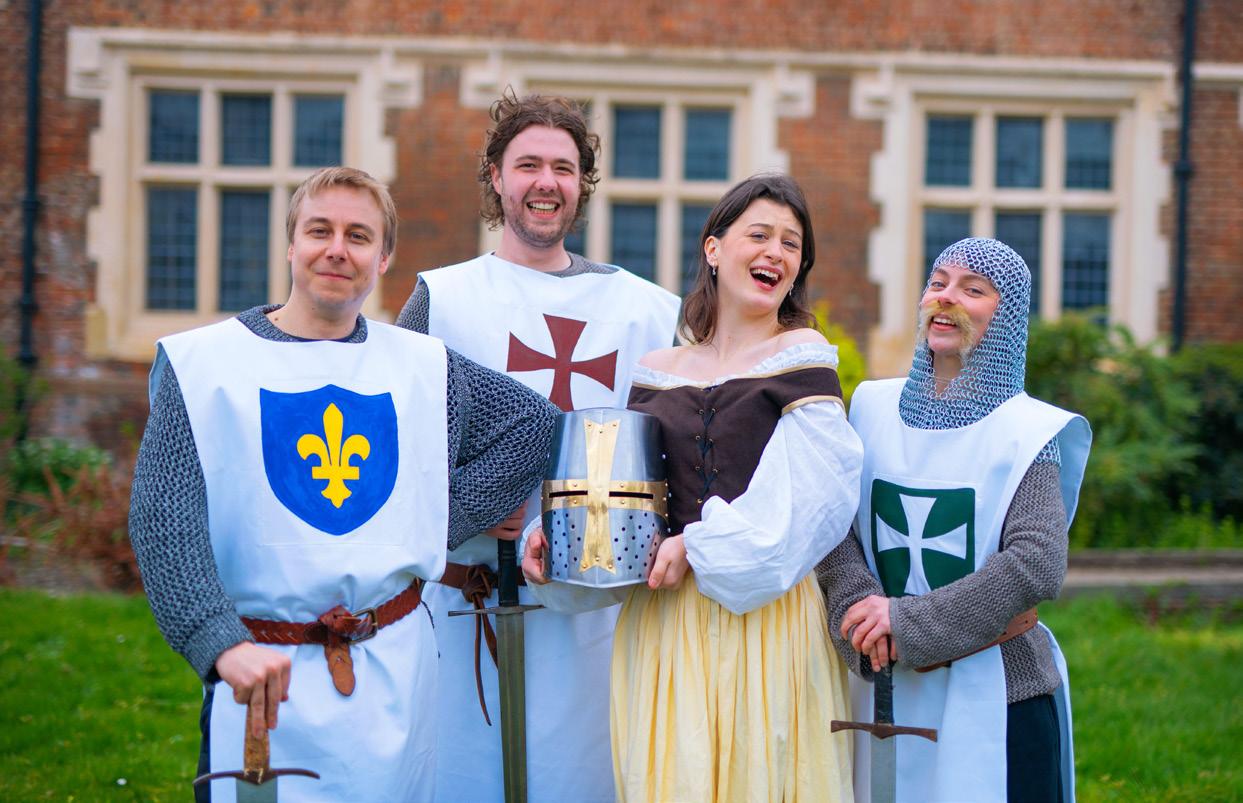
The Pantaloons : The (Almost) Complete History of England 3pm, picnics from 1.30pm. £18/£6/free Beaminster Manor, Beaminster, DT8 3DZ. Mud, blood and stiff upper lips. Join the brilliant Pantaloons in this breathless race through the centuries presented in a variety of surprising genres. Featuring live music, audience interaction and wild historical inaccuracy. Bring picnics, own chairs. No dogs. beaminsterfestival.com / 0333 666 33 66.
Leaf Open Farm Sunday at Denhay Farm, Broadoak 10am – 4pm. Melplash Agricultural Society and its education group, Discover Farming, will again partner with the Marshwood Vale Farmers’ Cluster for Open Farm Sunday, to give the public the opportunity to learn about the essential roles farmers play in producing our food, caring for nature, and safeguarding the environment for generations to come. This year Open Farm Sunday will be at Coppet Hill, Denhay Farm, Broadoak DT6 5NP, a mainly grass farm. For up-to-date information visit the news & events section at www.discoverfarming.co.uk. Village Garage Sale Broadwindsor DT8 3QD. 10am to 1pm. Households all over the village taking part. Refreshments at Comrades Hall. Maps available on the day from the community shop, village hall and White Lion community pub.
Axe Vale Orchestra Concert , 3.30pm, Axe Vale Orchestra invites you to an afternoon concert at The Minster, Axminster. The programme includes Bizet: Petite SuiteJeux d’enfants, Dvorak: Romance for violin and orchestra and Beethoven: Symphony No. 4. Tea and Cake after the concert. Tickets £15 (free for under 18s or students), from www.axevaleorchestra.co.uk via TicketSource or on the door.
Gardens Open Southleigh EX24 6JB from 12.00 till 5 pm. Five varied gardens in beautiful rural village at £6 pp and
teas in hall. Proceeds between Hospice At Home, church and hall. Queries 01404 871233.
Monday, 8 June
Singing Bowl Soundbath 7.30-9 PM Digby Memorial Hall, Digby Rd, Sherborne Dorset DT9 3LN £17 ‘I’ve been to many soundbaths, and that was...amazing. As a musician you obviously know what you’re doing not just ‘blazing away like so many’...Bob, musician ‘I’ve been to soundbaths all over the world-yours are the best!’-visitor from USA. Booking 01935 38655 ahiahel@live.com
Wednesday, 10 June
Kilmington Film Night “Hamnet” (12) William Shakespeare (Paul Mescal) falls for the free-spirited Agnes (Jessie Buckley). Their whirlwind romance leads to marriage and three children, but as Will’s theatrical ambitions draw him to London, Agnes remains behind to manage the household. When tragedy strikes, their bond is deeply tested-but through grief and resilience, their journey inspires the creation of Shakespeare’s timeless masterpiece Hamlet. Doors and bar open 6.45 film start 7.15 at Kilmington Village Hall EX13 7RF. Tickets £6 (Cash Only) can be ordered by contacting: John at wattsjohn307@gmail.com or Tel: 01297 521681.
Thursday, 11 June
Scottish Country Dancing St Michael’s Scottish Country Dancing Club, 7.30 – 9.30pm at the Davis Hall, Howell Hill, West Camel BA22 7QX. First two visits free, £2.00 per session, £1.50 for members. A warm welcome assured. No partner needed. Please bring a mug - tea, coffee, biscuits provided. See website www. stmichaelsscdclub.org or contact secretary Elspeth 07972125617 elspeth_a_wright@hotmail.com.
Kilmington Film Matinee “Hamnet)” (See 10th June) Doors open 1.45pm film starts 2pm. Tickets £6 (Cash Only), cream-teas @ £4. served during the interval but must be pre-booked with your seats, see above. www. kilmingtonvillage.com/other-organisations.html for more information.
Chard History Group ‘Political Somerset’ a talk by Janet Seaton and Barry Winterobe Somersets known, and not-so-known, role in political history. Stories of Prime Ministers, important elections and events, several American presidents and even a spy! Doors open 7pm, talk starts 7.30pm. The Town Hall, The Guildhall, Chard - upstairs with lift available. Members £2.50, visitors very welcome £3.50. For further information contact ChardHistoryGroup@yahoo.com.
Theatre: Under Milk Wood, 7:30pm, Bridport Electric Palace, DT6 3NY. Tickets £20 adv. To book electricpalace. org.uk.
Bridport History Society will be welcoming Dr Paul Lashmar who will be giving a talk called “Drax of Drax
Hall: Researching the Landed Gentry in Britain and The Caribbean.” The meeting will be held at the United Church Hall on East Street, Bridport. Doors open at 2.15 for a prompt 2.30 start. All are welcome. Members £1pp and visitors £5pp. Bridport History Society meets on the second Thursday of each month (except July and August). Membership is open to all (£12 individual/£18 couple). For more information visit https://www.bridporthistorysociety.org.uk
Friday, 12 June
Silly Point Comedy at The Millhouse Silly Point is a poetry event for South Somerset with some simple aims. Loosen the larynx, lean into the lyrical, love the ludicrous and laugh. With Feature Poet — Sam Riot. Book tickets in advance on The Millhouse website. Admission: £6. 7 pm. The Millhouse, Rose Mills Industrial Estate, Ilminster, Somerset, TA19 9PS 07980 946465 www.millhousearts.co.uk.
Friends of Lyme Regis Museum Lyme Regis Museum Friends offer an illustrated talk, ‘Sea Monsters Past & Present’ by Dr Darren Naish. At 3.00 pm in the Pine Hall, Baptist Church, Silver Street, Lyme Regis. DT7 3HR. This talk is part of the annual Lyme Regis Fossil Festival. Darren Naish is a palaeontologist, author and science communicator. His talk is popular with the general public and with scientists. Arrive early for a seat! Members £3; visitors £5. All welcome. Enquiries to David Cox, 07800 895351. Film: The Devil Wears Prada 2, 7:30pm, Bridport Electric Palace, DT6 3NY. Tickets £9 adv. To book electricpalace.org.uk
Saturday, 13 June
A joint concert “Together again” with Bridport Choral Society and West Dorset Community Orchestra in St.Swithun’s Church, North Allington, Bridport DT6 5DU at 7-30p.m. Interval refreshments. Tickets £15 (under 16’s free) from Bridport TIC (and online) or on the door.
Bridport & West Dorset Rambling Club walk, route to be advised.. For further information please ring 01308 898484 or 01308 863340. New members/visitors welcome.
Axminster and District Choral Society ’s summer concert will include Stanford’sSongs of the Fleet and Vaughan Williams’ Five Mystical Songs, with baritone soloist Julian Rippon. 7.30 pm at the Minster Church, Axminster. Tickets £15 from Archway Bookshop, members of the choir or axminsterchoral.co.uk.
Film: The Devil Wears Prada 2, 2pm + 7:30pm, Bridport Electric Palace, DT6 3NY. Tickets £9 adv. To book electricpalace.org.uk.
Weymouth Choral Society on Broadway. A selection of music from Stage, Screen and Musical Theatre. 3pm St Aldhelm’s Church Centre Spa Road, Weymouth DT3 5EW. Tickets £15 Adults Under 16’s free available from
www.weymouthchoralsociety.org.uk or www.ticketsource. com.
Saturday, 13 - 14 June
West Milton Open Gardens 2.00 - 6.00pm. Teas, cider, Woodworking display and lots more. £5 per adult, children free and dogs on leads. In aid of Powerstock Church. Contact: aajanewhite@gmail.com.
Puddletown Open Gardens 12 - 5pm There will be over 15 gardens of varying interest, shapes and sizes (one even has a miniature railway), children’s quiz, refreshments, village history display, plant stall and live music. There will also be tours of St. Mary’s Church Bell Tower (weather permitting). The event is hosted by Friends of Puddletown Church, raising funds towards conservation and restoration works on the Grade 1 listed Church building. Adults £5 children under 12 free.
Sunday, 14 June
Dalwood Jazz Club presents at 3pm The Pete Allen Octet with Pete Allen - clarinet, Roger Marks - trombone, - Trevor Whiting - saxophone, Chris Hodgkins - trumpet. Andrew Clancy - keyboard, Andy Crowdy - bass, Jim Newton - drums & Max Brittain - guitar. Dalwood Village Hall, EX13 7EG (near Axminster). Bar for beer/wine/soft drinks and tea/ coffee/cake etc. Parking at the Village Hall. £12.50p
If possible, please book in advance and pay (cash or card) at the door. Thank you! t.mackenney111@ btinternet.com.
The Green Scythe Fair 11am at Thorney Lakes near Muchelney in the heart of the Somerset Levels. Everyone’s favourite day out features the West Country Scything Championships, alongside an array of stalls featuring green information, activities and workshops, live music, a Green Kidz area, the Community Tent with storytelling, and three bars selling local beers, ciders and apple juice, plus the Green Info Café and a variety local food and drinks stalls. To help reduce the greenhouse gas emissions and environmental impacts from the event we encourage visitors to come by coach with a combined entry and return coach fee of just £10. We specially contract Vickery’s Coaches who run a dedicated service from Castle Cary (via Yeovil, Montecute, Stoke sub Hamdon, Martock), Beaminster (via Crewkerne East Chinnock, West Coker, Yeovil Junction), Wells (via Glastonbury, Street, Compton Dundon, Somerton, Long Sutton) and Taunton (via Wrantage, Curry Rivel, Langport). Full details and timetable are at https:// www.greenfair.org.uk/coach-timetable. To find out more about the Green Scythe Fair see www.greenfair.org.uk. Mozart, Bach, Elgar, Barber: Allington Strings at The United Church, Bridport. 50th Anniversary Concert
at 3pm on Sunday. Celebrating the greats of String Orchestra Repertoire: Mozart’s Eine Kleine Nachtmusik, Bach’s Brandenburg Concerto Number 3, Elgar’s Serenade for Strings and Barber’s Adagio for Strings. A truly fantastic concert of phenomenal music. Advance tickets £10 adults | £4 children, available from The Bookshop, Bridport (cash) or via allingtonstrings@outlook.com (card), or on the door at £12/£5 (cash & card).
Monday, 15 June
Bride Valley Gardening Club Celebrity Speaker Event David Hurrion, “Creating a Jungle Garden” Associate Editor of BBC Gardeners World, Journalist, Lecturer and RHS Judge 7pm (drinks available) for 7.30pm. Litton Cheney Community Hall DT2 9AU. Tickets £5 each from Liz at bridevalleygc@gmail.com.
Hawkchurch Film Nights, in association with Moviola.org, proudly presents ‘Song Sung Blue’, 132 mins, Cert.12 (some upsetting scenes, sex & drugs references, strong language). You’ll laugh and cry at this hugely entertaining true-life tale of the triumphs and trials of a husband-andwife Neil Diamond tribute band, starring Hugh
Jackman and Oscar-nominated Kate Hudson. Doors open 6.30pm, film starts 7.00pm at Hawkchurch Village Hall, EX13 5XD. Ticket reservations £6.50 from csma95@ gmail.com or leave a message on 07753 603219; tickets also available in advance for £6.50 from Hawkchurch Community Shop or on the door for £7.00 (cash only). Subtitles for hearing-impaired patrons provided if available. Home-made cake, teas, coffees, soft drinks, wine and other refreshments available.
Tuesday, 16 June
Turn Lyme Green Talk All About Seaton Wetlands: Its past, present and future plans “A countryside haven, home to an abundance of wildlife” 7pm Driftwood Cafe, Baptist Church, top of Broad Street, Lyme Regis. Free. Refreshments available.
Powerful Refugee Film Screening marks Bridport Refugee week in Bridport. A deeply moving and visually striking documentary by acclaimed Iranian filmmaker Mehrdad Oskouei will be screened at Bridport Arts Centre at 7:30pm, as part of Refugee Week 2026 (15–21 June). Bridport Arts Centre 7:30pm. Tickets available online, in person, or via the Bridport Arts Centre box office. https://www.bridport-arts.com.
Wednesday, 17 June
Coffee Morning including cakes, scones & savouries, and bacon/egg rolls (made to order), 10.30am – noon; all welcome. Clapton & Wayford Village Hall. More details from Julia (01460 72769).
Colyton & District Gardening Society ‘Houseplants 101’ by Rob and Frankie Vincent from their Funky Exeter Store ‘Hutch Houseplants’. Colyford Memorial Hall, EX24 6QJ, start 7.30 pm. Plenty of parking in the hall car park. Information : Peter Clark : 01297 553341.
A brand-new social club aimed at the over 50s started at Bridport Youth and Community Centre in May. The 3rd Wednesday of every month (next session 17th June) 11am to 2pm. The Not So Youth Club has something for everyone. It has sports, crafts, book club, puzzles, cooking and more. £3 per session and a shared lunch available for £5. Connect, create, laugh, move, learn and most importantly shape something special together. For more information email: community@bridportycc.org.
Thursday, 18 June
Scottish Country Dancing St Michael’s Scottish Country Dancing Club, 7.30 – 9.30pm at the Davis Hall, Howell Hill, West Camel BA22 7QX. First two visits free, £2.00 per session, £1.50 for members. A warm welcome assured. No partner needed. Please bring a mug - tea, coffee, biscuits provided. See website www.stmichaelsscdclub.org or contact secretary Elspeth 07972125617 elspeth_a_wright@ hotmail.com.
An Evening with Jimmy Tarbuck, 7:30pm, Bridport Electric Palace, DT6 3NY. Tickets from £31.50 To book electricpalace.org.uk
Friday, 19 June
A Special Film Night at Milborne St Andrew Village Hall Looking for a relaxing and memorable evening close to home? Join us at Milborne St Andrew Village Hall for a wonderful community film night featuring the acclaimed film Hamnet. This beautifully crafted drama, directed by Academy Award-winner Chloé Zhao, brings to life the deeply moving story inspired by Maggie O’Farrell’s bestselling novel. Set in Elizabethan England, Hamnet explores love, grief, and family through the eyes of Agnes, the wife of William Shakespeare, and their young son. With powerful performances from Jessie Buckley and Paul Mescal, the film is both intimate and visually stunning, offering a thoughtful and emotional cinematic experience. The screening takes place at 7:30pm, with doors and the bar opening at 7:00pm—perfect for catching up with friends and neighbours before the film begins. Even better, your £6.50 ticket includes not only the movie but also your choice of an ice cream or a drink, making it excellent value for a full evening’s entertainment. Payment can be made by cash or card. Whether you’re a film enthusiast or simply fancy a cosy night out in the village, this promises to be a special occasion. Come along, support your local events, and enjoy “more than a movie” on the big screen. We look forward to seeing you there! Film: The Christophers (15) 100 mins,7:30pm, Bridport Electric Palace, DT6 3NY. Tickets £9 adv. To book electricpalace.org.uk.
Friday, 19 - 20 June
Maiden Newton Art Exhibition Friday at 6pm til 9pm. Saturday at 10am til 4.30 pm at the village hall. A wide range of talent from local artists with demonstrations throughout the day on Saturday. Refreshments all day. (Wine and nibbles on Friday night). Free entry. We look forward to seeing you!
Saturday, 20 June
Talent in the Town 10am -4pm Beaminster Public Hall Come and see what the talented folk in Beaminster get up to behind closed doors. Enthusiasts share all sorts of surprising hobbies, skills, collections and interests. Tea and cake, amateur background music – it’s a wonderful example of the community communicating with each other! beaminsterfestival.com / 0333 666 33 66.
Bridport & West Dorset Rambling Club 6.5 mile walk from Came Wood. For further information please ring 01308 898484 or 01308 863340. New members/visitors welcome.
Come and join us for faery revels at the Midsummer Faery Ball at The Bull Hotel in Bridport. Put on your finest faery garb and enjoy music from The Transitions, plus book launches, magic, shenanigans and mischief aplenty. Profits go to the Dorset Wildlife Trust. Tickets £18 from Bridport Tourist Iinformation Centre.
Kilmington Community Cinema in partnership with CinemaLive proudly announce the screening of: 25th Anniversary of Riverdance. Celebrating the world over for its Grammy Award-winning music and the thrilling energy and passion of its Irish and international dances. Venue: Kilmington Village Hall EX13 7RF. Matinee Doors open 1.45 Film 2pm creamtea during the intermission @£4, book with ticket. Evening: Doors and Bar open 6.30pm film starts 7pm Tickets £6 (Cash Only) can be ordered by contacting: John at wattsjohn307@ gmail.com or Tel: 01297 521681. www. kilmingtonvillage.com/other-organisations.html. The Memorial Hall Broadhembury EX14 3NG. Talent for Textiles present, from 9.30am until 2.00pm, Wonderful array and sale of Antique and Vintage textiles.Free entry.. Assistance dogs only in the hall. Further details Caroline Bushell Tel 01404 45901.
‘My Life in Antiques’ by Paul Atterbury, inspirational talk by this renowned TV antiques expert, with nibbles and bar, 7pm at Chideock Village Hall DT6 6JW advance tickets only at £10 per person, please contact Janet Carey on 01297 489782 or email chideockwi@gmail.com.
Saturday 20 - 21 June
For the fiftieth time Cerne Abbas village opens some of its private gardens on 20th and 21st June. Beginning in 1974 it was one of the first such village events in the country with a few gardens open and a flower display in the church it helped raise money for the restoration of the bells. In 1984 it was agreed to distribute half the event’s proceeds to a charity in the wider Dorset Community with half remaining inside the village. Over the years more than two dozen outside organisations have benefited, the most supported has been what has become the Weldmar Hospicecare charity. This year the outside charity is the Dorset and Somerset Air Ambulance and the Squibb (community) Garden inside the village. Open Gardens 2025 was the most successful ever. Some 1500 visitors came raising £13,000 to be distributed between the Village Cricket Club and the Dorset Wildlife Trust. Thirty gardens opened and up to 100 residents were involved whether opening their gardens, selling tickets, manning the car park
EVENTS IN JULY
send your event details to info@marshwoodvale.com BY JUNE 14th
and plant stall with the Youth Club providing the teas and receiving a proportion of the money raised. It is a unique opportunity to see some of the secret places in one of Dorset’s most historic villages. More information at www. cerneabbaopengardens.org.uk.
Sunday, 21 June
Bridport Chamber Orchestra Celebrates 50 Years with Free Anniversary Concert at St Swithuns Church, Bridport. The Bridport Chamber Orchestra is proud to announce its 50th Anniversary Concert, marking half a century of music-making, collaboration, and cultural contribution to the local community. In celebration of this milestone, the concert will be free to attend, welcoming everyone to share in this special occasion. 3pm. St Swithun’s Church, Bridport. Admission: Free. For further information, please contact: Ruth Briggs or Kate Vernon. p.ruth.briggs@ googlemail.com or katejvernon@aol.com.
Tuesday, 23 June
The Millhouse Writers Group A supportive peer group for writers of all kinds — poems, short stories, fiction, non-fiction, academic writing and more. Hold yourself to account and get friendly, interested feedback. 10:00 am – 12:00 pm. The Millhouse, Rose Mills Industrial Estate, Ilminster, Somerset, TA19 9PS. 07980 946465 www. millhousearts.co.uk.
Bridport U3A Our monthly Talk in June is starting at 2.00 pm at Bridport United Church Hall, East Street, Bridport, DT6 3LJ. Our speaker is, Steve Belasco, & called, ‘Confessions Of A Press Photographer’ The talk lasts for 1 hour followed by Q&A then refreshments. Members are free, visitors £3.00.
Thursday, 25 June
Scottish Country Dancing St Michael’s Scottish Country Dancing Club, 7.30 – 9.30pm at the Davis Hall, Howell Hill, West Camel BA22 7QX. First two visits free, £2.00 per session, £1.50 for members. A warm welcome assured. No partner needed. Please bring a mug - tea, coffee, biscuits provided. See website www.stmichaelsscdclub.org or contact secretary Elspeth 07972125617 elspeth_a_ wright@hotmail.com.
Screening: Les Liaisons Dangereuses (15) 150 mins,7pm, Bridport Electric Palace, DT6 3NY. Tickets from £11.50 adv. To book electricpalace.org.uk
Friday, 26 June
Open Mic at The Millhouse We encourage original and spontaneous collaboration at our open jam session. Jump in and see what magic happens. Extended showcase slots available (book in advance). 7pm. The Millhouse, Rose Mills Industrial Estate, Ilminster, Somerset, TA19 9PS. 07980 946465 www.millhousearts.co.uk.
“Dr Jazz” presents Medicine for your ears. An early summer concert in St Mary’s Church, Charminster, DT2 9RD at 7.00 pm Tickets @ £10.00 available from. Tel.
01305 213403, 07795 347408/07818 508011. Interval drinks and nibbles included. Proceeds towards church funds.
Film: Our Land (12A) 90 mins, 7:30pm, Bridport Electric Palace, DT6 3NY. Tickets £9 adv. To book electricpalace. org.uk
Saturday, 27 June
Crutchley Farms Open Day 2:00 PM - 5:00 PM North Eggardon Farm, DT6 3ST. There will be guided walks to three woods. This will be followed by visits to various workshops, the solar kiln, our timber stacks and processing area, joinery and yurt making workshop, a group holiday let using farm grown timber, four small framed structures using poplar, sweet chestnut, oak and leylandii, cedars and cypress. Please note: Anyone under the age of 18 must be accompanied by an adult. Parking is available. Toilet facilities on site. Dogs allowed, may be asked to be on leads. Animals on site. Inside and outside areas. Rough terrain - sturdy shoes required. This site is not accessible to wheelchairs. For tickets visit: https://www.tickettailor. com/events/woodlandheritagevictorcrutchley.
Armed Forces Day Plant Sale 11am-5pm in aid of Combat Stress (UK’s leading charity for veterans’ mental health) at the Sherborne Summer Festival (11am-9pm). Pageant Gardens, Sherborne, DT9 3LP. Donations of plants greatly appreciated - please email ruthafsmith@ hotmail.com.
Bridport & West Dorset Rambling Club 9 or 6 mile walk from Swanage. For further information please ring 01308 898484 or 01308 863340. New members/visitors welcome.
EP100: The Big Birthday Bash – Celebrating 100 years of the Electric Palace. 7pm, Bridport Electric Palace, DT6 3NY. Tickets £27 adv. To book electricpalace.org.uk
Saturday, 27 - 28 June
Hinton St George Open Gardens 11-4pm £8 one day ticket, £12 weekend ticket – proceeds for St Margarets Hospice. Tickets, Parking, Toilets and Refreshments in Village Hall Visit nine unique gardens in this picturesque village. Hinton St George is the quintessential English village with honey coloured ham and local stone houses, a Grade I listed church, community shop and pub. The gardens showcase a variety of styles and features, including cottage gardens, contemporary gardens, classic English country house borders, water features, courtyard gardens, parterres, specimen trees and historic protective walls. You will receive a map when you purchase your ticket at St George’s Hall, Merriott Road, TA17 8SL. Refreshments will also be available in the village hall. For more information email gloriousgardens@st-margarets-hospice. org.uk.
Sarurday, 27 June - 5 July
The 29 th Beaminster Festival kicks off with hilarious al fresco theatre at Beaminster Manor by The Pantaloons and closes with Bijou Opera’s chamber production of Le Notte
di Figaro. There is a huge range of music from the Fibonacci String Quartet to ‘Not the Rolling Stones’, together with literary events, (Nigel Planer, Chris Chibnall, John Kampfner) and ‘Talent in the Town’, a hobbies exhibition. With almost 100 volunteers involved, you will receive a warm welcome to this picturesque, charming, little West Dorset town. St Mary’s Church, Beaminster, 11.30am, 2.30pm, 7.30pm, £12-£26. beaminsterfestival.com or 0333 666 33 66.
Sunday, 28 June
Singing Bowl Soundbath 2-3.30pm Oborne Village Hall, Oborne, nr. Sherborne, Dorset DT9 4LA. £17 ‘I’ve been to many soundbaths, and that was...amazing. As a musician you obviously know what you’re doing not just ‘blazing away like so many’...Bob, musician ‘I’ve been to soundbaths all over the worldyours are the best!’-visitor from USA. Booking 01935 38655 ahiahel@live.com.
Jazz by the Sea at the Marine Theatre, Lyme Regis. 8pm. Eddie Gripper Trio. Performing music from his second album ‘Americana’, pianist Eddie Gripper tells the story of an 8,000 km hitchhiking journey from Alaska to California, completed in under two months during the summer of 2022. The music captures the vast landscapes and unforgettable moments along the way - from sleeping in the Alaskan wilderness to cycling down Santa Monica Pier - offering a vivid, hopeful, yet unflinching reflection on American life. Marine Theatre, Church St, Lyme Regis, Dorset DT7 3QB. £16 advance £18 on the door. Tickets available at www.marinetheatre.com. You can also purchase tickets from the Lyme Regis Bookshop and Bridport TIC (01308 424901). Mozart, Bach, Elgar, Barber: Allington Strings at Crewkerne Methodist Church. 50th Anniversary Concert at 3pm on Sunday. Celebrating the greats of String Orchestra Repertoire: Mozart’s Eine Kleine Nachtmusik, Bach’s Brandenburg Concerto Number 3, Elgar’s Serenade for Strings and Barber’s Adagio for Strings. A truly fantastic concert of phenomenal music. Advance tickets £10 adults | £4 children, available from Delilah Petal, Crewkerne (cash) or via allingtonstrings@ outlook.com (card), or on the door at £12/£5 (cash & card).
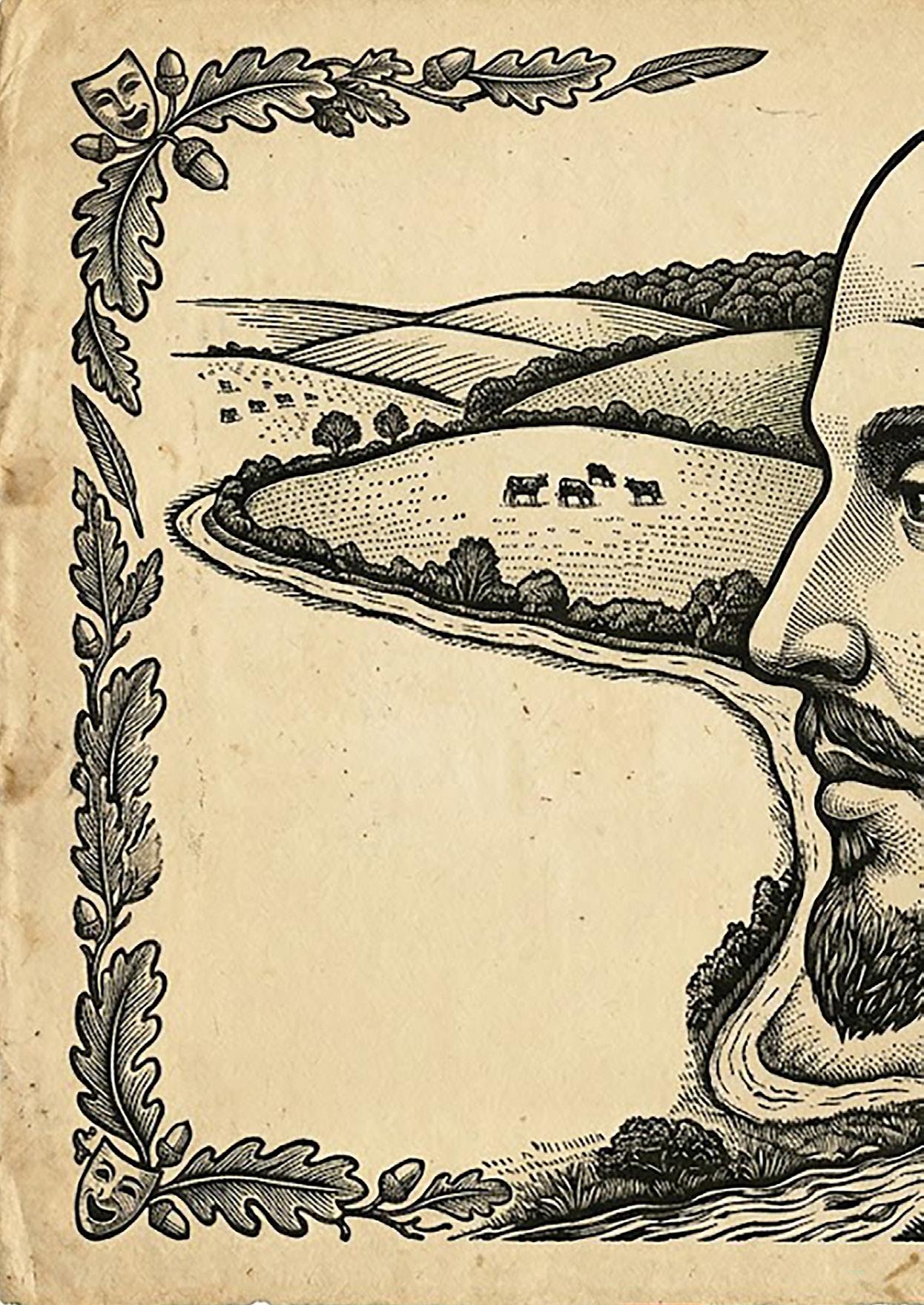
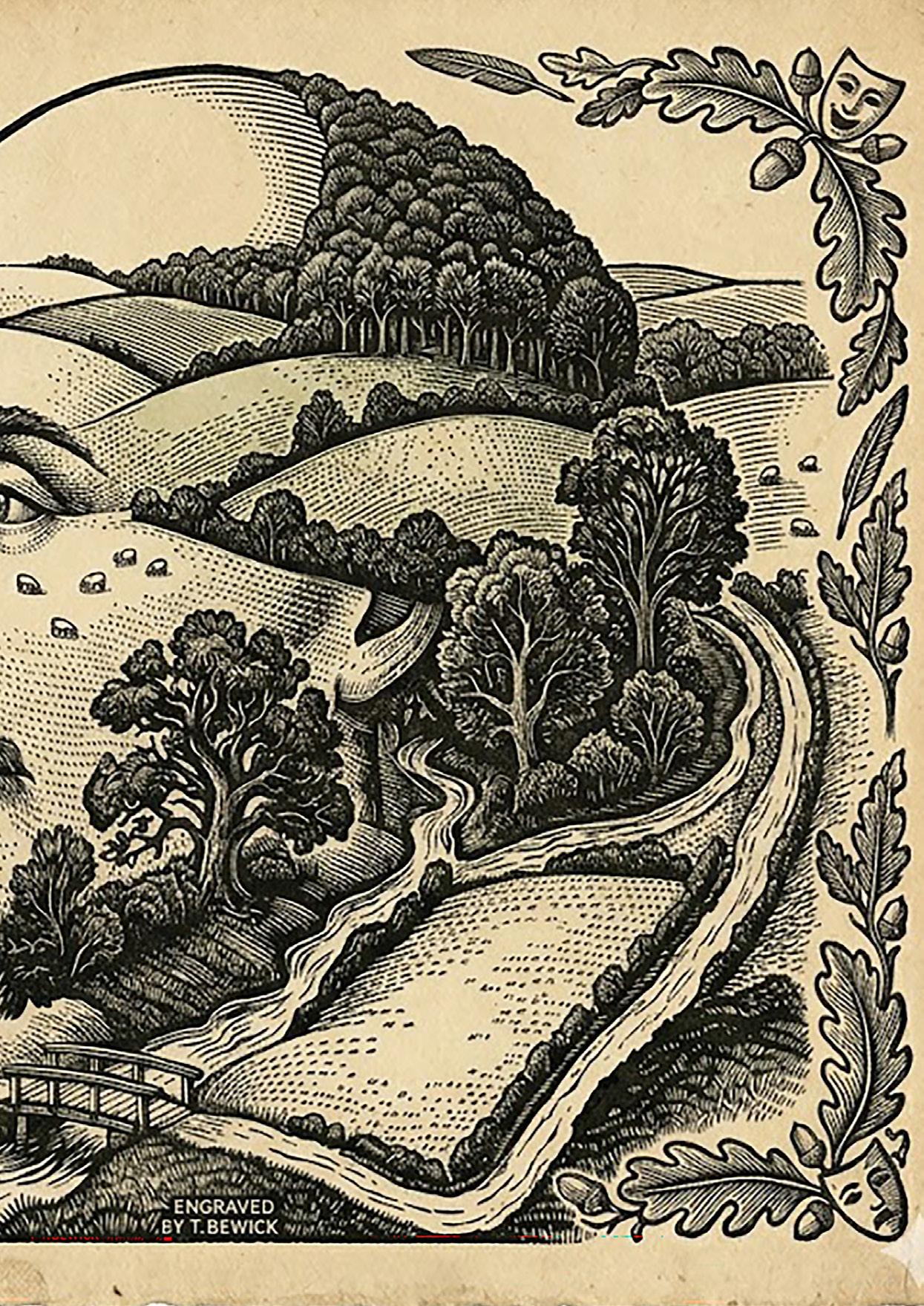
SHAKESPEARE the naturalist
Michael McCarthy delves into Shakespeare’s deep-rooted connection with the natural world
The coronation of Sir David Attenborough as the Greatest Living Englishman, on his hundredth birthday last month, can be seen as a significant moment, principally because of why the public now overwhelmingly think of him as the G.L.E. We have to go back sixty years to find the last person to be held in such awesome regard. That was Winston Churchill, for his qualities as a war leader. With Sir David it is different entirely: he is accorded such honour, respect and warmth for his devotion to nature, for his unsurpassed ability to make us see its wonder and worth, and increasingly, to defend it at a time of terrible threat.
The fact that such a devotion can make you the most honoured person in the land prompted two thoughts on my part. The first was, what does it tell us about our attitude as a society to nature? And I think the answer is, that we now hold the natural world, very widely, in reverence and admiration, despite Donald Trump and his followers who want to drill, baby, drill!
The second thought was more of a sideways one. If devotion to nature now makes you the greatest Englishman, what did the greatest English writer think about it? What were Shakespeare’s thoughts on the natural world? And one of the reasons this is an interesting question is that in Shakespeare’s time—he lived from 1564 to 1616—nature was by no means held in David Attenborough-style reverence and admiration. Just the opposite, in fact.
In the England of the late sixteenth and early seventeenth centuries, love, respect, and reverence for the natural world, did not exist. On the contrary, the view then universally held was that nature, in fact all non-human life, had been created by God simply and explicitly for the use of mankind. It had no inherent value of its own. It had simply been put there for us, for our purposes; for us to grab, for us to plunder, if you like, for us to do what we damn well pleased with it. And this was because of the prevailing orthodox Christian doctrine.
In William Shakespeare’s lifetime, it was the teaching of Christianity, both Catholic and Protestant, that all creatures, all plants, all nonhuman life, had been created by the Lord simply to be exploited by Man; and this view was given formidable scriptural authority, most notably in the famous words of Genesis Chapter 1 Verse 28: And
God said unto them, Be fruitful, and multiply, and replenish the earth, and subdue it: and have dominion over the fish of the sea, and over the fowl of the air, and over every living thing that moveth upon the earth
Christianity did not then preach, like, say, Buddhism, that we were to live in peace and respect alongside nature. It said we were to subdue it, and have dominion over it—plunder it, if you like. The idea that plundering the natural world without limit might eventually endanger it all, did not enter people’s consciousness, because what everybody believed was that The Lord would always provide.
We have of course now left this attitude behind (though not as long ago as you might think), but I highlight it because my own view, merely as an enthusiastic amateur reader of Shakespeare, is that the poet himself had a profound sympathy for nature—that he was in essence an instinctive naturalist—which was all the more remarkable for the fact that this attitude was at odds with basic belief system of his time.
Shakespeare never wrote down, as a statement, his opinions about anything. If he ever did, it’s lost to us. In his sonnets, which are his personal love poems, he expresses many feelings about love and the human character, but his factual opinions about everything else, about religion, family, worldly affairs, the weather, the cost of printing, the frequency of the plague, house prices in Stratford on Avon or whatever, which he must have held, we have no direct idea about. We can only gauge something about them from his writing and the imagery within it.
However, we can do that, and in fact we can do it to a fairly considerable degree, and the reason is, I think, the breadth of Shakespeare’s interests. The man took a very lively interest in many different aspects of life in a way that is reflected in his writing. For example, he was interested in military affairs. He was interested in medicine (and indeed in poisons.) He was interested in sea-going, in ships and how they sailed. He was very interested in the law—he uses more than 200 legal terms. And he was very interested in what we now call natural history.
Perhaps the first aspect of this interest that we notice is that Shakespeare greatly enjoyed the loveliness of the natural world in general. He was obviously very taken with the beauties of landscape. These are the opening lines of Sonnet 33:
Full many a glorious morning have I seen
Flatter the mountain tops with sovereign eye, Kissing with golden face the meadows green, Gilding pale streams with heavenly alchemy…
It’s the start of a poem about his lover being like the sun, and how sad it is when the sun goes in. But in these lines he’s also talking about something specific—the landscape transformation that the slanting golden sunlight of early morning can bring about, in particular on rivers, with that exquisite fourth line (alchemy of course being the pseudoscience of turning base metals into gold, in which the Elizabethans and Jacobeans were so interested.)
I personally have seen this effect, as a fisherman on the chalk streams, and seeing small rivers turn briefly golden is an astonishing phenomenon. And the point is, what we have here is not a conventional, generalised description, it is a personal observation. It is something particular which the individual William Shakespeare has observed for himself—and rejoiced in.
Or let’s take this, the start of the long song which concludes the play Love’s Labour’s Lost:
When daisies pied and violets blue
And lady-smocks all silver-white
And cuckoo-buds of yellow hue
Do paint the meadows with delight…
which is referring to something we as a society have rediscovered in the last 20 to 30 years—the joy of species-rich wildflower meadows (97 per cent of which, we are so frequently told, we have lost in the last century.)
The song here refers to a mixture of daisies, violets and lady’s smock, but also cuckoo-buds, by which we’re pretty sure he means buttercups (the word buttercup itself not occurring anywhere in Shakespeare); and if you think about buttercups and the other flowers painting the meadows with delight, as he writes, you will know, if you have ever seen the meadows at Muker in Swaledale, say, at midsummer—completely golden!—or for that matter the Dorchester water meadows similarly brilliant in late May, that he is right on the button. And once again, this reflects a particular observation made by an individual man, William Shakespeare, who loved the wildflower meadows; does he not seem a naturalist at heart?
We can see a lot more of his nature-enthusiasm with his references to individual species of wildlife, although it has to be said, not so much from animals, meaning mammals and reptiles. Shakespeare has an obsession with animals, but only in a particular way—they are for him key descriptive symbols of human characteristics. So the lion is the king of beasts, and represents regal and majestic qualities, and a person can be noble as a lion—or for that matter, crafty as a fox, fierce as a bear, ravenous as a wolf, meek as a lamb, poisonous as a snake, lecherous as an ape, craven as the worst sort of dog. Shakespeare uses these animal epithets continually, in fact throughout his work he does it about 4,000 times, and in doing so he makes reference to roughly fifty species of mammals and perhaps another dozen reptiles and amphibians. They include all the domestic beasts: dogs, cats, horses, cattle, pigs, sheep and goats, and also many exotic animals he may very well never have seen—lions, certainly, but also tigers, leopards, elephants and crocodiles, as well as mythical beasts, such as unicorns, griffins, basilisks and dragons. But the point is this—he uses them symbolically. He doesn’t write about them ecologically. He’s not interested in their lives, in their natural habitats. So with Shakespeare’s animals, what you’re not going to get much of is any direct observation from nature, because he hasn’t observed a lion in the Warwickshire countryside, still less a unicorn or a dragon. When we turn to birds, though, the situation is different.
It’s clear that Shakespeare was interested in birds—he makes more than 600 mentions of birds, of about sixty species—and it’s also clear that he had real ecological knowledge of wild birds, the ones he saw in the countryside about him. For example, he refers to all seven species of the crow family in England: raven, [carrion] crow, rook, jay, jackdaw, magpie and chough. Shakespeare could tell the difference between a raven, a carrion crow and a rook, and by no means everyone can do that today. Although some of his references are taken from the popular culture of his time, such as the frequent use of the cuckoo as a symbol of the cuckold, the man who is cheated on by his wife, sometimes you do indeed get the sense with his birds of direct observation from nature. The aforesaid cuckoo provides a striking example. It comes in a reference by Shakespeare to one of the other species in whose nests the female cuckoo lays its own egg to be hatched out, the dunnock—
which he calls, as indeed I did myself in my boyhood more than half a century ago, the hedge sparrow.
In King Lear, he has the Fool tell Lear about the predatory nature of his daughter Goneril, warning him:
The hedge-sparrow fed the cuckoo so long
That it had its head bit off by its young.
Shakespeare is here referring to the remarkable sight of a dunnock feeding a cuckoo chick which is so much bigger than its foster-parent that the dunnock’s head appears to disappear down the cuckoo chick’s throat; it might have seemed just a folk-saying to his original audience, but the actual phenomenon has now been photographed, and I think it’s perfectly possible that Shakespeare observed this himself, although we cannot know for sure.
However a very definite example of direct bird observation, and a very charming one, is to be found in Macbeth. When Duncan the King of Scotland arrives at Macbeth’s castle in Inverness—where that night Macbeth is to murder him—he remarks on how attractive it is. He says:
This castle hath a pleasant seat. The air Nimbly and sweetly recommends itself
Unto our gentle senses.
And dramatically, that’s all that needs to be said. It’s a
nice place. But Shakespeare doesn’t leave it there. Into the mouth of Banquo, one of Duncan’s noblemen, he then puts a dramatically quite unnecessary but very lovely invocation of the bird which is flying around the battlements:
This guest of summer
The temple-haunting martlet, does approve By his loved mansionry, that the heaven’s breath Smells wooingly here. No jutty, frieze, Buttress, nor coign of vantage, but this bird Has made his pendant bed and procreant cradle. Where they most breed and haunt, I have observed, The air is delicate.
For “I have observed” read “William Shakespeare has observed.” This is direct personal observation by him, of the house martin, as beloved in my own Dorset village today, with its spring return from Africa keenly awaited, as it was in Warwickshire (or indeed in London) four hundred years ago. This is Shakespeare the naturalist speaking, loud and clear. But we find that we hear him speaking loudest of all when he’s dealing with plants.
Shakespeare refers to an astonishing number of plants—no fewer than 180 species, of trees, shrubs, bushes, fruits and vegetables as well of course as flowers, for which he clearly has a considerable knowledge, and a very deep affection. For example, he loves England’s spring wild flowers which have just had a stupendous season here in Dorset.
Perhaps surprisingly, he never refers to snowdrops, but he does refer, and frequently, to daffodils, daisies, lady’s smock, primroses, cowslips, oxlips and violets, this last which he particularly likes, especially the sweet-smelling variety. We can add celandines and bluebells to that list. We don’t find the word celandine in Shakespeare, but he talks about marigolds which close when the sun goes in, and this is almost certainly a celandine reference. And similarly, though he never uses the word bluebell, he does use the word harebell and various authorities suggest that by harebell he means the bluebells which this year have flowered around us in such a stunning blue haze. He’s very fond of herbs and knows a lot about them; he never uses the word orchid but he has lots of references to lilies; and he’s exceptionally fond of roses—he refers to roses in his plays and poems 72 times. We can illustrate very well his passion for flowers by looking at a famous short passage from A Midsummer Night’s Dream. The speaker is Oberon, king of the fairies, who has fallen out with his wife Titania, the fairy queen, and he’s going to play a trick on her—he’s going to have his fairyservant Puck sprinkle a magical juice on Titania’s eyes while she’s asleep, which will make her fall in love with the first thing she sees when she wakes up, and what she wakes and sees in fact is a bloke with a donkey’s head, and it’s very funny. And Oberon describes to Puck where he can find Titania sleeping in the forest, and he says:
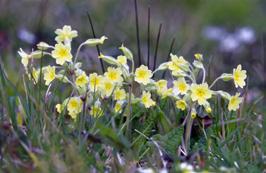
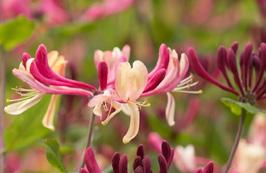
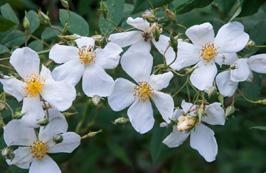
I know a bank where the wild thyme blows, Where oxlips and the nodding violet grows, Quite over-canopied with luscious woodbine, With sweet musk-roses and with eglantine: There sleeps Titania sometime of the night….
Once again here, as with the house martins, in terms of the plot we have something which is dramatically unnecessary. All Oberon needs to say is the first line, about the wild thyme, and give Puck directions. But Shakespeare carries on naming—as if he can’t stop himself—another five wild flowers that cover this bank: oxlips, violets, woodbine, which is honeysuckle, and two wild roses, the musk rose, Rosa moschata, and eglantine, which is the sweet briar rose, Rosa rubiginosa
I do not think that many people today, except professional gardeners, could identify all six of those plants off the cuff—which gives you an indication of the uncommon nature of William Shakespeare’s
wildflower expertise as well as his enthusiasm. You can see it on display again in another very famous passage, this one from Hamlet, spoken by Ophelia, who has gone mad because Hamlet her former lover has spurned her and (although accidentally) killed Polonius her father. And she comes into the court, in her madness, distributing flowers which have various symbolisms for her:
There’s rosemary, that’s for remembrance. Pray you, love, remember. And there is pansies, that’s for thoughts….
There’s fennel for you, and columbines. There’s rue for you, and here’s some for me; we may call it herb of grace o’ Sundays. You must wear your rue with a difference. There’s a daisy. I would give you some violets, but they withered all when my father died. They say he made a good end.
And if we go past the sadness of the scene, and just look at it with a naturalist’s eye, we have a list of five more species, plus violets and daisies— rosemary, pansies, fennel, columbines, and rue. I don’t think many people could identify all those, either. And we can see Shakespeare’s botanical expertise even more vividly in The Winter’s Tale, where Perdita, the young princess, castaway as a baby and raised in a family of shepherds, is now acting as queen of the sheep shearing festival; and she’s giving out flowers to her guests:
Here’s flowers for you:
Hot lavender, mints, savory, marjoram, The marigold, that goes to bed wi’ th’ sun
And with him rises weeping…
Daffodils,
That come before the swallow dares, and take
The winds of March with beauty; violets dim,
But sweeter than the lids of Juno’s eyes
Or Cytherea’s breath; pale primroses,
That die unmarried ere they can behold
Bright Phoebus in his strength—a malady
Most incident to maids; bold oxlips and
The crown imperial; lilies of all kinds,
The flower-de-luce being one…
It’s a very beautiful passage, and if we count the species Perdita mentions, we have lavender, mint, savory, marjoram, marigold (which is probably celandine), daffodils, violets, primroses, oxlips, the crown imperial (an exotic flower which had come into England from the Middle East), and the fleur
de luce, which is probably an iris—eleven more species that Shakespeare is familiar and comfortable with, and enjoys writing about. Talk about expertise…
It has been suggested that Shakespeare was a personal friend of John Gerard, who wrote the first botanical best-seller in English, his Herball, or Generall Historie of Plantes, which was published in 1597 when Shakespeare was 33. It has also been suggested that one of the four figures on the engraving which forms the frontispiece to the book, a handsome, moustachioed laurel-wreathed young man holding a fritillary flower, is Shakespeare himself, which if true would be the first authentic likeness of the poet before middle age. That is by no means certain, although there is evidence to support the claim… but it is indeed very likely that Shakespeare at least read and enjoyed Gerard’s Herball, and used it to deepen considerably his knowledge of the nature—“great creating nature,” he calls it, such an inspirational phrase—which he saw all around him as a boy from a small country town, and grew to love.
And yet he loved it in an age when the belief system of the world he lived in did nothing to encourage such love, which throws into sharp relief the remarkable and very personal character of his enthusiasm.
We shouldn’t exaggerate. It was by no means his principal theme. We cannot class Shakespeare as a nature poet, like Wordsworth, or poor John Clare who went mad, or Edward Thomas, say, who was killed in the First World War. But nature was vividly present in his writing as I have tried to show, and to a far greater extent than in the writings of his contemporaries such as Marlowe or Ben Johson, and probably more than in the work of most writers; and indeed some critics have suggested that Shakespeare anticipates or prefigures the Romantic poets like Wordsworth with their love for the wild life of the earth.
I think it’s worth realising this. Shakespeare is such a wonderful poetic artist and such a wonderful painter of human life, there is just so much of surpassing interest and delight in his 37 plays, five narrative poems, and 154 sonnets, that in the past his love for the natural world has to some extent perhaps been overlooked. But in an age when the natural world is so terribly threatened, an age where the qualification to be the Greatest Living Englishman is to love nature and defend it, let us be grateful for the fact that the greatest English writer loved it too, and were he alive today, would very likely be manning the barricades in its defence.
This is an edited version of a talk given at St Mary’s Church, Cerne Abbas, as part of the Cerne Giant Festival 2026.
The bank where the wild thyme blows – and much else
Here are the six flowers covering the bank in the forest where Titania sleeps in A Midsummer Night’s Dream
Wild thyme Thymus serpyllum
Oxlips Primula veris x vulgaris
Violets Viola odorata
Honeysuckle (Shakespeare calls it ‘woodbine’) Lonicera periclymenun
Musk rose, Rosa moschata
Sweet briar rose (Shakespeare’s eglantine), Rosa rubiginosa
CULTIVATING HISTORY
A chance encounter in a Bridport pub led author Paul Lashmar to visit Sharon Cooke, a British-Bajan horticulturist, at the Andromeda Botanic Gardens in Barbados
Ifirst met Sharon Cooke in the Woodman pub in Bridport sometime in early 2022. I was sitting with some friends and a pint of Isaac’s cider when a woman with dreadlock hair came over and asked me in a decidedly London accent, ‘Aren’t you that man who writes about the Drax family and Barbados?’ ‘Yes’, I replied. ‘Well’ said my new acquaintance, ‘I wrote to that Richard Drax and told him he should hand over his Drax Hall Plantation to the people of Barbados. But you will be surprised to hear I have not had a reply’. She then introduced herself as Sharon and explained she was British-Bajan.
A horticulturist, Sharon and her partner Rob had taken refuge in Bridport during Covid, as Rob has family nearby. Barbados had very strict lockdown during the pandemic and she had to close the eightacre Andromeda Garden which was normally open daily to the paying public.
If you visited Bridport around that time, you would have found Rob selling his home-made bread in the market. Sharon and Rob were living in a small twoup, two-down rental in South Street in which Sharon had, in no time, transformed the small garden. It was unique enough to make a slot on Monty Don’s
Andromeda Botanic Gardens. Photographs courtesy of Andromeda Botanic Gardens
Gardener’s World programme on BBC in 2020. Richard Drax is the extremely wealthy, then MP, who owns the vast Charborough Estate in East Dorset. For two hundred years his ancestors worked enslaved African people on the 621 acre Drax Hall sugar plantation in brutal conditions. Sharon was one of the many black Bajans and diaspora who have a legacy in that slavery and believe that the Drax family should apologise and make reparations. We kept in touch but a few months later Sharon said she was going back to Barbados, and we lost contact.
In early April I was giving a lecture at the Barbados Museum based on my book Drax of Drax Hall. Afterwards I was pleased to see Sharon who said she had really liked my talk and suggested that my wife and I should visit Andromeda Gardens during our stay. We had heard good things about Andromeda through a friend who does tours at Welchman Hall Gully, another amazing Barbados National Trust property, where some the original flora and fauna of Barbados survive (most was decimated by the sugar plantations that blanketed the Island from the 17th century onwards). Both the Gully and Andromeda are run as commercial entities by enterprising women horticulturists and had been hard hit financially by the pandemic. So, later in the week three of us went up to Andromeda taking the winding roads through many sugar plantations.
Andromeda is to be found high up on the eastern part of the Island near the village of Bethsheba. There is nothing quite like it. It has stunning views over the wild East coast where the Atlantic waves crash in white foam. Sharon has created an extraordinary horticultural experience, which is also a community asset. Bajans get in free.
Andromeda was established as a private botanic garden by the late Iris Bannochie (three Gold medals at the Chelsea Flower Show, Silver Crown of Merit issued by the Barbadian government and much more) from the 1950s. Sharon pointed out that at that time, Barbados was simply a land exploited for sugar, and a country without a long history of garden creation. She said, ‘I took over the management and development of Andromeda Botanic Gardens in February 2014, after being requested to do so by the Barbados National Trust. …. Being responsible for Andromeda was not even a dream. It was something beyond my imagination.’
She added that she knew it needed a lot of renovation.’ The first time I’d visited was as
Andromeda has been described by a Royal Horticultural Society judge as ‘one of the most unique and outstanding gardens in the world’
a child in 1977, returning as an adult in 1994. Andromeda had changed but I couldn’t articulate what that was—anyway, gardens do change!! I returned numerous times between 2002 and 2012. Andromeda was silently asking for help.’
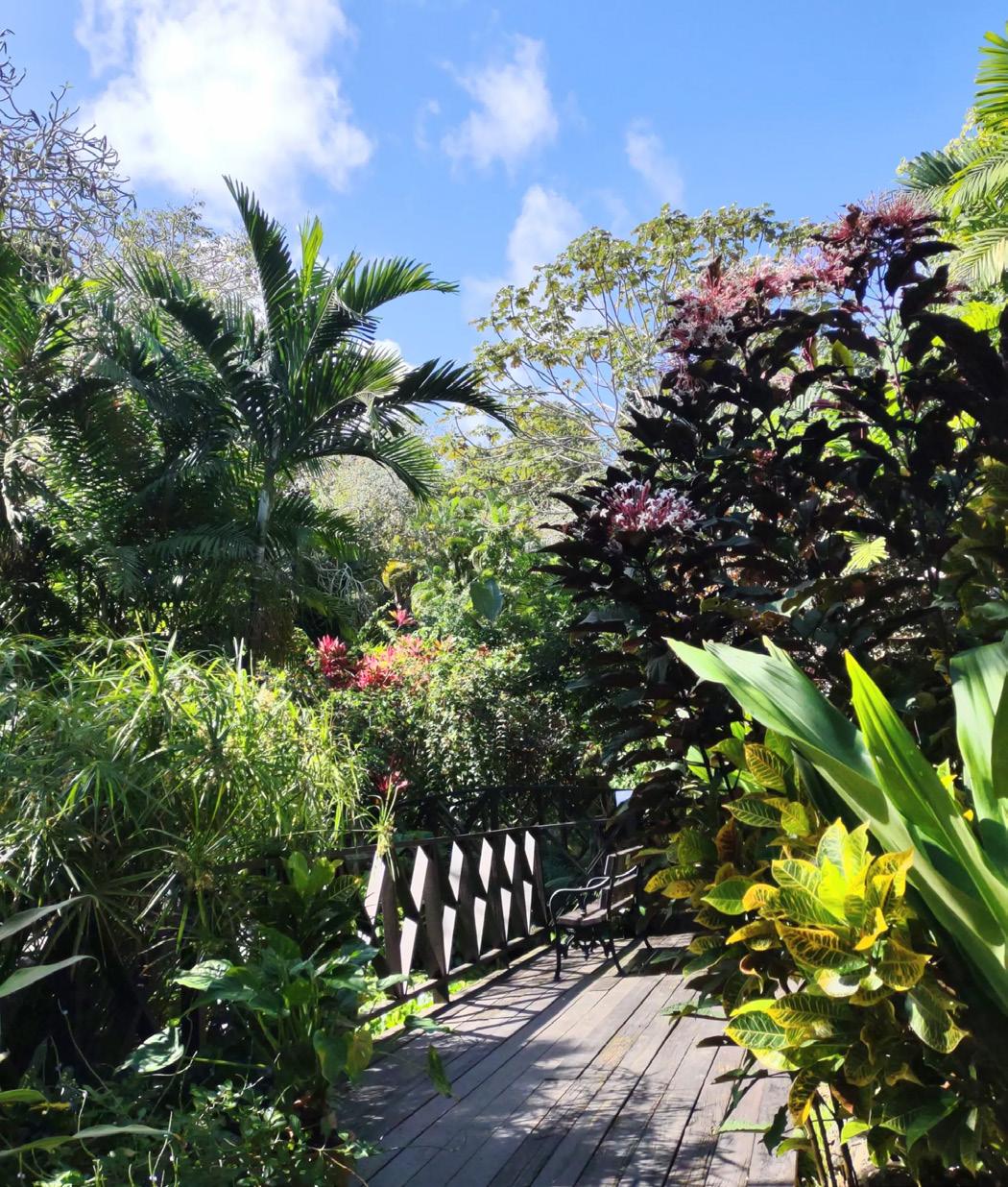
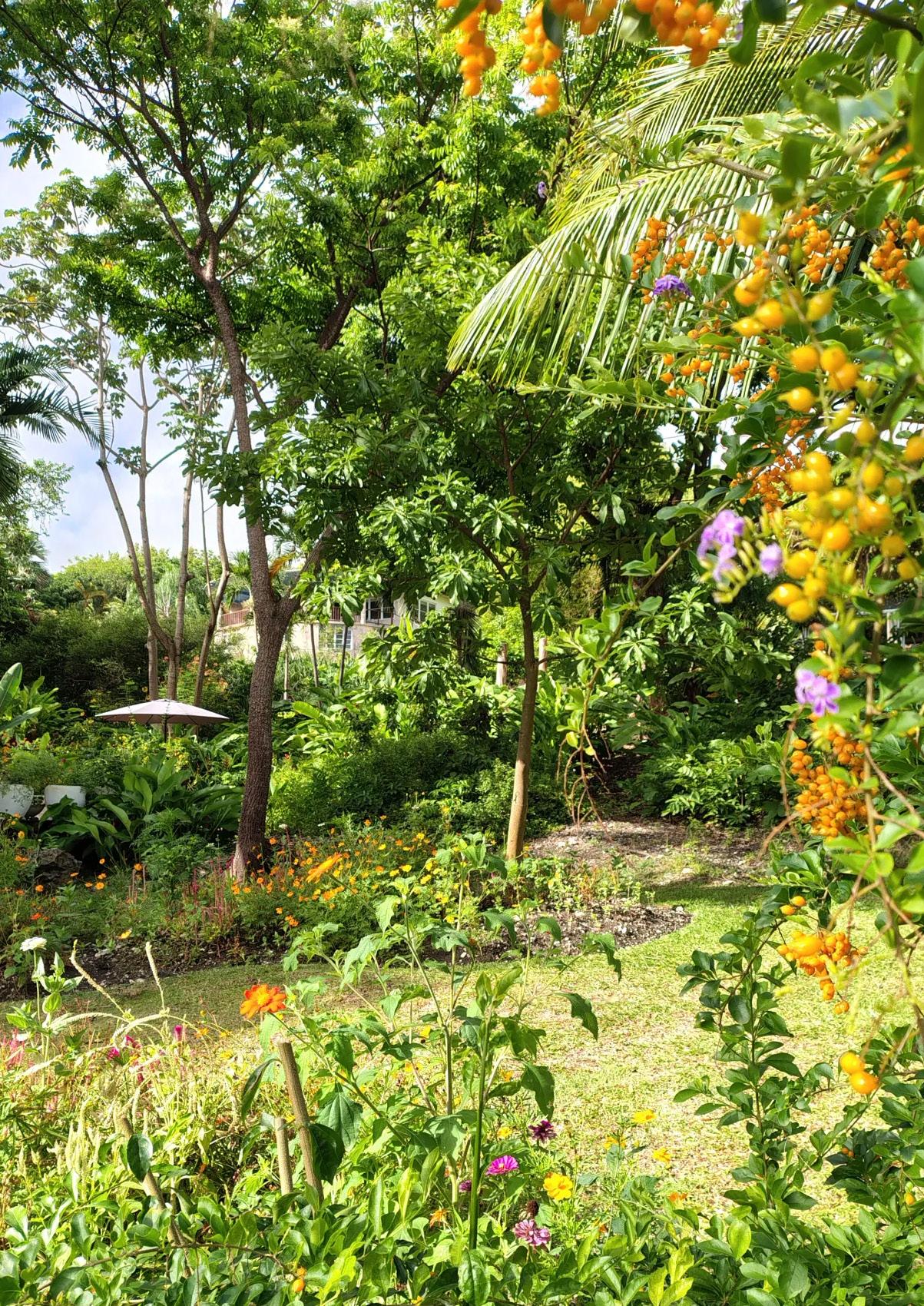
Sharon was kind enough to take us round. Her aesthetic is a delight, with a cornucopia of trees, shrubs and plants, many in full bloom. Comprising 20 connected gardens, there are over 600 different plant species, including over 100 species of trees. ‘It feels very natural yet is completely woman-made.’
Andromeda hosts plants that were indigenous to Barbados before it became the economic engine of the British Empire. Our ramble up and down the hillside of Andromeda was attended by hummingbirds, beautiful monarch butterflies and other wildlife.
She said her focus is on ensuring community inclusion, protecting Iris Bannochie’s legacy and conserving and enhancing Barbados’ biodiversity— plant and wildlife.’ Importantly she adds, ‘I want to showcase our Bajan plant stories—our amazing heritage through our use of plants, relevant to who we are as Bajans and super-interesting for all visitors.’ Andromeda has been described by a Royal Horticultural Society judge as ‘one of the most unique and outstanding gardens in the world’.
However, Sharon said, Andromeda remains misunderstood, underappreciated and under-visited. Much of the Island’s tourism footfall and revenue comes from minibus tours, mostly from the cruise ships that anchor in Bridgetown. These tours tend to focus on a handful of venues where visitors can be hurried through. For example, there is pristine St Nicholas Abbey, which is not an abbey but a Jacobean style plantation house that is said to be
the second oldest residential house in the Americas (circa 1658). Only the very private Drax Hall is older, as it was built in the early 1650s by Sir James Drax. The St Nicholas plantation was bought some years ago by the Warren family headed by Barbados architect Larry Warren—who have no ancestral relationship with slavery and have polished St Nicholas’ charm for tourists.
Barbados still struggles with the legacy of slavery. When I visited St Nicholas Abbey in 2022, I was amazed that the owners made almost no reference to the fact that the plantation was worked by enslaved people for two hundred years. On this year’s visit, we noticed there has been a slight improvement. In their guide handout, Larry Warren accepted that the venue had not been good at explaining that those who worked on the plantation had been enslaved, ‘our future plans are to professionally upgrade the House Museum to correct this disparity.’ But they have a long way to go to explain Barbados colonial history. St Nicholas has no problem with footfall as a constant stream of minibuses delivers tourists. Andromeda and Welchman’s Hall Gully see little of these visits. And what they miss. But some cruise tourists do make it to Andromeda, as do celebrity visitors. Alan Titchmarsh told the Sunday Times in 2020, “We’ve been cruise fans for many years and have seen a lot of the islands, but
I particularly like Barbados. I’ve visited the wonderful Andromeda Botanic Garden on the island”.
For capital projects, Andromeda depends on sporadic donations from foundations and the public. Endlessly energetic, Sharon is currently ‘Africanising’ parts of Andromeda in tribute to the majority enslaved Africans that gave so much to the island and who understood the medical and herbal applications of certain plants. Take, for instance, the Pride of Barbados, which is today the national flower of Barbados. This is a flowering shrub native to the tropics and subtropics of the Americas. By drinking the seeds, leaves, or flowers of the plant in tea form, enslaved women could induce a miscarriage. This was understood as an act of resistance: by not having children, enslaved women were limiting the profits enslavers could make off their bodies. Other Andromeda plants had ethnobotanical uses such as ritual, medicinal and as food.
Sharon is determined to make it work. ‘We hope Andromeda will, one day, be valued and admired and Iris Bannochie, the queen of Barbadian horticulture and creator of this masterpiece, will not be forgotten.’
Dr Paul Lashmar is the author of Drax of Drax Hall: How One British Family Got Rich (and Stayed Rich) from Sugar and Slavery. Pluto Books (2025).
British-Bajan horticulturist Sharon Cooke
Gardens to visit in June
As so often happens at this time of year, the number of gardens opening to the public in aid of the National Gardens Charity is simply too many to list, so here is a small selection to look out for in June.
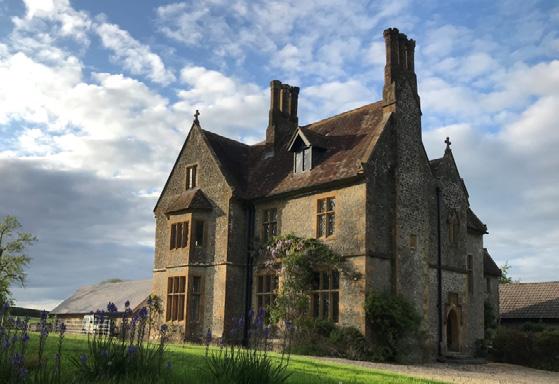
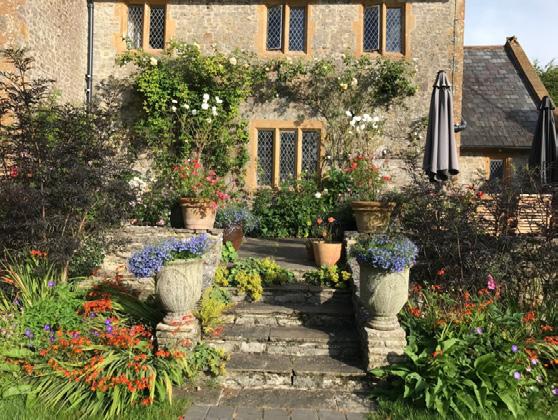
Pugin Hall was once Rampisham Rectory, designed in 1847 by Augustus Pugin, who also helped design the interior of the Houses of Parliament. A Grade I listed building, it is set within four and a half acres of garden, including a large front lawn with rhododendrons, a walled garden filled with topiary and soft floral planting, and an orchard. The walled garden is planted with shrubs, roses, clematis, masses of unusual perennials, and Japanese anemones against a backdrop of espalier fruit trees and box hedging with spirals. Pugin Hall is the only intact Pugin-designed building currently in private ownership and is considered to be the most complete example of his domestic architecture. The plan of the house encompasses Pugin’s characteristic pinwheel design: an arrangement of rooms whose axis rotates about a central hall, lending itself well to the varying effects of light and shade within. Open on the 14th of June from 1 – 5 PM, with homemade teas. The combined admission with nearby Broomhill in Rampisham is £10. Children are free.
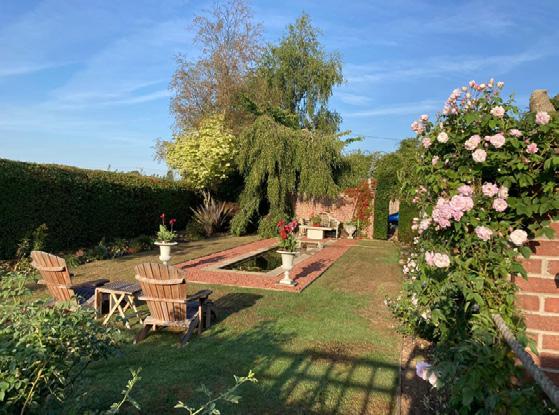
For those wanting to venture further East, there is Utopia at Tincleton, Dorchester DT2 8QP. Utopia offers approximately half an acre of secluded, peaceful garden, made up of several rooms inspired by different themes. The design draws inspiration from Mediterranean and Italian gardens, woodland spaces, and water gardens. Seating is scattered throughout to enable you to sit and enjoy the different spaces and take advantage of both sun and shade. Also open on the 14th of June, admission is £6 for adults and £4 for children.
Special events that must be booked in advance include Bettiscombe Manor, owned by Jasper Conran. Entrance is £60, and places are limited. Book at ngs.org.uk.
The distinctive gardens owned by John and Jenny Makepeace at Farrs in Beaminster are also open on Thursday, 18 June. Admission is £40. Again, pre-booking at ngs.org.uk is essential.
New openings this year include 3 Park Farm Close in Martinstown on Sunday, the 14th of June. Admission is £5, with children free. A quirky, child-friendly one-acre garden with distinct sections. 3 Park Farm Close is in Martinstown, Dorchester DT2 9TW.
June can be a bountiful time to visit open gardens, so visit ngs.org.uk for a full list of those near you.
Above: Pugin Hall in Rampisham and below: Utopia in Tincleton
IJUNE IN THE GARDEN
By Russell Jordan
t would be amiss of me not to start by mentioning the passing of Nigel Dunnett at the end of April. His planting philosophy is behind a lot of the way our garden planting has changed, in very recent years, as the garden designers he educated and inspired have gone on to careers where his principles are actualised in the real world. His planting schemes prioritise plants that thrive in local conditions, tolerate drought, and support pollinators; plants chosen to be “sensible citizens rather than needy aristocrats.” Most famous for his seed mixes, seen to great effect, admired by millions in the ‘Olympic Park’ in 2012 and also in the moat at the ‘Tower of London’. The easiest way to get a bit of Dunnett magic in your own garden is to sow one of his seed mixes sold as ‘Pictorial Meadows’.
I must admit that my own gardening style is still rooted in the more Christopher Lloyd, mixed borders and higher maintenance, style of garden planting. I think I’d find it hard to jettison all the plants, collected over a gardening lifetime, which populate my garden and to replace them with a truly self-sustaining, ecologically balanced, species mix. It would require a huge amount of preparation to make the sort of beds needed to encourage growing, evolving, self-seeding and dynamic plant populations, that mimic natural ecosystems. I fear the whole scheme being overrun by all the native weed species, which are present in any already established garden, and which you can only really eradicate if you are starting with a totally sterile, ‘clean slate’ soil. If you are making a garden from scratch, then his philosophy is certainly the way to go.
If there is one plant which definitely fits the ‘needy aristocrat’ title then it would be the herbaceous delphinium, once a staple part of the classic herbaceous border, which peaks around this time of year. It requires a lot of feeding, watering, staking and protecting from slugs, their mortal enemy, which I think explains why they are much less often seen in
gardens nowadays. I think anything which is very prone to slug damage, hostas being another plant used much less than it was in my horticultural student days, as copious applications of metaldehyde slug pellets are no longer possible. At least with delphiniums there are species which you can grow from seed and are possible to be used in ‘flowering meadow’ schemes; Delphinium consolida and D. requienii are two that spring to mind.
Much of the maintenance needed in June is a continuation of what you’ve already been doing for the past month or so.
Much of the maintenance needed in June is a continuation of what you’ve already been doing for the past month or so. Continue dead-heading flowers as they go over, except where you might want to leave them to mature into attractive seed heads or, in the case of some roses, ‘hips’. Although it really should have been done before now, if you want the supports to become invisible, it may be necessary to step in with emergency pea-sticks, or bamboo canes and string, if one of those summer, squally, downpours threatens to collapse sections of a herbaceous border. Way back when I did student placements in ‘National Trust’ gardens, there was a particular constituent of the herbaceous border which I don’t think I’ve seen for years; Galega officinalis (Goat’s Rue). It came to mind just now as, along with 6-8ft tall Delphinium, it was a tall herbaceous perennial which was really prone to collapse—even when you thought you’d trussed it up, good and proper, well before it started to flower. I can see why a ‘self supporting’ and ‘self sustaining’ planting scheme might be a worthwhile consideration! Lawns will be growing rapidly at this time of year,
assuming we’re not experiencing a drought, so keeping on top of the mowing is essential. Of course, replacing a large lawn with a Nigel Dunnet inspired scheme, if you have the sort of garden where it can be a suitably generous area, would be an excellent idea and certainly a more useful concept than ‘no mow May’. I’ve often written about creating a wildflower meadow, in place of a lawn, but this only really works in gardens above a certain size where the meadow can be at least the size of a small field. Small areas of grass, left uncut, tend to just look untidy and won’t be large enough to add anything meaningful to the biodiversity of your garden. Ponds, on the other hand, can add a useful extra dimension to the habitats available for wildlife in your garden. It’s amazing how even a relatively small pond can sustain frogs, dragonfly larvae, newts, pond snails etc. etc. and allow you to grow aquatic and marginal plants which you wouldn’t otherwise have in your planting palette. June is a good month to give them a bit of a clean up, thinning out of pond weed especially, as the water should be warm enough that the task isn’t too unpleasant and any disturbance will soon be ‘healed’ by the actively growing plants. If you remove excess pond weed, you want there to be at least two thirds of open water, remember to leave it at the side of the pond so that any creepy-crawlies, caught up in it, can wriggle free and make their way back into the water.
On the subject of ‘creepy crawlies’; pest species can get out of hand this month because they have plenty to sink their voracious teeth into (not that most of them actually have teeth!) and warm temperatures maximise breeding. Aphids and caterpillars are most prevalent so regular checking and removal, by whatever method you favour, is the order of the day. Before using chemicals remember that these can upset
the delicate balance between the plant pests and their natural predators so using them may actually result in worse infestations a few weeks down the line. If you can bear to remove the pest by hand, usually the case for the oft-mentioned, bright red, lily beetle, it may prove enough to keep their numbers down so that they don’t completely defoliate their host plant. Lilies are another plant species which I fear will become less common in gardens due to lily beetles becoming so prevalent that lilies can no longer be relied on as a ‘perennial’. Sadly, no more evocations of ‘Carnation, Lily, Lily, Rose’ (John Singer Sargent, 1885).
THIS MONTH
IN THE NOT TOO DISTANT PAST
With an eye on National Reading Year, John Davis remembers a selection of female writers
If you are perusing this article, I am most likely preaching to the converted but did you know that this year, 2026, has been designated National Reading Year. Apparently, it is a Department of Education initiative that is being delivered by the National Literacy Trust with the aim of boosting literacy, fostering a love of reading and tackling the country’s declining engagement with all things literary.
To acknowledge this worthy campaign, this month’s feature focuses on three authors, a poet, a novelist and a writer of children’s stories. All three are women who, in order to achieve their status, had to surmount problems and difficulties both literary and personal.
SYLVIA PLATH:
Born in America in 1932, the poet and novelist Sylvia Plath pioneered the genre of confessional
poetry. It focuses on highly individual and intimate issues including personal trauma, mental illness and suicide. It is a way in which writers became highly introspective in an effort to distance themselves from the major world issues of the twentieth century including The Holocaust and the Cold War. Plath had been writing poetry from an early age, winning several literary competitions as a child and having work published in leading magazines.
Plath married fellow poet Ted Hughes in 1956 and the couple settled in Britain. They had two children before separating in 1962. The most well known of Plath’s works are The Colossus and Other Poems (1960), Ariel (1965) and the novel The Bell Jar (1963) which is semi-autobiographical and charts her own life-long battling with severe depression. The Bell Jar, rigid and transparent, mimics the way depression distorts
perception, making the outside world look skewed.
Sylvia Plath took her own life aged thirty leaving behind a large number of unfinished manuscripts, letters and journal entries. The Collected Poems which were published in 1981 was awarded a Pulitzer Prize for Literature. She is one of only four people to have received this honour posthumously.
GEORGE ELIOT:
Like many female authors of the time, Mary Ann Evans was forced to use a male pen name in order to get publishers ‘on-side’. Under the guise of George Eliot, Mary Ann Evans wrote seven novels but also penned poetry and worked as both a journalist and a translator.
Among her best-known novels are Adam Bede (1859), The Mill on the Floss (1860), Silas Marner (1861) and Middlemarch (1871-72). Virginia Woolf has described Middlemarch as “one of the few English novels written for grown-up people”.
Mary was educated in religious boarding schools until she was sixteen when, following the death of her mother, she returned home to become housekeeper to her father and younger siblings. Her writing ambitions had largely been stifled while looking after her family but when her father died, she went to work as a writer and editor for a left-wing journal, The Westminster Review. She also became the centre of gossip and scandal by living openly with George Henry Lewes even though he was married to someone else.
Before she embarked on writing novels she decided on the pen name George Eliot, George from ‘husband’ Lewes and Eliot because it was “a good mouth-filling, easily pronounced word”. It was also a way of separating her personal life from public scrutiny.
Following the critical acclaim of Adam Bede, her real identity was soon uncovered but this did not affect her popularity as a novelist as other major works soon followed. She died in December 1880 at the age of 61 and due to her denial of Christian faith was buried in Highgate Cemetery, incidentally not far from the grave of Karl Marx. In 1980 a memorial stone was rightly erected in her honour in Westminster Abbey’s Poets Corner.
BEATRIX POTTER:
The author of children’s stories who gave us such household names as Peter Rabbit, Mrs. TwiggyWinkle and Jemima Puddle Duck was also a pioneering entrepreneur, an expert mycologist and a conservationist, bequeathing sizeable tracts of Lake
District land to the National Trust.
Beatrix Potter was born into an upper middleclass family and had an isolated childhood being educated by a series of governesses. Long holidays spent in Scotland, the Lake District and Wales though gave her an abiding love of the landscape and she became a skilled illustrator of local floral and fauna. Her particular interest was in fungi where her research made her one of leading experts on mycology in the country.
When it came to writing and illustrating children’s stories she was greatly influenced by Aesop’s Fables, the fairy tales of the Brothers Grimm and Hans Christian Andersen. It was in letters to friends and relatives that she first began to tell short illustrated stories. Finding a publisher though proved difficult and the first tales were published at her own expense. Eventually after many rejections, the books were taken on by Frederick Warne and Co and, in October 1902, The Tale of Peter Rabbit was published and became an immediate hit. Working in conjunction with her editor, Norman Warne, she published two or three books a year until 1922 when other interests began to replace her writing. Forever the canny businesswoman, Potter made and patented a Peter Rabbit doll in 1903 and other related merchandise followed including colouring books, wallpaper, board games and baby blankets.
When Norman Warne died, she used her publishing earnings and a small inheritance to purchase Hill Top Farm near Lake Windermere where, with the help of a tenant farmer, she raised livestock. In 1909 she acquired another local farm and became heavily involved in the life of the local community. Her interest then turned to breeding the indigenous Herdwick sheep before she acquired Troutbeck Park Farm with even more land to extend this interest.
When she died in 1943 Beatrix Potter left some 14,000 acres to the National Trust including sixteen farms, cottages and herds of cattle and sheep. It enabled preservation of the land that is now included in the Lake District National Park and boosted the continuation of traditional fell farming.
Semi-retired and living in Lyme Regis, John Davis started working life as a newspaper journalist before moving on to teach in schools, colleges and as a private tutor. He is a history graduate with Bachelors and Masters degrees from Bristol University with a particular interest in the History of Education and Twentieth Century European History.
ALMOND ANGOSTURA GRANITA
By Nisha Katona
Angostura bitters, in its iconic bottle with over-sized label, is an aromatic classic of the cocktail cabinet. With a gentle herbal flavour based on gentian and numerous herbs and spices, it is one of Trinidad and Tobago’s most recognisable exports. I’ve used the bitters here to flavour a light, creamy, dairy-free granita. An icy treat to end a long hot summer’s day, it is a lovely dish for entertaining.
• 2 tsp finely grated orange zest, plus extra to serve
Serves 4
BOLD Nisha Katona
Published by Nourish,
an imprint of Watkins Media Ltd.
ISBN: 978-1-84899-423-2 (Hardback)
ISBN: 978-1-84899-426-3 (eBook)
DIRECTIONS
• Put the almond milk in a wide, shallow, freezer-proof container with a lid (an old ice cream tub is good) and stir in the sugar, bitters and orange zest.
• Pop the lid on and place the container in the freezer for 2 hours.
• Remove the container from the freezer and use a fork to break up the ice that will have begun forming around the edges of the tub. Return the tub to the freezer.
• After another hour, remove the tub and, again, use a fork to break up the ice crystals. Repeat this process two or three times more, stirring with a fork each hour, until the whole mixture is frozen into small loose crystals.
• To serve, spoon the granita into four glass serving bowls, dividing it evenly among them.
• Sprinkle with the curls of pared orange zest, and serve immediately.
Ilaria’s Italian KITCHEN
APART from the well-known benefits of extra virgin olive oil, there is something uplifting about having very high-quality products in the kitchen, especially during the summer months when we eat more salad and at least try to enjoy a healthier diet.
A prime example is Luma Coratina Extra Virgin Olive Oil – Orcio Artigianale. A bold extra virgin olive oil made from 100% Coratina olives grown in Puglia. Intensely aromatic, with herbaceous notes and a distinctive peppery finish, this oil reflects the powerful character of one of southern Italy’s most prized olive varieties. Unlike softer blended supermarket oils, Coratina oils are designed to be tasted, bringing structure, bitterness and character to simple dishes. The Lamacupa oils are cold-extracted to preserve freshness and aroma.
Presented in a handmade ceramic orcio, it pairs exceptional olive oil with traditional Apulian craftsmanship and is designed to be enjoyed at the table or given as a gift.
Mercato Italiano is a popular destination for authentic pizza, coffee, cocktails, and a great stop for lunch from 12-3pm, Monday to Saturday. Newly launched, Mercato Pronto! now brings Ilaria’s curated selection of rare, regional formaggi, salumi, and pantry essentials to kitchens across the UK.
Visit: www. https://mercatopronto.uk today.
Luma Coratina Extra Virgin Olive Oil
Empire of Lies
With a screening of his new film at Bridport Arts Centre in June, actor, producer and director Joseph Millson talks to Fergus Byrne.
There’s always a question of which character you’re going to meet when you first talk to a well-known actor. In Joseph Millson’s latest film, Empire of Lies, he plays a grieving father consumed by conspiracy theories after his daughter’s murder. His performance is so biting and powerful that you could be forgiven for expecting a fiercely intense fire-breathing dragon to turn up and berate you for not believing the earth is flat. However, Joseph greets me with an affability that couldn’t be more distant from his reclusive, angst-ridden yet compelling character, Dave Harris. Sporting a New Era Kansas City Chiefs baseball cap and green T-shirt, he is relaxed and ready to chat.
He says he has recently adopted the full name of Joseph. ‘I was always Joe, but I’ve really rather enjoyed readopting Joseph,’ he says with a warm, reflective laugh. ‘You know, for years, you’d think you’re in trouble...”Joseph!!!” but it’s certainly not a thing I’m precious about. It’s almost the opposite. I’m trying to readopt it.’
Maybe this change is fitting for an artist currently in a season of profound creative expansion. No longer solely an actor hitting his marks, he is a writer, a director, a producer, and an ardent defender of independent, margin-dwelling cinema. His feature film directorial debut, Signs of Life, recently shown at Bridport Arts Centre, is now finding a growing audience on Amazon
Prime. In Empire of Lies, he is credited as co-writer and producer alongside director Matthew Hope, who directed The Vanguard in 2008 and All the Devil’s Men in 2018.
The genesis of Empire of Lies was born out of shared industry frustration. Joseph dared Matthew Hope to return to his roots. ‘Who says that this career has to be linear?’ Joseph challenged him. ‘Why can’t you go into a little film and then go back to the big ones? I said, just write something. It’s a bloke in a field, in a van with a gun.’
Three months later, Matthew delivered a script about a grieving father pushed to the fringes of society, accused of a gruesome crime, and spiralling into the dark world of conspiracy theories.
Joseph is restrained when talking about his co-writer credits. His input was minimal, he says, maybe offering a counterbalance to ensure the film wasn’t entirely polemic. He ultimately took on the lead role of Dave Harris.
His performance in Empire of Lies is a tour de force of restrained anger and sorrow. I asked him how he managed to humanise a character who is ‘off the scale’. He explains how he leaned into the concept of unresolved trauma. ‘What it reminded me of is how often you pass someone on the street who is talking animatedly to themselves,’ Joseph explains. ‘How do people get there? I think there are some paths. And one path that this film suggested was extreme grief and complicated
grief. Left unsorted, untreated, untherapised, unheard... it can lead to a kind of psychosis where you are hearing and seeing things.’
In an era dominated by digital echo chambers and misinformation, Joseph sees grief as the ultimate catalyst for falling down rabbit holes. People look for solace, for ‘some kind of reason for something which is unexplainable.’ In Empire of Lies, the media acts as a skewed courtroom, leaving the accused to navigate an intangible, shifting reality.
Talking with Joseph Millson reveals a man who understands the deep psychology of his craft, the liberating power of ‘no-budget’ filmmaking, and the unpredictable path that led him here.
He views the actor as a portrait painter who is ultimately colouring in a writer’s sketch. The best actors, Joseph suggests, are the ones who retain the ability to play without ego. ‘Basically, good acting is make-believe. It’s let’s play cowboys and Indians. Let’s play grieving father. You have to enjoy your work.’
He cites actors like Olivia Colman in Tyrannosaur, delivering a devastating vision of grief on screen, only to playfully ask for a custard cream the moment the director yells cut. ‘It’s the easiest and the hardest thing all at once,’ he says.
This sense of play was crucial on the set of Empire of Lies, especially during gruelling sixpage takes. Joseph, alongside his nephew and cinematographer Elliot Millson—whom Joseph boldly claims is ‘the most talented cinematographer’ he’s worked with in 30 years—created an environment in which mistakes were welcomed, reminding his ‘brilliant’ co-star Natalie Spence that ‘we have this magic thing called editing.’
Joseph Millson’s ability to act as a ‘vessel’ for the characters he plays wasn’t honed in a vacuum. He grew up in a pub in the village of Stanford Dingley in rural Berkshire, where he was exposed to the full spectrum of human behaviour. ‘I was exposed to all flavours of humanity in a bar every night,’ he says, ‘fights and snogs under my bedroom window’. His education further developed his adaptability. After his family’s pub became a financial success in Thatcher’s Britain, his father briefly sent him to a posh school. When the family later faced bankruptcy, Joseph was thrust into a remarkably rough comprehensive school.
‘I managed to mimic these posh boys perfectly, and I just slotted in and became a really posh boy,’ he remembers of his brief stint in private education. ‘So we went from there to the roughest school in the nearest 100 miles.’ Having only just assimilated to being posh he got ‘beaten shitless.’ He remembers the experience as seeing ‘both sides of the tracks’. As far as he can remember, when it came to a career in
acting, ‘the writing was on the wall.’
From his initial training at the Rose Bruford College of Speech and Drama in Sidcup to recently gaining a master’s degree in screenwriting from Falmouth University his vast experience in front of the cameras now sits alongside talents in many other areas of the industry. He is finding immense freedom behind the camera and at the keyboard.
Left unsorted, untreated, untherapised, unheard... it can lead to a kind of psychosis
Looking forward, he is focusing heavily on writing. His first novella, which he describes as ‘a really odd little book that has been bubbling up for years with me’, is about a seven-year-old girl in 1980s Utah and will be released soon.
Meanwhile, he is gearing up to direct Animus, a thriller he wrote that ‘couldn’t be further from Signs of Life.’ The film explores ‘rage and positional thinking, and the kind of people that are glueing themselves to the M25’. His concern is the loss of empathy in positional thinking. ‘We’re starting to lose that area in between,’ he says.
Despite the value of films like Empire of Lies and Signs of Life, their writers, directors and producers operate in the micro-budget space. It’s tough to get in front of a large audience. But Joseph points out that it allows them to escape the creative suffocation of studio executives. ‘I think the joy of that is you haven’t got bankers and investors and Mr. Netflix, Mrs. Amazon, Mr. Whoever and Mrs. Whoever breathing down your neck, worrying about fallout or upsetting people. You can actually dare to use the word “art” more. Like, this is a work of art, so screw you all. But it really does get tricky when fiscal issues start breathing down your neck.’
Empire of Lies tackles some thorny subject matter, not least the debilitating effects of grief and a deep dive into the world of conspiracy theories. With very impressive acting talent, Joseph Millson seems to have navigated a 30-year career in the entertainment industry without losing his sense of reality or his humour. He trades the vanity often associated with acting for a genuine curiosity about human nature, balancing the need to make a living with a sincere desire to tell interesting, boundary-pushing stories on his own terms. Empire of Lies fits that arc well.
Empire of Lies directed by Matthew Hope and starring Joseph Millson and Natalie Spence is showing at Bridport Arts Centre on the 13th of June at 7pm. For tickets visit: https://www.bridport-arts.com/
Joseph Millson as Dave Harris
1 - 30, June
Seeking Ecological Citizenship Showcasing works exploring Ecological Citizenship — attuning to and expressing our relationship with nature. Photographic prints, multimedia art forms, writing and poetry. Free entry during café opening hours: Tuesday–Friday 9:00am–4:00 pm, Saturday 10:00 am–2:30 pm. The Millhouse Gallery Café, Rose Mills Industrial Estate, Ilminster, Somerset, TA19 9PS. 07980 946465 www.millhousearts.co.uk.
16 May - 27 June
All This Useless Beauty: Mellony Taper Exhibition of work by artist Mellony Taper, winner of the THG Open 2025. The works span themes of inheritance, vintage and found objects reveal the hidden domestic lives of women. Tuesday to Saturday, 10 to 5. Thelma Hulbert Gallery, Dowell St, Honiton EX14 1LX. thelmahulbert.com / 01404 45006. Free admission.
1 - 7 June
‘Structures’. An exhibition of paintings and drawings by Ruth Piper and Liz Coxford. They navigate the wooded hills and beaches of Dorset, exploring and celebrating their common theme of structures; represented by Ruth’s composite paintings of flora and fauna and Liz’s soft pencil pigment drawings of small buildings on the edge of the coastline. Open daily:10am - 6pm, The Salt House, West Bay, DT6 4HB. Dorset Art Weeks - Venue 185, ruthpiper.com, lizcoxford.com.
Until 6 June
Frances Hatch: Sensing Place An exhibition of ‘place palettes’, sketchbooks and paintings made along the Jurassic
coastline over the last 20 years. The Alsop Gallery, Bridport Arts Centre, 9 South Street, Bridport, Dorset DT6 3NR.
6 June - 15 August
Many Worlds, One Mind Gordon Cheung. The exhibition brings together key works from across Cheung’s practice, exploring his distinctive approach at the intersection of art history, global economics, and technology. Influenced by Chinese philosophy and European painting, Cheung’s work reflects a cross-cultural perspective shaped by his London upbringing and Hong Kong heritage. CLOSE Gallery, Hatch Beauchamp, Somerset TA3 6AE. Thursday 11-4. Friday 11-4. Saturday 11-3. Or by appointment, please email info@ closeltd.com.
13 June - 10 July
Painting India over Time Tobit Roche. The seventh exhibition of paintings by Tobit Roche at The Art Stable, and it is always a great pleasure to be surrounded by Tobit’s beautiful and romantic work. In this exhibition the focus will be on India where Tobit lived as a teenager and where he continues to visit regularly. Also included will be plein air paintings from Nepal and Pakistan, as well as remembered and reimagined pictures painted in the studio. The Art Stable, Kelly Ross Fine Art, Child Okeford, Blandford, Dorset DT11 8HB. https://www.theartstable.co.uk.
Predictions Alexander Massouras. A series with diverse imagery, spanning windows, flowers and falling figures, whose connections are tenuous to the point of being almost nonsensical. Like previous work, Alexander plays with the boundaries between representation and abstraction, between order and chaos. The Art Stable, Child Okeford, Blandford, Dorset DT11 8HB. https://www.theartstable.co.uk.
Until 4 July
Beyond words In a celebration of Dorset and the artists who thrive here, beyond words brings the brilliance of Alex Lowery’s paintings together with the quiet beauty of Yo Thom’s latest pottery and the lean, lovely lines of Petter Southall’s furniture to the galleries at Sladers Yard. A strong group show in the Café gallery includes paintings by Martyn Brewster ARE, Vanessa Gardiner, Frances Hatch RWS and wood engravings by Howard Phipps ARE RWA SWE. We also feature an ongoing show of leading ceramic artists and other designer makers. Sladers Yard, West Bay Road, West Bay, Bridport Dorset DT6 4EL. gallery@ sladersyard.co.uk. Tel. 01308 459511. https:// sladersyard.co.uk.
A Life in Art: Roger Fry a major new exhibition exploring the life, work and influence of one of the most important figures in 20th-century British art. The exhibition comes to the Museum from Charleston, Sussex, home of the Bloomsbury Group. Roger Fry (1866–1934) was a curator, critic, painter and designer, who transformed British art. He was a member of the Bloomsbury Group, the influential circle of artists, writers and thinkers that included Vanessa Bell and Duncan Grant. Fry’s ideas helped to reshape artistic thinking in Britain and beyond. He is perhaps best known for introducing post-impressionist art to England. His groundbreaking exhibitions of 1910 and 1912 shocked, surprised and inspired the public and changed the direction of British art forever. The Museum of Somerset, Taunton Castle, Castle Green, Taunton TA1 4AA. Book tickets at: museumofsomerset.org.uk.
11 July - 29 August
Printmaking Tradition and Transformation Exhibition celebrating 30 years of the Double Elephant Print Workshop featuring stunning contemporary works by Double Elephant members showcasing printmaking processes. Tuesday to Saturday, 10 to 5. Thelma Hulbert Gallery, Dowell St, Honiton EX14 1LX. thelmahulbert.com / 01404 45006. Free admission.
GALLERIES IN JULY
send your gallery details to info@ marshwoodvale.com
Festival Time
BEAMINSTER
THE 29th Beaminster Festival brings an enthralling and stimulating programme to one of Dorset’s prettiest towns, from 27th June to 5th July. Highlights include scriptwriter, playwright and novelist Chris Chibnall, superstar folk duo Kathryn Roberts and Sean Lakeman, actress and singer Lucy Stevens as the great Kathleen Ferrier and Nigel “Neil the Hippy” Planer.
The festival’s first event is actually three weeks earlier, on Sunday 7th June at 3pm at Beaminster Manor, when The Pantaloons perform The (Almost) Complete History of Britain. Promising mud, blood and stiff upper-lips, the Pantaloons will take the audience on a breathless race through the centuries—see the life of Henry VIII told as a romantic comedy or the Spanish Armada reimagined as a light operetta. The show features live music, audience interaction and wild historical inaccuracy.
The main festival opening event on Saturday 27th is Yeovil Concert Band playing Sounds From Stage and Screen, at 7.30pm at the festival’s main venue, St Mary’s Church.
On Sunday 28th, there will be a recital by the brilliant young pianist Ariel Lanyi, with a programme he will shortly repeat at London’s Wigmore Hall, including works by Beethoven, Schumann, Chopin and Debussy.
Monday 29th has three events, Flutes and Frets—Dancing Through Time, at 11.30am, Chris Chibnall at 2.30 and a treat for jazz lovers, the Tim Kliphuis Trio at 7.30.
The Roberts-Wakeman folk duo are on Tuesday at 11.30, followed by journalist John Kampfner at 2.30 and the Fibonacci String Quartet at 7.30.
On Wednesday 1st July, there is a recital at 11.30am by Levi Andreassen, double bass, and Alessio Enea, piano, followed at 7.30pm by the brilliant quintet Connaught Brass, whose repertoire spans from baroque to jazz to specially commissioned music—they will also be giving workshops and sharing their skills and enthusiasm for music with children from seven local schools.
Richard Pinel opens Thursday’s programme with an organ recital at 11.30am, with Lucy Stevens as Kathleen Ferrier in Whattalife! at 2.30, and violinist Coco Tomita and pianist Simon Callaghan at 7.30.
Friday morning at 11.30, brings violinist Harriet Mackenzie and guitarist Morgan Szymanski with a charismatic programme including works by Vivaldi, Paganini, Sarasate, Faure and De Falla. That evening, St Mary’s will resound to the remarkable sounds of the Scott Brothers, a duo playing the unusual combination of piano and organ, including music by Bach, Dvorak, Handel and Gershwin.
For fans of The Young Ones, one of the festival highlights will be Friday afternoon’s talk by “Neil the Hippy”, Nigel Planer. A founding figure of the 80s alternative comedy scene, in his memoir, Young Once—A Life Less Heavy, Planer will showcase his dry wit, theatrical flair and knack for finding humour in both disaster and triumph.
Young composer, pianist, songwriter, and producer Jacky Zhang (pictured here) comes to St Mary’s Church on Wednesday the 2nd of July at 11.30am with a programme that includes Chopin Piano Sonata No.2 in B flat minor, Op. 35.
The festival concludes with a Saturday 8pm gig at Beaminster School by tribute band Not the Rolling Stones, and the finale event on Sunday at 7pm, Bijou Opera in Mozart’s Le Nozzi di Figaro at St Mary’s. Led by soprano-producer Stefanie Kemball-Read and conductor-director Stephen Anthony Brown, the company reimagines great operas for intimate ensembles and distinctive settings.
For full details of the 2026 Beaminster Festival, pick up a programme or visit beaminsterfestival. com
Inside and out COAST AND VILLAGES
ARTSREACH has been presenting a vast selection of professional productions—plays, jazz, folk music, opera, poetry, comedy and more—for more than 35 years. This summer, Dorset’s touring arts charity has a typically eclectic range of entertainment at venues that range from the spectacular coastal location of Kimmeridge Bay to village pubs.
The programme is an exciting mix of open-air theatre, international folk music, opera, comedy and family-friendly events.
For music lovers, the summer visitors include the acclaimed folk artist Rachael McShane of Bellowhead fame, touring in July and August with her band The Cartographers to Studland, Marshall and Buckland Newton, and Opera in a Box with a witty adaptation of Gilbert and Sullivan’s much-loved comic opera, The Pirates of Penzance, brought to life by an ensemble of eight singers and musicians at Lytchett Matravers.
As always, there is plenty of outdoor theatre (fingers crossed, of course, for the weather). Artsreach favourites Miracle Theatre will be at Sandford Orcas and Ibberton, bringing a characteristic magical twist to Ibsen’s classic story, Peer Gynt
Ha Hum Ah Theatre will stage their fast-paced,
comedy-packed retelling of The Scarlet Pimpernel at Winterborne Houghton and Halstock in July.
Renowned for their anarchic, musical, familyfriendly performances, Three Inch Fools will create Monty Python-inspired mayhem at Kimmeridge Bay with King Arthur & The Holy Fail in August. The Fools will also be outside at the National Trust’s Killerton in Devon on 6th June, the Marine Theatre, Lyme Regis, on 9th June and Combeinteignhead in Devon on 14th August.
Thanks to support by Pub is the Hub, the INN Crowd is back, putting spoken word performers and poets into village pubs. On 15th June, Luke Wright makes a welcome Artsreach return, at The Gaggle of Geese at Buckland Newton with his razor-sharp, funny and heartfelt show Pub Grub
In July, Jonny Fluffypunk will be at The Royal Oak at Drimpton and Ibberton village hall field, searching for the hero inside in his new show, If we just keep going, we will get there in the end.
John Osborne will be at The Gaggle of Geese and The Royal Oak in Drimpton in August, with To Make People Happy, exploring the humour section of second hand book shops, jokes overheard on market stalls and finding the positives in life.
Full details are available online at www.artsreach. co.uk; printed programmes are available at libraries and tourist information centres.
King Arthur and the Holy Fail is at the Marine Theatre in Lyme Regis in June
Electric Palace at 100 BRIDPORT
THIS year marks 100 years of Bridport’s beautiful and atmospheric Electric Palace. Celebrate the centenary in style at the venue’s 1920s themed birthday bash on Saturday 27th June, from 7pm, with live music from The Swingin’ Jukebox and The Hot House Combo, plus a fun casino, cocktails and a vintage photobooth.
The seven-piece Swingin’ Jukebox are a sensational vintage band, straight outta Liverpool, who play classic and contemporary hits with a post-modern twist.
Exuding a giddy blend of vintage charm and captivating rhythms, The Hot House Combo will transport you to the colourful and carefree foottapping era of yesteryear. Inspired by the great musicians of the 1920s, 30s and 40s, this upbeat quartet perform songs they love and create new ones in the same style!
A new play takes shape DORCHESTER
DORCHESTER has a record-breaking history of community plays—starting in 1985 with
Entertaining Strangers , local residents, with professional writers including Ann Jellicoe, David Edgar and Stephanie Dale, have created an amazing legacy of seven original plays that explore life and dramatic events in Dorchester over the centuries.
Now the community play association is at the early stages of developing a new community play, and ideas are already starting to spark.
Subjects for research include:
• The history of Dorchester Prison—uncovering the stories, people, and secrets held within its walls from when it was built in 1795 to when it closed in 2013.
• Myths and legends of Dorchester—diving into local folklore, mystery and the unexpected, including the Singing Marys on Bincombe Bumps, the Woodwose in Puddletown woods and the legend of the Mare and her Colts near Kingston Russell.
• Past, present and future—how the area has evolved over time, and how it might continue to change, particularly in response to climate change.
The community play team would love to hear ideas from local people as the project develops— www.dorchestercommunityplay.co.uk
Sumer is icumen in DORCHESTER
MUSICAL duo GreenMatthews bring their Midsummer Revels to the Corn Exchange at Dorchester on Sunday 21st June, at 7pm. Chris Green and Sophie Matthews are modern-day balladeers, specialising in telling stories through song, and playing a wide range of instruments.
The new show follows their successful Midwinter Revels. Featuring traditional English folksongs, original material and toe-tapping dance tunes, Midsummer Revels is a glorious, feel-good evocation of sunny days, blue skies and green fields!
Songs of the land and sea, town and country are brought to life on instruments that include English border bagpipes, mandocello and shawm, all underscored with the duo’s trademark wit and humour.
Laughing at Doomsday BRIDPORT
THESE are times that almost feel like Armageddon— but never fear, Alfie Moore is here to tackle today’s big problems in his new show, Acopalypse Now, at Bridport Arts Centre, on Sunday 21st June at 8pm.
Former policeman Alfie, star of BBC Radio 4’s It’s a Fair Cop, has the antidote to the world’s breakdown of law and order, fake news and the price of baked beans.
The Four Horsemen of rising crime, global
warming, AI and culture wars are galloping towards us. Are we on the road to hell? And can we avoid the potholes?
Alfie has encountered more than his fair share of egotistical dictators in his policing career and learned when pragmatism, and more than a dash of laughter, can defuse even the most menacing showdown.
Doomsday is no laughing matter, but Alfie’s show certainly is.
Life is a juggling act LYME REGIS
CONFESSIONAL comedian Suzi Ruffell is coming to the Marine Theatre at Lyme Regis with her new show, The Juggle, on Friday 5th June.
It’s hard to be good all the time, says Suzi—a good mother, a good daughter, a good partner, a good friend, a good person ... to be ambitious but not ruthless, a success but not a sell-out ... a gentle parent but not a pushover.
How do you smash life and make it look easy? Suzi is exhausted and she hasn’t even started. This isn’t just a stand-up show—it’s a support group!
Suzi is at the Lighthouse, Poole’s Centre for the Arts, the following evening, Saturday 6th June.
Back at Lyme Regis, the Marine’s comedy club on Friday 26th June promises the usual eclectic mix, funny, not too raucous—but raucous enough to be fun. Headlining this month is Olga Koch, a fan-favourite comedian known for her razor-sharp
GreenMatthews come to the Corn Exchange in Dorchester in June
wit and masterful storytelling. The evening is hosted by the hilarious Tom Glover.
Philip Glass to Piazzolla CONCERTS IN THE WEST
THE June series of Concerts in the West is at Bridport Arts Centre on Friday 26th, with the usual coffee-time recital at 11.30am, Ilminster Arts Centre that evening at 7.30m, and Crewkerne Dance House on Saturday 27th, also at 7.30pm. It features the viola-piano duo, Shiry Rashkovsky and Lana Suran.
Their programme is a sparkling selection, which includes Café 1930 from Histoire du Tango by Astor Piazzolla, Cherry Ripe by Fritz Kreisler arranged by Lionel Tertis, and Ravel’s Sonata Opus Posthumous and Philip Glass’s Violin Sonata, both arranged by Rashkovsky.
Lauded by The Strad for her “thrilling and exuberant” Royal Festival Hall debut, Shiry Rashkovsky has an international and diverse career. Her recording of Kate Whitley’s Viola Concerto (dedicated to her) was hailed as “fearless” by The Guardian, while her latest EP, which includes a newly-commissioned duo composed by and recorded with Héloïse Werner, was featured on BBC Radio 3’s New Music Show.
In demand as a chamber musician, she is frequently invited to international festivals including Prussia Cove Open Chamber Music. She is a founding member of Trio Klein, whose groundbreaking Trio Klein’s 80s Night programme was featured on BBC Radio 3, and who were Artists in Residence at the University of Surrey in 2023-24.
Lana Suran is an internationally acclaimed Swedish pianist praised for her expressive power, refined tone and deeply personal interpretations. Her repertoire ranges from the classical and romantic eras to the 20th century. Born in Stockholm in 1992 to Russian and Kurdish parents, Lana began performing at age five.
To begin at the beginning ... BRIDPORT
DYLAN Thomas’s masterpiece, Under Milk Wood, originally written for radio, has had an equally successful life on stage, and the remarkable Guy Masterson comes to Bridport’s 100-year old Electric Palace, on Thursday 11th June, at 7.30pm, with his solo version.
The Olivier Award-winning performer is celebrating his own 30th anniversary with this
poetic drama of “a day in the life of Llareggub”, a fictional Welsh sea-side town.
In an amazing feat of memory and physical virtuosity, Masterson recreates all 69 of Dylan Thomas’ idiosyncratic, memorable inhabitants.
Complemented by a stunning original soundscape by Matt Clifford, this unique solo interpretation makes the words sing. It’s bawdy and beautiful, sad and sensual, creating indelible and moving snapshots of life. The beauty of Thomas’s wordplay and Masterson’s virtuosity will leave you breathless!
There is a very interesting family connection here—Masterson, who is renowned for his solo performances (including Animal Farm and A Christmas Farm) is the great-nephew of Richard Burton, who was the First Voice in the original 1954 BBC radio production of Under Milk Wood (it is unforgettable, if you have been lucky enough to hear it).
As a young man who had only just passed his driving test, Masterson drove his world-famous uncle from Wales to Switzerland in 1981, and has said this trip had a big influence on his subsequent career as a writer-director-performer.
Jeneba returns DORCHESTER
JENEBA Kanneh-Mason, the fifth of the seven remarkable musical siblings, returns to Dorchester Corn Exchange on Tuesday 2nd June at 7.30, welcomed back after her Dorchester Arts debut in 2023.
Now an exclusive Sony Classical Artist, Jeneba’s debut solo album Fantasie was released in March 2025, to wide acclaim. It was named Classic FM’s Album of the Week and Gramophone praised her as “a pianist of enormous technical resources in service of an uncommonly rich and versatile musical imagination.”
Her programme for this return visit features works by Bach (Partita No 5), Beethoven (Sonata No 17, Tempest), William Grant Still (Summerland), Debussy (La Fille and Bruyères), Florence Price (Fantasie Nègre No 1) and Chopin (Ballades Nos 3 and 4).
Afternoon concert
AXMINSTER
AXE Vale Orchestra, conducted by Walter Brewster, gives its summer concert at the Minster on Sunday 7th June at 3.30pm.
The afternoon programme includes Bizet’s Petite Suite: Jeux d’enfants, Dvorak’s Romance for violin and orchestra, with soloist Jane Bultz, and Beethoven’s Seventh Symphony. The audience can enjoy tea and cake after the concert.
Jeneba Kanneh-Mason returns to Dorchester in June
Screen Time
Top Six at the Flix
Bridport Electric Palace
The Christophers, Friday 19 June
‘Terrifically exhilarating and funny, as bracing as a large vodka and tonic before lunch: fast, literate and funny with a key plot progression elliptically and unsentimentally managed.’
Peter Bradshaw The Guardian.
Bridport Arts Centre
Empire of Lies, Saturday 13 June
‘Matthew Hope’s low budget thriller is a exercise in what can be achieved with just two actors, a caravan and a field.’ Jennie Kermode, Eye for Film.
Odeon, Dorchester, Ocean with David Attenborough
‘So while this is environmental film-making at its most powerful—at times, it comes at you like a sledgehammer blow—crucially, it finds cause for optimism.’ James Jackson, The Times.
Pavillion Weymouth
Normal, Monday 15 and Wednesday 17 June. ‘I thought it was riotously entertaining.’ Mark Kermode, Kermode and Mayo’s Take.
BBC IPlayer
Aftersun
‘Charlotte Wells’s debut feature is a stylistically daring, emotionally piercing and beautifully understated tale of love and loss Wells knows exactly what she’s doing, and her storytelling is as precise as it is piercing.’ Mark Kermode, Observer.
Kidnapped
‘A historical drama about conflicting faiths might sound daunting, but this is immaculately paced and emotionally driven, making the story’s fraught nature tremendously watchable... Kidnapped taps into something deeper than a simple tale of faith; even non-believers will get swept up in its power. This is a feast for the eyes, but it’s the effect on your heart that stays with you long after the film is through.’ Barry Levitt Empire Magazine.
The Axe Vale Orchestra was founded in 2005 and brings together amateur and professional players from East Devon, West Dorset and South Somerset. It performs three concerts a year in East Devon.
Carmen at the Beehive HONITON
UKRAINIAN mezzo-soprano Iryna Ilyntska sings the title role in Bizet’s Carmen with Exeter Opera Group at the Beehive Centre at Honiton on Saturday 6th June, at 7.30pm.
The company was founded by Ilyntska in 2024. With 25 singers from across Devon, it gave its first performance in August that year, with a staging of Gluck’s Orfeo ed Euridice.
Ilyntska, who also co-directs Carmen with Nick Lawrence, plays one of the greatest female roles in opera, famously performed by Maria Callas. First staged in 1875, Carmen is one of the most frequently performed operas in the classical canon. Set in southern Spain, it recounts the downfall of Don José, an honourable soldier who is lured into an obsessive passion by the fiery gypsy Carmen, who is also loved by a successful bull-fighter.
The other singers are Robert Felstead, Thomas Wood, Nick Young, Ian Spackman, John Burgoyne, Lee Andreae and Anna Townhill. The musical director is Stephen Moseley.
Since its founding in 2024, Exeter Opera Group has performed works by Mozart, Rossini and Saint-Saëns at venues including Exeter Library and St Nicholas Priory. In January last year it staged Purcell’s Dido & Aeneas and in July gave a fairy-tale themed concert for children.
Everywhere at Once PLYMOUTH, BRIDPORT
A NEW nationwide music festival, Everywhere At Once, organised by UK charity Music Venue Trust (MVT) with the National Lottery, will take place across the country on what would have been the Glastonbury Festival weekend, 26th to 28th June.
More than 400 grassroots venues from Falmouth to Aberdeen will stage hundreds of live music events under the banner of Everywhere At Once, celebrating the grassroots network that British music is built on.
More than 2000 artists will be performing across the weekend, spanning a wide range of genres and representing the diversity of the UK’s music scene. Some established artists taking part include Becky Hill, playing a hometown show at The Marrs Bar in Worcester, Tinie Tempah in Newcastle, Norwich and Southampton, The Lathums, Rizzle Kicks, The Divine Comedy and many more, alongside a host of local and up-and-coming artists.
West Country venues on Friday 26th include The Junction at Plymouth, when Green Haze will be topping the bill and Exeter Cavern Club with Black Parade. Lucy Spragganwill be at The Sub Rooms in Stroud, Wasabi and Eachother at the Barrel House Ballroom, Totnes, and Bob Gallie, Darren Hodge, Mark Buster Mcadam and Sarah Yeo at the Creative Innovation Centre, Taunton.
On Saturday 27th, CoVid21, The Spoils Collective and Kill The Gun will be at Underground, Plymouth, and The Hot House Combo will be at the Electric Palace at Bridport, Immortal
Disfigurement and Gutrectomy will be at The Junction, Plymouth, Adam and The Hellcats at The Anvil, Bournemouth, and Sheelanagig at the David Hall, South Petherton.
Sunday’s gigs include Reality Check, Monolithian and Urzah at Torquay Arena.
Cycling around the world DORCHESTER AND LYME REGIS
WHEN Shakespeare wrote the famous Seven Ages of Man speech for the melancholy Jacques in As You Like It, he probably didn’t imagine that in the 21st century a company of actors would take his delightful rural romance from venue to venue on bicycles!
All the world’s a stage ... and the HandleBards are bringing As You Like It to two open air locations, Maumbury Rings at Dorchester on Wednesday 17th June, and the sea front by the Marine Theatre at Lyme Regis, the following evening, both starting at 7pm.
Pedalling from venue to venue with all of their set, props and costumes on the back of their bikes, the HandleBards are a four-strong troupe of actors who spend the summer taking environmentally sustainable Shakespeare productions across the UK.
In case you don’t know the play—one of Shakespeare’s sunniest and best-loved—it is the story of Rosalind and her cousin Celia who flee to the Forest of Arden to escape Celia’s vicious father, Duke Frederick. Here they unexpectedly meet Orlando, who won Rosalind’s heart as well as a wrestling match at the Duke’s court. However, Rosalind is disguised as a young man. Cue some hilarious rustic fun—and some of the Bard’s most brilliant speeches.
This is an outdoor production, so please bring a chair or blanket to sit on, a picnic to dig into, and dress for the weather!
GPW
The Young Lit Fix
I was spoilt for choice this month, so here are two picture books that I recommend.
Richard Scarry’s Funniest Storybook Ever
Published by Harper Collins Children’s Books.
Paperback £8.99
FIRST published in the UK in 1972, this is a children’s classic that many of us grew up with.
Harper Collins have just reissued it and I couldn’t be happier that Richard’s beloved books are still bringing joy to new readers.
In this hilarious book there are eleven stories about different Busytown characters and the crazy mishaps and adventures they have. Ranging from Humperdink the baker’s talking loaf of bread to Ma Pig’s New Car which is my personal favourite! Perfect for sharing with children from 3 years old.
Pandora and the Story Forge By Gaynor Andrews
Illustrated by Marie-Alice Harel
Published by Rocket Bird Books
Paperback £7.99
Wow, what a gorgeous book! Full of sumptuous illustrations in beautiful muted tones, Pandora takes us to the source of imagination and storytelling. She pulls words from the air and from the ground and with her magical alchemy, forges them into stories. An exquisite rhyming story to share with children from 4 years old and far beyond! I love it.
Reviewed by Nicky Mathewson
10% off for Marshwood Vale readers at The Bookshop on South Street, Bridport. 01308 422964 www.dorsetbooks.com
RASPUTIN AND THE DOWNFALL OF THE ROMANOVS
Review by John Davis
Rasputin and the Downfall of the Romanovs by
Anthony Beevor
MENTION the name Rasputin to anyone and an immediate response is almost guaranteed. But does he really deserve the much-used epithet “The Mad Monk”, should he warrant his place in the list of history’s bogeymen and to what extent was he responsible for the downfall of Russia’s threehundred-year-old ruling dynasty?
The evidence to help answer these questions is presented in Beevor’s meticulously researched book which takes a well-rounded, measured view of the crisis and the events which precipitated it. Beevor writes straightforwardly, carefully juxtaposing narrative with perceptive insight. His style resembles that of an investigative journalist as he presents and dissects the actions and words of all relevant parties to assist our deliberations while also highlighting the fact that fake news is certainly not a recent phenomenon. Rasputin, for whom the word enigmatic might have been invented, may have been an influential and contributory figure to regime change, we are encouraged to consider, but was he just one wave in the perfect storm that finally led to the collapse of the Romanovs in 1917?
Grigory Efimovich Rasputin was born in Pokrovskoe, Siberia in 1869 of peasant stock but later assumed the guise of a wandering pilgrim. In St. Petersburg, regardless of his wholesale drunkenness and debauchery, he captivated high ranking church officials and a malleable self-indulgent aristocracy by acting as a mystic and a faith healer despite the fact his Okhrana (Czarist Secret Police) file was bursting at the seams. As one Russian academic remarked, “When the social and political order is about to disintegrate, rulers always seek the support of the supernatural.”
Rasputin meets Czar Nicholas II and the Czarina, Alexandra. The Czar is a deeply religious autocrat; his wife believes faith can achieve miracles. The heir, Alexei, unbeknown to anyone beyond the palace, is a haemophiliac and has several neardeath episodes. Rasputin soothes the boy, calms
the mother, reassures the father and the adult trio form an unshakeable bond. So appropriate that the photographs on the book’s dustcover show both Nicholas and Alexandra looking benignly inward towards Rasputin while the centrally located monk stares fixedly at the viewer.
When Nicholas leaves to take command of the disastrously under-performing Russian army during the First World War, Alexandra and Rasputin effectively run the country causing deep unrest in both aristocracy and military. It is sarcastically called the ‘boudoir cabinet’. The Czarina, remember, is a former German princess while Rasputin gives meaning to the phrase ‘a loose cannon’.
Readers with some historical knowledge will know how this will all end. Nevertheless, it is engrossing to follow how Beevor forensically unpicks the crucial components in this complex Siberian monk’s rise to power, his severe flaws, undoubted charisma, ruthless opportunism and eventual demise.
Pity that the large selection of black and white photographs should appear as low-quality grainy prints and that the glossary could not have been more expansive. Given the subject matter, Russian names occur frequently. They may cause one or two pronunciation headaches which can be a hiatus when reading. My own tip, if a name is going to appear frequently, is to use abbreviations. So, for example, Dmitry Ovsianiko-Kalikovsky might morph down to DO-K.
How should history then judge Rasputin? Religious charlatan or altruist? Sympathetic shaman or spurious rogue? Even after Beevor’s comprehensive reassessment, the jury may still be out.
Published by Wiedenfeld and Nicholson
DISCUSSIONS
on the theme of war
AFTER a sell-out launch of The Bookery, a new pop-up literary event, organisers have scheduled another evening of readings, insights and discussion for Wednesday 24 June at the Royal British Legion Hall in Bridport. While the opening event focused on ‘laughter’, the second event moves to the opposite end of the spectrum, choosing ‘war’ as its theme.
The evening’s special guest is author and journalist Jon Lee Anderson, whose latest book, To Lose a War: The Fall and Rise of the Taliban, was published in February. The New Yorker’s Chief War Correspondent and a Bridport resident, Jon Lee Anderson, discusses his latest book and other frontline stories. Since joining the New Yorker in 1998, he has covered numerous conflicts in the Middle East and Africa, including in the Democratic Republic of the Congo, Syria, Lebanon, Libya, Iraq, Afghanistan, Angola, Somalia, Sudan, Mali, and Liberia. He was the subject of a recent interview in the Marshwood Vale Magazine, which can be read here.
Jon Lee Anderson will be joined by writer and artist Jo Denbury, who will share memories and letters from her greataunt, the war-decorated aeronautical engineer Beatrice Shilling. A pioneering WW2 aeronautical engineer, Beatrice Shilling OBE is remembered as ‘the woman who saved the Spitfire’.
The event will also include poetry by the late Pamela Gillilan, read by her daughter, Lesley. In her collections, All-Steel Traveller and The Rashomon Syndrome, Pamela’s moving autobiographical poems recall her youth as a WAAF volunteer on the airfields of WW2’s Bomber Command.
Doors open at 6.30pm on June 24. Tickets are £8. British Legion Hall, Victoria Grove, Bridport DT6 3AD. For tickets, press the link: https://square.link/u/zPtDogaL
Antique restoration and bespoke furniture. Furniture carefully restored and new commissions undertaken. French polishing and modern hand finishes. Phil Meadley. 01297 560335. phil. meadley@btinternet. com May 26
WANTED: Vintage
collections, job-lots & estate items. (Antique, wartime, toys, Motoring, advertising, Curio & interesting items) Seeking larger collections (typically £300+ in value). Fair offers & instant cash payments. Friendly approach, no obligation & Free Home Visits. Discrete Local Buyer. Darren 07875 677 89 May 26
To advertise here email: info@ marshwoodvale.com Ex Display sheds. Stables, Fieldshelters, Garages, Summerhouses, Offices, Workshops, Agricultural. 01935 891195
WRITING
Budding Authors. Writing an interesting story, the past achievements of an organisation or a family history for self-publishing and need some advice with style, layout and editing? Contact freelance author and editor John Davis on johndavis77@ btinternet.com.
Dave buys all types of tools 01935 428975 Jan 27
Coin & Stamp Collections Wanted Discerning collector / investor seeks pre-war collections of stamps and coins. Individual items considered. Tel Rod on 01308 863790 or 07802261339. Mar
Vintage & antique textiles, linens, costume buttons etc. always sought by Caroline Bushell. Tel. 01404 45901. Dec 26
SPECIALIST BUILDING
DISTRIBUTION
BRIDPORT & District Good Neighbours Scheme provide a valuable voluntary car service for people needing to get to hospital and medical appointments in the area. With an imperfect local bus service and the expense of taxis to and from Dorset County Hospital, let alone Bournemouth or Poole, there is a greater demand for this service. Unfortunately, with an aging local population of drivers, there is also a greater need for volunteers.
Drivers do not have to commit to a certain number of hours, their expenses are covered as well as mileage, and usually there is no additional premium to pay on car insurance. To contact the charity please phone 07778 211140 to find out more about being a volunteer driver, your service will be appreciated by those needing help with transport to hospitals, health centres and dentists.