HEABC acknowledges that its office is located on the traditional, ancestral, and unceded territories of the xʷməθkʷəy ̓əm (Musqueam), Skwxwú7mesh (Squamish), and səl ilwətaɬ (Tsleil-Waututh) Nations.
As a provincial organization, we recognize that our work takes place across the traditional territories of First Nations across (what is now known as) British Columbia. HEABC acknowledges the territories of First Nations across B.C. and is grateful to carry out our work on these lands. We acknowledge the rights, interests, priorities, and concerns of all Indigenous Peoples — First Nations, Métis, and Inuit — respecting and acknowledging their distinct cultures, histories, rights, laws, and governments.
PUBLICATION STATEMENT
This report has been formatted using the typeface BC Sans. BC Sans was created to meet the unique needs of First Voices and BC government communications. It supports screen readability, aligns with the province’s visual identity, and includes stylistic adjustments to respectfully represent Indigenous language characters.
By using BC Sans, organizations contribute to more accessible, inclusive, and culturally responsive public services — and help align with broader government commitments like the Declaration Act and Action 3.15. More information regarding BC Sans Typeface, including acknowledgements, resources, and frequently asked questions can be found here.
Cover Photo: Vancouver by Ashwini Chaudhary, Unsplash.com
WELCOME
• Board Chair and President & CEO Message
WHO WE ARE
• Our Mandate
• Vision, Mission and Principles
• Our Members
• Bargaining Associations
SUPPORTING EMPLOYERS THROUGH LABOUR RELATIONS
• By-the-Numbers
• Resolving Disputes and Creating Clarity through Strategic Litigation
• Navigating Labour Unrest Across the Public Sector
• 2025/26 04 06 10 16 20 22 24
STRENGTHENING BC’S HEALTH WORKFORCE
• By-the-Numbers
• Health Match BC
• Practice Ready Assessment BC
• Locums for Rural BC
• Choose2Care
• Care Aide Registry
• Compensation and Classification
26 27
ADVANCING CULTURAL SAFETY, HUMILITY AND RECONCILIATION
• Weaving Our Way Forward SUPPORTING THE STABILITY OF MEDICAL STAFF SERVICES
• By-the-Numbers
FINANCIAL OVERVIEW
• Statement of Operations
• Statement of Financial Position
HEABC AWARDS
• 2025 Awards Recipients
BOARD OF DIRECTORS
Building Capacity for the Future While
Delivering on Today’s
Priorities
The past year tested the health sector’s ability to navigate uncertainty while continuing to deliver on the priorities that matter most to the people of BC.
Across the province, health employers faced mounting workforce pressures, fiscal constraints, technological change, and evolving expectations from government, unions, health professionals, and the public. At the same time, significant policy decisions set in motion a complex structural transformation of the health sector that will continue into the years ahead.
In this environment, HEABC remained focused on a number of priorities, including three that will be highlighted in this report: achieving labour stability through collective bargaining, strengthening the health workforce, and advancing reconciliation through action.
Maintaining Stability through a Historic Round of Bargaining
One of the most significant priorities of the year was leading negotiations with the health sector unions to renew the collective agreements, which expired on March 31, 2025.
For the first time in more than a decade, the health sector faced the real possibility of job action. While this prospect created uncertainty throughout the system, it also prompted valuable preparation
and collaboration among health system partners. HEABC, our members, and health sector unions worked together to update essential services plans to better reflect how health services are delivered today. Simulation exercises, conducted in collaboration with Emergency Services BC, allowed our members to test their readiness, identify risks, and strengthen their ability to maintain critical services in the event of labour disruption. The result was a stronger, more resilient system.
Strengthening the Health Workforce
Attracting and retaining health professionals continues to be a global challenge. Changes to federal immigration targets created new recruitment pressures at a time when demand for skilled health workers continued to grow. At the same time, shifting political and social conditions in the United States created opportunities to attract experienced health professionals to BC. Through programs and partnerships that support workforce recruitment and mobility, Health Match BC continued to help our members connect with qualified candidates from within Canada and abroad.
These efforts build on HEABC’s broader workforce mandate, which includes administering and supporting programs such as Locums for Rural BC, the Care Aide Registry, and the Practice Ready Assessment Program of BC. Together, these initiatives help strengthen the health workforce and improve access to care in communities throughout the province.
Lynn Stevenson, Board Chair
Advancing Reconciliation through Action
HEABC also continued its commitment to addressing Indigenous-specific racism and advancing cultural safety and humility within the organization and the health sector.
Over the past year, HEABC staff, leaders, and Indigenous partners participated in a comprehensive self-assessment against the Health Standards Organization Cultural Safety and Humility Standard and the International Standards Organization Diversity, Equity, and Inclusion Standard. The findings and reflections from this work are documented in Weaving Our Way Forward and described in greater detail through the feature story on page 20. The process created opportunities for learning, relationship building, and honest reflection about how HEABC can continue to strengthen its contribution to reconciliation.
For the health sector more broadly, we were able to achieve the employer objective to preserve a common provincial approach through collective bargaining, while, at some tables, extending entitlements, adding resources to support cultural safety, and revising selection language to increase equitable access to jobs for Indigenous employees.
Looking Ahead
Looking ahead to fiscal year 2026/27, we turn our attention to leading contract implementation, continuing to strengthen the health workforce, and implementing a comprehensive work plan for advancing reconciliation.
Artificial intelligence is in the process of reshaping many aspects of work across the health sector. At the same time, ongoing system transformation will require our members to adapt, collaborate, and think differently about how services are delivered and supported. Meeting these challenges will require both innovation and discipline. Through the strong governance practices, trusted relationships, a future-focused strategic approach, and a commitment to continuous learning, HEABC will support our members through those changes.
In closing, we would like to thank our Board, staff, members, and other key partners for your commitment and collaboration over the past year. We look forward to continuing our work together to build a stronger, more resilient health system for everyone in BC.
Michael McMillan, President & CEO
WHO WE ARE
The Health Employers Association of BC (HEABC) represents a diverse group of more than 230 publicly funded health care employers. Our members range in size from smaller Affiliate organizations with specialized services to large, comprehensive Health Authorities with thousands of employees.
HEABC is the accredited bargaining agent for most publicly funded health employers in the province, negotiating six major provincial agreements covering more than 190,000 unionized health care employees. In addition, HEABC’s Medical Staff Services team oversees and coordinates the negotiation of provincial and local physician contracts, including the Physician Master Agreement.
HEABC takes a leadership role in strategic planning related to human resources and labour relations for BC’s publicly funded health employers. Through collective bargaining and other industry initiatives, HEABC builds constructive and collaborative relationships with members, government, employees and unions, while continuing to adapt to the evolving needs of its members.
HEABC is a key provider of support, and in some cases leadership, for elements of the province’s Health Human Resources Strategy, including partnering with the province, health employers and other health sector partners on marketing and recruitment campaigns for health professionals and expedited pathways to residency for foreigntrained professionals.
As part of its Strategic Framework, HEABC has adopted the following vision and mission statements, and is guided by ten overarching principles.
VISION
A diverse, healthy, safe, and engaged health workforce supported to meet the current and future health needs of all people in BC.
MISSION
Within the parameters of our mandate and service contracts, we collaborate with our members and government to create the human resource and labour relations environment necessary to deliver high-quality health care.
PRINCIPLES
The following principles describe and guide how we will do our work. We will:
• Have a positive orientation towards action and remove unnecessary complexity to deliver the best possible service and outcomes for our staff, members and government partners.
• Proactively establish clarity about our role in major projects and initiatives.
• Ensure we have the operational capacity to establish and sustain new services as they are requested.
• Build and sustain long-term collaborative relationships with our health system partners.
• Seek to understand the perspectives of our coworkers, members and all people we encounter.
• Recognize the operational diversity of our membership when developing system-wide approaches.
• Demonstrate effective leadership qualities regardless of the positions we hold.
• Recognize and value teamwork while acknowledging the individual contributions of our co-workers.
• Foster a culturally safe, inclusive, and accessible environment free of racism, discrimination and biases.
• Embed and uphold Indigenous rights and Indigenous-specific anti-racism in our work and workplace.
HEABC members provide a wide range of health care services. Health Authorities provide comprehensive services that span the continuum of care. Affiliate members generally focus on one service type. Providence Health Care, our largest Affiliate member, offers a range of services, comparable to the Health Authorities.
i Extended care; long-term care
ii Community service agencies; community housing, health and outreach; community health care
iii Home support agencies; assisted living; adult day care
iv Child development centres
v
BARGAINING ASSOCIATIONS
Full-time equivalents by associations and constituent unions
AMBULANCE PARAMEDICS & AMBULANCE DISPATCHERS
RESIDENT DOCTORS OF BC
COMMUNITY FACILITIES
-
BCGEU BC General Employees Union
BCNU British Columbia Nurses’ Union
CUPE Canadian Union of Public Employees
HEU Hospital Employees’ Union
HSA Health Sciences Association of BC
IBEW International Brotherhood of Electrical Workers
IUOE International Union of Operating Engineers
IUPAT International Union of Painters & Allied Trades District Council
Data Source: 2025 Compensation Base Survey (CBS)
- Data is annualized to a 365-day reporting period.
- FTEs reflect data as reported in 2025/2026 Compensation Base Survey.
PEA Professional Employees Association
PPWC Public and Private Workers of Canada
RDBC Resident Doctors of British Columbia
UAPP United Association of Plumbers & Pipefitters
UBCJA United Brotherhood of Carpenters and Joiners of America
UFCW United Food and Commercial Workers Union
USWA United Steelworkers of America
- FTE straight-time hours divided by the annual standard work hours for a full-time
BY THE NUMBERS
Resolving Disputes & Creating Clarity through Strategic Litigation
HEABC’s statutory mandate, in part, is the coordination of human resource practices. To ensure we fulfill our mandate, HEABC represents member employers in grievances and other third-party forums where the potential outcomes pose significant impact (financial, operational, or strategic) to employers’ province wide. Given the high volume of grievances received each year, HEABC’s leadership in disputes resolution achieves reduced financial and policy risks for employers and promotes labour stability by settling longterm disagreements and achieving clarity in collective agreement application and interpretation.
This section sets out arbitration and Labour Relations Board (LRB) decisions that HEABC won in favour of our members.
ARBITRATION DECISIONS
Arbitrator Upholds Contracting Out of Music Therapy Services at Long-Term Care Facilities
Issue: A grievance concerned music therapy services provided at eight long-term care sites through independent contractors funded entirely by third-party foundations. The union alleged that the employer improperly contracted in music therapy services which undermined the integrity of the bargaining unit.
Outcome: Employer Win. Arbitrator Kandola, agreeing with the employer, concluded that the arrangements constituted legitimate contracting out rather than improper contracting in given that the employer did not exercise meaningful control over the contractors, the services were not integrated into bargaining unit operations, including had no access to clinical records, and there was no adverse impact on bargaining unit employees.
She also placed significant weight on the fact that music therapy was not a required allied health service in long-term care facilities and was funded entirely through external foundations rather than the employer’s operational budget. The evidence established that without this external funding, the services would not be provided at all. Further, music therapy services had been contracted out at several sites for decades and had never been performed by bargaining unit employees at those locations.
Impact: In addition to a favourable outcome for this employer, this decision further clarifies what constitutes legitimate contracting out versus improper contracting in. This potentially reduces both decision hesitancy on the part of employers considering similar contracting out scenarios and the risk of similar disputes going to arbitration.
Arbitrators Clarify Application of Overtime
Issue: Two grievances related to the application of overtime under the Facilities Bargaining Association (FBA) and Nurses’ Bargaining Association (NBA) collective agreements, respectively. The first grievance involved an employers’ practice of awarding overtime shifts to employees who could work more of the shift at straight time, even where a more senior employee had also bid on the shift. The union’s position was that Article 21.12 of the FBA collective agreement mandated that the shift must be awarded to a most senior employee regardless of whether that would result in additional costs to the Employer.
The second grievance confirmed how overtime is paid to part-time nurses who work consecutive shifts which exceed the thresholds contained at Article 27.05(B)(3)(a) of the NBA collective agreement.
Outcome: Mixed. In the first case, a panel chaired by Arbitrator Jacquie de Aguayo confirmed that while authorized overtime had to be awarded by seniority, the Employer was only required to authorize the minimum amount of overtime
required to fill the shift, and it could then award the whole shift by seniority to those employees that qualified to work the shift at the minimum amount of overtime rates of pay.
In the second case, notwithstanding that the arbitrator agreed with the union’s interpretation regarding when regular part-time nurses are eligible for double overtime on additional shifts in a consecutive shift sequence. HEABC successfully argued that regularly scheduled shifts are never to be converted to overtime shifts by virtue of a parttime nurse working consecutive shifts that exceed the thresholds in Article 27.05(B)(3)(a).
Impact: These decisions confirm employer obligations and provide clear interpretative guidance when it comes to awarding overtime in the circumstances of each case. This clarity reduces both the risk of increased overtime costs through unclear application of rules and, as these awards are precedential, reduces the risk of similar disputes going to arbitration.
Arbitrator Upholds Employer Interpretation of Rate of Pay when a Nurse Relieves in a Higher-Rated Position
Issue: An interpretative dispute arose regarding a nurse’s rate of pay when relieving in a higherrated position pursuant to Article 18.08 of the NBA collective agreement in situations where a nurse had previously held a permanent position at that higher rate of pay.
The union argued that increment steps are “locked” at the top step a nurse reaches and cannot be adjusted downward, regardless of changes in the nurse’s position or career trajectory. HEABC, on behalf of the employer, argued that every time a nurse relieves in a higher-rated position, their pay for that shift is calculated by applying the promotional language to their rate of pay in their current permanent position, regardless of whether that nurse had previously been paid at a higher rate.
Outcome: Employer Win. Arbitrator Beharrell accepted HEABC’s interpretation of Article 18.08(a) and dismissed the grievance.
Impact: This decision reduces both the risk of increased operational costs through unclear application of collective agreement articles and, as precedential, should remove the risk of similar grievances advancing to arbitration.
Arbitrator Upholds Proration of Education Expense Reimbursement for Part-Time Employee
Issue: There was a longstanding dispute between HEABC and HSPBA regarding whether Article 17.02(h) education expenses are prorated for parttime employees. HEABC, argued that Article 3.02 expressly identifies Article 17 as a provision whose benefits are provided on a proportionate basis to part-time employees.
Outcome: Employer Win. Arbitrator Bell agreed and found that the collective agreement language is clear and unambiguous and dismissed the grievance. She concluded that both paid education leave and reimbursement of education expenses under Article 17 are separate benefits that are prorated for regular part-time employees.
Impact: This decision definitively settles a longstanding interpretative issue which will reduce the costs incurred by employers in addressing and resolving grievances on the same issue.
LABOUR RELATIONS BOARD DECISIONS
Labour Relations Board Confirms Limits on Expansion of the Paramedical Professionals Bargaining Unit
Issue: The Labour Relations Board heard two disputes in which the union argued that certain positions meet the criteria for classification as a paramedical professional. The first dispute involved employees working in the San’yas Anti-Racism Indigenous Cultural Safety Learning Program,
including facilitators and curriculum developers. The Health Sciences Association (“HSA”) sought to certify this group under its consolidated paramedical professionals certification arguing that the employees promoted health equity and improved health outcomes through Indigenous cultural safety and anti-racism education.
The second concerned a family support worker employed at a paediatric therapy centre. HSA argued that the employee’s intake, counselling, advocacy, referral, and family support functions better aligned with classifications within the HSPBA collective agreement.
Outcome:
Applications Dismissed for Both. In the first case, the Board acknowledged the importance of the work and its potential impact on patient outcomes but concluded that the positions were primarily educational in nature and lacked the required nexus to direct patient care. The Board found that the employees were not engaged in the health care field in a manner involving the technical proficiency and scientific knowledge characteristic of paramedical professionals, were not members of professional organizations related to a recognized discipline and did not perform a sufficiently direct role in diagnosis, treatment, health promotion, or illness prevention. The application was therefore dismissed.
In the second case, The Board accepted that the position played an important role in supporting families and facilitating access to services but found that the role primarily assisted clinical staff rather than providing clinical services itself. The Board concluded that the position did not involve the exercise of technical proficiency and scientific knowledge associated with a paramedical profession, did not require qualifications characteristic of a recognized paramedical discipline, and was not connected closely enough to diagnosis, treatment, health promotion, or illness prevention to satisfy the Board’s test.
Taken together, these decisions confirm that the Board continues to apply a rigorous interpretation of paramedical professional profile. While the
Board recognized that both groups of employees performed valuable work that may contribute to improved health outcomes, it emphasized that employees must demonstrate the technical, scientific, and patient-care-related characteristics historically associated with the paramedical professionals bargaining unit before inclusion will be granted.
For further information see Provincial Health Services Authority, 2025 BCLRB 164; Okanagan Similkameen Neurological Society, 2026 BCLRB 48
Impact: The rulings reaffirm that the paramedical professional criteria established through Board jurisprudence represents a sharply defined profile of what constitutes a paramedical professional. Employees must satisfy the criteria to be included in in the HSPBA bargaining unit.
Navigating Labour Unrest Across the Public Sector
Preparing for Potential Job Action within the Health Sector
Significant labour relations unrest across the public sector set the backdrop as bargaining continued for health sector collective agreements. Four health sector bargaining associations, including Ambulance Paramedics and Ambulance Dispatchers (APADBA), Community (CBA), Health Science Professionals (HSPBA) and the Nurses (NBA), declared an impasse at the bargaining table and received positive strike mandates from their members for the first time since the early 2000s.
With the threat of potential labour disruption, HEABC supported employers to ensure that the critical work of establishing essential service levels to prevent immediate and serious danger to the health and safety of British Columbia residents was completed. HEABC also worked to ensure that resources and materials were available for members in the event of job action.
LABOUR RELATIONS
Mitigating the Risk of Operational Disruption due to Common Site Picketing
In addition to preparing for potential job action within the health sector, HEABC supported members with common site picketing applications to ensure that job action taken by third parties didn’t impact health care delivery. A common site picketing order regulates picketing where two are more employers operate at the same site to minimize service disruptions of employers not involved in the job action. For example, the unions representing employees within the Public Service Agency—the BC General Employees’ Union (BCGEU) and the Professional Employees Association (PEA)—commenced job action started in September 2025.
HEABC developed a SharePoint site to allow information sharing from members for any worksites that were co-located with the public service and required a common site application. Within an hour of BCGEU and PEA providing strike notice, HEABC filed applications covering more than 70 worksites where our members provided health care services.
The common site picketing orders issued by the LRB ensured that health sector employers continued to operate without disruption. HEABC also prepared or filed applications in response to job action and potential job action by employees at Lifelabs and Technical Safety BC.
Tentative Agreements Reached Without Job Action
Notwithstanding the high level of pressure across the public sector and positive strike votes from bargaining associations, HEABC successfully reached tentative and ratified collective agreements for the APADBA, CBA, Facilities Bargaining Association (FBA), HSPBA, and RDBC without job action in health care.
Under the 2025 Balanced Measures Mandate, HEABC was able to support the government’s key priorities: to protect and strengthen critical services in BC’s public sector, maintain labour stability in a complex round of bargaining, and support the province's efforts to find operational efficiencies that preserve front-line staff.
Significant investments and advancements were made in service delivery and in improving working conditions for front-line staff, including fair wages, occupational health and safety improvements, measures to address crucial staffing pressures, and provisions that positively impact Indigenous workers. Additionally, measures were implemented to address historical low-wage redress disparities and to create scheduling flexibility to support the recruitment and retention of health care workers.
In early 2026, HEABC provided education sessions to over 1,385 employer representatives for each ratified collective agreement. HEABC will continue its focused efforts to support employers in implementing the 2025-2029 health sector collective agreements and looks forward to an exciting year ahead with positive outcomes for service delivery.
At the time of release of this report, the collective bargaining process with the NBA continues.
BY
THE NUMBERS
Immigration applications supported through the BC Provincial Nominee Program (Health Match BC) 892
HCAs added to BC Care Aide and Community Health Worker Registry 7,610
1,511
Filled rural locum assignments (covering 7,743 days) allowing access to days off and professional support
249 Associate Physicians Allied Practitioners
100+
Informational webinars hosted on topics including licensing, application requirements and financial programs
139
82
Internationally Educated Physicians have completed PRA-BC’s 12-week assessment program, are practicing in communities and fulfilling threeyear Return-of-Service obligations
New locum program launched for Rural Family Practice Maternity Care One Distribution of financial incentives, fee waivers, and reimbursements to eligible healthcare providers $11.6m+
STRENGTHENING BC’S HEALTH WORKFORCE
Building Capacity in a System Under Pressure
While much of the healthcare system must focus its attention on managing today's challenges, the role of HEABC’s HR Services and Strategies (HRSS) department is largely to create the capacity needed to meet tomorrow's needs. We do this by building workforce supply, strengthening recruitment pathways, modernizing compensation frameworks, supporting patient safety, and enabling provider retention, all of which creates the infrastructure that enables health employers to succeed.
While not exhaustive, the following examples illustrate some of the incredibly important, high-impact work undertaken by our HRSS teams over the past year.
strong pipeline of qualified healthcare professionals for future recruitment, helping to strengthen the long-term capacity and resilience of the province's healthcare system.
Building Tomorrow's Workforce Pipeline
FY 2025/26 was a transformative year for Health Match BC (HMBC), as changing socio-political dynamics in the United States and regulatory changes in British Columbia created unprecedented opportunities to attract healthcare professionals to the province.
Following the launch of targeted marketing campaigns in the US and amendments to the College of Physicians and Surgeons of BC and British Columbia College of Nurses and Midwives bylaws that streamlined licensure pathways for eligible physicians and nurses, HMBC experienced a significant surge in interest from internationally trained healthcare professionals. Through the year, HMBC received more than 8,000 new registrations from US-trained physicians, nurses and allied health professionals. Additionally, as of Q4 FY 2025/26, HMBC was supporting 5,335 nurses eligible under BC's new expedited registration pathway for UStrained nurses at various stages of the registration and recruitment process.
Managing this unprecedented volume required significant operational effort across recruitment, navigation, and partner engagement. More importantly, it positioned BC to capitalize on emerging workforce opportunities by building a
Expanding Access to Family Physicians
FY 2025/26 marked PRA-BC's 10th anniversary and the second year of its expanded mandate, following a tripling of the program from 32 to 96 assessments annually. PRA-BC provides the only licensure pathway in BC for internationally trained family physicians who completed training outside of an approved CFPC jurisdiction. PRA-BC enables qualified physicians to enter practice and provide much-needed care in communities facing physician shortages.
This year, the program supported 85 sponsored physicians to complete a 12-week summative assessment in family medicine, with 82 physicians proceeding to practice under a three-year Return -of-Service commitment. Significant recruitment efforts by health authority partners continued to increase the number of Clinical Field Assessment sites and assessors.
Without PRA-BC, and the combined efforts of our partners, these 82 physicians would not have had a pathway to licensure in British Columbia, making
HUMAN RESOURCES SERVICES
the program one of the province's most important tools for building physician capacity and improving access to care.
Sustaining Care in Rural Communities
Locums for Rural BC (LRBC) helps sustain healthcare services in rural communities by providing temporary physician coverage when family physicians and specialists require leave for education, vacation, or health needs.
In January 2026, the program launched a new locum program for eligible rural family physicians providing intrapartum maternity services in designated communities. The Rural Family Physician Maternity Locum Program represents an important expansion of LRBC's support for rural physician sustainability and the continuity of maternity services in rural BC.
Two assignment requests have been received and successfully filled to-date, resulting in nine days of maternity locum coverage. These numbers are expected to increase as awareness and utilization of the program grows. Across all locum services, LRBC filled 1,511 assignments in FY 2025/26, providing coverage for 7,743 days and achieving a fill rate of 82 per cent, supporting physician retention and continuity of care in rural communities across BC.
offering a recognized Health Care Assistant (HCA) program in British Columbia meet provincial HCA curriculum standards. Only graduates of recognized institutions are eligible for registration with the Registry—a requirement for employment in BC's public health sector. This oversight helps protect public safety by ensuring that new HCAs entering the workforce possess the knowledge, skills, and competencies required to provide safe and quality care.
At the end of FY 2025/26, there were 34 educational institutions (17 private and 17 public) with recognized HCA programs in BC. In 2025, the Registry launched its third cycle of HCA program reviews, completing assessments of 12 educational institutions, with site visits conducted at over 23 locations. These assessments will continue through 2027. By ensuring consistent educational standards across the province, the Registry supports the continued growth of BC's HCA workforce while maintaining public confidence in the profession.
Growing BC’s HCA Workforce
The Choose2Care team continued to support people pursuing a career as a health care assistant (HCA) in BC. Through the HCA Bursary program, applicants can receive financial assistance with training, travel and assessment costs. Over the course of the year, nearly 200 financial rewards were allocated, totalling over $375,000. These efforts reduce barriers for applicants to work as an HCA in BC, strengthening the province’s capacity to delivery high priority services in many communities.
Protecting Workforce Quality and Public Safety
A significant role of the BC Care Aide and Community Health Worker Registry (the Registry) is to ensure that all post-secondary institutions
STRENGTHENING BC’S HEALTH WORKFORCE
COMPENSATION AND CLASSIFICATION
Building Capacity Through Competitive Compensation
FY 2025/26 marked a significant milestone in the modernization of the Compensation Reference Plan (CRP), the provincial framework used to establish compensation for non-union management and executive roles across BC's public healthcare sector. HEABC, alongside many sector partners, completed a comprehensive review of the CRP and developed recommendations to better align compensation with labour market pressures, employer needs, and evolving leadership roles. The review identified opportunities to address longstanding recruitment and retention challenges, particularly for affiliate employers and specialized leadership positions. In November 2025, HEABC's Board of Directors endorsed the recommended changes and approved the development of a business case for government’s consideration. A final decision, including implementation timelines, is pending. By strengthening the compensation framework for healthcare leaders, the CRP review represents an important investment in the sector's ability to attract, retain, and develop the leadership capacity required to support a growing and increasingly complex healthcare system.
ADVANCING CULTURAL SAFETY, HUMILTY
Weaving Our Way Forward Toward Lasting Change
In 2024, HEABC refreshed its Strategic Framework to explicitly embed Indigenous Rights and Indigenous Anti-Racism (ISAR) and Justice, Equity, Diversity, and Inclusion (JEDI) as core organizational principles and areas of focus. To move from intention to action, HEABC has undertaken a self-assessment against Accreditation Canada’s Cultural Safety and Humility (CHS) Standard and the International Organization for Standardization’s Diversity, Equity and Inclusion (ISO DEI) Human Resources Standard.
While health authorities and the Ministry of Health are required to assess themselves against the CSH Standard as part of BC’s Health Human Resources Strategy, HEABC voluntarily chose to hold itself to the same level of accountability and extended it to include the ISO DEI Standard. In doing so, we became one of the first employers in BC to complete both assessments.
Over nine months, HEABC staff, senior leaders, and external partners contributed through interviews, surveys, and document reviews. Throughout this process, our Change Champions,
staff from across HEABC who brought lived expertise and honest feedback, tested emerging findings, identified barriers and opportunities, and ensured the assessment remained grounded in real organizational experience. Guided by Knowledge Keeper Duane Jackson (Gitanmaax), this collaborative work demonstrated that meaningful change is achieved through relationships.
The findings revealed both progress and opportunity. Fifty-eight percent of the CSH criteria and 45 per cent of the ISO DEI Human Resources criteria were assessed as emerging or underway. These results signal a solid foundation of work, while clearly naming where structural, relational, and mental model changes are still needed.
Perhaps the most significant insight is that our greatest challenges are not attitudinal but structural. Across the organization, there is strong commitment to reconciliation, Indigenous rights, and anti-racism. What remains to be built are the formal systems, expectations, and accountability mechanisms needed to hold this work together over time.
To mark the transition from assessment to implementation, HEABC gathered on the traditional territory of the Musqueam people. Guided by Knowledge Keeper Duane Jackson and expert weavers from the Sechelt Nation (Jessica, Ali, and Bella), participants engaged in the practice of weaving cedar together—an act that, like the work of reconciliation, requires each person’s contribution to hold. The gathering served as a physical marker in our collective memory, honouring how the work was built through relationship and shared responsibility.
The resulting report, Weaving Our Way Forward, establishes the foundation for a five-year implementation plan spanning 2026 to 2031. The plan sequences action across eight interconnected areas of focus organized at three levels of change: mental models, relationships, and structures. Implementation is now underway, with Year One focused on establishing the learning, relational, and structural infrastructure necessary for durable change.
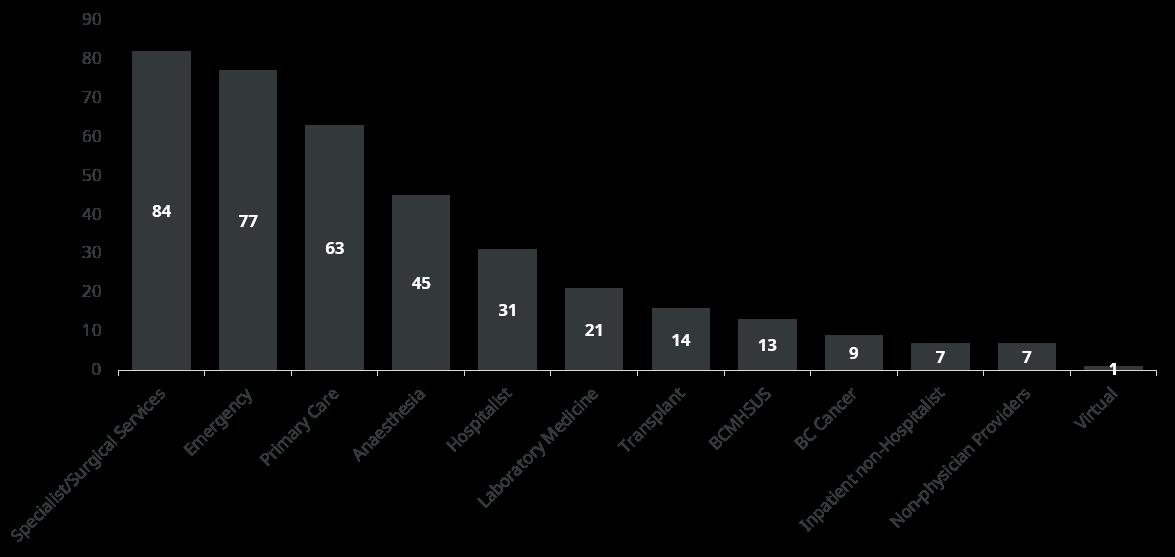
77
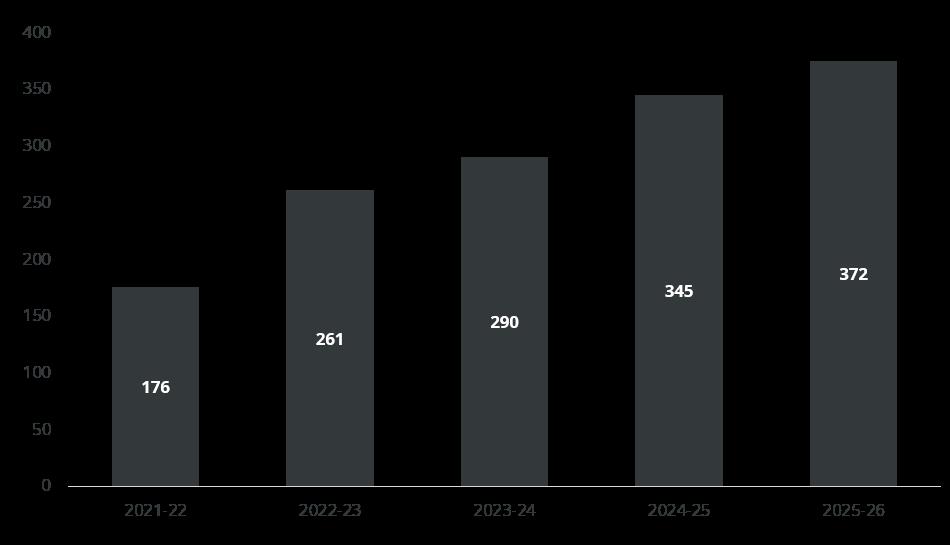
372 Contracts April 1, 2025 - March 31, 2026
Local Alternative Payments Subsidiary Agreement (APSA) and Anesthesia
309 Priority Specialty Areas
Contract negotiations
Continued negotiations with Emergency
Increased involvement with Specialist Surgical Services, BCMHSUS & Transplant
Increased priority area contracts by 5% compared to FY 24/25
77 BY THE NUMBERS
63 Primary Care
Spending on physicians for FY 24/25 $7.57bn +
Spending on APSA Contracts & Anesthesia provincial template for FY 24/25 (excluding APP sessional amount of $125m) $1.65bn
TOTAL CONTRACTS BY PRIORITY AREAS
TOTAL APSA AND LOCAL ANESTHESIA CONTRACT NEGOTIATIONS
h27
This year has been characterized not just by an increase in the number of contracts involved but also an increase in issues escalations. Over the last year the Medical Staff Services (MSS) team has been involved in discussions and/or negotiations involving new compensation options, stabilization measures, income guarantees, and stipend arrangements. These specific areas are all in addition to the specified Priority Areas of anesthesia,
emergency, hospitalist and laboratory medicine contracts and include General Internal Medicine/ Internal Medicine/Inpatient Services, Maternity Programs (OBGYNs and FP maternity providers), Intensive Care Units/Pediatric ICUs, Critical Care, Trauma, Long-term Care, Rural Stipends, Stroke/ General Neurology, Real-Time Virtual Services, Palliative Care, Assertive Community Treatment (Psychiatrists), Biocontainment (Intensivists).
HEALTH EMPLOYERS ASSOCIATION OF BRITISH
Statement of Operations and Accumulated Surplus
Year ended March 31, 2026, with comparative information for 2025
COLUMBIA
Expenses (note 14):
HEALTH EMPLOYERS ASSOCIATION OF BRITISH COLUMBIA
Statement of Financial Position
March 31, 2026, with comparative information for 2025
Contractual obligations and contingencies (note 11) Contractual rights (note 12) Accumulated surplus (note 8) $ 3,627,800 $ 3,627,800
See accompanying notes to financial statements.
Approved on behalf of the Board:
Note: The above is an excerpt from the Financial Statements which includes Notes to the Financial Statements, which form an integral part of the statement. Complete Audited Financial Statements are available at the office of HEABC.
Presenting the 2025 HEABC Awards
Recipients of the Healthcare Employee Relations Awards of British Columbia (the HEABCs) were announced at a gala presentation on October 14, 2025, at the Ismaili Centre. A total of nine awards were handed out to Health Authority and Affiliate award recipients, including five HEABC Awards and four Awards of Merit. The HEABCs recognize human resource and labour relations professionals who work with employers and health care professionals to create workplaces that support the delivery of high-quality health care.
LEADING WORKPLACE HEALTH AND SAFETY PRACTICES
HEABC AWARD
Violence Prevention Team (In collaboration with Forensic Psychiatric Hospital
Leadership Team): Provincial Health Services Authority
HEABC AFFILIATE AWARD
Education on Tap: Silverstone Care Centre
AWARD OF MERIT
Safe Patient Handling Musculoskeletal Injury Prevention Smartphone Application for Community Healthcare Workers: Island Health Authority
AFFILIATE AWARD OF MERIT
Health and Safety Initiatives Team: Phoenix Drug & Alcohol Recovery & Education Society
LEADING PRACTICES: DIVERSITY, EQUITY AND INCLUSION (DEI)
HEABC AWARD
Diversity, Equity and Inclusion (DEI) Team: Provincial Health Services Authority (JEDI)
AWARD OF MERIT
Pharmacy Learning About Indigenous Traditional (Plant) Medicines of Vancouver Island: Island Health Authority, Pentlatch First Nation
LEADING HUMAN RESOURCE AND/OR LABOUR RELATIONS PRACTICES
HEABC AWARD
HR Planning and Analytics Team: Northern Health Authority
HEABC AFFILIATE AWARD
Form2Flow: The Broadway Group
AWARD OF MERIT
Medical Imaging Transition to RightFax Virtual Fax Servers: Fraser Health Authority
Watch the 2025 HEABC Awards recipient videos: youtube.com/@ heabcawards
Board Chair
Lynn Stevenson
Affiliated Care Provider Representative
Aly Devji, CEO
Langley Care Society
Denominational Care Provider Representative
Erroll Hastings, Executive Director
Zion Park Manor
Fraser Health Representative
Dermot Kelly, President & CEO
Fraser Health Authority
Government Representative
John Davison, President & CEO
Public Sector Employers’ Council
Secretariat, Ministry of Finance
Government Representative
Tiffany Ma, Associate Deputy Minister
Ministry of Health
Interior Health Representative
Sylvia Weir, President & CEO
Interior Health Authority
Island Health Representative
Kathy MacNeil, President & CEO
Island Health Authority
Northern Health Representative
Ciro Panessa, President & CEO
Northern Health Authority
Proprietary Care Provider Representative
Kathy Nduwayo, Executive Director
Cerwydden Care Centre
Provincial Health Services Authority Representative