MARKETING NOW AND FUTURE FROM AN ASIAN PERSPECTIVE
Hermawan Kartajaya
Dao Cam Thuy
FOREWORD
For the past few decades, I have co authored fourteen marketing books with Hermawan Kartajaya since our first collaboration in 1998. Our works have traveled, translated, and have shaped marketing thought across the world. I have always admired his ideas, his initiatives, and his ability to sense where marketing is heading next.
Looking at to this book, I am pleased to see Hermawan continue to forge this collaborative journey alongside world changers in and around Asia. His work with Chinese and Korean scholars has expanded further, and his new chapter with Dr. Dao Cam Thuy of Vietnam National University marks his first major collaboration in ASEAN, and I’m embracing it with interest.
Back in the beginning of our collaboration, we already recognized how important is Southeast Asia market in shaping marketing world. By learning from ASEAN, which is full of unique cultures, we can create universal marketing principles that can be used and adapted anywhere.
Due to Vietnam’s incredible strength and fighting spirit, I think it is an ideal place to find and study best practices from marketing in Southeast Asia. With its rapid development, entrepreneurial spirit and business dynamism, it is a textbook case for marketers across the globe.
I invite you to read this book with curiosity. It captures the energy of one of the most progressive countries and offers valuable insights into how marketing will evolve in the years ahead.
Philip Kotler
AUTHOR’S NOTE
Thisbookisnotaboutpredictingthefutureofmarketing.ItisaboutdecodinghowSoutheastAsiaisalreadylivingit.SoutheastAsiashowsuswheretheattentiongoesandwhat rewardsitseeksinaworldwhereloyaltyhasbecomebelonging.Whenyoureadthisbook, youwillrealizethatthefutureisnotcoming.Itisalreadyhere.
Marketing3.0,4.0,5.0,6.0,andnow7.0arenotstagesthatreplaceeachother.Theyare layersthatevolveoneachother.Brandsindevelopedmarketsmaybuildtheselayersslowlyoneafteranother.ButinSoutheastAsiaitisadifferentgame.Here,allthelayersarrived atthesametime.Customersexpectallofthemnowandinthefuture.ThisiswhySoutheastAsiamatters.
Here, Generation Z is not future customers, they are the market right now.They drove themarketbyexpectingconnectivity,personalization,andanimmersiveexperienceallat once.Socialconnectionandimmersiveexperiencehappeninoneplace,justlikethelivestreamsand communities phenomenon. The otherreasonis Southeast Asia went digital whileitwasstillgrowingitseconomy.Businessesmustbuildcustomerreachandbetter systemsatthesametime.Dr.ĐàoCẩmThủyunderstandsallofthisfromtheinside.Sheis notlookingatAsiafromoutside.Sheislookingfromwithin.
ThisbookisaninvitationtoseeSoutheastAsiaastheplacewheremarketingisbeingbuilt rightnow.IfyouworkinAsia,thisisyourmap.IfyouworkoutsideAsia,thisiswhereyour futureisarrivingfirst.Askyourself:whichlayerismybrandweakin?WhichonedoIneedto buildfirst?Thebrandsthatwinarenottheonesthatpredictthefuture.Theyaretheones that understand what their customers are building right now and they build with them. Lookatyourowncustomers.Thendecidewheretobuild.
HermawanKartajaya-Founder&Chair,MCorp
AUTHOR’S NOTE
Asia today stands as one of the most dynamic regions in the world, driven by rapid economic growth, digital adoption, and cultural diversity. It is not only a major market but also a source of innovation shaping the future of marketing. Across the region, businesses are moving from traditional approaches toward more connected, technology-driven, and experience-oriented practices.
Over time, marketing has evolved from conventional models to digital ecosystems and now toward more immersive experiences. In Asia, this transformation is happening at an accelerated pace, with markets leapfrogging into mobile-first, platform-based, and community-driven environments. This creates a unique landscape filled with both challenges and opportunities.
This book, Marketing Now and Future: From An Asian Perspective, explores these changes by bringing together insights and representative examples from Vietnam, Southeast Asia, and across Asia. It aims to provide a clearer understanding of how marketing is practiced in the region while highlighting its distinct characteristics and strong growth potential.
Writing from Vietnam, I have witnessed how a fast-growing market is reshaping marketing practices. Vietnam represents a new generation of Asian economies where digital adoption and community influence are transforming how businesses connect with customers. It is also a great honor and a source of pride for me to contribute to this book alongside Hermawan Kartajaya, whose work has long inspired the development of marketing in Asia.
Looking ahead, the future of marketing in Asia will depend not only on technology but also on the ability to balance innovation with human understanding. While data and automation enhance efficiency, empathy, cultural insight, and creativity remain essential.
I hope this book will serve as a valuable resource for those seeking to understand and navigate the evolving marketing landscape in Asia.
Dao Cam Thuy - VNU University of Economics and Business, Vietnam National University
PUBLICATION INFO
MarketingNowandFuture
FromanAsianPerspective
PublicationDate:
Authors:
ResearchContributors:
Design:
Publisher:
Address: May,2026
HermawanKartajaya,DaoCamThuy DoHoangNhatMai,NguyenDinhQuy VuMaiLinh
MarketeersInternasional EightyEight@Kasablanka,8thFloorRayaKav., Jl.RayaCasablancaNo.88,RT.14/RW.5, MentengDalam,Jakarta,SouthJakartaCity,Jakarta 12870
© Hermawan Kartajaya, Dao Cam Thuy 2026
All rights reserved.
No part of this publication may be reproduced or transmitted in any form without prior written permission from the authors.
CHAPTER
CHAPTER
CHAPTER
CHAPTER
CHAPTER 0
MARKETING NOW AND FUTURE
THE BOOK’S POSITION IN THE EVOLUTION OF MARKETING 4.0–6.0
Marketing in a New Multi-Layered Structure
Over the past decade, global marketing has undergone three structural shifts. Each shift has not merely added new tools but has redefined the role of marketing within organizations.
Marketing 4.0 marked the rise of the connected customer. Power shifted from brands to communities. Purchasing decisions were no longer formed in isolation but became heavily influenced by social networks, peer reviews, and digital interactions. Marketing evolved from broadcasting one-way messages to participating in conversations and building trust within community ecosystems. The customer journey was reframed through the 5A model, in which “Ask” and “Advocate” became critical nodes of long-term value creation.
Marketing 5.0 ushered in the era of technology and artificial intelligence. Big data, automation, and predictive analytics enabled companies to personalize at scale. Marketing no longer simply reacted to customer behavior; it began to anticipate and orchestrate the customer journey in real time. The role of marketing expanded from campaign management to system management, where data and algorithms became the foundation of strategic decision-making.
Marketing 6.0 further extends the competitive arena into immersive experiences and phygital spaces. As the boundaries between the physical and digital worlds blur, marketing is no longer confined to isolated touchpoints. Experience becomes an interactive
environment, one that customers can enter, participate in, and co-create. Metamarketing opens new possibilities for brands to connect not only with purchasing behavior but with customers’ identities and living spaces.
Importantly, these shifts do not replace one another. Marketing 5.0 does not eliminate 4.0, and 6.0 does not negate 5.0. Instead, they layer upon one another, expanding both the scope and depth of marketing:
• From communication → to connection
• From connection → to prediction
• From prediction → to immersive experience
Marketing today is therefore no longer a linear sequence of activities but a multi-layered structure in which social connectivity, intelligent technology, and spatial experience coexist.
However, in many emerging markets particularly in Southeast Asia these stages do not unfold sequentially as theory might suggest. They emerge simultaneously and overlap. Companies may still be building their 4.0 connectivity foundations while young customers already behave like 6.0 consumers. Elements of 5.0 technology are applied partially, yet 6.0 immersive experiences have already begun shaping expectations. As a result, the market exists in a complex transitional state: not entirely 4.0, not fully 6.0, but an intersection of all three.
Marketing Now and Future is written within this very transitional phase. The book does not merely describe the evolution of marketing; it seeks to explain how these evolutionary layers overlap and reshape consumer behavior particularly among Generation Z, a generation growing up in an environment where connectivity, artificial intelligence, and immersive experiences coexist as defaults.
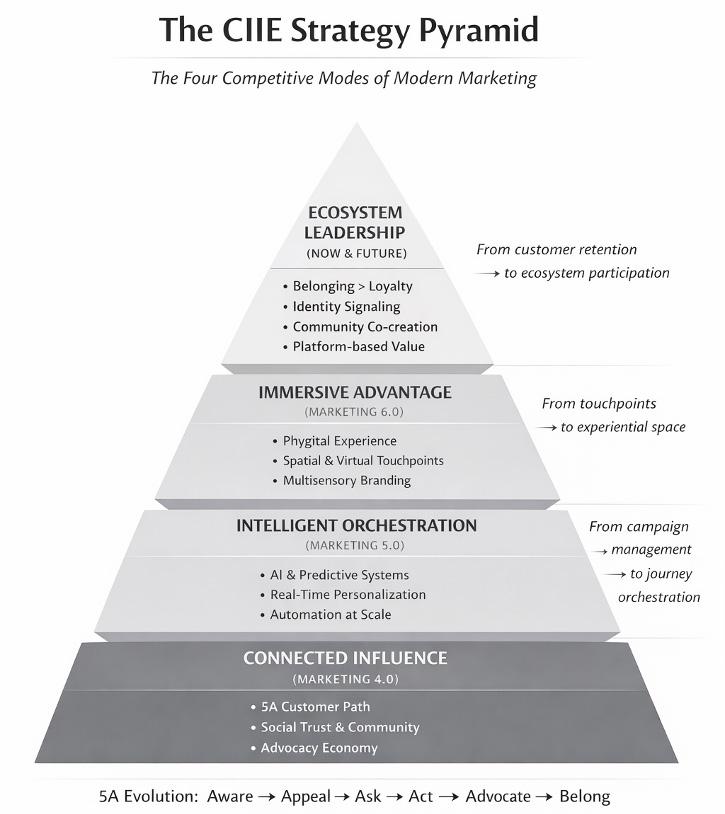
To fully understand this layered structure, we need an architectural rather than a linear perspective. From this architectural viewpoint, marketing evolution should be seen as a strategic pyramid, where each layer expands both the scope of value control and the depth of customer engagement. This model does not replace previous frameworks; rather, it restructures them into an integrated competitive architecture.
This pyramid demonstrates that marketing does not evolve in a linear progression, but rather through a layered structure. The foundational layer is connectivity and community influence. Above it lies the intelligence layer, where technology orchestrates the customer journey. Higher still is the immersive experience layer. And at the apex, a new layer is emerging: ecosystem and belonging.
Source: Adapted from Marketing 4.0–6.0, extended by the author
At this highest level, competitive advantage no longer derives from campaign optimization or the design of isolated experiences, but from the ability to build an ecosystem that customers genuinely want to participate in. Loyalty is gradually being replaced by belonging. Value no longer resides solely in the product itself, but in access, identity, and the community that the brand enables.
It is within the overlap of these three evolutionary stages and the rise of this fourth layer that marketing is entering a new structural paradigm. This is no longer merely a story of communication or technology; it is a story of ecosystem architecture.
And this is precisely why today’s markets, particularly in Southeast Asia, operate simultaneously in states of 4.0, 5.0, and 6.0. Marketing Now and Future is written to explain this layered structure and to answer a critical question: At which level must a company position itself not merely to survive, but to lead?
Figure 0.1 – The CIIE Strategy Pyramid
Strategic Foundation
The CIIE Strategy Pyramid model, which synthesizes the theoretical frameworks of Marketing 4.0–6.0, has been established as a multi-layered competitive architecture designed specifically for markets in transition.
Rather than introducing a new “version” of marketing, this model restructures the existing evolutionary shifts into strategic capabilities that operate simultaneously. By doing so, it enables leaders to assess which capability layers have already been developed, which remain incomplete or underdeveloped, and which must be strengthened to achieve ecosystem-level competitive advantage.
The Gap Between Theory and ASEAN Practice
Although Marketing 4.0–6.0 has established a clear global theoretical framework, in Southeast Asia this evolution has not unfolded sequentially as described in textbooks. Instead of progressing linearly from 4.0 to 5.0 and then to 6.0, the region operates in a layered state where stages coexist and interact simultaneously.
Three structural characteristics of ASEAN create this distinctive pattern:
First, the region has one of the youngest demographic profiles in the world. Generation Z represents a significant share of the total population and is rapidly entering the workforce, consumer markets, and content creation economy. This generation has grown up in a mobile-first, social-first, and increasingly AI-assisted environment. Their expectations extend beyond connectivity or personalization; they assume experiences must be seamless, instantaneous, and immersive by default.
Second, Southeast Asia is among the fastest-growing social commerce markets globally. The shopping journey often does not begin with a brand website but with livestreams, creators, communities, and social platforms. Content, interaction, and transaction converge into a single integrated space. As a result, the logic of 4.0 (community connectivity) and 6.0 (immersive fusion) unfolds simultaneously within the same environment.
Third, digital transformation in ASEAN has not occurred after economies reached high levels of development; it has unfolded alongside economic growth. Companies are expanding market scale while simultaneously building technological infrastructure. Many organizations are still strengthening their 4.0 foundations establishing digital presence and community connections while consumers already behave like 6.0 customers, demanding phygital experiences, contextual personalization, and multilayered interaction.
The combination of these three factors produces a distinctive phenomenon:
• Customers are already behaving as 6.0 consumers. They expect contextual personalization, phygital integration, multidimensional interaction, and strong community participation.
• While many companies remain at 4.0–5.0. They are refining channel integration, optimizing data systems, and building automation capabilities necessary foundations, but not sufficient for ecosystem-level competition.
This gap is not merely technological. It is a gap in strategic mindset. When customers have become accustomed to speed, seamlessness, and high community engagement, yet companies continue to operate with fragmented channel logic and short-term campaign thinking, misalignment becomes evident.
The strategic challenge, therefore, is not about “implementing 6.0,” but about designing marketing within an environment where evolutionary stages overlap. Companies cannot bypass 4.0 and leap directly to 6.0. Yet they also cannot afford to wait until 4.0 is fully perfected before advancing to 5.0 and 6.0.
The question is no longer: Are we in Marketing 4.0 or 6.0?
The real question is: Which capability layer are we missing in this multi-layered structure?
It is precisely this gap between global theory and ASEAN practice that creates the need for a new strategic framework, one that does not treat stages as linear phases, but as parallel capability layers to be built simultaneously.
And this is the foundation for understanding the role of Marketing Now and Future: to help businesses close this evolutionary gap.
Where Does Marketing Now and Future Stand?
Marketing Now and Future is positioned not as a continuation of marketing’s evolutionary stages, but as a strategic framework designed to help businesses operate in an environment where multiple capability layers coexist and interact simultaneously. The book does not seek to redefine marketing; rather, it focuses on redesigning marketing within a market structure that is itself being reconfigured.
The core emphasis of the book is not on technology or isolated communication channels, but on the transformation of consumer behavior and expectations particularly among younger generations. When a new generation establishes new norms of trust, experience, and value, marketing cannot merely adjust tactics. It must adjust its structure.
Therefore, instead of following a “version logic,” the book is constructed around the logic of market transition. Each chapter does more than analyze a trend; it situates that trend within the broader customer journey, platform ecosystem, and long-term value shifts.
The structure of the book revolves around three strategic pillars.
First is Generation Shift - the generational transition reshaping how products are discovered, how trust is built, and how brands are evaluated. This is not merely a demographic story, but a transformation in the market’s value system.
Second is Journey Ecosystem - the evolution of the customer journey from a sequence of steps into a continuous interaction environment. Within this environment, communities, platforms, content, and algorithms all participate in shaping decisions. Marketing, therefore, must be designed as a system of orchestration rather than a series of campaigns.
Third is the Experience & Identity Economy where brand value no longer resides solely in product functionality, but in the ability to create connection and reflect identity. As experience and identity become integral components of value, marketing shifts from transaction to relationship, from purchase to participation.
The book thus does not separate “now” and “future” into two independent phases. “Now” reflects movements already visible in the market: the rise of social commerce, the power of community influence, and the emergence of multi-space customer journeys. “Future” reflects capabilities and behaviors that are becoming normalized: consumers accustomed to AI assistance, the coexistence of digital and physical identities, and brand relationships grounded in belonging.
The essence of Marketing Now and Future lies in this intersection. The future does not emerge after the present; it is already being tested within today’s consumer behavior. Understanding this intersection is essential for businesses not merely to adapt, but to proactively shape the market.
Marketing Now and Future does not provide answers for a new marketing “version.” It provides a map for navigating a market structure that is actively being redefined.
CHAPTER 1
GENERATION Z & NEW CONSUMPTION TRENDS HOW YOUTH IS RESHAPING THE MARKET
Throughout the history of modern marketing, every major wave of market expansion has been closely linked to the rise of a new consumer generation. Baby Boomers fueled the era of mass consumption; Generation X witnessed the globalization of brands; Millennials shaped the transition from traditional marketing to digital-first strategies. Entering the 2020s, the global market is facing a similar inflection point this time driven by Generation Z.
Gen Z is not entering the market merely with new preferences, but with a fundamentally different perspective on the relationship between individuals, communities, and brands. In a world where the boundaries between consumption, communication, and creation are increasingly blurred, young consumers are simultaneously content consumers, content creators, and at times sellers themselves. As a result, consumption is no longer the endpoint of marketing; it has become part of a continuous, always-on flow of interaction.
Unlike previous generations that were accustomed to brands leading the narrative, Gen Z has grown up in an environment where communities and digital platforms determine what gains attention and what fades into obscurity. Trust is no longer built primarily through official brand messaging, but through shared experiences, peer recommendations, and the consistency between what brands say and what they actually do in real life. Market power, therefore, is shifting from brands to communities, from control to participation.
Generation Z – The First Truly Digital-Native Generation
Who Is Gen Z?
Generation Z (Gen Z) is commonly defined as the cohort born between 1997 and 2012, succeeding Millennials and preceding Generation Alpha. This is the first generation to grow up with broadband internet, smartphones, and social media as default conditions, in a world where technology is no longer a supporting tool but the foundational infrastructure of social life. Unlike previous generations that had to adapt to technology, Gen Z lives within technology shaping a new set of expectations, values, and consumption behaviors from the outset.
By 2025, Gen Z is projected to be the largest generational cohort globally, with an estimated population ranging from 1.9 to 2.0 billion people, accounting for approximately 23–25% of the world’s population. This scale carries significant strategic implications for marketing and the global economy. Gen Z is not only the consumer of the future; it is already becoming a central force in the workforce, the creator economy, and the cultural shaping of consumption. Major demographic and market research institutions including the United Nations, World Bank, McKinsey, and Nielsen widely agree that from the second half of the 2020s onward, the center of global consumption growth will shift decisively toward younger generations, particularly Gen Z and Generation Alpha.
In Southeast Asia, the strategic importance of Gen Z is even more pronounced. The region has one of the youngest demographic profiles in the world, with Gen Z accounting for approximately 25% of the total population. As Southeast Asia ranks among the fastestgrowing markets for internet usage and e-commerce, Gen Z has emerged as the driving force behind digital consumption, social commerce, and the creator economy. This generation has played a pivotal role in accelerating new consumption models such as livestream shopping, community-driven purchasing, and hybrid online–offline experiences.
Table
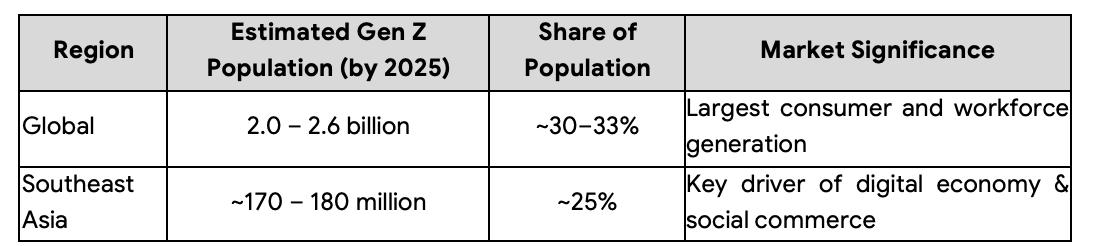
Source: Compiled from UN Population Division and World Bank data
Gen Z Shaped by Multiple Waves of Societal Disruption
Gen Z has been shaped by a historical period in which technological, economic, and social disruptions have unfolded simultaneously and at unprecedented intensity. This generation grew up alongside the widespread adoption of broadband internet, personal
1.1 – Size of Gen Z by Region and Global Overview
smartphones, and global social media platforms. Early and continuous exposure to digital technology has made online connectivity the default state of Gen Z’s daily life, spanning education, entertainment, and consumption. Beyond technology, Gen Z is also the first generation to actively witness and participate in global social debates at scale from climate change and income inequality to mental health. The constant circulation of these issues in digital spaces has heightened Gen Z’s sensitivity to the social consequences of consumption, a perspective that strongly shapes how they evaluate brands. Research by First Insights shows that approximately 75% of Gen Z globally expect companies to demonstrate clear social responsibility, and are willing to adjust or change their purchasing behavior if brands act against their core values. In this context, factors such as sustainability and social responsibility increasingly outweigh brand name or legacy reputation in Gen Z’s purchase decisions, signaling a fundamental shift from image-driven consumption to value-driven consumption.
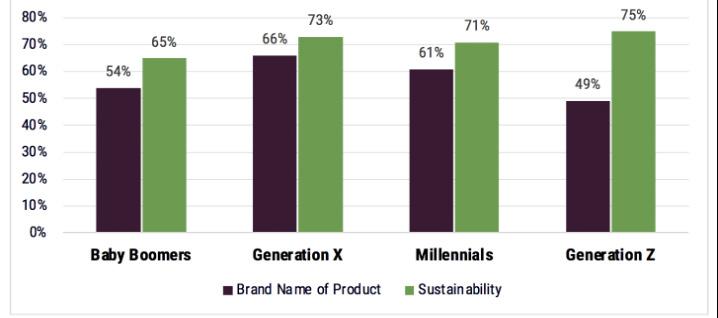
Figure 1.1. Comparing the Role of Brand Reputation and Sustainability in Purchase Decisions Across Generations
Source: First Insight
Looking ahead, Gen Z is rapidly transitioning from a youth consumer segment to a central force within the global market. Demographic projections suggest that within the next decade, Gen Z will account for approximately 30% of the global workforce, while exerting growing influence over household purchasing decisions particularly in sectors such as technology, education, entertainment, and fast-moving consumer goods. More importantly, Gen Z is not simply participating in existing market structures; it is actively reshaping how markets operate, from the way brands communicate and products are designed to how experiences are delivered and distributed.
Key Characteristics of Generation Z
Digital-First, but Not Digital-Only
• Technology represents a default state of living for Gen Z, shaping high expectations around speed, seamlessness, and convenience across all experiences.
• Rather than seeking purely digital interactions, Gen Z favors hybrid models that combine technological efficiency with emotional depth and human connection.
A Strong Emphasis on Authenticity
• Gen Z demonstrates a heightened ability to detect overproduced content, excessive advertising, and inconsistent messaging.
• Trust is built primarily through real experiences and community narratives, rather than one-way brand communication.
Value-Driven Consumption
• Consumption decisions are closely tied to personal values, including social responsibility, environmental impact, and mental well-being.
• Brands are chosen as value-aligned partners, not merely as product or service providers.
Community Over Brand
• Gen Z tends to form stronger attachments to communities based on shared interests, lifestyles, and values than to brands themselves.
• Consumer perceptions and behaviors are largely shaped through peer interaction and influence from people they identify with.
A Non-Linear Consumer Journey
• The consumer journey is fluid and interconnected, where purchase is only one element within an ongoing cycle of interaction.
• Overall experience and level of participation matter more than isolated touchpoints or short-term conversions.
Gen Z as Early Adopters
From the moment they entered the consumer market, Gen Z has clearly demonstrated the role of early adopters’ users who are willing to explore, experiment with, and diffuse new technologies, platforms, and consumption models. Unlike previous generations that often-approached technology with caution and delay, Gen Z tends to adopt early, tolerate higher levels of uncertainty, and learn through trial and error.
Throughout the evolution of the digital market, many technological products and services have achieved mass adoption thanks to early engagement from younger users. From personal music devices such as the Apple iPod, to on-demand content models pioneered by Netflix, and next-generation social platforms like Snapchat and TikTok, Gen Z has consistently been the pioneering user group shaping how products are integrated into everyday life. What begins as experimental behavior among Gen Z often evolves into new consumption norms as these practices spread to broader audiences.
The early adopter role of Gen Z is most visible in digital content and entertainment, where they do not merely consume new technologies but actively redefine consumption patterns. Data indicates that social media has become the dominant content channel for Gen Z, far surpassing traditional linear formats such as cinema and television. Gen Z has been a key driver behind the growth of music streaming, replacing physical ownership and downloads with subscription-based access. Similarly, they are central to the explosion of short-form video, characterized by rapid, continuous, and entertainment-led consumption. In gaming, Gen Z has helped transform online games, mobile games, and e-sports from niche activities into large-scale industries with deep cultural influence.
A representative example of Gen Z’s early adopter role in digital entertainment is Spotify. During its early expansion, Spotify rapidly attracted young users through its subscription-based streaming model, strong personalization capabilities, and mobile-first experience. Unlike previous generations accustomed to owning physical music or downloaded files, Gen Z quickly embraced access over ownership, while actively discovering, sharing, and amplifying music through personal playlists and socially driven platform features. These early experimental behaviors soon became mainstream standards, accelerating the global adoption of streaming and forcing the traditional music industry to fundamentally restructure its distribution and audience engagement models.
Through continuous experimentation and experience-sharing, Gen Z is not a passive consumer group but acts as a catalyst for technology diffusion. Products and services initially perceived as novel or experimental gradually become familiar and widely accepted as Gen Z’s usage patterns spread to older generations. This diffusion process enables many digital business models to transition rapidly from trial phases to mass-market adoption.
From a market perspective, Gen Z’s role as early adopters positions them as a leading indicator of future consumption trends. Observing how Gen Z engages with and integrates new technologies allows businesses to anticipate shifts in product design, service models, and consumer behavior. As such, Gen Z is not only the first group to adopt innovation, but also the pathfinder that determines which products and experiences will ultimately become new market standards.
Gen Z as Trendsetters
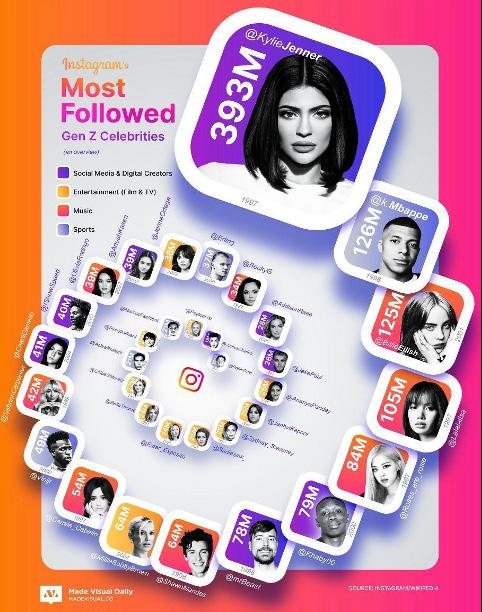
Generation Z is increasingly asserting itself not merely as a group that adopts trends, but as a primary force that initiates and amplifies contemporary consumer culture trends. This shift is most visible in the rise of highly influential figures across social platforms from artists and athletes to content creators many of whom either belong to Gen Z or are strongly endorsed by Gen Z communities.
Within a digital environment characterized by constant connectivity and continuous content creation, Gen Z individuals do not simply participate in cultural flows; they actively shape aesthetic norms, language, lifestyles, and consumption behaviors. Trends no longer emerge from top-down cultural institutions, but are formed, tested, and accelerated through everyday practices within youth-driven digital communities.
The rapid diffusion of Gen Z–led trends illustrates a broader reallocation of cultural power, moving away from traditional gatekeepers toward networked youth communities. As a result, Gen Z has become the central engine of trend formation and dissemination throughout the 2020s, fundamentally redefining how cultural relevance and consumer influence are created in the contemporary market.
Source: First Insight
In fashion, Gen Z is redefining how trends emerge and gain acceptance. Rather than passively adopting brand-driven styles, they actively create fashion expressions rooted in personal identity and values. According to Gen Z Fashion Trends 2025, more than 60% of Gen Z consumers consider second-hand options before purchasing new clothing, with wardrobes often including a significant share of preowned or recycled items. This reflects not only a preference for sustainability but also a form of differentiated self-expression. Research further suggests that second-hand consumption among Gen Z functions as a marker of identity, with engagement levels higher than in previous generations. As a result, traditional fashion brands are increasingly compelled to rethink design, production, and communication strategies to align with a more community-driven model of trend formation.
Figure 1.2. Most-Followed Gen Z Celebrities on Instagram
In the music and entertainment sector, Gen Z’s role as a trendsetter is clearly reflected in how content is consumed and shared. Global streaming data shows that over 65% of users regularly discover new music through social media rather than traditional channels such as radio or television. In particular, short audio clips used in short-form video formats have become a primary driver of chart success, enabling many songs to rise rapidly on international rankings. Numerous tracks have accumulated hundreds of millions of streams after being adopted as background sounds for viral trends within youth communities.
Gen Z’s influence extends beyond entertainment into digital language and lifestyle. Memes and slang are increasingly used by Gen Z as a form of social language, not only for entertainment, but also as tools for expressing opinions, emotions, and perspectives on everyday issues across social platforms. Research on digital culture indicates that Gen Z employs memes and slang as distinctive communication mechanisms that contribute to identity formation and a sense of belonging within digital communities. Notably, certain slang terms, such as “rizz,” have transcended their original subcultural contexts and been recognized in mainstream linguistic sources, demonstrating the capacity of Gen Z–driven expressions to diffuse widely across generations and cultural boundaries.
A key factor that enables Gen Z to shape trends lies in how they use social media as a cultural distribution infrastructure, particularly on short-form video platforms such as TikTok. For Gen Z, social media is not merely a space for content consumption, but an environment for product discovery, information tracking, interaction, and direct participation in emerging trends. Through engagement-driven content distribution mechanisms, Gen Z’s creative and experimental behaviors can be rapidly amplified, transforming community-based trends into mainstream phenomena that transcend geographic and cultural boundaries within a short period of time. This combination of speed and scale grants Gen Z a distinctive role in determining which consumption patterns and cultural expressions ultimately become defining trends in the contemporary market
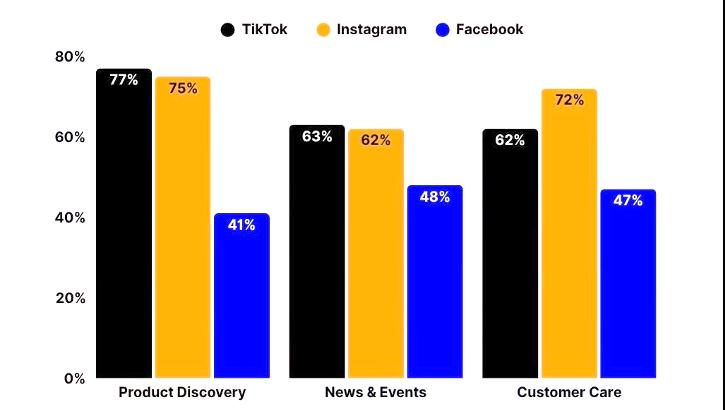
Figure 1.3. The Role of Social Media in Trend Diffusion among Gen Z
Source: SQ Magazine
From a market perspective, Gen Z’s role as trendsetters reflects a fundamental shift in the locus of trend-setting power. Trends are no longer dictated by a small group of designers, artists, or large brands; instead, they are formed, tested, and amplified through the collective behaviors of young consumer communities. In this environment, the ability to observe and deeply understand Gen Z becomes a critical prerequisite for businesses seeking to anticipate market movements and maintain relevance amid rapidly evolving consumer culture.
Gen Z as Game Changers (Agents of Social Change)
Beyond shaping consumption trends and popular culture, Gen Z has emerged as a powerful driver of broader social change, directly influencing how businesses and brands define their roles within society. Formed in an era where global issues are continuously exposed and debated across digital spaces, Gen Z has developed a heightened sensitivity to questions of social justice, sustainability, and overall quality of life.
One of Gen Z’s most prominent concerns is social equity, particularly around diversity, inclusion, and equality. International surveys indicate that over 70% of Gen Z expect companies to demonstrate clear commitments to diversity and inclusivity not only in marketing communications, but also in internal policies, product design, and supply chain practices. For Gen Z, corporate silence or ambiguous positioning on social issues is increasingly perceived as a deliberate choice, and can therefore become a significant barrier to trust-building.
Alongside social equity, environmental sustainability represents a long-term, foundational concern for Gen Z. According to the Deloitte Gen Z and Millennial Survey, 64% of Gen Z consumers are willing to pay a premium for environmentally friendly products and services, while 25% report having reduced or ended relationships with companies due to unsustainable practices within their supply chains. This behavior signals a clear shift from transactional consumption toward conscious consumption, where purchasing decisions are closely aligned with personal values rather than purely functional or economic considerations.
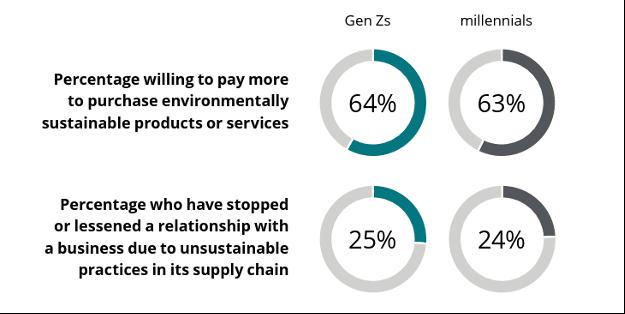
Figure 1.4. Gen Z and the Shift from Environmental Concern to Consumption Action
Source: Deloitte
Concerns about social justice, environmental sustainability, and quality of life have led to a significant consequence in Gen Z’s consumption behavior: the strong rise of brand activism. For this generation, brands are no longer evaluated solely on product quality or communication imagery, but increasingly on the clarity and consistency of the social stances that firms demonstrate. In a social media environment that enables almost instantaneous feedback and collective action, corporate decisions and campaigns can rapidly become the focus of public debate. As a result, brand activism is no longer a tactical option, but has become a foundational element in building trust and sustaining brand relevance among Gen Z consumers.
However, Gen Z also demonstrates a high level of vigilance toward forms of “performative social activism.” They do not merely evaluate communication messages, but actively compare a brand’s stated commitments with its actual practices. Brands perceived as consistent and authentic in their social commitments are more likely to build durable relationships with Gen Z, whereas those viewed as exploiting social issues for promotional purposes risk losing credibility rapidly.
From a market perspective, Gen Z’s role as a game changer reveals an increasingly blurred boundary between consumption and social citizenship. Gen Z does not separate purchasing behavior from personal values and worldviews, and this very connection is compelling firms to redefine the notion of value itself. In an environment where young consumers perceive brands as social actors, engaging in dialogue and acting responsibly is no longer a tactical choice, but a necessary condition for maintaining long-term relevance and trust. The transformation driven by Gen Z goes beyond society itself, forcing brands to redefine their role within the consumer ecosystem.
Youth Empowerment – The Collective Power of Young People
One of the most distinctive characteristics of Gen Z is their aspiration to be empowered and to create positive social impact through collective action. Contrary to the traditional view that young people are primarily passive recipients of guidance, Gen Z increasingly perceives itself as an active agent of change, willing to participate in, organize, and amplify social initiatives at both local and global levels.
At the international level, numerous youth-led movements and organizations have clearly demonstrated the power of youth empowerment in generating social impact. Initiatives such as Global Citizen, RockCorps, and WE.org have mobilized millions of young people to engage in volunteering, policy advocacy, and community fundraising through hybrid models that integrate social action, music, media, and digital technologies. According to the Global Citizen in Numbers 2023 report, the Global Citizen movement has mobilized over USD 43 billion in commitments toward global development goals, with participants predominantly under the age of 30. These models illustrate that social engagement is no longer framed as an obligation, but is being redefined as a meaningful, accessible, and highly scalable experience for younger generations.
In Asia, youth empowerment has also developed strongly through forms that are closely embedded in local contexts. In Indonesia, the Indonesia Mengajar initiative has attracted thousands of young volunteers to teach in under-resourced areas, thereby contributing to the reduction of educational disparities and generating sustainable social impact. Meanwhile, platforms such as YouthSpeak provide spaces for young people across Asia to discuss, propose solutions, and directly engage with global issues such as education, employment, and sustainable development. These initiatives illustrate that young people do not merely absorb global values, but actively translate them into actions aligned with local needs.
The deeper driving force behind youth empowerment movements lies in Gen Z’s increasingly pronounced aspiration to “live a meaningful life.” Numerous international surveys indicate that Gen Z demonstrates a high level of participation in community and social activities, with approximately 66% reporting having engaged in volunteer work a rate higher than that of many previous generations. Studies on young generations by Deloitte and YouGov further suggest that Gen Z increasingly considers social impact and community value as critical factors when choosing educational environments, workplaces, or brands with which to engage. In this context, success for Gen Z is no longer measured solely by income or status, but is closely associated with the degree of positive contribution to the broader community and society.
The rise of youth empowerment simultaneously reshapes how organizations and brands interact with young people. Gen Z does not wish to remain a passive target of communication, but expects to participate, co-create, and collaborate in social initiatives with substantive meaning. More broadly, the collective power of Gen Z reflects a significant shift: young people are no longer positioned at the margins of global issues, but are increasingly becoming a central force driving change. As such, youth empowerment is not merely a social movement, but an expression of a generation that believes meaning in life is created through participation, connection, and sustained contribution to the community. When the collective voice of youth can shape or destroy a brands reputation within hours, the customer journey is no longer an individual path but a community journey.
Future Lens – How Will Gen Z Shape the Future of Consumption?
If the earlier sections of the chapter demonstrate how Gen Z has been reshaping the way markets operate today, the Future Lens allows us to look further ahead: how will these shifts redefine future consumption as Gen Z becomes the central economic, cultural, and technological force? Through this lens, Gen Z is not simply growing up; it is evolving into a new consumer archetype Gen Z+ with a mindset, toolset, and set of expectations fundamentally different from those of previous generations.
From Gen Z to Gen Z+ (The Future Consumer)
Gen Z+ is a generation that matures in an environment where technology is no longer an invisible infrastructure, but an active decision-making partner in everyday life. If Gen Z is considered a digital-native generation, Gen Z+ can be described as AI-native accustomed to interacting with, delegating to, and collaborating with artificial intelligence.
In the lives of Gen Z+, the following elements become default assumptions:
• AI assistants no longer merely support information search, but actively participate in recommending, filtering, and optimizing consumption choices, ranging from shopping and education to personal financial management.
• Virtual identity is no longer a peripheral extension, but a parallel layer of identity through which individuals express different facets of themselves across communities, platforms, and digital spaces.
• The metaverse and spatial experiences expand the concept of “consumption experience” beyond physical boundaries, integrating entertainment, social interaction, and commerce within a single environment.
More importantly, Gen Z+ no longer consumes using money alone. Within the digital economy, they also exchange and “pay” through:
• Personal data, enabling personalized experiences.
• Time, through continuous presence and interaction.
• Attention, an increasingly scarce and valuable resource.
Consumption therefore becomes a multidimensional exchange relationship in which consumers are not only customers, but also data sources and co creators of value. When the structure of exchange changes, the customer journey can no longer retain its old form.
The Future of Gen Z Consumption
As Gen Z+ moves more deeply into the marketplace, purchasing behavior will become increasingly non-linear, automated, and de-physicalized. Traditional notions of “going shopping” will gradually be replaced by new models:
• Shopping via AI agents, where algorithms act on behalf of users to search, compare, evaluate, and execute transactions.
• Avatars and virtual spaces, where individuals engage in brand experiences, events, and communities without physical presence.
• Virtual stores, where brands no longer merely display products, but design interactive experiences, tell stories, and create emotional connections.
At the same time, the very nature of brands is also transforming. In the future, brands will be defined less by the products they sell and more by the intangible values they provide:
• Access – entry into ecosystems, experiences, knowledge, or services.
• Identity – tools that enable consumers to express personal values and self-concepts.
• Belonging – a sense of membership within a community sharing common beliefs, lifestyles, and goals.
A brand therefore is not merely purchased, but participated in. And as consumption shifts from transaction to participation, the customer journey moves from a conversion funnel to an interactive ecosystem.
Redesigning the Customer Journey in the Gen Z+ Era
If Marketing 4.0 emphasized the shift of power toward connected customers, and Marketing 5.0 focused on leveraging technology to personalize experiences at scale, then Gen Z+ represents the transition toward a marketing environment where digital identity, community, and AI simultaneously participate in the decision-making process.
In this context, the customer journey is no longer a linear sequence of touchpoints, but a multidimensional interaction network operating as an ecosystem loop. The differences in mindset and behavior of Gen Z+ directly reshape each stage of the 5A model:
• Aware is no longer primarily triggered by advertising, but by algorithmic ecosystems, community driven content, and social signals.
• Appeal depends on the alignment between brand values and personal identity, rather than on persuasive messaging alone.
• Ask becomes a continuous state, in which individuals, communities, and AI collectively participate in evaluation.
• Act is no longer limited to purchase. It may be executed automatically or through digital representatives such as AI agents, and includes post purchase experience and participation.
• Advocate is no longer the final stage, but a default state in an always connected environment, where every experience can be instantly shared and amplified.
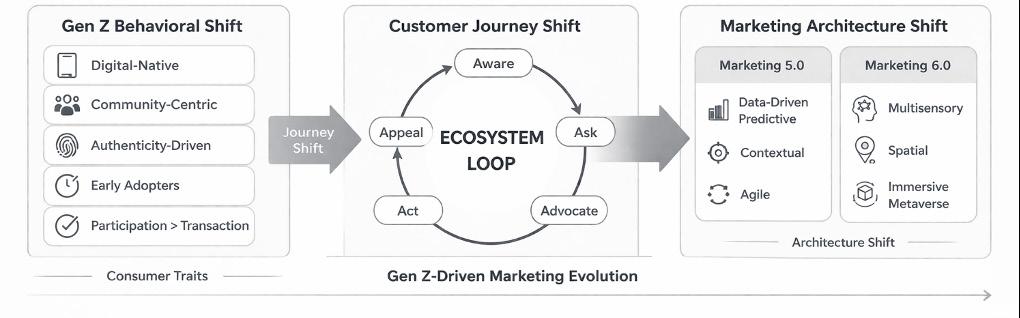
Figure 1.5. From Gen Z Behavioral Shift to Ecosystem-Based Marketing Architecture
These shifts demonstrate that Gen Z does not merely participate in the 5A model, but fundamentally transforms the focus and internal dynamics of each stage.
Gen Z is not simply a connected customer segment, but a generation living in a phygital environment where the boundaries between physical and digital realities are continuously blended. Understanding Gen Z, therefore, is not a matter of demographic segmentation, but the starting point for restructuring the entire customer journey in the era of ecosystem driven marketing.
In the Gen Z+ era, marketing is no longer about optimizing touchpoints, but about designing environments where data, community, and technology operate together as an integrated ecosystem.
The next chapter will examine in detail how the customer journey is being redefined within this context, and how businesses can design a Journey Ecosystem aligned with the expectations of the new consumer generation.
Case study: VIETNAM AIRLINES & GEN Z LOYALTY
Over the next decade, the Southeast Asian aviation industry is expected to experience a profound shift in demand structure, as Gen Z gradually emerges as a core passenger segment in both scale and influence.
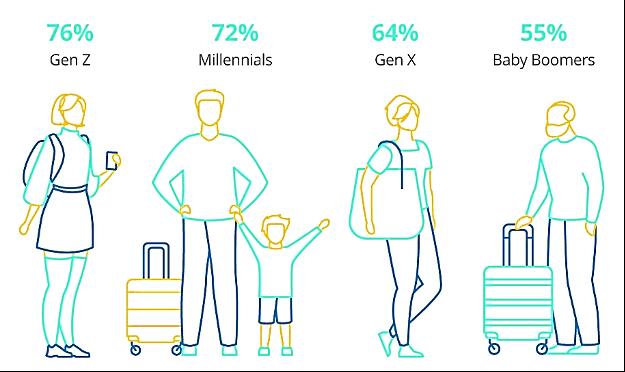
Figure 1.6. Gen Z’s “Travel Hunger” and the Generational Shift in Travel Demand
Source: McKinsey, 2024
According to a 2024 survey by McKinsey, Gen Z exhibits the highest level of “travel hunger” among all age cohorts, with 76% indicating that they are more interested in travel than before surpassing Millennials (72%), Gen X (64%), and Baby Boomers (55%). This gap reflects a clear generational shift in attitudes toward mobility, as travel for Gen Z is no longer merely a leisure activity but an essential component of lifestyle and self-exploration. Notably, this strong interest persists despite Gen Z’s relatively limited income and heightened exposure to economic uncertainty, suggesting that their travel motivation is driven less by purchasing power and more by the desire for experiences, worldview expansion, and the accumulation of personal memories.
This context compels Southeast Asian airlines both full-service and low-cost carriers to rethink the concept of “loyalty.” For Gen Z, loyalty is no longer built through high flight frequency or premium privileges, but through cumulative experiences, emotional resonance, and companionship across personal milestones. Several regional airlines have begun to adjust their strategies accordingly:
• AirAsia has strengthened the AirAsia Super App ecosystem, integrating flights, travel, and lifestyle services to maintain presence in young consumers’ daily lives, even when they do not fly frequently.
• Scoot focuses on cultivating a youthful brand image, flexible experiences, and approachable communication tailored to students, international students, and digital nomads.
• Singapore Airlines has invested heavily in digital experiences and personalization, while deploying early-stage engagement programs to build long-term relationships with younger consumers.
• Thai Airways emphasizes digital experiences and emotionally driven communication aimed at young travelers, focusing on exploration, experiential travel, and cultural identity rather than traditional service standards alone.
• Cebu Pacific develops “soft loyalty” through a simplified booking experience, context-sensitive pricing policies, and a youthful, entertainment-driven social media presence that aligns with Gen Z’s non-linear consumption behavior.
These adjustments indicate a broader industry trend: loyalty in aviation is shifting from a transactional mechanism to a relational one, particularly in response to younger passenger cohorts.
Gen Z travelers demonstrate relatively high mobility and a strong experience-oriented mindset, averaging approximately 29 travel days per year, while remaining strongly constrained by budget considerations a factor that directly shapes airline choice. Gen Z’s flying behavior is closely tied to personal milestones such as family visits, rest, and exploration, and is strongly influenced by digital environments and social media throughout decision-making and booking processes reflecting a non-linear, multi-touchpoint consumer journey.
In its long-term relationship-building strategy, Vietnam Airlines has long positioned its Lo
tusmiles frequent flyer program as a core platform. Established in 1999, Lotusmiles has grown into one of the largest airline loyalty programs in Vietnam, with approximately five million members as of 2023, enabling mileage accumulation and redemption not only through flights but also across a broad partner ecosystem. However, like many traditional airline loyalty programs, Lotusmiles was initially designed around frequent flyers with stable incomes, inadvertently creating distance from Gen Z—a cohort that begins traveling early but does not yet exhibit high flight frequency.
Recognizing shifts in demand structure, Vietnam Airlines expanded Lotusmiles through Lotusmiles Students, a strategic initiative aimed at engaging Gen Z from their student years. Rather than waiting for young consumers to become high-value customers, the airline proactively builds relationships at the stage when mobility habits first emerge. Lotusmiles Students is designed as a more accessible version of the loyalty program for students aged 18–26, offering price-oriented benefits that lower cost barriers an especially sensitive issue for Gen Z. Through this program, students can register as members, accumulate miles from their earliest journeys, and gradually familiarize themselves with Vietnam Airlines’ service ecosystem.

Source: VietnamAirlines
The distinctiveness of Lotusmiles Students lies not in short-term incentives, but in its accumulative and companionship-oriented logic. The program does not prioritize flight frequency or premium privileges, but instead recognizes the value of each experience no matter how small aligning closely with Gen Z’s consumption mindset, in which each trip is seen as part of a broader journey of personal growth. Communication surrounding Lotusmiles Students centers on everyday narratives such as first flights away from home, study-abroad journeys, or meaningful returns, rather than status-driven or standardized messages.
This approach resonates with Southeast Asian Gen Z’s emphasis on authenticity, as young consumers tend to trust real experiences and relatable stories more than overly polished promotional messaging.
From a strategic perspective, Lotusmiles Students illustrates how Vietnam Airlines is redefining loyalty within the aviation sector. Loyalty is no longer built through “fly more to earn more,” but through early presence in young consumers’ positive formative memories. Research on youth consumer behavior suggests that brands accompanying milestone experiences are more likely to generate durable long-term attachment. Accordingly, Vietnam Airlines does not expect Lotusmiles Students to deliver substantial short-term revenue,
Figure 1.7. Vietnam Airlines’ LotuStudents program policy
but views it as a long-term brand investment, laying the foundation for loyalty as Gen Z transitions into more stable income stages and higher travel frequency. The Lotusmiles Students case thus goes beyond a student discount program, reflecting a broader strategic mindset toward engaging the future generation of airline passengers
KEY INSIGHTS – WHAT BUSINESS MUST UNDERSTAND ABOUT GEN Z
• Gen Z redefines consumption from “purchase” to “experience and identity.” Consumption serves as a means of expressing values, emotions, and belonging, rather than a purely transactional act.
• Loyalty emerges from early companionship, not frequency or privileges. Loyalty is formed through positive formative memories and recognition, as illustrated by the Lotusmiles Students case.
• Gen Z’s consumer journey is non-linear, always-on, and multi-touchpoint. Firms must design holistic experiences rather than optimizing isolated conversion moments.
• Community and co-creation outweigh brand messaging. Gen Z trusts peers more than brands; the firm’s role is to enable participation and meaning diffusion.
• Technology and data function as a “relational layer,” not merely sales tools. AI, data, and digital platforms should support deep individual understanding and longterm trust building.
• Long-term value derives from ecosystems, not standalone products. Businesses must shift from selling products to building integrated ecosystems of experience, services, and communities centered on consumers.
CHAPTER 2 THE CUSTOMER JOURNEY THE SUCCESS PLAYBOOK ACROSS INDUSTRIES
For a long time, marketing was built on the assumption that businesses could control the customer journey. Brands created awareness, guided interest, triggered purchase, and nurtured loyalty through pre-designed touchpoints. The customer journey was therefore often described as a linear process, with a clear starting point and a defined endpoint.
That assumption, however, no longer holds in today’s market context. Customers no longer “follow” a journey mapped out by brands. They move fluidly across platforms and are heavily influenced by communities, content creators, and recommendation algorithms. Discovery, consideration, purchase, and sharing no longer occur in a fixed sequence; instead, they overlap, repeat, and can even happen in parallel. Many purchase decisions are formed before a brand has a chance to appear, and many brand relationships continue to evolve long after the transaction is completed.
In this environment, the customer journey is no longer a diagram that describes a sales process. It becomes a living experience space where customers interact with the brand, the community, and technology in their own way. This journey is phygital, always-on, context-driven, and not fully under the control of any single business. This shift has transformed the customer journey from an operational tool into a source of strategic competitive advantage.
Winning brands are not those at the most touchpoints, but those that engage at the right time, in the right role, with relevance—accompanying customers to sustain engagement and drive amplification.
How Has the Customer Journey Changed?
The Collapse of the Linear Journey
The customer journey is understood as the entire sequence of experiences an individual goes through when interacting with a brand from need recognition, information search, and decision-making, to product or service usage, post-purchase interactions, and the potential for long-term attachment.
Unlike the traditional approach that treats the journey as a linear process, the modern customer journey concept emphasizes the lived experience from the customer’s perspective including emotions, expectations, interruptions, and interactions beyond the firm’s direct control.
In today’s market, the customer journey is no longer made up of a handful of fixed touchpoints. Instead, it is a complex interaction network among customers, brands, communities, and technology platforms. Each customer may experience a different journey with different sequences, pace, and levels of engagement even when purchasing the same product or using the same service. This means businesses can no longer assume that customers will “follow” a predefined path.
Globally, the customer journey has become a decisive strategic lever for growth. According to Salesforce (2024), 87% of market-leading companies rank customer journey optimization as a top priority, as they see a direct link between seamless experiences and longterm business performance. Meanwhile, Google and Kantar report that 71% of customers use two or three or more channels before making a purchase decision, and nearly 60% of younger consumers (Gen Z and Millennials) say cross-channel seamlessness is a key factor influencing their brand choice.
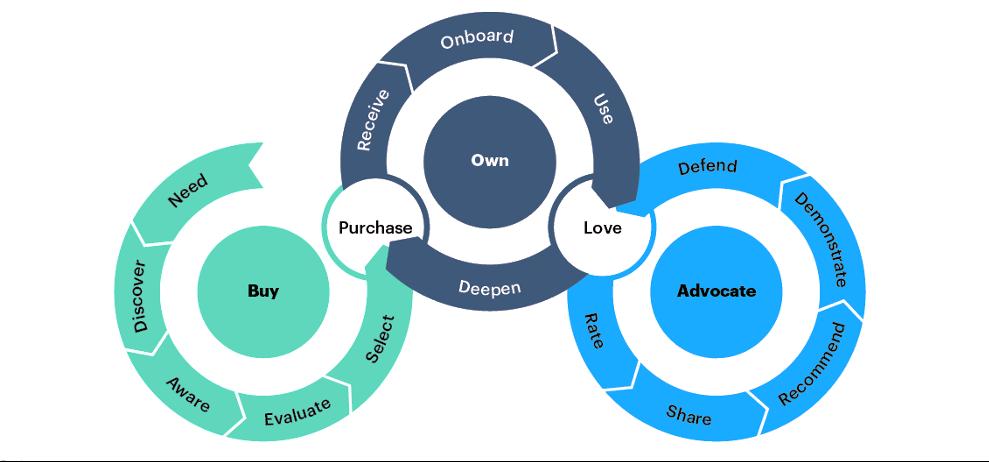
Source: Gartner (2024)
Figure 2.1. The Seamless Customer Experience Across Buy, Own, and Advocate Journeys
The rise of social commerce clearly illustrates the collapse of linear-journey thinking. Across four representative Southeast Asian markets such as Singapore, the Philippines, Vietnam, and Thailand social commerce recorded an average increase of 116% in order volume and 307% in gross merchandise value (GMV), significantly outpacing traditional e-commerce channels. Notably, Singapore led GMV growth at 678%, while Thailand and Singapore posted order growth of 173% and 155%, respectively. These figures reflect today’s reality: shopping journeys often start on social platforms, through livestreams and communities, enabling customers to discover, interact, and purchase within the same social environment rather than moving through the sequential steps implied by traditional models.
At the same time, the phygital trend the seamless blending of physical and digital experiences continues to expand. According to Statista, more than 68% of consumers want a shopping journey that is convenient online while still allowing direct, in-person interaction when needed. This indicates that the customer journey is no longer split between online and offline; it is experienced as one unified flow, where customers move freely between environments depending on context and need.
The collapse of the linear journey is driven by three primary forces:
• Channel fragmentation: Consumers increasingly engage with brands across multiple channels at once, making channel-by-channel management ineffective without an end-to-end journey view.
• Rising expectations enabled by digital technology: Tracking, personalization, and real-time response elevate customer expectations for seamless, consistent, and timely experiences.
• Experience-based competition: As competition intensifies, the total experience, not just product features or price becomes the core differentiator between brands.
Journey as a Lived Experience, not a Purchase Process
In the modern context, the journey should not be treated as a pre-designed buying process; it is a lived experience embedded in each person’s routines, psychology, and real-life circumstances. In practice, even when customers buy the same product or use the same service, they can still go through very different journeys. These differences show up in three main dimensions:
• Experience sequence: Some customers encounter the brand incidentally, while others research intentionally; some revisit multiple times before deciding, while others act on the first exposure.
• Decision speed: Some journeys are fast and impulsive, while others are extended, interrupted, and evolve over time.
• Personal touchpoint set: Each customer is shaped by different information sources and interactions, forming a unique “experience map” that does not fully match anyone else’s.
Consumer behavior research across Asia suggests that most purchase decisions are not made at a single point in time; instead, they accumulate gradually through repeated exposures and experiences. In Southeast Asia in particular where digital life is deeply intertwined with daily routines the customer journey is often strongly influenced by emotional state, personal context, and social relationships, rather than purely by functional product information or price.
More importantly, the customer journey includes not only “visible” interactions that can be easily tracked and measured, but also deeper experience drivers:
• Emotions in each moment of contact
• Expectations built from prior experiences
• Interruptions caused by shifting priorities, life circumstances, or personal constraints
• Influences outside brand control, such as advice from family and friends, community content, or other people’s experiences
The customer journey does not happen on the market; it happens in the customer’s mind. A purchase decision is the outcome of continuous comparison between existing beliefs and lived experiences—in which the brand is only one part of a broader context.
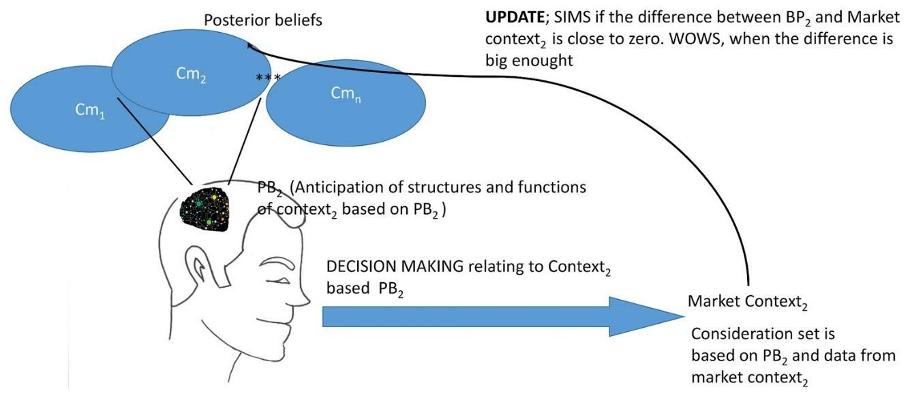
These factors make the customer journey operate more like a continuous experience stream than a programmed sequence of steps. Businesses can design touchpoints, but they cannot design how customers feel, remember, and interpret those experiences within the realities of their lives. Therefore, the customer journey is not what the brand draws in a process diagram, it is what customers actually live with, experience, and carry forward after every interaction.
Source: Krüger et al. (2020)
Figure 2.2. From Touchpoints to Belief Updates: Rethinking Customer Journey
From Funnel Thinking to a Journey Ecosystem
Why Funnel Thinking Is No Longer Enough
For decades, funnel thinking has been central to how businesses understood and managed the customer journey. Funnels simplify buying into clear stages from awareness to purchase supporting measurement and sales optimization. However, as consumer behavior becomes non-linear, phygital, and strongly shaped by communities, this approach increasingly reveals fundamental limitations.
The issue is not that funnels are “wrong”; rather, funnels are no longer sufficient to reflect how people actually make decisions. In the modern environment, the customer journey does not operate as a closed flow controlled by the brand. It looks more like an open ecosystem were multiple forces shape behavior simultaneously.
The biggest limitation of funnel thinking is the assumption that the customer journey has a clear beginning and ends at the purchase. In today’s reality, neither assumption consistently holds.
First, awareness is no longer the starting point. Many customers enter the journey with beliefs, impressions, and expectations already formed through past experiences, social content, community reviews, or stories from people around them. When the brand formally “shows up,” decision-making may already be underway, or even close to completion.
Second, purchase is no longer the endpoint. After the transaction, the journey expands through usage experiences, reviews, sharing, and comparisons with alternatives. In many cases, these post-purchase interactions have a stronger impact on long-term brand value than the initial purchase decision itself.
More importantly, many decisive moments happen outside the traditional funnel:
• Before the brand can proactively reach the customer
• After the transaction is completed
• In spaces beyond the firm’s official channels such as online communities, social platforms, and personal networks
In these spaces, the brand is not the central actor; it is one element in a broader landscape of lived experience and social influence. As a result, funnels reflect sales logic from the firm’s viewpoint but miss decision logic from the customer’s viewpoint. Funnels help explain “how to sell,” but they are no longer enough to answer the more strategic question: what are customers truly experiencing, and why do they behave the way they do?
When the customer journey moves beyond funnel boundaries, managing it through a funnel lens is not only inefficient it risks optimizing the wrong problems. This is why the Journey Ecosystem perspective has become a necessary evolution in modern customer journey management.
What Is a Journey Ecosystem?
A Journey Ecosystem reflects the reality that customer experience is shaped not only by the brand’s direct efforts, but by the overlap of many forces in modern life and consumption. Core components of this ecosystem include:
• Media (paid-owned-earned): where brands create and distribute messages, and where customers interpret and respond in their own way.
• Community and social influence: where trust is built and reinforced through peer interaction, influencers, and communities.
• Touchpoints (digital and physical): the concrete moments customers experience across the digital world and real life from content and interfaces to service and people.
• Platforms (commerce, service, content): the operating systems of experience, where behavior happens, data is generated, and relationships are maintained over time.
Within a Journey Ecosystem, not every component plays the same role. Depending on context and when customers enter the journey, different elements serve different functions, including:
• Discovery: when customers form initial awareness or recognize a latent need.
• Comparison: when they evaluate options based on information, experience, and social influence.
• Experience: when customers directly engage with the brand’s product, service, and systems.
• Sharing: when experiences spread through reviews, stories, and community content.
• Engagement: when the relationship with the brand is sustained and develops over time.
The defining difference between a Journey Ecosystem and funnel thinking is that it does not assume a fixed order. Customers can enter the ecosystem at any point, move fluidly between roles, and return repeatedly throughout the brand relationship life cycle. This makes “being everywhere” or “covering every channel” ineffective without strategic role design.
In a Journey Ecosystem, brands do not win because they appear everywhere; they win because they play the right role, at the right touchpoint, at the right moment in the customer’s lived experience.
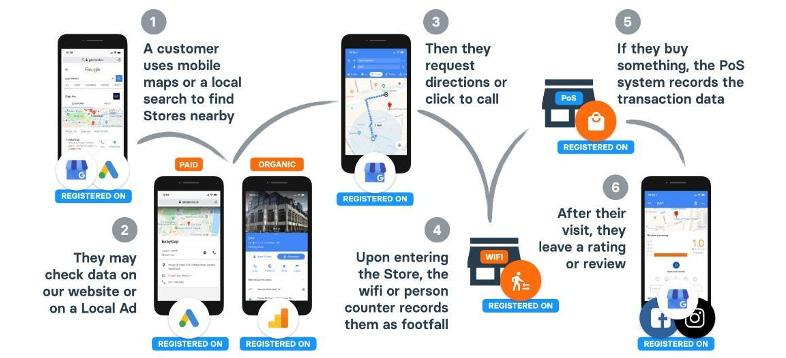
Figure 2.3. The Local Customer Journey: From Search to Store and Beyond
Source: Localistico (2023)
Forces Shaping the Modern Customer Journey
The shift from the 4A model (Aware – Attitude – Act – Act Again) to 5A (Aware – Appeal – Ask – Act – Advocate) reflects a fundamental change in customer-journey logic. In the pre-connected era, journeys were largely seen as an individual psychological and behavioral process, where attitudes and loyalty formed mostly internally. In the connected era, journeys no longer unfold in isolation; they are powerfully shaped by social interaction, dialogue, and community influence.
Adding “Appeal” and “Ask” signals that decisions are not driven only by awareness or attitude; they are nurtured through emotion and external validation. Replacing “Act Again” with “Advocate” highlights that the value of the modern journey is not simply repeat purchase, but the ability to create amplification and social influence. This shift provides the foundation for understanding the customer journey as a phenomenon shaped by technology, people, and context—the forces examined below.
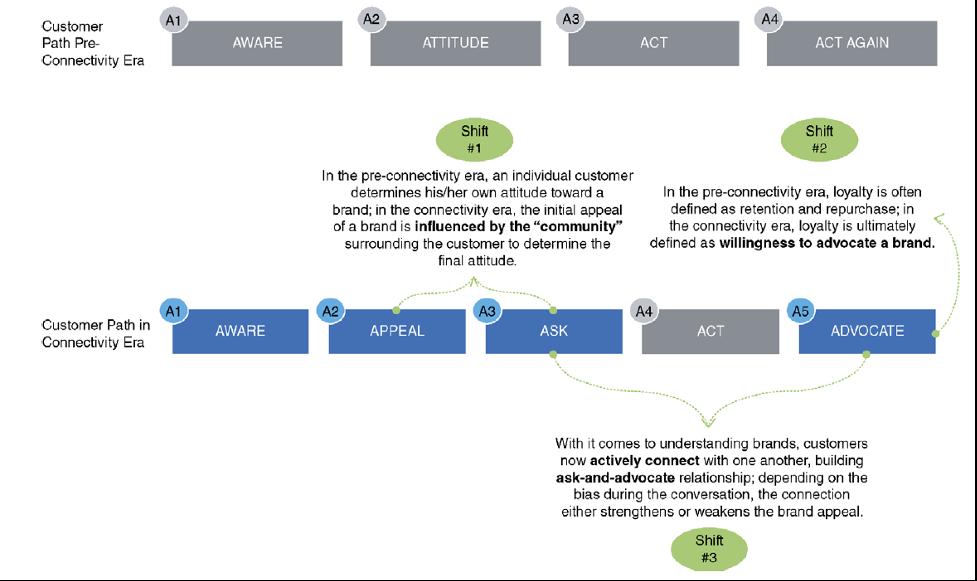
Figure 2.4. The Shifting Customer Path in a Connected World
Source: Kotler, Kartajaya & Setiawan (2017), Marketing 4.0
Although the customer journey is increasingly nonlinear and ecosystem driven, the 5A model still serves as a foundational structure for analyzing and comparing modern variations of the customer journey. Rather than viewing 5A as a linear funnel, it can be understood as a baseline logic five fundamental states around which every journey, regardless of industry or context, revolves: awareness, emotional appeal, validation seeking, action, and advocacy.
In the following sections, differences across industries do not invalidate the 5A model, but instead reflect shifts in emphasis among its stages and highlight the need to activate the appropriate disciplines of Marketing 5.0 and 6.0 according to specific contexts.
Technology: Faster, More Personalized, and Increasingly Invisible Journeys
Technology is the foundational force changing how the customer journey operates not merely adding more channels or tools. In a mobile-first world, the customer journey is no longer constrained by space, time, or any single touchpoint. The smartphone has become the primary interface connecting customers to the consumption world, where discovery, comparison, interaction, and purchasing can happen continuously and instantly woven into daily life.
Widespread mobile access has reshaped the rhythm of the journey. Rather than decisions forming in clear “purchase moments,” modern journeys are broken into multiple micro-moments very short intervals that repeat frequently. The journey is no longer campaign-like; it becomes a continuous experience stream over time.
On top of that, social platforms increasingly blur the boundaries between discovery, interaction, and commerce. Content, community, and transactions converge into a single experience space. Customers can develop a need while consuming entertainment content, build trust through communities, and decide to buy without leaving the platform they are using. The journey is not “triggered” by one clear touchpoint; it takes shape gradually through repeated signals within digital flows.
At a deeper level, AI, data, and automation are redefining how customer journeys are designed and run. Instead of reacting only after customers act, businesses can now:
• Predict needs before customers actively search, based on behavioral and contextual data
• Personalize experiences by individual, moment, and situation
• Respond and interact in real time through automated systems without constant human intervention
As a result, many decisions are made before customers consciously realize they are making them. Recommendations and experience flows are continuously adjusted in the background, creating a sense of convenience and “naturalness,” while also making it harder to see clear boundaries between journey stages.
Overall, modern customer journeys increasingly display three characteristics: (1) faster time from need to action is shortened by intelligent recommendations and automation; (2) more personalized each customer experiences an almost unique journey shaped by data and context; and (3) less visible many decisions happen in the background through algorithms, recommendation systems, and automated flows that are difficult for both customers and brands to observe end-to-end.
People: From Message Receivers to Active Decision-Makers
If technology changes how the customer journey operates, people change the nature of decision-making within it. Today’s consumers are no longer passive recipients of brand messages; they actively search for information, evaluate options, and build their own conclusions.
A defining feature of modern consumers is growing skepticism toward advertising and brand claims. In an environment of information overload and easy verification, what brands say is no longer automatically trusted. Instead, consumers seek confirmation from sources they perceive as more independent, relatable, and authentic.
This shift elevates the role of peer influence impact from friends, communities, and people who feel “like me.” In modern customer journeys, consumers tend to trust:
• People who have tried the product and share real experiences
• Independent reviewers who are not brand representatives
• Creators whose lifestyle, values, and context feel similar
• Communities they participate in and feel a sense of belonging to
In this context, creators, reviewers, and communities are no longer just communication channels; they become decisive touchpoints. They do more than spread information—they interpret experiences, help consumers understand products, set realistic expectations, and reduce perceived risk before action.
Crucially, these actors influence the journey in ways brands cannot directly control. Trust forms through similarity, authenticity, and social relationships not simply through messages optimized for creativity or media budget.
In the modern customer journey, trust no longer comes from well-crafted brand claims; it comes from people perceived as “like me” and credible in real life. This shift forces brands to redefine their role from “speaking value into existence” to enabling trust to form and spread within communities.
Context: Journeys Shift Moment by Moment
The third force and one often underestimated in journey design is context. The customer journey does not unfold in a neutral or stable environment; it is always tied to an individual’s moment, mood, and real-life circumstances. Context shapes how customers interpret information, evaluate options, and act at each point in the journey.
This means the same customer, facing the same product or service, can experience entirely different journeys:
• At different times of day, week, or life stage
• When feeling positive and open versus stressed, tired, or time-poor
• When priorities shift across work, finances, family, or health
In different contexts, customers not only behave differently; they also use different decision criteria. Messages, experiences, or touchpoints that work well in one situation may become irrelevant or even counterproductive in another, even for the same person.
Therefore, the modern customer journey must be understood as situational behavior rather than a fixed route. Journeys are not “executed” according to a diagram the business draws; they are activated and continuously adjusted by customers’ real-life contexts. This is why a one-size-fits-all journey is increasingly ineffective.
There is no universal customer journey template. Journeys must be framed as behavior-in-context, not as immutable paths. Strong context dependence also explains why different industries have different journey logics: perceived risk, purchase frequency, and the role of experience in each category create journeys with distinct structures, touchpoints, and expectations.
Industry Playbooks: Customer Journeys by Industry
Customer journeys do not exist as one universal blueprint across industries. In practice, each industry operates with a different journey logic shaped by three core factors: perceived risk, purchase frequency, and the role of experience in the decision.
These differences change touchpoints, decision cadence, and the brand’s role across industries. Therefore, instead of searching for a single “best practice,” businesses need industry playbooks principles for designing customer journeys that fit their specific category context.
Retail and Consumer Goods
In retail and consumer goods, customer journeys are often fast, emotion-driven, and strongly influenced by social dynamics. Product discovery no longer begins on brand websites or traditional ads; it happens within everyday social-platform flows where entertainment content, community reviews, and creator recommendations blend together.
Shopping experiences in this category also no longer live within one channel. Journeys extend across in-store experiences, livestream shopping, and social commerce allowing customers to watch, ask, and buy within the same experience space. Post-purchase, the journey continues through sharing, reviews, and referrals, creating a social influence loop that shapes future purchases.

Source: Perfect Diary
Perfect Diary, a fast-growing Chinese domestic cosmetics brand, scaled through a social-first strategy focused on urban young consumers. Instead of relying on traditional advertising, the brand-built awareness and trust through a network of creators and online communities. For many customers, the journey begins with creator-led product experience content on social platforms, then continues through livestream sessions where they can observe how products are used, ask questions, and make purchase decisions in real time.
After using the products, customers share reviews and makeup tips within beauty communities, creating organic word-of-mouth interactions. These post-purchase contents often become the starting point for new journeys, highlighting how the customer journey operates as a continuous social experience loop in which discovery, comparison, purchase, and sharing flow seamlessly within the same social ecosystem.
Leading retail and consumer goods brands typically design journeys around these principles:
• Omnichannel for real, with experience at the center:
• Create seamless connections across social, online, and physical stores
• Enable natural movement between touchpoints without friction
• Synchronize data, information, and experience (not just manage channels separately)
Figure 2.5. Perfect Diary Livestream Section
• Social commerce as a natural part of the journey:
• Integrate content, interaction, and transactions within the same social environment
• Treat livestreams, creator content, and UGC as experience touchpoints not merely sales channels
• Shorten the distance from discovery to purchase through real-time interaction
• Community-driven loyalty:
• Encourage customers to share experiences, reviews, and how-to usage
• Build communities around lifestyles, interests, or shared values
• Shift focus from repeat purchase alone to amplification and social influence
Through the 5A lens, the customer journey in the Retail and Consumer Goods industry tends to concentrate heavily on Aware, Ask, and Advocate. Awareness is triggered primarily through social platforms, Ask unfolds within communities, and Advocate creates a continuous loop of influence. To operate this journey effectively, companies must activate Data driven and Contextual marketing disciplines from Marketing 5.0, while integrating Immersive and Social Commerce experiences from Marketing 6.0.
Banking and Financial Services
In banking and financial services, customer journeys are trust-based, extended, and filled with hesitation points. Unlike retail, decisions here carry high perceived risk from personal finances and data to long-term consequences. Customers rarely decide quickly; they need time to learn, compare, validate, and reassure themselves before acting.
Journeys in this category are often discontinuous, interrupted by moments of reconsideration, delay, or return visits. A customer may start by researching, pause to consult family, and return days or weeks later to continue. Throughout, trust and psychological safety matter more than speed or convenience alone.
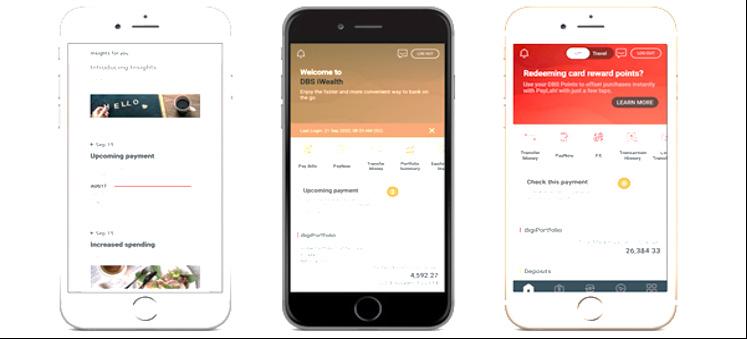
Source: DBS
DBS Bank (Development Bank of Singapore), widely recognized as a regional digital leader, designs its customer journey around reducing perceived risk and building long-term trust. Rather than pushing immediate sign-ups from the outset, DBS invests in financial education, simulation tools, and advisory content that help customers clarify their needs and evaluate options. When customers move into onboarding, the bank provides a digitized onboarding experience while allowing them to pause, return later, or shift to direct interaction with advisors
Figure 2.6. Intelligent Insights for Personalized Financial Management on DBS digibank and DBS iWealth
when uncertainty remains. In parallel, DBS combines AI to deliver personalization and real-time assistance, while human staff take the lead at sensitive touchpoints where explanation, reassurance, and trust-building matter most.
Leading banking and financial services organizations typically focus on these principles:
• Smooth digital onboarding:
• Simplify registration and verification
• Be transparent about information, terms, and risks
• Let customers start easily without forcing immediate completion
• Financial education as part of the journey:
• Provide content that helps customers understand products and choices
• Support self-assessment of risks and benefits
• Build confidence before decision-making rather than only pushing conversion
• Strategic human-plus-AI integration:
• Use AI for personalization, fast responses, and continuous support
• Bring humans into sensitive touchpoints to explain, reassure, and build trust
• Let technology drive efficiency, while trust is built through human interaction
In the financial services industry, the customer journey revolves around Ask and Appeal, with Act often prolonged due to higher perceived risk. This requires the activation of Predictive and Augmented marketing disciplines from Marketing 5.0, along with trust based phygital design as emphasized in Marketing 6.0.
Healthcare and Wellness
Customer journeys in healthcare and wellness are emotionally intense, sensitive, and highly trust-dependent. Unlike many other categories, decisions here are tied to anxiety, hope, and uncertainty making journeys hard to predict and difficult to standardize into one fixed template.
These journeys also do not end after a single service use; they extend across before, during, and after treatment or care. Before service, people need information to understand and feel reassured; during service, they need guidance and clarity; after service, ongoing support, monitoring, and follow-up questions often continue. This continuity makes the overall experience more important than any single touchpoint.
Bumrungrad International Hospital, a private international hospital founded in 1980 in Thailand, designs its healthcare journey around reducing anxiety and building trust across the entire care process. Rather than focusing only on the treatment moment, Bumrungrad
invests in medical advisory content and online support to help patients and families understand health conditions, treatment options, and expected outcomes before making decisions. During consultation and treatment, the experience is personalized to each patient’s profile and context, supported by close coordination between clinical teams and supporting services. After treatment, the hospital maintains continuity through follow-up, monitoring, and post-care consultation helping patients feel continuously supported over the long term.
Successful healthcare and wellness organizations commonly focus on these principles:
• Credible advisory content:
• Provide clear, accessible medical information grounded in expertise
• Help customers understand their condition and reduce anxiety before decisions
• Treat content as part of care not merely communication
• Context-based personalization:
• Respect differences in health status, emotions, and life circumstances
• Adjust messaging, service, and interaction cadence to each individual
• Avoid applying one generic journey to every patient
• Continuous connection before, during, and after care:
• Maintain interaction beyond the core service moment
• Increase the sense of accompaniment and long-term care
• Shift focus from “treatment” to “care relationship”
Education and Learning
Customer journeys in education and learning are long-term, unfolding over time and heavily shaped by personal motivation as well as the learner’s surrounding social environment. Unlike many categories, the “decision” does not end at enrollment; it is continuously re-affirmed throughout learning, practice, setbacks, and personal growth.
As a result, education journeys do not operate as a simple buy-use-repeat pattern. They resemble an accompaniment process where commitment can rise or fall depending on lived experience. Communities become critical for sustaining motivation, creating belonging, and reinforcing the perceived value of learning, especially when the journey is long and effort-intensive.

Source: Duolingo
In online education, Duolingo (founded in 2011 in the United States) designs journeys around sustaining long-term learning motivation rather than only driving initial signup. Learners often start with lightweight, free micro-lessons that reduce psychological barriers. Throughout the experience, Duolingo uses gamification, instant feedback, and progress tracking to sustain daily commitment. Community mechanics such as leaderboards and challenges create a sense of companionship, turning learning into a flexible long-term journey where the decision to continue is reinforced every day through positive experiences and a sense of progress.
Effective education and learning models often focus on these principles:
• Learning experience, not content delivery alone:
• Design an end-to-end learning experience from start to completion
• Combine content, interaction, and feedback to sustain engagement
• Measure success by progress and retention not only enrollment volume
• Community and mentorship:
• Build learning communities so learners feel accompanied
• Create connections between learners, teachers, mentors, and peers
• Reduce isolation in long-term learning journeys
• Hybrid learning journeys:
• Blend online and offline flexibly
• Let learners choose formats that fit their personal context
• Use technology to expand access while keeping human support at key touchpoints
Within the 5A journey, Appeal and Ask play a central role due to the importance of emotion and trust. Contextual and Augmented marketing from Marketing 5.0, combined with Immersive reassurance experiences from Marketing 6.0, form the foundation of this journey.
B2B and Enterprise
Customer journeys in B2B and large enterprises are typically complex, extended, and multi-stakeholder. Purchasing decisions rarely rely on individual emotion; they result from
Figure 2.7. Duolingo: Learning as a Daily Habit
collective evaluation shaped by organizational goals, risk, budgets, and long-term relationships.
B2B journeys do not unfold as one single flow. Multiple sub-journeys run in parallel for different stakeholders: end users, technical influencers, financial decision-makers, and senior leadership. Each group has different concerns, evaluation criteria, and decision pace turning the journey into a network of relationships and interactions rather than a linear sequence.
In enterprise technology, Alibaba Cloud (Alibaba Group’s cloud platform launched in 2009 in China) builds B2B journeys around technical trust and long-term customer relationships. Rather than broad mass outreach, journeys often start through thought leadership, trend reports, industry events, and training programs that help organizations understand context and application potential. During evaluation, Alibaba Cloud applies account-based marketing (ABM), tailoring solutions by industry, scale, and stakeholder groups within the same organization. After signing, the journey expands into technical consulting and implementation support showing that in B2B, the journey does not end at the contract; it is sustained as a relationship and value ecosystem where trust matters more than any single transaction.
Successful B2B and enterprise organizations typically design journeys around these principles:
• Thought leadership:
• Build trust through expertise, strategic perspective, and industry understanding
• Position the brand as a consulting partner, not merely a vendor
• Participate in decision-making early
• Account-based marketing (ABM):
• Personalize journeys by organization and stakeholder groups
• Align marketing, sales, and service around priority accounts
• Prioritize relationship depth over broad reach
• Relationship and trust ecosystem:
• Build ecosystems with partners, experts, and existing customers
• Prioritize long-term value over one-off transactions
• Maintain post-signing interaction and support as part of the journey
Within the 5A journey, Appeal and Ask play a central role due to the influence of emotion and trust. Contextual and Augmented marketing from Marketing 5.0, combined with Immersive reassurance experiences from Marketing 6.0, form the foundation of this journey.
Within the 5A customer journey, the Ask stage is both prolonged and multidimensional, while the Advocate stage is manifested through long-term relational engagement. Account-Based Marketing and predictive analytics (Marketing 5.0), together with enterprise ecosystem integration (Marketing 6.0), serve as the key mechanisms shaping this journey.
Although the 5A framework remains the foundational structure of the customer journey, each industry recalibrates the emphasis and internal drivers across different stages. The figure below illustrates how industries reconfigure the 5A framework and activate the disciplines of Marketing 5.0 and 6.0 to operationalize the customer journey within an ecosystem-based environment.
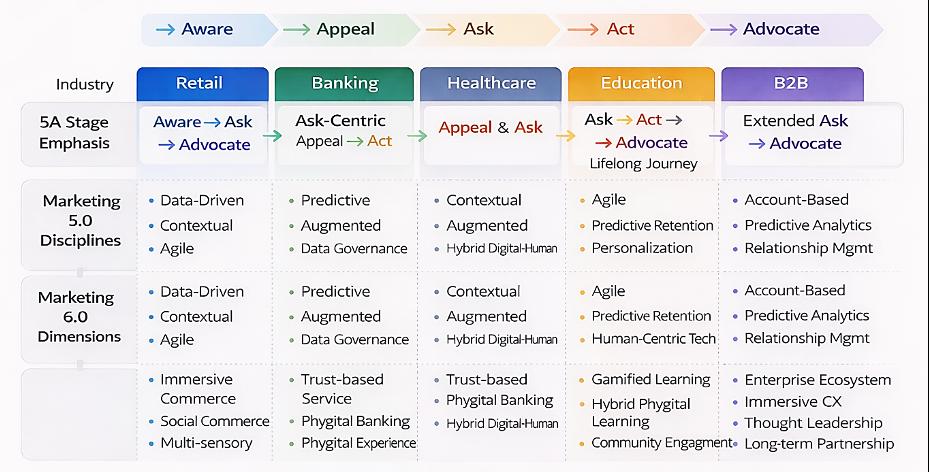
Source: Developed by the authors
Future lens: The Customer Journey in the Next 5–10 Years
Changes in the customer journey do not only reflect technological progress; they reflect how people live, work, and make decisions. Over the next 5–10 years, customer journeys will continue to expand in scope, become less visible, and grow more automated forcing businesses to redefine the brand’s role in customers’ lives.
Instead of only optimizing journeys that lead to purchase, leading organizations will need to address more strategic questions: Where does the brand sit in customers’ everyday lives? Who is making decisions (humans or systems)? And will customers still “see” the brand within those journeys?
Figure 2.8. Industry Adaptation of 5A Framework
From Customer Journey to Life Journey
In the future, customer journeys will be understood less as touchpoint sequences around transactions and more as part of a person’s broader life journey. Brands will not only appear when purchase needs arise; they will participate in wider, longer, and less directly commercial contexts.
Specifically, brands will increasingly play roles in:
• Lifestyle: becoming part of everyday habits (learning, health, entertainment, finance), delivering ongoing value even without immediate purchase, and being remembered as a companion not only a supplier.
• Work: supporting productivity, decision-making, and development; embedding into workflows and professional ecosystems; positioning as a long-term tool or partner.
• Community: reinforcing value through participation and social interaction; creating belonging and shared meaning; being “lived with,” not merely consumed.
This shift blurs the boundaries between pre-purchase, purchase, and post-purchase. In life journeys, the challenge is not frequency of appearance, but relevance: showing up at the right time, in the right role, in the right context.
AI and Agent-Based Journeys
Alongside the expansion toward life journeys, AI will fundamentally reshape how journeys form and operate. In the next 5–10 years, AI will not only help businesses analyze data; it will increasingly participate directly in decisions and actions.
AI’s roles in the customer journey will include:
• Need prediction: identifying needs before customers actively search by connecting behavior, context, and history reducing the role of traditional “awareness.”
• Touchpoint optimization: real-time personalization and deciding when, where, and how the brand should appear removing unnecessary interactions.
• Action execution on behalf of people: searching, comparing, recommending, booking, or purchasing based on optimization logic rather than emotion.
This leads to agent-based journeys, where businesses design not only for humans, but also for AI agents acting on their behalf. The journey becomes an interaction between the brand’s systems and the customer’s systems. In this world, being excluded from a journey may not mean the customer “dislikes” the brand it may mean the AI agent does not consider the brand a suitable choice.
The Invisible Journey
As life journeys expand and AI becomes a more active decision participant, customer journeys will become increasingly invisible. Many important decisions will not happen at visible touchpoints; they will happen in the background through systems and algorithms.
Future journeys will be shaped by:
• Background decisions: fewer direct interactions and fewer clear “aha” moments; customers may not fully recognize the evaluation process.
• Algorithms and recommendation systems: deciding which brands are prioritized and shaping consideration sets before customers realize it favoring consistent, trusted brands.
• Experience automation: less active searching, more defaults and recommendations shifting competition from “persuasion” to “being selected.”
In this “invisible journey,” brands compete less on messages or reach and more on hard-tosee factors: reliability, integration readiness, long-term value, and position within decision ecosystems.
Over the next 5–10 years, competitive advantage will not come from controlling the customer journey, but from being present in the right way within journeys customers may no longer directly see.
Chapter 2 redefines customer journey as a living, dynamic ecosystem rather than a linear path to purchase. It shows how journeys are shaped by technology, human trust, and context, evolving differently across industries. As customer journeys expand into life journeys, brands no longer compete only at visible touchpoints, but within systems, platforms, and algorithms. The rise of AI and agent-based decision-making further pushes journeys into the background, where many choices are made invisibly. Winning brands are those that design journey ecosystems to be chosen by people and by systems. In the next chapter, we explore what this shift means for the evolving role of brands.
Case Study: GRAB - WHEN THE CUSTOMER JOURNEY BECOMES
A LIFE ECOSYSTEM
Grab was founded in 2012 in Singapore with a focused initial goal: solving urban mobility challenges in Southeast Asia, where transport infrastructure is fragmented and traditional ride services lacked transparency. In its early stage, Grab positioned itself as a safe and convenient ride-hailing platform connecting everyday mobility needs with local driver networks. Over time, rather than remaining a single-service app, Grab progressively expanded to cover multiple essential daily needs. After more than a decade, Grab has evolved into a leading regional super-app, offering an integrated service ecosystem spanning mobility, food delivery, grocery and essentials, digital payments, and financial solutions.
A daily experience ecosystem
Today, Grab operates across eight Southeast Asian countries and plays a central role in the region’s on-demand economy. As of early 2025, the platform served roughly 46 million Monthly Transacting Users nearly 50 million users generating transactions each month across Grab services its highest level to date, while maintaining steady growth. This scale suggests Grab is not only downloaded; it has become embedded in frequent daily routines.
More importantly, Grab grows not simply by scaling each service in isolation, but by integrating services into one unified ecosystem. With GrabFood, GrabMart, GrabPay, and integrated financial services, users can meet most daily needs eating, shopping, paying, and managing spending within a single application. This integration transforms Grab from an on-demand transaction platform into a life ecosystem, where the customer journey is not confined to one purpose but aligned with everyday rhythms.
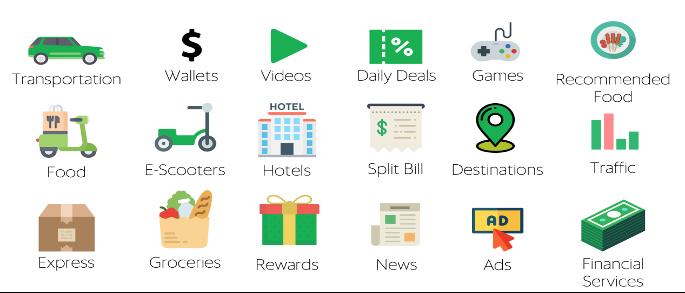
Figure 2.9. Grab Super App: Designing Journeys Across Daily Needs
Source: Grab
Grab does not appear only when users want one specific service; it is opened almost reflexively across daily situations commuting, ordering a quick meal, purchasing essentials, or making cashless payments. Regional statistics suggest that roughly 1 in 20 people in Southeast Asia uses Grab daily, reflecting deep habitual penetration far beyond a single-service utility.
This continuous presence illustrates how Grab’s customer journey has shifted into a life journey, with interactions occurring naturally within daily routines:
• Morning: users book GrabBike or GrabCar to commute, with options, routes, and prices recommended by the system.
• Lunch: the same app is used to order GrabFood, based on eating habits, location, and order history.
• Throughout the day: GrabPay becomes a familiar payment method for small transactions, from shopping to online services.
• Weekend: GrabMart is used for fast grocery and essentials purchases, completing a daily consumption loop.
These interactions are not isolated touchpoints; they form a seamless experience loop where each service meets a specific need while reinforcing Grab’s presence in subsequent needs. The journey is not activated by campaigns or individual purchases; it runs continuously as part of everyday life matching the essence of life journeys in modern digital ecosystems.
AI and agent-based decision systems
A key driver of Grab’s differentiated journey is the increasingly active role of AI and data-driven decision systems. Grab does not use AI only to personalize the interface; it embeds algorithms into how needs are predicted, options are ranked, and actions are suggested in each context.
Within Grab’s ecosystem, AI acts like an agent for the user, enabling faster, lower-effort decisions based on:
• Location and time: suggesting relevant services for the current context (commuting, meal time, quick shopping), adjusting recommendations by time of day or week.
• Usage history and personal habits: recognizing familiar choices and prioritizing behaviors previously accepted.
• Experience and efficiency optimization: balancing price, speed, and convenience while reducing steps to complete actions.
In practice, Grab’s agent-based journey is visible when the system automatically suggests suitable meals, proposes efficient routes and transport modes, and ranks services and options so users can choose rather than search. In many situations, users do not begin the journey by searching; they begin by accepting system recommendations, especially when those recommendations fit routine and context. The journey is co-created by humans and AI, not controlled by humans alone.
Invisible journeys and system-level competition
Deep AI involvement also makes Grab’s journey increasingly invisible. Many important decisions happen without users fully recognizing the evaluation and comparison process behind them. In this “invisible journey”:
• Users open the app and often select the first recommended option rather than browsing many alternatives.
• Algorithms prioritize familiar options, reducing perceived risk and decision effort.
• Service choice becomes less a result of active brand comparison and more a result of how the system ranks and presents options.
In this environment, competitive advantage comes less from persuading users at each touchpoint and more from being trusted and prioritized by the system. Grab’s leadership across services reflects not only coverage or marketing spend, but also deep integration into everyday habits and default decision logic.
The Grab case study shows that the modern customer journey is no longer a linear sales process it is part of daily life. Grab wins by turning customer journey into life journey, where the brand naturally appears across mobility, food, shopping, and payments. With AI’s growing role, many decisions become fast and nearly invisible, requiring minimal active consideration. In this context, compet itive advantage lies in becoming a default choice within customers’ ecosystems and habitsnot in optimizing single transactions.
KEY INSIGHTS – WHAT BUSINESS MUST UNDERSTAND ABOUT MODERN CUSTOMER JOURNEYS
• The customer journey has become a lived stream of experiences
The customer journey is non-linear, always “on,” and deeply embedded in everyday life; it is no longer a purchasing process fully controlled by brands.
• The funnel no longer reflects how customers make decisions
Awareness is no longer the starting point, and purchase is not the endpoint; many decisions take place outside brand-owned channels.
• The customer journey operates as an ecosystem
Media, platforms, touchpoints, and communities collectively shape the journey; brands succeed when they play the right role in the right context.
• Technology accelerates the journey, but people create trust
AI and data enable personalized experiences, yet trust is built through communities, creators, and people customers perceive as “like themselves.”
• There is no single standard journey for all customers
Journeys shift with timing, mood, and situational context; “one-size-fits-all” approaches are no longer effective.
• Competitive advantage is shifting toward invisible journeys
In the AI era, brands must be prioritized and selected by systems not only remembered by customers.
CHAPTER 3
CONTENT MARKETING CULTIVATING DIGITAL BRAND LOVE
In the digital environment where consumers can easily skip advertisements, turn off notifications, and actively choose what they want to engage with the role of content has fundamentally changed. Content is no longer merely a vehicle for delivering messages or supporting communication campaigns; it has become a primary touchpoint between brands and the emotional lives of consumers. As advertising increasingly loses its persuasive power, it is content if meaningful enough, authentic enough, and sufficiently consistent that enables brands to be heard, trusted, and remembered over the long term.
This chapter approaches Content Marketing not as a set of content production techniques, but as a relationship-building strategy. From the perspective of Digital Brand Love, content functions as the brand’s “language” in the digital space through which brands express their values, attitudes, and the ways they accompany customers over time. Brand Love is not formed through short-term sales messages, but through the accumulation of emotions, experiences, and empathy. Therefore, content should be viewed as a continuous flow capable of nurturing trust, emotional attachment, and active community engagement.
This chapter does not delve into production techniques or specific content execution processes these will be analyzed in detail in Chapter 7. Instead, Chapter 3 focuses on the strategic role of Content Marketing in positioning the brand, nurturing emotional connection, and cultivating Digital Brand Love throughout the customer lifecycle. The objective of this chapter is to clarify why content has become the central axis of brand relationships in the digital era, before moving into specific operational models in the subsequent chapters.
Why Content Marketing Is the Foundation of Digital Brand Love
Changes in Digital Consumer
Behavior
In today digital media environment, consumers no longer receive brand messages passively as they did in the era of mass media. As advertising becomes increasingly dense across social networks, video platforms, apps, and content websites, users have developed a natural reflex: They avoid what they did not actively choose.
When advertising disrupts the user experience, consumers do not merely ignore it passively they actively avoid it. As financial pressure increases, consumers become more cautious and less tolerant of direct selling messages. They allocate attention only to content that delivers real value, usefulness, or meaningful relevance to their lives. This shift suggests that traditional advertising is no longer an effective starting point for brand relationships, while valuable content is gradually becoming the foundation upon which brands are truly heard.
This avoidance no longer stops at simply not watching ads, but evolves into a state of immunity to direct selling messages. After repeated exposure to persuasive promises and promotional offers, consumers develop the ability to look without seeing a form of digital ad blindness. Messages that are overly explicit in their commercial intent are filtered out of attention within the first few seconds.
This phenomenon is particularly evident among Gen Z a generation that has grown up in an environment saturated with content and intense competition for attention. In the attention economy, where individuals process hundreds of pieces of content daily, Gen Z has developed a refined attention filtering mechanism, quickly dismissing messages that feel imposed or overtly sales driven.
Rather than reacting negatively to all branded content, Gen Z applies a conditional evaluation logic. They retain only content that fulfills at least one of three needs learning value, emotional resonance, or identity alignment. Content that fails to provide informational value, emotional connection, or alignment with personal values is removed from their attention stream almost instantly.
In a highly connected environment, content evaluation is also strongly influenced by social signals. Comments, shares, and community discussions function as forms of value validation. Content therefore competes not only for visibility, but for its ability to generate dialogue and earn community endorsement.
This shift directly impacts the first two stages of the 5A model Aware and Appeal. In the digital era, brands can no longer assume awareness; content must deliver sufficient value to pass through the attention filter before consumers are willing to consider it. At the same time, appeal no longer stems from persuasive advertising messages, but from the degree of alignment between content and the psychological needs of the individual.
Media power therefore shifts from brands to consumers. They no longer wait for brands to speak; they actively decide when and why to listen. Instead of receiving advertising, they seek content as a way to control their own information experience.
This transformation is reflected in two core behaviors:
• Consumers proactively search for content to solve problems, learn, or find inspiration, rather than waiting for brand messages.
• They choose brands based on the value delivered through content, not solely on media reach or exposure.
In the digital environment, content becomes the first point of contact between brand and consumer. Advertising may generate short term attention, but only content can sustain long term presence within the digital lives of customers.
From this behavioral and psychological context, Content Marketing is no longer a supporting communication activity it becomes a strategic foundation for brands to be heard, trusted, and gradually build Digital Brand Love.
What Is Digital Brand Love?
Digital Brand Love should not be understood simply as brand awareness or momentary liking. In the digital environment, consumers may recognize hundreds of brands and “like” dozens of brands on social media, yet develop genuine attachment to only a very few. Therefore, Digital Brand Love goes far beyond traditional metrics such as awareness or likes, which are easy to achieve but also easy to lose.
At a surface level, consumers may:
• Brand awareness through advertising, content, or digital presence.
• Temporary interest through an impressive campaign or piece of content.
However, Digital Brand Love truly forms only when the relationship between brand and consumer deepens, encompassing three core elements.

First is trust. In an information-saturated digital environment, trust does not come from brand promises but is accumulated over time through consistent, useful, and authentic content. Consumers believe that the brand understands them, does not exploit them, and behaves in accordance with the values it claims.
Second is emotional connection. When a brand goes beyond addressing functional needs and creates empathy, inspiration, or meaning in consumers’ lives, the relationship transcends transactional logic. The brand becomes a familiar part of consumers’ habits, lifestyles, or value systems, rather than merely one option among many alternatives.
Third is willingness to advocate for the brand. This is the clearest indicator of Digital Brand Love. Consumers not only continue using the brand but actively recommend it to others, defend it against unfair criticism, and naturally share positive experiences. At this stage, they no longer behave merely as customers but as brand advocates.
Apple is a representative example of Digital Brand Love, where the relationship with consumers goes far beyond satisfaction or momentary liking. In terms of measurement, Apple consistently achieves Net Promoter Scores (NPS) above 60–70, significantly higher than the consumer technology industry average of approximately 30–40, indicating a high proportion of users willing to recommend the brand (Harvard Business Review). In addition, reports from Consumer Intelligence Research Partners (CIRP) show iPhone user loyalty rates consistently above 85–90%, reflecting an unusually high level of attachment in a fast-moving and highly competitive industry. Apple’s Brand Love is further expressed through voluntary advocacy behaviors: users share experiences, defend the brand in online discussions, and repeatedly choose the Apple ecosystem across multiple product life cycles.
In a digital environment where every brand can reach consumers but very few remain in their minds over time, Digital Brand Love becomes the most sustainable competitive advantage. To build it, brands cannot rely on isolated advertisements or short-term campaigns; they need a long-term approach in which Content Marketing plays a central role in nurturing trust, emotion, and attachment.
Figure 3.1. Elements of Digital Brand Love
Therefore, Digital Brand Love is not the result of a single communication moment, but the outcome of a consistent and meaningful content journey embedded in consumers’ digital lives.
Content Marketing and the Customer Emotional Journey
Unlike advertising, which focuses on capturing attention in a single moment, content influences the long-term emotional journey of consumers. Through content, brands do not merely talk about products; they gradually form a voice, an attitude, and a value system that consumers can perceive, compare, and empathize with over time.
At a foundational level, content creates three core emotional values.
• First is emotion content has the ability to evoke interest, engagement, or a feeling of being understood.
• Second is meaning content helps consumers see the brand not merely as a provider, but as an entity with perspectives, responsibilities, and a role in social life.
• Third is empathy when consumers recognize that the brand understands their problems, contexts, and emotions, rather than simply trying to sell.
Because of its linguistic and dialogical nature, content allows brands to maintain a continuous and gentle presence in consumers’ digital lives. Each article, video, or shared piece of content is not an isolated touchpoint, but a fragment of a relationship-building journey. Over time, these fragments accumulate into an overall perception of the brand: whether it is trustworthy or not, close or distant, sincere or performative.
From a customer lifecycle perspective, this emotional journey unfolds across the various stages of the relationship between brand and consumer.
At the initial stage Acquisition content helps the brand be discovered and enter the zones of awareness and appeal Aware and Appeal in the 5A model. As the relationship begins to form Engagement content sustains dialogue and reinforces interest. After the transaction takes place Retention content continues to support, update, and strengthen trust. When the relationship becomes sufficiently durable Advocacy content serves as the foundation for customers to voluntarily share, amplify, and defend the brand.
From this perspective, content does not merely influence momentary emotion; it functions as a relationship infrastructure throughout the customer lifecycle. It is the continuous accumulation of emotion, meaning, and empathy over time that enables Brand Love to emerge naturally and sustainably.
Continuing with the example of Apple, for many years the brand has not used content as a direct selling tool, but as a medium to express its philosophy about people, creativity, and technology. Apples content focuses on emotion and meaning how technology enables
people to work better, create more, and express themselves more clearly rather than emphasizing specifications or promotions. Over time, the consistency of this message and value system has allowed Apple to become a familiar presence in users digital lives, reinforcing trust and emotional attachment.
The case of Apple demonstrates that Brand Love is not created by a single campaign, but by the persistent accumulation of emotionally meaningful content throughout the customer relationship journey.
Importantly, this emotional journey cannot be accelerated by media budgets. Media can help content be seen, but it cannot replace the role of content in creating meaning and empathy. Without deep content, media only amplifies presence it does not build relationships.
Therefore, in the digital world: Brand Love is not “bought” with media; it is “nurtured” through content.
Content as Relationship Infrastructure
Content Marketing is not a short-term communication tool, but a long-term relationship infrastructure between brand and customer. The strategic value of content does not lie in views or immediate reach, but in its ability to accumulate emotion, meaning, and trust throughout the customer lifecycle.
Instead of asking, "Does this content drive sales?", companies need to ask a more strategic question: What role does this content play in the relationship journey attraction, engagement, retention, or advocacy activation? Only when content is designed as a relationship architecture can Brand Love develop in a sustainable way.
The Evolution of Content Marketing
Content Marketing has not only changed in form, but has undergone a structural evolution in the way brands build relationships with customers. This evolution can be observed through three major shifts: from short term campaigns to long term presence; from brand voice to human voice; and from one way communication to co creation. Each shift reflects a deeper movement from transactional thinking to relational thinking the very foundation of Digital Brand Love.
From Campaign-Based to Always-On Content
In the early stages of digital marketing, Content Marketing often revolved around short term campaigns. Content was created to serve a specific objective within a limited time frame, then replaced by the next campaign. This model could generate immediate attention, but it struggled to sustain long term relationships because brand presence was fragmented and heavily dependent on budget.
In the digital environment, where consumers encounter brands almost daily, Content Marketing can no longer operate as a series of isolated bursts. Instead, content must maintain continuous and consistent presence in customers lives leading to the shift toward an Always on Content model.
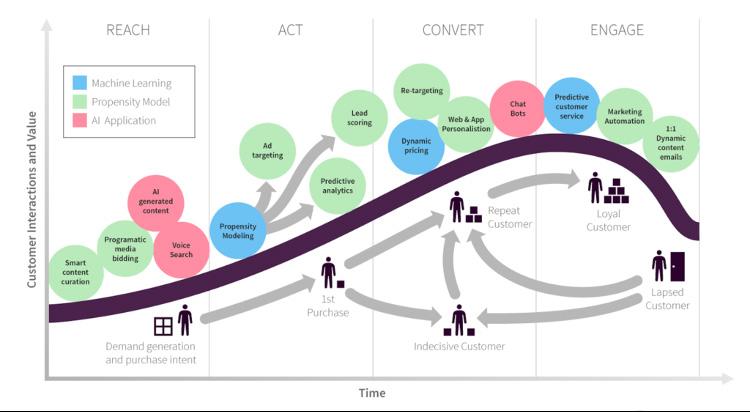
3.2.
Source: Dave Chaffey
Under this new model:
• Content is no longer dependent on short-term campaigns
• Instead, it becomes:
• A content ecosystem centered around core themes and values
• A continuous stream that accompanies the customer journey over time
Always-on Content does not imply producing content at a high frequency or volume. Rather, it refers to maintaining a meaningful presence over time. Each piece of content does not exist in isolation but is placed within a long-term context, connected to previous content and extended into future content, thereby forming a coherent and ongoing brand narrative.
Figure
Lifecycle marketing and the logic of always-on content
MUJI, a Japanese lifestyle retail brand known for its philosophy of minimalism, functionality, and sustainability, exemplifies this approach. In its content strategy, MUJI does not rely on short-term promotional campaigns but maintains a continuous content flow centered on everyday life: organizing living spaces, mindful consumption habits, self-care, and harmonious relationships between humans and the environment. MUJI’s content rarely emphasizes promotions or individual products; instead, it focuses on sharing lifestyle inspiration and practical values embedded in daily routines. As a result, the brand maintains a steady presence in consumers’ digital lives as a natural part of their lifestyle, rather than appearing only during peak sales periods.
It is precisely this continuity and consistency that enable Always-on Content to generate long-term value. When content becomes a familiar part of consumers’ information consumption habits, brands are remembered not for advertising frequency, but for meaningful and sustained companionship. This forms a critical foundation for building trust, emotional attachment, and ultimately, Digital Brand Love.
From Brand Voice to Human Voice
Alongside the shift from campaign-based to always-on content, Content Marketing has also undergone a profound change in communication voice. In the past, brands typically communicated with customers using a Brand Voice a tone that was organizational, formalized, and tightly controlled. Content produced in this manner emphasized official messages, slogans, and consistency, but often created emotional distance between brands and consumers.
In digital life, this mode of communication has become increasingly ineffective. Consumers are no longer seeking polished declarations; they are seeking authenticity and relatability. As a result, Content Marketing has gradually shifted from Brand Voice to Human Voice where the brand no longer speaks like an institution, but communicates like a human being with emotion, perspective, and contextual understanding of the customer.
Human Voice does not imply a lack of professionalism. On the contrary, it represents professionalism expressed through humanity: natural language, emotional sensitivity, and responsiveness to everyday customer experiences. Rather than repeating slogans, brands tell real stories, share genuine moments, and reflect what customers are actually experiencing.
VietJet Air, a leading low-cost airline in Vietnam, is positioned with a youthful, dynamic image closely connected to the digital lives of mass-market consumers. Across content platforms, VietJet does not communicate through administrative or service-announcement tones, but instead uses everyday language, conversational expressions, and emotions familiar to passengers such as searching for low fares, excitement before a trip, or very “real-life” situations during travel. The airline’s content places little emphasis on brand slogans, focusing instead on stories and experiences rooted in user reality, allowing the brand to appear more like a travel companion than a distant organization.

3.3.
Source: VietJet Air
This human-centered voice enables brands to generate interaction, feedback, and organic sharing more easily within communities. Consumers do not merely read or watch content; they are willing to converse, comment, and participate in the brand’s story. This paves the way for deeper engagement that goes beyond purely transactional relationships.
More importantly, Human Voice is a foundational condition for building Digital Brand Love. Trust and emotional attachment cannot form if brands communicate solely through the impersonal voice of an organization. Only when brands speak as humans relatable, consistent, and empathetic can content truly function as a bridge for long-term relationships with customers.
From One-way Communication to Co-creation
Along with the evolution in rhythm and voice, Content Marketing in the digital environment has undergone a fundamental shift: from one-way communication to co-creation. In the traditional model, content was fully created and controlled by brands, while consumers played a passive role as recipients. This approach has become increasingly ineffective as users are no longer satisfied with merely “watching” or “listening” they want to participate.
In digital life, users become part of the meaning-making process of content. They not only respond but also interact, reinterpret, and co-create. Content therefore is no longer a finished message broadcast by brands, but an open space where multiple perspectives, experiences, and personal stories coexist. This participation makes content more authentic, closer to everyday life, and more clearly community-oriented.
Figure
VietJet Air - Human voice in brand communication
In the co-creation model:
• Users interact through comments, feedback, and dialogue
• They adapt content based on personal contexts, cultures, and emotions
• They co-create with brands, turning content into a shared community asset
When entering the logic of co-creation, the role of brands changes significantly. Brands are no longer the sole voice “speaking for everyone,” but become initiators, facilitators, and listeners. This requires openness and a willingness to relinquish some degree of control, but in return generates higher engagement and a stronger sense of belonging among user’s key drivers of Brand Love.
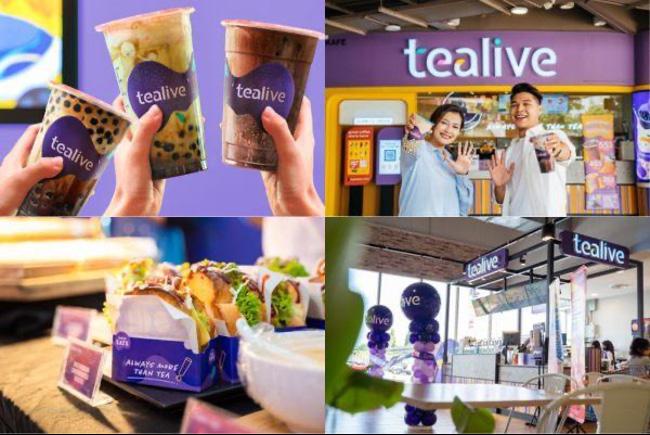
Figure 3.4. Tealive - Co-creation through everyday brand experiences
Source: Tealive
Tealive, a beverage brand originating from Malaysia, clearly demonstrates the logic of co-creation in digital communication. Rather than promoting products through one-way messaging, Tealive encourages customers to share personal experiences, customized drink variations, flavor preferences, and everyday moments associated with its beverages. User-generated content is not only engaged with and amplified by the brand, but also contributes to shaping Tealive’s image as a youthful, flexible, and community-driven brand. Through this process, content no longer belongs solely to the brand, but becomes a shared narrative co-created by consumers themselves.
The shift toward co creation demonstrates that Content Marketing today is no longer about delivering messages, but about designing spaces for dialogue the foundation of Brand Love in the digital environment.
Content Evolution as Strategic Transformation
The evolution of Content Marketing is not merely a change in pace or format, but a transformation in how brands build relationships with customers. From short term campaigns to long term presence, from institutional voice to human voice, and from one way communication to co creation each stage of evolution reflects a shift from transaction to relationship. It is this transformation that lays the foundation for Digital Brand Love to emerge in the digital environment.
Content types that build Brand Love
Storytelling Content
Storytelling Content focuses on telling stories rather than delivering direct sales messages. Instead of placing products or features at the center, this content type shifts attention to human elements and values, allowing brands to enter consumers’ emotional lives in a more natural way.
Brand stories typically revolve around three primary layers of content:
• People: users, employees, founders, or communities
• Journeys: overcoming challenges, transformation, learning, and growth
• Core values: beliefs and stances that the brand consistently upholds
When these three layers are told authentically and consistently, storytelling creates an empathy bridge where customers can see themselves, their experiences, or their value systems reflected in the brand narrative. This is why storytelling is particularly effective in building long term emotional connection: emotion is not formed through logic or information alone, but through meaning and shared values accumulated over time.
Within the structure of the customer journey, storytelling often functions as the engine of appeal while simultaneously reinforcing Ask. Content generates initial attraction through emotion and meaning Appeal, then helps customers find rational alignment and trust to validate the brand Ask. When value alignment becomes strong enough, it lays the foundation for Advocacy where customers are willing to recommend or defend the brand because they feel it represents what they believe in.

Source: Patagonia
The campaign “Dont Buy This Jacket” by Patagonia is a compelling example of value driven storytelling. Rather than promoting consumption, the brand highlighted the environmental impact of production and questioned responsible consumption. This counterintuitive approach sparked widespread discussion and reinforced Patagonia’s clear value positioning. More importantly, it shows that storytelling’s power lies not merely in telling a compelling story, but in translating brand values into narratives that customers can align with and actively amplify.
Figure 3.5. Storytelling driven by brand values
Strategic Takeaway – Storytelling as Value Positioning
Storytelling is not designed to optimize short term conversion, but to position a value system that creates an emotional bond with customers. The critical condition is value behavior consistency: a story only holds power when the brands actions and choices are aligned with what it communicates. When values are both told and lived consistently, storytelling can transform attention into alignment, and alignment into trust and long-term advocacy.
Educational Content
Educational Content focuses on helping consumers understand more deeply rather than persuading them to buy more quickly. This content type includes instructional, explanatory, and knowledge-sharing activities directly related to issues consumers care about or are experiencing. Unlike promotional content, Educational Content does not place the brand at the center; instead, it begins with consumers’ learning needs and decision-making processes.
Through the systematic provision of knowledge, brands gradually build three critical layers of value:
• Trust: Brands build trust when content is delivered transparently, usefully, and consistently, enabling consumers to feel confident when receiving information and making decisions.
• Authority: By sharing in-depth knowledge, brands demonstrate comprehensive expertise not only in their products, but across the broader usage context and customer journey.
• Leadership: When brands go beyond responding to current needs and help customers think further, understand more accurately, and make better choices, they gradually become trusted companions.
Within the structure of the customer journey, Educational Content has a particularly strong impact on the Ask stage in the 5A model. When customers search for information to reduce uncertainty and compare options, educational content allows the brand to be present as a source of explanation and guidance. At the same time, by building trust and authority, Educational Content reinforces Appeal at a rational level and contributes to long term Engagement.
From a customer lifecycle perspective, educational content does not only support Acquisition by attracting users seeking knowledge, but also sustains Engagement and Retention by helping customers better understand the product, its usage, and its application context. When a brand is perceived as a teacher or guide, the relationship no longer depends on short term incentives, but on trust accumulated over time.
The way HubSpot implements Educational Content clearly illustrates the role of knowledge driven content in building brand trust and authority. Instead of directly promoting its CRM platform, HubSpot has built a knowledge ecosystem centered around marketing, sales, and customer experience. Through courses, resources, and professional content, the brand positions itself as a trusted reference point for those seeking to understand and implement modern marketing. As a result, many customers approach HubSpot as a starting point for learning before becoming buyers. This demonstrates that Educational Content not only supports lead generation, but also builds relationships grounded in trust and expertise.
Educational Content therefore is not merely a content marketing tactic, but a knowledge positioning strategy. When a brand becomes the place consumers turn to in order to understand a problem, purchase decisions are no longer based solely on features or price, but on trust and long-term attachment.
Strategic Takeaway – Educational Content as Trust Architecture
Educational Content is not designed to drive immediate conversion, but to build a trust architecture for the brand. By placing knowledge and the customers long term interests ahead of the transaction, the brand gradually becomes the default reference point within its industry. When trust and authority accumulate deeply enough, the purchase decision is no longer a comparison among multiple products, but a natural outcome of a relationship that has already been established.
Entertainment Content
Entertainment Content focuses on delivering enjoyable experiences rather than conveying information or directly persuading purchase. In a context where consumers increasingly avoid advertising, entertainment driven content becomes a soft touchpoint a space where brands can appear naturally within the flow of culture and everyday digital life.
Unlike storytelling or educational content, which build trust and meaning cumulatively, Entertainment Content typically activates immediate positive emotions enjoyment, amusement, surprise, or cultural resonance. However, its strategic value does not lie in its ability to go viral, but in helping the brand occupy a familiar place within the emotional life of customers.
Within the 5A model, Entertainment Content is particularly effective at the Aware and Appeal stages. It captures attention in highly competitive environments Aware while generating positive emotions that make the brand likable and memorable Appeal. When executed consistently with the brand identity, this positive emotional layer can become the foundation for deeper Engagement and support subsequent stages of the customer journey.
From a lifecycle perspective, Entertainment Content helps brands maintain regular presence in digital life, especially during cultural moments or collectively meaningful occasions. When a brand shows up at the right time during social events, festivals, trends, or cultural movements, it does more than capture attention it becomes part of shared memory and experience.
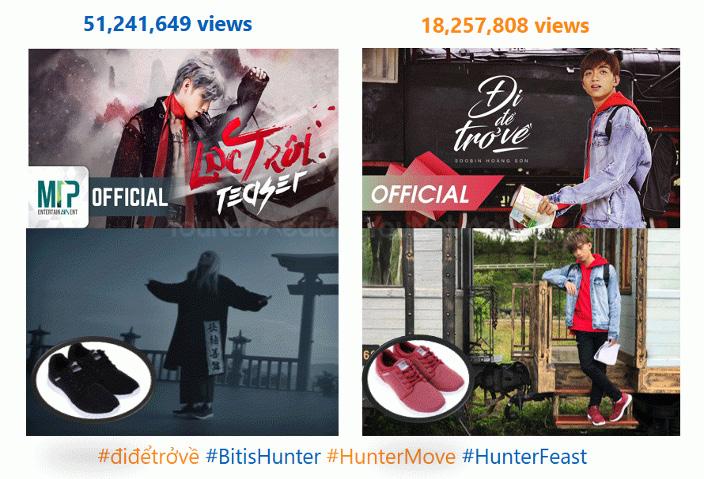
Source: YouNet Media
Bitis Hunter, a sports footwear line from Bitis, is positioned toward urban youth with a spirit of movement, exploration, and emotional connection to modern lifestyle. Rather than focusing on product features, the brand places itself within the context of music and culturally meaningful moments such as Tet a period rich in emotion and collective significance. The content does not revolve around direct selling messages, but allows storytelling and music to lead the emotional narrative, enabling the brand to appear naturally within the psychological landscape of young consumers.
Over time, repeated presence in familiar cultural contexts has reinforced the brand image as part of a generational experience rather than merely a fashion product.
This case demonstrates that Entertainment Content should not be evaluated solely by reach or view counts, but by its ability to associate the brand with positive emotions and meaningful cultural contexts. When executed consistently, entertainment driven content does not merely capture short term attention, but contributes to cultivating familiarity, affinity, and emotional resonance key foundations of Brand Love.
(2016)
Figure 3.6. Biti’s Hunter - Entertainment content embedded in popular culture
Strategic Takeaway – Entertainment as Cultural Positioning
Entertainment Content is not a view chasing tactic, but a strategy to occupy cultural space in the everyday lives of customers. Its strategic value lies in the combination of clear brand identity, cultural relevance, and long-term consistency. When positive emotions are consistently associated with the brand during collectively meaningful moments, attention can be transformed into lasting affinity a critical foundation of Digital Brand Love.
User-Generated Content (UGC)
User Generated Content UGC refers to content created by users themselves rather than produced by the brand. This may include images, videos, reviews, personal stories, or shared experiences posted organically across digital platforms. In a context where consumers are increasingly skeptical of staged promotional content, UGC emerges as a highly trusted form of content due to its authenticity and real-life nature.
The strategic value of UGC lies in the principle Authentic greater than Polished. Content does not need to be visually perfect or technically refined, but it must reflect real experiences and genuine emotions. It is precisely this imperfection that generates social proof a persuasive force often stronger than one way brand messaging.
Within the 5A model, UGC has particular impact on the Ask and Advocate stages. At the Ask stage, user created content reduces uncertainty by providing perspectives from people perceived as similar to oneself. Instead of hearing only the brand speak about its product, customers observe real experiences from the community. As trust is reinforced, UGC simultaneously activates Advocate users do not merely consume content, but actively share and amplify the brand.
From a customer lifecycle perspective, UGC serves as a bridge that transforms a brand customer relationship into a brand community relationship. When consumers participate in telling the story, the brand is no longer an external entity attempting to persuade, but becomes part of a shared space where members exchange experiences. This shift fosters a sense of belonging a critical foundation of Brand Love.

Figure 3.7. User-generated content in Emirates’ “Be There Challenge
Source: Patagonia
Emirates, the national airline of the United Arab Emirates, is positioned in the premium service segment with a global route network. Through its “Be There Challenge” campaign, the airline encouraged passengers to share memorable travel moments from their journeys. Instead of focusing on promoting service features, Emirates empowered users to tell personal stories about their travel experiences.
As a result, the content did not merely reflect the brand, but reflected the lives and emotions of its customer community. The outcome was not only broader reach, but a reinforced brand image of Emirates as a brand associated with meaningful experiences and personal memories.
UGC reflects a shift in the role of the brand within Content Marketing. The brand is no longer the sole storyteller, but becomes the initiator and orchestrator of a dialogue space. When consumers are recognized as co creators, they not only engage more actively, but also become willing to defend and recommend the brand behaviors that characterize Brand Love in the digital environment.
Strategic Takeaway – UGC as Community Proof
UGC is not a tactic for collecting free content, but a mechanism for transferring storytelling power to the community. The strategic role of the brand is to orchestrate participation to create the conditions, value framework, and recognition that encourage voluntary contribution. When customers feel that their voices are respected and amplified, the brand is no longer “their brand,” but becomes “our brand” a critical shift from trust to long term attachment and advocacy.
Measuring content marketing for brand love
Creators as Trust Intermediaries
In the modern content ecosystem, creators are no longer merely distribution channels for brand messages, but function as trust intermediaries between brands and communities. Unlike brand produced content, creator content carries a distinct personal imprint individual perspective, lived experience, and everyday language that feels relatable.
More importantly, creators do not simply speak on behalf of brands; they participate in shaping the meaning of the brand. Through their personal lens and pre-existing relationships with their audience, creators help position brands within specific and meaningful contexts for consumers.
From a strategic perspective, creators strongly influence two stages of the 5A model:
• Ask: Consumers seek validation from voices they trust.
• Advocate: When creators and their communities align with a brands value, content is not only shared, but defended and amplified.
When brands are communicated through a human voice rather than an organizational voice, content becomes more natural and less likely to be perceived as advertising. Consumers do not merely “hear” the message; they trust the storyteller. This trust serves as a foundational element in building emotional relationships between brands and customers, allowing Brand Love to emerge through empathy and closeness rather than persuasion or imposition.
From a long-term perspective, creators also help brands maintain a sustained presence in digital life. When content is naturally repeated across different situations and moments, brands gradually become familiar parts of consumers’ information consumption habits. This forms the basis for transitioning from awareness to emotional attachment, and from liking to a willingness to advocate for and recommend the brand.
In this chapter, creators are examined as a psychological and relational mechanism rather than through a campaign execution lens. Collaboration models, contract structures, and operational tactics will be discussed in detail in Chapter 7.
Micro-creator & Niche Community
Alongside the saturation of large-scale influencers, micro-creators and niche communities are playing an increasingly important role in nurturing Brand Love. While mass-reach campaigns help brands achieve rapid awareness, micro-creators and niche communities provide relational depth. Although smaller in scale, these communities often demonstrate higher levels of engagement and trust, as the relationships between creators and followers tend to be personal, long-term, and bidirectional.
Micro-creators typically operate within specific domains such as lifestyle, food, travel, education, or self-care where followers are not seeking fame, but alignment in values and lived experiences. Niche communities thus become spaces where conversations unfold naturally, deeply, and collaboratively, rather than through passive content consumption. In this context, brands have the opportunity to appear as participants in dialogue, rather than external entities broadcasting messages.
Key characteristics of micro-creators and niche communities include:
• Smaller scale, but centered around shared interests or value systems, making content more relevant and meaningful
• High levels of trust, driven by close, frequent, and personal relationships between creators and their communities
• Deep engagement, reflected through two-way interactions, in-depth discussions, and repeated participation over time
It is within these smaller communities that brands gain opportunities to be heard, to respond, and to learn from consumers. Rather than appearing on a “big stage” with generic messages, brands become present in everyday moments and intimate exchanges that carry real meaning. When consumers feel that brands understand them, respect their contexts, and accompany their shared interests, a sense of belonging emerges the core foundation of Brand Love.
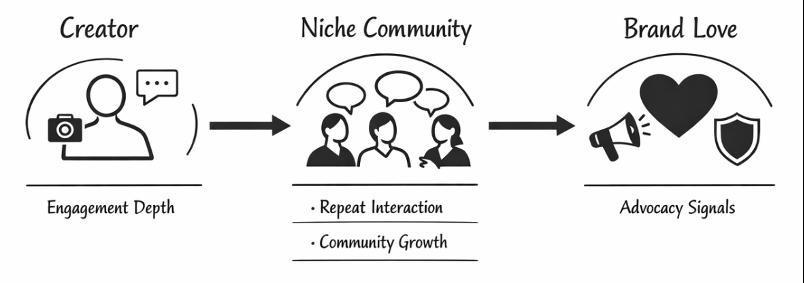
To understand how Brand Love is formed within the modern content ecosystem, it is essential to view the relationship between creators, communities, and brands as a continuous flow rather than as isolated touchpoints. Brand Love does not arise directly from marketing messages; instead, it is mediated through people and high-trust micro-communities. The framework above summarizes this logic and points toward measurement approaches aligned with the long-term nature of Brand Love.
Figure 3.8. Creator–Community–Brand Love Framework
Measuring Content Marketing for Brand Love
Because Brand Love is emotional, relational, and long-term in nature, measuring the effectiveness of Content Marketing cannot rely solely on surface-level metrics. Common indicators such as reach or views reflect visibility, but do not capture how consumers feel or the depth of their attachment to brands. Content may achieve millions of views without generating trust, empathy, or a desire for long-term engagement.
To assess the capacity of content to nurture Brand Love, brands must shift their focus from reach to depth of interaction, and from short-term outcomes to signals of long-term relationships. This requires a measurement system centered on interaction quality and the evolution of relationships between brands and user communities.
Key metrics to monitor include:
• Engagement depth: the quality of interactions, reflected through substantive comments, two-way discussions, and shares accompanied by personal viewpoints or stories. These indicate that content has resonated emotionally and stimulated thought.
• Repeat interaction: the frequency with which users return to engage with brand content over time. Repeated behavior reflects sustained interest beyond momentary curiosity.
• Community growth: the qualitative development of communities, expressed through participation levels, contributions, and relational bonding, rather than merely increasing follower counts.
• Advocacy signals: proactive behaviors such as defending the brand against criticism, recommending it to others, or voluntarily creating brand-related content.
These indicators rarely produce immediate results, but they reveal the extent to which a brand has become embedded in consumers’ emotional and social lives. When users return, engage in dialogue, recommend, and defend brands, Brand Love moves from abstraction to concrete, sustained behavior.
Brand Love is a long-term indicator, not a KPI of a single campaign. Measuring Brand Love must therefore be situated within a long-term strategic context, where Content Marketing serves to nurture relationships rather than merely optimize short-term communication performance.
Table 3.1. Measuring Content Marketing beyond reach
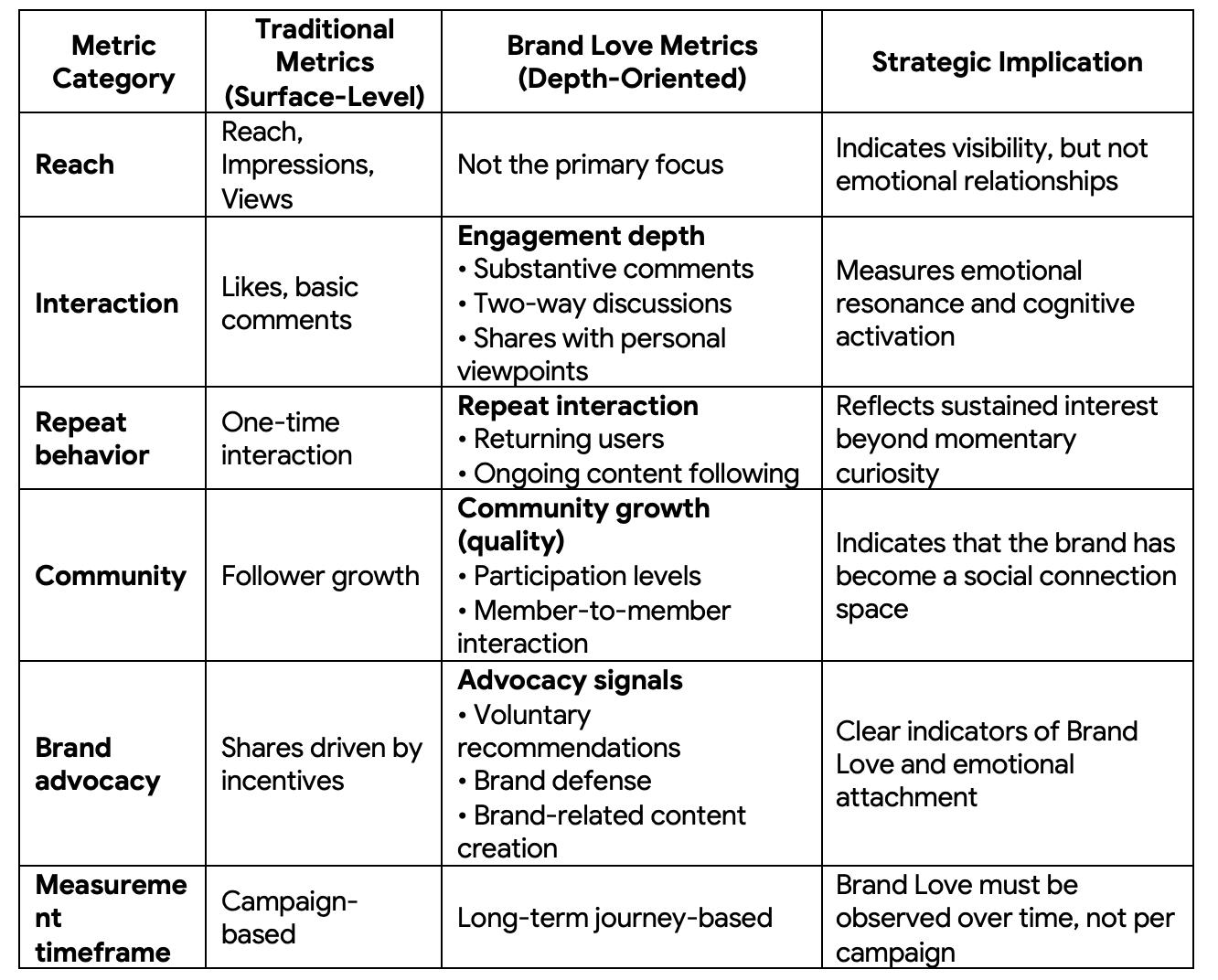
FUTURE LENS – The Future of Content & Brand Love
AI Driven Content: Technology Empowers, but Brand Love Is Still Human Led
In the near future, businesses will increasingly rely on artificial intelligence to operate Content Marketing at large scale and high speed. AI will enable organizations to process complex behavioral data, predict needs, and personalize content for each individual, at each moment, and within each specific context. As a result, content will no longer be designed for an “average customer segment,” but dynamically adjusted to individual users in real time.
Specifically, AI will increasingly provide strong support in the following areas:
• Content personalization: recommending messages, visuals, and formats tailored to each individual user
• Intelligent distribution: optimizing channels, timing, and frequency of content delivery
• Context optimization: adjusting content based on user behavior, location, device, and usage state
However, an important limitation of AI will also become evident. Technology can optimize performance, but it cannot create meaning. The elements that determine Brand Love such as emotions, empathy, human values, and trust still require human sensitivity and judgment. In this context, the role of marketers does not disappear; rather, it shifts. Marketers move from directly creating every piece of content to guiding emotional direction, defining value frameworks, and supervising how AI is applied. AI helps brands speak to the right people at the right time, but humans decide what the brand should say and why it should say it.
Content as Experience: From Watching to Entering
In the future, content will no longer be confined to flat formats such as written articles or two-dimensional videos. Content will expand into immersive experiential spaces, where consumers can directly interact with brand stories. AR, VR, and spatial content allow content to respond to users’ location, movement, and physical context, while metaverse storytelling enables non-linear, community-driven narratives.
These content forms are gradually becoming more prevalent:
• AR / VR Content: creating immersive experiences that allow users to “experience” rather than merely observe
• Spatial Content: content that changes according to physical space and real-world behavior
• Metaverse Storytelling: open brand narratives with multiple touchpoints and active community participation
Within these environments, content is no longer a standalone message, but becomes part of an integrated experience. Consumers do not merely consume content; they leave personal imprints, memories, and emotions throughout their journey with the brand. This deepens the consumer–brand relationship, as immersive experiences are typically retained longer in memory than passive exposure.
From AI Powered Content to Human Centered Brand Love
All of these shifts lead to a fundamental transformation: in the future, content will no longer exist merely to be “viewed” or “read,” but to be participated in, interacted with, and lived alongside the brand. Content will no longer function as a single touchpoint in the customer journey, but as an experiential environment in which consumers invest time, attention, and emotion.
This requires a change in how content is approached:
• Not only delivering information, but activating experiences and behaviors
• Not only optimizing short-term performance, but nurturing long-term relationships
• Not placing the brand at the center, but empowering consumers with an active role
In the future, Brand Love will increasingly be built through immersive, personalized experiences that remain rich in human meaning. Businesses will not compete by producing more content, but by their ability to design coherent, meaningful, and deep experiences that respect consumers’ role as co-creators. When content becomes a lived experience, Brand Love is no longer the outcome of a campaign, but the natural consequence of a long-term relationship between people and brands in an expanded digital world.
Chapter 3 demonstrates that in the digital era, Content Marketing is no longer a tool for capturing short-term attention, but has become a foundation for building long-term emotional relationships between brands and consumers. As users increasingly avoid advertising and actively choose content, Brand Love cannot be created through reach or frequency, but through meaningful presence one that carries a human voice and is connected to real life.
From storytelling, educational content, entertainment content, to user-generated content; from the role of creators and niche communities to methods of measuring interaction depth, this chapter affirms that Brand Love is nurtured over time through trust, attachment, and a sense of belonging. In the context of AI, emerging experiential spaces, and immersive content, the greatest challenge for businesses is not to produce more content, but to design experiences that are rich in meaning and human values where brands become a natural part of consumers’ emotional lives.
Case Study: VINFAST – BUILDING VIETNAM’S ELECTRIC VEHICLE BRAND LOVE THROUGH AN EXPERIENCE ECOSYSTEM

Figure 3.9. Emotional storytelling as the starting point of VinFast’s EV community building
Source: Internet
VinFast entered the electric vehicle (EV) market with a rare communication advantage: a “big story” of national significance that was not confined to Vietnam’s borders. The narrative of “Vietnam daring to enter the high-tech industrial arena” generated a strong initial emotional layer pride, belonging, and a willingness to support and continued to travel with the brand as VinFast expanded its presence into markets such as India, Indonesia, the Philippines, and several others. From a Content Marketing perspective, this functioned as highly effective Hero
Content, enabling the brand to gain rapid awareness, spark public discussion, and become associated with a meaning larger than the product itself. However, as VinFast transitioned fully into electric vehicles and scaled across multiple markets, this symbolic narrative could not stand alone. EV adoption is fundamentally a matter of habit, and habits cannot be sustained by slogans. As a result, content necessarily shifted from “storytelling” to “proving” through lived experience, operational evidence, and repeated presence in everyday life.
More importantly, VinFast did not stop at communicating national spirit as a one-way message, but gradually transformed that emotion into a community. EV-related content was developed around connecting people with shared interests: early adopters, service drivers, young families, and individuals concerned with sustainable lifestyles. Rather than merely “talking about EVs,” VinFast created a space where users could share experiences, ask and answer questions, support one another, and collectively learn how to live with electric vehicles in everyday contexts. This process transformed national spirit from a communication symbol into a binding force within the EV community, allowing Content Marketing to move beyond promotion and assume the role of nurturing Digital Brand Love.
The VinFast case clearly illustrates a key principle discussed in this chapter: Sustainable Brand Love = Narrative × Product × Time. Narrative opens the emotional door; the Product determines the experience; and Time is the most rigorous test. For EVs, “Time” is measured through repeated daily experiences: charging, software updates, commuting, taking children to school, and traveling between cities. When these repeated experiences are sufficiently stable, users begin to retell them and in the digital era, “retelling” becomes the most persuasive form of content.
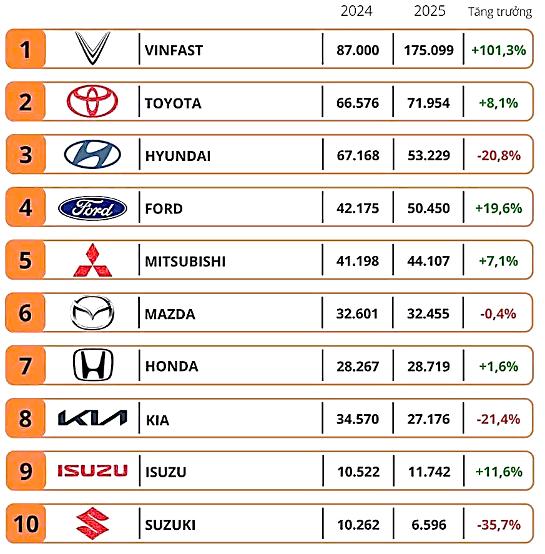
Figure 3.10. VinFast at the top of Vietnam’s best-selling vehicles in 2025
Source: VAMA, VinFast
The year 2025 marked a clear shift for VinFast from symbol-based content to experience-based content. Reuters reported that VinFast vehicle deliveries in Vietnam nearly doubled during this year, reaching approximately 170,000 units, while the company later officially announced a figure of 175,099 vehicles. Regardless of the exact number, the implication remains consistent: EVs began to move beyond their role as a media-driven phenomenon and increasingly became normalized as part of everyday consumer choice.
As the number of vehicles on the road grew, visibility itself turned into a powerful form of communication. Each vehicle became a lived, observable experience—transforming usage into a form of social proof with far greater persuasive power than traditional advertising. In this sense, adoption was no longer driven primarily by brand messaging, but by the accumulation of real-world presence and peer validation.
However, “high delivery volumes” alone do not create Brand Love. What stands out is how VinFast translated operational elements into reassuring and explanatory content, aligned with the logic of Help Content. One of the biggest concerns among EV users is charging infrastructure. In 2025, multiple international media sources including Reuters reported that Vietnam had approximately 150,000 charging ports, the majority belonging to the VinFast ecosystem. From a Content Marketing perspective, charging infrastructure is not merely an operational asset; it is trusting content. Charging station maps, long-distance travel guides, real charging experiences, and user stories collectively reduce perceived risk and create fertile ground for emotional content to evolve into Brand Love.
In parallel, VinFast continued to expand its proof-based narrative through content about long-term capabilities. Reuters reported that VinFast launched its second manufacturing plant in Hà Tĩnh in June 2025, with an initial designed capacity of 200,000 vehicles per year, while adjusting timelines for its international factories. In Content Marketing terms, such information is not merely corporate news; it functions as reassurance content, helping consumers believe that the brand has the capacity to accompany them over the long term an essential factor in high-risk purchase decisions.
A critical content component within the VinFast ecosystem is Xanh SM. As EVs became widespread in transportation services, consumers were able to “experience before buying” naturally through repeated daily journeys, rather than through advertising messages. Media reports in 2025 citing Mordor Intelligence indicated that Xanh SM held a leading market share in Vietnam’s taxi and ride-hailing segment, with figures around 39.85% (Q1/2025) and approximately 44.68% (Q2/2025). Xanh SM operates as a large-scale Hub Content engine: daily repeated experiences, retold by drivers, passengers, and communities, making EVs familiar rather than foreign. From 2024–2025, Xanh SM also began expanding its electric mobility model into Indonesia, bringing Vietnamese EV experiences into international contexts. This represents cross-market experiential evidence, enabling Hub Content to extend beyond domestic boundaries and reinforcing Brand Love as a scalable long-term narrative.
Overall, VinFast is not an example of “good content alone leads to success.” Rather, it exemplifies the core argument of Chapter 3: Content Marketing only builds Brand Love when it is supported by real experiences. Only when brands successfully combine Hero Content (emotional narratives), Help Content (explanation and reassurance), and Hub Content (community storytelling) does Brand Love have the opportunity to form. However, for these three content layers to function, brands must possess strong operational evidence: infrastructure, services, production capacity, and a sufficiently large user base for social proof to scale organically.
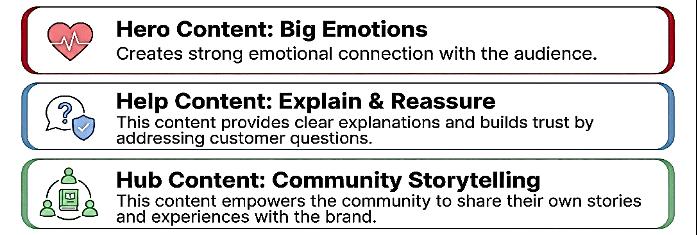
Figure 3.11. VinFast’s 3H Framework for Building Brand Love
The year 2025 demonstrates VinFast’s shift in Digital Brand Love from “brand storytelling” to “brand proof.” In the digital era, it is repeated experiences and user-retold content that form the most concrete foundation for Brand Love to emerge and spread.
Taken together, VinFast offers a critical lesson for Digital Brand Love: content cannot stand alone. Brand Love only forms when emotion is supported by real experiences, operational evidence, and sufficient time. The developments of 2025 show that VinFast has begun transforming Brand Love from “brand narrative” into “brand evidence,” where users trust, use, and voluntarily retell their experiences. In the digital era, repeated experiences and behavioral data constitute the most practical foundation for building and diffusing Brand Love.
KEY INSIGHTS – WHAT BUSINESS MUST UNDERSTAND ABOUT CONTENT-DRIVEN BRAND LOVE
• Content Marketing is the strategic axis of digital brands
Content is no longer an extension of advertising, but the foundation for nurturing longterm relationships from awareness and experience to attachment and loyalty.
• Real-world evidence matters more than standalone messages
In an information-saturated environment, content grounded in data, lived experience, and user feedback generates stronger trust than slogans or marketing claims.
• Digital Brand Love accumulates through small, repeated touchpoints
Brand Love does not arise from a single breakthrough moment, but gradually forms through consistent content rhythms, emotional coherence, and sustained interaction over time.
• Content must be operated as a system, not as isolated posts
Consistent identity, voice, thematic structure, and production standards are prerequisites for maintaining trust and minimizing communication risk.
• Effective content does more than inform it creates meaning
When content helps consumers correctly understand their problems and the value a brand delivers, recall and emotional attachment increase significantly.
• Brand Love is sustainable only when content is supported by real experiences
Content may initiate relationships, but products, services, and repeated experiences are what ultimately transform users into advocates and brand promoters.
CHAPTER 4
PERSONALIZATION TECHNOLOGY
PERSONALIZING
THE CUSTOMER EXPERIENCE
In the era of Marketing 5.0 and 6.0, the question is no longer, “What technology can we use to personalize?” but rather: what level of personalization allows a brand to remain relevant without eroding trust?
When AI, big data, and automation enable brands to understand customers at an unprecedented depth, the challenge no longer lies in technological capability, but in defining the appropriate boundary of intervention. Personalization can make experiences more convenient and relevant; yet if it exceeds the threshold of acceptance, it can also trigger discomfort, a sense of surveillance, or loss of control.
Personalization is therefore no longer merely a technological feature or a conversion optimization tactic. It is a strategic decision about how a brand chooses to design long term relationships with its customers. Every choice regarding data usage, predictive intensity, and timing of engagement reflects how the brand perceives people: as targets to be optimized, or as partners to accompany.
In a digital environment where individuals exist within distinct experience ecosystems, the “one message fits all” approach is losing effectiveness. Two customers may purchase the same product with entirely different motivations and expectations, making personalization a baseline requirement for maintaining relevance rather than a competitive advantage.
This chapter frames personalization as a strategic maturity journey from customer identification to value alignment. As technology advances, differentiation depends not on how much a brand knows, but on its ability to understand what is sufficient.
Why Has Personalization Become a “Default Expectation”?
Customers Benchmark Experiences Across Industries
One of the core reasons personalization has become a “default expectation” is that customers no longer evaluate experiences within industry boundaries. Instead, they compare every brand to the best experience they have ever had, whether that experience comes from e-commerce, fintech, digital entertainment, or consumer technology platforms. Best-in-class experiences therefore become a universal benchmark carried into every new brand encounter.
Global consumer behavior shows that personalization has become a fundamental expectation rather than a differentiating factor, as customers increasingly demand relevant interactions and feel dissatisfied when brands fail to deliver them. However, a clear gap remains between what companies believe they provide and what customers actually experience, revealing a misalignment between brand execution and customer perception. This shift is even more pronounced in Asia, where digital platforms are rapidly redefining standards by leveraging data, AI, and automation to shape real-time customer journeys. As a result, customers are continuously exposed to higher benchmarks across ecosystems such as e-commerce, digital payments, and super-apps, further elevating expectations for seamless, context-aware experiences. In this environment, brands are no longer competing only within their category but against the best digital experiences in the market.
A key implication of this cross-industry benchmarking is that customers judge a brand’s experience against the best experience they have had regardless of who provided it. When a brand fails to meet that standard, customers do not simply feel “unimpressed”; they may feel the experience is no longer relevant to them. This feeling of “not being understood” is why personalization has evolved beyond optimization technique into a default expectation in modern marketing.
Customers Carry Big Tech Expectations into Every Brand
Consumer technology platforms have made personalization the default state of digital experiences rather than a special feature. Through everyday use, customers become accustomed to experiences in which nearly every interaction is tailored to them.
Specifically, Big Tech has “trained” customers through familiar experience mechanisms:
• Personalized content feeds based on behavior and interaction history, such as TikTok’s “For You” stream or Facebook’s news feed
• Context- and timing-based product recommendations. E.g., Amazon or Shopee re-suggesting items when users show purchase intent
• Real-time updates driven by what just happened, rather than by static profiles alone Near-instant responses from content suggestions and search to customer support creating a sense of being “understood immediately”
Consumers increasingly expect brands to deliver personalized and predictive experiences, shaped by frequent interactions with major technology platforms rather than traditional brands. They want companies to anticipate their needs, provide timely recommendations, and engage proactively, making such interactions the new standard for brand communication. In Southeast Asia, this expectation is further amplified by mobile-first behavior and integrated platform ecosystems, where users spend much of their time within multi-service environments that continuously personalize experiences through micro-interactions. According to Google–Temasek–Bain’s e-Conomy SEA report (2023), this constant exposure conditions customers to expect seamless, context-driven journeys across content, payments, and commerce, and they naturally apply the same expectations to all brands.
The key implication is this: Big Tech does not only set experience standards for itself; it sets the standard for the entire market. When a brand fails to demonstrate comparable understanding through generic messaging, slow responses, or irrelevant experiences, customers no longer see that as “normal.” Instead, they experience the brand as out of sync with their digital life. PwC’s Future of CX (2022) reports that more than half of consumers are willing to leave a brand after only a few poor experiences, especially when they are accustomed to smooth and personalized experiences elsewhere.
This shows that Big Tech has become the author of modern experience language. Personalization is no longer a feature meant to impress; it is a condition for a brand to remain relevant. When customers are trained to expect smart, proactive, real-time experiences, every brand is judged by that benchmark. If a brand cannot meet it, the problem is not the technology, it is a basic customer perception: “This brand doesn’t understand me.”
Personalization and the Competition Before Comparison
In the early stages of digital marketing, personalization served as a clear competitive advantage, helping brands appear more modern and differentiated while driving stronger business performance, with early adopters achieving higher revenue growth than their peers. However, as personalization became widely adopted and embedded into platform experiences, its role fundamentally shifted from a differentiator to a basic expectation. Today, personalization is no longer about outperforming competitors but about meeting the minimum threshold to be considered, acting as an invisible filter that determines whether a brand is relevant enough to enter the customer’s consideration set. In this context, personalization operates as an invisible filter in decision-making:
• If the experience is relevant and context-appropriate → the brand stays in the consideration set
• If the experience feels generic or non-personalized → the brand is eliminated early, before price, features, or quality are compared
What is notable is that this elimination happens quietly. Customers rarely say they did not buy because a brand “did not personalize.” They simply do not stop, do not engage, and do not return. In digital environments where attention is extremely scarce, failing to personalize often means failing to be relevant enough to earn the first moment of attention and therefore losing the opportunity to compete at all.
Platforms such as Amazon or Shopee treat personalization as the operating foundation of user experience not an add-on feature. On these platforms:
• The homepage is personalized differently for each user
• Search results are ranked based on individual behavior and purchase history
• Post-purchase recommendations reflect usage context and next-step needs
In this reality, a retail website that does not personalize is not judged as “worse than Amazon” or “behind Shopee.” It is simply not salient enough to be remembered and revisited and therefore does not appear in the customer’s consideration set. Here, personalization does not help a brand beat competitors; it helps the brand remain in the customer’s mind long enough to have a chance to compete.
Personalization has completed a major transition: from competitive advantage, to the threshold for consideration, and in many categories toward an experience “hygiene factor,” noticed most clearly only when it is absent. Therefore, the strategic question is no longer “Where can personalization differentiate us?” but rather: “What is the minimum level of personalization required so our brand is not eliminated from the consideration set?” When personalization becomes the default language of experience, not speaking that language means not being considered before comparison even begins.
The Evolution of Personalization: From Mindset to End-to-End Journey Experience
Three Core Evolutions of Personalization in Marketing
The development of personalization in marketing is not random; it reflects an evolution in how businesses see and engage with people. From treating customers as relatively uniform segments to understanding them as unique individuals in specific moments, personalization has gone through three foundational shifts each expanding both strategic scope and experiential depth.
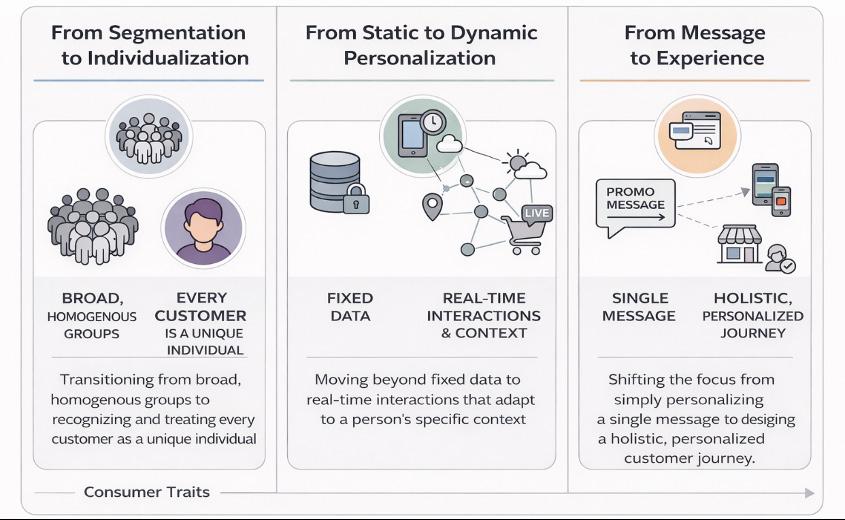
From Segmentation to Individualization
In traditional marketing, personalization starts with broad segmentation. Customers are grouped by age, gender, income, or geography. For example, a dairy brand may create categories such as “milk for children,” “milk for older adults,” or “milk for pregnant women,” and tailor communications accordingly. This improves on mass marketing, but still assumes that people within the same group share similar needs.
As behavioral data becomes richer, segmentation evolves into micro-segmentation, where smaller groups are built from multiple variables. An e-commerce platform, for example, may distinguish between “mid-priced women’s fashion buyers who purchase at monthend” and “premium women’s fashion buyers who follow new collections.” Yet even when more sophisticated, this approach still remains group-based.
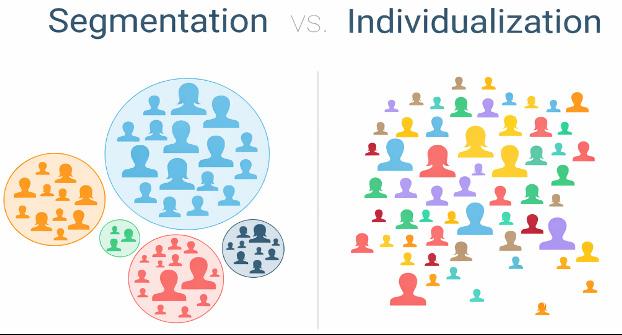
Figure 4.2. From Segmentation to Individualization: The Shift Toward a “Segment of One”
Figure 4.1. Three Core Evolutions of Personalization
The real inflection point emerges when marketing shifts to individualization a segment of one. Here, the customer is no longer represented by a group, but treated as a unique individual whose needs change by moment and context. For example, Tokopedia does not only categorize users by product interests; it continuously adapts the experience for the same user at different times. The same person may receive essentials recommendations at the start of the month, household promotions on weekends, or higher-value items when search patterns indicate shifting needs. Personalization therefore becomes less about assigning someone to a segment and more about reflecting their current state and emerging needs. The core question shifts from “Which segment are you in?” to “Who are you right now?”
From Static to Dynamic Personalization
In parallel, personalization evolves in how it operates. For years, personalization largely relied on static profiles such as registration data, purchase history, or demographics. A bank might recommend a credit card based on initially declared income; a cosmetics brand might send emails based on products bought months ago.
Static data quickly becomes outdated as needs and behaviors change continuously. Modern personalization therefore shifts to dynamic personalization where experiences adapt using real-time behavior, context, and predictive signals. For instance, if a user repeatedly searches for flights to the same destination over several days, the system may prioritize relevant offers and timing when the user is close to deciding rather than sending generic emails on a fixed schedule.
In Vietnam, digital wallets and commerce platforms apply similar logic. MoMo may suggest bill payments at the beginning of the month, dining offers on weekends, or nearby services when the timing fits. Here, personalization is no longer a response after behavior has occurred; it is continuous adaptation to the present and near-future predictions of customer needs.
From Message to Experience
The third and most strategic evolution is the move from personalizing messages to personalizing the end-to-end experience. In earlier approaches, personalization focused on individual touchpoints: greeting customers by name in emails, retargeting ads based on browsing history, or segment-tailored notifications. These make messages more relevant but often create only short-term impact. In modern marketing, personalization expands across the entire journey from content sequence and interaction timing to preferred channels and post-purchase experiences creating a seamless, adaptive experience stream shaped by each individual’s behavior, context, and needs.
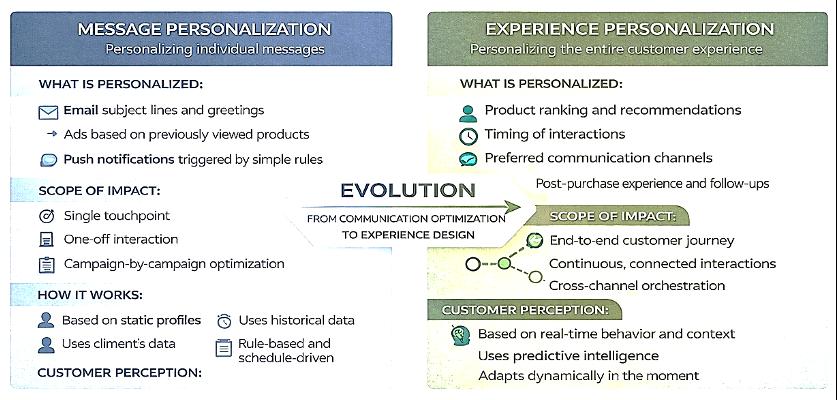
Figure 4.3. The Strategic Shift from Message Personalization to Experience Personalization
For example, Amazon personalizes not only what is displayed, but also:
• The ranking of products in search results
• The timing of reminders
• Preferred communication channels
• Post-purchase experiences such as replenishment prompts and complementary product suggestions
Similarly, in Vietnam’s coffee retail sector, apps such as The Coffee House or Highlands do more than send name-based offers. They personalize the journey through familiar-item recommendations, loyalty points, time-of-day promotions, and invitations to communities or campaigns that match usage habits. At this level, personalization is no longer a “decorative layer” on messages; it becomes a principle for experience design across the journey.
These three evolutions point to a core truth: personalization is no longer about “customizing messages.” It is about designing a lived experience for each individual.
The Six Levels of Personalization (N6 Personalization Ladder)
Table 4.1. N6 Personalization Ladder
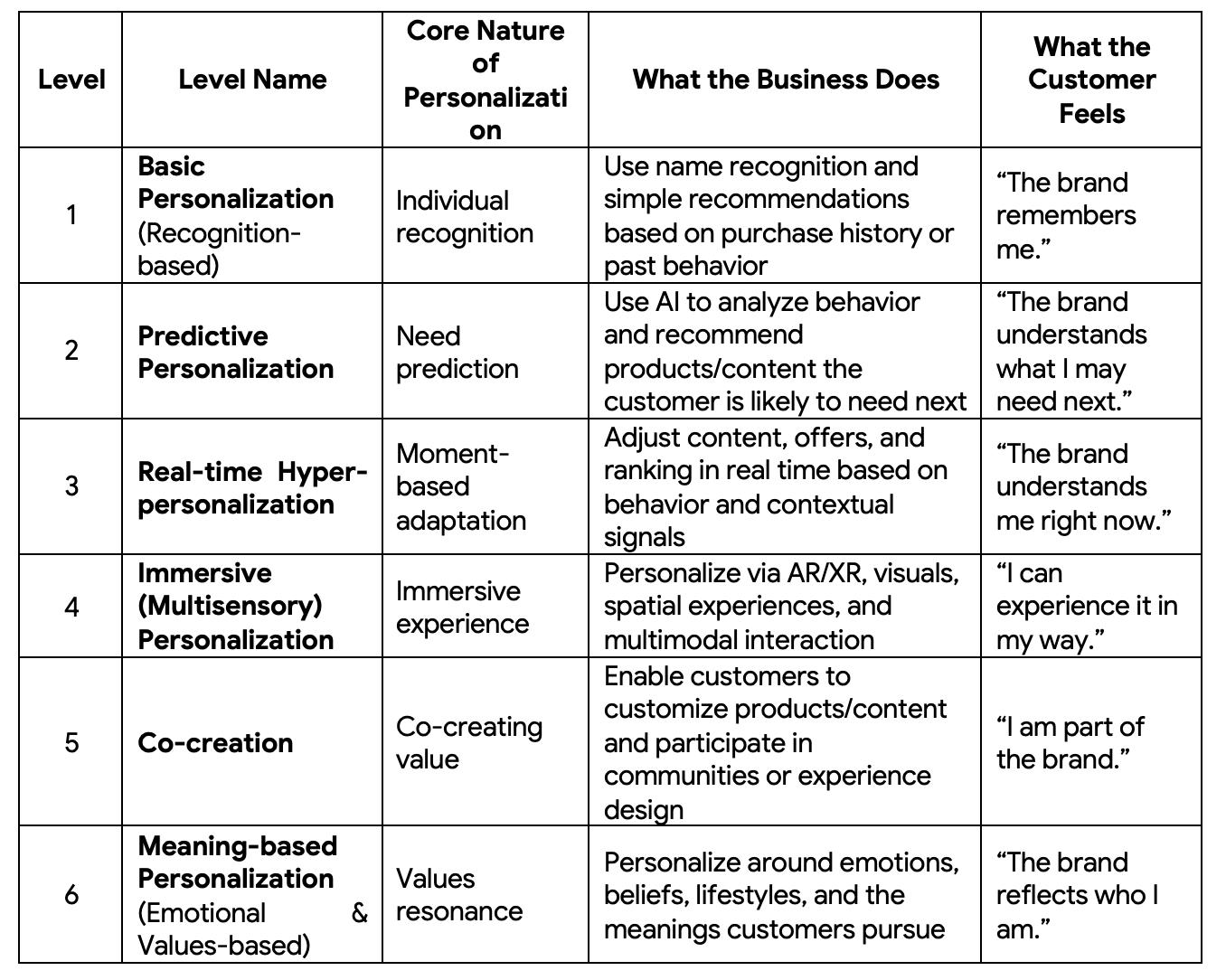
Level 1: Basic Personalization – Recognition-based Personalization
This is the most common starting point, where businesses move away from mass marketing to recognize customers as individuals.
Key characteristics:
• Using the customer’s name in email or app experiences
• Simple product recommendations based on purchase history
• Rule-based personalization relying on past data and static logic
The core value here is breaking the “one-size-fits-all” experience. Customers feel that the brand “remembers” them, which increases attention and reduces distance in communication. However, the relationship remains largely one-way and short-term: the brand responds to what has already happened rather than understanding what is forming. This level is necessary to be considered, but insufficient for durable differentiation.
Level 2: Predictive Personalization
As data accumulates and AI is applied, personalization shifts from reaction to prediction.
Key characteristics:
• Analyzing behavior to predict next needs
• Recommending products or content the customer has not actively searched for yet
• Probability-based personalization powered by behavioral models
At this level, personalization reduces friction in the decision journey. The brand appears at the right time with useful suggestions, creating a sense of proactivity. The relationship begins shifting from “responding” to “early accompaniment,” as customers feel the brand saves time and effort. However, experiences may still rely on probabilistic models and may not flex fully with the live context.
Level 3: Real-time Personalization (Hyper-personalization)
Here, personalization no longer runs by campaign cycles; it reacts instantly to in-session behavior.
Key characteristics:
• Adjusting content, offers, and ranking in real time
• Using contextual and immediate signals
• Changing the experience within the same interaction session
The strategic value is the feeling of being “understood in the moment.” Customers do not perceive the brand as slow or mechanical; the experience feels flexible and conversational. This can lift conversion and satisfaction. Yet without finesse, it can also feel “too much,” creating a sense of being tracked.
Level 4: Immersive (Multisensory) Personalization
As digital and physical experiences blend, personalization expands from content into perception and interaction.
Key characteristics:
• Applying AR/XR or immersive experiences
• Personalizing how customers explore and interact
• Creating more vivid, intuitive, and individualized experiences
Value here goes beyond convenience to “understanding through experience.” Immersive personalization reduces uncertainty, increases confidence, and strengthens emotional engagement. The brand does not only provide information; it creates memorable moments designed around the individual.
Level 5: Co-creation Personalization
Personalization reaches a turning point when customers do not only receive experiences, but also help create them.
Key characteristics:
• Customers customize products, content, or journeys
• Participation in communities and deeper personalization
• Experiences carrying a genuine personal signature
The core value is attachment and ownership. When customers shape products or experiences, the relationship moves beyond transactions into collaboration. Customers become more loyal and more willing to defend and amplify the brand. At this level, personalization becomes a foundation for community building.
Level 6: Meaning-based Personalization (Emotional & Values-based)
This is the most advanced and human-centered level, where brands connect with customers at their deepest layer.
Key characteristics:
• Personalization based on emotions, beliefs, and lifestyles
• Experiences reflecting the values customers pursue
• Technology supports the experience, while empathy is central
At this level, personalization creates deep resonance between brand and customer. The experience is not only functionally relevant; it reflects identity and life meaning. The relationship is built on trust and emotion, making the brand part of the customer’s life story not merely a consumption choice.
These six levels reflect not only technological maturity but also the evolution of how marketing views people from data to behavior, and ultimately to emotion and values. The higher the level, the less “technical” personalization becomes, and the more it becomes the foundation of sustainable relationships.
HUMAN + TECH PRINCIPLE
Designing Personalization with Intelligence and Empathy
Technology has made personalization possible at scale from predicting needs to adjusting experiences in real time. However, technological capability does not automatically create meaningful experiences. Only humans can determine the appropriate level of intervention where personalization delivers value without eroding trust.
In Marketing 5.0, AI enables brands to predict behavior and optimize the journey. Moving into Marketing 6.0, the challenge is no longer about becoming more intelligent, but about defining reasonable boundaries so that customers feel understood rather than monitored.
Three Operating Principles
Tech enables scale. Human defines boundaries. echnology expands the capacity for personalization; humans determine the acceptable limits within each context.
AI predicts. Governance protects. Algorithms can anticipate behavior; but only transparent and responsible governance systems can safeguard trust.
Automation accelerates. Empathy calibrates.
Automation speeds up interaction; empathy calibrates the level of intervention to align with customers emotional states and situational context.
Personalization Along the Customer Journey: When Each Customer Has Their Own Journey
In traditional marketing, the customer journey is often described as a linear route in which all customers pass through the same stages in the same way. In the digital era, however, customer journeys are increasingly non-linear, fragmented, and highly individual. Each person enters the journey with different context, motives, decision speed, and readiness. Personalization therefore is not only about optimizing touchpoints; it is the ability to adapt the entire journey to each individual. Technology enables brands to design and operate millions of parallel journeys, rather than forcing customers onto a single common path.
Discovery & Awareness – When the brand shows up in the right context
At the discovery and awareness stage, personalization is not about selling immediately it is about becoming relevant. Content is adapted by context of use, timing, device, and early behavioral signals, allowing the brand to appear as a natural suggestion rather than an interruption.
• Delivering content that matches the customer’s emerging context and interests
• Surfacing latent needs rather than pushing an immediate purchase
• Reducing information noise and increasing attention likelihood
A customer may start the day feeling tired and stressed, without actively searching for a solution. The content she encounters does not talk about a product first; it reflects the feeling of “having no time for myself” that she is experiencing. She pauses not because she is persuaded, but because she feels seen. A need begins to form from that experience.
Consideration – When personalization supports evaluation
When customers begin to explore, compare, and ask questions, personalization shifts from awareness to decision support. The brand does not only provide information; it adapts information to each individual’s interest level and behavior.
• Comparing products or solutions based on individual needs
• Recommending based on exploration behavior, views, and questions asked
• Personalizing advisory content, reviews, or social proof
The customer explores more deeply. The information she sees is not scattered; it focuses on what she cares about most. Comparisons are simplified and FAQs match her questions. Evaluation feels lighter, helping her feel she is deciding for herself rather than being pushed.
Purchase – When the brand appears at the decision moment
The purchase stage is where personalization most directly impacts business outcomes. Effective personalization here is not mass discounting; it is the right offer, at the right time, with the right payment and fulfillment experience.
• Activating offers based on readiness-to-buy signals
• Creating frictionless purchase flows
• Personalizing payment, delivery, and support options
When she is ready, the purchase experience is smooth no unnecessary steps or distracting information. She does not feel “pushed”; the purchase feels like the natural next step. The decision moment is associated with relief and confidence rather than pressure.
Post-purchase & Loyalty – When personalization builds long-term relationships
After purchase, personalization does not stop it shifts toward sustaining the relationship. Post-purchase experiences are adapted to help customers use the product well, while opening future interactions in a sensible way.
• Personalized care content and usage guidance
• Timely add-on or upgrade suggestions
• Loyalty programs and communities matched to behavior patterns
After purchase, she receives recommendations that match how she uses the product neither too much nor too early. Over time, she feels the brand is still “there,” even when she is not planning to buy again. The relationship forms naturally not through promotions, but through appropriate care.
To illustrate how personalization is operationalized end-to-end, AI and automation technologies are typically applied across each stage of the customer journey. It clarifies the role of technology as the “infrastructure” enabling personalization beneath the human experience layer discussed above.
Reference Mapping: 5A and the Customer Journey
Kotler’s 5A model (Aware – Appeal – Ask – Act – Advocate) provides a coherent lens for understanding how customers form relationships with brands over time. In a personalization context, the model’s value is not in changing the stages, but in how each individual experiences and moves through them at their own pace, context, and needs. Personalization therefore does not replace 5A; it “softens” the model to reflect lived journeys.
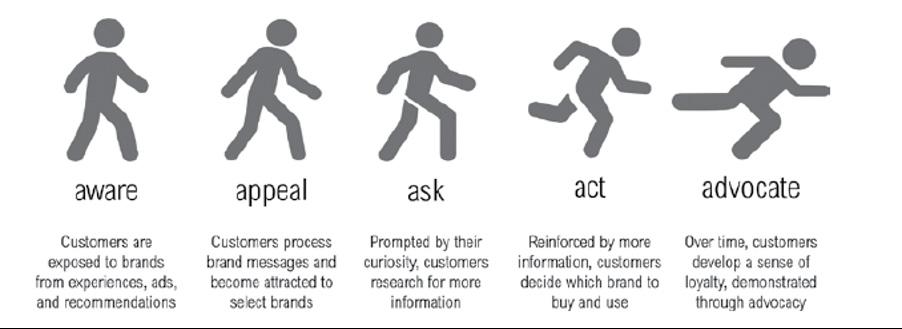
Figure 4.4. The 5A Framework: How Customers Progress Through the Decision Jouney
Source: Kotler, P., Kartajaya, H., & Setiawan, I. (2021). Marketing 5.0
A practical mapping between 5A and the customer journey can be understood as follows:
Aware <-> Discovery / Awareness
Customers first encounter the brand through initial experiences, content, or early recommendations. Personalization helps the brand appear in the right context and align with emerging interests, so awareness feels relevant and meaningful from the very first touchpoint.
Appeal <-> Consideration (attraction)
After awareness, customers process messages and form attraction. Personalization focuses on adapting content and approach to match emotions, motives, and personal values, making the brand stand out among alternatives.
Ask <-> Consideration (information seeking)
When curiosity is triggered, customers actively seek more information. Personalization supports this stage through tailored suggestions, comparisons, and guidance based on exploration behavior, making evaluation clearer and less pressured.
Act <-> Purchase
This is the moment of purchase decision. Personalization helps identify readiness-to-act signals, reduces purchase friction, and increases confidence so buying becomes the natural next step in the individual journey.
Advocate <-> Post-purchase & Loyalty / Community
After purchase, the relationship continues. Personalization sustains engagement through appropriate care, usage support, and community-building moving customers from buyers to advocates who amplify positive experiences.
Although the 5A framework remains structurally consistent, customers move through its stages at varying paces and with different emotional dynamics. Personalization allows brands to design flexible customer journeys rather than rigid, predetermined pathways.
Data Silos & the 5A Framework – When Data Disrupts the Customer Journey
However, journey based personalization is only truly feasible when data is organized around that journey. If data is fragmented across departments marketing, sales, and customer service personalization does not fail because of insufficient technology, but because of a lack of continuity in the experience.
Within the 5A model, data silos create strategic breakpoints:
• Aware to Appeal: Failure to retain contact history results in repetitive or irrelevant messaging.
• Ask: Lack of context regarding prior research behavior leads to fragmented consultation.
• Act: Inability to accurately identify purchase readiness increases friction.
• Advocate: Failure to connect post purchase data makes it difficult to sustain and expand the relationship.
Customers do not experience a brand according to departmental structures; they experience a seamless journey.
Therefore, personalization becomes effective only when data is designed around the customer journey rather than around the company’s internal organizational structure.
In other words, personalization does not require more data, but data that is properly connected according to the logic of experience.
A Thin Line: Personalization and Customer Trust
When Personalization Creates Value vs Backfires
Personalization creates value only when customers perceive positive intent behind it. A timely, need-relevant recommendation may feel like care; the same recommendation, if delivered too early, too directly, or without context, can be interpreted as surveillance. The line between “understanding me” and “tracking me” therefore is not in the algorithm it is in how personalization is embedded into human experience.
Consumer behavior research illustrates this split. PwC’s Experience is Everything (2022) reports that 73% of consumers are willing to share data if they receive clear value such as time savings or greater convenience, yet 59% feel uncomfortable when personalization becomes too detailed without reasonable explanation. This suggests customers do not reject personalization; they reject the feeling of losing control.
Personalization creates value when it appears as a natural response to needs the customer has already signaled. It backfires when it anticipates needs in a way that feels “too smart,” surprising customers with how much the brand seems to know beyond what they are ready to share. The issue is not data, it is the finesse of data use.
Three Core Risks of Modern Personalization
When personalization is deployed at scale, three core risks frequently emerge if businesses lack ethical direction and long-term trust governance.
First, over-personalization. The “creepy” effect does not come from the brand knowing who the customer is, but from revealing that knowledge without subtlety. When personalization appears at every touchpoint and repeatedly references personal details, it can erode the customer’s sense of safety.
Second, lack of transparency in data usage. Customers are generally concerned about their privacy, but often lack clear information and simple tools to control how their data is being used. This indicates that the issue is not indifference, but a lack of clarity and usability. As a result, transparency is no longer just a compliance requirement; it becomes a core part of the customer experience, and trust must be intentionally designed into the journey rather than left for users to manage on their own.
Cisco’s Consumer Privacy Survey (2023) shows that privacy concern is widespread but actions vary.
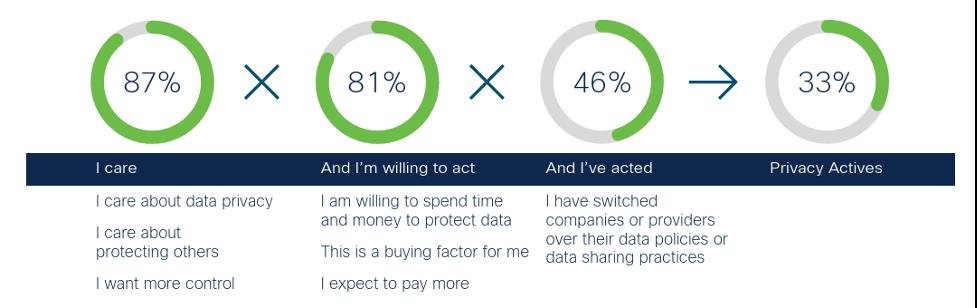
Therefore:
• Customers are not lacking concern; they are lacking clarity and easy-to-use control
• Transparency is no longer only a legal requirement; it becomes part of the customer experience
• Trust responsibility must be designed into experiences; it cannot be shifted onto users
Third, excessive data collection without delivering proportional value creates an imbalanced exchange between brands and customers. When customers feel that they are asked to share more information than the value they receive in return, it leads to growing skepticism and caution. Over time, this imbalance weakens trust and reduces the effectiveness of personalization itself, as customers become less willing to engage or share data.
Source: Cisco. (2023)
Figure 4.5. The Gap Between Privacy Concern and Actual Consumer Action
Trust as the Foundation of Sustainable Personalization
Despite legal differences across regions, data protection frameworks in the EU, the United States, and Asia converge on one principle: returning data control to consumers. However, personalization practices are strongly shaped by cultural context. Europe emphasizes principles and legal transparency; the U.S. focuses on choice; many Asian markets place heavy weight on social perception where personalization is accepted when it feels appropriately caring, but triggers backlash when it feels like surveillance. This shows personalization cannot be applied through a one-size-fits-all global formula; it must be designed around law, culture, and local acceptance.
Table 4.2. Data Protection Frameworks and Consumer Rights (Selected Markets)
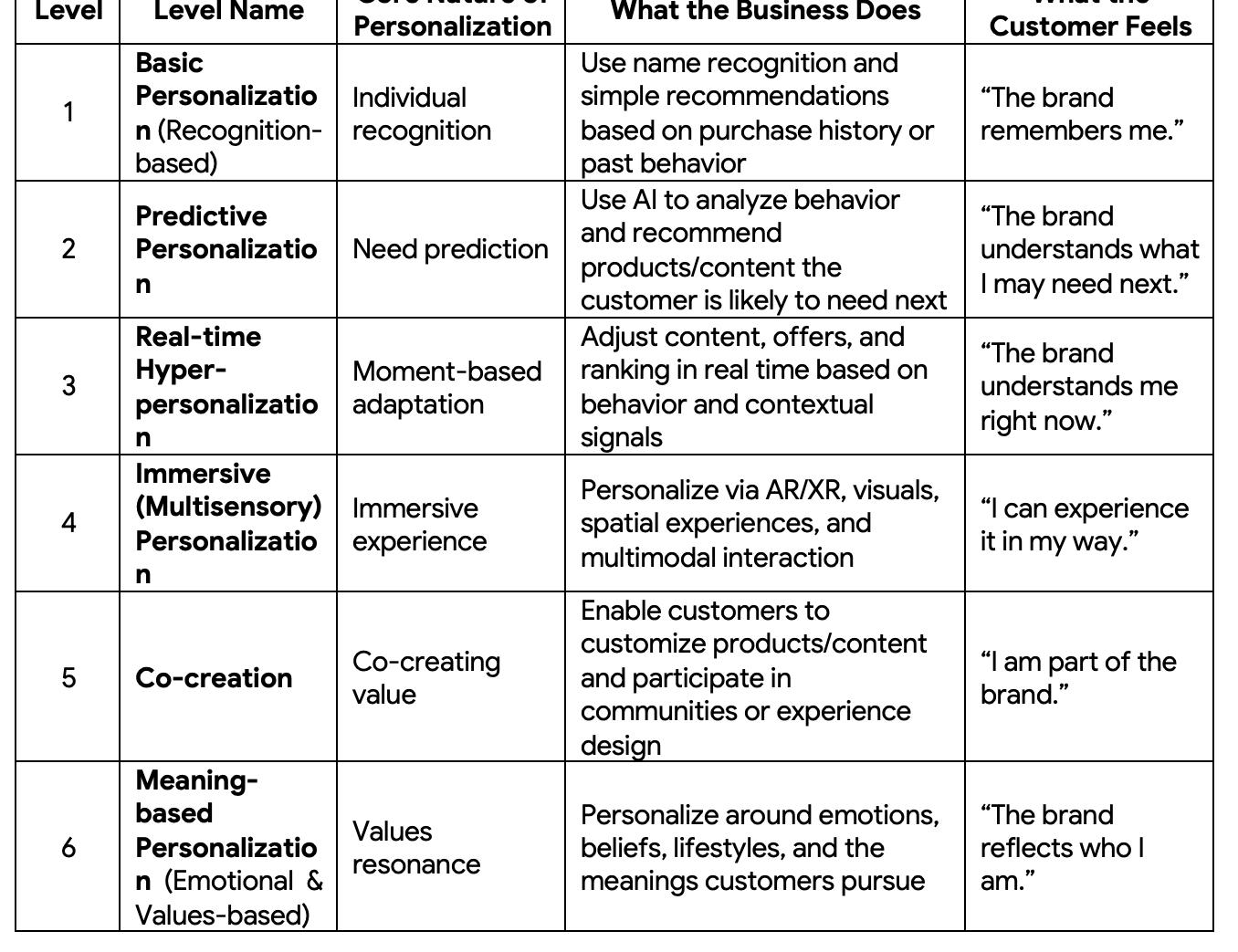
Consumer behavior in Asia reveals a clear paradox: while customers are sensitive to feeling “tracked,” they are still willing to accept personalization when it is genuinely helpful. They tend to respond positively when experiences deliver clear value, feel locally relevant, and align naturally with their usage context. However, when personalization becomes too explicit such as repetitive retargeting or interactions that feel like surveillance rather than support customers react negatively. This suggests that personalization in Asia fails less due to a lack of data and more due to a lack of subtlety and contextual sensitivity.
A representative example is LINE, a messaging platform and service ecosystem popular in Japan and several Asian markets. LINE applies restrained, context-linked personalization: suggesting stickers that match conversation content, recommending local services (payments, tickets, nearby-store offers) by time and place, and allowing users to control what notifications they receive. Personalization rarely appears as direct selling; it plays the role of everyday-life assistance, so users experience it as natural convenience rather than constant tracking.
From the data and examples above, one conclusion stands out: trust is the central variable in modern personalization. Without trust, the more accurate personalization becomes, the more likely it is to be interpreted as intrusion and to backfire. With transparency, consent, and customer control, consumers not only share data more willingly they engage more deeply. In this context, personalization is not a question of “how much can we know,” but “how much understanding is enough.”
TRUST-READY PERSONALIZATION CHECKLIST
Personalization is only sustainable when built on a foundation of transparency, consent, and control.
Before scaling personalization efforts, companies should conduct a self assessment:
• Is the purpose of data collection clearly explained, easy to understand, and explicitly linked to tangible value for the customer?
• Can users withdraw consent easily, without friction or manipulative dark patterns?
• Does the system allow customers to control the level of personalization for example, selecting notification types, disabling predictive suggestions, or adjusting preferences?
• Does the company avoid collecting and using data beyond the actual value exchange?
• Is there human oversight over AI systems?
• Are there processes in place to audit algorithmic bias, data distortion, and unintended consequences?
Future Lens: The Future of Personalization Technology
The future of personalization tech will not be about “more personalization,” but about smarter, more discreet, and more responsible personalization. The trends below show a fundamental shift: from reactive to predictive, from identity-based data to context, and from brand-controlled experiences to AI-orchestrated experiences on behalf of customers.
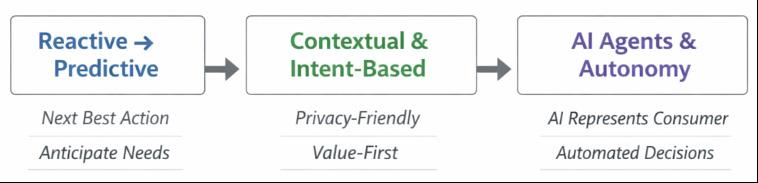
From Reactive to Predictive Personalization
In early stages, personalization was largely reactive: customers act, and systems respond. The future lies in predicting the next best action the most suitable next step for each individual in each context.
At this level, AI learns not only from past behavior but also connects:
• Continuous behavioral sequences
• Usage rhythms and timing
• Current context and emotional signals
• Near-term need prediction
Instead of waiting for customers to search or ask, systems can:
• Suggest solutions before customers recognize the need
• Show up when customers are most ready to decide
• Reduce the cognitive steps required for comparison and evaluation
Personalization becomes less about “responding correctly” and more about moving in rhythm making decisions feel lighter and lower-friction.
Figure 4.6. The Future Lens of Personalization Tech
Personalization Without Personal Identifiers
Alongside prediction, another important direction is emerging: personalization that does not rely on personally identifiable data. As privacy requirements tighten, the future will lean more on contextual and intent-based personalization.
Instead of asking “who are you?”, systems focus on:
• Usage context (device, timing, location)
• Immediate behavior signals
• Inferred intent from the current situation
This approach delivers two critical benefits:
• Privacy-friendly: reducing feelings of surveillance or intrusion
• Value-first: delivering value in the moment customers need it
In the future, brands that excel at personalization will not be those that collect the most data, but those that understand context most accurately.
AI Agents & Autonomous Experience
The most disruptive shift is the rise of AI agents AI actors that represent customers. Instead of individuals interacting with dozens of brands, AI will increasingly perform complex tasks on their behalf.
AI agents can:
• Filter and synthesize information
• Compare options based on personal criteria
• Negotiate terms
• Even execute purchase decisions automatically
In this scenario, brands must not only communicate with humans, but also with customers’ AI. Brands must:
• Be legible to AI systems (structured, verifiable, and transparent)
• Prove value logically and credibly, not only creatively
• Be “selected” by algorithms designed to optimize customer interests
This creates a new strategic question: by what criteria will customers’ AI evaluate and prioritize brands? The answer is less about catchy advertising and more about reliability, real value, and long-term benefit.
The future of personalization shifts from “what do I see?” to a deeper question: “who is deciding for me?” As AI becomes an intermediary in experiences, personalization becomes not only optimization technology, but a matter of representation, trust, and human value.
Chapter 5 highlights a fundamental shift in how marketing is shaped and operated in the Next-Gen era. Marketing is no longer supported by technology; it is increasingly run by intelligent systems. AI creates value not when used in isolation, but when embedded within end-to-end systems that can sense signals, make decisions, execute actions, and learn continuously. As marketing moves from campaign-led execution to decision-led operations, the role of marketers evolves from executing activities to designing, governing, and improving systems. Over time, these systems become self-optimizing and increasingly invisible, embedding relevance directly into the customer experience. The future of marketing belongs to organizations that can operate relevance at scale quietly, continuously, and intelligently.
Case Study: AWING - LOCATION-BASED PERSONALIZATION IN PHYSICAL SPACES
In the digital marketing era, personalization has become a familiar experience norm. Consumers are used to name-based emails, banners that show previously viewed products, and “for you” recommendations on platforms like Netflix, Shopee, or TikTok. However, most personalization still happens online, powered by digital behavioral data.
This raises a core question for modern marketing: does personalization only exist on screens, or can it extend into real life where people are physically present, moving, and deciding in specific contexts?
This question is the starting point for AWING an Location-Based Marketing (LBM) technology company operating in Vietnam and Indonesia, that targets a “white space” in personalization: personalization driven by physical location and real-world context rather than identity-level tracking.
Asia’s digital infrastructure especially in Southeast Asia creates favorable conditions for location-based personalization. Data shows that five Southeast Asian countries are in the Asia–Pacific top 10 for free public Wi-Fi hotspots, with Indonesia and Vietnam standing out as high-density public Wi-Fi markets. This reflects an important reality: Wi-Fi connectivity has become part of urban life, tied to consumption spaces such as cafés, malls, airports, and public venues. In this context, platforms like AWING see the opportunity to turn Wi-Fi from a pure connectivity infrastructure into a location-based experience and personalization channel where brands can engage consumers at the moment they are physically present in real life.
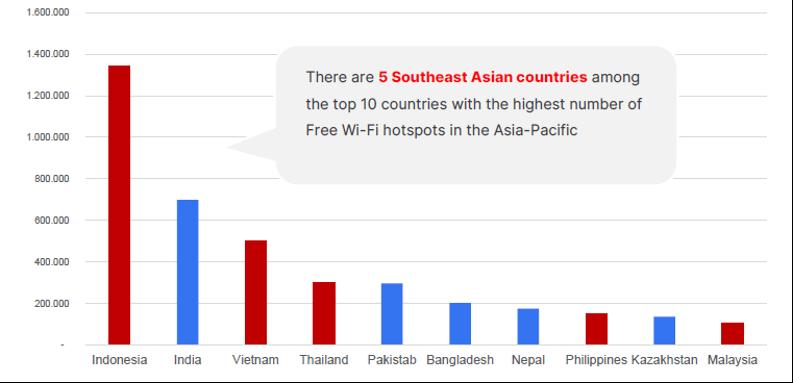
Figure 4.7. Free Public Wi-Fi Hotspots in Asia Pacific – Foundation for Location-Based Personalization
Source: Wi-Fi Map
AWING’s Location-Based Marketing approach
AWING positions itself not as a simple Wi-Fi advertising network, but as a location-based personalization platform. Rather than focusing on clicks or browsing history, AWING starts from a key premise: human behavior is expressed not only on screens, but also through where people are, when they show up, and the psychological state tied to that context.
In AWING’s model, public Wi-Fi inside cafés, malls, airports, campuses, and retail stores is not just connectivity infrastructure, it is redefined as a new in-venue media channel. Each Wi-Fi access point becomes a contextual brand touchpoint where users willingly interact to access high-quality internet.
This approach differs from common Wi-Fi advertising models globally. In many markets, Wi-Fi ads are linked to outdoor hotspots and used mainly to drive traffic to nearby stores showing ads for surrounding services to motivate visits. The focus is on movement guidance rather than in-venue interaction.
AWING, by contrast, reaches users inside the venue at the moment they are already present in the consumption space. Through free Wi-Fi, AWING activates context-based ads tied to space–time–behavior signals, enabling messages to adapt by in-venue moments (waiting, dining, resting, entertainment). This turns Wi-Fi from a “bring customers to the store” tool into an experience and behavior activation channel at the touchpoint itself.
In addition, compared with traditional digital ads that depend on content to generate traffic, AWING leverages “contentless traffic” audience flow that comes from real-life needs to connect to the internet. This helps ensure real users, 100% ad exposure at login, reduced ad fraud, and a new form of communication: communication by real consumption context rather than by browsing behavior.
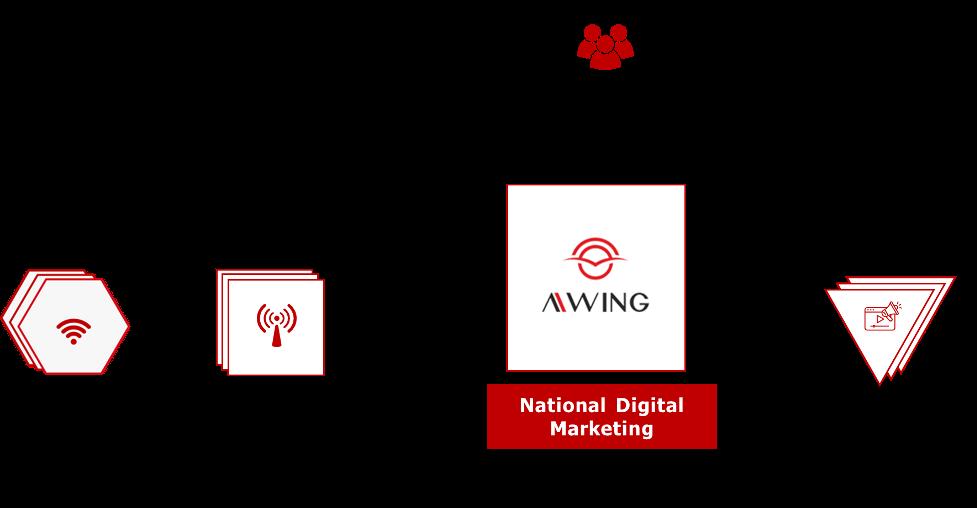
Source: AWING
In Vietnam and across Southeast Asia, customers frequently use free Wi-Fi in consumption venues, but many locations invest only minimally in quality. Through a sharing-economy model, AWING creates value for multiple parties. Wi-Fi partners gain an internal media channel and shared revenue, providing incentives to upgrade infrastructure to AWING’s high-quality Wi-Fi standards. In this way, AWING helps socialize high-quality free Wi-Fi in communities while enabling brands to reach real users in real consumption contexts with high attention and location-based, moment-driven personalization.
At the center of AWING’s model is Adaptive Campaign Management (ACM) an automated campaign system driven by real-time data. ACM enables each Wi-Fi location to operate as an independent media touchpoint, with content changing flexibly by usage context.
The platform collects anonymized data, including:
• Connection location
• Time and frequency of access
• Device type
• User density at each location
Figure 4.8. AWING win-win sharing economy concept
The system does not use cookies, does not require a separate app, and does not identify individuals. Data is analyzed with AI to recognize indoor consumption patterns, creating deep cohorts by space and time.
Examples include:
• Morning café Wi-Fi users often respond well to financial products and daily-utility services.
• Weekend mall visitors tend to be more interested in fashion, FMCG, and F&B offers.
• Airport passengers are more sensitive to insurance, banking, telecom, and travel services.
Based on these signals, ACM automatically selects the most suitable content for each context in near real time a form of hyper-personalization based on context without personal identifiers.
AWING describes this approach as “moment personalization.” The experience is personalized not by asking “who are you?” but “where are you, what are you doing, and what do you need right now?” A person sitting at Highlands Coffee might see a cashback credit-card offer for beverages; a passenger at Tan Son Nhat airport might receive an international SIM or travel insurance offer; a group of friends at Vincom Center might see fashion or dining promotions. At the same time, different individuals receive different messages because they are living in different experience contexts. This demonstrates that personalization does not need identity-based data; it can be highly effective through contextual understanding.
AWING not only personalizes displayed content; it also enables co-creation of experiences. When accessing Wi-Fi, users can choose how to interact claiming vouchers, watching videos, playing mini games, or completing surveys for rewards. Each choice delivers immediate value while providing signals for the system to learn and improve future personalization. For example, if 70% of office-building users choose morning coffee offers, the system will automatically prioritize F&B messages for that area. In this way, consumers become co-authors of the brand experience.
Another differentiator is AWING’s focus on emotional and multisensory fit. Ads are designed not as disruption but as aligned with the space and the user’s mindset. At Highlands Coffee, messages are softer and relaxed to match morning mood; at Noi Bai or Tan Son Nhat airports, passengers see insurance or telecom messages that fit the desire for safety and convenience before travel. When communication matches emotional context, it feels less like advertising and more like a natural part of the experience.
Alongside technology, AWING emphasizes transparency and user respect. The platform does not require social logins, does not store personal data, and allows users to decline ads while still accessing Wi-Fi. This “light-touch” approach increases customers’ sense of control, building trust the foundation of sustainable personalization.
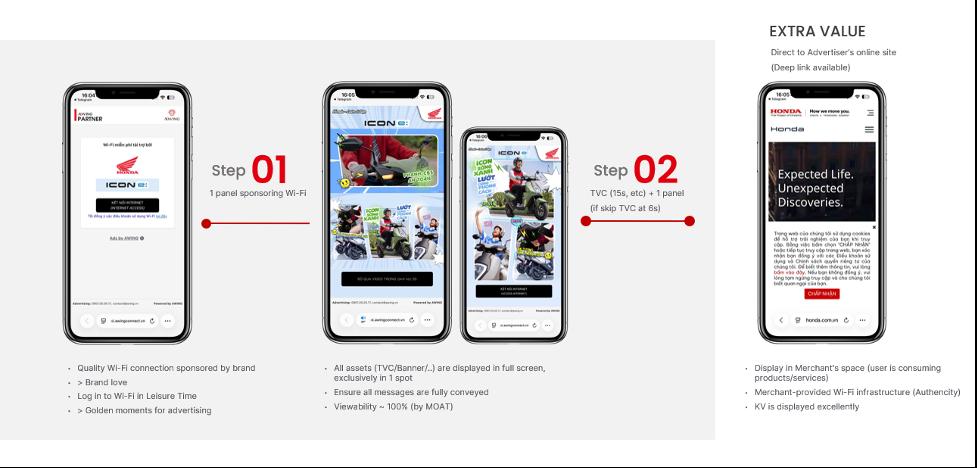
Source: AWING
According to Nielsen Vietnam survey data (2019–2025), more than 80% of AWING users proactively interact with ads during Wi-Fi connection, and 71% are willing to share information when the ads deliver real value.
Selected campaigns reported strong outcomes:
• Vietcombank recorded more than 209,000 interactions for the “Open an account via VNPAY wallet” campaign.
• Lotusmiles (Vietnam Airlines) reported an 18% increase in member registrations when displayed across airports and F&B chains.
• Samsung recorded 20,000 interactions for the launch of QLED 8K TVs.
• Suntory successfully distributed 63,000 trial vouchers for TEA+ Plus Oolong Tea at more than 200 Circle K stores, with a 50% redemption rate.
At a journey level, AWING creates a complete 5A-aligned experience: awareness at Wi-Fi login (Aware), attraction through utility (Appeal), active exploration (Ask), action (Act), and advocacy due to usefulness without annoyance (Advocate).
Figure 4.9. Unique Interactive Ads-Flow by AWING
AWING’s story demonstrates that true personalization comes not from collecting the most personal data, but from understanding context, respecting boundaries, and delivering real value in each moment. In the future, sustainable personalization will belong to brands that put trust and human experience at the center where technology serves people rather than controls them.
KEY INSIGHTS – WHAT BUSINESS MUST UNDERSTAND ABOUT PERSONALIZATION TECH
• Personalization has become a default expectation, no longer a competitive advantage. Customers no longer ask whether a brand personalizes; they ask why the brand doesn’t understand them. Not personalizing increases the risk of being removed from the consideration set.
• Experience benchmarks are set across industries and “trained” by Big Tech. Smooth, intelligent platform experiences become the benchmark customers carry into every brand—regardless of category or size.
• Personalization has evolved from messages to end-to-end experiences. Modern personalization designs the entire journey: right time, right channel, right context, and the right level of intervention.
• Personalization maturity reflects the evolution of marketing thinking. The six levels show a shift from data understanding to human empathy—from behavior and needs to emotions and values.
• Trust is the central variable for sustainable personalization. Personalization creates value only with transparency, consent, and customer control; when boundaries are crossed, higher accuracy can backfire more strongly.
• The future of personalization is proactive, less intrusive, and increasingly autonomous. As AI predicts next best actions and makes decisions on customers’ behalf, the question shifts from “what do I see?” to “who decides for me?”
CHAPTER 5 NEXT-GENERATION TECHNOLOGY FROM AI TO INTELLIGENT SYSTEMS
In the previous chapters, we have seen marketing shift from mass approaches to personalization, from one-way communication to multi-touchpoint experiences, and from manual decisions to increasingly data-driven interactions. However, as customer behavior becomes more non-linear, omnichannel, and real-time, a clear limitation begins to emerge: human decision-making can no longer keep pace with the speed and complexity of customer behavior. Marketing no longer has the luxury of operating through traditional cycles of planning, execution, measurement, and adjustment. The gap between customer signals and a company’s response has become a decisive source of competitive advantage.
Chapter 5 focuses on a fundamental shift in the role of marketing technology from a set of supporting tools to systems that actively operate marketing itself. Rather than framing next-generation technology as simply “using more AI,” this chapter approaches the issue at a system level: how AI, data, automation, and orchestration come together to form smart systems capable of sensing, thinking, acting, and learning continuously. In this model, technology does not replace marketers, but forces a role transformation from executing marketing activities to designing, governing, and refining marketing systems. This shift lays the foundation for self-optimizing and invisible marketing, where value is delivered quietly through experience rather than loudly through campaigns.
From Supportive Technology to Decision-Shaping Technology
For a long time, technology in marketing was primarily perceived as a supportive tool. Firms invested in technology to perform familiar tasks faster, cheaper, and with greater control. However, as customer behavior has become non-linear, omnichannel, and dynamically evolving in real time, this approach has gradually revealed its limitations. Next-generation marketing requires a fundamental shift in mindset: from technology as support to technology as a force that shapes and drives how marketing operates.
The Era of Supportive Marketing Technology
In the early stages of digital transformation, technology in marketing was primarily used as a supporting tool to make traditional activities faster and more efficient. Companies implemented CRM systems to store and manage customer data, email marketing platforms to automate message delivery, dashboards to track performance, and basic chatbots to handle repetitive inquiries. This indicates that enabling technology has become a default component of modern marketing operations, especially for repetitive and standardized tasks.
The primary objective at this stage is to increase efficiency and reduce operational costs. Automation saves time, minimizes manual errors, and enhances consistency in campaign execution, allowing teams to focus more on content creation and idea development. However, when tools are implemented separately across departments or channels, customer data quickly becomes fragmented. CRM systems store transaction data, email platforms record engagement metrics, customer service systems retain support history, while websites and social media generate distinct behavioral data streams that remain disconnected. As a result, marketing is optimized at the functional or channel level rather than across the holistic customer experience.
In practice, within a support-tool-driven marketing model, each customer touchpoint often generates its own “data island,” managed by different platforms, departments, or partners. These outcomes represent the initial value of digital transformation, not the deepest level of technological integration in marketing. When tools are deployed separately across departments or channels, organizations begin to face data fragmentation:
• CRM systems store transactional and contact data;
• Email platforms retain open and click histories;
• Customer service systems log issues and support tickets;
• Social and web channels generate distinct behavioral data streams for each interaction.
The same customer may receive inconsistent messages across email, social media, and websites; encounter duplicated promotions across channels; or be required to “re-explain everything” when moving from digital channels to human interaction all of which create a fragmented and incoherent journey.
When Technology Begins to Shape How Marketing Operates
The shift to the next stage occurs when companies realize that marketing can no longer operate effectively through scheduled campaigns executed in batches. Customer behavior today is nonlinear, constantly moving across channels, devices, and need states within very short time frames. Marketing therefore gradually moves away from a campaign driven model toward signal and context driven operations in real time. Technology is no longer merely an execution tool; it becomes the structural layer that shapes how marketing is organized and operated.
This transformation is particularly evident in Asia and Southeast Asia, where digitalization is rapid and mobile first behavior is the default. Social media, ecommerce, and digital wallets have deeply penetrated daily life, while purchase journeys strongly blend online and offline touchpoints. Consumers can watch a livestream, consult community opinions, compare prices, and make a purchase decision within minutes. In such an environment, static campaign based marketing quickly falls out of sync.
In many Southeast Asian markets such as Vietnam, Indonesia, and Thailand, marketing increasingly faces the following behavioral characteristics:
• Customers constantly switch channels between social platforms, marketplaces, websites, and physical stores.
• Purchase decisions are heavily influenced by immediate context (price, promotions, reviews, community signals) rather than long-term brand messaging.
• Expectations for fast responses, relevant offers, and seamless experiences are high, especially on mobile devices.
These characteristics require marketing to be organized as a signal-responsive system rather than a series of disconnected campaigns. Instead of waiting until the end of the month or quarter to evaluate and adjust, marketing activities must be capable of observing behavior, interpreting context, and triggering appropriate actions almost instantaneously. At this stage, technology no longer merely supports execution; it becomes the central operational layer that determines when to interact, through which channel, and with what content and intensity.
This leads to a fundamental shift in marketing management mindset. Marketing is no longer measured primarily by the number of campaigns launched or the budget spent, but by the ability to respond appropriately and adapt to ongoing customer behavior. At this stage, technology begins to define the “rules of the game”: moving marketing from simply doing things faster to determining how marketing operates in a real-time, omnichannel, context-rich environment.
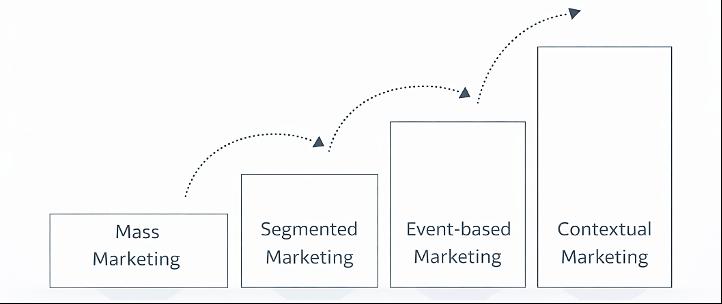
This is the pivotal transition toward viewing marketing as a system a direct precursor to the next stage, where marketing is not merely “executed” but operated as a core organizational capability.
From “Doing Marketing” to “Operating Marketing”
When technology reaches the level at which it can observe behavior, analyze data, and respond in real time, its role in marketing changes fundamentally. Technology no longer merely supports humans in executing isolated tasks; it progressively assumes coordination and decision-making roles in repetitive, learnable situations. Marketing thus ceases to follow a linear “execute then measure” logic and becomes a continuous, adaptive, signal-responsive activity similar to how intelligent systems operate in other domains.
The evolving role of technology in marketing can be described across three levels of progression. At the first level, technology supports humans in performing familiar tasks more efficiently. At the next level, technology coordinates touchpoints, channels, and messages to ensure more synchronized operations across the customer journey. At the highest level, technology directly participates in decision-making, particularly in contexts that can be standardized, measured, and continuously optimized through data.
• From execution support → journey coordination
• From coordination → signal-based decision participation
• From manual decisions → semi-automated, adaptive decisions
At this level, marketing is no longer a collection of fragmented activities “done” by humans, but a continuously operated system. Humans and technology do not compete; they collaborate within a new structure: technology handles signal collection, pattern recognition, rapid response, and learning from data, while humans focus on defining objectives, principles, boundaries, and strategic oversight. Marketing thus increasingly resembles a core operational capability, similar to supply chains or financial systems within the organization.
Figure 5.1. The Shift from Campaign-Based to Contextual Marketing
This shift also transforms the nature of strategic questions. Previously, firms asked: “What additional tools should we use to improve marketing?” In a real-time, omnichannel environment, this question is no longer sufficient. Instead, the critical question becomes: “What system are we using to operate marketing, and on what signals and principles does that system observe, decide, and learn?” This marks the clear boundary between the mindset of “doing marketing” and that of “operating marketing.”
What Is Next-Generation Technology in Marketing?
The Limitations of Standalone AI
At its core, artificial intelligence (AI), when operating in isolation, is merely a model or a set of algorithms capable of learning from data in order to generate predictions or recommendations. AI can identify behavioral patterns, estimate purchase probability, predict churn risk, or suggest relevant content. However, AI does not create business value on its own if it is not embedded within a complete operating system one in which insights are translated into actions, and actions lead to tangible changes in customer experience. In marketing, this limitation becomes particularly evident when AI remains at the level of analysis or recommendation, while decision-making and execution still rely primarily on human intervention.
In practice, the limitations of standalone AI typically emerge at three critical bottlenecks: data, context, and actionability.
(1) Lack of Relevant or Integrated Data
AI can only learn from what it is able to “see.” When customer data is scattered across multiple systems and remains unconnected, AI gains access to only a partial view of customer behavior.
• Transactional data resides in CRM or POS systems
• Behavioral data is captured on websites, mobile apps, or social platforms
• Customer service data is stored in customer support systems
For example, an e-commerce company may deploy AI to predict repeat purchase likelihood based solely on transactional data. However, the model may not have access to customers’ social media interactions or complaint histories. As a result, while the AI model may achieve strong statistical accuracy, it fails to detect many customers who exhibit clear churn signals on other channels. The insight generated is partially correct, but insufficient to guide effective marketing decisions.
(2) Lack of Context in Decision-Making
Marketing is fundamentally a problem of timing, channel, and need state, whereas standalone AI systems often optimize for technical accuracy rather than contextual relevance.
• They cannot distinguish whether customers are exploring, comparing, or ready to purchase
• They fail to capture behavioral differences across channels (email, app, chat, social media)
• They do not account for brand constraints or long-term strategic objectives
For instance, an AI system may identify a group of customers with high purchase probability and recommend sending a promotional offer. However, the system does not differentiate between customers who are still price-comparing and those who are close to completing a transaction. As a result, the same incentive is sent to all customers, leading to reduced effectiveness and, in some cases, counterproductive outcomes particularly for customers who were already prepared to purchase. AI correctly predicts “who is likely to buy,” but fails to answer “when, through which channel, and with what message.”
(3) Lack of Real-Time Actionability
This is the most common bottleneck when AI operates in isolation: insights are not activated into actions.
• Insights are displayed only on dashboards
• There is no integration with personalization or automation systems
• Decisions still require manual human approval
In many organizations, AI can detect early signals of customer churn, but these alerts remain confined to reports. There is no automated mechanism to trigger offers, adjust content, or route information in real time to customer service teams. By the time human intervention occurs, the optimal moment for effective action has already passed. AI generates understanding, but fails to create real impact on customer behavior.
From Standalone AI to Smart Systems
Once the limitations of standalone AI are recognized, the next step in Next-Generation Marketing is not simply to “use more AI,” but to position AI appropriately within the marketing operating structure. In practice, within many organizations, AI no longer exists as an isolated analytical model, but is embedded directly into specific marketing functions, ranging from data analysis to personalization and automated execution.
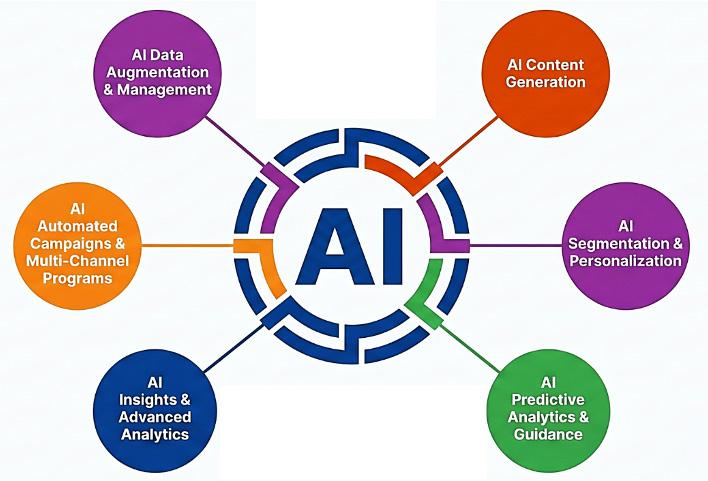
5.2. AI-powered marketing capabilities.
At this stage, AI typically functions as a capability engine that supports and enhances core marketing activities. As illustrated in the figure, AI begins to operate across a range of functional capabilities, including:
AI Insights & Advanced Analytics facilitate deep behavioral analysis, performance evaluation, and the identification of complex data patterns that are often beyond human analytical capabilities.
• AI Content Generation enables the creation of tailored content that aligns with specific customer segments, preferences, and contextual usage scenarios.
• AI Data Augmentation & Management supports the enrichment, standardization, and structuring of data, thereby enhancing its quality and usability for marketing decision-making.
• AI Segmentation & Personalization allows for scalable customer segmentation and the delivery of highly personalized experiences across touchpoints.
• AI Automated Campaigns & Multi-channel Programs enable the automated orchestration and execution of marketing activities across multiple channels in an integrated manner.
• AI Predictive Analytics & Guidance leverages data to forecast conversion probabilities and provide actionable recommendations to support sales and marketing strategies.
This approach represents a significant step forward: AI no longer merely generates insights, but directly participates in specific marketing activities. However, Next-Generation Technology in marketing does not stop at a collection of AI capabilities. It advances further toward the construction of smart systems. In smart systems, AI is only one component, tightly integrated with unified data, end-to-end automation, and clearly defined business
Figure
principles. Value does not arise from individual capabilities, but from the system’s ability to orchestrate all components to observe, decide, and act in a consistent manner.
Smart System = AI + Data + Automation + Business Rules
Within this structure, each component plays a distinct yet inseparable role:
• AI is responsible for learning from data, identifying patterns, and recommending decisions in situations that can be standardized
• Data provides continuous streams of behavioral, contextual, and outcome information, enabling a holistic view of the customer journey
• Automation allows decisions to be translated into immediate actions, from content personalization to channel orchestration
• Business rules serve as the governance framework, ensuring that automated decisions align with organizational strategy, brand principles, and constraints
When these components are integrated, the marketing system moves beyond analysis and acquires the core capabilities of an intelligent system:
• Learning from customer behavior and past interaction outcomes
• Adapting to changes in needs, context, and market environment
• Making decisions in repetitive, measurable situations that can be continuously optimized
• Self-improving through feedback loops, where each action becomes data for the next decision
At this stage, marketing is no longer a collection of disconnected tools or campaign activations, but an intelligent decision-making system designed to operate continuously alongside customer behavior
Marketing’s Shift from Manual to Algorithmic
In the traditional model, marketing typically operates according to a linear logic: planning, campaign execution, performance measurement, and adjustment in the next cycle. Key decisions such as segment selection, messaging, channels, and timing are largely predefined and applied uniformly across customer groups. This approach works in relatively stable environments but increasingly reveals its limitations as customer behavior becomes non-linear, omnichannel, and rapidly changing.
With smart systems, this operating logic changes fundamentally. Marketing no longer waits for humans to manually activate campaigns, but responds continuously based on signals generated throughout the customer journey. Decision-making is no longer a separate step from operations, but becomes a continuous flow, in which each interaction can trigger a different marketing action.
This shift can be clearly observed along two opposing dimensions:
• From manual decisions to algorithmic decisions, driven by data, context, and predefined rules
• From static segmentation to dynamic personalization, where the same customer may receive different experiences depending on timing, behavior, and need state
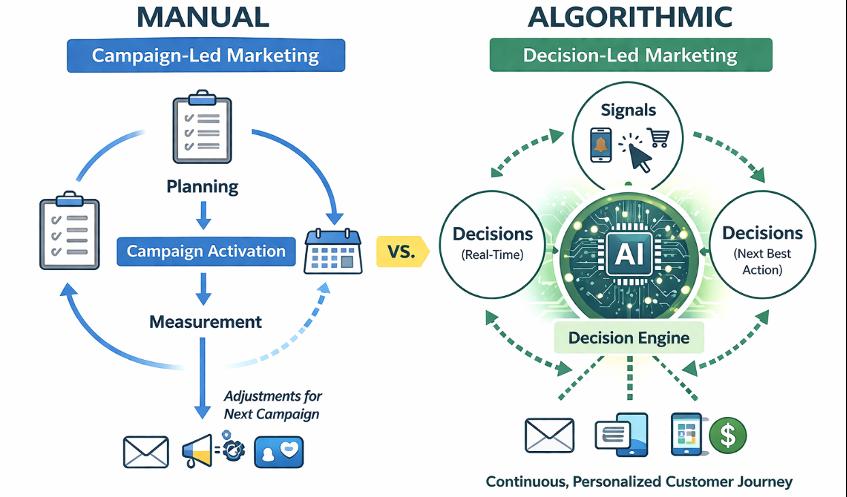
In this context, marketing is no longer driven by campaign calendars or fixed messages, but by a continuous stream of decisions triggered by customer signals. Instead of asking “Which campaign should run next?”, the marketing system begins to answer questions such as “What response does this customer need right now?” or “Which action is most likely to create value in the current context?” This represents the shift from campaign-led marketing to decision-led marketing.
The transition from manual to algorithmic marketing marks a critical turning point in Next-Generation Marketing. Marketing is no longer a communication activity executed through campaigns, but an intelligent decision-making system that operates continuously alongside customer behavior. This forms the foundation for understanding how smart systems “live” in practice from sensing signals, to analyzing, acting, and learning, which will be explored in detail in the subsequent sections of this chapter.
Figure 5.3. The Shift from Campaign-Led to Decision-Led Marketing
Core Technologies and Architecture of Next-Generation Marketing
Next-Generation Marketing is not built upon a single technology, but on an integrated architecture in which multiple technological layers work together to enable real-time observation, decision-making, and action. Within this architecture, each technology plays a distinct role, but value is created only when these technologies are connected within a unified system.
Artificial Intelligence & Machine Learning
Within the Next-Generation Marketing architecture, Artificial Intelligence (AI) and Machine Learning function as the system’s “operational brain.” Rather than merely supporting reporting or post-hoc analysis, AI assumes responsibility for repetitive and standardizable marketing decisions, enabling the system to respond to customer behavior with speed and consistency. AI does not determine marketing strategy; instead, it handles the “how” and “when” of daily marketing operations.
In practice, AI delivers its greatest value across three core capabilities:
• Behavioral pattern recognition: AI identifies interaction sequences and behavioral patterns that are difficult to detect through manual methods, such as how customers move across channels, changes in interaction intensity, or variations in responses across different contexts.
• Demand and risk prediction: Based on behavioral and transactional data, AI estimates conversion probability, detects early churn risk, and assesses purchase readiness at specific moments, providing a foundation for timely interventions.
• Real-time optimization of marketing decisions: AI continuously evaluates alternative actions across content, channels, incentives, and timing to select the response with the highest probability of value creation within the current context.
At this level, AI does not replace the strategic role of marketers. Humans continue to design objectives, experiences, and operating principles, while AI handles operational decisions with a level of speed, scale, and consistency that is difficult for humans to match. This forms the foundation for marketing to operate as an intelligent system rather than a collection of fragmented actions.
Strategic Use Case
Predicting the next best action to reduce decision friction and optimize customer lifetime value.
Primary 5A Impact
Ask → Act.
Human Oversight
Monitoring bias, model drift, and intervention thresholds to ensure that optimization does not compromise long term trust.
Data Platforms & Cloud Infrastructure
If AI functions as the brain, data platforms serve as the nervous system of the marketing system. Next-Generation Marketing requires the ability to continuously collect, connect, and transmit data from multiple sources, enabling the system to “sense” customer behavior comprehensively and in a timely manner. Without appropriate data platforms, AI can only make decisions based on fragmented information, significantly reducing the value of the entire system.
In practice, modern marketing data platforms typically process multiple types of data simultaneously to reflect the full customer journey:
• Behavioral data, such as views, clicks, dwell time, and customer movement across touchpoints.
• Transactional data, reflecting purchase value, frequency, history, and the economic relationship between customers and the brand.
• Content data, indicating how customers respond to specific messages, formats, and delivery contexts.
From the integration of these data sources, two concepts become particularly critical within the Next-Generation Marketing architecture. The first is real-time data, which allows the system to respond immediately as behavior occurs rather than waiting for periodic reports. The second is the single customer view, in which all data related to an individual customer from digital interactions to transactions are unified within a single profile, enabling consistent decision-making across the entire journey.
Cloud infrastructure provides the foundational layer for this data architecture. Through cloud computing, marketing systems can scale flexibly with data volume and interaction traffic, process large information flows in real time, and support continuous AI operations
without the constraints of fixed infrastructure. Cloud infrastructure does not merely make marketing “faster”; more importantly, it ensures that the system remains continuously responsive in a constantly changing customer environment.
Strategic Use Case
Creating a single customer view and enabling real time responsiveness across the entire journey.
Primary 5A Impact
Aware → Appeal → Ask.
Human
Oversight
Governance of data usage purpose, access control, and consent mechanisms.
Automation & Orchestration
Automation is the component that translates system decisions into actions. However, in Next-Generation Marketing, value does not lie in automating isolated tasks. The fundamental differentiator is orchestration the capability to coordinate the entire customer journey as a unified whole. If automation enables marketing to “move faster,” orchestration enables marketing to act more appropriately within each context.
In practice, standalone automation often focuses on automating specific tasks, such as sending emails, triggering notifications, or executing fixed workflows. While these tasks may be effective at the channel level, the absence of holistic coordination often leads to fragmented and inconsistent customer experiences.
In contrast, orchestration approaches marketing from the perspective of the entire customer journey. Rather than asking “when should an email be sent?” or “when should a notification be displayed?”, orchestration asks which interaction should occur next, through which channel, and with what level of intervention in the current context. This enables the system to coordinate touchpoints rather than allowing each channel to operate independently.
Within a well-orchestrated system, marketing can:
• Deliver content aligned with specific need states rather than using the same message across all moments.
• Coordinate multiple channels so that they reinforce rather than compete for customer attention.
• Control interaction frequency to avoid message overload or experience disruption.
• Adjust levels of intervention, ranging from full automation to human handoff when contexts become complex or sensitive.
At this level, automation is no longer a collection of disconnected workflows, but a flexible execution mechanism for decisions guided by data and context. Orchestration serves as the connective layer between system decisions and actual customer experiences, ensuring that every marketing action follows a coherent operating logic rather than channel-specific reactions.
Strategic Use Case
Orchestrating the omnichannel journey based on context rather than triggering fragmented campaign activations.
Primary 5A Impact
Appeal → Ask → Act → Advocate.
Human Oversight
Controlling frequency, orchestration logic, and escalation mechanisms to human intervention when necessary.
Internet of Things & Sensors
Next-Generation Marketing does not operate solely within digital spaces. The Internet of Things (IoT) and sensor systems extend marketing’s observational capability into the physical world, enabling systems to understand not only what customers click, but also what they experience in real life. This represents a critical expansion as customer behavior increasingly flows seamlessly between online and offline environments.
Through connected devices and sensors, marketing systems can:
• Collect data from the physical environment, such as location, movement, visit frequency, dwell time, and interactions with spaces, products, and retail environments.
• Connect online and offline behaviors, allowing in-store, event-based, or physical-space interactions to become part of the digital customer journey.
• Bridge digital and physical experiences by transforming physical interactions into data signals that can be analyzed, predicted, and used to trigger appropriate marketing responses.
When these signals are integrated into data platforms and orchestration layers, marketing is no longer confined to screen-based touchpoints. Brands can respond to customers’ real-life contexts, from adjusting messages as customers enter a store to personalizing experiences based on how they interact with spaces and products.
As a result, IoT and sensors form the foundation for two important directions in modern marketing experience design:
• Phygital experiences, where digital and physical experiences merge without clear boundaries between online and offline.
• Immersive touchpoints, enabling brands to be present naturally within customers’ lived contexts rather than appearing as isolated advertising messages.
At this level, IoT is not merely a measurement technology, but an extended sensing layer of smart systems, enabling marketing to become truly context-aware by perceiving physical environments and responding accordingly.
Strategic Use Case
Extending the ability to sense offline behavior in order to create phygital and context aware experiences.
Primary 5A Impact
Aware → Act.
Human Oversight
Monitoring privacy boundaries in physical spaces and ensuring transparent opt out mechanisms.
From Discrete Tools to a Marketing Technology Stack
One of the greatest challenges in contemporary marketing is not the lack of technology, but tool overload. Organizations deploy an increasing number of platforms each addressing a narrow aspect of the marketing problem without achieving holistic integration. Email, CRM, social media, advertising, analytics, and customer service are often operated through separate systems, resulting in data fragmentation across departments, channels, and functions.
The consequence of this approach is that marketing becomes optimized at the level of individual tools or channels, but fails to optimize the overall customer experience. The same customer may appear as multiple disconnected “data copies” across systems, leading to inconsistent decisions and fragmented responses.
Next-Generation Marketing requires a fundamental shift in how technology is conceived and designed. Rather than continuing to accumulate tools, organizations must approach marketing technology as an integrated stack designed to support system-level operations rather than localized departmental needs.
This shift is guided by three core principles:
• Integration rather than tool accumulation, ensuring platforms can exchange data and coordinate actions within a shared operating logic.
• Data-centricity rather than platform-centricity, maintaining a consistent view of the customer across the entire journey.
• Customer experience as the ultimate objective, rather than isolated optimization of channels or operational metrics.
When the marketing technology stack is designed according to these principles, technology gradually “disappears” from the customer’s perception. Customers do not see systems, platforms, or algorithms; they experience relevance, convenience, and timeliness in each interaction
Strategic Use Case
Designing a unified stack to reduce tool overload and enable decision led marketing across channels.
Primary 5A Impact
All 5A stages, as the stack determines the seamless continuity of the overall experience.
Human Oversight
Ensuring system transparency, auditability, and clear data ownership governance.
The most powerful technology is the technology customers do not notice. When systems operate effectively, marketing does not attract attention through technical sophistication, but creates value through seamless and natural experiences. This marks the transition from using marketing tools to operating marketing as an intelligent system, the foundation upon which smart systems fully realize their role in subsequent sections of this chapter.
Bảng
5.1. From Discrete Tools to an Integrated NextGen Marketing System
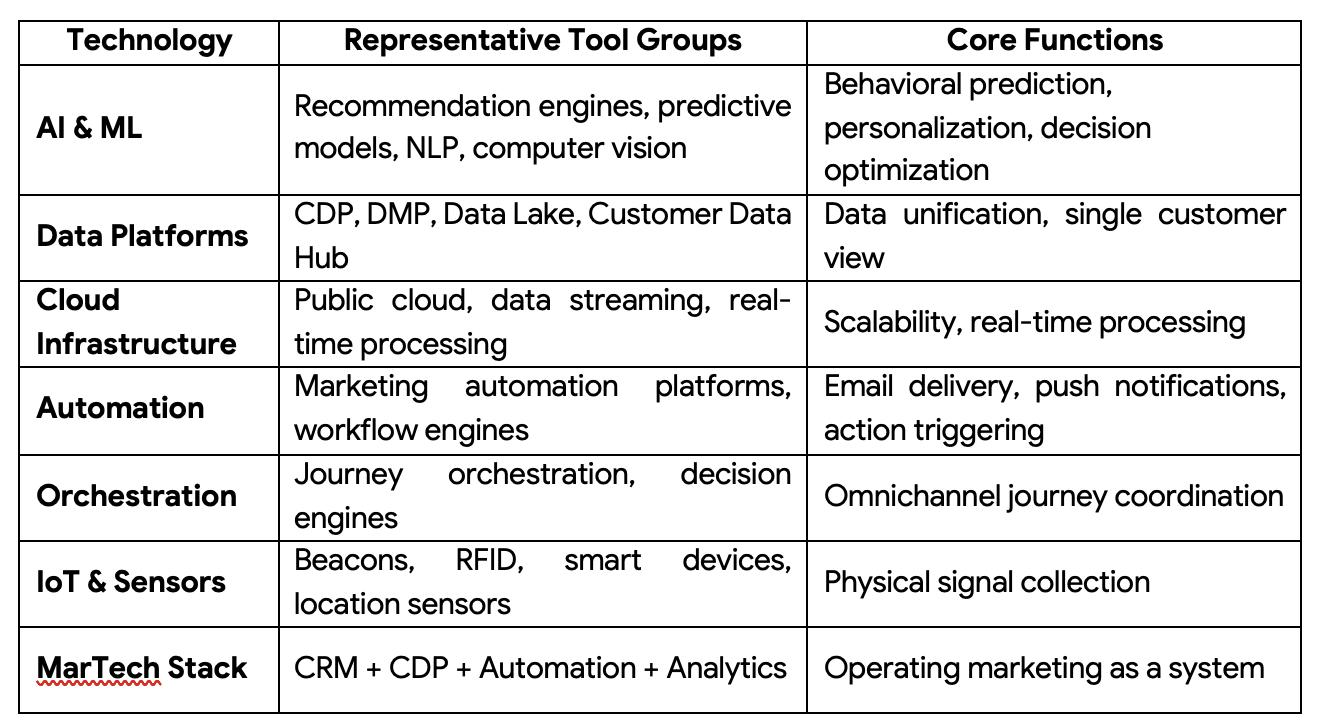
Table 5.1 illustrates the core technology layers that constitute Next-Generation Marketing, ranging from AI and data platforms to cloud infrastructure, automation, orchestration, and extended sensing layers. Each technological layer performs a distinct role within the system, but does not create value independently when deployed in isolation. Only when these layers are integrated into a unified architecture does marketing gain the capability to observe customer behavior in real time, make context-appropriate decisions, and act consistently across the entire customer journey. This represents the fundamental difference between using marketing tools and operating marketing as an intelligent system.
How Do Smart Systems Operate Marketing?
When core technologies are integrated into a unified system, marketing no longer operates according to fragmented campaign logic, but through a continuous intelligent loop. Smart systems in marketing function based on four core capabilities: Sense – Think – Act – Learn. These are not linear steps, but a closed-loop cycle in which each iteration enables the system to better understand customers and respond more accurately over time
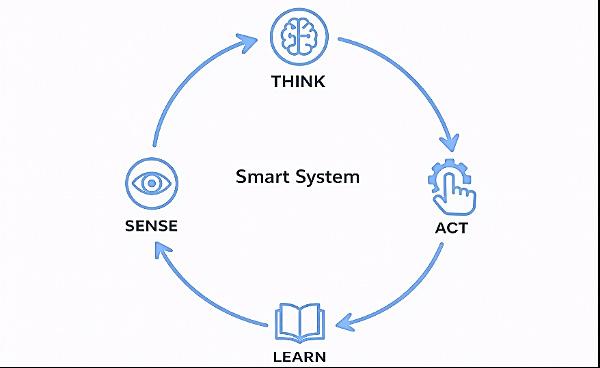
The Sense–Think–Act–Learn Operating
Sense
Sense refers to the system’s capability to perceive what is happening along the customer journey, not only across digital channels but also within broader environmental and usage contexts. Rather than relying solely on historical data, smart systems continuously collect new signals to capture customers’ current states.
These signals typically originate from:
• Behavior, such as views, clicks, interactions, and movement across touchpoints.
• Context, including time, device, location, and usage state.
• Environment, particularly in online–offline scenarios through IoT and sensors.
The critical capability at this stage is real-time sensing. When the system can detect signals at the moment behavior occurs, marketing no longer passively waits for reports, but can prepare appropriate responses within the customer’s lived context.
For example, Netflix continuously collects signals from viewing behavior, including start time, fast-forwarding, early drop-off, or binge-watching multiple episodes. These signals allow the system to identify users’ current viewing states light entertainment, focused viewing, or casual browsing rather than relying solely on historical viewing records.
Think
After sensing signals, the system moves into the Think stage, where AI and analytical models process data to understand and predict behavior. The objective is not merely to describe what has happened, but to assess what is likely to happen next.
Figure 5.4.
Loop of Smart Marketing Systems
At this stage, AI typically focuses on:
• Analyzing conversion probability and assessing customers’ readiness to act.
• Predicting churn risk by detecting early signals of declining engagement or value
• Identifying latent needs, even when customers have not explicitly expressed intent.
Based on these analyses, the system evaluates multiple possible actions, weighing business objectives, customer experience considerations, and predefined constraints.
For example, Amazon uses AI to analyze purchase likelihood based on combined signals such as product searches, page dwell time, reactions to prior recommendations, and purchase history. From this, the system predicts conversion probability and evaluates cart abandonment risk at specific moments.
Act
Thinking creates value only when translated into action. At the Act stage, smart systems use automation and orchestration to execute marketing decisions in a timely and consistent manner across the customer journey.
Marketing actions may include:
• Automated content delivery, adjusting messages based on customers’ current needs and states.
• Personalized offers, calibrated to readiness and potential value.
• Support activation, ranging from chatbots to human handoff when contexts become complex.
These actions are personalized according to:
• Timing, ensuring interventions occur when needs emerge.
• Channel, aligned with interaction context.
• Readiness level, avoiding premature or excessive intervention.
For example, Spotify does not send identical messages to all users. Based on recent listening behavior, the system automatically recommends playlists tailored to time of day, mood, or usage context (work, exercise, relaxation), rather than launching uniform campaigns.
Learn
Learn closes the operating loop. All responses to actions from engagement to non-responsebecome input data for the next cycle.
Through this process, the system:
• Collects feedback from real-world outcomes.
• Evaluates the effectiveness of prior decisions.
• Continuously optimizes models, rules, and action scenarios.
Over time, smart systems not only execute better but become more intelligent, more context-sensitive, and more adaptive to behavioral change.
As a result of the Sense–Think–Act–Learn loop, marketing evolves from a series of on–off campaigns into a continuous operating capability that is:
• Always-on,
• Adaptive,
• Context-aware.
For example, Starbucks tracks customer responses to in-app offers, identifying which offers are redeemed, ignored, and which timing produces optimal response. These data are fed back into the system to refine future offers and personalization scenarios.
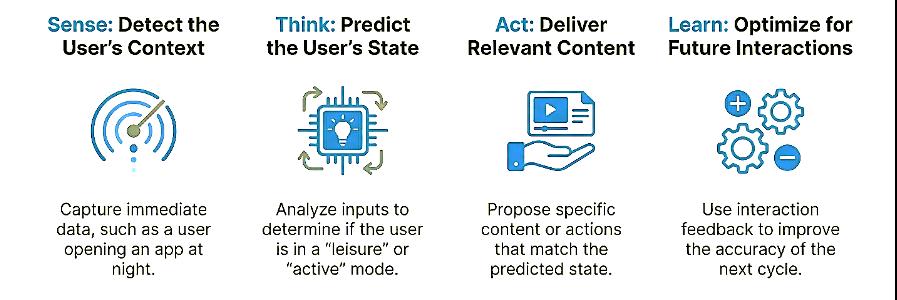
Thus, when a customer opens the application in the evening (Sense), the system predicts that the customer is in a light entertainment state (Think), recommends appropriate content at that specific moment (Act), and learns from whether or not the customer engages in order to optimize subsequent interactions (Learn).
FUTURE LENS – Toward Invisible & Self-Optimizing Marketing
Imagine a near future in which marketers no longer need to sit in front of dashboards to monitor every metric, approve every email, or fine-tune each micro-campaign. Marketing continues to operate more effectively than ever but much of the work no longer requires constant human intervention.
Figure 5.5. From Context Detection to Continuous Optimization
In this future, smart systems continuously sense, analyze, act, and learn. Technology no longer stands beside marketers as a support tool, but becomes embedded within the very mechanisms of decision-making and execution. Marketing no longer needs to be manually controlled step by step, but self-operates within strategic boundaries defined by humans.
From decision support to decision execution
Traditionally, AI in marketing functioned primarily as a decision-support assistant: collecting data, generating insights, and making recommendations. Final decisions and execution remained human responsibilities, with each marketing action requiring explicit approval.
In the future, this role evolves. AI does not merely recommend what should be done, but begins to execute actions autonomously in standardized, repetitive, low-risk situations. The system selects content, determines optimal timing, orchestrates channels, and adjusts incentive levels as long as all actions remain within strategic principles defined by humans.
What matters is not that AI becomes “more intelligent,” but that trust gradually shifts from humans to systems for operational decisions. Marketers no longer decide everything themselves, but focus on designing the rules that govern decisions.
Marketing as a self-optimizing system
When systems are empowered to act within defined boundaries, marketing begins to resemble a self-optimizing system. It not only executes, but continuously improves over time.
The system experiments with alternative actions, learns from real-world feedback, and adjusts decision logic without requiring frequent human intervention. Marketing is no longer a sequence of planned-and-run campaigns, but resembles a living organism constantly moving, self-adjusting, and adapting to customer behavior and business environments.
In this model, the role of the marketer fundamentally changes. Rather than directly controlling activities, marketers become system architects designing structures, defining principles, and supervising adjustments when necessary.
Marketing becomes invisible
Eventually, something interesting happens. When systems operate effectively, marketing gradually disappears from customers’ conscious perception not because marketing no longer exists, but because it dissolves into the experience.
There are no longer disruptive campaigns or attention-seeking messages. Marketing operates in the background—quietly but effectively. Customers experience:
• Convenience, because everything happens at the right time.
• Relevance, because interactions fit the context.
• Appropriateness, because marketing appears when needed and disappears when not.
At this point, boundaries between marketing, service, and experience become increasingly blurred. Marketing is no longer an external layer applied to the customer journey, but an integral part of how organizations manage relationships.
Future marketing will not be louder, but more subtle. Not more visible, but more integrated. Competitive advantage will belong to organizations that operate marketing as a living system rather than a sequence of campaigns.
Chapter 5 highlights a fundamental shift in how marketing is shaped and operated in the Next-Gen era. Marketing is no longer supported by technology; it is increasingly run by intelligent systems. AI creates value not when used in isolation, but when embedded within end-to-end systems that can sense signals, make decisions, execute actions, and learn continuously. As marketing moves from campaign-led execution to decision-led operations, the role of marketers evolves from executing activities to designing, governing, and improving systems. Over time, these systems become self-optimizing and increasingly invisible, embedding relevance directly into the customer experience. The future of marketing belongs to organizations that can operate relevance at scale quietly, continuously, and intelligently.
Case study: SHOPEE – FROM CAMPAIGN-DRIVEN GROWTH TO A LIVING MARKETING SYSTEM
Shopee is one of the largest and fastest-growing e-commerce platforms in Southeast Asia, holding a dominant regional market position. In 2024, Shopee accounted for approximately 52% of the total gross merchandise value (GMV) of Southeast Asia’s e-commerce market a figure that clearly reflects its overwhelming advantage over other major regional competitors.
In its early growth stage, Shopee gained strong market attention through a marketing strategy centered on large-scale, event-driven campaigns such as 9.9 Super Shopping Day, 10.10, 11.11 Singles’ Day, and 12.12. These shopping festivals not only attracted users through a wide range of attractive promotions but also gradually evolved into annual consumption events that consumers actively anticipated. For example, during a previous 9.9 campaign, millions of viewing hours were recorded on Shopee Live and Shopee Video, with order volumes increasing multiple times compared to regular days. This campaign-led strategy enabled Shopee to rapidly expand its user base, cultivate online shopping habits, and scale up e-commerce transactions across multiple markets, including Indonesia, Vietnam, and Thailand.
However, as the market gradually became saturated and competition intensified particularly with the rise of platforms such as TikTok Shop and the rapid expansion of new service offerings the limitations of a marketing model heavily reliant on large-scale campaigns began to emerge. The costs associated with extensive discount programs and high-intensity advertising continued to rise, while user responses became increasingly uneven toward the same messages or promotional levels across different moments. This situation raised a fundamental strategic question for Shopee: how could marketing move beyond merely driving traffic and instead operate in a more effective and sustainable manner, aligned with the rising expectations of consumers?
Sense – Shopee Learns to “Sense” Users in Real Time
As Shopee entered its next phase of growth in Southeast Asia, the primary challenge was no longer acquiring additional users, but rather developing a deeper understanding of the behaviors of hundreds of millions of existing users across the region. According to market reports, Shopee currently serves over 350 million users in Southeast Asia, with particularly large operational scale in key markets such as Indonesia, Vietnam, and Thailand. In Indonesia the region’s largest e-commerce market Shopee recorded approximately 138 million monthly visits by the end of 2023. In Vietnam, the platform reached around 58 million active users, making it Shopee’s second-largest market in the region. In Thailand, Shopee continued to lead in application usage, with approximately 50 million monthly visits, indicating a very high level of user engagement. In this context, Shopee’s challenge was no longer “how to gain more users,” but rather how to operate marketing effectively amid the massive volume of behavioral activity occurring every day.
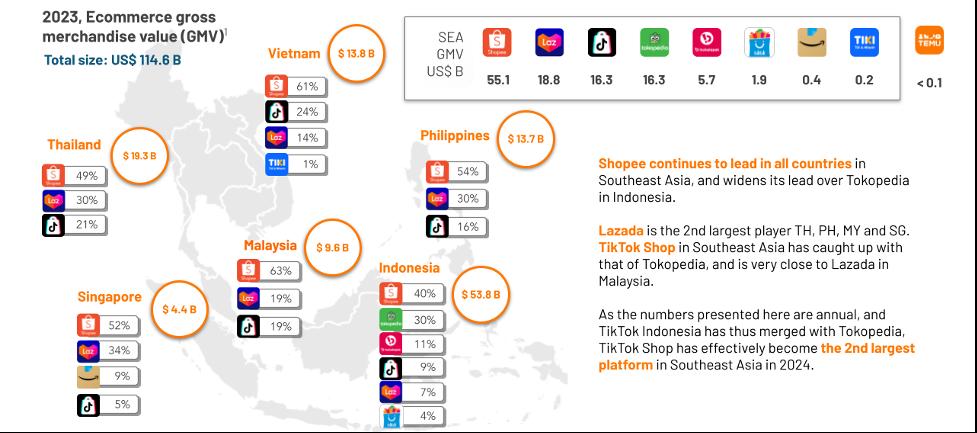
Figure 5.6. Shopee’s Dominance in Southeast Asia’s E-commerce Market
Source: Shopee’s Dominance in Southeast Asia’s E-commerce Market
Shopee’s first major shift therefore did not lie in launching additional large-scale marketing campaigns, but in enabling its system to “sense” users in real time, moving beyond final outcome metrics such as orders or revenue. Instead of focusing solely on outputs, Shopee concentrated on collecting and analyzing signals throughout the entire shopping journey: search and product-view behaviors, dwell time on each page, responses to flash sales, livestreams, and vouchers, frequency of app returns, as well as time-of-day usage patterns or peak shopping periods.
With an estimated more than 700 million app visits per month across Southeast Asia, these signals generate an exceptionally rich layer of behavioral data. This enables Shopee not only to identify who its customers are, but more importantly to understand the user’s current state at any given moment whether they are comparing prices, actively hunting for promotions, or simply browsing for reference. This forms the foundation of real-time sensing, allowing marketing to move away from passively waiting for aggregated reports and instead respond immediately within the user’s lived context, with significantly higher precision and relevance than traditional campaign-based marketing models.
Think – From Static Segmentation to Signal-Based Prediction
Once Shopee had established real-time behavioral data collection capabilities at a Southeast Asia–wide scale, the focus of marketing began to shift from static segmentation toward dynamic, signal-based prediction. In a fast-paced, mobile-first e-commerce environment like Southeast Asia, a user’s needs can change rapidly sometimes within minutes. A user in Vietnam or Indonesia may browse the app for price comparison at midday but be ready to make a purchase in the evening; or they may actively seek promotions in one category while exercising spending restraint in another. With more than 60% of e-commerce transactions in the region occurring on mobile devices, assigning users to fixed segments has become increasingly inaccurate and insufficient to reflect real-time demand states.
To address this issue, Shopee began deploying AI and analytical models to assess users’ action propensity within the current session, rather than relying on long-term segmentation profiles. The system continuously estimates purchase likelihood, predicts promotion sensitivity, identifies cart abandonment risk, and detects latent needs based on recent behavioral sequences. For example, the same user may be assessed as merely browsing during an initial visit, but upon returning later the same day, their purchase probability may increase significantly, requiring a different marketing response.
According to industry reports, personalization based on real-time behavioral signals can improve conversion rates by approximately 20–30% compared to mass promotions. For Shopee, this not only enhances sales effectiveness but also reduces reliance on blanket discounting, which has become increasingly costly amid fierce competition in Southeast Asia.
As a result, the central marketing question fundamentally changes. Instead of asking, “Which segment does this customer belong to?”, Shopee shifts to asking, “What is the most likely next action, and how should we respond right now?” This represents the core transition from campaign-led marketing to decision-led marketing, where each marketing decision is triggered by real behavioral signals rather than predefined campaign schedules.
Act & Learn – From Orchestration to a “Living” Marketing System
Once Shopee gained the ability to predict user states and next actions in real time, marketing value could only be realized if those predictions were translated into timely and appropriate actions. At this stage, Shopee no longer relied solely on mass campaigns, but instead employed automation combined with orchestration to coordinate the entire shopping experience at the individual level, within specific contexts.
Rather than broadcasting the same message to all users, Shopee’s marketing system can:
• Personalize homepage content based on the most recent behaviors and signals.
• Adjust product recommendations according to context, such as interest level, price sensitivity, or active browsing categories.
• Select optimal timing and channels for engagement, especially in a mobile-first environment.
• Control the cadence of promotions and notifications to avoid fatigue or experience disruption.
A key distinction is that many of these actions do not require manual activation by marketers. AI is granted execution authority within predefined strategic boundaries ranging from business objectives and desired customer experience to brand constraints. Marketing therefore ceases to be a series of discrete, campaign-based actions and instead becomes a continuously orchestrated interaction flow operating in the background, tightly coupled with each behavioral signal.
Each response generated by these actions whether a click, purchase, ignore, or app exit becomes input for the next operational cycle. Shopee does not merely measure outcomes; it learns directly from the decisions executed by the system. The system continuously:
• Experiments with different display and intervention options,
• Compares decision effectiveness in real-world contexts,
• Refines predictive models and action rules based on user feedback.
Over time, marketing at Shopee increasingly resembles a living system one that is constantly in motion, self-adjusting, and adaptive to both user behavior and market conditions. Consequently, the role of marketers shifts markedly: from directly controlling individual activities to designing structures, setting principles, and supervising the system. This vividly illustrates the transition from campaign-based marketing to marketing as an intelligent, self-learning, self-optimizing system, fully aligned with the Next-Gen Marketing perspective.
Toward Invisible Marketing
At present, Shopee continues to deploy major campaigns such as 9.9, 11.11, and 12.12 to maintain market momentum and create demand “spikes.” However, the overall marketing landscape is undergoing a clear transformation. An increasing share of critical marketing interactions no longer takes place through highly visible campaigns but instead operates quietly in the background, closely tied to each micro-behavior throughout the shopping journey. According to digital experience reports in Southeast Asia, over 70% of e-commerce users state that they prefer platforms that “understand them” rather than those offering the most promotions, indicating that relevance is increasingly outweighing spectacle.
In this context, Shopee users may not consciously perceive that they are being “marketed to.” Instead, they simply experience:
• Recommendations that become increasingly relevant to their immediate needs and context.
• Promotions that appear at the right moment, when purchase probability is highest, rather than indiscriminately.
• A shopping experience that feels smoother and easier, with fewer unnecessary steps and interruptions.
Behavioral data shows that when recommendations and promotions are personalized in real time, the time required to complete a mobile shopping session can decrease by 20–25%, while user satisfaction increases significantly. Marketing does not disappear; it dissolves into the experience. It no longer stands outside trying to capture attention, but becomes a natural part of the shopping journey appearing when needed and fading when not. This represents the emerging form of invisible marketing, where value is clearly perceived without overt exposure or pressure.
The Shopee case demonstrates that the future of marketing does not lie in eliminating campaigns, but in embedding campaigns within a more intelligent system. When marketing is driven by signals rather than fixed schedules, operated by smart systems rather than fragmented tools, and continuously learning from real-world data, organizations can move from “running marketing” to operating marketing as a core capability.
KEY INSIGHTS – WHAT BUSINESS MUST UNDERSTAND ABOUT NEXT-GEN TECHNOLOGY
• Marketing is no longer supported by technology; it is operated by technology. Competitive advantage comes from the ability to build and run intelligent systems, not from the number of tools.
• AI only creates value when embedded in smart systems. In isolation, AI generates insights; when connected with data, automation, and business principles, AI generates action.
• Marketing is shifting from campaign-led to decision-led. Experiences are no longer driven by campaign calendars, but by continuous decision-making based on signals and context.
• Data and cloud form the sensing infrastructure of marketing. Real-time data and a single customer view allow systems to understand customers as living entities rather than static datasets.
• The future of marketing lies in self-optimizing systems. Systems continuously test, learn, and improve within strategic boundaries, reducing reliance on manual control.
• The best marketing is marketing that becomes invisible. When systems operate effectively, customers perceive convenience, relevance, and timeliness without “seeing” marketing.
CHAPTER 6
PREDICTIVE & PROACTIVE
MARKETING ANTICIPATING CUSTOMER MOVES
For many years, marketing was organized as a feedback-based system. Firms observed outcomes, analyzed data, and then adjusted campaigns after customer behavior had already occurred. This approach was effective in relatively stable environments, where behavior changed slowly and competitive advantage came from optimizing what was already known. However, as markets now operate in real time and customers make decisions faster than ever, even the most responsive marketing remains one step behind.
Today, competitive advantage no longer lies in who analyzes the past better, but in who can see earlier what is likely to happen next. Customers rarely articulate their needs explicitly, yet they continuously leave behavioral traces: searching, browsing, hesitating, returning, or abandoning. These signals raise a new question for marketing: how can firms move from explaining what has already happened to predicting, preparing for, and intervening before decisions are made?
This chapter addresses that question by introducing a critical mindset shift in contemporary marketing: from Reactive to Predictive, and from Predictive to Proactive. Predictive Marketing enables firms to anticipate potential future behaviors, while Proactive Marketing ensures that these predictions are translated into actions and experiences across touchpoints. When combined, marketing no longer functions merely as a department that measures past performance, but rather as a proactive decision-making system that stays ahead of customer behavior and creates a time-based advantage for the entire organization.
From Reactive to Predictive Marketing
For decades, marketing has been designed as a feedback system: firms observe business outcomes, identify problems, and then deploy marketing activities to correct them. This approach was effective in stable market environments, where customer behavior evolved slowly and choices were limited. However, in today’s digitized and real-time competitive landscape, advantage no longer comes from reacting faster, but from moving one step ahead before customers even articulate their needs.
From Reaction to Prediction: An Inevitable Shift
As discussed in previous chapters, the contemporary customer journey no longer follows a traditional linear model. Customers move fluidly across multiple touchpoints and are heavily influenced by context, emotions, and real-time stimuli. Rather than reiterating that context, this section focuses on a more strategic question: how has this transformation rendered reactive marketing increasingly ineffective?
In reactive marketing, firms act only after clear signals have emerged: declining sales, customer complaints, rising churn, or eroding market share. This approach was suitable in stable environments, where customer behavior changed gradually and switching costs were high. In today’s digital environment, however, the lag between customer behavior and marketing response has become a structural disadvantage. Customers can abandon a brand after a single negative experience, which means that by the time firms recognize the problem, part of the customer value has already been lost. In many cases, reactive marketing merely mitigates damage rather than creating competitive advantage.
The core issue lies not in the quality of the response, but in its timing. When customers can compare, switch, and decide within very short timeframes, waiting for explicit signals means acting too late. The limitations of reactive marketing in the current context can be summarized as follows:
• Always acting after behavior, not before behavior
• Focusing on outcomes that have already occurred rather than what may occur
• Effective for reporting and short-term optimization, but weak in creating long-term advantage
Meanwhile, another reality has become increasingly evident: customers rarely proactively express their needs. They do not always provide feedback, complain, or request support. Instead, they leave fragmented behavioral traces throughout their journey searching for information, lingering on certain content, revisiting multiple times, adding products to the cart without purchasing, or postponing decisions.
Individually, these behaviors may appear insignificant. Viewed holistically, however, they become early indicators of future intent. Firms that can effectively identify and leverage these behavioral signals are better able to improve retention, enhance personalization, and allocate marketing resources more efficiently.
At this point, the limitations of reactive marketing become unmistakable. Marketing can no longer rely solely on delayed feedback or past outcomes; it must adopt a new role: anticipating the likelihood of customers’ next behaviors and preparing actions before decisions are made. This forms the cognitive foundation that compels marketing to shift from reaction to prediction from reactive to predictive.
Predictive Marketing as a Core Mindset
The rise of Predictive Marketing does not occur in isolation; it reflects a broader transformation in how organizations make decisions. The global predictive analytics market is projected to grow from approximately USD 9.5 billion in 2022 to nearly USD 61.9 billion by 2032, with a compound annual growth rate (CAGR) of 21.2%. This growth indicates that prediction is no longer an advanced analytical capability, but is becoming a foundational element of management and growth, particularly in marketing and customer experience.
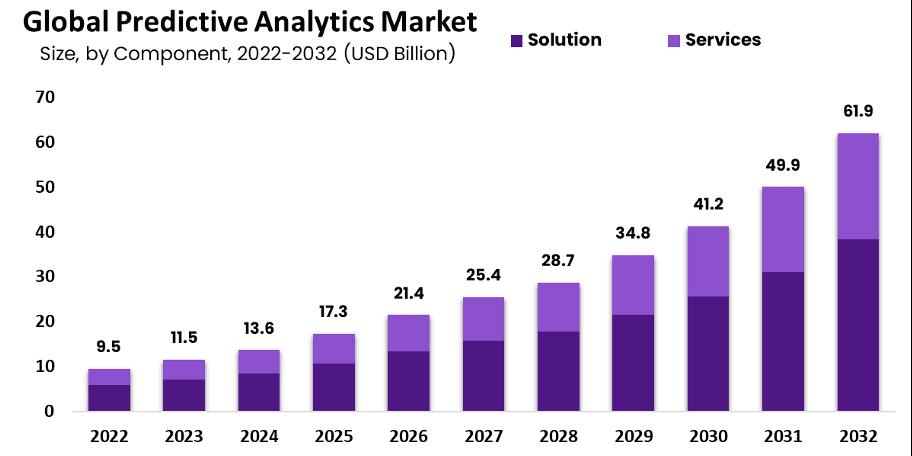
Source: Market.us. (2023)
Within this context, Predictive Marketing emerges directly from the limitations of reactive marketing. When waiting for customers to act before intervening becomes too late, marketing must instead ask: what is likely to happen next, and what can the firm do before that point? This is not merely a change in tools, but a fundamental shift in how marketing perceives its role within the organization.
Figure 6.1. Predictive Marketing as a Proactive Decision-Making Mindset
Rather than observing completed behaviors, Predictive Marketing focuses on interpreting early signals generated as customers interact with the brand. These signals may be subtle, dispersed, and non-decisive when viewed individually. However, when integrated across behavioral, interactional, and contextual data, they allow marketers to estimate future behavioral tendencies with sufficient confidence to act.
At its core, Predictive Marketing represents a mindset shift rather than the simple adoption of additional technology or analytical models. This approach rests on three foundational pillars:
• A proactive mindset, in which marketing does not wait for events to occur before responding
• The exploitation of behavioral, interactional, and contextual data rather than relying solely on completed transactional data
• The use of predictive models to estimate the likelihood of subsequent behaviors, rather than seeking absolute certainty
In practice, Predictive Marketing outputs are often expressed probabilistically, such as:
• A customer has a high probability of churning within the next 30 days
• Another customer is likely to purchase complementary products after the current transaction
• A customer segment is more likely to respond when approached within a specific timeframe and context
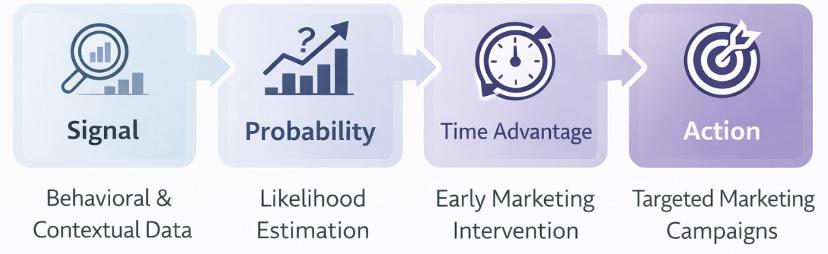
Figure 6.2. From Signals to Action: The Core Logic of Predictive Marketing
Predictive Marketing does not aim to replace human judgment; instead, it extends marketers’ vision and decision-making capacity. By transforming behavioral and contextual signals into probabilistic assessments, Predictive Marketing enables marketers to identify risks earlier, detect opportunities faster, and allocate resources more strategically. Rather than treating all customers equally, firms can prioritize the right customers, at the right time, with the right actions.
Under this logic, Predictive Marketing does not attempt to answer with certainty what will happen, but rather what is likely to happen and to what degree. Its core value therefore does not lie in absolute predictive accuracy, but in the time window it creates for action. This time advantage allows marketers to intervene early, experiment, and adjust before customer decisions are finalized. In many cases, this temporal advantage determines whether a customer is retained or merely recorded as a reason for churn in a report.
Predictive Marketing reaches its full potential only when integrated with flexible execution mechanisms that enable firms to act before behavior occurs rather than after it. This is precisely why Predictive Marketing must be paired with Proactive Marketing, where predictions are activated into real customer experiences and interactions.
How Is Predictive Marketing Different from Traditional Analytics?
Over the past years, many organizations have described themselves as “data-driven,” yet in practice most remain confined to traditional analytics using data primarily to look backward and explain what has already happened. This approach plays an important role in management by enabling firms to monitor performance, evaluate campaigns, and maintain operational control. However, in real-time competitive environments, traditional analytics reveals a structural limitation: it always follows customer behavior.
By design, traditional analytics serves evaluation and control. It aggregates historical data, explains outcomes, and reports performance. Typical questions include whether a recent campaign was effective, which channel generated the highest revenue, or what last month’s conversion rate was. These questions are essential for governance, but insufficient for building competitive advantage in contexts where customer behavior changes rapidly and unpredictably.
Traditional analytics can be characterized by three core features:
• A focus on historical data analysis
• An emphasis on explaining what happened and why
• The provision of performance reports for evaluation and control
Predictive Marketing represents a distinct advancement in data utilization. Rather than looking backward, it directs data forward. The central question shifts from “what has happened?” to “what is likely to happen next, and what actions should be prepared now?” This distinction lies not merely in analytical techniques, but in the purpose of data usage.
While traditional analytics generates insights for reference, Predictive Marketing aims to recommend concrete actions for each probable behavioral scenario. Analytics helps marketers understand why outcomes occurred; Predictive Marketing helps them prepare what to do before outcomes materialize. This reflects a transition from descriptive thinking to predictive and prescriptive thinking.
This shift fundamentally transforms marketing’s role within the organization. As shown in Table 6.1, the contrast extends beyond time orientation (past versus future) to marketing’s strategic position. Under traditional analytics, marketing primarily aggregates data and reports performance. Under Predictive Marketing, marketing becomes directly involved in early decision-making alongside sales, operations, and technology. Data thus evolves from a retrospective tool into a strategic lever for moving ahead of the market.
Table 6.1. Comparing Traditional Analytics and Predictive Marketing
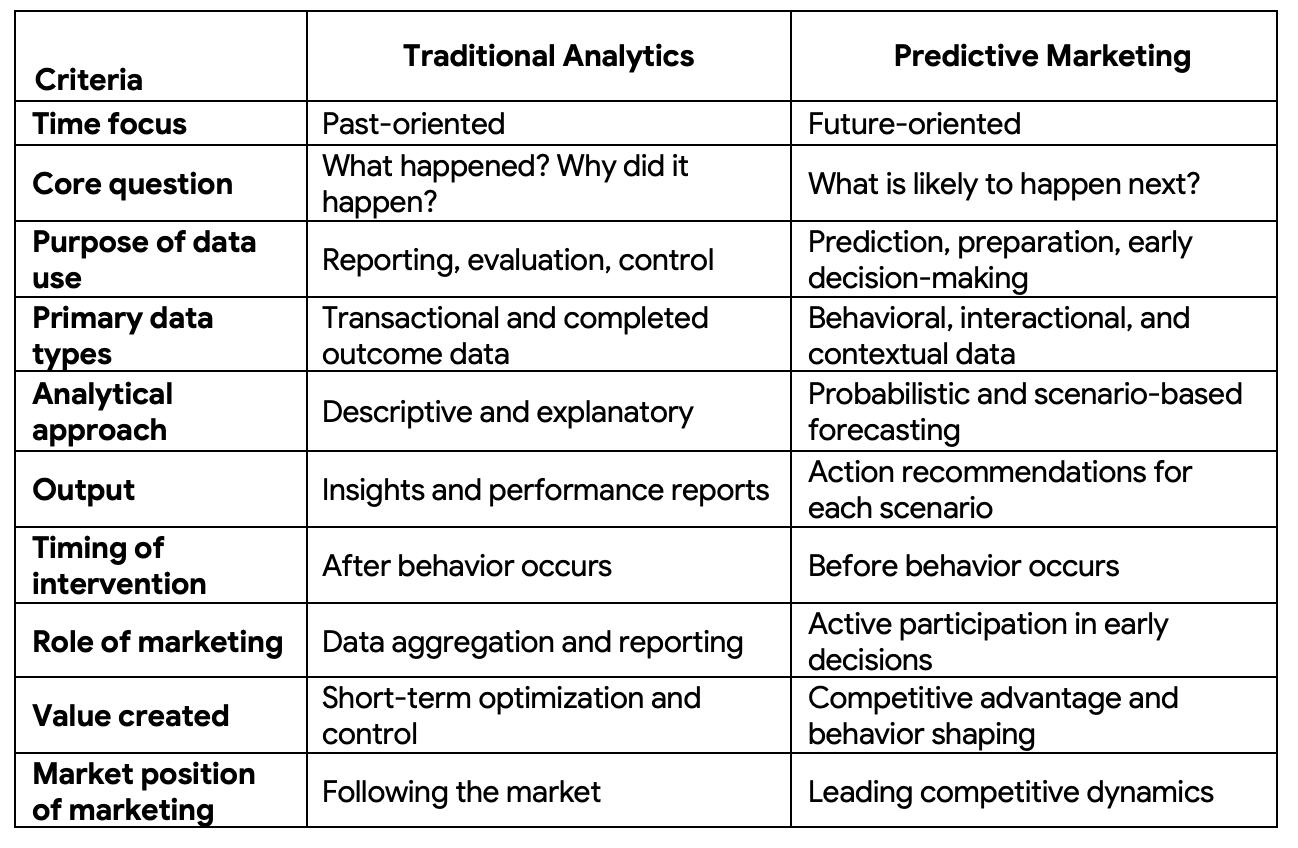
The transition from traditional analytics to Predictive Marketing is therefore not merely a technological upgrade, but a fundamental transformation in how marketing creates value. When marketing begins to anticipate and shape customer behavior, it no longer stands behind the market, it becomes a driving force in competition.
Predictive & Proactive Marketing in Action
How Does Predictive Marketing Operate?
Predictive Starts with a Strategic Question, Not an Algorithm
Predictive Marketing does not begin with models or big data. It begins with a strategic question: Which behavior within the 5A journey, if detected earlier, would create the greatest competitive advantage?
Instead of waiting for customers to act and then reacting, Predictive Marketing seeks to identify early signals subtle indicators of what is likely to happen next. This does not initially require complex technology; it requires the company to clearly understand:
• Which behaviors represent critical turning points in the journey
• At what moment early intervention creates the highest value
• And how to intervene without disrupting the experience
• Only after these three elements are clearly defined does data truly become meaningful.
In practice, the input data for Predictive Marketing typically comes from four primary signal groups:
• Behavioral: clicks, content views, searches, dwell time, return frequency
• Transactional: purchase history, order value, frequency, and product categories
• Interactional: customer service calls, chats, feedback, comments
• Contextual: time, device, location, access channel
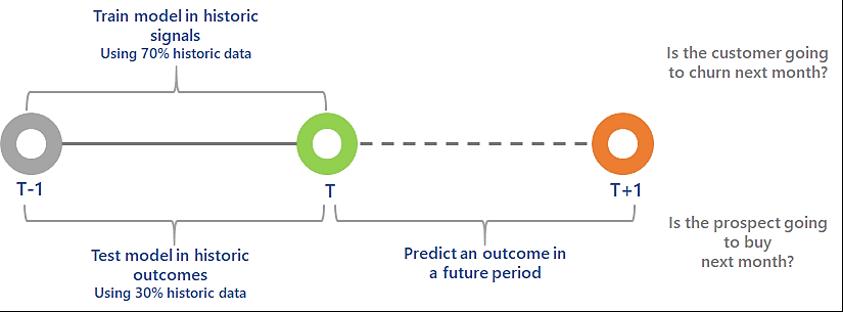
However, data does not automatically create advantage. A click behavior only becomes valuable when placed within a strategic context: At which stage of the 5A journey does it occur? Does it signal the formation of need Aware to Appeal, active consideration Ask, or the risk of churn after purchase Act to Advocate?
For example, a customer may visit a website multiple times within a week without making a purchase. Viewed solely through behavioral data, this customer may appear “not yet ready.” However, when combined with transactional data indicating high historical purchase value and customer service data showing an unresolved issue, the system may identify a high churn risk and trigger early intervention. The value lies in data integration, not in isolated data points.
Prediction only creates value when anchored to the right moment within the 5A journey
Figure 6.3. Predictive Analytics: From Historical Data to Future Outcomes
The value of prediction lies in enabling timely intervention. According to McKinsey, companies that effectively implement next best action models can improve cross sell and up sell revenue by 10 to 15 percent not by increasing marketing frequency, but by reaching the right customer at the right moment in the journey.
Instead of sending the same offer to the entire customer base, Predictive Marketing allows companies to differentiate behavioral states:
• Group A needs re engagement to reduce churn risk
• Group B is suitable for complementary product recommendations
• Group C should not be approached at this moment to avoid irritation
The difference does not lie in the message itself, but in understanding where the customer stands within the journey.
Selected Predictive Marketing Models
Churn Prediction Protecting Existing Relationships
Primary 5A Impact: Act → Advocate
In highly competitive environments, customers rarely announce their departure. Instead, they gradually reduce frequency, interact less, or become silent. Churn prediction enables companies to detect this decline before it turns into actual loss.
• Strategic Use Case: Early detection of churn risk to protect established value.
• Intervention Focus: Restoring usage rhythm and reinforcing trust.
Here, the advantage does not lie in accurately guessing who will leave, but in retaining customers who still have the potential to return. Predictive marketing shifts the focus from consequence management to relationship protection.
Demand Forecasting Appearing at the Right Moment
Primary 5A Impact: Aware → Appeal
At the early stage of the journey, the challenge is not persuasion, but presence at the moment when demand begins to form. When a brand appears one step ahead of competitors, the advantage lies not in stronger promotions, but in greater relevance.
• Strategic Use Case: Anticipating demand shifts so the brand shows up at the right time.
• Intervention Focus: Increasing relevance as need formation begins.
Companies do not wait for sales to rise before adjusting strategy. They proactively prepare content, resources, and messaging to anticipate behavioral shifts.
Next Best Action Reducing Decision Friction
Primary 5A Impact: Ask → Act
When customers enter the consideration stage, they do not need more information they need a clear and logical next step. Next best action narrows the gap between intention and action.
• Strategic Use Case: Recommending the most appropriate next step based on the customers current state.
• Intervention Focus: Reducing friction and increasing decision confidence.
Here, predictive marketing does not aim to push purchase, but to help customers move forward more naturally.
Customer Lifetime Value Investing for Long Term Growth
Primary 5A Impact: Act → Advocate
Not all customers generate equal long term value. Estimating lifetime value enables companies to allocate resources strategically rather than optimizing each transaction in isolation.
• Strategic Use Case: Prioritizing investment in high long term potential customers.
• Intervention Focus: Nurturing relationships rather than maximizing short term transactions.
In this case, predictive models are not used to discriminate, but to ensure focus on sustainable growth drivers.
In summary, prediction is not the ultimate objective. It is a tool that allows marketing to see one step ahead within the 5A journey. The real value lies in how companies use that foresight to intervene subtly, at the right time and at the right intensity before behavior occurs, rather than after results appear in reports.
From Prediction to Action: The Role of Proactive Marketing
If Predictive Marketing enables companies to see behavioral possibilities earlier, the next strategic question becomes: how can the organization act quickly and consistently on those predictions?
Insight alone does not create experience. Prediction generates advantage only when translated into decisions and real interventions at journey touchpoints within the 5A model.
This is the role of Proactive Marketing.
If Predictive Marketing represents the capability to foresee, Proactive Marketing represents the capability to act early. It does not merely trigger responses based on predictions, but redesigns marketing operations so that timely intervention becomes the default rather than the exception.
Three Operating Principles of Proactive Marketing:
• Action over insight
Value does not lie in dashboards, but in activated decisions. Every prediction must be linked to a clear action mechanism: who intervenes, how, and for how long.
• Context before intensity
Acting early does not mean acting more frequently. Proactive Marketing prioritizes contextual relevance over increased contact frequency.
• System before campaign
Instead of launching a new campaign whenever a signal appears, organizations must build systems capable of continuous and consistent behavioral response.
Netflix provides a clear illustration of how Predictive and Proactive Marketing are combined in practice. At the predictive level, Netflix closely monitors user interactions with content: changes in viewing frequency, incomplete episodes, or declining responsiveness to familiar recommendations. When these signals appear simultaneously, they indicate declining engagement, enabling Netflix to estimate the likelihood of subscription cancellation.
However, the value lies not in knowing who may leave, but in how Netflix acts on that prediction. Through Proactive Marketing, predictions are translated into concrete interventions: stronger content personalization, adjusted content ordering, recommendations tailored to time and device context, or even changes in content thumbnails to increase click-through likelihood. These actions occur automatically, in real time, and are largely invisible to users yet they directly shape the viewing experience.
In this case, Predictive Marketing identifies early risk, while Proactive Marketing ensures that each prediction is converted into an appropriate experience. Without augmentation, Netflix would merely possess a list of “at-risk users.” Proactive Marketing transforms prediction into continued viewing behavior, extending engagement duration and customer lifetime value.
Making Proactive Marketing Work
In many organizations, insight remains at the analytical layer. Dashboards display churn risk, upsell probability, or conversion likelihood, yet the operational mechanisms behind them are not ready to respond. Proactive Marketing closes the gap between knowing and doing by embedding predictions directly into daily decision systems. Instead of relying on isolated campaigns, companies design predefined response mechanisms that are ready to activate once signals reach appropriate thresholds.
A mature Proactive system must be designed around three core questions:
• Which signals are strong enough to trigger intervention?
• What level of intervention is appropriate for the current stage within the 5A journey?
• When should the system pause and transfer decision authority to humans?
However, system design is not only about enabling action, but also about defining limits to action. Proactive Marketing does not mean increasing contact frequency or automating every touchpoint. A mature system requires a frequency cap to prevent customer overload, a kill switch to immediately halt interventions when widespread negative reactions emerge, and a human override mechanism for sensitive contexts. At the same time, monitoring negative response signals such as unfollows, notification opt outs, complaints, refunds, or sudden churn spikes should function as an early warning layer for the entire system.
The key principle is that Proactive Marketing does not aim to maximize interactions, but to optimize contextual relevance. In many situations, the strategically correct decision is not to act if intervention risks disrupting the experience or eroding trust.
The division of roles between humans and technology therefore becomes foundational. Systems handle speed and scale; humans define objectives, principles, and boundaries. Marketers are no longer merely campaign executors, but designers of operational logic, architects of guardrails, and supervisors of critical exceptions. This structure allows companies to act early while maintaining strategic restraint.
When Predictive and Proactive capabilities are properly integrated, marketing does not merely forecast behavior it shapes experience before behavior occurs. Competitive advantage then comes not from absolute model accuracy, but from the ability to act avt the right time, at the right intensity, and within thoughtfully designed limits.
Proactive Marketing Across the Customer Journey
Proactive Marketing creates value only when embedded across the full flow of the customer journey, rather than isolated tools or touchpoints. At each stage, customers face different barriers: information overload during discovery, uncertainty during consideration, friction during purchase, and indifference after transactions. The role of Proactive Marketing is to intervene precisely at these moments, making action easier and sustaining positive perception throughout the journey.
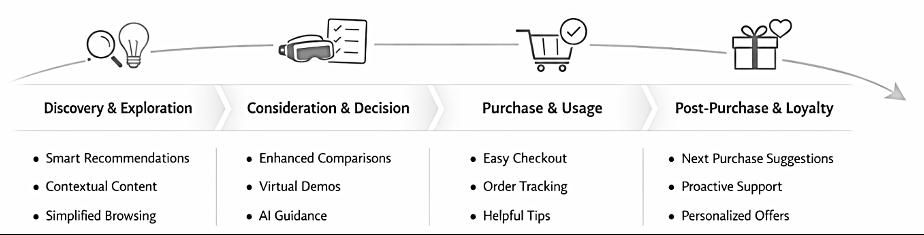
To illustrate practical value creation, this section uses Shopee’s customer journey as a continuous example. Given its scale and interaction intensity, Shopee cannot rely solely on communication or promotions; it must integrate decision-support and friction-reduction mechanisms directly into the experience. From discovery to post-purchase, this example demonstrates how Proactive Marketing is not an external technological layer, but is “woven” into the journey creating small yet timely adjustments that naturally move customers forward.
Discovery & Exploration – When Choice Becomes Overwhelming
During discovery, the primary challenge is not lack of information, but excessive choice. Faced with thousands of products and messages, customers may experience fatigue, skim quickly, and exit without forming clear intent. Proactive Marketing creates value by reducing cognitive load and directing attention toward what is most relevant.
At Shopee, users do not encounter an empty category page, but an environment pre-organized based on recent behavior, time of day, and usage context. Product recommendations, need-based collections, and promotional content are not designed to display all options, but to help users quickly find a suitable starting point.
• Intelligent recommendations based on recent behavior
• Contextualized content aligned with time and needs
• Reduced information overload through prioritization
At this stage, Proactive Marketing does not attempt to persuade; it facilitates easier exploration.
Figure 6.4. Proactive Marketing Across the Customer Journey
Consideration & Decision – Increasing Confidence in Choice
Once options are narrowed, customers enter the consideration stage. The main barrier here is uncertainty: complex comparisons, difficulty visualizing products, or fear of making the wrong decision. Proactive Marketing supports customers by enhancing evaluation capabilities within the experience.
Shopee deploys multiple augmentation mechanisms at touchpoints: highlighted price comparisons and reviews, prioritized product images and videos, as well as livestreams or seller recommendations. These elements do not decide for customers, but increase confidence in their choices.
• Clear and accessible comparisons
• Visual experiences that improve product understanding
• Recommendations acting as a “silent advisor”
At this stage, Proactive Marketing reduces perceived risk rather than merely emphasizing promotions.
Purchase & Usage – When Experience Shapes the Next Behavior
At the moment of purchase, customers prefer not to think further. They seek certainty and reassurance that everything is proceeding correctly. Any friction complex steps, confusing options, or unclear incentives may delay decisions. Consequently, Purchase & Usage is where Proactive Marketing exerts the most direct and visible impact.
In Shopee’s checkout experience, augmentation elements are seamlessly embedded into the primary action flow. From cart to payment, users receive support that minimizes unnecessary decisions: product and cost information is clearly displayed, while delivery and payment options are organized by familiarity. Instead of forcing customers to evaluate every option, the system highlights the most reasonable choice at that moment.
A key highlight is Shopee’s handling of vouchers and promotions. Users do not need to remember codes or verify conditions; relevant offers are presented at the right time and context. This exemplifies Proactive Marketing: not forcing action, but making action easier and more logical.
• A “hidden” shopping assistant embedded in the interface
• Intelligent guidance enabling uninterrupted purchase completion
• Friction reduction through prioritized, familiar, and beneficial options
After order confirmation, the experience continues through clear status updates and order tracking. Customers do not need to search for next steps. At this stage, Proactive Marketing no longer drives purchase, but reinforces the feeling that the decision was correct laying the foundation for repeat behavior and long-term engagement.
Post-purchase & Loyalty – When the Relationship Truly Begins
Many organizations treat the journey as complete after purchase. In contrast, Proactive Marketing views this as the beginning of a long-term relationship. Value lies not in immediate additional sales, but in maintaining timely and relevant presence.
Shopee observes post-purchase behavior to predict next needs: related accessories, repurchase timing, or signals indicating required support. Care messages, repurchase suggestions, or offers are delivered selectively to avoid irritation. Personalization is used not to pressure, but to sustain natural interaction rhythm.
• Prediction of next needs based on usage behavior
• Proactive care before issues arise
• Long-term personalization focused on relationship continuity
At this stage, Proactive Marketing ensures that the brand appears at the right moments, rather than appearing too frequently.
Future Lens – Marketing ahead of humans and machines
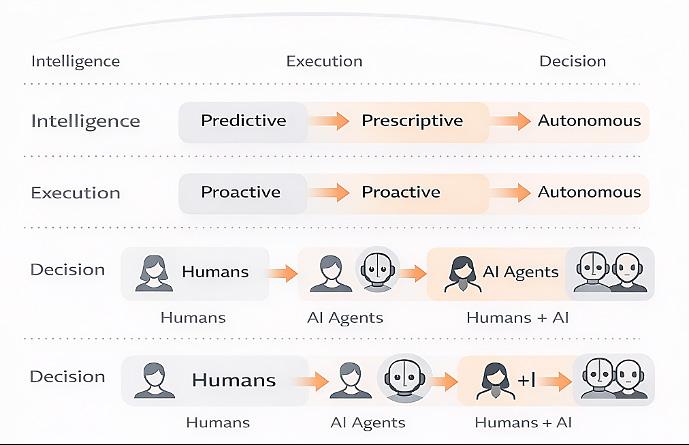
Figure 6.5. The Future Marketing Operating Model
This section expands the strategic lens for marketing over the next 3–5 years, as organizations no longer conduct marketing solely for customers, but operate marketing within ecosystems where both humans and machines participate in decision-making.
Imagine the marketing landscape in the coming years: more data, more powerful tools, and market speed far exceeding today’s conditions. In such an environment, competitive advantage no longer comes from “faster reaction,” but from the ability to prepare in advance for what is about to occur. Marketing moves ahead not because it predicts better, but because the organization is ready to act when the moment arrives.
From Predictive to Prescriptive
In many organizations today, Predictive Marketing already enables marketing teams to “know in advance” certain things: which customers are at risk of churn, which segments are likely to purchase more, or which moments in the journey are sensitive. In operational reality, however, knowing in advance is not sufficient. The recurring question from leadership and other functions is: what exactly does marketing recommend doing next?
Prescriptive Marketing emerges to fill this gap. Rather than merely delivering alerts or insights, marketing begins to propose concrete courses of action clear enough for teams to execute immediately in real operations.
• What actions should be taken to influence impending behavior
• When is the right moment to intervene
• How interventions can be executed without disrupting the experience
At this stage, marketing is no longer merely an analytical or reporting function, but becomes an early decision-making partner to business and operations. The value of marketing lies in enabling timely organizational action, rather than waiting for outcomes to appear in next month’s reports.
From Proactive to Autonomous
Proactive Marketing helps marketing and frontline teams operate more effectively by supporting decision-making and reducing friction. However, when imagining an organization with millions of customers, hundreds of touchpoints, and thousands of micro-decisions each day, certain activities can no longer be handled manually regardless of human capability.
Over the next 3–5 years, many marketing activities will gradually shift toward autonomous operation within clearly defined boundaries. Systems will not merely support humans, but will assume responsibility for repetitive loops, as long as objectives and principles are designed in advance.
• Automatically detecting opportunities and risks from behavioral signals
• Automatically executing predefined actions
• Automatically optimizing based on real-time feedback
This evolution does not diminish the role of marketers. On the contrary, it elevates marketers into higher-value roles within the organization:
• Designer: defining operational logic and experience frameworks that systems follow
• Supervisor: monitoring and intervening when systems require adjustment
• Ethical guardian: safeguarding brand values and normative boundaries
Future marketing is not fully automated marketing, but marketing in which humans focus on decisions that machines should not or must not make independently.
Marketing for AI Agents
Another practical shift that organizations must prepare for is the increasing use of AI agents by customers to support and in some cases replace routine decision-making. These agents will not only retrieve information, but also compare options and recommend choices based on predefined customer criteria.
Such AI agents may:
• Filter information on behalf of customers
• Systematically compare alternatives
• Make decisions in repetitive situations
This development requires marketing to broaden its approach. Organizations will no longer communicate only with human emotions and perceptions, but also with the decision logic of systems acting on customers’ behalf.
• Marketing must still persuade humans through experience, emotion, and brand storytelling
• At the same time, it must persuade their AI agents through clear information, transparent structure, and easily comparable value
In this context, effective marketing is marketing that resonates emotionally while remaining sufficiently explicit and structured to be evaluated favorably by decision-support systems.
The future of marketing does not lie in choosing between humans or technology, but in orchestrating the right roles for both. Organizations that move ahead do so not because they possess newer tools, but because marketing is structured to understand context like humans and decide at machine speed.
Future marketing = human insight + machine decision
When marketing fulfills this role effectively, it no longer merely supports sales or communication, but becomes a strategic capability that shapes behavior, experience, and longterm customer relationships.
This chapter illustrates a fundamental shift in how marketing creates value: from reaction to proactivity, from prediction to action, and from support to leadership. Predictive Marketing allows organizations to see early what is likely to happen; Proactive Marketing ensures that those insights are operationalized at every touchpoint; and the Future Lens provides a long-term perspective in which marketing serves not only humans, but collaborates with emerging decision-making systems. When these shifts converge, marketing no longer stands behind the market measuring outcomes, it becomes a capability that moves ahead of behavior, shapes experience, and creates time-based advantage for the entire organization. In this context, the question is no longer whether organizations should adopt Predictive or Proactive Marketing, but whether marketing is ready to assume a leadership role in an environment where both humans and machines participate in decision-making.
Case Study: MOMO – BUILDING A CAPABILITY TO STAY AHEAD OF BEHAVIOR IN A DIGITAL ECOSYSTEM
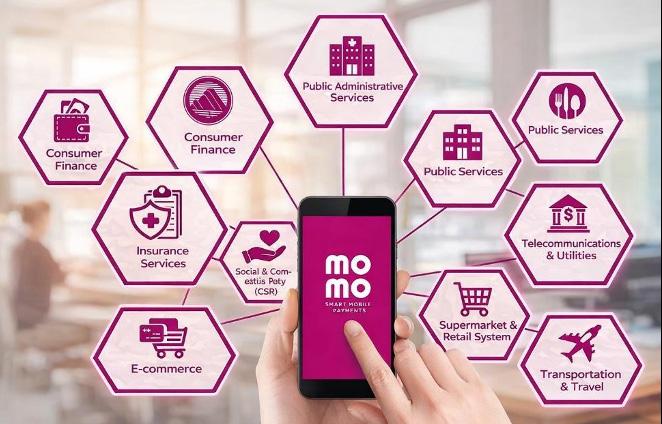
Figure 6.6. MoMo as a Digital Finance Super App Ecosystem
Source: Momo
Within Vietnam’s digital ecosystem, MoMo has become one of the most familiar financial platforms, embedded in the daily payment needs of tens of millions of users. As a financial super app, MoMo embodies conditions that make “staying ahead of behavior” not merely a tactical option. It operates across a vast number of touchpoints from payments, bills, partner services, and promotions to recurring weekly needs. Users interact frequently, generating dense and continuous behavioral data. Reuse decisions depend not only on promotions, but are strongly shaped by context, including timing of needs, transaction experience, and trust in the system.
Market scale clearly illustrates why anticipating behavior is mission-critical. Vietnam Investment Review reported that MoMo had approximately 31 million users and accounted for nearly half of all e-wallet transactions in Vietnam, based on data up to Q3 2023 from the National Public Service Portal. At this scale, even small improvements in retention or usage frequency can generate substantial impact on overall performance.
From a behavioral perspective, a Cimigo survey (cited by The Investor) shows that MoMo is used an average of 4.16 times per week higher than competing super apps surveyed in Hanoi and Ho Chi Minh City. This indicates that sustainable growth for super apps does not lie in increasing installations, but in orchestrating frequency and intervening at the right moments along the usage journey.
From
Prediction to
Augmentation:
Intervening More Precisely Rather Than Promoting More
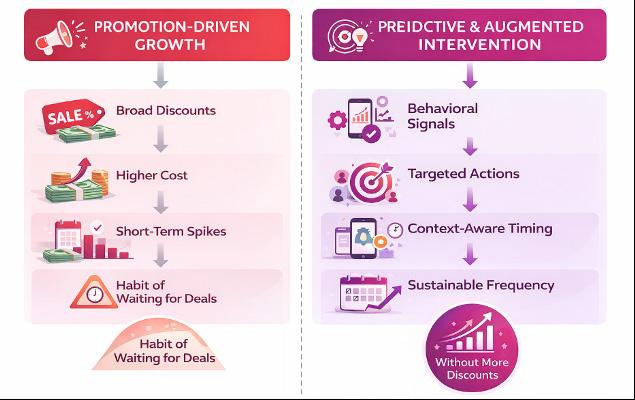
Figure
6.7. From Broad Promotions to Targeted Interventions
The core challenge for a super app like MoMo is not merely increasing user count, but strengthening engagement and service expansion. The more frequently users open the app, the greater the likelihood of additional service usage, the lower the cost of sustaining growth, and the higher the customer lifetime value. Yet this is also where organizations risk falling into the promotion trap.
Attempting to increase frequency through mass promotions quickly escalates costs, yields diminishing returns, and conditions users to open the app only when rewards are offered. This creates a negative spiral: higher spending is required to drive frequency, margins erode, and loyalty becomes fragile.
In this context, MoMo’s need is not more promotions, but more precise interventions. At the Predictive Marketing layer, challenges can be decomposed into operationally grounded predictions such as:
• Risk of declining frequency among previously active users
• Probability of reactivation among cooled-off users
• Cross-sell opportunities among users of single features
• Trust erosion risk triggered by abnormal signals such as failed transactions or delayed refunds
Each prediction is not intended merely to “know in advance,” but to lead to a concrete action decision: how to intervene in a way that preserves experience while ensuring business effectiveness. As MoMo transitions toward Prescriptive and Proactive Marketing, three core questions must be addressed: who requires intervention, what form the intervention
should take, and to what extent. Not all users should receive promotions; for new users, clear guidance to complete the first transaction may outperform discounts, while for habitual users, timely service reminders such as bill payments deliver greater value.
For users cooled by experience issues, friction resolution and apology often matter more than additional incentives. Proactive Marketing enables MoMo to scale personalization by interpreting context faster, experimenting, and optimizing continuously in real time. When marketing data is integrated with operations, systems can reduce friction rather than amplify stimuli, ensuring interventions align more closely with actual user needs.
Safety Guardrails: The Condition for Moving Ahead Without Losing Trust
As MoMo accelerates personalization and automation, safety guardrails become critical in digital finance. Its brand preference rose to 48% in Q1 2023, surpassing competitors, while it accounted for 47% of transactions on the National Public Service Portal in Q3. With 2.5 million users covering over 90% of public service payments and strong year-on-year growth, these figures highlight MoMo’s deep integration into essential payment behaviors—where experience stability directly drives trust and long-term preference.
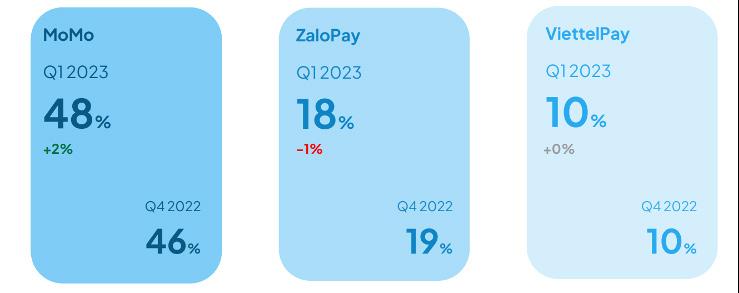
Source: Decision Lab - The Connected Consumer
These data points show that MoMo operates within essential payment behaviors where trust is a prerequisite for existence. Consequently, safety guardrails cannot be treated as technical afterthoughts, but must be designed as integral components of marketing strategy. In practice, these guardrails should cover multiple dimensions:
• Frequency caps to prevent irritation from intensified personalization
• Incentive ceilings to protect margins and brand positioning, avoiding reward-driven habits
• Exclusion of sensitive data categories to mitigate legal and ethical risks
• Emergency stop mechanisms enabling immediate braking during widespread negative reactions
• Bias monitoring to prevent unintentional over-prioritization of specific user groups
Figure 6.8. Brand Preference among Digital Wallets in Vietnam (Q4 2022 – Q1 2023)
When AI and automation are deployed responsibly, MoMo can increase frequency without increasing annoyance. Instead of “broadcasting more,” MoMo intervenes more precisely. Instead of raising incentive costs, it optimizes where incentives generate incremental impact. More importantly, users perceive received messages as directly relevant to real needs rather than being drawn into a meaningless promotion cycle. This is the essence of marketing ahead of behavior: intervening less, but more accurately, and treating trust as a long-term asset.
KEY INSIGHTS – WHAT BUSINESSES MUST UNDERSTAND ABOUT PREDICTIVE AND PROACTIVE MARKETING
• Competitive advantage no longer comes from reacting faster, but from anticipating customer behavior.
Effective marketing appears at the right moment before the need is explicitly expressed.
• Predictive Marketing creates time advantage, not absolute certainty. The value of prediction lies in enabling early intervention, not in achieving 100 percent accuracy.
• Data only becomes valuable when it drives action.
Traditional analytics explains the past, while Predictive and Prescriptive Marketing exist to shape the future.
• Prediction alone does not create experience Proactive Marketing does. Only when activated at journey touchpoints does insight translate into real customer experience.
• Personalization and automation must be accompanied by safeguards to protect trust.
Frequency caps, incentive control, data boundaries, and bias monitoring are strategic responsibilities of marketing not merely technical concerns.
• The role of the marketer is shifting from campaign executor to decision system designer.
In the future, marketing will combine human insight with machine decision capability to drive sustainable growth.
CHAPTER 7
SHORT VIDEOS & COMMUNITY POWER
ENGAGING THE DIGITAL CROWD
The explosion of short video has reshaped how content is created, distributed, and consumed in the digital era. However, its greatest impact does not lie in shorter duration or algorithmic power, but in redefining the role of individuals within the media ecosystem. Users are no longer passive audiences; they become participants and co creators of meaning. As a result, the boundaries between content, community, and brand are increasingly blurred.
If earlier chapters positioned content as a tool for building long term relationships and Brand Love, short video represents the environment where this process unfolds at higher speed and deeper levels of participation. Short videos may capture attention quickly, but sustainable value emerges only when content is commented on, remixed, and continuously amplified within the community. It is this repeated participation that enables brands to move beyond short term awareness toward lasting engagement.
This chapter examines the shift from audience to community within the short video ecosystem. While traditional marketing measures effectiveness through reach and repetition, value in short video platforms accumulates through interaction and shared memory. Content does not end with a view; it continues to live through user driven creativity.
Through concepts such as from view to remix and community power, the chapter clarifies how communities are becoming the new center of media and commerce. The strategic question for businesses is no longer how to be seen more often, but whether the brand will continue speaking to users or learn how to let the community co tell the brand story.
Short Video – The New Infrastructure of Digital Engagement
Short Video as a New Media Consumption Behavior
In recent years, short video has evolved beyond being merely a content format to becoming a dominant media consumption behavior in the digital environment. This shift reflects not only a change in content duration, but a broader redefinition of how people access, consume, and respond to information faster, more visual, and more emotionally driven.
Industry reports consistently indicate that video now accounts for an increasing share of global Internet traffic, with short form video emerging as one of the fastest growing formats due to its ability to capture attention quickly and align with scroll watch react platform behavior. Beyond attention capture, short video holds a distinct advantage in generating organic interaction, as content is designed to encourage comments, shares, remixes, or responses in users own versions.
This transformation has also reshaped media priorities. Many brands now view short video as a central channel for building digital engagement rather than merely a supplementary format within larger campaigns.
Alongside the rise of short video, media consumption behavior has fundamentally changed:
• Search is no longer dominant users do not necessarily need to type keywords.
• Discovery is algorithm driven content is continuously recommended.
• Following a brand is no longer required access to content does not depend on brand subscription.
• Users follow interesting content any compelling video can appear in the feed regardless of brand familiarity.
In this context, users are no longer active seekers of information; they are guided through a continuous content stream. This forces brands to shift from a mindset of being found to a mindset of appearing at the right moment within the users discovery journey.
The convergence of these factors has positioned short video as one of the most critical initial touchpoints between brand and consumer. It is not only a vehicle for awareness, but also a mechanism to:
• Trigger rapid attention
• Initiate early interaction
• Open pathways to subsequent behaviors such as following, deeper exploration, or purchase
In this environment, short video becomes the gateway through which brands enter the world of the digital crowd where attention is determined not by brand scale or familiarity, but by alignment with new media consumption behaviors.
When Algorithms Direct Attentioný
The development of short-form video has not only changed content formats but has also reversed the mechanisms through which attention is distributed in digital environments. In traditional digital engagement models, content visibility largely depended on users actively searching or following specific channels. In contrast, in the short-form video era, algorithms become the primary navigators, determining which content appears before users.
Short-form video platform algorithms operate based on actual viewer behavior: how long users pause, whether they watch the video to completion, and whether they interact or share. These reactions particularly within the first 3–5 seconds play a decisive role in whether a video is expanded to wider distribution or quickly “sinks” in the content stream.
Algorithms typically evaluate videos based on:
• Watch time
• Video completion rate
• Interactions such as likes, comments, and shares
• Speed of initial user response
The shift toward algorithm-first consumption also fundamentally transforms the role of followers. On platforms such as TikTok and YouTube Shorts, the majority of views do not come from follower lists, but from recommendation streams such as For You or Recommended Feed. Statistics show that over 70% of TikTok views originate from algorithmic recommendations rather than from followed accounts. This indicates that distribution power has shifted from follower relationships to content’s ability to generate immediate reactions.
A defining feature of algorithm-first environments is that each video is given an initial exposure opportunity. Algorithms typically test videos with small viewer groups; if performance indicators such as watch time, engagement, and sharing exceed thresholds, distribution expands in iterative waves. This creates a competitive landscape in which:
• New videos are not disadvantaged by lack of followers
• Small brands are not excluded due to limited budgets
• Creativity becomes the decisive factor for reach and diffusion
The strategic implications of algorithm-first consumption for marketing are clear. First, small brands can compete directly with large brands for attention something rarely possible in traditional media models driven by budget and scale. Second, content creativity becomes a more critical competitive advantage than media spend. As global advertising investment in short-form video continues to grow, effectiveness no longer depends on spending more, but on creating content that better aligns with algorithms and user behavior.
More importantly, algorithm-first consumption marks a fundamental mindset shift in marketing: from “buying attention” to “earning attention.” Brands can no longer rely on scale or repetition to impose messages; they must continuously prove their content value through real audience responses. In this environment, short-form video is not merely a distribution channel, but an ongoing test of a brand’s creativity, behavioral insight, and algorithmic adaptability.
Entertainment as the Entry Point of Interaction
The rise of short-form video reveals a structural shift in how people allocate attention: entertainment has become the primary gateway to all digital interaction. In an environment where users scroll through hundreds of pieces of content daily, short videos have only a few initial seconds to retain viewers. If content fails to engage immediately, it is quickly skipped regardless of the brand behind it.
Media consumption behavior strongly reinforces this trend. Nearly 90% of Gen Z watch short-form video daily, with Millennials showing similar habits. Short video is no longer a random entertainment option but an integral part of users’ daily routines. When content is consumed in relaxed states and with the expectation of positive emotions, entertainment elements naturally gain a significant advantage in capturing initial attention.
Engagement performance further reflects this reality. YouTube Shorts records over 70 billion views with an engagement rate of 5.91% the highest among short-form video formats indicating that users not only watch but are also willing to interact when content is sufficiently compelling. These figures demonstrate that entertainment does not trivialize content; rather, it is a prerequisite for deeper reception.
This leads to a new attention hierarchy in digital engagement:
• Entertainment as the initial trigger
• Interaction as the natural next response
• Memory formation only occurs through sufficiently positive and repeated experiences
Within this hierarchy, introducing sales messages too early often backfires, as it disrupts the experiential flow users seek. Viewers do not open short videos to shop, but to be entertained; commercial efforts only become effective when placed after emotional engagement.
Consequently, selling through short-form video is effective only when content is engaging enough and when brands integrate naturally into the experience flow. Brands do not need to “speak out”; instead, they should blend into the story, context, or rhythm the content creates. Users do not reject brands, they reject content that interrupts their entertainment experience.
In this attention-driven environment, short-form video prioritizes three core elements:
• Emotion – to resonate with viewers’ mental states
• Rhythm – to sustain attention across fleeting moments
• Entertainment – to motivate continued viewing, interaction, and return visits
These elements are not decorative additions, but the infrastructure of attention in shortform video marketing. When entertainment is properly positioned, it enables interaction; when interaction is strong enough, it creates memory; and only then does the brand gain the opportunity to influence long-term consumer behavior.
Community Culture Replacing Brand Messaging
In short-form video environments, user behavior is not driven by traditional advertising messages, but by cultural rhythms and trends circulating within digital communities. Challenges, memes, and trends are not merely entertaining content, they function as shared languages of online communities. Users respond strongly to them because they enable personal expression rather than imposed messaging. This results in a major strategic shift in marketing: from campaign-centric approaches to culture participation.
Memes and digital cultural phenomena not only spread rapidly but also deliver superior engagement and effectiveness. Studies show that meme-based content can achieve engagement rates of around 30%, significantly higher than traditional digital advertising formats. Industry data further indicates that the ROI of meme marketing increased from approximately 20% to 50% between 2020 and 2025, alongside strong growth in meme content on social media (from around 35% to 70%). These figures demonstrate that memes are not merely short-term engagement tools, but have become content formats that generate tangible communication and business value within the digital marketing ecosystem.
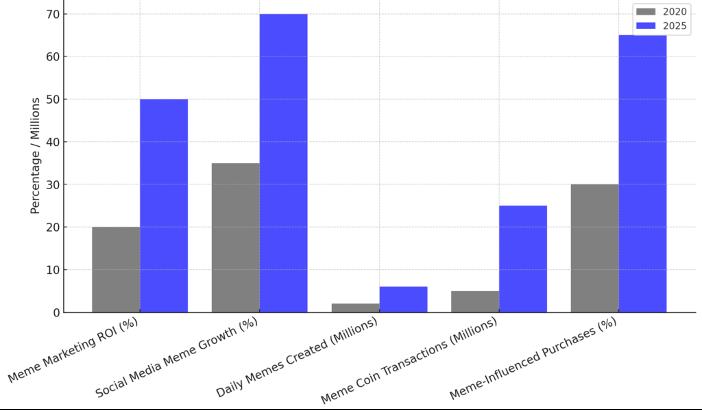
Figure 7.1. Growth of meme marketing impact and engagement across key performance indicators (2020–2025).
Source: Amra & Elma
Viral memes and social challenges reinforce user participation by activating emotion, empathy, and cyclical interaction. Such content stands out because it:
• Reflects shared experiences and perspectives of digital communities
• Encourages users to recreate, remix, and share their own content
• Creates recognizable “online languages” that users understand and adopt
Unlike pre-designed advertising messages, digital cultural trends such as memes, challenges, and trends depend on active community participation. Users do not merely watch, they create and redistribute new content, extending diffusion far beyond the limits of traditional campaigns.
This generates a strategic paradox: the more brands attempt to “speak to audiences in advertising language,” the weaker community response becomes. Contemporary users respond less to message-driven content, but readily amplify community-created content even when the brand is only a minor component. In this context, marketing shifts:
• From campaign-centric, where brands foreground messages and expect user response
• To culture participation, where brands join existing community trends and co-create content language with communities
Rather than concentrating resources on campaigns with fixed start and end dates, brands must learn to listen, participate, and co-create with communities. It is this participation not promotional messaging that generates genuine user attraction.
At a strategic level, short video often functions as the first touchpoint in the brand journey where attention is triggered and initial impressions are formed. However, its value does not lie in isolated reach, but in its ability to unlock subsequent interactions along the users journey.
Short Video is not only for viewing, but for participation
The fundamental difference between short-form video and previous media formats does not lie in duration, but in the level of user participation. While traditional video is designed to be “fully watched,” short-form video is designed to activate action: response, transformation, and co-creation. In this environment, content is no longer closed within its original version, but is opened up for the community to participate in its ongoing development.
From View to Remix
Within the short-form video ecosystem, the diffusion value of content is no longer determined by the number of individual views, but by the number of times that content is transformed and reinterpreted. Short-form video is not designed to be “watched and finished,” but to initiate a chain of consecutive responses, in which each user can become a new distribution node within the content network.
This shift marks a critical turning point in media consumption behavior. Users are no longer the endpoint of the content journey, but rather intermediate links in a cycle of creation – distribution – re-creation. They receive the original video, add personal perspectives, emotions, or contextual layers, and then re-release the content in a new form. Each act of remix not only generates another video, but also opens a new context for further community participation.
Data from short-form platforms indicate that content with remixable elements achieves significantly longer diffusion lifecycles than closed-ended videos. According to TikTok Business Insights, videos that are dueted or stitched tend to generate higher engagement and remain longer in recommendation feeds, as algorithms prioritize content that triggers chain reactions of community response. This suggests that algorithms evaluate content not only based on the quality of the “original version,” but also on its capacity to activate subsequent creative behavior.
In practice, the most common remix behaviors include:
• Duet – users respond directly alongside the original video, creating dialogue or comparison
• Stitch – users extract a segment of the original content and develop the narrative in their own direction
• Parody – users humorously reinterpret familiar structures or messages
Duolingo has implemented short-form video marketing on TikTok using a clear “from view to remix” strategy. Rather than producing fully polished promotional videos with tightly controlled messaging, Duolingo often publishes short, open-ended clips centered on the brand’s mascot. This intentional “incompleteness” encourages the community to create numerous duet, stitch, and parody versions, in which users react, add context, or reinterpret the content from their own perspectives. Each remix video maintains a connection to the original while allowing the brand to reach smaller, highly engaged sub-communities, thereby extending the content’s diffusion lifecycle within the short-form video ecosystem.
The three common remix formats duet, stitch, and parody share a core characteristic: they do not break the original content, but expand it through new community interpretations. Each variation preserves a link to the initial video while enabling the content to reach different audience segments, forming smaller yet more engaged and trust-based micro-communities. This is particularly important in a context where media trust is increasingly shifting toward users. Statistics on user-generated content show that 88% of consumers trust content and reviews created by other users; 50% of Millennials trust UGC; 84% of Gen Z tend to trust brands that are validated by “real customers”; and 34% of consumers believe UGC is always more trustworthy than brand-produced content.
From a strategic perspective, these data indicate that short-form video marketing is no longer effective when it focuses solely on optimizing a “perfect original version” with
tightly controlled messaging. As trust increasingly resides within communities, the diffusion value of content depends on its ability to activate participation and re-creation behaviors among users. Consequently, successful brands often begin with an idea framework that is sufficiently open easy to understand, easy to imitate, and easy to adapt rather than closed content. This deliberately “incomplete” design enables duets, stitches, and parodies to emerge, turning each remix into a new trust touchpoint and allowing content to continue spreading within the short-form video ecosystem.
From Audience to Co-creator
As remix behaviors become widespread, the role of users in short-form video extends beyond viewing and reacting to actively co-creating content with brands. Users are no longer merely an audience passive recipients, but become co-creators who directly participate in content creation, message diffusion, and the shaping of brand meaning within the community.
Figure 7.2. From Audience to Co-creator: The #EyesLipsFace Campaign
Source: Tiktok
A representative example of this shift from audience to co-creator is e.l.f. Cosmetics’ #EyesLipsFace campaign on TikTok. Instead of executing a traditional advertising campaign with fixed messaging, e.l.f. initiated an open creative framework consisting of an original audio track, a simple hashtag, and a call for users to express their personal styles; the rest was entrusted entirely to the community. This approach quickly generated massive diffusion, with over 5 million user-generated videos and nearly 10 billion total views, making #EyesLipsFace one of the most successful campaigns on TikTok.
Notably, the campaign reached 1 billion views in a record-short timeframe, demonstrating that users did not merely respond to the original content but actively co-created and disseminated the message in their own ways. Beyond TikTok, the campaign also generated over 1.5 billion earned media impressions, reinforcing the central role of communities in shaping brand meaning and reach within the short-form video ecosystem.
The outcome was millions of community-created videos, each representing a different interpretation of the same core idea. Users did not perceive themselves as “creating advertisements for the brand,” but as participating in a cultural trend. This active participation transformed the campaign into a naturally diffused phenomenon that extended far beyond the boundaries of a time-limited campaign.
According to reports on user-generated content, community co-created content exhibits significantly higher levels of trust than brand-produced content, particularly among younger audiences. The Nielsen Trust in Advertising Study (surveying approximately 40,000 respondents across 56 countries) shows that 88% of consumers trust recommendations from people like themselves more than brand advertising, and 92% trust recommendations from friends and acquaintances more than any other form of marketing communication. This explains why the most effective short-form video campaigns do not “speak on behalf of the community,” but allow the community to speak in its own language.
In this context, the role of the brand clearly shifts from “spokesperson” to ecosystem activator. Specifically, brands need to assume three core roles:
• Suggestion: proposing a theme or format simple enough for broad participation
• Activation: providing easy-to-use participation tools (hashtags, audio, challenges)
• Companionship: responding to, celebrating, and amplifying community-generated content
With this approach, the brand is no longer a “director” controlling the script, but an initiator and nurturer of a shared creative space. When communities feel they are part of the process, content is not only viewed, but also protected, disseminated, and sustained over time. The case of e.l.f. Cosmetics demonstrates that in the short-form video era, brand value is created with communities rather than imposed upon them.
When content is remixed and reinterpreted, users no longer remain passive recipients but begin to participate in the meaning-making process. This participation increases trust, encourages dialogue, and opens the way for deeper forms of brand advocacy that go beyond surface-level interactions.
Community Power – The Real Power Behind Short-Form Video
The rise of short-form video has not only transformed content formats but has also reshaped the power structure of media communication. In traditional marketing models, brands occupied the central role in creating and controlling messages. In contrast, within the short-form video ecosystem, communities become the decisive force determining content diffusion, credibility, and lifecycle. The value of a video no longer lies in how many people it reaches, but in whether it is capable of activating community participation, collective memory, and voluntary dissemination.
How Is Community Different from Audience?
In traditional marketing, an audience is understood as a group of people who receive brand messages through a one-way logic: the brand broadcasts content, viewers receive it, and may remember or forget it. In this model, brand meaning is largely predefined and controlled by the firm. Viewers play a passive role, with limited ability to intervene in content
or alter its original message. As a result, the relationship between brand and audience is typically short-term, dependent on message repetition and media budgets.
By contrast, in short-form video marketing, community represents a fundamentally different level of relationship between users and brands. Communities do not merely consume content; they actively participate in meaning-making through comments, video responses, remixing, duets, and the development of new content variations. This relationship is two-way, and often multi-directional, as users interact not only with brands but also with one another. Once users become part of a community, they do not merely remember the brand; they associate the brand with personal experiences and shared memories formed within the community.
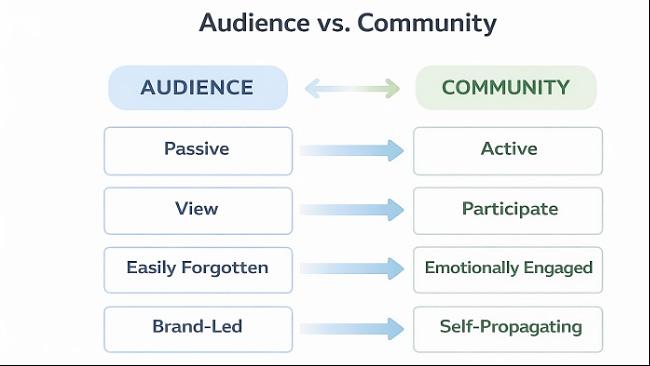
Figure 7.3. From Audience to Community in Short-Form Video Marketing
This distinction is clearly illustrated by how GoPro a global brand specializing in action cameras for outdoor and extreme sports has built its user community. From the outset, GoPro positioned itself not merely as a device manufacturer, but as a platform for capturing and sharing real-life adventure moments. Rather than focusing on producing product-centric advertising videos, GoPro encourages users to share action moments recorded with their own devices. Much of GoPro’s most widely diffused content is not directly produced by the brand, but by a community of users passionate about travel, extreme sports, and exploration. In this case, viewers are not simply advertising audiences, but become a community co-telling the brand story, linking GoPro to vivid experiences and authentic emotions rather than rigid marketing messages.
The #UTPlayYourWorld campaign launched by UNIQLO on TikTok and other social platforms across the Asia–Pacific region further highlights the difference between audience and community. Rather than posting predefined advertising videos, the brand encouraged users to upload personalized creative videos centered on UNIQLO’s USP Universal T-Shirt. The campaign invited Gen Z and Millennials to share videos of themselves wearing UNIQLO in their own styles, with the dual objectives of identifying future influencers and spreading the LifeWear value proposition. Although not a traditional advertising campaign, it generated hundreds of thousands of UGC videos and significantly higher engagement among younger audiences, as posts were remixed with personalized music, effects, and
creator-specific styles. This clearly demonstrates that communities do not merely receive messages, but actively co-create content and define brand experiences on their own terms.
These examples show that audiences exist within one-way relationships, where content is pre-distributed and attention is easily fragmented. Communities, by contrast, function as living ecosystems: users actively participate in content, connect with brands through personal expression, and voluntarily disseminate new message variations. This shift transforms short-form video from a standalone media channel into a community-building platform, where brand value is continuously nurtured through participation and co-creation.
Why Do Communities Determine Brand Success or Failure?
Research on media trust in the digital era indicates that communities play a decisive role in shaping consumer attitudes and behaviors. According to the Edelman Trust Barometer (2023), 63% of consumers report trusting “people like me” more than official brand statements, and 68% state that trust in brands is primarily formed through community experiences and peer endorsements rather than advertising. Notably, among younger consumer groups the core users of short-form video platforms trust in peer-generated content is significantly higher than in traditional media channels. This suggests that when communities speak on behalf of brands, messages are not only disseminated more widely but are also received with greater credibility.
This mechanism is clearly illustrated by Starbucks’ presence on short-form video platforms, particularly TikTok. While the brand frequently faces public debate regarding pricing, instore experiences, or social issues, Starbucks does not always respond through official statements or formal campaigns. Instead, communities of baristas and loyal customers proactively create videos sharing personal experiences, explaining service contexts, and responding to criticism from everyday perspectives. These emotionally rich and authentic narratives help redefine the brand image in a more relatable manner. In this case, the community not only amplifies positive messages but also acts as a “trust buffer,” helping the brand navigate sensitive moments.
However, this same power can become a double-edged sword if brands fail to understand or respect community roles. The 2017 Pepsi advertising campaign featuring Kendall Jenner serves as a cautionary example. The campaign followed a one-way communication logic, with the brand simplifying complex social issues into a single, brand-driven narrative. Upon release, online communities responded strongly with criticism, counter-content, and parodies. Facing widespread backlash, Pepsi withdrew the advertisement and issued a public apology shortly thereafter. In this instance, the community did not amplify the message but instead rejected and redefined the brand image in a negative direction.

Source: TMZ (2017)
Communities create shared memory with brands. Through recurring trends, hashtag challenges, memes, and familiar video formats, brands move beyond isolated communication messages to become part of collective experiences. These shared memories are not formed through logos or slogans, but through moments that communities participate in, remix, and share together. When users recall a brand, they remember not only “what the brand said,” but “what we did together” around that brand within short-form video spaces.
Taken together, successful cases such as Starbucks and failures such as Pepsi highlight a core reality of short-form video marketing: communities are not merely message distribution channels, but the subjects that determine trust, brand protection, and brand memory. In an environment where every user can become a storyteller, brands no longer fully control their own meaning. Brand success increasingly depends on whether brands genuinely listen to, respect, and empower communities in the meaning-creation process.
Models Integrating Short-Form Video and Community
As short-form video becomes the dominant communication infrastructure and communities assume a decisive role in brand meaning, effective marketing models no longer revolve around “message broadcasting,” but focus on how brands are present and participate within communities. In practice, three major models integrating short-form video and community can be identified, corresponding to different configurations of cultural power and value in the digital ecosystem.
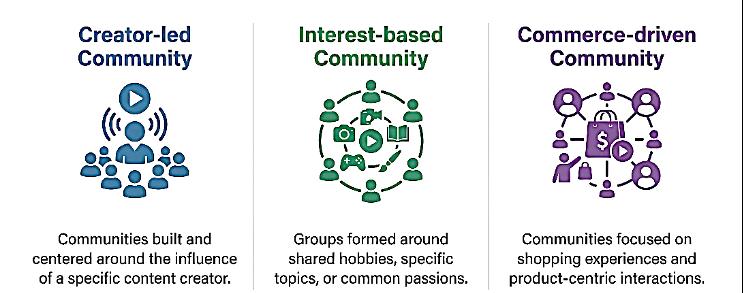
Figure 7.4. PepsiCo Stock Performance Following the Kendall Jenner Ad Backlash (2017)
Figure 7.5. Three Key Models: Short Video & Community
Creator-led Community
In the creator-led community model, creators function as the cultural nucleus of the community. They are not only content producers, but also shape communication language, behavioral norms, and shared emotional tone. Communities form around creators’ personalities, perspectives, and storytelling styles rather than around brands. Consequently, community attachment is closely tied to creator credibility and consistency rather than brand presence. This explains why major creators such as MrBeast or Emma Chamberlain possess not only massive followings but also highly loyal communities. When they collaborate with brands, products appear as natural elements within personal narratives rather than as detached advertising messages.
In this model, the role of the brand shifts clearly:
• Collaborating rather than “hiring” creators as advertising channels
• Releasing control and accepting multi-dimensional, personalized interpretations
• Allowing messages to be translated through creators’ language, tone, and emotions rather than imposed directly
In China, Li Jiaqi (also known as Austin Li) exemplifies this model. He is not merely a sales-oriented KOL, but the cultural center of a loyal community whose communication style, content rhythm, and product evaluation norms are shaped by the creator himself. Brands collaborating with Li Jiaqi do not impose rigid scripts or messages; instead, they allow products to be introduced through his direct, emotionally expressive, and highly personalized review style. In this context, community trust is placed not in the brand, but in the creator as a “cultural representative,” and that trust is converted into purchasing behavior and content diffusion. The case of Li Jiaqi demonstrates that in creator-led communities, narrative power resides with creators, and brands generate value only by positioning themselves appropriately within an already established community ecosystem.
Interest-based Community
Unlike creator-led communities, interest-based communities are not centered on a specific individual, but are formed around shared lifestyles, interests, or values. Short-form video acts as a catalyst, enabling individuals with similar interests to find one another quickly, learn together, and interact through short, shareable, and remixable content. Participation motivation arises not from following celebrities, but from a sense of belonging to a group with shared ways of living and value systems.
Interest-based communities typically revolve around:
• Lifestyles (healthy living, minimalism, productivity)
• Interests (fitness, beauty, gaming, travel)
• Shared values (sustainability, self-care, personalization)
Coolmate, a Vietnamese menswear brand oriented toward simplicity, practicality, and everyday relevance for young consumers, exemplifies this model. Within the short-form video ecosystem, Coolmate avoids overt advertising messages and instead participates in conversations about modern male lifestyles such as fitness, self-care, and daily organization. Community-shared content primarily features everyday routines and real usage experiences rather than staged sales videos. The community thus forms around shared values simplicity, usefulness, and authenticity rather than around a specific creator. In this context, Coolmate exists as a valuable member contributing tools and inspiration, allowing the brand to become a natural part of a shared value system rather than an imposed marketing message.
Within interest-based communities, brands cannot and should not assume the role of “owners.” Instead, brands exist as:
• Valuable members contributing knowledge, tools, or inspiration
• Supporting resources that help communities grow and sustain interaction
If brands attempt to dominate or impose sales-driven messages, communities will quickly self-regulate by ignoring, resisting, or excluding the brand from conversations. Conversely, brands that listen, observe, and contribute appropriately are often accepted and even defended as part of the shared value system. Within short-form video ecosystems, such integration enables brands to maintain sustainable and credible presence beyond any short-term advertising campaign.
Commerce-driven Community
The commerce-driven community model illustrates the convergence of content, community, and purchasing behavior within short-form video ecosystems. Here, commerce is no longer separated from social interaction, but is “socialized” through formats such as:
• Livestream shopping with real-time seller–buyer interaction
• Product reviews and personal experience videos shared by users or creators
• Community-based social proof through comments, feedback, duets, and stitches
In this model, shopping is no longer an isolated transaction but a community-based activity. Users do not merely purchase products; they also:
• Observe how others use and evaluate products
• Compare experiences across multiple users
• Interact directly with sellers and other community members
In Southeast Asia, TikTok Shop serves as a clear example of a commerce-driven community within the short-form video ecosystem. Rather than separating entertainment content from purchasing behavior, TikTok Shop integrates shopping directly into short videos and livestreams, where users encounter products through real-life experiences, personal re-
views, and real-time community interaction. Viewers not only follow sellers or creators but also observe comments, questions, and purchasing decisions made by others within the same space, generating powerful social proof effects.
In this context, shopping becomes a shared social experience: users are entertained, learn from others’ experiences, and participate in collective conversations before making decisions. Brand value thus resides not only in products themselves, but also in the extent to which brands are discussed, validated, and disseminated by communities within shortform video spaces.
Khi cộng đồng trở thành không gian nơi thương hiệu được thảo luận, xác thực và tái tạo liên tục, mối quan hệ không còn mang tính chiến dịch, mà trở thành một quá trình duy trì và củng cố theo thời gian. Sự gắn bó lúc này không đến từ thông điệp lặp lại, mà từ trải nghiệm chung được tích lũy trong cộng đồng.
FUTURE LENS – The Future of Short-Form
Video & Community
The evolution of short-form video is reshaping not only content production and diffusion, but also the relationship between brands, communities, and consumer behavior. Communities form according to different logics creator influence, shared interests, or commercial motivation. The three representative models creator-led communities, interest-based communities, and commerce-driven communities explain how short-form video connects content with communities and shifts the center of gravity from brand-controlled communication to community-co-created ecosystems.
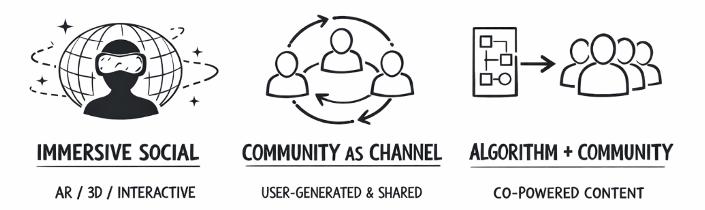
7.6. Three Community Models in Short-Video Ecosystems
From Short Video → Immersive Social
In the future, short-form video will no longer be merely watched you will step inside it. Short video will move beyond the screen frame to become immersive social experiences. As video integrates with AR, 3D, and spatial interaction technologies, the boundary between viewer and content will gradually dissolve. Users will no longer remain external observers, but will touch, try, interact, and exist within the content space itself.
Figure
Media experiences will therefore transform fundamentally. Instead of the familiar path of watch → remember → buy, the future introduces a new experiential sequence: watch → participate → live within content. Users may try products in virtual environments, interact with multiple content layers simultaneously, or co-create shared moments with communities beyond the video frame. As content becomes a space to “live within,” short-form video transcends its role as a media format and becomes a platform for social experience.
Community as a Media Channel
In this future, communities will no longer function as media audiences, but will become media channels themselves. Communities will self-produce content, self-distribute it, and self-construct brand meaning through remixing, response, and co-creation. Content will no longer end when brands stop posting; it will continue to live and evolve in the hands of communities.
Accordingly, brand roles transform fundamentally. Brands no longer operate as traditional media owners, but appear in two new forms:
• Enablers – unlocking potential by providing tools and conditions for community creativity
• Platforms – creating spaces where diverse voices connect and diffuse
Future communication value will not be measured by campaign reach, but by the willingness of communities to continue narratives after original content concludes. When communities become media channels, brand power resides not in budgets, but in the ability to be accepted and utilized by communities as part of a shared content ecosystem.
Algorithm + Community Co-power
In future short-form video ecosystems, two sources of power will coexist: algorithms and communities. Algorithms determine which content is distributed, who sees it, and when. Communities, however, determine what that content means, how long it survives, and how it continues to be retold.
A video may be algorithmically amplified in the short term, but only through community participation, remixing, and dissemination does it achieve long-term lifespan. This creates a state of co-power: algorithms amplify, communities validate. Brands cannot optimize solely for algorithms while neglecting communities, nor can they expect community diffusion if content fails to align with platform distribution logic. Future success requires content that is both “readable” by algorithms and “livable” within communities.
In the future, brands will not simply go viral they will be carried by communities. As shortform video evolves into immersive experiences and communities become primary media channels, brand power will no longer stem from message control, but from the ability to create spaces where communities participate, co-create, and continue telling brand stories in their own ways.
Case study: LEMONADE – WHEN COMMUNITY PRECEDES BRAND

Figure 7.7. Lemonade is a Vietnamese cosmetics brand with affordable prices
Source: Lemonade
Lemonade is a Vietnamese local makeup cosmetics brand founded in 2018 by Quách Ánh, a professional makeup artist and beauty content creator. The brand has recorded impressive revenue growth, increasing from VND 13 billion in 2020 to VND 184 billion in 2022, with projections reaching VND 300 billion by 2025. This performance affirms Lemonade’s competitive position alongside major international brands such as Maybelline and Innisfree in the Vietnamese market.
From its inception, Lemonade has been positioned around the development of “easy-touse makeup solutions” that align with Vietnamese consumers’ skin characteristics, usage habits, and real-life contexts. Instead of pursuing rapid expansion through mass advertising, the brand chose to grow from the domestic market and leverage digital platforms as its primary access channel, reflecting the digital-first trend of the cosmetics industry in Asia..
Before Lemonade emerged as a commercial entity, Quách Ánh had already built a large and highly engaged follower community through instructional and practice-oriented beauty content. This included highly applicable makeup tips, product analyses, and the sharing of personal experiences. Her digital presence demonstrates a clear community advantage, with approximately 1.2 million followers on TikTok, 248,000 followers on Instagram, and 189,000 followers on Facebook. This multi-platform audience base became an initial “trust asset,” enabling Lemonade to enter the market not through a push-advertising logic, but by transforming existing content and relationships into drivers of product trial, feedback, and purchase fully aligned with the logic of short video and community-based marketing.
Community Before Brand
The core differentiation of Lemonade lies in its reversed development sequence compared to traditional marketing models: the community was formed first, and the brand followed later. Instead of starting with a product and attempting to persuade the market through advertising, Quách Ánh began by building long-term trust through content. For many years prior to Lemonade’s launch as a brand, she consistently shared makeup tutorials, analyzed the strengths and weaknesses of products available in the market, and documented personal experiences in her role as a makeup artist. This content was delivered in a relatable, transparent, and educational tone, focusing on helping audiences understand and apply techniques rather than stimulating immediate purchase behavior.
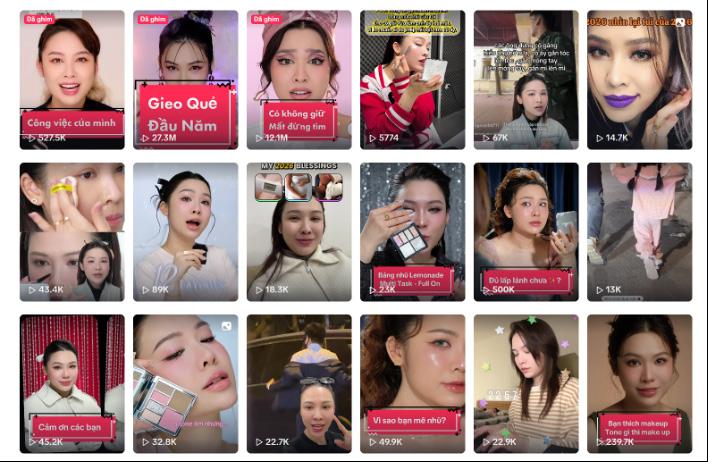
Figure 7.8. Community Before Brand: Lemonade’s Founder as a Trusted Beauty Voice
Source: Lemonade
Over time, a follower community gradually formed not merely for entertainment purposes, but because audiences perceived real value in learning and felt accompanied by a credible professional. Short video played a critical role in this process, as its concise, visual, and accessible format helped “democratize” makeup knowledge, making it easier to apply for a broad audience. The community did not function as a collection of passive viewers, but as an interactive space where users responded, asked questions, shared experiences, and actively contributed to shaping subsequent content.
During this stage, Quách Ánh did not appear as a salesperson, but as a trusted member of the beauty community. The primary value exchanged was knowledge, experience, and honesty in evaluation, rather than commercial promises. As a result, the relationship between the creator and the community was built on personal trust and shared values, without attachment to any specific brand or product. This foundation later enabled Lemonade, upon its launch, to be received not as a commercial interruption requiring permission to be heard, but as a natural continuation of a story that the community had already witnessed and participated in.
From a Creator-Led Community to a Brand-Led Ecosystem
When Lemonade officially launched, the brand did not appear as a “new entrant” to the market, but as a natural extension of an existing community narrative. Instead of deploying intrusive advertising campaigns, Lemonade introduced its products through a series of short videos documenting the development process from formula testing and material selection to real-life usage contexts. The community did not merely serve as the first group of buyers, but became co-creators of brand meaning by observing, responding to, and participating in the product development journey.
This approach is particularly suited to the cosmetics market, where trust and personal experience play a decisive role in purchase behavior. Across the Asia–Pacific region, the cosmetics market has been experiencing strong growth, with industry value estimated at over USD 139.6 billion in 2024 and projected to reach approximately USD 186.3 billion by 2030, driven by rising incomes, urbanization, and increasing beauty care demand. In Vietnam, the cosmetics market is also expanding rapidly, with industry size estimated at approximately USD 1.68–2.5 billion in 2024 and expected to continue growing in the coming years. In parallel, shopping behavior has shifted significantly: around 31% of cosmetics retail sales in Vietnam in 2024 were generated through e-commerce platforms, and the influence of reviews, livestreams, and short-form social videos on purchase decisions has increased substantially.
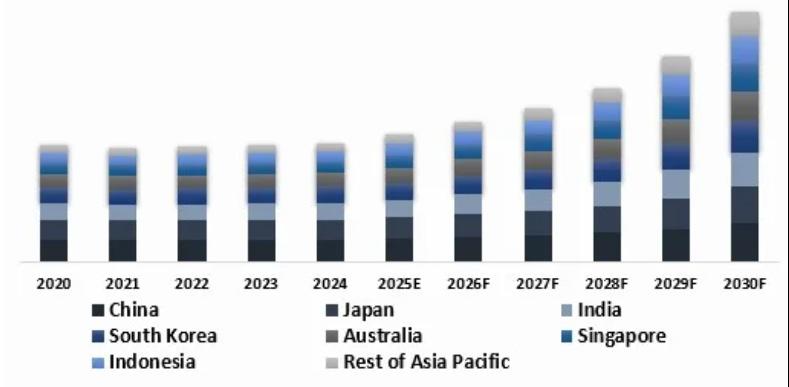
Figure 7.9. Asia–Pacific Cosmetics Market Growth by Country (2020–2030F)
Source: TechSci Research (2024)
In this context, short video plays a pivotal role in the transformation from community to brand ecosystem. Content does not merely aim to assert whether a product is “good or bad,” but maintains a logic familiar to the community: explanation, instruction, feedback, and dialogue. Users evaluate not only the final outcomes, but also observe the entire process through which products are created, used, and refined based on real feedback. This helps Lemonade narrow the common gap between brand messaging and user experience, while transforming the brand into a living entity within the community rather than a detached marketing message. From a community centered around an individual creator, Lemonade gradually evolved into a brand-led ecosystem in which content, community, and products continue to operate according to the same value system established from the outset.
Community as Lemonade’s “Media Channel”
After Lemonade took shape as a brand, the community did not “step back” to make room for official brand communications, but continued to function as an informal yet highly effective media channel. Users proactively created experiential content, shared product reviews, demonstrated usage, and compared Lemonade products with alternatives in the market using their own personal styles. Although these contents were not tightly controlled in terms of messaging or visuals, their diversity and inconsistency generated a high level of authenticity an especially critical factor in the cosmetics industry, where personal experience is decisive.
Within this model, Lemonade does not operate as a traditional media owner broadcasting one-way messages, but fulfills two core roles within the content ecosystem:
• Enabler: providing products, foundational knowledge, and usage contexts that allow the community to continue creating content in their own ways.
• Platform: creating a space where personal experiences are connected, compared, and amplified through short videos, comments, and cross-user interactions.
Lemonade’s communication value lies not in short-term campaigns, but in its sustained presence within everyday community conversations and usage.
The Lemonade case illustrates an alternative trajectory for short video marketing in Vietnam:
• Brands do not need to “go viral” to succeed; they need to be trusted and supported by communities.
• When communities are built on genuine value and long-term relationships, expansion into branding and commerce occurs more naturally, with less friction and greater sustainability.
In the context of short-form video, where users are increasingly skeptical of sales-driven messaging, Lemonade demonstrates that community is a strategic asset preceding the product. The brand becomes not the starting point of communication, but the outcome of sustained trust-building, interaction, and co-creation with the community.
KEY INSIGHTS – WHAT BUSINESS MUST UNDERSTAND ABOUT NEXT-GEN TECHNOLOGY
• Marketing is no longer supported by technology; it is operated by technology. Competitive advantage stems from the ability to build and orchestrate intelligent systems, not from the number of tools deployed.
• AI creates value only when embedded within smart systems. On its own, AI generates insights; when connected with data, automation, and business principles, AI enables action.
• Marketing is shifting from campaign-led to decision-led. Experiences are no longer driven by campaign schedules, but by continuous decision-making based on signals and context.
• Data and cloud function as marketing’s sensing infrastructure. Real-time data and a single customer view allow systems to understand customers as living entities rather than static datasets.
• The future of marketing lies in self-optimizing systems. Systems that continuously test, learn, and improve within strategic boundaries reduce reliance on manual control.
• The best marketing is invisible marketing. When systems operate effectively, customers perceive only convenience, relevance, and timeliness rather than “seeing” marketing itself.
CHAPTER 8
MULTISENSORY
CUSTOMER EXPERIENCE BEYOND THE DIGITAL SCREEN
Recall a familiar moment: you pick up your phone for a few minutes, only to realize an hour has passed—leaving strained eyes, mental fatigue, and a sense that nothing truly stayed. Digital fatigue has become increasingly common in an era of constant connectivity. As highlighted in Marketing 6.0: The Future Is Immersive, excessive screen time results not only in information overload but also in diminished attention and a weakened sense of control.
In this context, marketing can either add to the noise or enhance the quality of presence. Rather than pushing more content, brands can design experiences that are better paced and more comfortable. Multisensory marketing offers this direction by engaging multiple senses, enabling customers to feel rather than merely process information. When well designed, such experiences reduce cognitive strain rather than intensify it.
Thus, multisensory marketing is not a superficial tactic, but an execution layer within the experiential dimension of modern marketing—focused on seamlessness, synchronization, and reduced effort. Key managerial questions emerge: how to translate brand promises into sensory design, ensure consistency across touchpoints, and measure experience as a competitive advantage. Ultimately, while the screen is where attention is contested, multisensory space is where brands can restore presence—shifting marketing from communication to perception.
Beyond the Screen: From Digital Saturation to Multisensory Mechanisms
Digital Experience: The Supply–Demand Problem of Attention
Digital experience was once considered an added convenience, but today it has become a living infrastructure. Across Asia and Southeast Asia, Internet access and mobile connectivity are deeply embedded in everyday life, with individuals often maintaining multiple connections simultaneously. This reflects a broader shift: connectivity is no longer a differentiator, but a baseline condition for participation in modern society.
This regional trend mirrors a global transformation. People now spend a significant portion of their daily lives online, not only for communication but also for consumption, entertainment, and decision-making. As connectivity becomes denser and faster, competition no longer centers on access, but on the quality of attention. Continuous exposure to information and stimulation has made cognitive overload an increasingly common state, especially in mobile-first markets where digital interactions are constant and always-on.
When digital experience becomes the “common ground” for connection, consumption, and decision-making, digital environments rapidly shift from content scarcity to content abundance. McKinsey describes this as a supply–demand problem of attention, characterized by a clear paradox:
• Human attention remains inherently limited
• Content supply continues to expand rapidly due to advances in production, distribution, and user-generated content
• The volume of user-generated content increasingly surpasses professionally produced content
• The speed and scale of content creation exceed the capacity of traditional media systems
• Users engage with multiple devices simultaneously, leading to fragmented attention
As a result, attention becomes increasingly dispersed. High levels of media consumption do not necessarily translate into proportional value, as the abundance of content reduces its relative impact. The growing volume of content does not automatically lead to stronger engagement or meaningful outcomes.
In this context, going beyond the screen does not mean rejecting technology, but responding naturally to saturation. When every brand has the ability to speak, competitive advantage shifts toward experiences that make customers truly present rather than merely scrolling past. Experiences designed with the right context and rhythm do not overstimulate customers; they reduce cognitive effort and it is precisely this reduction of strain that creates differentiation.
When Presence Becomes a Scarce Value
When digital experience becomes the “common ground,” scarcity no longer lies in access or interaction frequency, but in genuine human presence within the experience. Users today can be constantly online yet frequently exist in a state of being “technically present but cognitively absent.” They spend extended periods in front of screens, while levels of attention, perception, and memory steadily decline.
Research on visual fatigue shows that prolonged smartphone use alters basic physiological eye reflexes and increases cognitive load. These changes reflect not only visual exhaustion but also early indicators of diminished presence in digital interaction. As the body continually adjusts to keep pace with on-screen stimuli, the brain is forced into sustained tension, rendering experiences shallower and more fragmented.
• At the experiential level, this state commonly manifests through familiar symptoms:
• Difficulty maintaining prolonged focus
• Feelings of fatigue despite low physical energy expenditure
• Exposure to large volumes of content with little lasting memory
• A tendency toward rapid reaction rather than immersive experience
Thus, the desire to “go beyond the screen” does not stem from rejecting technology, but from a longing to rediscover experiences that allow people to be fully in the moment through the body, sensations, and natural interaction rhythms. When presence becomes a scarce value, experiences that enable it are naturally valued more highly.
From a marketing perspective, this marks a critical shift: value no longer lies in capturing more of the customer’s attention time, but in enhancing the quality of the time they are willing to give. Experiences designed to reduce cognitive load, guide interaction at the right pace, and make customers feel “comfortable staying” tend to generate stronger trust and memory. This is precisely the foundation on which multisensory marketing operates: when an experience is sufficiently “touching,” customers do not merely consume information they are genuinely present in the journey, and that presence becomes the prerequisite for long-term value.
The Five Senses as the “Language” of Experience
An important advantage of multisensory marketing is that it allows experience to be discussed in a structured way, rather than relying solely on subjective descriptions such as “pleasant” or “uncomfortable.” In a widely cited research review, Aradhna Krishna defines sensory marketing as the engagement of consumers senses in ways that influence perception, judgment, and behavior. The core of this definition does not lie in generating more sensory stimuli, but in how individuals interpret those stimuli within a specific context.
The brain does not register the world like a neutral camera. Instead, it functions as a continuous “editor,” selecting, connecting, and organizing sensory signals into meaningful wholes. Initial physical signals such as light, sound vibrations, odor molecules, temperature, or surface texture are merely raw data upon entering the body. They are processed by specialized brain regions, such as:
• The occipital lobe, responsible for visual processing (color, shape, motion)
• The parietal lobe, associated with touch and bodily states (contact, pressure, temperature)
• The temporal lobe, which processes sound and deeper layers of meaning such as language, emotion, and memory
In practice, these regions do not operate in isolation but exchange information rapidly. As a result, perception typically emerges as a coherent, meaningful whole rather than a mechanical sum of individual senses.
From this perspective, the five senses can be viewed as languages through which a brand communicates with customers. Vision can convey structure and order; sound shapes rhythm and spatial perception; scent evokes memory; touch provides physical evidence; taste leaves an emotional aftertaste. However, like any language, the ultimate meaning of a message does not reside entirely with the sender.
A scent may be interpreted as clean in a clinic, yet perceived as overpowering and unpleasant in a luxury space. A dim environment may feel cozy in a cafe, but unsafe in a parking garage. The difference lies not in the stimulus itself, but in the context, expectations, and prior experiences of the receiver.
This highlights an essential point: multisensory marketing is not the art of adding effects, but the art of designing conditions in which customers interpret the experience in alignment with the brand tone. When sensory cues are intentionally orchestrated, they form a coherent sensory narrative. When they are fragmented or contradictory, the narrative becomes confusing and increases cognitive effort.
From Sensation to Perception Why Synchronization Reduces Effort and Enhances Memory
From an experience management perspective, the core issue is not how intensely stimuli are delivered, but how the brain interprets the experience and whether that experience is consistent enough to prevent cognitive strain. In other words, this is a matter of designing perception rather than amplifying stimulation. In practice, this can be summarized into three principles: perception matters more than stimulus, consistency matters more than intensity, and the ultimate objective is to reduce cognitive cost.
To understand this mechanism, it is necessary to distinguish between sensation and perception. Sensation refers to the initial physiological response of the body to physical stimuli such as light, sound, scent, or touch. Perception, in contrast, is the process by which the brain interprets, organizes, and assigns meaning to those signals based on memory, expectations, emotions, and context. Sensation answers the question, “What is affecting my body?” while perception answers, “What does this mean to me?”
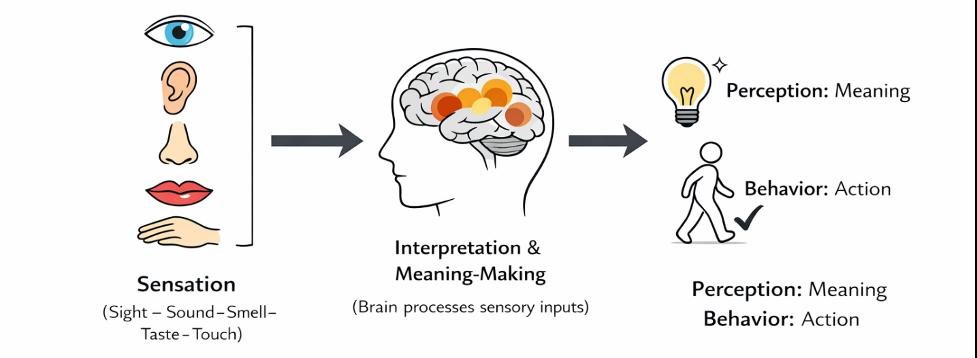
Figure 8.1. How sensory inputs are transformed into perception and behavior through the brain’s interpretive process
From this standpoint, customer experience is not determined by how “strong” stimuli are, but by how they are organized into a coherent perceptual pattern. The human brain constantly seeks coherence to reduce information-processing effort. When the surrounding environment emits fragmented or contradictory signals, customers must continuously adjust their attention, leading to tension and fatigue.
This mechanism can be summarized through several key points:
• Sensation is raw data; perception is the edited outcome.
• The brain prioritizes meaning over intensity: stronger is not necessarily better.
• Cross-sensory consistency allows faster interpretation with less cognitive effort.
• Reduced processing effort increases positive emotional states and readiness to interact.
Multisensory marketing becomes effective in its ability to support the brain in editing the experience. When multiple senses are activated according to the same underlying logic, the brain receives sufficient cues to form a stable perception. As a result, the experience is not only pleasant in the moment, but also shapes brand evaluation, trust, and intention to return.
Strategically, the power of multisensory design does not lie in making customers feel more, but in helping them feel more clearly and with less effort. When cognitive cost decreases, the sense of control increases. And when customers understand what is happening around them, they are more likely to develop trust and long term attachment.
The six steps below summarize how sensory signals are translated into meaningful perception, and explain why consistency matters more than intensity. Experiences are remembered not because they are strong, but because they are structured.
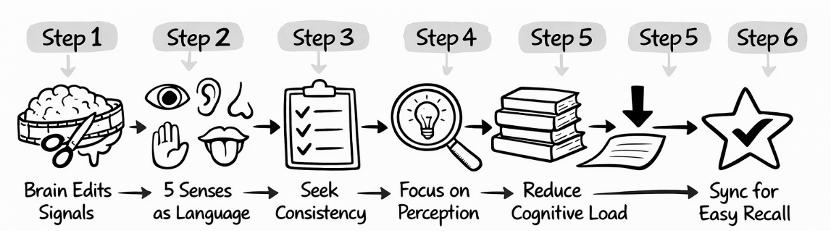
Figure 8.2. Six-Step Sensory Coherence Logic
This sequence also reveals a core managerial principle: brands do not directly control perception, but they can control how sensory signals are organized. When the senses are orchestrated coherently, cognitive cost decreases and the experience becomes easier to interpret. Multisensory marketing is therefore not about adding more stimulation, but about coordinating stimulation.
From this point, the question is no longer “How does sensation operate?” but rather “How can this mechanism be translated into a system that can be deliberately designed and managed?” That is precisely the role of the Design → Control → Scale model in the next section.
When Atmosphere Becomes Part of the Service Product
In service industries, the product is not only what is sold, but what is experienced. In formats where customers remain for a period of time such as cafes, retail stores, co working spaces, spas, or gyms the product begins from the very first seconds of entering the space.
Lighting, sound, scent, materials, and spatial flow are not decorative elements; they are signals that allow customers to form rapid judgments: “this feels trustworthy,” “this feels tense,” “this is a place I want to stay.” When these signals are aligned, the brain integrates them into a stable perception. When they are misaligned, the experience feels disrupted even if the core service quality remains unchanged.
To transform atmosphere into a manageable part of the product, multisensory marketing must be implemented as a system. That system can be understood through three layers: Design → Control → Scale.
Design Transforming Emotional Promise into Sensory Architecture
Multisensory design does not begin by adding elements to a space, but by clarifying a fundamental question: How should customers feel when entering this experience? Without a dominant emotional state, decisions about lighting, sound, scent, or materials easily become fragmented and inconsistent.
A brand may pursue various emotional states calm, energy, focus, premium, trust. However, within a specific space, one central emotion must serve as a compass guiding the entire design. That emotion does not exist merely to impress; it shapes how customers interpret the environment and make decisions.
More importantly, emotion must be translated into desired behavioral states. A space may be designed to encourage customers to stay longer or move quickly; to explore or to decide efficiently; to relax or to concentrate intensely. Effective experience is not only emotionally aligned, but behaviorally aligned. When emotion and behavior diverge, the experience becomes contradictory and inefficient.
The next step is identifying the leading sense. Each experience requires a clear anchor. Spas often revolve around touch and scent; coffee chains may rely on aroma and taste; workspaces emphasize light and sound. Without a dominant sense, signals compete with one another, preventing stable perception.
Once emotion, behavior, and leading sense are defined, the most critical task is orchestration across senses. The brain does not process stimuli separately; it integrates them into a unified experience. Therefore lighting, sound, scent, materials, and layout must tell the same story.
For example, a bakery positioned as calm and refined may use soft lighting, subtle butter aroma, gentle background sound, and warm wooden materials. When aligned, customers naturally lower their voices and linger longer. Brand emotion is translated into intentional design rather than emerging accidentally.
At the design layer, the principle is not increased stimulation but greater synchronization. Strong experiences arise not from intensity, but from reduced noise and clearer structure.
Four key Design questions:
• What is the central emotion? (Calm, Energy, Focus, Premium, Trust…)
• What is the desired behavior? (Stay longer, Decide faster, Explore, Relax…)
• Which sense leads the experience? (Visual, Sound, Scent, Touch, Taste)
• Do the remaining senses reinforce or distort that emotion?
Control Eliminating Discord and Maintaining Operational Consistency
If Design answers how the experience should be created, Control addresses how to prevent distortion during real world operations.
In service environments, strong concepts often weaken not because strategy is flawed, but because control mechanisms are absent. A space may be correctly designed, yet small misalignments harsh lighting during peak hours, inconsistent music shifts, overly strong scent when crowded can alter brand perception.
Customers do not analyze elements separately; they form holistic conclusions. A single negative signal can override multiple positive cues. Therefore controlling multisensory experience is not about keeping things aesthetically pleasing, but about protecting emotional alignment.
Audit Detecting Sensory Discord
Sensory discord often appears in subtle details:
• Uncomfortable seating in a relaxation oriented space
• Echoing sound in a focus driven environment
• Overpowering scent in a premium setting
• Traffic flow cutting through private zones
These create cognitive friction. When customers must endure the environment rather than merge with it, they shift from approach to avoidance staying shorter, interacting less, returning less frequently.
Control therefore begins with periodic sensory audits not only technical checks, but evaluation against the central emotion.
Standardizing Expected Experience
As businesses scale, the challenge is not creativity but stability. Customers perceive one brand, not individual locations or shifts. Any inconsistency reflects on the brand.
Standardization does not mean rigid uniformity, but defining non negotiable elements:
• Minimum and maximum lighting levels
• Acceptable sound volume range
• Base scent intensity
• Core traffic flow arrangement
• Tactile standards (clean, solid, stable)
Customer feedback functions as an external sensing system. Minor deviations normalized internally may be obvious to guests. Control is therefore a continuous loop: design observe adjust.
Four key Control questions:
• Which sensory elements risk drifting over time or across shifts?
• Is there a checklist for each sensory layer?
• Do customers have rapid feedback channels?
• Does the operational team understand the central emotion well enough to self correct?
With proper Control, experience no longer depends on individual mood or circumstance. It becomes stable enough to build trust and flexible enough to adapt.
Control bridges design and growth. Without it, design is fragile. With it, experience becomes durable enough to scale.
Scale Transforming Experience into a Replicable Growth System
If Design shapes emotional structure and Control preserves it, Scale determines whether experience becomes long term competitive advantage.
In early stages, experience may depend heavily on founder intuition or core team sensitivity. As expansion occurs more outlets, more shifts experience cannot rely on individuals. It must become a replicable system.
Scaling is not about doing more; it is about doing the same intentionally.
From Emotional Space to Structured Servicescape
To replicate experience, service environments must be decomposed into manageable layers. The servicescape model structures this into three dimensions:
• Ambient conditions: lighting, sound, scent, temperature, cleanliness, acoustics
• Spatial layout and functionality: movement flow, distance, privacy level, touchpoint placement
• Signs and symbols: color palette, materials, signage, uniforms, brand imagery
When defined clearly, experience shifts from a vague feeling to a reproducible structure.
From Consistency to Habit
At the Scale stage, the objective is not strong impact but structural reliability. Customers return not because every visit is surprising, but because it is predictable. Repeated predictability builds trust; accumulated trust forms habit.
A brand may not create “wow” at every touchpoint, but if it maintains:
• Stable taste profile
• Familiar service rhythm
• Intuitive spatial clarity
• Reliable tactile feedback
Then experience integrates naturally into daily life. Growth emerges from consistent repetition rather than constant disruption.
From Experience to Operating System
At maturity, multisensory experience functions as an operating system:
• Clear standards
• Monitoring mechanisms
• Performance metrics
• Contextual adaptability
Experience ceases to be decorative. It becomes part of core value shaping dwell time, repeat visits, and referrals.
Four key Control questions:
• Which sensory elements must remain stable during expansion?
• Are experiential standards documented across all servicescape layers?
• Are there metrics measuring cross location consistency?
• Is the system adaptable without losing the brands sensory signature?
When these are resolved, experience becomes a strategic asset stable enough to build trust and flexible enough to operate across multiple contexts.
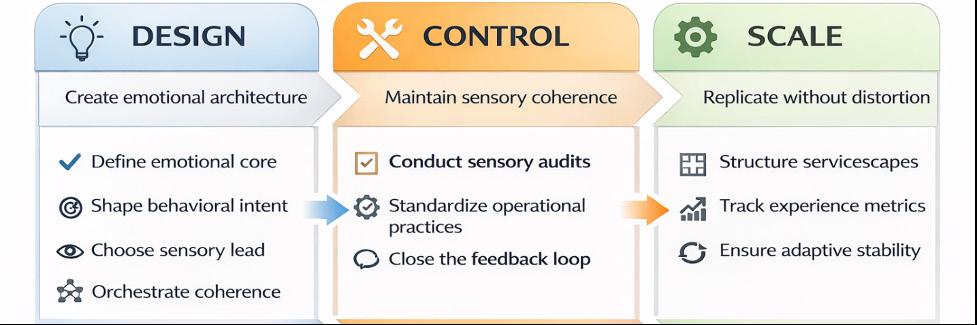
Figure 8.3. The Sensory operating system (SOS)
Thus, an experience only holds strategic value when it can be replicated without distortion. The Design–Control–Scale model demonstrates that growth does not come from doing more, but from doing more consistently. When the emotional structure is clearly designed, tightly controlled, and properly systemized, experience becomes the foundation of long term competitive advantage.
Brand Experience in the Experience Economy
If Section 8.2 demonstrated how “atmosphere” can be designed, controlled, and replicated as a Sensory Operating System (SOS), then Section 8.3 expands the lens: multisensory experience does not exist in isolation. It is part of a broader structure of brand experience.
In a context where products and services are increasingly commoditized, differentiation no longer lies in features or pricing tables, but in how customers perceive the entire journey. When every gym has modern equipment, every spa offers similar treatments, and every café has an “aesthetic” space, the deciding factor is no longer what is offered, but how it is experienced.
Experience is therefore not decoration; it is a behavioral guidance system.
When Products Are Flattened Experience Becomes the Guiding Structure
Across many service industries, product differentiation is shrinking rapidly. Equipment can be sourced from the same suppliers. Processes can be learned through short training programs. Recipes can be copied. Prices can be compared in seconds. When technical quality becomes relatively “good enough” across competitors, competition shifts to a less tangible layer: how customers move through and interpret the entire journey.
This does not make the product less important; it makes it a prerequisite. The strategic question shifts from “What do we provide?” to “How is it experienced?” Consider two gym sessions with the same fat loss goal.
In the first session, the customer arrives on time but is unsure where to wait. Staff are busy and communicate quickly. Music is loud, the floor is crowded, and the trainer divides attention among multiple clients. There is no clear introduction and no structured closing. Technically, the session is completed. Emotionally, the customer leaves mentally fatigued from having to adapt and decode the environment.
In the second session, movement flow is clear from the entrance. A timely greeting provides direction. The workout is introduced with structure and ends with a summary of progress and next steps. Nothing is overly dramatic, but the entire journey feels guided and controlled.
The difference does not lie in machines or exercises, but in experiential structure:
• Design: The journey is clearly shaped; target emotions (progress, confidence, control) are translated into spatial rhythm and interaction.
• Control: Consistency is maintained across words, actions, and shifts.
• Scale: The experience can be replicated without relying on one exceptional individual.
From a behavioral perspective, the key difference lies in cognitive cost. When the environment lacks structure, customers must continuously make small decisions: Where do I stand? Who do I ask? How long do I wait? What is next? Each decision consumes attentional energy. Individually small, collectively draining.
Conversely, when the journey is clearly designed and rhythmically aligned, the brain does not need to defend itself against the environment. Processing effort decreases. Sense of control increases. The experience consumes physical energy but generates psychological clarity.
In the experience economy, competitive advantage does not come from adding more stimulation, but from reducing cognitive cost. When products are flattened, the winning brand is the one that requires customers to think less, guess less, and doubt less. That reduction becomes the foundation of sustainable growth.
Brand Experience Making “Experience” Manageable
As products and services converge, “experience” is often cited as a competitive advantage. Yet when treated as a slogan, it becomes vague and inconsistently implemented.
To avoid that trap, experience must be viewed as a structure that can be designed, measured, and controlled. Brand experience is not a single impressive moment, but the sum of
real customer responses across the journey, including:
• Physical sensation: comfort or tension
• Emotional state: relaxation, excitement, or fatigue
• Brand interpretation: trustworthy, professional, or superficial
• Post experience behavior: return, referral, or avoidance
From a management perspective, excellent experience can be condensed into a simple formula:
Excellent Experience = Promise + Rhythm + Ease
However, this formula only gains value within a clear operating system.
• Promise is the foundation of Design: defining central emotion and desired behavior.
• Rhythm is the focus of Control: ensuring sequence, pace, and interactions remain aligned.
• Ease is the outcome of Scale: standardizing the journey to reduce cognitive cost.
Here, “ease” does not mean superficial simplification. It means reducing cognitive cost throughout the journey. When customers constantly wonder “Where am I in the process?” “What happens next?” “Is there something hidden?” the experience becomes heavy. Each unanswered question drains attentional energy and weakens positive emotion.
When promise is consistently translated, rhythm is stable, and transitions are clear, customers feel guided forward. They do not need to analyze the environment; they can focus on their own goals. Reduced friction creates space for trust and memory formation.
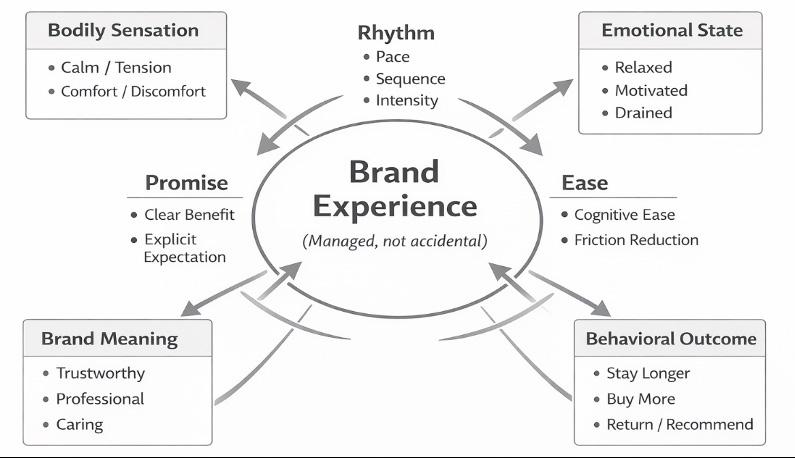
Figure 8.4. Brand Experience as a Manageable System
This explains why many brands fail when attempting to “make experience bigger” through grand events or dramatic effects. In industries such as spa, fitness, or wellness, customers are not seeking more stimulation; they are seeking better orchestration. A space may have pleasant lighting, scent, and sound, but if booking is confusing, staff turnover is frequent, or sessions lack structured closure, overall perception declines.
The issue is not intensity, but alignment. Brand experience is judged by the coherence among three elements: what the brand promises (Promise), how the journey unfolds (Rhythm), and how effortless it feels (Ease). When these three are synchronized, cognitive cost declines and trust strengthens with each interaction.
For this formula to move beyond abstraction, each component must be translated into observable and measurable signals. Promise reflects clarity and credibility. Rhythm appears in the coherence of transitions. Ease manifests in tangible friction levels.
Only then can “experience” shift from an emotional slogan to a manageable system that can be monitored and optimized.
Bảng
8.1. Translating Promise, Rhythm, and Ease into Operational KPIs
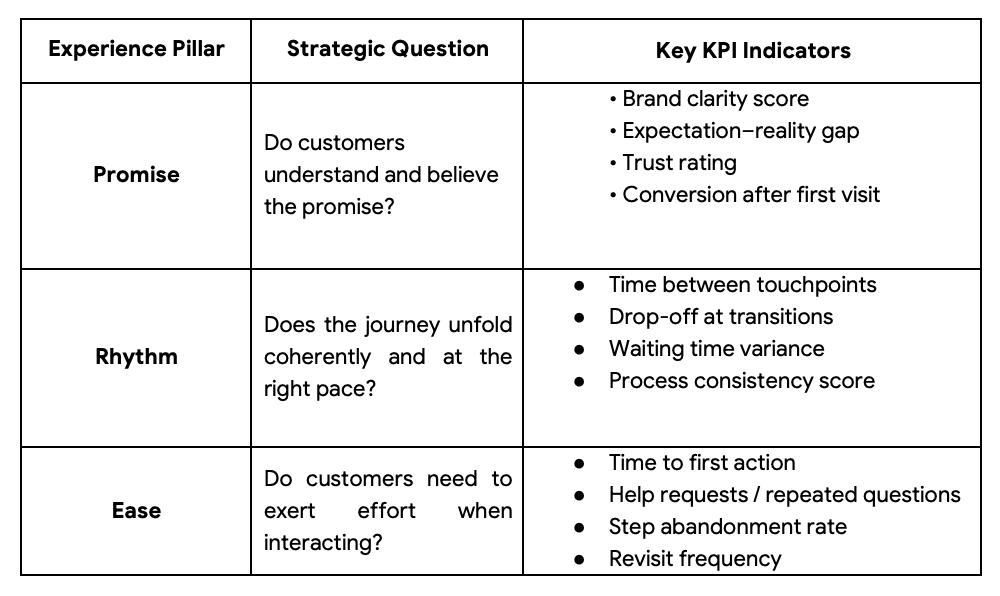
Technology in Service of “Ease”: Supporting at the Right Moment, in the Right
Way
Among the three components of excellent experience Promise, Rhythm, and Ease technology has the most visible impact on the last element. However, “ease” does not come from adding more features, but from reducing friction at the right points.
The spirit of Marketing 5.0 is not about replacing humans with machines, but about using technology to simulate human understanding. Technology only creates value when it reduces cognitive cost for customers meaning fewer small decisions, fewer unclear questions, and fewer ambiguous transitions throughout the journey.
At the execution level, technology should serve two core functions.
Reducing Cognitive Load at Each Touchpoint
For example:
• Timely reminders so customers do not need to remember appointments themselves
• Smart booking systems that avoid peak hour conflicts
• Customer profiles that store goals and limitations, eliminating repetitive questioning
• Progress tracking that reassures customers they are moving in the right direction
These applications are not meant to showcase technological sophistication. They are meant to eliminate “cognitive gaps” where customers would otherwise need to think harder or worry unnecessarily.
Remaining Invisible
Technology is effective when customers feel cared for, not processed like data entries. When systems operate smoothly, customers do not notice them; they simply feel that everything flows at the right pace.
The key principle is this: technology does not create the experience it protects the rhythm of the experience.
Within the Design–Control–Scale structure:
• In Design, technology supports emotional personalization based on behavioral data.
• In Control, technology monitors consistency across touchpoints.
• In Scale, technology standardizes and replicates “ease” across the system.
However, when misused, technology increases cognitive cost. A booking app with too many steps, a robotic chatbot response, or excessive push notifications can create pressure instead of support. In those cases, technology adds noise rather than reducing friction.
In industries such as spa, fitness, and wellness, customers are not seeking complexity; they are seeking gentle guidance. Technology should intervene only at points where confusion is most likely: before arrival, during waiting, and after completion. When implemented correctly, it makes the journey so smooth that customers never need to think about the structure behind it.
Ultimately, “ease” does not mean oversimplification. It means ensuring every step has clarity and direction. When technology plays the right role supporting at the right moment, in the right way, and at the right level it does not make the experience colder. Instead, it creates a stronger sense of care and control.
In the experience economy, technology is not the center of attention. Ease is. And ease appears only when the system is intelligent enough to reduce customer effort, yet subtle enough not to display its own presence.
When Physical and Digital Experiences Converge
From Stimulation to Orchestration Multisensory in Hybrid Environments
In the early phase of the digital era, many brands competed by making experiences stronger, more vivid, and more visually impressive. However, as high levels of stimulation became normal, competitive advantage no longer came from adding more effects, but from the ability to organize experience with a clear rhythm.
In a context where online and offline are intertwined, multisensory marketing is not about creating more sensation, but about creating perceptual structure. Consumers are increasingly sensitive to overload. They do not need more. They need greater coherence. An effective experience therefore:
• Reduces the number of small decisions customers must make
• Clarifies transitions within the journey
• Creates a sense of control rather than overwhelm
Here, technology is not the center of attention, but a tool that supports experiential rhythm. Its value lies not in complexity, but in making the journey more seamless across digital and physical touchpoints. If a layer of technology does not reduce friction or increase clarity, it simply adds noise.
Multisensory in hybrid environments is therefore not about addition, but orchestration. It orchestrates light, sound, information, interaction, and transitions into one coherent experiential flow. When orchestration is effective, customers do not notice the system behind it. They simply feel that everything unfolds naturally.
From this foundation, the next section will expand toward the future of multisensory experience, where systems, data, and technology not only support rhythm, but also redefine how experience is designed and optimized.
Blending Digital and Physical Experience Systems that Create Control and Trust
The blending of online and offline is no longer optional. It is the default state. However, value does not lie in merely connecting two channels, but in how well they align.
Online is not only for transactions, but for preparation and guidance. Offline is not only for service delivery, but for reinforcing memory and trust. When customers move from screen to physical space and back again, they should not feel that they are switching environments. They should feel that they are continuing one seamless journey.
In digital environments, multisensory becomes the skill of translating physical sensation into clear signals. When customers cannot physically touch a product, perceived quality must be conveyed through authentic imagery, transparent information, intuitive processes, and clearly displayed progress. Each of these elements reduces cognitive cost and increases reassurance.
Japanese onsen culture illustrates this orchestration mindset. Wherever it exists, the onsen experience maintains a core spirit. It does not attempt to impress. It focuses on creating presence, order, and relaxation. The rhythm unfolds gently, from a quiet entrance, to cleansing rituals before entering the water, to stable mineral temperature, and a restrained environment in light, sound, and scent. In that space, the body naturally understands what to do without overwhelming instructions. Technology, if present, recedes into the background to allow reassurance and control to take priority.
What makes onsen memorable is not a dramatic peak moment, but a lingering aftereffect. A feeling of lightness, a slowing of the mind, and a sense of balance that customers carry with them when they leave. This is multisensory at its most refined form, creating a sustained sense of control and trust.
Bringing the entire chapter together, one core conclusion emerges: multisensory experience is not merely about activating the senses, but about designing interactions between people and systems to feel smoother, less effortful, and more trustworthy. When this is achieved, the brand does not need to overstate itself. The formula for creating experience therefore remains valid: Excellent Experience = Promise + Rhythm + Ease. When these
three elements align, the experience becomes fluid, leaves a lasting aftertaste, and is stable enough to integrate naturally into everyday life.
FUTURE LENS – Multisensory Experience in the Future
When looking toward the future of multisensory experience, the question is no longer whether technology should be used. Technology is already present. The more important question is: does technology help people feel clearer, lighter, and more respected?
If the previous sections showed that experience can be designed and replicated in physical space, the future lens expands the perspective. Experience will increasingly become systemic and context adaptive. Yet the center of that system is not the algorithm. The center remains the human being, with limited attention, a need for control, and a desire to be properly understood.
The future of multisensory is not about more stimulation. It is about deeper understanding.
From Multisensory to Human-Centered Immersion
In the coming years, experience will evolve from multisensory toward more flexible forms of immersion as spatial computing, AR and VR, and AI driven personalization converge. However, immersion should not be understood as pushing users into dense layers of effects.
Future immersion exists along a spectrum, from light to deep, and users must retain the ability to regulate the pace.
Technology then plays a supporting role:
• Understanding context, where the user is and what they are doing
• Adjusting the amount of information appropriately
• Removing unnecessary steps in the journey
• Increasing certainty before decisions are made
Spatial computing can interpret location and movement flow. AR and VR can add intuitive visual layers. AI can calibrate interaction rhythm based on behavior. Yet all of these technologies only create value if they help users:
• Guess less
• Adjust less
• Still feel in control of the experience
The future is not about technology replacing the senses. It is about technology protecting the coherence of experience.
Sensory Data, But With Human Boundaries
As experiences become increasingly digitized, the senses gradually turn into data. Beyond views and clicks, systems can learn from subtler signals such as dwell time, levels of AR engagement, revisit frequency, and post-experience feedback. For businesses, this unlocks a new capability: contextual experience optimization, approaching real-time responsiveness. The familiar operational loop evolves into:
Feedback signals → analysis → adjustment of rhythm/scenario → continuous learning.
Here, optimization does not mean stronger stimulation. On the contrary, effective optimization reduces noise, enhances clarity, and aligns experiences more closely with user needs, so that customers expend less effort during interaction. However, as sensory input becomes data, standards rise accordingly: transparency and consent become mandatory. Businesses must clearly communicate what data is collected, for what purpose, and allow customers to choose their preferred level of personalizationso t hat immersive experience does not turn into a feeling of being monitored.
Beyond Physical Space
In the future, multisensory experience will no longer be confined to physical space. It unfolds within hybrid contexts, where online and offline continuously update and reinforce each other. Senses do not need to be replicated exactly as in real life; instead, they can be “translated” through spatial audio, haptic feedback, 3D visuals, or contextual data. When executed effectively, real-world experiences generate data that optimizes digital experiences, while what happens in digital space helps businesses better prepare for physical encounters.
From a branding perspective, the challenge is not to chase every emerging platform, but to preserve a consistent sensory signature across shifting contexts. Strong brands in the hybrid era are not those that are most complex, but those that enable users to recognize familiar rhythms, familiar clarity, and most importantly a sense of control over the pace of interaction.
In summary, the future of multisensory experience represents a shift from sensory design to experience system design one that incorporates context, data, orchestrated rhythm, and user choice. As technology becomes more powerful, standards rise accordingly. When executed properly, experience does not merely create momentary impressions, but becomes a seamless journey that users are willing to enter and revisit.
This chapter demonstrates that multisensory experience is not an ornamental add-on, but a constitutive layer of service and brand value. As products become increasingly commoditized, what customers actually feel emerges as a sustainable source of differentiation. From atmosphere and servicescape to operational rhythm and digital touchpoints,
experience must be designed as a coherent system well-paced, aligned, and effortless. Technology, when applied with sensitivity, reduces friction and personalizes experience without compromising humanity. Ultimately, multisensory experience is how brands transform abstract promises into concrete, stable, and trustworthy sensations within customers’ everyday lives.
Case Study: WHEN MULTISENSORY EXPERIENCE BECOMES AN OPERATING SYSTEM – THE HIGHLANDS COFFEE STORY
We have become familiar with the highly successful case study of Starbucks, where multisensory experiences are systematically integrated into the marketing strategy. In the Vietnamese context, Highlands Coffee has emerged as a representative local brand in the chain coffee segment. Highlands is a “local” brand that focuses on products based on Robusta beans sourced in Vietnam, roasted at a modern “Robusta-first” facility, and distributed globally. The brand currently leads the Vietnamese Specialty Coffee category and pursues a mission of serving and contributing to social uplift by enriching human connections and nurturing community bonding.
The 2024 landscape of Highlands Coffee reveals a very clear momentum of expansion and scaling. According to Jollibee Group’s 2024 Annual Report (the parent company), the chain reached 850 stores, opened 98 new outlets during the year, operated across two markets, and recorded system-wide sales growth of 12.1% alongside network growth of 9.1%. These figures do not merely reflect short-term growth, but indicate that Highlands is operating under a logic of “expansion coupled with supply capability.”
More recently, the company has continued to strengthen its long-term operational foundation with the milestone of the Cai Mep Roastery an infrastructure designed for scalable growth, targeting a capacity of 75,000 tons per year upon full operation. From a branding perspective, Highlands maintains a high level of public presence, ranking among the top 10 coffee shop chains by social media discussion volume in the first half of 2025 and among the top 10 F&B brands in 2025 (Decision Lab). In parallel, recognitions such as the ACES Awards 2024 and the Great Place to Work certification 2024 further reinforce brand equity and organizational capability, reflecting the brand’s potential for sustainable expansion in both market and operations.
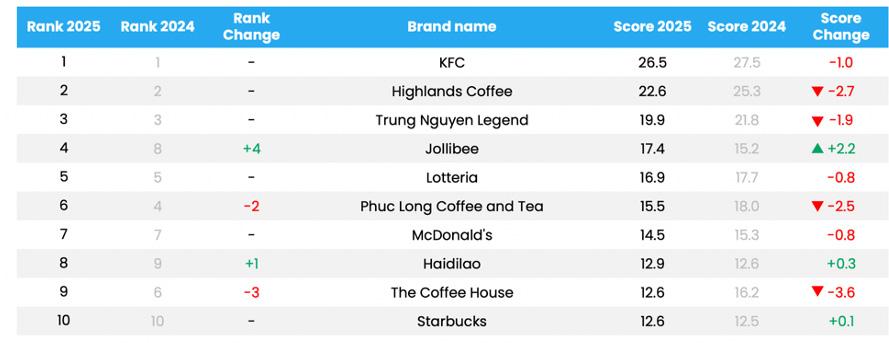
Source: Decision Lab
From a Coffee Chain to an “Experience Operating System”
What is particularly noteworthy is that despite such a rapid pace of outlet expansion, Highlands continues to be perceived by many customers as a brand that is “easy to stay in” and worth returning to. What the chain is doing in terms of customer experience demonstrates a very clear approach to multisensory marketing. Highlands does not merely design experience at the outlet level; it builds a multisensory experience operating system that is sufficiently defined to be replicated at scale.
If Highlands Coffee is viewed simply as a coffee chain, attention is drawn to the menu, pricing, store locations, and service speed. However, when Highlands is viewed as an experience operating system, the operational narrative changes entirely. The brand does not seek differentiation through constant “twists,” nor does it expect each store to adopt a unique concept. Instead, Highlands persistently cultivates a sense of consistency that allows customers to immediately recognize the brand whether they visit a street-side outlet, a shopping mall location, or a takeaway point.
For large-scale chains, experience cannot rely on the inspiration of individual outlets. It must be “packaged” into a system that can be replicated, while remaining flexible enough to function across diverse premises, customer flows, and times of day. Highlands addresses this challenge by establishing a clear yet understated multisensory signature. Customers recognize the brand through an integrated whole from visual cues to operational rhythm, from the coffee aroma in the space to the familiar feel of holding the cup, and ultimately to the stability of taste over time. This feeling does not need to be “novel”; it only needs to be sufficiently solid to become habitual.
Figure 8.5. Top 10 F&B brands in 2025
Multisensory Experience as
a Mechanism for “Stability” and Habit Formation
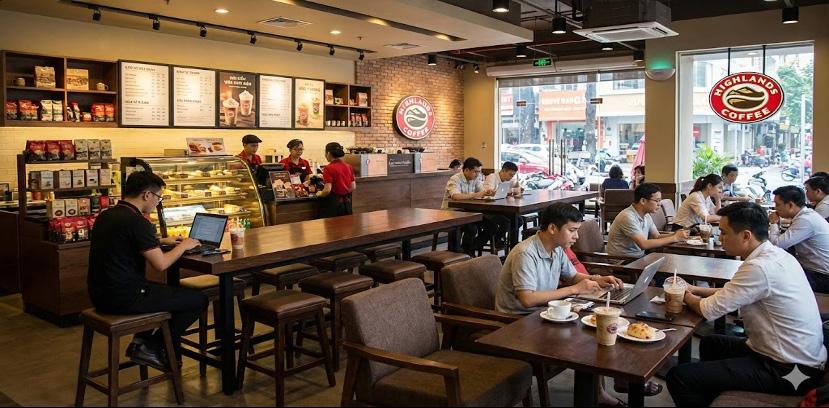
Source: Highland Coffee
The Highlands experience often begins even before customers enter the store. Signage enables quick orientation, while the space suggests fairly clear expectations regarding ordering behavior and service rhythm. At the experiential level, predictability itself becomes a form of valuable “certainty.” In modern life, customers do not only purchase products; they purchase the assurance that they are not taking a risk. A brand that customers can correctly anticipate time after time tends to accumulate trust more naturally than one that surprises but lacks consistency.
Visually, Highlands employs an identity language that is easy to read and understand. Rather than striving for unconventional design, the brand prioritizes orientation: customers can quickly identify the ordering area, waiting zone, seating area, and movement flow. In service contexts, a sense of order is not merely aesthetic; it signals that the space is controlled and process-driven an element that directly influences perceived quality. This aligns with the servicescape concept in service research, where the physical environment affects the behaviors and perceptions of both customers and employees (Bitner, 1992).
From an auditory perspective, what matters in a high-traffic chain is not the playlist itself, but the overall “rhythm” customers perceive upon entry. This rhythm emerges from the interaction between ordering calls, machine sounds, conversations, and spatial reverberation. When the soundscape is adequately controlled, customers can remain in the space without fatigue and are more tolerant of peak hours. Conversely, when sound becomes harsh and echoing, the experience deteriorates rapidly even if beverage quality remains unchanged.
In terms of olfaction, Highlands benefits from coffee aroma as a highly “authentic” signal. Scent is a channel closely tied to memory and requires minimal cognitive interpretation. Allowing aroma to originate from the product itself, rather than from added fragrances, enhances perceived authenticity and reduces the risk of negative reactions. In a “beyondthe-screen” context, scent plays a role in grounding the experience in physical reality, reinforcing the sense that customers are “inside the brand’s story.”
From a tactile perspective, chain experience is expressed through small details: the firmness of the cup, the tightness of the lid, the cleanliness of trays, the comfort of seating, and ambient temperature. These elements directly affect the body and determine whether customers choose to stay or leave quickly. “Stability” often matters more than “luxury”:
Figure 8.6. The interior servicescape of Highlands Coffee
customers may not consciously articulate it, but they remember bodily whether everything felt smooth or loose.
In terms of taste, the endurance of large chains rarely stems from a single burst of flavor innovation. It stems from consistency. For Highlands, value lies in customers returning without having to take a gamble: they trust that the experience will be similar to the last time, regardless of location. When a brand maintains relatively consistent taste standards, it forms repeatable rituals, and it is these rituals that embed the brand into everyday life without the need for loud campaigns.
Notably, the Highlands experience does not end within the store. It continues through takeaway and delivery. When the traditional servicescape disappears, the “sensory system” persists in other forms: visual cues in cups, bags, and sealing methods; tactile cues in insulation and lid tightness; auditory cues in small sounds such as ice clinking or lid opening; and an overall sense of certainty that the order arrives as expected, with clear status and minimal ambiguity. Here, the strength of the chain lies not only in physical stores, but in its ability to keep experiential promises when contexts change.
If the Highlands case were to be summarized in one sentence, it would be this: the brand prioritizes clarity, alignment, and stability to form habits. For mass brands, habits are often more durable than short-term “refreshes”, and it is precisely this that allows multisensory experience to function as a true operating system for long-term growth.
KEY INSIGHTS – WHAT BUSINESS MUST UNDERSTAND ABOUT MULTISENSORY MARKETING?
• Multisensory marketing is not about “adding more,” but about managing coherence.
The brain does not process signals in isolation; it integrates what is seen, heard, smelled, touched, and tasted into a single conclusion about the brand. When signals are misaligned, the experience feels “inauthentic,” and trust erodes.
• Companies create stimuli, but customers create perception.
Light, sound, scent, and materials are physical stimuli; the final meanings (“warm,” “noisy,” “trustworthy,” “cheap”) are assigned by the customer’s brain. Experience management is essentially the management of this meaning-assignment process.
• In an era of information overload and digital fatigue, multisensory experience restores real presence.
When experience directly affects the body and physiological rhythm, customers think less, experience lower cognitive load, and shift naturally into states of “feeling” and “trusting.”
• Excellent experiences do not need to overwhelm; they need to be well-paced and frictionless.
The core formula of strong brand experience is: Promise + Rhythm + Ease. Smoothness and tonal fit often generate more sustainable value than short-lived “wow” moments.
• The ultimate goal of multisensory marketing is to turn brand promises into concrete sensations.
When these sensations become clear and stable, the brand integrates into customers’ daily lives as a habit without needing excessive persuasion.
CHAPTER 9
AI & METAVERSE MARKETING IN THE VIRTUAL WORLD
Marketing enters the immersive era when experiences are embedded within the digital environments where people live and interact, rather than designed around physical space. While Chapter 8 focused on orchestrating sensory experiences in physical settings, Chapter 9 extends this logic into digital contexts. Here, brands move beyond designing touchpoints to creating participatory spaces within attention infrastructures such as smartphone cameras, AR, short-form video, and creator ecosystems. Users no longer merely consume content; they interact with it and amplify it through their own behavior.
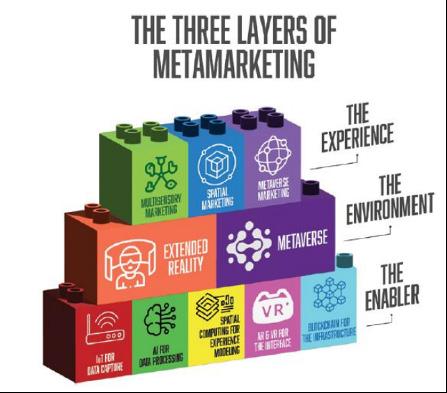
Figure 9.1. The three layers of Metamarketing
Source: Kotler, P., Kartajaya, H., & Setiawan, I. (2021). Marketing 6.0: The Future Is Immersive.
To understand why marketing is shifting from message to experience, we need to view it through the three layer structure of metamarketing. At the foundational layer lies enabling technology. At the middle layer is the digital environment where experience unfolds. At the top layer is the experiential layer that users actually perceive. When these three layers operate in alignment, marketing is no longer communication. It becomes the architecture of participatory space.
This chapter begins with a very ordinary moment, yet it opens up a broader strategic framework for marketing in the immersive era.
From a TikTok Scroll to Metaverse Lite
An Everyday Moment
Marketing in the new era does not necessarily appear in elaborately staged contexts. Sometimes, it reveals itself most clearly in very ordinary moments such as a typical evening spent casually scrolling through a smartphone before ending a long day. There is no intention to search for information, nor any specific purchase plan. Yet it is precisely in this relaxed state that a new form of marketing experience quietly unfolds without noise, without explanation, without demanding immediate belief, but gently drawing the user in.
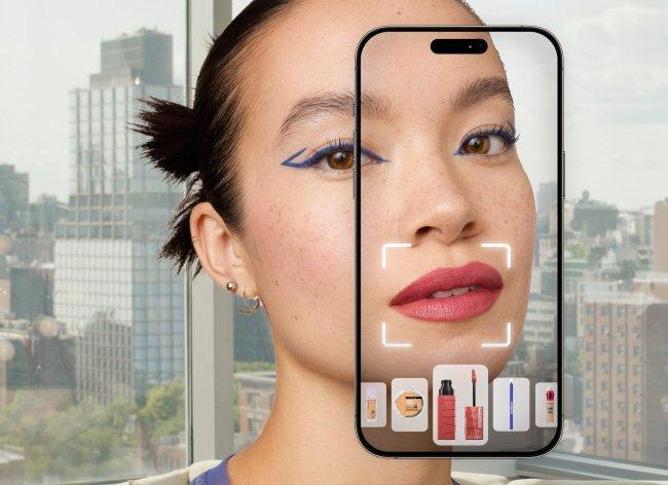
Figure 9.2. Maybelline’s AR try-on illustrates the shift from message delivery to experience design
Source: Maybelline
A video appears on the screen. The main character is a young woman speaking naturally while holding a lipstick, her tone casual and unforced. In the corner, a small label indicates the “Maybelline Lip Try-On” effect. As she taps the effect and tilts her face slightly toward the camera, the lip color changes almost instantly, without visible delay. The shade appears glossy, shifts subtly with lighting, and tracks her lip movements with natural precision. As she turns her face left and right, the lipstick maintains its contours and stability, adapting smoothly to each angle. A slight frown, followed by a soft smile, suggests she is carefully evaluating whether the shade truly suits her.
What makes viewers pause is not the act of “watching a lipstick advertisement,” but the sense of witnessing something different. Instead of a pre-packaged message, a “virtual lipstick try-on room” appears directly within the smartphone. In this experimental space, users are no longer passive observers; they become the central characters of the experience.
When users tap the effect name, the try-on mode opens immediately. The experience is seamless and nearly frictionless:
• No additional app download required
• No redirection to a website
• No lengthy instructions or complex operations
The front camera turns on, and the user’s face appears on the screen. They try different shades one by one, and with each change, it is not only the lips that transform, but also a subtle shift in expression. Within seconds, a personal judgment forms: this shade makes me look different, in a way that feels more convincing than any written description.
What is remarkable is that the experience does not feel like being sold to. It feels like being empowered to explore. People often resist direct persuasion, yet willingly engage when they are given choice and the ability to self verify. The experience does not impose a conclusion. It allows users to arrive at their own.
As the effect spreads across multiple videos, each person tells a different story using the same tool. The brand is no longer a prewritten message, but a prop within the user’s narrative. Here, the shift of marketing in the era of AI and metaverse becomes clear: competition no longer centers on message, but on experience. Marketing moves from broadcasting to staging participation. When the experience is smooth and natural enough, the brand can spread organically without saying too much.
From Advertising to the Orchestration of Participation
The TikTok “virtual lipstick try-on room” illustrates a fundamental shift in how marketing operates. What is happening is not simply the insertion of new technology into old advertising formats, but a change at the level of logic from message delivery to participation orchestration. Rather than persuading users that a product is suitable, brands design situations in which users can verify this themselves through firsthand experience.
In traditional advertising models, users play a relatively passive role. They view images, read descriptions, receive promises, and make decisions under persistent uncertainty. With AR try-on experiences, particularly in short-form video contexts, this uncertainty is addressed at the very first touchpoint. Users no longer need to imagine how a product might look on them; they see it instantly, within their own personal context. Embedded within familiar entertainment flows, marketing no longer feels like an interruption but becomes a natural part of content consumption.
The key distinction lies in placing experience at the center of communication. Brands no longer “talk about” products; they enable products to reveal their value through user action. Advertising does not disappear, but its role changes from a complete message to an invitation to participate. Users are not asked to believe immediately; they are encouraged to enter, experiment, and draw conclusions themselves, significantly reducing the psychological resistance associated with overt persuasion.
This shift can be summarized through three core changes in marketing’s role:
• From information presentation to experiential situation design
• From promise-based persuasion to action-based evidence creation
• From passive audiences to active participants
When users participate in experiences, they not only consume content but simultaneously generate new content. With the same lipstick try-on effect, each individual tells a different story shaped by personal context and emotion. Consequently, brands relinquish tight
narrative control and deliberately hand storytelling power to the community. Virality no longer depends on message repetition but on experiential reenactment in real life.
This explains why experiences like the “virtual lipstick try-on room” transcend creative campaign boundaries. They reflect a new marketing approach, where the task is no longer to craft the best message but to design moments compelling enough for users to enter, credible enough to try, and natural enough to share. The transition from advertising to participation orchestration lays the foundation for broader modern marketing logic. As experiential trials, behavioral data, and social diffusion converge at a single touchpoint, marketing changes not only in form but in essence paving the way for concepts such as metaverse-lite, augmented shopping, and the growing role of AI.
IMMERSIVE EXPERIENCE & THE 5A PATH
Immersive marketing does not replace 5A. It activates and accelerates the journey through experience.
• Aware to Appeal: Awareness is triggered through action, not just exposure.
• Appeal to Ask: Uncertainty is reduced through self verification.
• Ask to Act: Action becomes the natural next step.
• Act to Advocate: The experience is designed to be repeated and shared.
Bottom line:
Experience is the engine that moves customers along the 5A path.
Metaverse-Lite: Lightweight Immersion, Platform-Embedded, and Measurable
In metamarketing, the environment is not merely a technology platform. It is the entire ecosystem that operates the experience, including distribution algorithms, content formats, social interaction mechanisms, creator economy dynamics, and transaction infrastructures that determine what feels natural, repeatable, and scalable. Within this environment, brands do not simply place advertisements. They participate in an existing rule system that already shapes how people discover, experiment, seek opinions, and make decisions.
If one were to identify the most accessible “gateway” into immersive experiences today, it would not be VR headsets or grand virtual worlds, but the smartphone camera. TikTok has become an ideal environment due to its scale and rapid content consumption rhythm. Figure 9.3 shows global TikTok users increasing sharply from approximately 465.7 million in 2020 to 955.3 million in 2025. This scale transforms TikTok into an “attention infrastructure” large enough for experiences
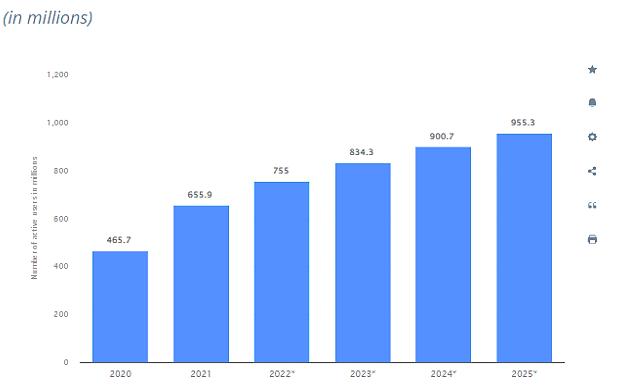
Figure 9.3. Number of TikTok users worldwide from 2020 to 2025
Source: Statista, 2026
In a context where short form video and mobile cameras have become habitual touchpoints of digital life, the “virtual lipstick try on” on TikTok is no longer just an entertaining filter. In essence, it is a minimalist immersive commerce module that allows users to try products directly on their own faces in real time, rather than merely observing someone else as in traditional advertising. In the beauty industry, the gap between “looks beautiful” and “actually suits me” has always been a major barrier in purchase decisions. AR shortens that gap by generating instantly personalized visual proof within each user’s real context of use.
When the trial experience is embedded into the entertainment flow of short form video, consumer behavior shifts according to a new logic. Watching, trying, sharing, and purchasing no longer occur separately. They unfold within a seamless loop of shoppertainment. Similar to immersive exhibition spaces, participants both enjoy the experience and naturally amplify it, transforming a personal moment into a distribution engine.
The key point is that these experiences do not need to label themselves as Metaverse. Mechanistically, however, they clearly embody its spirit. The concept of Metaverse lite accurately captures this nature: immersion in a lightweight form that does not require new devices or complex interfaces, and that can scale through small, measurable touchpoints. Deloitte describes this trend as augmented shopping, emphasizing the role of 3D and AR
in reducing purchase uncertainty. Gartner has also projected that hundreds of millions of consumers would shop using AR in the early stages of this wave. The “virtual lipstick try on” is therefore a representative example of integrating experience directly into the discovery phase, rather than separating it as in traditional ecommerce models.
To situate metaverse-lite within a broader framework, a metaverse market map that visualizes the ecosystem in layers. In this structure, the lipstick try-on intersects at least three layers simultaneously. First, the discovery layer, where algorithmic content distribution enables experiential diffusion based on real user behavior. Second, the creator economy layer, where creators act as social engines transforming effects into trends and trends into purchase intent. Third, the spatial computing and AR layer, where technology anchors products onto users’ faces in real time. Jon Radoff has articulated these layered structures extensively in his writings on building the metaverse and market maps.
The strategic implication is clear. Brands do not need to build a fully realized “virtual universe” from the outset to participate in the metaverse. Instead, they can incrementally invest in reusable experiential assets such as 3D models, AR effects, content templates, and interaction scripts. This approach is more flexible, lower risk, yet sufficient to establish foundational capabilities for deeper immersive strategies in the future.
AI as the Amplification Engine of Immersive Experiences
Enabler is the foundational capability layer that allows experience to be created, personalized, measured, and scaled in a controlled way. It does not only include technologies such as AI, AR, or 3D assets, but also behavioral data, measurement systems, operational processes, risk control mechanisms, and accountability structures.
If Experience is what users perceive, and Environment is where experience unfolds and spreads, then Enabler is the structure behind the scenes that ensures the experience can be replicated at scale without sacrificing trust. In the AI era, every output of a technology system quickly becomes an output of the brand. Therefore, Enabler must not only create speed, but must also design reliability.
In the example of the virtual lipstick try on, we clearly see an operational loop: users try a shade, behavioral signals are generated such as selected color, time spent trying, or sharing behavior. This data feeds the AI system. AI then generates content variations and optimizes distribution. The system continues to measure and refine. Experience therefore does not remain static. It continuously evolves based on real behavior.
This loop explains why marketing capability is shifting toward technology and data. AI and analytics are no longer supporting tools. They are the operational core. Future marketers will not only ask which advertisement is creative. They must answer which touchpoint generates meaningful signals, which signals are clean enough for learning, and how personalization can improve performance.
At the market level, the picture further validates this logic. Figure 9.4 illustrates strong growth forecasts for the metaverse market, with rapid expansion trajectories and significant long-term potential. Market.us estimates that the metaverse market could reach approximately USD 2,346.2 billion by 2032, with a compound annual growth rate of around 44.4%, depending on definitional scope. While forecasts inherently involve uncertainty, strategically they indicate that immersive experiences combined with AI are increasingly viewed as long-term growth infrastructure rather than short-term experimental campaigns.
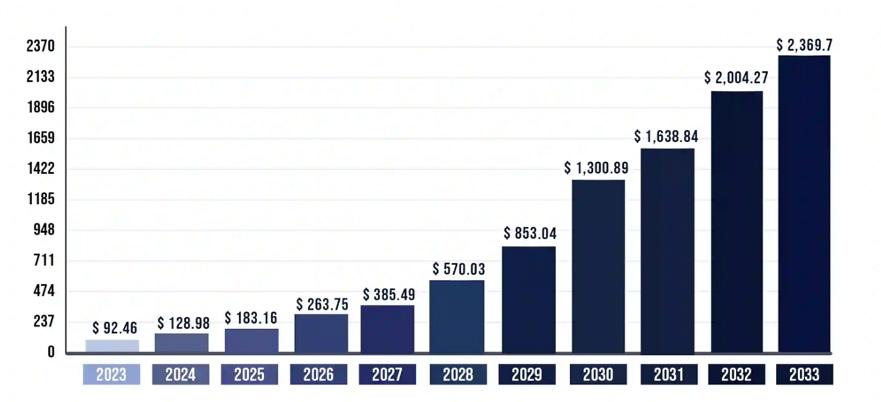
Figure 9.4. Global metaverse market size - the forecasted market size 2023 to 2032 in USD
Source: Precedence Research
In summary, the virtual lipstick try on illustrates a clear logic:
• Experience replaces message
• Experience generates behavioral data
• Data feeds AI
• AI amplifies and optimizes experience
Within this structure, Metaverse lite becomes a pragmatic pathway for brands to enter virtual spaces by starting small, measurable, and scalable before investing in larger immersive ecosystems.
Metaverse Marketing: Brand Strategy in a Borderless Space
A user trying on lipstick shades on TikTok and another user placing a sofa into their living room using AR may appear to be two different stories. Yet, at a deeper level, both touch the same “breakpoint” in purchase behavior: the moment when customers stand before a choice and ask themselves whether they are making the right decision. In cosmetics, the
concern lies in whether a shade truly suits one’s face and appears accurate in real life. In furniture, the risk centers on proportion, functionality, and whether the item truly fits the living space. When technology provides an immediate answer at that moment, experience is no longer a decorative layer of marketing. Experience becomes a form of evidence, and that evidence speaks directly to the core of the brand: trust, confidence in decision-making, and a sense of control.
Experience as Evidence: Reducing Risk and Increasing a Sense of Control
In Philip Kotler’s classical thinking, a brand is first and foremost a sign of identification and differentiation. Kotler and Armstrong define a brand as a name, symbol, or design intended to distinguish the goods and services of one seller from those of competitors. However, if branding stops at identification, it only reaches the surface layer.
In practice, a brand operates as a system of associations and expectations accumulated through repeated experiences. Customers do not merely remember who a company is; they remember how the company makes them feel and whether it is trustworthy. For this reason, Kotler’s well-known statement “The art of marketing is the art of brand building. If you are not a brand, you are a commodity.” can be understood as a strategic warning: without brand building, firms are pulled into pure product and price competition.
It is at this point that metaverse marketing emerges as a pragmatic approach. Brands do not necessarily need to begin with a grand, fully developed “virtual universe.” At present, the most common form is metaverse-lite: small immersive experience fragments embedded directly into familiar platforms, light enough to match everyday scrolling behavior yet real enough to generate trust. Brands no longer simply talk about themselves; they must allow users to try in ways that enable confident decision-making.
AR lipstick try-on works effectively because it transforms the claim “this color suits you” into an act of self-verification. Users see themselves in a new shade, compare it with their appearance moments earlier, and the feeling of “it fits” or “it doesn’t fit” emerges almost instantly. Trust here is not built through promises but through a sense of control: users are both the testers and the decision-makers.
The strategic role of immersive experiences in metaverse marketing can be summarized in a core logic: experience functions as evidence, reducing perceived risk, increasing a sense of control, and shifting decision authority toward the customer. This is also the underlying logic of modern experiential spaces such as immersive exhibitions and interactive museums. Rather than persuading through words, they design environments in which participants enter, explore, and arrive at the feeling of “I saw it with my own eyes.” When experiences allow customers to self-verify, brands enter a deeper zone of influence the zone of reassurance where trust does not need to be asserted but is directly felt.
Metaverse-Lite Along the Customer Journey: From Social Commerce to IKEA Place
Recent observations further reinforce the trend of experience being embedded directly within platforms. Social platforms are increasingly becoming not only spaces for interaction but also primary environments for purchase decisions, gradually reducing the role of brand websites or third-party channels. At the same time, immersive technologies such as AR and VR are gaining traction in marketing strategies, reflecting a growing investment in more experiential forms of engagement. These developments signal a deeper shift: the point of purchase is moving ever closer to the point of experience, where discovery, evaluation, and transaction converge into a single, seamless journey.

Figure 9.5. IKEA Place was created to allow users to “place” furniture into their living spaces using AR
Source: IKEA Place Mobile App
In the furniture category, IKEA Place is often cited as a representative example of how immersive experiences reduce decision risk. IKEA describes the app as a tool that helps users feel more confident when testing and sharing design ideas; products are rendered in 3D at true-to-scale, allowing users to see accurate size and proportion within their real living spaces. The strategic significance of this touchpoint lies in the fact that the brand does not attempt to persuade through an idealized showroom, but instead gives users the power to “place” products directly into their own rooms.
When users can capture images, share them for feedback from family or friends, and then continue their purchase journey, AR becomes a seamless link in decision-making rather than a purely performative effect.
When these two examples are viewed together, a clearer framework for metaverse marketing emerges: its core lies in designing brand touchpoints that create new user capabilities specifically, the capability to “confidently choose correctly.” From this, brand equity arises as a natural consequence. In Marketing Management, Kotler and Keller define brand equity as the “added value” a brand bestows on products and services, reflected in how consumers think, feel, and act toward the brand. If Maybelline’s AR try-on makes users feel “I chose the right color for me,” and IKEA Place makes users feel “I am confident it fits and suits my space,” then the experience is building a very concrete form of added value: reduced perceived risk, increased control, and trust grounded in personal experience. This is brand equity forged through action, not merely through words.
At the strategic level, metaverse-lite is particularly suited to product categories where purchase decisions are often blocked by difficulty of visualization or fear of choosing incorrectly. Cosmetics must answer “does it suit my face?” Furniture must answer “does it fit and look right in my home?” Eyewear raises “does it balance my face?” Fashion asks “does it look good when worn?” The common denominator is that these questions require my context, not the brand’s context. Metaverse-lite places personal context at the center by allowing customers to try on their own faces, in their own rooms, within their own environments. When context shifts from “the advertising world” to “my real world,” persuasion increases in a more natural and sustainable way.
Spatial Marketing: Persuasion through “My space”
The shift from “the brand’s context” to “my context” can be more precisely described through an emerging perspective known as spatial marketing. While traditional marketing primarily persuades on the surface of screens, spatial marketing places the brand directly into the customer’s physical space, where purchase decisions often stall due to uncertainty and fear of making the wrong choice. Here, space is no longer a background; it becomes the central persuasive anchor.
Augmented shopping is creating a “quiet revolution,” as 3D and AR transform how customers shop both online and in-store. The core value of this transformation lies not in technological novelty, but in the ability to help customers visualize products more clearly within real-world contexts. The mechanism of persuasion thus changes: brands no longer merely state that a product fits, but enable users to see that fit within their own spaces.
From an academic perspective, the power of spatial marketing lies in the role of context. Recent AR research suggests that user engagement with experiences is strongly influenced by the configuration of four elements: user, content, context, and device often referred to as the 4C framework in AR studies. When context is no longer simulated imagery but the user’s real room, real face, real lighting, and real movement, the experience tends to become a much stronger form of experiential evidence than traditional advertising, as it directly reduces uncertainty at the point of decision.
Within the metaverse marketing logic developed in this chapter, spatial marketing offers managers a concrete strategic question: Which customer space does this touchpoint anchor the brand to, and at which stage of the purchase journey does it reduce decision risk? When this question is clearly answered, elements such as AR, 3D, or avatars cease to be superficial effects and instead become experience design tools for accumulating trust in alignment with the brand promise.
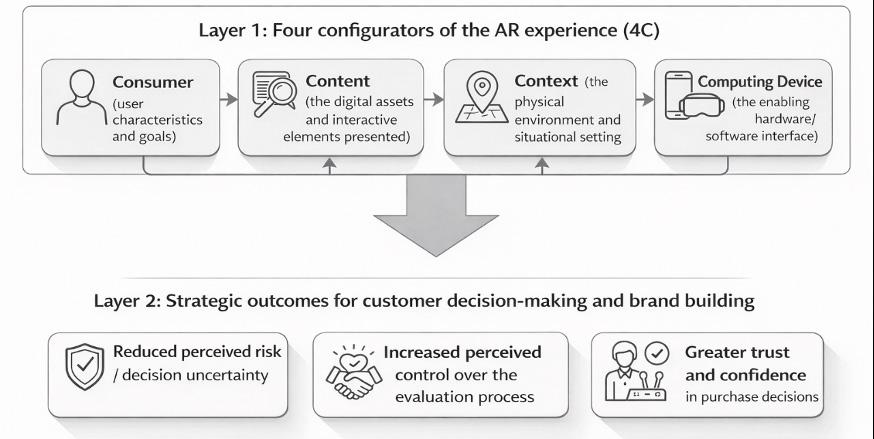
9.6. A framework for spatial marketing operation
When Experience Goes Beyond Virality: Brand Discipline in Metaverse Marketing
For immersive experiences to function as genuine brand strategy, brands must treat experience as a system of consistent meaning rather than as isolated technical spectacles. Philip Kotler and Kevin Lane Keller describe branding as the act of endowing products and services with the “power of the brand.” This power does not stem from flashy effects, but from the reinforcement of the same promise at every interaction. Coca-Cola’s immersive experiences where users interact via smartphones to “activate” outdoor advertising content within urban spaces clearly illustrate this logic. Users are empowered to participate, yet the entire experience adheres strictly to familiar color systems, visual language, and brand spirit. By contrast, if an AR experience is inaccurate in scale, off in color, difficult to use, or unstable in outcome, the associations created may contradict a positioning of “reliability,” thereby weakening the very brand strength it seeks to build.
With its extremely fast consumption rhythm, TikTok makes metaverse marketing both demanding and full of opportunity. It is demanding because users lack patience for experiences that require too much learning; they leave before brands have time to explain. Yet opportunity lies in the fact that good experiences can become content themselves. A lipstick user can simply film “trying three shades for work” and ask friends which fits best; a furniture user can rotate an AR sofa and ask, “does it block the walkway?” Similarly, in Coca-Cola’s case, allowing users to interact directly with outdoor advertising spaces turns the brand into part of everyday urban life rather than a static media message.
The key point requiring caution is that virality does not automatically equal brand building. An experience may go viral because it is novel or amusing, but brand assets only form when the experience is tightly connected to brand meaning and can be repeated within a consistent logic. This discipline can be summarized through three core conditions:
Figure
• The experience must remain consistent with the brand promise across multiple executions
• The experience must generate outcomes that users can trust and verify
• The experience must be stable enough to be repeatable, rather than dependent on fleeting effects
If a cosmetics brand promises “easy color selection,” its AR try-on must consistently reinforce that promise across launches. If a furniture brand promises “design for everyday living,” its AR experience must clearly show real-life spatial impact, as IKEA does by turning AR into a decision-support tool. In Coca-Cola’s case, allowing users to “touch” the brand within public spaces while preserving its familiar spirit demonstrates how brand strategy anchors experience to a stable promise ensuring that each interaction is not only engaging but also trust-building.
Metaverse marketing, therefore, can be summarized in a clear strategic flow: translate brand identity into action, transform promises into experiences, and turn experiences into stories users want to retell. When executed correctly, metaverse-lite is not a passing trend but a component of long-term brand strength built through moments when customers try for themselves, see for themselves, gain confidence, and choose for themselves.
AI and the Metaverse in Marketing: Organizational Challenges to Be Solved
The trust challenge: When ai output rapidly becomes brand output
If the previous sections focused on immersive touchpoints such as AR try-on or product placement in real spaces as a Metaverse-lite pathway, this section brings the discussion back to ground level. When AI and immersive experiences move into operational reality, the greatest challenge is no longer creativity, but organization.
Industry observations show that the main challenges of applying generative AI are not about a lack of ideas, but about trust, skills, security, and strategy. This reflects a critical shift: the question is no longer whether AI can produce outputs, but whether organizations have the capability to use it properly and at scale. In many cases, the gap lies in execution readiness rather than technological potential.
In the context of Metaverse lite, trust risks surface even more quickly because immersive experiences function as direct evidence. A try-on filter that misrepresents product color, or a 3D placement model with inaccurate proportions, can create a sense of deception even if unintentional. In these situations, error is no longer merely technical—it becomes a trust issue. In other words, AI output rapidly becomes brand output, and any deviation is interpreted as the official voice of the brand, carrying communication, legal, and reputational risk.
At the implementation level, organizations must move from experimentation to governance. This requires not only deploying tools, but designing systems that ensure consistency, accuracy, and control across all outputs. Key requirements include:
• Establishing a single source of truth with verified data and approved claims
• Defining clear boundaries for what AI can and cannot generate autonomously
• Implementing review mechanisms based on risk levels and use cases
Without such guardrails, the faster AI enables content creation, the faster misinformation spreads. As a result, Metaverse-lite risks shifting from an experiential advantage to a point of brand risk exposure.
Trust and control: When ai output becomes brand output
A principle that is becoming increasingly clear in AI-enabled marketing is that AI output rapidly becomes brand output. In an environment where content is generated and distributed at high speed, every AI-generated output from captions and visuals to AR experiences is perceived by users as the official voice of the brand. Errors therefore cease to be internal mistakes and instead become communication, legal, and reputational risks.
With AR and Metaverse-lite, this risk is amplified. Immersive experiences operate as immediate visual evidence: a try-on filter with inaccurate color rendering, or a 3D placement model with incorrect scale, is instantly detected at the point of interaction. This prevents brands from operating under the familiar trial-and-error logic of traditional digital content. Each user interaction is simultaneously a verification of the brand promise.
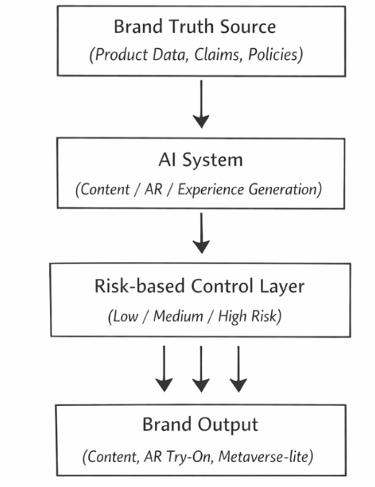
Figure 9.7. AI output control in marketing: speed is scalable only when trust is governed
As a result, the organizational question shifts from “can AI generate good content” to “how can output reliability be governed before it becomes the brand’s voice.” The NIST AI Risk Management Framework highlights validity, reliability, and the need for continuous monitoring across the AI system lifecycle. Trust, therefore, is not a onetime achievement but an ongoing capability that must be designed and maintained.
At the execution level, this rests on two main pillars. The first is building a verified internal truth base for marketing AI, including product facts, policies, and approved benefit claims. The second is applying riskbased governance, rather than imposing the same controls on all outputs. This logic
can be summarized in three core principles:
• AI may create only within the boundaries of verified data sources
• Content related to benefits, commitments, and immersive experiences requires stricter review guardrails
• The level of automation must increase in tandem with monitoring capability, not independently
This approach allows organizations to leverage AI’s speed and scale without trading brand trust for short-term efficiency. Once AI output becomes brand output, competitive advantage lies not in producing more content, but in operating faster while maintaining reliability especially in immersive experiences where customers “see with their own eyes” before they believe.
Capability and Operations: Turning AI from a Tool into a Repeatable Capability
Beyond trust, the next major challenge lies in capability and operations. In practice, the difficulty of adopting AI in marketing does not stem from a lack of tools, but from the inability to convert tools into repeatable organizational capabilities. Many marketing teams can experiment with AI quickly, yet stop at “using it for convenience” rather than integrating AI as a stable part of daily workflows. In such cases, effectiveness depends on individuals who know how to use tools, rather than on organizational capability.
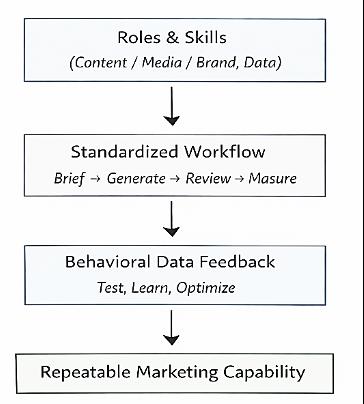
The core issue is work design. AI does not replace processes; it forces processes to be redesigned. A content team may use AI to generate dozens of message variants in a short time, but without standardized brand voice and approved benefit claims, the result easily becomes “one voice per asset,” diluting brand positioning. This creates inconsistency across touchpoints and weakens overall communication coherence. Similarly, even a technically sophisticated AR experience delivers limited value if marketing teams cannot interpret behavioral signals—who tries, for how long, where users drop off, and when conversion occurs. Without this clarity, optimization becomes fragmented and difficult to scale.
Figure 9.8. Turning AI tools into repeatable marketing capability
Effective AI training must therefore be role- and process-based, not merely tool-based. This capability requirement can be summarized across four key roles:
• Content creators must know how to prompt AI, verify outputs, and maintain consistent brand voice
• Media and performance teams must design controlled variants and read behavioral data for optimization
• Brand managers must define linguistic and certainty guardrails for brand expression
• Data teams must connect trial-experience signals with optimization decisions
Operationally, the priority is to embed AI at value-creating points in the workflow, rather than treating it as an isolated add-on. AI should be integrated into activities that generate repeatable value, such as content variation, experience personalization, and data-driven distribution optimization. When AI becomes a natural part of the process, organizations no longer rely on a few tool-savvy individuals but develop stable operational capability over time.
In summary, transforming AI from a tool into a repeatable capability requires organizational change across training, role design, brand standards, and the interpretation and use of behavioral data. When AI operates as part of a system, speed and scale no longer trade off against quality but become sources of sustainable competitive advantage.
Data, Ethics, and Transparency: The Foundation of Trust
As AI and immersive experiences become part of everyday marketing practice, data ceases to be merely an optimization input and instead becomes a direct interface with customer trust. In AR and Metaverse-lite experiences, data is often tied to personal identity at a much deeper level than in traditional marketing such as faces, voices, movements, living spaces, and interaction patterns. Consequently, data challenges in this context cannot be treated as purely technical issues; they must be framed within ethics and transparency.
A key principle is to view data as entrusted confidence, not as an asset to be maximized. Users enable cameras for lipstick try-ons or furniture placement because they expect brands to use that data appropriately and within reasonable boundaries. When this expectation is violated even once the damage extends beyond the specific experience to broader brand perception. In immersive environments, where everything is “visibly real,” feelings of surveillance or over-manipulation tend to be far stronger than in traditional advertising.
Alongside privacy is transparency in how AI and technology are used. As the boundary between presentation and manipulation becomes increasingly thin, brands must proactively clarify when users are interacting with AI systems, what data is being collected, and how much the experience has been altered relative to reality. Transparency here is not meant to diminish engagement, but to help users understand and control their own experience a core requirement for sustaining long-term trust.
At the organizational level, these requirements must be translated into clear operational principles rather than remaining abstract commitments. The foundation of data ethics and transparency can be summarized in three core principles:
• Data minimization: collect only what is genuinely necessary for the experience
• Transparency and clarity: clearly communicate when AI and personal data are used, and offer meaningful choice
• User control: allow users to enable, revoke consent, and delete data in a clear and accessible manner
These principles do not slow marketing down; instead, they make experiences more durable and repeatable. When users feel safe and respected, they are more willing to return, try again, share, and engage repeatedly. Strategically, this transforms data from a latent risk into a foundation for long-term learning and optimization.
In short, within metaverse marketing, data not only feeds AI but also sustains trust. When ethics and transparency are designed from the outset, immersive experiences deliver not just immediate impact but also durable relationships between brands and customers the prerequisite for AI and Metaverse-lite capabilities to scale meaningfully.
Strategic discipline: Accountability and the governance checklist
Once AI and Metaverse-lite are integrated into marketing as operational capabilities, the final challenge lies not in technology but in strategic discipline. AI can generate content quickly, personalize deeply, and optimize continuously, but AI itself does not understand what is “right” for the brand or what is “right” for people. Therefore, every AI system in marketing requires a foundational principle: every decision generated or recommended by AI must have human accountability.
Accountability here is not only a legal issue but a governance discipline. AI may optimize easily measurable metrics such as views, engagement time, or trial rates, but without strategic guardrails, systems can drift toward short-term optimizations that erode brand promises. In immersive contexts, this risk is amplified: an experience that is “well optimized” but makes users feel manipulated, exaggerated, or deprived of control can destroy trust faster than any misleading advertisement.
Organizations must therefore shift from campaign-centric thinking to experience governance. This requires evaluating each AR or AI experience not only on performance metrics but also on alignment with brand promises and ethical standards. Practically, one of the most effective ways to maintain this discipline is to apply a governance checklist before launching any immersive experience:
• Do users clearly understand when they are interacting with AI and when personal data is being used?
• Does the experience request only the minimum necessary data and allow users to control or revoke consent?
• Are content and effects truthful to the product and brand promise, or are they exaggerated for short-term metrics?
• Is there a clearly accountable individual or function responsible for AI outputs?
• If misunderstanding or negative reactions occur, does the organization have a transparent response plan?
These questions are not meant to constrain creativity but to protect it from undermining itself. When strategic discipline is properly established, AI and Metaverse-lite cease to be latent risks and instead become levers that allow brands to scale immersive experiences in a controlled and trustworthy manner.
FUTURE LENS – Marketing Across Virtual Boundaries
Viewed from the present, many brands are still practicing platform marketing focusing on optimizing content, advertising, and algorithms to capture a few additional seconds of attention. However, as users become accustomed to “living” within digital environments where they not only watch but also participate, play, and express themselves the boundaries of competition begin to shift. The issue is no longer where a brand appears, but whether it can create a context compelling enough for users to enter and remain. In this context, marketing gradually moves from operating on platforms to designing experiential “worlds.”
The metaverse, as defined by Matthew Ball, is not science fiction but a network of real-time, persistent 3D worlds with continuity of data such as identity and ownership. Once identity and ownership follow users across spaces, marketing is compelled to follow their digital lives, rather than remaining attached to short-term campaigns.
From Platform Marketing To World Marketing
The fundamental difference between platform marketing and world marketing lies in the unit of design. Platform marketing is designed around formats (videos, posts, ad units) and channels (TikTok, Instagram, Shopee). World marketing, by contrast, is designed around experiential space: a world with its own rules, interaction rhythms, symbolic systems, and roles that users can “enter” and inhabit.
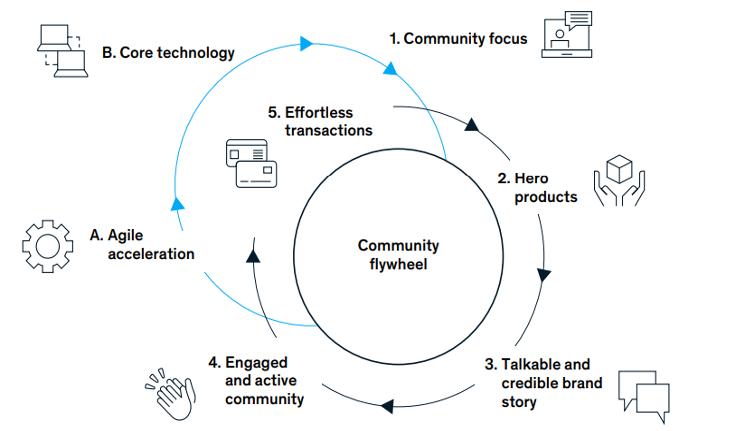
Figure 9.9. Five self-reinforcing marketing strategies set the flywheel in motion
Source: McKinsey
Accordingly, instead of merely “running campaigns,” brands begin to build foundational assets based on a more sustainable logic assets that enable experiences to generate self-reinforcing loops of participation and return (Figure 9.13). Three foundational asset layers commonly observed include:
• Space: where the experience takes place (which may be a game world, a digital experience destination, an augmented experience layer, or a repeatable “digital place”).
• Ecosystem: content creators, communities, partners, diffusion mechanisms, and supporting services.
• The brand’s own world: sufficiently consistent for users to recognize that they are within the brand’s narrative, regardless of the touchpoint through which they engage.
To see that a “world” is not merely a metaphor, one can look at world-based platforms that have demonstrated scalable attention time. Roblox, for example, reports very high levels of daily active users (DAU) and hours engaged in its financial disclosures an indicator that users are not simply scrolling content, but dwelling within experiences. When the competitive unit shifts from “impressions” to “time-in-world,” content becomes only the surface layer. What matters more is the context that gives content meaning and motivates users to return.
When brands succeed in creating contexts that users want to participate in, marketing becomes more natural: users do not feel that they are “being advertised to,” but rather that they are “entering an experience” and the experience itself becomes the material through which they tell their own stories.
AI-Native Metaverse and Marketing as “Background Behavior”
The next wave of the metaverse consists of AI-native worlds, in which experiences are not merely pre-designed but are capable of learning and evolving based on behavioral data. When AI becomes the foundational operating layer, virtual worlds cease to be static stages and instead become feedback systems: interaction rhythms, levels of experimentation, product suggestions, and task design can adapt to each user’s context and objectives.
From this perspective, the metaverse is a multilayered system from infrastructure and devices/interfaces, to spatial computing, the creator economy, discovery layers, and experiential layers. As AI permeates these layers from content production and distribution optimization to interaction orchestration, it not only makes experiences more vivid, but also enables the entire system to operate more intelligently over time. A critical consequence is that marketing begins to shift from a sequence of campaign-based activities to a form of “background behavior” a continuous behavioral layer embedded within experience, more akin to habit than to event.
This shift can be summarized through a characteristic operational loop:
• Experiences are personalized through AI and behavioral data
• Users interact, experiment, and generate signals
• The system learns from these signals and adjusts the experience
• Reward mechanisms and social incentives encourage return and sharing
In this context, marketing is no longer a “poster” displayed outside the virtual world, but is embedded directly in how the world operates: its rules, participation incentives, and social rewards. Campaigns therefore do not disappear, but change roles. Rather than serving as the sole mechanism for attention creation, campaigns become deliberate accelerators for a well-functioning system activating events, launches, or collaborations while long-term value derives from the experience loop sustained over time.
Identity-Based Marketing across virtual boundaries
As users move deeper into virtual boundaries, the logic of consumption shifts accordingly. Customers no longer purchase solely on the basis of functional features or utilitarian value; increasingly, they purchase through identity choosing offerings that reflect who they aspire to be, the social roles they perform, and their sense of belonging to a community. This argument is not new in consumer theory, but virtual environments render it more visible and more measurable. In the metaverse, identity no longer resides solely in the mind; it is worn through avatars, digital items, badges, access rights, and positions within communities all of which become observable social signals.
When continuity of identity and ownership becomes a defining feature of the metaverse, identity-based marketing ceases to be a communication slogan and instead becomes experiential infrastructure. Users carry their identities across multiple spaces, and brands
become part of that flow. In this context, a brand community is understood not merely as a group of followers, but as a living community within a world that has space, roles, and rituals where a sense of belonging is formed through repeated interaction.
The role of identity-based marketing in the metaverse can be summarized through three core design elements:
• Roles: who users are within the brand’s world
• Rituals: what users do to participate and gain recognition
• Identity markers: how identity is expressed through avatars, items, or access rights
As a result, an increasing number of brands speak of building a “home” for digital communities not only for communication, but as spaces where users can learn, collect, and co-create within a shared context. When brands successfully design spaces in which identity and community coexist, marketing moves beyond transaction to become part of social life within virtual worlds.
Chapter 9 demonstrates that marketing is entering a phase of profound transformation: from message transmission to experience design, from campaign optimization to system building, and from persuasion to user empowerment. Metaverse-lite, AR, and AI are not “technological toys,” but tools that enable brands to place experience at the precise moment of decision-making and to cultivate trust in a sustainable manner. When marketing operates as a world with rhythm, rules, and meaning, brands no longer stand outside customers’ digital lives, but become part of them. The challenge ahead lies not in keeping pace with the latest technologies, but in the ability to design experiences with discipline, ethics, and depth. It is at this intersection of technology, experience, and trust that the marketing of the present and the future is being shaped.
Case study: TIKTOK EFFECT HOUSE – FROM AR EFFECTS TO STRATEGIC EXPERIENCE DESIGN
TikTok as a Global Attention Infrastructure
Launched in 2016, TikTok has rapidly become one of the most popular social media and video platforms worldwide. Its explosive user growth reflects a rare pace of mass adoption: by 2021, TikTok had approximately 656 million global users and was projected to reach 755 million users in 2022 (Statista, 2025). From a commercial perspective, the platform also commands global-scale advertising reach, with Indonesia, the United States, and Brazil among its largest markets. Notably, in 2024, TikTok/Douyin rose into the top three most valuable brands worldwide, indicating that TikTok is no longer merely a content channel but has evolved into a global-scale brand asset and an “attention infrastructure” capable of reshaping how brands design experiences and activate consumer behavior within entertainment flows.
In case analyses of AR on TikTok, effects are often praised for their smooth, intuitive experiences and their ability to quickly stimulate trial intent. However, behind this technological appeal lies a core managerial question: What strategic objective does the AR effect serve within the brand strategy, which stage of the customer journey does it influence, and how will it be measured to decide whether to scale or discontinue it? When these questions remain unanswered, AR effects risk becoming short-lived creative novelties momentarily engaging but difficult to translate into long-term brand value.
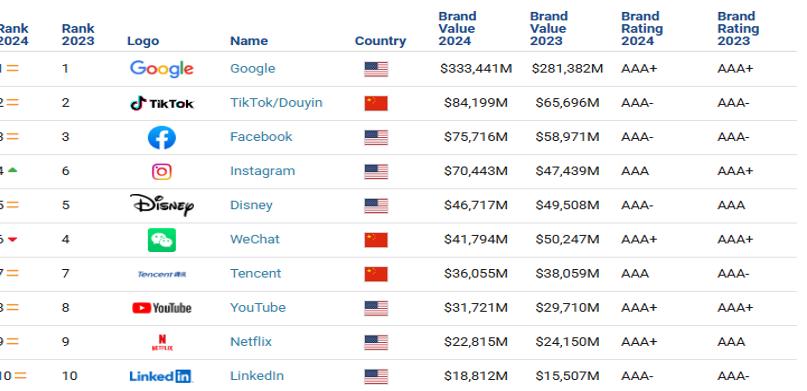
Figure 9.10. Brand rating in global scale
Source: https://brandirectory.com/
TikTok Effect House: From Creative Tool to Strategic Asset
TikTok Effect House emerges precisely at the intersection of creativity and brand management. At the tool level, Effect House enables creators and brands to design interactive and AR effects directly within the TikTok ecosystem effectively transforming “watching videos” into “participating in experiences” with a single tap. From a managerial perspective, however, the value of Effect House does not lie in whether a brand “has its own filter,” but in its ability to convert user participation into a campaign asset: one with clear objectives, consistent messaging, built-in diffusion mechanisms, and measurable indicators to support decision-making.
For this reason, an effective mindset requires a clear distinction between “an effect” and “a campaign.” An effect is merely a creative asset a fragment of an experience. A campaign, by contrast, is a system: a structured deployment scenario with objectives, messages, diffusion logic, and measurement plans. An AR effect carries real strategic weight only when it is placed appropriately within that system when it helps users do something more easily, believe something more quickly, or decide something with greater confidence. Without this strategic layer, effects easily become “creative ornaments”: visually appealing and trend-aligned, yet unable to generate sustained brand value.
Designing AR Effects Along the 5A Customer Path
To position AR effects at the correct strategic touchpoints, the 5A framework (Aware–Appeal–Ask–Act–Advocate) from Marketing 4.0 is particularly useful. The 5A framework conceptualizes the modern customer journey as a sequence of transitions: awareness (Aware), attraction (Appeal), active information seeking (Ask), action (Act), and willingness to advocate (Advocate). The strength of this framework lies in transforming the “journey” into an intervention map: firms do not merely run campaigns to increase awareness, but intentionally design experiences that pull customers toward subsequent stages. At the same time, Marketing 4.0 offers a contemporary view of loyalty arguing that in the connected era, loyalty ultimately manifests as the willingness to advocate and recommend, not merely to repurchase.
If the 5A framework is the map, TikTok represents highly favorable “terrain” for designing touchpoints. TikTok users do not merely consume content; they participate, recreate, and diffuse it. AR effects thus become powerful levers for movement along the platform’s natural rhythm: from Aware to Appeal (see → want to try), from Appeal to Ask (try → want to inquire or compare), from Ask to Act (inquire → act), and ultimately toward Advocate (act → invite others to join). This logic also explains why, despite differences in B2B and B2C social media investment priorities, TikTok continues to appear on many marketers’ priority lists. As shown in Figure 9.15, Facebook and Instagram remain the top planned investment channels for both B2B and B2C; LinkedIn is more prominent in B2B; YouTube is relatively balanced; and TikTok while not always the largest budget item still ranks within the top five, with stronger emphasis in B2C. In other words, TikTok may not be the “largest channel” for every firm, but it plays a distinct role in objectives that require rapid diffusion, interactive experience, and participatory culture.
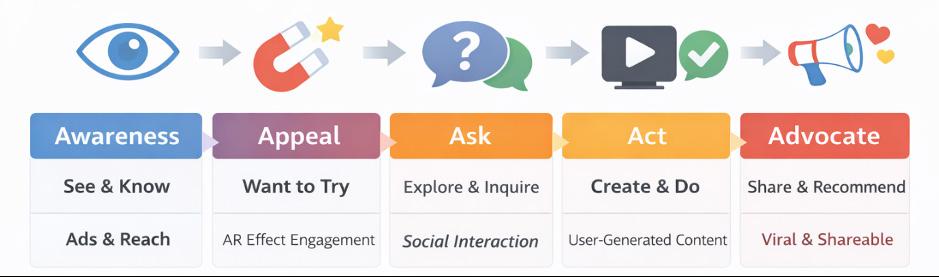
Figure 9.11. The 5A framework on TikTok: from “watching” to “spreading”
When examining each stage of the 5A framework, firms are often tempted to overemphasize Aware, as it produces the most visible metrics impressions, views, reach. Yet awareness is merely the opening spotlight. If a campaign stops there, it resembles playing loud music on a street corner: people hear it, but may not step inside. At this stage, the managerial questions must be precise: Is the entry point reaching the right audience, and is the brand signal distinct enough to be remembered?
At the Appeal stage, AR effects begin to demonstrate their true value. Appeal is not merely about being seen, but about wanting to try. A well-designed AR effect converts users from spectators into participants a particularly powerful state transition on TikTok. When users activate an effect, they voluntarily grant the brand a few of their most valuable moments in which they are not only observing the brand, but using it to tell their own stories. When designed effectively, the effect provides a reason to try, rather than simply something visually attractive to watch.
Ask is the stage at which campaigns diverge most clearly. In a connected environment, customers rarely seek information alone: they read comments, observe others’ experiences, consult peers, engage in duets or stitches, and compare collective signals. Therefore, an AR effect being “technically impressive” is not sufficient; it must generate a question worth asking. For example, a lipstick try-on is not merely about changing color, but about questions such as “Which shade suits my face best?”, “How does it look under real lighting?”, or “Does it match the product description?” When an effect stimulates the right kind of curiosity, it encourages discussion and discussion functions as a catalyst for social trust.
At the Act stage, managers must be particularly clear about how “action” is defined. On TikTok, action does not always begin with a purchase click; it often begins with creating a video. Video is the platform’s currency. When the target action is video creation, AR effects serve as tools that lower users’ creative costs: users can produce engaging content without advanced editing skills. The moment they post, they complete the Act stage while simultaneously opening the door to Advocate.
Advocate is the stage that Marketing 4.0 places special emphasis on: in the connected era, loyalty is expressed through willingness to support and recommend, not merely through repeat purchase. On TikTok, advocacy rarely appears as explicit endorsement statements; instead, it manifests through social behaviors “I invite you to try this with me,” “I share my version,” or “I remix the trend in my own way.” When designed appropriately, the brand does not stand outside asking users to speak positively; rather, it embeds itself within behavioral flows that naturally draw more participants into the experience.
From the 5A map, the most critical managerial question therefore becomes: Which “A” is your AR effect optimized for, and have you intentionally designed pathways to move users toward the next “A”? Once this question is answered, Effect House ceases to be a place for “making filters” and becomes a space where firms build measurable, optimizable, and scalable experience links fully aligned with the logic of modern marketing: technology serves strategy, and strategy serves brand trust.
The TikTok case reveals a clear truth: the future of marketing does not lie in brands speaking more persuasively, but in brands designing conditions in which users can try, participate, and feel more confident in their decisions. Metaverse-lite turns experience into evidence; AI enables evidence to become scalable capability; and brand management ultimately determines whether novelty becomes long-term value or merely a fleeting moment. When
technology accelerates, advantage does not belong to the loudest players, but to those who ask the right strategic questions, build the right trust guardrails, and transform each touchpoint into a fulfilled promise. This perspective reflects the core spirit of the book: marketing of the present and future ultimately returns to a single foundation creating genuine value for people in ways they can immediately feel through experience.
KEY INSIGHTS – WHAT BUSINESS MUST UNDERSTAND ABOUT MULTISENSORY MARKETING?
• Multisensory marketing is not an “add-on,” but the management of coherence. The human brain does not process sensory inputs separately; it integrates what it sees, hears, smells, touches, and tastes into a single conclusion about a brand. When signals are misaligned, experiences feel “artificial,” and trust erodes.
• Firms create stimuli, but customers create perception. Light, sound, scent, and materials are physical stimuli; final meanings (“warm,” “noisy,” “trustworthy,” “cheap”) are assigned by the customer’s brain. Experience management is fundamentally about controlling this meaning-assignment process.
• In conditions of information overload and digital fatigue, multisensory experiences reclaim genuine presence.
When experiences directly affect the body and physiological rhythm, customers think less, cognitive load is reduced, and they shift naturally into states of “feeling” and “believing.”
• Outstanding experiences do not need to overwhelm; they need to be well-paced and seamless.
The core formula of strong brand experience is: Promise + Rhythm + Ease. Smoothness and tonal consistency often generate more sustainable value than short-term “wow” moments.
• The ultimate goal of multisensory marketing is to translate brand promises into tangible sensations.
When these sensations become clear and stable, brands enter customers’ lives as habits—without needing excessive persuasion.
ACKNOWLEDGEMENTS
This book would not have been possible without the support and collaboration of numerous organizations and business partners across Vietnam and Asia.
The authors express their sincere appreciation to the companies and industry practitioners who generously shared their insights and experiences. Their contributions have been instrumental in shaping the case studies and practical perspectives presented throughout this book, helping bridge the gap between marketing theory and business practice.
The authors are especially grateful to the organizations that allowed their journeys to be analyzed and discussed. These examples, spanning multiple industries, reflect the dynamic nature of marketing in Asia and offer valuable insights into how businesses adapt in a rapidly evolving environment.
The authors also acknowledge the professionals and partners who contributed through discussions, feedback, and knowledge sharing, enriching the overall perspective of this work.
Finally, the authors recognize the enterprises that continue to innovate and shape the future of marketing in Asia. This book stands as a reflection of their ongoing efforts and contributions.
Dao Cam Thuy
Hermawan Kartajaya
Marketing Now and Future From an Asian Perspective
Publication Date:
Authors:
Research Contributors:
Design:
Publisher:
Publication Registration No.:
Address: May, 2026
Hermawan Kartajaya, Dao Cam Thuy Do Hoang Nhat Mai, Nguyen Dinh Quy Vu Mai Linh
Vietnam National University, Hanoi 144 Xuan Thuy Street, Cau Giay District, Hanoi, Vietnam
© Hermawan Kartajaya, Dao Cam Thuy 2026
All