MARKER
OUR MISSION
Innovative and full of heart, Mark Day School nurtures each child to pursue their curiosity, think critically, embrace challenge with courage and joy, and work in partnership with others to build more caring and inclusive communities.
LETTER FROM THE HEAD
This spring, we honor the life of our founder and first Board President, Father William “Buzz” Nern, who passed away on March 30. Father Nern was a priest, an educator, and a builder of institutions rooted in both conviction and care. He believed deeply in foundational learning and in the formation of character. Those commitments were daily work for him, and they remain ours.
What an act of vision and leap of faith it is to create a school! It is worth asking what it means to carry forward a founding vision in a time that looks so different from the one in which it began. Our students grow up in a world shaped increasingly by complexity, volatility, and change. Tools that can draft prose, write code, and create images in seconds are rapidly changing how people work and how information moves. The
question for schools is not simply whether or how to use these tools, but how to understand their place in the development of young people.
In thinking about this moment, I find myself returning to first principles that were familiar to Father Nern. The purpose of school is not only to transmit knowledge. It is to build the habits and capacities that equip a child to learn, to persist, to collaborate, and to act with integrity. It is to cultivate strong connections between students and their teachers, among peers, and between each learner and the skills and ideas they are working to master.
When technology serves to deepen those connections, we work to integrate it into the learning process. When technology interrupts or replaces them, it risks diminishing something essential. We believe that children need to carry the cognitive load of learning. Students must develop the ability to sit with complexity, to work through difficulty, to listen carefully to others, and to contribute thoughtfully in return. They must learn to be good partners in a shared endeavor, especially with those whose perspectives differ from their own. These are not skills that can be outsourced. They are built through practice, through relationship, and often through struggle.
This is why our work remains grounded in the same commitments that shaped the founding of the school. In our classrooms, students pursue their curiosity with depth. They collaborate across differences. We challenge students to think critically and to express their ideas with clarity and care. We ask them to persist when the path is not straightforward—in the words of our mission, to embrace challenge with
courage and joy. And we support children, at each step of the way, in becoming not only capable learners, but thoughtful and principled people.
Our strategic direction reflects this continuity. We are expanding opportunities for student voice and agency. We are strengthening how we assess and support each learner’s growth. We are deepening our work in social and emotional literacy, cross cultural literacy, ecological understanding, and media and information literacy. We are investing in the people and the structures that make this work possible.
None of this stands apart from the world our students inhabit. It prepares them for it. The pace of change, the complexity of the challenges ahead, and the expanding role of technology only increase the importance of what happens here each day. The habits our students develop now will shape how they engage with tools like AI, not the other way around.
Our founders, including Father Nern, built this school with a clear sense of purpose: to nurture both the mind and the spirit, and to do so in service of a broader community. That purpose endures. It lives in the daily work of our teachers, in the effort and growth of our students, and in the shared commitment of this community.
Sincerely,
Joe Harvey Head of School
NEWS FROM CAMPUS
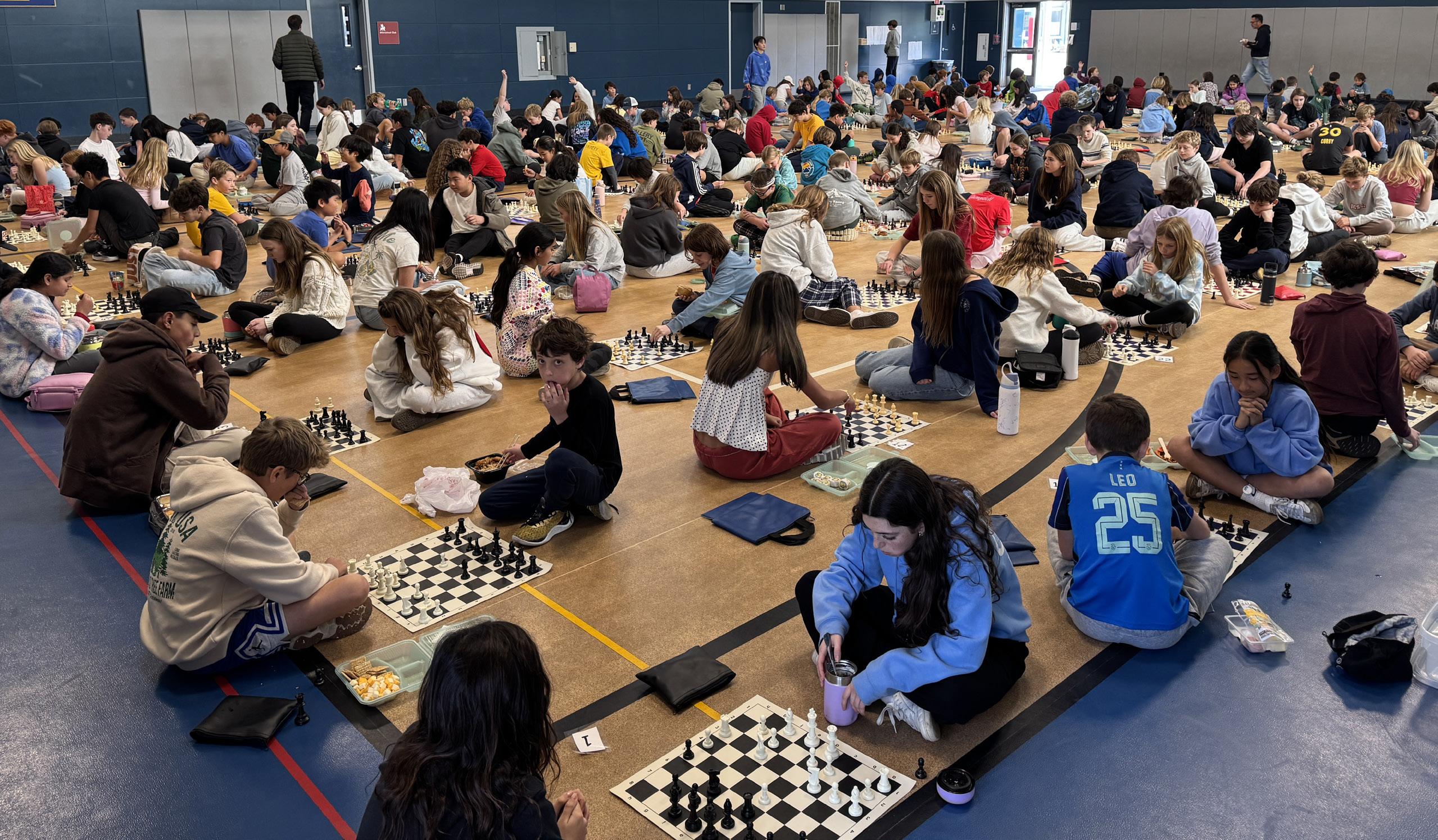
46th Annual Chess Tournament
The week of January 26-30, we held the 46th annual Mark Day School Chess Championship in the gym. A record-breaking 231 students—that’s about 75% of our student body—across K-8 joined at lunchtime to play. Chess has a long history at Mark Day, reaching back to our very first year as a school in 1980. We are thrilled to keep it going 46 years later, with an ever-growing number of participants.
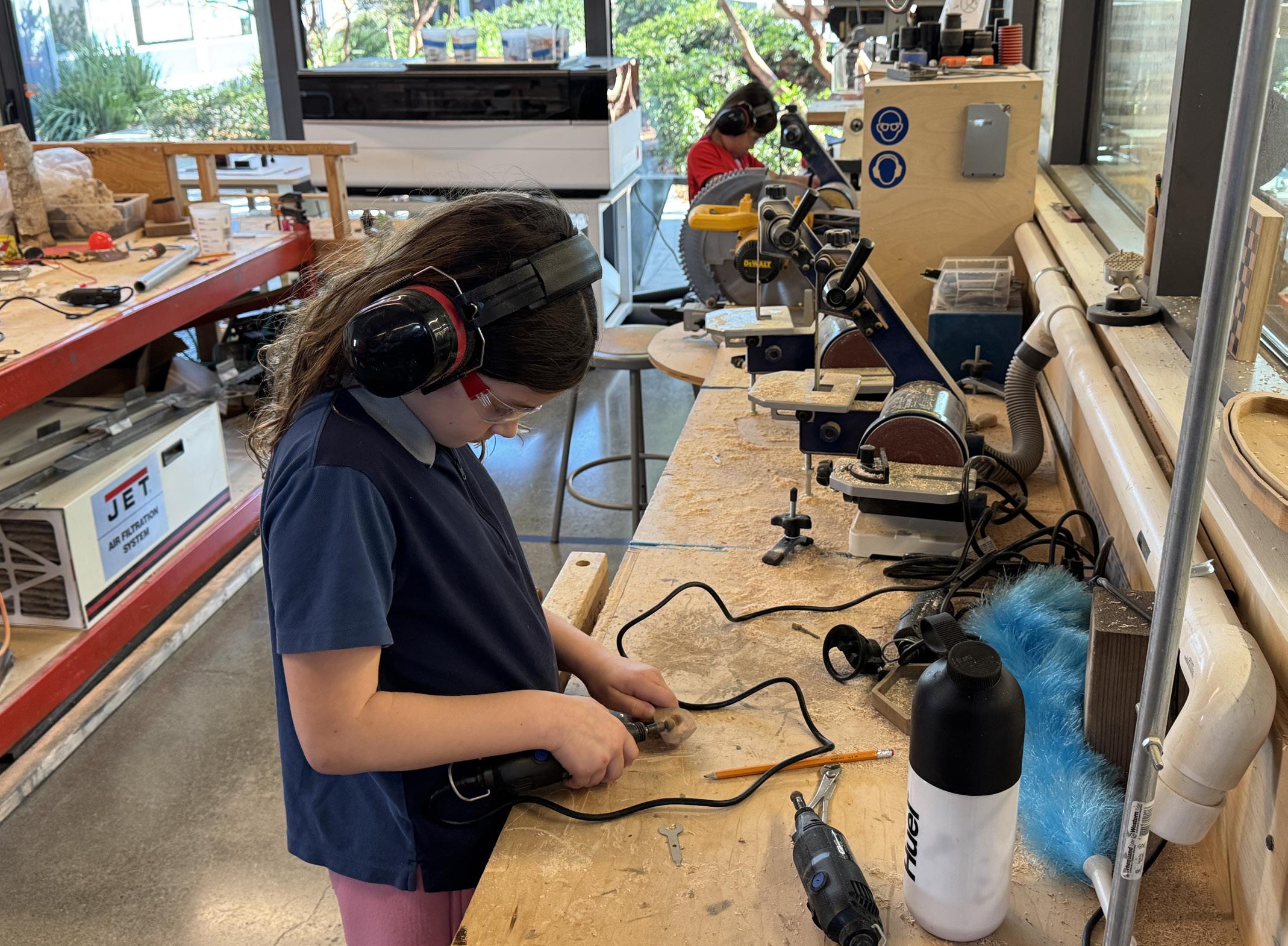
Lunchtime Clubs & Activities at Mark Day School
At Mark Day, lunchtime is more than just a break from class—it’s a time for students to grow, connect, and explore. Across grades K–8, we offer approximately 15 different clubs and structured activities that invite students to try new things, pursue passions, and follow their curiosities. The program is built around choice and flexibility, fostering both independence and community. Many of these offerings are led by teachers who volunteer their time to share their interests. While some clubs come and go, a number have become long-standing Mark Day traditions.
Scan to see lunchtime clubs and activities in action!
2025-2026
Lunchtime
Options:
Chess Club
Opening Tinkering
Open Art
Green Thumbs
Just Imagine Club
Bee Here Now
Mathletes
Open Drama
Mindfulness Club
Music Lab
Asian Culture Club
Skylion Seal Book Club
D&D Club
World Scholar’s Cup
Open Board Games
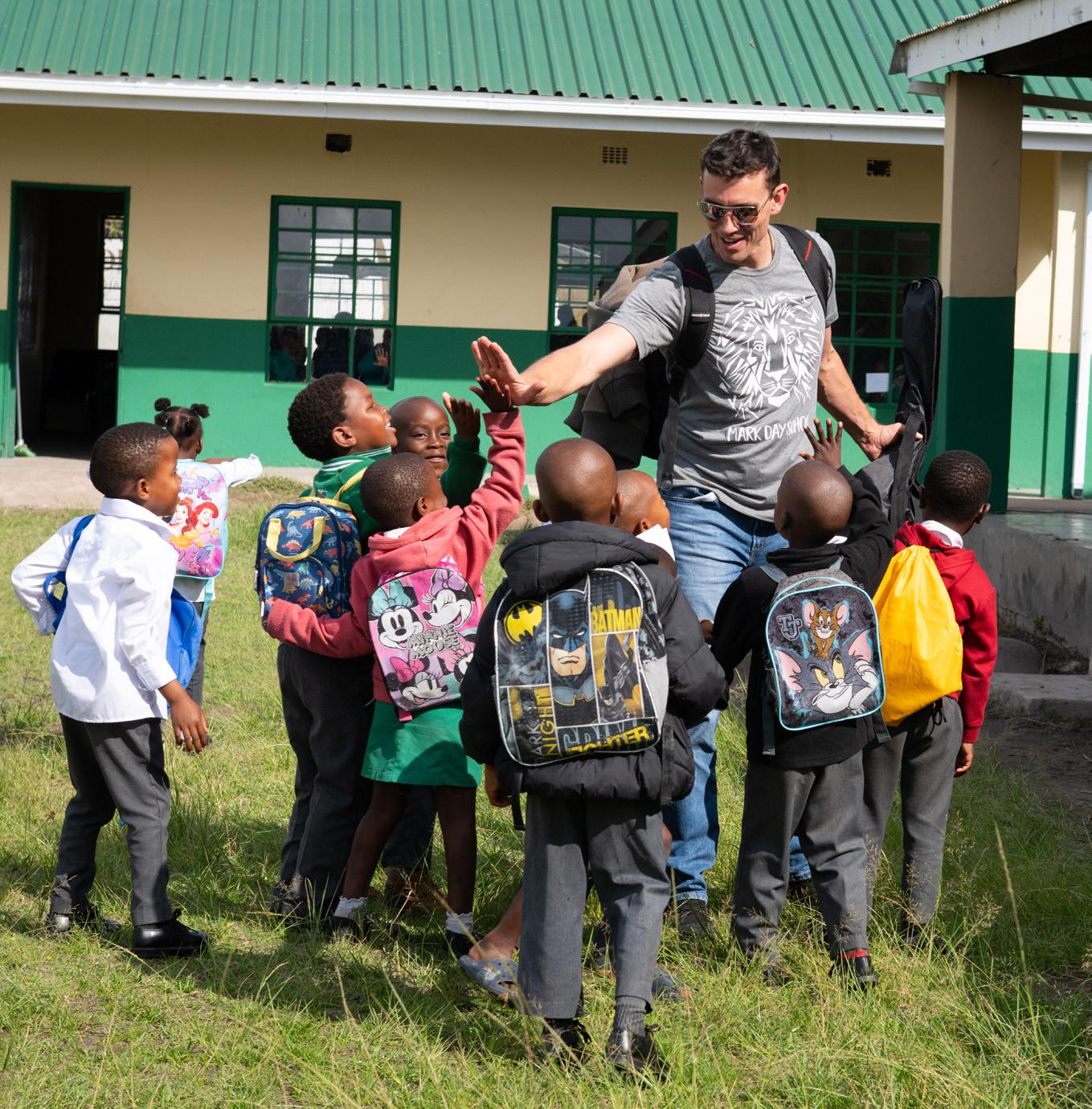
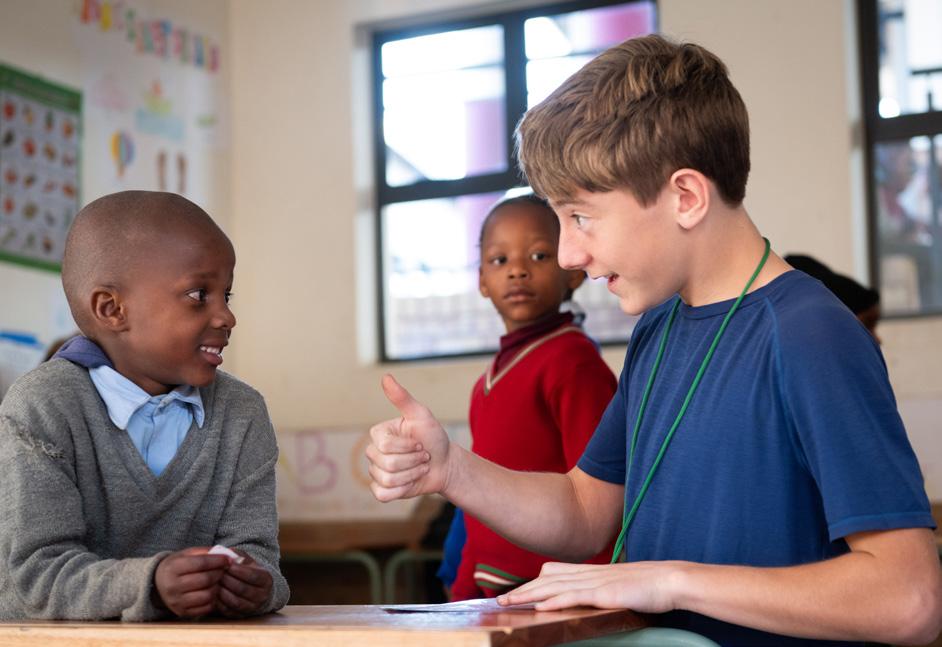
Summer 2025 Delegations to South Africa
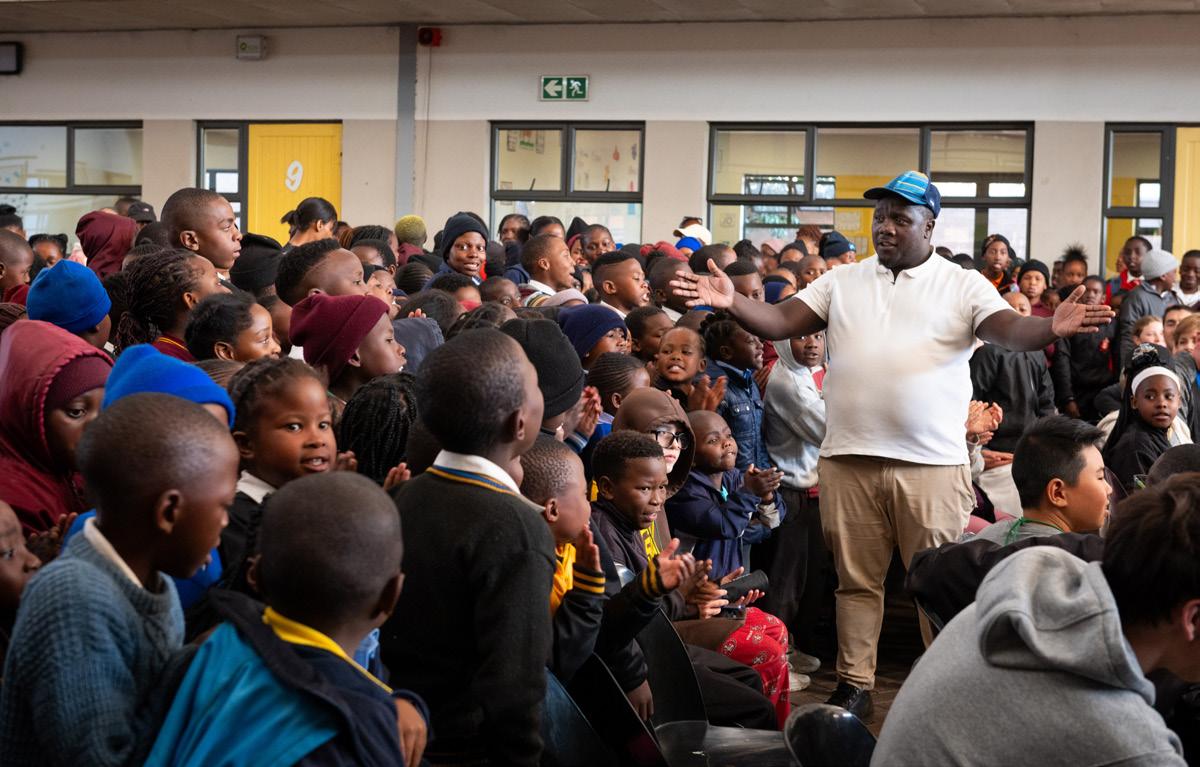
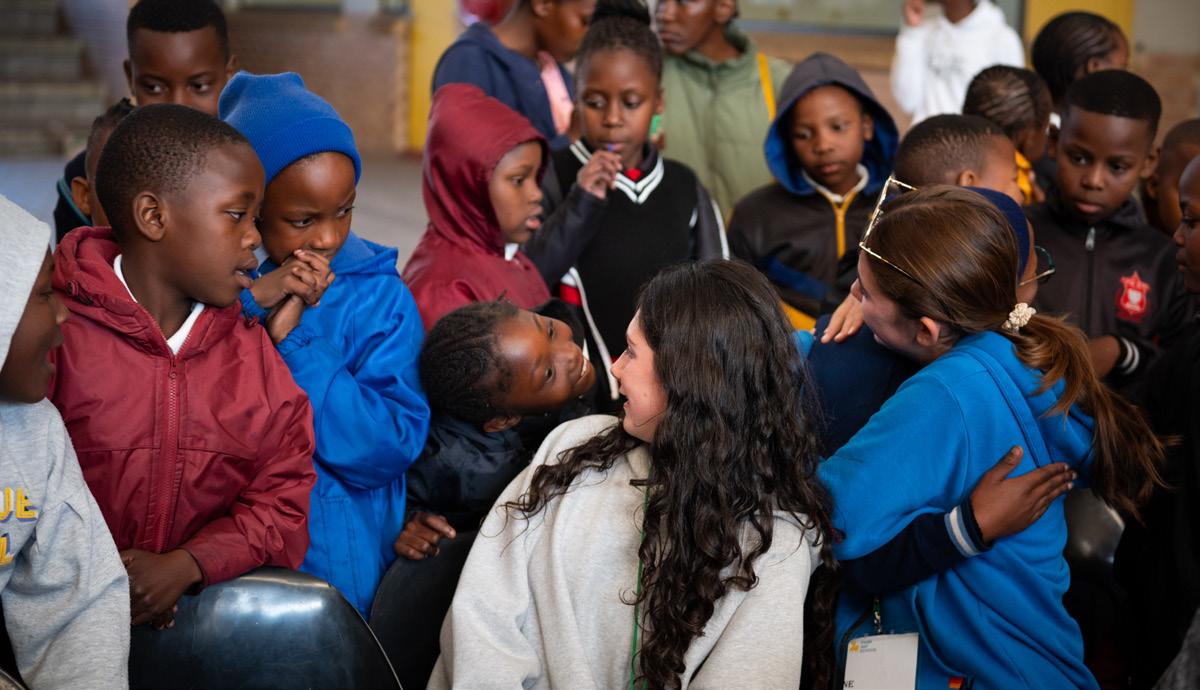
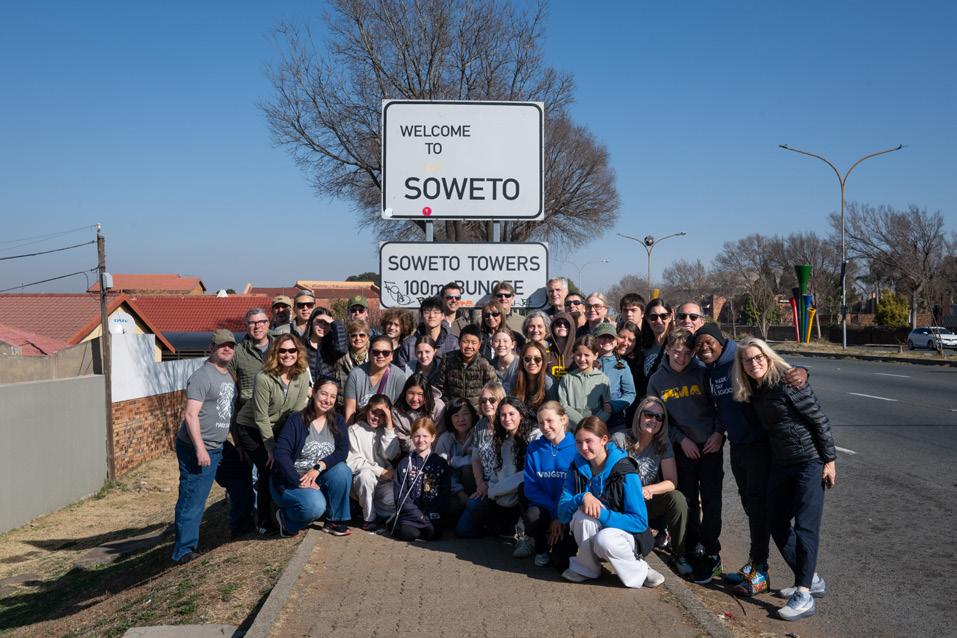
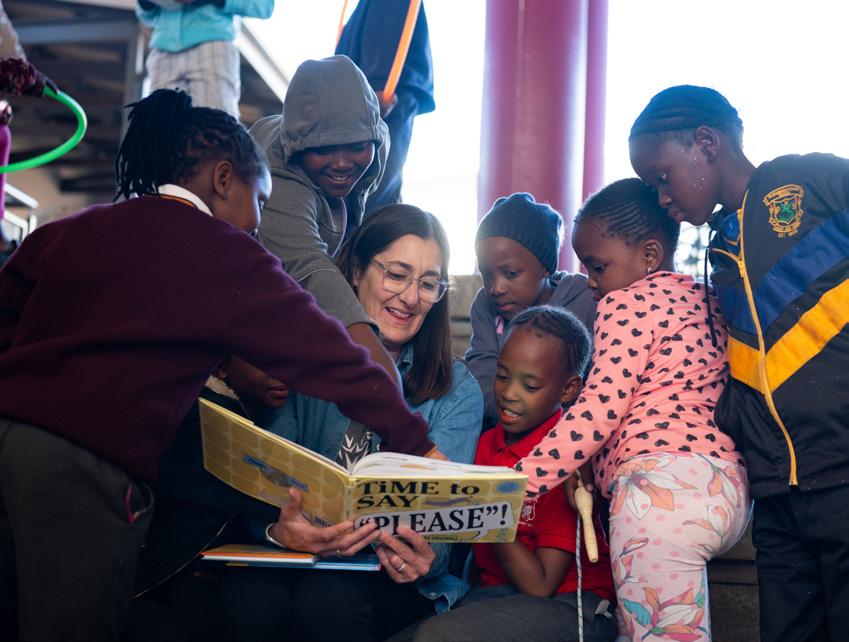
Last summer, nearly 100 members of Mark Day’s community—including students, faculty, staff, and families—traveled to South Africa to visit our partner schools, Kliptown Youth Program (KYP) and eSibonisweni. It was another incredible trip built around abundant quality time with our partners, making new friends, learning side-by-side, and exploring the local area. Over the years, these delegations have continued to attract so much interest from families that we offer two separate trips to ensure everyone has a chance to experience what most describe as life-changing. This past trip marked the 11th and 12th delegations from Mark Day. We are already preparing for the next trips that will occur in Summer 2027.
Photos by Jessica Lifland
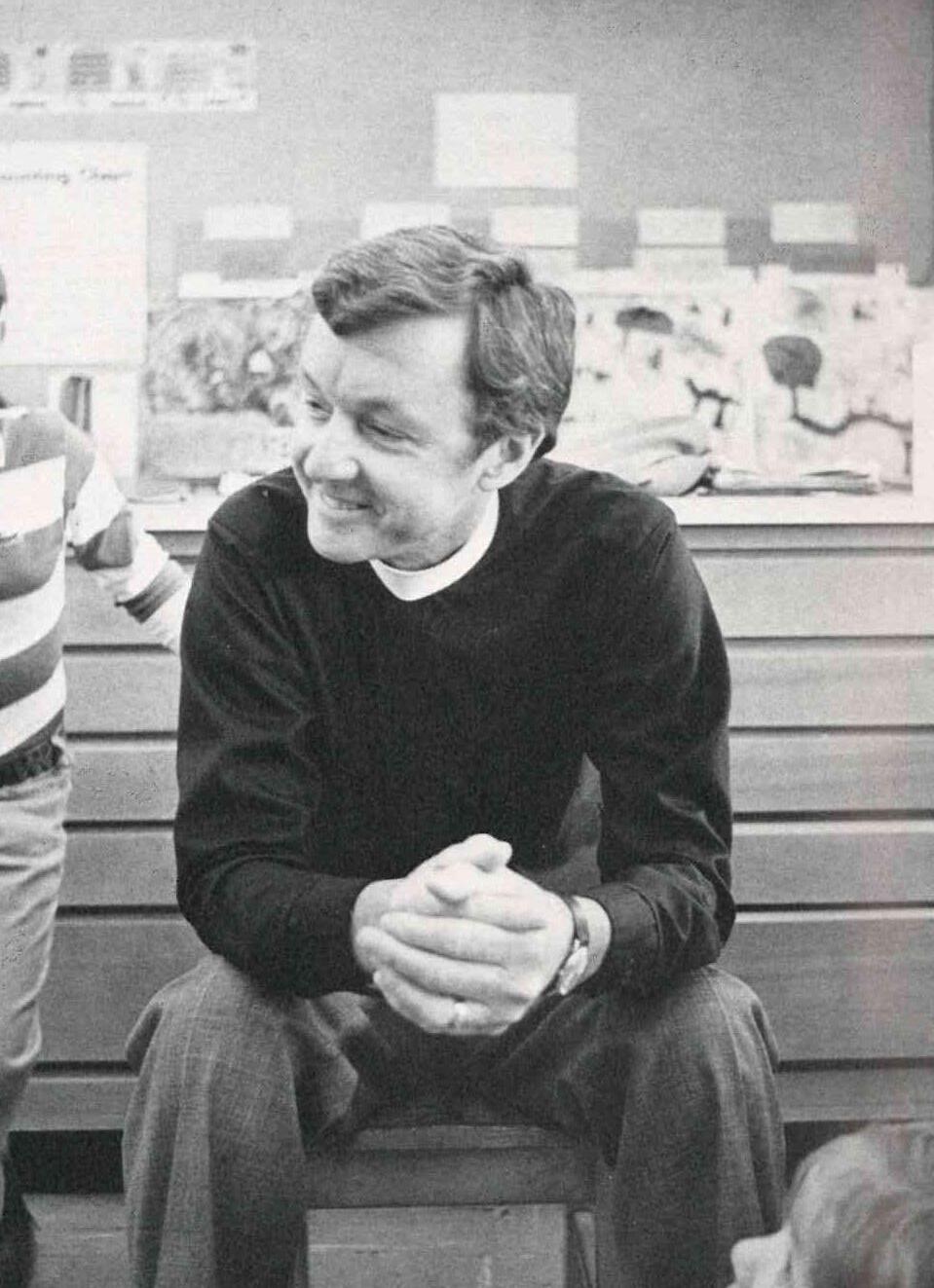
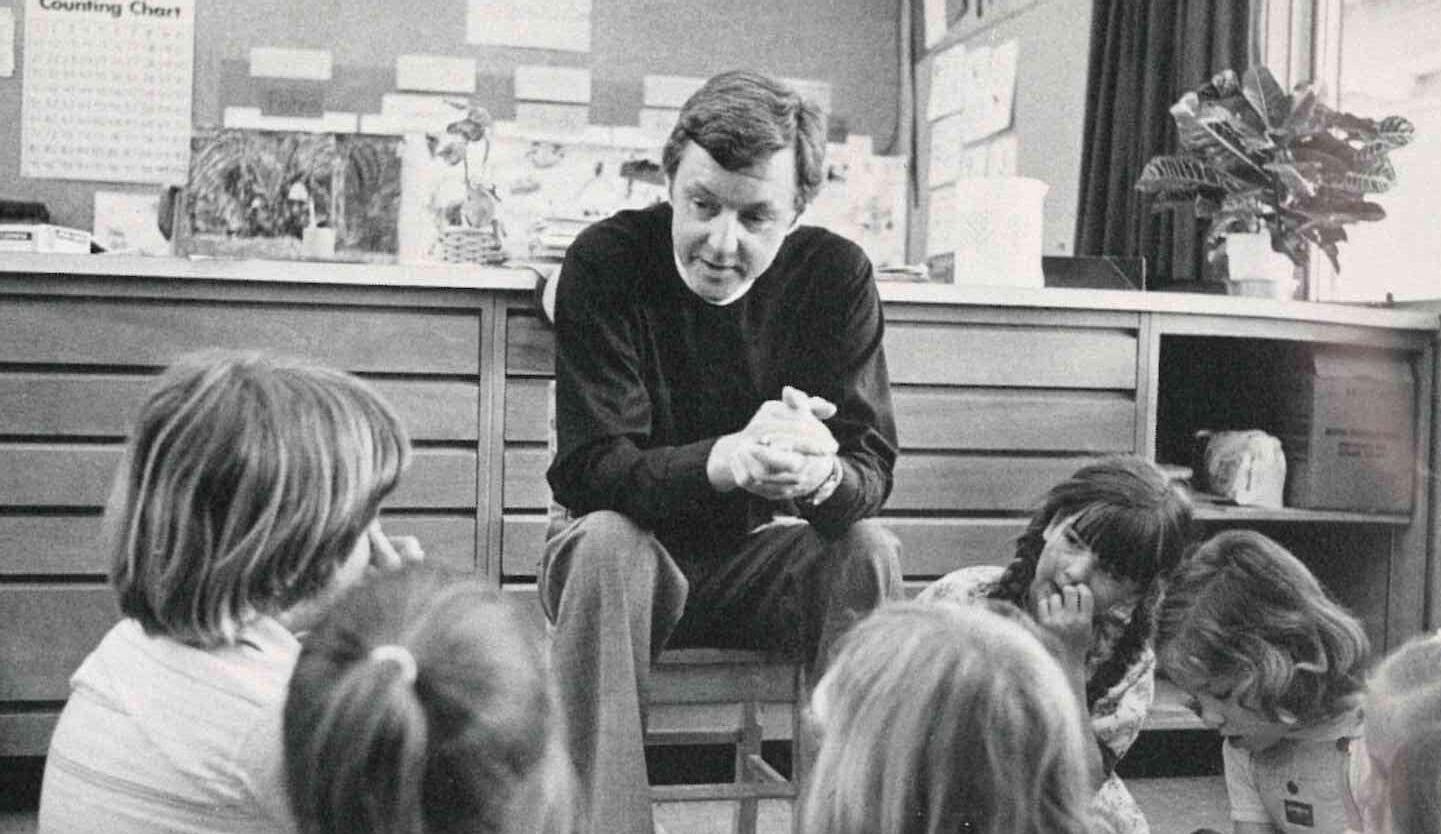
“ The Rev. Buzz Nern was a visionary and leader; he counted his involvement with our school’s founding among his proudest accomplishments. Mark Day School has never strayed from Buzz’s focus on strong values, a nurturing environment, and strong academics. His work lives on.
DAMON KERBY Mark Day School Headmaster from 1987-2011
Remembering William “Buzz” Nern
Founder & Founding Board President of Mark Day Passed Away
in March 2026
Buzz was deeply committed to the importance of foundational learning and character development—hallmarks of the school he founded and that we continue to love and bring to life today. We send our condolences to Buzz’s family.
A memorial service to celebrate his life and ministry was held on April 23, 2026 at Grace Cathedral in San Francisco. He is survived by his wife Susan Garbuio and children Alicia Anne Moody and William Baker.
Per his obituary, “Buzz dedicated his life to building institutions that nurtured the mind and the spirit...His roots in West Virginia shaped his early character, instilling in him a sense of community and service that would define his later decades of ministry and leadership...Perhaps his most significant legacy in public service was his leadership of Episcopal Community Services (ECS) in San Francisco. Under his direction, ECS became a cornerstone of the city’s social safety net, offering the largest housing and care facility for individuals experiencing homelessness. His work ensured that thousands of people received not just a roof over their heads, but the dignity and support necessary to rebuild their lives.”
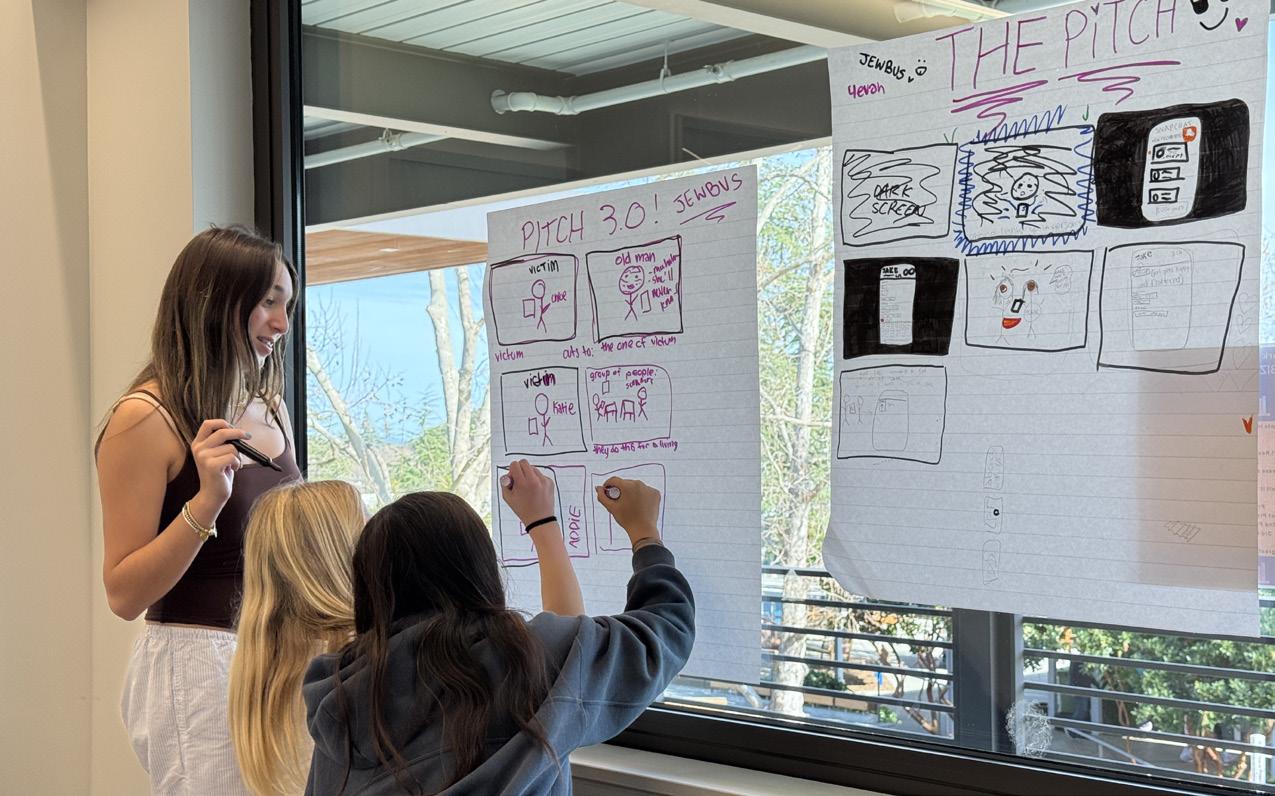
8th Graders Participate in the 23rd Annual Media Literacy Week
Media and information literacy, one of our four cross-disciplinary literacies, is intertwined across the grades. Throughout the year, students gain the skills to analyze different types of media and create compelling messages. Each February, 8th graders have a special opportunity to put their media literacy skills to practice and become media creators. Over the
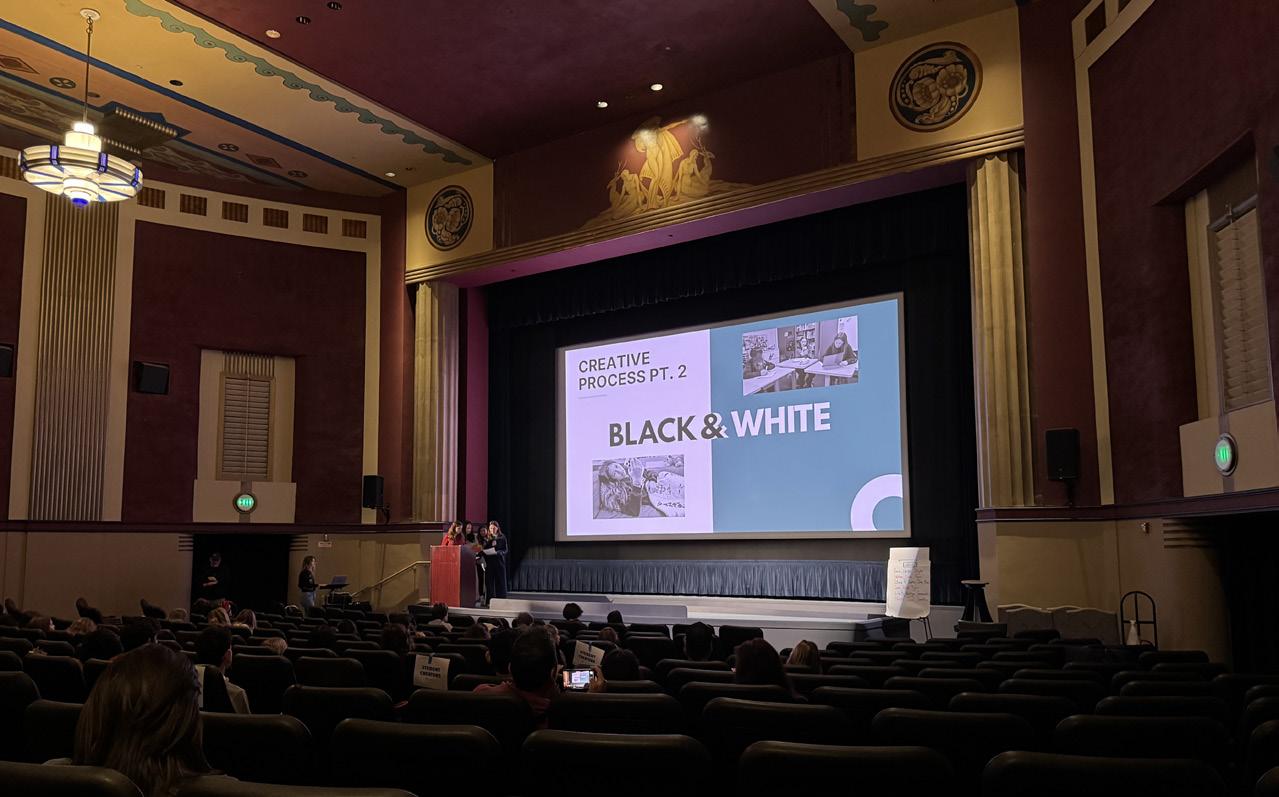
course of six class days, regular classes are suspended and students work in small groups to conduct research, generate ideas, and create a video project that centers around a media topic of their choice. Media Literacy Week has been running for over two decades, and it’s an incredible opportunity for students to feel empowered to use their voice through media to make a statement and a difference in the world. And this year, students showcased their films on the biggest screen in Marin—at the Rafael Theater in downtown San Rafael!
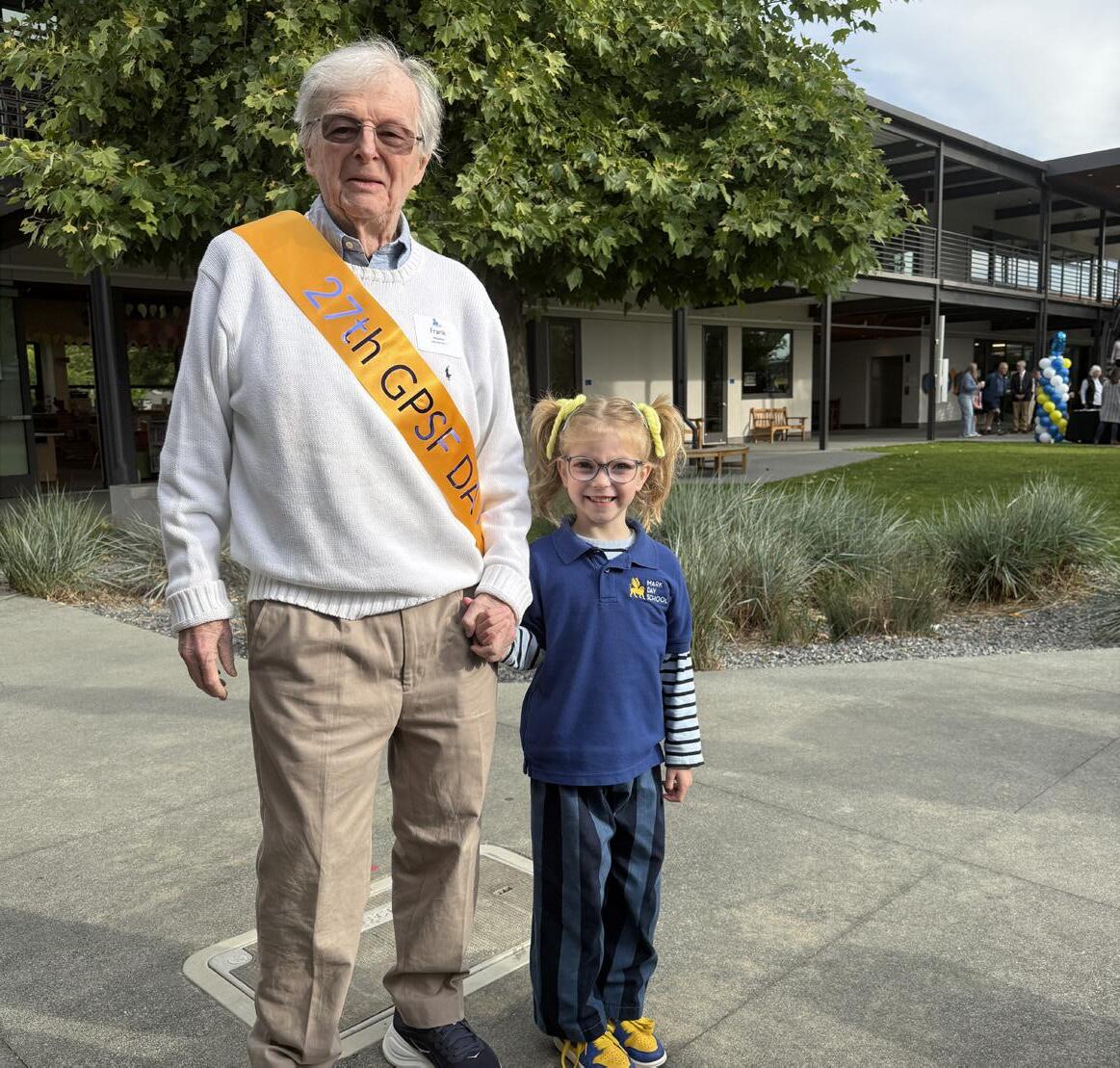
Grandparents & Special Friends’ Day
On April 24, we welcomed more than 400 guests to campus for a full morning of musical performances, curricular presentations, and classroom visits. Thank you to all who came to share this special morning and learn about Mark Day.
Pictured: Josie ’34 with great grandpa Frank Noonan, who attended his 27th GPSF Day this year.
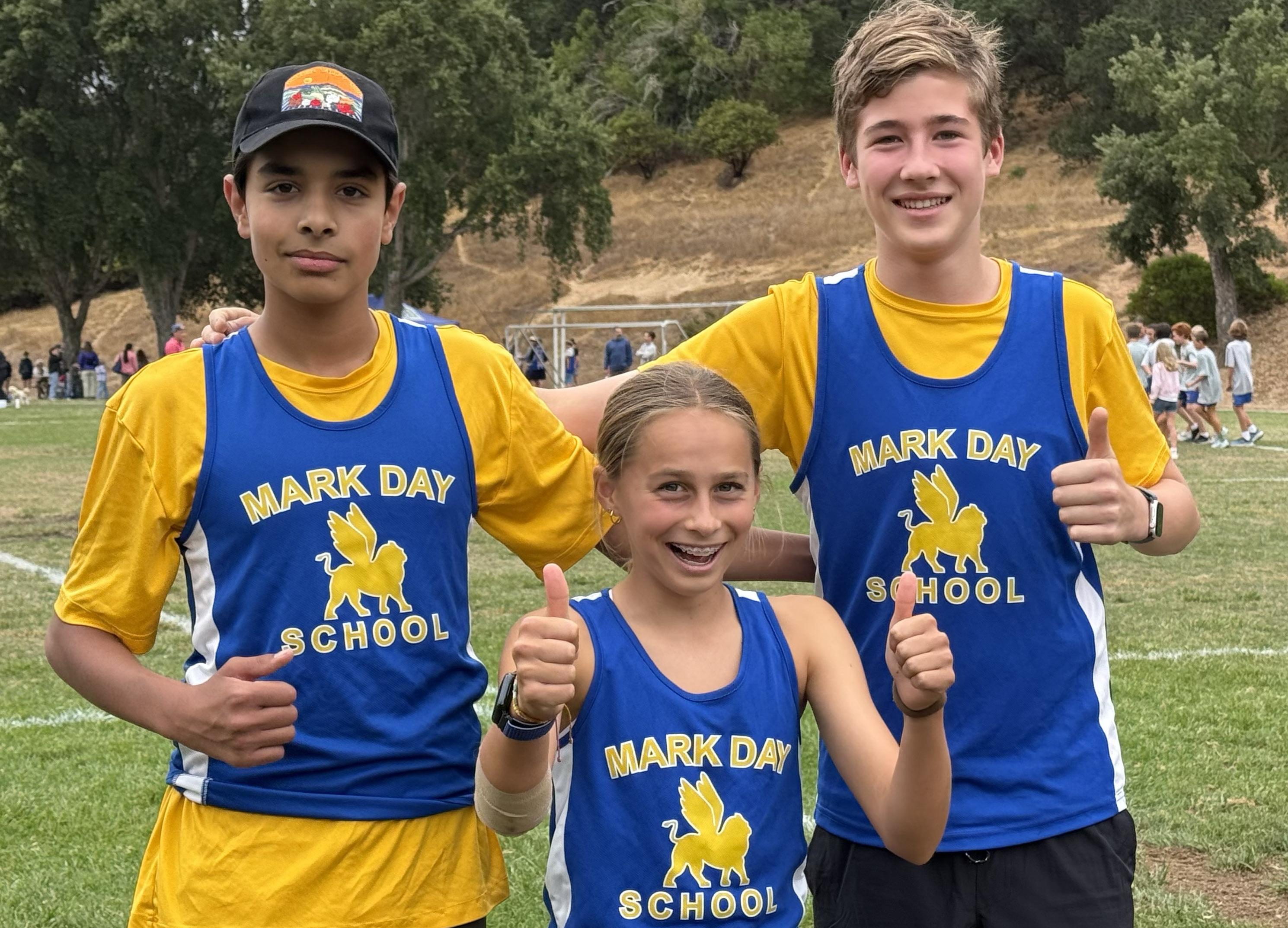
Record-Breaking News for Our Athletes
In the last 4 years, many of our school records have been broken!
Olivia RN ’26 broke the school record for shot put that had been held since 1997 by Annie Jacobson ’97.
Molly B ’26 broke the record for the 100m that had been held since 2002 by Sophie Shulman ’02.
Farah Allen ’23 broke the school record for the 1600m that had been held since 1994 by Georgina Vittoratos ’97.
Farah Allen broke the school record for the 3000m that had been held since 2015 by Alison Savage Brooks ’15.
Other notable athletics achievements from the 2025-26 school year:
Harper G ’26 and Annabelle F ’27 finished 1st in every Cross Country race this year and finished as the fastest girls in the county for their respective grades.
8th Grade Girls+ Basketball had an undefeated season 7-0, and lost in the semi-finals to Kent.
Spring 2026 marked the reintroduction of Girls+ Flag Football at Mark Day.
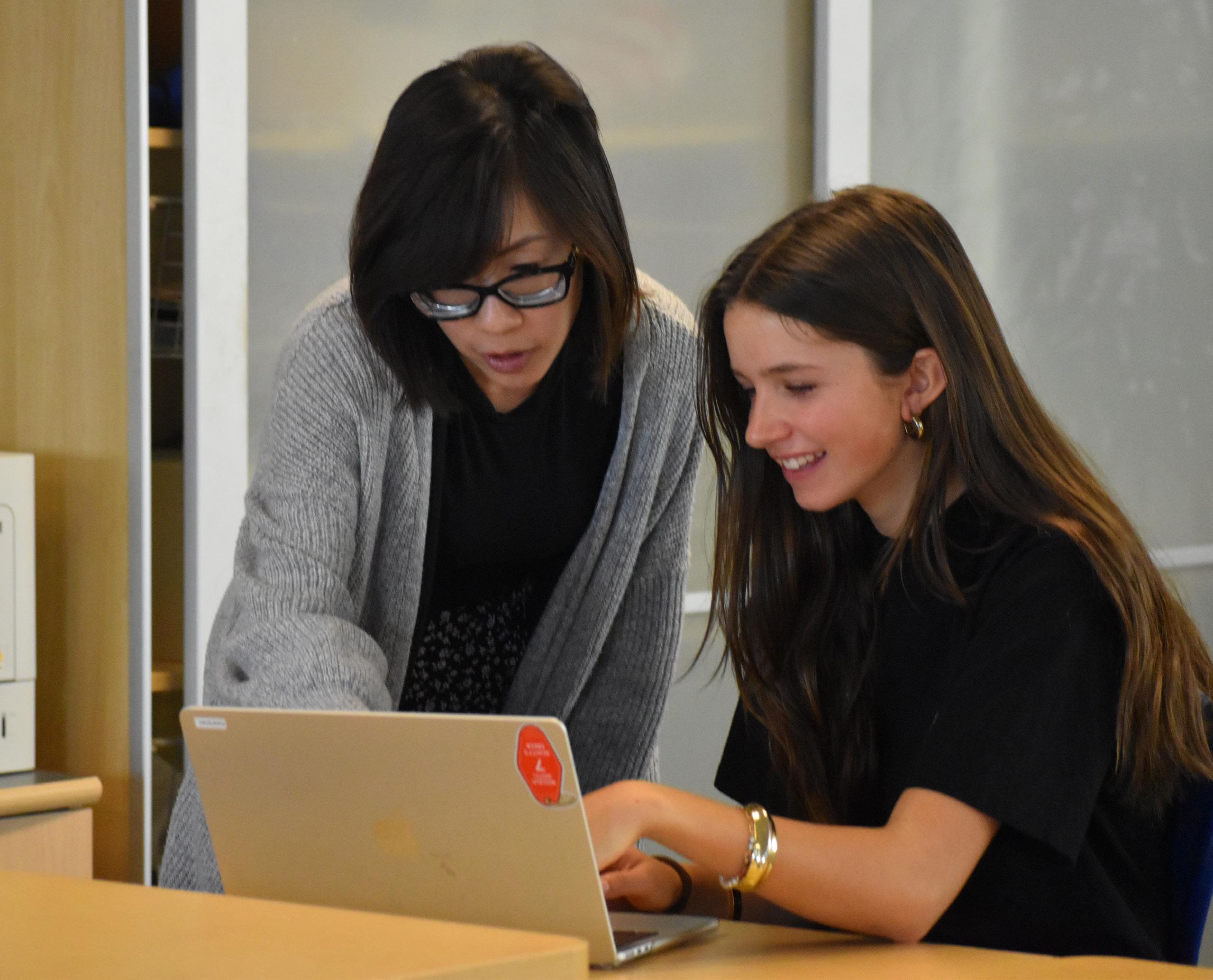
JOYCE CHEN
“
I have been working at Mark Day School since 2012. Over the years, I have had the joy of teaching many students and watching them grow in their Mandarin learning journeys. It has been truly rewarding to see how much the program has evolved and how our students’ curiosity about the Chinese language and culture has deepened.
What’s kept you at Mark Day for so many years?
The biggest reason I’ve stayed is the students! They are eager to learn, curious, and genuinely enthusiastic about both the language and the culture. They always want to do well, and I love how open-minded they are about trying new foods and exploring cultural traditions. I also deeply appreciate the supportive administration, who trust my expertise and give me the freedom to teach in creative and meaningful ways. Another highlight has been the delegation trips to Taiwan, which allow both students and teachers to experience meaningful crosscultural connections.
What is your favorite part about teaching Mandarin?
My favorite part is seeing how much my students grow over time. I have the unique privilege of teaching them for four consecutive years, from 5th grade through 8th grade, which allows me to witness their steady progress and growing confidence. It’s amazing to see how beginners in 5th grade gradually become more comfortable expressing themselves in Mandarin by the time they graduate.
What was it like being such an important part of our new school partnership with Ren-Ai in Taiwan?
I felt proud to introduce my students and colleagues to the culture and place
where I came from. The experience created real connections beyond the classroom and gave our students a chance to use their Mandarin in authentic, joyful ways. I’m deeply grateful for the guidance and commitment from Fernanda Pernambuco, Director of Partnerships, Equity & Inclusion, and for the strong support of our school leadership, which together have helped this collaboration thrive and become such a meaningful cultural bridge.
What is your favorite project, lesson, unit, or activity?
One of my favorite kinds of projects is when 6th, 7th, and 8th graders use iMovie to enhance their understanding of Mandarin. Students use their creativity and tech skills to make short films in Mandarin, combining writing, speaking, and performance. They often surprise me with how funny, clever, and imaginative their stories are.
What is something the Mark Day community might not know about you?
Most people don’t know that I’m a big fan of horror and thriller movies, especially those with zombies! I love the intensity and suspense of the plots that keep me on the edge of my seat. I’m also a huge fan of Trader Joe’s snacks and love trying both their classic and seasonal treats. My pantry is often stocked with their goodies, from sweet to savory, and I always look forward to discovering what new items they come up with next.
THE GREAT ACORN DISCOVERY
First graders build early connections to our ecosystem
For the past couple of years, Tinkerer and Garden Teacher David St. Martin has been noticing an unusual number of acorns across the Mark Day campus. “It’s called a Mast Year,” David explains. “Every so often, oak trees mysteriously coordinate to produce an abundance of acorns all at once.” Scientists don’t know exactly how or why this happens, but one theory is that it’s an evolutionary strategy. By overwhelming acorn-consumers like squirrels with more acorns than they can possibly eat, the trees increase their chances of survival. Mystery aside, it makes for a perfect learning opportunity that sounds like the start of a joke at Joke Assembly: What do you get when you mix a hillside full of acorns, a bunch of curious 1st graders, and a teacher with big ideas? The answer: a hands-on multidisciplinary project that plants the seeds of ecoliteracy early.
“Gathering acorns feeds that primal instinct we all have to collect and prepare for winter,” David says. “It’s built into us— especially in young kids.”
The project begins with a story about the oak tree and the hundreds of species that depend on it. Students learn that caterpillars munch on oak leaves, turning
sunlight into energy, that some burrow into the ground and transform into butterflies, and that others become food for baby birds. They begin to see the oak tree as not just a single tree, but as part of the foundation for an entire community of life.
From there, students explore how Native peoples gathered and used acorns for food. Students learn to sort the “good” acorns from the “bad” by dropping them into water to see which ones float (because they have been hollowed out by tiny creatures) and which ones sink (because they are solid and viable). The floaters are tossed back onto the hillside, giving the insects inside a chance to continue their life cycles. The sinkers are saved, dried, and eventually planted in pots in the garden to grow over winter.
By spring, 1st graders have their own baby oak trees that also connect to subsequent lessons later in the year, like their study of roots. Additionally, the lessons they learn about acorns also help lay a foundation for a science activity around density and testing whether other objects sink or float. These connections are a reminder that learning, like an ecosystem, is interconnected.
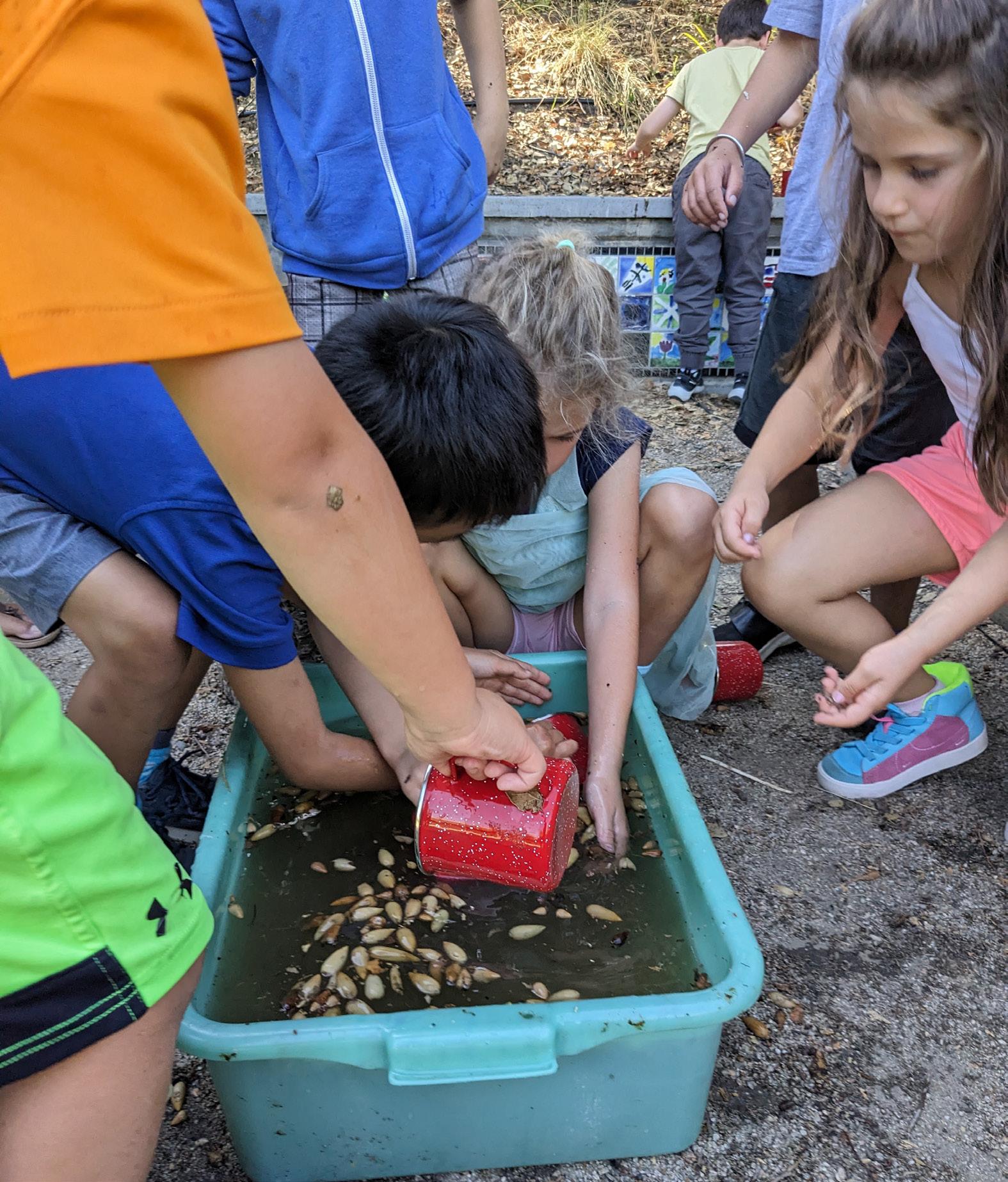
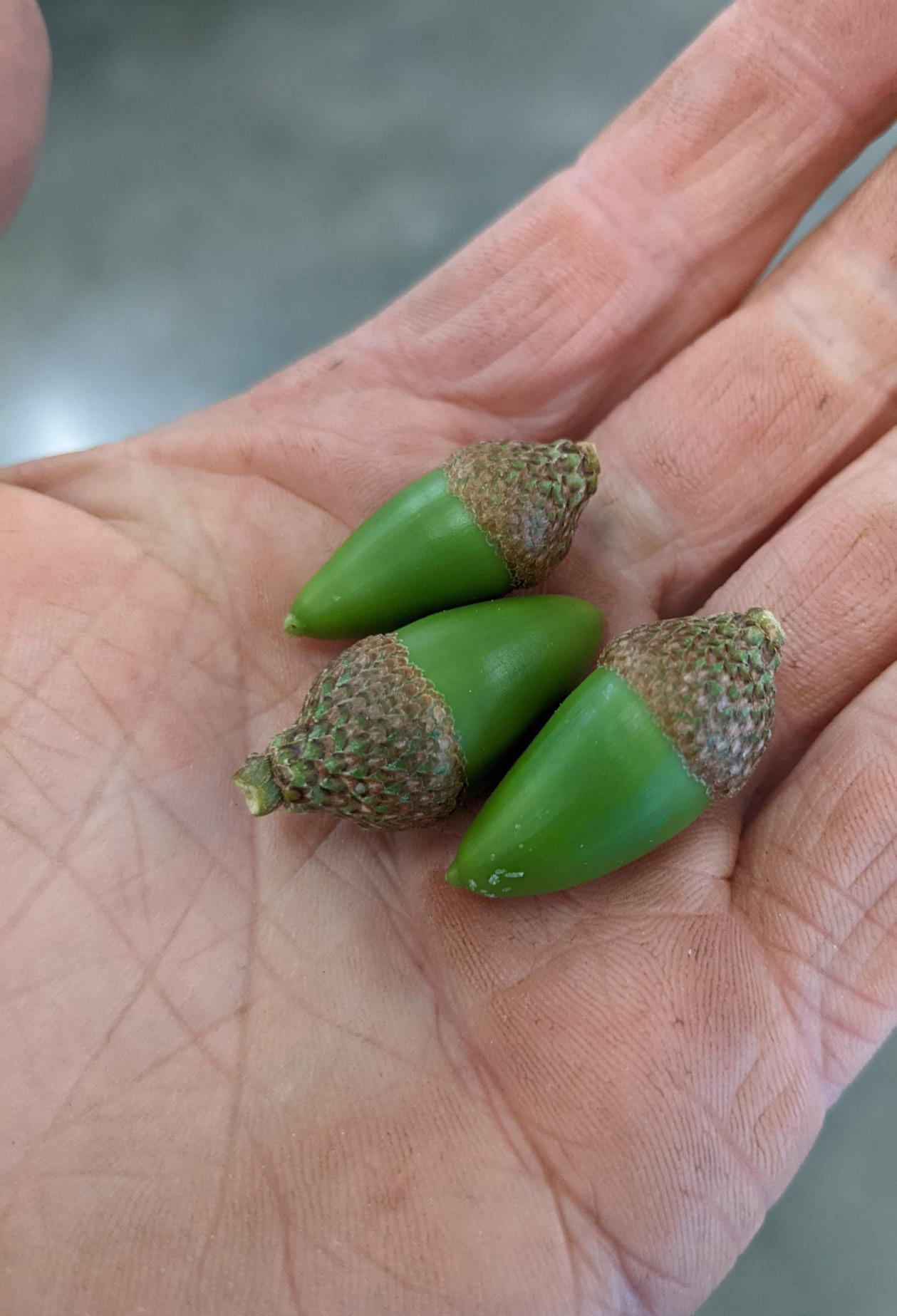
Mr. St. Martin has the continued goal of introducing foundational ecoliteracy knowledge like keystone species as early as possible. “These species are the anchors of our ecosystems, and understanding them helps students later trace how energy and nutrients move through the natural world,” says David. “If we start early, students can build on this knowledge as they move through the grades so we can deepen our conversations and exploration when they are older.”
The 1st graders who are exploring acorns today will one day be Upper Division students hiking through a range of regional ecosystems, identifying keystone species and understanding the relationships that sustain them. “Each year, I try to start this kind of learning even earlier—repeat the concepts, build familiarity, and lower the fear of the unknown. That’s how we help kids feel connected to the natural world and feel excited about it.”
WHAT’S A WEEVIL?
Check out this deep look at how a Weevil interacts with an acorn to see what students are learning.
ARTS + RESEARCH + STORYTELLING
A 5th grade multidisciplinary project
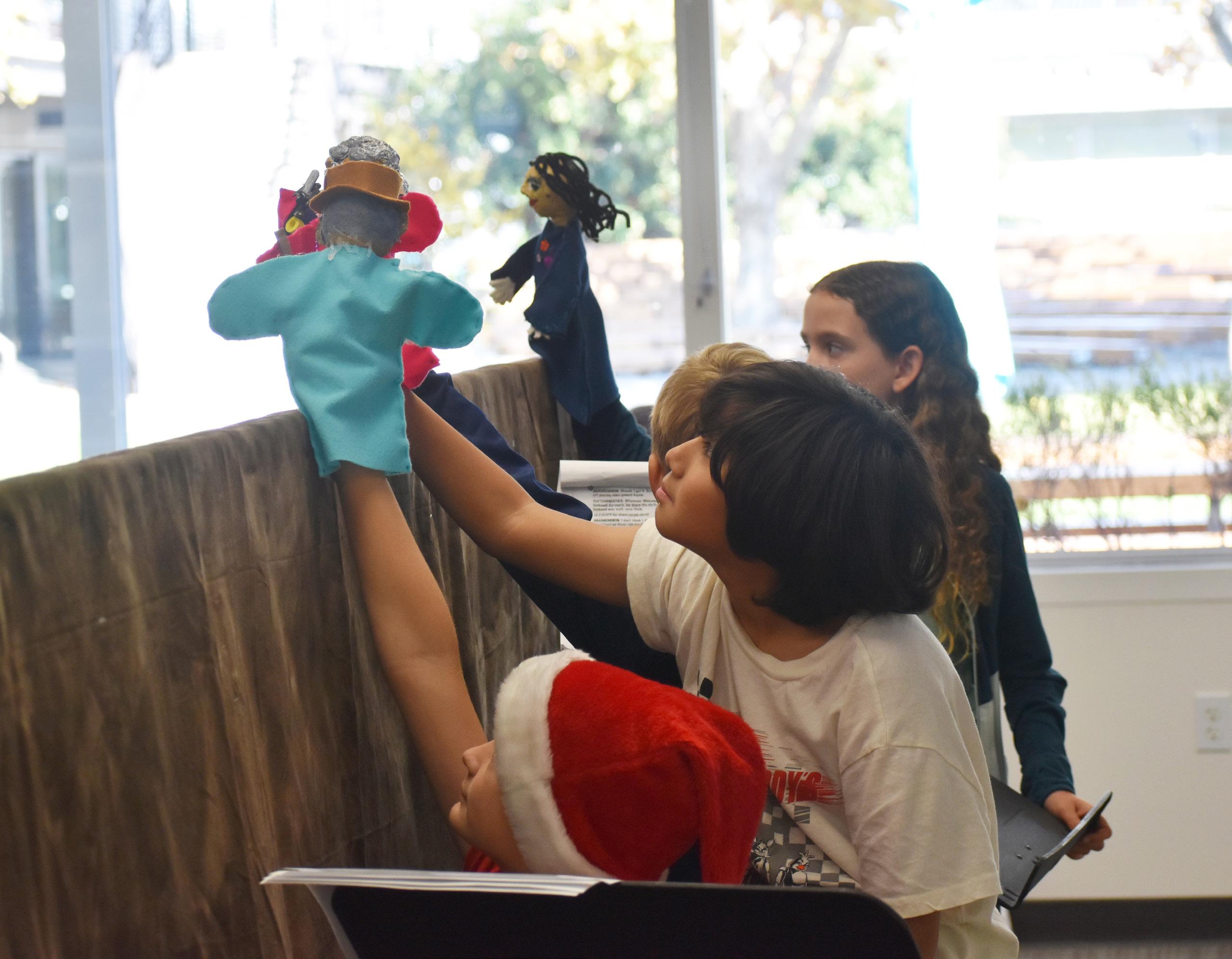
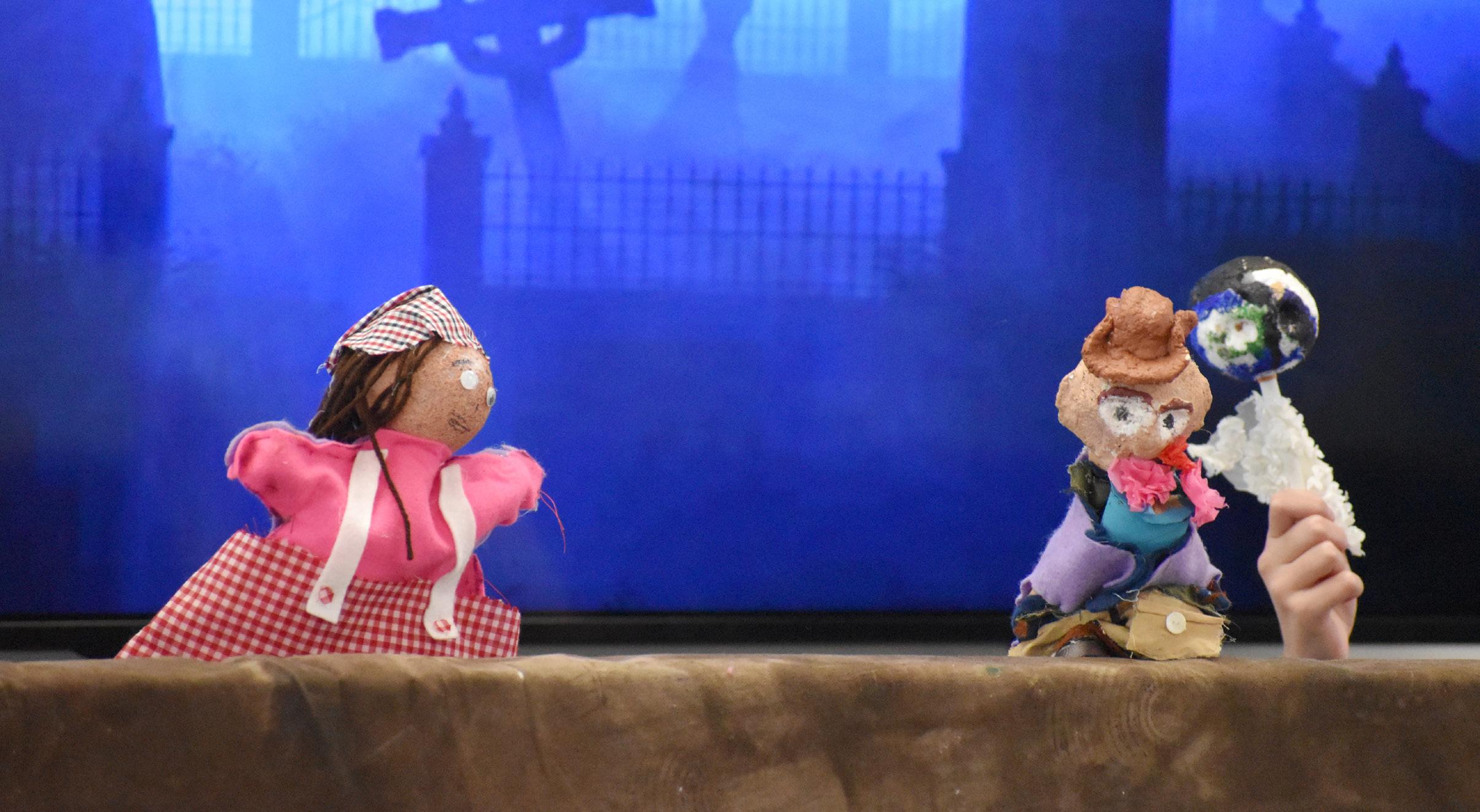
At Mark Day School, faculty and staff collaborate in countless ways across campus, from department-level curriculum development to crossdisciplinary projects. This fall, teachers in art, music, drama, and the Learning Commons teamed up to design a challenging 5th grade experience that wove together research, literature, puppet-making, acting, and music— one that also involved our partnership with Ren-Ai in Taipei.
At Mark Day, we know that some of the most meaningful learning happens when students make connections across subjects. Multidisciplinary projects invite students to explore real-world ideas through multiple lenses—combining science and design, mathematics and storytelling, research and creative expression. This approach deepens understanding, nurtures curiosity, and prepares students not just for high school, but for the complex, interconnected world beyond.
The Spark: A Cross-Cultural Collaboration
In 2024 and 2025, art teacher Karen Klier joined Mark Day’s first and second delegations to Ren-Ai, our partner school in Taipei. There, she met art teacher Temy Lee, who was instantly welcoming and eager to partner on a future project. During both visits, Karen observed classes, shared tea and cookies in Temy’s studio, and learned new approaches like using an iPad to display and discuss student work in real time. “Being immersed in another school for a full week—not just visiting for a day—helped me notice things that were less obvious on the surface, and it cemented a genuine relationship with Temy.”
Karen explains that Temy was eager for a collaboration from the start. Temy had the idea of incorporating traditional Chinese puppets into her curriculum and Karen loved that concept. She says, “Though our puppets would take a different cultural form, I knew it would be a wonderful project we could do in conjunction with Ren-Ai.”
Karen reached out to drama teacher Iliza Abbe, music teacher Brian Wilkerson, and Director of the Learning Commons Anna Gonzalez about collaborating on a puppet-themed, cross-disciplinary project. They had previously worked together on the 4th grade Trickster Tales project, building a foundation of trust and creativity that carried into this new endeavor. The team quickly saw how their disciplines could interconnect—art, theater, storytelling, and music—all centered on the concept of archetypes. They also focused on alignment, making sure students would experience the same concepts and language across disciplines.
Understanding Archetypes
Guided by Anna Gonzalez, students began by exploring the 12 Jungian archetypes that would be used as inspiration for their puppets in art. They learned that archetypes are universal themes or character types—like the Hero, the Ruler, or the Caregiver—that appear across cultures in stories and art. Students discussed how these timeless patterns represent fundamental human experiences, then examined what happens when archetypes are oversimplified and become stereotypes.
To make these ideas concrete, students analyzed familiar characters such as Harry Potter and Darth Vader and later expanded their lens to modern advertising. They studied commercials and brand campaigns, identifying which archetypes companies use to appeal to emotions and identity. “It’s fun to see students recognize how easily they can be drawn in by an ad, and then step back and analyze it,” says Anna. “That’s media decoding. We want students to understand how emotion is used to influence them, so they can make conscious, informed choices out in the world.”
One revealing exercise asked students to list examples of “heroes.” Initially, every name they mentioned was a white man. This led to a powerful discussion about representation, including how pairing an archetype with a particular look can reinforce stereotypes. Soon, their list of heroes expanded to include figures like Ruth Bader Ginsburg and Jesse Owens, demonstrating a more inclusive view of heroism.
Students also conducted research using Britannica and World Book Online, connecting their study of archetypes and stereotypes to upcoming social studies units on women’s rights, suffrage, ethnocentrism, and diverse cultural perspectives on historical events like Thanksgiving.
Making Archetypes Tangible Through Art
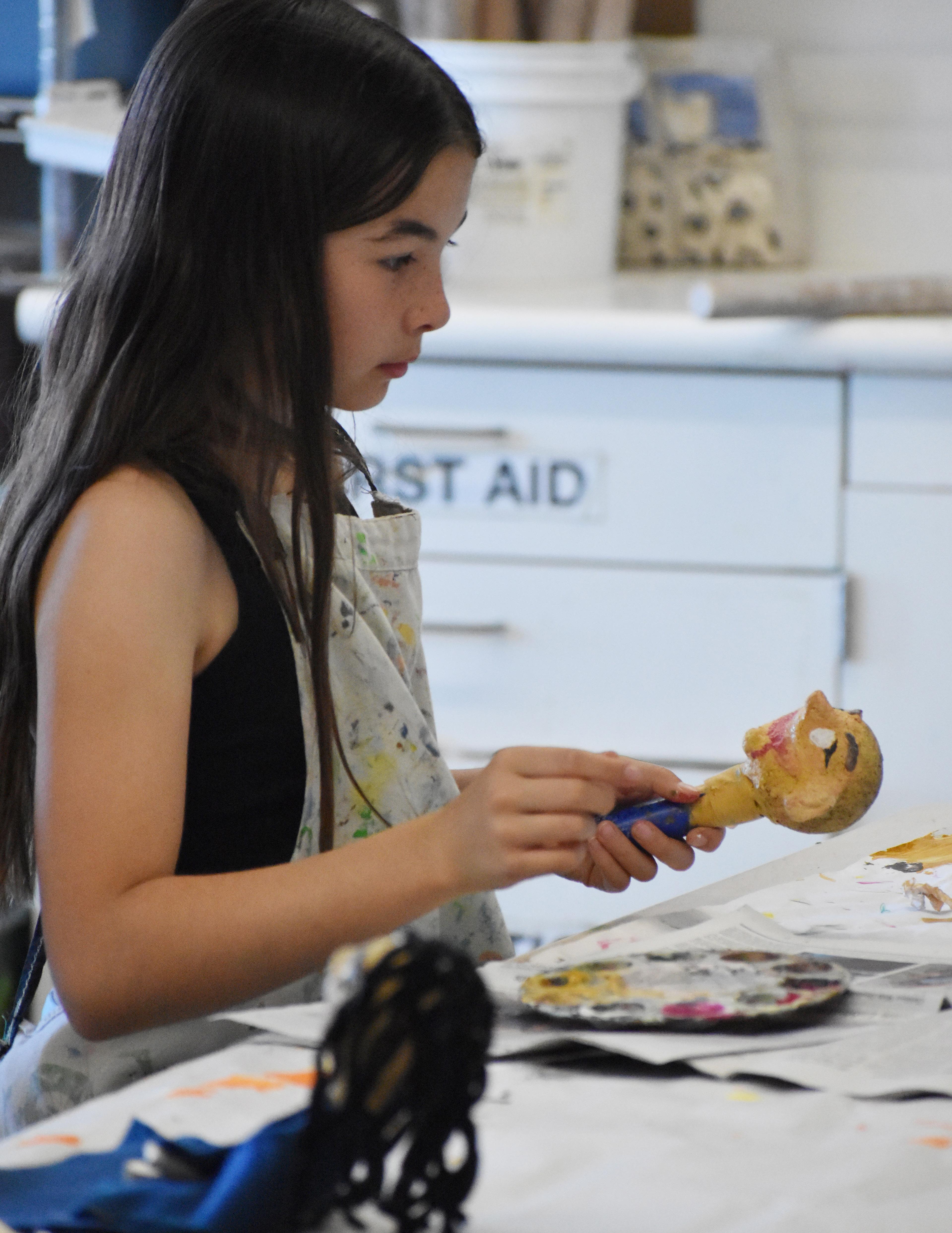
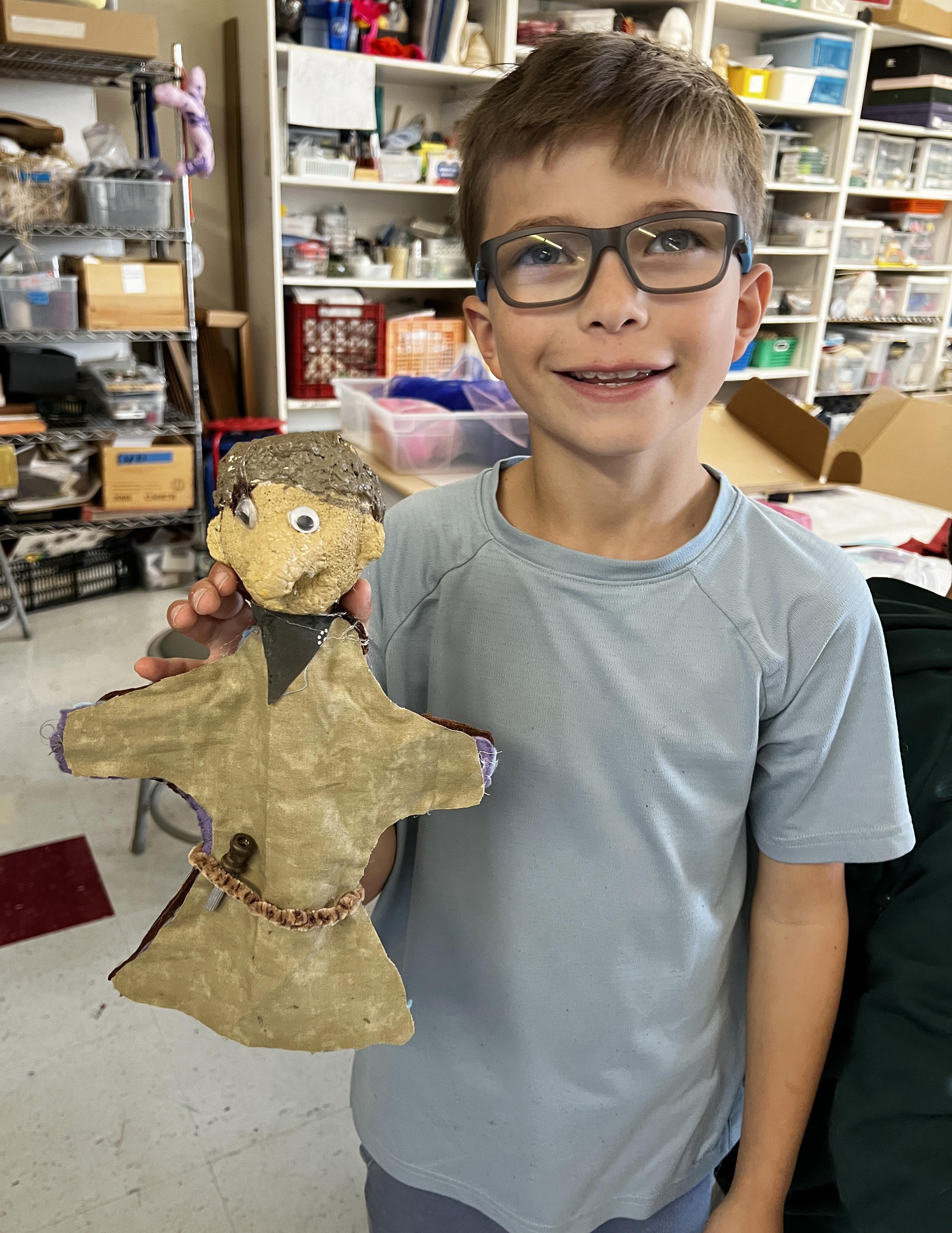
In art class, students selected one archetype to create in physical form by designing and building puppets. They sketched, stitched, sculpted, and experimented—sewing bodies from cloth, shaping heads from Styrofoam and tubing, and adding features with CelluClay. Once assembled, they dressed each puppet
to express its archetypal identity. “We’re always bringing it back to the archetype,” says Karen. “Why did you choose these colors? What makes this character look heroic or mischievous or nurturing? Every design choice tells a story.” The process demanded both creative imagination and problem-solving—an ideal balance of joy and challenge.
Bringing Stories to Life on Stage
For drama teacher Iliza Abbe, this project came at a great time. She had been wanting to refresh the 5th grade drama curriculum to introduce students to classical theater earlier in the year. Archetypes are not only strongly present in classical theater, they offer a powerful lens for acting. “I love using archetypes because there’s no ‘bad’ archetype,” she says. “They help students understand that characters—and people—aren’t just good or evil.” Students learned how these ancient stories revolved around archetypal roles and conflict by exploring The Oresteia and other Greek plays in humorous, accessible ways.
Each student was cast in a role and learned to embody their puppet’s archetype—first through acting exercises, then through puppetry. Students memorized lines, practiced expression and movement, and even took on stage management roles to coordinate scene transitions. “It’s a wonderful bridge to other subjects as well,” says Iliza. “By the time they study Shakespeare in eighth grade English, they’ll already be familiar with the structure and sound of classical theater.”
Discovering Musical Motifs
Music teacher Brian Wilkerson aligned this project with his unit on musical motifs, which are recurring sounds or melodies that reinforce a story’s themes. “Think of
the music that plays when Darth Vader enters the screen,” he explains. “It’s instantly recognizable and it tells a story and makes us feel a certain way before any words are spoken.”
Brian guided 5th grade students to listen more deeply—to connect emotionally and intellectually with the stories behind songs. They explored how certain instruments, rhythms, and harmonies evoke different archetypal moods: adventurous, rebellious, grand, or serene.
Students then performed their own compositions at the Winter Showcase and curated background music for the puppet performances, matching melodies to scenes and archetypes. When Zeus appears, for example, the music swells with grandeur.
Throughout the planning process for this project, Brian explored how AI can enhance his own creative preparation as a professional teacher. “I’ve been using tools like ChatGPT and Gemini to explore prompts such as, ‘How do music and archetypal storytelling connect across
cultures?’” he says. “It helps me question what I think I know and expand how I teach. As educators, we have to preserve the human storytelling element. This project has been a pilot for that kind of approach.”
The Power of Collaboration
The weeks-long project culminated in a performance for 5th graders in December. The performance was recorded and sent to Ren-Ai, who also shared a recording of their performances.
Two additional benefits from this multidisciplinary work: every student confronts an area of challenge and an area of strength. “Some kids feel strongest in art, others in music or acting,” says Karen. “Because it’s one shared project, everyone’s strengths are recognized.”
The team hopes to make this collaboration an annual tradition, continuing to connect creativity, critical thinking, and cultural exchange in new and inspiring ways.
MORE MATH, GREATER CHALLENGE
8th Grade Geometry Course Expands Opportunities for Challenge and Growth
Research and our experience reveal that we grow when we venture out into the zone of proximal development—in other words, just beyond our current comfort zone. Encountering and working through challenge, academic or otherwise, strengthens both knowledge and confidence. And middle school is the ideal time to practice this balance of persistence and discovery.
Stanford mathematics professor and education researcher Jo Boaler notes in EdSurge, “Neuroscientists have found that mistakes are helpful for brain growth and connectivity, and if we are not struggling, we are not learning.” Similarly, in How Educators Can Foster Student Motivation, Haleh Yazdi writes, “Students need to be challenged by schoolwork and know that expectations are high, but they also need competence—a feeling that they are equipped to meet these challenges. Once students perceive themselves as competent in learning class material, they develop more intrinsic learning motives…Teachers can cultivate competency by introducing activities that are optimally challenging.”
One example that brings these ideas to life is our 8th grade geometry course, which we piloted during the 2024-2025 school year and continued this school year. The course expands our longstanding commitment to providing appropriate challenge for every learner, including those eager to go deeper in mathematics. It runs alongside the twoyear algebra sequence completed by all 7th and 8th graders.
While mastering Algebra 1 forms a vital foundation for advanced math and STEM fields, some students demonstrate both the readiness and drive to explore geometry concepts simultaneously. The pilot, led by Upper Division math teacher and Director of Student Life for grades 5-8 Carrie Smith, offers those students an opportunity to accelerate their learning. “This program gives students the chance to more deeply engage in a subject they’re highly interested in,” says Carrie.
Participation requires a formal application and a commitment of four to five hours per week. Students meet once a week with Carrie during study hall and
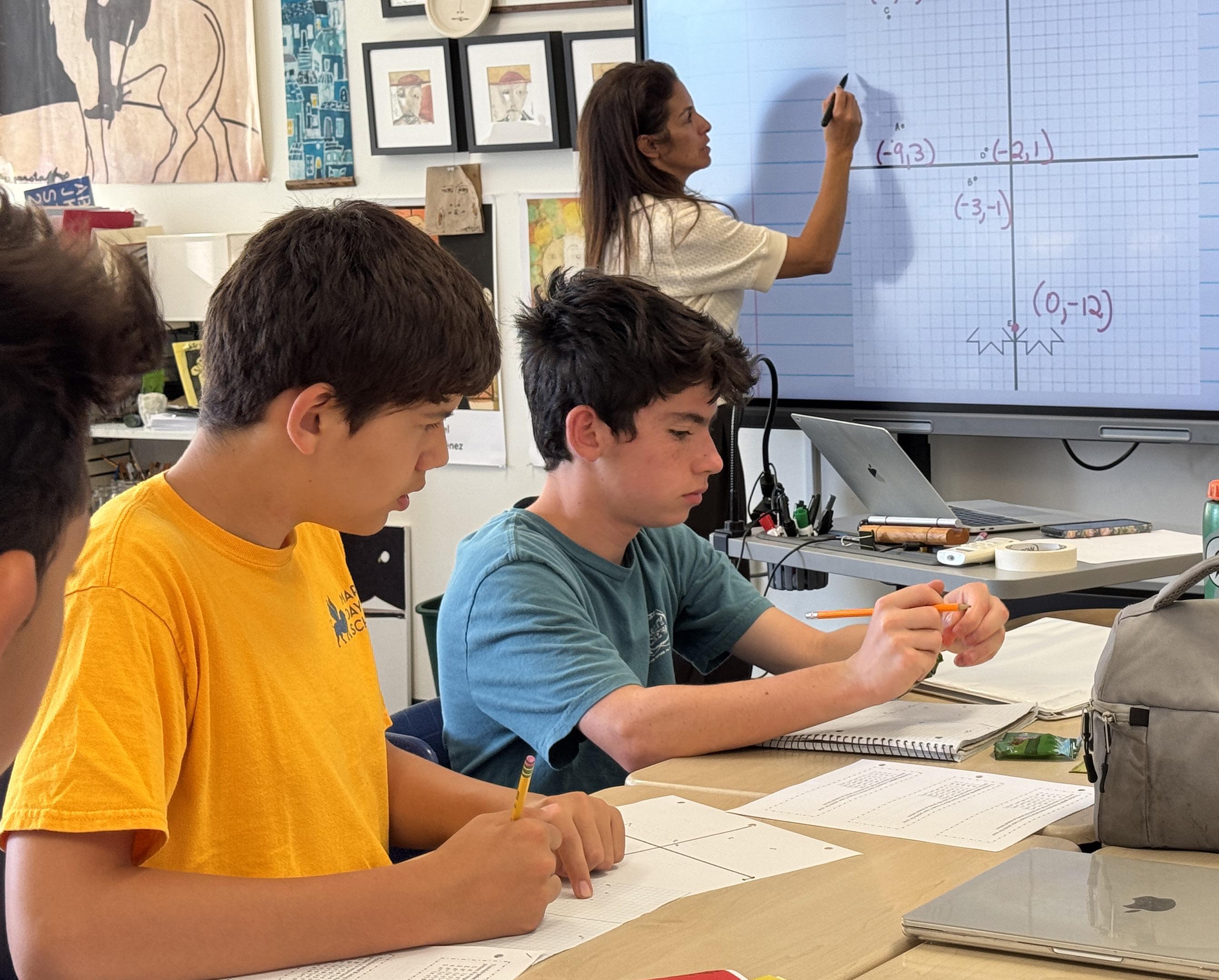
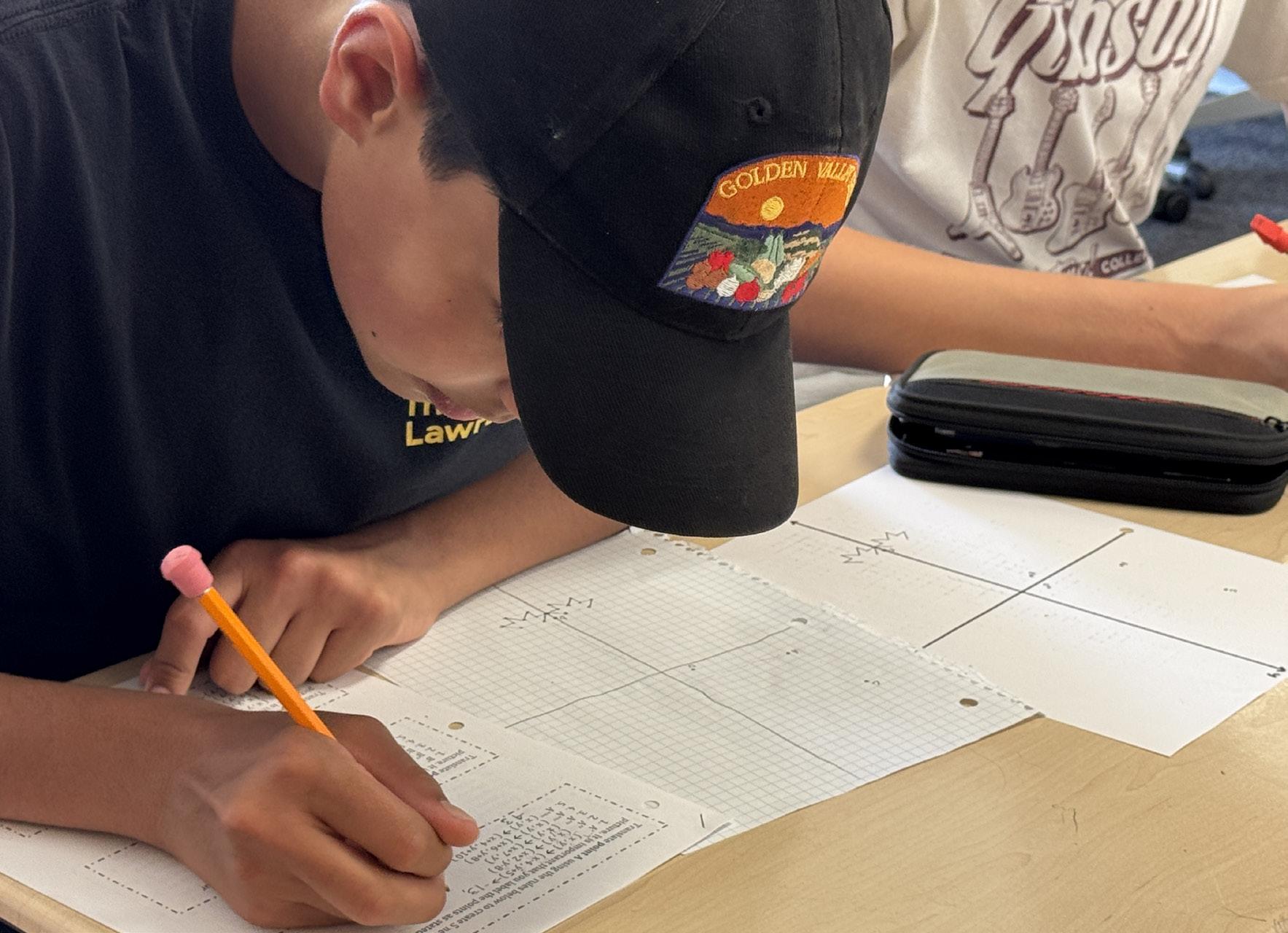
8th grade students gather for an after school in-person working session on goemetry.
after school for group problem-solving, assessments, and guided instruction and complete most coursework independently. Ongoing individualized feedback helps students grow in confidence, independence, and mathematical reasoning.
The curriculum covers essential geometry topics such as proofs, transformations, similarity, trigonometry, and spatial reasoning, which are all foundational for higher-level math and STEM success. Current 8th grader Zaydee says, “I chose to take the geometry course because I enjoy learning math, and I wanted a chance to challenge myself more. I am learning how to self-study and manage my own time because the program requires me to learn the concepts on my own time and I get to choose how fast I get my work done. I am also learning perseverance through solving problems on my own outside of a classroom setting.” She adds, “I think it is important to have courses like this one because it gives students an opportunity to learn about themselves and how they work.”
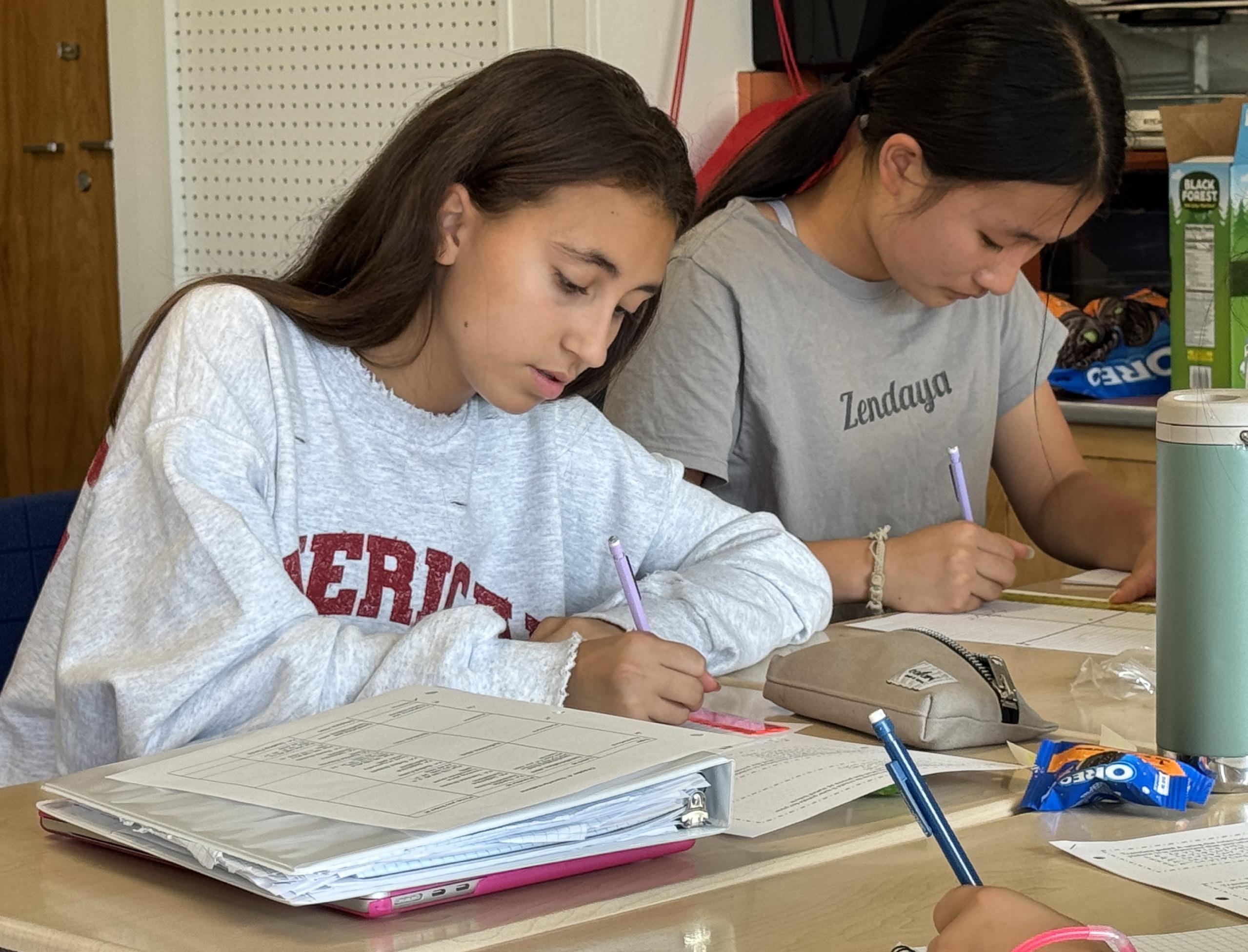
Another 8th grader, Gaia, adds, “From this course I have grown to become a better advocate for myself, and I have learned how to manage my time more efficiently. I think that it is important for Mark Day School to offer additional courses like this one, because it gives students more learning opportunities, and a chance to acquire new skills.”
Though the course is only in its second year, alums have seen the impact on their freshman year of math. Of last year’s sevenstudent cohort, four tested out of high school geometry, while others entered honors geometry better prepared and more self-assured. “What I’m noticing,” Carrie reflects, “is that students in this independent course are really taking
responsibility for their learning. They’re advocating for support, actively seeking challenge, and getting to know themselves as math learners in a deeper way.”
Mark Day alum Everett ’25 reflects on how the course helped him in high school: “I chose to take the geometry course as an eighth grader because I wanted to get ahead for high school math…Not only did it allow for me to test into an advanced math class, but it taught me how to manage my time well, advocate for myself, and teach myself by using my resources. All of this is important for high school math because at Branson, the honors classes are structured around problem-based learning, which is similar to the geometry course I took at Mark Day.”
Alum Calvin ’25 adds, “By pushing myself academically, I was also preparing myself to be better equipped for high school work. During the geometry course, I had to frequently balance regular coursework with the added geometry load. Since the course was self-paced and mostly independent, it helped me improve my time management skills and learn how to effectively plan out my own schedule.”
In our most recent Strategic Plan, we committed to providing “more opportunities for student voice, choice, and agency…that make each student’s learning path more self-directed.” This geometry course is one manifestation of that commitment. In its second year, the course attracted even more student interest. Ten students enrolled in the 2025-2026 course. It also continues to be a hallmark of Mark Day’s commitment to personalized challenge and growth. By combining rigorous academics with self-directed learning, it offers students a chance to stretch their minds—and discover just how far they can go.
“
From this course, I have grown to become a better advocate for myself, and I have learned how to manage my time more efficiently. I think that it is important for Mark Day School to offer additional courses like this one, because it gives students more learning opportunities, and a chance to acquire new skills.
’26
TOOLS FOR LEARNING & FOR LIFE
The arc of SEL at Mark Day School
At Mark Day School, social and emotional literacy (SEL) is a throughline that shapes how students learn, relate, and grow. SEL has been part of the school since our founding, but we took a significant step forward in 2009-2010 to infuse SEL systematically into every aspect of school life. Supported by research and refined through practice, our approach helps children develop both as individuals and as thoughtful, compassionate members of their communities.
We believe that academic and socialemotional growth are inseparable. SEL is essential for academic learning—a student’s ability to identify and regulate their emotions as they encounter a difficult moment in, say, mathematics is essential to their ability to access their higherorder problem-solving skills. The courage it takes to share an idea in class is the same courage it takes to stand up for a friend.
We intentionally layer multiple approaches to teaching SEL skills.
In Kindergarten through 6th grade, students also participate in dedicated SEL classes each week, co-led by counselors and classroom teachers, ensuring that every child builds a strong foundation in emotional awareness, self-regulation, and empathy. As students grow, these lessons evolve alongside them, becoming ever more nuanced and relevant.
One key element of our SEL program draws from The Toolbox Project, a research-based SEL curriculum built around 12 metaphorical “tools.” Each tool—such as the Breathing Tool, Listening Tool, and Empathy Tool— represents an inner capacity children can access at any moment. Together, they form a shared language of selfawareness, resilience, and connection that students, teachers, and parents use across campus and at home. As one of our school counselors put it, “The SEL tools reinforce that students have these inner resources they can rely on throughout their day. It normalizes the need for emotional tools as a basic human
experience. These are capacities we all have that support both academic and social development.”
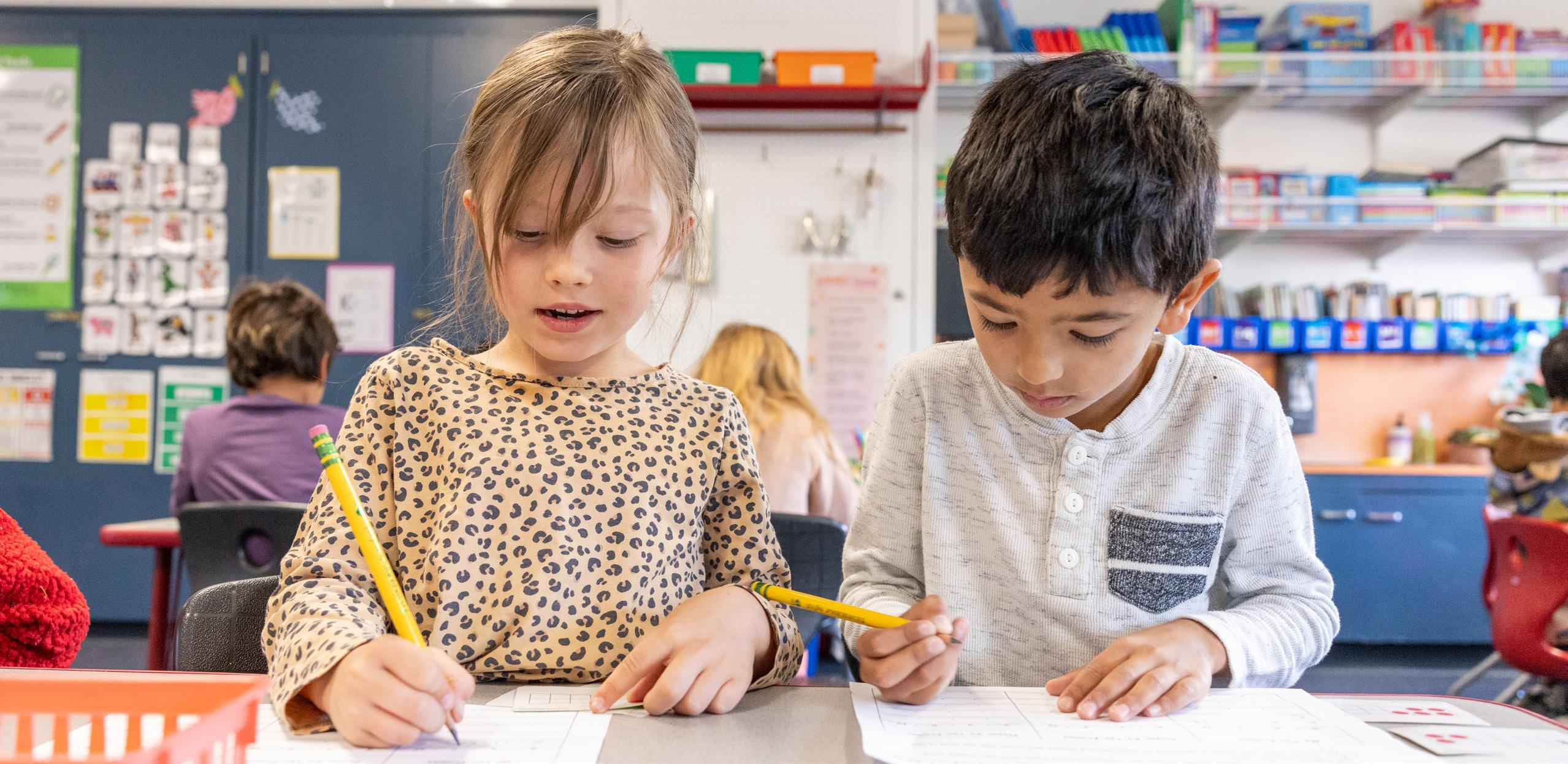
In Kindergarten, students are introduced to all 12 tools, creating their own laminated cards and a necklace “toolbox” to take home. Early grades focus on core tools like breathing, listening, empathy, and finding a quiet/safe place, building the foundation for later growth. Teachers guide students in using their tools in real moments: a deep breath before math, active listening during morning meeting, or the Garbage Can Tool to “let go” of small frustrations.
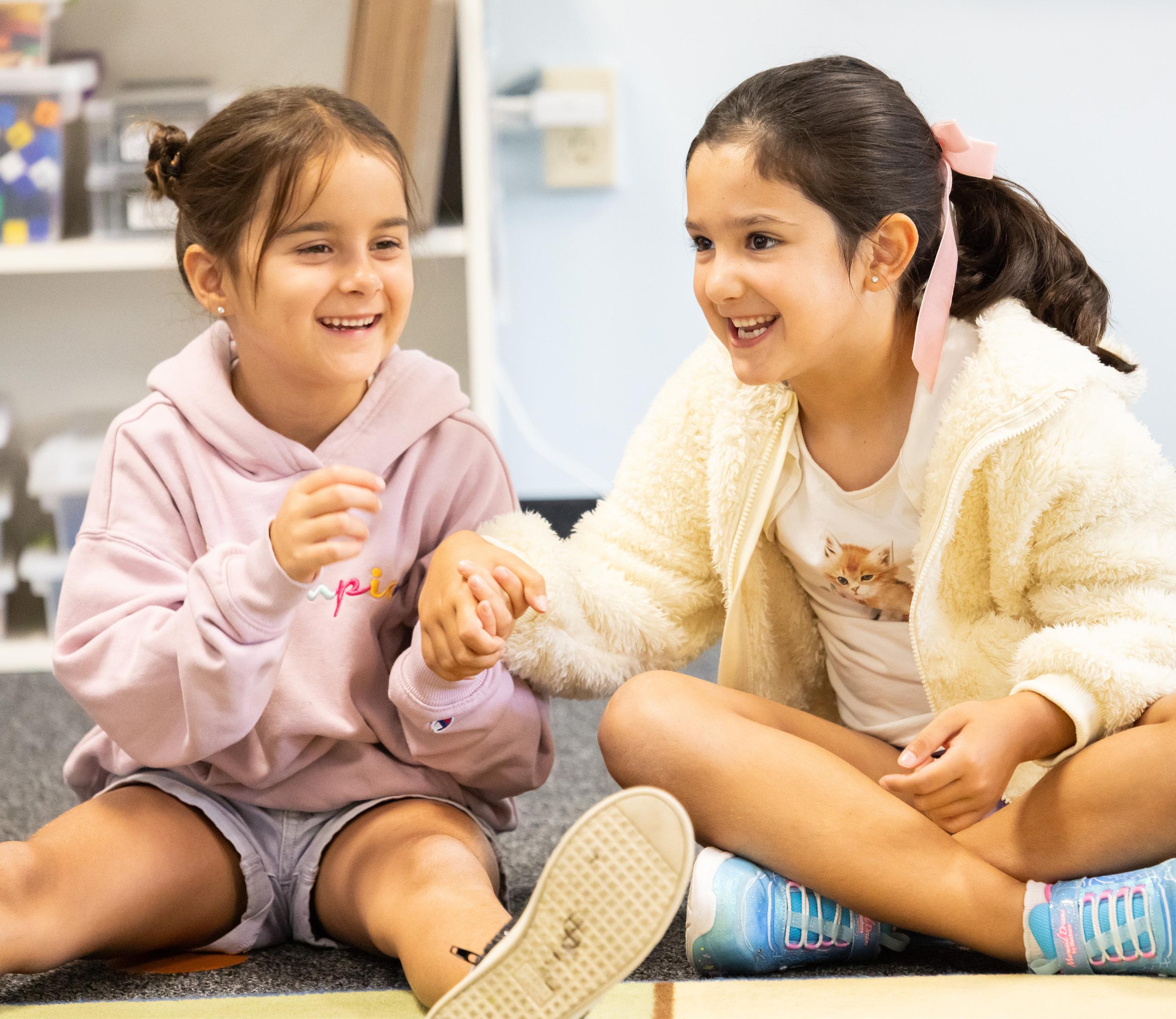
“Students learn that there is actually something they can do within themselves to find calm or courage,” says 1st grade Teacher Lisa Becker. “Even empathy, which can be complex for adults, starts to take root at this young age. I see six-year-olds offering comfort to each other and even to me.”
By 4th and 5th grades, the tools become second nature. Students begin to recognize patterns in their emotions and apply strategies independently. And by 6th grade, the language evolves: mindfulness replaces
the breathing tool, and concepts like zones of regulation help students name and manage more complex feelings. “Because the foundation is laid so early on, we have a shared language,” explains 6th grade Teacher Beckie Mejia. “In sixth grade, that means recognizing impulsivity or learning to pause before reacting, especially as they start engaging in more complex digital spaces like social media.”
As students enter 7th and 8th grade, SEL threads through the Health and Wellness curriculum, which explores relationships, consent, mental health, and identity. They discuss anxiety, depression, and selfcare, gaining both language and scientific understanding for what’s happening in their minds and bodies. “In this phase of life, anxiety can easily get in the way of learning,” says Upper School Counselor Heather Rael. “Understanding the physiology behind why tools like deep breathing work empowers students. These are skills they’ll use for the rest of their lives.”
The empathy tool also expands in later grades, connecting to lessons on neurodiversity, helping students understand
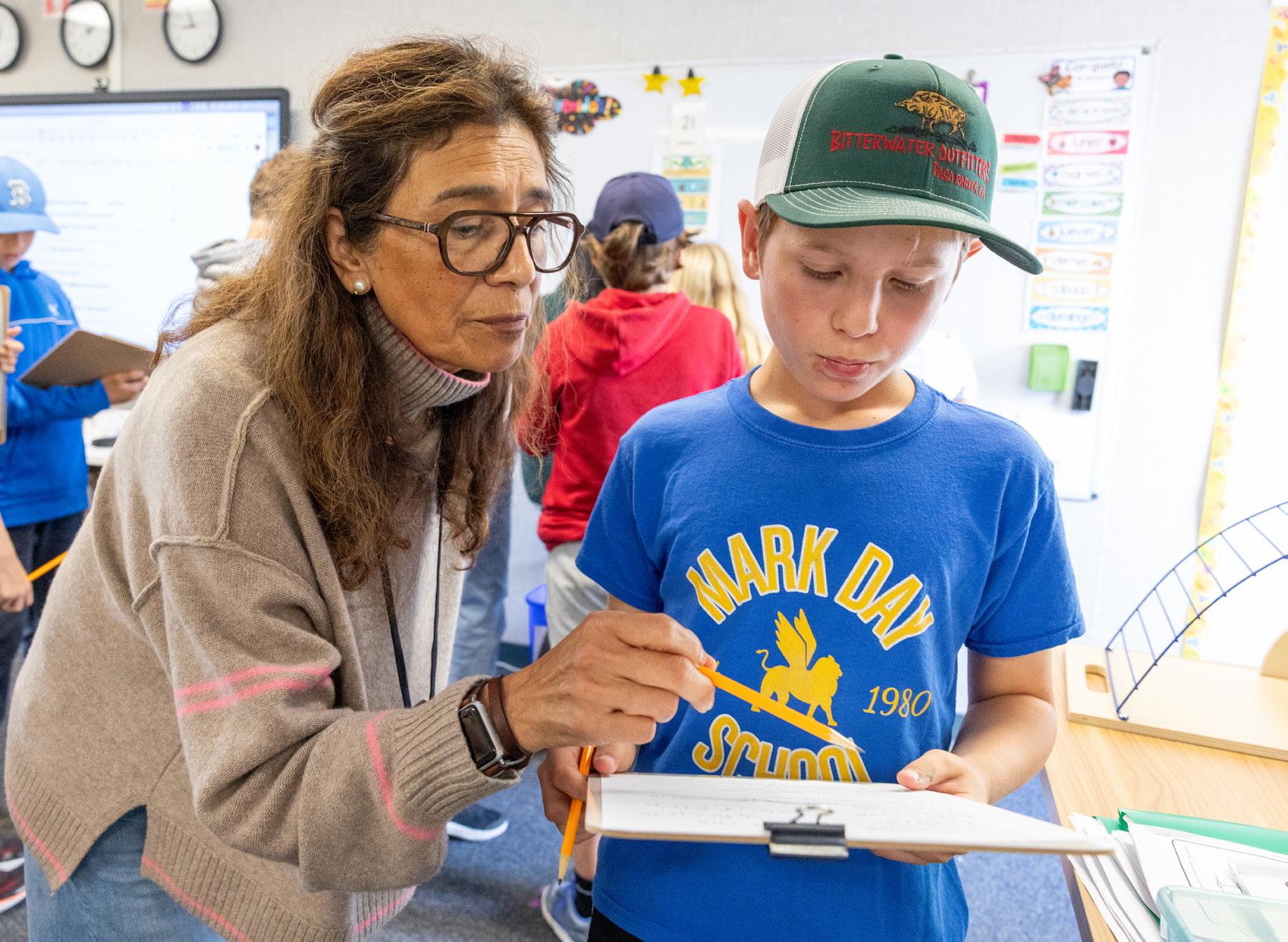
and support peers with ADHD and other learning differences. “At Mark Day, we want kids to feel challenged,” adds Heather. “SEL gives them the confidence to lean into that discomfort because that’s where growth happens.”
Throughout every grade, SEL remains not just a lesson but a practice, woven into morning meetings, playground interactions, and moments of conflict. “When I work with students in a moment of conflict, SEL is at the forefront,” says Director of Student Life Carrie Smith. “They use the same tools they’ve known since Kindergarten to calm down, listen, be empathetic, and see another perspective.”
In today’s fast-moving, high-pressure world, these skills are more essential than ever. Children are growing up amid rising anxiety, constant connectivity, and an instinct to avoid discomfort. At Mark Day, we help them lean into the hard moments with curiosity, awareness, and compassion.
EMBRACING CHALLENGE WITH COURAGE & JOY
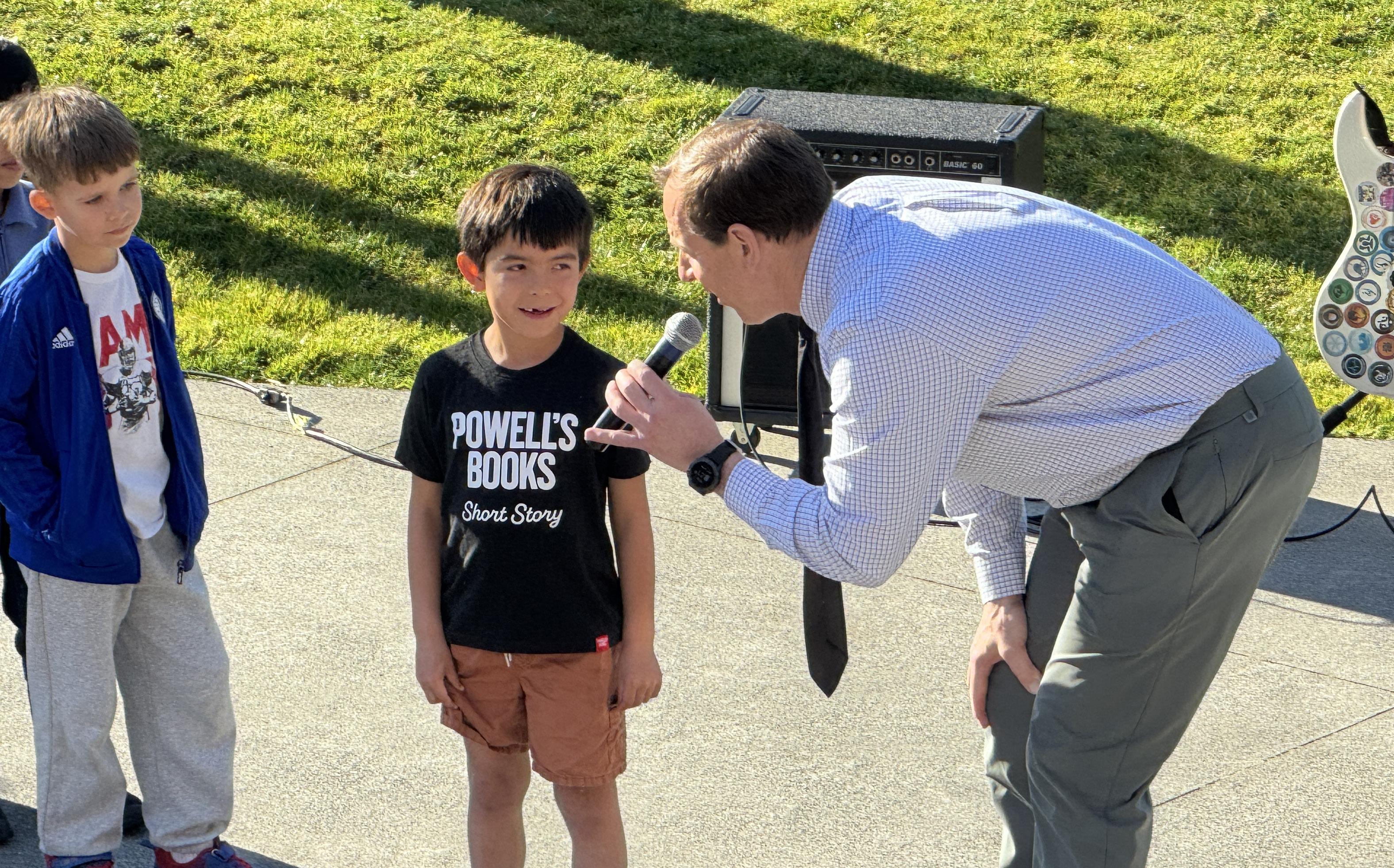
It’s an all-school assembly on a chilly November morning.
Students Kindergarten through 8th, faculty, staff, parents, and guardians are gathered in the gym. Head of School Joe Harvey stands at the front, facing the full room. He’s wearing a tie with a rubber chicken on it and holding the actual rubber chicken itself.
It’s joke assembly, a beloved Mark Day tradition held on the last Friday of every month.
Students line up at the microphone to tell their jokes. A 1st grade boy steps forward. The gym goes silent.
He opens his mouth—and nothing happens.
For many of us, this is a worstcase scenario: forgetting your
words in front of hundreds of people, all eyes on you, the room quiet enough to hear a pin drop, as they say. In fact, 75% of Americans claim they have a fear of public speaking—ranking even higher than a plane crash. After a moment, Mr. Harvey gently encourages the 1st grader to take a breath and rejoin the line when he’s ready. The audience claps and another student steps forward. As other students tell their jokes, the 1st grader walks over to his teacher. She crouches down, places two steady, reassuring hands on his shoulders, and smiles.
He’s ready now.
Mr. Harvey waves him back. For the second time, he stands at the mic. He tells his joke and the gym
erupts in laughter. He high-fives Mr. Harvey and rejoins the end of the line, beaming. On the surface, it’s a simple moment. But this seemingly ordinary “just another day at assembly” interaction captures something essential about Mark Day.
Research consistently shows that genuine confidence grows through experiencing and moving through challenge. Students will struggle—we expect it, we support it, and we normalize it.
This belief is embedded in our mission: we support every Mark Day student to “embrace challenge with courage and joy.” We prepare our graduates to arrive at high school already having encountered difficulty, obstacles, and high-stakes situations. Without that experience, they would be ill-equipped to make decisions or persevere when the stakes are real. By the time it matters most, challenge is something students know how to navigate.
Starting in Kindergarten, we intentionally place students in the proximal zone of development, where learning is uncomfortable but attainable. We design experiences in which students encounter challenge and emerge on the other side. We want them to experience what it feels like to figure something out, to recover, to persist. It is profoundly powerful.
In a parent/guardian education webinar hosted by the Independent Schools Association of the Central States (ISACS), author and clinical psychologist Lisa Damour explained it this way: “If we want kids to develop their intellectual capacities, if we want kids to develop their ability to do a lot of work, they actually have to do work that is hard…It is only when they are pushing up against that edge of what they easily do that they gain capacity.” She continues, “Our job as the adults around kids is to help them know that just because it doesn’t feel good, or it may even feel kind
of bad, doesn’t mean it’s bad for them.” In its healthiest sense, school should be stressful. The students who thrive are those who learn how to respond productively to stress, which requires practice over time. That resilience is built by encountering challenge, again and again, and discovering that they can survive it and grow from it.
We see the long-term impact of this philosophy most clearly in our alumni. Neha Budhraja ’08, currently Director of Strategy and Business Operations at Workday, reflects that being exposed to constantly new experiences—especially in the early grades—made each challenge feel less daunting and more like the “next thing to try.” When difficult things become routine, she explains, you begin to lean into challenge rather than shy away from it. She says, “I believe I possess a fundamentally different level of confidence and fearlessness than peers I have met in college and beyond due to formative experiences in my youth and at Mark Day. Those two qualities are extremely useful when you are signing up for a tough college course or tough job. It just makes you feel like you can do it if you just try.”
Head of Grades 5–8 Dave Hickman says this mindset permeates every conversation he has with teachers. “Authentic confidence grows when you succeed at something you didn’t think you would at first,” he explains. “Simply telling a student they did a good job isn’t enough. If students are truly going to meet new challenges with confidence, they need experiences where things don’t go smoothly at first—and then they figure it out.”
So what does this look like in the classroom?
Often, it means students aren’t all doing the same thing at the same time. Teachers design optional extensions, bonus problems, and varied pathways so students
“
Our job as the adults around kids is to help them know that just because it doesn’t feel good, or it may even feel kind of bad, doesn’t mean it’s bad for them.
LISA DAMOUR, AUTHOR & CLINICAL PSYCHOLOGIST
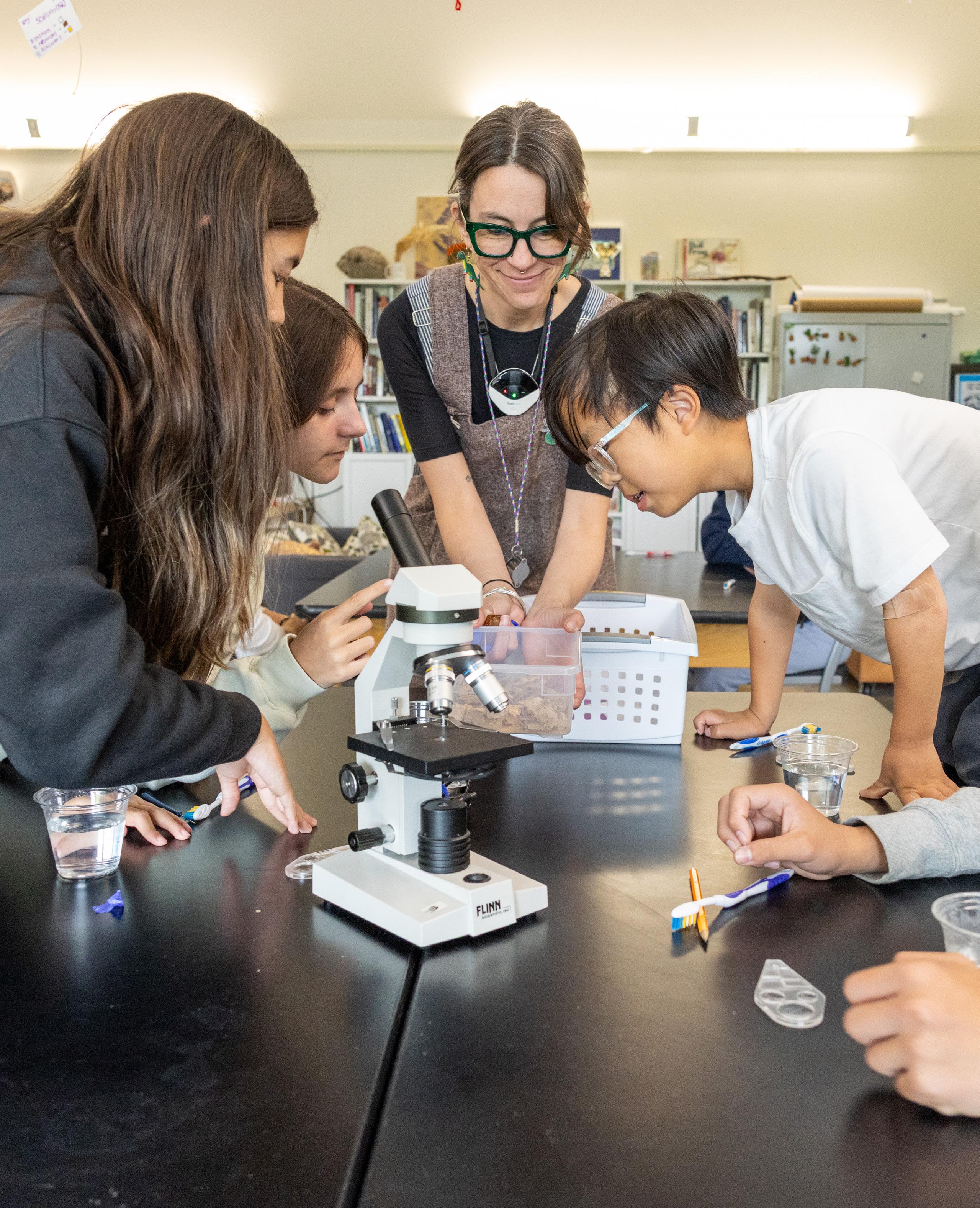
can take on additional challenge. This is differentiation, and it’s an essential part of making sure each student feels both challenged and supported. “We don’t want students to feel like they’ve failed if they don’t go above and beyond,” Dave says. “But we do want curious students to have a place to take that curiosity further.” In other words, challenge isn’t always about the next harder task. It’s about feeding curiosity and giving it room to grow.
Cris Turienzo, K–8 Spanish Teacher and Spanish Enrichment Specialist, sees challenge as both essential and joyful. This year, she stepped into a new role specifically designed to provide increased challenge for students taking Spanish who are ready for it in the upper grades. She structures enrichment around four domains—listening, reading comprehension, writing, and speaking—rotating through them every two months to prepare students for high school and world language exams. Once a week, Cris pulls four students from class for 30 minutes of advanced work. Meanwhile, the remaining students benefit from smaller class sizes and more individualized attention. The feedback from students has been overwhelmingly positive—they love seeing their progress.
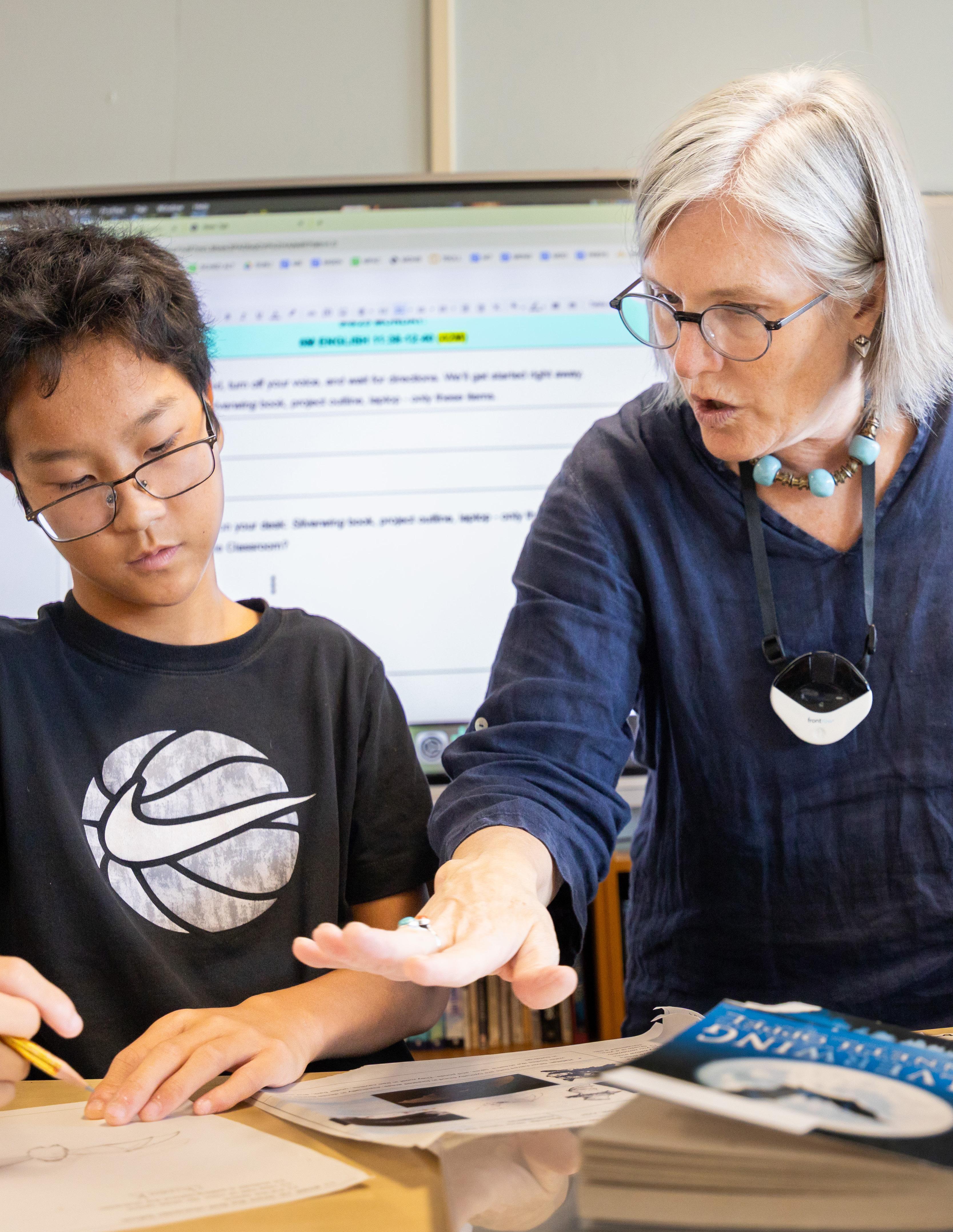
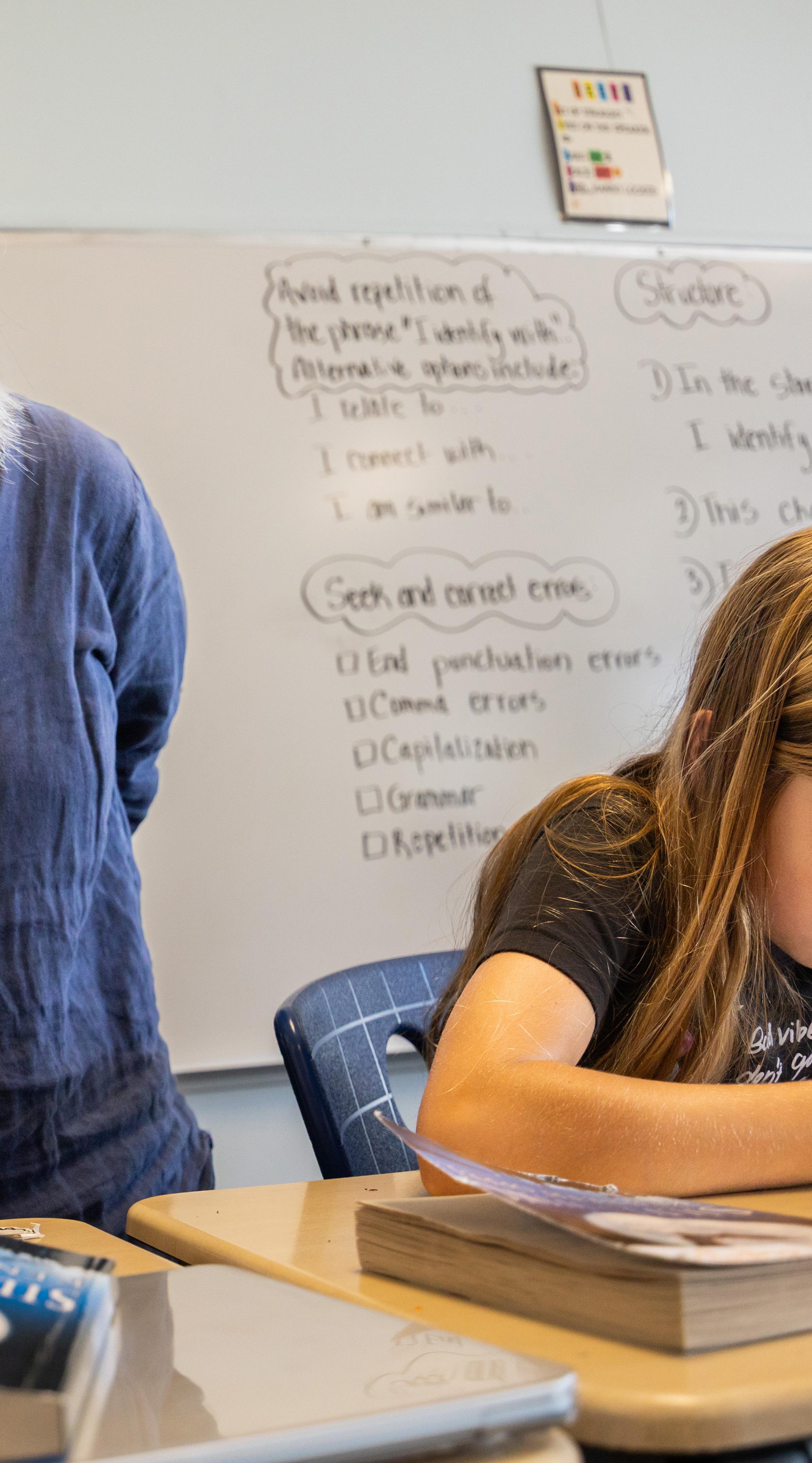
Dana Kirk, 8th grade English teacher, approaches differentiation for challenge a bit differently. With years of experience, she knows students often don’t recognize their own capacity until a teacher pushes them. “Challenges need to be tailored to each child,” she explains, which is why she assesses reading and writing early in the year to identify appropriate growth edges. High expectations, Dana says, communicate that “good enough” isn’t the goal and that mindset builds pride, stronger outcomes, and confidence. “Writing is rewriting,” she notes. “Perseverance matters.” During
one essay assignment with page limits, Dana allowed advanced students to write longer pieces when it made sense, while encouraging a hesitant writer to expand her topic into something she felt deeply passionate about. “I want to meet students where they are and appropriately push them,” she says.
Similarly, when meeting with students, 8th grade history teacher Chelsea Nelson will prioritize inquiry over direct answers to encourage critical thinking and agency. Her multi-step projects ensure every student encounters challenge somewhere along the way. In a mock trial, for example, research, writing, and public speaking each present different growth opportunities. A student confident in preparation may struggle with speaking; another may excel orally but need support with writing. It’s one project with many paths for challenge.
This ethos is no more apparent than during one of Mark Day’s longest-standing traditions: graduation speeches. Every 8th grader stands before the community to reflect, and most of them comment on obstacles they faced and what they learned by moving through them.
As Lisa Damour reminds us, “...One of the most important things that kids are going to need, whatever comes, especially in all of this uncertainty, is they have to be highly adaptable. They have to be able to work with what comes, and school is the world’s greatest place for learning to be adaptable.”
At Mark Day, students learn to love something so deeply that pushing through something that is hard is absolutely worth it. That practice becomes the mindset that fuels every future endeavor. It carries them through challenge after challenge, long after they leave our classrooms.
MARK DAY SCHOOL IS
ALWAYS READY
How global partnerships live inside our classrooms & community
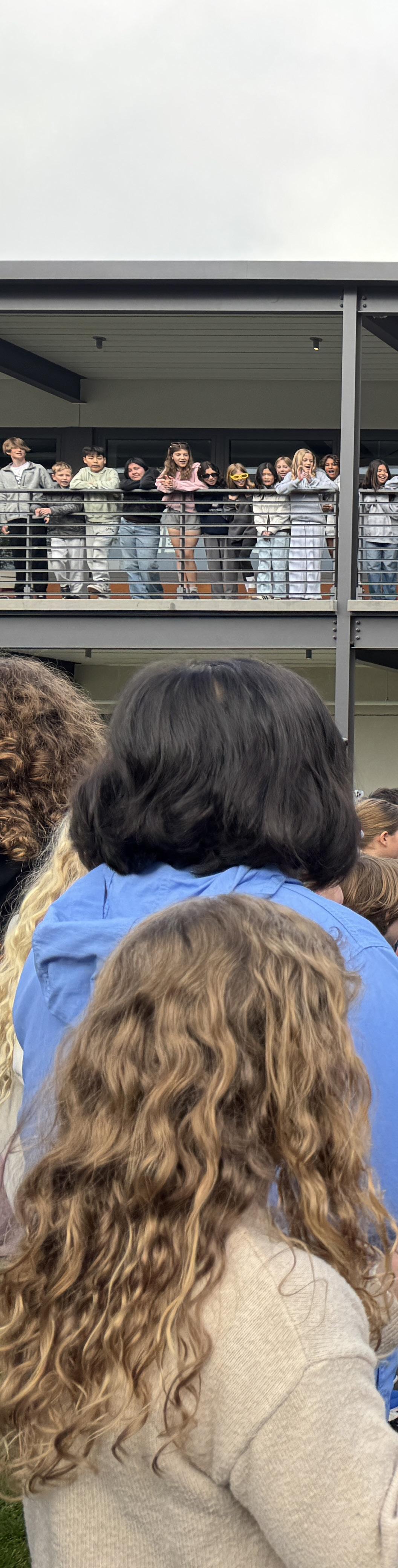
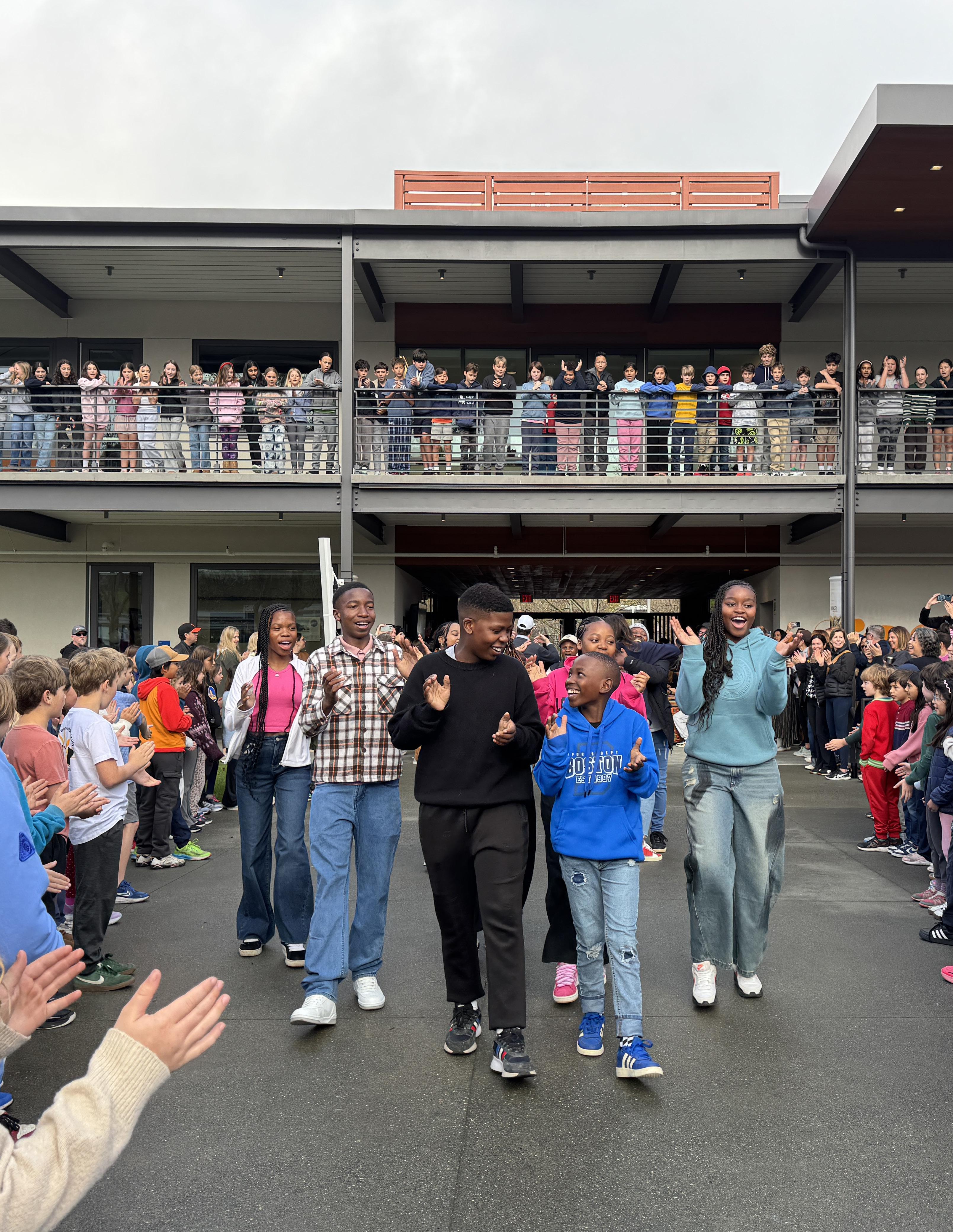
If you’ve ever been at an assembly, you’ve probably heard the call-out: “Mark Day School, are you ready?” And the students’ collective response: “Mark Day School is always ready!” It’s such an ingrained part of our community that it can feel like it’s always been here. But that familiar call and response actually comes from our partnership with Kliptown Youth Program (KYP) in South Africa.
Specifically, it came from Thando Bezana, who was KYP’s Co-Founder and Operations & Stakeholder Engagement Manager, who used to incorporate a similar practice into daily life at KYP. It’s an ongoing connection that is one small but powerful example of how our partnerships have shaped who we are as a school and as a community.
Global partnerships enliven our program. They give students opportunities to reach beyond their own lived experience, build meaningful relationships with people from around the globe whom they might not meet otherwise and practice seeing the world through multiple perspectives. And they extend far beyond international travel. While reciprocal visits—both abroad and here on campus—are an important part of the relationship, the impact runs much deeper. These partnerships are woven into the fabric of our program, influencing everything from collaborative academic projects to how teachers design lessons and how students learn.
One of the most visible and meaningful expressions of this exchange has been our artist in residence program. Each
year, an artist from outside the Mark Day community joins us on campus for a period of time, making a direct and lasting impact on curriculum—particularly in the arts. For the past 10 years, we were fortunate to have Thando from KYP serve as our artist in residence. He worked primarily within the music department alongside music teachers Brian Wilkerson and Emilie Rohrbach, with additional collaborations in drama, visual art, and classroom teachers over the years.
“The artist in residence program has changed the DNA of the music program,” says Fernanda Pernambuco, Director of Partnerships, Equity and Inclusion. “It has been foundational, from exploring and incorporating the physical nature of rhythm building that is so innate to South African culture to having a deeper appreciation for how music brings people together.”
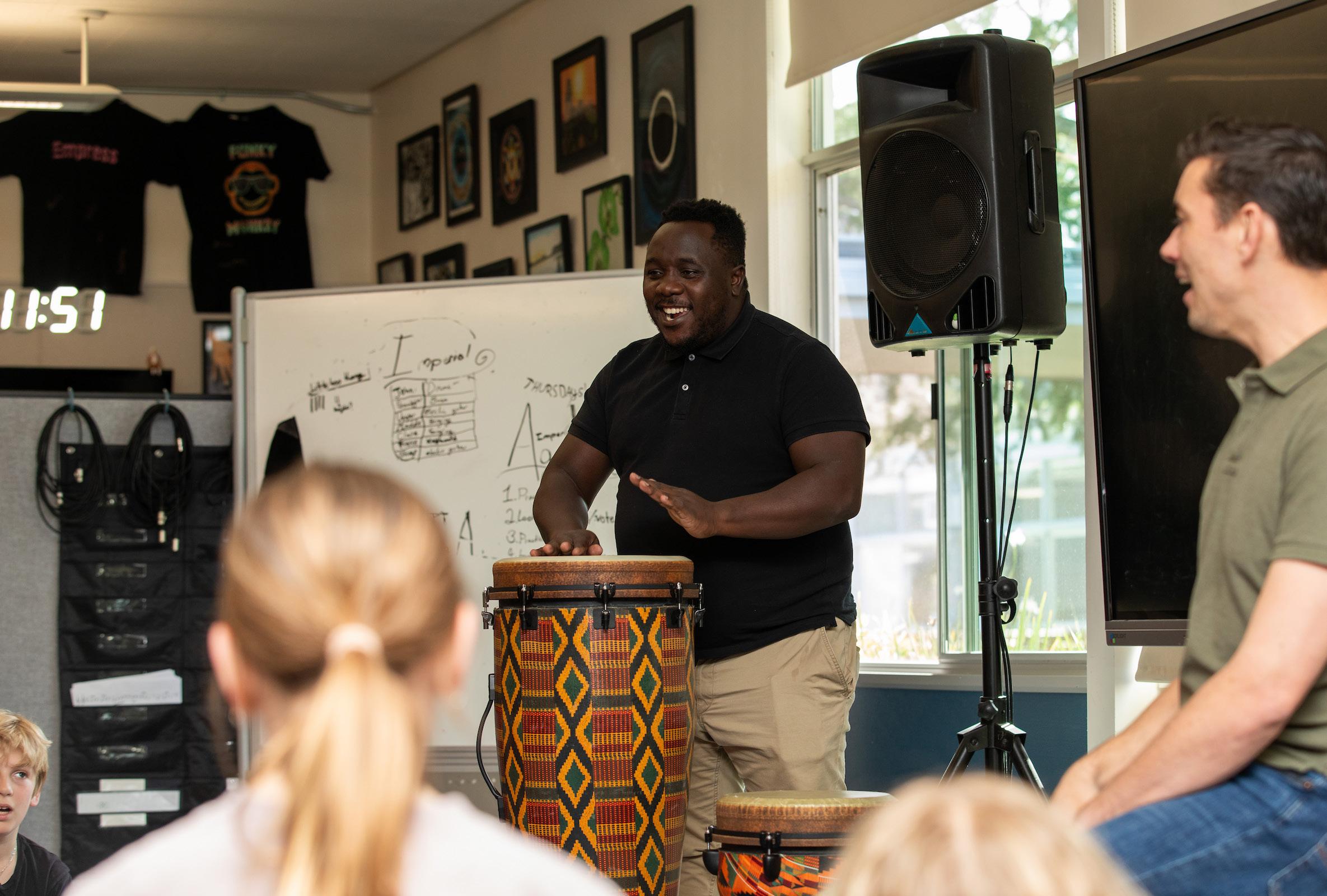
Typically, the residency lasted about a month, during which Thando participated in every music class across K–8. Students spent that time singing in multiple South African languages, learning traditional dances, and practicing ensemble drumming
“Our artist in residence program with Thando has been a cornerstone for music becoming what it is at Mark Day School. It has been a privilege and a gift, being able to learn about music directly from someone with a different cultural lens.
BRIAN WILKERSON, MUSIC TEACHER
Thando Bezana teaches drums to students at Mark Day
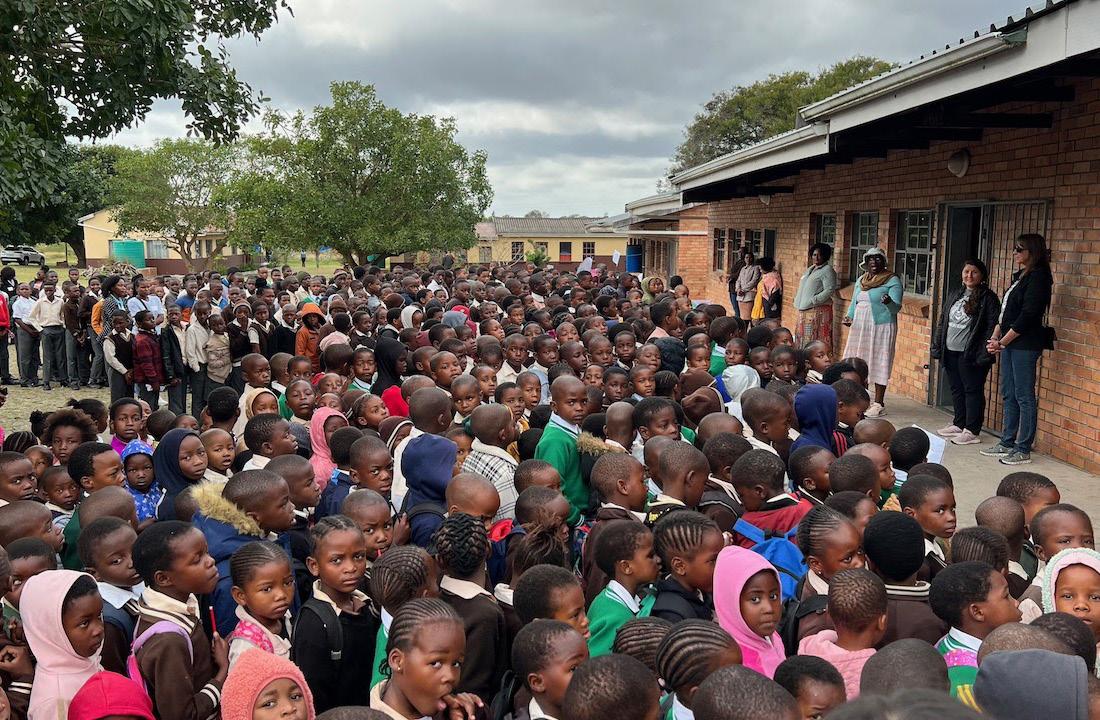
Welcoming assembly at eSibonisweni Primary School in South Africa
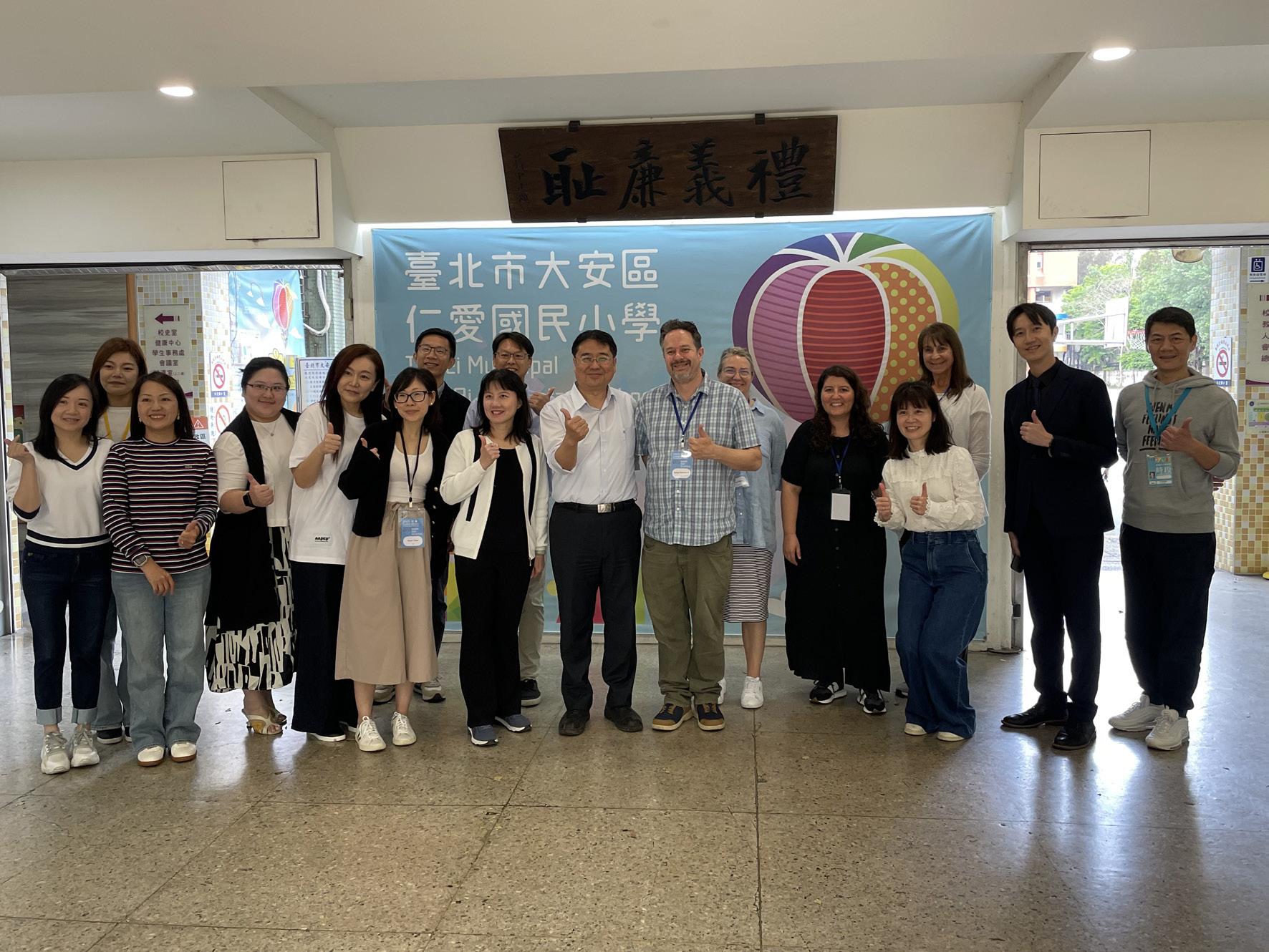
Mark Day and Ren-Ai teachers during the Taiwan delegation trip
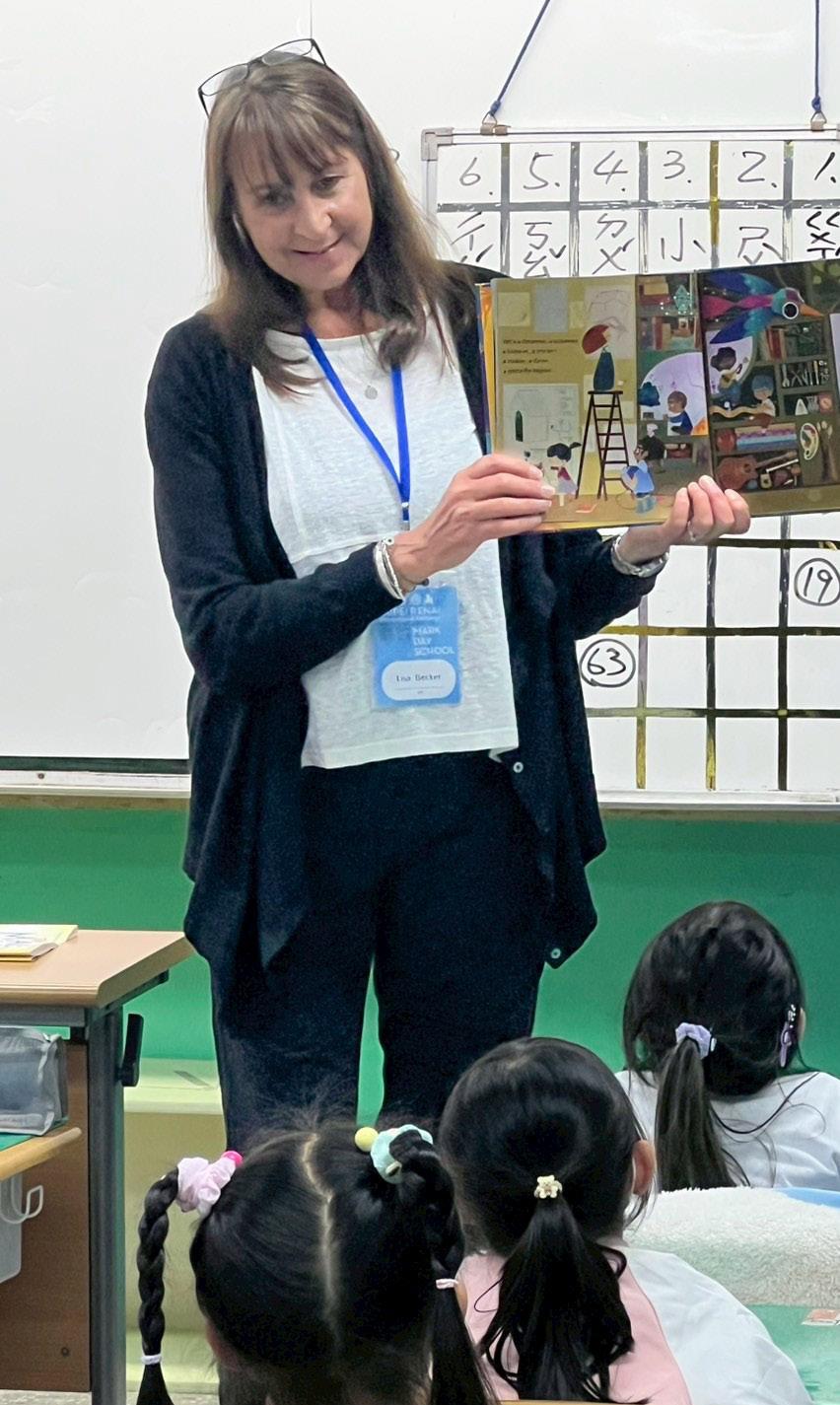
1st grade teacher Lisa Becker reads an SELthemed book to Ren-Ai 1st graders


patterns. The residency culminated in a community showcase celebrating the work students had done.
Brian adds, “Our artist in residence program with Thando has been a cornerstone for music becoming what it is at Mark Day School. It has been a privilege and a gift, being able to learn about music directly from someone with a different cultural lens.”
Most remember gumboot dancing—a high-energy dance form that originated in South Africa and was created by Black mine workers in the late 19th and early 20th centuries. In past years, Brian dedicated multiple class periods to exploring the history and cultural roots of gumboot dancing before students learned the dance itself. “The dance is not just a novelty, it’s a whole cultural identity and a value system students get exposed to,” says Brian.
For Brian, who also attended the most recent Mark Day delegation to South Africa in the summer of 2025, teaching and learning alongside Thando profoundly shaped his own pedagogy. That influence shows up in ensemble performances, instrumentation choices, and rhythmic structures—drawing from reggae, percussion traditions, and techniques he learned from Thando and KYP.
“There is a lot of cross-polination we learned during our artist in residence program that finds its way into our music classes throughout the year,” Brian says. The same goes for music teacher Emilie Rohrbach, who often uses South African songs as warmups in her K–3 classes.
Brian reflects, “Personally, I am a better drummer. I’m more confident in
sharing gumboot dancing techniques. And I have a better kinesthetic way of learning and performing rhythm. In general, the energy of Thando and our partners has been contagious for me. And remembering that what we do can be serious but we are also always playing. It’s that balance of challenge and joy.”
This past fall, Thando sadly passed away. Members of the Mark Day community, including alumni and former faculty and staff, gathered on campus for a memorial in his honor. While his loss is deeply felt, the imprint he left on our music program, our teaching practices, and our community endures.
Beyond the artist in residence program, global partnerships also play a vital role in deepening academic learning across disciplines. Often, members of a delegation enhance lessons already being taught in powerful ways. One example takes place in 5th grade. Each spring, students study Black history, beginning with the origins of slavery. They explore triangular trade, slave ships, plantation life, and historical texts and podcasts. They also conduct research on redlining and examine how these systems connect past injustices to present-day realities. Essential questions of the unit include: In what ways does the history of slavery inform the collective current sociopolitical consciousness of African Americans? How does it inform the African American and American experience today? And what is white supremacy?
“Developmentally, there are a lot of difficult truths in the work that we do,” says 5th grade teacher Mike Sinclaire. “Learning about the conditions
behind slavery can be challenging and uncomfortable. At this age, children are more socially and politically aware of what’s going on and are better able to make connections between what they’re learning and the world around them.”
As part of this unit, Thando would join students in the Learning Commons to share firsthand experiences of apartheid in South Africa. “Our hope is that they make connections between what they’ve been studying about American history and what happened in South Africa,” says 5th grade teacher Dom Cox. “It helps them see that oppression is a global problem.”
In 2024, those connections became even more explicit when Antoinette Sitole— who participated in the Soweto Youth Uprising of June 1976 and was part of the KYP delegation to Mark Day School that year—joined Dr. Melba Beals, a member of the Little Rock Nine, for a conversation with students in grades 5–8. Together, they reflected on their lived experiences and the courage required to confront systemic injustice. While this type of conversation does not happen every year, it exemplifies the depth of learning our partnerships make possible.
First grade teacher Lisa Becker has participated in delegations to South Africa many times and has also visited Ren-Ai in Taiwan. “One of my goals when going to these delegations is to make connections with other teachers,” she says. “Over the years, these connections have led to wonderful moments of reciprocal learning with students, like virtual interactions and
shared projects.” We have also welcomed a delegation from Ren-Ai each spring since our partnership began in 2023, allowing all students and teachers to benefit from the exchange.
One such project involved 1st graders creating A–Z books about redworms. These books were sent to KYP, where they now live in the library and are regularly used by tutors. Copies were also shared with eSibonisweni and other global partners over the years. Another is sharing stories and cultural traditions. For example, students in 1st grade watch the film Strike, which follows a young boy growing up in Soweto. Thando then helped students process the film, highlighting key moments and inviting them to compare what they saw with their own experiences.
Lisa adds, “There’s this beautiful impact on students when we integrate with our partners. It creates this genuine connection and curiosity we are always wanting to instill in our students. When you have that real-life engagement, it makes that learning and understanding about similarities and differences come to life. I’m always considering opportunities for learning in connection to our partners. When we talk about reading and math and science, we’re also bringing in these different cultures so students can see the world is full of many others. It opens up many opportunities in so many parts of the curriculum. So we’re trying to keep the value of our partners alive and as genuine as possible throughout the year. It’s not just an isolated piece of the curriculum.”
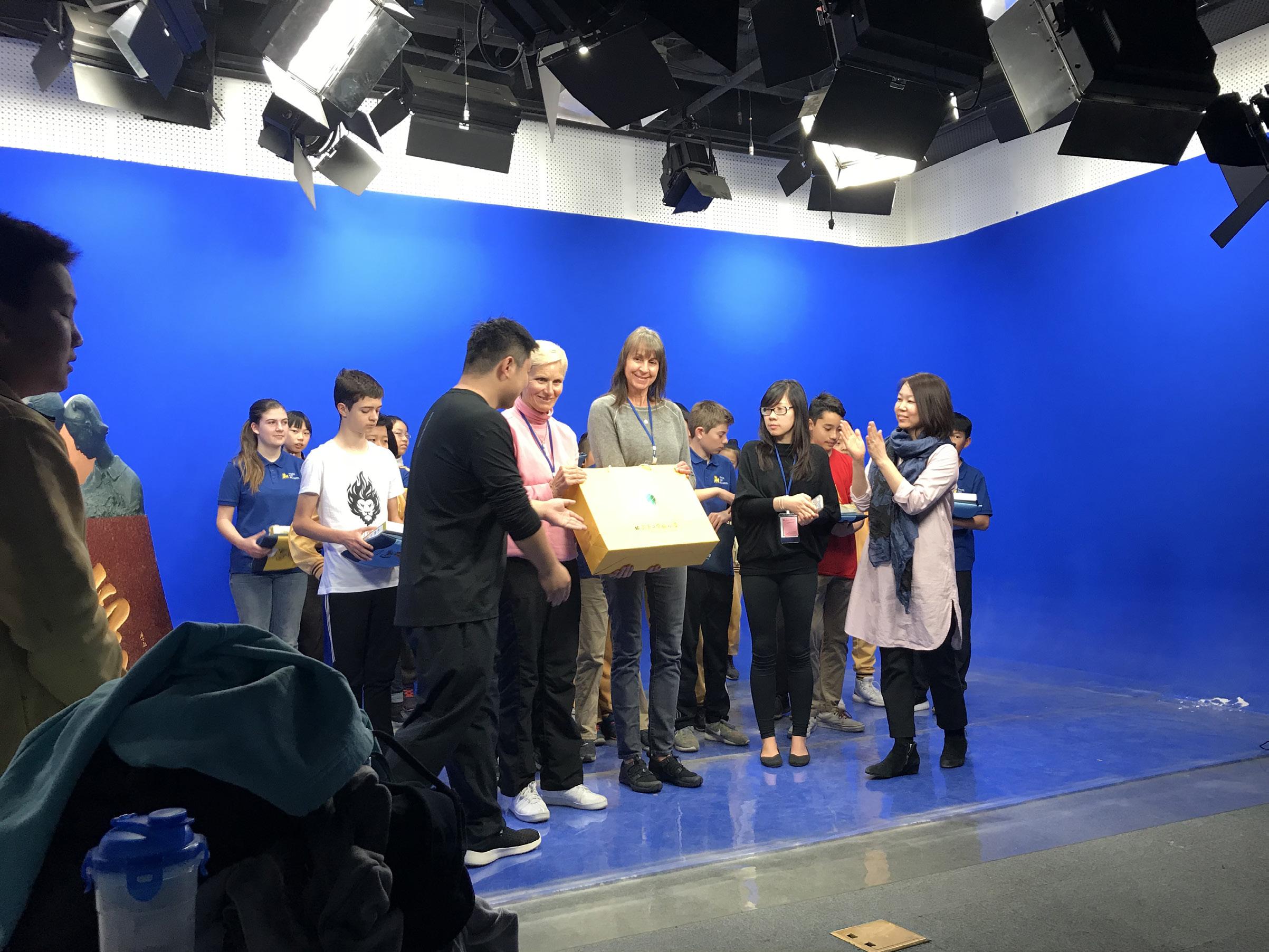
Mark Day teachers and students received a gift from Er Xiao in Beijing in 2018
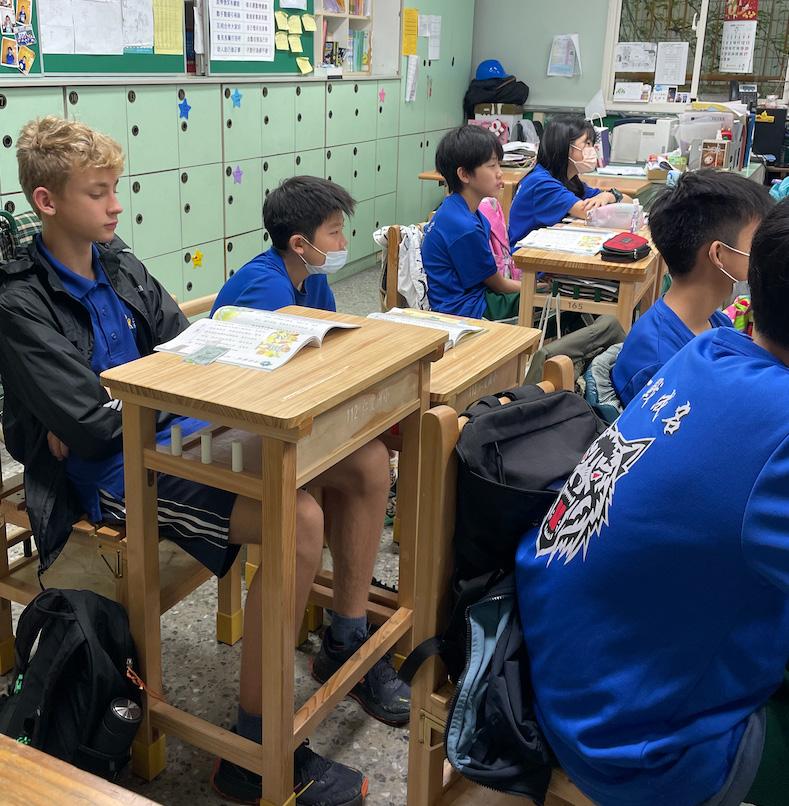
Mark Day students attend a class at Ren-Ai in Taiwan
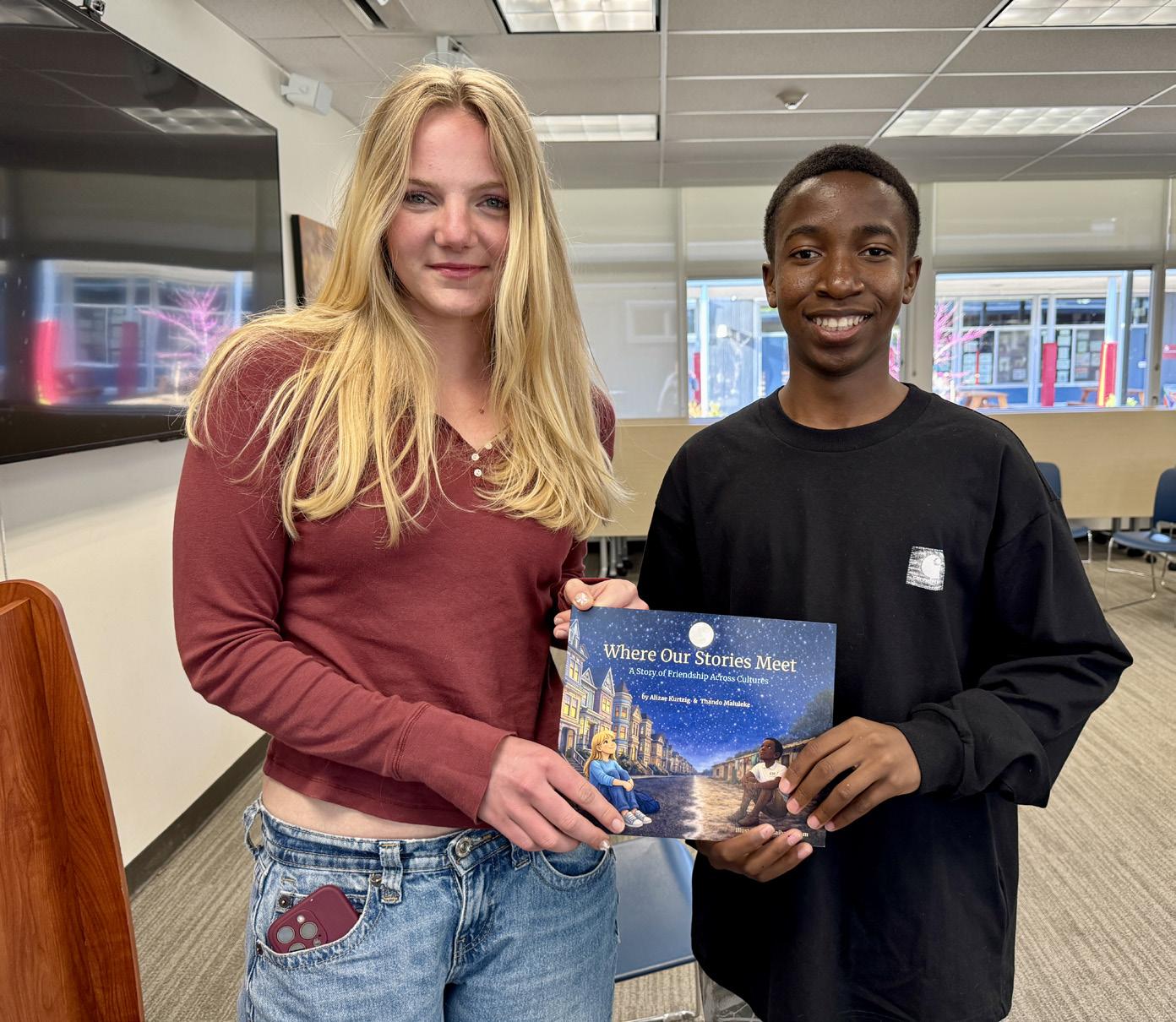
Alizae ’24 and Thando Maluleke co-wrote Where Our Stories Meet
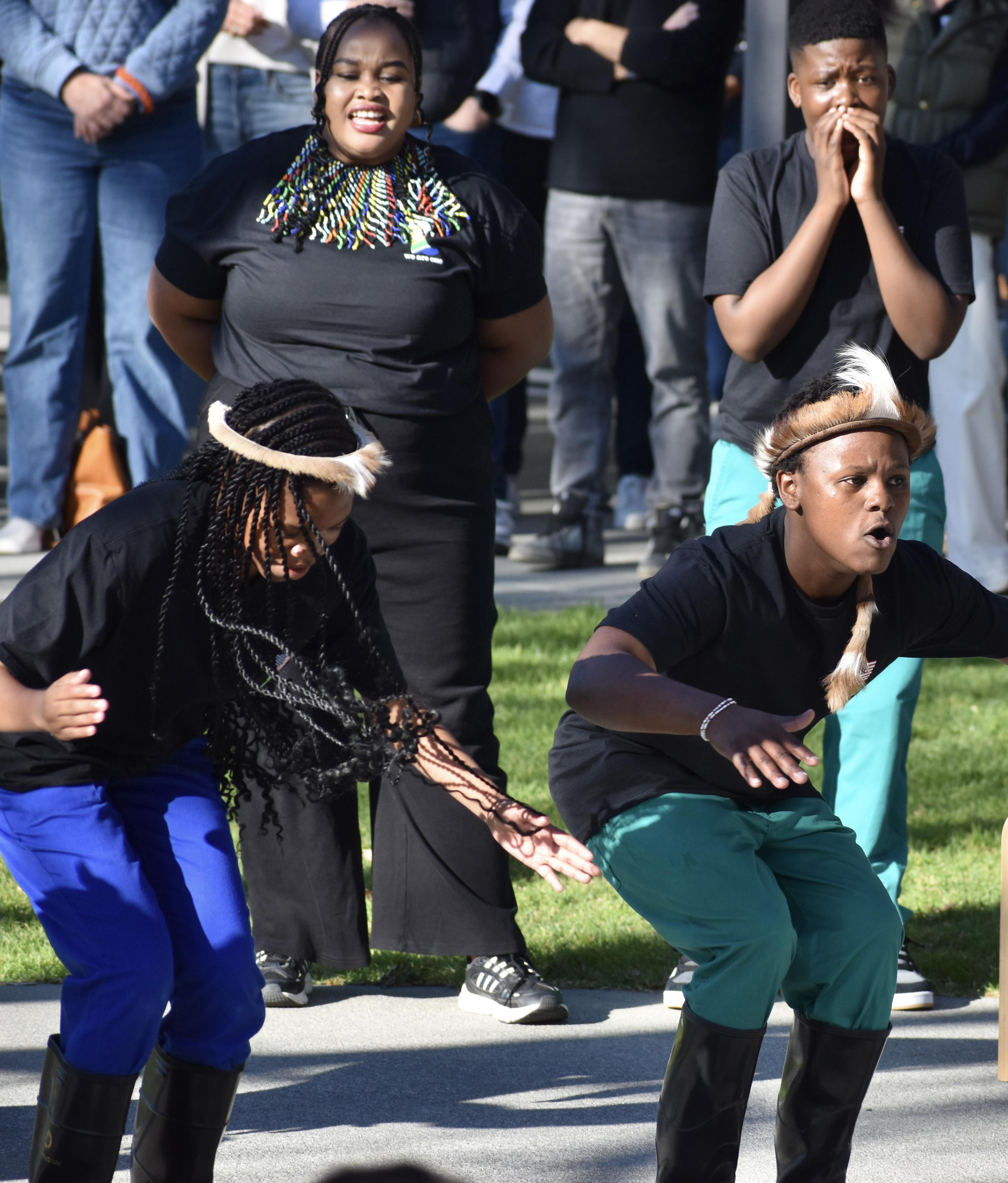
Students and teachers from KYP perform at assembly in March 2026
Spanish teacher Gustavo Jimenez led 7th and 8th grade students on a delegation to Costa Rica last spring. While the experience was transformative for students, it also reshaped his own teaching practice. “The students gained so much confidence, particularly with the speaking component of learning the language. It was night and day, and I can still see the impact of that trip in class today,” Gustavo reflects.
While he intentionally gave students space to engage independently during the trip, Gustavo spent time observing classrooms and connecting with local educators. He noticed that classes in Costa Rica emphasized conversation more heavily than classes at Mark Day. When students returned, they asked why they couldn’t do more of that. “As a teacher, that had an influence on my practice,” he says. “I have since adopted some of the teaching practices they used there, like implementing entire class periods where we don’t do any writing or computer work and it’s just conversational.” He now assigns questions in advance, then facilitates fullclass discussions in a circle the following day solely focused on speaking. Again, an international learning experience sparked a shift. And again, the learning impacted not just students but also teachers.
We have always said that our global partnerships are reciprocal in nature, built on deep relationships that are cultivated and sustained over time. What this looks like in practice is real impact: on how we teach, on how students learn, and on how we understand our place in the world. These partnerships have shaped our program in lasting ways, influencing everything from pedagogy to culture to daily life on campus. This is what makes Mark Day, Mark Day. It truly sets us apart, and we are deeply fortunate to continue engaging in partnerships that expand our learning, strengthen our teaching, and deepen our sense of community.
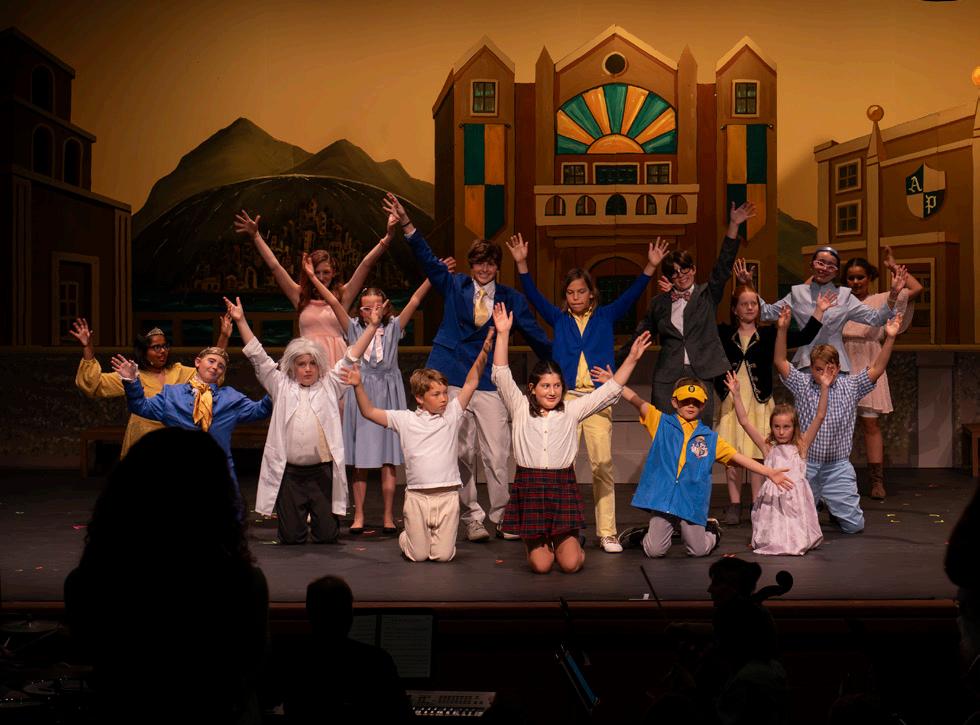
BACKSTAGE PASS
Mark Day School’s Theatrical Productions 2025-2026
THE WITCH’S PRINCESS
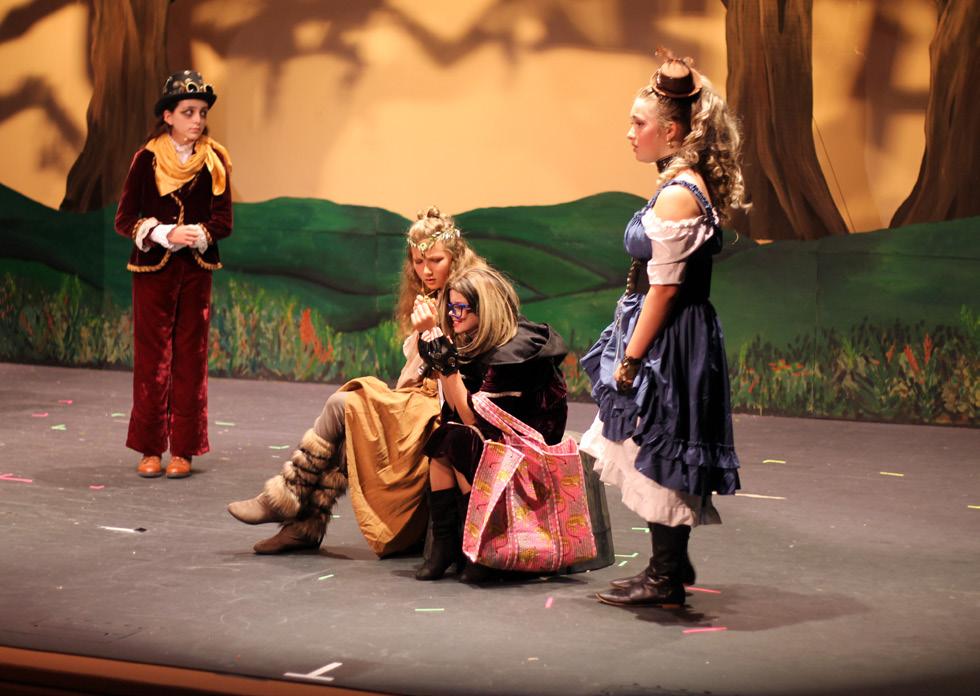
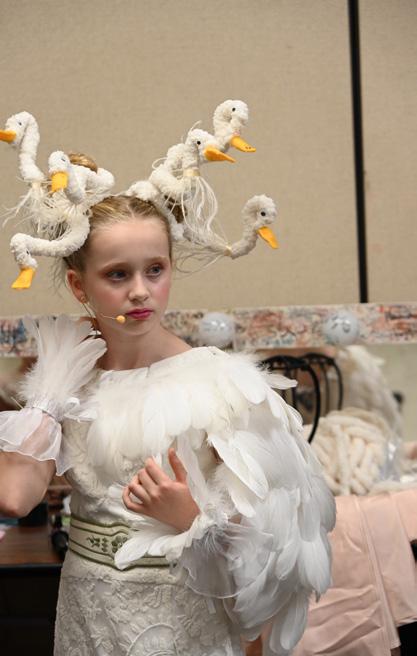
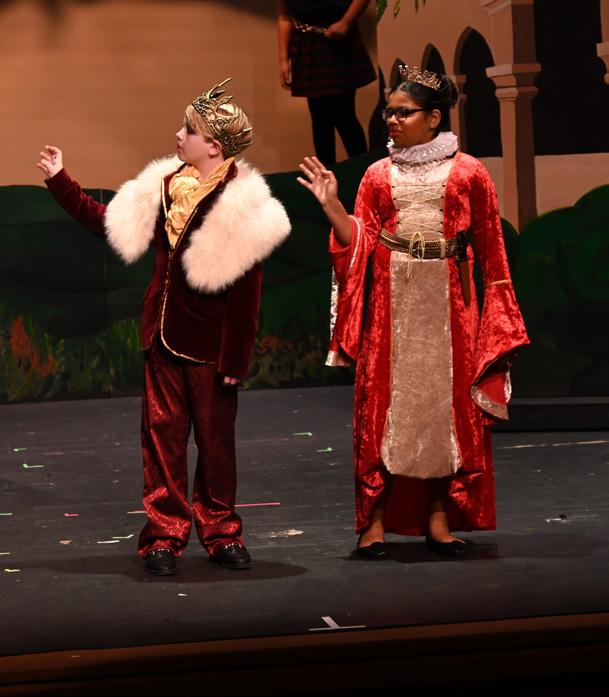
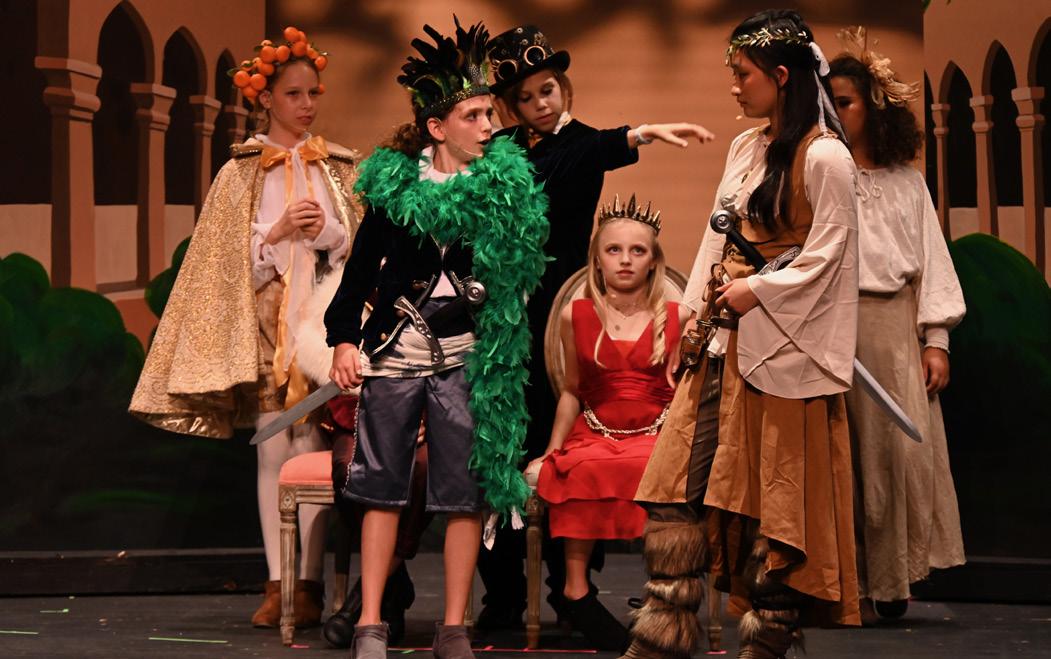
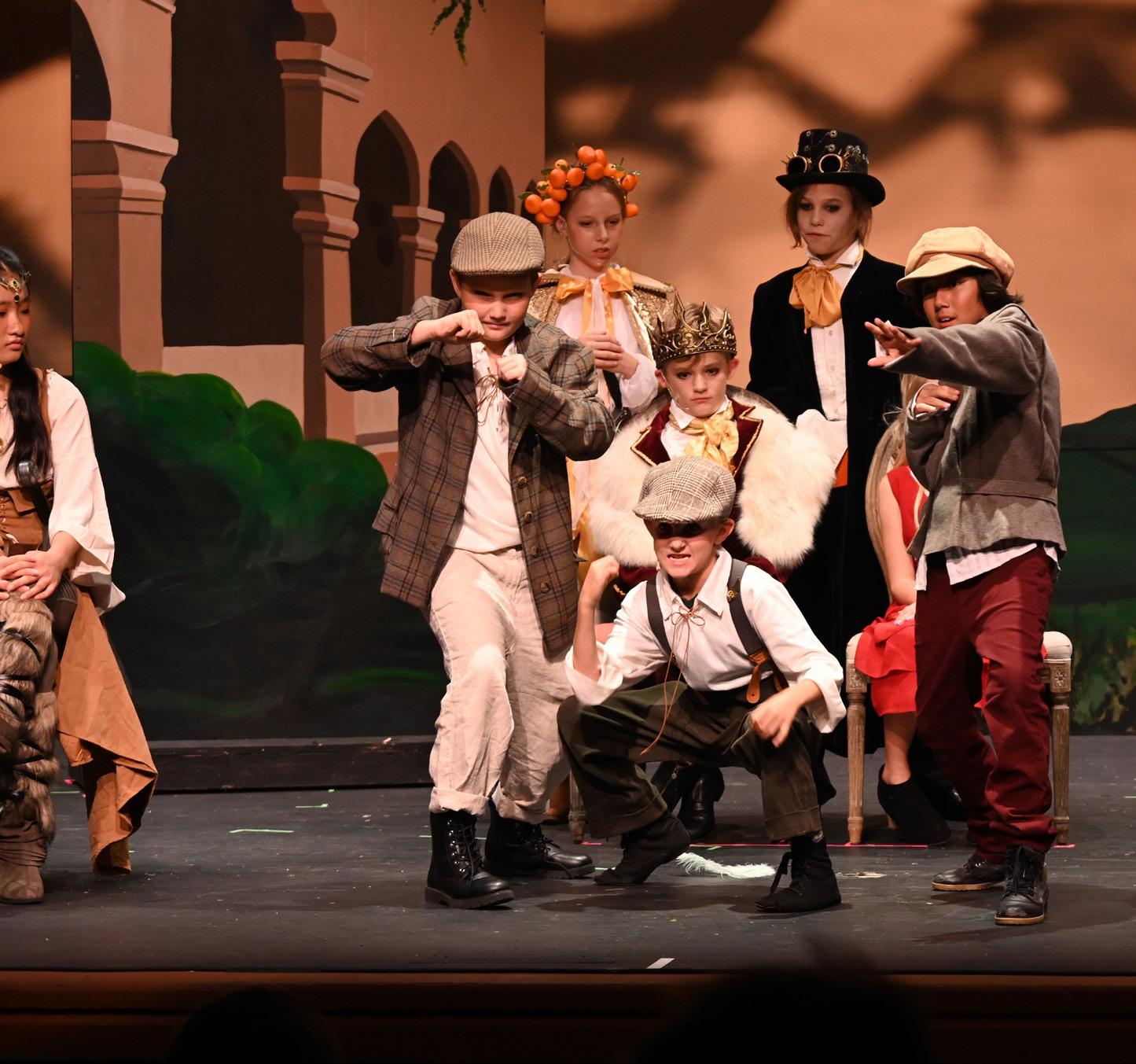
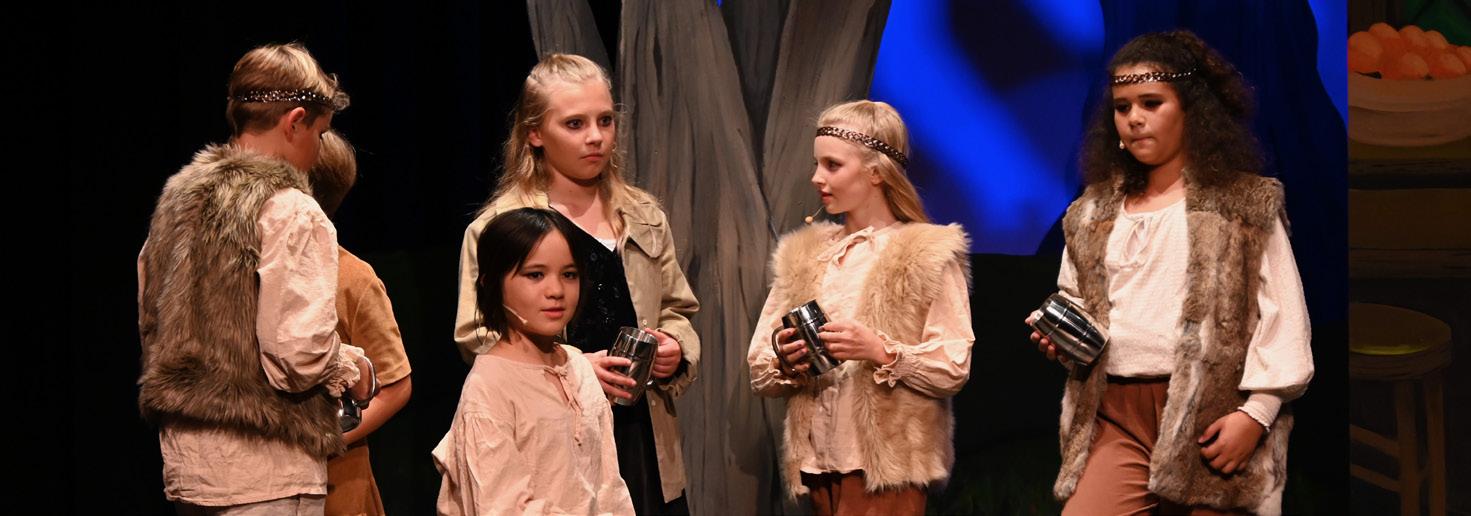
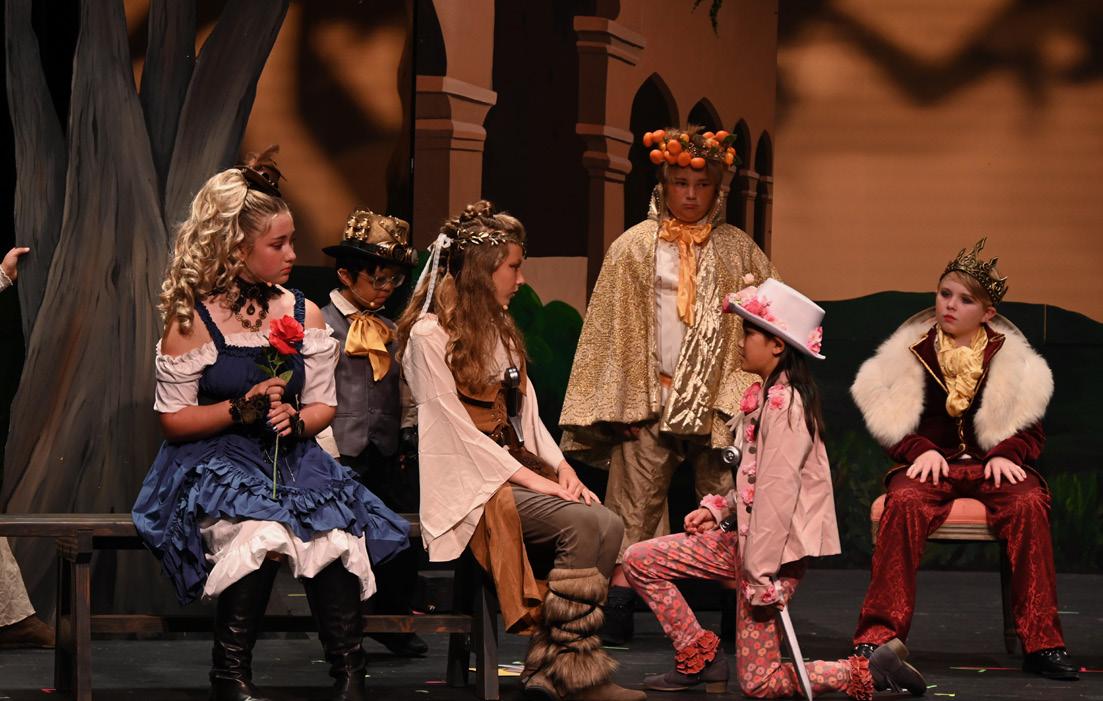
Photos by Chad Forrester, Brian Schneider, & Jack Dibble
DESCENDANTS
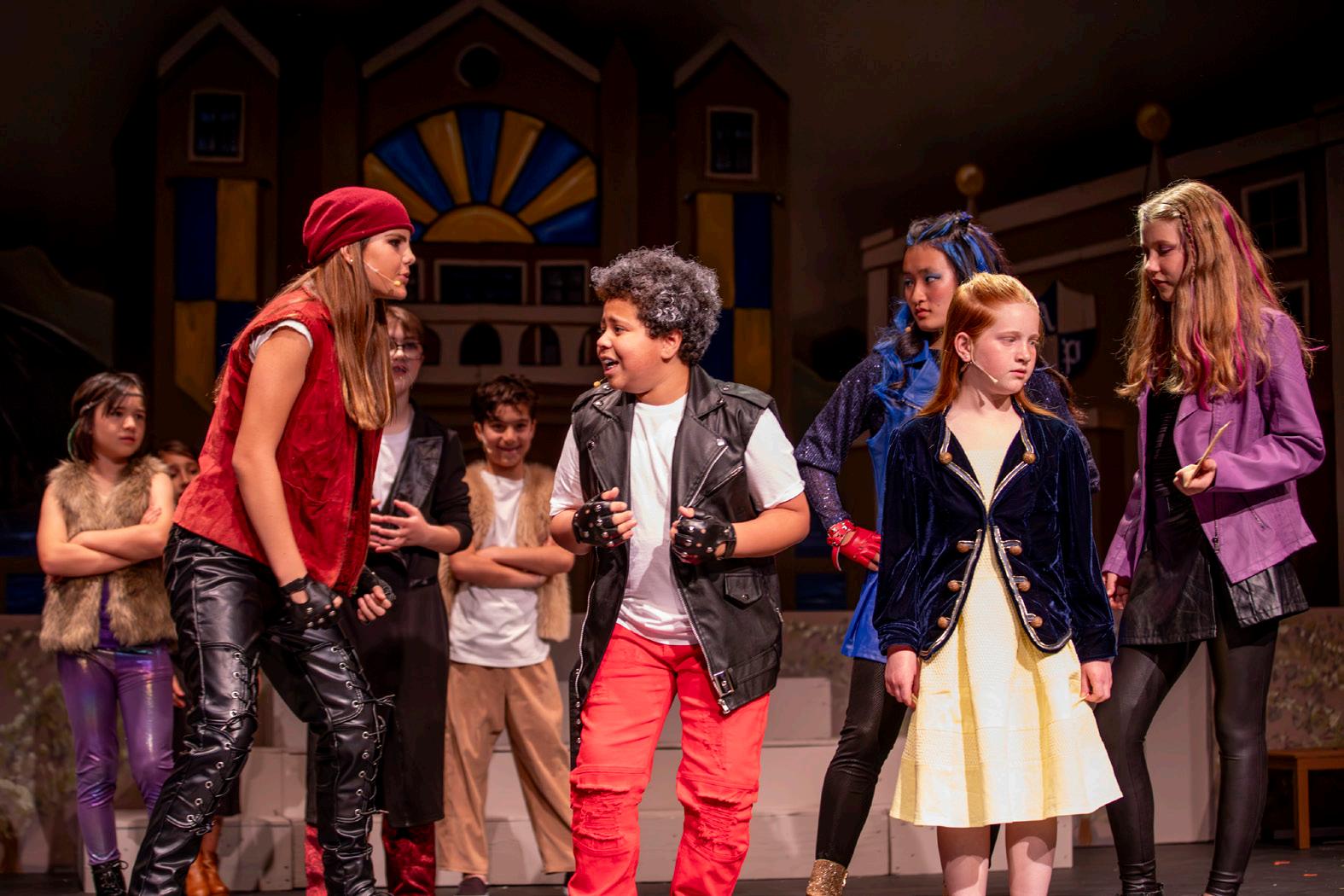
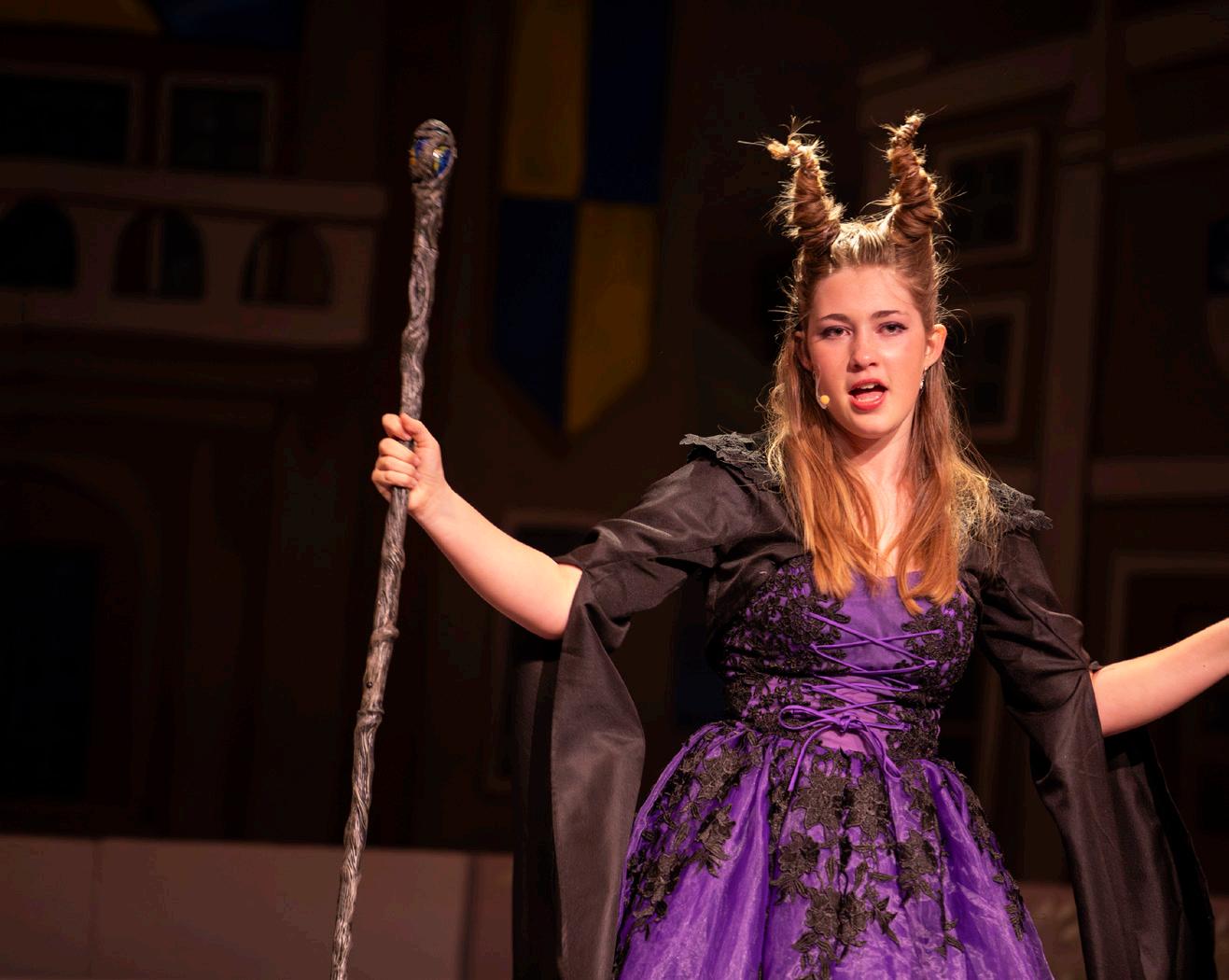
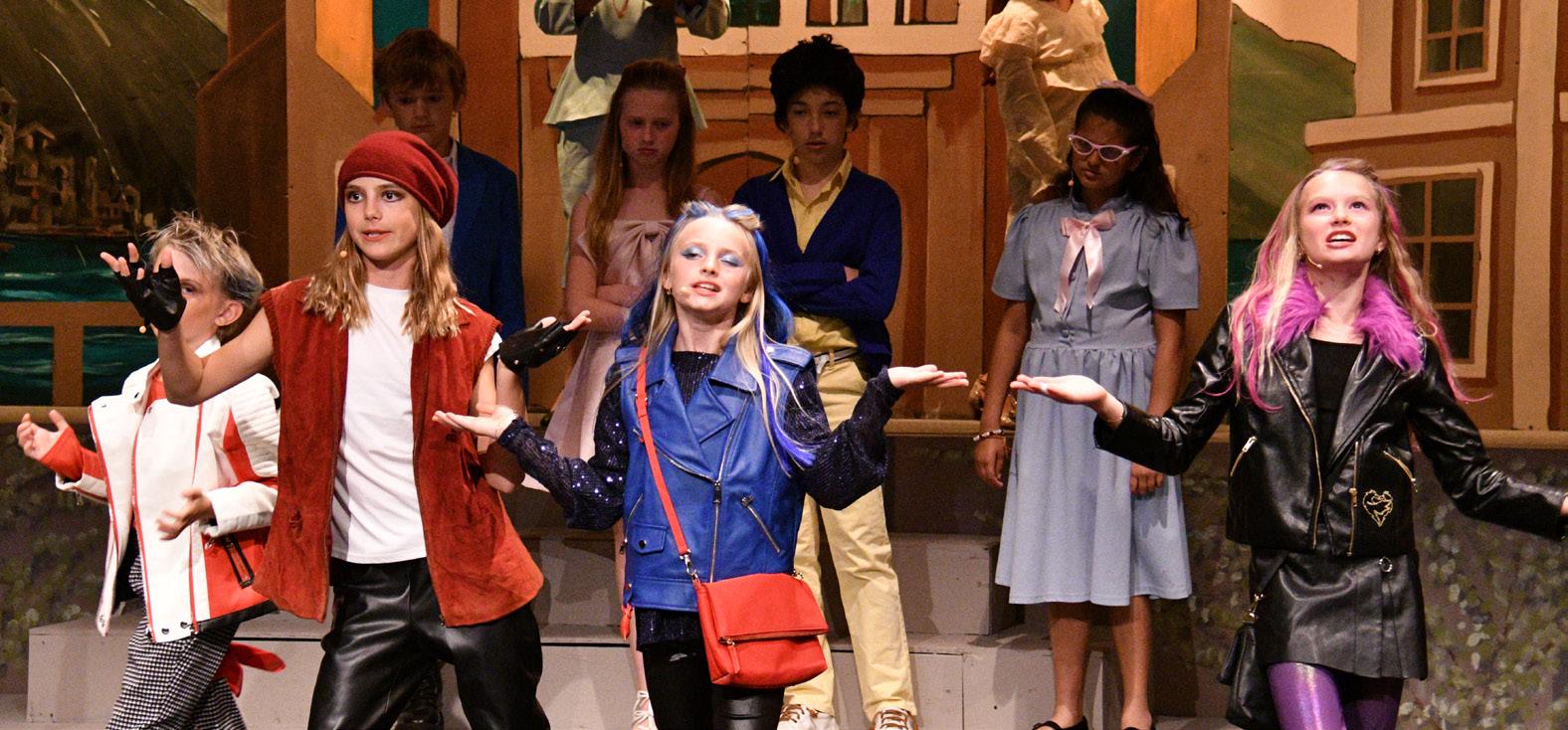
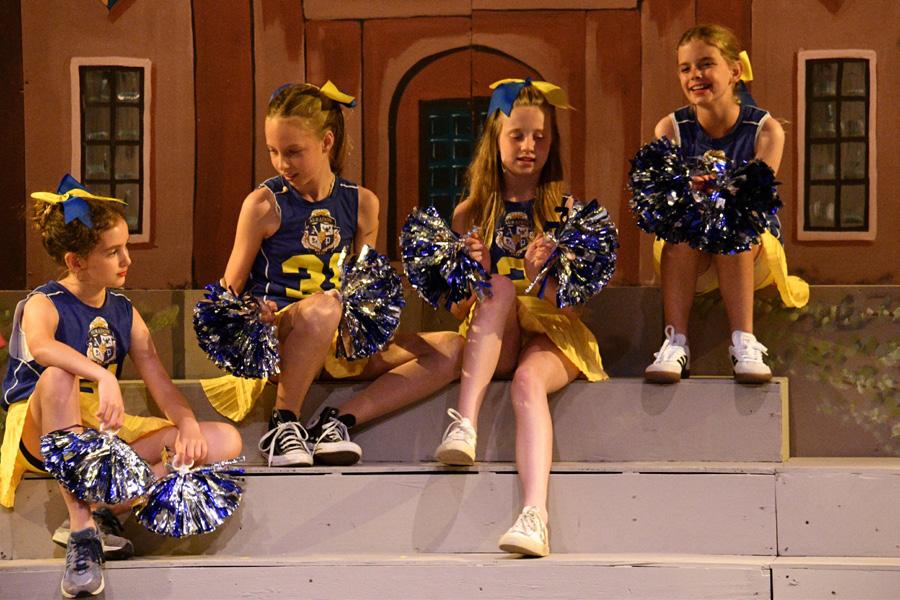
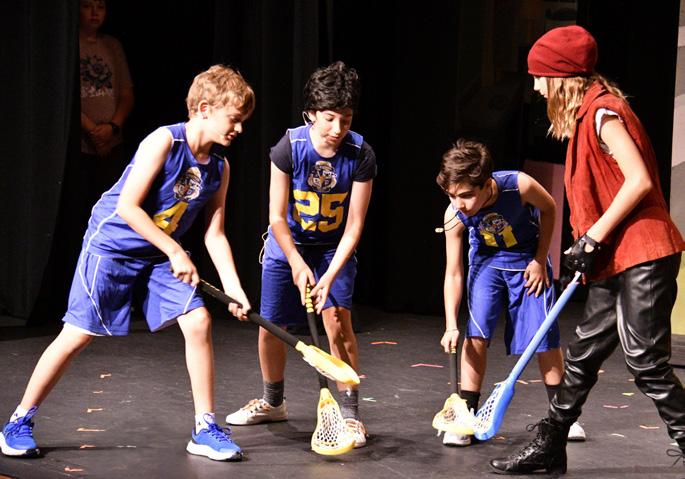
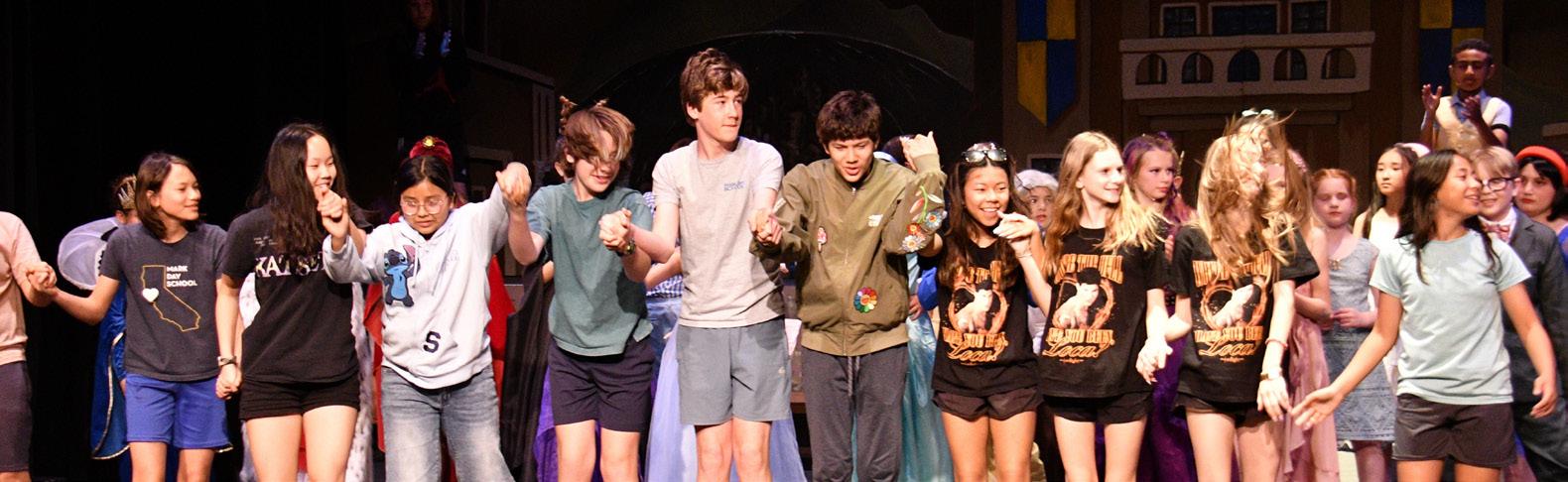
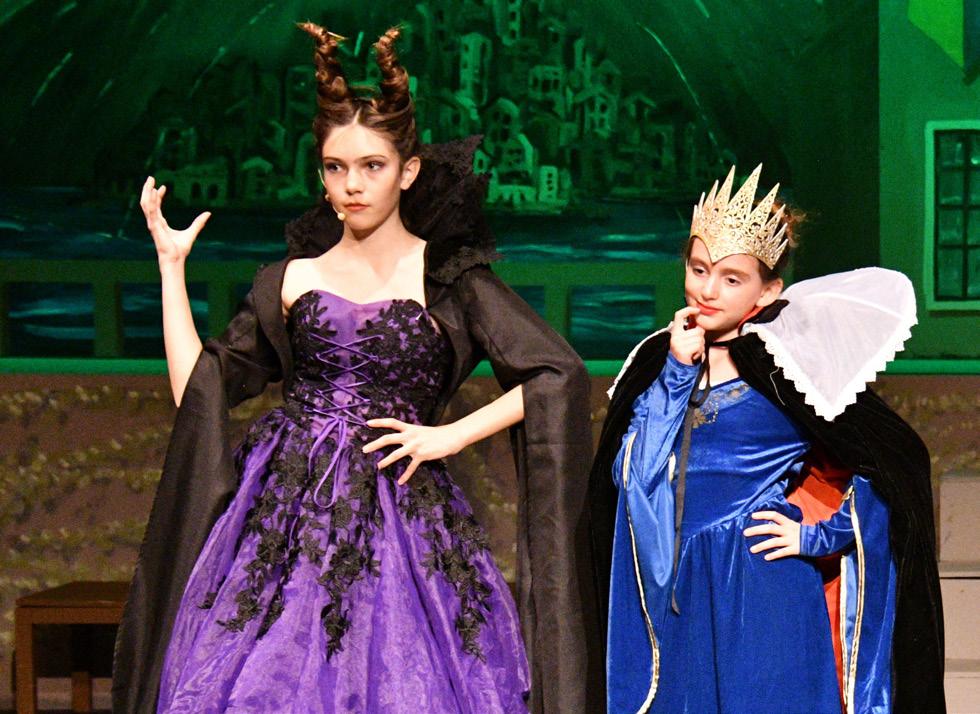
Photos by Ethan Kaplan, Brian Schneider, and Mark Glassner
WHERE ARE THEY NOW?
Have you ever wondered where your former classmates are in the world? Or what your Kindergarten buddy does for a living? We caught up with six alumni to talk about what they’ve been up to since they graduated Mark Day School years—and decades—ago.
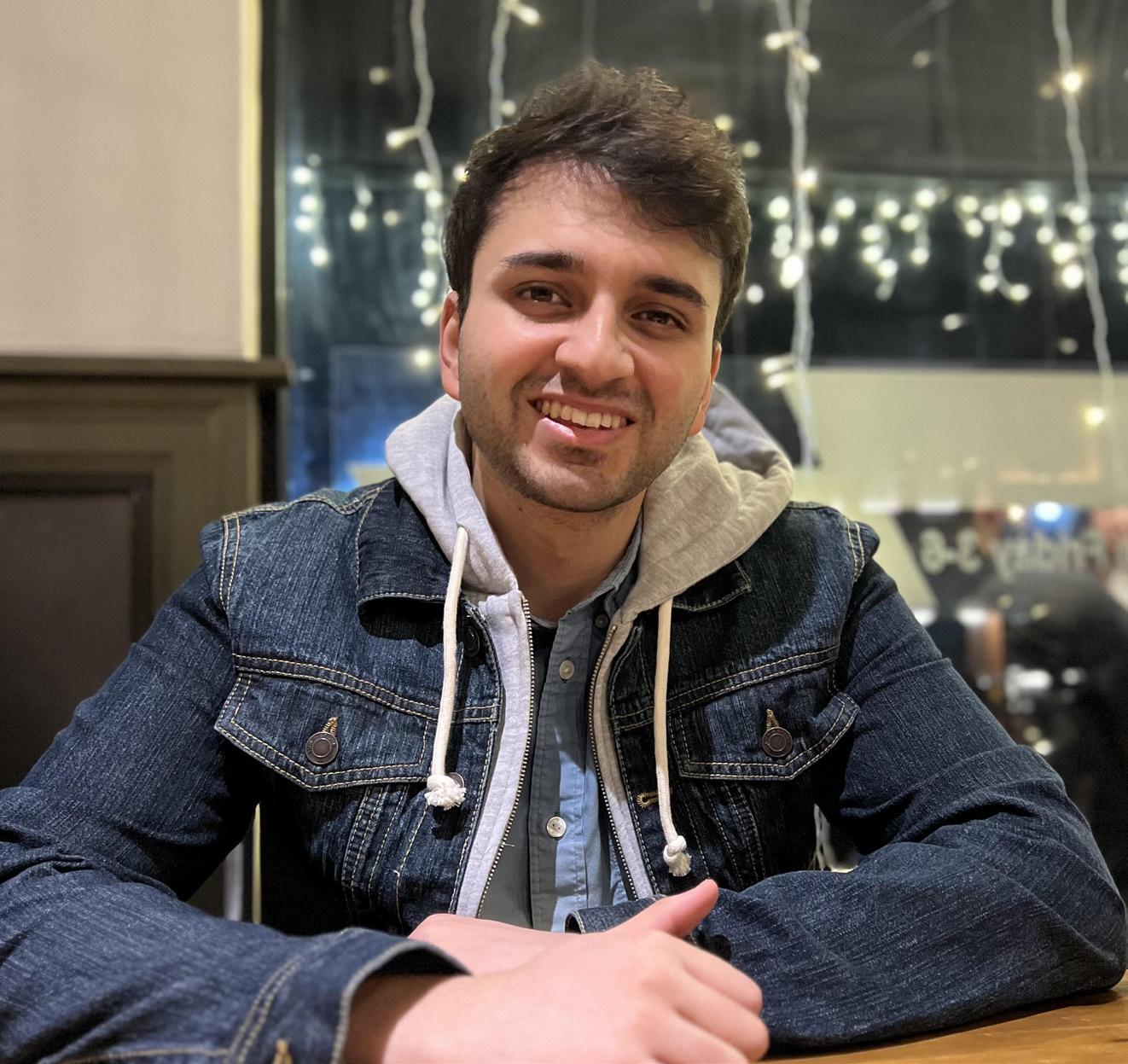
Avik Banerjee ’12
stuck with me throughout my life—in high school, where I led our student body as Student Council head, at UC Irvine, where I collaborated with adjunct professors on embedded system and medical device research, and now, in my professional life as a Senior/ Lead Software Developer at Bank of Montreal (BMO), where I lead, mentor, and collaborate with other junior team members, continuing that spirit of community and mentorship.
Since graduating from Mark Day, I’ve been fortunate to build a life centered around creativity, collaboration, and continuous learning—values that took root during my time on campus.
After Mark Day, I attended Sonoma Academy in Santa Rosa, where I found a community similar to Mark Day’s, filled with caring and mature students. The campus is set in lush greenery and hills, which gave such a refreshing feeling each time I stepped outside of classes. Both schools helped me become an independent and knowledgeable individual, and I was later accepted into UC Irvine, where I studied Computer Engineering—a crosssection between computer software and hardware.
I was always intrigued by both solving problems and creating enjoyable experiences. I was never as good when it came to dexterity with my hands, so through coding and electrical design, I was able to make ideas in my head come to life, leading to my current field as a Software Developer, developing tools for businesses and the public.
Mark Day really helped me build a foundation of collaboration and community that has
Outside of work, I love music and dance choreography (I joined a dance team at UC Irvine), freestyle rapping, piano, and making and producing music both solo and with friends. I thoroughly enjoy playing sports, too, from recreational leagues in soccer and basketball to days of extensive lap swimming and fun trips to Tahoe for skiing.
Whenever I think about Mark Day, I remember the extremely caring teachers and staff: Mr. Orwig’s teaching in both physical and mental sports that led to my interest in chess, and his lessons on perseverance; Mr. Navarrete’s kindness and enthusiasm that further elevated my interest in music; Mrs. Toland’s extremely sweet and kind nature that fostered kindness in everyone she knew; and both Ms. Bonzell’s and Madame Gordon’s grit in helping their students through challenging obstacles in learning. These are only a few of the many teachers at the school who helped shape the foundation of who I am and created lifetime memories that I still cherish to this day.
Kevin Dee ’04
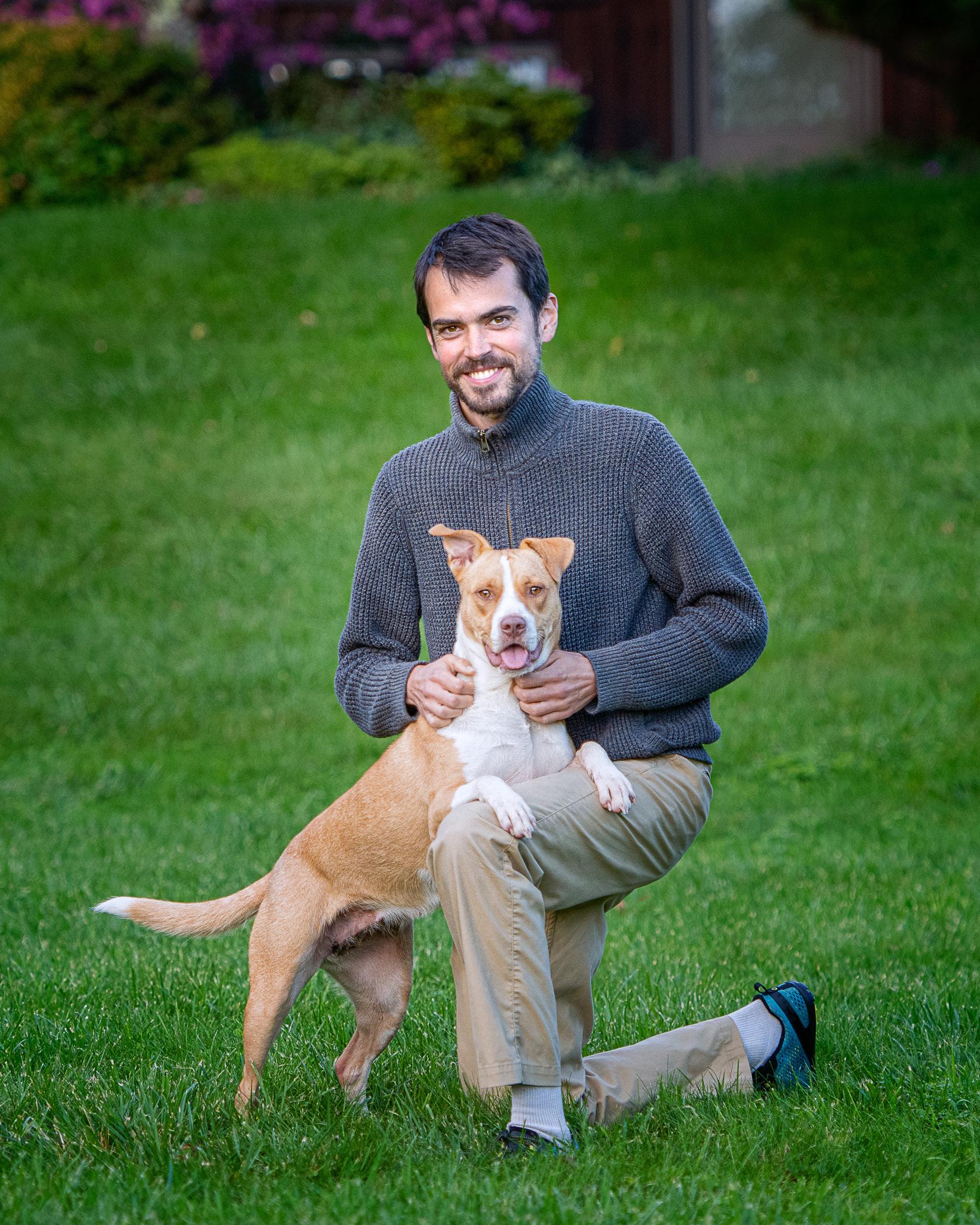
When I try to write about my trajectory since Mark Day School, I discover just how much has occurred since then. I’ll start with where I am now. I live in Shelburne Falls, Massachusetts. I work as a mental health counselor and also teach music lessons. Music has been central to my identity since I was at Mark Day, and I have gone through training and explorations in many kinds of music and instruments. I currently focus my efforts on singing with the harmonium or piano, and improvisation with others using whistles.
I’ve been doing therapy work for about three years, and studied at Antioch University for this work. Many years ago, I also went to the Oberlin Conservatory
to study music. At that time, my focus was classical guitar. My orientation toward music has shifted as now I view it as an opportunity to express and join in the spiritual and heartfelt aspects and am less focused on technical proficiency. In therapy, my primary approach is to be in relationship with a person while they discover what they have love for, clarifying this through experiences in their life. As I continue to work with people in therapy, I would like to move toward more exploration of spiritual connection as a focus, but not with any religious implications.
In reflecting on my experience at Mark Day School, I feel very appreciative of the opportunities to question and engage topics in class, with teachers who would encourage engagement and bring their own passions to the table. I am grateful for the elective classes that we had. Media Literacy and Philosophy were classes where the discussions were led by the unique passions and expertise of individual teachers and guests. And even in the core curriculum classes, there was a sense of being encouraged to question, engage, and challenge. In my work as a therapist in Greenfield, Massachusetts, I see a lot of kids who lack access to these opportunities and struggle just to make it through the day in a school environment where maintaining discipline takes up most of the teachers’ energy. While I am not a lover of academics in my old age and glad to be done with what I believe to be my last academic experience in grad school, I think on my time at Mark Day with increased appreciation in recent years.
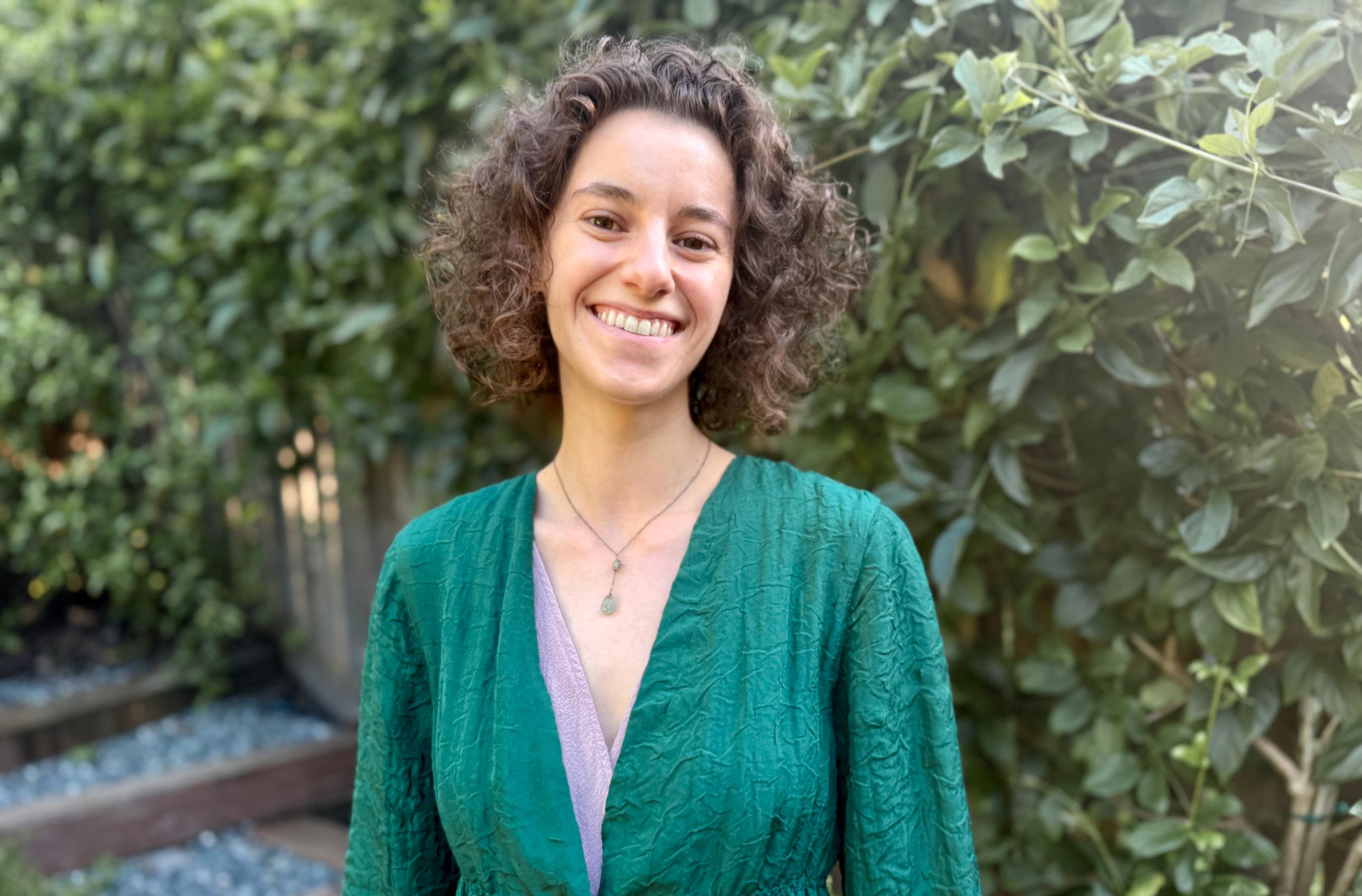
Rebecca Strull ’13
While it’s hard to draw a straight line between childhood experiences and adult life, I can trace many of my interests and qualities to what was cultivated during my time at Mark Day.
I began Mark Day School incredibly shy, but many public speaking and leadership opportunities became a pathway to finding my voice. In middle school, I joined the Green Team, where Ms. Diane Bredt encouraged students to take initiative around issues we cared about. As an 8th grader, I co-led the yearbook team, gaining early leadership experience. And throughout my time at Mark Day, I participated in theater productions, which helped me grow more comfortable
expressing myself in front of large audiences.
I attended Marin Academy for high school and then Middlebury College. In college seminar classes, I noticed how natural it felt for me to engage in discussions, share opinions, and ask questions, especially compared to peers who had come from learning environments that focused more on lectures and memorization.
Mark Day also nurtured my curiosity about the wider world. The school’s connection with the Kliptown Youth Program in South Africa helped me understand myself as part of a broader web of global relationships, with shared responsibility across borders.
Those foundations not only prepared me well for high school Spanish classes, but sparked years of travel throughout high school and college in places including Bolivia, Peru, Cuba, Guatemala, Rwanda, and Uganda.
One particularly formative experience came between high school and college, when I traveled solo in Guatemala and volunteered with a local nonprofit, the Chico Mendes Reforestation Project (El Proyecto de Reforestación Chico Mendes). I developed a close relationship with the Indigenous family running the organization and began supporting their work beyond planting trees. I built a website and donation system, developed branding materials, and trained the local team to use basic technology tools. Throughout the process, I worked in close collaboration with them, shaping everything to reflect their voices and visions. At the time, I didn’t know that “social impact consulting” was a career path, but looking back, that experience clearly set me on it.
In college, I studied abroad in Uganda, focusing on international development. Part of that time involved conducting research in a refugee resettlement, where I lived alone for several weeks while interviewing refugees from across East Africa. That experience further grounded my commitment to listening closely to lived experience.
After college, I completed a two-year internship at the Federal Reserve Bank of Boston, where I led research on how the COVID-19 pandemic was affecting women, people of color, and immigrant communities. I later joined Mathematica, consulting on international development projects for clients including the Gates Foundation and Rockefeller Foundation. The work focused on issues such as women’s economic inclusion, climateresilient agriculture, and vaccine access. My
interests then shifted closer to home, as I joined a smaller social impact consulting firm working to make childcare and early education more accessible and equitable in counties across California. Across all of this work, I’ve found it essential to center the voices of people with lived experience. I believe systems work best when those directly affected are meaningfully involved in designing them.
For the past seven years, dance has been my biggest hobby. I dance and teach a modern form called Contact Improvisation, which focuses on shared weight, physical communication, and the art of listening and responding to one another’s movements in real time. I’m also a singer, writing my own a cappella music and participating in collaborative vocal improvisation. I hike, practice yoga, and love to cook, especially fermenting foods.
In 2024, I stepped away from my traditional nine-to-five job and into the unknown, making space to return more fully to my creative self. Since then, I’ve taken on a major creative project illustrating a book written by my partner, Eli Susman. Micropractice draws on Eli’s PhD research in psychology and explores short, science-backed practices—each under 30 seconds—that boost wellbeing. It will be published in fall 2026 by Avery, an imprint of Penguin Random House. I’ve also been spending more time writing songs. Additionally, during this time, I’m building my own consulting practice that brings a more creative approach to working with organizations and agencies addressing complex social challenges.
I’ve come to a multifaceted life and career path. Mark Day School helped instill in me that I don’t have to be just one thing, and that in fact being many things is something to celebrate.
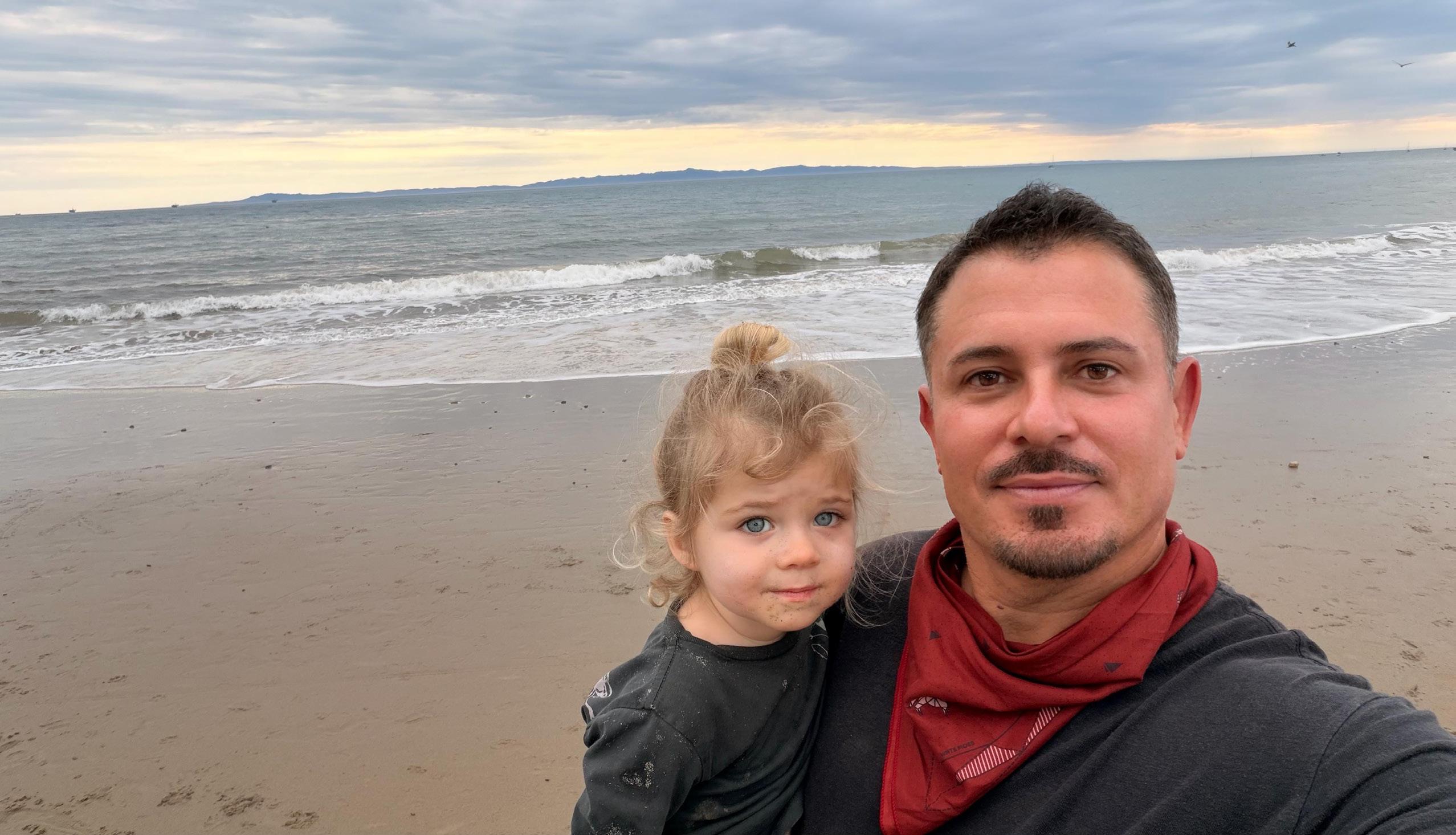
Daniel Pardi ’89
After graduating from Mark Day, I attended The Branson School for high school, then did my undergraduate at the University of San Francisco. At USF, I developed a serious interest in health sciences. After graduation, that interest remained and carried me across the country, where I earned a master’s degree in exercise physiology from Florida State University. Living in Tallahassee was its own education. It was my first time in a small town built around a major university, complete with a deep sense of community and a legendary football culture. Go Noles!
After graduate school, I came back to the West Coast where I joined the Preventive Medicine Research Institute at UCSF and worked with Dean Ornish researching
how intensive lifestyle interventions could influence the progression of disease. That work shaped how I think about health to this day, not as a single variable, but as the product of many interacting forces. After this, I spent nearly a decade in the pharmaceutical industry, helping to build and lead the medical affairs function at Jazz Pharmaceuticals. It was also during that period that I was exposed to the science of sleep and fell in love with the subject.
That curiosity led me back to academia in the early 2010s, when I began a PhD in sleep neuroscience through Stanford University in California and Leiden University in the Netherlands. Here, my focus expanded from physiology and I
developed a model of human behavior that eventually became the foundation for a health technology company I founded called humanOS.me.
In 2021, humanOS.me was acquired by Restore Hyper Wellness, headquartered in Austin, Texas, and I joined the company as Chief Health Officer. Today, I hold the same title at Qualia Life Sciences. My work now centers on translating complex science into practical understanding through public speaking, podcasts, and education. Looking back, the throughline from Mark Day to now is not a specific subject or career, but a deep curiosity about how the body works, one that truly began during those early years and has stayed with me ever since.
This year, I set a goal to publish three academic papers on the philosophy of health, healthspan, and aging. Writing has become a genuine hobby for me. It is how I clarify what I think, put ideas into the world, and learn from the feedback that comes back my way.
Jiu jitsu has become a central part of our family’s weekly rhythm. A lot of our free time is spent at gyms during the week and competitions or training on the weekends. Mom and dad are mostly on the sidelines, watching, learning, and cheering. It is a demanding commitment, but it is also a fun shared experience for the whole family. In fact, this year, my 12-year-old son Desmond will be traveling to London on his own—
and staying with good friends from Marin who now live in London—to compete in a prestigious International Brazilian Jiu Jitsu Federation (IBJJF) tournament at the end of February. Win or lose, I’m excited for him to have this memorable life experience.
I had a wonderful experience at Mark Day. I was there from 1st through 8th grade, which meant I grew up alongside the same core group of classmates for most of my early life. Many of those friendships extended into high school at Branson, so those years had a sense of continuity that, at this point in my life, I recognize as both unique and special. We got to watch each other grow up, and those bonds will last a lifetime.
When I think back on Mark Day, what comes to mind are not just classes, but moments that shaped how school felt.
Running the mile under Mr. Orwig’s whistle. Throwing the discus in track and field and feeling the release as it left my index finger. Playing basketball on the blacktop every single recess, then walking into the next class dripping in sweat and out of breath. Building the Santa Barbara mission out of sugar cubes. Working on an artistic rendition of Tutankhamun for our project on the Egyptian pharaohs. Enjoying assemblies with Mr. Kerby. Too many memories to list, all of them resurfacing in no particular order as I think back.
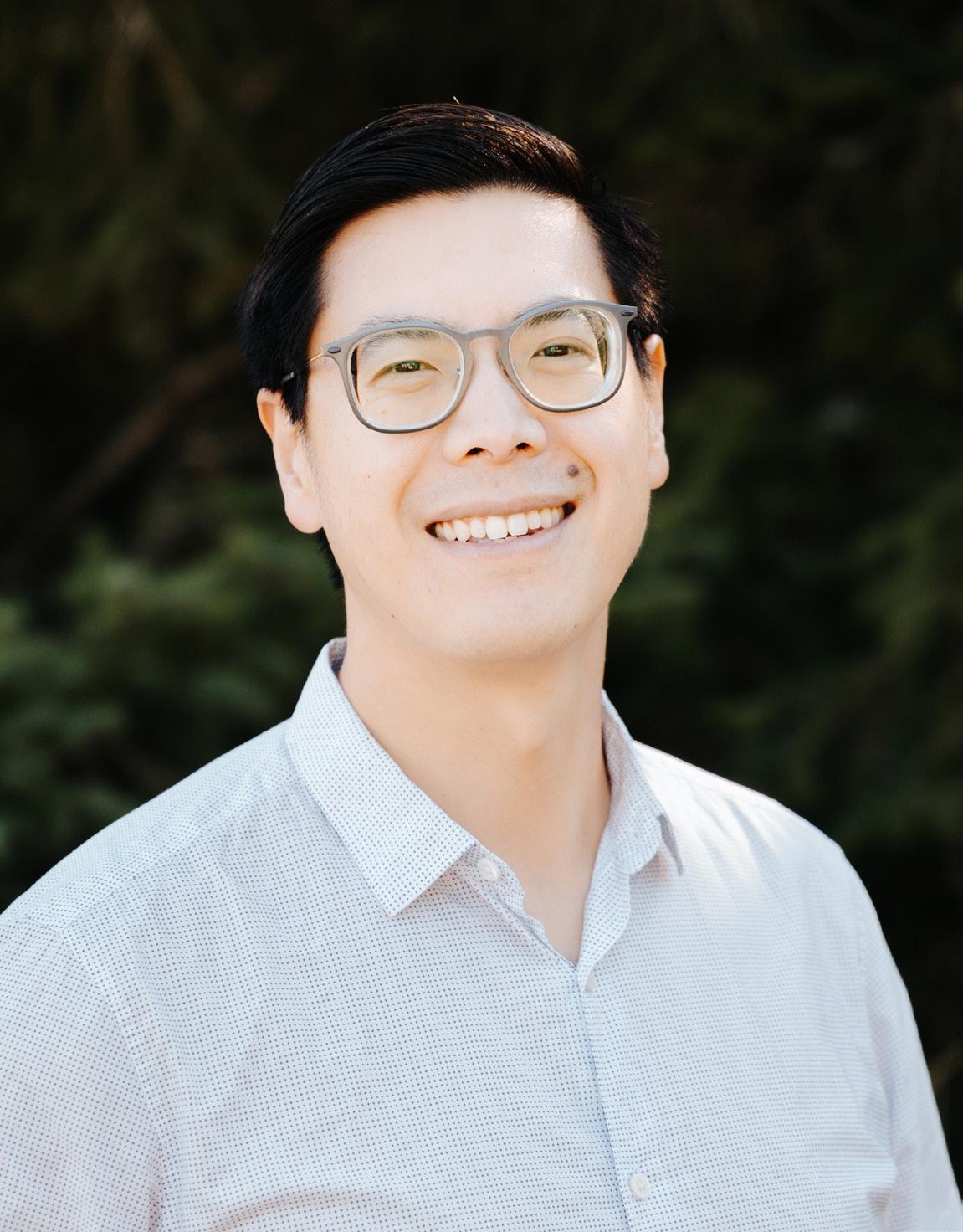
Lee-Ming Zen ’98
I attended Crystal Springs Uplands School for high school, where I pursued my interests in chess and computers that began at Mark Day. After graduating, I attended Stanford University, where I completed my bachelor’s and master’s degrees in computer science, specializing in artificial intelligence. During my time there, I discovered an unexpected passion: sports broadcasting. People kept saying I should sing with my voice, but I found I was much more suited to speaking than singing. At KZSU, I covered women’s basketball for two seasons, traveling all over the country with the team. My senior year, I decided to tone down the travel, and covered home games for the baseball team. I also ran the San Francisco marathon that year.
I went on to a career in the technology industry where I’ve worked at both large and small companies as well as spending time in the startup world both as a founder and early
employee. I’ve had the opportunity to work on both cloud computing and AI throughout those various roles. During that time, I managed to try out living in a few new cities as well: New York, Boston, and Seattle. Today, I’m fortunate to combine my passions for cloud computing and AI in my current role as the Chief Technology Officer of Yahoo. I’m really excited to be able to work at a company that helped pioneer the internet and was a major part of my growing up with technology.
I look back fondly on my time at Mark Day, which formed much of the foundation of where I am today. I still enjoy chess and running (thanks, Mr. Orwig!). I remember “the hill” and how daunting the 2-mile test was to my middle school self. I also remember how much fun we had in the computer lab, playing games, learning to type properly, and eventually even teaching HTML to the rest of the class. I still love teaching others about technology and am grateful that I have the chance to do so as part of my job. And, I still treasure the various friendships I formed during my time. Though our paths have taken us in different directions, I can definitively say that the friendships I made all left a lasting mark. I even reconnected with a couple of friends at Stanford (Liz Roundtree ’98 and Jack Conte ’98)!
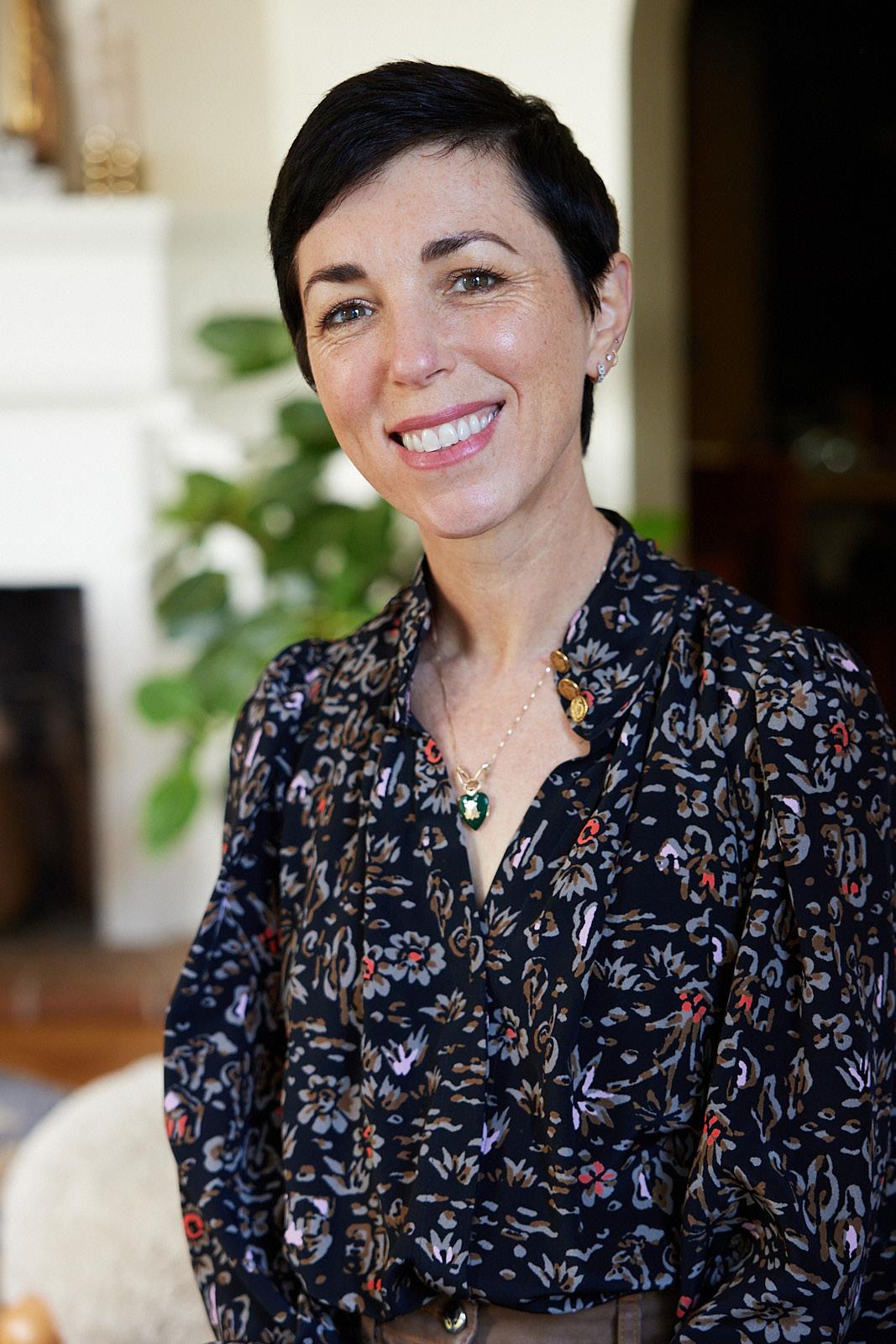
Anne Wintroub is the head of Social Impact and Engagement at Lululemon, and has spent her career in the social impact sector working both at nonprofits and major corporations. Her work connects her with hundreds of charitable organizations all across the globe and incredible leaders and athletes, and she loves being a part of a brand that gets people moving at every stage of life.
Anne has always been lit up by making change happen to meaningfully benefit communities, and that’s what kicked off her early career work with non-profit
Anne Wintroub ’89
organizations, from public broadcasting to public libraries. She then made the shift to the corporate social impact sector, initially at AT&T where she led their community investments in California and then social impact across the company. She left AT&T in 2021 to start her own consulting studio, through which she started working with Lululemon, who ultimately brought her on to lead their work advancing wellbeing and mental health through movement and mindfulness.
Though it’s been more than 35 years since she was on the Mark Day campus, the school still figures large for her as it gave her her very best friend to this day, Tamara Arroyo ’89. She and Tamara travel every year together with their families, and somehow their friendship first forged in 4th grade has become a party of nine.
ALUMNI NEWS
CLASS OF 2002
Alex Boodrookas and Allison Korinek welcomed their son, Samuel Anthony Boodrookas, earlier this year. They live in Lakewood, Colorado.
Chelsea Moylan has been having a blast back on the Mark Day campus as a current parent, volunteering at hot lunch, going on field trips, and helping in the classroom—enjoying the Mark Day community from the other side—with her daughter, Josie Purtill ’34.
CLASS OF 2004
Stefan Lowenstein and Mira Lowenstein Noble ’06, are siblings and proud alumni who have both built careers in healthcare. Stefan is a Mohs-trained dermatologist and owns his own dermatology practice in Mill Valley. Mira has worked for nearly seven years as a pediatric oncology and bone marrow transplant nurse at UCSF and has recently joined Stefan as a nurse practitioner at Aesthetic Dermatology. They work together to provide high quality care to the community they grew up in.
CLASS OF 2007
Welcome back to Emmeline Hill, who is Mark Day’s new Educational Technology Teacher & Integrator. Emmeline came to Mark Day from Black Pine Circle School in Berkeley, where she taught middle school science for seven years and served as the 6th Grade Coordinator. She holds a B.A. in Biology from Reed College and an M.Ed. in Instructional Practice from Lipscomb University.
CLASS OF 2010
Landon Kleinbrodt spoke at our Skylion Circle Appreciation and Volunteer Event in September about the impact that Mark Day School had on him, especially teachers like Mr.
Evans and Mr. Lyons. Landon earned his B.A. in Statistics from UC Berkeley and graduated in 2018 with Highest Distinction. For the last seven years, he has worked for Capital Group on their Data Science and Artificial Intelligence teams.
CLASS OF 2011
Ian Berman did the audio for Despelote, a first-person adventure video game that was released in May. It’s a slice of life set in Quito during Ecuador’s qualification for the 2002 FIFA World Cup, where the player is able to explore and play with a soccer ball in the city. The game was up for a Games for Impact award earlier this year.
Elena Dennis has been busy in medical school over the last four years. She received one of the 50 very coveted placements with Kaiser medical school. She graduated on May 11 with an MD. She matched into her first choice residency program at Mount Sinai Pediatrics and will begin that part of her education in July.
CLASS OF 2013
Nico Dennis transitioned to a full time CyberSecurity position with Deloitte after college graduation. After three years, he is now with the Federal Reserve bank in their cyber security division. He lives in San Francisco where he enjoys jogging, biking, and being with friends.
CLASS OF 2016
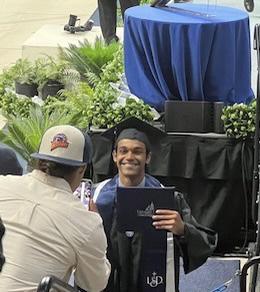
Marcos Brasil graduated in 2025 from University of San Diego business school and now lives in Los Angeles working as a risk analyst trader for Penny Mac Mortgage Company.
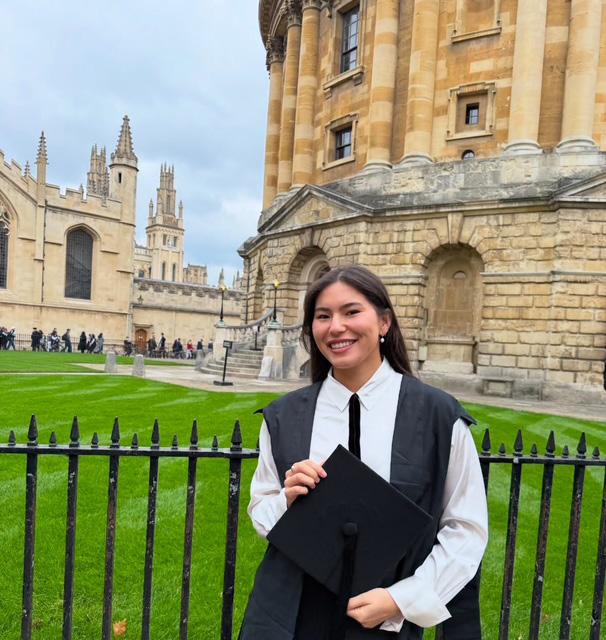
Natalia Castillo graduated Phi Beta Kappa and summa cum laude from the University of Pennsylvania with a bachelor’s in Philosophy, Politics & Economics and a minor in English in May of 2025. She is currently pursuing a Masters of Philosophy at Oxford University in Global and Area Studies, researching international climate policy and community-based climate adaptation in the Caribbean. At Oxford, she represents the university on the women’s water polo team and was recently elected as captain for the 2026-2027 season.
Lily Cummings graduated from Barnard College in December with a BA in Film & Media Studies, and will take part in the Barnard and Columbia graduation ceremonies in May.
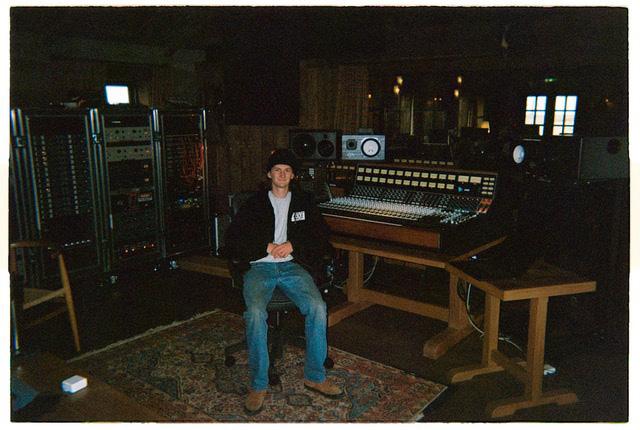
This year, Frank Lookinland engineered Justin Beiber’s SWAG album. He spent most of the year working with Justin in LA and flew to the Tröllaskagi Peninsula in Iceland to record the album at Flóki Studio. He is also touring this year, playing guitar with the artist Truman Sinclair. They will be opening across the country for Courtney Barnett. When not on the road, Frank works at Shangri-La Studio in Malibu as a house engineer/producer.
CLASS OF 2018
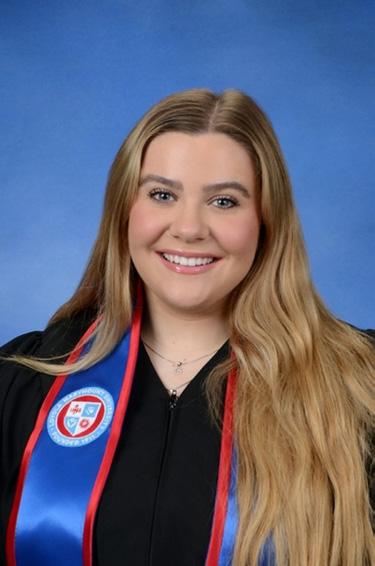
Danielle Kent graduates from Loyola Marymount University this May. She committed to attend graduate school at California Baptist University to their dual degree program in Counseling Ministry, MA and Counseling Psychology, MS, in preparation for licensure as a Marriage and Family Therapist (LMFT).
CLASS OF 2021
Wyatt Erdman and Drew Kalafatas ‘23, inspired by Mark Day School’s partnership with the Kliptown Youth Program (KYP) in South Africa, launched a nonprofit called Champion Youth Africa. Their nonprofit builds netball courts for girls in schools across South Africa, creating opportunities for them to play, grow, and thrive through sports. Their next project is a new court at Chueuekgolo School.
CLASS OF 2022
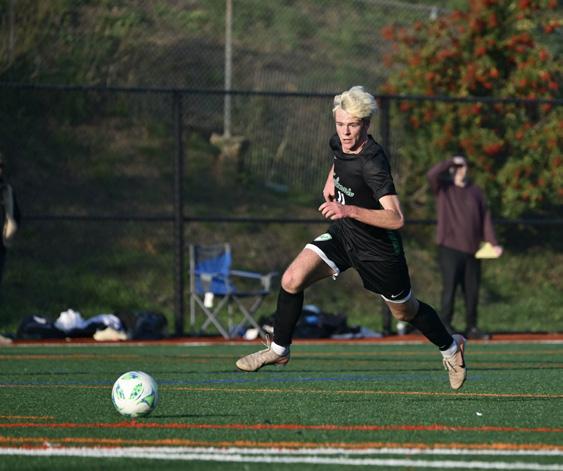
Sean Chamberlin graduates from Archie Williams High School in June, where he was named MCAL Soccer Player of the Year in 2025, becoming only the second student in school history to
earn the honor. He helped lead the team to NCS and State Championships in 2025 and to the school’s first MCAL championship in over 20 years in 2026, and has also been named Marin Athletic Foundation’s AWHS Athlete of the Year for soccer and his contributions to cross country and track over his four years. This fall, Sean will attend Cal Poly San Luis Obispo, where he will play Division I soccer and study Business Administration.
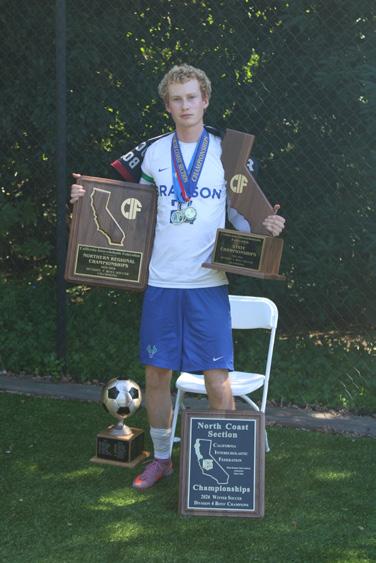
Cooper Little and Peter LaFleur and the Branson Bulls won the North Coast Section D-IV, NorCal D-V, and CIF State Championship in D-V varsity soccer. This is the first soccer state championship in school history. Cooper is one of the captains on the team, and Peter started in many games, playing a huge role in their playoff run. Cooper will attend Davidson College in the fall.
Petra Rabb was selected to play on the USA national volleyball team for the Israeli Maccabi Games in Israel in 2025. Due to the war with Iran last year, it was rescheduled to summer 2026. Petra will attend University of Miami in the fall.
CLASS OF 2023
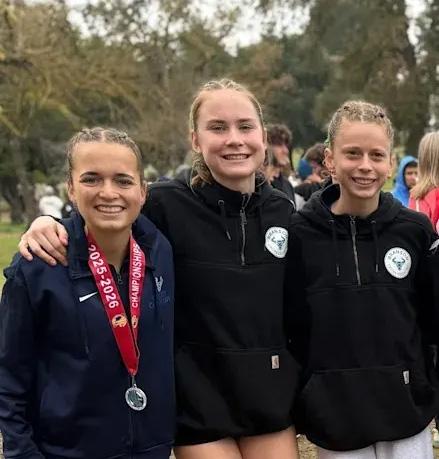
Farah Allen and Maya Gidney ‘24 (pictured from left to right with Isabel Little ‘24 in the center) competed at the California state cross country meet in November, with Farah turning in the fastest time of any Marin runner on the girls side. Farah is a junior at Branson and has committed to UCLA for fall of 2027 for cross country and track and field.
Emerson Kim continues to be interested in botany, creative writing, social justice, and the arts. Of note, Emerson was the only ceramicist from Lakeside School in Seattle who was recognized in the National Scholastic Arts competition.
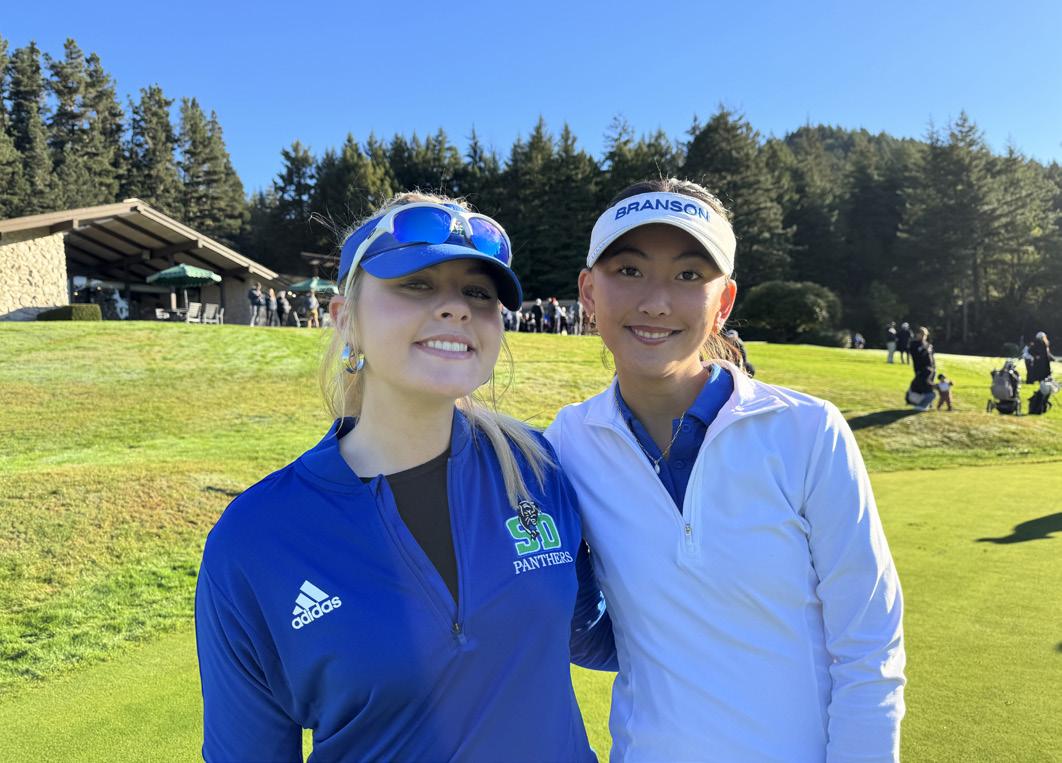
Mila Dawson (San Domenico) and Sidney Kawahara (Branson) reconnected at the NCS girls’ golf tournament in October. Once a Skylion, always a Skylion.
CLASS OF 2024
Alizae Kurtzig co-wrote the children’s book Where Our Stories Meet with a student from Kliptown Youth Program (KYP), Thando Maleluleke. In March, the book debuted and they did book readings and signings. Proceeds benefit KYP.
ALUMNI FACULTY & STAFF
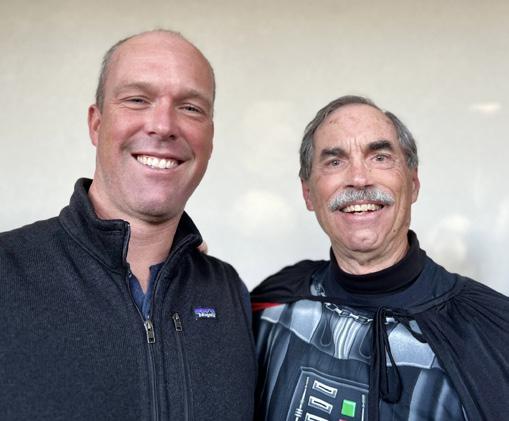
Gail and Ray Orwig have published their third book, Where Hollywood Shot the Monster Movies. It is due to be released at the end of August from McFarland Publications. To accompany the new book release, they are working on a blog page, also with more monster movie locations (new locations not in any of their three books). It will be up and running this summer. Pictured: Kurt Seefeld ’98 (left) and Ray Orwig (right).
COLLEGE MATRICULATION
Below is a list of colleges and universities that our alumni from the Mark Day School graduating classes of 2017-2021 are attending. A list of colleges that the class of 2022 is attending will be published in the annual report in the fall.
American University
Bard College
Barnard College
Bates College
Berklee College of Music
Boston College
Boston University
Bowdoin College
Brown University
Bucknell University
Cal Poly San Luis Obispo
Chapman University
Chico State University
Claremont McKenna College
Clark University
Colby College
Colgate University
College of Marin
College of William & Mary
Colorado College
Columbia University
Cornell University
Dartmouth College
Duke University
Elon University
Emory University
Georgetown University
Hamilton College
Harvard University
Johns Hopkins University
HEADING TO HIGH SCHOOL
Kenyon College
Lehigh University
Loyola Marymount University
Macalester College
Middlebury College
New York University
Northeastern University
Northwestern University
Occidental College
Ohio State University
Pepperdine University
Pitzer College
Princeton University
Purdue University
Rhode Island School of Design
Rice University
San Diego State University
Santa Barbara City College
Santa Clara University
Scripps College
Southern Methodist University
Stanford University
Swarthmore College
Texas Christian University
Tufts University
Tulane University
UC Berkeley
UC Davis
UC Irvine
Archie Williams High School - 1
The Bay School - 1
The Branson School - 16
Credo High School - 1
Lycée Français- 1
Marin Academy - 11
Marin Catholic - 3
Marin School of Environmental Leadership (MSEL) - 1
UCLA
UC Riverside
UC San Diego
UC Santa Barbara
UC Santa Cruz
University of Arizona
University of Chicago
University of Colorado
Boulder
University of Miami
University of Michigan
University of Oregon
University of Pennsylvania
University of Richmond
University of San Diego
University of Southern California
University of Virginia
University of Washington
Vanderbilt University
Wake Forest University
Washington & Lee University
Washington University in St. Louis
Wellesley College
Wesleyan University
Williams College
Yale University
Redwood High School - 2
San Domenico - 7
Saint Ignatius High School - 1
San Rafael High School - 2
Sonoma Academy - 1
Tamalpais High School - 3
Terra Linda High School - 1
39 Trellis Drive
San Rafael, CA 94903