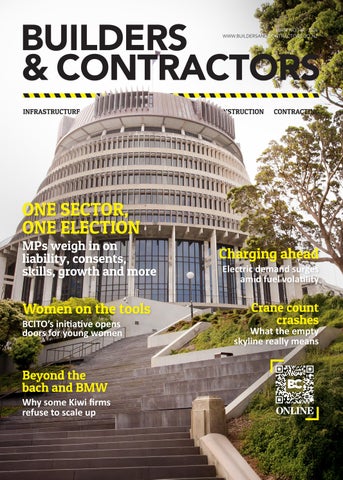
MPs weigh in on liability, consents, skills, growth and more
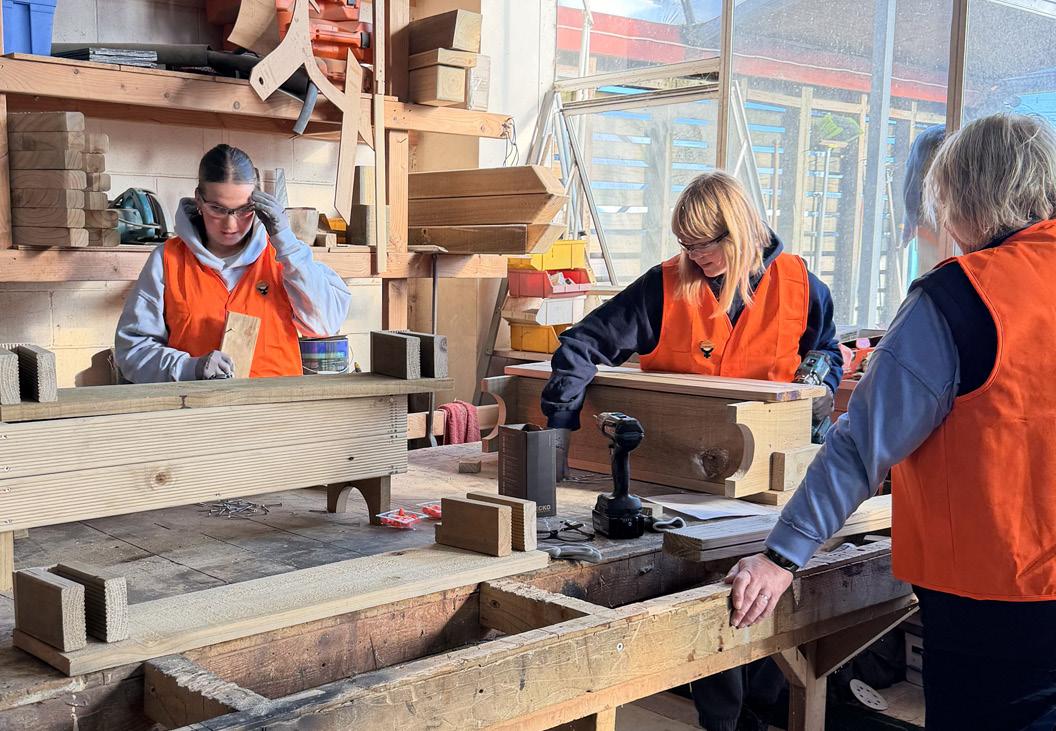
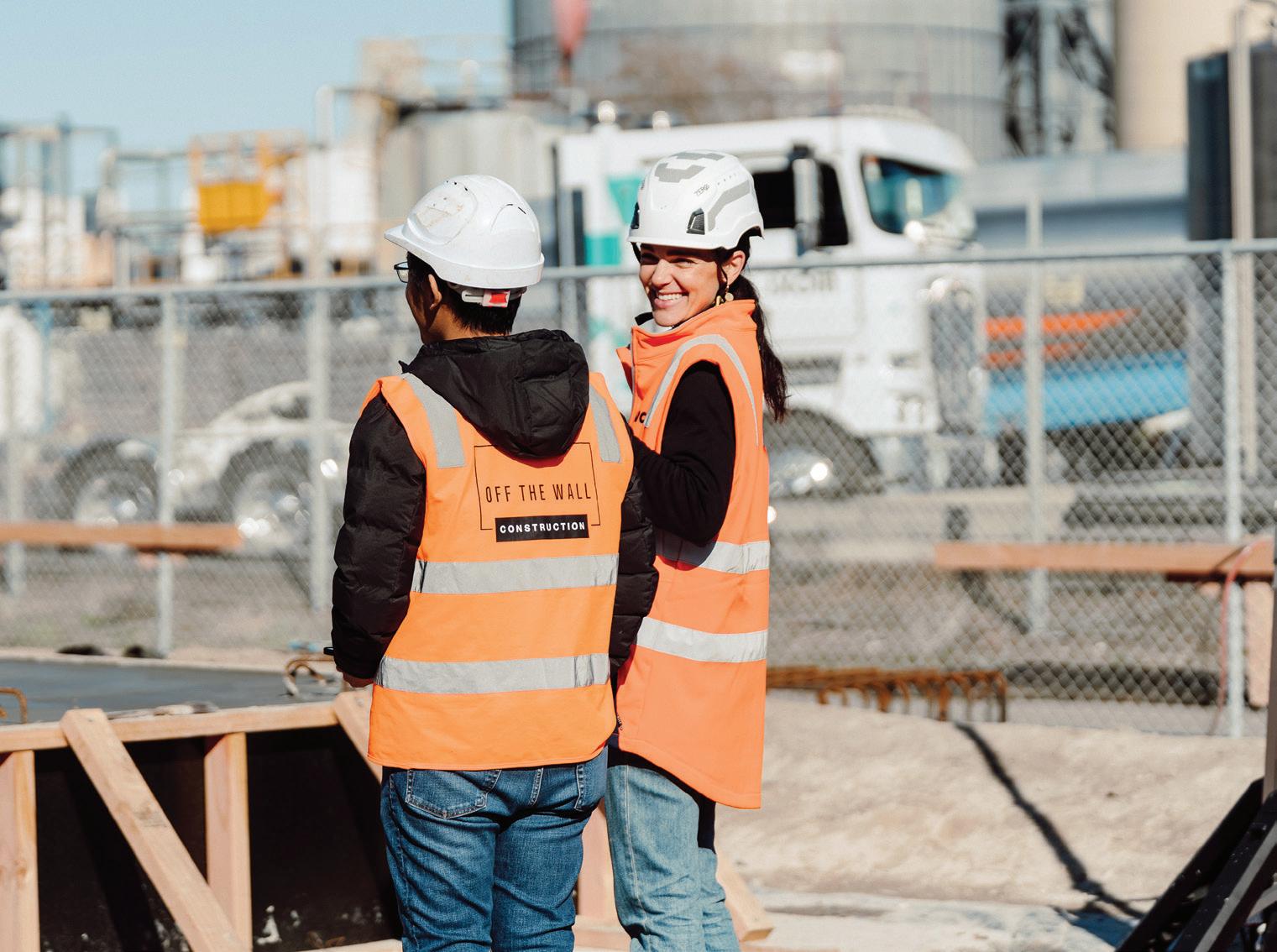
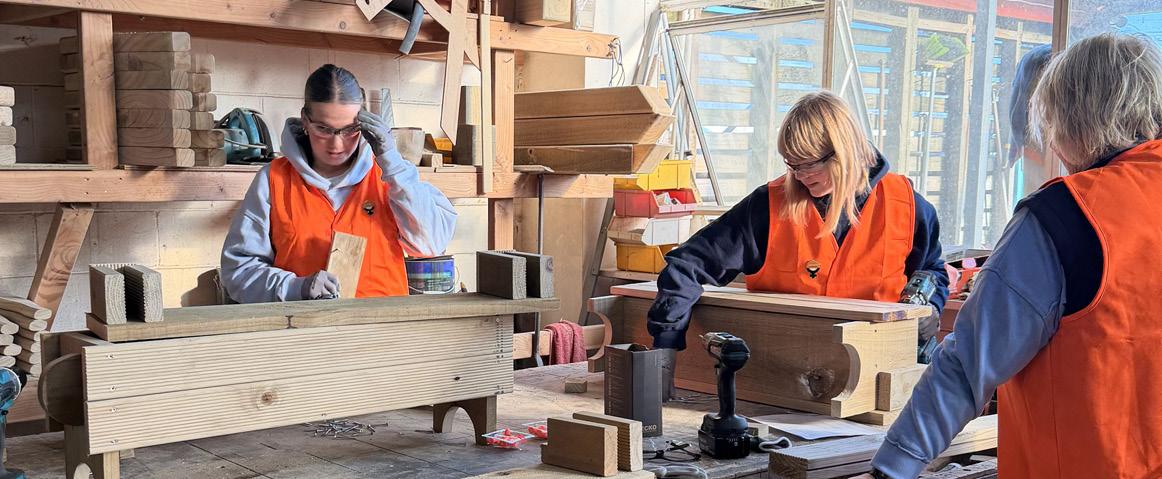
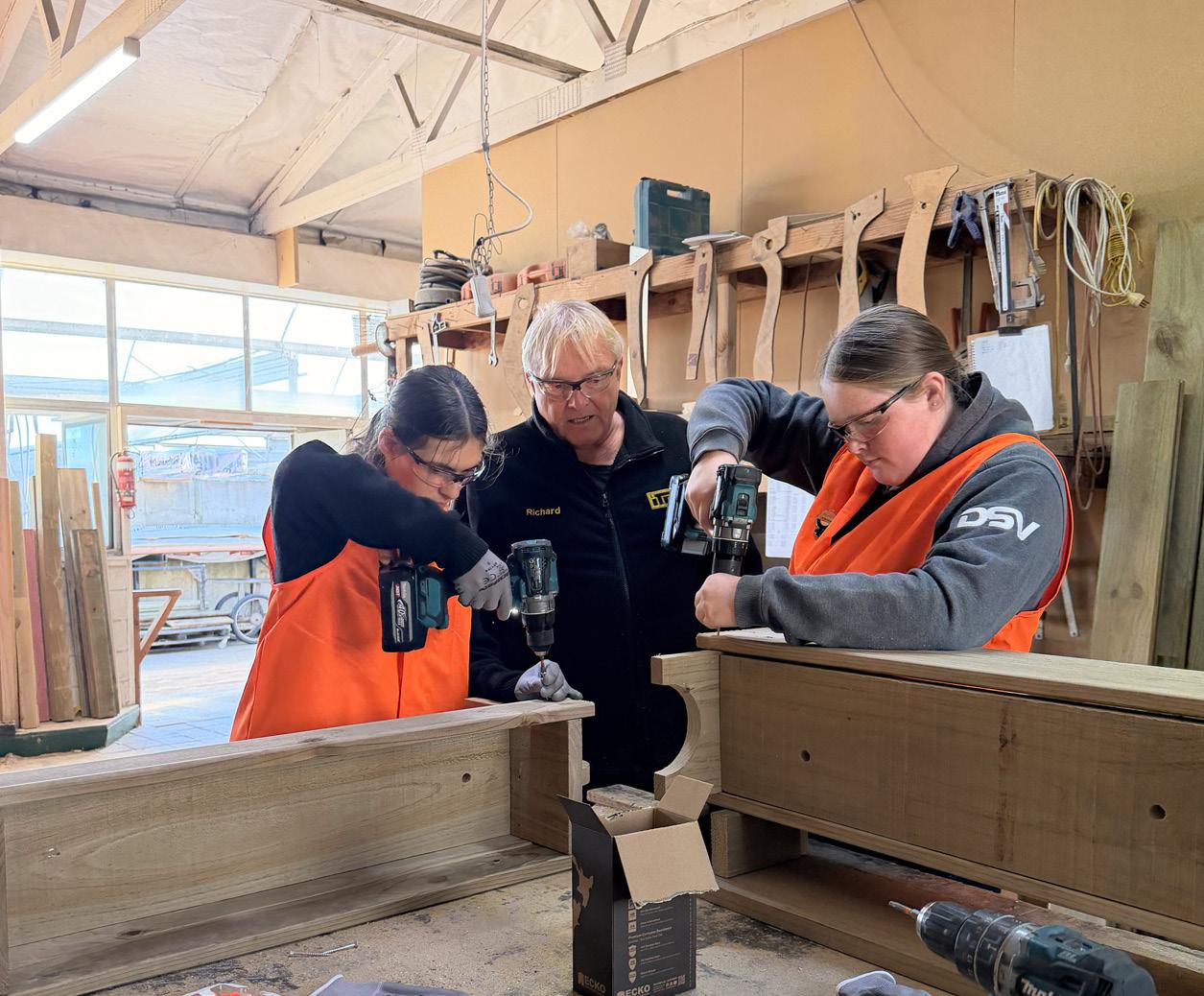
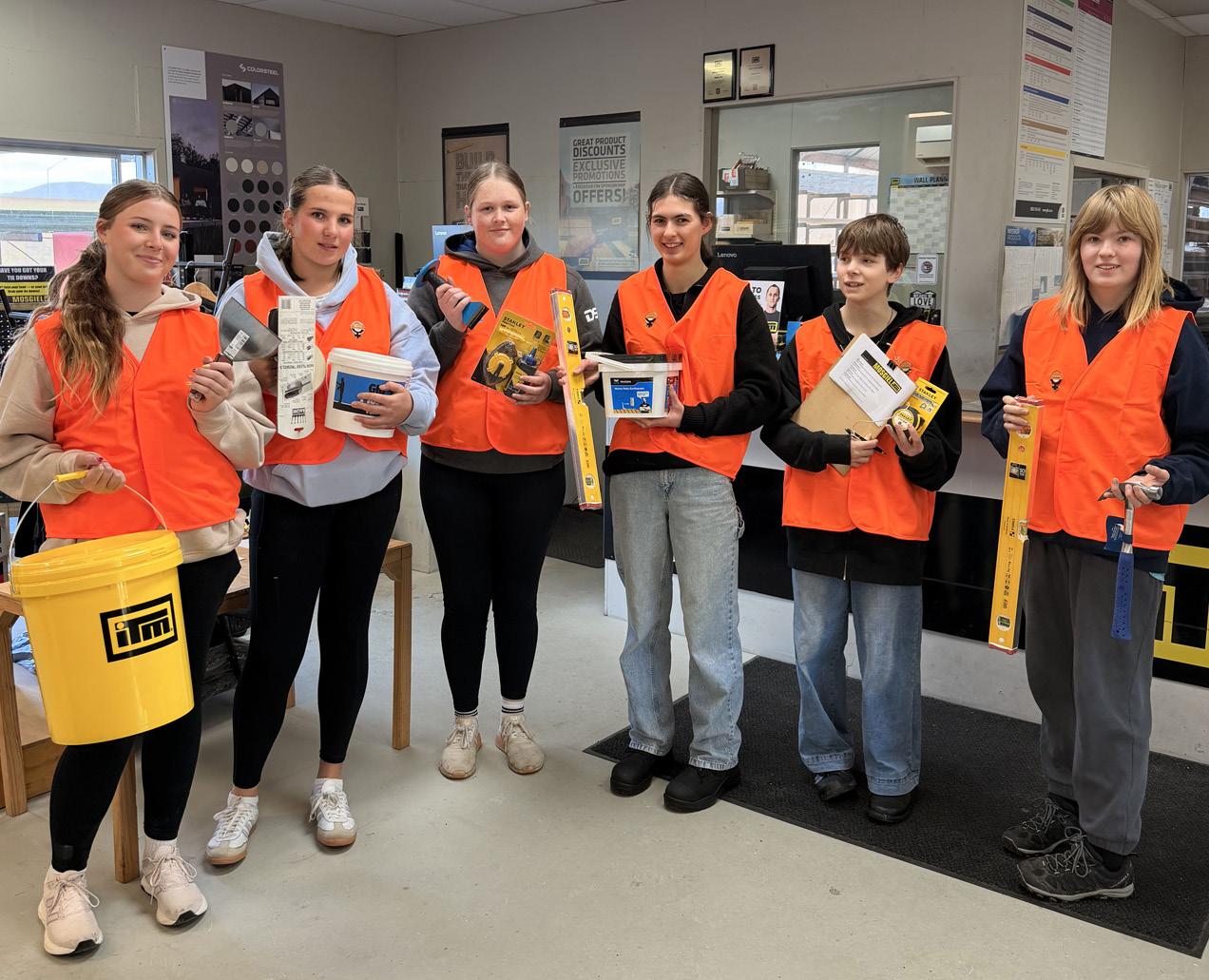
Women on the tools
BCITO’s initiative opens doors for young women
Charging ahead
Electric demand surges amid fuel volatility
Crane count crashes
What the empty skyline really means
Beyond the bach and BMW
Why some Kiwi firms refuse to scale up
As the leading authority for towing and recovery operators in New Zealand, we’re committed to uniting professionals in the industry. Our mission is to empower you with resources, advocate for regulatory improvements, and promote best practices.
By becoming a member, you gain access to a wealth of resources tailored for your success:
Sign Up Today!
Recognition as an accredited member of NZT&T
Access to Private Facebook group for NZT&T business members
Monthly Tow Talk webinars guided by subject matter experts
Access to member only shop –providing templates & collateral covering health & safety, employment, compliance and more
Industry alerts and regulatory updates
Training and professional development
Industry representation & advocacy
Networking and collaboration opportunities
This edition of Builders and Contractors arrives at a pivotal moment for our construction and infrastructure sectors. Across the country, businesses are navigating tighter conditions, shifting demand, workforce pressures and growing expectations around safety, sustainability and performance. Yet amid the uncertainty, there is also evidence of resilience, innovation and long-term thinking.
In this issue, we bring together voices from across the industry and Parliament to examine the policies, priorities and pressures likely to shape the sector through the next election cycle and beyond. We look into key stats, the growing momentum behind electric vehicles, and why many Kiwi construction firms are hesitating to scale.
We also highlight the people behind the industry, from women entering the trades through BCITO initiatives to a tradie sharing his experience with prostate cancer in the hope of starting conversations too often avoided on-site. As always, we’re focused on the hotbutton issues shaping the sector today. Enjoy!
The team at /buildersandcontractorsmagazine www.buildersandcontractors.co.nz
Viewpoints
14 One sector, one election MPs weigh in on sector’s future
24 eInvoicing leads the way Construction adopts faster than the rest of the economy
50 Payment claim warning Court of Appeal: missing schedule can mean liquidation
70 Past the BMW ceiling Why Kiwi firms stop scaling, and what's changing
80 Greener project habits Steve Nicholls of 3R Group on doing it well
News
12 Crane count drops Site numbers fall to a decade-low
18 Truck loader forum Crane Association hosts first dedicated operator event
30 Graduates choose trades Two-thirds would pick a trade if starting again
34 Concrete awards open Entries open for the 2026 Concrete NZ awards
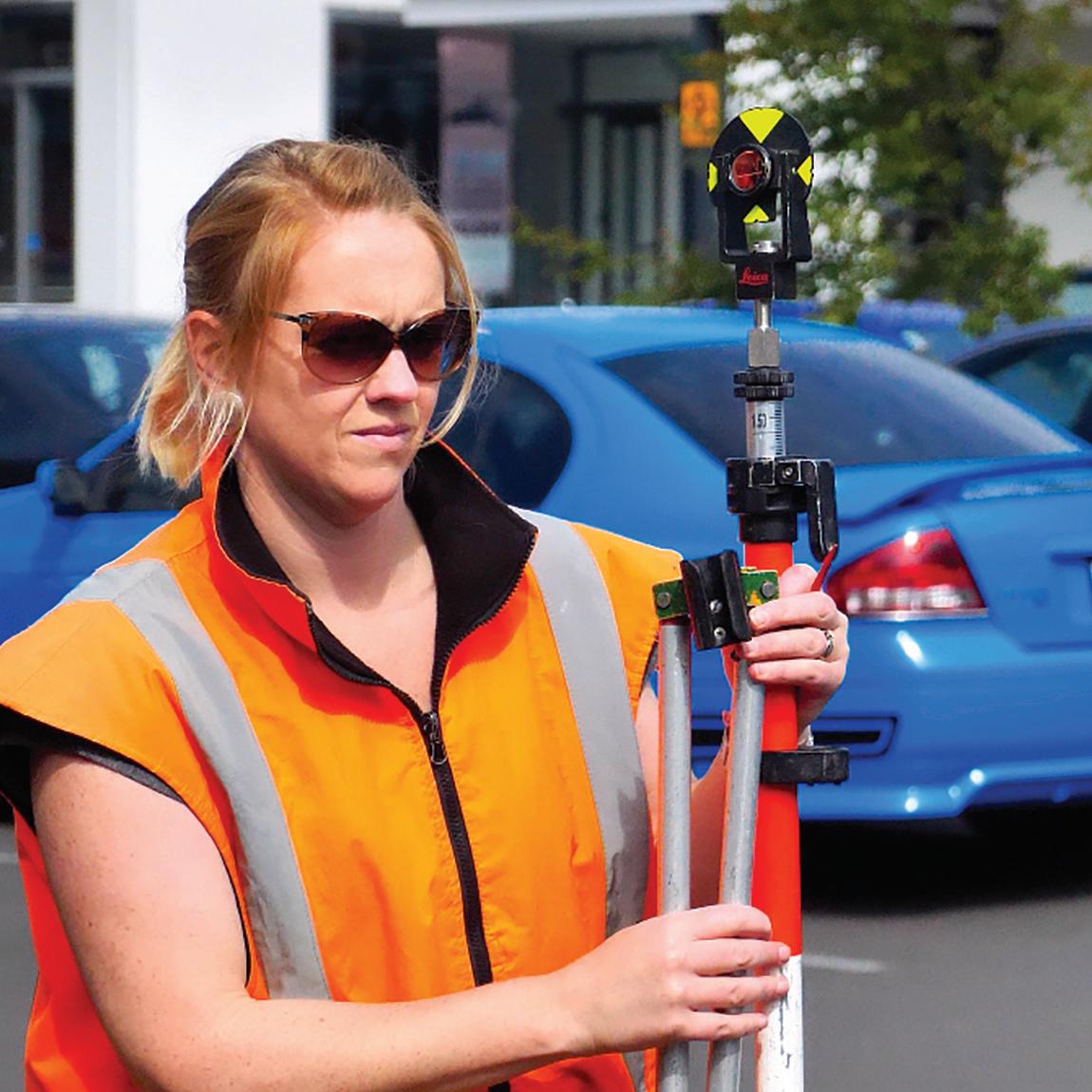
Women on the tools BCITO programme widens gender entry into construction
48 Auckland congestion warning Committee for Auckland calls for a clearer funding pathway
Safety and wellbeing
26 Beyond the checklist Where workplace health and safety risk actually lives
32 The conversation most men avoid A tradie on prostate cancer, silence and survival
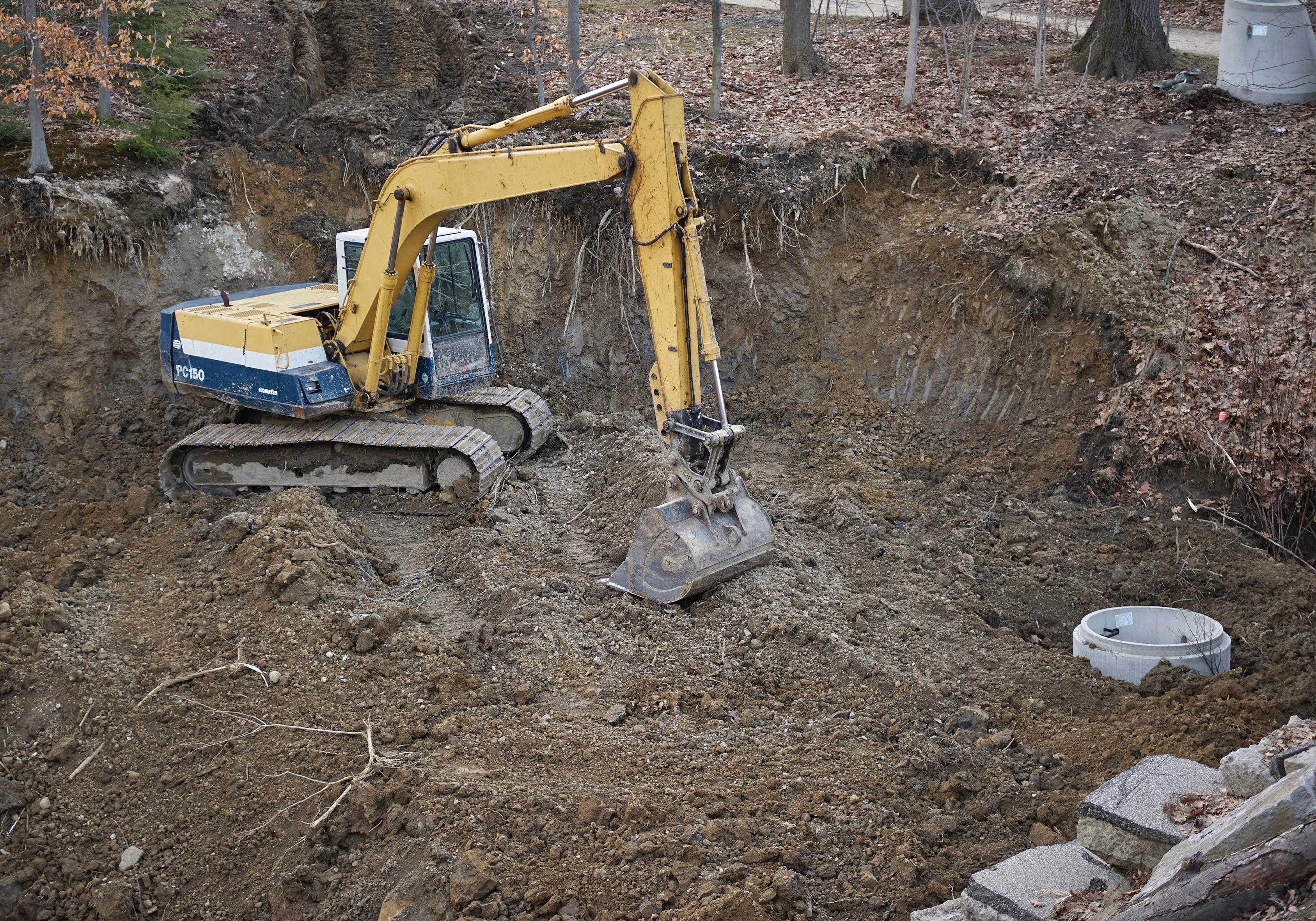
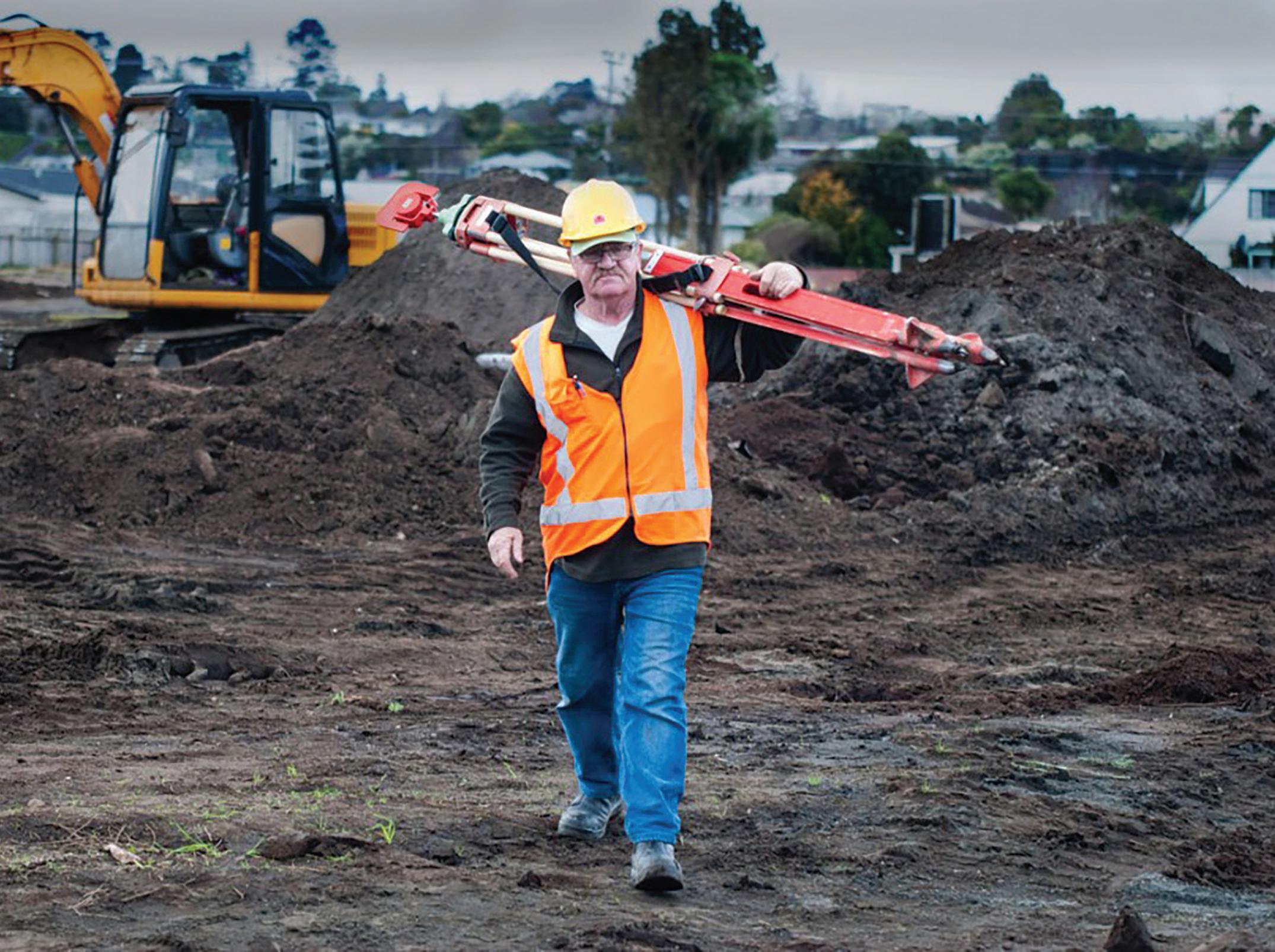
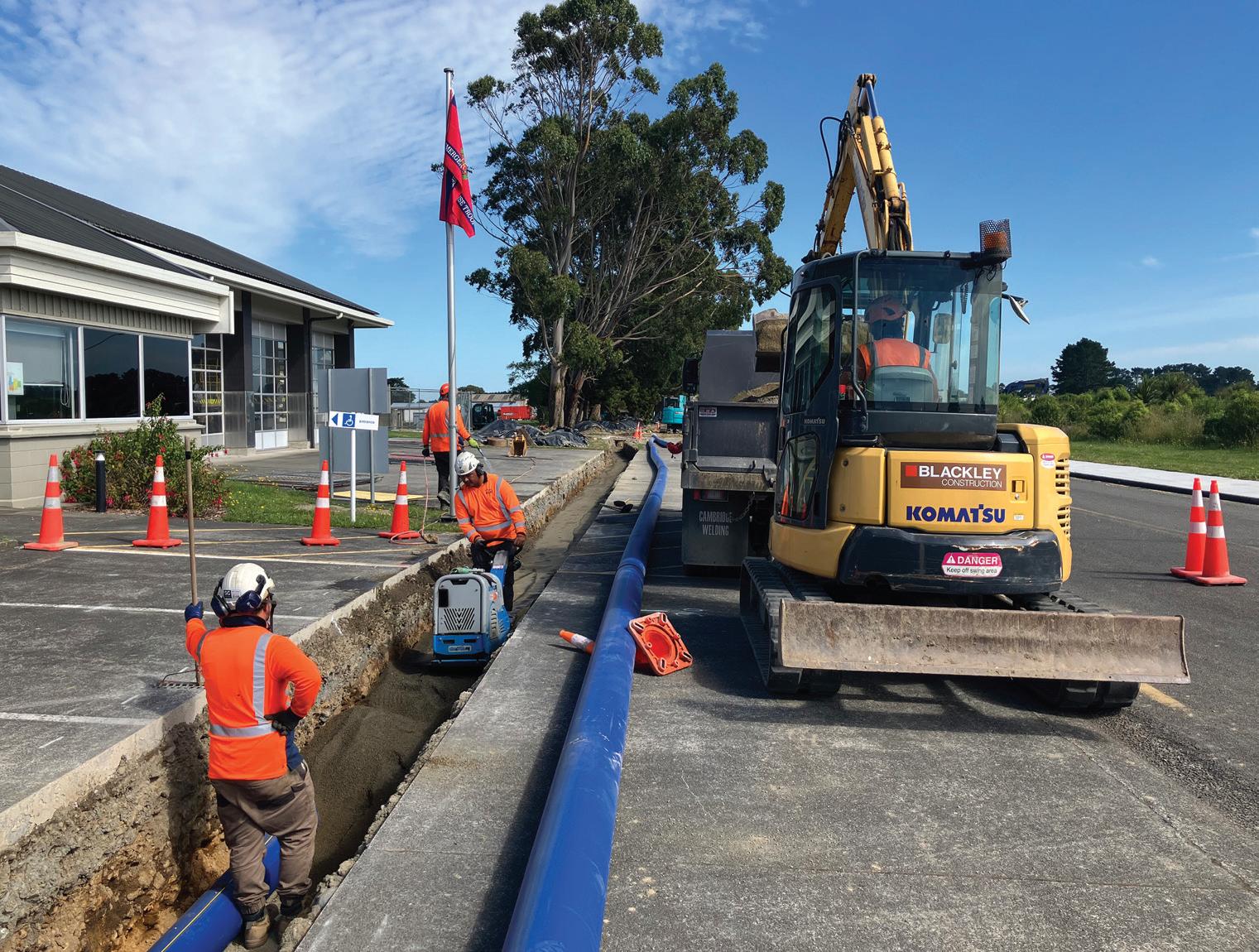
40 Think before you dig A mindful check on underground services saves lives
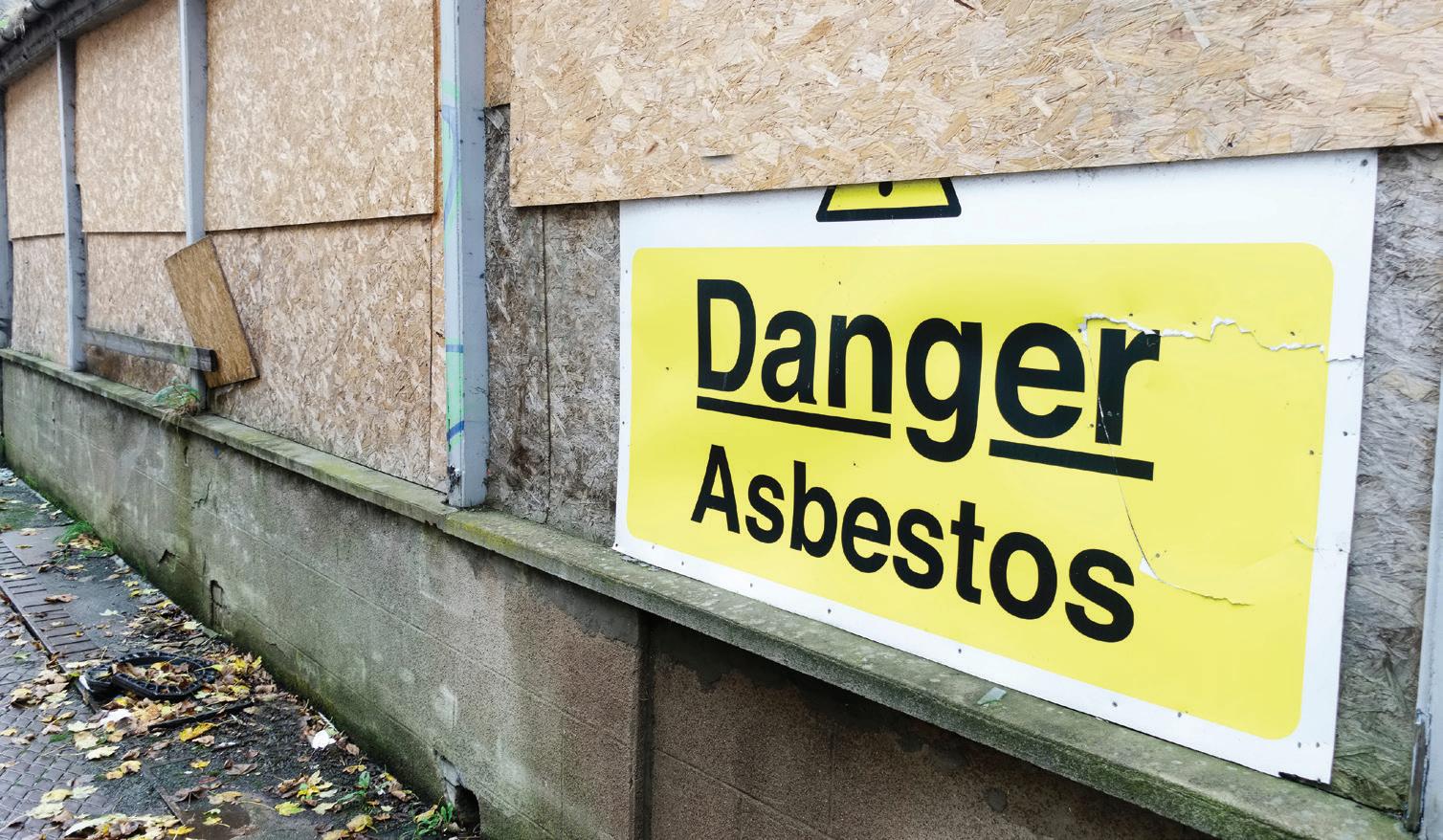
60 Asbestos still tight Current controls, where firms still trip on site
Materials and methods
Lintel design guidance Concrete NZ resource for masonry veneer construction
58 Curing through winter Practices that protect strength when temperatures drop
66
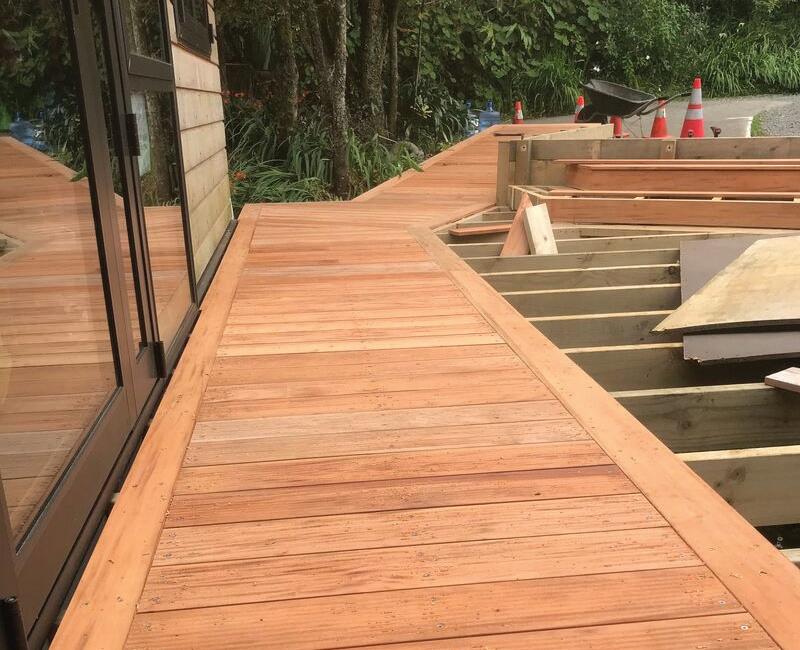
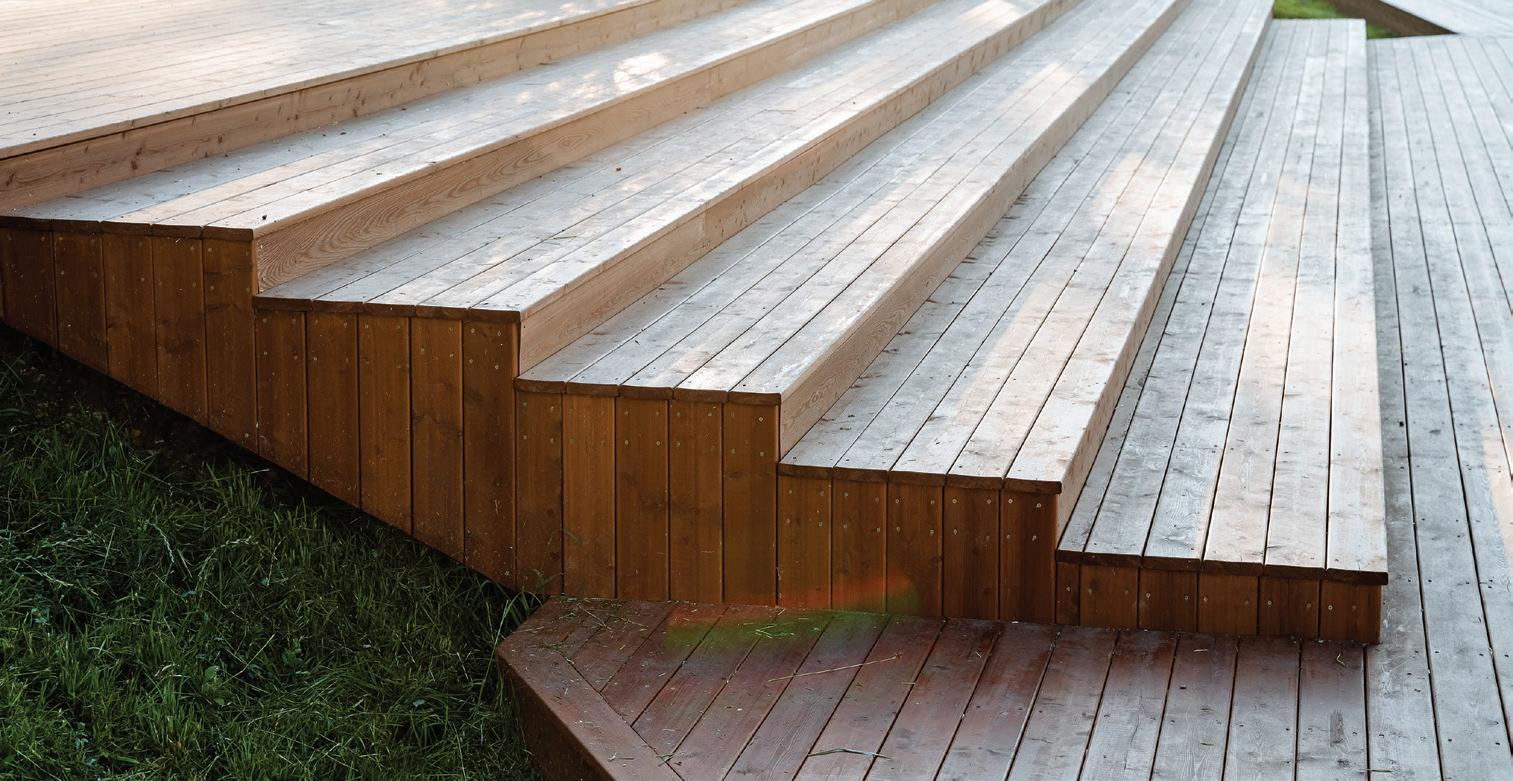
Decking that lasts Choices that hold up under New Zealand weather
74 Modular goes mainstream Where cost and community-build cases finally meet
36 Stronger together The sector's role beyond economic activity
44 Building in Wellington Wind, weather and ground demand more than drawings
48 Cheapest isn't best Why price-led roading procurement costs durability and lives
62 EVs pull clear Electric vehicles gain ground despite a soft market
82 Imports stay light Compliance keeps overseas materials off most NZ sites
Readers: Construction/building industry leaders and decision makers: government & trade organisations, site safe members, business owners and professionals in the industry.
Nationwide Distribution: Mailed directly to a carefully maintained list of decision makers and subscribers for 25 years.
Disclaimer
Builders and Contractors, a national trade newspaper targeted directly at New Zealand's building and construction industry. For some time we were aware that, although the building and related trades were generally covered individually by some trade journals, there was no amalgamated news link for trades as a whole, especially on a nationwide basis.
This void has been successfully filled by Builders & Contractors. Distribution is by way of various outlets: PlaceMakers, Mitre 10, Builders Hardware, Site Safe Members, timber companies, hire companies, together with our database direct mail drop to architects, draughting professionals, consulting engineers, building consultants, designers and local Councils. By these means we aim to reach one of the most powerful buying groups in the industry.
Cost Effective
Minimal Disruption Immediately Trafficable Removal of Trip Hazards
PREVIOUSLY 3.95 GWP
1.89 GWP
0.485 GWP
Locally made. Less distance. Fewer emissions.
PACIFIC™ and PACIFIC DCRB® are more than reinforcing steelthey’re a smarter foundation for New Zealand’s low-emissions future.
As steel emissions fall, origin matters. Imported reinforcing can travel thousands of kilometres, significantly increasing cradle-to-site emissions. Pacific Steel reinforcing products are produced locally, giving local scrap new life, shortening supply chains, and avoiding unnecessary transport emissions.
Local scrap. Local steel. Lower transport emissions. Coming to market in 2026. pacificsteel.co.nz
Taking care of business
Employment law protection where you need it most
ABOUT US
EAL has supported NZ employers since 1995 with clear, practical HR and Employment Law help. We focus on what employers need to do, offering tools that make managing staff simpler and safer. With a nationwide client base and a strong legal team, we deliver straightforward guidance and a cloud platform that keeps your business compliant and confident.
BUSINESS UPDATES NEWSLETTER
OUR PRODUCTS
• Employers Toolbox HR cloud
• Contracts & Agreements
• Employment Related Products
• Health & Safety
EXCLUSIVE FOR READERS:
Get 15% off our membership when you scan the QR code.
We publish newsletters which contain articles on any significant case law, legislative changes, employment law news in general, HR and Health & Safety. Individual articles can become out of date as the law changes, and archive articles may still be accessible when they no longer summarise the correct legal position or current best practice. Searches show the most recent article first, please check the date of the article you are reading. If in doubt please take advice about your particular situation before taking action. Employers Assistance 0800 15 8000.
All new products or product upgrades are also announced this way. Other services from third parties which we think may be of assistance to employers are also sometimes advertised.
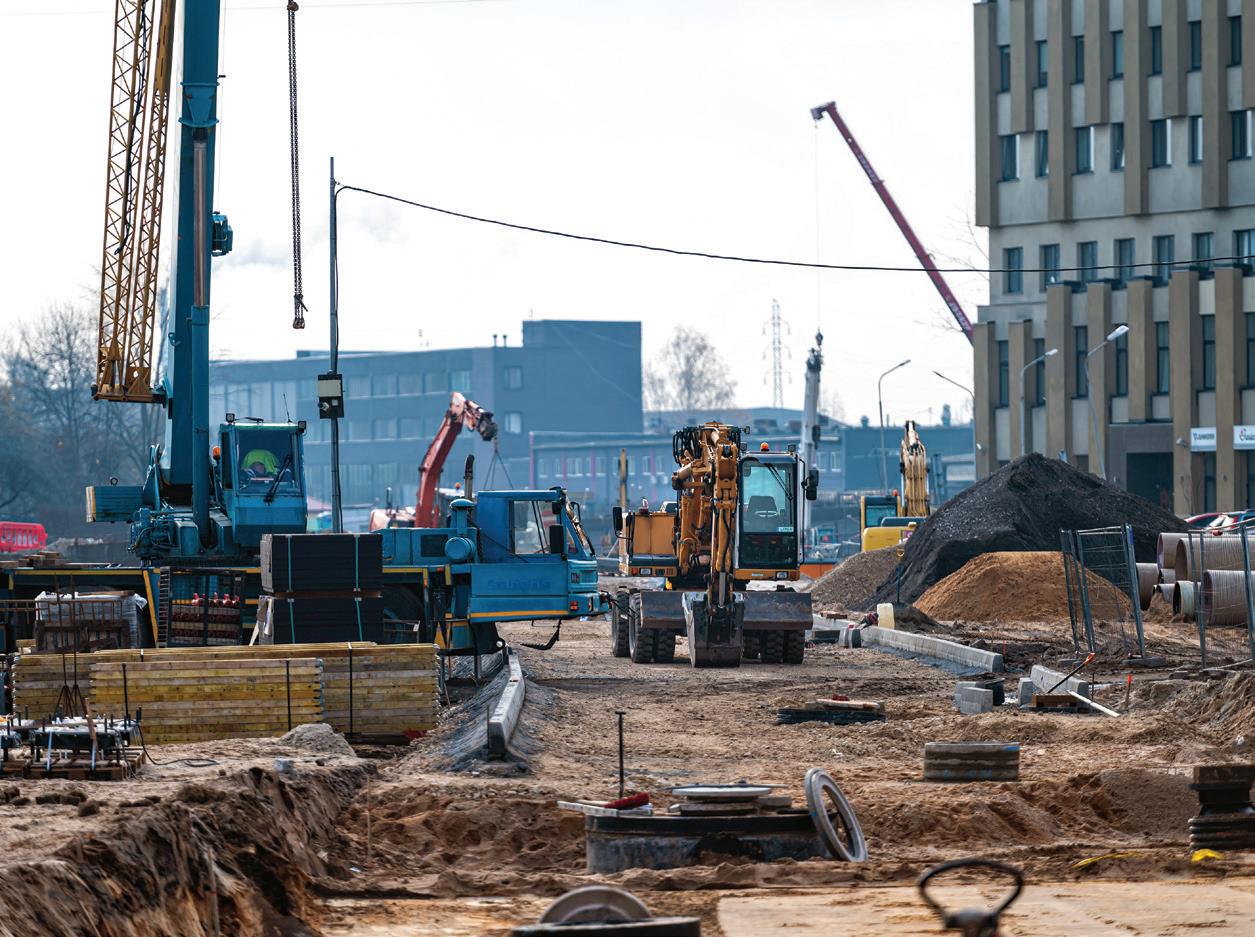
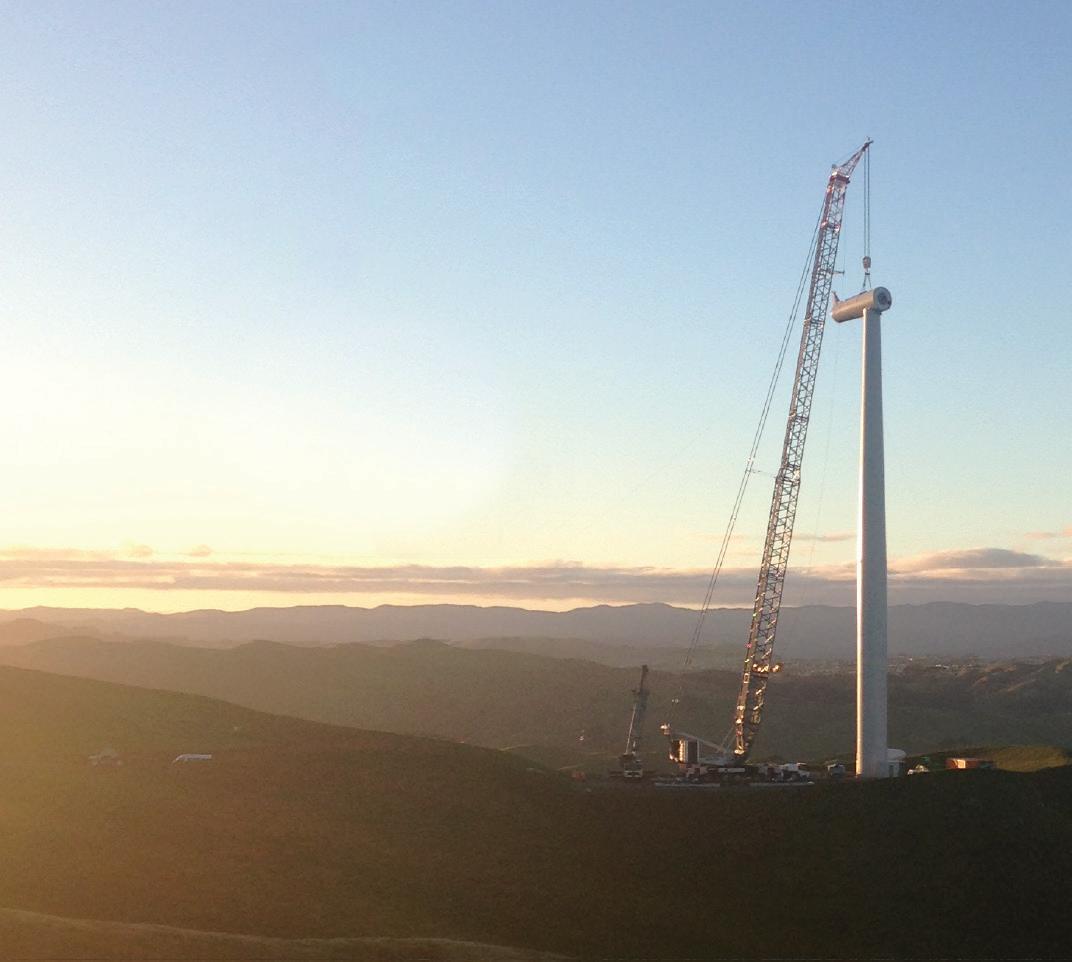
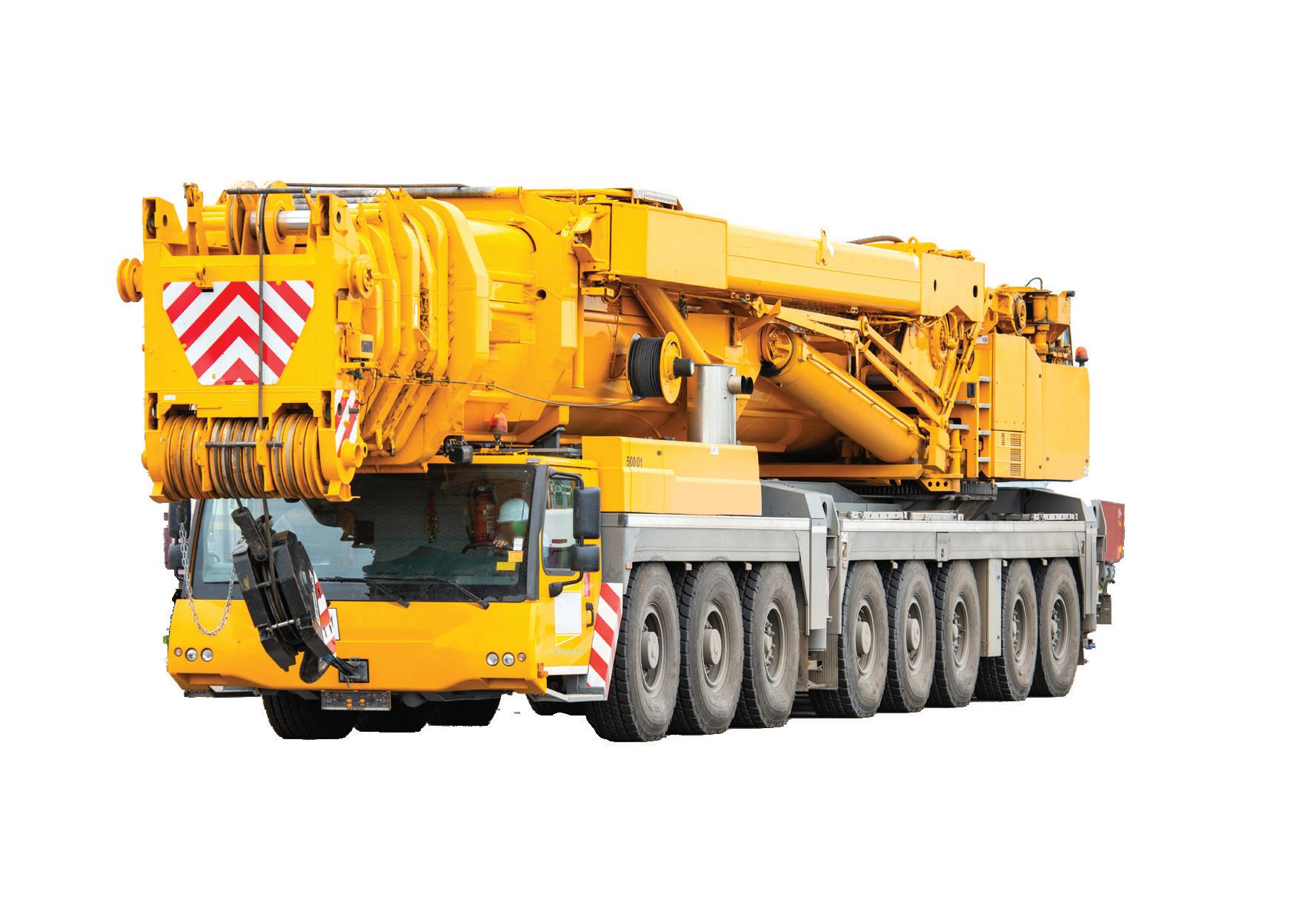
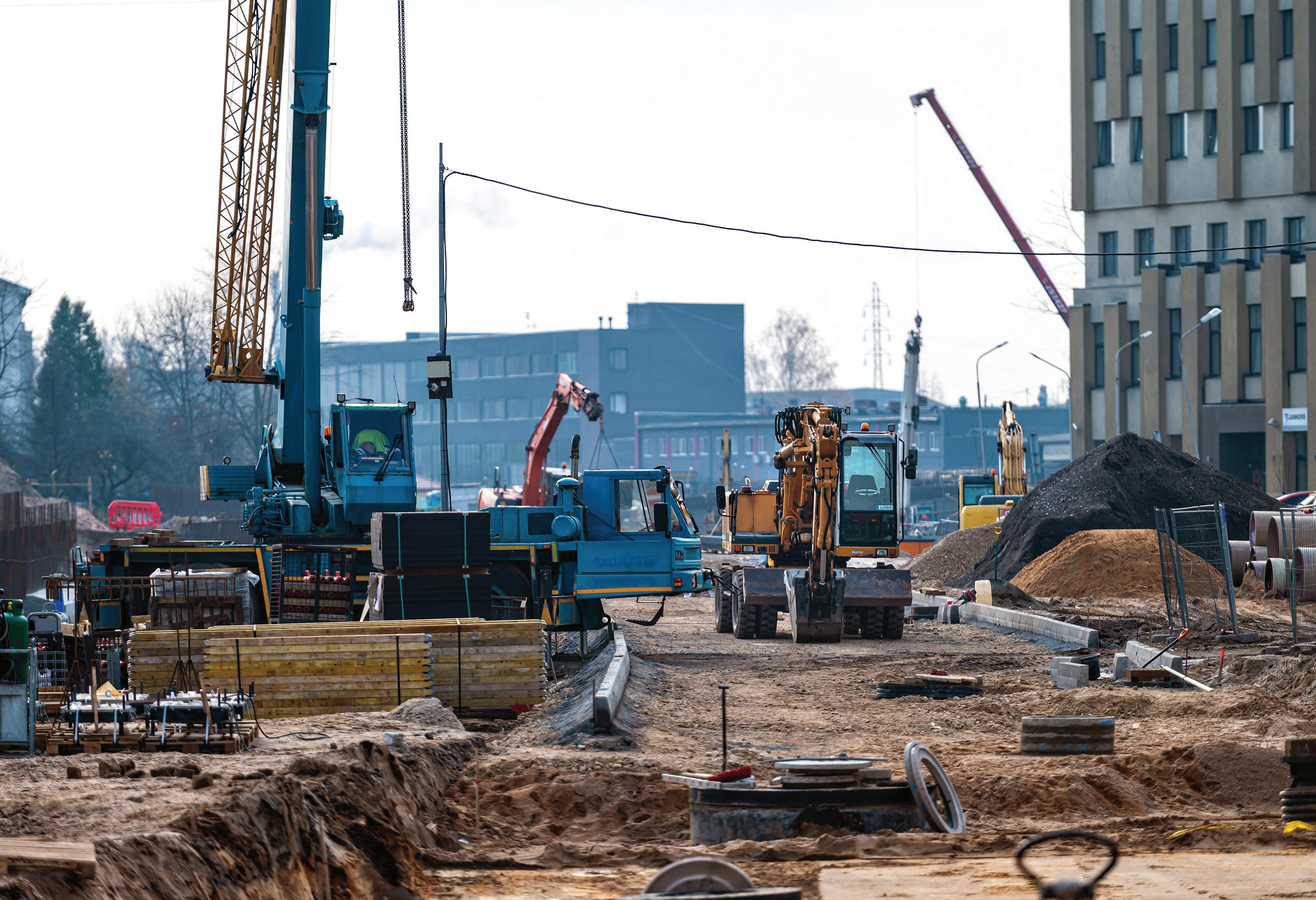
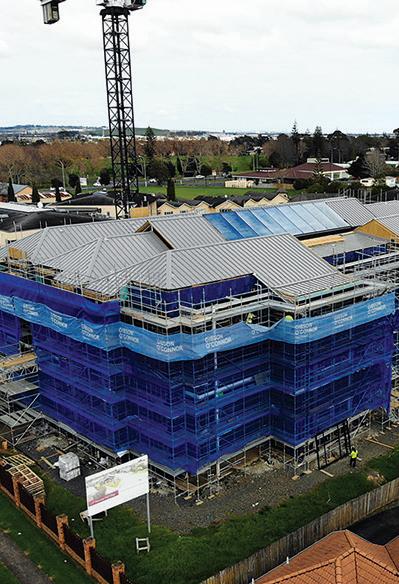
The nation’s construction slowdown is now clearly visible from above. Crane numbers have fallen to their lowest level in a decade while cost pressures begin to build again sector-wide.
The latest RLB Crane Index shows crane numbers falling from 116 in late 2025 to 102 in early 2026, which is a 12.1% drop that has pushed activity to its lowest point since 2016. Compared to the postpandemic peak, the drop is even more pronounced, with crane numbers down roughly 28% since 2022. Crane counts are one of the most reliable indicators of realtime building activity.
Associate director Bradley Coley says the number of long-term cranes fell to 102 in the first quarter of 2026. “The drop reflects the completion of several major projects, including aged care developments in Auckland and the removal of cranes from One New Zealand Stadium (Te Kaha) in Christchurch.”
“While construction activity remains subdued, we are moving along the bottom of the cycle. Lower interest rates and population growth are expected to support a gradual recovery,” he says. “Commitment beyond the design stage remains a major issue for the market, and even where projects do proceed, they are unlikely to reach construction in the near term.”
Non-residential construction continues to lag, with fewer commercial and largescale private developments entering the
pipeline. As completed projects drop out of the crane count, they are not being replaced at the same rate.
Construction costs are showing renewed volatility. QV data indicates fuel prices are a key pressure point, particularly for machinery-heavy trades. QV CostBuilder spokesperson and quantity surveyor Martin Bisset said fuel was the main cost driver right now.
“The increase in the price of diesel has had an immediate impact on areas such as site preparation, excavation and substructure work, where fuel is a significant input for machinery used in these operations. That’s where the most upward pressure is coming from.”
Residential construction is a different story. 37,813 new homes were consented to in the year ended March 2026, up 11% compared with the year ended March 2025, according to Stats NZ figures. “New home consents increased in the year ended March 2026, following decreases in each of the previous three years,” economic indicators spokesperson Michelle Feyen said.
Higher-density housing is driving much of the growth, with townhouses, flats and apartments leading the lift, while standalone houses have also edged higher. While consents do not always translate directly into construction, they remain a key forward indicator. As more projects move from approval to build stage, activity is expected to gradually pick up.
IRD activity increasing in construction – what it means for you
Inland Revenue has stepped up its activity in the construction sector, with a renewed focus on GST and PAYE compliance.
From late March early April, businesses may notice more direct contact where there are outstanding tax positions. This includes increased phone engagement and, in some cases, site visits across the country. These visits are positioned as a mix of education and enforcement, with a focus on helping businesses understand their obligations, get returns up to date, and address any tax debt. Areas to be aware of:
There is also a clear emphasis on PAYE. Inland Revenue has recently released a Revenue Alert highlighting concerns where PAYE is being deducted from wages but not passed on. This is being treated as a serious issue, particularly in sectors with subcontractors, variable labour, and cash flow pressure. It is an area likely to attract closer scrutiny.
Inland Revenue has also updated how it shares information about unpaid tax with credit agencies. Where significant debt exists and businesses do not engage after formal notification, Inland Revenue can now proceed to credit reporting more directly. This has practical implications, as it can affect a business’s ability to access finance, trade credit, and supplier terms. The key point
is engagement - once a Notice of Intent is issued, there is a 30-day window to respond or put arrangements in place before credit reporting occurs.
Alongside enforcement activity, Inland Revenue is promoting practical support tools, including the Inland Revenue Tax Toolbox, as well as seminars aimed at helping businesses stay on track. The message is not just enforcement, but also early engagement and support where needed.
For many, this is simply about tightening up processes and making sure everything is aligned. For others, it may involve working through legacy issues or cash flow constraints in a structured way.
For construction businesses, the key point is visibility. Inland Revenue is more present, more active, and more targeted in this sector than it has been in recent years.
A quick sense check is worthwhile:
• Are all GST and PAYE returns filed and up to date
• Is any tax debt identified, understood, and being actively managed
• Are payroll systems correctly handling deductions and payments
• Are contractor versus employee positions clear and well documented
It is also worth being clear on who is responsible internally. Where tax, payroll, and filing obligations sit across multiple people, gaps can emerge. A simple internal check on roles, systems, and reporting can often identify issues early.
If there are gaps, dealing with them early generally leads to better outcomes. Inland Revenue is typically more constructive where businesses engage before issues escalate. For many, this is simply about tightening up processes and making sure everything is aligned. For others, it may involve working through legacy issues or cash flow constraints in a structured way.
If you want a quick sense check or help working through anything, feel free to get in touch.
Logan Granger, Partner Johnston Associates
Mobile 027 283 8331 Call 09 361 6701 or email info@jacal.co.nz www.johnstonassociates.co.nz
MPs weigh in on biggest sector challenges
It’s no surprise that the building and construction sector sits at the centre of the election year debate. While parties differ in tone and ideology, common themes emerge: increasing housing supply, improving infrastructure delivery, lifting productivity, and creating greater certainty for builders and contractors navigating cyclical demand and rising costs.
At a practical level, the industry continues to face familiar pressures. Consenting systems are often described as slow and inconsistent, input costs remain volatile, and workforce shortages continue to constrain delivery. At the same time, governments broadly recognise construction’s impact on housing affordability, regional development, and long-term economic performance.
A key concern is pipeline stability. Whether through state housing programmes, transport projects, or private development, the sector relies on predictable work to sustain labour forces, support apprenticeships, and justify investment. When that pipeline weakens, the effects quickly flow through employment and supply chains.
There is also widespread agreement that productivity needs improvement. New Zealand’s construction sector has long lagged behind international benchmarks, and debate continues over the solution: regulatory reform, improved coordination between central and local government, or greater investment in modern methods and technology.
Te Pāti Māori views the sector through whenua, tino rangatiratanga, and local authority. Housing and infrastructure are seen not only as supply challenges but as questions of land governance and decision-making. The focus is on Māoriled housing, expanding papakāinga, and embedding Te Tiriti more deeply into planning and consenting, ensuring development delivers long-term benefits to whānau and communities.
Parties outside Parliament generally take more targeted approaches.
The Opportunities Party focuses on housing affordability through tax reform, land use efficiency, and economic incentives, while other minor parties emphasise specific levers such as infrastructure funding or regional development.
Overall, the sector sits under pressure but also at a potential turning point. While there is agreement on the need for more homes, stronger infrastructure, and a capable workforce, the pathway to achieving this remains contested.
Building a stronger system through faster, simpler regulation
Hon Chris Penk, National Party Minister for Building and Construction,
Much of our policy to-date has centred on residential construction to address New Zealand’s housing supply issues. Looking ahead, I want to turn more attention to the commercial construction sector and unlock the projects which shape the places where Kiwis work, learn and gather. There is more to understand about the barriers in this part of the industry, and where the government can make a practical difference.
New Zealand is months out from its next general election, and as we gear up for campaign season, it’s time to reflect on what has been achieved for building and construction and what comes next.
In a bid to give New Zealand’s notoriously sluggish building productivity a hefty push, I approached the portfolio with the mantra of making it easier, faster and more affordable to build. This meant addressing practical barriers slowing down projects, creating uncertainty and making it hard to invest.
From the outset, two long-standing issues came up repeatedly in conversations with the industry: building liability and the earthquake-prone building system.
On liability, the current framework has encouraged a culture of risk aversion. Our council Building Consent Authorities often carry disproportionate risk for defective work, which slows consenting and adds cost. We are changing that by moving to a proportionate liability model, where each party is truly held responsible for the work they undertake. This fairer system will speed up approvals.
To provide protection, designers will need appropriate insurance, home warranties will apply to new builds and major renovations, and disciplinary settings for Licensed Building Practitioners will be strengthened.
Councils will also be empowered to merge their consent functions, which will reduce duplication in the system and improve the consistency of how the Building Code is applied across New Zealand.
The second major reform has been the earthquake-prone building system. While well-intentioned, it has sadly proven too broad and ineffective. In some cases, buildings have been left empty or abandoned because compliance costs were too high. The focus will shift to higher-risk buildings, including certain concrete structures three storeys or higher and unreinforced masonry. Around half of the currently classified buildings will no longer be captured, while others will face more practical and affordable remediation requirements.
Strengthening will be based on factors like building type, height, location, and use. Lower risk regions will be removed from the system altogether. This approach aligns with international best practice and is expected to significantly reduce costs while keeping life safety at the heart.
Also working through Parliament right now is a scheme that will empower trusted tradies to sign off on their own work. Meanwhile, law changes that remove consents for granny flats up to 70 sqm and increase access to overseas building products are already in force.
Much of our policy to-date has centred on residential construction to address New Zealand’s housing supply issues. Looking ahead, I want to turn more attention to the commercial construction sector and unlock the projects which shape the places where Kiwis work, learn and gather. There is more to understand about the barriers in this part of the industry, and where the government can make a practical difference.
Overall, our goal is to support a system that delivers a high-quality built environment, efficiently. This term has laid a solid foundation, and the National Party looks forward to driving momentum and ensuring these changes are delivered well in practice.
Certainty, skills, and common sense for the building sector
Building a Stronger New Zealand: Certainty, Skills, and Common Sense Reform: As we head toward the upcoming election, New Zealand First remains focused on restoring a bit of good old fashioned common sense to government and that starts with recognising the construction sector for what it truly is: the engine room of our economy.
Every home, every road, every piece of infrastructure that keeps this country moving begins with the people who build it. And right now, those people are facing some of the toughest conditions in years.
Talk to any builder or contractor and you’ll hear the same themes: material prices that jump overnight, delays caused by endless paperwork, a workforce stretched thin, and project pipelines that rise and fall like the tide. These aren’t abstract policy problems they’re daily realities affecting businesses, families, and communities.
Cutting Red Tape and Fixing Consenting: One of the clearest messages we’ve heard from the sector is that the system has become too complicated to function. That’s why, as set out in the Coalition Agreement, we repealed the Natural and Built Environment Act 2023 and the Spatial Planning Act 2023. They were overly complex, expensive, and risked grinding development to a halt.
We’re replacing them with two new bills designed to simplify consenting, improve procurement, and make it easier to access building materials. On top of that, we’re rolling out a fast track, one stop shop consenting process for major regional and national projects because critical infrastructure shouldn’t sit in limbo for years.
And for everyday New Zealanders, we’ve made it easier to build small structures like granny flats up to 60sqm with only an engineer’s report. It’s a practical change that frees up families and helps ease pressure on the housing market.
Facing Sector Challenges Head On: We know the challenges you’re dealing with including but not limited to unpredictable supply chains, rising insurance costs, slow payment practices, and the constant struggle to find skilled workers. These pressures hit small and medium sized firms the hardest. Our reforms are aimed at giving you more certainty, more stability, and fewer hoops to jump through.
Investing in Infrastructure and Regional Growth: Construction thrives when the country invests in its future. That’s why New Zealand First has established a $1.2 billion Regional Infrastructure Fund to ensure rural and provincial communities get the assets they need to grow. This is backed by the new National Infrastructure Agency, which coordinates funding and connects investors with major projects giving the sector the long term visibility it has been asking for.
Strengthening the Workforce and Backing Local Industry: We’re maintaining the Apprenticeship Boost scheme and pushing for wage subsidies for employers who take on young, unemployed New Zealanders in trades training. And we’re backing local industry including requiring government departments to use New Zealand wool over synthetic alternatives in government buildings.
A Stable Foundation for the Sector: New Zealand First is committed to providing the balance, stability, and practical decision making needed for builders and contractors to get on with the job. You build the foundations of this country. Our job is to make sure the policy environment supports you every step of the way.
Cutting Red Tape and Fixing Consenting: One of the clearest messages we’ve heard from the sector is that the system has become too complicated to function. That’s why, as set out in the Coalition Agreement, we repealed the Natural and Built Environment Act 2023 and the Spatial Planning Act 2023. They were overly complex, expensive, and risked grinding development to a halt.
Construction sector needs stability, not stop-start policy
As the Member of Parliament for Manurewa, I know firsthand the importance of the building and construction sector. In 2023, when Labour was in Government, one in ten Kiwis worked in the sector, including thousands here in South Auckland. But the sector is also the backbone across New Zealand of jobs, infrastructure, and the cost of living.
When it slows, everything slows, from housing, productivity, regional growth, and opportunity for young people, too many of whom have left for Australia for jobs under this Government. What’s happening in New Zealand today - more than 20,000 jobs lost in construction, more than 750 construction firms liquidated in 2025 - is the direct result of this Government's policy decisions.
Labour has spent the last three years listening to industry, and it is clear this Government’s approach is flawed. Speed does not equal supply. The Government is pushing faster consents, less regulation, more overseas products, but shifting risk onto tradies and weakening oversight without fixing underlying capacity. Faster processes do not help if firms cannot afford to build or secure stable pipelines. A second trend is industry pain. Contracts are locked in, demand is soft, margins are tight or non-existent.
Big firms are cutting costs and restructuring, not expanding. Investment decisions are cautious, not confident. That means fewer apprentices, fewer new entrants, and less long-term capability. Finally, there’s a lack of resilience and not seeing government as a client. We need more resilient infrastructure, more maintenance, better planning, but the current approach is piecemeal. We are not seeing the scale of public investment or coordination needed to stabilise the sector. Instead, the Government are hoping the market will recover on its own.
The situation was bad before the current fuel crisis. Now rising diesel costs hit every site, every delivery, every subcontractor.
The Government’s response has only been operational: keeping fuel flowing, not helping firms absorb the cost shock. For construction, that means higher costs with no buffer. Projects get delayed, repriced, or cancelled. That feeds directly into fewer homes built and fewer jobs, and even higher cost of living.
Labour has spent the last three years listening to industry, and it is clear this Government’s approach is flawed. Speed does not equal supply. The Government is pushing faster consents, less regulation, more overseas products, but shifting risk onto tradies and weakening oversight without fixing underlying capacity. Faster processes do not help if firms cannot afford to build or secure stable pipelines. A second trend is industry pain. Contracts are locked in, demand is soft, margins are tight or non-existent.
By contrast, under the Labour Government during COVID, building and construction was treated as a critical industry. Labour moved quickly to get sites operating safely again, because stopping the sector would have long-term consequences. Labour backed the pipeline, with infrastructure investment and public projects to keep people in work. Finally, Labour supported firms to stay viable, so they could keep apprentices and skilled workers.
If we want more homes, lower costs, and good jobs, we need a Government willing to use every tool. The contrast is clear: this Government is focused on deregulation and hoping the market fills the gap. Labour focuses on stability, pipeline, and protecting capability. Labour won’t continue this Government’s damaging stop-start cycle. We’ll back construction, protect jobs, and give industry the confidence it needs to grow.
Arena Williams, Labour Party Spokesperson for Building and Construction
Hon Shane Jones, NZ First Spokesperson for Building and Construction
Let builders build: ACT's approach
Cameron Luxton, ACT Party
Spokesperson for Building and Construction
New Zealand's economic growth depends on a functioning building and construction sector. Every road, house, water pipe, power connection, and digital network requires skilled tradespeople and contractors to deliver it. The current regulatory environment, however, makes building slower, more expensive, and less predictable than it should be.
ACT's focus is on reducing unnecessary compliance costs, attracting private investment, and ensuring infrastructure decisions are driven by need rather than politics.
Anyone working in construction knows that New Zealand pays more to build than it should. One contributor is our closed approach to building products. ACT has already made progress here – through the Overseas Building Products Amendment Act, MBIE has now issued recognition notices covering more than 128,000 products approved under Australia's WaterMark scheme, meaning Building Consent Authorities must accept them as compliant. Previously, builders had to individually demonstrate compliance for each product when applying for consent. This added cost and time for no good reason. Every dollar saved in compliance is a dollar that can come off the price of a new home for a Kiwi family.
One of the most common frustrations in the sector is time lost waiting on inspections for straightforward work. ACT is backing changes that would allow approved plumbers and drainlayers with a proven track record to certify their own work, which is the same approach electricians and gasfitters have had for years. With around 16,000 standalone houses consented in 2024, freeing up that bottleneck makes a real practical difference. Alongside this, we're strengthening the disciplinary and complaints processes across licensed trades, so that as more responsibility shifts to practitioners, there are clear standards and accountability to back it up.
Consenting remains a significant constraint, too. The Resource Management Act has contributed to delays, uncertainty, and higher costs across the sector. ACT is working toward a property-rights-based replacement that provides clearer rules and faster decisions. The principle is that development should be able to proceed where it doesn't harm others' property or the environment.
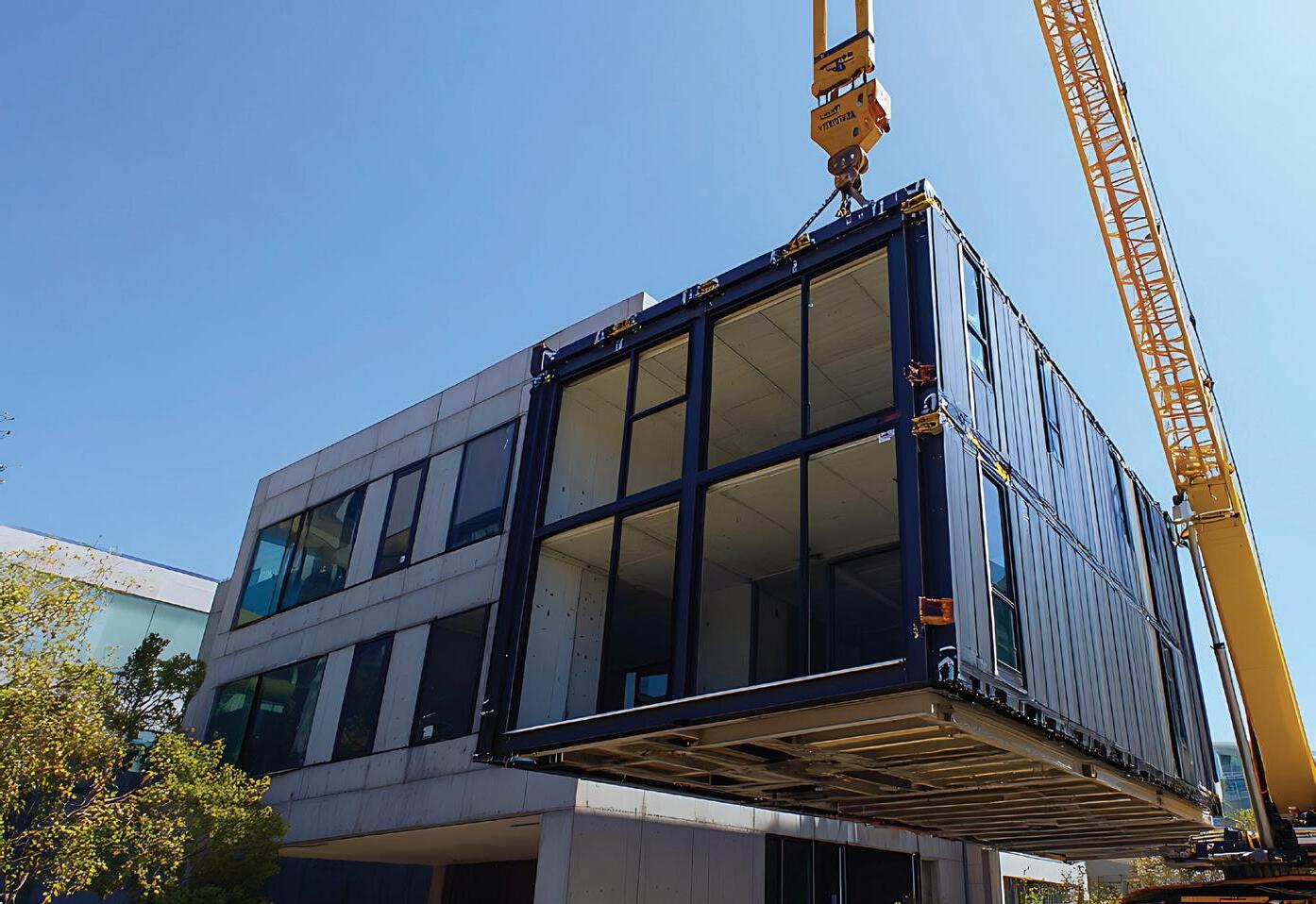
Regulation also needs to keep up with how construction is changing. Modern methods including prefabrication, modular housing, minor dwellings, and compact homes can contribute to addressing the housing shortage. Where builders are using safe, proven, and cost-effective methods, the regulatory system should not put unnecessary barriers in the way.
The building and construction sector contributes enormously to New Zealand, and it deserves a policy environment that reflects that. ACT's focus is on reducing the friction that drives up costs and slows delivery, so the people who actually build this country can do their best work.
Anyone working in construction knows that New Zealand pays more to build than it should. One contributor is our closed approach to building products. ACT has already made progress here – through the Overseas Building Products Amendment Act, MBIE has now issued recognition notices covering more than 128,000 products approved under Australia's WaterMark scheme, meaning Building Consent Authorities must accept them as compliant.
Now is the time for rapid electrification
Julie Anne Genter, Green Party Spokesperson for Building and Construction
New Zealand’s construction sector is facing a period of both challenge and opportunity.
From rising costs to workforce shortages that continue to test the industry, these pressures present a powerful opportunity to innovate and transform. New Zealand’s building sector has a crucial role to play in helping to accelerate the transition to a low carbon future.
Energy efficiency just makes sense. Over the lifetime of a building, it means lower operating costs, as well as lower emissions. In a time of rapidly rising oil prices, and potentially future shortages of diesel, investing in electric machines and adopting construction materials and techniques that reduce fossil fuel use is essential.
A recent report from the New Zealand Green Building Council shows that New Zealand can cheaply and securely close its energy gap with hot water heat pumps, rooftop solar and batteries, and it will be at much lower cost to households than relying on imported Liquefied Natural Gas (LNG).
The steps towards decarbonisation are economically viable in the long-term, and The Green Party believes government has a key role to play in supporting the building industry and households to make this transition through grants, low-cost loans, training and government procurement. We can encourage and support rapid industrial decarbonisation in the building and construction sector and support Kiwis to electrify at home, with ideas like:
• The Clean Power Payment, which we campaigned on last election, that would have expanded our Warmer Kiwi Homes scheme to remove the upfront cost barriers to home solar, batteries, hot water heat pumps, and residential deep retrofits that cut power bills and get households off gas.
• A similar proposal that has been developed by the excellent folks at Rewiring Aotearoa and Local Government NZ is the Ratepayers Assistance Scheme (RAS) which would allow homeowners to access low-cost finance that could be used for electric appliances and home solar.
• Restoring something like the Government Investment in Decarbonising Industry (GIDI) Fund established under the last government and beefing up EECA to provide more grants and loans to business to make investments that reduce fossil fuel reliance.
• Reinstating the Clean Car Discount and a new programme for heavy vehicles to increase accessibility to electric or other zero emission vehicles.
• Return to and accelerate the work done in the last two terms of Government on the Building for Climate Change programme and support deployment of software tools that make it easier for building designers to test the carbon impact and cost of different materials and design choices.
• Working with the building industry to find solutions to reduce building waste to landfill. Often a bit more support for systems design can reduce materials needed and the off cuts which need to be sent to landfill.
We already have a lot of available knowledge and technology to reduce fossil fuel use and embedded carbon in the building sector. Now more than ever, government need to step up to make it possible for the sector to reduce waste, reduce emissions and reduce ongoing costs for New Zealanders across the board.
Our vision is for every Kiwi to have access to healthy, secure and affordable housing, without compromising the environment. This vision includes freedom of mobility, to ensure that everyone can safely, conveniently and independently get where they need and want to go with minimal impact on the planet. Therefore, we are calling for a national plan to electrify homes, transport and industry using renewable energy.
Climate action is an investment in productivity, and the best way to reduce costof-living and cost of building in a fossil fuel crisis. All that is missing is political will, and the Green Party have demonstrated over the last few decades our ability to lead on and implement practical policies that deliver for people across New Zealand.
From rising costs to workforce shortages that continue to test the industry, these pressures present a powerful opportunity to innovate and transform. New Zealand’s building sector has a crucial role to play in helping to accelerate the transition to a low carbon future.
What is the actual risk?
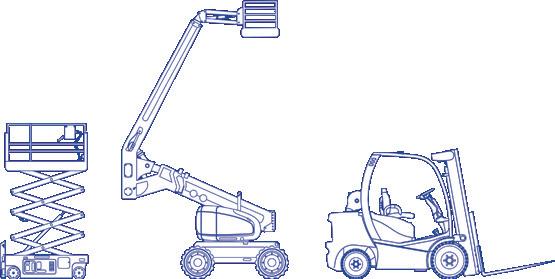
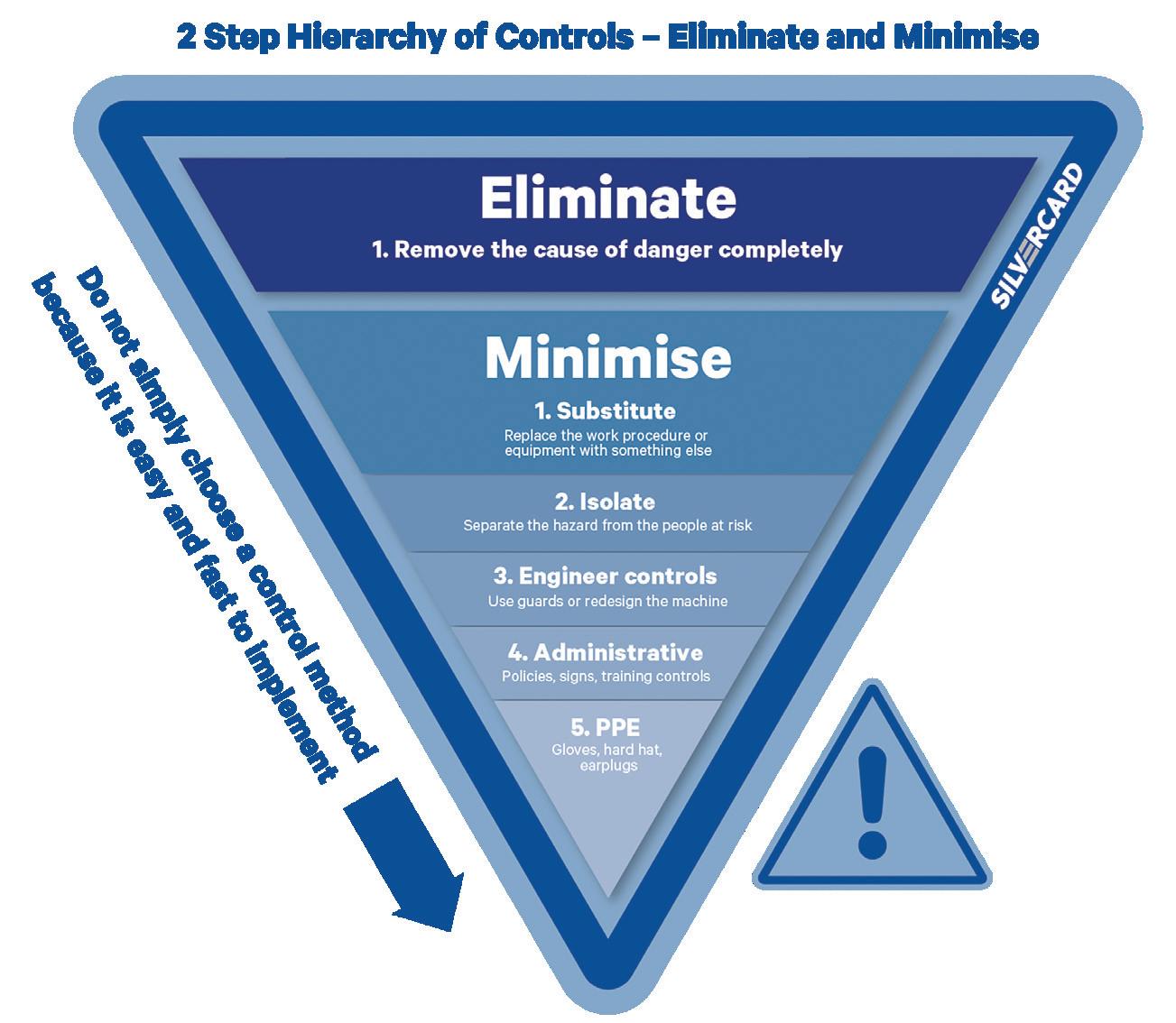
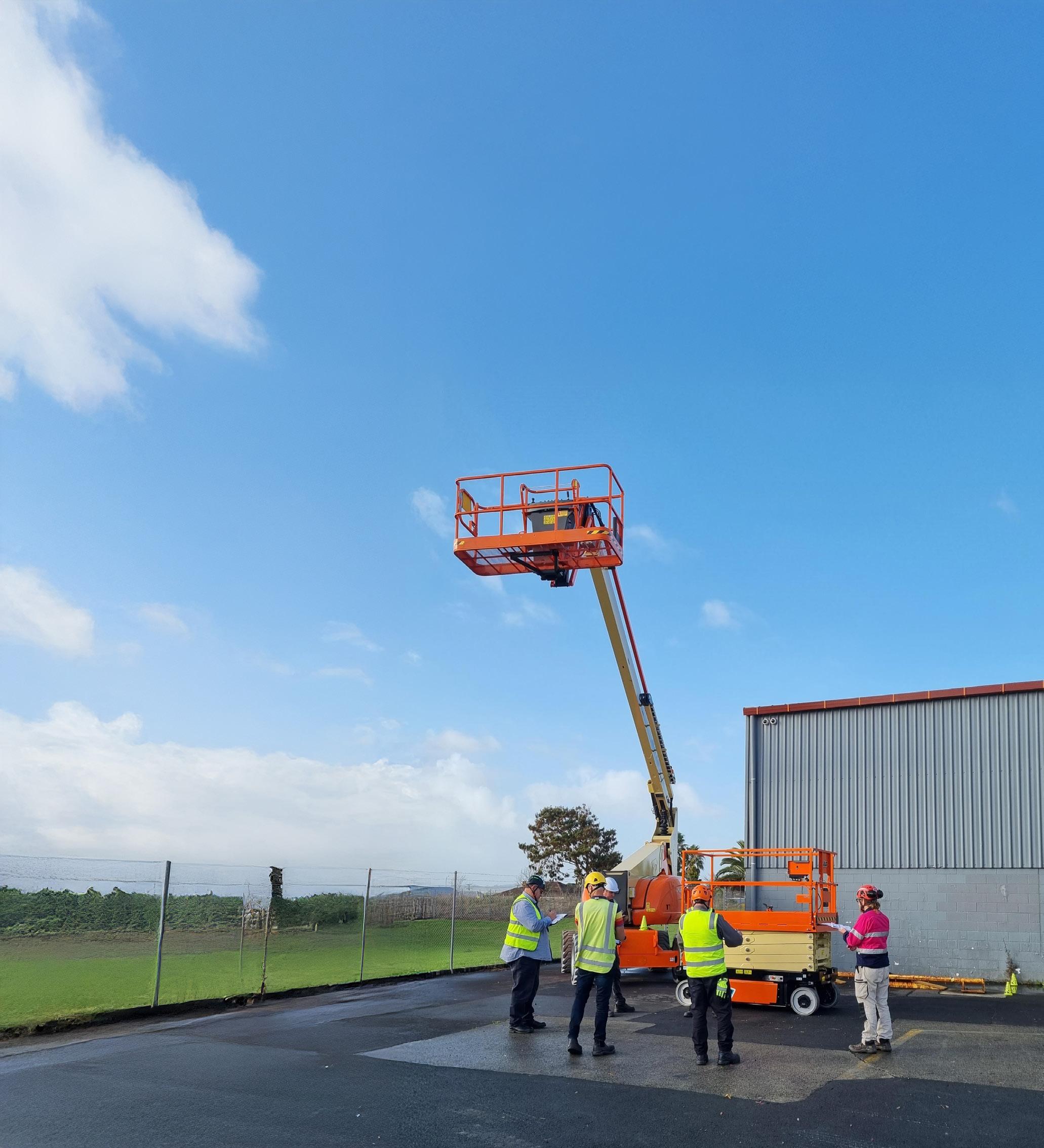
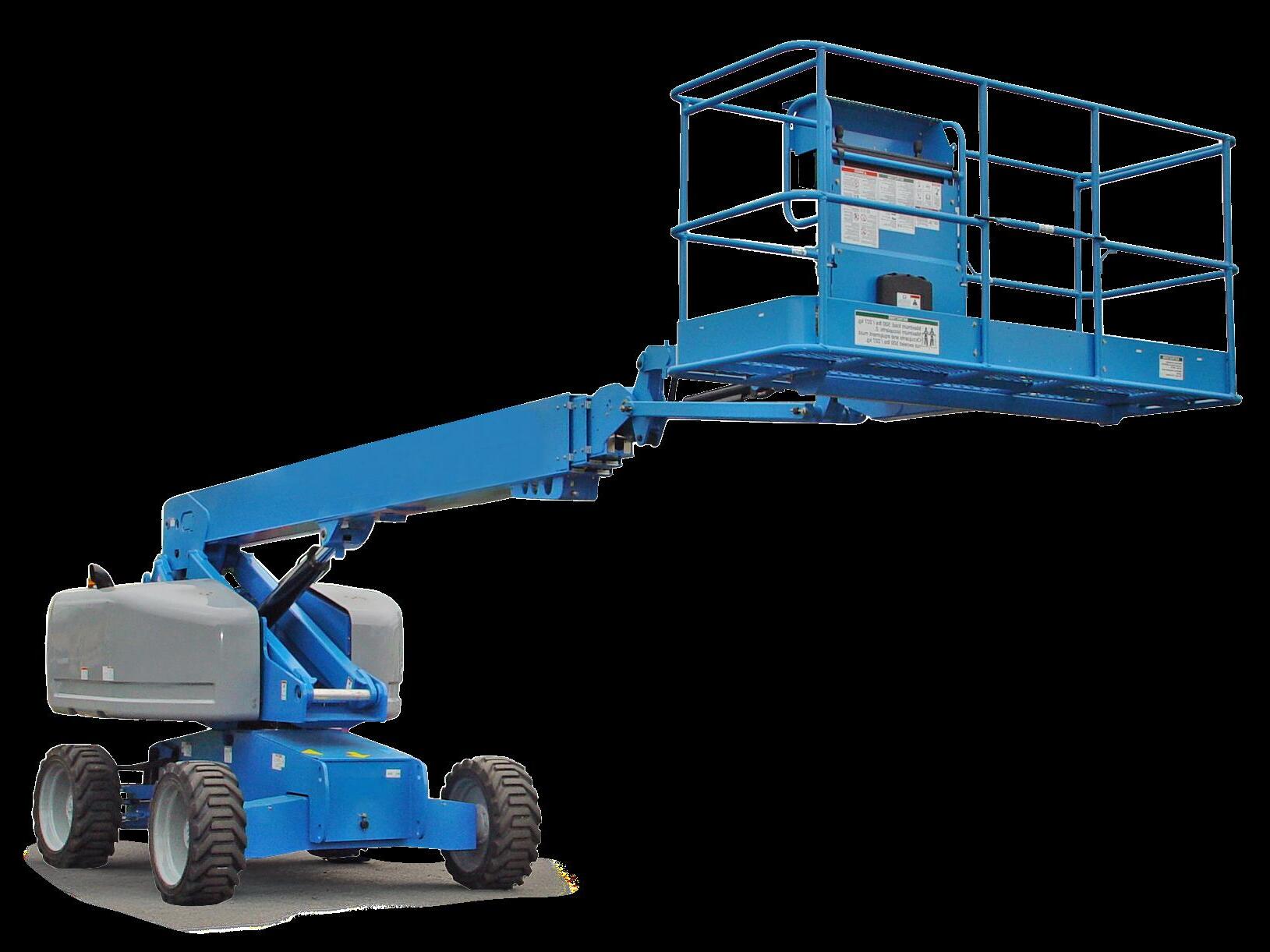
Silvercard MEWP Competent Operator training provides operators with the knowledge, skills, and behaviours required to operate a MEWP safely. It also provides assurance to employers, workmates, and clients that the operator is competent and able to work safely around others.
Safe and competent MEWP operation relies on the following key points:
• Seek professional advice to ensure you select the right machine for the job. Saving costs will not protect you in the event of an incident or investigation.
• Ensure you and your team are trained to be competent operators and understand how to select the correct machine. This is a requirement of the Best Practice Guidelines (BPG).
• Refresh your training at least every 3 years, or more frequently if you are not a regular user of a particular type of MEWP. This is a requirement of the BPG.
• Verify the competency of operators on site. Untrained operators significantly increase the risk for everyone.
• All safety information, warnings, signage, and instructions on MEWPs in New Zealand are in English. Operators must be able to read and understand this information to operate safely.
• Carry out a job risk assessment/task analysis before starting work. This must include ground conditions, overhead
hazards, weather (especially wind), nearby services such as powerlines, and a rescue plan. Communicate your planned activities and control measures to those around you.
• Set up appropriate exclusion zones to protect others from machine movement and falling objects.
• Never rely on a previous operator’s checks or setup. Always carry out a preoperational inspection before first use of the day and when taking over a machine.
• Always check and use the logbook. This is a requirement of the BPG.
• Do not use a machine with a safety fault. This places your health, and your life, at serious risk.
• Ensure the machine is set up correctly, including outriggers or stabilisers where fitted, and that ground conditions are suitable for safe operation.
• Do not exceed the rated capacity of the platform, including tools and materials.
• The platform guardrails are the primary fall protection system on a MEWP. Do not
Silvercard are raising the bar for MEWP and Forklift
lean over or reach beyond them. If you cannot reach the work safely, you are using the wrong machine or setup.
• The use of a harness and lanyard must be appropriate to the machine type. In boom lifts, they are typically required to prevent ejection caused by the catapult effect from rapid or abrupt movement of the boom. In scissor lifts, a harness is generally not required unless a specific risk has been identified and assessed.
• Be aware of dynamic forces. A fall while connected can introduce side loading, and some machines (particularly scissor lifts) have low side force limits which can affect stability.
• Position the machine correctly for the task. Where force is applied, consider working from more stable areas such as the ends of a scissor lift rather than sides.
• Maintain safe distances from hazards, including powerlines, always follow minimum approach distances.
• Maintain constant situational awareness. Always look up and around when operating the MEWP. Many incidents, including crush injuries, occur due to failure to identify surrounding hazards.
We’re here to help, contact a Silvercard Trainer near you for advice.
From one phone call to a 30-strong forum: truck loader crane sector gains momentum
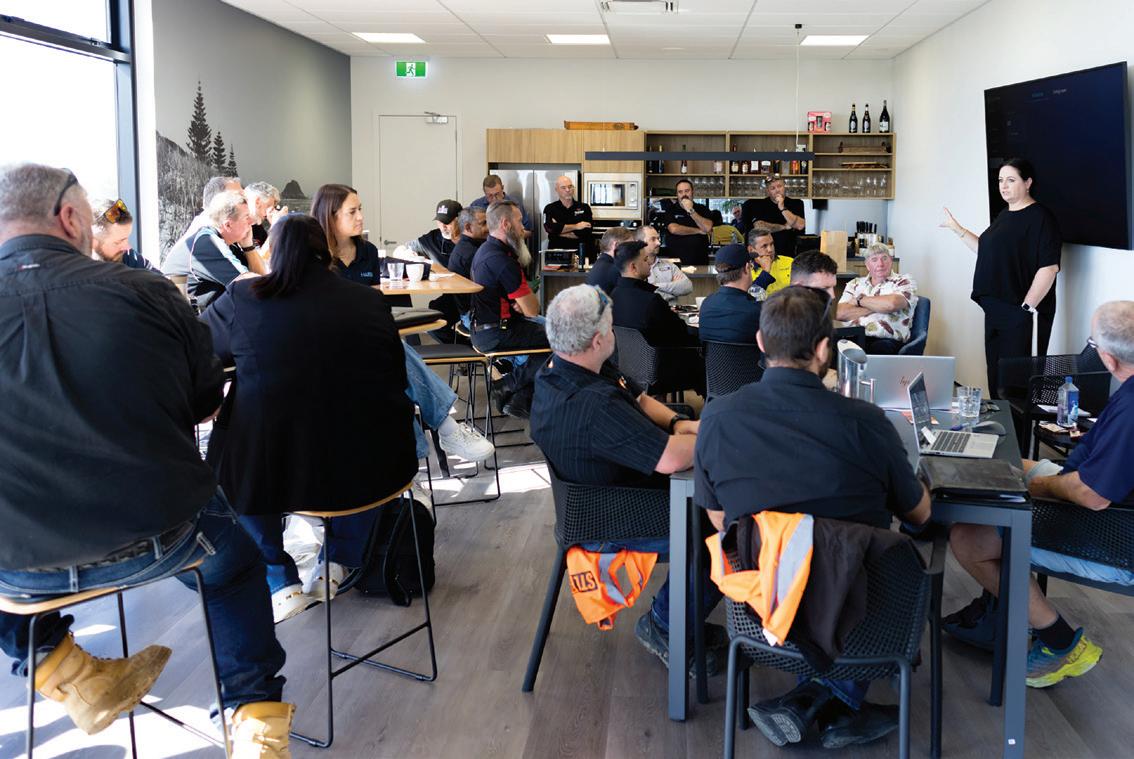
The Crane Association of New Zealand’s recent Truck Loader Crane Forum, held on 30 April in Tauranga, marked a significant step forward for a vital and fastgrowing part of the industry.
Hosted by McLeod Cranes, the event brought together a diverse cross-section of operators, businesses, and stakeholders for a highly practical and forward-focused discussion— and set the tone for what comes next.
First, credit must go to the host. McLeod Cranes generously opened their premises for the forum, and Scott McLeod and his team went above and beyond to ensure the day ran smoothly. As a long-time supporter of the Association, Scott’s commitment to the industry was on full display, with attendees made to feel genuinely welcome from the moment they arrived. That level of hospitality helped create an open and collaborative environment that carried through the entire forum.
Interestingly, the forum itself was sparked not from within the Association, but from outside it. Initial contact came from a nonmember organisation—PlaceMakers—seeking guidance and support around truck loader crane operations. Their enquiry covered both general best practice and more specific needs around training and competency. That outreach highlighted a clear gap in the sector,
and more importantly, a strong appetite for better connection and shared understanding.
“We’ve known for a while that this part of the industry needed more focus, so when PlaceMakers reached out, it was the trigger to get moving” said Sarah Toase, CEO of CANZ. There’s always more we want to do than we have capacity for, but the level of demand from industry—and how well it aligned with our own goals—made it clear this needed to jump up the priority list. The response since has been hugely positive.”
Since then, PlaceMakers has joined the Crane Association, but the significance of that first interaction goes beyond membership. It reflects a broader reality: the need for industry-wide engagement that extends
Hosted by McLeod Cranes, the event brought together a diverse cross-section of operators, businesses, and stakeholders for a highly practical and forward-focused discussion—and set the tone for what comes next.
beyond traditional boundaries. In fact, the majority of attendees at the forum were nonmembers—something the Association sees as a positive.
The forum itself centred on three key areas.
The first was the Approved Code of Practice (ACOP) for Cranes, with a specific focus on the truck loader crane section. Through workshopstyle discussions, attendees explored what improvements are needed to make this section more relevant, practical, and aligned with modern operations. There was strong consensus that the ACOP must better reflect the realities of truck loader crane work, particularly in dynamic environments such as residential construction sites.
Training and competency formed the second major theme. Participants discussed current gaps in training pathways and the need for clearer, more consistent standards across the sector. The conversation also touched on the introduction of skill standards, and how these could support a more structured and recognised approach to capability.
As part of this discussion, Crane Association CEO Sarah Toase provided an overview of the rapidly changing vocational education landscape in New Zealand. Her briefing highlighted how recent reforms have impacted training delivery—not just for truck loader cranes, but for the crane industry as a whole.
The third area of focus was ongoing engagement—specifically, the idea of hosting events and forums around the country. There was strong interest in continuing these conversations at a regional level, with potential sessions dedicated to specific topics within truck loader crane operations. The appetite for practical, face-to-face learning and knowledge-sharing was clear.
One issue that generated particularly robust discussion was the intersection between truck loader crane operations and residential construction. The Approved Code of Practice for Roles and Responsibilities in Residential Construction was identified as highly relevant, especially given the risks associated with lifting and delivering materials onto building sites.
A key challenge is the level of preparedness on-site. In many cases, builders and site teams lack the planning, understanding, or
competency required to safely receive loads delivered by truck loader cranes. This creates a significant risk—not just for operators, but for everyone on site.
As a direct result of the forum, this issue will now be tackled on multiple fronts. This includes contributing to the development and application of the roles and responsibilities ACOP, as well as engaging with building industry associations to improve awareness and expectations on-site. There is also early discussion around developing a micro-credential for dogmen, tailored specifically for builders receiving loads in residential environments.
Importantly, this is not a one-off conversation. Future Truck Loader Crane Forums are already being considered to continue unpacking these challenges and working towards practical solutions.
The strength of the forum lay not just in the topics discussed, but in the people in the room. Attendees included truck loader crane operators, fleet managers, manufacturers, crane companies running truck loader cranes, and owner-operators. There were also individuals who had retired from the industry but returned specifically to contribute to the discussion—bringing with them a wealth of experience and perspective.
This diversity created a genuinely valuable exchange of ideas. Different parts of the industry, often operating in isolation, were able to come together, compare experiences, and identify shared challenges. T By any measure, the forum was a success. It demonstrated both the demand for greater support in the truck loader crane sector and the willingness of industry participants to engage constructively in shaping that support.
For the Crane Association, it reinforced an important principle: effective industry leadership starts with listening. Whether members or not, the voices of those working in and around truck loader cranes are critical in guiding the development of standards, training, and resources.
If this first forum is anything to go by, there is strong momentum behind this part of the industry—and a clear opportunity to build something that delivers real, lasting value
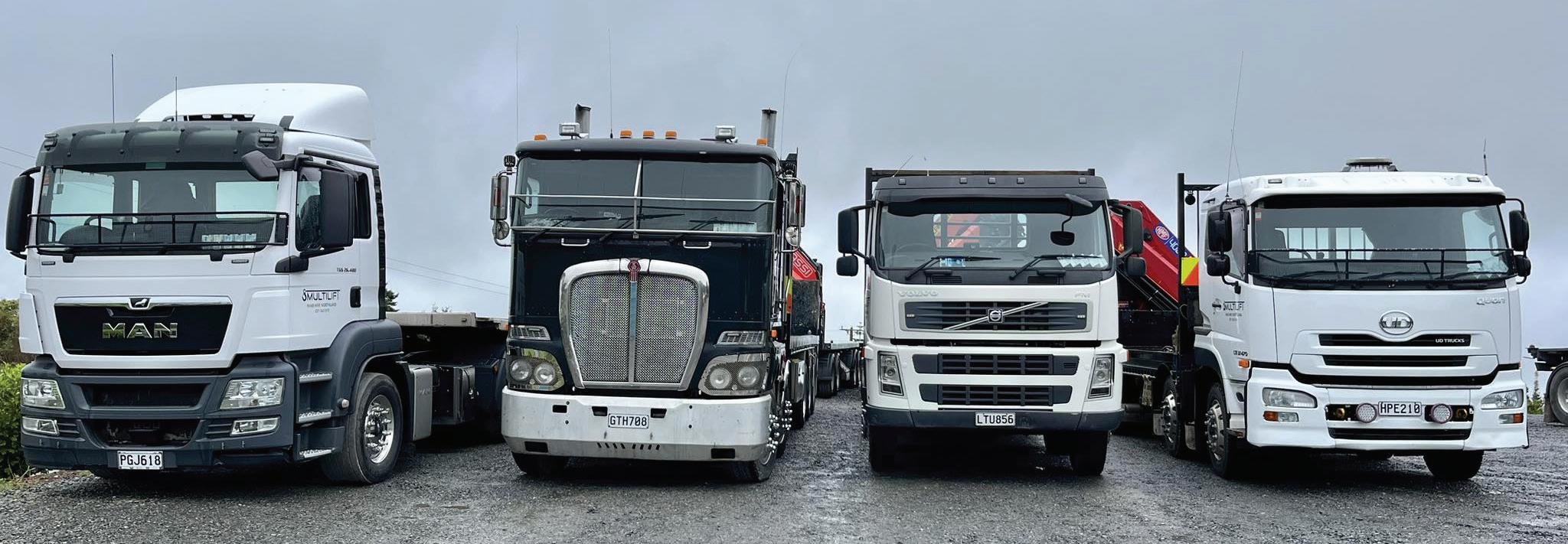
We have a complete range of trucks and machinery that can tackle anything.
Our modern fleet of trucks comprise of everything from Bulk Tippers, Curtainsiders, Flat Decks, Livestock units and more.
We have a complete range of Contracting Machinery that can tackle anything from Subdivisions to Quarry work.
We supply all types of Gravel, Aggregates, Agricultural Lime, Fertilisers and Dolomite.
We can do anything
Enabling the success of others by connecting people and products
Our Services
General Freight
Bulk Cartage
Stockfeed
Storage
Fertilisers
Livestock
Dolomite
DX50
Safe, reliable, professional
Looking for unparalleled electrical services in the Waikato region? Rivertown Electrical is your go-to, specialising in a wide range of electrical solutions.
Whether you need domestic, rural, commercial, or industrial services, our skilled electricians are ready to deliver toptier and unmatched customer care.
Superior service options
Rivertown Electrical provides an extensive array of services. From routine maintenance checks to complex installations and emergency repairs, our team ensures your electrical systems function flawlessly. Our expertise covers everything from rural installation and servicing to domestic installation, maintenance and servicing. No job is too big or too small for us.
Deep local roots and expertise
Located in Huntly, we are deeply embedded in the Waikato community and understand its unique electrical needs and challenges. Our local knowledge not only helps us deliver effective solutions but also
guarantees compliance with regional safety standards, giving you peace of mind that your electrical work is done right.
Customer satisfaction: Our core commitment
We prioritise our clients’ satisfaction above all else. Rivertown Electrical is dedicated to exceeding your expectations through our responsive customer service, punctuality, and commitment to solving your electrical issues swiftly and efficiently. We listen
to your needs and tailor our services accordingly, ensuring a personalised experience every time.
Safety and quality standards
Safety is number one to us at Rivertown Electrical. We adhere to strict safety standards, and all our work is compliant with national regulations. Our electricians are well-trained in the latest safety protocols and use only the best tools and technologies, guaranteeing the highest quality of workmanship.
Our expertise covers everything from rural installation and servicing to domestic installation, maintenance and servicing. No job is too big or too small for us.
Reach out for exceptional electrical services
Don’t compromise on quality and safety. Reach out to Rivertown Electrical for reliable, efficient, and high-quality electrical services. Let Rivertown Electrical power your home or business with skill, dedication, and professional integrity. Experience the best in the business –because when it comes to electricity, only the best will do.
Contact Information
Rivertown Electrical
07 828 7240
rivertownelectrical@xtra.co.nz
www.rivertownelectrical.co.nz
30 William Street, Huntly 3700
Hours of operation: 24/7, 365 days of the year
Asbestos Removal Services
Our Company Services
Here at ClearAir, our team consists of highly skilled and committed professionals who take great pride in their work. With licensed supervisors leading the way, and boasting years of experience in asbestos removal, you can rest assured that your project is in safe hands from start to finish.
• Class B Asbestos Removal
• Class A Asbestos Removal
• Demolition
• Oversight Management
• Asbestos Contaminated Soil
• Mould Remediation/Removal
• Methamphetamine Decontamination
Tested. Proven. Trusted
Passive
IANZ
Hundreds
Experienced Professionals: Our team consists of experienced professionals with in-depth knowledge of passive fire protection systems and industry best practices.
Quality Assurance: We maintain rigorous quality standards and adhere to strict compliance measures to ensure the reliability and effectiveness of our solutions.
Customer Satisfaction: We are committed to exceeding the expectations of our clients, providing exceptional service and support every step of the way.
Acoustic Performance: Where Purple Cow ensures compliance set out by the Fire engineer, we have a sister company which will meet the Acoustic Performance requirements set out by the Acoustic engineer. greengoat.kiwi for more information.
Construction’s cashflow fix
Linda More, Communications and Partnership Manager, Ministry of Business Innovation and Employment Smart Data Economy
New Zealand’s construction industry continues to set the pace in adopting eInvoicing and the numbers tell a compelling story.
Businesses registered to receive eInvoices in the construction sector have surged by a massive 854% since 2023 to 9157 eInvoices in 2026. This means construction now makes up 17% of all businesses registered for eInvoicing.
For an industry that plays such a significant role in New Zealand’s economy, this momentum matters. Construction has a 7.8% share of GDP, the fourth highest out of 16 industries and comprises 13.2% of all enterprises in New Zealand. It employs one in 10 New Zealanders as their primary job.
The industry is important to a lot of New Zealand livelihoods. It also heavily relies on cashflow, and this is where eInvoicing is making a real difference.
The cashflow problem
Slow payment cycles have long plagued the industry hitting small cash-strapped subcontractors. They can end up waiting weeks if not months for payment. This is because invoices often remain in the contractor’s inbox and are not forwarded promptly to the end buyer. Payment stalls, materials are delayed or don’t arrive, and possibly work even stops with potential lost time, revenue cost and reputational risk.
eInvoicing addresses this at source. There are no posted invoices or PDFs emailed. eInvoices are directly transferred between buyer’s and supplier’s systems – even if they are different, arriving instantly. There is no manual handling, no lost PDF attachments, no chasing and ultimately, faster payments.
Government leading the way Government agencies are significant customers for the industry. Government policy is driving faster uptake of eInvoicing to improve efficiency and support small businesses. Under the Procurement Rules, most agencies must send and receive eInvoices and pay them within five days, with suppliers required to pass these payment terms down their supply chains.
Alan Carnaby, Director Smart Data Economy at MBIE says the rules are designed to create a domino effect throughout the industry.
"These rules will further improve payment times to small subcontracting businesses and accelerate eInvoicing adoption with our large businesses. they will help ensure the government continues to lead by example in supporting better cashflow and fairer payment practices for suppliers and now their subcontractors."
Big brands on board
With the Government having set the direction, it is the private sector that will ultimately drive how fast eInvoicing is embedded in New Zealand businesses.
The pace has been set with two of New Zealand’s largest suppliers to the industry now on board - Placemakers and Bunnings.
For Placemakers, making the switch was the “logical next step” in its journey to provide customers with smoother integration into their finance systems.
Nod Kininmont, Placemakers Digital Delivery Lead says although eInvoicing wasn’t specifically being requested, customers were clearly looking for smarter integration options to streamline their accounts and improve efficiency.
“eInvoicing was the logical next step. With support from our eInvoicing partner, implementation was straightforward and allowed us to deliver a truly software-agnostic solution to a broader customer base.
“The result is a scalable, future-ready invoicing experience that better reflects the diverse ways our customers operate.”
Likewise for Bunnings, the transition has benefited customers and delivered real operational gains says David English MICM, Head of Credit, Bunnings Group Limited.
“eInvoicing has made it easier for our business customers to work with us. Thanks to the way eInvoices are transmitted directly between software systems we have seen fantastic improvements including fewer issues with invoices going missing and emails not working.”
“We have seen a sevenfold decrease in transmission failures since making the switch to eInvoicing. These time savings have translated directly into cost savings and efficiencies that have made the investment into getting set up more than worth it.”
Workplace safety isn’t optional
Workplace health and safety is not just a checklist to tick off or a compliance box to be filled. It is a culture, a shared commitment between employers and employees to ensure everyone goes home safe at the end of the day. While New Zealand has made strong strides in improving workplace safety standards over the past few decades, recent incidents and industry-specific data show there is still work to be done. Creating and maintaining a safe workplace is not a one-off task; it requires ongoing attention, resources, and a commitment to continuous improvement.
The cost of getting it wrong
Every year, thousands of New Zealanders are injured or harmed at work. According to WorkSafe NZ, 70 people died from work-related incidents last year, and over 180,000 new work-related injury claims were submitted, according to ACC.
For businesses, poor health and safety practices can lead to serious financial and reputational damage. Fines, investigations, lost productivity, high staff turnover, and difficulty attracting new talent are just some
of the consequences. In a time where consumers and clients are increasingly value-driven, companies that fail to prioritise safety could also lose trust and contracts. Beyond these tangible costs, there is the human cost: workplace injuries and fatalities affect families, communities, and the wider workforce.
Recent improvements in workplace safety in New Zealand
While challenges remain, recent data shows positive movement. According to WorkSafe’s 2025 Workforce Insights Programme, 74 per cent of workers are satisfied with how employers respond to safety issues when raised (up from 67 per cent), and 85 per cent feel comfortable discussing safety concerns. Additionally, 77 per cent of employers reported making changes in the past year to improve health and safety practices. Industry-specific programs, such as Safer Farms and SiteSafe training, have helped reduce injuries in high-risk sectors like agriculture, forestry, and construction. These improvements show that better engagement, communication, and training are producing measurable results, though continued effort is needed.
Building a culture of safety
At the heart of good workplace health and safety is culture. Safety culture goes beyond having the right policies; it is about how safety is lived, communicated, and embedded into daily operations. A positive safety culture is one where:
• Employees feel empowered to speak up about risks without fear of punishment.
• Managers lead by example, consistently prioritising safety over shortcuts.
• Training keeps safety top of mind, not just a onceayear formality.
• Reporting systems are easy to use and seen as tools for improvement, not blame.
Health and safety leadership begins at the top. Boards and senior management must actively engage, provide resources, and integrate safety performance into business strategy. When workers see leaders genuinely care—not just when an inspector is due—it builds trust and engagement.
High-risk sectors under the microscope
High-risk industries such as construction, agriculture, forestry, manufacturing, and transport consistently report higher injury and fatality rates. Heavy machinery, hazardous environments, and physically demanding tasks are daily realities.
Targeted programs like Safer Farms, SiteSafe, and the Forest Industry Safety Council’s leadership resources emphasise proactive risk assessments, safety planning, and upskilling workers.
Mental health is health and safety, too
Workplace health and safety increasingly includes mental wellbeing. Work-related stress, burnout, bullying, and harassment can be just as harmful as physical injuries. Creating mentally healthy workplaces
includes clear job expectations, work-life balance, employee assistance programmes, and open communication about mental health. In sectors such as healthcare and education, peer support and debriefing systems help staff manage stress and avoid burnout.
A shared responsibility
Workplace health and safety is everyone’s responsibility. Employers must provide a safe working environment, and workers must follow procedures, report hazards, and look out for one another. Involving staff in safety planning, toolbox meetings, and policy development boosts engagement and ensures policies are practical and effective.
The ultimate goal is a workplace where people are protected and respected, and where safety is a core organisational value, not just a compliance task. At the end of the day, no deadline, target, or profit is worth more than a life. Embedding safety into every workplace will reduce harm, save lives, and strengthen trust across New Zealand’s workforce.
Workplace safety isn’t optional
Workplace health and safety is not just a checklist to tick off or a compliance box to be filled. It is a culture, a shared commitment between employers and employees to ensure everyone goes home safe at the end of the day. While New Zealand has made strong strides in improving workplace safety standards over the past few decades, recent incidents and industry-specific data show
there is still work to be done. Creating and maintaining a safe workplace is not a one-off task; it requires ongoing attention, resources, and a commitment to continuous improvement.
The cost of getting it wrong
Every year, thousands of New Zealanders are injured or harmed at work. According to WorkSafe NZ, 70 people died from work-related incidents last year, and over 180,000 new work-related injury claims were submitted, according to ACC.
For businesses, poor health and safety practices can lead to serious financial and reputational damage. Fines, investigations, lost productivity, high staff turnover, and difficulty attracting new talent are just some of the consequences. In a time where consumers and clients are increasingly value-driven, companies that fail to prioritise safety could also lose trust and contracts. Beyond these tangible costs, there is the human cost: workplace injuries and fatalities affect families, communities, and the wider workforce.
Recent improvements in workplace safety in New Zealand
While challenges remain, recent data shows positive movement. According to WorkSafe’s 2025 Workforce Insights Programme, 74 per cent of workers are satisfied with how employers respond to safety issues when raised (up from 67 per cent), and 85 per cent feel comfortable discussing safety concerns. Additionally, 77 per cent of employers reported making changes in the past year to improve health and safety practices. Industryspecific programs, such as Safer Farms and SiteSafe training, have helped reduce injuries
in high-risk sectors like agriculture, forestry, and construction. These improvements show that better engagement, communication, and training are producing measurable results, though continued effort is needed.
Building a culture of safety
At the heart of good workplace health and safety is culture. Safety culture goes beyond having the right policies; it is about how safety is lived, communicated, and embedded into daily operations. A positive safety culture is one where:
• Employees feel empowered to speak up about risks without fear of punishment.
• Managers lead by example, consistently prioritising safety over shortcuts.
Drug and alcohol issues affect building sites
• Training keeps safety top of mind, not just a onceayear formality.
• Reporting systems are easy to use and seen as tools for improvement, not blame.
Health and safety leadership begins at the top. Boards and senior management must actively engage, provide resources, and integrate safety performance into business strategy. When workers see leaders genuinely care—not just when an inspector is due—it builds trust and engagement.
High-risk sectors under the microscope
High-risk industries such as construction, agriculture, forestry, manufacturing, and transport consistently report higher injury and fatality rates. Heavy machinery,
Workplace Health & Safety
hazardous environments, and physically demanding tasks are daily realities. Targeted programs like Safer Farms, SiteSafe, and the Forest Industry Safety Council’s leadership resources emphasise proactive risk assessments, safety planning, and upskilling workers.
Mental health is health and safety, too Workplace health and safety increasingly includes mental wellbeing. Work-related stress, burnout, bullying, and harassment can be just as harmful as physical injuries. Creating mentally healthy workplaces includes clear job expectations, work-life balance, employee assistance programmes, and open communication about mental health. In sectors such as healthcare and education, peer support and debriefing systems help staff manage stress and avoid burnout.
A shared responsibility
Workplace health and safety is everyone’s responsibility. Employers must provide a safe working environment, and workers must follow procedures, report hazards, and look out for one another. Involving staff in safety planning, toolbox meetings, and policy development boosts engagement and ensures policies are practical and effective. The ultimate goal is a workplace where people are protected and respected, and where safety is a core organisational value, not just a compliance task. At the end of the day, no deadline, target, or profit is worth more than a life. Embedding safety into every workplace will reduce harm, save l ives, and strengthen trust across New Zealand’s workforce.
START YOUR BUILD THE RIGHT WAY – WITH SAFE DECONSTRUCTION
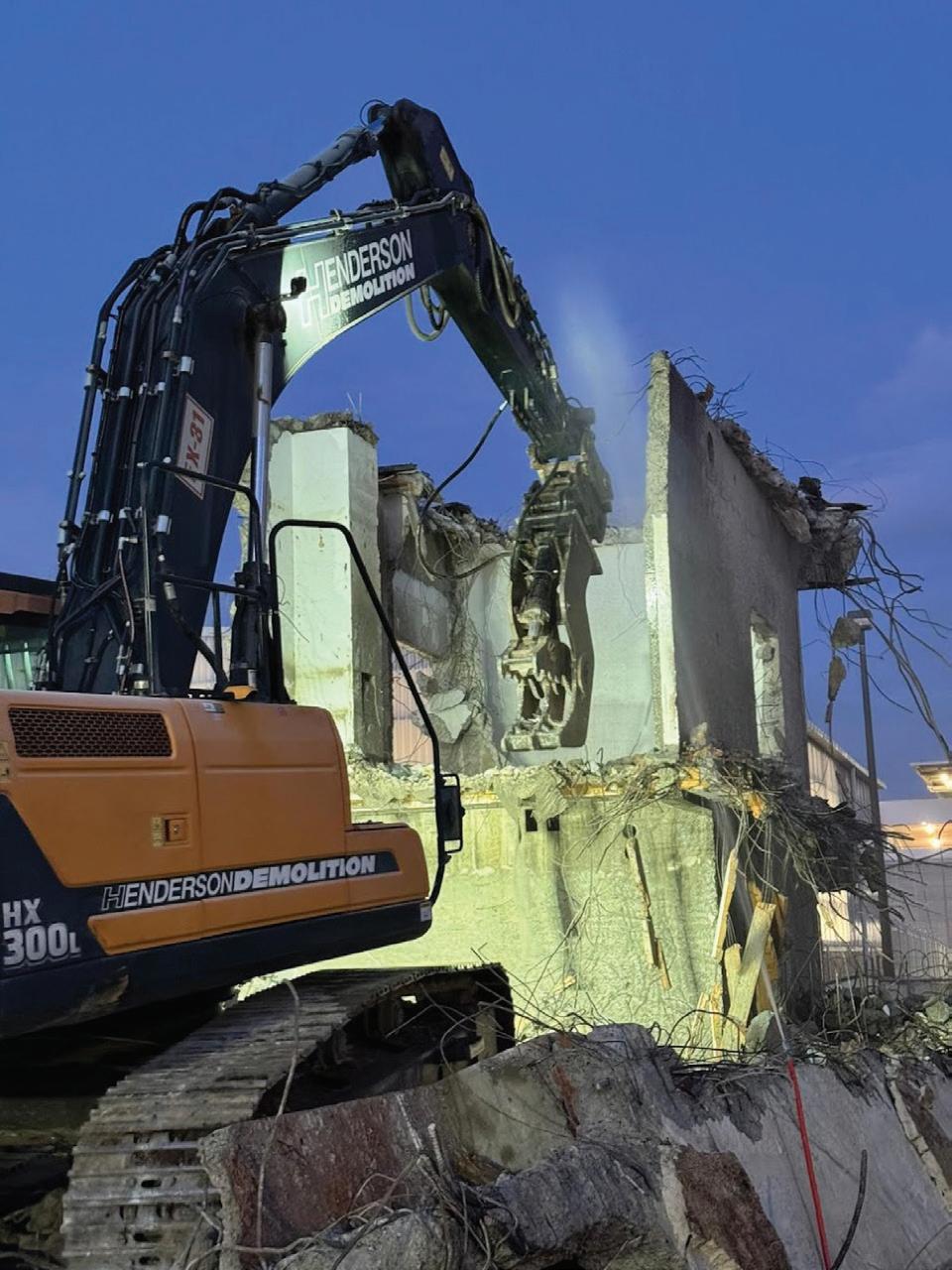
Deconstruction & Asbestos Removal Specialists
› Excavator / Demolition
› Licenced Asbestos Removal
› Office De-fits
› Site Remediation
› Concrete Breaking
› Recycling
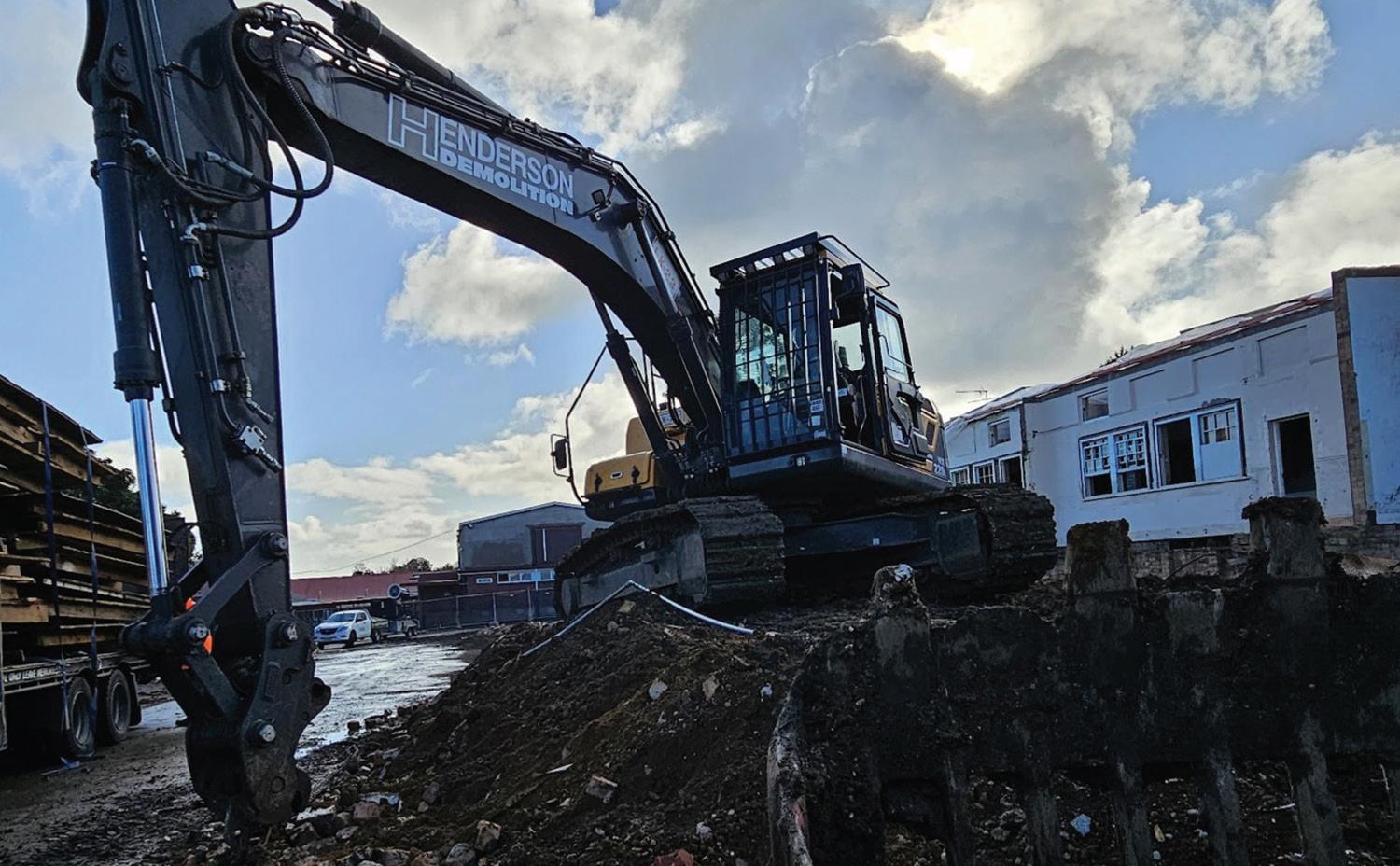
HENDERSON DEMOLITION LIMITED
Trusted by builders and contractors for safe, efficient site preparation. Reliable. Professional. Safe.
Deconstruction and asbestos removal are the first critical steps in any successful construction project. Henderson Demolition Limited works alongside builders, contractors and developers to deliver safe, efficient and controlled site preparation that keeps projects on schedule.
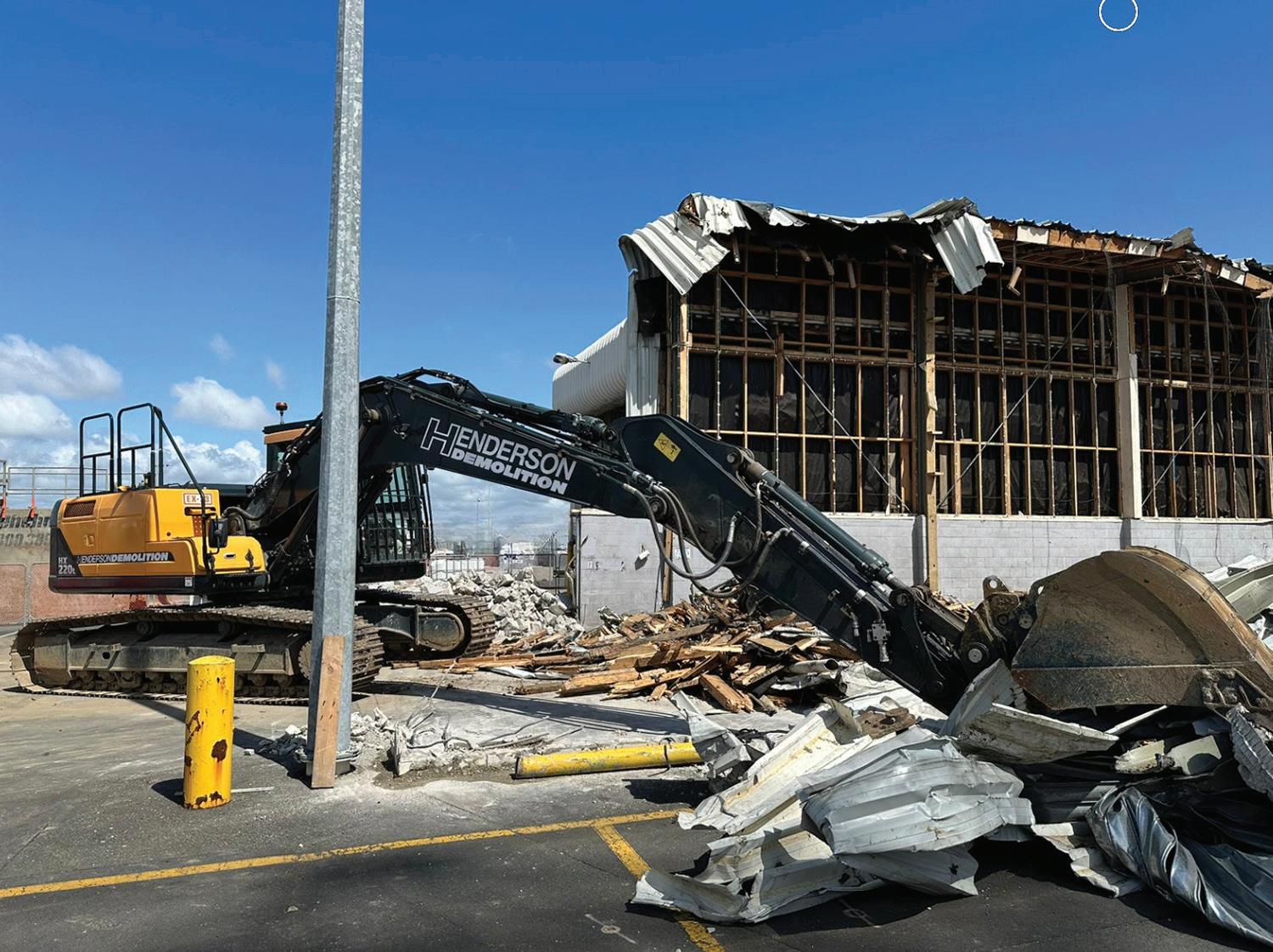
With experienced operators, modern machinery and strict safety procedures, we provide professional deconstruction and asbestos removal services across commercial, industrial and residential sites. Our team understands the importance of reliability, coordination and safety on active construction projects.
OUR SERVICES
◆ Commercial & Industrial Deconstruction
◆ Residential Deconstruction
◆ Interior & Structural Strip-Outs
◆ Asbestos Removal
◆ Site Clearing & Preparation
◆ Concrete Breaking & Removal
◆ Waste Removal & Recycling
Why builders choose Henderson Demolition?
▪ Experienced and qualified operators
▪ Safe, controlled deconstruction practices
▪ Reliable scheduling and project delivery
▪ Modern machinery and efficient processes
▪ Responsible waste management and recycling
We work closely with construction teams to ensure deconstruction, asbestos removal and site preparation are completed safely, efficiently and with minimal disruption.
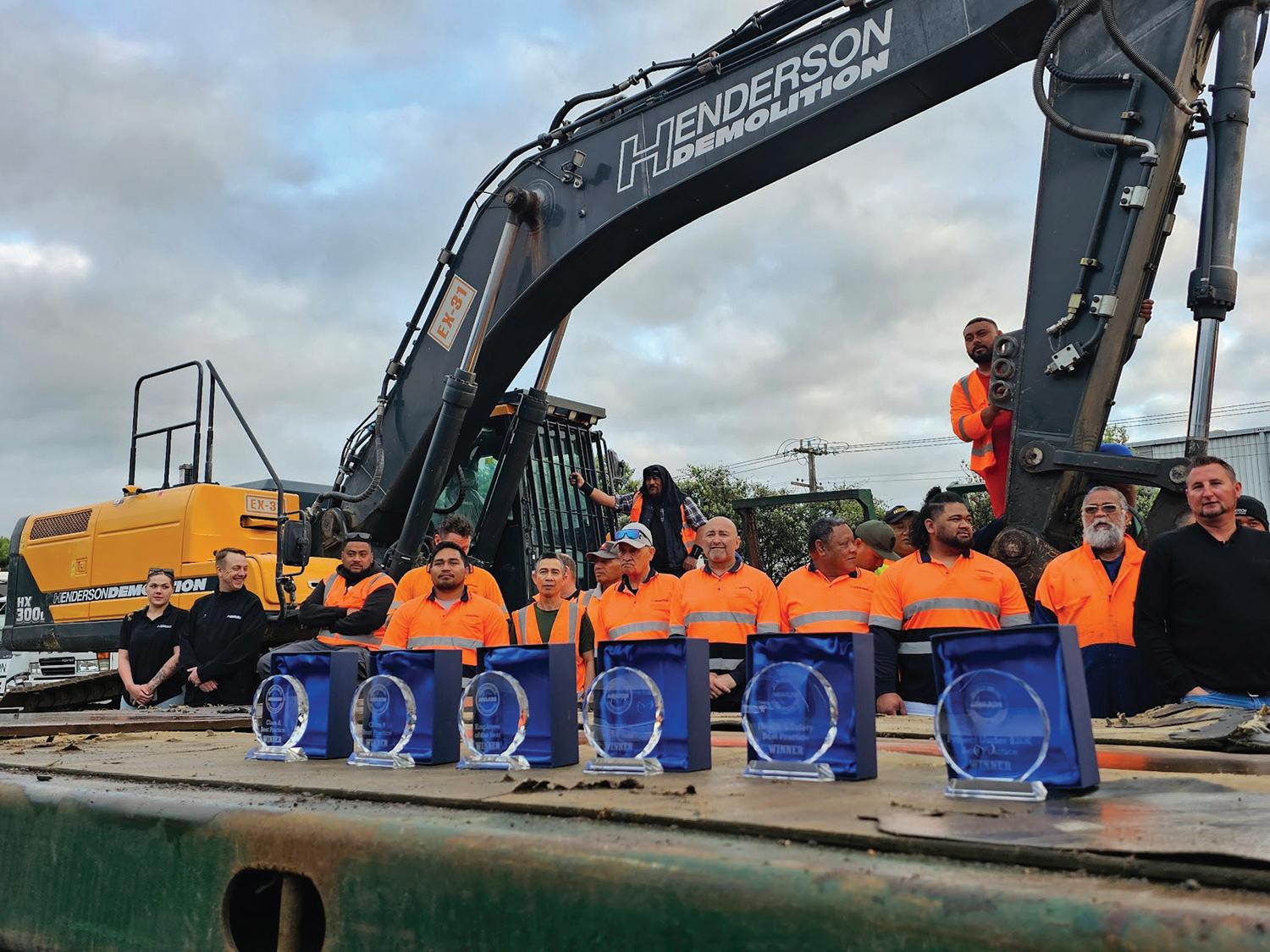
ISO 9001 | ISO 14001 | ISO 45001 Certified WorkSafe NZ Class A & B Asbestos Removal Licences NZDAA Award-Winning Deconstruction Specialists
Contractor of the Year 2024
Health & Safety Best Practice – “Go Simple, Go Digital”
Health & Safety Best Practice – “Te Ara ki te Kaha” literacy programme
Class A Removal Best Practice – Auckland Airport
Airways project
Class B Removal Best Practice – Pukekohe Countdown project
Demolition Best Practice (Project Under $50k) – AES Airport
Emergency Services project
Best Practice Project Under $20k – Ports of Auckland
Portacom removal
Employee of the Year – Ashmita Singh
Contact us today to discuss your next project.
Two-thirds of Kiwi graduates would choose a trade if starting again
By Jonathon Taylor
A growing number of New Zealand graduates are reconsidering the value of a university degree, with new research showing many would opt for a skilled trade if given a second chance.
A global study by MoneySuperMarket has found that 67% of New Zealand degree holders would choose a vocational pathway over university if they were starting their careers again. The findings reflect a broader shift in attitudes toward education and employment, as workers seek more flexibility, autonomy and practical work.
The research comes amid a surge in interest in alternative career paths. Analysis by MoneySuperMarket shows that global Google searches for “trade vs degree” have risen by 2,640% during the past year, with around 35,000 searches per month.
The survey, which included 3,600 graduates across 14 countries, suggests many professionals are rethinking their long-term career choices and considering retraining in more hands-on fields.
IT workers most likely to consider a switch
In New Zealand, some industries are more inclined toward change than others. Those working in IT and technology are the most likely to consider moving into a trade, followed by healthcare and education professionals.
• IT and Technology: 34%
• Healthcare: 19%
• Education: 16%
Globally, the trend is similar. On average, around half of degree holders surveyed said they would consider retraining in a trade. South Africa ranked highest at 69%, followed by New Zealand (67%) and Mexico (62%).
Why graduates are rethinking their careers
The desire for independence is the leading driver behind this shift, with many graduates attracted to the autonomy and flexibility that trades can offer. The top reasons Kiwi graduates would switch to a trade are:
• Opportunity to be my own boss (60%)
• Practical, hands-on work (54%)
• Potential to earn more over time (46%)
• Not sitting at a desk all day (45%)
• Ability to work locally or choose where I work (39%)
• Better work-life balance (34%)
• Job security (33%)
• Seeing a direct/physical output from my work (30%)
• Less screen time (27%)
• Greater variety of work (22%)
Vehicle technician Hannah Gordon says the appeal of trades lies in both independence and job satisfaction.
Many skilled tradespeople are self-employed or freelance, which creates opportunities to work on a variety of projects. The hands-on, problemsolving nature of the work, and seeing tangible results, is what makes it so rewarding.
- Hannah Gordon
“Being your own boss in a trade is very realistic. Many skilled tradespeople are self-employed or freelance, which creates opportunities to work on a variety of projects. The hands-on, problem-solving nature of the work, and seeing tangible results, is what makes it so rewarding.”
Electricians top the list of preferred trades
Among those open to retraining, electrical work is the most popular option both globally and in New Zealand.
Trades Kiwi graduates would most likely switch to:
• Electrician (26%)
• Carpenter/joiner (14%)
• Heating/HVAC engineer (9%)
• Painter and decorator (9%)
• Mechanic (9%)
• Plumber (5%)
• Builder (3%)
• Plasterer (1%)
• Roofer (0%)
Insurance is key consideration for new tradespeople
While the appeal of a trade career is clear, experts warn that transitioning requires more than just retraining. Equipment, transport, and insurance are critical investments for those entering the sector.
According to MoneySuperMarket’s Kara Gammell, many new tradespeople underestimate the importance of having the right insurance cover in place.
“Standard insurance often won’t provide adequate protection for business use. Tradespeople should consider specialist commercial vehicle insurance, as well as add-ons like tool cover and goods-in-transit protection. Having the right policy from day one can help avoid costly gaps and reduce stress.”
As more graduates reassess their career paths, the findings highlight a growing appreciation for vocational skills and a shift in how success and job satisfaction are defined in today’s workforce.
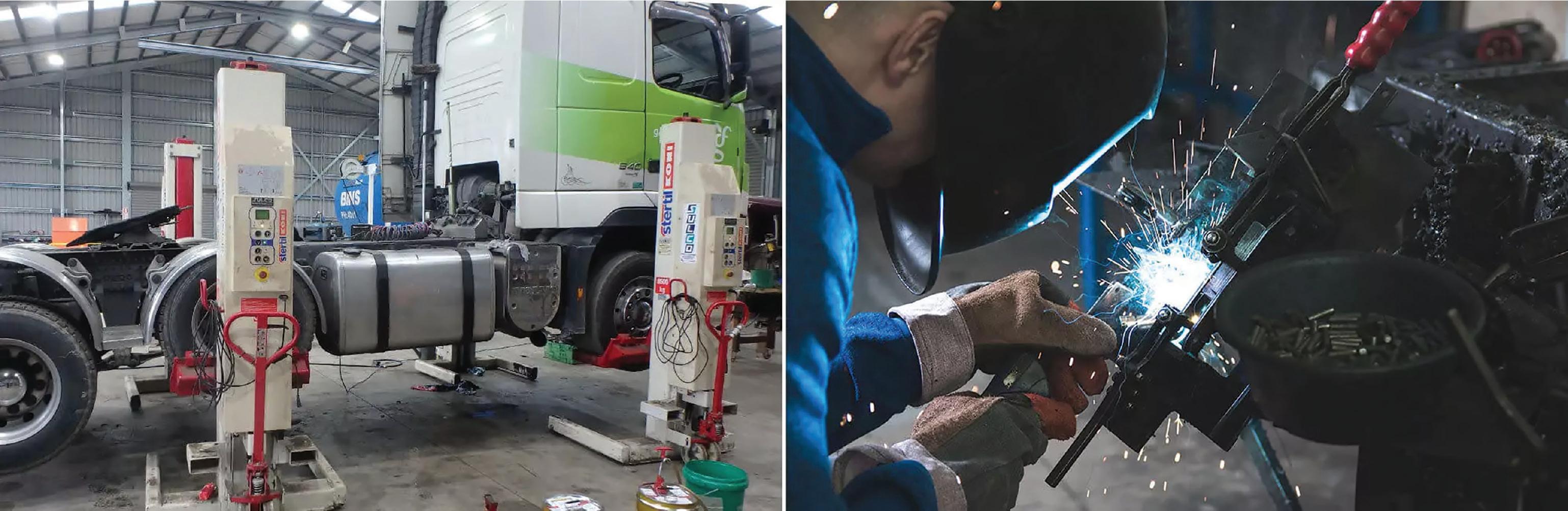
Truck and Industrial Vehicle Servicing
and Repair Specialists
• COF
• Engineering & Hydraulics
• Maintenance & Repairs
• Forklift Repairs
• 24/7 call out service
An established truck servicing company, Levin Truck Services provides machinery and truck owners in the Horowhenua region a range of servicing and repair options including mobile hydraulic repair, diesel servicing and farm machinery repairs.
Our team includes heavy vehicle engineers, hydraulics specialists and in-house Certificate of Fitness inspectors to make sure your trucks and equipment are fully fit for purpose.
The conversation most men avoid
There are some conversations men are comfortable having. Work. Weather. The weekend’s Warriors game. How busy things are.
And then there are the ones that get pushed aside, conversations about health, wellbeing, and what’s really going on in our heads.
In male-dominated industries like building and contracting, the expectation to push through is strong. Be practical. Sort it yourself. Keep moving.
But when it comes to prostate cancer, one of the most important things men can do is talk.
That’s something Stuart Brotchie learned firsthand.
“It never occurred to me it might be something sinister”
Stuart is in his 50s, fit, outwardly healthy, and used to an active life. “I was very fit. I was very healthy. We travelled a lot,” he says. Cancer was not something he ever expected to hear in a doctor’s office, at age 46.
When Stuart noticed changes, he did what many men do, he made an appointment but didn’t think too much of it.
“I took myself to a urologist, but it never occurred to me that it might be something sinister.”
The biopsy results changed everything. The cancer was throughout his prostate and had already spread locally. Stage three.
What made the diagnosis even heavier was family history. “My partner’s father died of prostate cancer at 51. Suddenly we felt the weight of fear and history and doom all around us.”
It was confronting, not only physically, but mentally.
Why men don’t talk
about symptoms
Prostate cancer is one of the most common cancers affecting men. Yet many men delay getting checked or feel unable to talk about what’s happening for them.
Part of that can be embarrassment. Part of it is not knowing what to look for.
Common symptoms can include:
• Difficulty urinating
• Frequent urination especially at night
• Pain or discomfort in the pelvic area
• Blood in urine or semen
Not everyone will experience symptoms, especially early on. But changes, particularly ongoing ones, are worth discussing with a GP. Early detection gives you options.
When the mental load hits
For Stuart, treatment gave him time and options. Surgery, radiation, and testosterone-blocking medication kept the cancer under control.
What surprised him was the impact on his mental health.
“I don’t think I was prepared for the pernicious aspects of it,” he says. “For a long time, I didn’t connect how badly I was feeling to the medication or the experience.”
I don’t think I was prepared for the pernicious aspects of it. For a long time, I didn’t connect how badly I was feeling to the medication or the experience.
- Stuart Brotchie
“I’ve considered suicide many, many times,” he says honestly. “In the wee small hours of the night, you lie there thinking it would be better if I wasn’t here.”
It wasn’t until Stuart heard other men speaking honestly about their own experiences that things started to make sense.
These are thoughts many men don’t say out loud, but they are not uncommon during cancer treatment. Hormone therapies, in particular, can affect mood, sleep, and mental wellbeing. Add fear, uncertainty and a loss of identity, and the weight can become overwhelming.
Talking about it saved Stuart’s life.
“There’s no weakness in asking for help. There’s no shame in it. And there’s nothing to be gained by doing it on your own.”
- Stuart Brotchie
Finding Support
Through the Cancer Society, Stuart found counselling and support groups, and, just as importantly, people who understood what he was going through.
“I found it incredibly rewarding,” he says. “You meet people you wouldn’t otherwise cross paths with, and you hear their stories. You realise you’re not alone.”
Stuart has accessed Cancer Society counselling services multiple times and was referred to psychology services both locally and in Auckland. “Extremely helpful and beneficial,” he says. “The Cancer Society is just an incredible resource.”
Support groups covered much more than medical treatment. Discussions ranged from managing side effects to topics Stuart says you “wouldn’t really want to ask, but are amazingly useful”.
For men used to fixing problems on their own, that shared space makes a positive difference.
Speak up. Ask. Check in.
Prostate cancer doesn’t care how busy you are, or how good you are at getting on with things.
What makes a difference is noticing change, having the conversation, and getting checked.
“There’s no weakness in asking for help,” Stuart says. “There’s no shame in it. And there’s nothing to be gained by doing it on your own.”
If something doesn’t feel right, physically or mentally, talk to your GP. If you or someone you care about is dealing with cancer, the Cancer Society offers driving services, community nurses, counselling, support groups and practical help across New Zealand.
The conversation most men avoid could be the one that saves your life, or someone else’s.
Stuart Brotchie
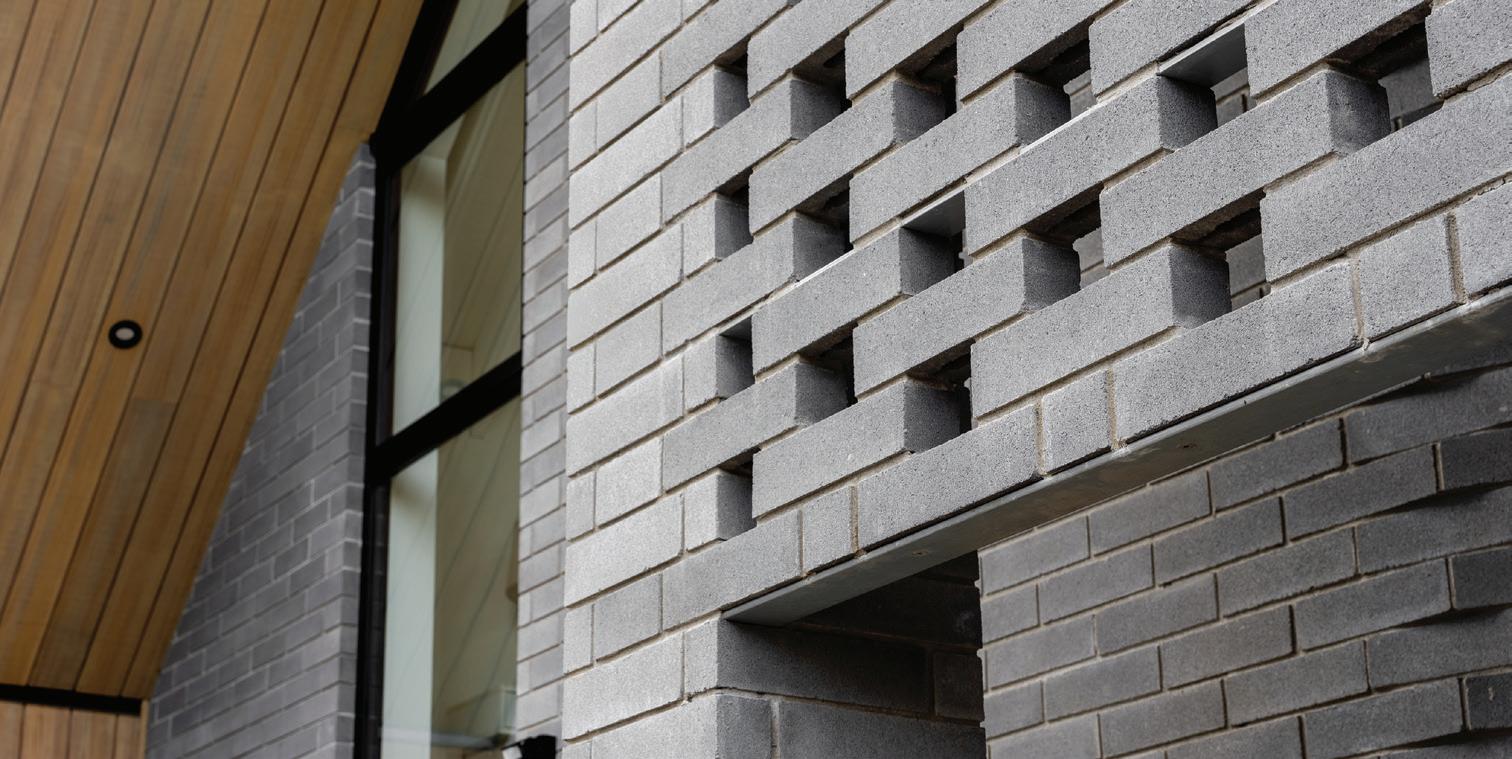
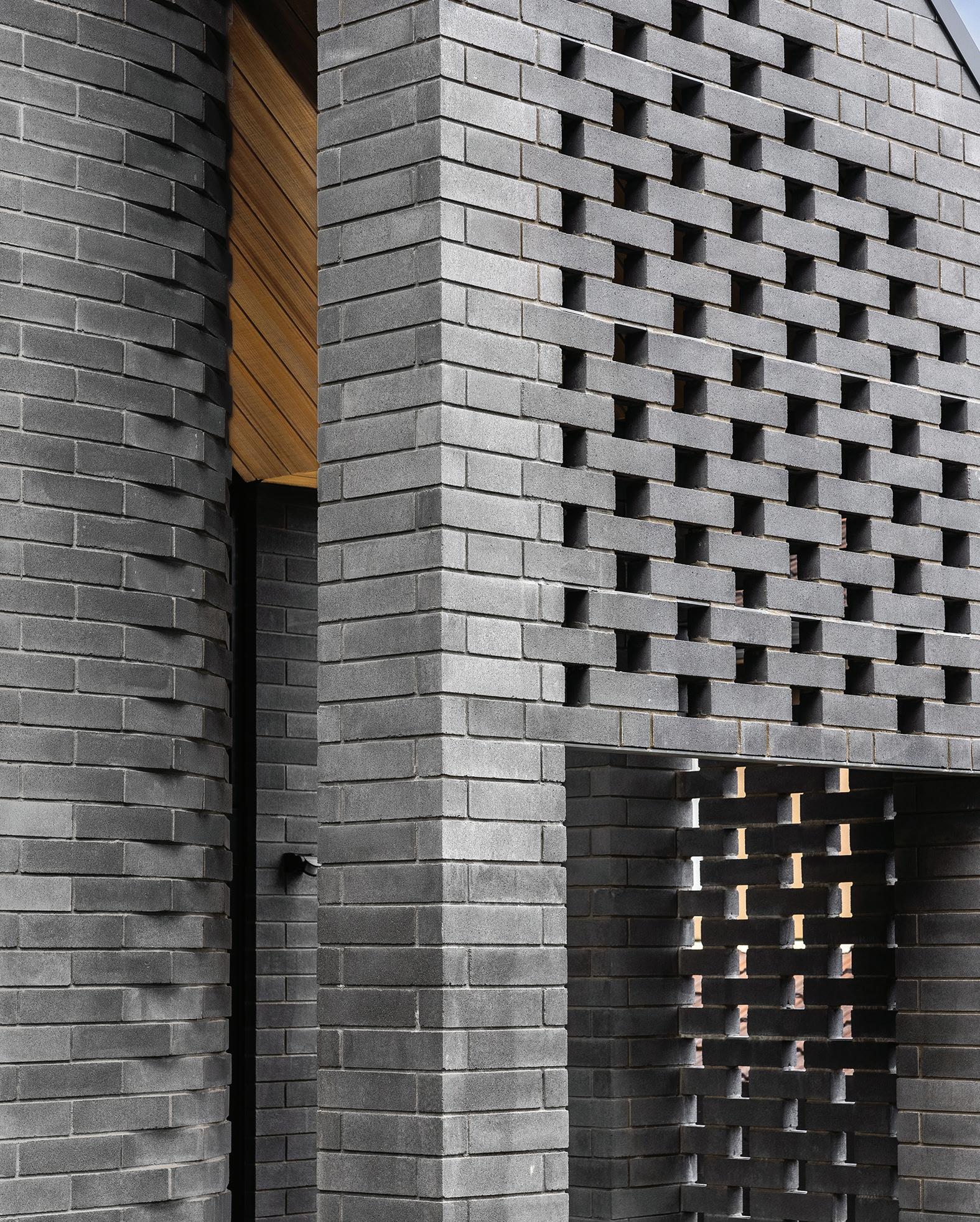
Concrete NZ offers lintel design guidance for masonry veneer
Concrete NZ has released a new industry resource, Lintel Design Guidance for Masonry Veneer, providing clear, practical direction for designers, engineers and construction professionals working with brick veneer systems.
Lintels may be considered a secondary structural element, but their role in masonry veneer construction is critical. Positioned above openings such as windows and doors, lintels support the weight of masonry and safely distribute loads. Without appropriate design and detailing, issues such as cracking, deformation or corrosion can arise, affecting both performance and aesthetics.
“This new guidance responds to the need for consistent, accessible design information, bringing together established standards and best practice into a single reference,” says Concrete NZ Head of Architecture, Ralf Kessel. “It focuses on masonry veneer systems tied back to a primary structure, distinguishing them from structural masonry, which is reinforced and concrete-filled and requires separate design approaches.”
A key concept explored is how loads are transferred through masonry. In traditional running bond construction, an arching effect forms above the opening, meaning the lintel supports a triangular distribution rather than the full wall height. In contrast, stack bond construction does not benefit from this
behaviour, requiring lintels to carry the full load of masonry above, often resulting in larger lintel sizes.
The guide provides practical detailing advice, focusing on steel angle lintels, the most common solution in New Zealand. These angles are embedded into the veneer and bear onto masonry jambs, providing the bending strength to support the cladding. Key requirements such as minimum seating lengths, jamb support dimensions and installation orientation are clearly outlined.
Importantly, the guidance aligns with NZS 4229:2013 – Concrete Masonry Buildings Not Requiring Specific Engineering Design (non-SED) and the Concrete NZ Concrete Masonry Manual Where projects fall outside of non-SED parameters, such as larger spans or greater veneer heights, the guide reinforces the need for specific engineering design input.
“Designers are also guided through key considerations such as veneer thickness, opening span and the height of masonry supported above the lintel,” says Kessel.
“These factors influence lintel selection and performance, with tabulated solutions provided for common scenarios. Deflection limits are also addressed to prevent excessive movement and cracking.”
Durability is another critical focus area. Given their exposure, steel lintels must be protected against corrosion. The guide outlines suitable material options, including stainless steel grades and galvanised systems with duplex coatings, tailored to New Zealand’s varied environments.
“By consolidating technical requirements, design methodology and detailing guidance, this publication provides a valuable tool for improving consistency and confidence in masonry veneer design,” Kessel says.
“It supports better outcomes on site, reduces the risk of defects and reinforces the importance of getting the fundamentals right.”
Durability is another critical focus area. Given their exposure, steel lintels must be protected against corrosion. The guide outlines suitable material options, including stainless steel grades and galvanised systems with duplex coatings, tailored to New Zealand’s varied environments.
By consolidating technical requirements, design methodology and detailing guidance, this publication provides a valuable tool for improving consistency and confidence in masonry veneer design. It supports better outcomes on site, reduces the risk of defects and reinforces the importance of getting the fundamentals right.
Visit the Concrete NZ website to download a copy of – www.concretenz.org.nz
Concrete NZ conference awards open for entries
Entries for the 2026 Concrete NZ conference awards are now open, providing an opportunity to recognise excellence across the cement and concrete industry.
Since introducing its revised awards framework in 2022, Concrete NZ has enhanced its ability to acknowledge achievement and raise the profile of the sector. The Conference Awards form a central part of this approach, offering a dedicated platform to celebrate outstanding contributions across the membership.
The 2026 awards will be presented at the Conference formal dinner on 22 October at Tākina Wellington Convention and Exhibition Centre, bringing together industry professionals from across Aotearoa New Zealand to celebrate excellence.
The awards recognise a broad range of achievements – from technical excellence and innovation through to leadership in health and safety, sustainability, and workforce development. They also recognise individuals as Honorary Life Members or Outstanding Contributors, the Concrete Industry Apprentice of the Year, and readymix concrete plants achieving Gold status for 10 consecutive years of excellence.
In addition, the Conference programme itself is acknowledged through awards for the best full paper or presentation and the 5-minute Lightning Talk. Together, these honours reflect the depth of expertise, commitment, and collaboration that continues to define the sector.
Each year, the Conference Awards provide an important opportunity to highlight the people, teams, and organisations delivering exceptional outcomes. They also enable the
sharing of success stories and showcase initiatives that are driving progress and setting new benchmarks.
Concrete NZ encourages all members to begin considering potential entries and to put forward work they are most proud of. For entry details, including category information and submission f orms, visit the Concrete NZ website –www.concretenz.org.nz
Plant Audit Scheme
Strong foundations start with the right equipment.
New Zealand’s building and construction sector is more than a driver of economic activity; it is a cornerstone of national development. From housing and commercial buildings to transport infrastructure, schools, hospitals, and even defence projects, the industry supports a vast network of employment across cement manufacturing, quarrying and extractive operations, concrete production, logistics, materials handling, and engineering services. At the heart of it all lies a simple truth: cement, concrete, sand, and aggregates quite literally form the foundation of the built environment.
What is often less discussed, however, is the journey these materials take before they are poured, placed, and finished. Every tonne of aggregate and every cubic metre of concrete has been carefully processed, tested, and refined to meet strict regulatory requirements and product standards. These materials are engineered for performance, durability, and safety, qualities that are nonnegotiable in modern construction.
Which raises an important question: if so much care and precision goes into producing these materials, why risk compromising the end result with sub-standard equipment?
Concrete consolidation is one of the most critical, yet sometimes overlooked, stages in the construction process. Proper consolidation ensures that concrete achieves its intended strength, eliminates air voids, and bonds effectively around reinforcement. Poor consolidation can lead to structural weaknesses, surface defects, and costly remediation down the track, issues no contractor, engineer, or project owner wants to face.
This is where a shift in perspective is required. Rather than viewing consolidation equipment as a commodity, it should be recognised as a key contributor to overall project quality and efficiency. Investing in reliable, high-performance equipment is not an added cost, it is a safeguard against risk and a driver of long-term value.
Oli’s concrete consolidation equipment is designed with this exact philosophy in mind. Built to deliver consistent performance
under demanding conditions, Oli products are engineered to match the quality of the materials they are working with. The focus is not just on functionality, but on reliability, ensuring that equipment performs when it matters most, without unnecessary downtime or maintenance interruptions.
Equally important is the balance between performance and cost. In a competitive industry where margins are tight and timelines are critical; Oli offers a compelling price-to-performance ratio. This means contractors and project managers can access premium-quality equipment without overextending budgets, an advantage that becomes increasingly significant across largescale or multi-stage projects.
Availability is another key factor. With off-the-shelf access to a comprehensive range of equipment, Oli helps eliminate delays associated with long lead times. In an environment where timing is everything, having the right tools readily available can be the difference between staying on schedule and falling behind.
Ultimately, the construction industry in New Zealand is built on precision, standards, and accountability. Every component, from raw materials to finished structures, must meet expectations. It stands to reason that the equipment used along the way should meet those same standards.
By aligning equipment quality with material integrity, the industry can continue to deliver projects that are not only built to last but built right the first time.
NEW from MAX® – The RB823T XL Jaw TwinTier™ Rebar Tying Tool – with 5.0Ah Battery and Wire Load Assist
New generation MAX® RB823T Rebar-Tier has been added to the TwinTier™ range.
The NEW MAX® TwinTier™ RB823T is the first battery powered tool with the ability to tie D40 x D40 rebar, up to 82mm of rebars. It can also tie D25 x D25 x D25 x D25.
This NEW rebar tier has been designed for grout tube at precast concrete plants, steel rebar fixing, civil engineering, road and bridge work, and wind turbine power plant foundations.
“We thought 50mm Grout Tubes had to be tied by hand – until the RB823T.”
During recent market research in Australia, the MAX® RB823T XL Jaw TwinTier™ was tested at a precast concrete factory and proved it could easily tie 50mm grout tubes to 12mm rebar – a task previously done by
hand. Impressed by the efficiency gain, the factory became the first in Australia to adopt the tool, showcasing its potential for similar facilities.
The MAX® RB823T XL Jaw TwinTier™ features a NEW wire load assist that helps during tie wire replacement. Loading can be done without pressing the release button, eliminating the risk of forgetting to reset it. The tool’s 6-step torque adjustment dial allows its user to adjust the strength of the tie based on the application.
The MAX® TwinTier™ simultaneously shoots 2 x 1.0mm wires around rebar intersections, wrapping once to form a tie equivalent to the strength of a hand snap tie. The TwinTier™ uses TW1061T series tie wire, available in
black, electro-galvanised and stainless steel options. The tool’s NEW 5.0Ah lithium-ion battery will complete approximately 4,100 ties from the RB823T before needing to be recharged.
The MAX® RB823T XL Jaw TwinTier™ features an enclosed design offering greater protection against debris and moisture entering the tool. Like other MAX® rebar tying tools, the simple operation of the MAX® TwinTier™ helps reduce muscular skeletal injuries when compared to manual
alternatives a position supported by NIOSH in USA.
Overall, no matter the application, the MAX® TwinTier™ works at double the speed and produces double the number of ties from a single roll of wire, and reduces the time it takes to complete a job. This saves businesses money by cutting man hours needed for each project and increases the productivity of its workers.
For more information visit the SIFCO website - www.sifco.co.nz
RB823T XL Jaw TwinTier™ Rebar Tying Tool
Girls in Construction initiative opens doors
By Ben O’Connell
A national programme aimed at increasing the number of women entering construction,
BCITO’s Girls in Construction initiative exposes the next generation to the trades sector.
Built around the idea that ‘if you can see it, you can be it’, the programme takes students out of the classroom and into active worksites and supplier yards. So far, more than 200 young women have participated nationally, including around 50 across the Dunedin, Queenstown and wider Otago region this year.
BCITO General Manager of Education and Diversity Andrew Donohue, who has been involved in the programme for the past three years, says the goal is to give young women a genuine view of what a career in construction can look like.
Students visit live environments like large infrastructure projects, such as Dunedin’s new hospital site, and civil and residential developments. They also get stuck in the tools with tasks such as making planter boxes. Hands-on and immersive, these visits make clear the opportunities available.
The programme has grown steadily through sector engagement, which means participants are more likely to flow through into real sector roles. Industry partners,
such as ITM, Breen Construction, and other contractors and organisations, have helped support the initiative.
It takes a village to truly showcase what the industry can offer. “It can be a confusing time for young people,” Donohue says.
“It takes all of these groups getting behind the initiative to expose them to what’s available.”
Raising awareness is an important first step, but Andrew says the next challenge lies in converting interest into long-term career pathways. Though not every participant will
move directly into construction, exposing young people to the industry early can still build confidence and broaden future career thinking.
Recent figures show that while women now make up about 15% of New Zealand’s construction workforce, only around 3% work on the tools. Meanwhile, women’s participation in BCITO apprenticeships has risen to around 6%, up from less than 1% in 2015. “Can we do better? Absolutely,” Donohue says. “But we certainly aren’t going backwards.”
He says industry change is also happening practically, through better facilities, improved workwear options, and more awareness around supporting women once they enter the workforce. Encouraging women to enter the industry is nothing without meaningful support once there.
The programme also sits within a broader effort to improve access across the industry. BCITO works alongside Māori, Pasifika, migrant communities, and learners with disabilities, leading a wider push to ensure construction pathways are accessible to all.
“Everyone deserves a place, an option, a career path, and to be welcomed.”
Over his ten years with BCITO, Donohue says one of the most rewarding parts of the role has been seeing apprentices progress and watching families and communities celebrate qualification milestones at graduation ceremonies around the country.
“It’s a big celebration, and that’s what it’s all about. I’ve seen people go from hammer hands to running big construction businesses. It’s pretty cool to see. We do change lives.”
Despite economic slowdowns and industry pressures, Donohue says engagement in training pathways has remained relatively stable. This resilience reflects the ongoing appeal of trade careers and the importance of continually investing in the future. “The sector will come back, and we’re going to need apprentices and trained people when it does.”
Looking ahead, the focus is on building momentum: strengthening early exposure, improving support systems, and ensuring that young people who do engage with the
Over his ten years with BCITO, Donohue says one of the most rewarding parts of the role has been seeing apprentices progress and watching families and communities celebrate qualification milestones at graduation ceremonies around the country.
industry can clearly see a pathway from curiosity to qualification to career.
For Donohue, the measure of success is simple: even if only a small number of
students ultimately enter the construction industry, changing perceptions early can reshape how the industry is seen by the next generation.
• Waterproofing and Tanking
• Concrete Protection and Repairs
• Structural Repairs and Strengthening
• Floor Levelling, Toppings, and Coatings
• Grouting and Sealants
• Flat Roof and Deck Membranes
• Flooring Screeds - Epoxy and Polyester
• Swimming Pool Sealing and Coating
• High Pressure Injection - Epoxy and Polyurethane
Think before you dig
By Ben O’Connell
Checking for underground services before you start upheaving the ground really matters. We all know that what’s beneath the ground can often be more dangerous (and expensive) than what’s above it.
Thousands of kilometres of underground infrastructure criss-cross construction zones. These include telecommunication cables, gas mains and service lines, water and wastewater pipes, and fibre-optic networks and stormwater systems.
These networks often lie closer to the surface than many expect, sometimes less than half a metre deep. Ground disturbance without proper checks risks electrocution, gas leaks, service outages, or flooding, not to mention reputational damage and potential investigations.
Before any excavation, site prep, drilling, or fencing work, builders are legally and ethically obliged to locate known underground services. The simplest, most reliable first step is contacting Before You Dig New Zealand.
BYD NZ allows you to lodge enquiries and receive detailed site plans from utility providers within a few working days.
SHEPHERD & KIME LTD Collision Repair
Our skilled technicians have many years of professional experience in this industry and aim to get you mobile as soon as possible.
Being mindful is about awareness and compliance. Encourage your team to pause, check, and talk through what lies beneath every time. Building deliberate dig mindfulness habits helps prevent outages and accidents while keeping projects on schedule. Every site worker, not just the supervisors, is responsible.
Once plans arrive, keep in mind they show approximate locations only, so it is important to mark out service corridors using paint or pegs and use safe digging techniques such as hand-digging or potholing to confirm exact positions before excavation.
Always stay aware that services may have changed since previous works and keep BYD NZ responses and risk assessments documented in your site safety file.
Common mistakes to avoid include assuming that old plans are still accurate, relying solely on visual inspections, or skipping the BYD NZ enquiry process altogether to save time.
Workers also sometimes fail to re-check services after design changes or site alterations, or they excavate too close to marked service lines without first confirming their exact location through hand digging or potholing.
These shortcuts can significantly increase the risk of striking underground infrastructure and causing serious damage or injury.
In case of emergency, stop work immediately, secure the area, avoid touching exposed cables or leaking pipes, and contact emergency services and the utility provider. Being mindful is about awareness and compliance. Encourage your team to pause, check, and talk through what lies beneath every time. Building deliberate dig mindfulness habits helps prevent outages and accidents while keeping projects on schedule. Every site worker, not just the supervisors, is responsible.
A good example is adding underground service checks to site inductions and weekly toolbox meetings. Discuss past nearmisses so crews understand the real-world consequences. When staff know why these measures matter, they’re far more likely to follow through.
Striking underground cables and pipes is a common cause of serious on-site incidents nationwide. A moment’s rush with the digger bucket or auger can lead to injury, project delays and repair bills in the thousands, or worse. That’s why it pays to take a mindful, step-by-step approach before breaking ground.
Trucks to lift and transport loads in and out of all sorts of situations!
Our hiab’s will Lift, Relocate and Transport your goods from A to B.
With safety and best practice in mind, we get your Load to where it needs to go!
Our skilled, trained drivers will handle your job requirements with expertise and care.
From lifting Containers, Cabins, Tiny Homes, sculptures as well as
Transporting on Flat deck Trucks / Piloted Loads .
We are a respected, honest and friendly team with over 20 years in the industry.
Pukekohe Hiab Transport understand your needs and will work out the best ways for our customers to achieve this.
Small enough to care, big enough to carry the load
Building for a region that doesn’t sit still
Wellington has always asked more of the people who build in it. It is a place of sharp contrasts, where a dense urban centre meets exposed coastlines, steep hills and a harbour that shapes everything from weather patterns to design decisions. For architects, designers, planners, project managers, developers, and trades, working here is never just business as usual.
Each part of the region comes with its own set of conditions. The CBD brings tight sites and complex logistics. The Kāpiti Coast opens up to salt-laden winds. Wairarapa offers space, but also varied terrain and temperature swings. Across all of it, buildings need to respond to their surroundings in a way that feels considered rather than imposed. There is an expectation that what gets built here should sit well within the landscape, not fight against it.
That expectation has pushed the industry to lift its game. Good drawings and solid construction are a given, but they are no longer enough on their own. The way projects are planned, managed and delivered has shifted, and technology is playing a bigger role in that change.
Good drawings and solid construction are a given, but they are no longer enough on their own. The way projects are planned, managed and delivered has shifted, and technology is playing a bigger role in that change.
Platforms like Caduceus are becoming part of the everyday toolkit for many in the sector. Having clearer oversight of timelines, budgets and on-site progress helps keep projects moving, especially in a region where delays can quickly snowball. When everyone from the design team to the contractors is working from the same set of information, it cuts down confusion and keeps things aligned.
On the ground, that translates into fewer surprises and smoother coordination between trades. For project managers and developers, it means better visibility over how a job is tracking. In a place like Wellington, where access can be tricky and conditions can change quickly, that kind of clarity makes a noticeable difference.
The same thing applies to materials and products. Wellington’s environment does not leave much room for poor choices. Coastal exposure, strong winds and damp conditions can take their toll, so what goes into a build matters. More builders and designers are leaning on suppliers who understand how these factors play out over time.
Companies such as COZY NZ are part of that conversation, particularly when it comes to making homes and buildings comfortable to live and work in. Heating and insulation are front of mind in this region, not just for comfort but for how a space performs day to day. Getting it right early in the design phase tends to pay off in the long run.
Electrical work has also moved well beyond the basics. Modern buildings are expected to do more, from energy efficiency through to smart systems that people now see as standard. Providers like RH Electrical are helping bring those elements together, making sure systems are set up to handle both current needs and whatever comes next.
Then there are the practical realities of working in Wellington. Anyone who has spent time on a site here knows that access is not always straightforward. Narrow streets, steep sections and limited space can all slow things down if not handled well. That is where service providers like Rosies Furniture Removals Ltd come into play. Managing the movement of materials, equipment or even household contents during renovations can have a bigger impact on timelines than people expect.
What stands out across the region is how much collaboration matters. Projects tend to run best when everyone involved is working closely together, from early design through to completion. Wellington does not lend itself to a siloed approach. The more connected the process, the better the outcome tends to be.
There is also a wider sense of responsibility. Wellington’s character is tied closely to its landscape, and new builds are part of that ongoing story. Whether it is a residential development tucked into a hillside or a commercial project in the city, there is an understanding that design should respond to its setting. Scale, materials and placement all play a part in making sure buildings feel like they belong.
For developers and property owners, that often means thinking beyond short-term gains. Well-considered projects tend to hold their value and perform better over time. For builders and trades, it reinforces the importance of staying up to date, not just with tools and technology, but with the expectations of the region itself.
Greater Wellington continues to grow and change, but it has not lost what makes it distinctive. If anything, the bar has been raised. Delivering good work here comes down to making smart choices, working with the right people and using the tools that help keep everything on track.
In a region like this, there is not much room for cutting corners. The environment, the conditions, and the expectations all see to that. Those who understand that and build accordingly are the ones who tend to get the best results.
Built for the long haul
A debate is bubbling about New Zealand’s roading network: are we building infrastructure for the lowest upfront cost, or for long-term performance and safety?
For many in the industry, the answer is clear. Price-based procurement, where contracts are often awarded to the lowest bidder, has become the dominant model.
But experienced industry members argue that this approach can be dangerously narrow and overlook a bigger picture of durability, safety and whole-of-life value.
Robert Gillam is the managing director of Highway 1, a New Zealand owned business focused on delivering road safety and traffic management solutions that stand the test of time. He says price has never been a reliable indicator of quality or safety.
“If price becomes the predominant factor, you’ll almost always see poorer safety outcomes, and nine times out of ten, it ends up costing more in the long run.”
Nowhere is this more evident than in the materials and systems used on our roads. While some products are inexpensive to install, their long-term performance can tell a very different story.
Wire rope crash barriers, now installed across thousands of kilometres nationwide, are a prime example. They offer a relatively low upfront installation cost, making them attractive under price-focused procurement models. However, over the life of a road, they often require frequent repairs, maintenance and replacement, driving up total costs.
The same principle applies across the sector. When decisions are made based on initial price alone, the long-term financial and safety implications are often underestimated or ignored entirely.
Urban design ventures such as those in Christchurch have also shown the risks of short-term thinking. In the city’s centre, concrete cycle lane separators were installed as a safety measure.
However, similar systems had largely been abandoned internationally since the 1990s due to well-documented issues such as damage to vehicles, poor driver visibility, and reduced access for emergency services.
More recently, similar concerns have surfaced in New Plymouth, where lane divider designs have drawn public scrutiny and reignited discussion about how safety infrastructure is evaluated and implemented.
What may look like a cost-effective or innovative solution initially can create
unexpected issues if its practical performance isn’t fully assessed.
Infrastructure should be designed to last the lifetime of the road, and that means shifting the focus to lifecycle value. Materials, systems, and designs should be assessed not just on what they cost today, but on how they perform over decades of use, exposure, and maintenance.
“Quality doesn’t necessarily mean unaffordable,” says Gillam. “It means making smarter choices, looking at durability, safety, and long-term performance, not just the cheapest option on paper.”
“If price becomes the predominant factor, you’ll almost always see poorer safety outcomes, and nine times out of ten, it ends up costing more in the long run.”
Robert Gillam -
A more holistic approach to procurement is required. One that factors in maintenance cycles, replacement frequency, user safety, and operational efficiency, not just installation costs.
That same lifecycle thinking is further relevant when considering sustainability. Products might be marketed as eco-friendly but their real environmental impact is not always straightforward.
Gillam takes PVC road cones as one example. While some are promoted as recyclable, the reality is recycling processes can result in cones that wear out faster and need replacing more frequently.
This raises an important question: is a product truly sustainable if it doesn’t last?
Longevity is a key factor. A product that lasts
longer, even if it’s not fully recyclable, may have a lower environmental footprint than one in need of constant replacement.
Putting this philosophy into practice, companies like Highway 1 are helping councils, contractors, and developers make smarter, longer-lasting choices in road safety and traffic management.
Their comprehensive range of solutions includes durable safety barriers, highvisibility signage, temporary traffic control systems and a variety of road-marking and delineation products.
The company also supplies innovative traffic management equipment for both urban and rural projects, ensuring compliance with safety standards while improving operational efficiency.
Beyond products, Highway 1 delivers expert consultation and support, helping councils, contractors, and developers select materials and systems that balance performance, cost, and longevity.
When it comes to roads, the cheapest option today can quickly become the most expensive mistake tomorrow. Highway 1 is focused on solutions built to withstand decades of use.
and
Asphalt & Concrete Maintenance
Bitumend range - Coldmix, Crackfix, Top seal, joint filler, Rejuvenate, E-release and applicator equipment.
Construction products
We manufacture all temporary warning signs & personal protective signs (PPE) for all Sizes for hazards & safety requirements. Enquire & we will make it for you
Highway 1 is a significant manufacturer and supplier of temporary traffic management equipment from safety signs, electronic variable message signs (trailer or truck mounted) traffic lights and many Bitumen Products. Traffic management, H & S, construction, Signage, carpark range products we have you covered.
We are here to help, have quality products and won’t be beaten by price. Give us a call 0800 175 571 or visit our website www.highway1.co.nz
Car park & workplace safety Speed humps, wheel stops, channel cable protectors, safety mirrors.
Auckland transport infrastructure gap widens
By Ben O’Connell
A new report from the think tank Committee for Auckland is urging immediate and decisive action on Auckland’s transport system. It warns that delays in reform are compounding costs and constraining growth across the city’s development pipeline.
The report argues Auckland is at a “critical juncture”, with population growth continuing to outpace transport investment, a gap that is already being felt across construction, freight, and project delivery.
Infrastructure NZ and the Committee for Auckland partnered on the report and say Auckland doesn’t need more plans, strategies or debate; it needs delivery.
Infrastructure NZ chief executive Nick Leggett says progress is falling short. “Auckland’s transport challenges are well understood. What’s been missing is the commitment to follow through.”
Auckland is home to roughly one -third of New Zealand’s population, about 1.8 million people or around 33 % of the nation’s residents, making it by far the country’s largest urban centre.
In economic terms, the region punches above its weight, generating around 38 % of New Zealand’s total GDP and significantly more than any other region. “There is a high degree of alignment on priorities, from making better use of what we already have, to progressing key rapid transit corridors
and improving connections across the city,” says Committee for Auckland Executive Director Rupert Hodson. The challenge is execution.
A central theme is the disconnect between where housing is being delivered and where transport infrastructure is being prioritised.
Greenfield developments on Auckland’s fringes continue to expand, but without the transport links needed to support them at scale. This has flow-on effects for developers and builders, who are increasingly working in areas where access, labour movement, and material delivery are less efficient.
We cannot keep avoiding the question of who pays. We need a clearer, long-term transport vision or Auckland.
Another issue is congestion, which is no longer a commuter issue and is now a productivity one, too. Extended travel times are increasing labour costs, delaying site access, and reducing efficiency for trades operating across multiple projects. For freight and materials, unreliable transport networks are adding further pressure to already tight margins.
The report points to Auckland’s continued reliance on private vehicles, combined with limited rapid transit expansion, as a key constraint on network performance.
Rather than small-scale upgrades, the Committee for Auckland is calling for a more integrated and long-term approach, centred on rapid transit investment and better coordination between government agencies.
“Auckland is too important to Aotearoa’s future for transport policy to remain stopstart,” Hodson says.
It highlights the need to prioritise highcapacity transport corridors that can support both population growth and intensified development, particularly as Auckland continues to push toward higher-density housing.
The report, Transporting Auckland Forward: A Call to Action, comes after a summit of more than 60 senior leaders from across business, infrastructure, and government.
“The 30-year Integrated Auckland Transport Strategy that will be developed under the impending Auckland Transport reforms provides a useful mechanism to capture and deliver many of the recommendations from this summit,” Hodson says.
“We cannot keep avoiding the question of who pays,” Leggett says. “We need a clearer, long-term transport vision for Auckland, backed by a sequenced programme of investment and credible funding pathways.”
At a project level, the impacts are already material. Longer travel times across Auckland are reducing the number of productive hours trades can spend on site each day, while increased congestion is adding variability to delivery schedules that projects are not priced to absorb.
For contractors, this is showing up in tighter margins, more conservative programming,
Infrastructure NZ chief executive Nick Leggett says progress is falling short. “Auckland’s transport challenges are well understood. What’s been missing is the commitment to follow through.
and increased risk allowances in tenders— particularly on projects located in outer growth areas.
For developers, the disconnect between housing and transport is also becoming a feasibility issue. Sites that look viable on paper are becoming harder to deliver efficiently, as labour access, subcontractor coordination, and material logistics all become more complex and costly without reliable transport links.
Without a step change in delivery, these inefficiencies are likely to compound. Slower build times, higher costs, and reduced capacity across the sector risk constraining Auckland’s ability to meet both its housing targets and broader infrastructure pipeline. In that context, the report’s call for execution is less about long-term planning and more about maintaining the viability of projects already in the system.
About us
Tyre World is an independent and locally owned tyre dealer based in Tauranga, New Zealand.
With over 40 years of combined experience, we take the time to ensure your vehicle is safely fitted with the correct tyres at a competitive price. You can ensure that by trusting us, you will receive a professional and high-quality service with every visit
We service vehicles of all calibres; no matter if you’re driving a Demio, Hilux, Tractor or Truck, we will be able to source and fit the right tyres you need or want!
Here at Tyre World, we do all tyres and all services. If you’re struggling to source the tyres you need, give us a call and we’ll help you find them and fit them!
Opening Hours
Monday to Friday: 7:30am - 5:00pm Saturday: 9:00am - 12:00pm
US Corner of Courtney Road & Wilrose Place, Gate Pa, Tauranga
m 07 578 0256 k info@tyreworldnz.co.nz www.tyreworldnz.co.nz
Construction industry warning: Lack of payment schedule could lead to liquidation
By Lane Neave
A recent decision of the Court of Appeal serves as a reminder of the serious consequences of failing to issue a valid payment schedule in response to a Construction Contracts Act 2002 (CCA) payment claim.
Super Power Earthmoving Limited v Dreamhome Construction Group Limited [2024] NZHC 2139 particularly highlights that failure to issue a compliant payment schedule – or to pay the claimed amount –can ultimately result in the company being placed into liquidation, even where the underlying debt is disputed.
Participants across the construction sector who issue or respond to payment claims should ensure they understand how to do this in compliance with the CCA and should seek advice where needed to avoid costly mistakes.
What happened?
The dispute arose from unpaid invoices issued by Super Power Earthmoving Ltd (Super Power) to Dreamhome Construction Group Ltd (Dreamhome) for earthworks allegedly carried out in 2017 under a verbal
agreement. Dreamhome disputed liability for the invoices on a number of grounds.
Super Power subsequently re-issued the disputed invoices as payment claims under the CCA. When Dreamhome did not pay those claims, Super Power issued a statutory demand for the claimed sum plus interest.
Dreamhome neither paid the amount demanded nor applied to set aside the statutory demand. As a result, Super Power relied on the statutory presumption of insolvency that arose under section 287 of the Companies Act 1993 and applied to place Dreamhome into liquidation.
Super Power argued that: the invoices complied with the requirements for valid payment claims under the CCA because Dreamhome had not issued any compliant payment schedules, the amounts claimed were debts due under the CCA’s “pay now, argue later” regime.
Dreamhome, however, contended that: the alleged debts were genuinely disputed the payment claims did not comply with the CCA (including failing to adequately identify the construction contract and the work claimed) its communications disputing the debt were sufficient to constitute payment schedules.
Participants across the construction sector who issue or respond to payment claims should ensure they understand how to do this in compliance with the CCA and should seek advice where needed to avoid costly mistakes.
High Court and Court of Appeal Decisions
The High Court declined Super Power’s application to place Dreamhome into liquidation. It found there was a substantial dispute as to the validity of the underlying debts and accepted that it was at least arguable that:the payment claims did not meet the statutory requirements of the CCADreamhome’s responses may have constituted valid payment schedules.
Super Power then appealed the dismissal of its liquidation application to the Court of Appeal. The Court of Appeal did not overturn the High Court’s decision because it agreed that there was a dispute about whether the payment claims met CCA requirements. Also that it was arguable that Dreamhome’s communications in response were sufficient to be payment schedules under the CCA.
What if no valid payment schedule had been issued?
An interesting aspect of the Court of Appeal’s judgment is its discussion of what the likely outcome would have been if the payment claims had clearly complied with the CCA and no valid payment schedules had been issued.
The High Court had suggested that if that scenario had applied, then the court could still consider the underlying merits of the payment claims (i.e. whether the work claimed for had actually been done etc.) when deciding whether it should place Dreamhome into liquidation rather than treating the claims as debts due.
This point is important because, if the court does not treat a valid payment claim as a debt due in the context of a liquidation application, then the claim cannot be used as a basis for putting a company into liquidation
We are committed to high quality repairs. Fifita has the right equipment and experience to locate, repair & replace truck curtains quickly & effectively. Truck Rips & Repairs | Certifying your Truck Curtains | Roof Holes, Floors, Poles Pelmet Rubber, Ratchets, | Instillation of New Curtains, Strap N Go Systems.
and it becomes a less powerful tool for obtaining payment.
Parties unsure of how to issue or respond to a CCA-compliant payment claim or schedule should seek advice and ensure robust systems are in place.
Payment claims are a powerful tool: For contractors, subcontractors and some consultants, valid payment claims remain an effective mechanism for securing timely payment.
Super Power cited the Court of Appeal’s earlier decision in Demasol Ltd v South Pacific Industrial Ltd [2022] NZCA 480. That decision indicates that a valid payment claim can ultimately be used to have a company placed into liquidation if it does Failure to comply carries serious risk: A company that neither pays the full amount nor issues a valid payment schedule may be deemed insolvent and exposed to liquidation – even if it disputes the claim on its merits.
not pay the debt due, even where the company disputes the merits of the claim. This is a consequence of the “pay now, argue later” regime that is designed to support contractor cash flow. The Court of Appeal’s judgment in Super Power does not delve into the issue in detail but did signal that the same approach should be followed.
Key takeaways and action points
Issue a payment schedule: Any party served with a CCA payment claim – including developers, homeowners, contractors and advisers – must issue a compliant payment schedule by the due date if they do not intend to pay the claim in full.
Get advice early: Parties unsure of how to issue or respond to a CCA-compliant payment claim or schedule should seek advice and ensure robust systems are in place.
Act immediately on payment claims and statutory demands: Any party served with a payment claim or statutory demand should obtain advice straight away, as missing deadlines can have severe consequences, including liquidation.
Building dream homes
In an industry where delays, budget blowouts, and poor communication are all too common, one family-run business is proving that building a home can be a transparent, stress-free, and rewarding experience.
Based in Pukekohe, S Thompson Builders continues to deliver projects that are completed on time, on budget, and built to exceptional standards.
S Thompson Builders treats every project as a personal investment, ensuring each home is built with integrity and care. Their Fixed Price Guarantee gives clients complete cost certainty from the start: what appears on the quote is exactly what they’ll pay upon completion. To back up their promise of reliability, the company even offers a $250 grocery voucher for every week a job runs beyond its agreed timeline (excluding external factors such as weather delays).
The company was founded in 2017 by Shaun Thompson, a tradesman whose journey began more than 14 years ago on the tools. From his early days as an apprentice and hammer hand through to senior project management roles, Shaun developed a deep respect for quality workmanship and client relationships. His vision for the company was clear: to build homes that blend craftsmanship, modern design, and genuine customer care.
Under Shaun’s leadership, S Thompson Builders has built a solid reputation for transparency, communication, and quality. The company places great importance on keeping clients informed every step of the way. From design through to completion, clients have access to an online project portal offering real-time updates, weekly on-site meetings, and regular progress emails, guaranteeing full visibility of each stage of their build.
At the heart of the company’s values are creativity, passion, respect, communication, honesty, and customer satisfaction. These
principles guide every decision, from the smallest detail on site to the way the team interacts with clients and suppliers. As Licensed Building Practitioners supported by the NZCB Halo 10-Year Guarantee, S Thompson Builders makes sure every project meets stringent industry standards while providing peace of mind that extends well beyond completion.
The company’s expertise extends across both new architectural builds and complex home renovations. Each renovation is treated as a seamless extension of the existing
home, designed to blend function and form effortlessly. With a trusted network of skilled trades and suppliers, S Thompson Builders maintains consistent, high-quality results across all projects, big or small.
S Thompson Builders continues to set itself apart by combining the reliability of a professional outfit with the personal touch of a family business. Through integrity, clear communication, and craftsmanship, the company is helping families across Auckland and beyond turn their building dreams into reality, one home at a time.
Elevate every space with precision craftsmanship
When it comes to transforming homes and commercial spaces into beautifully functional environments, quality and experience matter.
That’s why homeowners, designers, and builders across Central Otago trust B&M Joinery, proudly located in Cromwell, to deliver joinery solutions that blend expert design with enduring craftsmanship.
With over 30 years of industry experience, our team has built a strong reputation for excellence, creating bespoke joinery that’s stunning, practical, and built to last.
At B&M Joinery, quality is more than a promise; it’s a commitment. Every project is treated with professionalism, integrity, and meticulous attention to detail from the initial design consultation through to the final installation. Whether you’re building new, renovating, or even just reimaging your space, our experienced team brings your vision to life with precision joinery that’s tailored to your lifestyle and specific needs.
Custom joinery tailored to your space
We specialise in a wide range of bespoke joinery services for residential and commercial projects, offering fully
customised solutions that reflect your taste, function, and budget. Our services include:
Custom kitchens
Your kitchen is the heart of your home, and at B&M Joinery, we understand that great kitchens must balance beauty and practicality. From initial concept to design, manufacturing, and installation, our team collaborates with you to create kitchen joinery that truly works for the way you live. We use premium hardware and benchtop materials to ensure lasting performance, and each kitchen comes with a Mastercraft 10-year transferable warranty, giving you the confidence that your investment is protected.
Bathrooms and vanity joinery
Functional and stylish bathroom joinery can elevate everyday routines. Our expertly crafted vanities and storage units are designed to maximise space and incorporate moisture-resistant materials that stand up to wet environments while enhancing your overall bathroom design.
Bespoke cabinetry and custom furniture
From laundry and wardrobe systems to media units, shelving, and feature storage pieces, we create joinery that fits your
space exactly. Whatever your requirements, streamlined modern lines or detailed traditional styles, we work closely with you to design and build pieces that complement your interior while delivering functional storage solutions.
Architectural joinery and staircases
Staircases, feature walls, and architectural timber elements can define the character of your interior. Our joinery team has the expertise to fabricate architectural timberwork that enhances aesthetics while ensuring structural integrity and safety.
Commercial fit-outs
For businesses in retail, hospitality, or professional environments, first impressions matter. We deliver tailor-made commercial joinery, including reception desks, shelving systems, display units, and office fit-outs, all crafted to elevate your brand's presence and optimise operational flow.
From initial consultation through to design, manufacturing and installation, B&M Joinery is with you every step of the way. Contact us today for a personalised quote and take the first step toward bespoke joinery that not only looks incredible but enhances the way you live and work.
The case for a concrete slab
Concrete slab-on-grade floors have quietly become the backbone of modern residential construction in New Zealand. Once considered a purely functional building method, the slab has evolved into a highperformance, design-flexible solution that now sits at the centre of conversations about sustainability, comfort, and long-term value in housing.
Defined simply, a slab-on-grade is a concrete floor poured directly over prepared ground. Yet its simplicity hides a wide range of performance benefits that make it the default choice for many new homes across the country. As building expectations shift toward lower emissions, healthier homes, and greater energy efficiency, the concrete slab is increasingly being recognised as a system rather than just a surface.
One of the biggest advantages of slabon-grade construction is its improved environmental profile. The New Zealand concrete sector, led by industry organisations such as Concrete NZ, has committed to a long-term decarbonisation pathway aimed at achieving net-zero emissions by 2050. This includes the introduction of low-carbon ready-mixed concrete options specifically designed for residential slabs. These
innovations are already reducing embodied carbon in new builds, while ongoing research and collaboration across the construction value chain continue to push emissions lower.
As sustainability targets get tighter, this progress matters. Concrete is often criticised for its carbon footprint, but it is also one of the few materials actively undergoing industry-wide reform at scale. The result is a flooring system that is not only structurally reliable but increasingly aligned with New Zealand’s broader climate goals.
Beyond carbon considerations, slab-on-grade floors play a major role in improving thermal comfort and reducing household energy use. Concrete’s thermal mass allows it to absorb heat during the day and release it slowly over time. When combined with passive solar design principles, such as appropriate window placement, insulation, and natural ventilation, this creates a stable internal temperature that reduces reliance on mechanical heating and cooling systems.
In winter, a well-designed concrete floor can store solar heat and re-radiaet it back into living spaces during the evening, softening temperature drops and improving comfort. In summer, the same thermal properties help buffer against external heat, keeping interiors cooler for longer. This seasonal moderation is one of the most underappreciated benefits of slab construction, particularly as energy costs continue to rise.
Fire resistance is another area where concrete performs strongly. Unlike timber or composite flooring systems, concrete is non-
combustible and does not contribute to the spread of fire. It also does not emit toxic fumes when exposed to extreme heat, and in many cases can remain structurally intact even after a fire event. This resilience not only enhances occupant safety but can also reduce post-event repair and replacement costs.
Sound performance is equally compelling. The density of concrete naturally dampens airborne and impact noise, resulting in quieter living environments. Footsteps are softened, vibration is reduced, and the creaks associated with lightweight flooring systems are eliminated. For multi-generational households, apartments, or homes in densely build areas, this acoustic stability is a lifestyle advantage.
Durability is perhaps the most widely recognised strength of slab-on-grade floors. Properly installed concrete is resistant to moisture damage, warping, rot, and surface impact. It does not dent under heavy furniture, degrade in damp conditions, or require regular replacement. With minimal maintenance, a well-constructed slab can last for decades while maintaining its structural integrity and level surface.
Health outcomes also benefit from this stability. By helping to regulate indoor temperatures, concrete floors can reduce conditions that encourage mould growth, dust mites, and fungal issues. This contributes to improved indoor air quality, which is particularly important for individuals with asthma, allergies, or other respiratory
sensitivities. In this sense, slab-on-grade construction supports not just structural performance, but occupant wellbeing.
Aesthetically, concrete has moved far beyond its industrial origins. Modern finishing techniques allow for highly refined interior surfaces, from polished and stained finishes to exposed aggregates featuring stone, glass, or shell. Techniques such as grinding, stamping, and stencilling provide additional design flexibility, enabling homeowners and designers to achieve anything from minimalist interiors to more decorative, high-end architectural statements.
Cost-effectiveness also plays a role in its widespread adoption. While upfront costs can vary depending on finish and specification, slab-on-grade floors often provide strong value over the lifecycle of a building. Reduced maintenance, long service life, and improved energy performance all contribute to lower whole-of-life costs compared to many alternative flooring systems.
Taken together, these factors explain why slab-on-grade concrete floors have become the default choice for new residential builds across New Zealand. They offer a combination of structural reliability, environmental progress, and design adaptability. As material science advances and the construction sector continues its move toward low-carbon solutions, the concrete slab is likely to play an even greater role in shaping resilient, comfortable, and future-ready homes.
TRADE TOOLS & EQUIPMENT SUPPLIER
Panel Props & Acrow Props
Raptor Power Trowels
Concrete Vibrators & Screeds
Concrete Mixers
Chemgrout Grout Pumps
Concrete Cutters
Laser Levels
Compounds, Adhesives & Sealants
Concrete Boxing Formwork
Concrete Hand Trowels
Bull Floats & Fresnos
Concrete Tool Handles
Rakes & Spreaders
Concrete Texture Finishing
Concrete Testing Equipment
Construction Chemicals
Personal Protection Equipment
Trade & Industrial Ladders
Work Platforms & Order Pickers
Mobile Scaffolding
Height Safety Equipment
Mapei Tiling Products
Temporary Site Fencing
Solar Lighting Solutions
Concreting over winter
Concrete may be one of the most reliable materials in construction, but winter conditions can quickly test even the best-laid plans.
While New Zealand benefits from a relatively moderate climate, cold snaps, overnight frosts, and fluctuating temperatures still pose real risks to concrete performance on site.
Understanding how low temperatures affect concrete and how to manage those risks is essential for maintaining quality, durability, and compliance during the colder months.
Standards such as NZS 3109 set out clear guidance on when conditions are unsuitable for placing concrete.
These include when the ground is frozen, when temperatures fall below 5°C and continue to drop, and when temperatures sit below 2°C even if they are rising.
These thresholds reflect the impact cold weather has on the hydration process, the chemical reaction that allows concrete to set and gain strength.
As temperatures decrease, hydration slows significantly, increasing the risk of poor performance if conditions are not properly managed.
If fresh concrete freezes before it has set, the water within the mix expands as it turns to ice, disrupting the internal structure and effectively pausing hydration.
While the reaction can resume if temperatures rise, the structural integrity may already be compromised.
The period immediately after setting is also critical. If concrete has hardened but has not yet developed sufficient strength, freezing
can lead to internal cracking and long-term durability issues.
Surface freezing can also cause delamination, weakening the top layer. In general, concrete needs to reach a strength of around 3.5 MPa before it can safely withstand a freeze-thaw cycle.
Despite these risks, winter concreting can be carried out successfully with the right approach. One of the most important considerations is ensuring that concrete is never placed on frozen ground.
In most cases, it is practical to delay a pour until ground temperatures rise or to protect the surface overnight using insulating materials such as straw or thermal coverings to prevent freezing.
Material selection and mix design also play a role. Air-entrained concrete can improve
resistance to freeze-thaw cycles once adequate strength has been achieved.
Set accelerators may be used to reduce the time to the final set, allowing earlier finishing and protection, but they must be used with care.
Their effectiveness is limited at very low temperatures, and overdosing can have the opposite effect, delaying the set.
Non-chloride accelerators are r ecommended for reinforced concrete to avoid corrosion risks.
It is also important to respond to actual site conditions rather than relying on seasonal assumptions.
Winter can still bring warm, dry days, which increase the risk of rapid moisture loss and plastic cracking.
Beyond temperature control, curing practices become even more important in winter. Concrete that dries out too quickly can suffer from reduced strength and increased surface defects, even in cold conditions.
The indiscriminate use of accelerators or other additives without considering these conditions can lead to avoidable issues.
Protecting early-age concrete is critical in cold weather. Significant temperature swings between day and night can create thermal stress, resulting in cracking.
Covering freshly placed concrete with polythene or insulating materials can help reduce heat loss and minimise the effects of wind chill.
Where freezing conditions are expected before sufficient strength has been reached, proper insulation is essential.
Beyond temperature control, curing practices become even more important in winter. Concrete that dries out too quickly can suffer from reduced strength and increased surface defects, even in cold conditions.
Maintaining adequate moisture through curing compounds, coverings, or light water application helps ensure the hydration process continues as intended.
Extending curing times during winter is often necessary, as strength gain is slower compared to warmer months.
Planning and communication across the project team also play a significant role in successful winter pours.
Monitoring weather forecasts, scheduling pours during the warmest parts of the day, and coordinating with suppliers can help avoid unnecessary risks.
Ready-mix providers can often adjust mix temperatures or recommend suitable admixtures based on local conditions, making early engagement a practical advantage.
Care must also be taken to avoid thermal shock. Removing formwork too early in cold conditions can expose warm concrete to sudden temperature drops, potentially causing surface cracking.
Following recommended stripping times remains important, particularly when there is a large temperature difference between the concrete and the surrounding environment.
Using warmer materials can also assist in cold conditions. Heated water and wellstored aggregates can help increase the initial temperature of the mix, promoting faster setting.
However, this must be balanced with safety considerations, including limiting water temperatures and ensuring safe handling practices on site.
Finally, heating methods should be carefully managed. Unventilated heaters can release carbon dioxide, which reacts with the concrete surface and can leave it weak and dusty. Any heating used should be indirect and well-ventilated to avoid these issues.
With the right planning and precautions, high-quality concrete can be achieved throughout winter.
Rather than avoiding cold-weather pours altogether, understanding the risks and adapting to conditions allows projects to continue without compromising on performance.
• The country’s largest independent safety-netting specialist.
• Our fall through protection system has been independently tested and certified by Massey University.
• Our system ensures that as a PCBU, you have taken all reasonably practicable steps to ensure the safety of your workforce.
• Bespoke debris and asbestos containment, fall protection system for uninterrupted work processes during industrial property re-roofing.
• A nationwide network of local installers providing exceptional customer-focused fall arrest solutions.
Handling asbestos in modern construction projects
Asbestos remains one of the most tightly controlled risks in New Zealand’s construction sector, and for good reason. Once widely used for its durability and fire resistance, it is now known to cause serious long-term health conditions, including mesothelioma, asbestosis and lung cancer.
For today’s building professionals, managing asbestos is not just a compliance exercise, it is a core part of delivering safe work sites and protecting public health.
The regulatory framework
The legal foundation for asbestos management sits within the Health and Safety at Work Act 2015 and the Health and Safety at Work (Asbestos) Regulations 2016, enforced by WorkSafe New Zealand. These regulations place clear obligations on Persons Conducting a Business or Undertaking (PCBUs) to identify asbestos risks and ensure they are effectively controlled.
For construction professionals, this means asbestos must be actively managed throughout the lifecycle of a project, particularly during demolition, refurbishment and maintenance of existing buildings.
Identifying asbestos on site
Any building constructed or altered before the early 2000s may contain asbestos-
containing materials (ACMs). These can include roofing, cladding, linings, flooring and insulation products.
Before work begins, duty holders are required to determine whether asbestos is present. This is typically achieved through a professional asbestos survey, supported by sampling and laboratory testing where necessary. If asbestos is confirmed, or even suspected, it must be recorded and treated as a risk.
Early identification is critical. Failing to recognise asbestos before work starts remains one of the most common causes of exposure incidents on site.
The role of asbestos management plans
Where asbestos is present, an asbestos management plan (AMP) is required. This document outlines:
• The location and condition of ACMs,
• The risks associated with those materials,
• Control measures to prevent exposure,
• Procedures for monitoring and review.
An effective AMP ensures that all workers and contractors understand where asbestos is located and how to avoid disturbing it. It also provides a framework for maintaining control over time, particularly on larger or staged projects.
Assessing risk and applying controls
Before any work that could disturb asbestos is undertaken, a task-specific risk assessment must be completed. Controls are then applied using the standard hierarchy:
• Eliminate the hazard where possible,
• Isolate affected areas,
• Use engineering controls such as enclosures or negative pressure systems,
• Decontamination facilities for workers. Following removal, independent inspections and air testing may be required to confirm the area is safe for reoccupation.
Disposal and compliance
Asbestos waste is classified as hazardous and must be handled accordingly. It must be sealed, clearly labelled and transported by approved carriers to authorised disposal facilities. Strict compliance requirements apply, and improper disposal can result in significant penalties.
In many cases, removal work must also be notified in advance to WorkSafe New Zealand, ensuring regulatory oversight of higher-risk activities.
Managing asbestos in place
• Implement safe work procedures,
• Provide appropriate personal protective equipment.
This structured approach ensures that risk is reduced as far as reasonably practicable.
Understanding friable and non-friable asbestos
Not all asbestos presents the same level of risk. Non-friable (bonded) asbestos, such as fibre cement products, is generally lower risk when intact, though it can still release fibres if damaged. In limited situations, trained but unlicensed workers may remove small amounts under controlled conditions.
Friable asbestos is significantly more hazardous. Because it can easily crumble and become airborne, it must only be handled by licensed Class A removalists. Work involving friable materials requires strict containment, air monitoring and clearance procedures.
Safe removal practices
Best-practice removal methods are designed to minimise fibre release and protect workers and surrounding areas. These typically include:
• Wet methods to suppress dust,
• Sealed enclosures for high-risk work,
• Negative pressure units to prevent fibre escape,
• HEPA-filtered vacuum systems (with no dry sweeping),
Importantly, removal is not always necessary. Where asbestos-containing materials are in good condition and unlikely to be disturbed, they can be managed safely in place. This approach relies on:
• Clear identification and labelling,
• Regular condition assessments,
• Up-to-date documentation,
• Effective communication with anyone working on-site.
Managing asbestos in situ is often the most practical and least disruptive option, provided controls remain robust.
A continuing responsibility for the industry
Given the age of New Zealand’s building stock, asbestos remains a routine consideration across renovation, recladding and demolition projects. While the regulatory framework is well established, effective management ultimately depends on consistent application in the field.
For construction professionals, the fundamentals are clear: identify asbestos early, plan thoroughly, engage competent specialists and follow approved processes at every stage.
Done well, asbestos management protects not only workers but also occupants and the wider community, ensuring that legacy materials are handled safely and responsibly.
Expert Professional Services to Accomplish Your Project Goals
Our team offers a diverse range of expert services to support your project goals.
We combine practical experience with the latest methods and technology to ensure that you get the best results possible.
From surveying and planning to engineering design and supervision, our expertise extends to construction setout for commercial and residential development.
3D Mapping
GPS Surveys
Laser Scanning
Boundary Location Surveys Urban and Rural Subdivisions
Resource Consent Applications
Topographical and Site Surveys
Engineering and Construction Set out
Will the EV bubble burst?
Amid continuing volatility in global fuel markets, electric vehicles (EVs) are gaining momentum in the local new-vehicle market.
Recent data from the Motor Industry Association (MIA) shows demand strengthening decisively across both private and business buyers, fuelled by rising petrol costs and shifting buyer priorities.
In March 2026, new vehicle registrations in New Zealand jumped more than 25% compared with the same period last year; a notable indication of changing preferences among motorists. Much of this growth has been driven by electrified vehicles, particularly battery electric vehicles (BEVs), which are capturing a growing portion of overall sales.
Motor Industry Association Chief Executive, Aimee Wiley, said these March results reflect a clear shift in buyer behaviour. “Demand for electric vehicles has increased rapidly, as rising fuel costs are influencing purchasing decisions across the market.”
Wiley also recognises that the rapid uptick in interest is creating fresh supply challenges.
“New Zealand is a long lead-time market, and supply pipelines were set against more subdued demand, so available stock has been drawn down quickly.”
This stock squeeze highlights a key tension in the industry: while interest in EVs is increasing sharply, the pace of supply is struggling to keep up partly because many vehicles are imported and lead times remain long.
Fuel price hikes linked to geopolitical disruption, particularly instability in the Middle East, are a major part of the story. With crude oil prices pushed up by international tensions, petrol retailers and importers in New Zealand have passed higher costs on to consumers at the pump.
By Ben O’Connell
Globally, rising gas prices have renewed interest in EVs, with figures from overseas markets showing that consumers are weighing the long-term economics of charging versus petrol.
In the United States, analysts have noted that historical tipping points, such as gas exceeding certain price thresholds, often prompt drivers to reconsider their mobility choices, even as barriers like charging access and upfront cost remain.
Many New Zealanders have thought about getting an EV, even before the fuel challenges we’re currently facing. But a lack of public chargers is still holding people back.
Policy aims to accelerate rollout
A policy shift will make it faster and easier to roll out EV chargers nationwide from May.
The changes introduce nationally consistent permitted activity standards, replacing what had been a fragmented mix of local council rules.
Previously, installing EV chargers often involved navigating complex consenting processes, creating delays and additional costs. Under the new framework, a wide range of charging infrastructure can be installed more efficiently.
This reform is paired with a $52.7 million investment programme, alongside coinvestment from ChargeNet and Meridian Energy, aimed at delivering more than 2,500 additional public charging stations.
With just over 1,800 chargers currently in operation, the national network is expected to more than double to around 4,550 in the coming years, with a long-term target of 10,000 by 2030.
Crucially, this expansion directly targets range anxiety one of the key psychological and practical barriers identified by prospective EV buyers.
By simplifying the planning process and accelerating infrastructure rollout, the Government is attempting to align charging availability with surging demand, helping determine whether EV adoption can sustain its current trajectory or begin to level off.
EV adoption isn’t without challenges. Many New Zealand drivers still wrestle with what’s commonly called range anxiety:
the concern that an electric battery won’t hold enough charge to complete longer trips without frequent stops.
This psychological barrier has been shared by EV owners and prospective buyers alike, especially when out of town or in areas with limited fast-charging infrastructure.
“Many New Zealanders have thought about getting an EV, even before the fuel challenges we’re currently facing. But a lack of public chargers is still holding people back,” Minister for Transport, Hon Chris Bishop says.
“This Government is tackling that from both sides, by removing planning barriers and backing new investment to grow the network.” Charging networks are expanding, but the pace of rollout remains uneven. That means while city-based users often find EVs suitable for daily commuting, longer rural journeys can feel more fraught. Costs of public charging, availability of high-speed stations, and confidence in infrastructure are all part of the picture that buyers consider when weighing up purchase decisions.
Despite these hurdles, more New Zealanders are being drawn to the potential running cost savings and environmental benefits of electric mobility. For households and businesses focused on long-term ownership costs, EVs offer predictable energy pricing compared with the historic volatility of petrol.
Will this sudden adoption of electric vehicles ease once the fuel crisis does? As the market continues to adjust, balancing supply constraints, infrastructure development, and consumer confidence will be key to whether EVs can transition from an emerging choice to a mainstream one.
- Hon Chris Bishop
Engineering the foundations of New Zealand:
65+ years of civil and rural excellence at Blackley Construction Limited
In civil construction, the most important work is often the least visible. Beneath roads, across farmland, and through critical infrastructure networks, it is the unseen systems that keep communities functioning. At Blackley Construction Limited, that’s exactly where we operate—delivering essential civil and rural infrastructure that quietly supports New Zealand’s growth, resilience, and connectivity.
As rural and civil infrastructure specialists, we’ve built our reputation on reliability, capability, and results—successfully contributing to more than 2,000 projects across the country over the past 65+ years.
A legacy built on experience
Since 1960, we’ve worked alongside farmers, councils, utilities, and developers to deliver practical, high-quality infrastructure solutions. Our experience spans both largescale civil works and highly specialised rural services, allowing us to adapt to a wide range of environments—from remote hill country to complex urban developments.
Much of what we do—three waters, fibre, power infrastructure and rural drainage— goes unnoticed until something goes wrong.
That’s why we place such a strong emphasis on doing it right the first time. Our work is built to perform when it matters most.
Powering renewable progress
We’re proud to have played a key role in New Zealand’s renewable energy sector, contributing to the construction of more than eleven wind farms nationwide. These projects have required not only technical expertise but the ability to operate in challenging and often remote locations.
Through innovation and specialised equipment, we have installed more than 180 kilometres of underground cable on wind farm projects alone—further than a return trip between Wellington and Palmerston North. It’s a milestone that
Innovation that delivers
A commitment to innovation continues to drive Blackley Construction forward. Our company has embraced advanced construction techniques, including the development and use of specialised equipment for direct cable and duct installation—particularly valuable in remote or environmentally sensitive areas.
Civil capability at scale
Our civil expertise covers a comprehensive range of services, including drainage, 3 waters infrastructure, and subdivision development. Each year, we install up to 150,000 metres of pipe work across a variety of ground conditions—from sand through to solid rock.
Our experience includes:
• Installation of sewer mains, laterals, and pumped rising mains
• Construction of pump stations and treatment plant upgrades
• Stormwater systems from 100mm to 1.2m diameter
• Large box culvert and manhole installations
• Installation of watermains, valves, sterilisation and pressure testing
• Construction of sub stations and all power ducting installation
We combine our in-house expertise with strong relationships across the industry— working closely with subcontractors, suppliers, and engineers to deliver complete project solutions.
reflects both the scale of our work and the capability of our team.
Supporting rural New Zealand
Rural work is where we started, and it remains a core part of who we are. For more than six decades, we’ve supported farmers with practical infrastructure solutions tailored to their land and operations.
Our rural services include:
• Land drainage and irrigation systems
• Effluent ponds and environmental management solutions
• Farm races, culverts, and underpasses
• Driveways and access construction
Using RTK GPS surveying and modern design software, we offer a full design-build service—ensuring every project is carefully planned and built for long-term performance.
Delivering complex infrastructure
Our experience extends to large-scale and technically demanding projects. An example is our work on the Ahu a Turanga: Manawatū Tararua Highway, where our team spent over 2 years carrying out subsoil drainage works and telecommunication cabling which involved trenching and laying.
We’re also approved contractors for Palmerston North City Council, authorised to work within road corridors and connect to council services. Further reinforcing Blackley’s credibility and compliance with rigorous industry standards.
From single service connections to full subdivision developments, we deliver end-to-end infrastructure solutions, including utility services.
Specialist environments: sports fields and beyond
We also bring decades of experience in sports field development and drainage. Our projects range from school grounds to golf courses and high-performance turf construction, including work at major stadium facilities – Sky Stadium Wellington.
Looking to a sustainable future
While grounded in tradition, We are firmly focused on the future. The company is actively exploring sustainable initiatives, including solar energy solutions and hybrid vehicle integration, as part of our commitment to reducing environmental impact and supporting a more sustainable construction industry.
Conclusion
At Blackley Construction Limited, we’ve spent more than 65 years building the infrastructure that supports New Zealand communities—often unseen, but always essential. With over 2,000 projects completed, strong roots in rural services, and proven capability in complex civil works, we continue to deliver with the same values that have defined us from the beginning: quality, reliability, and a job done right.
As the demands on infrastructure grow and evolve, Blackley Construction remains a trusted partner—engineering the foundations of progress, one project at a time.
Choosing the right decking for your project
Decking plays a central role in New Zealand homes. It extends living spaces and creates a strong connection to the outdoors. The local climate places high demands on materials. Strong sun, heavy rain, and coastal conditions all affect performance over time. Choosing the right decking and construction method is essential for durability and long-term value.
Many homeowners prefer its natural look and feel of timber decking. However, not all timbers perform the same in New Zealand conditions.
Abodo timber has gained strong attention in recent years. It’s a locally modified wood product designed to handle harsh environments. Abodo uses plantation-grown radiata pine that is thermally treated to improve stability and durability. This process reduces moisture movement and increases resistance to decay. According to Abodo, the treatment also enhances the timber’s lifespan without the need for chemical preservatives. This makes it a popular option for those seeking a more sustainable product.
Abodo decking weathers to a soft silver tone if left untreated. It can also be coated to maintain its original colour. The boards are stable underfoot and perform well in both dry and wet conditions. This makes them suitable for coastal areas where salt exposure can be an issue.
KwiIa is a dense hardwood that has been widely used for decades and is valued for its strength and rich reddish-brown colour. It’s naturally resistant to insects and decay, which makes it suitable for outdoor use.
However, there are important considerations with kwila. It’s an imported timber, often sourced from tropical regions. This raises
concerns about sustainability and supply. Kwila can also leach tannins when exposed to rain, which may stain nearby surfaces such as concrete or paving. Despite this, it remains a durable option when properly installed and maintained.
Pine decking is one of the most affordable choices. Treated radiata pine is widely available and easy to work with. It’s often used for residential decks due to its cost and accessibility. Modern treatment processes improve its resistance to rot and insect damage. However, pine requires regular maintenance to protect it from moisture and UV exposure. Without proper care, it can warp, crack, or fade over time.
Hardwoods such as garapa and vitex are also used in New Zealand. These timbers offer good durability and a lighter colour palette compared to kwila. They are less prone to tannin bleeding, which makes them a practical choice for some applications. Like all hardwoods, they are dense and may require pre-drilling during installation.
Composite decking has become more common in recent years. These products are made from a blend of wood fibres and recycled plastics. Brands such as Trex and Millboard offer boards that are designed to resist fading, staining, and moisture damage. Composite decking requires less maintenance than timber and doesn’t need regular staining or oiling. This makes it appealing for homeowners seeking a lowmaintenance solution.
Composite boards are consistent in appearance and are available in a range of colours. However, they can have a higher upfront cost than timber. Some products may also retain heat more than natural wood,
which can affect comfort underfoot in direct sun.
Deck construction methods also play a key role in performance. A well-built substructure supports the deck and ensures proper drainage. In New Zealand, treated timber is commonly used for joists and bearers. H4 and H5 treatment levels are often specified for ground contact and structural elements.
Proper spacing between boards is important. It allows for water runoff and timber movement. Ventilation beneath the deck helps prevent moisture build-up, which can lead to decay. Builders also recommend using stainless steel or coated fixings to prevent corrosion, especially in coastal areas.
For those seeking easier installation, modular decking systems are available. These systems use pre-made panels that can be laid over existing surfaces. They are often used for small areas such as patios or balconies. While they may not replace a full structural deck, they offer a simple solution for quick upgrades.
Prefabricated kitset decks are another option. These are designed for straightforward assembly and are suited to standard layouts. They can reduce construction time and simplify the building process for homeowners or contractors.
Whether choosing Abodo for its stability, kwila for its strength, or composite for its low maintenance, each option offers distinct advantages.
A well-designed deck can last for many years. Careful material selection and proper construction methods will ensure it stands up to New Zealand’s demanding conditions while providing a comfortable outdoor space.
Registered Master Landscapers welcomes CEO Rachel Louie
Builders know the value of working with reliable trades. Now, Registered Master Landscapers is making it easier to find accredited landscaping professionals who deliver quality workmanship, compliance and peace of mind, while giving homeowners confidence in their choice.
Louie has stepped into the CEO role
Registered Master Landscapers, bringing a focus to the organisation’s position Zealand’s trusted national mark for profession.
brings deep experience to the role her work with the National Kitchen Bathroom Association (NKBA), where she supported members through education, marketing, sponsorship and consumer awareness programmes.
navigated exceptionally tough conditions in her family business, that unfortunately led to receivership. After time out to care for her parents during their transition to a retirement village and time to become more skilled in AI, Rachel chose a fractional leadership role at Registered Master Landscapers.
This flexible approach gives her capacity to consult and support other businesses facing similar challenges with family business resilience and change management.
“We’re sharpening our story so builders and homeowners alike understand why Registered Master Landscapers matters,” says Rachel. “It’s about independent assessment,
professional standards, and a mark that signals accountability from start to finish”.
For builders, the message is clear:
Registered Master Landscapers members are vetted professionals who help projects run smoothly. They carry the mark clients seek out, win work where professional accreditation is required, and bring support from the association across training, standards, advocacy and innovation.
A brighter future
Registered Master Landscapers is redirecting its efforts toward digital, homeowner-facing platforms and website updates. The core message remains simple: get it done properly.
Members are positioned as the go-to choice for quality landscaping. Consistent messaging across flyers, ads, social and the member directory will make it easier for clients to search by region or service type and find an accredited professional.
The partnership framework has also been refreshed, offering product and service suppliers national and regional options with flexible inclusions. From website visibility
and event presence to webinars and e-newsletters, it is designed for stronger ROI and better industry alignment.
Whether coordinating a residential development or a public space, Registered Master Landscapers connects clients to a network committed to quality trade practice. Homeowners get reassurance, and builders get reliable partners. With Rachel at the helm, the organisation is set for a year of growth, visibility and stronger connections across the trades.
Another exciting opportunity: entries for the Young Landscaper of the Year 2026 are now open, with the final on 19 September at Christchurch Botanic Gardens. Celebrating excellence and emerging talent, it’s a stunning public showcase. Landscapes of Distinction Gala Awards will follow in 2027.
Registered Master Landscapers is actively seeking new members and partners. Builders, recommend accredited landscapers to your clients. Suppliers, explore partnership tiers. Visit masterlandscapers.org.nz to join, find a member or connect.
Sustainably reclaimed rustic hardwood timbers, beams and railway sleepers for landscaping and urban designs.
NZ’s low productivity blamed on small business
By Rod McNaughton, Professor of Entrepreneurship, University of Auckland
For decades, we have heard a familiar story about why New Zealand’s firms choose to stay small. Business owners prefer comfort, control and lifestyle over ambition, summed up in the old notion of the “bach, boat and BMW” being the height of aspiration.
The statistics show this pattern clearly. New Zealand’s productivity has lagged other advanced economies for years, with output per hour worked sitting below the OECD average.
This gap is often blamed on the fact that nearly 97% of local businesses employ fewer than 20 people and many stay small their entire life cycle. Yet a fast emerging global trend suggests smallness is no longer a drawback.
Across software, design, digital media and specialist manufacturing, a growing number of international firms are choosing to stay small. Their aim is not to avoid ambition, but to preserve quality, identity and resilience in a transformed economic environment.
This year, that shift may offer important lessons – and opportunities – for tackling New Zealand’s productivity challenge.
When scaling up stop being the default
After the global surge in venture capital in 2021, investment contracted sharply. Startup funding fell in both 2022 and 2023, with the latter being the weakest since 2018. While signs suggest activity has stabilised at a lower level, capital is now far more selective, prompting questions about the sustainability of the traditional “growth-at-all-costs”
A small team equipped with advanced tools can generate output once associated with much larger organisations. This has expanded the viability of small, highly productive firms focused on specialised software, creative content or digital services.
model. Strategies that depend on continual boosts in external funding today face a more challenging environment.
Artificial intelligence (AI) is also reshaping what small teams can achieve. AI systems can now automate or accelerate tasks across coding, design, analysis, writing and administration.
A small team equipped with advanced tools can generate output once associated with much larger organisations. This has expanded the viability of small, highly productive firms focused on specialised software, creative content or digital services.
These AI-enabled small firms can reach international markets with minimal headcount, often profitably. At the same time, climate disruptions and supply chain fragility have exposed the weaknesses of centralised, high-volume business models.
Events from the COVID pandemic to recent extreme weather have highlighted the risks of tightly optimised global logistics, while nimbler, modular operations with shorter supply chains can be more adaptable.
For these firms, staying small is proving a strategy for resilience in the face of environmental and geopolitical volatility.
Taken together, these trends point to an emerging form of entrepreneurship that
diverges sharply from our traditional lifestyle-oriented businesses that serve a local market, employ a handful of staff and rarely invest in technology.
Instead of avoiding ambition, these new “anti-scale” entrepreneurs are redefining it, building firms that maximise productivity, specialisation and resilience rather than staff numbers.
Why strategic smallness suits NZ
Smallness can be a strategic choice that protects quality, speeds up innovation, reduces overheads and fosters closer relationships with customers. In digital markets especially, depth of expertise and precision often matter more than organisational size.
This matters for New Zealand because the country’s productivity problem does not stem from being small, but from being small without specialisation or technological leverage.
Many of its firms operate as generalist service providers in a thin domestic market, face limited incentives to innovate and remain focused on local clientele. Productivity, however, is measured per worker, not per firm. A two-person, AIenabled venture serving global customers can, in principle, generate far more value
than a 20-person domestic service firm competing in a crowded local market.
International comparisons reinforce this point. Small but highly productive economies such as Denmark, Finland and the Netherlands thrive by specialising in what they do best, integrating into global value chains and developing capabilities that compete internationally.
This is an encouraging pattern for New Zealand, which faces similar structural constraints. Anti-scale entrepreneurship aligns far more closely with the success of these small economies than with Silicon Valley’s emphasis on rapid organisational expansion. It represents a form of ambition that suits small countries.
Rethinking how we support ambitious small firms
Research on entrepreneurial ecosystems also suggests ventures perform best when their strategies match the realities of their environment. New Zealand’s conditions can favour small, highly productive firms that rely on expertise, identity and digital reach.
If these ventures adopt AI early, stay export oriented and build distinctive capabilities, they can compete internationally without becoming organisationally large.
To realise this potential, New Zealand’s institutions will need to adjust some long-standing assumptions. Policies that treat firm size as the primary marker of entrepreneurial success risk overlooking ventures that are small yet highly productive.
Export programmes, innovation grants and skills initiatives could be better aligned with small firms that specialise deeply and use technology to amplify their output.
Some of the most innovative and resilient firms of 2026 may be those that remain deliberately small, use AI to expand their capabilities and build reputations in tightly defined global niches.
Education, likewise, could focus on helping entrepreneurs design firms for an optimal size.
Ultimately, New Zealand’s productivity challenge will not be solved by any single idea. But the rise of anti-scale entrepreneurship suggests ambition may take a different form from the one policymakers expect.
Some of the most innovative and resilient firms of 2026 may be those that remain deliberately small, use AI to expand their capabilities and build reputations in tightly defined global niches.
The question for New Zealand is not whether its firms can grow larger, but whether they can grow better.
Your partner in civil construction business sales
Your partner in Construction & Trades business sales In the construction and trades industries, buying or selling a business demands expertise and precision. Rick Johnson, of LINK Business Brokers, is recognised as the broker who consistently delivers results. With years of experience and an impressive portfolio of sales, Rick has built a reputation for clear communication, transparency, and professionalism. Clients value the way he turns what can be a stressful process into a structured, well-managed journey tailored to their needs.
From LINK’s Hamilton/Waikato office, Rick’s influence extends across the Upper North Island, Taranaki, Hawke’s Bay and Manawatu. Specialising in small to medium-sized businesses valued between $500,000 and $10 million, he combines insider knowledge with an extensive network of contacts to connect the right buyers and sellers, structure effective deals, and achieve results clients can trust. Rick is Waikato’s top broker and ranks among the top five percent of LINK brokers worldwide. His award-winning career reflects his consistency in securing optimal outcomes across a broad range of business sales. What sets him apart is his client-first
Rick was ‘amazing’ an absolute pleasure to deal with!
Professional, friendly, helpful, great advice, nothing was ever a problem, honest and could enjoy a joke/ laugh also. A real a sset to LINK.
Rick Johnson, from LINK Business Brokers, boasts an impressive history of business sales in the Civil Construction sector. Known for his experience and expertise, Rick has proven he can navigate the intricate challenges in the business sales process to secure optimal outcomes. His exceptional communication, unwavering transparency, and absolute professionalism are widely acknowledged from his previous clients
Clients benefit from his tailored approach, insider knowledge, and extensive network of contacts. Operating from the Hamilton/Waikato office, Rick’s influence and contacts extends across the broader region and into Taranaki, Hawkes Bay and Manawatu. Rick has successfully facilitated the sale of numerous Civil Construction companies and specialises in brokering small to medium-sized businesses valued between $500k-$10million.
Rick proudly holds the distinction of being LINK’s top broker in the Waikato region and ranks among the elite 5% of LINK brokers globally. His achievements have been recognised with a collection of awards and accolades.
For those seeking to buy or sell a business in the Civil Construction industry, there’s no broker better for the job than Rick Johnson.
approach—taking the time to understand what each client wants, whether maximising value, ensuring a smooth transition for staff, or finding the right strategic fit.
Supported by LINK’s global brand and resources, Rick offers more than brokerage expertise: he offers peace of mind, confidence, and a proven pathway to success
What my clients say:
“Rick was ‘amazing’ an absolute pleasure to deal with! Professional, friendly, helpful,
great advice, nothing was ever a problem, honest and could enjoy a joke/ laugh also. A real asset to LINK.”
“He guided us professionally through the whole experience to a successful sale. His professionalism was outstanding, and with his ability to inspire respect and cooperation, he guided both parties through the whole process. Thank you Rick, it has been a pleasure to work with you.”
The rise of modular construction
To tackle rising construction costs, modular construction is on the rise. Instead of building everything from scratch on one site, modular construction shifts much of the work into a factory, then assembles the finished parts on site. That makes projects more repeatable, less weather-dependent, and easier to standardise.
Joseph Simpkin, director at Advance Build, says businesses are adapting to the economic climate by making strategic decisions that make sense now and later. “Businesses are under pressure to deliver projects faster, manage costs carefully and reduce exposure to risk,” he says.
“Modular construction helps achieve all three. By shifting much of the building process into a controlled factory environment, projects become more predictable – from design and fabrication through to installation and connection.”
Modular construction can also offer greater cost certainty. When much of the work is completed in a controlled factory environment, projects are less exposed to the budget blowouts that can come with weather delays, labour shortages and on-site inefficiencies. That level of predictability is especially appealing in a market where every dollar counts.
Businesses are also being drawn to modular construction because it offers greater cost certainty. When much of the work is completed in a controlled factory environment, projects are less exposed to the budget blowouts that can come with weather delays, labour shortages and on-site inefficiencies. That level of predictability is especially appealing in a market where every dollar counts.
Risk reduction is another major factor. Traditional builds can be vulnerable to supply chain disruptions, programme delays and coordination issues between multiple contractors. Modular construction simplifies that process by centralising labour, materials and production in one system, helping projects move forward with fewer surprises.
Modular construction is well-suited to a wide range of commercial and community projects, including educational buildings, healthcare facilities, offices, accommodation and amenities blocks.
For businesses planning new facilities, that certainty can make a significant difference.
Sustainability is also playing a growing role in decision-making. Modular construction typically produces less waste, reduces site disturbance and makes more efficient use of materials. Because much of the building happens off-site, it can also support better quality control and improved energy performance. For organisations working toward ESG goals, that makes
modular construction a practical way to balance environmental responsibility with commercial outcomes.
Another advantage is the simplicity of turnkey delivery. Rather than managing several contractors, suppliers and timelines, businesses can work with one team that oversees the project from design through to handover. This approach reduces administrative pressure and gives clients a clearer view of timeframes, costs and deliverables. In a sector where complexity often leads to delays, that streamlined process is a major drawcard.
Modular construction is well-suited to a wide range of commercial and community projects, including educational buildings, healthcare facilities, offices, accommodation and amenities blocks.
Modular construction is not without drawbacks. It can limit design flexibility, especially for highly customised buildings, and any mistakes made in the planning stage can be expensive to fix once fabrication has started. Consider that transport
and installation can also be challenging, particularly on sites with access issues, size restrictions or complex logistics.
It can also be harder to navigate approvals and compliance, depending on the project and local rules. For that reason, modular construction tends to work best on repeatable, well-planned builds rather than highly bespoke projects.
So, as more businesses look for ways to deliver high-quality buildings faster and with less risk, modular methods are becoming less of an alternative and more of a strategic choice.
For Simpkin, that shift reflects a broader change in how businesses are thinking about construction. “Our end-to-end modular building solutions give clients the visibility, certainty and peace of mind they want from a construction project,” he says.
With cost pressure, compliance demands and sustainability expectations all continuing to rise, modular construction is positioning itself as a smart answer to a very current problem.
Engineering solutions that deliver results
When it comes to engineering solutions that stand the test of time, experience, reliability, and practical know-how are essential. Tenua Engineers Ltd has established itself as a trusted name across the lower North Island, delivering high-quality engineering services backed by decades of industry expertise and a strong commitment to workmanship.
Based in Foxton, Tenua Engineers is a locally owned and operated business with deep roots in the rural and commercial communities it serves. The company has been owned by Kim Kuiti since 2011, following more than 30 years of handson involvement within the business. This continuity of knowledge and leadership ensures clients benefit from both proven experience and a forward-thinking approach to modern engineering challenges.
Tenua Engineers is particularly well known for its work in agricultural engineering, with a strong reputation for dairy shed construction. As original cowshed builders across the Taranaki, Manawatū, Horowhenua, and Wairarapa regions, the team understands the practical demands of farm operations. Their solutions are designed to be efficient, durable, and fit for purpose, helping farmers optimise productivity while maintaining longterm reliability.
Beyond dairy sheds, the company offers a wide range of agricultural services, including the construction of farm buildings, feed pads, cattle yards, gates, and pipework. As
Professional, approachable and committed to quality, Tenua Engineers Ltd continues to play a vital role in supporting the region’s agricultural and construction sectors.
galvanised pipe specialists, Tenua Engineers deliver robust systems suited to New Zealand’s demanding rural environments, whether for new installations or upgrades to existing infrastructure.
In addition to agricultural work, Tenua Engineers provides structural and commercial engineering services. The team works across residential and commercial projects, offering solutions such as structural steel fabrication, canopies, verandas, and earthquake
strengthening. Each project is approached with a focus on precision, safety, and durability, ensuring outcomes that meet both functional and regulatory requirements.
The company also designs and manufactures a range of agricultural equipment, including feed trailers and heavy-duty silage bins. Built using high-tensile steel, these products are engineered for strength and flexibility, making them well-suited to the rigours of everyday farm use. Their fully equipped workshop also enables repairs and modifications to machinery, reinforcing their position as a comprehensive, one-stop engineering provider.
With more than 35 years of experience working alongside farmers, businesses, and property owners, Tenua Engineers brings a practical, solution-focused mindset to every job. The team prides itself on delivering dependable results while building strong, lasting relationships with clients.
Professional, approachable and committed to quality, Tenua Engineers Ltd continues to play a vital role in supporting the region’s agricultural and construction sectors.
For engineering you can rely on, from rural infrastructure to structural steel solutions, Tenua Engineers is ready to deliver results that work, from now and into the future.
UNLOCK MORE BUILDABLE AREA
As granny flats and infill housing accelerate across New Zealand, site coverage limits are becoming a common constraint on otherwise straightforward projects. Permcon permeable concrete offers builders a practical way to stay compliant while still delivering functional, high-quality hardstand areas – with the added benefit of improved stormwater performance.
As sites get tighter and expectations around stormwater management increase, builders are under more pressure to deliver hard surfaces that perform – without creating drainage headaches or holding up the job.
Permcon permeable concrete is designed to manage water where it falls. Its open structure allows rainwater to pass through the surface and into the basecourse below, reducing runoff and easing pressure on stormwater systems during heavy rainfall. At the same time, it’s considered a pervious surface by most councils in New Zealand, making it a practical option where impermeable limits come into play.
For builders, that means hardstand areas like driveways, paths and patios can be delivered without eating into a site’s impermeable allowance – while also supporting better on-site drainage outcomes.
MAKING GRANNY FLAT PROJECTS WORK
With granny flats (minor residential units) now easier to deliver under the latest rule changes, many builders are seeing increased demand for small, standalone dwellings.
Under the National Environmental Standard (NES), the principal dwelling and any minor residential unit can now cover up to 50% of the site. However, this relates to building coverage only – overall impermeable surface limits still apply under District Plans.
In many urban areas, those limits typically sit between 60% and 80% of the site, including buildings, driveways and parking, with around 70% a common benchmark.
That creates a familiar challenge: once the new dwelling is in place, there’s often limited allowance left for traditional concrete surfaces.
This is where permeable concrete comes into its own. By using Permcon for driveways and accessways, builders can stay within site coverage limits while still delivering functional, high-quality outdoor spaces – without having to redesign the job or drop scope.
SCALING UP FOR HIGHER-DENSITY SITES
The same challenge becomes even more pronounced on multi-unit developments, where maximising yield is key.
Whether it’s townhouses, duplexes or infill housing, every square metre counts. Traditional concrete can quickly eat into allowable coverage, which can limit unit numbers or force changes late in the design.
Permcon offers a way to unlock more of the site. By converting hardstand areas into permeable surfaces, developers can make better use of available space while remaining compliant with District Plan requirements.
BUILT FOR PERFORMANCE
Alongside compliance benefits, Permcon delivers the durability expected of concrete, making it suitable for driveways, carparks and accessways. It also supports better stormwater outcomes by reducing peak flows and filtering water before it enters the system.
For projects where sustainability is a priority, Permcon CarbonLow offers up to 62% lower embodied carbon – with no change to how it’s specified or installed on site.
As demand for smarter land use grows, permeable concrete is becoming a practical tool for builders looking to deliver more – without pushing sites beyond their limits.
Implementation of System Enhancements in the Digital Steel Passport Platform
The Digital Steel Passport (DSP) project was developed to address persistent information management challenges across the steel value chain, particularly those limiting traceability, verification, and material reuse in the construction sector.
Steel is inherently recyclable, but its effective reuse is often constrained by fragmented documentation, inconsistent data structures, and limited long-term access to reliable product information.
Through a stakeholder-led pilot study in New Zealand, the project examined how a digital passport system could improve how steel-related data is captured, managed, and transferred across lifecycle stages. The enhancements presented here represent the implementation phase, where prioritised industry needs were translated into practical platform functionality.
Following the pilot phase and consolidation of stakeholder feedback, a series of targeted enhancements were introduced to the DSP platform. These updates focused on improving how information is structured,
accessed, and utilised across the system, with particular emphasis on document control, traceability, and usability.
A central decision in this process was the adoption of an AI-based system customisation. The project team implemented an AI-driven query layer designed to operate across existing datasets and platform components. This approach differs from broader expectations of AI as an automated decision-making tool. In the DSP context, AI functionality is deliberately constrained to information retrieval and interrogation. It does not generate new data or perform predictive analysis; it locates, extracts, and presents information already embedded within product records, linked documentation, and reference materials.
The rationale for this approach stems from the nature of the challenges identified during the pilot. Many of the highest-priority issues were not due to a lack of data, but rather difficulties in accessing, verifying, and interpreting existing information. Fragmented documentation, unclear data provenance, and limited visibility of traceability links were recurring concerns. A unified query layer addresses these through a single mechanism that operates consistently across different data types.
Several key enhancements were implemented to support this objective. Structured evidence attachment now allows manufacturers to link supporting documents such as Environmental Product Declarations (EPDs) and mill certificates directly to steel passport records. This moves beyond simple file storage by embedding documents within the data structure of each product, making evidence searchable, reusable, and traceable across the supply chain, reducing duplication and improving long-term accessibility.
Enhanced search and filtering capabilities support both certification checks and traceability. Users can identify products based on associated documentation and perform heat-number searches to trace materials across different stages of processing, enabling downstream users to connect fabricated products back to their original mill records and supporting compliance verification.
The knowledge hub centralises guidance documents, standards, and research materials within the platform. Previously distributed across multiple sources, these materials are now a structured and searchable resource integrated with the platform’s AI query functionality, allowing users to extract relevant insights more efficiently.
These enhancements are brought together through the smart query assistant, which enables natural language interaction across product records, project data, and knowledge hub content simultaneously. The assistant does not alter or create data; it improves access to existing information across multiple sources.
Overall, these updates reflect a shift toward improving information accessibility and reliability within the DSP platform, enhancing transparency, reducing inefficiencies, and supporting more informed decision-making across the steel value chain.
Getting your team on board
By Steve Nicholls – 3R Group Innovation Projects Lead
Running more environmentally sustainable projects isn’t something you can achieve alone – it’s a team effort. So, making sure you bring your team and sub-contractors along on the journey with you is crucial to being successful.
Work together
Much like any project, you can’t do it all alone – you need the people around you to do their bit, too. Being transparent with your team is the key to ensuring they’re as engaged with the process of reducing waste on site as you are.
The first thing to do is make sure your team, including any subbies, know why you’re tackling your waste. That could be:
• To reduce your environmental impact.
• Save money.
• To meet contractual requirements.
Once everyone understands why you’re making these changes it’s time for the rubber to hit the road and put it all into practice. This means including it in your paperwork, training, signage, tracking your results, and celebrating your wins.
Putting it into practice
Paperwork
If waste minimisation is going to become part of your project planning and execution it’s important to formalise and document it.
This means including waste reduction instructions or standards in your contracts, induction material, and other communications with staff and subcontractors.
Make it a regular item on informal work meetings around the toolbox and project management meetings.
It’s also best practice to keep a current list of recycling operators in the site office for easy reference. List the specific recycling operators’ details for the project in your Waste Management and Minimisation Plan (WMMP) for easy reference.
Training
Just like any skill, reducing waste is something which doesn’t necessarily come naturally. It’s therefore important to include training for your staff and subcontractors on the waste minimisation system you are using during their induction and in team meetings.
This should include things like providing detailed drawings and instructions for staff to minimise mistakes, rework, and temporary works.
It’s also a good idea to develop an information sheet to explain the waste minimisation system or create a waste section in your regular induction information.
You can develop a standard operating procedure as a template, which can be adjusted to meet the requirements of various projects.
Signage
Use clear signage around the site to explain the waste minimisation system. Some examples are:
• Using the hazard identification board.
• Staff notice board.
• Signage on bins and at the waste storage area (set maximum sizes to encourage reuse).
• Signs on site entrances.
• Tracking your results.
Put your waste minimisation results up on the site noticeboard and update it regularly so everyone can see how they’re doing. This is an excellent way to normalise waste reduction on the job site as well as remind and motivate your team to do their part.
Create clear communication channels for constructive criticism and feedback so your team know what to do if they have a problem, idea, or other suggestion about waste.
Signage is a great way to make it easier for your team to sort waste and recycling correctly. Simple signs indicating where to put different materials are invaluable on a busy work site.
Celebrate your wins
Reducing the waste your project creates should become a core target for your team.
A great way to do this is to acknowledge and celebrate your wins.
Incentives, like morning tea shouts for hitting a project’s waste reduction targets, are a great way to encourage and congratulate staff for a job well done.
Some sites use their scrap metal returns for team shouts. This is a good way to directly connect positive outcomes with making the effort to reduce waste.
Much
like any project, you
can’t
do it all alone
–
you need the people around you to do their bit, too. Being transparent with your team is the key to ensuring they’re as engaged with the process of reducing waste on site as you are.
Ultimately, your aim should be to make waste minisation part of business as usual going forward, rather than a special, once off activity. Soon enough it will become something your team does without having to give it much thought.
If you need more tips for how to get your team on board with your sustainability journey, The Building Research Association of New Zealand (BRANZ) has you covered They’ve even helpfully sorted it by trade type to make it easier for you!
- This content is brought to you by 3R Group, in partnership with Mitre 10 Sustainability on Site and BRANZ. For more information on how to be more sustainable on your building sites, head to www.mitre10.co.nz/trade/ sustainability & https://www.branz.co.nz/ reducing-building-material-waste
Overseas products yet to gain traction
Overseas-sourced building products are yet to make a major impact on the construction market, despite sustained pressure from rising build costs and ongoing concerns about affordability across the sector.
While parallel importing and direct offshore procurement are legal and increasingly accessible, industry commentary suggests uptake remains limited, with most projects still relying heavily on established local supply chains and approved distribution networks. The issue is gaining attention as construction costs remain elevated and developers look for ways to reduce material spend without compromising compliance or build quality. However, the practical barriers associated with using imported building products continue to limit widespread adoption.
A parallel imported product refers to a genuine item sourced from overseas and sold in New Zealand outside the manufacturer’s authorised distribution network. While common in consumer markets, the practice operates differently in construction, where products must meet Building Code requirements and be supported by acceptable compliance documentation.
Despite the theoretical cost advantages, recent industry feedback indicates overseas alternatives are not yet significantly
One of the key constraints is compliance.
Building products used in New Zealand must be able to demonstrate that they meet performance requirements under the Building Code.
disrupting the domestic supply landscape. Local distributors and manufacturers continue to dominate procurement pathways, particularly in consented residential and commercial projects.
professional homekill and butchery services
specialise in slaughtering, butchering, cutting and processing.
roasts and mince
One of the key constraints is compliance. Building products used in New Zealand must be able to demonstrate that they meet performance requirements under the Building Code. Products supplied through authorised channels typically include local technical data, certification pathways, and established documentation that supports the consenting process.
In contrast, parallel imported products may not always carry the same level of New Zealand-specific assurance material, even when the product itself is identical to versions sold through official channels. That can create additional work for designers, engineers, and builders when seeking consent approval.
Building consent authorities also rely on established evidence frameworks such as CodeMark certification and BRANZ appraisals when assessing product suitability. Where this information is absent or incomplete, additional verification may be required, potentially slowing approval timelines.
The challenges are most pronounced in building envelope and safety-related systems, including cladding, waterproofing membranes, insulation, and services such as
plumbing and electrical components. These areas carry higher performance risk and are more closely scrutinised during consent and inspection processes.
Lower-risk categories such as fixtures, fittings, appliances, and non-structural finishes are more commonly sourced through parallel import channels, where compliance risks are more manageable and replacement or remediation is less complex.
The muted impact of overseas products comes at a time when the construction sector is under sustained financial pressure. Industry commentary has pointed to escalating build costs, constrained margins, and the potential for reduced activity if affordability challenges persist.
However, despite these conditions, there is little evidence to suggest that parallel importing is currently reshaping procurement practices at scale. Instead, the sector continues to rely on established supply chains, with compliance certainty and documentation support remaining key decision-making factors.
As cost pressures continue, overseas procurement options are likely to remain part of the discussion. But for now, industry behaviour suggests they are not yet displacing traditional supply models in any significant way, particularly in regulated building categories.
Keith Hunter Builders
Beyond compliance: The future of weathertight housing
A warm, dry home remains a fundamental expectation for comfort, durability and occupant health. Yet across New Zealand, delivering consistently weathertight housing continues to challenge the building sector. For industry professionals, the focus has sharpened: weathertightness is no longer just a compliance requirement — it is central to building performance and long-term value.
Why weathertightness still matters
Weathertightness extends well beyond keeping rain out. It requires a holistic approach to moisture management, ensuring water is deflected, drained, and able to dry if it enters the building envelope. In New Zealand’s varied and often demanding climate conditions, this is critical.
When buildings fail to manage moisture effectively, the consequences are significant. Structural components can deteriorate, materials can degrade prematurely, and indoor environments can become damp and unhealthy. Poor-performing homes are strongly associated with respiratory illness and mould exposure, reinforcing the direct link between construction quality and occupant wellbeing.
For builders, designers and developers, this connection is now well understood: managing moisture is fundamental to delivering durable, healthy housing stock.
Lessons from the leaky building era
The legacy of the New Zealand leaky building crisis continues to shape industry practice. Investigations into widespread failures highlighted a convergence of issues, from design complexity and inappropriate material selection to gaps in workmanship, supervision and quality assurance.
One of the most enduring lessons is the importance of designing for local conditions. International architectural trends, often developed for drier climates, were widely adopted without sufficient adaptation to New Zealand’s high rainfall, wind exposure and seismic considerations.
Features such as parapets, minimal eaves, internal gutters, flat or low-pitch roofs, and monolithic cladding systems proved particularly vulnerable when combined with poor detailing or inadequate drainage and ventilation. Similarly, penetrations from decks, pergolas and balconies introduced additional risk where junctions were not robustly designed and executed.
Today, these lessons underpin a more cautious and evidence-based approach to building design.
Adapting design to local conditions
New Zealand’s building environment demands climate-responsive design. High wind zones,
coastal exposure, and significant rainfall in many regions mean that risk profiles can vary dramatically from site to site.
While architectural diversity has increased, not all design features are universally suitable. The industry is now placing greater emphasis on:
• Simpler building forms that reduce junction complexity,
• Effective use of eaves and overhangs to manage water,
• Rainscreen principles and cavity systems for drainage and drying,
• Careful detailing around penetrations and interfaces,
• Material selection aligned with environmental exposure zones.
The message is clear: design intent must align with performance realities.
Evolving standards: Beyond weathertightness alone
More recently, the conversation has broadened. Updates to the New Zealand Building Code and associated standards have increased focus on insulation, ventilation and, increasingly, airtightness.
Programmes such as the Healthy Homes Standards have reinforced minimum expectations for indoor environmental quality, particularly in rental housing.
This reflects a more integrated understanding of building science. A high-performing home must balance:
• Moisture control (weathertightness and drainage),
• Air movement (ventilation and airtightness),
• Thermal performance (insulation and glazing).
Poor performance in one area can undermine the others. For example, increased airtightness without adequate ventilation can trap moisture indoors, while insufficient insulation can contribute to condensation risk.
A shift toward resilient, high-performance
homes
For today’s building professionals, the challenge is not just to meet code, but to deliver resilient, future-ready homes. This means embedding weathertightness into every stage of the process, from concept design through to construction and final inspection.
Encouragingly, there is growing industry alignment around best practice, supported by better training, improved product systems, and increased awareness of building science principles.
The opportunity now is to move beyond minimum standards and consistently deliver homes that perform well over time - homes that are dry, durable and healthy by design.
Marshall Weatherization System
Creating meaningful memorials with Headstones Taranaki
Saying goodbye to a loved one is never easy. Creating a lasting memorial can feel overwhelming during a time of grief. Headstones Taranaki offers a compassionate and personal approach to help families honour those they have lost.
Located in the Inglewood District, Headstones Taranaki is a locally owned and operated business led by Tiny Austin, his wife Janine (Neens) and their close-knit team. With support from Tiny’s sister, Vicky, and their father, Malcolm, the team ensures that every headstone is crafted with care, respect, and understanding.
Tiny and his team are passionate about helping people across Taranaki create meaningful memorials. They believe each headstone should reflect the life and personality of the person it represents. Their work focuses on craftsmanship, attention to detail, and thoughtful design.
Headstones Taranaki specialises in unique headstones made from local stone. These pieces often feature carved artwork and
inscriptions created by local artists. This approach allows families to create something personal and distinctive. Each memorial becomes a lasting tribute that tells a story.
The team offers a full range of services to support families at every stage. This comprehensive service includes new headstones, plaques, and custom memorial designs. They also provide second inscriptions for existing headstones, along with restoration, cleaning, repainting, and repairs. These services help maintain older memorials, keeping them in good condition for years to come.
Stonework extends beyond traditional headstones. The team also creates sculptural pieces and interior projects.
This thoughtful service helps families remember and celebrate their loved ones in unique and special ways, both in cemeteries and at home.
Practical support is another important part of the service. Organising a memorial often involves paperwork and council requirements. Headstones Taranaki assists with these steps, which can ease the burden during an emotional time. Families can focus on remembering their loved one while the team handles the details.
Clients often speak about the care and compassion they receive. One testimonial describes Tiny as “amazing, helpful and passionate” during a difficult time. The client noted that he made the process easier and took care of the
paperwork, which can feel overwhelming when dealing with loss. They also praised his support when arranging a second inscription, and recommended the service for its professionalism, empathy, and guidance.
Headstones Taranaki combines skilled craftsmanship with a genuine commitment to the community. Their personalised approach reflects a commitment to creating meaningful memorials. For families across the region, they provide not only a service but also support during one of life’s most challenging moments. Their dedication ensures every family feels heard, supported, and guided throughout the entire memorial process with care and respect.
Your agricultural engineering specialists
Doug’s Engineering, based in Woodlands, Southland, has earned a reputation as a reliable provider of design, manufacturing, and repair services for agricultural and general engineering needs. With decades of experience, the company combines practical know-how with technical expertise to deliver solutions that keep farms and firms productive and efficient.
Their specialist services range from designing and building new dairy yards and stainless steel dairy platforms to repairing and upgrading existing structures. Platform repairs and upgrades including precision milling of wear strips, and key implement repairs are all part of their day-to-day work. The team’s efforts are especially in demand during winter, when farms rely on essential maintenance and upgrades to operate smoothly. Booking well in advance in essential over this time!
Reputation is central to Doug’s Engineering. Every project reflects a commitment to hard work, collaboration, and quality outcomes. While the work is hands-on and physically demanding, the results—durable yards, precise platforms, and well-maintained equipment—make the effort worthwhile.
The company’s success also comes from its strong relationships with local farmers and businesses. Many clients have worked with Doug’s Engineering for years, valuing the team’s problem-
solving ability, and honest communication. From emergency breakdowns to major infrastructure projects, the crew understands the realities of rural life and delivers solutions that stand the test of time.
Their attention to detail, combined with a practical understanding of how farms operate day to day, ensures every job adds real value.
Clients know they can trust the team to handle complex engineering tasks with skill and dedication.
As the nation’s agricultural sector evolves, Doug’s Engineering remains committed to supporting growth, innovation, and longterm sustainability.
Looking forward, Doug’s Engineering aims to expand its network and service offerings further. The company is continually growing and expanding its capacity to take on more projects across Southland and beyond. By combining traditional engineering expertise with innovative design solutions, Doug’s Engineering continues to support the region’s agricultural community in a meaningful and lasting way.
Whether it’s designing a new yard, repairing critical structures, or providing custom solutions for unique farming challenges, Doug’s Engineering demonstrates that careful planning, technical skill, and hard work can transform complex tasks into successful outcomes. Their vision combines traditional engineering know-how with innovative design. For Southland farmers, the company is more than just an engineering service; it’s a trusted partner in keeping farms running efficiently and safely.
Clients know they can trust the team to handle complex engineering tasks with skill and dedication.
Electricians will power New Zealand’s future
New Zealand is racing toward an electrified future, with EV charging, solar power, battery systems and smart building technology becoming mainstream. And that future is already here. Automation, digital controls and AIenabled energy systems are being installed in homes and businesses right now.
At the centre of all of it is one profession: electricians. But our training, credentialling and regulatory settings still reflect a 1990s view of the trade. That disconnect is becoming a national risk.
Today’s electrotechnology sector spans EV infrastructure, distributed energy systems, automation, data networks, smart grid technology, and much more. It employs more than 156,000 people and contributes over $30 billion to the economy. That’s over 7% of the economy overall.
Nearly 70% of future roles are expected to require degree-level capability. Despite this, the core apprenticeship pathway remains
at Level 4. We are signalling a mid-level vocational pathway while demanding delivery of national energy and digital infrastructure.
Electrification is no longer just about wiring buildings. It’s about systems integration, managing distributed energy systems, and working within complex, digitised environments. Other countries are already updating vocational pathways to reflect this shift. We must follow suit and move from a Level 4 endpoint to a Level 5 core qualification and a genuine degree apprenticeship option.
Another issue is the role of the Electrical Workers Registration Board (EWRB). The regulator’s role is to ensure electrical workers are competent to perform prescribed electrical work safely. It is not a workforce development body, nor does it set broader industry capability standards. That is not failure, it is structural reality.
As the sector’s scope expands beyond traditional licensing boundaries into areas such as automation, renewable integration and digital systems that sit outside its regulatory remit, this creates a growing gap between what the regulatory framework is designed to oversee and the full range of skills now required in modern electrotechnology.
So, the industry must lead in building the broader capability framework, and the vocational system must evolve. A new approach is needed. This is where an Electrotechnology Industry Skills Board (ISB) becomes essential. An ISB would better align training with technological change and workplace demand.
If we accept that the EWRB’s core purpose is public safety competence, then the path forward becomes clearer: refocus it on electrical safety risk while enabling industry to drive broader capability credentials and allow the EWRB to recognise credible industry-developed credentials where they strengthen licensed practice. That creates alignment rather than tension, and modernises the system without distorting the regulator’s mandate.
An ISB can set training standards for electrical safety competence, design pathways incorporating advanced technology, integrate Level 5 and degree apprenticeships, align qualifications with industry change, and build clear school-to-career pathways in high-skill electrotechnology.
Critically, it can ensure that safety competencies, which go beyond just knowing AS/NZS 3000 clauses, are embedded in training, alongside the tech skills the market demands.
Standards describe what compliant work looks like. Training must teach how to achieve it safely, repeatedly and defensibly. These tasks aren’t the same.
Since reforms in the early 2010s, the compliance regime has improved through clearer clarification and verification processes, but it must evolve with technology. Safety remains paramount, but safety frameworks must evolve as systems do.
Electricians are now expected to deliver electrification at scale, integrate smart systems, manage cyber-physical infrastructure and maintain compliance, yet the pathway remains Level 4.
If we want a modern, productive, electrified New Zealand, we need a modern electrotechnology profession, with a training system that reflects reality. A modern system requires Level 5 progression, degree apprenticeships, clarified regulation, stronger industry capability and updated compliance aligned to modern risk.
Electricians are not just tradespeople. They are system integrators, energy technologists, digital infrastructure enablers and safety professionals. Our system should recognise that. The future of electrification, and a large part of our economic future, depends on it.
Simplify the Resource Consent Process
Recognised for excellence in planning and client service.
Development can be complex — but it doesn’t have to be.
Plan Co. is a specialist planning consultancy that helps property owners, developers, and investors successfully navigate the resource consent process from concept through to council approval.
Founded in 2016, the firm brings together experienced planners with
backgrounds in local government and international planning, offering practical guidance that keeps projects moving forward.
With a collaborative approach and deep understanding of regulatory processes, Plan Co. helps clients unlock the full potential of their sites.
From small residential projects to large-scale developments — no project is too big or small.
167 1873
info@planco.co.nz
84 Birkenhead Avenue Birkenhead, Auckland
What We Do
Resource Consents
End-to-end management of consent applications — from coordinating specialists to preparing and lodging submissions with council.
Due Diligence
Strategic planning advice and feasibility assessments to help you make informed development decisions.
Development Planning
Expert guidance for residential, subdivision, and commercial developments of any scale.
Why Work With Plan Co?
Extensive experience with councils across New Zealand
Clear, honest communication throughout the process
Collaborative approach with industry specialists
Proven track record delivering successful consent outcomes
These principles allow projects to move efficiently through regulatory processes while maximising site potential.