Precision Health With a Heart Reflects Mark Bouzyk’s Human-Centered Vision
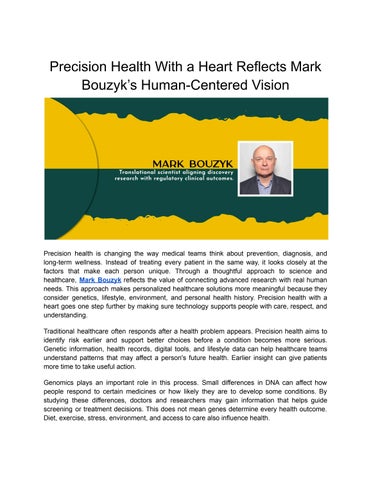
Precision health is changing the way medical teams think about prevention, diagnosis, and long-term wellness. Instead of treating every patient in the same way, it looks closely at the factors that make each person unique. Through a thoughtful approach to science and healthcare, Mark Bouzyk reflects the value of connecting advanced research with real human needs. This approach makes personalized healthcare solutions more meaningful because they consider genetics, lifestyle, environment, and personal health history. Precision health with a heart goes one step further by making sure technology supports people with care, respect, and understanding. Traditional healthcare often responds after a health problem appears. Precision health aims to identify risk earlier and support better choices before a condition becomes more serious. Genetic information, health records, digital tools, and lifestyle data can help healthcare teams understand patterns that may affect a person's future health. Earlier insight can give patients more time to take useful action. Genomics plays an important role in this process. Small differences in DNA can affect how people respond to certain medicines or how likely they are to develop some conditions. By studying these differences, doctors and researchers may gain information that helps guide screening or treatment decisions. This does not mean genes determine every health outcome. Diet, exercise, stress, environment, and access to care also influence health.
The human side of precision health matters just as much as the science. Patients are more than sets of data. They have concerns, family responsibilities, personal goals, and different levels of comfort with new technology. A healthcare plan becomes more useful when professionals listen to those needs. Clear conversations help patients understand why a test or treatment may be recommended and what choices are available. Trust is especially important when health programs use genetic or personal data. People need to know how organizations collect, store, and protect their information. They should also understand who can use that data and for what purpose. Strong privacy standards and informed consent can help build confidence. Without trust, even the most advanced health technology may fail to create lasting value. Precision health can also support better medication decisions. The same drug may work well for one person but cause limited benefits or unwanted effects for another. Genetic information can sometimes help clinicians understand these differences. When combined with medical history and professional judgment, such insight may lead to safer and more suitable treatment choices. Prevention is another area where personalized approaches can make a difference. A person's family history, genetic risk, daily habits, and environment may point to health concerns that deserve closer attention. Someone with a higher risk for a certain condition may benefit from earlier screening or lifestyle changes. This allows care teams to focus resources where they may have the greatest effect. However, the benefits of precision health should not belong only to people with access to major hospitals or expensive services. Health innovation has greater value when it can reach diverse communities. Researchers need data from people with different backgrounds so scientific findings reflect a broad population. Healthcare systems also need affordable ways to bring useful testing and personalized care into smaller clinics and underserved areas. Technology can support this effort when it remains simple and practical. Digital health tools can help people track important measures, communicate with care teams, and receive guidance without frequent travel. Remote monitoring may help doctors notice changes sooner. At the same time, technology should never replace the value of human communication. Digital systems work best when they strengthen the relationship between patients and healthcare professionals. Collaboration also helps precision health become more effective. Doctors, genetic researchers, data specialists, nurses, and patients each bring a different type of knowledge. Working together can reduce gaps between scientific discovery and everyday care. Patient feedback is particularly valuable because it shows whether a new approach is easy to understand and realistic to follow. Compassionate precision medicine can help create a future where advanced science and human care support each other from the start. Precision health works best when it gives people useful knowledge without losing sight of their individual concerns, dignity, and choices. As
research continues to improve, the strongest solutions will combine accurate data with clear communication, fair access, privacy, and empathy. Precision health with a heart is ultimately about using better information to deliver care that feels more personal, responsible, and connected to the people it is meant to serve.