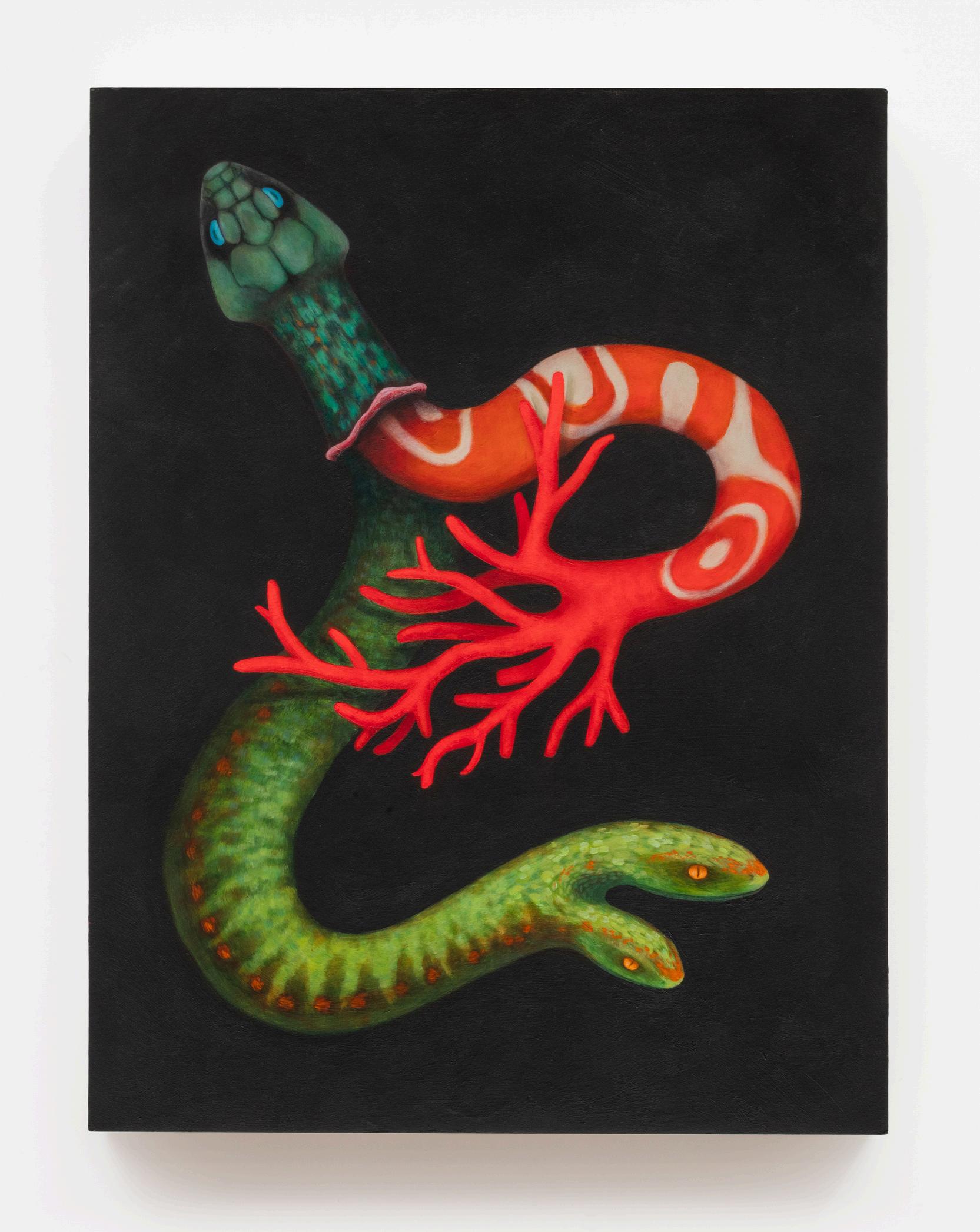
BY LAURENLEVATOCOYNE
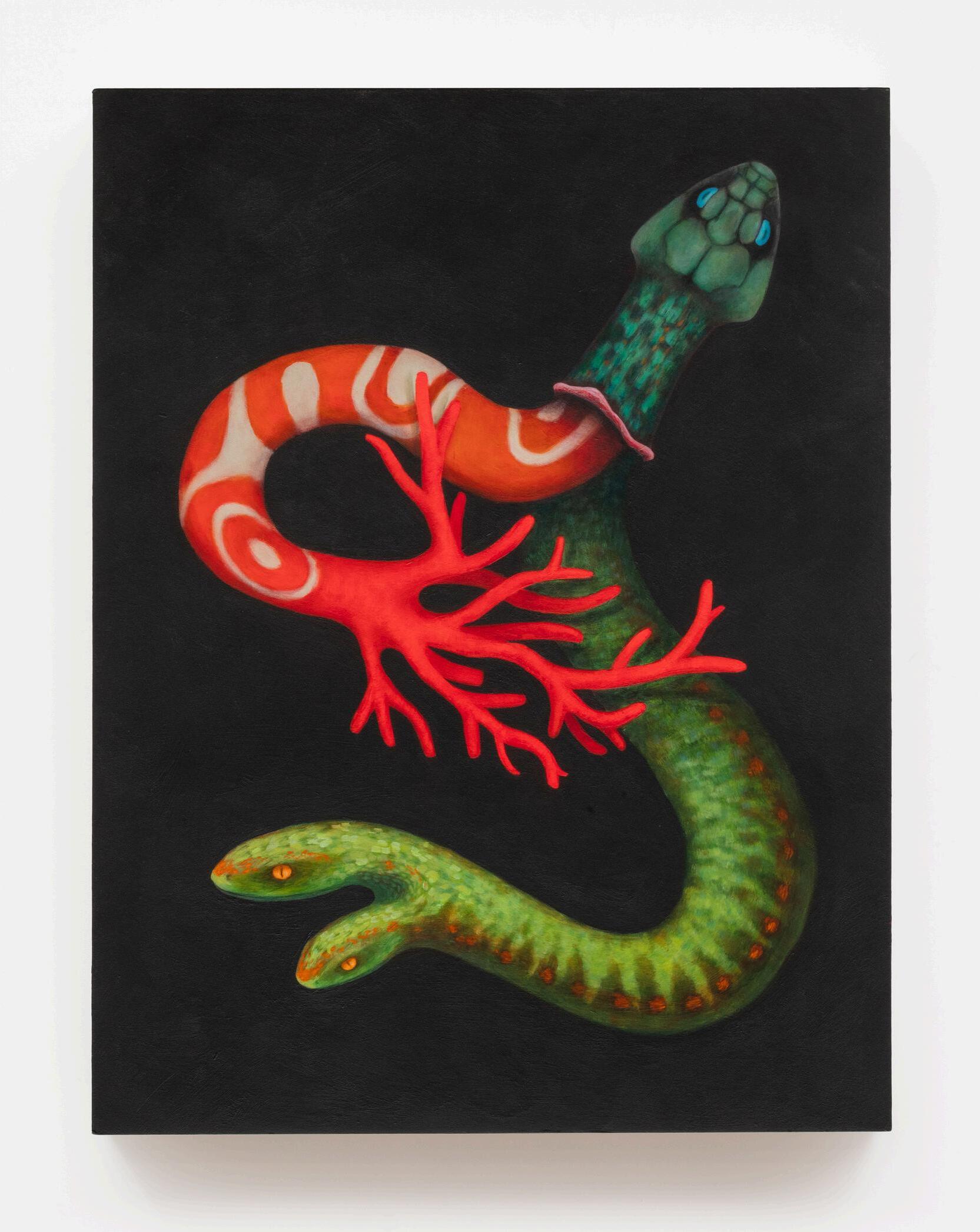
BY LAURENLEVATOCOYNE
After her head was cleaved from her body, Medusa’s bemonstered blood spontaneously generated creatures of both myth and matter. First were her twins, the legendary winged horse Pegasus followed by lesserknown Chrysaor, a giant with a boar’s head and a golden sword. Next came their seafloor sibling red coral, a very real and now overharvested animal sold as a portafortuna contro il malocchio a good luck charm against the evil eye. But after these known abiogeneses and after her head was carted off—what happened to Medusa’s body? With Medusa’s Bestiary, I propose that her body continued to spontaneously produce what Charles Darwin called, “endless forms most beautiful and most wonderful,” giving rise to an entire ecosystem that is still unfolding today.
Inspired by early modern naturalists, fabulists, and artists, Medusa’s Bestiary explores and documents the speculative ecosystems generated from Medusa’s abandoned body. Instead of the fabled garden of stone statues, this New Gorgonia is home to a host of flora and fauna including hybrids, mutants, and monsters. Beyond the speculative, and following in the footsteps of early naturalists and mythmakers alike, there are also existing
plants and animals that this project claims as Gorgonian in lineage. Stone-skinned creatures, such as seahorses, beetles, and spiders belong in this new taxonomy. Swamp things and blood drinkers too, from carnivorous plants and frogs to vampire moths and bats. Mirrored animals literally as well as those who appear as their own double/twin—are also part of the Gorgonian taxon, from the reflective sequined spider to double-headed snakes and lizards.
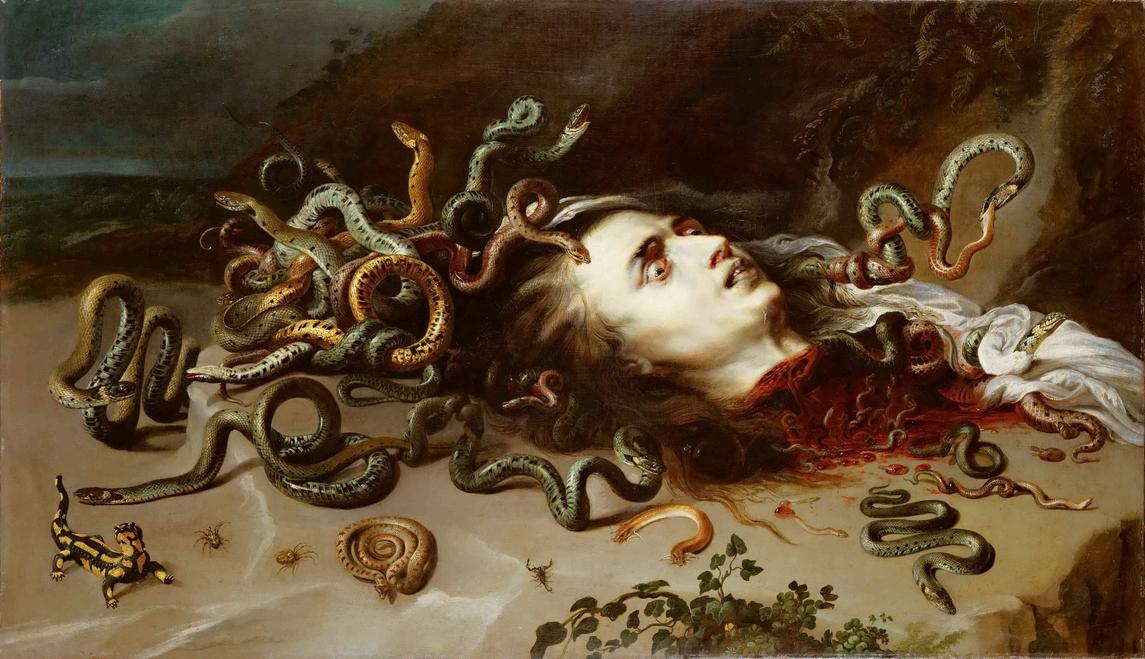
Then there are the species that early modern artists depicted as part of Medusa’s legacy, such as the fire salamander in Peter Paul Rubens’ painting The Head of Medusa (1618). During my research at the Kinney Center, I realized another connection: the two-headed lizard in the lower middle portion of the painting just below the line of her severed head and next to a small snake emerging from a droplet of blood is the Ushaped polycephalic amphibian depicted in Adam Lonicer’s Kreuterbuch (1564). These “creeping things,” a phrase often used in the early modern period, have always felt like my own non-human kin, familiar and relatable, much like Medusa herself.
Lauren Levato Coyne is a New England based artist and writer interested in ecological storytelling. Her works include drawing, painting, sculpture, and writing which can be found internationally in many publications and exhibitions. Levato Coyne is the recipient of significant awards for her work including a Mass Cultural Council Visual Arts Grant and the 2026 AICA-USA Irving Sandler Award for New Voices in Art Criticism. She teaches natural history drawing in the paleobiology and oceanography departments at Williams College. In Fall 2026, she will also be a visiting critic in the graduate program at Rhode Island School of Design.
For more about her work: www.laurenlevato.com
The Renaissance of the Earth revolutionizes what it means to engage the early modern past with questions about our environmental future. Through a range of cross-disciplinary collaborative models, it puts students, artists, and scholars at the center of an interdisciplinary research agenda with the goal of discovering diverse avenues for creating sustainable and equitable life.
Learn more about the project: www.renaissanceoftheearth.com
The Kinney Center for Interdisciplinary Renaissance Studies advances research in the early modern humanities. Our mission is to support and promote interdisciplinary scholarship and public-facing humanities programming with the goal of exploring connections between the early modern world (c. 1400-1700) and our own.