
by Ayesha Mukherjee



How do printers leave their mark?
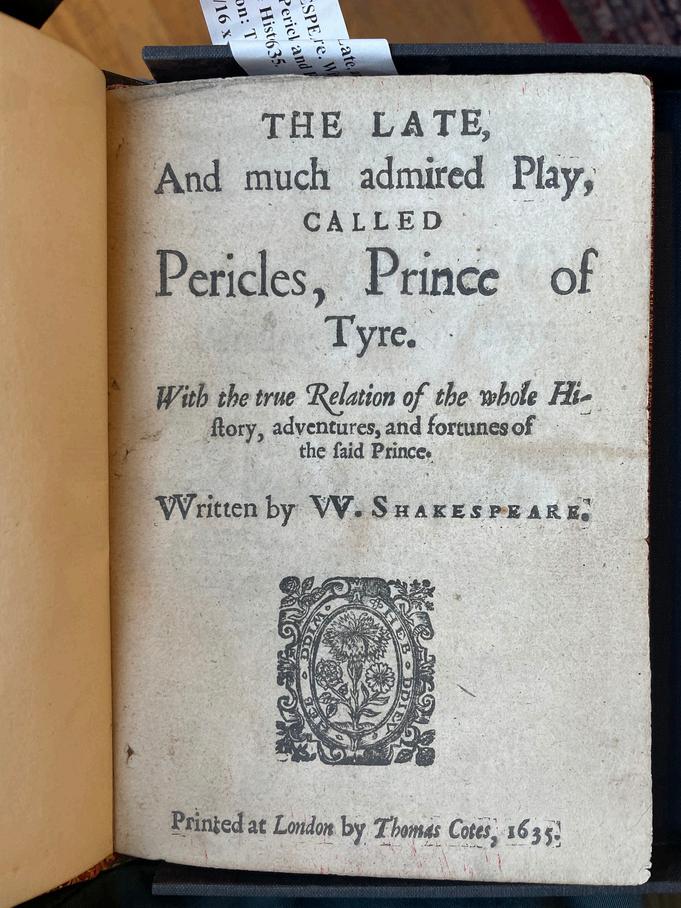
The two books you see here represent very different editions of Shakespeare’s plays. The Second Folio (Gillespie Collection, 1632) on the left and Pericles (Gillespie Collection, 1635) in octavo format on the right, were both printed by Thomas Cotes. While scholars often focus on textual variations that reveal the long history of how Shakespeare’s texts changed over time, this display invites you instead to see these books as material objects and products of the 17th-century print house and consider these books as material objects.

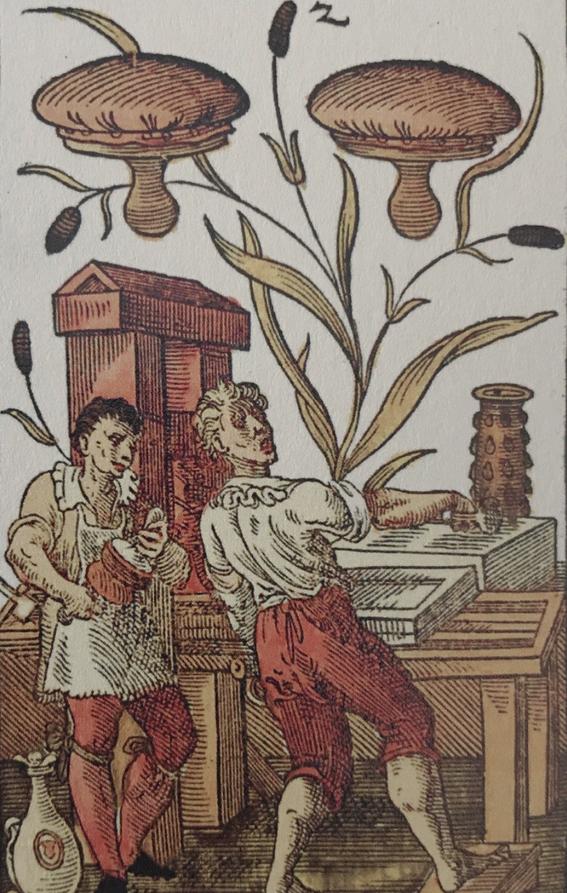
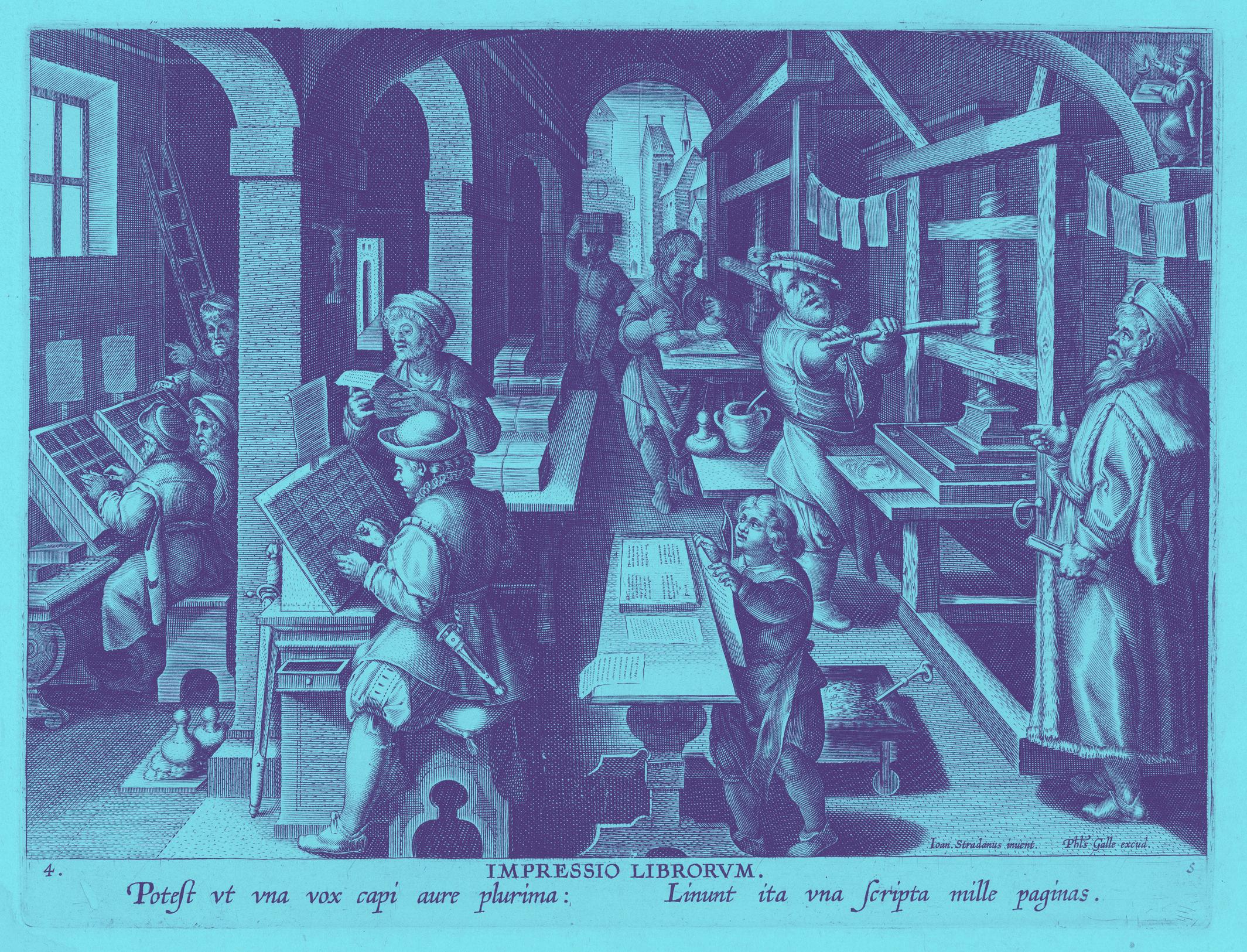
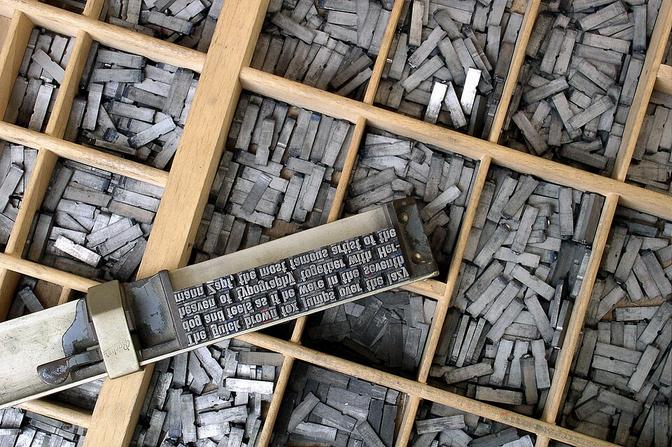
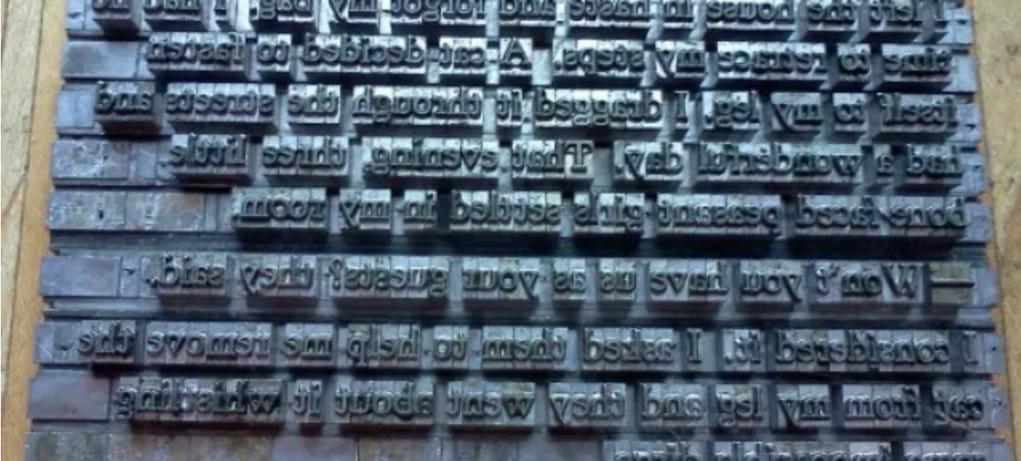
The early modern print house was a busy, crowded space where many hands contributed to each stage of production—from setting and sorting type to spreading ink over the type with tools crafted from balled up leather, and ultimatelyfolding printed sheets into gatherings. Tools clattered, workers moved constantly, and freshly inked printed pages hung overhead to dry.
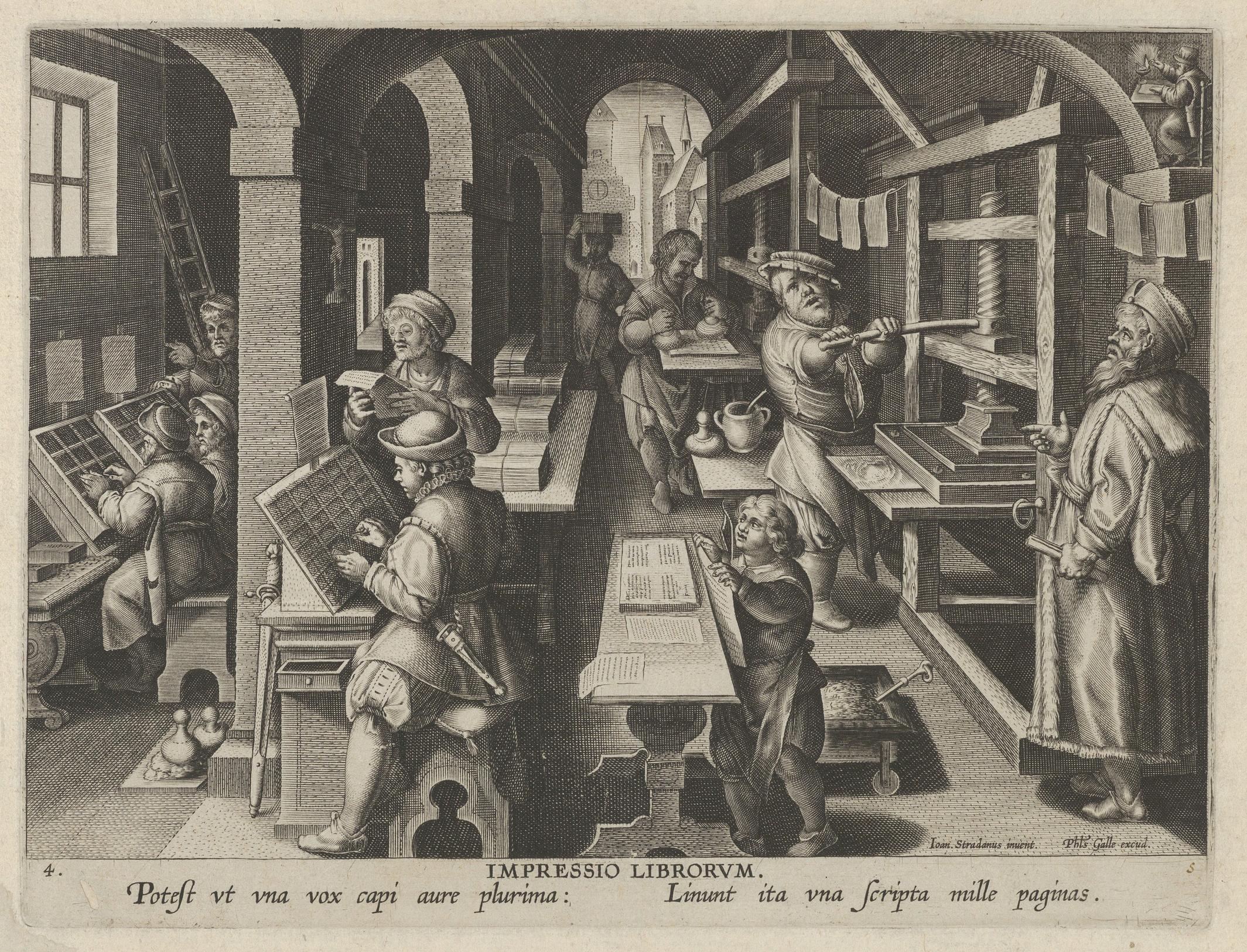
The image you see here, Impressio Librorum (Jan van der Straet, c.1580), shows the flurry of activity in an early modern print house.
Drawn from the British Museum’s collection, we display this image to give you a sense of the liveliness and movement involved in the business of bookmaking.
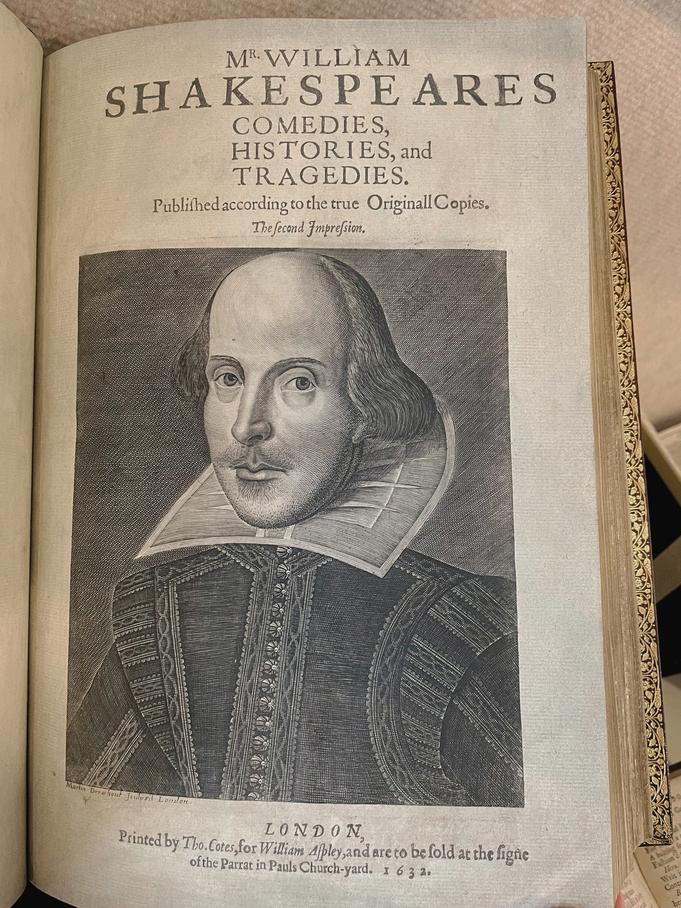
Early modern print shops maintained their own stock of ornaments, reusing them both to break up the text visually and to fill empty space on a page. Finding the same ornament in both books, we can begin to imagine the labor behind the mark on the page and the connection it creates across works and across time.
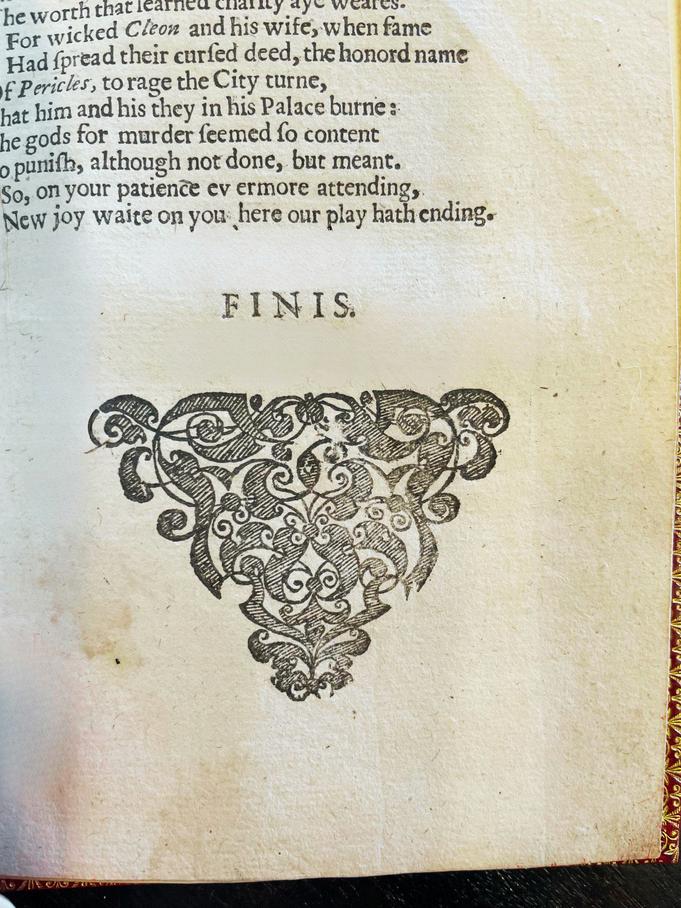
We tend to credit actors and performers with bringing Shakespeare’s words to life. However, in this exhibit, we encourage you to consider instead the many hands that brought life to the page itself.
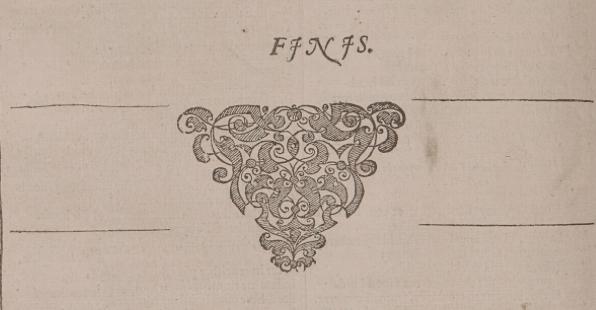
Printer’s ornament from William Shakespeare, Second Folio (Gillespie Collection, 1632)


Ayesha Mukherjee is a junior double-majoring in English and Anthropology with interests in museum studies and bookbinding. This is the first in a series of small exhibitions that she will be creating as the inaugural Gillespie Curatorial Fellow.


The Gillespie Curatorial Fellowship in Shakespeare and the Book offers an opportunity for advanced undergraduate and graduate students to work with one of the most important private Shakespeare collections in America. Fellows learn all aspects of curatorial practice from developing research questions, to creating exhibition materials, and collaborating with scholars and librarians in order to produce a special exhibit that tells new stories and forges new directions in the study of Shakespeare and the book.
Learn more about the Gillespie Curatorial Fellowship and the Gillespie Collection by visiting: www.umass.edu/renaissance
The Kinney Center for Interdisciplinary Renaissance Studies advances research in the early modern humanities. Our mission is to support and promote interdisciplinary scholarship and public-facing humanities programming with the goal of exploring connections between the early modern world (c. 1400-1700) and our own.
The Kinney Center for Interdisciplinary Renaissance Studies and the University of Massachusetts Amherst are grateful to the Gillespie Family for their generosity in supporting this visionary fellowship.