FRO FOU
Dear Readers and SheEOs,
As we mark International Day for Women in Maritime, my heart is full of pride for every woman navigating the industry with resilience and grace.
This special edition is close to my heart. The theme "From Policy to Practice: Advancing Gender Equality for Maritime Excellence" reminds us that change doesn't happen in boardrooms alone. It happens in every decision we make, every door we hold open, and every hand we extend to the woman coming up behind us.
Right now, we are privileged to be mentoring and guiding incredible women through our Seaspan LEADs program, and what we witness daily reaffirms everything we stand for. Upskilling matters. Mentorship matters. Perhaps most importantly self-confidence matters. It is why we continue to shine a light on Imposter Syndrome, because too many brilliant women are still waiting for
permission. You already earned it.
Each story in these pages reflects a journey worth telling, hearing, and celebrating. Whether you are just beginning your climb or standing at the helm, your presence matters, your contribution counts, and your voice deserves to be heard.
With t d d i tion,
Founder, Maritime SheEO and She of Change magazine

FROMTHE EDITOR
On the occasion of International Day for Women in Maritime (18th May), She of Change is proud to release this special edition aligned with this year's theme: "From Policy to Practice: Advancing Gender Equality for Maritime Excellence."
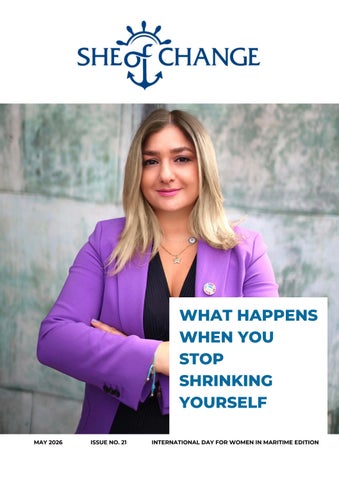
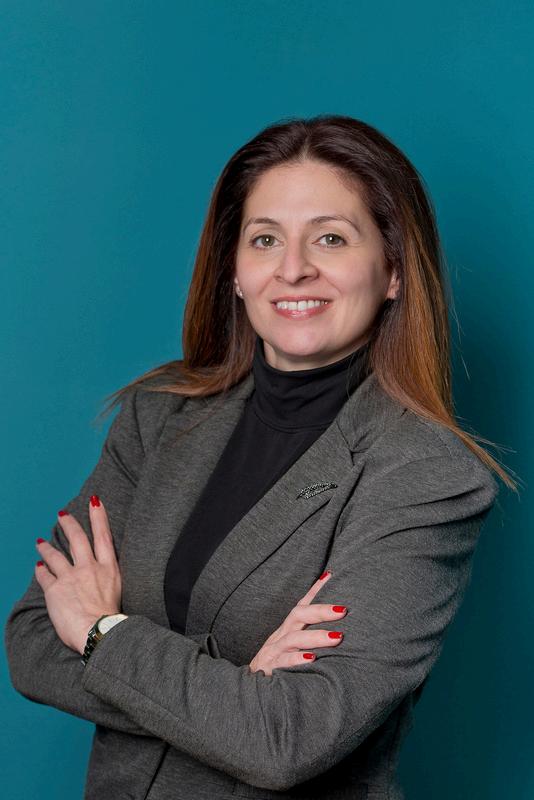
Our cover features trailblazer Gina Panayiotou, whose remarkable achievements and exceptional leadership continue to inspire women across the industry. We invite you to delve into her story and be motivated by her accomplishments.
This edition also presents empowering stories from women worldwide, offering a glimpse into their professional journeys, the obstacles they have overcome, and the fresh starts they have embraced. Alongside our regular Pilot Diaries and the Imposter Syndrome series, Captain Maninder Dhillon's compelling narrative on the Su-Nav Group, who are integrating technology and automation to
empower women onshore and at sea is a must-read.
To every courageous woman making a meaningful impact in maritime we celebrate you. May your journey be marked by continued success, and may we collectively embrace the immense value women in leadership bring to a more prosperous and equitable industry for all.
Meangafo
Janie
Sofia
Jacqueline

Technologyandthe FutureforWomenat Sea
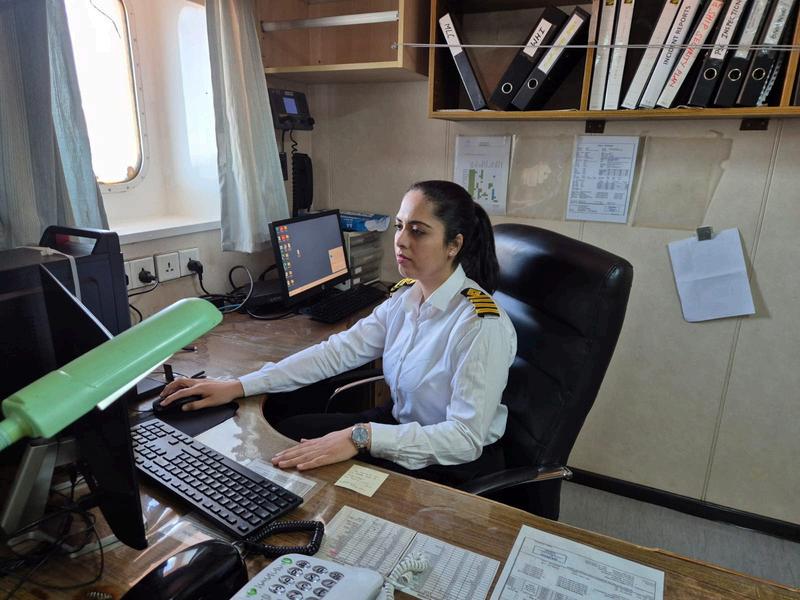
I am Capt. Maninder Dhillon, currently serving as Master onboard with Sunav
Throughout my career, I have sailed on tankers, container vessels, and bulk carriers. Over time, I developed extensive expertise in bulk carriers and continued sailing on them as Chief Mate before assuming my current role as Master.
Continue reading to discover more about Su Nav.
The maritime industry is changing fast. What was once seen as physically demanding and male-dominated is now opening up to new possibilities. At SuNav Group, this transformation is seen as a chance to build a more inclusive future. A future where women can thrive at sea.
Technology is driving this shift. Automation and advanced systems are reducing physical strain. Work is becoming smarter, not harder. Skills and knowledge now matter more than ever. This is breaking old barriers. It is giving women the confidence to step forward and lead.
Safety at sea is stronger today. Modern ships are equipped with advanced monitoring and emergency systems. Risks can be managed faster and more effectively. Communication has also improved. Seafarers can stay connected with their families at all times.
This reduces isolation and builds emotional well-being. With support from organizations like the International Maritime Organization, the industry is becoming safer and more inclusive.
The future is even more exciting. Artificial intelligence and smart vessels are changing how ships operate. Data is shared in real time. Experts onshore can support crews at sea. Workloads are lighter. Decisions are smarter. In time, autonomous ships may become more common.
These changes are opening new doors.
Not just at sea, but onshore too. Women can explore roles in data analysis, remote operations, and technical management. These careers offer flexibility and balance. They keep women connected to the maritime world in new ways.
At Su - Nav Group, this progress is embraced. Technology is not just innovation. It is empowerment. It is creating space for women to grow, lead, and succeed.
The future of maritime is inclusive. It is diverse. And it is full of opportunity. Women are not just part of this journey they are helping lead it forward.

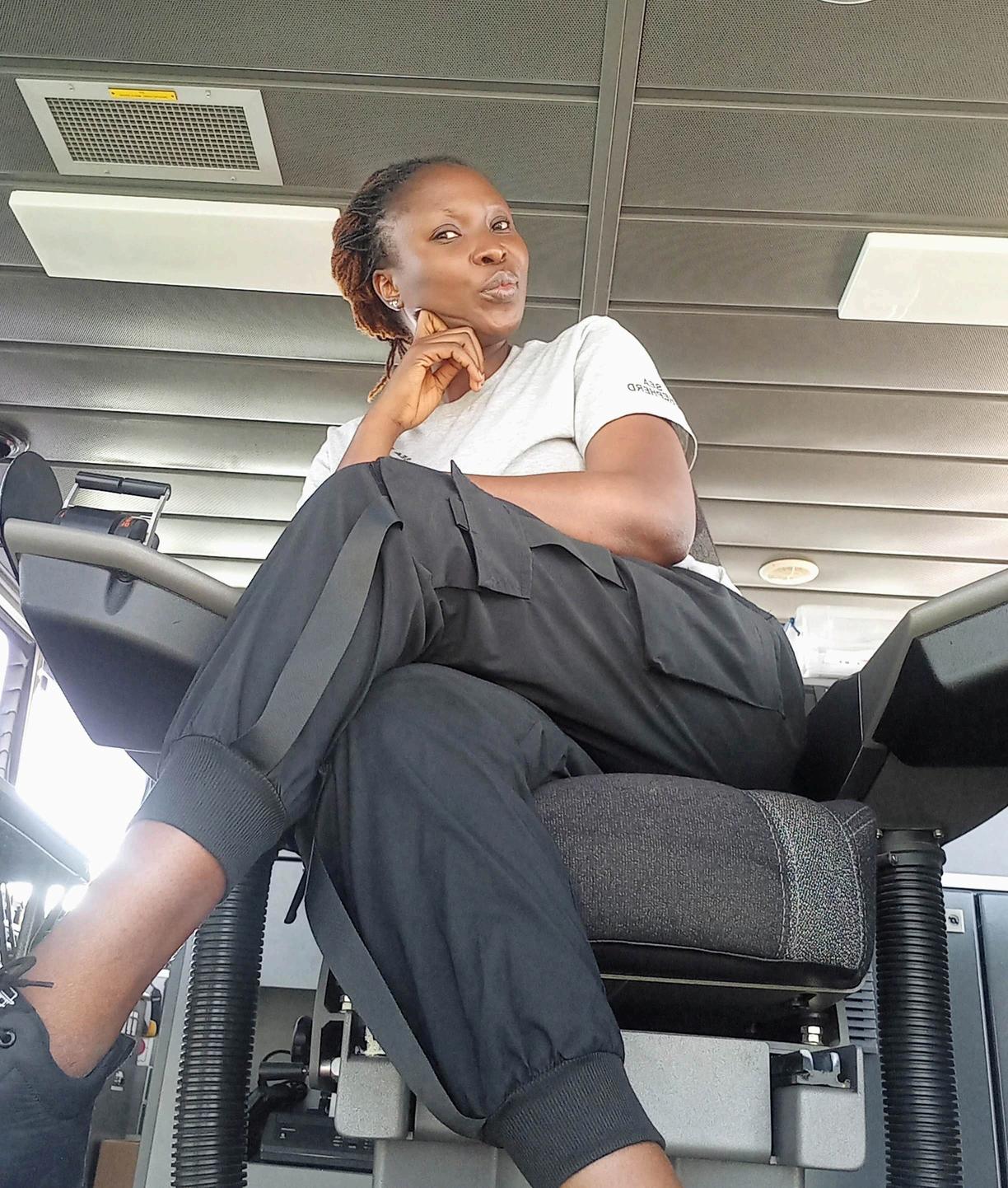
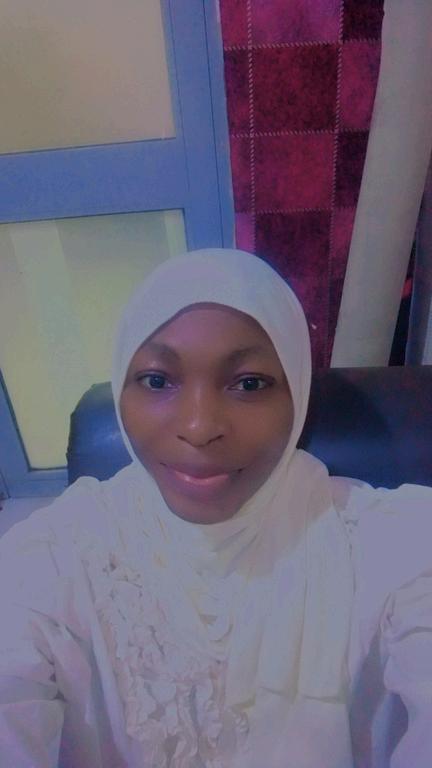
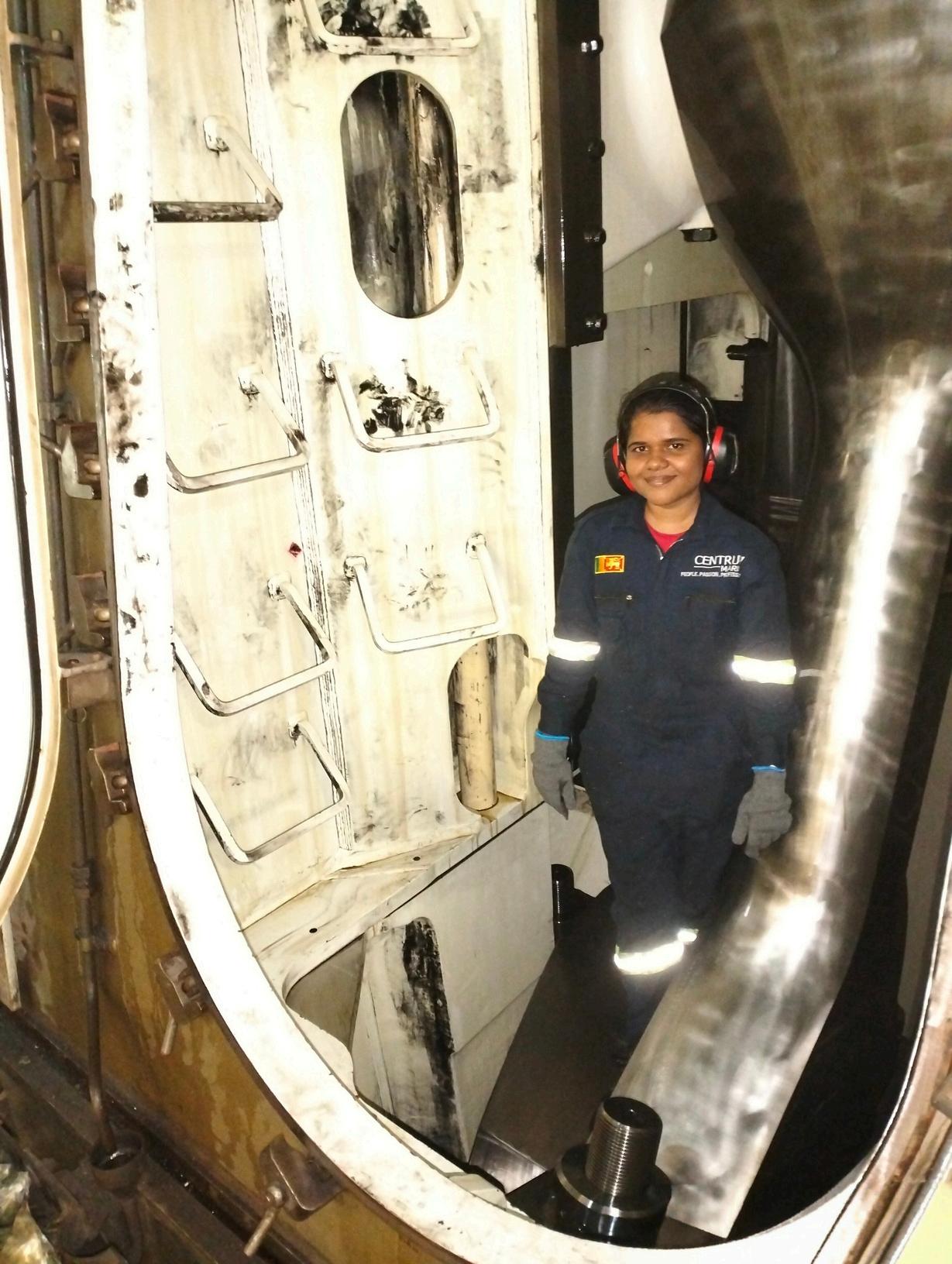
Women can be leaders because her potential should never be limited by stereotypes.

Women can be leaders because we bring empathy, diverse perspectives and resilience at sea and ashore
-JOAN LEE
-TAOFEEK KHADIJAH

EmpoweringWomenToTake OnLeadershipRoles
Abhijith Balakrishnan
Shipping is modernizing. We see more women, but not nearly enough.
A 2019 industry survey revealed that many companies are not creating environments that support hiring or retaining women; and some even appear to have unwritten policies against placing women onboard ships. Although increasing representation is often framed as a business imperative, it is equally a safety imperative. Safety thrives on diversity, trust, and care qualities that often strengthen when women lead.
Without deliberate action, even if more women do enter shipping, the leadership pipeline will remain thin. Many will leave early or stagnate in safe roles that lack influence. Ships and roles in the industry designed around male needs must change to build an inclusive future that reflects women’s needs and makes them feel welcome.
Women can struggle to be recognized as leaders. Even when women rise to leadership roles, they are often expected to conform to these definitions. Such environments make it difficult for women to emerge naturally as leaders or to express their authentic leadership styles. Over time, many begin to believe that to be a good leader, they must lead like men.

But when women lead, everyone benefits. With women helming, there is more collaboration, sense of fairness, and participative communication.
One concern ship management companies have is how the organisation is perceived after an incident. They are reluctant to share an incident or its extent because external stakeholders judge these as competence failures and usually stop doing business – the ship is put on hold. This hurts the industry as information flow is impeded and learning hampered.
However, failures elicit a less negative response in female led organisations. With more women in leadership, we could begin to see greater trust not only within organizations but across the industry.
Women in leadership strengthen trust and care within organizations. These cultural foundations, in turn, unlock information flow - that lifeblood of organizations which leads to learning and safer operations.
If we must progress towards fewer incidents, we need a radical and transformational shift in how leadership views incidents and responds to them.
There are not enough women in shipping and that presents us with an extraordinary opportunity which is within the control of any company. We need to embed the knowledge that trust matters for safety and that diverse leadership helps trust. To foster safe shipping, we must enrol and retain more women.
If organizations commit to create environments where women are encouraged to pursue their ambitions, the payoff will take us to the next level of performance. It will create workplaces that function better, have better information flow and thus a better understanding of real workplace conditions allowing leaders to make meaningful changes to reduce the gap between work as imagined (or prescribed) and done.
Culture shapes who get to lead and whose voices are heard reflecting a deeper societal question about how we perceive women’s leadership. This tension between women’s ambition and society’s expectations surfaced at the Kerala Literature Festival when a man in the audience asked the eminent writer PadmaShri Pratibha Ray a question during the session on her book ‘Uttarmarga: Where Freedom Reigns. ‘

He wanted to know what women could do to change their own condition in society. During her response that highlighted how the society is an interdependent construction of its various elements, she posed a sharper question: “Where are the brave new men who are ready to accept brave new women?”
Her words resonate where progress depends not only on women stepping forward and taking up roles but on men around them choosing to be allies.
Men must actively recognize their privileges and use them to champion gender inclusion. When senior leader role model allyship and advocacy, their managers will be more bought-in to the cause helping further it organically.
When women’s voices shape leadership at sea and ashore, cultures shift toward trust and care. Information flows, organizations learn, and operations become safer. We can build a maritime industry that the best among the next generation will look to join and build their careers.
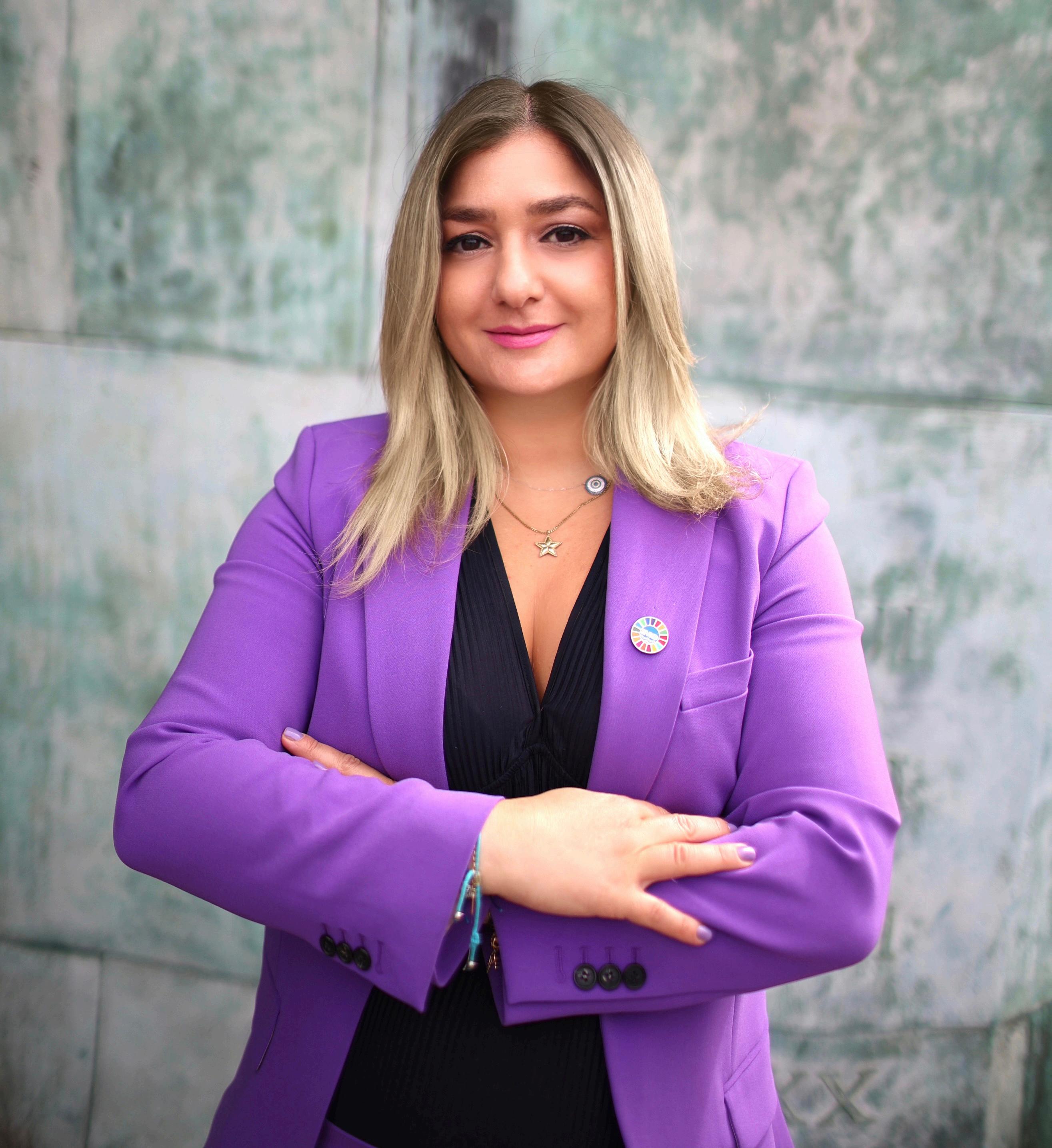
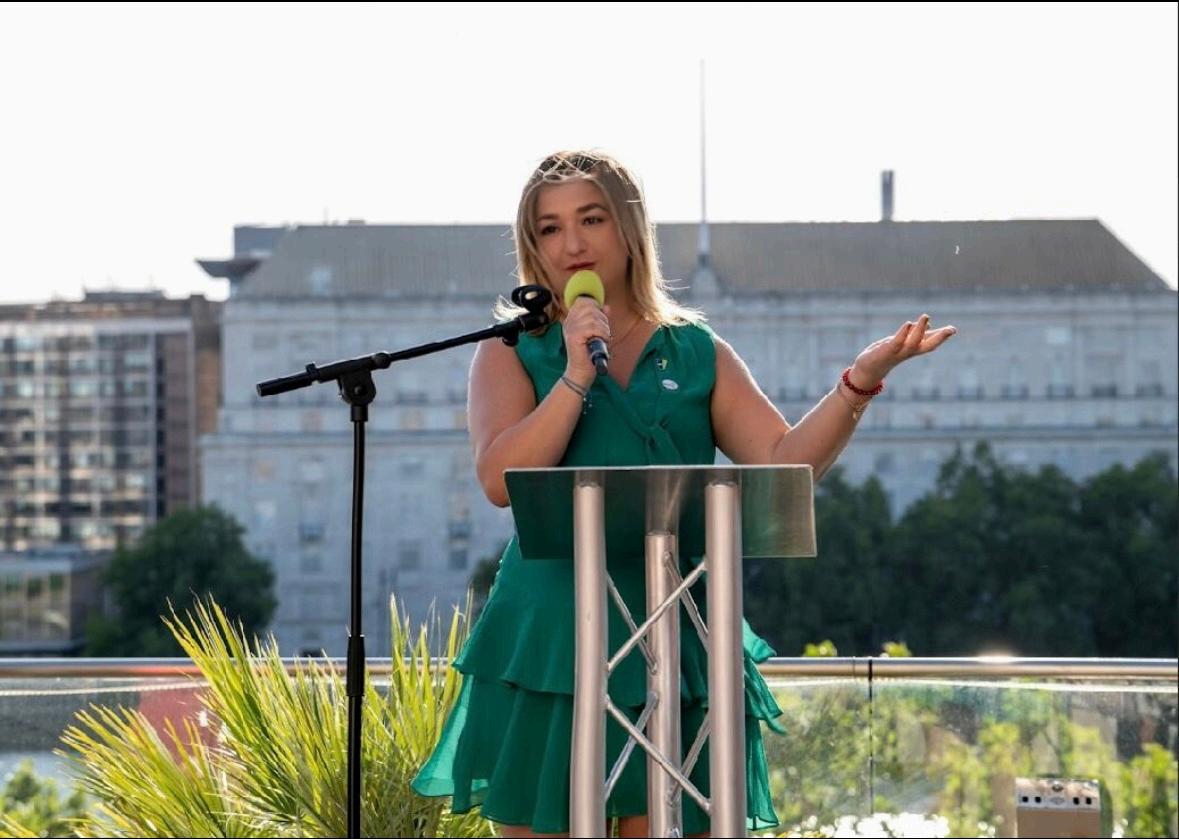
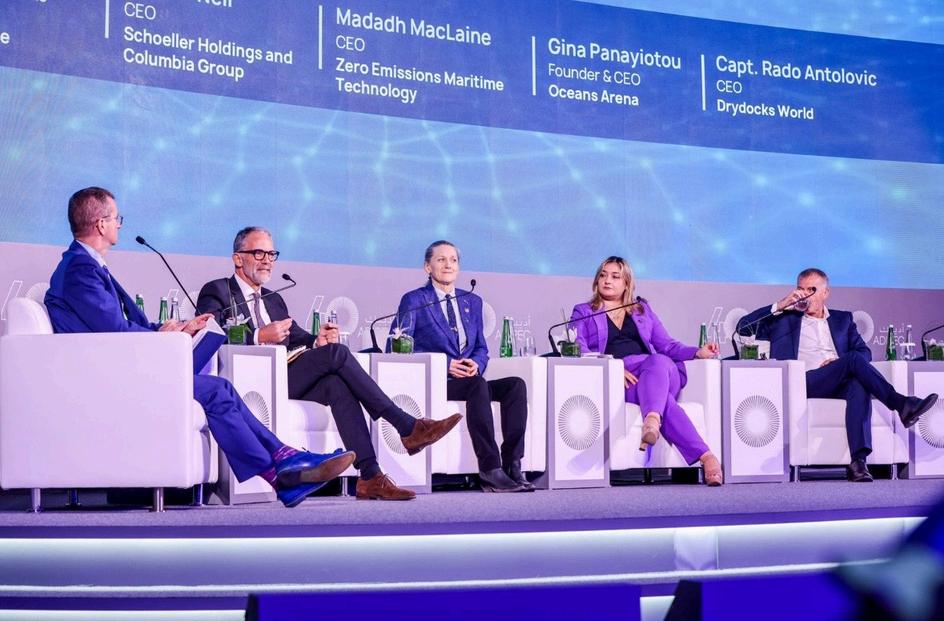
Gina Panayiotou is the Founder & CEO of Oceans Arena. A maritime lawyer turned award-winning social entrepreneur and strategist, Gina has been a keynote and expert speaker at 60+ events globallyincluding UNCTAD, IMO, COP & Davos - on impact leadership, maritime affairs, sustainability & women empowerment. She is also a WISTA UK Board Member, Philanthropy Advocate for the National Oceanography Centre (NOC) and Seatrade Maritime Club UK Ambassador.
With 15+ years of experience she has worked with organisations such as the IMO, the office of the Greek Prime Minister’s Special Envoy for the Ocean, held senior roles within shipowning organisations and has been featured in “Top Maritime Influencers you should follow,” Top 100 Women in Shipping for 7 consecutive years & 2x Seatrade 20under40.
“The most underrated competitive advantage an organisation has is its people. If you make them feel special, they will make your organisation special.” F i n d Y o u r O w n
ve you men in Maritime. You are known for your work in maritime sustainability, leadership, and pushing more inclusive, humancentred thinking in the industry. Where does that thought and belief come from?
vision behind Oceans Arena – to ensure sustainability was delivered successfully within maritime organisations. Engaging stakeholder effectively, internally and externally, is an immensely powerful tool to successfully deliver on ambitious targets and goals.
The maritime industry often rewards following a defined path. When did you realise you needed to find your own voice instead of fitting in?
There are 2 factors to this. The first was very early on in my career, where I realised that our industry had a visibility and inclusivity problem. Looking around any industry gathering it was clear that youth were a minority, as were women and we were doing nothing about it.
That was the first time I decided to take matters in my own hands and use my voice to launch a radio show/podcast back at the time in 2016 called “It’s all about Shipping” (disclaimer: there is no affiliation with AllaboutShipping.co.uk) –before maritime podcasts became a thing to help shine light on the industry and its people.
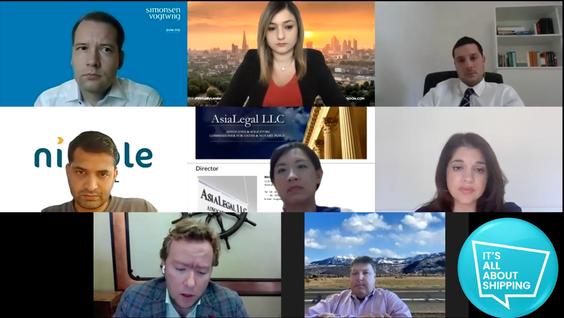
The second driver, was after years of sitting in rooms with people who were terrible leaders, driven by ego, dividing rather than uniting teams and trying to dim your light in order to appear brighter and control the pace of your progress.
There are many occasions, from being directly told that I cannot pursue a commercial role because the best deals happen in strip-clubs and being a woman I could not take clients to strip clubs to being told that I was too young for roles which were given to counterparts of the same age, with far less qualifications because they came from family ties to the sector, were male or considered not as ambitious as I was – which is apparently a bad things and a threat.
ne of the organisations I worked with, included a hich I never provided (and which was very badly cation and I only found out when I was sent a picture y p terview I had supposedly given.
At the same organisation my line manager, had also called me into his office with HR to tell me that while I was doing a great job they were concerned about my LinkedIn presence and being so active in the industry. In fact, their PR agency was screening my profile and advised them that because not all of my posts were about the company (having also content on WISTA, YoungShip, guest lecturing etc.) they needed to control it better.
While I did stay with them for a while longer, I knew then and there that fitting into structures like that where my voice was used without my permission and where I was asked to compromise my voice, was not for me.
Do you think the industry’s idea of a “successful career path” is still too narrow? What does success look like on your own terms today?
Yes, the industry’s idea of a “successful career path” is still too narrow – being the CEO of or a shipowner is not the only way to be a valuable and successful stakeholder.
I am very pleased to see this slowly changing though – sustainability has brought a great need for innovation in our industry, which in turn created a ripple effect of entrepreneurs, start-up ecosystems etc. This has widened the scope of the variety of career paths available.
On my own terms it means one thing – what do you consistently bring to the industry and who are you inspiring? For me success is the
fact that people know me as Gina, invite me to places as Gina and it rarely matters which organisation I am with. This allows me to take that credibility with me to any role I assume.
We talk about increasing women in leadership, but less about changing leadership itself. What do you think is missing in current maritime leadership models?
In my keynote speeches, I talk about Impact Leaders – these are the type that in crisis focus on coming through the storm unharmed but also with a better outlook for the future.
Regrettably, I feel that we do not have enough of this component within our existing leadership in maritime. We have for decades been a reactive industry, which means we successfully deal with a crisis when it comes our way but we do not proactively look ahead and factor in what does this mean for our industry, our people, our needs going forward?
MARITIME LEADERSHIP NEEDS
TO ADOPT A MORE IMPACT DRIVEN APPROACH, THAT CATERS TO INCREASING AND MULTI-DIMENSIONAL NEEDS.
This will organically support gender equality, as it will be evident that excluding 50% of talent from leadership, will be reflected in all types of shortfalls.
The traditional route still comes with its challenges. What is one barrier you’ve faced and how did it shape the way you lead today?
While it is the thing which I consider to be my greatest achievement, it was also the greatest barrier I faced. In this industry, I came as a “nobody”. This meant that doors did not open, in fact frequently they were purposely shut.
THIS MEANT I OFTEN HAD TO BUILD MY OWN PATHWAYS, PEBBLE BY PEBBLE, TO GET TO PLACES WHICH OTHERS HAD “HELIPAD ACCESS” TO, SIMPLY FOR WHO THEY WERE.
Even though it felt very unfair at times, I know that everything and anything I achieved was not given to me - it was earned, and what we earn has greater significance to us as humans.
Has there been a moment where you saw another woman navigating the same challenges and you were able to support or guide her? It is phenomenal how the moment I started sharing my challenges, I saw other women open up and share exactly the same experiences. Only a few weeks ago, I was on a work trip to Singapore and met this young lady at an event, we were talking about our studies and when she decided to do an MBA.
While telling her the story of when I decided to do mine, my manager at the time told me he did not see any value in it and to not expect a rise as a result of it. Before I finished the sentence, she finished it for me saying this is exactly what her boss had also told her! There we were, two women, in different continents, at different timeframes, different organisations and bosses, both received the exact same response, word by word, when trying to advance our careers. Thankfully neither was demotivated enough to back down!
een many moments where I see women navigating I try not to do is tell them what I would do. Many soentoring by telling women in similar situations what y o. Personally, I feel that we are all on an individual journey, with individual needs, aspirations, personalities – what you would do may not work well at all for another person in a similar situation.
What I try to do instead is help them understand what their options are, what they want to achieve as an outcome and help them shape their voice and build up their confidence to navigate the challenge in a way which feels authentic.
I have now mentored more than 40 women officially and many more unofficially – I would like to believe that I was able to support and guide them into shining brighter and not allowing anybody to dim their light. It is one of the most rewarding feelings to see them go after their dreams unapologetically and when given the opportunity do the same for others.
TheUnfinishedChapterofa MaritimeCareer
Alex Benmore describes the transition of seafarers from sea to shore, highlighting how the maritime industry fails to prepare them for the challenges they encounter when returning to land-based work.
Maritime has spent decades refining how people are recruited, trained, deployed, and supported at sea. From onboarding and safety to welfare and performance, there is deep structure around how seafarers enter the profession and how they are cared for while aboard. In many sectors, particularly the cruise industry, these systems are sophisticated, centralised, and highly efficient.
Yet one important phase remains largely undefined: what happens when seafarers resign?
Alex Benmore
s gap is ines etailed
g y world, yet when crew resign, there is often no equivalent off-boarding framework beyond administrative closure.
There is no formal acknowledgement of service, no clear pathway for references, and no employer-issued documentation that can be used in the land-based workforce. Beyond a seaman's book, a record of dates and vessels, nothing formally reflects a seafarer's role, responsibility, or contribution.
Shipboard careers operate in a closed professional system unfamiliar to most land-based employers. Without employer-issued documentation, seafarers have no formal way to carry their experience, responsibility, or credibility into their next chapter on land. In most land-based industries, such documentation is rarely needed because roles and career progression are already widely understood.
For seafarers exiting, this gap surfaces in small but painful moments: when a recruiter asks for referees who understand their work; when a job application requires documentation
they simply don't have; when years of responsibility at sea are reduced to a line of dates on a CV.
This raises a broader question about values and integrity within maritime. If we say we value our people if we speak about crew welfare, inclusion, and culture
WHAT SHOULD THAT VALUE LOOK LIKE WHEN A SEAFARER DECIDES TO LEAVE?
When off-boarding is reduced to system closure over a professional conclusion, it exposes a gap between stated values and lived experience. It is within that gap that the end of a maritime career begins to feel less like a considered transition and more like a purely administrative end.
This is not a call for grand programs or costly interventions, but an invitation to reconsider how the maritime career lifecycle is completed. A more intentional off-boarding approach, one that acknowledges service, provides meaningful professional validation, and offers closure, would not diminish the realities of business. It would strengthen them.
Pilot Diaries
Charting an Unconventional Course: My Journey to Marine Pilotage
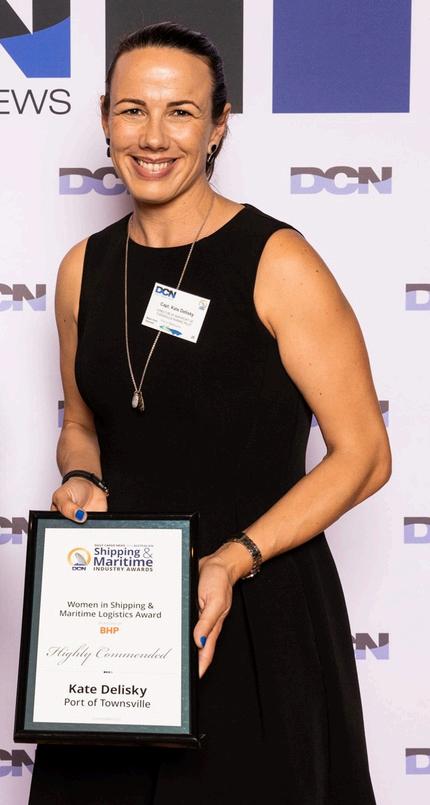
Kate Delisky
Marine Pilot, Port of Townsville Limited
Becoming a marine pilot is rarely a straight path, especially for women. My own journey has been anything but conventional, though I’ve come to realise this is a common thread shared among many female pilots.
Some came from naval careers, others from smaller vessels before moving on to larger vessels, some became marine pilots without ever commanding a vessel.
Several Internationally (UK, USA &
Sweden) entered the profession with a Chief Mate’s Certificate of Proficiency.
A childhood by the sea
I was raised in a small coastal town in southern Australia, where the ocean was a
constant and comforting presence.
Maritime life wasn’t foreign to me, my father and eldest brother were both marine engineers in the Merchant Navy. As a teenager, I was captivated by my brother’s seafaring lifestyle.
At 13, I had the opportunity to visit him aboard a large iron ore carrier. I was mesmerised by the scale of the ship, the global reach of his work, and the sheer sense of adventure. However, I didn’t yet know that women could pursue careers as deck officers.
Considering the Navy, then shifting My high school career days introduced me to the Australian Defence Force. I briefly considered a future in the Royal Australian Navy, particularly in navigation. However, the required nine-year commitment (at that time) felt overwhelming.
When I hesitated, my brother suggested I consider a merchant career instead and to do what he did. Initially, I dismissed the idea, thinking it meant working in the engine room. But after researching more, I discovered the Australian Maritime College (AMC) had a pre sea - deck intake starting soon. Ten days later I moved to Tasmania. I knew I could walk away if it didn’t suit me, but to my relief, I found I loved it.
Finding my sea legs
In 1999, shortly after beginning my training, industry conditions changed dramatically. Only two cadetships were awarded that year, compared to dozens previously. Desperate to get sea time after nearly one hundred applications sent out, I offered to work for no pay and finally secured that highly sought after position as a deck cadet on a crude oil tanker.
Though initially unsponsored, I
completed the required sea time, returned to the AMC to complete my Officer of the Watch (OOW) qualification, and finally secured a formal cadetship.
Inspired by trailblazers
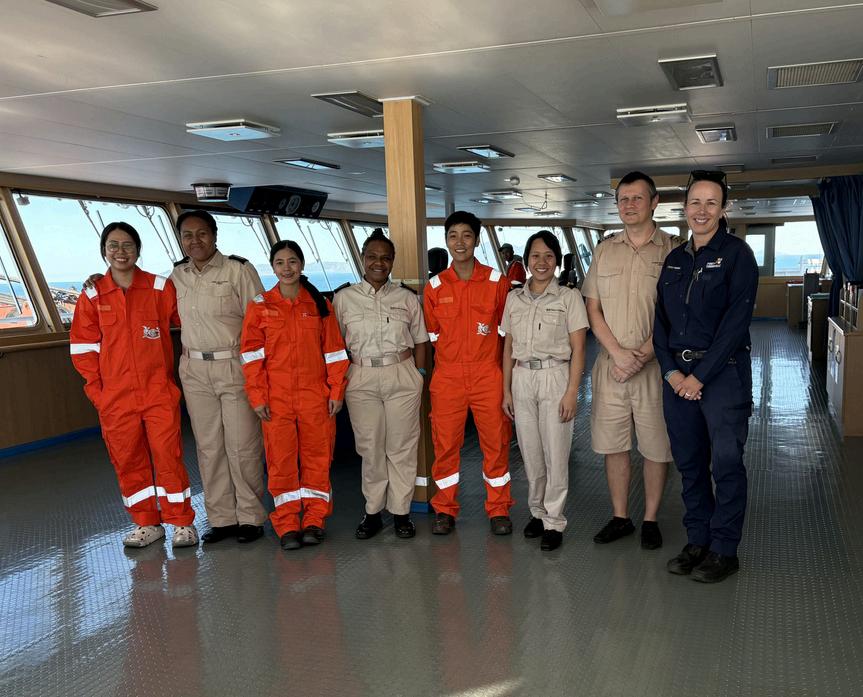
Early on, I had two formative experiences. The first was watching Captain Helen Cole, a marine pilot, board our tanker and seamlessly integrate with the bridge team. Later, as a newly promoted Second Officer, I worked with Captain Jeanine Drummond. Her professionalism and presence onboard as a fellow crew member helped normalise the path I had chosen and reassured me that I belonged in this field. These women became silent mentors through their conduct.
Navigating ashore and life changes
As my career progressed, I began contemplating a more stable life ashore. I transitioned to a shore-based role, first as a Vessel Traffic Services Officer, and later as Deputy Harbour Master in Port Hedland, the world’s largest bulk tonnage port.
Amid personal challenges that made starting a family difficult, I revisited a long-held passion, sailing. My partner and I bought a 38-foot yacht in the U.S. and spent several years cruising the Caribbean, diving nearly every day.
It was a deeply rewarding time but not one I could sustain indefinitely, particularly financially.
A shift to offshore and command
My early career was largely spent on product tankers, but I later moved to the offshore sector, beginning with a DP3 FPSO in the Bass Strait.
Eventually, I took command of a supply vessel. My first voyage as Master began with a baptism by fire, leaving Port immediately to avoid a cyclone. It was a steep but invaluable learning curve.
A return to Port and a new chapter
After much reflection, I returned to the workforce and applied for a marine pilot position in Townsville, I was accepted at the Port at the start of 2020. The 18month training process was intense and not without its challenges. I saw every challenge as an opportunity to reaffirm my capability.
Finding my place, and lifting others
Today, I am a senior marine pilot in Townsville, licensed across three different ports, each with its unique navigational demands. The role is no longer about bravado, it is about skill, situational awareness, and the ability to lead effectively in a high-stakes environment.
A
vision for the future
I’m genuinely passionate about mentoring and supporting the next generation of maritime professionals. My journey from cadet to Master, and now to senior marine pilot, reflects not only technical growth but also a strong commitment to challenging stereotypes and driving positive change within the industry.
As a volunteer Director with the Australasian Marine Pilots Institute (AMPI), the professional body representing marine pilots across Australasia, I am proud to contribute to the future of our profession and help shape global best practices. We also offer guidance and support to current pilots and aspiring ones, which I find incredibly meaningful and rewarding.
The maritime world is evolving, and as I guide ships safely into port, I also aim to steer the industry toward a more inclusive and diverse future.
ShapingtheFutureof MaritimeThroughWomen’s Leadership
By Ayshən Yunusli Founder of WISTA Azerbaijan, Head of STCW Training Department at Industrial Support and Training Services LLC.
The maritime industry has traditionally been viewed as a male-dominated sector, where women’s voices and leadership potential have often been overlooked. My journey within this field has been shaped by resilience, purpose, and a firm belief that representation must lead to responsibility and action.
In 2025, I was selected to participate in the Women’s Leadership and
ramme ritime ation with Organization (IMO). From a competitive pool of candidates representing 13 different countries, I was honored to be selected as one of the participants and to represent my country. This opportunity was not only a professional milestone, but also a responsibility to bring forward the perspectives and challenges faced by women in my national maritime community.
The WLE programme was a transformative experience that brought together women from diverse maritime and allied backgrounds, including seafarers, educators, regulators, and administrators. Through leadership training, policy discussions, and cross-cultural exchange, the programme reinforced a vital lesson:
LEADERSHIP IS NOT DEFINED SOLELY BY POSITION, BUT BY IMPACT, ACCOUNTABILITY, AND SUSTAINABILITY.
Inspired by this understanding, I took
a decisive step toward institutional change by becoming a founder of WISTA Azerbaijan. This initiative responds to a long-standing need for visibility and structured support for women in the sector, while aligning with global maritime governance and IMO objectives.
In the same year, I achieved another important milestone through my admission to the Maritime Academy.
When women are given access, trust, and platforms, they do more than advance individually, they build institutions, influence policy, and inspire future generations. Representation creates responsibility, and responsibility drives lasting change.
GuidedForward,GivingBack: MentorshipasaLifelong LeadershipCycle
By Richa Daroch Sr. Consulting Partner at Nevoxel
Richa shares her professional journey within the shipping industry along with her perspectives on mentorship. Let’s read this captivating narrative.
Leadership is rarely built in isolation. It is shaped quietly and consistently by those who guide us before we are ready to lead.
My professional journey began in 2008, when I joined a Hong Kong based shipping company as a Management Trainee through campus recruitment.
exciting, tainty. I y college y ction, anxious and overwhelmed, questioning how I could succeed in an industry I barely understood. His response was calm and decisive: “You were selected for your potential, not your experience. You will learn and you will do well. ”
That reassurance became my first real lesson in mentorship.
SOMETIMES, GUIDANCE IS NOT ABOUT PROVIDING ANSWERS, BUT ABOUT INSTILLING BELIEF.
Long before my career began, mentorship had already taken root at home. My father and family guided my most important decisions with quiet consistency teaching me the value of integrity, resilience, and preparation.
There is a proverb that says, “The best inheritance a parent can give is good guidance.” That early foundation gave me the confidence to step into unfamiliar spaces with courage and humility.
As my career progressed, mentors
appeared at defining moments. In the early years, mentorship looked simple - asking small questions, observing closely, and learning the fundamentals.
My seniors taught me everything from structuring my thoughts to drafting a professional email. Gradually, they encouraged me to put forward my points, share ideas, and eventually voice disagreements - always respectfully and with preparation. They taught me that disagreement is not defiance; when done thoughtfully, it is leadership in formation.
I learned that good mentors look for more than capability. They look for listeners and doers individuals who have the fire to do something meaningful, even if they do not yet know where to start.
As the saying goes, “Talent opens doors, but teachability keeps them open. ” With that guidance, I moved from learning HR fundamentals to managing end-to-end PAN-India HR operations and eventually representing India HR at a global level. Each transition was anchored not just in experience, but in mentorship.
Life added a deeper layer of understanding when I married a seafarer. Living alongside a seafarer revealed the human reality behind those challenges: prolonged separations, emotional strain on families, the weight of responsibility carried at sea, and the quiet uncertainty officers face when considering a move ashore.
I learned that most professional challenges are never purely operational - they are deeply human.
Today, as Senior Consulting Partner at Nevoxel, mentorship has come full circle. I work closely with professionals - especially mariners - who are navigating transitions and self-doubt. Their questions are familiar: Will I fit in on land? Will my experience matter? Where do I begin? My role is not to chart their path for them, but to help them recognise their readiness. I listen, I guide, and I challenge - just as I was once guided.
This is what mentorship has taught me about leadership:
Seek mentors with humility and curiosity
Earn mentorship through effort, consistency, and action
Become a mentor by listening deeply and believing early
As another proverb reminds us, “A candle loses nothing by lighting another.” Mentorship does not end with achievement; it evolves into responsibility.
Mentorship, when carried forward with intention, becomes legacy.
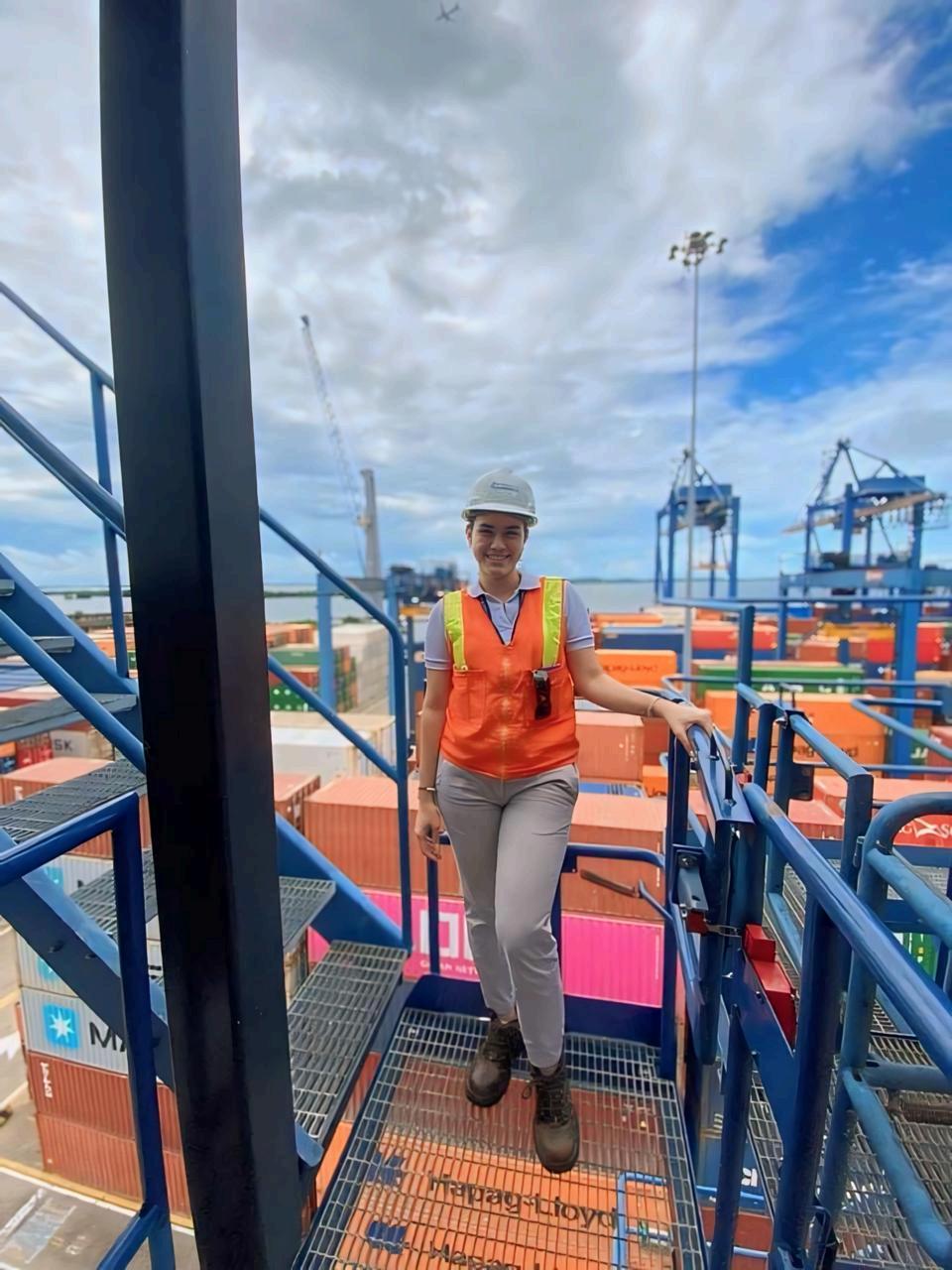

Women can be leaders because leadership at sea and ashore is built on capability, responsibility, and vision.
-FANIA MORALES AVILA
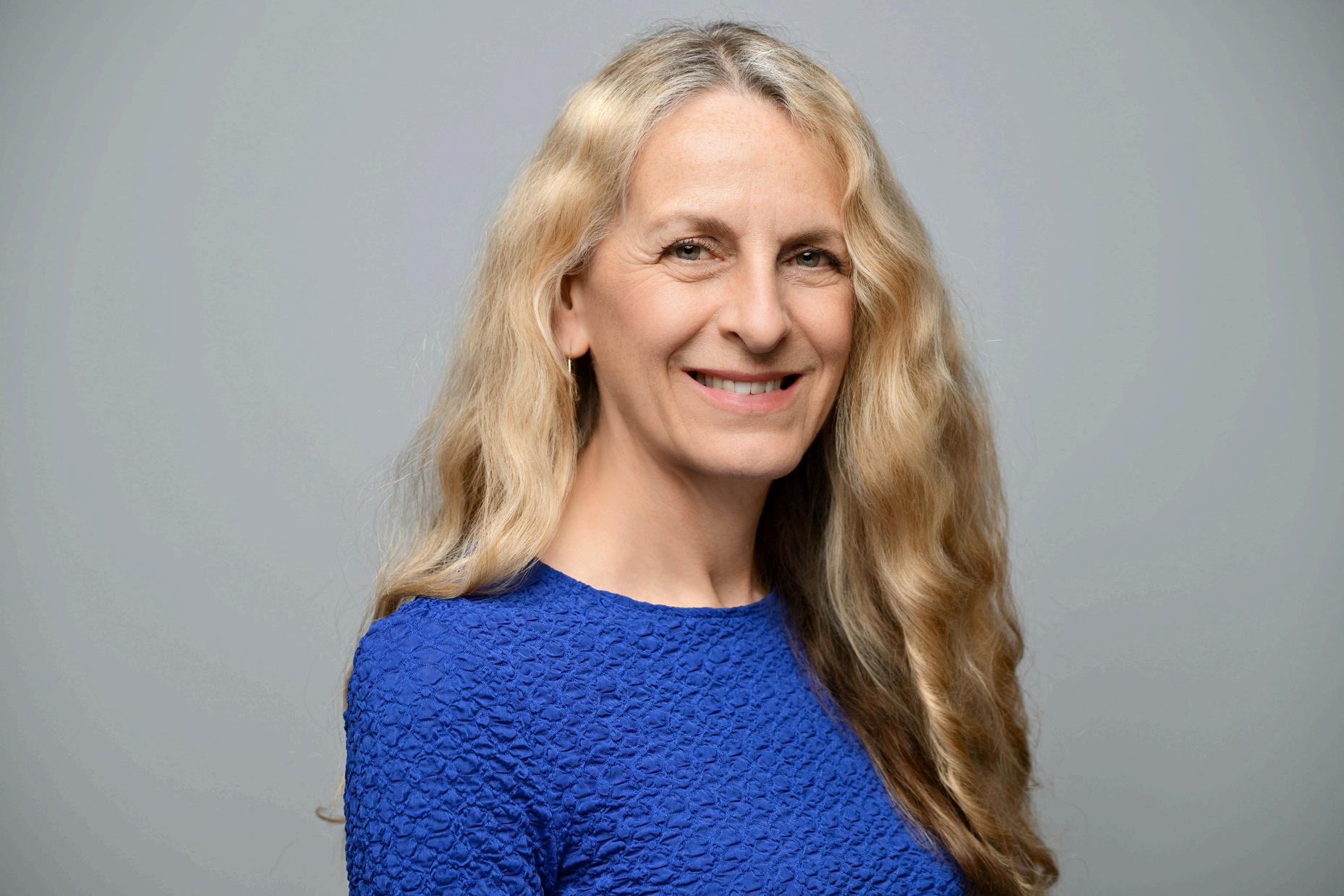

Women can be leaders because we are badly neededto restore balance and to hold the door wide open for all diverse groups.
-CATHERINE LOGIE
The Effect Imposter Syndrome
Why Women in Maritime Still Need More Than Recognition
Mônica Zionede Hall Founder and CEO of FELIZ Consulting
We hope that women in the maritime industry who are reading this narrative find motivation and inspiration to perform at their highest potential, free from fear, setbacks, or mental barriers that hinder progress.
Every year, the International Day for Women in Maritime, offers the
industry a moment to celebrate the women steering it forward.
Recognition matters. It validates hard work, creates visibility, and inspires the next generation. In a field where women have been underrepresented, simply being seen can open doors.
Yet, as we explored in the previous March column, visibility alone does not silence the inner critic. Recognition tells us we belong. Sustainable support is what allows us to believe it. Impostor syndrome rarely vanishes with a single award or a single day of celebration. But it certainly fades when workplaces actively invest in women, in their work and potential every single day.
Dorothea Ioannou, who in 2022 became the first woman CEO of an International Group P&I Club in its 167 year history, understands this journey:
"WE NEED TO BE STRONG, NOT TAKE IT TO HEART AND BE PERSISTENT AND PROJECT OUR OWN PERSONALITIES IN A RESPECTFUL MANNER."
Her words remind us that acceptance starts from within, but it must be nurtured from without.
The Meaning Behind the Day

For too long, women's contributions in maritime went unacknowledged. This day exists to correct that. To spotlight achievements and shape an inclusive present and future. More women are now entering leadership roles, and positive change is taking hold.
Sanjam Sahi Gupta, founder of WISTA India and co-founder of Maritime SheEO, cuts to the heart of the issue:
"IT SHOULD BE ABOUT GETTING THE RIGHT PERSON FOR THE JOB, RATHER THAN THE RIGHT 'MAN' FOR THE JOB."
Her words challenge the industry to move beyond old habits and judge capability, not gender.
Recognition Is Only the First Step
Being recognised is important, but being supported is what allows people to truly thrive. Melina Travlou,
President of the Hellenic Shipowners Association and recipient of the Seatrade Global Personality Award, calls for collective action: "Our responsibility as leading members of our industry is to stand together to lead shipping into a new era. Together, we can overcome the challenges. United, we can lead this new gamechanging era."
Mentorship, fair access to growth, and clear pathways to leadership are the supports that transform recognition into lasting confidence. This is the other side of overcoming impostor syndrome. That feeling of "not being good enough" does not go away with applause. It gets better when someone believes in you before you fully believe in yourself, when you are given the chance to show your work.
Building a Future Beyond Celebration
The International Day for Women in Maritime is not only a celebration of how far we have come. It is also a reminder of what is still possible. Real progress happens when recognition leads to opportunity, mentorship, and allyship, and opportunity leads to lasting growth.
By continuing to support women
beyond moments of celebration, through mentorship, fair policies, and cultures of respect, the maritime industry can build a future that is more balanced, innovative and resilient. In that future, fewer women will feel like impostors, more will feel like leaders.
Your Seat Is Already There
You do not need to earn belonging through perfection. You belong because you are becoming. Sometimes, belonging begins when someone else sees your potential and offers a hand.
To all women in Maritime, take your seat and keep moving forward.
I am taking mine, as Mônica Zionede Hall: Founder and CEO of FELIZ Consulting, mother, wife, coach, coffee and pickleball obsessed. And a woman learning to navigate impostor syndrome, coming out stronger.
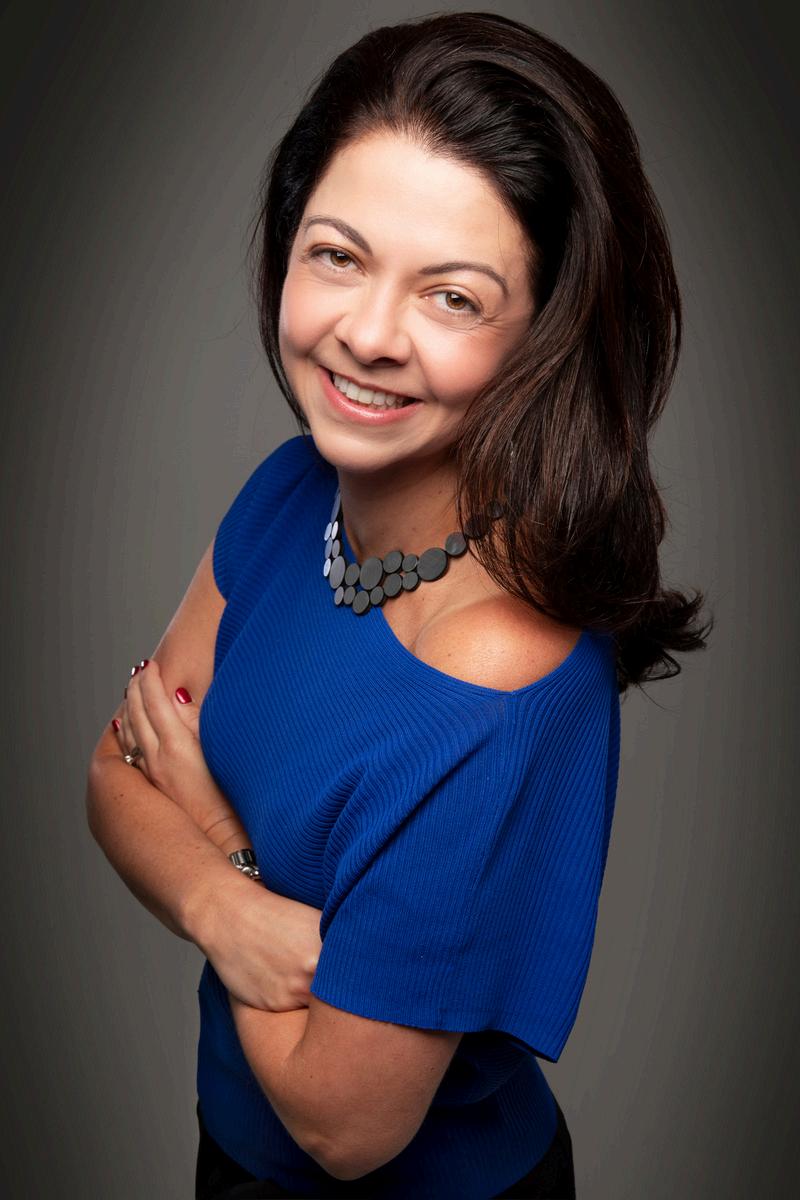
Women can be leaders because every voice that dares to contribute has the power to navigate change and inspire progress
-NURUL HUDA ANGGRAENI
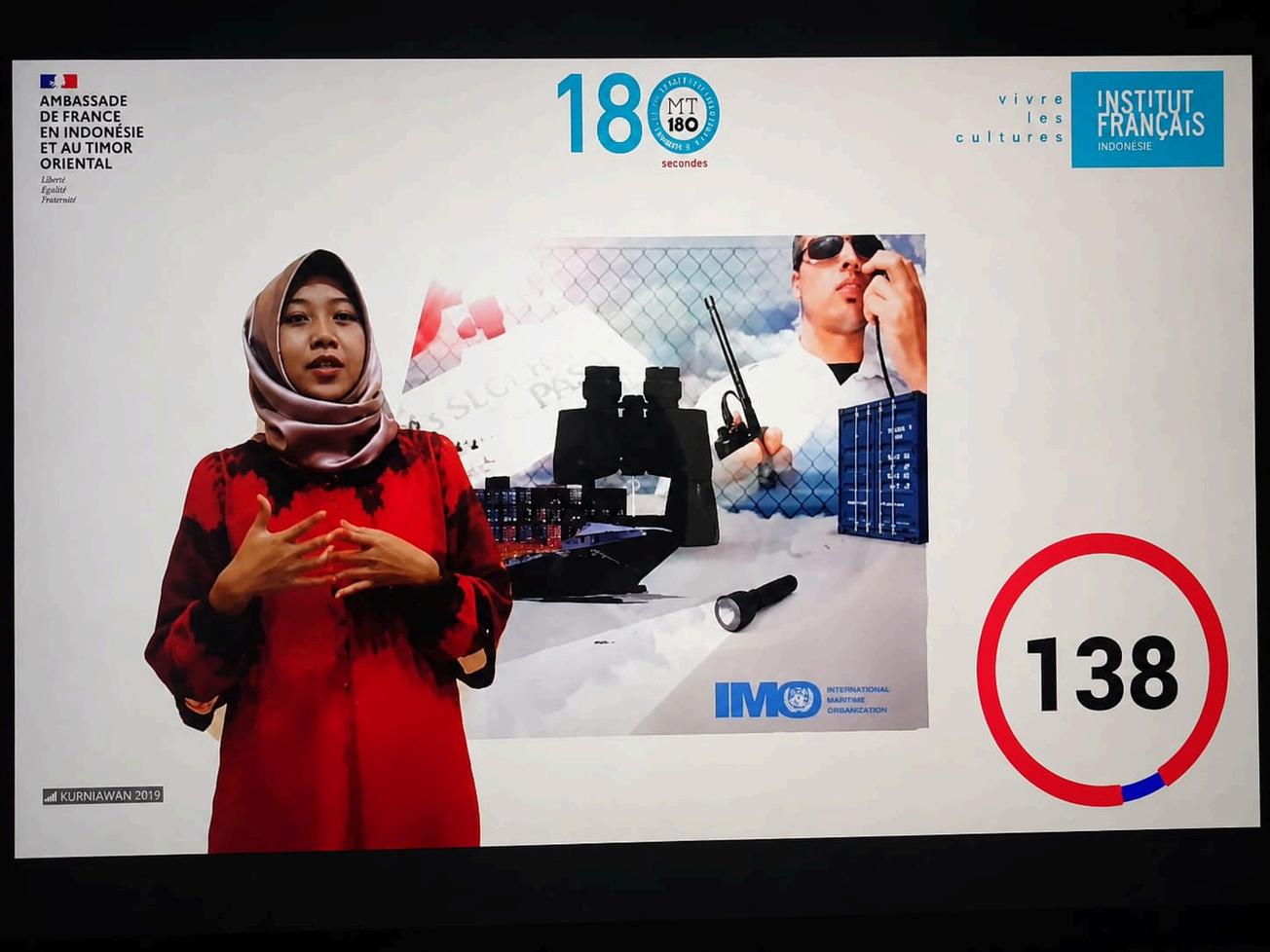
Women can be leaders because being a woman in maritime means you already have the resilience to succeed.
-DR. ANNA W. KARUNATILLEKE
FromBDtoGuide,My Journey
By Dhanushka Lemasthota
Business Development Manager at Mercantile Marine Management Ltd
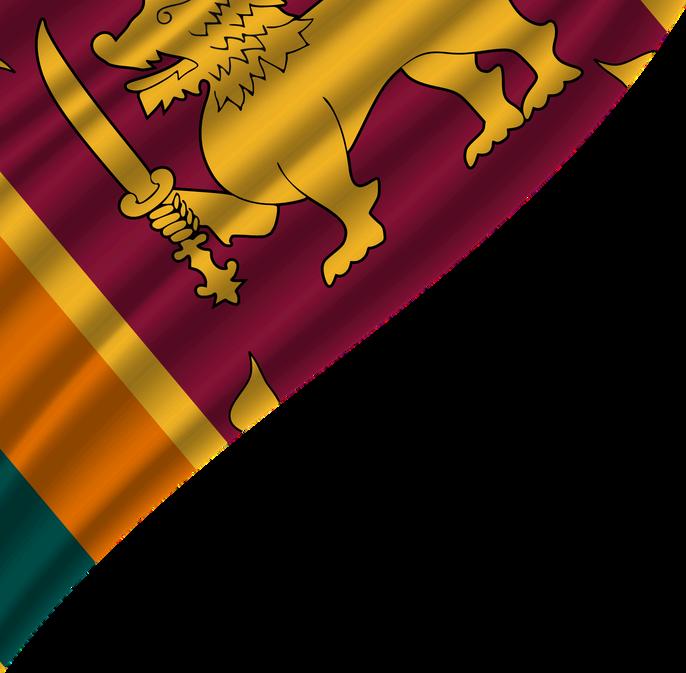
Over the years, my role has evolved into something far more meaningful than business development alone. For all the female seafarers who sail through our company, I have become their confidant, someone they can rely on from the moment they are selected and as they continue to grow in their careers at sea. Being part of their journey has become deeply rewarding.
In Sri Lanka, seafaring for women is still at a relatively early stage. Many young women who choose this path come from low- and middle-income families
across the country. Despite social pressure, long periods away from home, and the realities of a maledominated industry, their determination and resilience continue to inspire me.
I have witnessed their strong belief in building a better future for themselves and their families, even when the road ahead feels uncertain.
One moment, in particular, has stayed with me. A young female Rating who had just joined her first vessel called me late one evening. It was her first time at sea, and everything felt overwhelming: the distance from her loved ones, the unfamiliar environment, and the feeling of being one of very few women onboard. She was nervous and unsure.
We spoke at length, and I reminded her of her training, inner strength, and the courage it took to reach that point.
Months later, she sent me a message saying she had successfully completed her contract and was ready for her next assignment.
Today, she proudly supports her family, having become a pillar of strength for her loved ones
My involvement with these young women goes beyond professional responsibility. I celebrate their achievements and stand beside them during difficult moments, sometimes as a colleague, sometimes as a sister, and often simply as someone who listens.
The maritime industry is slowly opening its doors to women, and each voyage they undertake brings us closer to meaningful change.
And one day, when one of these young women stands confidently on the bridge as a Master, it will be one of the proudest moments of my career.
RedefiningWhoSails:A Woman’sJourney
By Meangafo Davida Veronica, Regional Maritime University
On 27th June 2026, I will graduate with a degree in Nautical Science, but long before that, I decided that I would not just step into the maritime world. I would belong in it.
Most days, I am just a final-year student tired, buried in assignments, staring at endless charts and deadlines. Preparing for a life at sea while feeling stuck on land is strange. Still, beneath it all, I carry one thought: this will not be my reality forever.
I will be graduating with strong results —and as the first maritime professional in my family. That is not just a personal victory; it is proof that someone from my world, with no inherited connections, can step into unfamiliar waters and make her own path.
Every late night, every challenging assignment, every moment I doubted myself, has led me here.
Being a woman in this industry has taught me early: no one assumes you’re capable. I had to prove it through long hours of study, leadership roles that tested my patience, and moments where composure mattered more than confidence.
There are times when opportunities in maritime world feels distant, almost closed off and uncertain, this reality has made me sharper and more determined to take up space. I am not just another cadet. I am part of a generation of women who do not wait for inclusion - we create it. Women on deck are no longer a question of possibility, but of persistence
Soon, I will stand on the bridge, wind in my face. And when that moment comes, it won’t just be about fulfilling a dream it will be about every step it took to get there and the doors I will help open for those who follow.
SteadyThroughStorms:The QuietPowerofPurpose
By Janie Mathew Co-CEO Aqueon Maritime Private Limited
We move forward not because the path ahead is tough. But because purpose gives us strength. Every challenge is a lesson. To every effort, a quiet step toward excellence.
Believe in steady progress over sudden success. Trust in the discipline that works when no one is watching. Let integrity be the guiding star and commitment the sail, that completes the ship.
We rise: calm in storms, focused in direction. Let today be built with intention
TheSeaHasRoomForThem Too
By Dr. Anna Weerakoon Karunatilleke DBA (UoK), MBA(PIM-USJ), MarENG Class III (CINEC), FIOASD, MILT, MIMarEST.
The sea asks not who you are, It measures not by near or far. It calls the brave to take a stand, And claim their place with a steady hand.
Break the walls that hold you down, Lift your voice, wear courage as your crown. Every dream, each journey, every crew, Finds a way where hope shines through.
On deck beneath the boundless sky, Differences teach us how to fly.
Women on the bridge, youth in the helm, Every heart is empowered in this realm.
Doors swing open, horizons wide, No dream denied, no voice to hide. The next generation steps aboard too, The sea is theirs, and there’s room for you.
TheSeasonofStillness
By Marilyn C Anto Director, Aqueon Maritime Private Limited
There was a corner of the world where a gardener worked with tireless devotion. I was that gardener, and my work was my garden. For a long time, I poured every ounce of my energy into my craft, as I continued to learn, grow, and push through the soil of challenge.
Eventually, my efforts began to show. I was “blooming,” a phase in which my hard work was visible, my projects were thriving, and I felt the warmth of success. I was moving at full speed, proud of the radiance I was offering to the world.
Then, the "plucking" happened.
It wasn't a choice; it was a sudden, jarring fracture. In an instant, the momentum stopped. The accident didn't just break a bone; it felt like it uprooted my entire sense of purpose. I went from standing tall and vibrant to being confined to the stillness of a bed, watching the world continue to move outside the window.

The Healing Ground: The first few weeks were silent and heavy. Like the plant in the story, I felt shaken and wounded. But in this forced stillness, I discovered something: the roots are still there.
While my “flower,” symbolizing my external work and daily activity, was taken away for a season, the plant itself remains.
Image shared by author
These three months of bed rest are not a "stop"; they are a deep, quiet watering of the roots. I am learning the strength of patience and the humility of accepting care from the other "flowers" in my life.
The Promise I am still here. I am gathering my strength in the quiet. I am healing not just to return to who I was, but to return with a stem that is reinforced and a spirit that knows how to endure the storm.
I am in my season of rest, but the soil is rich. And when I bloom again, I will be more resilient than ever before…
“There are moments in everyone’s journey that feel like a flower being plucked. Do not be mistaken, this is not the end of your story but the courageous beginning of blooming again...”
Women can be leaders because leadership at sea and ashore is built on capability, responsibility, and vision.
-THADISHA JAYAMAHA,
Women can be leaders because a storm doesn't check your gender before it hits, and neither does a solution.

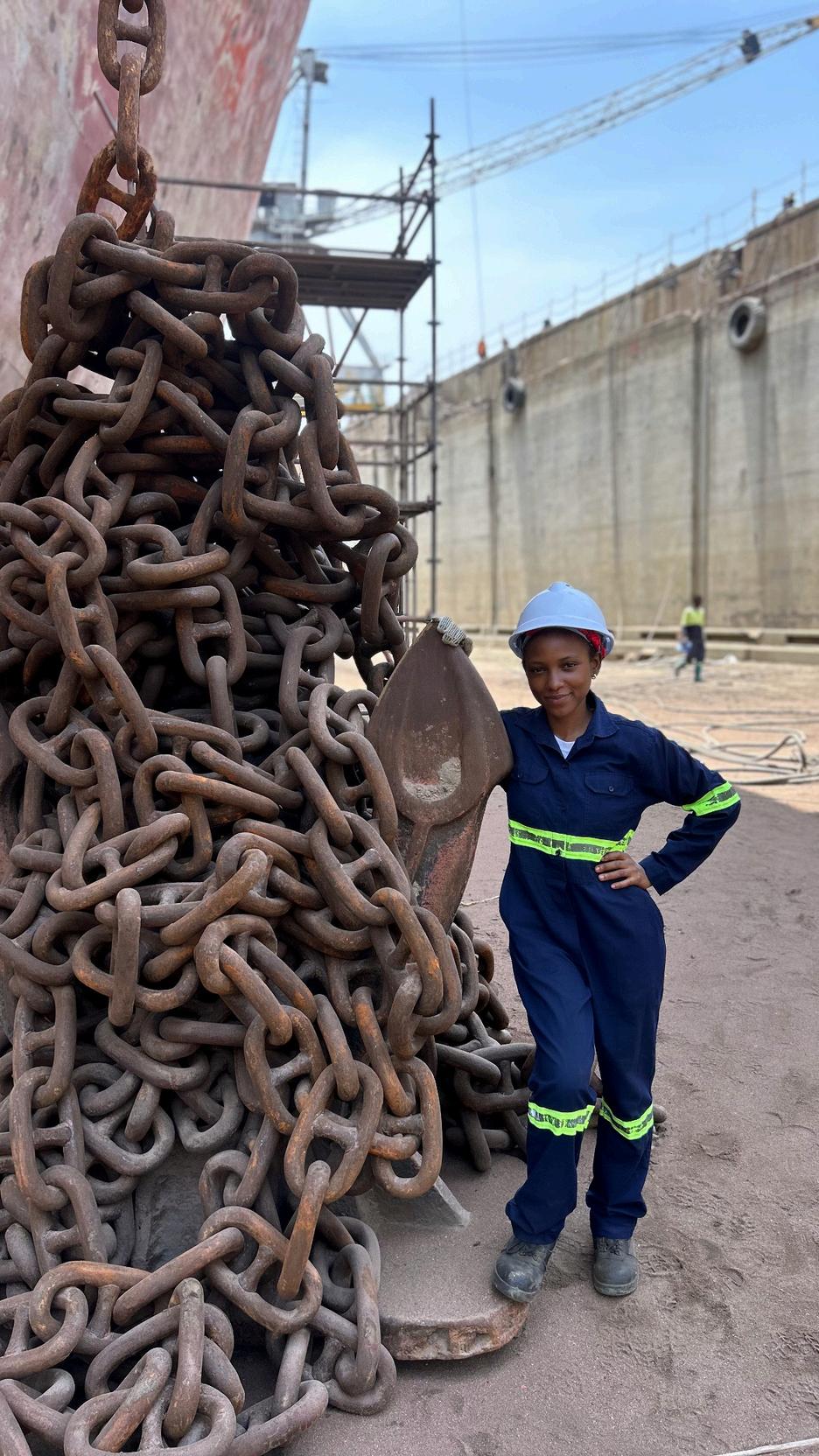
-ESSOH DAHLIA
Sustainable Horizons


Sofia Fürstenberg Stott Founder and Co-Partner of Fürstenberg Maritime Advisory (FMA)
In the corporate world there are many classic archetypes. You typically have The Visionary, The Operator, The Climber, The Diplomat and The Expert. You may have a Firefighter, a Politician, an Innovator and a Skeptic too.
But what about corporate sustainability? Can we find some archetypes there too? Yes, we can.
In my work, I balance on opportuni cannot co however, i opportuni sustainable”.
narratives. I uncover untold truths and legacy cultures that are in the way for sustainability impact. People are often surprised by what I find. They were not aware of it themselves.
The first truth about enabling positive impact is that awareness is king. As long as we are running along as we always have done, not asking ourselves any new questions, we will continue dwelling in the hemisphere of ignorance.
I know that when it comes to corporate sustainability, you are typically one of these:
THE DENIER
You see sustainability as a buzzword, as something that will go out of fashion You can be quite hostile to social and environmental debates. You may accept that climate change is real, but you are not convinced you should be doing something about it.
THE HARDHEADED
You see sustainability as a key business factor, but you focus on strategic shortterm financial business risks and
THE SUPERFICIAL
You are well-intended but have little focus on real action. Personally, you are very concerned about the planet, and you want to be perceived as a sustainability front-runner. Unfortunately, however, your ESG knowledge is rather shallow, and you tend to miss out on where the real impact opportunity lies.
THE COMPLACENT
You feel that things are pretty good as they are. You focus too much on past sustainability successes and tend to ignore the urgency to push for continuous improvement.
THE TRUE BELIEVER
You are convinced, that long-term economic success largely depends on sustainability actions, where strategies focus on long-term ESG objectives, and where success involves future-proofing your business model.
Reading this, you may recognize a colleague, yourself, or somebody in the management team. And what have you learnt now? I hope you can see that we all come into this conversation with very different starting points and perspectives.
I dare say, that all sides are welcome and need to be b
That being said, there are narratives and untold truths board education I attended a few weeks ago, a board recruiting partner said that sustainability expertise is not sought after as much as before, but risk management expertise is on the way up. Failing to see how sustainability and risk are two sides of the same coin can happen also at the highest corporate level.
This is why we need to become more aware of our biases, and about our narratives.
Awareness is king.
Note: These archetypes were originally identified by Smith and Soonieus, 2019.
Images in this article supplied by author.
Women can be leaders because they are not someone who is trying to impress. They are women trying to progress!
Women can be leaders because they turn challenges into opportunities.

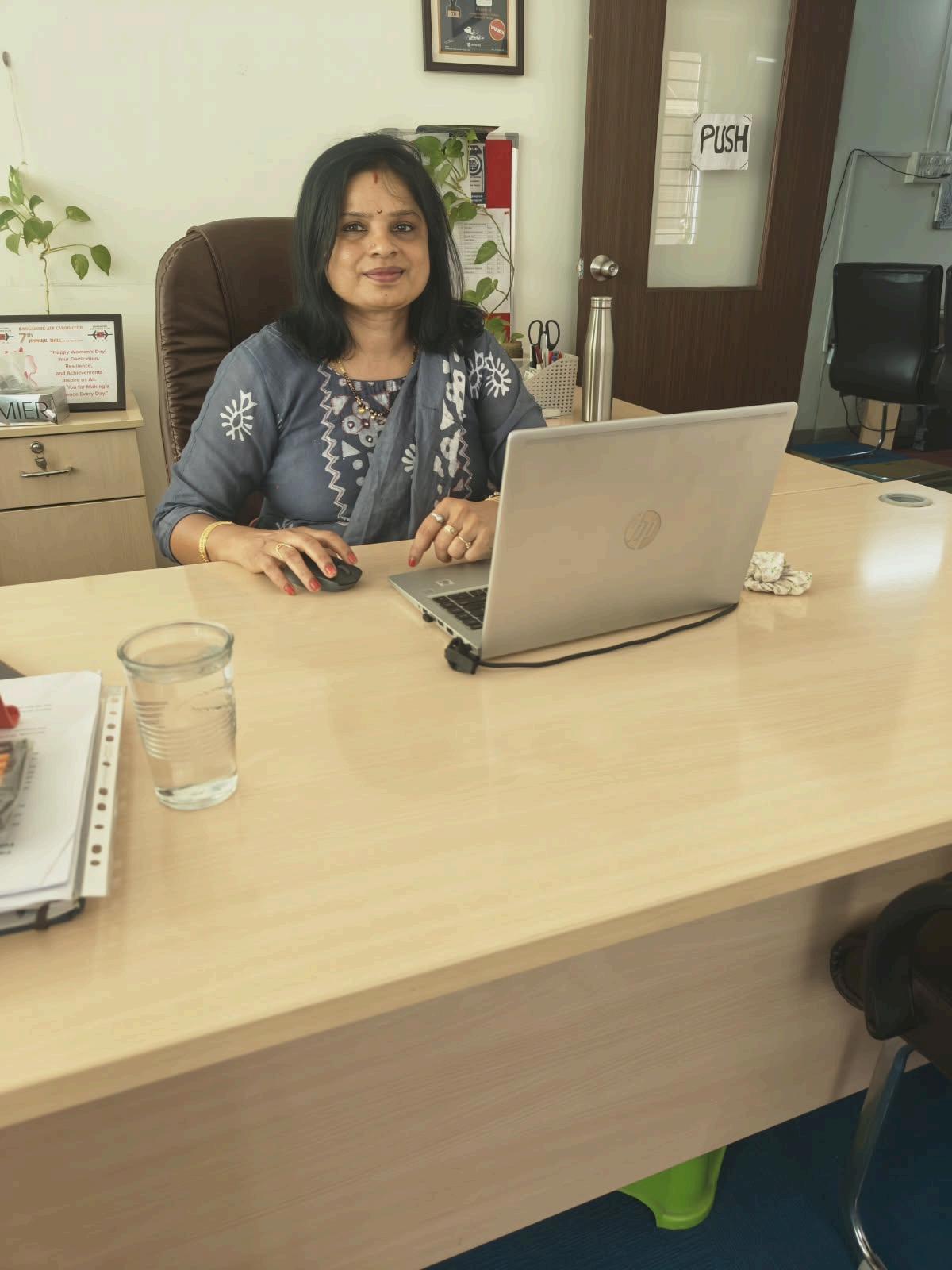
-MARIANNA MICHAILIDI
-SHOBHA SATISH
Legal Lighthouse

From Pandemic to Persian Gulf: Navigating Force Majeure
Authors: Jacqueline Zalapa, Partner and Giulia Morelli, Associate Campbell Johnston Clark, London
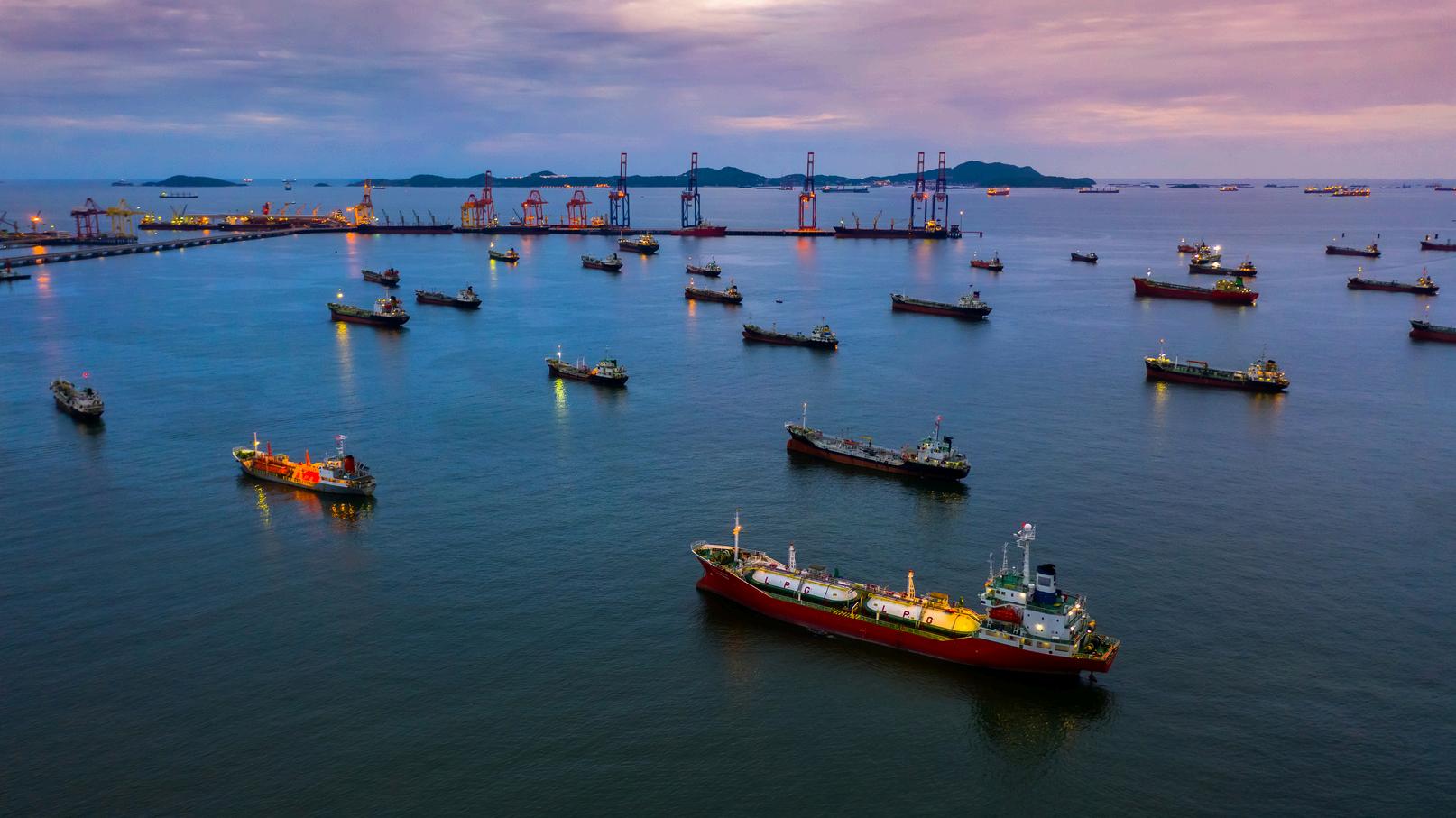
While the Covid-19 pandemic reshaped force majeure considerations, the unfolding conflict in the Persian Gulf presents another challenge. Ongoing hostilities between the U.S., Israel and Iran, together with heightened security risks in the Persian Gulf, Gulf of Oman and in particular the Strait of Hormuz, have materially disrupted navigation through the region.
Commercial vessels have become either unable or unwilling to transit
the Strait of Hormuz amid escalating threats to maritime security.
Despite its narrow geography, the Strait of Hormuz remains one of the world’s most strategically important shipping routes which facilitates about 20% of the world’s crude oil and LNG supplies. The current instability therefore demonstrates how rapidly geopolitical conflict can extend beyond the shipping sector, disrupting energy markets, commodity pricing and global supply chains.
Since 28 February 2026, parties have increasingly sought to invoke force majeure in response to delays and non-performance of contractual obligations arising out of the U.S., Israel and Iran conflict.
Instability in the region together with vessel strikes and security concerns has not only impacted shipping and trade contracts but has heightened global anxieties.
Unlike civil law jurisdictions –including the GCC states and France –where force majeure relief may arise in the absence of an express contractual provision, force majeure is a creature of contract under English law.
For contracts governed by English law, this means that one cannot rely upon force majeure as a defence to excuse delay, non-performance or termination without liability unless the contract stipulates this.
Even where a contract contains a force majeure clause, whether relief is available under it will depend upon the precise wording of the contract and the factual circumstances of the case.
A dispute determined by a London maritime tribunal or the English High Court is likely to require a careful analysis of the contractual wording and the alleged impact of the force majeure event. Key issues may include:
1 Does the alleged force majeure event fall within the scope of the clause?
2.If so, (a) did the force majeure event cause the delay or non-performance?; and (b) were reasonable steps taken to avoid or mitigate its effects?
In practice, disputes arising out of the U.S., Israel and Iran conflict are unlikely to centre on whether a qualifying force majeure event has occurred. Subject to the wording of the relevant clause, force majeure provisions commonly identify war (whether declared or undeclared) as qualifying events. Instead, more difficult questions are likely to concern causation and mitigation. For example, tribunals may scrutinise whether performance was genuinely prevented, whether alternative operational measures were available and whether the affected party took all reasonable steps to mitigate the disruption.
The current instability in the Persian Gulf mirrors some of the challenges revealed by the COVID-19 pandemic: escalating global events whether a pandemic or geopolitical tensions can rapidly develop into significant contractual, commercial and supply chain disruptions.
Businesses operating in shipping, energy and international trade markets would therefore be well advised to review force majeure provisions carefully and ensure that contractual risk is allocated appropriately to reflect the realities of an increasingly volatile trading market.
Digital Currents
with Dr. Sajid Hussain
Learning with AI – A Guide for Students Who Think
Editor’s Note: This article has been condensed from its original 2,000-word version to approximately 1,000 words for publication. The author’s language and voice have been preserved throughout.
Artificial Intelligence (AI) is reshaping education and society at large, offering powerful tools for learning, decision-making, and innovation. Yet, these opportunities come with profound challenges. Students, educators, and policymakers alike must grapple with ethical concerns bias, privacy, accountability, and dependency while ensuring AI is harnessed responsibly.
Artificial Intelligence, while transforming every sphere of life with innovation and efficiency, must be developed and applied ethically to ensure fairness, accountability, and positive societal impact.
Introduction
AI has emerged as one of the most transformative technologies of the 21st century, engulfing education, healthcare, research, banking and finance, and virtually every other domain of life. However, while AI offers unprecedented opportunities for innovation, it also raises serious ethical concerns that demand urgent attention.
The ethical application of AI emphasizes developing and deploying these technologies responsibly, ensuring fairness, transparency, accountability, and respect for human rights. Fundamentally, it is about harmonizing technological progress with moral responsibility, fostering trust, and generating positive societal impact.
AI in Education: Promise and Pitfalls
The use of AI in education has often been hailed as revolutionary offering personalized, adaptive, and immediate feedback for every learner. The promise lies in four areas:
Personalization: AI systems can track patterns of errors, predict learning needs, and adjust content to a student’s unique profile.
Accessibility: Students with disabilities benefit from AI-based speech recognition, text-to-speech, and real-time translation.
Efficiency: Teachers can offload repetitive tasks like grading or quiz creation, freeing time for meaningful mentorship. Global reach: AI-enabled platforms extend educational access beyond borders, democratizing knowledge at scale.

Yet, these promises must be weighed against the pitfalls. Many students misuse AI by copying responses wholesale, avoiding the mental struggle that cements knowledge. There are also risks of overdependence, where learners lose confidence in their ability to think independently.
Another danger is inequality: wealthier schools may deploy sophisticated AI
tutors, while underfunded systems fall further behind. If not carefully managed, AI could widen, not narrow, the educational divide.
AI as a Learning Partner
The real strength of AI in education is not in delivering answers but in facilitating thinking. When students treat AI as a learning partner, it becomes a guide that helps them wrestle with complexity while keeping ownership of their learning journey. Practical strategies include:
Ask deeper questions. Instead of asking, “What is the definition of democracy?” students might ask, “Why has democracy evolved differently in various countries?”
AI’s role here is to provide starting points; the deeper analysis comes from the student.
Practice guided problem-solving. Instead of requesting complete solutions, use AI as a “hint system.”
For example, in mathematics, rather than asking for the final answer, ask: “What is the first step in solving this quadratic equation?” This maintains engagement and strengthens problem-solving skills. Ultimately, AI can make learning more interactive, adaptive, and enjoyable. But the student must remain “in the
driver’s seat.”
THE MOMENT AI IS USED AS A SUBSTITUTE RATHER THAN A PARTNER, THE EDUCATIONAL VALUE IS LOST.
The Philosophy of Real Learning in an AI Era
At its heart, education is not about memorizing facts but about developing the capacity to think, analyze, and create. Real learning involves wrestling with challenges, making mistakes, revising work, and reflecting on progress. These experiences build resilience, intellectual humility, and adaptability skills that no AI system can replace.
An analogy can be drawn with physical training: using AI as a shortcut is like hiring someone else to lift weights for you. The task is completed, but the muscles remain undeveloped. By contrast, using AI as a coach, guiding form, suggesting routines, providing feedback, helps the student do the hard work themselves, ultimately building intellectual “muscle.”

Image Source: medium.com/ai-builder
Beyond Education: Ethical Challenges of AI
AI’s impact extends far beyond classrooms. As its role deepens in society, ethical challenges multiply:
1.Bias and Discrimination. Algorithms trained on biased data may perpetuate systemic inequalities. For example, facial recognition tools often misidentify women and people of color, leading to disproportionate harm.
2.Privacy and Surveillance. AIpowered tracking systems collect vast amounts of personal data, often without explicit consent. This raises concerns about civil liberties and potential misuse by corporations or governments.
3.Transparency and Accountability. Many AI systems operate as “black boxes,” where even developers cannot fully explain how decisions are made. This lack of transparency undermines accountability.
4 Safety and Misuse. Autonomous weapons, deep-fake technologies, and AI-driven misinformation campaigns illustrate how powerful tools can be misapplied with dangerous consequences.
5.Dependency and Skill Erosion. Overreliance on AI risks eroding human judgment, creativity, and problem-solving capacity.
These challenges highlight the urgent need for ethical frameworks and responsible governance.
Ethical Frameworks and Implications Recognizing these risks, organizations worldwide have developed ethical guidelines for AI including UNESCO’s Recommendation on the Ethics of AI (2021), the EU’s Trustworthy AI Guidelines, and IEEE’s Global Initiative on Ethics of Autonomous Systems. These frameworks converge on one core principle: AI must serve humanity, not the other way around.
For students, the lesson is clear: AI is a partner, not a replacement. Use it for brainstorming, feedback, and scaffolding not final answers. Cultivate curiosity and independence. Uphold academic integrity. For educators, this means redesigning
assessments to emphasize creativity, reflection, and application, and teaching digital literacy and AI ethics as core skills. Both students and educators must adapt to a world where the ability to think critically and ethically with AI will matter far more than memorizing information.
Conclusion
In the end, the true value of Artificial Intelligence will not be measured by its power alone, but by how ethically it serves humanity upholding fairness, transparency, and responsibility while shaping a better future for all.
AI is a double-edged sword: it can enrich learning and empower individuals, but it can also encourage shortcuts and undermine integrity if misused. AI’s future will be shaped not just by engineers and policymakers but by today’s learners students who must grow into professionals equipped to use AI wisely. By embracing AI with curiosity, discipline, and ethical awareness, we can unlock its full potential not just for grades or profit, but for genuine growth, justice, and human flourishing.
About the Author
Dr. Sajid Hussain HonDSc MSc CEng CMarEng FIMarEST
is an internationally recognized maritime leader, Chartered Marine Engineer, IMO Goodwill Maritime Ambassador (2016-2025), and Trustee (2020-2026), Fellow & Council Member of IMarEST. After sailing in BSC Ocean-going fleet for 13 years, served Bangladesh Marine Academy (BMA) for 30 years as its Chief Engineer and finally as the Commandant. His leadership spearheaded the creation of Bangladesh Maritime University (2013). Globally connected with IMO, IMarEST, WMU, ITF, ISWAN, AMEA, IMLA and Author of 1 thesis, 27 books, 48 research papers, and 250+ features.


Women can be leaders because courage, vision, and excellence know no gender.
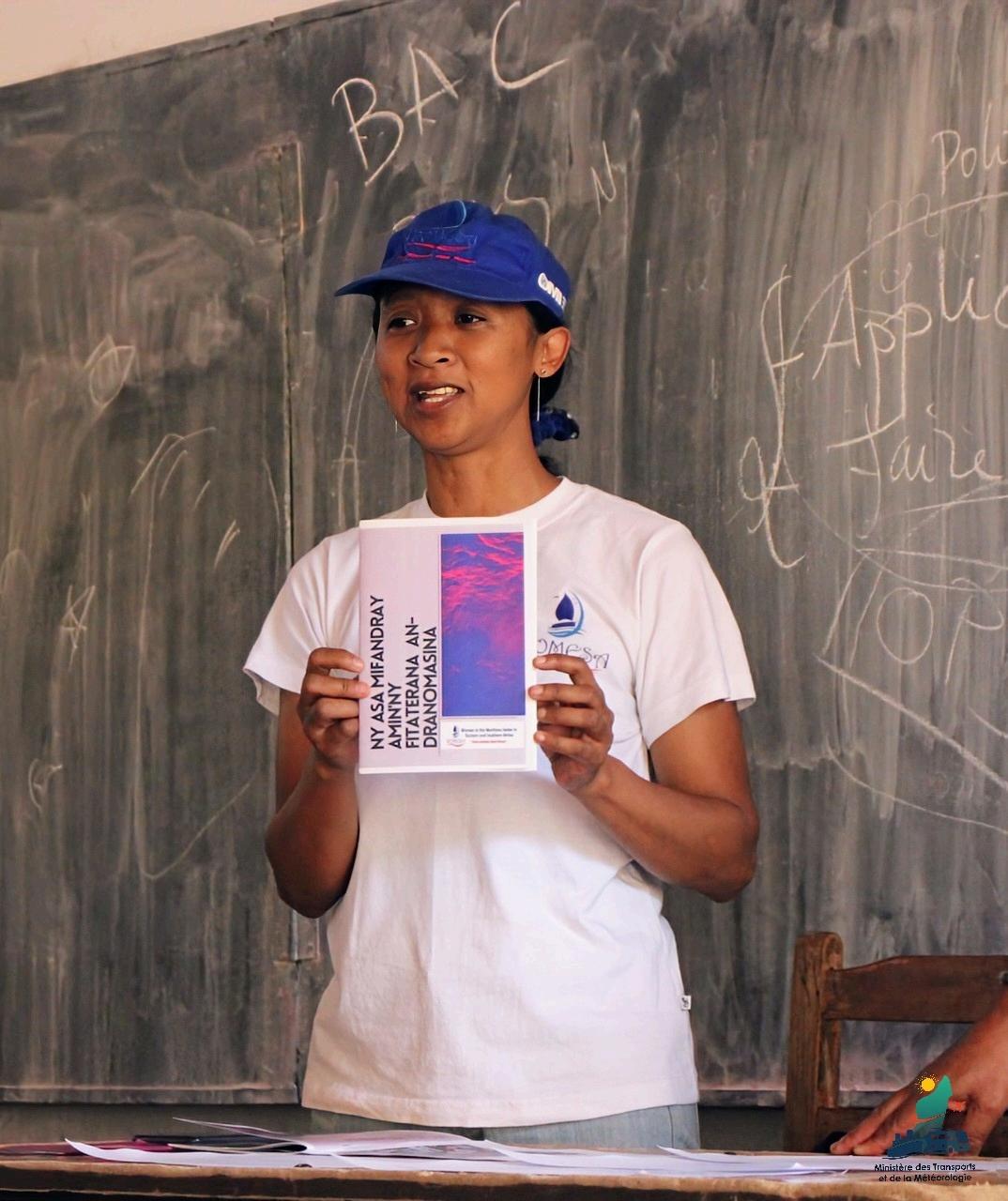
Women can be leaders because leadership is about vision and competence, not gender, and the ocean has room for everyone.
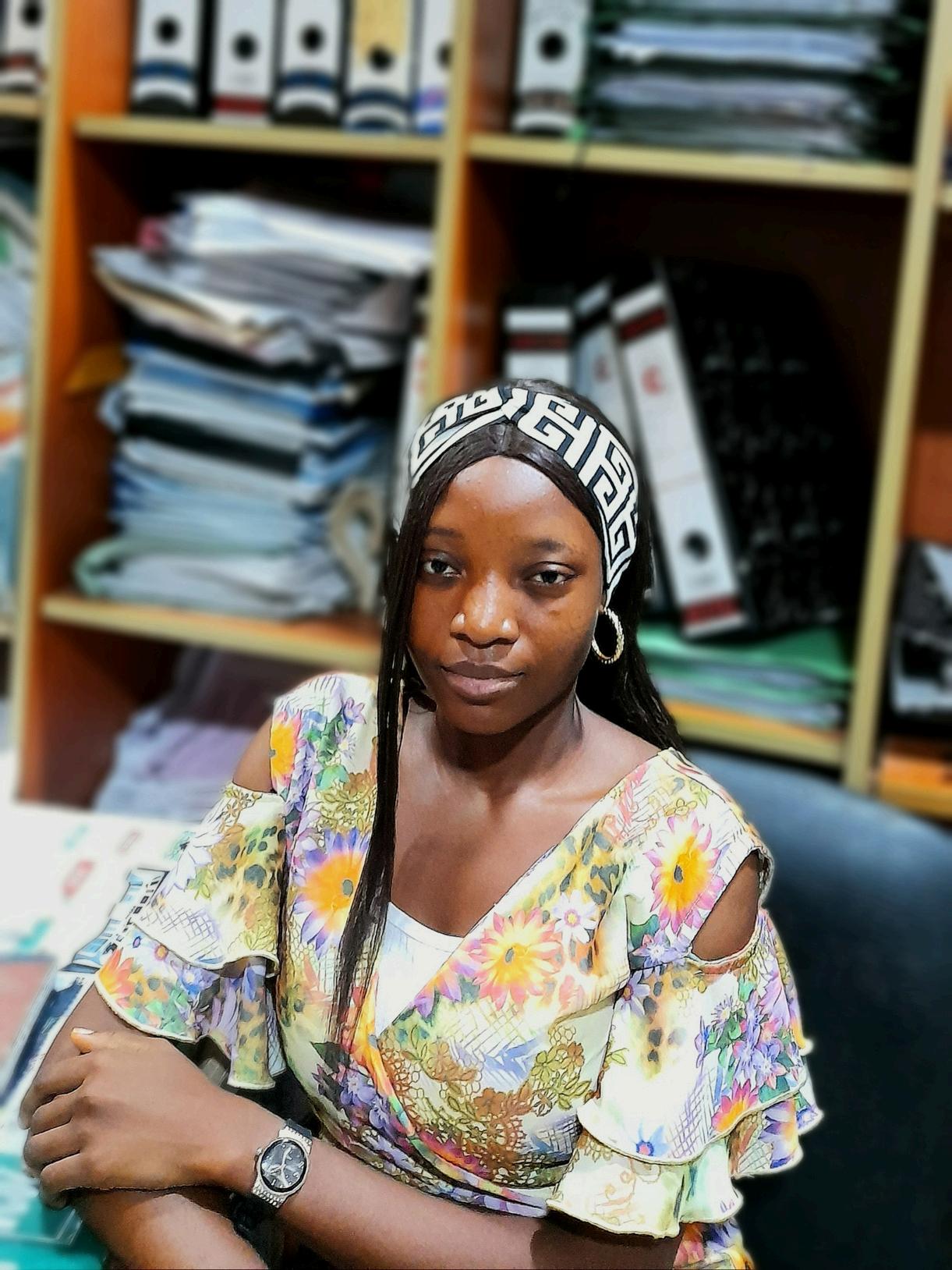
-SEMILORE OLAOLUWA
-RUFFINE HARISOA RAKOTOARISOA
The Reading Deck

Avishkar Srivastava,
Author / Chief Innovation Officer at The PDP Group
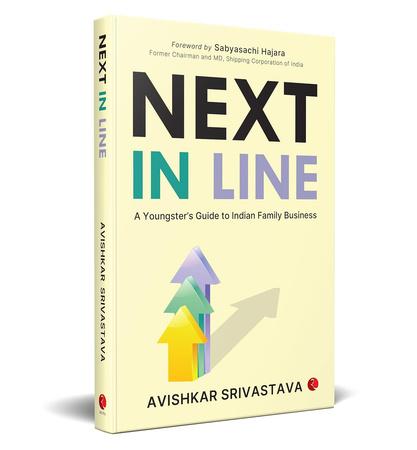
Nearly 85% of Indian businesses are familyowned, yet only a few successfully transition and scale across generations.
The reasons are rarely external they lie withinundefined roles, emotional decision-making, internal conflicts, and the fragile balance between family and business. Next in Line speaks directly to the next-generation entrepreneur standing at the crossroads.
Written from the perspective of a young leader steppi the book offers a practical and honest roadmap to pro operations while strengthening family harmony.
It emphasizes the importance of building workplace systems, defining roles, and adopting modern management practices while staying rooted in the core values that define family businesses.
The book draws practical business experiences from its author- Avishkar Srivastava, a 3rd generation family business owner and the first Indian in history to win FIATA Young Logistics Professional Award for Asia Pacific region on:
Professionalizing without alienating: How to introduce organizational structure and create systems to promote accountability without creating friction.
Clarity in roles and responsibilities: Why defining ownership and expectations prevents future conflict
Building scalable systems: Practical steps to modernize the person-based family business operations and strengthen corporate governance
Managing family dynamics: How to balance emotion with reason in highstakes decisions involving family members

CrewSafetyintheStraitof Hormuz:ANon-Negotiable Priority
By Marianna Michailidi Executive Affairs Manager – CROSSWORLD
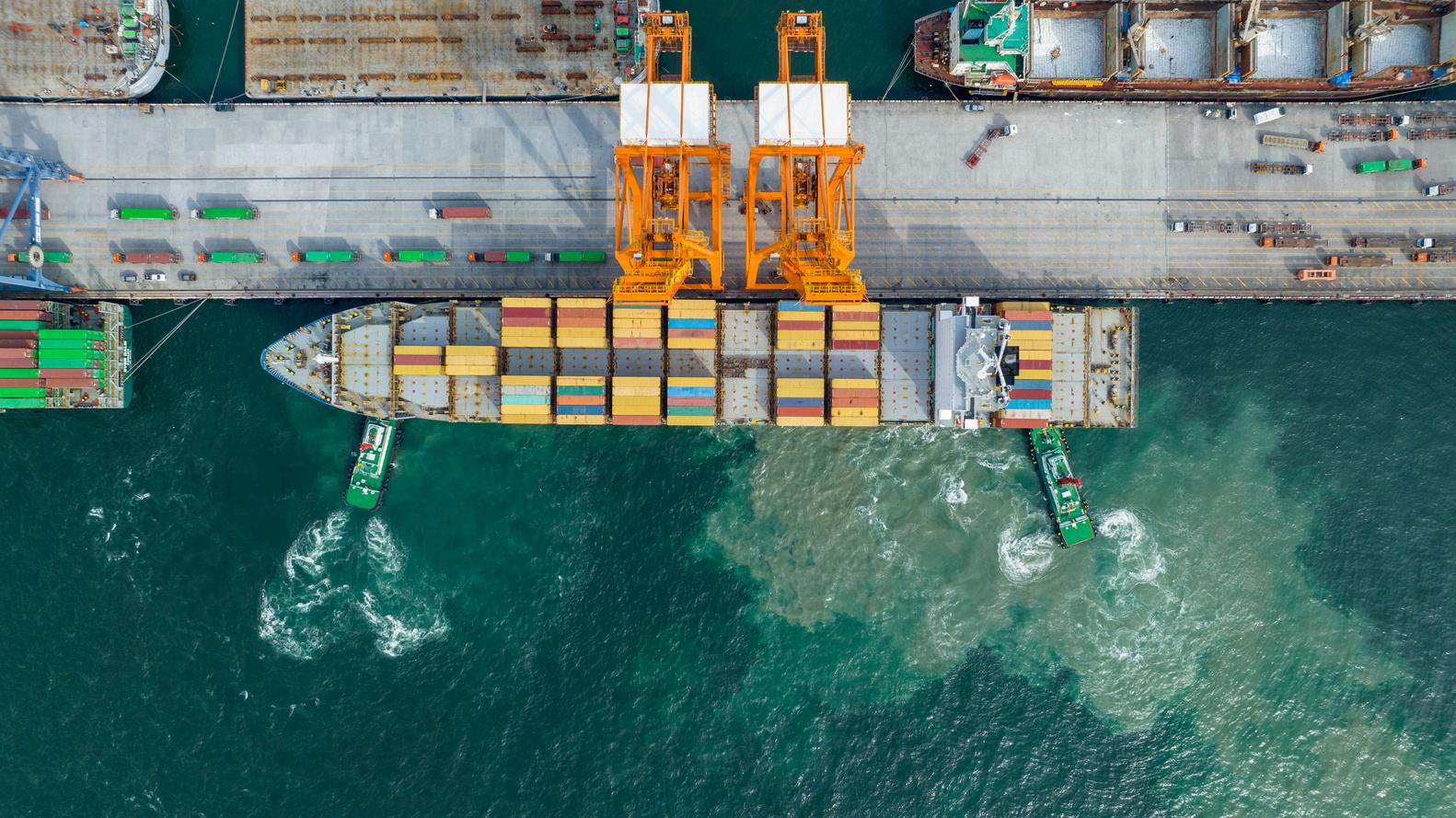
The Strait of Hormuz is one of the most strategically important maritime corridors in the world. As the narrow passage connecting the Persian Gulf to the Arabian Sea, it serves as a vital artery for energy transportation and international shipping. Every day, a vast number of vessels from tankers to container ships pass through the region, ensuring the continuous flow of goods on a global scale. However, behind this activity are the people of the sea, whose safety must be an absolute priority.
Operations in the wider Strait of Hormuz region are accompanied by particular challenges. The geopolitical sensitivity of the area and recurring tensions create an environment of heightened risk for vessels and their crews. The need for constant vigilance is imperative, as crews are required to operate under conditions that may change unpredictably.
In this context, strict compliance with international safety regulations and the existence of clear procedures are essential tools for protection.
Shipping companies and vessel managers play a key role in ensuring safety. Systematic risk assessment, continuous monitoring of developments in the region, and the implementation of comprehensive security plans are essential prerequisites. At the same time, crew training in crisis management, threat recognition, and communication is a critical factor in the prevention and handling of incidents. Preparedness drills are good to strengthen operational readiness.
Human life at sea is also important. Prolonged periods onboard, combined with the demands of a high-tension environment, can affect the
psychology and performance of seafarers. Strengthening mental resilience, fostering a positive climate of cooperation, and maintaining open communication among crew members contribute significantly to safety and cohesion.
In the modern maritime environment, it is also worth noting the increasing presence of women in crews. Their participation reflects the continuous evolution of the industry and enhances the dynamics of teams. The existence of a professional and supportive onboard environment strengthens collaboration and contributes to overall effectiveness.
Technology is important too. Realtime monitoring systems, secure communications, and coordination with international bodies and naval
forces add additional layers of protection. However, no technological solution can replace the importance of a well-trained, attentive, and cohesive crew.
Strengthening communication is essential. The ability of seafarers to stay in contact with their families reduces stress and enhances their mental well-being. Access to psychological support services, even remotely, can help during periods of increased pressure.
Providing clear and timely information about developments in the region enhances crews’ sense of security. When seafarers know what to expect and feel that there is a plan in place, they can respond more effectively to challenges.
Continuous investment in training and practical preparation is also critical. Crews that are adequately trained feel more confident and are better equipped to handle difficult situations.
Finally, recognition of their work should not be underestimated. Seafarers operating in high-risk areas play a crucial role in the functioning of the global economy. Highlighting their contribution and strengthening respect for their profession are important elements of moral support.
Safety in the Strait of Hormuz is not merely an operational necessity, but a fundamental responsibility. The protection of human life at sea must be at the center of every decision and every process. The people working on these vessels are the backbone of the global supply chain and deserve an environment that ensures their safety and well-being.
As global shipping continues to grow, the commitment to protecting crews must remain steady and nonnegotiable. Through coordinated efforts, meaningful support, and constant vigilance, we can ensure that the seas remain safe for all those who navigate them every day.
Images in this article supplied by author
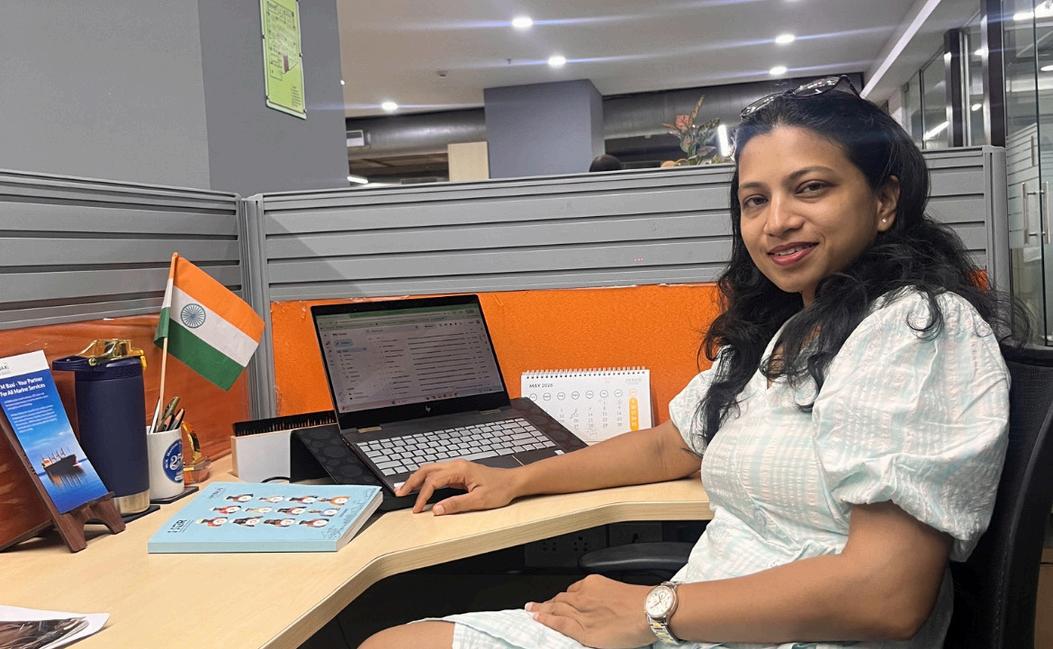
Women can be leaders because dedication, capability, and the courage to grow beyond comfort zones matter more than gender.
-DIPTI KHANVILKAR
Women can be leaders because we were never meant to stay below deck when we can command the horizon.
-FITMWAKAT JUDITH NAALLAH