
Soundings
TWO COMRADES LOST, HEROES FOREVER
Honouring Frank Petsch and Bill Ewen

Two comrades lost, heroes forever: Honouring Bill Ewen and Frank Petsch
By Travis Winks
On the evening of Monday 4 May 2026, six volunteers from Marine Rescue Ballina launched into dark and challenging conditions with one mission in mind — to save lives on the water.
A yacht had been reported in difficulty off the South Ballina break wall and, like countless times before, the unit was tasked by NSW Police Marine Area Command and the crew answered the call for help.
It became the darkest night in our history.
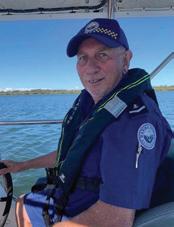
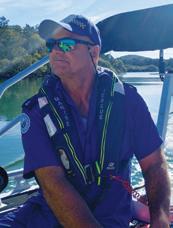
When rescue vessel Ballina 30 rolled in waters off the southern break wall while searching for the distressed yacht, 78-year-old William “Bill” Ewen and 62-year-old Frank Petsch lost their lives serving their community. The sailor they were responding to also lost his life.
The tragedy sent shockwaves through Ballina, across New South Wales and throughout the wider maritime search and rescue community around the world.
Marine Rescue NSW Commissioner Todd Andrews said the devastating loss was a solemn reminder of the risks volunteers face in service to others.
“These two men were serving their local community and have made the ultimate sacrifice to help others.
“Our thoughts and deepest condolences are with the families and loved ones of the two heroic volunteers who didn’t make it home, their fellow crew members, the brave radio operators who handled the difficult communications during the incident, the entire Marine Rescue NSW family and the wider Ballina community during this incredibly difficult time,” Commissioner Andrews said.
Bill Ewen was approaching a decade of service with Marine Rescue Ballina after joining the unit in February 2017. A highly respected crew member, he was known for his unwavering commitment to the water and the people around him.
Marine Rescue Ballina Unit Commander Peter Hill smiled through grief as he remembered Bill’s love for the job.
“Bill loved getting on the boat, training or on missions, you had to have a crowbar to get him off the boat,” Unit Commander Hill said.
“He really, really loved it and we’re going to miss him terribly.”
For Bill’s family, his service was a source of immense pride.
Bill Ewen. Frank Petsch. Bill Ewen. Frank Petsch.
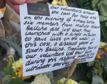
“These two men were serving their local community and have made the ultimate sacrifice to help others...
”“Bill was a devoted family man who was incredibly proud to serve his community as a member of Marine Rescue Ballina,” his family said in a statement.
“We are devastated at the loss of a much loved husband, father and grandfather, but take comfort from knowing that he passed doing something he loved. We are so proud of him.”
Frank Petsch joined Marine Rescue Ballina in January 2024, but despite being relatively new to the unit, his dedication and determination quickly stood out. He progressed rapidly through training to attain the qualification of Coxswain (Restricted), a role carrying significant responsibility on the water.
To his fellow volunteers, Frank was dependable, generous and always willing to help.
“Frank was a yes man. If you needed anything done, Frank would say yes,” Unit Commander Hill said.
“He was a very strong man and it’s hard to believe he’s gone.”
At home, Frank’s family remembered him in just the same way many in the community had come to know.
“Frank was larger than life to many people, but at home he was exactly the same... he made us laugh constantly,” his family said.
“He was solid, intelligent and supportive and the person who was always there when he was needed.”
The loss of Bill and Frank has left an immeasurable void within Marine Rescue Ballina, where crews place complete trust in one another every time they deploy.
“Our boat crew are a strong team, a very tight team,” Unit Commander Hill said.
“They train together, day and night. If they do missions, then they rely on each other. Again, day and night. So, losing two of our boat crew has been extremely difficult for us.”
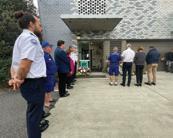
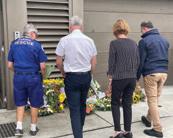
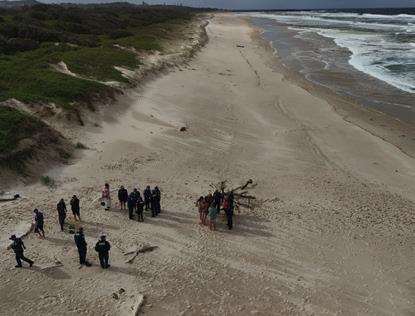
Amid the grief, the Ballina community wrapped itself around the unit and the families affected.
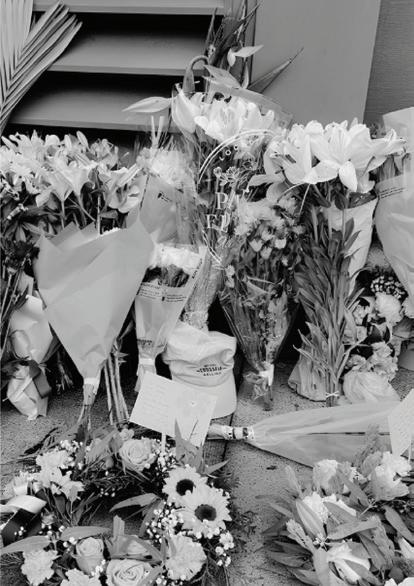
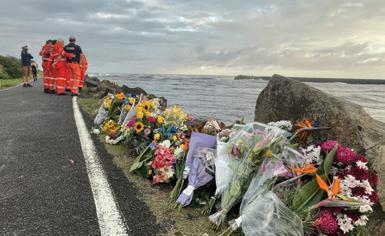
Flowers lined the Marine Rescue Ballina tower. Messages of condolence poured in from around Australia and across the globe. Schoolchildren drew colourful posters. Emergency services personnel, politicians, volunteers and strangers alike stopped to pay their respects.
The heroics and determination of the four surviving crew members is immeasurable and the scars that they will carry etched as a constant reminder. The entire Marine Rescue NSW family, and in fact the entire community, will be forever indebted for their bravery.
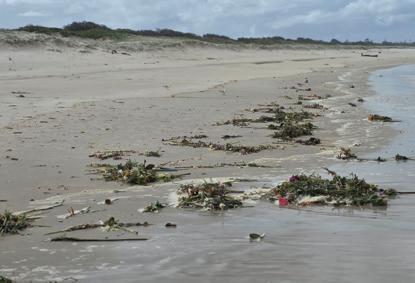
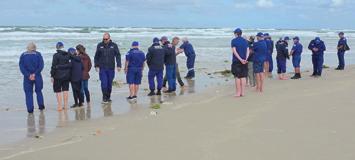
Just over a week after the tragedy, volunteers gathered quietly on the shore of South Ballina Beach to float floral tributes left in honour of Bill and Frank into the sea.
Unit Commander Hill described the ceremony as both moving and important.
“In Ballina and the Northern Rivers region, we have been overwhelmed by the love, goodwill and offers of help from our community,” he said.
“The beautiful flowers laid at the tower and on the wall, with their kind words, have touched our hearts.”
Emergency Services Minister Jihad Dib, who met with volunteers in Ballina following the tragedy, said the actions of Bill and Frank reflected the very best of the emergency services community.
“
” We’ve tragically lost two of our emergency service volunteer personnel, trying to do the thing that they said they were going to do, which is to protect others...
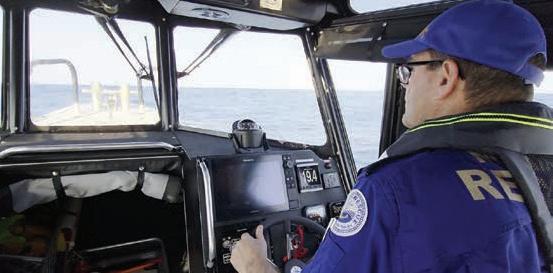
“We’ve tragically lost two of our emergency service volunteer personnel, trying to do the thing that they said they were going to do, which is to protect others.
“I think that, in itself, speaks volumes of the kind of people they are,” Minister Dib said.
Tributes also came from across the maritime rescue world, including the International Maritime Rescue Federation, which described the deaths of Bill Ewen and Frank Petsch as “a solemn reminder of the risks faced every day by those within the maritime search and rescue community who answer the call to save the lives of others”.
Governor-General Her Excellency the Honourable Ms Sam Mostyn AC also honoured the pair, describing them as “extraordinary volunteers” and “remarkable men”.
For those who knew Bill and Frank best, however, the tributes are far more personal.
They were crewmates. Friends. Husbands, fathers and grandfathers.
They were the men who showed up when people needed help.
And on one terrible night off the Ballina coast, they gave everything they had in service to others.
Two comrades lost.
Heroes forever.
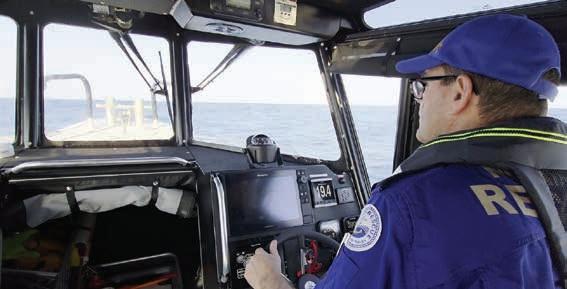

Cover Image
Barkworth and Marine Rescue
on board MR 30
Publisher
Marine Rescue NSW
Designed by Esther Stewart Parade
202 Nicholson Parade Cronulla NSW 2230
Editorial & Advertising
Phone: (02) 8071 4841
Phone: 8071 4841
Email: media@marinerescuensw.com.au
Design and Layout
Layout
Main Street Publishing Pty Ltd
Nicole Brown Printing
Ligare Book Printers
Book Printers
Head office: 138-152 Bonds Road, Riverwood NSW 2210
o ce: Bonds Road, Riverwood NSW 2210
Marine Rescue NSW is to the invaluable of our
Marine Rescue NSW is pleased to acknowledge the invaluable support of our Soundings advertisers.
Marine Rescue NSW encourages the use of Soundings articles on boating safety. Permission to use and supply of relevant images can be obtained from the publisher.
Marine Rescue NSW encourages the use of on boating safety. Permission to use and supply of relevant images can be obtained from the publisher 138 078 092. limited
© Marine Rescue New South Wales in whole part prohibited permission of the publisher.
O ce & Contact Details
Email: admin@mrnsw.com.au
Marina Rescue Ballina responding to a call
Volunteers from Marine Rescue Botany Port Hacking prepare to assist a boater off Bundeena.
From the Commissioner
Monday, 4 May will forever be remembered as one of the darkest nights in the history of Marine Rescue NSW.
Six members from Marine Rescue Ballina answered a call for help. Tragically, two of our own, Bill Ewen and Frank Petsch, lost their lives during the rescue mission, making the ultimate sacrifice while serving their community.
The loss of Bill and Frank continues to be deeply felt across our organisation. They exemplified the courage, selflessness and unwavering commitment that define Marine Rescue NSW.
In the days and weeks that followed, the overwhelming outpouring of support from local communities, across Australia and around the world, has been a powerful reminder of the respect and admiration held for our volunteers.
While the Ballina tragedy has tested us all, it has also reinforced the strength, professionalism and spirit that define this organisation. As the recently appointed Commissioner, I am honoured to lead Marine Rescue NSW and to continue to work alongside our dedicated volunteers and staff, and partners to deliver our vital service to the community.
Despite the challenges of recent times, our volunteers have continued to demonstrate their professionalism and commitment. Throughout a demanding 2025-26 boating season, crews responded to thousands of incidents across the state, safely returning more than 7,000 people to shore.
This edition of Soundings highlights the breadth of that work. It reflects the complexity of marine rescue operations, from offshore missions and coordinated multi-agency responses to operations on inland and alpine waterways. It also highlights the importance of training, preparedness and collaboration, with exercises and initiatives that ensure our volunteers remain rescue ready.
We also continue to invest in capability. The commissioning of new and replacement vessels, including Trial Bay 30, along with new facilities such as the Lake Eucumbene base, ensures our volunteers have the equipment they need to operate safely and effectively.
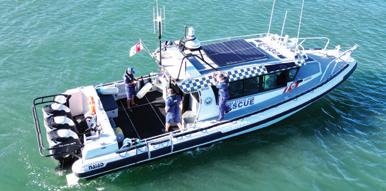
For the second time in three years, one of our vessels has received a major international honour, with Marine Rescue 30 named Best Search and Rescue Boat at the 2025 Baird Maritime Work Boat World Awards. The 11.4-metre vessel, developed in partnership with the Whiskey Project Group and designed in close collaboration with our volunteers, represents a significant advancement in offshore search and rescue capability.
Importantly, this edition also recognises the outstanding contribution of our people. I am particularly pleased to acknowledge the awarding of the Emergency Services Medal to Nicole Lockie, along with the many other honours and achievements highlighted throughout these pages. These recognitions reflect the depth of experience, commitment and service across the organisation.

ANDREWS Commissioner
As we move forward, we do so with a continued focus on supporting our volunteers, strengthening our service and maintaining the high standards expected of Marine Rescue NSW.
We honour the memory of Bill and Frank through our ongoing commitment to saving lives on the water.
Todd Andrews Commissioner
TODD
MR 30 was named Best SAR boat in the Baird Maritime Work Boat World Awards 2025.
From the Chair
This edition of Soundings is published at a time of reflection and resilience for Marine Rescue NSW.
The Ballina tragedy on Monday, 4 May has had a profound impact across the organisation. The loss of Bill Ewen and Frank Petsch is deeply felt across our entire community and our thoughts remain with their families, friends and fellow volunteers. Their courage and selfless service stand as a powerful reminder of the risks inherent in what we do, and of the extraordinary commitment shown by those who serve.
In the days and weeks following the tragedy, the response across Marine Rescue NSW has been remarkable. I wish to acknowledge the outstanding efforts of our volunteers and staff during this difficult time. The professionalism, compassion and support shown to one another, the Ballina unit, and to the broader community reflects the strength, unity and values that underpin our organisation.
This period has also marked an important transition in leadership. On behalf of the Board, I extend my congratulations to Todd Andrews on his appointment as Commissioner on 2 March. Todd brings considerable experience, a deep understanding of Marine Recue NSW and a clear commitment to our mission and our people. The Board looks forward to working closely with Todd as we continue to strengthen the organisation and support our people across the state.
I am also pleased to welcome Keith Smith to the Board as Northern Rivers Regional Director, following his election at the 2025 Annual General Meeting. Keith’s extensive operational experience and leadership will provide valuable perspective at a strategic level. At the same time, I acknowledge and sincerely thank Darcy Henricksen for his dedicated service and significant contribution during his tenure. His leadership has been marked by professionalism and a genuine commitment to the organisation and its people.
From a governance perspective, the Board remains focused on providing effective leadership to ensure strong organisational capability and that Marine Rescue NSW is well positioned for the future.
Across all regions, our volunteers continue to deliver an exceptional and important service to the boating community, often in challenging and unpredictable conditions. On behalf of the Board, I extend my sincere appreciation to every member of Marine Rescue NSW. Your dedication, skill and commitment are the foundation of this organisation.
Nola Watson Chair

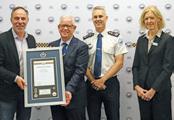
Darcy Henriksen is thanked for service by Emergency Services Minister Jihab Dib, Comissioner Todd Andrews and Chair Nola Watson.
NOLA WATSON Chair, Marine Rescue NSW Board
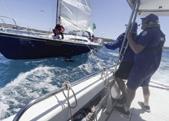
FROM RESCUE VESSEL TO RACING YACHT
Two sides of Marine Rescue NSW in the 2025 Sydney to Hobart
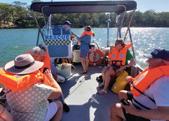
“WE WON’T ABANDON THEM” Lemon Tree Passage volunteers ready for a bushfire emergency
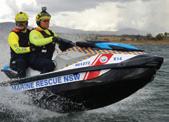
MOUNTAINS TO COAST
36
7,059 3,147
Boaters returned safely to shore Search and rescue missions 2025/26 BOATING SEASON 10
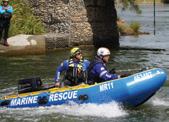
MARINE RESCUE NSW VOLUNTEERS SHINE AT INAUGURAL AUSTRALASIAN RESCUE BOAT CHALLENGE
64
Marine Rescue Alpine Lakes and Jervis Bay collaborate in two-phase exercise 34
A strong showing at Penrith’s Whitewater Stadium highlights the State Operations Group’s growing capability in highintensity flood rescue scenarios.
46,824 Boats Logged On 132,031 Radio calls
Our members in Action
“Greater Sydney recorded the highest operational demand, with volunteers completing a regional record 1,277 search and rescue missions and returning 3,171 people safely to shore. Volunteers at Marine Rescue Lake Macquarie were the busiest individual unit, carrying out 420 missions during the season...
”Marine Rescue NSW volunteers complete demanding boating season
More than 7,000 people were safely returned to shore by Marine Rescue NSW volunteers during the 2025/26 boating season, as crews across the state responded to thousands of incidents on the water.
Between 1 October 2025 and ANZAC Day 2026, volunteers completed 3,147 search and rescue missions, assisting 7,059 people from the Tweed to Eden, as well as inland waterways including the Alpine Lakes and the Murray River at Moama.
Marine Rescue NSW Commissioner Todd Andrews said volunteers continued to meet strong demand across the state, answering calls for help around the clock.
“The demand on our volunteers across all regions remains high, but they continue to answer the call 24 hours a day, seven days a week, reuniting thousands of people with their families,”
Commissioner Andrews said.
He praised the commitment of volunteers across the Service’s 46 units, highlighting their vital role in keeping NSW boaters safe.
“Volunteers are the backbone of Marine Rescue NSW, giving their time, skills and experience to help ensure people return home safely,” Commissioner Andrews said.
“This boating season was exceptionally busy, yet our crews once again rose to the challenge with professionalism, dedication and care, safely returning more than 7,000 people to shore.
“Our rapid response capability, combined with ongoing boating safety education, plays a critical role in reducing risk on the water,” he said.
“What stands out most is the teamwork across radio operators, vessel crews and unit support volunteers, all working together seamlessly to assist thousands of boaters.”
Greater Sydney recorded the highest operational demand, with volunteers completing a regional record 1,277 search and rescue missions and returning 3,171 people safely to shore. Volunteers at Marine Rescue Lake Macquarie were the busiest individual unit, carrying out 420 missions during the season.
Breakdown of 2025/26 boating season search & rescue missions across Marine Rescue NSW regions
NORTHERN RIVERS (7 UNITS)
Point Danger, Brunswick, Cape Byron, Ballina, Evans Head, Iluka Yamba and Wooli
204 117 451
search & rescue emergency people safely missions responses returned to shore
Most in demand: Point Danger (104), Ballina (31), Iluka Yamba (25)
MID NORTH COAST (9 UNITS)
Woolgoolga, Coffs Harbour, Nambucca, Trial Bay, Lord Howe Island, Port Macquarie, Camden Haven, Crowdy Harrington and Forster Tuncurry
229 109 448
search & rescue emergency people safely missions responses returned to shore
Most in demand: Forster Tuncurry (73), Port Macquarie (41), Coffs Harbour (34)
HUNTER CENTRAL COAST (8)
Port Stephens, Lemon Tree Passage, Newcastle, Lake Macquarie, Norah Head, Tuggerah Lakes, Brisbane Water and Terrigal
950 220 1880
search & rescue emergency people safely missions responses returned to shore
Most in demand: Lake Macquarie (420), Brisbane Water (169), Port Stephens (151)
Across NSW, volunteers responded to 86 medical emergencies, 220 groundings and 120 capsized vessels.
Commissioner Andrews said that many of the incidents remained preventable.
“Engine, fuel and battery failures accounted for 62 per cent of responses, which is far too high.
“Many of these incidents could be avoided through regular maintenance and pre-departure checks.
“Every boater should ensure their vessel is in sound working order before heading out.
“The cooler months provide an ideal opportunity to service vessels and check that all safety equipment, including lifejackets, remains fit for purpose.
“If you are boating during winter, preparation becomes even more important. Always wear a life jacket, carry extra warm clothing, monitor conditions closely and avoid complacency on the water,” he said.
GREATER SYDNEY (7 UNITS)
Hawkesbury, Cottage Point, Broken Bay, Sydney – State Communications Centre, Middle Harbour, Port Jackson and Botany Port Hacking
1277 185 3171
search & rescue emergency people safely missions responses returned to shore
Most in demand: Sydney State Communications Centre (362), Botany Port Hacking (263), Middle Harbour (199)
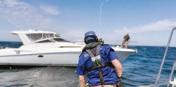
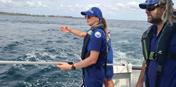
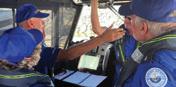
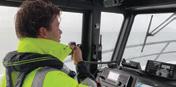
Marine Rescue NSW radio operators handled 132,031 radio calls during the season, with many managed through the Marine Rescue Sydney State Communications Centre at Belrose.
Among those were 75 MAYDAY distress calls involving immediate danger to life, alongside 42 PAN PAN calls from boaters facing urgent but non-life-threatening situations.
Logging On with Marine Rescue NSW remained a critical safety tool, with volunteers monitoring 170,608 people on board 46,824 Logged On vessels.
Commissioner Andrews urged all boaters to make Logging On part of every trip.
“I strongly encourage all boaters to Log On before heading out, either through the free app or via VHF Channel 16.
“It is a simple safety step that allows our radio operators to monitor your journey and act quickly if something goes wrong.
“During an emergency, every minute matters. Logging On gives rescuers a vital head start,” he said.
ILLAWARRA (7 UNITS)
Port Kembla, Shellharbour, Shoalhaven, Jervis Bay, Sussex Inlet, Ulladulla and Kioloa
303 141 660
search & rescue emergency people safely missions responses returned to shore
Most in demand: Port Kembla (77), Jervis Bay (77), Sussex Inlet (61)
MONARO (8 UNITS)
Batemans Bay, Tuross Moruya, Narooma, Bermagui, Merimbula, Eden, Alpine Lakes and Moama
184 104 449
search & rescue emergency people safely missions responses returned to shore
Most in demand: Batemans Bay (63), Eden (35), Bermagui (34)
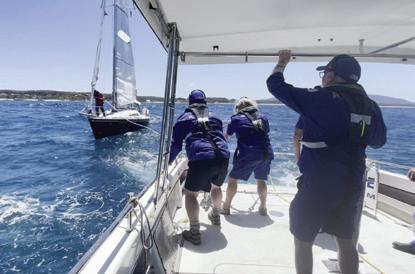
From rescue vessel to racing yacht: Two sides of Marine Rescue NSW in the 2025 Sydney to Hobart
On Boxing Day each year, Sydney Harbour becomes a theatre of colour, anticipation and controlled chaos as the Sydney to Hobart Yacht Race fleet surges towards the Heads. For Marine Rescue NSW, however, the spectacle is underpinned by preparation, discipline and quiet resolve.
In 2025, the contrast at the heart of the race could not have been sharper. While volunteer crews across New South Wales were performing medical evacuations and towing disabled racing yachts, one Marine Rescue NSW volunteer was on the other side of the equation, contesting his first Sydney to Hobart and drawing directly on the skills he had honed in service of others.
It was a race defined as much by seamanship and solidarity as by speed.
Holding the line on Sydney Harbour
Marine Rescue NSW once again provided vital support for the annual event, deploying volunteers and vessels from seven units across Greater Sydney and the Hunter Central Coast to assist with on-water exclusion zones for the race start.
Marine Rescue Brisbane Water, Broken Bay, Hawkesbury, Middle Harbour, Norah Head, Terrigal and Port Jackson all played their part in maintaining safety corridors between the 128-strong fleet and eager spectator vessels all vying for a vantage point as the 2025 fleet charged for the heads and the open water.
For Marine Rescue NSW Inspectors Andrew Harding and Glenn Sullivan, the scale of the operation is both familiar and significant.
“Marine Rescue NSW provides support for the annual event and our volunteers are an integral part of ensuring a safe race start,” Inspector Harding said.
“From the moment the fleet leaves Sydney Harbour, our focus is safety, for competitors and the boating public who come out to watch,” said Inspector Sullivan.
But once the fleet clears the Heads, the real test begins.
Brutal conditions and two medical evacuations
Just over 24 hours after the start, volunteers on the South Coast were called into action. The first request came at around 4.30pm on Saturday 27 December.
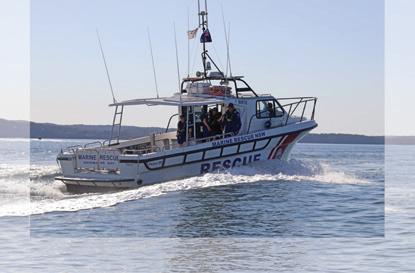
Volunteers on board Bermagui 30 assist a racing yacht.
“Volunteer radio operators at Marine Rescue Batemans Bay received a call on VHF Channel 16 from a sailing yacht racing in the Sydney to Hobart,” Inspector Sullivan said.
“The caller advised a crew member on board needed medical assistance and sought advice on where to go.”
Narooma was geographically closer. But the sea had other ideas.
“While Narooma was the closest port, the sea conditions were too rough to cross the bar,” Inspector Sullivan explained.
“In consultation with NSW Police Marine Area Command, the yacht was advised to head towards Batemans Bay.”
Even then, access was not straightforward.
“A volunteer crew on board rescue vessel Batemans Bay 30 were deployed to meet the racing yacht at Snapper Island, as the yacht’s draft was too large to enter the bay,” he said.
“At approximately 7.45pm, Marine Rescue Batemans Bay volunteers sighted the vessel and escorted the yacht to Snapper Island.
“Once moored, the patient was transferred to BM 30 and returned to Hanging Rock, Batemans Bay, where care was transferred to NSW Ambulance paramedics.”
Just hours later, another call.
“At approximately 1.30am the following morning, NSW Police Marine Area Command advised Marine Rescue NSW that a Sydney to Hobart competitor would require assistance at Bermagui.
“I received a call from Marine Area Command advising that a racing yacht had an injured crew member on board,” Inspector Sullivan said. “At the time of the call, the yacht was four to five hours from Bermagui.”
Preparation was immediate and coordinated.
“Once the vessel was closer to Bermagui, a volunteer crew and three NSW Ambulance paramedics were deployed on board Marine Rescue NSW rescue vessel Bermagui 30 to meet the yacht outside Bermagui Harbour,” he said.
“The injured crew member was transferred onto BG 30 and transported to the wharf, where paramedics continued to provide medical treatment.”
Inspector Sullivan said the incidents highlight the unpredictable nature of offshore racing.
“The conditions along the South Coast were challenging and the professionalism of our radio operators and on-water crews ensured both patients received timely medical care,” he said.
Batemans Bay 30 responds to assist a racing yacht.
Marine Rescue Hawkesbury provides exclusion zone assistance at the start of the 2025 Sydney to Hobart.
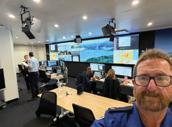
Marine Rescue NSW Greater Sydney Inspector Andrew Harding at the State Maritime Incident Control Centre for the start of the 2025 Sydney to Hobart Yacht Race.
Marine Rescue Bermagui backs up with another assist
The race was not done with Marine Rescue Bermagui.
At around 11am on Sunday 28 December, volunteer radio operators received another call, this time from a disabled yacht.
“The yacht’s mainsail had jammed and the rigging had sustained damage during the race,” Inspector Sullivan said.
“The yacht’s skipper expressed concern the yacht may run out of fuel before reaching Bermagui Harbour and requested assistance from Marine Rescue NSW.”
“
” Whether it’s medical evacuations, towing disabled yachts, or assisting retiring vessels, our volunteers stand ready...
The yacht estimated arrival at the harbour entrance at 2pm. Volunteers monitored its progress closely.
“At approximately 1.30pm, a volunteer crew on board Bermagui 30 were deployed,” Inspector Sullivan said.
“BG 30 towed the disabled yacht safely back into Bermagui Harbour, where it was able to be moored under its own steam.”
Supporting the retiring fleet
Further south, Marine Rescue Eden volunteers assisted almost a dozen retiring yachts as they sought shelter in Twofold Bay.
As boats approached, volunteers helped locate berths and tie off safely. Radio operators at Marine Rescue Eden maintained 24/7 radio coverage throughout the race period.
Inspector Sullivan said Marine Rescue NSW volunteers also helped the returning fleet, including assisting a vessel back into Eden. At Batemans Bay, crews ensured racing sailors could obtain provisions before continuing their journey north.
“Whether it’s medical evacuations, towing disabled yachts, or assisting retiring vessels, our volunteers stand ready,” he said.
“The Sydney to Hobart is an iconic race, but safety remains paramount. Our role is to support competitors when they need it most.”
From rescuer to racer
While volunteers along the coast were responding to calls for assistance, one Marine Rescue NSW member was experiencing the race from the deck of a competing vessel rather than the helm of a rescue boat.
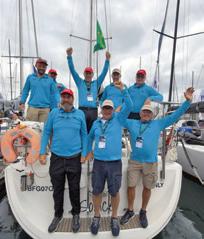
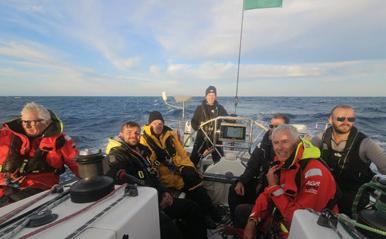
Marine Rescue Point Danger Coxswain (Restricted) David Pincus had finally ticked off a lifelong ambition: competing in the 2025 Sydney to Hobart Yacht Race. Pincus crewed aboard his brother’s yacht Solace, a 2008 Beneteau First 44.7, in what he describes as his “maiden and possibly only” Sydney to Hobart.
“I was actually going to do it many years ago but the boat I was on sold six weeks before the 1998 race which tragically claimed six lives, so it took a while to put it back in the bucket list,” Pincus said.
There was a sense of unfinished business.
He had, in many ways, completed a reverse rehearsal, crewing Solace from Hobart to Sydney following the 2024 race.
“Other commitments restricted me from taking part in the ’24 race but I was thankful for the opportunity to race with my brother in ’25,” he said. “The goal was to look after the boat and crew and finish the race.”
The Solace crew on Boxing Day morning, hours before the start of the Sydney to Hobart.
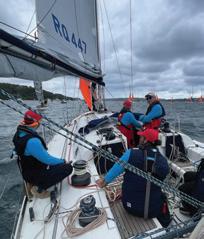
The Solace crew departing Sydney Harbour.

They did far more than that.
Solace crossed the finish line at Constitution Dock four and a half days after departing Sydney Harbour, placing 63rd in line honours from a field of 128, a fleet that saw 35 retirements.
“It was a great life experience that I feel was the culmination of more than 50 years of sailing and racing,” Pincus said.
Brutal hours and champagne sailing
For Pincus, the race lived up to its reputation.
“The conditions were brutal for much of the race,” he said.
“
The first 60 hours was spent bashing into a 20–25 knot southerly with a 2-4 metre swell, cold winds from the deep Southern Ocean and wind waves on top of that...
”
“The first 60 hours was spent bashing into a 20–25 knot southerly with a two-to-four metre swell, cold winds from the deep Southern Ocean and wind waves on top of that.”
Then came reprieve.
“We had a beautiful passage across Bass Strait, real champagne sailing,” he said.
But the Tasmanian coast had one final test.
“The winds then built down the coast until we were sailing dead downwind in 30 to 40 knots on the final night. Then once again, we had a very pleasant light wind passage across Storm Bay and up the Derwent.”
It was, in many respects, a race of extremes, endurance, exhilaration and constant vigilance.
Skills forged in service
Throughout the race, Pincus drew heavily on his Marine Rescue NSW training and experience. As a volunteer at the Point Danger unit, he is accustomed to reading sea state, anticipating weather shifts and making conservative, safety-focused decisions under pressure. He admits those instincts were invaluable.
Pincus said he used his Marine Rescue NSW skills and knowledge during the race and that the experience has given him new insights he can now share back at the unit.
The flow of knowledge, it seems, runs both ways.
Inspector Sullivan sees that crossover as emblematic of the Service. “Our volunteers are highly skilled mariners,” he said.
“Whether they’re responding to an emergency or competing offshore, that training and discipline underpins everything they do.”
Camaraderie and perspective
Pincus may never line up for another Sydney to Hobart. His brother is planning to sell Solace and he describes this campaign as potentially his only tilt at the race.
But the achievement has left its mark.
“There was a great feeling of camaraderie and achievement completing the race, I’m still smiling,” he said.
For Marine Rescue NSW, the 2025 Sydney to Hobart was a study in contrast: volunteers assisting competitors requiring medical attention or guiding disabled yachts to safety, while one of their own battled the same seas in pursuit of a personal dream.
As Inspector Harding reflected, “The race may be about competition, but for Marine Rescue NSW it will always be about safety, teamwork and supporting the boating community, wherever and whenever we’re needed.”
David on the helm of Solace.
David (right) with his brother Paul after completing the gruelling race.
EPIRB activation sparks successful offshore rescue
Asignal from an Emergency Position Indicating Radio Beacon (EPIRB) off Jervis Bay triggered a multi-agency response in January.
Marine Rescue NSW Inspector Stuart Massey said the alarm was raised from a 10-metre cabin cruiser located approximately nine nautical miles (16.5 km) north-east of Beecroft Peninsula.
“Volunteers from Marine Rescue Jervis Bay and Marine Rescue Shoalhaven were tasked to assist a vessel taking on water off the coast of Currajong.
“Volunteer crews were deployed on board rescue vessels Shoalhaven 30 and Jervis Bay 41.
“Volunteer radio operators at Marine Rescue Jervis Bay maintained communication with the skipper of the sinking vessel.
“The skipper advised he had self-evacuated the vessel and was floating in a life raft,” Inspector Massey said.
The man was winched to safety by a rescue helicopter, while crews on board Shoalhaven 30 retrieved the life raft. Jervis Bay 41 continued searching for the unoccupied vessel; however, it could not be located.
Inspector Massey said the incident highlights the importance of carrying the correct safety equipment on board.
“An EPIRB is a life-saving piece of equipment and on this occasion it did exactly that — it saved a life.
“All EPIRBs should be registered with the Australian Maritime Safety Authority.
“Registering an EPIRB allows authorities to quickly identify the owner and their vessel in an emergency, significantly reducing response times.
“Boaters should always ensure they are properly prepared before they hit the water,” Inspector Massey said.
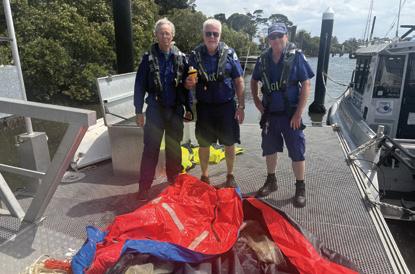
Marine Rescue Shoalhaven crew, Paul Poulsen, Ray Jones and Marty Kaye with the recovered life raft and EPIRB.
Answering the call after dark on alpine waters
When the call came just after 9.15pm on Wednesday 18 February, darkness had already settled over Lake Jindabyne. Reports indicated that three people in a canoe were unable to return to shore, conditions on the water having turned against them. Within minutes, a multi-agency search and rescue operation was under way.
Marine Rescue NSW Inspector Stuart Massey said Marine Rescue Alpine Lakes was tasked by NSW Police Marine Area Command to assist in the search.
“The report was that three people in a canoe needed assistance because conditions prevented them from returning to shore,” Inspector Massey explained.
A volunteer crew was swiftly assembled and deployed on board Marine Rescue NSW vessel Alpine Lakes 21. Against a backdrop of black water and limited visibility, the crew began methodically searching the lake, focusing first on the waters around Lion Island and Cub Island.
Inspector Massey said night operations on alpine waterways demand both skill and technology.
“On board, the volunteers utilised specialist search equipment, including forward-looking infrared (FLIR) cameras capable of detecting body heat on the lake.”
As the search progressed, updated reports suggested voices had been heard near McEvoy Island. Crews adjusted their search pattern accordingly. Shortly before 11pm, another agency involved in the coordinated response located the three paddlers safe and well on an island north of McEvoy.
For the volunteers who had already spent more than an hour combing the lake in darkness, it was the best possible outcome.
Inspector Massey praised the rapid mobilisation and professionalism of the Marine Rescue Alpine Lakes crew.
“Our crews answer the call at any time of day or night. They were on the water quickly and spent more than an hour searching. They are an extremely dedicated group of people.
“Marine Rescue Alpine Lakes volunteers train alongside our partner agencies for scenarios like this and this multi-agency response was a successful mission with the best possible outcome.
“Volunteer radio operators from the Marine Rescue Sydney State Communications Centre also did an exceptional job managing communications for our crew,” he said.
While the rescue ended safely, the incident serves as a reminder of the hidden dangers of alpine waterways. Inspector Massey emphasised that rapid response is critical during emergencies on lakes such as Jindabyne, where water temperatures remain dangerously cold even in summer, primarily due to freezing snowmelt feeding the system. Cold water immersion can trigger sudden cold shock, rapid muscle incapacitation and hypothermia.
“Those who enjoy Alpine waters must also always be aware of swift currents, submerged hazards and rapidly changing weather,” he said.
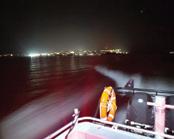
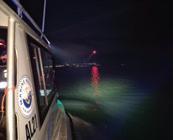
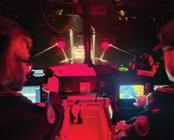
Lake Jindabyne was covered in darkness.
Marine Rescue Alpine Lakes used FLIR and spotlights to assist the search.
Marine Rescue Alpine Lakes volunteers plot their course for Lion Island.
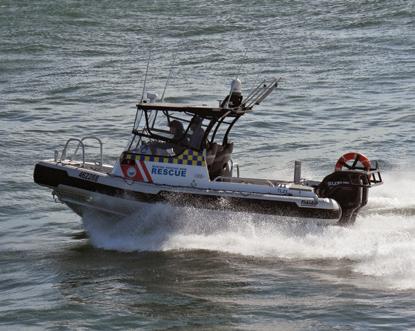
Vintage boat, modern rescue on Budgewoi Lake
Aroutine day on Budgewoi Lake took an unexpected turn when a couple onboard a vintage four-metre vessel found themselves stranded after their boat began taking on water.
Volunteers from Marine Rescue Tuggerah Lakes were called upon to assist after NSW Police Marine Area Command requested support for the distressed boaters, who were located in the middle of the lake.
Marine Rescue NSW Inspector Jane Shirriff said a volunteer crew was quickly assembled and tasked to respond.
“Rescue vessel Tuggerah Lakes 21 was deployed to assist the boaters,” Inspector Shirriff said.
“The Westpac Rescue Helicopter was in the area at the time and provided situational awareness from above while Tuggerah Lakes 21 made its way to the vessel.”
Marine Rescue Tuggerah Lakes Unit Commander Tony Younglove skippered the rescue vessel and said the crew’s first priority was the welfare of the two people on board.
“Our crew checked on the man and woman before securing a towline and returning them, along with their vessel, safely to shore,” Unit Commander Younglove said.
Initial assessments indicated the vessel had suffered a mechanical issue.
“It appears the boat had a loose propeller shaft, which allowed water to enter the hull,” he said.
Despite challenging conditions on the lake, the rescue was completed without incident.
“We encountered wind chop during the second half of the mission, but the boaters were safely returned to Toukley Boat Ramp, where they were assessed by NSW Ambulance paramedics,” Unit Commander Younglove said.
Swift response saves divers after dramatic incident off Port Kembla
On a bright Sunday in late-March off the Illawarra coast, a pristine day turned to a precision rescue, highlighting the vigilance of local boaters and the professionalism of Marine Rescue NSW volunteers.
Just before midday, the calm was broken when nearby boaters noticed a vessel stranded high on the rocks at Bass Islet, just off Port Kembla. Its anchor line had failed, leaving the boat precariously positioned while its four occupants were in the water diving.
What followed was a swift and coordinated response.
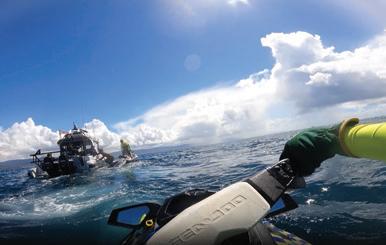
Marine Rescue NSW crews wasted no time deploying rescue vessel Port Kembla 31, supported by two rapid response rescue watercraft, Port Kembla 10 and Port Kembla 11. As the rescue vessels converged on the scene, their priority was clear: account for and recover all four divers safely.
One diver was located and brought on board Port Kembla 31, while the remaining two divers and the skipper were transferred by the rescue watercraft before being safely taken onto the larger vessel. Despite the potentially dangerous circumstances, all four individuals were uninjured.
Back on shore, a volunteer radio operator at the Marine Rescue Port Kembla Hill 60 base played a crucial supporting role, issuing a securité broadcast to alert other vessels in the area and ensure the safety of surrounding marine traffic. Later that day, the stranded vessel was eventually refloated and returned to Port Kembla Harbour, bringing the incident to a safe conclusion.
Marine Rescue NSW Inspector Steve Allan commended the actions of everyone involved, particularly the members of the public who first raised the alarm.
“The response was immediate,” he said. “On arrival, the vessel was high and dry on the rocks while our crew quickly located all four people.
“Our volunteers performed a swift and effective rescue, with Port Kembla 31 and our rescue watercraft operators working seamlessly together to bring everyone to safety...
”“Our volunteers performed a swift and effective rescue, with Port Kembla 31 and our rescue watercraft operators working seamlessly together to bring everyone to safety.”
Inspector Allan also used the incident as a timely reminder for boaters.
“It is vital that skippers regularly check the integrity of their anchor systems. Situations like this can escalate quickly.
“This outcome could have been very different if not for the alert local boaters and the rapid response from our volunteers,” he said.
Across rough seas: The 81km round trip to bring two sailors home
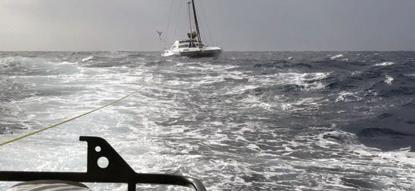
An early morning distress call set in motion a demanding offshore rescue that would see Marine Rescue Point Danger volunteers complete an 81-kilometre round trip in testing conditions.
Radio operators at the Point Danger base heard a Pan Pan call at 5:45am — an internationally recognised signal indicating an urgent situation that is serious but where there is no immediate threat to life or the vessel.
Marine Rescue NSW Inspector Courtney Greenslade said two sailors on board an 11-metre catamaran were stranded 22 nautical miles (40.5 kilometres) east of Point Danger after a critical mechanical failure.
“The skipper reported that the vessel’s steering cables broke and the back-up system failed while transiting to Ballina,” Inspector Greenslade said.
“A volunteer crew was rapidly assembled and deployed just after 6am on board Marine Rescue NSW vessel Point Danger 31 to rescue the sailors.”
Marine Rescue Point Danger Deputy Unit Commander Guy Youngblutt skippered the rescue vessel. He described the outward journey as challenging from the outset.
“The trip out was very uncomfortable, with two-metre seas and 20-knot winds,” he said.
Battling the swell and steady winds, the crew pressed on, reaching the disabled catamaran at around 7:20am.
Their first priority was to check the welfare of the two sailors on board, who had been drifting offshore without steering. Once satisfied that both were safe, the volunteers secured a towline in preparation for the long return to the Tweed River.
With the catamaran unable to manoeuvre under its own power, the journey back required patience and precision seamanship.
“Thankfully, conditions improved on the return leg,” Deputy Unit Commander Youngblutt said.
Even so, towing a disabled 11-metre vessel across open water demands constant vigilance. Sea state, wind direction and the dynamics of towing all require careful management, particularly when approaching the infamous Tweed Bar.
At around 11:05am, Point Danger 31 and the catamaran safely crossed the Tweed Bar on the incoming tide — a critical moment in any coastal operation. By 11:30am, the vessel had been secured on a courtesy mooring, bringing the operation to a successful close.
The physical toll of the ordeal was evident.
“Both people on board the catamaran were exhausted but extremely grateful to be taken to enclosed waters,” Youngblutt said.
For the volunteer crew and radio operators who coordinated and executed the mission, it had been a long and exhausting morning — one that began before dawn and unfolded in challenging offshore conditions.
“Our crew and radio operators did a wonderful job this morning in fatiguing circumstances,” Deputy Unit Commander Youngblutt said.
Two sailors rescued after MAYDAY off Merimbula Beach
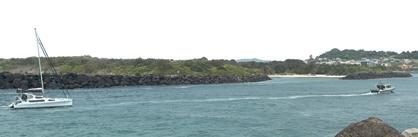
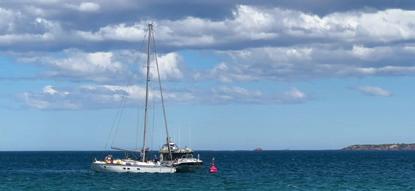
Two sailors were brought to safety off Merimbula Beach after issuing a MAYDAY call on the first day of the boating season, triggering a swift and coordinated rescue involving both a commercial whale-watching vessel and Marine Rescue NSW volunteers.
Marine Rescue NSW Inspector Glenn Sullivan said the distressed vessel issued a MAYDAY at 11.30 am, which was received by radio operators at Marine Rescue Bermagui, who immediately notified the Merimbula unit.
“A 13-metre yacht was taking on water and was in danger of sinking approximately seven kilometres off Merimbula Beach.
“Conditions were atrocious; it was choppy, with strong wind gusts and a large swell,” he said.
NSW Police Marine Area Command requested rescue vessel Merimbula 31 to respond.
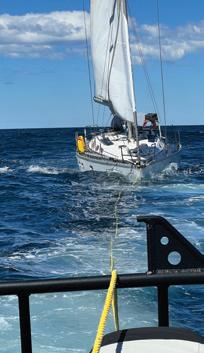
“While the rescue vessel was making its way to the distressed yacht, a nearby whale-watching vessel responded and assisted the sailors,” Inspector Sullivan said. “The volunteer crew on board Merimbula 31 arrived on scene and checked the welfare of the sailors before providing a pump and pumping water from the hull.
“The pump stemmed the flow of water, allowing a towline to be secured to the yacht, which was then towed by the Marine Rescue NSW vessel to the courtesy mooring on the eastern side of the Merimbula Bar. A leak in the bow of the yacht was identified as the cause of the issue.
“This response was an excellent example of collaboration between two Marine Rescue NSW units and a commercial operator, whose quick actions ensured the safety of the sailors,” Inspector Sullivan said.
Kia Sorento
Proud partner of Marine Rescue NSW.
Overboard on the Clarence: Iluka Yamba crew completes successful rescue
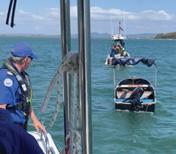
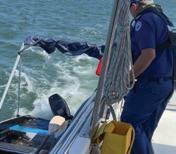
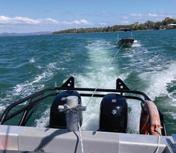
The wake from a passing vessel left a boater in a dangerous situation on the Clarence River when his small runabout was swamped and overturned near Goodwood Island.
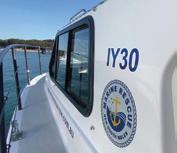
Volunteers from Marine Rescue Iluka Yamba sprang into action after a member of the public called to report the incident. Marine Rescue NSW Inspector John Murray praised both the alert bystander and the unit’s volunteers.
“The crew on board Iluka Yamba 30 were out training and responded rapidly,” Inspector Murray said. “Thankfully, a boater also responded and monitored the man in the water until IY 30 arrived. Our crew retrieved him while our radio operator organised an ambulance.” The man, who was conscious but very cold, had been thrown into the water when his 3–4 metre runabout was swamped by another boat’s wake.
“He was extremely fortunate; he was wearing a lifejacket, which helped save his life.”
“If it had not been for the member of the public calling through the emergency and the quick response by our volunteers, this incident could have had a much different outcome,” Inspector Murray said.
“ ”
“He
was extremely fortunate; he was wearing a lifejacket, which helped save his life...
Once the man was safely delivered to the Iluka boat ramp, where he was met by NSW Ambulance paramedics, attention turned to his runabout, which had become a navigational hazard. At the request of NSW Police Marine Area Command, the volunteers pumped out the vessel and transferred the mission to Iluka Yamba 20, which towed it safely to shore.
Marine Rescue Shoalhaven and Jervis Bay complete joint assist after two anglers capsize off Currarong
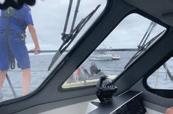
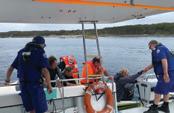
TVolunteer crews from Marine Rescue Shoalhaven and Jervis Bay completed a morning joint assist mid-December after two anglers capsized at the Banks off Currarong near Jervis Bay.
The anglers were thrown into the water when their runabout was swamped by several larger waves and overturned. Thankfully, a nearby vessel quickly spotted them and pulled them out of the water.
Marine Rescue NSW Inspector Stuart Massey said rescue vessels Jervis Bay 41 and Shoalhaven 30 responded.
“Our crews checked the welfare of the anglers and transferred them safely onto the rescue vessel, while the capsized boat, which was a navigational hazard, was secured at the request of NSW Police Marine Area Command.


“The anglers were uninjured and very grateful to the recreational boaters who assisted them initially and to our volunteer crews on Jervis Bay 41 and Shoalhaven 30 who returned them safely to shore,” Inspector Massey said.

‘He did everything right’: How a lifejacket
helped save a kayak angler
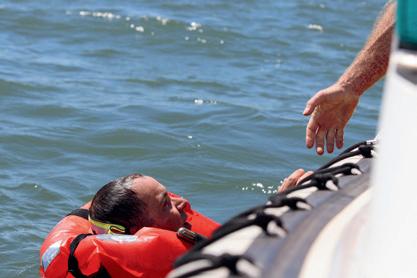
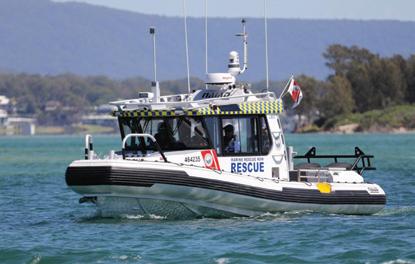
What began as a solo fishing trip off Pulbah Island quickly turned into a rescue operation when a kayak angler found himself in the water after his craft overturned and became semi-submerged.
Volunteers from Marine Rescue Lake Macquarie were tasked to respond, with rescue vessel Lake Macquarie 31 immediately deployed to the area. The crew conducted a contour search around Pulbah Island after receiving reports that the angler was in the water.
A rescue helicopter provided aerial support, locating the man and guiding the Marine Rescue Lake Macquarie crew to his position between Pulbah Island and Point Wolstoncroft. Once on scene, volunteers retrieved the angler from the water and brought him safely aboard Lake Macquarie 31.
Marine Rescue Lake Macquarie Unit Commander Jim Wright said the man had been in the water for an extended period and was suffering from the cold.
“The Marine Rescue Lake Macquarie crew checked his welfare and wrapped him in blankets to help raise his body temperature,” Unit Commander Wright said.
The angler explained that his kayak had become unstable and overturned. Although he managed to climb back into the craft initially, it rolled a second time and filled with water, leaving him unable to continue.
Unit Commander Wright praised the angler for taking the right safety precautions.
“He was wearing a lifejacket – a bright yellow one, which made him easier to see – and he stayed with his craft, which is exactly what people should do in this situation.
“
“He was wearing a lifejacket — a bright yellow one, which made him easier to see — and he stayed with his craft, which is exactly what people should do in this situation...
”
“The fact he was wearing a lifejacket, combined with the swift response from our crew and the rescue helicopter, led to a positive outcome. NSW Water Police also assisted on scene, making it an excellent multi-agency response,” he said.
The angler was transported safely back to the Marine Rescue Lake Macquarie vessel base at Pelican, while NSW Water Police recovered his kayak. Following the rescue, Unit Commander Wright drove the man home, where he expressed his gratitude to the volunteers who had come to his aid.
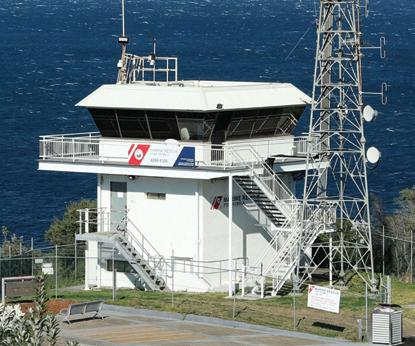
Boaters praised for lifesaving rescue north of Wollongong
Aman was plucked from waters off Towradgi, north of Wollongong, by boaters on board a recreational vessel in late December.
Marine Rescue NSW Inspector Glenn Sullivan said volunteer radio operators at Marine Rescue Port Kembla’s Hill 60 base took a call from a logged-on vessel just before lunchtime.
“The recreational vessel was transiting from Port Kembla to southern Sydney when, approximately one kilometre off Towradgi, they observed an object floating in the water.
“The skipper of the recreational vessel immediately contacted the Marine Rescue Port Kembla radio base to advise they had located and retrieved a man from the water.
“Marine Rescue Port Kembla radio operators requested NSW Ambulance meet the recreational vessel at Wollongong Harbour and managed communications for the response.
“The man was extremely cold and unwell, and paramedics transported him to Wollongong Hospital,” Inspector Sullivan said.
It is believed the man fell out of his kayak.
“It is unknown how long the man was in the water or where he became separated from his craft.
“The people on board the recreational vessel saved the man’s life. It is vitally important that all boaters maintain a proper lookout. Being observant can not only save your own life but also the lives of others. This man was clearly in trouble and in a life-threatening situation.
“Our dedicated radio operators also did a wonderful job managing communications,” Inspector Sullivan said.
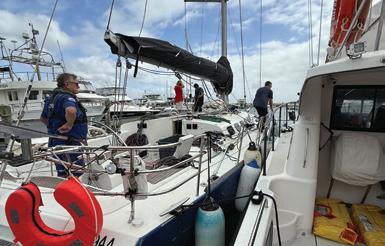
Multi-unit effort brings disabled yacht safely home
Alate-night call for help off the coast near Broughton Island set in motion a challenging overnight rescue that would test the endurance and seamanship of Marine Rescue NSW volunteers.
The skipper of a 15 metre yacht, transiting from Lord Howe Island, reported the vessel had lost steerage between Seal Rocks and Broughton Island. Radio Operators at Marine Rescue Sydney took the initial call before transferring communications to their colleagues at Marine Rescue Port Stephens, where volunteers quickly began preparing for deployment.
Marine Rescue NSW Inspector Jane Shirriff said Port Stephens 31 was tasked to assist, with a volunteer crew departing shortly after 11:15pm.
“Unfortunately, the skipper of the yacht suffered an eye injury while attempting to fix the issue, increasing the urgency of the response.”
The combination of mechanical failure and injury elevated what was already a serious offshore situation. Port Stephens 31 reached the disabled yacht, which was seven nautical miles north of Broughton Island and six nautical miles offshore.
On arrival, the crew’s immediate priority was welfare.
“They checked the welfare of the crew on board the yacht before securing a tow line and heading for Port Stephens,” Inspector Shirriff said.
Conditions offshore added another layer of difficulty to the operation. “It was quite uncomfortable offshore, with 15–20 knot south-easterly winds and a 1.5–2 metre swell,” she said.
With the tow established, the return passage required careful handling. Towing a large yacht through choppy seas demands steady coordination between helm and crew, constant monitoring of the tow line and a watchful eye on changing conditions.
“The skipper of the yacht suffered an eye injury while attempting to fix the issue, increasing the urgency of the response...
”“It was tough going on the way back, with the crew experiencing choppy conditions, but they persevered and guided the disabled yacht safely into d’Albora Marina, Nelson Bay at 6:20am,” she said.
After hours on the water in challenging conditions, the yacht was secured safely in the marina — a welcome sight for the fatigued sailors and rescuers alike.
“This mission involved three Marine Rescue NSW units. Sydney managed the initial communications, a crew from Marine Rescue Forster Tuncurry was on standby to assist if required and the Radio Operators and crew at Port Stephens did a wonderful job in extremely fatiguing conditions,” Inspector Shirriff said.
The PS 31 crew checked in on the crew of the disabled yacht at the marina after the challenging overnight mission.
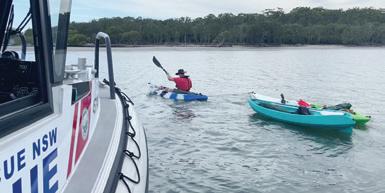
Perfect timing: Paddlers help Marine Rescue Lemon Tree Passage volunteers complete challenging tidal rescue
ASaturday afternoon on the water quickly turned challenging when two adults were left stranded on mud flats at Fenninghams Island, near Taylors Beach, prompting a swift response from Marine Rescue Lemon Tree Passage.
The initial call for assistance was received by Marine Rescue Port Stephens, before a volunteer crew was deployed on board Marine Rescue NSW vessel Lemon Tree 30 to assist the stranded boaters, whose 5.5-metre half-cabin vessel had become grounded on the outgoing tide.
On arrival, skipper Chris Dando said the situation was complicated by the falling water level. The vessel had been left well and truly stranded. “The disabled vessel was high and dry. We could see the two people standing on the mud flats but there would have been at least 50 metres of very shallow water between them and the rescue vessel”.
With the tide continuing to fall, the crew of Lemon Tree 30 carefully enacted their shallow water procedures in an effort to close the gap safely, but “there was still a distance,” Dando said.
It was at that critical moment that help arrived from an unexpected quarter. A group of three kayakers happened to be paddling past and offered assistance.
“It was perfect timing because I was fearing that the stranded boaters would have to walk and swim to the rescue vessel across unstable muddy water, which presents numerous challenges.”
The kayakers proved invaluable.
“The three kayakers worked seamlessly to transfer the two boaters and their gear over to Lemon Tree 30, where we took the man and woman safely on board,” Dando said, Fortunately, the stranded pair were uninjured.
“The disabled vessel was high and dry. We could see the two people standing on the mud flats but there would have been at least 50 metres of very shallow water between them and the rescue vessel...
”“They were both fine and well and simply got caught out by the fast-running tide and shallow waters, which can happen. It’s really important that boaters check and monitor the conditions and tides because leaving a little bit earlier can make all the difference to an enjoyable day on the water,” Dando said.
The man and woman were transported safely to Soldiers Point. Their vessel refloated on high tide and driven clear without further incident. “It was very handy that the kayakers came past when they did, they were actually visiting the area from Melbourne. Marine Rescue Lemon Tree Passage thanks them for their assistance in what ended up being a seamless rescue mission,” Dando said.
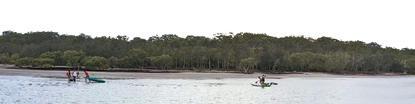
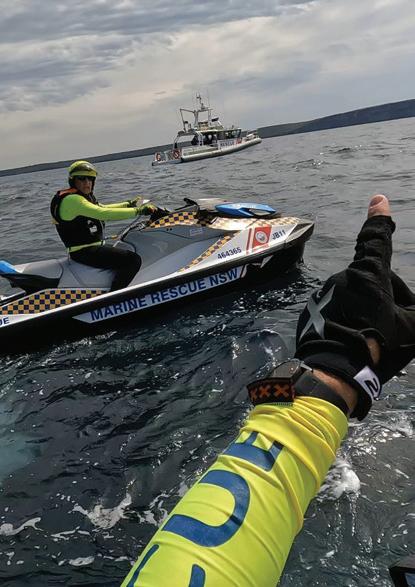
Fleet and Facilities
New era for Marine Rescue Alpine Lakes volunteers at Lake Eucumbene
Boating safety and emergency response capability in the Snowy Mountains has been significantly strengthened, with a new base for Marine Rescue Alpine Lakes officially opened and the replacement vessel Alpine Lakes 20 formally commissioned on the shores of Lake Eucumbene at Buckenderra Holiday Village.
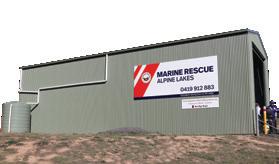
The 102-square-metre facility, which will house the $308,730 replacement rescue vessel, was officially opened by the Member for Monaro, Steve Whan, alongside Marine Rescue NSW Commissioner, Todd Andrews.
Funded through a $69,000 grant from Bendigo Bank – Community Bank Cooma and located on land generously allocated by Buckenderra Holiday Village, the new base delivers secure vessel storage and sustainable, solar-powered operations. The solar installation was made possible through the combined support of Bendigo Bank – Community Bank Cooma and the NSW Government’s Community Building Partnership Program.
Together with the commissioning of Alpine Lakes 20, it marks a major capability enhancement for the region.
The commissioning formally welcomes Alpine Lakes 20 into the Marine Rescue NSW fleet, a vital step in recognising the vessel’s operational readiness and its critical role in saving lives on alpine waters.
Commissioner Andrews said the dual milestone represented a significant investment in volunteer capability and community safety.
“This is a proud moment for our dedicated volunteers and for the entire Snowy Mountains community.
“We are deeply grateful to Buckenderra Holiday Village and Bendigo Bank for their generosity and vision in supporting this facil-
This is a proud moment for our dedicated volunteers and for the entire Snowy Mountains community...
ity, which will provide reassurance to everyone enjoying the waters of Lake Eucumbene. We also acknowledge the ongoing support of the NSW Government in ensuring our 3,500 volunteers across the state are rescue ready 24 hours a day, seven days a week.
“The Alpine Lakes region presents extreme and rapidly changing conditions. Our volunteers operate across Lake Eucumbene and Lake Jindabyne in environments that can be bitterly cold in winter and intensely hot in summer. This new base and purpose-built vessel ensure they can respond safely, swiftly and effectively in all seasons,” Commissioner Andrews said.
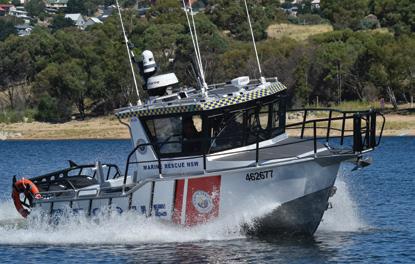
Stationed at the new Marine Rescue Alpine Lakes facility at Lake Eucumbene, AL 20 can reach speeds of 35 to 40-knots.
Alpine Lakes 20 is the first vessel of its kind designed specifically for the alpine waters and unique operating environment faced by Marine Rescue NSW crews in the region.
The 6.8-metre Gray’s Marine and Welding CNC-plated aluminium rescue vessel is powered by twin Suzuki 140 horsepower engines and can reach speeds of 35 to 40 knots, enabling rapid deployment. A 400-litre fuel tank allows for extended operations, while its hull design enables it to cut cleanly through rough and choppy alpine waters.
The vessel features a full Raymarine suite of search and rescue technology, including radar, side scan sonar and a FLIR rotating thermal imaging camera with field-of-view functionality and target lock capability, significantly enhancing crew situational awareness during search operations.
A strengthened bow and fold-out ladder allow crews to beach the vessel and safely embark or disembark patients without entering freezing water. The wider, open deck layout maximises space for casualty care, including the ability to manage serious medical emergencies such as cardiac arrest.
Unit Commander Cain Hopwood said the vessel had already proven its value.
“This purpose-built vessel has exceeded our expectations in both handling and ease of launch.
“It can be deployed quickly, which is critical when minutes matter. Being trailerable and capable of launching over difficult terrain means we can respond wherever we are needed,” Unit Commander Hopwood said.
“Having Alpine Lakes 20 stationed at our new Buckenderra base
“
” This purpose-built vessel has exceeded our expectations in both handling and ease of launch...
“Our volunteers are on call 24 hours a day, seven days a week. They give up their time, day or night, in all weather conditions to ensure others return home safely. This investment supports their commitment and strengthens our ability to serve the community.” Member for Monaro, Steve Whan, commended the dedication of local volunteers and the strong collaboration that brought the project to fruition.
“The NSW Government is proud to stand behind the skilled and deeply committed volunteers at Marine Rescue Alpine Lakes. These men and women answer the call at any hour, in biting winter winds and in the height of summer, to assist those in distress on our waterways. Their professionalism, courage and selfless service reflect the very best of our regional communities.
“The delivery of this new base, alongside a purpose-built rescue vessel, ensures volunteers have modern, fit-for-purpose facilities and equipment to continue safeguarding locals and visitors alike.
“We’re also pleased that the Community Building Partnership Program has helped power the new base through the installation of solar, supporting both operational capability and sustainability into the future,” Mr Whan said.
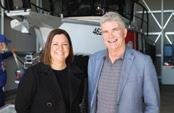
Rhiannon Shaw from Bendigo Bank - Community Bank Cooma with Unit Commander Hopwood, Commissioner Andrews and Member for Monaro Steve Whan.
Josh from Buckenderra Holiday Village received a momento for supporting the project.
Federal Member for Eden-Monaro Kristy McBain and State Member for Monaro Steve Whan attended the ceremony in early Autumn
Safer boating at your fingertips
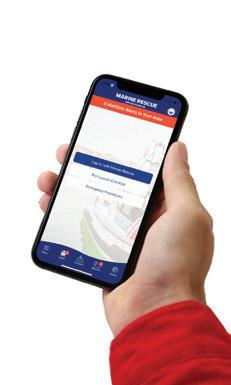

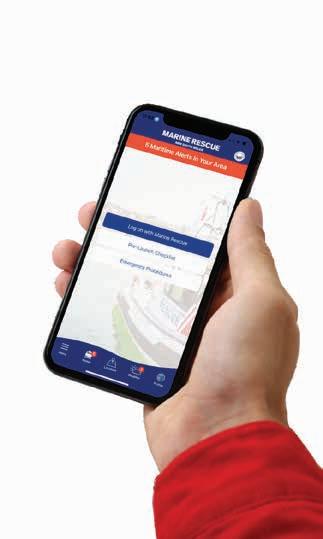
Make every journey safer. Log On and Log Off with the Marine Rescue app.
We’ll quickly start a search if you don’t return when expected.
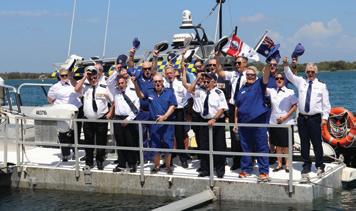
Marine Rescue NSW officially commissions life-saving vessel Trial Bay 30
Rescue capability on the Mid North Coast has been significantly strengthened with the official commissioning of Marine Rescue Trial Bay’s replacement rescue vessel, Trial Bay 30
Proving its effectiveness as a life-saving asset, Trial Bay 30 has completed more than 60 SAR missions since its delivery to the unit in June 2024, safely returning almost 150 people to shore.
February’s commissioning formally welcomes the vessel into the Marine Rescue NSW fleet, marking an important milestone for volunteers and the local community.
Marine Rescue NSW Deputy Commissioner Darren Schott commissioned the vessel during a ceremony at South West Rocks, joined by local volunteers and community members. The replacement vessel represents a NSW Government investment of $668,707 in frontline marine rescue capability.
Deputy Commissioner Schott said commissioning a vessel is a vital step in recognising its operational readiness and the role it plays in saving lives. “While Trial Bay 30 has already been hard at work on the water, the commissioning ceremony officially acknowledges this vessel as a critical, frontline asset for Marine Rescue NSW,” he said.
“This replacement vessel supports the 56 dedicated volunteers at Marine Rescue Trial Bay, enabling them to respond rapidly to people in distress on local waters, day or night.”
Built in NSW by Yamba Welding and Engineering, Trial Bay 30 is a 10-metre Naiad powered by twin Suzuki 300-horsepower engines, capable of reaching speeds of up to 42 knots. Its design and performance allow it to operate effectively in demanding offshore and bar-crossing conditions.
Deputy Commissioner Schott said the vessel’s advanced technology significantly enhances search and rescue operations.
“Trial Bay 30 features an impressive suite of navigation and communications equipment, including a FLIR thermal infrared camera, 3D side-scan sonar and Doppler radar. The vessel strengthens local rescue capability and ensures the community can have confidence that help is available when it matters most,” he said.
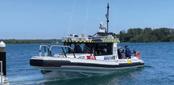
Marine Rescue Trial Bay Unit Commander Ian Turner said the vessel has already demonstrated its value on the water.
“Trial Bay 30 is an outstanding vessel and a genuine workhorse. It’s capable of heavy bar crossings with its evolutionary axe-head bow design and can rapidly deploy up to 30 nautical miles offshore. Last year alone, the vessel conducted 37 search and rescue missions, safely returning 71 people to shore. Its reliability, speed and capability have already made a real difference in our ability to save lives.
“We thank the NSW Government for its ongoing financial support and for ensuring our volunteers have fit-for-purpose resources to carry out their vital life-saving work,” Unit Commander Turner said.
Three cheers for Trial Bay 30!
Marine Rescue Batemans Bay enhances life-saving capability with new rescue watercraft
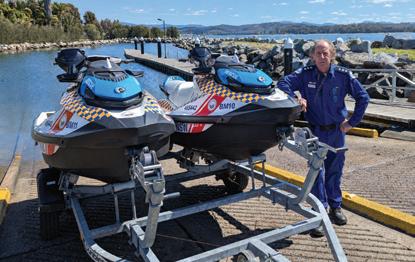
Marine Rescue Batemans Bay now has two new state-ofthe-art rescue watercraft (RWCs – jet skis) in operation, significantly boosting the unit’s ability to respond rapidly to emergencies on local waters.
The Sea-Doo jet skis, known as BM 10 and BM 11, are capable of speeds of up to 93 km/h and are designed to operate on enclosed and offshore waters around Batemans Bay. Each craft can carry two crew members and transport a rescued person on a sled, providing vital versatility in time-critical missions.
This is the first time the Batemans Bay unit has operated RWCs, with Marine Rescue Tuross Moruya the only other South Coast unit currently operating the vessels within its fleet.
Marine Rescue Batemans Bay Unit Commander Rod Ingamells said the new watercraft enable volunteers to reach casualties in areas inaccessible to larger vessels.
“These are rapid-response craft; they are very quick and they can get into areas that our normal rescue craft cannot access, particularly shallow areas.”
The unit is recruiting new volunteers to join its 90-strong team, particularly to operate the rescue watercraft.
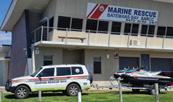
“We are hoping to recruit the next generation of volunteers to Marine Rescue Batemans Bay,” Unit Commander Ingamells said.
The RWCs have been funded through community donations and the unit’s own fundraising initiatives. Unit Commander Ingamells thanked local residents and businesses for their ongoing support.
“We are grateful for the generosity of the community and local businesses, who play a vital role in helping us continue our mission of saving lives on the water,” he said.
Marine Rescue Batemans Bay Unit Commander Rod Ingamells with the new rescue watercraft.
Training
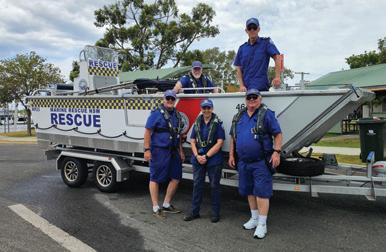
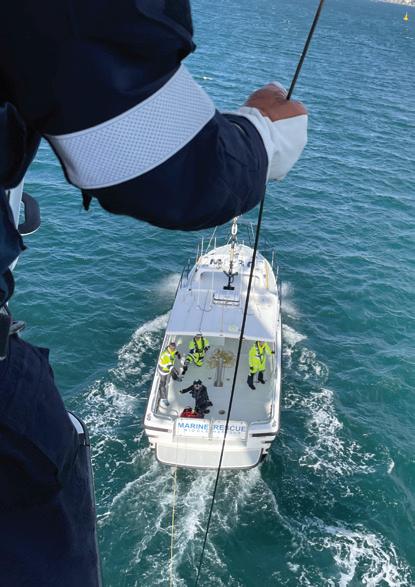
With its shallow draft, bow door and landing-craft design, MR 23 can reach areas that deeper vessels cannot.
“We won’t
abandon them”: Marine Rescue Lemon Tree Passage volunteers ready for a bushfire emergency
Tucked between bushland and the sheltered waters of North Arm Cove, the small MidCoast Council village of Bundabah faces a sobering reality each bushfire season: a single road in and out, power and communications easily severed and a community that can be rapidly isolated when conditions turn catastrophic. For residents, the lifeline may not come by land at all—but over the water.
That possibility is precisely why volunteers from Marine Rescue Lemon Tree Passage conducted a multi-agency transfer exercise in November, using both their Naiad rescue vessel LT 30 and the unit’s highly capable multi-purpose vessel, MR 23. With its shallow draft, bow door and landing-craft design, MR 23 can reach areas that deeper vessels cannot, making it a 365-day-a-year asset for emergencies and everyday operations alike.
Marine Rescue Lemon Tree Passage Deputy Unit Commander (Operations) Brad Fuller, who has helped drive the evolution of these Bundabah exercises from a simple idea into an annual highlight, recalls the unusual origin story.
“It all started with a simple phone call on a Saturday morning a few years ago,” he said. “A lady from the Bundabah Community Association asked whether we could help in the event of a major
fire cutting the only road, knocking out phones and power. My wife Anne–one of our radio operators–actually took that call. It got us thinking straight away.”
An early trial using LT 30 revealed the challenges of accessing the elevated jetty. “Even at high tide, getting down to the deck requires real agility,” Fuller explains. “For elderly, injured or mobility-impaired people, it’s simply not practical. That’s where MR 23 is a game-changer. With the bow door on a beach, passengers can walk straight aboard”.
Following the arrival of MR 23 in 2024, Lemon Tree Passage volunteers took the vessel to the Pindimar Market Day, sparking renewed local interest. “I remember saying, ‘Right—here we are,’” he laughs. “We organised another demonstration, this time just with MR 23. The relief from the community was obvious. People could see that safe evacuation really was possible”.
This year’s drill involved both vessels for the first time. Fuller blended the community exercise with a skills refresher for the unit’s five available skippers–Steve Grimmond, Chris Dando, Lisa Lodding, Matthew Clarke and Fuller himself. Each rotated through roles, gaining hands-on experience with beach landings, jetty approaches and coordination under pressure.
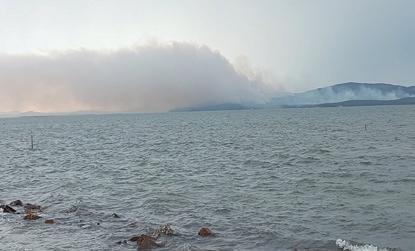
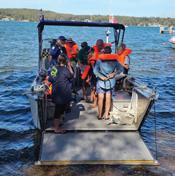
The day delivered an unexpected slice of reality when LT 30 was flagged down by a disabled vessel mid-exercise. “Real operations don’t pause just because we’re training,” Fuller said.
As MR 23 ran up on the small sand ramp, smoke from nearby bushfires drifted across the cove–a stark reminder of the stakes. Residents gathered on the shore with members of the local RFS.
“There was a lot of anticipation. A huge turnout of locals, all keen to understand how this would work in a real emergency. You could feel their relief. They now know that if the road is cut and communications go down, they still have a connection to the outside world.”
For Fuller, that sense of reassurance is the whole point.
“Realistically, in a catastrophic fire, roads will be closed, power will be out, mobile phones will be useless,” he said. “Giving isolated communities a way to stay connected–whether that’s evacuating people or delivering something as simple as milk and bread–is absolutely vital. It shows they won’t be abandoned.”
The exercise also revealed practical lessons. “In the demonstration, we went right up into the shallow water so no-one even got their feet wet,” Fuller notes. “But in a real emergency, we wouldn’t run the boat onto the beach. If you load several heavy people, the hull can settle in the mud. Better to keep in ankle-deep water and have people walk aboard”.
Similar cooperation with the RFS and SES has strengthened the region’s multi-agency readiness. “We’ve worked with all of them,” Fuller said. “We’re used to coordinating on the water and they’re used to supporting us from shore.”
“
” You could feel their relief. They now know that if the road is cut and communications go down, they still have a connection to the outside world...
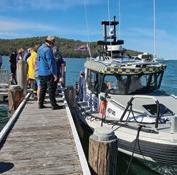
Although Marine Rescue NSW has not yet been required to evacuate Bundabah during a fire, preparation remains essential. “These big fire events don’t usually explode in five minutes,” Fuller said. “They build over days. What matters is a coordinated response— knowing who meets evacuees at the other side, whether ambulances are waiting, how we communicate. These exercises allow us to sort all that out before it matters”.
For locals, the reassurance is invaluable. Kathy Jones from the Pindimar Bundabah Community Association expressed her thanks in no uncertain terms: “Both boats came in and collected people from the shore and the jetty. If an extreme fire strikes, we now know what can be achieved. We can’t thank Lemon Tree Passage Marine Rescue enough”.
Fuller believes the annual markets offer the perfect catalyst for repeating the drills. “The community’s enthusiasm is what drives these exercises,” he said. “And each year we learn more. Getting elderly or infirm people to the boats is a challenge–we’re looking forward to practising that again”.
As the smoke drifted above North Arm Cove, the volunteers completed their final task of the day: relaunching MR 23 with the help of shore-side RFS members, who pushed the loaded vessel off the sand. It was a moment of teamwork that captured the entire spirit of the operation.
“In the end, it’s all about readiness,” Fuller said. “If the day ever comes when Bundabah really is cut off, we want them to know–we’ll be there.”
Marine Rescue Lemon Tree Passage conducts an annual exercise to evacuate Bundabah residents from the beach using MR 23 and jetty via LT 30.
Mountains to coast: Marine Rescue Alpine Lakes and Jervis Bay collaborate in two-phase exercise
Marine Rescue Jervis Bay and Marine Rescue Alpine Lakes have come together at Lake Jindabyne for an inter-unit training exercise designed to strengthen operational capability and interoperability between coastal and inland Marine Rescue NSW units. The exercise forms the second phase of a twopart collaboration initiative, following the inaugural Unit Connect Day held at Jervis Bay the previous weekend and focuses on the unique demands of search and rescue operations on alpine waterways.
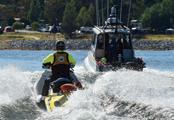
The Lake Jindabyne exercise involved up to four inland and alpinespecific search and rescue scenarios, including man overboard drills, vessels and persons in distress, structured searches, rescues and recoveries and towing operations at multiple locations around the lake. Training manikins were used to replicate realistic conditions, with two Marine Rescue Alpine Lakes vessels operating alongside two Marine Rescue NSW rescue watercraft (jet skis). The Monaro Police District supported the activity, with a NSW Police vessel providing on-water safety throughout the exercise.
Marine Rescue NSW Inspector Glenn Sullivan said the Alpine Lakes phase was critical in giving coastal volunteers practical experience in an environment that presents very different challenges.
“The purpose of the Lake Jindabyne exercise was to have inter-unit training between Jervis Bay and Alpine Lakes,” Inspector Sullivan said. “Last weekend we had inland water operators going down to the coast and this weekend we’ve had people coming from the coast up onto the alpine waters. They’ve been working with the rescue watercraft operators from Jervis Bay and are now practising simulated survivor recoveries and learning how to best handle jet skis on alpine waters. Having that shared experience between inland and coastal waters is integral to what we’re trying to achieve for Marine Rescue NSW statewide.”
Inspector Sullivan said the varying conditions faced at Lake Jindabyne reinforced the importance of regular, realistic training.
“Exposing our volunteers to different environments shows how quickly conditions can change and how fast responses need to be.”
“It’s one thing to gain qualifications, but over time we need to keep our skills sharpened and our best practices in place to maintain operational capability.”
For Marine Rescue Alpine Lakes Unit Commander Cain Hopwood, hosting the exercise at Lake Jindabyne was an opportunity to showcase the complexities of alpine waterways while strengthening
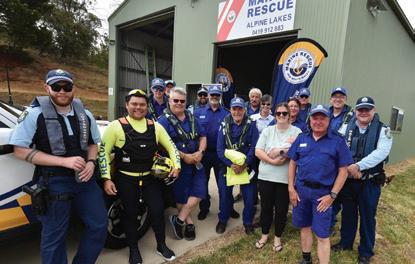
Marine Rescue NSW volunteers from the Alpine Lakes and Jervis Bay units along with officers from Monaro Police District had a lot of positive takeaways from the program.
relationships with other units. “It’s great that we’ve had connections with other units,” he said. “We’re a small unit, so being able to rely on other units for training and development is really important for us. Mixing it up with other units makes a big difference and it’s also valuable to expose visiting crews to the unique properties of inland and alpine waters”.
Unit Commander Hopwood said the scenarios conducted during the exercise reflected the types of challenges regularly faced by Alpine Lakes volunteers.
“We ran a rescue scenario where a personal watercraft had crashed into an island and a person had fallen into the water,” he said. “The crew had to rescue the person and then tow the watercraft away from the island. That was tricky because of the rocks, the shallow water and the need to get in close to the shore, which are hazards we deal with here that you don’t usually see on the coast.”
The contrasting environments were also evident to Marine Rescue Jervis Bay crew member Kyran Ring, who said working on Lake Jindabyne highlighted different approaches to risk and navigation.
“The way they approach the waterway and obstacles is different to how we do because of the conditions,” he said. “It’s been great to see their foresight and how they handle things.”
Marine Rescue Jervis Bay Training Officer Ernie Panucci said the exercise reinforced a universal message for all waterways. “Any waterway is dangerous,” he said. “The weather only has to change slightly and all of a sudden it’s a different situation. We see that in Jervis Bay as well, where conditions can change dramatically and that’s why training for those situations is so important”.
Shoalhaven-based rescue watercraft operator Adam Breau said observing the Alpine Lakes crew at work offered valuable insight into how inland operations are assessed. “It was interesting watching the Alpine Lakes members checking the depth of the water,” he said. “We tend to look at tides, whereas they look at how Snowy
Hydro controls their environment. That was a huge takeaway and really interesting to see”.
The learning exchange was not one-sided, with Alpine Lakes crew member Werner von der Burg reflecting on the coastal phase of the program held the previous weekend at Jervis Bay. “Being on a big boat is very different,” he said. “I had the opportunity to drive rescue vessel Jervis Bay 41 and that was a completely different experience compared to driving our much smaller boat here”.
Unit Commander Hopwood said the broader benefits of the collaboration extended beyond training scenarios. “Making connections with local police and the wider emergency services community is really important for us. It makes it easier to deal with situations in the future and exercises like this help build those relationships”.
The inter-unit training at Lake Jindabyne forms part of Marine Rescue NSW’s ongoing commitment to developing volunteer capability, confidence and collaboration across the state, ensuring crews are prepared to respond effectively in both coastal and inland environments.


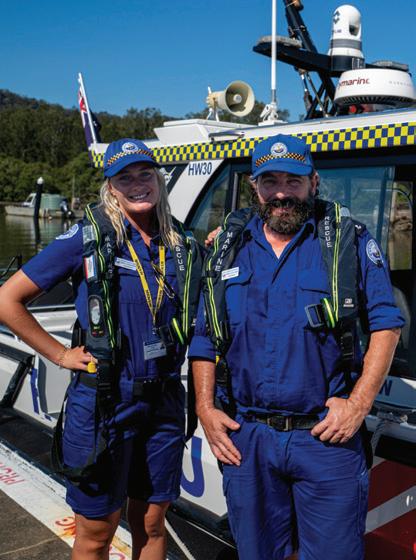
Our People
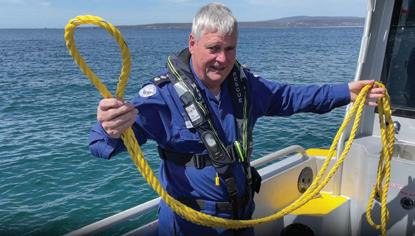
A Legacy of Service: MRNSW celebrates three new Life Members
Three outstanding volunteers were awarded Marine Rescue NSW Life Membership at the organisation’s Annual General Meeting in Cronulla, recognising their exceptional commitment, leadership and service. The awarding of Marine Rescue NSW Life Membership is among the highest honours, reserved for individuals whose contribution has shaped both their units and the wider organisation.
Marine Rescue NSW Chair Nola Watson commended the three recipients – Frances (Margaret) Teal of Marine Rescue Lake Macquarie, William (Bill) Blakeman ESM of Marine Rescue Merimbula and Marine Rescue Shoalhaven’s Bruce Mitchell ESM – describing them as “the very best of what the organisation stands for”.
“Margaret, Bill and Bruce have each given significant service marked by professionalism, compassion and a commitment to the safety of others,” Watson said. “Their leadership has strengthened our units, uplifted our volunteers and enhanced the confidence of boating communities across the state.”
For Frances (Margaret) Teal, Life Membership marks the culmination of an extraordinary 35 years of volunteer service. At 95, she is one of Marine Rescue NSW’s longest-serving female volunteers. Beginning with the Royal Volunteer Coastal Patrol in 1991, Margaret brought an unwavering passion for training and education, particularly in First Aid, where she trained and assessed generations of volunteers.
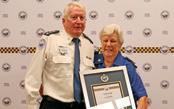
Her leadership as Divisional Commander during the transition to Marine Rescue NSW and later as the first Unit Commander of Marine Rescue Lake Macquarie, helped lay the foundations for one of the state’s busiest units. She continues to serve operationally as a Watch Officer at the unit and remains a mentor to new members entering the radio stream. “Margaret’s commitment over more than three decades has had a profound influence on her unit and on Marine Rescue NSW more broadly,” Watson said. “Her example reminds us of the power of quiet, steady leadership and the impact of helping others build their skills and confidence”.
Bill Blakeman ESM takes great pride in delivering training.
Lake Macquarie Unit Commander Jim Wright ESM and Life Membership recipient Margaret Teal.
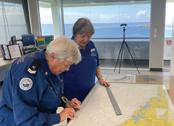
Bill Blakeman’s 17 years with Marine Rescue NSW follow a lifelong maritime career spanning the British Merchant Navy, Australian Volunteer Coast Guard and senior roles with NSW maritime authorities. Since joining the Royal Volunteer Coastal Patrol in 2007 and transitioning into Marine Rescue NSW two years later, he has played a central role in shaping the Merimbula unit’s capability, culture and operational readiness.
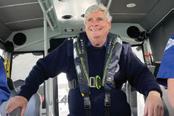
As Unit Commander and long-serving Training Officer, Bill has guided countless volunteers through their qualifications, instilling high standards and ensuring safe, cohesive rescue operations. His efforts to secure a second rescue vessel for enclosed waters, upgrade critical infrastructure and maintain strong financial foundations have transformed the unit into one of the most capable and community-engaged in the region.
Blakeman was awarded the Emergency Services Medal in 2022 and received the NSW Maritime Medal the following year.
Chair Watson commended the personal impact of Blakeman’s leadership. “Bill’s dedication has inspired generations of volunteers. His calm teaching style, his depth of knowledge and his absolute commitment to safety have contributed directly to lives saved on the water”.
Bruce Mitchell’s 25 years of continuous service have been defined by reliability, measured leadership and steadfast support for volunteers across the Illawarra. Joining the Australian Volunteer Coast Guard in 2001 after retiring from business, Bruce quickly emerged as a trusted leader, guiding the organisation locally through the transition to Marine Rescue NSW.
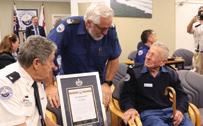
From 2009 to 2022, Bruce managed operations across the Illawarra region, providing regional oversight, interagency coordination and volunteer support. Bruce’s calm management during complex search and rescue missions and his consistent presence for volunteers earned him wide respect across partner agencies and government. Following his retirement from staff service, Bruce returned as a volunteer, serving as Unit Commander at Shoalhaven and continuing as a mentor and Watch Officer.
Mitchell was awarded the NSW Maritime Medal in 2009 and was recognised on the 2010 Queen’s Birthday Honours list with the Emergency Services Medal.
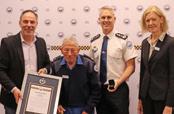
Watson said his contribution reflected “a rare degree of consistency and integrity”. “Bruce has been a point of stability for volunteers and an asset to every unit and agency he has worked alongside. His service has strengthened the capability, reliability and public confidence of Marine Rescue NSW,” she said.
Across their varied journeys, Margaret, Bill and Bruce share a deep commitment to their communities and to the volunteers they have trained, mentored and supported. Their years of service have saved lives, strengthened units and contributed to the growth and professionalism of Marine Rescue NSW.
“These three Life Members are deeply valued,” Watson said. “Their influence will continue well beyond their years of active service, through the volunteers they have inspired and the safer waterways they have helped create. Marine Rescue NSW is stronger because of them.”
Margaret Teal plots a vessel’s location in the radio room.
Bill Blakeman ESM on board Merimbula 31.
Minister Jihad Dib, Bruce Mitchell ESM, Commissioner Todd Andrews and Chair Nola Watson.
Life Membership awarded to Bruce Mitchell ESM.
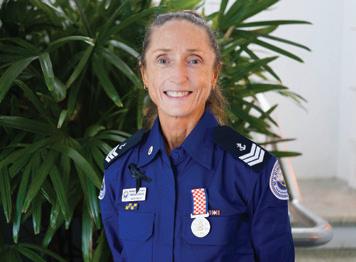
Point Danger volunteer recognised in 2026 Australia Day Honours
Marine Rescue Point Danger volunteer Nicole Lockie was awarded the Emergency Services Medal (ESM) in the 2026 Australia Day Honours list.
Nicole has dedicated more than 24 years to serving the NSW community, having volunteered with the VRA Marine Division (a precursor to Marine Rescue NSW) from 1995 to 2005. After spending six years volunteering in Queensland, Nicole returned to NSW and became a member of Marine Rescue NSW in 2011.
As a Marine Rescue NSW coxswain, Nicole has accumulated hundreds of hours of sea time. She makes herself available around the clock to respond to emergencies on the water, performing numerous rescue missions, often in dark and dangerous conditions.
Among her many notable missions was the 2017 rescue of a stricken trawler off Tweed Heads in what can only be described as a David and Goliath struggle. More recently, Nicole recorded the most rescues in a single day. As skipper, her rescue vessel performed seven separate rescues — three offshore and four inshore — setting a new record for the Marine Rescue Point Danger unit.
In addition to her operational role, Nicole is a Marine Rescue NSW trainer and assessor, investing significant time in developing the skills and knowledge of her fellow volunteers.
Marine Rescue NSW Commissioner Todd Andrews said it was a privilege to have such an experienced female mariner within the organisation.
“Nicole is one of the longest-serving operational female coxswains in Marine Rescue NSW.
“Nicole is one of the longest-serving operational female coxswains in Marine Rescue NSW. She is also a qualified rescue watercraft operator and an endorsed member of the State Operations Group...
”“She is also a qualified rescue watercraft (jet ski) operator and, as an endorsed member of the Marine Rescue NSW State Operations Group, can be deployed statewide to assist the NSW Government response to severe weather events.
“The awarding of the Emergency Services Medal to Nicole is a fitting tribute to a woman who has shown outstanding dedication to volunteering and to our mission of saving lives on the water,” Commissioner Andrews said.
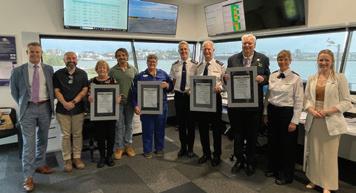
Courage under pressure: Marine Rescue Newcastle volunteers honoured
Four Marine Rescue Newcastle volunteers were presented with Commissioner’s Citations by Marine Rescue NSW Commissioner Todd Andrews during a ceremony at the unit’s Stockton base, in recognition of their role in a challenging offshore rescue in 2019.
The rescue operation began when an EPIRB (emergency positionindicating radio beacon) was activated from a sailing catamaran that had capsized approximately 10 nautical miles east of Newcastle. The activation triggered a coordinated multi-agency search and rescue effort shortly after 10am on 11 July 2019.
Marine Rescue NSW Inspector Steve Raymond said rescue vessel Newcastle 30, crewed by Ronald (Ron) Calman and Richard (Rick) Nevile, navigated rough offshore conditions to become the first rescue vessel on scene.
“Throughout the operation, the Marine Rescue Newcastle crew faced significant challenges, with winds reaching 50–90 km/h and swells of two to three metres,” Inspector Raymond said.
At the same time, experienced radio operator Geraldine Allen was supported at the unit’s radio base by Warren Bramble, who was on his first shift after gaining his radio operator qualifications.
“Geraldine and Warren were under immense pressure, managing communication with the unit’s rescue vessel Newcastle 30, as well as communications with myself and NSW Police Marine Area Command.
“Both operators maintained a high level of professionalism during the fast-paced mission,” Inspector Raymond said.
Like many Marine Rescue NSW volunteers, these four individuals did not seek recognition for their efforts. Through nominations submitted by others, Commissioner Andrews had the honour of
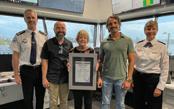
presenting citations to Master Ron Calman, Leading Crew Rick Nevile and Radio Operator Geraldine Allen. Warren Bramble’s citation was presented posthumously, with his wife Helen accepting the award on behalf of her late husband.
“The courage, professionalism and expertise of these four volunteers in treacherous conditions and the most harrowing of circumstances is deserving of a Commissioner’s Citation,” Commissioner Andrews said.
“The crew not only battled challenging on-water conditions and extreme winds, they also carried the sombre responsibility of retrieving deceased victims and returning them promptly and professionally to their grieving families.
“This commitment demonstrates their selfless dedication to the communities they serve,” he said.
The award recipients with Member for Newcastle Tim Crakanthorp, Commissioner Todd Andrews, Unit Commander Lyn Van Homrigh and City of Newcastle Councillor Elizabeth Adamczyk.
Commissioner Todd Andrews and Unit Commander Lyn Van Homrigh with Warren Bramble’s wife Helen and sons Luke and Scott.
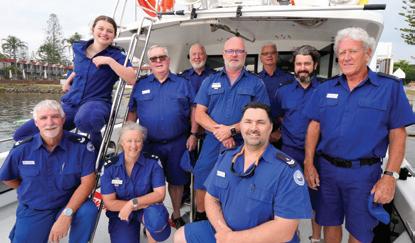
Marine Rescue Port Macquarie volunteers receive national commendation for daring bar rescue
The courage and professionalism of Marine Rescue Port Macquarie volunteers have been recognised on the national stage, with the unit receiving the Professional Volunteer Commendation at the 2025 Australian Search and Rescue Awards, held at Queensland Parliament House.
Hosted by the Australian Maritime Safety Authority and Queensland Police Service, the awards celebrate outstanding rescues across the nation. Ten Marine Rescue Port Macquarie volunteers (Alison Cameron-Brown, Robert Breskal, Robert Britten, Leonard Smart, Ron Caffyn, Chris Wood, Noel Woodward, Dustin Welbourne, Lilly De Belle and Grant James) were honoured for their exceptional teamwork during a perilous three-hour rescue on the Hastings River Bar earlier this year.
It was mid-morning on 14 May when a 15-metre motor cruiser with one person on board suffered complete mechanical failure while attempting to cross the notorious Hastings River Bar. The skipper deployed an anchor to stop the vessel drifting onto nearby rocks, but soon found himself stranded on one of the bar’s most hazardous sections.
Marine Rescue Port Macquarie’s vessel PM 30 was conducting a training exercise nearby when a distress call came through.
“We were out training in the river with two of our vessels when we received a no-duff call — that’s how we know it’s a real emergency,” explained Skipper Robert Breskal. “This was a 50-foot cruiser disabled right in the middle of the bar on an outgoing tide. That’s not the place you want to be and certainly not the place you want to be trying to effect a rescue.”
With the tide running out and waves building, conditions rapidly deteriorated. The crew of PM 30 made four attempts before securing a tow line, but when the cruiser’s anchor could not be retrieved, they were forced to release the line to avoid placing the rescue vessel in danger. “Our first priority is saving lives on the water,” Breskal said. “But safety for our crew is paramount too. We had to think fast and come up with a solution that wasn’t necessarily what we’d do in a textbook scenario.”
At the radio base, Operator Noel Woodward was coordinating communication between the distressed vessel and the rescue boat crews.
(L to R) Grant James, PM 30; Lilly De Belle, PM 21 ; Alison Cameron-Brown, PM 21 skipper; Noel Woodward, Radio Operator; Robert Britten, PM 30 skipper; Robert Breskal, PM 30 skipper; Dustin Welbourne, PM 30; Leonard Smart PM 21 skipper; Chris Wood, PM 21; and Ron Caffyn, PM 30.
“We first spotted the vessel very close to the bar and tried to make radio contact, but there was no response,” he recalled.
“Then we got a phone call from the skipper saying he’d lost all power and couldn’t retrieve his anchor. Fortunately, our boats were training in the river and could respond straight away, but communication was a real challenge — we were relaying information by phone to the cruiser and by radio to our own vessels.”
As the cruiser’s anchor began to drag, it moved into an even more hazardous position. Assessing the danger, the rescue crew devised an unconventional but effective plan. They transferred large bolt cutters to the stranded vessel via a heaving line, allowing the skipper to sever the anchor chain. Once freed, the cruiser drifted safely out of the bar’s breaking zone.
“It was a really fluid situation,” Breskal said. “We had to adapt on the run — that’s where all our training really pays off.”
Second rescue vessel, PM 21, soon arrived to assist. A Marine Rescue NSW crew member boarded the cruiser and managed to restart one of its engines. With a high degree of difficulty, a towline
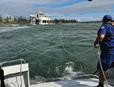
was successfully established. The weight of the cruiser was a concern but PM 30 carefully towed the vessel across the bar and guided it safely to the marina with PM 21 in support. “The thrust provided from the sole working engine on the cruiser certainly helped us navigate the path to safety,” Breskal said.
Unit Commander Greg Davies ESM said the operation demonstrated the professionalism and dedication that defines Marine Rescue Port Macquarie. “The team from the radio base and both rescue vessels did an extraordinary job that day,” he said. “If it hadn’t been for their quick thinking and calmness under pressure, we would almost certainly have seen lives lost.”
After three tense hours, the rescue concluded without injury or damage — a testament to the crew’s composure, skill, and teamwork. “Our volunteers are very highly trained and ready to respond to whatever situation arises,” Breskal said.
“That readiness comes from the ongoing support we receive from our local community, which ensures we can keep training and stay rescue-ready.”
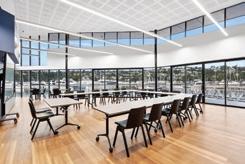


Marine Rescue Port Macquarie was commended following a harrowing rescue of a 15-metre motor cruiser on the Hastings River Bar.
Harbour
Danger
Broken Bay
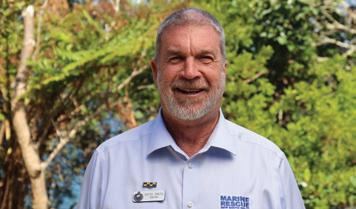
From Unit Commander to boardroom: Keith Smith steps into Northern Rivers leadership
Arespected operational leader with decades of maritime and corporate experience has joined the Board of Marine Rescue NSW, with former Marine Rescue Point Danger Unit Commander Keith Smith elected unopposed as Northern Rivers Regional Director.
Mr Smith fills the vacancy created by the departure of Darcy Henriksen, whose tenure drew praise from Marine Rescue NSW Chair Nola Watson.
“Darcy has brought commitment, professionalism and genuine care for his fellow volunteers to the Board throughout his six years as Regional Director,” Ms Watson said.
“He has made a remarkable contribution to Marine Rescue NSW and his 17 years of volunteer service at Marine Rescue Point Danger is testament to his dedication to community safety.
“On behalf of our 3,500 volunteers, I thank Darcy for his steadfast leadership and the significant legacy he leaves.”
In welcoming Mr Smith to the Board, Ms Watson said his appointment brings both operational insight and strategic capability to the organisation’s northern region.
“Keith brings extensive operational experience and a deep understanding of the needs of volunteers across the Northern Rivers,” she said.
“His decades of service, both in maritime search and rescue and in senior corporate roles, have equipped him with the insight and capability needed to support our units in a growing and dynamic
region. We look forward to the knowledge, energy and strategic perspective he will bring to the Board.”
Mr Smith’s association with marine search and rescue began in the early 1990s. He first volunteered as a radio operator and boat crew member with the Point Danger Air Sea Rescue Service before that organisation became Marine Rescue Point Danger. He later joined Marine Rescue NSW and has since undertaken a wide range of leadership, training and administrative responsibilities, including serving as Unit Commander and Training Officer.
Alongside his volunteer service, Mr Smith brings more than three decades of maritime and corporate leadership experience. His professional background includes serving as Managing Director of a national sales corporation and holding senior executive roles across the transport and logistics sector.
A member of the Institute of Community Directors Australia, Mr Smith said he was honoured to take on the role of Northern Rivers Regional Director.
“It’s a privilege to represent the dedicated volunteers of the Northern Rivers and I am committed to supporting them as they continue their vital work saving lives on the water.”
“I’m grateful for the trust placed in me and I’m excited to contribute to the ongoing development of Marine Rescue NSW. Together, we can strengthen our capability, support our volunteers and continue delivering an outstanding service to the boating community,” he said.
National Medal honours 15 years of service from Marine Rescue Tuross Moruya stalwart
Marine Rescue Tuross Moruya stalwart Blaise Madden has been recognised for 15 years of dedicated service with Marine Rescue NSW, receiving the prestigious National Medal.
The National Medal acknowledges long and diligent service by members of recognised government and voluntary organisations who risk their lives or safety to protect or assist the community in times of emergency or natural disaster.
Madden began volunteering with Marine Rescue NSW in June 2010 and all 15 years of his recognised service have been with the organisation. Over that time, he has become one of the most experienced and respected members of the Tuross Moruya unit.
A highly skilled seaman, Madden is a rated vessel Master and rescue watercraft (jet ski) operator. His extensive operational knowledge and calm leadership have played a vital role in ensuring the unit remains rescue-ready and capable of responding to emergencies on local waterways.
“Blaise is a valued and trusted member. The local community is privileged to have such a highly skilled and dedicated volunteer ready to assist them in their time of need...
”Throughout his service, Madden has twice served as Unit Commander, with his most recent tenure concluding mid-last year. His leadership has strengthened operational capability within the unit and fostered a strong culture of professionalism, training and teamwork.
Marine Rescue NSW Southern Zone Commander Mike Hammond said Madden’s contribution to the service and the local community cannot be overstated.
“Blaise is a valued and trusted member,” Zone Commander Hammond said.
“The local community is privileged to have such a highly skilled and dedicated volunteer ready to assist them in their time of need.
“Blaise is a very energetic and enthusiastic individual. He has trained and mentored numerous volunteers at the unit and continues to do so.
“Blaise is also a member of our State Operations Group, which assists the NSW Government response to weather emergencies. He is a fully endorsed flood rescue and support operator and has previously deployed to other parts of NSW to help communities in need.
“We congratulate Blaise on his diligent service,” Zone Commander Hammond said.
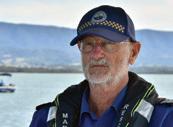
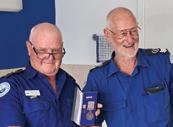
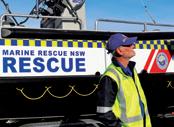
Blaise Madden began volunteering with Marine rescue NSW in June 2010.
Marine rescue Tuross Moruya Unit Commander Darren Nicholls presents Blaise with the National Medal.
Marine Rescue Tuross Moruya volunteer Blaise Madden.
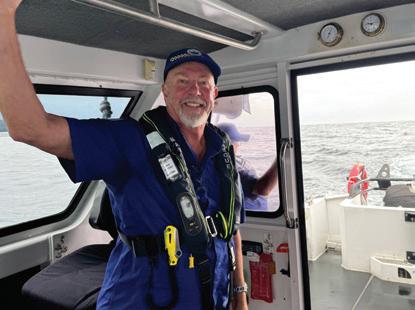
A volunteer’s rapid rise at Eden
When Dave Pruckner first moved to the NSW South Coast, he never imagined he would one day become a fully rated Marine Rescue NSW Coxswain, let alone achieve it in just two years and five months and with limited offshore boating knowledge and not a single shred of prior marine navigation experience. Yet with determination, discipline and an unwavering desire to help others, he has done exactly that. His accomplishment is not only remarkable on a personal level; it is a major boost to Marine Rescue Eden’s operational capability and, ultimately, to the safety of the local boating community.
Dave’s journey began after retiring from policing in 2017 and relocating to a small hobby farm in Bald Hills at the end of 2021. He and his partner, Helen, had spent years holidaying in Merimbula, where stand-up paddle-boarding trips past the Marine Rescue NSW vessels sparked the first quiet suggestions that the work might suit him.
“Every time Helen would say to me, ‘You know, I think that’s something you would really like to do. With your police background and helping people and love of the water, you would be great at it.’ So once I moved down here I did... and the rest, as they say, is history,” Dave recalled.
Marine Rescue NSW’s training standards are famously rigorous and many volunteers take years to progress through the ratings. Dave, however, attacked the challenge with real intent.
“He is a keen and motivated person,” Marine Rescue Eden Unit Commander Roger Barson said.
“Sometimes trainees struggle to get into the theory, but Dave just knuckled down and got it done.
“He completed his theory workbook in a week, which was extraordinary. Once he commits to something, he drives ahead and sees it through. Dave is an achiever.”
His learning approach was grounded in structure, something he found deeply appealing.
“What I have liked is the very structured approach to the learning environment. Everything is based on standard operating procedures and local operating procedures. I like that structured approach,” Dave said.
But mastering the responsibilities of a Coxswain proved to be the greatest challenge. “The level of responsibility required at the full Coxswain level far outweighs the difficulty of any other rating, so I’d have to say it was the most difficult.”
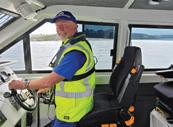
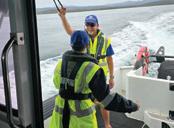
Along the way, Dave sought guidance from some of the most experienced volunteers on the Far South Coast. “I was pretty much a sponge,” he said with a laugh.
“I tried to take in as much information and knowledge as I could, which is why I sought out several mentors from our neighbouring units in Merimbula and Bermagui.”
Masters Stuart Dietrich and Rick Bettua, along with Bermagui Coxswain Volker Aebischer, all played a role in sharpening his skills.
He achieved four Marine Rescue NSW ratings in just two years and five months, an exceptionally rare pace. All the while, he was not only training but also teaching. As Training Officer at Marine Rescue Eden, he runs weekly volunteer training sessions, supporting others to progress just as he has.
“
” I tried to take in as much information and knowledge as I could, which is why I sought out several mentors from our neighbouring units in Merimbula and Bermagui...
“He is truly supportive of all our volunteers and wants to see them succeed and progress,” Unit Commander Barson said. “He is great with people. He is very giving of his time, not only to his fellow volunteers at the unit but also the boating community.”
Southern Zone Commander Mike Hammond sees the same determination. “Dave is one of those people who embody the saying, bite off more than you can chew and chew fast. He has really applied himself and Marine Rescue NSW is fortunate to have him.”
Marine Rescue NSW Inspector Glenn Sullivan agreed, describing Dave as “a real boost for the unit”, adding that his achievement “enhances the reach for Marine Rescue Eden and will also benefit NSW Water Police with our increased offshore capability”.
And that capability is already greater than ever. With Dave now rated as a Coxswain, he joins a Master and Coxswain-restricted already serving at Marine Rescue Eden, dramatically improving response times and offshore readiness.
“Having a Master and a full Coxswain at the unit enhances our rescue capability,” Unit Commander Barson said.
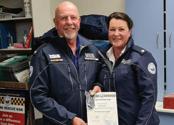
This is crucial in a region where the offshore area stretches from Eden to the Victorian border at Cape Howe. Until now, the unit’s primary skipper, Mark, had juggled rescue duties with running a full-time business. Dave’s qualification significantly strengthens the team’s ability to respond whenever needed.
Despite the rapid success, Dave remains modest and cautious about what comes next. When asked whether the Master rating is his next goal, he laughed. “I don’t think I want to go there just yet. I’ll need to let this settle in a bit and give myself some time to enhance my experience at the Coxswain level.”
For now, he is content doing what he loves: helping others, building capability and inspiring those around him. “I like to encourage people to learn more and have fun while they are doing it,” he said. “I am really enjoying what I am doing with Marine Rescue Eden. It is a great environment to operate in and with likeminded people, we’re all volunteers wanting to help others on the water,” he said.
Marine Rescue Eden now has just over 30 volunteers covering marine radio operations and on-water search and rescue. Zone Commander Hammond said the unit is actively recruiting to boost their response capability.
“Marine Rescue NSW provides full free training and Dave’s story is proof that with motivation, discipline and heart, extraordinary things are possible. His achievement is not just a personal milestone; it’s a win for every boater who relies on the dedication of volunteers like him,” Zone Commander Hammond said.
Dave is a fast and thorough learner.
Dave on the helm of the Eden unit’s vessel Xray 30.
Marine Rescue NSW Monaro Zone Training Manager Liv Ford presented Dave with his Radio Operator rating in Feburary 2025.
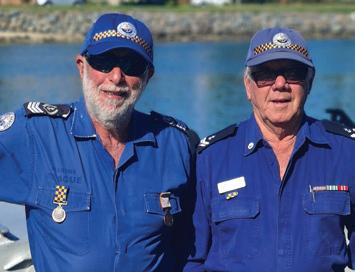
Friendship and service: Two skippers’ strong bond
By Jenny Smith, Marine Rescue Point Danger
For nearly 20 years, Jan Trueman and Gil Thomas have shared more than just the rescue boats and helm at Marine Rescue Point Danger — they’ve shared a bond forged through a common love of the sea, boating and the quiet understanding that comes from trusting the person beside you when seas turn foul, rescues are underway and the going gets tough.
Between them, these two skippers have led countless rescue missions, trained volunteers and contributed immeasurably to the spirit of Marine Rescue NSW at Point Danger.
Through their work on rescue vessels, they have helped bring countless boaters back to safety, giving their time, skill and dedication without hesitation. Their contribution goes far beyond what can be measured — it’s felt in every life they have helped, every call they have answered and every safe return to shore. That includes not only those they rescue, but also their dedicated crew and the wider boating community.
Their absolute goal is simple: everyone comes home.
Both Jan and Gil have received National Service Medals, formally recognising their outstanding service and commitment to emergency services, particularly Marine Rescue Point Danger.
Each has given more than 15 years of dedicated service, contributing countless hours to ensuring the safety of those on the water, including fulfilling roster commitments and training crew.
For Jan, that milestone is just the beginning — he is now approaching an extraordinary 20 years of service.
Both are yacht owners with thousands of nautical miles of blue-water cruising experience to complement their formal qualifications. It’s no wonder they are so trusted and highly valued.
Jan has built strong friendships over the years and his dedication is particularly remarkable. Five years ago, he relocated with his family to Bundaberg, yet continues to honour his responsibilities at Marine Rescue Point Danger. Each month, he undertakes a fivehour drive each way to fulfil his roster commitments as a skipper. Jan holds Master 5 qualifications and has also worked as a commercial skipper. Beyond his operational duties, he plays a vital role in mentoring others — teaching, training and assessing crew as they work towards their qualifications. He has always demonstrated a strong commitment to safety practices, both in training and on the water. It’s not just about standards — it’s a culture he fosters among his crew.
Jan and Gil share a wealth of knowledge with the unit.
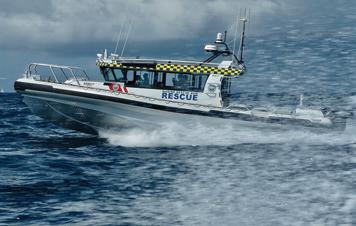
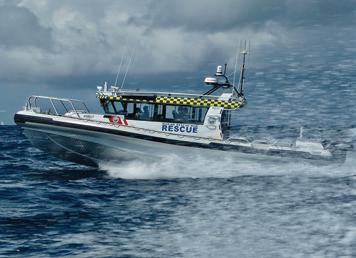
Having access to his vessel moored in Tweed Harbour, close to the boatshed, provides him with a place to stay during visits, making it easier to continue contributing to the team he values so highly.
Gil shares a similarly impressive record, with 15 years of service at Marine Rescue Point Danger. He joined as a trained coxswain and commercial skipper, bringing many years of boating experience. His steady leadership, reliability and commitment to training crew have earned him the respect of fellow volunteers. He is highly regarded for his seamanship skills and the depth of experience he brings to the team.
Over the past 15 to 20 years, both Jan and Gil have witnessed a clear shift in Marine Rescue NSW training. The standard of trainees has consistently exceeded expectations, with most going on to proudly join the team. Where traditional seamanship skills — such as chart work, radar use and practical navigation — once dominated training and were largely developed on the water, modern operations now rely heavily on advanced technology.
While this technology has improved safety and efficiency, it has also increased the time required to build technical competence. Both men see this as positive progress, but emphasise the importance of maintaining practical seamanship skills to ensure crews remain well-rounded, hands-on and prepared should technology fail. They are also highly supportive of the strong focus on Standard Operating Procedures and occupational health and safety systems, which reflect the high standards they have always upheld.
When reflecting on their legacy, Jan and Gil speak of friendship, teamwork, mentoring and the importance of passing on knowledge to the next generation — along with their enduring love of the
sea. They emphasise leading through experience, sharing not only successes but also lessons learned from past challenges in unpredictable conditions. These personal rescue stories form a valuable learning tool and an essential part of training.
With every rescue shaped by factors such as darkness, rain, tides, currents and ocean swell, these experiences help build confidence and strengthen crews. As the saying goes, smooth seas never made a skilled sailor — and nowhere is that truer than in the challenging conditions they have faced over the years.
They also highlight the positive impact of leadership within the unit, noting how it has brought members together through clear direction, encouragement, open communication and opportunities for collaboration. Importantly, they add that while the work is serious, there is also a strong sense of camaraderie, teamwork and enjoyment within the unit.
Volunteer skippers and crew at Marine Rescue Point Danger play a vital role in supporting the local boating community.
Jan and Gil have long been at the heart of that effort, offering their expertise, skill and support whenever it is needed. Whether responding to emergency call-outs, assisting stranded vessels or operating in challenging conditions, their calm presence and deep knowledge make a significant difference.
It is often said that the impact of people like these cannot be measured — and in their case, that could not be more true. Because of their commitment, the boating community is safer. While they never seek recognition, it is only fitting to take a moment to acknowledge and thank these two remarkable seamen for all they have given.
Jan enjoying a laugh with Marine Rescue Point Danger Unit Commander Aaron Ashley; Marine Rescue NSW Deputy Commissioner Darren Schott presented Jan with his National Medal; Jan and Gil on board PD 31.
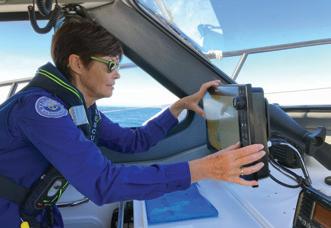
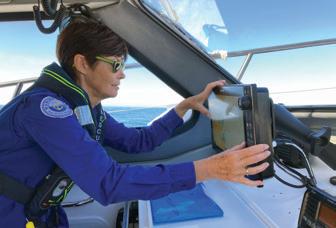
Global recognition for Marine Rescue NSW volunteers
Two Marine Rescue NSW volunteers have earned international recognition at the 2025 International Maritime Rescue Federation (IMRF) Awards, placing the Service firmly in the global spotlight for maritime search and rescue excellence.
The IMRF Awards celebrate achievement, innovation and leadership across the worldwide SAR community, honouring individuals and organisations who demonstrate outstanding operational skill, advance technology and capability, or inspire others through their service.
IMRF Chair Caroline Jupe said the awards highlight the diversity and professionalism of modern maritime rescue.
“From courageous individual rescues to technological breakthroughs and lifetime service, the winners represent the full spectrum of life-saving efforts at sea.
“I extend my heartfelt congratulations to this year’s winners and runners-up. Your dedication, hard work and innovation epitomise the very best of maritime search and rescue. I would also like to thank our judging panel for their careful consideration and commitment, which ensures these awards continue to reflect excellence and integrity within the maritime SAR community,” Jupe said.
Championing women in search and rescue
Monaro Regional Director and Marine Rescue Bermagui Coxswain Caron Parfitt ESM received the IMRF Women in Search and Rescue Award, recognising her leadership and longstanding commitment to advancing the role of women in maritime SAR.
As a Regional Director on the Marine Rescue NSW Board, Parfitt has championed international collaboration and professional development through the IMRF network. She played a pivotal role in the IMRF Women in SAR Training Course in Finland and was instrumental in planning the Sydney event, creating practical pathways for women to develop and progress in operational SAR roles.
Through strategic insight, operational expertise and mentorship, she has strengthened both the visibility and capability of women across the global maritime rescue community.
“I am humbled to receive this award,” Parfitt said. “I serve in maritime search and rescue not for awards but to save lives on the water, improve operational practices and mentor and encourage women in the field.”
A volunteer with Marine Rescue Bermagui for more than twelve years, Parfitt has completed numerous search and rescue missions and serves as a rated Watch Officer.
A lifetime of service recognised
Marine Rescue Middle Harbour 50-year stalwart Lance Miller ESM was named runner-up for the IMRF Lifetime Achievement in the Maritime SAR Sector Award.
The top honour went to Peter Dawes of the Royal National Lifeboat Institution (RNLI), with Miller recognised for his extraordinary and sustained contribution to maritime safety.
IMRF Women in SAR award winner Caron Parfitt ESM from Marine Rescue Bermagui.
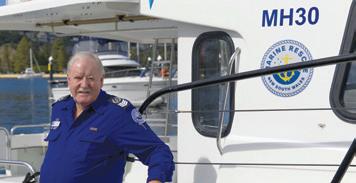
For decades, Miller has commuted from Penrith to serve at the Middle Harbour unit, exemplifying a remarkable and enduring commitment to community service.
Miller was awarded the Emergency Services Medal in the 2025 King’s Birthday Honours for outstanding service and commitment to boating safety. His dedication has now been acknowledged on the international stage.
With more than 50 years of continuous service at Marine Rescue Middle Harbour and previously with the Royal Volunteer Coastal Patrol, he has led countless complex rescue operations. He
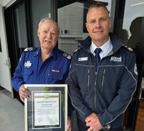
remains an active member and mentor to new recruits, continuing to shape the next generation of volunteers.
Marine Rescue NSW Commissioner Todd Andrews praised both recipients. “Caron and Lance’s dedication and commitment to serving boaters is appreciated not only by Marine Rescue NSW but by the wider community,” Commissioner Andrews said.
“They are both highly experienced in maritime search and rescue and generously share their knowledge within the Service and beyond. This honour is a testament to their exceptional contributions to public safety and emergency response.”





Lifetime Achievement in the Maritime SAR Sector Award runner up Lance Miller ESM from Marine Rescue Middle Harbour.
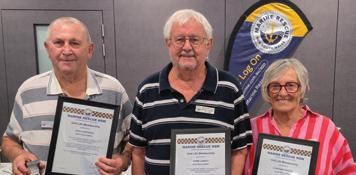
Ballina volunteers awarded highest unit honour for exceptional community service
Marine Rescue Ballina has celebrated the extraordinary service of three long-standing volunteers, with a combined 73 years’ service, awarding Life Membership to Lorraine Leuckel, Norm Lannoy and John Donoghue during a ceremony at the Ballina RSL.
Life Membership is one of the highest honours within Marine Rescue NSW, awarded only in exceptional circumstances to volunteers who have dedicated decades to protecting the boating community.
Marine Rescue Ballina Unit Commander Peter Hill said the three recipients had left an enduring legacy within the unit.
“Lorraine, Norm and John have devoted countless hours, immense skill and unwavering commitment to Marine Rescue NSW. Their service embodies the very best of our organisation and reflects a deep dedication to the safety and wellbeing of the Ballina community,” Unit Commander Hill said.
“Each of them has contributed in remarkable and meaningful ways over many years. Their leadership, professionalism and community spirit set a powerful example for every volunteer.
“Ballina is privileged to have three volunteers of such calibre. Their work has strengthened our unit, supported local boaters for decades and helped save countless lives on the water.”
Unit Commander Hill said the Life Membership awards were a proud moment for the unit and its 85 volunteers.
“Every one of our volunteers plays a crucial role in serving the community. Today we honour Lorraine, Norm and John, but their achievements also reflect the wider spirit of teamwork that defines Marine Rescue Ballina.”
Marine Rescue Ballina Life Membership recipients LORRAINE LEUCKEL
With 21 years of service, Lorraine Leuckel has made a lasting contribution since joining as a Radio Operator in 2004. Over two decades, she has taken on significant training and leadership roles, serving as First Aid Trainer for 15 years, Trainer and Assessor (Cert IV) for 12 years and Invigilator for radio qualifications for seven years. Lorraine also spent five years on Boat Crew, including serving on Ballina’s first all-female crew and contributed as Membership Officer for six years. She later served as Deputy Unit Commander during the transition to the new tower between 2016 and 2018. Lorraine remains a respected mentor and a valued leader within the unit.
NORM LANNOY
Norm Lannoy’s service began in 1998 when he joined the Coast Guard after completing rescue boat theory training at TAFE. Starting as a Radio Operator, he progressed through operational roles, becoming Competent Crew in 2003, Advanced Crew - Quartermaster in 2004 and a Coxswain in 2005. Norm went on to serve as the final Coast Guard Unit Commander in Ballina and the first Marine Rescue NSW Unit Commander. He completed the theory for his Master Class 5 in 2017 and served as Training Officer and Assessor from 2017 to August 2025. Norm continues to contribute as a Radio Operator and is widely regarded for his leadership, skill and long-standing dedication.
JOHN DONOGHUE
John Donoghue joined the Coast Guard, North Coast Squadron in 1999 and quickly became involved in planning for the new Ballina Control Tower, which was completed in 2016. Throughout his service, he has played a crucial role in regional safety, acting as Squadron Safety Officer for Yamba, Evans Head, Ballina, Byron Bay and Kingscliff, delivering Fire and Water Safety training across the region and writing refuelling Standard Operating Procedures. At Ballina, he has served as a Radio Operator, Unit Commander for three years, Safety Officer for evacuation procedures and for the past five years, Maintenance Officer.
Marine Rescue Ballina Life Members (L to R) John Donoghue, Norm Lannoy and Lorraine Leuckel.
At the helm: Kim makes history at Sussex Inlet
By Garry Sims, Marine Rescue Sussex Inlet PR Officer
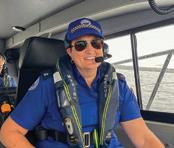
The first thing you notice about Kim Vernon is not her rank, but her commitment. Recently qualified as a Coxswain (Restricted), Kim is Marine Rescue Sussex Inlet’s newest skipper — and its first female to take the helm — yet she carries the role with calm confidence rather than fanfare.
Kim’s path to skippering has been built on service. Since joining Marine Rescue NSW, she has achieved ratings as Crew, Radio Operator and Rescue Watercraft Operator and now serves as the unit’s Training Officer. Over the past 18 months, she has coordinated the training and assessment of dozens of fellow volunteers, quietly strengthening the unit from within.
Her connection to the sea began long before she ever wore a uniform. As an eight-year-old holidaying at Sussex Inlet, Kim would watch rescue boats heading out, hearing adults speculate that “someone must be in trouble”. Even then, she remembers thinking: I could do that.
Years later, after careers in nursing and teaching, Kim returned to the South Coast seeking community. Encouraged by a relative already volunteering with Marine Rescue NSW, she signed on — unsure what to expect, but ready to help. She quickly found her place, progressing through her ratings with the support of fellow skippers who saw her potential.
Training for the coxswain’s role was demanding. While she was always comfortable around boats, Kim worked hard to develop a strong, authoritative voice on deck — clear, calm and decisive.
Drawing on her professional experience, she adopted a simple approach when pressure mounted: stop, think, act.
As skipper, she values input from her crew, but understands that responsibility ultimately rests with her.
That teamwork has proven vital. Last summer alone, the unit responded to overturned vessels, people in the water, a boat fire and an EPIRB (emergency position indicating radio becon activation from a sinking vessel.
“Marine Rescue Sussex Inlet is powered by an incredible group of highly skilled volunteers,” Kim said. “Training, preparation and teamwork can mean the difference between success and tragedy.”
Marine Rescue Sussex Inlet experienced record demand in 2025, with volunteers completing 71 search and rescue missions across the year.
As Training Officer, Kim brings empathy and honesty to the role, having completed each rating herself. She focuses on capability — identifying skill gaps, encouraging development and ensuring the unit is ready to respond when the call comes.
Kim never set out to be a female skipper. Her goal was simply to be a good one. She hopes her journey shows others what is possible with dedication, balance and encouragement — whether their aim is Crew, Radio Operator or Skipper.
Unit Commander Brett Eurell describes Kim as “an inspiration to the entire unit”, praising not only her operational skills but her tireless commitment to others.
From a child watching rescue boats from a caravan park to a skipper guiding crews on the water, Kim Vernon’s journey reflects what Marine Rescue Sussex Inlet is built on: service, teamwork and the quiet confidence to step forward when it matters most.
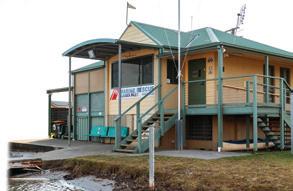
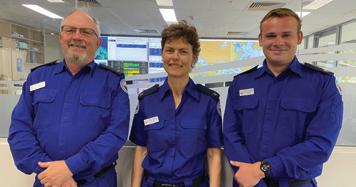
Pitching in for Marine Rescue Sydney
as featured in Pittwater Life by Lisa Offord
When Louise Craighill saw a sign reading “Marine Rescue NSW, Volunteers – Saving Lives on the Water”, something clicked.
“I’d been thinking about volunteering for a while,” she said. “I walked past that sign and thought maybe that’s something I could do.”
Initially drawn to joining a boat crew at Middle Harbour, Louise soon discovered another vital role – working in the State Communications Centre at Belrose, where volunteers monitor marine traffic along the NSW coast, respond to distress and incident calls and coordinate services for general assistance and emergencies.
Keen to learn a new skill, the finance professional contacted Marine Rescue Sydney and began training as a Radio Operator.
The ocean has always been part of Louise’s life. Her father served in the British Merchant Navy and she grew up visiting his ships.
“There’s something about the sea that runs in my blood,” she says. “I’m a swimmer, my husband’s a surf skier – we’re always around the water.”
She said the radio operator course was comprehensive, engaging and well-supported, blending theory, written work and practical assessments... and completely different to anything she has done before. Louise qualified within six months – a process that can take up to a year. “I was lucky to be thrown in the deep end on busy weekend watches, which helped me build my hours and confidence quickly.
“No two watches are ever the same. There’s always something happening. I love being that calm voice when someone’s in trouble, sending help and knowing we got someone home safely.”
The role has also brought unexpected experiences. “I’ve met incredible people from all walks of life,” Louise said. “I’ve even had the chance to visit PolAir and Marine Area Command to see how everything connects. It’s been hugely rewarding.”
After more than three decades as an academic – most recently a psychology lecturer at Newcastle University – Bill Budd found himself unexpectedly redundant in his late 50s. His lifelong interest in sailing and a desire to learn something new led him to Marine Rescue Sydney and the Radio Operator course.
Marine Rescue Sydney volunteers Bill Budd, Louise Craighill and Joshua Fletcher.
Bill describes the training as “thorough, practical and professionally managed, with a real emphasis on learning by doing”, covering radio protocols, navigation, maritime law and emergency coordination with other agencies including the Water Police, Careflight and Surf Rescue.
What impressed him most was the people. “Marine Rescue NSW attracts an incredible mix – engineers, pilots, business leaders, retirees, students,” he says. “Everyone brings different skills, but all are altruistic and genuinely care about the people around them. That shared motivation to serve creates a rich team environment.”
Bill completes at least one five-hour watch weekly at The State Communication Centre. “There’s strong support at every level – essential when you’re dealing with people who are in need of assistance and are frightened or panicking,” he said.
For Joshua Fletcher, 23, from Cromer, volunteering with Marine Rescue Sydney is about community as much as service.
“When I was young I would go out on yachts with my dad,” he says. “So I knew how important it was for people to volunteer with Marine Rescue NSW.”
Joshua is part of the Community Engagement and Fundraising Team, representing Marine Rescue at events such as the Beach2Beach fun run, NRL matches and the Bunnings Belrose sausage sizzles.
“I love being out in the community and talking to people,” he says. “I’m proud to wear the uniform and share what Marine Rescue NSW does to keep people safe.”
A full-time carer for his grandmother and a community services student, Joshua said volunteering with Marine Rescue Sydney has been transformative. “I’ve made amazing friends – my team feels like a second family. And I’ve picked up great communication and customer service skills.”
His advice for new volunteers is simple: “Think about the time you have available.”
The radio room and boat crews need people who can commit to consistent hours, but there are also plenty of other roles in marketing, fundraising and administration.
“I contribute one or two days a month – there’s something for everyone,” Joshua said.

Your berth on Sydney Harbour. Apply Now
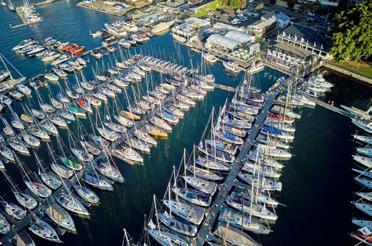
PERMANENT
Marina Berths
A permanent berth at the CYCA is more than a place to keep your yacht safe.
It’s a front-row seat to great sailing, a world-class club, a community of sailors, and everything you need to get on the water, right at your fingertips.
VISITOR
Casual Berths
Visiting Sydney by sea? The CYCA offers casual berthing in Sydney Harbour for visiting vessels, subject to availability.
Our full facilities access and competitive casual rates, makes us one of the most sought-after Marinas in Sydney Harbour.
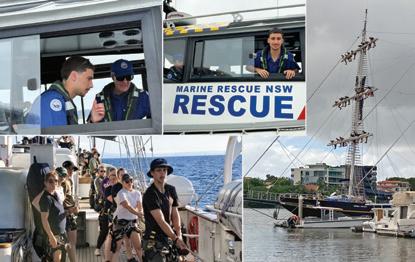
In Conversation with Locke Englund –One of Marine Rescue NSW’s rising stars
As featured in Marine Business News
It’s fair to say that many people hold a traditional image of who makes up the volunteer crews that keep our waterways safe, perhaps imagining seasoned mariners, long-time residents or retirees with a lifetime of boating experience. But that perception is rapidly changing.
Today, a new generation of Australians is stepping up to serve, proving that volunteering with Marine Rescue NSW is not just for the older generation, it’s for anyone with passion, purpose, and a desire to make a difference.
Across the state, young people are embracing the call to volunteer, learning vital skills, building lifelong friendships and contributing to one of the most respected emergency services organisations in New South Wales.
From radio communications to offshore rescue operations, they are gaining confidence, leadership and technical expertise, and most importantly, a sense of belonging to something bigger than themselves.
Marine Rescue NSW’s commitment to inclusivity and community engagement has created an environment where youth volunteers are not just welcomed, they are encouraged, mentored and valued as the leaders of the future.
Marine Rescue NSW proudly counts 49 volunteers under the age of 20 among its ranks, demonstrating the growing enthusiasm
of young people to serve their communities on the water. The organisation welcomes volunteers from the age of 16, with applications requiring consent from a parent or guardian. Each unit also follows additional measures in line with Marine Rescue NSW’s Child Safety and Wellbeing Policy to ensure a safe and supportive environment for all young members.
“Marine Rescue NSW’s commitment to inclusivity and community engagement has created an environment where youth volunteers are not just welcomed, they are encouraged, mentored and valued as the leaders of the future...
The organisation recognises that its long-term success lies in the hands of these emerging young leaders.
One such rising star is Locke Englund, a 17-year-old volunteer from Marine Rescue Terrigal.
Since joining in May 2024, Locke has immersed himself in training, teamwork and community service, working alongside his parents, Donna and Michelle and his twin brother Jack.
Having recently earned his crew rating and transitioning from school into an electrical apprenticeship, and last year completing an unforgettable voyage aboard the Young Endeavour, sailing from Sydney to Brisbane, Locke is an inspiring example of what youthful enthusiasm and dedication can bring to the organisation.
In this interview, Marine Business News sits down with Locke to learn about his journey with Marine Rescue NSW, what drives him and what message he has for other young Australians who may be considering joining the service.
What first inspired you to volunteer with Marine Rescue NSW and how did you hear about the organisation?
I heard about the organisation through my step-mum Donna and seeing what she was learning inspired me to join. After first meeting some of the other members, they were welcoming and friendly and encouraged me to sign up.
Can you tell us a bit about your journey so far — what roles or activities you’ve been involved in at Marine Rescue Terrigal?
I recently earned my crew rating. I’ve completed my radio course, first aid, sea survival and others. I get to work with skilled and experienced skippers who supervise me in operating the vessel. It’s a very supportive training environment.
What do you enjoy most about being part of the team and what’s the most rewarding part of the role for you?
Working and learning with each other, building trust and rapport with everyone in your watch. It’s also a great feeling to be part of a volunteer organisation that is giving back to our local communities.
You were volunteering while still at school and also undertaking the Duke of Edinburgh Award. How did you balance it all?
I’ve had a lot of support from my parents and from the rest of the team at Marine Rescue Terrigal. Shaun Smith (UC), Darren Wright (DUC), Adrian Nicholas (TO) and Steve Corbett (White Watch Cox) have been my anchors of support at the base.
How has volunteering with Marine Rescue NSW shaped your confidence and skills, both personally and professionally?
Having mentors around encourages me to be safe when on the water for example, logging on and off every trip, checking equipment and especially wearing lifejackets. It gave me the confidence to apply for the Young Endeavour program, which turned into a life-changing experience, also giving me the confidence to get in and have a go.
How did sailing on the Young Endeavour connect with your work as a volunteer?
On the Young Endeavour’s journey from Sydney to Brisbane, the crew elected me to be the captain/skipper for what we call Command Day. I’m sure this was due to the boating experience I’ve gained from Marine Rescue Terrigal. I would not have been able to have these experiences unless I’d heard about them as a volunteer with Marine Rescue Terrigal. One of our Coxswain’s Paul Barrie was the one who mentioned the Young Endeavour program to me and I am so glad he did.
Marine Rescue NSW has a growing number of young members like yourself. How do you feel supported and included by the senior volunteers and leaders around you?
Our watch team and other members within the unit have made it really easy to feel like part of the team and to belong. They were all happy because I lowered the average age of our membership! My twin brother has also decided to join. We also have other young members such as Ethan Pope and Rachael de Courcy in the unit. The senior members have always made us feel welcome, taking their time to teach us and provide as many opportunities as possible.
What do you think younger people can bring to Marine Rescue NSW and why is it important for youth to get involved?
Enthusiasm and questions, along with different perspectives or approaches. We also bring energy and an eagerness to learn and share our experiences.
Marine Rescue NSW offers really good mentors, training and learning opportunities and knowing that you are part of something bigger than yourself.
What advice would you give to other young people who might be thinking about volunteering but aren’t sure if it’s for them?
Come and have a go! There’s no harm in trying something new and there are many different roles to get involved with.
Looking ahead, how do you see your role with Marine Rescue evolving and what does being part of this organisation mean to you personally?
I hope to assist with mentoring and supporting our future trainees. People still can’t believe that we volunteer our own time to help the public in such an important role of keeping people safe on the water. To me personally, Marine Rescue NSW has given me confidence and skills in the boating environment and it gives me the chance to help others.
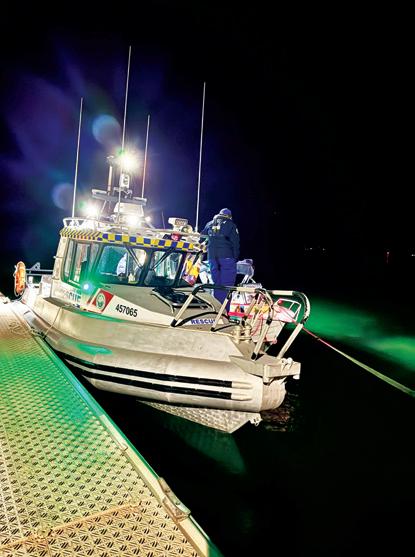
The nchorage
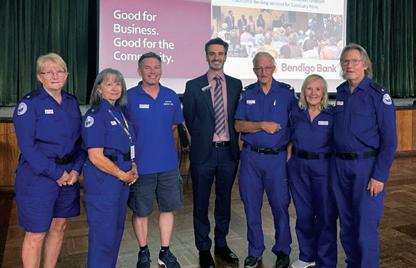
Bendigo Bank backs Marine Rescue Jervis Bay
Boaters across the Bay and Basin are benefiting from a significant show of local support, after Marine Rescue Jervis Bay secured a $75,000 grant from Bendigo Bank Community Bank Sanctuary Point and Districts.
The funding, to be delivered evenly over three years, bolsters the unit’s operational capability and eases financial pressure on its volunteer crews as they continue to respond to incidents across the region’s busy waterways.
Deputy Unit Commander Brad Kilpatrick said the grant directly strengthens frontline response and preparedness.
“The generosity of Bendigo Bank Community Bank Sanctuary Point and Districts enhances our capability and response, providing boaters in the area with greater assurance that, if they need assistance on the water, our crews will be there to rescue them at any time of the day or night,” Kilpatrick said.
The funding supports the ongoing maintenance and servicing of the unit’s two rescue vessels, Jervis Bay 41 and Jervis Bay 20, both of which require multiple services each year. It will also help meet fuel costs for the rescue boats and the unit’s two rescue watercraft stationed at Huskisson.
“Some funds have also been allocated for training, so the 90-plus volunteers at Marine Rescue Jervis Bay can continue
honing their skills and remain rescue-ready,” Deputy Unit Commander Kilpatrick said.
Branch Manager James Marin said the volunteers play a vital role in keeping the region’s waterways safe for both residents and the steady stream of visitors who flock to Jervis Bay throughout the year.
“Bendigo Bank’s Community Model sees our customers help change lives, and save lives, through their banking,” Mr Marin said.
“We are different, with 80 per cent of all our branch profits going back into our local Bay and Basin community. Our customers’ home loans are building skate and sport facilities, hospital wings and classrooms. Personal loans, business banking and credit cards are funding ambulances, rescue boats and disabled and aged-care facilities,” he said.
Marine Rescue Jervis Bay completed a demanding 2025/26 boating season with volunteers performing 77 search and rescue missions and safely returning 171 people to shore.
“Our skilled volunteers certainly put their training to the test every time they respond to a call for assistance,” Kilpatrick said.
“This support from Bendigo Bank Sanctuary Point reduces the financial pressure on the Unit, allowing our volunteers to focus on saving lives on the water.”
Bendigo Bank Community Bank Sanctuary Point and Districts Branch Manager, James Marin (centre) with Marine Rescue Jervis Bay volunteers.
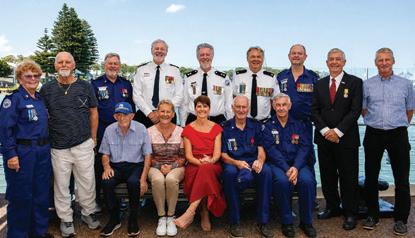
Purpose over comfort: The volunteers who answer the call
Marine Rescue Port Stephens reflects on the storm that tested them all
You hear it before you see it. The crackle of a weak transmission. The strain in a skipper’s voice. And the breath taken — steady, deliberate — before someone answers, “This is Marine Rescue Port Stephens, go ahead”.
Those sounds capture the essence of Marine Rescue NSW more clearly than any photograph or medal ever could.
The intensity is real; you can hear that instinctive fight to keep control when the sea is taking it away.
Ten years on, the volunteers who responded to vessels affected by the East Coast Low of 6–7 January 2016 were acknowledged at a moving commemorative breakfast. For event host Matt Coleborne, the actions of those who answered the call that night continue to define the very fabric of Marine Rescue Port Stephens.
“The storm still echoes — not as a single moment in time, but as a reminder of who Marine Rescue NSW volunteers are when comfort disappears and purpose remains.”
That storm forced decisions few people will ever face. Winds gusted to 80 knots. Combined seas built to six to eight metres. Five mayday calls filled the airwaves from ocean-racing yachts battling for survival. One sailor was tragically lost overboard from Amante. The sea was not merely rough — it was hostile, unforgiving and entirely in control.
Marine Rescue Port Stephens was already on the water when the emergency unfolded. Their 52-foot rescue vessel, Port Stephens 40, had completed a tow earlier that day before being tasked once again into rapidly deteriorating conditions. What followed was more than ten hours of relentless effort — monstrous seas, physical exhaustion and constant risk — ending only when Amante was escorted back towards safety.
“The
storm still echoes — not as a single moment in time, but as a reminder of who Marine Rescue NSW volunteers are when comfort disappears and purpose remains...
For most people, that would have been enough. For Marine Rescue Port Stephens volunteers, it wasn’t over.
Early in the evening, another call came. Yacht M3 was disabled and being driven dangerously close to the Seal Rocks coastline. Port Stephens 40 left the dock again, pushing north into brutal darkness. Just after midnight, as preparations were being made to take M3 under tow, the situation escalated dramatically.
Port Stephens Mayor Leah Anderson and Member for Port Stephens Kate Washington (Centre) attended the commemorative breakfast along with members involved with the emergency response.
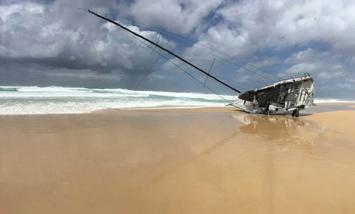
At 12:35am, the radio room heard words no rescuer ever wants to hear: M3 was abandoning ship.
Moments later, confirmation was sought from Port Stephens 40 The reply was chilling. The rescue vessel itself had been struck hard by heavy seas, knocked down, crew injured, control uncertain. In response, the Port Stephens base issued a Mayday relay — not for those being rescued, but for the rescuers themselves.
“We have a rescue vessel in danger and it needs assistance.”
It was one of the most confronting realities of that night: the line between rescuer and victim had blurred. Flares were sighted from M3 on the beach. One engine on Port Stephens 40 was lost, the remaining engine overheating. Assistance for M3 could no longer continue. Marine Area Command dispatched further vessels and helicopters as the operation expanded into a multi-agency response.
Everyone was tested.
More than 20 Marine Rescue volunteers were later recognised for bravery and service following the East Coast Low. Among them was Laurie Nolan, whose courage was acknowledged at the highest levels, including the Marine Rescue NSW Medal for Valour and the Australian Star of Courage.
But as Coleborne reflected, that recognition tells only part of the story. “His service has been recognised at the highest levels,” he said. “But ask him what matters most, and he’ll tell you something different — being made a Unit Life Member of Marine Rescue Port Stephens. Because that reflects the kind of person he is. The one who shows up, year after year... and when it counts most.”
With more than 9,500 operational hours across 16 years of service, Nolan embodies a truth every volunteer understands: the real legacy of rescue work is not a ribbon or citation — it is reliability.
“This kind of service isn’t about medals or headlines,” Coleborne said. “It’s choosing purpose over comfort — together. It’s standing shoulder to shoulder with a simple promise: when someone calls for help, we answer.”
“
It’s giving your heart. Your courage.
Your sleep. Your weekends. Even your favourite fishing days. You do it for people you may never meet again... but whose lives may be forever changed by your service...
”
That promise is not confined to a single storm or a single unit. The events surrounding the East Coast Low in January 2016 may belong to Port Stephens, but the spirit behind them runs through every Marine Rescue NSW unit — from radio rooms and training nights to maintenance days spent quietly preparing vessels for emergencies no one hopes will come.
“Volunteering is often described as giving your time,” Coleborne said. “Anyone who’s ever worn a blue uniform knows that’s not quite how it works.”
“It’s giving your heart. Your courage. Your sleep. Your weekends. Even your fishing days. You do it for people you may never meet again... but whose lives may be forever changed by your service.”
Behind the mission statement — Volunteers Saving Lives On the Water — lies everything that rarely makes the spotlight: cold hours on the water, long nights listening to radios, endless training and the calm resolve to respond when fear and uncertainty are at their peak.
And it is never just the crew on the throttles.
Watch officers, radio operators, trainers, mechanics, fundraisers and support teams all share the same responsibility. Often unseen. Always essential. They are the reason vessels leave the dock ready — and return home safely.
“From all of us who go to sea now,” Coleborne said in characteristically quiet gratitude, “thank you to those who built what we inherit — for getting us off the dock and sending us out, with a boat that gets us home.”
For many, the waters off New South Wales are a place of leisure. For Marine Rescue NSW volunteers, they are a place of purpose — and, occasionally, a place where the sea reminds everyone who is truly in charge.
Ten years on from the East Coast Low, the promise remains unchanged. Not for recognition. Not for comfort. But for the simple, human commitment at the heart of Marine Rescue NSW.
When someone calls for help, they answer.
Now retired RNLI-designed Arun-class lifeboat PS40 Danial Thain; Abandoned yacht M3 washed up on Treachery Beach, NSW.
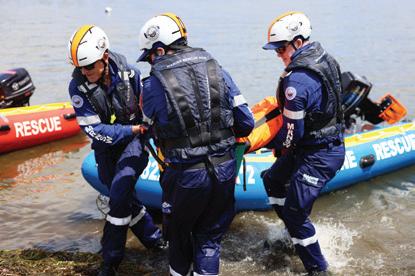
Marine Rescue NSW volunteers shine at inaugural Australasian Rescue Boat Challenge
When a six-person team from Marine Rescue NSW travelled to Penrith Whitewater Stadium in Western Sydney for the inaugural 2025 Australasian Rescue Boat Challenge, they entered a field still relatively new to the Service: high-intensity, competitive flood rescue operations conducted alongside multiple emergency agencies. By the end of the two-day event, the volunteers had secured three on-water awards, including second place overall as part of a multi-agency team, while demonstrating the adaptability of the Service’s evolving State Operations Group (SOG) in supporting the NSW Government’s response to severe weather emergencies.
The challenge brought together eight agencies from New South Wales, Queensland and Malaysia. Teams competed in dedicated and hybrid multi-agency crews using similarly sized inflatable rescue boats (IRBs). Many competitors were full-time personnel who operate IRBs regularly. In contrast, the Marine Rescue NSW contingent were volunteers, highly trained, but more accustomed to offshore search and rescue than floodwater obstacle courses.
The Marine Rescue NSW State Operations Group was represented by volunteers from Middle Harbour, Shoalhaven, Cottage Point and
Hawkesbury. Middle Harbour members Deputy Unit Commander Glen Lighton, Scott Porter and Simon Fennen were joined by Bronte Wilkinson (Cottage Point), Michael Roseworn (Hawkesbury) and Mark Schwegler (Shoalhaven).
Marine Rescue NSW Capability Manager Dave Bowing said the Service’s participation reflected a deliberate effort to strengthen flood rescue capability. “It was a wonderful opportunity to test our skills and training at the event. We also provided a member in the multi-agency team for the In-Water Challenge, their role being that of the downstream land-based operator,” he said.
Friday comprised a number of professional development sessions covering rescue equipment and techniques ahead of Saturday’s assessed challenges.
“The professional development sessions were of great benefit to those who undertook the assessed challenges,” Bowing said.
“Eight agencies competed in either dedicated or hybrid multiagency teams. Marine Rescue NSW used its two smaller 3.8-metre foldable two-stroke SOG boats, one for the Marine Rescue NSW team and one for the joint VRA/Marine Rescue NSW team.”
Middle Harbour volunteers Scott Porter, Simon Fennen and Deputy Unit Commander Glen Lighton put up a strong showing.
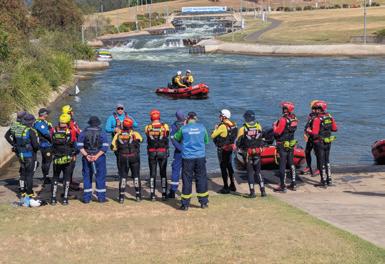
Marine Rescue NSW fielded a crew made up of Middle Harbour volunteers, two multi-agency boat teams and a multi-agency in-water team. The results exceeded expectations. As part of a combined team with Surf Life Saving NSW, Marine Rescue NSW secured second place overall, with Hawkesbury volunteer Michael Roseworn among those recognised. Shoalhaven’s Mark Schwegler received both the Spirit of the Challenge Award and The President’s Commendation as part of a VRA/Marine Rescue NSW multi-agency team.
“Marine Rescue NSW was represented across a number of teams with amazing efforts from all participants. The outcomes exceeded all expectations, with placings earned and achievements the agency should be extremely proud of,” Bowing said.
He emphasised that the awards told only part of the story.
“The results alone don’t reflect the efforts of all participants, who were competing against full-time agencies from across NSW, Queensland and Malaysia, some of whom use IRBs almost every day. Many lessons were identified and great experience was gained.”
Bowing said the teamwork displayed throughout the challenge was particularly impressive. “The Marine Rescue NSW representatives showed incredible spirit. I witnessed immense enthusiasm as the final stages of the challenge were run, with our competitors giving each task their absolute best.
“Marine Rescue NSW representatives showed incredible spirit. I witnessed immense enthusiasm as the final stages of the challenge were run, with our competitors giving each task their absolute best...
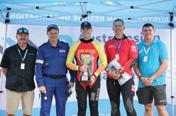
”“Watching internal and inter-agency teamwork develop across communication, problem-solving and decision-making was impressive. While not every task was one our SOG members had encountered before, each highlighted the importance of working collaboratively and efficiently to deal with life-threatening situations that may arise during a flood rescue deployment.”
For Mark Schwegler, a crew member, radio operator and SOG volunteer who joined Marine Rescue Shoalhaven in 2021, the experience was demanding and rewarding.
“The rescue boat challenge was an incredible event. It was certainly very challenging and tested me, but that’s what I enjoy, putting my learnings and skills into practice, albeit in a controlled but competitive environment,” he said.
“It was a really enjoyable couple of days. The camaraderie and spirit amongst all competitors was consistent throughout the event.”
The Australasian Rescue Boat Challenge required crews to navigate obstacles including rescues from trapped vehicles and drains, and manoeuvring through simulated floodwaters, scenarios distinct from traditional offshore search and rescue.
Such environments reflect the expanding role of Marine Rescue NSW’s State Operations Group, which is deployable across the state when required.
Marine Rescue Shoalhaven’s Mark Schwegler retrieves a target during the challenge.
Hawkesbury’s Michael Roseworn (second from left) placed second overall as part of the combined team.
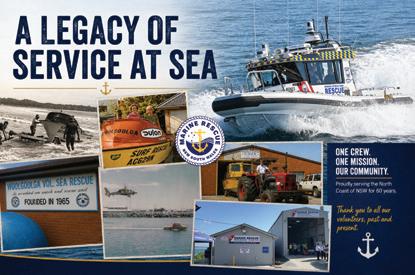
Sixty years of saving lives: Marine Rescue Woolgoolga celebrates a remarkable milestone
Marine Rescue Woolgoolga celebrated a remarkable milestone last December, marking 60 years of dedicated service to the Mid North Coast community. The festivities were held at the Woolgoolga Surf Life Saving Club, drawing more than 60 current and past members, as well as guests who came to honour the unit’s enduring legacy.
As one of the oldest volunteer marine rescue units in New South Wales, Woolgoolga has had 20 Presidents and Unit Commanders steer its operations over the past six decades. Five of those leaders were present for the anniversary celebrations — John Murray ESM, Kevin Johnson, Tony Skalla, Mitch Harvey and the current Unit Commander, Taylor Marshall.
At just 25 years of age, Marshall is the second-youngest Unit Commander in the unit’s history, exemplifying the fresh energy and commitment that continue to define Marine Rescue Woolgoolga. Mitch Harvey remains the youngest, having taken on the role in 2019 at just 22.
“The strength of our unit lies in the dedication of our volunteers, past and present,” said Marshall.
“The men and women who came before us laid the groundwork with immense passion and selflessness.
“Seeing so many former members here celebrating, sharing their stories and memories, really brings home the incredible legacy we are part of.
“Celebrating 60 years is not just about marking a date on a calendar, it’s about honouring everyone who has devoted their time, often in challenging conditions, to keep others safe. The sense of pride and community in the room was absolutely heartwarming,” Unit Commander Marshall said.
The unit’s origins stretch back to 1965, when local fishermen Ross Burton, John Small, Jack Brooks and Bill Prior established a volunteer rescue service in Woolgoolga. Using their own fishing vessels, they conducted rescues and training exercises, laying the foundations for a service that would grow in size and capability over the following decades.
The first purpose-built base was erected at the Woolgoolga boat ramp in 1991, constructed by volunteers using donated materials under the leadership of then-President Len Simpson.
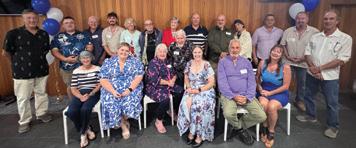
The unit steadily expanded its fleet, acquiring its first legitimate rescue vessel in the early 1970s and later commissioning commercially built craft to enhance operational capacity. Woolgoolga became part of Marine Rescue NSW during the state-wide consolidation of volunteer rescue services in 2009–2010, bringing the benefits of standardised training and state support while retaining its strong local identity.
In December 2018, after 53 years at Woolgoolga, the unit relocated to a new $1.3 million base on the western side of Arrawarra Headland. Overlooking the waters of Arrawarra Bay, the facility, developed from the former University of New England Marine Science
“The men and women who came before us laid the groundwork with immense passion and selflessness. Seeing so many former members here celebrating, sharing their stories and memories, really brings home the incredible legacy we are part of...
”Station, features state-of-the-art marine radio communications, training facilities, boat and tractor storage and a workshop. It also allows for safer launch and retrieval of Woolgoolga 30, the unit’s flagship rescue vessel, in all tidal conditions.
“Marine Rescue Woolgoolga has a proud tradition of protecting those at sea and supporting our community,” said Marine Rescue NSW DeputyCommissioner Dan Duemmer. “The celebration was a wonderful tribute to the extraordinary dedication of those who served before and the volunteers who continue that work today. The laughter, the stories, the camaraderie, it was a real joy to witness.
“Seeing so many former and current volunteers together, reflecting on six decades of service, reminds us why this organisation exists. Their courage, commitment and generosity have saved lives and inspired countless others. It was an evening full of pride, memories and genuine warmth,” DeputyCommissioner Duemmer said.
The unit’s fleet continues to evolve, most recently with the commissioning of the 9.5-metre Naiad Hamilton jet boat Woolgoolga 30, named the Tamieka Lee. Delivered in August 2023, the vessel was later awarded the Baird Maritime Best SAR RHIB, acknowledging the unit’s operational excellence. Woolgoolga volunteers regularly
undertake search-and-rescue missions, medical evacuations, welfare checks and offshore assistance, demonstrating their readiness to respond in challenging conditions at any time of day or night. Notable operations include a 2016 medical evacuation from an 85-foot motor cruiser on the Clarence River Bar and a 2025 medivac from a trawler after launching the rescue vessel from the beach during heavy seas.
The anniversary also highlighted the unit’s progressive culture. In 2025, Woolgoolga achieved the first all-female executive team in the history of Marine Rescue NSW, reflecting its commitment to inclusivity and community engagement.

Looking back over six decades, the spirit of the founding fishermen lives on. Ross Burton’s granddaughter, Emily, has followed in their footsteps and is now a rated vessel crew member, a fullcircle moment that illustrates the enduring legacy of volunteerism in Woolgoolga.
“It’s an honour to lead this unit, but more than that, it’s a privilege to stand alongside a team that continues to uphold the standards set by those who came before us. Their dedication inspires every decision we make, every rescue we carry out,” Marshall said.
From a small group of fishermen using their own boats to a modern, highly capable unit equipped with a cutting-edge vessel and facilities, Marine Rescue Woolgoolga has remained steadfast in its mission: protecting lives, promoting safety on the water and serving its community with unwavering dedication.
The 60th anniversary was not only a celebration of the past but a testament to the bright future ahead for this remarkable unit.
Past and present volunteers of Marine Rescue Woolgoolga mark 60 years of service dedicated to saving lives on the water.
Marine Rescue Woolgoolga’s all-female executive (L to R)Susan Nielsen-Robson, Taylor Marshall, Lisa Mobbs, Cherrill Powell and Dolly Clarke.
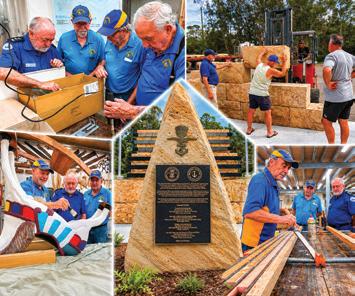
Stronger together: Gosford volunteers supporting volunteers
By David Wicks
Volunteer and not-for-profit organisations are the backbone of a successful community. When groups work together to assist one another, it creates a warmth and respect often overlooked in big business.
Recently, members of Gosford Men’s Shed assisted Marine Rescue Brisbane Water with several projects. These included servicing the unit’s standby generator and building a trailer trolley to help manoeuvre bulky items around the base.
The Men’s Shed also took a lead role in creating a memorial commemorating past members of the Point Clare base, including refurbishing the memorial anchor and steel bands for the memorial nameplates that adorn the two-metre-high sandstone structure.
Community groups helping one another make the community much stronger, according to Gosford Men’s Shed President Larry Lloyd.
“A few years ago, all the Men’s Sheds on the Coast started to work together on safety issues to make each unit more secure and
stronger and from that, we’ve openly supported other community groups from the Peninsula to Lake Haven,” said Larry.
Most members are adept at creating wooden toys for various organisations, including Narara and Kariong Fire Brigades and the group is very proud to have provided Gosford Hospital with more than 1,000 handcrafted toys during 2025. They also actively support Elsie’s Retreat, the palliative care unit at the local hospital and the Cancer Day Care Clinic.
Marine Rescue Brisbane Water Unit Commander Ian Morrow praised the camaraderie between the various community volunteer groups on the Coast.
“It’s wonderful to have the benefit of all the volunteer organisations throughout the region,” he said.
“Our thanks to Gosford Men’s Shed for the work they do and for the experience and quality workmanship they apply to the projects they undertake.”
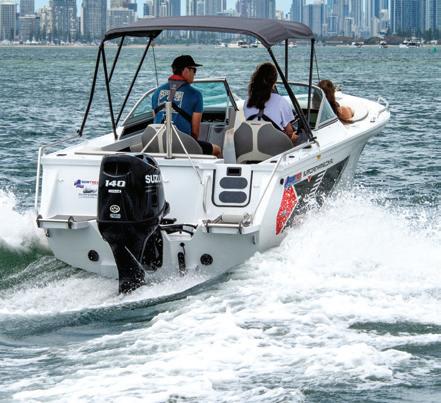
GEN III
The Ultimate 115HP & 140HP Outboard Motor Range now fitted wi t h the S uzuki Micro-Plastic Collecting Device.
Suzuki’s third generation 115hp & 140hp outboard motors boast more torque, quicker acceleration, and improved top speed thanks to revising the cylinder head and piston design and increasing the compression ratio to 10.6:1. The new cowling and semi-direct air intake greatly reduce intake noise resulting in quieter operation. Suzuki’s Micro-Plastic Collecting Device (MPC) is part of Suzuki’s Clean Ocean Project initiative, which collects micro-plastic without any effect on performance when boating. The third generation 115hp & 140hp are available in both Suzuki Precision Control (Drive-by-wire) and mechanical-drive variants and backed by Suzuki’s 3+3-year recreational warranty.


Heroes forever
William ‘Bill’ Ewen & Frank Petsch
Two volunteers who tragically lost their lives on 4 May 2026 during a rescue mission in Ballina They made the ultimate sacrifice while serving the community