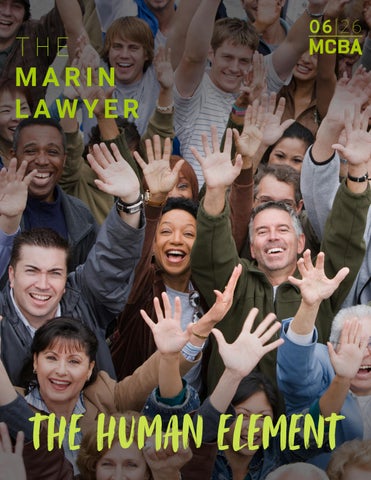
the human element



Lead Editor: Paul Burglin
Creative Director: Aariel Nigam
2026 Officers
President: Thomas M. McInerney
President-Elect: Neusha N. Ghaedi
Treasurer: Robyn B Christo
Secretary: Nestor Schnasse
Past President: Kristine Fowler Cirby
5 Year Past President: Thomas S Brown
Board of Directors
2026
Ingrid L Carbone
Marisa R Chaves
Christine O'Hanlon
Roni D. Pomerantz
Marrianne S. Taleghani
2027
Sarah B Anker
Paul Burglin
Emily Harrington
R. Wesley Pratt
Adrea S. Tencer
2028
Cole A Benbow
Laura E McMahon
Brett K. Rhodes
Dennis E. Simmons
Nicole L. Tiger
Interim Executive Director
Kerry Enright
Membership & Events Manager
Denise Belli
Client Relations Chair
David M Zeff

The Marin Lawyer is published by The Marin County Bar Association 101 Lucas Valley Road, Suite 326 San Rafael, CA 94903 (415) 499-1314 info@marinbar org marinbar org
4 | Editor’s Introduction
MARIN COUNTY BAR ASSOCIATION
5 | 2026 President’s Message
THOMAS M. MCINERNEY
8 | Attorney-Client Fee Disputes: Practical Tips to Avoid Them
DENNIS E. SIMMONS
12 | Family & Children’s Law Center: Forty Years of Safety, Stability, and Access to Justice in Marin
MARISA R. CHAVES
16 | MCBA Hosts State Assembly Candidate Forum
NESTOR SCHNASSE
21 | The Challenges Presented With Marin’s Electronic Filing and Case Search Systems
PAUL BURGLIN
24 | Embracing the Responsible Use of AI in the Legal Profession
NESTOR SCHNASSE
31 | Some Tips on How to Help the Alcoholic or Addicted Client
PAUL BURGLIN
This month’s issue of The Marin Lawyer reflects a legal community doing what it does best: confronting difficult questions directly, serving the public, and looking for practical ways to improve the profession.
We begin with President Tom McInerney’s message, which urges lawyers not to retreat from the ongoing work of protecting civil rights, dignity, and the rule of law. That theme of service continues in Marisa Chaves’ feature on the Family & Children’s Law Center, an organization that has spent forty years helping Marin families, children, survivors of domestic violence, caregivers, and immigrant youth access legal help when it matters most.

Several articles in this issue focus on the day-today responsibilities of practice. Dennis Simmons offers practical guidance on avoiding attorneyclient fee disputes, emphasizing what experience teaches plainly: transparency, communication, and prompt billing prevent many problems before they start Paul Burglin examines Marin’s electronic filing and case search systems, explaining why local practice can still be more complicated than it should be. He also contributes a thoughtful piece on how attorneys and judges can speak constructively with clients struggling with alcohol or addiction.
This issue also recaps two MCBA programs Nestor Schnasse reports on the State Assembly candidate forum, where members had the chance to hear directly from candidates on transportation, wildfire preparedness, housing, and local control. He also summarizes MCBA’s program on the responsible use of artificial intelligence in the legal profession, a topic that is no longer theoretical. AI now affects legal research, drafting, discovery, client counseling, confidentiality, privilege, law firm training, and the expectations clients bring to outside counsel.
Taken together, these pieces show a profession in motion. The legal landscape is changing quickly, but the core obligations remain familiar: competence, judgment, service, fairness, and care for the people who depend on us. We hope this issue gives members useful information, a few practical tools, and a reminder of the many ways Marin lawyers continue to contribute to the community.

Thomas M. McInerney
The recent passing of two well-known and respected Marin lawyers long-time Marin Superior Court Judge Faye D’Opal and local attorney/mediator and 2024 MCBA President Scott Buell—has perhaps contributed to my feeling greater melancholy than I normally feel during my chronic periods of Trump presidency distress and anxiety. However, despite everything happening around us, I feel that our entire community, myself included, needs to keep moving ahead, one step at a time.
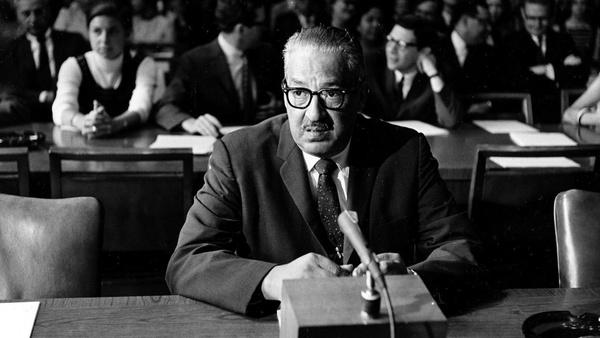
In May 1954, the U.S. Supreme Court issued its ruling in Brown v. Board of Education, striking down segregation in public schools. In the wee hours after that great victory, to this day the greatest civil rights decision in our nation’s history, Thurgood Marshall, spoke to the NAACP Legal Defense Fund staff and cautioned, “I don’t know about you fools, but I’m getting back to work.”
Justice Marshall, an African-American born at the dawn of Jim Crow, who lived through segregation and saw the worst of its oppression, including lynchings and gross inequities in housing, education, employment, and public accommodations, understood that our victories in defense of civil rights and civil liberties are only temporary. That inevitably, due to the human condition, there is backsliding and backlash. Indeed, just a year later, in 1955, the Supreme Court’s Brown 2 decision was a huge setback to Marshall and this struggle.
Frederick Douglass, our nation s greatest civil rights prophet, that “If there is no struggle, there
is no progress. ” Douglass’s words speak to us even today, when he reminds us that “those who profess to favor freedom, and yet depreciate agitation, are men who want crops without plowing up the ground. They want rain without thunder and lightning. They want the ocean without the awful roar of its many waters.” And, “Power concedes nothing without a demand. It never did and it never will.”
We are at a time and a place, in 2026 in Marin County, California, where we all must stand to account to ourselves and to continue together this struggle for human rights and dignity. Yes, this struggle is exhausting and seemingly endless. But we’ve been here before, fighting against racism and hate at several different moments in our history.
By mentioning this history, I don’t intend to diminish the awfulness of the moment we’re in. But our history reminds us that without this ongoing struggle, there can be no victory. And for there to be victory, each of us needs to join in this struggle.
There are countless other ways to contribute as well. For some, volunteering with Marin County Superior Court, either as a pro tem small claims judge or discovery referee, or coaching high school moot court teams, is a great way to give back. There are countless other ways to
contribute to help those less fortunate in our community, including with the organizations listed on the Resources page at marinbar.org, including Legal Aid of Marin. Taking on pro bono legal services on behalf of the most vulnerable is a wonderful opportunity to stand up for righteousness.
For others, it’s supporting those who share your values, or it might be to run for office yourself, at whatever level, and advocating for diversity, equity, and inclusion for our fellow man. Others may choose to organize online or to take to the streets, or to stiffen the spines of our leaders, to stand up for the rights of our constituency the immigrants, the poor, and communities of color. For us lawyers, it may be as easy as engaging in daily acts of kindness, such as treating your colleagues and opposing counsel with respect and honor. What better way to stand up against hatred, racism, and division than by exhibiting love, compassion, and respect?
I realize that some of these actions may not sound like much in isolation, especially when
compared to the measure of the task in front of us. But as another of our civil rights prophets, Robert Kennedy, reminds us still today, that each time someone “stands up for an ideal, or acts to improve the lot of others, or strikes out against injustice, he sends forth a tiny ripple of hope,” which “build[s] a current which can sweep down the mightiest walls of oppression and resistance.”
Tom McInerney
Thomas (Tom) McInerney has extensive employment litigation experience in complex litigation matters, with an emphasis on class actions, multi-plaintiff cases, and trade secret and other complex business disputes. He has tried to verdict several cases in both state and federal courts, and represents clients in a
wide-range of fields, including technology, financial services, insurance construction energy/utility healthcare transportation

Dennis E. Simmons
During my thirty-seven years of practice as a litigator and mediator, I served as a Fee Dispute Arbitrator for over twenty years for the San Francisco Bar Association. During that time, I decided approximately 50 cases that typically involved disgruntled clients seeking legal and financial recourse for real or perceived wrongs committed by their attorneys. Several of these hearings devolved into contentious name-calling and screaming. Fortunately, I was usually able to return order to the conference room and proceed with some level of decorum. What always bothered me was how the relationship between the attorney and client had deteriorated to this level. What had happened to create this animosity?
The obvious answer was a breakdown in communication. But why did this occur? I learned that there are several things an attorney should –and should not – do to avoid the prospect of sitting across a conference room table from your former client while introducing a stack of billing records into evidence.
California's Business and Professions Code outlines the framework for fee arbitrations between attorneys and clients. Under California Business and Professions Code § 6200, arbitration is mandatory for attorneys if initiated by a client. This means that if a client disputes fees, the attorney must participate in arbitration unless there is a written agreement stating otherwise. Conversely, arbitration is voluntary for clients unless they have agreed in writing to arbitrate all disputes concerning fees. This ensures that clients have the option to choose whether to engage in arbitration or not. Mediation is voluntary for an attorney and client. Your goal, however, should be to avoid ever reaching the point that you need to arbitrate or mediate a fee dispute! Not only is it expensive, but the time you spend preparing for an
arbitration and personally attending the hearing takes time away from other matters requiring your attention. So, what should you do?
The first thing a fee dispute arbitrator will determine is whether the parties have a valid fee agreement. Typically, if the answer is “no” , the arbitrator will determine the value of the attorney’s services on a quantum meruit basis.
The California Business & Professions Code sets forth specific requirements for fee agreements between attorneys and clients. There are four primary types of fee agreements: contingency, hourly, flat, and hybrid. A “contingency fee” is contingent on the outcome of the legal matter for which services are rendered. This means that the attorney's payment is dependent on winning the case or achieving a favorable settlement for the client. A contingency agreement might, for example, involve representation in a personal injury claim where the ultimate recovery (if any) is unknown at the commencement of the attorney-client relationship. Hourly representation is the most common agreement whereby the attorney charges in increments (e.g.,
1/10 hour) for legal services performed. A “flat” fee is defined as a fixed amount that constitutes complete payment for specified legal services, regardless of the amount of time ultimately involved. Hybrid agreements typically include a fixed fee and contingent component. The State Bar of California website provides sample written fee agreements to guide attorneys in compliance with these regulations.
The Business & Professions Code and Rules of Professional Responsibility contain numerous requirements that all attorneys should know and follow, and failure to comply can result in the invalidation of what you might think is a valid fee agreement. Some of the basic provisions are:
Attorneys may not charge a contingency fee agreement in a family law case or for representing a defendant in a criminal case
Section 6147 requires that all contingency fee agreements be in writing
Section 6148 mandates that any contract for legal services exceeding $1,000 must be in writing
Attorneys must provide a clear breakdown of fees, including the rate and basis for calculation
An attorney may not charge “unconscionable” fees, ensuring fairness in billing
As attorneys, you should periodically review your “standard” fee agreements to make sure that they comply with the numerous requirements promulgated by the State Bar and the Business & Professions Code. The agreement is voidable at the client’s election if your agreement is not in compliance.
Once your client has been presented with your fee agreement, do not simply obtain the necessary signatures and then place the agreement at the back of your file. Consider the
agreement to be a communication tool and review it carefully with your client. This should be done in person, if possible.
To many clients, an agreement is replete with “legalese” they may not understand. Your job is to help your client understand it. Explain your billing structure to the client. Will associate attorneys and paralegals be assigned to the case? If so, review the billing rates contained in the agreement. Explain why different rates are used. If the case may require experts, explain why. If you anticipate medical liens in a personal injury case, explain how the liens will impact the amount that the client ultimately recovers. Is the attorney’s contingency fee calculated from the gross settlement or after the liens are deducted? Similarly, are the attorney’s case costs deducted from the gross settlement before or after the attorney’s contingency share is determined? This is a common area of confusion for clients At the initial client meeting, I typically sketch it out on a piece of paper, which I give to my client, the math demonstrating how fees, liens, and costs are calculated.
Of course, in contingency matters, there is always the possibility that there will be no recovery whatsoever. In that case, is the client required to reimburse you for advanced costs? If your client loses the litigation, is your client subject to paying attorney fees and/or costs to the other side? Talk to your client about these issues – and listen carefully. You may need to revise the fee agreement to accurately reflect the understanding of these issues.
In reviewing the fee agreement with your client, you should be careful not to make promises or representations that are outside the terms of the agreement. It never hurts to write a brief memo to the file that you reviewed the agreement with your client and the general substance of your discussion.
Use your monthly billing statements to enhance communication with your client. The more specific the billing entry, the better! Contrast these billing entries:
1.Confer with John Anderson (0.8 HRS)
2.Conference with traffic expert John Anderson concerning his inspection of the accident scene and issues relating to accident reconstruction (0.8 HRS).
Which one do you think will generate questions?
In one case I adjudicated, the client had provided a $25,000 retainer. The law firm sent the client monthly bills for the first three months of litigation but then stopped. The client did not receive any billing statements or status reports for over six months and was told by the partner’s paralegal in response to several telephone messages during the six months that “everything was proceeding as planned”. The client then received a bill for work performed during the preceding six months and was billed over $15,000 in addition to the initial retainer. Needless to say, the client was upset.
Most attorneys do not maintain time records in contingency cases. It should be clear that if your firm does not maintain time records, this can pose a problem in establishing your right to compensation on a quantum meruit basis. At a minimum, I encourage you to send your client
periodic statements detailing case costs (whether paid through a cost retainer or not). Also, you should keep your client advised regarding liens that may be asserted by third parties.
If you maintain a professional and cordial relationship with your client, you have substantially decreased the possibility of a fee dispute. You may also consider these helpful hints:
Avoid arguing with your client
If your client expresses dissatisfaction with the bill, be willing to compromise Don’t multitask when speaking with your client
Promptly send billing statements
Don’t make promises that you can’t keep regarding the outcome or length of the case
Speak in ways your client can understand The fee agreement should carefully define the scope of legal services to be performed Confer with your client from time to time to explain tactics and unexpected roadblocks.
A Happy Client is the Best Client
Transparency. Communication. No surprises. These are words to keep in mind in your dealings with your clients. They want to know what they are paying for and how they are being charged. It is critical that the client’s telephone calls and messages be promptly returned, and that the attorney spends time during the life of the case educating the client about the process, progress, and anticipated outcome. And be sure to bill in a prompt and timely manner!

Dennis E Simmons is a director of the Marin Bar Association, and he is the owner of Simmons Law and Mediation, a San Rafael firm that focuses on personal injury and contract litigation He also is active in the Bay Area as a mediator and arbitrator www simmons-lawfirm com
One or two private offices available, furnished or unfurnished, in a professional four-office suite in Rafael Town Center. The downtown building with north-facing views is ideal for attorneys, accountants or other professional service providers. The suite contains a small conference room, reception area, kitchen, and use of a storage room. Other building amenities includes garage parking. Price dependent on space leased; negotiable terms. Please call 650-245-7515 or email lawassist999@outlook.com. See office photos here.

Marisa R. Chaves
For four decades, the Family & Children’s Law Center has been one of Marin County’s most important access-to-justice organizations, providing affordable legal assistance to families, children, survivors of domestic violence, caregivers, and immigrant youth facing some of the most consequential legal matters of their lives.
Founded in 1985, the organization began as the Family Law Center and later became the Family & Children’s Law Center (“FACLC”) in 2003, reflecting its expanded commitment to children as well as families in crisis. Today, FACLC provides low-cost legal services in domestic violence protection, child custody and support, family law, guardianship, and Special Immigrant Juvenile Status matters.
In conversations with board member Marc Schreiber and longtime employee and former client Shawna Hoch, one theme came through clearly: FACLC is not merely a legal services provider. It is a place where Marin residents in crisis can find a safe space, an advocate, and the reassurance that they do not have to face the legal system alone.
Marc, who joined the board after helping FACLC modernize its operations and technology, described an organization with a long history and an urgent present. “Demand is still really high for our services,” Marc said, regarding the continuing need for FACLC in the Marin community. Although the organization is in a period of transition, including the search for a new executive director and the rebuilding of a broader pro bono program, Marc emphasized that FACLC is moving forward. The doors are open, the need is significant, and the organization is actively seeking attorneys, board members, and volunteers who can help strengthen its next chapter.
The services FACLC provides are both practical and deeply personal. For parents and spouses, FACLC assists with child custody and visitation, child and spousal support, divorce and separation, and parentage matters. For survivors and families facing immediate safety concerns, the organization helps clients seek domestic violence restraining orders, civil harassment prevention orders, and emergency court orders. For caregivers and children, FACLC assists with probate guardianships, stepparent adoptions, and Special Immigrant Juvenile Status-related matters for undocumented children who have been abused, neglected, or abandoned by a parent.
That work matters because the gap between needing legal help and being able to afford it remains enormous. FACLC’s model is designed to meet families where they are. The organization offers consultations and ongoing services on an income-based sliding scale, with initial attorney appointments listed at $0 to $50 depending on income and additional appointments ranging from $0 to $300. FACLC also assists clients with

organization as a client in need of support related to domestic violence and child support She did not have substantial resources, but she had urgent legal needs. FACLC helped her get the support she needed. A few years later, she learned of an opportunity to work for the organization, and she has now been part of FACLC since 2000. After many years in a fulltime role, she now serves part-time as administrative director, handling bookkeeping, human resources, and operations while also working for the San Rafael City Schools.
For Shawna, the work is personal. She knows the fear and confusion that can come with walking into a legal system that feels inaccessible, especially for clients who are immigrants, survivors, parents, or caregivers trying to protect children. She has watched Marin County change over the years, becoming more diverse and more complex, and she sees how many families come to FACLC with legal needs that are often intertwined with immigration concerns, poverty, language barriers, trauma, or fear of institutions.
What makes FACLC different, Shawna explained, is representation. Other resources may provide information or self-help, but FACLC can provide direct legal services and court advocacy in domestic violence and family law matters. Having someone show up in court with a client, explain the process, speak on the client’s behalf, and help the client understand what is happening can be transformative. It creates a more equitable path through a system that can otherwise feel overwhelming.
“Every client we are able to serve is leaving their situation better than when they walked through the doors,” Shawna said. For her, being part of that impact is a privilege.
FACLC and the MCBA Welcomes Pilar Espinosa FACLC’s bilingual capacity is central to its mission. The organization’s website notes that services are available in English and Spanish FACLC’s newest staff attorney, Pilar Espinosa, will further expand that reach.
Ms. Espinosa brings an extraordinary combination of legal expertise, courtroom experience, and deep cultural and linguistic competency to the organization. In addition to practicing law, she is also a California Certified Court Interpreter. Her background includes a Juris Doctor from the University of Buenos Aires, with a specialization in international law, and an LL.M. from UC Berkeley School of Law with a certificate in Public Law and Regulation.
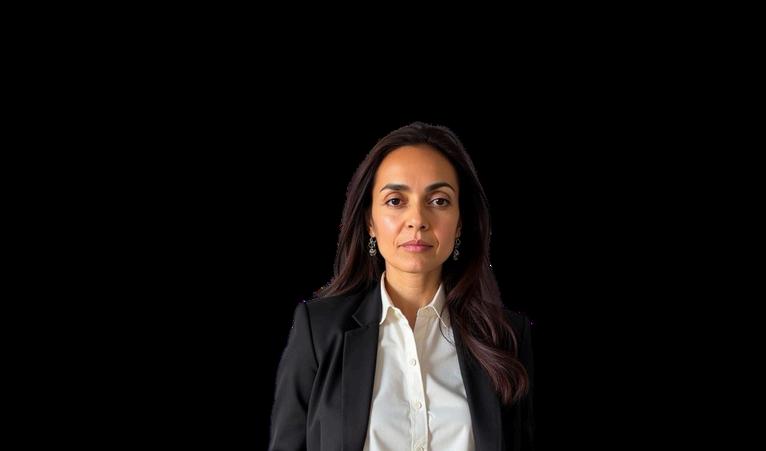
Pilar has interpreted and worked in San Francisco and San Mateo Superior Courts, serving families in Juvenile, Family, Probate, Criminal, and Traffic proceedings. She has also worked extensively in immigration law and family-related matters, including child support and dissolution cases.
Her path from international legal education to certified court interpreter to California attorney gives her a rare and holistic understanding of the justice system. As a native Spanish and English speaker, Pilar will play a vital role in expanding FACLC’s ability to serve Marin County’s diverse families with accessibility, compassion, and cultural sensitivity.
FACLC’s needs are significant. Marc and Shawna both described the organization as rebuilding its infrastructure for long-term sustainability. That includes recruiting an executive director, growing a more robust pro bono program, welcoming volunteer attorneys, and adding board members with the skills and commitment to help guide the organization. FACLC’s website notes that it is seeking board members with experience in fundraising, accounting, or marketing and communications.
For members of the Marin County Bar Association, this is a meaningful opportunity to serve. FACLC welcomes law students, attorneys, paralegals, legal professionals, and community volunteers. Attorneys can assist with representation, court appearances, legal filings, and pro bono matters; paralegals and legal professionals can help with filings, case management, intake, and document preparation; and non-lawyer volunteers can support administrative and client-service needs. FACLC’s mission is especially important in a county often perceived as affluent, but where many families still live with acute financial insecurity and
limited access to legal representation. The organization’s donation page states that 95% of its clients rely on public assistance, and that donations help provide legal consultations, restraining order assistance, and court representation for vulnerable children. FACLC is a 501(c)(3) nonprofit, and contributions are taxdeductible to the extent allowed by law.
Those who wish to support FACLC can donate through the organization’s donation page or directly through its online donation portal. Attorneys and community members interested in volunteering may review FACLC’s volunteer page and contact Shawna Hoch at shoch@faclc.org.
For 40 years, the Family & Children’s Law Center has helped Marin families find safety, stability, and a way forward. But FACLC cannot do this work alone. Its continued success depends on the support of Marin’s legal community: attorneys willing to take pro bono matters, lawyers and professionals willing to serve on the board, volunteers willing to help rebuild and expand the organization’s capacity, and donors willing to invest in access to justice. With that support, FACLC can continue ensuring that Marin County’s most vulnerable families are not left to navigate the legal system by themselves.
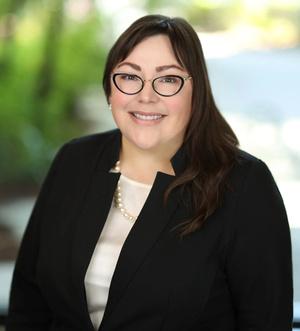
Marisa Chaves has spent the majority of her more than 20-year career in litigation, practicing civil litigation before transitioning to family law. She now specializes in highnet-worth divorce at Hanson Crawford Crum Family Law Group, LLP, where she represents venture capitalists, hedge fund managers, private equity partners, CEOs and other C-suite executives, startup founders, and stay-at-home parents Originally from Texas, Marisa earned her undergraduate degree from the University of Texas at Austin and her law degree from Boston University School of Law. She is actively involved in the legal community, serving on the boards of the Marin County Bar Association, Association of Latino Marin Attorneys, and the San Francisco La Raza Lawyers Association
The Lawyers in the Library community service program is a collaboration between the Marin County Law Library and the Marin County Bar Association. Lawyers in the Library offers free 20-minute consultations with an attorney for individuals who cannot afford private legal services

The program meetings take place via Zoom. Please sign up for a time to help today.
Thank you for supporting this important community service program.

THIRSTY THURSDAY
Thursday, August 6th 5:00 PM-6:30 PM
General Membership Social Gaspare's Pizzeria Ristorante, San Rafael
MCBA ANNUAL
END-OF-SUMMER PICNIC
Sunday, September 13th 11:30 AM-3:00 PM
General Membership Social Piper Park, Larkspur
STRATEGIES FOR WINNING APPEALS
Tuesday, September 15th 12:00 PM-1:00 PM Litigation Section Meeting Virtual
SCOTUS UPDATE: WHAT HAPPENED AND WHAT TO EXPECT IN THE NEXT TERM
Tuesday, September 29th 12:00 PM-1:15 PM
General Membership Meeting Virtual
Nestor Schnasse
A Recap of the MCBA April General Membership Meeting
MCBA General Membership Meeting | April 22, 2026 | San Rafael Joe’s, San Rafael
The Marin County Bar Association (MCBA) welcomed all six candidates for the California State Assembly to its April General Membership Meeting, held over lunch at San Rafael Joe’s in downtown San Rafael. The forum also drew a strong turnout of MCBA members, who had a rare opportunity to hear directly from the candidates campaigning to represent District 12 in Sacramento.
The in-person format was a welcome change for those of us suffering Zoom fatigue. Many lingered long after, a reminder of the vibrance our meetings have when we meet face-to-face and the value those opportunities provide for our members. It was obvious that, for those who did attend, the event was informative and socially fulfilling.
Lawrence Strick moderated the forum, guiding the candidates through questions on local, regional and statewide issues facing the district. All six candidates were invited to participate. All but Eryn Cervantes were able to attend. The Committee made a point of providing each candidate equal time on each topic, allowing attendees to compare their backgrounds, experience, and approaches side by side. Each was asked to make a brief introduction to open. The candidates (in alphabetical order) are:
Eli Beckman - Councilmember, Corte Madera
A two-term Mayor of Corte Madera, Mr. Beckman has served more than seven years in local government and chairs the North Bay
Division of CalCities. He is the founder and CEO of HAUS+, a Bay Area provider of prefabricated backyard homes, and serves on the board of MCE Clean Energy.
Ms. Cervantes was unable to join us, but information from her campaign website is helpful and in the interest of equal time, I will include a summary. She is a California native, with a degree in criminal justice, earning her JD in 2022. She works as a correctional counselor at San Quentin with a specialty in crisis and hostage negotiations. She is running for the Assembly on a platform informed by her work inside California’s criminal justice system since 1999.
Ms. Elward, a former Mayor of Rohnert Park and the first Black woman elected to that Council, is an educator at the French immersion school in the Santa Rosa City Schools District, and a labor organizer with the California School Employees Association. She has served on the Sonoma County Transportation Authority, Sonoma Climate Protection Authority, and Sonoma Clean Power board.



Eric Lucan - Marin County Supervisor, District 5
Supervisor Lucan was elected to the Marin County Board of Supervisors in 2022 after three terms on the Novato City Council. He serves as Board Chair of the Transportation Authority of Marin, as a board member of SMART, and as a Marin First 5 Commissioner. In addition to his public service, he worked in the private sector until his election in 2022 as Chief Marketing Officer for Mike’s Bikes.
Schwartz - Non-Profit Executive, Organic Farmer, and Advocate
Mr. Schwartz has a background in non-profit leadership, sustainable agriculture, and educat advocacy. He was immersed in Sacramento politics in the 1990s, when he served as Chief Staff for two State Assembly Members who represented the North Coast. More recently, he founded California FarmLink and Interfaith Food. His professional work has focused on family farmers, climate-resilient communities, and public schools.
positions in real time. Strick kept the conversation moving and ensured that each candidate had a fair opportunity to respond on every topic.
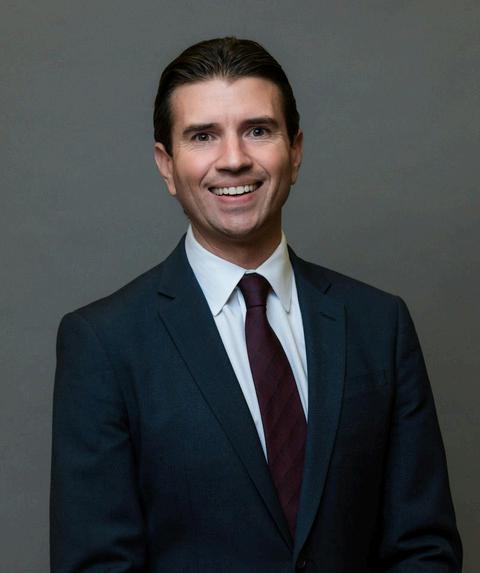

tions, the forum started roversial questions, hether or not they uch as Measure B’s extension of a .25 cent sales tax to continue funding the SMART system, or permitting commercial sales of cannabis for recreational use. Overall, the candidates were fairly consistent in their support for both, with Eric Lucan expressing some reservations about retail dispensaries where delivery options provide access.
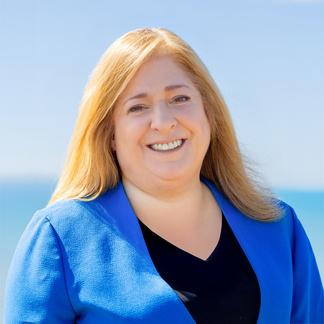
Ms. Thier is a former Mayor of Tiburon, a civil rights and environmental attorney, a past President of the League of Women Voters, and the founder of the non-profit Voting Counts. She has served on several political boards, including the Harvey Milk LGBTQ Club, the National Women’s Political Caucus, and the Democratic Women’s Forum. She currently serves as Chair of the Diversity Inclusion Task Force, a Director for Marin Clean Energy, on the Joint Disaster Advisory Council, and as Chair of the Sierra Club Marin Group.
Having the candidates together in one room provided an invaluable opportunity for side-byside comparison. Attendees were able to weigh experience, temperament, and substantive
Moving into more nuanced and challenging topics, the panel was asked to address transportation. Thier highlighted the link between transportation and housing, affordable housing in particular, which raises issues of equity and fairness in her view. Lucan came at the issue from the perspective of transit policy, cautioning against a ‘build more lanes’ approach and favoring multimodal solutions, encouraging active transportation options and taking a comprehensive look at major capital projects like the reconstruction of key segments of State Route 37. Schwartz discussed the importance of linking SMART to last-mile solutions, also looking at transportation through an equity lens, a public resource to be funded through the budget process. Elward focused on the most vulnerable
segments of the community who depend on public transportation, encouraging everyone to support Measure B. Eli Beckman added a slightly different view on the topic, preferring to avoid a war-on-cars approach by looking forward to emerging technologies like autonomous vehicles, encouraging adoption of electric vehicles and related infrastructure, and offering SMART as free service to encourage wider adoption.

The focus then turned to wildfire preparedness with Elward taking the mic first. She focused on the importance of educating communities on how to plan for and respond to emergencies in a coordinated way. Beckman would prioritize fuel management, hardening homes and crossjurisdictional evacuation planning, as well as the related problem of stabilizing the insurance market by permitting use of recent advances in computer modeling for underwriting purposes. Thier focused on lessons learned from recent disasters in southern California, particularly ongoing problems with carriers failing to fairly adjust claims. Many homeowners have not been able to rebuild, she noted, affecting not just individuals but larger communities. The FAIR plan is not working either, in her view. Thier agreed, plans must be multi-city, coordinating regional communications, evacuation routes, and safe locations to assemble. Lucan highlighted the potential loss of life with Marin’s aging population and physical constraints on existing evacuation routes. He pointed to agencies like
Marin Wildfire Prevention Authority as a positive step, and imagines a difficult decision in our future, whether to tax ourselves to address the problem or develop some system of selfmanagement which should ultimately result in some savings on insurance rates. Schwartz also looked for lessons learned, but from Sonoma in 2017-2020, putting it bluntly: we can’t be prepared enough. Throwing money at a problem of this nature does not work, he continued; these sasters are cascading problems leading to, for xample, loss of essential vegetation, flooding, nd more. In his view, real solutions would quire planning on a much broader scale than mply focusing on fire prevention.
nally, Strick turned the forum’s attention to the issue of housing. Lucan described a crisis in Marin’s housing element noting a change in popular sentiment over time Large projects drawing the public’s concern are, in his view, the result of a lack of clarity on protection from state mandates on development of any one parcel. While the community does need housing, those protections need clarification. Thier promoted an ideal of people living where they work. Communities should be able to look at solutions that work, she continued, such as ADUs, or towns purchasing units to rent to employees. That latter option would offer improved quality of life for employees and would encourage retention and stability for local governments. Elward drew on her experience with Rohnert Park as an example, which she praised for completing projects that provide permanent supportive housing. She also pointed to tenant protections that have led to greater stability, promoting ADUs and liberal policies on garage conversions. Those two approaches, she suggested, could be effective on a larger scale to increase available housing while retaining local control. Beckman drew on his professional
experience as a builder and personal experience as a renter to highlight the challenges facing the next generation hoping to stay in Marin. He remains optimistic, calling for a shift in outlook from increased housing as a burden to increased housing as a blessing, as he put it. With some strategic planning, placing higher density housing near transit could reduce the cost of living for some while retaining the suburban charm and natural beauty Marin is known for. Schwartz was fairly direct, noting that housing is a pressing need, but the sort of problem a community cannot simply build its way out of. He described this as less of a land-use issue than a failing economic system that would benefit from some targeted tax credits to increase access or bonds to increase affordable housing supply through a mixture of private and public sector investments.
The afternoon wrapped up with dessert and closing remarks from each candidate, followed by an extended period of social time, time to get to know the candidates and to catch up with friends. Everyone seemed to come away with greater appreciation for the candidates, and far better informed about some differences between them. I want to thank both Larry Strick and Tom Brown for planning this event, and for their example of leadership and commitment. Paraphrasing Emerson, your actions speak so loudly that I can’t hear a word you’re saying. The same is true of the entire Program Committee and our staff. Thank you all for everything you do for MCBA.
MCBA thanks our moderator Lawrence Strick and candidates Eli Beckman, Jackie Elward, Eric Lucan, Steve Schwartz, and Holli P. Thier for their participation.
MCBA does not endorse candidates for elected office. This recap is provided for informational purposes only.

Nestor Schnasse is the principal attorney at Schnasse Law He has practiced law in California for twenty years and is based in Novato He represents people who have been seriously hurt or lost a loved one in personal injury and wrongful death cases, including bicycle, auto, premises liability and
ty He is also a cyclist who, in his youth, competed in international road-races throughout the U S, Europe and Australia Bicycle cases are one focus of his law practice, an opportunity to draw on personal experience. In addition to his law practice, Nestor makes time to give back to the community through professional associations, local government and volunteer work He has served on the boards of the Marin County Bar Association and Marin Trial Lawyers Association He served for many years on the City of Novato’s Bicycle and Pedestrian Advisory Commission and then its Complete Streets and Pathways Oversight Committee, using his experience with how things can go horribly wrong to push for improvements to the City’s infrastructure Being a youth-program leader also keeps Nestor involved in volunteer work throughout the year, from conservation projects to food-drives

MCBA LEADERSHIP CIRCLE MCBA LEADERSHIP CIRCLE

Peter Kleinbrodt
Peter Kleinbrodt
Freitas Law Firm Freitas Law Firm
Terrel J. Mason, Esq.
Terrel J. Mason, Esq.
Law Offices of Terrel J. Mason
Law Offices of Terrel J. Mason
Thomas M. McInerney
Thomas M. McInerney
Ogletree Deakins
Ogletree Deakins
Hamilton Tatum “Tate” Holt
Hamilton Tatum “Tate” Holt
Bay Area Disability Bay Area Disability
Paul Burglin
Electronic filing and case search systems are inconsistent among the 58 county Superior Courts in California and the Marin Superior Court is one of the more challenging ones to use.
There are various reasons for this, according to Marin’s Court Executive Officer James Kim. A foremost reason may be that because Marin was at the forefront of electronic filing, it was limited in terms of the technological capabilities available to it, while other counties benefited from their delay. Kim reports that “Marin received the 2023 Thomas J. O’Reilly Innovation Award from the IJIS Institute in recognition of the Court’s leadership and innovation in advancing digital access to justice and court technology modernization ” It should also be noted that Marin moved very quickly to establish remote appearances via Zoom following the COVID-19 pandemic, and its system remains among the easiest to access and use compared to other counties.
Most courts use the Odyssey eFileCA system, which accepts both civil and criminal filings and documents. An electronic filing service provider (EFSP) provides an online service to help users file their documents. One must create an account with one of the many providers found here.
There is no single universal e-filing system for the state. Courts rely on different Electronic Filing Managers (EFMs) such as eFileCA or Tyler Technologies.
Not every county uses these EFMs, but the ones that do allow for the filing of both civil and criminal documents with the same link.
When Marin set up its eFiling system there was not yet, according to Kim, statewide approval for criminal case eFiling for courts utilizing Journal Technologies. This is why different systems are used in Marin for civil and criminal filings. For civil filings users must register with a provider here and use that provider to file documents. For criminal filings users must register here and use that system to file documents.
Kim reports that Journal Technologies is now set up to accept criminal filings and that Marin is on the list of courts scheduled to receive an update allowing criminal filings to begin with the same system.

Unlike most counties, Marin does not permit an electronic case search unless the user has registered here. The reason appears to be a misunderstanding about the scope of California Rule of Court 2.523, which requires courts to implement a method designed to verify the identify of, and provide a unique credential to, each individual who is permitted remote access to the court’s electronic records. However, case information is not the same as the viewing of filed documents.
Most counties (e.g., Alameda, Contra Costa, Napa, San Mateo, Santa Clara, and Sonoma) offer case search information without registration being required. It allows users to see future court dates and departments among other helpful information. Go to this link and see how quickly one can see the status of a case in Napa, including the next court date.
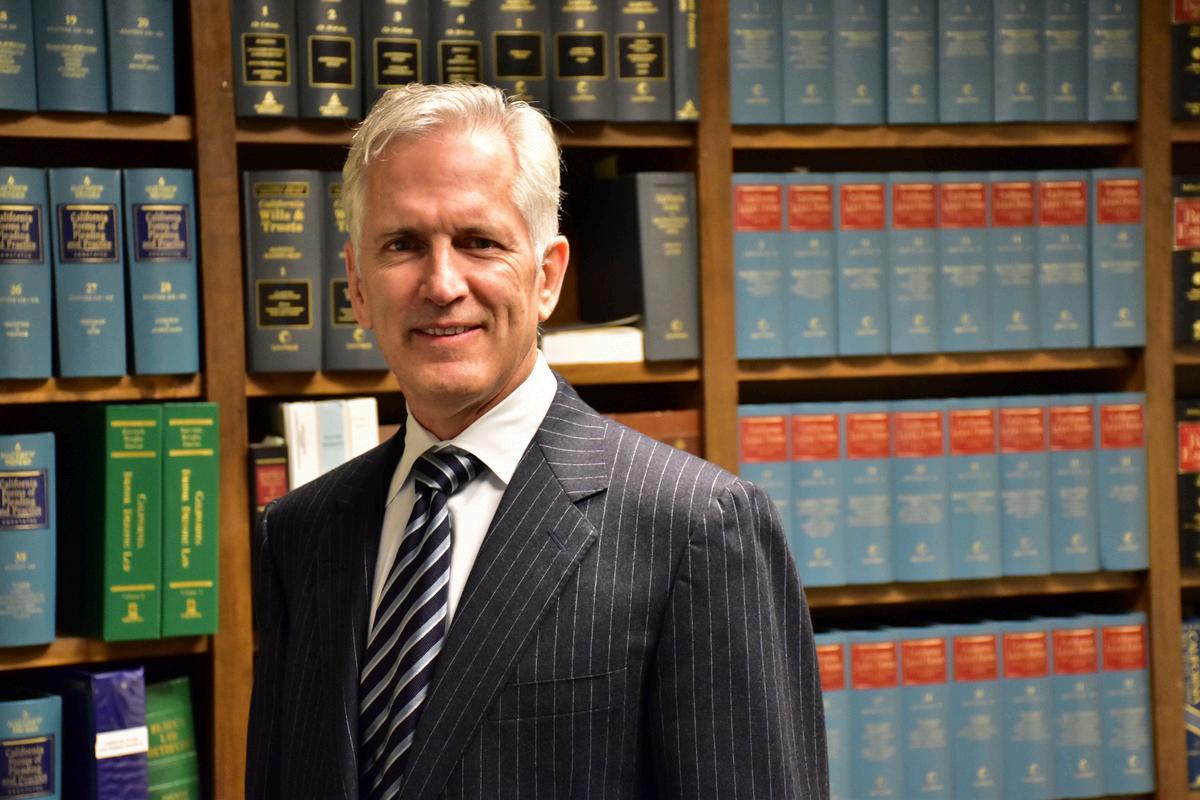
Paul Burglin specializes in DUI defense and DMV license suspension actions He is co-author of the two-volume treatise California Drunk Driving Law (Burglin, Simons & Kuwatch; James Publishing), a former Dean of the National College of DUI Defense, and is Board-Certified in DUI
Bar Association He has





Nestor Schnasse
A Recap of the MCBA April General Membership Meeting
MCBA General Membership Meeting | April 27, 2026 | Zoom Webinar
Artificial intelligence (AI) is no longer a topic of science fiction lawyers can shrug off as a problem for another day. It is here and needs to be tackled today. AI is embedded in research platforms, drafting tools, e-discovery workflows, and the day-to-day operations of the clients we advise. Recognizing this evolving reality, the MCBA Program Committee assembled a panel of legal-industry leaders on April 27 for “Embracing the Responsible Use of AI in the Legal Profession,” a Webinar designed to help attorneys understand why and how to integrate AI into their practices and how to counsel clients navigating the same shift.
The virtual program offered 1 hour of MCLE credit in Technology in the Practice of Law Our moderator, Emily Harrington, guided the panel through a wide-ranging conversation that moved from fundamentals to the practical, sometimes uncomfortable questions lawyers face when AI shows up in their firms, their cases, and their clients’ businesses
The panel brought together three perspectives that, taken together, cover the full life cycle of an AI question in the legal profession from how a law firm or company manages selection and adoption of these tools, to how firms and employers set polices and govern the use of AI in the workplace, to how regulators and courts may eventually scrutinize all of it, including important questions regarding attorney-client privilege.
Nicholas Folly, litigation counsel at Debevoise & Plimpton LLP and a member of the firm’s White Collar & Regulatory Defense Group, brought a former federal prosecutor’s lens to the discussion Before rejoining Debevoise, Mr Folly spent more than eight years at the U.S. Attorney’s Office for the Southern District of New York, most recently as Deputy Chief of the Criminal Division, where he supervised some of the Department of Justice’s largest white-collar matters His remarks framed the fundamentals of what AI is, and later the enforcement and investigative risks that can follow from its use.
Loni A. Mahanta, Chief Legal and Corporate Affairs Officer at HopSkipDrive, offered the inhouse view. Mahanta leads her company’s AI Governance Council and is currently directing a company-wide AI transformation initiative With prior senior roles at Lyft, Zillow Group and OpenSea, and her earlier work advising the White House on an executive order on AI and education through The AI Education Project, Mahanta spoke to the practical mechanics of establishing an AI governance program, how acceptable-use policies should be drafted, communicated and enforced, and how legal teams partner with engineering, product, and HR to anticipate and keep pace with deployments in various aspects of the enterprise.
Danielle L. Ochs, an equity shareholder at Ogletree Deakins and co-chair of the firm’s Technology Practice Group, has spent the last five years focused on AI governance and the responsible use of AI in the workplace, including automated employment decision tools, AI transcription, HR chatbots, and generative-AI tools. She walked attendees through the employment-law landscape where state and local regulators have moved fastest and the compliance issues that arise when AI participates in hiring, performance management, or workplace surveillance.
Folly opened the discussion by covering the fundamentals: what AI large language models are, the scope of materials they are trained on (everything under the sun), and their predictive nature. He outlined the vast scope of common applications of this technology, anything from screening resumes to pricing insurance. These technologies have seen a recent explosion over the past decade to where they are being used by every industry sector in day-to-day applications. For lawyers, he continued, AI has developed in two important ways, one inward-facing (use by lawyers in their practices) and the other outward (advising clients on their use of AI). The gist of his introduction was to highlight a new urgency for lawyers to be fluent across a range of AI-related topics.
that have prompted efforts to rein in misuse, particularly in the labor and employment space where civil rights might be implicated. The EEOC acted swiftly to provide guidance on the use of AI where it may affect people with disabilities, for example, followed by many other agencies such as the DOL, DOJ, NLRB, and FTC, issuing regulations in the context of employment and in some cases consumer issues. A prime area for regulation has been automated decision tools that either make decisions in place of a person or facilitate decisions by, for example, sourcing tools that find candidates for a position, candidate ranking tools, or later job performance tools that scrape internal data points to determine whether an employee is performing essential tasks to some standard.
Ochs segued from this recent history of rapid and expanded adoption of AI to how regulators have responded, and the underlying concerns
Later in the program, Ochs discussed efforts to regulate AI by statute, focusing primarily on California in the employment and consumer spaces, also touching on efforts in Illinois, New York City, and Colorado, which are particularly onerous for companies doing business in those jurisdictions. In California, she highlighted the Civil Rights Department (CRD)’s requirement that, before implementing an automated decision-making tool, the user must first audit the tool to make sure it is bias-free using a disparate impact analysis, or unintentional discrimination. A lower ranking of a candidate for whom English is not a first language, for example. California has also established the California Privacy Protection Agency (CPPA), also targeting these automated decision-making tools where they take the place of a person in employment, finances, and similar contexts, requiring pre-use notice or opt-out requirements. Ochs took the opportunity to not only raise awareness of these potential minefields for our audience, but also to caution against investing in such tools without first examining the burden of implementation and governance.
Mahanta brought an in-house counsel perspective into the mix, sounding a different alarm: that lack of adoption, particularly in a tech start-up environment, may present a more significant risk than governance risks. In designing policies around AI use, the starting point must begin from governance perspective, she explained, for example what acceptable use policies will be in place, how to make the policy one employees will actually follow with clearly communicated practical dos and don’ts, to make it crystal clear that employees must use enterprise tools covered by contracts rather than personal tools to protect data security, privilege, and ultimately to maintain control over what information is going into AI tools. One tricky area Mahanta mentioned has been non-lawyer employees using tools to perform some legal analysis. All of this fairly predictable day-to-day activity must be anticipated and managed, as well as the governance issues Ochs just went over on automated decision-making tools and the like, including the possibility of smaller teams simply building new tools to solve a new problem without filtering that tool through some legal-review process to identify and avoid regulatory issues.
Mahanta also highlighted an interesting upside to AI in providing legal services within a company, a cost center with limited resources, where new tools create an opportunity for saving especially on repeat processes like first-pass contract review, creating a contract playbook, or consolidating institutional knowledge into FAQs, or automating the monitoring of regulatory changes. Using AI tools to handle and automate these routine tasks has become the norm.
Folly picked up on the use of AI on routine tasks within law firms, such as large-scale document
review, which he was careful to point out, begins with client consent. For example, where investigation or review might involve proprietary information, consent is essential before uploading data to a third-party tool, and always an enterprise-level tool with appropriate contractual agreements to prevent disclosure. He shared one example of a case his firm took over with hundreds of witness statements to summarize. AI was able to quickly produce an organized framework with a chronology that saved countless hours. Similarly, first-level document review has proven sufficiently reliable, fast, and cost-effective for the client, which actually frees up the team’s time and resources to focus on substantive work and strategic thinking. These related changes are not only appreciated by clients, but as attitudes shift from wariness to trust in AI tools, this approach is


regulation of AI tools, in particular automated decision-making tools regulated under the CRD and CPPA, Ochs then described a new frontier and opportunity for lawyers, with many clients in need of legal advice before choosing or rolling out AI tools, as well as the governance issues discussed earlier.
In terms of how these tools are being used internally by law firms or affect new lawyers, Ochs began with the emerging problem of AIgenerated hallucinations, using a hypothetical new lawyer drafting a summary judgment motion as an example. Of course, we all have a duty to
read each case cited, which should mitigate the significant risk of missing hallucinations in that example. However, she continued, modern AI tools could draft a motion within a short time that might be superior to what a third-year associate could produce in many hours, which raises a question about how to train new lawyers to be guardians of quality and strategic editors. Perhaps law schools should be encouraged to provide practical training in the application of AI tools, she suggested, and firms may shift from

Folly weighed in briefly on the complicated question of how to train new lawyers in this shifting environment, favoring firms providing a traditional experience, for example, writing briefs to develop skills in persuasion, even if the time cannot be billed. Investing in new talent is a priority.
On the looming question of whether AI will eliminate jobs, Mahanta first took a moment to agree with Ochs that the services she needs when engaging outside counsel have changed from basic research that AI can do quickly to experience and judgment about how a clause might play out in the real world, or evaluating a particular venue. Internally, Mahanta described the complex backdrop against which we are seeing new levels of anxiety about job security among employees in the tech world, with blurring lines between job functions and
sometimes poor messaging citing AI as the cause, and a need for clearer messaging about why the company is making changes and teaching new skills to keep employees up to speed in a changing work environment. Legal training is not so different, she went on. Like the failure of certain older models in education generally, we are facing new challenges in how to train new lawyers in a rapidly evolving workplace. While the solution may not be clear, describing the problem, as the panel was able to do from various perspectives, was very helpful
Folly then took up the question of privilege, referring back to Mahanta’s insistence that employees use the enterprise version of AI tools to underscore the importance of understanding the difference. Enterprise versions contain contractual agreements between the firm and AI provider, importantly that information shared with the tool will remain confidential and cannot be used to train the AI tool. This is significant in a few ways, foremost preserving confidentiality of clients’ proprietary information. There is no reasonable expectation of confidentiality on a non-enterprise-level AI tool. The other significant protection enterprise tools provide relates to privilege. For example, a non-attorney employee searching a personal tool for legal analysis of a fact pattern could be discoverable when not at the direction of counsel. One published case from the SDNY that arose in a criminal context where seized documents uncovered a criminal defendant’s query about his defense and legal strategy that he later shared with counsel. The Court found that AI is not an attorney; in fact, the tool explicitly disclaimed that it provides any legal advice, and the tool’s privacy policy preserved the express right to disclose data to a third party. Folly took pains to underscore this point for the audience: the importance of using an enterprise-level tool.
A question from the audience prompted a quick but helpful discussion on how to stay up to date on developments in the area of AI and ethics. Ochs pointed out that her firm and many others write on these topics frequently. A little work to find thoughtful commentators is a helpful approach to stay informed, or better yet, using AI to curate a weekly update. Mahanta added that AI providers are also writing on these topics frequently, and suggested following common platforms like Twitter feeds, or posts by legal AI providers like Harvey, GCAI, or Legora on developments in AI in legal practice.
I especially want to thank our moderator, Emily Harrington, an MCBA board member who also makes time to serve on many committees. She is an employment attorney at Ogletree Deakins, where she advises clients on a wide range of California employment law issues. She devoted a great deal of time to planning and delivering this program that covered a broad topic in remarkable depth and set the stage for a very interesting and valuable afternoon. Thank you.
MCBA thanks Emily Harrington, Nicholas Folly, Loni A. Mahanta, and Danielle L. Ochs for a substantive and timely program. The MCBA Program Committee welcomes member suggestions for future General Membership Meeting topics
Nestor Schnasse is the principal attorney at Schnasse Law He has practiced law in California for twenty years and is based in Novato He represents people who have been seriously hurt or lost a loved one in personal injury and wrongful death cases, including bicycle, auto, premises liability and
ty He is also a cyclist who, in his youth, competed in international road-races throughout the U S, Europe and Australia Bicycle cases are one focus of his law practice, an opportunity to draw on personal experience In addition to his law practice, Nestor makes time to give back to the community through professional associations, local government and volunteer work He has served on the boards of the Marin County Bar Association and Marin Trial Lawyers Association He served for many years on the City of Novato’s Bicycle and Pedestrian Advisory Commission and then its Complete Streets and Pathways Oversight Committee, using his experience with how things can go horribly wrong to push for improvements to the City’s infrastructure Being a youth-program leader also keeps Nestor involved in volunteer work throughout the year, from conservation projects to food-drives
James W. Carey Bank of Marin
Andrea Castaneda
Student, University of San Francisco School of Law
Julia Goldman Keegin Harrison LLP
Laura Jeleniewski Student
Lisa M. Bertain
David C. Macpherson Law Offices of David C. Macpherson

Barristers
Business
Construction
Criminal
Diversity
Employment
Estate
Padraig M. O'Leary
Student, University of San Francisco School of Law
James M. Reilly Epstein Becker Green
Sami Sedghani Synergist Law, P.C.
Seara E. Sullivan Nixon Peabody LLP
Kenneth G. Thompson
Belen S. Trigueros Brayton Purcell LLP
Alisha A. Wood Laurel Law & Planning, APC
If you are a current 2026 MCBA member, you can use the listserv to query your colleagues on legal updates, ask for recommendations for experts, share Court administrative processes, and use the platform to expand legal knowledge. To maintain engagement and sign-ups, we don't use the listserv for advertising, campaigning, or for public discourse To join the listserv Sign Up HERE Start using the listserv and email your message to current subscribed MCBA Members at mcba@groupvine.com or send to these specific practice
THERE ARE MANY EXCELLENT REASONS TO BECOME A MEMBER OF MCBA! HERE ARE JUST A FEW:
Build relationships with fellow attorneys and other professionals.
In collaboration with our sections, we offer many CLE programs, covering topical and timely issues.
MCBA, with The Marin County Law Library, offers free legal consultations through our Lawyers in the Library program.
MCBA supports financially disadvantaged students pursuing a law school degree and all high schools participating in Mock Trial.
MCBA’s website and monthly Marin Lawyer newsletter deliver updates on events, court notices, timely legal articles, and legal community news.
MCBA membership provides access to an exclusive community of attorneys and other legal professionals. Explore your leadership potential through board and committee involvement.
Renewal is even easier with our auto-renewal service.
Special offers from select partners.
Paul Burglin
The National Council on Alcoholism and Drug Dependence estimates that alcohol and drugs are implicated in 80% of offenses leading to incarceration in the United States. Half or more of these individuals are considered clinically addicted. These statistics are not shocking to anyone working in the criminal justice system.

Society has become increasingly aware that treatment is often more beneficial than incarceration with regard to curbing recidivism. The question always arises, however, as to how best to motivate an individual to get treatment and embrace sobriety. It’s not so simple as just recommending a form of treatment, or even ordering it.
Lawyers and judges are often the first ones a recently arrested individual faces outside jail It’s when a serious consequence of their addiction is hitting them hard. They may still be in denial about it, but there are things we can say to help break through it, to wit:
“I’m guessing the last time you were in jail for driving under the influence, you swore to yourself you would never let it happen again.”
“If eating bananas caused you these problems, you would just stop eating bananas.”
“Denial isn’t just denying there’s a problem, but minimizing the extent of it.”
What about the fellow who says he rarely drinks and doesn’t remember punching his spouse or crashing his car?
“There are two different types of alcoholics. One is a maintenance drinker who drinks every day. The other is a binge drinker who only drinks occasionally but lacks control over how much he drinks. It sounds like that may be you. The trick for you isn’t just stopping---the trick is staying stopped and not convincing yourself that next time it will be different just because you haven’t had a drink in six months.”
What about the mother who had her kids in the car after drinking too much wine over lunch?
“You love your children, right? They need you sober when you ’ re driving them around They are going to be teenagers soon and will need you present and alert to what’s going on with them.” [Bringing up their kids hits a real nerve]
Lawyers can explain that getting treatment will help them both personally and with their court case. So even if they’re not convinced they have a problem, they may at least be willing to engage in treatment to mitigate consequences with the Court (whether that be jail or losing custody of a child).
Some clients may feel like they’re being judged and take offense at these comments, but if it comes from a place of sincere interest in their welfare, they will absorb it and later thank you for it. There is nothing more satisfying than getting a letter from a client expressing gratitude for your frank discussion when they needed it.
The same is true for judges. What judges say can have a lasting impact not only on the person they are talking to, but on the audience of litigants listening. Taking just a minute or two with a single individual appearing before them can have a domino effect on everyone in the courtroom. It can go something like this:
Joseph Martin was a Catholic priest and recovering alcoholic. He was renowned for his “Chalk Talks” used by multiple branches of the federal government (notably the Navy) as well as rehab centers throughout the world. Here is a link containing three short lectures by him on the first three steps of AA.
Martin didn’t push religion on anyone and even acknowledged that the “ power of the AA group ” can work just as well as G-d. It’s about getting out of one’s own ego and accepting a power greater than ourselves. It can be the walls of the AA rooms, a redwood tree in one’s backyard, or perhaps the ocean or moon.
Paul Burglin specializes in DUI defense and DMV license suspension actions He is co-author of the two-volume treatise California Drunk Driving Law (Burglin, Simons & Kuwatch; James Publishing), a



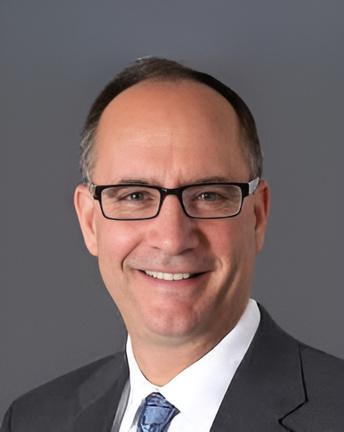

Thomas M. McInerney
President
Ogletree Deakins


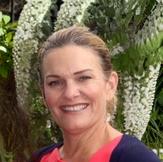
Robyn B. Christo
Treasurer
Epstein Holtzapple Christo LLP
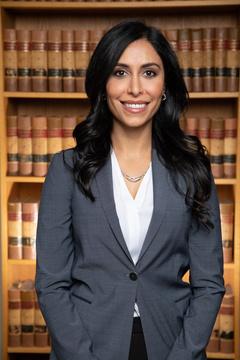

Neusha Ghaedi
President-Elect
DeMartini, Walker, & Ghaedi LLP
Contact Kerry Enright
Kristine Fowler Cirby
Past President
Law Office of Kristine Fowler
Cirby
Nestor R. Schnasse
Secretary
Schnasse Law

Kerry Enright
Interim Executive Director
Marin County Bar Association
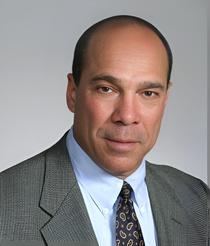
Thomas S. Brown
5-Year Past President
SSL Law Firm LLP
David M. Zeff
Client Relations Chair
Law Offices of David M. Zeff




Marisa R. Chaves 2026 Director Hanson Crawford Crum Family Law Group
Roni D Pomerantz 2026 Director California Department of Justice




Ingrid L. Carbone 2026 Director Carbone Family Law
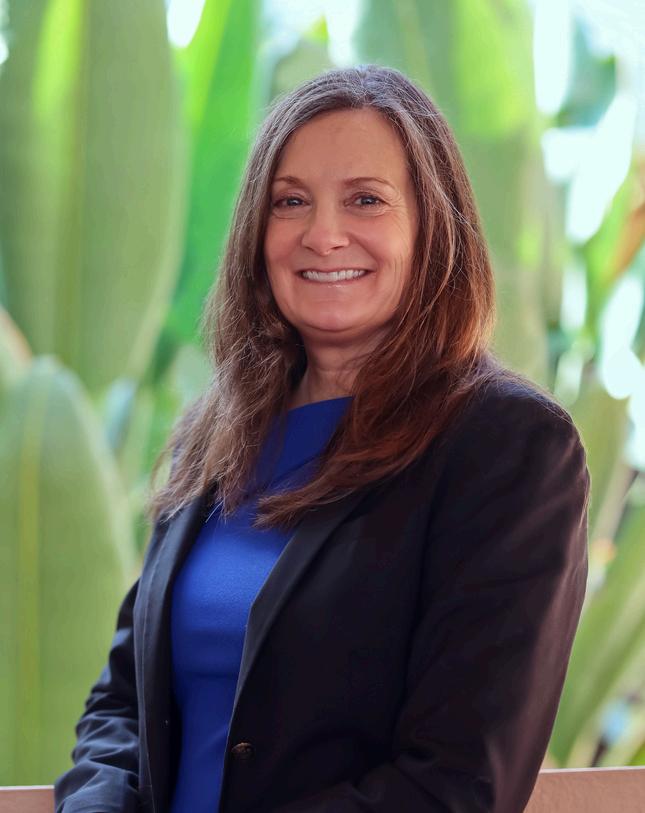
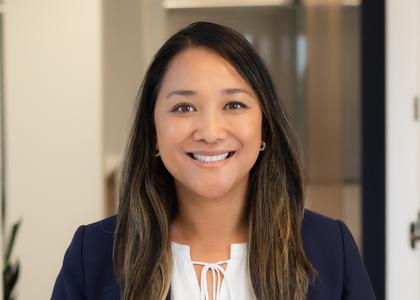
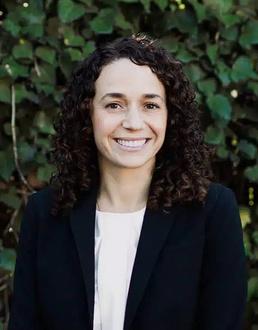
Sarah B. Anker 2027 Director County of Marin

Emily Harrington 2027 Director Ogletree Deakins
Cole A. Benbow 2028 Director Hanson Bridgett LLP
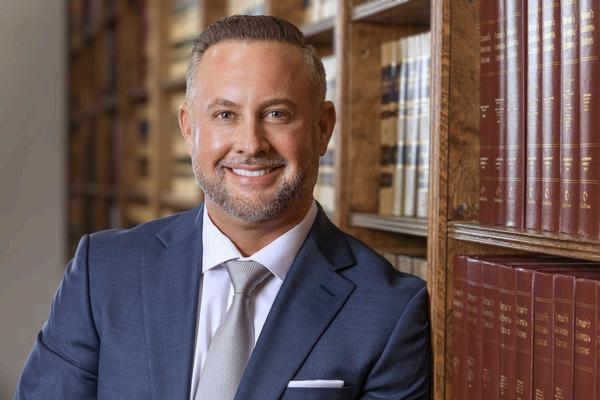

Brett K. Rhodes 2028 Director County of Marin


Christine O‘Hanlon 2026 Director Marin County Public Defender’s Office
Nicole L. Tiger 2028 Director Ragghianti Freitas LLP
Marrianne S Taleghani 2026 Director Compass
Adrea Tencer 2027 Director ADZ Law, LLP
R Wesley Pratt 2027 Director County of Marin
Paul Burglin 2027 Director Burglin Law Office, P C
Laura E. McMahon 2028 Director Legal Aid of Marin
Dennis E. Simmons 2028 Director The Simmons Law Firm
To involve, encourage, and support Bar Association members, to serve as a liaison to the Marin County Courts, to educate the community and enhance access to legal services.