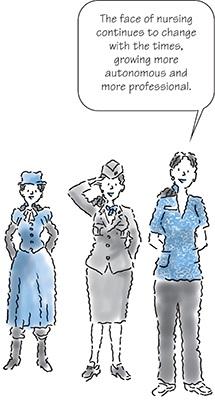
Fundamentals of Nursing Made Incredibly Easy isahelpfuladditionto the Incredibly Easy series,servingasaninvaluableguidefornursingstudents astheypreparefortheirnursingcareerandasahandyreferencefornewly graduatedandexperiencednurses.
towards me!" cried the doctor aloud, the new thought striking him. Whatever his degree of guilt, Dr. Brabazon felt certain it was bitterly repented of. To part with him before the Oxford examination, thereby suddenly cutting short the thread of the French and German instruction, was not to be thought of and the Head Master buried the unwelcome knowledge within his breast, and suffered things to go on as usual.
It was drawing so near now, that all other interests gave place to it There was a good deal of rivalry amidst the boys going up for it; there was some jealousy, a little disputing. The remoter competition for the Orville prize was lost sight of now. It was at the option of the Head Master to send the boys up for this Oxford examination, or to retain them; according as, in his judgment, they were sufficiently prepared, or the contrary.
The elder ones, those whose age would preclude trial another year, were to go; that was certain; and take their chance: but in regard to the rest it lay with Dr. Brabazon. Only, if they did not go up for the Oxford; or, going up, did not pass; they could not compete for the Orville. And of the candidates, there was not one, Gall excepted, and perhaps Loftus, who did not secretly pray that Paradyne might not be allowed to go up. Altogether there was as much excitement and commotion just now in the college over the coming Oxford examination, as there is in a bribery borough on the eve of a general election.
Mr. Loftus sat in his bedroom at Pond Place, fingering his cherished pistols. It was the day subsequent to his encounter with Gall, and he was spending it at Sir Simon's. Loftus had not been himself since the mishap; he was not one to cherish revenge in a general way, but he did in this instance firmly resolve that Gall should suffer. On all occasions of his visits to his uncle's these pistols were got out, their state ascertained, their shape and points admired. It was Sunday afternoon, but Loftus was rubbing them with wash-leather; he and Leek, who stood by, talking in a desultory manner.
"Loftus, I would not care to possess pistols if I had to keep them locked up out of sight," cried Leek rather inopportunely.
"Ah," said Loftus, "wait until I am my own master. I wish I might use them," he added, significantly. "I could put a little bullet into somebody with all the pleasure in life—that is, if he were not too great a coward to meet me; but snobs are always cowards. Give me that oil, Onions."
"You mean Gall," said Onions, handing the phial, and taking out the cork by way of facilitating operations; upon which a strong smell of bergamotte was diffused through the room. Onions gave a sniff.
"I say, Loftus, this is hair oil!"
"It will do; I've got no other. Yes, snobs are safe to be cowards; it's in their blood, and they can't help it," observed he, dropping a modicum of oil on the bright steel and delicately rubbing it. "I'd lay you all I'm worth; I'd lay you these pistols, Onions, that if I called out Gall, he'd laugh in my face."
"Bosh, Loftus! Folks don't fight duels now," was the slighting remark of Onions.
"Not on this side the Channel. No; and that's what the fellow would shelter himself under a custom obsolete. Gall has insulted me, and if I live I'll make him suffer for it. I should like to put a bullet into him," continued Bertie, grandly.
"It was too bad," said sympathising Onions. "I should pitch into him, Loftus."
Mr. Loftus threw up his head. "Pitching in" was not in his line, or anything so vulgar. "It was a great mistake to allow duelling to go out," he observed, in his lordly manner. "There's no way left now for gentlemen to resent an insult. You can't fight a fellow with your fists, as if you were a prize-fighter; you can't bring an action against him, and let things be blabbed out to the world."
"You can kick him down stairs," said Onions.
Mr. Loftus scorned a refutation. "Just lay hold of this end, will you, while I rub. Mark my words, Onions, before fifty years have gone
Dick—hot, impulsive, passionate Dick—dashed in and struck the first blow. That was his answer. Off went the jackets, the boys closed round in a ring; it was to be an impromptu, stand-up, hand-to-hand fight.
And the very cries would have decided it, could cries decide. Every encouragement was heaped cheerily on Dick, every derisive insult that tongue can utter was levelled at Paradyne: never had the feeling of the school been more palpably displayed than now. Paradyne stood his ground bravely: cool, collected, retaining his temper and his self-possession, he proved a great deal more than a match for Dick, who had very shortly to acknowledge himself beaten. Paradyne had not a scratch upon his face; parrying all blows successfully, to this he chiefly confined himself, and, instead of punishing Dick, had been content to show that he could have punished if he would.
"And now," said he, as he put on his jacket, "as you see that I can fight, perhaps you'll let me alone for the future. I shan't take things so patiently as I have done."
He set off to run home to dinner; and a glow of admiration went out after him from all that were unprejudiced. The boy had half won their hearts with his gallant bearing.
He appeared at his desk as usual in the afternoon. Dick Loftus was at his, a little sore about the arms. Suddenly, amidst the silence that follows the first settling down of a large number of students, a voice was heard.
"Who has done this?"
It came from Paradyne. He was standing with a paper of many sheets in his hand, and had spoken aloud in his shock of surprise. The paper was a Latin essay, to go in that night to the Head Master; it had taken him many days to write it.
"What is the matter?" asked Mr. Jebb.
Paradyne left his place and carried up the paper. It was torn, blotted, soaked in ink almost from beginning to end. The contents of one inkstand could scarcely have put it in the state it was.
"What isit?" cried Mr. Jebb, gazing at the black relic.
"It is my Latin essay, sir. I left it clean and perfect in my desk after morning school."
"Your Latin essay! You left it—— Nonsense, Paradyne," broke off Mr. Jebb, "you must have had an accident with it: you have been upsetting the ink."
The whole school was staring and wondering. On the merit of these essays was supposed to lie very much the decision of the Head Master, whether their author should or should not go up for the Oxford. The school denied all knowledge of the affair. The first desk, collectively and individually, protested they had had no hand in it, and a whisper arose that Paradyne had done it himself to hide the poorness of his Latin. There was no time to attempt another.
"He can't go up for the Oxford now," were the first words that greeted Paradyne's ears when the hall rose; and they came from Dick Loftus.
"Did youdo it?" cried Paradyne, turning sharply upon him.
"No, I did not," answered Dick; his red face and his honest eyes raised fearlessly to Paradyne's.
"You beat me this morning in a fair, stand-up fight; but I'd scorn to do a mean trick of this sort."
"I believe you," said Paradyne, "and I beg your pardon for asking."
"And I am sorry that you should lose your chance for Oxford," added Dick, not to be outdone in generosity. "I have never said either, as some of them do, that you ought not to go up for the Orville: it's as fair for you to compete as for the rest, for what I see."
But all chance for Paradyne, either for the one or the other, was over, in the opinion of the school.
Some of the better-natured felt sorry for him, and said it. Paradyne bore himself bravely before them; not a cloud on his brow, not a shadow on his lips, proclaimed aloud the bitterness of his defeat. But, later, when he was sitting at Mr. Henry's, he astonished that gentleman not a little by bursting into tears.
CHAPTER XIII.
If the Boys had but seen!
The long worked-for Oxford examination was over, and the results were at length known. Irby and Fullarton had not passed; Powell had not gone up for it by the decision of the Head Master; the rest had passed, including Paradyne. All George Paradyne's apprehensions, and the school's forebodings had proved alike mistaken, for Dr. Brabazon had sent up Paradyne in spite of the damaged essay. In his glee, George Paradyne heartily forgave all, and was his own bright self again. The studies went on again vigorously until July: the great prize, the Orville, had to be competed for yet.
In July the school rose for the long vacation, and Dr. Brabazon could no longer put off the explanation with Mr. Henry, which he had deemed it well to defer until the term should be over. To say the truth, he shrank from it. To convict this hardworking, painstaking gentleman of theft—and such a theft!—was a most unpleasant task to enter on. He let a day or two pass, and while he was seeking for an opportunity to speak, it was afforded by Mr. Henry himself. The heat, or something else, seemed to be retaining its spite against the German master, and on the third day of the vacation, when he was giving Miss Rose her usual lesson, he fainted away without notice, just as he had that other day at Mr. Gall's. He had a short cough occasionally, and symptoms of blood-spitting.
The doctor sent Rose away and sat with him when he was restored, and rang for Mr. Henry's favourite beverage, coffee. "You shall not go until you have taken some, and the child's lesson can be continued another day," said he, peremptorily and kindly, in answer to remonstrances. "Do you think you can be very well?" he
"Since when have you known it?" asked Mr. Henry in a low tone.
"For some weeks now. I did not stir in it at the time," continued the master, brushing a large fly off his black waistcoat, "on account of not interrupting the classes of the boys who were going up for the examination. And, that over, I thought things might remain as they were until the vacation, as they had gone on so long."
"Then you intend to discharge me, Dr. Brabazon?"
The doctor could not help thinking it was rather an assuming question. He played with his paper weight on the table.
"What do youthink about that, Mr. Henry?"
"Of course I have feared so. But yet—"
"But yet what?"
"Oh, sir, I'd rather not go on. I was going to speak of leniency—of consideration; but you might think it only made my offence worse."
"I will show you all the leniency in my power. I think my having delayed the explanation proves that my intentions are not hostile, and I will be your friend if I can. You were, I conclude, led into this by some overwhelming pecuniary pressure, as others have been before you, and then found that you could not redeem your act. This is Emma's view of the case as well as mine. Why did you not make a friend of me, and tell me your difficulty? I would have lent you the money."
"What money, sir?"
"The money you had need of. It was a poor sum to peril one's future for—seven pounds. And why did you use Mr. Jebb's name?"
Mr. Henry had been staring with all his eyes, as if the words bewildered him. "I don't quite understand, sir, what it is you are talking of."
"Of my pencil, that you took from this room and pledged in Oxford Street for seven pounds," returned the Head Master in terse language, nettled at the assumption of ignorance and innocence. "Why do you force me to speak out so plainly?"