Prol og U e : Prin C i P les of Pro B le M s olving P1
C hapter p Prerequisites 1
Chapter o verview 1
P.1 Modeling the real World with algebra 2
P.2 real numbers 6
P.3 integer exponents and scientific notation 18
P.4 rational exponents and radicals 25
P.5 algebraic expressions 32
P.6 factoring 37
P.7 rational expressions 44
P.8 solving Basic equations 53
P.9 Modeling with equations 61
Chapter P review 74
Chapter P test 79
■ F o C us on M odeling Making the Best decisions 81
C hapter 1 equations and GraPhs 87
Chapter o verview 87
1.1 the Coordinate Plane 88
1.2 graphs of equations in two variables; Circles 94
1.3 lines 104
1.4 solving Quadratic equations 115
1.5 Complex numbers 126
1.6 solving o ther types of equations 132
1.7 solving inequalities 141
1.8 solving absolute value equations and inequalities 150
1.9 solving equations and inequalities graphically 154
1.10 Modeling variation 159
Chapter 1 review 167
Chapter 1 test 172
■ F o C us on M odeling fitting lines to data 174
C hapter 2 FunC tions
Chapter o verview 183
2.1 functions 184
2.2 graphs of functions 195
2.3 getting information from the graph of a function 206
2.4 average rate of Change of a function 219
2.5 linear functions and Models 226
2.6 transformations of functions 234
2.7 Combining functions 246
2.8 one-to-one functions and their inverses 255
Chapter 2 review 265
Chapter 2 test 271
■ F o C us on M odeling Modeling with functions 273
C hapter 3 PoLynomiaL and rationaL FunC tions
Chapter o verview 281
3.1 Quadratic functions and Models 282
3.2 Polynomial functions and their graphs 290
3.3 dividing Polynomials 305
3.4 real Zeros of Polynomials 311
3.5 Complex Zeros and the fundamental theorem of algebra 323
3.6 rational functions 331
3.7 Polynomial and rational inequalities 347
Chapter 3 review 353
Chapter 3 test 359
■ F o C us on M odeling fitting Polynomial Curves to data 361
C hapter 4 exPonentiaL and LoGarithmiC FunC tions
Chapter o verview 365
4.1 exponential functions 366
4.2 the natural exponential function 374
4.3 logarithmic functions 380
4.4 laws of logarithms 390
4.5 exponential and logarithmic equations 396
4.6 Modeling with exponential functions 406
4.7 logarithmic scales 417
Chapter 4 review 422
Chapter 4 test 427
■ F o C us on M odeling fitting exponential and Power Curves to data 428
Cumulative review test: Chapters 2, 3, and 4 (Website)
C hapter 5 systems oF equations and inequaLities
Chapter o verview 437
5.1 systems of linear equations in two variables 438
5.2 systems of linear equations in several variables 448
5.3 Partial fractions 457
5.4 systems of nonlinear equations 462
5.5 systems of inequalities 467
Chapter 5 review 477
Chapter 5 test 481
■ F o C us on M odeling linear Programming 482
C hapter 6 matriCes and determinants
Chapter o verview 489
6.1 Matrices and systems of linear equations 490
6.2 the algebra of Matrices 503
6.3 inverses of Matrices and Matrix equations 515
6.4 determinants and Cramer’s rule 525
Chapter 6 review 536
Chapter 6 test 541
■ F o C us on M odeling Computer graphics 542
C hapter
7 ConiC seC tions
Chapter o verview 547
7.1 Parabolas 548
7.2 ellipses 556
7.3 hyperbolas 565
7.4 shifted Conics 573
Chapter 7 review 582
Chapter 7 test 586
■ F o C us on M odeling Conics in architecture 587
Cumulative review test: Chapters 5, 6, and 7 (Website)
547
C hapter
8 sequenCes and series
Chapter o verview 591
8.1 sequences and summation notation 592
8.2 arithmetic sequences 603
8.3 geometric sequences 608
8.4 Mathematics of finance 617
8.5 Mathematical induction 623
8.6 the Binomial theorem 629
Chapter 8 review 637
Chapter 8 test 642
■ F o C us on M odeling Modeling with recursive sequences 643
591
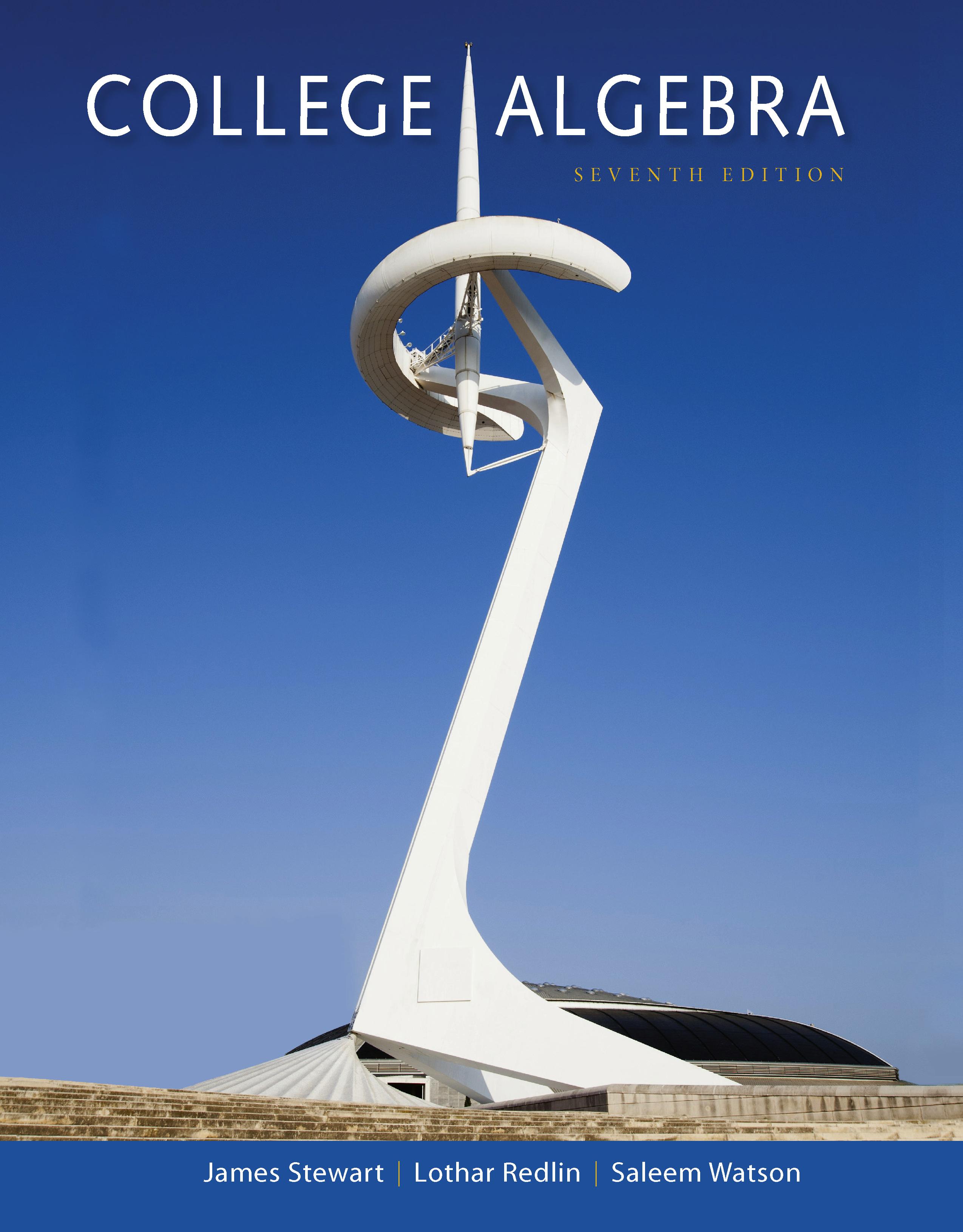
For many students a College Algebra course represents the first opportunity to discover the beauty and practical power of mathematics. Thus instructors are faced with the challenge of teaching the concepts and skills of algebra while at the same time imparting a sense of its utility in the real world. In this edition, as in the previous editions, our aim is to provide instructors and students with tools they can use to meet this challenge. The emphasis is on understanding concepts. To help instructors foster conceptual understanding in their students, we use the rule of four: “Topics should be presented geometrically, numerically, algebraically, and verbally.” A major part of conceptual understanding is an appreciation for the logical structure of algebra. For this reason every statement about algebra in this book is supported by a proof, an explanation, or an intuitive argument. Students also need to achieve a certain level of technical skill. Indeed, conceptual understanding and technical skill go hand in hand, each reinforcing the other. Above all, we present algebra as a problem-solving art with numerous applications to modeling and solving real-world problems.
In this Seventh Edition our objective is to further enhance the effectiveness of the book as an instructional tool for teachers and as a learning tool for students. Many of the changes in this edition are a result of suggestions we received from instructors and students who are using the current edition; others are a result of insights we have gained from our own teaching. Some chapters have been reorganized and rewritten, new sections have been added (as described below), the review material at the end of each chapter has been substantially expanded, and exercise sets have been enhanced to further focus on the main concepts of college algebra. In all these changes and numerous others (small and large) we have retained the main features that have contributed to the success of this book.
new to the seventh edition
■ exercises More than 20% of the exercises are new, and groups of exercises now have headings that identify the type of exercise. New Skills Plus exercises in most sections contain more challenging exercises that require students to extend and synthesize concepts.
■ review Material The review material at the end of each chapter now includes a new Concept Check. Each Concept Check provides a step-by-step review of all the main concepts and applications of the chapter. Answers to the Concept Check questions are on tear-out sheets at the back of the book.
■ discovery projects References to Discovery Projects, including brief descriptions of the content of each project, are located in boxes where appropriate in each chapter. These boxes highlight the applications of college algebra in many different real-world contexts. (The projects are located at the book companion website: www.stewartmath.com.)
■ Chapter p prerequisites This chapter begins with a preview of how algebra can model real-world situations. The chapter now concludes with the new Section P.9, “Modeling with Equations.” This section shows how the properties and equations studied in the preceding sections can be used to solve real-world problems.
■ Chapter 1 equations and graphs This chapter has been reorganized so that the material on graphs of equations (Sections 1.1–1.3) is followed by several sections on solving different types of equations and inequalities algebraically (Sections 1.4–1.8), which is then followed by a section on solving equations and inequalities graphically (Section 1.9). Finally, we use the methods of the preceding sections to model variation (Section 1.10).
■ Check Your answer Students are encouraged to check whether an answer they obtained is reasonable. This is emphasized throughout the text in numerous Check Your Answer sidebars that accompany the examples (see, for instance, pages 55, 69, and 135).
g raphing Calculators and Computers We make use of graphing calculators and computers in examples and exercises throughout the book. Our calculator-oriented examples are always preceded by examples in which students must graph or calculate by hand so that they can understand precisely what the calculator is doing when they later use it to simplify the routine, mechanical part of their work. The graphing calculator sections, subsections, examples, and exercises, all marked with the special symbol , are optional and may be omitted without loss of continuity.
■ using a graphing Calculator Appendices B and C contain general guidelines on using graphing calculators and a quick reference guide to using TI-83/84 calculators.
■ graphing, regression, Matrix algebra Graphing calculators are used throughout the text to graph and analyze functions, families of functions, and sequences; to calculate and graph regression curves; to perform matrix algebra; to graph linear inequalities; and other powerful uses.
■ simple programs We exploit the programming capabilities of a graphing calculator to simulate real-life situations, to sum series, or to compute the terms of a recursive sequence (see, for instance, pages 544, 595, 599, and 689).
Focus on Modeling The theme of modeling has been used throughout to unify and clarify the many applications of college algebra. We have made a special effort to clarify the essential process of translating problems from English into the language of mathematics (see pages 274 and 444).
■ Constructing Models There are many applied problems throughout the book in which students are given a model to analyze (see, for instance, page 286). But the material on modeling, in which students are required to construct mathematical models, has been organized into clearly defined sections and subsections (see, for instance, pages 273, 406, and 443).
■ Focus on Modeling Each chapter concludes with a Focus on Modeling section. For example, the Focus on Modeling after Chapter 1 introduces the basic idea of modeling a real-life situation by fitting lines to data (linear regression). Other sections present ways in which polynomial, exponential, logarithmic, and trigonometric functions, and systems of inequalities can all be used to model familiar phenomena from the sciences and from everyday life (see, for instance, pages 361, 428, 482, and 643).
r eview s ections and Chapter t ests Each chapter ends with an extensive review section that includes the following.
■ properties and Formulas The Properties and Formulas at the end of each chapter contains a summary of the main formulas and procedures of the chapter (see, for instance, pages 353 and 422).
■ Concept Check and Concept Check answers The Concept Check at the end of each chapter is designed to get the students to think about and explain each concept presented in the chapter and then to use the concept in a given problem. This provides a step-by-step review of all the main concepts in a chapter (see, for instance, pages 266, 355, and 538). Answers to the Concept Check questions are on tear-out sheets at the back of the book.
■ review exercises The Review Exercises at the end of each chapter recapitulate the basic concepts and skills of the chapter and include exercises that combine the different ideas learned in the chapter.
■ Chapter test Each review section concludes with a Chapter Test designed to help students gauge their progress.
■ Cumulative review tests Cumulative Review Tests following selected chapters are available at the book companion website. These tests contain problems that combine skills and concepts from the preceding chapters. The problems are designed to highlight the connections between the topics in these related chapters.
■ answers Brief answers to odd-numbered exercises in each section (including the review exercises) and to all questions in the Concepts exercises and Chapter Tests, are given in the back of the book.
Mathematical v ignettes Throughout the book we make use of the margins to provide historical notes, key insights, or applications of mathematics in the modern world. These serve to enliven the material and show that mathematics is an important, vital activity and that even at this elementary level it is fundamental to everyday life.
■ Mathematical vignettes These vignettes include biographies of interesting mathematicians and often include a key insight that the mathematician discovered (see, for instance, the vignettes on Viète, page 119; Salt Lake City, page 89; and radiocarbon dating, page 403).
■ Mathematics in the Modern World This is a series of vignettes that emphasize the central role of mathematics in current advances in technology and the sciences (see, for instance, pages 136, 464, 550, and 604).
b ook Companion Website A website that accompanies this book is located at www.stewartmath.com. The site includes many useful resources for teaching college algebra, including the following.
■ discovery projects Discovery Projects for each chapter are available at the book companion website. The projects are referenced in the text in the appropriate sections. Each project provides a challenging yet accessible set of activities that enable students (perhaps working in groups) to explore in greater depth an interesting aspect of the topic they have just learned (see, for instance, the Discovery Projects Visualizing a Formula, Relations and Functions, and Will the Species Survive?, referenced on pages 34, 199, and 510).
■ Focus on problem solving Several Focus on Problem Solving sections are available on the website. Each such section highlights one of the problem-solving principles introduced in the Prologue and includes several challenging problems (see for instance Recognizing Patterns, Using Analogy, Introducing Something Extra, Taking Cases, and Working Backward).
■ Cumulative review tests Cumulative Review Tests following Chapters 4, 7, and 9 are available on the website.
acknowledgments
We feel fortunate that all those involved in the production of this book have worked with exceptional energy, intense dedication, and passionate interest. It is surprising how many people are essential in the production of a mathematics textbook, including content editors, reviewers, faculty colleagues, production editors, copy editors, permissions editors, solutions and accuracy checkers, artists, photo researchers, text designers, typesetters, compositors, proofreaders, printers, and many more. We thank them all. We particularly mention the following.
reviewers for the sixth edition Raji Baradwaj, UMBC; Chris Herman, Lorain County Community College; Irina Kloumova, Sacramento City College; Jim McCleery, Skagit Valley College, Whidbey Island Campus; Sally S. Shao, Cleveland State University;
David Slutzky, Gainesville State College; Edward Stumpf, Central Carolina Community College; Ricardo Teixeira, University of Texas at Austin; Taixi Xu, Southern Polytechnic State University; and Anna Wlodarczyk, Florida International University.
r eviewers for the s eventh e dition Mary Ann Teel, University of North Texas; Natalia Kravtsova, The Ohio State University; Belle Sigal, Wake Technical Community College; Charity S. Turner, The Ohio State University; Yu-ing Hargett, Jefferson State Community College–Alabama; Alicia Serfaty de Markus, Miami Dade College; Cathleen Zucco-Teveloff, Rider University; Minal Vora, East Georgia State College; Sutandra Sarkar, Georgia State University; Jennifer Denson, Hillsborough Community College; Candice L. Ridlon, University of Maryland Eastern Shore; Alin Stancu, Columbus State University; Frances Tishkevich, Massachusetts Maritime Academy; Phil Veer, Johnson County Community College; Phillip Miller, Indiana University–Southeast; Mildred Vernia, Indiana University–Southeast; Thurai Kugan, John Jay College–CUNY.
We are grateful to our colleagues who continually share with us their insights into teaching mathematics. We especially thank Robert Mena at California State University, Long Beach; we benefited from his many insights into mathematics and its history. We thank Cecilia McVoy at Penn State Abington for her helpful suggestions. We thank Andrew Bulman-Fleming for writing the Solutions Manual and Doug Shaw at the University of Northern Iowa for writing the Instructor Guide and the Study Guide. We are very grateful to Frances Gulick at the University of Maryland for checking the accuracy of the entire manuscript and doing each and every exercise; her many suggestions and corrections have contributed greatly to the accuracy and consistency of the contents of this book.
We thank Martha Emry, our production service and art editor; her energy, devotion, and experience are essential components in the creation of this book. We are grateful for her remarkable ability to instantly recall, when needed, any detail of the entire manuscript as well as her extraordinary ability to simultaneously manage several interdependent editing tracks. We thank Barbara Willette, our copy editor, for her attention to every detail in the manuscript and for ensuring a consistent, appropriate style throughout the book. We thank our designer, Diane Beasley, for the elegant and appropriate design for the interior of the book. We thank Graphic World for their attractive and accurate graphs and Precision Graphics for bringing many of our illustrations to life. We thank our compositors at Graphic World for ensuring a balanced and coherent look for each page of the book.
At Cengage Learning we thank Jennifer Risden, content project manager, for her professional management of the production of the book. We thank Lynh Pham, media developer, for his expert handling of many technical issues, including the creation of the book companion website. We thank Vernon Boes, art director, for his capable administration of the design of the book. We thank Mark Linton, marketing manager, for helping bring the book to the attention of those who may wish to use it in their classes.
We particularly thank our developmental editor, Stacy Green, for skillfully guiding and facilitating every aspect of the creation of this book. Her interest in the book, her familiarity with the entire manuscript, and her almost instant responses to our many queries have made the writing of the book an even more enjoyable experience for us.
Above all we thank our acquisitions editor, Gary Whalen. His vast editorial experience, his extensive knowledge of current issues in the teaching of mathematics, his skill in managing the resources needed to enhance this book, and his deep interest in mathematics textbooks have been invaluable assets in the creation of this book.
Enhanced WebAssign combines exceptional mathematics content with the most powerful online homework solution, WebAssign. Enhanced WebAssign engages students with immediate feedback, rich tutorial content, and an interactive, fully customizable eBook, Cengage YouBook, helping students to develop a deeper conceptual understanding of their subject matter.
CengageBrain.com
To access additional course materials, please visit www.cengagebrain.com. At the CengageBrain.com home page, search for the ISBN of your title (from the back cover of your book) using the search box at the top of the page. This will take you to the product page where these resources can be found.
to the student
This textbook was written for you to use as a guide to mastering college algebra. Here are some suggestions to help you get the most out of your course.
First of all, you should read the appropriate section of text before you attempt your homework problems. Reading a mathematics text is quite different from reading a novel, a newspaper, or even another textbook. You may find that you have to reread a passage several times before you understand it. Pay special attention to the examples, and work them out yourself with pencil and paper as you read. Then do the linked exercises referred to in “Now Try Exercise . . .” at the end of each example. With this kind of preparation you will be able to do your homework much more quickly and with more understanding.
Don’t make the mistake of trying to memorize every single rule or fact you may come across. Mathematics doesn’t consist simply of memorization. Mathematics is a problem-solving art, not just a collection of facts. To master the subject you must solve problems—lots of problems. Do as many of the exercises as you can. Be sure to write your solutions in a logical, step-by-step fashion. Don’t give up on a problem if you can’t solve it right away. Try to understand the problem more clearly—reread it thoughtfully and relate it to what you have learned from your teacher and from the examples in the text. Struggle with it until you solve it. Once you have done this a few times you will begin to understand what mathematics is really all about.
Answers to the odd-numbered exercises, as well as all the answers to the concept exercises and to each chapter test, appear at the back of the book. Solutions to all the Concept Check questions can be found on cut-out cards at the back of the book. If your answer differs from the one given, don’t immediately assume that you are wrong. There may be a calculation that connects the two answers and makes both correct. For example, if you get 1/ 1 !2 1 2 but the answer given is 1 1 !2 , your answer is correct, because you can multiply both numerator and denominator of your answer by !2 1 1 to change it to the given answer. In rounding approximate answers, follow the guidelines in Appendix A: Calculations and Significant Figures.
The symbol is used to warn against committing an error. We have placed this symbol in the margin to point out situations where we have found that many of our students make the same mistake.
abbreviations
The following abbreviations are used throughout the text.
cm centimeter
dB decibel
F farad
ft foot
g gram
gal gallon
h hour
H henry
Hz Hertz in. inch
J Joule
kcal kilocalorie
kg kilogram
km kilometer
kPa kilopascal
L liter
lb pound
lm lumen
M mole of solute
per liter of solution
m meter
mg milligram
MHz megahertz
mi mile
min minute
mL milliliter
mm millimeter
N Newton
qt quart
oz ounce
s second
V ohm
V volt
W watt
yd yard
yr year
°C degree Celsius
°F degree Fahrenheit
K Kelvin
⇒ implies
⇔ is equivalent to
are You readY F or College algebra?
To succeed in your College Algebra course you need to use some of the skills that you learned in your previous mathematics classes. In particular, you need to be familiar with the real number system, algebraic expressions, solving basic equations, and graphing. The following diagnostic tests are designed to assess your knowledge of these topics. After taking each test you can check your answers using the answer key on page xx. If you have difficulty with any topic, you can refresh your skills by studying the review materials from Chapters P and 1 that are referenced after each test.
a diagnostiC test: real numbers and exponents
1. Perform the indicated operations. Write your final answer as an integer or as a fraction in lowest terms. (a) 1 3 1 1 2 (b) 2 2 3 1 1 4 (c) 4 A 2
2. Determine whether the given number is an integer, rational, or irrational. (a) 10 (b) 16 3 (c) 52 (d) !5
3. Is the inequality true or false? (a) 2 , 0 (b) 5 $ 5 (c) 5 . 5 (d) 3 #210 (e) 2 .26
4. Express the inequality in interval notation. (a) 1 , x # 5 (b) x , 3 (c) x $ 4
6. Evaluate the expression without using a calculator. (a) 1 3 2 4 (b) 34 (c) 3 4 (d) 512 510 (e) a 3 4 b 2 (f) 163/4
7. Simplify the expression. Write your final answer without negative exponents. (a) 1
Answers to Test A are on page xx. If you had difficulty with any of the questions on Test A, you should review the material covered in Sections P.2, P.3, and P.4.
b diagnostiC test: algebraic expressions
1. Expand and simplify. (a) 4 1 x 1 3 2 1 5 1 2x 1 2 (b) 1
(d) 1
2. Factor the expression. (a)
3. Simplify the rational expression. (a)
4. Rationalize the denominator and simplify. (a) !3 !7 (b) 12 3 !5
Answers to Test B are on page xx. If you had difficulty with any of the questions on Test B, you should review the material covered in Sections P.5, P.6, and P.7.
C d iagnosti C t est: equations
1. Solve the linear equation. (a)
2. Solve the equation. (a) 1 3 x 5 6 (b) 1 2 x 3 2 5 7 2
3. Find all real solutions of the equation. (a)
4. Solve the equation for the indicated variable. (a) 4x 1 y 5 108 , for x (b) 8 5 mn k 2 , for m
Answers to Test C are on page xx. If you had difficulty with any of the questions on Test C, you should review the material covered in Section P.8.
d d iagnosti C t est: the Coordinate plane
1. Graph the following points in a coordinate plane.
are you ready for College algebra?
2. Find the distance between the given pair of points. (a) 1 1, 3 2 , 1 5, 6 2 (b) 1 2, 0 2 , 1 3, 12 2 (c) 1 0, 4 2 , 1 4, 0 2
3. Find the midpoint of the segment PQ (a) P 1 3, 7 2 , Q 1 5, 13 2 (b) P 1 2, 3 2 , Q 1 8, 7 2
4. Graph the equation in a coordinate plane by plotting points. (a) y 5 x 1 2 (b) y 5 4 x 2
Answers to Test D are on page xx. If you had difficulty with any of the questions on Test D, you should review the material covered in Sections 1.1 and 1.2.
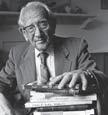
Geor G e Polya (1887–1985) is famous among mathematicians for his ideas on problem solving. His lectures on problem solving at Stanford University attracted overflow crowds whom he held on the edges of their seats, leading them to discover solutions for themselves. He was able to do this because of his deep insight into the psychology of problem solving. His well-known book How To Solve It has been translated into 15 languages. He said that Euler (see page 63) was unique among great mathematicians because he explained how he found his results. Polya often said to his students and colleagues, “Yes, I see that your proof is correct, but how did you discover it?” In the preface to How To Solve It, Polya writes, “A great discovery solves a great problem but there is a grain of discovery in the solution of any problem. Your problem may be modest; but if it challenges your curiosity and brings into play your inventive faculties, and if you solve it by your own means, you may experience the tension and enjoy the triumph of discovery.”
The ability to solve problems is a highly prized skill in many aspects of our lives; it is certainly an important part of any mathematics course. There are no hard and fast rules that will ensure success in solving problems. However, in this Prologue we outline some general steps in the problem-solving process and we give principles that are useful in solving certain types of problems. These steps and principles are just common sense made explicit. They have been adapted from George Polya’s insightful book How To Solve It
1. Understand the Problem
The first step is to read the problem and make sure that you understand it. Ask yourself the following questions:
What is the unknown?
What are the given quantities?
What are the given conditions?
For many problems it is useful to draw a diagram
and identify the given and required quantities on the diagram. Usually, it is necessary to introduce suitable notation
In choosing symbols for the unknown quantities, we often use letters such as a, b, c, m, n, x, and y, but in some cases it helps to use initials as suggestive symbols, for instance, V for volume or t for time.
2. Think of a Plan
Find a connection between the given information and the unknown that enables you to calculate the unknown. It often helps to ask yourself explicitly: “How can I relate the given to the unknown?” If you don’t see a connection immediately, the following ideas may be helpful in devising a plan.
■ Try to Recognize Something Familiar
Relate the given situation to previous knowledge. Look at the unknown and try to recall a more familiar problem that has a similar unknown.
■ Try to Recognize Patterns
Certain problems are solved by recognizing that some kind of pattern is occurring. The pattern could be geometric, numerical, or algebraic. If you can see regularity or repetition in a problem, then you might be able to guess what the pattern is and then prove it.
■ Use Analogy
Try to think of an analogous problem, that is, a similar or related problem but one that is easier than the original. If you can solve the similar, simpler problem, then it might give you the clues you need to solve the original, more difficult one. For instance, if a problem involves very large numbers, you could first try a similar problem with smaller numbers. Or if the problem is in three-dimensional geometry, you could look for something similar in two-dimensional geometry. Or if the problem you start with is a general one, you could first try a special case.
AP Images
Other documents randomly have different content
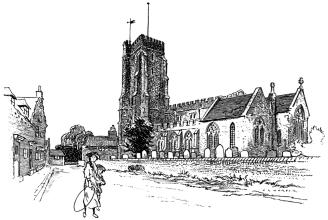
ST. NICHOLAS-AT-WADE.
You will search in vain for the parish church of Sarre. That ancient building fell into decay when the port itself ceased to be a seaport and dwindled to its present condition of a small village; and the ruined walls of it became, in the usual manner, a useful quarry for the local farmers engaged in building cowsheds and outbuildings, until all traces of them disappeared. This church stood on the hill-top between Sarre and Monkton. The church of St. Nicholasat-Wade now serves for Sarre. It stands prominently ahead, on the hill-top, with tall black-flint tower, and opposite it is a group of picturesque seventeenth-century houses, of Dutch-like aspect. The dedication to St. Nicholas, the patron of sailors, marks the ancient maritime situation of the place, and the termination “at-Wade” is a corruption of the Latin “ad vadum”—that is to say, “at the ford”—an allusion to the passage of the Wantsum.
CHAPTER X
THANET’S CORNFIELDS—MONKTON—MINSTER-IN-THANET
BIRCHINGTON—QUEX PARK WESTGATE—DANDELION.
THE enormous size of the cornfields of Thanet is immediately apparent, and is one of the most striking features of the Isle. The soil, too, is remarkably fertile; owing, according to the old monkish chronicles, to the Divine favour shown to the locality through the virtues of St. Augustine and his Christian mission. Nothing was too tough for the imaginations of those mediæval monks to assimilate.
Three miles across these vast, hedgeless fields, whose waving, golden corn in August meets the blue zenith with a startling contrast, is Minster—“Minster-in-Thanet,” more particularly to distinguish it from Minster-in-Sheppey. It is reached through Monkton, a little wayside village, where the old stocks still stand by the grassy selvedge of the road, outside the church. Minster forms one of the most popular excursions for the summer tripper at Margate or Ramsgate. I think they do not come precisely for sake of its archæological associations or its religious history, but rather because there are popular tea-gardens in the village and the beer at the several inns is supposed to be of super-excellence.
The founding of the original monastery, at Minster, for nuns, was accompanied, according to the legend, by miraculous interpositions, but these are so common in the story of early religious houses that we are not in the least surprised at them; nor is there any room for astonishment in learning that the Saxon King, who, very greatly against his instincts, gave the land for the monastery, did so give it as expiation for murder.
It all happened about A.D. 670, when marvels were still in the making. It was Egbert, eighth King of Kent, who instigated the crime. He had two cousins whose claims to the throne were better than his, but he secured the succession, and, to make the position doubly sure, consigned the unfortunate cousins to death by the agency of one Thunor, whose very name, meaning “thunder,” has something of a grandly awful quality. Thunor murdered those rightful heirs, and their bodies were buried under Egbert’s throne. It seems a strange choice. But a mysterious heavenly light shone upon the spot and threw the King into abject terror, so that he sent for Theodore, Archbishop of Canterbury, confessed his share in the crime, and asked what was to be done. On the advice given, he sent for Domneva, sister of the murdered princes, and compounded with her on the terms of giving her, for the purpose of building a monastery, as much land as a hind could run over at one course.
The hind was accordingly released in the presence of the King, and held a straight course over Thanet, running over forty-eight plough-lands, some ten thousand acres, in spite of the attempts made by Thunor to stop it. He had better have let the animal run, without any interference, for, as he attempted to ride across its path, the ground opened in an earthquake and swallowed him “in the infernal regions, in company with Dathan and Abiram,” as the old monkish chronicle has it.
Thunor is described by Simon of Durham as “a certain man of sin and son of perdition, a limb of Satan and of the house of the devil.” I don’t think much more to his discredit could be added; and altogether we may conclude that, if this genealogy be anywise correct, he simply went home to his relations when the earth opened and received him so dramatically.
The line taken by the hind was long known as “St. Mildred’s Lynch,” from St. Mildred, daughter of Domneva, who succeeded her mother as Abbess. It ran, a green bank, across Thanet, between the manor-house at the east end of Minster church and St. Mildred’s Bay, Westgate.
parish church, and still markedly displays its monastic origin. Altogether, its Norman nave and Early English transepts and chancel, together with the carved oaken chancel-stalls, form by far the noblest ecclesiastical monument in Thanet. Some of the eighteen old miserere seats remain. One, with the name of “John Curteys,” is singular in being dated 1401. It is a rare thing to find a date on woodwork of such antiquity.
I suppose Minster had never a more objectionable incumbent than the notorious Richard Culmer, widely known in his time as “Blue Dick,” who was appointed in 1644, in the place of Meric Casaubon, deprived and ejected by the Puritans. “Blue Dick’s” nickname derived from his affecting a blue gown, instead of the then customary black; and the notoriety he really seems to have enjoyed came from the extreme fanatical Puritanism that possessed him. His greatest exploit —or the one best known—was the breaking of the painted windows of Canterbury Cathedral, which he called “rattling down proud Becket’s glassy bones.” It did not, apparently, commend him to the people of Minster, who resented his being thrust upon them and hid the key of the church when he came to read himself in.
Simple souls, and unimaginative! What difficulty did that present to one of his methods? None whatever. He simply smashed a window and crawled through the congenial havoc he had made!
The next move was with his new parishioners, who, after the reading-in, hauled him out, and, calling him “thief and robber,” and reproaching him with having broken into the sheepfold instead of entering by the door, whacked him long and heartily, till their sticks broke and their arms grew tired. One almost suspects they did not like him.
The only servant-girl he could get was one of illegitimate birth; but it is difficult to see how an accident of that sort should render a domestic servant less domestically efficient.
Relations continued strained at Minster, and Culmer did his best to ensure that they should remain so, smashing all the windows of
villas, although there are a good many to be found if you care to seek them. That, however, would be a sorry quest, even though “Rossetti Bungalow,” the house in which Dante Gabriel Rossetti died in 1882, in his fifty-fourth year, be among them. Hard by the south porch of the ancient church stands a memorial cross designed by Ford Madox Browne, inscribed:
“Here sleeps
GABRIEL CHARLES DANTE ROSSETTI
Honoured under the name of
DANTE GABRIEL ROSSETTI
Among painters as a painter
And among poets as a poet, Born in London, Of parentage mainly Italian, 12 May 1828 Died at Birchington, 9 April 1882.”
Here is also a stained-glass window to his memory, in the church.
There is discretion and reticence in that epitaph. If you would know how Rossetti conveyed (“convey the wise it call”) the methods of the Pre-Raphaelites, and how he was the author of many of the “bluest” Limericks of his era, you must read Holman Hunt’s autobiography, and dip into the various memoirs of their set.
Among the ancient brasses in the church are examples to John Quek and child, 1449; Richard Quek, 1459; Alys Crispe, 1518; John Henyns, vicar, 1523; Margaret Crispe, 1528; and another Margaret Crispe and chrisom child, 1533.
The Quex family were anciently seated at Quex Park, near Birchington. In the sixteenth century the last of their race, the daughter and heiress of John Quex, married John Crispe, whose descendants died out in 1680. Their reign at Quex Park was unremarkable, except for one very strange incident in the life of Henry Crispe, who was abducted in 1657. The story of it seems more like romance than reality, but the incident is historical. The
unsuspecting Henry Crispe was aroused late one August night by a party of desperadoes who had landed at Gore End, Birchington, under the command of a filibustering Royalist, one Captain Golding. He was bundled into his own coach and driven to the shore, whence sail was made to Ostend. Crispe was eventually taken to Bruges, and kept a prisoner there. A curious part of the affair is that he had evidently been expecting an attack; and had had the walls of his house loop-holed for musketry. A ransom of £3,000 was demanded; and all he could do was to write to his nephew, Thomas Crispe, his son being ill at the time, to come and help him. Thomas and the son did what they could, in the face of difficulties, Cromwell having a suspicion that the whole affair was a plot to procure £3,000 for Charles the Second, at that time on the Continent, in very narrow circumstances. He therefore for a time forbade the payment of ransom, and it was eight months before the money was forthcoming and the captive set free.
Henry Crispe was no linguist, and was known until his death in 1663 as “Bon Jour Crispe,” the only foreign phrase he had learnt in his exile.
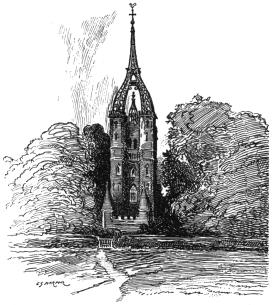
THE WATERLOO TOWER, QUEX PARK.
Quex Park is unquestionably the finest demesne in Thanet. It is a richly wooded estate nearly four miles in circuit, the seat at the present time of Major Powell Cotton, whose park of assorted artillery just within the lodge-gates consists of some thirty ancient guns, some of them dating back to the sixteenth century: all very curious and interesting. The gilded vane and odd-looking spire seen above the massed woodlands in the distance are in the centre of the park, and are most difficult to find when once within the lodge gates. One might, in fact, easily lose one’s way at Quex. They crest a lofty redbrick structure called the “Waterloo Tower,” built in 1820, and hung with a peal of twelve bells. The spire is a cast-iron one, of a design fondly thought to be Gothic, but very weird and gruesome. The tower itself is used as a mausoleum, and was restored in 1896.
Resuming the way into Margate, the road approaches close to the shore at Westgate, that bungalow town which first arose somewhere about 1878, on the enthusiastic recommendation of the air of Thanet by Sir Erasmus Wilson, at that time one of the most influential of medical men and health-experts. The now much worn and woefully misused word “bungalow,” an Anglo-Indian importation, also about that time made its first public appearance here.
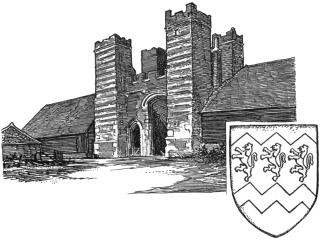
DANDELION GATEWAY.
At Westgate begin the electric tramways. Away to right of the road, at Garlinge, is an old-world survival: the fifteenth-century gatehouse of the Dandelion manor-house. The old manorial residence has vanished, but the gatehouse remains, a fine, imposing sight. Here were seated the Daundelyon family, who became extinct with John Daundelyon, last of his race, in 1445. A brass to his memory is seen in the old parish church of Margate. The inscription describes him as “gentleman”: the earliest use of that word, it is said, on any existing monument. The family name is a corruption of “Dent-de-Lion,” i.e. “Lion’s tooth,” which probably derived from the tooth-like part of the family arms, which are thus expressed, in the queer language of heralds: “Sable, a fesse indented; voided argent; three lions rampant of the same.” A sculptured shield bearing these charges is still visible on the gatehouse; and on the springing of the small archway will be found a demi-lion rampant, with a label issuing from his mouth. This was formerly inscribed “Daun-de-lyon,” but the words have now quite weathered away. It was the John Daundelyon whose monumental brass is to be found in Margate church who gave the church one of its eight bells. According to an old rhyme once current in Margate—
“John de Daundeleon with his great dog Brought over this Bell on a Mill-cog.”
The bell is of foreign make. The “dog” in question, it has been explained, was a ship. It will, in this connection, be remembered that antiquaries have sought to explain away Dick Whittington’s famous cat which brought him good fortune, and suppose it to have been the name of a vessel.
We now come again to close quarters with the seashore, which here begins to assume the aspect of what excursionists style the “real seaside.” That is to say, here are cliffs; and there, ahead, is an illimitable horizon; also indubitable sands. It is true they are not cliffs on the heroic scale, these chalky bastions. They begin at Birchington and are continued round to Westgate, Margate, and Ramsgate, with a toylike, artificial effect; rather, you know, as if some enterprising
Earl’s Court exhibition syndicate had erected them. They are strangely unconvincing to those who have been used to the great red cliffs of Devon, or the mighty granite heights of Cornwall. Being of no great height, and of such unpicturesque outline, and having been so railed in and scraped and tunnelled and mended with brick, and in all manner of ways impertinently interfered with, they look like the products of art, and very poor art too.
Brighton can beat, although its front is more miscellaneous and less stately. In fact, it looks whimsically as though one side of Gower Street had come down from London, for a change—and had not yet benefited by it! Matthew Arnold must have been similarly impressed when he wrote that this was a “brick-and-mortar image of English Protestantism, representing it in all its prose, all its uncomeliness— let me add, all its salubrity.” He had, you perceive, an unworthy affection for the tawdry rags of Continental Roman Catholicism, however insalubrious their nature, and in spite of his muchadvertised craving for “sweetness and light.”
Arnold’s sneer at Protestantism offended many, but we have travelled far and swiftly on the down-grade in the last half-century, and the thing that would once have seemed impossible has come to pass: Protestantism has become a term of abuse. We have lived to see that!
“Margate” may have been originally the “Meer-geat,” the AngloSaxon for “sea-gate”; or more probably the name derived from the “mere,” or little stream, which flowed down to the sea past St. John’s Church, along the line of the street now called The Brooks; “mere” being a well-known Kentish word for a stream. However that may be, Margate is really of ancient origin: an historical fact rather obscured by the growth of the town. Still, one has only to seek that old parish church of St. John to perceive that this was an established place in Norman times. Strange though it may seem, “Margate” was once considered a separate village or hamlet on the seashore, as we read in the itinerary of John Leland, in the time of Henry the Eighth: “Meregate lyith in St. John’s paroche in Thanet v miles upward from Reculver; there is a village and a peere for shyppes now sore decayed.”
It is an extremely dark and rather dirty church, tucked away in an obscure situation, and thus not often seen by the chance visitor. It stands at the back of the harbour, among little odd Georgian streets, and tiny squares of a kind of dolls’-house type, and is surrounded by a mangy churchyard containing trees which look as
FROM THE PALIMPSEST BRASS, MARGATE CHURCH.
FROM THE PALIMPSEST BRASS, MARGATE CHURCH.
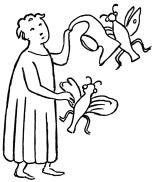
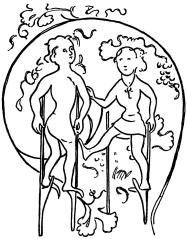
though they were longing for the country. There are no fewer than thirteen brasses here, all greatly worn, including that to John Daundelyon already mentioned, and a late example, dated 1615, to Roger Morris, with a ship in full sail and an inscription describing him as “one of the six principall Masters of Attendance of his Maities Navye Royall.” But the most curious is the fragment of a palimpsest brass hinged in a frame on the south wall of the chancel. The original was evidently a very large example of Flemish make and is curiously engraved with vine-tendrils, a shield of arms displaying three helmets on a field of crosses, two odd nude creatures on stilts, one kicking the other, reckless of maintaining his equilibrium; and a little monkish figure trying to catch monstrous butterflies as big as himself with a net smaller than the butterflies. This futile endeavour may or may not be intended as a satire upon the vanity of human wishes; but, in any case, it is a matter for rejoicing that butterflies larger than turkeys do not exist.
A favourite way of reaching Margate from London before the era of steamships and railways was by what most of the passengers called “the ’oy,” a conveyance which appeared in print with an “H” denied it in speech. The “Margate Hoy” was a type of sailing-vessel by which our ancestral holiday-makers arrived with much pleasure, or intolerable discomfort as the case might be, after a calm voyage of ten hours, or a tempestuous passage of fifteen. The hoys set sail from the Thames, near the Customs House quay, and conveyed
passengers at the extremely moderate fare of half a crown. In afteryears, when steamships replaced these clumsy, bluff-bowed old sailing-vessels, which after all looked and behaved like sailingbarges, the “Husbands’ Boat,” steaming from London on Saturdays, became the main feature of the Margate season. To-day there are still Saturday steamers, of a very up-to-date type, to Margate and Ramsgate; but the term “Husbands’ Boat” is altogether outworn and hopelessly stale, now that uxoriousness is no longer even the mark of the middle class and the ideal is, at the best of it, for husbands and wives to make holiday apart, or, at the worst of it, with some one else’s partner.
Margate saw the invention of the bathing-machine about 1765, by that modest Quaker, Benjamin Beale. The immodest modesty of that cumbrous and supremely uncomfortable affair has made the English at the seaside the laughing-stock of other nations; but brother Broadbrim’s invention still lags superfluous on many a seaside scene, although bathing-tents actively dispute possession.
The visitor will not have been long in Margate before his attention is drawn to men distributing bills inviting all and sundry to “Go and see the Grotto!” Among the attractions of this place, set forth on these leaflets, is “two thousand square feet of shellwork”—a kind of decoration sufficient to make the artistic shudder. The “Grotto,” which is really an excavation in the chalk, is situated in Bellevue Place along “The Dane,” a thoroughfare about half a mile from the front. It consists of a passage some 60 ft. in length, ending in a chamber about 12 ft. square. Both passage and chamber are lined with common shells set in cement and displayed in geometrical and floral devices. A great deal of nonsensical legend has accumulated about this place, which is said to be a work of immemorial antiquity. That accepted archæologist, Miss Marie Corelli, in her book “Cameos,” declares it to be “one of the World’s Wonders,” and “a curious and beautiful subterranean temple”; and believes it to be a work of the Vikings; a catacomb where they buried their dead. Unfortunately for this view, we have only to refer to Charles Knight’s book, “The Land we Live In,” published about