7.CommunityTraumaandWorkingintheSchools135 Types of Community Trauma136
Community Reactions to Trauma137
Cultural Considerations in Community Responses138 Important Principles in Community Trauma140 History140
Community Interventions After Trauma141 Guidelines for Conducting Community Meetings142
Pre-Planning142 Structure of Meeting144 Working With Large Groups in a School Setting147 Planning Ahead in Schools147 Construction of Crisis Protocols149 Dealing With Parents151 Media151 Funerals152 Memorializing152 Conclusion152 References153
8.TraumaticStressDebriefingWithAdults155 Types of Traumatizing Situations in a Community156 Background on Debriefings156 Models of Debriefing157 The Debriefing Debate159 Community Trauma Debriefing164 Pre-Intervention Consultation165 Timing166 Training Debriefers167
Psycho-Education and Self-Care167 Mechanics of Conducting a Community Trauma Debriefing168 Pre-Meeting Preparation168 Introducing the Debriefing169 Getting to the Facts and Thoughts170 Discussing Affective Reactions170
Psycho-Education: Reviewing Reactions171 Strategies for Self-Care172 Wrapping up the Debriefing172
trauma work. Second, the strong desire of mental health professionals to learn how to conduct effective trauma therapy. Third, the misconceptions that trauma treatment involves an immediate disclosure of trauma details, that all trauma survivors initially present with trauma disorders, and that trauma therapy is vastly different from general psychotherapy. I believe this book will dispel these myths.
To present the material in an engaging format, I have chosen to include case vignettes and clinical material from clients I have encountered in my clinical practice. The case examples illustrate typical client presentations and help clarify diagnoses and different treatment interventions. Pseudonyms have been used to maintain confidentiality; identifying information has been changed to maintain the privacy of the special people I have worked with over the years.
The primary objectives of the book are to provide both a historical overview and theoretical perspectives on trauma; to review symptoms and the clinical picture; and to introduce treatment approaches that provide a stage-appropriate, culture-based paradigm that can be integrated into existing therapeutic orientations. This perspective comes from my belief that psychological and behavioral adaptations to trauma are expressions of pain and efforts to cope with unacceptable environmental demands or stressors. These adaptations are, therefore, not necessarily pathological and are often grounded in cultural systems of meaning-making. It is the counselor’s responsibility to locate and use the strength and resilience inherent within individuals, families, and communities and to empower them toward healing and recovery. It is my hope that an understanding of this field will sharpen practice with both traumatized and nontraumatized people and will heighten understanding of the impact of extreme stress and violence while developing a self-reflective stance toward conceptual, ethical, and clinical approaches to trauma.
The book begins with an overview of the trauma field, focusing on intergenerational trauma among several neglected ethnic minority groups in the United States (Native Americans, African Americans, and Japanese Americans). Those readers who want to learn more about the struggles faced by these groups may find the resources offered at the end of Chapter 1 useful. The chapters that follow look at the diagnosis of trauma (Chapter 2) and the different approaches in trauma intervention (Chapter 3). Chapter 4, “Empowering Interventions,” describes the model I currently use in my own clinical practice. Although the therapeutic relationship assigns a level of power to the therapist, this chapter is not about the therapeutic power but the power inherent in all clients to change their lives and heal themselves.
An integral role of the therapist is identifying clients’ strengths, seeing their promise, and highlighting their power so that they can become independent keepers of their destiny. There is a significant overlap between trauma work and crisis work. Trauma therapists should be familiar with the principles of crisis intervention. Chapter 5 provides this information. Chapter 6 addresses group therapy, which is often used in trauma work either as a stand-alone or adjunctive modality. Trauma interventions with communities are inevitable when one works within an ecological model. Chapter 7 outlines the foundations of community intervention and describes how to conduct a community meeting. The efficacy of debriefing as a form of crisis intervention has been hotly debated in recent years. Chapter 8 reviews the background on debriefing, describes the various debriefing models, and introduces the community debriefing model that supports community empowerment.
In Chapter 9, the focus of the book turns to special populations and situations of trauma, beginning with children and adolescents; Chapter 10 addresses the interpersonal violence of rape and domestic violence as it specifically affects women and children. The chapters that follow look at those affected by political trauma, terrorism, and natural disasters. The book ends with an exploration of secondary trauma in Chapter 14, titled “Helping the Helper.”
I hope that this book holds your attention, adequately addresses your major questions, and enhances your ability to recognize, diagnose, and empower individuals, groups, and communities affected by traumatic events.
on both of you. My sincere gratitude to the independent reviewers assigned by Sage for their constructive and critical feedback that helped sharpen the focus of this book.
Finally, my cat Speedy has stood unwaveringly by my side. He was often my morning wake-up call; his gentle nudge and purring was a reminder that it was time to write again. Late at night, he was still by my side, warming me and my laptop and serving as a steady source of both comfort and distraction.
1
OverviewofTrauma
On a Friday afternoon in late February, an angry 23-year-old African American man entered a therapist’s office. Duane was seeking help because he felt things were “getting out of hand” in his life. He barely slept two or three hours a night; the pains in his legs and his back were excruciating and painkillers were not helping. During his waking hours, he was unable to forget his recent assault. According to Duane, he was driving on the highway when a truck skimmed the side of his car. The driver did not stop but continued driving along the highway. Suspecting that his car was damaged, Duane went abreast of the other car and gestured to the driver to pull over.
The driver eventually stopped on the side of the highway and assertively asked Duane, “What the hell is your problem?” As Duane began to explain what happened, the other man made a call on his cell phone. Duane didn’t know that, although the other driver was not in uniform, he was a police officer. A few minutes later, three police cruisers pulled up, and four police officers with their hands over their holsters approached him. Within minutes, he was slammed against a police car as the heel of a boot dug into his rib cage. Racial epithets proliferated and the phrase “you people” currently reverberates in Duane’s mind. His girlfriend and grandmother watched in horror as Duane was ruthlessly beaten, thrown into the police car, and taken to the police headquarters. He recalls being beaten in front of his family as the most humiliating aspect of this violent incident.
When asked how the violence unfolded, Duane explained that when he saw the police officers walking toward him with their hands over their guns, he “lost it.” He was overcome by a dark rage and hatred for the injustices he has
2 A Practical Approach to Trauma
experienced throughout his life from police officers who, often unfairly or with little cause, “stop and check” the youth in his neighborhood. Additionally, the aggressive posturing of the police officers and his isolation in the group reminded him of lynchings in the South. He had watched many films that captured these racial incidents and the unfair victimization of black men. His aggressive and belligerent response to the police officers’ questions was not based solely on the “hit and run” incident but included a history of over 200 years of oppression and disenfranchisement of African Americans in this country. The similarity to the black slave being whipped by the master as his wife and children watched helplessly was apparent. Like many black males, Duane was suffering from multigenerational trauma, which impeded his judgment and influenced his interactions with others.
In therapy, Duane will have to learn how to manage his anger so that further conflicts do not jeopardize his life. Once he identifies incidents that trigger acts of violence and rage, he can develop effective coping skills before beginning to examine the roots of his rage. In a therapeutic relationship that is attentive to his cultural experience, he will gain a deeper understanding of the origins of the intergenerational trauma he suffers. This understanding can be increased by including other family members, for example his grandmother, in the therapy. The fact that Duane sought therapy on his own is encouraging.
In this chapter, we look at the historical origins of the trauma field. The evolution of the field over the past 20 years will be examined in the context of the experiences of four specific groups: Native Americans, African Americans, Japanese Americans interned during World War II, and Vietnam veterans. This examination includes a chronological discussion of the intergenerational traumas of the Native American genocide, slavery, and the Japanese internment. A discussion of the historical origins of trauma will not be complete without mention of the veterans from the Vietnam War who were the catalyst for the American Psychiatric Association’s (APA) adoption of post-traumatic stress as a psychological disorder.
HistoricalOverview
The English word “trauma” is derived from the Greek word “wound.” This word connotes a physical injury and parallels the psychic wounding that can
Freud began to notice that sexual transgressions against children were just as common among the bourgeois of Vienna, where he had established a practice, as it was among the proletariat of Paris, where he first began to study hysteria. He developed a fear that publicizing his findings would result in a backlash from his supporters, who would withdraw funding. Freud recanted his initial findings, and thus this first opportunity to sustain public attention on psychological trauma was lost (Herman, 1997).
The second resurgence of a discourse on psychological trauma in the public domain occurred after World War I, when the term “shell shock” was used to describe the mental state of many returning soldiers. The development of this disorder was attributed solely to the physical experience of a shell exploding and causing a shock to the nervous system of a soldier. Later, it was discovered that not all soldiers who developed “shell shock” actually experienced a shell exploding. This discovery led to the recognition that other causes explained the soldiers’ psychological reactions. By World War II, the concept of “post-trauma syndrome” surfaced as a disorder when Kardiner (1941) described post-traumatic stress disorder (PTSD) as it is understood today. The symptoms included feelings of irritability, outbursts of aggression, an exaggerated startle response, and fixation on the traumatic event. Other diagnostic terms used to describe traumatic stress among combat veterans began to proliferate. These terms included battle fatigue, war neurosis, hysteria, shell shock, post-Vietnam syndrome, and traumatic neurosis (Everly, 1994).
The third attempt to focus on the debilitating effects of psychological trauma occurred during the Women’s Liberation Movement of the 1970s (Herman, 1997). Through Betty Friedan’s work with the feminist manifesto and her establishment of the National Organization of Women (NOW), Kathie Sarachild’s efforts to introduce consciousness-raising as a radical weapon of the Women’s Liberation Movement, and Susan Brownmiller’s efforts to draw public attention to rape through her feminist writings, the focus on psychological trauma grew. These writers highlighted that it is not war but interpersonal violence directed against women that is the most commonly occurring psychological trauma in Western society. Thus, the plight of many silenced victims of sexual crimes was illuminated.
An acknowledgment of the negative consequences of interpersonal violence occurred in 1975 when the National Institute of Mental Health (NIMH) established the Center for Research on Rape. By focusing on rape, researchers found that childhood sexual abuse and domestic violence were just as prevalent. It would take a few more years for recognition of the syndrome seen in victims of rape, domestic violence, and childhood sexual abuse to be viewed as the same syndrome seen among combat veterans (Herman, 1997).
PTSD was first recognized as a distinct diagnostic entity in 1980 and included in the third edition of the Diagnostic and Statistical Manual of Mental Disorders; it was categorized as an anxiety disorder because of the persistent anxiety, hypervigilance, exaggerated startle response, and avoidance behaviors displayed by trauma survivors (APA, 1980). This coincided with research and documentation of PTSD that began in earnest after the Vietnam War. For example, the National Vietnam Veterans Readjustment Study was a major study that found a high prevalence of PTSD among returning Vietnam soldiers (Kulka et al., 1990). The empirical literature investigating traumatic stress among other traumatized groups burgeoned with the recognition of PTSD as a diagnostic category. In 1994, when the fourth edition of the Diagnostic and Statistical Manual of Mental Disorders was published, it included findings from many of these empirical studies and field trials (APA, 1994).
Several significant incidents had a major impact, in the form of intergenerational trauma, among several ethnic minority groups living in the United States. The effects of these incidents have been minimally covered in the psychological literature. The next section will focus on these intergenerational and multigenerational traumas as experienced by three ethnic groups: Native Americans, African Americans, and Japanese Americans.
Intergenerational and Multigenerational Trauma
Intergenerational or multigenerational trauma is defined as the cumulative emotional and psychological wounding that is transmitted from one generation to the next (Rakoff, Sigal, & Epstein, 1966). Rakoff et al. first introduced the concept of intergenerational trauma when they described how the effects of the Holocaust were transmitted to future generations. A growing literature based largely on clinical studies and anecdotal reports soon emerged (Portney, 2003).
Violent historical events, discrimination, and oppression experienced by prior generations can potentially affect the lives of future generations in the form of unresolved grief and ongoing trauma. The consequences of these collective traumas continue to be apparent in the oppressive behaviors that are widespread in American society today. Racial profiling and police brutality against black men are examples of institutional violence. The intergenerational accumulation of trauma, the persistence of oppression, and a disadvantaged social status have all had a significant negative impact on minority group members.
The resulting emotional effects of multigenerational trauma can be seen in the high rates of depression, anger, stress, hypervigilance, low self-esteem,
and cultural shame as well as loss of language, culture, and traditions. Multiple social ills, including substance abuse, alcoholism, family and domestic violence, high suicide and homicide rates, and frequent incarceration appear to abound disproportionately among ethnic minority groups in the United States.
Three historical and traumatic incidents—the decimation of Native Americans, African American enslavement, and the internment of thousands of Japanese American citizens during World War II—have contributed to the intergenerational trauma found among a multitude of survivor offspring. The impact of these historical traumas are neglected in the trauma literature. The lack of empirical studies of groups who have experienced intergenerational trauma is demonstrative of a selective neglect of disempowered groups in the U.S. One may argue that because the affected groups hold a minority cultural status, studying their histories is not a high priority. It is for this reason that a historical account of trauma among these groups is reviewed in greater depth in this chapter. Several other major traumatic incidents, among them the Jewish Holocaust, have had considerable traumatic impact on many individuals, many of whom later settled in the U.S. The immense suffering of Holocaust survivors and the impact of trauma on their migration, adaptation, and ethnic identity will continue to have a lasting impact. These events are not discussed in this chapter because they did not occur in the U.S.; however, empirical studies of the effects of the Holocaust on survivors have been included for illustrative purposes. A brief account of the traumas that occurred in the U.S. is discussed to acknowledge their existence and to encourage psychotherapists who work in the trauma field to be attentive when treating members of these groups. First among these groups are Native Americans.
The Native American Genocide
The original inhabitants of the U.S. are estimated to have numbered 18 million when Columbus first arrived in the Americas in 1492 (Stiffarm & Lane, 1992). The number was drastically reduced soon after the Natives encountered white colonists. It is estimated that by the end of the nineteenth century, about 95% to 99% of Native people were decimated in battle or killed by diseases brought by European settlers, reducing their population to one million by 1900 (Stiffarm & Lane, 1992). The “Trail of Tears” and the “Long Walk” are examples of violently imposed acts of relocation, which were implemented to create opportunities for additional white settlement at the expense of the Native people. Not surprisingly, many Native Americans view contact with whites as colonialism and genocide (Stamm & Stamm, 1999).
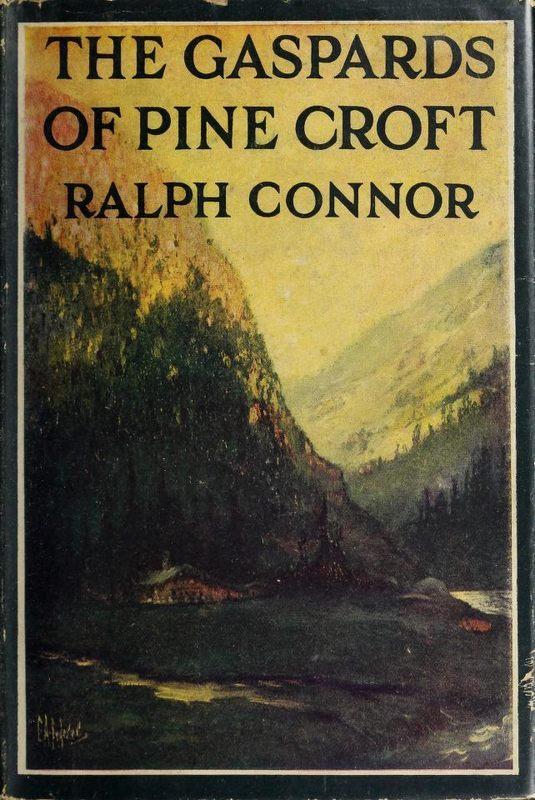
The Project Gutenberg eBook of The Gaspards of Pine Croft: A
Romance of the Windermere
THE GASPARDS OF PINE CROFT
RALPH CONNOR
By RALPH CONNOR
The Gaspards of Pine Croft
To Him That Hath
The Sky Pilot in No Man’s Land
The Major
The Patrol of the Sun Dance Trail
Corporal Cameron
The Foreigner
Black Rock
The Sky Pilot
The Prospector
The Doctor
The Man from Glengarry
Glengarry School Days
COPYRIGHT, 1923,
BY
GEORGE H. DORAN COMPANY
THE GASPARDS OF PINE CROFT. PRINTED IN THE UNITED STATES OF AMERICA
THE GASPARDS OF PINE CROFT
CHAPTER I
Of all British Columbia valleys none has a finer sweep than the spacious Windermere. The valley rolls itself on both sides of the Columbia River in wide stretches of grass lands, varied with great reaches of red pine forest, here of open park-like appearance, there thick with underbrush of spruce and cedar. The valley lies between the two ranges of the Selkirks, which in places crowd hard upon the river and again lie up against a far horizon across a stretch of tumbling foothills. With the autumn sun on its rich and varied wealth of color, the valley lies like one great genial smile across the face of British Columbia from Golden Pass to the Crow’s Nest, warm, kindly, restful.
It was upon a glorious autumn day that Hugh Gaspard’s eyes first rested upon the valley, and from that first impression he could never escape. For, though by training and profession Gaspard was an engineer, and with a mastery of his craft, by native gifts of imagination and temperament and sense of colour, that rarest of Heaven’s bestowments, drawn from his mingled Highland Scot and Gallic blood strain, he was an artist.
Gaspard was enormously proud of this mingled blood of his. He was never quite sure which strain brought him greater pride. It depended entirely upon his environment. In Glasgow, where his father’s engineering works were situated and where he spent his boyhood, he was never tired vaunting the “Gaspard” in his blood. In Paris, where in early youth he spent his holidays and where later his hard-headed and practical father declared he “wasted two valuable years of his life fiddlin’ wi’ pents and idle loons and lassies,” he was vehemently Highland, a cousin, indeed, to the Lochiel himself. From
triumphs they pictured, and, it must be confessed, the showing of the bank book most of all, produced a profound impression upon the shrewd old Scot.
The glories of the Windermere Valley, its vast agricultural and grazing resources, its immense water powers, its unknown mineral resources, its unequalled climate, and the unique opportunity offering at the very moment for the purchase of a five thousand acre tract of land from the Government at a quite ridiculous price, lost nothing in their setting forth by the descriptive powers of his son, backed up as they were by gorgeously coloured literature issued by the Immigration Department of British Columbia. Only one result could follow. His father, swept completely beyond the moorings of his life-long shrewd and calculating “canniness” by his son’s glowing presentation of the opportunity not only of winning for himself a very substantial fortune but also of becoming that thing dear to every British heart, a great landed proprietor, frankly surrendered, and, having surrendered, proceeded to follow up his surrender in a thoroughgoing business-like manner. If a ranch were to be started in British Columbia, let it be started in such style as to insure success. None knew better than the old Scot how easily possible it is to kill a thoroughly sound enterprise by early starvation. Hence, there was placed in the Bank of Montreal, Vancouver, a sufficient sum, not only to purchase the land, but also to adequately, even generously, equip and stock the ranch.
The two years spent in building, equipping and stocking operations in connection with the establishing of the Pine Croft Ranch constituted for many years the high-water mark for princely expenditure in British Columbia, which is saying a good deal. For many months the Golden-Crow’s Nest trail was periodically choked with caravans of pack ponies and freight wagons piled high with a weird assortment of building material and equipment and household furnishing, later enlivened with lines of thoroughbred Holsteins and Percherons. The Windermere Valley was thrilled with the magnificence of the whole enterprise. The Vancouver Free Press chronicled the event in laudatory terms:
“The establishing of the Pine Croft Ranch upon such an assured foundation is at once a testimony to the far-sighted policy of our enterprising and gifted fellow-citizen, Hugh Gaspard, Esq., and an evidence that a new era has dawned for our Province. The capitalists of the homeland have hitherto been blind to the unrivalled agricultural and ranching possibilities of our wide-sweeping British Columbia valleys. Mr. Gaspard is very shrewdly anticipating the advent of an almost limitless market for the products of his ranch by the construction of another great railroad through the mountains, with lateral colonisation lines to the main line of the Canadian Pacific Railway. It is also no small tribute to the engineering genius of Mr. Gaspard that he has foreseen the vast resources of the Windermere Valley in water power for mining operations which are sure to follow the railway development of that part of the Province. Altogether, it is not too much to say that the establishing of the Pine Croft Ranch inaugurates a new era in the development of our Province.”
The Pine Croft Ranch was situated about halfway down the Windermere Valley, between Golden and the Crow’s Nest Pass, in one of the mighty loops of the Columbia River, and comprised within its bounds mountain and valley, lake and stream, grass lands and park-like forests, a wonderland of picturesque and varied beauty.
For the site of his ranch bungalow, Gaspard chose one of the parklike forest benches of the Columbia, set out with tall red pines with polished boles running up one hundred and fifty feet to spreading green tufts. It was built of red pine logs, with low roof and wide verandahs, and flanked on one side with gardens, riotous with flowers of all kinds and colours, some gathered from their native wilds near by and others transplanted from their native haunts in Scottish glens and moors. On the other side of the bungalow ran a little river, tumbling noisily and joyously from the upper branches of the Columbia River below. It offered to the eye a satisfying picture of homely beauty, kindly, cosy, welcoming. Beyond the riot of flowers a grass paddock of some five acres reached to the corals and stables.
Within the bungalow everything in furnishing and adornment suggested comfort and refinement. In the living room the walls of
polished pine logs were hung with old tapestries, the rich red brown of the logs relieved by the gleam of old silver from diamond-paned cupboards and bits of old china and Oriental jade, with a rare collection of ancient pewters disposed here and there. The note of easy comfort in the room was emphasised by the Persian and Assyrian rugs, with the skins of grizzly and cinnamon bear upon the floor, together with the solid, deep-seated chairs and sofas upholstered in leather. Altogether, it was a wholly livable room, in which everything in the way of furnishing and adornment spoke of sound and educated taste. Opposite the main door, a stone built fireplace of generous size gave promise of cheer throughout long winter evenings. On each side of the fireplace a door led to dining room and kitchen respectively, while through a curtained archway on the left a corridor ran, flanked on either side with bedrooms. On the remaining side of the living room, folding doors opened upon a sunny room looking toward the north and west, enclosed on three sides with panelled glass. This room, from its appointments and furnishings, obviously did double duty as studio and work room.
To this home in the British Columbia wilds, far from the homeland and friends of the homeland, remote from the great world and its allurements, he brought as his wife the daughter of a West Country laird. A young girl she was, fresh from her English school, the first fine bloom of her girlhood still upon her, the sweet purity of her soul unspoiled by the defiling touch of our modern society, her high spirit unbroken, her faith in man and in God as yet unshaken.
The manner of his coming upon her was of a piece with the romantic passion within which his spirit enshrined her. Upon one of his tramps along the West Coast he found himself on an evening in a driving fog, hopelessly lost and with the prospect of a dreary night in some cheerless wind-swept cave. Out of the mist, sprite-like, she came, her blue eyes looking in upon his soul from an aureole of misty golden curls, and led him, her captive on the moment and forever after, to her home. That evening was the beginning and the end for them both. He talked and she listened. She sang and he played. Of the Windermere and its wonders he told her, drawing the