Welcome to the Living in Qatar e-guide of our 95th issue of the ever-evolving Marhaba. This issue marks Marhaba’s 32nd anniversary. However, it has also been one of our most challenging editions due to the ongoing Middle East crisis. Our team has worked diligently, both in print and online, to provide the most accurate and up to date information, though the situation remains fluid.
Through the challenges of print media, the pandemic, and the current Middle East crisis, Marhaba has stood the test of time, and 32 years on, it remains Qatar’s premier information guide for tourists, visitors, and residents.
Though Qatar, along with the region, has recently experienced instability and insecurity, life continues to thrive in Qatar. It begins to get warmer and quieter at this time of year, but there is still much happening across the country. Visit marhaba.qa for up to date news, information, and event listings as the regional crisis continues to develop.
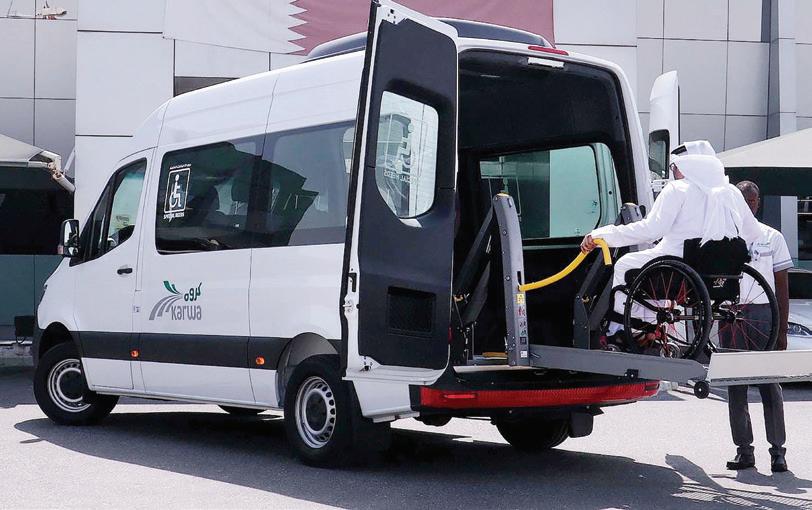
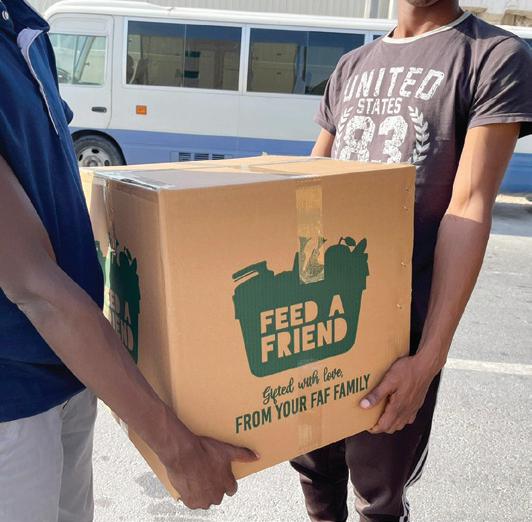
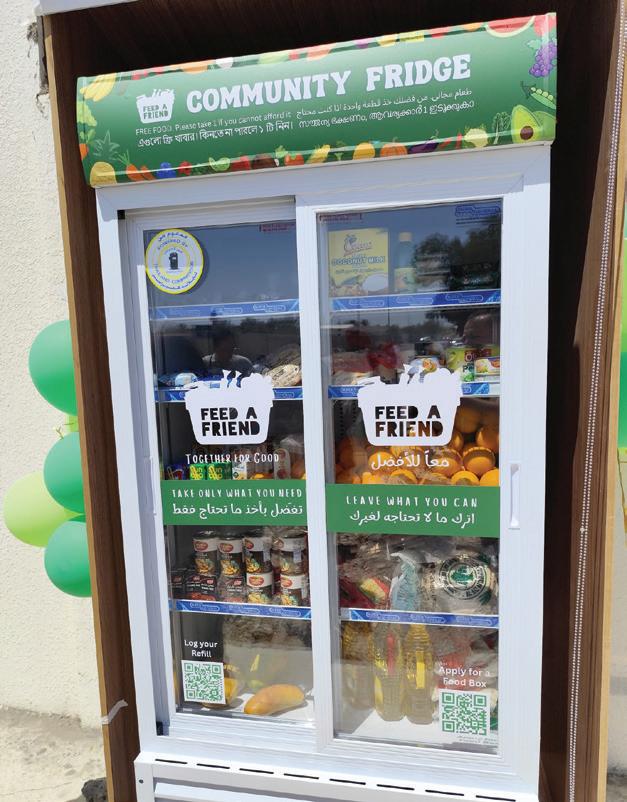
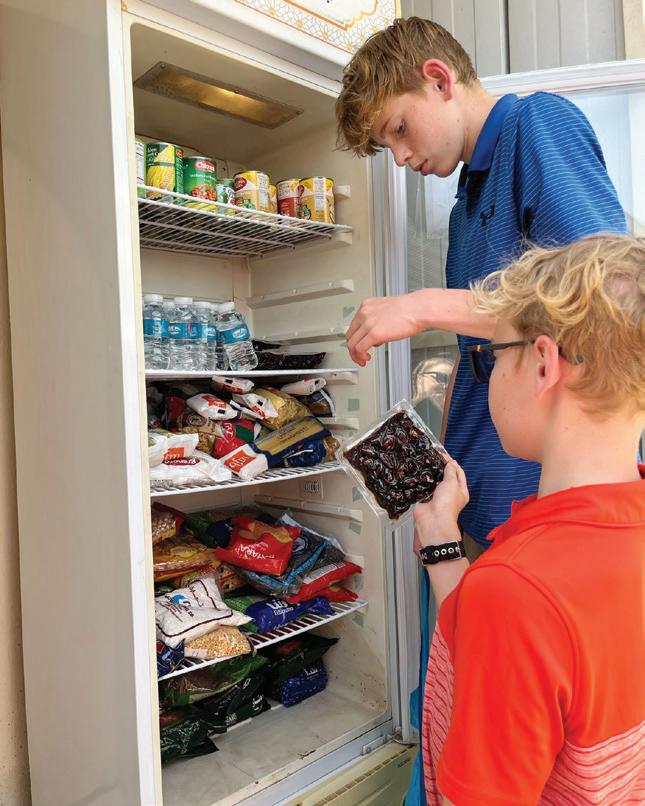
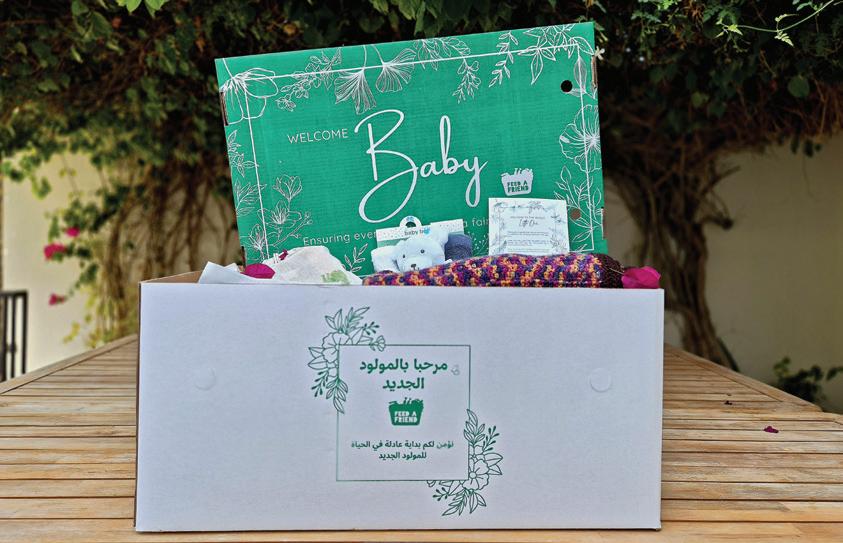
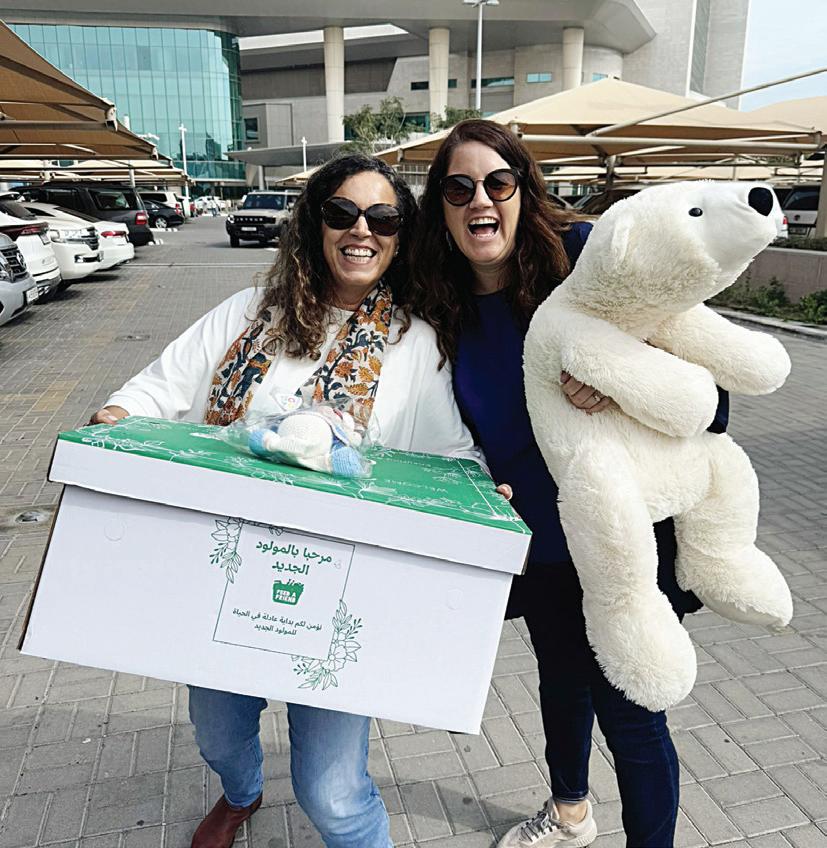
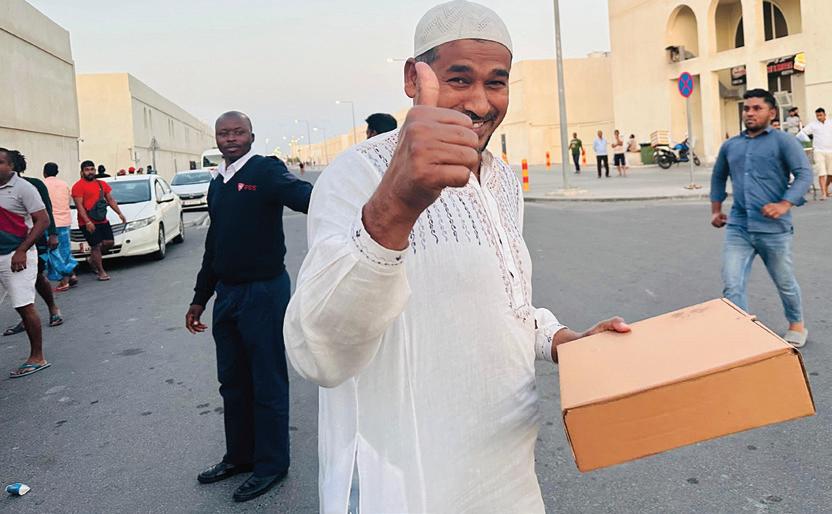
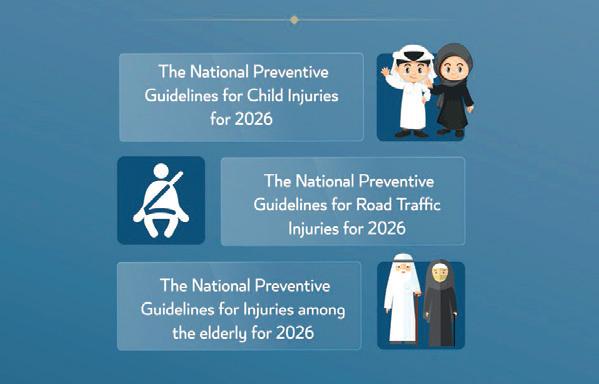
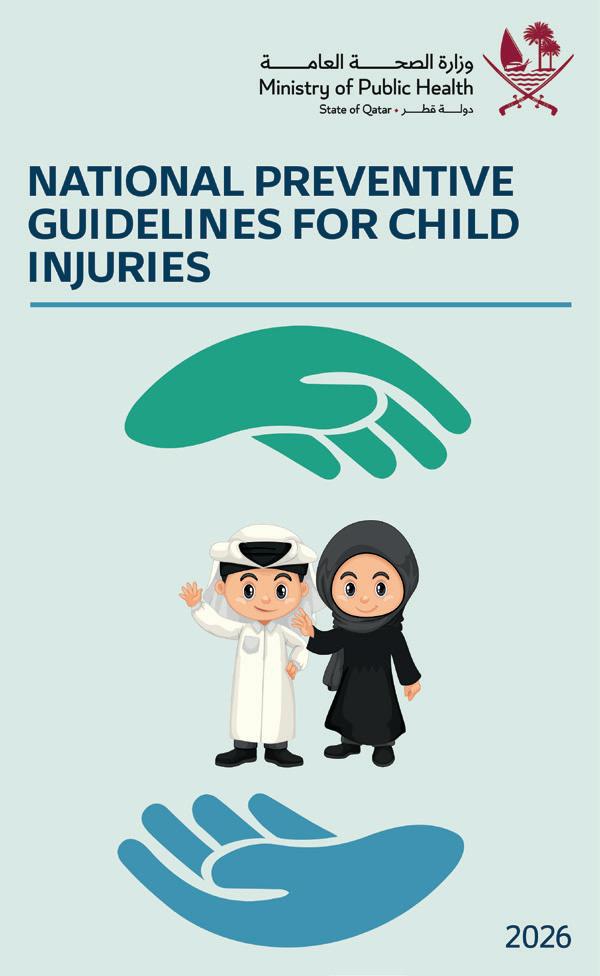
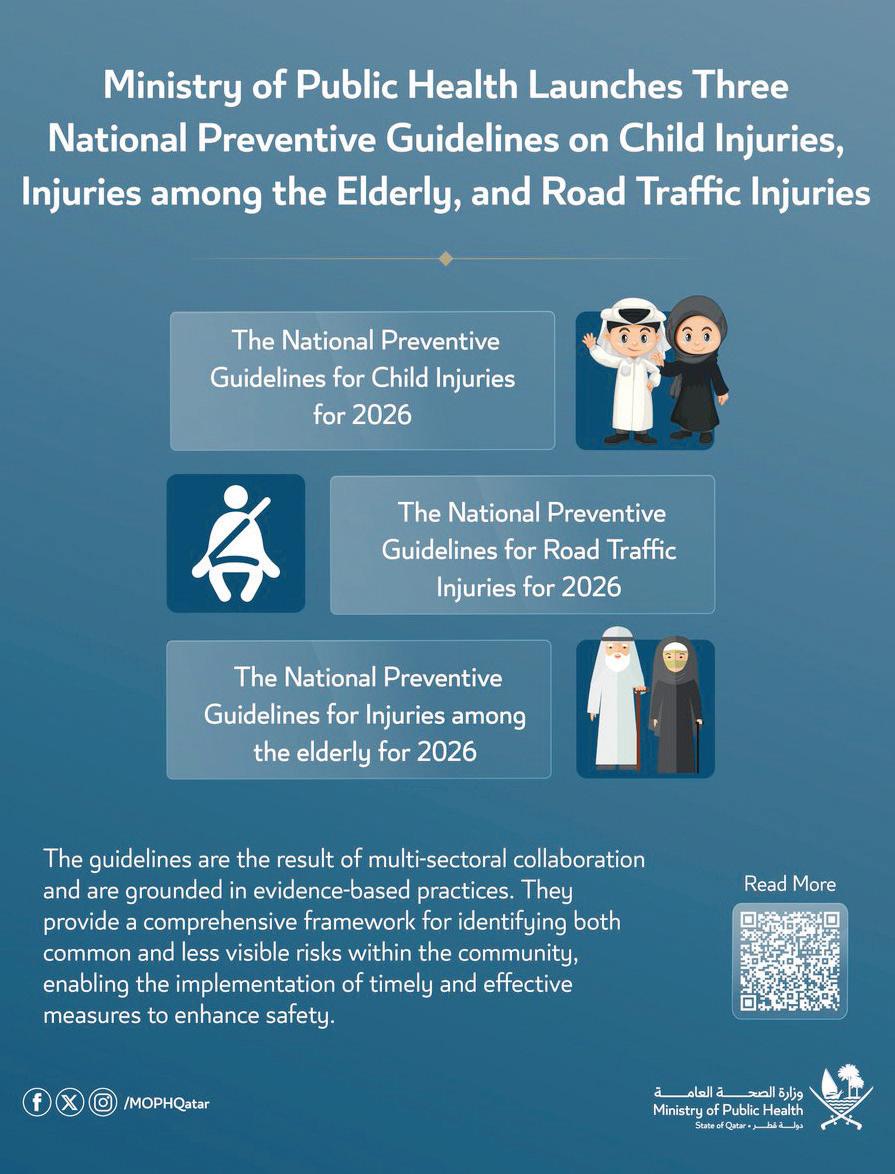
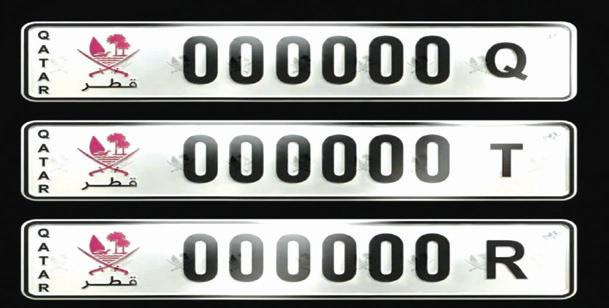
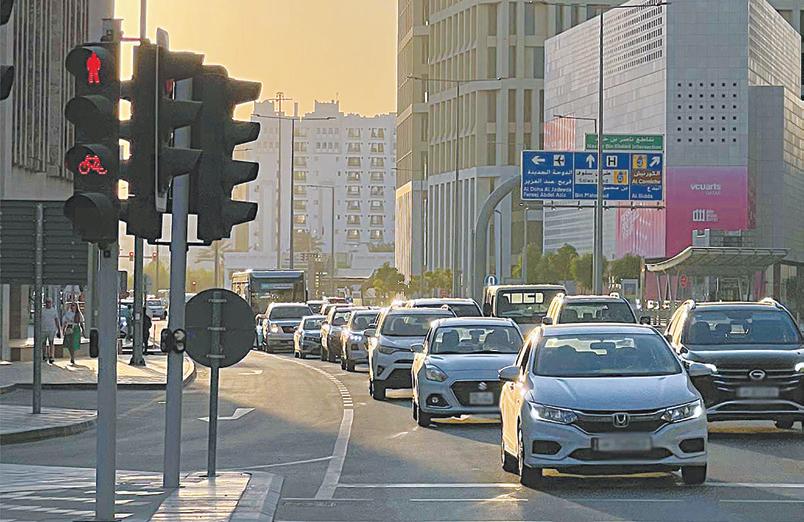
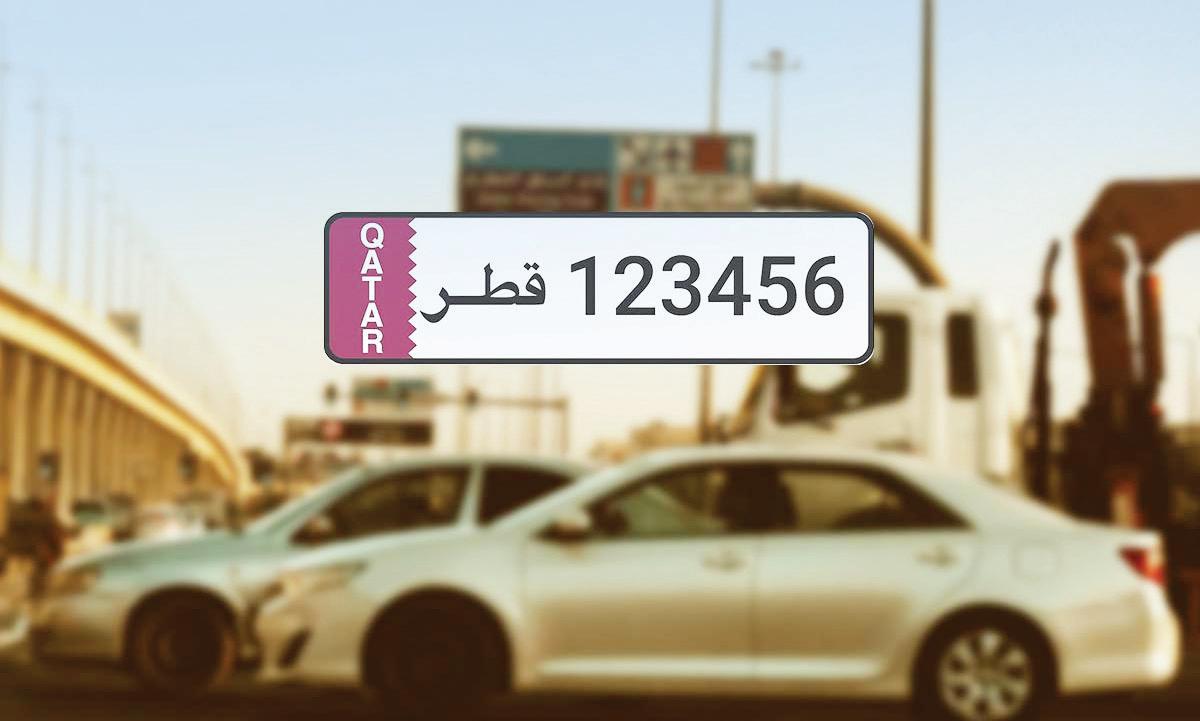
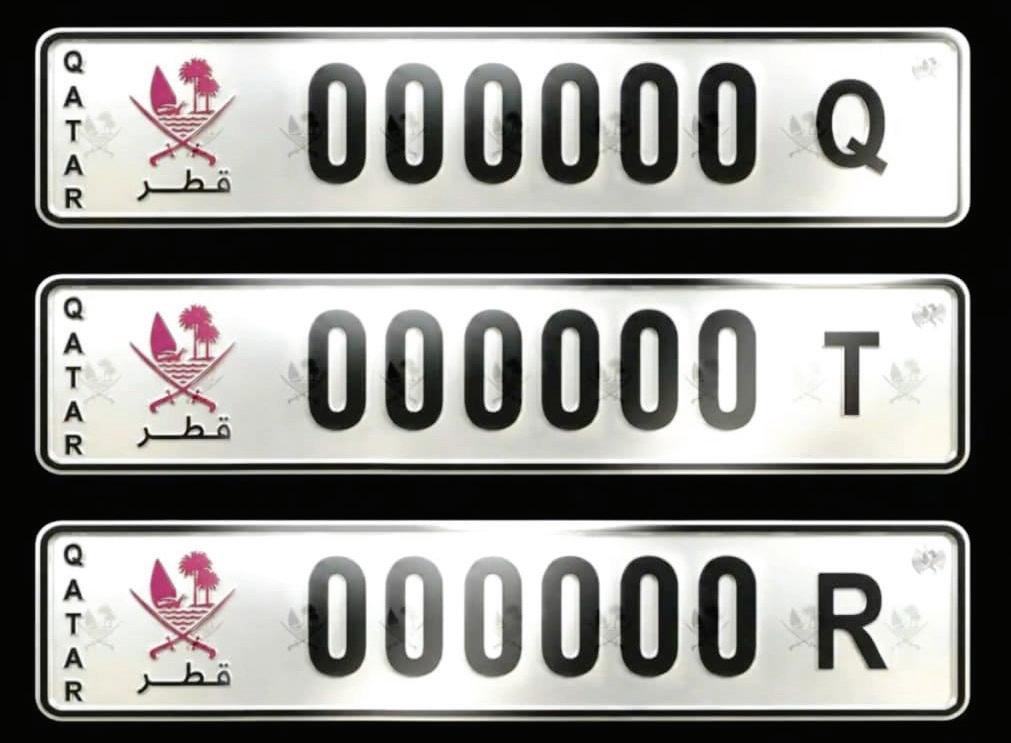
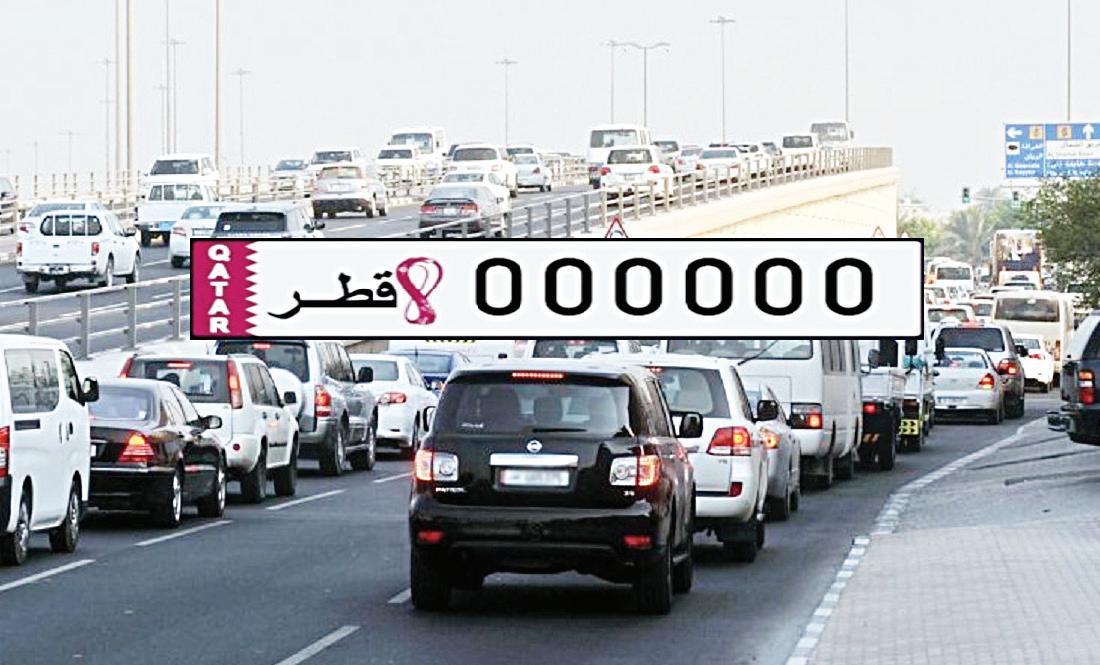
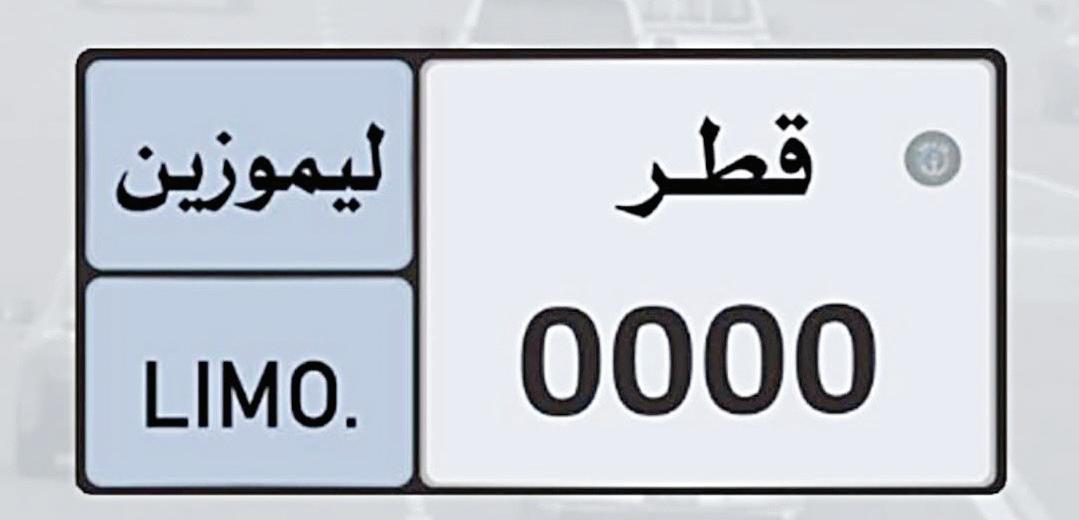
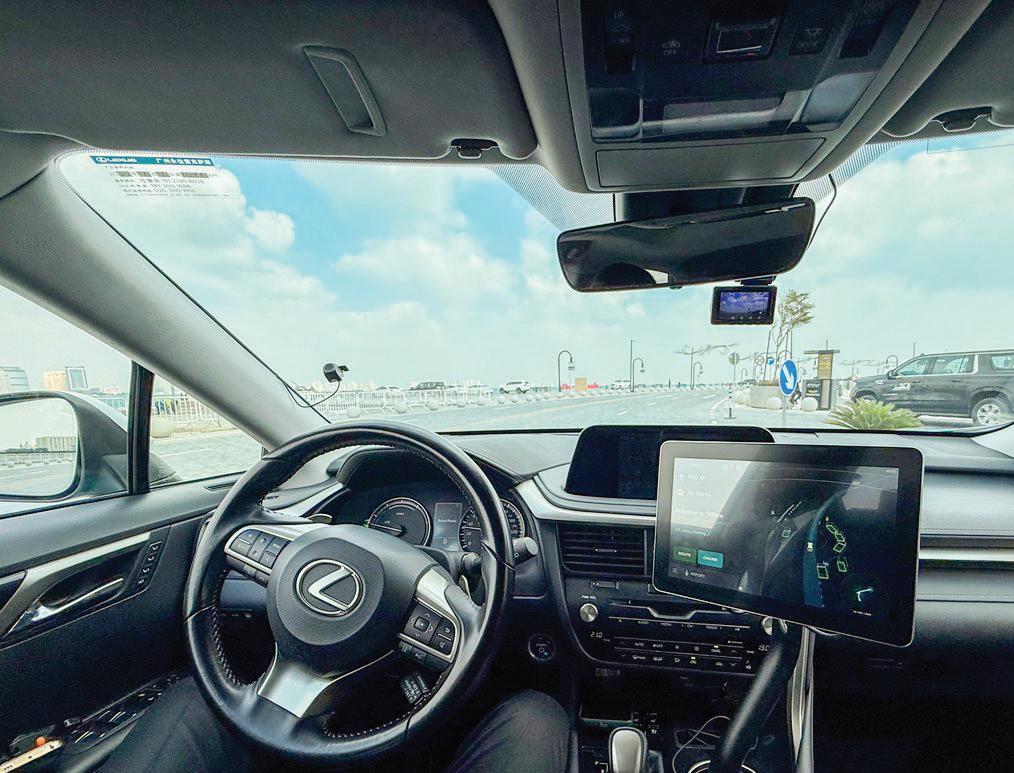
n this e-guide, we cover everyday essentials for living in Qatar, from pets and animal welfare to accessibility and motoring. Our Interesting Reads feature Three New National Preventive Guidelines Launched and Bound by Purpose: Feed A Friend, while New Vehicle Licence Plates and On Trial: Robotaxis in Qatar explore developments in traffic and public transportation.
There is plenty more to explore in this e-guide and across our full collection of 10 free e-guides, covering everything from events and activities to shopping, education, hospitality, dining, event planning, and business and economy. You can also visit marhaba.qa for the latest news, along with food, staycation, and car reviews, plus events and entertainment options.
Whether you're reading this e-guide from Qatar or abroad, we hope you find it insightful. Don't forget to follow us on our social media channels, and subscribe to our free weekly newsletter. We look forward to connecting with you!
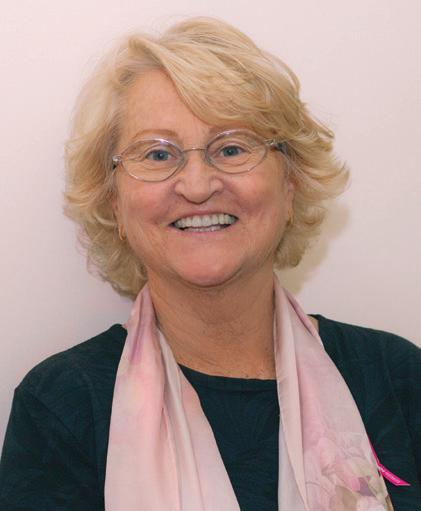
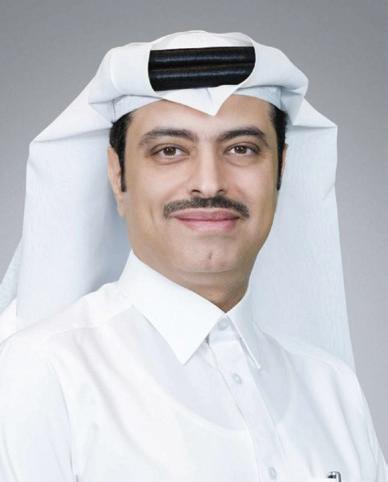
Hilary Bainbridge Founder and Managing Editor
MarhabaGuideQatar
@MarhabaQatar
@MarhabaGuideQatar
MarhabaQatar
MarhabaInformationGuide
Living in Qatar Living in Qatar
Day-to-Day Qatar
• Ministry of Interior • Government Apps • Qatar Labour Law (Kafala)
• Residence Permit • Residence/Work Permit
• Renewing a Residence Permit • Other Residence Permits • Exit Permits
• Useful Documents/Processing • Health Related Services
Housing and Utilities
• To Rent • To Buy • Letting Agents • Lawyers and Legal
• Relocation Services/Removal Firms
• Other Housing Considerations
• Water and Electricity • Gas • Telephone and Internet
Living Essentials and Services
• Television and Radio • Newspapers • Public Wireless Internet
• Postal Services and Mail • Courier Services
• Places of Worship • Birth, Marriage, Divorce and Death
• Liquor Permit
Leaving Qatar
• Employment • Banking • Education
• Healthcare and Health Reports • Housing and Moving Logistics• Pets
Pets and Animal Welfare in Qatar
• Pet Etiquette • Pet-friendly Destinations • Pet Services
• Importing and Exporting a Pet • Laws Regulating Endangered Animals
• Private Veterinary Clinics and Services
Accessible Qatar
• Educational and Learning Centres • Healthcare (Therapy and Support) Centres
• Leisure and Entertainment
• Travel and Transportation
• Important and Useful Platforms
Founder & Managing Editor
Hilar y Bainbridge
Editorial
Sarah Palmer (Editor)
Ola Diab (Deputy Editor)
Terr y Sutcliffe
Adver tising
Howard Bainbridge
Marrian Magtira
Retail Sales
Ayen Molina
Online/Digital
Patrisha Manzon
Char lotte Wright
Juggy Gill
Isra Mubarak
Design and Ar twor k
Dick Tamayo
Mar Principe
Marhaba endeavours to quote accurate information and updates each of its sections ever y issue. However, the company accepts no responsibility or liability for any false, inaccurate, inappropriate or incomplete information presented, whether in print, on the website, or on social media channels.
Dana Public Relations PO Box 3797, Doha, Qatar Tel (+974) 4465 0083, 4465 5533
General Information
marhaba@marhaba.com.qa
Follow us
See also our maps Al Khor and the Northeast Coast
See also our maps Al Wakra, Mesaieed and the Southeast Coast
See our detailed
map of the area south of Doha MAP of AL WAKRA
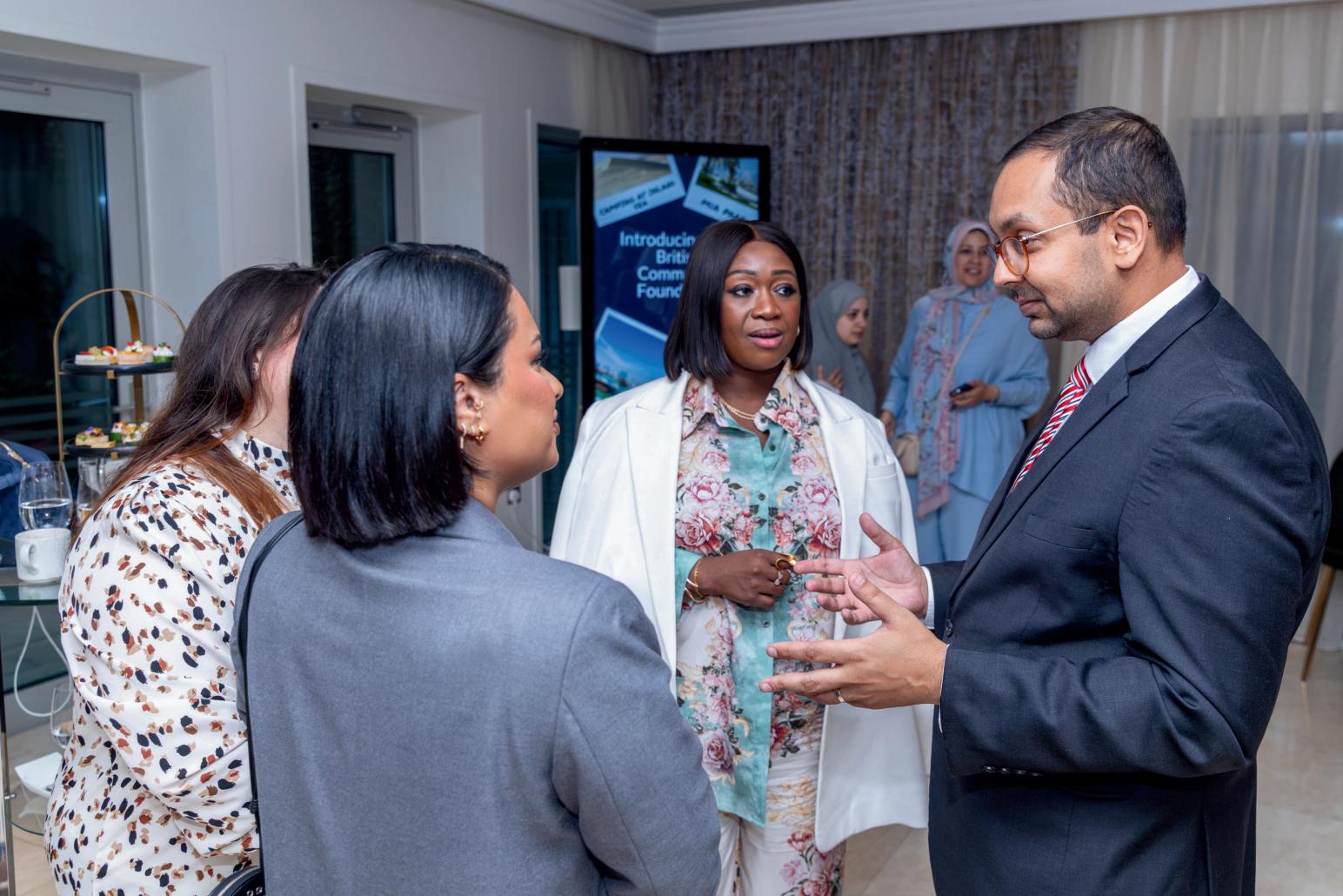
British Community Foundation
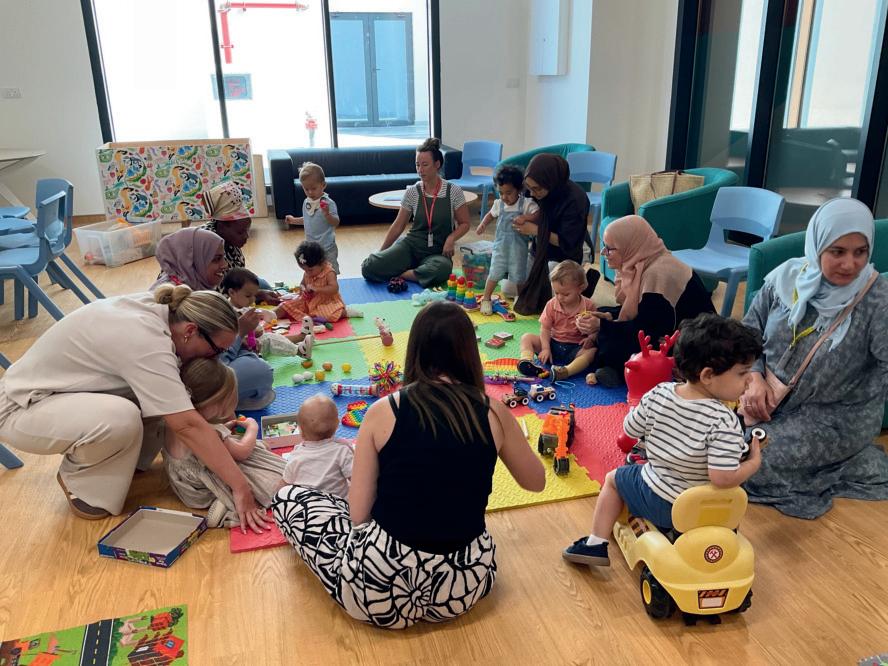
We are a non-profit community initiative dedicated to supporting and celebrating the British community in Qatar.
Whether you are new to Qatar or have called it home for years, we are here for you. From play group to padel leagues, social events for new arrivals to our winter bazaar, we offer something for everyone.
Head to our website or follow us on social media to find out more.
Day-to-Day Qatar
Whether you are a resident or a visitor to Qatar, there are many things to know about your stay in Qatar, from day-to-day activities to government tasks.
Accidents and Medical Emergencies Call 999
Ministry of Interior (MOI)
The Ministry of Interior (MOI) is concerned with maintaining security, public order, ensuring the safety and security of the country and all those who reside in the State of Qatar or enter its territory, in addition to overseeing issues of nationality, residence permits (RP) of expatriates and more.
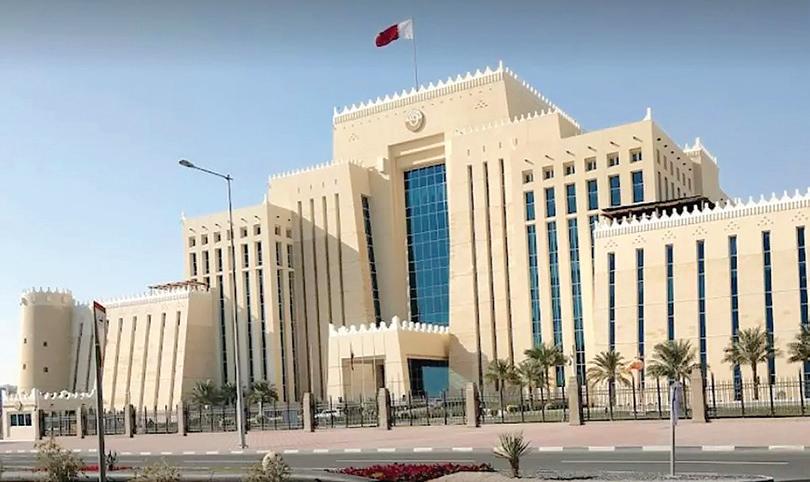
Located in the colossal fort-like building in Wadi Al Sail C3, opposite the Fire Station, MOI's services can be accessed at portal.moi.gov.qa, and on X (Twitter), Facebook and Instagram. Residents and visitors can also access MOI's services by visiting its service centres spread out across the country and transacting directly with government officials; however, most services can be accessed on MOI's Metrash app, and online at portal.moi. gov.qa or at hukoomi.gov.qa. Some services are available in Arabic, English, Hindi, Urdu, Tagalog and more to meet the diverse language needs of its users. 109, 236 7111
MOI's General Directorate of Passports (General Directorate of Passports and Expatriate Affairs) in Wadi Al Banat in Al Daayen B3 is responsible for managing and regulating various aspects of residency, immigration and travel documentation, including:
• Residency and visa services
– Issuing residence permits for expatriates and their families.
– Processing visa applications, including work, tourist, family and business visas.
– Handling visa renewals, cancellations, and extensions.
• Passport services
– Issuing, renewing and replacing Qatari passports for citizens.
– Handling passport-related enquiries and issues for both citizens and expatriates.
• Immigration control
– Overseeing entry and exit regulations at Qatar's borders (airports, seaports, and land).
– Ensuring compliance with immigration laws and policies.
– Monitoring overstays and addressing violations of residency or visa terms.
For more information, visit portal.moi.gov.qa
Note: Businesses cannot access services at the General Directorate of Passports in Wadi Al Banat, but can visit government service centres for assistance.
Government Service Centers: Offer a comprehensive range of services, relevant to MOI, the traffic department and sometimes humanitarian services, including the renewal, issuance and extension of RPs, work visas, family visit visas, residency fines, traffic fines, and more, as well as receive transactions that cannot be completed via the Metrash app and online. Service Centers: Al Khor, Al Rayyan, Al Shamal, Al Sheehaniya, Al Wakra, Mesaimeer, Umm Slal, Umm Al Seneem and The Pearl Island. Opening times: Sunday to Thursday 7 am – 12:30 pm, Friday and Saturday closed. Hamad General Hospital 7 am – 1 pm; Lusail City 7:30 am – 1 pm; Souq Waqif 7 am –12:30 pm; The Pearl Island 8 am – noon; Umm Slal 6 am – 6 pm.
Mandoub: Most companies and organisations have a mandoub, a government liaison who is responsible for official documentation. A freelance mandoub can also be hired to help individuals with important government documents and services. Arabic proficiency is necessary.
Payment: All MOI and government service centres only accept debit or credit cards as payment for all services. If you do not have a debit or credit card, you can purchase an eCASH card, a nonpersonalised prepaid card, obtainable at any Qatar National Bank (QNB) ATM – Residence Permit (RP) card or passport required – at a QAR20 one-off issuance fee. The card can be reloaded with a minimum of QAR50 at any QNB ATM. eCASH cards can also be issued at counters in:
• Traffic Department branches: Madinat Khalifa (HQ) C3, Al Maamoura D/E4, Al Rayyan D2, E Ring Road/Old Airport (Al Matar Al Qadeem) D4, and Al Khor.
• Immigration Department branches: Wadi Al Banat, Al Daayen B3, the Industrial Area E2, Hamad International Airport (HIA) D5, Al Wakra and Al Khor.
Another option is the Himyan card, the first national payment card in Qatar, owned by the Qatar Central Bank (QCB). The prepaid debit card is obtainable at all local banks for both banking and non-banking customers without the requirement for a bank account or credit line and minimum account balance. himyan.gov.qa
Qatar Government Contact Center (QGCC)
Established by the Ministry of Communications and Information Technology (MCIT) under the Qatar e-Government Strategy 2020, the Qatar Government Contact Center (QGCC) is one of the largest in the Gulf region and serves as the main point of contact for all government e-service enquiries. It provides services primarily to Hukoomi, the Qatar e-Government Portal, but also supports other government sectors by addressing public enquiries and resolving servicerelated issues without requiring in-person visits. QGCC offers 24-hour customer service in nine languages, including sign language, for both citizens and residents 109, 4406 9999 Hukoomi
The award-winning government website, hukoomi.gov.qa, available in English and Arabic, is Qatar's official e-government portal and the first place to look when you have governmentrelated queries, offering more than 500 services. It serves as an access point to the many services provided by the government and allows everyone, visitors and residents alike, to make transactions online. Regularly updated, it has many e-services and links to various government ministries, councils, departments and institutions. It also provides information and articles about Qatar. Some services, such as driving licences, require online registration with a Qatari RP card for residents and nationals or a passport number for users outside Qatar. Hukoomi is also available as an app on iOS and Android.
Metrash
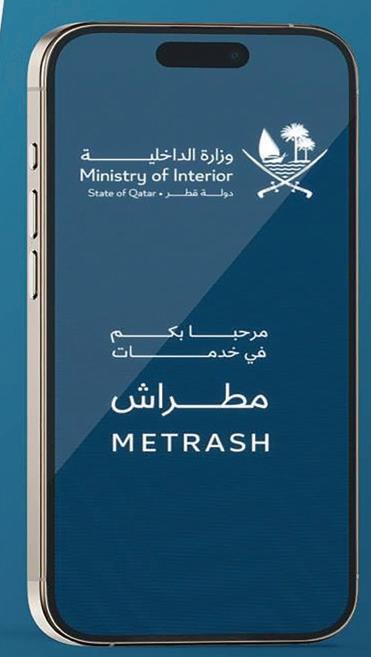
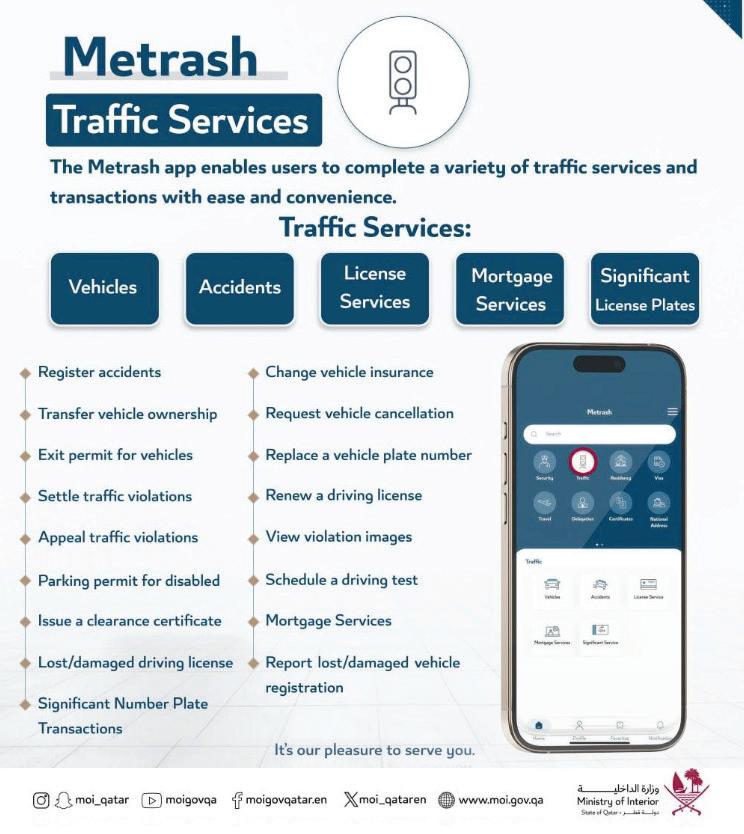
In January 2025, the MOI launched a new Metrash app, replacing the old Metrash2, with a more user-friendly experience while reducing steps, and ensuring digital security. The app incorporates personal authorisation service, family authorisation feature, enrolment of wife and/or children without registered phone numbers,
new payment methods like Apple Pay, improved address management for document delivery, service centre locations, and passport scanning for visa issuance. Additionally, more than 100 new services have been added including enquiry, security services, certificate issuance, and appointment booking services. GCC nationals residing in Qatar can now renew or replace their RPs more efficiently.
Registering on Metrash: Download the Metrash app on iOS or Android. Select your preferred language, then enter your RP number and expiry date. You will receive an activation number via SMS, after which you can set a PIN for Metrash. A confirmation SMS will follow to complete the setup.
The Metrash app can be activated on two devices. For technical support, call 234 2000
Important Government Apps and Portals Government apps are available on iOS and Android. To use e-government apps, portals and services, you may need to register with the National Authentication System (Tawtheeq) nas.gov.qa
Al Meezan (Qatar Legal Portal) A comprehensive website by the Ministry of Justice that provides legal information on laws and legislations in both Arabic and English. almeezan.qa
Hukoomi (Qatar e-Government Portal) The app enables the use of up to 650 online services accessible remotely without having to visit a government office, see above. hukoomi.gov.qa
Kahramaa Qatar General Electricity & Water Corporation (Kahramaa) app provides several e-services for residents including paying electricity and water bills, e-forms and e-bills services. km.qa
Lbaih The Hamad Medical Corporation (HMC) app allows patients to manage appointments, access medical files, view health data, and receive reminders and notifications securely and easily.
Metrash Offers citizens and residents access to more than 400 services provided by the MOI, including residency and other visas (family/work), traffic, travel services and more in Arabic, English, French, Spanish, Hindi and Urdu. portal.moi.gov.qa
MOCIQatar The Ministry of Commerce and Industry (MoCI) app provides residents with easy access to consumer services such as requesting food cards, fodder cards, renewing livestock details, applying for and reissuing cards. In addition, the application offers complaint submission services, and industrial services including industrial licence applications, industrial operating licence, and more. moci.gov.qa
Nar'aakom Allows people to benefit from many of Primary Health Care Corporation's (PHCC) digital services from their smartphones. View information such as your health card number and its expiry date, check your assigned health centre, and assigned family physician from PHCC. phcc.gov.qa
Oun Helps users access the services provided by the Ministry of Municipality (Baladiya) such as pest control, tree-pruning and rain water removal, among other services.
Qatar Digital Identity (QDI) A digital wallet app by the MOI that stores digital versions of personal documents, including residence permit (RP), passport, national address, driving licence, vehicle registration (istimara) and more. Citizens and residents can use QDI for seamless entry and exit through eGate at the Hamad International Airport (HIA).
Sila An app by the Ministry of Transport of Qatar’s integrated public transport system that makes planning a journey and payments a lot easier and smarter. sila.qa
The Qatar Labour Law – Kafala
The Ministry of Labour (MOL) was established by virtue of Amiri Decree No 57 of 2021, replacing the Ministry of Administrative Development, Labour and Social Affairs. The government authority organises labour affairs, and implements labour laws and regulations. mol.gov.qa, 16008
Qatar has been taking major steps to reform its labour laws, and ease restrictions of the Kafala or employee sponsorship system. In 2018, exit permits and the no objection certificate (NOC) were abolished, and a minimum wage was introduced.
The relationship between an employer and employee is regulated by the Qatar Labour Law, except at Qatar Financial Centre (QFC), which has its own employment laws and regulations, found online at qfc.qa. For more information, visit hukoomi.gov.qa, mol.gov.qa
Sponsorship: All expatriate workers in Qatar require sponsorship to work in the country.
Minimum wage: According to Law No 17 of 2020 on Setting the Minimum Wage for Workers and Domestic Workers, the minimum wage for all private sector workers, including domestic workers, is set at QAR1,000 per month as a basic wage, as well as QAR500 per month allocated by the employer for accommodation expenses and QAR300 per month for food, unless the employer already provides adequate food or accommodation for the employee or domestic worker.
Working hours: A 48-hour week is the maximum allowed under Qatar Labour Law without overtime pay. Government offices and many private companies have a two-day weekend on Friday and Saturday, although a one-day holiday on Friday is still common in the private sector.
Contract: Three copies of the employment contract should be signed by both parties. The employer and employee each retain a copy, the third copy is kept at the MOL C4 after verifying it. It is illegal for sponsors to keep their employees' passport and travel documents after the visa formalities are over. Sponsor fine: not less than QAR10,000.
End of service benefits (EOSB): Employees completing a period of continuous service for more than one year are entitled to an end of service benefit on the termination or expiry of the contract of employment. The adoption of Law No 19 of 2020 provides greater clarity regarding termination of employment. Ensure you receive your final salary and any EOSB as per your contract. Consult the HR department or legal respresentation regarding your EOSB. See Leaving Qatar in this section for more information on EOSB.
Hours of business: Government offices tend to work a single shift 7 am – 2 pm; private companies may work a single shift or split morning/late afternoon shifts with longer hours.
E-services: MOL's website mol.gov.qa offers more than 40 services for companies and individuals, including bilateral contracts, work permits, requesting and extending temporary work visas, requesting and managing registration of establishment records and administrators, labour complaints and disputes, and more.
Workplace Disputes
The Amir, HH Sheikh Tamim bin Hamad Al Thani issued Law No 13 of 2017 amending some provisions of the Labour Law, and forming the Labour Dispute Resolution Committee. All labour disputes are received through the MOL to resolve. The maximum period for reviewing the disputes before the committee is one month, including the time for any potential appeal.
File your complaint at the MOL's Labour Relation Department within one year of the event with the section for workers’ rights and grievances. Labour complaints by either a company or an individual can also be filed online on the MOL website mol.gov.qa, 16505, 4406 8979
National Human Rights Committee in Qatar: Protects and consolidates human rights of all, subject to the jurisdiction of Qatar. Hotline 800 2222, SMS number 119, nhrc-qa.org
Residence Permit (RP)
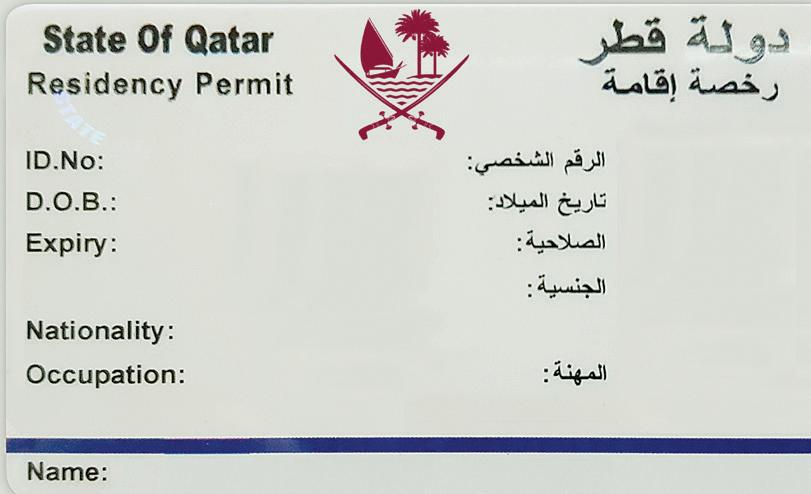
Also known as an identity document (ID/QID), a Residence Permit (RP) is an identification card, which is compulsory for all residents of Qatar, both Qatari and non-Qatari, including children. For expatriates residents, it is issued after the formalities for RPs are completed and is required – instead of a passport – for all transactions in Qatar. Carry your RP card with you at all times.
The card bears your name, nationality, date of birth, occupation, an RP number and its validity. Containing personal data of the holder, the card also bears your passport number, passport expiry date, residency type, sponsor's name, signature and more. The cards also have electronic chips for storing personal and biometric data. You will be required to present your card every time you enter and exit the country. It will also be accepted at airlines/airports around the world as the official document to prove residence in Qatar.
Note: Beware of fraudulent calls, SMS or phishing emails asking for your RP number or personal banking information. Report your lost or stolen RP card on Metrash as soon as possible.
Register at your embassy: Nationals working or residing in Qatar are advised to contact their country’s embassy to register or subscribe to its services. See Foreign Embassies in the Discovering Qatar section.
For information on non-residential permits or visas, see Traveller Information in the Discovering Qatar section.
Residence/Work Permits
To legally live and work in the country, expatriate residents in must be sponsored by an employer (work residence visa/permit) or a family member (family residence visa/permit). These visas/ permits allow for long-term stays, usually renewed annually.
Family Residence Visa/Permit
Spouse and child over 18 – QAR500 per year, child under 18 – QAR400. Every member of the family residing in Qatar, including babies, must have an individual family residence permit. Holders of work permits can sponsor their immediate family (spouse and children) if they earn over QAR10,000 a month. Workers are allowed to sponsor their sons under 25 years of age who have not completed university studies and unmarried daughters of any age. The sponsorship law allows women in independent jobs to sponsor their husband and children (conditions apply).
The General Directorate of Passports enables people to submit their family residency applications electronically and online via the Hukoomi website, Metrash and service centres.
Residents who hold non-work permits such as family residence visas can change their permits to work residence permits. The new employer must apply to add the resident as a worker at mol.gov.qa under the 'Request to Join the Labour Market' (change from family residency to work residency). There should be no personal suspension of the new employer, and there should be no other applications of the same type under study for the same worker.
Documents required: Salary certificate from employer; copies of passports of family members; attested marriage, birth and degree certificates (as required); copy of electricity bill; six months worth of bank statements; stamped and registered accomodation lease. Final approval of the residence permit depends on the decision of the recruitment committee. Check hukoomi.gov.qa in case of changes.
Domestic staff residence permit: QAR300 per year (on personal sponsorship). Employees must have a minimum salary and be married with a resident working spouse in Qatar (proof of which is required). Fill in the application form at your local Immigration Department. There are sometimes restrictions on the nationality you can employ so check before you start the process.
Law No 15 of 2017 on Domestic Workers guarantees workers a maximum 10-hour workday, a weekly rest day, three weeks of annual leave, and an end-of-service payment of at least three weeks per year.
Recruiting privately: Obtain the visa yourself for domestic staff (or use the office mandoub), register a contract with the Qatar Labour Department and complete any paperwork with the national’s embassy in Qatar. You must then go through an official recruitment agency to complete the entry process. Domestic workers in Qatar earn an average of QAR1,500 a month.
Requirements and regulations are subject to change so please check when applying.
Recruitment agencies: These have a list of staff for you to choose from and will complete all the formalities for you.
Medical Procedure for RPs
The Medical Commission, a department of the Ministry of Public Health (MoPH), is located in Abu Hamour, and responsible for overseeing the medical check procedure for immigration in Qatar.
Medical checks are carried out at three private hospitals (Al Ahli Hospital, Doha Clinic and Al Emadi Hospital) approved by the Medical Commission. Three primary healthcare centres (Al Khor, Al Shamal and Al Wakra) are approved by the Medical Commission.
Medical test: This includes a blood test (not to be confused with blood type) and a chest X-ray, for adults only, carried out by the Medical Commission in Abu Hamour E3. The blood test checks for Hepatitis B and C and HIV/AIDS, and the x-ray for tuberculosis. The visa extension medical check involves the blood test only. Cost QAR100. 4467 9111, moph.gov.qa
Blood-type certificate: This can be obtained from any clinic for both adults and children. You must have this certificate before going for your medical test.
Fingerprinting: A few days after completing the medical test, only adults need to go for electronic fingerprinting. Headquarters are at the Criminal Evidence and Information Department (CEID) at Salwa Road (by the Industrial Area Interchange). Open Sunday to Thursday 6:30 am – 5:30 pm, 234 6666. Other service centres are located in Al Khor, Al Shamal, Duhail B3, the Industrial Area E2 and Mesaimeer E3. Large organisations can ask the MOI’s mobile unit to do fingerprints on site.
Collecting an RP: Usually ready after three days to one week; collect from the issuing office, MOI's Immigration Department, General Directorate of Passports in Wadi Al Banat, Al Daayen B3, 4489 0333. The RP sticker in the passport has been abolished and replaced by
an all-encompassing Residence Card, also held by children. Expatriate workers must have a RP for themselves and each member of their family unless they fall into exempted categories. You need a Qatari sponsor to obtain a work residence permit enabling you to sponsor your family.
Work Pesidence Permit (RP)
A work RP can be renewed every one, two or three years by the expatriate’s employer. It is usually the sponsor’s responsibility to deal with all the paperwork and to pay the fee on Metrash or at the General Directorate of Passports in Wadi Al Banat B3, the Industrial Area E2 or Mesaimeer E3 Families residing in Al Wakra and Al Khor can apply locally.
Fees: QAR100 per year • QAR2,000 for licence or renewal • QAR1,000 for replacement (lost or damaged) • QAR60 for attesting company and institution seals. Qatari nationals, children of Qatari women and Gulf Cooperation Council (GCC) citizens are exempted from the fees.
Register as a working woman (on husband’s sponsorship): QAR500 per year. Women on family sponsorship can work in Qatar without a separate residence work permit by obtaining a licence from MOL's Women’s Section. When you have been offered a job, the company must obtain an application form from the Labour Department and submit it with the following:
• Three original copies of your employment contract (QAR60 for authentication).
• A no objection letter (NOC) signed by the family sponsor giving his consent for you to work.
• Originals and photocopies of passports and RP (RP/ID) for you and your family sponsor.
• Originals and photocopies of all your relevant academic and professional qualifications.
• A certificate of good conduct from the MOI.
• Copy of your resignation letter from your previous employment (if applicable).
• A photograph and fees.
Renewing a RP
Your sponsor must renew your residence work permit, but you can renew your family’s residence permits.
Law No 22 of 2021 on Regulating Healthcare Services (The Healthcare Services Law) makes it compulsory for visitors to have private health insurance in order to receive basic medical services. Health insurance may also be required for some expatriates when applying for a RP or RP renewal. Check with Hukoomi and the relevant ministry for up to date requirements.
Renew RP on Metrash: Log in to the Metrash app from your phone or register with your RP number. Select Residency, then choose Residency Renewal. Select Personal and ensure your personal details are up to date before proceeding. Select renewal period (one to three years), choose a delivery option and pay the required fees.
Online renewal through the MOI portal: Log in at portal.moi.gov.qa or register with your RP number. Go to the e-services tab and select Residency, then choose Renew Residency. Ensure your personal details are up to date before proceeding. Select renewal period (one to three years), choose a delivery option and pay the required fees.
Note: Qatar Post provides an optional home delivery service via Metrash for QAR20.
Other RPs
Investor Residence Visa: MOI grants this visa to people coming to Qatar for investment. The application is filled out online at portal.moi.gov.qa or offline at the General Directorate of Passports and MOI's Services Centers. The application fee is QAR200. Required documents are copy of valid passport; letter from authority mentioning investment; good conduct certificate; and proof of passing the medical examination outside the country as specified by the authorities. For more information on eligibility and the application process, visit hukoomi.gov.qa or portal.moi.gov.qa
Mustaqel Program: Spearheaded by Qatar Manpower Solutions Co (Jusour), this programme offers a strategic five-year residency permit, welcoming a diverse array of global entrepreneurs, extraordinary talents, and skilled professionals. It offers the option of future renewal and is divided into two categories. The Entrepreneur Visa is catered to business owners, especially small to medium enterprises. The second category, the Talent Visa, encourages skilled individuals within the fields of arts, entertainment, sports, and technology to apply. The business models of applicants must be endorsed by a Qatar-based recognised business incubator. If successful, applicants will receive an endorsement code, which is necessary for completing the online form. Other documents needed include a passport copy, degree certificate, police clearance certificate, and proof of experience. Aside from living and working in Qatar, Mustaqel also grants individuals asset ownership, and residency benefits as well as recourse to request family visas for other family members. mustaqel.qa, jusour.qa
Permanent Residency Card: Law No 10 of 2018 issued by HH The Amir allows non-Qatari residents
to obtain permanent residence in Qatar if he/she meets certain conditions in accordance with the provisions of this law. The applicant should complete 20 years in Qatar on a legal RP if born abroad and 10 years if born in Qatar. Under the law, permanent residency cardholders are entitled to the same social security as Qatari citizens, including free healthcare and education in government schools. Qatar is the first Gulf country to allow long-time foreign residents to become permanent residents, and grants this opportunity to 100 expatriates per year. In the first stage, applications are made online via the MOI website portal.moi.gov.qa, and later, the application process continues on both Metrash and the MOI website. The application fee is QAR3,000 (non-refundable). It includes all members of the family. If the application is approved, the applicant must pay an additional QAR3,000. For more information on eligibility and the application process, visit portal.moi.gov.qa
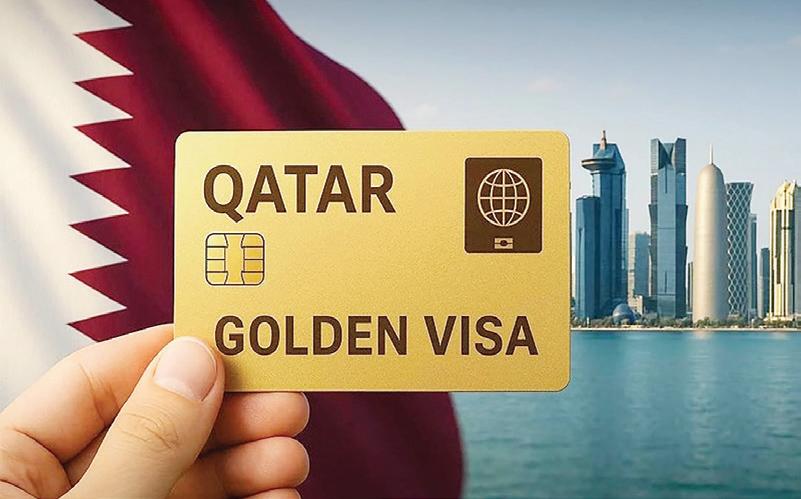
Residency Program – Entrepreneurs & Executives (Golden Visa): The Investment Promotion Agency Qatar (Invest Qatar) has launched the Residency Program in early 2026, designed for high-impact entrepreneurs and C-level executives. The Program also known as the Golden Visa offers two five-year residency pathways (both renewable for up to 10 years) – one for entrepreneurs and another for executives – for non-Qataris 18 and above. The Entrepreneur Residency is offered in partnership with leading incubators, grantting long-term status with the option to renew and a range of lifestyle and business advantages. The Executive Residency is tailored for senior executives who already hold a RP and require a streamlined employer-led pathway to formalise their status, employment authorisation and access to programme benefits. The Executive Residency enables senior professionals already living in Qatar to transition quickly to a premium residency status while maintaining business continuity. For more information on eligibility and the application process, visit invest.qa/en/residency-program
There are other long-term residency visa programmes for non-Qatari residents to apply for by investment through real estate. Owners of property worth more than QAR730,000 will be offered residency, as well as their family, for the duration of ownership, with residency given as soon as they finalise the purchase. Owners of property worth more than QAR3.65 mn will receive the same benefits as permanent residents regarding healthcare, education, and investment in some commercial activities.
For information on investment in Qatar, see Investment and Trade in the Business and Economy section.
Exit Permits
Law No 13 of 2018 amended certain provisions of Law No 21 of 2015, removing the requirement for most workers covered by the Labour Law to obtain an exit permit from their employers before leaving the country.
However, under the amended law, some employees may still require an exit permit. Employers may designate up to 5% of their workforce for this requirement by submitting a list of names through the Ministry of Labour’s website, which is then forwarded to the Ministry of Interior. Employers are not required to obtain an employee’s consent before including their name on the list. Check online at portal.moi.gov.qa if you require an exit permit.
As per Decision No 95 of 2019, domestic workers should notify employers at least 72 hours prior to the departure.
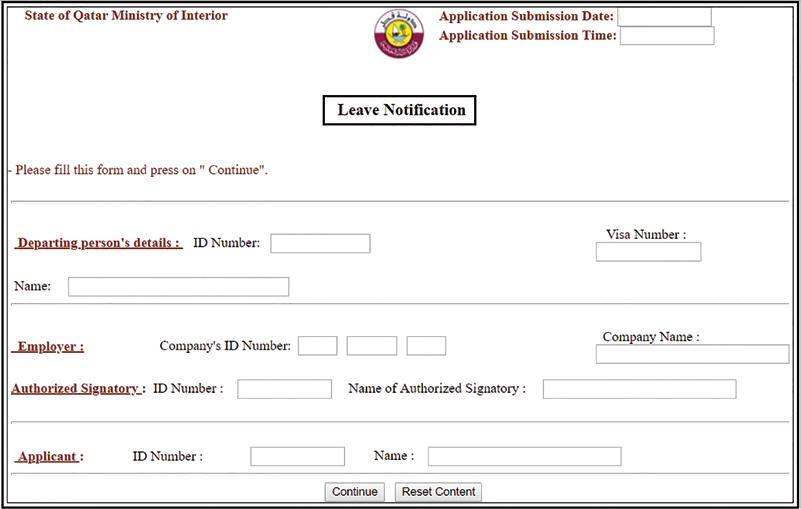
Government agencies and private companies can issue exit permits electronically through an authorised signatory within seconds using Metrash or portal.moi.gov.qa. Sponsors can issue the permit via the internet and their mobile phones worldwide.
Fees: Multiple use exit permits costs QAR500 (valid for one year). There is no charge for an exit permit for those sponsored by companies
or organisation, or for those on personal sponsorship (valid for one year).
The Expat Exit Grievance Committee accepts complaints from workers prevented from leaving the country for any reason.
Note: Traffic law violators are not permitted to leave the country through any border (land, air, or sea) until all fines are paid via Metrash, traffic departments, or MOI service centres.
Health Services
Health services at Primary Health Care Corporation (PHCC) centres and Hamad Medical Corporation (HMC) facilities are available to citizens and residents with a valid health card, which can only be issued after obtaining a RP. Consultations and non-emergency treatments may incur additional but subsidised costs, and prescriptions can be filled at government-run pharmacies at reduced rates. Payments must be made by debit, credit, or eCASH cards, as cash is not accepted.
For more information, contact PHCC at 107, phcc.qa, or contact HMC at 16060, hamad.qa. For more information on healthcare services, see Healthcare in Qatar in this section.
Health Cards
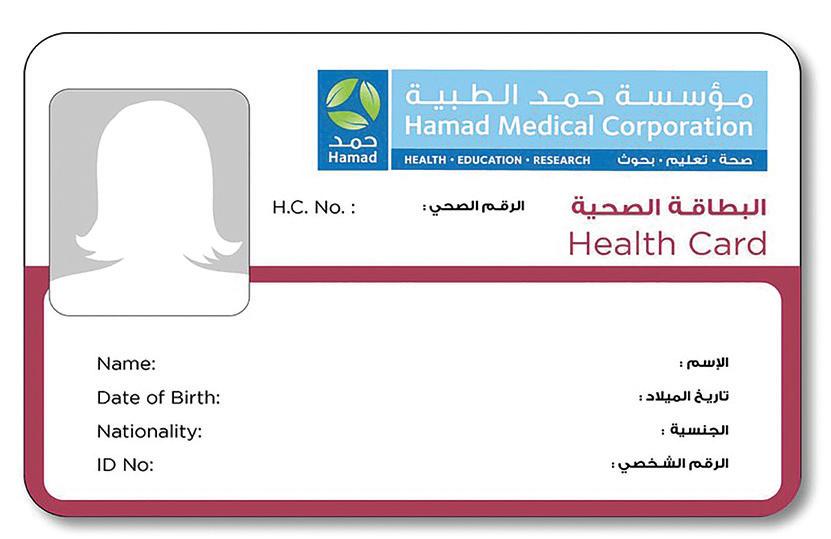
The health card is the same size as an RP and a driving licence. It contains your RP number, nationality, photo and date of issue, and are available to all residents of Qatar. The healthcare system provides cardholders with a medical record file containing all his/her medical data saved by healthcare centres and government hospitals.
As per Decision No 46 of 2025, cancelling Decision No 21 of 2023, Qataris are exempted from acquiring a health card. They can now use their RP to access health services with no fees. Citizens are required to carry their RP when visiting health facilities.
Application: To obtain a health card, visit the PHCC centre nearest to where you live. A health card can be also renewed at a PHCC centre. An expired, replaced or damaged health card can be renewed or replaced on hukoomi.gov.qa. Note: Some PHCC health centres are reserved for Qatari citizens only.
Process: You need to fill out the appropriate forms, and then be issued a PHCC health file number. The health centre will either issue you with your card immediately or ask you to return within a few days to collect it. Health cards are issued during morning working hours only.
Cost: Non-Qatari adult residents and children QAR100; GCC adult residents and children QAR50. If you lose your health card but it is still valid, nonQataris will need to pay QAR100 for a replacement. If you lose your health card and it has expired, you will need to pay QAR200 for a replacement and renewal. You must pay using a credit or debit card.
For more information, call 107 or 16060, or visit phcc.qa or hamad.qa
Private Health Insurance Law No 22 of 2021 on Regulating Healthcare Services (The Healthcare Services Law) makes it compulsory for expatriates and visitors to have private health insurance in order to live in Qatar or visit the country. Some companies provide their employees with free health insurance (but this may be tied to using a local private hospital) or you can arrange your own. Many of the larger private clinics have various options, including family packages.
Health, home and life insurance
Al Koot Insurance & Reinsurance
4040 2999
Arabia Insurance Company 4442 2682
GIG Gulf (previously AXA Gulf) 4483 2995
GlobeMed Qatar 4405 6999
Libano-Suisse
4466 4406
MetLife 800 9711
Qatar Insurance Company (QIC) 800 0742
QLM 800 0880
Seib Insurance & Reinsurance 4402 6888
Vaccinations
Babies born in Qatar, or with a RP and under one year of age, receive free vaccinations and medical treatment under the state healthcare system. To continue to receive vaccinations, a healthcard is required.
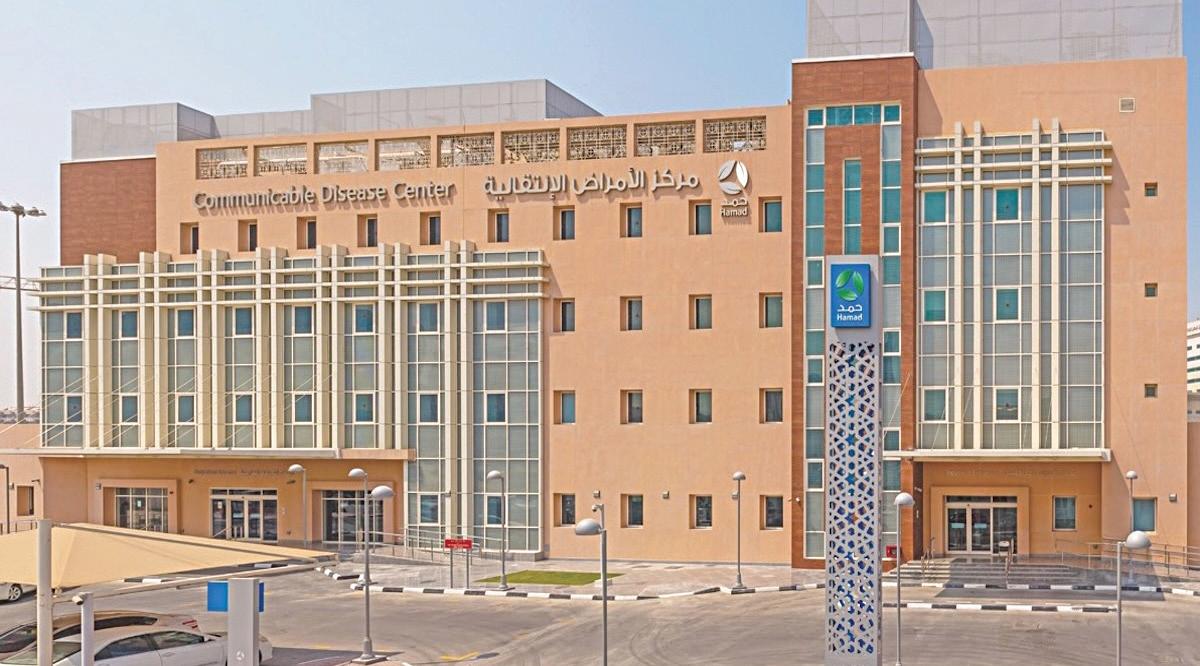
Vaccinations for overseas travel, for visitors to Qatar, and childhood immunisation are all available from the Vaccination Unit at Mesaimeer Health Centre E3, 4406 4222. The Communicable Disease Centre in Hamad Bin Khalifa Medical City C/D3 operates the Travel Clinic where people can go for vaccinations and health advice before travelling. Vaccinations are by appointment only, 4025 4003
The MoPH has developed a comprehensive immunisation programme that provides protection against 17 diseases through 15 key vaccines. In addition, flu and shingles vaccines are available free of charge at 90 health facilities across Qatar, including 31 health centres, outpatient clinics at HMC, and 45 semi-government and private hospitals and clinics.
Some PHCC centres provide immunisation services to the public; to obtain them, visit the hospital or health centre that you belong to. There are a number of private health facilities that also provide vaccination services, either under private health insurance or for a fee. 107, phcc.gov.qa
Useful Documents/Processing
You need to prove your identity in Qatar for all government and commercial transactions, so have plenty of:
• Passport-size photos and several copies of the passport of each family member.
• Copies of your marriage (attested) and birth certificates.
• Original educational qualifications (copies are not accepted), which will need to be authenticated in your country of origin, along with a Bonafide Certificate.
Translating a document: The official language in Qatar is Arabic. Each page of each document must bear the translation firm’s official stamp for it to be considered valid.
Asia Translation & Services Centre 4444 0943
National Translation Services of Qatar (NTS Qatar) 7048 2217
Qatar Translation Center 4443 5354
The Language Professionals
Translation Services 4031 6680
TrustLink
7030 3534
Housing and Utilities
To Rent
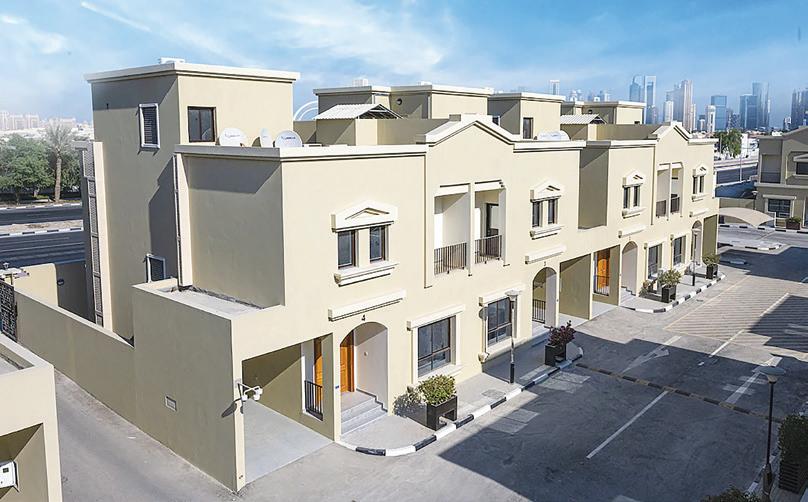
Many employers provide accommodation or a housing allowance for their employees as part of their contract. You are strongly advised to ensure that it is sufficient, especially with continuing fluctuating rent prices in Qatar. Standalone villas and villas in compounds with leisure facilities range from around QAR10,000 monthly or a studio/one bedroom apartment starting at around QAR5,000. Rent at The Pearl Island, Lusail City, Msheireb Downtown Doha (MDD) and other residential districts in Al Dafna and surrounding areas are commonly more expensive. Another option for long or short-term stays are serviced furnished flats with cleaning and laundry services as well as leisure facilities provide. See Places to Stay in the Hospitality, Hotels and Dining section.
Rent contracts: All contracts, whether new or old, must be registered by the landlord at the Office of Registration of Rental Contracts within 30 days of signing the contract. The lease you sign must be written in English and Arabic. Rent may or may not include water and electricity bills as well as internet.
Eskan
Government housing and building departments for Qatari and non-Qatari government employees, overseen by the Civil Service and Government Development Bureau (CSGDB).
Eskan portal: Allows landlords to register their properties on the platform, and employees to select suitable housing. For government employees, the application must be submitted through the employer. ghs.cgb.gov
Civil Service and Government Development Bureau (CSGDB): Al Faisal Tower, Al Dafna C4 Sunday to Thursday 7 am – 2 pm, 16008 (hotline), cgb.gov.qa
Rent Dispute Resolution Committee (RDC)
The Rent Dispute Resolution Committee (RDC) at the Ministry of Municipality is responsible for settling rent disputes between landlords and tenants. The party that files the complaint before
the committee must pay a fee of QAR100, in most cases giving tenants a six-month eviction period. Call the Unified Communications Center (UCC) at 184 to speak directly to RDC.
To Buy
Expatriates can purchase property in several developments in Qatar and local banks provide mortgages to suitable applicants. See Banking and Finance and Investment and Trade in the Business and Economy section.
Letting Agents
Whether you are interested in renting or buying property, these agents have a wide variety of property on their lists as well as experience in the local market. Also visit propertyfinder.qa
Al Emadi Enterprises 4466 6625
Alfardan Properties 4440 8488
Al Jazi Real Estate 4032 0666
Coreo Real Estate 4016 7000
Cushman & Wakefield Qatar 4483 7388
Just Real Estate (JRE) 4491 3311
Mirage Int'l Property Consultants 4444 4431
The Pearl Gates 4410 4253
Lawyers and Legal
If you are looking to buy a property, contact one of the following legal companies for advice:
Al Tamimi & Company 4457 2777
Clyde & Co 4494 1000
Dr Ghada M Darwish Karbon Law Firm 4488 9050
Gulf Legal Consultants –
Dr Jumah Nasser Al Kaabi Law Firm 4433 7777
Hassan Al Khater Law Office 4443 7770
Law Offices of Gebran Majdalany 4442 8899
Simmons & Simmons 4409 6700
Sultan Al Abdulla & Partners 4442 0660
Relocation Services/Removal Firms
Many employers will pay for your relocation. You can move locally by doing the packing yourself and/or hire a truck, but you will not be insured.
CEVA Logistics 4436 9439
GAC International Moving 4420 5600
Gulf Warehousing Company (GWC) 4402 3555
Professional Real Estate & Relocations (PRER) 4031 6639
Qatar Logistics 4407 6262
Other Housing Considerations
Furnishing
Rental or purchasing contracts may or may not come with furniture, and may impact the price. Property with furniture is more expensive than property without.
ACE (Doha Festival City)
800 971 223
City Lifestyle* (Al Asmakh Mall) 4428 9256
Home Centre* (Al Asmakh Mall) 4413 1940
Homes R Us* (Hyatt Plaza) 4469 8999
IKEA (Doha Festival City) 800 4532
Midas (Salwa Rd) 4425 1222
Nabco* (Old Airport) 4466 6646
Pan Emirates* (Salwa Rd) 4427 4966
Pottery Barn* (Mall of Qatar) 4452 9529
The One* (Villaggio Mall) 800 8431
*Indicates multiple branches
For second-hand furniture, check online and social media platforms such as Facebook Marketplace and Mzad Qatar mzadqatar.com. Souq Al Haraj in Najma has locally produced furniture and a secondhand market D4.
Note: Throwing waste outside in public spaces is a clear violation of the Public Hygiene Law No 18 of 2017, and a report will be issued against violators. For the disposal of bulk waste and old furniture from homes, call the Ministry of Municipality (Baladiya) at 184 or request the free-of-charge service online via hukoomi.gov.qa or the Oun mobile app.
Air conditioning
Split air conditioners and central air conditioners are the most common in Qatar, and are usually added to the Kahramaa water and electricity bills. In some cases, as with district cooling companies such as Marafeq Qatar at Lusail City and Qatar
Cool in The Pearl Island, the air conditioning bill is separate. Air conditioning is essential in summer and requires regular maintenance and servicing.
Generalco 4019 5333
Gree 4041 2222
LG 800 0054
Panasonic 3109 5261
Techno Blue (TB) 4423 3600
Home Cleaning/Pest Control Services
Home cleaning and pest control services can be flexible to meet your requirements.
Al Mutwassit Cleaning & Pest Control 4436 7555
Boecker Public Health 4444 3744
Hegy International 7759 8405
Qatar Home Services 3060 3076/4427 1197
Qatar Pest Control Company (QPC) 4422 2888
For MME's free pest control services, call 184, make a request on mm.gov.qa, or the Oun app.
Water and Electricity
Kahramaa
Based in Al Ramez Tower, Al Dafna C4, Qatar General Electricity and Water Corporation (Kahramaa) is the sole transmission and distribution system owner and operator (TDSOO) for the electricity and water sector in Qatar. Qatari citizens receive significant subsidies for electricity and water services. In many cases, these utilities are provided free of charge to citizens, especially for their primary residences.
Connecting to electricity and water: Download an application form from hukoomi.gov.qa, and include the reference number of the property for both electricity and water. These are supplied by the owner or found above the door to the property. Kahramaa does not receive paper applications.
• Sign the application form using the same signature as that on your tenancy agreement and RP/ID (a copy of both are required).
• The owner of your rental property will have to give you a completed transfer form to put the utilities in your name, in addition to the owner's RP/ID (if privately owned) or a copy of the building's commercial registration (CR), commonly referred to as the company's computer card.
• Take these and a refundable deposit of QAR1,200 for electricity and QAR800 for water to any of the Kahramaa offices.
Paying water and electricity bills: Amounts for both utilities are sent out monthly on one bill, sign up to receive an email. The monthly estimate is adjusted from time to time with a meter reading by Kahramaa. There is an online ready reckoner to help you estimate your household consumption.
Sanitation fees: Non-Qatari houses and businesses are charged monthly sanitation fees, which equals 20% of the value of the monthly water bill. The fee is for sanitation services provided by the Public Works Authority (Ashghal). Qatari houses and businesses are not charged.
Payment for services can be made:
• At all major banks, via banking apps, and at QNB ATM's.
• Online through Hukoomi at hukoomi.gov.qa or Kahramaa at km.qa
• Via Ooredoo Self Service Machines.
• By the Visaphone service – call 991, select 3, give your Visa card number to the customer service operator.
• Via the Kahramaa application available on iOS and Android.
Customer Care Center: Sunday to Thursday 9 am – 2 pm. Emergency 24-hour hotline: 991 (inside Qatar), +974 4449 4000 (outside Qatar), 3030 3991 (WhatsApp)
Service centres: Al Hilal • Industrial Area
Note: Severe penalties for wasting water through a hose or pressure pipe can reach up to QAR20,000 for first-time offenders, while wasting electricity can incur a fine of QAR10,000. Kahramaa runs a campaign known as Tarsheed to help Qatar reduce its consumption of electricity by 20% and water by 35%.
BeSolar: Launched in 2024, the new service encourages customers to install solar energy systems in their homes, farms, factories and other properties. Interested customers can contact an authorised contractor from Kahramaa, who will then follow up on the request and obtain initial approval. The contractor will prepare the technical design, and upon approval, the solar energy system will be installed. Once the installation is complete, the contractor will notify Kahramaa to connect the customer to smart meters and start generating solar energy.
Water
Buildings in Qatar usually have tanks to store water as mains water is not pumped continuously and often has low pressure. The supply network and domestic storage tanks require regular cleaning and replacement. Tap filters of various kinds are available. Many people prefer to drink bottled water and you can arrange to have one of the water companies deliver five gallon flagons to your home. Some areas still rely on water tankers to deliver. Government licensed tankers are cheaper than private ones.
Home delivery of mineral water:
Al Manhal & Nestlé Pure Life 4433 5777
Rayyan Natural Water 4443 6999
Water tank cleaning:
Al Mutwassit Cleaning & Pest Control 4436 7555
Electricity
The main electricity is usually 220 – 240 volt with three square pin sockets. Many appliances have two pin plugs but adaptors are available in local shops.
Gas
Shafaf by WOQOD are lightweight liquid petroleum gas (LPG) cylinders made from a fiberglass and plastic composite, and are available in all WOQOD service stations, various supermarkets and other retail outlets. Home delivery is also available. Each empty cylinder weighs only 5 kg, half the weight of regular steel cylinders, making these cylinders easy to carry and use. Cylinders are available for consumers in two refill sizes, 12 kg and 6 kg, to fit various domestic household needs, or to be used outdoors during trips and camping. Prices range from QAR283 to QAR365 with additional prices for LPG accessories. The cylinders are fireproof and do not explode, even in the case of fire. Additionally, you can monitor gas levels for prompt replacement. woqod.com.qa, 4021 7777, 800 (FUEL) 3035
There are other gas cylinder providers for both Shafaf and metal LPG cylinders, check woqod.com.qa for contacts.
Telephone and Internet
To obtain a local telephone number, you can only do so with a Residence Permit (RP). A new mobile sim card costs QAR50. Local mobile numbers can be obtained at either of Qatar's two service providers, Ooredoo Qatar (formerly Qtel) and Vodafone Qatar
Telephone calls: The international dialling code for Qatar is +974. Local calls from private houses and businesses are free – especially local landline to landline calls However, calls to mobiles and international calls are chargeable. Hotels charge a nominal fee for local calls made from the room. Dial 00 (or +) to call out. For international call enquiry, call 150
Mobile Number Portability (MNP): Users are able to keep their existing mobile number when switching to another service provider.
Ooredoo Qatar
In 2013, Qatar Public Telecommunications Corporation (Qtel) was rebranded to become Ooredoo Qatar. It offers a comprehensive package of services ranging from landline to mobile phones, fixed and mobile internet, broadband and entertainment services. ooredoo.qa
4G LTE wireless technology is available. Customers can access the network only through 4G-enabled devices such as the Ooredoo My-Fi device and the Ooredoo 4G USB modem. Ooredoo 5G is the first-in-the-world to launch a commercially available network.
Mobile plans: Includes postpaid, prepaid and mobile data plans, including Shahry+, Qatarna+, Hala SiM and more, with prices ranging from QAR130 per month.
Residential packages: This three-in-one service includes the core pay-monthly mobile phone plan, high-speed internet connection (ADSL), and landline subscriptions with three options. Residents over 18 years old can apply at Ooredoo shops or their authorised dealers. Contact Ooredoo or visit an Ooredoo shop with your RP and home electricity number (Kahramaa) to book your installation time and finalise your internet service.
Home internet and TV (broadband): Branded as Home+ by Ooredoo, offers customers a range of packages to suit household needs, including fibre internet, Ooredoo TV and other entertainment services. Home+ Go costs QAR330 per month and Home+ Prime Entertainment costs QAR450 per month. No installation fee included.
Nojoom: A customer reward programme where subscribers can earn points to spend on all their services (mobile, landline, internet and TV) and redeem them with the company or with a number of their partners. Call 111 from an Ooredoo phone, visit the website or register via the app.
Ooredoo Money: A mobile wallet service that allows you to register for a Mobile Wallet Account so that you can deposit, withdraw, pay and send money in Qatar or abroad instantly through your phone.
Ooredoo Passport and Data Roaming Plans: Travel without worrying about roaming charges with partner networks in more than 160 countries with weekly and monthly plans with special rates for specific destinations. Check availability in the country you're travelling to. Weekly: QAR100 and QAR150. Monthly: QAR500. There are different weekly and monthly Ooredoo Passport and data roaming plans for businesses. Check ooredoo.qa for details.
Ooredoo TV: Offers over 400 live channels through phone or tablet computers. Ooredoo is the first operator in the region to offer a commercial 4K, which combines apps, on-demand and live television in one easy-to-use box. To subscribe, call 111, or visit any Ooredoo or Starlink shop.
Vodafone Qatar is part of an international telecom company, Vodafone Group, and is owned by Qatar Foundation (QF). Vodafone Qatar offers a choice of flexible mobile phone, internet and broadband services.
Mobile plans: Includes a wide choice of prepaid and postpaid plans with internet services to suit different requirements, plus welcome packs. Recharge is available online or at Vodafone stores and their partner outlets All plans allow 5G speed experience with unlimited data, calls and SMS.
Vodafone Passport Pack: A roaming pack for travellers to receive 100 minutes of incoming calls, calling Vodafone Qatar numbers and 1GB of data for QAR100/week (1GB extra in GCC countries).
Home internet: Get GigaHome Fibre 1 gigabits (gbps) speed for QAR299 per month, 2 gbps for QAR399 per month, or 5 gbps for QAR3,150 per month. OSNtv is available with GigaHome.
There are a number of options for receiving satellite or cable television, installed through any of the local cable companies.
Orbit Showtime Network (OSN) With OSNtv and OSN+, watch trending series, award-winning movies and best documentaries on OSN, all subtitled or dubbed in Arabic. 4031 0090 (new customers), 4447 7177, osn.com
beIN With beIN 4K, beIN offers beIN SPORTS, beIN MOVIES, beIN SERIES, beIN CINEMA, beIN Kids, and more entertainment shows and programmes. 4457 7777, bein.com
Under Qatari law, a woman must be married to give birth in the country. It is a criminal offence to be unmarried and pregnant, and may result in a 12-month jail sentence on average and deportation.
Childbirth: Qatari and non-Qatari residents can receive free maternity care at public hospitals such as Women's Wellness and Research Center, Al Wakra Hospital or the Cuban Hospital. Residents looking to access maternity services at private hospitals such as Sidra Medicine, Al Ahli Hospital, Al Emadi Hospital or Aster Hospital should review their insurance to see what, and which, hospitals offer coverage. Delivery packages can range from QAR5,000 to QAR30,000. Packages for Caesarian (C-section) births are more expensive than natural childbirths. Home births are illegal in Qatar. Required documents include the RP or passports of both the father and mother, health cards, marriage certificate, and health insurance (if you have one). For more information about Hamad Medical Corporation (HMC) hospitals and Sidra Medicine, see Healthcare in Qatar in this section.
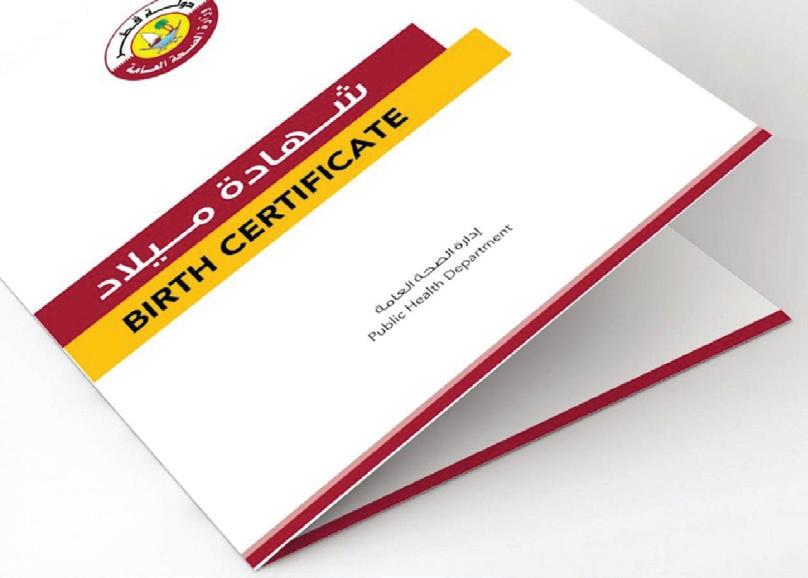
Birth certificate: The Ministry of Public Health (MoPH) issues a birth certificate to every child born in the country, including non-Qataris; however, non-Qatari children are not entitled to Qatari nationality by reason of birth here. Public and private hospitals have birth registration offices that can assist family members with birth certificates. However, all births have to be registered online at moph.gov.qa. Birth certificates are free of cost; fees apply for additional copies (with official stamp and signature), costing QAR20 per copy. Within 48 hours, the birth certificate can be found at the hospital in which the delivery took place or can be delivered by Qatar Post for QAR20.
Under Law No 3 of 2016, births have to be reported by a family member and a physician
or any authorised person at the hospital within a maximum of 15 days. The information to be provided include the date of birth according to the Hijri and Gregorian calendars, time and place, gender of the baby, baby's name (should not be shared by a sibling or be a compound name), the names of both parents, the person who helped in the delivery and the person who reported the birth. The hospital provides two letters after the birth, one of which will bear a government number.
Passport: Expatriates can then register their child’s birth at their embassy and obtain a passport (not all embassies provide this service, check first).
Residence Permit (RP): An application for a newborn's RP must be submitted within 60 days of birth, or the parents will incur a fine of QAR10 per day. Once the passport is issued, you can apply for your child's RP. Only the parents can sponsor the child, typically the father. The mother may sponsor the child only if she is employed and sponsored by her employer. Required documents include the birth certificate, a copy of the baby's passport, copies of the parents' RPs and passports, a letter of employment, the original employment contract, a No Objection Certificate (NOC) from the father’s employer (detailing job position, salary, and contract type), and passportsized photos of the baby with a blue background. Additional documents may be requested. The application can be completed via Metrash or at the General Directorate of Passports for QAR500.
Maternity leave: Employees with at least one year of continuous service are entitled to a 50-day maternity leave with full pay. At least 35 days of the leave must be taken after the birth. If the employee suffers from a pregnancy-related health issue, they are entitled to take up to a further 60 days unpaid leave.
Circular No 6 of 2025 allows eligible Qatari female employees to leave work two hours early during school vacations and exam periods. The rule excludes workplaces that require continuous operations until the official end of the day.
Paternity leave: Not required by law in Qatar. However, some companies may allow paid or unpaid leave ranging from a day to two weeks after childbirth.
Nursing interval: Nursing women who work at least six hours per day are entitled to one hour nursing break(s) per day from the birth of the child until the child reaches the age of one. The nursing hour is determined by the employee according to her convenience, and should take place during working hours without salary deduction.
Marriage
Couples wishing to get married in Qatar are required to undergo the premarital health checkup or screening in order to avoid any genetic, hereditary and communicable diseases in addition to controlling the prevalence of disability and other diseases. The screening can be done at one of Primary Health Care Corporation (PHCC) health centres or an accredited health centres. Once the checkup is complete, Muslim marriages take place at the Family Court or if preferred, at their home with the presence of a mazoon, an official for civil ceremonies.
Civil marriages for non-Muslims are unrecognised by the law in Qatar. The only non-Muslim marriages granted official recognition by the State of Qatar are Christian marriages performed by churches registered with the Ministry of Foreign Affairs and by clergy recognised by the ministry to perform non-Muslim marriages. Certain embassies and churches will perform marriages for expatriates. See Places of Worship earlier in this section. The church will issue your marriage certificate. Translate a copy of the marriage certificate into Arabic through a translator recognised by Qatar Chamber (QC). Then register the marriage certificate and Arabic translation at the Office of Land Registration and Legalization at the Ministry of Justice, which will stamp the back of the marriage certificate with a registration number, and keep the copy and Arabic translation for its records. Check with your embassy to see if you need to register the marriage in your home country.
Divorce
Couples of any religion and nationality that were married in Qatar and can prove their residency in Qatar can file for divorce, although the process can differ. If you were married outside of Qatar, seek advice from your embassy or law firms in your country on how to dissolve your marriage. It may be easier and more cost-effective to file for divorce in your home country. To dissolve a marriage that took place in Qatar, there are a number of firms well-versed in local law who could assist and advise (see Lawyers and Legal earlier in this section).
The process of getting divorced in Qatar is different for Muslim and non-Muslim couples. Muslim couples, who were married in Qatar and seeking to dissolve their marriage, will have to meet certain requirements. For example, the wife must observe the iddah/iddat, a mandatory threemonth waiting period in Islamic law during which she cannot remarry, allowing for confirmation of pregnancy, determination of paternity, and possible reconciliation.
If the divorcing couple reach a settlement, lawyers can draw up an agreement and fast-track their case through the courts. If this isn’t possible, the person requesting the divorce will have to provide a reason for doing so – adultery, impotence or abuse – along with evidence to support their claims.
For information on divorce in Qatar, see Law No 22 of 2006 Promulgating the Family Law at Al Meezan almeezan.qa, Qatar's legal portal by the Ministry of Justice.
Note: A spouse on a partner’s visa loses their RP after divorce and must obtain a new one, typically via an employer or eligible family member.
Watad: A free online marriage and family therapy and parenting consultation service provided by the Ministry of Social Development and Family (MSDF) and Family Consulting Center (Wifaq). It assists couples and families offering confidential marriage, family, and parenting consultations to help couples and families address challenges professionally. 16080, watad.msdf.gov.qa
Death
Notifying the police is mandatory and in some cases may require a post-mortem. Get help from the relevant embassy, which will be able to advise you. Newborn deaths and stillbirths have to be reported within seven days.
When one dies in Qatar, the law of the country that issued their passport will be honoured. Qatari law will apply only if the deceased has assets in Qatar but no heirs in the country.
If one dies in Qatar and a will is not in place, their assets, including their bank accounts, cars and other valuables registered in their name will be frozen until the heirs or the deceased's beneficiaries provide an official inheritance certificate duly authenticated by all relevant authorities, proving their entitlement to those assets. Heirs may prove their entitlement to the deceased’s assets by producing a legal statement from their country of nationality. The exact format of this will be dependent upon the jurisdiction of the deceased's home country. If a will is in place, a court order or other approved and authenticated document will be required. The bank may then forward payment to the relevant beneficiary/beneficiaries.
For joint accounts, Article 351 of The Commercial Code states that joint account holders will be considered to have equal shares unless otherwise agreed in the contract. When one of the account holders dies, the remaining holder must inform the bank of their intention to either continue with the account or to close it within 10 days of the date of death. Further details can be obtained from the relevant bank.
In the unfortunate event of both parents dying, children residing in Qatar will go into the care of the Qatar Foundation for Child and Women Protection (QFCW), which will attempt to contact the children’s next of kin and care for the children until they can be released to the proper guardian or family member. The next of kin will require proof (birth certificates) that they are indeed the sibling or parents of the deceased for QFCW to release the children.
Humanitarian Services Office at MoPH: In coordination between the Ministry of Interior (MOI), MoPH, Ministry of Foreign Affairs (MOFA), Hamad Medical Corporation (HMC), General Authority of Customs, Qatar Airways, Public Prosecution and other relevant authorities, the office offers simplified procedures for the repatriation of the deceased abroad or their burial inside the country via a single window system. The office is managed by MOI, and is located on Mohammed bin Thani Street behind Hamad General Hospital mortuary. The office is open daily from 7 am – 9 pm.
Making a Will: Residents of Qatar or Qatari nationals are not required to have a will in place. However, it is strongly recommended that you draw up a will in your home country. You will need to get it attested at the Qatar Embassy in your home country, translate it into Arabic, and then get it registered in Qatar at the Ministry of Justice.
If you want to make a will in Qatar, there are a number of firms well-versed in local law who could assist and advise you (see Lawyers and Legal earlier in this section). In addition, seek advice from your embassy.
Liquor Permit
Qatar is a conservative Muslim country; therefore, alcohol in Qatar is a strictly regulated concession. Rules issued should be strictly adhered to. This also applies to pork.
Liquor and pork for home consumption are available only from the Qatar Distribution Company (QDC) in Abu Hamour (Permit Office)
E3 and Hotel Park C4. Entry and purchases can only be made with a valid permit. There are two different permits: A QDC Permit Card is for the purchase of both liquor and pork; a Speciality Food only permit is only for the purchase of pork. 4429 9777, qdc.com.qa
Memberships and renewals: Can be made at qdc.com.qa. You will need a letter from your employer addressed to QDC detailing your position, salary, benefits, and accommodation, together with a copy of your passport or RP. On approval, the applicant will be required to pay an annual licence fee, paid on a pro-rata basis, based on your RP's validity. The permit holder's spouse can also hold a card for the same account.
Opening times: Their opening timings constantly change. Contact QDC at 4429 9777 or visit qdc.com.qa for up to date opening times of their two branches - Abu Hamour and Hotel Park.
Appointments are only required to visit the Permit Office at Abu Hamour, made at qdc.com. qa. A Click & Collect service is available only at Abu Hamour and home delivery is available for selected zones from both locations.
Note: The shop closes during the holy month of Ramadan, and on the first day of Eid Al Fitr and Eid Al Adha.
Newspapers, Television and Radio Newspapers
There are three local English daily newspapers published in Qatar:
Gulf Times Founded in 1978, the newspaper is the first English newspaper in Qatar, and the first publication of the Gulf Publishing and Printing Company in Qatar. gulf-times.com
The Peninsula Launched in 1996 by Al Sharq, the newspaper has extensive news coverage from around the world with a primary focus on life in Qatar. thepeninsulaqatar.com
Qatar Tribune Launched in 2006 by Dar Al Watan publishing, printing and distribution, the newspaper covers news from Qatar and around the world. qatar-tribune.com
There are five local Arabic daily newspapers published in Qatar: Al Arab alarab.qa • Al Sharq al-sharq.com • Arrayah raya.com • Al Watan al-watan.com • Lusail News lusailnews.net
Most newsagents deliver newspapers if asked. All of the local English and Arabic dailies are also available online.
Television and Radio
Alaraby Television Arabic news channel broadcast from Doha (96.6 FM, alaraby.com).
Al Jazeera The most watched Arabic news channel in the Arab world is broadcast from Doha in English (101.7 FM, aljazeera.com) and Arabic (102.6 FM, aljazeera.net) 24/7.
Alkass A group of eight sports channels that are broadcast 24/7 from Qatar focusing on domestic football. alkass.net
Al Rayyan TV An Arabic satellite television network that broadcasts cultural and family entertainment programmes. alrayyan.tv
beIN Sports Watch and stream live sports including La Liga, Ligue 1, Copa Libertadores, Copa Sudamericana, and MLW. beinsports.com
Golfo Radio Spanish and Portuguese radio station in Qatar transmits on 98.3 FM. golforadio.com
Habaieb FM 93.7 An Arabic broadcast and internet radio station. habaiebradio.com
Hola Qatar Radio 92.0 FM Launched by Qatar Media Corporation (QMC) as the official Hispanic radio station of Qatar. holaqatar.qa
Mazaji 94.6 FM An Arabic radio station available online and via app. mazaji.fm
Oryx FM A French service, transmits 24/7 on 94.0 FM. oryxradio.qa
Qabayan Radio First and only Filipino radio channel in Qatar, operating on 94.3 FM. qabayanfm.com
Qatar Television (QTV) Government-owned public service national television channel, operating Channel 1 in Arabic. qtv.qa
QBS Radio Operates daily under QMC on 97.5 FM in English. qbsradio.qa
QFM Radio Network First Sri Lankan radio stations in Qatar broadcast in Sinhalese, Bangla and Tamil languages. qfmradio.qa Malayalam 98.6 FM radio986.com • QFM 95.3 Bangla • QFM Nepal qfmradio.qa • QFM 95.3 Sithula sithularadio.com
• QFM 95.3 Tamil
Quran Radio Qatar Operates 24/7 in Arabic on 103.4 FM. quranradio.qa
Radio Olive A Hindi FM station, broadcasts 24/7 on 106.3 FM. olive.qa
Radio Suno 91.7 FM Malayalam radio station. suno.qa
Sout Al Khaleej (Voice of the Gulf) An Arabic live radio station, broadcasts Arab music and entertainment on 99.0 – 100.8 FM. soutalkhaleej.fm
Tethkar 107.4 FM A new Arabic infotainment station. tethkarfm.qa
Urdu Radio Operates daily on 107 FM in Urdu under QMC. urduradio.qa
Places of Worship
Islam is Qatar’s official religion. There are over 2,000 mosques across Qatar, mostly managed by the Ministry of Awqaf and Islamic Affairs. For mosques and Islamic centres, see Sightseeing in the Discovering Qatar section.
Sheikh Abdulla Bin Zaid Al Mahmoud Islamic Cultural Center (Fanar) D4 Once the largest mosque in Qatar, Fanar hosts religious, educationrelated and social activities. 4444 7444, binzaid.gov.qa
Religious Complex in Abu Hamour Qatar is home to a Religious Complex in Abu Hamour E4 that serves expatriate communities with several Christian denominations. To be considered legitimate, all religious associations must register with the Qatar International Christian Ministry (QICM).
Bethel Assembly of God Church Doha Qatar (Bethel AG Church Doha) One of the fastest growing Pentecostal churches in Doha with over 1,000 members. 5586 9359, bethelagdoha.com
Catholic Church of Our Lady of the Rosary (Priests of The Parish) The Catholic Church in Qatar is a part of the universal church whose spiritual head is the Pope. 4416 5550/5400, catholicchurchqatar.org
Immanuel Mar Thoma Church – Doha, Qatar Member of Inter Denominational Christian Church. 4416 5701, imtcdoha.com
Malankara Orthodox Church Doha, Qatar (MOC Doha) A predominately Indian (Kerala) church with evening and morning prayers. 4416 5722/23, mocdoha.org
RCCG Rehoboth Assembly A parish of the redeemed Christian Church of God. Teenage Church and Children's Club available. 7770 7783, rccgrehobothqatar.org
St. Mary's Malankara Catholic Church The Syro Malankara Catholic Church (SMCC Qatar) is an Eastern Catholic sui iuris particular church in full communion with the universal Catholic Church. 4416 5100, smccqatar.com
St. Peter & St. Paul Coptic Orthodox Church in Doha (The Coptic Orthodox Church in Qatar) copticchurchdoha.com
St. Thomas Syro-Malabar Church E4 An Apostolic Church founded in India by St. Thomas 4416 5060, syromalabarqatar.in
The Church of the Epiphany E4 The Anglican Church in Qatar, a member of the Diocese of Cyprus and the Gulf, is part of the worldwide Anglican Communion 4416 5726, anglicanchurchinqatar.org
Postal Services and Mail
There are no postcodes or zip codes in Qatar; therefore, all mail is delivered through a Post Office (PO) Box or home delivery. Mail delivery in Qatar is the responsibility of Qatar Postal Services Company (Qatar Post).
Qatar Post
The General Post Office: The main post office is located in Al Dafna C4 with 25,000 fully computerised electronic PO boxes. Postal services offered include regular letter and parcel postage/ delivery, bill payment, RP renewal, and money transfers/orders. Paid parking is applicable at the main post office. Qatar Post has over 30 branches, providing local and international services. Visit qatarpost.qa, call 4446 4000 or 104 (Hotline), or download the QatarPost app on iOS and Android.
Open: Sunday to Thursday 7 am – 9 pm; Saturday 8 am – 11 am/5 pm – 8 pm; Friday closed
Options to receive mail/parcels locally and globally
• PO Box Individual • PO Box Business
• Home delivery • TAMM • Connected
Options to send mail/parcels locally and globally
• Retail stores • Street post boxes
• Standard, Express, Priority, Premium services
PO Box subscription: Subscribe online or at any post office. Required documents include the application form, a copy of your RP and a refundable deposit of QAR100. Companies need to provide a copy of their commercial registration licence, a copy of the authorised signatory and a refundable deposit of QAR100. Personal electronic boxes at the General Post Office cost QAR500 per year including one key. Company electronic boxes start at QAR1,500 per year including one key. At other branches, personal standard boxes cost QAR200 per year, plus QAR60 for three keys. Company standard boxes cost QAR500 per year plus QAR60 for three keys.
Special PO Box Numbers: Exclusive and unique PO Box numbers with prices that range from QAR1,500 to QAR10,000. Apply at the General Post Office or other branches with a copy of your RP for registration. PO Box service subscription fees apply.
CONNECTED by Qatar Post: Qatar Post's new e-commerce service. It is an international shipping service that offers hassle-free shopping, and delivers the items at competitive rates to a chosen delivery location. As many US, UK and Asian online stores do not offer international shipping options, CONNECTED provides shoppers with an international shipping address. Shoppers can sign up and buy goods online using the overseas address as a shipping location. Parcels will be forwarded on to them in Qatar – delivered directly to their homes.
Parcels are delivered within five to eight working days, and has an online tracking system. Parcels can be up to 1.5 m in length and the maximum length plus girth cannot be more than 3 m. Delivery charges will be based on the weight of the package. The items are stored in a warehouse for up to 21 days, allowing shoppers to bundle together a number of parcels to minimise shipping costs. connected.qa
Delivery of important documents and medications: In partnership with the Ministry of Interior and the Ministry of Public Health, when using Metrash and other government platforms, important documents such as RPs, driving licence, vehicle registration (istimara), and birth certificates can be delivered by Qatar Post to a chosen delivery location for QAR20.
Note: Beware of fraudulent calls SMS or phishing emails from Qatar Post or other courier services asking for your RP number or personal banking information.
Courier Services:
Aramex/Shop & Ship 4420 0100
Public Wireless Internet
9600
Most, if not all, public spaces such as parks, malls and hotels as well as some restaurants, cafés and coffee shops offer free Wi-Fi or internet connectivity. However, passwords may be required to access the Wi-Fi.
Hotspot Broadband Wi-Fi Services: Ooredoo and Vodafone offer high-speed internet access at selected locations within Qatar, connecting Wi-Fi enabled devices such as laptops, tablets and smartphones. Hotspots include many cafés, coffee shops, libraries, the airport and other public places.
Are you planning on travelling with your pets?
Photograph: Javier Brosch/Alamy Stock Photo
Or maybe you can be a flight buddy?
Don’t leave making travelling plans with pets to the last minute!
There are a number of pet relocation specialists in Qatar who can assist with all the necessary paperwork required, and the veterinary centres can provide tips on how best to travel with animals – see Pets in the Living in Qatar section for contact details.
Animal centres are always looking for help with relocating rescues. If you are flying from Qatar to North America or Europe, take the opportunity to be a flight buddy – you will be bringing joy to both the animal and its potential new family. All you need to do is meet the pet and a volunteer from the rescue centre at the airport. The paperwork is prepared in advance, the flight is paid for by the shelter, and your flight buddy will fly with you on your baggage ticket. So there is absolutely no cost or effort required from you!
See Groups Seeking Volunteers in Leisure Activities in the Events and Activities section to contact one of the rescue centres and find out how you can help.
Leaving Qatar
Leaving Qatar permanently requires cancelling your RP, clearing all financial debts (loans, credit cards), and cancellng utilities/contracts.
RP cancellation: Your sponsor or employer is required to cancel your RP/work visa. If you are a sponsor, you are required to cancel your own RP.
After your RP is cancelled, you have 30 days to leave, change sponsorship or secure a new visa before daily fines (QAR200) begin to accumulate. If you have any family members under your sponsorship, their RPs will also be cancelled. You can check your visa status on Metrash or the Ministry of Interior (MOI) portal portal.moi.gov.qa
Traffic violations: Pay any outstanding traffic violations. Individuals with unpaid fines may not be permitted to leave the country through any border (land, air, or sea) until these are settled. Payments can be made via Metrash, the MOI portal, or at traffic departments and unified service centres.
Employment
In most cases, people leave Qatar due to employment changes. If there is a change in circumstances, be sure to notify your employer as early as possible, typically at least two months in advance, to allow time for final settlement and gratuity arrangements. Your employer is also responsible for cancelling your work visa.
Notice Period
You are legally required to provide notice before leaving. If you have worked for two years or less, you must provide one month's notice. If you have worked for more than two years, you must provide two months' notice.
Submit notice: Your employer must submit your notice through the Ministry of Labour’s (MOL) official website, mol.gov.qa
Leaving early: If you leave before your notice period ends without mutual agreement, you may be required to pay compensation to your employer (up to a maximum of two months' basic wages). Failing to follow the proper notice procedure may result in you being unable to return to work in Qatar for one year.
End of service (EOS)
In Qatar, employees who have completed at least one year of continuous service are entitled to an End of Service (EOS) or end of service benefits (EOSB) gratuity upon resignation or termination.
Eligibility: Minimum one year of continuous service.
Calculation: Three weeks' basic salary for each completed year.
Base salary: The calculation is based solely on the last drawn basic salary (excluding allowances).
Partial years: Gratuity is calculated proportionally for any part of a year worked.
Deductions: Employers can deduct any loans or outstanding amounts owed by the employee.
Maximum: There is no maximum – you get EOS for each year worked.
Receiving EOS: In accordance with the wage protection system, your EOS should always be sent to your bank account.
Note: Ensure you receive your final salary and any EOSB as per your contract. Consult your HR department or engage legal representation regarding your EOSB.
Important notes
No Objection Certificate (NOC): Most workers no longer require an exit permit to leave. However, employers can still designate up to 5% of their workforce (essential personnel) as requiring a permit. Check if you need an exit permit to leave the country or not.
Exit permit: Generally, exit permits are no longer required for most workers, but some sectors (eg, domestic workers, or those with outstanding legal cases) may still need one.
Police clearance: If you need to secure a police clearance certificate, apply for a Certificate of Good Conduct (PCC) from the Criminal Evidences and Information Department (CEID) on Salwa Road or through Metrash. It is highly recommended to arrange a PCC before leaving, as it is difficult to obtain once you are abroad.
Banking
Leaving Qatar permanently requires clearing all financial debts, settling all bank debts and credit cards. Banks often freeze accounts for over 48 hours upon receiving the final salary or end of service benefits, so plan accordingly.
Banks may take up to 45 days to finalise credit card closures and provide a clearance letter, which is often required for residency cancellation.
Banks typically use your final salary settlement and end-of-service gratuity to pay off debts, and you must obtain a clearance letter from the bank to lift any potential travel restrictions.
Inform the bank: Notify your bank immediately upon submitting your resignation. Banks in Qatar usually freeze accounts for departing expats, so you should proactively manage the closure process.
Final settlement and gratuity: Your employer will likely send your final settlement to your bank. If there is a loan, the bank will seize the outstanding amount. If the debt exceeds your final settlement, you must pay the difference.
Obtain a Liability Letter: Before finalising your exit, request a Liability Letter from your bank to confirm if you are debt-free or to know the exact amount owed.
Clearance letter: After paying off any loan, ensure you get a written clearance (NOC) from the bank stating that you have no further financial liabilities. This is crucial for leaving without legal complications.
Education
If you or any of your family members, such as children, have received any form of education in Qatar, provide formal notice in accordance with the institution’s leaving policies. Arrange for the necessary transfer letters, certificates, and academic reports, and ensure all documents are properly attested. Be sure to collect any deposits that were paid.
Healthcare and Health Reports
Health cards do not need to be returned or cancelled, as they will automatically expire if not renewed. If you require any medical reports, contact the hospital where you received treatment.
Hamad Medical Corporation (HMC) facilities: You can request the release of medical information relating to treatment at one of HMC's facilities. You can request this for yourself or on behalf of a family member or other person, subject to authorisation. The request can be made online at hamad.qa
Primary Health Care Corporation (PHCC): MyHealth is a web-based portal to your Electronic
Medical Record, which gives secure access to your healthcare information at both – PHCC centres and HMC hospitals. This can be done anytime and anywhere in the world through a computer, tablet or smartphone connected to the internet.
For more information about the service or how to use it, call Nesma’ak on 16060 or Hayyak on 107
Housing and Moving Logistics
Provide formal notice to your landlord, in accordance with the conditions of your lease, to arrange the return of your deposit and settle any outstanding matters. Be sure to cancel subscriptions with service providers, including internet and telephone companies such as Ooredoo and Vodafone, as well as utility services like Kahramaa.
You cannot leave Qatar with an outstanding mortgage. This requires careful planning to avoid legal issues, as unpaid debts can lead to travel bans and legal action.
Moving logistics
Shipments: Plan for shipping to take over six weeks, depending on where you are relocating to.
Furniture: Sell your furniture on Facebook Marketplace or through Facebook groups such as Buy It, Sell It, Swap It, or via Mzad Qatar, mzadqatar.com. For the disposal of bulk waste and old furniture, contact the Ministry of Municipality (Baladiya) at 184, or request the free service online through hukoomi.gov.qa or the Oun app.
Vehicles: Any car registered under your RP must be sold or transferred before your residency can be cancelled. Sell any car under your RP well in advance or give power of attorney to someone to sell it for you after you leave.
Pets
Make sure that if you are travelling with a pet, you have completed all the necessary paperwork in advance. You must obtain export approval from the Animal Resources Department at the Ministry of Environment and ensure your airline supports pet transport. See Pets and Animal Welfare in this section for more information for exporting pets.
If you are unable to take your pet with you, or within the required timeframe, contact local veterinary centres or shelters for assistance in caring for your pet or arranging temporary placement. m
New Committee to Oversee End-of-Service Benefits and Employee Contributions
By Sarah Palmer
Prime Minister’s Decree No 34 of 2025 announced that a specialised committee has been proposed to manage end-of-service bonus benefits and other contributions, for both the public and private sectors. This will shift the traditional lump sum gratuity to a modern, investment-based savings scheme.
The establishment of the committee does not change the current calculation of gratuity, which is usually a minimum of three weeks' basic salary per year of service. However, it provides the regulatory groundwork for a transition to where these funds are actively managed and potentially grown through dedicated investment vehicles.
Under Article 1, a committee will design and oversee an investment-based savings system that encourages voluntary participation by Qatari citizens and residents.
The committee will be chaired by a representative of the Ministry of Finance, with a Vice-Chair from Qatar Central Bank. Representatives from other entities include: Office of the Prime Minister • General Secretariat of the Council of Ministers • Ministry of Finance • Ministry of Commerce and Industry • Ministry of Labour • Civil Service and Government Development Bureau • National Planning Council • QatarEnergy • Qatar Investment Authority • Qatar Financial Centre • Qatar Chamber of Commerce and Industry.
There will also be three experts in savings systems and investment mechanisms, and implementation will be appointed by the Minister of Finance.
Committee responsibilities
As per Article 2, the committee is responsible for proposing an investment-based savings system for employees' funds, applicable to both citizens and residents who choose to participate. After approval by the Council of Ministers, the committee will oversee the implementation and supervision of the system. The system will be based on investing end-of-service benefits and any additional voluntary contributions for non-Qatari employees, to encourage citizens and residents to invest their savings, attract skilled expatriate talent, and promote long-term workforce retention.
The committee will have a number of mandates:
* Proposing rules and standards for a voluntary savings programme for Qatari citizens, without affecting any existing employment or retirement benefits.
* Coordinating with relevant government and nongovernment entities to develop the necessary regulations, mechanisms, and implementation frameworks, in compliance with applicable laws.
* Conducting a comprehensive inventory of all state employees and workers covered by the system, and determining the total expected endof-service benefits.
* Defining the scope of applicability for different employee categories.
* Developing public awareness strategies to explain the benefits and objectives of the system and encourage participation.
* Implementing and monitoring the system once approval is given by the Council of Ministers.
* Entering into contracts with qualified investment entities to manage the programme with the appropriate safeguards and professional support.
* Proposing further guarantees to protect end-ofservice benefits and other contributions.
* Conducting periodic evaluations of the system and addressing any obstructions to its effectiveness.
Article 10 states that all relevant authorities must implement the provisions of the Decision within their own jurisdictions.
This decision is part of a larger initiative regarding the labour force and employee rights, but should not be confused with Cabinet Decision No 34 of 2025, which amended the executive regulations of the Civil Human Resources Law regarding employee allowances and leave in the public sector. m
Pets and Animal Welfare
Many residents in Qatar keep domesticated animals or pets, such as birds, rabbits, cats, and dogs. Some, particularly among the local population, have also kept wild or dangerous animals, including lions, tigers, cheetahs, and gorillas.
Pet etiquette: As Qatar is a Muslim country, dogs are not allowed in most public places. They are considered najis or ritually unclean. Call ahead and check if your furry friend will be welcomed before visiting a venue.
• Keep your dogs on a leash.
• Keep your dogs away from other people who may not wish to be close to or touched by your dog.
• Clean up after your dogs. Carry waste bags with you. In some places, dog waste bags are available across Al Bidda Park.
Follow these guidelines to avoid the risk of being removed or banned from pet-friendly venues.
Pet-friendly Destinations
Beaches Beaches in Qatar are beautiful, soft, sandy land and crystal clear waters. It's an enjoyable experience for all, including pets.
All public beaches in Qatar (those without entry fees or fences and open to everyone) allow pets, including dogs. These include Al Maroona, Al Khor, Dukhan, Sealine (Mesaieed), Zekreet, and more. In addition, there are designated dog-friendly spots like Al Wakrah Dog Beach and West Bay Beach.
Hotels Several hotels and serviced apartments in Qatar are pet-friendly, allowing guests to stay with their pets; however, terms and conditions apply. Some may require a deposit and charge additional fees for deep cleaning. Abesq Doha Hotel & Residences • Aleph Doha Residences, Curio Collection by Hilton • Four Seasons Hotel Doha • Mondrian Doha • Radisson Blu Hotel, Doha • The Westin Doha Hotel & Spa • W Doha Hotel & Residences
Parks and Recreation Areas 5/6 Park
• Al Bidda Park • Doha Sports Park • Oxygen Park
Note: You may see people with dogs at Doha Corniche, Hotel Park and Muglina Unit Park. However, there are signs at these parks prohibiting pets. Security will escort you and your pet out of the park. Pets are not allowed in mosques, malls, schools, stadiums, children's play zones, work places, and indoor restaurants and cafés.
Pet Services
Animal Shelters and Volunteer-seeking Animal Groups BarkinQ • Cat Lovers Qatar • Paws Rescue Qatar • Qatar Animal Welfare Society (QAWS) • TNR Qatar
See Groups Seeking Volunteers in Leisure Activities in the Events and Activities section. For Veterinary (Vet) Clinics, see the following pages.
The Department of Animal Resources at the Ministry of Municipality is in charge of animal control and veterinary supervision of animal diseases. The department issues import permits, and oversees the exportation, transfer and transit of pets across borders. There are strict controls on the movements of endangered species. The Department for Animal Resources operates a large veterinary clinic in Al Rayyan D2. Call 4426 1656, or apply online to request an appointment via the Ministry of Municipality: 184, hukoomi.gov.qa
Register your pet There are free vaccination and trap/neuter/return services for cats and dogs. All animals should be microchipped – the department offers this service, as do all the veterinary clinics in Qatar. For more information or to register your pet, visit petsafeqatar.com
Cremation Must be arranged through a veterinary clinic or centre. However, the cremation takes place at Hamad Medical Corporation (HMC). You may ask for individual cremation; it can cost anywhere between QAR1,000 to QAR1,500, depending on the weight of the deceased animal.
Importing and Exporting a Pet
Importing a Pet
Pets may be imported as cargo or excess baggage. If you ship your pet as cargo, it will go to a special facility for pets where it will be cared for until it clears customs. However you choose to import your pet, you will need a permit from the Department of Animal Resources. You can get this up to two weeks before the date of travel and it is valid for one month.
To get an import permit, your pet must:
• Be more than four months old.
• Have a certificate issued from an accredited laboratory not less than three months and not more than 12 months prior to the date of entry that shows the serum neutralisation test against rabies of more than 0.5 IU/ml.
• Have a health certificate issued by a competent authority from the country of import.
• Have a vaccination document or passport which must include the microchip number, date of birth and required vaccinations and treatments.
As you cannot obtain an import permit from outside the country, it is recommended that you use one of Qatar’s pet relocation specialists to handle the importation.
The above requirements are current but may be subject to change at any time.
Short-nosed cats and dogs (eg Persians and pugs) are embargoed on many airlines, including Qatar Airways. Your pet's travel kennel must comply with the IATA regulations, iata.org. Some dog breeds are banned in Qatar – check with a pet relocator specialist or visit portal.moi.gov.qa
Exporting a Pet
All pets must be vaccinated against rabies and must be microchipped. You will then need to arrange rabies serology tests to obtain the necessary certification.
You are strongly advised to check all health requirements and regulations with relevant government authorities and the relevant country well ahead of time, up to six months. Contact your local vet, animal support organisation and pet relocator specialist in Qatar and refer to the relevant countries' government website.
Airlines require a health certificate, obtainable from the Animal Resources Department. You will need to take your pet for an examination and show current vaccination records. The export document is valid for seven days. Present it at the QNT Office
in the Cargo Section at Hamad International Airport (HIA) at least five days before you wish your pet to travel and book a flight there. You will need to pay the full fare plus handling charges at this stage. Your pet needs a travel kennel that complies with the airline’s regulations.
As regulations and requirements relating to the import and export of pets are subject to change, it is recommended that you contact Privilege Pet Travel & Services privilegepettravel.com or any other pet relocation service or specialist.
Qatar Airways Cargo Live Animal Centre
Qatar Airways Cargo launched the Live Animal Centre in 2024, the largest animal facility in the world, spanning 5,260 sq m and located near HIA and Qatar Airways Aircraft Maintenance Hangar.
The facility features 24/7 veterinary care and advanced amenities tailored to different animal needs. It consists of:
• Fully temperature-controlled facility.
• Trained veterinary staff.
• 180 kennels distributed in 11 rooms for cats and dogs – 140 dog kennels and 40 cat kennels.
• Separate rooms for birds, fish, reptiles and animals loaded on unit load devices (ULD).
• Airside interface with five truck docks and six dolly docks (horses and livestock).
• Three landside truck interfaces for horses, livestock and other animals.
• Five ULD rooms for built pallets, including one room dedicated to pallet build and break activities.
• Induction of up to 47 ULD simultaneously.
• 24 horse stables within four separate zones with separate airflows for proper segregation.
• Capacity to accommodate full freighters of sheep or cattle at the centre with adequate HVAC system to manage air quality for proper handling.
• Modern attendant lounge for specialists accompanying animals, providing a comfortable living space within the animal centre.
It also has speciality areas catering to a range of animals, including day-old chicks, birds, fish, reptiles, and exotic species.
Qatar Airways Cargo holds a CEIV Live Animals certification highlighting its compliance with the IATA Live Animals Regulations alongside the Transportation of Wildlife and Animal Welfare (TWAW) Group Policy.
For more information, visit qrcargo.com/s/live-animal-centre and qrcargo.com/s/products/live-cargo
Laws Regulating Endangered Animals
Law No 5 of 2006 on the Regulation of Trade in Endangered Wildlife Fauna and Flora and their Products comprises 21 articles regulating the trade in endangered species and their derivatives and prohibiting several activities that violate its provisions. These include trading in listed species without proper registration, importing or exporting listed species without the required licences, and providing false information to obtain licences or certificates. In addition, altering or removing identification marks, or transporting listed species without proper documentation, are also violations. The law is designed to protect Qatar’s biodiversity and uphold international agreements on wildlife conservation.
Under the law, all individuals and entities must adhere to legal procedures and obtain the necessary permits when transporting or importing wildlife, particularly species considered endangered or protected. It outlines penalties for illegal trade, including imprisonment and fines, for those who violate its provisions. The law also covers various aspects of the trade, such as registration, permits, and inspections.
Law No 10 of 2019 Regulating the Ownership of Dangerous Animals and Creatures comprises 17 articles regulating the ownership, import, export, and trade of dangerous animals and creatures under the Wildlife Development Department at the Ministry of Environment and Climate Change (MECC). The law aims to protect wildlife, preserve natural habitats, and control the trade in endangered species and their products. Under the law, these activities are strictly prohibited without a licence from the MECC. All dangerous animals, their owners, births, deaths, sales, and losses must be recorded in a register maintained by the MECC. A list of 48 dangerous species – including lions, tigers, specific dog breeds such as Rottweilers and Dobermans, and primates like baboons – is available on the MECC website, mecc.gov.qa
Possessing such animals without a licence is a violation of the law and can lead to imprisonment for up to three years, a fine of up to QAR100,000, or both. If the violation results in death or permanent disability, the penalty increases to up to 25 years in prison.
It is also illegal to take, walk, or hike with dangerous animals in public spaces. Owners and custodians must follow ministerial guidelines to prevent animals from escaping. Public zoos are exempt from licensing.
In addition, the Wildlife Development Department provides various online permit services to protect wildlife under the Convention on International Trade in Endangered Species of Wild Fauna and Flora (CITES), a multilateral treaty to protect endangered plants and animals from the threats of international trade. Qatar signed the CITES treaty in 2001.
The services cover both CITES-listed and nonCITES-listed wildlife, including the issuance, renewal, and amendment of import, export, and re-export permits.
A unit has also been allocated at all border checkpoints in Qatar to monitor the import, export or transit of endangered species, especially falcons.
For more information on laws regulating animal welfare in Qatar, visit mecc.gov.qa or almeezan.qa
D3/D4 petscare-qa.com 3322 7664, 5000 7045
Qatar Vet Center B3/D3 qvcpetshop.com
Royal Vet Clinic D3 royalvetqa.com 4017 5721, 7000
Pay attention to wheelchair access at entrances and parking areas in malls, shopping centres, hotels, parks, and other public places, many of which also offer services such as wheelchairs or transportation to ease movement for people with disabilities.
Request or apply for the parking permit for people with disabilities on the Metrash app or the Hukoomi e-services portal.
Accessible Qatar
In Qatar, there are many sectors that cater to people with special needs, especially in education and healthcare. The FIFA World Cup Qatar 2022™ played a transformative role in ensuring tournament facilities as well as the wider public infrastructure met the requirements of people with disabilities.
In July 2025, the Ministry of Social Development and Family (MSDF), the Ministry of Commerce and Industry (MOCI), and Qatar Tourism (QT) launched the first edition of Purple Saturday, an annual initiative held on the last Saturday of July. The initiative encourages businesses to actively support and empower people with disabilities by registering through MOCI’s Single Window portal and partnering with the government to promote inclusion and accessibility across the commercial sector. For more information, visit visitqatar.com
In October 2025, The Amir, HH Sheikh Tamim bin Hamad Al Thani issued Law No 22 of 2025 on Persons with Disabilities, reinforcing the civil and political rights of persons with disabilities in Qatar. The law strengthens civil and political rights and prohibiting abuse, exploitation and unnecessary restrictions on personal freedom. The law imposes strict penalties for violations, including imprisonment of up to six months and fines ranging from QAR100,000 to QAR500,000, and holds officials accountable for failing to enforce its provisions. It also mandates a national database and identification cards to improve access to services, reinforcing Qatar’s commitment to inclusion, dignity and social justice.
Educational and Learning Centres
It is Qatar’s national policy that every child should be provided with education to help them reach their full potential, and through the Ministry of Education and Higher Education (MOEHE), the State of Qatar is committed to inclusive integration in education where possible.
The MOEHE provides suitable, supportive and safe environments for students with special needs, supported by specialised staff, as well as assistive devices and technologies. Students with special needs are enrolled in general education schools based on the type of services provided and severity of the case, including public schools with support services, inclusive schools, and specialised schools. For more information, visit edu.gov.qa/en/Content/SpecialNeedsEducation
Although many special needs centres and support services are for Qataris only, many others are open to non-Qatari residents.
Al Hidaya Special Needs Schools Multiple locations Public schools established by the MOEHE for students with special needs such as intellectual disabilities and/or autism, offering integration services that are provided through a multidisciplinary team. Catering to students from KG–12, schools are equipped with resource rooms, programmes, services and specialists that serve students and enhance their academic and independence capabilities, according to each
students’ individual goal plan. There are at least six Al Hidaya Special Needs Schools including kindergartens and primary schools, as well as secondary schools segregated by gender. edu.gov.qa
Al Jiwan Kindergarten for Early Intervention C3 Qatar’s first government-run kindergarten dedicated to children aged three to six with special needs and early learning challenges, including intellectual, hearing, or motor disabilities, as well as developmental delays. State-funded, and overseen by the MOEHE, it is free for Qatari citizens. While primarily intended for Qatari nationals, non-Qataris may also apply, subject to specific terms and conditions. Instruction is primarily in Arabic. edu.gov.qa
Al Noor Institute for the Visually Impaired (Al Noor Institute for the Blind) A4 One of the educational centres for rehabilitating the blind. It caters for visually impaired people over the age of three years. Younger children receive care visits in their home. See their Facebook page. 4422 2777
Al Tamakon Comprehensive School E3 Adopts the Qatar National Curriculum and provides quality education to students with special needs who have learning difficulties, autism and other developmental delays. They provide supportive health services (speech therapy, occupational therapy, physical therapy, sensory integration). 4466 0466, tamakon.org
Launch of Purple Saturday
Al Waha Center for People with Special Needs
Umm Slal Provides a wide range of therapeutic and educational services, including physical therapy, occupational training, speech therapy and special education, as well as psychological and social support programmes. 5022 2066, alwahaqa.com
Audio Education Complex Multiple locations
Public schools established by the MOEHE to cater to students with hearing disabilities, to provide them with appropriate educational services and help them acquire skills and knowledge that serve them academically. The Complex comprises the Audio Education School for Girls and the Audio Education School for Boys. edu.gov.qa
Awsaj Academy C2 A member of Qatar Foundation (QF) that tutors grades KG–12 students with learning challenges in classes of 10 students and one teacher. Teaching is in English, and the curriculum includes maths, English, science, Arabic, Islamic studies, Qatari history, art, IT, and physical education. It also has an outreach centre that provides evaluation and professional development services to the community. 4454 2111/15, awsaj.qa
Child Development Center (CDC) B4 A pioneering multi-disciplinary therapy centre for children with special needs in Al Dafna. Established in 2013, CDC provides a network of internationally qualified and licensed professionals who offer child-centred, trauma informed and evidence-based therapy services for children with autism, speech delays, and related developmental delays. Services include an intensive early intervention programme, Applied Behaviour Analysis (ABA) therapy, speech therapy, occupational therapy, parent coaching, feeding therapy, sensory integration, handwriting intervention, social skills groups, speech and language assessments, and occupational therapy assessments, as well as professional development training and workshops. 6692 0199 (WhatsApp), 4414 7283, cdcenterqatar.com
Doha International Center for Special Needs
E3 Teaches special needs children using early intervention through five levels. After they finish all levels, they can integrate into general schools. The centre teaches language and function skills through evaluation, diagnostic and learning plans for each child. 4469 2920, dic-specialneeds.net
Family Hope Center C3 For children, adolescents and adults with social, mental and physical challenges, providing the necessary resources to support both individuals with special needs and their families. 4435 0951, familyhope.qa
HOPE Qatar Centre for Special Needs D4
Provides Help, Opportunity, Participation, and Education (HOPE) for children and young people aged 3 – 25. Established in 2005, HOPE Qatar is approved by the MOEHE and offers individualised programmes meeting the academic as well as therapeutic needs of its students in a near school environment that enables achieving their full potential and holistic development. 800 HOPE (4673), hope-qatar.org
Inclusion and Special Needs Support Center (ISNSC) at Qatar University (QU) B3 Provides various services, including academic support and inclusion services, by providing students scribes to write down lecture notes and making the necessary exam arrangements for students with special needs. Furthermore, the centre offers assistive technology services that suit different disabilities through conducting assistive technology assessment and providing appropriate training based on the student’s needs. The centre also works on converting learning materials into accessible formats for students, and on improving the level of physical accessibility of all QU’s buildings and facilities as well as ensuring digital accessibility of the QU’s official website. 4403 3333, qu.edu.qa/students/success-anddevelopment/special-needs
Jumpstart Center for Special Needs C3 An educational centre that provides high-quality learning opportunities and multidisciplinary programmes for individuals with autism spectrum disorder and other developmental delays. The centre also provides support for families through individual parent training sessions and consultations. 7757 1007, jscenterqa.com
Mind Center for Individuals with Disabilities (MCID) E3 An educational centre for individuals with disabilities, licensed by the MOEHE. It serves as an education, behavioural health, and therapy centre offering a range of programmes and services, including Early Start, Daily Learning
Step by Step Centre for Special Needs
Support, Tatweer, and Tawasul. The centre also provides support services such as integration, school support, therapeutic shadow, social skills training, and college and career readiness. 5572 5151 (WhatsApp), 4466 4273, mcsn.mindinstitutes.com
Noor Center for Special Needs D4 Provides Montessori and academic training, sensory training, speech therapy and more. See their Facebook page for more details. 5562 8000
Omega Centre for Special Needs Education E3
Offers diagnostic, therapeutic and education services and aims to assist families whose children have psychiatric, physical, educational and social challenges. 4451 3210, omegaqatar.org
Ontario Center for Special Needs (OCSE) E3
Established in 2015 by Mariam Al Rashidi, a mother of a child with autism, offers programmes in Early Intervention (school preparation for children 2 to 5 years), Growth and Development Services (6 to 18 years), Vocational Training and Work Services (14 to 21 years), Speech, Occupational and Behaviour Training (Individual Sessions), and Bridge Program (Inclusion and Integration). 3348 3888, ontario-center.com
Qatar Autism Center and Special Needs (QACSN) E4 Established in 2010 under the supervision of MOEHE, the centre consists of two spacious villas based upon modern international standards for rehabilitation, taking into consideration the appropriate classroom environment for the handicapped, in compliance with the safety and security standards of students. 4464 3711, 5565 6805, qacsn.com
Registering for schools
Qatari Center of Social Cultural for the Deaf (QCSCD) D3 The national organisation representing deaf people in Qatar, and a member of the World Federation of the Deaf. It is the first centre of its kind in Qatar specialised in caring for people with audio disability in the fields of education, awareness, entertainment. Their programmes and interests cover all the groups of people with audio disability (male/ female) regardless of their nationality and age. 4469 7700, qdeafctr.com
Qatar Foundation (QF) C2 Hosts an Ability Friendly Program in Education City that supports people of all abilities to engage in sporting and development activities. The programme includes sports activities, disability awareness workshops, and events tailored to participants' needs. QF also provides a 'Qatar for All' accessibility guide on its website. 4454 0000, qf.org.qa
Qatar National Library (QNL) C2 Their Children's Library caters to children of all abilities: a collection of physical Arabic audio books that are suitable for children with impaired vision; vast accessible online resources such as Bookshare, ABC, Overdrive and Libby; a collection of autism books; an Assistive Technology Center offering training programmes and demonstrations of assistive technology for individuals with autism and special needs, and organisations working with them; and a Sensory Room for children with learning difficulties, development disabilities and sensory impairments that combines a range of stimuli, including sensory devices and toys to create stunning visual effects that engage children. QNL also hosts sensory storytelling sessions. 4454 0100, qnl.qa
The registration of new students with Additional Educational Support Needs (AESN) in kindergartens (KGs) is only for Qataris, while registration in the first grade is allowed for both Qatari as well as expatriate students with special needs. According to the MOEHE, students who suffer from speech and language problems such as hearing, hyperactivity disorder and physical disabilities not associated with mental disabilities can register directly through independent/public schools. Hearing impaired students of all levels of ability can register at the Audio Education Complex. Children who suffer from conditions like cerebral palsy, intellectual disabilities, autism and others can apply through the Roua Centre for Assessment, Counseling and Support under the Special Education Office to determine the right school for the student. Meanwhile, the MOEHE has issued a circular to public schools, asking them to admit children of employees working in the private sector in areas which do not have private schools like Al Shamal, Dukhan, Rawdat Rashed, Al Karaana, Al Sheehaniya, Al Ghuwariyah, Al Zubara, Al Kharsaah, Al Kaaban, Al Ghashamia and Al Jamiliyah. According to the circular, all admission and registration requirements should be met and the parents should provide documents proving their residence in the area. Students cannot be transferred to public schools in areas which have private schools.
Qatar Social and Cultural Center for the Blind (QSCCB) C3 Provides special training programmes for the blind, including courses in Computer, English Language, Braille, Reinforcement Lessons (private tutoring), handcrafts, sports, etc; printing in Braille; social interaction and integration; and blind-friendly facilities (computer lab, equipped sports hall, library, swimming pool, etc). QSCCB is an official member of the World Blind Union, Asian Blind Union, Arab Union for the Blind, The Rehabilitation International – Arab Region, and Gulf Disability Society. 4487 7511/22/44, blind.gov.qa
Renad Academy C2 A member of QF and school for children aged 3 – 14 diagnosed with autism. The school provides education and therapeutic services to students as well as training and support to parents and the wider community. It provides all aspects of education for its students, using evidence-based practices that are researched to be effective, such as the structured TEACCH approach. This is delivered in one-to-one and small-group settings. 4454 1974, renad.qa
Shafallah-Integration for the Disabled A4 A non-profit private centre, established in 1999, to provide special education, therapeutic, and healthcare support services for Qatari children with disabilities from birth to adulthood. It includes an on-site Genetic Research Centre, cutting-edge therapies, and a first-class faculty and counsellors. 4495 6666, shafallah.org.qa
Step by Step Centre for Special Needs D3 Offers a caring and stimulating environment to enable children aged 3 – 16 with learning challenges to achieve their full academic and personal potential through specialised teaching in a school setting and individual therapy sessions. It also has a Summer School Programme. 4475 7625, 5592 7376, stepbystepqatar.com
The Learning Center (TLC) C2 A member of QF and provides support services to students across QF schools and the wider community through the DARB Center. Services include: speech and language therapy; educational psychology; occupational therapy; specific individualised behavioural interventions for students; language acquisition services; and professional development, training, and coaching of faculty and parents. TLC works with parents and teachers to share insights about their child’s developmental and learning needs. 4454 2106, 7400 2065, tlc@qf.org.qa, qf.org.qa/tlc
Trust Center Multiple locations Provides a range of integrated services in its three branches, such as medical services; physical, occupational, behavioural and group therapy; and the treatment of speech and language problems. The centre also provides developmental services as well as school and professional integration services. 6668 3566, trustcenter-qa.com
Warif Academy C4 The first government school of its kind in Qatar for students with multiple disabilities, including developmental, cognitive, physical, and health-related conditions that require specialised healthcare, therapeutic, and educational support. It provides high-quality educational opportunities to students aged 3 – 21, helping them develop academic and life skills, achieve their potential, and prepare for the labour market. 7038 1845, warifacademy.qa
Healthcare Centres (Therapy and Support)
Al Maha Pediatric Specialized Care Center
Al Wakra Hospital F5 Offers expert long-term and acute care for children with special needs. This unique centre is designed to create a home-like environment aimed at promoting a better quality of life for children with long-term care needs. It includes medical, diagnostic and therapy services (such as physiotherapy, occupational therapy, speech therapy, assistive technology, audiology services, seating and positioning, and feeding and swallowing as well as psychological support and intervention). The centre also provides aquatic therapy offered in a multi-level hydrotherapy pool, music and art therapy, virtual reality treatment, and other services. hamad.qa
Al Tawasul Specialized Center for ENT
E3 Specialised in Ear, Nose and Throat (ENT), Audiology and Speech Language Therapy. They provide life-changing treatment and support to patients from infancy to old age. See their Facebook page for more details. 4017 6399
Qatar's E-Accessibility Policy provides an inclusive and barrier-free digital environment. The policy establishes guidelines for government entities, businesses, and other organisations to make their websites, applications, and digital resources compliant with accessibility standards.
Shafallah-Integration for the Disabled
Hamad Medical Corporation (HMC) C3/D3
Provides services and outpatient programmes in Early Detection and Screening for Autism Spectrum Disorder (ASD), Early Intervention, and School Rehabilitation Services for children with disabilities, as well as Medical and Behaviour Consultation Clinics. The programme accepts referrals only from HMC's physicians to make best use of the programme and resources for the right group of children. 16060, hamad.qa
Institute of Rehabilitation Medicine (IRM) D3
Offers a range of medical equipment, prosthetics and orthotic patient aids, as well as a comprehensive selection of accessibility and lift equipment. IRM customises and fits related rehabilitation solutions, and offers expert consultancy in the design and configuration of solutions for each patient. 4499 5544, irmop.com
Primary Health Care Corporation (PHCC) Multiple locations PHCC's health centres offer the FastTracked Flow service to support patients with special needs. This optional service entails the use of special needs’ car parking slots available on the ground floor or Basement 1 by individuals with special needs who have a car parking sign from the Ministry of Interior; walk-in patients can approach the Hayyak team for a special needs Q-matic number; and clients with booked appointments may approach the Hayyak team for assistance. 107, phcc.gov.qa
The Qatar Institute for Speech and Hearing (QISH) C3 Devoted to speech/language, hearing and rehabilitation services. QISH aims to enhance the wellbeing of people living in Qatar. It is a platform that provides an understanding into various issues facing children and adults with special needs, hearing loss, speech difficulties, psychological disorders and physical disability. 4412 2742, 4487 3909, qish.info
The Qatar Society for Rehabilitation of Special Needs (QSRSN) D4 A civil society organisation dedicated to supporting people with disabilities, the QSRSN receives backing from the Ministry of Social Development and Family (MSDF) and various community institutions committed to empowering
individuals with disabilities. The centre focuses on providing prosthetic devices, organising workshops and social events, and supporting the social, psychological, academic, and health rehabilitation of people with special needs. QSRSN also offers training programmes for individuals with disabilities who are not eligible for admission to regular schools due to mental or developmental challenges. The centre serves people with moderate to severe intellectual disabilities, as well as those with multiple disabilities.
4404 1271, qsrn.org
Sidra Medicine C2 Offers services for children and young people with special needs within its various departments and clinics, including Child and Adolescent Mental Health Services, Developmental Pediatrics, Pediatric Wellness Clinic, Rehabilitation Medicine and more.
Sidra Medicine's Child and Adolescent Mental Health division also provides comprehensive mental health support to the students of Assalam Schools for marginalised children in Qatar, including psychiatric and psychological assessments, medication management, and follow-up care for mental health issues, complemented by specialised psychological testing for IQ and standardised rating evaluations. 4003 3333, sidra.org
Leisure and Entertainment
All malls – and most shopping destinations – and play zones in Qatar are accessible for those who are physically disabled. Play zones and other entertainment centres offer discounts for people with special needs.
Al Shaqab C3 Offers an Equine Assisted Therapy Program for children with autism specturm disorder (ASD) between the ages of 6 – 12. Therapeutic riding and stable management activities are combined in 45-minute sessions, which are offered daily except Friday. 4454 1992, alshaqab.com
City Center Doha C4 Offers accessibility-friendly escalators, elevators, ramps, and parking as well as accessibility-friendly toilets. For baby strollers and wheelchair requests, visit the information desk. 4493 3355, citycenterdoha.com
Doha Festival City B2 Offers wheelchair accessibility, designated parking, curb ramps, accessible escalators, elevators with Braille buttons, and spacious restrooms with supportive features. It also provides kids' wristbands with caregiver details to assist children with special needs. 4035 4444, dohafestivalcity.com
Education City Golf Club C2 Offers golf courses that are accessible to wheelchair users. The PGA Golf Professionals are open to requests on a case-by-case basis. 7773 7973, ecgolf.com
Monoprix Multiple locations Provides a sensoryfriendly shopping experience in collaboration with Step by Step Centre for Special Needs. Qatar’s first ever 'Sensory-friendly hour' in Monoprix Al Waab 2022 is daily between 8 am – 10 am. At Monoprix at Doha Festival City, it is Sunday to Thursday 1 pm – 3 pm, Friday and Saturday 8 am – 10 am. 4473 2400, monoprix.qa
Museum of Illusions The Gate Mall C4 Designed its premises to accommodate people with disabilities. In collaboration with Accessible Qatar, exhibit descriptions are displayed in Braille to ensure accessibility for visually impaired visitors. 4020 6273, museumofillusions.qa
Museum of Islamic Art (MIA) C4 Offers a wide variety of engaging events and programmes that are accessible to audiences of all ages. 4422 4444, mia.org.qa
National Museum of Qatar (NMoQ) D4 Offers a wide range of accessibility initiatives for visitors with disabilities. For those with visual impairments, it provides bespoke tours, assistive technology, audio guides, Braille text, and hands-on models; sign language tours in Arabic and English; a sensory room; and biweekly workshops, tours, and programmes for individuals with learning disabilities, incorporating multisensory and tactile experiences. Additionally, assistive technology such as electronic magnifiers, C Pen readers, and Eye-Pal Solo devices are available upon request. 4452 5555, nmoq.org.qa
Qatar Museums (QM) Multiple locations Ensures that all of their galleries, museums and cultural sites are fully accessible with dedicated parking spaces, accessible toilets, ramps, wheelchairs to borrow, lifts and sliding doors. 4422 4100, qm.org.qa/en/accessibility
Qatar Olympic Committee (QOC) B3 Actively supports people with special needs through various initiatives, focusing on inclusion in sports via events like the annual Paralympic Challenge Day, organising inclusive sports activities for different disabilities (motor, visual, mental), and integrating disability representation into its youth councils, all part of its broader goal to promote physical activity and build an inclusive society for all abilities in Qatar.
Sensory Souk C4 Established in 2019 by mothers with children with special needs, this is an online store with an array of products to support
children's learning and development. 5512 3374 (WhatsApp), sensorysouk.com
Spark Sense and Play Doha Festival City B2 An indoor all-rounded centre with a playground, creative workshops and café where a child can play, learn, and create. 4488 7233, thesparkplay.com
West Bay Beach C4 Accessible to people with mobility challenges. It is the first beach in Doha to implement an accessibility ramp, allowing individuals using wheelchairs to easily access the waterfront. West Bay Beach also offers dedicated parking spaces and accessible restroom facilities.
Important and Useful Platforms
Accessible Qatar An initiative established by Sasol under the supervision of the Ministry of Social Development and Family, this is a smartphone application and website, where the disabled community is able to view the public and touristic locations and outlets in Qatar and see whether they are accessible and in what way. It combines expertly-audited data and user reviews and ratings, giving the disabled community the confidence they deserve to explore and enjoy Qatar without limits. accessibleqatar.com
Definitely Able Sasol’s signature corporate responsibility initiative in Qatar. Launched in 2012, the initiative focuses on the abilities of people living with disability and aims to highlight the positive contributions of, and create opportunities for, people living with disabilities. The initiative partners with local stakeholders while raising awareness to promote social acceptance and inclusion for people with special needs. definitelyable.com
Qatar Assistive Technology Centre (Mada) C4 Enables those with learning, visual, hearing, and physical disabilities (including dyslexia) to access information and communications technology without barriers offering assessments, advice and training. The MadaLab features the latest assistive technologies and accessible solutions related to improving digital access for persons with disabilities in the Arabic-speaking region and beyond. 4459 4050, mada.org.qa
Qatar Olympic Committee (QOC)
Qatar Autism Society D3 Assists the Qatari community in rehabilitating and integrating people with autism spectrum disorder, and providing support to families and caregivers. 3364 9966 (English), 5553 9995 (Arabic), autism.org.qa
Qatar Manpower Solutions Co (Jusour) C4 Their Sahem programme for Employing People with Disabilities empowers people with disabilities in the private sector. The programme focuses on nurturing the candidates’ capabilities, amplifying their potential, and ensuring their independence. People with disabilities will be provided with parttime employment opportunities. The programme's services are free of charge for all applicants and company owners. 4401 1044, jusour.qa
Qatar National Bank (QNB) Multiple locations
Provides applications in Braille for blind and visually impaired customers at designated QNB branches. Completed with the technical supervision and support of the Arab Union for the Blind, people with visual impairments will be able to read the terms and conditions and requirements for their requests, and will receive CDs with this information. They will be able to open current and saving accounts, apply for personal and vehicle loans, issue cards and use power of attorney as well. 4440 7777, qnb.com
Qatar Paralympic Committee (QPC) B3
Participates in regional and international sporting events for people with special needs, providing essential support to athletes and teams. Its goalball team for the blind, along with other specialised sports teams, has achieved recordbreaking results and earned recognition at various competitions. 4041 0410, qatarparalympic.org
Sokoon An accessible electronic application developed by Mada in cooperation with the Ministry of Social Development and Family (MSDF) and the Social and Sports Activities Contribution Fund to digitise the unified Arabic sign language dictionary to promote digital inclusion. It features 2,637 words, 485 sentences, 20 categories, and supports three languages. The app is available on iOS and Android. sokoon.msdf.gov.qa
Travel and Transportation
Doha Metro Has 37 stations that are all fully wheelchair accessible, providing barrier-free entry. Qatar Rail’s accessibility features include: level access boarding; dedicated seating for people with limited mobility; spaces for wheelchair users; family areas; tactile paving inside the stations for visually impaired people; and guide dog allowances. 105, qr.com.qa
Hamad International Airport (HIA) D5 Offers
barrier-free access and dedicated facilities for passengers requiring special assistance. Airlines can arrange personal helpers for check-in, security, and baggage claim. Special assistance travellers board first and disembark last. Lounges include Shafallah Center Lounge, offering comfortable seating, televisions and a trained attendant, and Muzn Lounge, a multi-sensory room equipped with a wide range of devices that achieve calm and balance in a safe environment for children on the autism spectrum and those with special needs. Located between gates C7 and C9, the use of the room is free of charge for children aged two to 12 years for a maximum of two hours and it is open 24 hours a day. Adapted washrooms and complimentary wheelchairs are also available throughout the terminal. 4010 6666, dohahamadairport.com
Ibticar A Qatar-based company that serves people with disabilities by providing accessible transportation to wheelchair users. 4005 4799, 3335 2245, ibticar.co
Mowasalat (Karwa) Provides a fleet of wheelchair accessible Karwa taxis to expand the travel options for passengers with disabilities and/or limited mobility. In addition, Mowasalat has a fleet of low-floor buses, ramped access for wheelchair users, one wheelchair space per bus, and improved accessibility at bus stops, which have been improved to aid the boarding process. The Karwa app is available on iOS and Android. 800 8294, 4458 8888, mowasalat.com
Qatar Airways Passengers with disabilities or medical conditions can request special services through 'Manage booking'. The airline provides services such as wheelchair assistance, stowage of assistive devices, escort services for the visually impaired, as well as special meal and seat selection. If you've been instructed to complete a Medical Information Form (MEDIF), please ensure that it is submitted at least 48 hours before your departure. 4144 5555, qatarairways.com m
Bound by Purpose: Feed A Friend
By Ola Diab
Feed A Friend is a local volunteer group that goes beyond food security, lending helping hands and showing kindness and compassion to those in need across Qatar.
The COVID-19 pandemic has impacted the lives of millions around the world. Six years later, its impact is still felt today.
Amid the most challenging times, during the pandemic lockdown in Qatar in 2020, British resident Alliyah Choudhury, founder and CEO of Feed A Friend (FAF), started something that has helped thousands of lives in Qatar. ‘It was the height of COVID, and it was Ramadan. And what I noticed was all the tents, all the distributions; all those acts of generosity were no longer there. Everyone was scared to interact. They were scared of what COVID was, how infectious it was,’ she said. Choudhury and her husband came to Qatar in 2015. She used to work for the British government to foster collaborations and partnerships between the UK and the six GCC countries.
‘That particular Ramadan didn't feel like that to me because I wasn't witnessing it. We were homebound. So, we started giving out meals to petrol station workers on Salwa Road, and it was only meant to be for about 10 people. And after that, my friends saw what I was doing and they said, hey, can we get involved? I didn't really want to say no. So, we started having a few hundred meals a day to give out,’ she added. The meals extended to petrol station attendants, to those who wash cars and many others who were found working outdoors under the sun.
‘The project was getting bigger and bigger, until the point that Ramadan ended. And what happened was because we were giving the food ourselves, we had formed relationships with these people. We knew their faces. We knew their families. Then Eid Al Fitr came. That Eid, I could not celebrate it in the way that I used to. Because I was thinking about them. And how can we just forget them?' said Choudhury. 'We're celebrating Eid, but there are people who probably don't have food to celebrate with or have gifts for their kids or anything like that. So, a group of us came together to look at how we can give support to these people that we had formed relationships with. And it was that heart-to-heart interaction that really instigated Feed A Friend.'
Choudhury and the FAF group emphasis on the word ‘friend’. ‘These are our friends because anyone could be on the other side of the line anyway. We have given to people that you would see as very well off. And sometimes people don't receive a salary for a few months or lose their jobs and, you know, things get difficult. You know, some people are only one paycheck away from bankruptcy. And it can happen to anyone,’ she said.
‘It’s a term of endearment. They are not just commodities through Ramadan. We don't put them on a pedestal on Ramadan and then take that or throw away afterwards. It's a privilege to serve them all year round. And that's really where the term Feed A Friend comes from,’ she added.
Choudhury and many of the devoted Muslim members of FAF attribute their acts of giving, kindness and compassion to Islam, specifically to the teachings of Prophet Muhammad (PBUH). ‘It’s based on the hadith that the Prophet Muhammad (PBUH) tells us, the best of us is those who feed others. So, that hadith, that pinpoints all our work and is the reason why we do what we do,’ she said.
‘The friends in need are from all walks of life, of all races, of all religions. And to be honest, they find us, and then we support them,’ Choudhury said. Friends in need can apply for any of the aid initiatives through the FAF website feedafriend.org.
Founder and CEO of Feed A Friend, Alliyah Choudhury
The main criteria are that applicants must meet both conditions: earning a salary of QAR5,000 or less, and having less than QAR1,500 per month remaining after rent.
The people behind Feed A Friend FAF brings together a team of 10 to 15 people from the UK, Qatar, the US, Egypt, Tunisia, Algeria, Bangladesh, India, Pakistan, South Africa, and Portugal. ‘We look like each other from the inside. We have the same spirit, the same goals,’ said Sarah ElSabbagh, the Head of Arabic and an Egyptian who has lived in Qatar since 2008. She joined FAF in 2024, following the group’s search for a committed Arabic-speaking team member. ‘I have plenty of time. My son left for university and the other will go off soon as well so I was looking for something with meaning to do in my life. And then I found an Instagram post that they’re asking for someone who speaks Arabic and English, so I applied. I had the first interview and I remember I was shocked at the number of people in need, and then Alliyah said, “Sister, you live in a bubble.” That was my wake-up call,’ she said.
Most dedicate themselves to the organisation full time, while others balance full-time jobs and still commit their evenings and after-hours to the volunteer work they do at FAF. ‘We do this full time – over full time,’ said Choudhury. ‘It's not like a normal job from seven to five. Sometimes, nights. Sometimes 24 hours,’ said ElSabbagh.
Qatari group member, Hamda Al Thani, the Head of Logistics, joined FAF in 2024. ‘I saw a post on Instagram for something called Feed A Friend and I had no idea what this was, so I was reading up on it. I've been looking for this type of thing in Qatar like somewhere where I can be a hands-on volunteer. You can easily sponsor boxes or the ones that go abroad, and that's accessible. But I've just always been looking for this – where I can be with like-minded people. We all have the same goals. No one's worried about their own ego. No one’s worried about getting credit for something or somebody else getting it,’ she said.
Food Boxes
From providing meals, FAF began to provide monthly food boxes. Each month, FAF delivers 120 to 200 essential grocery boxes packed with staples such as rice, lentils, oil, and more, to those facing financial difficulty. To date, the volunteer group have delivered food boxes to over 54,000 people in Qatar. Through their website, people can apply for a food box or provide a food box. Schools can also participate by organising food drives for FAF’s Food Boxes initiative.
‘The food boxes started because the meals were only good for one day. We wanted to give them something that could sustain them for a month because asking for food every day slowly deteriorates your dignity,’ Choudhury said. ‘There are initiatives here that do give food boxes, but it's
Head of Logistics, Hamda Al Thani
Head of Arabic, Sarah ElSabbagh
usually one-off during Ramadan, Eid, and then that's it. It's seasonal. But hunger is not seasonal. So, we wanted to give them something that maintains their dignity,’ she added.
The food boxes started with just bachelors, lowincome single workers. ‘But actually, what happened very quickly is loads of families started reaching out, which we didn't know about…We're able to now reach out to families and bachelors that need our help,’ Choudhury said.
Community Fridges
From the food boxes, FAF began simultaneously on two other projects: Community Fridges and Welcome Baby Boxes.
The idea of providing Community Fridges in neighbourhoods came to Choudhury when she came across someone who was leaving Qatar and wanted to donate a fridge. ‘I've seen Community Fridges in the UK. But I haven't really seen them here. So, I said, “Okay, let me take that off you and then I've got an idea.” It took about a year and a half to convince people that this was a good idea. We had nowhere to put the fridge. Nowhere. No one wanted to host this fridge… And I almost lost hope, and then what happened is we hosted the fridge. We branded it, and then we found a place, which was DPS-Modern Indian School, which is where it still is now. And the idea was that the school is a hub for the community. It should be the whole community where people in need or friends in need can go there to access food when they need it, and people can drop off food when they need to,’ said Choudhury.
The concept of Community Fridges is not new in Qatar, where they can commonly be found outside Qatari homes, allowing both residents and the wider public to share food and beverages with
those in need. However, FAF has significantly expanded the number of Community Fridges across the country.
‘We started to map them, and then we realised that we had around 20 Community Fridges in Qatar,’ said Choudhury. With the addition of FAF’s fridges, the total number went up to 30. Later, FAF reached their goal of 100 Community Fridges across Qatar. Locations of the fridges can be found on the FAF website.
‘We don't encourage cooked food at all. It should be packaged food sealed and with expiry dates as well,’ Choudhury said.
‘We have a WhatsApp group of fairies. Sometimes, if someone says I don’t have a driver today or I can’t leave the house, but I want to fill a fridge, we always have someone willing to volunteer in the group. Someone will say, "I’ll send the order to you of canned food or whatever it is" and someone volunteers to actually put it in the fridge…Anyone can fill a fridge – once a month, once a week, once a year, it’s up to whichever capacity you can,’ said Al Thani.
Welcome Baby Boxes
In 2024, while simultaneously working on the Food Boxes and Community Fridges, FAF identified another need and was working on addressing it.
‘When I left Qatar to go to Dubai, I had all this stuff in the house that I wanted to give away, and I didn't know how to give this stuff away,’ said Choudhury who left Qatar for two years and recently returned.
‘While I was in Dubai, I realised we'll need a page like this [in Qatar] where we can give it directly to people who need it – that's monitored and
Welcome Baby Boxes
Children filling a Community Fridge
administered in the way that there are some kind of rules and regulations. People come, give and take what they wanted,’ said Choudhury. As a result, FAF created the Facebook page, Pay It Forward, which has given away over 5,000 items.
‘While Pay It Forward was going on and we were doing the food boxes, we realised that there were some families that were having babies and needed items. So, I asked the Pay It Forward team, “Can you look out for some baby items? If there's anything posted, can you put it to these families? Two team members were tasked to create packs for these babies that were on our food list,’ Choudhury said.
Within three months, FAF started to pack the boxes for distribution before the end of 2024. Today, they have delivered 42 boxes to families of various nationalities including displaced Palestinians and Sudanese in Qatar.
The Welcome Baby Boxes are delivered to a mother and her newborn either at the hospital or in their home. The boxes comprise preloved baby clothes from newborn to 12 months, each packed according to age group; mittens, hats, blankets, and a toiletry kit with new items such as diapers, baby wipes, shampoo, brushes, detergent, thermometer, and more.
‘We have sorting sessions and we check every single item. We check them carefully. We make sure there are no stains, they’re good to use for the babies, are clean, and in the right sizes,’ said ElSabbagh.
‘We have a creation group, they are a group of ladies (actually anyone is welcome), they knit or crochet very nice creative items, such as toys such as the very famous octopus, blankets, hats, mittens, and socks,’ she added.
Baby formula is not provided in the baby boxes because the group encourages mothers to breastfeed. If a mother struggles with breastfeeding, volunteer breastfeeding counsellors are available. ‘If there is any newborn with a mother who is struggling to breastfeed, the first thing we do is put them in touch with our volunteer breastfeed consultants. They are specialists and credited, and support those mothers. If the mother is still unable to produce milk, then we provide the formula,’ Choudhury explained.
The volunteer breastfeeding consultants help mothers with weaning and other milestones in their baby’s first year of life. If needed, Feed A Friend can provide other items which are not in the welcome baby boxes such as baby bottles, and if necessary, pacifiers and breast pumps.
And there is more for friends in need FAF is ever-growing, driven by the needs of the community.
‘I found myself in the middle of this community that keeps growing. With Feed A Friend, that's actually what it is. It's like this tree that keeps growing new branches. There's always a new project. And what I love about it is that there's always something for anyone to do. Whether you want to volunteer your time, whether you want to donate clothes, whether you want to do it as a one-off thing, whether you want to commit to it – opportunities are endless. And that's what I love about it. There's always something I can help out with, and there's always something I can join or take a step back if I think I can’t do it,’ said Al Thani.
In addition to the Food Boxes, Community Fridges, and Welcome Baby Boxes, FAF has various other initiatives – all supported by volunteers and in-kind contributions.
‘Feed A Friend doesn't accept financial donations. We only take in-kind, whether it’s the food item itself or whether it’s baby clothes,’ said Choudhury. ‘95% is in-kind. We don't take money for the Food Boxes; we work with a supplier that supplies the Food Boxes. We don’t buy the fridges, someone else does, or someone else will provide one,’ she added.
FAF members at the Women's Wellness and Research Center (WWRC) to gift a Welcome Baby Box
The remaining 5% is financed by Together for Good, a newly established events company also set up by Choudhury and her team, and which works in partnership with FAF. ‘Together for Good is an events company that specialises in transformational CSR experiences. We're talking about volunteer work, social outreach, and those kinds of things, mainly for businesses. Now, we are also doing workshops for kids. They're usually fully booked, and all of the workshops are focused on spreading kindness and compassion. We charge for those workshops, and that money or the profits go back into Feed A Friend,’ Choudhury explained.
Moreover, with its Little Learners initiative, FAF supports children from low-income families who are out of school by providing home learning packs filled with fun, age-appropriate educational activities, books, and creative tools. ‘With the Food Boxes, we’ve identified kids that are at home, not in school. Al hamdellah, the Qatari government, and the ministries are doing amazing work to try and get these children into schools – into full time school. There are recent initiatives that have made it easier for them to do that. While that is happening, and while they're transitioning back into education, we are supporting them with home learning resources that keep them occupied and learning at home,’ said Choudhury.
FAF has a stall at the popular seasonal farmers market, Torba Market at Education City, which takes place every Friday and Saturday during the winter season. There, they accept pre-loved books, which they sell at the market for QAR5 to QAR15.
‘All that money goes towards printing costs for booklets and stationery as well,’ said Choudhury. FAF accepts books of all languages if they are educational and not textbooks.
Also located in Education City is FAF’s community garden, The Giving Garden, which features 20 beds. In addition to hosting two gardening workshops per week, in partnership with Hadiqaa, a local gardening education company, volunteers grow organic vegetables and herbs to share with friends in need.
Every harvest is donated to the Community Fridges. When speaking to the team about what has made FAF successful and enabled it to address the needs of thousands of people in Qatar, they emphasised the importance of community. ‘We have the same idea of helping people and supporting our communities. So, it's the responsibility that we have towards our community. Maybe this is the main thing that directs most of the volunteers,’ said ElSabbagh. ‘But again, it's Alliyah, really. She actually moved to Dubai for two years and was still managing everything here, and everything started to get bigger during this time. Without what she was doing, we couldn’t have been doing this.’
‘First of all, it’s Alliyah, being the brain behind this project and the one who started off this whole thing,’ said Al Thani. ‘But it's mostly the community. We grow because the community grows. The need grows, we grow with needs.'
For Choudhury, the success behind FAF is the community. ‘When we're interacting with a community that hasn't heard about Feed A Friend before, people gravitate towards this because they see the khair in it, the good. We are not middlemen. We give direct access to the friends in need. Because of that initial interaction I had, when we were giving out iftars, that changed me. In the same way, it would change other people when they have that heart-to-heart interaction. I think that's what really draws people to Feed A Friend – it is that you see where your contribution goes. You physically see it. You meet the people. You're changed through those transformational experiences. And that's what we really want to hold on to – those transformation experiences. Because essentially that's why we're doing it. We are doing this because it softens our hearts. It's really time consuming, resource heavy, a lot of planning, but we do it because of that,’ she explained.
In addition to accepting in-kind donations, FAF is open to all those who are interested in volunteering in any way or form. For more information, to donate or volunteer, visit feedafriend.org
FAF's Community Garden at Education City
Useful Numbers
EMERGENCIES – AMBULANCE, FIRE OR POLICE – 999
Medical facilities in Qatar are open to citizens, residents and visitors. Visitors need to pay for treatment at government hospitals and Primary Healthcare Centres and provide proof of insurance; residents holding a valid Hamad Medical Corporation (HMC) Health Card pay nominal fees.
Public Healthcare
Primary Healthcare Centres
For enquiries call Hayyak 107, download the Nar'aakom app, visit phcc.gov.qa
See the map for all health centres, visit phcc.gov.qa for up to date opening hours.
The Urgent Care Units provide 24/7 care for patients with non-threatening medical needs, such as minor burns, sprains, severe headache or earache, high fever, dehydration, and dizziness. For more critical conditions, the patient will be stabilised and immediately transferred by emergency medical services (EMS) for care or treatment at a HMC facility.
The service is available to patients registered at any PHCC health centre, at these locations: Abu Bakr Al Siddiq D2 • Al Kaaban • Al Karaana • Al Mashaf • Al Ruwais • Al Sadd D3 • Al Sheehaniya • Gharrafat Al Rayyan C2 • Leabaib (Qataris only) • Rawdat Al Khail C4 • Muaither (Qataris only) D2• Umm Slal
HMC Hospitals and Services
Ambulatory Care Center, Hamad Dental 4439 5777
Center, Qatar Rehabilitation Institute, Women’s Wellness & Research Center C4
Enaya and Daam Specialized Care Center C4 4439 8120
HMC Home Healthcare Services C4 4439 0111
Ministry of Public Health
Qatar National Blood 4439 1081/2 Donation Center C4
Medical Commision D4 4467 9111 Vaccination Clinic at Mesaimeer HC D3 107
Private Healthcare
Private Medical Centres
Al Ahli Hospital C3/4
4489 8888
Al Emadi Hospital D4 4466 6009
Aman Hospital E4 4400 4400
American Hospital D4 4442 1999
Aspetar (orthopaedic and sports 4413 2000 medicine hospital) D3
Doha Clinic Hospital C4 4438 4333
Icon Medical Center D4 4019 1200
The View Hospital B4 4144 2999
Turkish Hospital D4 4499 2444
West Bay Medicare C4 4020 6336
Pharmacies (24 hour)
Care n Cure Pharmacy app, express delivery
Care n Cure Pharmacy Al Wakra 4486 1693 Family (Al Muaither Street) C3 4441 6419
Ibn Al Haytham (Doha Clinic Hosp) C4 4438 0114
Kulud app, 24/7 live chat, express delivery
Kulud (Markhiya) C3 4487 7784
Mina Al Nayef p/stn (Al Rayyan) C3 4481 1896
Sunlife Pharmacy 24/7 support centre 3111 1629
Wellcare Pharmacy (Airport Street) D4 4037 0896
Health and wellness items can also be ordered via delivery services like Rafeeq, Snoonu and Talabat.
Dental and Optical Centres
Al Dar Optics
800 0506
Al Jaber Opticians (Lagoona mall) A4 4415 1252
Al Jabor Vision Technology D4 4442 7152
British International Dental Centre 4460 6058 (Al Waab Street) D3
Qatar Optics (City Center-Doha) B4
4483 3349
Royal Dental Centre D4 4441 1250
Yateem Opticians (Mall of Qatar) B1 4432 3204
Support Groups
Alcoholics Anonymous 5518 8295, aaqatar.org
Aman Centre C3 4409 0999, aman.org.qa (protecting/rehabilitating women and children who are victims of violence and family disintegration)
Diabetes Qatar D4 4454 7334, qda.org.qa
Naufar E4 4494 6444, naufar.com (treatment and support for addiction)
Qatar Cancer Society D4 4484 7777, qcs.qa
Sidra Child and Adolescent Mental Health Services (CAMHS) C2 4003 6816, sidra.org
See Accessible Qatar in this section for organisations that support persons with disabilities.
For enquiries call Nesma'ak 16060, download the Lbaih app, visit hamad.qa m
Healthcare in Qatar Healthcare in Qatar
• Primary Health Care Centres • HMC Hospitals and Services
• Ministry of Public Health • Private Medical Centres
• 24‑hour Pharmacies • Dental and Optical Centres
• Support Groups Useful Numbers
Map of Primary Health Care Centres
Map of Hamad Bin Khalifa Medical City
Healthcare in Qatar
• Healthcare News
• The Ministry of Public of Health
• Hamad Medical Corporation: HMC Hospitals; Additional Services; Emergency and Urgent Services; Meeting International Standards of Care; Working Towards a Healthy Qatar
• Primary Health Care Corporation and Sidra Medicine
• How the Health System Works Together
Feature – Three New National Preventive Guidelines Launched
The Ministry of Public Health (MoPH) has launched three new national preventive guidelines in 2026, intended to strengthen safety and public health in Qatar.
Al Jumailiya 2 Al Sheehaniya
Al Rayyan
Al Wajbah
Muaither 6 Al Karaana
Abu Nakhla 8 Abu Baker Al Siddiq
Al Waab
Mesaimeer
Umm Al Seneem
Al Ruwais
Al Kaaban 14 Leghwairiya 15 Gharrafat Al Rayyan 16 Umm Slal
Al Daayen
Leabaib
Al Khor
Qatar University
Madinat Khalifa
West Bay
Al Sadd
Rawdat Al Khail
Umm Ghuwailina
Airport
Al Wakra
Al Thumama
Omar Bin Khattab
Al Mashaf
South Wakra
Notes 1 PHCC= Primary Health Care Centers
Some Health Centre names differ from the official names published by CGIS (Ministry of Municipality and used, for example, on road traffic signs) and which are used in Marhaba, especially on the various maps.
Lusail
HMC Human Resources HITC Hamad Int’l Training Center
HSO Humanitarian Services Office
Itqan Itqan Clinical Simulation and Innovation Center
MCRC Medical Care and Research Center
MoPH Ministry of Public Health
NCCCR National Center for Cancer Care and Rehabilitation QNBDC Qatar National Blood Donation Center
Rehabilitation Institute
Retaj Residence Al Sadd
Surgical Speciality Center
Women’s Wellness and Research Center
Al Corniche
Dafna
Helicopter Landing Pad
Need help with accessing HEALTHCARE IN QATAR?
For information about medical care at any of the country’s private or public hospitals, medical centres, clinics and pharmacies:
Call 16000, the Government Healthcare Helpline
Visit moph.gov.qa
For questions about Hamad Medical Corporation’s hospitals and services:
Call Nesma’ak 16060
Visit hamad.qa
To schedule appointments with the Primary Health Care Corporation:
Call the customer contact centre 107, the community call centre service 16000, or 4406 9917
Use the Nar’aakom app
Visit phcc.gov.qa
Healthcare in Qatar
Many changes and improvements have been introduced since the country opened its first hospital over 60 years ago, with constant expansion to cope with the rise in population. According to the World Health Organization (WHO), Qatar's expenditure is one of the highest in the region.
The healthcare system is available to all – citizens, expatriates and visitors. The public healthcare service provides free or extremely subsidised healthcare; the exception to this may be treatment for highly specialised services. Under the health insurance law, visitors and residents may require proof of medical insurance. Residents should check with their employer to see what health insurance is provided, or contact an insurance company to take extra personal cover – see Day-to-Day Qatar in this section for details.
How the Healthcare System Works
Qatar’s healthcare providers work closely together to deliver the best services.
Referrals between providers
Healthcare centres operated by the Primary Health Care Corporation (PHCC) are usually the first point of contact. If more specialist care is needed, the doctor will refer the patient to be seen at one of the Hamad Medical Corporation (HMC) facilities. There is a similar referral process between HMC, Sidra Medicine and private sector providers. Patients may also be referred back to the primary healthcare centre for follow up after treatment by HMC.
Sharing of patient information
Clinical teams are able to share patient information across the health system. Patient records, lab results, x-rays, diagnostic images and medical reports can generally be accessed electronically by clinicians at HMC, PHCC and Sidra Medicine to enhance the quality of care delivered to patients regardless of where they are treated.
Access to personal records
The MyHealth Patient Portal, the HMC app Lbaih and the PHCC app Nar'aakom provide online access to unified health records. Patients can see lab reports, assigned doctors, upcoming appointments, medications, and message their healthcare provider.
Health System FAQs
How do I get a health card? Residents must visit their allocated PHCC centre – see the map in this section or call 107 for your local centre.
How do I see a doctor at an HMC hospital? You will need a referral from a primary health centre or private clinic. For a medical emergency, go to an HMC emergency department or call 999
How do I see a doctor at a primary health centre? Call the PHCC helpline, Hayyak, on 107 to arrange an appointment or visit the health centre in person.
Do I need to prepare for an appointment? Aim to arrive at least 30 minutes before the appointment time to allow for check-in.
Does it matter if I miss an appointment? Yes – if you are unable to attend a scheduled appointment, call PHCC via Hayyak 107 or hospital clinic via Nesma’ak 16060 in advance, so the timeslot can be given to another patient.
Do I have to pay for medial care? There is a small fee for services but residents with a valid health card are entitled to greatly subsidised consultations and prescriptions at HMC and PHCC facilities.
I have a bad back, can I go to an emergency department? For all non-urgent conditions make an appointment at your local health centre. Emergency departments are for serious emergency medical conditions only.
Can I just turn up at a hospital and be seen? HMC provides specialist secondary and tertiary care services for patients whose needs are too complex to be treated at a primary care centre. Many conditions can be successfully treated in primary care and do not require treatment at HMC.
I would like help for a mental health condition, what can I do? If you are concerned about depression, anxiety or any mental health issue, visit a primary health clinic for care or referral to HMC. For urgent care – suicidal or self-harm thoughts –go to an HMC emergency department or call 999
I need a dentist, where should I go? For a medical emergency, go to an HMC emergency department, otherwise visit your local health centre. If specialist dental treatment is required, your primary care doctor may refer you to HMC.
Where is antenatal care available? The first consultation should be at a local health centre. The doctor can then advise on the best plan for antenatal care.
Where can I get a sick note for work? These are issued by the local health centre, or for a serious medical condition, from the emergency department. Is parking available at HMC and PHCC? All hospitals and health centres have public parking, athough this is limited at the busier HMC hospitals and may be subject to a fee. Visitors are recommended to come by taxi or metro, or use the valet parking service where offered.
The Ministry of Public Health
In 2016 The Amir, HH Sheikh Tamim bin Hamad Al Thani disbanded the Supreme Council of Health and reverted their responsibilities to the Ministry of Public Health (MoPH, moph.gov.qa).
The MoPH oversees the nation’s health services, setting policies, goals and objectives, monitoring and evaluating progress and the quality and effectiveness of health service providers. The ‘Caring for the Future’ programme encourages healthy lifestyles, provides community-based primary care, and ensures that the world’s most advanced, highest quality care is available in secondary and tertiary medical facilities.
One of the pillars of Qatar National Vision 2030, 'Human Development', represents Qatar's ambition to develop a physically and mentally healthy population. This has been achieved under the National Development Strategy (NDS) 2011–2016 and the National Health Strategy (NHS) 2011–2016, NDS 2017–2022 and NHS 2018–2022. Supporting strategies and frameworks include Qatar Public Health Strategy; National Primary Healthcare Strategy; National Diabetes Strategy; Qatar National Dementia Plan; and Qatar Healthcare Facilities Master Plan.
The National Health Strategy 2024–2030 identifies three priority strategic areas: improving the health and wellbeing of the population; excellence in service delivery and patient experience; and the efficiency and resilience of the healthcare system. It aims to achieve the healthcare sector’s ambition of building a 'health-focused society supported by a comprehensive healthcare system based on clinical excellence, sustainability, and innovation.'
Medical Commission
The Medical Commission Department examines all travellers to the country and some categories of residents to make sure that they are free from infectious diseases.
Who needs to undergo medical checks:
º Prospective and current employees.
º Non-Qataris arriving to work, reside or visit family in the country, or to change sponsorship.
º Applicants for Qatari citizenship.
º Non-Qatari men who wish to marry Qatari women.
º Students for university enrolment.
º Citizens travelling overseas.
º Applicants for special categories (eg pilgrimage contractors, citizens marrying outside Qatar).
Most medical check-ups are conducted at the Medical Commission (MC) in Mesaimeer.
Services are also available at Karwa (Industrial Area Road), Qatar Red Crescent (Mesaimeer), Al Ahli Hospital, Al Emadi Hospital and Doha Clinic Hospital.
One of the most frequently used services is for expatriates coming to Qatar for work, who must undergo medical screening after receiving approval from the Ministry of Interior (MOI) and obtaining a valid visa. This is conducted before obtaining a residency permit (RP). There is an electronic registration service for companies with over 15 employees; they must register their workers’ data online for tests and make electronic payments through Hukoomi at hukoomi.gov.qa
For more information about medical requirements and residency, see Day-to-Day Qatar in this section.
Other departments and services
• Health Protection and Communicable Disease Control: Monitors and controls communicable diseases, oversees the national vaccination programme.
• Health Promotion: Develops policies and action plans, like occupational health, tobacco law and mental health.
• Health Information Center: Collects health data, conducts statistical surveys, liaises with international health institutions, and oversees birth and death registrations.
• Food Safety: Implements policies as per Law No 8 of 1990 regulating human food control.
• Health Emergency: Responsible for plans and projects on health emergency preparedness and response, with partners Hamad Medical Corporation, Primary Health Care Corporation and the private sector.
• Health Financing and Insurance: Develops that support the wider goals of the healthcare landscape and the National Health Strategy.
• Healthcare Professions: Details the specifications and conditions of accrediting facilities. Issues licences for practicing health and medical professions and revokes where necessary.
• Health Facilities Licensing and Accreditation: Oversees the licensing and accreditation standards for health facilities, and conducts inspections.
• Pharmacy and Drug Control: Regulates the dispensing, import, and circulation of medicines, the registration of pharmaceutical companies, and supervising drug prices.
Popular e-services at moph.gov.qa include:
• birth and death certificates • clinical guidelines
• finding a health practitioner or pharmacy
• immunisation/vaccines
• medical commission requests
Hamad Medical Corporation
Hamad Medical Corporation (HMC, hamad.qa) is the main provider of specialist healthcare in Qatar and one of the leading hospital providers in the Middle East. HMC's network is made up of hospitals as well as the national Ambulance Service, home and residential care, and other services such as mental health and physiotherapy.
Since Rumailah Hospital first opened in 1957, HMC has significantly expanded its portfolio of hospitals. As Qatar has grown and developed over the recent decades, so too has HMC. This long history of caring for the residents of Qatar ensures HMC is uniquely positioned to understand the specific cultural and healthcare needs of the population, and provide the best possible care.
The clinical teams at HMC deliver a wide range of specialist healthcare services to patients. These services differ to those provided at primary health centres as they diagnose and treat complex cases that cannot be treated in a primary care setting.
In 2021, HMC marked 15 years of accreditation by Joint Commission International (JCI) under the Academic Medical Center accreditation programme and is the first healthcare system in the world to have all its hospitals accredited. Qatar retained its 18th position for the second consecutive year in the Numbeo Health Care Index 2026, the only country in the MENA region in the top 20.
How to get an appointment at an HMC hospital:
> Your primary healthcare doctor (ie at a Primary Health Care Corporation (PHCC) centre or private clinic) will refer you to HMC if specialist care is required.
• Referrals from private clinics can be registered online at hamad.qa (see below).
• Referrals from PHCC health centres are made automatically.
> Once your referral has been received by HMC, you will be sent an SMS acknowledging receipt.
> When an appointment becomes available you will be contacted with the date, time and location. You will receive an appointment confirmation by SMS as well as a reminder.
> Aim to arrive 30 minutes before the appointment time. If you are more than 15 minutes late you may not be seen and you will need another referral.
Referrals from private clinics: Patients with referrals from private clinics for specialised care at HMC can submit their requests online. To access the appointment referral site, patients can scan the QR code or visit hamad.qa and use the Contact Us page, providing the health card number and uploading the referral form. A confirmation message
will be sent acknowledging that their referral has been received and is being processed. Nesma’ak will then call to arrange an appointment.
Fees for HMC services: Residents with a valid Qatar ID and health card are entitled to heavily subsidised consultations and prescriptions. Without these, patients will be charged a higher fee. Emergency medical services are provided free of charge.
Contacting HMC: HMC's customer service team, Nesma'ak, can help with questions and enquiries, including checking/rescheduling/cancelling appointments. Teams are available in all HMC hospitals, via 16060 (24/7 in Arabic, English, Urdu and Malayalam), or via nesmaak@hamad.qa
HMC Hospitals
Aisha Bint Hamad Al Attiyah Hospital (AAH)
The hospital, south of Al Khor in Tenbek, is the corporation's second largest after Hamad General Hospital. The first patients were seen in November 2022 after inauguration by The Father Amir, HH Sheikh Hamad bin Khalifa Al Thani. There are 300 inpatient beds, 64 outpatient clinics, an emergency department, operating theatres, obstetrics and gynaecology services, neonatal and paediatric care, haemodialysis, robotic pharmacy, laboratory services, VIP inpatient and critical care rooms, and a day care unit.
New male and female outpatient physiotherapy departments have replaced services at Al Khor hospital. Paediatric emergency services have been relocated from Al Daayen Pediatric Emergency Centre, offering 24/7 care to patients up to 14 years of age, and several services within the Obstetrics and Gynecology Department at Al Khor Hospital have also relocated.
Ambulatory Care Center (ACC)
The Ambulatory Care Center offers patients a new approach to surgical and clinical care in Qatar, providing day care surgery, some inpatient surgical care and clinical care in a single dedicated location. This means that within 23 hours of receiving surgery or a medical procedure, patients are able to leave hospital and recover at home.
A new Audiology and Balance Unit opened at ACC in 2024, which provides comprehensive evaluation and treatment for patients of all age groups experiencing hearing and balance issues. The unit combines cutting-edge technology with personalised rehabilitation strategies for more patient-centred care.
Al Khor Hospital (AKH)
This was the first HMC hospital outside of Doha, providing healthcare services to the growing
population in the northern region of Qatar. The hospital offers patients treatment in a pleasant and modern environment, with a wide range of clinical departments providing advanced care. The hospital has an Antenatal and Postnatal Exercise Center, unique to HMC, and a Breastfeeding Resource Center, as well as the offices for Home Healthcare Services.
Al Wakra Hospital (AWH)
The hospital provides healthcare services for the growing towns of Al Wakra and Mesaieed to the south of Qatar. AWH provides patients with safe, high-quality care in an efficient way, and means that people no longer need to travel to Doha. Al Maha Pediatric Specialized Care Center was opened in 2022 and is the region’s first paediatric specialised care centre dedicated to long-term care for young patients with special and rehabilitation needs. In May 2025 the hospital was recognised as an Age-Friendly Health System Participant by the US-based Institute for Healthcare Improvement, and was also accredited as a Centre of Excellence in Minimally Invasive Gynaecology from the Surgical Review Corp in the US.
Communicable Disease Center (CDC)
The CDC is a specialist tertiary centre to support and treat patients with communicable diseases. It has been purpose built to detect, treat and prevent infectious diseases in Qatar, particularly those of public health importance. Its highly specialised team of doctors, nurses and allied health professionals provide consultations and treatments for patients who have infections that are often beyond the scope of primary and other secondary care services. The CDC was awarded Gold Certification with Distinction for Leadership and Innovation for Person-Centered Care by Planetree in October 2025, just one of six organisations in the world to be honoured.
Hamad General Hospital (HGH)
One of the region's leading tertiary hospitals, offering highly specialised care since 1982. The 600+ bed facility offers extensive medical care and clinical services, including trauma, emergency
medicine, paediatrics, critical care, specialised and sub-specialised surgery, specialised medicine, diagnostic imaging, and adult rehabilitation. Diagnostic facilities include laboratory, medicine, pathology and radiology. A state-of-the-art Trauma and Emergency Center was opened in 2019 by The Amir, HH Sheikh Tamim bin Hamad Al Thani, with a Hyperbaric Therapy Unit and the first hyperbaric oxygen therapy chamber of its kind in Qatar.
The National Center for Diabetes Treatment provides diabetics with improved patient care and specialised services through a multi-disciplinary approach. The hospital also manages the Fahad Bin Jassim Kidney Center, offering some of the most advanced treatment standards in the region for patients with acute and chronic kidney ailments.
The hospital started undergoing a renovation programme in early 2025, expected to last for three years. Most outpatient clinics will remain operational at HGH, while some services will be relocated to Aisha Bint Hamad Al Attiyah Hospital and the Medical Care and Research Center.
Hazm Mebaireek General Hospital (HMGH)
Located in the Industrial Area of Doha, the hospital provides inpatient and outpatient care, surgical services, and emergency care services. With a 14-bed Emergency Department and 118 inpatient and intensive care unit beds, the hospital can treat hundreds of patients each day. The hospital welcomes all adult male patients, providing them with access to the highest quality treatment and care within their community.
Heart Hospital (HH)
The state-of-the-art centre is committed to delivering high-quality care and treatment for adults with heart conditions. The specialist hospital integrates all cardiothoracic medical and surgical facilities in one centre. It is committed to academic health as well as medical education with an active cardiology fellowship programme, and a strong commitment to the education of residents, fellows and specialists. In October 2025, the hospital began using the advanced Faraview System to treat atrial fibrillation, the first in the Middle East and outside the US and Europe.
Mesaieed General Hospital (MGH)
A 120-bed state-of-the art hospital located south of Al Wakra which opened in April 2020 to meet the demands for hospital beds due to the COVID-19 pandemic. The hospital now offers care to geriatric patients with long-term care needs, as well as to diabetic patients following the relocation of Al Wakra Hospital’s National Diabetes Center. The Mental Health Hospital Services at the Psychiatric Hospital
on Salwa Road has been temporarily relocated to Mesaieed General Hospital while renovation of the Salwa Road facility continues.
Medical Research Center (MRC)
The 250-bed centre opened in 2024 at Hamad Bin Khalifa Medical City. The facility aims to advance treatment practices through clinical and precision medicine, with a range of services including a dedicated ambulance route for efficient patient transport, and an inpatient physiotherapy gym. High-quality paediatric care is available through an Intensive care unit, critical care unit, daycare unit and a dedicated ward. There are also an acute geriatrics unit and a palliative care unit.
The Medical Research Center is connected to the Women's Wellness and Research Center, the Ambulatory Care Center, and the Qatar Rehabilitation Institute, to facilitate access to specialised care, diagnostic, and laboratory services. A new Bone Marrow Transplant Joint Clinic opened in January 2025, providing enhanced care for transplant patients and their donors.
National Center for Cancer Care and Research (NCCCR)
The 60-bed hospital specialises in the delivery of diagnosis, treatment and management for the care of people with cancer and blood disease. Advanced technology, such as the region's first PET CT scanner, combined with teams of specialists and highly trained staff offer high-quality healthcare tailored to patients’ individual needs.
Qatar Rehabilitation Institute (QRI)
The Institute is the region’s largest tertiary rehabilitation hospital, providing world-class integrated rehabilitation services and the most technologically advanced patient-centred care. A multi-disciplinary team of clinicians work together to coordinate and deliver a personalised package of advanced rehabilitation services tailored to each patient’s individual circumstances.
The ‘Easy Street’ rehabilitation facility, opened in 2021, simulates real-world situations in a safe clinical environment so that patients can take their
first independent steps towards recovery after a lengthy illness with life-changing medical issues.
The Neuro Vestibular Physiotherapy Clinic opened in 2024 to provide advanced care for patients, with personalised treatment plans, continuous support, and the use of tools such as wearable sensors and virtual reality to track and enhance recovery.
In late 2024, the Oncology and Lymphedema Outpatient Physiotherapy Department at NCCCR relocated to QRI. The state-of-the-art facilities and the expertise of the department enables a full continuum of care for oncology and lymphoedema patients, from diagnosis through to recovery.
A new Geriatric Musculoskeletal Physiotherapy Clinic opened in October 2025 to provide advanced and comprehensive care for the elderly by improving muscle strength, flexibility, and balance to help relieve chronic pain, reduce the risk of falls, and enable the elderly to carry out their daily activities safely and independently.
Rumailah Hospital (RH)
Rumailah Hospital is HMC’s longest-serving hospital and provides healthcare services for both acute and long-term rehabilitation patients. It is a multi-speciality teaching hospital across seven sites; most services are provided from the original main site, such as dermatology, ophthalmology, plastic surgery and care for the elderly.
Rumailah Hospital has achieved Joint Commission International (JCI) Triennial Hospital Reaccreditation as well as JCI accreditation for Long Term Care Standards, the first hospital in the GCC to attain this status. It is also the first hospital in the Middle East to be recognised as an Age-Friendly Health System by the US-based Institute for Healthcare Improvement.
The Sarcopenia Clinic opened in 2023, the first of its kind in the region, and a Spinal Decompression Clinic opened in 2024 within the hospital's male physiotherapy department, offering non-invasive chronic neck and back pain management.
The Cuban Hospital (TCH)
Located in Dukhan in the west of Qatar, the hospital is a joint venture project between the State of Qatar and the Cuban Government. With 65 beds and approximately 400 highly qualified Cuban healthcare professionals, the hospital serves Dukhan and its surrounding communities.
A new Cardiac Rehabilitation Unit opened in October 2025, offering programmes to those aged 14 and above. The unit joins services at Heart Hospital and Qatar Rehabilitation Institute.
Women’s Wellness and Research Center (WWRC)
The centre is the region’s largest tertiary hospital providing women in Qatar with specialised care through all stages of their lives. The hospital offers a range of surgical and clinical services from preconception to childbirth, post-natal care and beyond, provided by a passionate multidisciplinary team of highly trained clinicians specialising in gynaecology, obstetrics, and newborn care. The Obstetric Anesthesia Services has been designated as a Center of Excellence by the Society for Obstetric Anesthesia and Perinatology in the US, the first hospital in the Middle East to receive the prestigious designation. In October 2025, the WWRC was awarded Gold Certification for Leadership and Innovation for Person-Centered Care by Planetree.
Additional Services
Ambulance Service
Each year HMC's Ambulance Service receives more than 250,000 calls, many of which request emergency support for life-threatening incidents. The Ambulance Service teams are quickly dispatched to assist the injured patient using the most appropriate fleet vehicle: air ambulances (helicopters), advanced road ambulances and rapid response vehicles, 4x4s for the desert, and bicycle units for parks. The helicopters ensure air ambulance coverage even in the most remote areas of the country. The pilots of the helicopters are from the Qatar Emiri Air Force (QEAF).
The service’s Medical Communication Center was named the Middle East’s first Accredited Center of Excellence by the International Academy of Emergency Dispatch for its high level of commitment towards delivering safe and efficient healthcare in Qatar and the region. The service has been accredited by the JCI for quality and safety, and the LifeFlight service has also been accredited by the European Aeromedical Institute for both adult and paediatric critical care.
'Know the 5 to save a life' campaign
In order for the Ambulance Service to provide the best possible support quickly, it is vital that members of the public follow the 'Know the 5 to save a life' key steps:
• Dial 999 immediately
• Answer all questions
• Know your location
• Follow all instructions
• Give way to ambulances
For more information, visit hamad.qa
Residential and home care
The Enaya and Daam Specialized Care Center is a support facility that works with Hamad General Hospital and Rumailah Hospital.
The Enaya facility opened in 2010 and was the first of its kind in Qatar and one of the first in the Arab world to provide 24-hour care for patients with chronic conditions who no longer require acute hospital services but need round-the-clock medical supervision. Daam opened in 2020, established with the assistance of the Social and Sports Activities Support Fund. The facility focuses on Qatari senior citizens who require longterm inpatient care, including those dependent on ventilators and those requiring dialysis.
The Center has 184 patient beds and is the only specialised facility of its kind in Qatar. Enhancements over the years include a redesigned dental clinic, the construction of a shaded pergola for patient comfort, dedicated patient and family rooms, and expansion of the gym with state-of-theart equipment. It was awarded Gold Certification for Excellence in Person-Centred Care (PCC) by Planetree in October 2025.
The two facilities, located at Hamad bin Khalifa Medical City, are connected via a link bridge to maximise efficiencies in staff and equipment.
Dental
Hamad Dental Services offers patients access to specialised oral and dental care at the Hamad Dental Center and several other locations within HMC. This includes both routine dental exams and more complex procedures.
Diabetes
HMC has three National Diabetes Centers, at Hamad General Hospital, Women's Wellness and Research Center, and Mesaieed Hospital. Appointments are by referral only from a primary healthcare facility. The centres provide a range of specialised services with a patient-centred approach, across consultations, education, medication management, insulin pump therapy and foot care.
Mental health
HMC plays a leading role in the delivery of care for people with a mental health illness. Guided by Qatar's National Mental Health Strategy, HMC is working with partners in Qatar to develop a highquality mental health system and transform the way mental illness is perceived and treated. The strategy will drive important structural changes which allow HMC to be more focused in its delivery of community-based care, providing the people who need it with the right care, at the right time and in the most beneficial environments.
HMC has partnered with the Ministry of Public Health (MoPH) and local healthcare providers on an awareness campaign to educate the public about mental health and to remove social stigma.
The first Guide to Mental Health was launched in 2019, developed by MoPH, HMC, Primary Health Care Corporation (PHCC), Sidra Medicine, Qatar Red Crescent and Naufar, a facility that focuses on wellbeing and help for those with addiction and substance abuse.
The Mental Health Helpline is free and confidential with a multilingual team of nurses, psychologists and psychiatrists providing support and early intervention, as well as the ability to handle more complex calls. Mental health services are available as part of the emergency and urgent care provided at public healthcare facilities in the country.
Anyone in psychological distress or having a mental health crisis should call the helpline, 16000, for immediate emergency and urgent care – this is available Saturday to Thursday 8 am –6 pm. For immediate assistance, go to an HMC hospital emergency department.
Extensive information regarding mental health can be found at sehanafsia.moph.gov.qa, an initiative run by MoPH to provide information to the public about wellbeing, mental health conditions and how to access services in Qatar.
Smoking cessation
The Hamad Tobacco Control Center is located at building 311 in Hamad Bin Khalifa Medical City, and is a World Health Organization (WHO) collaborating centre for treating tobacco dependence. There are also clinics at Hamad General Hospital, Al Wakra Hospital, Al Khor Hospital and Hazm Mebeireek General Hospital. For help with quitting smoking or advice, call 4025 4981 or WhatsApp 5080 0959. Services are free of charge and offer treatment programmes that combine counselling, behavioural therapy and medication.
Itqan Clinical Simulation and Innovation Center
The state-of-the-art education and training facility in Hamad Bin Khalifa Medical City is one of the world’s largest simulation centres and
the largest facility of its kind in the region. The centre provides healthcare professionals and students the opportunity to develop and refine their technical clinical skills, clinical judgment, prioritisation, communication and teamwork skills. The centre was awarded Full Accreditation for Teaching/Education by the Society for Simulation in Healthcare in 2024.
Qatar Metabolic Institutute
The institute is an initiative of HMC's Academic Health System. Several educational, research and clinical institutions in Qatar have united to drive forward significant improvements in the health and disease outcomes of the Qatar population affected by diabetes, smoking, obesity and metabolic disorders. Partners include HMC, PHCC, Sidra Medicine, Qatar Biomedical Research Institute, Qatar University, and Weill Cornell Medicine in Qatar.
Organ donation and transplant
The Qatar Organ Donation Center (HIBA) is an internationally acclaimed centre that practices high professional and ethical standards. The Doha Donation Accord, prepared by HMC and endorsed by world-leading experts in the field of organ donation and transplantation, ensures ethical, equitable, safe and legal processes for organ donation.
The Donor Registry is unique in its design and includes over 130 nationalities. There are more than 530,000 registered donors, around 25% of Qatar's adult population. The organ transplant programme offers kidney, liver and lung transplant surgeries – all organ transplantation procedures are provided free of charge.
To register as a donor or to make enquiries about donations, contact the Qatar Organ Donation Center: 4439 8557, hamad.qa
Blood services
The Qatar National Blood Donation Center (QNBDC) is the only health entity providing blood supplies for the whole of Qatar. The centre's main target is to attract voluntary blood donors in order to meet the needs of both public and private hospitals in Qatar. The procedure for donating blood at the centre, including donor registration, a medical interview, physical examination and assessment, as well as blood collection and post donor care, only takes about one hour.
The QNBDC is at the West Energy Center on Mohammad bin Thani Street, and receives whole blood and platelet donors. Opening hours: Saturday 8 am – 2 pm; Sunday to Thursday 7 am –9:30 pm; Friday closed. 4439 1081/2
Delivery of medical reports and consumables
Patients of Hamad General Hospital, Heart Hospital, Rumailah Hospital, National Center for Cancer Care and Research, Al Wakra Hospital, The Cuban Hospital and Hazm Mebaireek General Hospital can have HMC medical reports delivered to them directly by Qatar Post. Patients need to provide their Qatar ID details, mobile number, a preferred delivery time, and a delivery address. Qatar Post will call to confirm the delivery.
Under HMC's Home Healthcare Service, patients with valid health cards can sign up with their Home Healthcare nurse to have medical consumables such as gloves, bandages and dressings delivered to their home. The service means patients will no longer have to visit their hospital multiple times for these items. Patients with repeat medication and dietary products can also use the service by calling 16000, Sunday to Thursday 8 am – 2 pm.
HMC will send a link via SMS for payment. There is a separate delivery fee of QAR30, payable in cash to the Qatar Post rep at the time of delivery.
Emergency and urgent services
Those with emergency medical conditions should call 999 for an ambulance or visit the emergency department at one of these HMC hospitals:
• Hamad General Hospital
• Al Wakra Hospital
• Al Khor Hospital
• The Cuban Hospital
• Heart Hospital (for patients with emergency heart conditions only)
• National Center for Cancer Care and Research (for cases related to cancer only)
• Women’s Wellness and Research Center (for gynaecological and obstetrics conditions only)
Patients will be triaged on arrival to determine the severity of their condition, to prioritise those patients with the most serious conditions.
The Urgent Consultation Center can offer assistance with non-life-threatening conditions covering 14 specialities as well as prescription refill. These services are not intended to replace regular follow-up appointments, but can address urgent medical needs between scheduled visits. Call 16000, Sunday to Thursday 8 am – 3 pm.
Pediatric Emergency Centers (PEC)
The PECs provide 24/7 urgent care for patients up to 14 years of age:
• Main Pediatric Emergency Center: Suhaim bin Hamad Street, Al Sadd
• PEC Al Rayyan: Al Furousiya Street
• PEC Al Shamal: Al Ruwais
• PEC Airport: Airport Street
• PEC Aisha Bint Hamad Al Attiyah Hospital
Meeting international standards of care
HMC has achieved accreditation from leading organisations across many areas for its high standards of care to patients. It is the first healthcare system in the world to have all of its facilities and services accredited by US-based Joint Commission International (JCI) under the Academic Medical Center accreditation programme, as well as the Hamad Dental Center and Mental Health Service. The National Ambulance Service, Home Healthcare Service, Stroke Service and Palliative Care have all received accreditation since 2011.
Working towards a healthy Qatar
Improving the health of the people of Qatar is a priority for HMC, working with local healthcare partners including the Ministry of Public Health and the Primary Health Care Corporation to raise health and injury prevention awareness.
Hamad Trauma Center
HMC's Trauma System at Hamad General Hospital provides comprehensive care for patients including pre-hospital, while at the centre, and rehabilitation services. It was designated a WHO Collaborating Centre on Trauma in March 2025.
Education programmes are based on data from the National Trauma Registry, analysed by the Clinical Research Unit and the Hamad Injury Prevention Program (HIPP). The HIPP is a collaboration with many partners related to injury prevention, such as for construction workers and pedestrians, as well as those in other high-risk groups, like children and young drivers. It has two National Priorities Research Program Grants from Qatar Foundation: for improving the use of child restraints in children under five, and for creating a unified registry for all occupational injuries in Qatar.
Public awareness campaigns
HMC is actively educating the public about the signs, symptoms and care options of important health issues. Public awareness campaigns have been run for such things as stroke, diabetes, organ donation, psoriasis and smoking cessation. Major campaigns include breast and bowel cancer awareness, and information to ensure a safe and healthy Ramadan. This all provides patients with the tools and knowledge to take responsibility for their own health, leading to a healthier society.
PHCC and Sidra Medicine
About Primary Health Care Corporation
The Primary Health Care Corporation (PHCC) has more than 30 health centres, delivering communitybased primary care services in all parts of the country. The health centres provide preventative, diagnostic and treatment healthcare services, including dental, antenatal care, immunisation, pharmacy, ophthalmology, audiology, radiology and wellness. Bowel and breast cancer screening is available at Al Wakra and Rawdat Al Khail.
The PHCC labs have become one of the world’s largest group of network laboratories accredited by the College of American Pathologists (CAP) outside the US and the largest in the public sector.
Primary health centres should be the first point of contact for patients with non-emergency conditions – patients with emergency conditions should visit an HMC emergency department or call 999 for an ambulance. If your primary care doctor determines that more specialist care is required they will refer you to an HMC hospital.
How to get an appointment
All expatriate residents of Qatar can register at their local health centre when obtaining a health card. Qatari nationals can make an appointment at any primary health centre. To get an appointment at the health centre you are registered at, either visit your registered health centre in person, or call PHCC customer services team, Hayyak, on 107
How to contact Primary Health Care Corporation
PHCC customer service is available 24/7, via Hayyak at 107 or the Community Call Centre at 16000. If outside Qatar, call +974 4406 6466
The Nar’aakom app offers numerous services and facilities, such as accessing upcoming appointments and applying for a health card online. The app is available in English and Arabic.
Payment for services at primary health centres
Qatar residents with valid health cards are entitled to subsidised consultations and prescriptions.
Deiivery of medication
PHCC has a fast, safe and convenient way to deliver medication to your home. The service is available to all patients registered at a PHCC health centre, with a valid health card, credit card and correct address details, as per your residence's blue plate (ie building, street and zone numbers).
Patients can call 16000 for help, or send a message via WhatsApp saying 'Hello' – each of the health centres has a dedicated number. A pharmacist from your health centre will call you and start the process. After the call, a payment link will be sent via SMS; the cost is QAR30 and must be
paid online. The medication will then be delivered within two working days by Qatar Post. Note that this delivery service is for standard prescriptions only – narcotics and controlled medications require a special prescription and can only be obtained from your registered health centre.
Sidra Medicine
Sidra Medicine is an ultramodern, academic medical centre providing specialised healthcare to women, children and young persons in Qatar. It is a private hospital for public benefit. Established by Qatar Foundation, Sidra Medicine embraces best practice medical education, innovative biomedical and clinical research and discovery, and exceptional patient and family focused care.
Sidra Medicine is the only specialist hospital in Qatar to care for children with cancer from the ages of 0 to 18 years.
How to get an appointment at Sidra Medicine
Sidra Medicine accepts referrals from all healthcare providers in Doha, including HMC, PHCC and private healthcare institutions. In addition, its Women’s Services also accepts selfreferrals.
Self-referrals for Women’s Services
• For an Obstetrics, Gynaecology or Maternal Foetal Medicine appointment, call Women’s Services 4003 7113, email wcct@sidra.org or visit sidra.org/women for more information.
• The Women’s Obstetrics Triage and an Urgent Care Clinic treats moderate to serious health issues for women relating to pregnancy and the female reproductive system.
• For Sidra Medicine’s Perinatal Mental Healthcare service, call the Sidra Medicine Hotline 4003 3333, ask for the Women’s Wellbeing Clinic and request an appointment.
Payment for services at Sidra Medicine
Patients accessing Women’s Services such as maternity, gynaecology and foetal-maternal care will be charged for the care they receive. For payment rates, contact Sidra Medicine directly.
How to contact Sidra Medicine
For general inquiries about Sidra Medicine, call their contact centre on 4003 3333
Sidra Medicine also has a dedicated Women’s Care Coordination Team (WCCT) who can be contacted on 4003 7113 or wcct@sidra.org for information related to self-referrals, tours of the maternity wards or ante-natal classes for patients. Operating hours for WCCT are Sunday to Thursday 7 am – 3 pm.
Three New National Preventive Guidelines Launched
TBy Sarah Palmer
he Ministry of Public Health (MoPH) has launched three new national preventive guidelines in 2026, intended to strengthen safety and public health in Qatar.
The new recommendations for 2026 include the National Preventive Guidelines for Child Injuries, the National Preventive Guidelines for Injuries to Senior Citizens, and the National Preventive Guidelines for Road Traffic Injuries.
The guidelines have been brought about as the result of collaboration across multiple sectors and are grounded in evidence-based practices. They provide a comprehensive framework for identifying both common and less visible risks within the community, allowing for the implementation of timely and effective measures to enhance safety.
The three guidelines represent a national commitment to creating a safer future in Qatar and fully align with the goals of the National Health Strategy 2024–2030. The strategy aims to enhance patient safety by strengthening the healthcare system’s resilience, improving care quality, and focusing on clinical excellence. It targets reducing deaths from non-communicable diseases by 36%, reduce infant mortality to 2 per 1,000 live births, and increase life expectancy to 82.6 years. This will be achieved by fostering an integrated, innovative, and sustainable health system focused on 'Health for All'.
Sheikh Dr Mohamed bin Hamad Al Thani, Director of the Non-Communicable Diseases Prevention Programmes Department at the MoPH (left), stated: 'These guidelines represent a national commitment to protecting the health and safety of every individual in Qatar. Through these carefully developed and comprehensive guidelines, we are taking important steps to reduce preventable injuries, promote public health, and build a safer future for all.'
Dr Al Thani stressed that the launch of these national preventive guidelines is a significant milestone in Qatar’s ongoing efforts to protect and promote public health. They will play a key role in raising awareness, improving safety, and strengthening prevention across the community.
An overview of the National Preventive Guidelines
The National Preventive Guidelines for Child Injuries aim to proactively address both apparent and hidden risks that threaten children, and to create child-friendly environments that reduce physical hazards, ensuring safe and healthy growth and development.
Child injury is a major public health issue. It is the leading cause of death among children over one year old worldwide, with many deaths involving roadway traffic, mostly as pedestrians. Drowning, fires, and falls are also significant causes. Therefore, prevention strategies are crucial to reduce these tragedies.
As well as vehicle-related and road-use injuries, the guidelines provide awareness and advice on preventing falls in schools, homes, public playgrounds and shopping malls, including when using shopping trolleys. They also address the prevention of poisoning and drowning, whether at beaches or swimming pools, as well as the prevention of burns, heat stress, and sunstroke.
The National Preventive Guidelines for Injuries to Senior Citizens focus on reducing risks through evidence-based strategies and tailored recommendations.
Falls occur in up to 34% of senior citizens annually, increasing the risk of injury, and is the second leading cause of death due to unintentional injuries. By increasing awareness and applying preventive strategies, the guidelines aim to increase 'healthy life years' for people aged 65 and above, aligned with the goals of the National Health Strategy 2024–2030.
Evidence-based recommendations focus on fall prevention, medication safety, home safety, and lifestyle modifications, such as removing hazards from around the home, using assistive devices like canes, and Incorporating physical fitness routines suited for seniors. The guidelines also cover advice regarding support networks, caregiver training, and legal protections.
The National Preventive Guidelines for Road Traffic Injuries provide evidence-based strategies to reduce road traffic injuries and fatalities through multisectoral collaboration and targeted interventions. They include an overview of the epidemiology of road traffic injuries in Qatar, an explanation of their burden, and a clarification of the objectives of the guidelines. They also set out recommendations related to the safety of drivers, passengers, and pedestrians.
The guidelines have been developed by a multisectoral team led by the MoPH and are the first to be created through collaboration with various government and health organisations. The focus is on protecting high-risk populations and vulnerable road users, based on recent evidence and national safety priorities.
Qatar has seen a steady decline in road traffic deaths and serious injuries since 2006, despite a huge population increase. Despite recent efforts, pedestrians still represent around 30% of road fatalities in Qatar for more than 10 years.
The Hamad Trauma Center states that high-risk road users include young drivers, unrestrained passengers, pedestrians, ATV users, and child passengers. There has been an increase in motorcycle delivery crashes and injuries, along with emerging challenges from e-scooters.
The goal for these guidelines is to improve road safety for all in Qatar, with an emphasis on personal behaviour and road interactions. Key advice includes obeying speed limits, using seat belts, ensuring children under 13 do not sit in front seats, and maintaining vehicle performance.
The guidelines were developed by a multidisciplinary team including experts from Hamad Injury Prevention Program, Sidra Medicine, and Hamad Training Department, with review and support from national health authorities. Research highlights ongoing efforts and the need for continued safety education and policy development. m
For more information and to read the guidelines in full, visit moph.gov.qa
Motoring Motoring
Useful Numbers
New and used car centres, the Traffic Department, car leasing, and more.
Motoring Essentials
• Obtaining a Qatari Driving Licence
• The Driving Test • International Driving Licences • Licence Renewals
• Getting Your Car or Motorcycle Tested for a Road Permit
• Metrash Service • Driving Conditions
• Violations • Traffic Accidents
• Car Insurance• Weather Conditions
• Petrol Stations and Other Services
Feature – New Vehicle Licence Plates
Qatar is rolling out new vehicle licence plates, which will be introduced gradually in phases throughout the year.
Feature – On Trial: Robotaxis in Qatar
Qatar is conducting public trails of Robotaxis, marking a major step in its Autonomous Vehicles Strategy.
Useful Numbers
NEW CARS
• Bentley 4411 4411 • BMW, MINI 4420 8888 • BYD 800 1808
Other locations: Al Rayyan, Al Thumama, Al Wakra, Dukhan, Education City, Industrial Area, Maamoura, Mesaimeer Umm Slal, and some insurance companies. Visit Hukoomi for online services, gov.qa
Vehicle Inspection
FAHES
4021 8800
Driving Schools
Al Khebra (also offers VIP courses)
4032 4444
Gulf Driving School 4465 2822
Karwa Driving School 4458 8865
United Driving School 4468 1003
Car Rental and Leasing
Al Futtaim Vehicle Rentals (AVR) 800 0225
Avis Rent-A-Car (Head Office) 4466 7744
gulfcar 800 0881
National Car Rental (Head Office) 4474 0666
Oasis Rent-A-Car
Prestige Cars
4413 0011
5547 4242
Regency Fleets 4032 5301
Pre-owned Vehicles
Al Abdulghani Motors (Toyota/Lexus) 800 1800
Al Boraq Automobiles Co 4459 9666 (Porsche Approved)
Auto Class (Maxus, MG, Lynk & Co) 4422 7555
Domasco (Honda, Volvo, GAC) 800 8123
Oasis Cars 4431 2828
Qatar Automobiles Co (Mitsubishi) 4422 7555
Saleh Al Hamad Al Mana 800 0505 (Exeed/Nissan)
Bank Auto Finance Departments
See Banking and Finance in the Business and Economy section for a list of banks.
Motor Insurance Companies
Al Khaleej Insurance
4404 1111
Doha Insurance Company 4429 2777
General Takaful 4449 9999
Libano-Suisse Insurance Company
4466 4406
Qatar Insurance Company (QIC) 800 0742
Qatar Islamic Insurance Company 4465 8888
Vehicle Breakdown Services
Arabian Automobile Association 4481 0400/0500
Other breakdown services are available from smaller entities around town – however, be aware that they may not be insured to provide this service. Breakdown assistance may be part of your insurance policy or can be added – check with the insurance company.
EMERGENCIES – AMBULANCE, FIRE OR POLICE – 999
Checked & Updated April 2026
Motoring Essentials
Obtaining a Qatari Driving Licence
Eligibility
Qatari nationals and residents with a valid residence permit (RP) are eligible for a driving licence. You must be at least 18 years of age for light vehicles or motorcycles, or 21 for heavy vehicles, physically fit, and demonstrate a certain level of driving proficiency, meaning that some residents will need to take a driving test at an authorised testing centre.
In an effort to reduce traffic congestion, certain professions (approximately 240) will preclude you from getting a licence. However, if you have the personal sponsorship of a Qatari national, or your spouse, then your profession is not important.
Holders of driving licences from some countries, eg the UK, the US, France and Canada, as well as residents of the Gulf Cooperation Council (GCC) countries, can get a Qatari driving licence without a test. If your country isn’t on the list, you may need to undergo a road test or enrol in a training course at an authorised driving school, as per new licence applicants.
Those people coming to Qatar for work holding a driving licence in another country must visit a driving school to be tested by the Ministry of Interior (MOI) on their ability to drive a vehicle. The licence will be issued upon passing the test; in the event of failure, there is another opportunity to test after which the applicant is enrolled in a full learning course through a driving school.
Persons with a disability are referred by the Traffic Department to the Medical Services Department after identifying the type of disability, if it is visible. Depending on the medical report, applicants are granted a licence as per the terms defined in the report, with a label added to the driving licence to clarify the type of vehicle they are permitted to drive, as well as a badge on the vehicle.
Driving without a licence of any kind is a criminal offence. Violators may be imprisoned for up to three years and face a fine of up to QAR50,000.
Converting an approved licence
To check if you can use your current driving licence in Qatar, visit the Traffic Department at Madinat Khalifa. You may then either change to a Qatari licence, or if your home country's licence is not considered valid by the authorities you will have to take a road test or enrol in a short training course. The list of approved countries can change, so check first with the Traffic Department. Note that if your RP is still being processed, you will need to wait until it is complete before applying for a driving licence. You must also take an eye test at the Traffic Department.
The following documents will be required:
• Completed application form – this will be in Arabic, available at the Traffic Department.
• The original licence.
• A letter of no objection from your sponsor, in Arabic.
• A copy of your sponsor's company’s trade licence.
• A copy of your sponsor’s RP.
• Your own RP.
• Your passport and copies.
• Three colour passport photos.
Fees: QAR250 for the card, valid for five years.
GCC residents
Holders of valid driving licenses issued by another GCC country, obtained by a foreigner staying in a GCC country and coming to Qatar for a visit or tourism, may drive for no more than three months.
International licences
You are allowed to drive with your national driving licence (if it is recognised by the State of Qatar) for one week only (seven days from arrival), and may be used for rental cars only.
You can alternatively use an international driving licence for up to six months, after which it is compulsory to have a valid Qatari licence. To use an international driving permit issued by your country of origin, you must also hold a valid driving licence that is recognised by the State of Qatar.
Temporary Qatari licences
Residents or visitors who wish to drive for between one week to six months will need a temporary licence. You will need your valid national driving licence and passport along with copies, and three passport-size photographs. You will also need to take an eye test, usually available at the driving school, and you may have to do a half course.
Temporary Qatari driving licences are valid for three months, but may be extended on application, and may be used for rental cars only.
Fees: QAR10 for the card, QAR150 for the application.
For more information, visit hukoomi.gov.qa, or the Madinat Khalifa Traffic Department Open Sunday to Thursday 6 am – 7 pm, closed Friday/Saturday
The Driving Test
For a new driving licence, or if your country is not under the list of exempted countries, the following documents are typically required:
• Original and a copy of the RP (for Qataris and expat residents).
• Original and copy of the passport with visa or immigration document (for expats).
• Eye test certificate from a driving school, the Traffic Department at Madinat Khalifa, or a licensed optician.
• Four passport-sized photos. If you need to wear glasses while driving you must be wearing glasses in the photos.
• Course fee receipt.
A full course can take around three months to complete, with these requirements:
• Theory course: Qatar traffic laws, driving ethics, road signs and more, using guidebooks, audio files or apps.
• Theory test: After completing the theory course, there is a 40-question online test. A maximum of three errors are permitted. If successful, the practical phase is next.
• Parking training: Parallel and perpendicular parking with a driving instructor.
• Parking test: The applicant must pass both L (perpendicular) and P (parallel) parking tests. The results are instant.
• Driving practice: City driving practice with an instructor.
• Final driving test: An officer from the Traffic Police will assess your knowledge and practical skills during a road test. If successful, you’ll receive your Qatar driving licence the same or the following day. Two attempts are allowed, with retraining required if both attempts are a fail.
There are separate courses for heavy duty vehicles and for motorcycles. No fees apply when passing the test or resuming other tests, but there is a charge of QAR50 for a failure and retest. Licences are for manual or automatic cars – if you hold a manual licence you may drive an automatic, but not vice versa. There is a unified driving curriculum and contract used by all driving schools.
Fees: The light vehicle licence fee for nonQataris is QAR250, QAR300 for heavy vehicle, and QAR150 for motorcycles, valid for five years. Permits to drive taxis and public transport vehicles is QAR250, valid for one year. All transactions at the Traffic Department must be paid for using a credit/debit card, or the MOI eCASH card (see Day-to-Day Qatar in the Living in Qatar section for more information about eCASH cards).
International Driving Licences
To obtain an international driving licence (ie to drive outside of Qatar) you must be in possession of a valid Qatari driving licence. Take this along with your RP , two passport-size photos and QAR150 to any travel agency or driving school.
Licence Renewals
A driving licence may be renewed six months prior to or upon its expiry date. Renewal for civilian light vehicle driving licences is easy and can be done via the Metrash app or online:
• Select whether to renew your own driving licence or that of another sponsored person.
• Review the driving licence information.
• Specify the new driving licence delivery option.
• Pay fees.
Fees: QAR250, valid for five years, plus QAR20 for delivery, if choosing to have the new licence delivered by QPost.
You must disclose any changes to your health that may affect your ability to drive since your last licence application. For example, if you have been prescribed glasses, you should apply through the Traffic Department to retake the eye test.
Getting Your Car or Motorcycle Tested for a Road Permit
New private vehicles are issued with a registration valid for three years, known as istimara Vehicles more than three years old must pass an annual inspection before the Traffic Department will renew the road permit.
Mandatory periodical vehicle inspections must be at a Fahes testing site. For a map of stations and inspection tips visit fahes.com.qa, call 800 3835, 4021 7777. Appointments must be made via the WOQOD app. The opening times of stations varies:
• Permanent stations: Al Egda/Al Mazrooah/ Al Sheehaniya/Al Wakra (appointment only)/ Al Wukair Sunday to Thursday 6 am – 5:45 pm
• Industrial Area Sunday to Thursday 6 am –5:30 pm
• Mesaimeer/Wadi Al Banat 6 am – 8:30 pm (appointment only)
• Mobile station: Madinat Al Shamal Wednesday/ Thursday 7 am – 1:45 pm
Fees: Cars QAR150, motorcycles QAR100, by card only; remember to take the expiring istimara. There is one free reinspection if the first fails. If this is also a fail, the subsequent reinspection is a paid inspection at the normal rate. Thereafter there is one paid and one free inspection if they are within 30 days of the original inspection date. If a vehicle does not pass within these 30 days, a new inspection will take place, ignoring any previous reports or repairs.
Insurance: Renew prior to inspection, as there must be a full year's insurance on the vehicle before taking it for the istimara.
Metrash Service
Metrash is a free electronic service provided by the MOI, recently updated for a more user-friendly experience and available for iOS and Android. The mobile phone number must be registered under the applicant’s name. Users can then receive an SMS alerting them to traffic violations, driving licence expiry, car registration expiry, and inspection pass/fail.
All traffic services are now available on the app, including insurance, accidents, vehicle exit permits, licence plate services, violation images and payment, and accessible parking permits. It is also possible to send photos of traffic violators directly to authorities on Metrash via ‘Communicate with us’– only if safe to do so. 234 2000, moi.gov.qa
Driving Conditions
Traffic Law No 19 of 2007 introduced a system of tough penalties for traffic offences. They include points and fines for speeding, parking violations and using a hand-held phone while driving.
These, and other measures for road traffic safety, have been a priority for the government as part of Qatar National Road Safety Strategy 2013–2022, and will continue to reduce the death and injury rates under the second version of the strategy, running from 2023 to 2030.
The main causes of road accidents continue to be reckless and negligent driving, dangerous overtaking, illogical lane changing (especially at intersections), and using the phone while driving. Motorists should be aware of drivers tailgating and flashing their lights to force the driver ahead to move out of the way, even if there is no space to safely move into. Road users often change lanes without signalling and weave through the traffic at high speed, or will overtake from the right to encourage other drivers to move out of the way. Be aware of your own safety first.
Traffic lights flash on green before changing to amber and red. At the few roundabouts remaining in the country, signals will often flash amber for a short period of time to allow the flow of traffic –drivers should only pull out if it is safe to do so.
Cameras and radars are installed at intersections to catch those who drive through red lights. The installations include sophisticated advanced radar systems which allow for the recording of accidents and booking of reckless drivers. There are also police cars fitted with mobile speed radars –difficult for motorists to locate, unlike permanent roadside speed radars. The MOI stresses that its aim in deploying these mobile radars is to reform
bad driving practices, thereby saving lives, and not simply to punish offenders.
The General Directorate of Traffic has automated monitoring for two traffic violations – not wearing a seat belt and using a mobile phone while driving. This also includes using any other visual electronic device while driving which distracts the attention of the motorist. The two violations will be detected through the unified radar system and will be completely visible, even if the motorist is wearing clothes of the same colour as the seat belt. The violations will be on Metrash and there is no discount available for mobile phone usage fines.
The authorities are becoming more vigilant against those who flout the law regarding tinted windows. The General Directorate of Traffic regulates the percentage of darkness permitted for glass tinting and issues approvals. Private car owners are allowed to tint windows, and front and rear windscreens at a maximum level of 10% darkness. However, permission may be given for up to 100% for rear windows and up to 20% for others in certain circumstances – check up to date information at hukoomi.gov.qa and on Metrash.
The traffic police is also issuing violations against motorists for loud noises made by their vehicles. The Traffic Department has a campaign warning drivers who modify their vehicles to create loud noises and enhance speeds; this will now attract a fine and lead to the seizure of vehicles.
The Ministry of Commerce and Industry (MOCI) also issued Circular No 3 of 2023, which specifies the obligations of car and motorcycle dealers and maintenance service providers regarding the noise levels generated by vehicles – noise levels must conform to the Qatari standard specifications issued by the Qatar General Organization for Standards and Metrology. These regulations apply to both gasoline and diesel engines, and the noise level must be measured while the engine is on and the vehicle is in motion. Violations entail a fine of no more than QAR1 mn or imprisonment for up to two years and closure of business for no more than three months.
Violations
Traffic Law No 19 of 2007 introduced a demerit point system to ensure safe driving by curbing reckless driving and to reduce traffic related accidents, deaths and casualties. Drivers convicted of certain driving-related offences will have 'black points' recorded on their records.
The MOI website moi.gov.qa lists the violations, which include paperwork, registration and driving offences, wrongful parking or obstruction, and
those dealing with commercial vehicles. Some of the fines are hefty, like running a red traffic light. In some cases, if you pay within a month you may get a 50% discount – visit the Traffic Department or use Metrash to check if this is applicable.
The points system means that your licence can be suspended or revoked, depending on the number of points accrued. In this situation, a new driving licence may be issued only after passing a new driving test after a minimum three months of suspension.
Always carry your driving licence and RP/copy of your passport with you while driving, as well as the vehicle registration, insurance documents, and car rental agreement (as appropriate).
There is a zero-tolerance policy on drink driving in Qatar – the legal limit is 0 mg. Drivers who are found to have alcohol in their system when breathalysed face fines of between QAR10,000 and QAR50,000, with a chance of a jail sentence and deportation.
Some of the more common violations include:
• Running a red light – QAR6,000 fine, 7 points
• Driving in the wrong (opposite) direction –QAR6,000 fine, 6 points
• Driver and/or front seat passenger not wearing seatbelts – QAR500 fine
• Using/holding a mobile phone/other device while driving – QAR500 fine
• Allowing children under 10 to occupy front seats – QAR500 fine
• Exceeding the maximum speed limit –QAR500–1,000 fine, 4 points
• Obstructing traffic at intersections –QAR500 fine, 3 points
• Parking/waiting at places reserved for persons with special needs – QAR300 fine, 3 points
• Driving a vehicle without carrying driving licence
– QAR500 fine, 1 point
• Driving a vehicle without a valid permit (istimara) – QAR1,500 fine
• Driving a vehicle without number plates –QAR3,000 fine, 3 points
• Not moving vehicle to nearest safe area in case of an accident not involving injury, or not informing police immediately – QAR1,000 fine, 3 points
• Applying tint to glass or windows of vehicle without permission – QAR1,000
Traffic law violators cannot leave Qatar via any border (land, air, sea) without paying outstanding fines and dues. This also applies to vehicles with
pending fines and dues. Payment can be made through the Metrash app, MOI website, traffic offices or unified service centres. Check violations before the travel date to ensure compliance.
Traffic Accidents
Minor accidents
If you are involved in a minor traffic accident, you must move the vehicles involved to a safe place –failing to do so (ie if there are no injuries and the car is still driveable) is a violation with a fine of QAR1,000 and three demerit points (black points). Get the information of the driver of the other vehicle(s), ie name, RP number, car registration number, insurance details and mobile number, and take photos if necessary.
Drivers can go to the Traffic Department, visit one of five traffic investigation offices at insurance companies, or choose the much easier method of reporting the incident via the Metrash app. Any of the car owners involved can report the accident, giving the above information.
Major accidents
If anyone is injured, do not move the vehicles and notify the police immediately (dial 999). You must report to the relevant traffic department with your documentation, as advised by the patrol officers.
Call 999 for urgent assistance only, like serious road accidents, dangerous driving, hit-and-runs, medical emergencies, or when a vehicle poses an immediate threat.
Car Insurance
The terms and conditions of Comprehensive and Third Party insurance policies vary depending on the insurance company and underwriter. Note that it is the car that is covered, not the driver –anyone with a valid Qatar driving licence can drive the vehicle. Check the policy to ensure you are sufficiently covered in the event of an accident. See the list of insurance companies in Day-to-Day Qatar in the Living in Qatar section.
Breakdown cover may already be included on the insurance policy or can be added at an extra cost. If your car is in the garage for more than 15 days after an accident, it is mandatory for insurance companies to provide a substitute car; this rule only applies to those cars waiting for genuine imported parts.
Weather Conditions
Dust storms occur due to shamal, dust-laden winds that can suddenly appear between March and August. They can compromise visibility on the
roads, making driving extremely hazardous. Switch on dipped headlights – not fog or hazard lights –and drive slowly.
Fog may occur between November and January and can drastically reduce visibility. Slow down and use dipped headlights and fog lights, if necessary.
Rain and thunderstorms can happen during the winter months, especially December and January. Downpours may limit visibility, cause flooding on some roads, and make sandy areas muddy. Be especially vigilant during the first rainfalls of the season as any oil spills on the road make driving particularly treacherous.
Beware of drivers using their hazard lights while driving in adverse weather conditions.
Petrol Stations and Other Services
Qatar Fuel (WOQOD) releases the fuel prices each month, as determined by QatarEnergy.
In addition to providing fuel, WOQOD stations offer a wide range of services like car washing, oil change, brake repairs, car batteries, and tyre checks/purchases. There is usually a convenience store (Sidra), ATM, Ooredoo payment machine, and fast food. Stations widely cover the country, and you can pay for fuel and services by card or cash.
A few non-WOQOD stations may only provide fuel, although many of the independent petrol stations are situated within complexes with food and beverage options, laundries, pharmacies, etc.
Other small independent companies can easily be found for services such as checking tyre pressure and oil and water levels, repairing tyres (aptly named 'punctury'), and car wash facilities. m
New Vehicle Licence Plates
By Ola Diab
Qatar is rolling out new vehicle licence plates, which will be introduced gradually in phases throughout the year.
On 12 December 2025, the Ministry of Interior (MOI) announced the launch of the Vehicle Number Plate Replacement Project, replacing existing vehicle number plates with newly developed plates, featuring an enhanced design that aligns with the best international standards and supports modern technologies used in smart traffic systems.
Under this project, current vehicle number plates will be replaced with a modernised design aimed at strengthening visual identity and supporting modern technologies. The new plates, featuring the letters 'Q', 'T' and 'R', will be introduced in phases gradually.
The first phase saw the letter ‘Q’ added to vehicles whose owners have purchased through the Sooum application, special number plate auctions for bidding, between 13 and 16 December. The new plate numbers were offered at QAR200,000 (around USD55,000).
The second phase is the commencement of the installation of new plates for private vehicles registered for the first time in the vehicle licensing system (new registrations), starting from 1 April 2026. These vehicles will be assigned the available letters within the numbering system at that time, in accordance with the approved sequence.
The third phase includes all currently licensed private vehicles, whose plates will be replaced by adding the letter 'Q' to their existing numbers, in accordance with timelines to be announced at a later date.
Additional phases will subsequently be implemented for non-private vehicles, involving the addition of two letters to their plate numbers.
Until the announcement of these phases, existing vehicle plates will continue to be used for permit renewals or plate damage until the scheduled implementation of the replacement plan for currently registered vehicles begins.
Transforming transportation through digital and smart systems
This national project aims to strengthen the visual identity of vehicle plates and standardise them according to clear and precise criteria, supporting the traffic system through the use of advanced digital technologies. It covers all categories of vehicle plates as part of an integrated development plan for the national numbering system, ensuring sustainability and future flexibility in line with the continuous growth in vehicle numbers.
According to the MOI’s General Directorate of Traffic, the initiative goes beyond redesigning plates to establish a smart national numbering system that improves clarity and readability both on the road and electronically. The project enhances integration with smart traffic systems and vehicle licensing databases, supports digital transformation and smart transportation services, and contributes to improved road safety through clearer, more compatible plates aligned with modern monitoring and enforcement systems.
Other special licences and auctions
In 2022, to mark the FIFA World Cup Qatar 2022™, newly registered vehicles were issued number plates bearing the tournament’s logo, in addition to the special plates announced during the 11th Electronic Auction for Special Numbers.
Through the online or electonic auction, the General Directorate of Traffic sold 50 number plates with the FIFA World Cup Qatar 2022™ logo, with the most expensive number selling for QAR1.8 mn (USD495,000). In addition to the auction, numbers with the football championship's logo were installed only on newly registered vehicles within 2022.
The MOI launched similar initiatives in 2023 for the AFC Asian Cup Qatar 2023™ and Expo 2023 Doha where private vehicle owners could purchase number plates with logos of the events.
Special or distinctive plate number auctions are conducted through the Sooum mobile application, launched in 2023 to streamline auctions held by the MOI. The platform enables individuals and other interested parties to register interest and place bids on a range of items regularly auctioned by the MOI, including special number plates, vehicles, boats, equipment, electronic devices, and other goods.
Special number plate auctions for vehicles are very popular, and could amount to USD55 mn. The MOI hosts annual special plate number auctions. Nationals, residents and companies can participate online in special plate number auctions or buy the plate directly, if it is offered for direct purchase. A variable fee commonly determined by the General Traffic Department is applicable to issue a special number ownership certificate.
Those who have received the right to purchase an elite car number must pay for it within two days, otherwise they will be banned from purchasing it and receive a fine. The payment can be completed by cheque to the Finance Department at the MOI or by credit card. The rules and conditions of HE Minister of Interior Decree No 6 of 2001 on special numbers are applicable to the auctions.
A person can own more than one number, yet the auction committee reserves the right to take back the auctioned number or exclude any participant that is violating the auction rules. If the bidder withdraws from payment, the security deposit will be forfeited. If a bidder wins more than one special number, none of them will be granted to him until he pays all the amounts for the special numbers he won.
For more information, visit Hukoomi, the Qatar e-Government Portal, hukoomi.gov.qa
An overview of licence plates in Qatar There are different licence plate numbers on vehicles, whether private, public or corporate. Certain types of vehicles display a similar colour-text code on their number plate.
As of 2023, all vehicles registered under limousine companies are required to display licence plates bearing the word 'Limo' in both English and Arabic to the left with a grey-coloured background and the plate number to the right with white background.
Licence plates with a white background and black text, featuring the Qatar flag, are designated for private vehicles owned by residents. Resembling the national flag, these plates display the number on the right, with maroon isosceles triangles on the left alongside the word 'Qatar' written in both English and Arabic. Vehicles bearing this licence plate are strictly for private use and cannot be used for commercial purposes.
Public transportation buses use a similar plate design, with a maroon section on the left and a white background with the plate number on the right, but without the isosceles triangles.
Licence plates with a white background and red text are designated for diplomatic or dignitary vehicles and are issued exclusively to accredited diplomats. These plates feature the letters 'CD' along with the Arabic term for 'diplomatic dignitary.' They are special registration plates with distinct markings that allow them to be easily identified and differentiated from other vehicles.
Licence plates with a black background and white text are for commercial vehicles.
Licence plates with a blue background and white text are for the white and blue striped police vehicles. Yellow background with red text are for the red Lekhwiya security force's plate.
Licence plates with a metallic grey background and black text are designated for public transport vehicles, such as Karwa taxis. In addition to the plate number on the right, the word 'Taxi' is displayed on the left of the plate in both English and Arabic.
Licence plates with a white and green background and black text are for trucks that transport goods and materials within the country.
Licence plates with an orange background and black text are for vehicles that transport for export. For more information, visit moci.gov.qa or call the Ministry of Commerce and Industry (MOCI) Call Centre 16001 m
On Trial: Robotaxis in Qatar
By Ola Diab
Qatar is conducting public trails of Robotaxis, marking a major step in its Autonomous Vehicles Strategy.
In January 2026, Mowasalat (Karwa) continued public trials of the Robotaxi – autonomous or selfdriving electric taxis – offering members of the public a unique opportunity to experience autonomous mobility in a controlled, real-world setting.
There are currently at least 10 fleets of the turquoise Lexus RX 450 Robotaxis, all Level 4, each equipped with 11 medium- and long-range cameras, four radar sensors, and four LiDAR units (light detection and ranging). These systems enable the vehicles to detect their surroundings, make realtime driving decisions, and navigate safely through complex urban environments.
The Robotaxis currently operate daily in central Doha, Al Dafna, West Bay, and Hamad International Airport (HIA) from 6 am to 4 am, as Mowasalat works to expand the number of Points of Interest (POIs) and supported zones.
Important notes before booking a Robotaxi:
• Robotaxis can only be booked once they are within a 3 km radius.
• Robotaxis have a maximum capacity of two passengers per ride.
• Passengers cannot sit in the front seat.
• Robotaxis are priced the same as regular taxis.
• Payment is by card or wallet only.
• Robotaxis operate at a maximum of 80 km per hour.
• Pickup and drop-off must be within 50 m of valid POIs.
• Round-trips or modifying the drop-off location after booking are not allowed.
• The rear boot is off-limits.
• Passengers are not allowed touch the steering wheel or any controls during travel.
• Dangerous or prohibited items such as flammable liquids and controlled substances are strictly forbidden.
Booking a Robotaxi
Booking a Mowasalat (Karwa) Robotaxi is designed to be simple and user-friendly, offering passengers an easy digital process to access the autonomous transport service. Book a Robotaxi on the Karwa application, which is available to download on both iOS and Android devices.
• Open the Karwa application. Select the Taxi category. The user will only be prompted to take a Robotaxi when booking from the Taxi category and with card payment chosen.
• If a Robotaxi is available, the user will be prompted to take a Robotaxi. The user must select 'Yes' if the passenger wants to avail the Robotaxi service.
• Once the Robotaxi arrives, the user can unlock the door and enter the vehicle. After boarding the vehicle, ensure the doors are locked, and seatbelts are fastened.
• Users are advised to read the safety instructions before starting the ride.
• The user must then enter the OTP provided, and tap 'Start Ride' on the tablet. After doing so, the ride will start automatically.
Exiting a Robotaxi
• Only unfasten the seatbelt after the vehicle comes to a complete stop.
• Before exiting the Robotaxi, passengers are advised to check their belongings.
• In case the passenger wants to end the trip, there is an option to 'Pull Over', which can be selected on the tablet, and the vehicle will pull over to the nearest safe stop.
• A remote assistance call button is also available on the tablet, in case a passenger needs any assistance. The call will be answered by a remote operator who is immediately aware of the vehicle's surroundings and status, through an in-cabin camera.
Note: In case of an accident, the operator checks on the passenger, alerts emergency services, and dispatches support with another vehicle if needed.
Qatar’s future smart mobility goals
This year’s successful trials, which began on 26 January 2026 at Old Doha Port with 10 fleets, are part of a two-phase pilot launch of autonomous taxis. The Ministry of Transport (MOT) and Mowasalat (Karwa) started the first phase of operational trials in June 2025 in selected areas of Qatar, covering both tourist and service routes. The first phase involved trial runs without passengers, monitored by a specialised team. The second phase, which continued through the first quarter of 2026, involved full-scale testing with passengers, though a safety officer remained onboard to ensure safety and security.
The initiative aims to integrate AI-powered, zeroemission transport into Qatar’s broader public
transportation network. It also evaluates the technology’s readiness and operational efficiency while helping to establish regulatory frameworks and infrastructure – key elements of Qatar’s future smart mobility goals.
The successful delivery of the trials mark a positive step forward in advancing the future of mobility in Qatar, with public engagement remaining a key pillar of innovation. The trials reflect Mowasalat’s ongoing efforts to explore innovative transport technologies that support safer, smarter, and more sustainable mobility solutions.
The trials build on the success of previous autonomous electric bus trials and aligns with the MOT’s Autonomous Vehicles Strategy, which promotes the adoption of sustainable, smart technologies across the country’s public transport system.
Autonomous Vehicles Strategy
During the MOT’s ‘Sustainable Transportation and Legacy for Generations’ Conference and Exhibition, in September 2023, the Minister of Transport, HE Jassim Saif Ahmed Al Sulaiti, announced the launch of the Autonomous Vehicles Strategy, an overarching strategy and associated legislations for governing autonomous vehicles in the State of Qatar.
To support innovation and align with global best practices, the strategy outlines a five-year plan to regulate the use of autonomous vehicles in Qatar, aiming to establish smart, environmentally sustainable transit systems.
This initiative reinforces the MOT’s vision of leveraging emerging technologies to enhance mobility and transport services. The development of the strategy and related legislation will consider technical, legal, economic, social, and environmental factors, resulting in a comprehensive regulatory framework and implementation roadmap.
For more information, visit mowasalat.com, karwa.qa, or mot.gov.qa m