Pride in every legacy we uphold. Passion in every experience we create. Perfection in every tomorrow we shape.
Greetings from the team!
Welcome to the Discovering Qatar e-guide of our 95th issue of the ever-evolving Marhaba. This issue marks Marhaba’s 32nd anniversary. However, it has also been one of our most challenging editions due to the ongoing Middle East crisis. Our team has worked diligently, both in print and online, to provide the most accurate and up to date information, though the situation remains fluid.
Through the challenges of print media, the pandemic, and the current Middle East crisis, Marhaba has stood the test of time, and 32 years on, it remains Qatar’s premier information guide for tourists, visitors, and residents.
Qatar begins to get warmer and quieter at this time of year, but there is still much to see and do in Qatar. Now is the perfect time for staycations and lazy pool days, as well as enjoying one of the many beaches. See Sightseeing for inspiration. As the regional crisis continues to develop, visit our website marhaba.qa for up to date information, and event listings and details.
In this e-guide, our Interesting Reads include Qatar’s rise as a global destination in Qatar Climbs Global Rankings and its ongoing efforts to adopt global best practices in digital transformation in UN Adopts Qatar’s Digital Agenda
There is plenty more to explore in this e-guide and across our full collection of 10 free e-guides, covering everything from events and activities to shopping, education, hospitality, dining, event planning, and business and economy. You can also visit marhaba.qa for the latest news, along with food, staycation, and car reviews, plus events and entertainment options.
Whether you're reading this e-guide from Qatar or abroad, we hope you find it insightful. Don’t forget to follow us on social media and subscribe to our free weekly newsletter, we look forward to connecting with you.
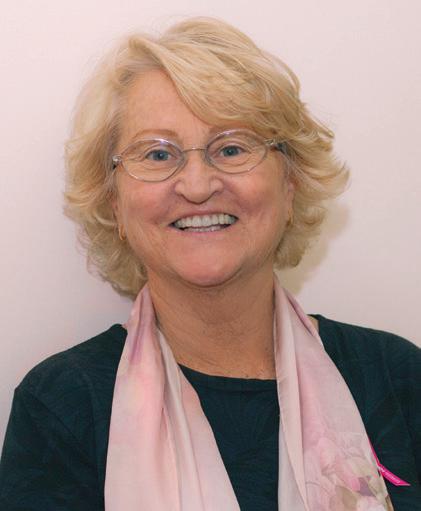
Hilary Bainbridge Founder and Managing Editor
Founder & Managing Editor
Hilar y Bainbridge
Editorial
Sarah Palmer (Editor)
Ola Diab (Deputy Editor)
Terr y Sutcliffe
Adver tising
Howard Bainbridge
Marrian Magtira
Retail Sales
Ayen Molina
Online/Digital
Patrisha Manzon
Char lotte Wright
Juggy Gill
Isra Mubarak
Design and Ar twor k
Dick Tamayo
Mar Principe
Marhaba endeavours to quote accurate information and updates each of its sections ever y issue. However, the company accepts no responsibility or liability for any false, inaccurate, inappropriate or incomplete information presented, whether in print, on the website, or on social media channels.
Dana Public Relations PO Box 3797, Doha, Qatar Tel (+974) 4465 0083, 4465 5533
General Information
marhaba@marhaba.com.qa
Follow us
Emergency and Important Numbers
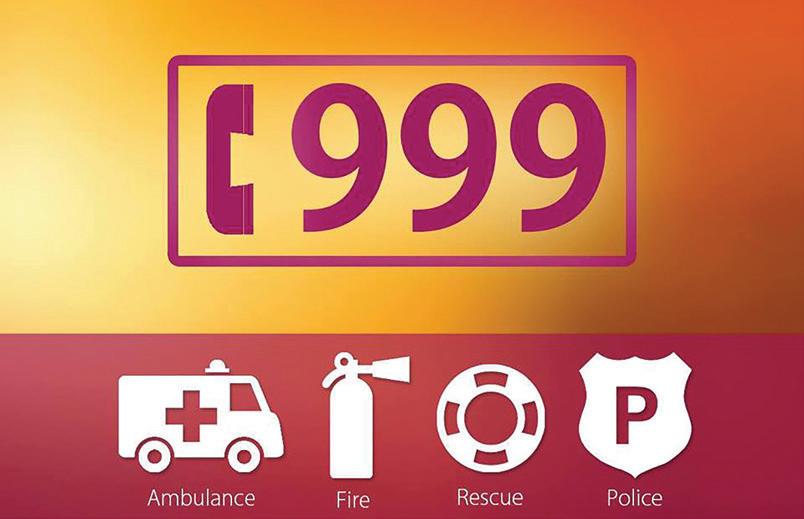
Emergency Services
Police, Fire and Ambulance
999
Worldwide emergency (from mobile phones) 112 Emergency Services for the Deaf 992
Health Enquiries
Health Unified Contact Center 16000
Nesma'ak (Hamad Medical Corporation) 16060
Hayyak (Primary Health Care Corporation) 107
See Healthcare Useful Numbers in the Living in Qatar section.
Traffic Accidents
General Directorate of Traffic 234 4444
Madinat Khalifa Traffic & Investigation 234 4499
Roadside and Breakdown Assistance
Rescue Police Department (Al Fazaa) 236 1777
Qatar Assist 5545 5252/5757
Important Numbers
General
Calls Enquiry
Consumer Protection 800 5000
Qatar Meteorology Department qweather.gov.qa 4448 0444
Airport
Hamad International Airport (HIA) dohahamadairport.com 4010 6666
Airport Security 4010 9555
Airport Security Department at MOI 235 1344
Airport Fire and Medical Emergency 4010 9222
Foreign Embassies See Foreign Embassies in this section.
Government Entities
Ministry of Communications and Information Technology (MCIT) mcit.gov.qa 4473 3333
Ministry of Education and Higher Education (MOEHE) edu.gov.qa 155, 4404 4444
Ministry of Environment and Climate Change (MECC) mecc.gov.qa 16066
Report Environmental Violations 998
Ministry of Foreign Affairs (MOFA) mofa.gov.qa 4011
Ministry of Interior (MOI) portal.moi.gov.qa
Government Contact Centre (Hukoomi) hukoomi.gov.qa 109
Information Systems Department (Metrash and MOI e-services) 234 2000
General Directorate of Civil Defense 4489 5191
General Directorate of Passports 4489 0333
Ministry of Justice (MOJ) moj.gov.qa 137, 4021 5555
Ministry of Labour (MOL) mol.gov.qa 16505, 4406 8979
Ministry of Municipality (Baladiya) mme.gov.qa 184
Ministry of Social Development and Family (MSDF) msdf.gov.qa 16080
Ministry of Transport (MOT) mot.gov.qa 16016, 4045 1111
National Human Rights Committee (NHRC) nhrc-qa.org 4404 8844
Public Works Authority (Ashghal) ashghal.gov.qa 188
Telecom and Communications Ooredoo ooredoo.qa 111
Vodafone vodafone.qa 111, 800 7111, 7700 711
Utilities Kahramaa km.qa 991, 4449 4000
Taxis, Limousines and Metro Mowasalat (Karwa) 4458 8588
Qatar Rail (Doha Metro) 105, 4144 3211
See Getting Around Qatar in this section.
Discovering Qatar
In this issue
Emergency and Important Numbers
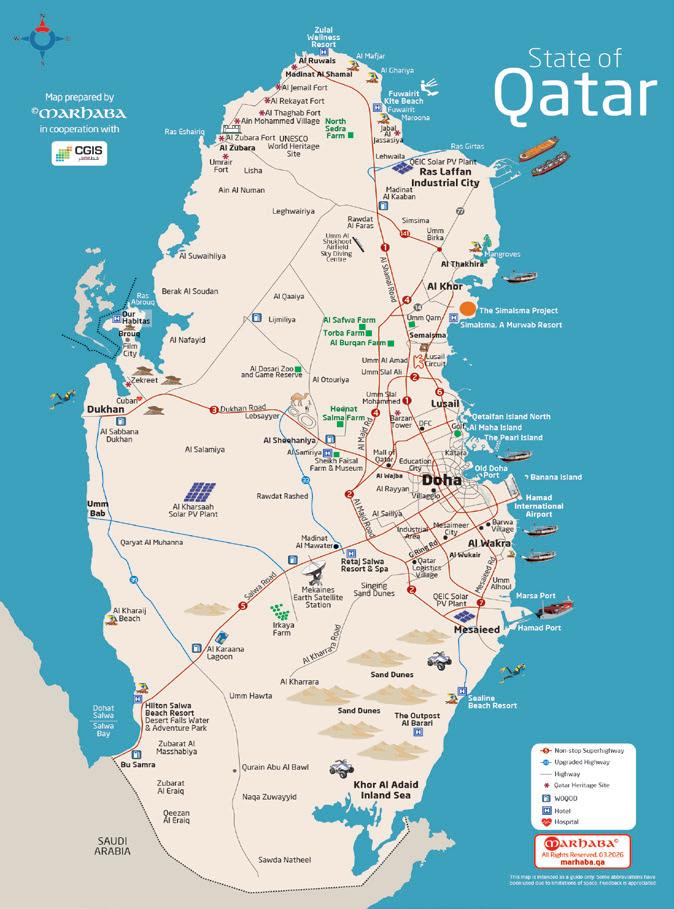
Map of Qatar
Qatar at a Glance
• Common Courtesies • Geography
• Demography • Climate
• Language and Religion
• The Ruling Family • The Qatari Flag
• Government • History • Economy
• International Relations
• Travel and Transportation
Qatar’s Government Structure
Cultural Awareness
Arabic Phrases
Foreign Embassies
Digital Qatar
Traveller Information
• Visas • Hayya • Other Entry Visas
• Transit and Transfers • Airlines
• Travel Agencies
Border Crossing
• Required Documents
• Exiting Qatar • Re-entering Qatar
• Things to Consider
Hamad International Airport
• Arrivals/Departures • Parking
• Buses, Taxis and Limousines
• Lounges • Airport Hotels
• Qatar Duty Free • Dining
• Shopping • Connectivity
• Medical and Fire Emergencies
• Travelling with Animals
• Travelling with Children
• Fitness Centre and Spa
• Art Installations
National Museum of Qatar (NMoQ)
Maps
Qatar
Greater Doha
Doha Corniche and Bay
Doha Old Town (Central Area)
Northeast Coast
Al Khor
Southeast Coast
Al Wakra
Mesaieed Industrial City
Msheireb Downtown Doha
Discovering Qatar Discovering Qatar
Getting Around Qatar
• Karwa Taxis and Metroexpress Services
• Doha Limousine (Karwa) Services
• Karwa Public Transportation Bus and Metrolink Services
• Doha Metro and Lusail Tram
• Education City Tram • Msheireb Tram
• Electric Vehicles
Greater Doha and other maps
Souq Waqif
Old Doha Port
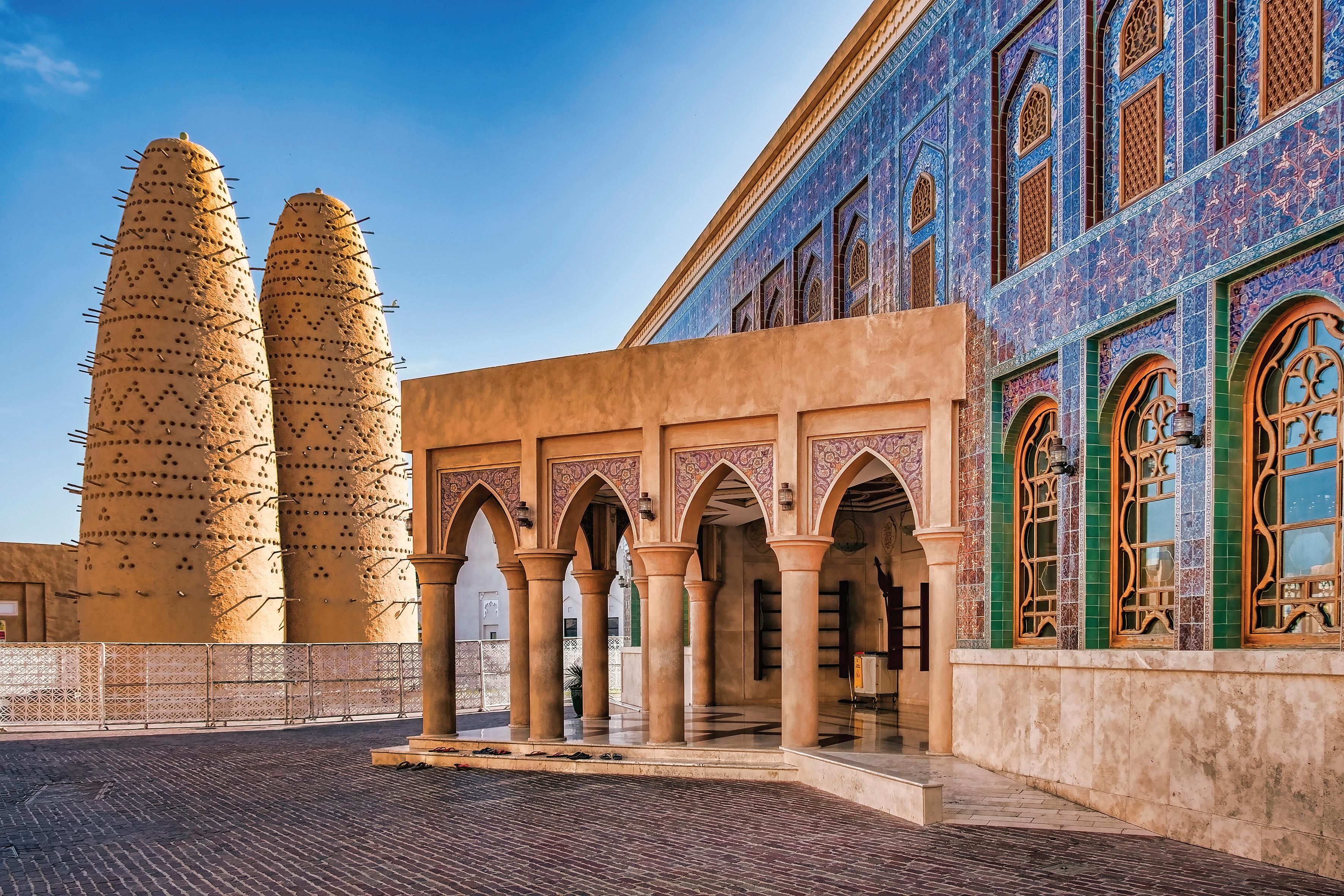
Katara Cultural Village
Lusail City
The Pearl Island and Gewan Island
Al Wakrah Old Souq
Souq Area
Primary Health Care Centres
Hamad bin Khalifa Medical City
Education City
Feature
Qatar Climbs Global Rankings
Qatar is rapidly cementing its place among the world’s top tourist destinations.
Main Urban Centres
Sightseeing
Things to see and do, including Archaeological Sites, Beaches, Museums, Parks and Mosques.
Because the best moments don’t wait, they’re already happening here.doha
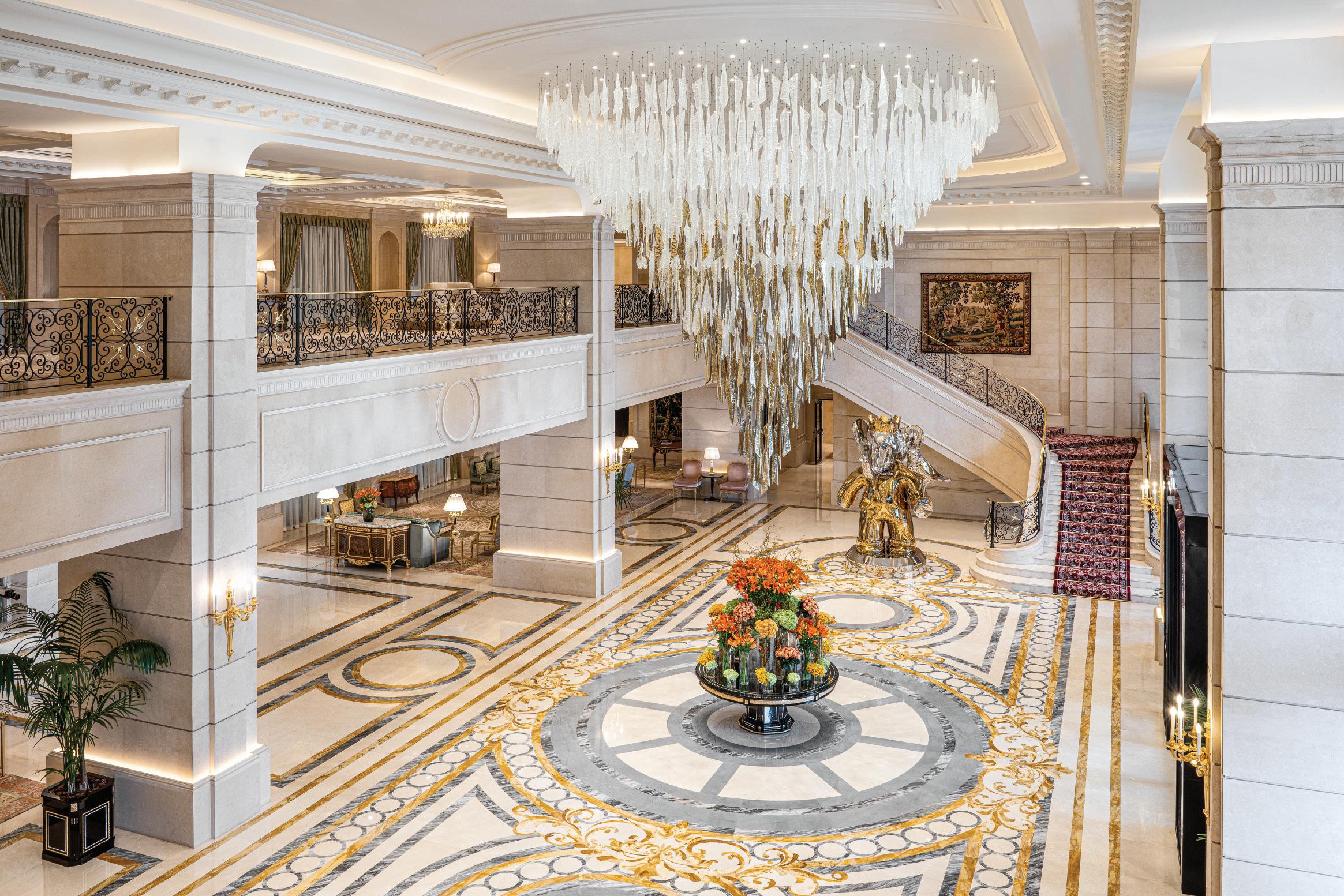
WHERE PARISIAN ELEGANCE MEETS DOHA SOPHISTICATION
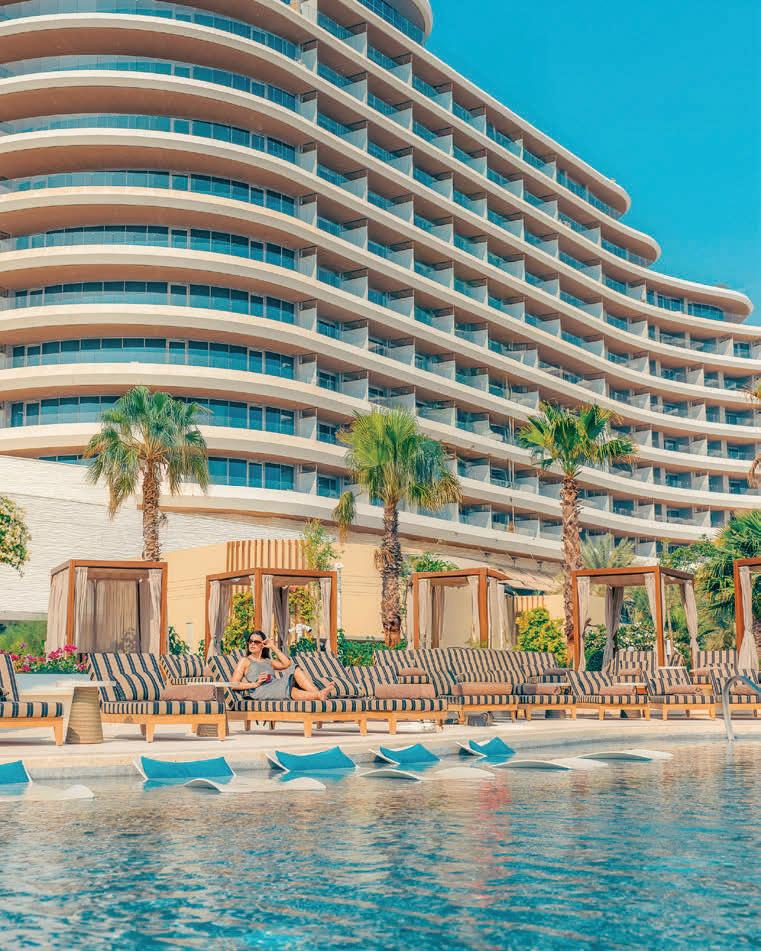
Step into a world of refined luxury at The Plaza Doha, where timeless Parisian charm blends with contemporary comfort in the heart of the city.
From elegantly appointed rooms and exceptional stays created for ultimate relaxation, to a breathtaking infinity pool, every detail is cra ed to elevate your experience. Rejuvenate at our fully equipped wellness center and indulge in exquisite dining options that celebrate global flavors in sophisticated settings.
Whether for business or leisure, every moment is defined by comfort, prestige and unforgettable luxury hospitality.
For reservations or more information, call +974 4040 2222
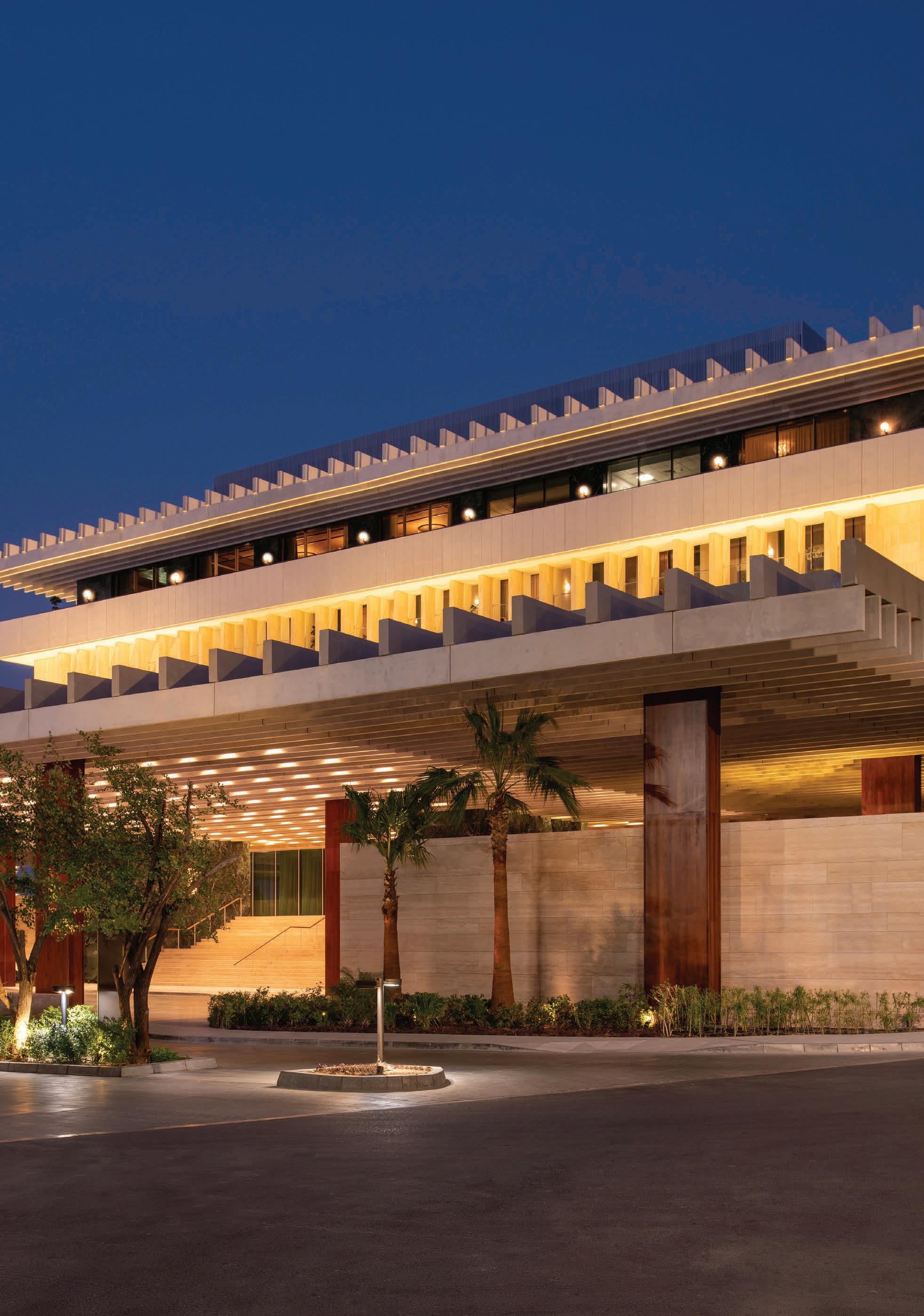
The Ned Doha
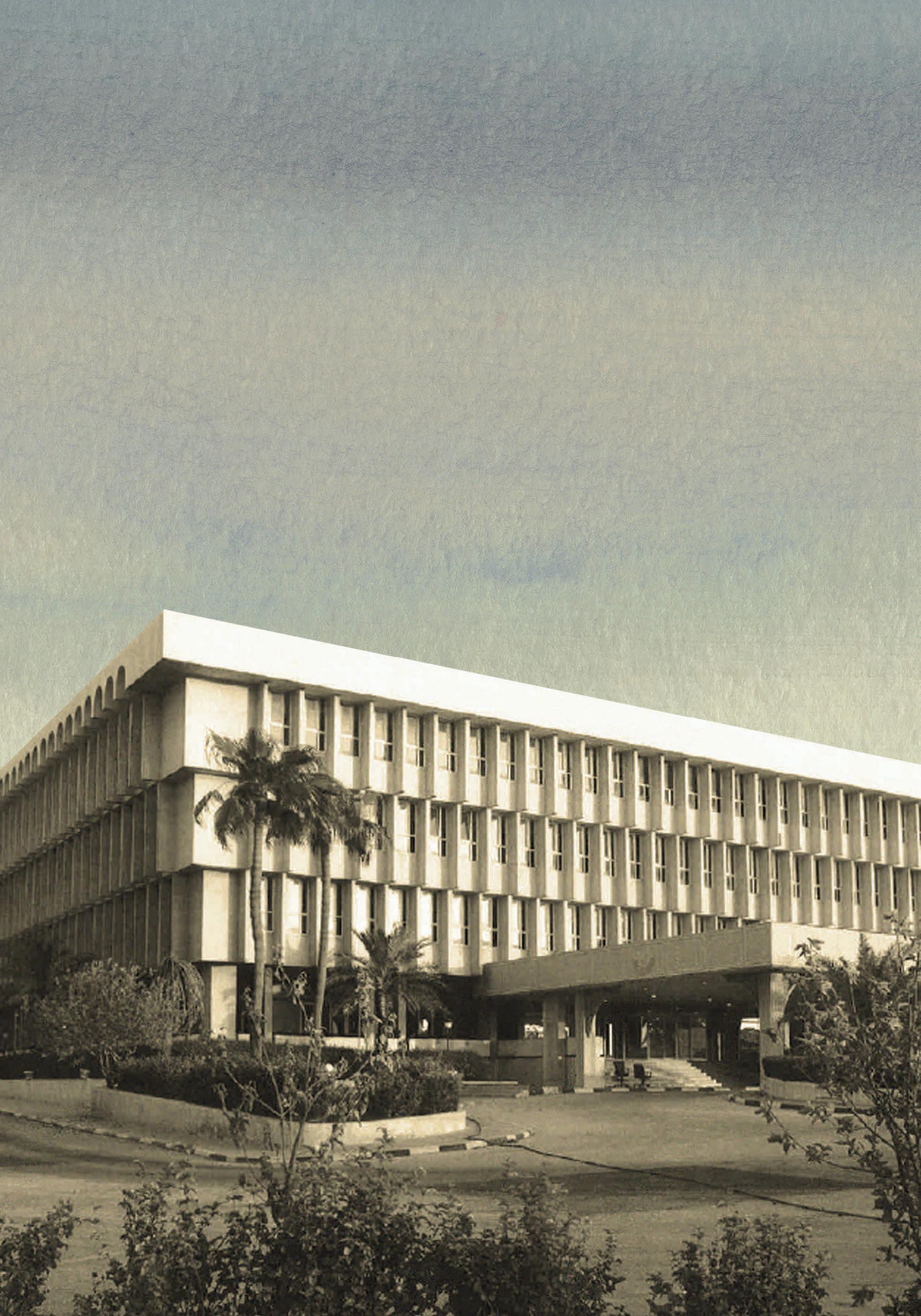
A landmark reimagined
Housed in Doha’s former Ministry of Interior building, originally designed in the 1960s, The Ned Doha preserves its bold modernist heritage while embracing contemporary luxury.
90 rooms and suites blend vintage 70s glamour with refined comfort.
Seven restaurants.
One iconic address.
In the heart of the city, where culture, design and hospitality meet.
Qatar at a Glance
Common Courtesies
Please dress modestly when out in public. As a sign of respect for Qatar’s culture and values, visitors and expatriates (both men and women) are expected to dress conservatively. Avoid wearing tight or revealing clothing. While some may disregard the dress code, inappropriate attire can result in being turned away from certain places. Extra care should be taken when visiting government buildings, mosques, museums, parks, beaches, and malls. Modesty is especially important during the holy month of Ramadan.
Public displays of affection between men and women are discouraged and behaviour that is considered immoral could result in prosecution. There are many photographic opportunities in Qatar, but exercise discretion when photographing residents, even from a distance. It is wise to ask
Time
Qatar local time is GMT+3, three hours ahead of Greenwich Mean Time (GMT), also known as Universal Coordinated Time. It is fixed across the country and throughout the year. There is no summer daylight saving.
Hours of Business
The workweek in Qatar is Sunday to Thursday, with Friday (a holy day for Muslims) and Saturday being the weekend. Government working hours amount to seven hours per day, typically 7 am –2 pm. Working hours in the private sector typically amount to eight hours per day, roughly 8 am – 5 pm. Some follow a one shift workday, some two: roughly 8 am – 1 pm and 4 pm – 8 pm. People with special needs and nursing mothers are entitled to work one hour less per day. During the holy month of Ramadan, working hours are reduced to six hours per day for both government and private sectors. Bank times vary but generally 7:30 am – 1 pm with extended branch operations, particularly at malls. Shop times also vary but typically 8:30 am – 12:30 pm and 4 pm – 10 pm. Malls generally 10 am – 10 pm.
Qatar is one of the safest countries in the world and both visitors and residents have the opportunity to experience the courteous and hospitable nature of Arab culture. However, bear in mind that Qatar is a conservative Islamic state –by following a few simple rules in public you will more than repay the warm welcome shown to you.
their permission first. Muslim women are very modest, so if you are a man, it is best to approach another man when asking for directions or advice.
There are stiff fines for consuming alcohol other than on licensed premises or at home (a liquor permit is required to buy alcohol for use at home). Driving under the influence of alcohol is a serious offence, and could lead to prosecution and deportation. Alcohol is not sold or served during Ramadan, or in the nine days leading up to Eid Al Adha and the first day of the holiday itself. In addition, the country applies a zero-tolerance attitude to drugs.
Law No 10 of 2016 on the Control of Tobacco and its Derivatives governs tobacco regulation in Qatar. It prohibits smoking in indoor public places, as well as the sale and import of e-cigarettes and smokeless tobacco products.
However, grocery stores inside malls may open as early as 7 am. Businesses either close or have reduced opening hours on Friday.
Currency
The official currency is the Qatari Riyal (QAR), which is divided into 100 Dirhams. The exchange parity has been set at the fixed rate of USD1 = QAR3.64. See Banking and Finance in the Business and Economy section for details of banks and currency exchange houses.
Public Holidays
Qatar National Day is 18 December each year. National Sports Day takes place on the second Tuesday of each February. In 2026, it fell on 10 February.
The dates of religious public holidays such as the holy month of Ramadan, Eid Al Fitr and Eid Al Adha depend on the Hijri or Islamic calendar, which uses the phases of the moon to mark the months' start and end dates. The commencement of religious holidays are confirmed the night before by moon sighting. In 2026, Ramadan began on 18 February, Eid Al Fitr on 27 March, and Eid Al Adha on 27 May.
Geography
• Qatar is a peninsula of 11,636 sq km located halfway down the west coast of the Arabian Gulf.
• Qatar is divided into eight municipalities: Doha, Al Rayyan, Al Wakra, Al Sheehaniya, Al Daayen, Umm Slal, Al Khor, and Al Shamal.
• The territory encompasses several islands including Halul, Sheraouh, Al Beshairiya, Al Safliya (which is a marine protected area) and Al Aaliya.
• The coastline covers 563 km with shallow coastal waters in most areas and many coves and inlets.
• The terrain is flat and rocky, covered with sand flats and sand dunes. There are some exceptional low-rising limestone outcrops in the north and the west.
• The country is centrally placed among the states of the Gulf Cooperation Council (GCC), which groups it with Saudi Arabia, Kuwait, Bahrain, the United Arab Emirates (UAE) and Oman.
Demography
• Qatar's population is 3,406,760, as of February 2026, the latest figures issued by the National Planning Council (NCP), npc.qa
• According to Visit Qatar, Qatar has one of the world’s lowest female population by percentage of total population – approximately 29.2%. This is due to the vast number of male migrant workers.
• Qatari nationals constitute about 11.6% of the population, and 88.4% are expatriates. The largest expatriate communities include Indians, Bangladeshis, Nepalese, Egyptians, Filipinos and Pakistanis. Again, this is due to the vast number of migrant workers.
• Other population centres, apart from Doha, include Dukhan on the west coast, Mesaieed and Al Wakra in the south east, and Lusail City, Al Khor and Ras Laffan in the north east. Projects are underway to provide new housing and amenities outside of Doha.
Climate
• The country has a moderate desert climate with mild winters and hot summers. Winter nights can be cool, but temperatures rarely drop below 7°C.
• Humidity levels can be very high on the coast during the summer months.
• Rainfall is scarce (average 70 mm per year), falling on isolated days mainly between October and March.
Language and Religion
• The official language of the country is Arabic, but English is widely used as a second language.
• All official documents (such as visa and resident permit applications) must be completed in Arabic.
• Islam is the official religion of the country, and Shari’a (Islamic Law) is the principal source of legislation.
The Ruling Family
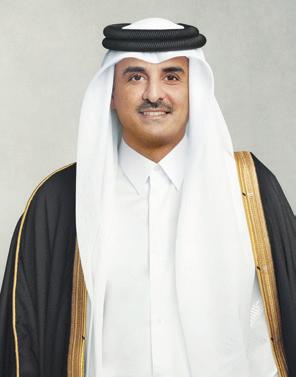
• The Amir, HH Sheikh Tamim bin Hamad Al Thani, assumed power on 25 June 2013. He is the fourth son of the former Amir, The Father Amir, HH Sheikh Hamad bin Khalifa Al Thani and HH Sheikha Moza bint Nassir.
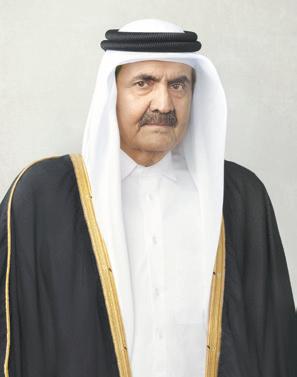
• The Father Amir, HH Sheikh Hamad bin Khalifa Al Thani ruled Qatar from 1995 until 2013 when he abdicated the throne, handing power to HH Sheikh Tamim.
• The ruling Al Thani family was among a tribal group who had settled at the 'Gibrin' oasis in southern Najd, before their arrival in Qatar during the early 18th century. Initially, they settled in Zubara in northern Qatar, moving to Doha in the mid-19th century. The family is a branch of the ancient Arab tribe, the Bani Tamim, whose descent can be traced back to Mudar bin Nizar.
The Qatari Flag
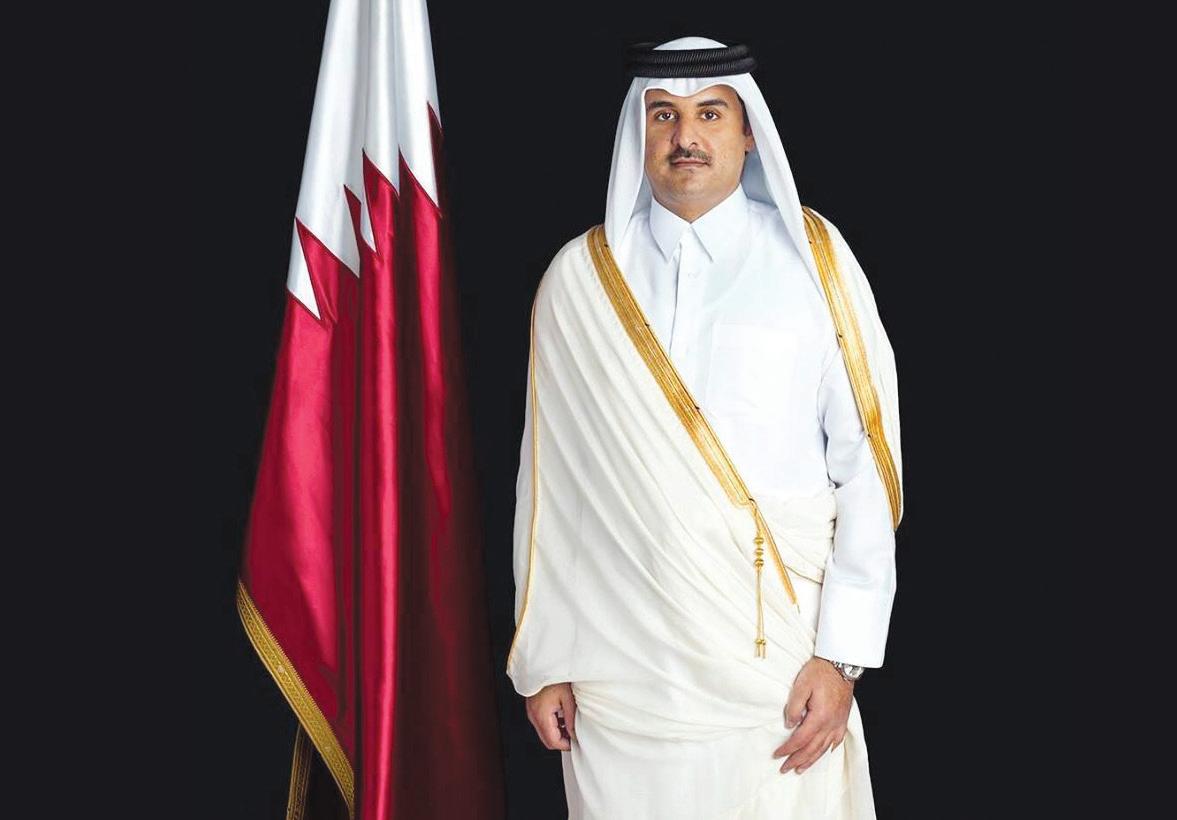
• The national flag is maroon with a broad vertical white stripe at the pole, the two colours being separated with a nine-point serrated line which indicates Qatar as the ninth member of the 'reconciled Amirates' of the Gulf, after the 1916 QatarBritish Treaty.
• White signifies the internationally recognised symbol of peace. Maroon symbolises the blood shed during the several wars that Qatar has undergone, particularly in the second half of the 19th century.
Government
• The Amir is the ruler of Qatar. Rule is hereditary, with power transferred from father to son. If no son is available, power is transferred to the person whom the Amir chooses within the Al Thani family.
• The Amir is the head of the constitutional authorities, holding both legislative and executive powers. The Amir appoints the prime minister and ministers.
• The Council of Ministers (Cabinet), the supreme executive authority in the country, assists in implementing the general policies of the State.
• The first provisional constitution was issued in 1970, and amended in 1972 upon independence. In 2003, an overwhelming 96.6% of Qatari voters said 'yes' to a draft permanent constitution, which became effective in 2005.
• In 1999, free elections were held to form a 29-member Central Municipal Council (CMC) for the first time in Qatar’s history. Women were allowed to vote and run as candidates. The constitution was amended in 2003 to
allow for the direct election of 30 members of the Advisory Council. Held every four years, the elections for the seventh edition of CMC was held in June 2023.
• Qatar held its first-ever elections in 2021 to choose two-thirds of the members of the advisory Shura Council, which was originally established in 1972, following the passing of the Amended Provisional Basic Law of Rule in the State of Qatar on 19 April 1972, to assist the Amir and the Council of Ministers in the the following functions in accordance with the constitution: Legislative authority, approving the general budget of the government, and exercising control over the executive authority, as specified in the constitution. The Shura Council comprises a total of 45 members, 30 of whom are elected via a general ballot, while the remaining 15 are appointed by the Amir. In November 2024, HH The Amir ratified the constitutional amendments of 2024 to the Permanent Constitution of the State of Qatar, after obtaining 90.6% of approval votes, replacing legislative elections. The term of office is four years commencing from the date of the first meeting. shura.qa
Father Amir His Highness
Sheikh Hamad bin
Khalifa Al Thani
Amir of the State of Qatar
His Highness
Sheikh Tamim bin
Hamad Al Thani
History
• The first evidence of sustained human settlement in Qatar dates to the 6th millennium BCE. These settlements belong to the Ubaid period, originally associated with southern Mesopotamia (modern-day Iraq).
• Qatar became an independent nation on 3 September 1971 after ending its status as a British protectorate, a relationship established through treaties in 1868 and 1916, despite its history stretching back to the 1700s.
• Sheikh Mohammed bin Thani is the first Ruler of Qatar. Born in 1776, he became ruler of Qatar in 1851 until his death on 18 December 1878. However, his son, Sheikh Jassim bin Mohammed bin Thani is considered the founder of the modern State of Qatar. Born in 1826, he ruled from 1878 to 1913.
• Oil was first discovered in Qatar in 1939, during the reign of Sheikh Abdullah bin Jassim Al Thani (1913 to 1949).
International Relations
• The Ministry of Foreign Affairs (MOFA) is responsible for Qatar's foreign policy and relations with the objective to promote and enhance international cooperation with all countries and organisations towards the achievement of world peace. The Minister of Foreign Affairs is Mohammed bin Abdulrahman Al Thani, who also serves as the Prime Minister. mofa.gov.qa
• A member of the Gulf Cooperation Council (GCC), Qatar was actively involved in the discussions leading to its foundation and has hosted a number of their meetings.
• Qatar maintains 104 embassies abroad, along with 14 consulates and five other diplomatic representations. Doha hosts 120 foreign diplomatic missions, including embassies and consulates.
Travel and Transportation
Economy
• Qatar, with proved gas reserves of nearly 900 tn standard cubic feet in its North Field, and oil reserves of over 25.2 bn barrels, has one of the fastest growing economies and one of the highest per capita income in the world.
• In just decades, Qatar has developed into a major global supplier of energy and is one of the world's largest exporter of liquefied natural gas (LNG) and a world leader in gas-to-liquids (GTL) production
• While developing its huge hydrocarbon reserves, Qatar has also diversified its economy, and emphasis is being placed on private-sector industrial development, education, health, sport and tourism.
• Investment laws allow foreign investment in many sectors including agriculture, industry, leisure, tourism, health, education and the exploitation of natural resources, energy and mining – see Trade and Investment in the Business and Economy section for details.
Qatar is a member of:
• Arab League • Asian Group of the United Nations Human Rights Council (UNHRC)
• European Council (observer member)
• Gulf Cooperation Council (GCC)
• International Civil Aviation Organization (ICAO)
• International Monetary Fund (IMF) and World Bank • Interpol • Non-Aligned Movement (NAM)
• A major non-NATO ally • Organization of Arab Oil Exporting Countries (OAPEC) and the Petroleum Exporting Countries Forum (GECF)
• Organisation of Islamic Conference (OIC)
• Parliamentary Assembly of the Mediterranean (PAM) • The United Nations (UN) and its subsidiary global organisations • UNESCO World Heritage Committee • World Health Organization (WHO) Executive Board • World Trade Organization (WTO) • World Intellectual Property Organization (WIPO)
• The country is served by Hamad International Airport (HIA). See Hamad International Airport in this section.
• Qatar has a modern road system, linking it with other GCC countries through the Abu Samra Border. and the newly introduced the Qatar-Bahrain ferry. See Traveller Information in this section.
• Metered taxis and limousines are widely available in Qatar, and public transport is well-developed. Mowasalat (Karwa) operates the country’s buses, taxis, and other smart mobility services. See Getting Around Qatar in this section.
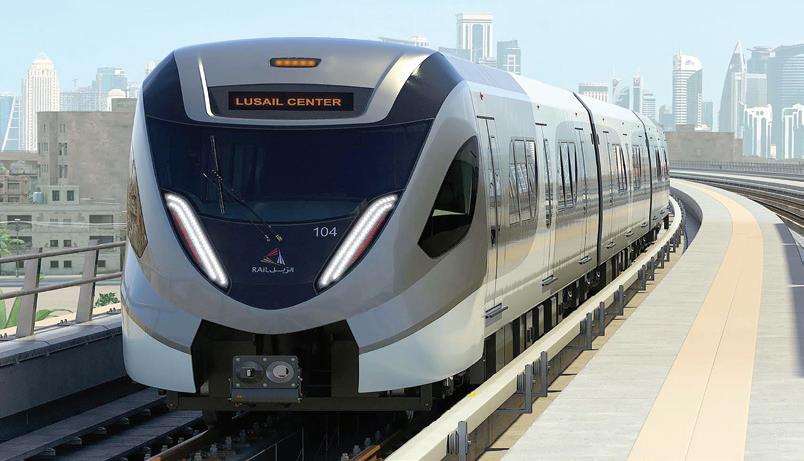
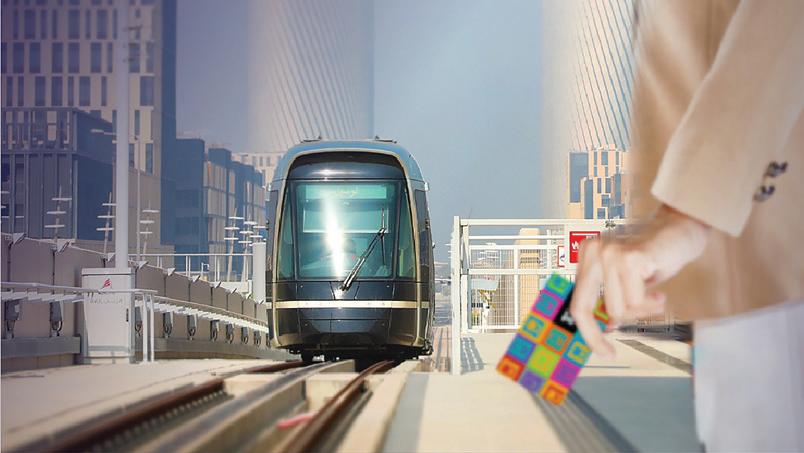
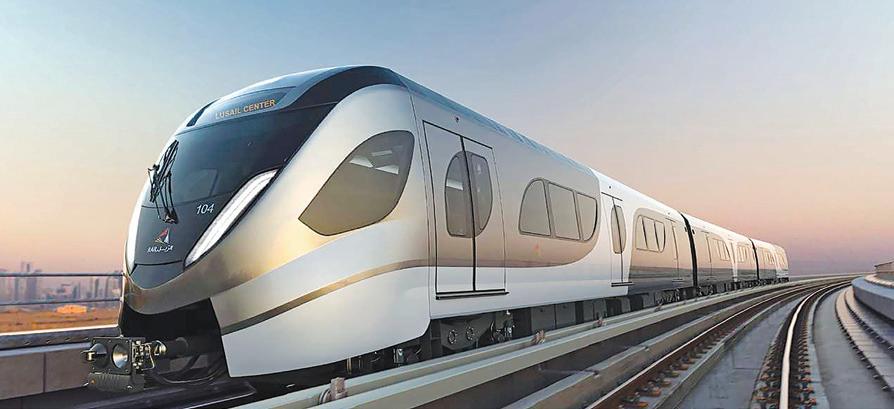
• Qatar Rail runs both the Doha Metro and the Lusail Tram. The Doha Metro currently operates three lines (Red, Gold, and Green) with 37 stations. Future expansion plans include adding a Blue Line and more than 60 new stations. The Lusail Tram serves Lusail City and connects to the metro at Legtaifiya and Lusail QNB stations. See Getting Around Qatar in this section.
Qatar's Government Structure
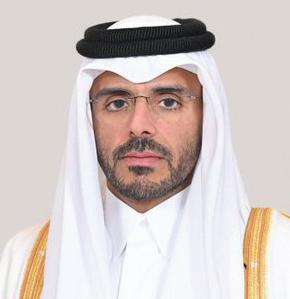
The Amiri Diwan is the sovereign body and administrative office of HH The Amir, overseen by the Chief of the Amiri Diwan, currently HE Abdullah bin Mohammed bin Mubarak Al Khulaifi (appointed November 2024).
The Amir is the Head of State and the Commanderin-Chief of the armed forces. The Advisory Council represents the legislative power, while judicial authority is in the hands of the law courts with judgments announced in the name of the Amir. The Amir is assisted by the Council of Ministers (the cabinet), the Prime Minister and Supreme Councils. The Prime Minister and other ministers are directly appointed by the Amir; he will also accept their resignations or relieve them of their appointment, by Amiri Decree.
The General Secretariat of the Council of Ministers acts as a link between the ministries, supreme councils and other government bodies. The Minister of State for the Council of Ministers is the Prime Minister, who chairs each session, signs any decisions made, and advise the Amir on how to form the cabinet. The General Secretary is HE Dr Issa bin Saad Al Jafali Al Nuaimi.
The Shura Council (Advisory Council) was established in 1972 during the reign of Sheikh Khalifa bin Hamad Al Thani. Under the amended Provisional Constitution he was tasked with organising the State's structure and institutions.
The Shura Council currently comprises 45 members, 30 directly elected in a secret general ballot, with the remaining 15 appointed by the Amir. The Advisory Council has legislative powers and is able to approve the budget and general state policies, but has no say in setting defence, security, economic and investment policies. Each annual session lasts eight months, opened with an address by the Amir, and sessions are generally open to the public.
The first Central Municipal Council was established in the early 1950s. Free elections to form the Central Municipal Council were held in 1999, the country's first steps towards democracy and the
encouragement of women to run as candidates and be involved in public affairs. The Council has members from each of the 29 constituencies and elections are held every four years.
Qatar’s first (and much delayed) legislative council elections took place in October 2021, with citizens voting for 30 of the 45 seats on the Shura Council. Voters had to be over 18, and the 284 candidates had to be at least 30 years old 'of Qatari origin'. Turnout was 63.5%.
Further to a referendum in November 2024 on constitutional amendments, 90.6% of Qataris voted to replace legislative elections for the Shura Council with appointed roles. HE Hassan bin Abdulla Al Ghanim is the Speaker of the Shura Council (appointed October 2025).
Changes to the Council of Ministers
HH Sheikh Tamim bin Hamad Al Thani named a new cabinet the day after becoming the Amir of the State of Qatar on 25 June 2013.
A full reshuffle was made in November 2018, with ministries restructured under a new portfolio. Amiri Order No 1 of 2020 appointed a new Prime Minister after the previous incumbent's resignation. The Council of Ministers was again restructured in October 2021 under Amiri Order No 4 of 2021. A number of ministries were split and (re)formed, and included the new Ministry of Environment and Climate Change. The Ministry for Social Development and Family and the Ministry of Labour were formed, due to the restructure of the Ministry of Administrative Development, Labour and Social Affairs.
There were further reshuffles in March 2023, following the resignation of the Prime Minister, while Amiri Order No 1 of 2024 appointed five new ministers in a reshuffle, and Amiri Order No 2 of 2024 made six cabinet changes.
Amiri Order No 6 of 2025 appointed HE Essa bin Hilal Al Kuwari as Minister of State, and Amiri Decision No 7 of 2025 designated HE Dr Khalid bin Mohammed Al Attiyah the rank of Prime Minister.
of the Amiri Diwan
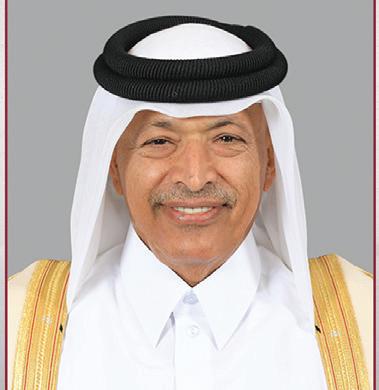
HE Hassan bin Abdulla Al Ghanim, Speaker of the Shura Council
Pictured: HE Abdullah bin Mohammed bin Mubarak Al Khulaifi, Chief
Council of Ministers represented in the State of Qatar’s Cabinet
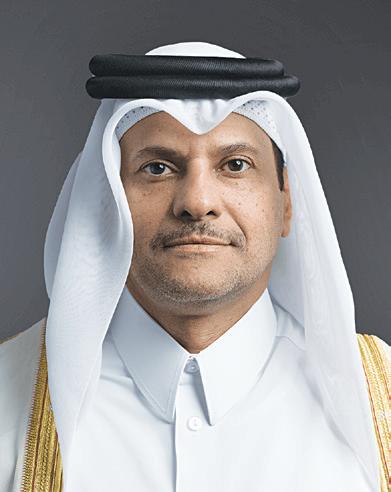
• Prime Minister and Minister of Foreign Affairs HE Sheikh Mohammed bin Abdulrahman bin Jassim Al Thani – appointed Minister of Foreign Affairs in January 2016 and Deputy Prime Minister in November 2017. In March 2023 he was appointed Prime Minister and Minister of Foreign Affairs.
• Deputy Prime Minister and Minister of State for Defence Affairs HE Sheikh Saud bin Abdulrahman bin Hassan bin Ali Al Thani (right) – appointed November 2024. He is the former Chief of the Amiri Diwan.
• Minister of Commerce and Industry HE Sheikh Faisal bin Thani bin Faisal Al Thani (November 2024).
• Minister of Communications and Information Technology HE Mohammed bin Ali bin Mohammed Al Mannai (October 2021 after the Ministry of Transport and Communications was split).
• Minister of Culture HE Sheikh Abdulrahman bin Hamad bin Jassim bin Hamad Al Thani (October 2021 when the Ministry of Culture and Sports was split).
• Minister of Education and Higher Education HE Lolwah bint Rashid bin Mohammed Al Khater (November 2024).
• Minister of Endowments and Islamic Affairs HE Ghanem bin Shaheen bin Ghanem Al Ghanim (October 2021).
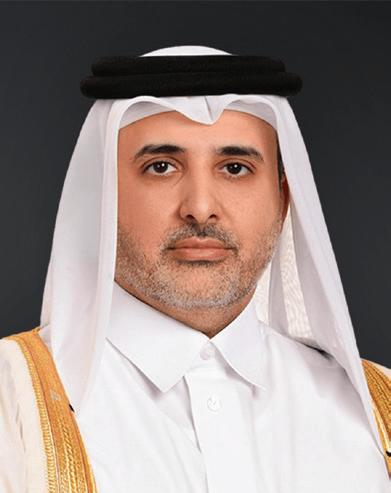
• Minister of Environment and Climate Change HE Abdullah bin Abdulaziz bin Turki Al Subaie (right) (January 2024, previously the Minister of Municipality).
• Minister of Finance HE Ali bin Ahmed Al Kuwari (October 2021, following his temporary appointment in May 2021).
• Minister of Interior HE Sheikh Khalifa bin Hamad bin Khalifa Al Thani (March 2023); Commander of Internal Security Force (Lekhwiya) (May 2023).
• Minister of Justice and Minister of State for Cabinet Affairs HE Ibrahim bin Ali bin Issa Al Hassan Al Mohannadi (January 2024).
• Minister of Labour Dr Ali bin Samikh Al Marri (October 2021).
• Minister of Municipality HE Abdullah bin Hamad bin Abdullah Al Attiyah (January 2024).
• Minister of Public Health HE Mansoor bin Ebrahim bin Saad Al Mahmoud (November 2024).
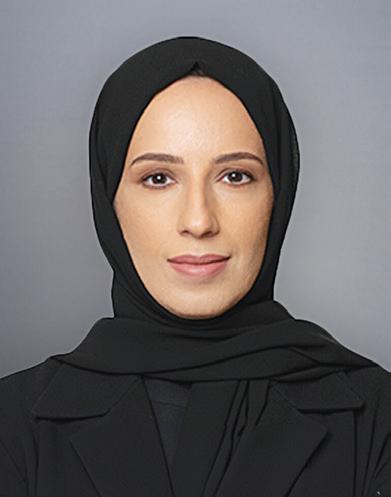
• Minister of Social Development and Family HE Buthaina bint Ali Al Jabr Al Nuaimi (right) (November 2024).
• Minister of Sports and Youth HE Hamad bin Khalifa bin Ahmed Al Thani (January 2024, previously President of Qatar Football Association 2005–23).
• Minister of State for Energy Affairs HE Saad Sherida Al Kaabi (November 2018). At the same time he became Deputy Chairman of Qatar Petroleum, now QatarEnergy, in addition to his role as President and CEO.
• Minister of State for Foreign Affairs HE Sultan bin Saad bin Sultan Al Muraikhi (January 2024).
• Minister of Transport HE Sheikh Mohammed bin Abdullah bin Mohammed Al Thani (November 2024).
For more information visit: Amiri Diwan diwan.gov.qa • Government Communications Office gco.gov.qa • General Secretariat of the Council of Ministers cm.gov.qa • Shura Council shura.qa • Hukoomi (Qatar e-Government) portal.www.gov.qa
Qatar Climbs Global Rankings
By Ola Diab
Qatar is rapidly cementing its place among the world’s top tourist destinations.
Due to recent developments in the region, some conditions in Qatar and the wider Middle East may have evolved. The information and statistics in this article reflect the most recent data available prior to these changes.
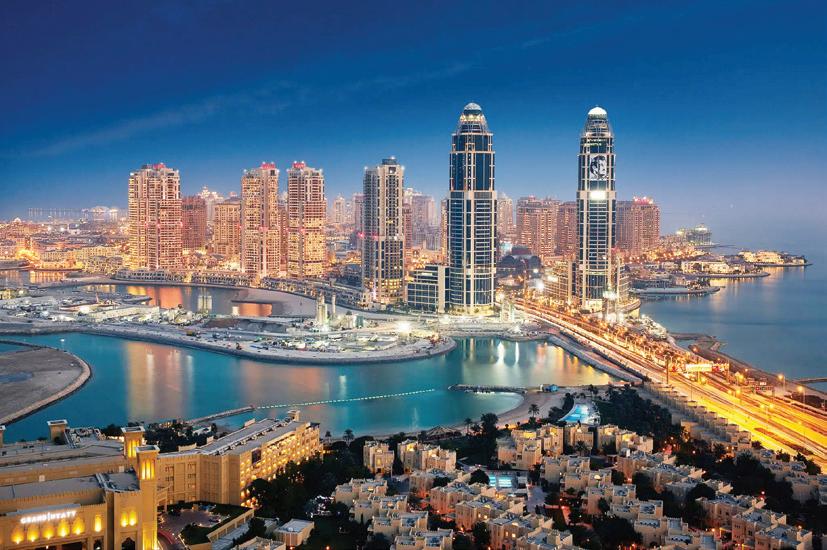
IIn recent years, Qatar has gained global recognition as a rapidly developing country and an emerging tourist destination, largely driven by the FIFA World Cup Qatar 2022™. It has also drawn attention for its exceptional quality of life, consistently ranking highly in global rankings and indices, reaffirming Qatar’s leadership role in advancing tourism development across the region.
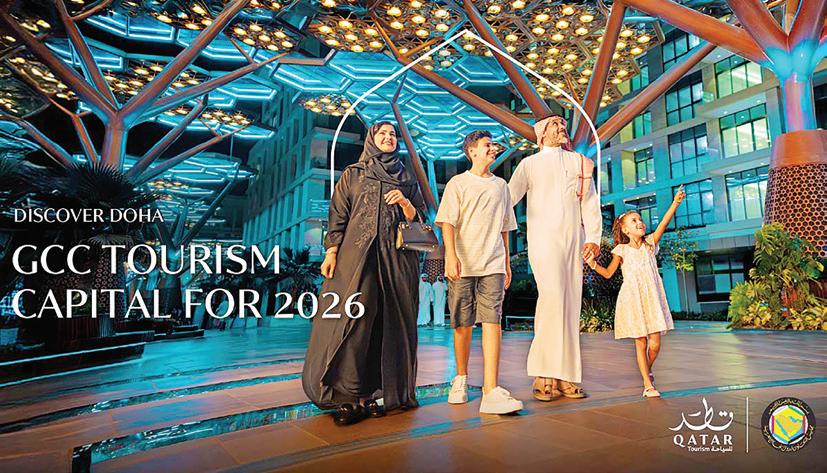
GCC Tourism Capital 2026
In a landmark achievement, Doha has been officially designated as the GCC Tourism Capital 2026 by the GCC General Secretariat on 31 December 2025, within the framework of strengthening joint tourism cooperation among GCC member states. This distinguished recognition celebrates Qatar's significant tourism development, cultural offerings, modern infrastructure, and sustainability efforts, building on its success as Arab Tourism Capital 2023 and aiming to boost regional tourism integration with enhanced experiences, connectivity, and events.
Chairman of Qatar Tourism and Chair of the Board of Directors of Visit Qatar, HE Saad bin Ali Al Kharji, said, 'The selection of Doha as the GCC Tourism Capital for 2026 marks an important milestone that underscores the success of our leadership’s strategic vision in establishing tourism as a central
pillar of the National Development Strategy and Qatar National Vision 2030. This recognition reflects the qualitative progress achieved in building an integrated and sustainable tourism ecosystem that is competitive at both regional and global levels, supported by world-class infrastructure, strong connectivity, and an exceptional visitor experience.'
Doha’s selection was driven by its strong transport and mobility infrastructure, including Hamad International Airport (HIA), Qatar Airways’ extensive global network, and integrated metro and tram systems, alongside flexible visa policies through the Hayya platform and a competitive, investor-friendly environment. The bid highlighted the city’s ability to offer diverse tourism experiences, supported by world-class event and conference facilities, a rich calendar of cultural, sporting and entertainment events, and global promotional efforts. These strengths are reinforced by Qatar’s commitment to sustainability, heritage preservation, eco-tourism, and its growing role in medical and wellness tourism.
'Looking ahead to 2026, this title provides a strategic platform to further strengthen Gulf tourism cooperation, stimulate investment, create new economic opportunities and deliver a lasting legacy that reinforces Doha’s position as a leading regional tourism hub; particularly in business events, major festivals, large-scale activations and family-friendly destination,' said Al Kharji.
Qatar Tourism (QT), and its main tourism arm, Visit Qatar, are set to announce further details soon regarding the GCC Tourism Capital programme in Doha. This will include joint Gulf initiatives, promotional campaigns, and a year-round programme of community, cultural, and entertainment events, designed to deliver sustainable economic and tourism impact and further strengthen Doha’s position within the regional and global tourism landscape.
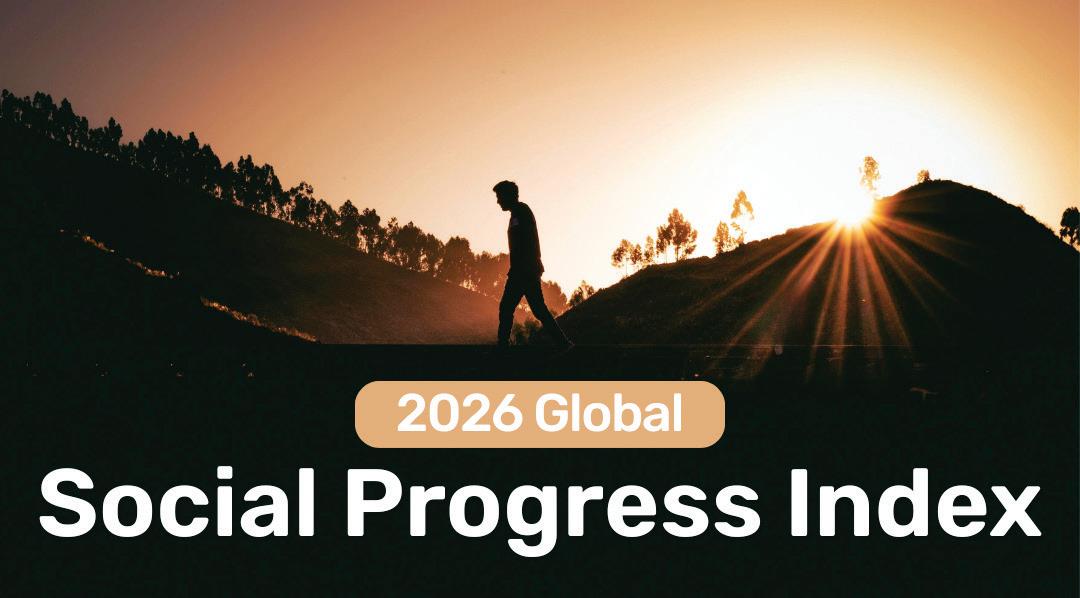
2025 AlTi Global Social Progress Index
In December 2025, Qatar emerged as a regional leader in social progress in the 2025 AlTi Global Social Progress Index, securing a place in Tier 2 among the world’s 170 assessed nations.
With a score of 73.19 out of 100, Qatar is ranked third in the Middle East and North Africa (MENA) and 50th globally, demonstrating sustained commitment to improving the quality of life for its residents, even as global social progress has largely stagnated since the onset of the pandemic. Qatar’s ranking positions it ahead of several countries in the MENA region, which has shown slow progress since 2011. Qatar outperforms countries with similar economic profiles, demonstrating that wealth alone doesn’t determine social outcomes.
The Index, developed through a partnership between AlTi Tiedemann Global and the Social Progress Imperative, measures how well countries meet their citizens’ basic needs, establish foundations for wellbeing, and create opportunities for individuals to reach their full potential, entirely separate from economic indicators like GDP. socialprogress.org/alti-global-social-progress-index
One of Qatar’s strongest areas in the index is Basic Human Needs, where the country scores highly on access to shelter, clean water, sanitation, electricity, and personal safety. Decades of infrastructure investment, combined with a robust social protection framework, have ensured that citizens and residents alike benefit from high living standards. Low crime rates, modern urban planning, and universal access to essential utilities continue to distinguish Qatar from many regional peers.
Smart City Index 2025
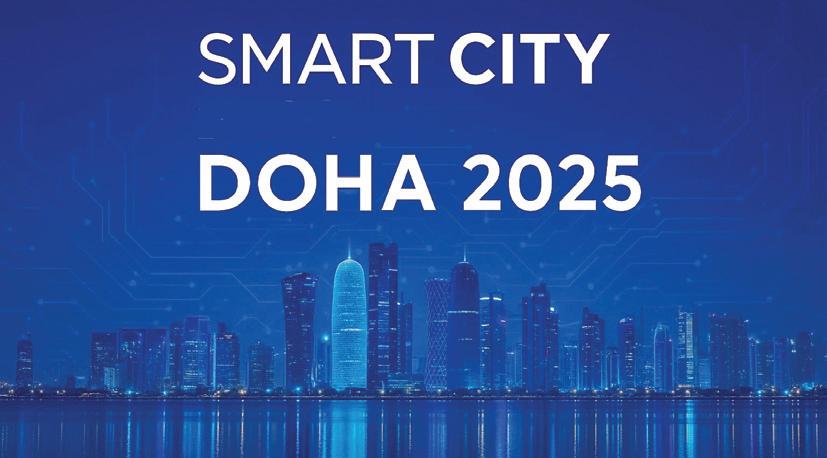
Doha has climbed 15 places into the top tier of global smart cities in the IMD Smart City Index 2025, compiled annually by IMD’s World Competitiveness Centre, with Doha ranking 33rd among 146 cities worldwide.
The index, which rated Doha the third-highest ranked city in the region, assesses cities not just on their infrastructure or digital services, but also on how well those elements translate into everyday life: residents’ perceptions about health and safety, mobility, activities, opportunities, and governance all feed into the score.
A 33rd-place finish puts Doha well ahead of most global cities and confirms the rapid improvements the city has made. This rise marks Doha’s continued trajectory of urban transformation, reinforcing its
status as a rapidly modernising capital, striving to balance infrastructure expansion, technology adoption, and citizens’ quality of life.
For more information, visit imd.org/smart-city-observatory/home/rankings
2026 World's Best Cities Report
Doha has been named in the 2026 World's Best Cities Report, ranking 100th globally, highlighting the country’s sustained progress in economic resilience, infrastructure development and quality of life.
Published by Resonance Consultancy, the internationally-recognised report ranks the world’s leading cities based on its proprietary Place Power methodology, which combines performance indicators and global perception across livability, prosperity and attractiveness. worldsbestcities.com/ rankings/worlds-best-cities-sp/doha
The report noted Doha’s strong performance in prosperity-related indicators, particularly labour force participation and unemployment, where the city ranks among the world’s top performers.
Doha’s inclusion among the world’s top cities reflects Qatar’s long-term investments in urban development, economic diversification and social stability. It also reflects Qatar’s steady urban transformation and long-term vision. As national strategies continue to prioritise sustainability, innovation and human capital development, the capital is well placed to enhance its global competitiveness and further strengthen its reputation as a city built for the future. m
Numbeo's Quality of Life and Safety Rankings
Doha continues to be recognised as one of the safest and most livable cities globally:
• Quality of Life Index (2025): Doha ranked 3rd in Asia and 77th globally with a score of 178.7.
• Safety Index (2025-2026): Qatar was ranked among the three safest countries in the world, with a safety score of 84.2.
• Health Care Index (2026): Qatar is ranked 18th globally and 1st in the Arab world for healthcare quality and infrastructure. For more information, visit numbeo.com
The UN: Qatar's Digital Agenda 2030 is a Global Best Practice in Digital Transformation
By Sarah Palmer
The United Nations (UN) has recognised Qatar’s Digital Agenda 2030 as a global best practice in digital transformation, including it in the UNDESA Compendium of Global Best Practices in Digital Government in January 2026.
The UN Department of Economic and Social Affairs (UNDESA) including the Digital Agenda 2030 in its compendium is recognition of Qatar developing a comprehensive digital ecosystem that combines long-term strategic vision with phased institutional implementation and which also establishes a direct link between digital transformation and long-term development objectives.
Digital Agenda 2030 is now seen as a global benchmark for countries seeking to align digital transformation with the UN's Sustainable Development Goals (SDGs). The UN identifies digital technology as a critical catalyst for the SDGs, with recent analysis showing that digital solutions can directly benefit 70% of all 169 SDG targets.
The inclusion was made by the UN’s Division for Public Institutions and Digital Government (DPIDG) after a systematic evaluation of the content and implementation frameworks of the Digital Agenda 2030. The agenda was lauded for its strategic digital transformation planning, the clear link to Qatar National Vision 2030 (QNV 2030), its emphasis on ensuring the impact of technology reaches all segments of society, and support for knowledgebased innovation. This reinforces Qatar’s position as a global hub for technological development and excellence in digital governance.
About Digital Agenda 2030
The agenda is the national roadmap for digital transformation, and is an executive pillar of QNV 2030 and the Third National Development Strategy 2024–2030 (NDS3). It is built on three main technological pathways, which were specifically commended by the UN:
* Universal connectivity to link all components of the digital society.
* High-performance computing (HPC) to enhance data-processing efficiency.
* Integrated AI-driven automation, supporting the development of a resilient and scalable digital infrastructure, including projects like the Arabic AI initiative Fanar
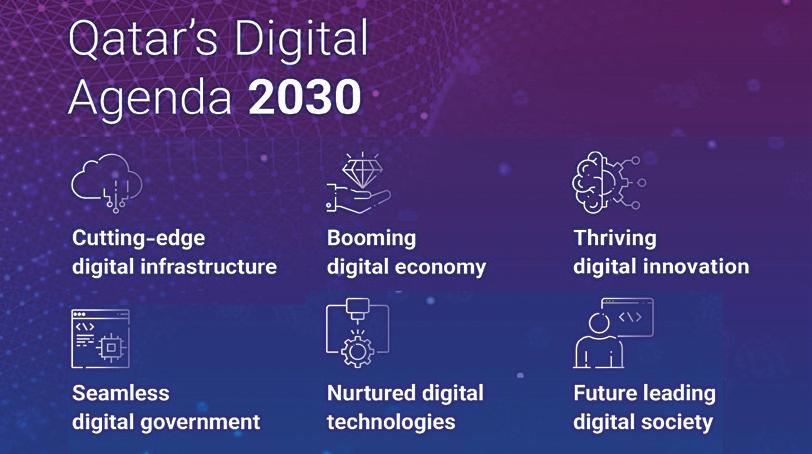
The agenda will lead efforts in building a thriving digital economy based on six strategic pillars:
• Digital Infrastructure: Aspiring to provide a worldclass, secure and sustainable Information and Communication Technology (ICT) infrastructure.
• Digital Government: Ensuring transparency and improving digital government efficiency.
• Digital Capabilities: Building expertise in data and emerging technologies.
• Digital Innovation: Developing an innovative and thriving digital sector powered by investments and applied research.
• Digital Economy: Driving digital adoption to accelerate economic growth.
• Digital Society: Building a digitally savvy population, nurturing talent and providing access to the best training programmes.
These pillars will allow Qatar to embrace digital advancement to drive competitiveness and prosperity, while also providing people and businesses with the skills, infrastructure, communities, government and digital tools necessary for them to grow – particularly the next generation of Qataris. mcit.gov.qa m
Cultural Awareness
Please do...
use greetings and formalities as they are particularly important. It is considered impolite to start any conversation or request without at least saying 'Hello' or 'Excuse me'.
be mindful when talking to local or Arab women, if you are a man. Respect the fact some women in this region are private. However, they are more than willing to help other women.
dress modestly Qatar is a Muslim country with conservative dress codes for both males and females. Avoid wearing shorts, short skirts, strapless tops, crop tops, and other forms of revealing or transparent clothing, especially when visiting workplaces, schools, malls, parks, and other family-friendly destinations. While malls and shopping centres usually display clothing etiquette signs, only a few enforce entry restrictions. However, government offices and health centres will refuse entry to anyone dressed inappropriately.
bargain with shopkeepers in local souqs. Always counter the original offer with a lower price than you expect to pay and work slowly upwards to what you wish to spend.
look out for segregated counters and sections for men and women in banks, ministries and other public service centres. This may also apply to waiting lines in various places as well as the use of shared facilities such as lifts (elevators).
enjoy the outdoors as much as you can. It starts getting warm in May. The hottest months are from June to September where temperatures can reach over 40°C and humidity over 50%. Make the most of doing outdoor activities such as going to beaches, walking in parks or even dining al fresco.
read about the Public Hygiene Law No 18 of 2017, which imposes fines of up to QAR25,000 and jail sentences for violations. This law aims to regulate public hygiene and cleanliness in Qatar. It prohibits disposing of waste in public spaces, including beaches, vacant lands, rooftops, walls and balconies. Spitting in public spaces is also prohibited.
Qatar warmly welcomes visitors from across the world to its beautiful and cultural country. There's much to see and enjoy, but ensure to be mindful of the country's religious and cultural norms.
Please don't...
look or stare at people, especially women. This is a matter of general courtesy, particularly in a society where modesty in both dress and behaviour is the standard.
be offended if your handshake is refused by the opposite sex. Handshakes are often declined due to religious and cultural reasons, and this practice applies to both Muslims and non-Muslims alike.
take photographs or videos without permission of people (including police or armed forces) or sensitive sites in public or private spaces. Many individuals in Qatar value their privacy and strongly object to being photographed or filmed, especially when shared on social media or other online platforms. According to Law No 11 of 2025, anyone who violates another person’s privacy in a public place by publishing or sharing their photos or videos without consent (or outside what the law allows) faces up to one year in jail, a fine of up to QAR100,000, or both. sit with the soles of your shoes or feet facing towards your hosts; it is considered insulting. Equally, don’t sit with your back to other guests. drink too much alcohol to the point that your behaviour is affected in public. There are strict fines for consuming alcohol outside of licensed premises. Alcohol in Qatar is strictly regulated, and there is zero tolerance for drink-driving, drunkenness, or rowdy behaviour. The country also enforces a zero-tolerance policy on drugs. play loud music whether outside or inside your home at anytime. This is especially important during the athan or call to prayer, which takes place five times a day. You can be penalised for playing loud music outdoors whether in your car or in public spaces.
display acts of physical intimacy in the view of others. Avoid public displays of affection (PDA), as any intimacy in public can be considered an act of obscenity. This can lead to arrest and a potential court case, which may result in a fine, a custodial sentence, and deportation after the sentence is served. m
Arabic Phrases
Arabs place great importance on greetings, often greeting each other with a number of phrases and fixed responses enquiring about each other’s health, wellbeing and family. As a courtesy, it is important for visitors to learn the basics of how to say hello and goodbye when in their company.
*Indicates if you're speaking as a female or when you're speaking to a female.
Courtesies/Responses
Peace be upon you assalam a'laykum
And upon you be peace wa’alaykum salam
Good morning sabah al khair
May your morning be bright sabah al noor
Good afternoon/evening massa al khair
May your afternoon/evening be bright massa al noor
Welcome marhaba or tafaddal/*tafaddali
Goodbye (Go in peace) ma’a salaamah
How are you? kaif halak?/*kaif halik
Thank God alhamdulillah
Thanks shukran
Welcome (in response to 'thank you') a'fwan
Please min fadlak/*fadlik
Yes/No na’am or aiwa/la
I'm sorry ana mutaassef/*mutaasefa
Congratulations mabrook
What is your name? esh ismal/*esh ismik
My name is... Issmi...
Where are you from? min wain int/*inti
I'm from... ana min...
Days of the Week
Sunday yum al ahad
Monday yum al ithnain
Tuesday yum al thalatha
Wednesday yum al arba’a
Thursday yum al khamees
Friday yum al jum’a
Saturday yum al sabt
Time
What time is it? assa’a kam?
One, two, three assa’a wahda, o’clock ithnain, etc.
Late mut’akhar
Early badri
Tomorrow bukra
The day after ba’ad bukra
Yesterday ams
What time is the appointment?
assa'a kam al maw'idd?
When do you open/close? mata taftahoon/tosakkiroon?
Look! shuff/*shuffi
Where? wain?
Right yameen
Left shimal
Straight on a'la tool/seeda
Stop! aqif/*aqifi
Go! imshi
Come! ta’al/ta'ali
Let's go! yalla!
Tell me qulli/*qullili
When? mata? or emta?
Bring me/give jeeb/*jeebi
This hatha
That hathaak
There isn’t any mafi
No problem mafi mushkila
There is no time mafi waqt
Impossible mush mumkin
Finished khallas
If God is willing Insh'Allah
For sure
Wallah/akeed
Ramadan blessings Ramadan kareem
Eid blessings Eid mubarak
Essential Foods
Bread khubbuz
Water maa, my
Tea/Coffee chai/gahwa
Milk haleeb
Fish samak
Meat laham
Chicken dejaj
Cheese jubna
Fruit fawakih
Vegetables khudrawat
Travel and destinations
I want a taxi/the metro ureed taxi/al metro
How much is the ride? bekam al mishwar?
I want to rent a car ureed astaajer sayyara
Airport matar
Stadium stad/mala'ab
Mall mall Park hadeeqa
Numbers
0 sifr ٠
1 wahad ١
2 ithnain ٢
3 thalatha ٣
4 arba’a ٤
5 khamsa ٥
6 sitta ٦
7 saba’a ٧
8 thamanya ٨
9 tissa’a ٩
10 a'ashara ١٠
50 khamseen
100 mi’a
500 khamsmi'a 1,000 alf
2,000 alfain
10,000 a'asharat alf
100,000 mi’at alf
Shopping/Eating Out
Where is the market? wain al souq? I want to buy... ureed ashtiri...
Do you have ...? a'ndak…?
Have/Don’t have fi/mafi
How much is it? kam qeemtah?
Cheap/Expensive rakhees/ghali
Newspaper/Book jareeda/kitaab
Map of Doha khareeta al doha
Bank bank
Money Exchange surrafa
Restaurant mata'am
What kind of food? ay ta'am ladaikum? Toilets al hammam
Emergencies
Please help me sa’idni low samaht
Police station markaz al shortah
I’m feeling ill ana mareedh
I need a doctor ureed tabeeb
I need a hospital ureed mustashfa
Ambulance sayyara is'aaf
Pharmacy saydaliya
There's a fire fi hareeqa
Foreign Embassies in Qatar
Afghanistan B4
4493 2319
doha.embassy.af
Albania B4 4002 7413
ambasadat.gov.al/qatar
Algeria B4 4483 8729 embalgeria.com.qa
Angola B4 4482 5111 eac.ao
Argentina B4 4417 3601 eqatr.cancilleria.gov.ar
Armenia B4 4491 9232
mfa.am/en/embassies/qa
Australia C4 4007 8500 qatar.embassy.gov.au
Austria C4 4033 7300 bmeia.gv.at/en/austrian-embassydoha
Delegation of the European Union to the State of Qatar A4 4047 1184 eeas.europa.eu/delegations/qatar
Digital Qatar
Qatar has a comprehensive strategy to transform the country into a technology-driven, knowledgebased economy aligned with Qatar National Vision 2030. This is led by the Ministry of Communications and Information Technology (MCIT) and focuses on building advanced infrastructure, promoting digital innovation, and developing smart urban environments.
There have been a slew of digital initiatives to make government services more efficient, accessible and customer-centric. The Qatar Digital Government programme serves individuals and businesses to better serve citizens and residents. Part of this programme was the Qatar Digital Government 2020 Strategy, which was formulated in line with Qatar National Vision 2030, the National Development Strategy, the National Communications and IT Plan, the National Broadband Plan, and other information and communication technology (ICT) plans in the country.
The country aims to digitise 90% of government services by 2030, using emerging technologies such as artificial intelligence (AI) to enhance transparency and efficiency. The Digital Factory, an MCIT iniative in association with Accenture, will deliver solutions to the requirements of providing a modern digital society. A three-year plan will see the Digital Factory improve services, address the digital requirements of businesses and visitors, and significantly enhance the digital economy's contribution towards the country's GDP.
Ministry of Communications and Information Technology (MCIT)
The MCIT was established in 2021, superceding the Ministry of Transport and Communications. The ministry has a wide-ranging mandate, overseeing and developing the ICT sector. The ministry also introduces ICT plans, policies, programmes, projects and initiatives; develops e-government programmes; and boosts capacity and digital literacy to foster a technology-friendly environment. mcit.gov.qa
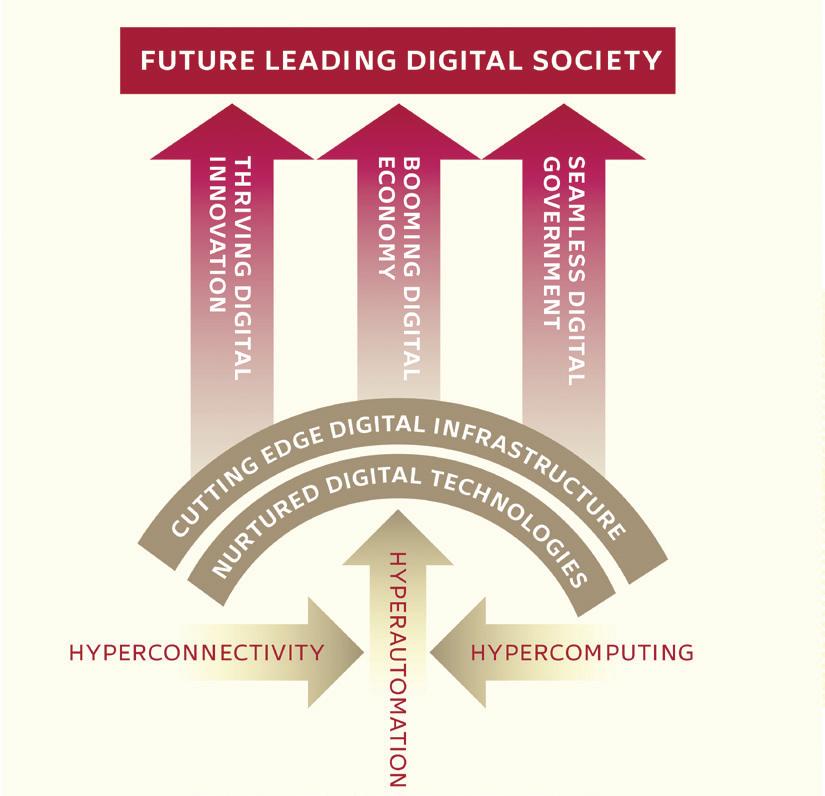
The Digital Agenda 2030 (DA2030) was launched by MCIT in 2024 to further develop Qatar's digital economy, and has six strategic pillars, supported
by 23 strategic programmes:
• Digital Infrastructure • Digital Government
• Digital Innovation • Digital Technologies
• Digital Economy • Digital Society
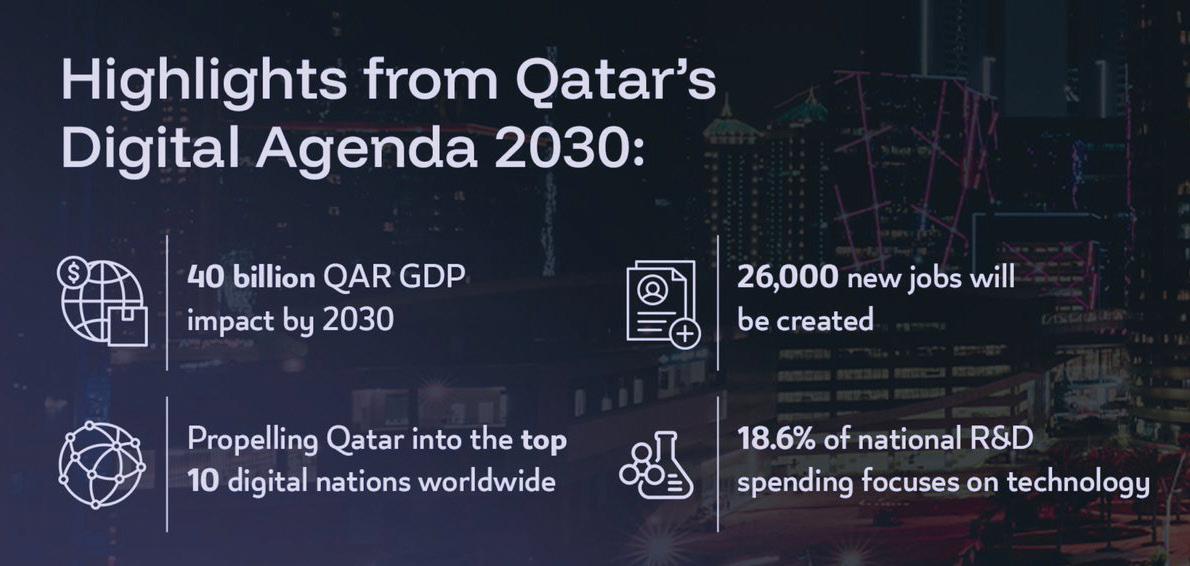
DA2030 is expected to contribute more than QAR40 bn to the non-hydrocarbon GDP and generate 26,000 jobs by 2030. It is underpinned by global hyper-powers HyperConnectivity, HyperComputing, and HyperAutomation to empower the HyperGeneration, the next generation of Qataris who will support digital transformation.
National Cyber Security Agency (NCSA)
Established in 2021, the NCSA reports directly to the Council of Ministers and is the government entity responsible for supervising, regulating, and protecting Qatar's cyberspace. The NCSA manages cyber incidents, sets standards and controls for licensing and compliance, runs public awareness programmes, and provides training to businesses. ncsa.gov.qa
The National Cyber Security Strategy 2024–2030 aims to position Qatar as a global leader in the secure adoption of emerging technologies. There are five main pillars:
• Cyber Security and Resilience
• Legislation, Regulations, and Law Enforcement
• A Thriving, Innovative, and Data-Driven Economy
• Cyber Culture and Workforce Talent Development
• International Cooperation and Trusted Partners
Key digital initiatives
• The Hukoomi e-government portal and the Ministry of Interior's Metrash mobile application are easily accessible platforms for government services – see Day-to-Day Qatar in the Living in Qatar section for more useful government apps and services.
• The TASMU Smart Qatar Program uses digital technologies and AI to create smart solutions across five sectors: Transportation, Healthcare, Sports, Environment, and Logistics. It includes the TASMU Central Platform and the Digital Valley innovation hub. tasmu.gov.qa
• The Artificial Intelligence Committee at the MCIT oversees Qatar’s AI initiatives, aligned with Qatar National Vision 2030 and DA2030. Key responsibilities include implementing the Qatar Artificial Intelligence Strategy, coordinating AI initiatives across government entities, and developing skilled AI professionals.
• Fanar is an Arabic Large Language Model (LLM) developed by the Qatar Computing Research Institute at Hamad Bin Khalifa University and sponsored by the MCIT. Fanar is the first largescale, culturally and linguistically aware Arabic generative AI model, aligning with Qatar National
Vision 2030 and DA2030. The project aims to preserve the Arabic language and cultural values while fostering effective communication and promoting knowledge exchange. fanar.qa
• The GovAI Program, between the MCIT and strategic partners, aims to push the adoption of AI solutions across all sectors. One of the first is the AI Tourist Companion by Qatar Tourism to improve the experience of visitors by moving to chat/voice-based interactions. Also under development is AI Labour Contract Compliance.
• The Digital Incubation Center at the MCIT offers programmes and services to support startups at various stages, providing mentorship, training, funding and office space. dic.mcit.gov.qa
• Sustainable smart city projects Lusail City and Msheireb Downtown Doha have integrated advanced technology like Internet of Things (IoT), smart grids and district cooling to optimise resource consumption and benefit residents.
• Qai is an AI company and subsidiary of Qatar Investment Authority (QIA), launched in 2025 to spearhead Qatar's digital transformation and establish the country as a global AI hub. Qai has partnered with Brookfield Asset Management in a USD20 bn joint venture to invest in AI infrastructure, including data centres, in Qatar and internationally. trustqai.com
The Communications Regulatory Authority (CRA) is an independent authority established under Emiri Decree 42 of 2014, tasked with regulating the telecommunications and information technology sector, postal sector, and access to digital media. ensuring fair competition while protecting consumer rights.
The CRA urges everyone to be vigilant with online activities. Due to the growing number of cyberattacks, scam calls, and text messages requesting personal and banking information, consumers should verify the identity of the third party before sharing details, use a two-step verification feature online where applicable, and regularly change passwords.
The Quality of Service (QoS) Regulatory Framework was issued by the CRA in 2023, adding new obligations and Key Performance Indicators for licensed telecom service providers, covering fixed, mobile and broadband services. The authority already conducts an annual QoS audit of mobile networks; now, service providers have to submit and publish QoS reports based on the QoS Regulatory Framework.
For more information, visit cra.gov.qa, call the hotline on 103, or use the mobile app Arsel, available on iOS and Android.
Telecommunications in Qatar
Telecommunications Law No 34 of 2006 established the regulatory structure for the sector covering licensing, radio spectrum management, consumer protection, fair competition, and the resolution of disputes between service providers. It was amended by Law No 17 of 2017 to keep pace with the changes that have taken place in the telecom sector. The market is regulated by the Communications Regulatory Authority (CRA). The two major telecom providers are Ooredoo Qatar and Vodafone Qatar.
Ooredoo Qatar QPSC
The first national telecom provider was Qatar Public Telecommunications Corporation (Qtel). In 2013, Qtel rebranded and become Ooredoo. Today, the company has a customer base of more than 100 mn across the Middle East, North Africa and Southeast Asia. Ooredoo was the first company in the world to launch 5G services on a commerciallyavailable network in 2018, and is one of seven operators worldwide to deploy the Ericsson Spectrum Sharing technology, enabling broad 5G and fiber-optic broadband coverage across the country. Ooredoo offers consumers mobile, wireless, landline, and content services, Ooredoo Money for financial transactions, and the Nojoom loyalty programme. ooredoo.qa
Vodafone Qatar PQSC
Vodafone Qatar commenced commercial operations in 2009, with a second fixed telecommunications licence issued to the company in 2010. It is part of the international company, Vodafone Group, and is now owned by Qatar Foundation. Vodafone Qatar rolled out its 5G network in 2018 and was the first to commercially launch its 5G network. Services include mobile, internet, home entertainment, and iPay for financial transactions. vodafone.qa
In 2019 both companies were granted radio spectrum licences to operate 5G commercially from the CRA, initially assigned 100MHz within the 3500–3800MHz frequency band. Both companies rolled out the 5G networks in all densely populated areas, primary roads and highways, and venues associated with the FIFA World Cup Qatar 2022TM
In August 2024, the CRA issued a decision to mobile service providers mandating the cessation of Third Generation mobile telecommunications services (3G/ IMT-2000) in Qatar by 31 December 2025. This is part of CRA's plans to enhance the quality and efficiency of telecom services in Qatar, providing advanced and reliable services to consumers.
This decision, which relates to services offered by Ooredoo Qatar and Vodafone Qatar, is based on the optimum utilisation of current radio
spectrum resources to support and enhance the performance of Fourth Generation (4G/LTE4) and Fifth Generation (5G) networks. The initiative to gradually retire outdated technologies allows the two service providers to direct their investments towards the development and expansion of 4G and 5G networks, to enhance growth in Qatar's telecom sector and diversify the local economy, as per Qatar National Vision 2030.
Under the decision, the CRA has also banned the import of mobile phones that support only second and third-generation technologies, while approving devices compatible with 4G/Voice over LTE (VoLTE) technology that meet the required standards and have approval certificates from CRA.
Consumers will now receive the best services available. Developing 4G and 5G networks leads to higher data speeds, lower response times, and greater capacity to meet the growing demand for mobile data services. See Day-to-Day Qatar in the Living in Qatar section for more information.
Internet and social media
Qatar was the first GCC country to offer 10 Gbps consumer broadband packages, although Ooredoo and Vodafone had a relatively low download speed on entry-level tariffs at 100 Mbps. In 2023, both raised the minimum speed to 1 Gbps, leading to a change in download speeds.
In January 2026, data from Ookla Speedtest, used to measure the performance and quality of an internet connection, showed Qatar's median download speed was ranked 2 for mobile and 37 for fixed broadband. Visit Ookla speedtest.net/ global-index/qatar for full performance details.
According to the 'Digital 2026: Qatar' report by DataReportal, there were 3.10 mn individuals using the internet in Qatar at the end of 2025, an online penetration of 99.0%. There were 4.75 mn active mobile connections (152% of the total population), up 0.7%, with 99.2% considered broadband, ie connected via 3G, 4G, or 5G.
There were 2.95 mn social media identities (93.4% of the population). Facebook remains the most popular social media platform.
Figures published by Ookla show that the median mobile internet download speed in Qatar increased by 167.01 Mbps (+48.5%) in the 12 months to August 2025, and that the download speed of the typical fixed internet connection increased by 33.57 Mbps (+19.4%).
For more information and a breakdown of how DataReportal compiles the report, visit datareportal.com/reports/digital-2026-qatar
Important Legislation
Cybercrime
With the high level of internet connectivity in the state comes the increased possibility of cybercrime, leading to the issuance of Law No 14 of 2014 Promulgating the Cybercrime Prevention Law. The law imposes sanctions and penalties for offences committed via the internet, IT networks, computers and other sources. Some of these provisions include the following:
• Under the provisions concerning 'content crimes', it is illegal to publish 'false news' –these terms have not been defined, but there is a duty of care for news agencies, social media users and journalists to verify the source of the news before broadcasting it.
• There is a 10 year jail term and a fine of up to QAR200,000 for forging any official e-document, or a three year jail term and QAR100,000 for unofficial documents.
• A jail term of up to three years and a fine of up to QAR500,000 for the breach of intellectual property rights by using the internet (eg copyrights, patents, trade secrets, trademarks and trade names).
Law No 11 of 2025, issued in August 2025, introduced a new article, Article 8 (bis), to Law No 14 of 2014. This targets 'anyone who infringes upon the privacy of individuals while they are in a public place, by publishing or circulating images or video clips of them without their consent or in circumstances not permitted by law, through information network or any other information technology.' Offenders may face imprisonment for a term not exceeding one year, a fine of up to QAR100,000, or both.
Personal privacy protection
Recognising the need to develop an international regulatory and legal framework to protect the digital sovereignty and data privacy of individuals and businesses in Qatar, Personal Data Privacy Protection Law (PDPPL) No 13 of 2016 was issued.
The law includes provisions related to the rights of individuals to protect the privacy of their personal data. Article 2 states that this refers only to personal data that is electronically processed, or obtained, gathered or extracted for use electronically, or when a combination of electronic and traditional processing is used. However, it does not apply to personal data processed by individuals privately or within a family context, or to any personal data gathered for official surveys and statistics, as per Law No 2 of 2011 on Official Statistics.
Under the law, businesses are banned from sending direct marketing messages electronically without obtaining an individual’s prior consent, and that consent is required from individuals before their personal information can be used by another entity. Organisations must also adhere to basic data protection responsibilities. This includes, but is not limited to, ensuring data handlers receive training and that precautions in place to 'protect personal data from loss, damage, modification, disclosure or being illegally accessed.'
Protection is given to personal data of a private nature, such as information relating to race, religious beliefs, children, health, relationships and criminal records – this may only be processed after obtaining permission from the Ministry.
Additionally, in order to protect the youngest members of society, Article 17 states that the owner or operator of any website related to children must put up a policy about how it manages the information of minors. Website owners/operators must also get the consent of the child’s parent when processing their information.
With the country racing towards total digitalisation by 2030, there is a need for more transparency, awareness and education. Qatar is at the forefront of adopting regulation, moving quicker than others in the region. To this end, the Ministry released the guidelines for the Personal Data Privacy Protection Law on 28 January 2021 to mark Data Privacy Day.
The Ministry's Compliance and Data Protection (CDP) Department has released guidelines to help everyone – individuals, regulated entities or stakeholders – understand their responsibilities, rights and practices under the law. The guidelines also provide clarity on these requirements, and where possible provide checklists and template documents to support controllers with compliance with the PDPPL. Additionally, the guidelines clarify some ambiguities in the PDPPL.
Entities within the Qatar Financial Centre (QFC) are subject to the QFC's own data protection rules and regulations. The Data Protection Office is responsible for the administration of the QFC Data Protection Regulations 2021, which came into force in June 2022, supported by the QFC Data Protection Rules 2021. qfc.qa
In 2025, Qatar Central Bank (which oversees the QFC) issued regulation on data handling and protection for Qatar's financial institutions, setting clear guidelines for the sector's development, with a commitment to utilising the best technologies while protecting customer data. qcb.gov.qa
For example, under Article 11 (8), controllers must ensure that processors comply with the law and adopt appropriate precautions to protect personal data. The Controller and Processor Guidelines for Regulated Entities clarify that the controller can ensure a processor's compliance with this Article by entering into a formal contract.
There is also now clarification for Article 16, which provides that in order to process sensitive personal data, permission must be sought from the CPD Department under the Special Nature Processing Guidelines. These also set out the requirements in order to obtain permission, including a data protection impact assessment to identify processing risks. Equally, under Article 22 consent must be obtained from individuals before sending any direct marketing electronic communications, clarified under the Electronic Communications for Direct Marketing Guidelines: consent must be explicit and unambiguous, and an affirmative act – consent through pre-ticked boxes and opt-out notices only is not permitted.
Complaints can be lodged at the MCIT. Businesses may choose to seek legal advice to ensure they fully comply with these laws.
Sources: Unofficial translations of the laws.
Digital security for all
The National Cyber Security Agency (NCSA, ncsa.gov.qa) has emphasised the need to employ some essential tools and practices to strengthen digital safety.
Password managers: Use a platform like LastPass, Bitwarden or 1Password to generate and securely store complex passwords, don't use the same password across multiple accounts, and change passwords regularly.
Apps: Remove sensitive data from general use, apply additional security like two-factor authentication (2FA), and use tools such as a VPN or an encrypted platform like Signal to reduce exposure.
Websites: Look for HTTPS (HyperText Transfer Protocol Secure), an extension of HTTP (Hypertext Transfer Protocol), with encryption for secure communication over a computer network.
Securing accounts: As well as strong, unique passwords and multi-factor authentication (MFA/2FA), register a recovery phone number and alternative recovery email to prevent lockouts. m
Traveller Information
Travelling to or from Qatar requires one to take many things into consideration. All visitors to Qatar require a visa. When travelling from Qatar, some expatriate residents and visitors must have exit permits. To minimise any inconvenience or delays before starting your journey to or from Qatar, confirm visa requirements and check the expiry date on your passport.
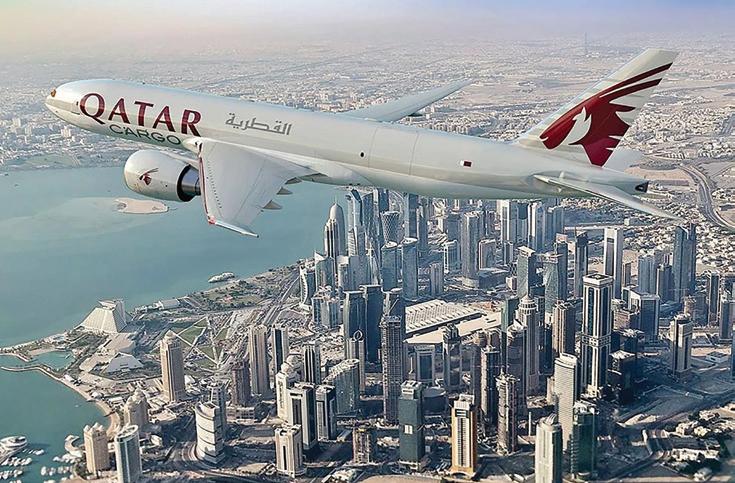
Qatar Airways is Qatar's five-star airline and the state-owned flag carrier. The airline operates a hub-and-spoke network, flying to 170 destinations worldwide from its base at Hamad International Airport (HIA), using a fleet of more than 250 aircraft. HIA is Qatar’s gateway to the world, and the home and hub of Qatar Airways.
Note: Though information is updated every issue, details can change. Check with the airline in advance or visit the HIA website, dohahamadairport.com, for up to date information. For details on visas, residence permits and entry requirements, see Day-to-Day Qatar in the Living in Qatar section, or visit hukoomi.gov.qa or visitqatar.com
Visas
There are various visas that allow you to enter Qatar which include Hayya, business visit, an official visit, tourist visit, family visit, residence permit and a work visa. Eligible individuals and Qatari companies may apply for these visas in advance of your visit. Visit the Ministry of Interior (MOI) at moi.gov.qa or the Metrash website at portal.moi.gov.qa, the e-Government Hukoomi website at hukoomi.gov.qa, or the Visit Qatar website at visitqatar.com for more information.
All expatriates living and working in Qatar must have a Residence Permit (RP) or a visit-to-work visa. Residents requiring a visa are subject to conditions, one being that the applicant's profession is one of those approved by the MOI. The visa will only be issued if your RP is valid for at least six months and if your profession (as mentioned on your RP) appears on the approved list. Requirements can change, so it is prudent to check with the airline or the Embassy of Qatar at your country of origin well in advance of your visit. See Day-to-Day Qatar in the Living in Qatar section for details on residence permits. If for any reason you’re denied entry into Qatar, then the MOI and your airline should provide assistance.
Visa-free entry (visas on arrival valid for 30 to 90 days)
Citizens from 102 countries are eligible for visa-free or visa on arrival entry into Qatar. For more information or to see the list of eligible countries, see visitqatar.com
Under the Qatar Healthcare Services Law No 22 of 2021, visitors to Qatar are required to have a valid health insurance policy from a Qatar-approved provider for the duration of their stay. Citizens of Gulf Cooperation Council (GCC) countries are exempt from this requirement. Visitors may purchase a policy upon arrival at HIA for QAR50 per month, which covers only emergency and accident-related incidents. Additional coverage and services can be purchased for an extra fee. Hamad Medical Corporation (HMC) provides emergency medical care to visitors in cases of serious, life-threatening conditions.
As of September 2024, traffic law violators are not allowed to leave the country through any state borders (land, air, and sea) without paying the fines through the Metrash application, the MOI website, traffic departments, or unified service centres.
Passport holders from the list of visa-free countries are eligible for a single-entry visa on arrival valid for a one-month stay in Qatar – QAR100 plus QAR50 for each companion registered on the passport. Residents of the GCC are eligible for a single-entry visa on arrival for a one-month stay in Qatar and it can be renewed for a further two months: one month with an extension period of three months – QAR100 plus QAR50 for each companion per month. The visa will only be issued if the RP is valid for at least six months.
The visa fee can be paid using credit, debit, or eCash cards. Cash payments are also accepted, but must be made at the designated bank counter before proceeding to passport control. A processing fee of QAR25 will be charged for cash transactions. All major currencies are accepted.
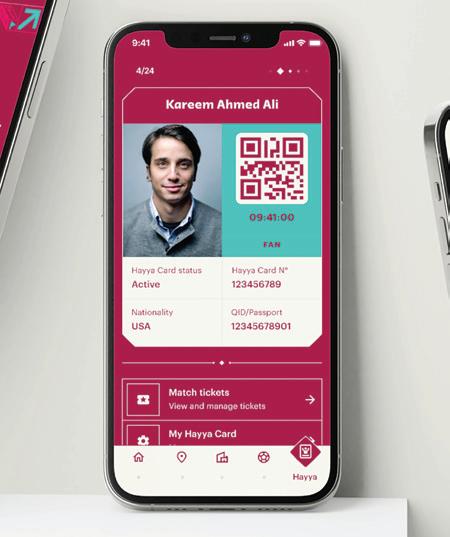
Hayya
The e-visa system was introduced during the FIFA World Cup Qatar 2022TM for fans and other visitors to enter the country during the tournament. It is now an all-in-one digital platform for e-visa services with various types of Hayya visas available, allowing visitors to stay in Qatar for up to 30 days. For more information, visit hayya.qa or dohahamadairport.com. The Hayya app is available on iOS and Android devices.
The types of Hayya visas:
• Tourist Visa (A1)
• GCC Resident Visa (A2): With a valid Residence Permit (RP) in a GCC country.
• Visa with ETA (A3): With a valid US, UK, Canadian, Australian, New Zealand or Schengen visa or residency.
• Visa for companion of GCC citizens (A4): The companion must accompany the sponsor when travelling to Qatar. They will not be allowed to enter Qatar alone.
• Visa-free for US citizens (F1): US nationality/citizenship at the time of the application.
Requirements for all Hayya visas:
• Fees required, depending on the visa type.
• Proof of a confirmed hotel reservation, or accommodation with family or friends approved through the Hayya portal.
• A passport must be valid for no less than three months upon arrival in the State of Qatar.
• Obtaining health insurance during the period of stay in the country.
Other entry visas and fees
Qatar-Oman Joint Tourist Visa: This visa is issued upon arrival and is valid for 30 days for the State of Qatar and the Sultanate of Oman. It allows for multiple entry to both countries and is extendable for an additional 30 days for a fee. Citizens of the following countries are eligible for the joint visa: Andorra, Australia, Austria, Belgium, Brunei, Canada, Cyprus, Denmark, Finland, France, Germany, Greece, Hong Kong, Hungary, Iceland, Ireland, Italy, Japan, Liechtenstein, Luxembourg, Malaysia, Monaco, Montenegro, Netherlands, New Zealand, Norway, Poland, Portugal, San Marino, Singapore, South Korea, Spain, Sweden, Switzerland, the UK, the US, and Vatican City.
One month costs QAR100, with an extension period of a month.
Business entry visa: For one month and a maximum of three months – QAR200 plus QAR50 for each companion.
Family visit visa: One month to a maximum of six months – QAR200 plus QAR50 for each companion per month. Expatriates with family status can bring parents and siblings on a visit of up to six months (up to three months for other relatives). A Medical Commission check-up is necessary to extend the visa beyond one month (within 72 hours of arrival).
Conversion of entry visa to visit/work/residence visas: QAR500 (without leaving the country).
Visit hukoomi.gov.qa to get the latest information as they do change from time to time.
Transit and transfers
When flying with Qatar Airways, a transit visa is free of cost when you add a short transit or stopover between five and 96 hours in Doha to your itinerary. Use the multi-city booking option to include the stop when booking your flight on qatarairways.com or through a travel agent. Please note that it is not required for you to acquire a transit visa if you are not leaving the airport.
Transferring to your connecting flight is easy and simple at HIA. Upon exiting your aircraft, go directly to the Transfer halls located at concourses A, B, C and D.
Priority processing: All Al Maha customers, special assistance travellers and unaccompanied minors receive priority processing on arrival at HIA. For more information or to book Meet & Assist services, visit al-mahaservices.com and qatarairways.com
Visit one of the transfer desks if you need any assistance with your onward flight, including boarding passes, re-scheduling flights and general queries.
If you have an extended stopover and would like to exit the airport to visit Qatar before boarding your onward flight, the transfer desks can assist you.
Car rental, taxis and limousines: See Getting Around Qatar in this section and Useful Numbers in the Motoring section.
Transit Tours: Make the most of your transit time, and discover Qatar and explore its unique Arabic heritage before connecting to your final destination. Passengers flying with Qatar Airways and transiting for a minimum of six hours, or are not eligible for visa-free entry but are interested in a Doha transit tour, can apply for a transit visa at the Discover Qatar transit desk at HIA, which serves as a way to introduce visitors from around the world to Qatar as a hotspot for tourism. For transit times of three hours or more, choose the Discover Relaxation at the Airport package and enjoy one of three exclusive massages.
Discover Qatar offers at least six Transit Exclusive tour packages at QAR115 to QAR850 per person. For more information or to see the Transit Exclusive tour packages, see discoverqatar.qa/transit-tours. Terms and conditions apply.
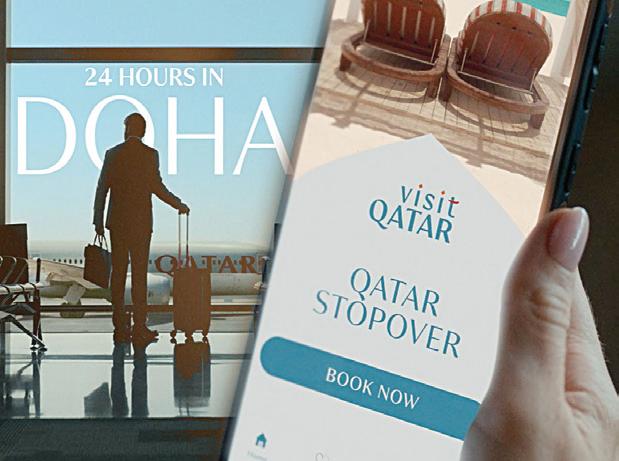
Qatar Stopover: Discover the highlights of Qatar that are within easy reach with exclusive Qatar Airways Stopover packages. Stopover for up to four nights and make the most of your time in Qatar, full of diverse offerings and easy accessibility. The ready-made travel plans will take you on thrilling adventures, explore charming neighbourhoods and uncover cultural gems. The Qatar Airways Stopover packages offer luxurious 4 or 5-star hotel stays, starting at just QAR51 (USD14) per person per night. For more information or to book a package, visit visitqatar.com/intl-en/qatar-stopover
Air Arabia
Air India
Air India Express
Air France & KLM
Badr Airlines
British Airways
Cathay Pacific TOT
EgyptAir
Ethiopian Airlines
Flydubai
Flynas
IndiGo
Iran Air
Kam Air
Kuwait Airways
Lufthansa
Ali Bin Ali Travel (ABA)
Darwish Travel Company/
Darwish Holidays
Mannai Air Travel
NBK Travel & Tourism
Airlines (local agency in bold)
4407 3434
4416 1651
4038 7373
4036 0582
5500 1032
4432 1434
4445 8318
4457 0555
4416 1010
4422 7350
4421 5656
4036 7777
4432 3666
4450 6240
4442 2392
800 0289
Middle East Airlines (MEA)
Nepal Airlines
Oman Air
Pakistan Int’l Airlines
Pegasus
4434 2978
4431 7070
4414 2222
4442 6292
4442 1807
Philippine Airlines ST 4422 7302
Qatar Airways
Royal Air Maroc ABA
Royal Jordanian
SalamAir
4023 0000
4444 1161
4442 3888
4442 0944
Saudia (Saudi Airlines) ABA 4444 0121
Singapore Airlines
4499 5740
SriLankan Airlines ABA 4444 1217
SyrianAir 4441 2912 Tarco Air 3124 2999
4443 3028
Travel Agencies
4444 1161
4036 0500/52
4428 2666
4031 8383
Qatar Airways Holidays
Regency Travel & Tours (RTT)
Space Travel (ST)
Tawfeeq Travels
Trans Orient Travel (TOT)
4423 7104
4434 4444
4422 7333
4448 4848
4445 8458
Border Crossing
The Abu/Bu Samra Border in Abu Samra, located in the southernmost part of Qatar, 80 km south of Doha, is Qatar's only land border crossing to Saudi Arabia. It is used to travel to and from Qatar, Saudi Arabia, the UAE, Bahrain, Kuwait and Oman.
Required documents
• Residence Permit (RP): As a resident of Qatar, your RP, formerly known as the Qatar Identification Document (QID), serves as a vital form of identification and must be carried with you throughout your journey.
• Passport: A valid passport, with at least six months, must be up to date and easily accessible.
• Driving licence: A valid driving licence is necessary. It’s a legal requirement to operate a vehicle in both Qatar and Saudi Arabia.
• Valid visa: A valid visa for Saudi Arabia. As a GCC resident, you are eligible for the Tourist Visa (e-visa), which can be obtained either online or through the Tasheer Visa Center vc.tasheer.com. The e-visa can be used for tourism, events, or Umrah purposes, but cannot be utilised for the Hajj pilgrimage. The e-visa allows tourists to spend up to 90 days in the country with multiple entry. The e-visa fee varies, and excludes the medical insurance, and may vary based on the insurance provider.
• Valid vehicle documents: Whether you’re travelling in your own vehicle or a rental, ensure that you have all the necessary vehicle documents, including vehicle registration or istimara, and insurance. Additional vehicle insurance is required, which can be purchased at the Abu Samra Border. The cost varies based on the duration of stay and vehicle type (private, taxi, truck, motorcycle or bus).
• Hayya: You can pre-register for the Abu Samra Border with Hayya, if you are not a resident of Qatar. At the border, you will need your passport, car registration number, and applicant/ application details. For more information or to apply, visit move.hayya.qa
• Metrash: Pre-registration is available on Metrash. Go to 'Pre-registration for Abu Samra Border'. Specify whether it is for entry or exit.
You will need to enter details about the vehicle, driver and passengers, and then select the preferred travel date and time.
Note: Different requirements may apply for different nationalities. Check the necessary documents for your nationality to ensure crossing the Abu Samra Border smoothly.
Exiting Qatar
• Upon arrival at the Abu Samra Border, approach the first booth, which is Qatar’s immigration checkpoint. Here, you will need to provide your personal documents for validation.
• Next, drive a short distance to the Saudi Arabian immigration/customs building, where you will complete the biometric procedure (fingerprints, eye scan, and photo capture). Note that there are separate buildings and queues for men and women, as well as GCC citizens and residents.
• Once your biometrics are complete, your personal documents and visa will be checked by immigration officers.
• If you’ve applied for your visa through the Tasheer Visa Center, you won’t need to complete the biometric procedure again, as it would have been done during the visa application process.
• Proceed to the next checkpoint, where your vehicle documents will be inspected and validated. If you haven’t purchased vehicle insurance yet, you can do so at this point. Hold onto your insurance receipt, as you will need to present it upon your return to Qatar.
Re-entering Qatar
• If you’re a Qatari resident or citizen re-entering Qatar, the only procedure required is the scanning of your QID and passport.
• If you’re a visitor to Qatar on any type of visitor visa, you’ll need to go through the immigration procedure at the Abu Samra Border.
Things to consider
If you’re entering Saudi Arabia for the first time and need to complete the biometric procedure, consider travelling to the Abu Samra Border early and not during peak travel periods to avoid long queues.
In regard to the transport of goods by trucks and the transport of passengers by buses and taxis via land routes, vehicles with an operational age of more than five years from the date of manufacture and buses with an operational age of more than 10 years from the date of manufacture are not permitted to cross the Abu Samra Border.
Hamad International Airport (HIA)
HIA (airport code: DOH) is classified as a five-star airport by Skytrax. Since its opening in 2014, HIA has welcomed over 200 mn passengers and 13 mn tonnes of cargo. When it opened, HIA replaced Doha International Airport (DIA), which served as Qatar's one and only international airport since 1959. HIA recently completed its expansion with the opening of two new concourses – D and E – within the existing terminal, increasing the total number of contact gates by 20%. With this expansion, the airport can now accommodate over 65 mn passengers annually with its expansive terminal spanning 845,000 sq m with two runways, 62 contact gates, 128 remote stands, and five concourses (A–E).
Recognised as one of the world's best airports, HIA connects passengers to 197 destinations with 55 airline partners, offering over 200 shopping and dining options, over 18 premium lounges and entertainment and relaxation facilities, two 5-star hotels, a spacious indoor tropical garden, and a world-class art collection with over 40 artworks. HIA was awarded the prestigious 5-star Airport Rating at the 2025 Skytrax World Airport Awards, and was also named 'Best Airport in the Middle East' for the 11th consecutive year and ‘World’s Best Airport Shopping’ for the third consecutive year.
HIA Call Centre
4010 6666
Passport Department 4462 1386
Security 4462 1182
Lost luggage service 3307 2482/4822 dohahamadairport.com
The HIA Qatar app is available on iOS and Andorid devices.
Airport Arrivals/Departures
Al Maha Services: Offers a personalised Meet and Assist Service for customers arriving, departing or transiting through HIA. Bookings for Al Maha can be made at their designated desk in the arrivals and departures terminals 24/7 and online. Al Maha can handle the visit visa arrangements for your guests. 4010 5831/32/34/35, al-mahaservices.com
e-gate: The Ministry of Interior (MOI) has activated free e-gate service for expatriate passengers at the arrivals and departures terminals of HIA, which currently has at least 40 e-gates installed. Expatriates and their children above 18 years of age can avail the service using their residency permits (RP) or passports after registration at the airport.
Self-service kiosks: The self-service kiosks are in the terminal as part of HIA's Smart Airport programme, which has automated the check-in, bag-drop and pre-immigration security processes, and allowed departing passengers to be processed even faster. With the use of innovative software solutions that forecast passenger traffic in realtime and measure waiting times, the airport is able to proactively minimise queuing times.
HIA installed 62 self-check-in and 14 self-bagdrop kiosks, which include biometric technology capability.
Parking: The Short Term Car Park (STCP) is located on either side of the passenger terminal. It offers covered spaces and easy access via dedicated walkways. The East STCP is more convenient for passengers flying with Qatar Airways, while the West STCP is better suited for passengers travelling with other airlines. The hourly rate is QAR15 (up to eight hours, after which the daily rate applies). Daily rate is QAR145, weekly rate is QAR725. A lost ticket will cost QAR35 in addition to the actual tariff for the duration of parking. Prebooking is available at dohahamadairport.com and saves 20% on parking rates.
Taxes: As of 2022, passengers arriving, leaving or transiting through HIA have to pay an extra service tax. The fees include the following four additions:
• QAR60 per passenger: Airport development fees for all departing passengers, including those transiting for up to 24 hours.
• QAR60 per passenger: Passenger facilities fee for all departing passengers, including those transiting for up to 24 hours.
• QAR10 per passenger: Passenger safety and security fees for all departing passengers, including those transiting for up to 24 hours.
Babies under the age of two, transiting passengers on the same plane, flight crew on duty, and forced flight redirection are exempted.
• QAR10 per metric ton: All incoming and in-transit cargo shipments, including postage.
Bus: Doha’s bus network connects HIA to various destinations across the city. Your bus fare can only be paid with a Karwa Smartcard. If you don’t already have one, purchase a disposable Karwa Smartcard from the Mowasalat Information Desk near Baggage Claim Belts 5 and 6.
• QAR10 Card: two inner-city trips within a 24 hour period.
• QAR20 Card: unlimited trips across Qatar within a 24 hour period.
• Regular Karwa Smartcard QAR30: QAR10 for the card with QAR20 value, available to be topped up for future journeys.
All buses depart from the Bus Pavilion at the right side on exiting the passenger terminal. An information desk is available for assistance. Each bus offers a cargo area for stowing your baggage during the journey. The Karwa Bus App is available on iOS and Android. For bus routes, visit dohahamadairport.com
Taxis: Mowasalat (Karwa) is the exclusive taxi operator, and a convenient way to get to and from HIA. Regulated by the government, they are safe and metered. Special taxis for passengers with reduced mobility (PRM) should be booked much advance. With a base fare of QAR25, taxis accept cash or card payments in Qatari Riyals. Call Mowasalat at 4458 8888 or 800 8294. The Karwa Taxi app is available on iOS and Android.
Limousines: Chauffeur-driven limousines are available from HIA to anywhere in Qatar. To prebook, call Mowasalat's Doha Limousine on 800 5466. Use Exits 2 or 3 to leave the Arrivals area and you will find your limousine parked there. For on-arrival booking simply approach the Doha Limousine kiosk located in the Arrivals hall. For more information, visit mowasalat.com
Taxis and limousines can also be booked on ridehailing transportation applications such as Uber. The Uber app is available on iOS and Android.
HIA Metro Station: The Doha Metro’s Red Line station at HIA allows easy access for passengers to and from the airport with a Standard Travel Card, costing QAR10 and you can top-up at just QAR2 per ride. Passengers will be allowed to carry two large luggage items in addition to their small bags, which must not exceed 85 cm x 60 cm x 30 cm in size. Passengers are able to put their luggage in specially allotted areas in the trains. Doha Metro is operational Saturday to Wednesday 5:30 am – 11:59 pm, Thursday 5:30 am – 1 am, Friday 2 pm – 1 am. 105, qr.com.qa
Arrivals
Immigration: Prior to departure from their point of origin, Doha passengers must ensure they have a valid passport, and a Residence Permit (RP), before making their way to Immigration. Citizens and residents may also use the provided eGate facilities. After immigration, passengers will proceed to the baggage reclaim area. Check portal.moi.gov.qa and dohahamadairport.com for specific requirements.
Customs regulations: After you’ve collected your checked baggage, exit the airport by passing through Customs. There are two Customs channels to choose from, depending on whether you have something to declare or not. Personal items are not usually subject to tax though luggage is inspected upon arrival. Travellers coming into Qatar must have prescriptions for medicines carried. The import of firearms, alcohol, e-cigarettes and pork in any form is strictly forbidden. Refer to the General Authority of Customs (GAC) website for specific customs regulations, customs.gov.qa
Travellers must complete the Customs Declaration Form upon entering or leaving the country if they possess cash, precious jewellery, or negotiable financial instruments for the bearer with a value of QAR50,000 or more. The form must be completed at the customs declaration office at all air, sea, or land outlets and travellers must provide any additional information required by the customs officer. This is in accordance with the provisions of the Anti-Money Laundering and Terrorist Financing Law No 20 of 2019.
Failure to submit the declaration, providing false information, or refusing to provide additional information to the customs authorities regarding the source of the currency, bearer financial instruments, precious metals, or precious stones is subject to penalties: • Imprisonment for a period not exceeding three years • Fines ranging from not less than QAR100,000 to not more than QAR500,000, or twice the value of the transferred funds (whichever is greater) • Confiscation of the funds.
Departures
Exit permit: Some expatriates need an exit permit from their sponsor to leave the country. However, Law No 13 of 2018 (Amending Law) allows most migrant workers to exit without one. Employers can still request a No-Objection Certificate (NOC) for certain workers based on job-related justifications. Exit tax: QAR35, HIA's exit tax, will automatically be added to an individual’s ticket price. The tax also applies to transit passengers.
Regulations for hand luggage: When departing from HIA, worldwide regulations apply regarding all liquids, gels, pastes, aerosols and electronic devices.
HIA is the first in the region to adopt Electronic Bag Tag (EBT) technology. This innovation streamlines baggage drop, reduces wait times, enhances passenger convenience, and improves operational and environmental efficiency.
Check-in: 138 check-in counters, which usually open three hours before a flight’s departure time, and close 60 minutes before a flight takes off. Required travel documents include ticket (whether electronic or printed), passport, Residence Permit (RP), destination visas, and exit permit, if applicable. Online check-in is available for most airlines, and on Qatar Airways’ app and website at qatarairways.com, 36 hours to 90 minutes prior to the flight departure time. Passengers can choose a seat, print a boarding pass or have a barcoded boarding pass sent to a mobile phone.
Finding your check-in counter at HIA: Qatar Airways First or Business Class passengers: Proceed to the Departure hall through Entry Gate 1 and, if required, use the STCP. For Qatar Airways First Class passengers, proceed to Al Safwa First in Row 1, which offers private seated check-in desks, a concierge, bellhops and other exclusive facilities. If travelling in Qatar Airways Business Class, proceed to Al Mourjan Business in Row 2.
Qatar Airways Privilege Club members: Check-in counter is located in Row 3 and if required, use the West STCP.
Qatar Airways Economy Class passengers: Enter the Departure hall through Entry Gates 2 and 3. Check-in counters are located in Rows 4 to 6. Other airlines are from Rows 7 to 10. If required, use the West STCP.
Other airlines: Enter the Departure hall through Entry Gate 4, and, if required, use the West STCP. Clearing passport control: Present your boarding pass to staff standing just before the passport
control area. They will scan it, and fast-track you (through passport control and security check) if your flight is nearing its departure time. Dedicated lanes are available for First and Business Class passengers.
HIA Mosque
In addition to the prayer rooms available across HIA, if you’re entering or exiting HIA, you can also pray at the public mosque that is located just outside the passenger terminal, within walking distance from Departures. The shape of a water droplet inspires the mosque’s architecture, and it offers spectacular views of the lagoon and Amiri Terminal.
Lounges
HIA offers 18 premium lounges, and sleep and shower facilities.
Al Mourjan Business Lounge – South: Offers a luxurious ambience, à la carte and buffet dining and the signature Qatar Airways hospitality. Located on the third level in the South Plaza, the lounge is accessible to Qatar Airways and oneworld Business Class customers.
Al Mourjan Business Lounge – The Garden: Located in concourse C, the lounge has the ORCHARD as its focal point. The lounge has an expansive seating area, various food and beverage options, and a private area. The lounge also has shower and toilet facilities, a spa and gym, meeting room, prayer rooms, family rooms, game room and parents’ room.
Al Safwa First Lounge: Offers à la carte dining, luxury spa and treatment facilities, a full business centre, a cinematic media room and an exclusive family area. Located on the third level in the South Plaza, access to Al Safwa First lounge is exclusive to First Class passengers, Privilege Club Platinum members travelling Business Class with Qatar Airways and oneworld First Class passengers.
Al Maha Lounges: Are spread across the terminal and are open to customers of Al Maha Services – arriving, departing or transiting through HIA. Facilities include shower facilities, conference rooms, a smoking room, family rooms, a business centre and a nursery. 4010 5831/32/34/35, al-mahaservices.com
Louis Vuitton Lounge: Located above Louis Vuitton’s store at HIA's departures and transfers terminal, and accessible through Qatar Airways’ second Al Mourjan Lounge, the first Louis Vuitton Lounge by Yannick Alléno is a lounge and restaurant where travellers can dine and relax among chic décor and stacked Louis Vuitton suitcases. Lush plants and furnishings from the brand’s designer pieces fill the tropical-inspired space that overlooks the ORCHARD, the airport’s massive indoor garden.
Muzn Lounge (Sensory Room): A multi-sensory room equipped with a wide range of devices that achieve calm and balance in a safe environment for children on the autism spectrum and those with special needs. Located between gates C7 and C9, the use of the room is free of charge for those aged 2 – 12 for a maximum of two hours and it is open 24 hours a day. Adapted washrooms are located nearby.
Oryx Lounge: Offers food and beverage services, a smoking room, business centre, lockers, a quiet zone, internet facility and a gaming room for kids. All airlines' premium passengers and select card holders (AMEX, HSBC, QNB, and Dukhan Bank) are eligible for complimentary access to the Oryx Lounge. Available to all passengers at any time for a nominal fee of QAR200 valid for up to six hours stay, regardless of airline and class of travel. Also available are the Platinum Lounge – South, Gold Lounge – South, Silver Lounge – South, Mariner Lounge (for travelling seafarers and offshore workers), First and Business Class Arrivals Lounges, Unaccompanied Minors Lounge and Special Assistance Travellers’ Lounge. For more information on lounges at HIA, visit dohahamadairport.com
The Airport Hotels
Oryx Airport Hotel: Located in the South Plaza, the hotel offers guests 5-star hospitality to recharge during a layover. Offering 100 rooms with hourly rates, Oryx Airport Hotel offers transiting passengers a choice of six room types, to cater to all guests and lengths of stays.
Guests are offered complimentary access to the award-winning Vitality Wellbeing and Fitness Centre – massages, treatments, squash courts and a golf simulator. Passengers who are not staying at the hotel can also access the hotel's facilities and services at a nominal fee. To reach Oryx Airport Hotel, guests can use the passenger train connecting the airport’s North and South Plazas
Oryx Garden Hotel Situated in the North Plaza, it is the second airport hotel within HIA's terminal where passengers can unwind during a layover. The hotel offers guests 100 rooms ranging from king to twin, as well as suites. The hotel can be booked around the clock for a maximum of 24 hours. In addition to a 25-m swimming pool, gym, spa and squash court, guests will also be able to enjoy Oryx Airport Hotel’s Vitality Wellbeing and Fitness Centre.
For more information or reservations, call 4010 8100, visit oryxairporthotel.com or dohahamadairport.com
ORCHARD
HIA's masterpiece is the ORCHARD, a tropical garden located at the centre of the terminal expansion. Set to elevate passengers' experiences and redefine airport travel, the ORCHARD is a 6,000 sq m indoor garden with a beautiful 268 sq m water feature that is the focal point for visitors at HIA. With a host of different flora, the ORCHARD includes over 300 trees and 25,000 plants sourced from sustainable forests from around the world. The unique design of the area allows trees and plants to easily adapt to the internal conditions and grow throughout the airport – with natural light to create a calming ambience and promote a sense of wellbeing to all who venture inside.
Qatar Duty Free (QDF)
One of the largest in the world, Qatar Duty Free (QDF) is an award-winning shopping emporium, which boasts over 200 elegant boutiques and affordable retail stores, and restaurants and cafés covering over 40,000 sq m, spread across two nodes – Duty Free Plaza North and Garden, and Duty Free Plaza South. QDF was named Best Airport Retailer of the Year for the third year in a row at the Frontier Awards 2025.
Dining: QDF offers a selection of gourmet foods, global cuisines and traditional local flavours with more than 30 cafés and restaurants spread over 15,000 sq m. HIA features many world firsts and exclusives, including a Harrods Tea Room; a Fendi Boutique with the first Fendi Café in an airport; a Starbucks Reserve; an Emporio Armani Caffe in QDF's luxury shopping avenue, Viale del Lusso; the first Ralph’s Coffee in an airport; and the world’s first Oreo Café in an airport.
Shopping: QDF offers passengers an array of selected designer labels, high street fashions, electronics, gourmet foods and more. Passengers at HIA can shop at boutiques and stores with a line up of prestigious world-class brands such as Aigner, Bulgari, Burberry, Cartier, Calvin Klein, Dior, Dolce & Gabbana, Gucci, Giorgio Armani, Hugo Boss,
Hermès, Michael Kors, Mont Blanc, Pandora, Rolex, Swarovski, Tag Heuer, Tiffany & Co and more. The retail offerings also include a selection of luxury boutiques, including the flagship Louis Vuitton Boutique, the first Dior Boutique at HIA, the only FIFA shop in the world, Thom Brown only store in an airport, and the largest Ray Ban store in an airport.
Passengers travelling through HIA can enjoy a more convenient shopping experience with QDF's recently introduced 'Collect on Return' service, which allows departing passengers to shop at HIA without the concern of carrying additional weight or luxury goods during their journey. Instead, purchased items are securely stored and made available for collection upon the passenger’s return to Qatar, at a designated point in the Arrivals terminal near the baggage carousels. 4010 4167/69, qatardutyfree.com.qa
Connectivity
Free wireless internet: Enjoy free wireless internet access throughout the passenger terminal. Just search for 'Free Internet by HIA' on your device.
Free internet kiosks and desks: Equipped with screens, keyboards and mice, the internet kiosks and desks offer you free web browsing. The kiosks are located throughout the passenger terminal (including the boarding gate areas). Meanwhile, the desks are available at each of five activity nodes. Just follow the signs, ask at an information desk or use the airport map to find the one nearest you.
Telephone booths: Call anywhere in the world by purchasing a prepaid calling card from QDF. Telephone booths are located throughout the passenger terminal (including boarding gate areas).
Special assistance
HIA is entirely barrier-free – its network of elevators, escalators, ramps, walkways and a passenger train offer simple access to passengers with reduced mobility. Check-in counters include adapted service desks designed to ease checkingin for passengers with reduced mobility. This service desk is the first counter in each check-in row, with the exception of Qatar Airways’ checkin rows where it is the last counter. The seated
check-in desks offered to Qatar Airways First Class passengers are all adapted for passengers with reduced mobility.
Free wheelchairs are available throughout the passenger terminal – ask at the nearest information desk. If you require assistance with moving around in a wheelchair, inform your airline in advance so that a personal helper can be arranged. Washrooms adapted for passengers with reduced mobility are available across the passenger terminal. Just follow the signs or ask at the nearest information desk.
HIA has dedicated lounges for special assistance travellers, which offers adapted washrooms, comfortable seating, televisions and a trained attendant. Contact HIA or visit their website for more information.
Note: Inform your airline in advance if you require personal assistance and consult your airline as early as possible before you start travelling. Arrange with your airline if you need oxygen, stretchers or other medical assistance during your journey. Don’t forget to carry all necessary documentation.
Sustainability
With sustainability at the core of HIA’s plans, the airport has managed to have four of the expansion projects achieve a 4-star rating under the Global Sustainability Assessment System (GSAS) from the Gulf Organization for Research & Development (GORD). This includes the ORCHARD, Oryx Garden Hotel and North Plaza lounges, Al Mourjan Business lounge – the Garden, and the Remote Transfer Baggage Facility.
As HIA continues to transform the industry with innovative experiences and breathtaking features, the award-winning airport looks to a bright, sustainable future where possibilities are endless.
Travelling with animals
The earlier you get in touch with your airline when you’re planning your travels, the smoother the journey will be for both you and your animal. Your airline and vet will advise you on the latest rules and regulations and the necessary documentation. This includes medical certificates, vaccination records and test results. Your airline won’t be able to accept your animal for travel if the required documentation and suitable carriers are not available. See Pets and Animal Welfare in Qatar in Day-to-Day Qatar in the Living in Qatar section.
Qatar Airways Cargo's new Animal Centre, the largest animal facility in the world, spanning 5,260 sq m, is located near HIA and Qatar Airways Aircraft Maintenance Hangar. For more information, visit qrcargo.com/s/live-animal-centre or qrcargo.com/s/products/live-cargo
Unaccompained minors and travelling with children
Unaccompanied minors are assisted with checkin, passport control, security checks and baggage claim. They’re also escorted to and from aircraft and are well looked after and during flights.
At check-in, the parent/guardian of an unaccompanied minor should escort the child (and any baggage) to the Departures hall, and then proceed to check-in at the flight’s designated row. An airline representative will assist with the necessary documentation, accepting the child from you, and completing the check-in. Passengers can use the airport planner to locate the check-in row, or ask at an information desk for assistance.
HIA has the exclusive Unaccompanied Minors Lounge, providing a safe and welcoming environment for children of all ages. It offers a variety of facilities, including television and video games; play areas, toys and puzzles; snacks and refreshments; and child-friendly washrooms and amenities. Ask during check-in to get complimentary access to the lounge.
Unaccompanied minors are escorted to the lounge while they wait for their transfer or departing flights. When flight boarding begins, they are escorted from the lounge to the aircraft. Only designated airline personnel can enter the lounge; no other staff or passengers are allowed access.
Inside the lounge, a team of trained attendants looks after the children, ensuring they’re comfortable and happy.
When receiving an unaccompanied minor at HIA, the parent/guardian should wait for the child in the greeting area of the Arrivals hall. An airline representative will ask for proof of identity and for some documentation to be signed, after which the child will be released.
Travelling with children and infants is much smoother with HIA's interactive play areas and dedicated family-oriented facilities.
Medical and fire emergencies
nodes: Each activity node offers televisions, internet browsing, interactive art pieces and family rooms that offer privacy and relaxation. There are five activity nodes inside the passenger terminal: one each in concourse A and B, and three in concourse C.
Parents' Rooms: Allows parents to attend to their infant in privacy and comfort. Facilities include diaper changing stations. Parents’ rooms are located at various points across the passenger terminal.
Family Toilets: Parents or guardians can accompany their children to family toilets, which make it easier to look after a child’s needs. These are located at various points across the passenger terminal.
To find these facilties, follow the signs, approach an information desk or use the HIA airport map to locate the nearest one.
Vitality Wellbeing & Fitness Center and Be Relax Spa
Located on the fourth floor of the Oryx Airport Hotel, the centre is a fully equipped modern gym with a 25-m swimming pool with panoramic airport views, squash court, and a golf simulator and shower rooms. Spa services include massages, aromatherapy sessions, beauty treatments, hydrotherapy, and hot stone treatments. Open daily 6 am – 2 am to all passengers and hotel guests.
Fully-equipped and well-staffed medical centres are operational 24/7, providing travellers with urgent medical treatment, and curative and preventive care. There are two medical centres serving the passenger terminal: One is located in Arrivals just before the Passport Control area, while the other is in Departures near the Check-in area. Just follow the signs, ask at an information desk or use the airport map to find your way. In case of an emergency, you can also call 4010 9222 to directly contact the medical team. A comprehensive Ambulance Service provided around the terminal will respond rapidly to any emergencies on the runway, both airside and landside. A robust paramedic system that utilises bikes, segways and golf carts also operate within the terminal.
Activity
EXTRA BAGGAGE ALLOWANCE FOR CORPORATE TRAVELERS
Discover the Art of HIA
Discover Qatar, HIA and Qatar Museums (QM) offer a one-of-kind opportunity for transiting passengers travelling via HIA. The Transit Exclusive, ‘Discover the Art of the Airport’, is a unique walking tour where guests can view impressive sculptures and art installations by leading artists from around the world at HIA while being escorted by a Discover Qatar expert guide. The hour-long guided tour costs USD10 (QAR36) per person. Tour participants should have at least four hours of transit time at the airport and arrive at the Discover Qatar desk 30 minutes before their scheduled tour. For more information and to book the tour, visit discoverqatar.qa
Upon arriving at HIA, you’re greeted by a massive golden bird sculpture perched by Departures. Falcon by Dutch artist Tom Claassen depicts the national bird of Qatar. The more vivid lines mimic the airline's routes from Qatar to the rest of the world, the curves found in Arabic calligraphy and the folds in the fabric of traditional attire. By Arrivals is the Desert Horse sculpture by Qatari artist Ali Hassan. Inspired by the way Bedouins historically travelled, the sculpture is designed to interpret the movement of the Arabic letter 'noon', and stands as a tribute to the history and spirit of travel in Qatar.
Taking centre stage in the grand foyer leading to HIA's world-class duty-free hall is Lamp Bear by Swiss artist Urs Fischer – the most popular art installation at HIA. The 23-foot canary yellow teddy bear sculpted from bronze sits peacefully inside a lamp. The playful piece aims to remind travellers of childhood or precious objects from home.
COSMOS joined the artwork Small Lie which was unveiled along with QM in 2018 at concourse E. The large-scale figure, which is approximately 30 feet tall, was made by American pop artist and designer KAWS in collaboration with QM.
Small Lie by KAWS
Lamp Bear by Urs Fischer
Falcon by Tom Claassen Oryx by Tom Claassen
HIA has over 40 permanent art displays – a mix of acquired pieces and others created especially for their spaces – by Qatari and international artists enriching the terminal, including the following:
• A Message of Peace to the World by Ahmed Al Bahrani
• Arctic Nurseries of El Dorado by Marc Quinn
• COSMOS by Jean-Michel Othoniel
• Desert Horse by Ali Hassan
• Falcon by Tom Claassen
• Lamp Bear by Urs Fischer
• Mappemondes by Adel Abdessemed
• Oryx by Tom Claassen
• Other Worlds by Tom Otterness
• Small Lie by KAWS
• The Flying Man by Dia Al Azzawi
• Wildlife Wonderscapes by Gillie and Marc
• Untitled by Rudolf Stingel
For more information or to see the full list of artwork at HIA, visit dohahamadairport.com
The Flying Man by Dia Al Azzawi
Desert Horse by Ali Hassan
Other Worlds by Tom Otterness
Other Worlds by Tom Otterness
Wildlife Wonderscapes by Gillie and Marc
Getting Around Qatar
Karwa Taxis and metroexpress Services
Mowasalat (Karwa Taxi) is the exclusive taxi operator in Qatar. On arrival at Hamad International Airport (HIA), just follow the signs for the taxi rank and stress-free transportation. Karwa Taxis are always available at prominent locations such as shopping centres, hotels, hospitals, business centres and through the Karwa Taxi App, by calling 4458 8888, or hailing from the side of the road. Travellers with special needs can book a minivan via the Karwa Taxi app, suitable for two or three wheelchairs and accompanying passengers. In addition, you can access the metroexpress service through the Karwa Taxi App: in certain areas you can request a shared ride to the closest Metro or Tram station. It is a service that is provided free of charge, when combined with a Metro or Tram ride.
Day Tariff: Meter starts at QAR7 (includes the first 1.8 km), then QAR1.6 per km. Minimum fare is QAR7.
Night Tariff: Meter starts at QAR7 (includes the first 1.8 km), then QAR1.9 per km. Minimum fare is QAR7.
Tariff at HIA: Meter starts at QAR25 (includes the first 1.8 km), then Day or Night Tariff will be applied.
Waiting charge: QAR8 for every 15 minutes.
Doha Limousine (by Karwa) Services
Doha Limousine provides three categories of chauffeur services – Limousine, Electric and Van. All are available at the HIA limousine rank, by booking through the Karwa Taxi App, or calling 4458 8888. A Doha Limousine Chauffeur Service can be booked for specific journeys, by the hour, or rented on a short-term or long-term basis. All Chauffeur Services are metered and tracked by a quality assurance team.
Cost per journey: Prices start from a minimum rate of QAR55 from the airport and QAR40 from
Qatar’s public transport includes taxis, buses, limousines, Doha Metro and the Lusail Tram.
Public transportation in Qatar is operated mainly by Mowasalat (Karwa) and Qatar Rail.
See Accessible Qatar in the Living in Qatar section for transportation services for people with special needs.
Sila: An app by the Ministry of Transport that makes planning a journey and payments a lot easier and smarter. The integrated payment system is expected to be launched soon. sila.qa
within the city. Overall charges depend on the category of vehicle and distance.
VIP Chauffeur Service: Available at HIA and all major five-star hotels.
Payment options for Karwa Taxi and Doha Limousine: Customers have the choice to pay cash (all major currencies are accepted) or through a variety of digital payment methods including NAPS (only for cards issued in Qatar), VISA, Mastercard, AMEX, Google Pay, Apple Pay, i-Pay, Ooredoo Pay, PayPal, Scan & Pay, and the Karwa Taxi App Wallet.
Karwa Public Transportation Buses and metrolink Services
Mowasalat (Karwa) provides sustainable and eco-friendly public transportation services using a variety of brand-new vehicles, mainly electric buses. Mowasalat’s public transport network offers smart and integrated transport solutions across Qatar with eight modern bus stations connecting public bus services to all other modes of transportation. In addition to the public bus network, metrolink bus services supplement the country’s metro by shuttling passengers to and from metro stations from dedicated stops within a radius of 2 to 5 km around each Metro Station. For more information, download the Karwa Journey Planner app, call 4458 8888 or email customercare@mowasalat.com
Other Taxi/Limousine Services
Al Futtaim Vehicle 800 0225/4035 8000 Rentals (AVR)
badrgo App available on iOS and Android
Fox Transport 7062 2777
Golden Cab 3058 4748
Gulfcar Rental 800 0881/7058 6089
– Jaidah Group
Oasis Rent A Car
4413 0011
Regency Fleets 4455 4046/7048 2611
Uber App available on iOS and Android
Doha Metro and Lusail Tram
Qatar Rail, the state-owned company responsible for rail transport in Qatar, operates the Doha Metro and Lusail Tram.
The Doha Metro has introduced a new dimension to public transport in the city. The Doha Metro Red Line was the first to open in 2019, running north to south from Lusail City to Al Wakra with a branch to the airport. The Green Line runs from Al Mansoura to Al Riffa – Mall of Qatar in the west. The Gold Line runs across town from Ras Bu Abboud to Al Aziziya, leading to Villaggio Mall. 105, 4443 3105 (WhatsApp), qr.com.qa
Doha Metro offers two types of travel cards for passengers:
Standard Travel Card: A reusable plastic card (valid for five years) costing QAR10 and QAR2 per journey. Add Travel Credit by ‘Topping Up’ from selfservice Travel Card Vending Machines (TVMs), or online on the Qatar Rail app or website qr.com.qa. This card does not permit travel in the Gold Class.
goldclub Travel Card: A reusable plastic card (valid for five years) costing QAR100 available from the goldclub offices at Doha Metro stations or Ticketing Offices at selected Lusail Tram stations. A goldclub Travel Card costs QAR10 per journey. Add Travel Credit by ‘Topping Up’ at a TVM at any Doha Metro and Lusail Tram stations, or online on the Qatar Rail app or website qr.com.qa. This card permits travel in the Gold Class.
For greater savings, a Day Pass is available for unlimited rides at QAR6 for Standard and QAR30 for goldclub. Unlimited rides are also available with 30-day and 365-day metropasses.
Anyone aged five and above needs a Travel Card. A child must be nine years old or above to travel alone. Younger children should be accompanied by someone at least 16 years of age.
Operating hours: Saturday to Thursday 5 am –1 am, Friday 9 am – 1 am.
Frequency: Every 3 minutes during peak hours (6 am – 8 am and 3 pm – 8 pm), every 6 minutes
during off-peak hours (every 7.5 minutes from 11 pm – 1 am).
There are two free feeder services, metrolink and metroexpress.
metrolink: A feeder bus network providing first and last mile connectivity to Qatar Rail customers within a 2 to 5 km radius of the Doha Metro stations. qr.com.qa/metrolink
metroexpress: A complementary ride-sharing feeder service that connects specific service zones around Metro stations. metroexpress serves 10 Metro stations from West Bay QIC to Qatar University – six on the Red Line, two on the Green Line, and two on the Gold Line. The service uses a fleet of branded Mercedes Vito vans, seating seven passengers per vehicle. metroexpress service is exclusive for registered Metro passengers and can only be used in conjunction with a metro journey. qr.com.qa/metroexpress
The Lusail Tram is becoming the main transportation hub for Lusail City, the largest single sustainable development in Qatar. The network covers 19 km and includes 25 stations when fully operational. Currently, three out of four lines – Orange, Pink and Turquoise – are operating and serving key destinations in Lusail City, such as government offices, residential towers, leisure and entertainment facilities, and sports facilities such as Lusail Stadium. In addition, the public will be able to travel directly to Crescent Park, Lusail Boulevard, Lusail Marina Promenade, Place Vendôme Qatar, and Al Maha Island. See our map of Lusail City in Sightseeing Hotspots 105, qr.com.qa
Fare: The same Standard Travel Card is valid for travel on the Lusail Tram. Passengers can transfer from Doha Metro to Lusail Tram or vice versa without additional charge if the transfer time is within 30 minutes and total journey not exceeding 150 minutes. Passengers must tap in and tap out using the validator on board the tram to avoid extra charges.
Operating hours: Saturday to Thursday 5 am –1:30 am, Friday 2 pm – 1:30 am.
Doha Metro
Lusail Tram
Education City Tram
Qatar Foundation’s Education City (EC) Tram is an electrically powered transport system that uses sustainable technologies to transport passengers all around EC for free. Travelling at a maximum speed of 40 km per hour, the tram operates using a groundbreaking modular on-board energy storage battery-charging system.
The 11.5 km EC Tram network spans three lines: Yellow, Blue and Green. With a total of 24 stations, the network enables car-less, park-andride connections between schools, universities, centres, and facilities inside and outside EC, including schools, universities, hotels, Qatar National Convention Centre (QNCC) and Sidra Medicine, and frequently crosses Al Gharrafa and Al Rayyan junctions. The EC station on the Doha Metro Green Line connects the EC Tram to the Doha Metro. 4454 1086, educationcity.qa
Fare: Free
Operating hours: Saturday to Wednesday 6 am –10 pm, Thursday and Friday 6 am – 4 pm. Children under 12 years of age need to be accompanied by an adult when riding the Tram.
Msheireb Tram
With nine stations, the self-powered environmentally-friendly Msheireb Tram interconnects all of Msheireb Downtown Doha (MDD), making it easier for visitors to move from one spot to another. Running around a closed-loop circuit with a 2 km track, Msheireb’s self-powered trams have 33 seats with onboard CCTV and WiFi. There are currently three trams going around nine stops, with a tram arriving every six minutes with a 400-m hop-on/hop-off zone. msheireb.com
Fare: Free
Operating hours: Saturday to Thursday 9 am –noon/4 pm – 9 pm, Friday 4 pm – 9 pm.
Last tram will depart 15 minutes before closing time. Timings are according to the display screens at every stop.
Electric Vehicles (EV)
Qatar currently has more than 350 electric vehicle (EV) charging stations, including both AC and DC chargers, established by the Qatar General Electricity & Water Corporation (Kahramaa) through the National Programme for Conservation & Energy Efficiency (Tarsheed). Qatar now has more than 1,500 electric car owners, with charging infrastructure expanding under the national EV strategy, aiming for electric vehicles to account for 10% of total car sales and to reduce carbon emissions by 25% by 2030.
EV charging stations
Education institutions: Al-Mujadilah: Center & Mosque for Women • Qatar Foundation (QF)
Headquarters • Qatar University (QU) • Qatar
National Library (QNL) • Qatar Science and Technology Park (QSTP) • Qatar Scientific Club
Healthcare institutions: Al Khor Hospital
• Al Wakra Hospital • Qatar Rehabilitation Institute
Hotels: Grand Hyatt Doha Hotel & Villas • Marsa Malaz Kempinski, The Pearl – Doha • The St. Regis Doha • W Doha Hotel & Residences • Zulal Wellness Resort by Chiva-Som
Hotspots: Doha Corniche • Fire Station Museum
• Katara Cultural Village • Lusail City – Lusail Marina Promenade and Crescent Park • Msheireb Downtown Doha (MDD) • Museum of Islamic Art (MIA) • Souq Waqif
Malls: Doha Festival City • Ezdan Mall (Al Wakra)
• Mall of Qatar
Stadia: Ahmad bin Ali Stadium (Al Rayyan Stadium)
• Al Bayt Stadium • Al Janoub Stadium
• Al Thumama Stadium • Khalifa International Stadium • Stadium 974
Other: Alfardan Towers (Al Dafna) • Hamad Port
• Kahramaa Awareness Park • Kahramaa Abu Hamour • Kahramaa Main Building • Ministry of Transport • General Directorate of Traffic
All Qatar Fuel (WOQOD) petrol stations have charging stations. In addition, most of the Doha Metro stations with parking spaces have charging stations.
Charging types: DC fast chargers can fully charge most EVs in 20 – 40 minutes, in highways and places where you need to charge your vehicle quickly. AC chargers, commonly used for residential/home installations, can fully charge most EVs in five to seven hours – mostly used for overnight charging.
Download Kahramaa’s Tarsheed (Smart EV) application to locate charging stations, check availability, initiate charging sessions, track energy usage, and more. Google Maps and PlugShare can also be used to locate charging stations. For more information, visit km.qa or contact 3030 3991 (WhatsApp) m
EV charging station at Katara Cultural Village
See also our maps Al Khor and the Northeast Coast
See also our maps Al Wakra, Mesaieed and the Southeast Coast
See our detailed
map of the area south of Doha MAP of AL WAKRA
Main Urban Centres
Qatar is divided into eight municipalities: Doha, Al Rayyan, Al Wakra, Al Sheehaniya, Al Daayen, Umm Slal, Al Khor and Al Shamal. There are many urban centres in Qatar's various municipalities.
Doha is the capital city, situated on a calm bay halfway along the east coast of the Qatar peninsula. Its two municipalities of Doha and Al Rayyan house the majority of the population.
Doha is the administrative, commercial and cultural centre of Qatar, providing modern amenities while at the same time preserving its past. The capital city is home to Qatar's most major businesses, residental and tourism hotspots including Doha Corniche, Souq Waqif, The Pearl Island and Lusail City.
At the northern tip of Qatar lies Al Ruwais, a major port town in Al Shamal. It is home to Al Ruwais Port, the country’s second most important port. Before Qatar’s economy shifted to oil extraction, Al Ruwais was one of the peninsula’s key fishing centres. Main attractions include Al Ruwais Beach, Al Ruwais Mosque, and Arsan Café (the former Al Ruwais Police Station).
In Al Sheehaniya is Dukhan, the oldest settlement founded after the discovery of oil on the west coast during the 1930s. Facilities include land for support service industries; electrical power; workers’ accommodation; staff housing (villas and apartments); medical services including The Cuban Hospital; schools; recreation clubs; and attractions such as Dukhan Beach, Zekreet/Ras Abrouq Beach and Ras Brouq's White Cliffs (Zekreet Limestone Rock Formation).
Al Khor is a coastal city about 50 km north of Doha and one of Qatar’s largest cities. Its name means creek in Arabic, reflecting its origins as a settlement built along a waterway. Easily accessible via Al Shamal Road (Route 1) and Al Khor Road (Route 6), Al Khor is home to a large expatriate community, many working in Ras Laffan Industrial City. The city offers schools; healthcare facilties such as Aisha Bint Hamad Al Attiyah Hospital and Al Khor Hospital; and attractions including Al Bayt Stadium, Al Khor Corniche, Al Khor Park and Zoo, Al Khor Beach, Purple Island, and the Al Khor and Al Thakhira mangroves.
Al Wakra is Qatar’s second-largest and one of its oldest cities, known for its fishing harbour. A popular commuter suburb, it features Al Wakra Hospital; private schools; attractions such as
Al Wakrah Old Souq, Al Wakra Beach, and Ezdan Mall; and notable examples of traditional architecture, including mosques, forts, and wind towers.
See Sightseeing and Sightseeing Hotspots in this section for more information.
QatarEnergy's (QE) Industrial Cities
QE industrial cities are developed and operated according to international standards for oil and gas industries and include comprehensive health, safety, environment and sustainable development practices. All applications for land, facilities, service permits and gate passes in Industrial Cities should be submitted electronically through QE's eServices website, qatarenergy.qa
Dukhan Concession Area (DCA) is 767 sq km and approximately a one hour commute west of Doha. The area is the base for QE’s on-shore crude oil and gas production and processing wells, plants and facilities. Development in DCA is restricted as it is reserved primarily for drilling and production of oil and gas.
Mesaieed Industrial City (MIC) is 104 sq km and approximately a one hour commute south of Doha. The city is the base of Qatar's gas processing, refining, petrochemical and metals industries. Oil and gas to the industries in MIC are received by pipeline from Ras Laffan and Dukhan. Major facilities available in MIC include a hazardous waste treatment centre; electrical power; workers' accommodation; staff housing (villas and apartments); a medical centre; schools; and recreation clubs.
Ras Laffan Industrial City (RLIC) is located within Al Khor Municipality on Qatar’s northeast coast, about 80 km north of Doha, and covers 254 sq km. It serves as the onshore hub for processing gas from the North Field. One of the world’s largest industrial cities, RLIC is home to the world’s largest LNG export port, featuring 33 berths and a single-point mooring facility. It also hosts major LNG, petrochemical, and solar power projects. Access to the city is by invitation only.
Find out more about Qatar's energy industries in The Hydrocarbon Industry in the Business and Economy section.
Checked & Updated April 2026 m
. Maps of these areas and other parts of Qatar can be found throughout the book (see the Contents pages for page numbers). There are currently 21 Marhaba maps, including a country map of Qatar, a map of Greater Doha, and maps of provincial towns such as Al Wakra, Al Khor, and Mesaieed.
Pocket Map 2026
The new, updated Marhaba Pocket Map of greater Doha covers the whole area from Lusail in the north, Al Wakra in the south and Al Wajba in the east. It displays the whole network and stations of the Doha Metro and the eight stadiums of the FIFA World Cup Qatar 2022.TM
The map can be customised and is also available in an extra-large format – every office needs one!
Al Farkiya Beach
AL WAKRA
Al Majd Road (Route 2) to Ras Laffan, Al Khor & Lusail North (Route 4) by way of Industrial Area, Salwa Road, Dukhan Road & Al Wajba
The 2026 Wall Map of Doha
Our constantly updated Map of Doha is also available in large formats, up to 120 cm x 120 cm and it can be customised with your company or corporate logo.
The map covers the whole area of greater Doha from Lusail in the north, to Al Wakra in the south and across to Al Wajba in the west.
It displays all three lines of Doha Metro and all Metro stations, plus the currently operational stations on the new Lusail Tram network. It could be the highlight of your office.
Bul Yuwabi I/C
Salwa Road
WHERE DOHA GOES TO THE BEACH
LOCATION PRE-BOOK
*FREE ENTRY TO THE STREET FOOD DISTRICT AFTER 5 PM
Sightseeing
There are more things to do and see in Qatar than you might imagine and so if you are on a short visit, plan your time wisely. Qatar Tourism's (QT) Visit Qatar visitqatar.qa and Qatar Airways' Discover Qatar discoverqatar.qa are online portals to help visitors explore the country. Also, Qatar Museums (QM) and Qatar Creates have comprehensive lists on Qatar's diverse art and culture attractions, qm.org.qa and qacreates.com
Check our website at marhaba.qa for what to do at the weekend as well as news, reviews and more!
Top 10 Things To Do in Qatar
1 Visit the 7 km Doha Corniche C4 for a walk and spectacular views of the Doha skyline. Take a short dhow cruise around the bay. Nearby, take a stroll around the lush green Al Bidda Park C4
2 Visit the old and traditional Souq Waqif D4 for garments, spices, handicrafts, souvenirs, restaurants and shisha lounges. Connected to the souq is Msheireb Downtown Doha (MDD) D4, the world's first sustainable downtown regeneration project.
3 Along the Corniche are the Museum of Islamic Art (MIA) C4, showcasing the world's diverse Islamic heritage Across is the National Museum of Qatar (NMoQ) D4, which explores Qatar's rich history.
4 Adjacent to MIA is the Old Doha Port C4, which is home to a Cruise Ship Terminal, the multi-coloured Mina District and Containers Yard.
5 Admire art and architecture, and diverse dining options at Katara Cultural Village B4
6 Close by is The Pearl Island B4, an artificial island, featuring luxury shopping and dining, Mediterranean-style yacht-lined marinas, and internationally renowned hotels. Also nearby is Lusail City A3/A4, Qatar's first smart and sustainable city with several tourist and local attractions.
7 Qatar is a shopping destination so shop at the country's largest malls such as City Center Doha C4, Doha Festival City B2, Mall of Qatar C1 or Villaggio Mall D2. For more traditional shopping, visit local souqs. See Shopping in Qatar in the Shopping section.
8 In Al Wakra, visit Al Wakrah Old Souq F5, a 'heritage village' with markets, shops and restaurants along the seafront. Also nearby is Al Wakra Family Beach F5 and Ezdan Mall, Al Wakra F5
9 Explore Qatar’s natural landscapes from the rolling dunes near Sealine to kayaking through the lush mangroves of Al Thakhira or Al Khor. See Nature Reserves and Wonders
10 Learn about Qatar's history with its numerous fortresses and ruins around the country such as Al Zubarah Archaeological Site and Zekreet
Doha Metro: TAP IN, TAP OUT
To move around the city easier and faster, use the fully operational Doha Metro, a rapid transit system across Doha and also outside Doha to suburbs such as Al Wakra, Al Wajba and Lusail City. The Doha Metro currently has three lines – Red, Green and Gold – with an approximate overall length of 76 km and 37 stations.
Doha Bus: HOP-ON HOP-OFF
On your Doha Bus day or night sightseeing tour, you will pick up a complimentary tour guide that includes a full colour route map. The bus is equipped with an audio device that operates according to the global GPS navigation system; available in multiple languages. A variety of tour packages are available, including desert safaries. Tour map and details at dohabus.com
For information on public transportation in Qatar, see Getting Around Qatar in this section. For local tour companies, see Heritage Sites and Tours at the end of this section. Pick up the Marhaba Pocket Map to help you get around Qatar as efficiently as possible.
Archaeological Sites, Forts and Ruins
Ain Hleetan Well and Al Khor Towers
If you want an insight into Qatar’s history, culture and heritage, visit one of the archaeological sites or old forts. Some of these heritage sites have been partially restored, while others exist as ruins or excavation sites. Qatar Museums (QM) oversees Qatar's historic, archaeological and cultural sites.
The location of forts can be found on the Marhaba map of Qatar. For more information, visit the QM website, qm.org.qa, or the Visit Qatar website, visitqatar.qa
Located near Al Khor Corniche, the cylindrical well, built of gravel, clay, and plaster, is tied to the settlement of Al Mahanda/Al Muhannadi tribe. Discovered around 150 years ago by hunters chasing a hare, its water was once famed for its healing properties, earning it the nickname 'the doctor'. Previously closed periodically for cleaning, the well is now preserved and monitored by an architectural conservation team. It is one of Qatar's 100 wells. To the west of the well lie Al Khor's three defensive watchtowers, known as Al Khor Towers. Standing along the coastline over the ancient port, the towers were used to monitor ships and guard access to the well of Ain Hleetan. The towers are cylindrical in shape, with thick stone walls and an accessible balcony to guard the port city, an important centre for fishing and pearling in the early 20th century. Visit qm.org.qa for more information.
Al Ghuwair Castle
The ruins of this 19th century rectangular fort lie 85 km northwest of Doha. Although it carries a historical significance in Qatar's architectural stands, Al Ghuwair Castle is now almost all debris.
Al Huwaila Fort
Prior to the development of Al Zubara and Doha, Al Huwaila was Qatar’s principal town and is 29 km north of Al Khor. The fort was built during the early Islamic period and was occupied by Al Musallam members of the Bani Khalid family in the 18th century.
Al Jassasiya Rock Art Site (pictured)
The greatest number of rock carvings or 'petroglyphs’ in Qatar can be found at Al Jassasiya, a major petroglyph site north of Doha, on low limestone hills (jebel). First discovered in 1957, the site was studied in 1974 when 874 carved single figures and compositions were catalogued. These rock carvings consist mainly of cup marks in various arrangements, including rows, rosettes and stars, but also of carvings, such as boats, footprints and enigmatic symbols and signs. It is likely that they were made within the last 250 years. Opening hours: Saturday to Thursday 9 am – 5 pm, Friday 12:30 pm – 5 pm. Admission: Free. qm.org.qa
Al Jumail Heritage Village
On the northwest coast of Qatar lies the small traditional but ruined village of Al Jumail. It was inhabited by Al Kubaisi family. The village comprises a set of important traditional buildings, including a small mosque with its minaret still intact. This village dates back to the second half of the 19th century and was inhabited until the beginning of the 20th century. This site is not accessible to the public.
Al Koot Fort D4
Located on Jassim bin Mohammed Street in Souq Waqif, Al Koot, meaning 'the house built in the form of a fort by the water,' was built in 1880 as a police station, became a jail in 1906, and is now a museum. It was renovated in the 1970s and now reflects its original shape.
Al Khulaifi Heritage House D4
Located within Muglina Unit Park, Al Khulaifi Heritage House has been recently restored by QM and enlisted on the ISESCO Islamic World Heritage List in 2021.
Al Rekayat Fort
Toward the northwest coast of Qatar, on the road between Al Zubara and Al Shamal Municipality (Madinat Al Shamal), lies an area of forts, traditional architecture and old villages that includes the recently restored fort at Al Rekayat. Following its initial restoration in 1988, QM completed the restoration project
of the historic fort in 2022, focused on the main structural components of the building, including plaster, flooring, installation of a wooden ceiling, doors, and treatment against pests. Its unique, local building style and historic integration into the country’s landscape have made Al Rekayat one of the oldest and most important desert forts in Qatar. Named after the Arabic word for ‘well’, Al Rekayat Fort contains a 5 km-deep freshwater well, from which villagers pulled up water. The fort is unusual for its low height (only 3 m). Each corner of the central courtyard features a staircase leading up to one of three rectangular and one cylindrical watchtowers, with expansive views of the rocky landscape. Opening hours: Saturday to Thursday 9 am – 5 pm, Friday 12:30 pm – 5 pm. Admission: Free. qm.org.qa
Al Ruwaida Archaeological Site
Extending along the coastline of northwest Qatar for some 2.5 km, Al Ruwaida was inhabited from about the 16th through the 18th centuries. The settlement incorporated a large, central fort, two mosques, a boatyard, and merchants’ warehouses. In 2013, QM archaeologists discovered a 300-year-old bone plaque depicting an oryx, designed to be used as a brooch or furniture fitting. The oryx is now a protected species in Qatar. Opening hours: Saturday to Thursday 9 am – 5 pm, Friday 12:30 pm – 5 pm.
Admission: Free. qm.org.qa
Al Thaqab Fort
With finds such as fragments of pottery and Indian glass bangles, Al Thaqab Fort, which lies about 10 km from Al Zubara, could possibly date back to the 19th century. However, the houses that surround it may indicate an earlier date. Thaqab means the 'water in the bottom of the valley after rain'. Al Thaqab is one of the forts that was renovated in the 1980s. In proximity to the fort, there is a deep well that has been in use since 1911. The water is pumped out rather than hauled up in buckets, the latter representing an old and traditional custom still in practice today. Al Thaqab is a desert fort built of rough limestone blocks or flat slabs of beach-rocks (faroush), with three round corner towers and one rectangular tower. The inside of the fort, typically, was used by villagers to store food and water in case they were besieged.
Al Wajba Fort (Al Wajba Castle) C1
Located in Al Rayyan, the fort is one of Qatar’s oldest forts, dating back to 1882 CE. It was the site of a famous battle in 1893 when Sheikh Jassim bin Mohammed Al Thani defeated the Ottomans. Also known as Al Wajba Castle, it was the residence of Sheikh Hamad bin Abdullah Al Thani, who was the second son of the previous ruler of Qatar, Sheikh Abdullah bin Jassim Al Thani. Measuring 34 m from north to south and 19 m from east to west, the castle is a rectangular fortress featuring high walls and four towers. It consists of 19 ground-level rooms, additional upper rooms in the towers, a council on the northern side, and several other structures inside and outside its walls, which include integrated straight gutters for rainwater drainage. It has been restored multiple times by QM to preserve its original condition.
Al Zubara and Al Zubarah Archaeological Site (pictured)
Situated in Al Shamal, approximately 100 km northwest of Doha, Al Zubara (also written as Al Zubarah) is an abandoned historic coastal town founded in the mid-18th century. The town was a centre for pearling and international trade, and was the country’s largest and most important settlement. After it was destroyed in 1811 by other Gulf powers after attracting attention, it never fully recovered and was abandoned by the mid-20th century. Al Zubara is home to the stunning public installation 'Shadows Travelling on the Sea of the Day' by Icelandic–Danish artist Olafur Eliasson, which comprises 20 mirrored circular shelters, three single rings, and two double rings, with the 10 shelters at the centre forming a pentagram. It is an invitation to resync with the planet and a celebration of everything moving through the desert – animals, plants, human beings, wind, sunlight, air and shimmering heat.
Al Zubarah Archaeological Site is Qatar’s largest heritage site. It has been named a UNESCO World Heritage Site and is considered to be one of the best-preserved examples of an 18–19th century merchant town in the Gulf region. Al Zubarah Archaeological Site covers an area of 60 hectares with remains of houses, mosques, large fortified buildings and a market. Opening times: Saturday to Thursday 9 am – 5 pm, Friday 12:30 pm – 5 pm. Admission: Free. qm.org.qa
Barzan Towers (Abraj Barzan) or Umm Slal Mohammed Fort, and Al Burj Al Sharqi (pictured)
Two towers built in Umm Slal Mohammed. Abraj Barzan (abraj meaning towers) was built in the late 19th century and renovated in 1910 on the instruction of Sheikh Mohammed bin Jassim Al Thani in a unique 'T' shape, a rectangular construction with three levels and an external staircase. Both towers have been completely restored. 20 km north of Doha and built during the late 19th and early 20th centuries, the fort was designed to combine civilian and military functions. Opening hours: Saturday to Thursday 8:30 am – 12:30 pm, Friday 3 pm – 6 pm. Admission: Free. qm.org.qa
Jazirat bin Ghannam Island (Purple Island)
Excavations at this site 40 km north of Doha in the Al Khor bay area have brought to light several hearths and rectangular structures. Layers of shells have also been found – the shellfish (thais savigny) lives under rocks and produces a bright dye when in contact with an enzyme and light. The site may have been used during the Bronze Age to produce dye. If true, it is the only documented dye production site in the Arabian Gulf, and the only one outside of the Mediterranean, where it was usually produced. The island is also known for the mangrove trees, tolerant tropical trees that survive in salty, inter‑tidal, shallow lagoons where other plants rarely grow. There are almost 50 species of mangroves, but in Qatar there is only one, Avicennia Marina (grey/white mangrove). Jazirat bin Ghannam is perfect for birdwatching, as a large number of migratory birds stay in the area during the winter. This is an open site with off‑road access, approximately 5 km from the main road. Find it on the map of Al Khor. Visit qm.org.qa for more information.
Murwab Archaeological Site
Murwab is the only sizeable Islamic settlement in Qatar not located on the coast. Dating back to the 9–11th centuries, Murwab used to be a settlement of some 250 houses, constructed in groups, a residence and two mosques. Excavations have revealed also a group of tombs scattered around the groups of houses. The Murwab palatial residence is known to be the oldest discovered Islamic palace in Qatar. The excavated foundation walls overlaying each other show clearly that the structure was rebuilt in the same place by reducing its size. This site is not accessible to the public. Visit qm.org.qa for more information.
Ras Brouq's White Cliffs (Zekreet Limestone Rock Formation)
Ras Brouq/Abrouq, a peninsula located on the west coast of Qatar, bears the remains of prehistoric human occupation. This part of the country has never had permanent settlements, but semi nomadic tribes did once inhabit the area. A large number of archaeological sites from prehistoric periods have been discovered here, including examples of the flint tools they used for hunting. The area stands out due to its unusual landscape of white cliffs. The form and colour of the landscape are a result of the erosion of soft limestone layers, while the wind shaped white cliffs and bizarre geological forms mushroom shaped like hills. Explore the nearby SCENR reserve for gazelles and ostriches; Film City, a location for a TV series and open to the public; and Ras Abrouq Beach, also known as Zekreet Beach, a popular spot for water sports enthusiasts, and the flamingos, seen in the half moon bay. Admission: Free. qm.org.qa, visitqatar.com
Zekreet Fort and Mosque
Believed to have been built between 1809 and 1812, Zekreet Fort is the only fort located in the western region of Qatar. The nearby Zekreet Mosque dates to the early 20th century. Originally intended for defence purposes, Zekreet Fort was built by tribal leader Rahma bin Jaber Al Jalahmah, entirely of faroush stones, or beach rocks. The fort followed a rectangular plan and towers were added in a later stage to its four corners to further strengthen its structure. Small structures, among which are three madabis (date pressing rooms), were discovered by archaeologists between the fort and sea. In the nearby Brouq Nature Reserve is Richard Serra’s public art installation 'East West/West East'. Opening hours: Saturday/Sunday/Thursday/Thursday 9 am – 5 pm, Friday 12:30 pm – 5 pm. Closed Monday and Wednesday. Admission: Free. qm.org.qa
Beaches – Clubs, Hotels and Resorts
Azure Beach Doha A4
Many beach clubs, hotels, and resorts in Qatar offer day passes or 'daycations,' allowing visitors access to pools and beaches for a day, each with unique experiences.
Note: Opening and closing times vary by season, as do admission fees. Entry fees typically include a redeemable amount that can be used toward food and beverages. Guests are required to present an original residence permit (RP/QID) or passport upon entry. Call ahead to confirm the latest timings and fees. Also visit marhaba.qa for Marhaba's monthly hotel, and pool and beach access listings.
Located at Qetaifan Island North, Azure Beach Doha features an infinity pool, a white sandy beach with shimmering blue water, sun beds and private cabanas, and live entertainment, as well as international and Asian influenced cuisine paired with beachside signature cocktails. Annual membership available for singles and couples. Contact: 7080 7326, azure-beach.com/doha
Banana Island Resort Doha by Anantara C5
The island resort is only a 25-minute journey by luxury ferry from Doha Corniche (Al Shyoukh Terminal). In addition to the private 800 m beach, enjoy the 100 m long lagoon pool, surf pool and a wide range of water sports, including snorkelling and scuba diving. Contact: 4040 5050, doha.anantara.com
The resort's new Adventure Park is for adrenaline seekers, featuring zip line courses, climbing walls, giant swing, bouncing nets, rope course, free fall, airbag jump, tubby jump, and human slingshot. Contact: 4040 5131, adventureparkdoha.com
Doha Beach Club and Doha Sands Beach Club C4 (pictured)
Doha Beach Club has relocated to a new venue just by Doha Sands Beach Club. This family-friendly gem offers a wide range of culinary street food delights, refreshing sips and enhanced beverages, exclusive relaxation zones, and dynamic sports facilities. The new and improved ladies-only beach area is equipped with dedicated showers, changing rooms and an all-female staff. The Street Food Market is a culinary boardwalk right by the sea, filled with global bites, beachside treats, and feel-good food, and The Beach House offers a selection of delicious, fresh pizzas and pasta dishes. Doha Sands Beach Club is an exclusive beach club accessible only to guests of select partner hotels with access to all of Doha Beach Club's facilities Walk-in and pre-booking entry is acceptable. Pre-book at discoverqatar.qa/beach-clubs Contact: 5999 6122, Instagram @dohabeachclub, @dohasandsbeach
Four Seasons Hotel Doha C4
The 5-star hotel has a chic and lively seafront lounge where visitors can enjoy day pass access to five outdoor pools and a private beach. The decadent menu at Makani Beach Club offers refreshing sips and delightful bites. Contact: 4494 8888, fourseasons.com
Four Seasons Resort and Residences at The Pearl-Qatar B4
This seaside location offers a perfect blend of luxury and comfort. Four Seasons provides a secluded, serene retreat with easy access to all the exciting activities The Pearl Island has to offer. Contact: 4144 3000, fourseasons.com/thepearlqatar
Fuwairit Kite Beach, Tapestry Collection by Hilton (FKB)
Nestled along the pristine shores of Fuwairit, FKB embodies coastal serenity and adventure, offering a blend of luxury and natural beauty under Hilton Worldwide’s management, where guests can indulge in kitesurfing and other water sports in the waters of the Arabian Gulf, seaside gastronomic adventure, or simply basking in the sun-kissed idyllic haven. Contact: 3990 2420, 4030 1555, fkb.qa, fuwairitkitebeach.tapestrycollection.com
Hilton Doha C4
The 5-star hotel offers a pool which consists of two sections, one with a depth of 1.6 m and one (for kids) with a depth of 1.2 m, and a private beach in the West Bay diplomatic area on the north end of the Doha Corniche. Contact: 4423 3333, hilton.com/en/hotels/dohhdhi-hilton-doha
Hilton Salwa Beach Resort & Villas
Located in Abu Samra, the sunny southwest coast of Qatar, the Hilton Salwa Beach Resort & Villas spans 3.5 km of private beach, featuring a luxury spa, a marina, and family-friendly attractions such as the Desert Falls Water & Adventure Park (see Leisure Activities and Sports Activities in the Events and Activities section). Savour garden vistas and views of the sparkling Gulf from their collection of 361 rooms, suites, and exclusive villas with a pool, indoor to outdoor living spaces, and direct beach access. Contact: 4423 6666, salwabeachresort.qa
InterContinental Doha Beach & Spa B4
Located on Doha's longest beach and nestled in landscaped gardens, InterContinental Doha Beach & Spa has a range of recreational facilities, a free-form swimming pool, and the exclusive Spa InterContinental. Contact: 800 100 844, 4484 4036/444, doha.intercontinental.com
At Doha's longest private beach, The Bay Club offers a 24-hour gym, padel, tennis, and squash courts, and fitness classes. Water activities such as kayaking, jet skiing, stand up paddling, and more are available. Membership is available for singles, couples and family. Contact: 4484 4828, doha.intercontinental.com
Marsa Malaz Kempinski, The Pearl – Doha B4
Set in a relaxed private island where walkways blend with the lush landscaping, the outdoor pools are a tranquil oasis, housing a large whirlpool bath and a pool for children. The hotel has a variety of activities such as water and beach sports. Contact: 4035 5555, 7479 0864 (WhatsApp), kempinski.com/en/marsa-malaz-kempinski-the-pearl-doha
Rixos Gulf Hotel Doha D4
Indulge in the ultimate relaxation experience at Rixos with a day pass or daycation that offers you access to its pristine beach and three swimming pools, in addition to a towel and sunbed. Contact: 4429 8666, rixos.com/en/hotel-resort/rixos-gulf-hotel-doha
Sheraton Grand Doha Resort & Convention Hotel C4
The beach resort features a private beach with water sports and a floating obstacle course, outdoor swimming pools and whirlpool, and an extensive garden including a children's playground and beach volleyball court. Contact: 4485 4600, fitness.sheratongranddoha.com/resort
The Chedi Katara Hotel & Resort B4
Reserve a day pass and enjoy access to the resort pools and private pristine beach. Contact: 4144 7775, ghmhotels.com/en/katara
The Ritz-Carlton, Doha B4
The city resort features immersive outdoor and indoor pools, a wide sandy beach and lush landscaped gardens. Contact: 4484 8173/74, ritzcarlton.com/en/hotels/dohrz-the-ritz-carlton-doha
Waldorf Astoria Doha Lusail A4
A destination resort with pool, private beach, waterpark, international restaurants and other amenities. The Water Park features water fountains and slides, an adventure trail, and the Aloha Surf Pool Major international brand SUSHISAMBA comes to Doha at Waldorf Astoria Lusail, Doha with the brand’s first ever beach club. Only adults 21 years of age and above are allowed entry. Contact: Waldorf Astoria Doha Lusail 4457 5777, 4456 5772, waldorfastorialusaildoha.com; SUSHISAMBA Doha 4456 5774, sushisamba.com
West Bay Beach (WBB) C4
Neighbouring Doha Sands Beach Club and Doha Beach Club, West Bay Beach is a premium beachfront on Al Dafna Street with sunbeds, food stalls, children's play areas, sports courts and Alif Bookstore. Pet dogs allowed. Contact: Instagram @westbaybeach
Other beach hotels and resorts: Grand Hyatt Doha Hotel & Villas B4 • Hilton Doha The Pearl B4
• Our Habitas Ras Abrouq Ras Abrouq • Rixos Premium Qetaifan Island North A4 • Sealine Beach, A Murwab Resort Mesaieed • Sharq Village & Spa, a Ritz-Carlton Hotel D4 • Simaisma, A Murwab Resort Simaisma • The St. Regis Doha B4 • The St. Regis Marsa Arabia Island, The Pearl Qatar B4 • Tio Sea Resort (previously Al Sultan Beach Resort) Al Khor • Zulal Wellness Resort by Chiva-Som Al Ruwais
Beaches – Public
Abu Samra
Qatar is a peninsula with over 560 km coastline with at least 28 public beaches featuring beautiful sandy beaches and crystal blue waters. The Ministry of Municipality (Al Baladiya) launched a project in July 2025 to upgrade 18 public beaches such as Al Farkiah, Al Ghariya, Al Kharaij, Al Wakra, Sealine, and Semaisma.
Note: Some beaches are isolated with few facilities Beware of rocky beaches, and jellyfish in the summer. A four‑wheel‑drive (4WD) is best to access most public beaches. Visitors are advised to dress modestly and keep beaches clean.
A rocky beach in Abu Samra, near Hilton Salwa Beach Resort & Villas, with crystal clear turquoise water and sandy shores.
Al Farkiah
A well maintained family beach with a 1,350 m seafront just outside Al Khor (see our map of Al Khor and Al Thakhira) with clear waters and serene views of the mangroves. There are play areas, wooden sheds, watchtowers, and other facilities. Opening hours: Daily 7 am – midnight; Sunday and Wednesday open only for women and children under the age of 10, 7 am – 10 pm.
Al Ghariya
Located about 80 km north of Doha, just past Fuwairit, Al Ghariya Beach, also known as Al Ghariya Island, is part of a chain of scenic islands off Qatar’s coast. A popular weekend getaway, it lies 1.5 km beyond Al Ghariya Beach Resort, near an abandoned village, with the best spots found further north past the old Scout Camp. For more information, visit visitqatar.com
Al Jassasiya
Near Al Jassasiya Petroglyphs are the beautiful turquoise waters and soft sand of Al Jassasiya Beach, perfect for camping or barbecuing. The water is shallow and may not be suitable for swimming.
Al Kharaij
Located near Umm Bab, a public beach with facilities. The only way to get there involves driving over 6 km on a dirt road and it does get pretty bumpy at times. Nearby is a beach for single men and labourers.
Al Mafjar
Located in the historic and abandoned village of Al Mafjar on the northern tip of Qatar is Al Mafjar Beach, which is surrounded by abandoned historic ruins. It is a good beach for watersports, swimming, snorkelling and hiking. Al Mafjar Beach is close to Umm Tais National Park, an important protected habitat for birds and other animals.
Al Mamlha
Located in Al Ghariya, Al Mamlha (also written as Mamlaha) is the second women's only beach in Qatar, following Simaisma Ladies Beach. It is around 15,000 sq m and can be accessed through the main entrance from the north side. At night, the beach is lit up using eco friendly solar energy. It is completely fenced and provides all basic facilities like toilets, guard rooms, umbrellas, barbecue places, rubbish bins, and rope barriers along the beach to prevent the entry of jetskis. Female guards provide protection for all visitors at the beach. Opening times: Daily 9 am – 10 pm. Admission: QAR25 for adults and QAR5 for children.
Al Maroona (pictured)
Situated on the northern tip of Qatar, just before Fuwairit, Al Maroona is known as '42 km Beach' or 'French Beach'. The sand is soft and golden and the water is crystal clear with fascinating sea life to explore. Starfish, turtles, tiny hermit crabs, jellyfish and plenty of fish can be seen here.
Al Ruwais
At the northern tip of Qatar, at the end of Al Shamal (North) Road and about 110 km from Doha, are some quiet beach areas with coves and inlets, and picnic and shaded spots. The rock formations are very different in this region and wildlife such as dugongs (an aquatic animal) can be seen. Al Shamal Municipality has started implementing a project to provide the beach with shades and solar energy run lights.
Al Safliya Island C5
A small uninhabited island off the coast of Doha near The Pearl Island and a popular spot for water sports such as jet skiing and paddle boarding. Accessible by dhow from The Pearl Island or Doha Corniche, or with local tour operators (see Local Tour Companies in this section), it offers minimal facilities. A major development project by Qatar Tourism and Ashghal, announced in May 2025, aims to transform the island and nearby West Bay waterfront into a leisure and dining destination.
Al Shamal Corniche (Al Shamal Beach)
Approximately 97 km from Doha is Al Shamal Corniche, also known as Al Shamal Beach, which was completed in 2018 as part of Al Shamal Corniche Upgrade Project, which included 26 pergolas, 55 seats, 16 toilets, a 2,000 sq m children's play area, 2,570 m walkway, 120 parking spaces along with 450 trees and palm trees, and 183 lighting poles. Visit visitqatar.com for more information.
Al Thakhira
The largest and oldest dense mangroves reserves can be found about 35-40 km from Doha in Al Thakhira and Al Khor. Explore the serene, lush green mangroves by kayak, available from several tour operators and specialist companies. There are both morning and afternoon kayaking trips, which must be booked in advance. It is also an ideal location for swimming, sunbathing, picnicking and barbecuing. Remember to keep it clean and protect the mangroves. Visit visitqatar.com for more information.
Al Wakra
The 4 km coastline stretches from the hills to the fishing harbour. In addition to the beach along Al Wakrah Old Souq, the nearby Al Wakra Beach has various facilities including gazebos, umbrellas, and barbecue areas as well as children’s playgrounds, a volleyball court, a football pitch, and showers and toilets. The water is shallow but with lots of rocks, and children should be supervised. Visit visitqatar.com for more information.
Azerbaijani
An unofficial name for one of the best and most popular beaches in Qatar, mostly for camping, the public beach comes right before Al Jassasiya Beach with beautiful turquoise waters and soft sand. Dukhan
Dukhan is one of the most popular destinations for public beaches. Once you arrive at the gates to Dukhan, turn left and follow the coast road for 9 km until you reach Dukhan Water Sports. The tarred road ends here, but to the south there are plenty of places to stop. The beaches are sandy but watch out for sharp rocks under the surface of the water.
Jebel Fuwairit Beach
Once one of Qatar’s most popular beaches, Fuwairit Beach on the northern coast permanently closed in 2020 to protect the endangered sea turtles during the hatching season. It has become a conservation area and sanctuary for turtles and birds to live and breed. However, nearby is Jebel Fuwairit Beach, which offers dramatic rock formations, shallow water and is a hot spot for local rock-climbers.
Katara Beach B4
A 1.5 km long public beach at Katara Cultural Village with a children's play area and water sports. The beach also includes the luxurious 4,600 sq m Katara Club, which features two gender separated floors of Scandinavian-inspired health and wellness principles. Opening hours: Beach opening and closing timings vary according to season. Admission: Entry fees change per season. Call ahead or check online for up to date timings and fees. Separate fees apply for water sports and lessons. Contact: Katara Beach: 4408 1017/985, 7002 9360, katara.net; Katara Club: 4408 1580, katara.club
Khor Al Adaid Beach (Inland Sea) (pictured)
The nature reserve, Inland Sea, one of Qatar’s top tourist attractions, features crescent-shaped dunes up to 40 m high and a tidal lake teeming with fish, crustaceans, turtles, and various bird species such as flamingos. Oryx and gazelles are also common sightings. By day, the advancing tide creates a resort-like setting, while
evenings reveal a desolate beach with dunes glowing under golden sunsets. It is accessible by 4WD, day trips, dune drives, and overnight camps organised by Discover Qatar and local tour companies. Visit discoverqatar.qa or visitqatar.com for more information.
Embedded between Mesaieed and the Inland Sea, The Outpost Al Barari provides a one-of-a-kind luxury experience celebrating Qatar’s rich natural environment and heritage. Surrounded by soaring sand dunes and desert wilderness, the resort has 22 tented villas providing maximum privacy and delivers an authentic close-to-nature experience. theoutpostalbarari.com
Legtaifiya Beach B4
Offering stunning views of The Pearl Island, the public beach in Legtaifiya can be accessed through District One, also known as Legtaifiya Food Market, as well as the Legtaifiya Metro Station. It is commonly referred to as the 'night beach' since most activities begin after 3 pm and continue until after midnight. In addition to the various surrounding eateries at District One, facilities include a few loungers, toilets, and a children's play area featuring bouncing castles (QAR50 per child for unlimited play).
Mesaieed (Sealine)
Located 40 km south of Doha, south of the industrial town Mesaieed, is where the barchans (crescent-shaped) sand dunes begin, which is a popular tourist destination and home to the luxurious Sealine Beach, A Murwab Resort. Dune buggies and quad bikes can be hired. 4WD vehicles are necessary if veering away from the beach area.
Ras Bu Abboud Beach 974 D4 (pictured)
Also known as Beach 974, the beach is located next to Stadium 974 – the only waterfront venue of the FIFA World Cup Qatar 2022™ – and is home to public art installation 'Doha Mountains' by Swiss artist Ugo Rondinone, situated near Tche Tche Café. It is a 1.2 km-long, 260,000 sq m recreational spot featuring water sports, walking and cycling paths, landscaped areas with 500 trees, and amenities including cafés, showers, umbrellas, beach chairs, and ample parking. Opening hours: 8 am – 11 pm. Ladies' Day Saturday and Tuesday. Admission: QAR35 per person; QAR15 for children (6 and above); children 5 and below enter for free. Contact: 5109 9041, ra974beach.com, Instagram @974.beach
Simaisma Beach
Simaisma Beach closed in June 2025 for the 8 mn sq m, QAR20 bn (USD5.5 bn) Simaisma Project, which will feature luxury villas, The Land of Legends, an 18-hole Trump International Golf Course, and a Trump Golf Clubhouse. It is expected to reopen in 2030.
Umm Bab
In Dukhan, there is a small cluster of palm trees beside the breakwater that earned the beach its nickname ‘Palm Tree Beach’. People can enjoy camping or barbecuing at the beach, which is located in close proximity to the UNESCO-protected Al Reem Biosphere Reserve where you can find many different plants and animals. One may even find an Arabian oryx roaming freely around the area.
Zekreet Beach (Ras Abrouq Beach)
At the tip of a peninsula northeast of Dukhan is a popular spot for camping and water sports enthusiasts. Full of interesting coves and bays, flamingos can be spotted in the half-moon bay. Surrounding the beach are rock formations known as Ras Brouq's White Cliffs (Zekreet Limestone Rock Formation). Nearby is Film City and the SCENR reserve for gazelles and ostriches. From oryx to migratory birds, you can witness exotic wildlife near Zekreet Beach. Visit visitqatar.com for more information.
Also nearby is Our Habitas Ras Abrouq, a luxury resort situated at the edge of Al Reem Biosphere Reserve. The resort comprises 42 spacious one-, two-, three- and four-bedroom villas, a restaurant, a large infinity pool, a wellness centre, padel courts, a gym, beach club and bar, and a water sports adventure hub. ourhabitas.com/ras-abrouq
Mosques and Islamic Centres
There are numerous mosques in Qatar, some of which are very old, that are still used for daily prayers. There are over 2,000 mosques across Qatar, mostly managed by the Ministry of Awqaf and Islamic Affairs and some by Qatar Museums (QM).
Non-Muslims are able to enter most mosques, except for the Shioukh Mosque next to the Amiri Diwan. Entry to all mosques is free of charge. It is best to visit mosques outside of prayer times.
Mosque etiquette: Visitors must remember to dress appropriately when visiting mosques and Islamic centres: no shorts, short skirts or dresses, sleeveless tops or other revealing garments. Women will be asked to wear an abaya and to cover their hair. In some mosques, abayas and scarves are provided. Visitors are advised not to enter the mosque or to take photographs during prayer time. Sheikh Abdulla Bin Zaid Al Mahmoud Islamic Cultural Center (Fanar) organises tours of mosques.
Abu Manaratain Mosque (pictured)
Located in the southern town of Al Wakra, the Abu Manaratain Mosque was built in 1940 and restored in 2004. This unusual mosque lacks the high walls typical of Qatari mosques and can only be visited externally. Even though manaratain means ‘two minarets’ in Arabic, this mosque only has one tall, slender tower.
Al-Mujadilah Center and Mosque for Women C2
Al-Mujadilah is a centre and mosque that offers religious, developmental and social programming to Muslim women of all ages and backgrounds to study, talk and worship together. It is equipped with classrooms, a library, gathering spaces, a café, and gardens. It hosts activities and provides programming in Arabic and English ranging from courses, workshops, sessions on Islamic history, Islamic law, mental health and wellbeing, book clubs, training programmes and research. Contact: 4454 6685, almujadilah.qa
Al Qubib Masjid D4
Located in Al Souq Area in central Doha, Al Qubib Masjid is one of the oldest mosques in the region. The mosque was built to resemble and replace an older mosque demolished in 1950, and said to be a unique example of multi-dome mosques in the Gulf region. The mosque has now been restored as part of Al Qubib Masjid Plaza development project by Ashghal's Supervisory Committee of Beautification of Roads and Public Places. The new layout of the mosque closely follows the older mosque, but with modern amenities such as technical rooms, offices, and ablution facilities. The mosque can receive up to 800 worshippers.
Al Ruwais Mosque
Currently under renovation by QM, Al Ruwais Mosque is in Al Ruwais, a port town in northern Qatar. Though constructed in 1915, it is thought to have been built on the ruins of an earlier 17th century mosque, making it the first and oldest mosque in Qatar. It has three rectangular galleries linked by doors or a row of seven arches. The furthest gallery contains a deep rectangular, unevenly shaped and underdecorated mihrab, a semicircular niche in the wall of a mosque that indicates the qibla (the direction of the Kaaba in Mecca and the direction Muslims face when praying). A small stone staircase leads to the minbar, the pulpit from which the sermon (khutbah) is delivered, and the final gallery opens directly into the courtyard of the mosque. The tall, octagonal minaret is in the southeastern corner of the courtyard with a roughly square-shaped base, and is crowned with a cone-shaped dome with openings to allow light and air inside. One can enter the minaret via the internal spiral staircase or by ladder.
Al Shioukh Mosque D4
Situated on the Doha Corniche next to the Amiri Diwan, and alongside the clocktower, Al Shioukh Mosque features some striking architecture, with numerous domes and a distinctive green and white colour combination. Although not open to the public, it still presents a photo opportunity.
Aspire Mosque D2
With 1,460 sq m, accommodating
700 men and 150 women for prayer, Aspire Mosque incorporates the most appropriate form and architectural finishes, falling into harmony with the adjacent buildings.
Education City Mosque C2
The mosque, a large white cavernous structure with Quranic verses embossed into its large ceiling, is dotted with small lights, and has the capacity to hold approximately 1,800 people in its indoor prayer halls and outdoor courtyard. The main (male) prayer room on the first floor features an in-house library, and a large gilded mihrab in a Quran verse-lined alcove. Upstairs, a female gallery room complete with a separate seating area is sectioned off from the main prayer room by a high wall. The mosque rests on five structural pillars and is decorated with verses. Two tall, slim minarets jutt out of one side of the structure, rising some 90 m in the air in the direction of Mecca. Islamic calligraphy is inscribed on almost every element of the structure’s surface, from roofs to ceramic tiles to glass windows. Contact: 4454 6600, qf.org.qa/community/education-city-mosque
Hamad Bin Jassim Bin Jaber Al Thani Mosque (Hamad bin Jassim Mosque) B4 (pictured)
Also known as The Pearl Mosque, it is located in Porto Arabia in The Pearl Island. Infusing Gothic and Islamic architecture, the stunning tall and large scale mosque is 18,100 sq m with stone marble and large stained glass windows. Surrounded by lush greenery and pristine waters, the mosque can accommodate as many as 2,500 worshippers.
Hamad International Airport (HIA) Mosque D5
The public mosque is located just outside the passenger terminal, within walking distance of the Departures hall. The shape of a water droplet inspires the mosque’s architecture, and it offers spectacular views of the lagoon and Amiri Terminal.
Imam Muhammad Ibn Abdul Wahhab Mosque (The State Mosque) C3
Located on Khalifa Street/Onaiza Street, the renamed State Mosque is the largest in Qatar and can accommodate 10,000 worshippers inside and 30,000 outside. Traditional-style lighting illuminates the outer courtyard, where there is granite seating. The main prayer hall has 28 large domes and a single minaret 65 m high, and is structurally inspired by the 'Bo Al Qabib' mosque designed by Sheikh Jasim bin Mohammed Al Thani, the founder of modern Qatar. Open to visitors outside of prayer times, it is a very impressive yet understated piece of architecture and spectacular at night.
Jassim bin Fahad bin Jassim Al Thani Mosque D3
The new 1,557 sq m mosque in Al Sadd can accommodate 856 male and female worshippers. The mosque is attached to the house of the imam and a residence for the muezzin, connected to each other.
Katara Masjid (Blue Mosque) B4
Located in Katara Cultural Village, the Katara Masjid is one of the most beautiful mosques in the country. Designed by globally-known Turkish mosque designer, Zeynep Fadillioglu, and a team of restoration specialists from Dolma Palace in Istanbul, the interior and exterior architectural designs, together with the minaret, the dome, and the prayer niche (mihrab) are all inspired by several famous mosques found in various cities and capitals of the Islamic world. Contact: 182, katara.net
Mosque Twenty Seven (Jumaa Mosque) A4
The 3,500 sq m mosque serves Qetaifan Island North (QIN) as it is strategically located at the entrance of the boulevard. It can accommodate as many as 2,500 worshippers. Easily accessible from both bridges which connect the island to the mainland and serves as a gateway to QIN, it was uniquely designed with a grand, dramatic visual landscape, and Arabic calligraphy. qetaifanprojects.com
Msheireb Mosque D4
Nestled among the traditional houses of Msheireb Museums in the Heritage Quarter of Msheireb Downtown Doha (MDD) is Msheireb Mosque. Designed to LEED Gold Standard and utilising passive and active sustainable techniques including photovoltaics and solar hot water heaters, the mosque fuses modernism with a historical arrangement of spaces, using specifically Qatari materials and architectural details. The prayer hall is designed so that no artificial lighting is needed during daylight hours. The mosque can accommodate 600 worshippers.
Sheikh Abdulla Bin Zaid Al Mahmoud Islamic Cultural Center (Fanar) D4/E4
The distinctive curled minaret makes Fanar one of Qatar's most iconic buildings. Opposite Souq Waqif on Grand Hamad Street, the centre offers non‑Muslims the opportunity to learn more about Islam through various activities, including attending Friday prayers, taking a tour of the mosque, learning Arabic or downloading publications from the website. Fanar has opened a new branch in Asian Town, serving residents in Mesaimeer. The branch comprises nine classrooms and a lecture hall, and holds programmes that offer Islamic teachings for converts, and offers Sharia, behavioural and Arabic courses. Contact: 4444 7444, binzaid.gov.qa
Sheikh Abdulrahman bin Mohamed Al Abdulrahman Al Thani Mosque D2
Also known as Al Rayyan Mosque, the 9,000 sq m mosque is one of the largest mosques in Qatar with sky high minarets of up to 60 m and domes of 39 m. As many as 2,500 worshippers are able to pray in the mosque, with a separate prayer area for women. The mosque also includes small libraries within the walls and pillars of the prayer hall consisting of a large collection of Qurans, and with at least 100 books and religious reading material in various languages.
Sheikh Hamad bin Sultan bin Jassim bin Mohammed Al Thani Mosque
Located in Umm Al Amad in the Umm Slal Municipality, the mosque has been reconstructed and reopened in 2023. Built over 2,267 sq m, the mosque can accommodate 1,150 worshippers, and has a main prayer hall for 650 worshippers, a prayer hall on the mezzanine floor for 450 worshippers, in addition to a women's hall for 60 worshippers.
Sheikha Moza bint Fahd Al Thani Mosque
A new 2,508 sq m mosque, endowed by Sheikha Moza bint Fahd bin Jassim bin Mohamed Al Thani, in Umm Slal Mohammed in the Umm Slal Municipality. It can accommodate up to 425 worshippers and has a separate hall for 55 female worshippers.
Simaisma Mosque
In Simaisma, a 19th century fishing and pearling town, is a mosque that is open from sunrise to late afternoon. Dating back to 1938, it used to house a madrassa (school) teaching the holy Quran to children as well as being a place of prayer.
The Golden Masjid B4 (pictured)
Located in Katara Cultural Village,
The Golden Masjid is garnished with extremely small golden chips, and it represents Ottoman style. Katara offers, in masjids, several religious programmes and a series of religious lectures delivered by a group of prominent and esteemed religious scholars. Katara also organises advanced courses in Quran memorisation. Contact: 182, katara.net
The Leaning Mosque and Minaret
Located in Al Samriya Estate in Al Sheehaniya – home to Sheikh Faisal bin Qassim Al Thani Museum (FBQ Museum) and Al Samriya Hotel, Doha, Autograph Collection – the mosque is 27 m tall with a 20˚ inclination. The minaret of the mosque has a slanting structure and the body of the mosque also has a leaning structure. The mosque has a 2.5 m deep raft footing in the ground with eight piles, which holds the mosque's structure upright. Similar to the FBQ Museum and hotel, the mosque was built from stones from the surrounding area of the estate. The mosque's design was the idea of Sheikh Faisal himself with the Leaning Tower of Pisa in mind.
Zekreet Mosque
Near Zekreet Fort is Zekreet Mosque, which dates back to the early 20th century. It includes a courtyard with a cylindrical minaret on top of both the northern and southern walls. The minarets each have a dome mounted on six pillars. The fountain is a relatively modern structure. The open prayer hall is connected to the courtyard through seven openings. All additions were removed during recent renovations to return the mosque to its original design. Traditional building materials were used for the ceilings and the walls and the original openings were reconstructed.
Museums and Art Galleries
3-2-1 Qatar Olympic and Sports Museum (QOSM) B2 (pictured)
Qatar Museums (QM) C4 is a government entity that oversees museums across Qatar including National Museum of Qatar, Museum of Islamic Art, Mathaf, QM Gallery at Katara, Al Riwaq and more. In addition, it oversees archaeological sites throughout Qatar such as Al Zubarah World Heritage Site Visitor Centre. qm.org.qa
Designed by Spanish architect Joan Sibina, the 19,000 sq m museum is one of the largest of its kind, and is built onto Khalifa International Stadium. 3-2-1 is one of the world's most innovative and technologically advanced museums dedicated to sports. It's also one of the world's most comprehensive sports museums, offering an interactive journey through the history and legacy of sports around the globe and the Olympic Games. Inside the museum are 3-2-1 Café and 3-2-1 Gift Shop. Opening hours: Saturday to Wednesday 9 am – 7 pm; Thursday 9 am – 9 pm; Friday 1:30 pm – 7 pm; closed Tuesday. Admission: Free admission for Qatar residents (with Qatar RP); free admission for children at the age of 16 and below; QAR50 for non-residents; QAR25 for non-resident students (with student IDs), free entry for resident students (with student IDs). Contact: 4452 5555, 321qosm.org.qa
Alhosh Gallery B4
Located in The Pearl Island, the local art gallery was founded in 2008, hosting a diverse array of art events that range from contemporary art exhibitions to traditional art showcases by local and international artists. 5999 09010, alhosh.qa
al markhiya gallery B4/C3
Promotes emerging and established Arab artists. There are two exhibition spaces for al markhiya gallery – Katara Art Center (Building 5) B4 and Fire Station C3. Opening hours: Exhibition space, daily 10 am –9 pm. Admission: Free. Contact: 6609 9687, 6600 8750, almarkhiyagallery.com
Anima Gallery B4
Located in The Pearl Island (30 La Croisette, Porto Arabia), the gallery focuses on local, regional and international contemporary art; there is also a restaurant. Opening hours: Gallery: Sunday to Thursday 10 am – 7 pm, closed Friday and Saturday. Lounge: Daily 9 am – midnight. Admission: Free. Contact: 4402 7437, animagallery.com
Arab Postal Stamps Museum B4
Located in Katara Cultural Village (Building 22), the Arab Postal Stamps Museum was founded in 2010, and holds a multi-themed stamp collection which covers 22 Arab countries. Opening hours: Daily 9 am –9 pm. Admission: Free. Contact: 182, katara.net
Dadu, Children’s Museum of Qatar C4
Set to open by QM in Al Bidda Park in 2026, Dadu, meaning 'play' in Arabic, is the nation’s first institution to offer children and their families a dedicated place for learning through inclusive, openended play, exploration and experimentation with galleries, restaurants, cafés and activity rooms. In the meantime, explore the interactive Dadu Gardens, a ‘living classroom’ for children at the age of 11 and younger, at Al Bidda Park. Contact: linktr.ee/daduqa, Instagram @daduqatar
Dar Al Kutub Al Qatariya D4
The newly renovated Dar Al Kutub Al Qatariya, the oldest national library in the Gulf region, reopened in Al Rufaa in March 2025. It features an exhibition titled ‘Qatari Publishing Houses,’ and showcases rare books and manuscripts, in addition to other books documenting the history of Dar Al Kutub. Established in 1962, Dar Al Kutub, previously known as the Qatari National Library, was founded by Sheikh Ali bin Abdullah Al Thani, the fourth ruler of Qatar. It had closed in 2020 for renovation, reflecting Qatar’s keenness to preserve the cultural and intellectual heritage of the country. 4402 2138, daralkutub.qa
Fire Station C3 (pictured)
The Fire Station was built in 1982 as a Civil Defence building, and was occupied by the fire brigade until 2012 when it was transformed into an artistic hub. Today, the Fire Station is an interactive artistic platform for collaborations and interactions with the local, regional and international art scene, and artists to produce artwork. Also known as Fire Station Artist in Residence, The Fire Station hosts several art residency programmes including Artist in Residence (AIR) Programme, International Residency Programme, Curatorial Residency Programm, and Ruwad in Residence Programme. It is also the home of Cass Art, an art supplies shop, and Café #999. Opening hours: Saturday to Thursday 9 am – 7 pm, Friday 1:30 pm – 7 pm. Admission: Free. Contact: 4422 4222, firestation.org.qa
Katara Art Center (KAC) B4
Located in Katara Cultural Village (Building 5), the centre is an art incubator that hosts art events, workshops and concepts. Opening hours: Saturday to Thursday 10 am – 10 pm, Friday 2 pm – 9 pm. Admission: Free. Contact: 4408 0244, dohakac.com
Katara Traditional Dhow Museum B4
Located in Katara Cultural Village (Building 18), the museum opened in 2022 to showcase the ships used by ancestors in Qatar and the Gulf region on their fishing and pearl diving trips, transport of goods, trade and travel, diving tools, boats and other means used by sailors, and blades used in manufacturing wooden ships. Opening hours: Daily 7 am – 10 pm. Admission: Free. Contact: 108, katara.net
Lawh Wa Qalam: M. F. Husain Museum C2
The new museum, established by Qatar Foundation (QF) in Education City, celebrates the life and work of Indian painter and film director Maqbool Fida Husain (M. F. Husain), who was a resident of Qatar and held Qatari citizenship. Spanning over 3,000 sq m, the museum originated from a sketch by Husain himself and was realised by architect Martand Khosla. Its galleries feature the artist’s final works created in Qatar, including the Arab Civilisation series, culminating in his last and most ambitious masterpiece, Seeroo fi al ardh. Personal objects and works across genres and media offer insights into his creative journey. Reflecting the spirit of cross-disciplinary exchange that defines Education City, the museum provides an immersive experience through multimedia installations, archival materials, and displays that reveal the ideas and inspirations behind his bold visual language. lawhwaqalam.org.qa
M7 D4
Located in Msheireb Downtown Doha (MDD), M7 provides Qatar-based designers with all the necessary tools and expertise to enable them to take their ideas from concept to market. It houses an incubator, Scale 7; design concept store, Studio 7; a co-working space, Workinton; fashion production studio, The cutting studios; showroom and design platform for luxury furniture design, Fromm.; and spaces for exhibitions, workshops and talks like the learning space and sky theatre. In addition, M7 offers training, workshops, and other creative programmes. Contact: 4402 8779, m7.org.qa
Mathaf: Arab Museum of Modern Art C2
A member of Qatar Foundation (QF) and part of QM, Mathaf, the Arabic word for museum, is in a renovated former school building in Education City. An initial group of works, gathered by HE Sheikh Hassan bin Mohammed bin Ali Al Thani, was transferred to the public institution. Now holding over 9,000 works collected over the past 30 years, the collection emphasises artistic trends and sites of production of modern art. Mathaf organises major exhibitions, both historical and experimental, and largescale education programmes, performing an important role as a centre for dialogue, research, and as a resource for fostering creativity. Opening hours: Saturday to Wednesday 9 am – 7 pm, Thursday 9 am –9 pm, Friday 1:30 pm – 7 pm, closed Monday Admission: Free admission for Qatar residents (with Qatar RP); QAR50 for non-residents; free entry for all students (with student IDs). Last admission 30 minutes before closing. Tickets must be booked/purchased online in advance. The library and café are open during museum hours. Contact: 4402 8855, mathaf.org.qa
Msheireb Museums D4
Msheireb Museums celebrate the history of four historic heritage houses in the heart of Msheireb Downtown Doha (MDD). Located within the oldest part of the capital, they form an important part of Qatar’s national history and reveal unique aspects of Qatar’s cultural and social development. Msheireb Museums are an integral aspect of the inner city’s regeneration of the old commercial centre with its traditional community-based lifestyle. The restoration of the four heritage houses, Bin Jelmood House, Company House, Mohammed Bin Jassim House and Radwani House, into world-class museums forms a vital part of the MDD development. Opening hours: Monday to Thursday 9 am – 5 pm, Friday 3 pm –9 pm, Saturday 9 am – 5 pm, closed Sunday. Last admission 30 minutes before closing. Admission: Free. Guided tours by appointment. Contact: 4006 5555, msheirebmuseums.com
Museum of Islamic Art (MIA) and Qatar Museums Gallery – Al Riwaq C4 (pictured)
Collected from three continents from the Middle East to Spain and even China, the museum’s collection represent the diversity of the Islamic world, dating from the 7th through to the 20th century. The MIA includes manuscripts, ceramics, metal, glass, ivory, textiles, wood and precious stones. Designed by noted architect I M Pei, the building is inspired by classic Islamic architecture, rising from the sea off the Doha Corniche. Adjacent to the MIA is the MIA Park (see Parks and Recreation Areas). Also near is the Qatar Museums Gallery – Al Riwaq, a spacious 5,000 sq m contemporary venue, featuring temporary exhibitions by QM. Opening hours: Saturday to Wednesday 9 am – 7 pm; Thursday 9 am – 9 pm; Friday 1:30 pm – 7 pm; closed Tuesday. Admission: Free admission for Qatar residents (with Qatar RP), and children at the age of 16 and below; QAR50 for non-residents; QAR25 for students (with student IDs), free entry for resident students (with student IDs). Last entry 30 minutes prior to closing. Advance online booking required. Contact: 4422 4444, mia.org.qa
National Archives of Qatar D4
In 2023, HH The Amir issued Amiri Decree No 29 of 2023 organising the National Archives of Qatar, and Amiri Decision No 30 of 2023 forming the Board of Trustees of National Archives of Qatar. Dedicated to preserving and documenting Qatar's history, cultural identity, and national heritage, the National Archives of Qatar opened in 2024 in Msheireb Downtown Doha (MDD). Its mission is to safeguard the State's historical memory, contribute to the consolidation of the national cultural identity, and enhance the authenticity of its heritage and culture locally, regionally, and globally. This advanced national centre focuses on identifying documents of historical value held by ministries, government agencies, individuals, and archives located abroad. It also establishes mechanisms to acquire, transfer, or obtain copies of these archives. Opening hours: Sunday to Thursday 7 am – 2 pm. Admission: Free. Advance booking required at naqinfo@naq.gov.qa. Contact: 4438 2960, naq.gov.qa
National Museum of Qatar (NMoQ) D4
NMoQ officially opened in 2019 as one of the most significant and recognisable cultural projects and landmarks in the country. Designed by world-renowned French architect Jean Nouvel, the 40,000 sq m NMoQ building is forged using an interlocking disc design inspired by the desert rose. NMoQ’s structure surrounds the Old Palace of Sheikh Abdullah bin Jassim Al Thani – his family home and seat of the government for 25 years. The museum is organised in three 'chapters' – Beginnings, Life in Qatar, and Building the Nation – presented in 11 galleries, extending more than 2.7 km, telling the story of Qatar and its people from more than 700 mn years ago to present day. Oral histories, archival images, artworks, music and storytelling contextualise the impressive array of archaeological and heritage objects as well as manuscripts, documents, photographs, jewellery and costumes. Opening hours: Saturday to Wednesday 9 am – 7 pm, Thursday 9 am – 9 pm, Friday 1:30 pm – 7 pm, closed Tuesday. Admission: Free admission for Qatar residents (with Qatar RP), and children at the age of 16 and below; QAR50 for non-residents; QAR25 for students (with student IDs). Last entry 30 minutes prior to closing. Book your tickets online in advance. Fees apply for temporary exhibitions. Contact: 4452 5555, nmoq.org.qa
Qatar Museums (QM) Gallery – Katara B4
Located in Katara Cultural Village (Building 10), the gallery is a temporary space allowing the museums in Qatar to present their upcoming collections and host Qatari and international artists. A wide range of exhibitions take place, such as photography, archaeology, art, sports, architecture and sculpture. Opening hours: Saturday to Thursday 9 am – 7 pm, Friday 1:30 pm – 7 pm, closed Sunday. Admission: Free. Contact: 182, katara.net, qm.org.qa
Sheikh Faisal bin Qassim Al Thani Museum (FBQ Museum) (pictured)
In his Al Samriya Estate in Al Sheehaniya, Sheikh Faisal bin Qassim Al Thani has built his own private museum of more than 15,000 pieces collected from his travels around the world. The museum has a huge and varied collection of artefacts in its different halls, including fossils, manuscripts, textiles, weapons, ceramics, woodwork, contemporary art, pre-Islamic coins and foreign currency, as well as a special section devoted to Qatari and Bedouin heritage, including fishing boats and traditional Qatari houses. An extension of FBQ Museum is the new Car Museum, which houses 300 stunning classic cars from the legendary 1908 Studebaker and 1924 Ford T Roadster models to a 1958 Cadillac and 1968 Ford Mustang. Opening hours: Monday to Thursday 9 am – 5 pm, Friday 2 pm – 7 pm, Saturday 10 am – 6 pm; closed on Sunday. Admission: QAR50 for adult residents and non-residents/tourists; QAR30 for students and young adults (ages 13 – 22), seniors (age 65 and above), teachers and museum professionals; free entry for children age 12 and under, people with disabilities/caretakers, press and tour guides; QAR30 for groups (over 10 or more); QAR25 per person for tour guide. Last entry is 30 minutes prior to closing time. Contact: 4490 2340, 6687 4177, fbqmuseum.org
The museums are part of Al Samriya Estate, which also houses Al Samriya Oryx Reserve, home to Arabian oryx, gazelles, ostriches and wandering peacocks, as well as Al Samriya, Doha, Autograph Collection Hotel. The estate also includes Al Samriya Riding School (4490 2359, 7797 3397), a horse riding school at Al Samariyah Equestrian Center, an indoor/outdoor riding arena with horse stables for boarding and riding lessons for children and adults. alsamriyaestate.com
Souq Waqif Art Center D4
An art gallery in Souq Waqif with exhibitions of local and international artists and art such as paintings, drawings, sculptures, calligraphy, pottery, scrap art and more. The centre also hosts art workshops. Opening hours: Daily 8 am – 2 pm/4 pm – 10 pm. Admission: Free. Contact: 4417 6204, swacqatar.net
The Gallery at VCUarts Qatar C2 (pictured)
The art gallery at the Virginia Commonwealth University School of the Arts in Qatar (VCUarts Qatar), a centre of excellence for education and research in art and design. There are also exhibitions of work by international artists, staff and students. Opening hours: Sunday to Thursday 10 am – 5 pm, closed Friday and Saturday Admission: Free. Contact: 4402 0555, gallery.qatar.vcu.edu
The Media Majlis C2
The Media Majlis at Northwestern University in Qatar (NU-Q) is dedicated to the exploration of journalism, communication and media in the Arab region. The Media Majlis features a multi-screen façade, as well as a space where exhibition content and technology converge. The technology elevates a visitor’s experience by inviting them to participate in a global conversation on a continually changing media landscape. Opening hours: Sunday to Thursday 10 am – 8 pm, closed Friday and Saturday. Admission: Free. Contact: 4454 5000, mediamajlis.northwestern.edu
Nature Reserves and Wonders
Al Karaana Lagoon
According to the Ministry of Environment and Climate Change (MECC), nature reserves in Qatar stretch across 3,464 sq km, which is 27% of the country’s total land area. Qatar has at least nine wildlife reserves, including two marine reserves and a coastal reserve, housing more than 1,500 Arabian oryx, a small antelope considered the country’s national emblem, in addition to other wildlife. For more information, visit mecc.gov.qa or enature.qa/nature-reserves
Located 60 km southwest of Doha along Salwa Road, the lagoon is part of initiatives by the MECC to enhance wildlife habitats. The project includes three artificial lagoons designed to store treated effluent from the Al Karaana Treatment Plant. Today, the site supports a wide variety of bird and fish species and serves as an important rest stop for migratory birds such as osprey, water pipit, purple heron and kestrel.
Al Samriya Oryx Reserve
To nurture and protect the Arabian oryx, Al Samriya Estate in Al Sheehaniya houses Al Samriya Oryx Reserve, which is home to Arabian oryx as well as gazelles, ostriches and wandering peacocks Admission is free; booking is required. Contact: 4490 2340, 7797 3397, alsamriyaestate.com
Arabian Oryx Sanctuary (Al Maha Sanctuay)
Located in Al Sheehaniya on the Dukhan highway, the Arabian Oryx Sanctuary, also known as Al Maha Sanctuary, is a breeding place for the oryx. These creatures were once on the verge of extinction, but now the sanctuary breeds the Arabian oryx in captivity, producing 75-100 calves each year. Small gazelles can also be seen. Admission: Free. Visitors are welcome to see the oryx, but must make arrangements to visit through a tour company should they wish to explore the grounds.
Bird Watching
Several species breed in Qatar before escaping the summer heat. Ornithologists have identified over 280 species, of which 25 are year-round residents. On the Al Khor coast there are gulls, cormorants and waders, geese, mallard and teal in the ponds and reeds. At Bir Zekreet, you can see flamingos. Other popular places to spot birds are Al Khor, Khor Al Adaid, Al Ruwais and Mesaieed.
Dahl Al Misfir Cave (pictured)
Located off Salwa Road near Rawdat Rashed, Dahl Al Misfir Cave is regarded as one of Qatar’s best-kept secrets and vividly exciting destinations. The 40 m deep cave can sometimes give off an ethereal faint, moon-like phosphorescent glow. The glow is the result of fibrous gypsum deposits, which are found in the centre of the peninsula and have given rise to the geological phenomena known as ‘desert roses’ (clusters of roughly rose-shaped gypsum crystals).
Irkaya Farm
Located about 50 km west of Doha in the south central plain of Qatar, Irkaya is home to many resident species and lies on the flight path of migratory birds. All native species of plant benefit from the absence of grazing animals. The fields consist of sandy and loamy topsoil on a flat, sandy plain with water-worn pebbles. The rest of the terrain is low, rocky limestone upland with scattered boulders and sparse vegetation. It can even be seen from space on satellite maps.
Khor Al Adaid (Inland Sea)
The nature reserve, Inland Sea, one of Qatar’s top sightseeing attractions, features impressive crescentshaped dunes up to 40 m high and a tidal lake teeming with fish, crustaceans, turtles, and various bird species such as flamingos. Oryx and gazelles are also common sightings. By day, the advancing tide creates a resort-like setting, while evenings reveal a desolate beach with dunes glowing under golden sunsets. Visit discoverqatar.qa or visitqatar.com for more information.
Mangroves
A large area of vegetation attracting varied bird life, including flamingos and herons, mangroves – the largest and the oldest – can be found just north of the seaside city of Al Khor and Al Thakhira, and present a large expanse of natural greenery in sharp contrast to the surrounding desert landscape. Located in northeast
Qatar, 64 km from Doha, Al Thakhira Reserve’s marine section includes the small island of Um Far and natural mangroves, while the land part consists of gravel pits (hammad), salt and calcareous (sabkhas) and valleys. The reserve has rich marine biodiversity and is home to the Avicennia Marina (grey/white mangrove), communities of which form several forests around Qatar's shores. It is almost the only place where trees grow naturally. Several local tour operators and specialist companies organise morning and afternoon kayaking trips through the mangroves, including excursions to the popular Jazirat bin Ghannam (Purple Island), also known as Al Khor Island. The unique destination is surrounded by lush mangroves and is home to rich bird life including flamingos. 'Purple' Island gets its name from the dye extracted from sea snails (thais savigny), which can be found all over this coastal stretch of land. Climb to the top of the jebel for a 360° view of Al Khor. For more information or tour trips, visit visitqatar.com or contact local tour companies.
Marine Life
Qatar’s warm, clear waters make it ideal for scuba diving, offering close encounters with diverse marine life. To support marine conservation, the country has created artificial reefs by depositing vehicles, tires, and building materials on the seabed. Over the past 20 years, these efforts have led to a resurgence in sea life, attracting species such as bottlenose dolphins, dugongs, Hawksbill turtles, blue angelfish, stingrays and ghost crabs. For more information or tour trips, contact local tour companies. For sea diving, see Sports Activities in the Events and Activities section or contact local diving companies.
Sand Dunes
One of the most popular sightseeing destinations in Qatar is the popular Sand Dunes in Mesaieed (Sealine), massive, 60-m high, crescent-shaped, and steep barchan dunes. Most local tour companies offer desert safari tours with half and full-day trips or overnight camps. Go dune-bashing with a professional guide. Located 40 km southwest of Doha are the Singing Sand Dunes, which are among the few places in the world where the sand produces strange, low-pitched sounds when disturbed. The sound is caused by the friction when a thin layer of sand blows down the leeward side of the dune. The eerie resonant humming can be heard from up to 10 km away as it is amplified by the crescent shape of the barchan (derived from Kazakh) dunes. Although the ‘singing’ occurs naturally, can be triggered it by sliding down the dune or running along its crest. For more information or tour trips, visit visitqatar.com or contact local tour companies.
Sealine Protectorate
The Sealine Protectorate, also known as the Sealine Nature Reserve, is a fenced-off reserve home to Arabian oryx. Managed by the MECC, it plays a key role in maintaining biodiversity and preventing disease, and inbreeding by ensuring a varied geographical distribution of the oryx across different reserves. Free tours to the Sealine Protectorate and other reserves can be arranged through the MECC.
Umm Al Sheif
Located in northern Qatar, Umm Al Sheif was declared a nature reserve in 2024 to preserve its environmental and historical significance – particularly as one of the region’s most prominent pearl diving sites. The area plays a vital role in protecting Qatar’s natural pearl oyster stock and is known for its rich marine biodiversity, supported by nutrient-rich currents that sustain fish, shellfish, coral reefs, and other marine life.
Umm Tais National Park
There is a national park on the northeastern tip of Qatar on the uninhabited island of Umm Tais. The mangrove forests, beaches and varied geological structures, changing water levels and sea currents, provide a varied habitat that is teeming with marine and bird life. It also nurtures an important turtle-nesting beach. Admission: Free. For more information or tour trips, contact one of the local tour companies.
Other nature reserves
In addition to Khor Al Adaid Reserve, Irkaya Farm and Al Thakhira Reserve, Qatar is home to many other nature reserves, which are maintained, preserved and protected by the State of Qatar, including: Al Eraiq • Al Mashabiya • Al Rafa • Al Reem • Al Sheehaniya • Al Wusil • Sunai • Umm Al Amad • Umm Qarn. enature.qa/nature-reserves
Nature farms
In recent years, many farms have opened as agritourism destinations, letting visitors experience nature, enjoy local food, engage in activities, and even stay overnight, including: Al Dosari Zoo and Game Reserve • Dirwazh Farm • Heenat Salma Farm • North Sedra Farm • Torba Farm
Parks and Recreation Areas
The Public Parks Department at the Ministry of Municipality (Baladiya) is responsible for the design, development, and maintenance of public parks in Qatar. In 2019, the ministry launched the Plant One Million Trees initiative, which has significantly increased the number of parks and green spaces across the country. The millionth tree was planted in 2022 by the former Prime Minister and Minister of Interior, HE Sheikh Khalid bin Khalifa bin Abdulaziz Al Thani, at the Post Office Park. mme.gov.qa
There are over 150 public parks in Qatar, including plazas, and corniches.
Public parks entrance fees: In April 2025, the Ministry of Municipality issued Ministerial Decision No 48 of 2025 introducing entrance fees at unfenced public parks:
•Public entry: QAR10 per person; QAR30 per person during events and festivals
•Children (under the age of 10): QAR5
•Free entry for persons with disabilities
5/6 Park C4
Located in Onaiza, the 5/6 Park contains an open green space of 107,000 sq m, including 11,800 sq m of small shrubs and tree fences, in addition to 1,500 trees. In the heart of the park is a plant maze spread across 6,500 sq m shaped as the map of Qatar. Next to the maze is a 3,000 sq m hill about 5 m above ground level. The park includes many facilities, including toilets and prayer areas, garden furniture, lighting poles, shaded areas for families, play areas for children and games suitable for different ages, designated areas for celebrations, and spaces to display artwork. The park also includes exercise areas, 1.3 km pedestrian path, 1.3 km jogging path and an 880 m cycle path, in addition to bicycle parking slots. The park hosts a collection of artwork including ‘Al Somoud’ designed by Qatari artist Faisal Al Hajri, and 'Poem' and 'Poem in Three Verses' by Lebanese artist Saloua Raouda Choucair.
Al Abraj Park C4
Located on Al Bidda Street, opposite Palm Towers, Al Abraj Park, which means towers, offers a variety of activities, including a green central events area, an exercise area and a walking track built with recycled rubber and local Qatari materials. The park also includes a cafeteria, toilets, tree-shaded seats and wooden pergolas. The 5,800 sq m park houses 130 different and distinctive types of trees, 240 sq m of bushes, 3,500 sq m of grass, 76 km of pedestrian and cycle paths, and more.
Al Bayt Stadium Park (pictured)
Located next to Al Bayt Stadium near Al Khor, Al Bayt Stadium Park spans 1,331,900 sq m and features a lake, 56,000 sq m of pedestrian paths, a 4.4 km running track, a 3.4 km cycling track, and parking for 6,000 vehicles and 300 buses. The 944,000 sq m park includes 369,585 sq m of green areas, 1,050 trees, several playgrounds, kids’ play zones, and sports facilities. Amenities include six restaurants, 10 spots for mobile cafés and fast food, 54 solar-powered light columns, and toilets. A barbecue kiosk near the entrance offers grilled dishes and raw marinated meats for use at three outdoor grill stations. Kiosks operate Tuesday to Saturday, 12:30 pm – 10 pm.
Al Bidda Park C4
Bordering Al Corniche Street, Al Bidda Park is Qatar’s biggest green space and the first pet-friendly park in the country. For those more active, there are running and cycling tracks, gymnasiums, outdoor exercise equipment, basketball, volleyball and tennis courts, as well as an open theatre, playgrounds, barbecue areas and beautiful landscaping. A variety of bike rentals are available at the park bike rental shop, Saikl Bike (5028 0404, saiklqtr.com). The park is approximately 1.25 mn sq m and has underground parking spaces for 6,000 cars. The park is home to L'Arche Vet Clinic, which runs the first and only dog park in Qatar, L'Arche Park. Dog poop bags and bins are available in the park. Opening hours: Daily from 4 am. Park closes at midnight during the week and at 2 am on weekends. Admission: Free. Contact: 4428 7709/77, albiddapark.com (requests, permits and bookings can be made online)
Al Gharrafa Park C3
Al Daayen Park (pictured)
The 39,000 sq m park in Umm Qarn features open green spaces covering 25,000 sq m, along with 450 trees, benches, and other seating facilities, making it a popular destination for families from Al Daayen and Simaisma. It also includes dedicated children’s play areas, a sports arena, a 760 m pedestrian path for walking and jogging, and a 780 m cycling path. The park is designed to be accessible and user-friendly for people with special needs.
The 50,000 sq m park in Al Gharrafa can accommodate up to 3,000 visitors daily. It is the first park in Qatar to feature air-conditioned jogging tracks. Ashghal has installed an integrated cooling and air conditioning system along the Islamic Mashrabiya-styled, covered pedestrian and jogging paths, maintaining a temperature between 26°C and 28°C using solar energy. In addition to the 657 m jogging track, the lush green park features over 300 trees, a 639 m cycling track, two exercise areas equipped with fitness equipment, and two children's play areas – one for ages 2–5 and another for ages 6–12, including facilities for children with special needs.
Al Khor Corniche
Comprising three zones, Al Khor Corniche covers an area of about 28,000 sq m with a beachfront, 6,000 sq m of green spaces, play areas, 116 parking spaces, and 256 seats with many shaded benches.
Al Khor Hill Park
Adjacent to Al Khor Corniche is Al Khor Hill Park, which is a small green hilly park, dotted with little coloured houses and benches, and a tower on the top of the hill.
Al Khor Park (Al Khor Park and Zoo)
The 240,000-sq-m park and zoo is divided into seven sections and houses 315 animals representing 49 species. It also includes an aviary with a waterfall and lake, home to a variety of bird species, and features battery-operated train, restaurant, mosque, museum, mural wall, skating area, children’s playground, basketball court, food kiosks, drinking fountains and an amphitheatre. Opening hours: Daily 8 am – 10 pm, Tuesdays: women and children only. Admission: Adults QAR15; children (under the age of 10) QAR10, QAR50 entry fee during events and festivals, QAR50 to feed animals. Train ride: QAR5 per person. Contact: 4426 5050
Neighbouring Al Khor Park is the Panda House, which is home to two giant pandas, Suhail and Thuraya. The pair arrived in Qatar in 2022 as a gift from China to mark the strengthening relationship between the two countries. Opening hours: Daily 10 am – 6 pm. Admission: Adults QAR50; children (under the age of 14) QAR25. Tickets can only be booked on the Oun application. Contact: 3342 7954
Al Legtaifiya Park B4
The park in Al Legtaifiya features an inclusive playground and represents a significant breakthrough for Accessible Qatar, a Sasol initiative aimed at promoting inclusion and accessibility for people with disabilities in Qatar. This goal was achieved through the installation of inclusive playground equipment. Information about venue accessibility across Qatar is available through the Accessible Qatar app.
Al Meshaf Park F5
The newly opened park in Al Meshaf spans an area of 4,741 sq m, making it one of the key recreational destinations in Al Wukair. The park features a green space of 2,648 sq m with 97 trees, 229 m jogging track, 310 m walking path, a fitness area and children’s play area.
Al Masrah Park C4
Also known as Theatre Park, named after the Qatar National Theater (Al Masrah) adjacent to it on Al Corniche Street, the park spreads over an area of 108,000 sq m. It includes up to 850 trees, seating areas, restaurants, food kiosks, walking, jogging and cycle paths, children's play areas, and green areas with shaded and non-shaded spaces. In addition, the park includes the 'Doha Modern Playground' by British artist Shezad Dawood, which features miniatures of six landmark buildings in the country. The Corniche Metro Station is in the heart of the park, and through a tunnel, the park connects to the Doha Corniche through the eastern side of Al Corniche Street, overlooking the sea and Council Street.
Al Shu'aa Reserve (pictured)
Located in Al Khor, the 13,000 sq m family-friendly park is designed to be eco-friendly with solar energy lighting. The nature reserve boasts different kinds of trees and animals including Arabian oryx, deer, ostriches, goats, ducks, tortoises, geese, rabbits, birds and more. The family park also has lots of benches, shaded sitting areas, children's play areas and green spaces.
Al Qarma Beach Garden
The beachfront garden in Al Khor is only for ladies and children under 10 years old. It spreads over an area of 10,500 sq m with grass covering an area of 650 sq m alongside a 3-km-long beach. There are various diverse plant and tree species, children's play areas, benches, huts, shaded seating areas, walking paths and solar-powered lighting. Opening hours: 5 am – 10 pm.
Al Qubib Masjid Plaza D4
Located in Al Souq Area in central Doha, Al Qubib Masjid Plaza covers an area of about 9,200 sq m with 1,518 sq m of open green space. It includes Qatar's oldest mosque and recently restored Al Qubib Masjid, water fountains, trees, seating areas, and walking, biking and running tracks. The plaza has entrances from three sides through the surrounding pedestrian paths on Ali Bin Abdulla Street, Al Jabr Street and Al Ahmad Street. It is also easily accessible from the mosque.
Al Wakra Park
Established in the 1980s, Al Wakra Park, near Al Wakra Beach, was recently reopened after renovation. The park, spread over an area of 46,601 sq m, is 70% green spaces with walkways, children’s games area, toilets, barbecue area, lake, event area, prayer ground and fitness equipment.
Aspire Park D2
One of Qatar’s largest parks, it features vast green lawns, baobab trees, and cherry blossoms. The park is renowned for its large lake, home to ducks and geese, where visitors can rent pedal boats, kayaks, bumper boats, water rollers, and walking balls. Additional amenities include football fields, a multi-surface 3 km walking and jogging track, and fitness equipment with solar-powered lighting. Sports enthusiasts can also enjoy facilities such as Padbol Qatar. As a ‘smart park,’ it has introduced Qatar’s first smart benches, which utilise renewable energy and advanced technology, along with Al Meera Smart – the country’s first fully autonomous, checkout-free store. Dining options include Burgeri, Starbucks, Sugar and Spice, Golden Oryx Lounge, Laluce, Cup & Co Coffee, Two to Six Coffee, and White Coffee Spot. Opening hours: Park 24/7; Restaurants and food kiosks 8 am – 10 pm; Lifeguard 6 am – 10 pm. Admission: Free. Contact: 4413 8188 For more information, visit aspirezone.qa or visitqatar.com
Crescent Park A3
Spanning 275,000 sq m, the park is Lusail City’s only public park. Designed with sustainability in mind, it uses recycled water to irrigate its green spaces. The park features traditional-style rivers, bicycle and pedestrian tracks, shaded areas, public squares, seating areas, a forest, and children’s play areas. Sports facilities include a large football field, two acrylic basketball courts, two beach volleyball courts, three acrylic tennis courts, and additional amenities. The park also offers two large restaurants, 530 parking spaces, and direct access to the Lusail Tram, providing convenient access from all areas of the city. Opening hours: Open 24/7. Admission: Free. Contact: 4497 7770, lusail.com
Dadu Gardens C4
Dadu, Children’s Museum of Qatar opened Dadu Gardens at Al Bidda Park during the Expo 2023 Doha. Designed to cater to children aged under 12, the 14,500 sq m Dadu Gardens serves as an outdoor gallery and living classroom of the museum, using the power of authentic play and engagement with nature to support children’s development. For more more information, visit qm.org.qa
Dahl Al Hamam Park C4
Located in Madinat Khalifa, the renewed Dahl Al Hamam Park reopened in June 2025, boasting a wide range of recreational facilities, including four designated children’s play areas; the outdoor amphitheatre Dahl Al Hamam Theater, with a seating capacity of 900 people; a celebration area and a multi-purpose hall; a 390 m jogging track; three outdoor fitness zones; a basketball court; three food and beverage kiosks, and a café; prayer rooms; facilities for persons with disabilities; and 220 parking spaces.
Doha Corniche C4
The 7 km-long curved Doha Corniche is an iconic destination with many grassed areas and views across the turquoise water of Doha Bay, from the Old Doha Port to the Sheraton Grand Doha Resort & Convention Hotel. In addition to it being a popular destination for strollers and joggers, there are bicycles available for rent, a children's play area, fitness stations, café and restaurants, free Wi-Fi and artwork.
Traditional dhow boats dock along the Corniche for visitors to enjoy a ride on the sea.
Duck Lake B4 (pictured)
Adjacent to Beach Centrale on the Pearl Boulevard in The Pearl Island is Duck Lake, which features a large duck pond with a 15 m water fountain. Visitors can enjoy feeding ducks and riding pedal boats, in addition to vast green areas, and two cycling and walking tracks.
Hotel Park C4
Situated adjacent to Sheraton Grand Doha Resort & Convention Hotel, Hotel Park provides over 34,500 sq m of green space to enjoy picnics, play areas and family-friendly playgrounds with 17 activities and fitness zones with 12 challenges. Hotel Park has food and beverage outlets offering a diverse palette of authentic cuisine and desserts. There is also paid parking with over 2,500 spaces spread over four levels of underground parking with access to Doha Exhibition and Convention Center (DECC), Al Corniche Street, Al Funduq Street and Al Majlis Street. Opening hours: 24/7. Admission: Free. Contact: 4456 7665, 5597 8387, hotelparkdoha.com
Katara Hills B4
Set over 361,500 sq m of green spaces, Katara Hills is divided into Northern and Southern Hills with at least 3,300 plants and 225 trees from different countries, featuring gardens and green meadows with manmade rolling hills, valleys, peaks, water features, play areas, exercise and jogging tracks, art installations, lighting, outdoor furniture. Also known as Katara Gardens, the Hills has 32,700 sq m of flowers, plants and lawns in geometric shapes and styles. Katara Hills is also home to the outdoor Padel Garden Doha and the new five-star Katara Hills Doha, Lxr Hotels & Resorts, featuring 15 grandeur villas, each with a private pool, in addition to luxury facilities such as a spa and an Indian restaurant Opening hours: 24/7. Admission: Free. Contact: 182, 4408 0000, katara.net
Lusail Marina Promenade A4
Located in Lusail City, the promenade along the Marina District and Qetaifan Island South form the urban waterfront edges. Seating is planned with views out to the sea, in addition to walkways, restaurants and access to marinas. The promenade also features various musical water and light fountains as well as oversized outdoor chess sets. Opening hours: 24/7. Admission: Free. Contact: 4497 7770, lusail.com
Majra Alsail (Linear Park) A4
Also known as Linear Park, the park opened in Qetaifan Island North, Lusail City in 2024. It has an artificial saltwater canal that connects to the sea, which allows visitors to enjoy various activities, including fishing, boating and other family-friendly activities. Surrounding the canal is a botanical garden, an amphitheatre, floating stage, walking and running tracks, and two playgrounds with several fun slides and a zip line. Next to the playgrounds, there is a large-scale tulip art sculpture. qetaifanprojects.com
Mesaieed Park
The park opened in 2024, serving as a prominent recreational facility for the residents of Mesaieed and surrounding areas. The 38,029 sq m park has 11,316 sq m green spaces with natural grass, trees, and palm trees. The park also includes a 676 m rubber floor walking/running pathway, three football fields, a 553 sq m basketball court, and a 667 sq m tennis court. It has a water fountain, six illuminated pergolas, a children's play area for ages 3 to 15 years, and sports activities for children and adults in four areas. The park can accommodate 132 cars, including special needs parking.
MIA Park C4
Designed by PEI Partnership Architects of New York, the park features vast green spaces with hills and 'swails' (sail shading) and indigenous plants, and pedestrian pathways along a promenade lined with palm trees, overlooking the sea and Doha skyline. There are children play areas, cafés and the vertical steel sculpture 7 by American artist Richard Serra. Bicycle and e-scooter rentals are available. The MIA Park can be accessed through the Museum of Islamic Art (MIA) on Al Corniche Street. Opening hours: Cafés: Daily 3 pm – midnight, children’s play areas 24/7. Admission: Free. Contact: 4422 4444, 4402 8634, mia.org.qa
Adjacent to MIA Park is Flag Plaza (MIA Flag Plaza), inaugurated in 2022 as part of the Years of Culture programme, housing 119 flags representing nations with diplomatic missions in Qatar – the European, the United Nations (UN) and the Gulf Cooperation Council (GCC) flags. It is surrounded by benches made of hand-sculpted limestone, an installation 'Us, Her, Him' by Lebanese artist Najla El Zein, illustrating modes of interaction: friendship, love, introversion, confidence, familiarity, fluidity and obstruction.
Mina Parks and Corniches (Old Doha Port) C4
In addition to the multi-coloured Containers Yard (Box Park), the pastel-coloured Mina District, The Grand Terminal, and more, the hotspot sightseeing destination offers scenic views of the sea and surrounded by vast green spaces, including three parks. Mina Park – 1 starts at the entrance to Old Doha Port, running from Flag Plaza to Containers Yard; Mina Park – 2 runs opposite Containers Yard and continues along the opposite side of Mina District; and Mina Park – 3 is located to the right of Mina District near a parking lot. Public sitting areas, exercise equipment, toilets, prayer rooms, eateries and ample parking are available. Additionally, two corniches can be found at Old Doha Port: the main Mina Corniche is opposite Mina Hotel and Residences by The Torch, and other Corniche is near Mina Park – 1. odp.qa
Muglina Unit Park D4
A small green park, next to Sharq Village & Spa located right at the intersection of Al Corniche Street and Ras Bu Abboud Street. It is home to Al Khulaifi Heritage House, a watchtower, an arch and a pillar monument, a curved bridge, stone walkways and more. Located inside Al Khulaifi Heritage House is the traditional and authentic Qatari restaurant, Bayt Sharq. There are signs at the park prohibiting barbecues, cycling, playing sports and pets.
Oxygen Park D2
Located in Education City, Oxygen Park features running tracks, equestrian facilities, underground pitches, recreation areas and soundscape-filled folly spheres. The running tracks are embedded creating a training ground with looping tracks, cooled tunnel sections and steep hills. Located within Oxygen Park, the Qur’anic Botanic Garden is the first of its kind in the world, home to at least 60 plant species mentioned in the Holy Quran, and those in the Hadith and Sunnah, the sayings and traditions of the Prophet Muhammad (PBUH). The display gives an explanation of the significance of every plant's mention in the Holy Quran, as well as their scientific explanations. Date palm, olive, fig, citron, senna, ginger, aloe, camphor and other plants have been included. Opening hours: Daily 6 am – 10 pm. Admission: Free. Contact: 4454 0284, qf.org.qa, qbg.org.qa
Post Office Plaza C4 (pictured)
Inspired by Qatari postage stamps, the plaza pays homage to the nearby Qatar Post headquarters. The plaza consists of three interconnected postal stamps forming harmonious lines and open spaces for events and festivals. It includes 14,400 sq m of open green spaces with at least 200 trees, dedicated areas for family leisure and sport areas such as 450 m of jogging tracks and 500 m of cycling paths, as well as walkways. In addition to the public art installation 'Acacia-Tree Seed' by Qatari artist Mohammed Al Ateeq, there are also two murals created as part of the JEDARIART initiative by Qatar Museums (QM).
Qetaifan Island Marina A4
Located in Qetaifan Island South, the new marina is home to the popular Lusail Pedestrian Bridges or Glass Bridges, which are twin suspension bridge with glass panels and flooring, tracing the radius of the island’s waterfront. Seating is planned along the waterfront with views out to the sea, in addition to walkways, green spaces, benches and shaded areas, and prayer rooms and toilets.
Rawdat Al Khail Park D4
Previously known as Al Muntazah Park, Rawdat Al Khail Park is one of the oldest parks in Qatar. It recently reopened to the public after closing for renovation for a few years. Located along C Ring Road and Rawdat Al Khail Street, the park has ample green spaces and a number of facilities, featuring an open plan – without fences. Spread over an area of 140,000 sq m, it includes 105,000 sq m of green spaces with 1,250 trees, including wild Ghaf, Samar and Sidr (sidra), and 1,300 m of pedestrian and bicycle paths, in addition to 401 parking spaces. There are children's play areas and sports equipment, and is suitable for persons with disabilities. There are also food kiosks and stalls to serve visitors.
Rawdat Egdaim Park C1
The newly opened park in Al Rayyan covers an area of 24,000 sq m, with 13,500 sq m dedicated to green space, featuring 133 trees that contribute to improved air quality. Its facilities include a 638 m cycling track, a 638 m running track, a 935 m walking path, a 659 sq m children’s playground, and a 401 sq m fitness area.
Simaisma Park
The park first opened in 1991 and reopened in 2013 after maintenance and rehabilitation. The 9,477 sq m park includes water coolers, toilets, a shaded children's play area, and pergolas with shaded seating. The park's highlight is its botanical garden, which contains distinctive canary palm trees, date palm trees, sidra (Sidr) trees, Parkinsonia trees, tecoma shrubs, perennial plants and seasonal flowers.
The Desert Park
Located in Al Sheehaniya, the 13,804 sq m distinctive park is designed in the form of a desert tree with 62 types of wild trees. The park also has a mini zoo with various animals such as oryx and gazelles. Facilities include a 400 m walking track, a shaded children's play area, sitting areas, two exercise areas, 12 barbecue pergolas and toilets.
Umm Al Seneem Park
Located in Umm Al Seneem, the park spans 130,105 sq m of lush greenery, nestled between Ain Khaled and Mesaimeer. It is home to the world's longest air-conditioned outdoor walking track, measuring 1,143 m – the fifth project by the Public Works Authority (Ashghal) to receive a Guinness World Record. The park also features a 1,135-m cushioned bike lane and is fully inclusive, ensuring accessibility for persons with disabilities. Additional amenities include three fitness areas with exercise equipment, a children's play area with zip lines, food kiosks, bike rental and other facilities.
Since ancient times, traders and merchants have congregated in traditional markets to socialise and provide for the daily needs of the local community. These souqs are still very much part of modern life in Qatar. Some specialise in a particular product area such as fish, fruit and vegetables, or spices. Others cover a varied range of different items such as clothing and fabric, gold and jewellery, or kitchenware. In addition to traditional souqs, there are various commercial complexes across the country.
Souq Waqif D4 (pictured)
A hotspot for locals and tourists alike, Souq Waqif includes alleyways with shops and stalls selling spices, dried fruit, nuts, textiles, Arabic oud, perfumes, jewellery, clothing, handicrafts, souvenirs, and more. Remember to haggle with the shopkeepers! Follow up your shopping by dining at one of Souq Waqif's many restaurants and cafés with cuisines from around the world as well as Souq Waqif Boutique Hotels, Novo Cinemas, Souq Waqif Art Center, Falcon Souq and Hospital, camel and horse stables, and more. For more information, see Souq Waqif in this section, which includes a map of the souq area.
Gold Souq D4
In Souq Al Najada on Ali bin Abdulla Street, in front of Al Najada Doha Hotel, is Souq Waqif's Gold Souq, a block of over 40 shops that specialise in quality 18‑ and 22‑carat jewellery. Gold is often beautifully handcrafted by second and third generation skilled craftsmen, many of whom can make custom made jewellery, as well as resize, repair or buy gold. Traditional 'bridal jewellery' is on display in many of the shops – solid gold belts, headdresses, necklaces and hair ornaments, given to Qatari girls by their future husbands prior to the wedding. Gold is priced according to the weight of the gold on the day’s market, whether it is hand or machine crafted. Prices are significantly lower here than in most other parts of the world, and with skilled bartering you can walk away with a really good bargain. Look out for pearls, which used to be Qatar’s economic backbone. To sell gold, you need a purchase receipt or authorisation from the police. For more information, see Shopping in Qatar in the Shopping section.
The older, second gold market is located behind Souq Al Faraj D4 around Ali bin Abdulla Street and Al Ashat Street.
Al Wakrah Old Souq
Built on the ruins of Al Wakra City (Old Town), Al Wakrah Old Souq resembles conventional Qatari buildings, featuring walls with a mud coating, roofs made of palm leaves and classic big wooden doors. In addition to beachfront restaurants and cafes, the souq also houses a beach, mosque, the Souq Al Wakra Hotel Qatar and children's play area. For more information, see Al Wakrah Old Souq in this section.
Other souqs
There are dozens of souqs across Qatar, it depends on what you're looking for. For affordable ready made clothing, fabric, tailoring, electronics, carpets and more, visit Souq Al Ali D4, Souq Al Asiery D4, Souq Al Dira D4, Souq Al Jabor (Al Jabor Center) D4, Souq Al Madina (Central Souq) D4 or Souq Najada D4.
Note: Souqs and other commercial complexes generally open daily from 8 am – noon/4 pm – 10 pm, and are closed on Friday. For more information on souqs and other shopping destinations in Qatar, see Shopping in Qatar in the Shopping section.
Heritage Sites and Tours
Heritage Sites
Qatar Museums (QM) has been actively restoring many of the old buildings in Qatar. So far these include: Al Wajba Fort or Castle C1, the location of the famous battle when the Qataris defeated the Ottomans in 1893 under Sheikh Jassim bin Mohammad Al Thani; the houses at Al Najada D4 in one of old Doha's streets dating back more than 60 years and were built of traditional materials; and the houses at Al Mafjar Village in Al Shamal restored in 1988 to be used as a set for a Qatari television series. QM has a number of ongoing projects – visit qm.org.qa for more information.
Al Khater House C2
A unique heritage site in Education City, the house belongs to Al Khater family and has evolved over the years to become an architectural masterpiece that stands as a witness to Qatar’s history.
House of Nasser bin Abdullah Al Missned
Designed to look like a traditional Qatari private residence, it was built in the second half of the 20th century by the late Nasser bin Abdullah Al Missned, the father of HH Sheikha Moza bint Nasser, the consort of The Father Amir, HH Sheikh Hamad bin Khalifa Al Thani. She was born and raised in this house. Located in Al Khor and currently under restoration, a master plan to best preserve this site is under development.
House of Sheikh Ghanim bin Abdulrahman
Al Thani
Built by pearl merchant Majid bin Saed Al Saed at the beginning of the 20th century on the beach at Al Wakra, Sheikh Ghanim bin Abdulrahman Al Thani bought the house in 1960. It was restored in 2004.
Sheikh Abdullah bin Jassim Al Thani Palace
(The Old Palace) D4
The Old Palace was originally built in the early 20th century by Sheikh Abdullah bin Jassim Al Thani, the father of modern Qatar. For approximately 25 years, the palace served as residence of the Royal Family and seat of government.
In 1975, the palace was converted into the Qatar National Museum In 1980, the building won the Agha Khan award for restoration and rehabilitation of Islamic architecture. The Old Palace is now fully restored and is at the heart of the National Museum of Qatar (NMoQ), designed by renowned French architect Jean Nouvel.
Wind Tower House D4
Before the introduction of electricity, the square wind tower, known as a badghir, provided an effective form of natural air-conditioning. The last remaining building of its kind in Doha, the Wind Tower House, just off Grand Hamad Street in the former Najada Shopping Plaza, used to be an ethnographic museum. Built in the early 20th century and first restored in 1982, the Ministry of Municipality took the building over and made it a Gulf Architectural Heritage Centre. Although closed to the public, the Wind Tower House provides a unique photo opportunity.
The Amiri Diwan and Qasr Al Hukum Visitor Centre D4
Located on the Doha Corniche, near Souq Waqif, the Amiri Diwan (Qasr Al Hukum) is the seat of rule of the State of Qatar. It is the sovereign body and the administrative office of HH The Amir. It acts as a nexus between HH The Amir, and all governmental and non-governmental bodies internally and externally. It keeps HH The Amir informed of the most important local and international developments, submits draft and other legislative laws, and delivers his instructions to the relevant authorities. The Amiri Diwan was known as Al Bidda Fort, which was originally a fortress built and fortified by watchtowers in the 18th century.
Qasr Al Hukum Visitor Centre offers tours to many significant historical monuments of Qatar, including Al Shioukh Mosque, Al Bidda Fort, the Clocktower and Amiri Diwan, providing an overview about the stages of development of Qatar. The tour starts from Qasr Al Hukum Visitor Centre in Msheireb Downtown Doha (MDD) with a tour supervisor. Contact: 3996 9432, 4438 8888, diwan.gov.qa
Al Wajba Palace in Al Rayyan is the luxurious presidential palace of the Father Amir, HH Sheikh Hamad bin Khalifa Al Thani, the father of The Amir, HH Sheikh Tamim bin Hamad bin Khalifa Al Thani.
The newly built Lusail Palace in Lusail City serves as one of the official palaces of HH The Amir, and is used for official state functions, high-profile meetings, and receptions for dignitaries and foreign leaders.
Due to their significance, both palaces are inaccessible to the public, with multiple security checkpoints.
Amiri Diwan (Qasr Al Hukum)
Traditional Sports
Qatar’s connection with sports is treasured and ancient. Horse racing, camel racing and falconry have been part of the country’s tradition and history for centuries. For more information or to book a trip, contact local tour companies or visitqatar.com
Camel Races
Camels have been synonymous with this region since the Bedouin started using them for transportation, as well as for food and milk. The camel is still a prized animal. Professional camel racing began in Qatar in 1972.
Al Sheehaniya Racetrack A 30-minute drive west of Doha on the Dukhan road will take you to the camel racetrack in Al Sheehaniya, where you can see camels in one of the Middle East’s most popular sports. Domestic and international tournaments take place every Friday, from October to February, with major events such as the annual Arabian Thoroughbred Camel Race for the Golden Sword of HH The Father Amir Sheikh Hamad bin Khalifa Al Thani held in March and April. Remotecontrolled, toddler-sized robot jockeys, clothed in colourful racing silks delight locals and tourists, as they ride the lanky mammals across the sandy track. Racing camels can run at speeds of up to 40 mph in short sprints and may continue at 30 mph for as long as an hour. The operator applies the whip antenna, commands the jockey to pull on the reins, and shouts encouragement to the camel via a built-in speaker.
Behind the racetrack is a ‘camel city’, where thousands of men and camels live all year round, increasing in numbers when there is a big event. Colourful camel trains can be seen, with traditionally-dressed riders and camels adorned with bright colours. Opening hours: Every Friday at 9:30 am and 5:30 pm from October to February. Admission: Tickets vary depending on the event and seating preferences. See local tour companies or visitqatar.com to arrange a trip.
Falconry
The national bird of Qatar, falcons have been a part of the culture and history of the Middle East for centuries. Today the tradition continues to live on in Qatar. Falconry is a historic art from the times of the Bedouin tribes, where the raptor is highly trained and used to hunt down migratory birds for food.
Falcon Souq at Souq Waqif D4 Here, you can explore the majestic birds up close, photograph them and have them sit on your arm – under professional supervision. You may even witness
a public auction. Prices depend on size, strength, and skill level. The Falcon Souq also sells a large variety of falconry accessories such as hoods or burqas for the bird’s eyes, cuffs, and gloves for falconers, feathered lures to exercise and train birds, leg restraints and perches to keep the bird tethered, as well as medicines, veterinary supplies, and more. In addition, the souq also houses the Souq Waqif Falcon Hospital (swfh.com). Falconers can bring their birds to the air-conditioned building equipped with state-of-the-art medical incubators, wards, and surgery units. You are likely to see hooded falcons, a practice pursued as part of the taming process to keep them calm until they are used to their surroundings or falconer. Opening hours: Saturday to Thursday 9 am – 1 pm/4 pm –8 pm, Friday 4 pm – 8 pm. souqwaqif.qa
Qatari Society of Al Gannas (AGQS, Al Gannas Association) B4 A cultural association for falconers founded in 2008. Dedicated to promoting traditional Arabic hunting, Al Gannas represents Arab falconers and hunters in international and regional contests, providing support and organising events. The society includes the best facilities and equipment, and encourages research and studies in the field. Al Gannas hosts some of Qatar's leading falconry festivals and competitions, including Qatar International Falcons and Hunting Festival (Marmi), Ras Laffan Falcons Championship, Katara Falconry and Hunting Championship, and the International Saluki Racing Championship. Contact: 4408 1490, algannas.net, katara.net
Horse races
Horse racing is a popular sport in Qatar, with around 40 race meetings a year. See purebred Arabian and Thoroughbred horses in action when they take part in prestigious events such as the Amir’s Sword and the Qatar International Trophy races at Qatar Racing & Equestrian Club (QREC) and CHI Al Shaqab presented by LONGINES at Al Shaqab.
Camel pen at Souq Waqif
Al Shaqab C2 was established in 1992 to build on Qatar’s Arabian horse heritage and be a leading equine centre of excellence. In 2004, Al Shaqab became a member of Qatar Foundation (QF). Originally started as a stud farm, it has now developed into a multidimensional equestrian centre that not only breeds pure Arabian horses, but also promotes horsemanship and equestrianism, as well as train riders and horses for long-distance endurance races. An equine veterinary medical centre has also opened.
Al Shaqab is distinctively designed in the shape of a horseshoe, covering 980,000 sq m. With a state-of-the-art main arena comprising both an indoor and outdoor venue capable of holding over 5,000 spectators, Al Shaqab hosts major international sports events at the highest level. Opening hours: Sunday to Thursday 9 am –3:30 pm. Visit alshaqab.com to register for
tours (Sunday to Thursday 7:30 am and 3:30 pm). Admission: Free. Contact: 4454 7361, alshaqab.com
Qatar Racing & Equestrian Club (QREC) D2 is home to the Qatar Equestrian Federation & Modern Pentathlon and has been the centre of equestrian activity for generations. QREC was established in the early 1960s and was officially made public in 1975. Based in Al Rayyan, QREC operates racecourses in both Al Rayyan and Al Uqda, with its renowned Al Rayyan track featuring an 1,800 m turf course and a 1,400 m sand course. The venue holds a grandstand that is equipped with top-class facilities. With a spectator seating capacity of 1,400, this state-of-the-art facility provides one of the most enviable horse training centres in the world. Opening hours: Weekly races take place at QREC and Al Uqda Racecourse, every Wednesday and Thursday from October to May. Admission: Free. Contact: 4419 7722, qrec.gov.qa
Tours
If you want to explore off-road, it is often easier and safer to go as part of an organised tour. Tour companies offer half and full days, including overnight camping trips to the Inland Sea. Heritage sites are popular destinations. Other ideas include:
• Activities, such as diving trips, deep-sea fishing, sandboarding, and more.
• A boat cruise along Doha’s Corniche or out to Al Safliya Island.
• Local knowledge: an experienced guide will provide commentary while touring around the camel market, Doha’s Corniche, the dhow-building yard, the falconry market, malls, parks, souqs and mosques (appropriate clothing required).
• A desert tour, with bedouin-style camping at places like Khor Al Adaid and Bir Zekreet, including traditional cuisine and music, sand-boarding and watersports.
LOCAL TOUR COMPANIES
Embrace Doha is a cultural house in Souq Al Wakra and the only licensed cultural consultancy in Qatar. It showcases Qatari culture and heritage to non-locals who are new to the country. Bridging the gap between the Qataris and expats, it is a perfect resource for integrating into Qatari society, where you get the chance to meet and talk to locals and get their perspective on several issues surrounding Qatar’s culture. It is a pioneer in preserving and celebrating Qatari heritage by curating public sessions and workshops. Contact: 5006 4472, 4481 2545, embracedoha.com
365 Adventures 3339 3323 365adventures.me
Arabian Adventures Qatar 4436 1461/5553 4233 arabianadventures.com.qa
Discover Qatar
4423 7999 discoverqatar.qa
Doha Bus 4442 2444 dohabus.com
Golden Holidays Qatar
Gulf Adventures (Qatar Excursions)
National Cruise
4423 8080 goldenholidaysqatar.com
4422 1888/5585 7044 gulf-adventures.com
6600 0926/7799 9666 nationalcruise.com
Q Explorer 4472 5146 q-explorer.com
Qatar International Tours
Regency Sealine Camp
Tawfeeq Travel
4455 3954/5557 5181 qittour.com
5005 9055/5535 3463 regencysealinecamp.com
4448 4848 tawfeeqtravel.com
Sightseeing Hotspots Sightseeing Hotspots
All you need to know about these fabulous sightseeing destinations, with an overview and map.
The Pearl Island
Katara Cultural Village
Souq Waqif
Al Wakrah Old Souq
Msheireb Downtown Doha Lusail City
Old Doha Port
Msheireb Downtown Doha
Transforming the centre of the capital city, Msheireb Downtown Doha (MDD) D4 is the world’s first sustainable downtown regeneration project that is reviving the old commercial district with a new architectural language that is modern, yet inspired by traditional Qatari heritage and architecture.
Comprising more than 100 buildings, MDD is becoming a new social and civic hub in the city centre – a place where it is enjoyable to live, work, shop, visit, and spend time with family and friends. Utilising the latest in sustainable technologies, MDD adheres to the highest standards in green building. The strategic objective of MDD is to reverse the pattern of development in Doha, which has tended towards isolated land use, reliance on car transportation and energy hungry structures.
An emerging leader in sustainable development, Msheireb Properties is a real estate development company and a subsidiary of Qatar Foundation (QF). MDD is its signature project, employing a new approach to urban planning by combining traditional methods and modern technology aimed at preserving the environment as well as the cultural identity of Qatar, supporting the goals of Qatar National Vision 2030.
MDD recently established itself as Qatar's premier destination, playing a central role in major occasions including the AFC Asian Cup, Ramadan and Eid festivities, Qatar National Sports Day, Qatar National Day celebrations, and more.
Since 2024, major organisations chose to make MDD their home, including Media City Qatar, International Media Office (IMO) and Government Communications Office (GCO), with Qatar Tourism, Visit Qatar and Qatar Airways to follow soon. In addition, ranked among the world's best executive education providers, HEC Paris, Doha inaugurated its new builing in MDD in 2021.
Doha Design District aims to enhance MDD’s position as a district of art and creativity, and serve as a centre for local designers. Doha Design District will be home to galleries, showrooms, creative services, stores, and even eateries and cafés. Some of the most exciting names, classics, and trendsetters can be found in the district.
Centred around innovation and creativity, Doha Design District aims to be a world-class creative landmark in Qatar and the region, and attract local and regional designers to interact with their global peers. 4000 4000, dohadesigndistrict.com
Established by Qatar Museums (QM) in 2021, M7 is an epicentre for design, innovation, and entrepreneurship in the heart of Msheireb. It provides Qatar-based designers with the necessary tools and expertise to enable them to take their ideas from concept to market. It houses incubator Scale 7, design concept store Studio 7, co-working space Workinton, fashion production studio The Cutting Studio, showroom and design platform for luxury furniture design Fromm., and spaces for exhibitions, workshops and talks like the learning space and sky theatre. In addition, M7 offers training, workshops and more to cater to the needs of creative community. 4402 8779, m7.org.qa
Established by QM in 2022, Liwan Design Studios and Labs offers creatives a multifunctional co-working space and learning environment to experiment, collaborate and network. It also includes the Liwan Library, which is an archive of vintage children's books dating back to the 1950s that once belonged to the first allgirls school in Qatar. liwan.org.qa
Msheireb Museums celebrate the history of four historic heritage houses in the heart of MDD. Located within the oldest part of the capital, they form an important part of Qatar’s national history. They reveal unique aspects of Qatar’s cultural and social development in inspiring to create trusted environments in which the people of Qatar will engage, converse and exchange thoughts about both their past and their future. Msheireb Museums are an integral aspect of the inner city’s regeneration of the old commercial centre with its traditional community-based lifestyle.
The restoration of the four heritage houses, Bin Jelmood House, Company House, Mohammed Bin Jassim House and Radwani House, into world-class museums forms a vital part of MDD. 4006 5555, msheirebmuseums.com
Dedicated to preserving and documenting the history of Qatar and its cultural and national identity, the National Archives of Qatar opened in January 2024. This advanced national centre focuses on identifying documents of historical value held by ministries, government agencies, individuals, and archives located abroad. It also determines mechanisms for acquiring and transferring these archives or obtaining copies of them.
The Qasr Al Hukum Visitor Centre offers tours to many significant historical monuments of Qatar, including Al Shioukh Mosque, Al Bidda Fort, the Clocktower and Qasr Al Hukum (Amiri Diwan), giving you an overview about the stages of development of Doha and Qatar. The tour starts from Qasr Al Hukum Visitor Centre in Msheireb with a tour supervisor. 3996 9432, 4438 8888, diwan.gov.qa
Msheireb Galleria offers a unique shopping experience with over 100 stores across four levels, featuring shopping, dining, leisure, and entertainment options. It includes 30 pop-up stores on the ground floor, Novo Cinemas, and a children’s edutainment centre. Additionally, the Galleria's west wing houses residences and offices above the shops. msheirebgalleria.com
Monoprix Msheireb is the first Monoprix in Qatar with the SMART Retail Solution and the first in the region with one of the most advanced retail software solutions for an enhanced customer service. In addition, the store provides the Concierge and Shop & Go concepts, and an extensive organic range of 12,000 items sourced internationally.
And more...
MDD is becoming a gastronomic destination with a range of dining choices such as BAO (Asian fusion), Nourlaya (Sri Lankan), Ramen (Korean/ Japanese), Reberu (Japanese), and Trapani (Italian). Cafés and dessert shops include % Arabica (Japanese), Café Kitsuné (Japanese), Cloud & Co (Italian), EL&N London (British), and Saasna (Qatari).
MDD is also a hospitality destination, home to some of Qatar's leading five-star hotels, including Alwadi Hotel Doha - MGallery, Mandarin Oriental,
Doha, and Park Hyatt Doha. For more information about the hotels, see Places to Stay in Hospitality, Hotels and Dining.
The almost 7,000 sq m piazza-style square Barahat Msheireb is the largest open-air covered square in the Middle East, featuring the biggest retractable roof in the region. In addition to housing iconic cafés and restaurants such as Harrods Tearoom (British), Fiko (Turkish), Hoppers (Sri Lankan/Indian), Santa Nata (Portuguese), and Mandarin Oriental, Doha's Liang (Chinese/ Cantonese), it is designed to host lively events in collaboration with private and public organisations. SANAD Doha is a private members club, providing the local community with a unique experience of tailored services and quality products, while conveying the generous Arab hospitality. SANAD, which translates to 'support', houses Dar Sanad, a premium lounge with a Mediterranean and Asian menu for client or business meetings; SAWA by Sanad, a MICHELIN-recognised restaurant with a modern take on Levantine cuisine; and a Cigar Lounge or 'Salat al Aliya', providing a unique selection of premium cigars from around the world. 4142 7000, sanaddoha.com
The Msheireb Metro Station (Red/Gold/ Green Lines) is the largest station in Qatar and is situated at the corner of MDD where Wadi Msheireb and Al Diwan Streets meet.
With nine stations, the self-powered environmentally friendly Msheireb Tram interconnects all of MDD, making it easier for visitors to move from one spot to the other. Visitors and residents can find a tram car on the loop every six minutes with a 400-m hop-on/ hop-off zone along the single 2 km, closedloop track system. Fare: Free. Operating hours: Saturday to Thursday 9 am – noon/4 pm – 9 pm; Friday 4 pm – 9 pm. m
Msheireb Tram
At Park Hyat t Doha, experience understated luxur y in the hear t of Msheireb Downtown.
Enjoy spacious rooms and suites, world-class dining at Anis Café, Opus Restaurant, and Sora Roof top, along with moments of relaxation at The Spa and Salon.
IS PERSONAL
+974 4009 1234 | reservations.phdoha@hyatt com
Souq Waqif
most popular destinations
Situated in the heart of the city, Souq Waqif is the oldest souq (market) in the country, dating back around 250 years. It was originally a weekend market used by the Bedouins when they came to town to trade their meat, wool, weaving materials and milk for staple goods. Souq Waqif is named 'the standing souq' because it is believed that water from the sea would rise, swamping the souq. However, shop owners would continue selling their products while standing in the midst of the water.
After undergoing a complete restoration in 2006–2008, Souq Waqif has become the most iconic spot in Qatar, providing a maze of narrow alleyways lined with small shops, offering an array of Middle Eastern merchandise from spices and seasonal delicacies such as fresh dates and nuts, to perfumes, jewellery, clothing and traditional garments, handicrafts and souvenirs. It also comprises a wide range of cafés and restaurants as well as art gallery and boutique hotels. In addition, Souq Waqif has an underpass that leads to Msheireb Downtown Doha (MDD). In 2024, Souq Waqif installed an air-conditioning system with cool air releasing from the ground on Al Jasra Street by Al Jasra Boutique Hotel to combat the heat of the summer.
Upon entering the souq, visitors are greeted by the aroma of spices like cardamom, cinnamon, saffron and more. The spice and coffee traders display whole and ground spices, and coffee. Spices are either purchased by package or weight. You can also purchase sweets, rice, nuts, dried fruits and honey.
Souq Waqif is the ideal destination for souvenirs including fridge magnets, shisha bottles, lanterns, and intricately designed plates. It’s a great source for jewellery, silver precious metals and stones, as well as traditional items such as miniature dhow boats, dallah (Arab coffee pots), wooden chests, Bedouin weavings, carpets, baskets, misbah (prayer beads), and gypsum carvings.
Traditional clothing includes richly decorated items, or the plain and practical. Abayas, which are modest cloaks worn by women in public, are available in black and other colours, as well as shaylas or scarves, ladies' embroidered headscarves. Menswear includes bisht, embroidered cloaks worn at ceremonial occasions. You may get the opportunity to watch the embroiderers working freehand. Thobes, the long white cotton robes worn by men, can also be found, as well as other traditional robes an swords. Fitting all price brackets, Souq Waqif is home to many restaurants and coffee shops, offering traditional Qatari food as well as dishes and treats from Asia and North Africa – Indian, Syrian, Iraqi, Moroccan, Turkish, Thai, Persian, Malaysian, Egyptian and more! For a lighter choice, there are cafés serving small bites, sweets or just coffee or tea. Moreover, Souq Waqif hosts various popular events throughout the year, including the Dates Festival, the Flower Exhibition, the Honey Exhibition and the Spring Festival, in addition to other entertainment festivals and feasts. Traditional music, art and cultural shows add to the ambience of the souq.
Located in Al Mirqab Boutique Hotel of Souq Waqif Boutique Hotels is Abdulaziz Nasser Theatre, one of the largest theatres in Qatar, equipped with the latest audio and visual equipment and which hosts many cultural events.
Located on Jassim bin Mohammed Street in Souq Waqif, Al Koot Fort was built in 1880 as a police station, became a jail in 1906, and later a museum. It was renovated in the 1970s and now reflects its original shape
At the heart of Souq Waqif is a giant gold thumb, a public art piece called Le Pouce – it translates to 'The Thumb' in English – by acclaimed French artist César Baldaccini.
The Craft Center is where traditional handicraft items can be found, carefully assembled by
One of the
for tourists and locals alike, Souq Waqif D4 is a lively traditional market with bustling alleys of authentic, traditional commerce, architecture and culture.
artisans working in the shops. Locally made blownglass and brass lanterns can also be found.
Souq Waqif Art Center is a hub for artists in Qatar and a venue for art exhibitions, workshops and for finding art materials. The traditionally decorated centre enhances the mood, encouraging visitors to not only appreciate the artwork but also the interior. swacqatar.com
Majlis Al Dama is one of the few remaining traditional games centres in Qatar and the region where you can find local elders playing dama, a popular traditional board game in the Middle East that is similar to draughts (checkers) and chess.
The Oud and Arabic Perfumes Souq is where perfume vendors sell everything, from well-known Arabic perfumes to blends of essential oils as well as the popular, aromatic Middle Eastern agarwood, oud, used in bakhoor or incense, for perfuming houses and other spaces epecially when hosting guests.
The Gold Souq is located on the southern side of the souq and includes many of the best jewellers who are skilled in making traditional Qatari jewellery that combine heritage and modernity.
Located on the northern side of the souq, the Pigeon Square is a popular attraction where a large number of pigeons gather and visitors can feed them and take pictures with them. There is also a nearby well and children's play area.
The popular Falcon Souq is where visitors can admire the majestic birds up close, and photograph the birds. Often shopkeepers also allow visitors to hold the perched bird on their arm under close supervision. Falcons and falconry supplies are available for sale at the souq, and there is the Souq Waqif Falcon Hospital, which is the only falcon hospital in the world. Falconry is prevalent in Qatar and the region. Today, falcons can be worth up to millions of Qatari riyals.
Getting there, parking and more
Next to the falcon souq are the Camel and Horse Stables, showcasing the beauty of the animals.
Housing Arabian horses, the stables are equipped with all the facilities to ensure the wellness of these animals. It also has a majlis for caretakers, and horse and camel riding activities.
Novo Cinemas has five screens in 2D and 7-star luxury cinema. The cinema is in parallel with the style of Souq Waqif, decorated in traditional Qatari style.
What better way to get immersed in this 'mysterious' place than to stay in one of the hotels inside Souq Waqif. Each room at Souq Waqif Boutique Hotels is decorated Arabian style, a chance for guests to experience the full pleasure of being in Doha's most iconic place.
Souq Waqif Boutique Hotels include:
• Al Bidda Boutique Hotel
• Al Jomrok Boutique Hotel
• Al Jasra Boutique Hotel
• Al Mirqab Boutique Hotel
• Al Najada Boutique Hotel
• Arumaila Boutique Hotel
• Bismillah Boutique Hotel
• Musheireb Boutique Hotel
• Najd Boutique Hotel
For more information, visit tivolihotels.com
Doha Metro: The Gold Line has eleven stations of which Souq Waqif is one.
Parking: There are three separate air-conditioned underground parking spaces:
• Underground under the Souq Waqif park. Entry can be found along the Corniche.
• Inside Souq Waqif near Al Koot Fort.
• Adjacent to Shioukh Mosque and the Amiri Diwan, off Al Rayyan Road, with an underground walkway connecting to Souq Waqif. See the map for precise locations.
Payment: Most shops accept debit and credit cards. Souq Waqif has 10 ATMs, and Doha Exchange.
Opening times: Most shops operate 10 am – noon and reopen 4 pm – 10 pm. On Fridays, shops close for the afternoon prayers. Most restaurants open all day from 8 am – midnight.
For more information, visit souqwaqif.qa
Al Najada Hotel Apartments by Oaks
Museum of Islamic Art
Gold Souq
In the very origin and centre of Doha, the souq, or market, has an atmosphere redolent of the East with the smell of spices, coffee and exotic local delicacies.
Wander around and you will see falcons, Arab dress and artefacts, gifts, spices, local sweets, nuts, honey and coffee. Souq Waqif is a great place to enjoy with family and friends in its many restaurants and coffee shops with great international cuisine.
Places of Interest
A Abdul Aziz Nasser/ Al Rayyan Theatre
B Al Koot Fort
C Sheikh Abdulla Bin Zaid Al Mahmoud Islamic Cultural Centre
D Camel Pen
E Clock Tower
F National Archives of Qatar
G Falcon Souq
H Gold Souq
I Horse Area/Stable
J Le Pouce by César Baldaccini
K Novo Cinema
L Police Post
M Souq Waqif Art Center
N Tourist Information Centre
O Traditional Majlis
P Toilets (F & M)
Q Ladies Waiting & Prayer Room
R Oud & Arabic Perfumes
Souq Waqif Boutique Hotels
1 Musheireb Hotel
2 Al Jomrok Hotel
3 Al Bidda Hotel
4 Al Jasra Hotel
5 Bismillah Hotel
6 Al Mirqab Hotel
7 Najd Hotel
8 Al Najada Hotel
9 Arumaila Hotel
Souq Waqif
Restaurants
1 Usta Turkish Kebab & Doner
2 The Rice & The Noodle (Asian)
3 Saida (Lebanese)
4 Little Sailor
5 Al Mourjan (Middle Eastern)
6 Al Adhamiyah (Iraqi)
7 Layali Al Qahira (Egyptian)
8 Le Gourmet (Lebanese)
9 Al Bandar Fish Market
10 La Boca (Argentinian)
11 Zaatar W Zeit (Lebanese)
12 Tajeen (Moroccan)
13 The Village
14 Abdel Kader Alhallab Sweets
15 Damasca One (Syrian)
16 Khariss Caffe (Lebanese)
17 Parisa (Persian)
18 Al Koot Cafe (Qatari)
19 Asherg Coffee (Qatari)
20 Desert Rose (Ukrainian)
21 Bandar Aden (Yemeni)
22 Shay Al Shoomos (Qatari)
23 La Piazza (Italian) 24 Argan (Moroccan) 25 Basta (Middle Eastern) 26 Al Matbakh
Rooftop Grill (Middle Eastern) 27 Jasmine Thai (Thai) 28 Al Terrace (Georgian) 29 Al Jasra Trad. Food (Qatari)
30 Abo Shariha (Middle Eastern)
31 Missan (Middle Eastern)
32 Balhambar (Middle Eastern)
Old Doha Port
As part of the Old Doha Port Redevelopment project, the former cargo port has been transformed into a vibrant tourism and cruise destination featuring Doha Port and the Grand Cruise Terminal, Mina District, Containers Yard, marina, corniche, parks and more.
Mina is Arabic for 'port.' The redevelopment of the port began in 2018 and was completed in November 2022, ahead of the FIFA World Cup Qatar 2022™, converting the area into a major lifestyle and marine tourism hub.
Strategically located along the Doha Corniche and adjacent to the Museum of Islamic Art (MIA), Old Doha Port is easily accessible via Al Corniche Street. At the entrance is the MIA Flag Plaza and Najla El Zein’s public art installation Us, Her, Him, composed of hand-sculpted limestone benches.
Managed by Mwani Qatar, Doha Port is home to the Grand Cruise Terminal, which serves international cruise lines such as MSC Cruises, Costa Cruises, Emerald and Silversea during the winter cruise season (October/November to March/April). The terminal can accommodate up to 12,000 passengers daily and includes a rooftop terrace, art gallery, tunnel aquarium, Qatar Duty Free shop, café and essential passenger services.
Inside the terminal is The City Gallery, which blends visual storytelling with aquatic displays, featuring an aquarium with species such as stingrays, reef sharks and angelfish, alongside immersive audiovisual presentations showcasing Qatari culture.
The Mina District spans 800,000 sq m and is characterised by pastel-coloured buildings, vibrant murals, cafés, restaurants, shops, a five-star hotel, and a scenic waterfront promenade overlooking the sea and cruise terminal. Dining options range from casual cafés to seafood restaurants,
while shopping includes perfumes, souvenirs, handicrafts and artisan goods from Qatar and beyond. An open-air cooling system along the waterfront enhances comfort year-round.
Visitors can stay at Mina Hotel & Residences by The Torch, a boutique development offering hotel rooms and upscale apartments with views of the sea and Doha skyline.
Containers Yard (Box Park) features colourful recycled shipping containers repurposed into offices for tour operators and marine services, with sea views and marina access. The marina offers 450 berths, including facilities for superyachts, along with essential services and amenities.
Three landscaped Mina Parks and two corniches, including the main Mina Corniche, surround the port, offering green spaces, seating areas, exercise equipment, prayer rooms and parking. In July 2025, Mina-Link was launched, providing a scenic boat connection between Mina District and Containers Yard.
Old Doha Port continues to expand its services, including Minakom, a digital platform enabling yacht and boat visitors to complete entry procedures remotely.
Looking ahead, Old Doha Port will be home to the Art Mill Museum, Qatar’s future museum of international modern and contemporary art, scheduled to open in 2030, forming a cultural triangle with MIA and the National Museum of Qatar.
Old Doha Port offers dhow and boat cruises, jet skiing and jet car rides through local operators at Containers Yard, along with art, pottery and photography experiences across Mina District. The destination hosts year-round family-friendly festivals, exhibitions and major national and cultural celebrations.
Overlooking scenic views of the sea and Doha skyline, Old Doha Port C4 is a vibrant multi-purpose hub for tourists and luxury cruises, making it a premier marine tourism destination for both visitors and residents.
MP1 Mina Park 1
MP2 Mina Park 2
MP3 Mina Park 3
FS Fisherman’s Slipway FM Mina Fish Market (Chabrat Al Mina) Cultural Landmark
Katara Cultural Village
Sitting on the waterfront, just a few kilometres north of Al Dafna, Katara Cultural Village B4 is one of Doha's premier attractions, with something to entertain both residents and visitors alike.
Founded in 2010 under the direction of the Father Amir, HH Sheikh Hamad bin Khalifa Al Thani, the Cultural Village Foundation's (Katara) aim is to position Qatar on the international, regional and local stage for art, music, theatre, photography and more. Some form of the name 'Katara' has long been used to represent Qatar. The country was first known as 'Catara', according to the map drawn by the geographer Claudius Ptolemaeus in 150 CE, published in 882 CE – 1477 CE and afterwards the Historical Atlas of Islam. It also gave the geographical location of the Qatar peninsula under the name of Catara, North West of Gerra or near it, and to the west of the town of Cadara. 'Catara' became 'Katara' after it appeared on the geographical and historical maps of the early 18th century, first depicted in a French map of the Arabian peninsula coastline, sea and gulf. It was decided to revive Qatar's old name to maintain the connection to the country's heritage.
Today, the multidimensional project brings together all the cultures of the world, with festivals, exhibitions and art galleries, and other cultural events. Adhering to the goals laid out in Qatar National Vision 2030, Katara preserves the heritage and traditions of the country while also embracing those of other nations.
When in Katara, you cannot miss the Pigeon Towers. Three are located near the Katara Masjid and the others are near Tasty Street. Pigeons and other birds can rest within the holes of the towers, which can house up to 14,000 birds. Katara provides them with water and food. Constructed of unfired mud brick, lime plaster and gypsum, the towers range from 10 to 22 m in diameter and stand at least 18 m high.
The Katara Amphitheatre is an architectural masterpiece based on the classical Greek theatre and Islamic features with seating for 5,000
spectators, who over the years have been treated to many open-air concerts and film screenings.
In addition to its exquisite architecture and captivating graffiti, Katara is home to many visual masterpieces. Just outside the ampitheatre stands Lorenzo Quinn's The Force of Nature II. The bronze, stainless steel and aluminium sculpture also appears in London and New York and is a piece created in the wake of the 2009 tsunami in the Pacific Ocean. Look out for Gandhi’s Three Monkeys by Subodh Gupta: three sculptures show heads wearing military gear. Each piece is made up of cooking appliances, buckets and glass bowls, and are based on Gandhi’s famous visual metaphor – the three wise monkeys that ‘see no evil, hear no evil, speak no evil’.
For music fans, the Katara Opera House at Building 16 is home to the Qatar Philharmonic Orchestra, a member of Qatar Foundation (QF). The orchestra performs and promotes Western and Arabic music with several performances a year at the opulent Opera House, which blends modern architecture with traditional Islamic design. qatarphilharmonicorchestra.org
Building 16 also houses Katara's Drama Theatre, with traditional Arabic architecture bringing a sense of being out in the open air to the stage. It is used for plays and film screenings, with separate space for receptions and functions before and after performances. There are also a number of halls and galleries available to use for conferences, seminars and exhibitions.
Designed by globally-known Turkish mosque designer, Zeynep Fadillioglu, the Katara Masjid, which is also known as the Blue Mosque, is one of the most beautiful in Qatar. The decorations of the Masjid or mosque were designed by a team of restoration specialists from Dolmabahçe Palace in Istanbul. The outer surface is lavishly adorned with turquoise and purple mosaic. Meanwhile the Golden Masjid is inlaid with tiny golden chips, representing
the Ottoman style. Visitors can walk in and see the architectural wonder of these mosques. Both offer religious programmes and lectures delivered by prominent religious scholars, as well as courses in Quran memorisation for children of all ages.
The Katara Publishing House in Building 15 has published over 100 books, including 60 novels in Arabic, English and French. kataraph.com
The 1.5 km Katara Beach is perfect for relaxing and to partake in one of the many beach activities, such as parasailing or kneeboarding. Admission prices change per season. Separate fees apply for water sports and lessons.
Located on the Katara Beach, Katara Club is gender separated over two floors with a gym, salon and spa with treatment rooms including their signature snow room, saunas and salt rooms. Inspired by the Aurora Borealis, the relaxation areas have a fireplace. It also has an exclusive lifestyle orientated private members club. katara.club
The 38,000 sq m outdoor luxury shopping complex 21 High st (Katara Plaza) is home to Galeries Lafayette Doha. The 5-star luxury hotel, 21 High Street Residence, is a short walk from upscale stores, boutiques, cafés and restaurants set within 21 High st’s unique outdoor shopping experience. It includes a swimming pool, gym and a health club. 21highst.net, 21hsresidence.com
As part of 21 High st, in the unique gift box-shaped Children's Mall is OliOli® Doha, an experiential children’s play museum where hands-on activities inspire positive play in six spaces: Kinetic Gallery, Water Gallery, Fitness Gallery, teamLab Future Park, Creative Lab, and WonderSphere. olioli.qa
The 361,500 sq m Katara Hills is divided into Northern and Southern Hills with at least 3,300 plants and trees, featuring gardens and green meadows with manmade rolling hills, valleys, peaks, seating areas, exercise and jogging tracks. There is also an outdoor Padel Garden where the public
can register to play the unique racket sport. Katara Hills also houses the opulent Katara Hills Doha, Lxr Hotels & Resorts, which includes 15 grandeur villas, each with a private pool, in addition to luxury facilities such as a spa and an Indian restaurant.
Dubbed as Qatar’s most luxurious cinema, the Katara Cinema in Building 49 features four exclusive theatres, including platinum for only two people, and a lounge for only four people with high-tech amenities, with ticket prices starting at QAR185 per person.
The Chedi Hotel & Resort is a luxurious boutique hotel with 59 rooms and suites, and 32 villas and chalets, featuring terraces with views of the city’s skyline, private pools, landscaped gardens and between one and five bedrooms. Facilities include a swimming pool alongside the beachfront promenade, a stunning infinity pool at the resort’s beach club, and an expansive spa and fitness centre. 4144 7777, ghmhotels.com/en/katara
And more...
Katara continues to grow in both size and amenities. Phase IV, also known as the Southern Expansion Project, has been recently completed. The unique mixed-use development consists of a wide range of facilities to complement those already offered at Katara, with 12 buildings and further parking spaces. The buildings house a chain of restaurants and cafés, libraries, exhibition hall, cinema and other cultural centres such as the first planetarium and astronomical observatory in Qatar, Al Thuraya Planetarium.
From Tasty Street to the restaurants along the beach, Katara is a gastronomic fine dining destination for cuisines from around the world. See the Katara map for where to eat at the village.
Katara is a cultural beacon of art, radiating in the Middle East through theatre, literature, music, visual arts, festivals, conventions, exhibitions, lectures and other cultural programmes. For more information or events, visit katara.net m
182 or 4408 0000, katara.net The
Katara app is available on iOS and Android
Katara Hills
Katara Beach
Cultural Village
Katara provides cultural, gastronomic and leisure activities. See the stunning amphitheatre, exhibition spaces, museums a luxurious opera house, cinema and theatre.
Savour first-class, international cuisine and fast food at many fine restaurants for Arab and international delicacies.
PLACES OF INTEREST
1 Albahie Auction House
2 Al Tamimi Vet Clinic
3 Al Thuraya Planetarium 4 Amphitheatre
5 Arab Postal Stamps Museum
6 Bird Houses 7 Doha Film Institute
8 Falcon Centre / Al Gannas Assoc. 9 Force of Nature 10 Galeries Lafayette
The Golden Masjid
Katara Art Centre
Katara Club
Katara Hall 15 Katara Masjid / Blue Mosque 16 Opera House / Drama Theatre
HMC Clinic
RESTAURANT/CAFES
1 Mamig Armenian & Lebanese 2 Khan Farouk Tarab Cafe
As it continues to develop, Lusail City is set to accommodate a population of around 450,000 people, including residents, professionals, and visitors. Spread across 19 districts, the city integrates residential, commercial, hospitality, and retail spaces within smart, urban model featuring schools, mosques, medical facilities, entertainment hubs, and shopping centres, positioning Lusail as a major driver for tourism and investment in Qatar.
Key residential districts include Al Kharayej, designed to house 42 residential towers amid landscaped spaces and proximity to beaches, and Fox Hills North and South, a refined mediumdensity residential area surrounded by green parks. Waterfront Residential stands out as one of the city’s most exclusive precincts, offering seaside living with beaches and crystal-clear waters. Al Wessil serves as Lusail’s commercial and professional hub, equipped with cutting-edge technologies and world-class office facilities.
Al Tarfa is Lusail’s landmark leisure and entertainment hub, home to Place Vendôme Qatar, a Parisian-inspired luxury shopping destination spanning more than 1 mn sq m, featuring up to 560 retail outlets and two five-star hotels, Le Royal Méridien Doha and Agora, Doha, Autograph Collection. Al Tarfa also includes Al Maha Island, which opened in 2022 and attracts over 1.5 mn visitors annually with renowned dining concepts and Lusail Winter Wonderland, an outdoor amusement park with over 100 rides and attractions.
The Marina District forms the lively heart of the city, overlooking Lusail Marina with more than 1,200 berths. The Marina Promenade offers waterfront dining, walkways, musical fountains, and attractions such as the Marina Food Arena, home to over 65 eateries. Electric rickshaws connect the promenade
to Place Vendôme Qatar, Katara Towers, and nearby attractions.
Qetaifan Islands are exclusive offshore islands with panoramic sea views, accessible via two colourful Q-designed bridges. Qetaifan Island North features the 281,648 sq m Meryal Waterpark, opened in 2023, with 53 slides, 69 attractions, The Icon Tower (world’s tallest waterslide), and 3D/AR educational displays. The island also hosts Rixos Premium Qetaifan Island North, Majra Alsail Park, Azure Beach Club, and will soon include Qatar Outlet Village, and marinas for over 400 boats and yachts. Freehold residential projects allow nonQataris to own exclusive properties on the islands. Downtown Lusail is the epicentre of Lusail with three vibrant key destinations: Lusail Boulevard, Al Sa'ad Plaza, and The Seef. Modelled after the Avenue des Champs-Élysées, the 250,000 sq m lifestyle high-street Lusail Boulevard is Lusail City's iconic destination, offering impressive architecture, entertainment, restaurants and cafés on its pedestrian-friendly 1.3 km street. The boulevard is a main attraction during major events such as Qatar National Day, New Year's Eve and previously, the FIFA World Cup Qatar 2022™. downtownlusail.com
Lusail Stadium, Qatar’s largest stadium, built for the FIFA World Cup Qatar 2022™, remains a key landmark. Connectivity is supported by the Lusail Tram, a four-line light-rail network linking all districts and connecting seamlessly to the Doha Metro, while expansive green spaces, including Crescent Park – North and South, enhance the city’s liveability and recreational appeal. The city boasts a growing portfolio of luxury hotels such as Raffles Doha, Fairmont Doha, Waldorf Astoria Lusail Doha, Rosewood Doha, The Muse Doha, and The OQ Doha
An extension of Doha to the north,
38 sq km Lusail City A3/A4 is located in Al Daayen Municipality and stands as one of Qatar’s largest planned developments – a beacon of smart living and a model for urban transformation.
LUSAIL CITY
FAIRMONT DOHA CITY ESCAPE
Indulge in a staycation at Fairmont Doha, where elegant accommodation meets thoughtful privileges.
Luxurious accommodation at Fairmont Doha.
Enjoy a full 24-hour stay from the moment you check-in. A selection of curated benefits designed to elevate your every moment.
For reservations or more inquiries contact +974 4030 7200 or email reservations.doha@fairmont.com
Terms and Conditions Apply
• Standard cancellation and no-show policies apply.
• Subject to availability; blackout dates may apply.
LOCATED
in the vibrant heart of Lusail City, The Muse Boutique Hotel offers guests a stylish boutique stay surrounded by some of the city’s most exciting attractions. POSITIONED along Lusail Boulevard, the hotel places visitors at the center of major events, seasonal celebrations, and lively city experiences. With views overlooking the iconic Lusail Towers, guests can enjoy one of Lusail’s most impressive skylines. During special occasions and public celebrations the hotel becomes a prime location to witness the spectacular fireworks and activations that light up the boulevard.
COMBINING A PRIME LOCATION WITH REFINED HOSPITALITY, THE MUSE BOUTIQUE HOTEL IS AN IDEAL DESTINATION FOR TRAVELERS LOOKING TO EXPERIENCE THE ENERGY, BEAUTY AND MODERN LIFESTYLE OF LUSAIL.
The Pearl Island
The Pearl Island B4, the flagship project of United Development Company (UDC), is a Mediterraneanstyle, mixed-use man-made island featuring yacht-lined marinas, luxury residences, 5-star hotels, high-end shopping, world-class dining, and premium leisure facilities.
One of its key business hubs is Abraj Quartier (Avenue of Towers), comprising seven towers – five rising 36 storeys and two iconic 42-storey towers that form the gateway to The Pearl Island and offer panoramic views across the Arabian Gulf.
The Pearl Island’s residential precincts are diverse and distinctive. Costa Malaz evokes a tropical island atmosphere and is home to luxury beachfront villas and the Marsa Malaz Kempinski, The Pearl – Doha, offering privacy and seclusion.
Floresta Gardens, east of Viva Bahriya, features Mediterranean-style architecture with mid-rise towers, villas, and a neighbourhood shopping centre.
Giardino Village is a tranquil enclave near Medina Centrale and Porto Arabia, offering villas, plots, and low-rise developments, and is home to LuLu Mall Giardino.
At the pinnacle of exclusivity is Isola Dana, the largest and most private precinct, made up of nine independent islands accessed via a private causeway. Each island features palatial residences, expansive private beaches, protected yacht harbours, and deep-water access for large vessels.
Medina Centrale, the vibrant heart of The Pearl Island, is a Mediterranean-inspired town square with pedestrian plazas, cafés, gardens, and frequent community events. It offers residential units, retail outlets, family play areas, Megapolis Entertainment Center, and Novo Cinemas Nearby, Perlita Gardens provides a secluded villa and townhouse environment surrounded by lush landscaping.
Porto Arabia is a modern Mediterranean waterfront district combining upscale residences with indoor
and outdoor retail, dining, marinas, valet services, and water taxis. It also hosts the Corinthia Yacht Club and The St. Regis Marsa Arabia Island.
Qanat Quartier, often described as Qatar’s 'Little Venice,' features pastel-coloured buildings, canals, pedestrian bridges, piazzas, boutique shopping, waterfront dining, and water taxis.
Viva Bahriya, themed in Arab Maghreb and Moroccan styles, offers a more relaxed, family-oriented atmosphere with apartments, penthouses, townhouses, and direct beach access.
Recent additions include 04 Mall in La Plage South, housing MegaMart, popular dining outlets, and lifestyle services, as well as Beach Centrale and Duck Lake, a family-friendly area featuring pools, green spaces, walking and cycling tracks, and recreational activities.
Gewan Island
Situated next to The Pearl Island is the new 400,000 sq m Gewan Island, UDC's latest real-estate project. Once completed, the Island, which will be home to 3,500 residents, will comprise 586 apartments, 21 beachfront villas with private beach, 26 waterfront villas that are equipped with private pontoons for boats, and six independent island mansions, in addition to 11,000 sq m of retail spaces and 15 multi-use buildings. Currently, Gewan Island features Corinthia Golf Club with the upcoming 5-star Corinthia Gewan Island Hotel and connected beach club, Crystal Walk, seaside promenade, parks and green spaces, entertainment facilities, clubhouse and mosque. gewanisland.com m
800 6222, thepearlqatar.com The Pearl Island app is available on iOS and Android
THE PEARL ISLAND AND GEWAN ISLAND
Al Wakrah Old Souq
One of Qatar’s eight municipalities, Al Wakra is the country’s second-largest and one of its oldest cities. Located just south of Doha on Qatar’s eastern coast, Al Wakra has a rich history distinct from that of the capital, shaped by its past as a fishing and pearling hub.
At the heart of the city is Al Wakrah Old Souq, often described as a heritage market and village. Built on the ruins of Al Wakra City (The Old Town), estimated to be more than 200 years old, the souq has witnessed many historical events. It sits alongside the 1,237-m Al Wakra Beach, making it the only heritage market in Qatar that directly overlooks the sea.
Following extensive reconstruction, the 623,765 sq m Al Wakrah Old Souq was inaugurated in 2016. Designed to resemble traditional Qatari homes, the souq features mazelike courtyards and alleyways connecting around 415 restored heritage houses, creating a lively yet authentic atmosphere. The souq is divided into 10 zones, housing markets, shops, restaurants, stables, a children’s playground, and ample parking. Visitors can explore specialised markets offering women’s and men’s accessories, perfumes, nuts, flowers, sweets, gold, honey, cheese, fish, birds, swords, souvenirs, carpets, handicrafts, falcons, woodwork, and more.
One of Al Wakrah Old Souq’s most distinctive features is its beachfront promenade, providing direct access to a family-friendly sandy beach where old wrecked dhows rest offshore. Stretching for nearly 3 km along the coast, Al Wakrah Old Souq Beach has basic amenities, lifeguards, and changing rooms are available, and visitors are advised to dress modestly in keeping with local culture.
Dining is a major highlight, with an eclectic mix of venues serving traditional Qatari, Yemeni, Middle Eastern, North African, Asian, and international
cuisines. Popular local spots include E’asair Café, Al Baranda, and Al Noukhaza Restaurant. Wellknown dining options range from Al Aker Sweets (Arabic), Danat Al Bahar (barbecue fish), Royal Tandoor (Indian), and Bennigan’s (American). The souq is especially popular for barbecue and grill restaurants, alongside cafés offering coffee, sweets, and local desserts such as Gharissa ice cream.
For shopping, visitors can find a wide range of souvenirs, including traditional dallah coffee pots, dhow miniatures, brass-studded wooden chests, woven Bedouin textiles, floor cushions, kilims, carpets, silver jewellery, prayer beads, lanterns, ceramics, and colourful baskets – ideal mementoes of Qatar.
Integrated into the souq is the five-star Souq Al Wakra Hotel Qatar, comprising two restored heritage buildings – North and South – with a total of 101 guest rooms. The hotel reflects traditional Qatari architecture, with direct beach access. Guests can enjoy multiple restaurants, lounges, majlis spaces, and Tivoli Spa facilities, making it an ideal destination for leisure, family gatherings, and cultural immersion. For more information, visit tivolihotels.com
Parking: Free and ample as you access the souq – West Parking and Fish Market Parking. Golf carts are sometimes available.
Payment: Most shops accept debit and credit cards. However, cash may be required. ATMs are available.
Opening times: Morning opening times vary, with most outlets opening at 10 am. Many shops open from 12 pm onwards and close at 10 pm. For the best experience, it’s recommended to visit the souq after 4 pm. For more information, visit souqalwakra.qa
Known as the Souq Waqif of Al Wakra or Souq Al Wakra, Al Wakrah Old Souq is a top shopping, dining and beachfront destination in Al Wakra for both residents and tourists.