
Bharat Marine Risk Pool
Strengthening Maritime Trade Security
India–South Korea Strategic Partnership: A New Era in Shipbuilding and Maritime...
Celsius Tech Limited Sets a New Course at the 2026 Officers Conference
New Horizons: How EU & UK Trade Deals Are Transforming Indian Ports
Shipping at War: The Merchant Navy, Global Conflict, and the Forgotten Seafarer
DP World’s Swasthya Kendra Targets 1 Million Truckers
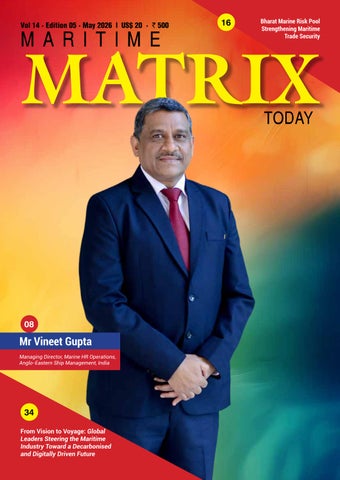
From Engine Room to Boardroom: Vineet Gupta’s Voyage in Maritime Leadership 08 Cover Story
Voyage Planning Gets Smarter
Direct Travel Introduces Avenir Across Global Specialty Markets
BLUE BHARAT: India’s Voyage to a Resilient Ocean Economy
From Vision to Voyage: Global Leaders Steering the Maritime Industry Toward...
Disclaimer
All advertisements in this magazine are placed with no liability accepted by the publisher for the material content therein. No responsibility is accepted by the publisher for omission or error or non-insertion of any advertisements. All advertisements and material in this magazine are subjected to approval by the publisher and are not necessary the opinion of the publisher. No liability is accepted for advertisements that are placed or any information that might be criminally connected. All information is checked to the best of our knowledge and is reliant upon the material submitted not being in contravention of all relevant laws and regulations and within the provisions of the Trade Practices Act.
Reproduction Prohibited
Maritime Matrix Today will not be responsible for the views expressed by contributors in their personal capacity. All rights reserved. Reproduction in part or whole without the permission of the Editor is prohibited.
Readers are recommended
To make appropriate enquiries before sending money, incurring expenses or entering into any commitment in relation to any advertisement published in this publication. Maritime Matrix Today does not vouch for any claims made by the Advertisers of Products and Services. The Printer, Publisher, Editor and Owner of Maritime Matrix Today shall not be held liable for any consequences, in the event such claims are not honoured by the Advertisers.
RNI: MAHENG/2013/50159
Published by Marex Media Pvt Ltd C-209, Morya House, New Link Road, Andheri West, Mumbai 400058 Email: info@marexmedia.com
• Seaspan technology continues to be a leader in the industry, setting high environmental goals
• Our fleet of Dual Fuel Vessels with Membrane & Type B Tanks sets us up for a strong future
• MAN ‘ME-GI Mark 2’ Main engines, a step further than present generation of main engines
• The ‘EGR (Exhaust Gas Recirculation)’ as well as ‘SCR (Selective Catalytic Reactors)” as means to bring down NOx emissions to Tier III levels
• COPES Company e-learning training platform completed from the comfort of your home
• Gender friendly accommodation facilities
• Female Engagement Champions across offices worldwide
• Quality growth
• Low LTIF & High retention
• Wages in top Quartile, and consistent operational excellence

The maritime industry is no longer just a network of shipping lanes and cargo hubs; it has evolved into the primary stage for global strategic realignment. As industry leaders recently gathered at forums like Singapore Maritime Week, a clear consensus emerged: the future of the seas will be defined by resilience, technological leapfrogging, and a fundamental shift in international cooperation.
Recent years have exposed the fragility of lean supply chains against the backdrop of geopolitical volatility and climate disruption. For a rising economic power like India, these challenges represent a mandate to transition from a passive participant to a proactive architect of the maritime ecosystem.
At the heart of this transformation is a new philosophy of risk management. The introduction of mechanisms like the Bharat Marine Risk Pool signals a departure from traditional, fragmented insurance models toward collective security frameworks. In an age where maritime bottlenecks can paralyze national economies overnight, such financial and operational safeguards are no longer optional; they are the bedrock of trade continuity.
Simultaneously, the era of bilateral silos is giving way to strategic synergies. India’s deepening partnership with South Korea—fusing Seoul’s cutting-edge shipbuilding technology with India’s immense scale and labor force that serves as a blueprint for the future. These alliances go beyond commerce; they are about building a diversified industrial base that reduces dangerous dependencies on single-market providers.
This strategic shift is being further catalyzed by a new wave of trade agreements. As India negotiates expansive deals with the European Union and the United Kingdom, the pressure on port infrastructure will intensify. The integration of automation, AI-driven logistics, and sustainable practices is now a prerequisite for staying competitive in a global market that increasingly values speed and carbon neutrality.
However, amidst the rush toward automation and decarbonization, the “human element” must not be sidelined. Seafarers remain the lifeblood of the industry. A future-ready maritime sector requires a workforce that is not only technologically proficient but also supported by robust welfare and inclusion policies.
For India, the current landscape offers a generational opportunity. Through the Maritime India Vision 2030, the nation is signaling its intent to leverage its unique geography to become a global maritime pivot. Yet, vision must be matched by velocity. Achieving these milestones requires the relentless implementation of policy reforms and sustained capital investment.
As the world navigates this period of strategic realignment, the winners will be those who can balance innovation with stability. For India, the path forward is clear: it must not only participate in the global maritime dialogue but lead it, ensuring that the future of trade is secure, sustainable, and inclusive.
-Kamal
Kamal Chadha Group CEO kamal@marexmedia.com
Shirish Kirtane
HOD Graphics shirish@marexmedia.com
Radhika Vakharia CEO & Editor radhika@marexmedia.com
Santosh Nivalkar Sr. Graphic Designer santosh@marexmedia.com
Delphine Estibeiro Editorial Coordinator delphine@marexmedia.com
Manish Malve Graphic Designer manish@marexmedia.com
Jagdamba Pandey Manager, Business and Promotion jagdamba@marexmedia.com
Bhavna Pimpale Coordinator bhavna@marexmedia.com
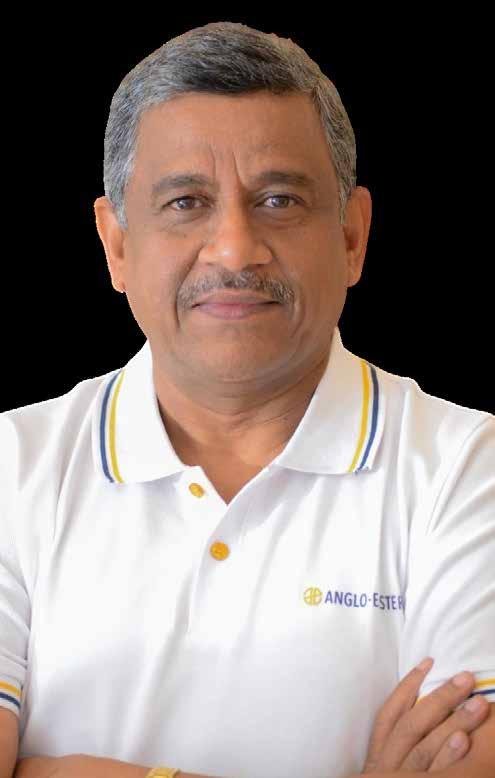
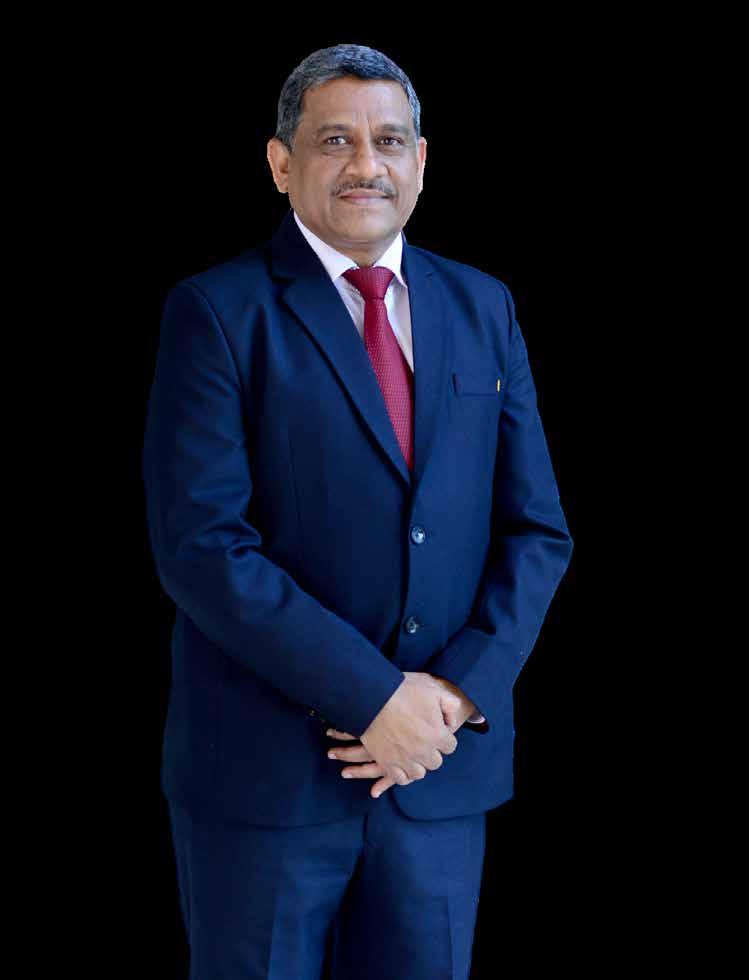
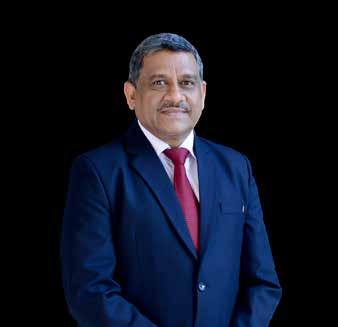
Mr Vineet Gupta
Managing Director, Marine HR Operations, Anglo-Eastern Ship Management, India
As Managing Director of Marine HR India, Mr. Vineet Gupta oversees crewing operations for more than 525 ships and supports over 20,000 Indian seafarers. He works with a highly capable team of more than 20 home-grown Master Mariners and Chief Engineers who are exceptional leaders in their field. His team has a distinct advantage over many others in marine HR because they previously served on Anglo-Eastern quality-managed ships before joining the shore management team. Having grown within the company, he deeply understands the values and consistently places the interests of both shipowners and seafarers at the centre of every decision.
Anglo-Eastern’s role is to protect the rights of Indian seafarers, support their careers and wellbeing, and deliver excellence in ship management to their clients.
As the largest foreign employer of Indian seafarers, they carry a significant responsibility to ensure their continued employability. This is possible only by remaining competitive in both cost and quality, while also strengthening the future supply of skilled seafarers through training and by providing training berths to aspiring Indian cadets.
Creating a sustainable ecosystem for maritime talent development remains a core priority, and their Marine HR team is committed to fulfilling this responsibility with dedication, professionalism, and long-term vision.
In conversation with Jagdamba Prasad Pandey of Maritime Matrix Today, Mr Vineet Gupta opens up about his remarkable journey from the engine room to the boardroom. From his early days at sea as a Chief Engineer to now shaping the future of maritime talent at one of the world’s largest ship management companies, Mr Gupta’s story is one of discipline, vision, and leadership. In this candid interview, he reflects on the experiences that anchored his career, the evolution of Anglo-Eastern under his watch, and his perspective on where the maritime industry is headed in the next decade. Beyond the professional milestones, he also shares personal insights –his childhood influences, mentors, work-life balance, and the philosophy that guides him. This is the story of a seafarer who chose to lead from the front, both at sea and ashore.
Where did you grow up, and what are some key childhood memories that shaped who you are today?
I grew up in Lucknow, the historic city of Nawabs, now equally famous for Tunde Kebabs. I completed most of my schooling there and actively pursued my childhood passion for badminton. For a few years, the sportsman in me took precedence over academics, and I had the privilege of competing at the national level between 1982 and 1984.
Soon after, concerns about building a career pushed me back toward studies. I then secured admission to DMET, one of India’s most prestigious marine engineering institutions, through the IIT-JEE entrance examination in 1985. The discipline I learned through sports and the rigorous training at DMET played a defining role in shaping my personality, values, and professional journey.
Did you have any early experiences or exposure to the maritime industry that sparked your interest?
Lucknow is a landlocked city, with the nearest coastline more than 1,000 kilometres away, so the maritime industry was not widely known there. However, it was a city full of ambitious middle-class youngsters always searching for rewarding career opportunities.
For me, it was the IIT-JEE process that first introduced marine engineering as a career path. Alongside the IITs, DMET and TS Rajendra were respected options in the 1980s for students seeking technical and professional excellence. That exposure opened my mind to an entirely different world of opportunity, and what began as an academic option eventually became a lifelong profession.
Could you briefly outline your career journey from Chief Engineer to your current role at Anglo-Eastern Ship Management?
I joined Anglo-Eastern as a Second Engineer in 1997 and was promoted to Chief Engineer in 1999 on the prestigious Canmar container fleet, now part of Hapag-Lloyd.
In 2003, I was selected to join Anglo-Eastern India’s Fleet Personnel Department as a Manager. At that time, we were a small team of two Master Mariners and three Chief Engineers, managing crewing operations for nearly 100 ships.
As the company expanded through mergers, acquisitions, and organic growth, the fleet size increased significantly, and our shore-based operations evolved accordingly. Over the years, my own career progressed steadily from Manager to General Manager, then Director, and eventually to Managing Director in 2023.
Today, I have the privilege of leading Marine HR Operations in India, a responsibility I value deeply. It has been a journey of continuous learning, leadership development, and commitment to both our clients and our seafarers.
Which particular event or experience early on drew you to the maritime industry?
Growing up in Lucknow, maritime careers were rarely discussed because the sea felt so distant from everyday life. For many of us, professions connected to ships and oceans were known only through films or occasional newspaper stories.
What truly drew me toward the industry was discovering that marine engineering offered a highly respected technical career combined with global exposure, adventure, and responsibility. Once I learned more about institutions such as DMET and the opportunities available through the merchant navy, it became an exciting and practical path worth pursuing.
Reflecting on your career, what are you most proud of accomplishing?
One of the proudest periods of my career was leading through the COVID-19 pandemic. While many industries slowed down or paused operations, shipping had to continue because global trade depends on uninterrupted maritime movement. For seafarers and recruitment companies, the challenge was immense. Crew changes became extremely difficult due to lockdowns, travel restrictions, quarantines, and constantly changing regulations across countries. Despite these obstacles, our Anglo-Eastern team worked tirelessly to ensure ships remained manned safely and seafarers could join or return home wherever possible.
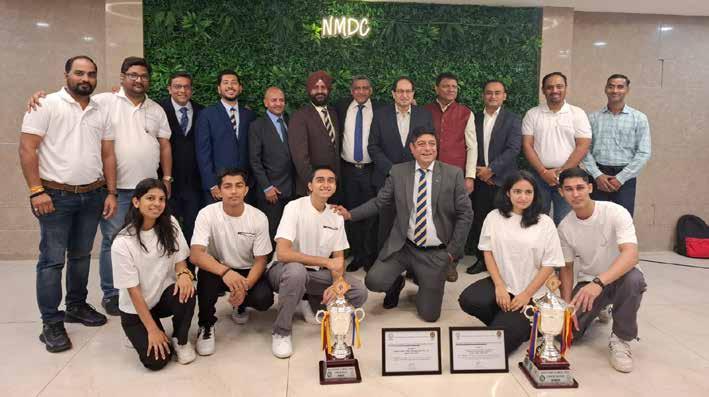
That period demonstrated resilience, teamwork, and commitment at the highest level. Supporting seafarers during such uncertain times remains one of my most meaningful professional achievements.
What motivated you to shift from a technical role to a leadership/management position?
I would say it was less a planned choice and more an opportunity that proved to be a blessing in disguise. Moving into management gave me the chance to grow beyond being a technical professional and develop as a leader.
The demands of the role, the needs of seafarers, and the dynamic office environment shaped me over time. I also had the benefit of learning from senior leaders within the organisation. Our earlier Managing Director, who remains my mentor and current superior, has been a major influence. Having worked closely with him for over 23 years, I have learned invaluable lessons in professionalism, leadership, and decision-making.
In your view, how has Anglo-Eastern evolved during your time there, and what major initiatives have you been involved in?
Anglo-Eastern’s growth over the years has been remarkable and driven largely through strategic mergers and acquisitions. One of the early milestones was the merger with Denholm Ship Management, which increased the fleet size to over 100 ships around the time I joined the Fleet Personnel Department in Mumbai.
Over the following decade, further expansion continued steadily. A major turning point came in 2015 when Univan,
one of the world’s leading ship management companies, joined the group to form the Anglo-Eastern Univan Group.
This merger elevated the company to a new level within the global ship management industry and strengthened our international presence. It also brought renewed leadership energy and strategic vision.
During these phases of growth, I was closely involved in scaling crewing operations, strengthening marine HR systems, integrating teams, and ensuring uninterrupted support for both clients and seafarers.
How do you foresee the maritime industry changing in the next 5–10 years, and what challenges or opportunities do you anticipate?
The maritime industry faces major transformation in the coming decade for two key reasons.
First, global pressure to reduce carbon emissions and achieve sustainability goals is accelerating the search for alternative fuels and cleaner technologies. While progress is being made, no single long-term solution has yet emerged.
Second, there is a growing shortage of trained seafarers capable of operating increasingly advanced and automated vessels. Building this talent pipeline remains a challenge globally.
India is well positioned to convert this challenge into an opportunity. With a large population of young, educated, and ambitious individuals, the country can become a leading supplier of skilled maritime professionals through awareness, quality training, and strong career pathways.
Even as automation increases, new shore-based and
technology-driven maritime roles will emerge. The future belongs to those who adapt, upskill, and invest in people.
What kind of legacy do you hope to leave in the maritime industry?
I would try to ensure that Indian maritime industry would focus on two priorities -
First, ensuring long-term employability for Indian seafarers by consistently delivering excellence in ship management at competitive cost.
Second, maintaining an uninterrupted supply of qualified seafarers to our clients by continuously expanding cadet and ratings training opportunities.
If I can contribute to building a sustainable system where Indian seafarers continue to grow professionally and remain globally respected, that would be a legacy worth leaving.
Are there any key mentors or role models who have influenced your career?
Yes. As mentioned earlier, our former Managing Director, who continues to be my senior leader, has had a profound influence on my professional journey.
We have worked together for more than 23 years, and I have learned a great deal from his leadership style, discipline, strategic thinking, and people management. His mentorship has helped shape the professional I am today.
How do you manage the balance between your professional commitments and personal life?
Maintaining work-life balance is easier said than done. We are all driven by responsibilities, emotions, and constant demands, so work often follows us home mentally.
However, with conscious effort and discipline, it is possible to create boundaries. I believe in practising the habit of leaving office concerns behind once the workday ends, as much as possible. Activities such as spending time with family, sports, and even meditation help create balance and mental clarity.
It may not be perfect every day, but consistency makes a difference.
The maritime industry offers one of the most rewarding global careers for young professionals willing to work hard, learn continuously, and adapt to change. It provides technical excellence, international exposure, financial stability, and personal growth.
I would encourage more young Indians to explore maritime careers, whether at sea or ashore. With the right mindset and quality training, the opportunities are immense.
India has the talent and potential to play an even greater role in shaping the future global maritime workforce.
“I couldn’t have done this without my lovely and lively wife Shalini, and our joy and pride, Rashi. They’ve been my greatest support through every emotional high and low, making sure life always has all its colours.”
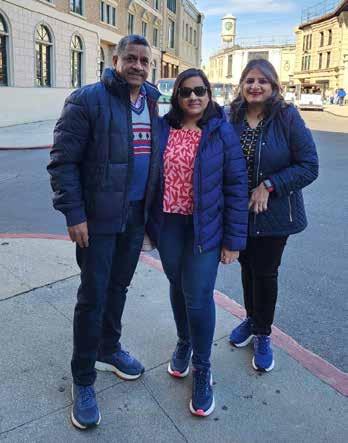
Hobbies: I enjoy playing badminton whenever time permits, watching films in cinema halls, and spending quality time with family.
Favourite Travel Destination: Lucknow remains close to my heart, and I always welcome an opportunity to visit family there. Beyond that, both mountains and oceans strongly appeal to me.
Music Preference: I enjoy classic Hindi songs from the 1960s and 1970s, as well as memorable music from the 1990s.
Favourite Book/Author: I am not an avid reader, but I do enjoy reading when I receive a good recommendation.
How I Relax: Watching political news and debates for 30–40 minutes helps me unwind and stay informed after a busy day.
Philosophy of Life: Live today, enjoy today, spend today.
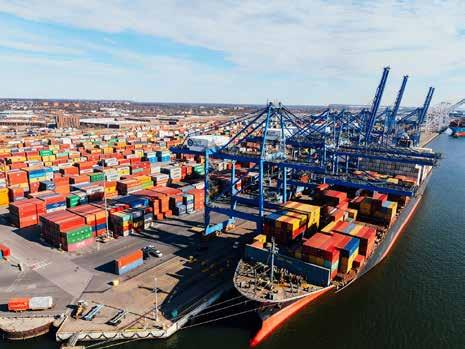
Dredging Corporation of India (DCI) has signed a ₹2,157 crore Memorandum of Understanding with Indian Oil Corporation Ltd (IOCL) for a five-year fuel supply agreement. The deal will ensure a steady fuel supply for DCI’s dredging fleet operating across India. Reliable fuel availability is crucial for uninterrupted dredging services that support ports, shipping channels, and national infrastructure projects. The agreement was signed in Visakhapatnam in the presence of senior officials from both companies. This partnership strengthens DCI’s operational resilience and highlights the important role of public sector enterprises in boosting India’s maritime infrastructure and port development.
India has expanded the list of Russian insurance companies permitted to provide marine insurance cover for vessels arriving at Indian ports. The move is aimed at ensuring smooth maritime trade operations amid disruptions in the global insurance market caused by geopolitical tensions and sanctions-related restrictions.
Marine insurance is essential for ships carrying cargo such as crude oil, coal, fertilizers, machinery, and other imported goods. Without valid insurance, many vessels may face delays in docking, cargo handling, or port clearances. By recognizing additional Russian insurers, India is helping maintain uninterrupted shipping flows,
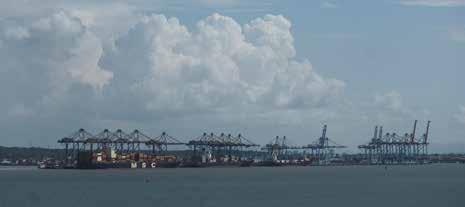
particularly for energy and commodity imports.
The decision is expected to support trade continuity and reduce logistical uncertainty for importers and shipping operators. It also reflects India’s
pragmatic approach to safeguarding supply chains and meeting domestic demand. As maritime trade remains crucial for the Indian economy, stable insurance arrangements are important for efficient port operations and timely cargo movement across the country.
Adani Ports & Special Economic Zone has announced an ambitious goal to achieve 1 billion tonnes of cargo handling capacity by 2030, underlining its long-term expansion strategy in India’s maritime and logistics sector. The company plans to grow through new terminals, modernization of existing ports, and stronger integration with rail, road, and warehousing networks.
This target reflects rising cargo demand driven by India’s economic growth, increasing exports, higher energy imports, and expanding manufacturing activity. The company has been investing in container terminals, bulk cargo facilities, inland logistics parks, and digital systems to improve operational efficiency.
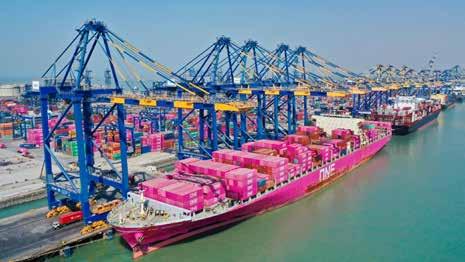
Reaching the 1 billion tonnes milestone would strengthen its position among the world’s leading private port operators. It also signals confidence in India’s trade outlook and infrastructure growth.
With aggressive capacity additions and logistics expansion, the company is expected to play a major role in supporting India’s supply chain and export ambitions.
India’s major ports delivered a strong performance in FY 2025–26 by handling 915.17 million tonnes (MT) of cargo, surpassing the annual target of 904 MT. This achievement highlights the growing strength of the country’s maritime sector and its expanding role in supporting domestic and international trade. Compared with the previous financial year, cargo traffic at major ports increased by around 7%, reflecting steady economic activity and rising demand for imports and exports.
The higher cargo volumes were supported by improved operational efficiency, faster turnaround times, better infrastructure, and continued modernization across port facilities. Investments in mechanization, digital systems, and connectivity with road and rail networks also contributed to smoother cargo movement.
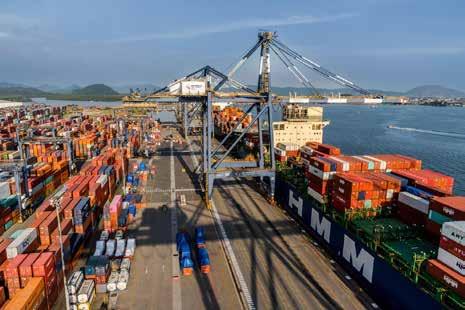
Exceeding the target demonstrates the resilience and competitiveness of India’s port sector in a dynamic global trade environment. It also signals progress toward building world-class maritime
infrastructure that can handle larger cargo volumes in the future while supporting economic growth, industrial development, and supply chain efficiency across the country.
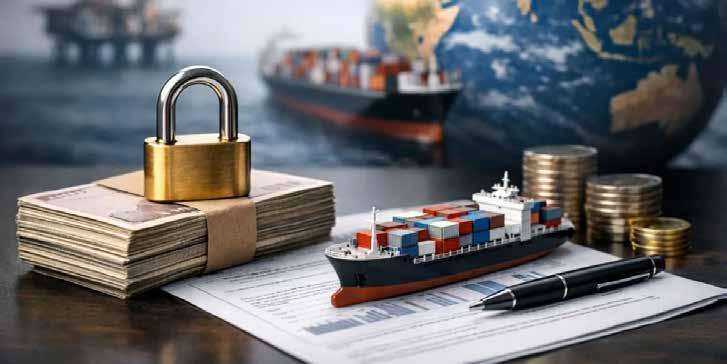
Public sector insurance companies in India have come together to create a special insurance pool worth more than $100 million to help extend protection for sea trade. This move is meant to support Indian shipping and cargo movement at a time when global marine insurance has become more difficult and expensive to obtain, especially in areas facing geopolitical tension and higher risks.
The four state-owned insurers namely New India Assurance, GIC Re, United India Insurance, and Oriental Insurance have joined hands under the Bharat Marine Risk Pool. Their aim is to provide marine insurance coverage to ships, cargo, and trade routes that may not be getting enough support from international insurers.
Marine insurance is very important in global trade. Ships carry oil, gas, food grains, machinery, chemicals, cars, electronics, and thousands of other goods across the world. Every ship voyage carries risks such as storms, piracy, accidents, collisions, cargo damage, delays, war zones, or environmental incidents. Because of these risks, companies need insurance before goods can be shipped. Without insurance, many shipments may be delayed or cancelled.
Recently, some international insurance companies reduced or withdrew coverage in certain high-risk areas such as parts of the Red Sea and West Asia. Attacks on vessels, military conflict, and rising tensions have made insurers cautious. Premiums
have increased sharply, and in some cases cover is limited. This creates problems for countries that depend heavily on imports and exports.
India is one of the world’s fastest-growing trading nations. It imports crude oil, natural gas, fertilizers, coal, edible oils, electronics, and machinery. It also exports medicines, automobiles, engineering goods, software-linked hardware, garments, chemicals, gems, and food products. Since much of this trade moves by sea, uninterrupted marine insurance is essential.To solve this challenge, PSU insurers decided to create a domestic risk-sharing arrangement. Instead of one company taking the full burden of large maritime risks, several insurers contribute money into a common pool. If a loss happens, the burden is shared among members according to their participation. This reduces pressure on a single insurer and creates larger underwriting capacity.
The total size of the pool is more than $100 million, which is a significant amount for the Indian insurance market. According to the article, GIC Re is the largest contributor, accounting for around 70% of the total corpus. Because GIC Re is India’s leading reinsurer and has experience in handling large commercial risks, it is taking the anchor role.
New India Assurance follows with around 10% contribution. The company is one of India’s biggest general insurers and has a strong presence in marine business. Oriental Insurance and
United India Insurance have together contributed roughly 7.5% each. Other insurers may also participate with smaller shares.
This pooled arrangement gives India greater flexibility in underwriting marine risks that may otherwise be declined or only partially insured by overseas markets. It also reduces dependence on foreign insurers and reinsurers.The initiative is especially useful for cover involving Indian-flagged vessels or Indian-controlled ships carrying cargo to or from international ports. In simple terms, if an Indian company owns or operates a ship that is engaged in foreign trade, it may benefit from insurance support through this pool.
Coverage can include three important areas:
1. Hull insurance – protection for damage to the ship itself.
2. Cargo insurance – protection for goods being transported.
3. Third-party liability – claims arising from damage caused to others, including pollution or accidents.
For example, if a vessel collides with another ship, damages a port facility, causes an oil spill, or suffers machinery breakdown leading to cargo loss, insurance can help cover claims and losses. These risks can run into millions of dollars, so organized insurance support is necessary.
The policies under this arrangement will be issued by participating insurers, while claims responsibility will be shared according to each company’s contribution to the pool. This means customers may buy a policy from one insurer, but the risk behind the policy is distributed among several members.
A key reason for launching the pool now is the withdrawal or reduction of marine reinsurance support from some global reinsurers after tensions rose in West Asia and nearby shipping corridors. Reinsurance is insurance for insurance companies. When reinsurers become cautious, regular insurers also become cautious because they cannot absorb giant losses alone.
For instance, a crude oil tanker can be worth tens of millions of dollars. Its cargo may be worth even more. If a major accident occurs, losses from damage, salvage, pollution cleanup, cargo claims, and business interruption can be massive. Many local insurers cannot carry such exposure on their own balance sheets. A shared pool helps solve this issue.
The Bharat Marine Risk Pool can also improve confidence among exporters and importers. Businesses need certainty. If they are unsure whether their cargo will be insured, they may postpone shipments or pay higher freight charges. By ensuring availability of cover, the pool can support smoother trade flows. This is particularly relevant for India’s energy security. India imports a large portion of its crude oil requirements by sea. If marine insurance becomes difficult, energy shipments may face delays or higher costs. By strengthening domestic insurance capacity, India can better support continuity of fuel supplies.
The initiative may also help Indian shipowners. Global shipping companies often face changing insurance conditions depending
on routes and risk perception. Domestic insurers working together may better understand national priorities and provide faster support when required.
Another important benefit is strategic self-reliance. Overdependence on overseas financial services can become a weakness during global crises. By building stronger insurance and reinsurance systems at home, India becomes more resilient.
The pool structure allows underwriting decisions to continue even when international markets tighten. That does not mean every risk will be accepted automatically. Insurers will still evaluate route safety, vessel condition, cargo type, sanctions compliance, and legal exposure. But they will have a stronger platform to participate. There may also be long-term gains for India’s insurance sector. Handling complex marine risks helps domestic insurers build expertise in shipping analytics, catastrophe modelling, claims management, maritime law, and international trade finance. This can strengthen India’s broader financial ecosystem.
However, marine insurance remains a challenging business. Losses can be unpredictable. Natural disasters, piracy, fires, collisions, war-related incidents, cyberattacks on shipping systems, and environmental claims can all generate heavy payouts. Therefore, proper pricing and risk management are essential.If the pool is managed efficiently, it can become a model for other sectors where strategic risk capacity is needed. Similar pooling approaches are sometimes used globally for terrorism risk, natural catastrophe cover, nuclear liability, or aviation risks.
In summary, the PSU insurers’ decision to anchor a $100 million marine insurance pool is an important move for India’s trade system. It aims to ensure that Indian shipping and cargo movements continue smoothly despite rising geopolitical uncertainty and shrinking overseas cover.
Key Features
• Four public sector insurers have joined together.
• Total capacity exceeds $100 million.
• GIC Re is the largest contributor.
• The pool supports ships, cargo, and liability risks.
• It focuses on Indian-linked maritime trade.
• It reduces dependence on foreign insurance markets.
• It can help protect imports, exports, and supply chains.
Overall, this initiative reflects a practical response to changing global conditions. When international risks rise, countries often need domestic institutions to step forward. Through this marine insurance pool, India’s PSU insurers are trying to do exactly that—protect trade, strengthen confidence, and keep sea commerce moving.
- MMT
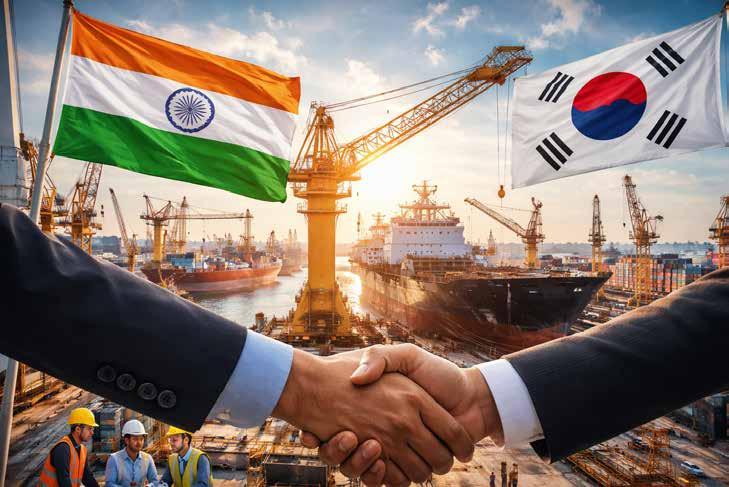
India and South Korea have entered a new phase of strategic cooperation with the announcement of a Comprehensive Framework for Partnership on Shipbuilding and Maritime Logistics. This agreement is an important milestone in the relationship between the two nations and reflects their shared interest in economic growth, industrial development, and maritime security. At a time when global trade routes and supply chains
are becoming increasingly important, the partnership has the potential to transform shipbuilding, port operations, and logistics networks across the region.
The maritime sector plays a central role in the modern global economy. A large share of world trade is transported by sea, making shipping and port infrastructure essential for economic progress. Nations with strong shipbuilding industries often gain advantages in exports, employment, industrial capability, and strategic influence. South Korea is one of the world’s most successful shipbuilding nations, known for advanced engineering, efficient shipyards, and the production of technologically sophisticated vessels such as LNG carriers,
tankers, and container ships. India, on the other hand, has a long coastline, strategic geographic location, expanding trade volumes, and strong potential for industrial growth. The new partnership combines the strengths of both countries in a mutually beneficial way.
One of the most significant features of the agreement is its focus on developing India’s shipbuilding and ship repair ecosystem. Shipbuilding is not limited to constructing vessels in a dockyard. It requires a vast network of suppliers producing engines, pumps, navigation systems, electrical equipment, steel components, safety systems, coatings, and automation technology. Countries that dominate shipbuilding have strong ancillary industries that support shipyards with high-quality inputs. India has made progress in this field, but there remains large scope for expansion. Through cooperation with South Korea, India can strengthen this supporting industrial base and reduce dependence on imported marine equipment.
The opening of the first office of the Korea Marine Equipment Association (KOMEA) in Mumbai is a major step in this direction. This office will act as a bridge between Korean marine equipment manufacturers and Indian shipyards, suppliers, and policymakers. It will facilitate direct collaboration, faster communication, and long-term industrial partnerships. Indian shipyards are expected to benefit from access to advanced Korean technology, better production systems, and internationally recognized manufacturing standards. This can help improve efficiency, product quality, and delivery timelines.
South Korean shipyards are globally admired for precision engineering, modular construction methods, and strong productivity. Their ability to deliver large and complex vessels on time has made them global leaders. If Indian shipyards adopt similar practices, they can become more competitive in domestic and export markets. Improved standards in welding, fabrication, scheduling, inventory control, and safety management can significantly raise India’s industrial capabilities. Over time, Indian shipyards may move from building smaller or less complex vessels toward manufacturing advanced commercial and specialized ships.
The partnership is equally important in the field of maritime logistics. India’s trade volumes are increasing rapidly, creating greater pressure on ports, cargo terminals, inland transport systems, and shipping services. Efficient logistics lowers costs, speeds up delivery, and strengthens supply chains. South Korea’s expertise in smart ports, container handling automation, digital cargo systems, and integrated logistics planning can support India’s modernization efforts. Better logistics will
benefit exporters, importers, manufacturers, and consumers by making trade faster and more reliable.
Economically, the agreement could generate substantial benefits for India. Shipbuilding and marine manufacturing are laborintensive industries that create employment for engineers, welders, electricians, technicians, logistics managers, and designers. Coastal regions may experience industrial growth through the development of shipyards, repair hubs, and supplier clusters. India may also expand its exports of marine equipment and eventually build ships for overseas buyers.
A stronger domestic shipbuilding industry can also support defense and coast guard requirements, adding strategic value.
South Korea also gains important advantages from this partnership. India represents one of the world’s fastest-growing major economies and a large future market for maritime services, industrial equipment, and infrastructure cooperation. By partnering with India, Korean firms can diversify production networks, access new commercial opportunities, and deepen their presence in the Indo-Pacific region. The agreement therefore reflects shared interests rather than one-sided benefits.
Beyond economics, the partnership has a geopolitical dimension. Both India and South Korea depend heavily on secure maritime trade routes. Stable sea lanes in the Indian Ocean and Pacific are essential for energy supplies, exports, and overall economic security. Cooperation in shipbuilding and logistics supports wider strategic goals such as resilient supply chains, regional connectivity, and a stable Indo-Pacific order.
However, the success of this framework will depend on effective implementation. India will need supportive policies, faster project approvals, skilled manpower development, competitive financing, and strong infrastructure around ports and industrial zones. Long-term commitment from both governments and private industries will be necessary to convert agreements into practical outcomes.
In conclusion, the India–South Korea Comprehensive Framework for Partnership on Shipbuilding and Maritime Logistics marks the beginning of a promising new chapter in bilateral relations. By combining South Korea’s technological excellence with India’s scale, location, and growth potential, the two countries can create a powerful maritime partnership. If implemented successfully, this cooperation can generate jobs, improve logistics, expand industrial capacity, and strengthen economic ties. In an era where maritime strength increasingly shapes national prosperity, this agreement could become one of the most significant strategic partnerships in Asia.
- Jagdamba Prasad Pandey


Mads
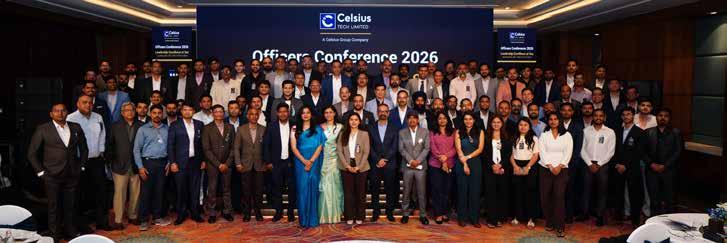
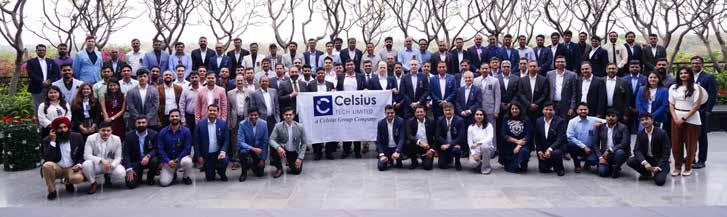
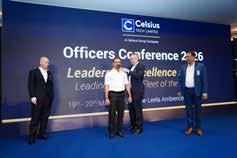
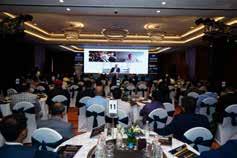
In a powerful display of industry leadership and operational commitment, Celsius Tech Limited recently concluded its flagship Officers Conference 2026. Held from March 19–20 at The Leela Ambience in Gurugram, India, the event brought together the backbone of the fleet—its officers— alongside shore-based leadership under the evocative theme: “Leadership Excellence at Sea – Leading the LNG Fleet of the Future.” This two-day summit served as more than just a professional gathering; it was a landmark journey designed to bridge the gap between ship and shore while navigating the rapidly evolving landscape of global LNG shipping.
The conference opened with a stirring welcome to the dignitaries and team members, where the company recognized the sacrifices made by officers at sea and framed their expertise as the true backbone of operations. Mr. Rajesh Singh, Managing Director of Celsius Tech Limited, and Mr. Jeppe Jensen, Founder and Chairman of Celsius Shipping, set the tone early by

Rasmus
emphasizing that as the industry pivots toward cleaner energy and digital transformation, the decisions and professionalism of Celsius officers will define the fleet’s success. This vision for a “shared horizon” underscored the pivotal moment the maritime industry currently faces.
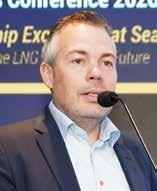
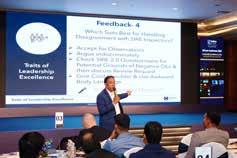
The first day focused heavily on the technical and regulatory standards required for top-tier LNG operations. Key sessions led by Rasmus Højmark and Mads Bang focused on aligning charterer expectations with crew engagement, while the QHSE Team conducted a workshop on leading safety from the front. This reinforced the company’s zero-compromise approach to risk. Furthermore, Captain Pankaj Ranjan briefed attendees on the incoming SIRE 2.0 Inspection protocols, and Mr. Rajat Thakral discussed the critical intersection of ship energy efficiency and CII performance.
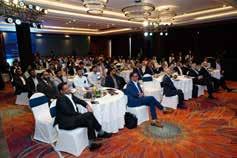
The evening transitioned from rigorous technical discussion to
a night of networking and dinner, allowing for the rejuvenation and recharge promised in the conference mission.
On the second day, the agenda pivoted toward leadership, technology, and the wellbeing of the crew. A standout session featured Master Mariners and Chief Engineers discussing their roles as “Onboard Executives,” managing high-tech LNG assets as mobile business units.
The conference discussed the “Human Firewall,” exploring cyber security and AI roles at sea, and featured insights into innovation and emissions. Sessions on soft skills and building reliable crews emphasized the need for a team that’s physically fit, mentally strong, and operationally ready.

“Building a reliable LNG crew is not just about technical proficiency; it’s about fostering a human-centric culture where every seafarer feels valued as part of a growing family,” said Sourabh Gupta, Head of Manning at Celsius Tech.
The conference concluded with an open forum and a vote of thanks by Mr. Rajesh Singh. By focusing on the core pillars of connecting, learning, and leading, Celsius Tech Limited has reinforced its position as a forward-thinking leader in the maritime world. As the officers return to their decks and engine rooms across the globe, they do so with a renewed sense of purpose, equipped with the tools to lead the LNG fleet of the future into a safer, more sustainable horizon.




The activation of India’s new Free Trade Agreements (FTAs) with the European Union and the United Kingdom is already beginning to generate visible and measurable changes across the country’s major ports. Often described as the “Mother of All Deals” because of their enormous economic potential, these agreements are more than diplomatic milestones—they are catalysts for transformation in trade infrastructure, export competitiveness, and logistical efficiency. What was once discussed in policy circles is now unfolding on the ground, especially at India’s busiest maritime gateways such as Nhava Sheva, Mundra, and Chennai.
These ports, long considered the backbone of India’s external trade, are witnessing a notable surge in cargo movement, especially in high-value and value-added sectors such as marine products, processed foods, pharmaceuticals, garments, and textiles. Alongside the rise in exports, another parallel revolution is taking place: Indian ports are upgrading their systems to meet stringent European standards through digital customs systems, modern cold-chain logistics, and faster cargo handling mechanisms. The impact of these FTAs is therefore not limited to tariff reductions; it is laying the foundation for a more efficient and globally competitive India.
A New Era of Trade Momentum
Free Trade Agreements are designed to reduce tariffs, simplify market access, and promote smoother movement of goods and services between countries. For India, trade deals with the EU and UK hold extraordinary significance because these markets represent some of the world’s wealthiest consumers with strong demand for quality imports. Indian exporters, especially in sectors where the country has a natural or cost advantage, now find themselves in a stronger position to compete.
The immediate response has been visible at port terminals. Increased export orders from Europe and Britain are translating into more containers, more shipping schedules, and faster turnover. Ports that once handled a steady flow of standard cargo are now adapting to a sharp increase in specialized shipments. This is particularly evident in the growth of reefer containers—temperature-controlled containers used for transporting perishable goods.
The expansion of such cargo indicates that India is moving up the export value chain. Instead of merely shipping raw materials or low-margin goods, the country is exporting processed seafood, fresh fruits, frozen products, premium textiles, and specialized consumer items. These goods command higher prices and create better returns for businesses, workers, and the economy.
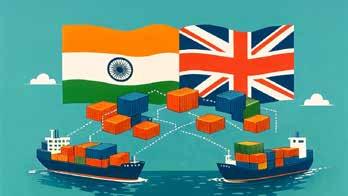
One of the most important signs of FTA success is the surge in reefer container traffic at major ports like Nhava Sheva, Mundra, and Chennai. Reefer logistics require advanced infrastructure, precision handling, and reliable connectivity. Their growing use reflects a maturing export ecosystem.
India’s marine products sector is among the biggest beneficiaries. European countries and the UK are major importers of shrimp, fish, crab, and other seafood products. With improved tariff access and easier regulatory pathways, Indian exporters are increasing shipments to meet rising demand. Ports are therefore handling more refrigerated cargo that must move swiftly from processing plants to vessels without breaking the cold chain.
Similarly, the textile and garment sector is experiencing renewed momentum. Europe and Britain have traditionally been strong buyers of Indian cotton garments, home furnishings, fashion products, and specialty fabrics. Reduced duties under FTAs make Indian goods more attractive compared to competitors. As a result, textile clusters in Tamil Nadu, Gujarat, Maharashtra, and other manufacturing hubs are pushing larger volumes through nearby ports.
The increase in reefer traffic also benefits farmers and food processors. Fruits, vegetables, dairy items, spices, and readyto-eat foods can now access premium overseas markets more efficiently. This widens opportunities beyond traditional industries and supports rural incomes.
India’s leading ports are emerging as strategic winners in this changing trade landscape.
Nhava Sheva (Jawaharlal Nehru Port), the country’s busiest container gateway, is benefiting from its proximity to industrial zones in Maharashtra and northern India. With strong rail and road links, it is becoming a central node for exports headed to Europe.
Mundra Port, known for its private-sector efficiency and largescale handling capacity, is ideally placed to process rising cargo from Gujarat’s industrial belt. Its integrated logistics parks and warehousing systems make it highly competitive for exporters seeking speed and reliability.
Chennai Port and nearby southern terminals are gaining from the strength of Tamil Nadu’s textile, automobile, electronics, and seafood sectors. Southern India’s export-driven manufacturing base gives these ports a natural advantage in servicing European markets.
The increased activity at these ports has multiplier effects. More cargo means more jobs in transport, warehousing, packaging, freight forwarding, customs brokerage, and port services. It also encourages private investment in cranes, storage yards, inland depots, and digital systems.
Perhaps the most enduring benefit of these FTAs is not just the immediate trade boom, but the permanent modernization of India’s port infrastructure.European markets are known for strict compliance standards relating to food safety, traceability, packaging norms, environmental regulations, and customs documentation. To compete successfully, Indian ports and exporters must meet these expectations consistently. This has accelerated long-needed reforms.
Ports are rapidly digitizing customs clearance systems to reduce paperwork and delays. Electronic documentation, automated approvals, online tracking, and risk-based inspections are replacing slower manual procedures. Such reforms improve not only exports to Europe but all cargo movement through Indian ports.
Cold-chain logistics are another major focus area. Modern refrigerated warehouses, plug-in points for reefer containers, temperature-monitoring systems, and faster last-mile transport are being installed or expanded. These facilities reduce spoilage, preserve product quality, and build trust among overseas buyers.Port authorities are also investing in better cargo scanning systems, cleaner handling processes, and integrated logistics planning. Efficiency gains lower transaction costs, making Indian exports more competitive globally.
For many years, India’s trade success was often measured by sheer volume—how much was exported rather than how much value was created. The FTAs with the EU and UK are encouraging a healthier model based on quality, branding, standards, and specialization.
When exporters gain access to premium markets, they are pushed to improve packaging, certification, sustainability practices, and consistency. This benefits Indian industry in the long term. Companies that learn to satisfy demanding European buyers can compete anywhere in the world.
This transition is especially important for sectors like food processing, pharmaceuticals, engineering goods, apparel, and leather products. Instead of competing solely on low cost, Indian firms can build reputations for reliability and quality.
The early impact of the EU and UK FTAs suggests something larger than increased exports. India is gradually redefining itself in global trade. It is no longer just a supplier of bulk commodities or low-cost manufacturing. It is becoming a trusted source of sophisticated, standards-compliant, valueadded products.
Ports are the clearest symbols of this transition. Every reefer container loaded with seafood, garments, or processed food represents jobs created inland, incomes generated for producers, and confidence gained in global markets. Every digital customs upgrade reduces friction and signals readiness for 21st-century commerce.
These changes may appear technical, but their significance is national. Efficient ports lower the cost of doing business, attract investment, strengthen supply chains, and improve India’s standing as a global manufacturing and export hub.
The so-called “Mother of All Deals” is beginning to justify its name. The FTAs with the EU and UK are already delivering practical results at India’s ports through rising value-added cargo, growing reefer container traffic, and rapid infrastructure modernization. Nhava Sheva, Mundra, Chennai, and other gateways are not merely handling more goods—they are handling the future of Indian trade.
What makes these developments especially important is their permanence. Tariff benefits may boost exports today, but digitized customs systems, modern cold chains, better logistics, and higher quality standards will strengthen India for decades to come.
If the current momentum is maintained, these agreements may be remembered not simply as trade treaties, but as turning points that transformed India’s ports into engines of global competitiveness and national growth.
The India-EU FTA (The Landmark Moment)
• Negotiations Concluded: January 27, 2026.
• The Event: During the 16th India-EU Summit in New Delhi, Prime Minister Narendra Modi and EU leaders officially announced the conclusion of the deal after nearly 20 years of on-and-off talks.
• Why it was called the “Mother of All Deals”: This phrase was used by EU Commission President Ursula von der Leyen and Indian officials to describe the sheer scale of the agreement, which creates a freetrade zone covering 2 billion people and roughly 25% of global GDP.
• Current Status: It is currently undergoing legal vetting and translation, with implementation expected to begin in early 2027.
AShip Arrives, a village lives: Sepetiba, 1993
In 1993, my vessel entered Sepetiba Bay, Brazil, then a quiet, almost forgotten port west of Rio de Janeiro. The ship’s arrival was not merely a nautical event; it was a social one. A small village seemed to awaken. Bars opened, supermarkets restocked, transporters found work, vendors smiled, and livelihoods resumed. A steel hull at anchor had changed the rhythm of life ashore.
That single port call reinforced a truth every mariner understands instinctively: ships are more than carriers of cargo; they are carriers of economic oxygen and human continuity.
This truth has held whether ships sail in peace or under fire.
The Birth of the “Merchant Navy” (1914–1928)
The term “Merchant Navy” was formally adopted in the United Kingdom in 1928, following the devastation of World War I. During the war, Britain’s merchant fleet, then still officially known as the Mercantile Marine, was crewed by civilians yet faced conditions indistinguishable from naval combat. German unrestricted submarine warfare sank over 3,000 British merchant and fishing vessels, killing nearly 15,000 merchant seafarers between 1914 and 1918.
These mariners were neither soldiers nor volunteers in uniformed services. Yet they sustained Britain’s survival, importing food, coal, and raw materials under constant threat of torpedoes. Recognition came late but decisively.
On 14 February 1928, King George V, citing the merchant fleet’s “steadfastness and courage,” formally conferred the title “Merchant Navy”, elevating civilian shipping to parity of honor with the Royal Navy and acknowledging that commerce itself had become a weapon of war.
World War II and the Logic of Total Maritime War
The lessons of World War I went unheeded. In World War II, merchant shipping again became a strategic target. The Battle of the Atlantic saw nearly 14.7 million tons of Allied shipping sunk, with more than 32,000 merchant seafarers killed.
Decisions by individuals mattered. Winston Churchill later wrote that “the only thing that ever really frightened me during the war was the U-boat peril.” Convoy systems, radar, and escort carriers were political, technological, and moral decisions aimed at one outcome: keeping merchant shipping alive.
The Tanker War (1981–1988): Oil as Target, Trade as Hostage
The Iran–Iraq War introduced a new phase: direct, systematic attacks on neutral merchant shipping. From 1981 to 1988, both Iran and Iraq struck tankers in the Persian Gulf and Strait of Hormuz. Iraq conducted 283 attacks, Iran 168, turning global oil lifelines into battlefields.
The intervention decision came from Washington. In 1987, the United States launched Operation Earnest Will, escorting reflagged Kuwaiti tankers, the largest convoy operation since World War II. This was not an act of altruism alone; it was recognition that global supply chains cannot survive naval anarchy.
The Shadow Maritime War: Iran–Israel (2019–2023)
In the 21st century, shipping entered what analysts now call the
“gray-zone war”. On 29 July 2021, the merchant tanker MT Mercer Street was struck by an explosive UAV in the Gulf of Oman, killing its Romanian captain and a British security guard. The ship carried no cargo. Its crime was ownership association. [en.wikipedia.org]
The response was swift but symbolic. U.S. Fifth Fleet vessels escorted the ship to safety, while political leaders debated attribution. No declaration of war followed, only precedent. Merchant ships had become expendable signals in geopolitical messaging.
The most alarming phase began in November 2023, when Houthi forces in Yemen initiated sustained attacks on merchant vessels in the Red Sea and Bab el Mandeb Strait using drones, ballistic missiles, and unmanned surface vehicles. By March 2024, over 40 commercial vessels had been attacked, many with no Israeli ownership or destination.
In response, U.S. Secretary of Defense Lloyd Austin announced Operation Prosperity Guardian on 18 December 2023, forming a multinational naval coalition to protect freedom of navigation. Despite tactical success, hundreds of drones intercepted, commercial shipping largely rerouted around Africa, adding weeks and millions of dollars per voyage.
Shipping has always sailed through conflict, but in the early twenty first century it appears more overtly “at war” than at any time since the mid twentieth century. This perception is not an illusion. It is the result of structural changes in warfare, technology, geopolitics, and the global economy that have converged upon merchant shipping, making it simultaneously indispensable and expendable.
First, modern warfare has become asymmetric, and merchant shipping is uniquely vulnerable to asymmetry. In earlier wars, attacks on merchant vessels required submarines, aircraft, or surface raiders, assets that demanded state-level investment and clear political intent. Today, a comparatively inexpensive drone, missile, or unmanned surface craft can threaten or disable a ship worth hundreds of millions of dollars. This cost imbalance fundamentally alters risk calculations. Shipping lanes, especially chokepoints such as the Strait of Hormuz, Bab el Mandeb, and Suez Canal, have become ideal pressure points for non state actors and proxy forces. What once required a navy now requires a launch truck, a coastline, and a satellite feed.
Second, the nature of war itself has changed from declared conflicts to continuous “gray zone” confrontation. Merchant vessels increasingly find themselves targeted not as enemies, but as messages. A ship may be attacked not for its cargo, but for its flag, ownership structure, insurer, or even perceived political association. In this environment, neutrality, long the merchant mariner’s shield, has eroded. Ships are no longer simply trading platforms; they are symbols within geopolitical narratives. As a result, even vessels carrying food, fuel, or humanitarian goods are no longer immune from attack.
Third, global supply chains amplify the strategic value of shipping far beyond its physical presence. Today’s world economy relies on just in time logistics, tightly coupled routes, and minimal redundancy. A single attack on a merchant vessel can cause ripple
effects across energy markets, food security, manufacturing, and humanitarian aid. When shipping is disrupted, inflation rises, shortages appear, and political pressure intensifies, often far from the sea itself. This means that even limited maritime violence now has outsized global consequences, making shipping an attractive lever for coercion.
Fourth, the human dimension of shipping remains dangerously overlooked. Seafarers are civilians, yet they operate in conditions increasingly indistinguishable from combat zones. Insurance premiums, rerouting decisions, and naval escorts are debated at the highest levels of government, while the lives and psychological burden of crew members remain marginal considerations. In earlier wars, merchant seafarers were publicly recognized as participants in national survival. Today, despite constant connectivity and social media visibility, they are paradoxically more invisible, spoken of as “risk factors” rather than as human beings under fire.
Finally, the presence of naval protection itself reinforces the sense of war. Convoys, armed guards, naval task forces, and rules of engagement around merchant ships recall historical wartime practices. While these measures are defensive, their normalization signals a shift: the assumption that commerce must now routinely sail under military shadow.
In sum, shipping looks more at war today because it has become the most efficient battlefield, where economic lifelines, political messaging, and technological asymmetry intersect. Yet history teaches a sobering lesson: when merchant shipping is treated as expendable, the suffering does not remain at sea. It returns to shore, to markets, to households, and to stability itself. Shipping has always carried the world’s goods; today, it also carries unresolved conflicts.
“Blockading the Sea Is Blockading the Future”
Shipping is not merely an industry; it is the motion of civilization itself. Long before borders were drawn and ideologies divided nations, ships connected societies, exchanged goods, spread knowledge, and sustained human progress. Even today, despite digital economies, financial abstractions, and geopolitical posturing, the physical world still moves by sea. More than 80–90 percent of global trade by volume depends on shipping, not as a convenience, but as a necessity. Remove shipping from the equation, and the modern world does not slow down, it stops.
Shipping moves the world because it moves reality. Energy, food, medicine, raw materials, technology, and humanitarian aid cannot be streamed or digitized. Containers carry grain that feeds cities, crude oil that fuels industry, minerals that enable clean energy transitions, and components that make future technologies possible. Every “advanced” economy, no matter how virtual it appears, rests on steel hulls crossing oceans. Even the green and digital futures so often discussed, renewable energy systems, electric vehicles, batteries, data centers, and sustainable infrastructure, are impossible without maritime transport. Wind turbines, lithium, rare earths, solar panels, hydrogen infrastructure, and carbon capture equipment all move by ship.
Future trade, therefore, is inseparable from shipping. In fact, the more complex, interconnected, and technologically advanced the global economy becomes, the more dependent it grows on maritime trade, not less. Regional self sufficiency is politically appealing but economically unrealistic. Climate change, population growth, and uneven resource distribution ensure that trade will intensify, not retreat. Shipping remains the only scalable, affordable, and energy efficient means of transporting large volumes across long distances. There is no alternative system waiting to replace it. Air transport is expensive and carbon intensive; land routes are limited
by geography and politics. The sea remains the world’s largest, most neutral highway.
Against this reality, it is deeply irrational, indeed dangerous, to place shipping at the center of geopolitical confrontation. Turning shipping into a battlefield is an act of collective self harm. Blockades, targeted attacks, and the normalization of violence against merchant vessels do not punish abstract rivals; they punish humanity as a whole. They raise food prices, delay medical supplies, disrupt humanitarian relief, damage fragile economies, and disproportionately harm the poorest populations, far from the political centers that make such decisions. History repeatedly shows that strangling sea lanes does not produce lasting political solutions. It produces scarcity, resentment, instability, and escalation.
It is especially troubling that this is occurring in an era when shipping should be treated as a global common, not a geopolitical instrument. Merchant vessels do not carry flags of ideology; they carry the needs of everyday life. Seafarers are not soldiers; they are civilian professionals enabling the quiet continuity of the world economy. To expose them to drones, missiles, mines, and harassment in pursuit of symbolic geopolitical leverage is a moral failure as much as a strategic one. No sustainable global order can be built by holding food, fuel, and medicine hostage.
The future will demand more cooperation at sea, not less. Climate emergencies will require rapid maritime delivery of aid and reconstruction materials. Energy transitions will depend on uninterrupted flows of critical resources. Food security in a warming, uneven world will rely on open sea lanes. Even geopolitical competition itself, if it is to remain short of catastrophic conflict, will depend on guardrails that keep shipping insulated from war. History’s hardest lessons, from the World Wars to the Tanker War and the present Red Sea crisis, point to one conclusion: when shipping collapses, stability follows it downward.
Calling shipping “the moving world” is not poetic exaggeration; it is descriptive accuracy. Ships animate ports, sustain livelihoods, stabilize markets, and connect distant human futures. A single vessel entering a small port can change lives, as it did in Sepetiba in 1993. On a global scale, millions of such arrivals quietly sustain civilization every day.
To place shipping at war is to place the world itself at risk. The rational path forward is not militarization of commerce, but protection of neutrality; not blockades, but guarantees of passage; not treating shipping as leverage, but as lifeline. The future, economically, technologically, and humanly, cannot be built against the sea. It must be carried by it. MMT

Capt. Gajanan Karanjikar is a senior master mariner based in the US and he is a maritime professional with decades of seagoing experience in international trade and commercial shipping. Having commanded ocean going merchant vessels across multiple global routes, he brings a practitioner’s perspective to issues of maritime safety, global supply chains, and the human dimension of seafaring. His writings reflect a deep engagement with maritime history, international shipping practices, and contemporary geopolitical risks affecting merchant vessels and civilian crews. Drawing equally from professional experience at sea and close observation of ports, communities, and global trade flows, Capt. Karanjikar advocates for the recognition of merchant shipping as a critical public good and for the protection of seafarers as civilians whose work sustains the functioning of the modern world.
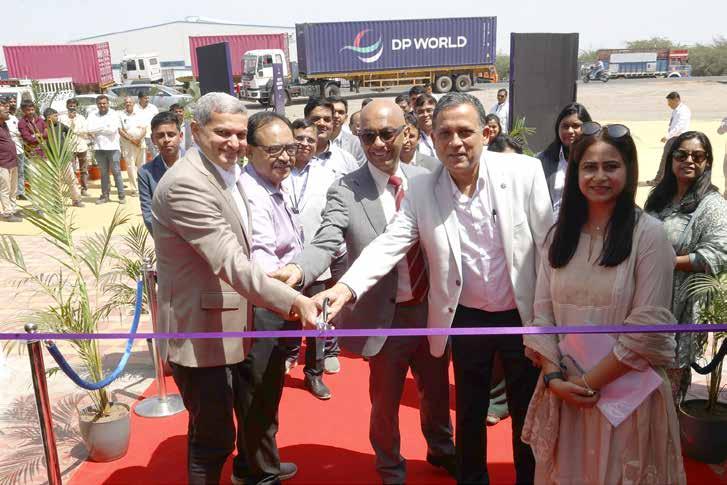
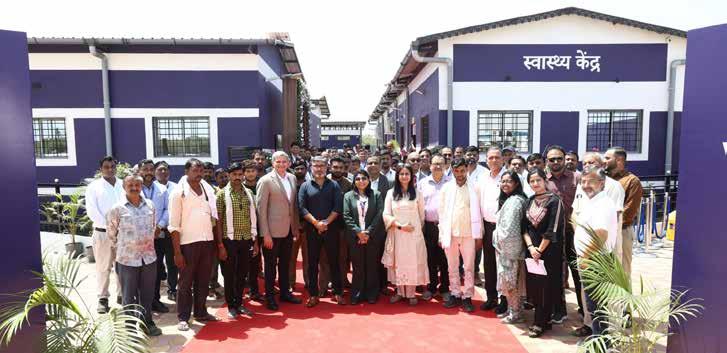
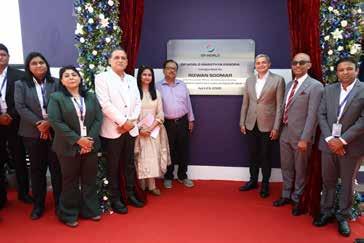
DP World today announced the launch of its flagship Swasthya Kendra in Gujarat, marking the first step in a nationwide mission to build a network of accessible wellbeing hubs for India’s trucking community. With an initial ambition to positively impact one million truckers and their families, the programme reflects a long-term vision to progressively serve trucking communities across the country.
India’s trucking community forms the backbone of the nation’s supply chains, enabling over 70% of the country’s freight movement and connecting industries, businesses, and households across geographies. With more than 6.5 million registered trucks on Indian roads, access to quality healthcare, financial security, and welfare support continues to remain a significant challenge for many within the sector. Through the Swasthya Kendra programme, DP World seeks to address these longstanding gaps by creating accessible wellness hubs across key freight corridors, bringing essential services closer to where truckers live and work.
The first Kendra in Gujarat, strategically located near the Mundra International Container Terminal, spans 7,000 square feet and has been developed as an integrated wellbeing hub designed to serve the trucking community over the coming years. It will provide access to healthcare services, preventive screenings, rest and recovery spaces, sanitation facilities, and assistance in navigating welfare and social security schemes.
The initiative has been developed in partnership with Plan International India, combining DP World’s logistics and infrastructure expertise with deep community engagement capabilities to deliver meaningful and sustained impact. Support services will also extend to truckers’ families, underscoring a broader commitment to holistic wellbeing and community resilience.
As part of its long-term vision, DP World plans to expand the Swasthya Kendra network across India, creating a scalable platform that improves quality of life for truckers, strengthens road safety, and helps future-proof the nation’s logistics
backbone. Complementing this effort, DP World will continue to advance its Mission for Vision programme through preventive eye-care initiatives along major transport routes, contributing to safer roads and healthier communities nationwide.
Speaking at the launch, Rizwan Soomar, CEO and Managing Director, Subcontinent, Central Asia, Levant and Egypt, DP World said, “India’s growth story will be shaped not only by world-class infrastructure, but by how we support the people who keep trade moving every day. Truckers are the backbone of our supply chains and vital to the nation’s progress. At DP World, we believe infrastructure development must go hand in hand with social impact. The launch of the first Swasthya Kendra in Gujarat marks the beginning of our long-term vision to build a network of support that progressively serves trucking communities across India, ensuring those who drive economic growth are supported with dignity, wellbeing, and opportunity.”
Naveen Gupta, Secretary General, All India Motor Transport Congress, commented: “Truck drivers are the backbone of the transport industry and key contributors to the nation’s economy. They often operate under demanding conditions with limited access to adequate rest, leading to fatigue. The panIndia Swasthya Kendra initiative goes beyond infrastructure - it recognises their contribution and seeks to improve their wellbeing. Through this partnership, drivers will have access to essential amenities, critical information, and healthcare support helping to bring greater comfort, safety, and dignity to their lives.”
Mr. Mohammed Asif, Executive Director- Plan International India, said: “By transforming the rest stop at Mundra into a hub of healthcare, wellbeing, and essential services, this initiative marks a significant step towards inclusive development, with a special focus on truckers and, by extension, their families and communities. Plan India is proud to partner with the district
government and local community, with the support of DP World, to deliver integrated assistance and promote wellbeing for truckers on the move.”
Complementing the physical Kendras, DP World’s multilingual, mobile-first application is now available for download on the Google Play store and has already garnered an impressive response with close to 1000 truckers actively using it nationwide within just one month of launch. The app helps truckers and their families locate health facilities, ATMs, petrol pumps, and mobile health units, while an in-built wellness tracker monitors key vitals and delivers real-time fit-to-drive status. A gamified learning module promotes safe driving practices, and integrated digital tools connect truckers to benefits, rewards, and social security support, ensuring comprehensive on-road assistance well beyond the walls of the Kendras.
When people talk about AI in shipping, the conversation often jumps to autonomous vessels. That is interesting, but it is not where most of the value is being created today. The real shift is happening in how voyages are planned and adjusted while they are still in motion.
Voyage planning has always relied on experience, historical data, and cautious assumptions. A route is mapped before departure using weather forecasts, fuel estimates, and expected timelines. Once the vessel is underway, adjustments happen, but they are often reactive.
The challenge is simple. The sea does not behave according to plan.
Where traditional planning falls short
A voyage plan is only as good as the information available at the time it is created. Weather forecasts change. Ocean currents shift. Port schedules get delayed. Fuel performance varies based on real conditions.
Most planning methods struggle because they treat these factors as inputs at the beginning, not variables that evolve constantly.
This creates a gap between the planned route and the actual journey. Small inefficiencies, like maintaining slightly higher speeds or missing favourable currents, build up over time. The impact shows up in fuel costs, delays, and operational uncertainty.
How AI changes the nature of planning
AI introduces a different approach. Instead of treating voyage planning as a fixed task, it turns it into a continuous process.
The system ingests data from multiple sources such as weather systems, satellite feeds, vessel sensors, and port updates. It evaluates this data in real time to assess whether the current route and speed are still optimal.
The key difference is frequency. Decisions are no longer made once. They are made repeatedly, based on what is happening now.
For example, if weather conditions begin to deteriorate, the system can recommend a route adjustment early. If ocean currents become favorable elsewhere, the route can be fine-tuned to take advantage of them.
This constant evaluation reduces the gap between plan and reality.
Fuel efficiency becomes adaptive
Fuel efficiency is often treated as a static calculation during planning. AI changes that by making it adaptive.
By analyzing vessel-specific performance data, AI can identify how fuel consumption varies under different speeds and conditions. It can then recommend adjustments that balance time and efficiency.
A vessel may not need to maintain maximum speed throughout the journey. Slowing down slightly during certain legs can reduce fuel usage without affecting arrival time significantly.
Over a single voyage, the savings may seem modest. Across a fleet, the impact becomes substantial.
Voyage planning does not exist in isolation. It is tied to port operations and logistics.
Arriving too early leads to waiting time. Arriving late disrupts schedules. Both create inefficiencies.
AI helps align voyage plans with real conditions at ports. By factoring in congestion, berth availability, and
turnaround times, vessels can adjust speed and routing to match readiness.
These shifts planning from simply reaching a destination to reaching it at the right time.
Enhancing decision-making at sea
There is often a perception that AI removes human control. In practice, it improves it.
Captains and planners still make the final decisions. What AI provides is a clearer view of available options.
Instead of relying on fragmented updates, decisionmakers can see how different choices impact fuel usage, arrival time, and risk levels. This makes trade-offs more visible and decisions more informed.
Human judgment remains critical, especially in complex situations.
The most important change is not just better routes. It is a shift in how planning is approached.
Voyage planning is no longer a one-time activity. It becomes an ongoing system that evolves with the journey.
This requires better integration between data sources, more responsive workflows, and a mindset that accepts continuous adjustment.
AI does not eliminate uncertainty at sea. It makes it manageable.
By turning data into timely decisions, it helps vessels operate closer to optimal conditions, even when those conditions keep changing. That is where the real value lies.
MMT

The Author Kashif Ahmad Senior Manager, Sales Yodaplus Technologies
For further queries or to discuss in detail the widening gap between maritime finance automation and governance, feel free to connect with me at kashif@yodaplus.com.
Modern Platform Enhances Business Travel Within Energy, Marine, Mining and Other Complex Sectors

Direct Travel today announced the expansion of Avenir, its global travel platform, across its specialty market divisions, including Energy, Marine and Mining. Delivered through ATPI’s specialist businesses, Avenir provides a single global platform and unified service model for executive and projectbased business travel, complementing the company’s established sector specific logistics and workforce mobility solutions.
With this expansion, organizations operating in complex and logistically demanding environments will benefit from a more consistent and scalable approach to business travel, bringing modern infrastructure to corporate travel while continuing to rely on proven specialist solutions for crew and workforce logistics.
A Comprehensive Approach to Specialty Travel
Industries such as energy, marine and mining manage multiple types of travel simultaneously, from large scale workforce and crew movements to executive, commercial and project travel. These needs are fundamentally different and require distinct solutions.
Avenir is designed to support traditional business travel within these sectors, bringing structure and consistency to:
• Executive leadership travel
• Commercial and client facing teams
• Project based and technical specialists
This sits alongside ATPI’s established specialist services, which continue to manage:
• Crew and workforce mobility
• Offshore and rotational travel
• Highly customized logistics to remote and complex destinations
Together, this creates a more coordinated and complete travel framework.
Strengthening Sector Expertise with a Modern Business Travel Platform
Avenir enhances ATPI’s specialist offerings by introducing a consistent global foundation for business travel, while preserving the depth and specialization of existing solutions.
“Our long-standing leadership in specialty travel is built on deep sector expertise and a strong focus on our customers, and we remain committed to strengthening how we serve these markets,” said Christal Bemont, Chief Executive Officer of Direct Travel. “As travel becomes more complex, that foundation becomes even more important. Avenir is an important step forward, giving our customers a more consistent approach to global business travel, combined with the specialized solutions they rely on to support their operations.”
With decades of experience supporting global energy organizations, ATPI delivers specialized travel solutions across offshore, project and executive travel. From complex international operations to high risk environments, the focus is on operational continuity, cost control and the safety and wellbeing of traveling personnel.
With a long history in maritime travel, ATPI supports global shipping and offshore organizations with highly coordinated travel services. Expertise in crew movements, vessel rotations and global logistics ensures reliable, efficient operations across ports and regions worldwide.
In mining and similarly complex sectors, ATPI provides tailored travel management solutions designed for remote operations and workforce mobility. This includes managing fly in fly out schedules, navigating challenging destinations and supporting safe, efficient travel for workers and project teams globally.
These sector specific services are supported by ATPI’s specialist technology and service capabilities, including Crewhub and Crewlink, which are designed to manage workforce mobility and crew travel at scale.
While workforce and crew travel remain highly specialized, business travel within these sectors is often managed across fragmented regional systems.
Avenir brings greater consistency by enabling:
• One global platform for business travel across regions
• Centralized visibility and governance for travel and finance teams
• Standardized policies with controlled local flexibility
• A consistent traveler experience for employees worldwide
The result is better oversight, improved efficiency and a more streamlined experience for business travelers operating within complex global organizations.
MMT
(Review with emphasis on the final five chapters: “The

There are books that explain a concept, and there are books that attempt to change a country’s operating posture. Blue Bharat belongs to the latter category. Capt. Gajanan Karanjikar has written what is best described as a practitioner’s strategy manual for India’s ocean economy— confident in ambition, unromantic about constraints, and relentlessly focused on execution. While earlier sections cover India’s blue sectors and safeguards in depth, the book’s defining contribution lies in its final stretch—Chapters 16 to 20—where it turns from “what” and “why” to the harder question: how does India actually get to 2047 with a resilient, investable coastline and a maritime economy that measurably lifts national GDP?
This is where many blue economy books become decorative. They end with broad exhortations, vague optimism, and recycled bullet points about sustainability. Blue Bharat ends differently. It closes with a set of operational pathways and institutional reforms that read like they were drafted by someone who has lived the maritime system from bridge wing to boardroom: ports, corridors, fish landings, compliance, risk, and the daily friction between policy and practice. The concluding five chapters are structured to be read by three audiences at once—policy-makers, maritime industry leaders, and coastal communities—without diluting seriousness for any one of them.
The book opens its “Road Ahead” with a crucial truth: India cannot build a strong blue economy purely through domestic schemes; it must also build an ocean identity that travels through trade, standards, and diplomacy. This chapter is particularly persuasive because it reframes maritime diplomacy not as ceremonial naval visits, but as economic infrastructure
Karanjikar’s argument is plain: if India wants to lead in the Indian Ocean, it must convene and stabilise the rules of the game—green shipping protocols, seafood corridors, risk response cooperation, and shared data services.
The author’s emphasis on the “diplomatic usefulness of competence” stands out. Rather than promising grand alliances, he points to practical leadership: regional coordination on storm surge warnings, harmful algal bloom alerts, port reception facility standards, and the predictability that trade depends upon. This chapter makes the case that India’s position in the Indo-Pacific is strengthened not merely by naval strength but by reliability—as a trading partner, a logistics hub, and a standards-setter. For a maritime readership, this is one of the book’s most valuable reframings: diplomacy is not a separate chapter of national strategy—it is the extension of how well we run our ports, manage our coasts, and keep our corridors frictionless.
This chapter reads like the book’s “field notes” section. It avoids the trap of cherry-picking only successes and instead uses state contrasts to show why one-size-fits-all blue economy planning fails. The choice to include Kerala’s fisheries reforms, Gujarat’s port economy, and the Andamans and Lakshadweep as “blue laboratories” is wise because it illustrates three different governance realities: community-led models, infrastructureled growth, and fragile ecological frontiers.
The key takeaway is that India’s blue economy will be built state by state, not by a single national masterplan alone. Karanjikar is at his best here when discussing coastal institutions and daily constraints: harbour hygiene, ice and cold chain availability, the political economy of mechanised versus artisanal fishing, and the operational logic of port-linked clusters. The state contrasts do not serve as travel writing; they serve as evidence that execution must be “local first” while still being standardsdriven and measurable at the national level.
This chapter may be the most policy-impactful in the entire book because it takes aim at the chronic weakness of Indian programmes: we measure inputs, not outcomes. Karanjikar’s insistence on “Blue GVA” (ocean-linked gross value added) and indicator discipline is exactly what a serious blue economy strategy needs. He argues that unless India can measure the ocean economy with credibility, it will remain rhetorically important but fiscally marginal.
What makes this chapter useful is its practicality. The author does not bury the reader in a forest of metrics. He suggests an
approach to ocean accounting that links directly to decisionmaking:
• sustainability (water quality days, mangrove survival, litter trends),
• inclusivity (women’s participation in harbour governance, livelihood stability),
• productivity (dwell time, anchor time, modal split to rail/ coastal shipping), and
• risk (downtime after cyclones, insured losses, recovery timelines).
The chapter’s strongest contribution is its insistence that indicators must be auditable and comparable—the same way fiscal metrics are. It also situates India within global frameworks such as SDG 14 and the Ocean Health Index, but does so without surrendering to imported templates. The message is consistent: if India wants capital—especially blue finance—it must make “blue” measurable, not merely desirable.
This chapter is unusually candid for a book with national ambition. Instead of offering ceremonial optimism, it names the barriers that practitioners mutter about privately: overlapping mandates, unclear jurisdictions, data silos, approval fatigue, and conflicts between development and conservation that are handled too late—when litigation and social resistance have already formed.
The author’s analysis of the “development versus conservation” trap is notable. He argues that conflict is not inevitable; it is often the product of planning without spatial clarity and without credible benefit-sharing. This is where his emphasis on MSP and ICZM becomes more than jargon—it becomes a conflictprevention tool. By mapping space before conflict emerges, and by integrating livelihoods into the design, India reduces the number of projects that die in the swamp of contestation.
Karanjikar also highlights a deeper challenge: India’s coastal development often underestimates maintenance and compliance. Harbours are built, but waste reception does not work. Tourism is promoted, but waste-back-out is not enforced. Corridors are announced, but just-in-time discipline is missing. This chapter is valuable because it explains why policies fail without moralising: systems fail when the “last mile of governance” is weak.
The final chapter is where Blue Bharat earns its title. It does not merely align with Viksit Bharat as a slogan; it argues that Viksit Bharat is not achievable without Blue Bharat. The author offers a staged roadmap—2030, 2040, 2047—designed to build capability in sequence.
The most striking sections read like ready-made “national mission” language, but grounded in field realism. The pathway to 2030 is framed as “build the spine” with Harbour 2.0 standards, digital ocean services at scale, mainstreamed blue finance, MSP and ICZM in every coastal state, seafood traceability targets, and green port protocols including just-in-time arrivals.
By 2040, he argues, India must “scale the value”: offshore wind corridors that coexist with fishing through mapped transit
lanes and fair compensation; seaweed and marine ingredients moving from pilot to industry; ship repair and circular steel hubs maturing so compliance becomes a selling point; blue tourism flipping from volume to value with strict waste-backout; and ecological restoration treated as audited infrastructure.
By 2047, the goal is “lock in the advantage”: downtime after cyclones becomes a rare headline; Blue GVA is cited in budgets; state league tables on ocean health and inclusion become routine; India’s digital twin and forecasts are shared regionally; and the word investors most associate with Indian coasts is “predictable”.
One can almost hear the author’s voice in a closing line that encapsulates the book’s moral and operational core: the ocean keeps its receipts. It records discipline, prudence, fairness, and competence—and it also records neglect. This is not poetic flourish; it is the book’s accountability philosophy. If India builds clean harbours, restored mangroves, open data systems and conflict-preventing spatial plans, the ocean will pay dividends. If it cuts corners, the ocean will invoice the country through cyclones, fisheries collapse, lost tourism, and reputation damage.
A review verdict anchored in the final five chapters
If Blue Bharat were only an overview of sectors, it would be useful. What makes it important is the way it ends. The “Road Ahead” chapters translate blue economy aspiration into a policy-operational programme that is measurable, financeable, and institutionally credible. These chapters offer something maritime professionals recognise: a plan that respects constraints yet refuses to accept mediocrity.
This review would be incomplete without acknowledging the book’s distinctive tone. Karanjikar writes as a mariner and manager. There is an insistence on checklists, systems, compliance and “what happens on Monday morning”. He does not shy away from geopolitics and diplomacy, but he anchors them in operational competence. He does not romanticise communities; he treats them as co-owners and critical stakeholders. And he never lets the reader forget that the ocean economy is not a charity project; it is an investment thesis that requires governance discipline.
For a publication like Maritime Reporter, the most relevant takeaway is this: Blue Bharat belongs in the hands of those who must turn India’s maritime ambition into daily reality— ministry officials, port chairs, shipping executives, finance leaders, state planners, academic centres, and coastal enterprise builders. It is not a book to be applauded and shelved; it is a book designed to be used.
Recommendation: Highly recommended for policymakers and maritime industry leaders, especially for its final five chapters, which provide a realistic pathway to make Blue Bharat an indispensable pillar of Viksit Bharat.
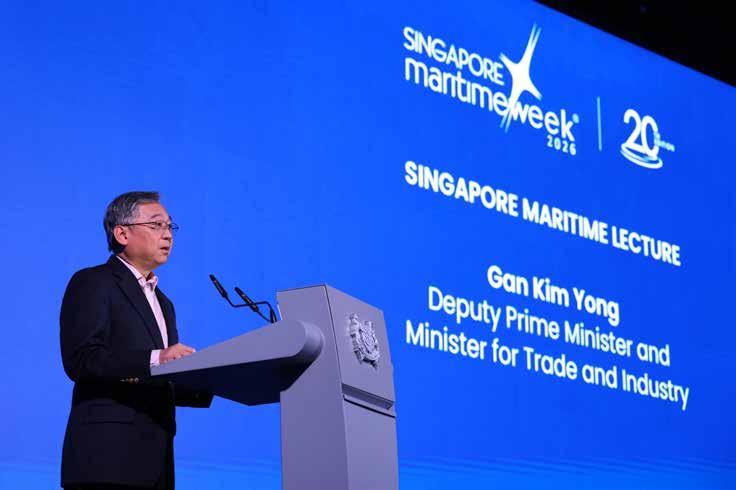
The Singapore Maritime Week (SMW) 2026, held from April 20 to 24 at the Suntec Singapore Convention & Exhibition Centre, represented a historic milestone as the event celebrated its twentieth anniversary. Organized by the Maritime and Port Authority of Singapore, this landmark edition brought together a record-breaking twenty thousand participants from nearly eighty nations. Under the guiding theme of “Actions Meet Ambition,” the summit moved beyond
traditional policy discussions to focus on the tangible execution of the industry’s most pressing goals. During the opening Singapore Maritime Lecture, Deputy Prime Minister Gan Kim Yong highlighted Singapore’s role as a steadfast steward of international law, noting that the global economy depends heavily on critical maritime arteries and that Singapore would continue working with partners to strengthen trust in the ecosystem.
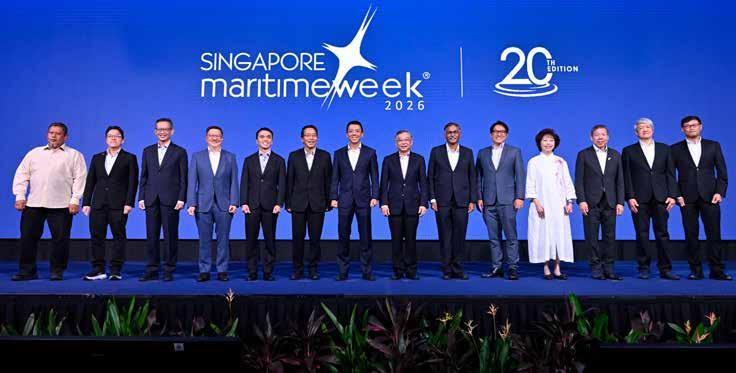

A primary focus of the week involved the acceleration of the green transition. High-level dialogues, including the Ministerial Roundtable, gathered transport ministers and chief executives to address the complexities of decarbonization. Arsenio Dominguez, Secretary-General of the International Maritime Organization, emphasized the need for advancing collective outcomes amid differing national priorities. While the consensus emerged that achieving international climate targets requires a synchronized global framework, industry voices provided a reality check. DHL representatives noted on the sidelines that decarbonization often translates to additional costs for supply chains, with fuel surcharges and longer transit times forcing some customers to rethink their efforts.
Parallel to the environmental agenda, the week explored the profound impact of artificial intelligence on global trade. Conversations shifted from theoretical benefits to the actual deployment of digital twins and autonomous systems. Matthieu de Tugny, Executive Vice-President
of Bureau Veritas, remarked that the industry is moving beyond fragmented optimization toward sophisticated inter-connected intelligence. The launch of the Smart Port Challenge 2026 underscored this commitment to innovation, with a general consensus across forums that AI must be embraced to work faster and smarter. Experts from StormGeo added that the future of shipping performance lies in integrated voyage intelligence, connecting commercial intent with operational execution.
Beyond technology, the human element remained a cornerstone of the week’s outcomes. The introduction of the Maritime Manpower 2030 initiative signalled a strategic shift toward upskilling the global workforce. Andrew Wong of MLA College observed that because the industry cannot afford to pause for education, flexible, student-led models are essential for preparing seafarers for the next decade. This focus was complemented by significant bilateral agreements, particularly between Singapore and India, which aimed to harmonize port operations and promote sustainable ship-recycling practices.
The week concluded with a strong sense of momentum, evidenced by the unveiling of Singapore’s first fully electric harbour tug. These results demonstrated that the maritime industry is entering a new era characterized by high-tech integration and environmental responsibility. By bridging the gap between high-level ambition and ground-level action, SMW 2026 solidified its role as the premier global platform for maritime leadership.
MMT
A-402, 4th Floor, Business Square, A- Wing, Sir Mathuradas Visanji Marg, Chakala, Andheri (East) MUMBAI - 400093
TEL : 022- 69157200 / 49734855
Email : resume@dynacomindia.com
202, 203, 2nd Floor, Ashoka Estate 24, Barakhamba Road, New Delhi - 110001.
Tel. : 011 - 49318310
Email : delhi@dynacomindia.com
1A, 1st Floor, B Block, Mena Kampala Arcade, Plot no 114, Thyagaraya Road T. Nagar, Chennai 600017
Tel.: +91 44 43533136
Email : chennai@dynacomindia.com
Flat No: 4-B,175 Sarat Bose Road, Deshpriya Park, KOLKATA - 700026
Tel : 91-33-4003 6972 / 4003 6973 91-33-3592 3678
EMail: kolkata@dynacomindia.com

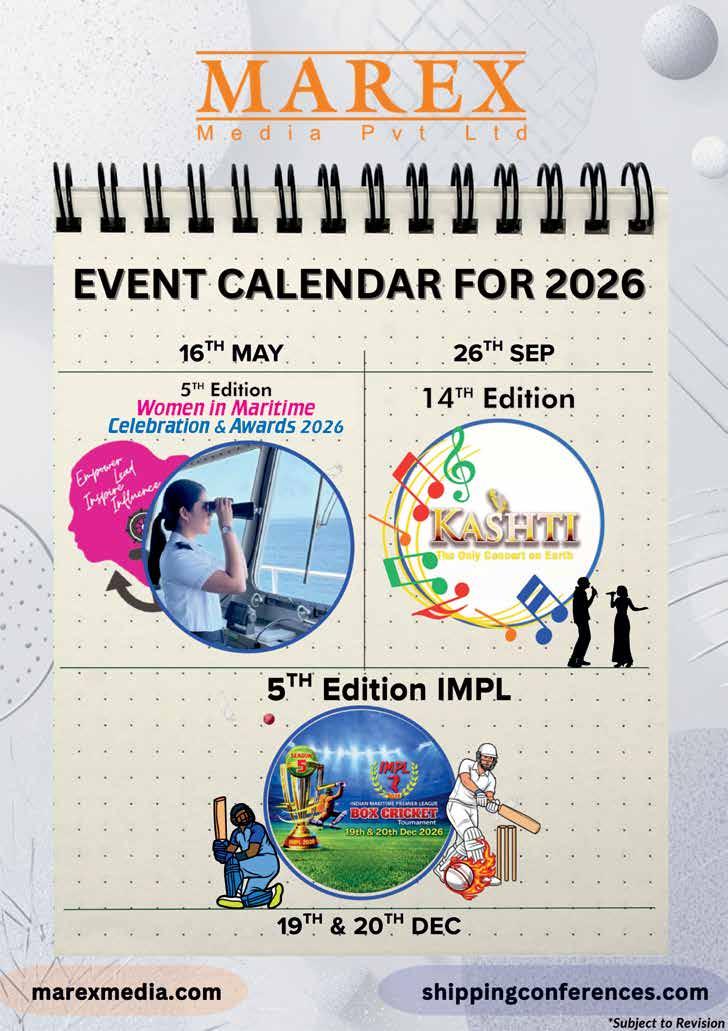
Nautic Fleet
Nautical Marine Management
Naavex Marine
NYK Group
Six Degrees Ship Management
Solaris Marine Services
Tomini Shipping
Udya Shipping Services
XT Shipmanagement

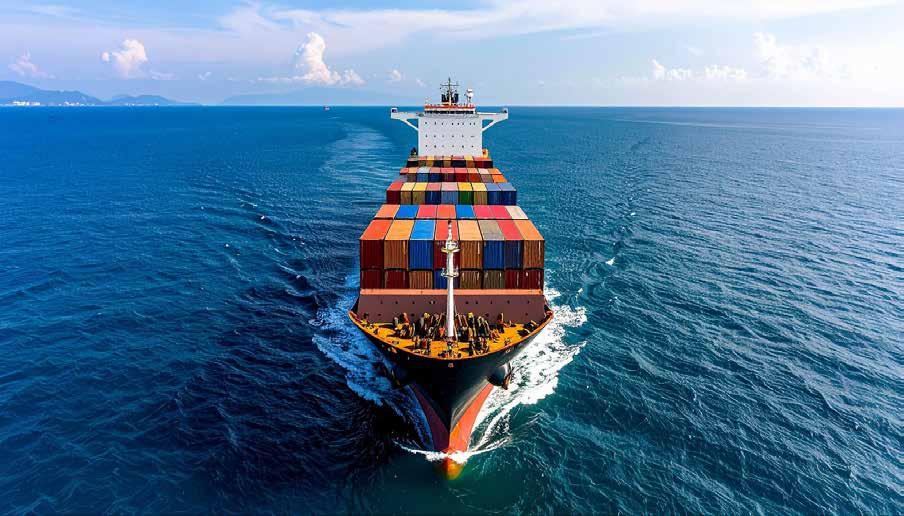



GAC Shipping (India) Private Limited - Main office
GAC House, P.B. No. 515, Subramanian Road, Willingdon Island, Cochin 682 003, India
E: pricing.india@gac.com | T: +91 484 266 8372
CIN: U63090KL1983PTC003733
Bengaluru
Mr Gopala Krishna
T: +91 96863 55008

E: gopala.krishna@gac.com
Chennai
Ms Ranjani Kumar
T: +91 98846 62852
E: ranjani.kumar@gac.com
Cochin
Mr Swaraj Joseph T: +91 79943 33270
E: swaraj.joseph@gac.com
Delhi
Mr Jaya Shekar T: +91 98992 05424
Kandla
Mr Jatin Joshi T: +91 98251 58583, E: jatin.joshi@gac.com
Kolkata
Mr Dipayan Hore T: +91 99036 27997
E: jaya.shekar@gac.com gacshippingindia
E: dipayan.hore@gac.com
Mumbai
Mr Sanket Chandwade
T: +91 83697 44069
E: sanket.chandwade@gac.com
Pune
Mr Arjun Bangar
T: +91 98196 69622
E: arjun.bangar@gac.com