
Fall & Winter 2026
All prices are subject to change without
and may be highter in the
UNC Press books are now available through Books @ JSTOR and Project Muse, and North Carolina Scholarship Online (NCSO) on Oxford Scholarship Online.
Catalog design and typesetting by Lindsay Starr.
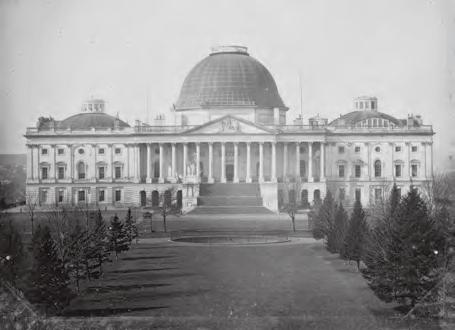
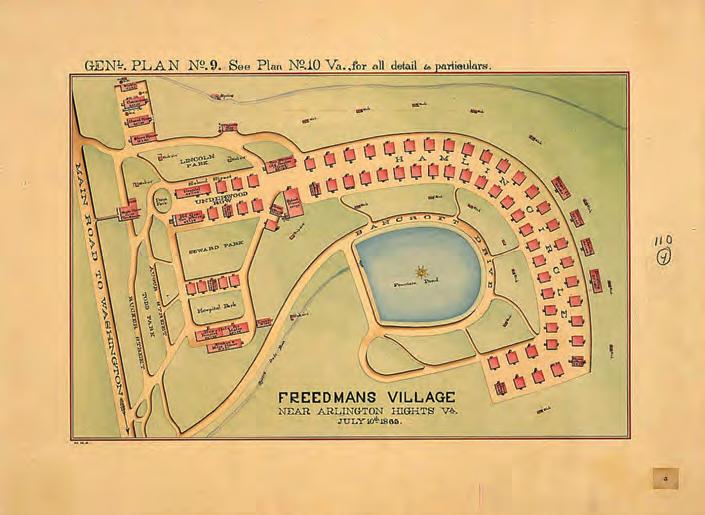
Supplemental images courtesy of the Library of Congress.
The University of North Carolina Press was founded in 1922 to publish distinguished scholarly work for the academy, and general interest works for the people of the state, the region, and beyond. The depth and breadth of the numerous awards received, including the National Book Award and the Pulitzer Prize in History, confirm that UNC Press is one of the top university presses in the nation with an international reputation for excellence.
Learn how you can give back by visiting us online or by contacting:
Joanna Ruth Marsland Director of Development joanna.ruth.marsland@uncpress.org 919.962.0924

uncpress.org/support-the-press
Most
Press books are also available as E-Books.
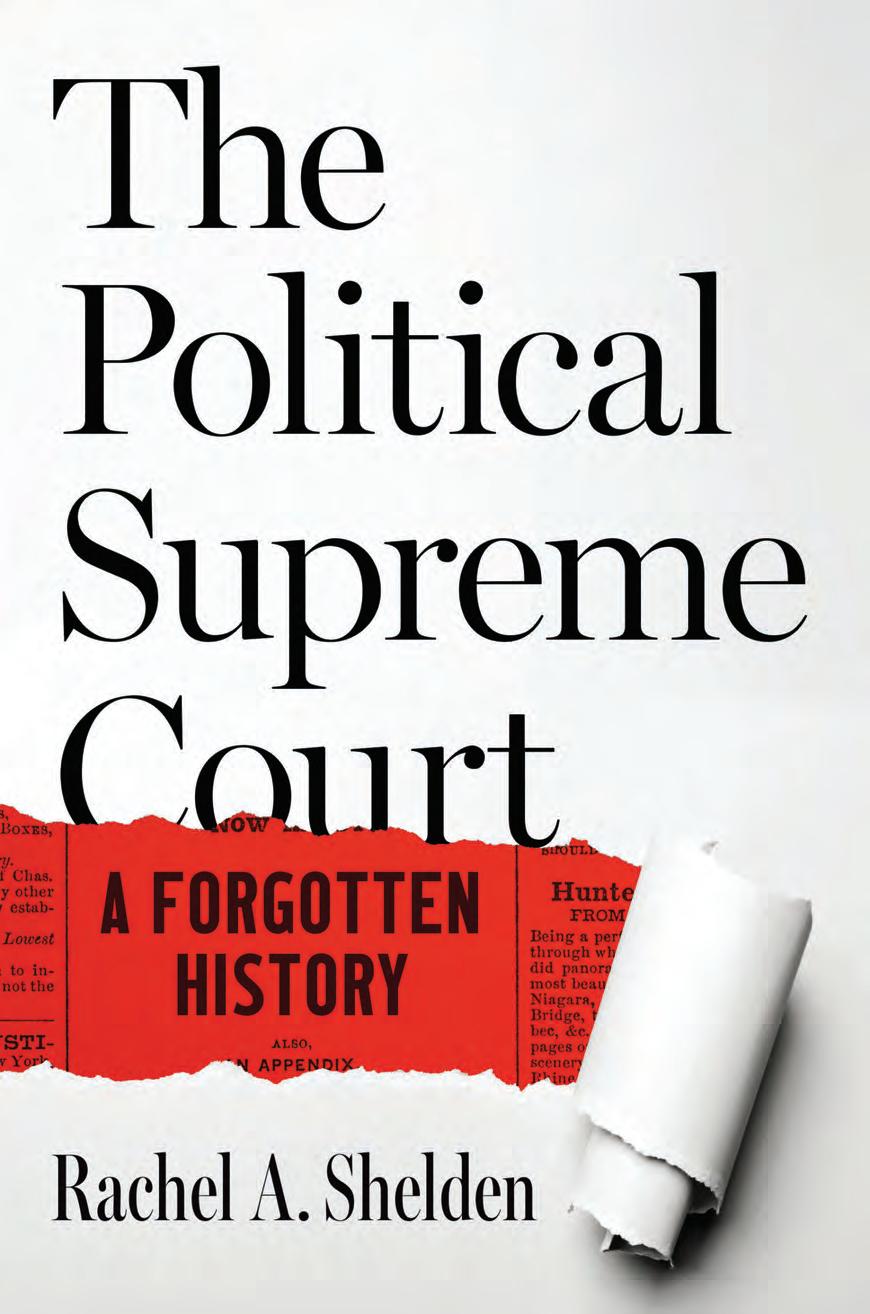
The Political Supreme Court A Forgotten History
Rachel a . Shelden
W.
HODDING CARTER III BOOKS
A sweeping history of a political institution, its partisan justices, and the origins of the modern Court
Today’s Supreme Court justices bristle at the label “politicians in robes,” insisting that they operate above the fray of partisan politics. But for the first century of the nation’s history, the Court was unmistakably a political institution, both by design and in practice. Justices were fully expected to engage in partisan politics—there was no concern that such engagement would lead to corruption or undue bias—and they remained deeply involved in civic debate and the electoral process while on the bench. In addition to hearing cases in the capital, each justice spent much of his time “riding circuit” and presiding over federal trial courts. On circuit and in Washington, nineteenth-century justices wrote for partisan newspapers, drafted legislation, advised partisan allies, campaigned for colleagues, and even ran for political offices from the bench. Through these political interactions, members of the Court helped shape debates about the Constitution’s meaning at a time when most Americans did not believe in judicial supremacy.
In this sweeping history, Rachel A. Shelden, one of America’s leading voices on the history of the Court, brings readers inside the social and political world of its justices, recovering their essential role in the era’s turbulent politics. She also charts shifts at the turn of the twentieth century, when members of the Court and the legal community refashioned the judiciary as an apolitical institution, setting the stage for an increasingly more powerful—and more isolated—modern Court. The Political Supreme Court is required reading for anyone interested in the legal and political underpinnings of today’s judicial power.
“ This is the single best book I have read on the history of the US Supreme Court. A remarkable achievement.”
Gautham Rao, author of White Power: Policing American Slavery
“Blending commanding research with brisk, accessible writing, Shelden skillfully evokes the political world of the nineteenth-century Supreme Court and explodes the myth that the Court somehow stood above the partisan fray. By illuminating the lives and careers of its justices, both famous and lesser-known, her refreshing narrative demonstrates not only how politics intruded into the Court’s work but also how the Court shaped the nation’s political order.”
— Joseph P. Reidy, author of Illusions of Emancipation: The Pursuit of Freedom and Equality in the Twilight of Slavery
RACHEL A. SHELDEN is associate professor of history and director of the George and Ann Richards Civil War Era Center at Penn State University. A leading scholar of nineteenth-century America, Shelden is a member of the Historians Council on the Constitution at the Brennan Center for Justice.
OCTOBER 2026
$35.00 hardback [t]
6.125 × 9.25 in., 440 pages 21 halftones, 9 maps ISBN 9781469697130 h i S to R y / United State S
SEPTEMBER 2026
$32.50 hardback [t]
6.125 × 9.25 in., 320 pages 28 halftones
ISBN 9781469697178
h i S to R y / United State S
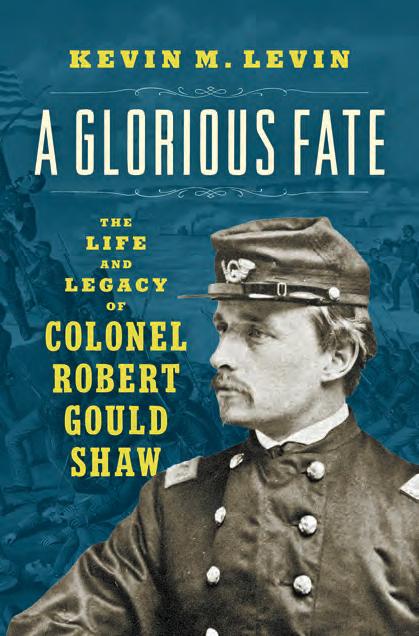
A Glorious Fate
The Life and Legacy of Colonel Robert Gould Shaw
Kevin M. l evin
CIVIL WAR AMERICA
A vivid new portrait of one of the Union cause’s great martyrs
Robert Gould Shaw (1837–1863) is best known as the heroic colonel who led the 54th Massachusetts Infantry—one of the first regiments of Black soldiers in the Civil War—in its famous ill-fated charge against Confederate Fort Wagner on July 18, 1863. Shaw’s sacrifice has been commemorated in monuments, books, and the award-winning film Glory. But before he became a martyr for the Union cause and emancipation, Shaw was a privileged young man who showed little interest in the reform movements that defined his parents’ lives or in the moral crisis over slavery that was tearing the nation apart. Volunteering to serve as a duty, he awakened gradually and fitfully to the demands of conscience and command. Only in death was Shaw transformed into the champion for freedom his abolitionist parents hoped he would be.
“A deeply considered, thoughtfully argued biography that should delight any reader who wants to understand a subject in its full complexity. Levin repeatedly punctures myths to present Robert Gould Shaw as an exemplar for how soldiers’ and citizens’ understanding of the Union cause changed over the course of the Civil War.”
— Matthew E. Mason, author of Apostle of Union: A Political Biography of Edward Everett
The first biography of Shaw in a quarter century, A Glorious Fate traces his transformation from a rebellious son into one of the Civil War’s most celebrated heroes. Acclaimed historian Kevin M. Levin also reveals the sacrifice and service of the African American men who fought and died for their freedom afresh through Shaw’s eyes. Though Shaw never fully reconciled his own racial prejudices, Levin shows how the Civil War changed the young colonel as it did the nation.
KEVIN M. LEVIN is a Boston-based historian and educator.
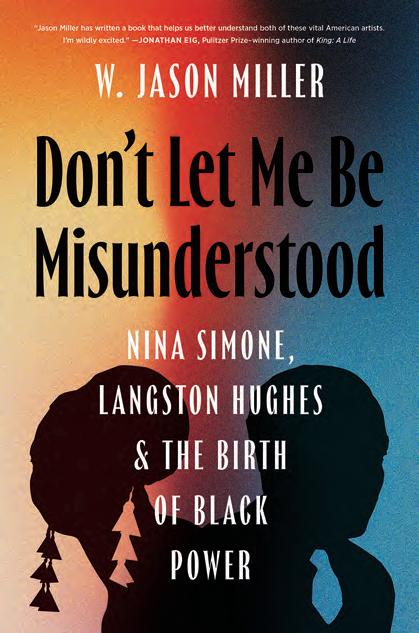
Don’t Let Me Be Misunderstood
Nina Simone, Langston Hughes, and the Birth of Black Power
W. Ja S on Mille R
AMERICAN MUSIC: NEW ROOTS
The story behind the Priestess and the Poet
On March 24, 1965, Nina Simone performed at a rally for twenty-five thousand people on the last night of the Selma to Montgomery civil rights march. Though luminaries like Martin Luther King Jr., Mahalia Jackson, and Dick Gregory were in attendance, it was Langston Hughes, celebrated poet and leader of the Harlem Renaissance, who was the singer’s closest confidant and supporter. They had one of the most important—yet unheralded—friendships of the Black Power era.
Simone’s performance on that Montgomery night catapulted her into a lead role in the civil rights movement, with Hughes as her guide. In Don’t Let Me Be Misunderstood, W. Jason Miller offers a riveting history of how their relationship helped spark the birth of Black Power—indeed, the phrase itself, made famous by Stokely Carmichael, was a quote from collaborative lyrics by the two. Hughes gave Simone the fuel to be one of the most politically charged artists of the era, while Simone offered Hughes a way to carry his influence into pop music and shape a national movement. Drawing on new firsthand accounts, Miller takes readers inside one of the most powerful friendships in music and civil rights history.
W. JASON MILLER is a Distinguished Professor of English at North Carolina State University. He is the author of several books, including a biography of Langston Hughes, and has been featured on CNN, the BBC, NPR, and The Rachel Maddow Show
SEPTEMBER 2026
$30.00 hardback [t] 6.125 × 9.25 in., 256 pages 31 halftones
ISBN 9781469698212
“L angston Hughes is the secret ingredient that makes Nina Simone so delicious. Jason Miller, a brilliant researcher and compelling writer, has not only solved the mystery of the recipe; he’s written a book that helps us better understand both of these vital American artists. I’m wildly excited.”
Jonathan Eig, Pulitzer Prize–winning author of King: A Life
SEPTEMBER 2026
$24.00 paperback [t]
5.5 × 8.5 in., 256 pages ISBN 9781469696638
Bio GR aphy & aU to B io GR aphy / p e RS onal Me M oi RS
“ This is one of the finest memoirs I’ve read in years. It demands brave conversations about love and family as it unflinchingly confronts how immigration, racism, class, and gender shape our relationships. I am a better person because of this book.”
Anthony Christian Ocampo, author of Brown and Gay in LA: The Lives of Immigrant Sons
“A lyric coming-of-age story like no other. De Leon uses his singular voice to reflect on migration, masculinity, religion, sexuality, martial arts, music, and more.”
Jen Soriano, author of Nervous: Essays on Heritage and Healing
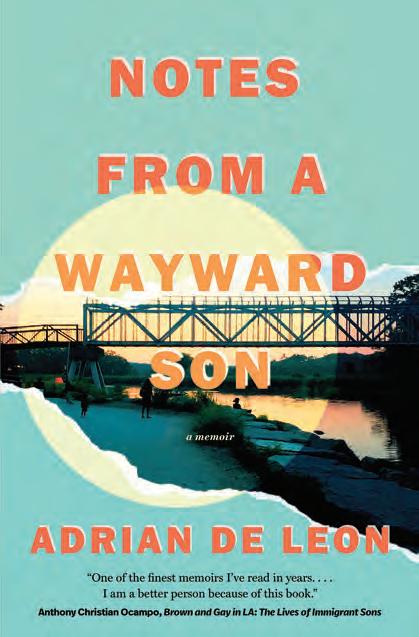
Notes from a Wayward Son A
Memoir
a d R ian d e l eon
GREAT CIRCLE BOOKS
A searing memoir of migration, masculinity, and the volatile love between a father and son
In his first memory of his father, Adrian De Leon is four years old. Sitting in front of his family home high above the street in Manila, Philippines, he sees Tatay, a stern man, ascend the stairs before him. Despite Tatay’s pedigree as a college-educated military officer, the best place of employment for a Filipino man trying to support his family is abroad.
A year later, Tatay uproots his family to Canada, where they start a new life in Toronto’s eastern district of Scarborough. While Tatay struggles to find steady full-time work, Adrian learns English, makes friends at school, and begins to drift from the Filipino world his father is fighting to preserve. In an effort to reclaim purpose and pride, Tatay opens a dojo where he teaches a little-known Filipino martial art called kuntaw. The dojo becomes both sanctuary and battleground, a gathering place for the Filipino diaspora and the place where a father attempts to train and discipline his son. As Adrian grows into a restless, defiant young man grappling with masculinity, faith, and the weight of expectations, the tension between father and son sharpens into open conflict.
Set against the backdrop of imperialism and revolution, Notes from a Wayward Son delivers a fierce meditation on inheritance and rebellion, asking what sons owe their fathers—and what it costs to forgive them.
ADRIAN DE LEON is a writer and public historian. Born in Manila, he currently resides in New York.
GENERAL INTERESTS
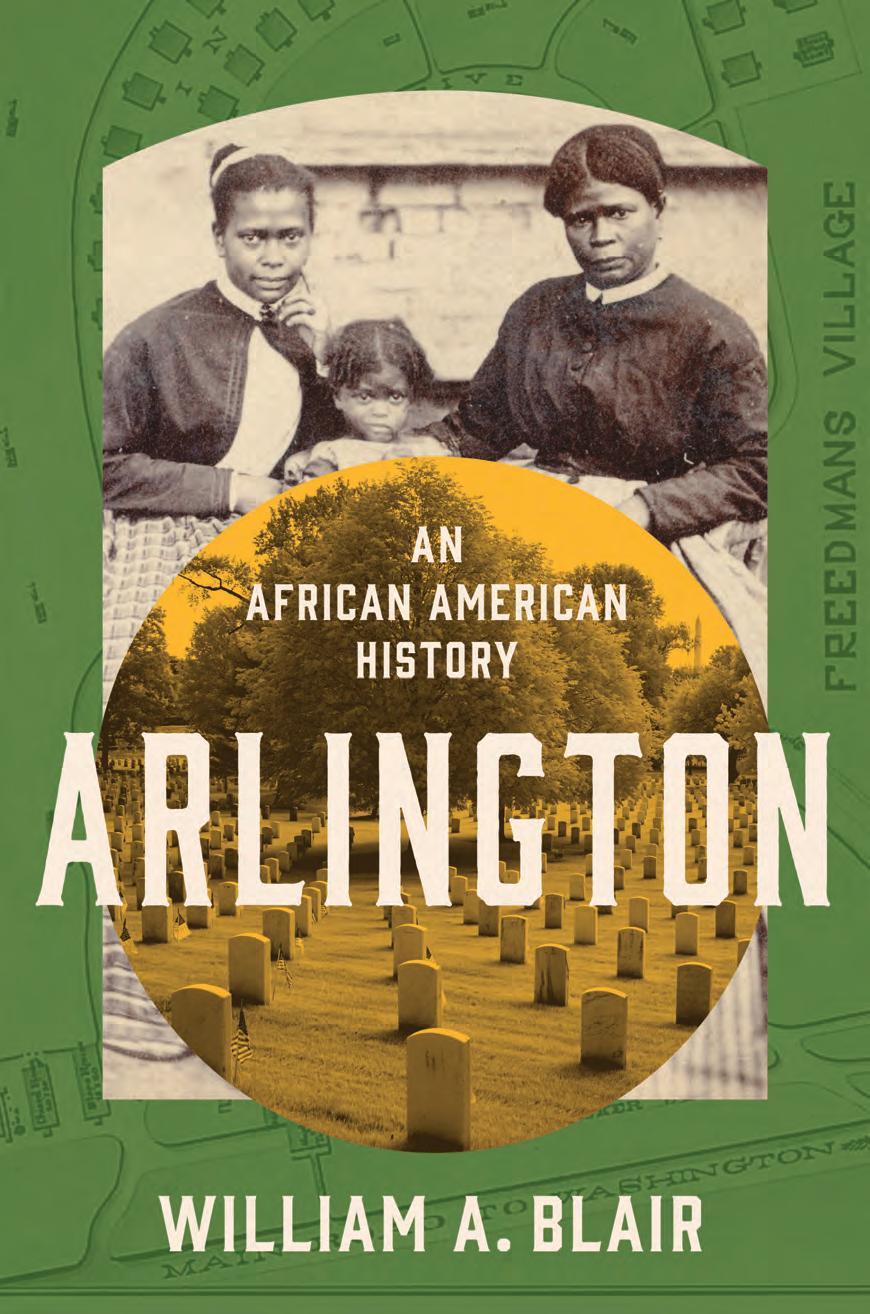
Arlington
An African American History
Willia M a . Bl ai R
CIVIL WAR AMERICA
The hidden Black history of Arlington National Cemetery
The hallowed ground known today as Arlington National Cemetery bears witness to those who paid the ultimate sacrifice to protect the nation’s ideals of freedom and justice for all. But another history lies beneath the landscape—an African American freedom struggle that has been erased from the landscape. Before the Civil War, enslaved African Americans labored, escaped, raised families, and died at Arlington on a plantation founded by George Washington Parke Custis and inherited by the wife of Confederate general Robert E. Lee. After the Union army confiscated the Lee estate, Freedman’s Village was established on the site, offering refuge to a vibrant community of thousands of newly emancipated African Americans. In creating a neighborhood with homes, schools, businesses,
“A s Blair vividly shows, today’s Arlington National Cemetery has a deep history as an estate where enslaved African Americans lived and labored, and also as a place where successive generations of African Americans created pathways toward freedom for themselves and others. This welltold story deserves a wide audience.”
Kidada E . Williams, author of I Saw Death Coming: A History of Terror and Survival in the War Against Reconstruction
and networks with free Blacks in the nation’s capital and beyond, Arlington’s freedpeople played a consequential—if largely forgotten—role in advancing African American liberty and equality through the rest of the nineteenth century.
This deeply researched and accessibly written story brings Arlington’s African American past to vivid life. Drawing on extensive historical research conducted at Arlington House and on the national cemetery grounds, William A. Blair offers a definitive account of individuals and families on an inspiring journey from slavery to freedom.
WILLIAM A. BLAIR is Walter L. and Helen P. Ferree Professor Emeritus of History at Penn State University.
NOVEMBER 2026
$27.95 paperback [s] 6.125 × 9.25 in., 240 pages 15 halftones, 2 maps ISBN 9781469696584

DECEMBER 2026
$29.95 paperback [s]
6.125 × 9.25 in., 320 pages 24 halftones
ISBN 9781469696997
M US ic /
i ndivid U al
c o M po S e R & M US ician
“ Tom Zé belongs in the pantheon of great Brazilian singer-songwriters. Dunn’s in-depth analysis shows us why.”
Charles A. Perrone, author of Chico Buarque’s First Chico Buarque
“ This impressive, engaging book illuminates the enduring impact of Tom Zé’s singular body of work. It stands to become a touchstone in the field.”
Kathryn Bishop-Sanchez, author of Creating Carmen Miranda: Race, Camp, and Transnational Stardom
Stray Dog in the Milky Way
The Experimental Brazilian Sound of Tom Zé
c h R i S tophe R dU nn
A music outsider’s sonic revolution
Brazilian musician Tom Zé (b. 1936) is one of the most inventive artists of the past century. His transformative music and poetic lyricism received critical acclaim in Brazil’s Tropicália, a countercultural movement that blended Brazilian music with global pop, psychedelia, and political critique. As many in the movement ascended to the mainstream, Tom Zé’s commitment to experimentalism kept him in outer orbit, drifting at the fringes of the Brazilian musical universe. That was until his imaginative art and sound captured the attention of Talking Heads front man David Byrne, who propelled Tom Zé to global renown.
Taking readers inside Tom Zé’s remarkable seventy-year career, Tropicália expert Christopher Dunn draws upon decades of conversation to decipher the musician’s unique genius, unraveling the cultural and political forces that have shaped Tom Zé’s life and work. Tom Zé conceives of his own performances and concept albums as sung journalism, confronting issues of poverty, authoritarianism, and corruption through irreverent and playful invention. Reminding us of the power of art amid political turmoil, Stray Dog in the Milky Way offers a critical retrospective of a visionary who transcends the constraints of the earthbound here and now.
CHRISTOPHER DUNN is professor of Spanish, Portuguese, and Africana studies at Tulane University. He is author of Brutality Garden: Tropicália and the Emergence of a Brazilian Counterculture.
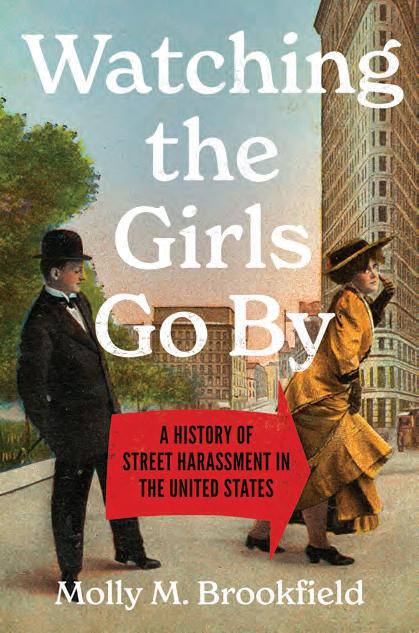
Watching the Girls Go By
A History of Street Harassment in the United States
Molly M. B R o o K field
GENDER AND AMERICAN CULTURE
Who gets to walk freely in the city?
Ogling, catcalling, wolf-whistling: such everyday intrusions from male strangers greeted American women from their first forays into urban space.
Watching the Girls Go By is the first book-length history of the phenomenon we know today as street harassment. Spanning more than a century, from the 1860s to the 1980s, this book reveals how street harassment became normalized as part of urban life and restricted women’s freedom of movement through the city.
Historian Molly M. Brookfield charts how American social and cultural discourses cast behaviors like catcalling as the natural entitlement of white, middle-class men, while scapegoating and punishing men of color and working-class men as the stereotypical—and supposedly more dangerous— harassers. She mines a rich archive of newspaper reports, popular culture, women’s writings, public policy, and more to uncover how class, race, and gender shaped Americans’ experiences of public space, including who claimed a “right” to women’s bodies, who was seen as a sexual threat, and how women fought back against harassment. Watching the Girls Go By challenges readers to reckon with how the long history and lasting impact of the seemingly trivial intrusions that constitute street harassment continue to shape public space today.
MOLLY M. BROOKFIELD is assistant professor of history and women’s and gender studies at The University of the South.
SEPTEMBER 2026
$29.95 paperback [s] 6.125 × 9.25 in., 288 pages 14 halftones
ISBN 9781469697307
Social Science / Gende R St U die S
“A n outstanding history of an urban practice that hides in plain sight.”
— Anne Gray Fischer, author of The Streets Belong to Us: Sex, Race, and Police Power from Segregation to Gentrification
“Opening a window into an important facet of the history of sexuality, Molly Brookfield’s fascinating book illustrates how street harassment was not always accepted, was not always the norm, and was not always without consequence.”
C atherine O. Jacquet, author of The Injustices of Rape: How Activists Responded to Sexual Violence, 1950–1980
SEPTEMBER 2026
$27.95 paperback [s] 6.125 × 9.25 in., 256 pages 24 halftones, 5 maps, 1 table ISBN 9781469698366 h i S to R y / United State S
“ This is one hell of a book. An evocative, at times lyrical, placed-based history of a landscape haunted by its violent, sometimes horrific, past. Benjamin Johnson, author of Texas: An American History
“A lively, brilliantly realized, and richly researched account of the stories and memories the Trinity carries.”
— Char Miller, author of West Side Rising: How San Antonio’s 1921 Flood Devastated a City and Sparked a Latino Environmental Justice Movement
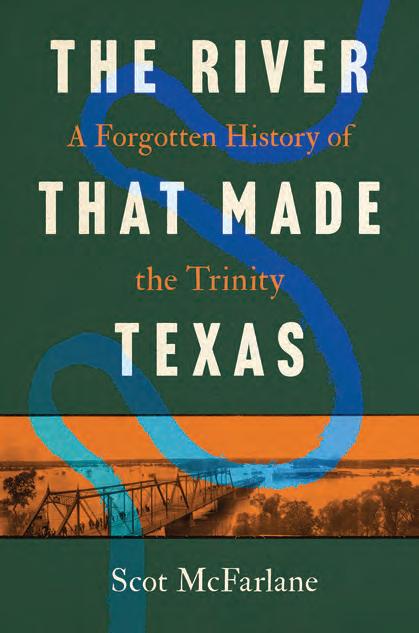
The River That Made Texas
A Forgotten History of the Trinity
Scot M c f a R lane
How the relentless but largely forgotten Trinity River shaped Texas
Today, half of Texas’s expanding population, including the cities of Dallas–Fort Worth and Houston, depends on the Trinity River, a river that has shaped the state’s politics, economy, and environment for centuries. From the prairies of North Texas to the Gulf of Mexico, the Trinity established Native nations, foiled Spanish and French imperialism, stood at the center of the Texas plantation system, and fueled the growth of the state’s largest cities.
In the first history of this vital river, historian Scot McFarlane illuminates how the Trinity has defined Texas history. Its floods enriched the soil and destroyed crops, its channel served as both a route and barrier to freedom, and its once-polluted waters now sustain a significant portion of the state. McFarlane’s captivating narrative brims with stories of the people who called the Trinity home over the centuries: the Comanche, steamboat pilots, enslaved and freed people, sharecroppers, inmates, and millions of urban residents. The result is a fresh perspective on economic development, slavery, and the environment—revealing the Trinity not as a backdrop to Texas history but as a force that shaped it.
SCOT M c FARLANE is a river historian and founder of the Oxbow History Company.
The Great Horse Flu
A Forgotten Contagion and the Fate of Reconstruction America
How a rampant virus brought the US economy—and Reconstruction—to its knees
Seven years after the US Civil War and nearly 150 years before COVID, horses near Toronto began falling deathly ill with a sickness soon diagnosed as influenza. It took just a few weeks for this mutant flu variant to spread throughout southeastern Canada and into the northeastern US, infecting more than 90 percent of horses, donkeys, and mules wherever it struck. By the time the outbreak relented more than a year later, the Great Horse Flu of 1872 to 1873 had convulsed nearly every corner of North America and parts of Cuba, Mexico, and Central America. This little-known scourge paralyzed the continent’s horse-powered economy at a critical political moment. As hundreds of thousands of animals died and entire cities ground to a halt, the outbreak exposed the fragility of industrial capitalism and the US’s deep dependence on animal labor. The Great Horse Flu triggered catastrophes including the Great Boston Fire; unleashed seething social and racial conflict; stoked partisan divides; and set the stage for the Panic of 1873. In the hands of Bancroft Prize–winning historian Thomas G. Andrews, the gripping story of this animal plague becomes a revelatory history of American Reconstruction itself— its possibilities, limitations, and demise—while also illuminating the grave perils that novel viral variants pose to animals, humans, and the world we share.
THOMAS G. ANDREWS is professor of history and director of the Center of the American West, University of Colorado Boulder. A leading historian of labor, capitalism, and the American West, he is the author of Killing for Coal: America’s Deadliest Labor War, which won a Bancroft Prize and is widely regarded as a landmark work of American history.

OCTOBER 2026
$35.00 hardback [s] 6.125 × 9.25 in., 352 pages 30 halftones, 1 map ISBN 9781469698434
“ We can better understand human history when we put disease back into it, as Andrews does with this fascinating and engaging work.”
— Amanda Kay McVety, author of The Rinderpest Campaigns: A Virus, Its Vaccines, and Global Development in the Twentieth Century
“Innovative and important. Andrews recovers rarely heard voices as he reveals the interconnections of North America through the lens of the epizootic.”
Susan D. Jones, author of Death in a Small Package: A Short History of Anthrax
AUGUST 2026
$24.95 paperback [s] 6.125 × 9.25 in., 192 pages
ISBN 9781469696881
Social Science / aGR ic U lt UR e & f ood
“Schweid grapples with unanswerable questions in this engaging, personal narrative about an intriguing, beloved creature.”
Teresa R. Johnson, University of Maine
“ The e thical concerns of farming and eating octopus are as many-armed as the animals themselves. Schweid respects that complexity and explores it with admirable reach.”
Wyatt Williams, author of Springer Mountain: Meditations on Killing and Eating
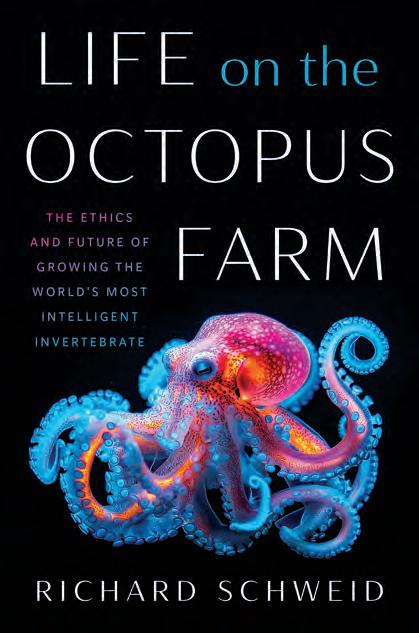
Life on the Octopus Farm
The Ethics and Future of Growing the World’s Most Intelligent Invertebrate
Richa R d Sch W eid
A provocative investigation of the race to farm octopus and the controversy it sparked worldwide
In 2021, the London School of Economics found that octopuses are sentient beings, capable of experiencing pain, distress, and happiness, and that high-welfare farming of them would therefore be impossible. But the enormous international demand for octopus meat continues to grow even as wild octopus populations decline, prompting a race to bring the first farm-raised product to market. At the same time, firestorms of protest in Europe and the United States over the ethics of farming such an intelligent creature are pressuring lawmakers to ban the practice altogether.
After working at one of the world’s first octopus farms, on the Yucatán Peninsula, award-winning journalist Richard Schweid embarked on a global adventure to explore the ethics and future of octopus aquaculture. He traveled to octopus-farming sites in Mexico, Spain, and Japan where he met people on both sides of the ethical debate: marine biologists, businesspeople, restaurateurs, animal rights advocates, octopus farmers, and everyday fishermen whose livelihoods depend on wild octopus. In this vibrant account of his experiences, Schweid also engages pressing related issues: environmental impact; the need for sustainable farming opportunities in underresourced communities; and how global desires for specific foods place pressure on local populations. Ultimately, the appetite for octopus demonstrates the conundrums of our interconnected world—across countries, through oceans, and via the food we consume.
RICHARD SCHWEID is a journalist and author based in Barcelona and coastal Rhode Island.
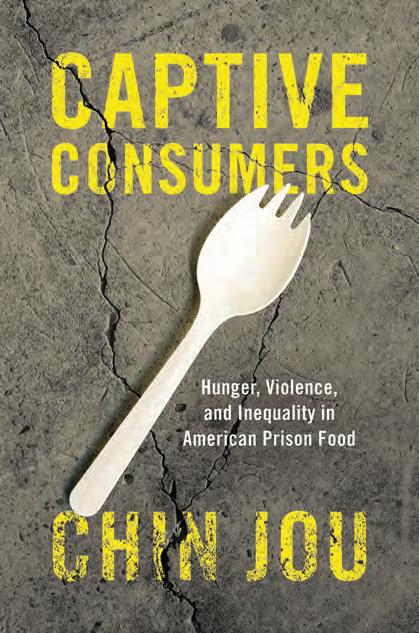
Captive Consumers
Hunger, Violence, and Inequality in American Prison Food
c hin Jo U
JUSTICE, POWER, AND POLITICS
How prison food fuels hunger, inequality, and violence beyond prison walls
Much of what happens inside America’s prisons remains hidden from public view, and the food doled out to incarcerated people is no exception. In Captive Consumers, Chin Jou exposes a system of mistreatment and scandal surrounding prison food: across the country, those behind bars live with chronic hunger, eat foods contrary to their religious beliefs and medical needs, and develop foodborne illnesses at alarming rates. At the same time, corrections systems and prison food services weaponize nutritional claims to protect themselves from charges that the incarcerated are starving. Using a wealth of sources from untapped historical records to prison newspapers, Jou excavates the voices of the incarcerated and shows that prison food dehumanizes the imprisoned, compounds racial and class inequalities, and induces more violence—ultimately making carceral institutions more dangerous. But this compelling book also illuminates how people behind bars have reasserted their identities, resourcefulness, and humanity through self-prepared food even as prison food services profit from lucrative, taxpayerfunded contracts that reward cost-cutting over care. If US corrections systems continue to perpetuate physical and psychological violence through food, Jou argues, Americans will suffer not just wasted tax dollars but the cost of bringing traumatized, ailing, and hungry formerly incarcerated people back into society.
CHIN JOU is associate professor of history and medical humanities at Rice University.
AUGUST 2026
$34.95 paperback [s] 6.125 × 9.25 in., 360 pages 14 halftones
ISBN 9781469693156
“Elegantly constructed, carefully researched, and at the cutting edge of carceral history and prison studies research. Chin Jou has accomplished something special.”
— Melanie D. Newport, author of This Is My Jail: Local Politics and the Rise of Mass Incarceration
“A welcome and necessary book that shows food in prison to be a source of sustenance and deprivation, necessity and profit.”
— Dan Berger, author of Captive Nation: Black Prison Organizing in the Civil Rights Era
NOVEMBER 2026
$29.95 paperback [s]
6.125 × 9.25 in., 368 pages ISBN 9781469697567
History / u nited s tates
“Building on Quarles’s enduring insight that African Americans declared their ‘loyalty . . . not to a place nor to a people, but to a principle,’ these essays show unequivocally that enslaved Americans were the ones who turned the War of Independence into a revolution.”
Woody Holton, author of Liberty Is Sweet: The Hidden History of the American Revolution
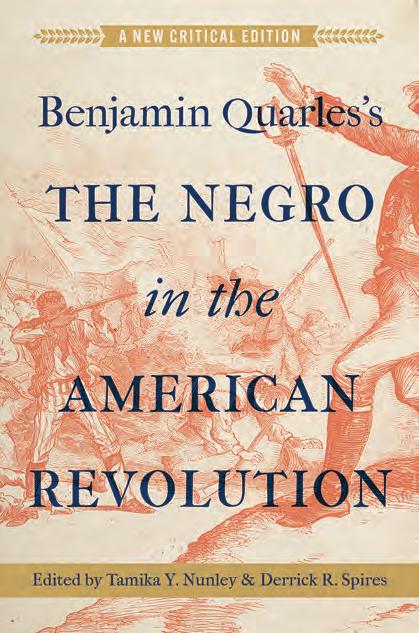
Benjamin Quarles’s The Negro in the American Revolution
A New Critical Edition
Benjamin Quarles
edited B y t amika y . n unley and d errick r . s pires
Published by the Omohundro Institute of Early American History and Culture and the University of North Carolina Press
A new critical edition of Benjamin Quarles’s classic work
Originally published in 1961, Benjamin Quarles’s The Negro in the American Revolution remains one of the most comprehensive histories of the presence and politics of Black people in the colonies and their complicated participation in the American Revolution. Enduringly innovative in its source base and subsequent analysis, Quarles’s landmark work continues to serve as a cornerstone for scholars across disciplines. In addition to the original text, this critical edition includes an introduction by the editors and five new essays by historians and literary scholars that bring together methodological insights drawn from Quarles’s original work with the latest innovations in archival research, revealing how gender, geographic location, and placemaking shaped the wartime experiences of Black people.
Contributors include Leslie Alexander, Tara Bynum, Michael Dickinson, Vanessa Holden, Adam McNeil, Tamika Nunley, and Derrick Spires.
BENJAMIN QUARLES was professor of history at Morgan State University. His many authored or edited books include The Negro in the Civil War and Narrative of the Life of Frederick Douglass. TAMIKA Y. NUNLEY is the William & Sue Gross Professor of History at Duke University. DERRICK R. SPIRES is associate professor of English at the University of Delaware.
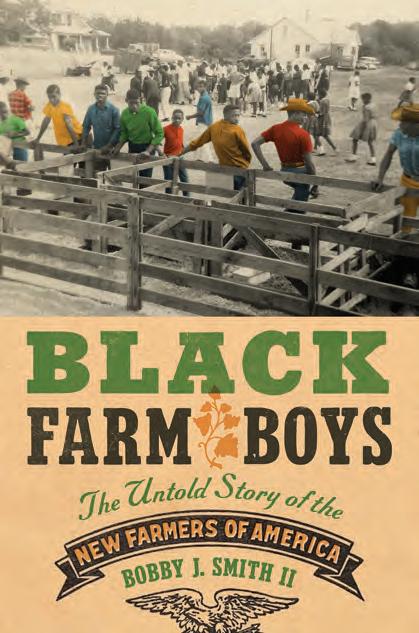
Black Farm Boys
The Untold Story of the New Farmers of America
B o BB y J . SM ith ii
RURAL STUDIES SERIES
Uncovering a pivotal but forgotten Black agricultural organization
Founded in 1935, the New Farmers of America (NFA) was the first national organization for Black farm boys studying vocational agriculture at segregated public high schools across the South—and as far north as New Jersey. Sociologist and award-winning author Bobby J. Smith II charts new terrain in Black history by uncovering the hidden story of the organization, which grew to more than 55,000 members and empowered Black boys to challenge racial exclusion in agriculture by becoming farmers and pursuing careers in agriculture. But by 1965, the NFA had vanished—unraveled by a hostile takeover by the predominantly white Future Farmers of America (FFA). The NFA, and the generation of Black agricultural leaders it helped shape, were largely erased from the historical record.
In vivid prose, Smith confronts the haunting paradox of the NFA: an organization that transformed rural Black life yet remains almost entirely absent from American memory. Reconstructing the NFA’s rise, influence, and disappearance, Black Farm Boys reshapes the history of the Black agricultural experience and restores a vital chapter in the story of education, rural life, and racial justice in the United States.
BOBBY J. SMITH II is associate professor of African American Studies at the University of Illinois UrbanaChampaign and the James Beard–nominated author of Food Power Politics: The Food Story of the Mississippi Civil Rights Movement.
AUGUST 2026
$24.95 paperback [s] 6.125 × 9.25 in., 216 pages 25 halftones, 1 map ISBN 9781469696935
Social Science / a f R ican aM e R ican and Blac K
“Smith highlights rural Black agriculturalists’ innovation, persistence, and pride in their effort to sustain their tradition and their relationship to the land, thus offering a muchneeded departure from the prevailing narratives of rural Black folks and agriculture.”
Yuki Kato, author of Gardens of Hope: Cultivating Food and the Future in a Post-Disaster City
OCTOBER 2026
$24.95 paperback [s]
5 × 8 in., 128 pages ISBN 9781469698540
“A well-timed reprint, given the current political climate of the United States. Edwards’s novel is a time capsule of an era that has lost none of its power in the intervening sixty years since it was first published.”
Ravi Howard, author of Driving the King
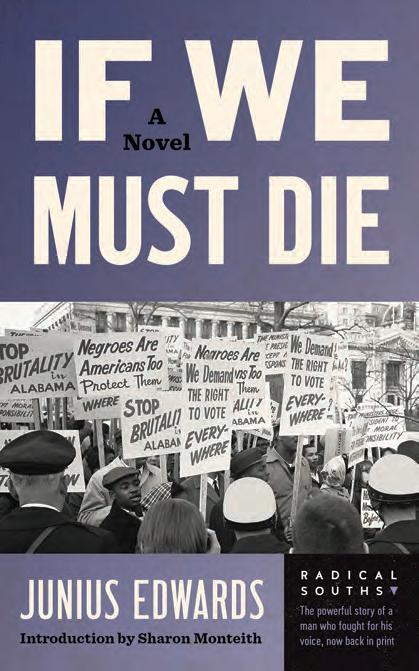
If We Must Die A Novel
J U ni US e d W a R d S
i nt R od U ction B y Sha R on Monteith
RADICAL SOUTHS
The powerful story of a man who fought for his voice, now back in print
Called a “relevant nightmare of a book” upon its publication in 1963, If We Must Die tells the story of Black Korean War veteran Will Harris and what happens when he tries to breach the color line by attempting to register to vote in the segregated South. Harris’s act of courage ignites a nightmare of racial hatred, injustice, and violent retribution. His story exposes the cost of standing up to racism and fighting for dignity. Mocked and denied his right to vote by white bigots, Harris is later fired from his factory job for “voter fraud.” The last third of the book provides a sobering reminder of the systemic racial terrorism that was, and still is, rampant in America.
JUNIUS EDWARDS (1929–2008) was an Army veteran, writer, and successful advertising executive in New York City. If We Must Die is his only novel. SHARON MONTEITH is Distinguished Professor of American Literature and Cultural History at Nottingham Trent University.
lite R at UR e
K L I S T
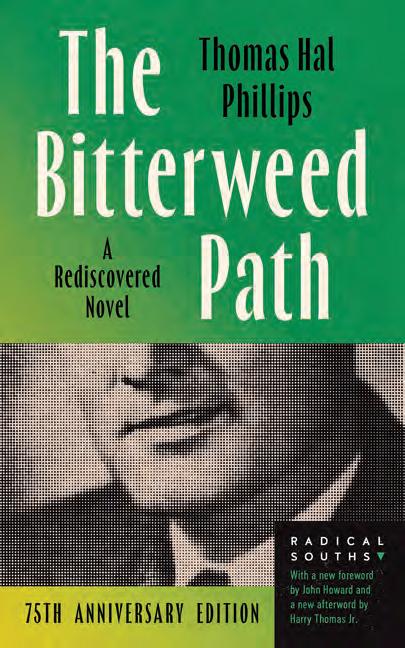
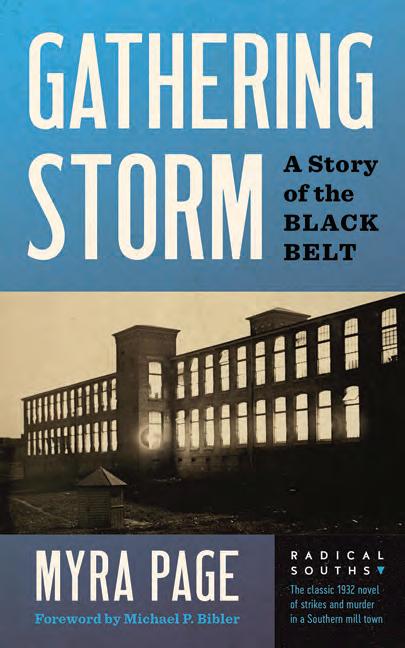
Reprinting some of the most revolutionary works of southern literature from the twentieth century. The fight for racial, sexual, economic, and political justice in the South has always been a home-grown struggle led by southerners themselves, and southern writers have always turned to the power of literature to bring those ideals to life. The series makes key texts from this radical tradition available to a wider audience, giving these voices of antiracist, queer, feminist, and socialist protest renewed urgency and authority.

JANUARY 2027
$37.95 paperback [s]
6.125 × 9.25 in., 368 pages 16 halftones, 1 table ISBN 9781469698076
“A n expertly edited volume that offers a provocative, deeply researched exploration of late twentieth-century New York City, illuminates the political, cultural, and economic forces that shaped the city, and helps readers understand its past, navigate its present, and grasp its complex history.”
Shannon King, author of The Politics of Safety: The Black Struggle for Police Accountability in La Guardia’s New York
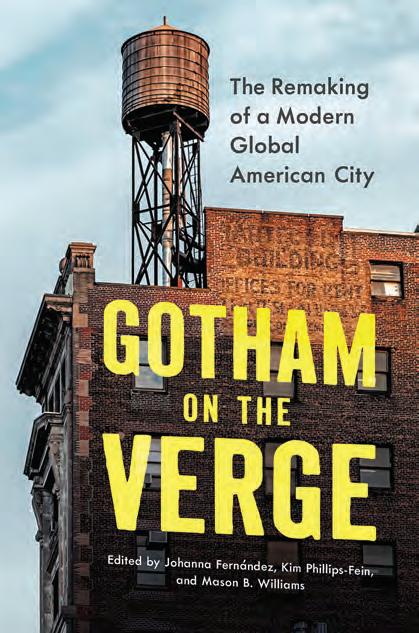
Gotham on the Verge
The Remaking of a Modern Global American City
edited B y Johanna f e R nández, Ki M p hillip S - f ein, and Ma S on B. Willia MS
How New York made modern America
Post-1960s New York City is often imagined as exceptional—too big, too singular, too creative to fit prevailing trajectories of American history. Gotham on the Verge challenges that mythology. In seventeen essays, leading and emerging historians show late-twentieth-century New York not as an outlier but as a crucible for the forces that reshaped the nation. Covering the 1970s through the early 2000s, this volume examines the rise and consequences of postindustrialization, neoliberalism, and financialization during a transformative era in the city’s history.
The essays explore deindustrialization, the rise of finance and real estate, the city’s response to the AIDS epidemic, police violence, labor organizing among new immigrants, and the birth of hip hop and experimental art. Writing from the street level up, the contributors center ordinary New Yorkers: residents who challenged stigmatizing media portrayals, Black women who organized against police brutality, and immigrant workers who built coalitions for fair wages. Neither a story of collapse nor comeback, this book traces a city on the verge—revealing how crisis, growth, diversity, and inequality converged to forge modern New York and America.
JOHANNA FERNÁNDEZ is associate professor of US history at the CUNY Graduate Center and Baruch College. KIM PHILLIPS-FEIN is Robert GardinerKenneth T. Jackson Professor of History at Columbia University. MASON B. WILLIAMS is associate professor of leadership studies and political science, and faculty affiliate in history at Williams College.
Contributors are Bench Ansfield, Minju Bae, Andy Battle, Salonee Bhaman, Amanda T. Boston, Jim Downs, Ansley T. Erickson, Michael Glass, Dylan Gottlieb, LaShawn Harris, Benjamin Holtzman, Nick Juravich, Lauren Lefty, Sarah Miller, Brian Purnell, Pedro A. Regalado, and Alex S. Vitale.
REGIONAL TRADE

SEPTEMBER 2026
$26.00 hardback [t]
7 × 8 in., 176 pages
32 drawings, 14 halftones, 3 tables
ISBN 9781469698861 c oo K in G / f i S h & Seafood
“Full of advice that real-world cooks will value.” Garden and Gun
“Saltbox Seafood Joint Cookbook speaks to that classic coastal cookery that resonates with folks young and old. Chef Ricky Moore educates us about food and waterways in North Carolina while offering us the best damn chowder you’ll ever eat!”
— Mashama Bailey, executive chef, The Grey, and James Beard Award winner for Best Chef: Southeast
“Even if Aquaman went to culinary school, he couldn’t have written a finer seafood cookbook than Saltbox Seafood Joint Cookbook. Chef Ricky Moore’s deep knowledge of—and love for—seafood shines on every page. This cookbook is hotter than fish grease!”
Adrian Miller, James Beard Award–winning author of The President’s Kitchen Cabinet and Soul Food
Saltbox Seafood Joint Cookbook
Second Edition, with a New Foreword by Barton Seaver
Ric K y Mo o R e, W ith K. c . h y SM ith
Simply hooked . . . again!
Since the 2019 publication of Saltbox Seafood Joint Cookbook, chef Ricky Moore has been named a James Beard Award winner for Best Chef: Southeast Region and a semifinalist for the Beard Foundation’s overall Outstanding Chef award. Moore has also hosted food-centric tours across many countries, discovering astonishing cultural similarities in seafood cookery that tie directly into his foundational interest in coastal North Carolina cuisine and heritage. This must-have second edition features eight new globally inspired recipes, including Triggerfish Ceviche with Smoked Corn, Sweet Potato & BBQ Leche de Tigre. Written with food and culture writer K. C. Hysmith, this cookbook also includes the original sixty recipes celebrating Moore’s coastal culinary heritage, along with guidance for panfrying, deep-frying, grilling, smoking, and making soups, chowders, stews, grits, and seafood. Charts and illustrations explain the kinds of fish and shellfish used in the recipes. Whether you’re looking to expand your seafood repertoire or re-create the mouthwatering dishes of Saltbox Seafood Joint, Ricky Moore’s devotion to fresh, seasonal ingredients and international inspiration will make you reach for this book again and again.
James Beard Award winner RICKY MOORE is an American chef, speaker, and author and the founder and chef of Saltbox Seafood Joint in Durham, North Carolina. K. C. HYSMITH is a food and culture writer and scholar based in North Carolina. An award-winning chef, BARTON SEAVER is a globally recognized leader at the intersection of culinary innovation, sustainability, and public health.
Paddling the Carolinas
A Guide to the Chowan, Pasquotank, Roanoke, Tar-Pamlico, White Oak, and Neuse River Basins
p a U l f e RGUS on and a lton c he W nin G
SOUTHERN GATEWAYS GUIDES
This must-have guidebook is the very heart of Carolina paddling
Paul Ferguson—dubbed “the best canoe paddler in North Carolina”—and fellow paddler Alton Chewning offer adventurers a reimagined and updated version of the classic river guide Paddling Eastern North Carolina. Over the years, thousands of paddlers have trusted Paul to safely guide them through the state’s rivers while sharing insider information on how to get the most out of a paddling experience.
INSIDE, READERS WILL FIND:
• Information on paddling creeks and rivers of North Carolina’s northern basins, including the Chowan, Pasquotank, Roanoke, TarPamlico, White Oak, and Neuse.
• O ver 95 color maps of creeks and rivers
• Updated information on hundreds of river accesses in Eastern North Carolina rated for scenery and difficulty
• Information on 65 rivers and over 1,800 miles of paddling
• 250 trip ideas narrated in rich detail, including information on distance, water level, gradient, difficulty, and waypoints
• O ver 35 color images of rivers and landmarks
A must-have for any paddler or river enthusiast, regardless of experience level, Paddling the Carolinas offers the most comprehensive guide to the waters of the Carolinas.

DECEMBER 2026
$28.00 paperback [t] 6 × 9 in., 256 pages 37 color plates, 101 maps 1 graph, 7 tables ISBN 9781469695037
“ This book is clearly a labor of love on the part of Ferguson and Chewning. Most of this information is not readily available anywhere else. There are few paddling enthusiasts who would not benefit from a resource that is this high quality.”
Edward Gertler, author of Maryland and Delaware Canoe Trails
PAUL FERGUSON is a lifelong paddler and author of several books on paddling in the Carolinas. ALTON CHEWNIN G is a writer, cinematographer, and paddling veteran.
DECEMBER 2026
$25.00 paperback [t] 6.125 × 9.25 in., 240 pages 21 halftones
ISBN 9781469694726
Spo R t S & Rec R eation /
Ba SK et B all
“ There are real storytelling gems in Northam’s work, and fans of women’s college basketball deserve more books about individual teams, their struggles, and their triumphs.”
Jessica Luther, journalist and coauthor of Loving Sports When They Don’t Love You Back: Dilemmas of the Modern Fan
“ You’re not going to find someone more plugged in or determined to get this right than Mitchell Northam. His book shows off both his dedication and expert-level analysis of a critical bellwether program in women’s basketball.”
Howard Megdal, journalist and author of Becoming Caitlin Clark: The Unknown Origin Story of a Modern Basketball Superstar
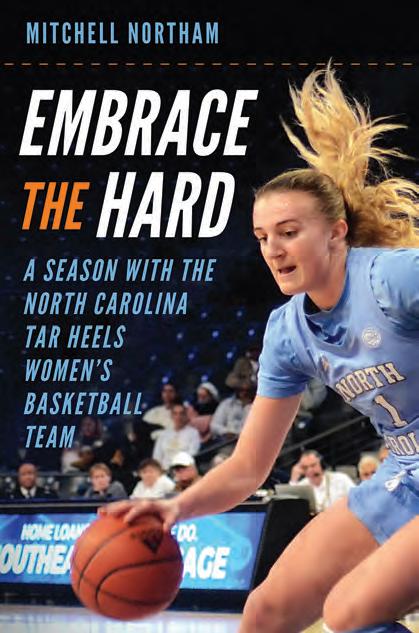
Embrace the Hard
A Season with the North Carolina Tar Heels Women’s Basketball Team
Mitchell n o R tha M
Inside one of the most pivotal seasons in women’s college basketball
Three decades have passed since the North Carolina Tar Heels women’s basketball team won a national championship, and it hasn’t been to a Final Four since 2007. Then, in 2019, Hall of Fame coach Sylvia Hatchell resigned amid a scandal. To replace her, UNC lured Courtney Banghart away from Princeton to rebuild the program and restore its national prominence. The 2023–2024 season was the story of a team at a crossroads: Would Banghart’s ambitions fizzle? Or would the Tar Heels get a taste of their former glory?
To document the moment, Coach Banghart allowed sports reporter Mitchell Northam unfettered access to the Tar Heels for an entire season. He spent countless hours with the fifteen players, the six coaches, the staff members, and others in practices at Carmichael Arena, in the weight room, on the road, in hotel lobbies, and more. Embrace the Hard tells the story of a talented team hungry for glory and a coach determined to get them there, grappling with the ever-changing landscape of college athletics.
MITCHELL NORTHAM covers sports at USA Today and is the author of High School Basketball on Maryland’s Eastern Shore: A Shore Hoops History.
ACADEMIC
JANUARY 2027
$24.95 paperback [s]
6.125 × 9.25 in., 152 pages
ISBN 9781469697048
l ite R a R y cR itici SM / Gay & l e SB ian
“Jaime Harker has an impressive knowledge, as only a queer bookstore owner could, of the ever-shifting landscape of queer writing and publishing.”
L a Shonda Mims, author of Drastic Dykes and Accidental Activists: Queer Women in the Urban South
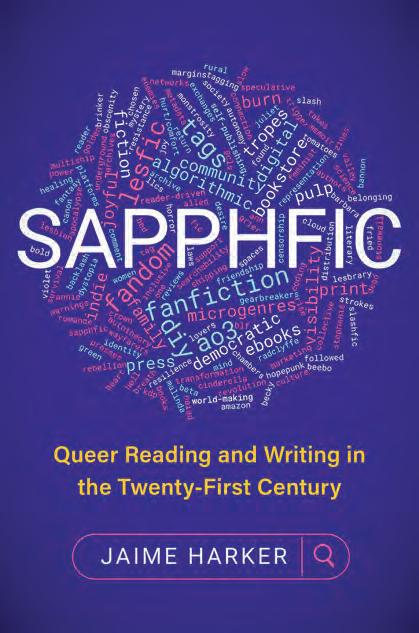
Sapphfic
Queer Reading and Writing in the Twenty-First Century
Jai M e h a RK e R
Queer literature, from writing groups to bookstores
Bringing together literary history, queer theory, and lived experience, Jaime Harker maps the shifting queer literary publishing landscape of the last thirty years, through the lens of being an English professor and lesbian feminist bookstore owner. To tell this story, Harker draws on interviews with lesbian writers, publishers, filmmakers, and book reviewers. She also incorporates elements of memoir, specifically her own experiences as the owner of Violet Valley Bookstore, near Oxford, Mississippi. Harker dives into the importance of genre fiction—erotica, pulp novels, even sci-fi—in queer lit history, while making space for new modes of literary production, including the rise of lesbian fanfic, self-publishing, and social media.
A ll of this, Harker argues, has given rise to a queer literary renaissance and these genre books, often disrespected in mainstream book discourse, are central to queer writing.
JAIME HARKER is professor of English and the director of the Sarah Isom Center for Women and Gender Studies at the University of Mississippi.
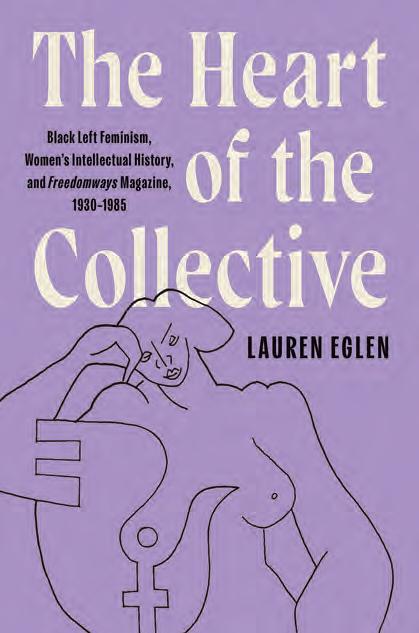
The Heart of the Collective
Black Left Feminism, Women’s Intellectual History, and Freedomways Magazine, 1930–1985
l a UR en eG len
Black women’s activism in print
Freedomways (1961–1985) was one of the most influential Black magazines of the Cold War era, shaping debates on race, socialism, and global liberation. Yet the Black women whose intellectual labor sustained the magazine have remained largely obscured. This book reinterprets Freedomways as a Black feminist project that functioned not only as a publishing venue but as an intellectual home for Black women thinkers. Through editorial leadership, political essays, and cultural criticism, figures such as Esther Cooper Jackson, Shirley Graham Du Bois, and Jean Carey Bond advanced sustained analyses of capitalism, imperialism, gender oppression, and the global Black diaspora.
A t its core, Lauren Eglen’s book examines intellectual value, historical erasure, and shows how Black women’s editorial authority and theoretical contributions were diminished. Despite their central role in shaping the magazine’s vision, Black women were often eclipsed by male-centered narratives and by their proximity to prominent Black men. By centering their work, this book challenges conventional assumptions about where political theory is produced and who counts as an intellectual, and it expands Black intellectual history to include editorship, collaboration, and everyday experience. The Heart of the Collective reframes Black feminism through its socialist and internationalist commitments, where race, class, gender, and global politics are inseparable.
LAUREN EGLEN is senior research fellow in gender justice at the University of Nottingham, UK.
NOVEMBER 2026
$29.95 paperback [s] 6.125 × 9.25 in., 232 pages 5 halftones
ISBN 9781469694153
“A groundbreaking study offering one of the only full treatments of Freedomways magazine, making a major contribution to African American intellectual history, Black women’s history, and Black radical print culture. This archivally rich book powerfully recovers the internationalist and movement politics of Black women editors and activists. In doing so, it extends and reframes the field to highlight how editorship, political theory, and activist labor converged in radical Black feminist thought.”
Charisse Burden-Stelly, author of Black Scare / Red Scare: Theorizing Capitalist Racism in the United States
OCTOBER 2026
$32.95 paperback [s] 6.125 × 9.25 in., 264 pages ISBN 9781469697468
e d U cation / h i S to R y
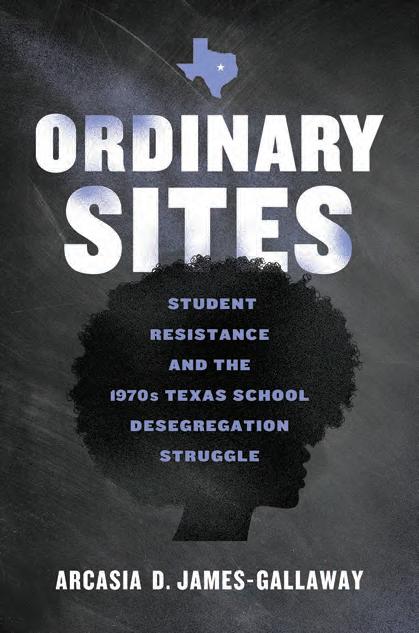
Ordinary Sites
Student
Resistance and the 1970s Texas School Desegregation Struggle
aRc a S ia d . Ja M e S -Galla W a y
What desegregation meant for Black students in an ordinary Southern town
For nearly a century, legal battles over school desegregation have attracted significant scholarly attention. What desegregation meant for the day-to-day lives of Black precollegiate students, however, has remained marginal in this larger narrative. Focusing on the “ordinary” Southern town of Waco, Texas, Ordinary Sites uncovers how the lives of Waco’s Black students changed after the 1954 Brown v. Board of Education decision.
“A compelling and necessary book that revises the dominant narrative surrounding race and desegregation in Southern US schools and reveals the deeper cost of desegregation for Black youth in Texas. An original, engaging contribution.”
Jon N. Hale, author of A New Kind of Youth: Historically Black High Schools and Southern Student Activism, 1920–1975
“By focusing on the quotidian racial, gendered, and socioeconomic experiences of Black students, James-Gallaway spins anew and advances the interdisciplinary study of Black education and school desegregation history.”
— Michelle A. Purdy, author of Transforming the Elite: Black Students and the Desegregation of Private Schools
A rCasia D. James-Gallaway makes a compelling contribution to education history by showing how Waco’s Black students reckoned with white supremacy and exercised agency as they navigated the implementation of school desegregation in the 1970s. Drawing on extensive original oral history research to reconstruct how Blackness, gender, and class differentiated these students’ experiences, Ordinary Sites adds complexity and texture to historical accounts of school desegregation. In other words, James-Gallaway uncovers what has been hiding in plain sight. She introduces new methods for exploring Black geographies and theorizes desegregation as a racialized conflict over space, showing how Waco’s Black students resisted antiBlackness in the hostile spatial environments of desegregated schools.
ARCASIA D. JAMES-GALLAWAY is assistant professor of teaching, learning, and culture at Texas A&M University.
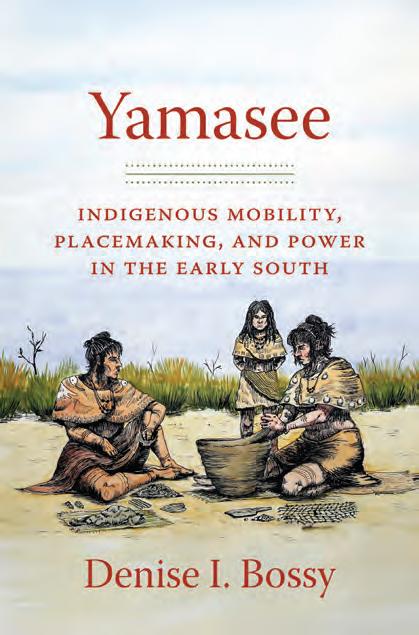
Yamasee
Indigenous Mobility, Placemaking, and Power in the Early South
d eni S e i. Bo SS y
Published
by the
Omohundro
Institute of Early American History and Culture and the University of North Carolina Press
The first comprehensive study of the Yamasee Nation
The Yamasees were one of the most powerful forces in the early South, yet they remain one of the least understood Indigenous nations of the region. In the archaeological record, Yamasee homelands migrate and disappear; in colonial archives, their movements seem fractured and disconnected. Yet, as Denise Bossy reveals in Yamasee, the first comprehensive study of the Yamasee Nation, much of this was by their own design.
Drawing from their deep ancestral practices, the Yamasees crafted a dynamic culture of mobility and place-making driven by an unwavering commitment to sovereignty and self-determination. With each migration, the Yamasees transformed new spaces into homelands, becoming the foremost experts of the early Southeast’s complex and ever-changing geography, political and cultural landscapes, and sacred spaces.
The Yamasees continued to harness this powerful strategy to navigate and at times even exploit the escalating violence unleashed by European colonialism. This legacy of mobility enabled their survival long after the alleged death of the last Yamasee.
DENISE I. BOSSY is associate professor of history at University of North Florida.
JANUARY 2027
$45.00 hardback [s] 6.125 × 9.25 in., 216 pages 37 halftones
ISBN 9781469697345
“Denise Bossy demonstrates that the Yamasees were far more interesting, and enduring, than the 1715 war that bears their name. Before and after this conflict, the Yamasees remade themselves, using mobility and place-making to secure a future for themselves despite the catastrophic changes wrought by the colonization of the early South.”
Stephen Warren, University of Iowa

NOVEMBER 2026
$29.95 paperback [s]
6.125 × 9.25 in., 312 pages 15 halftones
ISBN 9781469695181 h i S to R y / United State S
“ The Somerset case has attained a renewed significance to the history of the American Revolution, and the essays in this excellent volume offer a timely and enduring contribution that illuminates the context for independence. It will be a landmark volume.”
Christopher Leslie Brown, Columbia University
Somerset v. Steuart Law,
Politics, and Slavery
in North America
edited B y Ma tthe W Ma S on and d a vid Wald S t R eiche R
Published by the Omohundro Institute of Early American History and Culture and the University of North Carolina Press
Past and present debates of Somerset v. Steuart
In the more than 250 years since Lord Mansfield pronounced judgment in Somerset v. Steuart (1772) that slavery was not supported by law in England, historians and legal scholars have probed its significance for the history of slavery and abolition in the Atlantic world. Engaging both the robust traditions of scholarship and the recent upswell of interest surrounding the case, the essays in this volume show how the ruling exposed the fissures in the seemingly solid structures of empire, slavery, and “freedom” in British North America. In the short run, the ruling amplified the alienation of white North American colonists from metropolitan Britain; in the longer run, it bolstered both proslavery and antislavery movements in the new empire of the United States.
The contributors are Harvey Amani Whitfield, John N. Blanton, Henry N. Buehner, Matthew Crow, Jesse R. Eaton, Daniel J. Hulsebosch, Matthew Mason, H. Reuben Neptune, Dana Rabin, Padraig Riley, Grant Stanton, Kirsten Sword, Evan Turiano, David Waldstreicher, Nicholas P. Wood, and Helena Yoo-Roth.
MATTHEW MASON is professor of history at Brigham Young University. DAVID WALDSTREICHER is Distinguished Professor of history at the Graduate Center, City University of New York.
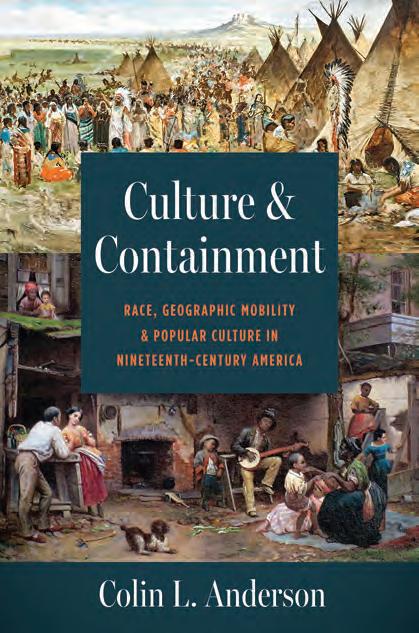
Culture and Containment
Race, Geographic Mobility, and Popular Culture in Nineteenth-Century America
c
olin l. a nde RS on
How popular culture built America’s racial boundaries
Movement—who moves, where they move, and how they move—has long been perceived as a racial threat in the United States. To better understand why, Colin Anderson examines how popular culture played a central role in shaping these perceptions during the transformative period of Greater Reconstruction (1845–1900). From sheet music and lithographs to plantation reenactments and Wild West shows, white cultural producers depicted Black and Native mobility as destabilizing. These depictions normalized fears of movement and justified the rise of systems designed to confine these communities, such as Jim Crow segregation and Native American reservations. Using a transregional framework spanning the North, South, and West, Anderson places these histories side by side, revealing the shared logic of racial spatial control and reframing nineteenth-century US history as a story of nation-building intertwined with segregation and capitalism.
Yet popular culture was a contested space. Black and Native performers, writers, and activists used the same platforms as white creators to assert agency, resist confinement, and challenge dominant narratives of mobility. By illuminating these dynamics, Culture and Containment reshapes our understanding of nineteenth-century race relations while offering vital insight into enduring legacies—from residential segregation to mass incarceration—that continues to define the racial landscape through the twenty-first century.
COLIN L. ANDERSON is assistant professor of history and law at the University of Tampa.
OCTOBER 2026
$34.95 paperback [s] 6.125 × 9.25 in., 296 pages 26 halftones
ISBN 9781469698120
“A powerful look at how nineteenth-century popular culture both contested and was constrained by racial mobility. Anderson expands our understanding of mobility by illuminating the intersections of cultural expression and systemic racial control and draws connections between federal Indian policy and Jim Crow segregation.”
— K atrina M. Phillips, author of Staging Indigeneity: Salvage Tourism and the Performance of Native American History
SEPTEMBER 2026
$34.95 paperback [s]
6.125 × 9.25 in., 352 pages 7 halftones, 1 graph, 10 tables ISBN 9781469696768
h i S to R y / United State S
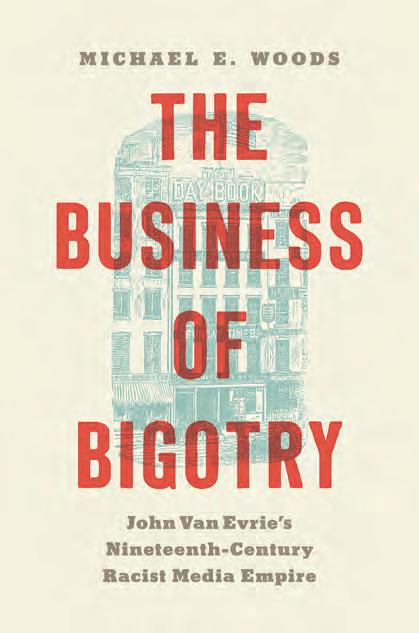
The Business of Bigotry
John Van Evrie’s Nineteenth-Century Racist Media Empire
Michael e . W ood S
CIVIL WAR AMERICA
The
media engine behind the persistence of white supremacy in the Civil War era
“This finely rendered work by one of our leading historians tells the disturbing yet compelling story of how a nineteenth-century scoundrel exploited the media revolution of his day to promulgate racism.”
— Adam I. P. Smith, author of The Stormy Present: Conservatism and the Problem of Slavery in Northern Politics, 1846–1865
“Those who want to understand our current media landscape should consider the cautionary tale of John Van Evrie, the Northern media mogul who built a malevolent empire of proslavery propaganda in the Civil War era. Van Evrie’s premise was that racism sells—and his trafficking in white supremacy, as a slogan and program, casts a shadow over our politics to this day.”
Eliz abeth R. Varon, author of Longstreet: The Confederate General Who Defied the South
A mid nineteenth-century America’s fierce battles over slavery and freedom, few proslavery partisans argued more vehemently for the supremacy of the white race than John Van Evrie (1814–1896). A New York–based propagandist, writer, book publisher, and editor of the New York Day Book, Van Evrie leveraged the era’s rapidly expanding media and communications landscape to advance his cause. Throughout his career, he promoted pseudoscientific justifications for racism, proclaimed slavery as beneficial to society, and created a media network criticizing abolitionists, Republicans, and Democrats alike. Despite the Civil War’s defeat of Van Evrie’s cause, his success in cultivating an audience and market for his views allowed him to continue publishing during Reconstruction, rallying support among white readers for policies and practices that would continue to subordinate Black Americans.
Tracing Van Evrie’s failures and chilling successes over a career of some forty years, Michael E. Woods reveals the stunning resilience of racist ideology before and after the Civil War. In doing so, Woods demonstrates how the era’s print media, business systems, and political alliances allowed ideas like Van Evrie’s to flourish, even as Reconstruction promised a new birth of freedom for Americans of all races.
MICHAEL E. WOODS is professor of history at the University of Tennessee–Knoxville and director of the Papers of Andrew Jackson, and author of Arguing until Doomsday: Stephen Douglas, Jefferson Davis, and the Struggle for American Democracy
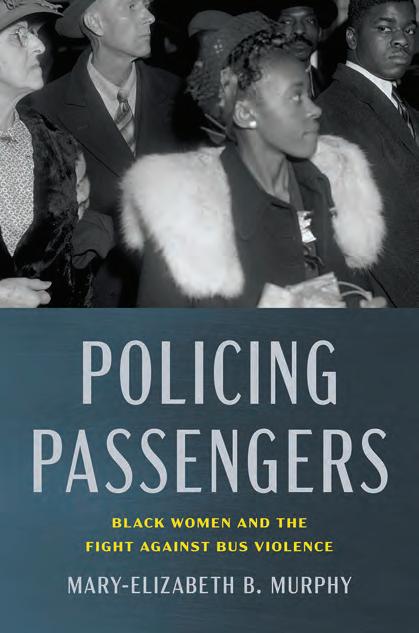
Policing Passengers
Black Women and the Fight Against Bus Violence
Ma R y - e liza B eth B. M UR phy
JUSTICE, POWER, AND POLITICS
How bus resistance paved the road to civil rights victories
Before the Montgomery Bus Boycott and the Freedom Rides, Black women passengers founded bus protest and made the right to a bus seat a symbol of the right to American democracy. Traveling back to the beginning of the bus industry in the 1920s, Policing Passengers tells the hidden history of this first generation of riders in the Jim Crow North and the Jim Crow South. In response to the perceived threat of Black women’s mobility, white bus executives recruited drivers from law enforcement and implemented surveillance policies to violently police these riders.
But Black women passengers resisted the bus industry’s policing. They narrated their experiences to the Black press, wrote blistering letters to bus companies, notarized affidavits, and pressed the government to investigate. During the Great Migration and World War II, at least forty-three Black women passengers sued for segregation and bodily injury. Their lawsuits culminated in the 1946 Supreme Court decision that enforcing segregation on interstate buses was unconstitutional, Morgan v. Virginia. Mary-Elizabeth B. Murphy’s innovative and meticulously researched book reveals that Black women passengers’ activism transformed the bus industry and drafted the blueprints for the postwar Black freedom struggle.
MARY-ELIZABETH B. MURPHY is professor of history at Eastern Michigan University.
NOVEMBER 2026
$29.95 paperback [s] 6.125 × 9.25 in., 288 pages 13 halftones, 6 tables ISBN 9781469698311
“In this beautifully written and field-defining book, Murphy tells the story of how Black women transformed the bus industry and the law through direct resistance, legal activism, and powerful assertions of their rights to mobility, dignity, and womanhood.”
Traci Parker, author of Department Stores and the Black Freedom Movement: Workers, Consumers, and Civil Rights from the 1930s to the 1980s
“Nuanced, sophisticated, and engaging. Murphy explores the key roles that Black women played in the post–World War II civil rights movement and shows us what happened when racist ideologies and practices met modern innovations in travel.”
Stephen A. Berrey, author of The Jim Crow Routine: Everyday Performances of Race, Civil Rights, and Segregation in Mississippi
OCTOBER 2026
$29.95 paperback [s] 6.125 × 9.25 in., 280 pages 17 halftones, 2 maps
ISBN 9781469697970
Social Science / Women’ S Studie S
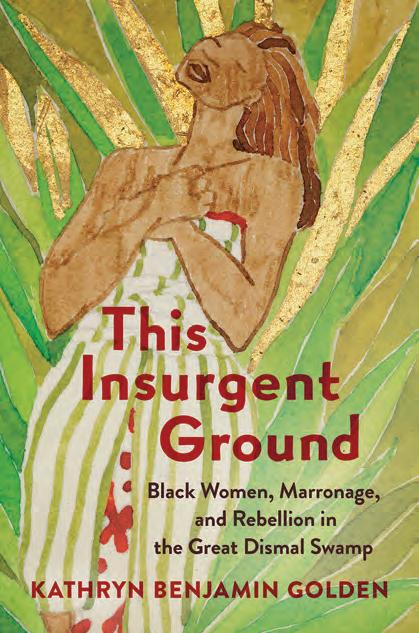
This Insurgent Ground
Black Women, Marronage, and Rebellion in the Great Dismal Swamp
Kathryn Benjamin Golden
BLACK WOMEN’S HISTORY
A history of Black women’s fugitive world making
Out of the Great Dismal Swamp, a huge morass of swampland straddling the Virginia and North Carolina eastern seaboard, there emerged a distinct culture of enslaved insurgency and fugitive subversion. Maroons who fled enslavement and resettled in wilderness spaces utilized the deep interior swamps to establish permanent, multigenerational autonomous communities. Historian Kathryn Benjamin Golden reveals for the first time the role of Black women in these maroon communities and locates them in the forests, swamps, and records where they have previously evaded detection and attention.
“Timely and innovative. Kathryn Benjamin Golden powerfully explores gendered resistance and liberatory histories of the Great Dismal Swamp. In doing so, she pushes us to rethink how we understand Black ecologies and placemaking in the present.”
Tamika Y. Nunley, author of The Demands of Justice: Enslaved Women, Capital Crime, and Clemency in Early Virginia
“A refreshing new study of Great Dismal Swamp marronage that pushes readers to think more capaciously about the role of Black women’s resistance in early US history.”
— Marcus P. Nevius, author of City of Refuge: Slavery and Petit Marronage in the Great Dismal Swamp, 1763–1856
This Insurgent Ground centers the Black women who aided, supported, led, and nurtured maroon movements in the Great Dismal Swamp as they collaborated with enslaved people in rebellion. Throughout the region, Black women resisted the injustices of reproductive violence, sexual assault, and desecrated motherhoods. Acting as agents of counterintelligence, participants in defensive violence and militant strategy, and mothers and providers of alternative autonomous communities, these women dared to redirect and repossess their energies and their bodies in absolute defiance of the very economic workings of slavery and in refusal of borders, bondage, confinement, and capture.
KATHRYN BENJAMIN GOLDEN is assistant professor of Africana studies at the University of Delaware.
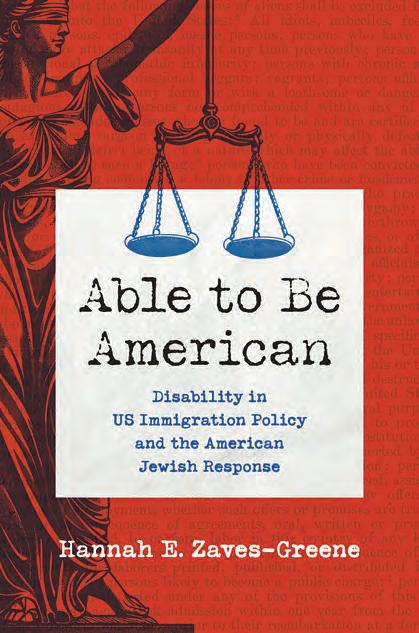
Able to be American
Disability in US Immigration Policy and the American Jewish Response
Hanna H e. Zave S -Greene
How American Jews confronted ableist immigration laws
Epilepsy. Heart disease. Varicose veins. “Feeblemindedness.” In 1891, Congress unambiguously codified the popular sentiment that “defects” like these should preclude admission to the United States. Expanding the eugenics-rooted restrictions of the 1882 Immigration Act, the new law conflated illness, poverty, and disability with criminality and “moral turpitude,” starkly revealing Congress’s vision of the “ideal” American. Simultaneously, American Jews sought security and acceptance in the United States. In confronting these fraught issues, they boldly asserted that they too had the right, knowledge, and ability to shape the meaning of American national belonging and, indeed, the fabric of the country itself.
Able to be American explores this tension, revealing how eugenic theories about illness and disability fundamentally shaped American society, government, and everyday life. As Jewish communal leaders contested the thorny relationship between perceived able-bodiedness and the “ability” to become American, they strove to reform federal immigration law and its implementation according to their own visions for what the United States could become. Hannah E. Zaves-Greene’s groundbreaking and richly sourced analysis weaves together archival documents, government records, and captivating case studies, exposing enduring truths about exclusion, belonging, democracy, and citizenship at this watershed moment in US history.
HANNAH E. ZAVES-GREENE is a scholar-in-residence at Brandeis University's Hadassah-Brandeis Institute and expert in American Jewish history and disability studies.
NOVEMBER 2026
$32.95 paperback [s] 6.125 × 9.25 in., 288 pages 2 halftones, 1 graph, 2 tables ISBN 9781469697772
Science / Di S abilit y
“A n important contribution to both Jewish immigration history and the history of immigration policy in the United States. Hannah ZavesGreene provides rigorous policy analysis while not forgetting the humanity of the individuals who were caught up in the machinery of immigration control.”
Douglas C. Baynton, author of Defectives in the Land: Disability and Immigration in the Age of Eugenics
“Hannah Z aves-Greene tells the story of how American Jews fought against the idea that disability was a reason to exclude immigrants from the United States. The book’s vibrant characters and careful historical description make it vital for understanding both the nation’s history and our current times.”
Sarah Imhoff, author of The Lives of Jessie Sampter: Queer, Disabled, Zionist
Social
SEPTEMBER 2026
$32.95 paperback [s]
6.125 × 9.25 in., 320 pages 20 halftones
ISBN 9781469693484
Bio GR aphy & aU to B io GR aphy / Social a c tivi S t S
“Fugitive States is not just a biography of Charlie Hill’s growth and misadventures. By telling the story of a little-known Black Power militant, Teishan A. Latner tells the larger story of Black radicalism and everyday life in Cuba. It is the story of socialist Cuba, capitalist America, and the Black radical tradition.”
Dan Berger, author of Stayed on Freedom: The Long History of Black Power Through One Family’s Journey
“A n utterly fascinating, sweeping history of Black radical exiles in Cuba.”
Gerald Horne, author of Revolting Capital: Racism and Radicalism in Washington, D.C., 1900–2000
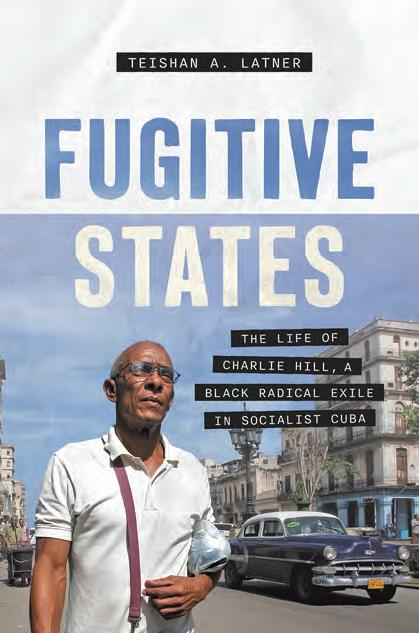
Fugitive States
The Life of Charlie Hill, a Black Radical Exile in Cuba
t ei S han a . l a tne R
JUSTICE, POWER, AND POLITICS
A radical biography of a man and a movement
Cuba in the 1970s was a beacon of Third World liberation—and a sanctuary for US radicals on the run. Fugitive States is the true story of Charlie Hill, an American exile who has lived in Havana for 55 years. An Illinois native and war veteran who was expelled from the US Army for refusing to fight against the Vietnamese national liberation forces, Hill later joined the Republic of New Afrika, a dynamic Black nationalist movement that called for reparations for slavery and the creation of a sovereign nation-state for Black people in the American South.
A ccused of killing a New Mexico state trooper in 1971, Hill hijacked an airplane from Albuquerque to Havana, where the Cuban government granted him asylum. In Havana, Hill hoped to connect with African revolutionaries and to join the armed struggle against colonialism in Angola or Guinea-Bissau; instead, he became the longest-remaining US political exile in Cuba and a witness to five decades of socialism and revolution. Drawing on archival sources and extensive interviews, historian Teishan A. Latner uses Hill’s surprising story to illuminate a broader set of encounters between foreign expatriates and the Cuban Revolution during a turbulent era of global radicalism.
TEISHAN A. LATNER is associate professor of history at Thomas Jefferson University.
Trans Brazil
The Hidden Histories That Transformed a Nation
Jo S é aM ado R
Can we know Brazil without trans history?
Today, Brazil is home to both some of the strongest trans rights protections and the highest rates of transphobic murders in Latin America. To explain this contradiction, Trans Brazil chronicles 150 years of Brazilian history through the everyday stories of trans people. José Amador reveals how anxieties about gender boundaries overlapped with fears of other “problem bodies,” including people of African descent, prostitutes, homosexuals, “womenmen,” and suffragists. As global discourses of transness reached Brazil, trans people, doctors, and the media debated what sex, gender, and sexuality meant. Amid new and evolving definitions of embodied identities, homosexuals, travestis, transsexuals, and trans men sometimes shared spaces marked by homophobia and transphobia and at other times occupied distinct spaces in their struggles for recognition and rights. Bringing this inclusive trans history into the early twenty-first century, José Amador illuminates how medicine, trans activism, and the state eventually established access to gender affirming care as a right, albeit one often denied. Tracing these social, political, and medical transformations and redefining historical assumptions about Brazil, Amador shows how policing those who challenged binary gender has been integral to state formation, and how gender-diverse and trans people were crucial to the making of modern Brazil.
JOSÉ AMADOR is associate professor of Latin American, Latina/o, and Caribbean studies at Miami University, and the author of Medicine and Nation Building in the Americas, 1890–1940

JANUARY 2027
$34.95 paperback [s] 6.125 × 9.25 in., 352 pages 27 halftones, 2 tables ISBN 9781469697512
“A n impressive, meticulously researched book that reads sources against the grain to uncover the agency exercised by gender nonconforming Brazilians even under the most difficult of circumstances.”
C armen Alvaro Jarrín, author of The Biopolitics of Beauty: Cosmetic Citizenship and Affective Capital in Brazil
“A revolutionary reframing of the history of sexuality, gender, and of Brazil itself.”
Benjamin A. Cowan, author of Moral Majorities Across the Americas: Brazil, the United States, and the Creation of the Religious Right
SEPTEMBER 2026
$27.95 paperback [s]
6.125 × 9.25 in., 232 pages 15 halftones
ISBN 9781469693859
h i S to R y /
United State S /
Mid W e S t
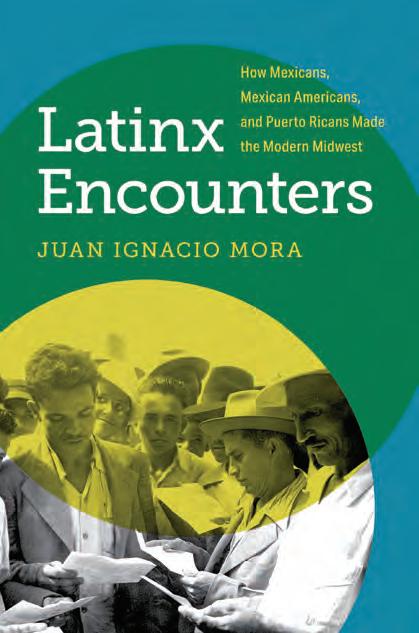
Latinx Encounters
How Mexicans, Mexican Americans, and Puerto Ricans Made the Modern Midwest
J U an iG nacio Mo R a
LATINX HISTORIES
Cultivating sugar beets, workers’ rights, and punk rock
The fields and orchards of the Midwest have offered seasonal agricultural work for countless Latinx migrant laborers. For more than a century, Mexican, Mexican American, and Puerto Rican migrants converged in the heartland’s agricultural industry to perform some of the most grueling labor needed to sustain the vital agribusiness of the region. In return, they were rewarded with dismal working conditions, poor government protections, and fierce hostility to their organizing efforts. Juan Ignacio Mora uncovers the everyday strategies these migratory laborers employed to fight for better economic conditions, offering a new history of the farmworker justice movement that transforms our understanding of the US heartland.
“Juan Ignacio Mora beautifully weaves together the many threads of US Midwestern Latinx history to show how migration provided the foundation for mobility for some and continued hardship for others.”
Marc Simon Rodriguez, author of Rethinking the Chicano Movement
“A magnificent study of the social, economic, and political consequences of increasingly corporate agribusiness labor systems that centers migrants’ own expressions of identity, justice, and belonging.”
Verónica Martínez-Matsuda, author of Migrant Citizenship: Race, Rights, and Reform in the U.S. Farm Labor Camp Program
Mexican, Mexican American, and Puerto Rican migrants arrived in the Midwest with vastly different circumstances of class, ethnicity, and immigration status, which fueled complex collaborations and conflicts. Contested notions of race tested their relationships, but migrant workers and their families made inroads in workers’ rights and nurtured a shared culture, negotiating collective bargaining agreements and forming the first punk rock band. Capturing the relationship between the Midwest, the Texas-Mexico borderlands, Mexico’s interior, and the colonial archipelago of Puerto Rico, Latinx Encounters unravels a transnational history of migratory labor, farmworker’s rights, and the rapidly changing food industry.
JUAN IGNACIO MORA is assistant professor of history and Latino studies at Indiana University Bloomington.
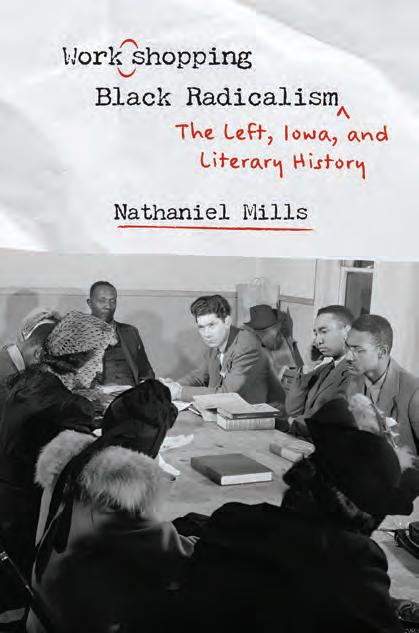
Workshopping Black Radicalism
The Left, Iowa, and Literary History
n athaniel Mill S
Communism, the Iowa Writers’ Workshop, and twentiethcentury Black literature
Within mid-century Black literature were two influential and overlapping, yet ideologically different, cultural forces: the writers’ groups of the US Communist left and the Iowa Writers’ Workshop (IWW), the founding and flagship program of the academic discipline of creative writing. During this time, the Communist Party of the United States backed a range of writing groups, workshops, journals, and other literary organizations that supported Black writers and critics, while by the 1950’s the IWW had become a major production site of American literary and intellectual work.
In this compelling cultural history, Nathanial Mills charts the histories of Black writers in the IWW, including Margaret Walker and Rita Dove, and those who participated in Communist writing clubs and other leftist political organizations, such as Richard Wright. MIlls argues that Black writers reimagined and repurposed these white-dominated spaces, to usher in a Black literary culture with an interracial and international revolutionary ethos at heart. In doing so, these writers changed not only the literary landscape in the United States and beyond but changed the institutions where they honed their craft.
NATHANIEL MILLS is associate professor of English at the University of Minnesota.
JANUARY 2027
$32.95 paperback [s] 6.125 × 9.25 in., 304 pages
ISBN 9781469697871
“Nathaniel Mills’s analysis of communist-affiliated writing groups and MFA programs provides new insight into the relationship between these adjacent but distinct locations of collaborative literary effort.”
Loren Glass, editor of After the Program Era: The Past, Present, and Future of Creative Writing in the University
SEPTEMBER 2026
$32.95 paperback [s]
6.125 × 9.25 in., 320 pages 17 halftones, 2 maps
ISBN 9781469693910
h i S to R y / i ndi G eno US
“A n eloquent narrative, rich with complexity and historical texture, and a welcome resource for readers in Guåhan, Turtle Island, and beyond.”
Ev yn Lê Espiritu Gandhi, author of Archipelago of Resettlement: Vietnamese Refugee Settlers and Decolonization Across Guam and Israel-Palestine
“A lesson in the possibilities of enacting solidarity where structures of colonialism have continually endeavored to make it an impossibility.”
Simeon Man, author of Soldiering Through Empire: Race and the Making of the Decolonizing Pacific
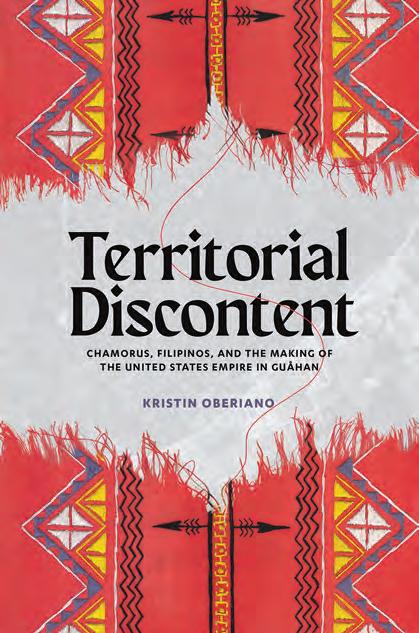
Territorial Discontent
CHamorus, Filipinos, and the Making of the United States Empire in Guåhan
K R i S tin oB e R iano
Copublished with the University of Guam Press
Strength in solidarity
This one-hundred-year history of the island of Guåhan, also known as Guam, charts how Indigenous CHamorus and Filipino migrants navigated and negotiated the expansion of US imperialism and militarism in the Pacific. Throughout the twentieth century, CHamorus and Filipinos living in Guåhan expressed their discontent with the inequities created by the US empire. Instead of partaking in outright anticolonial movements, they advocated for liberal solutions such as individual rights, land ownership, economic opportunities, and US citizenship. Unraveling this entangled history, Kristin Oberiano exposes the limitations of liberalism in anticolonial resistance.
Tracing the long history of CHamoru-Filipino relations, from the exile of Filipino revolutionaries to Guåhan to the burgeoning CHamoru selfdetermination movement, Territorial Discontent grapples with the varied motives that propelled CHamorus and Filipinos to rely on the limited liberal promise of freedom. Oberiano reveals that implementing these solutions for one group too often required the continued colonization of the other, entrenching US colonialism in Guåhan and enflaming tensions between CHamorus and Filipinos. Examining these antagonisms, Oberiano argues that building relationships with the CHamoru virtue of inafa’maolek—“to make good”— can nurture CHamoru-Filipino solidarities and illuminate alternative possibilities for Guåhan’s ongoing decolonization movement.
KRISTIN OBERIANO is assistant professor of history at Wesleyan University.
North Carolina in the Anxious Age
People, Places, and Policies That Will Shape the North Carolina Economy Through the Turbulent Twenty-First Century
Michael l . W alden
Policy recommendations
that will reduce any Tar Heel’s anxiety
We live in a collective moment that, for many, goes beyond uncertainty and holds unease and worry about the future. And while most, if not all, of these “Anxious Age” issues affect other states and even nations, Michael L. Walden, one of the foremost experts in North Carolina economics, makes clear the specific ways they’ll affect North Carolinians, making this a must-read for policymakers, politicians, and everyday folks alike. Walden covers everything from the increasing numbers of workers doing their jobs at home, to climate change, to questions of whether big urban centers like Raleigh and Charlotte will begin to lose population rather than continuing to grow. Walden even considers AI and how its use will affect the North Carolina economy, one that is increasingly focused on technology and research.
In covering a broad array of concerns and uncertainties, Walden promises to offer a clear roadmap of where we’ve been and where, in this tumultuous era, we may be headed.
MICHAEL L. WALDEN is William Neal Reynolds Distinguished Professor Emeritus at North Carolina State University and the author of many books, including North Carolina Beyond the Connected Age: The Tar Heel State in 2050.

OCTOBER 2026
$27.95 paperback [s] 6.125 × 9.25 in., 208 pages 11 maps, 18 graphs, 16 tables ISBN 9781469697925
“A clear, concise, and historically informed analysis of the Tar Heel State’s economy that focuses on post-COVID realities and the economy’s likely trajectory over the next twenty-five or thirty years.”
Peter A. Coclanis, author of The Shadow of a Dream: Economic Life and Death in the South Carolina Low Country, 1670–1920
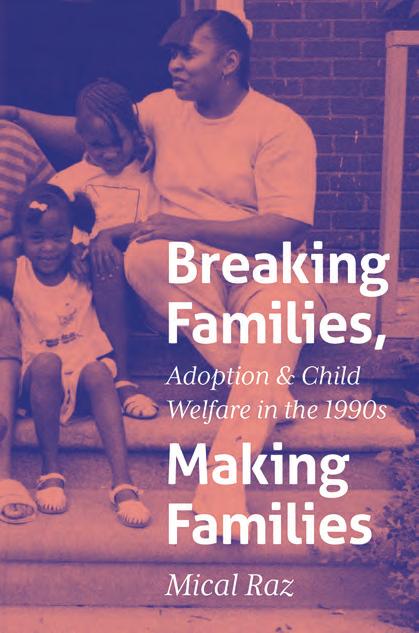
SEPTEMBER 2026
$27.95 paperback [s]
6.125 × 9.25 in., 240 pages 8 halftones
ISBN 9781469694689
Social Science / Sociolo G y
“Breaking Families, Making Families offers a fascinating history of the child welfare system that helps us understand how the liberal consensus on ‘child abuse’ shifted from an emphasis on transformation within families (and keeping them together) to a punitive family regulation system that made new families by removing children from their parents and adopting them out.
— Laura Briggs, Taking Children: A History of American Terror
Breaking Families, Making Families
Adoption and Child Welfare in the 1990s
Mical Raz
The dark side of adoption policy
Families in the United States experience child abuse investigations, the removal of children from their homes, and the termination of parental rights at higher rates than peer countries. Yet this does not make them safer and comes at a cost. As a historian and practicing doctor, Mical Raz asks how American society came to accept punitive interventionist policies that prioritize termination of parental rights. These practices “free” children for adoption, which leads to the devastation of families and communities and the creation of “legal orphans”—children who have no legal ties to their families of origin.
Drawing on original archival sources, legislative documents, and oral histories, Raz argues that adoption is not the inevitable solution to a child welfare system in crisis, maps the political history of this shift in child welfare policymaking—exemplified in the passage of the 1997 Adoption and Safe Families Act—and proposes future reforms.
MICAL RAZ is professor of history and health policy at the University of Rochester and works as a hospitalist at Strong Memorial Hospital.
Jim Crow Sociology
The Black and Southern Roots of American Sociology, Revised Edition
e a R l W R i G ht ii
RURAL STUDIES SERIES
The story of how sociology is Black and Southern
Originally published in 2020, Jim Crow Sociology is a lauded history of how “Black sociology” came into existence. Diving into the history of four historically Black colleges and universities and their roles in pioneering a new intellectual field, Earl Wright II argues that the roots of sociology lie not in the primarily white Ivies but in HBCUs. Wright’s work is foundational in tracing the roots of sociology at distinct institutions. Tuskegee Institute, for example, established the first program of applied rural sociology under the leadership of Booker T. Washington. Fisk University, under the guidance of first George Edmund Haynes and then Charles S. Johnson, developed one of the earliest and most influential programs of applied urban sociology. The history of W. E. B. Du Bois’s Atlanta Sociological Laboratory reveals the contributions of women to the first American school of sociology. In exploring the histories of these institutions and programs, Wright upends old ideas about the roots of an academic discipline and makes the case that sociology began in the United States as a Black and Southern enterprise.
EARL WRIGHT II is professor of sociology at Rhodes College.
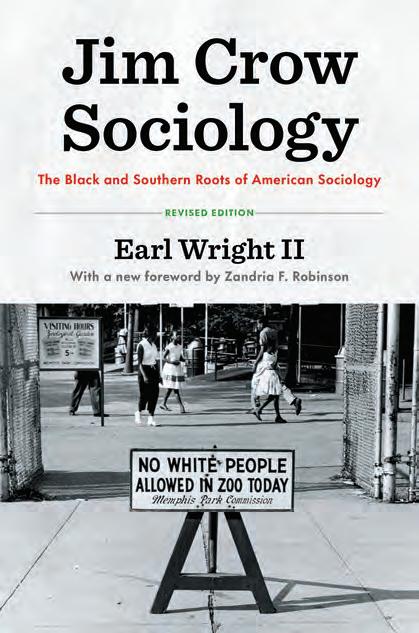
SEPTEMBER 2026
$29.95 paperback [s] 6.125 × 9.25 in., 224 pages ISBN 9781469695297
Science / Sociolo G y
“ The A tlanta Sociological Laboratory was the first American school of sociology. Jim Crow Sociology recovers and chronicles that history, providing a needed correction to common accounts of sociology’s development in the United States. It tells the story of scholars excluded from the canon they helped create and stands as a testament to the tradition they established, one that continues to shape the field.”
B. Brian Foster, author of I Don’t Like the Blues: Race, Place, and the Backbeat of Black Life
Social
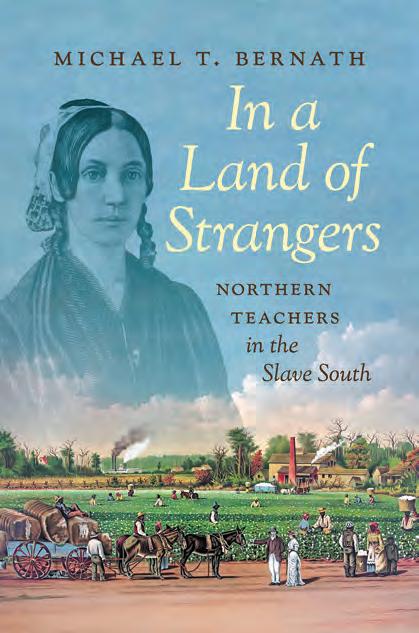
AUGUST 2026
$39.95 paperback [s]
6.125 × 9.25 in., 344 pages 9 halftones
ISBN 9781469696379
h i S to R y / United State S
In a Land of Strangers
Northern Teachers in the Slave South
Michael t . Be R nath
They came to teach—and left behind a portrait of the
foreign South
What makes the American South distinctive? Is it the location, the culture, the mindset—or a story Americans learned to tell about themselves? In a Land of Strangers contends that the idea of a “distinctive” South did not crystallize out of the Civil War or politics alone; instead, it took shape decades earlier through the everyday observations of thousands of Northern teachers who lived and worked there from the late eighteenth century through the Civil War. Young, white, educated, and marked as outsiders, these men and women occupied an unusual position of trust within Southern households, classrooms, and plantations, granting them rare, intimate access to the inner workings of slaveholding society.
“A n important and persuasive contribution, In a Land of Strangers breaks new ground with an impressive examination of more than two thousand northern teachers in the Old South, offering fresh insights into race, class, gender, and sectional identity. Elegantly written and methodologically strong, it promises wide scholarly impact.”
Jonathan Daniel Wells, author of Blind No More: African American Resistance, Free Soil Politics, and the Coming of the Civil War
Michael T. Bernath offers the first full-length study of this vast group of teachers—the most sustained point of contact between North and South in the antebellum era. Bewildered, curious, and constantly translating the South for themselves and audiences back home, these educators described a strange and profoundly different place in their diaries and letters. Collectively, they fixed a shared image of the South in the national imagination. In this book, Bernath reshapes our understanding of sectional identity, American culture, and why the idea of a distinctive South endures.
MICHAEL T. BERNATH is Charlton W. Tebeau Associate Professor of American history at the University of Miami.
Dreams of Small Countries
How Californios, Land Conflicts, and Race Shaped the Golden State
c a M ille S U á R ez
THE DAVID J. WEBER SERIES IN THE NEW BORDERLANDS HISTORY
How Anglo settlers and Mexican elites made California’s racial hierarchy
Prior to US conquest, a group of elite, mixed-race Mexicans called Californios nurtured the dream of patria chica (“small homeland”) in what is now the state of California. Californios’ settler dreams of wealth and privilege depended upon controlling Indigenous land and labor, but after Anglo settlers and the US Army arrived, Californios struggled to hold onto their own way of life.
Camille Suárez shows that rather than challenge the new regime, elite Californios allied with both the US Army and Anglo settlers, whom they viewed as racial counterparts, to ensure that their dream survived. Despite their differences, Californio and Anglo settlers initially worked together to subjugate Indigneous peoples and exclude non-white residents. However, Californios failed to see that their own lands and power stood in the way of the white settler state. Over time, the legal regime Californios helped shape undermined their own political power, whiteness, and claims to the land. By centering Californios as key political actors from the beginning of the US-Mexico War through the Civil War and Reconstruction, Dreams of Small Countries reexamines the origins of California statehood and explains how California became a white settler state.
CAMILLE SUÁREZ is assistant professor of history at Cornell University.
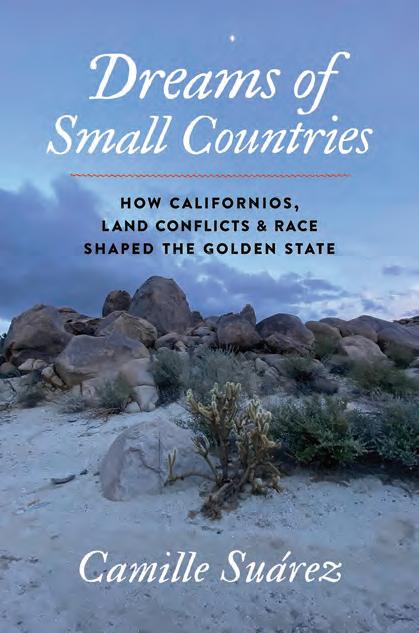
OCTOBER 2026
$29.95 paperback [s] 6.125 × 9.25 in., 208 pages 15 halftones
ISBN 9781469698021
“A welcome addition to the small but growing literature on Californios and a necessary read for understanding their position in Anglo-settler society.”
— Stacey L. Smith, author of Freedom’s Frontier: California and the Struggle over Unfree Labor, Emancipation, and Reconstruction
OCTOBER 2026
$37.95 paperback [s]
6.125 × 9.25 in., 336 pages 103 color plates, 7 figs., 6 maps ISBN 9781469697628
Reli G ion / iS la M
“Maklī ha s cried out for scholarly attention since entering the World Heritage List in 1981, and Quraishi gives us an authoritative, richly woven fabric of Maklī’s history.”
Phillip B. Wagoner, coauthor of Vijayanagara: Architectural Inventory of the Sacred Centre
“ This richly brocaded study illuminates centuries of history in a region long overshadowed (and divided) by postcolonial politics.”
Yael Rice, author of The Brush of Insight: Artists and Agency at the Mughal Court
Palimpsests Past and Present
The Sufis and Sultans of the Maklī Necropolis, 1380–1660
f a ti M a Q UR ai S hi
ISLAMIC CIVILIZATION AND MUSLIM NETWORKS
The historic role of funerary architecture in South Asia
Established in the late fourteenth century in what is now Sindh Province, Pakistan, the Maklī necropolis grew over three centuries to a site of more than seventy monumental tombs and mosques, and hundreds, if not thousands, of graves. Maklī’s distinctive architecture sheds light on the intersection of transregional artistic styles through its accretional building practices by generations of craftspeople. Over its long history, Maklī became a site layered with multiple meanings as regional elites and everyday Sufi devotees sought to be buried in the shadow of saints—and as the living visited the necropolis to enact devotions and duty.
Here, Fatima Quraishi uses rarely consulted archives in Pakistan alongside close analysis of Maklī’s built environment to understand the site as an artistic and architectural palimpsest, mutually established by elite patronage and humble devotions. At Maklī, the passage of time merges with changes in religion and society to reveal the vibrant lives and afterlives of tombs integral to the communal life of surrounding areas. By studying what has long been treated as an interstitial space between Central Asia and India, Quraishi’s work speaks to wider explorations of borderlands of the premodern past.
FATIMA QURAISHI is assistant professor of art and archaeology at Princeton University.
Parasitic Empires
Infection, Insularity, Inter-Imperiality, 1880–2022
Ba SS a M Sidi K i
No empire is an island
Real and imagined versions of the island and the microbe come together to tell a new story about geopolitical relations between two successive Anglophone empires: the British and the American. Bassam Sidiki assembles a vast archive of literary, cultural, and medical documents to argue that claims of British or American insularity are specious; these Anglophone empires have been economically, culturally, and scientifically interdependent since the turn of the century to the present as the British century gave way to the American. Ironically, the inter-imperial relations that refute imperial insularity are often most visible in islandlike spaces such as gardens, ships, and brothels, and in actual tropical islands where the two imperial powers have worked together—or at odds—to hold infectious diseases at bay.
Sidiki documents historical and imaginary representations of infectious diseases such as the plague, venereal disease, Spanish flu, and Hansen’s disease in the long twentieth century, and how these diseases brought the British and US empires into simultaneous collaboration and competition across the Anglophone world.
BASSAM SIDIKI is assistant professor of English at the University of Texas at Austin.

NOVEMBER 2026
$44.95 paperback [s] 6.125 × 9.25 in., 256 pages 18 halftones
ISBN 9781469697253
“Sidiki brilliantly contextualizes the uses of a certain medicalized figure of the ‘parasite’ within American and British imperial history, while his careful storytelling and eye for the compelling anecdote makes his complex ideas lucid and engaging.”
—Pamela Gilbert, author of Victorian Skin: Surface, Self, History
OCTOBER 2026
$34.95 paperback [s]
6.125 × 9.25 in., 240 pages 7 halftones
ISBN 9781469694016
l ite R a R y
cR itici SM / p oet R y
“Lukas Moe weaves underread, out of print, and unpublished works into an intellectual and literary history where the aesthetic and artistic precepts of modernism are shown to generate legacies of leftist, ethnically diverse politics and culture in following generations.”
—K amran Javadizadeh, Villanova University
Poetry Makes You Happen
American Poetry from Modernism to the Social Movement
lUK a S Moe
A new historical look at modernist poetry and politics
Modernist poetry has long had a reputation for craft formalism and political conservatism that overshadows its radical legacies. Lukas Moe shows how mid-century US poets and poetics drew upon leftwing culture to pave the way for diversity and pluralism in contemporary poetry. Poets used modernist forms to write poems of individual dissent and systemic critique that resonated with the ambitious visions of social movements in postwar US society. Audre Lorde’s sense that poetry “makes you happen”—a remix of W. H. Auden’s old saw that “poetry makes nothing happen”—exemplifies the power of what Moe calls verse culture: the archives, networks, and print media that sustain individual poetic creation and collective imagination.
By resituating authors such as Sterling A. Brown, Robert Hayden, George Oppen, Lorine Niedecker, and Muriel Rukeyser into a fluid political network of commitment and dissent, Moe narrates a compelling literary political history that deepens our understanding of what poetry can do in difficult times.
LUKAS MOE is an independent scholar of twentiethcentury poetry and poetics, modernism and radicalism, and social movement literature.
Abolition and the Rise of US Environmentalism
The Literature and Politics of Free Soil
Ja M e S S . f inley
How race and the environment shaped nineteenth-century literature
By the 1840s, many Americans recognized that the institution of slavery was destroying Southern landscapes while threatening to expand into the West. An increasing number of white Northerners believed that stopping slavery’s growth by surrounding it with so-called free soil would hasten its collapse and forestall an environmental crisis.
James Finley addresses this understudied intersection of US antislavery and environmental politics in the two decades before the Civil War, arguing that the debate over free soil—what it should look like and who should have access to this land—was an under-recognized precursor of modern American environmentalist movements.
Through the work of a group of Black writers and thinkers, the Free Soil movement’s white supremacist underpinnings were challenged by an eco-social vision that centered communities and labor while anticipating modern movements for environmental justice. By analyzing the output of authors who advocated for truly free soil, such as Frederick Douglass and Henry Highland Garnet, Finley finds commonalities in their attempts to reenvision communal relations between individuals and the land with contemporary movements for racial and environmental justice.
JAMES S. FINLEY is associate professor of English at Texas A&M University–San Antonio.

AUGUST 2026
$39.95 paperback [s] 6.125 × 9.25 in., 240 pages
ISBN 9781469694306
“A mong the first books to offer a nineteenthcentury genealogy of environmental justice— a movement that scholars and writers tend to see as originating in the 1980s. I have been in search of scholarship that sheds light on this history, and Finley’s book offers us just that.”
—Abby L. Goode, author of Agrotopias: An American Literary History of Sustainability
“Finley’s work helps us see that the Free Soil movement was conservationism avant la lettre, and that the twin goals of early conservationism were to preserve the land by enacting racial exclusions rooted in the idea that Black people were pollutants.”
Jennifer C . James, author of A Freedom Bought with Blood: African American War Literature from the Civil War to World War II
DECEMBER 2026
$37.95 paperback [s]
6.125 × 9.25 in., 208 pages 8 halftones, 1 map
ISBN 9781469697413
Social Science / n ative aM e R ican St U die S
“L aurel Sanders candidly discusses the federal policies and contexts in which the women at the center of this lived, received training, and negotiated the delicate issues of taking care of others while honoring their own culture.”
—Lisa J. Lefler, coauthor of Sounds of Tohi: Cherokee Health and Well-Being in Southern Appalachia
Nurses and a Beloved Woman
Eastern Cherokee Sovereignty and Federal Public Health in Interwar America
l a UR el Sande RS
The untold history of Native nurses in public health
In the 1920s and 1930s, the US Office of Indian Affairs (OIA) operated a public health (or “field nurse”) program to provide better care for Indigenous communities. Laurel Sanders tells the history of this program, centering on the life of Lula Owl Gloyne. Gloyne was an OIA field nurse, an early Native registered nurse, and a member of the Eastern Band of Cherokee Indians. Located in Western North Carolina, this Indigenous Appalachian community faced healthcare barriers shaped by racism, segregation, poverty, and poor infrastructure; likewise, Native communities nationwide endured tuberculosis epidemics and other public health crises.
The OIA attempted to improve conditions by professionalizing women’s health work within its ranks, but the new field nurses were also agents of forced assimilation, a project with deep roots in the public health field as well as US federal Indian policy. Few field nurses, including Gloyne, were Indigenous themselves. In bringing their experiences to light, Sanders show the overlap between the profession of nursing and the ancient importance of women’s leadership, the tensions between federal paternalism and Native nations’ goals, and the central role of community connection in public health.
LAUREL SANDERS is assistant professor of history and American Indian Studies at the University of North Dakota.
Regulating the Revolution
Democratic Deliberation and Biotechnology
n ao M i Scheine RM an
Genes, bioethics, and how to collectively navigate the future’s technologies
The 2012 discovery of CRISPR-Cas9, a revolutionary gene editing tool, embroiled scientists, ethicists, policymakers, and patient advocates in seemingly intractable conversations regarding the moral, social, and political implications of editing DNA. Simultaneously, the regulatory and governance environment into which the technology was introduced required modification to address its moral and safety risks. Naomi Scheinerman uses CRISPR-Cas9 as a case study to theorize a political process geared toward aiding the ethical and responsible regulation of technological innovation. Building on years of work by bioethicists and in response to calls for broader participation in legislative law-making, Scheinerman offers a direct intervention and justification for how “the people” can and should engage in democratic deliberation during regulatory rulemaking within the administrative state.
Scheinerman develops and defends a democratic regulatory framework that integrates the important authorities of both experts and non-experts, the goals of prudential and moral decision-making, and the connection between regulating the market with downstream goals of justice and equality to shape a more ethical future.
NAOMI SCHEINERMAN is assistant professor of bioethics at The Ohio State University.

OCTOBER 2026
$34.95 paperback [s] 6.125 × 9.25 in., 304 pages 3 figs., 2 tables ISBN 9781469697222
“A n important and astute work that advocates for inclusive and rational democratic deliberation in response to controversial bioethics issues. Anyone interested in navigating these complex questions would be wise to read this.”
—Leonard M. Fleck, author of Precision Medicine and Distributive Justice: Wicked Problems for Democratic Deliberation
NOVEMBER 2026
$37.95 paperback [s]
6.125 × 9.25 in., 336 pages 11 halftones
ISBN 9781469697727
Reli G ion / h i S to R y
“Refreshing and accessible, this book makes substantial contributions to the wide array of religious histories in the West.”
Tisa Wenger, author of Spirits of Empire: How Settler Colonialism Made American Religion
“Engaging from start to finish, this volume contributes to expansive conversations about religion in the American West. Thumbs-up!”
Konden Smith Hansen, author of Frontier Religion: Mormons and America, 1857–1907
Crisis of Care
Religion and Empire in the American West Since 1848
edited B y B R andi d eni S on and B R ett h end R ic K S on
How care and conquest influenced religious experience in
the American West
As the United States expanded westward during the nineteenth and twentieth centuries, religion played a key role in US imperial desires—whether a particular religious tradition thwarted these desires, worked to uphold them, or fell somewhere in between. Illuminating how religious institutions, leaders, and practitioners tended to their communities in the face of land dispossession, settlement, and resettlement, Crisis of Care contends that training an eye on care—intentional attentiveness to the welfare of individuals, communities, or whole societies—complicates the narrative of inevitable westward expansion and reveals the fragility of identities anchored in dominance. In this carefully curated volume, contributors highlight the many ways religious peoples of the American West looked after themselves and their communities despite the burden of—and their participation in—state violence. This collection may perhaps guide us to do the same as we face contemporary, tumultuous change.
Contributors include James B. Bennett, Carleigh Beriont, Thomas S. Bremer, Jon Garcia, Lynne Gerber, Jennifer Graber, Max Greenberg, Brennan Keegan, Nicole C. Kirk, Andrew Klumpp, Chrissy Yee Lau, Quincy D. Newell, and Joshua Paddison.
BRANDI DENISON is associate professor in the department of philosophy and religious studies at the University of North Florida. BRETT HENDRICKSON is professor of religious studies at Lafayette College.
Shadows & Solid Things
A History of Religion and Archaeology in the Modern World
K R i S tofe R B. z i MM itti
How sacred stories are found— and lost—in the history of archaeology
Archaeology began in an era when many people read ancient religious texts literally, believing that what was described on the page corresponded to a material reality that existed beneath the soil. With a shovel in one hand and a sacred text in the other, early archaeologists sought confirmation in concrete evidence. In the process, they opened themselves to the disturbing possibility that they would find nothing—or, perhaps even more unsettling, discover evidence that would challenge their cherished beliefs.
Using accounts of excavations in Italy, Egypt, Iraq, and Palestine, Kristofer B. Zimmitti explores the tensions between science and religion, faith and reason. As archaeology grew more popular during the eighteenth and nineteenth centuries, excavations from Herculaneum to Babylon and discoveries such as the Moabite Stone transformed the modern understanding of the ancient past for Protestants, Catholics, Jews, Muslims, and Latterday Saints. While some archaeological findings confirmed the truth of ancient texts, others threatened to overturn them. Rather than abandon or question their faith, many believers kept digging. When the dust of excavation had settled, today’s religious world had been forged.
KRISTOFER B. ZIMMITTI is a scholar of religion and history who works in colleges and congregations.
NOVEMBER 2026
$34.95 paperback [s] 6.125 × 9.25 in., 304 pages 18 halftones
ISBN 9781469698175
“A t once erudite and fun to read, Shadows and Solid Things delivers deep scholarship and literary grace at the same time!”
—Heather J. Sharkey, author of A History of Muslims, Christians, and Jews in the Middle East
“A n important reframing of previous North American cultural assumptions of the Bible— and a pleasure to read!”
David D. Grafton, author of An American Biblical Orientalism: The Construction of Jews, Christians, and Muslims in Nineteenth-Century American Evangelical Piety
Reli G ion / Bi B lical St U die S

OCTOBER 2026
$30.00 paperback [s] 8 × 10 in., 128 pages 6 halftones, 6 tables
ISBN 9781469691251
h i S to R y / eUR op e
The Enlightenment in Crisis
Diderot’s Encyclopédie in a Parisian Salon
d a vid e ic K and G R etchen Gal BR aith
REACTING
TO THE PAST™
Play with history! New gamebook from the Reacting Consortium
Set in Paris around 1750, The Enlightenment in Crisis places students amid the intellectual and political tension of the Enlightenment. France is Europe’s cultural powerhouse: Its language, fashions, and luxury goods shape tastes across the continent, and Paris draws artists, writers, and travelers from afar. Yet within this intellectual moment there lie deep contradictions. The monarchy projects strength while burdened by war debts, royal censors struggle to contain new ideas, and most ordinary people— peasants and urban laborers—live far from the elegant salons where elites debate philosophy. In this world of salons and print culture, knowledge itself is becoming a form of power.


For more Information about the Reacting to the Past™ series, scan the QR code to visit our website.
uncpress.org/series/reacting-to-the-past
A t the center of the game is the ambitious Encyclopédie, edited by Denis Diderot and Jean Le Rond d’Alembert and with contributions from dozens of leading thinkers, which aims to gather and organize all human knowledge. By championing progress through reason and science, the project provokes fierce resistance from religious authorities and royal officials. In this game, students take on the roles of philosophers, writers, scientists, nobles, clergy, and patrons in a Parisian salon, debating freedom of thought versus orthodoxy, freedom of expression versus censorship, reform versus tradition, equality versus hierarchy, human rights versus empire and slavery. Ultimately, they consider how far reason should go in challenging the political and religious order.
DAVID EICK is professor of modern languages and literatures at Grand Valley State University. GRETCHEN GALBRAITH is provost and professor of European history at Saint Michael’s College.
E C E N T B A C K L I S T
Reacting to the Past™ is an award–winning s eries of immersive role-playing games that actively engage students in their own learning. Students assume the roles of historical characters and practice critical thinking, primary source analysis, and argument, both written and spoken. Reacting games are flexible enough to be used across the curriculum, from first-year general education classes and discussion sections of lecture classes to capstone experiences, intersession courses, and honors programs.





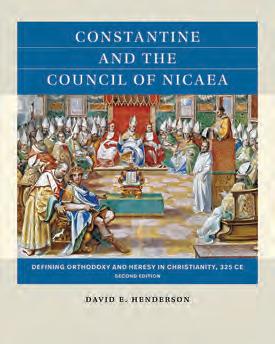
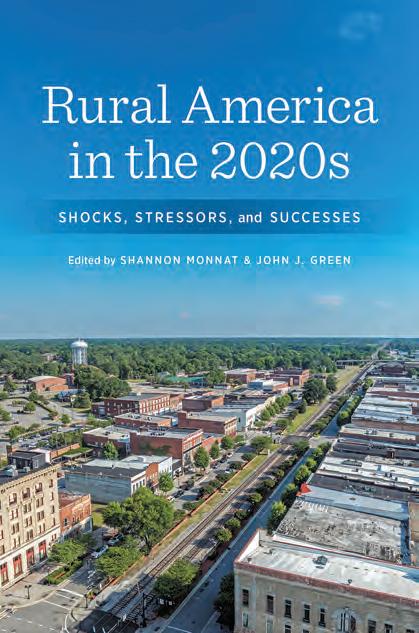
JANUARY 2027
$49.95 paperback [s]
6.125 × 9.25 in., 464 pages
1 fig., 10 maps, 55 graphs, 11 tables
ISBN 9781469699318
Social Science / Sociolo G y
Rural America in the 2020s Shocks,
edited
John
Stressors, and Successes
B y Shannon Monna t and
J. G R een
RURAL STUDIES SERIES
How care and conquest influenced religious experience in the American West
“Rural America in the 2020s presents in one volume a wide range of critical topics and issues that rural America faces. A timely and necessary collection of top scholars.”
—Keiko Tanaka, University of Kentucky
Though the media has often gone to the overly simplified urban/rural divide for op-eds, profiles, and political debates, rural America—just like its more populated counterpart—is not a monolith. There is not one rural America, rather there are many, each being reshaped by intersecting forces such as climate disasters, policy changes, and economic restructuring. Shannon Monnat and John J. Green’s comprehensive edited volume explores the causes and impacts of change in rural America—demographic shifts in race, age, and family composition, environmental and infrastructure challenges, and economic and social transformations in the ways people make their living and their lives. Taken together, the editors and contributors show that there are many kinds of rural America, each with different trajectories, yet bound by shared constraints and common strengths.
SHANNON MONNAT is the Lerner Chair in Public Health Promotion and Population Health, director of the Center for Policy Research, and professor of sociology at Syracuse University. JOHN J. GREEN is professor of sociology and director of the Southern Rural Development Center, housed within the Department of Agricultural Economics at Mississippi State University.
Contributors are Lionel J. Beaulieu, Kristina Brant, Kathryn J. Brasier, Matthew M. Brooks, Shelley Clark, Joseph F. Donnermeyer, Weston M. Eaton, Roberto Gallardo, Shaun A. Golding, Lori M. Hunter, Leif Jensen, Kenneth M. Johnson, Paige Kelly, Kristen Koci, Amanda McMillan Lequieu, Linda Lobao, J. Tom Mueller, Peter B. Nelson, David J. Peters, Lisa R. Pruitt, Danielle Rhubart, Alexis Santos, Dante J. Scala, Rebecca Schewe, Tim Slack, Yue Sun, Alexander Theophilus, Jessica D. Ulrich-Schad, Madelyn Verno, Mildred Warner, Richelle L. Winkler, and Xue Zhang.
NEW IN PAPERBACK

OCTOBER 2026
$35.00 paperback [t]
12 × 10 in., 200 pages
160 color plates, 7 halftones
1 map
ISBN 9781469699110
“ The lush images and meticulously researched story combine to make the case that restoring longleaf pine is not only possible, but worthwhile.”
Nature Conservancy
“[Longleaf, Far as the Eye Can See] pays tribute to a tree that’s been a fixture in the Southern forest for centuries.”
Garden & Gun blog
“I lost several hours paging through the evocative pictures in this book, and the text is equally absorbing.”
New York Times
Longleaf, Far As the Eye Can See
A New Vision of North America’s Richest Forest
Bill f inch, Beth f inch, Rhett John S on, and John c . h all
The richly illustrated story of an iconic southern tree
Longleaf forests once covered 92 million acres from Texas to Maryland to Florida. These grand oldgrowth pines were an integral part of the largest forest ecosystem in North America and over time came to define the forests of the southern United States. But a complex web of factors, including logging, fire suppression, and destruction by landowners, reduced those forests so that they now occupy only 3 million acres. Fortunately, the stately tree is enjoying a resurgence of interest, and longleaf forests are once again spreading across the South. Authors Bill Finch, Rhett Johnson, and John C. Hall offer an engaging exploration of longleaf pines’ interaction with other species, the development of these forests prior to human contact, and the influence of the longleaf on southern culture, as well as ongoing efforts to restore these forests.
Featuring Beth Finch’s breathtaking photography and a new foreword by the authors, this second edition of the classic Longleaf, Far As the Eye Can See invites readers to experience the astounding beauty and significance of the majestic longleaf ecosystem.
BILL FINCH is senior fellow at the Ocean Foundation and executive director of the Mobile Botanical Gardens. BETH FINCH is a conservation photographer and conservation realtor. RHETT JOHNSON is cofounder of the Longleaf Alliance, Inc. JOHN C. HALL was curator of the Black Belt Museum at the University of West Alabama.
Wild, Tamed, Lost, Revived
The Surprising Story of Apples in
the South
d iane f lynt, f o R e W o R d B y Se an B R o c K photo GR aph S B y a n G ie Mo S ie R
A FERRIS AND FERRIS BOOK
Understanding the South, one apple at a time
For anyone who’s ever picked an apple fresh from the tree or enjoyed a glass of cider, writer and orchardist Diane Flynt offers a new history of the apple and how it changed the South and the nation. Showing how southerners cultivated over 2,000 apple varieties from Virginia to Mississippi, Flynt shares surprising stories of a fruit that was central to the region for over 200 years. Colorful characters abound in this history, including aristocratic Belgian immigrants, South Carolina plantation owners, and multiple presidents, each group changing the course of southern orchards. She shows how southern apples, ranging from northern varieties that found fame on southern soil to hyperlocal apples grown by a single family, have a history beyond the region, from Queen Victoria’s court to the Oregon Trail. Flynt also tells us the darker side of the story, detailing how apples were entwined with slavery and the theft of Indigenous land. She relates the ways southerners lost their rich apple culture in less than the lifetime of a tree and offers a tentatively hopeful future.
A longside unexpected apple history, Flynt traces the arc of her own journey as a pioneering farmer in the southern Appalachians who planted cider apples never grown in the region and founded the first modern cidery in the South. Flynt threads her own story with archival research and interviews with orchardists, farmers, cidermakers, and more. The result is not only the definitive story of apples in the South but also a new way to challenge our notions of history.
DIANE FLYNT founded Foggy Ridge Cider in 1997 after leaving her corporate career and produced cider until 2018. She now sells cider apples from the Foggy Ridge orchards in the Virginia Blue Ridge Mountains.
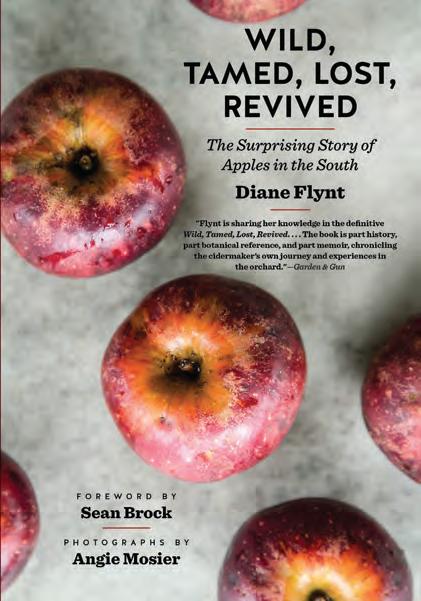
AUGUST 2026
$30.00 paperback [t] 7 × 10 in., 304 pages 62 color plates, 21 halftones ISBN 9781469699097
“Flynt is sharing her knowledge in the definitive Wild, Tamed, Lost, Revived . . . The book is part history, part botanical reference, and part memoir, chronicling the cidermaker’s own journey and experiences in the orchard.”
Garden & Gun
“Diane Flynt is a natural storyteller. Her voice gently draws the reader into her world; a world of apples and dreams.”
Cidercraft Magazine
“Flynt ‘s life story is a fascinating parallel to her scholarly but beautifully written and thorough tale of the history of the Southern apple.”
—Gardenia, Southern Garden History Society

AUGUST 2026
$28.00 paperback [t]
8 × 9.25 in., 240 pages
75 color plates
ISBN 9781469699059
The Southern Tailgating Cookbook
A
Game-Day Guide for Lovers of Food, Football, and the South
t a ylo R Mathi S
Win the tailgate!
“ There’s tailgating. And then there’s tailgating. . . . Here are recipes to get your season started.”
Chicago Tribune
“If you’re looking for a gift for the tailgater in your life, this book is sure to be a hit.”
Tailgater Magazine
“ The Southern Tailgating Cookbook helps satisfy all your culinary tailgate needs.”
—Houston Press
“Mathis does a great job of capturing the spirit of football tailgating and tells the story well.”
—National Barbecue News
“ THE (cook)book on tailgating in the South.”
Our State c oo K in G / aM e R ican
According to tailgating enthusiast Taylor Mathis, “You’ll understand why a game day in the South is unlike any other” when you read this cookbook. Mathis traveled across twelve states to document the favorite foods and game-day traditions embraced by thousands of fans at colleges and universities throughout the football-crazy South. Featuring 110 vibrant recipes inspired by Mathis’s tailgating tours, The Southern Tailgating Cookbook is chock-full of southern football culture, colorful photographs of irresistible dishes from simple to extravagant, and essential preparation instructions. Recipes cover a full day of dishes, with meals for every taste. From Chicken–Sweet Potato Kabobs to Zesty Arugula and Kale Salad to Deep-Fried Cookie Dough, there is something for every fan. Mathis also serves up day-before checklists, advice on packing for a tailgate, food safety information, and much more. His entertaining rundowns on unique southern football traditions—from fans’ game-day attire and hand signals to the music of the marching bands—are sure to lift both seasoned and novice tailgaters to greater heights of tailgate pleasure.
TAYLOR MATHIS is a passionate fan of all college athletics and resides in Greensboro, North Carolina.
Southern News, Southern Politics
How a Newspaper Defined a State for a Century
Ro B c h R i S ten S en
The surprising history of North Carolina’s best-known newspaper
Newspapers are a tough business, and no one knows that better than Rob Christensen, who was chief political reporter at North Carolina’s capital newspaper, the News and Observer, for decades. Here he tells the story of the N&O and how it helped shape modern North Carolina in complicated ways. It’s also the story of a family dynasty: four generations of the Daniels family owned and ran the N&O. They not only helped elect governors but also played an influential role in national American politics—family members served as political lieutenants to William Jennings Bryan, Woodrow Wilson, Franklin Roosevelt, and Harry Truman. Christensen takes readers from the N&O’s early days at the turn of the twentieth century as the militant voice of white supremacy to its denunciation by segregationist Jesse Helms for “selling out the South” in the 1960s and finally to its current dwindling fortunes. By telling the story of one important regional newspaper, Christensen shows how influence and messaging affect the politics of a state and a region for generations.
ROB CHRISTENSEN wrote about North Carolina politics for forty-five years for the News and Observer. He is also the author of several books, most recently The Rise and Fall of the Branchhead Boys: North Carolina’s Scott Family and the Era of Progressive Politics.
AUGUST 2026
$30.00 paperback [t] 6.125 × 9.25 in., 336 pages 15 halftones
ISBN 9781469699066
“A must-read for anyone who wants to understand the dynamics of race and politics that have shaped liberalism in North Carolina from the 1890s to Donald Trump.”
Tony Badger, Emeritus Paul Mellon Professor of American History, Cambridge University
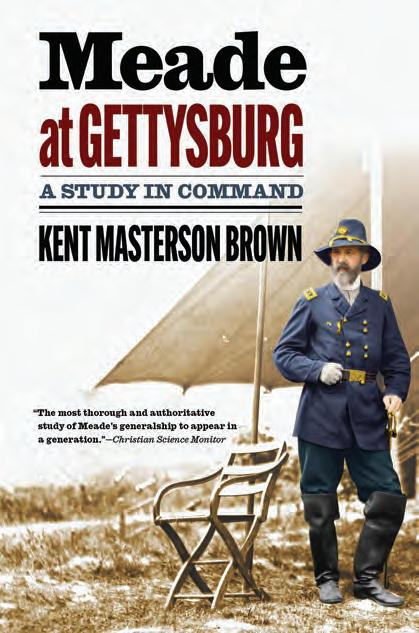
AUGUST 2026
$30.00 paperback [t] 6.125 × 9.25 in., 488 pages 70 halftones, 13 maps ISBN 9781469699103
i S to R y / United State S
“A n instructive book about Civil War generalship that will engage and inform anyone interested in the dynamics of command from the perspective of those in charge.”
—Library Journal
“In this me ticulously researched new book, a Civil War expert presents a refreshingly complex view of the matter—and rises to Meade’s defense.”
Christian Science Monitor’s Top 10 Books of June
“Brown’s book is the most thorough and authoritative study of Meade’s generalship to appear in a generation, edging out even John Gregory Selby’s excellent 2018 book ‘Meade: The Price of Command, 1863–1865’—but that command, at its moment of crisis, is still intensely up for debate.”
—Steve Donoghue, Christian Science
Meade at Gettysburg A Study in Command
Kent Ma S te RS on B R o W n
CIVIL WAR AMERICA
A Meade’s-eye view of the Battle of Gettysburg
Although he took command of the Army of the Potomac only three days before the first shots were fired at Gettysburg, Union general George G. Meade guided his forces to victory in the Civil War’s most pivotal battle. Commentators often dismiss Meade when discussing the great leaders of the Civil War. But in this long-anticipated book, Kent Masterson Brown draws on an expansive archive to reappraise Meade’s leadership during the Battle of Gettysburg. Using Meade’s published and unpublished papers alongside diaries, letters, and memoirs of fellow officers and enlisted men, Brown highlights how Meade’s rapid advance of the army to Gettysburg on July 1, his tactical control and coordination of the army in the desperate fighting on July 2, and his determination to hold his positions on July 3 insured victory.
Brown argues that supply deficiencies, brought about by the army’s unexpected need to advance to Gettysburg, were crippling. In spite of that, Meade pursued Lee’s retreating army rapidly, and his decision not to blindly attack Lee’s formidable defenses near Williamsport on July 13 was entirely correct in spite of subsequent harsh criticism. Combining compelling narrative with incisive analysis, this finely rendered work of military history deepens our understanding of the Army of the Potomac as well as the machinations of the Gettysburg Campaign, restoring Meade to his rightful place in the Gettysburg narrative.
KENT MASTERSON BROWN is an award-winning writer, filmmaker, and attorney residing in Lexington, Kentucky. His previous books include Retreat from Gettysburg: Lee, Logistics, and the Pennsylvania Campaign.
Underwriters of the United States
How Insurance Shaped the American Founding
h annah f a RB e R
Published by the Omohundro Institute of Early American History and Culture and the University of North Carolina Press
Managing risk and making a nation
Unassuming but formidable, American maritime insurers used their position at the pinnacle of global trade to shape the new nation. The international information they gathered and the capital they generated enabled them to play central roles in state building and economic development. During the Revolution, they helped the U.S. negotiate foreign loans, sell state debts, and establish a single national bank. Afterward, they increased their influence by lending money to the federal government and to its citizens. Even as federal and state governments began to encroach on their domain, maritime insurers adapted, preserving their autonomy and authority through extensive involvement in the formation of commercial law. Leveraging their claims to unmatched expertise, they operated free from government interference while simultaneously embedding themselves into the nation’s institutional fabric. By the early nineteenth century, insurers were no longer just risk assessors. They were nation builders and market makers.
Deeply and imaginatively researched, Underwriters of the United States uses marine insurers to reveal a startlingly original story of risk, money, and power in the founding era.
HANNAH FARBER is professor of history at Columbia University.

AUGUST 2026
$29.95 paperback [s] 6.125 × 9.25 in., 352 pages 27 halftones, 10 graphs, 2 tables ISBN 9781469699073
“Fascinating, deeply researched, and well-written. . . . Underwriters of the United States is an important, lively, and provocative contribution that will become a touchstone for future scholarship on the relationship between early American business and the state.”
—Economic History Association
“One cannot fail to admire the work [Farber] has done to bring together disparate and difficult archives in a truly original account of the formation of the American state and financial institutions. This book is a much-awaited prequel to works by Sharon Ann Murphy, Jonathan Levy and Ulrich Beck . . . and it will be enjoyed by as broad an audience.”
—International Journal of Maritime History
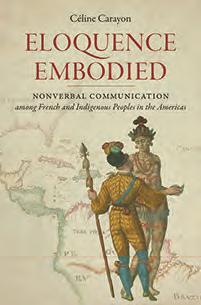
AUGUST 2026
$39.95 paperback [s] 6.125 × 9.25 in., 472 pages 22 halftones, 2 maps
ISBN 9781469699080
h i S to R y / United State S
Eloquence Embodied
Nonverbal Communication among French and Indigenous Peoples in the Americas c éline c a R ayon
Published by the Omohundro Institute of Early American History and Culture and the University of North Carolina Press
Decoding dialogues at the moment of encounter
Taking a fresh look at the first two centuries of French colonialism in the Americas, this book answers the long-standing question of how and how well Indigenous Americans and the Europeans who arrived on their shores communicated with each other. French explorers and colonists in the sixteenth century noticed that Indigenous peoples from Brazil to Canada used signs to communicate. The French, in response, quickly embraced the nonverbal as a means to overcome cultural and language barriers. Céline Carayon’s close examination of their accounts enables her to recover these sophisticated Native practices of embodied expressions.
“A sophisticated study, which is superbly grounded in the secondary literature. . . . [Carayon] extends to the gestural the attention that specialists of colonial and precolonial settings have lavished for some time now on the graphic and the oral. Eloquence Embodied enlarges the realm of the intelligible—for the participants, back then, and now for us.”
—Early American Literature
“Fresh. . . . Eloquence Embodied and its methods for recovering nonverbal gesture and performance will reinvigorate a wider interest in sensory studies of a vast early America.”
—William & Mary Quarterly
In a colonial world where communication and trust were essential but complicated by a multitude of languages, intimate and sensory expressions ensured that French colonists and Indigenous peoples understood each other well. Understanding, in turn, bred both genuine personal bonds and violent antagonisms. As Carayon demonstrates, nonverbal communication shaped Indigenous responses and resistance to colonial pressures across the Americas just as it fueled the imperial French imagination. Challenging the notion of colonial America as a site of misunderstandings and insurmountable cultural clashes, Carayon shows that Natives and newcomers used nonverbal means to build relationships before the rise of linguistic fluency—and, crucially, well afterward.
CÉLINE CARAYON is professor of history at Salisbury University.
JOURNALS




INDEX
B y a U tho R
Amador, José, 37
Anderson, Colin L., 31
Andrews, Thomas G., 13
Bernath, Michael T., 44
Blair, William A., 9
Bossy, Denise I., 29
Brookfield, Molly M., 11
Brown, Kent Masterson, 62
Carayon, Céline, 64
Chewning, Alton, 23
Christensen, Rob, 61
Denison, Brandi, 52
Dunn, Christopher, 10
Edwards, Junius, 18
Eglen, Lauren, 27
Eick, David, 54
Farber, Hannah, 63
Ferguson, Paul, 23
Finch, Beth, 58
Finch, Bill, 58
Finley, James S., 49
Flynt, Diane, 59
Fernández, Johanna, 20
Galbraith, Gretchen, 54
Golden, Kathryn Benjamin, 34
Green, John J., 56
Harker, Jaime, 26
Hendrickson, Brett, 52
Hysmith, K. C., 22
James-Gallaway, ArCasia D., 28
Johnson, Rhett, 58
Jou, Chin, 15
Latner, Teishan A., 36
Levin, Kevin M., 4
Mathis, Taylor, 60
McFarlane, Scot, 12
Miller, W. Jason, 5
Mills, Nathaniel, 39
Monnat, Shannon, 56
Monteith, Sharon, 18
Mora, Juan Ignacio, 38
Moe, Lukas, 48
Murphy, Mary-Elizabeth B., 33
Northam, Mitchell, 24
Nunley, Tamika Y., 16
Oberiano, Kristin, 40
Phillips-Fein, Kim, 20
Quraishi, Fatima, 46
Raz, Mical, 42
Sanders, Laurel, 50
Scheinerman, Naomi, 51
Schweid, Richard, 14
Shelden, Rachel A., 3
Sidiki, Bassam, 47
Smith II, Bobby J., 17
Suárez, Camille, 45
Walden, Michael L., 41
Waldstreicher, David, 30
Williams, Mason B., 20
Woods, Michael E., 32
Wright II, Earl, 43
Zaves-Greene, Hannah E., 35
Zimmitti, Kristofer B., 53
B y title
A Glorious Fate, 4
Able to Be American, 35
Abolition and the Rise of US Environmentalism, 49 Arlington, 9
Black Farm Boys, 17
Breaking Families, Making Families, 42
Captive Consumers, 15
Crisis of Care, 52
Culture and Containment, 31
Don’t Let Me Be Misunderstood, 5
Dreams of Small Countries, 45
Eloquence Embodied, 64
Embrace the Hard, 24
Fugitive States, 36
Gotham on the Verge, 20
If We Must Die, 18
In a Land of Strangers, 44
Jim Crow Sociology, 43
Latinx Encounters, 38
Life on the Octopus Farm, 14
Longleaf, Far as the Eye Can See, 58
Meade at Gettysburg, 62
North Carolina in the Anxious Age, 41
Notes from a Wayward Son, 6
Ordinary Sites, 28
Paddling the Carolinas, 23
Palimpsests Past and Present, 46
Parasitic Empires, 47
Poetry Makes You Happen, 48
Policing Passengers, 33
Regulating the Revolution, 51
Rural America in the 2020s, 56
Saltbox Seafood Joint Cookbook, 22
Sapphfic, 26
Shadows & Solid Things, 53
Somerset v. Steuart, 30
Southern News, Southern Politics, 61
Stray Dog in the Milky Way, 10
Territorial Discontent, 40
The Business of Bigotry, 32
The Enlightenment in Crisis, 54
The Great Horse Flu, 13
The Heart of the Collective, 27
The Political Supreme Court, 3
The River That Made Texas, 12
The Southern Tailgating Cookbook, 60
This Insurgent Ground, 34
Trans Brazil, 37
Underwriters of the United States, 63
Watching the Girls Go By, 11
Wild, Tamed, Lost, Revived, 59
Workshopping Black Radicalism, 39 Yamasee, 29
ORDER CONTACT

All books in this catalog are available on uncpress.org, through bookstores, or directly from Longleaf Services.
uncpress.org/how-to-order
Longleaf Services, an affiliate of UNC Press, was formed to provide cost-effective fulfillment services for not-for-profit publishers. longleafservices.org
Longleaf Services, Inc., 116 S. Boundary St., Chapel Hill, NC 27514-3808 | P: 800-848-6224 | F: 800-272-6817 customerservice@longleafservices.org
Order through Edelweiss edelweiss.abovethetreeline.com
Bookseller Discount Codes
Discount schedules may be found in the ABAH and book or obtained from your sales rep or the publisher. Trade: t | Short: s | Text: x
Pubnet
Longleaf SAN: 2033151
Please confirm account information with us (800-848-6224) before submitting your first PUBNET order.
RetURnS Permission to return overstock is not required provided books are returned within 18 months of sale. Books must be clean, undamaged, and saleable copies of titles currently in-print as listed on our website. Full credit allowed if customer supplies copy of original invoice or correct invoice number; otherwise, maximum discount applies.
Returns of OP titles accepted with in 6 months after notification. Please send carefully packaged books prepaid via traceable method to our warehouse: Longleaf Returns, c/o Ingram Distribution Solutions, 1280 Ingram Dr., Chambersburg, PA 17202
SALES REPRESENTATIVES
Elizabeth Orange Lane
Assistant Sales Manager, UNC Press 919-918-5885 | elizabeth.orange@uncpress.org
United States: Columbia University Press Sales Consortium
VA, WV, TN, NC, SC, GA, FL, AL, MS, AR, LA, TX
DE, MD, PA
ME, VT, NH, MA, CT, RI, NY, NJ
AK, AZ, CA, HI, ID, MT, NV, NM, OR, UT, WA
CO, IL, IN, IA, KS, KY, MI, MN, MO, NE, ND, OH, OK, SD, WI, WY
Canada
Catherine Hobbs Sales Consortium Manager & Southern US Representative 804-690-8529 | ch2714@columbia.edu
Sam Jaffe Goldstein
Mid-Atlantic Sales Representative 347-645-3949 | sj3176@columbia.edu
Conor Broughan
Northeastern US Sales Representative 917-826-7676 | cb2476@columbia.edu
William Gawronski
Western US Sales Representative 310-488-9059 | wg2289@columbia.edu
Kevin Kurtz
Midwestern US Sales Representative 773-316-1116 | kk2841@columbia.edu
Send orders to:
UTP Distribution utpbooks@utpress.utoronto.ca 5201 Dufferin St., Toronto, ON, M3H5T8, Canada P: 1.800.565.9523 F:1.800.221.9985 utpdistribution.com
Sales Representation
Ampersand–Head Office, Suite 213, 321 Carlaw St., Toronto, ON, M4M2S1, Canada Toll Free: 866-736-5620 Fax: 866-849-3819
UK, Ireland, Continental Europe, Middle East, Africa, Australia & NZ, Latin American & Caribbean Mare Nostrum Group 39 East Parade, Harrogate, North Yorkshire, HG15LQ, United Kingdom
Trade Orders & Enquiries trade@wiley.com P: +44 (0)1243 843291
Individual Orders & Enquiries Orders should be placed through your local bookstore, an online retailer, or via email: mng.csd@wiley.com
Media i n QU i R ie S : publicity@uncpress.org f o R e d U cato RS : uncpress.org/for-educators
Ri G ht S i n QU i R ie S : john.mcleod@uncpress.org
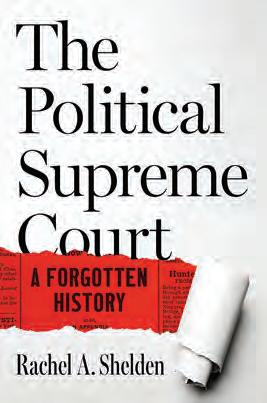

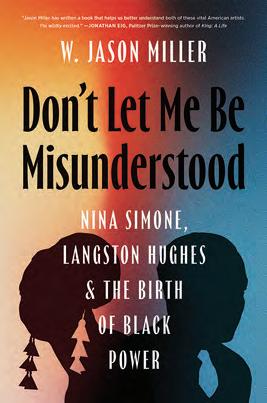

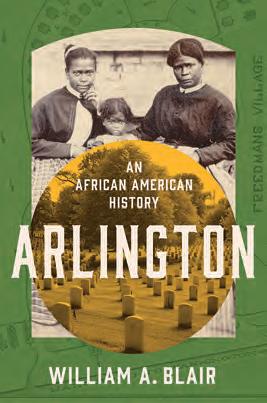

PG. 3
PG.
PG. 10
PG.
PG. 5
PG.