McGill-Queen’s University Press acknowledges the financial support of the Canada Council for the Arts for our publishing program.
Contents
Architecture | 34, 35
Art history | 22, 26
McGill-Queen’s University Press acknowledges the financial support of the Government of Canada for our publishing activities.
McGill-Queen’s University Press also acknowledges with gratitude the assistance of AMS Healthcare, the Azrieli Institute of Israel Studies, the Brian Mulroney Institute of Government Studies in Leadership, Public Policy, and Governance, the Canadian Corporation for Studies in Religion, Carleton University, the Donald J. Savoie Institute, the Humanities and Social Sciences Federation of Canada, Livres Canada Books, the McGill Institute for the Study of Canada, the Montreal History Group, the Royal Military College of Canada, the Smallman Fund of the University of Western Ontario, the Social Sciences and Humanities Research Council of Canada, and the Wellcome Trust for their support of its publishing program. Above all, the Press is indebted to its two parent institutions, McGill and Queen’s universities, for generous, continuing support for the Press as an integral part of the universities’ research and teaching activities.
Montreal
McGill-Queen’s University Press 1010 Sherbrooke Street West, Suite 1720 Montreal, QC H 3A 2R 7 Canada
Kingston
McGill-Queen’s University Press Douglas Library Building 93 University Avenue Kingston, ON K 7L 5C 4 Canada
COVER DESIGN salamanderhill.com
ORIGINAL INTERIOR DESIGN oneonone@videotron.ca
MODIFIED & TYPESET BY garet markvoort, zijn digital
Politics and political science | 6, 8, 17, 23, 25, 30, 31, 39
Psychology | 17
Queer studies | 14, 15
Religion | 3
Sociology | 36, 42
Security studies | 25, 27
Surveillance studies | 26
Technology and society | 24
Theatre and theatre studies | 10, 14
Urban studies | 7, 9, 28
Series
Advancing Studies in Religion | 3
Canadian Essentials | 6
Democracy, Diversity, and Citizen Engagement Series | 39 Hugh MacLennan Poetry Series, The | 12, 13
Intoxicating Histories | 28
McGill-Queen’s/AMS Healthcare Studies in the History of Medicine, Health, and Society | 33
McGill-Queen’s/Beaverbrook Canadian Foundation Studies in Art History | 1, 2, 26
McGill-Queen’s Indigenous and Northern Studies | 38
McGill-Queen’s Refugee and Forced Migration Studies | 7
McGill-Queen’s Studies in Early Canada / Avant le Canada | 20
McGill-Queen’s Studies in Protest, Power, and Resistance | 9
McGill-Queen’s Studies in the History of Ideas | 43
McGill-Queen’s Studies in the History of Religion | 41
McGill-Queen’s Transatlantic Studies | 27
Queer Film Classics | 15
Rupert’s Land Record Society Series | 21
State of the Federation, The | 31
Check us out online: mqup.ca
Follow us:
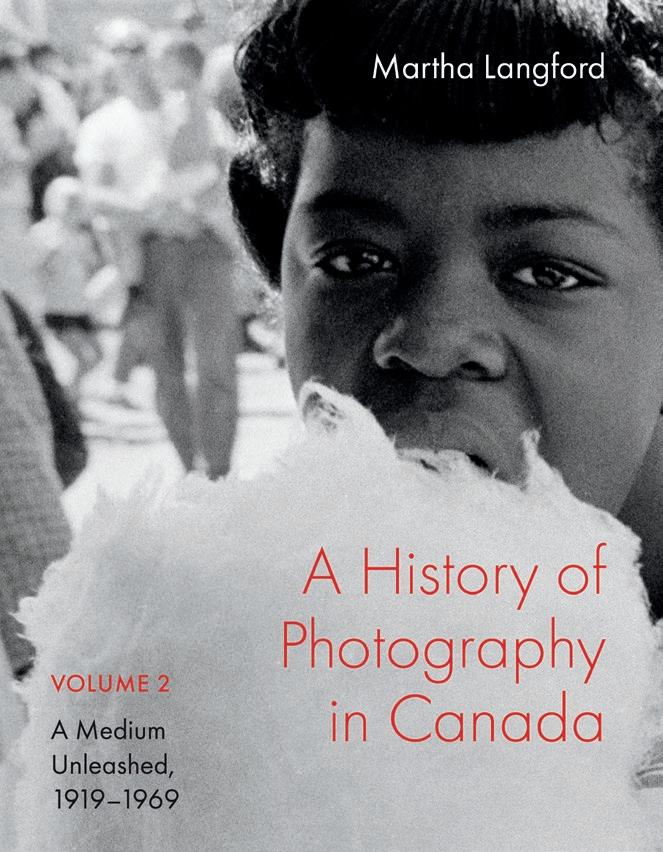
A History of Photography in Canada, Volume 2 A Medium Unleashed, 1919–1969
M AR t HA L AN gf OR d
What did Canadians know about photography, and when did they know it?
By the early twentieth century photography had emerged as a ubiquitous medium with deep cultural, social, and political force. A Medium Unleashed shows how photography moved beyond recording events to actively shaping them, transforming how Canadians imagined themselves and their country.
Drawing on the work of photographers in Canada and Newfoundland, foreign correspondents, and Canadian-born artists active abroad, Martha Langford relates a lively and richly researched history of the medium. The First World War had greatly expanded the reach of photography – already in use for four generations – introducing photojournalism as well as aerial, industrial, and reconnaissance photography. Professional practice grew alongside widespread amateur enthusiasm, supported by clubs, communal darkrooms, classes, contests, and salons. During the Second World War photography became more organized and specialized as information units laid the groundwork for the postwar commercial studio. The medium also moved into public and commercial life, from medical and advertising uses to more provocative
explorations of the human body. But socialization begins at home, where participation is varied: not just taking or making but staging, posing, and talking about pictures. Across twenty-five chapters devoted to distinct photographic practices, the second volume of this comprehensive history puts people, places, events, and objects in the frame: at home or on the move, on the ice or in the ring, from farm to factory to laboratory, shipyard to outport to far North, from the Winnipeg riots to Expo 67. By 1969 photography had secured creative recognition, mass appeal, practical utility, and persuasive authority, embraced by both establishment institutions and countercultural movements.
This is the history of a transnational medium seen through a national lens. Langford moves fluidly between incisive readings of individual photographs and the broader transformation of the Canadian imaginary, vividly expanding the definition of photographic experience.
Martha Langford CM f RSC is distinguished professor emerita of art history at Concordia University.
SPECIFICATIONS
McGill-Queen’s/Beaverbrook Canadian Foundation Studies in Art History November 2026
978-0-2280-2885-7 hardcover
$85.00T US/CDN, £68.00 UK
8.5 x 11 688pp 519 illustrations, colour throughout eBook available
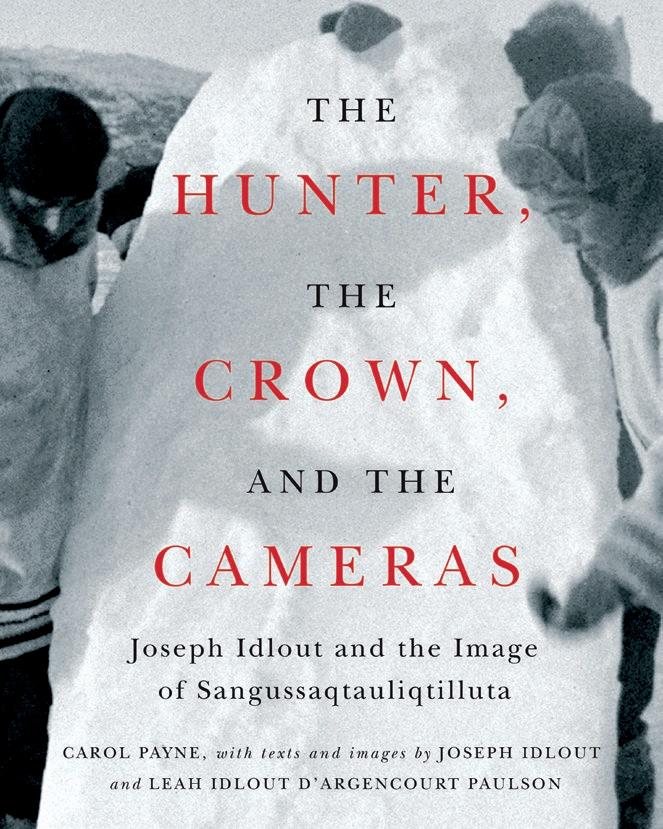
The Hunter, the Crown, and the Cameras
Joseph Idlout and the Image of Sangussaqtauliqtilluta
C AROL P A y N e
Inuit culture and colonial Arctic history through the lens of photographer and hunter Joseph Idlout.
Joseph Idlout was one of the most widely recognized Inuit figures of his time, famous for his role in the film Land of the Long Day and for a still photograph of him and his family that appeared on the Canadian two-dollar bill. These as well as other films and photographs were made by Qallunaaq filmmaker Doug Wilkinson. Idlout and Wilkinson had a complex connection forged with cameras: Wilkinson taught Idlout to photograph; Idlout and members of his camp were active collaborators in Wilkinson’s films, never solely the product of southern imagination. Idlout crafted a powerful visual record of Inuit life within a relationship that, while built on mutual dependence and respect, remained deeply inequitable. Through photographs and Inuit memory, The Hunter, the Crown, and the Cameras traces the entangled histories of Inuit and settlers in the Qikiqtani region during the 1950s and into the 1960s. Idlout’s work serves as a guide to a period of cultural encounter and the role of photography and film in understanding or misunderstanding Inuit life. He was a skilled photographer as well as a hunter, and the Nunavut Archives now hold some three hundred photographs credited to him. Dating from 1951 to 1958, the images depict camp life, encounters with Qallunaat, and a journey he made with other Inuit to Kalaallit Nunaat/ Greenland. Created during a period of intensified contact with southerners, state intervention, and
forced assimilation – what the Qikiqtani Truth Commission calls Sangussaqtauliqtilluta (the disruption) – these images document both the resilience of Inuit culture and subtle forms of resistance to southern authority.
Building on this visual record, family and community voices illuminate Idlout’s images. The volume reproduces contemporary texts by Joseph Idlout and his daughter Leah Idlout d’Argencourt Paulson and includes the words of his children Paul Ullatitaq Idlout and Susan Salluviniq and his grandson Joshua Idlout. Moses Idlout, Ludy Pudluk, Jacob Anaviapik, Elisapee Ootoova, Ruth Sangoya, and Solomon Awa also offer insight into his life and work. The book begins with a foreword by Idlout’s granddaughter Madeleine d’Argencourt; Inuk historian, educator, and curator Augatnaaq Eccles co-authored one chapter and co-curated a related online exhibition.
Structured around cyclical Inuit conceptions of time, The Hunter, the Crown, and the Cameras advances an approach to Arctic history that integrates visual analysis, Inuit testimony, and archival research to re-story Sangussaqtauliqtilluta.
Carol Payne is professor of art history in the Faculty of Arts and Social Sciences at Carleton University.
SPECIFICATIONS
McGill-Queen’s/Beaverbrook Canadian Foundation Studies in Art History October 2026
978-0-2280-2895-6 hardcover
$49.95T US/CDN, £40.00 UK
8 x 10 360pp 115 illustrations eBook available
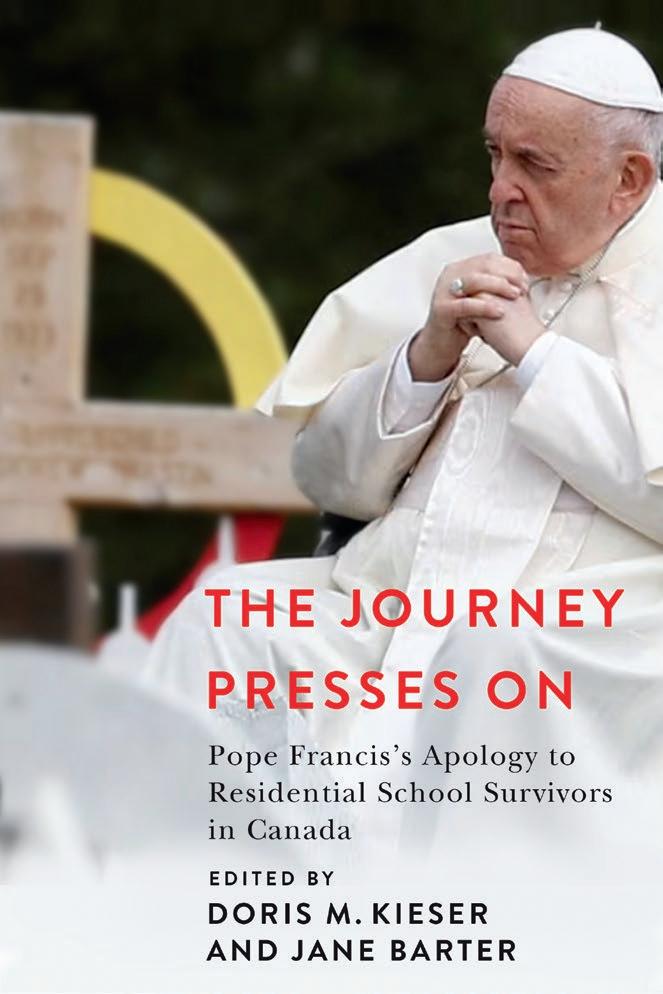
The Journey Presses On Pope Francis’s Apology to Residential School Survivors in Canada
e dited by dOR i S M. Kie S e R AN d J AN e bAR te R
Diverse and discerning reflections on Pope Francis’s 2022 apology to Indian residential school survivors.
In July 2022 Pope Francis travelled to Canada on what he called a “penitential pilgrimage,” apologizing for the Catholic Church’s role in the Indian residential school system. One of Francis’s most symbolically charged interventions, the visit has been understood as an attempt to align his broader legacy of pastoral humility, attention to the margins, and critique of colonial power with concrete acts of repentance.
The Journey Presses On brings together Indigenous and non-Indigenous scholars and church leaders to examine what this apology did and did not accomplish. Rather than offering a single judgment, this collection of seven essays traces the apology’s reception across diverse communities and traditions, revealing both moments of genuine encounter and the persistence of colonial structures within church and society. Positioned at the intersection of political theology, decolonial studies, and public ethics, the book situates Francis’s act within longer histories of ecclesial apologies, settler colonialism, and reconciliation efforts in Canada. The contributors analyze the apology’s language, gestures, silences, and institutional aftermath, including debates
over responsibility, the Doctrine of Discovery, and the gap between symbolic repentance and material justice.
Placing sharp critique alongside cautious hope, refusing to harmonize perspectives, The Journey Presses On explores the moral legacy of religious leadership in an era of historical reckoning and considers ways the Catholic Church in Canada might open pathways toward genuine reconciliation.
Doris M. Kieser is associate professor of theology at St Joseph’s College, University of Alberta.
Jane Barter is professor of religion and culture at the University of Winnipeg.
SPECIFICATIONS
Advancing Studies in Religion
September 2026
978-0-2280-2896-3 hardcover
$29.95T US/CDN, £26.99 UK 5.5 x 8.5 192pp eBook available
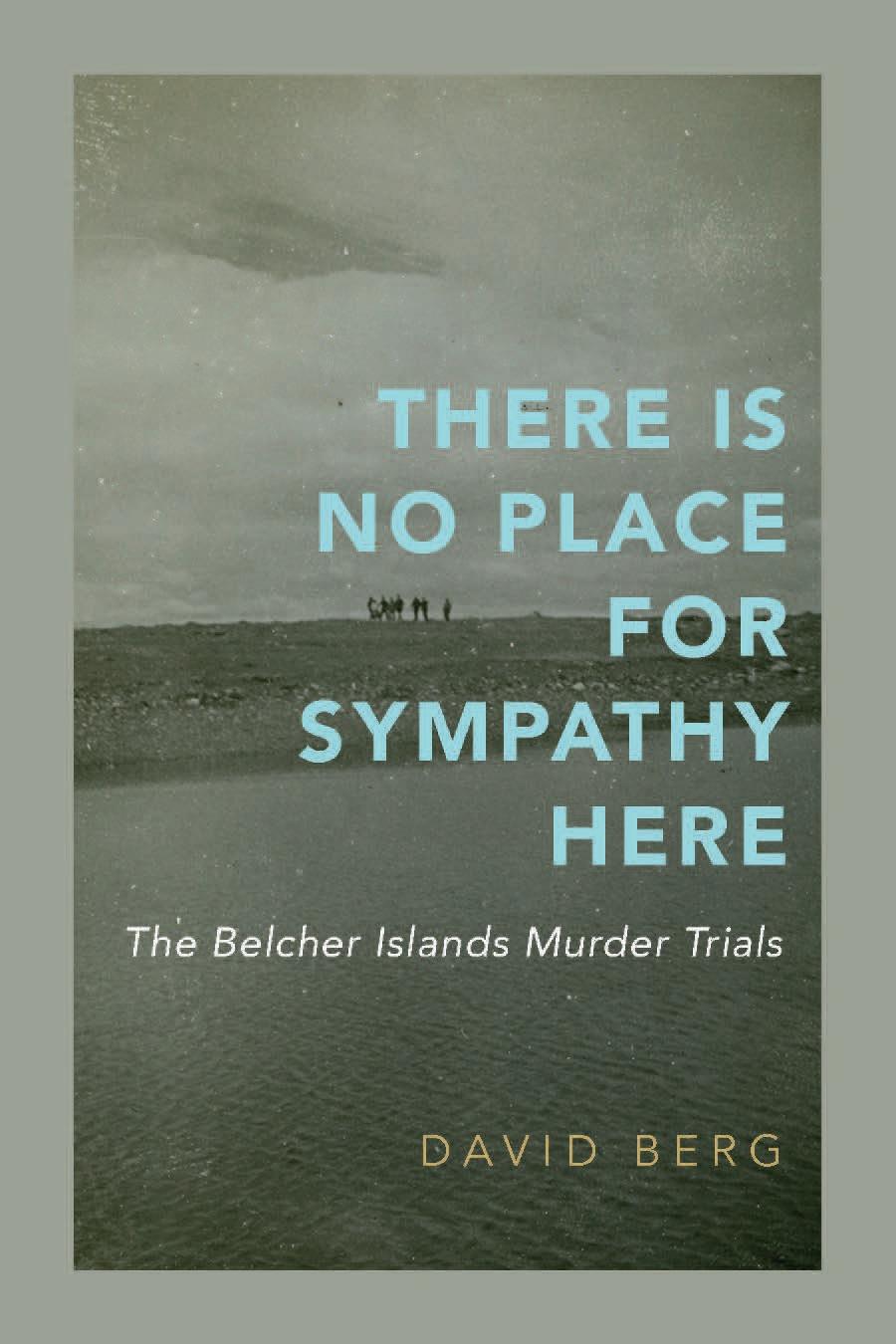
There Is No Place for Sympathy Here
The Belcher Islands Murder Trials
dA vid b e R g
How a judge, a prosecutor, and defence counsel worked to prevent the lawful but unjust execution of seven Inuit charged with murder.
In January 1941 the Royal Canadian Mounted Police learned of nine deaths in the Belcher Islands, an archipelago in southeast Hudson Bay. The fatalities reportedly occurred during an episode of intense religious fervour among the nomadic Inuit. While the RCMP ultimately charged seven Inuit with murder, none were convicted of that offence. In an era when murder demanded the death penalty and in a place that necessitated days of travel to reach, these legal proceedings illuminate the complex intersection of Inuit society and Canadian legal authority.
In this compelling history David Berg examines the coordinated roles of multiple branches of government in investigating and prosecuting the alleged murders, with the trial itself – conducted in a tent – serving as the book’s central focus. Despite overwhelming evidence, Berg’s extensive research demonstrates that the judge and counsel shaped the proceedings to foreclose the possibility of conviction by jury for murder. Although the judge insisted that “there is no place for sympathy here,” the record reveals a deliberate effort to avoid what all involved regarded as a legal but unjust outcome: the execution of the Inuit defendants. The result was a striking array
of verdicts – one acquittal; four convictions for manslaughter; one finding of not guilty by reason of temporary insanity, a verdict not recognized in Canadian law at the time; and a declaration of unfitness to stand trial despite psychiatric evidence to the contrary.
Shedding light on the conduct and reasoning at work in the Belcher Islands trials, Berg offers vital insight into the relationship between Indigenous communities and the Canadian criminal justice system at an early point in its history.
David Berg is a justice of the Ontario Court of Justice and former defence counsel in Ontario and Nunavut.
SPECIFICATIONS
Co-published with the Osgoode Society for Canadian Legal History
October 2026
978-0-2280-2938-0 hardcover
$65.00A US/CDN, £52.00 UK
978-0-2280-2882-6 paperback
$34.95T US/CDN, £26.99 UK
6 x 9 264pp 22 photos, 1 map eBook available
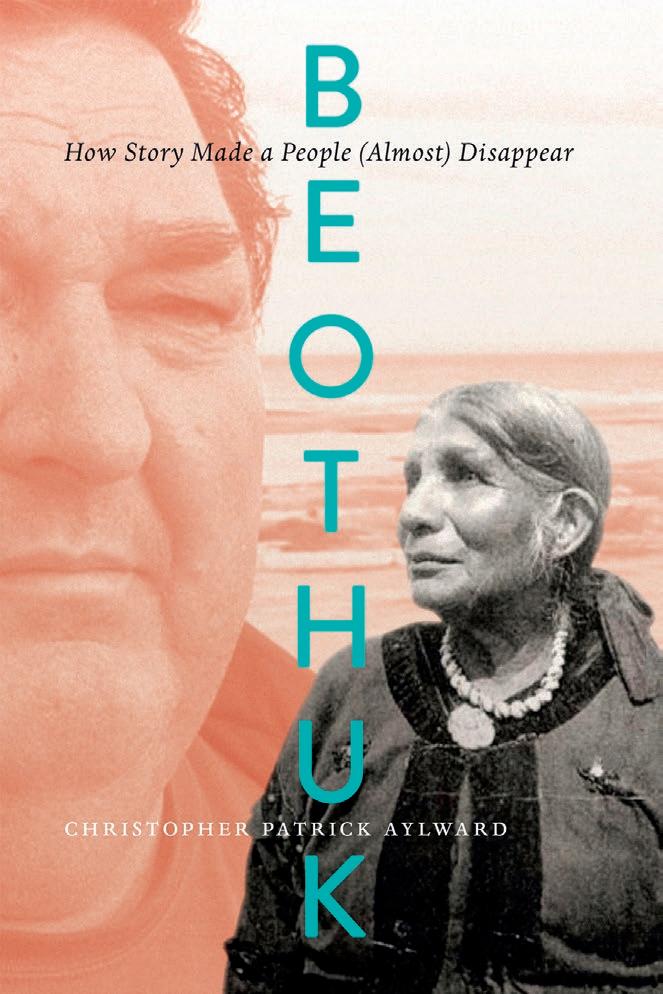
How Story Made a People (Almost) Disappear
C HR i S t OPH e R P A t R i CK Ay L w AR d
How the Indigenous Beothuk people in Newfoundland were made extinct –through stories.
The well-known story of the Beothuk is that they were an isolated people who, through conflict with Newfoundland settlers and Mi'kmaq, were made extinct in 1829. Narratives about the disappearance of the Beothuk and the reasons for their supposed extinction soon became entrenched in historical accounts and the popular imagination.
Beothuk explores how the history of a people has been misrepresented by the stories of outsiders writing to serve their own interests –from Viking sagas to the accounts of European explorers to the work of early twentieth-century anthropologists. Drawing on narrative theory and the philosophy of history, Christopher Aylward lays bare the limitations of the accepted story, which perpetuated but could never prove the notion of Beothuk extinction. Only with the integration of Indigenous perspectives, beginning in the 1920s, was this accepted story seriously questioned. With the accumulation of new sources and methods – archaeological evidence, previously unexplored British and French accounts, Mi'kmaq oral history, and the testimonies of Labrador Innu and Beothuk descendants – a new historical reality has emerged.
Rigorous and compelling, Beothuk demonstrates the enduring power of stories to shape our understanding of the past and the impossibility of writing Indigenous history without Indigenous storytellers.
Christopher Patrick Aylward is a filmmaker and associate professor of film studies at Toronto Metropolitan University.
“[Aylward] builds a compelling case: while the Beothuk are culturally and linguistically extinct, their genes have survived in other populations through intermarriage … Beothuk is thoroughly researched, and it should be essential reading on the subject.”
Brad Dunne, Literary Review of Canada
SPECIFICATIONS
October 2026
978-0-2280-2630-3 paperback
$34.95T US/CDN, £26.99 UK
6 x 9 312pp 3 drawings, 2 photos, 1 map eBook available
Immigration and Canada
Sixteen Questions
Je NN ife R eLR i CK AN d Mi R ei LL e P AQ uet
An accessible roadmap to how Canada’s immigration system actually works.
A definitive guide to a perplexing and increasingly polarized topic, Immigration and Canada distills the latest research into a highly accessible account, explaining how Canada’s immigration system works, both domestically and within the context of international migration, and how profoundly it shapes the lives of newcomers and the fabric of Canadian society.
Written for readers unfamiliar with the field, the book delivers information concisely in a lively Q&A format, without sacrificing analytical depth. As well as providing a helpful backgrounder, the authors address more complex and delicate questions – Is immigration good for the economy? Are immigrants learning the official languages? Are immigrants driving the housing crisis? Is Canadian immigration policy still racially biased? – responding with clear, evidence-based analysis. This primer offers a welcome understanding of Canada’s immigration system, its historical development and current pressures, the politics of immigration across the country including Quebec, and critical data on immigration and integration trends.
Amid widespread misinformation, Immigration and Canada fosters informed debate on one of today’s most topical issues.
Jennifer Elrick is associate professor of sociology and chair in multiculturalism at McGill University.
Mireille Paquet is professor of political science and university research chair on the politics of immigration at Concordia University.
“There’s so much at stake for the entire country if we let immigration policy be swayed by misinformation. This creative book brings the best academic research to ordinary Canadians to illuminate the complex phenomenon of immigration as a social institution, just like education and the judicial system.”
Nicholas Keung, reporter, The Toronto Star
SPECIFICATIONS
Canadian Essentials
September 2026
978-0-2280-2884-0 paperback
$27.95T US/CDN, £20.99 UK
6 x 9 270pp 5 tables, 9 graphs eBook available
We Asked for Refugees, We Got People Instead Refugee Placemaking in Canada
bRON wy N bRA gg
How resettled refugees negotiate the terms of their belonging in Canadian cities.
A small minority of the world’s refugees are resettled to a new country. These refugees must rebuild their lives while navigating a specific set of expectations: They must become good citizens and show proper appreciation for the generosity extended by host communities. We Asked for Refugees, We Got People Instead explores how refugee newcomers navigate demands both explicit and tacit while simultaneously working towards social inclusion and economic independence.
Drawing on fascinating ethnographic fieldwork, Bronwyn Bragg offers a place-based account of families living in a housing complex that became known as Little Syria, situated in a lowincome East Calgary neighbourhood. The book traces how white, middle-class norms cast Syrian families, particularly mothers, as both deserving of resettlement and the objects of intense moral scrutiny. Attending closely to daily practices and women’s labour, frequently within conditions of poverty, Bragg uses the tools of feminist geography to understand how this community negotiates the terms of its own belonging, an act she describes as refugee placemaking.
Bragg’s powerful work highlights how displaced people are often unequally absorbed into host societies along lines of gender, class, and race and how, despite these structural constraints, they go on to actively shape and improve the communities in which they live.
Bronwyn Bragg is assistant professor in the Department of Geography and Environment at the University of Lethbridge.
SPECIFICATIONS
McGill-Queen's Refugee and Forced Migration Studies
October 2026
978-0-2280-2904-5 paperback
$34.95A US/CDN, £26.99 UK
6 x 9 204pp 3 illustrations, 1 table eBook available
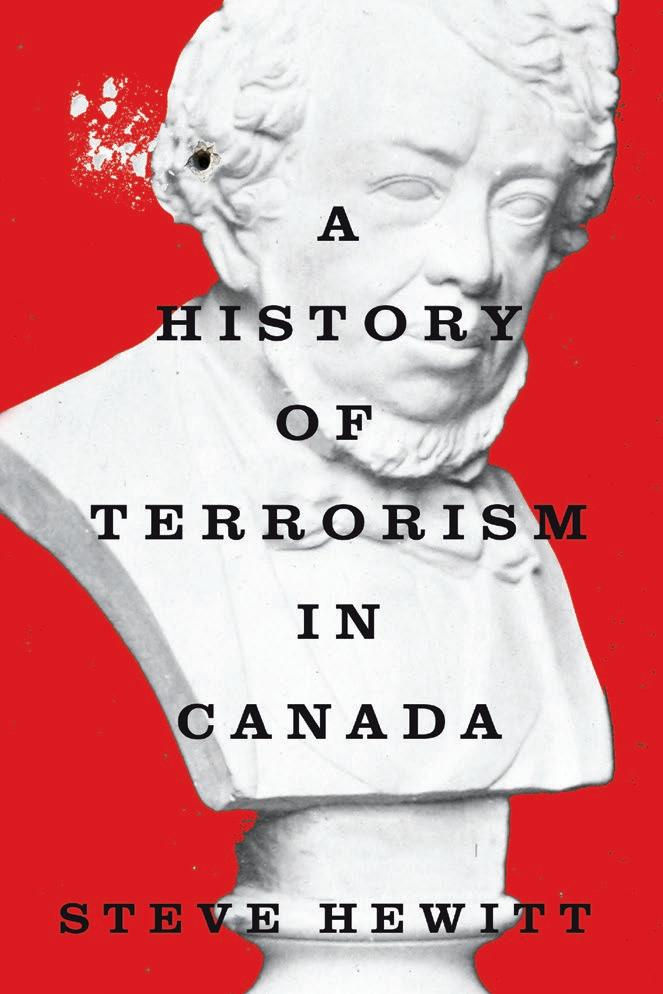
A History of Terrorism in Canada
Steve Hewitt
An examination of terrorism and counterterrorism in Canada.
Canada is often viewed as a peaceful nation, yet A History of Terrorism in Canada reveals a long and continuous record of politically and ideologically motivated violence. From the nineteenth-century Fenian raids and terrorism in Quebec to the 1985 bombing of Air India Flight 182 and the post-9/11 rise of lone-actor attacks, the book offers a comprehensive, contemporary account of how terrorism has shaped – and continues to shape – modern Canada and its place in the world.
Steve Hewitt dispels assumptions that terrorism is recent, un-Canadian, and easily understood. Drawing on years of security and intelligence research, he presents a sustained history of terrorism and counterterrorism in Canada, analyzing the motivations, methods, and meanings of political violence by diverse actors as well as the evolving responses of the Canadian state. The book addresses counterterrorism policies; societal responses to political violence; and key debates over definitions of terrorism, state terrorism, and effective prevention. Hewitt’s argument is organized around three central themes: how the enduring myth of Canada as a peaceable kingdom has affected perceptions of terrorism,
the complex intertwining of terrorism’s domestic and international dimensions, and how terrorism has changed over a long history of British and American imperial power.
Clear-eyed and timely, A History of Terrorism in Canada demystifies the violence and paints a nuanced, transnational portrait of Canadian terrorism.
Steve Hewitt is associate professor of North American history in the Department of History at the University of Birmingham and co-author of Just Watch Us: RCMP Surveillance of the Women’s Liberation Movement in Cold War Canada
SPECIFICATIONS
October 2026
978-0-2280-2894-9 hardcover
$39.95T US/CDN, £32.00 UK
6 x 9 360pp 6 illustrations, 2 tables eBook available
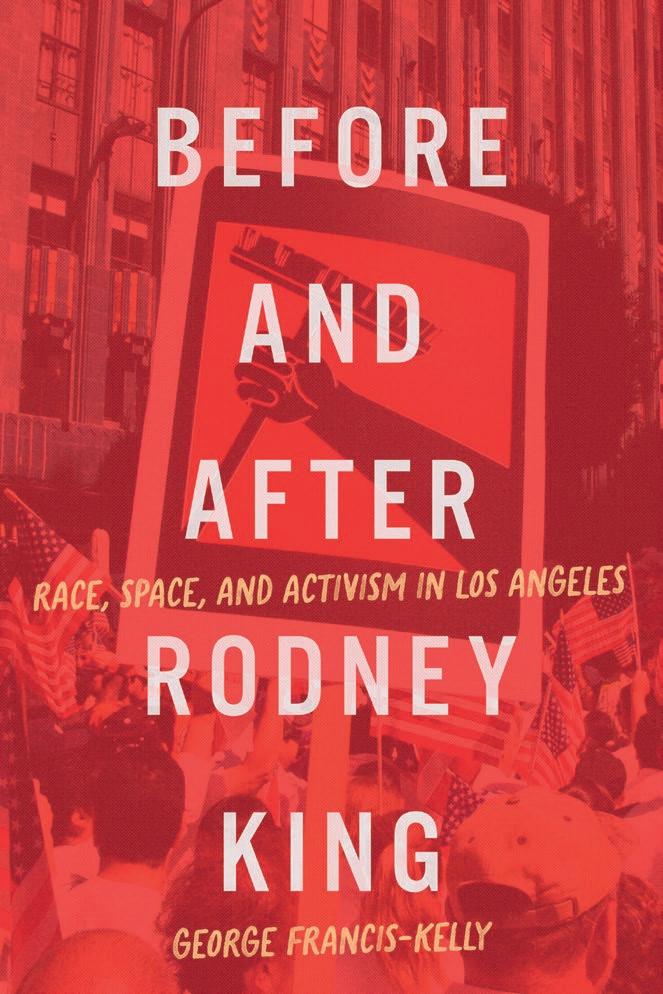
Before and After Rodney King
Race, Space, and Activism in Los Angeles
g e OR ge fRANC i S -Ke LL y
Recovering the unknown history of activism and spatial justice in the Rodney King era.
The urban disorder in Los Angeles in the late spring of 1992 shocked the world. For five days following the acquittal of police officers accused of the vicious beating of African American motorist Rodney King, the city’s Black and immigrant neighbourhoods burned. These events have long been understood as an enraged response to blatant racial injustice in an era of criminalization, poverty, and political powerlessness.
Setting the uprising within a twenty-year continuum of activist struggles for spatial justice, Before and After Rodney King tells a different story. George Francis-Kelly introduces an array of diverse and engaged community activists who fought to improve the everyday lives of their neighbours throughout the 1980s and early 1990s, from downtown janitors to East LA grandmothers, South Central entrepreneurs to Compton revolutionaries. Familiar community spaces became sites of struggle to reclaim the future of local development, jobs, and policing. As the global forces of the Reagan era began to define attitudes toward race and neoliberal urban policy, the resulting struggles over urban space precipitated the most destructive, costly, and deadly riot in modern US history.
Drawing from unexplored archival sources, Francis-Kelly examines the intersections between social history and racial geography to situate Los Angeles–based activism within the political landscape of urban America in the 1980s and 1990s.
George Francis-Kelly is a post-doctoral researcher at the University of St Andrews.
SPECIFICATIONS
McGill-Queen’s Studies in Protest, Power, and Resistance October 2026
978-0-2280-2905-2 paperback
$39.95A US/CDN, £31.00 UK
6 x 9 336pp 7 photos eBook available
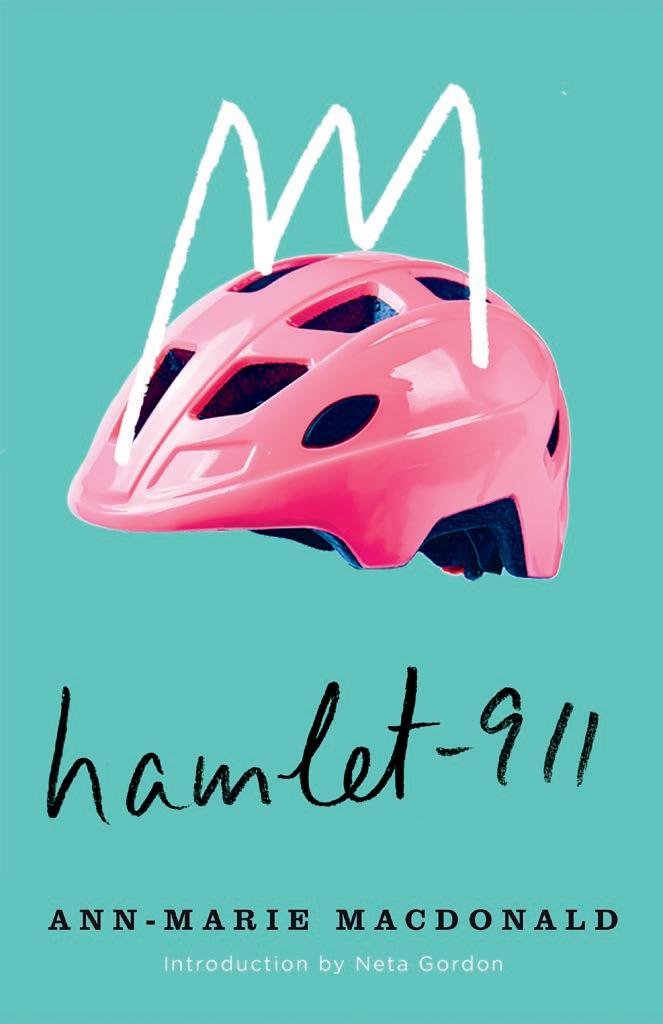
Hamlet-911
A NN -M AR ie M AC dONAL d
Introduction by Neta Gordon
A famous actor about to tread the boards as Hamlet suddenly finds himself in the Underworld.
Incisive and comical, Ann-Marie MacDonald’s Hamlet-911 interrogates white male privilege in the theatre while also grappling with urgent themes of adolescent suicide and personal crisis. The plot follows actor Guinness Menzies, a television star, who lands his dream role as Hamlet at the Stratford Festival – largely to impress his father, Rex, a renowned Shakespearean actor at the festival. Rex plays the Ghost, while Guinness’s wife, Sue, is cast as Gertrude, a role for which his real mother is deemed too old. Before a high school matinee a student named Jeremy messages Guinness for help with a class project, but Guinness ignores him. Unbeknownst to the actor, an online predator is grooming Jeremy, pushing him toward suicide. After a fight with Sue, Guinness crashes his bike and wakes up in a surreal Underworld, part nightmare, part comedy, where time is out of joint, his understudy may replace him, and he’s forced to relive his own family drama onstage. Guided by an usher-jester named Yorick, Guinness must complete a mysterious quest before he can return – and before it’s too late for Jeremy.
This new edition of the playscript provides essential context for reading and staging the work. It features a substantial critical introduction by Neta Gordon, exploring the history and national significance of the Stratford Festival and how MacDonald’s drama draws on Shakespeare’s Hamlet. It also includes an engaging interview with MacDonald and director Alisa Palmer, tracing the play’s multi-year development and eventual production at Stratford.
Ann-Marie MacDonald is an author, playwright, and actor whose published works include Goodnight Desdemona (Good Morning Juliet) and Fall on Your Knees
Neta Gordon is professor in the Department of English Language and Literature at Brock University.
SPECIFICATIONS
October 2026
978-0-2280-2944-1 paperback
$19.95T US/CDN, £14.99 UK
5.5 x 8.5 150pp 6 photos eBook available
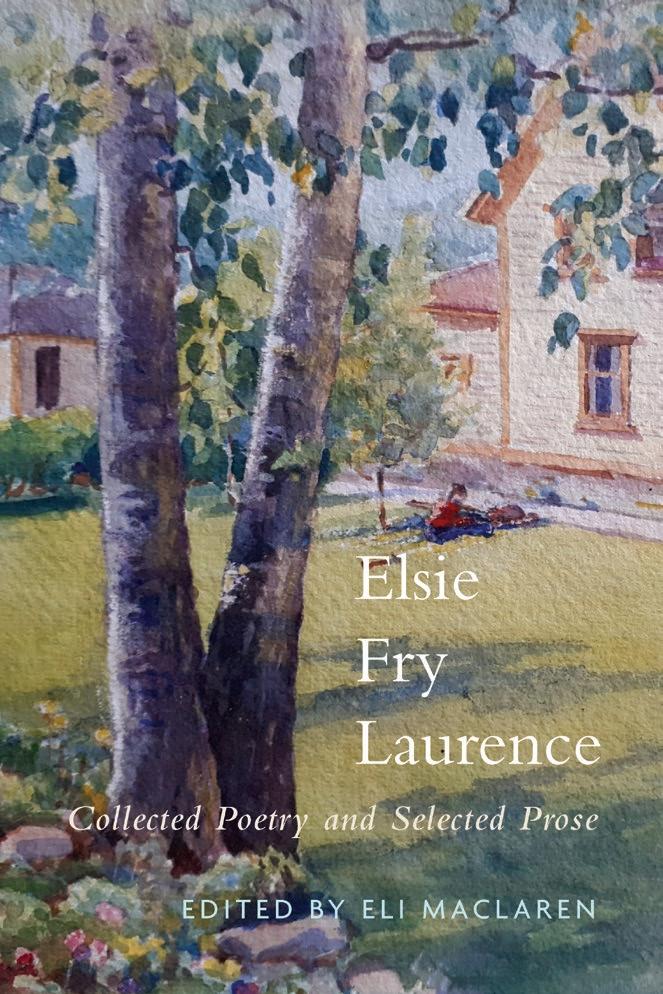
Elsie Fry Laurence
Collected Poetry and Selected Prose
e
dited by eL i M AC L AR e N
A writer by example: the life and work of Elsie Fry Laurence.
Margaret Laurence blazed a trail as a female Canadian author, yet it was her mother-in-law, Elsie Fry Laurence (1893–1982), more than writers like Virginia Woolf, whom she credited for establishing a model of authorship that she could emulate – one grounded in western Canada and equally committed to writing books, raising children, and attending to the realities of everyday life.
This is the first book-length study devoted to the life and work of Elsie Fry Laurence, a poet and accomplished novelist who played a formative role in defining literary life in Canada between the world wars and into the postwar period. A complete reading of Fry Laurence’s oeuvre sets the foundational premise for the book, along with interviews with her daughter, correspondence with her grandchildren, a comparison with Margaret Laurence’s fiction, archival research, and a contextualization of her works among those of Canadian and Indigenous poets and filmmakers. The second half of the volume brings together all of the poetry Fry Laurence published in book form, a substantial selection of poems from newspapers and magazines, and her complete short fiction, excluding only her two novels. The works
explore women’s roles in creating homes and sustaining communities while confronting grief, loneliness, war, and the anxieties of the nuclear age. Fry Laurence’s writing is shaped by a regional history marked by early twentieth-century settlement, the displacement and persistence of Dakelh and Nehiyawak peoples, and the complex cultural entanglements that continue to define the region today.
In recovering Fry Laurence’s work, Eli MacLaren restores attention to the place-based forces that shaped western Canadian women’s writing, thus reanimating contemporary approaches to Canadian literary study.
Eli MacLaren is associate professor in the Department of English at McGill University and the author of Little Resilience: The Ryerson Poetry Chap-Books
SPECIFICATIONS
October 2026
978-0-2280-2918-2 paperback
$34.95T US/CDN, £26.99 UK
6 x 9 312pp 34 photos eBook available
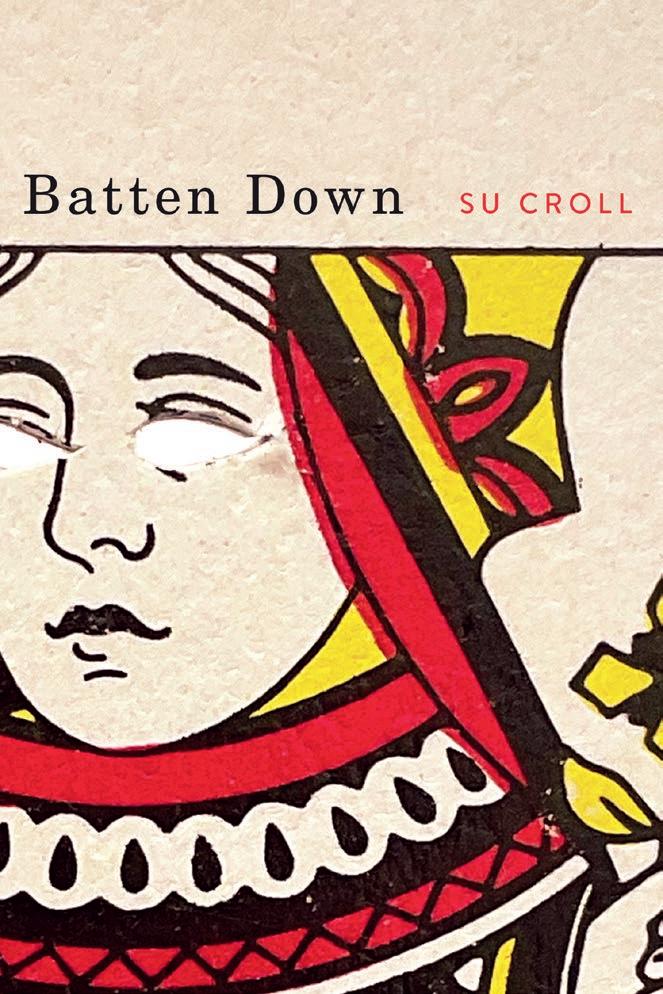
Batten Down
Su C ROLL
Poems of rage farming that poke and provoke and demand a reaction.
Here is where our ruins / are falling in on themselves. Here / is where we ride out our grievance-parade / and endless he-said she-said teetering / arguments in this world of dizzying / bumper car days
These are poems of Dorothy and the Witch in Oz, of cinematic mythologies and fractured fairy tales, inviting us to witness acts of grim revenge and reconsider the folkloric forests lodged in our collective minds.
With unsparing insight and rueful humour, Batten Down presents verse that rages across landscapes, in an era of increasingly thuggish leadership, where women press forward through persistent danger. Su Croll probes the cultural and historical forces that shape our present moment, indicting and questioning the twisted brutality Alfred Hitchcock visited upon his iconic blonds and the constricting circumstances endured by two wily Tudor queens. Throughout the collection, characters and situations function as a barbarous skeleton key to the confusions of our disordered, bouleversé culture.
Batten Down exposes our bruised, chaotic world, believing poetry can both bear witness to its chaos and offer the language and form necessary to better understand it.
SPECIFICATIONS
The Hugh MacLennan Poetry Series October 2026
978-0-2280-2934-2 paperback
$19.95T US/CDN, £14.99 UK 5 x 7.5 136pp eBook available
Su Croll is the author of several poetry collections including Worlda Mirth, Blood Mother, and Cold Metal Stairs, as well as the novel Seeing Martin She lives in Edmonton.
openbound Poems of Relation
Jeffe R y dONAL d SON
How would poems hold together an open marriage – or, in their own open relations, fall apart?
The trouble with honesty, it has no / final answers, leaves you in the cranny / where nothing left unknown meets finding out.
The puzzles of poetry and marriage are these: How to hold on to what you also release? How to protect love when other loves are put between? In this collection of sixty-nine “fifteeners” – sonnetlike constellations of five tercets – Jeffery Donaldson explores the outcomes of both questions over the course of a life in verse and a loving thirty-one-year open marriage.
The poems orbit around two readings that Donaldson and his wife chose for their wedding: a passage from Rainer Maria Rilke about two people protecting one another’s solitude; and a scene from Antoine de Saint-Exupéry’s The Little Prince in which the prince is told, “You are responsible for your rose.”
As openbound turns toward open marriage itself – its risks, its revelations, its misunderstandings, its wounds under cultural scrutiny – the work reveals itself foremost as a book of love poems, continuing Donaldson’s long devotion to a metaphoric both/and poetics capacious enough to hold loving and freedom in the same breath.
Jeffery Donaldson teaches English at McMaster University and is the author of poetry collections Palilalia and Waterglass as well as Missing Link: The Evolution of Metaphor and the Metaphor of Evolution.
SPECIFICATIONS
The Hugh MacLennan Poetry Series October 2026
978-0-2280-2931-1 paperback
$19.95T US/CDN, £14.99 UK 5 x 7.5 88pp eBook available
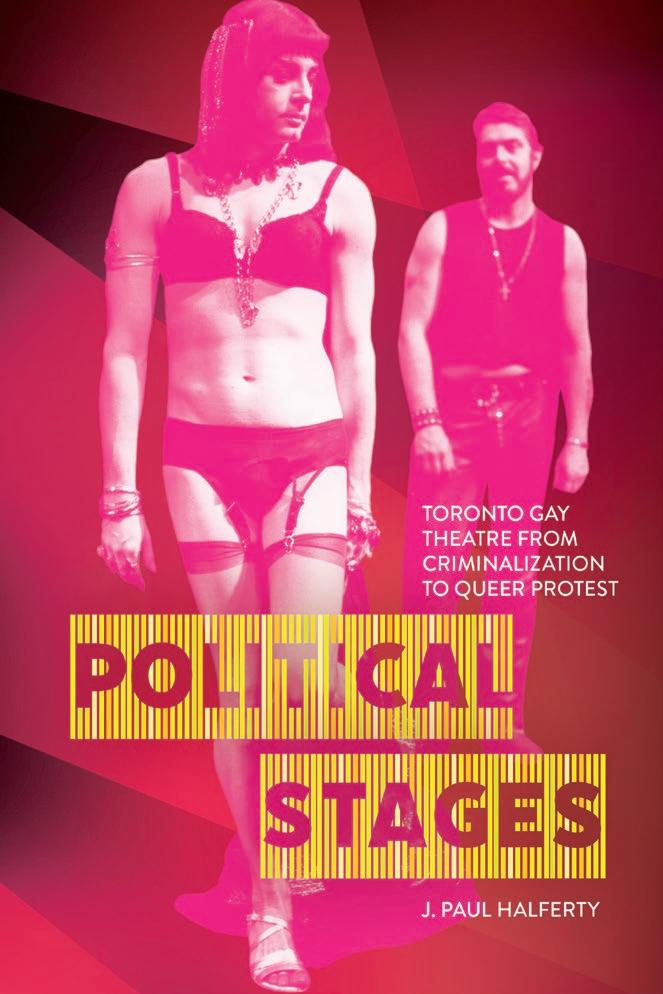
Political Stages
Toronto Gay Theatre from Criminalization to Queer Protest
J. P A u L H AL fe R ty
From decriminalization to liberation, how gay theatre transformed lGBTQ politics and alternative theatre in Toronto.
Famously rejected in Toronto, Fortune and Men’s Eyes, John Herbert’s autobiographical prison drama based on his incarceration for “gross indecency,” became an off-Broadway hit when it premiered in New York City in 1967. Less than twenty years later, Sky Gilbert’s Drag Queens on Trial premiered in a Toronto transformed: by 1985 the gay and lesbian community was at the vanguard of politics and activism, and Gilbert’s theatre company, Buddies in Bad Times, was establishing itself as a vital space for queer performance.
Against a backdrop of profound cultural and social transformation, Political Stages examines the role of theatrical performance – and of openly gay, politically engaged playwrights – in the emergence of gay liberation and the development of the alternative theatre movement in Toronto.
Adopting a cultural materialist framework, Paul Halferty traces the history of gay theatre through close analysis of four key productions: Herbert’s Fortune and Men’s Eyes (1967), the Tarragon theatre’s production of Michel Tremblay’s Hosanna (1974), Robert Wallace’s No Deposit, No Return (1975), and Gilbert’s Drag Queens on Trial (1985). Halferty’s richly detailed treatment
of the biographical, social, cultural, and political contexts shaping each work’s production and reception positions these plays as salient examples of gay theatre’s transformative impact on the city, its theatre, and its politics.
Charting the dynamic relationship between gay politics, gay theatrical production, and the ideological and artistic commitments of alternative theatres, Political Stages provides a fresh perspective on the political evolution of Toronto’s queer communities.
J. Paul Halferty is assistant professor in the School of English, Drama, and Film, University College Dublin.
SPECIFICATIONS
October 2026
978-0-2280-2890-1 paperback
$37.95A US/CDN, £28.99 UK
6 x 9 376pp 12 illustrations eBook available
The Living End
gL y N dA vi S
A close study of fury and form in a defining work of independent queer cinema.
Scuzzy, sexy, and driven by anger at the ongoing A id S crisis, Gregg Araki’s The Living End (1992) follows the exploits of an H iv -positive couple, journalist Jon and hustler Luke, as they reject conformity and take to the road. A touchstone of New Queer Cinema, the movie crackles with defiance, capturing the blunt rage and vital passion of its historical moment.
After two ultra-low-budget features, The Living End was a critical and commercial breakthrough for its director. Araki’s film rejected the activist call for positive images of homosexuality and challenged the representational politics associated with H iv /A id S . Blending personal reflection with close formal analysis, Glyn Davis examines the film’s production history, the live and thorny topics with which it engaged, and its significance as an independent production. Peppered with witty and knowing references to other movies and marked by a bold, dynamic deployment of locations, colour, props, actors, and industrial and shoegaze music, The Living End established an aesthetic template for all of Araki’s subsequent projects.
Over thirty years after its release, The Living End remains a groundbreaking work of queer cinema, its anger undiminished. Livid, smutty, and barbed, it astutely captures the peril and fury of queer life in the United States under the shadow of H iv and A id S . Davis’s fresh insight and rich context give new texture to this urgent and enduring film.
Glyn Davis is professor of film studies at the University of St Andrews.
SPECIFICATIONS
Queer Film Classics September 2026
978-0-2280-2899-4 paperback
$19.95T US/CDN, £14.99 UK
6 x 8 162pp 34 photos eBook available
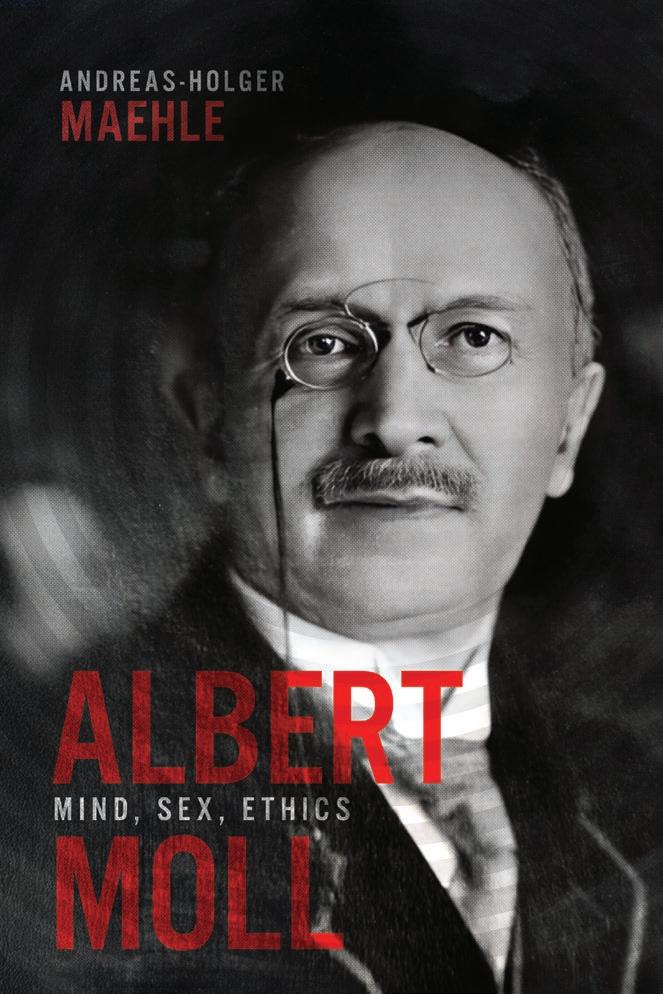
Albert Moll
Mind, Sex, Ethics
A N d R e AS -H OL ge R M A e HL e
The first scientific biography of Albert Moll, rival to Freud and authority on human sexuality.
Albert Moll (1862–1939) was a Berlin psychiatrist and neurologist whose work helped establish psychotherapy, sexology, and medical ethics as scientific disciplines. In Andreas-Holger Maehle’s first scientific biography, Moll, who has often remained in the shadow of eminent contemporaries, emerges as a pivotal and controversial figure who merits sustained scholarly attention.
Moll made influential contributions to the treatment of nervous and sexual disorders, most notably by introducing hypnotic suggestion therapy in Germany despite strong resistance. Working outside Sigmund Freud’s psychoanalysis, he developed his own theory of sexuality and a distinctive therapeutic approach to what were then labelled deviant desires. As a founder of sexual science, he served as a medical expert in court cases, and his distinction between physical and affectionate components of desire proved enduring. Moll’s intellectual independence was connected with uncompromising commitment to scientific objectivity, and this set him apart from his contemporaries. He rejected Freud’s emphasis on childhood sexuality; criticized Magnus Hirschfeld’s activist sexual politics; opposed
parapsychology and occultism; and, in Ärztliche Ethik (1902), he reconceived the doctor-patient relationship as a tacit contract centred on patient self-determination, particularly in hospital experimentation. Moll’s ideas anticipated later principles of autonomy and informed consent, while his public criticism of unethical practices in Berlin hospitals, alongside his other public disputes, marginalized him.
Drawing on scientific and popular writings, as well as archival sources including Moll’s forensic reports, this engaging biography offers a compelling account of an innovator and fierce critic in the medical world of Imperial and Weimar Germany.
Andreas-Holger Maehle is professor of history of medicine and medical ethics at the University of Durham.
SPECIFICATIONS
November 2026
978-0-2280-2924-3 hardcover
$34.95T US/CDN, £27.99 UK
5.5 x 8.5 240pp eBook available
Open-access edition available
NEW IN PAPER
Doing Harm
How the World’s Largest Psychological Association Lost Its Way in the War on Terror
R O y J. e ide LSON
A thought-provoking, unflinching, scrupulously documented account of one of the darkest chapters in the recent history of psychology.
Doing Harm pries open the black box on a critical chapter in the recent history of psychology: the field’s enmeshment in the so-called war on terror and the ensuing reckoning over do-no-harm ethics during times of threat. Focusing on developments within the American Psychological Association (APA ) over two tumultuous decades, Roy Eidelson exposes the challenges that professional organizations face whenever powerful government agencies turn to them for contributions to ethically fraught endeavours.
In the months after 9/11 it became clear that the White House, the Department of Defense, and the Central Intelligence Agency were prepared to ignore well-established international law and human rights standards in prosecuting the war on terror. It was less clear, however, that some of Eidelson’s fellow psychologists would become part of the abusive and torturous operations at overseas C i A black sites and Guantanamo Bay. Nor was it initially clear that this ruthless enterprise would garner acquiescence and support from the APA ’s leadership.
Doing Harm examines how and why the APA failed to join human rights groups in efforts to
constrain the US government’s unbridled pursuit of security and retribution. It recounts an ongoing struggle – one that has pitted APA leaders set on preserving strong ties to the military-intelligence establishment against dissident voices committed to prioritizing do-no-harm principles.
Roy J. Eidelson is a member of the Coalition for an Ethical Psychology and the past president of the Society for the Study of Peace, Conflict, and Violence, a division of the American Psychological Association.
“Eidelson provides a comprehensive and highly readable background story to [the American Psychological Association’s] accommodative stance … [Doing Harm] is a detailed exploration of how the powerful make monsters behind the scenes of hollow performances of slick benevolence.”
Ian Hansen, Counterpunch
SPECIFICATIONS
September 2026
978-0-2280-2990-8 paperback
$27.95T US, $32.95T CDN, £20.99 UK
6 x 9 272pp eBook available
NEW IN PAPER
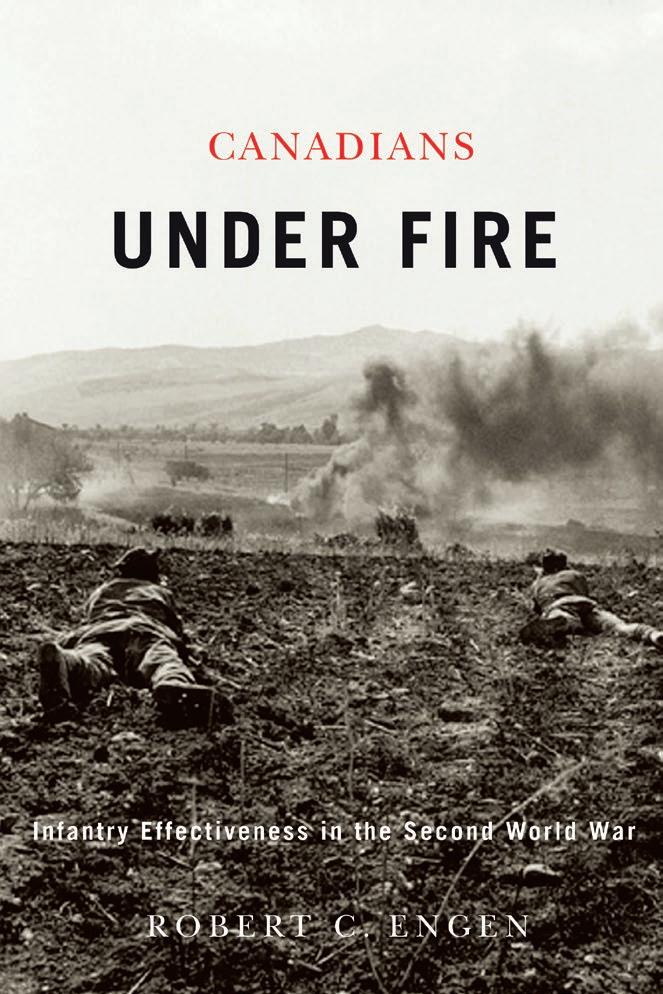
Canadians Under Fire Infantry Effectiveness in the Second World War
R O be R t C. eN ge N
A close study of how Canadian soldiers fought, killed, and died during the Second World War.
Infantrymen have been the sledgehammer of land warfare throughout the twentieth century, but precisely how they fought at the tactical level has been difficult to determine. American historian S.L.A. Marshall, for instance, famously claimed that most Allied soldiers would not fight at all, even when their lives were at stake.
In Canadians Under Fire Robert Engen explores the dynamics of what combat looked like to Canada’s infantrymen during the Second World War. Analyzing unexamined battle experience questionnaires from over 150 Canadian infantry officers, Engen argues for a reassessment of the tactical behaviour of Canadian soldiers. The evidence also shows that Marshall’s theory of non-participation in combat by Allied forces is demonstrably false: Canadian soldiers took a continued and aggressive part in the fighting.
Canadians Under Fire forces a reappraisal of previous ideas about the behaviour of men in combat and offers new insight into how Canadians responded at the battlefront.
Robert C. Engen is senior lecturer in war studies and director of wargaming at Deakin University in Canberra, Australia. He is the author of Strangers in Arms: Combat Motivation in the Canadian Army, 1943–1945 and co-author of Through Their Eyes: A Graphic History of Hill 70 and Canada’s First World War.
SPECIFICATIONS
September 2026
978-0-2280-2992-2 paperback
$34.95A US/CDN, £26.99 UK
6 x 9 256pp 57 tables eBook available
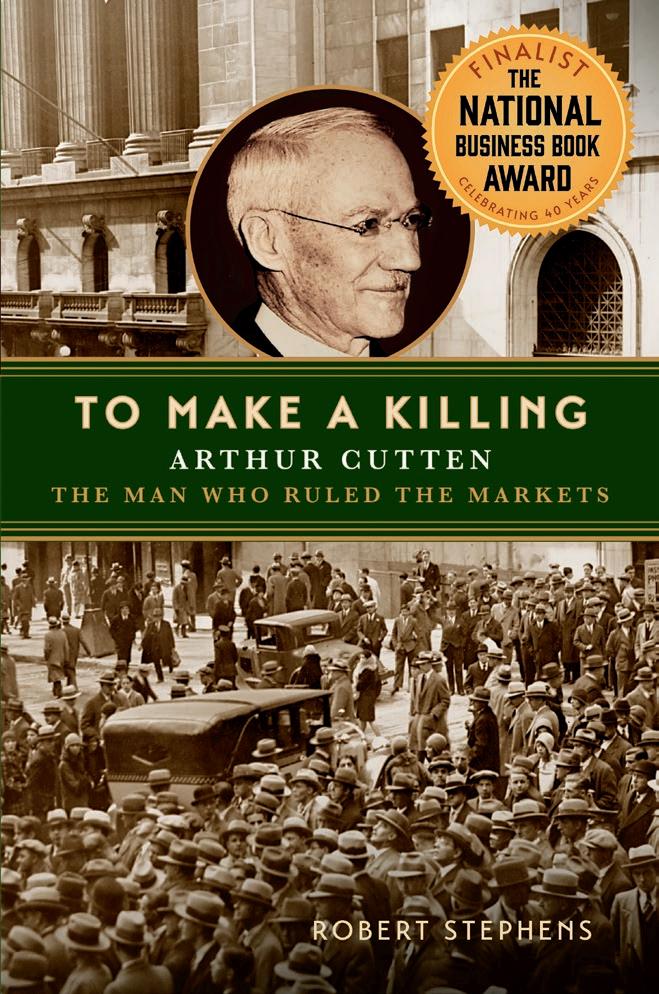
To Make a Killing Arthur Cutten, the Man Who Ruled the Markets
R O be R t Ste PH e NS
The life and legacy of the legendary Wall Street operator of the Roaring Twenties.
One of the wildest, most spectacular decades in American history, the 1920s were a period of unprecedented growth and mass consumerism. In the New Era people drank in speakeasies, danced to jazz, idolized gangsters, and bet their life savings on stocks.
Born and raised in a small Canadian town, Arthur Cutten went to Chicago in 1890 with ninety dollars to his name. Through utter ruthlessness he amassed a fortune trading in grain futures and stocks. Cutten was heralded as the modern Midas, and his every move was followed by the masses, who believed they could get rich quick. But everything changed after the crash of 1929. The heroes of prosperity became the villains of the Great Depression. Determined to crack down on the “banksters,” the Roosevelt administration launched an all-out attack on those it blamed for the collapse – and Cutten was at the top of the list. A US Senate committee probed how he manipulated stock prices. The Grain Futures Administration moved to bar him from trading. And the Bureau of Internal Revenue indicted him for income tax evasion. But the wily operator won on every count: He emerged from the Senate investigation unscathed, maintained his grain
trading privileges after a victory in the Supreme Court, and left almost nothing for the tax collectors upon his death.
To Make a Killing tells the tale of Cutten’s journey to fabulous wealth, the forces that propelled him, and the fascinating characters in his life.
Robert Stephens (1948–2025) was a journalist and president of PR POS t . He lived in Toronto and London, Ontario.
“Cutten was once described by his mentor, the commodity trader James Patten, as ‘not only the most daring, but the most unerring speculator the world has ever known.’ Mr Stephens’s chronicle is a valiant attempt to shed light on his life.”
Edward Chancellor, The Wall Street Journal
SPECIFICATIONS
September 2026
978-0-2280-2994-6 paperback
$27.95T US, $32.95T CDN, £20.99 UK
6 x 9 270pp 60 photos eBook available
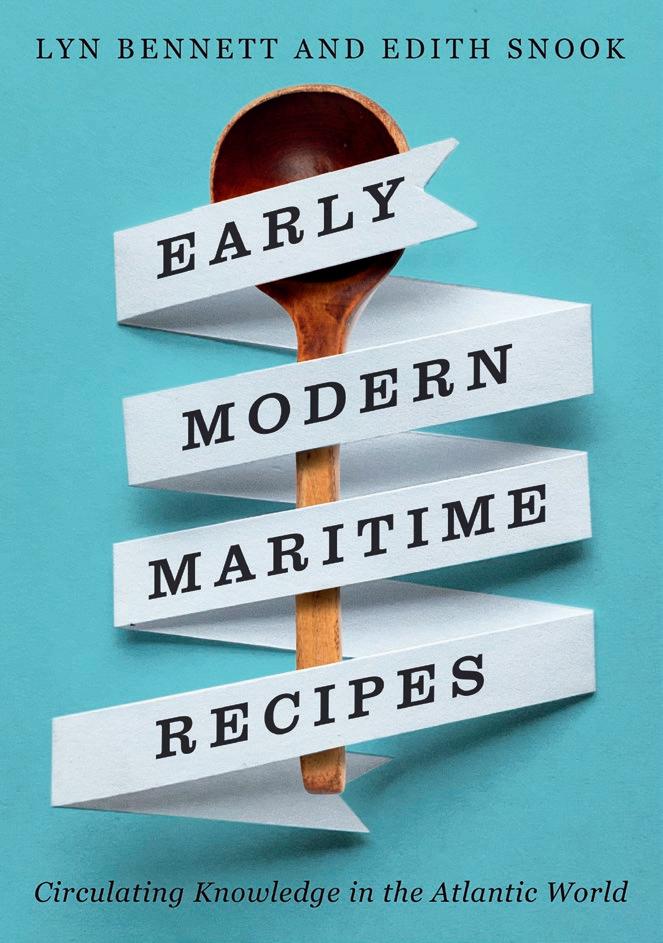
Early Modern Maritime Recipes
Circulating
Knowledge in the Atlantic World
Ly N b e NN ett AN d e dit H S NOOK
Recipes illuminate how settlers lived, worked, and understood their world while also showing how knowledge was created, shared, and preserved.
Describing how to pickle beef, make a low-cost substitution for sugar, waterproof a coat, or treat kidney stones, eighteenth-century settler recipes recorded a wide range of processes essential to daily life. Early Modern Maritime Recipes offers a compendium of culinary, medicinal, and domestic recipes from before 1800 that point to the many ways knowledge was preserved and circulated in the Atlantic world.
Drawn from newspapers, letters, diaries, and notebooks held in archives of the northern Wabanaki territories – the region French settlers called Acadia and later named New Brunswick, Nova Scotia, and Prince Edward Island – the collected recipes reflect the needs and practices of an eighteenth-century English-speaking population, revealing much about how settlers grew and prepared food, treated ailments, cared for animals, controlled pests, and maintained their households. Each recipe is introduced with an explanation of its origins and followed by detailed analysis focusing on sources, ingredients, and techniques. Tracing the integration of Indigenous, African, and other non-European knowledge into settler cultures, the book highlights the many
intersections of domestic life with social networks and political power.
Richly detailed and historically grounded, Early Modern Maritime Recipes documents the cosmopolitan quality of settler household knowledge, revealing that the history of settler domesticity is never far from the history of colonialism.
Lyn Bennett is professor of English at Dalhousie University.
Edith Snook is professor of English at the University of New Brunswick.
SPECIFICATIONS
McGill-Queen’s Studies in Early Canada / Avant le Canada
September 2026
978-0-2280-2887-1 paperback
$39.95T US, $49.95T CDN, £31.00 UK
6.5 x 9.25 384pp 30 illustrations eBook available
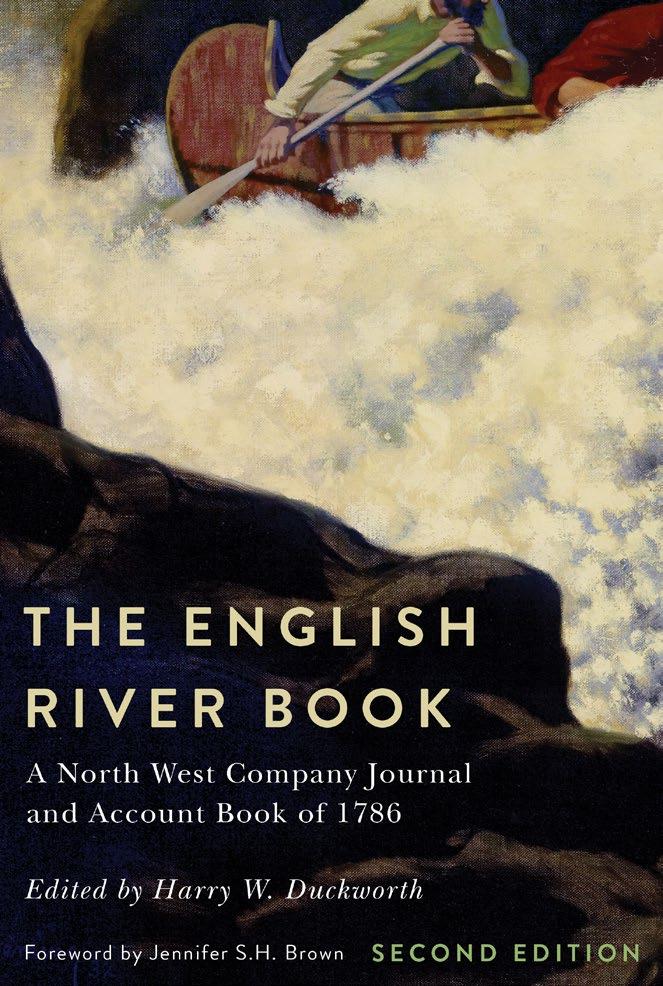
The English River Book
A North West Company Journal and Account Book of 1786
Second Edition
e dited by H ARR y w . d u CK w OR t H
Foreword by Jennifer S.H. Brown
One of the few surviving documents from this important period in Canadian history.
The arrival of Montreal-based fur trader Peter Pond in Athabasca territory in 1778 and the establishment of the first trading post within the watershed of the Mackenzie River marked the beginning of a period of intense northern exploration. Alexander Mackenzie’s voyages to the Arctic and Pacific Oceans quickly brought the Canadian northwest to European attention.
Full of colourful anecdotes, The English River Book provides a day-to-day record of trade at Fort Athabasca in April 1786 under Pond’s direction. In addition to listing those who worked and traded in the area, the journal catalogues duties, wages, stations, inventories of commonplace and mysterious goods, a Cree trading vocabulary, and many other details about the English River district of 1785 and 1786. Familiar figures appear, such as Joseph Cartier, an interpreter whose fur-trading career lasted almost sixty years, and Joseph Landry and Charles Doucette, the Acadian voyageurs who a few years later guided Mackenzie to the Arctic and Pacific Oceans.
An active working journal rather than the reminiscence of a retired trader, The English River Book recounts romantic lore of the fur trade and the adventurous lives of traders, on the spot
and in the heat of events. A new preface by the author and a new foreword by Jennifer S.H. Brown bring the document into historical context and contemporary relevance.
Harry W. Duckworth is a retired professor of chemistry at the University of Manitoba and the editor of Friends, Foes, and Furs: George Nelson’s Lake Winnipeg Journals, 1804–1822
“Professor Duckworth’s work is painstaking, detailed, scholarly – a labour of love, entirely commendable.”
C. Stuart Houston, University of Saskatchewan and editor of Arctic Ordeal: The Journal of John Richardson, Surgeon-Naturalist with Franklin, 1820–1822
SPECIFICATIONS
Rupert’s Land Record Society Series November 2026
978-0-2280-2991-5 paperback
$37.95A US/CDN, £28.99 UK
6 x 9 256pp eBook available
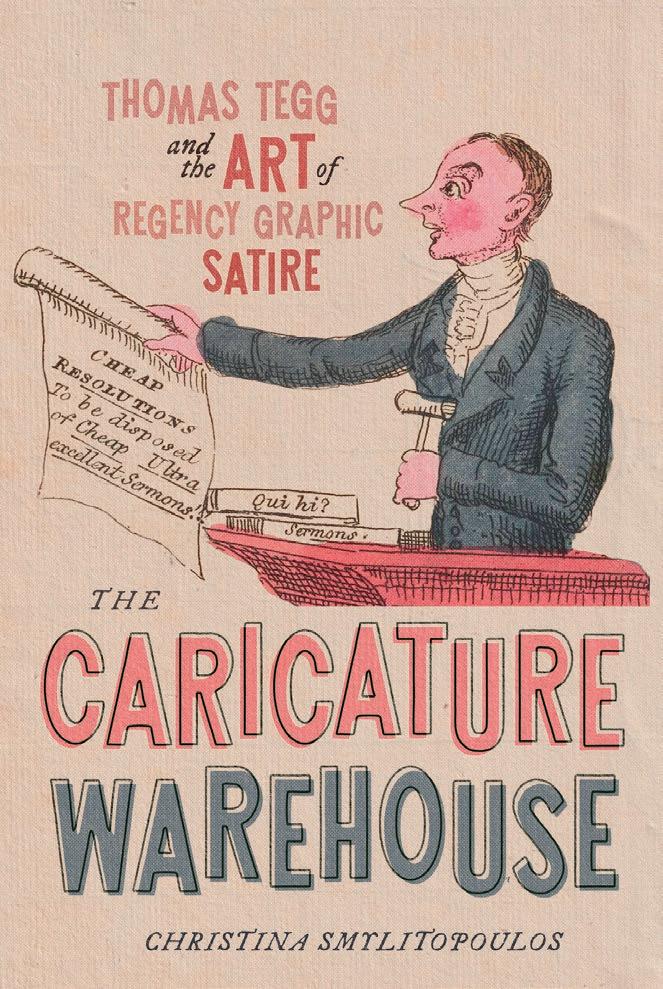
The Caricature Warehouse
Thomas Tegg and the Art of Regency Graphic Satire
C HR i S ti NA S M y L it OPO u LOS
Redefining publisher Thomas Tegg as a cultural innovator whose support for graphic satire anticipated modernist sensibilities.
The London publisher, printer, and bookseller Thomas Tegg (1776–1845) has long been understood – and dismissed – as a hack purveyor of cheap prints and books. Christina Smylitopoulos argues that he was in fact a pivotal cultural agent whose bold interventions expanded access, opened new aesthetic possibilities, and helped fundamentally reshape British graphic satire in the early nineteenth-century print trade.
Challenging Tegg’s reputation as a crass commercial opportunist, a series of case studies drawn from his publications examine the role of graphic satire in critical responses to the Napoleonic Wars and to Britain’s imperial projects in India. These analyses demonstrate how Tegg’s collaborations with leading artists – including Thomas Rowlandson, George M. Woodward, and George Cruikshank, as well as designers working under pseudonyms – fostered experimentation in form and meaning within a genre deeply entangled with the social, political, and aesthetic concerns of the period. Smylitopoulos situates Tegg within the dynamic publishing ecology of late Georgian Britain, revealing how his satirical prints and illustrated books engaged with
pressing sociopolitical debates while challenging hierarchies of taste.
Bridging art, book, print, and cultural history, the book offers a fresh perspective on the intersections of commerce and creativity in the evolution of visual media. The Caricature Warehouse invites readers to reconsider the aesthetic significance of works long relegated to the margins, positioning Thomas Tegg as both a patron of modern art and an architect of emergent modernism.
Christina Smylitopoulos is professor of art history at the University of Guelph.
SPECIFICATIONS
October 2026
978-0-2280-2886-4 paperback
$55.00A US/CDN, £42.00 UK
6.5 x 9.5 300pp 55 illustrations, colour throughout eBook available
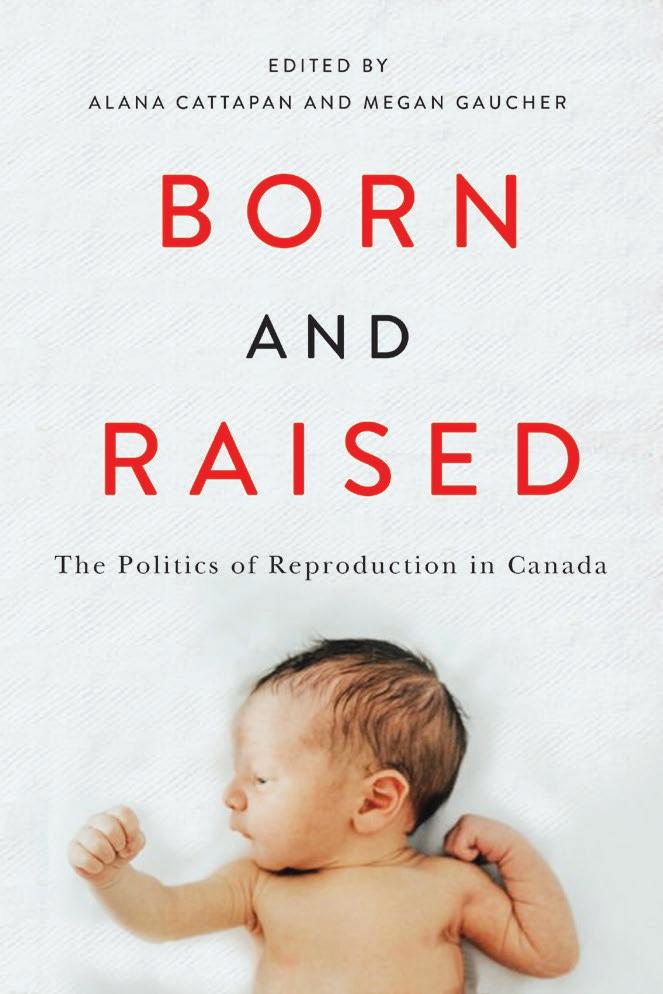
Born and Raised The Politics of Reproduction in Canada
e dited by A LANA C A tt APAN AN d Meg AN gA u CH e R
An exploration of the significant and ongoing changes in the landscape of reproduction.
At their core laws and policies regulate who should reproduce, how they should do so, and what kinds of families matter. As feminist historian Laura Briggs writes, “All politics are reproductive politics.”
In Canada, as elsewhere, evolving reproductive technologies, uneven care infrastructures, restrictive family migration policies, and inequitable access to healthcare services determine who has control over their own reproductive lives – and who does not. This interdisciplinary volume interrogates the contemporary climate of reproductive justice in Canada, examining how law, public policy, and other institutions shape decision making.
Born and Raised situates reproduction in Canada’s nation-building project, exploring how experiences of parenting, sterilization, miscarriage, abortion access, breastfeeding, and intergenerational care, among others, are moulded by longstanding legacies of racism, colonialism, and eugenics.
Alana Cattapan is associate professor and Canada Research Chair in the Politics of Reproduction in the Department of Political Science at the University of Waterloo.
Megan Gaucher is associate professor in the Department of Law and Legal Studies at Carleton University.
SPECIFICATIONS
December 2026
978-0-2280-2900-7 paperback
$42.95T US/CDN, £33.00 UK
6 x 9 336pp 3 drawings eBook available
Flexible Faces
The History, Software, and Politics of Facial Recognition
A ARON t u CK e R
The surprisingly long history of automated facial recognition, a technology entwined with power from its inception.
From nineteenth-century scientific efforts to measure and classify faces to the personalized technology that unlocks your smartphone, facial recognition has reinvented itself, insinuating its logic into the fabric of everyday life. Facial recognition technologies (f Rt s) have become ubiquitous through integration with computer vision, machine learning, and artificial intelligence. Yet the significance of facial recognition is not its technical prowess, Aaron Tucker argues, but its persistent political project: the sustained desire to render all subjects legible to the state – a drive foundational to its history as a technology of power. Looking back at Francis Galton’s work on vision and eugenics, Woodrow W. “Woody” Bledsoe’s 1960s experiments in automated facial recognition, and the first public demonstration in 1970, Tucker traces how f Rt s emerged from the convergence of photography, identity documentation, and computer vision. Accelerated by crises such as 9/11 and the COvid -19 pandemic, contemporary f Rt s are shaped by eugenic logic and embedded in broader strategies for managing mass mobility. Tucker imagines alternative trajectories to a technology that feels ever more ubiquitous and unavoidable, including tactics
that resist, disrupt, and redirect the future development of f Rt s as tools of algorithmic oppression and control.
Timely and urgent, Flexible Faces reckons with two centuries of the amorphous and adaptable nature of automated facial recognition, a technology whose systems and software now slip across borders and are interwoven into one’s everyday life, mobility, and citizenship.
Aaron Tucker is assistant professor of English and communication and media studies at Memorial University of Newfoundland.
SPECIFICATIONS
November 2026
978-0-2280-2891-8 paperback
$34.95T US/CDN, £26.99 UK
6 x 9 312pp 17 illustrations eBook available
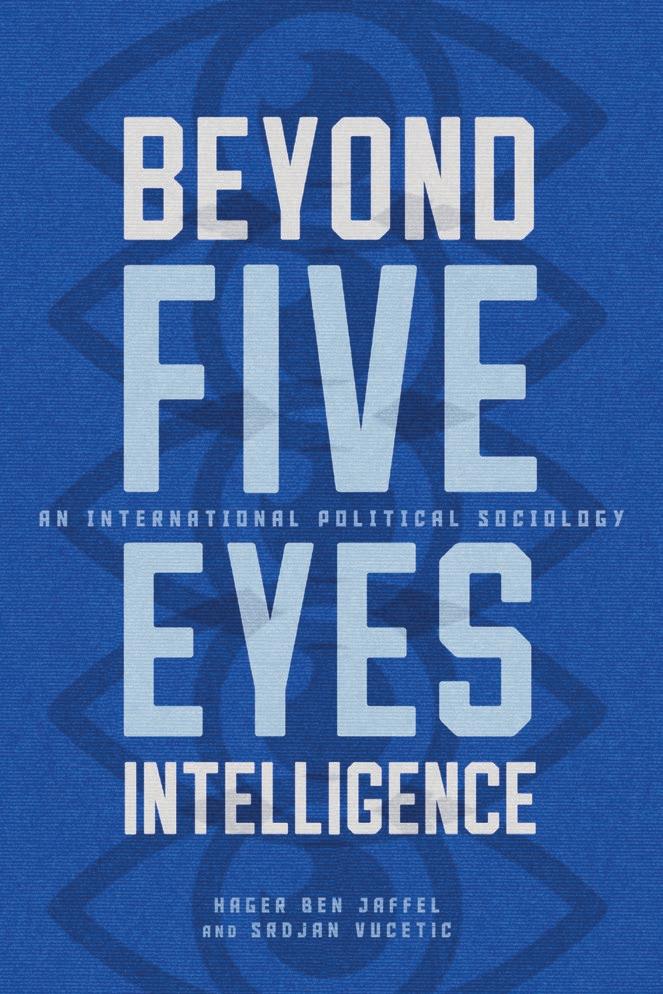
Beyond Five Eyes Intelligence An International Political
Sociology
H A ge R b e N J A ffe L AN d S R d JAN v u C eti C
Demystifying the world’s premier intelligence alliance and its expanding, deeply entangled role in international relations.
Beyond Five Eyes Intelligence takes readers inside one of the world’s most secretive networks, revealing how it operates and why it matters for global politics – and for the future of democracy.
Drawing on declassified archives and whistleblower testimony, Hager Ben Jaffel and Srdjan Vucetic debunk three myths about the Five Eyes: that it is a closed alliance of five nations, that it operates under meaningful democratic oversight, and that it serves only the political agendas of national leaders. They uncover a strikingly different reality. No longer confined to its founding members, Five Eyes collaboration reaches beyond intelligence and counterespionage to counterterrorism, cybersecurity, and other areas. Accompanying this new political configuration is the growing role of technology corporations and their unchecked powers.
Beyond Five Eyes Intelligence exposes how this alliance embeds its own politics, shaped by the manifold social relations that structure international politics – from imperial entanglements and bureaucratic feuding to clashes with rival governments and transnational movements. The network emerges not as a relic of Cold War espionage but as a formidable, enduring, and deeply influential force shaping the modern world.
Hager Ben Jaffel is a research associate at the Centre national de la recherche scientifique.
Srdjan Vucetic is professor of international affairs at the University of Ottawa.
SPECIFICATIONS
October 2026
978-0-2280-2901-4 paperback
$32.95A US/CDN, £24.99 UK
5.5 x 8.5 228pp 2 tables, 1 diagram eBook available
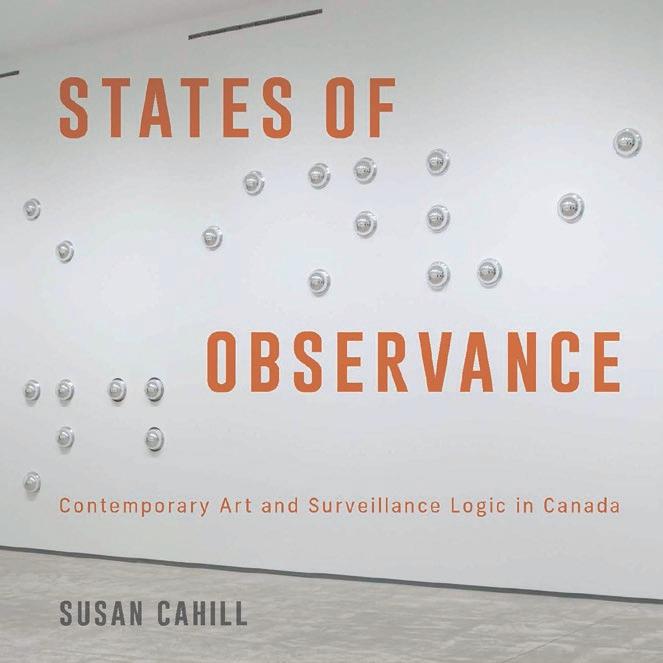
States of Observance
Contemporary Art and Surveillance Logic in Canada
Su SAN C AH i LL
How art illuminates the experience and logic of the contemporary surveillance state.
In the wake of the attacks of 11 September 2001, and amid the expansion of US-led security policy, surveillance quickly insinuated itself into the fabric of everyday life in Canada. Practices once confined to military and intelligence operations now shape civilian spaces, where observation feels routine and scrutiny increasingly normalized as the cost of national and global security. Yet this apparent shift masks a deeper continuity: surveillance has long operated as a tool of settler-colonial control. Contemporary surveillance practices – often justified by the rhetoric of security and the War on Terror – extend earlier systems of classifying, managing, and extracting from populations under colonial and imperial rule.
States of Observance examines this history through the lens of contemporary art, focusing on creative projects produced and exhibited from 2001 to 2021. Treating artworks and exhibitions as generative case studies, Susan Cahill argues that surveillance is not only a technological condition but also a colonial way of seeing. The book demonstrates that artistic practice does more than reflect surveillance culture; it actively interrogates and reshapes how we understand the political,
technological, and historical forces that sustain it. Cahill contends that art renders visible both the seen and unseen infrastructures that organize everyday life, challenging the normalization of surveillance and exposing its underlying logics.
Amid intensifying debates over digital rights and colonial accountability, States of Observance explores how creative and curatorial practices reveal the hidden operations of the contemporary surveillance state and their implications for social justice in Canada.
Susan Cahill is associate professor of art history at the University of Calgary.
SPECIFICATIONS
McGill-Queen’s/Beaverbrook Canadian Foundation Studies in Art History
October 2026
978-0-2280-2897-0 paperback
$49.95T US/CDN, £38.00 UK
9 x 9 248pp 35 illustrations, colour throughout eBook available
Across the North Atlantic Europe and Canadian Foreign Policy in the Cold War
e dited by A SA M C Ke RCH e R AN d J OHN Kee SS
A vital history of economic, military, and cultural relationships between Canada and Europe during the Cold War.
For much of the Cold War, Canada’s relationship with Europe played an integral yet often overlooked role in shaping the country’s place in the world. The end of that struggle and the rise of globalization saw Canadian policymakers shift their attention elsewhere – towards Canada–US relations and towards the Global South – at least until the events of the late 2010s. Across the North Atlantic refocuses attention back on Europe and its place in Canadian international relations.
The volume examines Canada’s foreign policy engagement with Europe through its relationships with major institutions – most notably the European Economic Community (now the European Union) and the North Atlantic Treaty Organization – as well as with individual states such as Germany, Italy, and the United Kingdom. Throughout the Cold War, Canadian policy sustained key post–Second World War priorities: support for Europe’s stability and security, the use of Europe as a strategic offset to American hegemony, and the pursuit of shared values rooted in a common past. Contributors show how political, economic, military, and diplomatic ties with Europe shaped Cold War strategy and Canada’s evolving global identity.
Drawing on new research, chapters connect Cold War–era decisions to issues that continue to define Canada–Europe relations today, including security and defence, trade diversification, environmental diplomacy, human rights, and immigration and refugee policy.
Across the North Atlantic demonstrates how Canada navigated the tensions – and opportunities – of transatlantic engagement with Europe while operating in the shadow of the United States.
Asa McKercher is associate professor at the Brian Mulroney Institute of Government, St Francis Xavier University.
John Keess is assistant professor in the Department of History, Royal Military College of Canada.
SPECIFICATIONS
McGill-Queen’s Transatlantic Studies
October 2026
978-0-2280-2906-9 paperback
$39.95A US/CDN, £31.00 UK
6 x 9 372pp eBook available
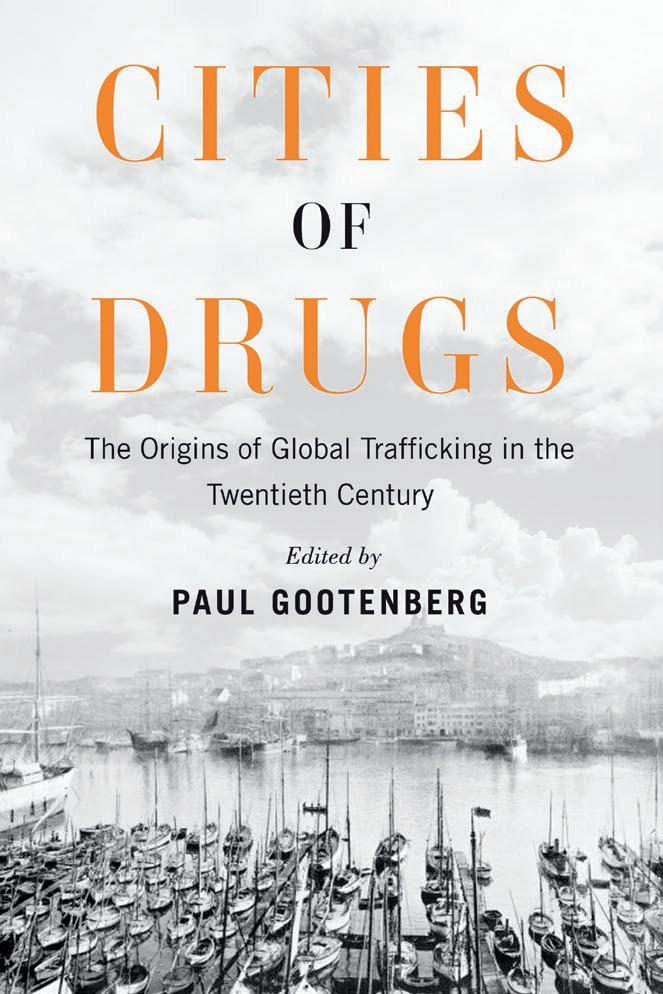
Cities of Drugs
The Origins of Global Trafficking in the Twentieth Century
e dited by P A u L
gOO
te N be R g
How a dozen iconic port cities from Marseille to Miami made drug trafficking into today’s global phenomenon.
Port cities from Marseille to Miami have long occupied a storied place in the popular imagination of global drug trafficking. Their advanced capitalist modernity made them fertile ground for illicit trade, with world-class shipping infrastructures, intricate transport and labour systems, post-colonial migrants and diasporic networks, and class-crossing cultural worlds.
In the first sustained historical study of global ports, urban crossroads, and their relationship to modern drugs, Cities of Drugs traces how twelve cities – Rotterdam, Liverpool, Marseille, Istanbul, New York, Chicago, Vancouver, Ciudad Juárez, Miami, Shanghai, Mumbai, and Cape Town –shaped and were reshaped by the international drug trade. Postwar disruptions created the structural conditions for trafficking, but local histories proved decisive. Ports and commercial hubs with major infrastructure, smuggling traditions, and cosmopolitan modern economies were especially likely to become drug centres where licit and illicit markets converged, though some cities emerged as hubs for other reasons. Drug cities, the contributors argue, are a complex and contingent analytical category, best understood through
comparative urban history attentive to traffickers, labour, consuming cultures, and local politics.
A compelling look at the hidden worlds of cities, this book tells a fascinating story of how underground cultures collided with overground economies to produce global drug trafficking hubs.
Paul Gootenberg is professor of history emeritus at Stony Brook University.
SPECIFICATIONS
Intoxicating Histories
November 2026
978-0-2280-2909-0 paperback
$39.95T US/CDN, £31.00 UK 6 x 9 344pp 9 illustrations eBook available
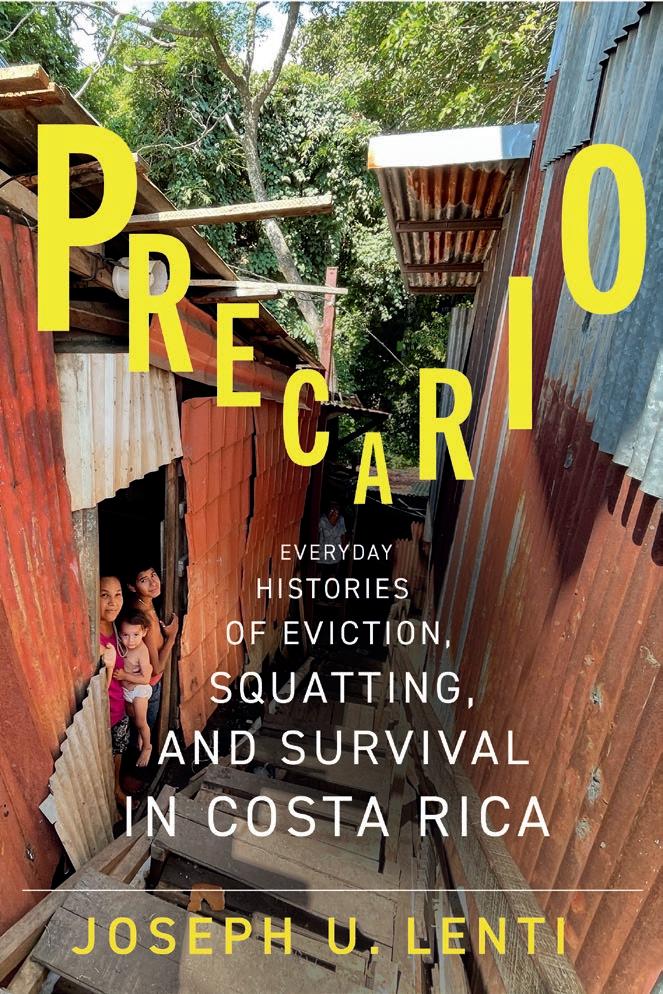
Precario Everyday Histories of Eviction, Squatting, and Survival in Costa Rica
J OS e PH u . Le N ti
A popularly derived and richly narrated exploration of eviction, land taking, and squatting in past and present Costa Rica.
In Costa Rica the adjective precario – meaning precarious or temporary – functions as a noun to denote a squatter community, encapsulating conditions of instability, poverty, and scarcity. Since the nineteenth century eviction and squatting have shaped urban and rural landscapes across Latin America, and wherever informal housing has expanded, insecurity and poverty have followed.
In Precario Joe Lenti presents a narrativedriven collection of stories that trace the loss of land, forced departures, and the occupation of new spaces in Costa Rica from the sixteenthcentury moment of contact to the present. Drawing on an expansive archive of secondary scholarship, media accounts, state records, and written and oral testimonies from precaristas, politicians, lawmakers, journalists, and housing activists, this first-of-its-kind English-language history offers a ground-level account of how ordinary Costa Ricans have sought to secure land and shelter out of necessity. Their efforts are situated within the country’s broader political, economic, social, and environmental histories, yet the book’s core contribution lies in its sustained attention to
agency: the everyday decisions, collective actions, and strategies through which people sought to shape their own lives.
Challenging the persistent misconception that Costa Rica has somehow escaped dynamics of housing informality and scarcity, Precario foregrounds survival, settlement, and resistance as lived experiences that are central rather than peripheral to the nation’s history.
Joseph U. Lenti is professor of Latin American history at Eastern Washington University.
SPECIFICATIONS
November 2026
978-0-2280-2902-1 paperback
$29.95T US, $34.95T CDN, £22.99 UK
6 x 9 352pp 30 photos eBook available
The Canadian Federal Election of 2025
e dited by J ON H. P AMM ett AN d C HR i S t OPH e R dORNAN
Experts illuminate the results of the 2025 U-turn election.
In this compelling analysis Jon Pammett and Christopher Dornan bring together Canada’s leading political scientists, pollsters, and journalists to investigate the surprising federal election that upended everyone’s expectations.
First looking at how political parties ran their campaigns – examining strategy and tactics, candidate selection, advertising, and responses to key campaign moments – The Canadian Federal Election of 2025 then widens the lens to offer an extensive account of media coverage and public opinion polling. Among the book’s distinctive features is an appraisal of the external influences and disinformation efforts targeting Canadian elections generally, along with an assessment of the changes to electoral rules and legislation that have occurred over the past decade. Rich survey data also shed light on public attitudes and voting behaviour, the forces that in many ways shaped the election’s outcome. In lucid, accessible prose, contributors place the campaign in its broader political context while assessing the role of media and polling, taking pains to consider what the results might mean for future elections.
A timely and essential read for anyone looking to make sense of an unexpected moment in Canadian history, this authoritative guide offers audiences a front-row view of Canadian politics.
Jon H. Pammett is distinguished research professor in the Department of Political Science at Carleton University.
Christopher Dornan is former director of the School of Journalism and Communication and former director of the Arthur Kroeger College of Public Affairs at Carleton University.
SPECIFICATIONS
August 2026
978-0-2280-2875-8 paperback
$39.95A US/CDN, £31.00 UK
6 x 9 320pp 8 tables, 12 photos, 3 diagrams eBook available
From Multilateral Failures to Unilateral Successes?
New Trends in Formal Constitutional Amendments
e dited by dA ve g ué N ette, C A t H e R i N e M A t H ieu,
AN d f é L ix
M A t H ieu
Foreword by Richard Albert
Are provinces reshaping federalism and redefining the future of constitutional amendments in Canada?
For decades following the failures of the Meech Lake and Charlottetown Accords, constitutional debate in Canada appeared largely dormant. This situation has changed markedly in recent years. Since 2021 Alberta has held a provincial referendum proposing the abolition of equalization, Quebec and Saskatchewan have each unilaterally amended the 1867 Constitution Act, and a bilateral constitutional amendment concerning Saskatchewan has been proclaimed with the support of Parliament.
Amid the stagnation that has characterized constitutional amendment processes from the early 1990s onward, these developments are highly significant. They signal a renewed dynamism in Canadian constitutional politics driven by provincial action and warranting careful and systematic analysis. Bringing together contributions from leading experts, From Multilateral Failures to Unilateral Successes? maps the impacts of recent and ongoing constitutional developments. Chapters examine instances of unilateral provincial action, offer analytical perspectives on the broader implications of these developments for federal authority, and explore the conditions under which provincial unilateralism
may succeed. As the book shows, these initiatives operate within a political and constitutional framework where bilateral and multilateral options remain available but under-exploited.
At a moment when the Canadian Constitution is once again being tested and reshaped, this volume makes a timely and essential contribution, demonstrating that constitutional change is not only possible but already underway.
Dave Guénette is professor in the Faculty of Law at the Université de Sherbrooke.
Catherine Mathieu is professor in the Department of Legal Studies at the Université du Québec à Montréal.
Félix Mathieu is professor in the Department of Law at the Université du Québec en Outaouais.
SPECIFICATIONS
The State of the Federation
Published for the Institute of Intergovernmental Relations, Queen’s University August 2026
978-0-2280-2867-3 paperback
$34.95A US/CDN, £26.99 UK
6 x 9 258pp eBook available
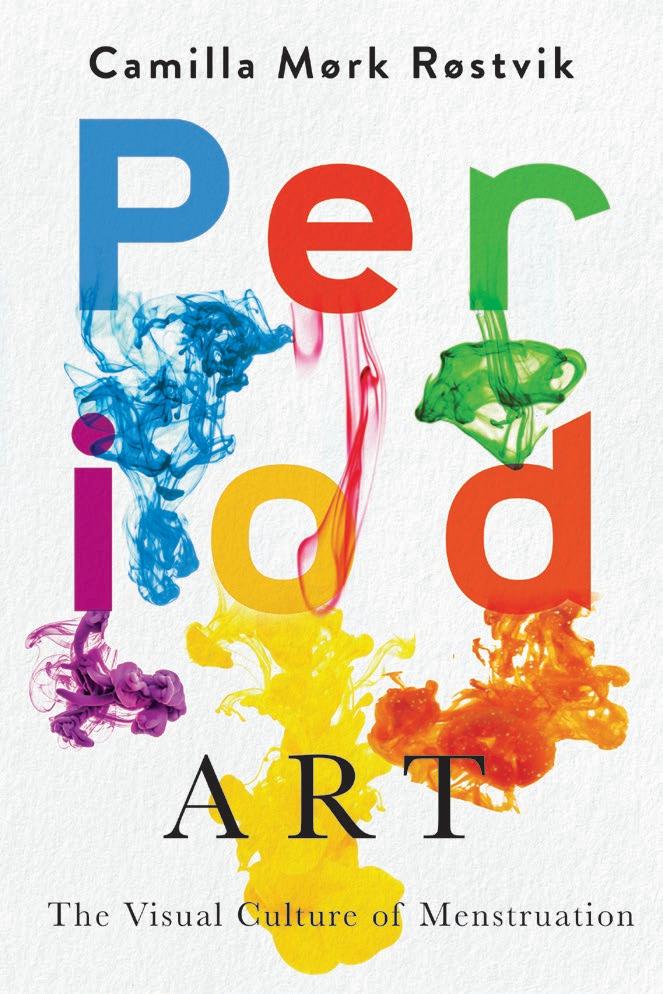
Period Art
The Visual Culture of Menstruation
C AM i LLA Mø RK Rø S tvi K
How artists have used menstruation as both subject and material, challenging stigma by making the cycle visible, political, and creative.
For much of the twentieth century menstruation was invisible in public life, obscured by euphemism, clinical language, and visual censorship. As this compelling work demonstrates, artists have long resisted such erasure, giving rise to menstrual art as a powerful challenge to cultural norms that cast periods as shameful, private, or merely biological.
Period Art examines how artists have used menstruation as both subject and material, bringing a long-standing taboo into the light with creativity, critique, and political engagement.
Camilla Mørk Røstvik explores how artists working across diverse media and contexts from the 1950s to the 2020s have reimagined menstruation as a subject worthy of sustained artistic attention.
From Judy Chicago’s Red Flag to Jay Critchley’s environmenstrual performance art and Sarah Levy’s portraits in blood, these works interrogate medical authority, advertising conventions, environmental politics, gender norms, technology, and the boundaries of acceptable public display. Mørk Røstvik views period art and visual culture not through a lens but through a prism, using colour to move beyond reductive associations with blood
and stigma and to reveal the diversity of menstrual imagery, themes, and artistic strategies.
In clear and accessible prose, Period Art positions menstrual art not as a marginal or purely activist practice but as an integral part of modern and contemporary art history. Art holds the power to reshape cultural understandings of the body, Mørk Røstvik shows, and menstruation remains a vital and contested subject in visual culture today.
Camilla Mørk Røstvik is professor of history at the University of Agder and the president of the Society for Menstrual Cycle Research.
SPECIFICATIONS
November 2026
978-0-2280-2908-3 paperback
$39.95A US/CDN, £31.00 UK
6 x 9 216pp 15 images, colour section eBook available
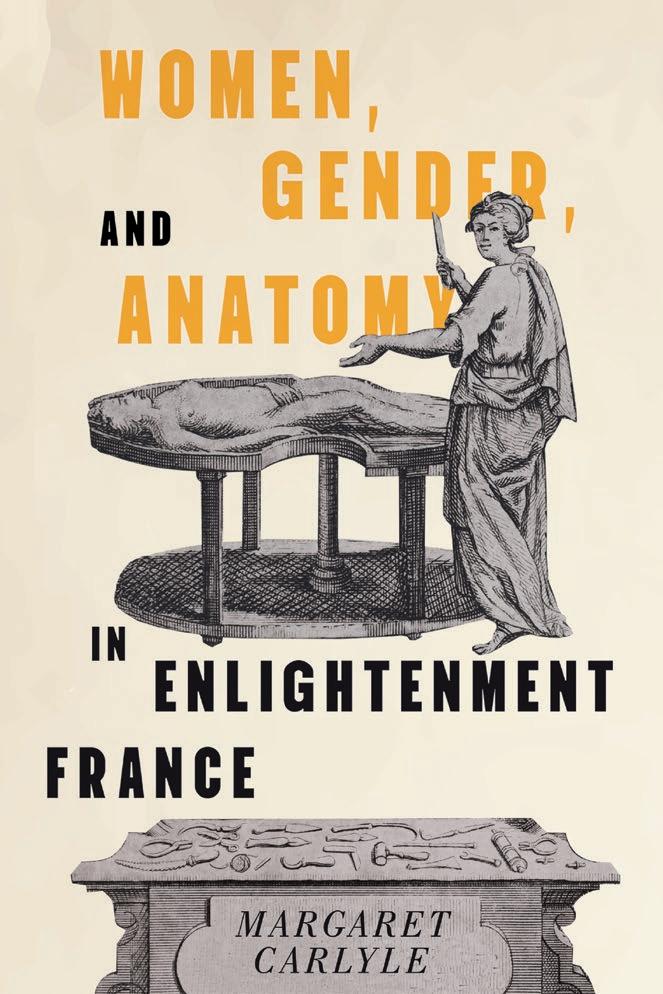
Women, Gender, and Anatomy in Enlightenment France
M AR g AR et C ARL y L e
Women’s bodies and gendered power in the making of medical authority in eighteenth-century France.
By the mid-eighteenth century, anatomy was one of medicine’s most dynamic fields, dominated by men but reliant on women’s bodies and knowledge. This dependence gave women a complicated and often overlooked role in the development of modern medicine. Women, Gender, and Anatomy in Enlightenment France reveals how the dissection, study, and representation of female bodies became central to the professional training and social authority of medical practitioners, transforming anatomy into both a scientific enterprise and a performance of expertise. Margaret Carlyle demonstrates how women shaped anatomical culture not only as objects of study but also as educators, entrepreneurs, and practitioners working alongside male surgeons and physicians. She argues that this participation reflected a broader feminization of anatomy, marked by a growing fascination with women’s reproductive bodies, the rise of lifelike female anatomical models in wax and plaster, and the specialized training of surgeons and midwives. Women contributed directly to anatomical practice through dissection, modelling, illustration, and teaching, as seen in the careers of
Marie-Marguerite Biheron and Marie-GenevièveCharlotte Thiroux d’Arconville. Yet even as women participated across arenas of anatomical knowledge production – from classrooms and amphitheatres to museums, print culture, and workshops – their involvement remained controversial and their contributions marginalized. By placing women’s bodies and labour at the heart of eighteenth-century medical science in France, this history presents a gendered rethinking of the origins of modern anatomy.
Margaret Carlyle is assistant professor of history at the University of British Columbia, Okanagan.
SPECIFICATIONS
McGill-Queen’s/AMS Healthcare Studies in the History of Medicine, Health, and Society December 2026
978-0-2280-2883-3 hardcover
$60.00A US/CDN, £48.00 UK
7.5 x 9.5 464pp 60 illustrations, colour insert eBook available
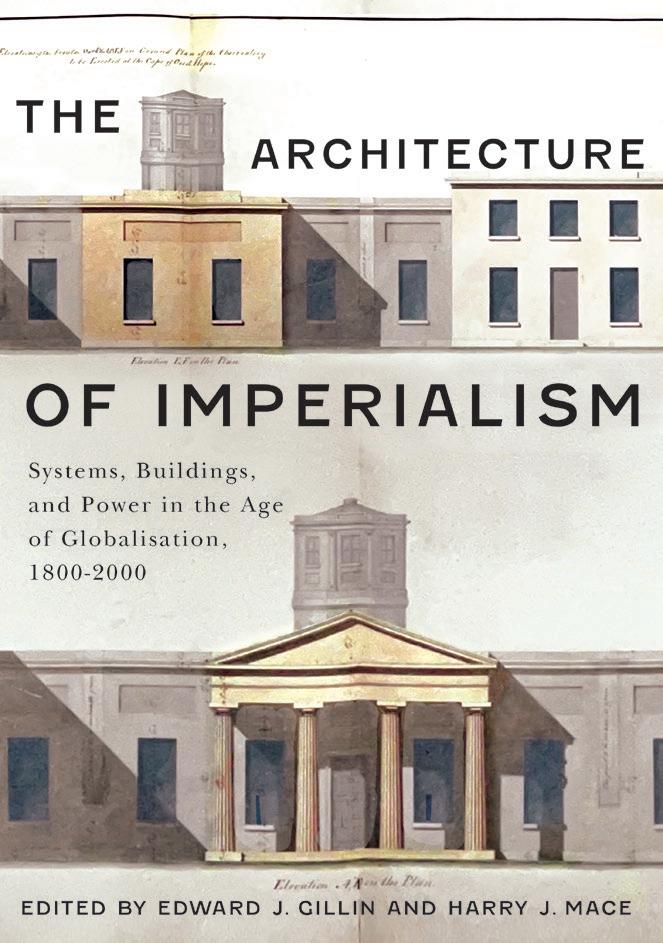
The Architecture of Imperialism
Systems, Buildings, and Power in the Age of Globalisation, 1800–2000
e dited by e dw AR d J. g i LL i N AN d H ARR y J. M AC e
Buildings as sites of power within Britain’s imperial project and its decolonial aftermath.
Arguing that architecture was decisive in shaping the projection of imperial power, this fascinating collection of essays shows how the built environment structured the everyday practices of colonial governance and commerce in Britain’s global empire.
With London as the administrative and political centre of the realm, the volume begins with an examination of architecture and authority at Westminster and Whitehall before tracing their extension across Britain’s overseas territories.
Twelve leading scholars of imperial architecture explore a wide range of building types – houses, churches, railway stations, observatories, schools, museums, memorials, offices, ports, universities, and government buildings – that gave material form to empire. Through case studies of both canonical and lesser-known sites, they show how the built environment sought to standardize daily life, regulate commerce, reassure settlers far from home, and advance ideologically charged claims of civilization.
As Britain’s empire crumbled and its colonies moved towards independence, architecture played a central role in reshaping political power and in
the formation of modern political culture and nationhood across the globe. Visually rich and historically astute, this volume tells the architectural story of Britain’s imperial project.
Edward J. Gillin is associate professor at University College London.
Harry J. Mace is an historian of modern European diplomacy and gender.
SPECIFICATIONS
December 2026
978-0-2280-2942-7 paperback
$55.00A US/CDN, £42.00 UK
6.5 x 9.25 376pp 69 illustrations eBook available
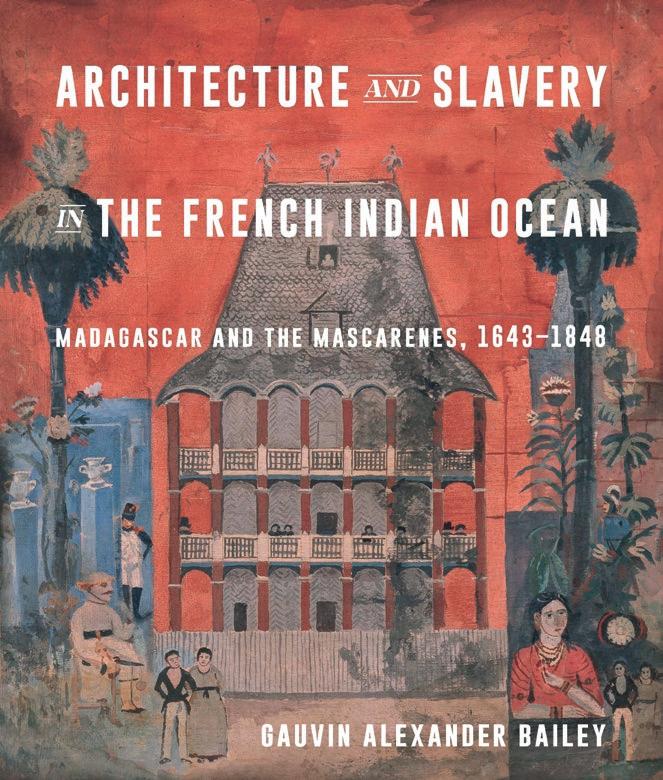
Architecture and Slavery in the French Indian Ocean Madagascar and the Mascarenes, 1643–1848
gA uvi N A L ex AN de R bA i L ey
The first study of architecture and slavery in the French Indian Ocean.
From the founding of Fort-Dauphin in 1643 to the abolition of slavery in the French territories in 1848, colonial and para-colonial architecture in Madagascar and the Mascarene Islands included the largest and costliest buildings in France’s premodern empire. This unique architecture was shaped by changing ideas of French identity, familiar imperial architectural and urbanistic forms, deliberately eclectic and cosmopolitan patronage, the exceptional ethnic diversity of the colony’s builders, and the fragile boundary between bondage and freedom that lay at the heart of French colonialism in the southern Indian Ocean.
From modest projects that express a longing for French village life to classical baroque public buildings in the style of the Sun King and spacious private houses increasingly adapted to the local environment, architecture in Madagascar and the Mascarenes reflected a unique mix of metropolitan, colonial, and Indian and Malagasy forms and traditions. But buildings tell only half the story. There were many more builders in Île-de-France and Bourbon compared with other colonies, from a far greater variety of backgrounds – indentured Indian and French labourers as well as enslaved and free Malagasy,
East African, and Indian people, including mixed-race engagé builders who operated within networks that predated the French presence. The stories of the carpenters, masons, engineers, and other skilled labourers who constructed the citadels, churches, and plantation houses are painstakingly reconstructed from primary documents that hold a wealth of information about daily life in the colonies.
Encompassing over two centuries of urban, royal, and vernacular building, Architecture and Slavery in the French Indian Ocean complicates our understanding of slavery, race, and colonial architecture in the early modern period.
Gauvin Alexander Bailey is professor and Alfred and Isabel Bader Chair in Southern Baroque Art at Queen’s University. He is the author of several books including The Architecture of Empire: France in India and Southeast Asia, 1664–1962 and Architecture and Urbanism in the French Atlantic Empire: State, Church, and Society, 1604–1830.
SPECIFICATIONS
October 2026
978-0-2280-2898-7 hardcover
$110.00S US/CDN, £88.00 UK
8.5 x 10 608pp 235 photos, 2 graphs, 1 table, 1 map, colour throughout eBook available
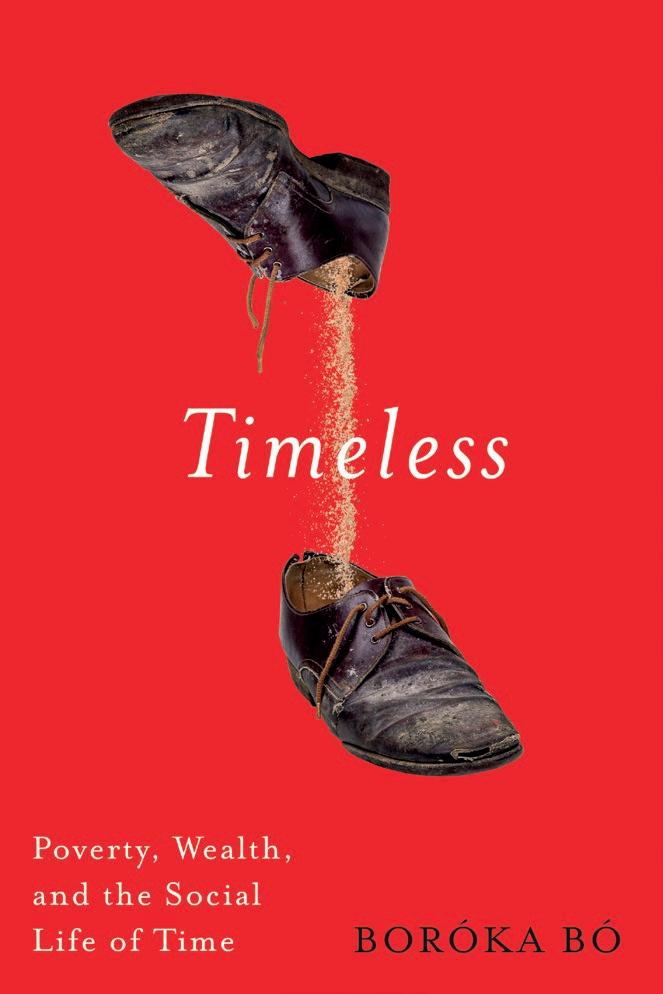
Timeless Poverty, Wealth, and the Social Life of Time
bOR ó KA b ó
Seeing time as a shared resource, socially patterned and transmitted through networks.
More time and freer days: that was the promise of the digital era. Instead many of us feel chronically off-balance – rushed, stretched thin, or left with too much of the wrong kind of time. This is not a personal failure, argues sociologist Boróka Bó, but rather a social condition. Time poverty is contagious, networked, shaped by shared rhythms, and transmitted through relationships.
Drawing on immersive fieldwork with new parents and recent retirees in Toronto’s wealthiest and poorest neighbourhoods, alongside large-scale time-use data, Bó shows how time is distributed throughout lives and how time imbalances emerge, spread, and become socially patterned across class, race, gender, and immigration status. She eschews productivity hacks, presenting instead an inclusive view that accounts for individuals’ discretionary time needs based on life circumstances. The result is the Goldilocks theory of time availability, a powerful lens for understanding how both too little and too much free time shape health and well-being.
Written with clarity and compassion, Timeless advances a new framework for temporal equilibrium and provides practical ways to create temporal sanctuaries: shared spaces in time for rest, recovery, and renewal.
Boróka Bó is assistant professor of sociology at University College Dublin.
SPECIFICATIONS
September 2026
978-0-2280-2903-8 paperback
$34.95A US/CDN, £26.99 UK
6 x 9 258pp 10 diagrams eBook available
Moral Puzzles
Contractarian Fix
M ALCOLM Mu RRA y
When moral puzzles meet contractarianism, an astoundingly original take on morality and metaethics unfolds.
Standard approaches to moral puzzles rest on a shared metaphysical premise: that morality is timeless, written into the fabric of the universe. What has been largely absent from the literature is a systematic contractarian response to these puzzles – an absence that, Malcolm Murray argues, continues to impoverish the field and foreclose entire areas of study.
In Murray’s contractarian view, morality is not a set of enduring truths but the outcome of human evolution and natural selection. This social contract, a system of rules that rational, self-interested agents agree to follow because it enables a safer, more co-operative social life, highlights the difference between idealized moral theories and the real-world applications that often fall short of those ideals. In elegant, entertaining prose Moral Puzzles ventures beyond the popular understanding of morality as a natural product, revisiting canonical problems in moral philosophy with striking results. Murray argues, for example, that diverting a trolley to kill one person rather than five is unjustified without that person’s consent, and that disgust toward consensual acts such as incest cannot by itself support condemnation.
Moral Puzzles also confronts challenges to contractarianism itself, including the is-ought problem – whether prescriptive statements (what ought to be) can be made based on descriptive statements (what is) – and classic thought experiments such as the ring of Gyges – whether people, when free from the consequences of their unjust actions, will still act justly. Taken together, these analyses invite readers to rediscover the central puzzles of moral theory through fresh arguments and interpretations.
Malcolm Murray is professor of philosophy at the University of Prince Edward Island and the author of Morals and Consent: Contractarian Solutions to Ethical Woes.
SPECIFICATIONS
September 2026
978-0-2280-2907-6 paperback
$39.95A US/CDN, £31.00 UK
6 x 9 294pp 10 tables, 2 graphs eBook available
Talking in Context Language and Identity in Kwakwaka’wakw Society
A NN e M AR ie gOO dfe LLO w
A unique study of the relationship between language – and the erosion of a language –and cultural identity in heritage-language communities.
Though linguists estimate that hundreds of languages are in danger of extinction, everyday use of Kwak’ wala, an Indigenous language spoken in British Columbia, reveals that it has been strategically maintained even among young speakers as a marker of cultural identity. Anne Marie Goodfellow explores the relationship between language, culture, and identity through a case study of the current use of Kwak’ wala in two communities, Quatsino and Kingcome Inlet.
Talking in Context demonstrates the importance of cultural contact to the structure of languages and addresses the sociocultural aspects of Indigenous language use in the modern world. Goodfellow’s analysis of linguistic data from three generations of Kwak’ wala speakers shows that English has greatly influenced grammar and phonology. Even though English is replacing Kwak’ wala as the language of communication, Goodfellow found that speakers with varying degrees of fluency use the language tactically to signal Kwak’ wala identity and in ceremonial contexts.
Talking in Context shows the ways in which Indigenous languages may one day be restored to broader uses in the communities to which they are significant.
Anne Marie Goodfellow is professor of anthropology at Western Washington University.
SPECIFICATIONS
McGill-Queen’s Indigenous and Northern Studies
September 2026
978-0-2280-2993-9 paperback
$39.95A US/CDN, £31.00 UK
6 x 9 240pp 7 illustrations eBook available
Unequal Democracy
The
Social Construction of Citizenship in Latin America
e dited by fRAN ç O i S e M ON t AM be A u L t AN d t i NA Hi L ge RS
Understanding the successes and shortfalls in developing equality, citizenship, and democracy.
Across the world populist leaders are mobilizing citizens increasingly frustrated with political institutions and market outcomes, while analysts struggle to explain where liberal democracy has gone wrong. Unequal Democracy traces the roots of this dissatisfaction, arguing that persistent inequality and polarization constrain citizenship, weaken participation, and undermine democratic governance. Drawing on lessons from Latin America, long central to scholarship on democratic formation and breakdown, the volume uses these insights to make sense of the contemporary crisis.
Inspired by Philip Oxhorn’s work on civil society and citizenship, the book presents case studies from Argentina and Chile, Mexico, Paraguay and Guatemala, Peru, the United States, Egypt and Syria, and South Africa. Contributors explore how social movements engage political parties; how marginalized groups gain access to social policy; how media and immigration shape political inclusion; and how states manage inequality, including through policing. Collectively, they identify the failure to extend citizenship beyond formal political rights to civil and social rights, necessary for equal participation.
Reaffirming that neopluralism deepens inequality, fuels polarization, and weakens democracy, this thought-provoking work foregrounds the heterogeneity of civil society and contends that democratic progress is more likely to emerge through institutional adaptation than sweeping collective mobilization.
Françoise Montambeault is professor of political science at the Université de Montréal.
Tina Hilgers is associate professor of political science at Concordia University.
SPECIFICATIONS
Democracy, Diversity, and Citizen Engagement Series September 2026
978-0-2280-2881-9 paperback
$44.95A US/CDN, £35.00 UK
6 x 9 324pp eBook available
At Home in the Petromodern Paradox
Landscape and Community in the Bakken Boom
Ky L e C ON w A y
A ground-level view of life in a North Dakotan boomtown and what it says about the global condition of petroleum dependence.
Boomtowns are difficult places to live. North Dakota, long familiar with oil’s boom-and-bust cycle, became the epicentre of an extraordinary rush in 2008: towns doubled in size almost overnight, and community life was transformed by extraordinary wealth, but also by strain and conflict.
Kyle Conway traces the most recent boom within a longer North Dakotan history – from the arrival of settlers in the late nineteenth century, through mid-century oil rushes in the 1950s and 1970s, to the explosive growth after 2008. The book focuses on Williston, the commercial centre of the Bakken Formation, a vast shelf of oil-soaked shale made profitable through hydraulic fracturing, which drove a population surge between 2008 and 2014. Alongside opportunity came traffic jams, housing shortages, and tension between newcomers and longtime residents. Amid this upheaval, people devised new ways of living together, often rooted in care, hospitality, and the resilience of those who had weathered previous transformations.
Drawing on interviews, historical records, data analysis, and his own lifelong ties to the region, Conway shows how the petromodern paradox – the logic of solving the problems created
by oil with more oil – fuelled both opportunity and conflict at ground level in a community transformed by oil exploration. At Home in the Petromodern Paradox asks what Williston can teach all inhabitants of an oil-fuelled world about the contradictions of petroleum dependency and offers a fragile but real sense of hope.
Kyle Conway is professor of communication at the University of Ottawa and author of Everyone Says No: Public Service Broadcasting and the Failure of Translation.
SPECIFICATIONS
September 2026
978-0-2280-2779-9 paperback
$29.95A US, $34.95A CDN, £22.99 UK
6 x 9 240pp 26 images, 8 tables eBook available
The Polish Exile
Chabad Hasidism in the Interwar Years
wOJC ie CH t w OR e K
How Chabad Hasidism’s transformative interwar years set the stage for global messianic outreach.
Hasidism, a vibrant Jewish mystical movement, emerged in Eastern Europe in the eighteenth century. Among its branches, Chabad took root and flourished in tsarist Russia, radiating its distinct intellectual and spiritual approach from the Russian town of Lubavitch. But World War I, the October Revolution, and the rise of the Soviet regime shattered the Chabad community and forced its leader, Rebbe Yosef Yitshak Schneersohn, into exile – first to Latvia and later to Poland, home to Europe’s largest Jewish population at the time.
While Poland appeared to offer a stable refuge and fertile grounds for rebuilding Chabad’s institutional and religious foundations, the movement soon confronted a series of profound challenges: shifting internal political conditions, fierce competition within the Jewish communal sphere, and rapidly evolving social realities. Drawing on an exceptional range of Hebrew, Yiddish, Polish, and Russian archival sources, Wojciech Tworek explores how these pressures forced Chabad to adapt and redefine itself within the context of modernity. He traces Chabad’s mystical teachings, literary production, institutional expansion, and evolving ritual life during
the interwar years, demonstrating how amid a turbulent era of displacement and reinvention its leadership strategically reinterpreted – and at times recast – the movement’s past. In doing so, it laid the groundwork for Chabad’s postwar messianic orientation, its global outreach, and the emergence of an increasingly influential form of Orthodox fundamentalism.
The first full account of Chabad’s interwar transformation, The Polish Exile fills a vital gap in the study of Jewish history and religion.
Wojciech Tworek is head of the Taube Department of Jewish Studies at the University of Wrocław.
SPECIFICATIONS
McGill-Queen’s Studies in the History of Religion
September 2026
978-0-2280-2878-9 paperback
$39.95A US/CDN, £31.00 UK
6 x 9 396pp 17 photos, 16 diagrams eBook available
The Ambivalence of Well-Being in the Workplace
Sté PHAN e M O u L i N
Placing ambivalence at the centre of a renewed dialogue between psychological and sociological approaches.
Work is often seen as either a source of fulfillment or a cause of harm and exhaustion. Stéphane Moulin rejects this binary, arguing that well-being at work is fundamentally ambivalent. Placing ambivalence at the centre of his analysis, Moulin calls for a renewed dialogue between psychological and sociological approaches.
Drawing on survey data from 579 workers in Quebec’s restaurant and academic sectors, as well as in-depth interviews with restaurant supervisors and academic chairs, Moulin examines work experiences among professors and professional staff, lecturers, support staff, servers, cooks, and kitchen and service helpers. He identifies three ambivalent profiles – the overworked, the disappointed, and the serene – situated between the marginal extremes of the morose and the satisfied. This ambivalence arises from three forces: ongoing psychosocial exposure shaped by the uneven fulfillment of workplace justice needs; ethical dispositions, notably hard work and resilience, sustaining effort while masking harm; and management strategies, including self-management, that privilege short-term coping over structural change and reveal work’s insidious colonization of personal life.
With its original, empirically grounded analytical framework, The Ambivalence of Well-Being in the Workplace invites a rethinking of the human relationship to work.
Stéphane Moulin is professor of sociology at the Université de Montréal.
SPECIFICATIONS
November 2026
978-0-2280-2921-2 paperback
$44.95S US/CDN, £35.00 UK
6 x 9 376pp 10 tables, 11 diagrams eBook available
Vox Populi
The Idea and Meaning of the People in Restoration England
gR eg OR y d . dO dd S
Conspiracy theories, misinformation, partisan politics, censorship, religious toleration, individual liberty, and the idea of the people in late seventeenth-century England.
Restoration England (1660–88), with its new coffeehouses, newspapers, early political parties, and increasingly engaged populace, saw the idea of the people’s voice become distinctly powerful. Yet that voice also generated conspiracy theories, misinformation, partisan division, censorship, and fears of civil disorder and violence.
In Vox Populi Gregory Dodds explores how assumptions about the common people and their views were entwined with ongoing political and religious conversations on the perceived choice between national security and individual liberty – debates that continue to shape public life today. Popularity within the rapidly expanding Restoration intellectual marketplace was quickly replacing the influence of elite authority. While some celebrated this shift, institutional and governmental writers responded with forceful resistance, seeking to restrict the general population’s voice and convince commoners that truth, understanding, and social order could never arise from a populist understanding of the world. Dodds argues that for elite authors, the common people therefore occupied a paradoxical position in the public arena of ideas, one where they were at once a coveted audience and rejected participants.
Drawing from texts deliberately targeting a broad audience – written by both advocates for and opponents of religious toleration and political liberty – the book offers a distinctive analysis of the concept of the people and the implications of their increasingly powerful voice in debates on political theory, policy, theology, and natural philosophy. A timely investigation into a turbulent period in England, one in which the rhetoric and reality of fear loomed large, Vox Populi helps navigate the false dichotomy between rights and safety.
Gregory D. Dodds is professor of history at Walla Walla University.
SPECIFICATIONS
McGill-Queen’s Studies in the History of Ideas October 2026
978-0-2280-2889-5 hardcover
$110.00S US/CDN, £88.00 UK 6 x 9 320pp eBook available
A Single Nation
National History in Angolan Fiction, Independence to 2025
Ste PH e N He N ig HAN
The first fifty years of independent Angola and the writers who defined nationhood.
A Single Nation presents a narrative history of Angola’s first fifty years of nationhood and of the careers of its major modern prose writers. This book charts the challenges Angolan authors faced in imagining and sustaining a national literature after independence, engaging with questions of decolonization, the legacies of the slave trade, and the role of a culturally – and often racially –syncretized bourgeoisie in shaping visions of a modern African nation-state through literature.
Opening with the declaration of independence amid Cold War conflict in 1975, this work offers fresh perspectives on events such as the attempted coup of May 1977 and the pivotal confrontation with apartheid South Africa at Cuito Cuanavale in 1987–88. It brings into focus the transnational dimensions of Cuban-Angolan cooperation, the devastation of the civil war of the 1990s between the governing People’s Movement for the Liberation of Angola and Jonas Savimbi’s National Union for the Total Independence of Angola, debates over race and identity, and the corruption unleashed by the oil boom in the early twenty-first century. The literary institutions created by socialist Angola were remarkable for their
nation-building ambition. Stephen Henighan charts the conditions under which Angolan writers worked after the Cold War and analyzes texts by writers from Pepetela to José Eduardo Agualusa, Ondjaki, and Chó do Guri.
The successor to Henighan’s companion study of the pre-independence period, Fissured Ground, this work combines narrative history with meticulous literary analysis and a broad view of the reception of Angolan writing in Europe and the Americas. A Single Nation offers an engrossing and enlightening account of a distinctive African nation and its literature.
Stephen Henighan is professor of Spanish and Hispanic studies at the University of Guelph.
SPECIFICATIONS
November 2026
978-0-2280-2893-2 hardcover
$110.00S US/CDN, £88.00 UK
6 x 9 920pp 17 illustrations eBook available
sales representatives and ordering information
terms of sale
ISBN Prefixes
978-0-2280
978-0-7735
978-0-88629
978-0-88911
978-0-88645
978-1-55339
978-2-89448
978-0-9829155
Distributor for Imprints of the School of Policy Studies at Queen’s University and the Institute for Research on Public Policy.
Trade Returns Policy
Returns accepted after 3 months up to 12 months in resalable condition.
Payment Terms
Net 30 Days
Discount Policies
Contact the distributor in your area for current discount schedules.
T indicates Trade; A indicates Academic; and S indicates Scholarly.
Co-op Advertising Policy
Contact Sales Manager
Roy Ward roy.ward@mcgill.ca
Review Copy Requests
Contact bookreviews.mqup@mcgill.ca
Desk or Exam Copy Requests
Contact Sales Manager
Roy Ward roy.ward@mcgill.ca
canada
Orders and Customer Service
McGill-Queen’s University Press
c/o University of Toronto Press
5201 Dufferin Street, Toronto, ON Canada, M3H 5T8
Tel: 416-667-7791
Fax: 416-667-7832
Toll Free Tel: 1-800-565-9523
Toll Free Fax: 1-800-221-9985
E-mail: utpbooks@utpress.utoronto.ca
Business hours: 8:30am–6:00pm ET
Address for Returns:
McGill-Queen’s University Press
c/o University of Toronto Press 5201 Dufferin Street, Toronto, ON Canada, M3H 5T8
Freight Policy: Free freight for all combined orders over $300 net value (after discount). Freight charged at 3.5% for all combined orders with a net value of $300 or less.
Trade Representatives
Ampersand Inc.
British Columbia/Alberta/ Saskatchewan/Manitoba/ Yukon/ Nunavut/NWT
Pavan Ranu, Kim Herter, Dayle Sutherland, Bonnie Maitland, Colin Rier
MQUP’s eBooks are distributed through Ingram-Coresource. Our audiobooks are distributed through ECW Press. Below is the current list of retailers and aggregators that carry our titles in digital format. Each vendor has its own pricing and delivery policies. As we regularly add new vendors, please check directly with your preferred vendor if it does not appear below.
eBooks for Individuals iBooks
Barnes & Noble Nook Blio Google eBooks Kobo Amazon
eBooks for Institutions ebrary EBSCO Myilibrary JStor CEL Overdrive Bibliotheca
Audiobooks
Audible
Audiobooks.com BookBeat Downpour Findaway Apple iTunes Hoopla KoboLibro FM Mackin Midwest Tapes Overdrive
Recorded Spotify Storytel
author/editor index
Aylward, Christopher Patrick / 5
Bailey, Gauvin Alexander / 35
Barter, Jane / 3
Ben Jaffel, Hager / 25
Bennett, Lyn / 20
Berg, David / 4
Bó, Boróka / 36
Bragg, Bronwyn / 7
Cahill, Susan / 26
Carlyle, Margaret / 33
Cattapan, Alana / 23
Conway, Kyle / 40
Croll, Su / 12
Davis, Glyn / 15
Dodds, Gregory D. / 43
Donaldson, Jeffery / 13
Dornan, Christopher / 30
Duckworth, Harry W. / 21
Eidelson, Roy J. / 17
Elrick, Jennifer / 6
Engen, Robert C. / 18
Francis-Kelly, George / 9
Gaucher, Megan / 23
Gillin, Edward J. / 34
Goodfellow, Anne Marie / 38
Gootenberg, Paul / 28
Guénette, Dave / 31
Halferty, J. Paul / 14
t itle index
Across the North Atlantic / 27
Albert Moll / 16
Ambivalence of Well-Being in the Workplace, The / 42
Architecture and Slavery in the French Indian Ocean / 35
Architecture of Imperialism, The / 34
At Home in the Petromodern Paradox / 40
Batten Down / 12
Before and After Rodney King / 9
Beothuk / 5
Beyond Five Eyes Intelligence / 25
Born and Raised / 23
Canadian Federal Election of 2025, The / 30
Canadians Under Fire / 18
Caricature Warehouse, The / 22
Henighan, Stephen / 44
Hewitt, Steve / 8
Hilgers, Tina / 39
Keess, John / 27
Kieser, Doris M. / 3
Langford, Martha / 1
Lenti, Joseph U. / 29
MacDonald, Ann-Marie / 10
Mace, Harry J. / 34
MacLaren, Eli / 11
Maehle, Andreas-Holger / 16
Mathieu, Catherine / 31
Mathieu, Félix / 31
McKercher, Asa / 27
Cities of Drugs / 28
Doing Harm / 17
Early Modern Maritime Recipes / 20
Elsie Fry Laurence / 11
English River Book, The / 21
Flexible Faces / 24
From Multilateral Failures to Unilateral Successes? / 31
Hamlet-911 / 10
History of Photography in Canada, A / 1
History of Terrorism in Canada, A / 8
Hunter, the Crown, and the Cameras, The / 2
Immigration and Canada / 6
Journey Presses On, The / 3
Living End, The / 15
Moral Puzzles / 37
Montambeault, Françoise / 39
Mørk Røstvik, Camilla / 32
Moulin, Stéphane / 42
Murray, Malcolm / 37
Pammett, Jon H. / 30
Paquet, Mireille / 6
Payne, Carol / 2
Smylitopoulos, Christina / 22
Snook, Edith / 20
Stephens, Robert / 19
Tucker, Aaron / 24
Tworek, Wojciech / 41
Vucetic, Srdjan / 25
openbound / 13
Period Art / 32
Polish Exile, The / 41
Political Stages / 14
Precario / 29
Single Nation, A / 44
States of Observance / 26
Talking in Context / 38
There Is No Place for Sympathy Here / 4
Timeless / 36
To Make a Killing / 19
Unequal Democracy / 39
Vox Populi / 43
We Asked for Refugees, We Got People Instead / 7
Women, Gender, and Anatomy in Enlightenment France / 33