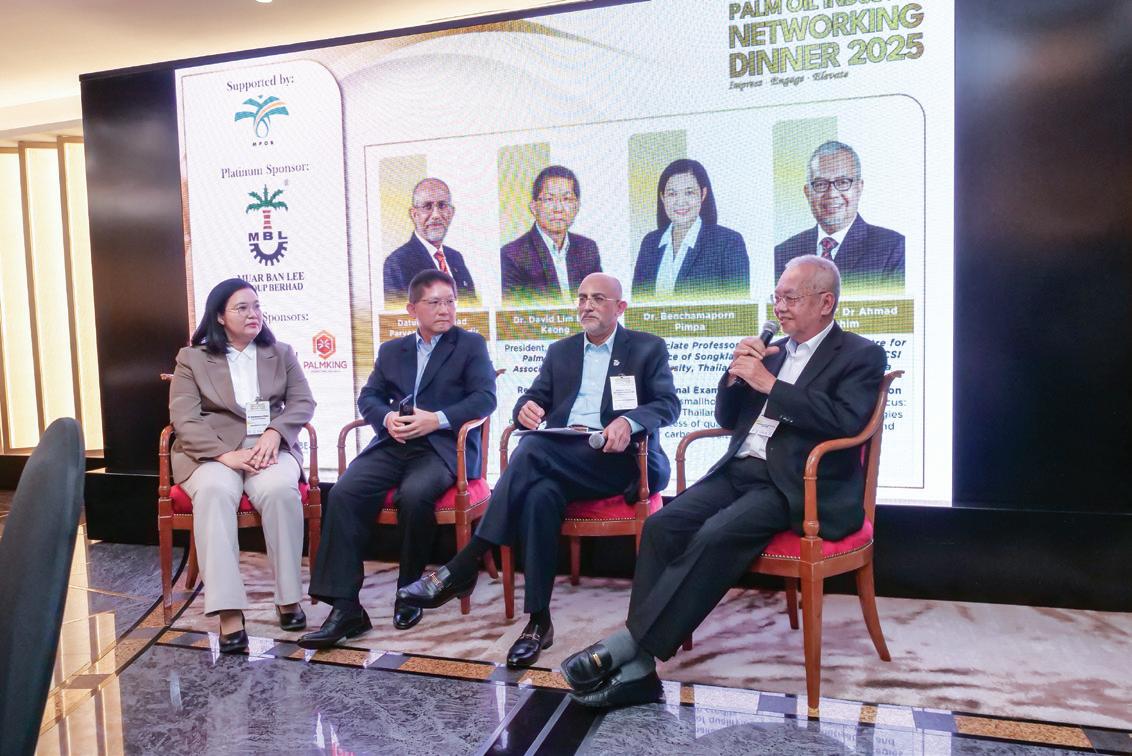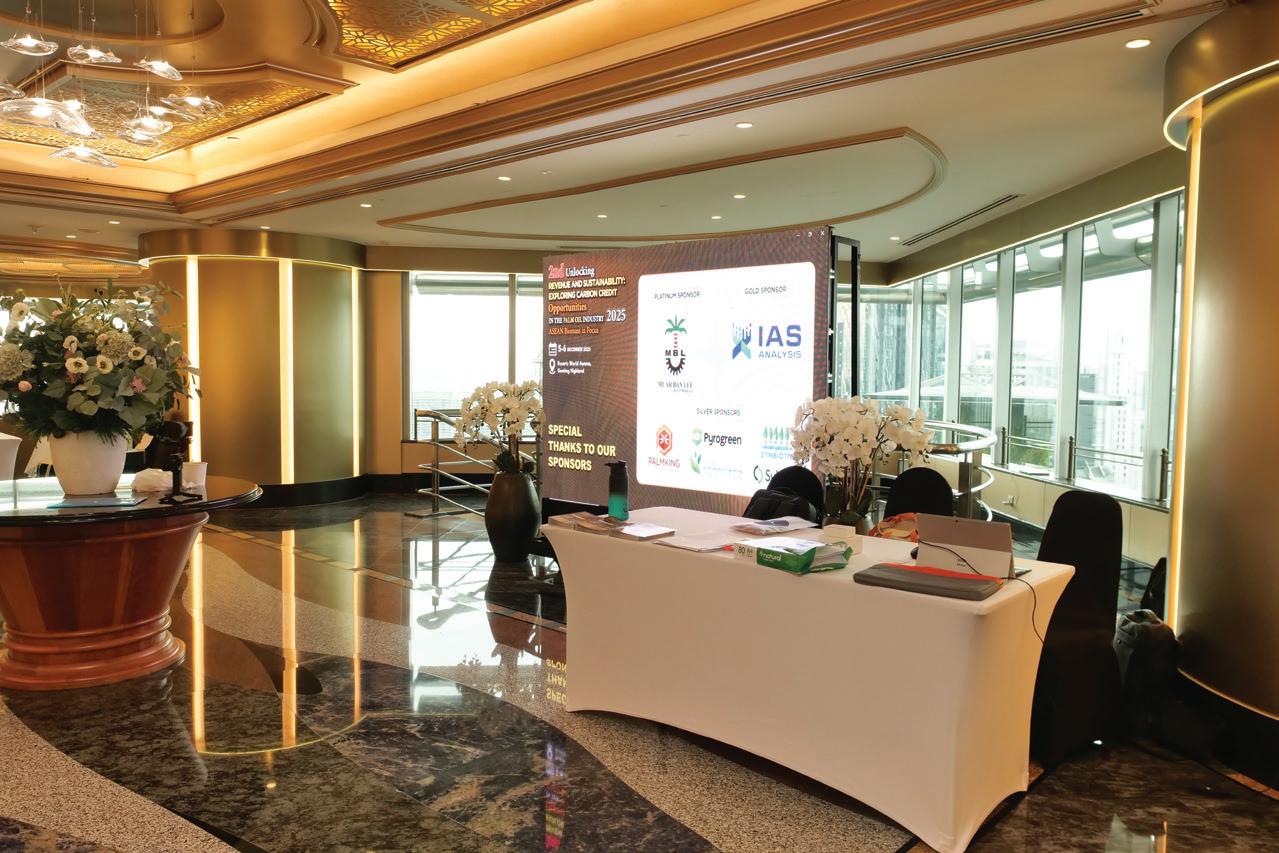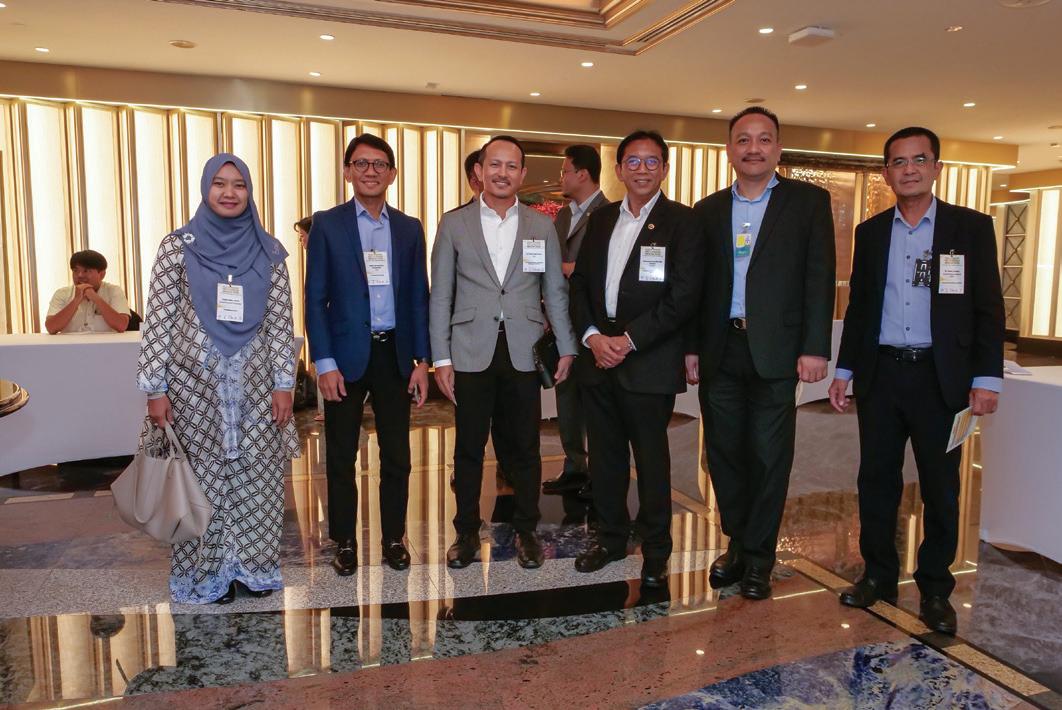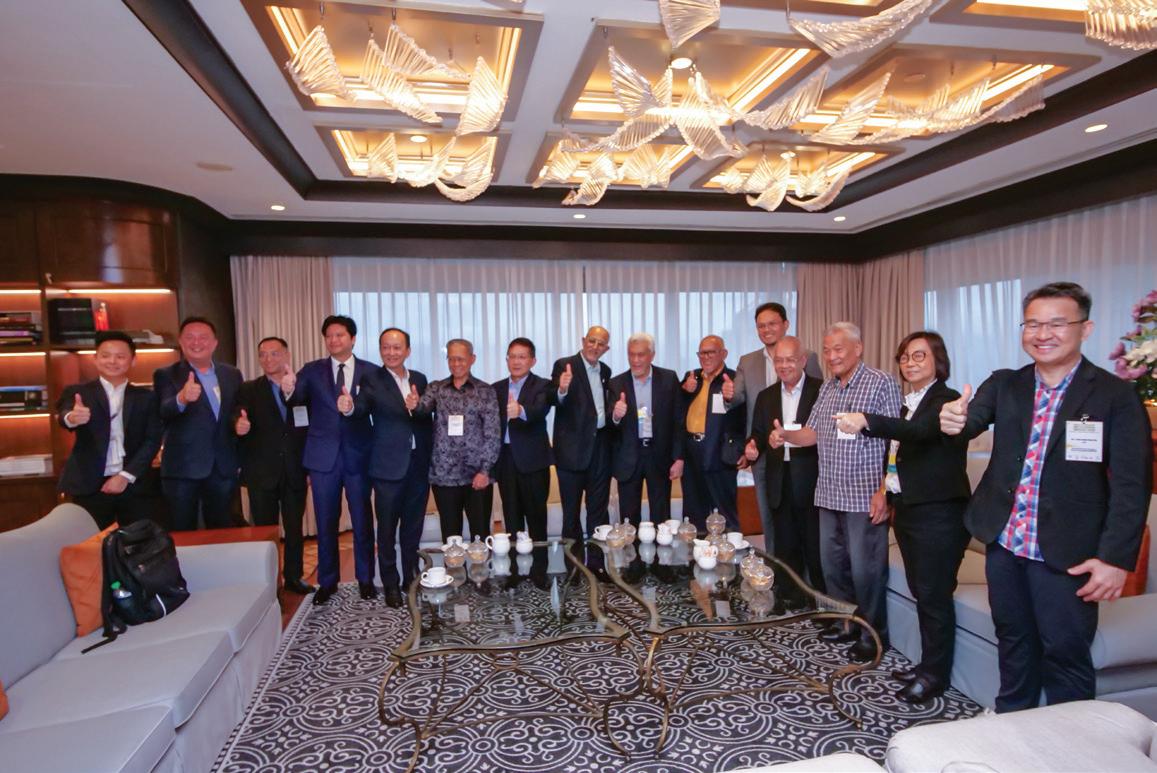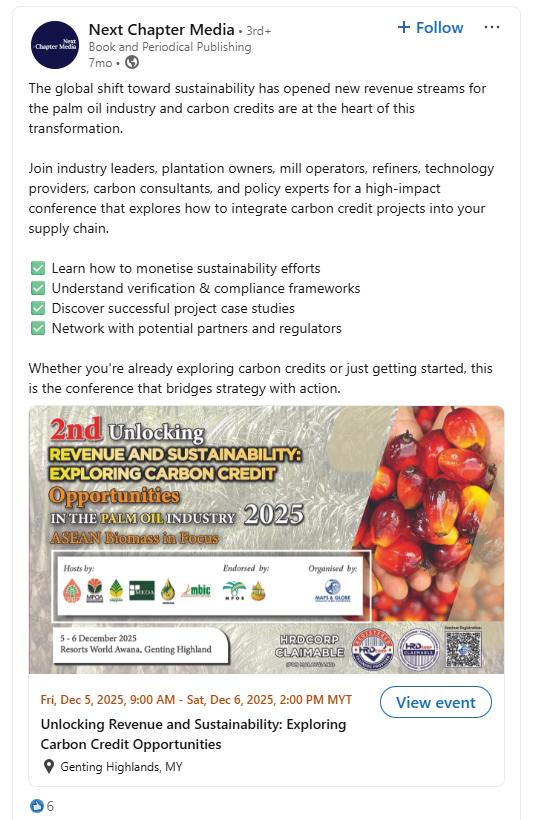





















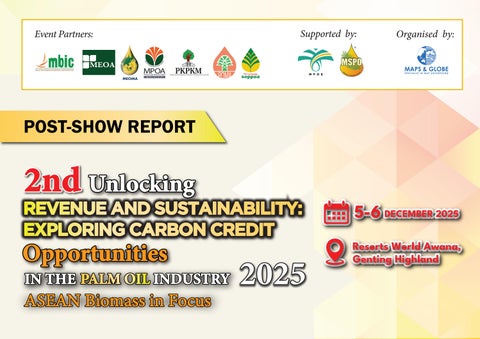






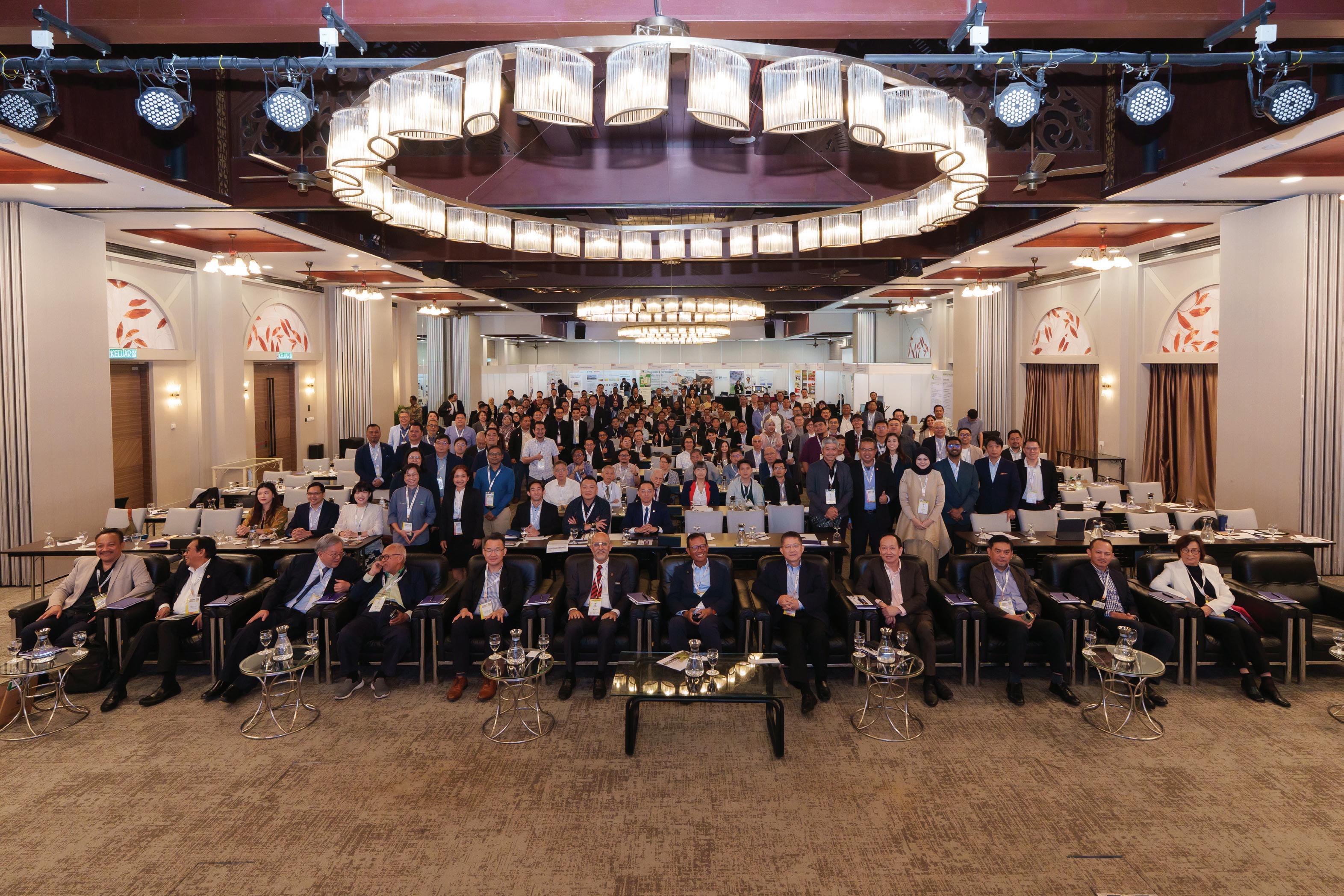
As we conclude the 2nd Unlocking Revenue & Sustainability: Exploring Carbon Credit Opportunities in the Palm Oil Industry conference, we extend our deepest gratitude to all attendees, speakers, exhibitor and partners who made this event a success. Your engagement and expertise have sparked meaningful discussions on the evolving carbon market, sustainable revenue opportunities, and industry best practices.
The exchange of ideas and strategies has set the stage for impactful action in balancing profitability with environmental responsibility. This conference was more than just an event—it was a stepping stone toward a greener, more sustainable future.
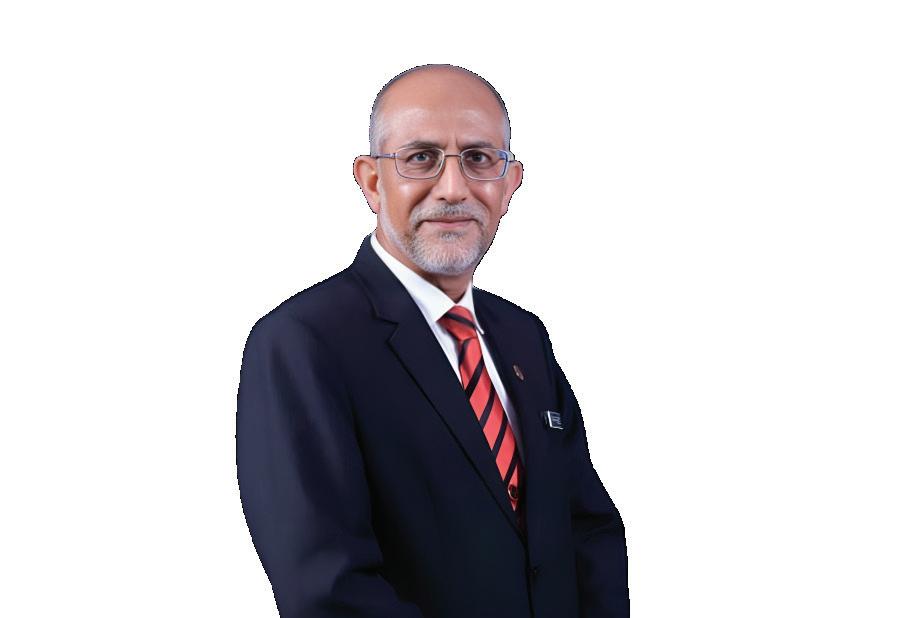
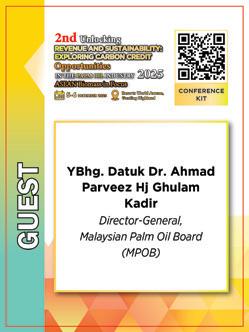
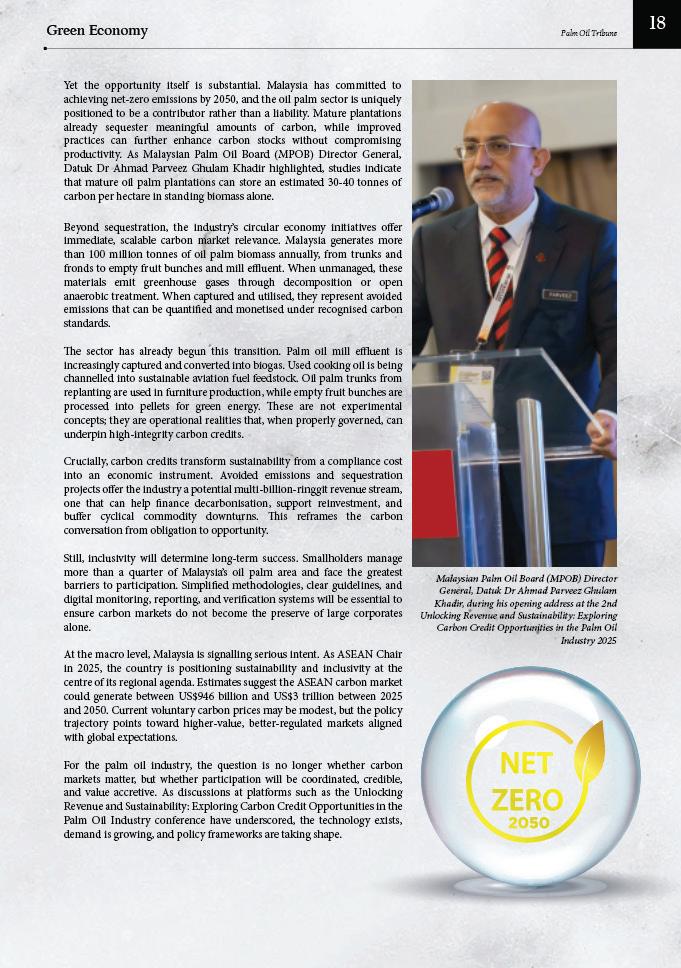
YBhg. Datuk Dr. Ahmad Parveez
Hj Ghulam Kadir

Director-General, Malaysian Palm Oil Board (MPOB)


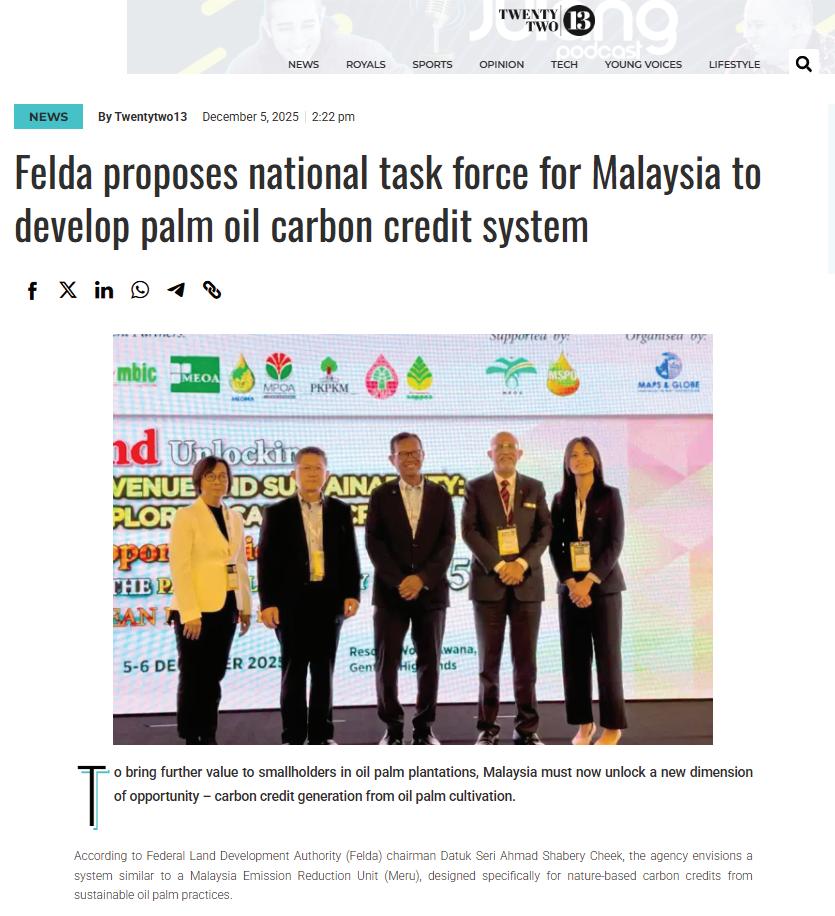
YBhg. Dato Sri' Ahmad Shabery Cheek Chairman, Federal Land Development Authority (FELDA)


Dr. David Lim Lian Keong
President, The Federation of Palm Oil Millers Associations of Malaysia (POMA)


Dato’ Leong Kin Mun President, Malaysia Biomass Industries Confederation (MBIC)

Cheif Executive O cer, Malaysian Palm Oil Association



Chief Executive O cer, Palm Oil Refiners Association
Executive Secretary,





Oil Palm Milling
Plantation Owner
Corporate Sustainability
Government and Regulatory Bodies
Inverstor and Financial Institutions
Oil Palm Re nery
Veri cation Bodies
(Biomass/Tech
Session 1:
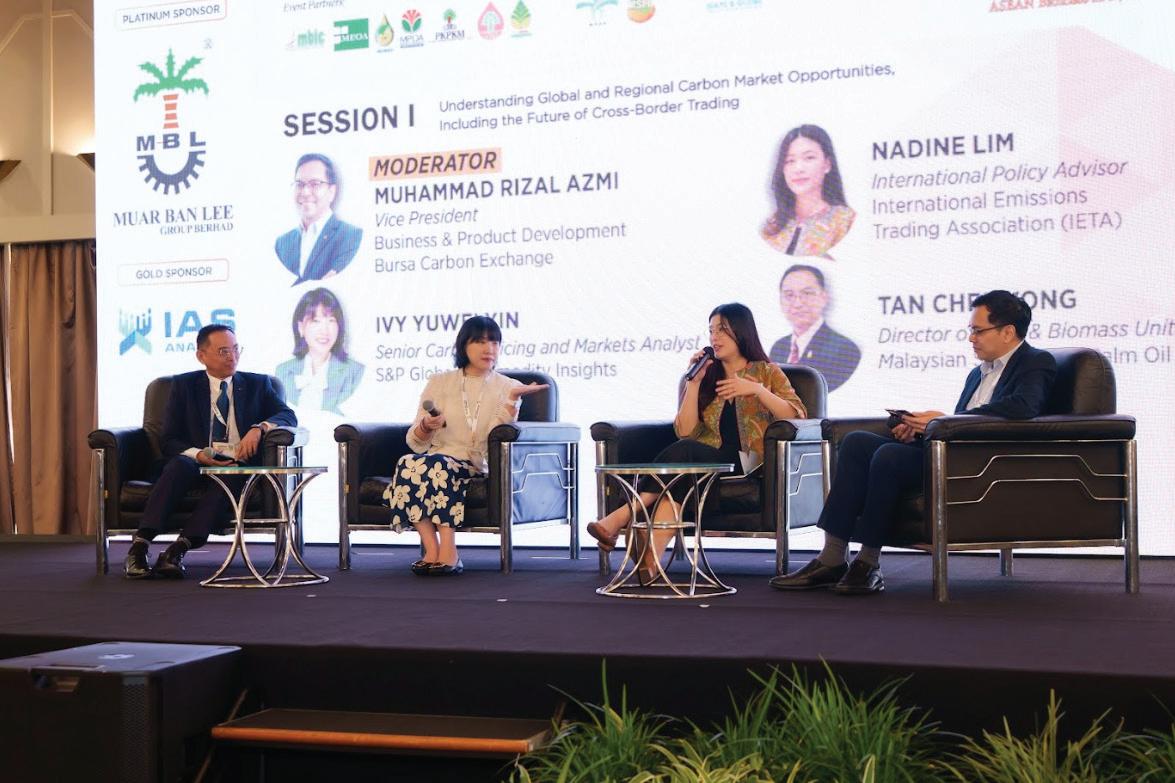
Understanding Global and Regional Carbon Market Opportunities, Including the Future of Cross-Border Trading
Session 2:
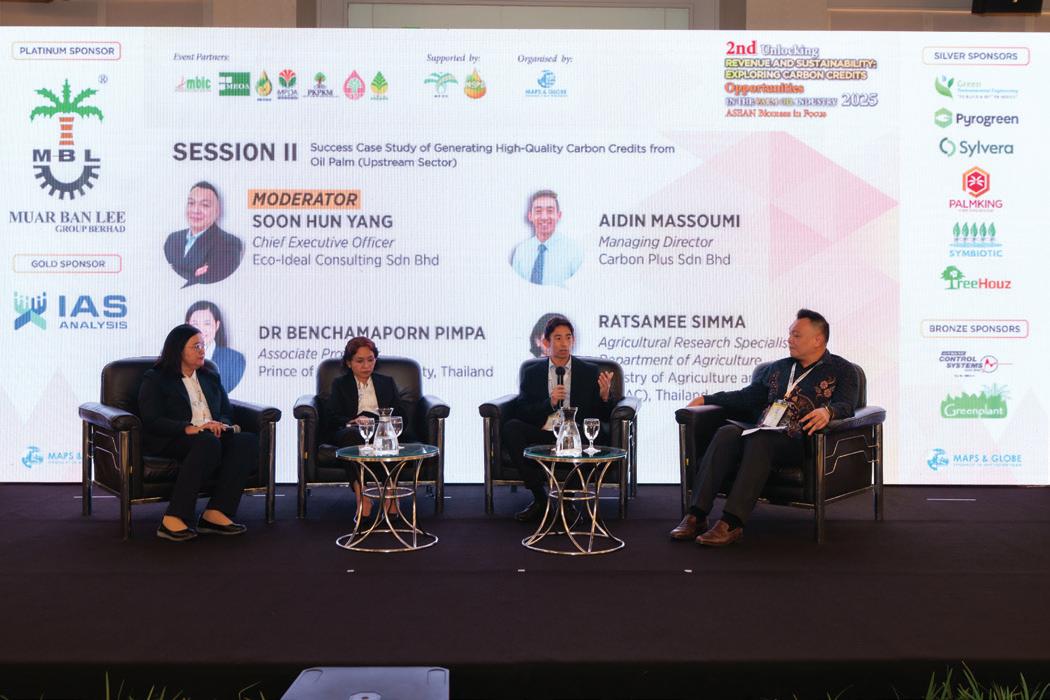
Session 3: Success Case Study of Generating High-Quality Carbon Credits from Oil Palm (Upstream Sector)
Success Case Study of Generating High-Quality Carbon Credits from Palm Oil (Downstream Sector)
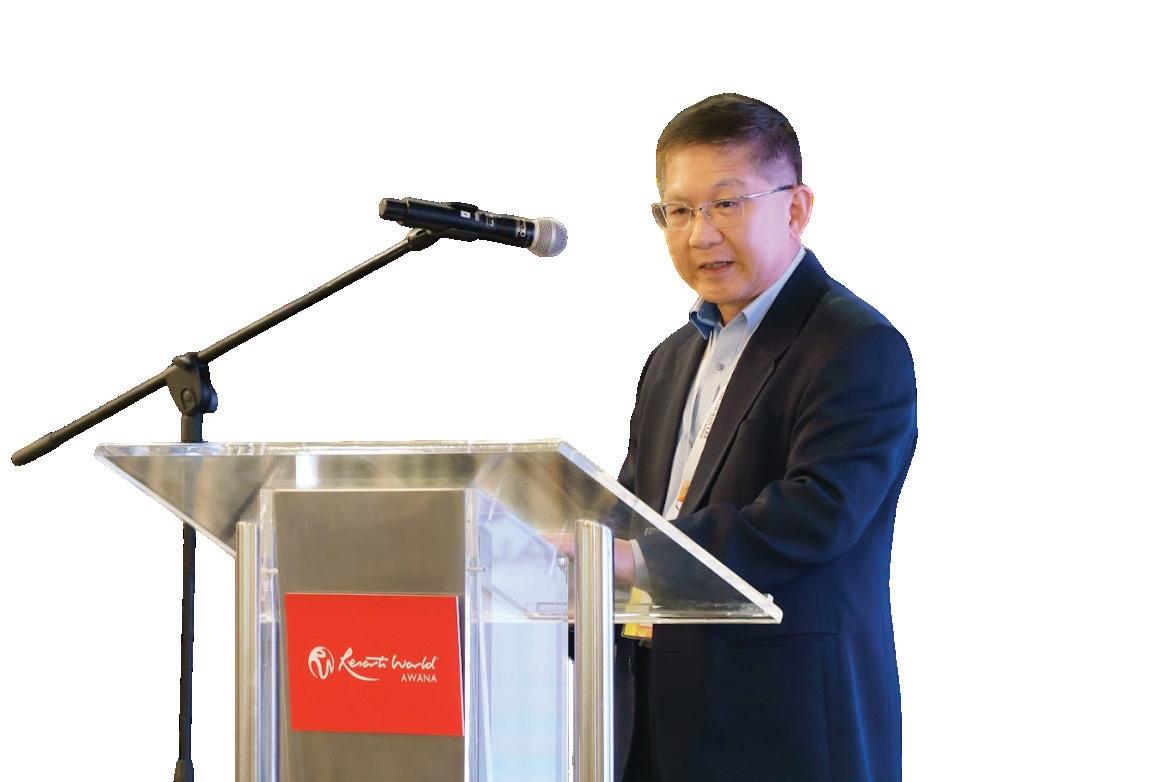

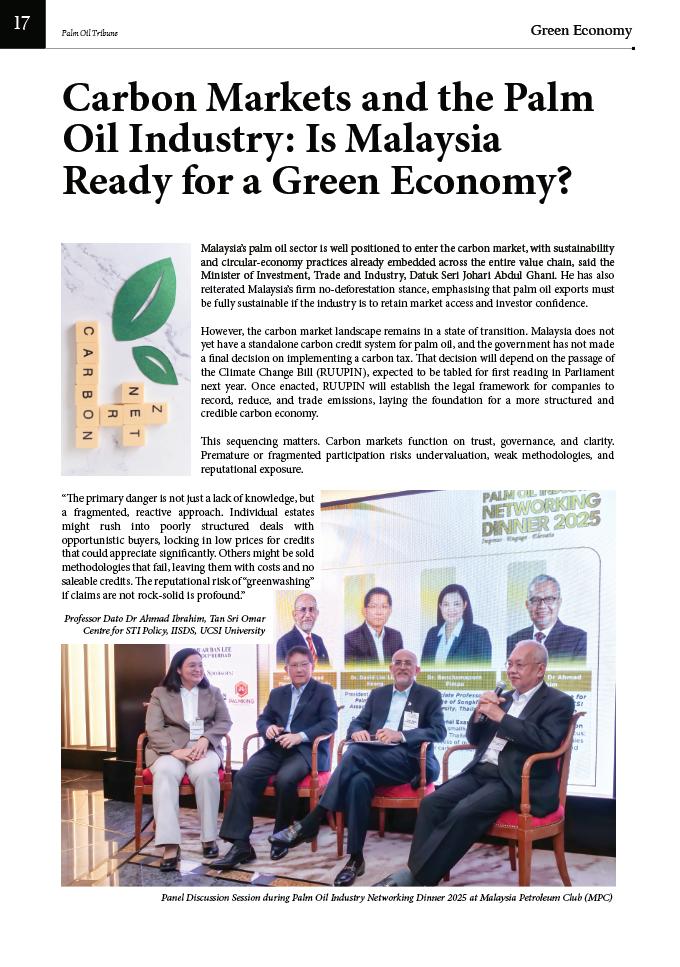
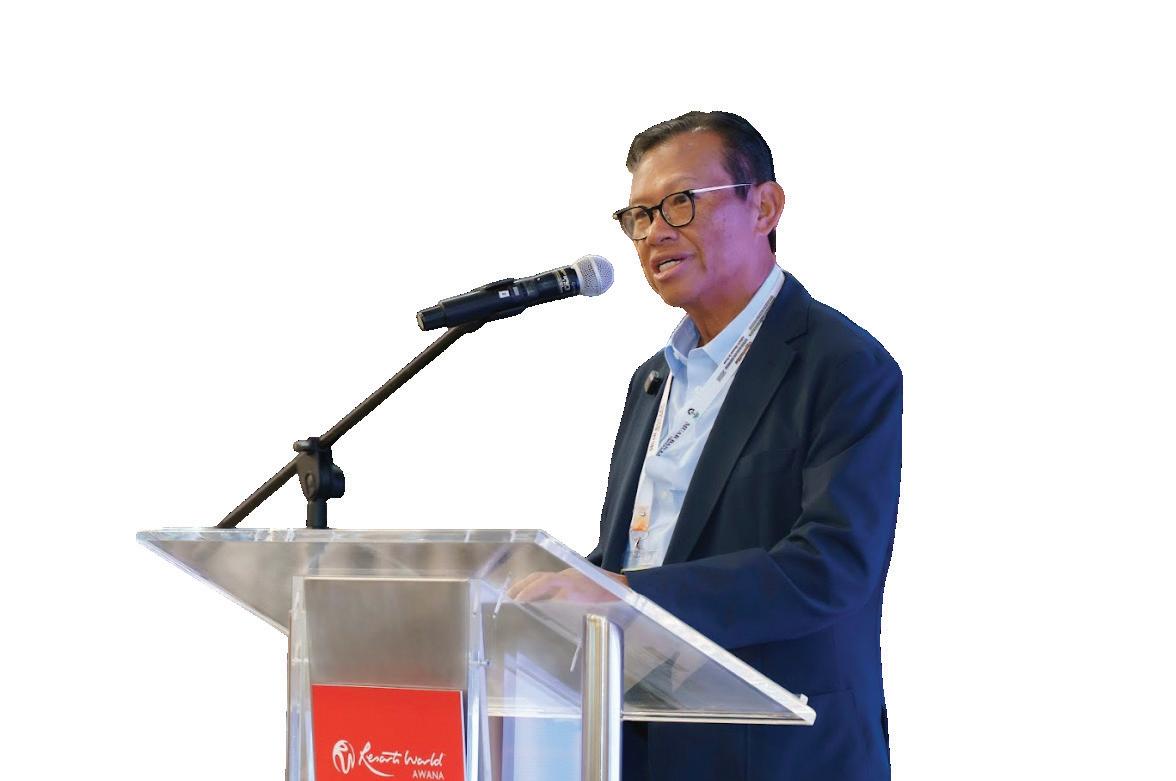
YBrs. Dr. David Lim Lian Keong President, The Federation of Palm Oil Millers Association of Malaysia (POMA)

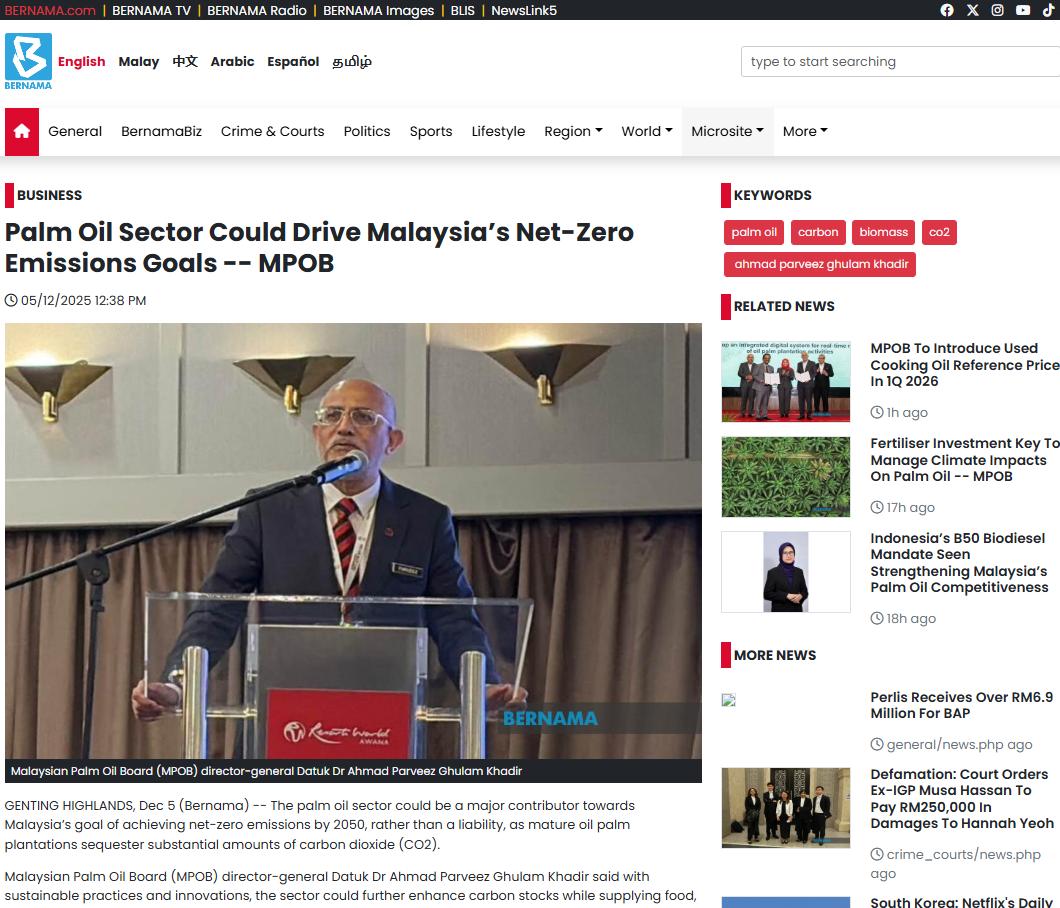
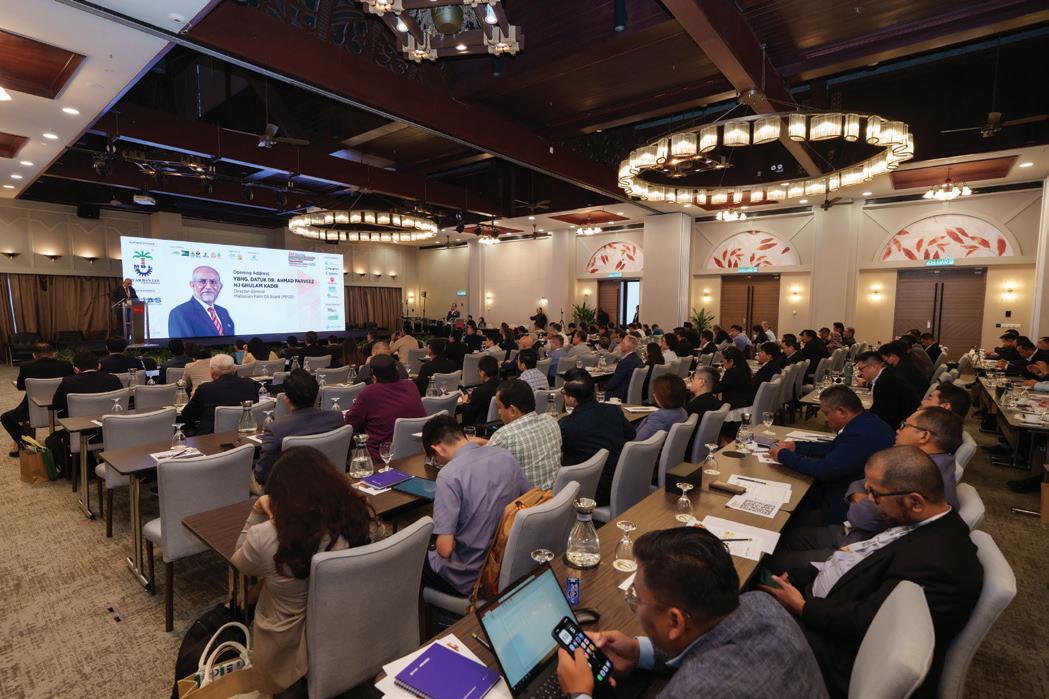
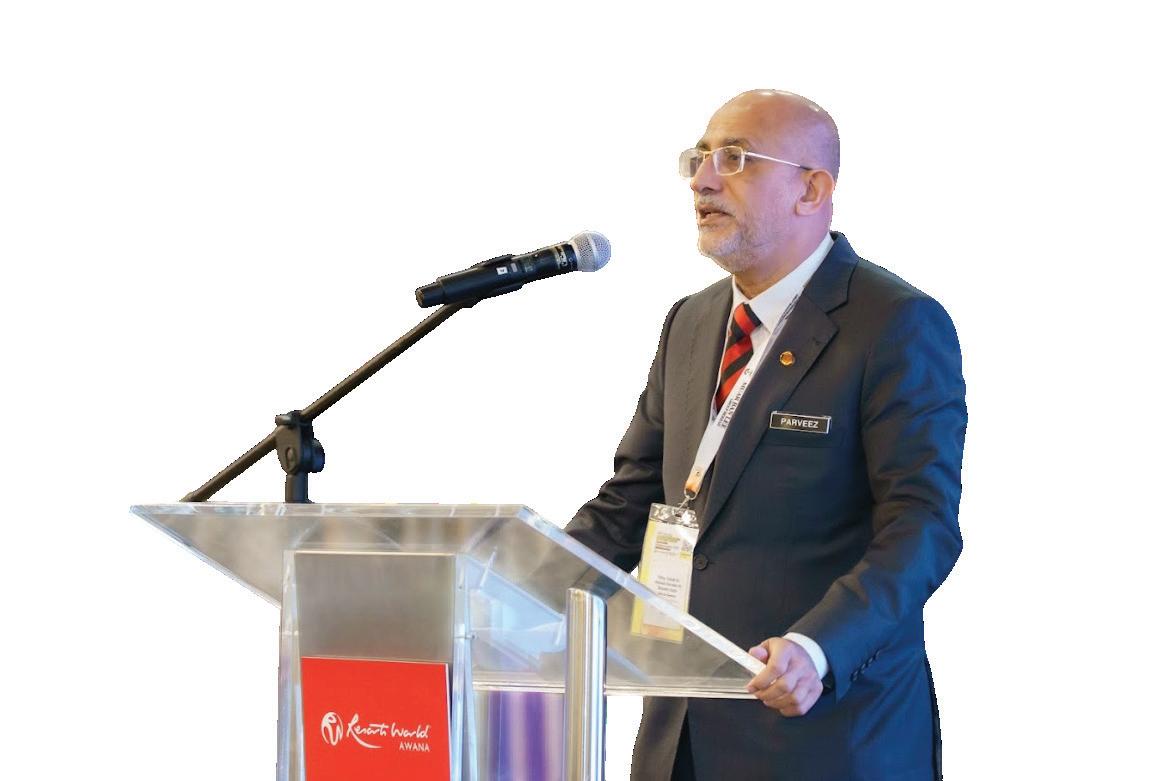
YBhg. Datuk Dr. Ahmad Parveez Hj Ghulam Kadir Director-General, Malaysian Palm Oil Board (MPOB)
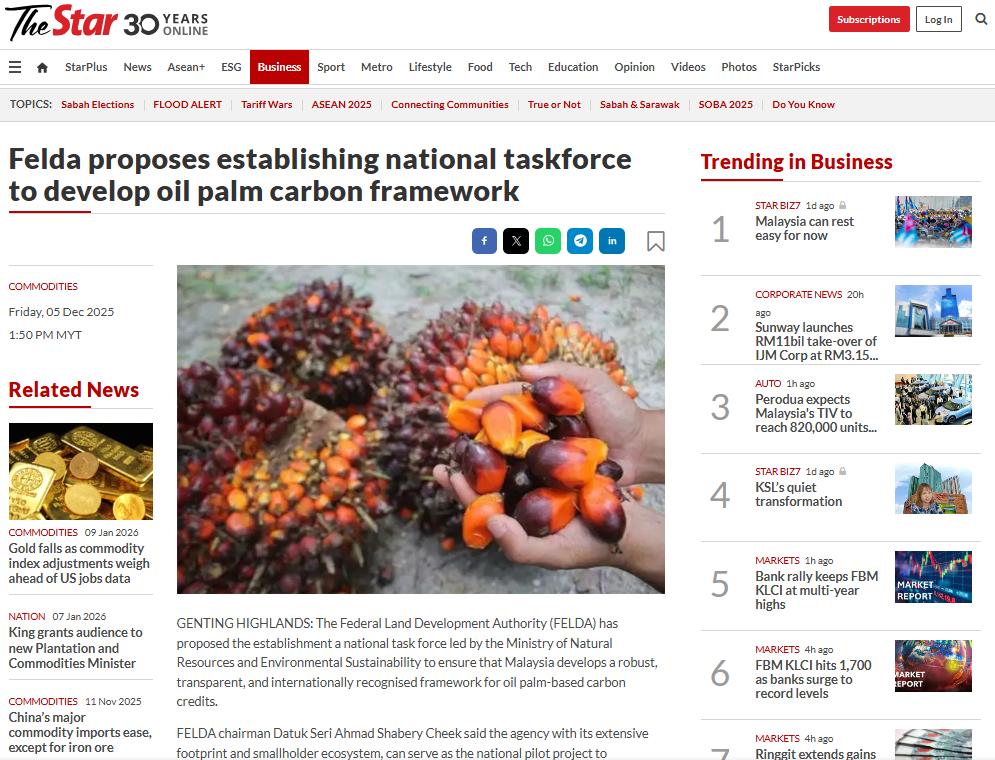
The opening speech highlighted how Malaysia’s oil palm industry can transform sustainability challenges into economic opportunities through carbon credits. With 5.7 million hectares of oil palm plantations acting as significant carbon sinks, the sector is well positioned to support Malaysia’s net-zero 2050 commitment. The speech emphasises the vast potential of oil palm biomass and mill by-products to generate avoided emissions through biogas capture, bioenergy, biochar, and high-value bio-products, turning waste into new revenue streams. Crucially, it stresses the importance of inclusive participation, particularly for smallholders, supported by clear methodologies, digital MRV systems, and strong collaboration between government, industry, and carbon market players to position Malaysia as a global leader in high-integrity oil palm carbon credits.


YBhg. Dato Sri' Ahmad Shabery Cheek
Chairman,
Federal Land Development Authority (FELDA)
The keynote speech highlighted Malaysia’s commitment to building an inclusive and sustainable carbon future for the palm oil industry, aligned with ASEAN’s vision and the nation’s net-zero 2050 target. It emphasises empowering smallholders through carbon credit generation from oil palm plantations, supported by national frameworks such as MSPO, the NETR, and a proposed Malaysia Emission Reduction Unit (MERU). By integrating carbon accounting into MSPO and linking palm oil-based credits with Malaysia’s carbon market, the approach aims to create new income streams for smallholders while supporting national decarbonisation goals.
Global and Regional Carbon Markets: Integrating Trends in Carbon Pricing with Emerging Systems in Southeast Asia
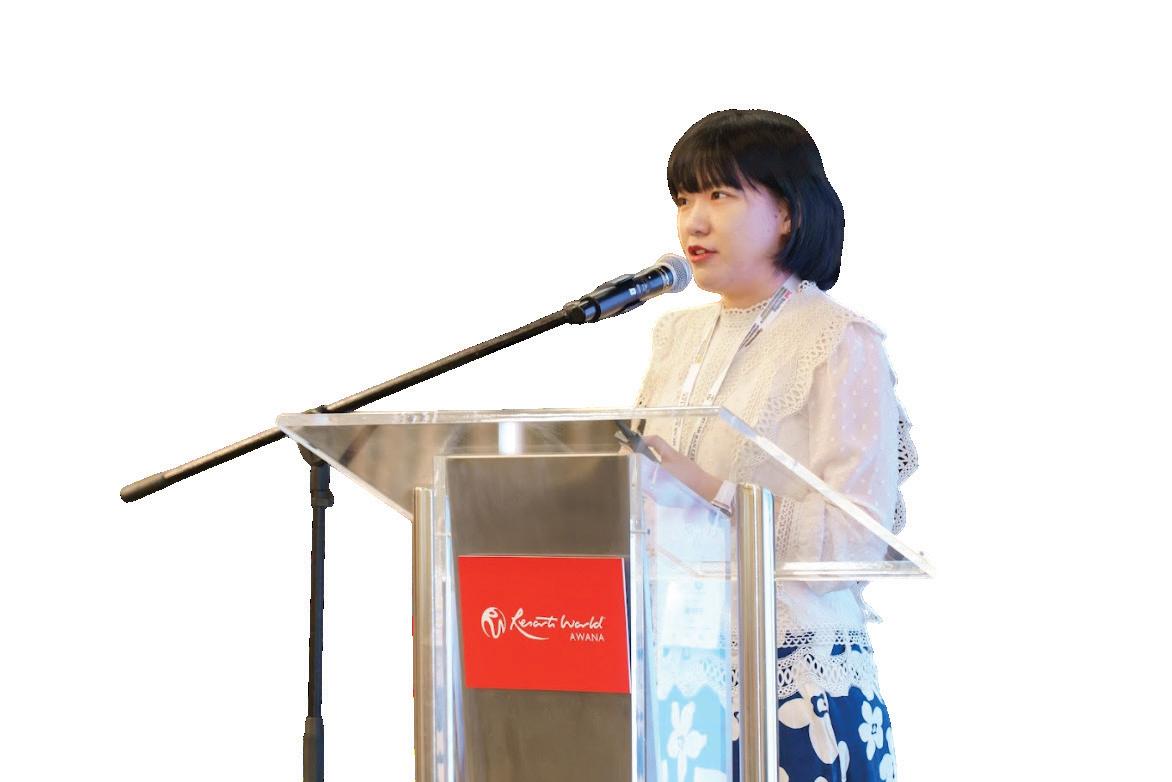
Nadine Lim
International Policy Advisor, International Emissions Trading Association (IETA)
Ms Nadine examined global carbon market developments and COP30 outcomes, highlighting that current climate ambition remains insufficient to meet the 1.5°C target despite progress under NDC 3.0 and Article 6. While technical advances on carbon markets continue, demand remains constrained without strong compliance mechanisms. For Malaysia, unlocking carbon market growth will depend on Article 6 participation and the introduction of compliance demand, such as a carbon tax that allows the use of high-integrity offsets.


Ivy Yuwei Yin
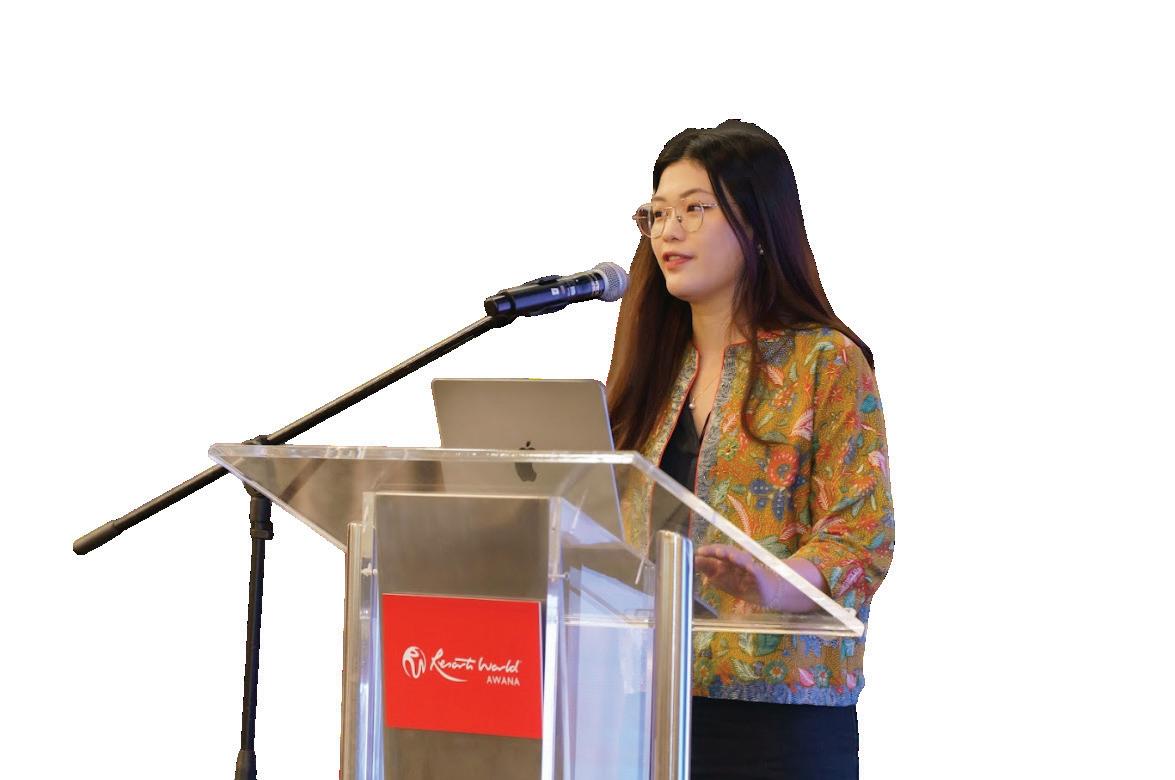
Senior Carbon Pricing and Markets Analyst, S&P Global Commodity Insights
Ms Ivy examined China’s National Emission Trading System (ETS) and domestic carbon credit market (CCER), highlighting how China has tailored its compliance regime to balance emissions reduction with economic growth. It explains China’s intensity-based ETS design, recent price dynamics, and the role of CCERs in compliance and future Article 6 trading. The presentation also outlines implications and opportunities for Malaysian stakeholders, including cross-border carbon trading, CORSIA, and lessons for designing Malaysia’s own carbon tax or compliance market in response to global pressures such as the EU’s CBAM.
Natalia Rialucky Deputy Chair Intra- ASEAN Affairs
ASEAN Alliance on Carbon Markets (AACM)
Mr Rizky, presented on-behalf of Ms Natalia showed that the project converts palm oil waste (EFB and POME) in Central Kalimantan into compost through aerobic processing, preventing methane emissions from open dumping and lagoons. It reduces about 3,355 tCO₂e annually, produces nutrient-rich compost that replaces chemical fertilisers, and improves soil health. With strong digital monitoring, traceability, and local workforce involvement, the project demonstrates how palm waste can deliver credible climate and community benefits.
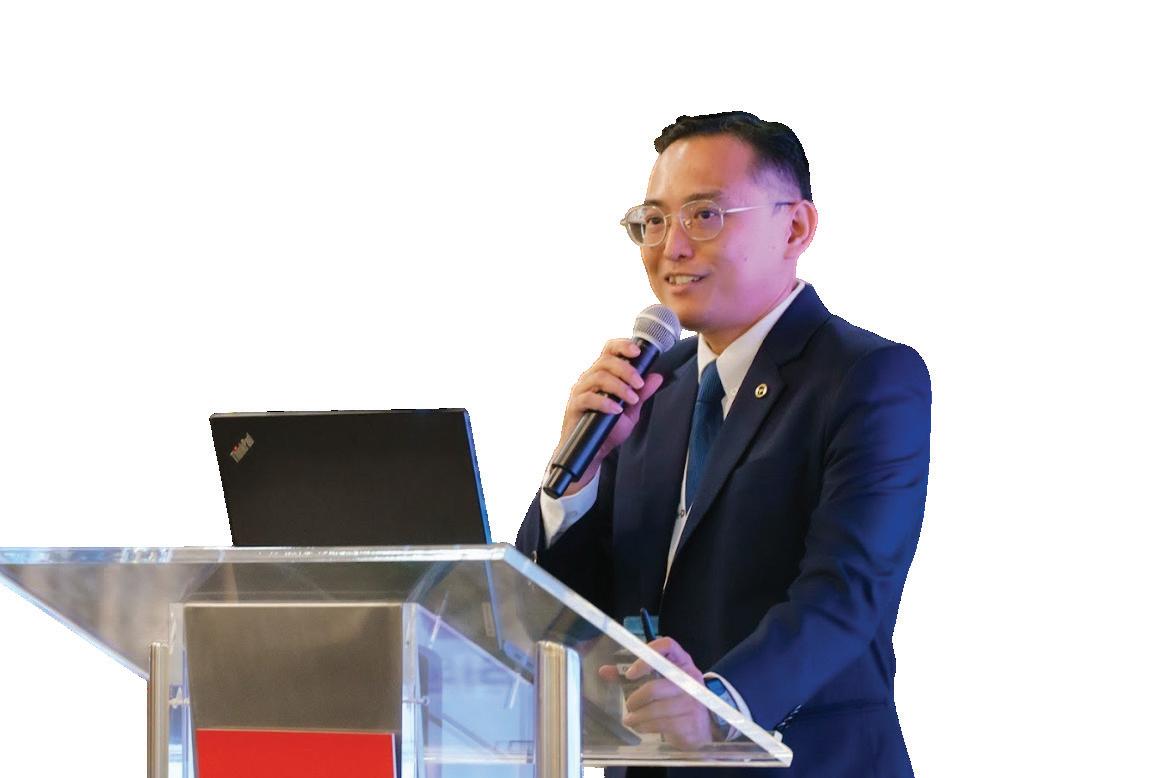



Positioning Malaysia’s Oil Palm Industry for Global and Regional Carbon Market Success
Tan Chee Yong
Director of GHG & Biomass Unit, Malaysian Sustainable Palm Oil (MSPO)
Mr Tan outlined how Malaysia’s oil palm industry can position itself for success in global and regional carbon markets by leveraging MSPO as a platform for verified GHG transparency, biomass traceability, and carbon market participation. It highlights opportunities across compliance and voluntary markets, including biomass energy, methane avoidance, sustainable aviation fuel feedstock, and long-lived biomass products. By upgrading MSPO into a digital, MRV-enabled framework and empowering smallholders, Malaysia can transition from a palm oil producer to a strategic supplier of low-carbon commodities and verifiable climate solutions.
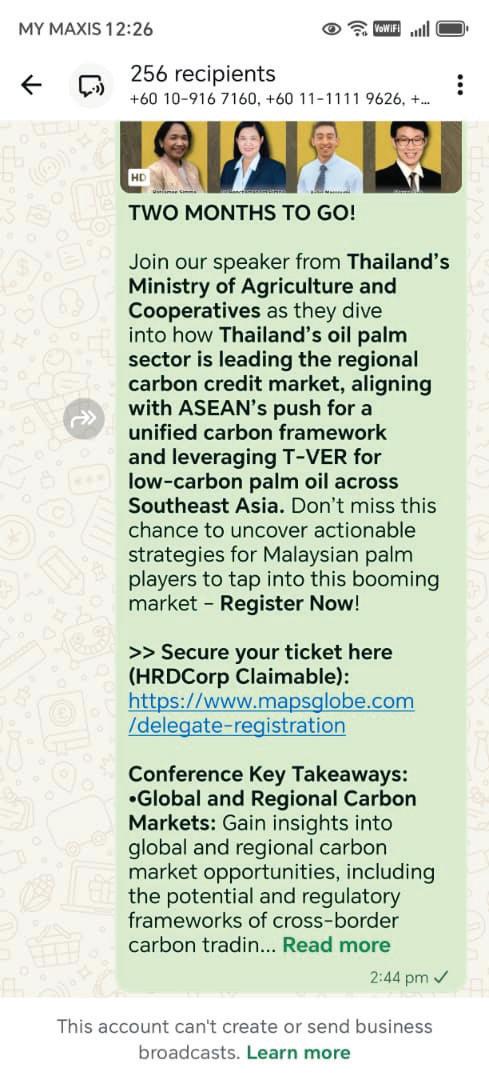
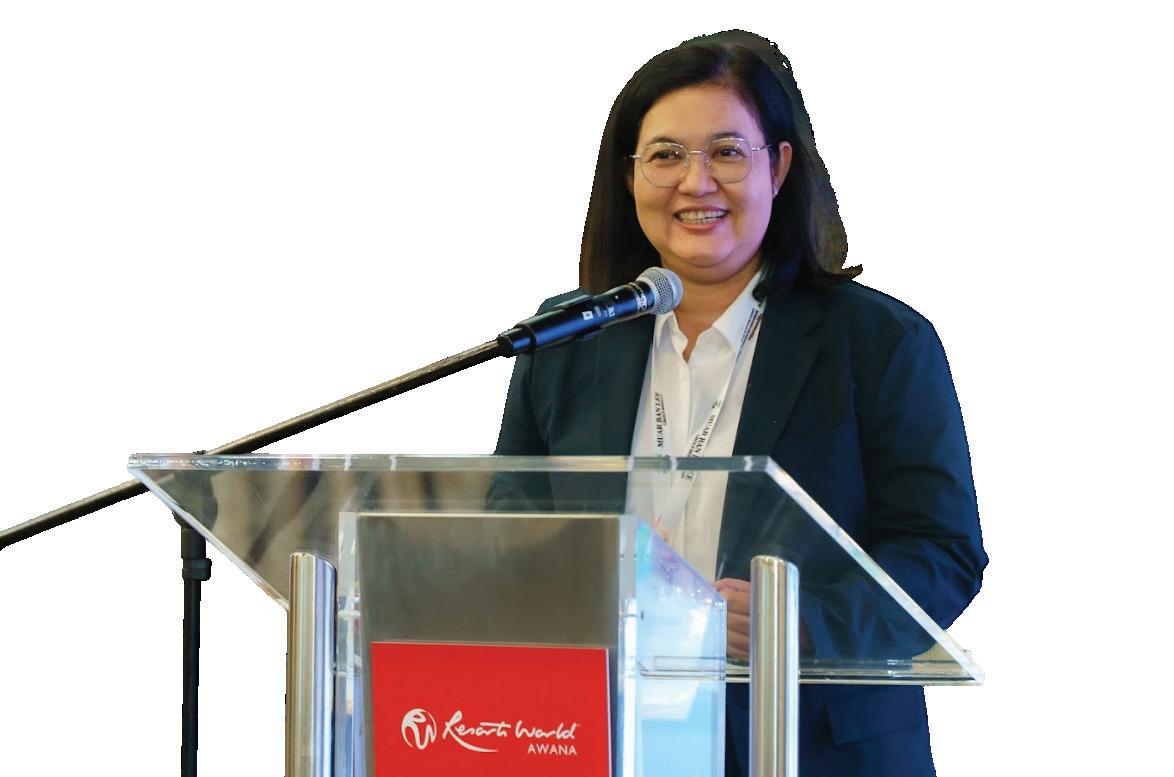
Implementation of a T-VER Project for Environmentally Sustainable and Socially Responsible Oil Palm Smallholder Farmers: A Case Study of Phanom Land Settlement Community Enterprise
Dr Benchamaporn Pimpa
Associate Professor, Prince of Songkla University, Thailand
08
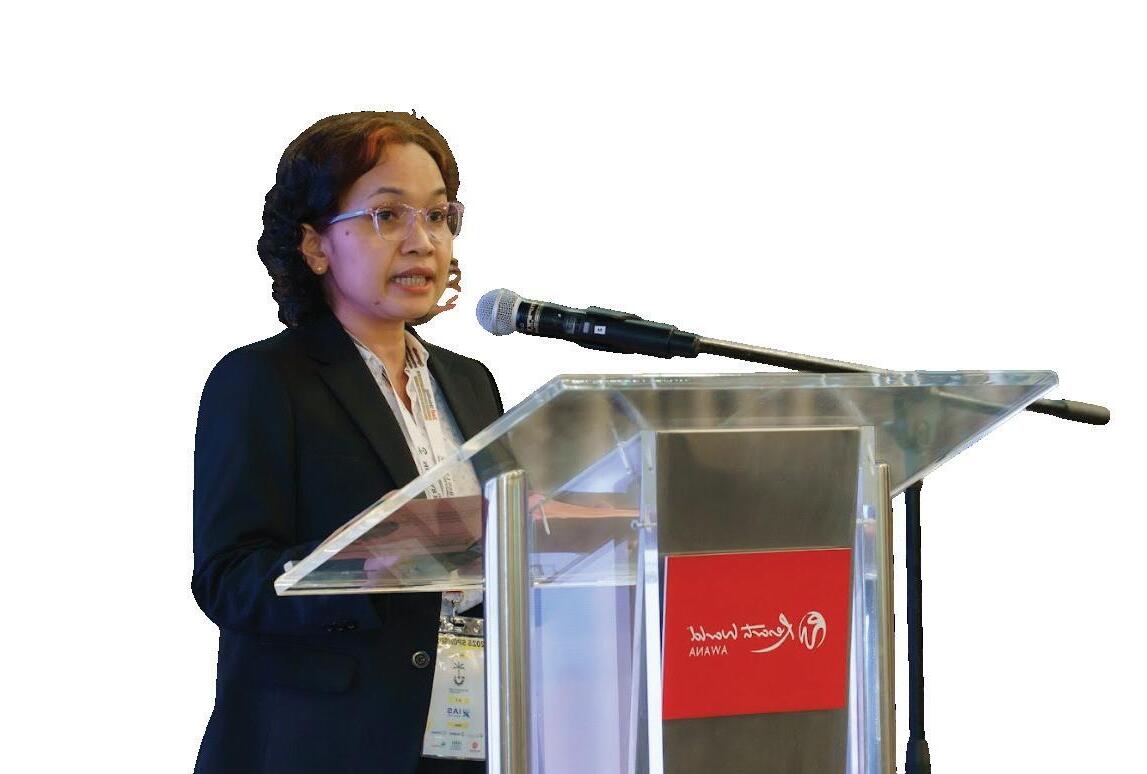
Development of a Carbon Credit Project for an Oil Palm Plantation under the Thai Voluntary Emission Reduction Program (T-VER)
Ratsamee Simma

Agricultural Research Specialist, Department of Agriculture, Ministry of Agriculture and Cooperatives (MOAC), Thailand

Dr Ben examined a T-VER carbon credit project implemented with 1,271 smallholder oil palm farmers in Surat Thani, Thailand, covering 3,901.5 hectares. Using TGO-compliant methodologies—including GIS mapping, stratified sampling, and improved fertiliser management—the project achieved an estimated net sequestration of 372,381 tCO₂e over seven years. It demonstrates how smallholders can access voluntary carbon markets, generate additional income, and support national decarbonisation through sustainable oil palm practices.
Ms. Ratsamee presented a carbon credit project for oil palm plantations under Thailand’s T-VER program, supporting national decarbonisation while generating tradable carbon credits. Case studies across four provinces show how sustainable practices—such as reduced chemical fertiliser use, organic inputs, and improved soil management—lower emissions and enhance carbon sequestration. Using approved T-VER methodologies, farmers can earn an estimated USD 3,700–6,100 annually per site, while contributing to Thailand’s climate goals and strengthening the domestic carbon market.
Aidin Massoumi Managing Director, Carbon Plus Sdn Bhd
Mr Aidin highlighted how palm oil mills can lead in carbon removal by converting residues such as EFB and PKS into biochar, delivering durable CO₂ sequestration alongside soil and productivity benefits. Using Malaysia’s Bukit Selar “Carbon Station” as a scalable model, it shows how mills can generate high-integrity carbon removal credits to meet growing corporate demand. Integrating biochar into mill operations enables the palm oil sector to transform waste into value while strengthening sustainability, climate resilience, and regional climate action.
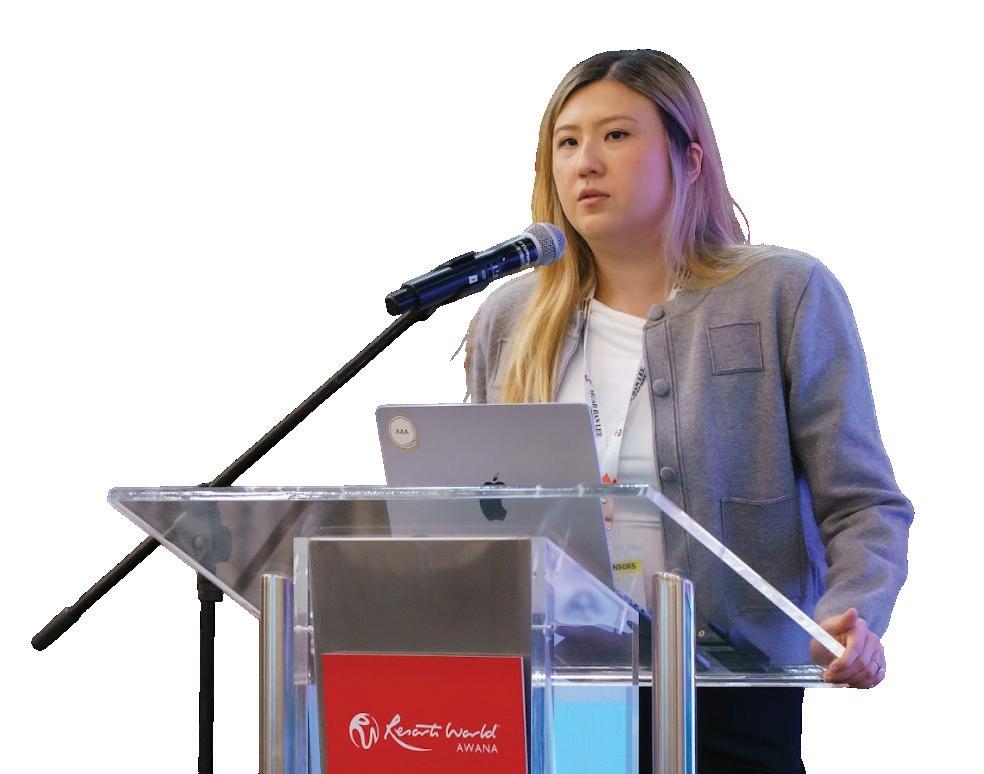

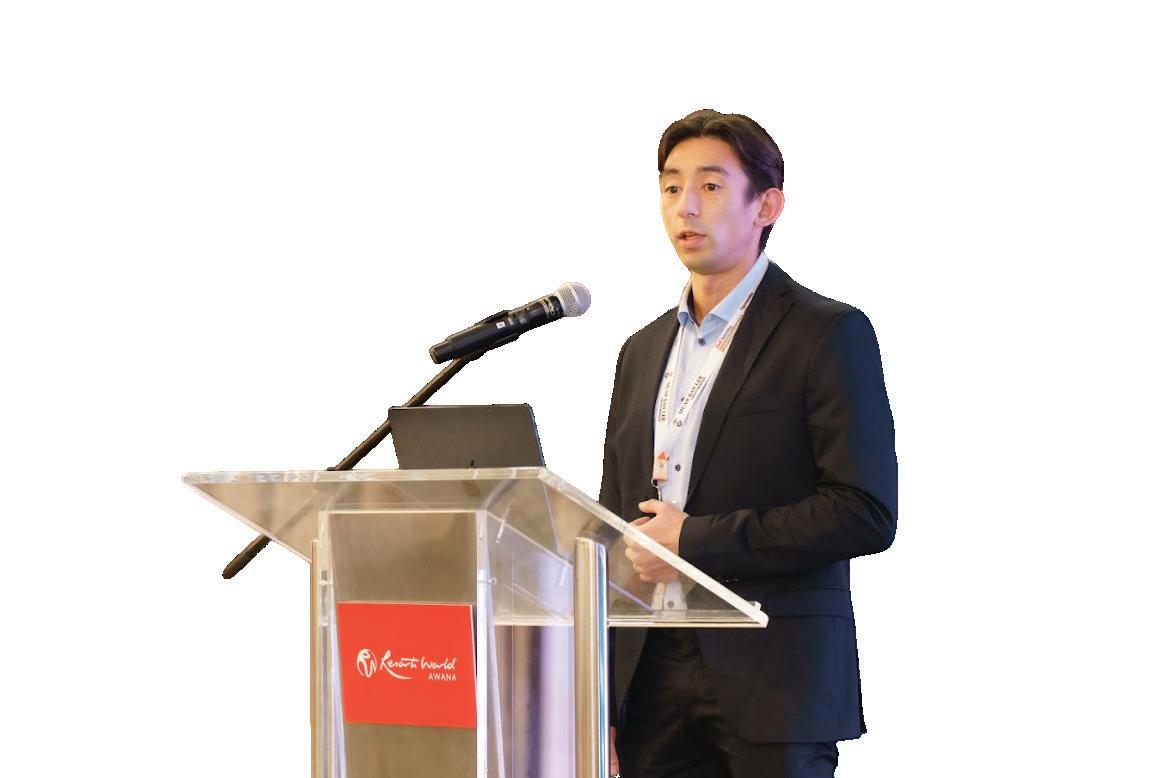

Opportunities for Palm Oil Landowners in Carbon Markets
Fiona Thia
Account
Executive,
APAC, Sylvera Ltd
Ms Fiona explained how palm oil landowners can respond to rising regulatory and corporate pressures—such as EUDR, MSPO, and zero-deforestation commitments—by leveraging carbon markets to create new revenue streams. With voluntary carbon market demand expected to grow sharply by 2030, landowners can monetise forest conservation, land restoration, and palm oil residues through high-integrity carbon projects. By meeting stringent quality criteria on additionality, permanence, and verification, compliance challenges can be transformed into profitable and credible climate action.
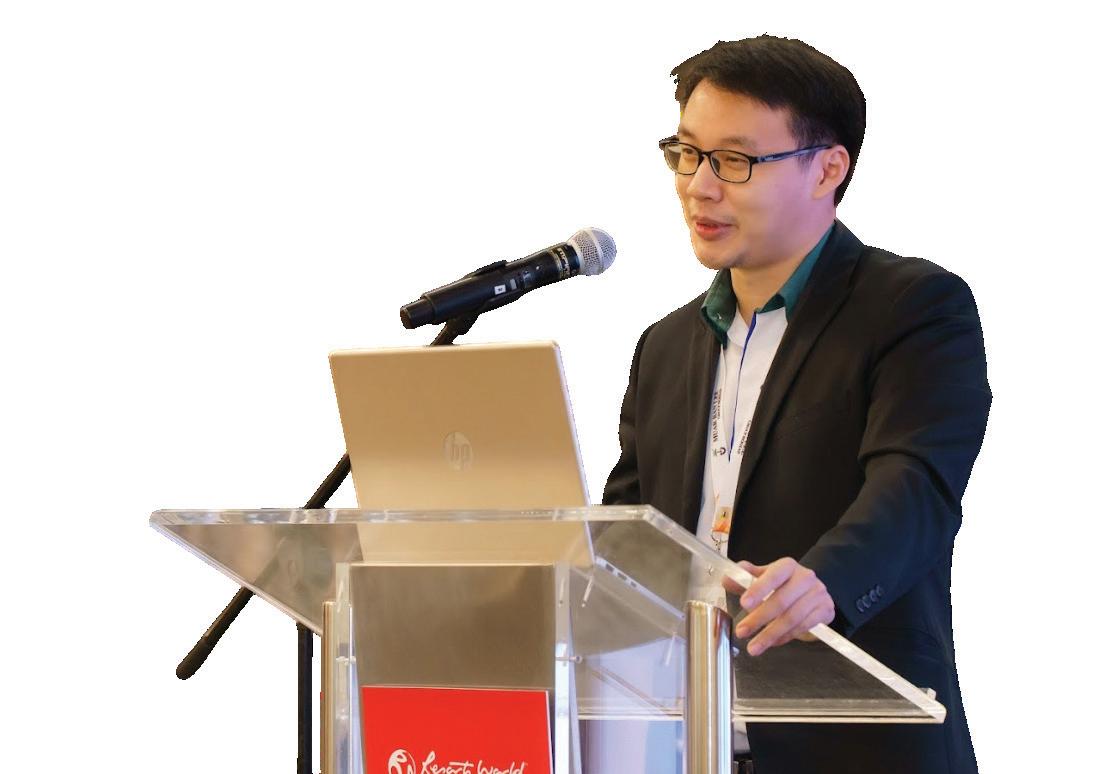
Next-Generation BECCS: Advancing Biomass Gasification with Enhanced Carbon Capture System for Value Creation and Carbon Credit
Steven Lim
Project and Research Director of Green Envi ronmental Engineering, Associate Professor at Universiti Tunku Abdul Rahman
12
Developing High-Quality Carbon O sets and the Role of the Malaysia Carbon Market Association in Advancing a Dynamic Carbon Market
Nesa Albeper deRozario
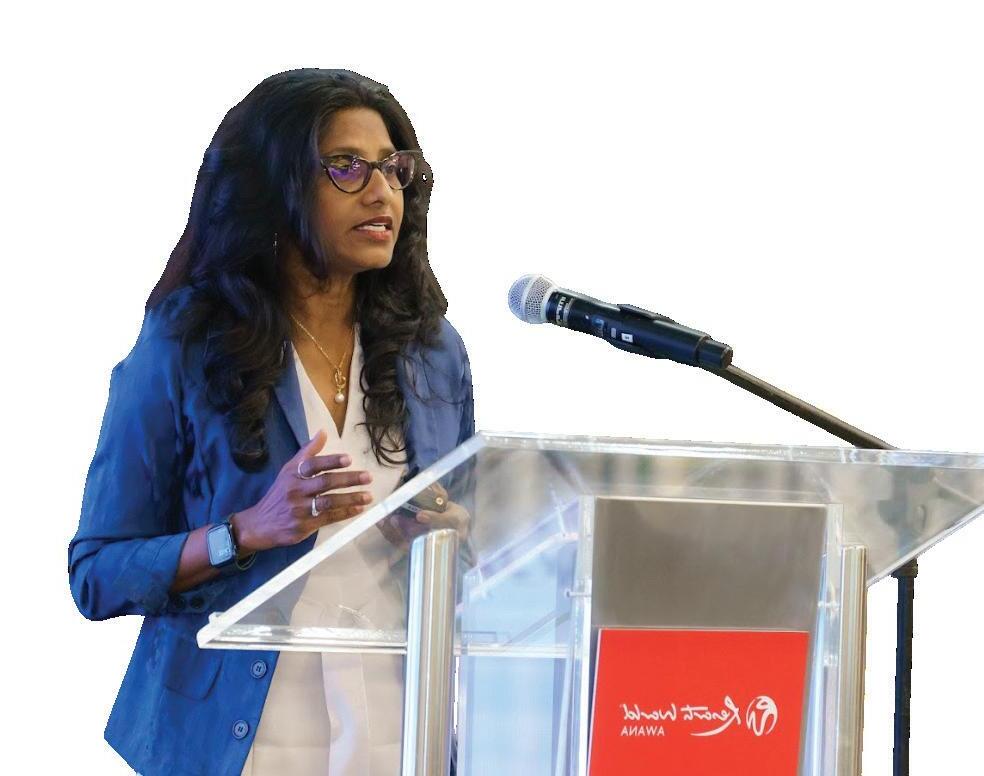


Head of Sustainability & Corporate Strategy at Cenergi SEA Berhad, Secretary of Malaysia Carbon Market Association (MCMA)
13
Mr Steven introduced Green Environmental Engineering’s BECCS solution, combining fluidized-bed gasification with PureFlux™ carbon capture to convert palm oil biomass into clean energy, biochar, and captured CO₂. The system enables carbon-negative energy production, with CO₂ used for mineralisation or construction materials and additional revenue from carbon credits. With a 3–5 year payback period, this circular model supports Malaysia’s net-zero goals and positions palm oil mills as leaders in scalable, high-integrity carbon removal.
Ms Nesa showcased Cenergi SEA Berhad’s role in developing high-integrity carbon offsets from the palm oil sector, led by Malaysia’s first technology-based VCS-registered biogas project at Langkap. Through a scalable grouped project model, Cenergi enables mills and smallholders to generate carbon credits by capturing POME methane in line with ICVCM Core Carbon Principles. Its Build-Own-Operate and revenue-sharing SPV model offers a replicable pathway to convert waste into renewable energy and carbon revenue, supporting Malaysia’s net-zero ambitions and regional carbon market development.