Next Chapter Media's editorial team strives to provide accurate and reliable information. However, we recommend that readers independently verify the claims and information presented in our publications. Next Chapter Media is not responsible for the accuracy of the content and encourages readers to use their own judgment when evaluating the information.
Editorial Team
EDITOR
Hani Aqilah hani@maps-globe.com
CREATIVE DESIGNER
Muhammad Faireez artwork@mapsglobe.com
DIRECTOR Emily Yu
PUBLICATION
Maps & Globe Specialist
Distributor Sdn. Bhd (625396-A)
No 3-1 Jalan Perdana 10/6, Pandan Perdana, 55300 Kuala Lumpur, Malaysia.
PRINTING
Fong Wah Printing Sdn. Bhd. (1406717K)
No. 17, JaIan Tembaga SD 5/2G Perindustrian Bandar Sri Damansara, Pekan Kepong, 52200 Kuala Lumpur, Malaysia.
Sustainability Innovation Growth
Malaysia’s SD Guthrie working with Indonesia on palm oil plantation seizures
11 June 2026
SD Guthrie is working with Indonesian authorities to address issues involving approximately 2,800 hectares of plantation land in Indonesia that have been a ected by the country’s forestry enforcement programme. e area represents about 2% of the group’s Indonesian land bank under its Minamas Plantation subsidiary. A government forestry task force seized approximately 4.1 million hectares of plantation land in 2025 for operating in designated forest areas. e company said harvesting operations remain una ected and that it has not received any formal decree from the Indonesian government regarding its plantations.
President and Group CEO Mohd Haris Mohd Arshad clari ed that SD Guthrie is actively engaging with authorities to resolve the matter. He also described Indonesia’s e orts to strengthen oversight of plantation land and commodity exports as understandable measures to address revenue leakages while safeguarding national interests. Mohd Haris also noted that SD Guthrie expects minimal impact from rising fertiliser costs due to the Middle East con ict, as the group procures its fertilisers from China, Canada, Belarus and Egypt. In addition, the company has improved water management measures to mitigate the potential e ects of El Niño weather conditions this year.
Indonesia prepares 280 million plantation seeds to boost economy
9 June 2026
e Indonesian government is preparing to distribute approximately 280 million high-yielding cocoa and coconut seedlings as part of a major initiative to revitalise the plantation sector and strengthen rural economic development. e initiative forms part of a broader plantation development programme covering 2025–2027, supported by a Rp9.5 trillion (US$522.8 million) budget allocation.
e initiative aims to develop 870,000 hectares of community plantation land nationwide and includes other strategic commodities, including sugar cane, co ee, nutmeg, cashew nuts and candlenut. Agriculture Minister Andi Amran Sulaiman said the initiative aligns with President Prabowo Subianto’s vision of positioning agriculture and plantations as key drivers of economic growth.
e government has pledged to provide farmers with free planting assistance, including improved seedlings, land preparation and planting support. e programme is also expected to create up to three million long-term jobs through the expansion of plantation activities and downstream industries.
Palm Oil Day: Pride With Homework
23 April 2026
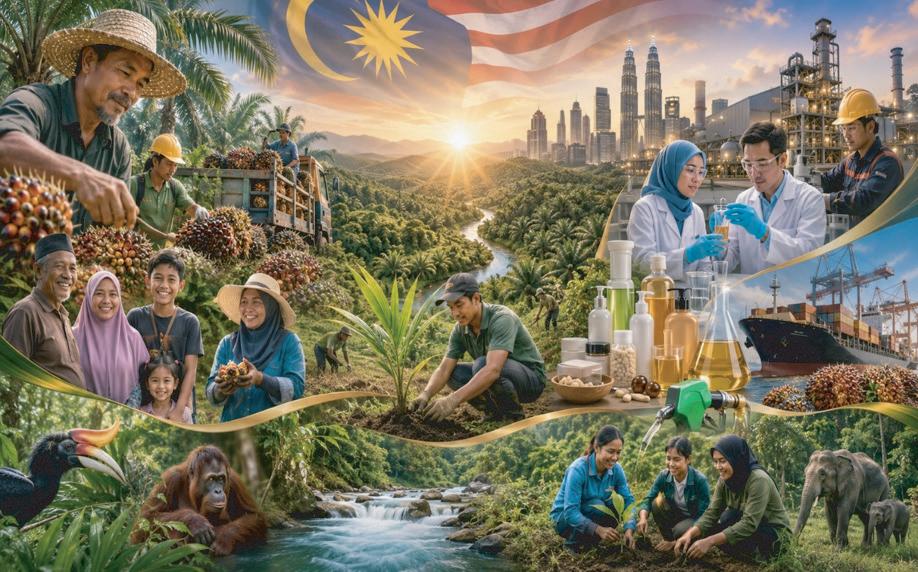
In his StarBiz Insight, the columnist argues that palm oil deserves its own national day - not as propaganda, but as informed appreciation. e idea is simple: palm oil is too important to be noticed only during price spikes, controversies or foreign criticism.
Tek presents palm oil as more than cooking oil. It is food, oleochemicals, biofuels, logistics, science, rural employment, export earnings and industrial possibility. He says a proper Palm Oil Day should honour smallholders, harvesters, mill workers, scientists, women, youth and the wider supply chain behind every drop.
He also reminds readers that palm oil helped cushion Malaysia during major shocks, including the Asian nancial crisis, the global nancial crisis and Covid-19 disruption.
But celebration must not hide un nished work: replanting, productivity, labour reform, certi cation, biodiversity and better storytelling. Pride, he argues, must walk with responsibility.
Estate Names Carry Plantation Wit and Memory
4 January 2026
In this light-hearted BM Berita Harian piece, the columnist reminds readers that plantation estate names are not merely administrative labels. ey are small archives of history, humour, geography, language and human imagination.
e article traces how early estate life in Malaya was shaped by heat, mud, hard labour and isolation, yet still produced colourful naming traditions. Tennamaram, Malaysia’s pioneering commercial oil palm estate, carries an ironic Tamil-rooted link to coconut trees. Bangsar began as Bunge-Grisar, from two European planter names, later so ened by local speech into one of Kuala Lumpur’s most famous addresses.
In Sabah, Jeroco combined jelutong, rotan, coconut and cocoa, while Trushidup expressed the hopeful phrase “terus hidup”. Elsewhere, Yam Seng, MOBE - “My Own Bloody Estate” - and reversed names such as Nordanal and Lanadron show the industry’s dry wit.
Tek’s larger insight is that estate names are folklore. ey preserve place, aspiration, colonial memory, local tongues and planter humour. Behind every name lies not only land and crop, but a story worth remembering.
Youth and palm oil: From Sembang Sawit to sparks
22 June 2026
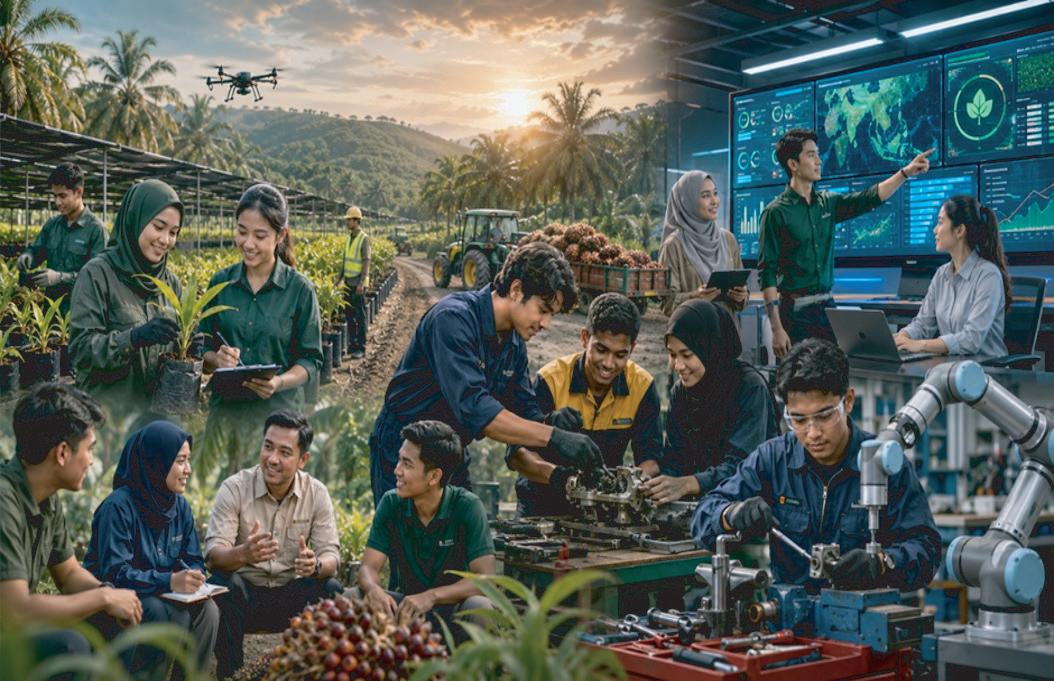
In his Tek Talks column in the Edge, the columnist argues that palm oil’s next strategic challenge is not only land, yield, prices or compliance, but talent.
e industry faces a paradox: universities produce graduates, yet companies still struggle to nd suitably prepared people for agronomy, engineering, mechanisation, data analytics, robotics, ESG, operations and management. e gap, he suggests, lies in weak alignment between education, workplace reality and career pathways.
Tek notes that plantation work is still poorly perceived by many young professionals, while graduates o en encounter an industry shaped by weather, labour, biology, policy and operational complexity - realities not easily learnt from textbooks.
He calls for deeper university-industry collaboration, structured internships, clear graduate programmes, stronger mentorship and a respected Technical and Vocational Education and Training pathway.
His key message is direct: acreage alone will not secure palm oil’s future. Talent will.
African Weevils Released to Li Indonesia Palm Output
22 June 2026
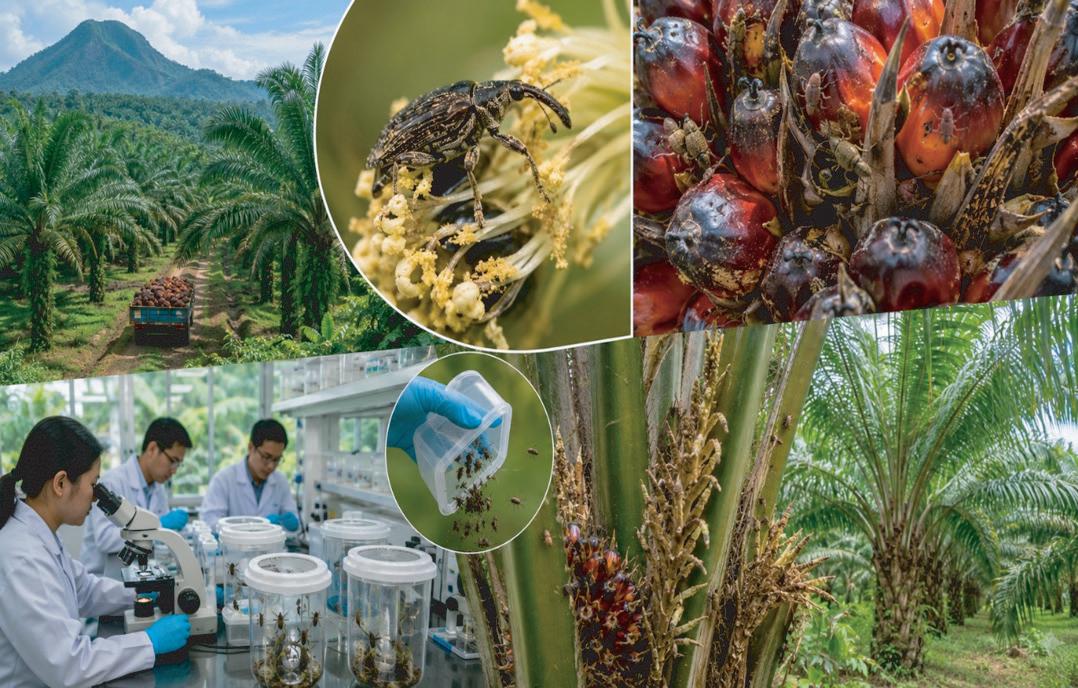
Indonesia has released thousands of African weevils in North Sumatra as part of a major e ort to improve palm oil pollination and revive output growth.
About 7,000 weevils were introduced at a PT Perkebunan Nusantara IV plantation, the rst step in a wider plan to deploy around one million insects nationwide. e programme follows scienti c testing a er about 6,000 weevils were brought from Tanzania, where oil palm originated.
Researchers expect the rst production impact within 10 to 12 months. More companies and smallholder groups will receive weevils in stages, while larger producers may breed them in their own laboratories.
Industry group GAPKI estimates fresh fruit bunch production could rise by 10% to 15%. However, experts caution that pollination alone cannot solve Indonesia’s deeper yield problems. Ageing palms, weak replanting, fertiliser use, weather and estate management remain critical to long-term production growth.
Women Planters: When Estates Give, ey Gain
23 April 2026
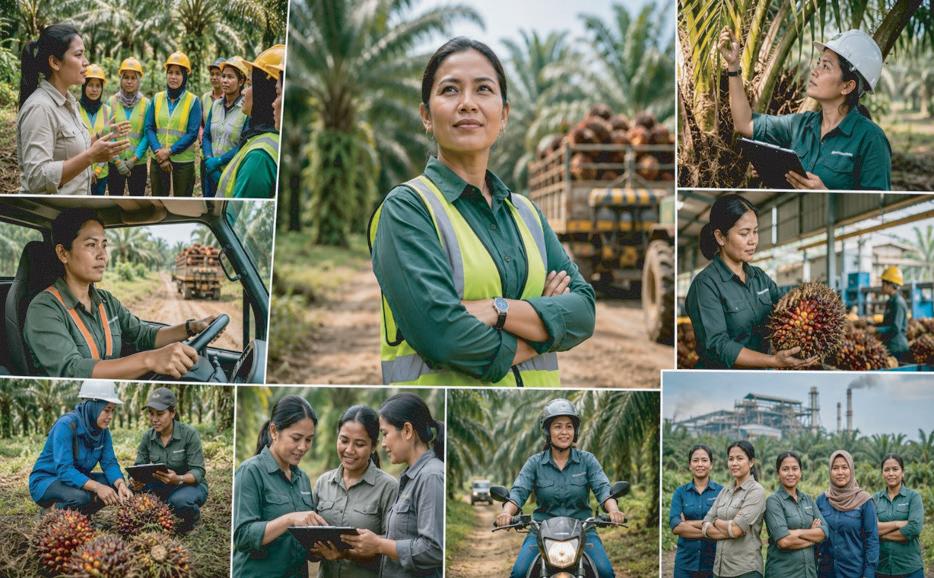
In his Tek Talks piece, the columnist argues that women planters are no longer symbolic exceptions in oil palm estates, but proof of an industry slowly maturing.
Writing around International Women’s Day 2026, he says gender equality in plantations is not achieved through polished speeches or ESG reports, but through daily eld work: early muster, block rounds, labour management, audits and operational discipline.
Tek highlights women executives in Malaysia and the region, including cadets, assistants and estate managers, whose credibility has been earned through competence and staying power. He also notes that old recruitment lters - young, single, preferably male - quietly slowed the industry’s leadership pipeline.
e insight is practical: women do not need lighter work, but fair systems, safety support, mentoring, objective performance measures and balanced exposure. When estates give opportunity without quali ers, they gain stronger operations.
Palm Oil Rally Seen Continuing on Biodiesel Demand
4 January 2026
Malaysian palm oil prices may climb further as higher energy prices make palm biodiesel more attractive, analyst Dorab Mistry said.
Reuters reported that Mistry expects benchmark palm oil futures to rise to around RM5,000 per tonne by June and possibly RM5,200 by mid-July, about 12% above current levels. e Bursa Malaysia benchmark had eased to RM4,647 at Wednesday’s midday break, but remained about 15% higher since late February.
e rally is being driven by tighter supplies, rising fuel prices and a narrower gap between fossil diesel and palm biodiesel. Indonesia’s plan to li its biodiesel mandate from B40 to B50 on July 1 is also expected to support demand.
Mistry said similar biofuel moves in Malaysia, ailand and the United States have li ed vegetable oil markets, though higher prices may curb demand in India.
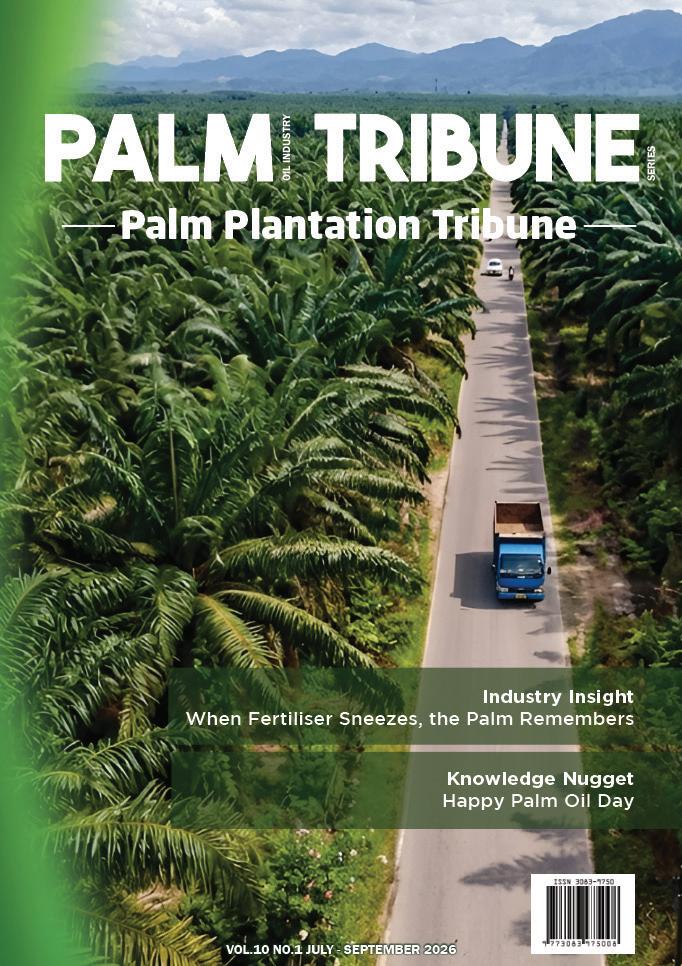
When Fertiliser Sneezes, the Palm Remembers
By Joseph Tek Choon Yee
A Local Estate, A Global Price
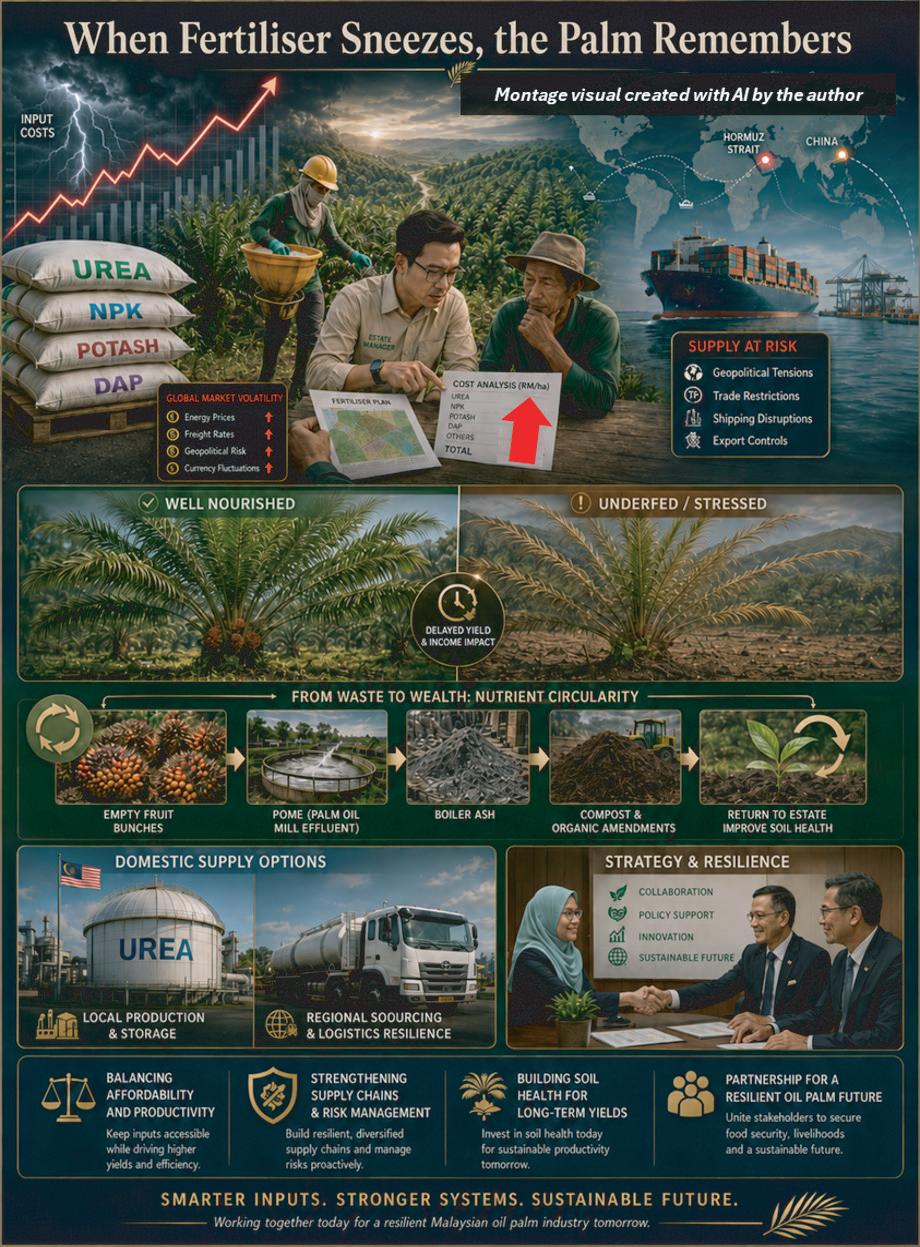
When shipping lanes grow nervous, energy prices rise, exporters turn cautious and con icts disturb trade routes, fertiliser stops being a routine estate purchase and becomes a national resilience issue. e grower may apply fertiliser in Sandakan, Lahad Datu, Miri, Sibu or Segamat, but the price may be disturbed by Hormuz, Beijing, Moscow, sanctions, freight rates or currency movements.
e estate road may be muddy and local. e fertiliser price is global. Recent industry discussions have reminded us how exposed the world remains to supply-chain shocks. Ammonia, urea, sulphur and phosphate ows are linked to regions where geopolitics can quickly become economics. Urea and blended fertiliser prices have already shown how sharply inputs can move when global tension enters the warehouse.
For oil palm, this matters greatly. Fertiliser can account for around one-third of estate operating costs. When prices rise, it is not a mosquito bite. It is a full-body itch with a board-paper attachment.
e Quiet Bag at Carries Tomorrow’s Crop
ere are some things in plantation life that look ordinary until they go missing. Rain is one. Labour is another. Fertiliser is certainly among them.
Fertiliser receives no applause. It has no ribbon-cutting ceremony, no drone-shot glamour and no glossy brochure of its own. It sits quietly in bags, warehouses, lorries and estate stores, waiting for someone to remember that tomorrow’s crop begins long before today’s bunch is harvested.
Yet for oil palm, fertiliser is not merely an input. It is deferred yield, future cash ow, biological insurance and national export earnings quietly packed into compound, mixture or straight fertiliser form. And once again, the humble fertiliser bag has become a geopolitical document.
e Invoice Is Immediate; e Yield Loss Comes Later
e danger, however, is not only the immediate invoice. It is the temptation to respond foolishly.
When fertiliser becomes expensive, some will instinctively cut dosage, delay rounds, stretch budgets, rework spreadsheets and hope biology will politely cooperate. Unfortunately, oil palms are patient, but they are not stupid.
A fertiliser cut today may not punish tomorrow morning. e crop may still come in. e fronds may still look respectable. Management may even congratulate itself on cost savings. But months later, the bill may arrive quietly through weaker bunch formation, lower bunch weight, poorer recovery and a crop pro le that begins to look as though it has lost con dence.
e Palm Is Patient, Not Stupid
e palm has a long memory. It may take six to 24 months before poor nutrition fully shows itself in production. at is the danger of fertiliser mismanagement. It atters the quarter and punishes the year.
ere is some comfort. Oil palm is not as exposed as some annual crops to nitrogen volatility because its nutrition depends heavily on potash. Potash has not been as directly a ected by some Middle East disruptions, and its prices have moved less dramatically than nitrogen and phosphate products. But breathing room is not immunity. Nitrogen still matters. Phosphate still matters. Magnesium, boron and trace elements still matter. Timing matters. Agronomy matters. A palm cannot be told, “Please understand geopolitics and lower your nutrient expectations accordingly.”
Better crude palm oil prices may help larger growers absorb some of the shock. But a cushion is not an invitation to waste. Nor is higher cost an excuse to underfeed.
Smallholders Feel the Shock First
e most vulnerable party in any fertiliser shock is o en the smallholder. Large plantation companies can stage applications, negotiate better, carry stocks and optimise timing. Smallholders o en simply endure.
If smallholders cut fertiliser heavily because prices have moved beyond comfort, the damage may not appear immediately. By the time national production gures so en later, everyone may ask why yields disappointed. e answer may be embarrassingly simple: the palm was underfed before the question was asked.
is is where targeted intervention matters.
Not blind handouts. Not fertiliser theatre with political bunting. What is needed is practical support: group buying, transparent pricing, credit mechanisms tied to good agronomy, stronger extension services, advisory outreach and better information on nutrient e ciency.
Smallholders should not be le alone to choose between feeding the palm and feeding the household.
Fertiliser Security Is National
is also brings us to a bigger question: should Malaysia think more strategically about fertiliser security?
e answer must be yes.
Malaysia imports large volumes of fertilisers and raw materials each year, reportedly in the range of four to ve million tonnes, costing billions of ringgits. at is not just a commercial matter. It is a strategic vulnerability.
Barter: Explore, Don’t Romanticise
One option that deserves sober exploration is barter or counter-trade involving palm oil and fertilisers. is idea should neither be worshipped nor mocked.
Malaysia has used palm-oil-linked counter-trade before, including arrangements with countries such as Russia, India and China in earlier decades. Using one national strength to secure another national need is not heresy. It is memory.
But barter is not magic. Palm oil is not one thing. Fertiliser is not one thing. Timing, quality, pricing formulas, exchange ratios, delivery schedules, transparency, logistics and accountability all matter. Government-to-government deals can become slow, opaque or vulnerable to manipulation if poorly designed.
So the recommendation is simple: explore barter, but do not romanticise it. Treat it as one tool, not the whole toolbox. Use it only if it improves resilience, secures critical nutrients and protects national interest without creating a playground for opportunists.
When prices rise, quality must not fall. Growers must not pay for nutrients and receive disappointment in a bag. A fertiliser crisis should not become a festival for foxes.
Contracts also need to be commercially workable. In calm times, buyers may push hard and suppliers may absorb the pressure. In abnormal times, squeezing too hard may produce clever paper savings but poor delivery. Winning the negotiation while not receiving the fertiliser is not commercial discipline. It is cleverness expensive enough to become stupidity.
Biomass Is Not Waste; It Is Nutrient Memory
Malaysia must also take domestic nutrient recovery more seriously. We are a large oil palm nation. at means we are also a large biomass nation.
Empty fruit bunches, palm oil mill e uent, decanter cake, boiler ash and other residues should not be treated merely as le overs from yesterday’s milling operation. ey are part of a potential domestic nutrient economy.
Better nutrient recycling can improve soil organic matter, reduce waste, support mill-estate integration and partly reduce import dependence. Composting, pelletising, biomass processing and ash recovery deserve serious evaluation where the economics, emissions control and logistics make sense.
ere is also room to revisit more advanced approaches, including pooled and strategically located biomass processing or incineration systems to recover potassium through bunch ash and related nutrient outputs. Modern systems are not the old picture of crude burning and thick smoke. Technology has moved towards better combustion control, ue-gas treatment, residue management and even possible carbon-related integration.
Organic Sense, Not Organic Fairy Tale
But common sense must not become fairy tale. Organic resources are valuable, but they are not magic powder. ey cannot simply replace mineral fertilisers overnight without yield consequences. Sri Lanka’s painful experience with a sudden organic-only policy remains a warning. Green enthusiasm is welcome. Green behind the ears is not.
e answer is balance. Use organic resources better. Recover nutrients more intelligently. Build domestic circularity. But do not pretend that mineral fertiliser can be abandoned by slogan.
Malaysia’s Urea Question
Malaysia should also examine its domestic urea position more carefully. We do have local production capacity through PETRONAS Chemicals’ fertiliser operations. is does not mean becoming anti-export. It means asking whether, during periods of external risk, a sensible portion of locally produced fertiliser should be more deliberately secured for national agricultural use.
at is not protectionism. It is strategic balance.
Connected Policy for a Connected Crop
Fertiliser strategy must also be connected to wider palm oil policy. A strategic crop cannot be managed with fragmented thinking. Labour a ects fruit evacuation. Fertiliser a ects future yields. Replanting a ects mill utilisation. Biodiesel a ects demand. Taxes a ect reinvestment. Research and development a ect productivity. Logistics a ect competitiveness.
e system is connected. Policy must be connected too.
Eight Practical Steps Before the Next Shock
So what should be done?
First, improve fertiliser market transparency so growers, especially smallholders, understand price movements, supply risks and quality issues more clearly.
1 2 3 4 5 6 7 8
Second, strengthen fertiliser standards and enforcement. In di cult times, opportunists ourish where clarity is weak.
ird, support smallholder group procurement and credit mechanisms tied to proper agronomic advice.
Fourth, build strategic stockholding and better estate-level storage where practical.
Fi h, explore counter-trade or barter arrangements carefully as a supplementary tool, not a miracle cure.
Sixth, accelerate nutrient recovery from palm biomass and mill by-products where economics and environmental controls are sound.
Seventh, review how Malaysian-produced fertilisers can contribute more deliberately to national agricultural resilience.
Eighth, encourage high-e ciency fertilisers, better application timing, soil testing, precision agronomy and improved nutrient-use e ciency.
ese are not glamorous recommendations. Fertiliser policy rarely makes people rise to their feet in applause. But then again, neither does an estate drain - until the rain comes.
Foresight Is Cheaper an Recovery
In the end, fertiliser is not merely about NPK Mg B (nitrogen, phosphate, potash, magnesium, boron or trace elements). It is about foresight.
It is about respecting the biology of the palm, understanding global vulnerability, protecting smallholders and refusing to turn short-term cost savings into long-term national self-harm.
Palm oil has survived price collapses, labour shortages, certi cation battles, environmental attacks, pandemics, policy surprises and geopolitical turbulence. It will survive fertiliser volatility too, but only if it refuses to be careless.
When fertiliser becomes expensive, wisdom must become cheaper.
Feed the Palm Wisely, and It Will Remember
Feed the palm wisely, and it will remember. Starve it casually, and it will also remember.
e oil palm, like history, has a long memory. And history is least forgiving of those who saw the warning signs, nodded wisely, and then went back to business as usual.
PALM OIL TRIBUNE
BUNDLE PROMOTION
Beyond Hot Air: Rethinking the Carbon Agenda for People, Planet, and Pocketbooks
For a while, carbon was the villain—an invisible exhaust fume to be taxed, capped, or buried. Now, carbon has been rebranded as a commodity. Suddenly, everyone from investment bankers to Amazonian villagers is talking about carbon credits, o sets, and futures markets. e logic is seductive: put a price on pollution, trade permits, let the market nd the cheapest way to decarbonise. But a er two decades of experiments, from Kyoto to Glasgow, one uncomfortable truth remains: a truly e cient, equitable carbon market is not just a technical problem—it’s a political and moral mine eld.
So how should the world approach the carbon agenda so that the outcome bene ts environment, society, and governments alike? Experts believe it should not be through a single global market, but through a layered, hybrid ecosystem that prioritises integrity, justice, and pragmatism over nancial speculation.
We must rst stop pretending carbon is like wheat or gold. Commodities markets work because a barrel of oil is identical whether pumped in Texas or Saudi Arabia. But a tonne of carbon avoided in Berlin is not the same as a tonne stored in a mangrove in Indonesia. Permanence, additionality, and leakage are not abstract accounting terms—they are the di erence between real climate action and corporate greenwashing. Too many credits today fund projects that would have happened anyway, or that could go up in smoke, literally, in wild re season, next year. e world should therefore move toward jurisdictional and sectoral carbon credits, veri ed by an independent, science-based global body akin to the IPCC for markets. No more bespoke, unveri able cookbooks.
Second, separate compliance from voluntary markets, but link them intelligently. Governments need compliance markets with hard caps—the EU ETS, California’s system, and China’s nascent national market are imperfect but essential. ese should cover heavy industry, power, and aviation, with auctioned allowances not free giveaways, to fund a just transition. Meanwhile, voluntary markets should be for companies going beyond regulation, not replacing it. But both markets must share a common transparent registry. A credit used for compliance cannot be double-counted for corporate net-zero claims. e world needs a central, publicly auditable ledger—call it a Carbon Trust Protocol—to kill double counting and fraud.
Professor Dato Dr Ahmad Ibrahim Tan Sri Omar Centre for STI Policy IISDS, UCSI University
Adjunct Professor UAC, University Malaya
ird, put a oor on price and a ceiling on o set use. Without a minimum carbon price (say, $50–$75/tCO2e, rising over time), markets will oscillate between too cheap to matter and too volatile to plan. A global price oor agreed by G20 nations, with rebates for lower-income countries, would drive real investment in clean tech. Simultaneously, no company should be allowed to o set more than, say, 20% of its compliance obligation. e rest must come from actual emissions cuts. Otherwise, carbon markets become indulgences for the rich—environmental absolution without sacri ce.
Fourth, ensure that carbon revenues ow back to communities, not just treasuries. e biggest failing of existing markets is equity. When a forest is protected for credits, who bene ts? Too o en, it’s intermediaries and speculators, while indigenous guardians lose access to traditional lands. e solution is bene t-sharing agreements enshrined in law: at least 50% of credit revenues from nature-based solutions must go directly to local stewards. Similarly, proceeds from auctioned allowances should fund green retraining, coal-worker pensions, and renewable energy access in underserved areas. Otherwise, the carbon agenda will deepen the very inequalities it claims to heal.
Fi h, governments must be honest about the limits of markets. Carbon credits are not a substitute for regulation, investment, or behaviour change. e world has tried to marketise its way out of the climate crisis, and it has failed to bend the curve. A tonne not emitted is only valuable if we are also eliminating sources. So, alongside any carbon market, governments must mandate sectoral decarbonisation pathways, phase out fossil fuel subsidies, and invest heavily in public transport, grid storage, and regenerative agriculture. Carbon markets are a tool, not a
In the end, the carbon agenda will bene t all only if we stop treating it as a nancial derivative and start treating it as a public utility. at means less Wall Street, more agroecology. Less blockchain for o sets, more blockchains of trust. Less abstract “net zero” im am, more veri ed, local, and fair emission reductions.
Carbon has taken centre stage. Let us not waste the spotlight on another round of speculative theatre. Let us build markets that are rigorous, redistributive, and real—because the climate will not forgive another decade of hot air. ere is no denying that the true functioning of a carbon faces many challenges. is calls for a serious rethink by all on what outcomes we are looking for when implementing the carbon agenda!
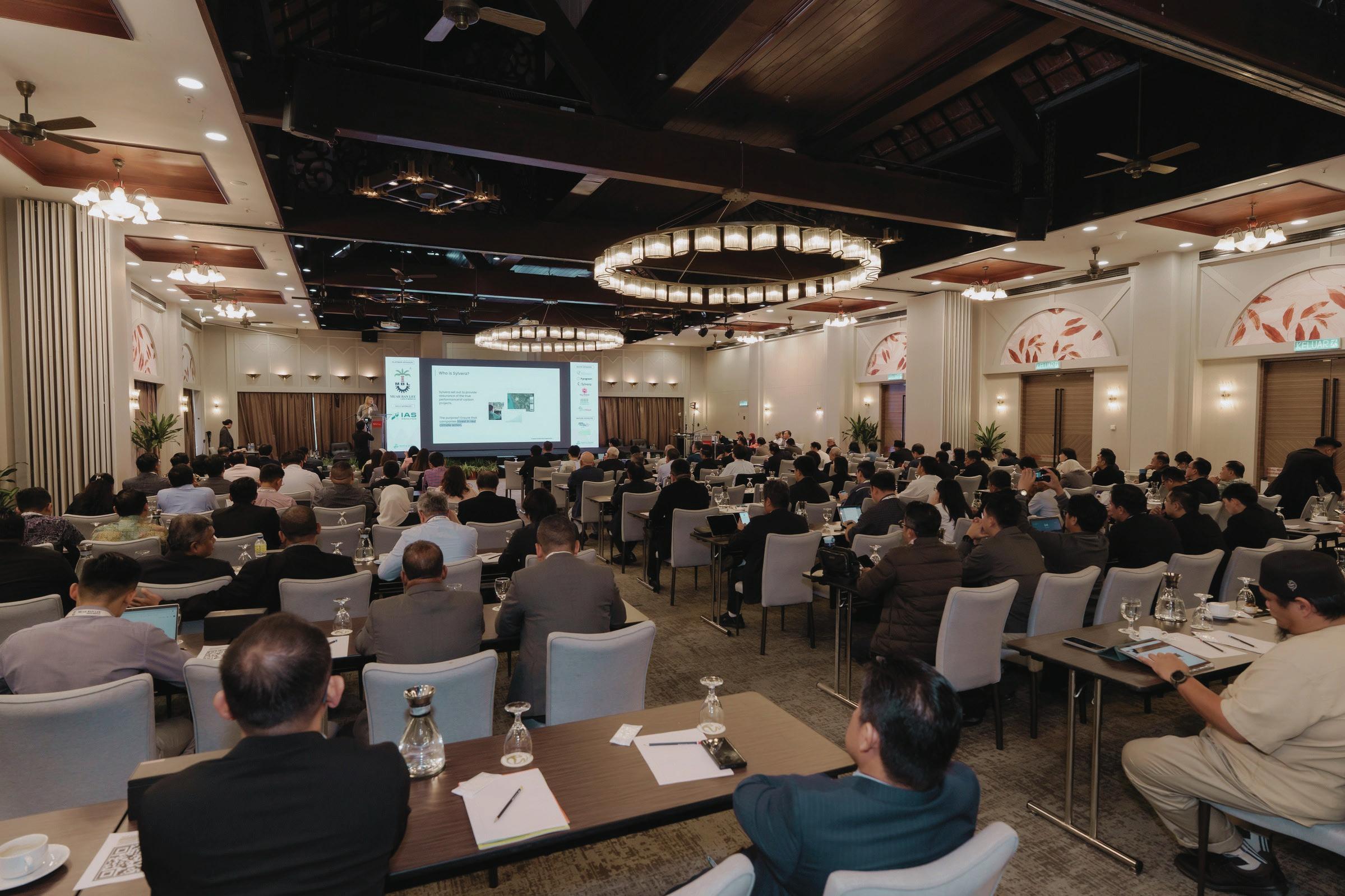
Scan/Click F or Mo r e Informatio n ww w.aseanpalmcarbon.co m HRD Corp Claimable Programme
REGISTER NOW 16 - 17 October 2026
Resor ts World Awana, Genting Highlands
Connecting policy, innovation and business oppor tunities accelerating ASEAN’s low carbon bioeconomy
Happy Palm Oil Day, Anybody?
By Joseph Tek Choon Yee
I once dragged lobsters and oysters into my palm oil article.
Not because I had lost my way between the estate road and the seafood aisle, but because the lobster and oysters had a useful lesson to teach. Lobsters and oysters were once
is is not merely a playful thought bubbling in an overexcited wok. It is a serious idea wearing a cheerful shirt. Palm oil is too deeply embedded in our lives to be noticed only when prices rise, controversy erupts or
It deserves at least one day a year when it is approached not as accusation, caricature or guilty ingredient hiding behind the biscuit tin, but as one of the great working
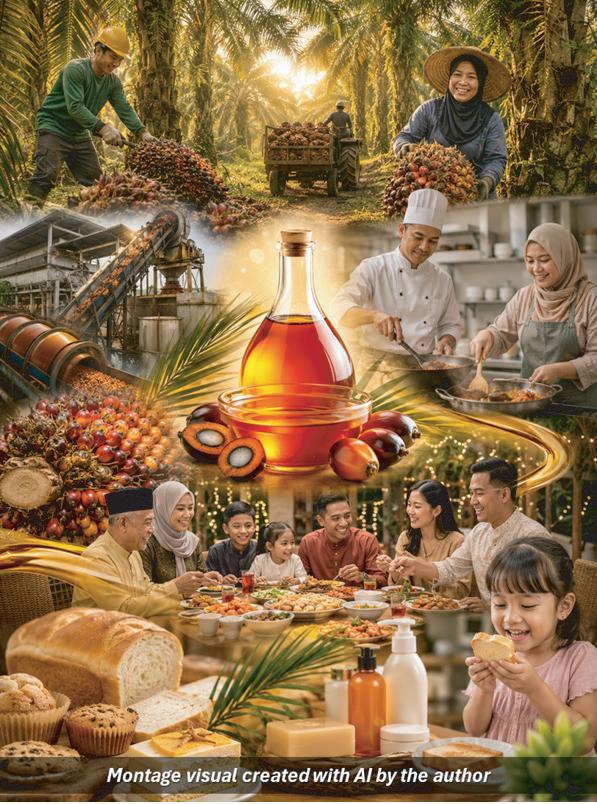
Palm oil is not just for the frying pan. It is food, nutrition, oleochemicals, biofuels, specialty fats, personal care, home care, manufacturing, logistics, research, exports, rural livelihoods and industrial possibility. It does not merely sit in a bottle waiting to be
It begins the morning in soap or shampoo, appears at breakfast through bread, spreads or bakery ingredients, turns up later in food manufacturing, keeps an eye on detergents and cosmetics by a ernoon, and may still be clocking in by evening through industrial or specialty applications. If oils had trade unions, palm oil might le a complaint for excessive duties and insu cient appreciation.
at is precisely why it deserves a day.
Not because it is awless. No crop is. No industry is. No
Popular Snacks at Commonly Use Palm Oil
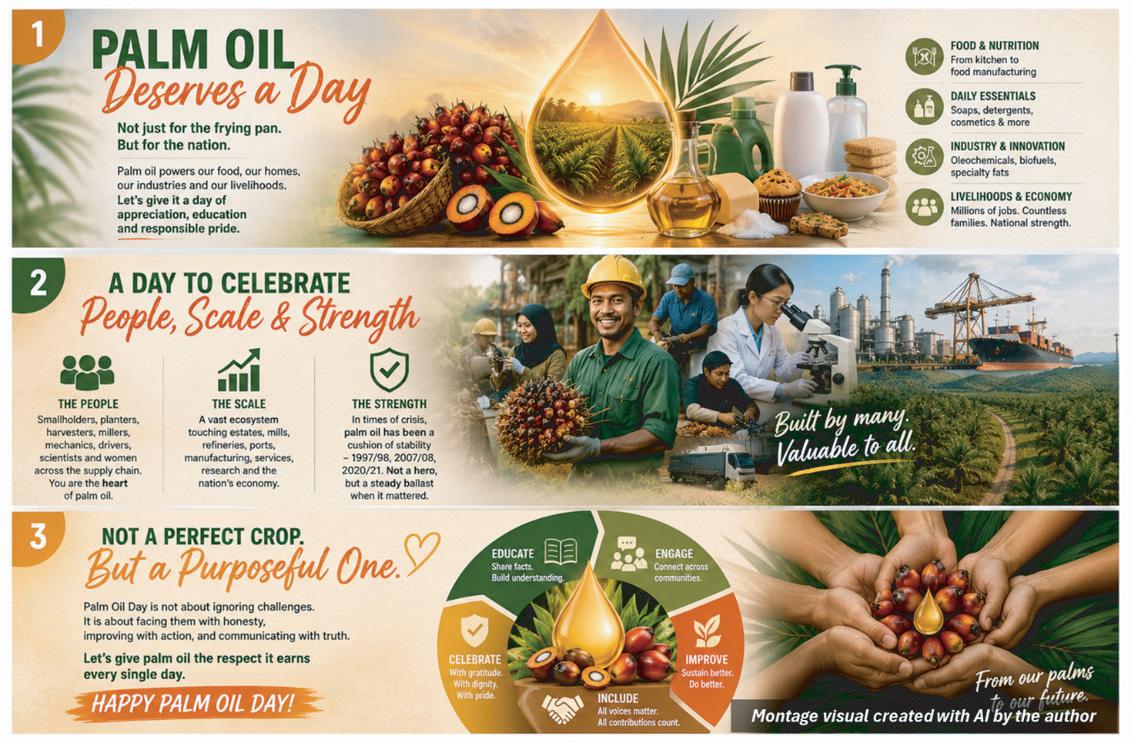
Second, it should celebrate scale - not for boasting, but for perspective.
Palm oil is not a small side note in Malaysia’s economy. Its footprint stretches from nurseries, estates and mills to re neries, ports, transport, packaging, manufacturing, trading, research, services and public nance. Too o en, people notice only the bottle, not the civilisation of work behind it.
Malaysia has also been blessed by palm oil in di cult times. During the Asian nancial crisis of 1997–98, the global nancial turmoil of 2007–08 and the Covid-19 disruption of 2020–21, palm oil earnings helped cushion the national blow. Not cure it, certainly. But cushion it. Economies, like old estate roads, are usually too muddy for miracles.
Palm oil did not ride in like a superhero wearing a hard hat. But in those stressful moments, it provided ballast. It generated export earnings, supported rural livelihoods, contributed to national income and kept a wide value chain moving when many parts of the economy were under strain.
So when one says Malaysia is blessed with palm oil, one need not become mystical. One only needs to be numerate. ird, Palm Oil Day should celebrate presence.
Palm oil is one of the quiet giants of modern life. It is everywhere, yet seldom introduced properly. at invisibility has consequences. It allows others to de ne the crop narrowly. It leaves the public with fragments instead of a fuller portrait. It narrows the imagination.
We keep speaking of palm oil as though it were merely a commodity, when it is also chemistry, nutrition, trade policy, rural development, food a ordability, industrial innovation and livelihood. It is, if I may say so, much more than crude. at unfortunate adjective has probably caused enough damage already.
Fourth, and because this is Malaysia, Palm Oil Day should celebrate the table.
Food is not merely fuel. It is memory, identity and fellowship. Palm oil does not live only in policy papers, certi cation debates or NGO brie ngs. It lives where ordinary people live - at breakfast tables, hawker stalls, bakery counters, Ramadan bazaars, festive kitchens and the everyday democracy of shared meals.
We do not build national belonging only through slogans. We also build it by eating together. In that sense, palm oil is not
Not dreary seminars with tired banners and speeches that dribble into the tea break. Let there be cooking festivals featuring everyday favourites and more premium creations. Let chefs, homemakers, students and small entrepreneurs
sessions so children encounter the crop as science, history, livelihood and national story - not merely as background noise in imported debates. Let universities and researchers hold lively exhibitions on breeding, nutrition, biomass, oleochemistry and sustainability. Let public spaces trace the journey from
Let there be awards for smallholder excellence, young innovators, women leaders, community enterprises, educational campaigns and perhaps even the bravest attempt to explain triglycerides without causing innocent citizens to dri gently into sleep.
Social media - that great modern estate road where everyone honks at everyone else - could be useful for once. It could amplify literacy instead of outrage: recipes, family stories, plantation memories, downstream discoveries, biodiversity work, replanting success, circular economy ideas and honest explanations of sustainability.
e ministry and its agencies could help convene. Industry associations could contribute. Companies could open their doors. Schools, chefs, nutritionists, agronomists, marketers, journalists, smallholders and communities could all play a part.
In time, Malaysia could even invite other producing countries to widen the celebration. at would not be vanity. It would be narrative maturity.
But the tone matters.
Palm Oil Day must not become self-congratulation with canapés. It must be honest enough to acknowledge un nished work: replanting, productivity, mechanisation, labour conditions, smallholder support, certi cation credibility, biodiversity, downstream upgrading, better storytelling and more thoughtful engagement with consumers.
e most convincing celebration is one that does not hide its homework.
At the same time, the sector should not remain timid. Palm oil has spent too many years entering the room as though it must apologise for being there. Enough.
Pride is not the enemy of responsibility. Celebration is not the opposite of reform. Properly handled, they belong together.
A society that cannot speak well of its strengths will struggle to improve them. A sector that hears only criticism may forget how to dream. And dreaming, when disciplined by facts, reform and e ort, is not frivolity. It is strategy with a heartbeat.
It is also tting to express gratitude to the many people who make this industry possible: those in the estates before sunrise, those in mills when the machines refuse to behave, those in laboratories, ports, re neries, boardrooms and smallholder plots; those who built the industry before us, and those who must now renew it.
So yes, palm oil deserves a day.
A day to recognise the people behind it. A day to teach the young what this crop has meant, and still means. A day to connect kitchen, estate, mill, lab, boardroom and breakfast table in one national conversation. A day to appreciate not only yield and export earnings, but resilience, reinvention and the long chain of human work hidden behind every drop.
A day, in short, to meet palm oil properly - with wit, warmth, dignity, gratitude and a little national backbone.
Integrated Approaches to Manage Rugose Spiralling White y in Palm Oil Plantations
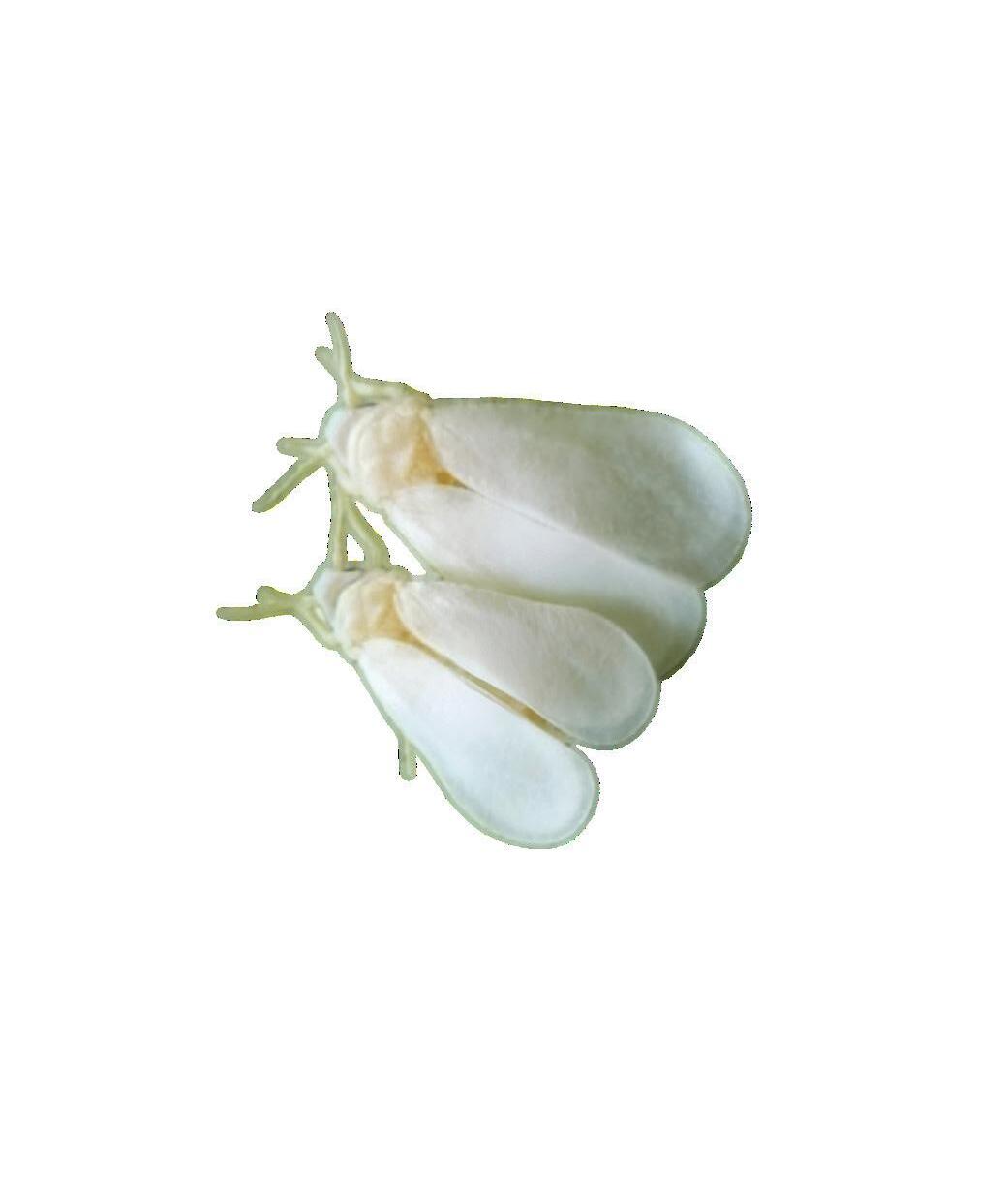
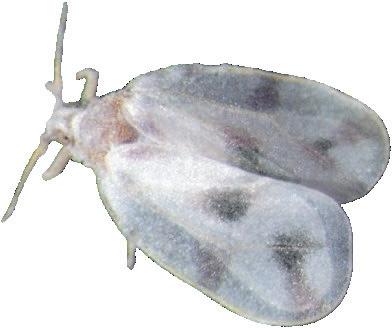
In 2018, severe infestation of invasive rugose spiralling white y (RSW) Aleurodicus rugioperculatus Martin (Hemiptera:Aleyrodidae) was reported on oil palm plantations in Andhra Pradesh and Karnataka, India.
e infestation was higher in younger palms (around 5 years old) compared to older palms (>8 years) and was mainly observed on the lower leaves.
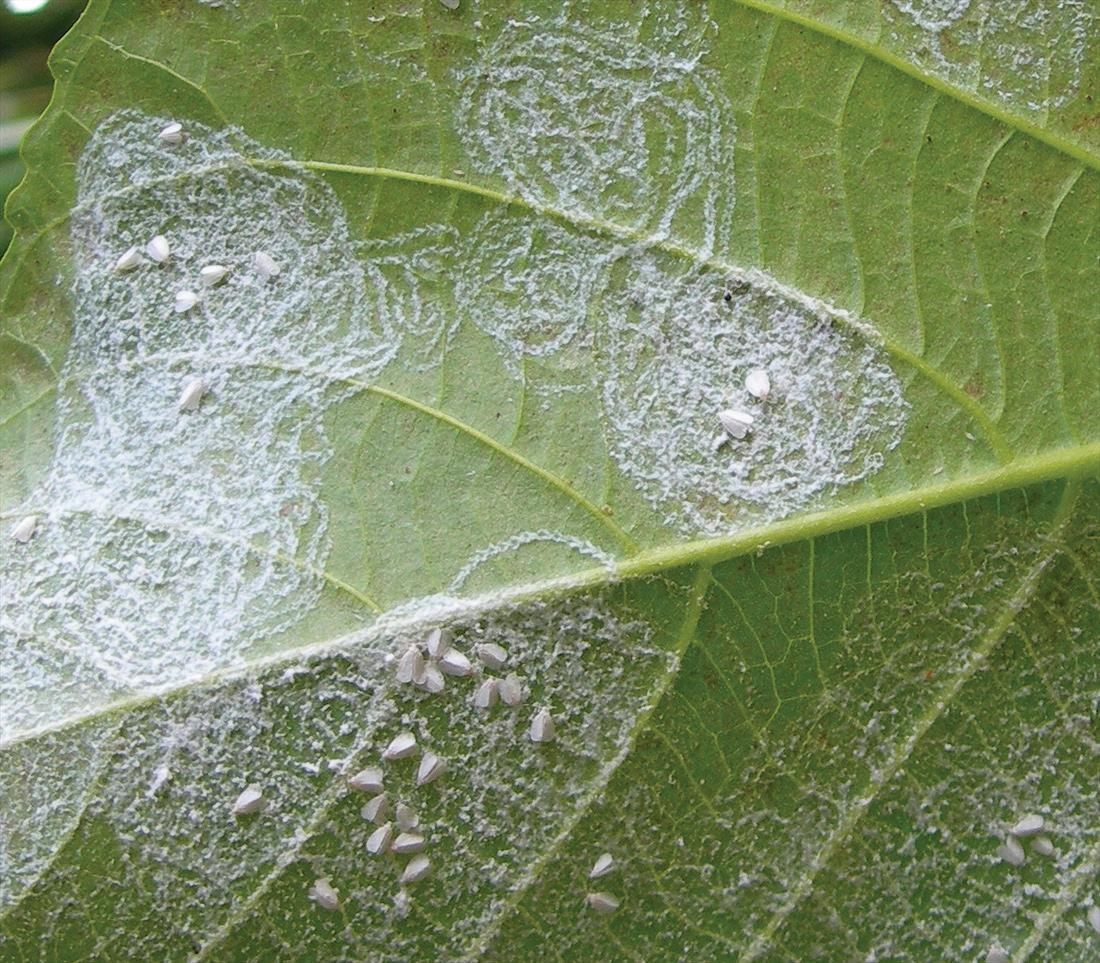
In Andhra Pradesh, pest populations reached 11–20 egg spirals or adults per lea et, while in Karnataka the population was generally below 10. Severe infestations in Andhra Pradesh also resulted in black sooty mold covering the upper leaf surfaces.
Impact of White y Infestation on Oil Palm Leaves
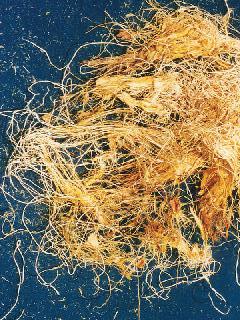
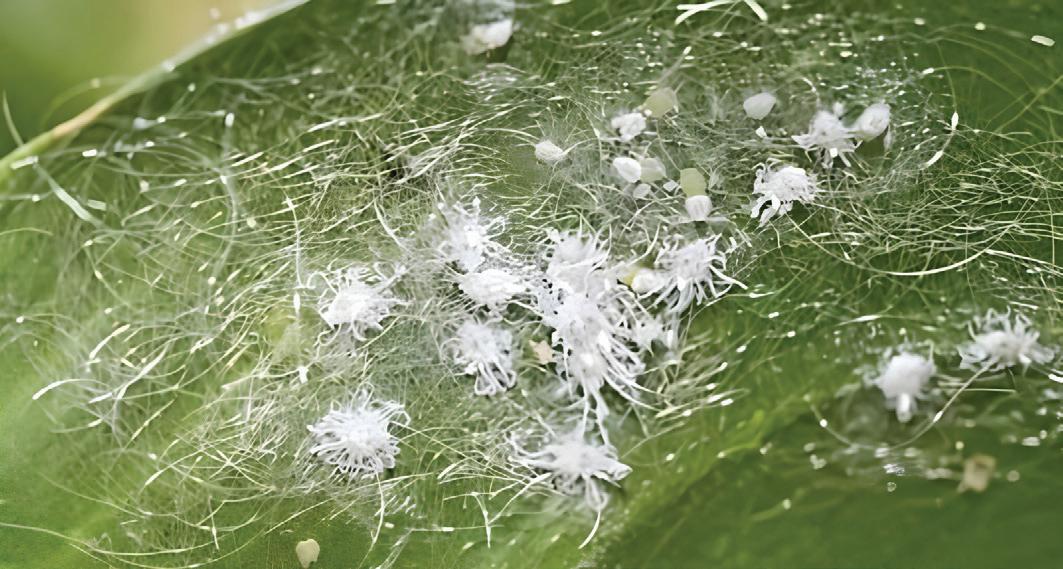
Waxy Flocculent Material
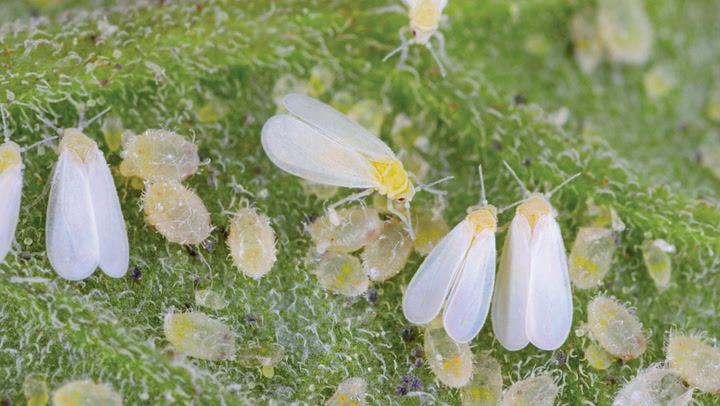
Eggs are yellowish and elliptical, laid singly in irregular spirals with white wax. Immature stages produce wax laments, while adults release waxy dust during movement that can be a nuisance to humans.
Extensive feeding of the pest leads to the excretion of large quantity of honey dew. e honey dew gets deposited on the upper surface of the leaves positioned down beneath or even on any other plant under oil palm.
Integrated & Systematic White y Management: Field-Proven Solutions
Biological Control
Isaria fomosorosea (Fungal Bioagent):
• Dose: 5 g/litre of water
• Time: Spray early morning/evening
• Tip: Add 5 ml/litre neem oil or soap for better leaf coverage
Green Lacewing (Chrysoperla zastrowi sillemi):
• Dose: 1000–1500 eggs/larvae per hectare
• Release: Every 15 days for 2–3 rounds
Encarsia guadeloupae (Parasitoid Wasp)
• Dose: 1000–2000 adults/hectare
• Method: Release near white y colonies
Leaf Damage
e infestation may result in the premature drying of lea ets and leaves. Reduction in bunch yield of about 20%-25% was reported by growers.
Mechanical & Physical Measures
Yellow Sticky Traps: 10–15 per hectare, mid-canopy level. Change every 2–3 weeks. High-Pressure Water Spray: Weekly during peak infestation. Dislodges eggs/nymphs from leaf undersides.
Cultural & Climatic Measures
Pruning: Remove infested fronds. Avoid overcrowding. Monsoon E ect: Rain naturally reduces white y buildup. Avoid indiscriminate chemical use: Protect pollinators and natural enemies.
Sap Feeding
e adult white ies and immatures were found to suck the sap on the under surface of the leaves/lea ets of the oil palm.
OIL PALM MINISTRIES, ITS AGENCIES AND RELATED ASSOCIATIONS
Ministry of Plantation and Commodities (KPK) www.kpk.gov.my
Malaysian Palm Oil Association (MPOA) www.mpoa.org.my