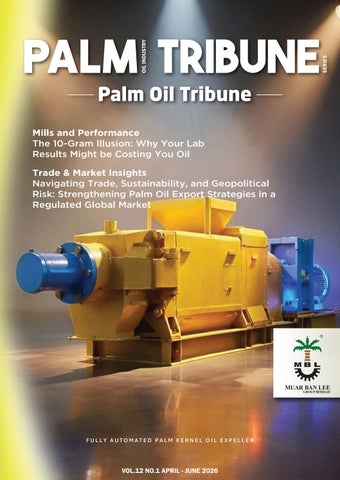
The 10-Gram Illusion: Why Your Lab Results Might be Costing You Oil
Trade & Market Insights
Navigating Trade, Sustainability, and Geopolitical Risk: Strengthening Palm Oil Export Strategies in a Regulated Global Market
Quar terly Publication
Palm Oil Industr y Tribune Series:
Palm Oil Tribune
Volume 12 | No 1
O ther Series: What’s in it
Palm Plantation Tribune
Palm Downstream Tribune
News Roundup Exper t Insights Regional Policies Technologies
Event Summar y
Follow us on:
Nex t Chapter Media
Next Chapter Media
Disclaimer:
Nex t Chapter Media's editorial team strives to provide accurate and reliable information. However, we recommend that readers independently verify the claims and information presented in our publications. Nex t Chapter Media is not responsible for the accurac y of the content and encourages readers to use their own judgment
Editorial Team
EDITOR
Zahidah Zahidi zahidah@maps- globe.com
CREATIVE DESIGNER
Muhammad Faireez ar twork@mapsglobe.com
DIREC TOR Emily Yu
PUBLICATION
Maps & Globe Specialist Distributor Sdn. Bhd (625396-A)
No 3-1 Jalan Perdana 10/6, Pandan Perdana, 55300 Kuala Lumpur, Malaysia.
PRINTING
Fong Wah Printing Sdn. Bhd. (1406717K )
No. 17, JaIan Tembaga SD 5/2G Perindustrian Bandar Sri Damansara, Pek an Kepong, 52200 Kuala Lumpur, Malaysia.
Sustainability Innovation Growth
Latest News Roundup
A quick digest of the latest policies and market trends. 5-7
Mills and Performance
The 10-Gram Illusion: Why Your Lab Results Might be Costing You Oil 9-10
Palm Oil Mid & Downstream Stakeholders: Ministries, Its Agencies And Related Associations in Malaysia and Indonesia
Event List 2026
Trade & Market Insights
Navigating Trade, Sustainability, and Geopolitical Risk: Strengthening Palm Oil Export Strategies in a Regulated Global Market 13-14
Muar Ban Lee Group Berhad
Circular Economy
The Uncollected Wealth: Why Malaysia’s Biomass Plan is Stalled and How to Revive It 17-18
South Asia's Edible Oil Market Faces Volatility Amid Geopolitical and Price Risks
Nugget Tan Sri Augustine Ong: Bottling Light, Meaning and Malaysia's Palm Oil Industry 12-28
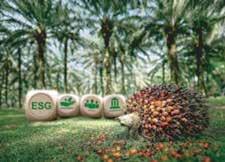
Nurturing ESG in plantation
26 January 2026
In a world still reshaping business norms a er the pandemic, environmental, social and governance (ESG) principles have emerged as a de ning agenda for corporate strategy - and the plantation sector is no exception. ESG is increasingly embedded into business frameworks globally, driven by investor expectations, regulatory mandates, and market access pressures. But as the Star Biz7 column quoting Joseph Tek Choon Yee points out, integrating ESG into plantations is neither simple nor automatic.
Large plantation groups are better positioned to absorb the nancial and operational demands of ESG - such as comprehensive reporting, emissions management and social safeguards - thanks to deeper capital reserves. Smaller players, particularly SMEs, face sharper trade-o s between sustainability investments and cost pressures, challenging them to innovate without compromising competitiveness.
Still, the shi is underway. Oil palm rms are tightening sustainability disclosures and adopting more rigorous frameworks - from national certi cation schemes to global deforestation-linked rules - to meet both investor and buyer criteria. ESG’s environmental pillar is centred on emissions, traceability, biodiversity and water use, while social and governance practices urge better labour standards and transparent leadership. For Malaysia’s plantations, the road ahead lies in moving beyond ESG rhetoric to tangible outcomes that align economic performance with environmental stewardship and social responsibility.
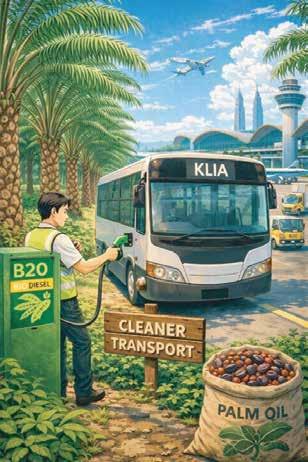
B20 Biodiesel at KLIA
4 February 2026
Malaysia is accelerating its transition toward cleaner fuels by planning to broaden the use of B20 biodiesel at Kuala Lumpur International Airport (KLIA). e Malaysian Ministry of Plantation and Commodities has con rmed that ground transport vehicles at the airport will begin using B20 - a blend of 20 % palm oilbased biodiesel and 80 % conventional diesel fuelstrengthening the nation’s e orts to reduce reliance on fossil fuels and cut carbon emissions on the path to netzero by 2050.
e B20 programme follows earlier adoption of palm biodiesel blends in other parts of Malaysia, and o cials are now in discussions with ground vehicle operators and biodiesel suppliers to ensure seamless implementation at KLIA. Expansion of the initiative to other airports, such as Senai International Airport, will depend on the outcomes of the pilot, infrastructure readiness, logistics and funding approvals.
Beyond the environmental bene ts, the shi supports local agriculture by increasing demand for palm oil as a renewable feedstock. If successful at KLIA, the model could be replicated nationally - aligning economic growth with sustainability and showcasing how Malaysia’s palm oil sector can contribute to cleaner transport solutions in a decarbonising world.
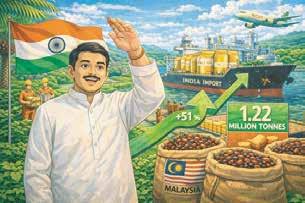
India’s palm oil imports surge 51pc
in January
3 February 2026
India — the world’s largest edible oil importer — saw a dramatic 51 % jump in palm oil imports in January 2026 compared with the same month a year earlier, li ing optimism for Malaysian producers and global planters alike. According to trade data, India brought in about 1.22 million tonnes of palm oil in January, up sharply from the previous year, driven by strong demand from food processors and re ners
Analysts attribute the surge to several converging factors: strong domestic consumption a er festive demand, restocking by re ners following seasonal downtime, and competitive pricing of crude palm oil (CPO) relative to rival edible oils like sun ower and soy. India’s rising appetite for palm oil has helped absorb excess inventories in major exporting countries — notably Malaysia and Indonesia — and eased price pressures in global markets.
For Malaysia, which is traditionally the second-largest CPO supplier to India a er Indonesia, the uptick presents a bright spot for export earnings and plantation sector sentiment in 2026. Industry watchers say sustained Indian demand could underpin prices and o set potential headwinds from domestic production cycles and weather. However, they add that continued price competitiveness and logistical e ciency will be key to maintaining India as a dependable market for Malaysian palm oil.
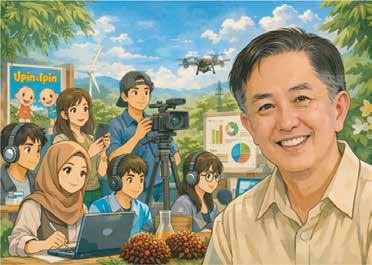
How youth, cartoons and algorithms may yet save palm oil’s soul
3 February 2026
is piece in the Edge by columnist Joseph Tek re ects on youth empowerment in a digital age, exploring how the next generation can shape sustainability through discernment, dialogue and informed participation.
Palm oil has been called many things - miracle crop, deforestation villain, kitchen staple, geopolitical pawn. Rarely is it seen for what it may yet become: a youth-led sustainability movement shaped by science, storytelling and algorithms.
e future of palm oil will not be secured in boardrooms alone. It will be shaped in universities, digital platforms and creative spaces where a generation raised inside algorithm-driven echo chambers now forms its worldview. Youth are no longer peripheral observers. ey are both audience and ampli er.
Today’s discourse is ltered by algorithms that reward comfort over contradiction. Every click narrows perspective. Nuance disappears, and complex realities collapse into simple morality plays. Few sectors su er this more than palm oil. On the ground, sustainability is layered and technical — livelihoods, certi cation, biodiversity, carbon. Online, it becomes villain versus virtue. Algorithms prefer villains to systems.
is is why youth empowerment must go beyond giving young people a microphone. It must equip them to question what that microphone feeds them. NGOs like Regenerasi matter because they create spaces for inquiry rather than slogans.
Indonesia’s crack down on illegal land use
3 December 2025
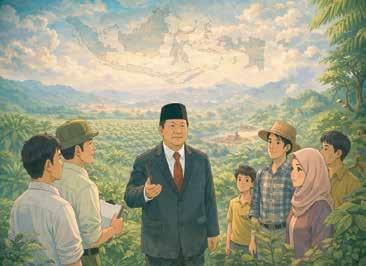
Indonesia is asserting unprecedented control over its natural resources as President Prabowo Subianto pushes a nationwide crackdown on illegal land use, targeting plantations, mines and other concessions. Since March, government authorities have seized more than 4 million hectares of land — an area roughly the size of Switzerland — much of it oil palm estates and mining concessions that o cials say were operating illegally or without proper permits.
Originally triggered by corruption allegations against a tycoon, the campaign has expanded into what Prabowo calls a defence of “the interests of millions of Indonesians” and a broader e ort to improve governance of the commodities sector. e reclaimed land has been transferred to state-owned rms tasked with managing these assets, though critics warn that enforcement lacks transparency and may deter foreign investment.
Indonesia’s move comes with wider implications. As the world’s top exporter of palm oil and coal and a leading producer of nickel and other metals, tightening state oversight could disrupt export markets and raise regulatory risk for plantation and mining companies throughout Southeast Asia. Investors are now watching closely as voices warn this could signal a shi toward a “command-style” economy.
Prabowo has signalled that this is “just the beginning”with plans to reclaim even more land under government control in the months ahead.
B50 Biodiesel Set To Add CPO Demand By 1.5 Million Tonne Per Annum
1 April 2026
e Indonesian government's con rmation that the B50 biodiesel mandate will commence on 1 July 2026 is expected to signi cantly tighten the global palm oil market. is policy shi is projected to boost crude palm oil (CPO) demand by approximately 1.5 million tonnes per annum, providing a strong fundamental oor for prices.
While technical trials for vehicles and trains are ongoing through August, suggesting a phased implementation, the increased domestic consumption in Indonesia reduces export availability. Analysts maintain a CPO price forecast of RM4,250 per tonne for 2026, though this could see upward revisions if external factors persist.
e sector remains highly sensitive to energy market volatility. Should regional con icts sustain crude oil prices above US$100 per barrel, CPO prices are likely to escalate further as palm oil becomes more attractive for biofuel blending. However, rising methanol costs, up over 50%, and potential adjustments to export levies remain key variables. For plantation companies, the impact on earnings from higher CPO prices is expected to outweigh the pressure of rising operational costs, making the B50 rollout a pivotal catalyst for the industry.
LET’S PARTNER
Share Your News
Feature product launches, milestones, and updates in the Latest News section.
Digital Distribution with Every Edition
EDM to 10,000+ verified contacts and dedicated LinkedIn posts of your messages or visuals.
Brand Exclusivity
We ensure your identified competitors are not featured throughout the contract period.
Tailored Editorial Opportunities
Feature articles that align with your solution, innovation, and market strategy.
Custom Advertorials
Showcase case studies, data insights, CSR initiatives, or your brand journey.
Expert Insight Interviews
Enhance thought leadership through an interview, supported by a video snippet on LinkedIn.
Speak to us to explore tailored advertising packages.
zahidah@maps-globe.com
emily@mapsglobe.com
e 10-Gram Illusion: Why Your Lab Results Might Be Costing You Oil
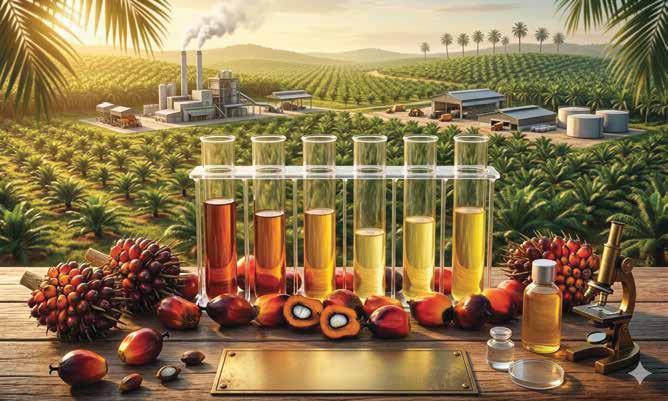
In the quiet hum of a palm oil mill’s laboratory, a chemist meticulously weighs 10 grams of dried press bre. e Soxhlet extractor drips steadily, a gold standard of analytical chemistry. Four hours later, the result is logged: 5.2% oil-in-dry-matter. On paper, this is a victory for accuracy. In reality, it is a post-mortem.
While the lab was perfecting that decimal point, the mill processed another 240 metric tonnes (MT) of Fresh Fruit Bunches (FFB). e steam pressure uctuated, the digester level dropped, and the screw press settings dri ed. at "accurate" 5.2% re ects a process state that no longer exists.
is highlights the "Precision Trap", a common pitfall where mill managers prioritise analytical accuracy over operational responsiveness.
e Representation Gap: 10 Grams vs. 60 Tonnes
e most signi cant source of error in a mill is rarely the extraction method; it is the sampling error. When a mill processes 60 MT/hour, a 10-gram lab sample represents roughly 0.000016% of the hourly throughput.
If the sampling isn't rigorous, the most “perfect” lab test in the world is merely providing a "precise" answer to the wrong question. Heterogeneity in empty fruit bunches (EFB) and sludge means that segregation and operator bias during collection o en outweigh the inherent error of the testing equipment itself.
e Triage of Testing: Speed, Accuracy, and Control
To manage oil losses e ectively, millers must choose their "weapon" based on the objective. We can categorise the industry's primary tools into three distinct roles:
Method Strength
Spin Test
For a 60 TPH mill operating 20 hours a day, a mere 0.1% increase in OER (Oil Extraction Rate) through better process control can equate to roughly 1.2 tonnes of extra CPO per day. At a market price of RM 4,000/MT, that is RM 4,800 a day or over RM 1.4 million a year, recovered simply by acting on data faster.
Weakness
Immediate oor troubleshooting. High operator bias.
Soxhlet O cial audits and nancial balancing. Extremely slow (4–6 hrs)
NIR (Near Infrared) Real-time process control
Sustainability & MSPO 2.0 Compliance
High calibration e ort
Under the MSPO 2530:2022 standards, mills are under increased pressure to demonstrate "Operational E ciency" and "Waste Management." Principle 5 explicitly requires the monitoring of natural resources and waste. Reducing oil losses isn't just a pro t move; it’s a sustainability requirement. E cient oil recovery reduces the organic load in POME, aiding in GHG mitigation and ful lling the "Continual Improvement" criteria for certi cation.
Expert Insight: e Cost of the "Missed" 0.1%
e Shi to Near-Infrared (NIR)
Modern mills are increasingly moving toward NIR spectroscopy. NIR doesn't "beat" Soxhlet on pure chemical precision, but it wins on statistical signi cance. By taking hundreds of readings in the time it takes to perform one Soxhlet run, NIR provides a trend line rather than a data point.
As one veteran mill manager recently noted: "I don't need a perfect answer too late; I need a good answer now."
Moving from Numbers to Behavior
Leads to arguments between the lab and the production oor about "who is right."
Leads to immediate adjustments in steam temperature, dilution water ratios, and press cone pressure.
By the time a Soxhlet result tells you that losses were high this morning, those losses are already sitting in the e uent pond. Instead of one "perfect" data point every few hours, NIR provides near-continuous feedback. It allows a supervisor to see the "dri " in real-time. If the oil content in the bre starts climbing, they can intervene before those 60 tonnes pass through the press. We shi from arguing about numbers to correcting behavior.
A New Philosophy of Loss
Sustainability and the circular economy in the palm oil midstream start with e ciency. Every drop of oil lost to e uent or EFB is a blow to the mill’s carbon footprint and its bottom line.
In a production environment where every minute represents tonnes of throughput, the de nition of "good data" must change. We must stop chasing the most precise number and start chasing the most actionable one.
Static Data (Soxhlet)
Dynamic Data (NIR)
Navigating Trade, Sustainability, and Geopolitical Risk: Strengthening Palm Oil Export Strategies in a Regulated Global Market
e palm oil industry is entering a "de ning decade". Currently sitting at the critical intersection of global food security, the green energy transition, and rural development, palm oil nds itself in a landscape where trade and sustainability have become inseparable. For industry players, the challenge is no longer just about production; it is about de ning palm oil’s rightful place in a global trade system increasingly shaped by trade nationalism, expanding sustainability laws from the EU to the US, and signi cant geopolitical shi s between the North and South.
Insights from Mdm. Izzana Salleh, Secretary of CPOPC, at the MPOB Palm Oil Economics Review & Outlook 2026.
ese forces are not isolated risks but are deeply interlinked, demanding a coordinated response that transforms these pressures into an opportunity to reshape the industry narrative. e global demand pro le is already re ecting these shi s. While imports in China and Pakistan have uctuated due to external shocks like the Russia-Ukraine war, and India has seen a slight decline due to higher tari s and a pivot toward domestic oilseeds, the most dramatic change is seen in the West. EU imports have declined sharply at a CAGR of 5.3% under the weight of strict regulations, while US imports have grown steadily by 3.5%, fuelled by a diversi cation into renewable fuels and industrial demand.
Amidst these uctuations, Asia has emerged as the de nitive demand hub. India, China, and Pakistan now represent the largest importers, highlighting a regional dependence that makes European and US demand secondary by comparison. Current trade ows reinforce this, with Indonesia and Malaysia channelling millions of tonnes into the Asian corridor, while new frontiers are opening across Africa and the Middle East in markets such as Egypt, Kenya, and Saudi Arabia.
To navigate this fairer yet more complex global market, the industry is rallying around three collective strategies. First is the necessity to speak with one voice. Fragmented responses from producers only serve to weaken global in uence and diminish trust. With 78% of EU consumers reporting that environmental messaging from producers appears inconsistent, the move toward shared messaging and fast, coordinated media responses is essential to build collective credibility.
Secondly, there is a fundamental shi in how sustainability is de ned, moving from mere compliance to shared prosperity. e industry is moving beyond the question of "Are you compliant?" to "Are you contributing?" is is particularly vital given the current nancing landscape; only 19% of global ESG funds are directed toward agriculture and smallholder systems, despite their role in 70% of global food production. True sustainability must include mutual trust, transparent reporting without bias, and inclusive nance that supports rather than excludes smallholders, while recognising the signi cant progress made under national standards like MSPO and ISPO.
Finally, long-term stability will be found through smart diversi cation. Beyond traditional edible oil markets, the industry is seizing emerging opportunities in biofuels, oleochemicals, and food innovation. By strengthening downstream investment partnerships and coordinating pricing among producers, the sector can build a resilient export strategy that looks beyond short-term gains toward long-term security.
Ultimately, the future of palm oil lies in a shared vision in which governments, companies, and nanciers work together to shi the narrative from defence to demonstration. As Izzana Salleh concluded, the industry’s strength lies in its ability to act as a connector between trade, climate goals, and development. It’s time for palm oil to stop apologising and start leading.
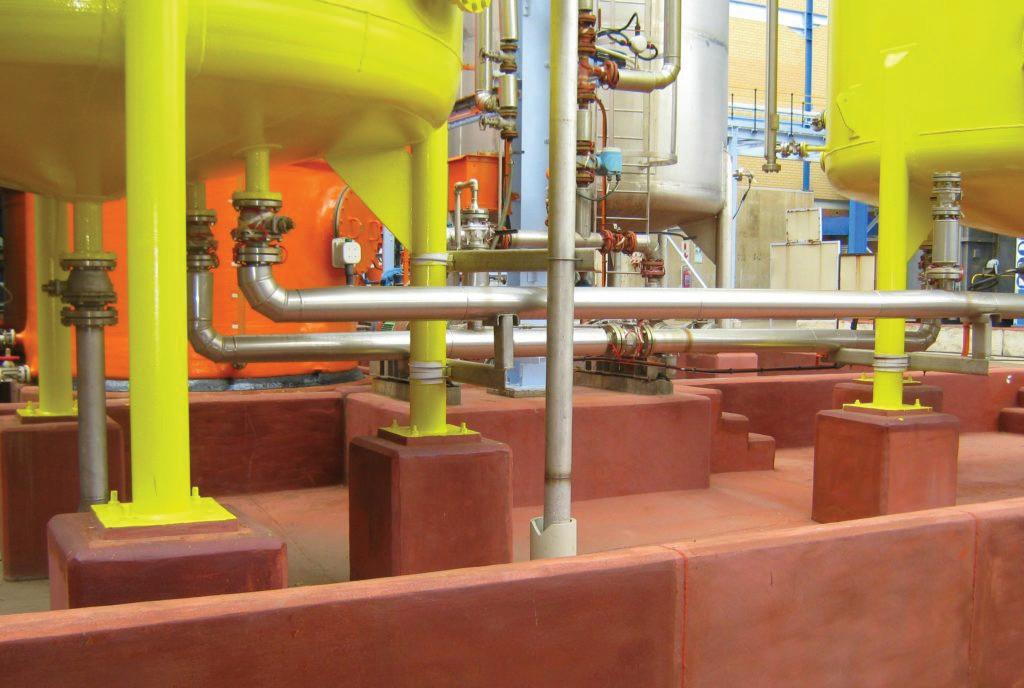
Thermal & Corrosion Protection Built for Palm Oil Mills. Tailored refractory, insulation, and corrosion solutions for long-lasting mill performance.
REFRALINE DELIVERS:
1
2
Engineered refractory linings that reduce heat loss and withstand repeated thermal cycling
3
Corrosion-proof linings for digesters, flue systems, and tanks
4 5
Custom insulation & cladding systems to maintain energy efficiency
Remote demolition & installation services to minimise downtime
Full inspection, repair, and maintenance programmes
Refraline Malaysia's pioneering technological advancements in refractory materials and products have demonstrably revolutionised the operational landscape of palm oil mill boilers. By engineering superior refractory solutions, Refraline Malaysia has significantly enhanced the efficiency of these critical industrial systems, leading to optimised heat transfer and reduced energy consumption. Furthermore, their innovations have profoundly improved boiler availability, minimising downtime for repairs and maintenance through extended material lifespan and enhanced resistance to extreme operating conditions. Crucially, these advancements have also bolstered the stability of palm oil mill boilers, ensuring more consistent and reliable performance, which in turn contributes to uninterrupted production and greater overall plant reliability.
Plot 88, Lot 15, Block 20, Kemena Land District, 97000 Bintulu Sarawak, Malaysia
Office tel: (+60) 86 255 576
Email: info.malaysia@refralineinternational.com
Mobile: (+60) 19 877 9155 – Mr Andy Janse van Rensburg
Mobile: (+60) 10 408 5794 – Mr Andre van Staden
Leaders in refractory and corrosion engineering solutions, saving our clients’ money and energy.
We offer solutions to our customers in the development, manufacture, demolition, installation, and supply of refractory and corrosion materials.
e Uncollected Wealth: Why Malaysia’s Biomass Plan is Stalled and How to Revive It
For years now, Malaysia has championed a visionary National Biomass Action Plan, aiming to transform agricultural residue—particularly from the palm oil industry—into a goldmine of bioenergy, biochemicals, and sustainable products. At the heart of this strategy was the creation of biomass collection centres, intended to e ciently gather, pre-process, and supply empty fruit bunches (EFBs), palm kernel shells, and other waste streams to downstream industries. Yet, today, these centres remain largely unrealised, and mountains of EFBs are still o en le to decay or burned haphazardly. What went wrong, and how can we break this deadlock as the urgency for green growth intensi es?
Many are asking, what is the root of the stalemate? First, the economic equation has rarely stacked up. Establishing collection centres requires signi cant capital for machinery, storage, and logistics, but the returns are uncertain. e market for biomass products—while growing—has been volatile, with prices for biomass pellets or biogas o en failing to justify large upfront investments. Many plantation owners, especially smaller players, see biomass as a waste disposal problem rather than a revenue stream. Without a stable o ake agreement or guaranteed pricing, the risk outweighs the incentive.
Second, the logistics are daunting. Palm oil mills are scattered across rural and remote areas, and EFBs are bulky, wet, and costly to transport. Centralised collection centres would need an e cient, cost-e ective network of transportation, which is absent. e sheer volume of biomass—Malaysia produces over 20 million tonnes of EFBs annually—is also a blessing and a curse: without streamlined handling, it becomes a logistical nightmare.
ird, policy alignment has been inconsistent. While the federal plan exists, execution falls to state authorities and private actors, leading to fragmented implementation. Regulations on waste disposal are not stringent enough to force change, and incentives—such as subsidies, tax breaks, or green procurement policies—have been insu cient to catalyse investment. Moreover, energy and agricultural policies sometimes operate in silos, missing the intersectoral synergy needed.
Finally, technological readiness and market maturity have lagged. While EFBs can be used for composting, bioenergy, bre products, or even advanced biofuels, the local ecosystem for high-value applications remains underdeveloped. Many centres, where they exist, focus on low-value products like mulch or basic pellets, limiting pro tability. Breaking the deadlock calls for a multi-pronged approach. To transform this stagnant plan into action, Malaysia needs a renewed, pragmatic strategy built on four pillars:
De-risking investment through public-private partnerships (PPPs) and o ake guarantees. e government, via agencies like Malaysian Green Technology and Climate Change Centre (MGTC) or MPOB, should co-invest in pilot collection hubs in key palm oil clusters, sharing initial capital risks. More crucially, it can anchor demand by mandating biomass co- ring in industrial boilers or power plants, and by securing long-term o ake agreements with bio-re neries or export markets. A “biomass premium” or carbon credit mechanism could also improve returns.
Professor Dato Dr Ahmad Ibrahim Tan Sri Omar Centre for STI Policy IISDS, UCSI University
Adjunct Professor UAC, University Malaya
Next, building agile, distributed networks. Instead of waiting for large centralised centres, encourage smaller, modular pre-processing units near mills. ese can partially dry and compact EFBs, reducing transport costs and enabling easier storage. Leveraging existing mill infrastructure and encouraging millers to form cooperatives can spread costs and improve economies of scale.
And strengthening policy coherence and enforcement. Align state and federal regulations to create a uni ed biomass economy roadmap. Enforce stricter environmental rules on open burning and waste disposal to push mills toward sustainable disposal solutions. Introduce graduated incentives: for example, tax incentives for mills that supply biomass to certi ed collection centres, and grants for technology adoption.
Not to mention, catalysing high-value applications and innovation. Invest in R&D for EFB valorisation—such as producing bio-composites, cellulose, or sustainable aviation fuel—and support pilot projects to commercialise these technologies. Create special economic zones for biomass-based industries near feedstock sources, attracting downstream players and closing the loop from waste to worth.
We need to look at the bigger picture. Valorising biomass is not just an economic opportunity; it’s an environmental and social imperative. It can reduce greenhouse gas emissions from waste, generate rural jobs, and bolster Malaysia’s circular economy credentials. e stalled collection centre plan re ects a classic gap between policy ambition and ground reality. By addressing the economic, logistical, and regulatory bottlenecks head-on, Malaysia can nally unlock the value of its agricultural residues—turning what is now largely waste into a cornerstone of a greener, more resilient future.
e time for revisiting the blueprint is now. With concerted will and smart collaboration, those uncollected heaps of EFBs can indeed become the fuel for a new bio-industrial revolution. ere is an urgent need to empower a national entity to drive this agenda. Unless this is done soon, the country will
South Asia’s Edible Oil Market Faces Volatility Amid Geopolitical And Price Risks
Source: Fastmarkets
Edited by: Zahidah Zahidi
e global edible oil landscape is currently de ned by a complex intersection of geopolitical instability and shi ing supply chain economics. e volatility emerging from West Asia is a structural pressure point for palm oil players. Rising freight costs and uctuations in fertiliser pricing are directly impacting the global food in ation index, forcing a re-evaluation of how regional commodities are valued and protected.
India’s Structural De cit: A Bullish Anchor
Despite global uncertainties, the fundamental narrative for palm oil remains anchored by India’s structural dependency. As the world’s premier importer, India’s domestic consumption continues to outpace its internal production capabilities signi cantly. With a total annual demand hovering between 25 and 26 million tons, and domestic output restricted to approximately 12 million tons, the reliance on external supply remains absolute.
For the current marketing year, palm oil imports are projected to reach the 10-million-ton threshold. is demand is not merely a seasonal spike but a re ection of deep-seated urbanisation and demographic shi s. For producers, this signals a consistent, bullish outlet for palm oil, even as competition with soybean and sun ower oil intensi es based on shi ing tari structures and relative price advantages.
From Fragmentation to Transparency
One of the primary challenges for the South Asian market has historically been fragmentation. Because India sources its vegetable oils from diverse geographies, ranging from the Black Sea to Southeast Asian plantations, the formation of a single, uni ed price benchmark has been elusive. is lack of clarity o en complicates long-term contract negotiations and mill-gate pricing.
e industry is now seeing a move toward greater transparency through the work of Price Reporting Agencies (PRAs) and the introduction of sophisticated risk management tools. e launch of localised futures contracts, such as those introduced by the CME Group based on Fastmarkets assessments, represents a signi cant evolution. ese tools allow for US dollar-denominated hedging and monthly average settlements, e ectively shielding market participants from the "single-day risk" of extreme price swings.
Strategic Outlook: e Shi to the East
Perhaps the most signi cant long-term trend for industry players to monitor is the eastward shi of price discovery. As India surpasses China in import volume, the centre of gravity for the edible oil trade is moving rmly toward South Asia. is means that regional infrastructure, local regulatory decisions, and South Asian nancial instruments will increasingly
For palm oil stakeholders, success in this new era requires more than just high yields at the plantation level. It demands an integrated understanding of these new nancial benchmarks and a proactive approach to risk. By leveraging veri ed price indicators and modern hedging instruments, companies can navigate rapid market shi s, ensuring stability and growth
When Chemistr y L earns to L augh and the
most importantly - its sense of proportion.
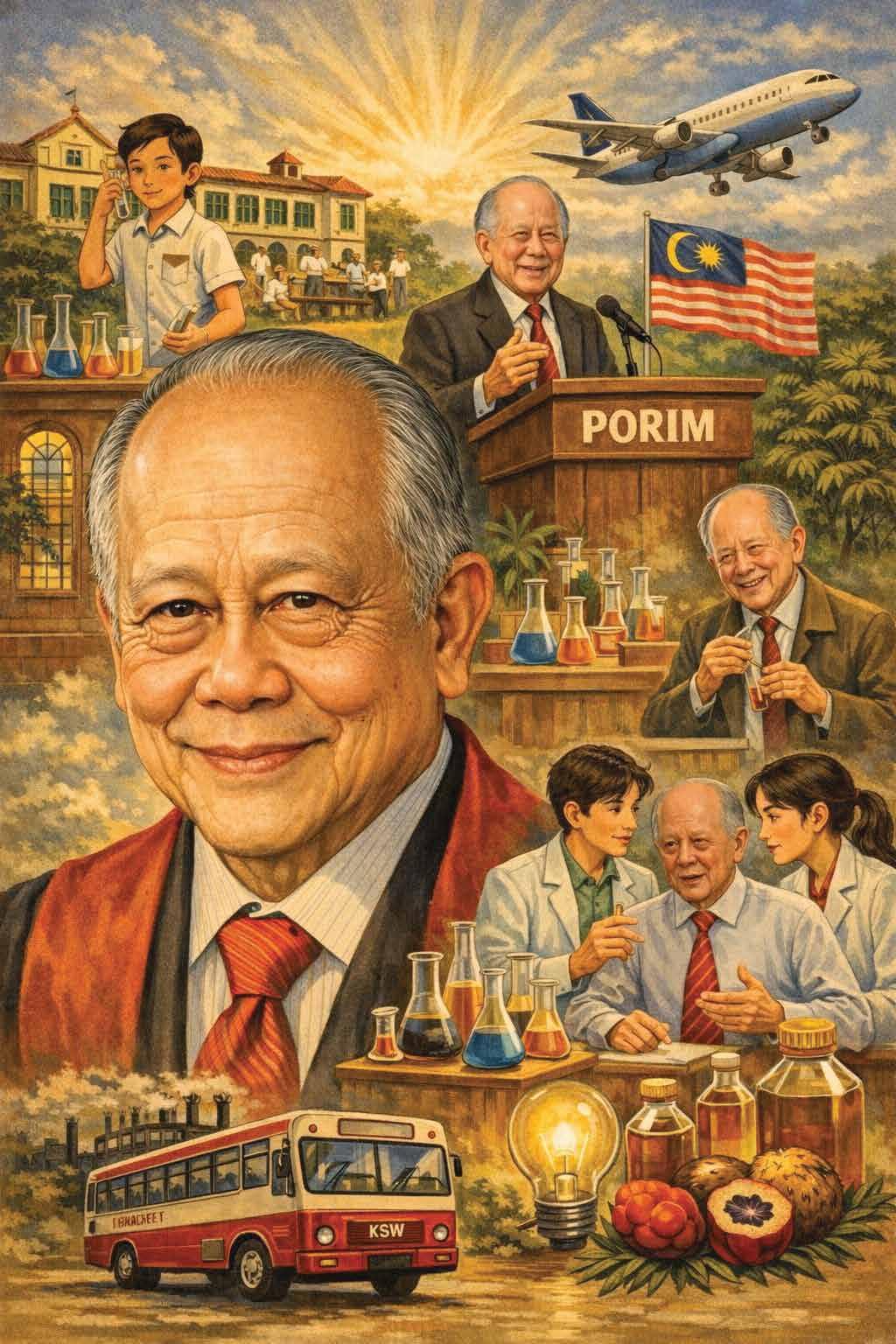
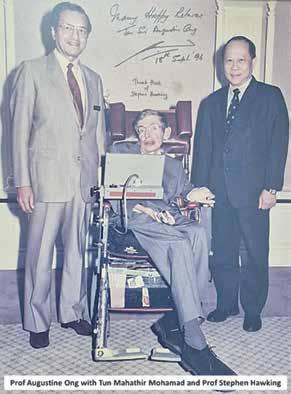
Ever y industr y has its quiet architects - men and women whose without ever knowing the name behind them. In Malaysia’s palm oil stor y, Tan Sri Emeritus Professor Datuk Dr Augustine Ong Soon Hock, is such an architect.
To the palm oil community, he is introduced with reverent titles: Father of Malaysian Palm Oil, inventor, academician, defender of the
encounter him in person - perhaps seated quietly at Sunday Mass, or leaning for ward animatedly at a seminar well into his nineties - is to realise that the true headline is not his brilliance, but his lightness.
Lightness of thought. Lightness of spirit. Lightness of living
proves it can sparkle He is the rare scientist who understands that ideas travel further when they are carried lightly - not diluted, but
regulation and accusation, he taught palm oil how to stand upright without becoming heavy-handed
Roots of Curiosity : From Malacc a Soil to Molecular Questions
no laboratories, no microscopes, no imported chemistr y sets. Instead, there was nature - coconut trees, insects, soil, rain, sunlight - and a boy whose curiosity refused to sit still
If curiosity were fertiliser, his childhood had ideal soil conditions. He watched, asked, dismantled, reassembledmentally if not physically Long before he handled molecules, he was already practising obser vation, the most
At St Francis’ Institution taught balance Knowledge was not a trophy to be displayed, but a tool to be used Faith was not an ornament, but an
At the University of Malaya in Singapore followed, capped by the University Gold Medal - a rare accolade even then. Overseas training sharpened his molecular instincts. At King’s College L ondon, he completed a PhD in Organic Chemistr y, learning to respect the tyranny of detail. At MIT, as a Fulbright-Hays Fellow, he discovered that genius, like chemistr y, obeys universal laws - curiosity, discipline, humility
He could have stayed abroad, enjoying the comfort of global academia. Many did Augustine Ong returned home in 1959 instead, convinced that science should not merely circulate in journals, but circulate value back to society. Malaysia needed scientists who did not just think globally, but ser ve locally
Teaching Chemistry to Breathe and Students to ink
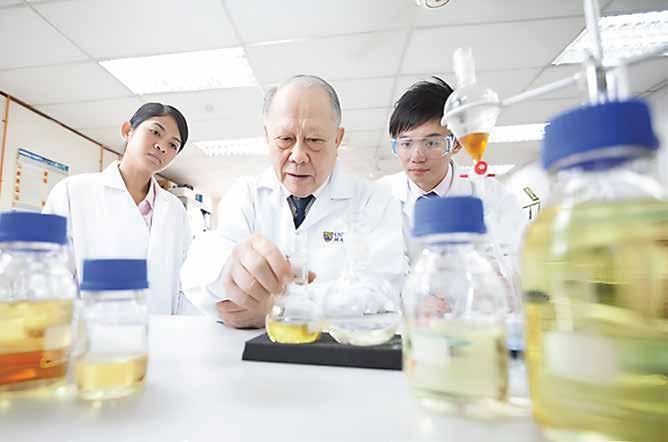
At the University of Malaya, Augustine Ong refused to teach chemistry as a static subject. He animated it. Molecules were not abstractions; they were bread and soap, health and fuel, agriculture and industry - life itself.
In his lecture halls, equations came with philosophy. In his laboratories, technique came with ethics. Students learned discipline, but also intellectual humility. Data mattered more than dogma. Assumptions were to be challenged politely but relentlessly. In his classroom, chemistry learned to breathe - and students learned to think.
is insistence on ideas rather than appearances would later de ne his greatest contributions. Palm oil, in the 1960s and 1970s, was treated as an agricultural brute: productive, yes, but intellectually unsophisticated. Soybean and sun ower oils basked in Western approval, while palm oil was le sweating in the tropics.
Where others saw fat, Tan Sri Augustine saw form. Where others saw calories, he saw con guration. He would later describe palm oil as molecular gold - not because it glittered, but because it rewarded careful study. Gold, a er all, is valuable not because it is loud, but because it is precise.
Bottling Light: Turning a Commodity into Capability
In 1974, Tan Sri Augustine led a British patent for the fractionation of palm oil into olein and stearin - a breakthrough that sounds technical but behaved economically like alchemy. Suddenly, palm oil was no longer one oil, but many.
Cooking oil. Margarine. Specialty fats. Industrial applications. Each new fraction unlocked a new market. What had once been a blunt instrument became a precision toolkit.
is patent was only the rst drop in a long distillation process. Over time, Tan Sri Augustine would register more than twenty patents worldwide. Yet the deeper contribution lay not in quantity, but philosophy: Malaysia must not merely grow palm oil; Malaysia must own the science of palm oil.
at sentence quietly changed everything. It shi ed the industry’s posture from defensive to con dent, from reactive to strategic. Knowledge gave palm oil a spine - and spines, as evolution teaches us, matter.
e sn-2 Hypothesis: Why Seating Arrangements Decide
Metabolic Fate
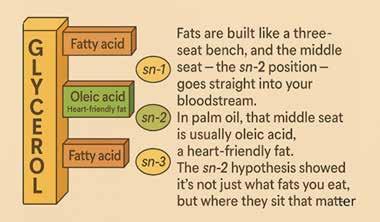
Few scienti c ideas have carried such disproportionate economic weight as Tan Sri Augustine’s sn-2 hypothesis. At its heart lay a simple but mischievous insight: not all fats behave the same, even if they wear the same chemical label.
A triglyceride, Tan Sri Augustine explained with delight, is like a three-seat arrangement. During digestion, enzymes evict the passengers sitting on the outer seats, while the middle passenger - the sn-2 position - enjoys a non-stop ride into the bloodstream. In nutrition, as in life, the middle seat matters.
Palm olein, despite its overall saturation, places unsaturated fatty acids predominantly in that prized middle seat.
Metabolically, it behaves less like butter and more like olive oil. Palm oil, long guilty by association, was suddenly innocent by structure.
is was no academic parlour trick. In the 1980s, palm oil was branded a “tropical oil time bomb.” Entire livelihoods were placed on trial in the court of public opinion. Tan Sri Augustine responded not with outrage, but with evidence. Human trials. Lipid pro les. Calm explanations.
e verdict? Acquittal by science. Case dismissed, cholesterol levels unchanged.
Defender-in-Chief: When Chemistry Entered the Political Arena
As Director-General of the Palm Oil Research Institute of Malaysia (PORIM), Tan Sri Augustine found himself wearing an additional lab coat - that of national defender. Against well-funded foreign lobbies, he marshalled data with the precision of a chemist and the patience of a monk.
While others shouted slogans, he published papers. While others waved placards, he waved peer-reviewed journals. Within a few years, the nutritional narrative around palm oil shi ed. By the late 1980s, global studies con rmed that palm olein behaved nutritionally like monounsaturated oils.
e industry survived not because it shouted louder, but because it measured better. For the palm oil community, this remains a timeless lesson: credibility is the strongest shield. In a noisy world, quiet data speaks loudest.
Tocotrienols: When Vitamin E Got a Promotion
For decades, vitamin E had one celebrity: tocopherol. Tocotrienols, found abundantly in palm oil, were treated like understudies - present, but ignored. Tan Sri Augustine noticed them anyway.
Structurally slimmer and biologically faster, tocotrienols proved to be more agile antioxidants. Research pointed to bene ts in cholesterol reduction, neuroprotection, cancer research, stroke mitigation and cellular defence.
If tocopherols were mall security, tocotrienols were special forces. Palm oil, it turned out, had been hiding its best talent in plain sight - quietly overquali ed and patiently waiting for recognition.
Innovation Without Elitism: MINDS, MOSTA and the Democracy of Ideas
Believing that ideas grow best when shared, Tan Sri Augustine founded the Malaysian Invention and Design Society (MINDS) and helped anchor MOSTA. In these spaces, schoolchildren with cardboard prototypes stood beside professors with polished instruments.
Innovation, to Tan Sri Augustine, was not a gated estate. It was a kampung - noisy, messy, generous. e only entry requirement was curiosity. Credentials helped, but questions mattered more. is philosophy resonates powerfully in plantations, where the best ideas o en emerge not from boardrooms, but from eld observations.
Sustainability, Trade and the Arithmetic of Fairness
In later years, Tan Sri Augustine turned his attention to sustainability debates and regulatory science. Environmental accusations were met not with slogans, but spreadsheets. Oil palm’s productivity per hectare dwarfed other oil crops, meaning fewer hectares were needed globally.
On processing contaminants like glycidyl esters and 3-MCPD, his stance was characteristically calm: chemistry understands causes, chemistry designs solutions. Panic was optional; patience was essential.
On trade, his message never wavered. Malaysia was not asking for favours - only fairness. Or as he might put it, a level playing eld without hidden slopes.
Faith, Re rement and the Chemistry of a Long Life
In quieter moments, Tan Sri Augustine’s conversation dri ed from molecules to meaning. His personal equation was simple: “Pray as though everything depends on God; work as though everything depends on you.”
He describes life in three phases - 30:30:40. e rst thirty years to grow roots and shoots. e next thirty to bear fruit. e nal forty to share seeds. Retirement, to him, is merely a spelling error. e correct word is re rement.
Even in his nineties, he reads, attends seminars, mentors young scientists, and debates ideas aloud with himself. Curiosity, he insists, is the only supplement with zero side e ects.
Living Light: A Scientist’s Longevity Formula
Walk daily. Eat simply. Laugh o en. Pray regularly. Stay curious. Avoid bitterness - it oxidises faster than oil. Stress, he believes, clogs the soul long before arteries.
Longevity, in his view, is not about adding years to life, but life to years. Living long without purpose is merely extended storage.
What the Palm Oil Community Can Learn
If there is one overarching lesson the palm oil community can draw from Tan Sri Augustine’s life, it is that science is not a support function; it is strategy. For decades, he showed - quietly but relentlessly - that industries anchored only in land, labour and lobbying remain vulnerable. Knowledge is what gives an industry posture.
Without scienti c ownership, palm oil would forever be reactive: explaining itself, defending itself, apologising for itself. With science, it stands upright. Research does not merely answer critics; it anticipates them. In Tan Sri Augustine’s world, laboratories were not cost centres but strategic assets, and data was not paperwork but armour.
Closely tied to this is his insistence that details decide destiny. Palm oil’s global reputation was nearly undone not by sweeping falsehoods, but by lazy simpli cations - “saturated fat” reduced to a single moral category, nutrition compressed into slogans. Tan Sri Augustine understood that molecules, like policies, punish shallow reading. e sn-2 hypothesis was not revolutionary because it was loud, but because it was precise. He reminded the industry that nuance is not weakness. In fact, nuance is o en the only thing standing between truth and caricature. In an era of sound bites and hashtags, he showed that careful reading - of data, of context, of structure - still changes outcomes.
He was equally rm that innovation must circulate. Knowledge hoarded stagnates; ideas locked in silos spoil. rough institutions like MINDS and MOSTA, Tan Sri Augustine demonstrated that innovation is not the privilege of elites or laboratories alone. It thrives when ideas move - between scientists and planters, between students and seniors, between eld observations and academic theory. Palm oil’s future, he believed, would not be secured by a few brilliant minds working in isolation, but by a culture that rewards curiosity everywhere. Stagnant ideas, like unused oil, eventually go rancid.
Yet for all his intellectual stature, Tan Sri Augustine never mistook titles for meaning. His life quietly a rmed that purpose outlives position. Directorships end. Honours gather dust. What remains are contributions - ideas that continue to work long a er the o ce door has closed. Even in his nineties, he speaks not as someone who has “been there and done that,” but as someone still asking, “What next?” For an industry o en obsessed with hierarchy and designation, his example is disarming. In uence, he shows, does not retire when titles do.
Perhaps the most counter-intuitive lesson of all is that lightness is strength. In a sector perpetually under scrutiny, the temptation is to respond with heaviness - defensiveness, rigidity, outrage. Tan Sri Augustine chose another path. He carried criticism with humour, debate with calm, and disagreement with grace. Heavy hands, he understood, break fragile systems. Lightness allows ideas to travel, dialogue to continue, and trust to form. It is not frivolity; it is con dence without insecurity.
Together, these lessons form a quiet manifesto for the palm oil community. Own the science. Respect the details. Let ideas move. Serve beyond titles. And above all, learn to carry a heavy industry with a light touch. Tan Sri Augustine did not just defend palm oil. He taught it how to think and how to live better.
e Chemist Who Bottled Lightness Itself
Palm oil will always face scrutiny - nutritional, environmental, political. at is the price of relevance. But because of Tan Sri Augustine, it faces those questions with evidence, dignity and quiet con dence. He bottled light in palm oil, yesbut more importantly, he bottled lightness in thinking. Rigorous yet humane. Con dent yet humble. Scienti c yet faithful.
For the palm oil community, his life is reassurance and challenge in equal measure: proof that one curious mind, guided by conscience, humour and discipline, can shape an industry - and still smile while doing so.
And perhaps that is his most enduring discovery of all.
Note.
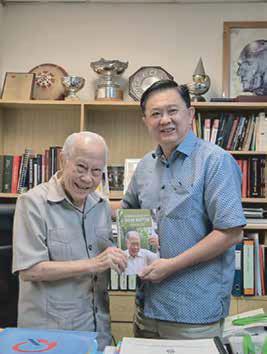
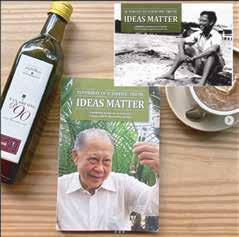
In Pursuit of Scienti c Truth: Ideas Matter is a quietly powerful story about Tan Sri Augustine Ong published in 2019.
Far from a self-congratulatory chronicle, the book o ers a re ective and humane journey into the mind of a scientist whose life’s work helped shape palm oil chemistry, technology and global standing. Tracing his path from humble beginnings in Malacca through an illustrious academic career, Tan Sri Augustine shares the ideas, doubts and convictions that guided his pioneering research, his defence of palm oil against international smear campaigns, and his belief that innovation must serve society.
Beyond laboratories and patents, the memoir gives voice to the o en-overlooked human dimension of the industry, especially the lives and livelihoods of smallholders. With 14 patents, over 380 publications, and a legacy that includes founding the Malaysian Invention and Design Society (MINDS), the book captures not achievements, but ideas that matter—inviting readers to think, question and be inspired by science pursued with integrity, purpose and compassion.
KEY PALM OIL MID & DOWNSTREAM STAKEHOLDERS: MINISTRIES, ITS AGENCIES AND RELATED ASSOCIATIONS
Ministry of Plantation and Commodities (KPK) www.kpk.gov.my
Malaysia Biomass Industries Confederation (MBIC) http://www.biomass.org.my
Malaysian Oleochemical Manufaturers' Group (MOMG) www.momg.org.my
Badan Pengelola Dana Perkebunan Kelapa Sawit (BPDPKS) Indonesian Palm Oil Plantation Fund Management Agency https://www.bpdp.or.id/
Asosiasi Produsen Oleochemical Indonesia (APOLIN) Indonesian Oleochemical Producers Association https://apolin.org/
MALAYSIA
Malaysian Palm Oil Board (MPOB) www.mpob.org.my
Malaysian Palm Oil Association (MPOA) www.mpoa.org.my