Home Builders Association of Marion & Polk Counties 2075 Madrona Ave SE Suite 100, Salem, OR 97302
tel 503-399-1500 | fax 503-399-0651 www.HomeBuildersAssociation.org
5
Current News
12
16 20 22
page 12
Dan and Laura Dorn Named Salem’s First Citizens • Independence Moves to Lower SDCs • HBA’s Tour of Remodeled Homes Professional Women in Building Council Named National Council of the Year • Young Professionals Council Builds a Pipeline for What’s Next • HBA Secures Major Court Victory
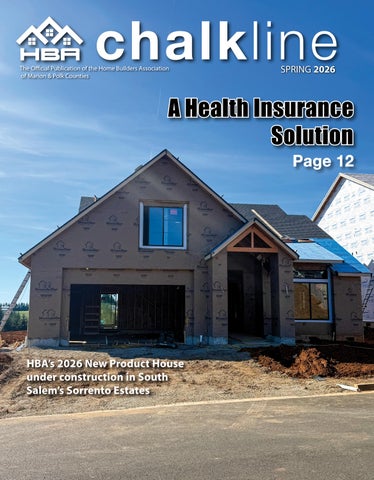
A Health Insurance Solution
Newly merged medical insurance trust expands options for contractors
A Legislative Session Like No Other
How the Oregon Home Builders Association turned a 35-day sprint into a landmark victory for housing
New Members
Vital Statistics
Mission Statement: We support those who build, improve and supply housing through advocacy, industry growth and professional success.
Designer: Steve Beckner To advertise, call 541-944-2820 or email jerry.s@mtangelpub.com.
Dear HBA Members,
Welcome
Last quarter, I shared a vision of Building Our Future: Together. Today, I am proud to say that vision is becoming a reality through your incredible engagement and leadership across Marion and Polk Counties.
Celebrating Excellence
We have a major reason to celebrate: our Professional Women in Building (PWB) council has been named the 2025 Chapter of the Year! This prestigious recognition is a testament to the talent and drive within our association. When we support one another and lead with purpose, the entire industry takes notice.
Strength in Connection
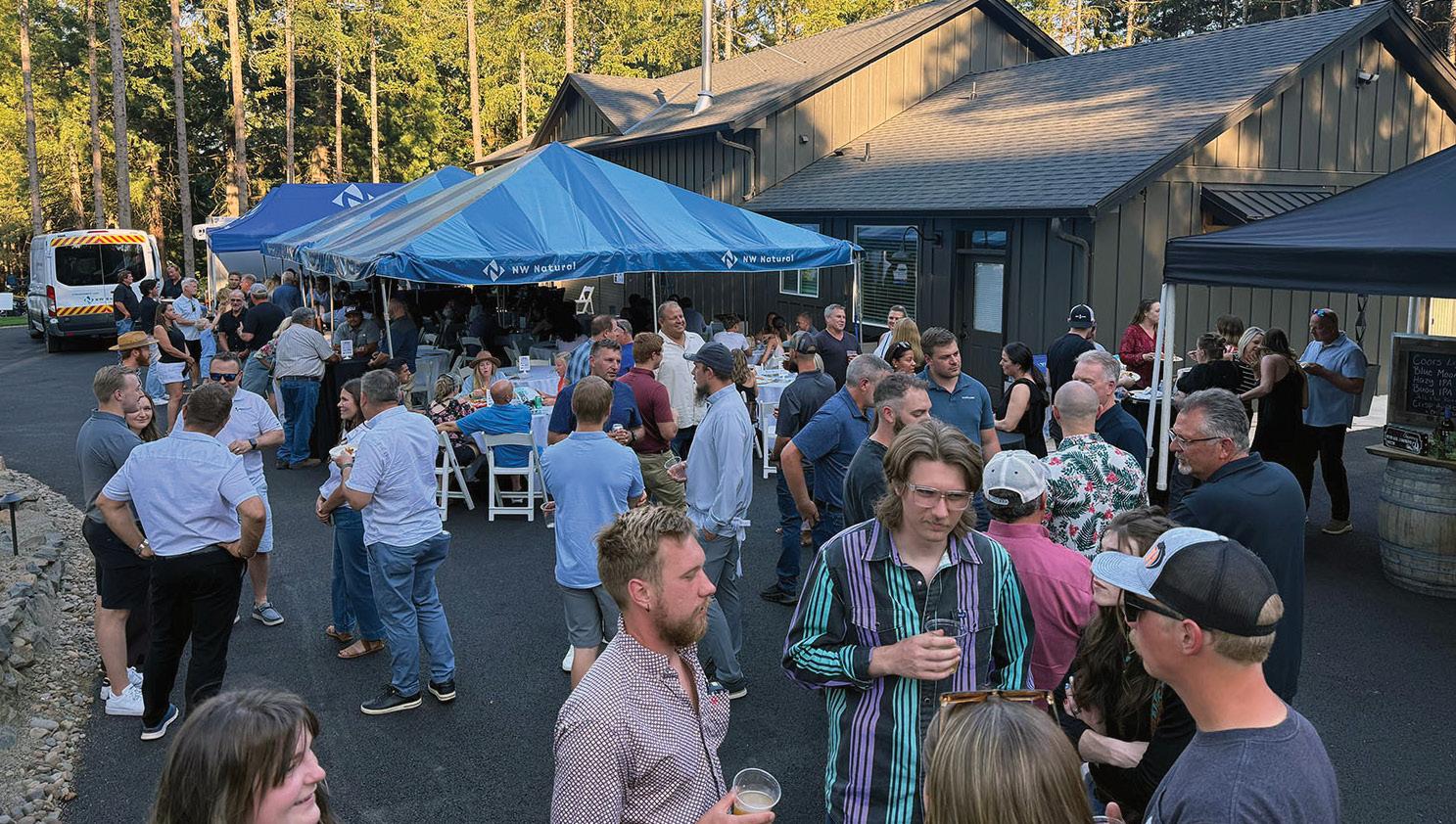
Our community thrives when we show up. This quarter, we’ve strengthened our bonds through a fantastic Off the Clock at MW Design Workshop, an engaging membership dinner, and a high-energy pub crawl. These gatherings are the foundation of our “united front,” proving that we are far more impactful when we work—and celebrate—side by side.
Leading Where it Matters
If we want to see housing move forward, we must be part of the conversation. It is easy to say “building is difficult,” but it takes real commitment to sit in the rooms where decisions are made. I am inspired by so many of members who are currently serving our community. While by no means an all-inclusive list, they include:
• Brittany Randall, BRAND Land Use: Marion County Planning Commission
• Kyle Juran, Remodeling by Classic Homes: Keizer City Council
• Dan & Laura Dorn, Sunco Homes & Berkshire Hathaway Real Estate: Salem’s First Citizens
• Michael Schilling, Fowler Homes: Dallas City Council
• Mark Grenz, MultiTech Engineering: Marion County Water Quality Advisory Committee
• John Gooley, Withers Lumber: Vice Chair of the Mt. Angel Community Foundation
• Samantha Crabb, Cherry City Interiors & Design: ACE Board
The Road Ahead
True change requires more than just identifying problems; it requires us to be the ones finding solutions and asking the hard questions. Our industry’s success depends on this level of civic involvement.
As we move into the next quarter, I challenge you to stay engaged. Whether it is attending a city council meeting or joining an HBA committee, your participation is what drives our mission forward.
Thank you for your membership and for everything you do to build a stronger community.
Sincerely,
Beth Rhoades
2026 HBA President
C&R Design Remodel
Dan and Laura Dorn Named Salem’s First Citizens
HBA
members honored at the Salem Chamber’s
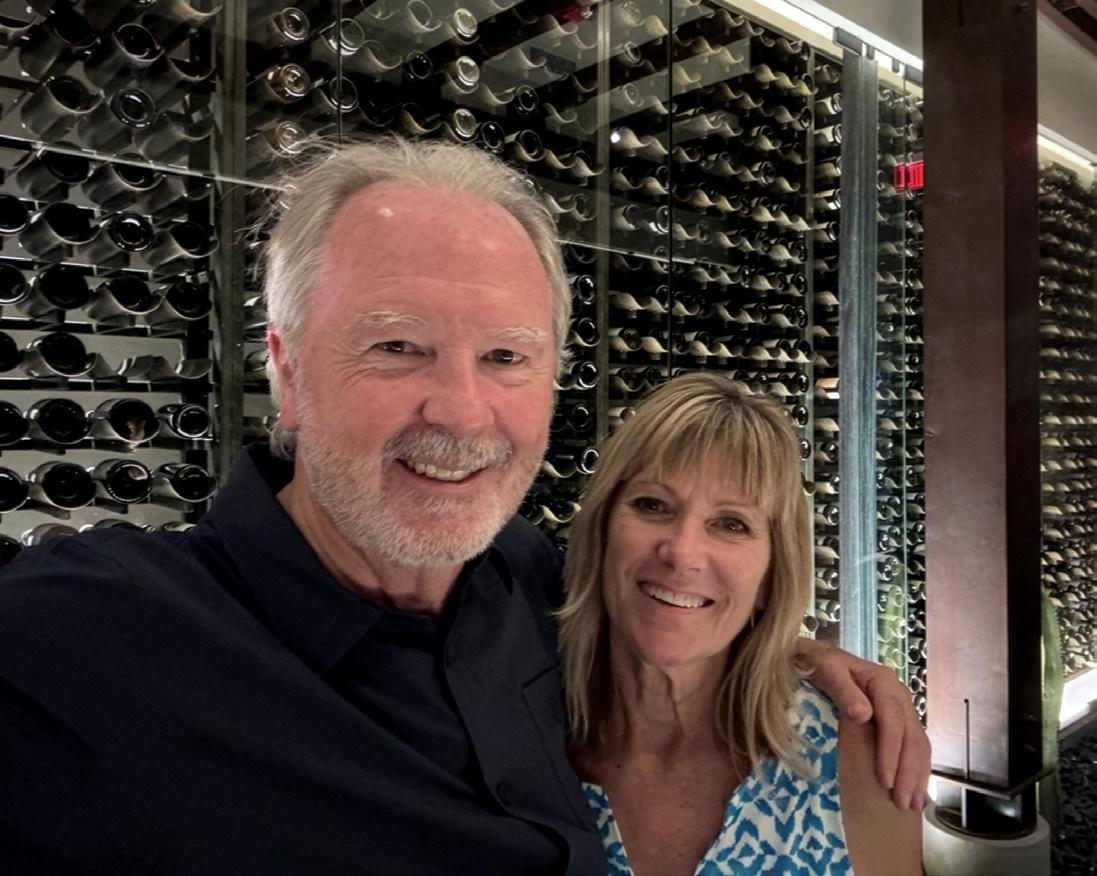
Dan and Laura Dorn, longtime members of the Home Builders Association of Marion & Polk Counties, were honored as Salem’s First Citizens at the Salem Area Chamber of Commerce’s 75th Annual First Citizen Awards Banquet on April 18th. The recognition placed them among the most distinguished group of civic leaders in the city’s history, and few who know the couple would argue the honor was anything but overdue.
The Dorns learned of their selection in characteristic fashion: not at a formal ceremony, but at an ACE (Advanced Construction Education) board meeting at the Career Technical Education Center, where a group of close friends and community partners had gathered to surprise them with the news. That the announcement happened there, at a program they helped build from the ground up, felt fitting to anyone who knows their story.
Since 2014, the Dorns have been among the most committed volunteers in the ACE program, which partners with the Salem-Keizer School District’s Career Technical Education Center to give high school students hands-on experience in residential construction. Dan has led the construction of student-built homes, donating his time and expertise to guide young people through the full process of building. Laura has gone a step further, personally marketing eight of those homes at no charge and contributing all of her commission proceeds back to the program. Over more than a decade, those efforts have helped raise hundreds of thousands of dollars for Salem-Keizer students. In 2025, Laura joined the ACE Board of Directors.
Dan Dorn has built one of the more complete resumes in the area’s homebuilding industry. He served as President of the Home Builders Association of Marion & Polk Counties in 1996 and later as President of the Oregon Home Builders Association in 2016, and has also led the Oregon Remodelers Association. His public service track ran parallel to his industry leadership: Dan served eight years on the Salem Planning Commission from 2003 to 2011, including as its President, helping guide development decisions that shaped the city’s growth during a critical period.
Laura built an equally distinguished record in real estate and civic life. She served as President of the Mid-Valley Association of Realtors in 2002 and as President of the Salem Area Chamber of Commerce in 2021 and 2022, following years of board service that included a stint as VP of Membership and Events. She is a graduate of Leadership Salem and has,
75th Annual First Citizen Awards Banquet
Salem’s First Citizens, Dan and Laura Dorn.
perhaps most quietly, served as Event Chair for the First Citizen Awards Banquet itself every year from 2014 through 2026. The irony of chairing the event she was ultimately honored at did not go unnoticed. At the HBA, Laura served on the Board of Directors from 2013 to 2016, chaired the Special Events Committee, served as Associate Vice-President, and was named both Associate of the Year and top new membership recruiter in 2014. Her professional achievements in real estate include the Berkshire Hathaway Chairman’s Circle Gold distinction every year from 2019 through 2025 and the Realtor of the Year award from the Salem Association of Realtors in 2004.
Together, the Dorns’ community footprint spans decades and dozens of organizations. Their support has touched Habitat for Humanity, where Laura served as Board President in 2011 and 2012, as well as the Family YMCA of Marion & Polk Counties, Family Building Blocks, the Boys & Girls Club, the Salem Police Foundation, the Union Gospel Mission, the Marion Polk Food Share, and the Willamette Valley Humane Society, among others. They have contributed through board service, fundraising, volunteer work, and direct financial support.
People who have worked alongside the Dorns tend to describe them the same way: humble, consistent, and not particularly interested in credit. They show up, they do the work, and they move on to the next thing that needs doing. The First Citizen award, now in its 75th year, has a long tradition of honoring exactly that kind of leadership. Dan and Laura Dorn are a fitting addition to that list
HBA News
Independence Moves to Lower SDCs in Effort to Restart Homebuilding
The Independence City Council approved a reduction in System Development Charges (SDCs) in mid-January, lowering fees on new residential construction by more than $10,000 per home in an effort to jumpstart stalled housing activity.
The move follows nearly two years of little to no new home construction in the city after SDCs were increased to roughly $54,000 per home—significantly higher than surrounding communities.
Local builders and the Home Builders Association of Marion & Polk Counties had warned at the time that the increase would make projects financially unworkable. According to the Association, that prediction has largely played out, with development activity coming to a halt as builders shifted investment to nearby cities with lower costs.
Under the approved change, Independence reduced its SDC charges of $53,432 by just over $10,000. While the reduction is intended to make projects more feasible, the city will still remain well above neighboring jurisdictions.
For comparison, SDCs in Dallas are approximately $20,237, while Monmouth’s are $15,822 and Salem’s are $23,560—less than half of Independence’s current level even after the reduction.
Builders say those differences matter in a market where rising material costs, higher interest rates, and price-sensitive buyers have already tightened margins. When one community’s fees exceed neighboring cities by tens of thousands of dollars, projects tend to move elsewhere.
City officials have indicated the reduction is intended to strike a better balance between funding infrastructure and encouraging residential growth. SDCs are used to pay for public improvements such as roads, water systems, and parks needed to support new development.
Industry representatives argue that when fees reach a certain threshold, they can have the opposite effect—reducing or eliminating the very development that generates that revenue in the first place.
The recent adjustment is being viewed as a step toward restoring housing production in Independence and reestablishing a more predictable pipeline of both new homes and SDC revenue.
Builders will be watching closely in the coming months to see whether the lower fee structure is enough to bring projects back into the city—or whether additional adjustments will be needed to better align Independence with the regional market.
The Spike Club is an exclusive group of members who contribute to the growth of the association by recruiting and retaining members. Spikes maintain a special status, have the respect of their peers as valued members of the HBA and are recognized for their efforts locally and nationally. To become a Spike, bring in six members to the HBA. Applications for prospective members are online at the HBA website or may be obtained from the HBA office, or call to have one sent to the prospective member.
ALL TIME BIG SPIKE 1500+
John Gooley 2832
Ric McNall 814
Jeffrey Green 386
Dan Dorn 379
Chuck Foster 297
Jordan Schweiger 307
Mike Riddle 293
Jubal Frost 289
Steve Johnson 258
Greg Conser 256 ROYAL SPIKE 150–249
Tom Wheeler 225
Don Druliner 205
Rick Ziebell 178
RED SPIKE 100–149
Kelvin Dettwyler 147
Rob Rardin 131
Jodi Bailey 117
John Hammer 110
Brad Moore 105
Matt Holstege 102
GREEN SPIKE 50–99
Kent Kaufman 99
Dan Fitzgerald 92
Rich Kansky 85
Eric Olsen 82
Bob Cavell 78
Don Sturgeon 77
Larry Bilyeu 75
Oleg Foksha 71
Matt Endler 68
Ryan Bloedel 49
Jim Hobbs 49
Kerry Kuenzi 68
Kathy Temple 65
Eric Templeton 65
Serge Serdsev 62
Patrick Jackson 59
Mike Smith 56
Rich Tovar 53
Randy Melton 51
Eric Jensen 51
LIFE SPIKE 25–49
Chad Robb 34
Laura Dorn 32
Kimberly Woodward 47
Andrew Wheeler 46
Jason Sawyers 44
David Hafner 40
Nolan Fridley 40
Mark Shipman 32
Hunter Emerick 31
Kevin Stone 28
Steve Hurley 27
Kraig Kelly 26
BLUE SPIKE 6–24
Jason Robertson 24
Santiago Sarmiento 15
Brett Tallan 14
Samantha Crabb 14
Gary Epping 13
Don Lulay 12
Chad Montgomery 12
Ricky Fast 11
David Qualls 11
Chris Rasmussen 10
Jim Sparkman 9
Kelli Terjeson 8
Caleb Remington 8
Justen Maron 8
Dale Van Lydegraf 7
Alan Sorem 7
Think about the project that made your crew proud — the kitchen that came together exactly right, the addition that changed how a family uses their home, the bathroom that finally got the attention it deserved. Now think about standing in that space on a Saturday, talking through what you built with visitors who are actively looking to hire a remodeler.
That’s exactly what the HBA’s Tour of Remodeled Homes makes possible. On Saturday, September 26th, the HBA will open the doors on some of the best remodeling work done in our region — and we want your project on the tour.
You’re There to Tell the Story
On tour day, it’s you greeting visitors and walking them through the project. You can explain the decisions that went into the design, point out the details a photo would never capture, and talk through the challenges that came up and how you solved them. That kind of direct conversation with a prospective client, inside a space that shows exactly what you’re capable of, is hard to come by any other way.
Tour attendees walk through the home, see the finishes up close,
People who pay to attend a home tour aren’t just curious — they’re motivated. The paid format filters out casual browsers and draws in homeowners who are seriously thinking about a remodeling project and want to understand what’s possible. When someone walks through your project on September 26th, there’s a good chance they already have something in mind. Your job is to make sure they leave with your name.
What Qualifies
Eligible projects are those completed on or after January 1, 2024. Kitchens, bathrooms, additions, whole-home renovations, outdoor living spaces — if it’s a remodel you’re proud of and the homeowner is willing to open their doors for the day, it belongs on this tour.
If you’ve been looking for a reason to reach back out to a past client whose project turned out exceptionally well, this is it. Most
HBA News
HBA’s Professional Women in Building Council Named
National Council of the Year
Three years in, the PWB Council is setting a national standard — and a busy spring calendar to match
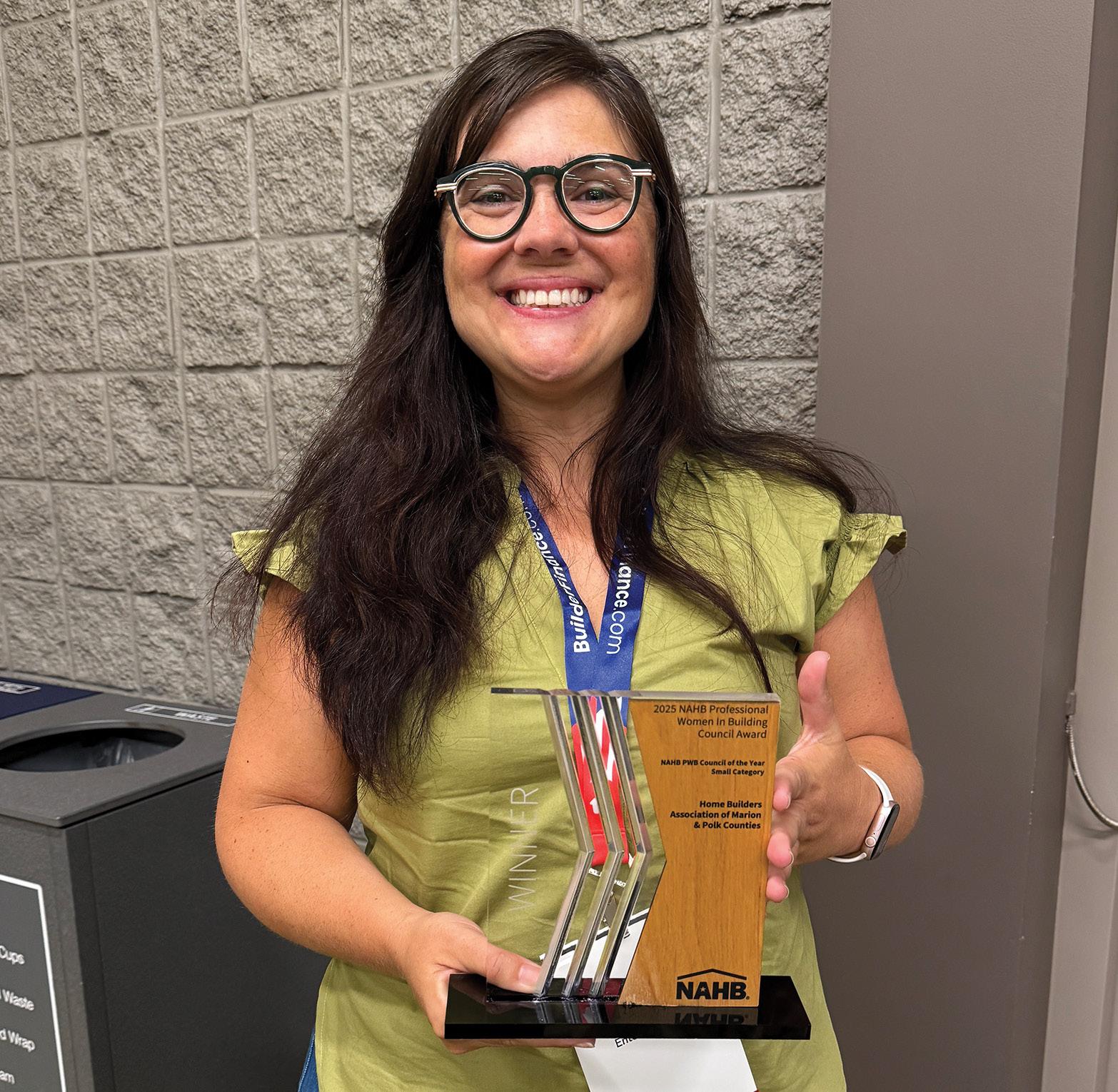
The Professional Women in Building Council of the HBA of Marion & Polk Counties has been named the 2025 NAHB PWB Council of the Year in the Small Council category by the National Association of Home Builders — a national recognition that puts this threeyear-old council on the map alongside organizations with far longer histories. The award recognizes the council’s rapid growth, community impact, and commitment to elevating women in residential construction since its founding in 2022. Beth Rhoades of C&R Design Remodel accepted the award on the council’s behalf at the NAHB International Builders’ Show earlier this year.
“I personally could not be prouder to chair the PWB this year,” said Council Chair April McVay. “This recognition is a testament to what our members have built together — a real platform for leadership, professional development, and community service in our industry.”
From Classroom to Jobsite
The recognition comes as the PWB has been deepening its work with the next generation of tradespeople. In February, council members presented to construction students at Salem’s CTEC program, highlighting the wide range of well-paying career paths available in the trades — no four-year degree required. That outreach continues this spring with a hands-on house-flipping event in May, where PWB members will work directly alongside CTEC students.
A Full Spring and Summer Ahead
The council has a packed calendar of events through the summer, with opportunities to connect PWB members with HBA builders, the broader community, and prospective new members. All are welcome to participate — registration is available online.
May
• May 1 — CTEC Ace Auction, PWB Table
• May 6 — PWB at Habitat for Humanity, 8:00 a.m. shift
• June 11 — HBA/PWB Industry Days — begins with Coffee & Chat, ends with HBA After Hours. Come and go as your schedule allows. More details to come.
August
• August 10–13 — PWB Build Camp at CTEC
August 12 — PWB Lunch & Learn at CTEC
To get involved or learn more, register online or reach out to the HBA office. New members and first-time attendees are always welcome!
HBA President Beth Rhoades accepts NAHB’s PWB Chapter of the Year award at February’s International Builders Show.
Young Professionals Council Builds a Pipeline for What’s Next
The future of our industry depends on the people coming up behind us. No matter where your business stands today, growing fast or facing challenges, one thing is certain: at some point, we all step back. What we leave behind will only be as strong as the people prepared to carry it forward.
That’s why the HBA Young Professionals group exists. We’re not just thinking about today. We’re actively building what comes next.
Over the past year, we’ve focused on creating real opportunities for connection, growth, and leadership development. We kicked things off with our trap shoot last October, bringing members together in a setting that made it easy to build relationships outside of the day-to-day grind. From there, we hosted a meeting at iWingz that continued to strengthen those connections and create space for meaningful conversations.
We also held a coffee networking event designed to be approachable and welcoming, especially for those newer to the industry. It gave young professionals a chance to step in, meet peers, and start building their network in a comfortable environment.
One of our most impactful moments was our panel discussion, where we brought together respected industry leaders to share their stories. They didn’t just talk about success, they shared the realities of their journeys, the lessons they’ve learned, and their expectations for where our
industry is headed. That kind of insight is invaluable for those looking to grow into leadership roles.
Everything we do is centered around one goal: to educate and connect young leaders. We want to create opportunities for growth, open doors to mentorship, and build a community where the next generation feels supported, prepared, and inspired to lead.
If you’re a young professional in this industry (45 or younger), or someone looking to grow into that next stage of your career, we invite you to get involved. Show up to an event, introduce yourself, and take that first step. There’s a place for you here, and the future of this industry is stronger with you in it.
This is your opportunity to learn from those who have built the path before you, while also building your own. It’s a chance to gain confidence, expand your perspective, and form relationships that will follow you throughout your career. The sooner you step in, the more you’ll get out of it.
And for those already established in their careers, this is your chance to pour into the next generation. Your experience, your insight, and your willingness to connect can make a lasting impact. Together, we can create an industry that is not only strong today, but even stronger for the future.
Contact Matt O’Reilly at the HBA for more information on getting involved.
HBA News
HBA Secures Major Court Victory Blocking Federal Energy Code Mandate
A federal district court has struck down a rule that would have forced builders of HUD- and USDA-backed homes to comply with the 2021 International Energy Conservation Code (IECC). The U.S. District Court for the Eastern District of Texas ruled in March that HUD and USDA violated the Cranston-Gonzalez National Affordable Housing Act by attempting to impose the stricter standard — agreeing with the National Association of Home Builders (NAHB) and 15 state attorneys general that the agencies exceeded their legal authority. For Oregon builders, it’s a genuine win, though the impact here is more nuanced than in much of the country.
What Was at Stake
The rule would have required any home sold to an FHA or USDA borrower to meet 2021 IECC standards — even in states that hadn’t adopted that code. Since builders often don’t know at construction time how a buyer will finance their purchase, it would have effectively forced compliance on every home in many markets. Studies put the added cost at $9,600 to $21,400 per home depending on climate zone, with some real-world estimates approaching $31,000. Payback periods on those costs can stretch as long as 90 years.
The Oregon Reality
Oregon develops its own residential energy standards rather than adopting the IECC directly, and has long maintained some of the strictest requirements in the nation. The current 2023 Oregon Residential Specialty Code — mandatory since April 2024 — meets or exceeds the national model code in many areas, and the state is already working toward a 2026 ORSC. The gap between what Oregon builders already do and what HUD was trying to mandate is much narrower here than in states still on older code cycles. The direct financial relief from this ruling is real but modest for local builders compared to counterparts elsewhere.
The more important win for Oregon members is on principle: the court blocked the federal government from using mortgage program eligibility as a back-door mechanism to impose national energy standards that bypass state and local code authority. That precedent matters here, and it will matter the next time Washington tries something similar.
Years of Work Behind a Single Ruling
NAHB fought this on three fronts simultaneously — regulatory, legal, and legislative. It first convinced the Trump administration to delay enforcement through December 2026, buying time for the legal challenge. In January 2025, NAHB filed suit in the Eastern District of Texas alongside 15 state attorneys general, with the case argued last July. The court found that the Cranston-Gonzalez Act limits HUD to a single code update from the 2006 IECC baseline — a step already taken in 2015 — and that HUD’s own analysis showed the mandate would reduce housing availability by 1.5 percent, directly violating the law. NAHB is also pursuing legislation to permanently prevent HUD and USDA from attempting this again.
This is Your Dues at Work.
A portion of your HBA dues pays for your membership in the National Association of Home Builders and funds NAHB’s advocacy and legal operations — the team that filed this lawsuit, lobbied for the enforcement delay, and built the attorney general coalition. Oregon’s strict energy codes mean this ruling’s direct financial impact is smaller here than for builders in many other states. But dues-funded advocacy isn’t only about the fights that hit home hardest right now. It’s about ensuring that federal agencies can’t circumvent state building code authority through the back door of mortgage program eligibility — and that precedent protects Oregon too.
June
June 11th
Off the Clock Networking
Thomas Kay Flooring & Interiors
July
July 27th
HBA Golf Tournament
Creekside Golf Club
May
May 12th
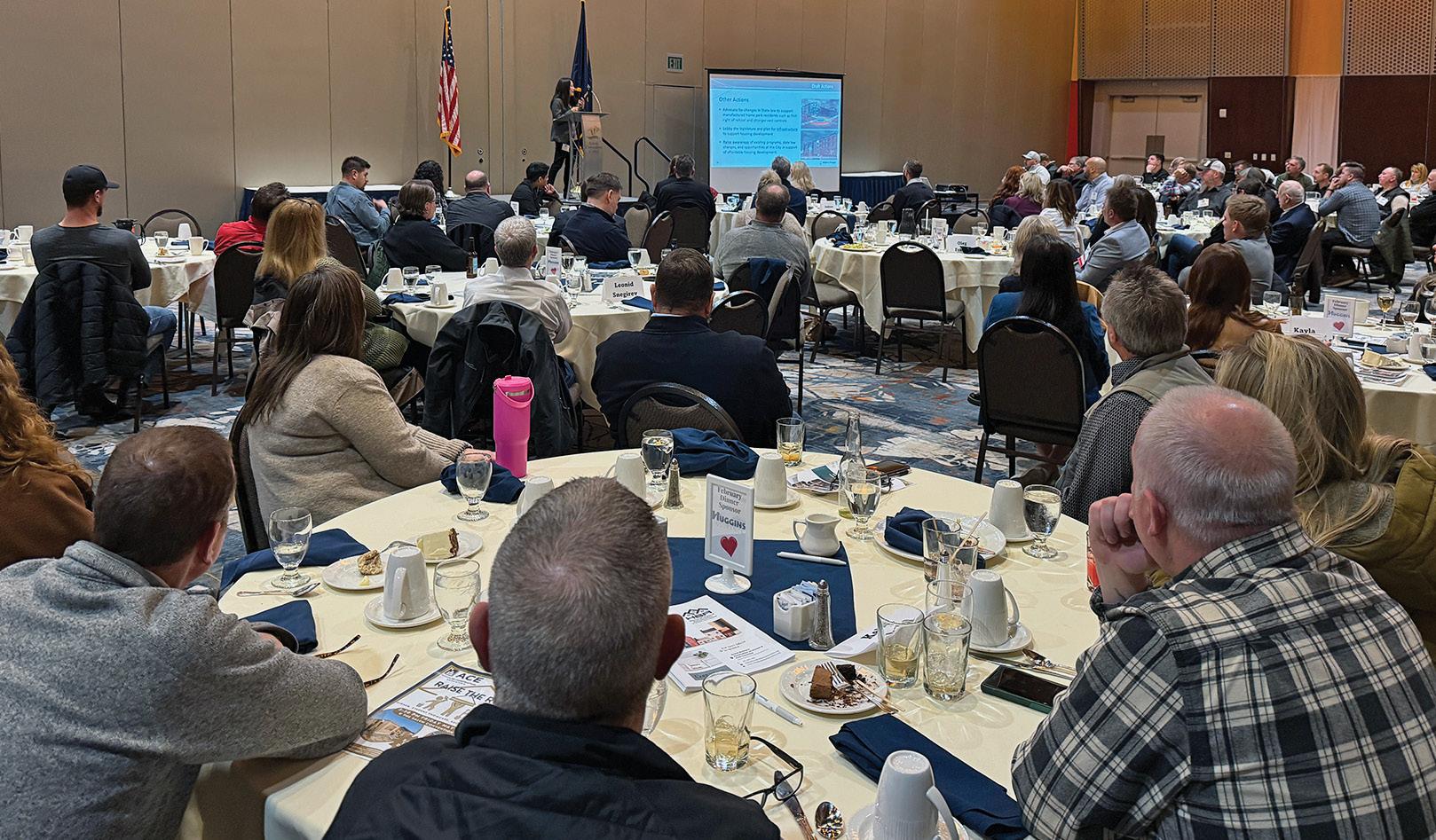
All Member Dinner
Salem Convention Center
July
July 10th
Tour of Homes Kickoff Party New Product House 6123 Evangelista St S, Salem
A HEALTH INSURANCE SOLUTION
Newly merged medical insurance trust expands options for contractors
By James Day
Anew model for employer-based health insurance plans is now available that will dramatically expand options in the construction and building trades.
The Building Industry Insurance Trust (BIIT), which since 2021 has served members of the Home Builders Association of Marion & Polk Counties, has merged with the Salem Contractors Exchange (CBX) to form a new entity, the Contractors & Builders Insurance Trust (CBIT).
The BIIT used to offer only a plan that was managed by Regence BlueCross Blue Shield of Oregon. The CBX offered Providence and Kaiser Permanente plans. The new program, the CBIT, will offer all three options to HBA member contractors and builders.
more choices for employers. It’s wonderful news, and there is a lot of enthusiasm and interest in looking at this plan.”
Barnwell noted that, individually, the three options of Regence, Providence and Kaiser, might not work for everybody. But that’s the beauty of the new system. Yes, Salem Health, which serves a large segment of chunks of the mid-valley, no longer accepts Regence plans. That’s fine, then perhaps Providence or Kaiser would make a better fit.
This means more negotiating power for insurance companies and more options for our members and future members.”
“We merged with BIIT to make a larger group association,” said Lori Cooley, the executive director of CBX. “This means more negotiating power for insurance companies and more options for our members and future members.”
–Lori Cooley, the executive director of CBX
“Once you give an employee a choice of those three, it offers the possibility of serving a wider number of people,” Barnwell said. “It gives small employers a chance to join a trust. That’s something that is often difficult for employers with less than 50 FTEs. And by pooling a lot of employees the rates might get better.”
Employers with as few as two employees can join the new trust, Barnwell said, and Oregon’s community rating system (see story p14) helps keep pricing competitive and predictable.
Lance Barnwell, producer and partner with Huggins Bliss Insurance in Salem agreed, noting that “more options means
Continued on page 14
HOW NEW SYSTEM WORKS
• Small employers typically pay the highest health insurance premiums
• CBIT enables HBA member employers to join together to purchase a health plan that is appropriately priced for that employer group’s risk profile.
• Many employers will realize savings of 20% or more compared to other market options.
• The simplified, centralized management of a comprehensive benefits package, including medical, dental, vision, life insurance and an Employee Assistance Program makes it easy for the employer to deliver competitive benefits to attract and retain their workforce without the complexity of dealing with multiple carriers and multiple invoices.
Chris Gorey, president of Capital Benefit group and the managing broker of the CBIT program, said that “different employees and employers have different needs and it’s not always just about price. Hopefully, other services will matter, too. Plus, having three separate options can serve a wider range of needs.”
Gorey noted that Kaiser “is a very different model” that doesn’t work for everybody. But employees who opt out on Kaiser can choose either Regence or Providence. And vice versa.
“And while we can’t guarantee coverage for higher numbers of people, we absolutely expect a greater number of HBA members will participate in the program,” Gorey said. “Just do the math. With the three options available I can see the number of employers in
–Chris Gorey, Capital Benefit Group
this program tripling. Employees will find a program that works for them and that will be of benefit to all HBA members.”
Health insurance on a national level is viewed as being in crisis. Plans cost more than they used to, it’s difficult to find a primary care physician and out-of-network challenges can be punishing, both personally and economically.
But with the new CBIT, HBA members can receive insurance under a wide range of coverage umbrellas, increase how many employees are eligible for coverage and likely minimize any cost increases if not actually reduce rates. It solves a real and immediate problem for HBA members.
“This is good news. It’s wonderful news.” Gorey said.”
Same Coverage. Better Pricing. Different Model
Oregon uses what’s called a community rating system for small employers, generally those with fewer than 50 employees. Under that system, insurance companies are not allowed to price a group based on its actual health risk or claims history. Instead, all small employers are placed into a broader risk pool and priced using a limited set of factors such as age, geography, tobacco use, and plan design.
What that means in practice is that a small employer with a healthy workforce pays essentially the same base rates as a group with significantly higher medical claims. The system is designed to create stability and fairness, but it also limits an employer’s ability to benefit from having a lower-risk population.
A health trust operates differently, in that it is not subject to Oregon’s community rating rules. Instead of being priced as part of a broad, blended pool, participating employers are grouped together within the trust, and pricing is based more directly on the overall performance of that defined population.
That creates a couple of potential advantages for smaller employers.
–First, if the trust population performs well from a claims standpoint, that experience can be reflected in the rates. In
other words, the group can benefit from its own performance rather than subsidizing the broader market.
–Second, trusts often have more flexibility in plan design and cost management. That can include things such as more tailored benefits, stronger wellness incentives, and closer management of claims, all of which can help control longterm costs.
–Third, trusts can provide greater rate stability over time. Instead of being subject to market-wide increases driven by the entire small group pool, pricing is tied more closely to the experience of the trust itself.
The key distinction is this:
Under community rating, small employers are priced based on the average risk of the market. Within a trust, the pricing is based more on the performance of their own group and the collective performance of similar employers.
That difference is what creates the opportunity for more competitive and predictable pricing, particularly for employers who are managing their workforce health and utilization effectively.
–Mike Erdmann
A Legislative Session Like No Other: Oregon HBA Goes Undefeated
How the Oregon Home Builders Association turned a 35-day sprint into a landmark victory for housing — and why your next move matters more than ever.
The 2026 Oregon legislative short session was one of the most consequential for housing that our industry has seen in years. Not simply because of what passed — though what passed was significant — but because the entire conversation around housing in Oregon changed. And the Oregon Home Builders Association was at the center of that transformation.
For builders, remodelers, and trade contractors across Oregon, this session sent a clear message: the advocacy you fund and support through your HBA membership is delivering real results — in the halls of the Capitol, in the governor’s office, and in Oregon’s courts. Not every bill went our way, and not every fight was won. But on the housing bills OHBA made its mission this session, the record was perfect.
The Big Picture: A Financial Reset That Created Room to Act
The 2026 session arrived under a cloud of fiscal uncertainty. Oregon faced a projected budget shortfall of nearly $1 billion — the kind of number that typically sends lawmakers into defensive crouch mode, prioritizing cuts over new initiatives.
opponents of housing legislation moved to a neutral position on three of OHBA’s priority bills by session’s end.
That shift doesn’t happen by accident. It is the direct result of four years of consistent, strategic work by OHBA and its member associations — exposing anti-housing policies, documenting their real-world impacts on Oregon families, and building a coalition that has steadily eroded the credibility of opposition groups.
But make no mistake: this is a window, not a permanent victory. OHBA’s leadership estimates the industry has roughly four years before the urgency of the housing crisis fades from the political foreground. The time to press the advantage is now.
The Wins:
What Passed — And What It Means for Builders
OHBA went into the 2026 session with a clear legislative priority list. Every item on that list passed. Here’s what each win means for the industry:
“Every single bill we prioritized this session passed. That is not normal. That is the result of years of groundwork, strong coalition building, and a changing political environment.”
— Jodi Hack, CEO, Oregon Home Builders Association
But the picture shifted quickly. A stronger-than-expected March revenue forecast added $252 million in available resources. The Legislature also found roughly $300 million through Senate Bill 1507, which decoupled Oregon from the federal tax code – a move OHBA opposed as harmful to small business. That savings, however it was generated, shifted the dynamic: lawmakers moved from survival mode to opportunity mode, and that created the political space to focus on housing production.
The result was a compressed but electric 35-day session that felt, in the words of OHBA CEO Jodi Hack, like “a week’s worth of work packed into every single day.”
The Shift Nobody Expected: Oregon’s Land Use
Sacred Cow Is Being Questioned
For decades, Oregon’s land use planning system — now more than 50 years old — has been treated as essentially untouchable. Proposals to expand urban growth boundaries or reduce land use barriers for housing faced organized, well-funded opposition that reliably slowed or stopped reform.
This session was different. Legislators openly questioned whether the system still serves today’s housing needs. More strikingly, groups that have historically been among the most adamant
House Bill 4035 — Fixing the UGB Expansion Tool
In 2024, the Legislature passed a one-time Urban Growth Boundary expansion tool. In theory it was a breakthrough. In practice, almost no city could actually use it — the qualifying triggers were too restrictive, the acreage limits too small.
HB 4035 fixes that. The bill expands the eligible acreage from 100 to 150 buildable acres, broadens the land definition beyond residential-only, and removes unrealistic qualification triggers like “severely rent burdened” status. The 30% affordability requirement remains intact.
The practical outcome: cities can now actually build complete neighborhoods — housing, parks, childcare, small-scale retail — instead of being hamstrung by a tool designed more for optics than function. A late-session amendment also created an expedited UGB expansion pathway specifically for the City of Woodburn to develop farmworker housing.
House Bill 4037 — The Anti-NIMBY Omnibus Bill
This is the session’s headline legislation for builders. At its core, HB 4037 protects the right to build housing where it is already planned — what OHBA has been calling a “Right to Housing” framework.
Key provisions include:
• Limiting required neighbor notice to 100 feet (500 feet for larger developments) Continued next page
• Eliminating required public hearings for housing subject to clear and objective criteria
• Restricting who can appeal — only the applicant — and limiting appeals to LUBA
• Preventing “citizen involvement” processes from being weaponized as delay tactics
For contractors, this bill means fewer project delays driven by procedural abuse. It means that when land is zoned for housing and a project meets code, the process moves forward rather than being buried in appeals.
Senate Bill 1561 — Disaster Rebuild
When families lose their homes to wildfire, flood, or other natural disasters, the last thing they should face is a land use gauntlet. SB 1561 creates a clear, expedited approval pathway for rebuilding homes lost to disasters, removing unnecessary regulatory barriers so families can get back into homes faster. For builders and contractors who respond to disaster recovery work, this bill means a more workable regulatory environment at the moments when communities need action most.
House Bill 4082
—
Targeted
UGB Expansion for Attainable Housing Types
contractor must knowingly hire an unlicensed labor broker to face liability, and explicitly clarifies that all CCB-licensed contractors are not labor brokers under the statute. Equally important: criminal penalties cannot flow up the chain from a subcontractor’s actions to a general contractor or property owner.
This is exactly the kind of quiet but critical advocacy work your HBA does on your behalf — ensuring that laws aimed at bad actors don’t inadvertently criminalize legitimate business practices.
Governor’s PLA Executive Order — Blocked
by the Courts
While not involving legislative action, in a significant win for open contracting and fair competition, a court ruled in March that the Governor’s Project Labor Agreement executive order was unconstitutional, finding that it exceeded executive authority. PLAs restrict public construction projects to union contractors, effectively locking out the majority of Oregon’s contractor workforce. This ruling protects every HBA member who competes for public projects — regardless of union status.
The Moment Is Now
Oregon’s political environment is shifting in our favor. But this is a window, not a guarantee. We have legislative momentum, growing public awareness, and rare bipartisan alignment on the need for more housing. That window will close.
This bill takes a practical, no-nonsense approach to UGB expansion by removing complicated “needs trigger” requirements. Cities and Metro can add up to 100 buildable acres to their urban growth boundaries specifically for manufactured housing, prefabricated structures, or 55-plus communities affordable to households at or below 120% of area median income.
More advocacy. More engagement. More builders and contractors at the table. Because if we don’t build the homes, nothing else we passed matters.
The focus here is speed, flexibility, and realistic housing types that the market can actually deliver at scale. For manufactured housing installers, prefab builders, and contractors serving the growing 55-plus housing segment, this bill opens meaningful new opportunities.
Housing production bills were not the only contractor wins this session.
House Bill 4089 — Wage Theft Legislation, Amended HB 4089 began the session as a serious threat to licensed contractors. The original version included Class C felony exposure that could have ensnared legitimate contractors for the actions of unlicensed labor brokers they didn’t knowingly hire. OHBA fought for critical amendments — and won. The final version reduces the top charge to a Class A misdemeanor, requires that a
One Missed Opportunity: Industrial Land
Not every priority made it across the finish line. The JOBS Act (Senate Bill 1586), which would have addressed Oregon’s shortage of industrial land for manufacturing and economic development, was derailed by misinformation — particularly around data centers. The Legislature ultimately avoided the issue, leaving core economic constraints around industrial land supply unresolved. OHBA will continue to press for solutions in future sessions.
What This Means for Every Builder and Contractor
These legislative wins don’t happen in a vacuum. They are the direct product of sustained, strategic investment in advocacy — the kind that your HBA membership makes possible. When OHBA walks into the Capitol, it carries the credibility of an industry that shows up consistently, year after year, with facts, coalition partners, and a clear pro-housing message.
The bills that passed this session will translate into real-world outcomes: more land available for development, faster project approvals, fewer delay-driven costs, and a regulatory environment that stops treating the construction of housing as a problem to be minimized.
For trade contractors in particular, more housing starts means more work. More attainable housing types — manufactured, prefab, 55-plus — means more diverse project pipelines. And stronger protections against wage theft and unlawful PLA mandates means a fairer playing field when you compete
Members
Take advantage of these exclusive member discounts. Contact the HBA for information on how to enroll.
Members-only discounts on health insurance through Regence BlueCross BlueShield of Oregon, Providence Health Plan and Kaiser Permanente NW.
Last year, members saw average savings of 42 cents per gallon on unleaded gas and 57 cents per gallon on diesel in the HBA’s fuel discount program with Ed Staub Petroleum.
Welcome New & Reinstated Members Thank
Ace Chemical Toilet
Rob Whelan (503) 981-8001
BST Realty, LLC
Mitchell Stolfus (503) 931-3550
Cascade Home Center
Andrew Cantu (503) 623-2327
Chris Stubblefield
Chris Stubblefield (503) 312-8541
Construction Leadership Training
Carissa Paz (971) 381-0753
Finish First Carpentry LLC
Alexander Reutov (503) 800-3007
Land Use Consultes
Shea Romero (971) 372-4494
LGarcia Landscape Solutions Corp
Lisbet Garcia (503) 765-2523
Northwest HDD & Excavation LLC
Vanessa Zimmerman (503) 459-8065
Performance Insulation & Energy Services, Inc.
Ryan Reed (503) 598-8001
Phoenix Cable LLC
Trevor Million (541) 971-3061
Members in the HBA’s group workers compensation program with SAIF Corporation gets exclusive member discounts and customized safety and loss control consultation.