Children’s Books
UNESCO WORLD HERITAGE SITES OF INDIA SERIES

Children’s Books
UNESCO WORLD HERITAGE SITES OF INDIA SERIES
Author
Children, look around you. Our world is beautiful, with snowy mountain peaks and sparkling rivers, home to many peoples, animals, birds and trees. There are also mighty monuments built by our forefathers which have stood fast for centuries, enriching our lives and history.
These precious monuments and natural landscapes must be protected. That is why governments and institutions like the United Nations Educational, Scientific and Cultural Organization (UNESCO) work together to help keep them safe.
UNESCO’s World Heritage Sites are places around the world that are remarkable examples of natural or man-made landscapes and architecture. As of 2018, there are 37 such celebrated sites in India. We need to take care of these sites and protect them.
For the first time, Mapin Publishing is producing a series of children’s books about UNESCO’s World Heritage Sites in India. We hope that the books will make these places seem like old friends, waiting to meet you again. So, young reader, let us begin our exciting journey across India!
Eric Falt Director and UNESCO Representative UNESCO New Delhi
This book belongs to:
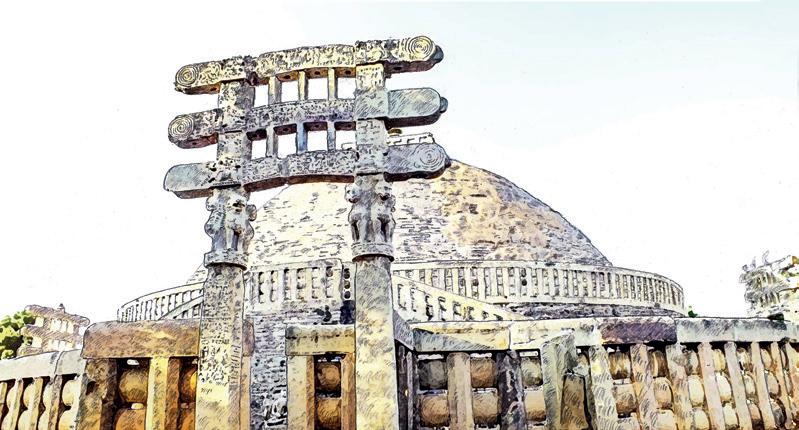
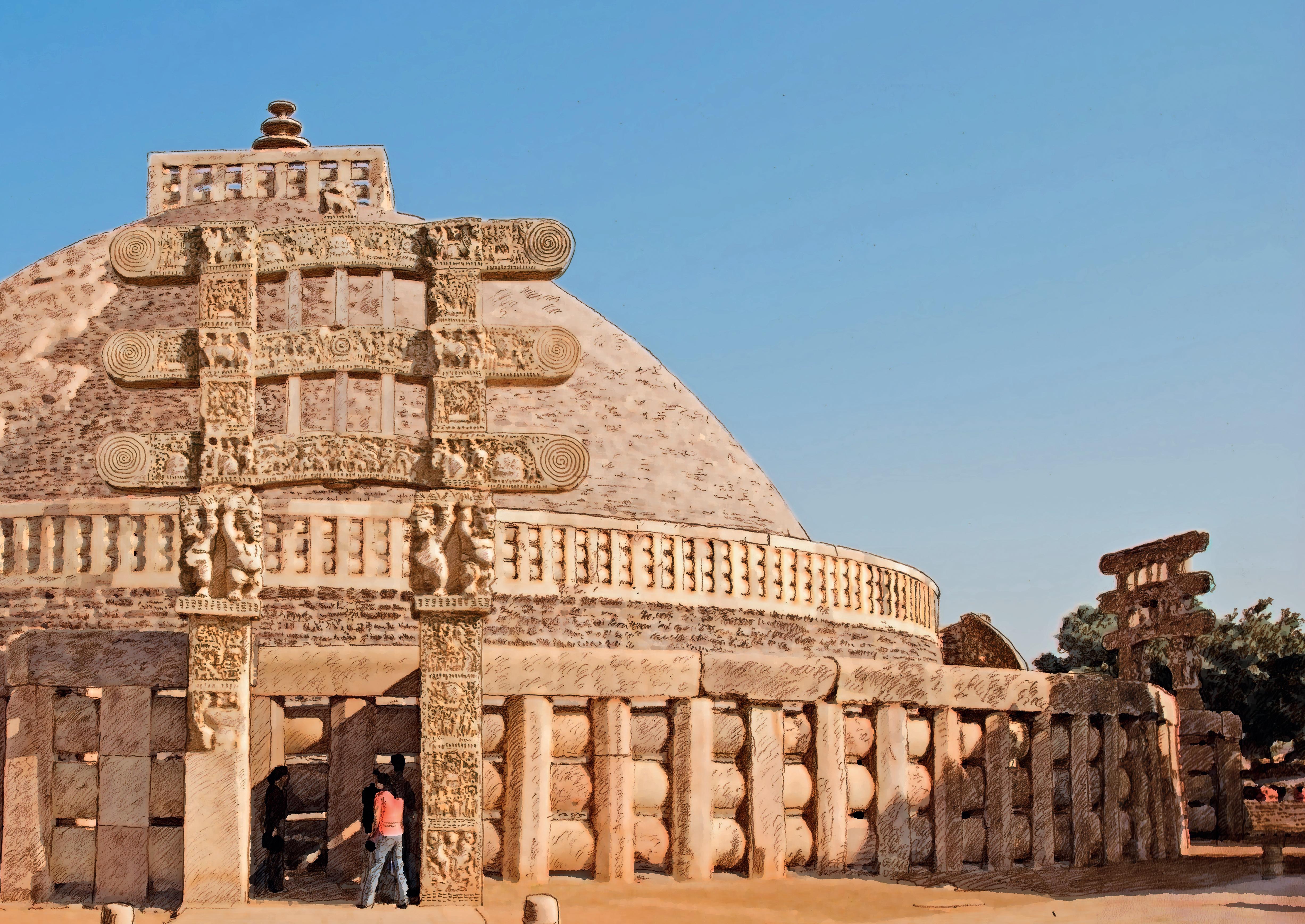
The Buddha himself did not travel beyond north India, but his disciples spread his teachings far and wide, in south Asia and beyond the seas and the Himalayas. A typical Buddhist structure is a stupa, enclosing relics of Buddhist saints. On the hill of Sanchi, in modern Madhya Pradesh, stupas and monasteries were built from the 3rd century BCE. Stupa 1, described in this book, began as a small brick structure which was later enclosed in a larger one. Much later, in the 5th century CE, statues of Buddha were added at the site.
Children’s Books
UNESCO WORLD HERITAGE SITES OF INDIA SERIES
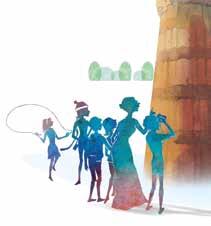
Preparations began early for a trip to Sanchi with kids from two primary schools in Bhopal.
A clear blue sky, a mild sun and a pleasant breeze greeted us as we gathered at Gandhi Bhawan. Bhopal was still half asleep when we hopped into our cars and set off on the 48–kilometre drive to Sanchi at seven in the morning.
All the ten children (between 8 and 13 years of age) were excited to be travelling out so early. We were accompanied by Anupama Didi, Priya Didi and Mohsin Bhaiya.
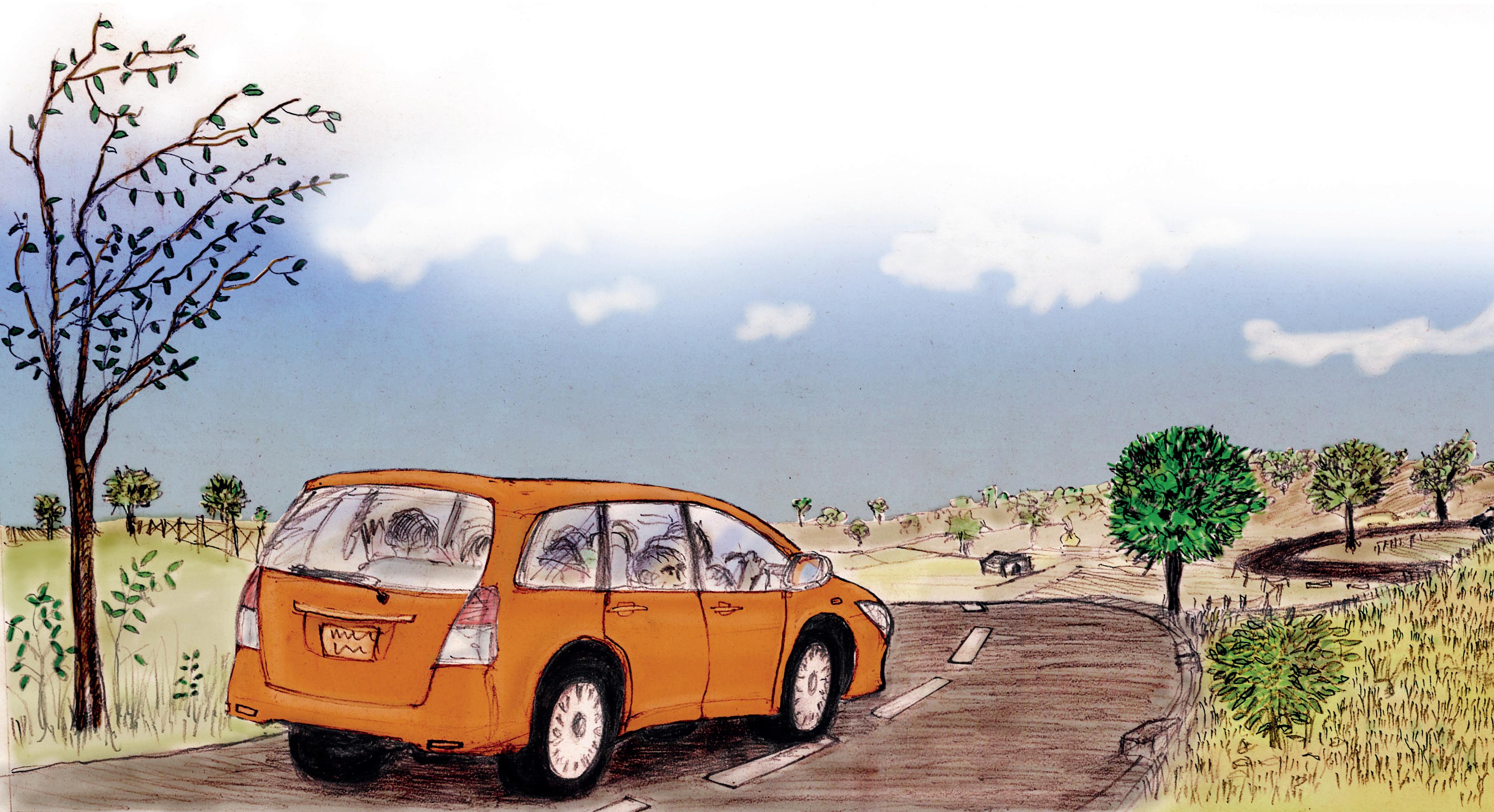
Four of the kids had been to Sanchi when they were ‘very young’ and had half–forgotten what they had seen, while the others did not know what they were going to see. The joy of going to a new place filled the kids with excitement, which turned into fist–pumping and high–fives when they learnt that there was a mid–way stop for muffins, biscuits and fruit juice.
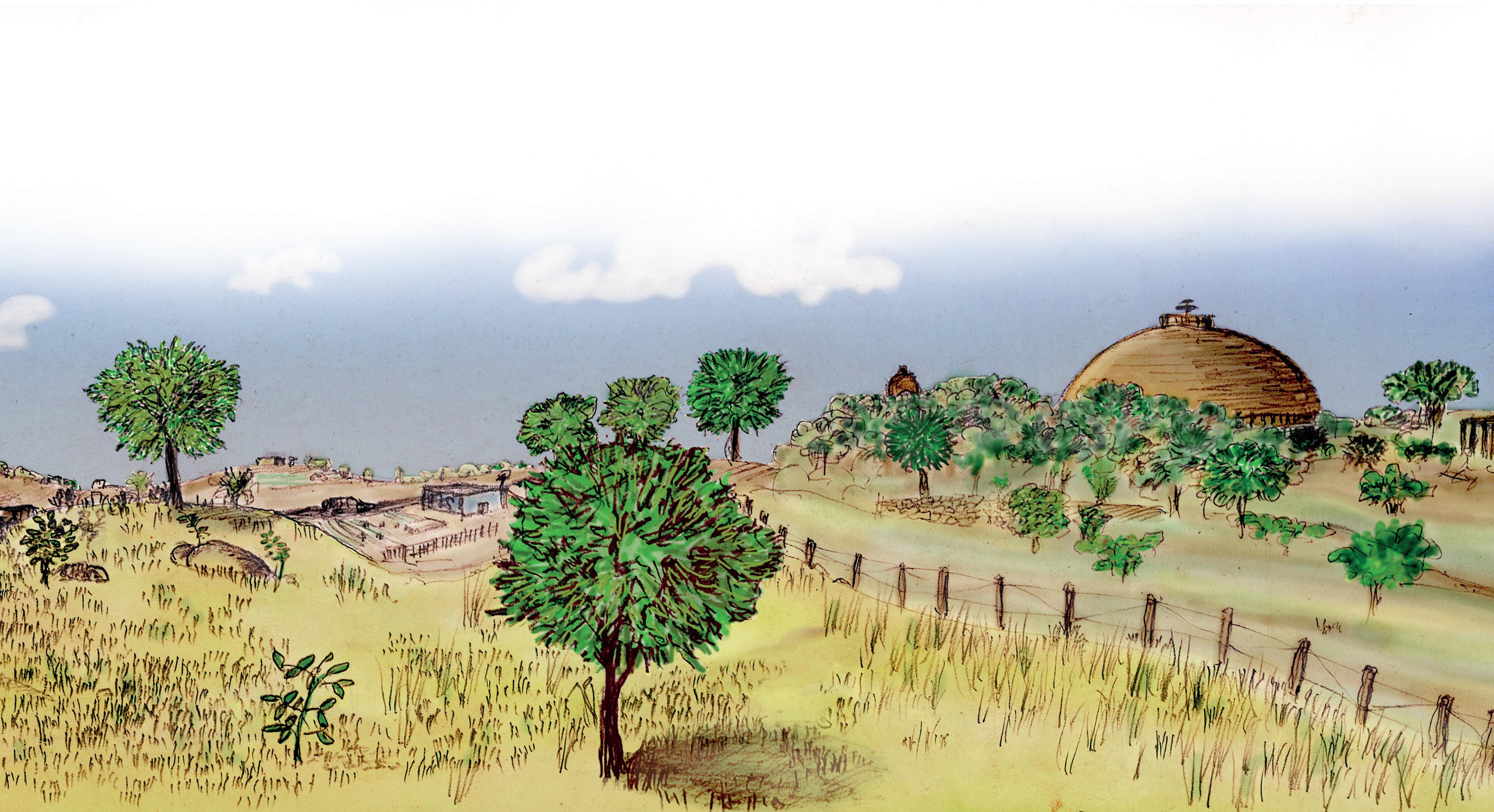
Everybody was happy but for little Amulya. The poor kid had motion sickness, so we stopped several times. By the time she learnt that she wouldn’t feel so bad if she sat in the middle and looked straight ahead, we had already reached Sanchi! Don’t feel terribly sorry for her, though; she ate heartily after the walk, and she was fine during the return journey.
The kids were busy finishing their cream–filled biscuits and mango juice when Stupa No. 2 came into view and then slipped out of sight. A little later we entered Sanchi town, and the Great Stupa became visible as we drove past the MP Tourism Resort.
The entire lot was very happy to learn that children have free entry. We drove up the steep kilometre–long path to the gate, although visitors can also walk up.
Once we passed through the metal detector, the stone path took us to the North Gate of the Stupa.
What is a stupa? A stupa is a memorial to Buddha or his great disciples. It is like a halved ball, but unlike a ball, it is not hollow. The outside is covered with bricks or stone slabs.

Parikrama
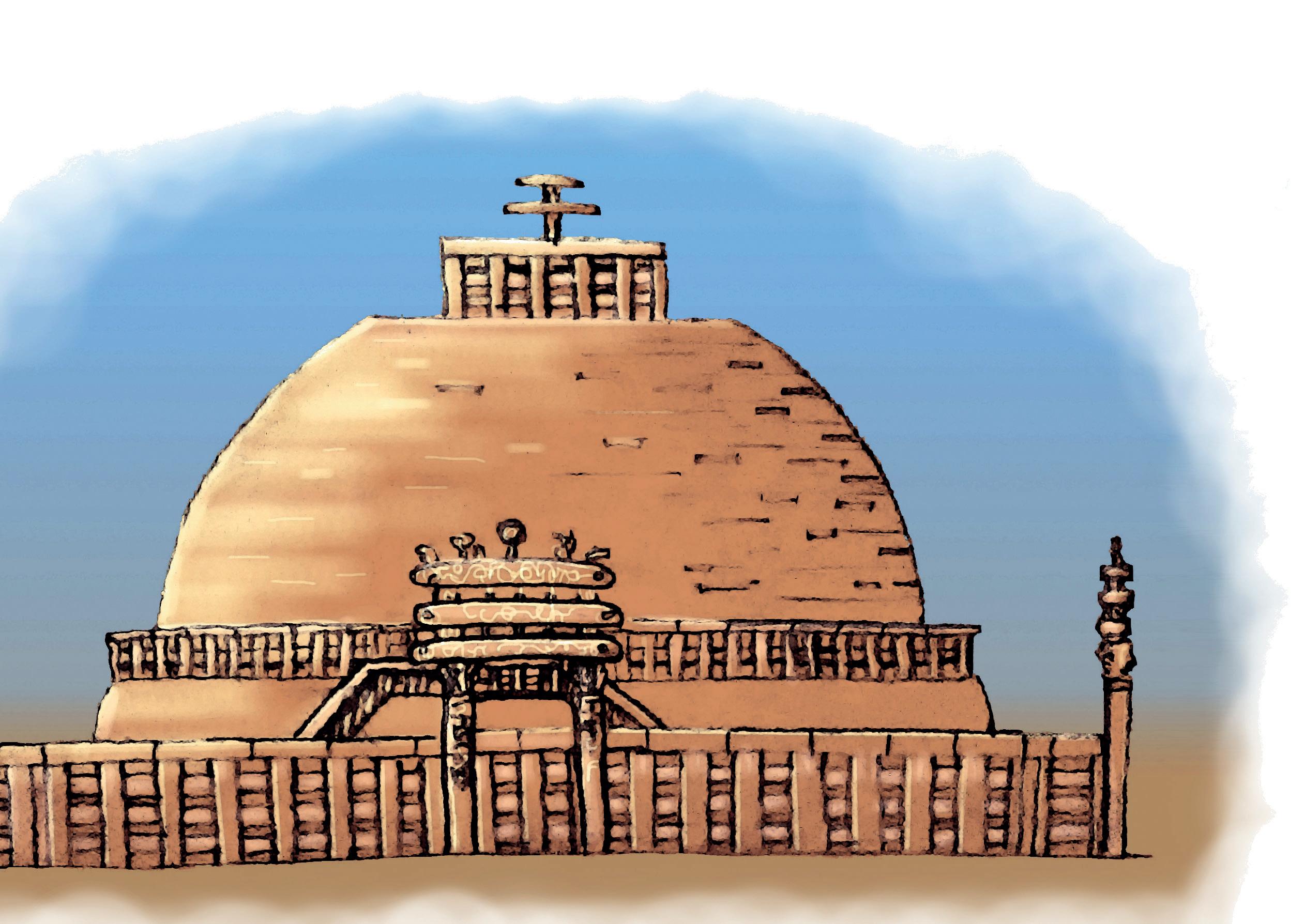
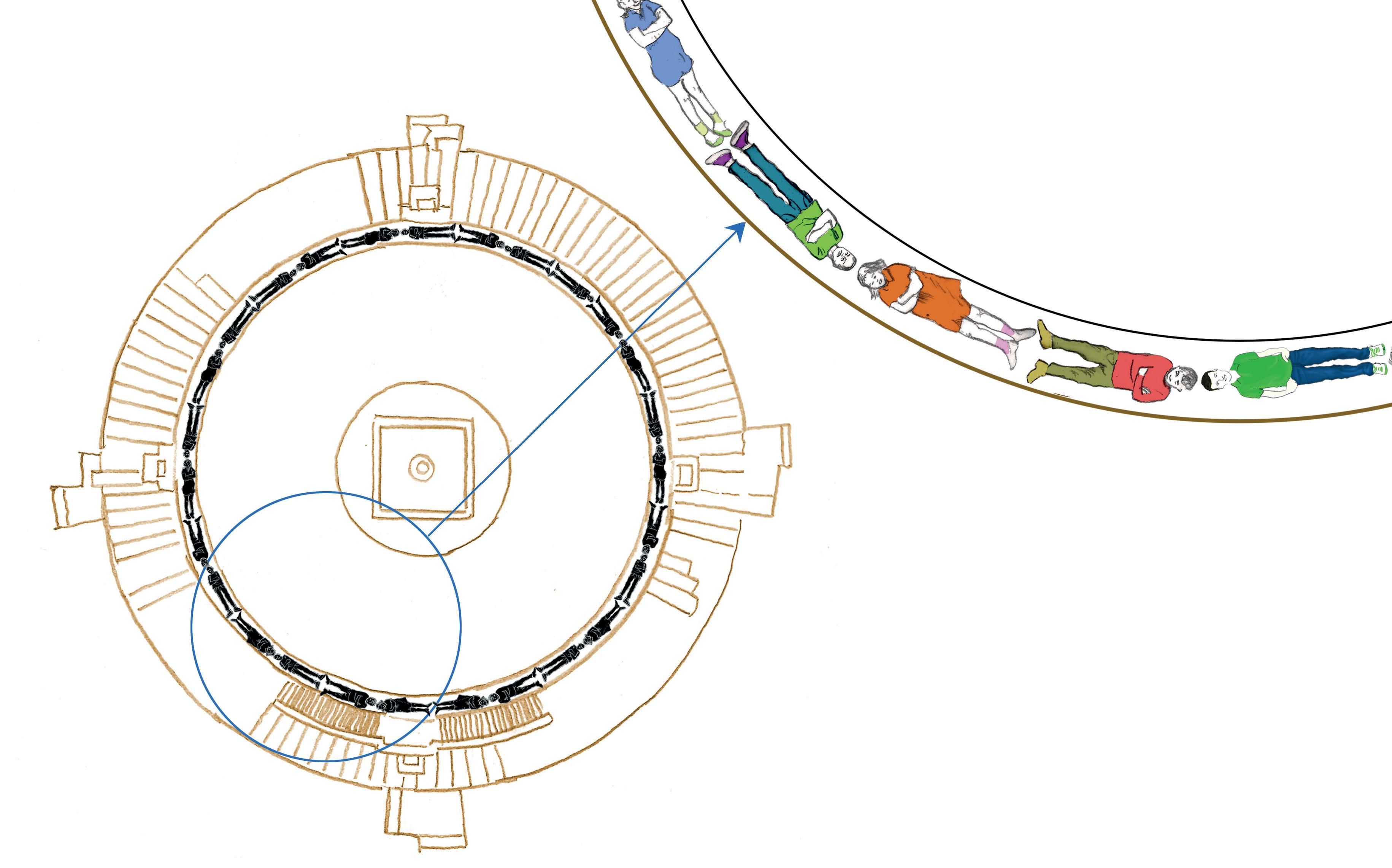
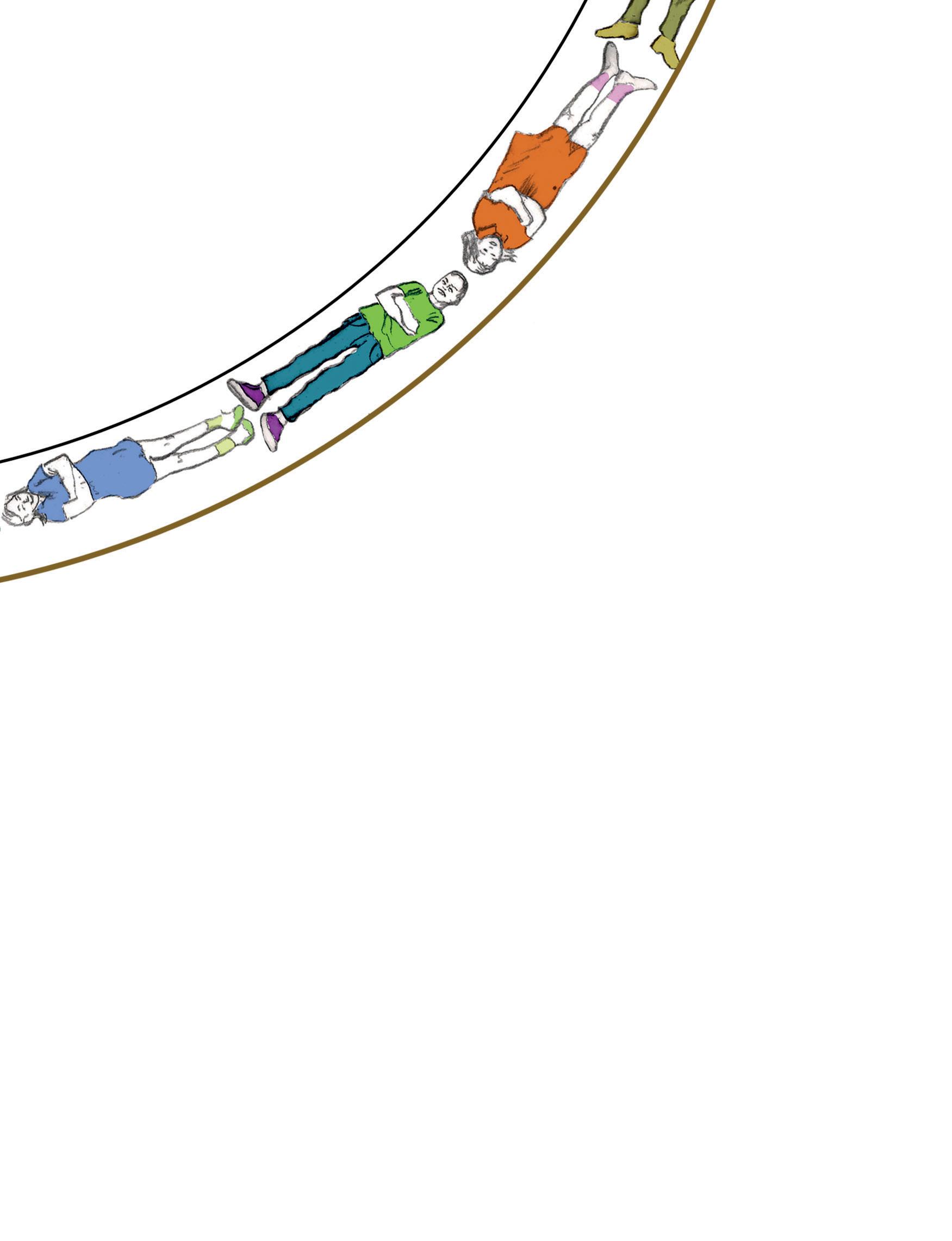
The Great Stupa plays tricks—it seemed to get higher with every step we took! It was twice as high as the gates—16.46 metres. It was so big that to match its circumference twenty-seven 10–year old children would have to lie down in a circle.
The first entry to be built was the South Gate. That the main entry to the Stupa is from the south reminds us that placing the dead body with its feet to the south, and going to burial sites from the south is common to many religions. Do these practices have something to do with the magnetic north?
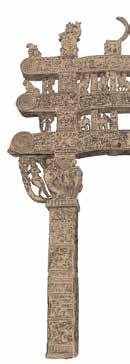
From a distance, the toranas or gates looked as high as the Stupa, but in fact, they were around 8.5 metres tall, or almost the combined height of six 10–year–old children.
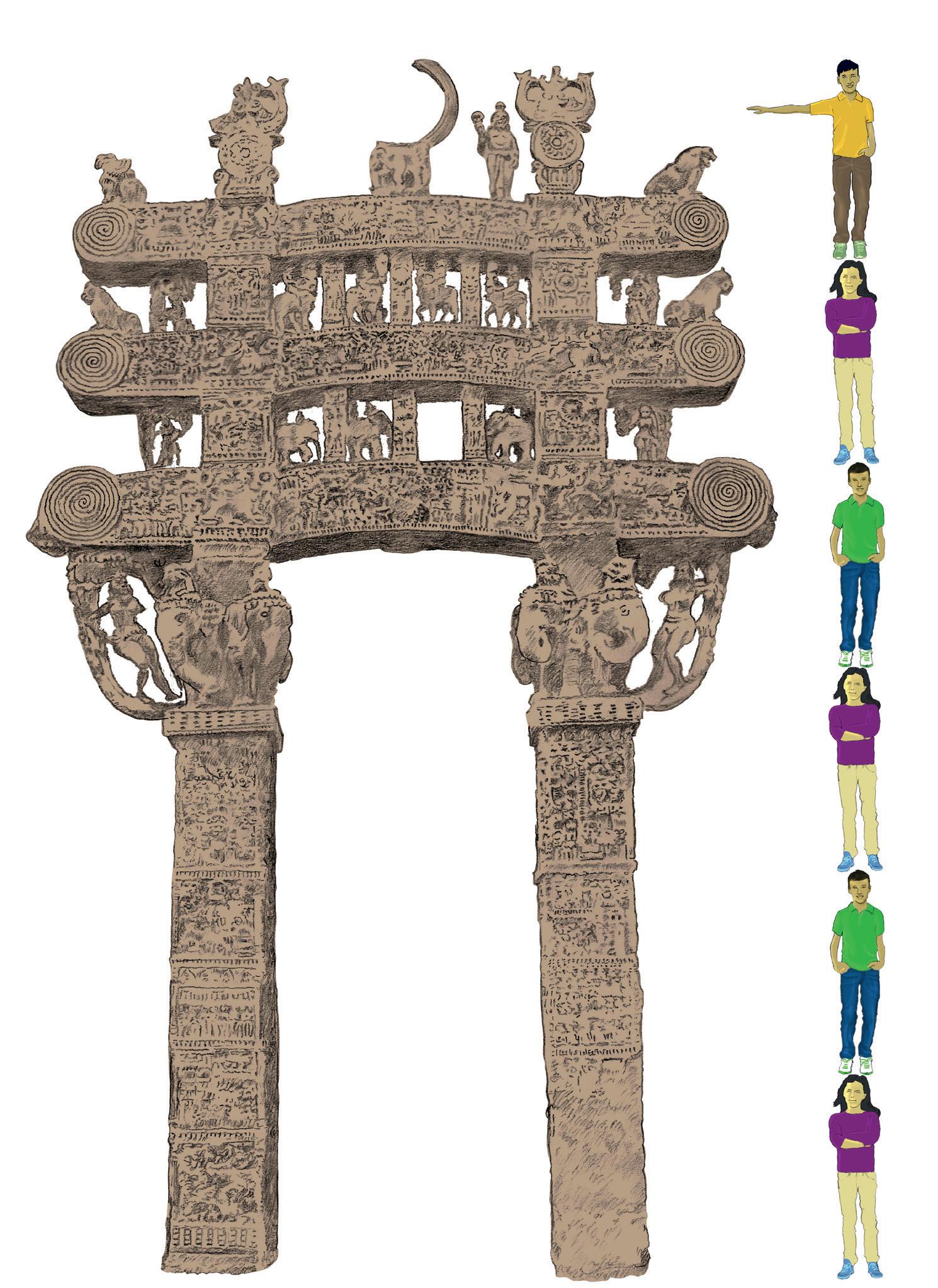
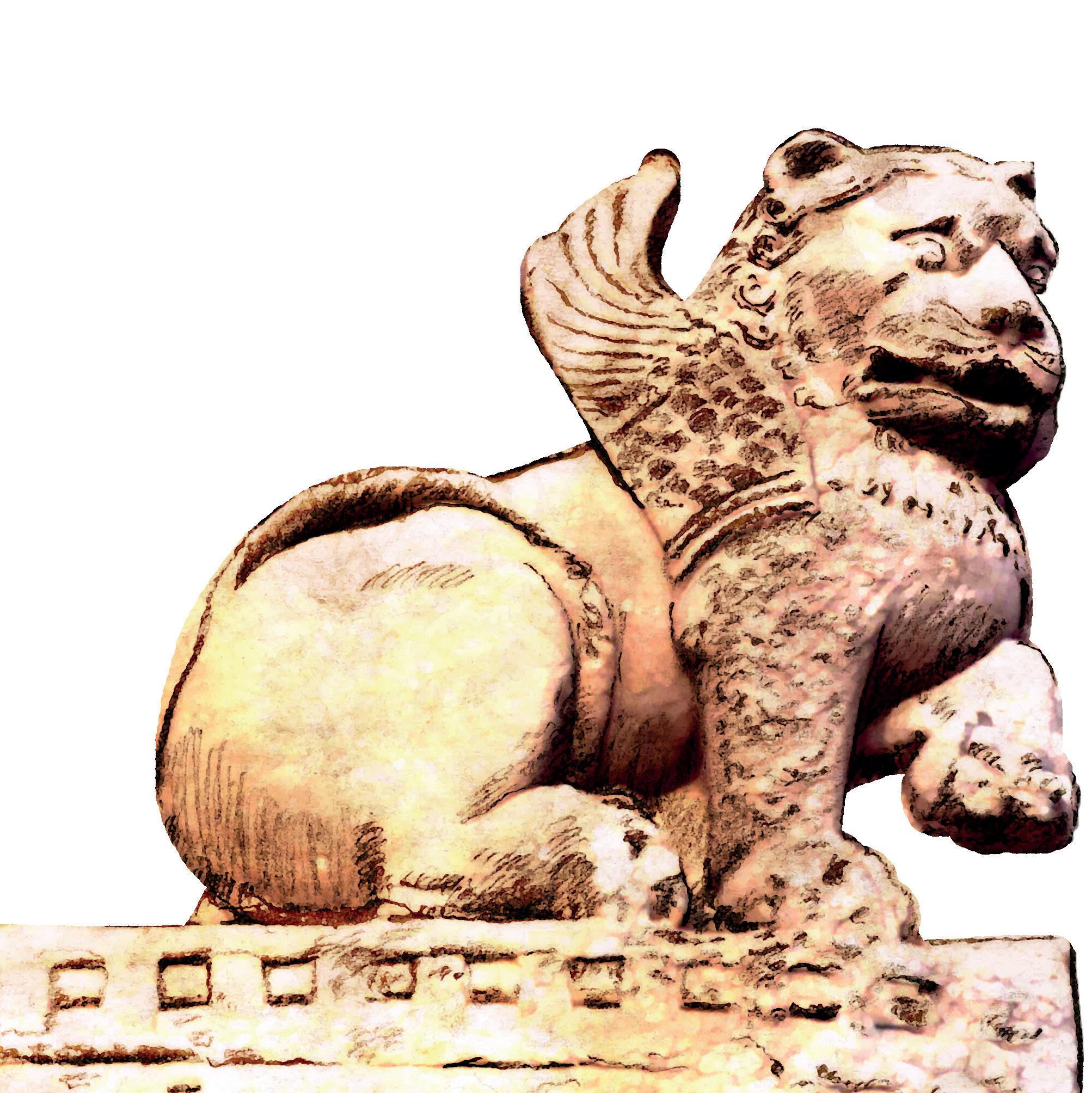
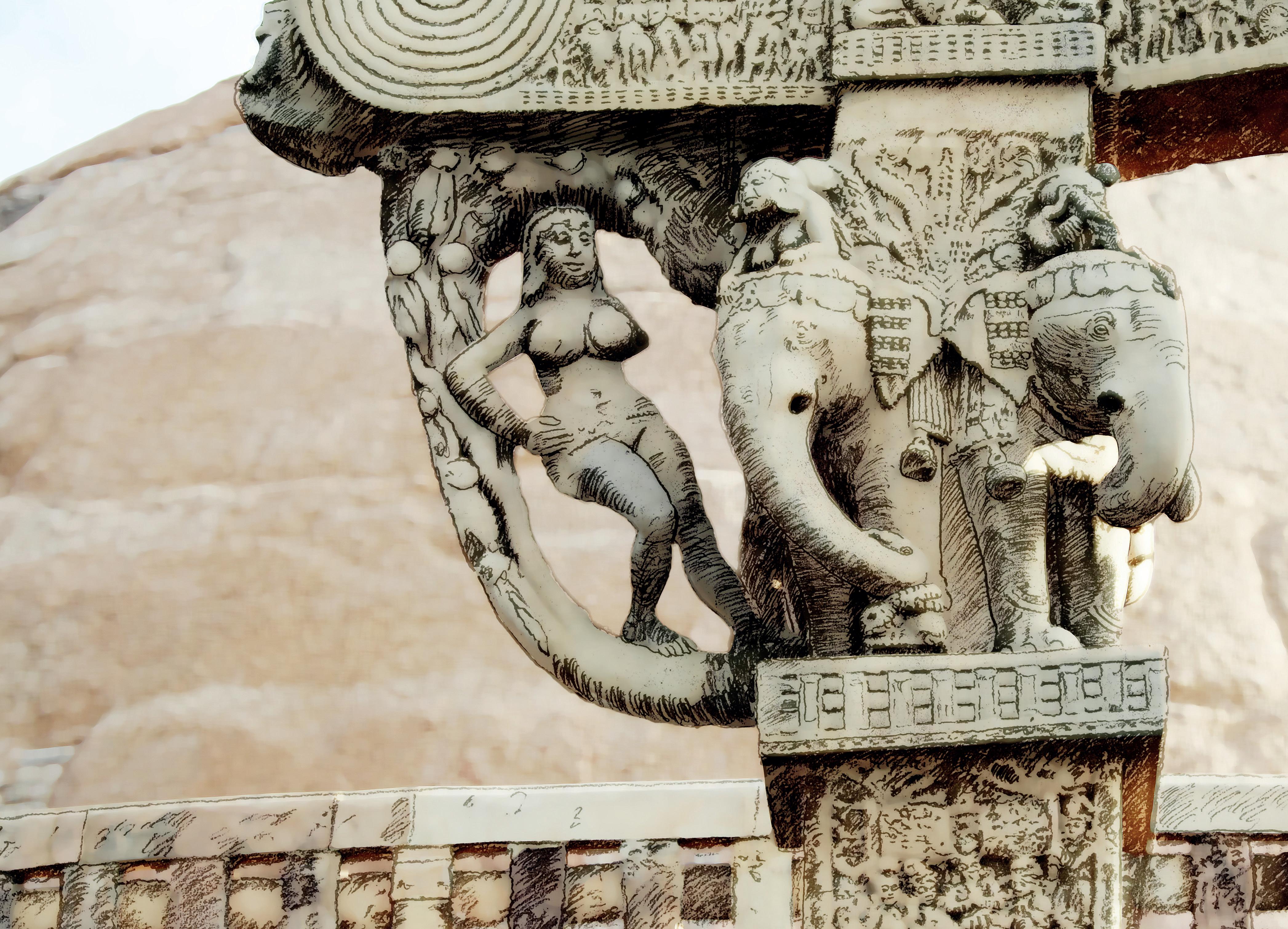
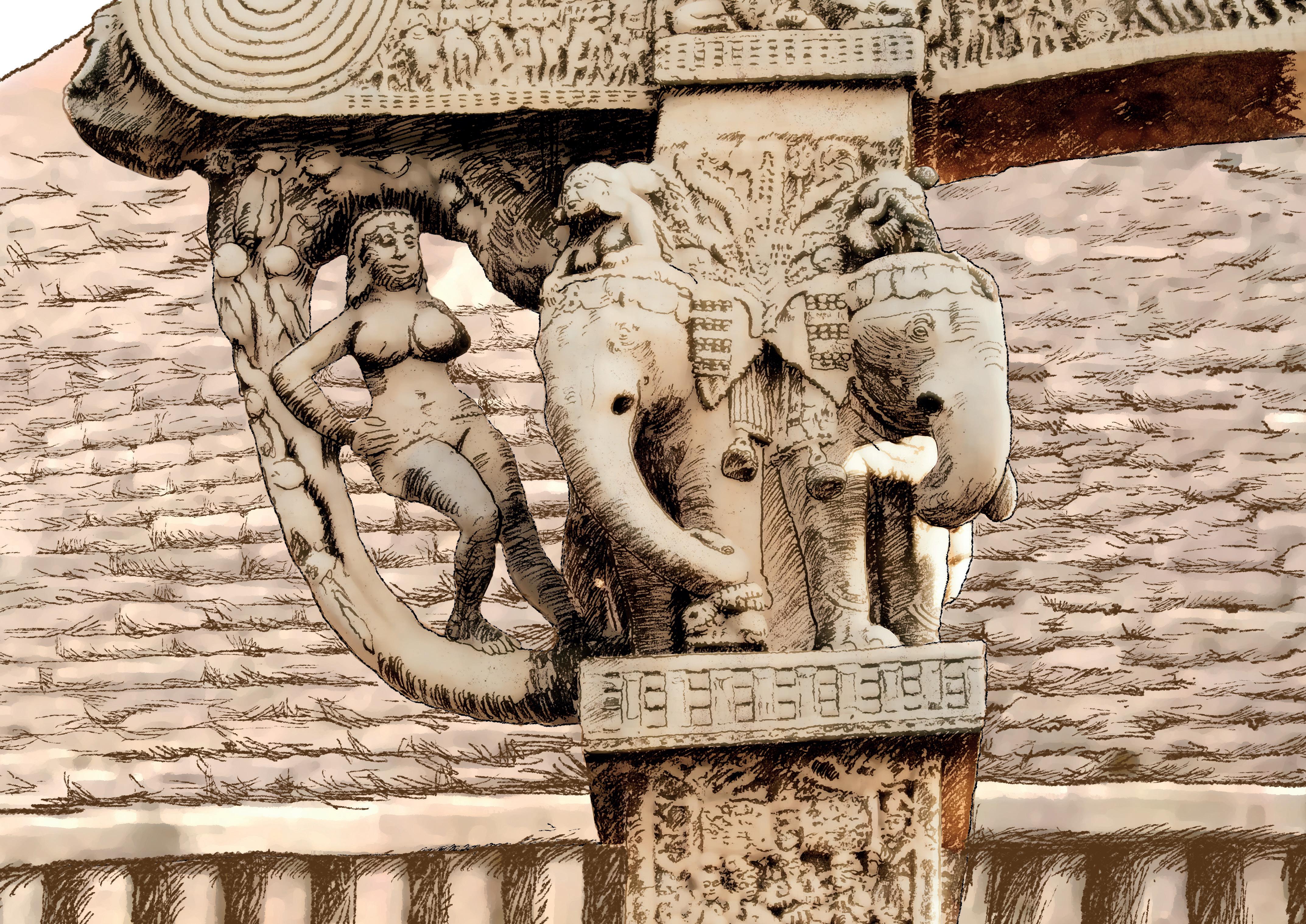
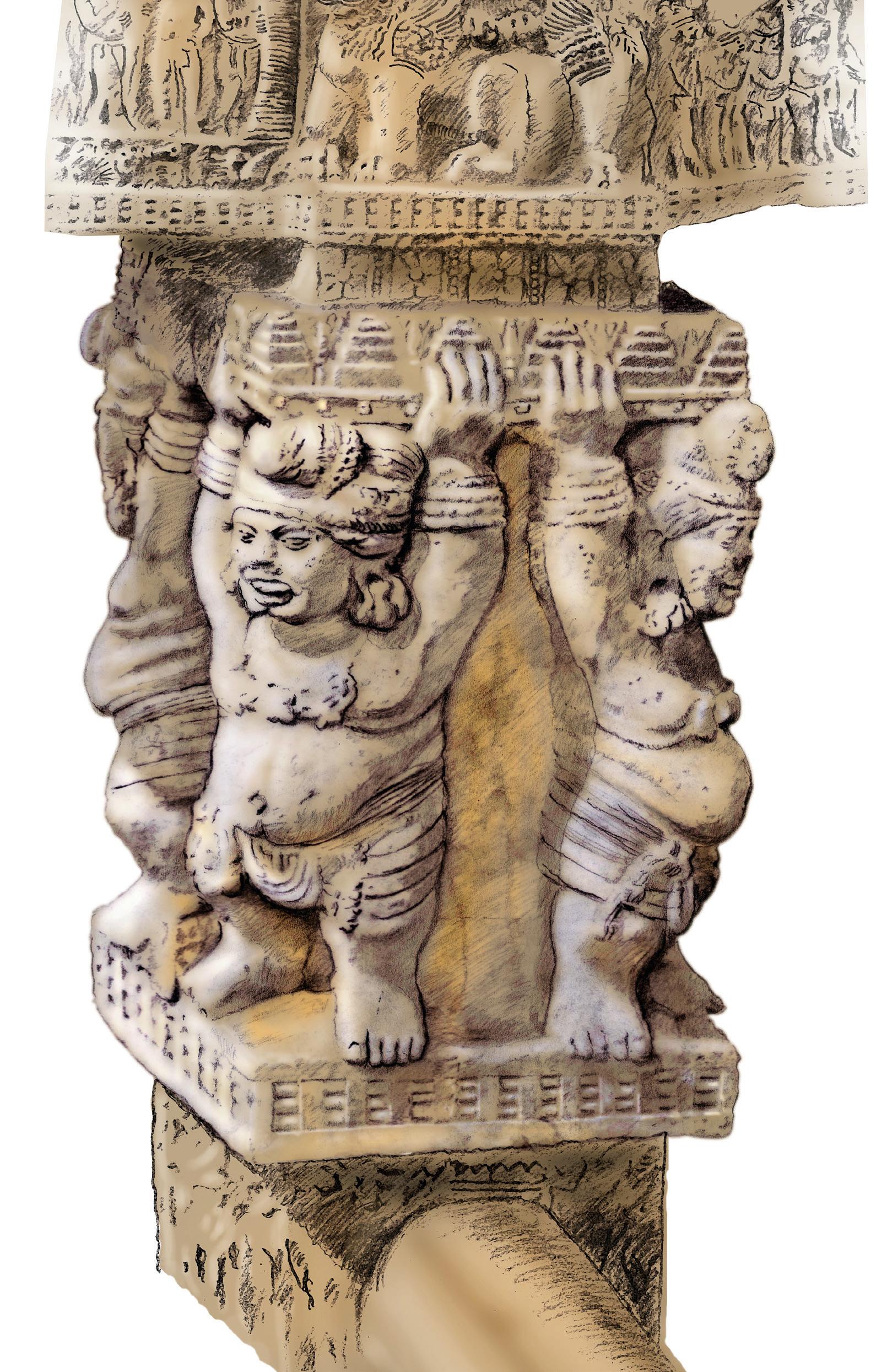
The gates looked very simple when seen in outline from the road. But when we got closer, we saw that they were crowded with sculptures that seemed almost alive! Sculptures that were above the children’s height had to be pointed out by the adults. The children were not only different ages and heights but they also had different personalities, and this came out in the things that they noticed. They saw things at their eye level and the adults at theirs and so sometimes Sohail would be talking about a carved lion or a buffalo while the children were peering at a lizard crawling below the fence!
First published in India in 2018 by
Mapin Publishing Pvt. Ltd
706 Kaivanna, Panchvati, Ellisbridge
Ahmedabad 380006 INDIA
T: +91 79 40 228 228
F: +91 79 40 228 201
E: mapin@mapinpub.com
www.mapinpub.com
International Distribution
Worldwide (except North America and South Asia)
Prestel Publishing Ltd.
14-17 Wells Street
London W1T 3PD
T: +44 (0)20 7323 5004
F: +44 (0)20 7323 0271
E: sales@prestel-uk.co.uk
North America
Antique Collectors’ Club
T: +1 800 252 5231
F: +1 413 529 0862
E: sales@accpublishinggroup.com www.accpublishinggroup.com/us
South Asia
Mapin Publishing Pvt. Ltd
Text and Illustrations © Mapin Publishing
All rights reserved under international copyright conventions. No part of this book may be reproduced or transmitted in any form or by any means, electronic or mechanical, including photocopy, recording or any other information storage and retrieval system, without prior permission in writing from the publisher.
The moral rights of the author and illustrator of this work are asserted.
ISBN: 978-93-85360-52-7
Series ISBN: 978-93-85360-47-3
Series Editor: Narayani Gupta
Copyediting: Mithila Rangarajan / Mapin
Editorial
Design and Production:
Gopal Limbad, Darshit Mori / Mapin Design Studio
Printed in India
The creation of this book was supported by Parag, an initiative of TATA Trusts.
Editorial Board:
Krishna Kumar
Girish Joshi
Swaha Sahoo
Sopan Joshi
Narayani Gupta
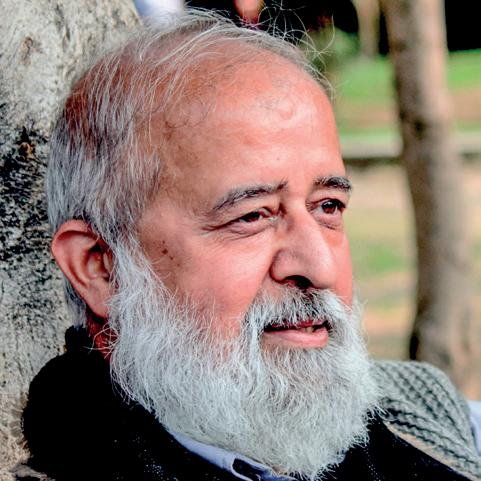
Author: Sohail Hashmi loves travelling with family, friends and a camera to explore little–known places across India. He started the “Delhi Heritage Walks with Sohail Hashmi” in 2005 to introduce children, and now adults too, to the wonderful history and heritage of the city. He also makes films to help people learn more about India’s culture. He enjoyed writing this book because Sanchi is one of his favourite destinations, with its beautiful, 2000–year old carvings and long history.
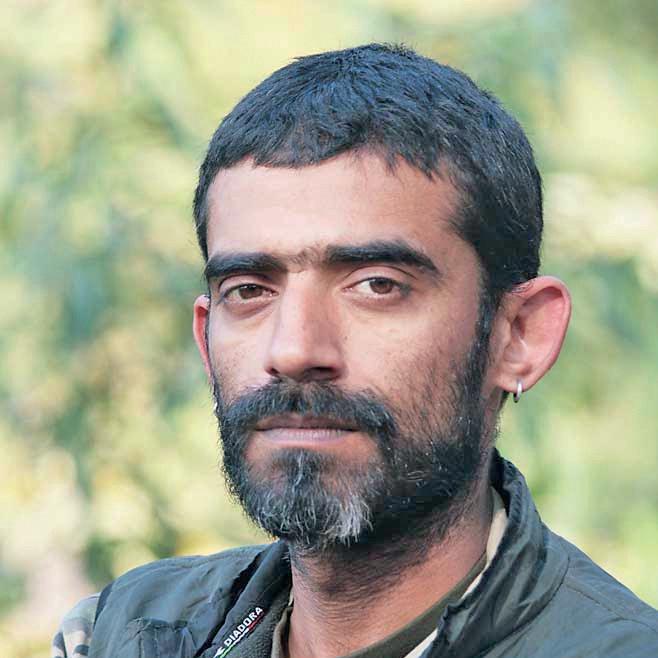
Artist: Pervez Rajan is an artist who has worked in many cities across India. This is lucky for him, because he also loves to travel and explore new places! He once illustrated the many monuments of Anegundi, near Hampi in Karnataka, to help tourists appreciate the beauty of the place. He is fascinated by details of architecture and carvings, and so depicting the many features of Sanchi was a pleasurable task for him. He hopes to continue to use his art to communicate with a wide range of people.
3
manipur assam meghalaya sikkim west bengal
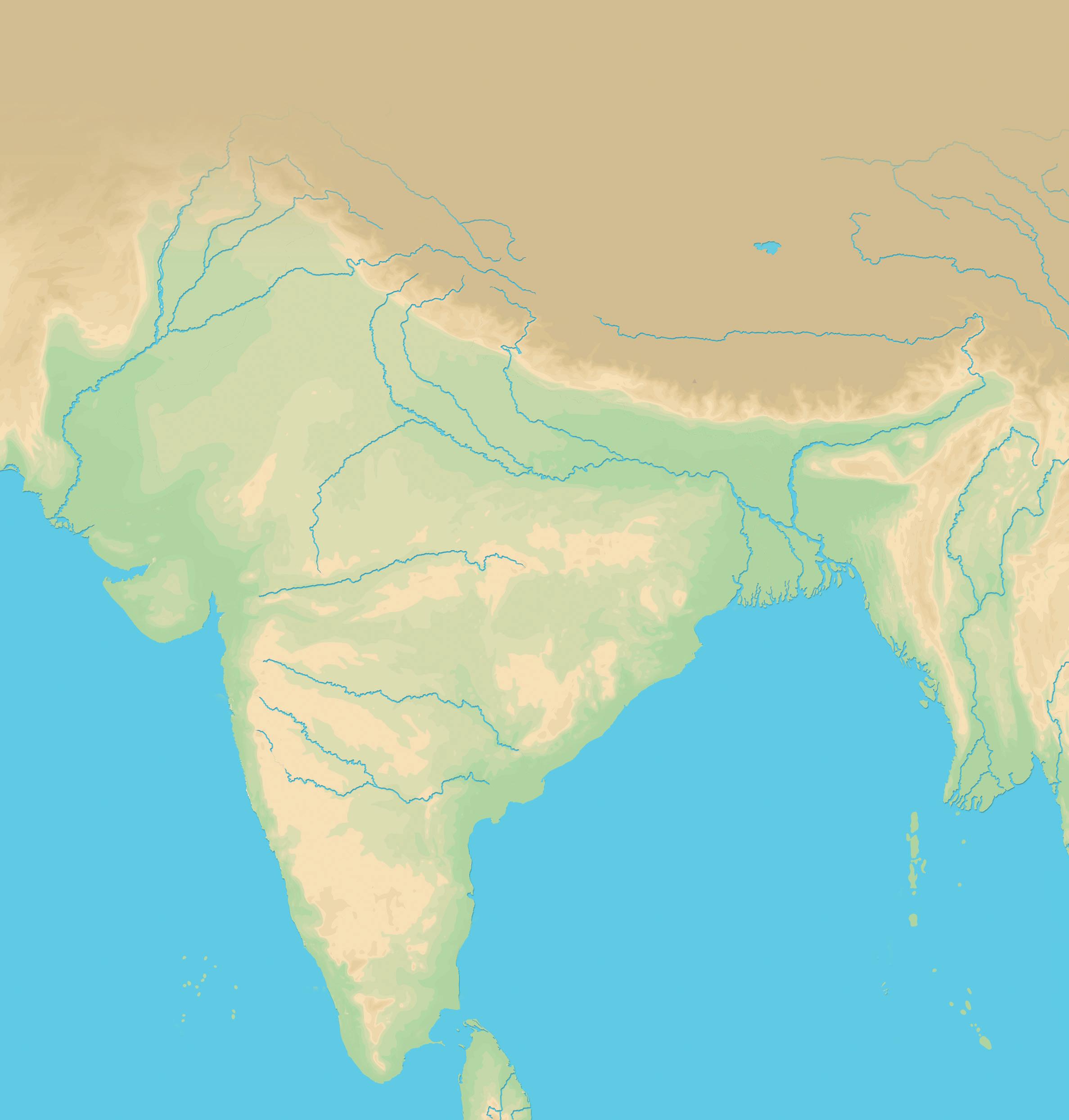
General note about change of names of cities and sites
The names of places and cities often change over time. Mumbai used to be known as “Bombay” and Kolkata as “Calcutta.” Chennai was earlier known as “Madras.” Other sites are better known by names which
UNESCO WORLD HERITAGE SITES OF INDIA SERIES
Series Editor: Narayani Gupta


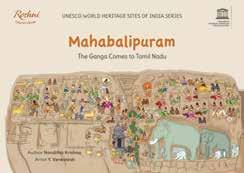




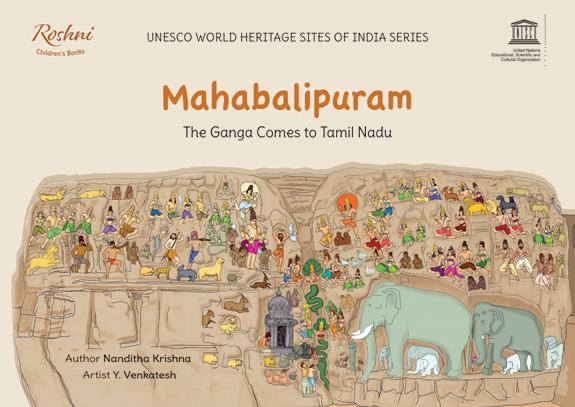
e Ganga Comes to Tamil Nadu











Story by Nanditha Krishna • Illustrations by Y. Venkatesh
e children in the story explore the Descent of the Ganges, with its carvings of animals, humans and celestial beings. Temples, tigers and tsunamis all feature in this tale of the Mahabalipuram complex by the sea, lost and then miraculously found again.
Nanditha Krishna is a historian and conservationist from Chennai who has authored several books about art, religion and the environment. Y. Venkatesh is an artist who has illustrated several activity books for children about nature, art and culture. illustrated several activity books for children about nature, art and culture.

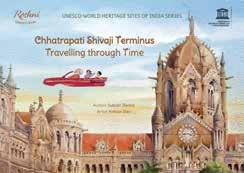
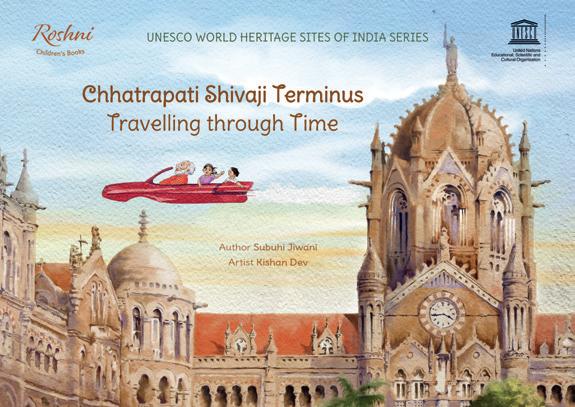
Chhatrapati Shivaji Terminus
Travelling through Time
Story by Subuhi Jiwani • Illustrations by Kishan Dev


Bandu is the devoted clock-keeper at CSM Terminus in Mumbai, or VT as some people still call it. One busy day, Bandu and two friends tumble through time to the past and future, accompanied by a talking gri n, freedom ghters and ying cars.
Subuhi Jiwani is an independent researcher, writer and lmmaker based in Mumbai. Kishan Dev is an artist who has worked in print publishing and Bollywood.
ALL TITLES IN THIS SERIES ARE:
195 | $9.50 | £5.99 Fall 2018 | supported by
32 pages with illustrations, 11.69 x 8.26" (297 x 210 mm) Landscape, pb
e Roshni World Heritage Sites of India series aims to introduce India’s young readers to the richness of our natural and cultural heritage through UNESCO-designated World Heritage Sites. Produced in association with Tata Trusts and with the blessings of UNESCO, these books o er children ve exciting stories, authored by renowned historians and conservationists and beautifully illustrated by accomplished artists.


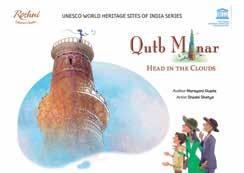
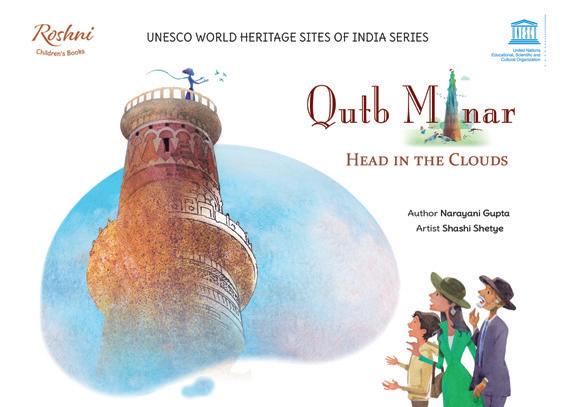
Qutb Minar
Head in the Clouds
Story by Narayani Gupta • Illustrations by Shashi Shetye


On Christmas Day, a group of six children visit the Qutb Minar in Delhi. What follows is a process of discovery as the children stumble upon an un nished Minar and a carved cupola and marvel at the skill of the craftsmen who built the Qutb.


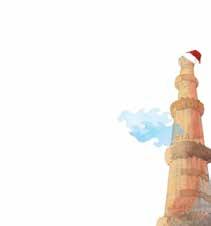
Narayani Gupta is a historian and writer who has taught history at Indraprastha College for Women; she joined Jamia Millia Islamia University in 1986. Shashi Shetye has illustrated books for children for over two decades.
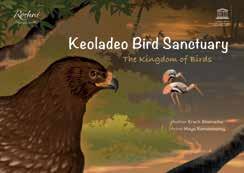
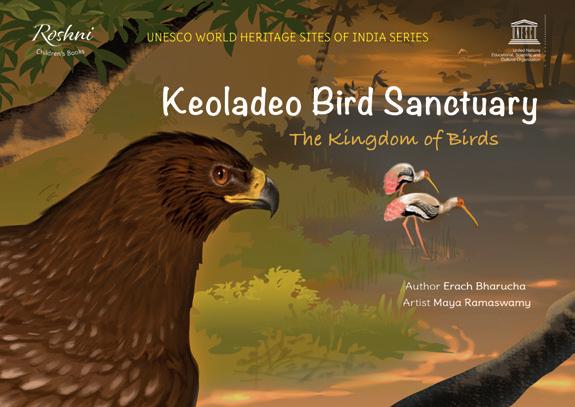
Keoladeo Bird Sanctuary
e Kingdom of Birds
Story by Dr. Erach Bharucha • Illustrations by Maya Ramaswamy
A large group of school children join Dr. Erach “Doc” Bharucha at the Keoladeo Bird Sanctuary in Bharatpur. Amid lush vegetation and a lively orchestra of birds, the natural landscape of the sanctuary comes alive for these young, intrepid explorers.

Available in English and Tamil in October 2018. Additional regional languages to follow in 2019.













Dr. Erach Bharucha is a surgeon based in Pune and has been active in ecological conservation for several decades. Maya Ramaswamy is an illustrator who has worked on several children’s books about wildlife and conservation.
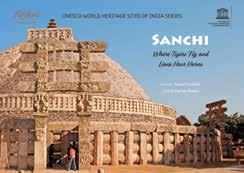

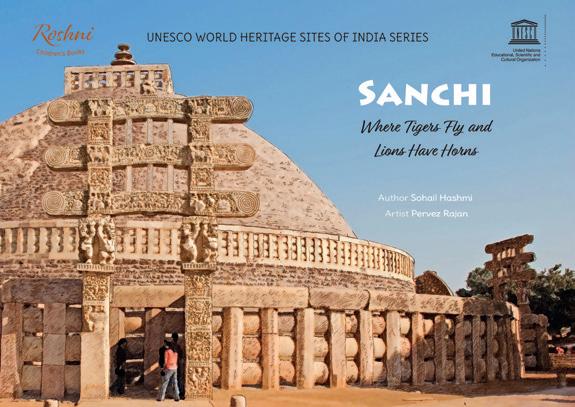
Where Tigers Fly and Lions Have Horns Story by Sohail Hashmi • Illustrations by Pervez Rajan


One morning as the city of Bhopal sleeps, a group of children join Sohail Hashmi to visit the stupas of Sanchi. Spellbound by the carvings on the gateways and pillars, they learn about the ancient history of Buddhism in India.

Sohail Hashmi is a writer, historian and lmmaker, who loves travelling to little-known places across India. Pervez Rajan is an artist who hopes to use his art to communicate with a wide range of people.




ISBN 978-93-85360-52-7 www.mapinpub.com