
Children’s Books
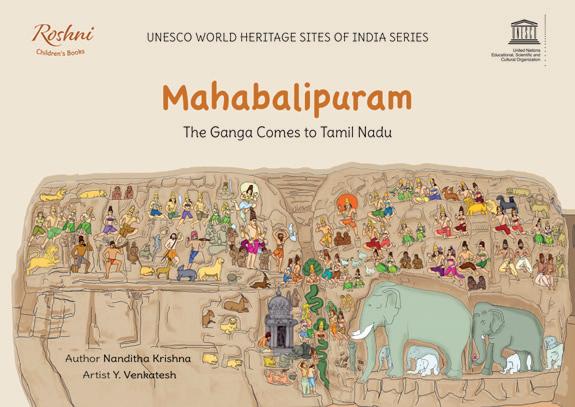
Mahabalipuram
The Ganga Comes to Tamil Nadu
Author Nanditha Krishna
Artist Y. Venkatesh
About UNESCO World Heritage Sites of India
Children, look around you. Our world is beautiful, with snowy mountain peaks and sparkling rivers, home to many peoples, animals, birds and trees. There are also mighty monuments built by our forefathers which have stood fast for centuries, enriching our lives and history.
These precious monuments and natural landscapes must be protected. That is why governments and institutions like the United Nations Educational, Scientific and Cultural Organization (UNESCO) work together to help keep them safe.
UNESCO’s World Heritage Sites are places around the world that are remarkable examples of natural or man-made landscapes and architecture. As of 2018, there are 37 such celebrated sites in India. We need to take care of these sites and protect them.
For the first time, Mapin Publishing is producing a series of children’s books about UNESCO’s World Heritage Sites in India. We hope that the books will make these places seem like old friends, waiting to meet you again. So, young reader, let us begin our exciting journey across India!
Eric Falt Director and UNESCO Representative UNESCO New Delhi
This book belongs to:
Archaeologists have dated the structures at Mahabalipuram (or Mamallapuram) to the 7th and 8th centuries, during the reign of the Pallava dynasty, which had its capital in Kanchipuram. The structures are admired for their architecture, which marked the advance from rock–cut temples to free–standing stone structures. The Mahabalipuram complex by the sea was found buried under mounds of sand and uncovered in the 18th century. It was made a World Heritage Site in 1984.
UNESCO WORLD HERITAGE SITES OF INDIA SERIES
Children’s Books
Mahabalipuram
The Ganga Comes to Tamil Nadu
MAPIN PUBLISHING
Author Nanditha Krishna
Artist Y. Venkatesh
Asunny day in January. New Year’s Day has come and gone. Miss Lakshmi and six students—Sundari, Rama, Faisal, Devi, Aravind and Aarathi—are on their way to Mahabalipuram.
From Chennai, a modern city, they will go back in time to a town which had existed 1400 years earlier. It had been buried under the sand and then found again!
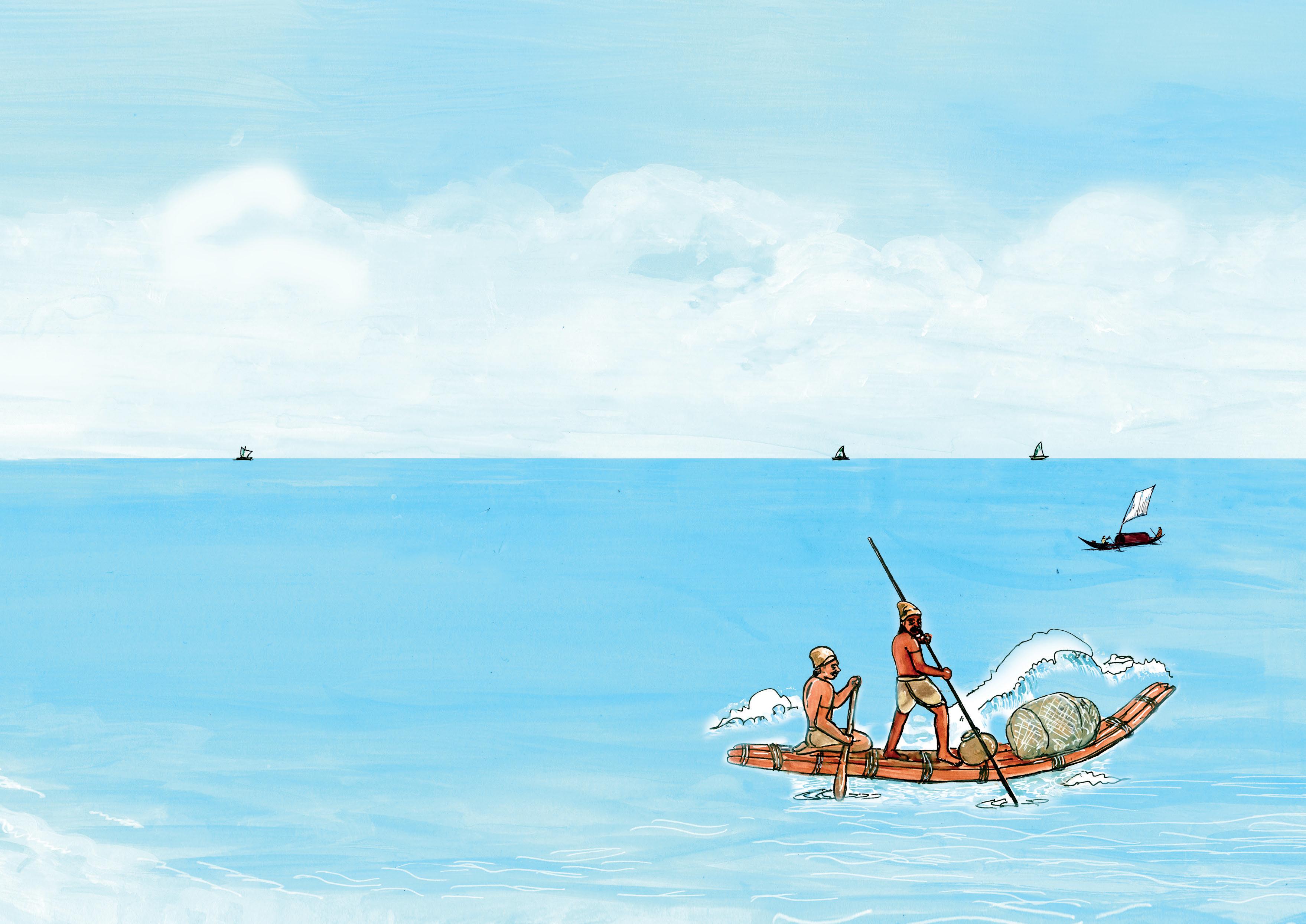
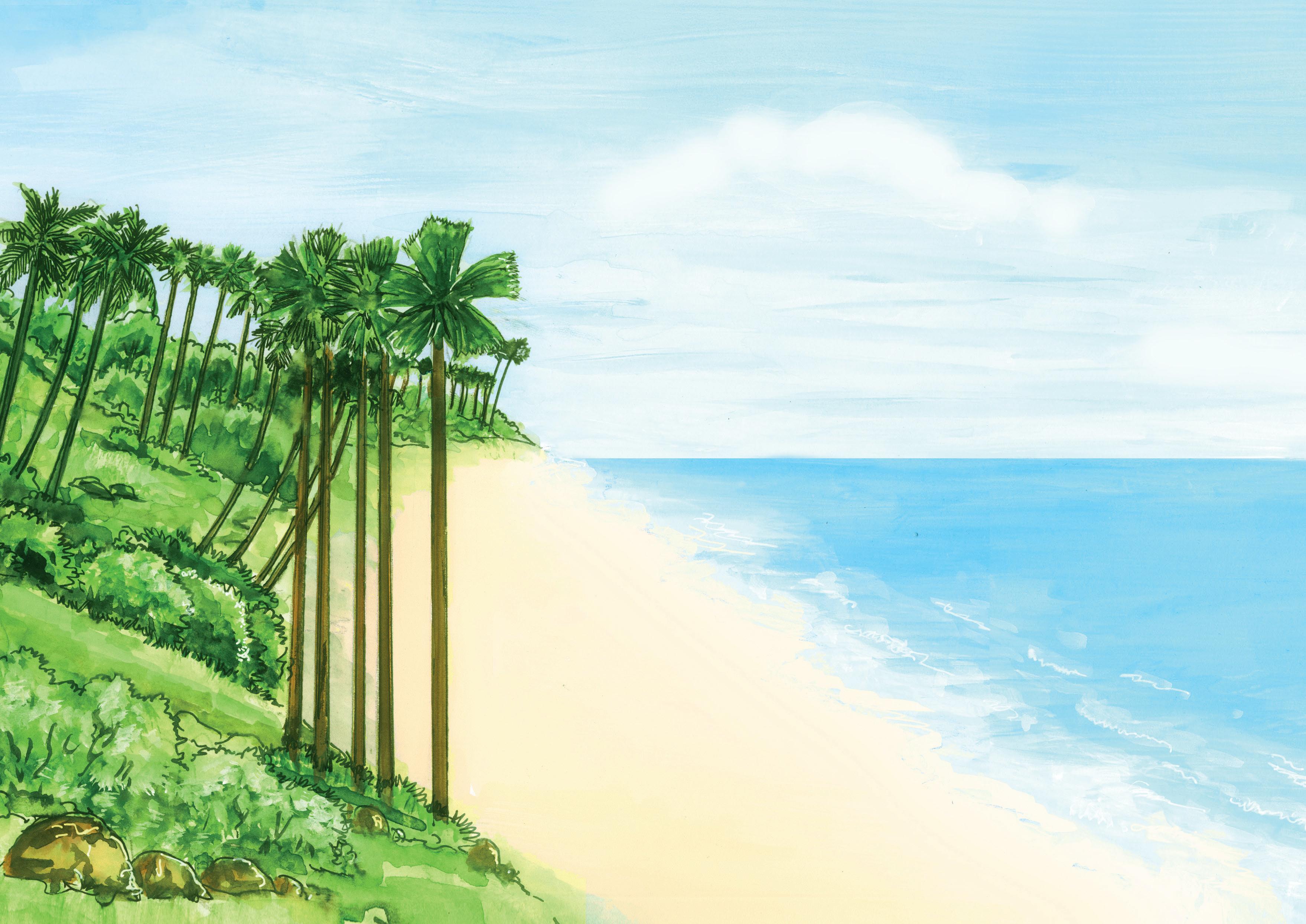
It is a beautiful ride along the east coast.
“Look at the coconut trees swaying in the breeze!” exclaims Aarathi.
“Those aren’t coconut trees,” says Devi. “They are palm trees. The palm is the state tree of Tamil Nadu.”
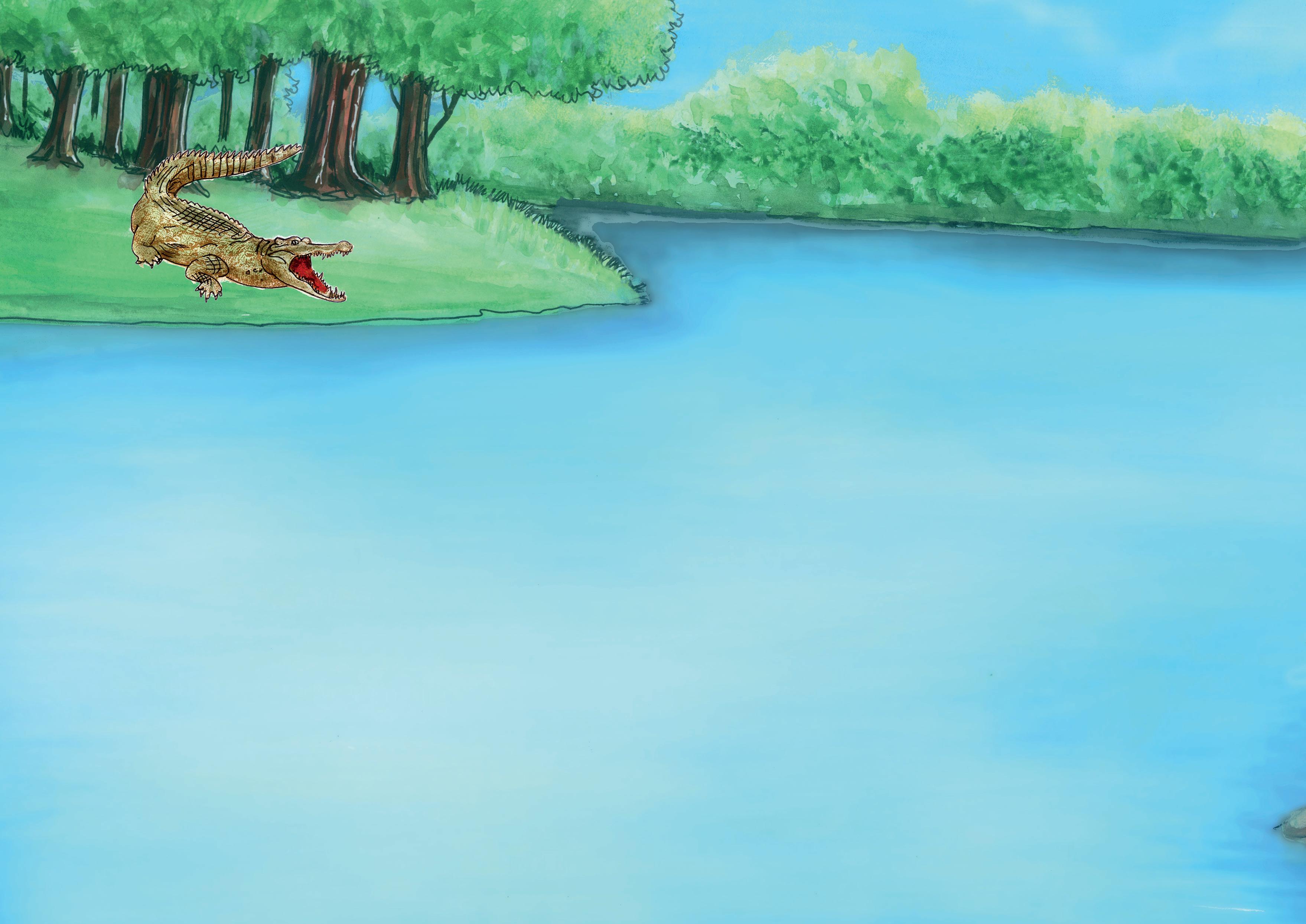
The vehicle speeds along. Soon, they reach Crocodile Bank.
“I’ve been here with my uncle,” says Faisal.
“So have I,” says Aravind. “It’s wonderful to see crocodiles and snakes out of water without feeling frightened of them. Suppose they were allowed to roam free?”
The children sit in silence imagining crocodiles swimming in a river or walking on land.
It seems a little scary. But they are soon distracted.
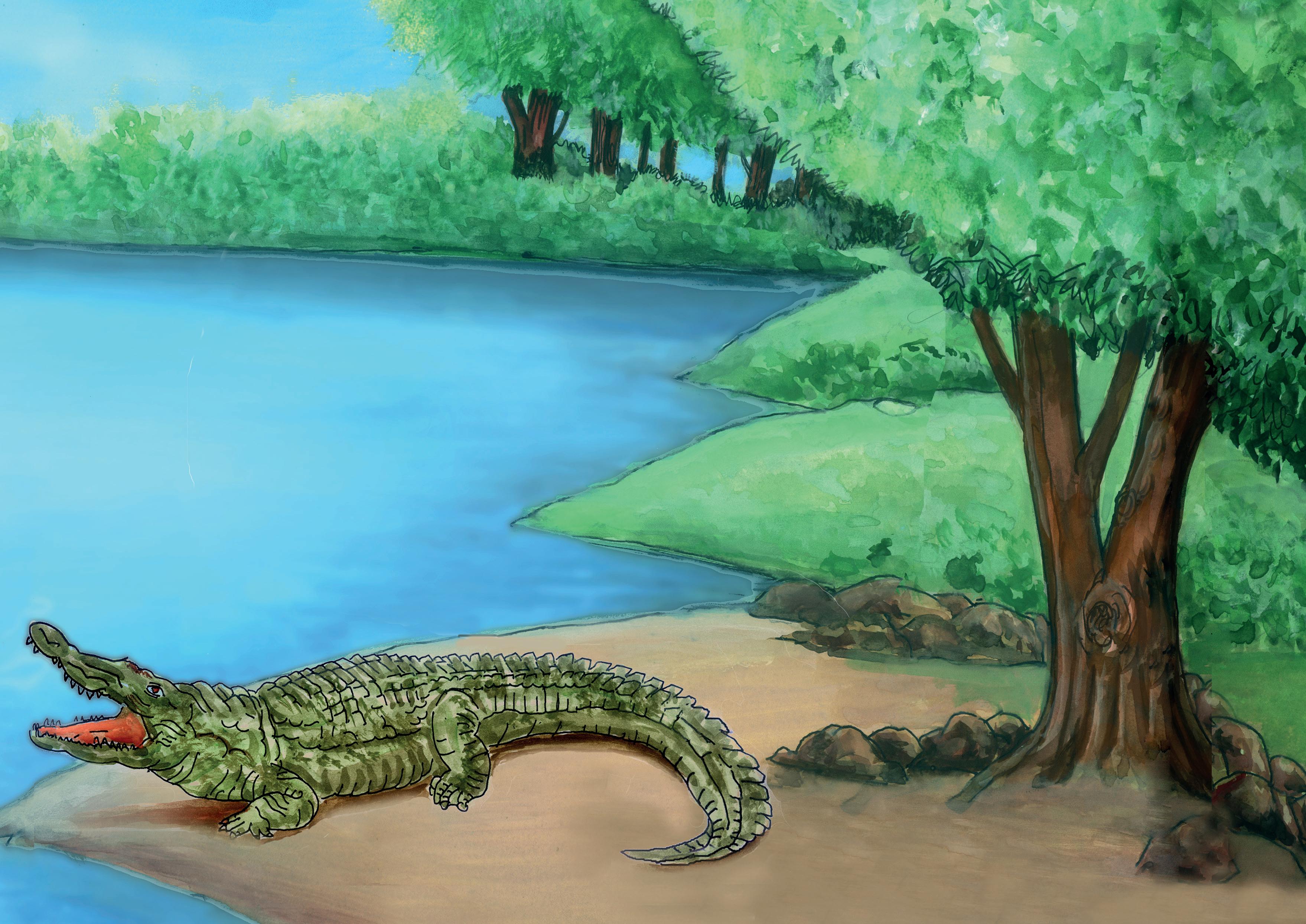
“That’s the Muttukaadu backwater!” they shout out.
“What is a backwater?” asks Miss Lakshmi. There is an uncertain silence.
“I think I know,” says little Aarathi. “A backwater is a river in which there is no current. When the sea backs into the land, making a river, it’s called a backwater. The water is salty, that’s why it isn’t a river.”
“Well done, Aarathi!” says Miss Lakshmi.
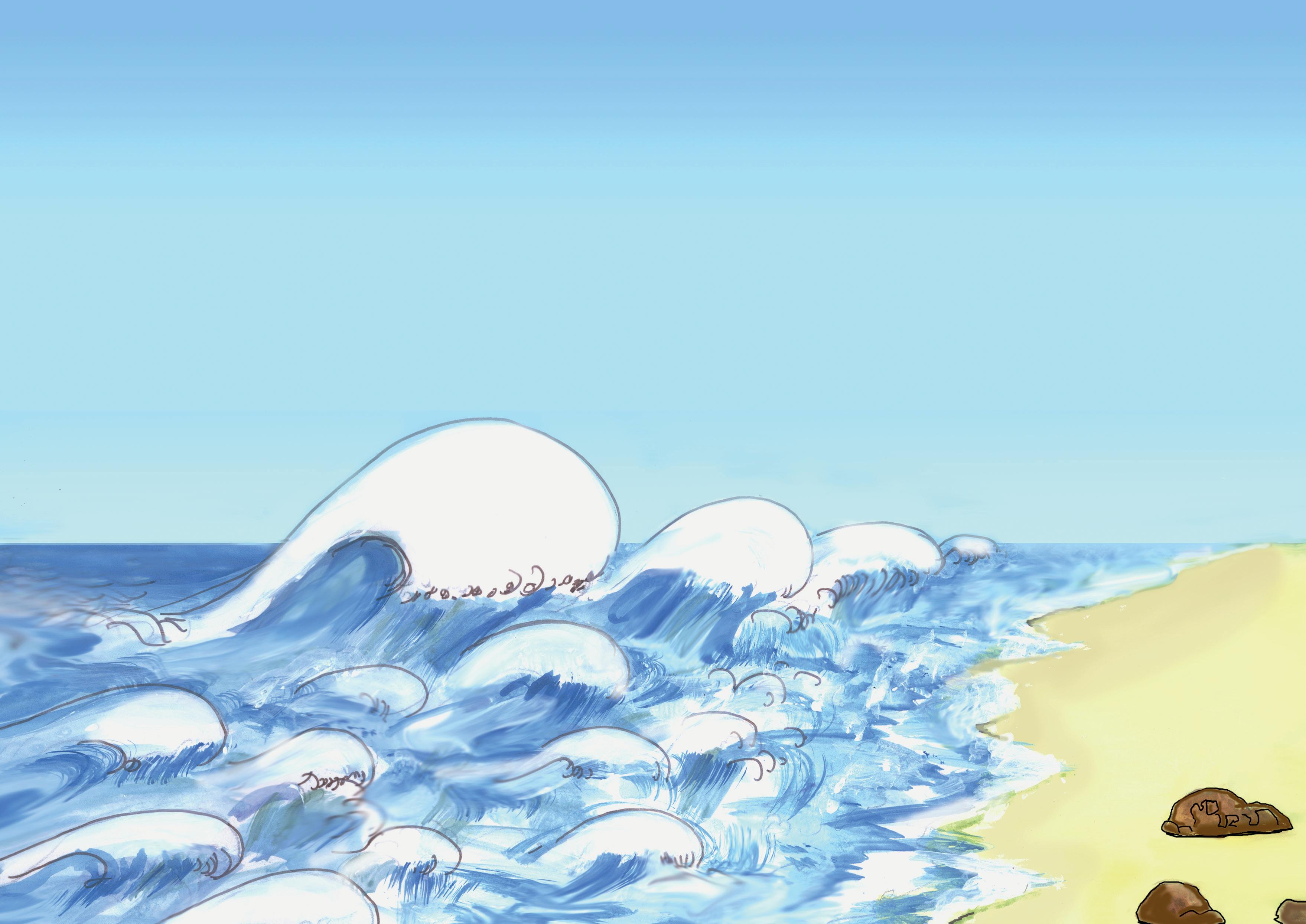
“Ma’am, did the tsunami come to Mahabalipuram?” asks Sundari.
“Yes! The entire coast was hit by the tsunami, which caused a lot of damage. Can anyone tell me how a tsunami is caused?”
“By tidal waves,” says Aravind.
“Tidal waves are the result, not the cause,” says Miss Lakshmi.
“A tsunami or tidal wave is caused by earthquakes, volcanoes and other underwater explosions. When a large amount of water is displaced, it causes a tsunami or tidal waves.”
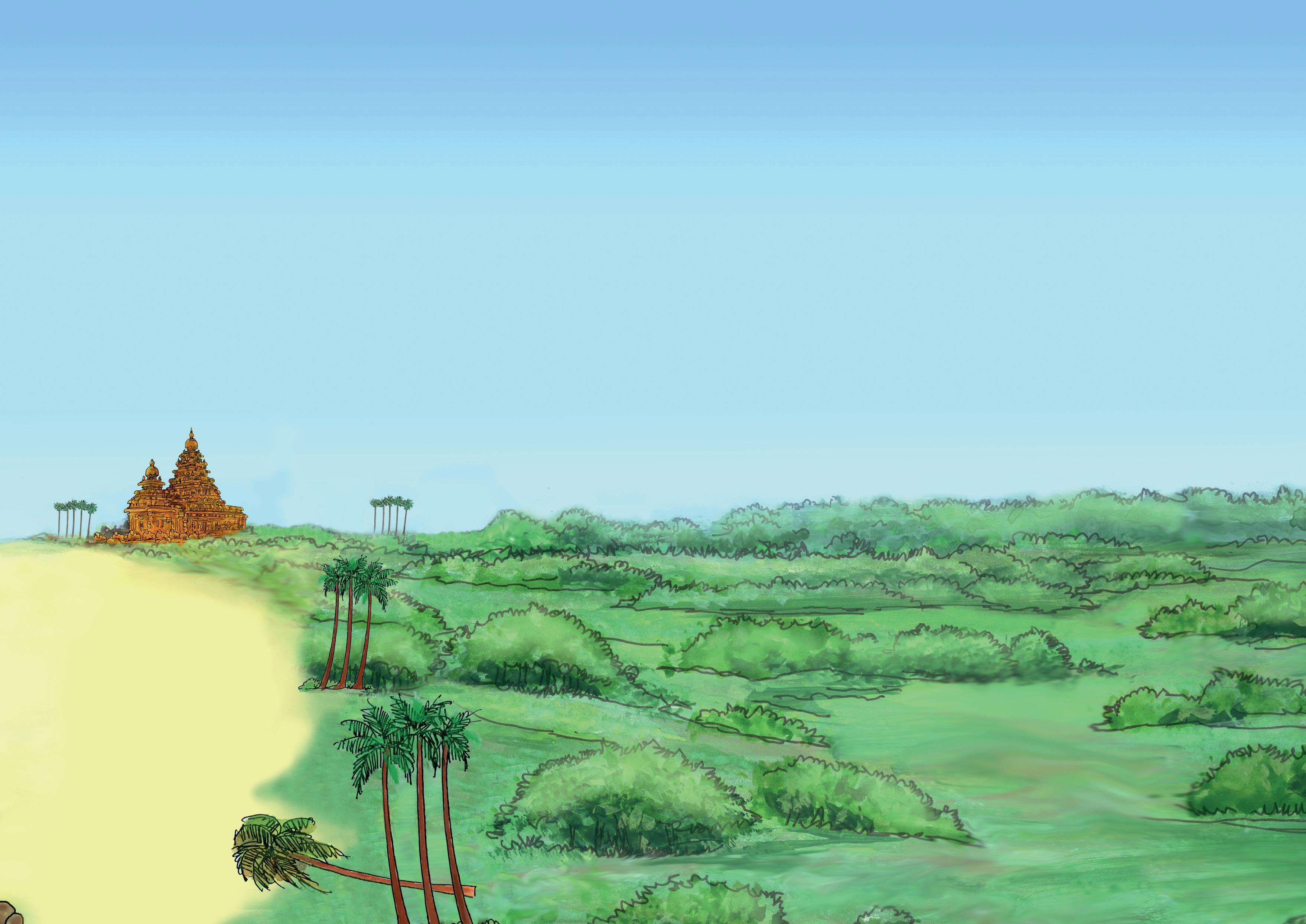
“Ma’am, my father told me that just before the tsunami hit the shore on December 26, 2004, the sea withdrew, and a temple and many sculptures were seen by the fisherfolk of Mahabalipuram,” says Sundari.
Miss Lakshmi nods. “Two hundred years ago, people who came by sea described Mahabalipuram as the Land of the Seven Pagodas. Only one pagoda , or temple, remains today. After the tsunami, archaeologists found blocks, obviously part of a temple, a tall lion statue carved out of a single rock, stone cats, a half–completed elephant and a horse in flight.”
The van stops. “Get down and let’s start walking,” says Miss Lakshmi.
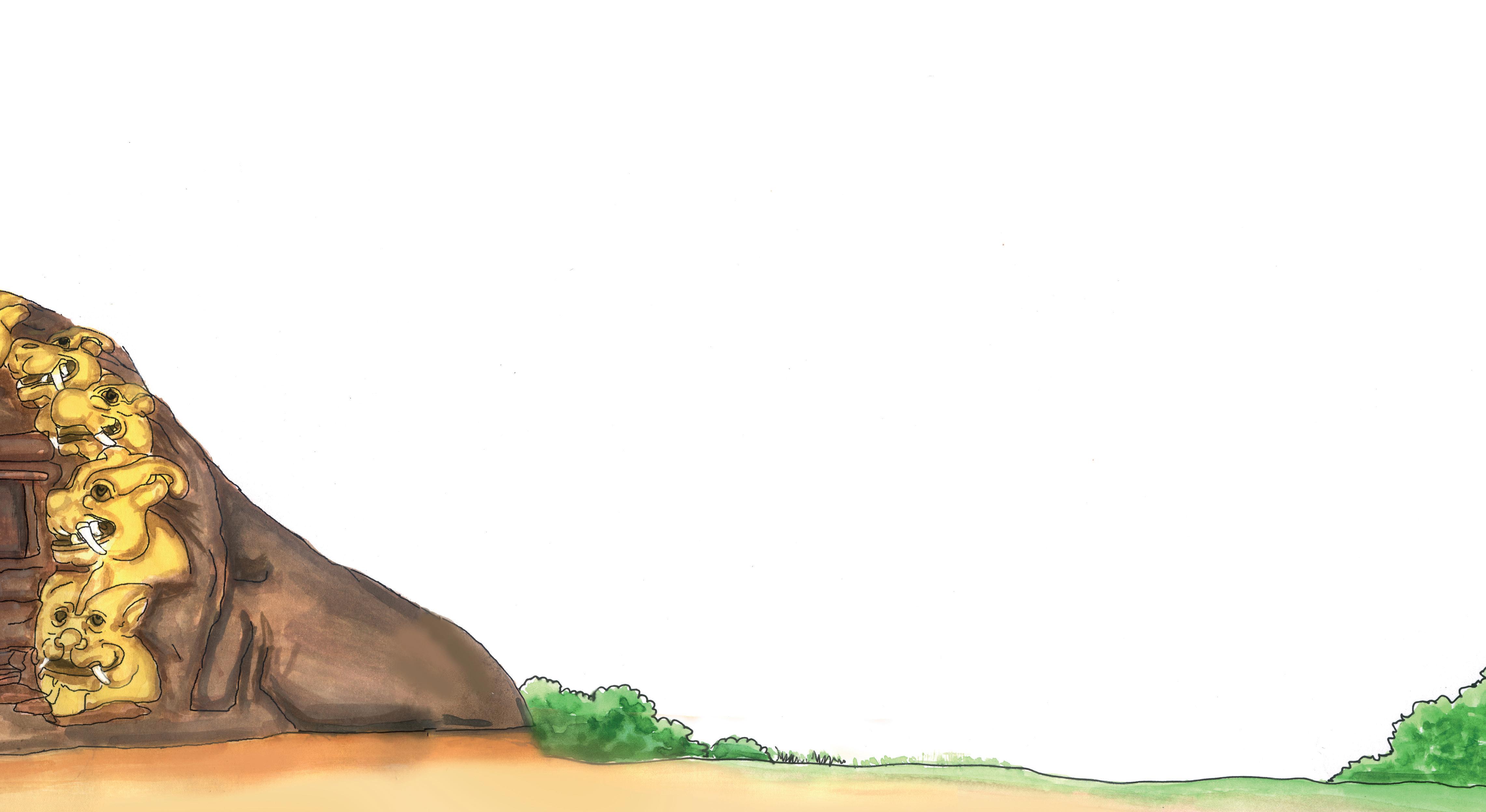
In a few minutes they reach what seems to be an arena. At one end is a throne made up of stone carvings of lions with a solitary seat.
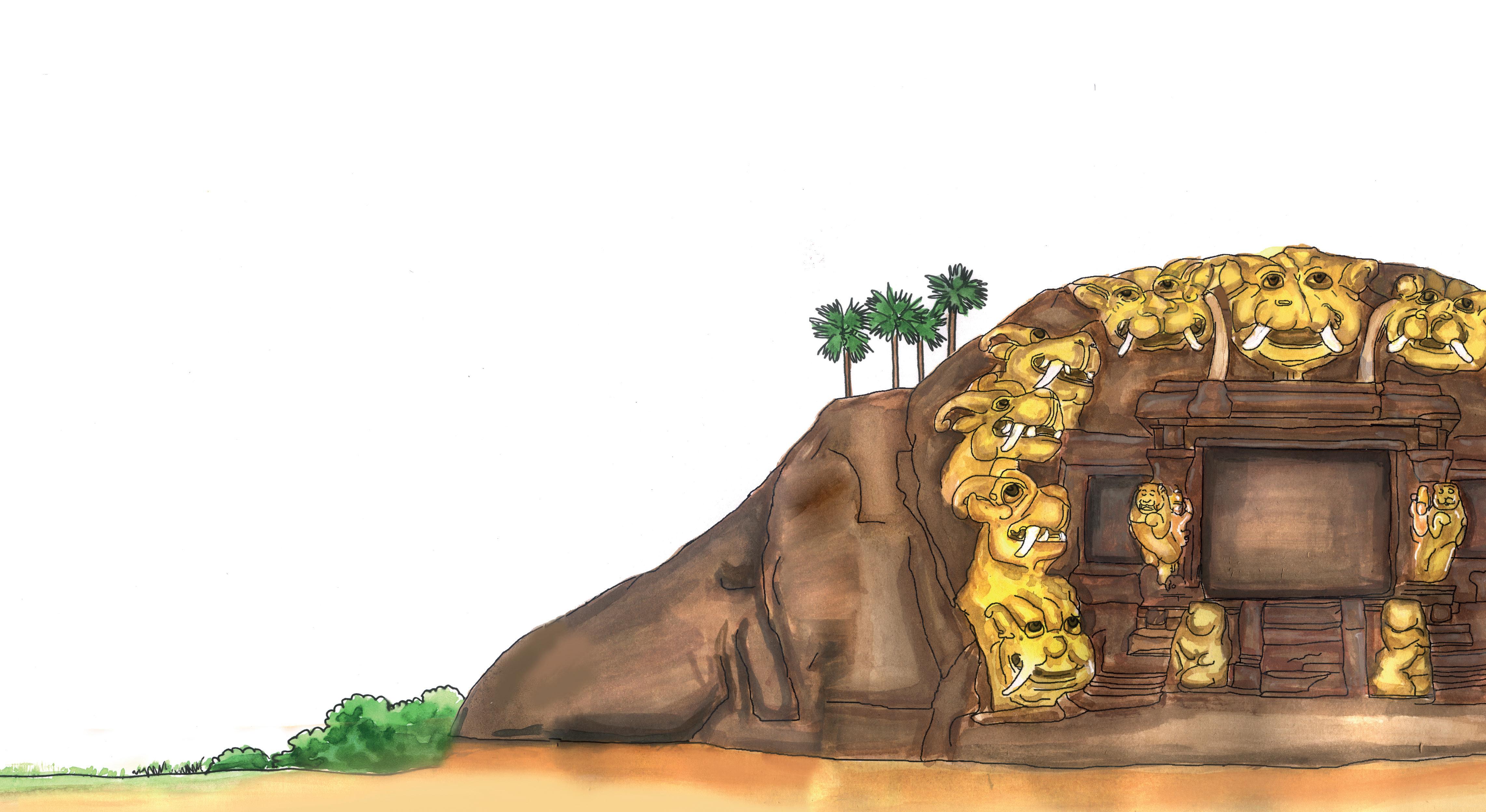
What is this place, they wonder.
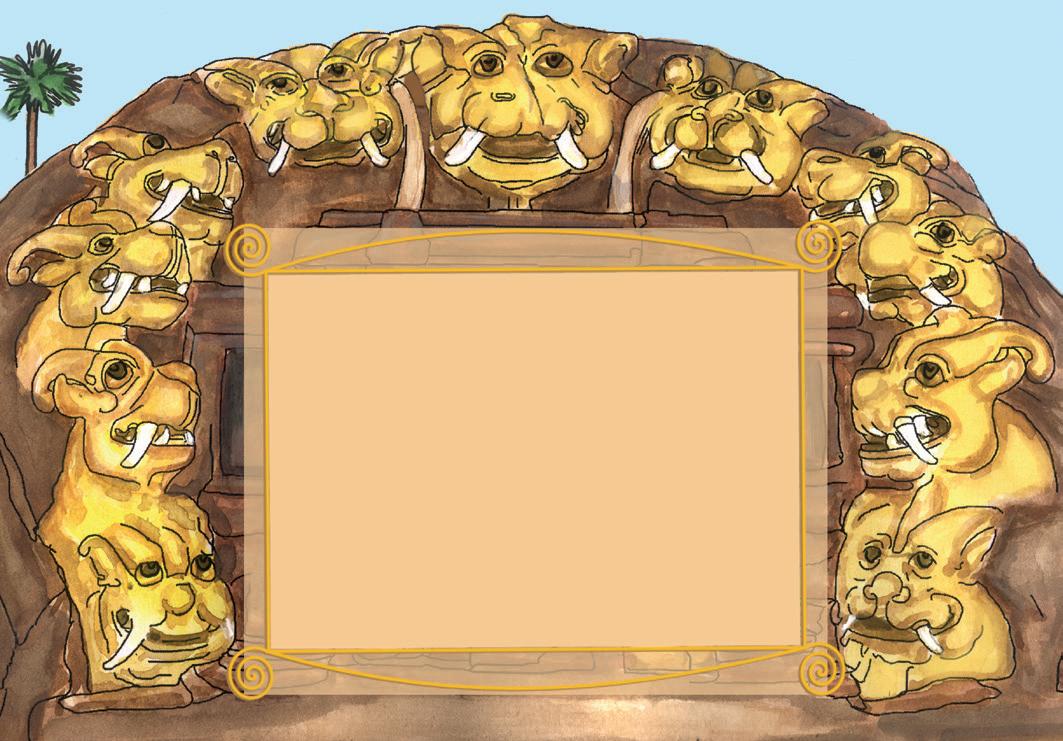
Devi knows. “This is Tiger Cave,” she announces.
“But where are the tigers?” asks Rama.
“Silly, there aren’t any. The Pallava kings had only lion sculptures on their pillars and walls. The cave has huge lion heads. But these had some features of tigers, and the local people named it Tiger Cave. There used to be tigers in this region, not lions,” replies Devi.
“The king must have sat on the throne to watch wrestling matches in the arena,” says Aravind.
“Possibly,” replies Miss Lakshmi. “Narasimhavarman I, the Pallava king who built the cave, was also known as Mamalla, the Great Wrestler. That’s why Mahabalipuram is also known as Mamallapuram.”
“No, I think it was used for dance shows,” says Sundari, who is learning Bharata Natyam. “Maybe I’ll dance on this sandy arena one day.”
“It could have been a tank to collect rainwater,” says Aarathi.
“Maybe it was used for religious ceremonies.”
“There is a carving of a lion, elephant and horse on the side. They need water too,” says Faisal.
“The two cubicles on either side would have been for lamps that they lit for the gods,” says Aravind.
“That’s what makes Mahabalipuram so interesting,” says Rama. “Nobody knows anything for sure, so we can imagine whatever we want!”
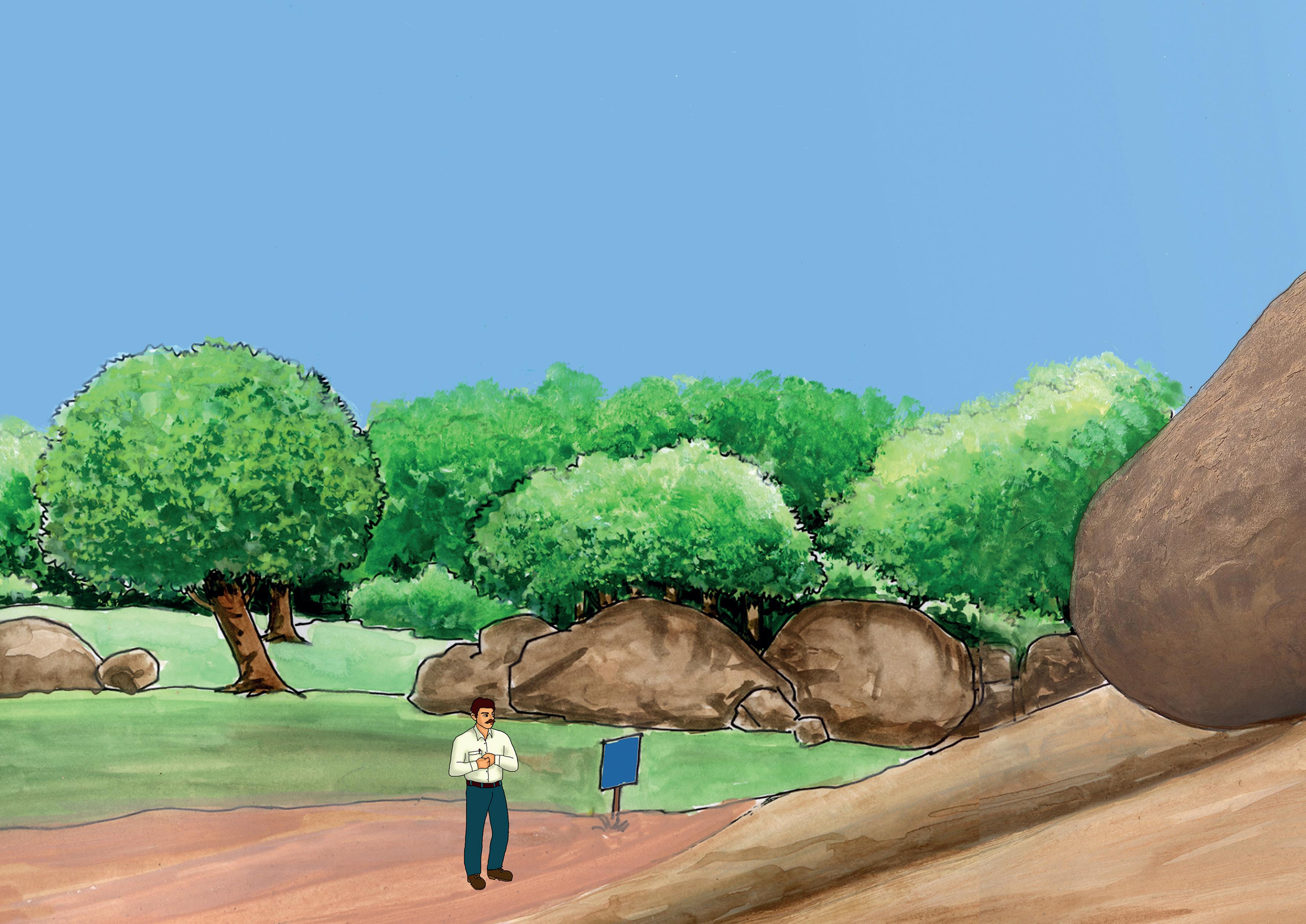
The children get back into the van. The sun is blazing in the sky and they want to reach Mahabalipuram before it becomes too hot. Then, from the road, they see a huge, round ball of rock, maybe twenty feet high, called Krishna’s Butter Ball. Some of the children have not seen the stone before.
“Suppose it rolls down?” asks Aravind.
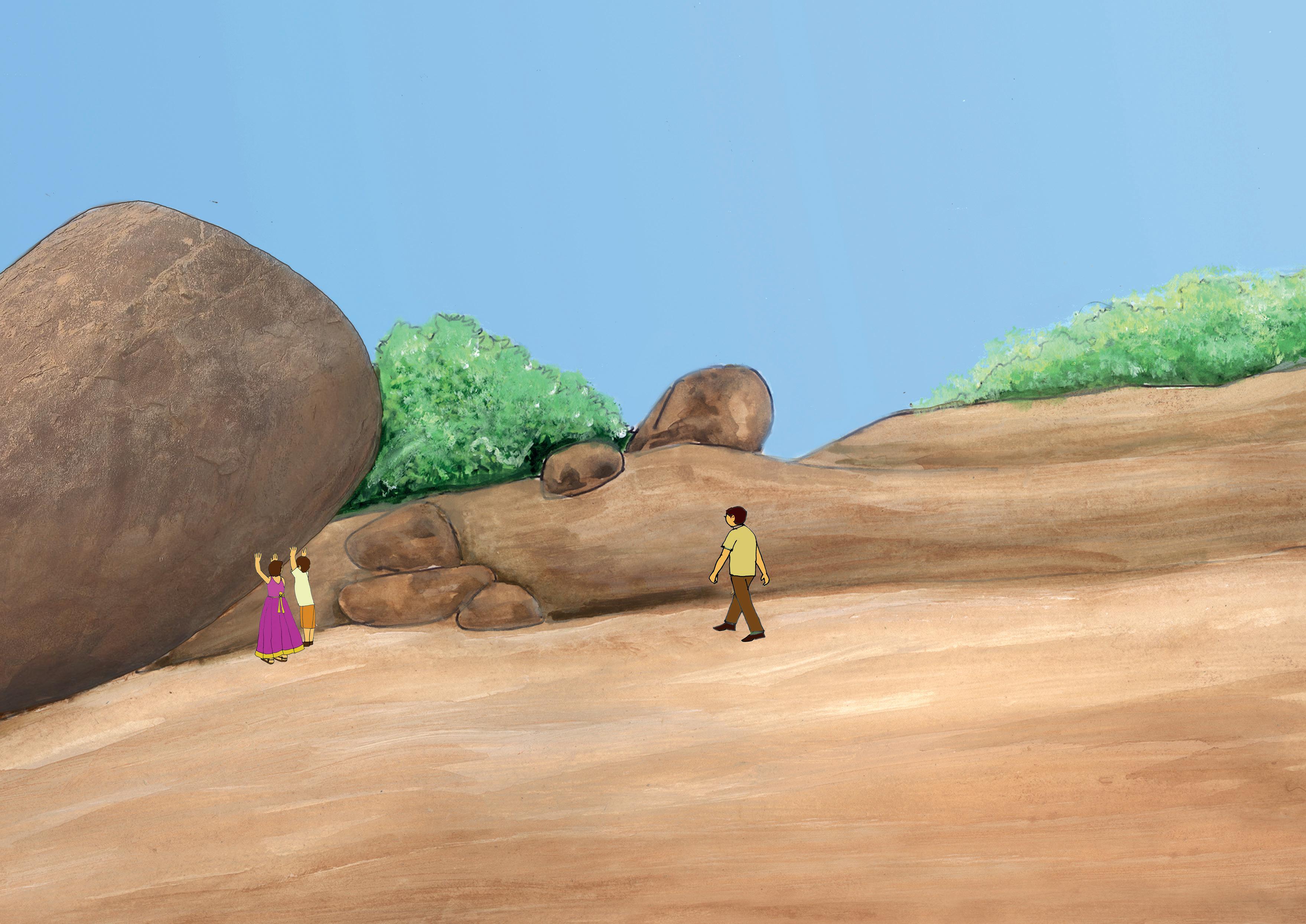
“It won’t,” Miss Lakshmi says reassuringly. “It is difficult to believe, but that stone has stood on that slope for hundreds of years. People have tried to shift it, even using seven elephants, but it has not moved an inch! It is like the Thanjavur dolls, which move from side to side but never fall down.”
First published in India in 2018 by
Mapin Publishing Pvt. Ltd
706 Kaivanna, Panchvati, Ellisbridge
Ahmedabad 380006 INDIA
T: +91 79 40 228 228
F: +91 79 40 228 201
E: mapin@mapinpub.com
www.mapinpub.com
International Distribution
Worldwide (except North America and South Asia)
Prestel Publishing Ltd.
14-17 Wells Street
London W1T 3PD
T: +44 (0)20 7323 5004
F: +44 (0)20 7323 0271
E: sales@prestel-uk.co.uk
North America
Antique Collectors’ Club
T: +1 800 252 5231
F: +1 413 529 0862
E: sales@accpublishinggroup.com www.accpublishinggroup.com/us
South Asia
Mapin Publishing Pvt. Ltd
Text and Illustrations © Mapin Publishing
All rights reserved under international copyright conventions. No part of this book may be reproduced or transmitted in any form or by any means, electronic or mechanical, including photocopy, recording or any other information storage and retrieval system, without prior permission in writing from the publisher.
The moral rights of the author and illustrator of this work are asserted.
ISBN: 978-93-85360-49-7
Series ISBN: 978-93-85360-47-3
Series Editor: Narayani Gupta
Copyediting: Mithila Rangarajan / Mapin
Editorial
Design and Production:
Gopal Limbad, Darshit Mori / Mapin Design Studio
Printed in India
The creation of this book was supported by Parag, an initiative of TATA Trusts.
Editorial Board:
Krishna Kumar
Girish Joshi
Swaha Sahoo
Sopan Joshi
Narayani Gupta
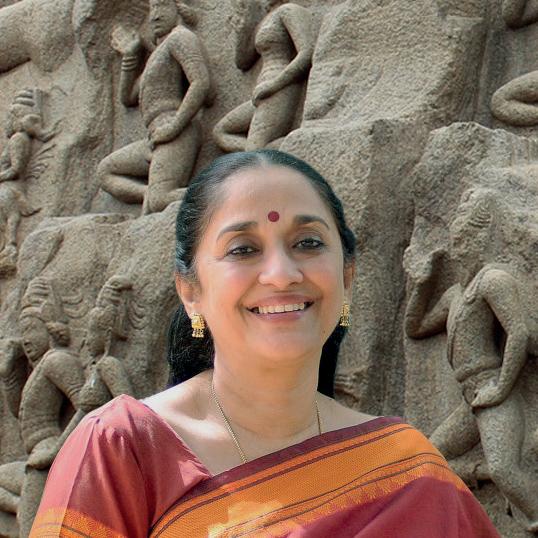
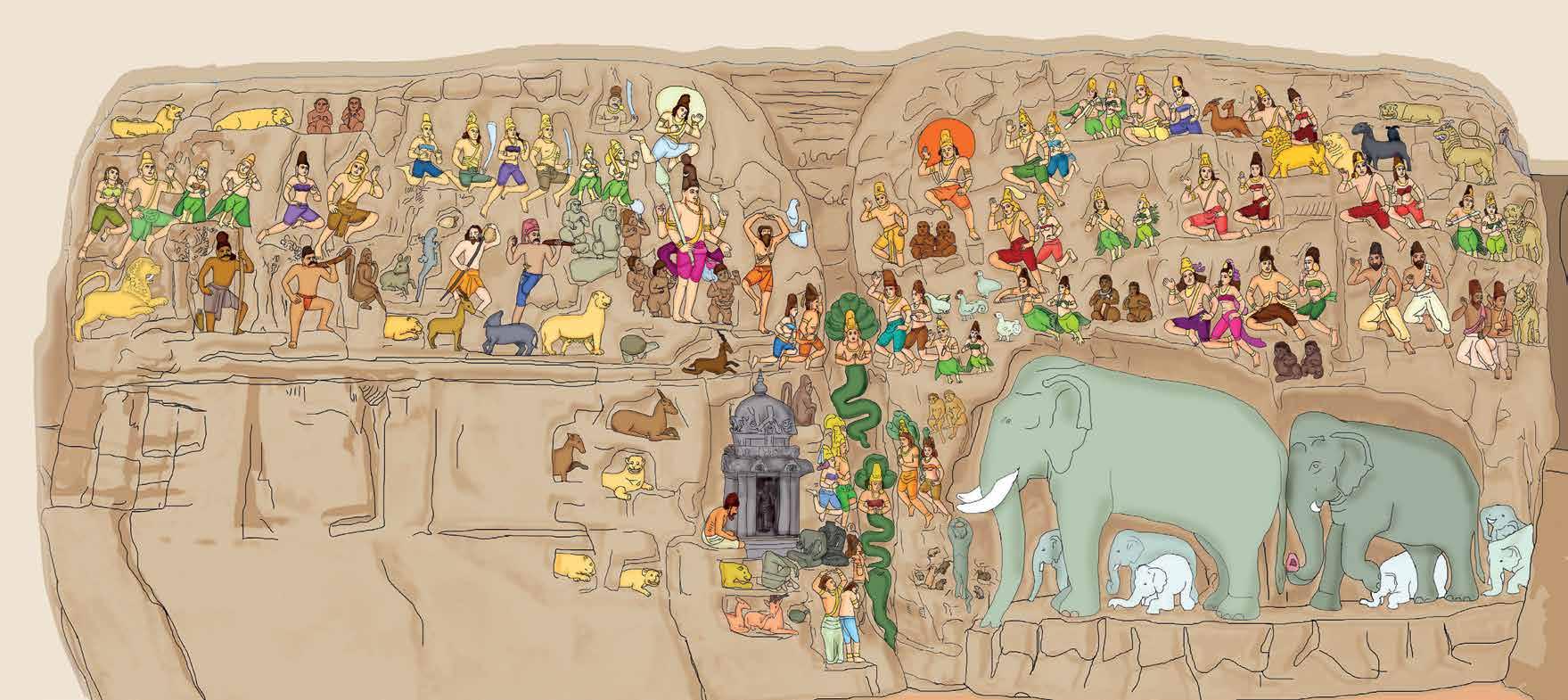
Author: The Descent of the Ganges at Mahabalipuram is one of Nanditha Krishna’s favourite works of art. This huge carving, with animals, people and gods living together in harmony, has inspired her to develop programmes to save our forests and rivers from being destroyed. She knows a lot about the culture and heritage of Tamil Nadu, and she has written many books about art, religion and the environment.
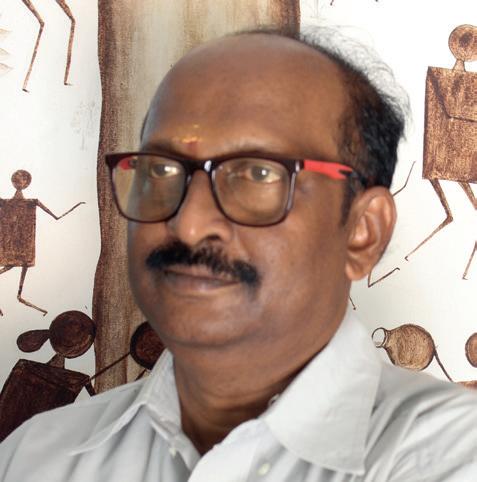
Artist: Venkatesh spent a long time studying the art of the Kurumba people of Tamil Nadu. He learnt how to adapt their traditional paintings onto different media like paper, cloth, glass and canvas, and he also trained many young Kurumba artists. He has created posters, models and exhibitions to raise awareness about environmental issues, and has illustrated several books on art, culture and nature, including many activity books for children.
5

manipur assam meghalaya sikkim west bengal
chhattisgarh
maharashtra
rajasthan
Children s Books
UNESCO WORLD HERITAGE SITES OF INDIA SERIES
Series Editor: Narayani Gupta


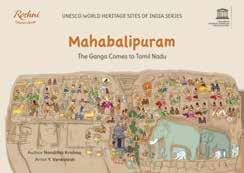




Mahabalipuram
e Ganga Comes to Tamil Nadu











Story by Nanditha Krishna • Illustrations by Y. Venkatesh
e children in the story explore the Descent of the Ganges, with its carvings of animals, humans and celestial beings. Temples, tigers and tsunamis all feature in this tale of the Mahabalipuram complex by the sea, lost and then miraculously found again.
Nanditha Krishna is a historian and conservationist from Chennai who has authored several books about art, religion and the environment. Y. Venkatesh is an artist who has illustrated several activity books for children about nature, art and culture. illustrated several activity books for children about nature, art and culture.

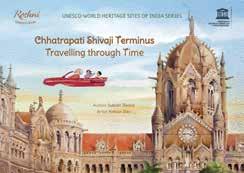
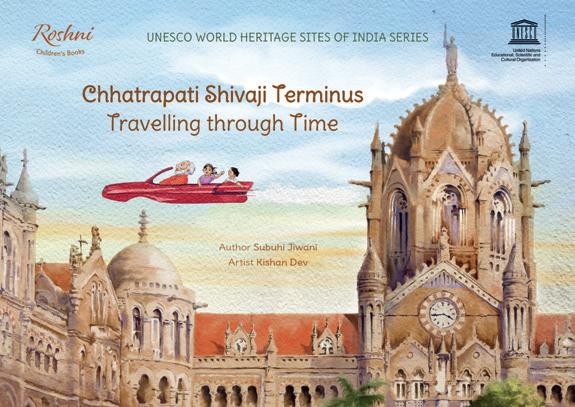
Chhatrapati Shivaji Terminus
Travelling through Time
Story by Subuhi Jiwani • Illustrations by Kishan Dev


Bandu is the devoted clock-keeper at CSM Terminus in Mumbai, or VT as some people still call it. One busy day, Bandu and two friends tumble through time to the past and future, accompanied by a talking gri n, freedom ghters and ying cars.
Subuhi Jiwani is an independent researcher, writer and lmmaker based in Mumbai. Kishan Dev is an artist who has worked in print publishing and Bollywood.
ALL TITLES IN THIS SERIES ARE:
195 | $9.50 | £5.99 Fall 2018 | supported by
32 pages with illustrations, 11.69 x 8.26" (297 x 210 mm) Landscape, pb
e Roshni World Heritage Sites of India series aims to introduce India’s young readers to the richness of our natural and cultural heritage through UNESCO-designated World Heritage Sites. Produced in association with Tata Trusts and with the blessings of UNESCO, these books o er children ve exciting stories, authored by renowned historians and conservationists and beautifully illustrated by accomplished artists.


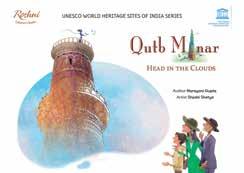
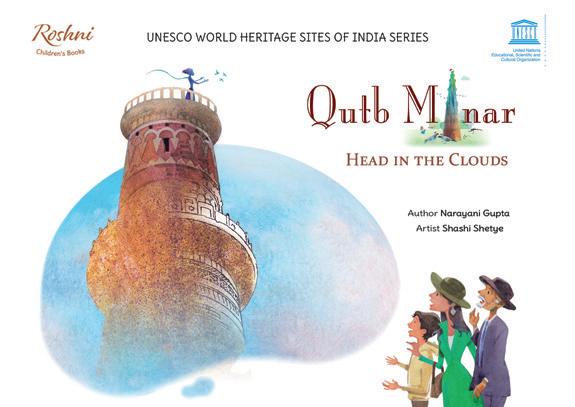
Qutb Minar
Head in the Clouds
Story by Narayani Gupta • Illustrations by Shashi Shetye


On Christmas Day, a group of six children visit the Qutb Minar in Delhi. What follows is a process of discovery as the children stumble upon an un nished Minar and a carved cupola and marvel at the skill of the craftsmen who built the Qutb.


Narayani Gupta is a historian and writer who has taught history at Indraprastha College for Women; she joined Jamia Millia Islamia University in 1986. Shashi Shetye has illustrated books for children for over two decades.
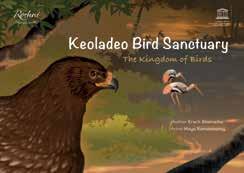
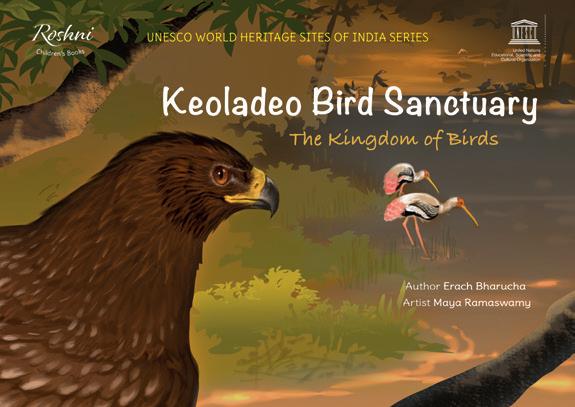
Keoladeo Bird Sanctuary
e Kingdom of Birds
Story by Dr. Erach Bharucha • Illustrations by Maya Ramaswamy
A large group of school children join Dr. Erach “Doc” Bharucha at the Keoladeo Bird Sanctuary in Bharatpur. Amid lush vegetation and a lively orchestra of birds, the natural landscape of the sanctuary comes alive for these young, intrepid explorers.

Available in English and Tamil in October 2018. Additional regional languages to follow in 2019.











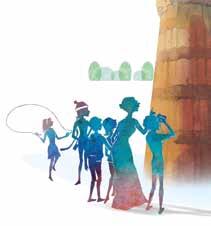


Dr. Erach Bharucha is a surgeon based in Pune and has been active in ecological conservation for several decades. Maya Ramaswamy is an illustrator who has worked on several children’s books about wildlife and conservation.
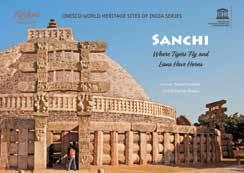

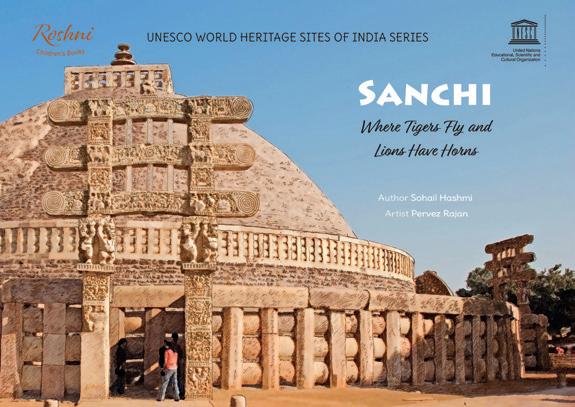
Sanchi
Where Tigers Fly and Lions Have Horns Story by Sohail Hashmi • Illustrations by Pervez Rajan
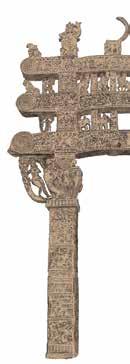


One morning as the city of Bhopal sleeps, a group of children join Sohail Hashmi to visit the stupas of Sanchi. Spellbound by the carvings on the gateways and pillars, they learn about the ancient history of Buddhism in India.

Sohail Hashmi is a writer, historian and lmmaker, who loves travelling to little-known places across India. Pervez Rajan is an artist who hopes to use his art to communicate with a wide range of people.




“The gentle, smooth colour palette, and the use of detailing make [the pictures] interesting to look at. The framework...is very natural and believable... little touches tap into the feeling of excitement and wonder that being at a historical site can evoke.”
—Goodbooks.in
“The production values are high. The author has a connect with children and he brings out his observations gently. That he is good with words and enjoys what he is doing is apparent.”
—Teacher Plus Magazine, on Sanchi: Where Tigers Fly and Lions have Horns
“.. groundbreaking...”
—
Eric Falt, Director General, UNESCO New Delhi
“.. beautifully written... Launching this series is a good attempt at making information about historical sites accessible to children.”
Jaya Bhattacharji Rose
ISBN 978-93-85360-49-7 www.mapinpub.com