CELEBRATING Public Spaces of INDIA
Foreword by Dr. Devdutt Pattanaik
Archana Gupta and Anshuman Gupta

Foreword by Dr. Devdutt Pattanaik
A first of its kind, Celebrating Public Spaces of India is a bold attempt at understanding architecture as a defining feature in the identity of space, particularly the idea of the ‘public space’ and its influence on evolving modes of urbanism in India. Through a carefully curated list of vibrant landmarks across India, this volume explores and highlights the sociocultural-functional strength of public spaces within the urban fabric of cities.
The authors identify and analyze more than fifty landmarks across the length and breadth of India; bustling bazaars, cultural hubs, historic monuments, waterfronts and religious spaces all find a place in this volume, in an attempt to understand the mechanics of these built and open structures, and their influences on urban cityscapes.
Featuring evocative photographs and drawings, in addition to insightful original research, Celebrating Public Spaces of India is an invaluable resource for anyone wishing to understand the nature of the ‘Indian urban public space’.
With 124 images, 26 illustrations and 27 plans.
Archana Gupta and Anshuman Gupta
Foreword by Dr. Devdutt Pattanaik
Mapin Publishing
First published in India in 2017 by Mapin Publishing
706 Kaivanna, Panchvati, Ellisbridge, Ahmedabad 380006 INDIA
Simultaneously published in the United States of America in 2017 by Grantha Corporation
E: mapin@mapinpub.com
distributors North America
Antique Collectors’ Club
T: +1 800 252 5231 • F: +413 529 0862
E: info@antiquecc.com www.antiquecollectorsclub.com
United Kingdom and Europe
Gazelle Book Services Ltd.
T: +44 1 5246 8765 • F: +44 1524 63232
E: sales@gazellebooks.co.uk www.gazellebookservices.co.uk
Thailand, Laos, Cambodia and Myanmar
Paragon Asia Co. Ltd
T: +66 2877 7755 • F: +66 2468 9636
E: info@paragonasia.com
Malaysia
Areca Books
T: +604 2610307
E: arecabooks@gmail.com
Rest of the World
Mapin Publishing Pvt. Ltd
T: +91 79 40 228 228 • F: +91 79 40 228 201 E: mapin@mapinpub.com www.mapinpub.com
Text and images © Archana Gupta and Anshuman Gupta except those listed on photo credits
ISBN: 978-93-85360-08-4 (Mapin)
ISBN: 978-1-935677-66-6 (Grantha)
Library of Congress Cataloging-in-Publication Data available upon request.
Copyediting and Proofreading: Ankona Das / Mapin Editorial
Editorial supervision: Neha Manke / Mapin Editorial
Design: Gopal Limbad / Mapin Design Studio
Design Support: Darshit Mori / Mapin Design Studio
Production: Rakesh Manger / Mapin Design Studio
Printed in India by Gopsons Papers Ltd
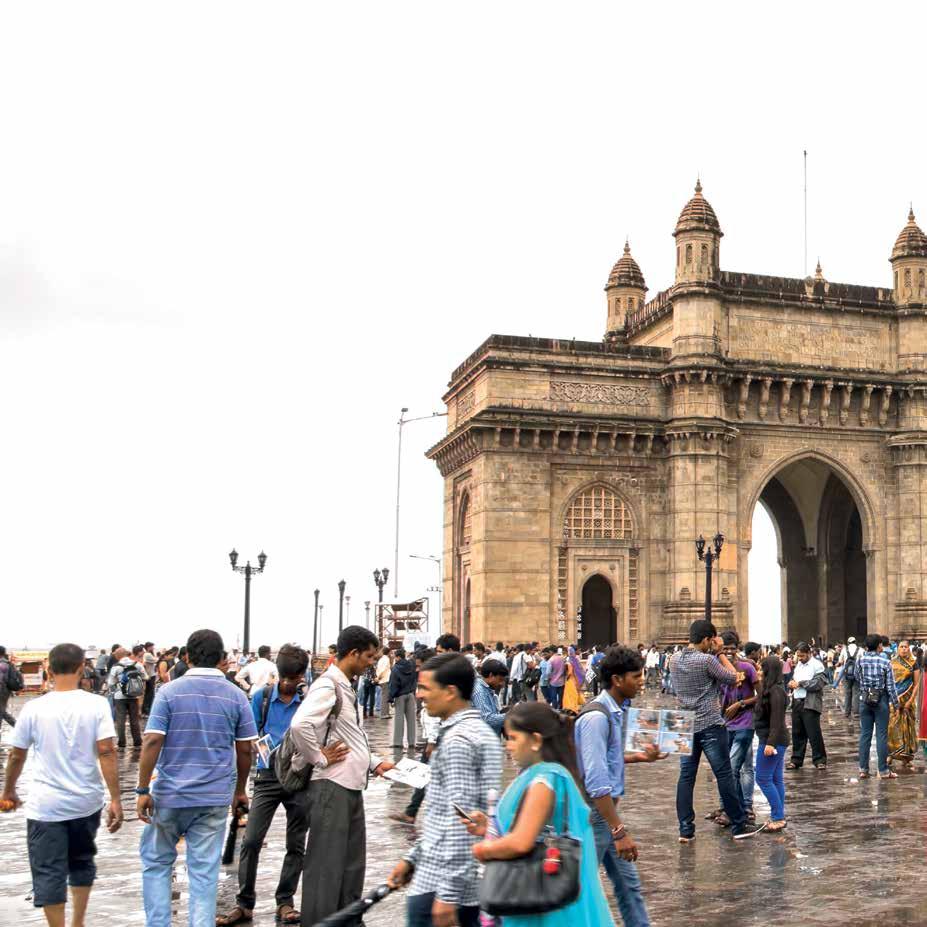
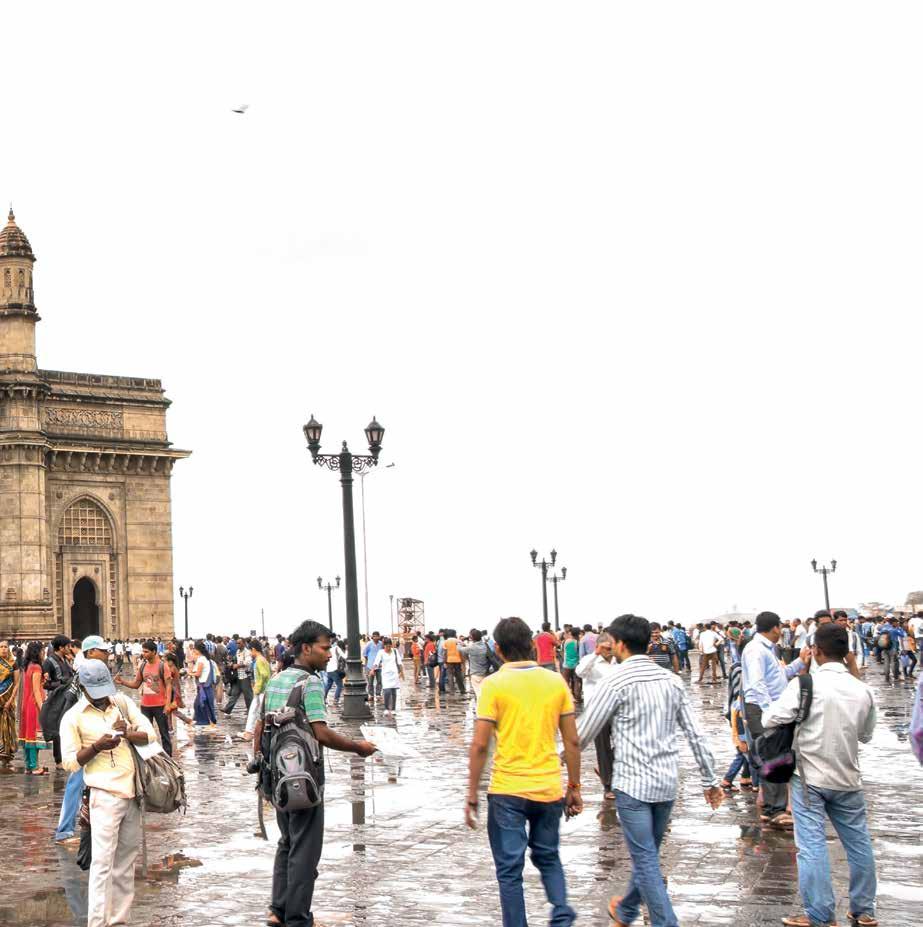
Pages 2–3 Tourists enjoy the monsoon showers at Gateway of India, Mumbai
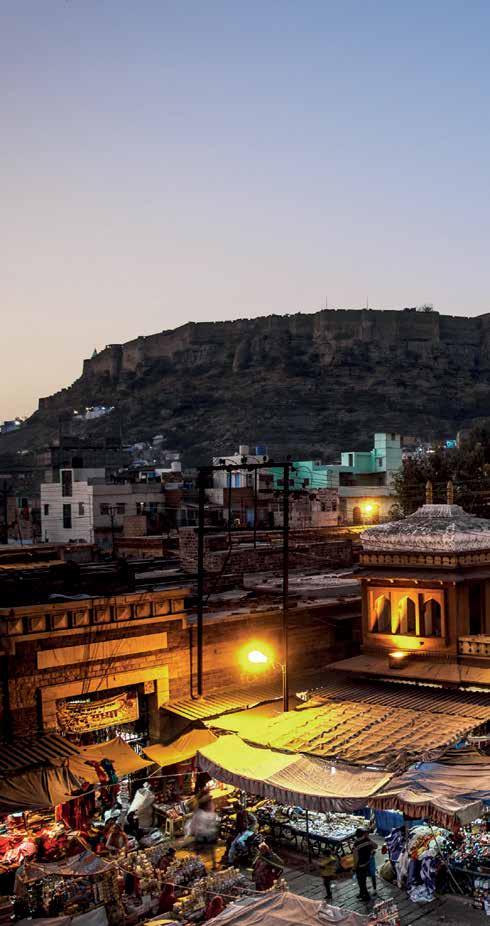
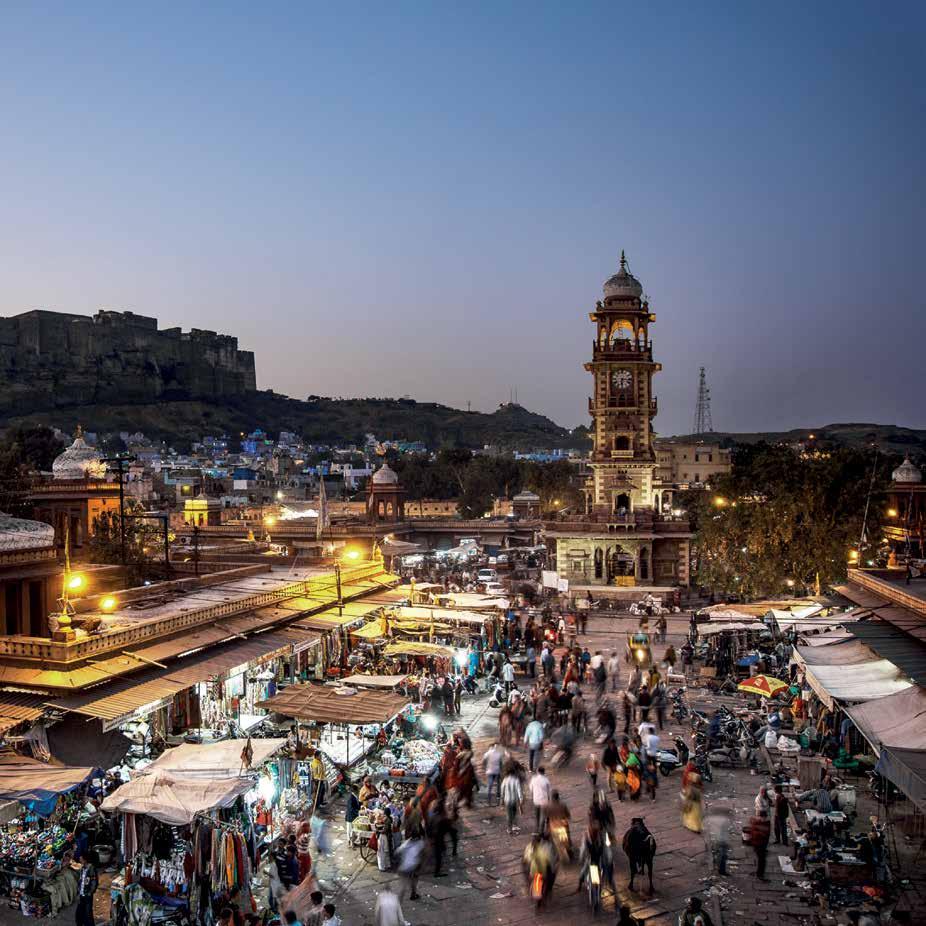
Pages 4–5 Sadar Bazaar, Jodhpur (see p. 88)
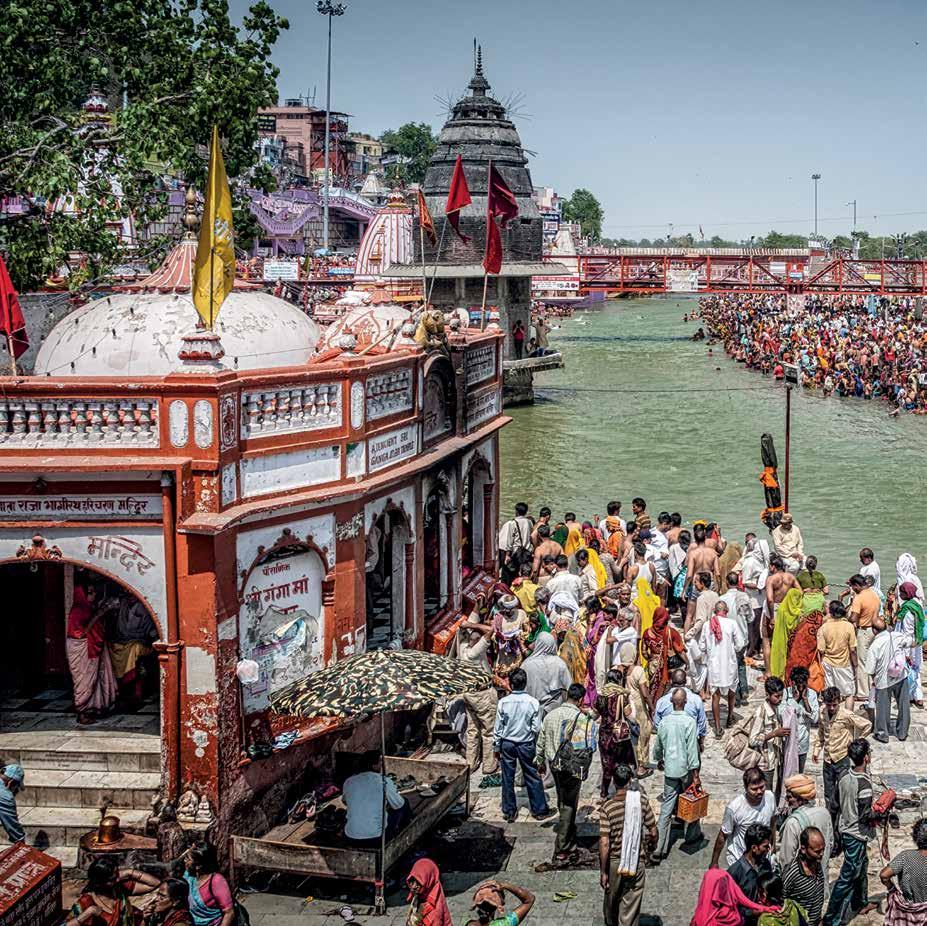
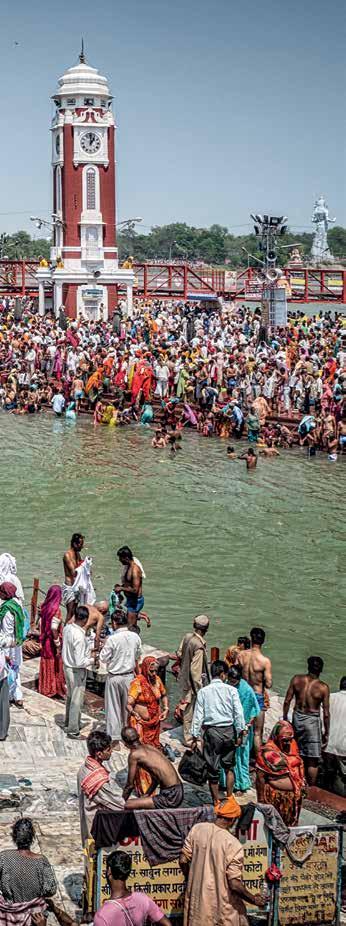
Pages 6–7 Pilgrims congregate for the Kumbh Mela at Har Ki Pauri
—Sharon Zukin
A public space is a social space that is generally open and accessible to people. It may be a city level converging spot or part of a neighbourhood, business district, historic precinct, waterfront spaces or other area within the public realm that help promote social interaction and a sense of community. Possible examples may include spaces such as city plazas, town squares, marketplaces, high streets and malls, city level parks and public greens, water edge boulevard and spaces, open spaces within public buildings or public spaces within private buildings.
Good urban public spaces are understood as areas in a city where social interactions and economic exchanges taking place give birth to a strong sense of community and commerce; where friends meet, strangers interact and lovers romance; where the homeless or the dejected ponder deeply over what to do next, kids run around and have endless fun; and also where political demonstrations, religious processions and cultural celebrations take place. They are accessible, have a friendly environment and there are trees to provide shade, there are benches to sit and safe places to walk. The place is safe for old people and women, and largely speaking these places become the melting pot of various cultures within the social fabric of the city or the neighbourhood. Vibrant public places are both democratic and equitable in nature; they do not differentiate between people on the basis of religion, caste or economic criteria. These places belong to the homeless, who spend the nights sleeping here, as much as they belong to the millionaire who comes here for a morning walk/jog, in his Mercedes. These places belong to and are easily accessible to everyone.
If we look at the great urban public spaces within the realm of our cities in India, we would realize that many of the above
criteria do not necessarily become the most identifiable features—many of our public spaces are crowded, chaotic, dirty and unsafe, yet they are beautifully alive—throbbing with vitality and dynamics. They seem to work with internal logics not perceivable to the naked eye, almost as if with a sense of metaphysical value. The apparent chaos and disorder here, on close observation, actually consists of several layers of order, all superimposed. These spaces celebrate their democratic and multifaceted nature and offer something of functional utility and value to everyone.
We need to identify the geographic, demographic, social and functional characteristics of these public spaces to attempt to understand their richness and beauty. Essential requirements would be to understand its location within the geography of the city, layout and connectivity with important activity nodes and areas in the city, its economic, social, ethnic diversity and functional dynamics. It is equally important to note whether specific planning efforts and formal design contributed to create a sustained and enhanced character of the public space, or if the space formed historically, or even in an organic manner (and not through a formal planning process) and grew in its importance as the city grew around it. These public spaces are found to be of four kinds when examined from a built form perspective;
(1) These are designed spaces, outcome of a designed master plan, where this space was intentionally carved out in its current form as part of formal design intervention, eg. Connaught Place inner circle and it’s central park in New Delhi.
(2) These are historic spaces, parts of old historic towns or monuments, which originally had a specific design function and scale, but now many hundred years later, in its current
schema within the city, these spaces have evolved into very happening, crowded, cultural spaces in the city fabric, eg. temple square at Jagannath Puri
(3) These spaces are geographically built and available, and their experience has been accentuated by means of some intelligent and sensitive design intervention by the city planners, eg. Marine Drive, Mumbai
(4) These are spaces which through their incidental location in the overall city scheme have over the years become a focus point as the city has grown around them, eg. South Extension Market, Delhi
Functionally, these spaces can be broadly classified into the following categories:
1. Public Buildings and Monument Plaza
2. City Squares and Cultural Spaces
3. City Level Urban Parks
4. Bazaar Streets and Market Places
5. Waterfront Spaces
6. Religious Spaces
7. Ancient Heritage Monument Spaces
This book is an attempt to capture and explore the liveliness and the essence of such public spaces and understand the dynamics of what makes these spaces alive and vibrant. The main focus throughout remains to re-define our gaze, understand and celebrate the liveliness, timelessness and beauty of these great Indian Urban Public Spaces.
Both Indian mythology and Greek mythology refer to creatures that are composites of other creatures. While India has the ‘Nava-gunjara’(Vishnu in the composite form of nine animals), Greece has the ‘Chimera’(a fire-breathing monster having disparate parts of three different animals). But while Navagunjara represents divinity, Chimera represents chaos and monstrosity; while the former is celebrated, the latter needs to be tamed or killed. Inspite of the creatures’ sameness of hybrid compositions, they have contradictory functional roles. So, is the problem with the beast or the gaze? I am convinced it is the gaze. It is the duality of this ‘gaze’ that fears India’s chaotic nature, thinking that it will collapse if not tamed, ordered and organized.
Across most traditional Indian towns, typically, the roads are narrow and they wind into a labyrinth lined with shops that have served customers for hundreds of years; money is exchanged, value is generated. Yet, this is dismissed as the ‘unorganized’ sector. Every shop is well organized in its own right though the bazaar with its sounds and shapes looks rather chaotic. There is microcosmic order in macrocosmic chaos. Why then is it deemed unorganized? Is it because our educated gaze compares it with the malls of cities, especially Western cities?
Could it be that ‘unorganized’ means not under central command? One without a monotheistic view of things? When things are not under one command, then different people think differently and this is seen as anarchy in the west where there is one right way of doing things. In India, where polytheism has always flourished, everyone thinking never created chaos. At the boundary between ‘mine’ and ‘not mine’ negotiations took place and order emerged as everyone balanced their need with that of their neighbour. The result has almost always been an effective system, though maybe not the most efficient one. Polytheism is messy and can never be efficient but it accommodates every one. Monotheism is highly efficient but demands alignment to one way of thinking. It is this difference in gaze that looks down upon traditional Indian cities (as compared to their Western counterparts) and seeks perfect order and disciplined urban planning.
So you build a planned city! For whom is this planned city built? Is it for the rich and educated India or the aspirational India or the surviving India or the India below the poverty line? The notion of “context” does not exist in modern thought; it only exists because it is “politically correct”. If there were a genuine acceptance of the idea of “context” then few would be obsessed with planning and laws. Planning demands knowledge of most, if not all, variables as it aims to create a predictable
space. But in a country like India, with a diverse population, not just economically, but also linguistically, and culturally, there are too many variables to predict. The context is both dramatically different and unique.
Our cities are a combination of organic (slums) and inorganic (planned). Poor migrants build the organic while the inorganic is built with the support of the state machinery. To assume we will have enough resources to have fully planned cities is a dream. We have to factor in reality using available resources to create a settlement which is actually not as chaotic as people imagine it to be. The organic and inorganic forces need to communicate and integrate with each other in a vibrant, unpredictable yet synchronized world.
The words—chaos, raunaq, bazaar, congested, dirty, etc.—are often associated with the traditional Indian city which has in it implicit the many multi layers of activities, rituals and multivalent functions which coexist in harmony despite the apparent chaos. The notion of public spaces emerges through the tension between the various human and natural orders.
In the context of the contemporary Indian city, we need to ask what it brings to the table culturally and psychologically, not materially. The gaze currently is materialistic based on
19th-century economic and political theories, taking a reference from the cities of Europe and North America. These cities reflect a European and American mindset—they are not ‘global’ and cannot be generalized.
Today, Indian cities and public spaces within them are fast evolving, and being driven by global economy, Western influences and rapid urbanization. As we shift from smaller and more manageable scale of towns and habitation to the massive scale and spread of mega-cities, the level of complexity increases manifold. We strive for the perfection and clinical order of Western cities, without acknowledging and planning for the difference in our ground (socio-cultural-economic) realities. The social, economic and religious fabric of the Indian society is polytheistic and heterogenous. The city’s stakeholders need to create sustainable and interconnected ecosystems within the city fabric to allow the organic to constructively engage and mutually coexist with the inorganic.
This book is an attempt to capture and explore the vitality, liveliness and essence of some of the great public spaces across Indian cities. The main focus remains to re-define our gaze, appreciate the multiple layers that constitute the complex urban fabric of our cities and celebrate the apparent chaos!
Dr. Devdutt Pattanaik
Amritsar
RAJASTHAN
Pushkar
JAMMU & KASHMIR
Srinagar
PUNJAB
HIMACHAL PRADESH
Shimla
Rishikesh
UTTARAKHAND
Haridwar Nainital
HARYANA
Delhi Gurgaon
Jaipur
Jodhpur Ajmer
Udaipur
Dwarka
Agra
Fatehpur Sikri
MADHYA PRADESH
Ahmedabad Bhopal
Lucknow
Allahabad
Gangtok
Guwahati
Varanasi
Bodhgaya
MAHARASHTRA GUJARAT
Mumbai
Panjim
GOA
TELANGANA KARNATAKA
Pattadakal
Hampi
Bengaluru
Hyderabad
ANDHRA PRADESH
Puri
Kolkata
Imphal
TAMIL NADU KERALA
Madurai
Chennai Thanjavur
Mahabalipuram Based upon Survey of India maps with the permission of the Surveyor General of India. ©2016 Mapin Publishing. Responsibility for the correctness of internal details shown on the main map rests with the publisher.
Agra Tajganj
Ahmedabad
Teen Darwaza
Law Garden
C .G. Road
Manek Chowk
Sabarmati Riverfront
Kankaria Lake
Ajmer Dargah Bazaar
Allahabad Kumbh Mela
Amritsar
Jallianwala Bagh
Wagah Border
Golden Temple
Bengaluru
Lal Bagh
Cubbon Park
M.G. Road
Bhopal Bhojtal
Bodhgaya Mahabodhi Temple
Chennai Marina Beach
Delhi
India Gate
Pragati Maidan
Red For t
Surajkund Mela
Dilli Haat
Connaught Place
Ramlila Maidan
Lodhi Garden
Chandni Chowk
Jama Masjid
Dwarka Gujarat
Fatehpur Sikri Uttar Pradesh
Gangtok M.G. Marg
Gurgaon Cyber Hub
Guwahati Kamakhya Temple
Hampi Virupaksha Temple
Haridwar Uttarakhand
Hyderabad
Hussain Sagar
Charminar
Imphal Khwairamband Bazaar
Jaipur Tripolia Bazaar
Jodhpur Sadar Bazaar
Kolkata Maidan
Prinsep Ghat
Lucknow Hazratganj
Madurai Meenakshi Temple
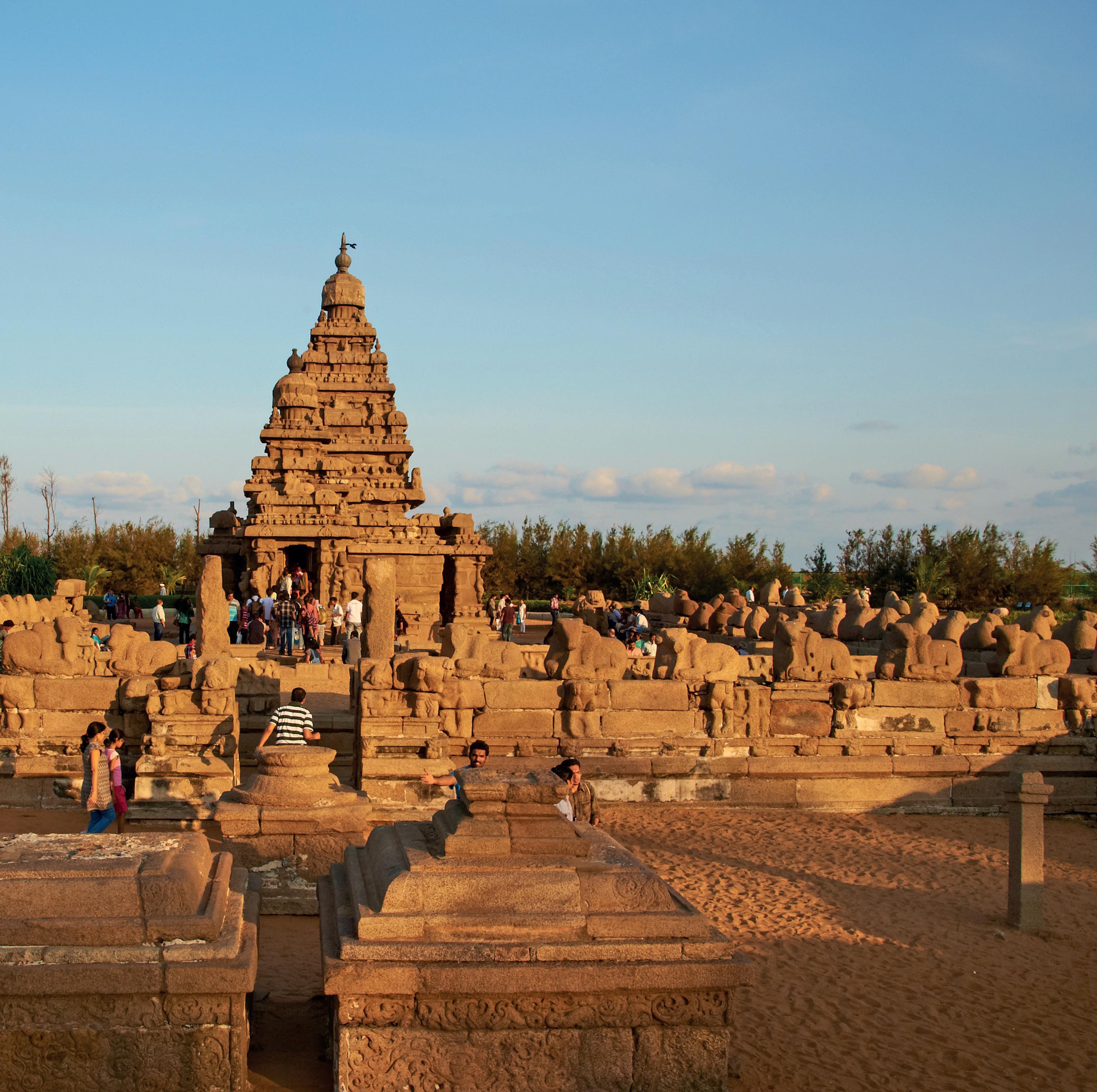
Mahabalipuram Shore temple
Mumbai
Azad Maidan
Gateway of India
Kala Ghoda
Shivaji Park
Marine Drive
Juhu Beach
Nainital Mall Road
Panjim Goa
Pattadakal Sangameshwara Temple and Galganath Temple
Puri Bada Danda Chowk
Pushkar Rajasthan
Rishikesh Uttarakhand
Shimla Mall Road
Srinagar Lal Chowk
Thanjavur Brihadeeswarar Temple
Udaipur Pichola Lake
Varanasi Uttar Pradesh
Public Buildings and Monument Plazas
City Squares and Cultural Spaces
City-level Urban Parks Bazaar Streets and Market Places Waterfront Spaces
Spaces
Heritage Monument Spaces
A city without shared public spaces is a city without culture, without history.
Charles Correa
In any city, the architecture is usually a defining feature in understanding the identity of the space — it becomes a part of the conscious attempt at what the city projects itself to be. Architecture is invariably associated with that which is ’built’. But a city is almost in an equal measure defined by that which is ’unbuilt’. Architects see cities as buildings and streets, but we need to see cities as the sum of its multitude of spaces and people’s interactions in them as a reflection of their culture.
We know that an active and vibrant public space is an integral part of a city. It replaces and to an extent also substitutes for the traditional idea of community. It is where social interactions happen, festivals and celebrations take place, where an exchange of ideas and commodities occur, and in fact where cultures are allowed to breathe and intermix. It has been said that a good public space is akin to being the foregrounds of our public institutions – parliament, courts, universities, municipalities, government institutions, neighbourhood schools – where we interact with each other and deal with the government. Good spaces serve as a stage on which the daily drama of a city’s public lives is enacted. They provide a unique window into the socio-cultural fabric of the city – they are indicators of how citizens interact and engage in the public domain.
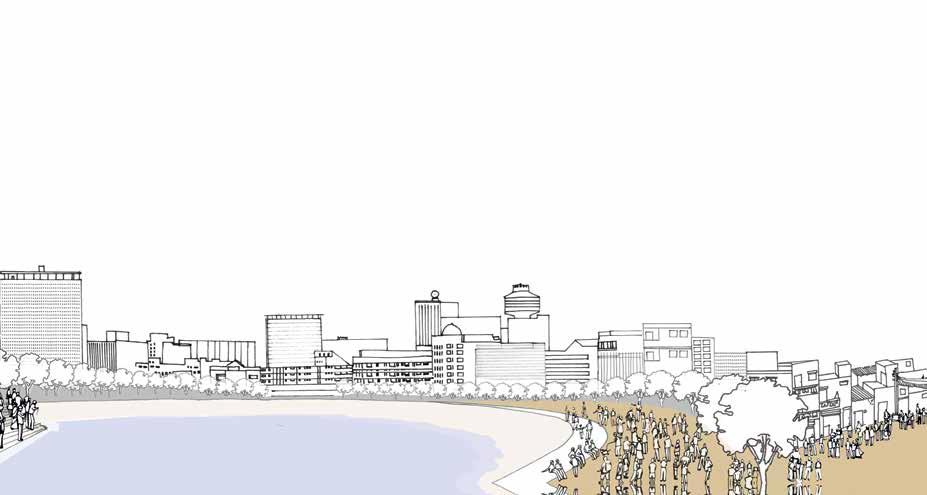
There are four major cornerstones which define our framework:
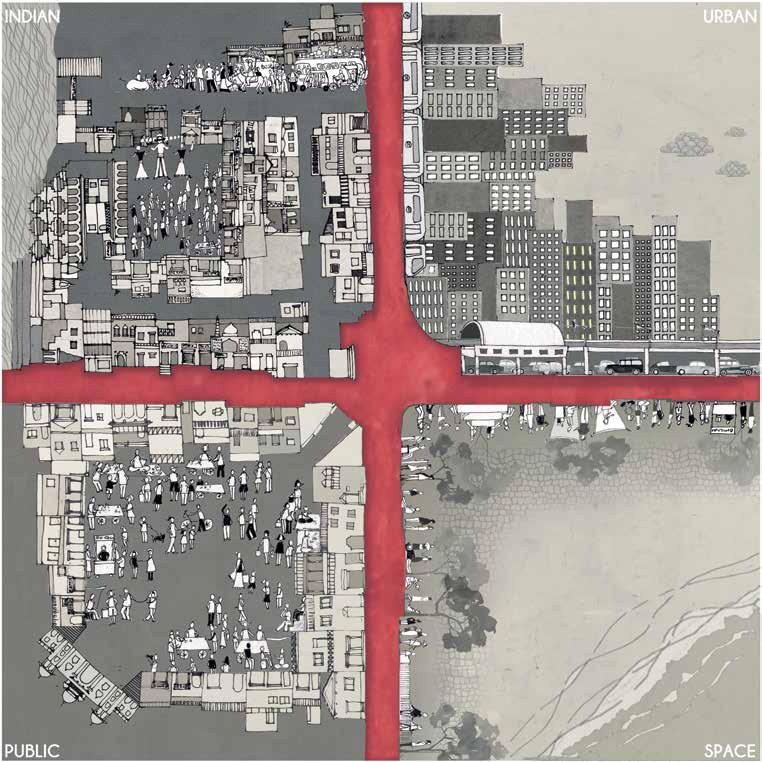
1. Indian 2. Urban 3. Public 4. Space
Each of the above elements has a unique identity and set of defining characteristics—it is when the four engage into a single time / space matrix that it gains particular interest.
Considering that diverse cultures, regions and religions operate at different levels regarding what can be considered as acceptable boundaries of public vis-a-vis private, the nature of this space is constantly changing – and is characterized within an ‘Indian’ context by a set of parameters that are unique to spaces that exist and co-exist in India. At an academic level, we understand that public spaces across the world share certain aspects of accessibility, activity, comfort, and security—yet within and in spite of these common themes, our attempt is to explore the nuances of difference within these public spaces around us and understand what makes them come alive. What is it that makes some places alive and happening while others remain non-descript. To begin understanding this complex phenomenon, one could perhaps begin by exploring what each of the four cornerstones mean.
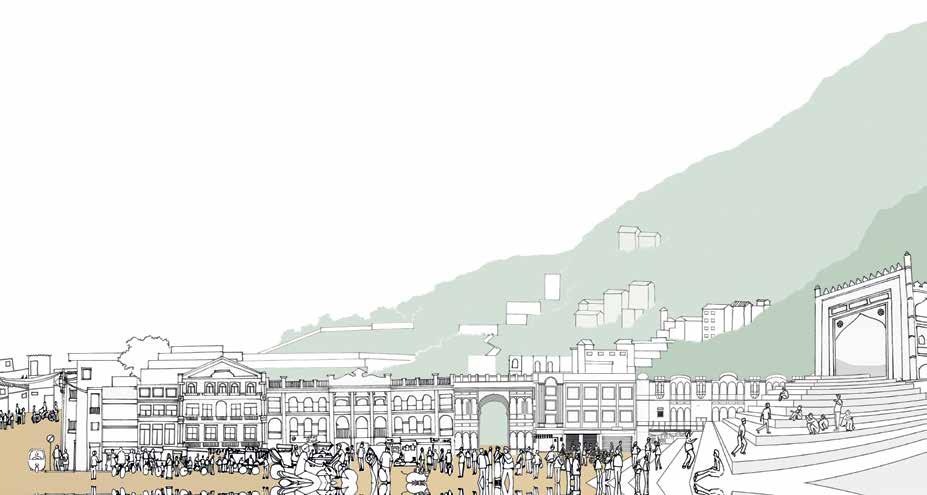
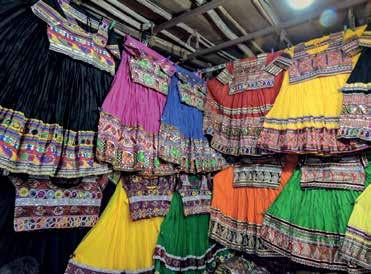
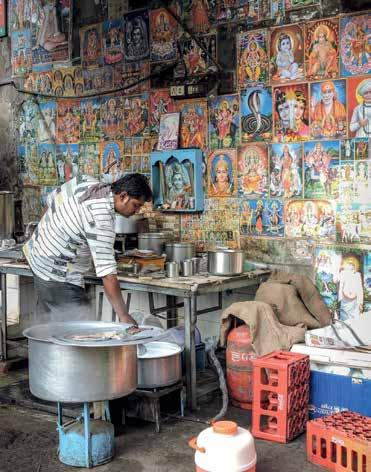
Indian: The concept of “Indian” across the world and even across history has been open to much speculation. Leaving aside the conventional notions of region and geography, economics, religion and caste and even politics and demography, a prime question has been: how do Indians perceive themselves? What characteristics can we attribute to the notion of “Indian” to explain what the term encapsulates?
Ideas like a growing economy, a strong education system, emerging services and technology hubs, jugaad, the varieties of crafts, the quintessential Bollywood, strength of the family unit, the lure of the new-age television industry and reality shows reflecting aspirations of millions of urban poor, a daily negotiation of the modern through traditional values, the acceptance of “sab chalta hai ” (read mediocrity) attitude and above all a laboured survival, are to name only a few of the many characteristics that make for the term “Indian”. They are mainly characteristics of what has been defined by sociologists as the “soft power” of a nation. For casual observers, the vibrancy manifests in the sheer numbers of people, colours, traditions as an organized chaos and begins to be a reflection of what they perceive as Indian. Indian democracy and its demonstration in the public domain plays a key role in determining what the important identities are of being Indian just as much as the multi-religious secularities do in our society.
Indian ideas of proxemics, and what is an accepted number of people before a space could be considered “crowded” is also an interesting framework with which we can evaluate the way we use our spaces—these in turn go hand in glove with cultures and rituals enacted in a non-familial sphere, where many events, festivities and processions happen in the company of complete strangers who establish a bond of shared space.
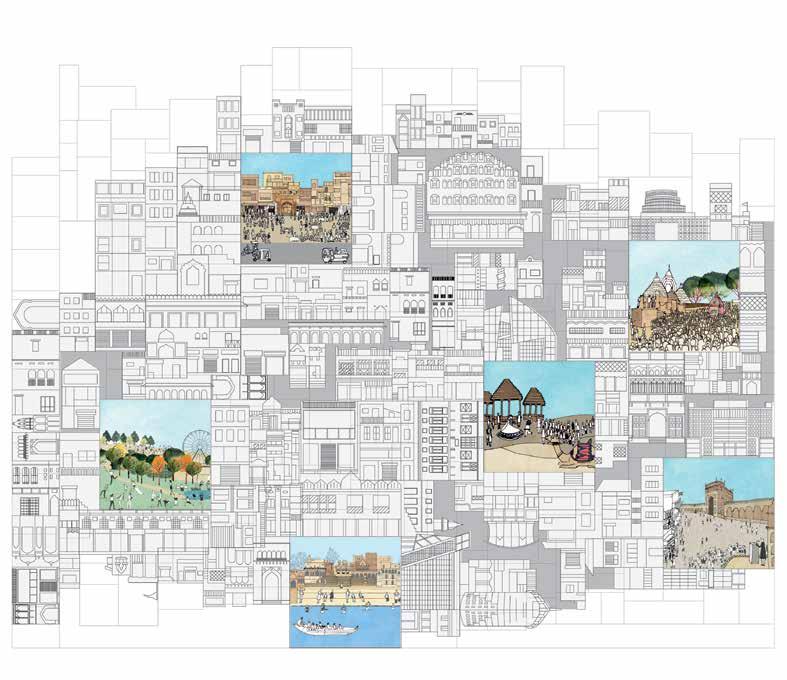
facing page Drawing presenting the concepts—Indian, Urban, Public and Space
above Law Garden, Ahmedabad
left Teen Darwaza, Ahmedabad
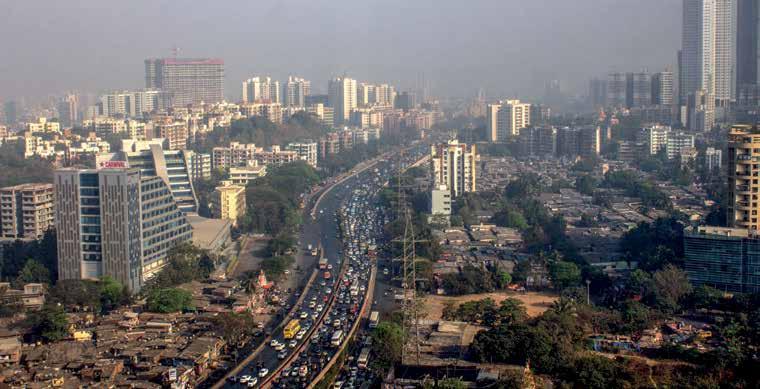
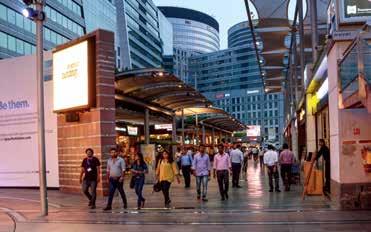
Urban: It is an idea uniquely understood in consonance with the idea of a city, where buildings and people co-exist. Cities get established due to a myriad of reasons, ranging from economics, work and growth opportunities, to historic incidents, natural disasters and geographic sensibilities. Urban areas are usually distinguished from their rural counterparts by higher population densities, and subsequent higher economic activity and energy consumption patterns. In the Indian context, the definition of an urban area (as per the 2011 Census of India) includes among other things a place with a minimum population of 5000 people and a density of at least 400 persons per square kilometre.
Considering it also specifies urban areas as having more than 75% of its workforce involved in non-agricultural activities, it is usually identified with mass migratory patterns.
This wide diaspora implies that people need to establish roots, connections and cultural authenticity. They need to find alternate means to express their identities determined by memory and nostalgia—whether through communities, events, festivals, recreational spaces like parks or through cultural and retail areas. The scale at which it is established also identifies the notion of urban to a certain extent.
Public: By its very definition, the word public is understood by its relationship to the word ownership—the important question here to be asked is if the word “public” implies owned by “all” or owned by “none”. Though the word public is most commonly associated with ‘people at large’ or a community, it is also an indication of that which is popular or existing in open view. It hence has various connotations depending on the perspective and usage of language.
Public is as much a physicality as it is a set of social conventions. Hence a public space is generally considered a social space which is open and accessible to all people in the city. So, “who owns what” is generally understood as an important predetermining factor of the “public” space in a city. At the level of state machinery the public space is understood to be the responsibility of municipalities and local authorities, but many times these are also under the purview of archaeological societies, private trusts and even corporate bodies. They are usually defined by equal access to users across all sections of a society, irrespective of economic and social status. Most large-scale open spaces in a city tend to be public in nature—roads, parks, waterbodies being some of the major types.
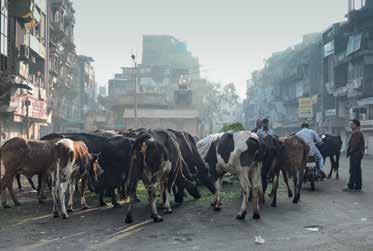
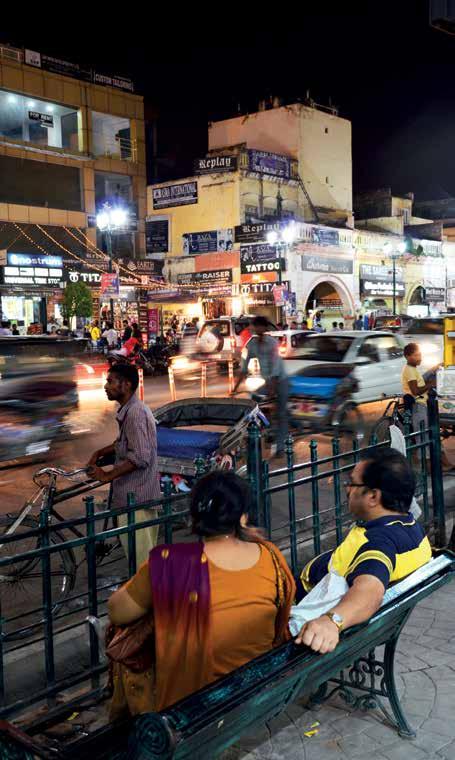
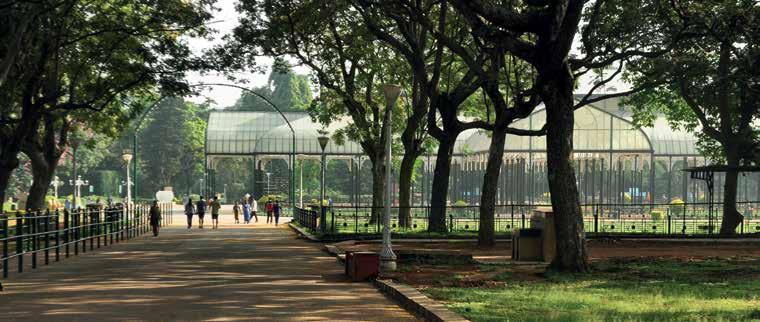
Space: A popular statement by the Dalai Lama—space is that where we have not built—is the simplest definition that there is of this complex phenomenon. In a city this is usually defined by the absence as much as the presence of the built component. Though it is “empty” it is critical to remember that in a city this is never synonymous with “unused”. It is where a multitude of activities and functions occur and it is multivalent in nature. It can accord to its function and location
many names—parks, plazas, squares, maidans, roads, streets. It gets a marked identity by walls, edges, activity markers— identities that can be either permanent or temporary in nature. In fact, in every space there is an inbuilt definition of limits. Region, culture and its people define different limits and these limits eventually define the space and function. These limits continuously change and redefine space in a city in ways that are subtle or radical, depending on circumstances.
above Lal Bagh, Bengaluru below Juhu beach, Mumbai
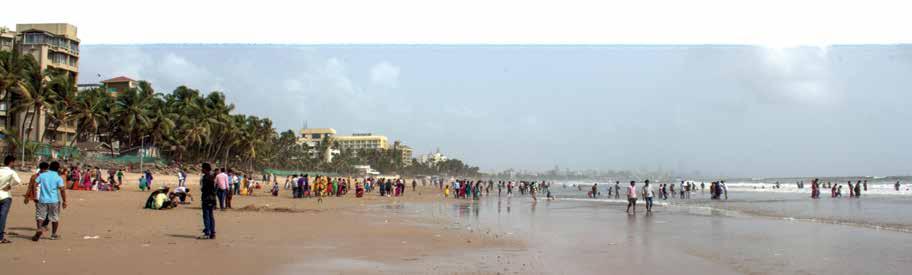
When we combine these four aspects in a single space and time to form the Indian urban public space, a complex entity is created. At the surface it may seem crowded, dirty, chaotic, multi-utility and mis-managed. However, at a deeper level of analysis, the same space scores equally if not more on counts of its lively, happening, dynamic, activated and celebratory nature. What is responsible for this alternate perception is the ‘gaze’. The ‘gaze’ or the world-view with which we look at these spaces and understand the contextual, social and cultural reality is an alternate framework for looking at the reality of this complex phenomenon.
Gaze: Our ‘gaze’ or the way we look at and view the world, is deeply influenced by our history, cultural values and beliefs, education system and background and consequent inherent biases, and coloured by societal perceptions. In India, the subject of cities, architecture and planning is deeply influenced by Western city planning references, since most of the research, education and planning models are predominantly based on Western (European and American) concepts and philosophy. This is possibly due to our two and a half centuries under the British rule, which heavily influenced (and made subservient) the Indian psyche. India is primarily a rural civilization comprising of many scales and sizes of villages, hamlets and settlements, many a times based on caste and religion. Our cities predominantly operate as a loosely defined agglomerate of an old city core with multiple urban villages, planned and unplanned settlements and communities spread around. Even our master plans for most large cities are a retrospective and politically motivated formalization of the areas in the city which have organically grown. Our cities are a combination of historic, incidental and conscious design. They are part random occurrence fuelled by market forces, and part master plan development.
Chaos—meaning absence of organization and lack of single central human control— is a word that emanates from Western references. From a Western gaze, Indian cities and towns have always had an inherent chaos and apparent
disorder, compounded by overcrowding and poverty. Even after two and a half centuries of trying, the British could not decipher this chaos and re-structure India. All the cities, towns and infrastructure they built, was almost always in isolation and as a distant addition to the chaotic reality of the existing Indian town.
The ancient Indian cities served villages, which were essentially rural/ agrarian in nature, and their governance was locally managed by the people (panchayat). In contrast, the ancient European cities were served by the villages they protected and had central rules, written documents and contracts for governing them, and those serving were answerable to a central, external, all-powerful authority whose rules were to be obeyed. Indian society unlike the Western, had local panchayat governance. Western cities reflect a Western mindset – they do not reflect ‘global’ mindsets. The Indian city borrows heavily from the Western model (without questioning), superimposing the same as an overlay on a very different Indian ground reality. The problem arises when the resulting concoction is reviewed and analysed from a Western ‘gaze’.
By changing the nature of gaze from Western to Indian, what we can ascertain is that beneath the apparent chaos and disorder visible in Indian cities, there is a natural, human and social order inherent in the way communities have lived and organized themselves in multi-layered and multi-functional spaces within Indian settlements. Thus, multiple social orders superimpose themselves in an Indian settlement with peripheral negotiations at the edges creating loosely defined organic structures. From a Western reference point, this superimposition may look chaotic.
Hence, re-focusing the gaze to be context sensitive to an Indian reality becomes the main crux for an objective and meaningful interpretation of Indian Cities.
Vibrant public spaces are inclusive and democratic in nature, promote human contact, social activities and facilitate
MARKET & ECONOMY DRIVEN
& CHRISTIANITY INDUSTRIALIZATION WESTERN FEUDAL EUROPE FACTORY PRODUCED
WESTERN PERSPECTIVE & ITS HISTORIC INFLUENCE
INDIAN PERSPECTIVE & ITS HISTORIC INFLUENCE
community involvement. These spaces are safe, welcoming, visually interesting and accommodating for users of all age groups. These spaces have a geographically, architecturally, locationally, spatially strong design feature as an anchor.
Public spaces are a true reflection of our culture and society, and get activated on a daily / weekly / monthly or annual basis, depending on the kind of usage and events that take
STRATEGIC PRACTICAL LINEAR ALWAYS IN CONTROL REALISTIC FEARLESS ADVENTUROUS PASSIONATE POETIC FUN CREATIVE ARTISTIC FREE SPIRITED
Illustration of the concept—Gaze
place in the space. These spaces are strategically located within the overall dynamics of the city— neighbourhood, waterfront, city center, business or entertainment districts, historic area, parks, etc. The scale and expanse of the area may be monumental or human, the space may be a resultant of a great design intervention or just evolved over a period in the life of the city, in either case its importance and its “activity index” remains very high.
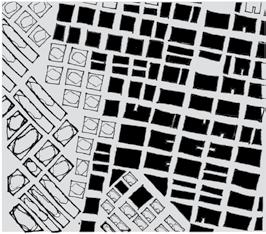
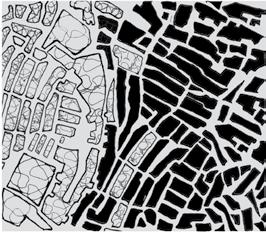
Ideally, great public spaces should be peaceful and comfortable; equally accessible to pedestrians and cyclists; safe for children, women, elderly and differently-abled; and provide shade and shelter through trees and sensitive urban landscape (natural or designed). It should have a predominant overriding usage theme but still have a multiplicity of usage defining that space; it should be multilayered and a nodal focal point in the larger scheme of the city around; and should be strongly embedded in the socio-cultural-economic fabric of the adjoining communities.
Many of our great Indian urban public spaces are happening and activated despite failing on many of the ‘technically correct’ parameters highlighted above. There is a word in hindi known as “raunaq ”, which loosely translates into “an atmosphere of excitement” —this could perhaps be a way of rationalizing the flurry of activity characterized in Indian Urban Public Spaces. We need to change the nature of the gaze and look again and celebrate their beauty and timelessness.
The individual spaces featured in this book have been carefully chosen for their representative nature (and are not prototypes), highlighting the essence of the typology of the space they represent. The focus has been to choose variations within a type and to avoid repetition; the list is not exhaustive and includes spaces which the authors are familiar with and have experienced. Similar spaces can be found across other cities in different forms. The attempt has been to highlight spaces which are naturally activated, vibrant and happening as a city-level public space (despite any/all odds). These spaces may not conform to standard accepted urban planning theory and practices but within their own frameworks are an essential cultural and social landmark in the life of that city.
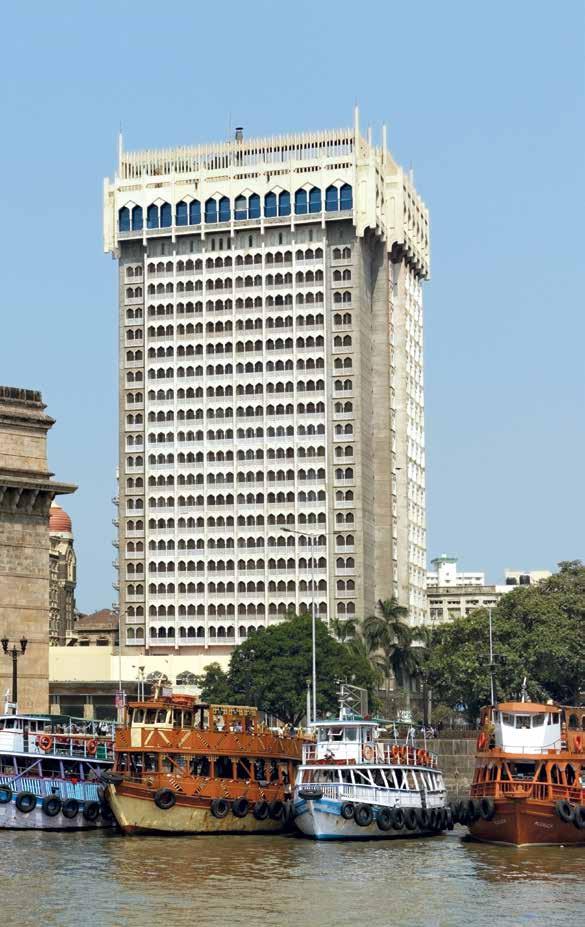
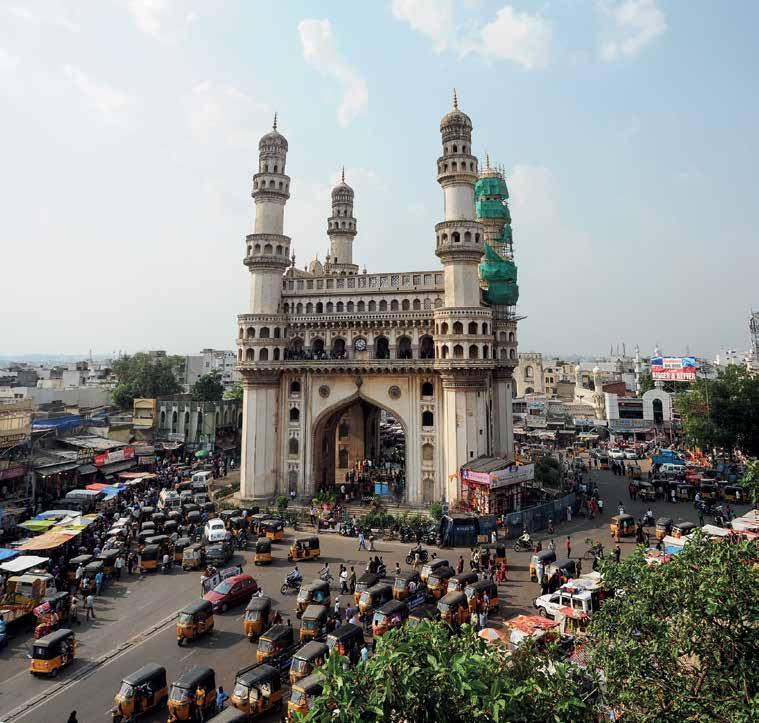
Charminar, Hyderabad
Teen Darwaza, Ahmedabad
India Gate, Delhi
Red Fort, Delhi
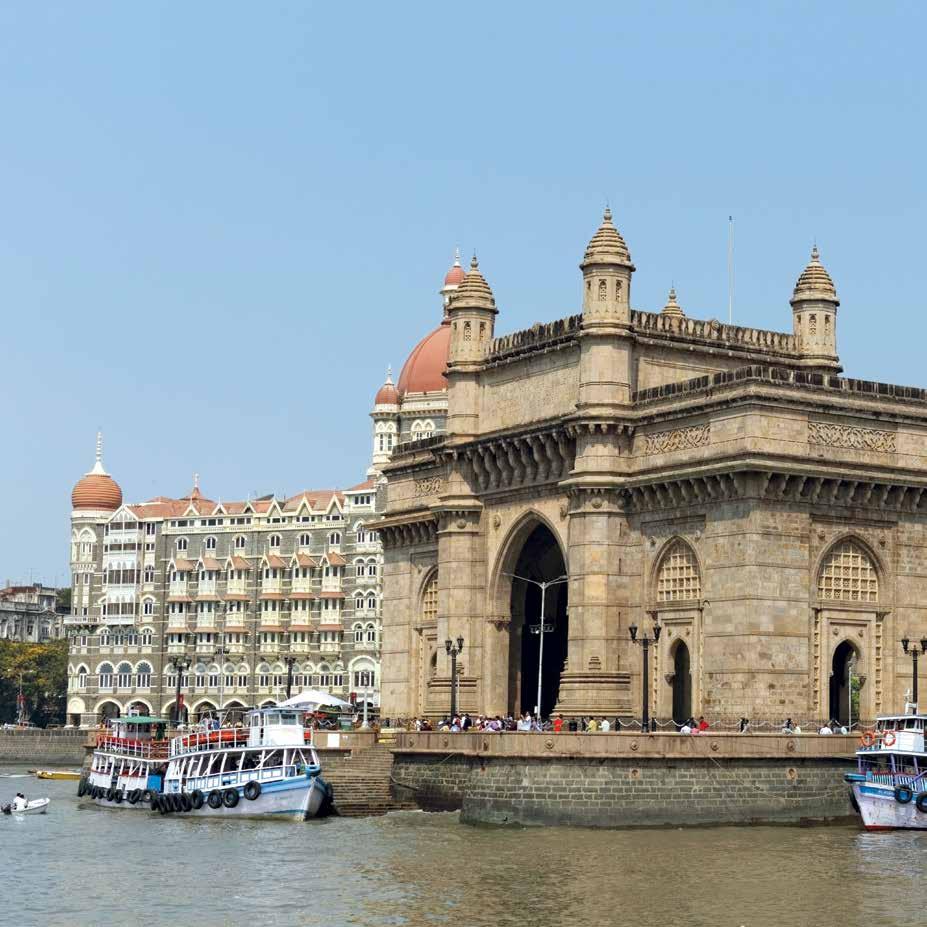
Gateway of India, Mumbai
Jallianwala Bagh, Amritsar
Tajganj area, Agra
Jaisalmer Fort, Jaisalmer
Kala Ghoda, Mumbai
Jama Masjid, Delhi
Bada Danda Chowk, Puri
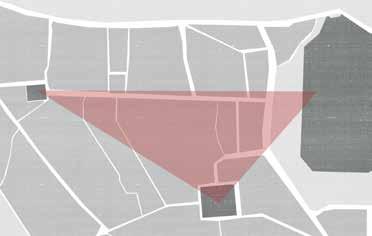
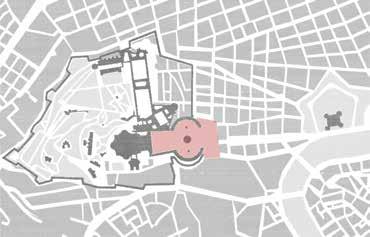
What you leave behind is not what is engraved in stone monuments, but what is woven into the lives of others.
The urban precinct has always been defined by the presence of a main public square or plaza, which is the core of the power systems thriving in that space and time. Historically, public spaces have been the nucleus of the embodiment of these political-cultural domains.
Vast at times, and of a human scale at different times, these places often reflect the architecture, culture and political reality of that particular period and many times are also associated with and share a direct physical connect with the monument and built fabric of the space. They form the foreground/background for the overall setting of the monument, and have an original functionality and specified usage associated with it.
The history and politics which led to the formation of this space overlaid by the many transformations that the city-space may have undergone over
the interim years (at times hundreds of years), now defines the current reality and character of these public spaces.
From a European city planning reference point, the city plaza was the open urban public space (city square) where the political, religious and legal bodies building the administrative anchors of the main city formed the three cornerstones. Most colonial cities were planned around a city square with the power centres and public institutions around it. The plaza or the city square would historically serve as the military parade ground, witness to political rallies and city-level cultural celebrations. The Trafalgar Square in London, the Zocalo Square in Mexico City and the Tiananmen Square in Beijing are typically the most prominent examples of city squares or plazas. The Durbar Square in Nepal, is also another
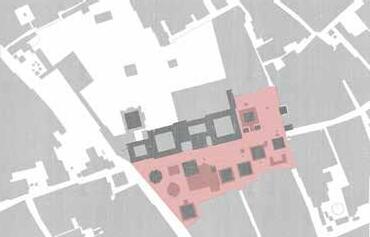
classic example of a public square which is the pivot between the religious hub and the palace complex. The larger city usually surrounds these spaces and grows outwards from these.
In the context of historic Indian towns (both Hindu and Mughal references), these spaces were mostly formed at the junction of the royal fort/palace, the city level mosque/temple on one side and the main city-level bazaar street running on the other. The Red Fort, Jama Masjid, Chandni Chowk precincts, built in the early 17 th century, and the main square within the Jaisalmer Fort, Rajasthan are classic examples of spaces formed at junctions. This typology is also seen during the British period in India and exemplified by the building of the new British capital in Delhi in the early 20th century through the Rashtrapati Bhavan–India Gate axis.
Some of these plazas and squares are frozen in time and have been preserved in their actual form. Their historic and archaeological value demand interest and viewership, e.g., the Qutb Minar and the remnants of Old Fort in New Delhi.
Some of these spaces have evolved with time with a few layers of contemporary city-level development around them. Their functionality has been transformed over the years and the space has now become an inherent part of an overcrowded yet still functioning old city core, eg. Teen Darwaza, Ahmedabad and Red fort, Jama Masjid in Delhi.
Some of these spaces are struggling to keep pace with the evolving, fast moving world around, showing traces of its past at the core, although the parts around have evolved/transformed with contemporary overlays. Some aspects of
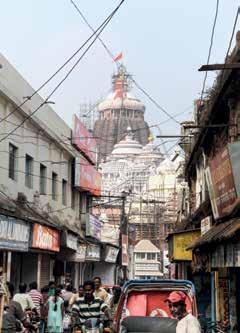
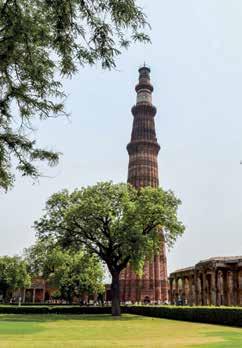
top Puri, Odisha above Outb Minar, Delhi pp. 24–25 Gateway of India, Mumbai
these places remain static whereas some are transformed beyond recognition, e.g., Charminar, Hyderabad.
While we study these city plazas/ squares, the main focus is not on the monuments or the ruins of the built but on the history and story attached to the built and hence the formation of the public space around it in context of its current functionality. These spaces tell us many stories, interwoven in the rich history of their respective cities—stories of war and peace, of kings and fiefdoms, of religion and culture, of mutinies and massacres, and of freedom, celebrations and commerce. Such spaces can be found across the length and breadth of India in towns with historic precedents of varying scales and imbued with regional variations.
The built fabric becomes a backdrop for the activities in that space—almost theatric in nature. In a contemporary context, these spaces form a pivot or a background, against which the drama of everyday modern life of the city takes place. These places may have transformed due to the daily hustle and bustle of the fast-paced modern city around—primary transport routes and traffic, commerce and retail (both organised and unorganised)—but they still form a part of the key tourist attractions within the city. These
spaces may also have city-level political/ cultural events organized in them.
It can also be noted that many a times there is a challenge managing these spaces in terms of crowd control, security, general cleanliness and order, restoration, conservation, etc. due to the multiple government agencies and stakeholders involved. Consequently, these spaces and the buildings/ monuments face various levels of decay and deterioration, and due to poor management the spaces are unable to function as beautifully and actively as they can in the overall scheme of the city. Many times, the change and impetus required to maintain and sustain these historic plazas are minor policy level decisions, and only a limited focused intervention in the area is needed to reactivate it, as in the case of the Kala Ghoda precinct, Mumbai. They do not require large monetary inputs and with only some conscious thought and slight impetus, have the inherent ability to regenerate their own usefulness and vigour.
The cities too, are all to an extent struggling with the dichotomy of resolving contemporary changes within traditional fabrics. They are all at varying stages of evolution.
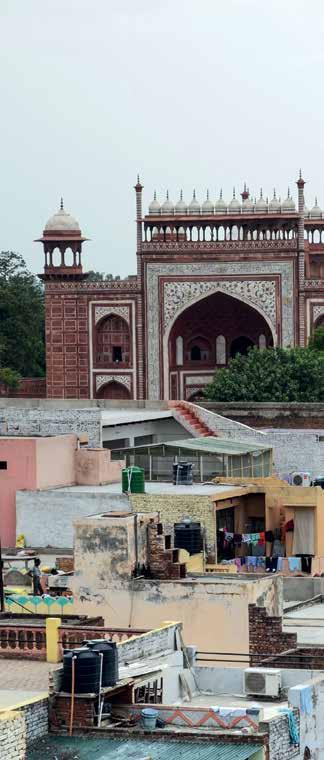
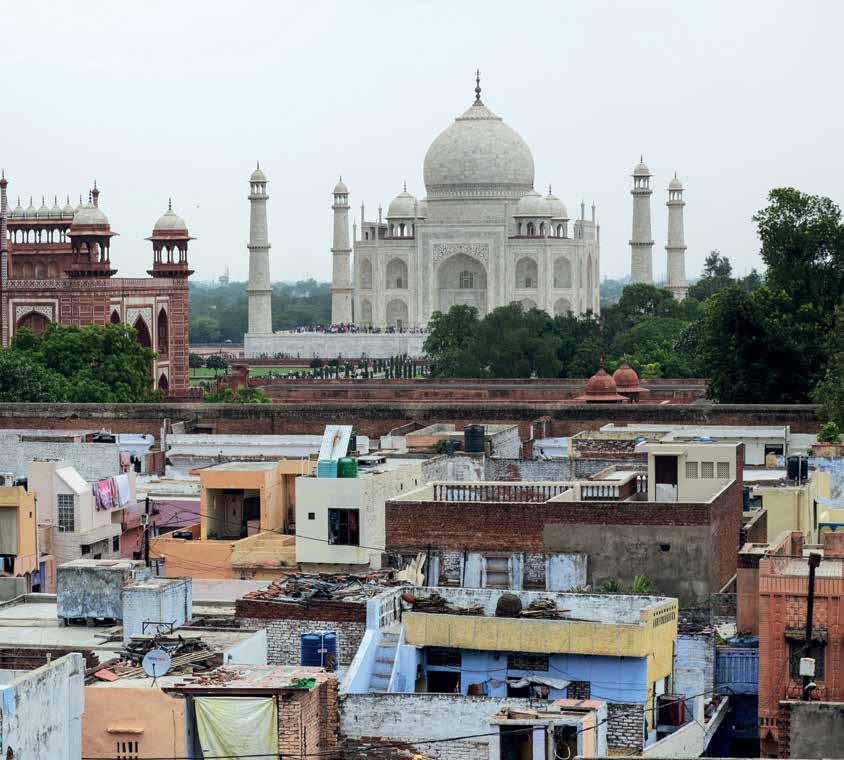
ARCHITECTURE
Archana Gupta and Anshuman Gupta
168 pages, 124 photographs, 26 illustrations and 27 maps
9 x 9” (229 x 229 mm), paperback with gatefold
ISBN: 978-93-85360-08-4 (Mapin)
ISBN: 978-1-935677-66-6 (Grantha)
₹1800 | $39.50 | £30
2016 | World Rights
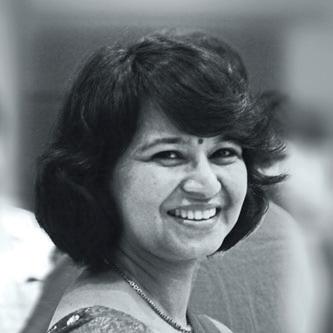
Archana Gupta, co-founder of The Foundation of The Indian Cities, is the Vice-President (Projects) for KPDK Buildtech Pvt. Ltd. An architect and teacher, she has extensive experience in service architecture and infrastructure development, and has to her credit several publications and research projects relating to studies of traditional and vernacular Indian settlements.
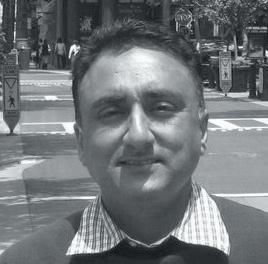
Anshuman Gupta, co-founder of The Foundation of The Indian Cities works as Vice-President, Head of Projects (South Asia), at Deutsche Bank AG. An architect and an accomplished corporate real estate professional, he has extensively travelled and worked across India. A strong proponent of the sustainable approach to design, he spares time to research and write about urbanization and cities.
OTHER TITLES OF INTEREST
the architecture of Hasmukh C. Patel
Selected Projects 1963–2003
Catherine Desai and Bimal Patel
Designing for Modern India
INI Design Studio
learning from india series
Learning from Delhi
Practising Architecture in Urban India
Pelle Poiesz, Gert Jan Scholte and Sanne Vanderkaaij Gandhi
A Walking Tour: Ahmedabad
Sketches of the City’s Architectural Treasures
Matthijs van Oostrum and Gregory Bracken
MAPIN PUBLISHING
www.mapinpub.com
Public spaces, both in their aesthetic and functional roles, provide a window to a country’s culture. In India, the colonial interlude severely disrupted our architectural traditions.
Anshuman Gupta and Archana Gupta’s lavishly illustrated and insightful contemplation of our public spaces, is a serious and readable attempt to revisit our architectural traditions in the context of contemporary priorities.
Pavan K. Varma, Member of Parliament and acclaimed author
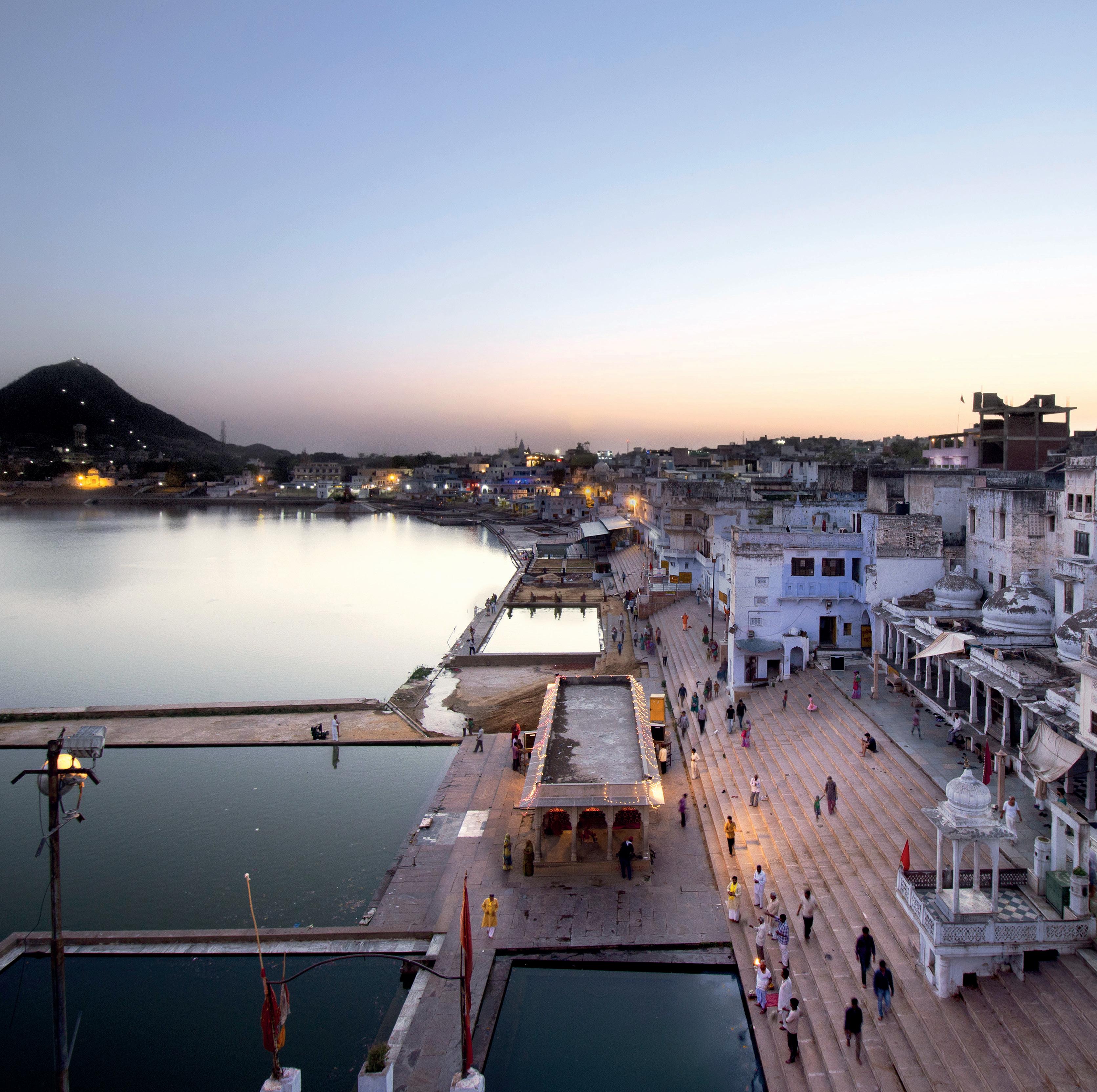
India is home to some of the most interesting public spaces in the world, from the ghats of Varanasi and Pushkar to Mumbai’s Marine Drive. Unfortunately, in the rush to build utilitarian cities, the art of creating great public spaces was mostly ignored in the post-Independence period. Celebrating Public Spaces of India brings these places back to the centre stage. Moreover, the book brings a unique Indian sensibility to the understanding of how public spaces are used in our cities.
Sanjeev Sanyal, Economist, urban theorist and renowned author